Indonesia
Ubud (Bali)
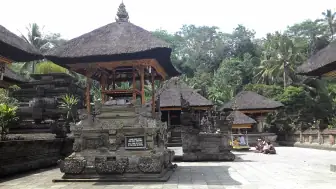
In Ubud, there's a ceremony at some temple every day
Days Start with the basic programme and choose extensions for the time you have.
How the guide reaches this number
The first is for the Campuhan ridge, the museums and the Monkey Forest; the second, for the Pakerisan valley with a driver; the third, for the craft villages of Mas, Batuan and Celuk. Come for the temples, offerings and ceremonies that are part of residents' daily lives and would happen the same way without visitors. If you want a beach nearby, stay in another part of the island, because the sea is more than an hour's drive away, and if you can't stand gridlock, you'll suffer in July and August. With a single day, walk the Campuhan trail at 6:30am and be at Museum Puri Lukisan when it opens. Have lunch at a warung on Jalan Hanoman, for Rp 25,000 to 50,000, and stay for the evening dance at the palace. Leave Tirta Empul out that day, because the temple is far off, in the Pakerisan valley. Jalan Raya tends to disappoint: the center that photos sell as a village is a two-lane road with motorbikes passing within an inch of your elbow. The calm shows up once you turn into the side lanes.
3–4
When April, May, September, and October, with settled weather and fewer crowds; July and August are dry but busy
How the guide reaches this number
Bali has two seasons, and neither is cold. The dry season runs from May to September, with highs of 26–28°C in Ubud, nights of 20–22°C (cooler than on the coast, thanks to the altitude) and the occasional late-afternoon shower. The wet season runs from November to March, with 2,000 to 2,400 mm of annual rain concentrated in that period, heavy downpours of one to three hours almost daily, high humidity and more mosquitoes. It doesn't rain all day, but trails get slippery and the river gorges fill fast. July and August are peak season, with high prices and gridlock on Jalan Raya, and the week of Christmas and New Year repeats the picture. April, May, September and October strike the best balance between settled weather and crowds; January and February are the months to avoid if walking outdoors is the priority. Check the date of Nyepi, in March, too: a whole day with no flights, no transport and no leaving your hotel upends any short itinerary, and there's no exception for people who arrived yesterday.
Per person/day Rp 600,000 to 1.8 million (about US$35–110), including budget to mid-range lodging
How the guide reaches this number
Per person per day: accommodation, meals, urban transport, visits and a small allowance for extras. Flights excluded; larger purchases vary. Editorial estimate, not a quote.
 What Nilo thinks
Stay three days in Ubud. The first is for the Campuhan ridge, the museums and the Monkey Forest; the second, for the Pakerisan valley with a driver; the third, for the craft villages of Mas, Batuan and Celuk. Come for the temples, offerings and ceremonies that are part of residents' daily lives and would happen the same way without visitors. If you want a beach nearby, stay in another part of the island, because the sea is more than an hour's drive away, and if you can't stand gridlock, you'll suffer in July and August. With a single day, walk the Campuhan trail at 6:30am and be at Museum Puri Lukisan when it opens. Have lunch at a warung on Jalan Hanoman, for Rp 25,000 to 50,000, and stay for the evening dance at the palace. Leave Tirta Empul out that day, because the temple is far off, in the Pakerisan valley. Jalan Raya tends to disappoint: the center that photos sell as a village is a two-lane road with motorbikes passing within an inch of your elbow. The calm shows up once you turn into the side lanes.In Ubud, every family sets out palm-leaf trays with flowers and an incense stick each day, at the front door, on shop steps and on the sidewalk. This temple life, following the residents' calendar rather than the visitor's, draws people to the town in south-central Bali. Every temple celebrates its odalan, the anniversary of its consecration, every 210 days, so a ceremony takes place in some village each day. Around town, terraced rice fields irrigated by the subak descend into river gorges. Puri Lukisan and Neka museums display Balinese painting from the 1930s, while legong and barong performances alternate at the palace at night. Eat nasi campur at neighborhood warungs: rice surrounded by lawar, sate lilit and sambal. Come in April, May, September or October, for settled weather without the July and August gridlock, and allow three days.
Quick facts
- Population
- about 12,000 in the village core; about 78,000 in Ubud district; about 560,000 in Gianyar regency; about 4.4 million on the island of Bali
- Founding
- 8th century by tradition (Rsi Markandeya at Campuhan); the Ubud puri is established in the 18th century
- Country and region
- Indonesia, province of Bali, regency of Gianyar, district of Ubud
- Language
- Indonesian is the official language; Balinese in daily life and ritual; functional English in almost all commerce
- Currency
- Indonesian rupiah (IDR, Rp): about 16,500 per dollar and about 19,000 per euro in 2026
- Time zone
- WITA, UTC+8, no daylight saving
- Best time to visit
- April, May, September, and October, with settled weather and fewer crowds; July and August are dry but busy
- Average daily cost
- Rp 600,000 to 1.8 million (about US$35–110), including budget to mid-range lodging
When to go
April, May, September, and October, with settled weather and fewer crowds; July and August are dry but busy
How the year changes
Bali has two seasons, and neither is cold. The dry season runs from May to September, with highs of 26–28°C in Ubud, nights of 20–22°C (cooler than on the coast, thanks to the altitude) and the occasional late-afternoon shower. The wet season runs from November to March, with 2,000 to 2,400 mm of annual rain concentrated in that period, heavy downpours of one to three hours almost daily, high humidity and more mosquitoes. It doesn't rain all day, but trails get slippery and the river gorges fill fast. July and August are peak season, with high prices and gridlock on Jalan Raya, and the week of Christmas and New Year repeats the picture. April, May, September and October strike the best balance between settled weather and crowds; January and February are the months to avoid if walking outdoors is the priority. Check the date of Nyepi, in March, too: a whole day with no flights, no transport and no leaving your hotel upends any short itinerary, and there's no exception for people who arrived yesterday.
Nilo's tips
Campuhan trail at 6:30am, back before 8:30am
The trail has no shade at all, and the strong sun and the tour groups arrive together by mid-morning. It's flat, paved, and free, about 2 km one way, and starts next to Pura Gunung Lebah, so it's worth setting out right at dawn.
At the airport, compare three prices before leaving
The official taxi from arrivals at Ngurah Rai is the priciest of the three options, Rp 400,000 to 550,000. The hotel car usually comes in lower (Rp 350,000 to 500,000), and the apps are the cheapest (Rp 300,000 to 450,000), but they only pick up from their own designated spot. If your flight lands in the small hours, book the hotel car, because haggling while exhausted tends to cost more. Either way, count on 1 hour 15 minutes to 2 hours to Ubud.
In the center, Grab and Gojek can't pick up passengers
A long-standing agreement with local cooperatives stops Grab and Gojek from picking up passengers on several streets in the center. That's why app drivers ask to meet you on a street at the edge, and many rides get declined. For short trips, use the drivers waiting on street corners with the transport sign, who charge Rp 50,000 to 150,000 within the village. A full day with waiting time costs Rp 600,000 to 900,000; settle the price before you open the door.
Withdraw in a bank branch and add about 20% for the ++
At the restaurant, the ++ on the menu adds 10% service and about 10% tax at the end of the bill. To withdraw cash, use only ATMs inside a bank branch. The machines cap withdrawals at Rp 2.5 to 3 million and charge a flat fee of Rp 25,000 to 50,000, so take out the max in one go instead of making three small withdrawals. To exchange money, look for a money changer with a sign, because it's the unsigned ones on side streets where manipulated bill counts happen most.
Monkey Forest: 9am to 6pm
At that hour, crossing the sanctuary leads to Nyuh Kuning, on the south side, in a 15-minute walk, and outside it the street detour is much longer. Mandala Suci Wenara Wana charges Rp 80,000 to 100,000 for about 12.5 hectares of forest, home to roughly 1,200 monkeys spread across three 14th-century temples run by the village of Padangtegal, not the government. Go in empty-handed, because the monkeys grab anything they can find in your hands.
Order betutu the day before and eat babi guling early
Betutu chicken or duck cooks for 6 to 12 hours inside the leaf wrap, so warungs usually ask for a day's notice to order it. Babi guling works the other way around: it's served at lunch until the piglet runs out, so don't leave it for mid-afternoon.
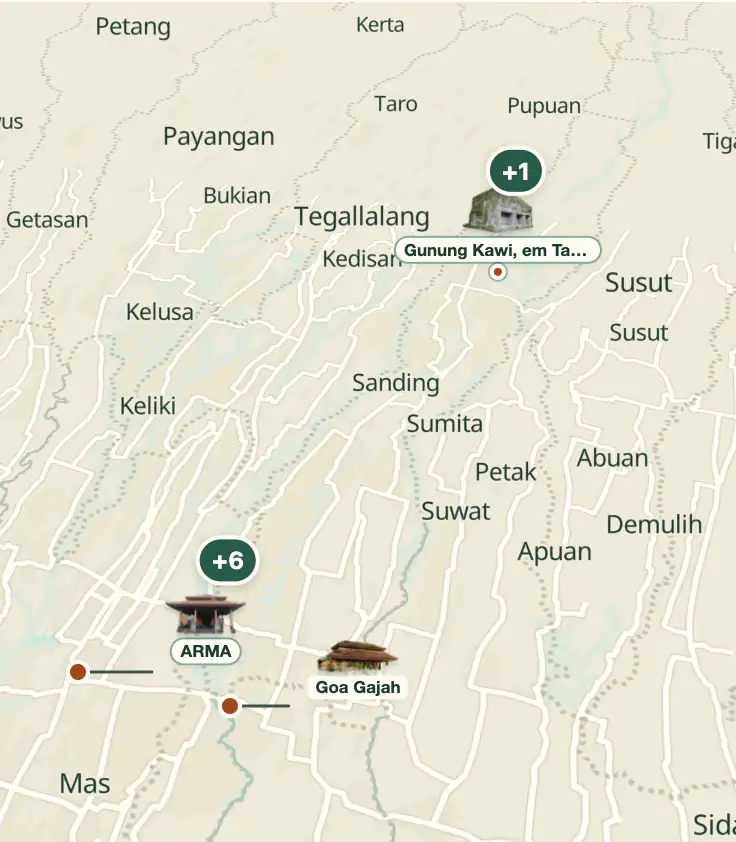
Explore the map
© OpenStreetMap · OpenFreeMap · © OpenMapTiles
Explore the map, read about the other places and plan your travel days in the app.
Open the appWhat to see
Ubud (Bali): the ravines and the ridges
Ubud sits on the southern flank of Bali's central volcanic range, on terrain of parallel ravines carved north to south by the Ayung, Wos, Petanu, and Pakerisan rivers. Because the ravines run that way, the roads follow the same direction; moving east to west requires a bridge, and there's no grid layout.
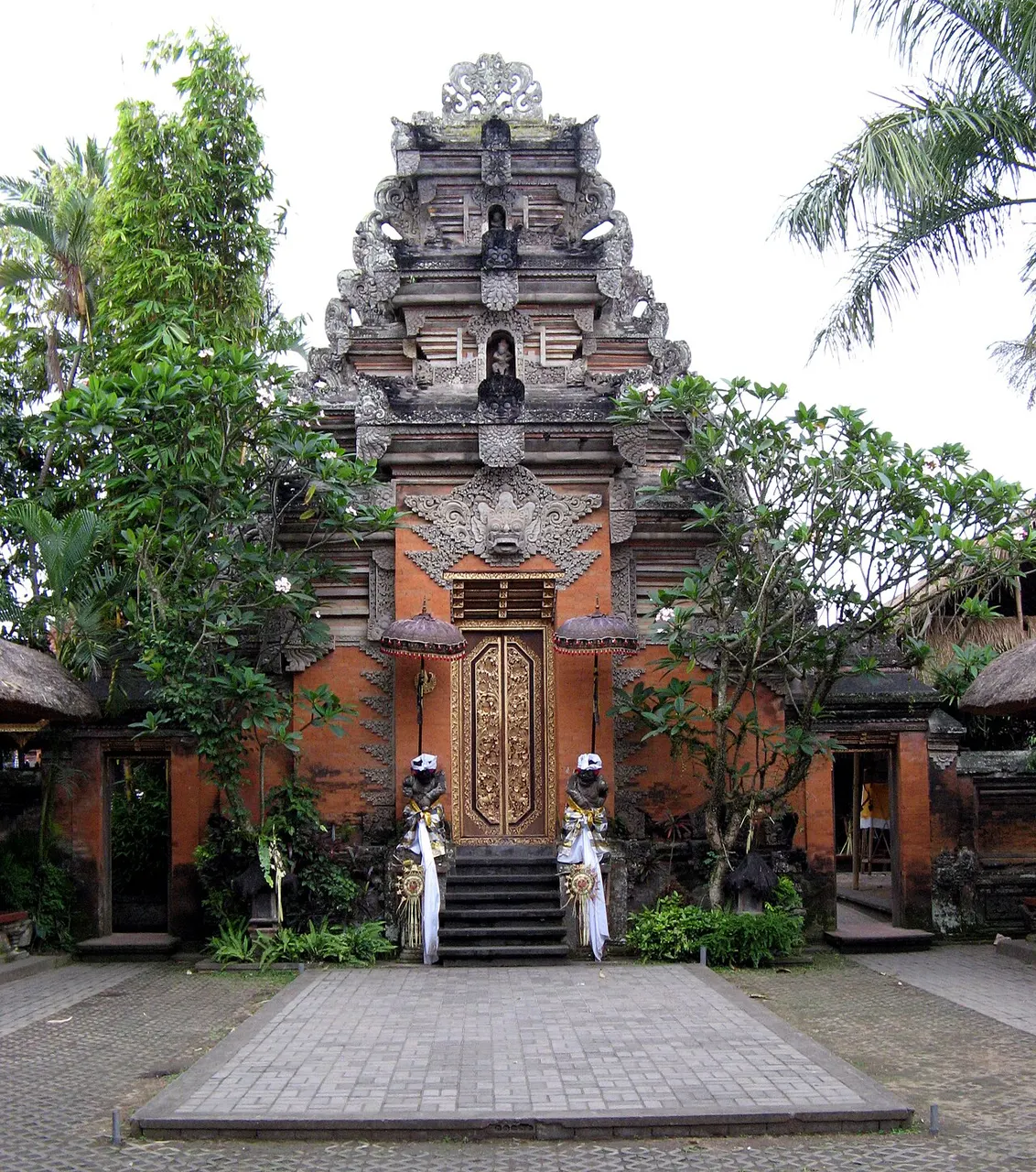
Puri Saren Agung (Ubud Palace)
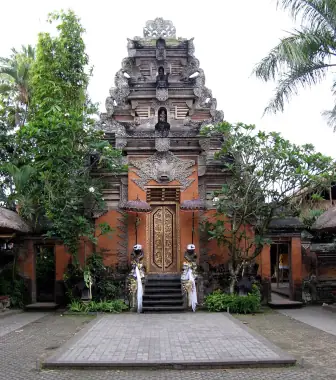
Home of the princely family since the 18th century, rebuilt after the 1917 earthquake with gates and reliefs attributed to the sculptor I Gusti Nyoman Lempad. The front courtyards are open free of charge during the day, and at night the courtyard becomes a dance stage, around 7:30pm, with tickets at Rp 100,000 to 150,000.
By day, no one pays to enter the front courtyards of the princely residence, and around 7:30pm there's dance there with admission of Rp 100,000 to 150,000.
Check access
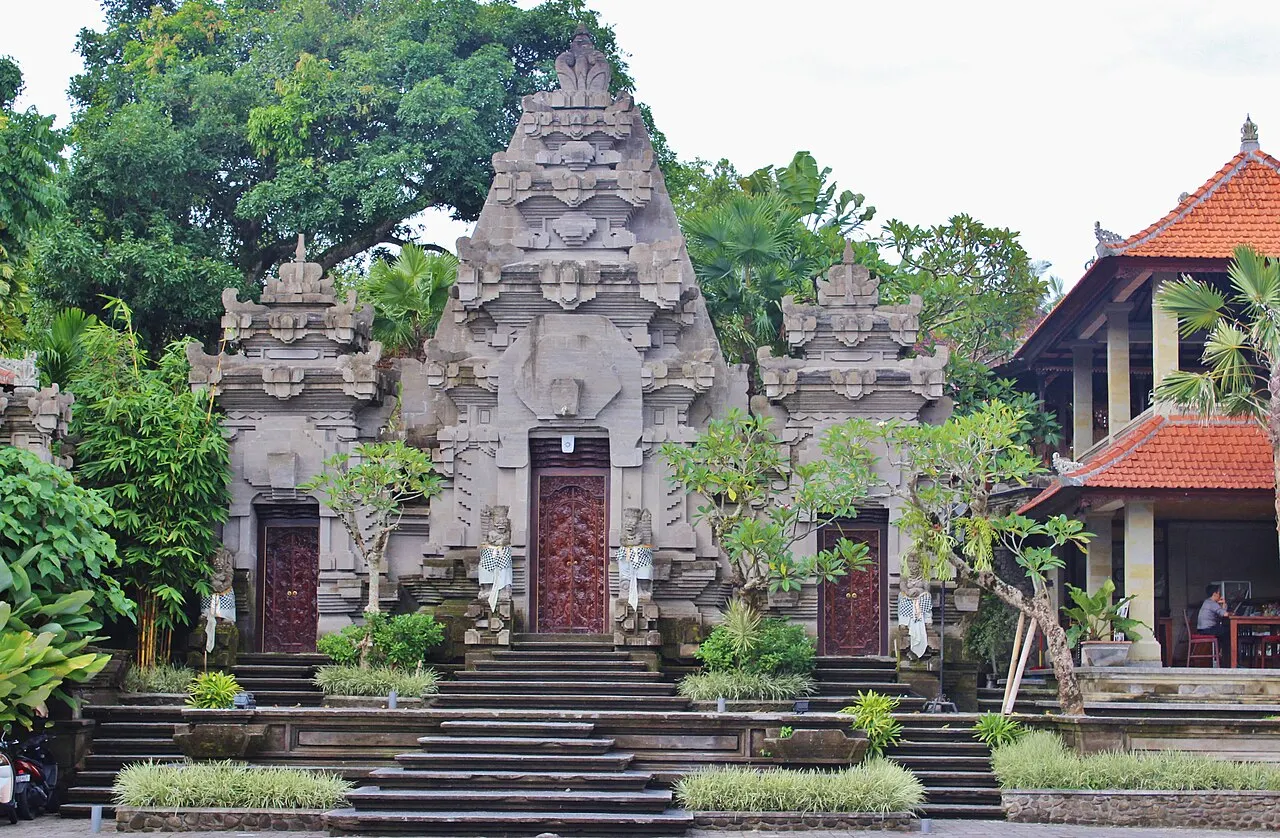
Museum Puri Lukisan
Bali's first art museum, opened in 1956 by Rudolf Bonnet and Cokorda Gde Agung Sukawati, with the most coherent collection from the Pita Maha period. Four pavilions cover pre-modern painting, the Ubud style, the Batuan style, and Lempad's ink drawings.
In 1956 the island's first art museum appeared, and the most coherent collection from the Pita Maha period came together inside four pavilions.
Check access
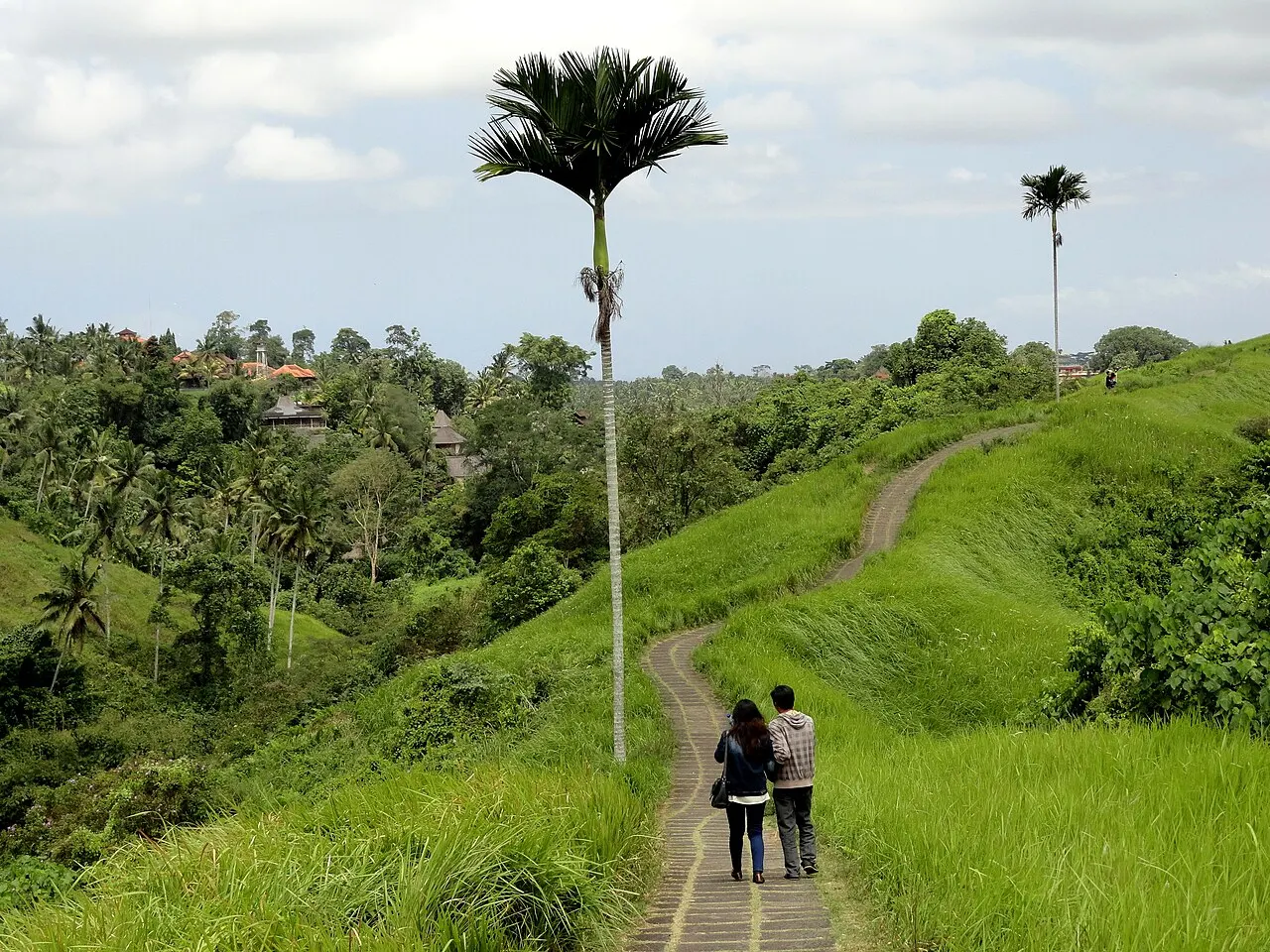
Campuhan Ridge Walk
A paved path of about 2 km along the ridge between the Wos Barat and Wos Timur rivers, starting beside Pura Gunung Lebah. It's flat, shadeless, and free; before 8am you can walk it without heat or a line for photos.
This is the walk that shows off Ubud's ravine landscape without a car or a ticket: about 2 km of paved, flat ridge path between the two Wos rivers, starting at Pura Gunung Lebah. Since there's no shade, do it before 8am, before the heat and the photo lines.
Check access
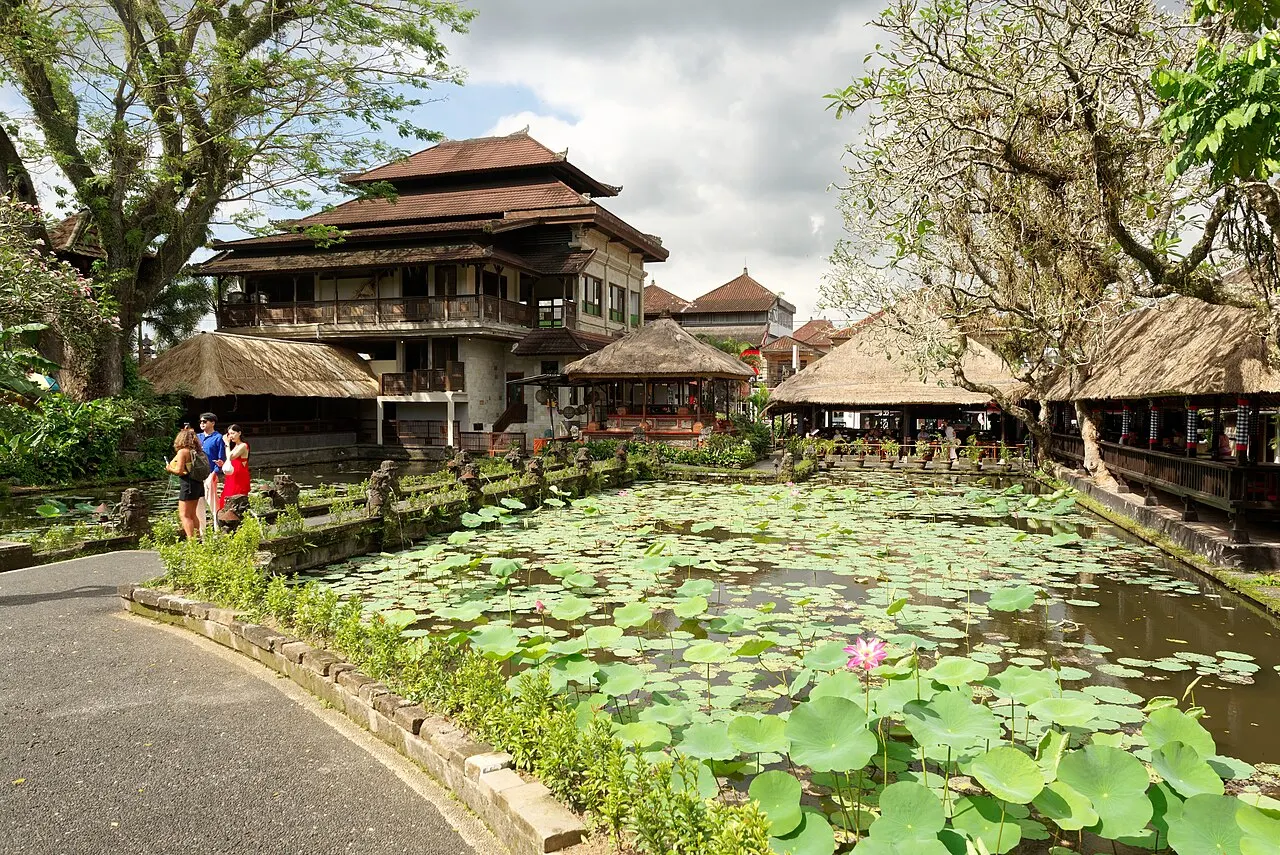
Pura Taman Saraswati
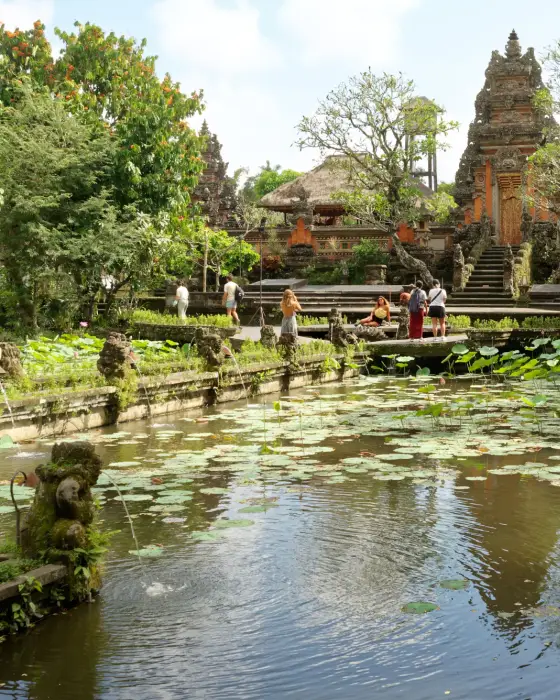
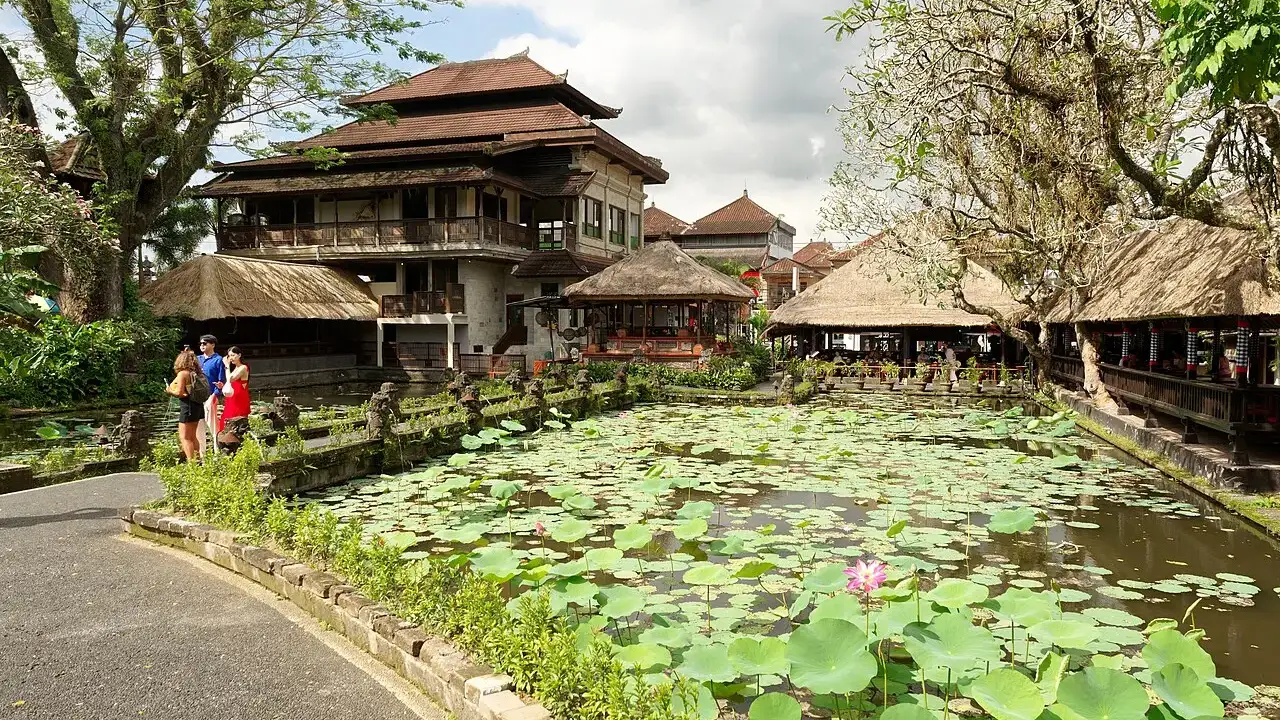
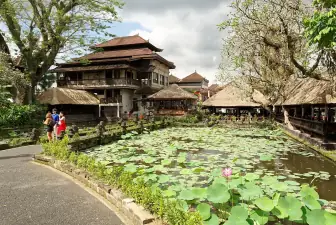
A water temple designed by Lempad in the early 1950s, with a lotus pond crossed by a central walkway leading to the gate. Dedicated to Saraswati, goddess of knowledge; the walkway is public, the inner sanctuary isn't, and there are dance performances on the side stage.
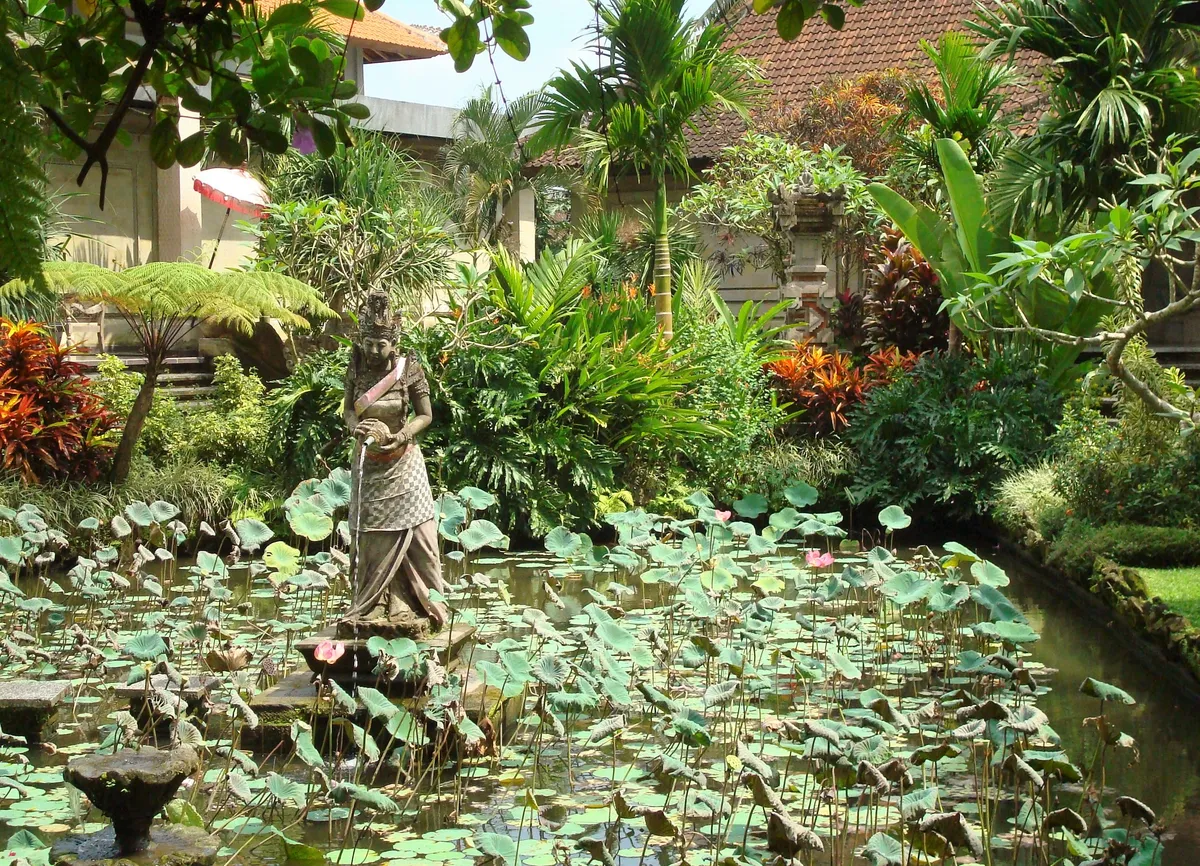
In the early 1950s Lempad designed the water temple dedicated to Saraswati, where the public walkway crosses the lotus pond and the inner sanctuary doesn't open to the public.
Check access
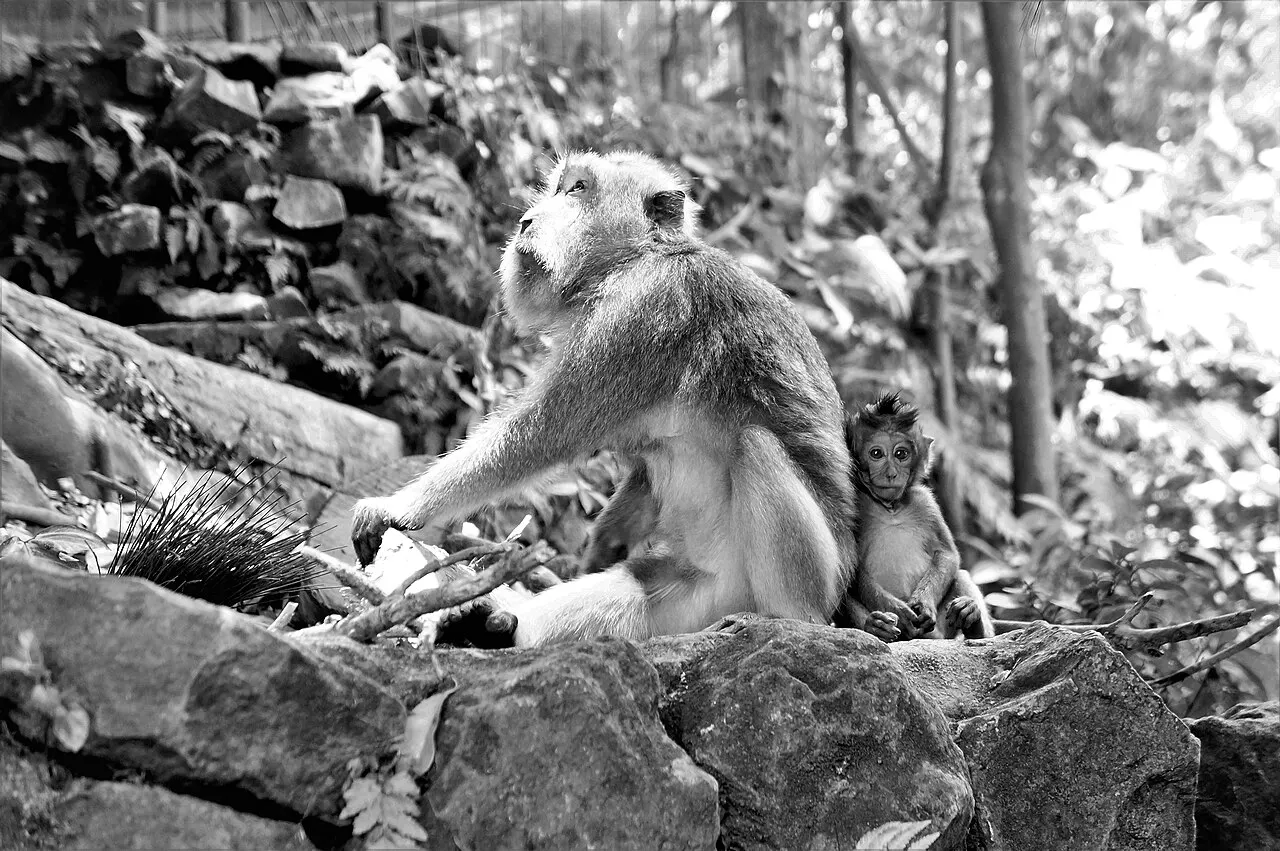
Mandala Suci Wenara Wana (Monkey Forest)
A reserve of about 12.5 hectares with approximately 1,200 long-tailed macaques living in groups and three 14th-century temples, among them Pura Dalem Agung Padangtegal. Open 9am to 6pm, with admission around Rp 80,000 to 100,000; it's run by the village, not the government.
The village manages the roughly 12.5-hectare forest, the government stays out of it, and there are approximately 1,200 monkeys in troops alongside 14th-century temples.
Check access
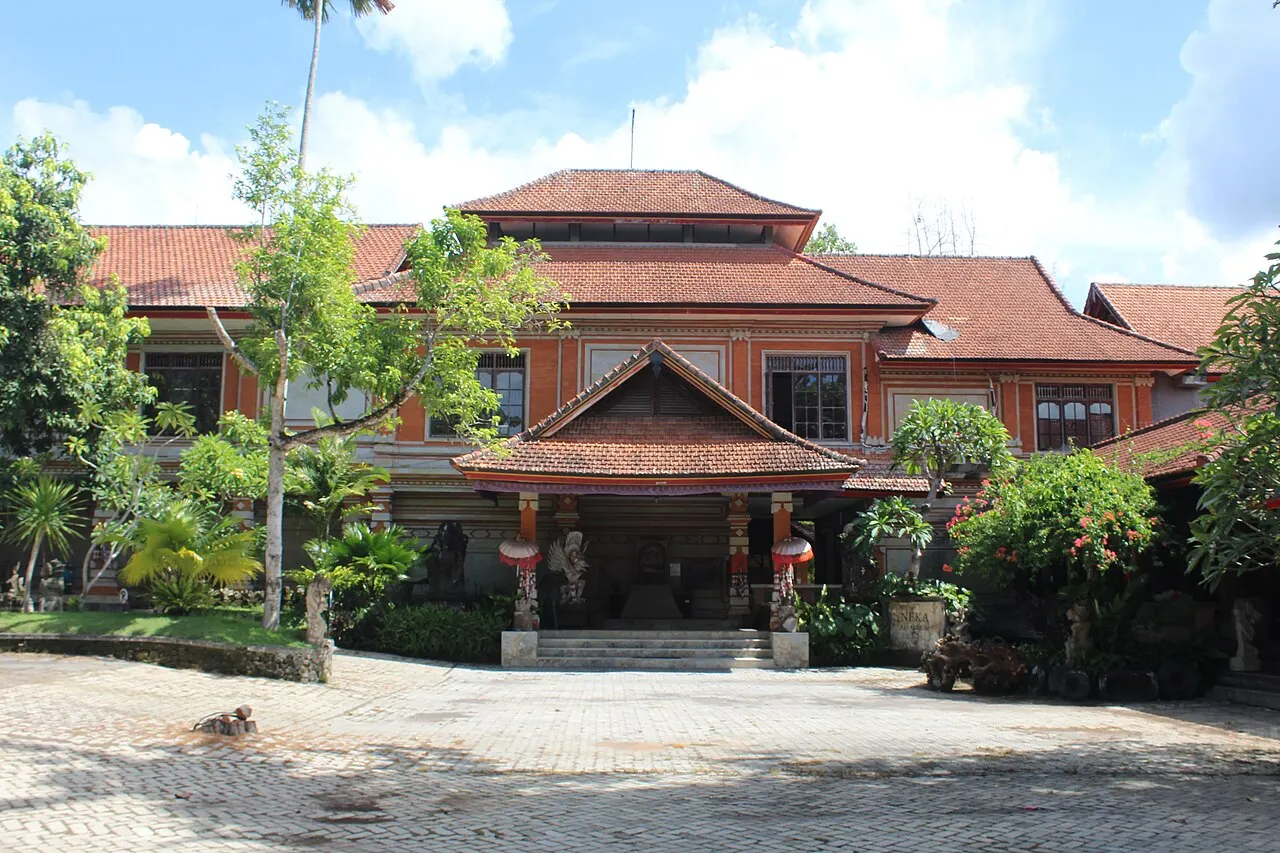
Neka Art Museum
Opened in 1982 by Suteja Neka, in Sanggingan, it organizes Balinese painting by school and sets aside rooms for foreign artists who lived on the island, such as Spies, Bonnet, Arie Smit, and Blanco. It also includes a kris collection with an explanation of the ritual metalwork.
In Sanggingan, Neka organizes the island's painting by schools and sets aside rooms for foreign artists who came and lived there, and a kris collection tells the story of ritual metalwork.
Check access
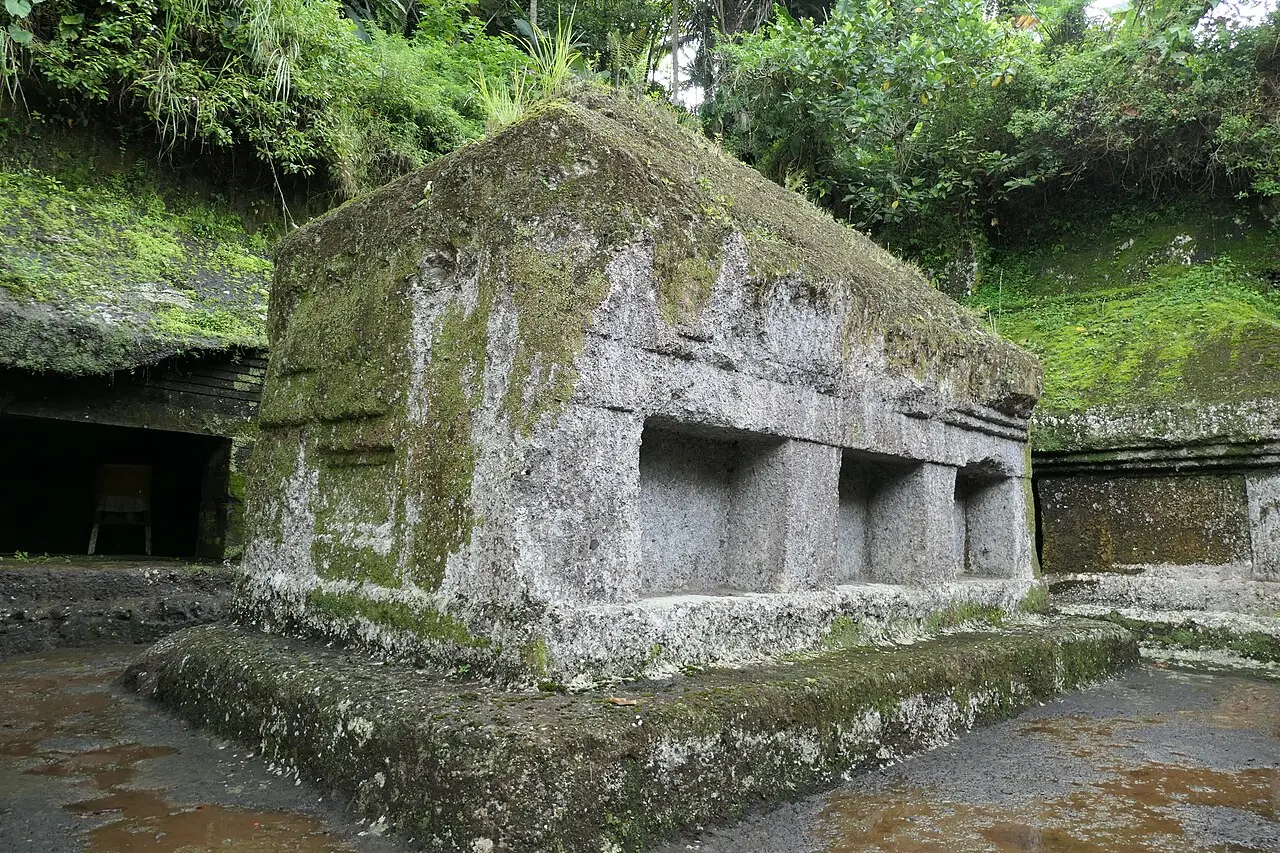
Gunung Kawi, in Tampaksiring
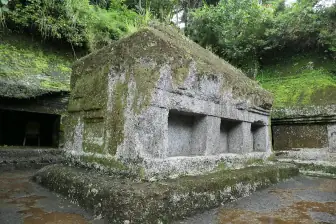
Ten 7-meter funerary candi carved directly into the cliff of the Pakerisan river in the 11th century, associated with King Anak Wungsu. You reach them down more than 300 steps through rice paddies, which means the same climb on the way back.
Ten 7 m funerary candi were carved into the cliff in the 11th century, and the more than 300 steps on the way in are the same climb on the way back.
Check access
Tirta Empul
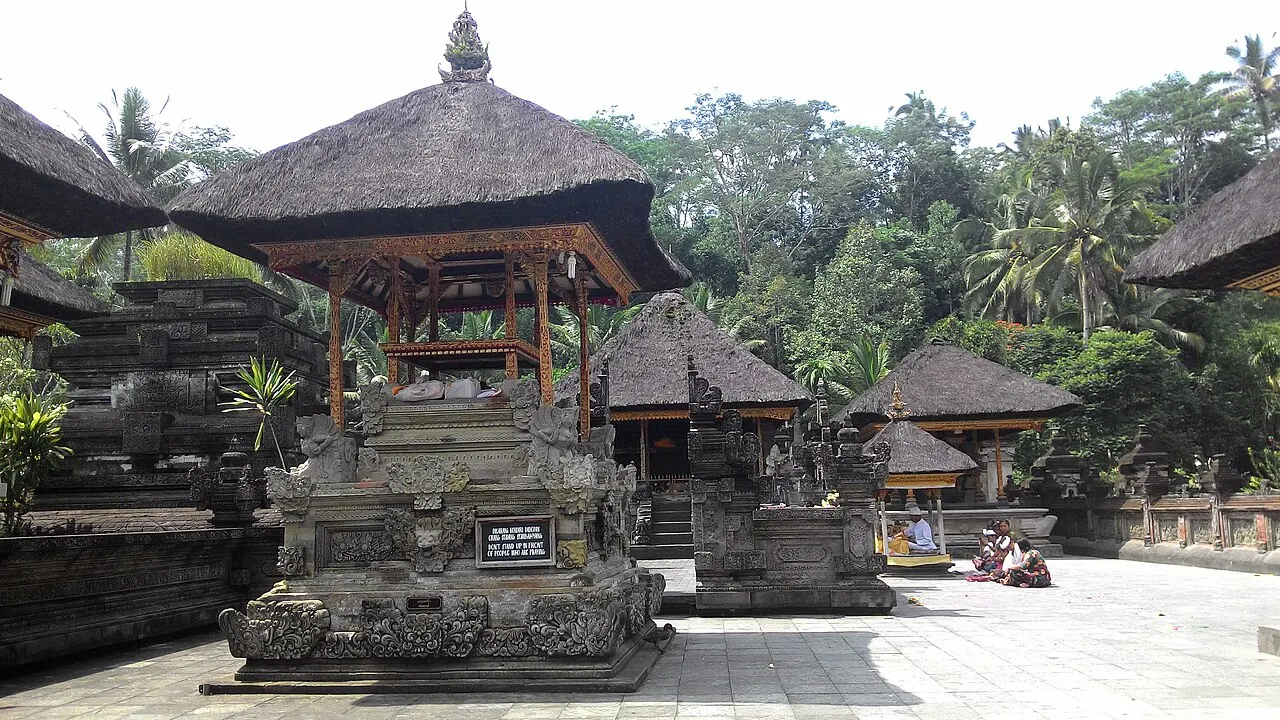
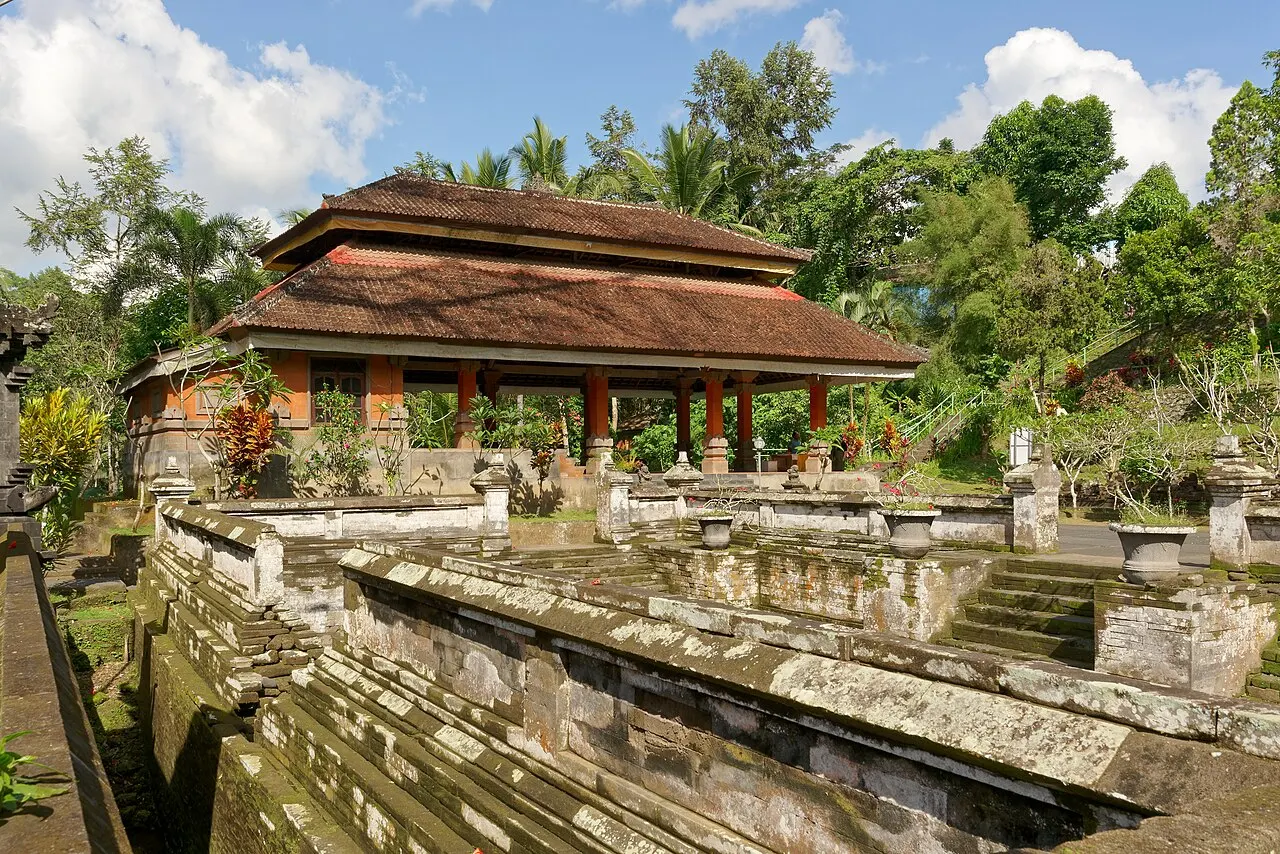
A sacred spring temple founded in 962, where worshippers perform melukat under a sequence of spouts in two rectangular pools. Since 2025 entry rules have been strictly enforced: sarong, the correct order of spouts, and a ban on entering while menstruating or photographing with your body above the shrines.
Strict enforcement of the entry rules began in 2025 and requires a sarong and the correct order for the water spouts, as well as banning menstruating visitors from the temple.
Check access
ARMA: Agung Rai Museum of Art
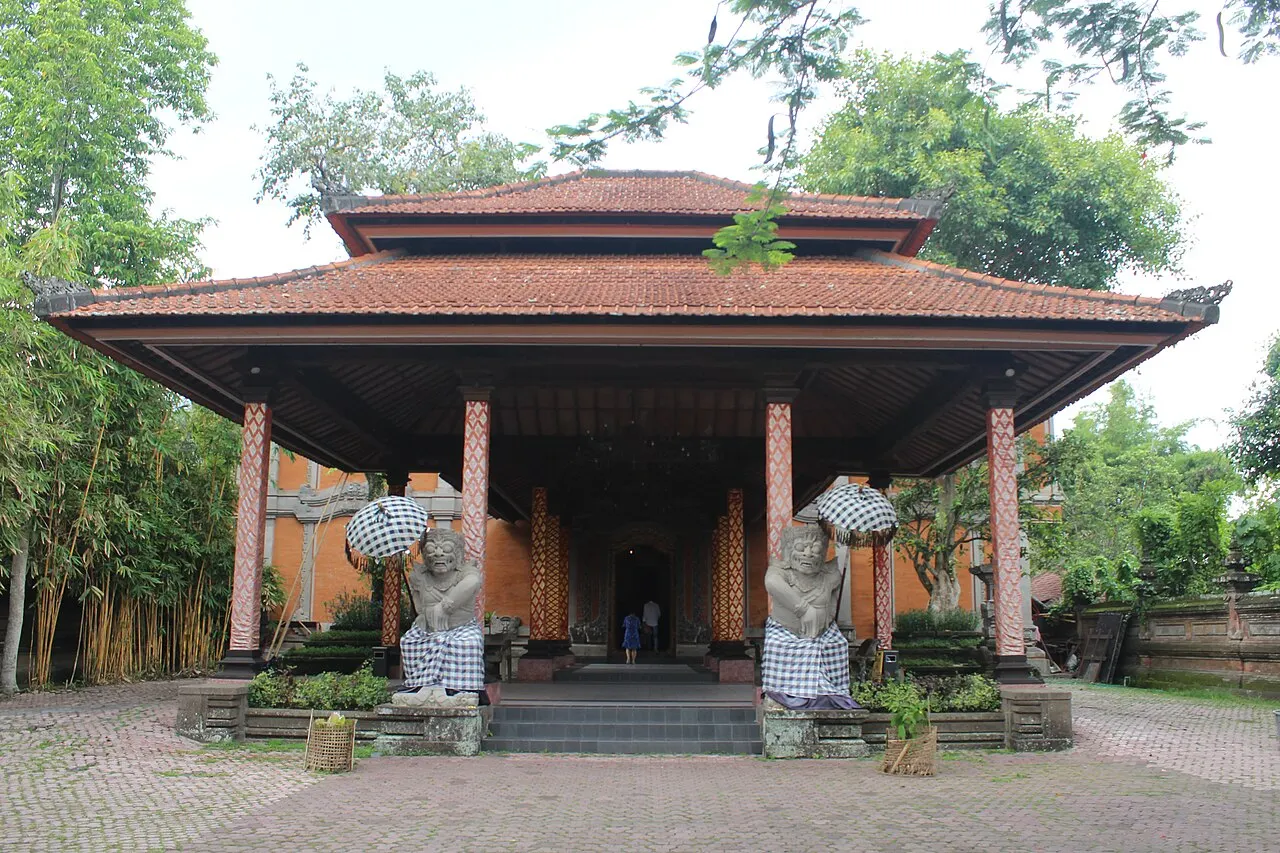
Founded in 1996 in Peliatan by collector Agung Rai, it brings together Balinese and Javanese painting, including work by the Romantic painter Raden Saleh and one of the few Walter Spies canvases that remained on the island. It holds gamelan, dance, and painting classes on a fixed schedule.
To see Balinese painting, the Puri Lukisan and the Neka are better: the first holds the most coherent Pita Maha collection, and the second sets aside rooms for Spies and Bonnet. ARMA is outside the center, in Peliatan, to the east, and is worth it mainly for the gamelan and dance classes at set times.
Check access
Nilo’s itinerary
Start with the basic programme and choose extensions for the time you have.
Plan my days in the app ↗Day 1 · The Campuhan ridge walk, the palace and the monkey forest
Start at 6:30am on the Campuhan Ridge Walk, 2 km one way with no shade, and be back before 8:30am, when the heat and the tour groups arrive.
Have breakfast in Campuhan and visit the Museum Puri Lukisan at opening time, to see the Pita Maha collection and Lempad's drawings with the halls empty.
Cross Jalan Raya to Puri Saren Agung and Pura Taman Saraswati, and set aside half an hour for the art market before the tour bus fills the block.
Head down Jalan Monkey Forest and enter the sanctuary in the late afternoon, with no bag or bottle in sight, paying attention to the three temples beyond the monkeys.
Head back to the palace at 7pm to get a ticket for the 7:30pm dance performance: legong and barong alternate by night of the week.
Day 2 · The Pakerisan valley
Hire a driver for the whole day (Rp 600,000 to 900,000, waiting time included) and leave at 8am, before traffic builds on the Tegallalang road.
Start with Goa Gajah, in Bedulu, and walk another 1.5 km to the 14th-century Yeh Pulu reliefs, almost always empty.
Continue to Gunung Kawi, in Tampaksiring: more than 300 steps down to the ten candi carved into the cliff, with a sarong required at the entrance.
Have lunch on the road and visit Tirta Empul in the mid-afternoon, when it empties out; to enter the water, wear a bathing sarong and follow the order of the spouts, skipping the last two, which are reserved for funerary ritual.
Come back through Tegallalang to see the subak terraces at the end of the light, and skip the paid swings if you don't want to pay twice for the same view.
Day 3 · Craft villages
Start in Mas, 5 km to the south, where the woodcarving workshops open early and let you watch the work with no obligation to buy.
Continue to Batuan and enter Pura Desa Batuan through the side gate: the temple is the clearest example of the region's carving style, and the village gives its name to a school of painting.
Pass through Celuk to see the silverwork, comparing three workshops before deciding, and have babi guling for lunch at a village warung.
Finish at ARMA, in Peliatan, for the Raden Saleh collection and the Walter Spies canvas, and check the gamelan class schedule for that same day.
At the end of the day, climb the Penestanan staircase to see where the Young Artists movement of the 1960s came from, and have dinner away from the traffic.
If you stay longer
Day 4 · Kintamani and the Batur caldera
Day trip
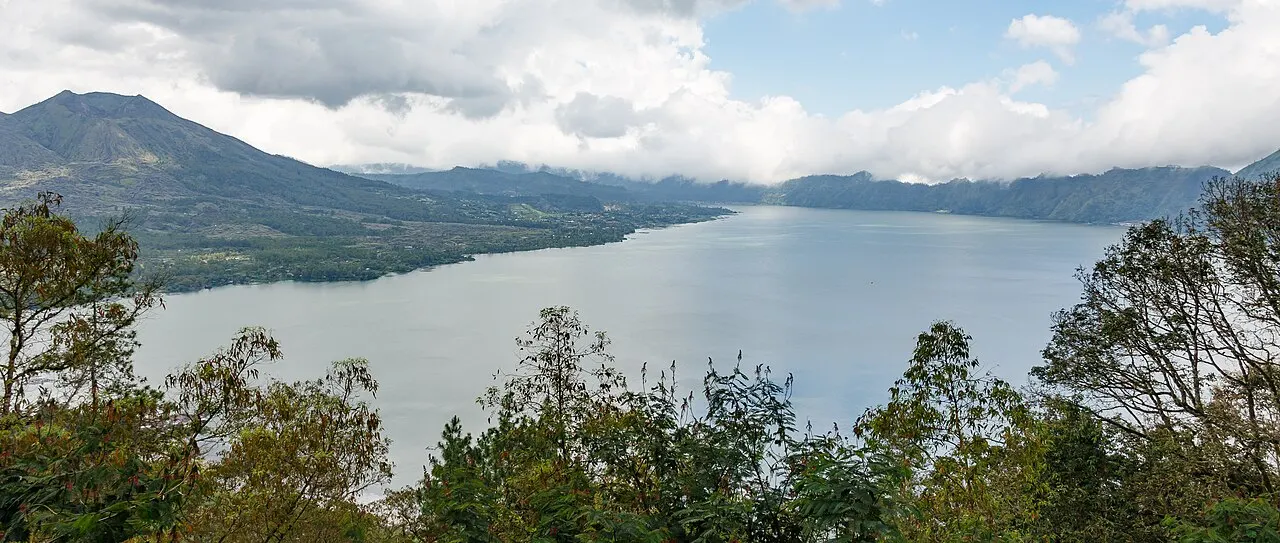
25 km to the north, 1 to 1.5 hours by car along the Tegallalang road. The Penelokan viewpoint sits at about 1,500 m and opens onto the caldera, the lake, and the cone of Gunung Batur, at 1,717 m; the climb to the top is done before dawn, in 2 to 3 hours, with a mandatory local guide and temperatures around 15°C.
Food
 AI illustration
Babi guling
Suckling pig rubbed with base genep (the paste of ginger, turmeric, galangal, garlic, chili, and dried shrimp) and spit-roasted for hours. It's served on a plate with rice, crackling, sausage, and lawar, almost always at lunch; most places close when the pig runs out, around 3pm.
 AI illustration
Bebek and ayam betutu
Duck or chicken stuffed with spice paste, wrapped in banana leaf and areca husk, and slow-cooked for 6 to 12 hours. It needs to be ordered ahead at many warungs; the result falls apart with a spoon.
 AI illustration
Nasi campur bali
The everyday standard dish: a mound of rice surrounded by small portions of lawar, sate lilit, fried tempeh, peanuts, egg, and sambal. It costs Rp 25,000 to 50,000 at a warung and is the cheapest, most complete way to eat here.
 AI illustration
Sate lilit
Minced fish, pork, or chicken mixed with grated coconut and spices, molded around a lemongrass stalk before going on the coals. Unlike Javanese skewers, the meat wraps around the stick instead of being threaded through it.
 AI illustration
Lawar
A minced mix of young jackfruit or green beans with toasted coconut, spices, and meat, prepared in bulk for ceremonies by groups of men from the banjar. The lawar merah version includes fresh blood; if that's a problem, ask for lawar putih.
 AI illustration
Bubur injin and jaje
A dessert of black rice cooked with coconut milk and palm sugar, served warm, alongside the jaje family: dadar gulung, a green pandan pancake with coconut and gula merah, and klepon. They turn up at breakfast as often as for dessert.
 AI illustration
Balinese coffee and kopi luwak
The plantations along the Tegallalang road offer free tastings that end in a sales pitch; kopi luwak costs ten to twenty times more and involves civets that are often kept caged. The island's ordinary coffee, dark-roasted and served unfiltered, costs Rp 15,000 to 25,000 at a warung.
 AI illustration
Arak and jamu
Arak is distilled from palm sap or rice, regulated by provincial decree in 2020 to bring production out of the shadows: buy a sealed, bottled brand. Jamu is the turmeric, ginger, tamarind and honey tonic sold by the bottle in the morning at the market.
Where to eat
- Locavore NXT · Lodtunduh, at Ubud's southern edge · $$$
A 20-course tasting menu using only Balinese ingredients, with no dairy or wheat by default; No. 44 on the Asia's 50 Best list for 2026.
Source · 2026-09-28
- Hujan Locale · Downtown, upstairs in a converted warehouse · $$
Contemporary Indonesian cooking on a rooftop facing a temple roof, from beef rib rendang to grilled corn.
Source · 2026-09-28
- Warung Babi Guling Ibu Oka · Jalan Suweta · $
Balinese suckling pig spit-roasted since morning, served until it runs out, usually by early afternoon.
Source · 2026-09-28
- Nasi Ayam Kedewatan Ibu Mangku · Jalan Raya Kedewatan · $
Shredded chicken, soup and Balinese sides at a family house open since the 1970s, near the Sayan resorts.
Source · 2026-09-28
$: up to Rp50,000 · $$: Rp50,000-200,000 per dish · $$$: above Rp200,000, or a tasting menu · 2026-09-28
Day trips
Kintamani and the Batur caldera
25 km to the north, 1 to 1.5 hours by car along the Tegallalang road. The Penelokan viewpoint sits at about 1,500 m and opens onto the caldera, the lake, and the cone of Gunung Batur, at 1,717 m; the climb to the top is done before dawn, in 2 to 3 hours, with a mandatory local guide and temperatures around 15°C.
Sidemen and Pura Besakih
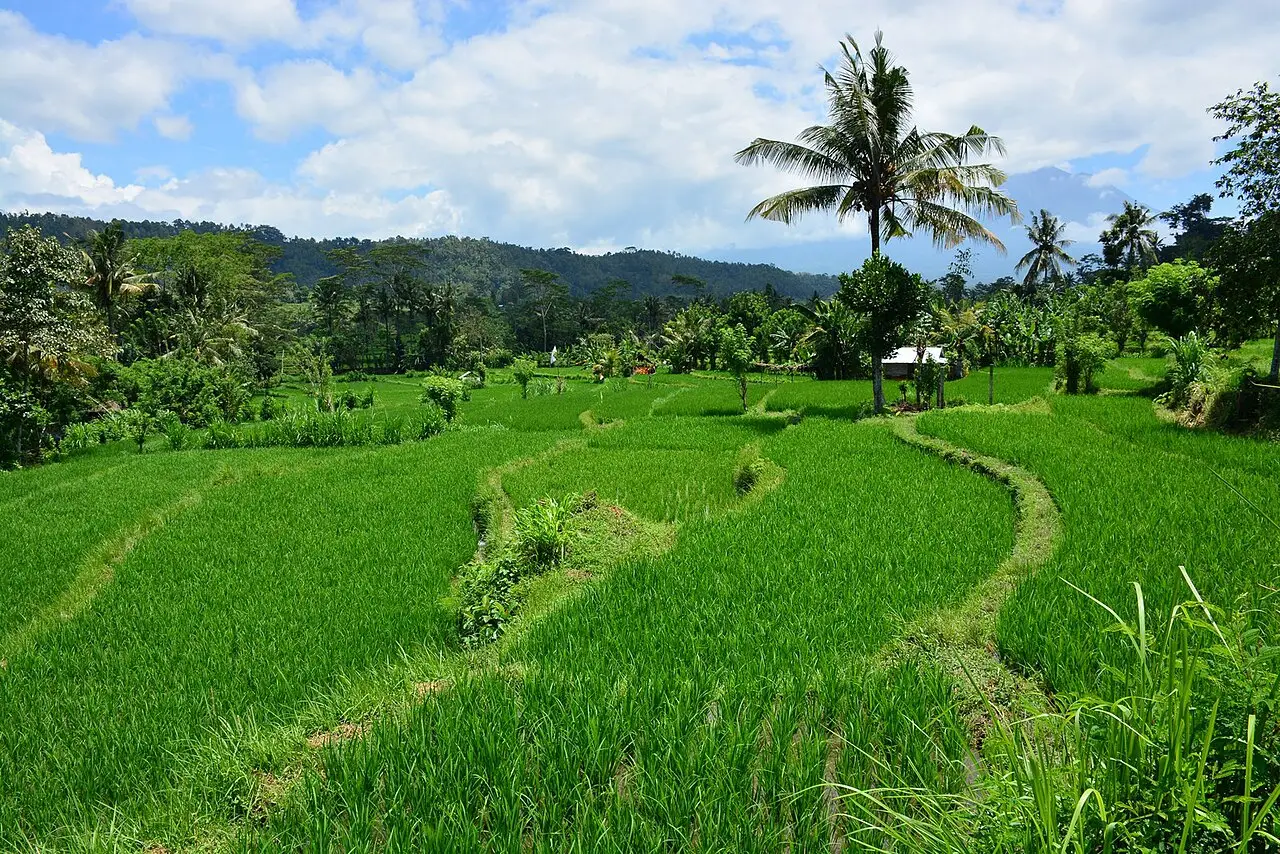
40 to 55 km to the east, 1.5 to 2 hours. Besakih is the island's largest temple complex, on the southern flank of Gunung Agung, reorganized since 2023 with parking set back and a mandatory shuttle; the Sidemen valley, just below, keeps terraced rice fields and songket weaving with far fewer crowds.
Nusa Penida
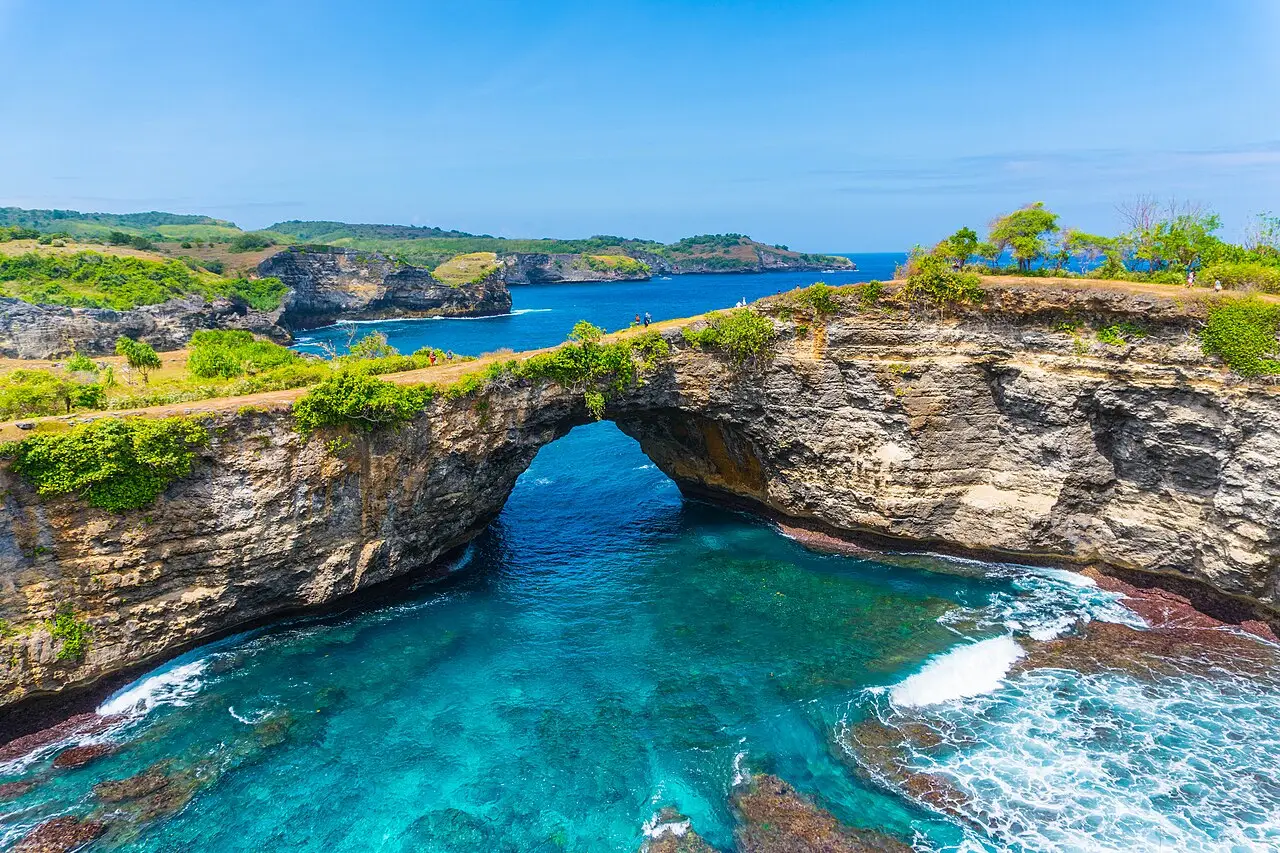
1 hour to 1 hour 15 minutes to the port of Sanur, plus 45 minutes by fast boat. The island has limestone cliffs, the Kelingking viewpoint, and diving with manta rays at Manta Point; the inland roads are poor, rough seas can cancel crossings, and a same-day round trip means leaving Ubud before 6:30am.
Where to begin
The Campuhan ridge walk, the palace and the monkey forest
Start at 6:30am on the Campuhan Ridge Walk, 2 km one way with no shade, and be back before 8:30am, when the heat and the tour groups arrive.
The Pakerisan valley
Hire a driver for the whole day (Rp 600,000 to 900,000, waiting time included) and leave at 8am, before traffic builds on the Tegallalang road.
Craft villages
Start in Mas, 5 km to the south, where the woodcarving workshops open early and let you watch the work with no obligation to buy.
Money
The currency is the Indonesian rupiah (IDR, Rp), around 16,500 to the dollar and 19,000 to the euro in 2026, and the largest note is Rp 100,000, which means carrying a thick wad in your pocket. Ubud is cheap for services and local food and expensive for anything imported: nasi campur at a warung costs Rp 25,000 to 50,000, a dish at a sit-down restaurant Rp 70,000 to 180,000, filter coffee at a warung Rp 15,000 to 25,000 and a cappuccino at a specialty café Rp 35,000 to 60,000. A large Bintang beer runs Rp 35,000 to 70,000, a drop-in yoga class Rp 130,000 to 180,000 and a one-hour massage Rp 100,000 to 250,000. A family homestay with breakfast costs Rp 250,000 to 500,000 a night, a midrange hotel Rp 700,000 to 1.5 million and a villa with a pool from Rp 1.5 million. Upscale restaurants list prices with ++: service and tax added at the end, not a typographic flourish. Cards work at hotels, museums and larger restaurants; warungs, markets, drivers and temples take cash or QRIS, the national QR code that already accepts foreign wallets in many places. ATMs cap withdrawals and charge a flat fee. Use a bank branch and avoid money changers on side streets. Tipping isn't required, but Rp 20,000 to 50,000 for a driver, guide or massage therapist is customary.
Getting there and around
The airport sits 35 km from Ubud, up to two hours away
I Gusti Ngurah Rai International Airport (DPS), in Tuban, lies 35–40 km to the south, and the drive to Ubud takes 1 hour 15 minutes to 2 hours depending on the time of day. There's no expressway, and the last stretch is always a two-lane road. You have three ways out. The official taxi counter in arrivals charges a fixed fare by zone, in the Rp 400,000 to 550,000 range, and a car booked through your hotel costs Rp 350,000 to 500,000. Grab and Gojek cost Rp 300,000 to 450,000, with pickup only in the area signposted for ride-hailing apps. There's no train: work on the first phase of the Denpasar light rail began in 2025, and the stage that would reach Gianyar and Ubud is the fourth, with no date. The 96.8 km Gilimanuk–Mengwi toll road is back out to tender in 2026 and would only reach this area around 2031. The Trans Metro Dewata public bus, free since 2020, was suspended between December 2024 and April 2025 because of budget cuts. It's running again on its six lines around Denpasar, but none of them reaches Ubud: don't plan your arrival around it.
The center is walkable, but the sidewalk doesn't help
Inside Ubud, the center is walkable. From the palace to the Monkey Forest is 15 minutes on foot, and to the Campuhan trail, 20. The sidewalk is another story: narrow, with loose covers over the gutter, and in places it disappears entirely. Where the sidewalk ends, walk facing the traffic. Grab and Gojek work for getting in and out of the village; in the center, drivers ask to meet you at spots on the edge, and refusals are common. For short hops, use the street-corner drivers with the transport sign, and agree on the price and waiting time before you get in. Renting a scooter costs Rp 70,000 to 120,000 a day and requires an international license with motorcycle (A) category and a helmet. Since April 2026 the Dharma Dewata task force has tightened checks on foreigners without valid papers, and travel insurance doesn't cover accidents without a valid license.
Safety
The main risk in Ubud is traffic. Motorcycles account for most injuries and deaths of foreigners on the island, and the mix of wet asphalt, gravel, blind curves and loose dogs explains almost every accident. Violent crime is rare and street theft is low, but bag snatchings by pairs on motorbikes do happen on empty streets at night. Wear your bag cross-body and on the side away from the road. Rabies has been endemic in Bali since 2008: a bite or scratch from a dog, cat or monkey means washing the wound with soap for 15 minutes and getting post-exposure treatment the same day; the regional reference is Prof. Ngoerah hospital in Denpasar, about an hour away, and smaller private clinics in Ubud handle minor cases. Dengue circulates year-round and peaks in the rainy season, spread by a daytime mosquito; wear repellent in the morning and late afternoon. Don't drink tap water; factory ice at established restaurants is safe. Very cheap cocktails made with unbottled arak have caused cases of methanol poisoning: ask for a sealed brand. Indonesia's drug laws are among the harshest in the world, with long sentences and the possibility of the death penalty for trafficking, and there's no tolerance for small amounts. Emergencies: 112 is the general number, 110 the police and 118 an ambulance.
Etiquette tips
Sarong and sash at every temple
Entering any temple area requires a sarong and a selendang sash tied at the waist, for every gender, and shoulders covered. The big sites lend you the piece with your ticket; bring your own if you plan to visit village temples, where there's no loan option.
Step around the offerings on the sidewalk
Canang sari offerings are set on the ground, on doorsteps, and on car hoods three times a day. Stepping on one by accident doesn't offend anyone, but go around it when you can, and never kick it or pick it up: it's removed by the sweeping, not by a passerby.
Don't stand above anyone praying, or the priest
During a ceremony, sit down and don't walk in front of worshippers; photograph from behind and without flash. Climbing a wall, temple steps, or a stone shrine for a photo is the infraction that has caused the most deportations in recent years and became an explicit target of the 2025 provincial rules.
Menstruation and recent bereavement bar entry to temples
Anyone who is menstruating or has had a recent death in the family may not enter a sacred area. The rule is posted on signs, and enforcement has tightened at Tirta Empul and other spring temples since 2025. Being turned away isn't personal, and arguing with the guardian changes nothing.
Use your right hand, and don't touch anyone's head
Give and receive money, food, and cards with your right hand; the left is used for hygiene and carries a dirty connotation. Don't touch anyone's head, not even a child's, and don't point your feet at people, altars, or offerings when you sit.
Repeated names aren't a coincidence
Wayan, Made, Nyoman, and Ketut mark birth order, first through fourth child, and start over at the fifth: half the people you meet will share the same name. Asking for a nickname or their village name solves it, and it's not rude.
Mistakes to avoid
Assuming Ubud is compact: some villas are 25 minutes by scooter from the palace
Assuming Ubud is a compact village. What the sites sell as Ubud sprawls over more than 10 km, and a villa advertised as central can be 25 minutes by scooter from the palace, on a road with no sidewalk or lighting.
The real trip takes 1 hour 15 minutes to 2 hours, not 40 minutes
Assuming 40 minutes from the airport because the distance is 35 km. That math doesn't hold: it's 1 hour 15 minutes to 2 hours under normal conditions, and more on the eve of Galungan, in July, or in any heavy rain. Book your departure flight with a half-day cushion.
Renting a scooter without a category A license
Renting a scooter without an international license with category A. Besides the fine at checkpoints, an accident without a valid license voids travel insurance, and the roads here have trucks, blind curves, loose dogs and gravel on the shoulder.
The monkeys grab what shines
Entering the Monkey Forest with a plastic bag, a visible water bottle, glasses on your head, or food in your pocket. The monkeys are wild, and the setting itself has trained them to grab anything shiny; a bite calls for immediate washing and a rabies assessment: rabies has been endemic on the island since 2008.
Not paying the fee before boarding
Not paying the Rp 150,000 fee before boarding. Payment is made on the official portal lovebali.baliprov.go.id and generates a QR code: there are spot checks at tourist sites, and without the code you pay on the spot, with a line.
Useful phrases
Om Swastyastu (ôm suás-ti-ástu)
A Balinese Hindu greeting, used on arrival and to open a speech; you answer with the same phrase
Matur suksma (matúr súk-sma)
Thank you in Balinese: the reply is suksma mewali, you're welcome
Terima kasih (terima cássi)
Thank you in Indonesian, understood everywhere; sama-sama is you're welcome
Permisi (permíssi)
Excuse me: to pass, to enter a shop or to interrupt someone
Berapa harganya? (berápa hargánha)
How much does it cost? The opening question at the art market, where the first number isn't the final price
Tidak pedas, ya (tídak pedás, iá)
No chili, please: sambal usually comes on the side, but the request avoids surprises in the lawar
Where to stay
- Jalan Hanoman and Padangtegal · A short first trip, everything on foot · $$: It is a ten-minute walk from the palace and the Monkey Forest, with a guesthouse and a scooter rental on every block; the main road, though, sits in stop-and-go traffic from 8am to 7pm.
- Penestanan · Quiet and monthly rentals, no car needed · $$: Atop a hundred-step staircase with no car access at the top, it gathers monthly rentals, yoga studios and small cafés, a ten-minute walk from downtown via the Campuhan ridge trail.
- Sayan and Kedewatan · Gorge views and a signature resort · $$$: It holds the village's most expensive resorts along the Ayung River gorge, built up since the late 1990s; in exchange, a car or motorbike is needed for anything beyond the hotel itself.
- Peliatan · Less shopfront, more village life · $: East of downtown, home to Bali's oldest dance troupes, with cheaper nightly rates than the center and gamelan classes open to guests.
$: homestay with breakfast, Rp250,000-500,000 · $$: mid-range hotel, Rp700,000-1.5 million · $$$: above Rp1.5 million a night, a villa with pool · 2026-09-28
Districts
Center (Jalan Raya Ubud)
The stretch of Jalan Raya Ubud around the junction with Jalan Monkey Forest holds Puri Saren Agung, the art market and Pura Taman Saraswati, plus banks, travel agencies, restaurants and the village's biggest traffic knot. It suits travelers who want everything on foot and don't mind the bustle. There's nowhere to park, so walk the block, ideally between 6am and 9am.
Padangtegal and Jalan Monkey Forest
The street that runs downhill from the center to the monkey forest is the commercial spine: cafés, clothing shops, yoga studios, and money changers. The customary village of Padangtegal owns and manages the forest, and the admission money funds the local temple and school.
Jalan Hanoman
Parallel to Monkey Forest Road, narrower and less touristy, with local-price warungs, woodcarving workshops, and the sanctuary's south entrance. A good base for anyone who wants to be near the center without sleeping in the noise.
Campuhan and Sanggingan
West of the bridge, where the two Wos rivers meet. Here are Pura Gunung Lebah, the Blanco Museum, the Neka Museum, and the start of the Campuhan Ridge Walk; Jalan Raya Sanggingan climbs past galleries and restaurants that face the valley.
Penestanan
A village atop a staircase of about 100 steps off the Campuhan road, with no car access at the top. Birthplace of the Young Artists movement in the 1960s, today it's home to monthly rentals, yoga, and small cafés.
Nyuh Kuning
On the other side of the monkey forest, to the south: a woodcarvers' village with a soccer field, a traditional gate, and quiet streets. It's 15 minutes on foot from the center by cutting through the sanctuary, which only works during opening hours.
Peliatan
To the east, home to Bali's oldest gamelan and legong troupes, including the Gunung Sari group, and to the ARMA museum. It has more village life and less shop-window polish than the center, with dance and gamelan classes open to visitors.
Sayan and Kedewatan
Northwest, on the edge of the Ayung river gorge, where the expensive resorts have settled since the late 1980s. The views are of enclosed valley and forest; the trade-off is depending on a car for any trip.
History
8th c. · Markandeya at Campuhan
Tradition traces the place's origin to the Javanese sage Rsi Markandeya, said to have meditated at the confluence of the two Wos rivers and built the Pura Gunung Lebah there. The name Ubud is said to come from ubad, Balinese for medicine, after the medicinal plants along the riverbanks.
9th–11th c. · Pejeng, Bedulu, and the stone
The Warmadewa dynasty rules the Pakerisan River valley, 5 to 12 km to the east. From this period come Goa Gajah (11th c.) and the ten candi carved into the cliff face at Gunung Kawi; the Yeh Pulu reliefs, near Goa Gajah, are later, from the 14th century, and the bronze drum known as the Moon of Pejeng, about 1.86 m across, is much older and of the Dong Son type.
1343 · The Majapahit conquest
Javanese forces led, according to tradition, by Gajah Mada defeat King Dalem Bedaulu at Bedulu. They bring the court, the kawi script, and the Javanese caste system, which reshape the island's ritual and political life.
18th c. · The Ubud puri
A branch of the house of Sukawati, tied to the Klungkung dynasty, settles at the crossroads where the Puri Saren Agung now stands. Ubud becomes a minor principality under Gianyar, sustained by rice, ritual labor, and temple commissions.
1900–1908 · Bali under Dutch rule
Gianyar accepts Dutch protectorate status in 1900 to escape pressure from neighboring kingdoms. The puputan of Badung, in 1906, and of Klungkung, in 1908, marches in which the court advanced against the troops until it was annihilated, end the armed resistance.
1917 · The January earthquake
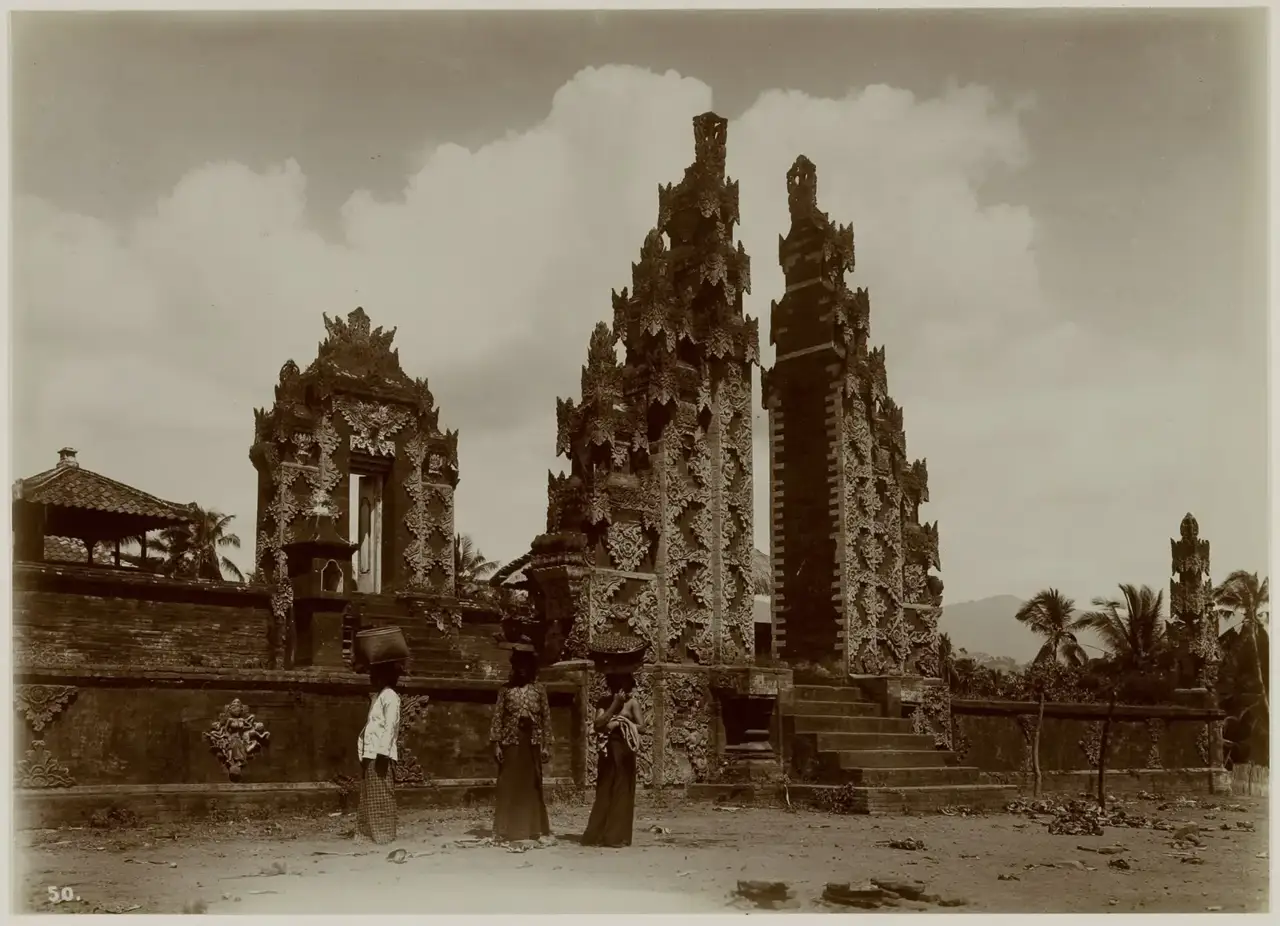
A strong tremor on January 21 kills about 1,500 people in Bali and brings down temples and princely residences, Ubud included. The following decade's reconstruction defines much of the courtyards and gateways seen today at Puri Saren.
1927–1936 · Spies, Bonnet, and the Pita Maha
German painter Walter Spies moves to Campuhan in 1928, and Dutchman Rudolf Bonnet arrives in 1929. With Prince Cokorda Gde Agung Sukawati, they found the Pita Maha association in 1936, which brings together more than a hundred artists and shifts Balinese painting from temple commission to the piece sold on canvas.
1963–1966 · The volcano and the massacres
Gunung Agung erupts in February 1963 and kills between 1,100 and 1,700 people, with lahars that devastate the east of the island. After September 30, 1965, the anticommunist purge kills about 80,000 Balinese, close to 5% of the population: a subject still rarely discussed in public.
1956–1996 · The museums and the asphalt
The Puri Lukisan Museum opens in 1956, the Neka in 1982, and the ARMA in 1996, forming the circuit that sustains the workshops of Ubud, Mas, and Batuan. In the 1970s and 1980s the first backpacker homestays arrive, along with paved roads to Tampaksiring and Kintamani.
2002–2010 · Bombings, downturn, and Eat Pray Love
The Kuta bombings on October 12, 2002 kill 202 people and empty the island for two years; a second attack occurs in 2005. Elizabeth Gilbert's book (2006) and the film with Julia Roberts (2010) put Ubud back on the map as a wellness destination and trigger a villa-building boom in Penestanan and Sayan.
2020–2026 · Closure, return, and the tourist fee
Bali closes to foreigners from April 2020 to February 2022, and Ubud empties out almost completely. Since February 14, 2024, a tourist fee of Rp 150,000 applies to every foreign visitor; governor's circulars in 2025 tighten temple conduct rules and ban single-use plastics, and the official target for 2026 is about 6.6 million international visitors to the island.
 AI illustration
Complete history
The story starts with water
The history of Ubud begins in the water. The gorges of the Ayung, Wos, Petanu and Pakerisan rivers cut through the south flank of the volcanoes and leave between them ridges of fertile volcanic soil, good for rice but dependent on canals. Since at least the 9th century, bronze and stone inscriptions record irrigation associations, the subak, which divide the water by calendar lottery and settle disputes in assembly, with a water temple at every node of the system. This social engineering predates any court and explains why Balinese religion is inseparable from rice: Unesco recognized the ensemble in 2012 as a cultural landscape, including the Pakerisan valley, a few kilometers from Ubud. In the same valley are Goa Gajah, Yeh Pulu, Gunung Kawi and Tirta Empul, all linked to the kingdoms of Pejeng and Bedulu that dominated the region between the 9th and 14th centuries.
Majapahit arrives in 1343
In 1343 the Majapahit expedition defeats Dalem Bedaulu and Bali comes to be ruled by an aristocracy of Javanese origin, first in Samprangan, then in Gelgel and, starting in the 17th century, in Klungkung. When central power fragments, each valley becomes a smaller kingdom, and it's from that fragmentation that Ubud is born: a branch of the house of Sukawati sets up its puri at the crossing of the rice trails in the 18th century, under Gianyar's orbit. The local arrangement held even after the Dutch arrived: Gianyar preferred the protectorate in 1900 to being swallowed by its neighbors, and so escaped the bloody puputan of Badung, in 1906, and of Klungkung, in 1908. Ubud's family came out of the conquest with its ritual prestige intact and no army, which pushed it into the role it still plays today: patron of temples, festivals and artists.
The turning point is the 1930s
The turning point is the 1930s. After the 1917 earthquake, which forced half the island to rebuild, Ubud welcomed Walter Spies in 1928 and Rudolf Bonnet in 1929, and with them a foreign market for Balinese painting. The Pita Maha association, founded in 1936 with Prince Cokorda Gde Agung Sukawati, organized production, selected works and negotiated prices; the result was a new style, with scenes of harvest, market and forest in place of the mythological temple narratives. In the same period kecak took its form as a performance, Margaret Mead and Gregory Bateson filmed and photographed rituals between 1936 and 1939, and Miguel Covarrubias published Island of Bali in 1937. The island's international image comes from this period, from the 1917 earthquake to the end of the 1930s, built jointly by Balinese and foreigners, and sold ever since.
The 1963 eruption and the 1965–1966 purge marked the 20th century
The 1960s brought two tragedies: the 1963 eruption of Gunung Agung killed more than a thousand people and destroyed crops in the east, and two years later the anticommunist purge of 1965 and 1966 killed about 80,000 Balinese, with lists drawn up inside the villages themselves. Mass tourism arrived soon after, but the 1970s master plan, funded by international consultants, concentrated the big hotels in Nusa Dua and left Ubud to small guesthouses. That set the format here: homestays in the family compound, studios at the front of the house, guesthouses run by the people next door. The museums came to give this circuit a backbone (Puri Lukisan in 1956, Neka in 1982, ARMA in 1996), and the neighboring villages specialized, with woodcarving in Mas, painting in Batuan and silver in Celuk.
Today's tourism has outgrown the island's scale
Ubud's tourism has grown faster than the village can absorb. After the bombings of 2002 and 2005 and the 2010s revival, driven by Elizabeth Gilbert's book and the 2010 film, Ubud went from rice village to villa district: land prices multiplied, rice paddies became subdivisions, and the island loses somewhere between 500 and 1,000 hectares of farmland a year. The pandemic halted everything between 2020 and 2022 and served as a test: with no tourists, many went back to farming for a few months. Since reopening, visitor numbers have surpassed pre-pandemic levels, and official responses have come one after another: a Rp 150,000 fee since February 2024, 2025 provincial circulars on conduct in temples and on disposable plastic, talk of a moratorium on new hotels, and long-term infrastructure projects like the Denpasar light rail and the Gilimanuk–Mengwi highway, whose link to the Ubud area isn't expected before the early 2030s. Meanwhile, the daily bottleneck remains the two-lane road that runs through the village.
Lempad, the sculptor of the palace gates, also designed Pura Taman Saraswati, the temple with the lotus pond, in the early 1950s.
The image of Bali still sold today was put together starting in the 1930s, by Balinese and foreign artists in Ubud.
Geography and shape of the city
The gorges and the ridges
Ubud sits at about 200 m above sea level (the district ranges from about 150 m in Peliatan to over 400 m in Kedewatan and Tegallalang), on the southern flank of the central volcanic range: Gunung Batur, 1,717 m, is 25 km to the north, and Gunung Agung, 3,031 m, about 40 km to the northeast. The terrain is a succession of parallel gorges cut north–south by the Ayung, Wos, Petanu and Pakerisan rivers, producing narrow ridges between walls 30 to 80 m high.
Why there's no grid
Because the river gorges run north to south, the roads follow the same direction, crossing sideways requires a bridge and there is no grid. Jalan Raya Ubud, the main east–west street, is the exception, and it carries practically all the traffic. The Balinese compass points are kaja (toward the mountain) and kelod (toward the sea), and they order every house compound, with the family temple in the kaja-kangin corner, to the northeast.
Rain, rice and the subak
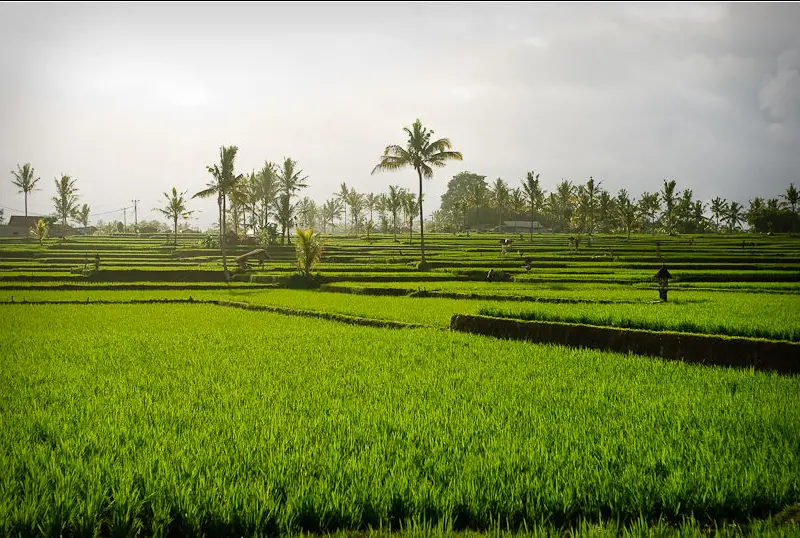
The climate is tropical monsoon, with 26 to 28 °C year round, high humidity and more than 2,000 mm of rain concentrated between November and March. Rice is grown in terraces irrigated by the subak system, and converting those terraces into villas and parking lots has been the main change to the landscape over the past two decades.
Culture
Ubud and the pawukon, the 210-day Balinese calendar
Ubud's cultural life follows the calendar, not an events schedule. The Balinese pawukon has 210 days and sets the odalan, each temple's anniversary, which comes around every cycle: since the district has hundreds of temples, family, village, and subak ones, there's a ceremony happening somewhere every day. Every village keeps three required temples (pura puseh, pura desa, and pura dalem) and a banjar, the neighborhood association that calls collective work, organizes weddings and cremations, and rehearses gamelan at night. Much of what a visitor sees as a show began as ritual: the barong and the rangda enact a balance, not a victory, and the wayang kulit casts shadows in front of an oil lamp for liturgical reasons first and theatrical ones second.
Gamelan and paired tuning
The music is gamelan, above all gong kebyar, which emerged in the north of the island around 1915, with instruments tuned in pairs set slightly apart, which produces the characteristic shimmer. Peliatan is home to historic companies, among them Gunung Sari, which toured Europe and the United States in the 1950s and trained several generations of legong dancers. Kecak, the male chorus without instruments that many people take to be ancient, got its current form in the 1930s, with Walter Spies involved, out of the sanghyang trance. There's a paid performance almost every night at 7:30pm, at the palace, at Pura Taman Saraswati, at ARMA, and in Peliatan; tickets run Rp 100,000 to 150,000, and the programs alternate legong, barong, kecak, and Mahabharata.
Art is still a village industry
The visual arts are still a local industry: Ubud and Batuan paint, Mas carves wood, Celuk works silver and Tegallalang turns out handicrafts in bulk for export. Since 2004 the town has hosted the Ubud Writers & Readers Festival, founded by Janet DeNeefe in response to the collapse of tourism after the 2002 bombings, and since 2015 the Ubud Food Festival. The newest layer is wellness: dozens of yoga studios (the Yoga Barn has been running since 2007), retreats, traditional medicine and a large community of remote workers, with visible effects on land prices, menus and traffic on Jalan Raya.
In the barong dance, the fight between the barong and the rangda has no winner: it stages the balance between the two forces, because at its origin it's a rite, not a show.
Festivals and events
Nyepi (March)
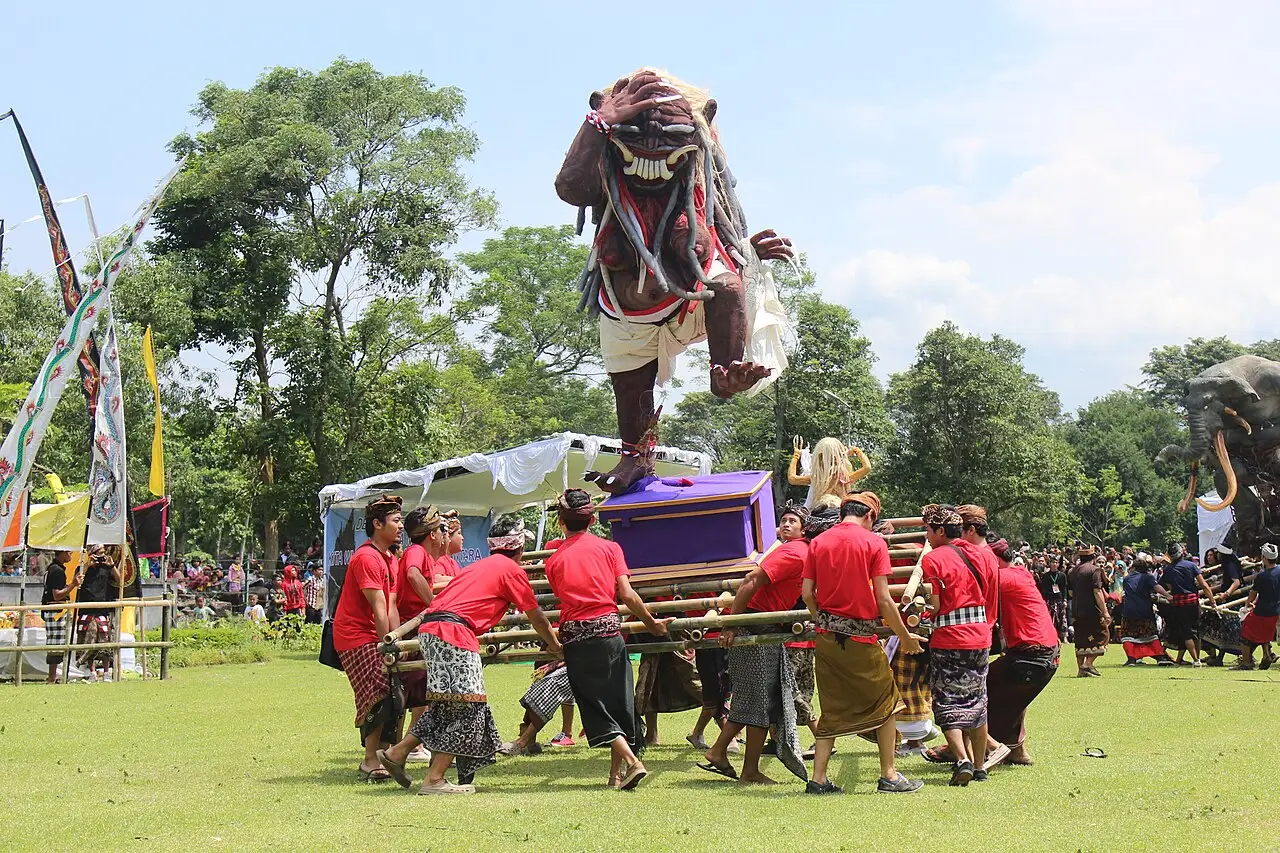
The Saka New Year shuts down the whole island for 24 hours: no leaving the house, no lights, no work, no travel, with the airport closed and mobile internet switched off since 2018. The night before, pengrupukan fills the streets with ogoh-ogoh, giant demon effigies burned at the end of the night; hotels stay open, but no one leaves the grounds, and the pecalang enforce it.
Galungan and Kuningan (every 210 days)
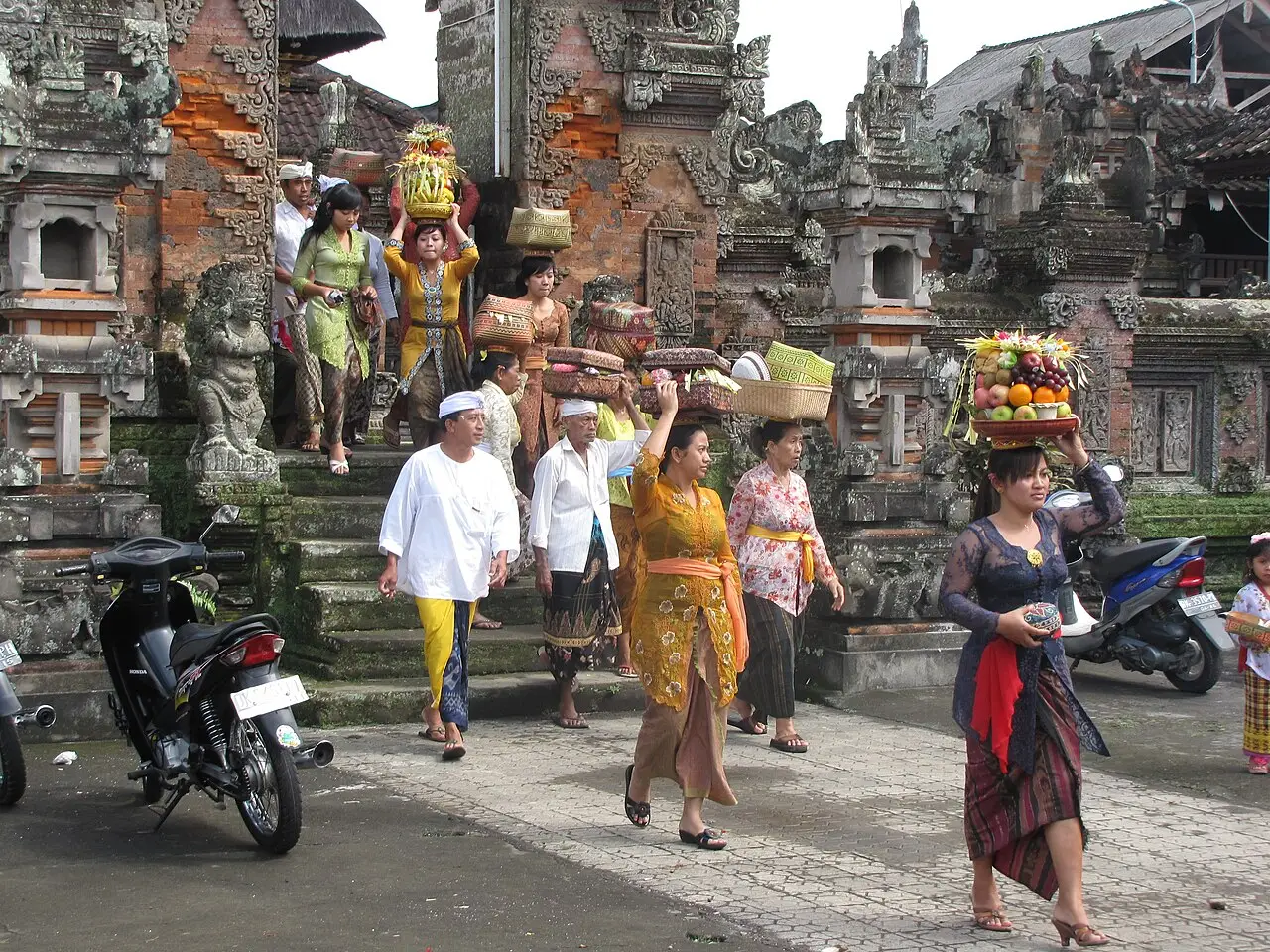
The biggest festival on the Balinese calendar marks the victory of dharma and the ancestors' visit to family homes, and Kuningan, ten days later, marks their departure. Every house raises a penjor, the curved, decorated bamboo pole, and families move between temples for days: shops cut their hours and the roads get crowded.
Temple odalan (every 210 days)
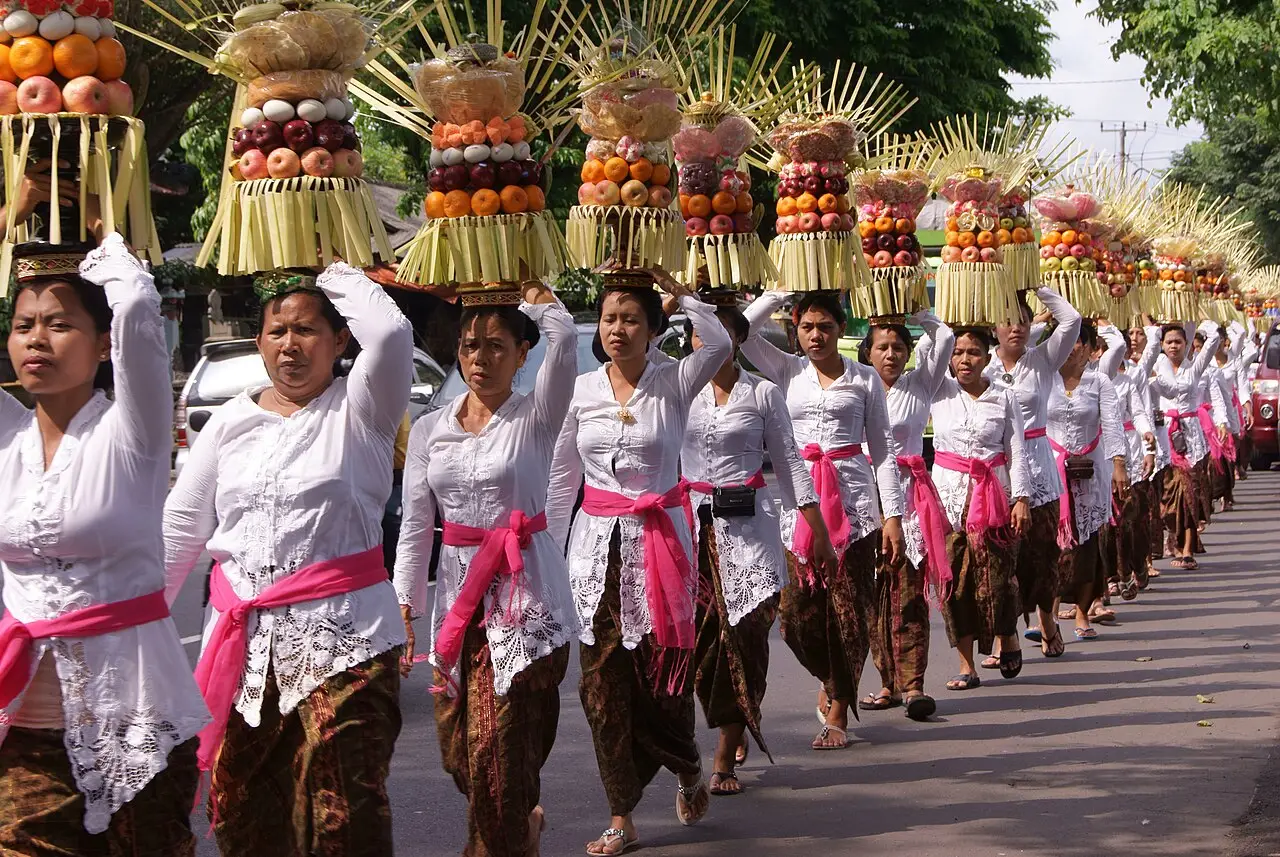
Every temple marks its consecration anniversary with a procession, offerings stacked on tall trays, gamelan, and sometimes masked dance into the early morning. Visitors can watch in a sarong, seated behind the worshippers, without entering the inner area or walking in front of anyone praying.
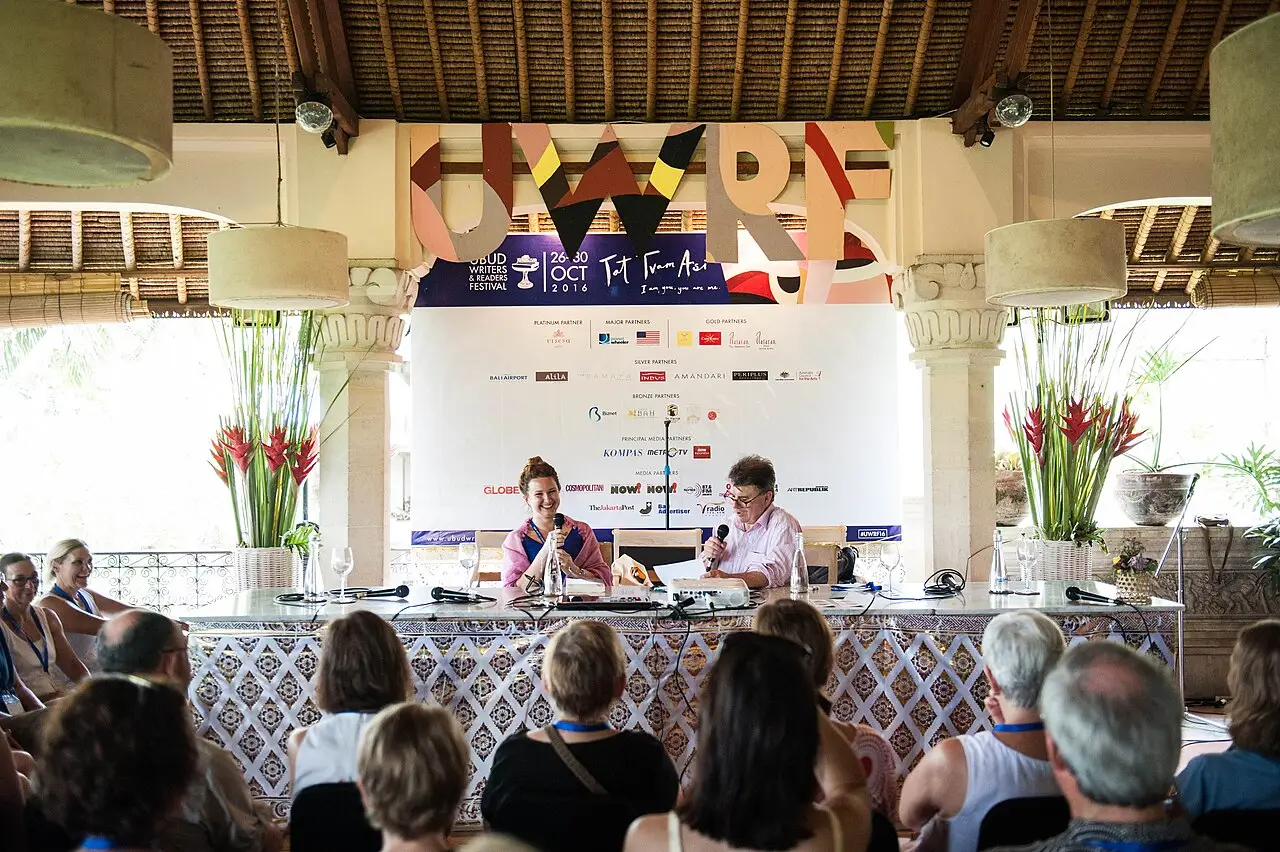
Ubud Writers & Readers Festival (October)
Founded in 2004, it brings together Indonesian and international authors for talks, workshops, and panels spread across hotels, museums, and temples in Ubud over five days. The 2026 edition is set for October 21 to 25, with a day pass or a full-festival pass.
 AI illustration
Ubud Food Festival and BaliSpirit Festival
The Food Festival, since 2015, takes up a weekend between May and June with live cooking, a farmers market and debates on the island's agriculture. BaliSpirit, created in 2008, brings together yoga, dance and music for five days and has changed dates a few times: check that year's calendar before buying a ticket.
Books and films
Island of Bali, by Miguel Covarrubias (1937)
The account by the Mexican artist who lived on the island in the 1930s describes village, calendar, caste and ceremony in detail that can still be checked in the field, and it helped create the international image that Bali sells to this day.
Bali: A Paradise Created, by Adrian Vickers (1989)
The historical counterpoint: it shows how the idea of paradise was assembled by the Dutch, foreign artists, and the Indonesian state itself, and covers what usually gets left out, including the 1965 massacres.
Eat, Pray, Love, by Elizabeth Gilbert (2006), and the 2010 film
It doesn't explain historical Bali, but it explains economic Ubud: it's the direct source of the wellness influx, the land prices in Penestanan, and half the menus on Jalan Hanoman.
Frequently asked questions
Ubud (Bali): what's the currency, and what's it worth?
The currency is the Indonesian rupiah (IDR, Rp), around 16,500 to the dollar and 19,000 to the euro in 2026, and the largest note is Rp 100,000, which means walking around with a thick wad in your pocket.
Ubud (Bali): what should you wear to enter a temple?
Entering any temple area requires a sarong and a selendang sash tied at the waist, for all genders, with shoulders covered.
Ubud (Bali): what's the biggest risk for visitors?
Motorbikes account for most foreign visitor injuries and deaths on the island, and the combination of wet asphalt, gravel, blind curves, and loose dogs explains nearly every accident.
Ubud (Bali): what is babi guling?
Suckling pig seasoned with base genep (the paste of ginger, turmeric, galangal, garlic, chili, and dried shrimp) and spit-roasted for hours.
Ubud (Bali): what time should you do the Campuhan Ridge Walk?
Start at 6:30am on the Campuhan Ridge Walk, 2 km one way with no shade, and be back before 8:30am, when the heat and the groups arrive.
Other cities in the country
Indonesia ↗- Days
- 1–2
- When
- Jun–Sep
- Per person/day
- Average 800,000–1,500,000 IDRMid-range · per person/day
Cost scope
Per person per day: accommodation, meals, urban transport, visits and a small allowance for extras. Flights excluded; larger purchases vary. Editorial estimate, not a quote.