Vietnam
Hanoi
Phở, bún chả and the Old Quarter around the lake
Days Start with the basic programme and choose extensions for the time you have.
How the guide reaches this number
A third goes to West Lake, the river and a slower pace, and a fourth pays off more in Ninh Bình or Cát Bà than inside the city. Don't come looking for clear sidewalks, quiet or flexible hours, because the sidewalk is a kitchen and a parking lot and each dish is served only at certain times. With just one day, have phở at 7am, walk around the lake to Ngọc Sơn Temple and head up through the Hàng streets to Đồng Xuân Market. Have bún chả for lunch before 2pm, spend the afternoon at the Temple of Literature and finish on the corner of Tạ Hiện at dusk, with bia hơi. Two things disappoint: the metro, at 21.6 km, doesn't go near what you want to see, and from November to March the pollution turns the sky white.
2–3
When October and November: 22–28 °C, little rain; October has the clearest sky
How the guide reaches this number
Hanoi has four real seasons, unlike the south of the country, and the best window is October and November: 22 to 28 °C and little rain, with October as the most stable, clearest-sky month, and November with the air already starting to worsen. September is a transition, because it still falls within typhoon season, which runs from July to September. From May to August the problem is the heat, 30 to 38 °C, with late-afternoon monsoon rain; July is the month I'd avoid. Winter, from December to February, sits between 13 and 20 °C, gray, with fine drizzle (mưa phùn) and humidity that calls for a coat. March and April bring nồm, with humidity above 90%, walls and floors sweating, and laundry that won't dry: a shirt hung for two days stays wet. High season follows that calendar, and prices peak around the Western New Year; at Tết, between late January and mid-February, hotels don't get pricier, but many restaurants and shops close for several days. Air pollution has its own calendar: it worsens from November to March, with days at an index above 150, and anyone with a respiratory condition should bring a mask.
Per person/day US$25 to 45 a day, covering simple lodging, street food, and getting around town.
How the guide reaches this number
Per person per day: accommodation, meals, urban transport, visits and a small allowance for extras. Flights excluded; larger purchases vary. Editorial estimate, not a quote.
 What Nilo thinks
Two days cover the center: Hoàn Kiếm Lake, the Old Quarter, Ba Đình, the citadel, the Temple of Literature and Hỏa Lò Prison. A third goes to West Lake, the river and a slower pace, and a fourth pays off more in Ninh Bình or Cát Bà than inside the city. Don't come looking for clear sidewalks, quiet or flexible hours, because the sidewalk is a kitchen and a parking lot and each dish is served only at certain times. With just one day, have phở at 7am, walk around the lake to Ngọc Sơn Temple and head up through the Hàng streets to Đồng Xuân Market. Have bún chả for lunch before 2pm, spend the afternoon at the Temple of Literature and finish on the corner of Tạ Hiện at dusk, with bia hơi. Two things disappoint: the metro, at 21.6 km, doesn't go near what you want to see, and from November to March the pollution turns the sky white.Hanoi revolves around Hoàn Kiếm Lake, and north of it the 36 guild streets of the Old Quarter still bear the names of the trades that have occupied them since the 15th century, like silver on Hàng Bạc and silk on Hàng Gai. Walk among tube houses with three-meter fronts to the Imperial Citadel of Thăng Long and the Temple of Literature, founded in 1070. Set aside a weekday morning for Hồ Chí Minh's mausoleum, on Ba Đình Square. Food runs on a schedule: phở for breakfast, charcoal-grilled bún chả until 2pm, bún ốc in mid-afternoon and, at dusk, bia hơi on a twenty-centimeter plastic stool facing the street. The sidewalk is where people cook, fix motorbikes and eat dinner, so anyone who wants to walk steps down into the street. Come in October or November, with 22 to 28 °C and little rain, preferably in October, before the winter air worsens, and save the weekend for the lake when it's closed to traffic.
Quick facts
- Population
- about 8.8 million in the municipality (2025); about 19.8 million in the capital metropolitan region
- Founding
- Cổ Loa citadel in the 3rd century BC; capital since 1010, when it was named Thăng Long
- Country and region
- Vietnam, Red River delta, northern part of the country
- Language
- Vietnamese; functional English in hotels, cafés and agencies, little beyond them
- Currency
- Vietnamese dong (VND); about 26,000 VND per dollar in 2026
- Time zone
- UTC+7, no daylight saving time
- Best time to visit
- October and November: 22–28 °C, little rain; October has the clearest sky
- Average daily cost
- US$25 to 45 a day, covering simple lodging, street food, and getting around town.
When to go
October and November: 22–28 °C, little rain; October has the clearest sky
How the year changes
Hanoi has four real seasons, unlike the south of the country, and the best window is October and November: 22 to 28 °C and little rain, with October as the most stable, clearest-sky month, and November with the air already starting to worsen. September is a transition, because it still falls within typhoon season, which runs from July to September. From May to August the problem is the heat, 30 to 38 °C, with late-afternoon monsoon rain; July is the month I'd avoid. Winter, from December to February, sits between 13 and 20 °C, gray, with fine drizzle (mưa phùn) and humidity that calls for a coat. March and April bring nồm, with humidity above 90%, walls and floors sweating, and laundry that won't dry: a shirt hung for two days stays wet. High season follows that calendar, and prices peak around the Western New Year; at Tết, between late January and mid-February, hotels don't get pricier, but many restaurants and shops close for several days. Air pollution has its own calendar: it worsens from November to March, with days at an index above 150, and anyone with a respiratory condition should bring a mask.
Nilo's tips
To eat bún chả, sit down before 2pm
The charcoal bún chả stalls only serve until early afternoon, and after 2pm the smoke from the grill has already cleared from the sidewalk. Half of Hanoi's food exists only within a time window: xôi xéo on a banana leaf before nine in the morning, for 15,000 to 25,000 VND, phở at breakfast, bún ốc in mid-afternoon, and bia hơi from the end of the day on. Build the rest of your day around these hours.
Mausoleum: Tuesday morning, not the weekend
On weekends, the line for Hồ Chí Minh's mausoleum is full of entire school field trips. It only opens on Tuesday, Wednesday, Thursday, Saturday, and Sunday mornings. Get to Ba Đình Square before 8am, on a weekday, with shoulders and knees covered and no hat. Keep your hands out of your pockets; inside, no talking and no photos. Check the date before you leave the hotel, because the annual maintenance closure lasts for weeks, usually between June and August.
From the airport, bus 86 costs 45,000 VND
It covers the same route as the app, which charges 200,000 to 300,000 VND, and with little luggage takes the same 40 to 60 minutes. Nội Bài is 27 km from downtown, and express bus 86 leaves the terminal, passes Hoàn Kiếm Lake, and arrives at the train station. Lines 7, 17, and 90 charge even less, but they fill up and take longer; save them for when you're traveling without a bag.
From Friday night to Sunday, the lake is pedestrians only
It's the only time you cross the streets around Hoàn Kiếm Lake without negotiating with a single motorbike. They close to vehicles from Friday night to Sunday night, and group exercise, badminton, and food stalls take over the pavement. Save your walk through the Old Quarter for that weekend and leave the mausoleum, citadel, and museums for weekdays.
Withdraw once: each withdrawal costs up to 50,000 VND
The ATM charges 20,000 to 50,000 VND per withdrawal. Take out a large amount at once instead of repeating the operation on consecutive days. Carry small bills: a glass of bia hơi costs 5,000 to 10,000 VND, and the stall won't have change for a big note. The QR code hanging off the umbrella settles everything between Vietnamese. For you, it almost never does; on the street, use cash.
On train street, enter through a licensed café
The stretch of Train Street between Trần Phú and Phùng Hưng can now be visited only from the licensed cafés along the tracks. Take a seat at one, order a cà phê nâu đá and ask at the counter when the next train is due. Anyone standing on the tracks gets fined and runs a real risk.
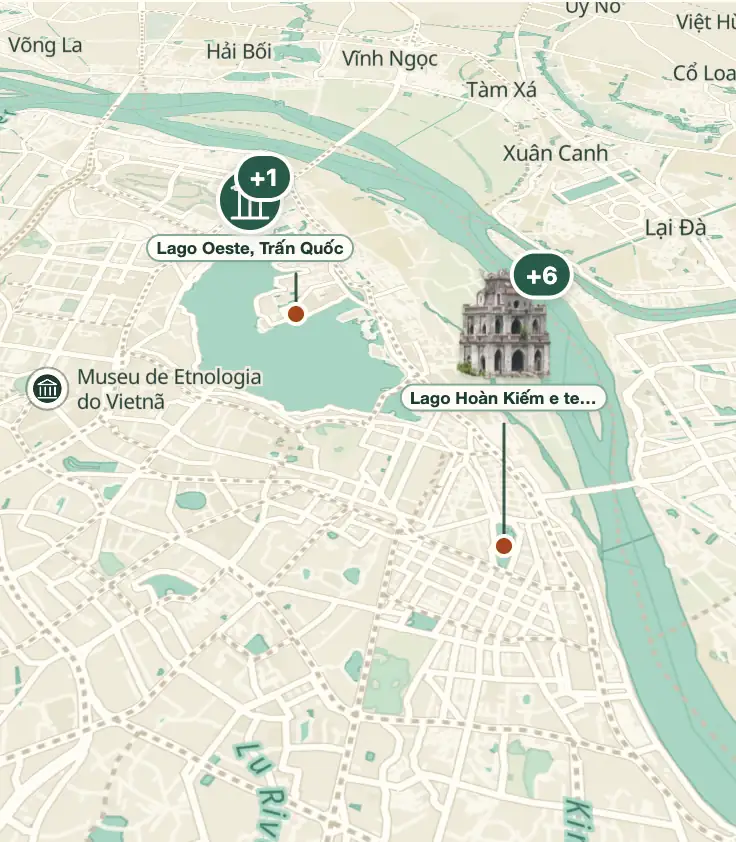
Explore the map
© OpenStreetMap · OpenFreeMap · © OpenMapTiles
Explore the map, read about the other places and plan your travel days in the app.
Open the appWhat to see
Hanoi: The river, the dikes, and the lakes
Hanoi grew on the right bank of the Red River, in a flat delta full of lakes, and the center for visitors is Hoàn Kiếm Lake. Around it sit the Old Quarter, the hotels, the agencies, the bars, and most of the city's dollar-priced listings.
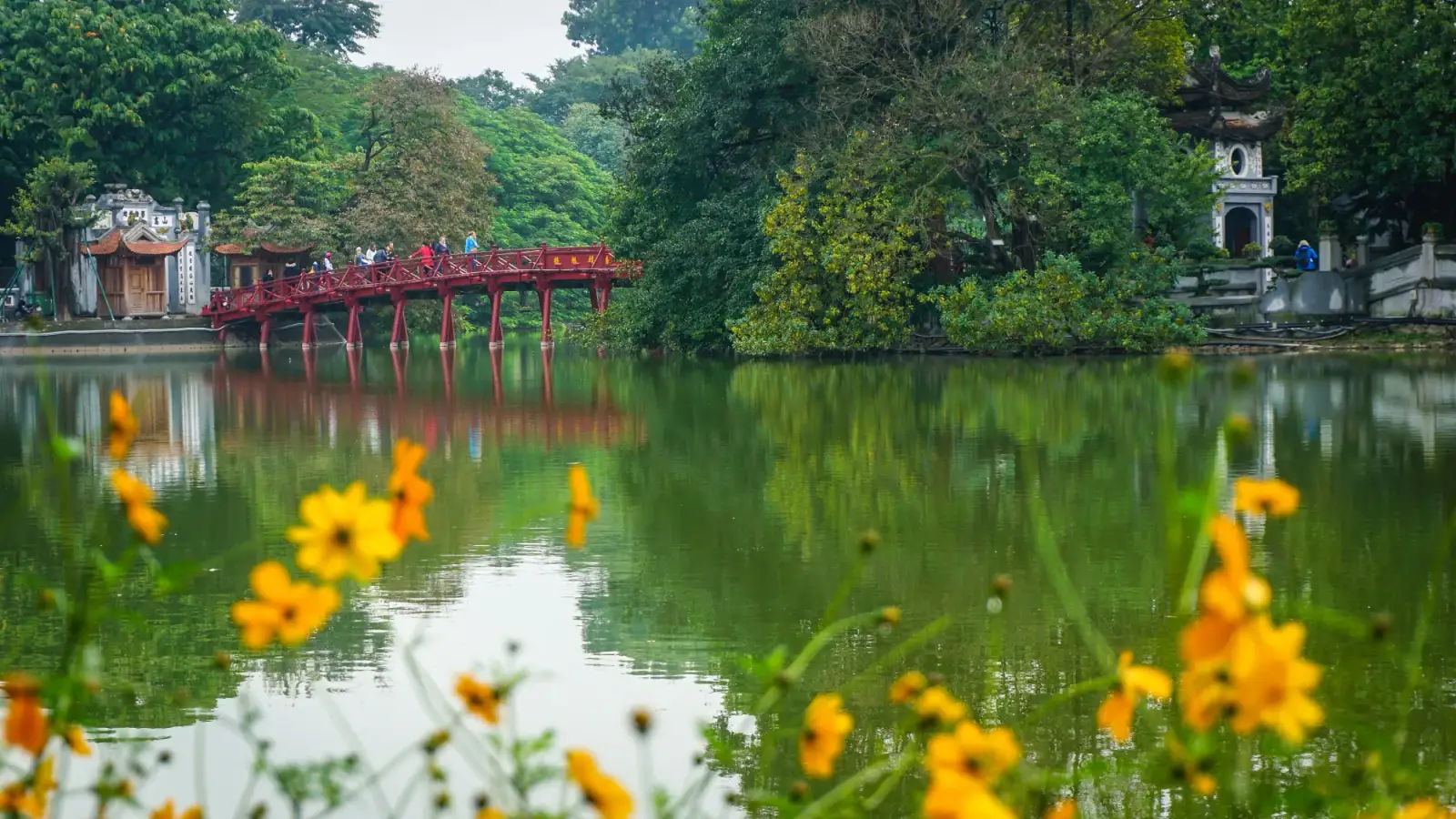
Hoàn Kiếm Lake and Ngọc Sơn Temple
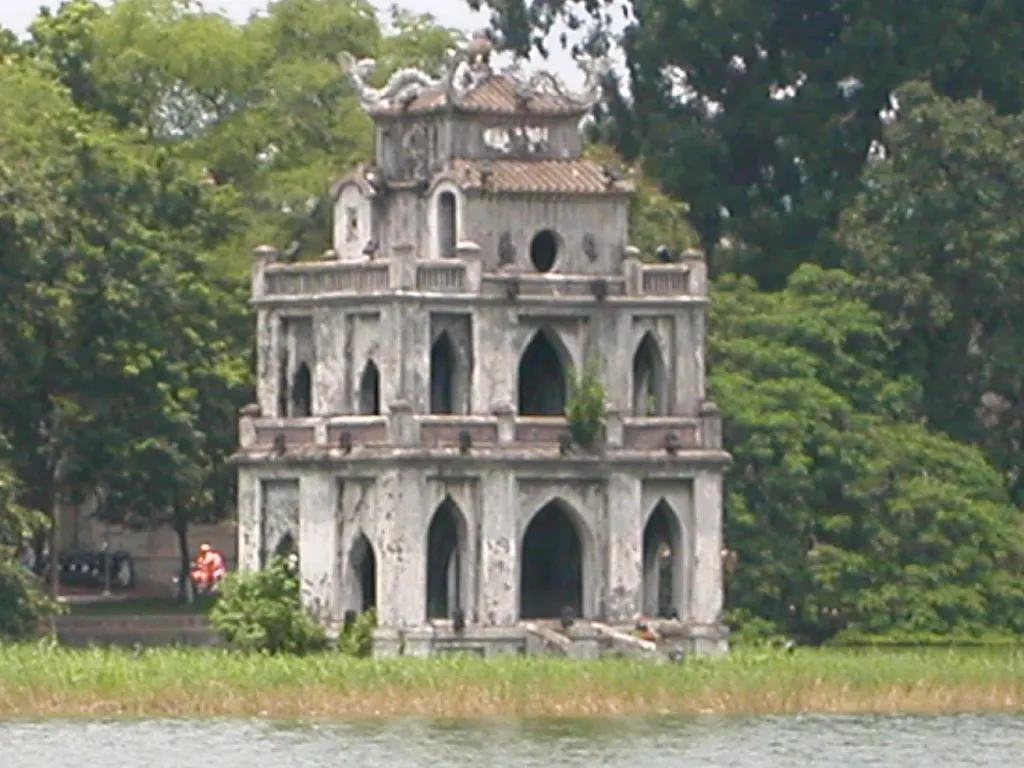
A 12-hectare lake in the center, with the Turtle Tower on a small island and the 19th-century Ngọc Sơn Temple, reached by the red Thê Húc bridge. The streets around it close to vehicles from Friday night to Sunday night.
In the middle of the city, Turtle Tower sits on a small islet within the lake's 12 hectares of water, and Thê Húc Bridge leads to the 19th-century Ngọc Sơn Temple. The surrounding area is closed to vehicles from Friday evening through Sunday evening.
Check access
Old Quarter
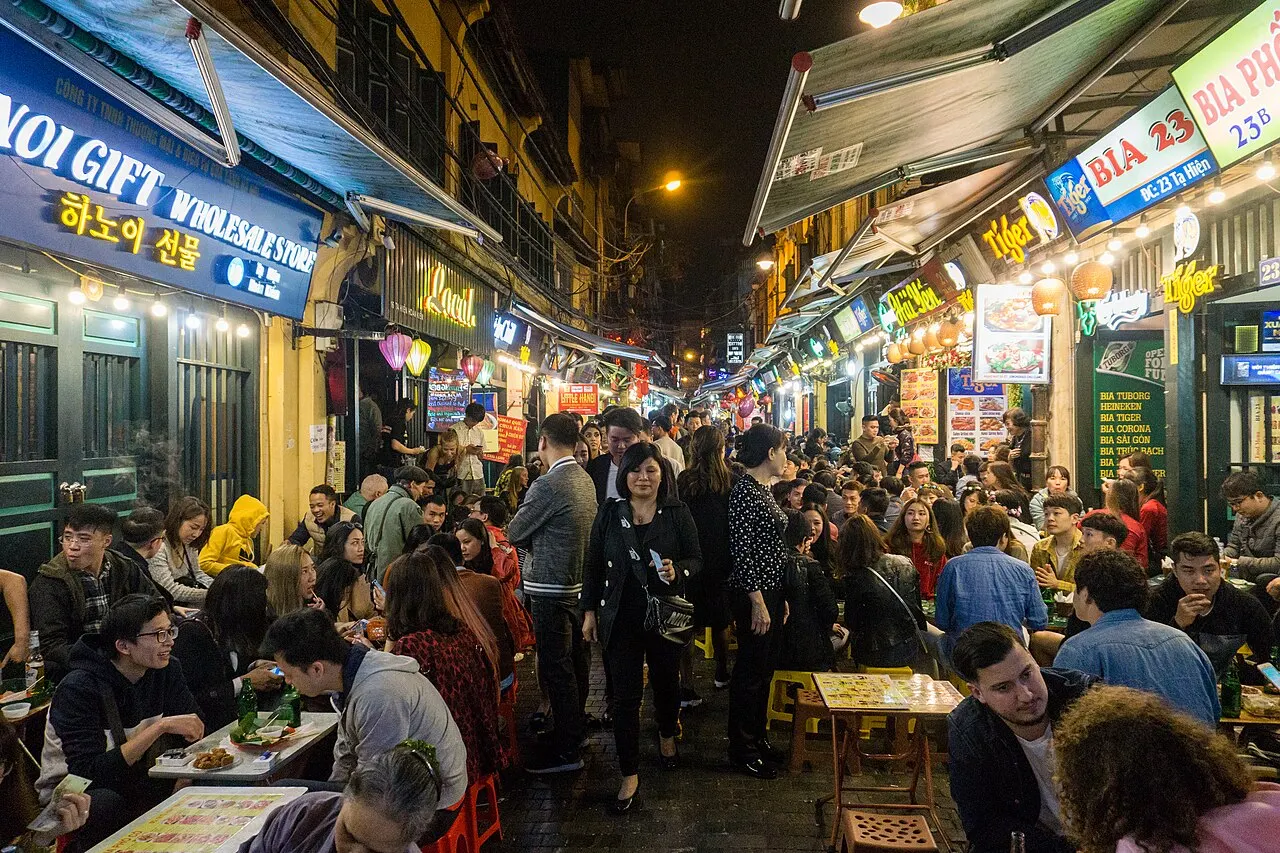
About 36 guild streets formed from the 15th century on. Note the narrow, deep tube houses, the result of a colonial tax charged per meter of façade; the one at 87 Mã Mây street is restored and open to visitors.
Check access
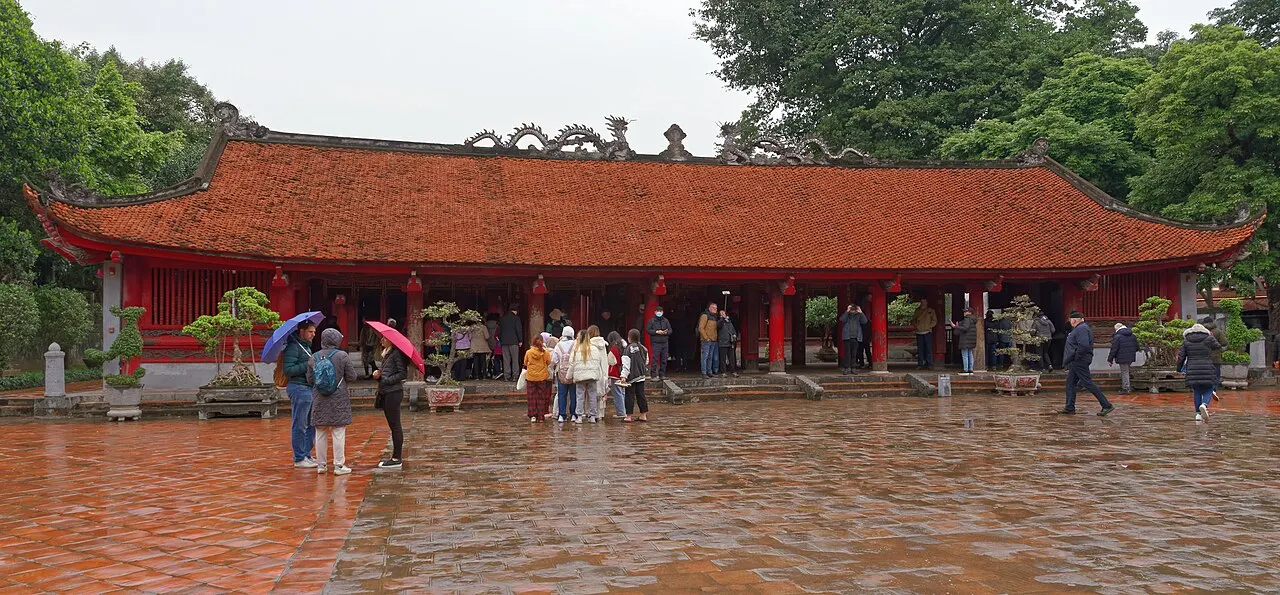
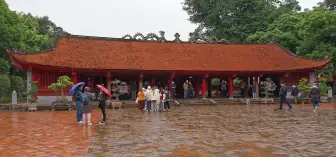
Temple of Literature
Founded in 1070 and expanded in 1076 with the Quốc Tử Giám, Vietnam's first university. It holds 82 stone stelae on turtles bearing the names of doctors who graduated between 1442 and 1779, inscribed on UNESCO's Memory of the World register.
It dates to 1070, and in 1076 it gained the Quốc Tử Giám, the university that inaugurated higher education in the country, and 82 stone stelae resting on turtles record the doctors who graduated between 1442 and 1779, stelae inscribed on the Memory of the World register.
Check access
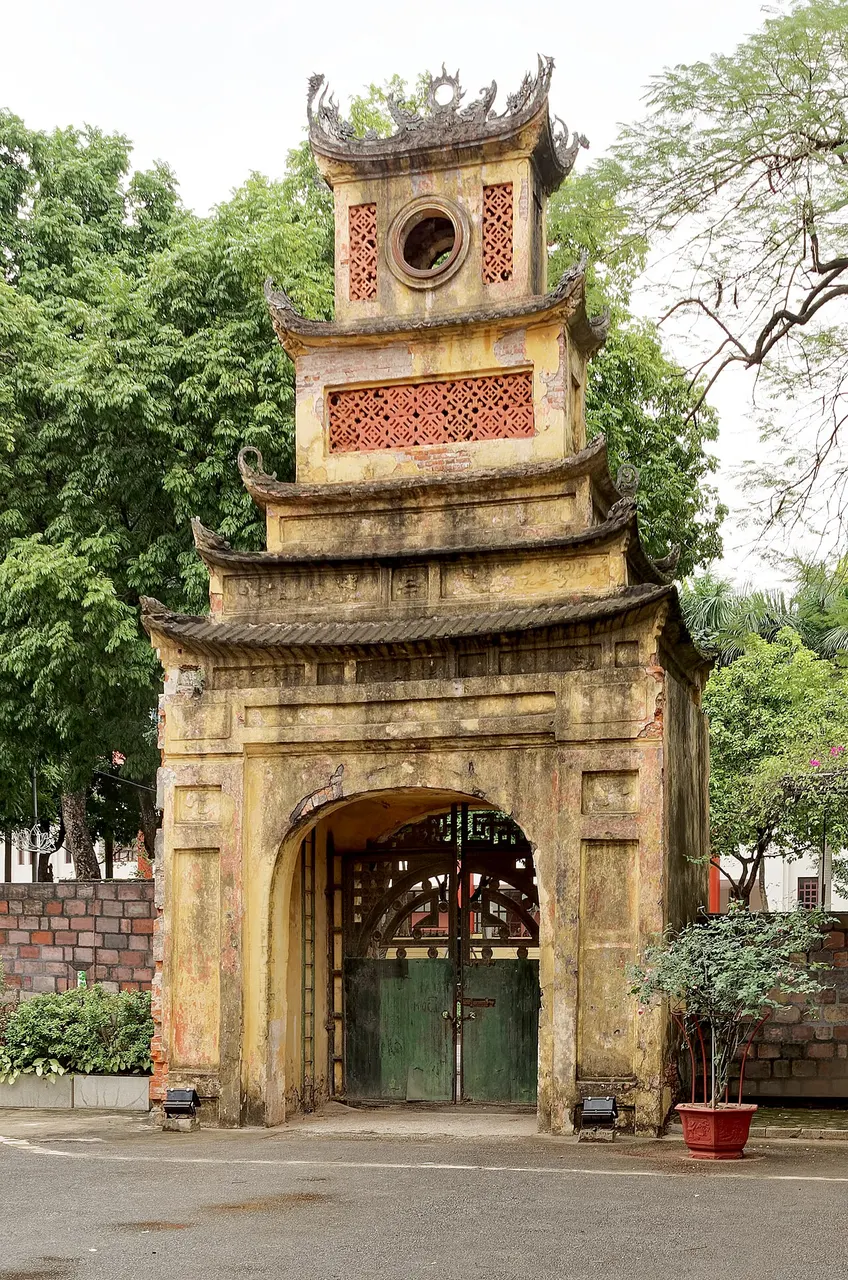
Imperial Citadel of Thăng Long
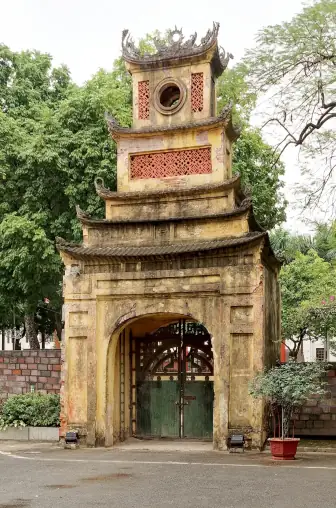
UNESCO World Heritage site since 2010. It brings together the Đoan Môn gate, the 1812 flag tower and, at 18 Hoàng Diệu street, excavations opened in 2002 that revealed thirteen centuries of overlapping foundations, plus bunker D67, the wartime military command post.
A gate, a flag tower, and excavations with stacked foundations from many centuries, plus a command bunker, tell the capital's story in layers; a World Heritage site since 2010; the tower dates to 1812 and the excavations to 2002.
Check access
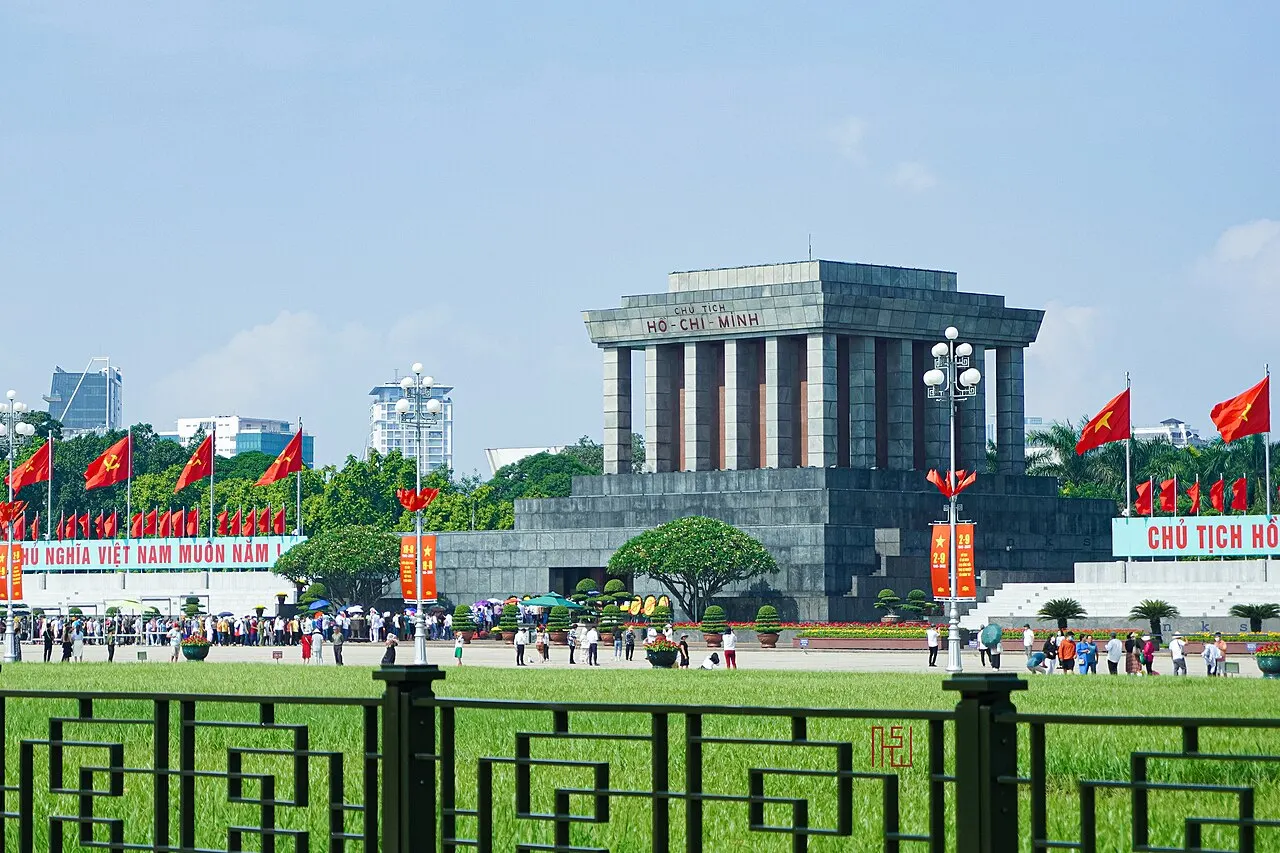
Ba Đình Complex
The square where independence was declared in 1945, Hồ Chí Minh's mausoleum (1975), the One Pillar Pagoda (1049, rebuilt in 1955) and the stilt house where he lived from 1958 to 1969. The mausoleum opens only in the morning, Tuesday to Thursday and on weekends, with strict rules on dress and silence.
The proclamation square, the mausoleum, the One Pillar Pagoda, and the stilt house form a single complex, and the mausoleum only receives visitors in the morning, with dress and silence rules; the proclamation was in 1945, the mausoleum dates to 1975; the pagoda to 1049, rebuilt in 1955.
Check access
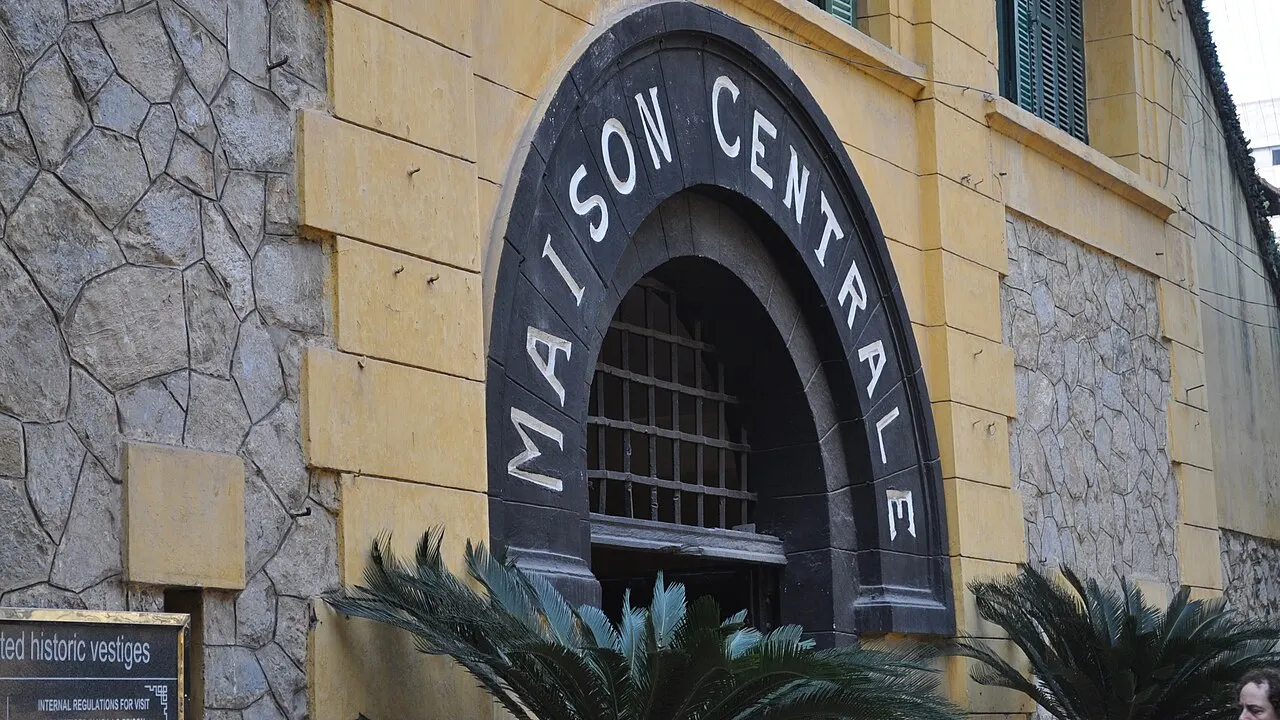
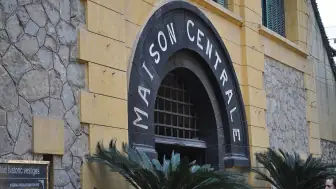
Hỏa Lò Prison
Built by the French in 1896 as the Maison Centrale and used until 1993; today it's a museum. Most of the exhibit covers Vietnamese political prisoners of the colonial period, with a smaller room on the American pilots held there from 1964 on.
Check access
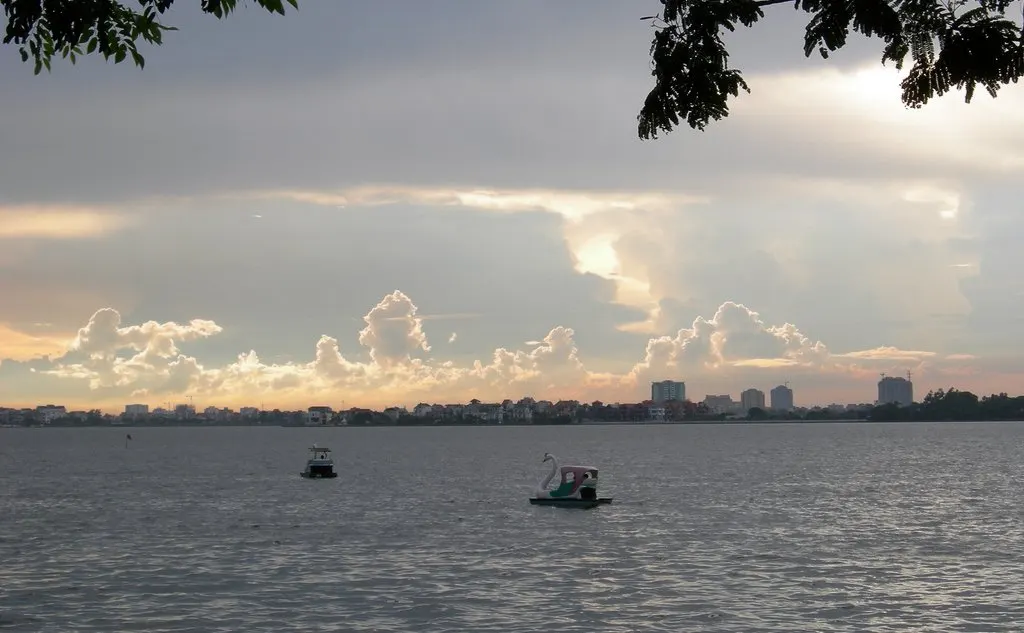
West Lake, Trấn Quốc and Quán Thánh
The city's largest lake, about 500 hectares and 17 km around. On the south shore stand the Trấn Quốc pagoda, dating from the 6th century and moved to the small island in 1615, and the Taoist Quán Thánh temple, with a four-ton bronze statue of Trấn Vũ, cast in 1677.
The loop around it is long, and on the south shore, a pagoda moved onto a small island shares the space with a temple that holds a heavy bronze statue; about 500 hectares and 17 km around; a four-ton bronze, from 1677.
Check access
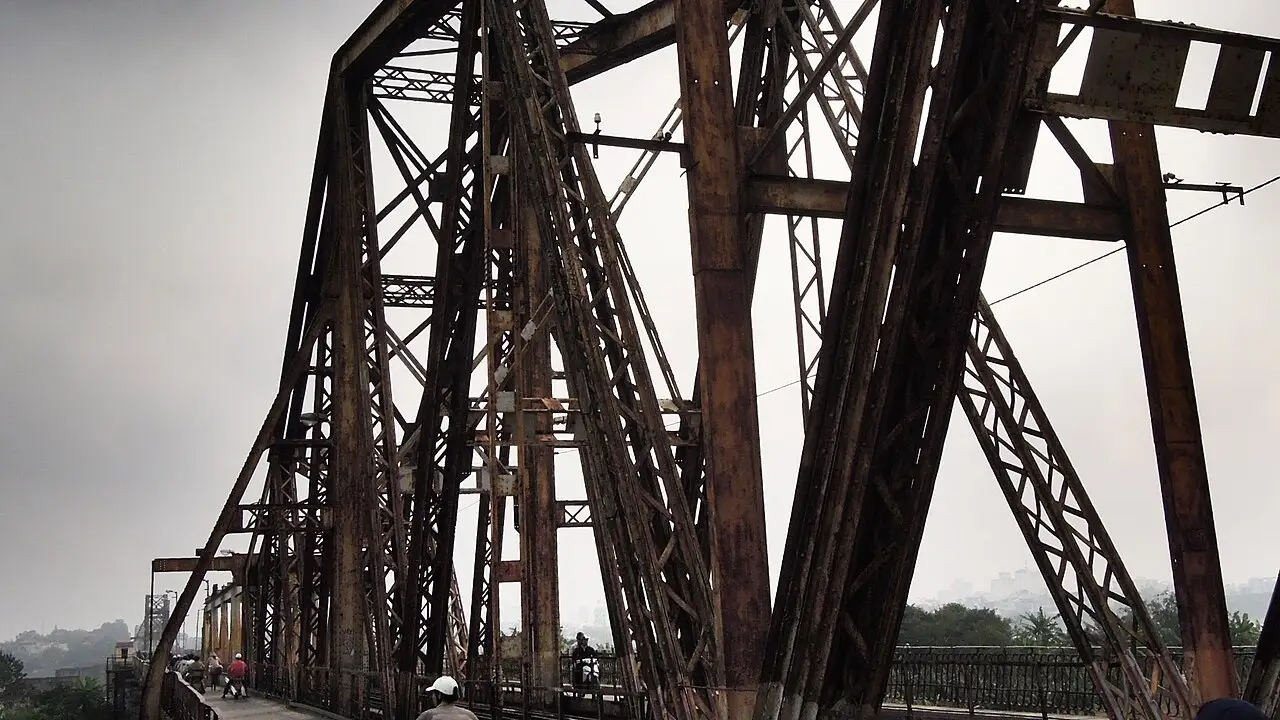
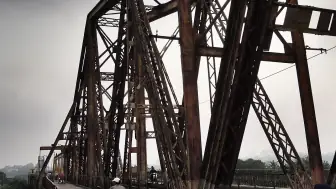
Long Biên Bridge
A rail and road bridge from 1902, with nearly 1.7 km of truss spans designed by the firm Daydé & Pillé. Repeatedly bombed between 1967 and 1972, it was never fully rebuilt; repair work was completed in May 2026.
It's almost 1.7 km of 1902 steel trusswork, with repair work only finished in May 2026. Twenty minutes on foot along the side walkway, and don't try to cross along the tracks.
Check access
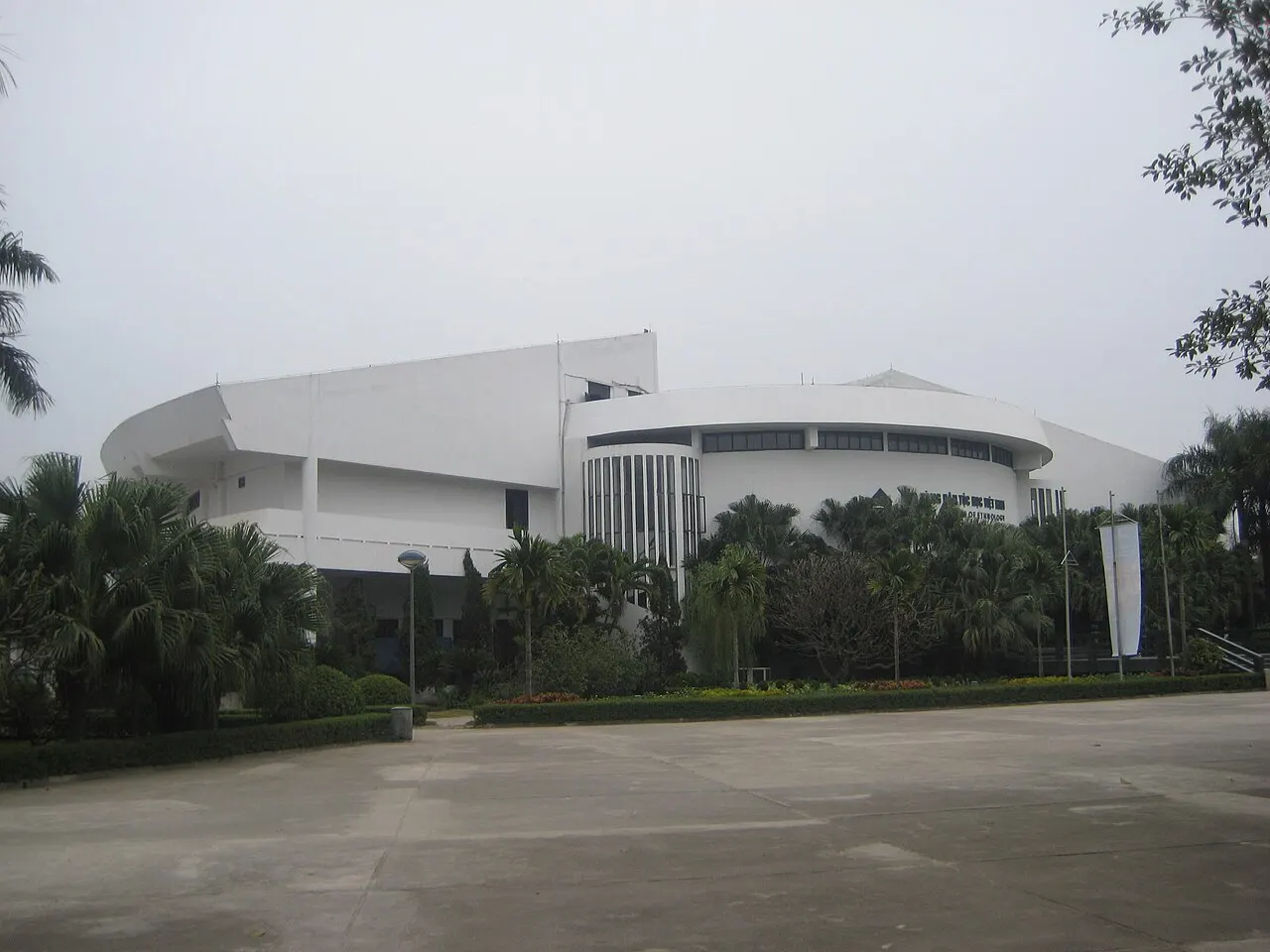
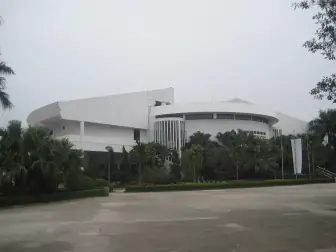
Vietnam Museum of Ethnology
Opened in 1997, in the west of the city, it documents the country's 54 recognized ethnic groups. In the garden, traditional houses are reassembled at full scale, including the Bahnar communal house, about 19 meters tall.
The museum documents Vietnam's 54 ethnic groups and has reassembled full-size traditional houses in the garden, such as the 19 m Bahnar communal house. It sits, however, in the west of the city, far from the lake and the Old Quarter, and the visit takes half a morning counting the round trip.
Check access
Nilo’s itinerary
Start with the basic programme and choose extensions for the time you have.
Plan my days in the app ↗Day 1 · The lake, the Old Quarter and the bia hơi corner
Start at 7am with a bowl of phở at a stall on Bát Đàn or Lý Quốc Sư street, followed by a cà phê nâu đá.
Walk around Hoàn Kiếm Lake, enter Ngọc Sơn Temple via the Thê Húc bridge, and see the Turtle Tower from the east shore.
Wander the Hàng streets of the Old Quarter to Đồng Xuân Market, from 1889, and step into the restored house at 87 Mã Mây street.
Have bún chả for lunch before 2pm; any stall with charcoal smoke on the sidewalk works.
End at dusk on a plastic stool at the Tạ Hiện corner with a glass of bia hơi.
Day 2 · Ba Đình, the citadel and official history
Arrive at Ba Đình Square before 8am for the mausoleum line; shoulders and knees covered, no photos inside.
Continue within the same complex to the One Pillar Pagoda, from 1049, and the stilt house where Hồ Chí Minh lived from 1958 to 1969.
Cross over to the Imperial Citadel of Thăng Long: the Đoan Môn gate, bunker D67 and the excavations at 18 Hoàng Diệu street.
Have lunch in Đống Đa and visit the Temple of Literature, with its 82 stelae of doctors who graduated between 1442 and 1779.
Close the day at Hỏa Lò Prison and, if there's time, a water puppet show.
If you stay longer
Day 3 · West Lake, the river and a slower day
Head out early to the Trấn Quốc pagoda and the Quán Thánh temple, at the southern tip of West Lake.
Loop around the north shore, through Nghi Tàm and Quảng An, and stop at the peninsula's flower gardens.
Go to the Vietnam Museum of Ethnology and set aside two hours, including the garden with the reassembled houses.
Head back to the river in the late afternoon and walk to the Long Biên bridge, whose repairs were finished in May 2026.
Have chả cá for dinner on the street named after the dish and finish with a cà phê trứng at Café Giảng.
Food
 AI illustration
Phở
Beef-bone broth simmered for hours with star anise, ginger and cinnamon, rice noodles and sliced meat. In Hanoi it comes with little herb garnish and no sweet sauce, unlike the southern version; eaten for breakfast, 45,000–70,000 VND.
 AI illustration
Bún chả
The city's standard lunch: grilled pork patties and slices of pork belly over charcoal, served in a bowl of sweet-and-sour broth with pickled papaya, alongside rice noodles and a heap of herbs. Served only until early afternoon.
 AI illustration
Chả cá
Fish marinated in turmeric and galangal, pan-fried at the table with an improbable amount of dill and scallion, served with bún and peanuts. It was born in the 19th century on the street now named Chả Cá.
 AI illustration
Bánh cuốn
Very thin sheets of rice batter steamed over a stretched cloth, filled with pork and mushroom and topped with fried shallots. The Thanh Trì version comes without filling; the dipping sauce is warm nước chấm.
 AI illustration
Bún ốc and bún riêu
Rice-noodle soups with a sour tomato-and-vinegar broth: bún ốc has freshwater snails, bún riêu has paddy-crab paste. Mid-afternoon food, served at stalls with low stools.
 AI illustration
Cà phê trứng
Drip coffee topped with whipped egg yolk and condensed milk, invented at Café Giảng in 1946, when fresh milk was scarce. Served hot, in a small cup set in a bowl of hot water; about 35,000 VND.
 AI illustration
Bia hơi
Draft beer brewed and sold the same day, unpasteurized, delivered in aluminum kegs in the late afternoon. Costs 5,000–10,000 VND a glass and is drunk on plastic stools on the sidewalk, with the Tạ Hiện corner as its best-known address.
 AI illustration
Xôi xéo
Glutinous rice tinted with turmeric, pressed mung bean in sheets, fried shallots, and a drizzle of fat. It's the city's most traditional breakfast, sold on stacked banana leaves along the sidewalks.
Day trips
Ninh Bình and Tràng An
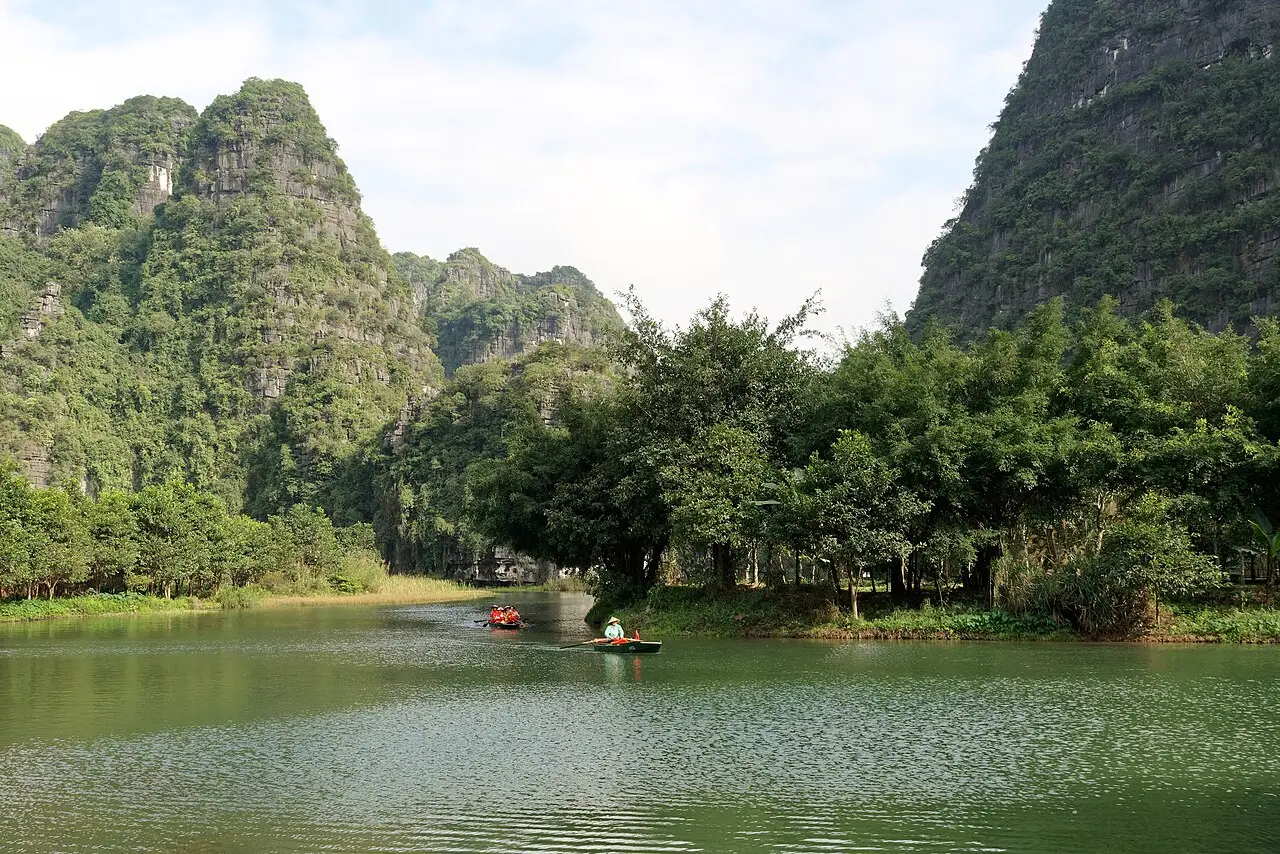
95 km to the south, 2 hours by car or 2 hours 15 minutes by train to Ninh Bình station. Limestone karst amid rice paddies, with a rowboat ride through Tràng An, a World Heritage site since 2014, the Bái Đính temple and the Hang Múa viewpoint, atop about 500 steps.
Hạ Long Bay and Cát Bà
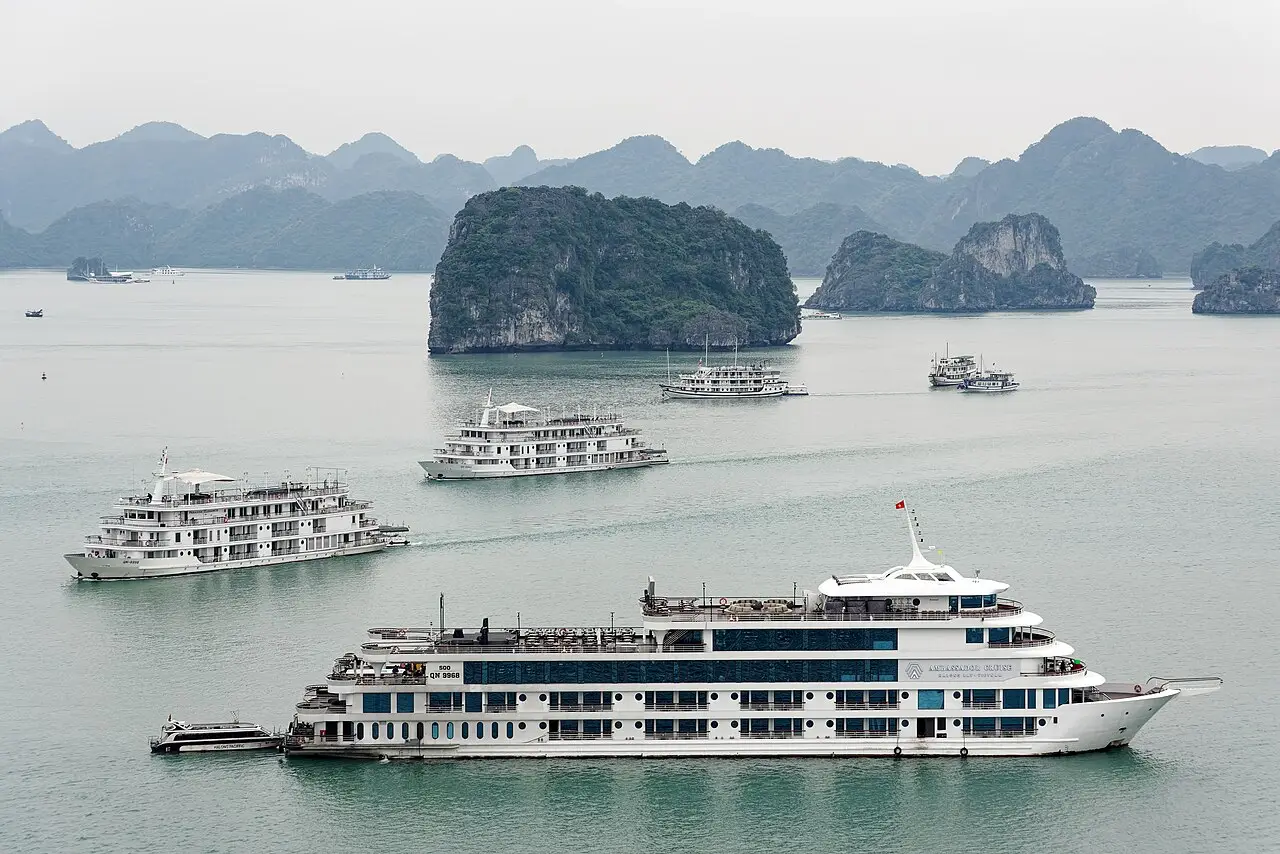
165 km to the east, 2 hours 30 minutes via the CT02 expressway. A day trip there and back is possible, but it leaves little time on the water; the alternative is an overnight boat or staying on Cát Bà island, next to the Lan Hạ archipelago.
Bát Tràng and Đường Lâm
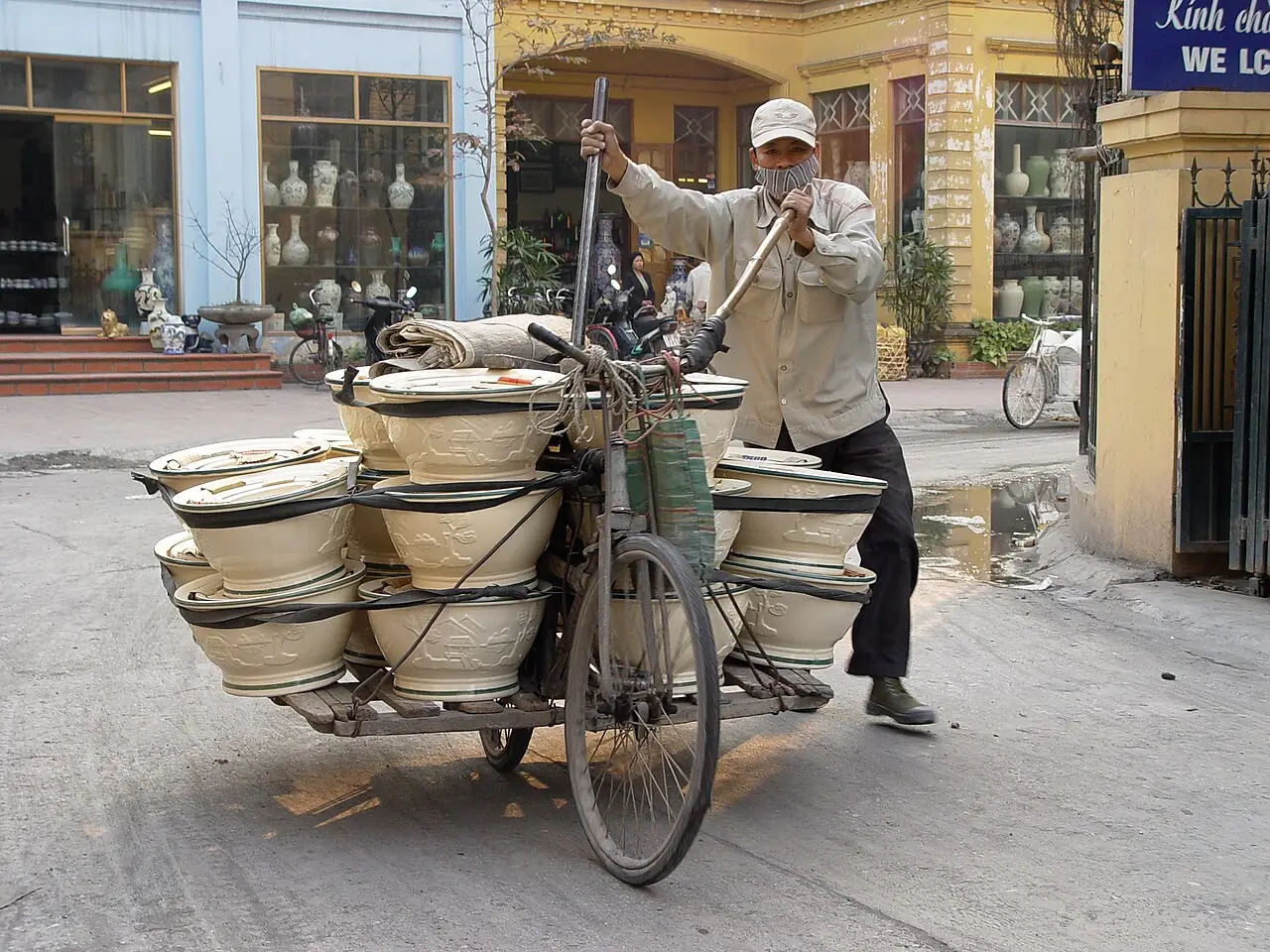
Bát Tràng is 14 km southeast, 30 minutes by car or bus 47, and has made ceramics since the 14th century. Đường Lâm is 44 km to the west, about 1 hour 15 minutes, a village of laterite houses and earthen walls preserved since the 17th century.
Where to begin
The lake, the Old Quarter and the bia hơi corner
Start at 7am with a bowl of phở at a stall on Bát Đàn or Lý Quốc Sư street, followed by a cà phê nâu đá.
Ba Đình, the citadel and official history
Arrive at Ba Đình Square before 8am for the mausoleum line; shoulders and knees covered, no photos inside.
West Lake, the river and a slower day
Head out early to the Trấn Quốc pagoda and the Quán Thánh temple, at the southern tip of West Lake.
Money
The currency is the dong (VND), and it comes with a lot of zeros: about 26,000 VND to the US dollar and 4,500–5,000 VND to the Brazilian real in 2026, with the rate changing day to day. Instead of doing math at every purchase, memorize the price ranges: iced coffee with condensed milk 20,000–35,000 VND, egg coffee 35,000–50,000, a bowl of phở 45,000–70,000, a plate of bún chả 40,000–60,000, a glass of bia hơi 5,000–10,000, a meal at a sit-down restaurant with air-conditioning 150,000–350,000, a hostel bed 150,000–300,000, a simple hotel in the center 500,000–900,000, four stars 1.5–3 million. A full day with street food, public transportation and simple lodging fits within US$25 to 45. Cash handles everything on the street; cards work at hotels, supermarkets and larger restaurants, and among Vietnamese, QR code payment is everywhere, with the laminated code hanging even from a stall's umbrella. ATMs charge 20,000 to 50,000 VND per withdrawal, so it pays to take out larger amounts at once. There's no tipping culture: nobody tips at street stalls, at restaurants with table service rounding up the bill is enough, and full-day guides and drivers usually get 100,000–200,000 VND.
Getting there and around
From the airport to the center: bus 86 or an app
Nội Bài International Airport (HAN) is 27 km to the north, linked to the center by the Nhật Tân bridge and Võ Nguyên Giáp avenue; the trip takes 40 to 60 minutes depending on the time. Express bus 86 runs from the terminal to Hanoi's railway station past Hoàn Kiếm Lake, for 45,000 VND; the regular lines 7, 17 and 90 cost less and take longer. The apps (Grab, Be and Xanh SM, for electric taxis) have marked pickup points at terminals T1 and T2 and charge around 200,000 to 300,000 VND to the Old Quarter. A street taxi with a meter falls in the same range; confirm that the meter has been switched on and prefer the big companies. Skip that check, and the price at the end of the ride can end up with no relation to any of those numbers.
Metro: two lines, 21.6 km in total
Inside the city there are two metro lines, totaling 21.6 km in 2026: line 2A, Cát Linh–Hà Đông, 13.1 km, opened in November 2021, and the elevated section of line 3, Nhổn–Cầu Giấy, opened in August 2024; the underground extension of line 3 to Hanoi station is planned for 2027. A single ticket costs 8,000 to 15,000 VND depending on distance, with a day pass around 30,000 VND, and since September 2025 ticketing has been integrated with the city buses, whose fare is calculated by kilometer traveled. Outside the metro lines, the real transport is the motorbike: the app-based motorbike taxi costs less than a car and is faster in traffic jams, and that's how most people get around most of the time. The center is walkable over short distances, with the caveat that the sidewalk is usually taken up and pedestrians end up walking in the road; on weekends the streets around Hoàn Kiếm Lake become pedestrian only. Renting a motorbike without a license recognized in the country is illegal and voids the insurance. With the insurance voided, an accident comes out of your own pocket, including the hospital bill.
Safety
Hanoi has a low rate of violent crime, and walking downtown at night is common, including alone. The most frequent risk is grab-and-run theft: a phone or bag snatched by a pair on a motorbike, especially near Hoàn Kiếm Lake, on Tạ Hiện street, and outside bars after midnight. Holding your phone with its back to the road and carrying your bag on the sidewalk side avoids most cases. The scams that exist are small in value and always the same: a taxi with a rigged meter, a driver who claims your hotel is closed and takes you to another one, a shoeshiner who starts fixing your shoe without agreeing on a price first, a fruit vendor who rests her basket on your shoulder for a photo and charges you afterward, and a bar tab that arrives with extra items on it. Check the bill line by line before paying; no one takes offense at that. The biggest objective danger here is traffic: Vietnam records around 6,000 to 7,000 road deaths a year, most on motorbikes, and renting a motorbike without real experience is the riskiest decision a visitor makes in this city. Tap water isn't safe to drink; ice at established restaurants and stalls is machine-made and safe. There's no part of downtown you should avoid for safety reasons.
Etiquette tips
Taking off your shoes
In private homes, in many temples and in restaurants with a raised wooden platform, shoes stay at the door. If there are pairs lined up at the entrance, the rule applies to you too.
Two hands to give and receive
Cards, money, gifts or a glass are passed with both hands, or with the right hand supported by the left at the forearm. One hand is acceptable between friends of the same age, never with someone older.
How to address someone
Vietnamese chooses the pronoun by relative age: anh for a slightly older man, chị for a woman, em for someone younger, ông and bà for elders. Getting it wrong is common and forgiven; a “xin chào” works when age isn't clear.
At the mausoleum and in temples
Shoulders and knees covered, no hats, no talking and no photos inside the mausoleum; hands out of pockets. In Buddhist temples, don't point your feet toward the altar or walk in front of someone praying.
The table and the glass
Whoever serves starts with the eldest. At a bia hơi table the toast is collective, so wait for “một, hai, ba, dô!” before you drink. Chopsticks stuck upright in rice recall incense sticks for the dead, so never leave them that way.
The head and touch
Don't touch anyone's head, not even a child's. Couples keep public affection discreet, and to call someone over you wave with your palm facing down, never up.
Mistakes to avoid
Enter slowly and hold your pace
Stopping mid-street while crossing is the one thing that usually gets you honked at: the local rule is to step in slowly, walk in a straight line, and keep a steady pace, letting the motorbikes calculate around you. Braking halfway is what causes accidents.
Trusting the meter without checking the company
Trusting the meter without checking the company name. Outside the big companies and the apps there are cars with rigged meters around the Old Quarter and the station; agreeing on a price beforehand or using an app fixes it.
Looking for bún chả at dinnertime
Thinking bún chả is eaten at night. The charcoal-grill stalls only serve until early afternoon, and anyone arriving for dinner finds the grill cold: the stall hasn't shut for good, it's just past the dish's hour.
The mausoleum in the afternoon or on a Monday
Planning Hồ Chí Minh's mausoleum for the afternoon or for a Monday. It's only open on Tuesday, Wednesday, Thursday, Saturday, and Sunday mornings, and it closes for several weeks straight for maintenance, usually between June and August.
Train Street: only through licensed cafés since 2025
Treating the train street as a free-for-all. Since March 2025 group tours have been banned, and access to the Trần Phú and Phùng Hưng stretch runs through the licensed cafés; standing on the tracks outside that draws a fine and real risk.
Useful phrases
Xin chào
Hello (pron. “sin tchao”)
Cảm ơn
Thank you (pron. “cám ơn”, with the “ơ” between â and o)
Bao nhiêu tiền?
How much does it cost? (pron. “bao nhiêu tiên”)
Không cay, cảm ơn
No chili, thank you (pron. “khong cai, cám ơn”)
Ngon quá
It's very good (pron. “ngon goá”): said to the stall owner, it always works
Một, hai, ba, dô!
One, two, three, go! (pron. “mót, hai, ba, zô”): the collective toast before drinking
Districts
Hoàn Kiếm
Historic and touristic center: the lake, the Old Quarter to the north and the French grid to the south. Concentrates hotels, agencies, bars and most of the city's dollar-priced spots.
Old Quarter (36 streets)
A medieval grid of narrow streets whose names still tell the old trade: Hàng Bạc (silver), Hàng Mã (paper), Hàng Gai (silk). Shops on the ground floor, housing above, tube houses three meters wide.
Ba Đình
The district of power: Ba Đình Square, the mausoleum, the National Assembly, ministries and most embassies. Wide, tree-lined streets, much quieter than the center.
Tây Hồ
Peninsula and shores of the West Lake, with Nghi Tàm and Quảng An. Home to much of the long-term foreign community; old pagodas, expensive cafés and the busiest road in the city at dawn.
Đống Đa
Dense, residential and untouristed, southwest of the center. Home to the Temple of Literature, the Đống Đa mound and neighborhood food at neighborhood prices.
Hai Bà Trưng
To the south, between the river and the railway station. A mix of converted old factories, universities and Thống Nhất Park; Khâm Thiên street runs through the area bombed in 1972.
Cầu Giấy and Mỹ Đình
The west built after 2000: office towers, condominiums, Mỹ Đình stadium and metro line 3. Where the city looks like any recent Asian capital.
Long Biên
The left bank of the Red River, across the bridges. A wholesale-market district, alluvial vegetable gardens under the Long Biên bridge and recent real-estate expansion.
History
3rd century BC · The citadel of Cổ Loa
An Dương Vương raises concentric walls at Cổ Loa, 17 km northeast of today's center. It is the largest fortified site in the delta before the Chinese arrival.
866 · Đại La, the Chinese fort
Governor Cao Biền rebuilds the Đại La fortress on the Red River dike, during the millennium of Chinese rule that ended in 938.
1010 · Thăng Long, the rising dragon
Lý Thái Tổ moves the capital from Hoa Lư to Đại La and renames it Thăng Long. This is the date that founds the city as a capital.
1070–1076 · Temple of Literature
The court builds the Văn Miếu in honor of Confucius and, six years later, the Quốc Tử Giám, the country's first university.
1428 · Lê Lợi refounds the court
After ten years of war, the Ming are expelled and the Lê dynasty reinstates the government in Thăng Long. The legend of the sword returned to the turtle of Hoàn Kiếm Lake is born from this episode.
1831 · The name Hà Nội
Emperor Minh Mạng creates the province of Hà Nội, “within the rivers”. The capital had already been in Huế since 1802.
1873–1902 · The French city
Francis Garnier attacks the citadel in 1873 and Henri Rivière repeats the attack in 1882. In 1888 Hanoi becomes a French concession city and in 1902 the capital of French Indochina.
1945 · Independence at Ba Đình
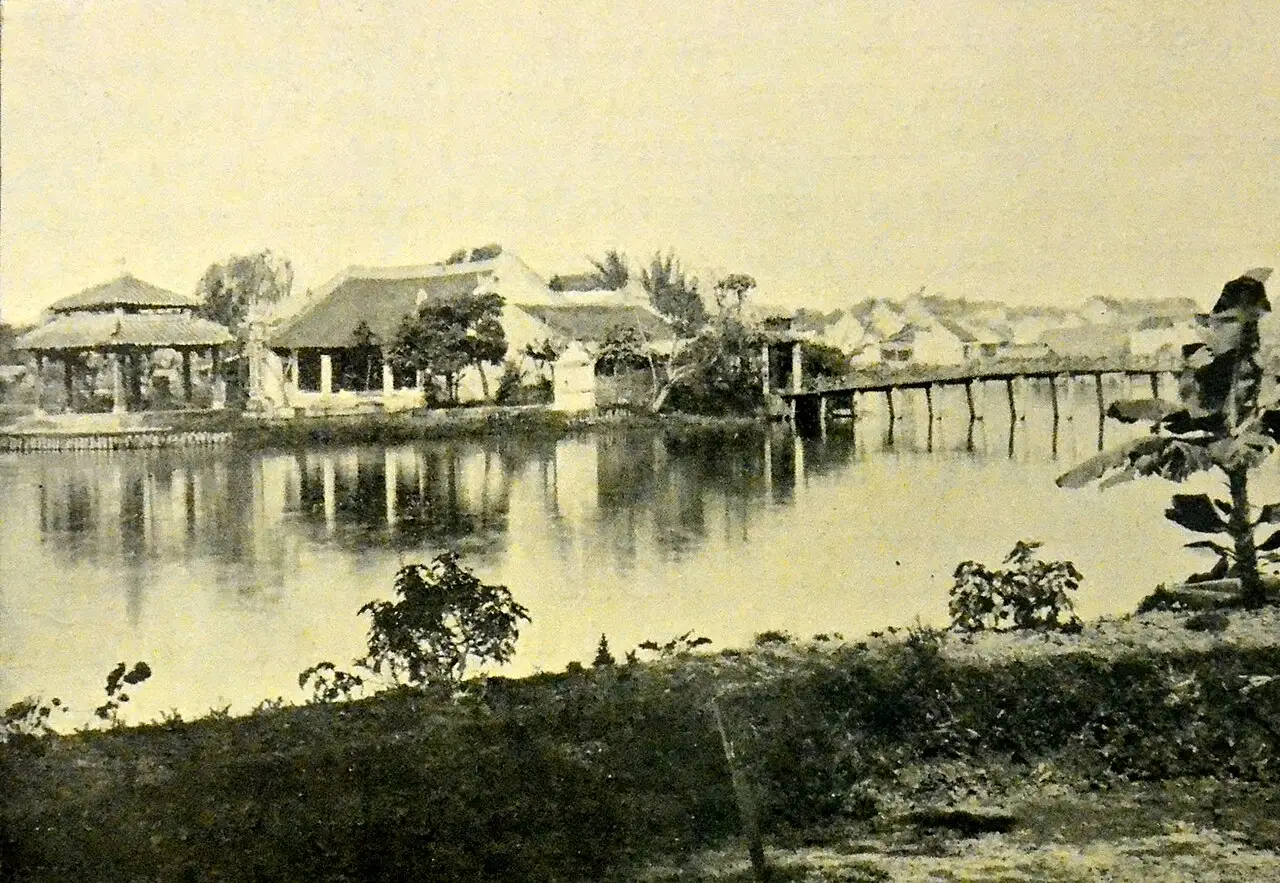
On September 2, Hồ Chí Minh reads the declaration of independence in Ba Đình Square before hundreds of thousands of people.
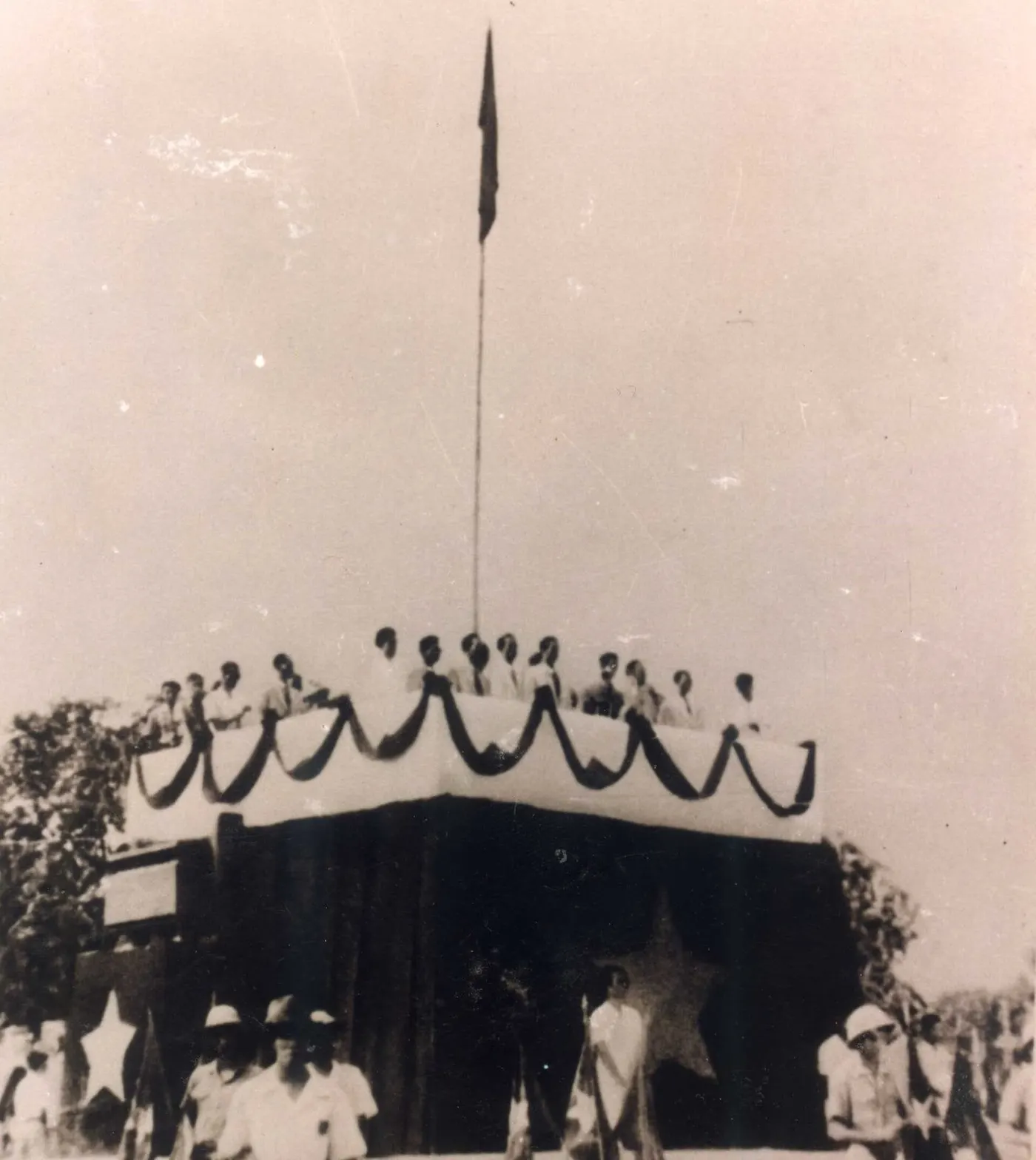
1946–1954 · War and recapture
The resistance against France begins in the streets of the center on December 19, 1946. On October 10, 1954, the Việt Minh enters Hanoi, a date still celebrated today.
1972 · Linebacker II
Between December 18 and 29, B-52 bombings hit Khâm Thiên street and Bạch Mai hospital. The anti-aircraft response is remembered as “Điện Biên Phủ in the air”.
1986–present · Đổi Mới and expansion
The 1986 reforms open up the economy. In 2008 the city absorbs Hà Tây province and triples in area; on July 1, 2025, the districts are abolished and Hanoi becomes 126 wards and communes.
 AI illustration
Complete history
Cổ Loa, the third-century BC citadel
The occupation of this territory predates the city's name. In the 3rd century BC, An Dương Vương built at Cổ Loa, 17 km northeast of today's center, a citadel with spiral walls: the delta's largest fortified site before the Chinese annexation. During the thousand years of Chinese rule, between 111 BC and 938 AD, the spot became an administrative post: in 866 governor Cao Biền rebuilt the Đại La fortress on the Red River dike. When Ngô Quyền defeated the Chinese fleet on the Bạch Đằng River in 938, the region already had a wall, a market and a river port.
The court leaves Hoa Lư in 1010
In 1010, Lý Thái Tổ took the court out of Hoa Lư, wedged between limestone mountains, and brought it to the plain. The transfer edict justified the choice by the central position in the delta and by the river; he named the place Thăng Long, “ascending dragon”. Over the following four centuries, the Lý, Trần and Lê dynasties built the citadel, the Temple of Literature in 1070 and the country's first university in 1076, and around the walls settled the artisan villages that gave rise to the Old Quarter: each street with a trade and the prefix Hàng, “merchandise”. In 1428, Lê Lợi expelled the Ming and re-founded the court there. In 1802 the Nguyễn moved the capital to Huế and, in 1831, Minh Mạng renamed the place Hà Nội, “within the rivers”: a province name, not a capital's.
France arrived in two waves
France arrived in two waves. Francis Garnier took the citadel in 1873 and died a few days later; Henri Rivière repeated the attack in 1882 and died too; by 1883 the protectorate was signed. In 1888 Hanoi became a French concession city, and in 1902, the capital of all French Indochina. The colonial administration tore down much of the citadel, filled in canals, and laid out a grid of straight blocks south of Hoàn Kiếm Lake, with St. Joseph's Cathedral (1886), Hỏa Lò prison (1896), the Long Biên bridge (1899–1902), designed by the firm Daydé & Pillé and named after Paul Doumer, and the Opera House (1911).
The 20th century: independence in 1945 and the war
On September 2, 1945, Hồ Chí Minh read the declaration of independence in Ba Đình Square. The war against France began in the streets of the center on December 19, 1946 and ended with the Việt Minh's entry into Hanoi on October 10, 1954. During the next war, much of the population was evacuated to the countryside, and between December 18 and 29, 1972 the Linebacker II bombing raids hit Khâm Thiên Street and Bạch Mai hospital; the anti-aircraft response went down in local memory as “Điện Biên Phủ in the air.” Hồ Chí Minh's mausoleum opened in 1975, on the same spot in the square where he had spoken thirty years earlier.
The present begins in 1986
The present begins in 1986, with the Đổi Mới reforms, which legalized private trade and returned to the sidewalk the role it had held before 1954. The city grew outward: in 2008 it absorbed Hà Tây province, going from about 900 km² to 3,359 km², and the municipal population reached around 8.8 million in 2025. The metro came late for the city's size: the first line opened in 2021, the second in 2024, and together they now total 21.6 km. Two recent changes are visible on the street: on July 1, 2025 the districts were abolished and the city was reorganized into 126 wards and communes; starting July 1, 2026, restrictions on gasoline motorbikes began inside ring road 1, launched with a pilot on eleven streets of the Old Quarter.
Geography and shape of the city
The river, the dikes, and the lakes
Hanoi sits on the right bank of the Red River, in a flat delta 5 to 20 meters above sea level, protected by a dike system that has existed since the 11th century and still defines how far the city can grow. The river runs northeast of the center and is crossed by Long Biên (1902), Chương Dương (1985), Thăng Long (1985), Vĩnh Tuy, and Nhật Tân (2015). The interior is full of lakes, remnants of old river bends: Hoàn Kiếm, at 12 hectares, downtown; Tây Hồ, the West Lake, at about 500 hectares and 17 km of shoreline; Trúc Bạch and Bảy Mẫu.
Three street grids and the ring roads
The urban fabric has three juxtaposed logics: the short, crooked streets of the Old Quarter, inherited from the artisan villages; the tree-lined avenues and villas of the French plan between Hoàn Kiếm and Ba Đình; and the Vành đai 1, 2 and 3 ring roads, plus the 4th under construction, with residential towers to the west, in Cầu Giấy and Nam Từ Liêm.
A monsoon climate and winter air
The climate is humid subtropical, with a dry, cold winter and a monsoon summer, and winter air pollution is worsened by a thermal inversion over the plain.
The three-meter fronts of the Old Quarter's tube houses are the legacy of a colonial tax charged per meter of street frontage.
Culture
The country's official culture comes from here
Hanoi produces the country's official culture: the 1911 Opera House, the National Tuồng Theater, the music academy, and the state publishing houses are here. The oldest performing art still active is múa rối nước, water puppet theater born in the delta's flooded villages around the 11th century, staged several times a day today at the Thăng Long theater, on the shore of Hoàn Kiếm Lake, with a live orchestra. Ca trù, chamber singing accompanied by drum and three-string lute, has been on UNESCO's list of heritage in urgent need of safeguarding since 2009 and survives in a handful of houses in the Old Quarter.
Modern literature was written here
Modern Vietnamese literature was largely written here: the Tự Lực Văn Đoàn group in the 1930s, the colonial satire of Vũ Trọng Phụng and, after 1986, the critical wave of Đổi Mới, with “The Sorrow of War”, by Bảo Ninh, written in the city and published in 1990. In the visual arts, the École Supérieure des Beaux-Arts de l'Indochine, founded in 1925, created the tradition of lacquer and silk painting that the Fine Arts Museum documents. The contemporary scene is small and concentrated in independent spaces and gallery-cafes in Tây Hồ and the Old Quarter.
Buddhism, ancestors, Taoism and the mother goddesses
Religious life layers Mahayana Buddhism, ancestor worship, Taoism and the mother goddess cult, đạo Mẫu, without conflict; UNESCO recognized đạo Mẫu in 2016, and its hầu đồng trance rituals take place in temples downtown. Day to day, though, the most visible culture is on the sidewalk: iced coffee with condensed milk at seven in the morning, badminton and group exercise by the lakes before dawn, crowds watching soccer together whenever the national team plays, and the bia hơi corner at dusk.
At the water puppet theater, by Hoàn Kiếm Lake, there's no figuring out who's moving the puppets, no matter how hard you look the whole show.
Festivals and events
 AI illustration
Tết Nguyên Đán
Lunar New Year, between late January and mid-February. Families go home, businesses close for three to five days and the city empties out more than at any other time of year; Hàng Mã street sells votive paper and red decorations the month before.
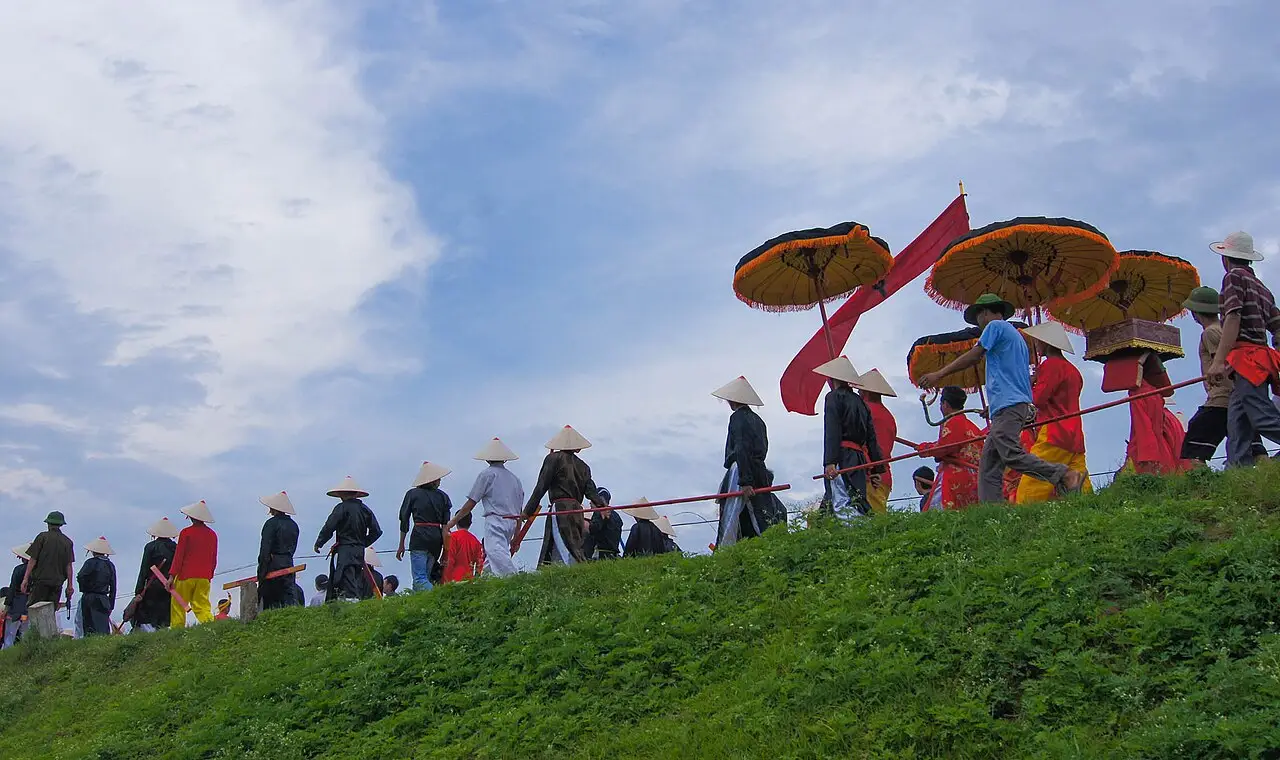
Gióng Festival
In Sóc Sơn, on the 6th day of the 1st lunar month, and in Phù Đổng, on the 9th day of the 4th lunar month. A reenactment of the battle of the mythical hero Thánh Gióng, with hundreds of participants; inscribed by UNESCO in 2010.
 AI illustration
Cổ Loa Festival
From the 6th to the 16th day of the 1st lunar month, at the Cổ Loa citadel. A procession honoring An Dương Vương, with wrestling, human chess, and crossbow shooting, the weapon tied to the site's legend.
 AI illustration
Tết Trung Thu
Mid-autumn festival, on the full moon of the 8th lunar month, in September or October. Lanterns, bánh nướng and bánh dẻo cakes and lion dances in the streets; Hàng Mã street becomes impassable in the two weeks before.
 AI illustration
September 2 and October 10
National Day, the anniversary of the 1945 declaration of independence at Ba Đình, and Capital Liberation Day, marking the Việt Minh's entry in 1954. Flags, parades on round-number anniversaries and closed traffic downtown.
Books and films
“The Sorrow of War”, by Bảo Ninh (1990)
A novel written in Hanoi by a veteran of the 27th Youth Volunteer Battalion; it explains the silence of the generation that returned from the south and what the city did with that memory.
“Mùa hè chiều thẳng đứng” / “The Vertical Ray of the Sun”, by Trần Anh Hùng (2000)
A film shot on location in the city; it shows domestic routine, courtyards and the light of a Hanoi before the towers of the west.
“Số đỏ” / “Dumb Luck”, by Vũ Trọng Phụng (1936)
A satire of Hanoi's elite in the 1930s, caught between French fashion and Confucian hierarchy. It explains the colonial layer still standing south of the lake.
Frequently asked questions
Hanoi: From the airport to the center: bus 86 or an app?
Express bus 86 runs from the terminal to Hanoi's railway station past Hoàn Kiếm Lake, for 45,000 VND; the regular lines 7, 17, and 90 cost less and take longer. The apps (Grab, Be, and Xanh SM, for electric taxis) have marked pickup points at terminals T1 and T2 and charge around 200,000 to 300,000 VND to the Old Quarter.
Hanoi: money?
The currency is the dong (VND), and it comes with a lot of zeros: about 26,000 VND to the US dollar and 4,500 to 5,000 VND to the Brazilian real in 2026, with the rate changing day to day.
Hanoi: when?
Hanoi has four real seasons, unlike the south of the country, and the best window is October and November: 22 to 28°C and little rain, with October as the most stable month with the clearest skies, and November already starting to see the air quality worsen.
Hanoi: Taking off your shoes?
In private homes, in many temples, and in restaurants with a raised wooden platform, shoes stay at the door.
Hanoi: safety?
Hanoi has a low rate of violent crime, and walking downtown at night is common, including alone.
Other cities in the country
Vietnam ↗- Days
- 2–3
- When
- Jan–Mar · Dec
- Per person/day
- Average 1,500,000–2,500,000 VNDMid-range · per person/day
Cost scope
Per person per day: accommodation, meals, urban transport, visits and a small allowance for extras. Flights excluded; larger purchases vary. Editorial estimate, not a quote.
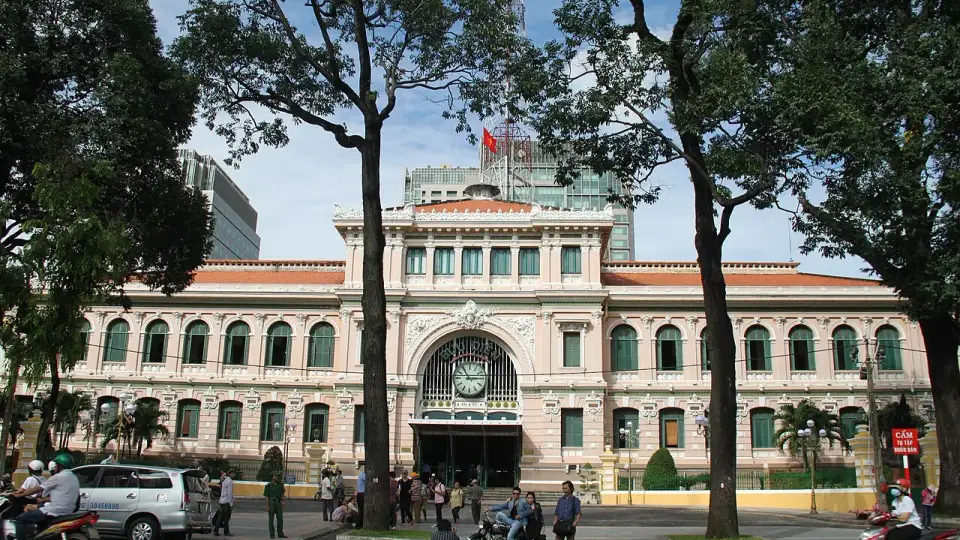


Itineraries through here
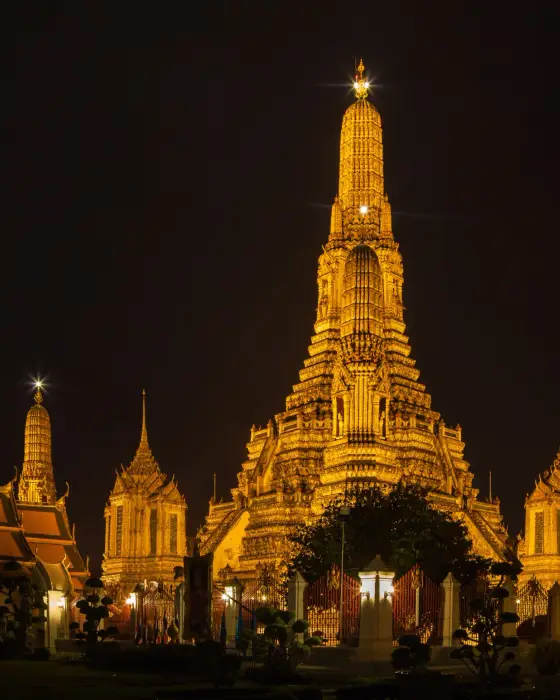 Thailand, Cambodia and Vietnam in 15 daysThe grand Indochina loopBangkok · Chiang Mai · Siem Reap · Ho Chi Minh City · Hanoi12–16 days5 cities
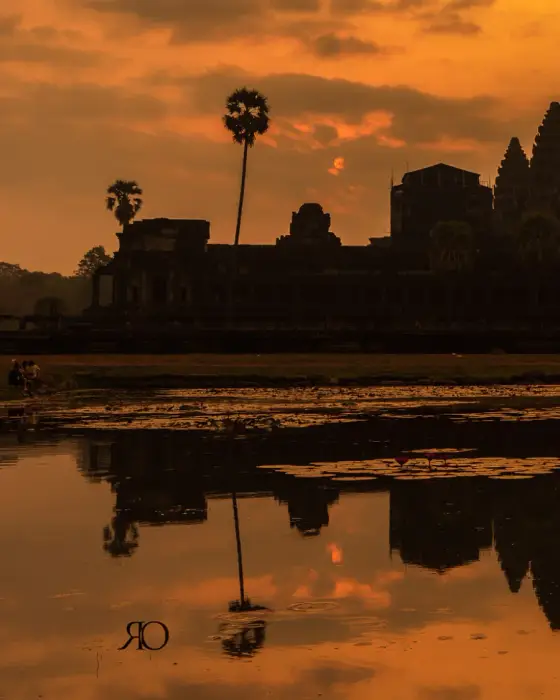 Vietnam and Cambodia in 7 daysFrom Hanoi to AngkorHanoi · Ho Chi Minh City · Siem Reap7–9 days3 cities
 Thailand and Vietnam in 10 daysMarkets and temples of Southeast AsiaBangkok · Chiang Mai · Hanoi · Ho Chi Minh City9–13 days4 cities