China (Hong Kong SAR)
Hong Kong
Harbor, skyscrapers, dim sum and hillside trails
Days Start with the basic programme and choose extensions for the time you have.
How the guide reaches this number
A fourth, if you have it, goes to Macau. The city suits anyone who likes eating well and cheaply, climbing hills and walking through a dense city, and it's greener than the skyline photos suggest. It doesn't suit anyone looking for a preserved historic center, because the city demolished almost everything; what's left fits into an afternoon between Man Mo Temple and Tai Kwun. With just one day, cross the harbor on the Star Ferry early, walk up to Man Mo and Tai Kwun and have dim sum before 11:30am. In the afternoon, take the tram to Causeway Bay and finish at the Peak. If the night has more in it, head to Temple Street, in Yau Ma Tei. The disappointments are the shopping in Causeway Bay and Tsim Sha Tsui, taken over by luxury stores and pharmacies since 2003, and the Peak lookout in March and April, when fog hides the view for days.
3–4
When Mid-October to early December: dry, 20–26 °C (68–79 °F), clear skies and low typhoon risk
How the guide reaches this number
From mid-October to early December the weather is at its best: 20–26 °C, low humidity by local standards, clear skies, and low typhoon risk. Start your trip after China's Golden Week, October 1 to 7, to skip the days when the city is packed. Mid-December to February is dry and mild, between 15 and 20 °C, with days that can drop below 10 °C: bring a jacket, because the buildings have no heating. March and April bring the “return of the southerly wind”: fog, humidity above 90%, sweating walls, and the view from the Peak blanked out for days on end. From May to September it's 28–33 °C with a much higher feel, heavy rain, and typhoon season, which runs May to November and concentrates between July and September; when the Hong Kong Observatory hoists Signal No. 8, transport, offices, schools, and most shops stop, and flights get rebooked. If you can pick a month to avoid, avoid September, and also plan around Chinese New Year, when a lot of small businesses close.
Per person/day HK$700–1,400 (≈US$90–180) with a simple hotel, street food and cha chaan teng meals, and public transport
How the guide reaches this number
Per person per day: accommodation, meals, urban transport, visits and a small allowance for extras. Flights excluded; larger purchases vary. Editorial estimate, not a quote.
 What Nilo thinks
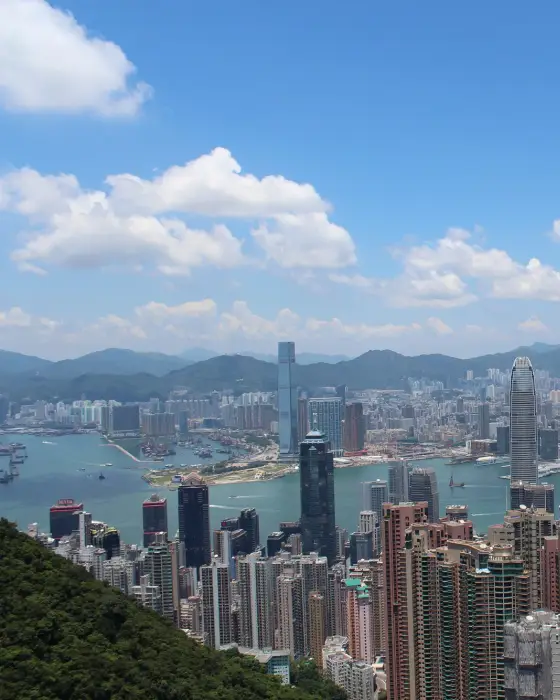
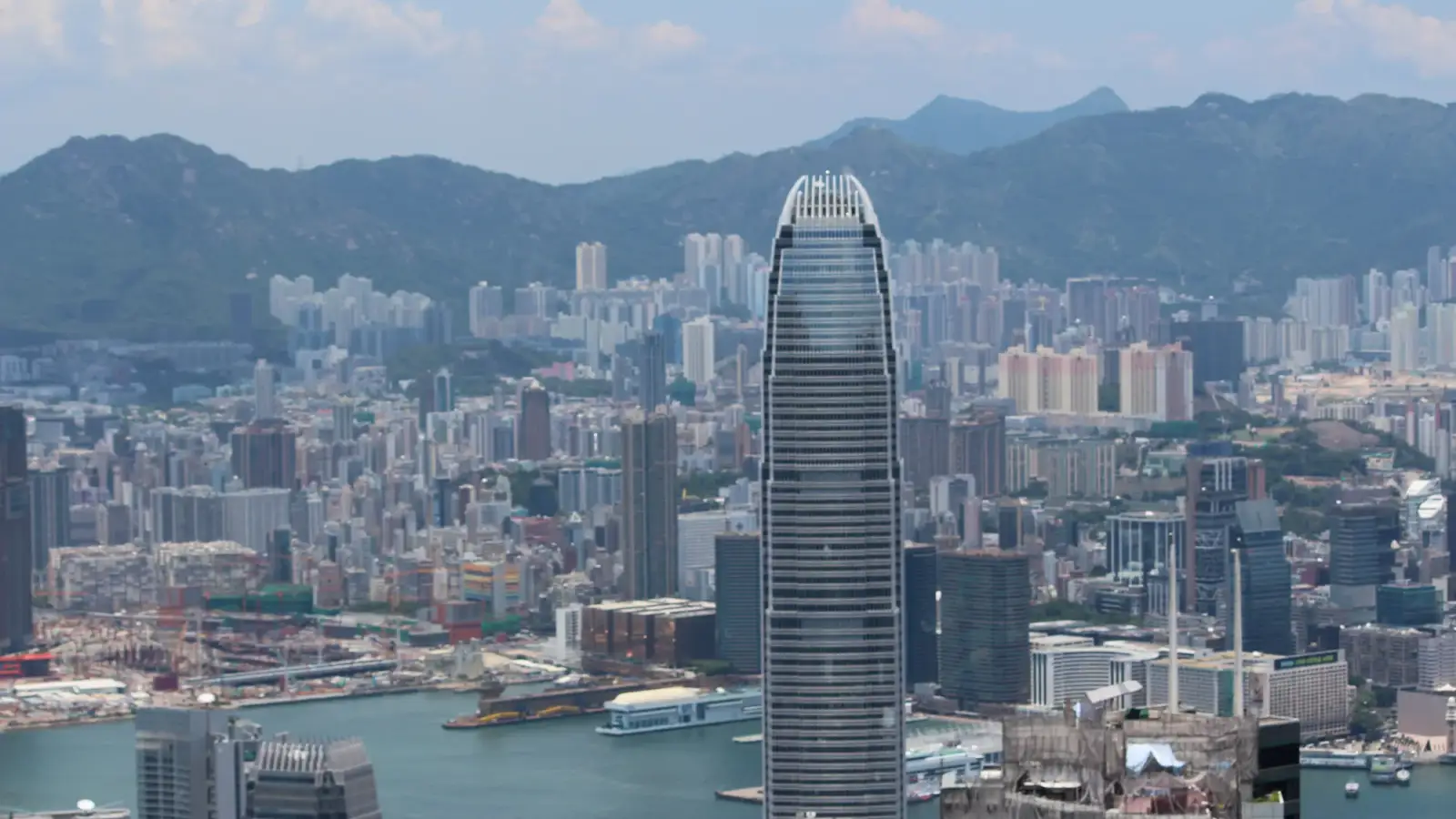
Stay three days in Hong Kong: one for the island, another for Kowloon and the third for Lantau or a trail. A fourth, if you have it, goes to Macau. The city suits anyone who likes eating well and cheaply, climbing hills and walking through a dense city, and it's greener than the skyline photos suggest. It doesn't suit anyone looking for a preserved historic center, because the city demolished almost everything; what's left fits into an afternoon between Man Mo Temple and Tai Kwun. With just one day, cross the harbor on the Star Ferry early, walk up to Man Mo and Tai Kwun and have dim sum before 11:30am. In the afternoon, take the tram to Causeway Bay and finish at the Peak. If the night has more in it, head to Temple Street, in Yau Ma Tei. The disappointments are the shopping in Causeway Bay and Tsim Sha Tsui, taken over by luxury stores and pharmacies since 2003, and the Peak lookout in March and April, when fog hides the view for days.For HK$5, the Star Ferry crosses Victoria Harbour in ten minutes, and from the rail you see the island's towers pressed against the hillside: it's the best first view of Hong Kong. On the island, escalators and double-decker trams serve a city that grew vertically, with more than 1,500 buildings over 100 meters tall, and from Victoria Peak it appears whole, wedged between harbor and mountain. Kowloon holds the M+ museum, the street markets of Mong Kok, and the night stalls of Temple Street. Eat dim sum, roast goose with plum sauce, and the bo lo yau from a cha chaan teng, the “pineapple” bun with no pineapple in it. Away from the towers, about 40% of the territory is country parks, with trails over hills with no buildings at all. Come from mid-October to early December, with 20 to 26 °C and clear skies, and stay three days, with a fourth for Macau.
Quick facts
- Population
- ≈7.52 million (mid-2026, provisional figure); average of about 6,700 people/km², but Kwun Tong exceeds 55,000
- Founding
- British occupation on January 26, 1841; special administrative region of China since July 1, 1997
- Country / region
- China: Hong Kong SAR; 1,114 km² of land and 263 islands, in the Pearl River Delta
- Language
- Cantonese (everyday language of about 88% of the population); Chinese and English are official; written in traditional characters
- Currency
- Hong Kong dollar (HKD), linked to the US dollar
- Time zone
- UTC+8, no daylight saving
- Best season
- Mid-October to early December: dry, 20–26 °C (68–79 °F), clear skies and low typhoon risk
- Average daily cost
- HK$700–1,400 (≈US$90–180) with a simple hotel, street food and cha chaan teng meals, and public transport
When to go
Mid-October to early December: dry, 20–26 °C (68–79 °F), clear skies and low typhoon risk
January
15° to 19°C
33 mm of rain
February
15° to 19°C
39 mm of rain
March
18° to 22°C
75 mm of rain
April
21° to 26°C
153 mm of rain
May
25° to 29°C
291 mm of rain
June
27° to 31°C
492 mm of rain
July
27° to 32°C
386 mm of rain
August
27° to 31°C
453 mm of rain
September
26° to 31°C
321 mm of rain
How the year changes
From mid-October to early December the weather is at its best: 20–26 °C, low humidity by local standards, clear skies, and low typhoon risk. Start your trip after China's Golden Week, October 1 to 7, to skip the days when the city is packed. Mid-December to February is dry and mild, between 15 and 20 °C, with days that can drop below 10 °C: bring a jacket, because the buildings have no heating. March and April bring the “return of the southerly wind”: fog, humidity above 90%, sweating walls, and the view from the Peak blanked out for days on end. From May to September it's 28–33 °C with a much higher feel, heavy rain, and typhoon season, which runs May to November and concentrates between July and September; when the Hong Kong Observatory hoists Signal No. 8, transport, offices, schools, and most shops stop, and flights get rebooked. If you can pick a month to avoid, avoid September, and also plan around Chinese New Year, when a lot of small businesses close.
The same numbers as a table
| Month | Temperature °C | Rain mm |
|---|---|---|
| January | 15 to 19 | 33 |
| February | 15 to 19 | 39 |
| March | 18 to 22 | 75 |
| April | 21 to 26 | 153 |
| May | 25 to 29 | 291 |
| June | 27 to 31 | 492 |
| July | 27 to 32 | 386 |
| August | 27 to 31 | 453 |
| September | 26 to 31 | 321 |
| October · | 24 to 28 | 120 |
| November · | 20 to 25 | 39 |
| December · | 16 to 20 | 29 |
Nilo's tips
Cross the harbor on the Star Ferry for HK$5
No tour boat shows you more of Victoria Harbour than the Star Ferry, which costs HK$5–6.5. It has crossed between Tsim Sha Tsui and Central since 1888 and takes about ten minutes. Do it in the Tsim Sha Tsui → Central direction early in the day, with the whole island in front of you. Pay with Octopus at the pier turnstile and head up to the top deck, which costs the same and has a shorter line.
At the Peak Tram, book the time slot or take bus 15 up
At sunset, the line for the funicular runs past an hour, because each trip carries only 210 passengers. The Peak Tram has run since 1888 and climbs 1.4 km. Book your time slot online or take bus 15 up, and come back down by funicular, because there's no line on the way down. The round trip costs HK$88 to HK$108, more on weekends, and the combo with the Sky Terrace 428 lookout runs about HK$150. The lookout is optional, and before heading down it's worth doing the flat loop of Lugard Road, which is free and has the most open view of the harbor.
At the Octopus counter, ask for the adult version
With the adult card, the deposit comes back when you return it, and the rest is credit you can spend. It costs HK$150, of which HK$50 is the deposit, and the tourist version starts at HK$39, with nothing refunded. If you're staying more than two days, the adult card pays off in the end.
The tram charges the same for 1 block or 13 kilometers
On the island's trams the fare is flat, about HK$3 charged when you get off, whatever the distance. Head straight to the upper deck and sit in the front seats, with the window at the height of the signs. From Sheung Wan to Causeway Bay the ride takes almost an hour and costs less than a coffee, which here runs HK$35–50.
Eat dim sum on a weekday, before 11:30am
On a Tuesday or Wednesday before 11:30am, you sit down without waiting, and at the older places the cart still comes around full. Yum cha runs from breakfast until about 4pm, and the wrong time is Sunday at noon, when the big dim sum halls fill with whole families. You order by marking a slip at the table, not by talking to the waiter, and lunch runs HK$120–200 per person.
Wednesday night is Happy Valley night
The Happy Valley horse races, on Wednesday nights, are the cheapest outing of the week and one of the busiest in the city. You don't need to bet or know anything about horses: the track is ringed by lit-up apartment towers, and in the general stand everyone sits together. There's no racing on other days of the week, so check the season calendar before you go.
Explore the map
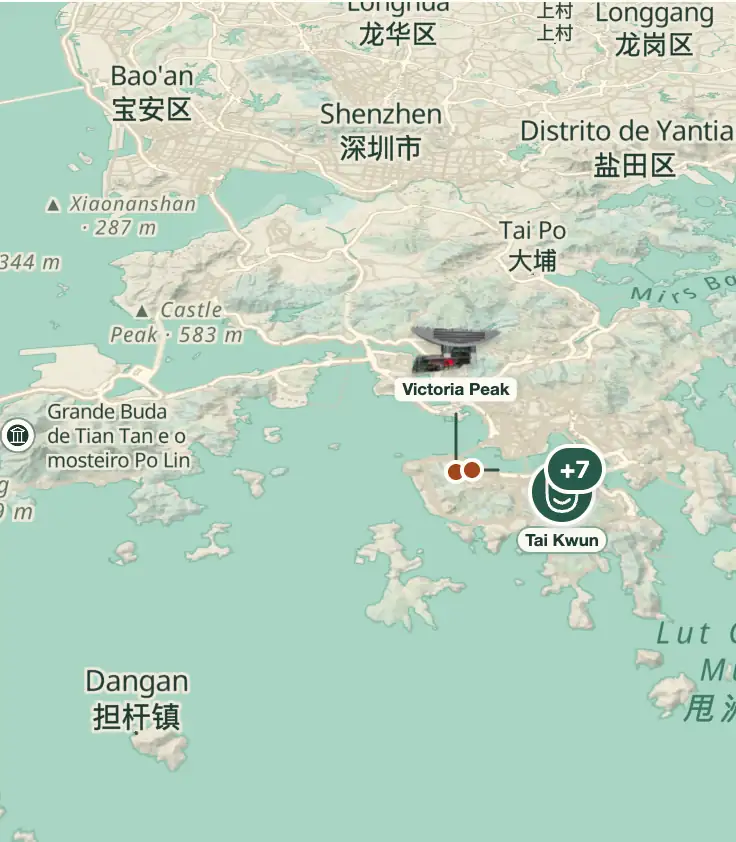
© OpenStreetMap · OpenFreeMap · © OpenMapTiles
Explore the map, read about the other places and plan your travel days in the app.
Open the appWhat to see
The hills and Hong Kong's scarce flat ground
Central's shoreline has advanced hundreds of meters into the sea since the first land reclamation in 1852. Chek Lap Kok Airport, opened in 1998, was built on an island enlarged by reclamation off Lantau's north coast, and got its third runway in November 2024.
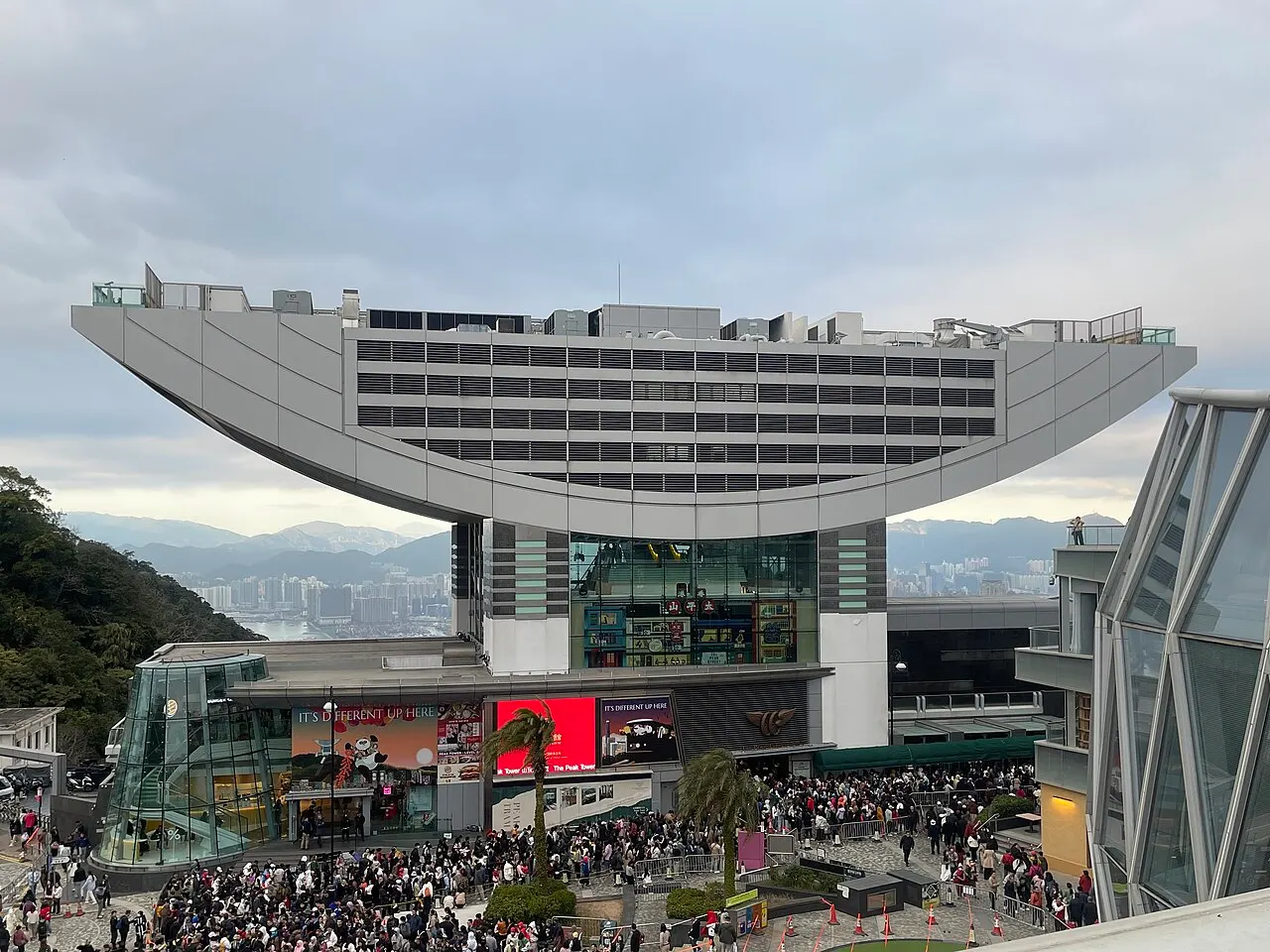
Victoria Peak and the Peak Tram
The funicular has run since 1888 and got sixth-generation cars in August 2022, carrying up to 210 passengers per trip on the 1.4-km climb to the top of Victoria Peak. The Sky Terrace 428 lookout sits 428 m above sea level and charges admission: the funicular round trip runs HK$88 to HK$108, and the combo with the terrace runs about HK$150. The flat, free Lugard Road trail loops around the summit, and anyone who wants to walk down to the city goes by Old Peak Road, a steep lane.
The funicular has climbed the mountain since 1888 to the paid Sky Terrace 428 lookout, at 428 m, but the flat, free Lugard Road trail that circles the summit has the better view; the round trip costs HK$88 to HK$108.
Check access
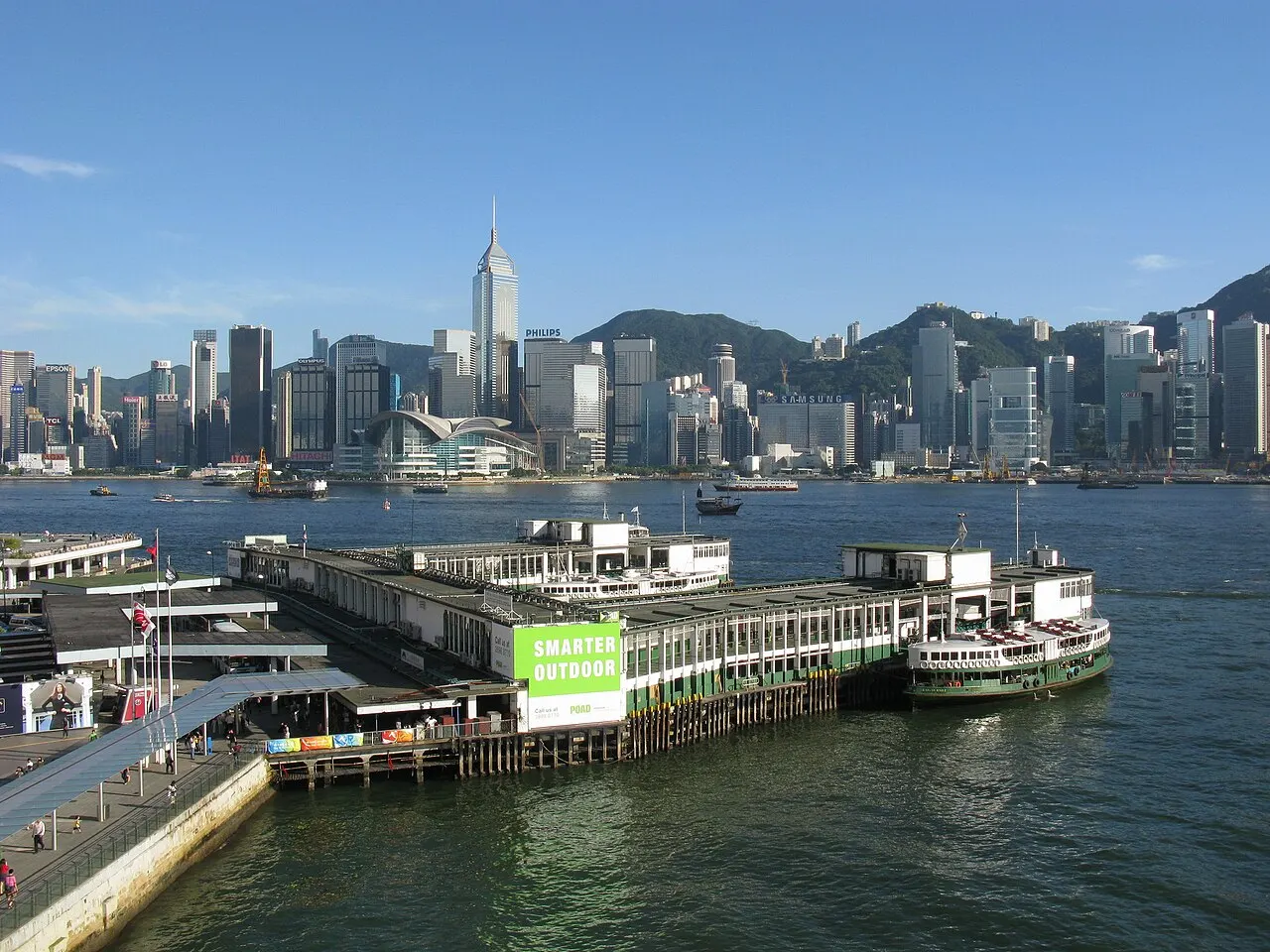
Star Ferry
Green-and-white ferries have crossed Victoria Harbour between Tsim Sha Tsui and Central since 1888, taking about ten minutes, for HK$5–6.5. It's the cheapest ride in the city and the best way to grasp its geography: mountain, reclaimed land, towers, and harbor in a single crossing.
The crossing takes about ten minutes and costs HK$5 to 6.5: the cheapest ride in the city and the clearest way to read the territory.
Check access
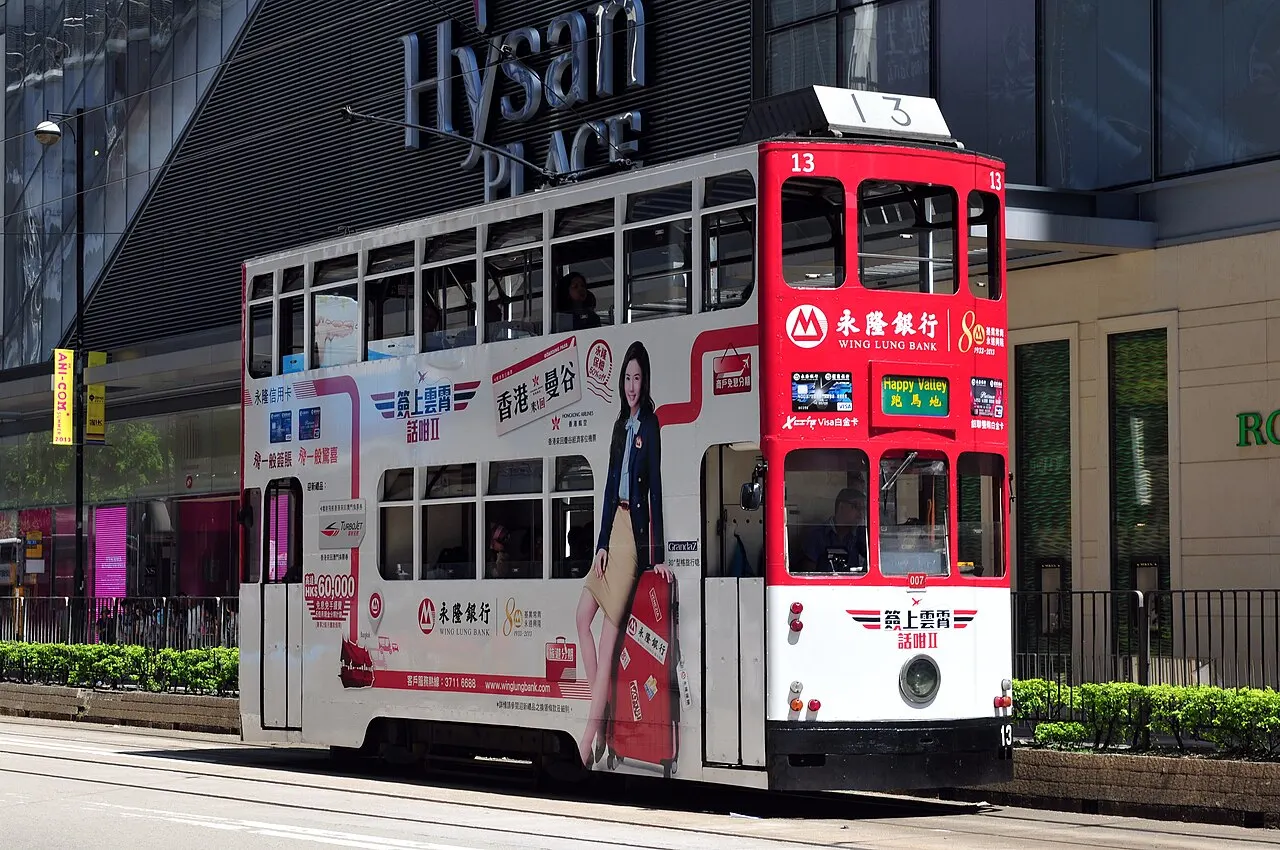
The “ding ding” tram and the Mid-Levels escalator
The trams have run since 1904 along 13 km of the island's north shore and make up the world's only all-double-decker fleet; board at the back and pay about HK$3 when you get off. The Central–Mid-Levels escalator, from 1993, is 800 m long with a 135 m rise, running downhill until 10am and uphill until midnight.
On the tram, you board at the back door and drop about HK$3 in the box as you get off.
Check access
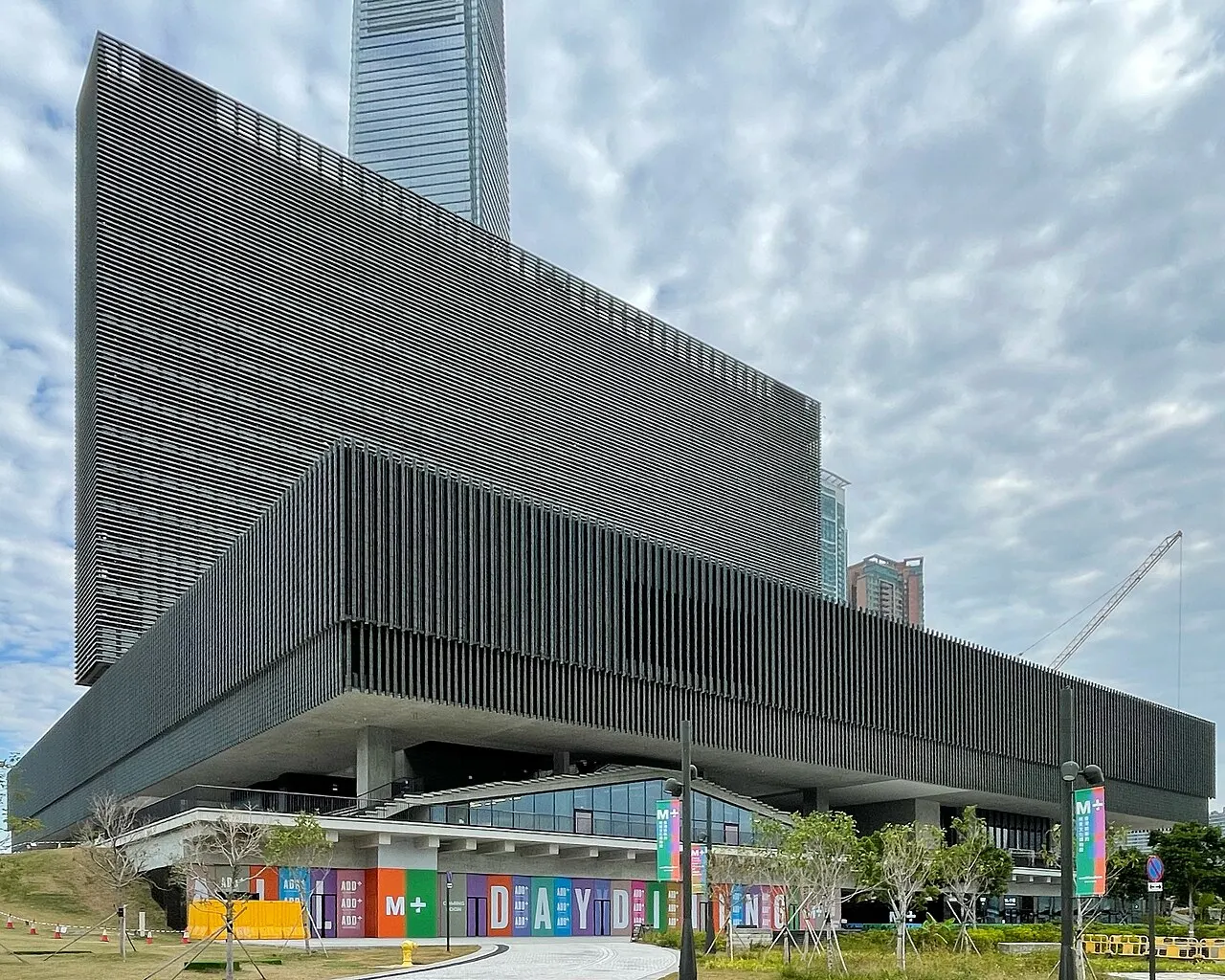
M+ and the Hong Kong Palace Museum, in West Kowloon
M+, designed by Herzog & de Meuron and opened in November 2021, is Asia's largest museum of visual culture, with a strong collection of contemporary Chinese art, design, and architecture; standard admission is around HK$120. Next door, the Hong Kong Palace Museum, opened in July 2022, displays pieces on loan from the Forbidden City, from about HK$60.
Next door to M+, the Hong Kong Palace Museum shows works on loan from the Forbidden City.
Check access
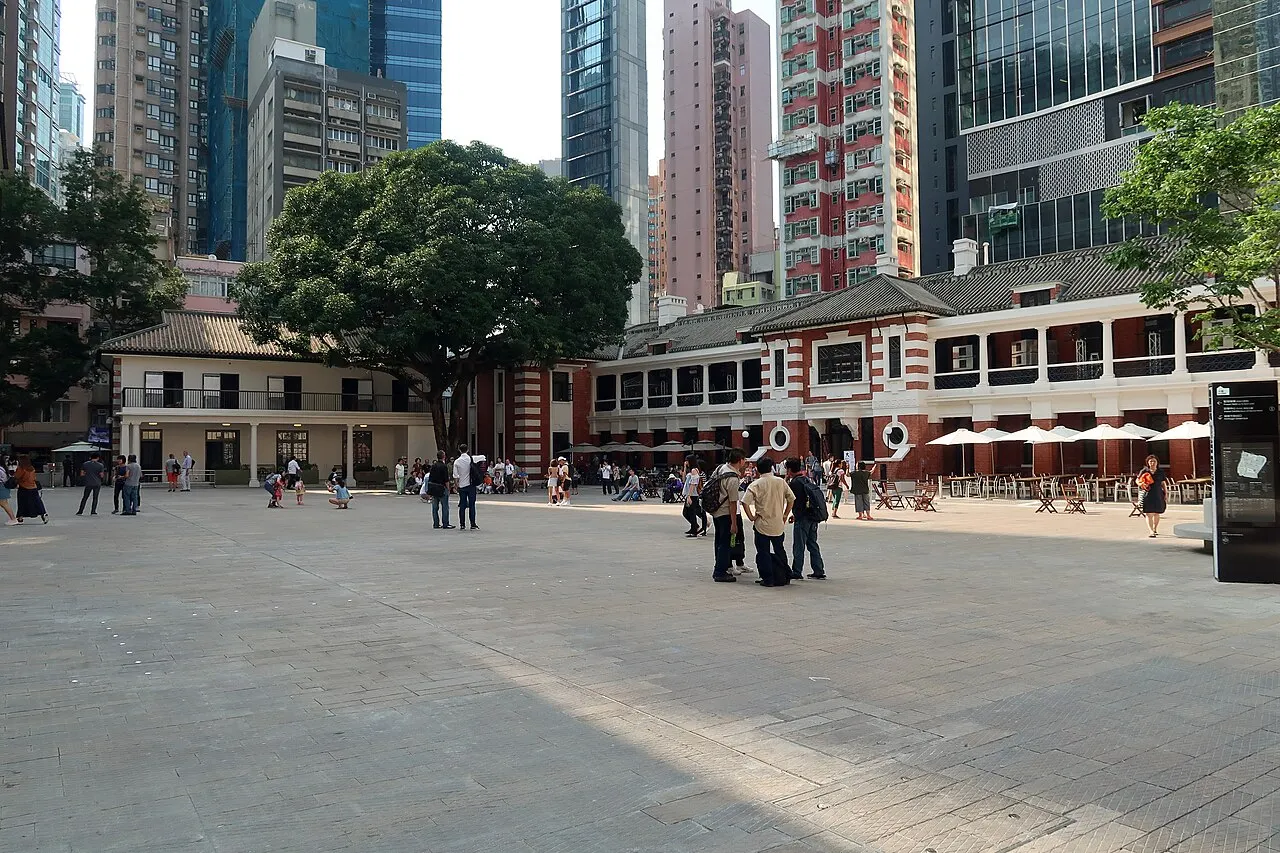
Tai Kwun
The former Central Police Station, Central Magistracy, and Victoria Prison compound, with 16 historic buildings from the 19th and 20th centuries, reopened as a cultural center on May 29, 2018, after an HK$3.8 billion restoration. Entry to the courtyard and the permanent exhibitions is free, and the JC Contemporary art wing is by the same architects as M+.
The courtyard and the permanent exhibitions are free, after a huge restoration that returned the former police station, courthouse, and prison block to public use; it cost HK$3.8 billion.
Check access
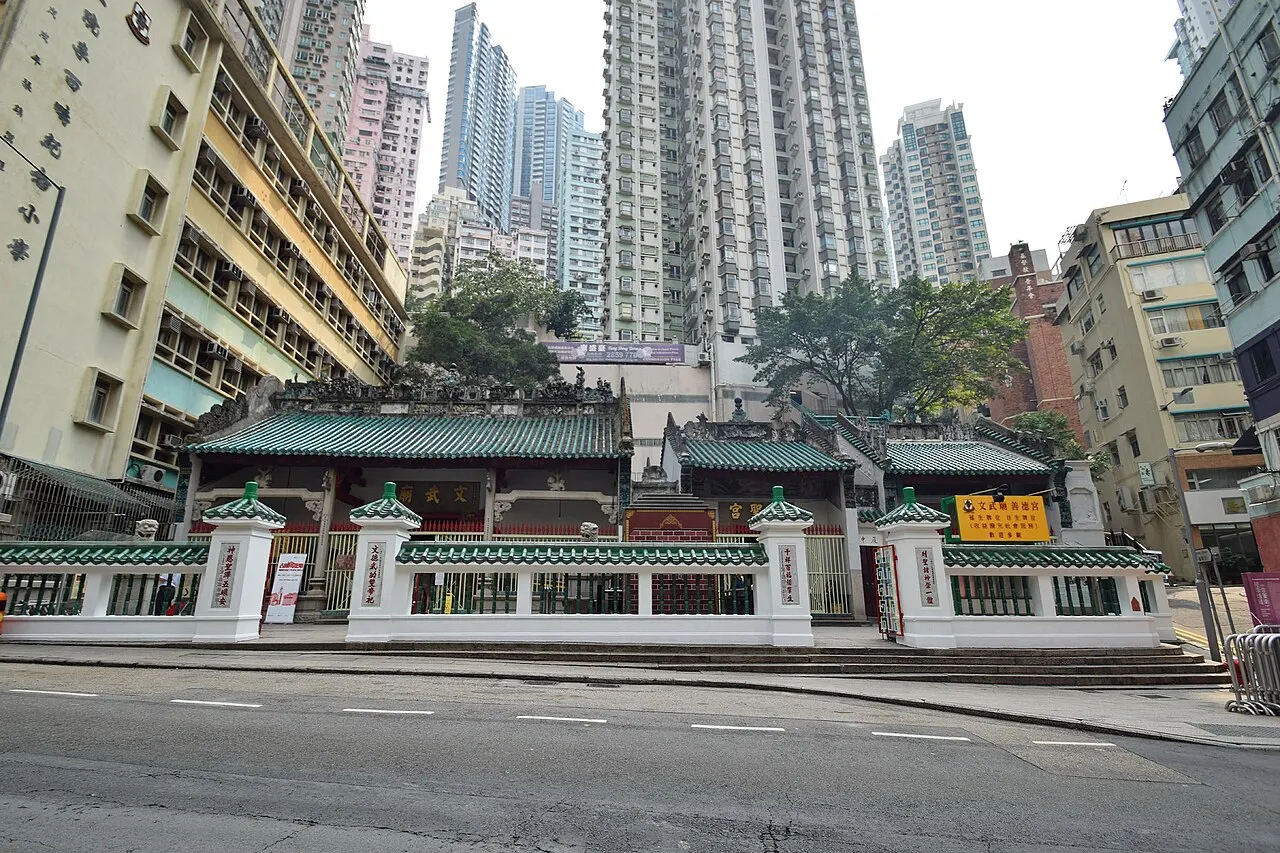
Man Mo Temple
A temple built 1847–1862 on Hollywood Road, dedicated to the gods of literature (Man) and war (Mo), run by the Tung Wah Group since 1908 and listed as a monument. The incense spirals hanging from the ceiling burn for up to three weeks and give the interior a permanent dimness.
Check access
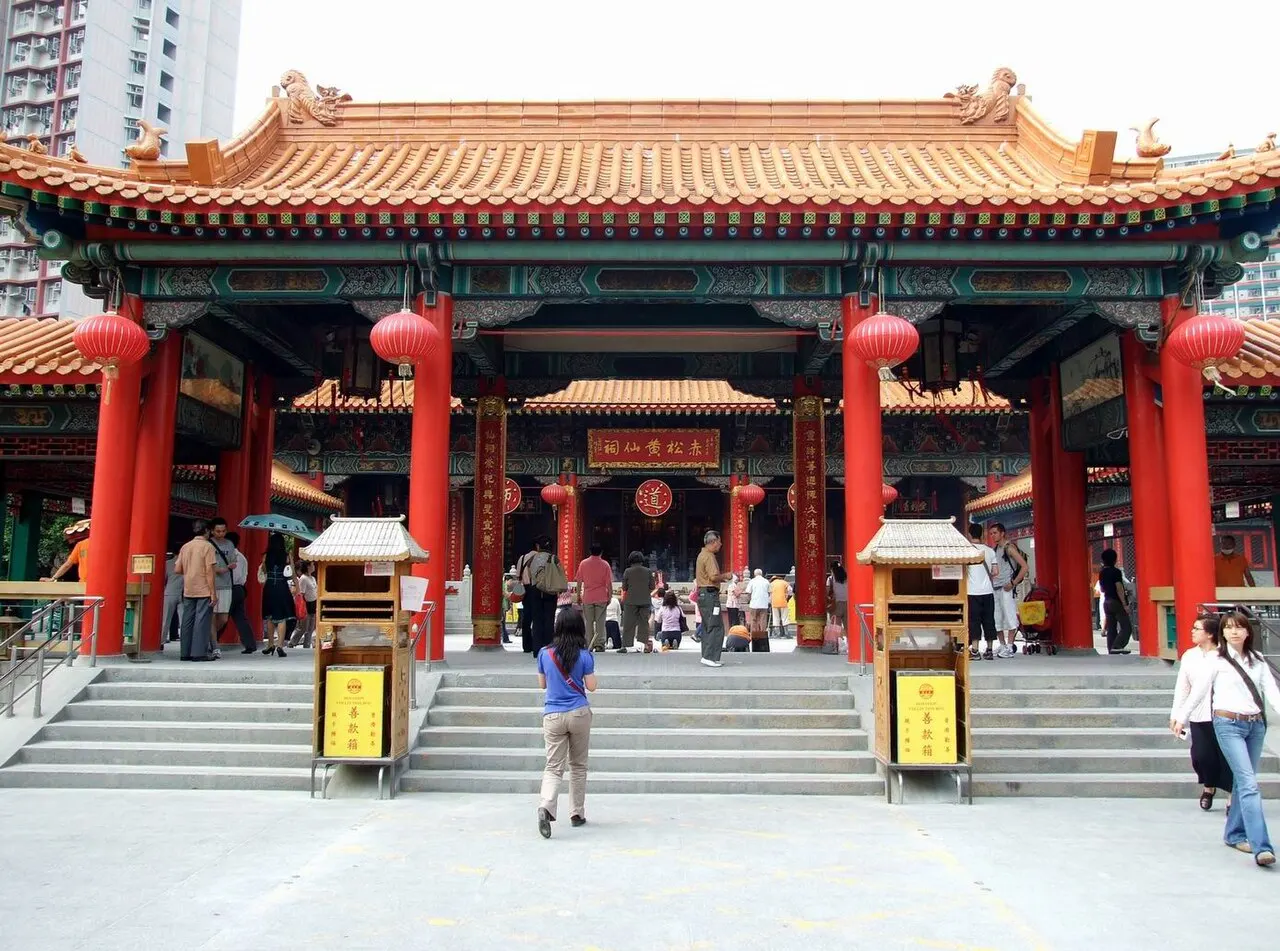
Wong Tai Sin Temple
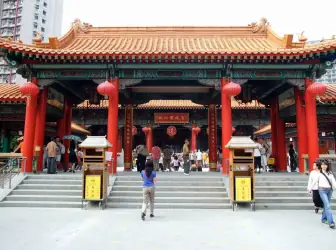
A 1921 Taoist temple that also welcomes Buddhists and Confucianists, and the place to shake the kau cim fortune sticks and take the reading to one of the fortune-tellers in the side arcade. It sits above the subway station of the same name, is free, and operates every day from early morning.
To draw your fortune, shake the kau cim cup, then take the reading straight to a fortune-teller in the side corridor.
Check access
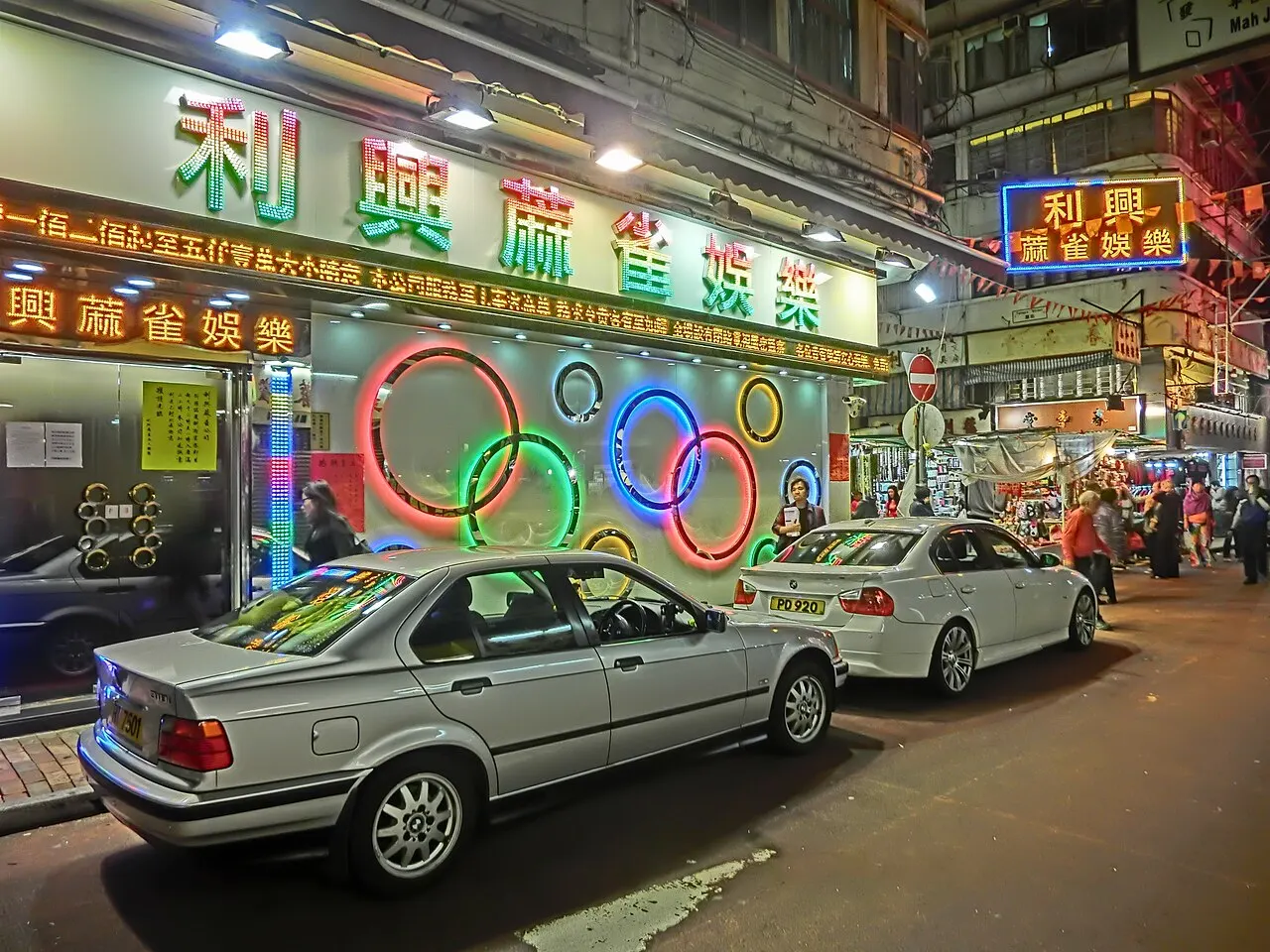
Temple Street and Kowloon's night markets
Relaunched in December 2023 with more food stalls, the street fills at nightfall with trinket stands, food tents, fortune-tellers, and Cantonese opera singers. A few blocks away are the Yau Ma Tei jade market and Mong Kok's themed streets.
After dark, the street fills with stalls of knickknacks, food tents, fortune-tellers, and Cantonese opera singers, and the Yau Ma Tei jade market is a few blocks away.
Check access
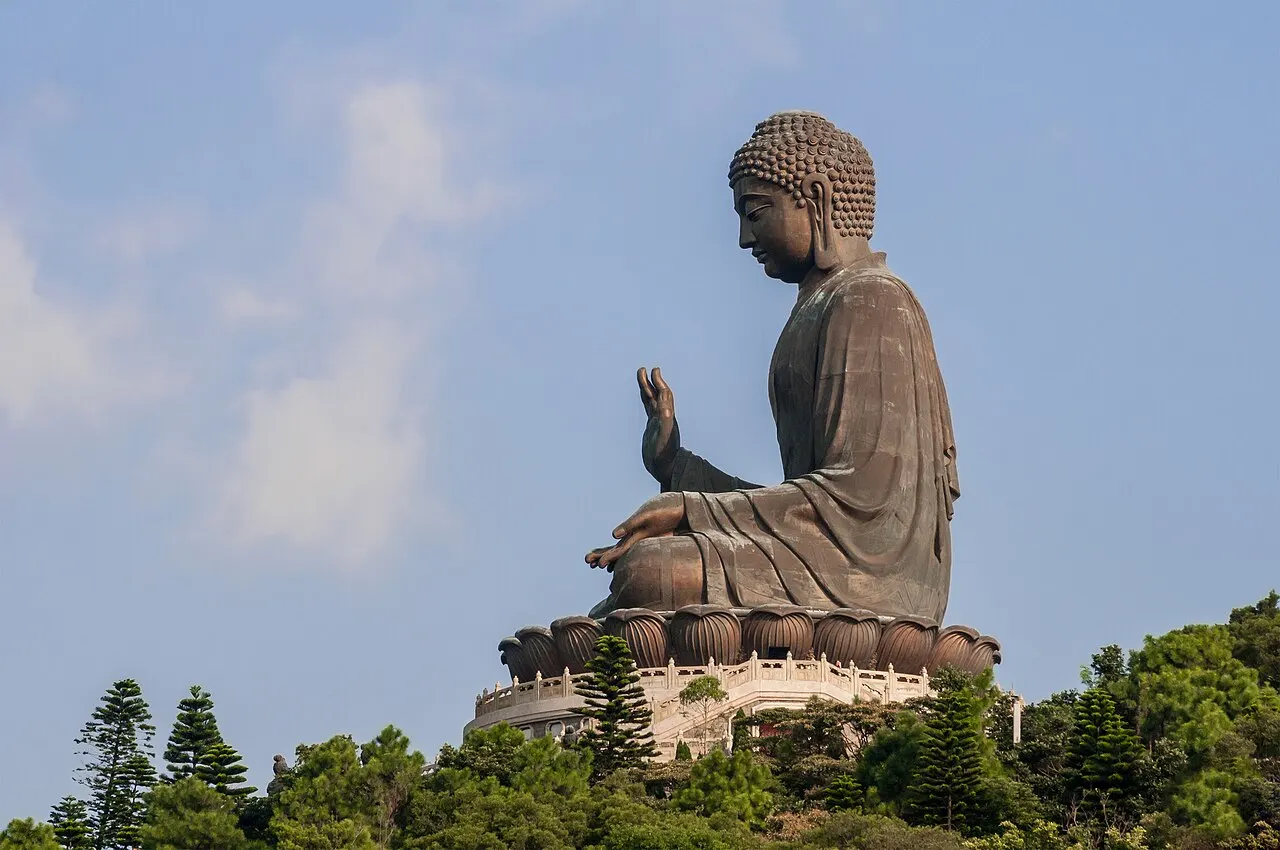
The Big Buddha of Tian Tan and Po Lin Monastery
A 34-meter, roughly 250-ton bronze Buddha, inaugurated December 29, 1993, on the Ngong Ping plateau in Lantau, atop 268 steps. Reached by the Ngong Ping 360 cable car, 5.7 km and about 25 minutes, departing from Tung Chung for around HK$270 round trip.
The bronze Buddha, from 1993, takes a full day on Lantau: the Ngong Ping 360 cable car charges about HK$270 round-trip for the 5.7 km up to the plateau, and then there are 268 steps to the statue. In the same time, for free, one of the country parks forty minutes from downtown shows you more of Hong Kong than a recent statue does.
Check access
Nilo’s itinerary
Start with the basic programme and choose extensions for the time you have.
Plan my days in the app ↗Day 1 · Hong Kong Island: harbor, hillside, and tram
Cross early by Star Ferry from Tsim Sha Tsui to Central (HK$5–6.5, ten minutes) and grab coffee at a neighborhood bakery in Sheung Wan.
Walk up Hollywood Road to Man Mo Temple (1847–1862) and continue to Tai Kwun, the restored former police complex, free to enter.
Take the Central–Mid-Levels escalator up to SoHo and have dim sum or wonton noodles for lunch around Gough Street.
Ride the “ding ding” tram from Sheung Wan to Causeway Bay on the upper deck, paying about HK$3 on exit, and get off at Victoria Park.
Book a time slot for the Peak Tram in the late afternoon, watch the sunset from the flat, free Lugard Road trail or from the paid Sky Terrace 428, and ride the funicular back down with the city lit up.
Day 2 · Kowloon: museums, markets, and neon
Start at M+ in West Kowloon (about HK$120) and, if you have the energy, add the Hong Kong Palace Museum next door (from about HK$60).
Have dim sum for lunch in Jordan or Yau Ma Tei and walk the jade market and Mong Kok's themed streets: flowers, birds, and sneakers.
Take the MTR to Sham Shui Po for used electronics on Apliu Street, fabrics on Ki Lung Street, and a bowl of tofu fa.
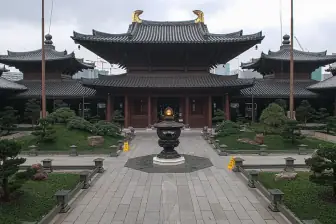
Head up to Wong Tai Sin Temple (1921) and Chi Lin Nunnery with Nan Lian Garden, both free and just a couple of stops apart.
Have dinner at the Temple Street stalls and catch the Symphony of Lights at 8pm from the Tsim Sha Tsui promenade.
Day 3 · Lantau: cable car, Buddha, and stilt village
Take the MTR to Tung Chung and ride the Ngong Ping 360 cable car up to the plateau.
Climb the 268 steps to the 1993 Big Buddha of Tian Tan, and have the vegetarian lunch at Po Lin Monastery.
Take bus 21 to Tai O (about 20 minutes) and walk through the Tanka fishermen's stilt village, with shrimp paste drying in the sun.
Head back from Tai O to Tung Chung by bus, or go back up to the plateau and ride the cable car down to see the bay in the late-afternoon light.
Have dinner in Tai O before the last bus, or in Tung Chung, next to the MTR station, and take the subway back to the center.
If you stay longer
Day 4 · Macau
Day trip
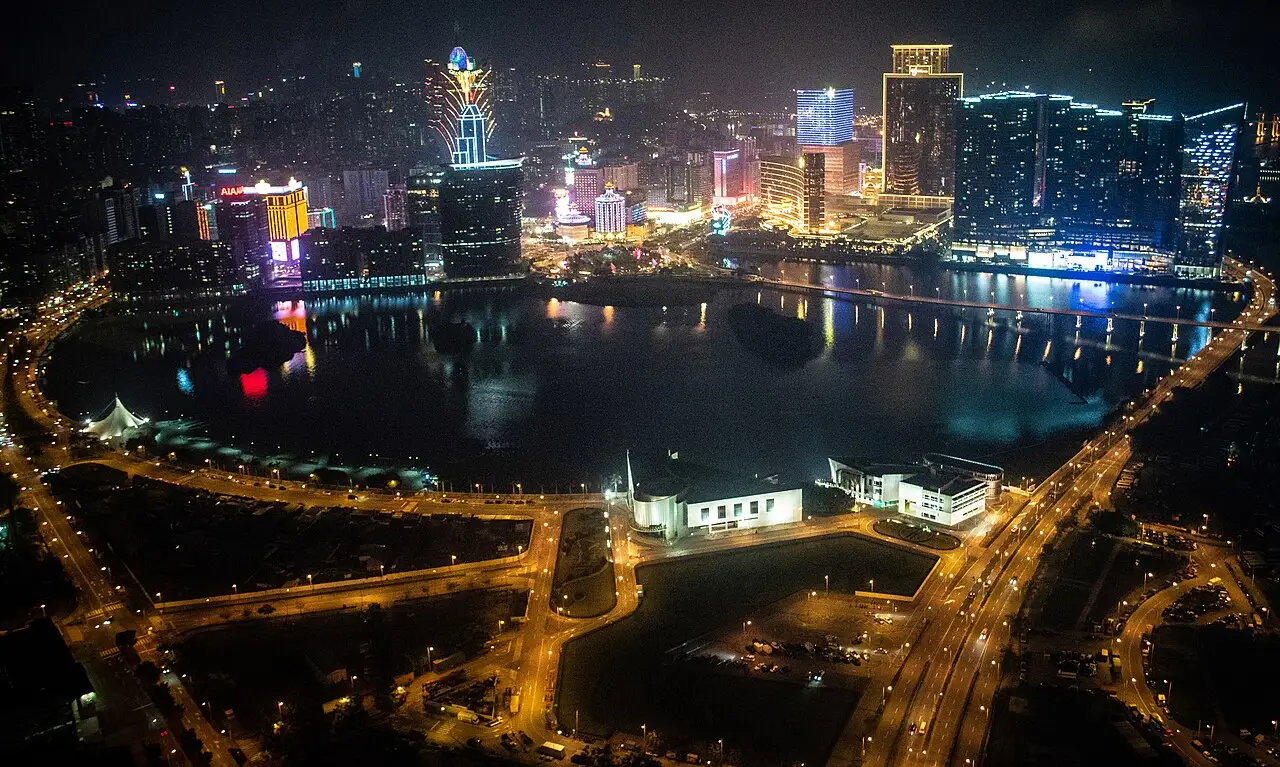
60–70 km to the west: about an hour by catamaran from Sheung Wan or Tsim Sha Tsui, or 45 minutes by bus over the 55-km Hong Kong–Zhuhai–Macau Bridge, opened in October 2018. It's another special administrative region, with border control and a passport required; worth it for the Ruins of St. Paul's, the UNESCO-listed Portuguese-Chinese old town, and Taipa.
Food
 AI illustration
Dim sum (yum cha)
Small steamed and fried dishes served with tea, from breakfast until about 4pm: shrimp har gow, pork siu mai, char siu bao, and cheung fun. You order by marking a slip at the table; in older establishments, carts still circulate. Lunch runs HK$120 to HK$200 per person.
 AI illustration
Siu mei and roast goose
Meats hanging in the window: char siu (glazed pork), crispy-skin pork, and the roast goose that's the local specialty, served with plum sauce. A plate of rice with two meats runs HK$60–90; a quarter goose, considerably more.
 AI illustration
Wonton noodles
Thin egg noodles, traditionally pressed with a bamboo pole, served in dried-shrimp broth with whole-shrimp dumplings. The small bowl, HK$45–70, is as much a late-afternoon snack as a meal.
 AI illustration
“Silk stocking” milk tea and pineapple bun
The tea is a blend of strong leaves strained several times through a cloth filter that turns stocking-colored; it takes evaporated milk and no extra hot water. It's paired with the bo lo bun, which has no pineapple in it at all, with a cold slab of butter in the middle: the standard breakfast at a cha chaan teng, for HK$30–45.
 AI illustration
Egg tart
Shortcrust or puff pastry with baked egg custard, a Cantonese adaptation of the English custard tart that arrived via Guangzhou and spread through the cha chaan teng; the caramelized-top version, copied from the Portuguese pastel de nata, is Macau's take. It runs HK$10–14 apiece and is eaten standing up, still warm, at neighborhood bakeries.
 AI illustration
Street snacks: egg waffle and fish balls
The gai daan zai is a plate of thirty-odd bubbles of egg batter baked on a hinged griddle, folded into a paper cone for HK$20–30. Nearby there's usually a skewer of curry fish balls, cheap siu mai, and sweet tofu fa.
 AI illustration
Clay-pot rice (bou zai faan)
A winter dish: rice cooked in an individual clay pot with Chinese sausage, mushroom, or chicken, drizzled with sweet soy sauce right before serving. The burnt crust at the bottom is the prized part; it's concentrated on Temple Street and in Sham Shui Po from November to February.
 AI illustration
Seafood and dai pai dong
In Sai Kung and Lei Yue Mun you pick the live fish from the tank and pay the restaurant to cook it. On the streets, only a few dozen dai pai dong licenses remain, open-air wok stalls with high flame and the smoky wok hei flavor, at spots like Graham Street, in Central, and Stanley Street.
Day trips
Macau
60–70 km to the west: about an hour by catamaran from Sheung Wan or Tsim Sha Tsui, or 45 minutes by bus over the 55-km Hong Kong–Zhuhai–Macau Bridge, opened in October 2018. It's another special administrative region, with border control and a passport required; worth it for the Ruins of St. Paul's, the UNESCO-listed Portuguese-Chinese old town, and Taipa.
Sai Kung and the UNESCO Global Geopark
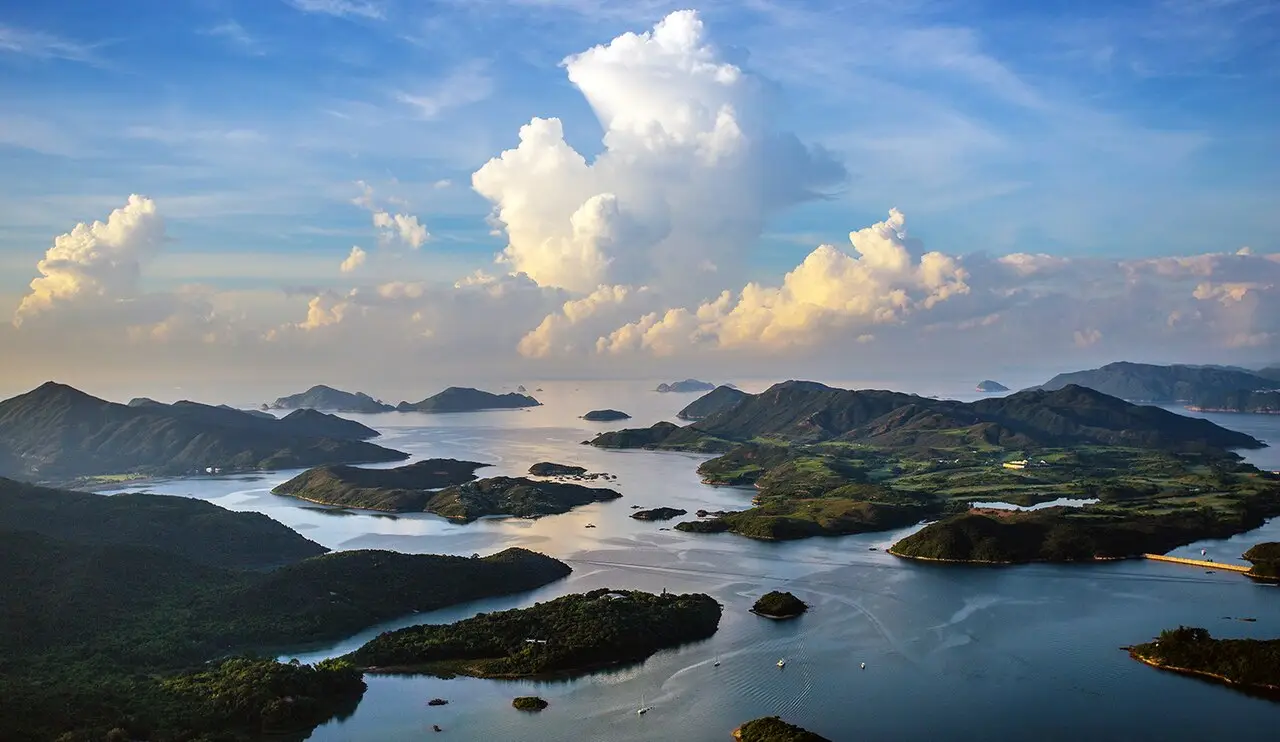
One hour by MTR plus bus from Central. Boats leave the fishing village for Sharp Island and Hap Mun Bay beach, and for the hexagonal columns of volcanic rock, about 140 million years old, that earned the area UNESCO Geopark status in 2011.
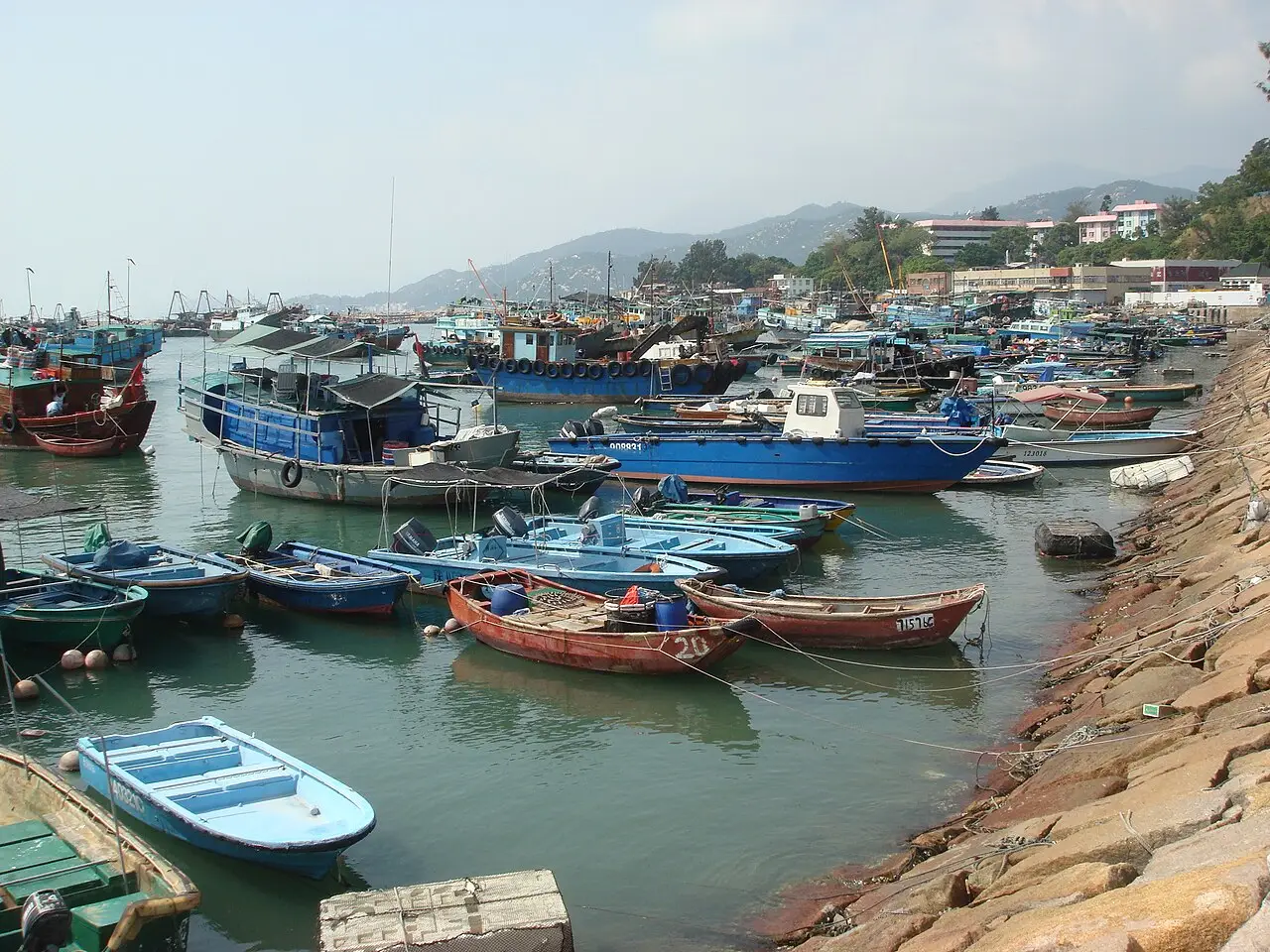
Cheung Chau
A car-free island 35–60 minutes by ferry from Pier 5, in Central. It has Tung Wan beach, the 1783 Pak Tai Temple, a cave attributed to the pirate Cheung Po Tsai, seafood restaurants on the pier, and the bun festival in May.
Where to begin
Hong Kong Island: harbor, hillside, and tram
Cross early by Star Ferry from Tsim Sha Tsui to Central (HK$5–6.5, ten minutes) and grab coffee at a neighborhood bakery in Sheung Wan.
Kowloon: museums, markets, and neon
Start at M+ in West Kowloon (about HK$120) and, if you have the energy, add the Hong Kong Palace Museum next door (from about HK$60).
Lantau: cable car, Buddha, and stilt village
Take the MTR to Tung Chung and ride the Ngong Ping 360 cable car up to the plateau.
Money
The currency is the Hong Kong dollar (HKD). The exchange-rate system linked to the US dollar began in 1983; the band of HK$7.75 to HK$7.85 per US$1 was established in 2005. Check a current rate to convert other currencies and compare exchange fees. Banknotes are issued by three commercial banks (HSBC, Standard Chartered and Bank of China), so it's normal to receive three different designs of the same HK$100 note, and all three are worth the same. For food, expect coffee at HK$35–50, a cha chaan teng meal at HK$50–80, a bowl of noodles at HK$45–70 and a dim sum lunch at HK$120–200. A beer at a bar costs HK$70–110, a cocktail in Central HK$130–180 and an MTR ride HK$5–15. For a bed, a hostel dorm costs HK$200–350 and a double room in a simple hotel HK$800–1,400 a night. Accommodation carries a 3% tax, reintroduced on January 1, 2025, and hotels and sit-down restaurants add a 10% service charge. Tipping isn't required: with the service charge already on the bill, just leave the coins from your change, and round up in taxis. Cards work in shops, chains and larger restaurants, but street markets, dai pai dong, minibuses and stalls run on cash or Octopus, and there are ATMs on every block.
Getting there and around
Twenty-four minutes on the Airport Express
From Hong Kong International Airport (Chek Lap Kok, on Lantau), the fastest route is the Airport Express: 24 minutes to Hong Kong station, in Central, and 21 to Kowloon, for HK$120 and about HK$105 on an adult ticket (fares adjusted on June 22, 2026, the first increase in eight years), with discounts for advance purchase and free shuttle buses to hotels. If you're not in a hurry, there are cheaper options: buses A11, A21 and E11 charge HK$25–50 and take 45–75 minutes, and a red taxi to Tsim Sha Tsui costs HK$270–320, plus the bridge toll and HK$6–7 per suitcase. Arriving from Macau or Zhuhai, you can use the 55 km sea bridge opened in October 2018, and high-speed trains run from West Kowloon to Guangzhou and Beijing.
The MTR handles almost everything, every two minutes
Within the city, the MTR handles almost everything: ten urban lines plus the Airport Express and the Light Rail, trains every two to five minutes, from around 6am to around 1am, with fares from HK$5 to HK$15 on most urban trips. The Octopus card is the standard means of payment, and here the key and the cash are the same object: it costs HK$150 for the adult version (HK$50 refundable deposit plus HK$100 in real credit) or the tourist version from HK$39, with no deposit and no refund, and it pays for tram, ferry, bus, convenience stores, and vending machines. Since 2022, MTR turnstiles accept contactless credit cards and QR codes, but buses, trams, and minibuses don't give change in cash. The tram charges a flat fare of about HK$3 when you get off, the Star Ferry HK$5–6.5, and the green and red 19-seat minibuses require you to shout “yáuh lohk” to get off, because there's no stop button. Taxis are split by area (red in the city, green in the New Territories, blue on Lantau) with a flag fall around HK$29; ride apps exist, but platform regulation was only approved in 2025 and is phasing in. On foot, Central, Wan Chai, and Kowloon have networks of covered footbridges that let you walk for kilometers without crossing a street; a bicycle only makes sense in the New Territories, on the cycle path between Sha Tin and Tai Po.
Safety
Hong Kong has one of the lowest violent crime rates among the world's big cities, and walking alone at night is normal almost everywhere, including on the subway up to the last train. The real risks are small and predictable, and nearly all depend on time and place. Pickpockets work where there are crowds: Temple Street, Mong Kok, Causeway Bay and packed ferries. Tailors, money changers and electronics shops in Tsim Sha Tsui tout on Nathan Road and switch the agreed model at the moment of payment. Check the price, model and receipt before you pay, buy electronics from a recognized chain and be wary of anything without a price tag. There are also taxis that refuse to use the meter for tunnel crossings, and offers of “jade tea” or gemstones at inflated prices. The biggest danger here is the weather: typhoons between May and November and the amber, red and black rainstorm warnings, which cause flooding and landslides. Follow the Hong Kong Observatory and don't go out under Signal No. 8 or a black warning. On the trails, the problem is heat and dehydration: carry water, tell someone your plans and note the number of the nearest marker post in case of emergency (112 and 999 both work). Finally, since 2020 there have been clear legal limits on political expression: demonstrations, banners and protest materials can lead to serious trouble, and it's wise neither to take part in nor to record that kind of situation.
Etiquette tips
Tap two fingers on the table when someone pours your tea
The gesture (two knuckles tapping the table twice) is a silent thank-you that avoids interrupting the conversation. To ask for a refill, leave the teapot lid open or off to the side.
Stand on the right on escalators
People standing still keep to the right; the left is for walking. It holds at every station and is the most enforced rule of movement in the city, along with letting people off before boarding a train car.
Don't eat or drink inside the MTR
Eating and drinking are banned throughout the MTR's paid area, from the turnstiles in, with fines of up to HK$5,000. Nobody eats on the train or even drinks water, and staff will approach tourists holding a coffee.
Give and receive with both hands
Business cards, cash, gifts, and menus are passed with both hands and a slight nod. Given a business card, look at it before putting it away; don't write on it in front of the person who gave it.
At a shared table, serve the other person's plate first
Dishes come to the center and are served with serving chopsticks or by flipping your own; fill the eldest person's cup first. Never stick chopsticks upright in rice, a gesture associated with funeral offerings.
Be careful with politics in public
Since the 2020 National Security Law and the 2024 Article 23 legislation, slogans, posters and protest materials can have legal consequences. Don't photograph police operations and avoid discussing politics with strangers.
Mistakes to avoid
Most of the territory lies off the island
Thinking Hong Kong is a single island and getting stuck between Central and Tsim Sha Tsui. Seven-eighths of the territory sits on the other side of the harbor and in the New Territories, and 40% of the area is country park with trails 40 minutes away by subway.
Assuming Mandarin or English will cover it
Speaking Mandarin or English on the assumption that it covers everything. Cantonese is the language of the street for about 88% of the population; English works in hotels, the MTR, and larger restaurants, but at stalls and on minibuses an “m̀h-gōi” points the way faster than a full sentence.
Boarding the bus or tram with a large bill
Boarding the bus, tram, or minibus with a bill in hand. None of them give change in cash, and on the tram, which costs about HK$3, the difference stays with the company: top up your Octopus before leaving the hotel, or carry coins separately.
Street at 33°C, subway at 21°C: the temperature shock
Going without a light jacket in summer, which sounds absurd until it happens to you. The street sits at 33 °C and 85% humidity, the subway and malls sit at 21 °C, and the thermal shock between the two is what wears visitors down.
Typhoon Signal No. 8 means the city is closed
Ignoring the Observatory's signals. Typhoon Signal No. 8 or a black rainstorm warning means the city is closed, and insisting on going out with those warnings up usually ends with no taxi to be found and a canceled tour with no refund.
Useful phrases
唔該 (m̀h-gōi)
“thank you / excuse me”: used to ask for room to pass, call the waiter, and thank someone for a small favor; the single most useful word in the city
多謝 (dō-jeh)
“thank you very much”: used when receiving a gift, a meal someone else paid for, or a discount, not for everyday favors
你好 (néih-hóu)
“hello”
埋單 (màaih-dāan)
“check, please”: usually accompanied by the gesture of writing in the air
幾多錢? (géi-dō chín)
“how much does it cost?”
有落 (yáuh lohk)
“getting off here”: shout it on the green or red minibus, because it has no stop button
Districts
Central and Sheung Wan
The financial district and the oldest colonial core, with banks, courts, and the Mid-Levels escalator climbing up to SoHo. Sheung Wan, next door, holds the dried-seafood and herbal-medicine shops of Des Voeux Road West, galleries on Hollywood Road, and cafés around Tai Ping Shan.
Wan Chai and Causeway Bay
Wan Chai combines office towers, the street market on Tai Yuen Street, and old tenement rows like the 1922 Blue House. Causeway Bay is mass-market shopping: Times Square, Japanese stores, the 19-hectare Victoria Park, and the cannon fired every day at noon by Jardine Matheson since the 19th century.
Tsim Sha Tsui
The southern tip of Kowloon, with the Avenue of Stars promenade, public museums, historic hotels like the Peninsula (1928), and the multicultural maze of Chungking Mansions. It's the best side for photographing the island's skyline, and where the electronics shops and tailors that approach tourists on Nathan Road are found.
Mong Kok and Yau Ma Tei
One of the densest urban stretches in the world, with themed markets street by street: flowers on Flower Market Road, birds at Yuen Po, sneakers on Fa Yuen Street, electronics and vinyl secondhand shops in vertical buildings. At night, Yau Ma Tei's Temple Street fills with food stalls, fortune-tellers, and street Cantonese opera.
Sham Shui Po
A low-income district and the most interesting one for seeing the city actually at work: used electronics on Apliu Street, fabrics and notions on Ki Lung Street, workshops and new studios in converted industrial buildings. It also has some of the best cheap restaurants in the city, and Mei Ho House, a 1954 public-housing block turned museum and hostel.
Kennedy Town and Sai Ying Pun
The far west of the island, connected to the MTR only since 2014 and 2015, which brought cafés and bars to a neighborhood of markets and temples. The Kennedy Town waterfront and the sunset over the container port are the local late-afternoon ritual.
Kowloon City and Kai Tak
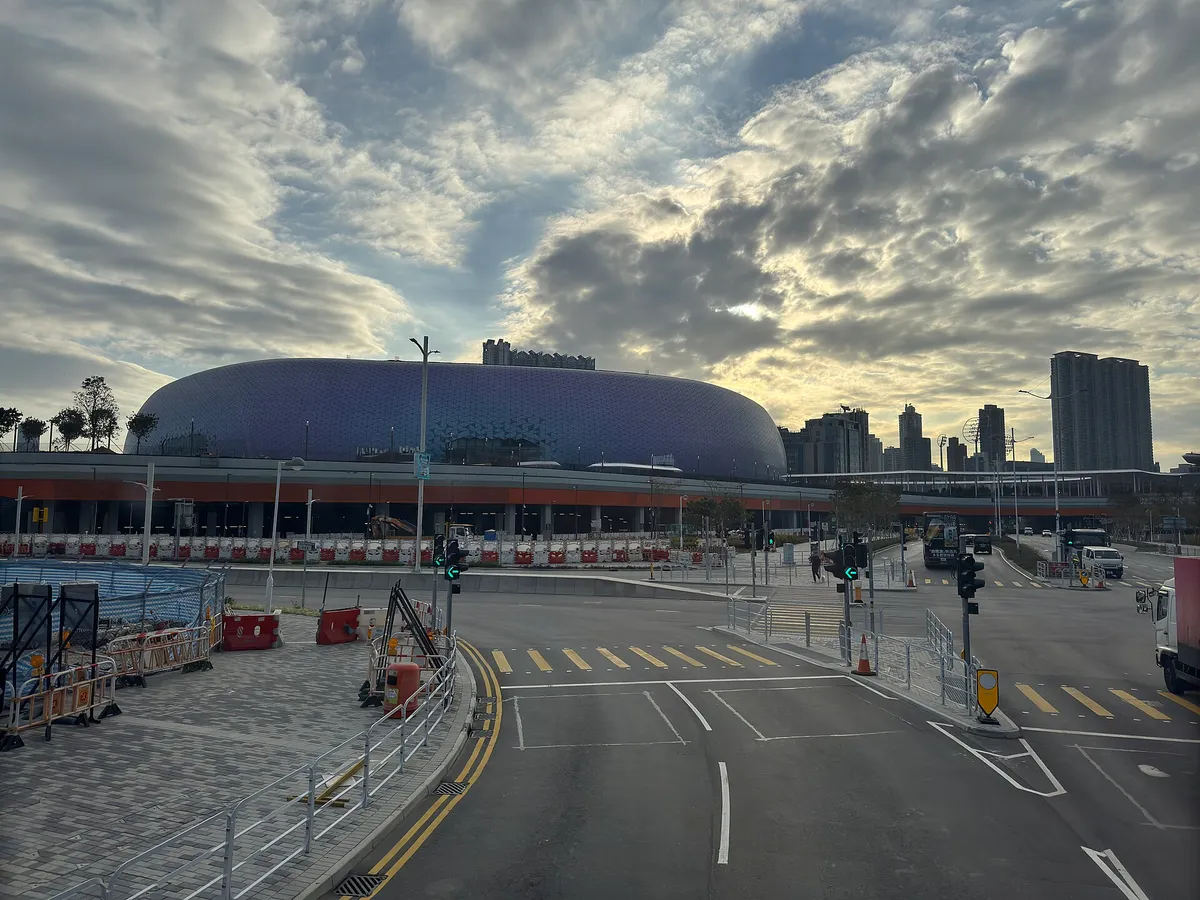
On the site of the old airport, a planned district has grown up around Kai Tak Sports Park, opened March 1, 2025. Kowloon City, next door, is the city's Little Thailand, with grocery stores and Thai restaurants established since the 1980s, and Kowloon Walled City Park stands where the old walled city was demolished in 1993–94.
Sai Kung and the outlying islands
Sai Kung is the eastern coast of the New Territories, with a fishing village, seafood restaurants, and access to the UNESCO Global Geopark. Lantau, Cheung Chau, and Lamma are islands with few or no cars, beaches, trails, and low-rise villages, all less than an hour by ferry or metro from downtown.
History
until 1841 · Salt, pearls, and walled villages
Before the British there were imperial salt pans in Kowloon, Tanka fishing communities in the bays, and walled villages of the Punti clans in the New Territories, some still standing in Kam Tin. Sung Wong Toi rock recalls the Song court that took refuge here around 1277.
1841–1842 · Landing and the Treaty of Nanking
The British Navy raises the flag at Possession Point on January 26, 1841, in the middle of the First Opium War. The Treaty of Nanking, signed August 29, 1842, cedes Hong Kong Island “in perpetuity”; the population was about 7,500 people.
1860 · Kowloon joins the map
The Convention of Peking, after the Second Opium War, cedes the Kowloon Peninsula up to Boundary Street and Stonecutters Island. The street's name still marks, today, the border that existed for 38 years.
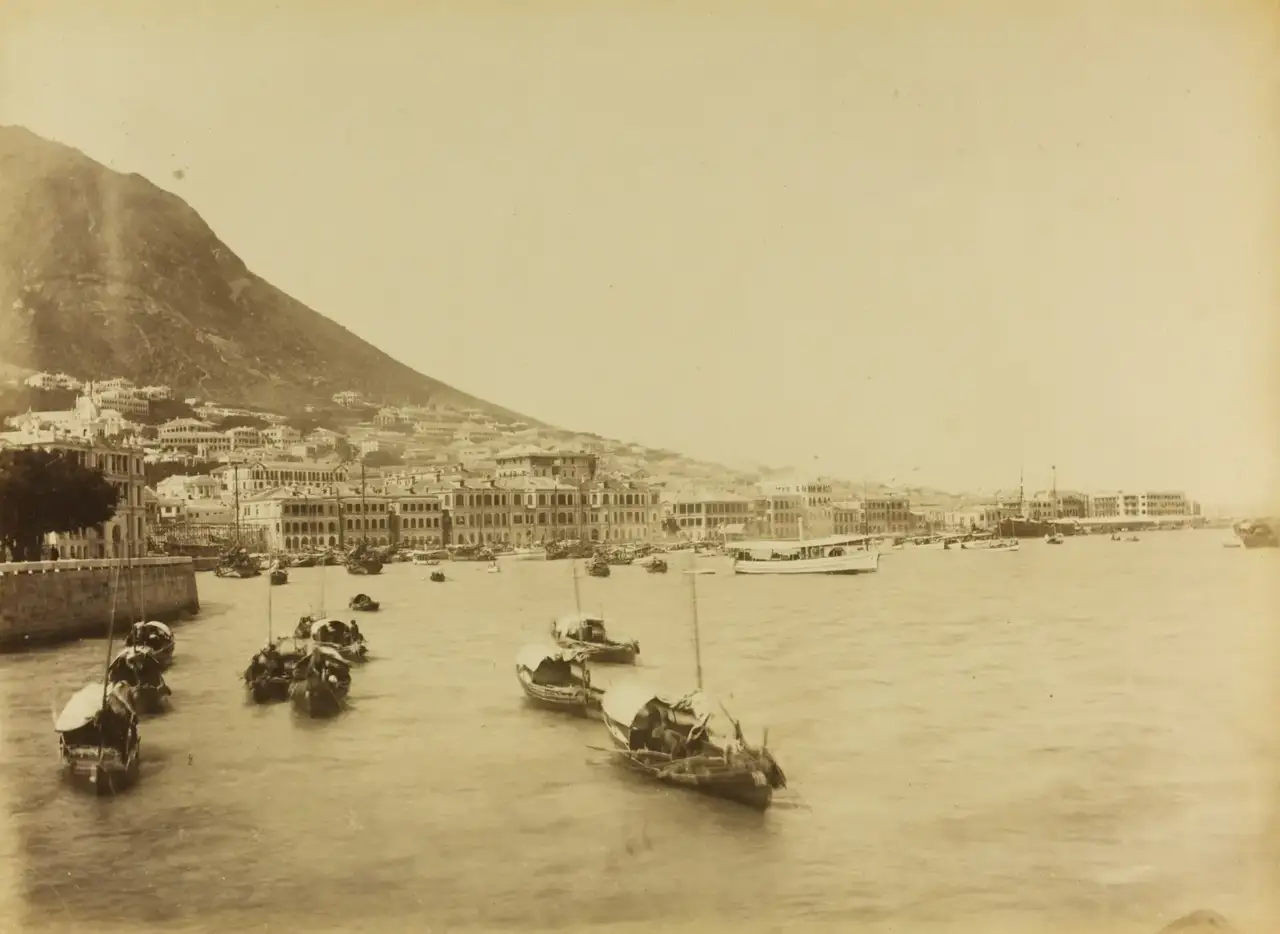
1898 · The 99-year lease
The Second Convention of Peking leases the New Territories and more than 200 islands for 99 years, expiring June 30, 1997. This date, not a later political decision, set the city's clock.
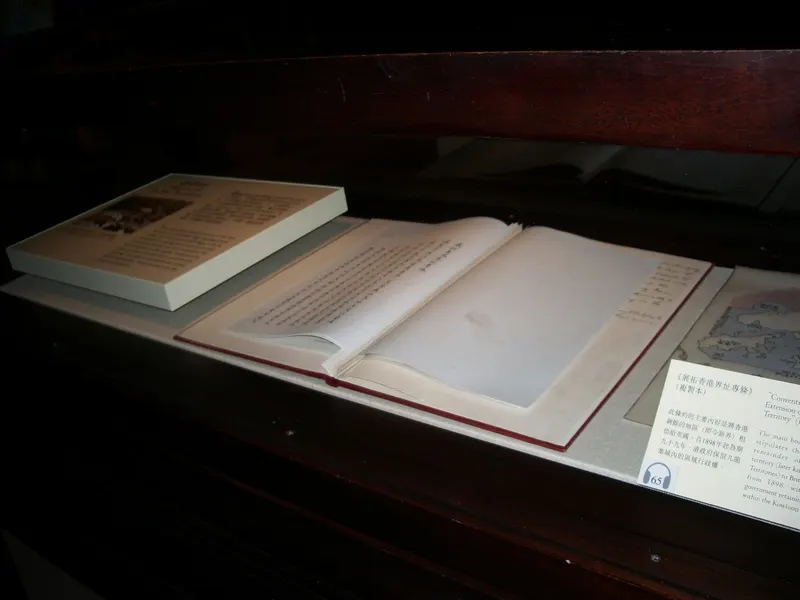
1941–1945 · Japanese occupation
The Battle of Hong Kong lasts from December 8 to 25, 1941, and ends with the British surrender on “Black Christmas.” Under occupation, the population falls from about 1.6 million to under 600,000, from famine and deportation.
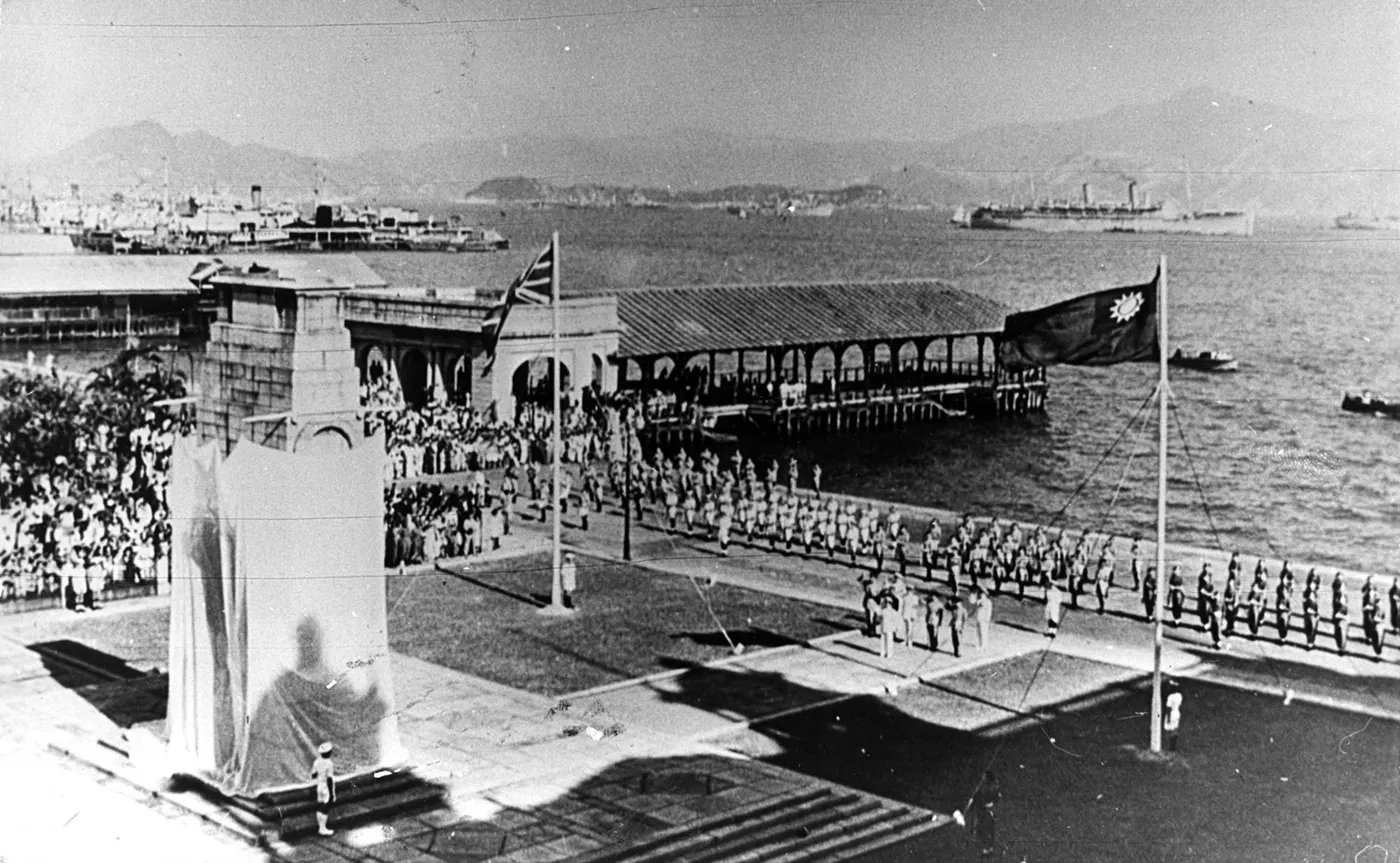
1949–1953 · Refugees and the Shek Kip Mei fire
The Communist victory of 1949 pushes hundreds of thousands of refugees into hillside shacks. The Shek Kip Mei fire, on the night of December 25, 1953, leaves about 53,000 homeless and launches Asia's largest public-housing program.
1966–1979 · Factories, containers, and the metro
Plastics, toys, and textiles make the city industrial; the 1967 riots force labor and social reforms. The Kwai Chung container terminal opens in 1972, and the first MTR line, the Kwun Tong line, enters service in October 1979.
1984–1997 · Joint Declaration and the handover
Signed on December 19, 1984, the Sino-British Joint Declaration promises “one country, two systems” for 50 years. Sovereignty transfers at midnight on July 1, 1997, in heavy rain, broadcast live.
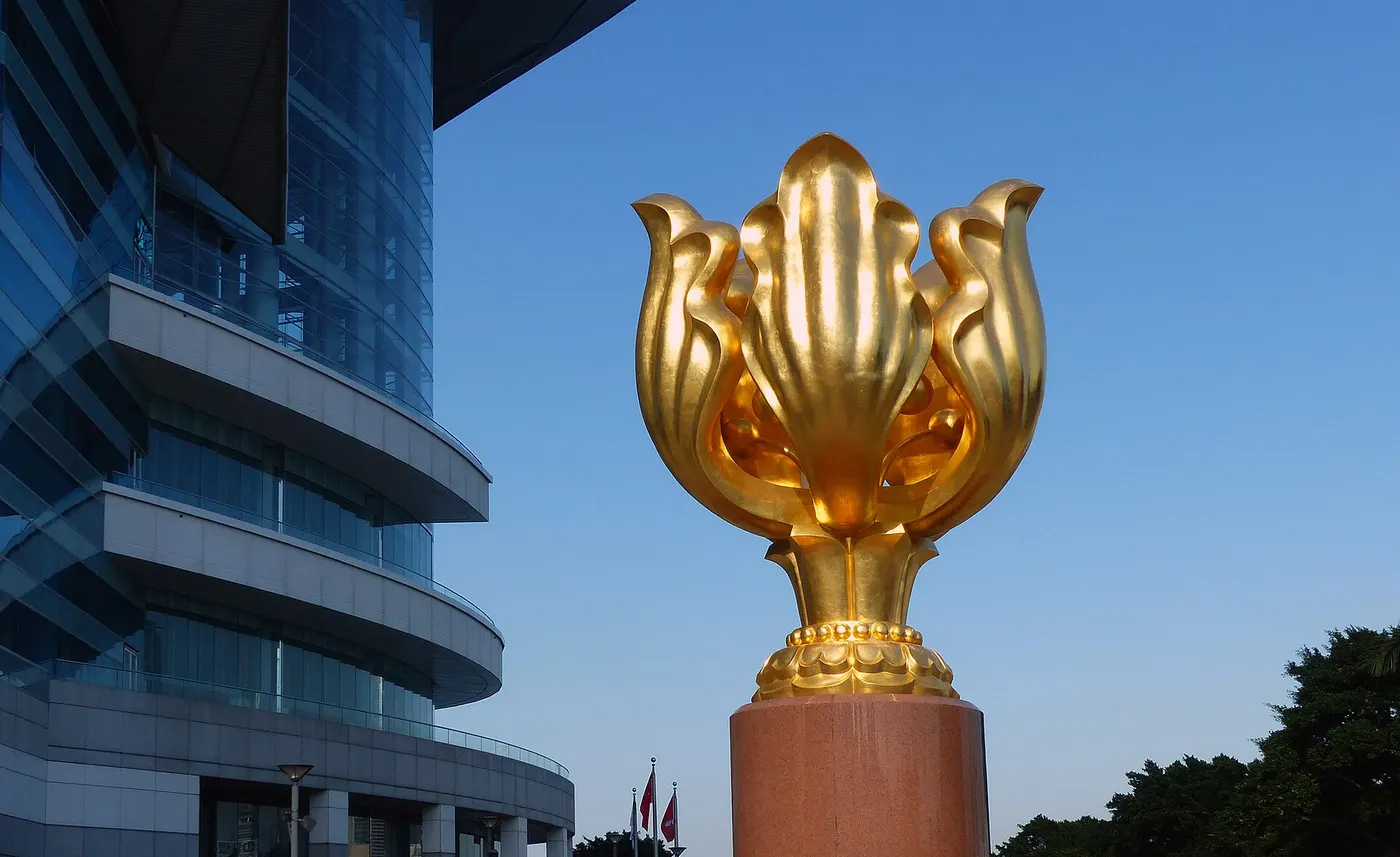
1998–2003 · Chek Lap Kok, the Asian crisis, and SARS
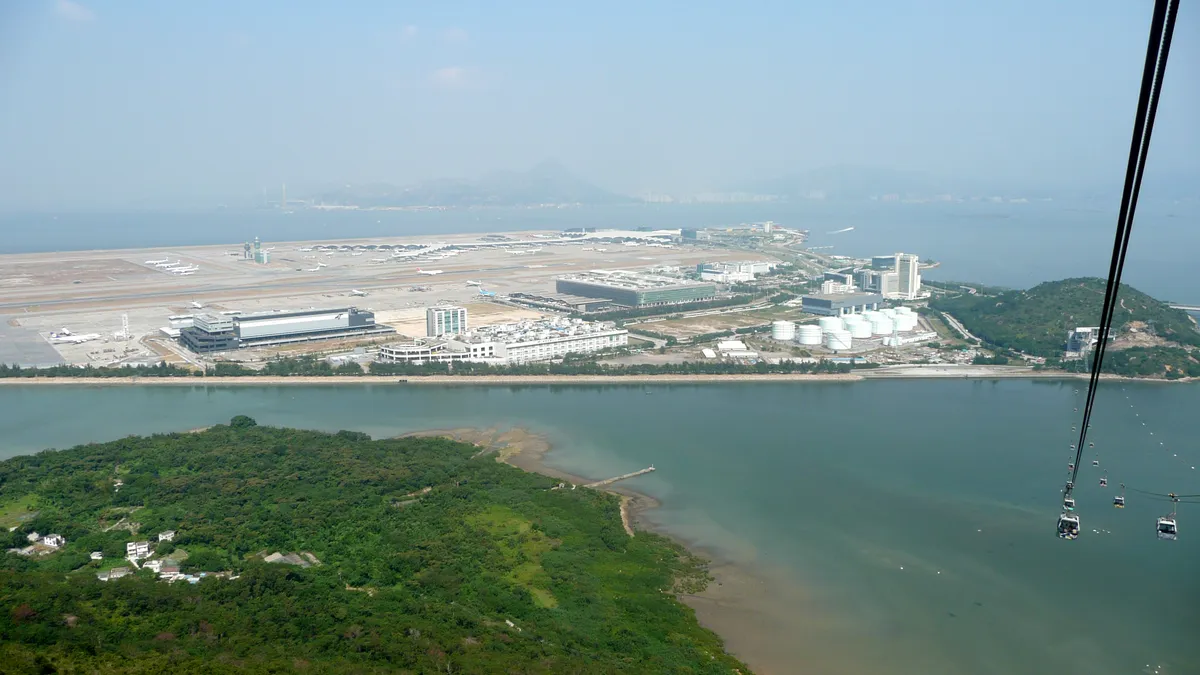
Kai Tak Airport, famous for its approach between buildings, closes on July 6, 1998, and gives way to Chek Lap Kok, on reclaimed land. SARS kills 299 people in 2003, and the economic response (the Individual Visit Scheme, from July 2003) opens the city to mass mainland tourism.
2014–2024 · Protests and a new legal order
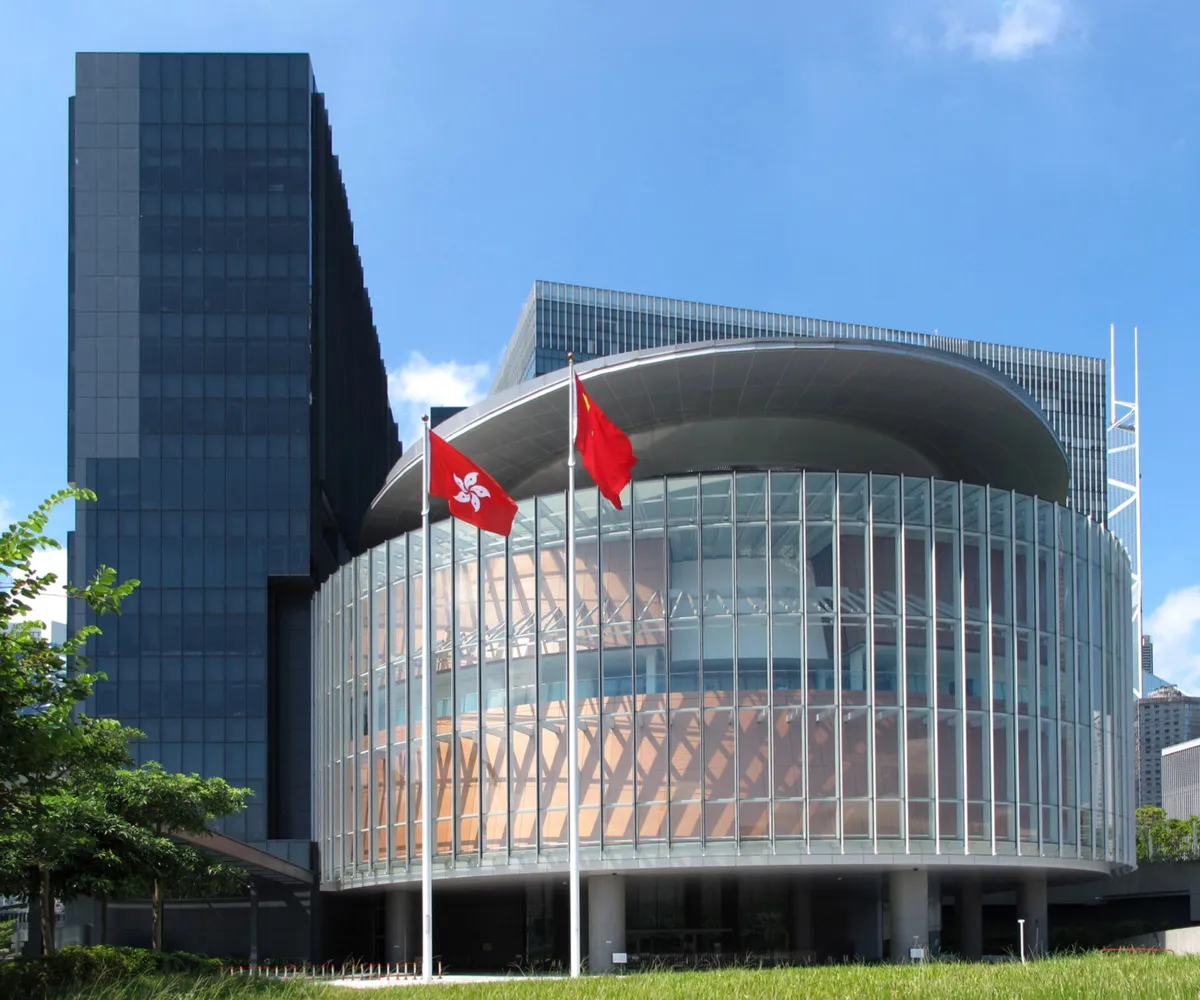
Occupy Central/the Umbrella Revolution occupies central roads for 79 days between September 28 and December 15, 2014; 2019 brings months of protests against the extradition bill. Beijing imposes the National Security Law on June 30, 2020, and local Article 23 legislation passes in March 2024.
2025–2026 · Reopening, Kai Tak, and the hotel tax
The HK$30 billion Kai Tak Sports Park, with a 50,000-seat stadium, opens on March 1, 2025, on the site of the old airport. That same year the 3% hotel accommodation tax returned, on January 1, and visitor numbers grew by about 12%; in the first quarter of 2026 alone there were about 14.3 million.
Complete history
A deep-water port explains why the British founded the city
Hong Kong was chosen for its harbor. The waters between the island and the Kowloon Peninsula are deep, sheltered by mountains on both sides and ice-free all year, exactly what the British Navy was looking for to operate off China's south coast during the First Opium War. The flag went up at Possession Point on January 26, 1841, before there was even a treaty, and the Treaty of Nanking formalized the cession on August 29, 1842. The island then had about 7,500 inhabitants, almost all fishermen and stonecutters, and the trade that sustained it in its first decades was Indian opium.
Three legal layers explain the map
The territory grew in three legal layers that explain today's map. In 1860, after the Second Opium War, the Convention of Peking added the Kowloon Peninsula up to a line still called Boundary Street. In 1898, the Second Convention of Peking leased the New Territories and more than two hundred islands for 99 years, a term nobody in London imagined would matter and that fixed the date of June 30, 1997. The city lived out the entire 20th century with a clock running in the background, and that's why local architecture, contracts, and financial habits were always short-term.
Occupation, refugees and public housing, 1941–1980
Modern Hong Kong begins with a war and a fire. The Japanese occupation, from December 1941 to August 1945, cut the population from about 1.6 million to fewer than 600,000. After 1949, the communist victory in China pushed refugees here, along with capital and machinery from Shanghai: the cotton mills of Tsuen Wan are direct offspring of that migration. The Shek Kip Mei fire, on December 25, 1953, left about 53,000 people homeless and forced the colonial government to build public housing on an industrial scale, and today almost half of residents live in public apartments, rented or subsidized. The 1967 riots forced labor and social reforms, with limits on working hours, more public schools and social welfare. Then the Kwai Chung container port (1972) and the MTR (1979) gave the city the logistics that turned it from factory into financial hub when the factories moved across the border to Shenzhen, from 1980 on.
The Joint Declaration and the handover, 1984–2003
The political transition was negotiated from above. The Sino-British Joint Declaration, of December 19, 1984, created the “one country, two systems” formula, guaranteeing for 50 years a separate currency, common-law courts, immigration, and civil liberties. The handover came on July 1, 1997, weeks before the Asian financial crisis. Then followed the opening of Chek Lap Kok (July 6, 1998), the 2003 SARS epidemic, with 299 deaths, and the decision that changed the street the most: the Individual Visit Scheme, of July 2003, which freed up individual travel for mainland residents and filled Causeway Bay and Tsim Sha Tsui with luxury shops and pharmacies.
Protests, the Security Law, and emigration since 2014
The 2010s and 2020s rewrote the social contract. The 79-day occupation of 2014 and the 2019 protests ended with the National Security Law imposed by Beijing on June 30, 2020, and the local Article 23 law, passed in March 2024. Hundreds of thousands of residents emigrated, mostly to the United Kingdom, Canada, and Taiwan, and the government responded with schemes to attract foreign professionals and import labor. That's what pushed the population back up, to about 7.52 million by mid-2026, despite more deaths than births. On the ground, the present shows up in Kai Tak, where the old airport became a new neighborhood with a 50,000-seat stadium opened on March 1, 2025, and in West Kowloon, where the M+ (2021) and Palace (2022) museums try to give the city the cultural role that money alone never did.
Geography and shape of the city
The hill and Hong Kong's scarce flat ground
Hong Kong occupies 1,114 km² of land on the eastern edge of the Pearl River Delta, and most of it is hill: Tai Mo Shan reaches 957 m in the New Territories and Victoria Peak 552 m on the island, which left little flat ground for 7.5 million people. The historical answer was to reclaim land and build up.
Reclaim and build up: podium and tower
Central's shoreline has advanced hundreds of meters into the sea since the first land reclamation in 1852, and Chek Lap Kok Airport, opened in 1998, was built on an island expanded by reclamation off Lantau's north coast, which gained a third runway in November 2024. The result is a podium-and-tower urbanism: a four-story commercial base, a deck, and residential blocks of 30 to 60 floors above, linked by covered footbridges that let you cross all of Central without ever stepping onto the street.
Territory: 40% parkland, subtropical monsoon climate
While the city grew upward, the 1976 Country Parks Ordinance protected the hills: 24 country parks and special areas cover about 40% of the territory, with trails such as the MacLehose (100 km) starting 40 minutes by subway from the financial district. The climate is monsoonal subtropical, with a hot, humid summer from May to September, a typhoon season from May to November peaking between July and September, and a short, dry, gray winter from December to February.
In the seventh lunar month, the opera stages set up on the sidewalks leave the front row empty, reserved for the spirits.
Culture
Film: from Bruce Lee to Wong Kar-wai
Film is the most recognizable cultural export: the Shaw Brothers and Golden Harvest studios produced Bruce Lee's kung fu, Jackie Chan's physical comedy, John Woo's gunfight ballet, and later the auteur cinema of Wong Kar-wai, whose “In the Mood for Love” (2000) rebuilt the Hong Kong of the 1962 Shanghai refugees. “Infernal Affairs” (2002) became the basis for Scorsese's “The Departed.” The Hong Kong International Film Festival has run since 1977, usually between March and April.
Cantopop shaped the region's taste
In music, Cantopop shaped the taste of all of East Asia between the 1980s and 1990s, with Leslie Cheung, Anita Mui, Danny Chan, and the band Beyond; the boy band Mirror put the genre back in the conversation starting in 2018. Cantonese opera is still alive in temples, parks, and at the Xiqu Centre, which opened in West Kowloon in January 2019. The city is also an art hub: Art Basel Hong Kong has run since 2013, in March, and sustains a gallery circuit in the Pedder Building and in Wong Chuk Hang.
Horse racing since 1846 and the rugby Sevens
Sport organizes the calendar: Happy Valley has held horse races since 1846, and the Wednesday night meets, with a token general-admission fee, began in 1973, when the track got floodlights; the Hong Kong Sevens rugby tournament moved in 2025 to the new Kai Tak stadium. Day to day, communal life plays out on shared ground: tai chi in the parks at dawn, noisy mahjong in neighborhood halls, Sundays when Filipino and Indonesian domestic workers, more than 350,000 in total, take over Central's footbridges and plazas with mats, food, and speakers. Hand-tied bamboo is still used as scaffolding on construction sites, a practice the government began replacing with metal on public works starting in 2025.
Cantonese opera is still alive in temples and parks. A piece heard in a park with no stage can sound like a rehearsal.
Festivals and events
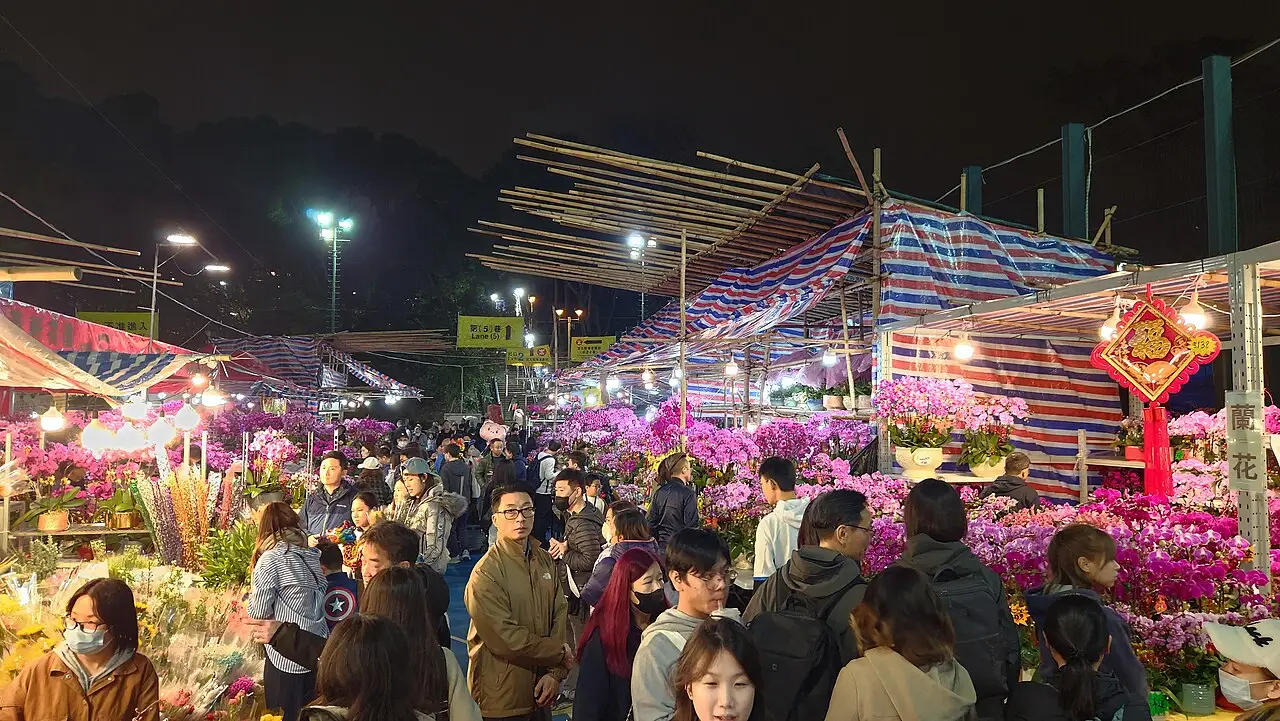
Chinese New Year (January or February)
The year's biggest holiday, with a flower market at Victoria Park on the eve, a night parade in Tsim Sha Tsui on the first day, and fireworks over the harbor on the second. Many small restaurants and family shops close for three to five days.
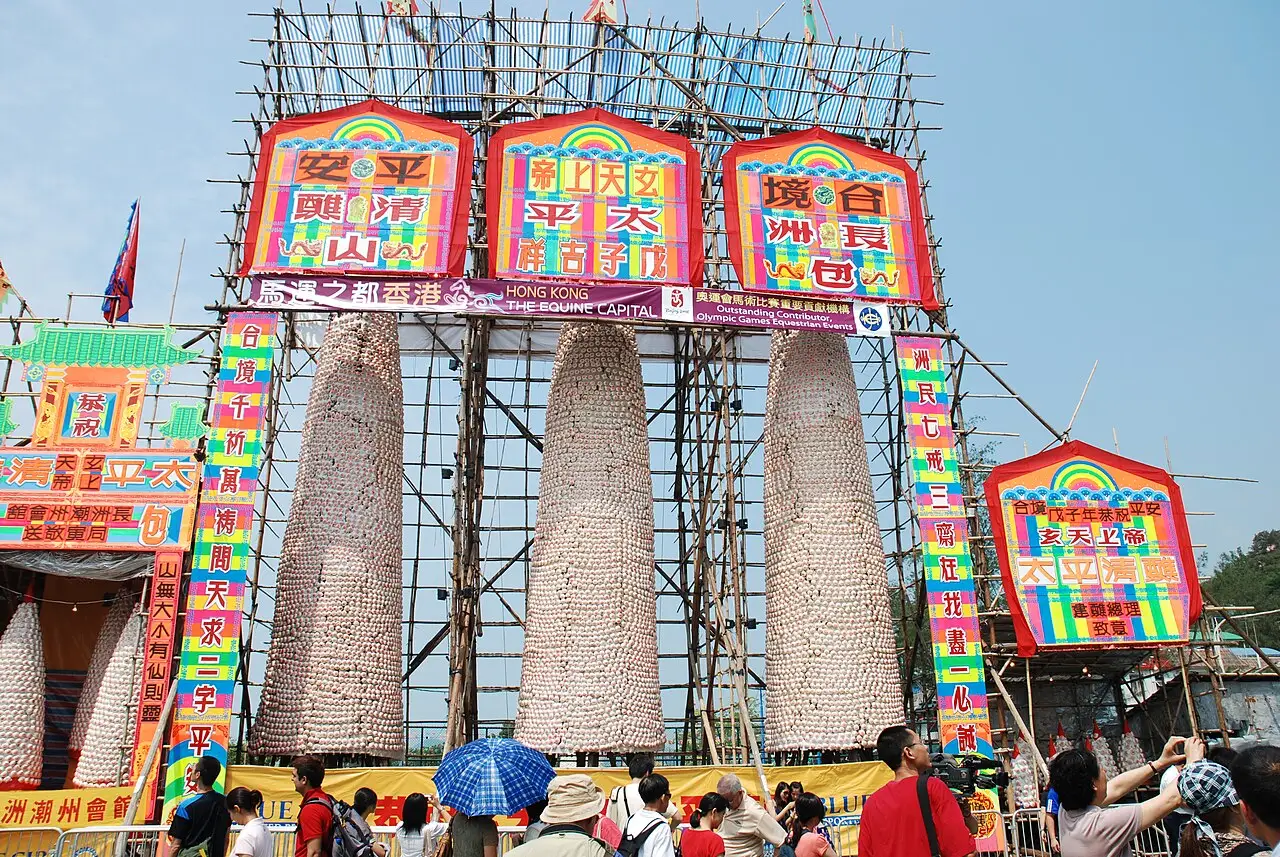
Cheung Chau Bun Festival (April or May)
Held on Buddha's birthday, on Cheung Chau island, with 18-meter bun towers, a procession of children who appear to float over the crowd (piu sik), and a night bun-scrambling race up the towers. The island turns vegetarian-only for the days of the festival.
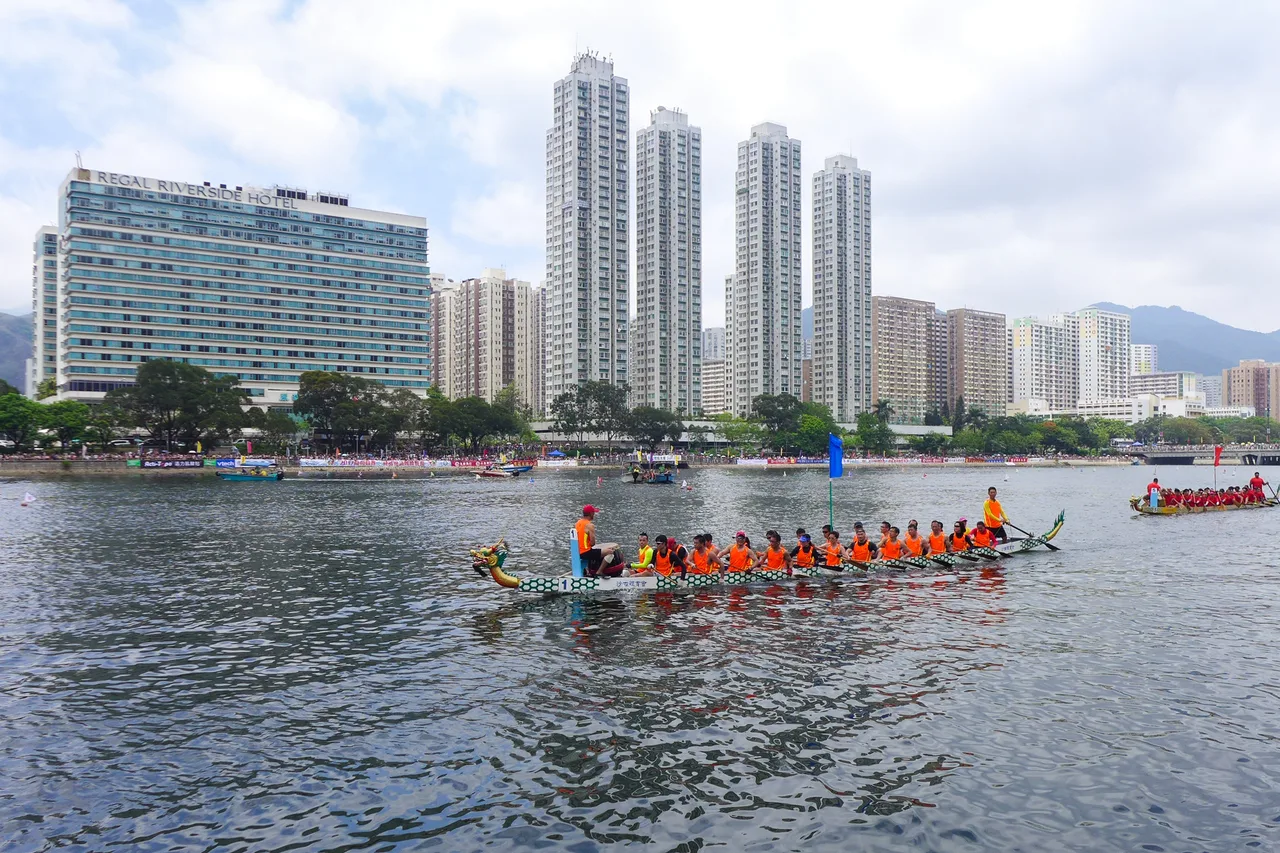
Dragon Boat Festival, Tuen Ng (June)
Dragon-boat races on the fifth day of the fifth lunar month, with heats in Stanley, Aberdeen, Sha Tin, and Sai Kung, and the international race in Victoria Harbour. Everyone eats zongzi, glutinous rice dumplings wrapped in bamboo leaves.
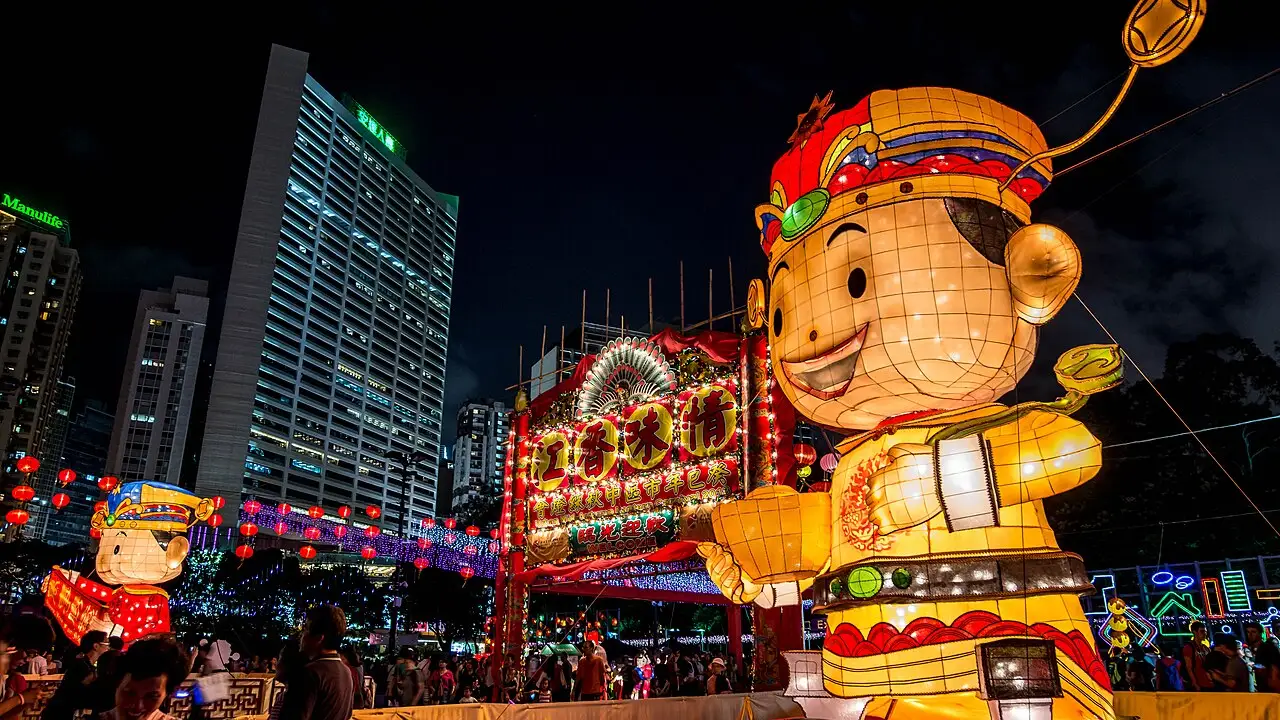
Mid-Autumn Festival (September or October)
Lanterns in Victoria Park, mooncakes, and in Tai Hang, the fire dragon dance, made of straw and covered in tens of thousands of incense sticks, repeated over three nights every year since 1880.
 AI illustration
Hungry Ghost Festival (August)
During the seventh lunar month, paper offerings are burned on sidewalks and bamboo stages go up for Cantonese opera performed to audiences that leave the front row empty, reserved for spirits.
Books and films
“Hong Kong”, by Jan Morris (1988, revised 1997)
The fullest portrait of the colonial city written before the handover, blending history, geography, and street observation: useful precisely because it describes the world that today's Hong Kong replaced.
“In the Mood for Love”, by Wong Kar-wai (2000)
Rebuilds the Hong Kong of 1962, when Shanghainese families shared cramped flats in Kowloon, and shows visually what it means to live in a city with no private space.
“Infernal Affairs”, by Andrew Lau and Alan Mak (2002)
A triad thriller shot on rooftops, in office towers, and on the streets of Central; it became the basis for Scorsese's “The Departed,” and shows the vertical city as a field of surveillance.
Frequently asked questions
Hong Kong: is the city just Hong Kong Island?
Seven-eighths of the territory lies across the harbor and in the New Territories, and 40% of the area is country park, with trails 40 minutes away by MTR.
Hong Kong: is there a cheaper option than the Airport Express?
If you're not in a hurry, there are cheaper options: buses A11, A21, and E11 charge HK$25 to 50 and take 45 to 75 minutes, and a red taxi to Tsim Sha Tsui runs HK$270 to 320, plus the bridge toll and HK$6 to 7 per bag.
Hong Kong: how do you get to Macau?
60 to 70 km to the west: about 1 hour by catamaran from Sheung Wan or Tsim Sha Tsui, or 45 minutes by bus over the 55-km Hong Kong–Zhuhai–Macau Bridge, opened in October 2018.
Hong Kong: what's the currency and what's it worth?
The currency is the Hong Kong dollar (HKD). The exchange-rate system linked to the US dollar began in 1983; the band of HK$7.75 to HK$7.85 per US$1 was established in 2005. Check a current rate to convert other currencies and compare exchange fees.
Hong Kong: when is the best time to go?
From mid-October to early December, the weather pays off: 20 to 26 °C, low humidity by local standards, clear skies, and little typhoon risk.