Taiwan
Taipei
Night markets, temples, the Palace Museum, and hot springs
Days Start with the basic programme and choose extensions for the time you have.
How the guide reaches this number
Beitou, Yangmingshan, and Maokong add a third day of volcano, hot springs, and tea. The city works well for anyone who wants to eat at street counters and get around by metro. Those looking for postcard beauty find ordinary buildings and dikes that hide the river, with the broad views reserved for the climbs up Xiangshan, Maokong, or Yangmingshan. In 24 hours, get to Longshan by 8am, during the morning's collective chanting, eat lu rou fan in Wanhua, and walk Dihua Street in the afternoon. Climb the Elephant Mountain Trail an hour before sunset and finish with dinner in Raohe. Don't save the night for Zhongzheng, which loses its crowds fast once the workday ends.
2–3
When October and November: 22–28 °C, clear skies and less rain
How the guide reaches this number
The climate is humid subtropical, and the mountain-ringed basin traps heat and humidity. From December to February it runs between 12 °C and 19 °C, with near-constant drizzle brought by the northeast monsoon. It feels colder than the number suggests, because the humidity is high and buildings have no heating. March to May warms up to 20–28 °C, with the plum rains (meiyu) concentrated in May and June. June to September is the tough season: 30–36 °C, humidity above 75%, and peak typhoon season between July and October. There are two to three alerts a year on average, and they can shut the city for 24 hours. The city government announces a “typhoon day” the night before, and on that day schools, offices, and part of the transit system close. October and November are the best months, with 22–28 °C, clear skies, and less rain, which also makes them the busiest. If you can choose, avoid August. Also avoid traveling over Lunar New Year if you're counting on neighborhood restaurants and family-run shops, which close for several days.
Per person/day about NT$1,500–2,900 (about R$260–510) with a simple room, street food, and the metro
How the guide reaches this number
Per person per day: accommodation, meals, urban transport, visits and a small allowance for extras. Flights excluded; larger purchases vary. Editorial estimate, not a quote.
 What Nilo thinks
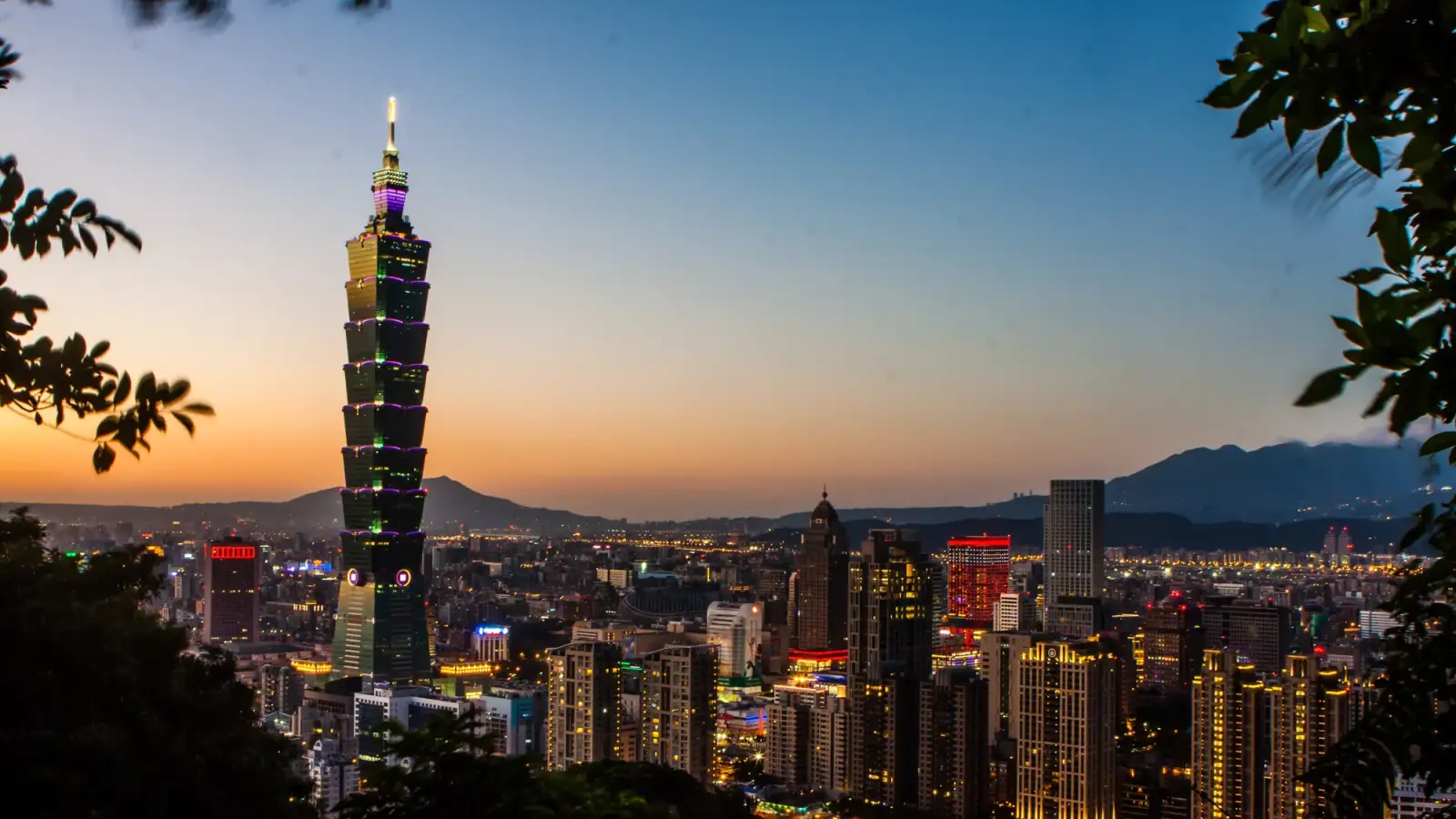
Divide two days in Taipei by area: the old west, between Bangka, Dadaocheng, and the river, takes one; museum, memorial, and the uptown area take the other. Beitou, Yangmingshan, and Maokong add a third day of volcano, hot springs, and tea. The city works well for anyone who wants to eat at street counters and get around by metro. Those looking for postcard beauty find ordinary buildings and dikes that hide the river, with the broad views reserved for the climbs up Xiangshan, Maokong, or Yangmingshan. In 24 hours, get to Longshan by 8am, during the morning's collective chanting, eat lu rou fan in Wanhua, and walk Dihua Street in the afternoon. Climb the Elephant Mountain Trail an hour before sunset and finish with dinner in Raohe. Don't save the night for Zhongzheng, which loses its crowds fast once the workday ends.You get to know Taipei by eating: in one night, you can go from the lu rou fan at a Wanhua counter to the oyster omelet at a night market and the pepper bun baked against the wall of a clay oven at the entrance to Raohe. The city keeps three layers of history in the same block, with Qing-era trading houses, Japanese colonial buildings, and postwar blocks. The National Palace Museum holds the jade cabbage, one of about 700,000 pieces from the imperial collection removed from Beijing between 1948 and 1949. Around the basin, the Elephant Mountain Trail faces Taipei 101 head-on, and the Beitou hot springs and the Maokong teahouses are a metro or gondola ride away. Come in October or November, with clear skies and 22 to 28 °C, and set aside two days, leaving a third for the volcano, the hot springs, and tea.
Quick facts
- Population
- about 2.4 million in the city (Feb. 2026); about 7 million in the metro area, with New Taipei and Keelung
- Founding
- Bangka settled from 1709; walled city completed in 1884
- Country and region
- Taiwan (Republic of China); north of the island; municipality of about 272 km² in the Taipei Basin
- Language
- Mandarin is official; Taiwanese (Hokkien) and Hakka are common; English is limited outside downtown and the metro
- Currency
- New Taiwan dollar (NT$/TWD); about NT$31–32 per US$ and about NT$5.7 per R$ (2026)
- Time zone
- UTC+8, no daylight saving
- Best time to visit
- October and November: 22–28 °C, clear skies and less rain
- Average daily cost
- about NT$1,500–2,900 (about R$260–510) with a simple room, street food, and the metro
When to go
October and November: 22–28 °C, clear skies and less rain
How the year changes
The climate is humid subtropical, and the mountain-ringed basin traps heat and humidity. From December to February it runs between 12 °C and 19 °C, with near-constant drizzle brought by the northeast monsoon. It feels colder than the number suggests, because the humidity is high and buildings have no heating. March to May warms up to 20–28 °C, with the plum rains (meiyu) concentrated in May and June. June to September is the tough season: 30–36 °C, humidity above 75%, and peak typhoon season between July and October. There are two to three alerts a year on average, and they can shut the city for 24 hours. The city government announces a “typhoon day” the night before, and on that day schools, offices, and part of the transit system close. October and November are the best months, with 22–28 °C, clear skies, and less rain, which also makes them the busiest. If you can choose, avoid August. Also avoid traveling over Lunar New Year if you're counting on neighborhood restaurants and family-run shops, which close for several days.
Nilo's tips
Between 6am and 11pm, take the express Airport MRT for NT$150
It gets to Taipei Main Station in about 36 min, faster than a taxi and for a fraction of the price. Outside those hours, take bus 1819 or 1961, which run 24 hours for NT$130 to 160. The taxi (NT$1,100 to 1,500) only pays off for a group of three or four, with luggage.
Buy the EasyCard (NT$100); TPASS only pays off monthly
The EasyCard costs NT$100 and works even at the convenience store, so it pays off from day one. The NT$1,200 TPASS only pays off if you stay the full month; for three or four days, loose credit on the EasyCard works out cheaper. Fill your bottle before the turnstile, because drinking water past it gets you fined.
At the Palace Museum, arrive 9am, go to the jade cabbage
The jade cabbage and the meat-shaped stone draw a line from opening time. Go straight to those two before any other gallery, because anyone who follows the galleries in order reaches them with forty people ahead. Leave the bronzes, jade, and calligraphy for afterward, at a slower pace. The museum closes on Mondays, and on the way back, the R30 bus runs down to Shilin station.
Elephant Mountain Trail, an hour before sunset
At sunset, the lookout rock gets packed. Go up an hour early and come back down only after Taipei 101 lights up. The stone steps start near Xiangshan Station, on the red line.
Eat dinner in Ningxia; only line up for hujiao bing, NT$55–70
Ningxia, next to Dadaocheng, is the most compact night market and settles dinner on a single street. Shilin, Taipei's most famous, is therefore the most crowded. At Ningxia, order the oyster omelet for NT$70–110 and the fried taro. If you go to Raohe, brave the line for hujiao bing right at the entrance: the pepper bun costs NT$55–70 and comes out of the clay oven boiling hot inside, so wait a minute before biting in. Bring small bills, because no night-market stall takes cards.
Order bubble tea (NT$45–80), state the sugar and ice
At the bubble tea counter (NT$45–80), they'll ask about sugar and ice before naming the price. Answer, or it comes standard: too sweet for anyone who didn't grow up here. Keep the receipt: it also works as a lottery ticket.
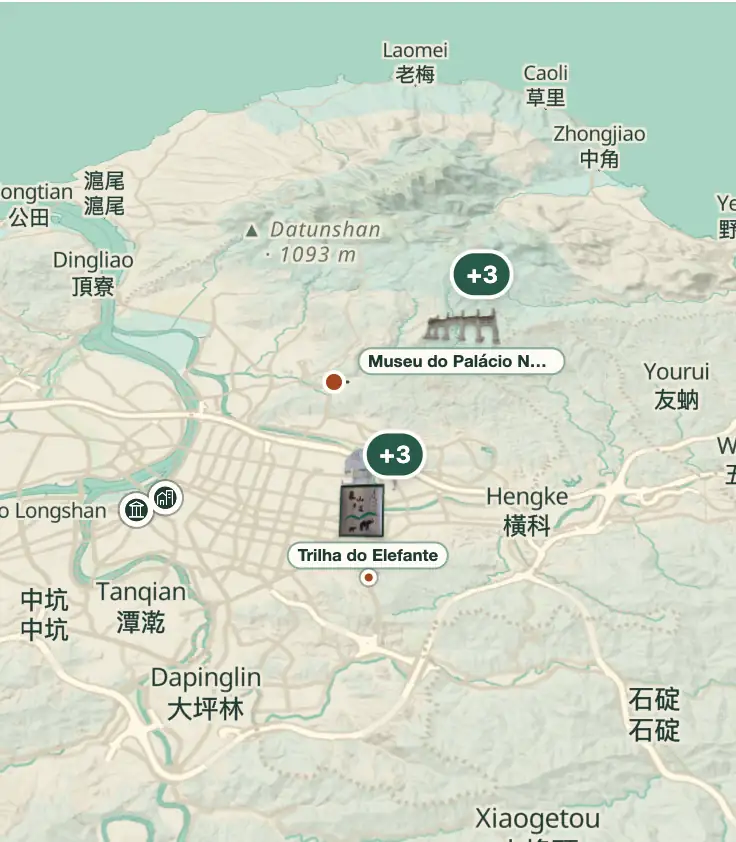
Explore the map
© OpenStreetMap · OpenFreeMap · © OpenMapTiles
Explore the map, read about the other places and plan your travel days in the app.
Open the appWhat to see
Taipei: three rivers in a basin ringed by mountains
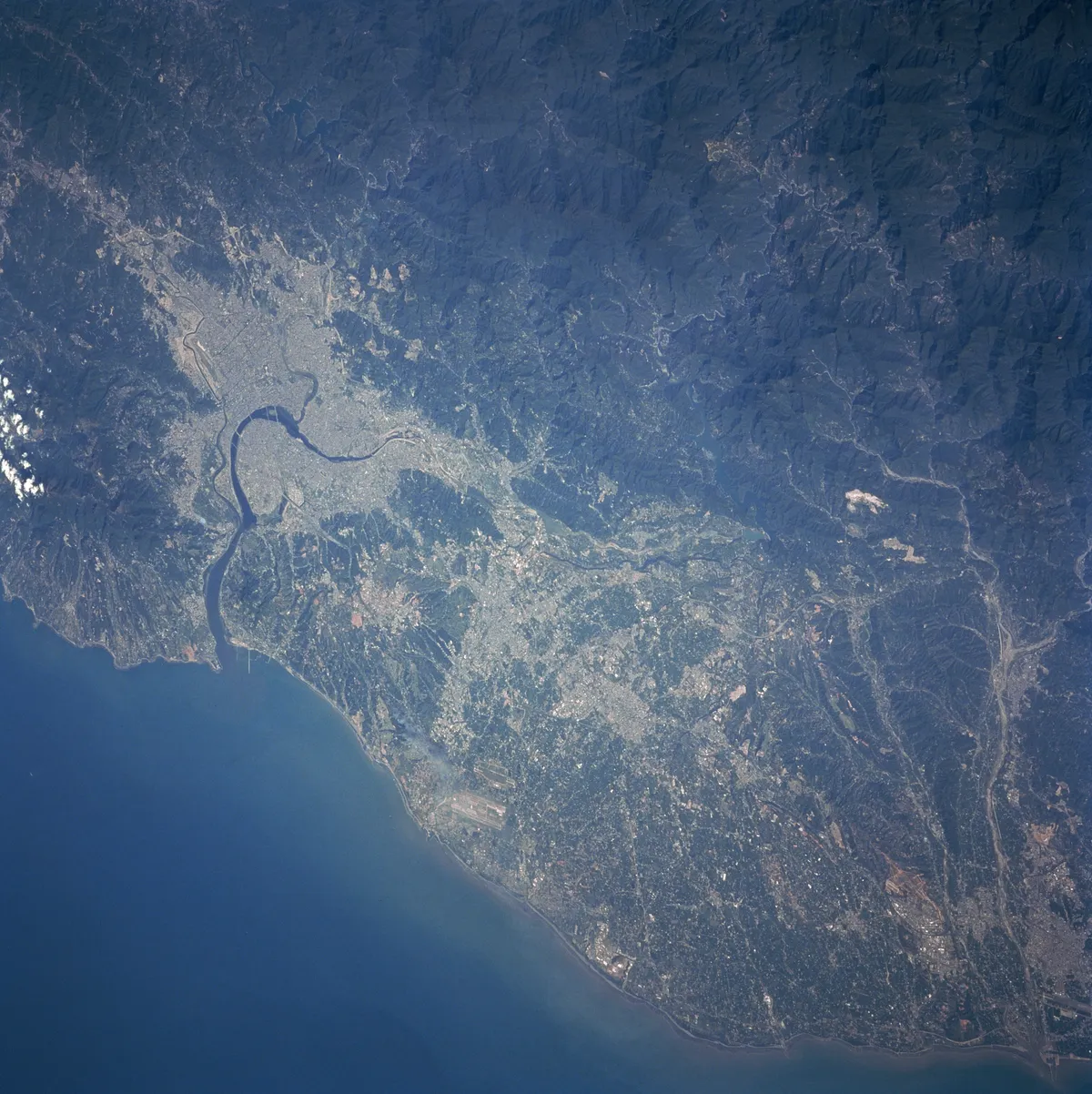
Three rivers cut through the basin: the Xindian, the Keelung, and the Tamsui, which empties into the sea to the northwest. The old center lies to the west, by the river, and to the east is Xinyi, the business district planned in the 1980s and '90s, home to Taipei 101.
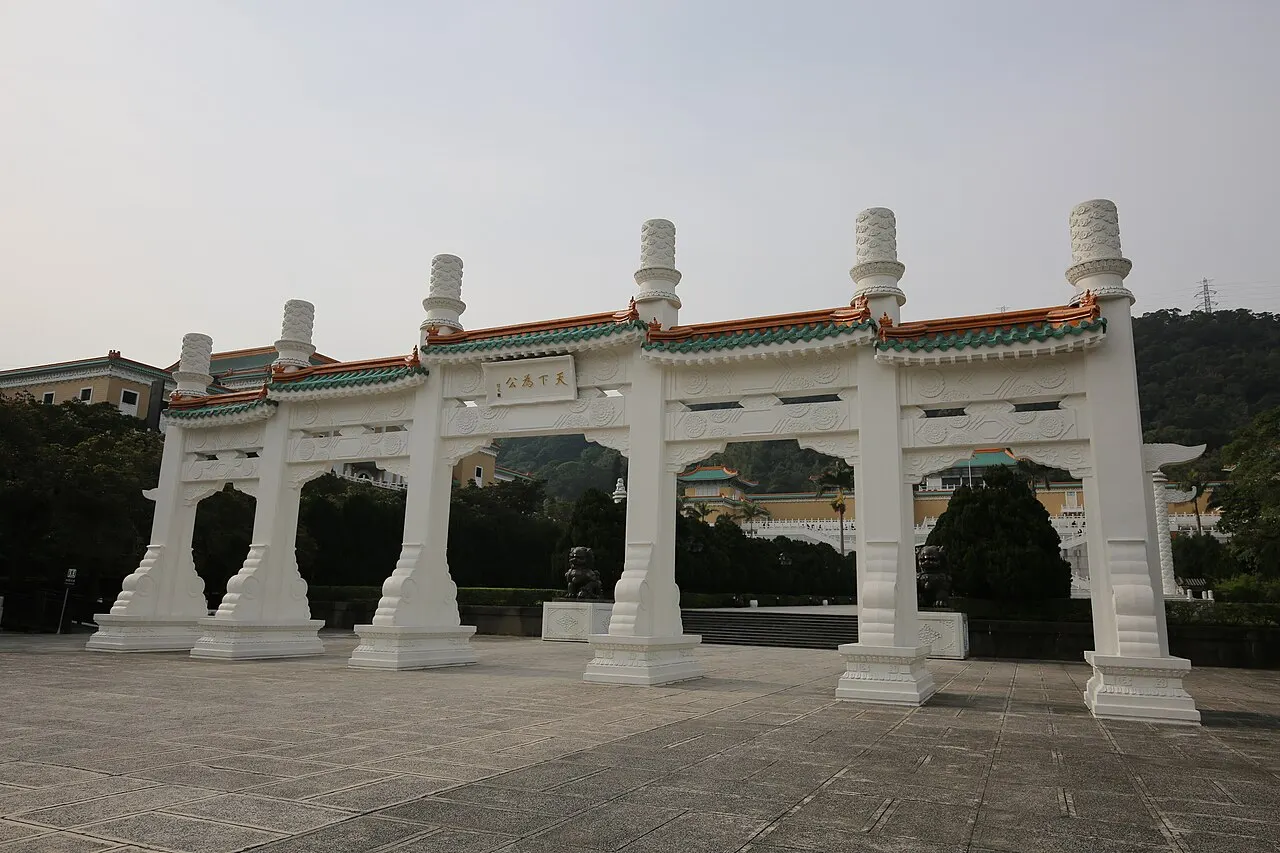
National Palace Museum
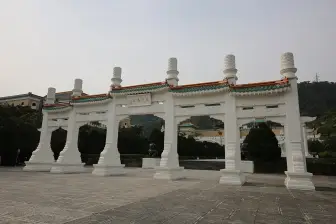
Opened in 1965 in Waishuangxi, it holds about 700,000 pieces from the Chinese imperial collection, taken out of Beijing between 1948 and 1949. Only about 3,000 are on display at a time, in rotation; the jade cabbage and the meat-shaped stone are the two pieces that draw a line. Closed on Mondays since 2023.
This is the Chinese imperial collection removed from Beijing between 1948 and 1949, shown in rotation, and the Jadeite Cabbage and the Meat-Shaped Stone justify the trip out to Waishuangxi.
Check access
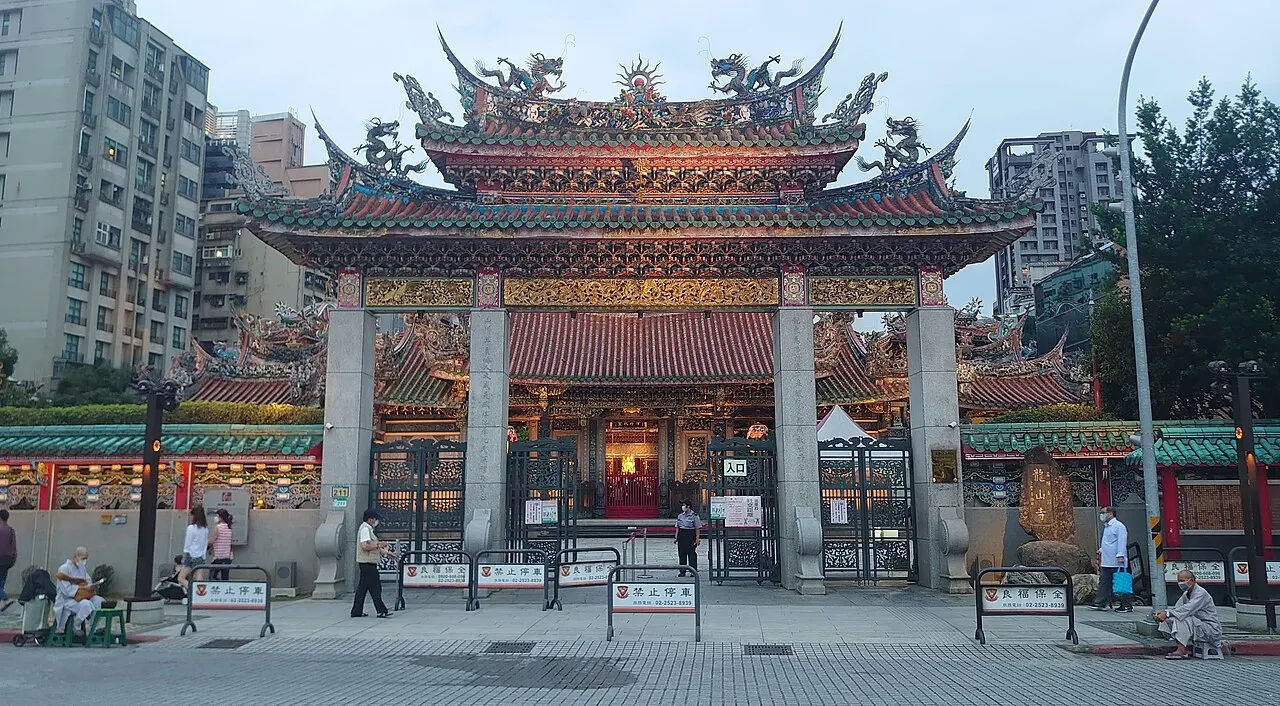
Longshan Temple
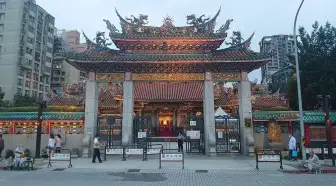
Founded in 1738 by immigrants from Fujian, the temple lost its main hall in the 1945 bombing and rebuilt it soon after. The front altar is Buddhist, with Guanyin; the rear one is Taoist, with Mazu and Yue Lao, the god of marriage, who receives written requests. There are three collective chants a day, at 6am, 8am, and from 3:45 to 5pm, when hundreds of people chant together in front of the main hall.
At the day's three group chants, two in the morning and one in the late afternoon, hundreds of people chant together in front of the main hall; founded in 1738 by immigrants from Fujian, the temple has a Yue Lao altar that takes written requests for marriage.
Check access
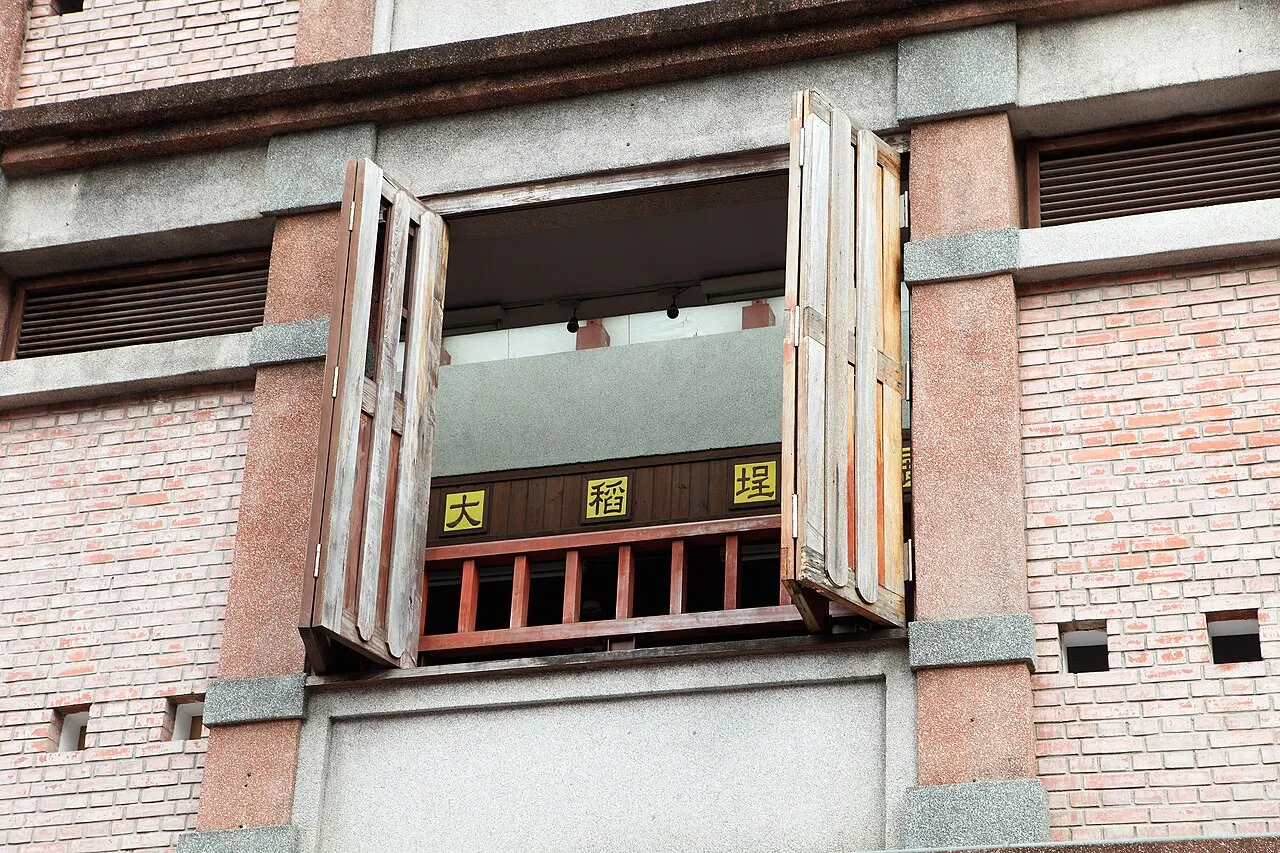
Dihua Street and Dadaocheng
A commercial corridor for tea and medicinal herbs since the 1850s, with eclectic façades from 1910–1930 and shops still in business. It sells tea, dried mushroom, shark fin, fabric, and kitchenware; in January it becomes the city's biggest Lunar New Year market. Yongle Market and the Dadaocheng wharf, with sunset bars, sit at either end.
In January the street turns into a market: the city's biggest New Year market.
Check access
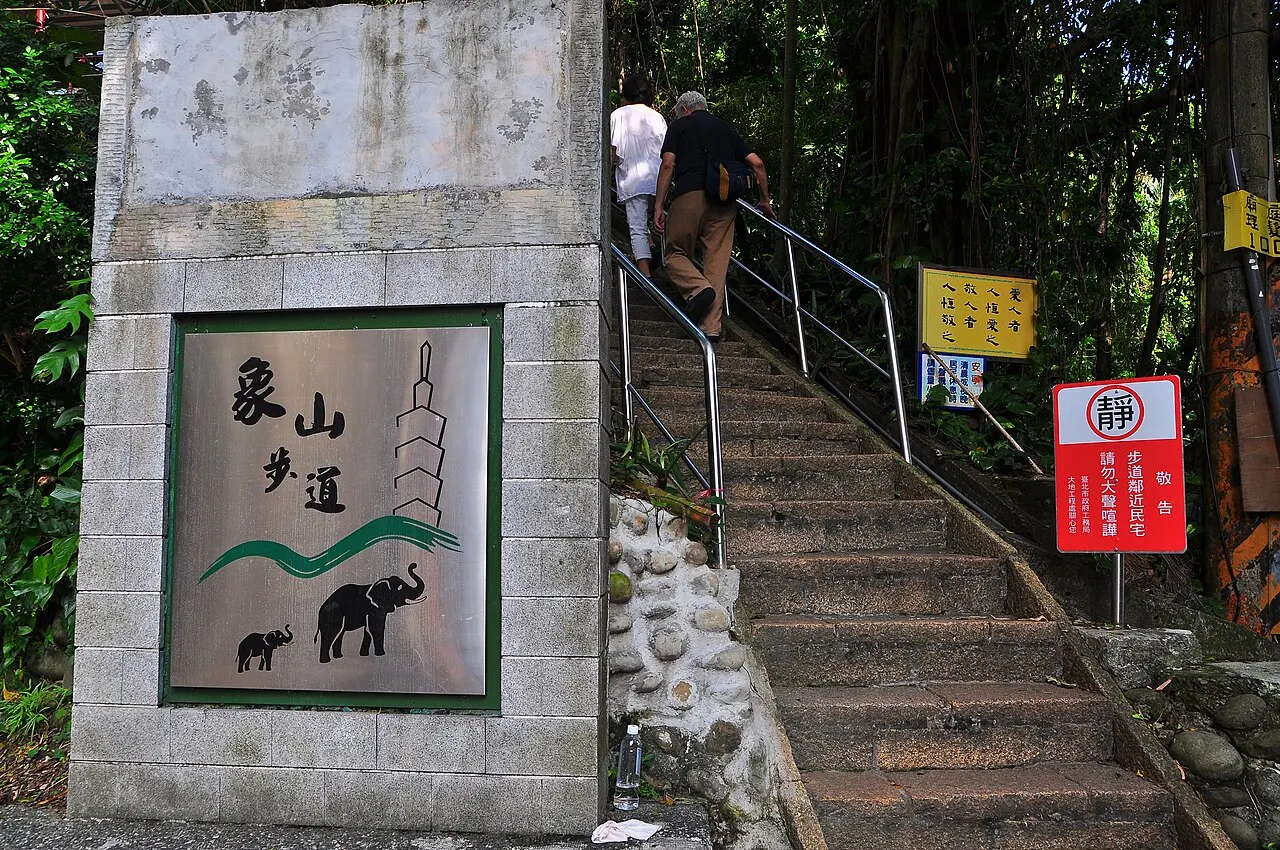
Elephant Mountain Trail (Xiangshan)
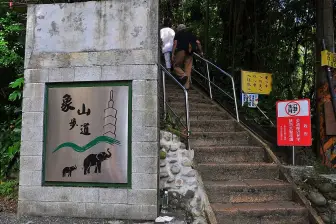
Twenty minutes of stone steps from Exit 2 of Xiangshan Station, second-to-last on the red line. The rocks at the lookout face Taipei 101, level with its 30th floor. It gets crowded late in the afternoon; the view changes completely once the tower's lights come on.
The lookout rocks face Taipei 101 at about the height of the 30th floor, and you can walk to them from the MRT.
Check access
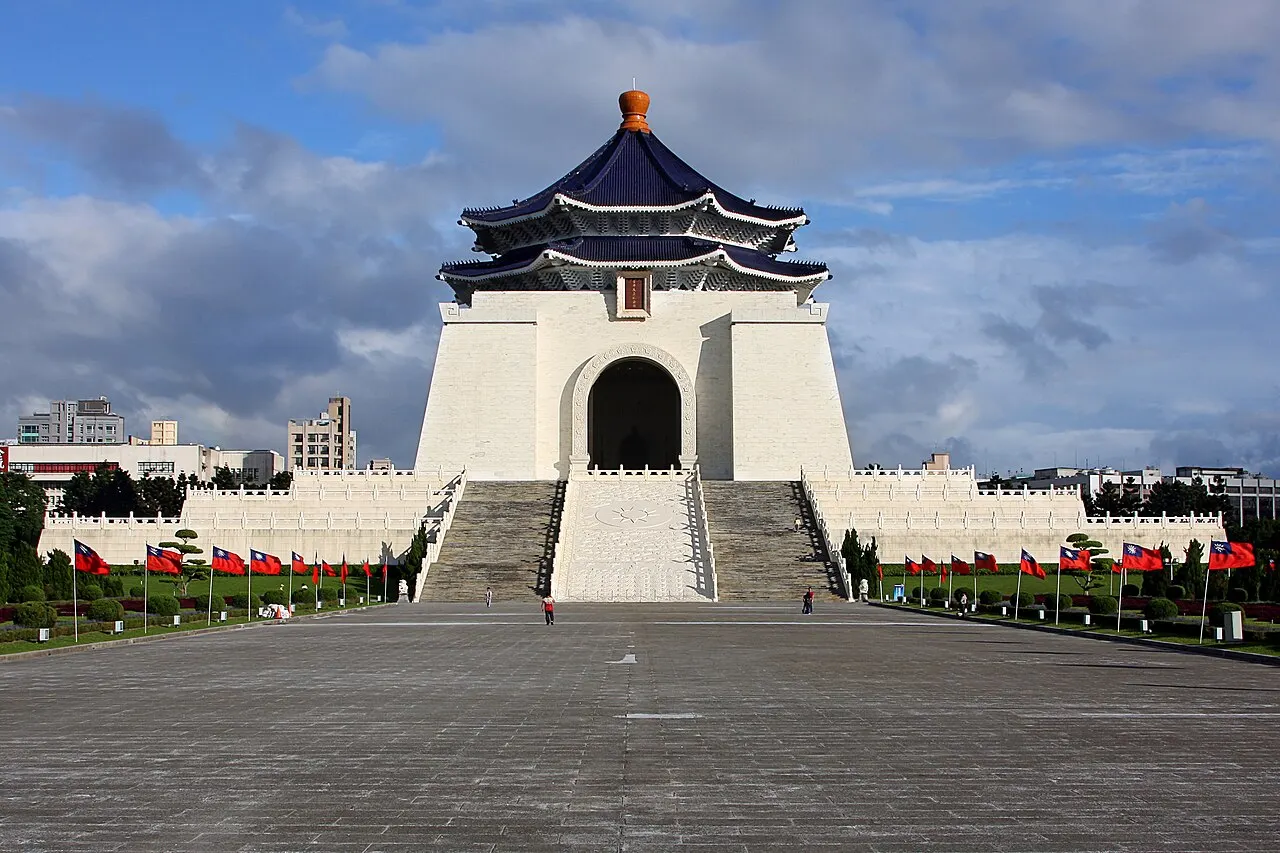
Chiang Kai-shek Memorial Hall
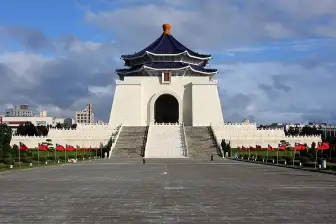
Opened in 1980, 70 m high with 89 steps: the generalissimo's age when he died. The honor guard changes hourly and moved from the main hall to the outer plaza in 2024. The complex includes the National Theater and the National Concert Hall, from 1987, and Liberty Square, stage of the 1990 protests.
The changing of the guard moved from the hall out to the plaza, and the complex includes a theater, a concert hall, and the square where protests are held; it opened in 1980, stands 70 m tall with 89 steps, and the ceremony moved outside in 2024.
Check access
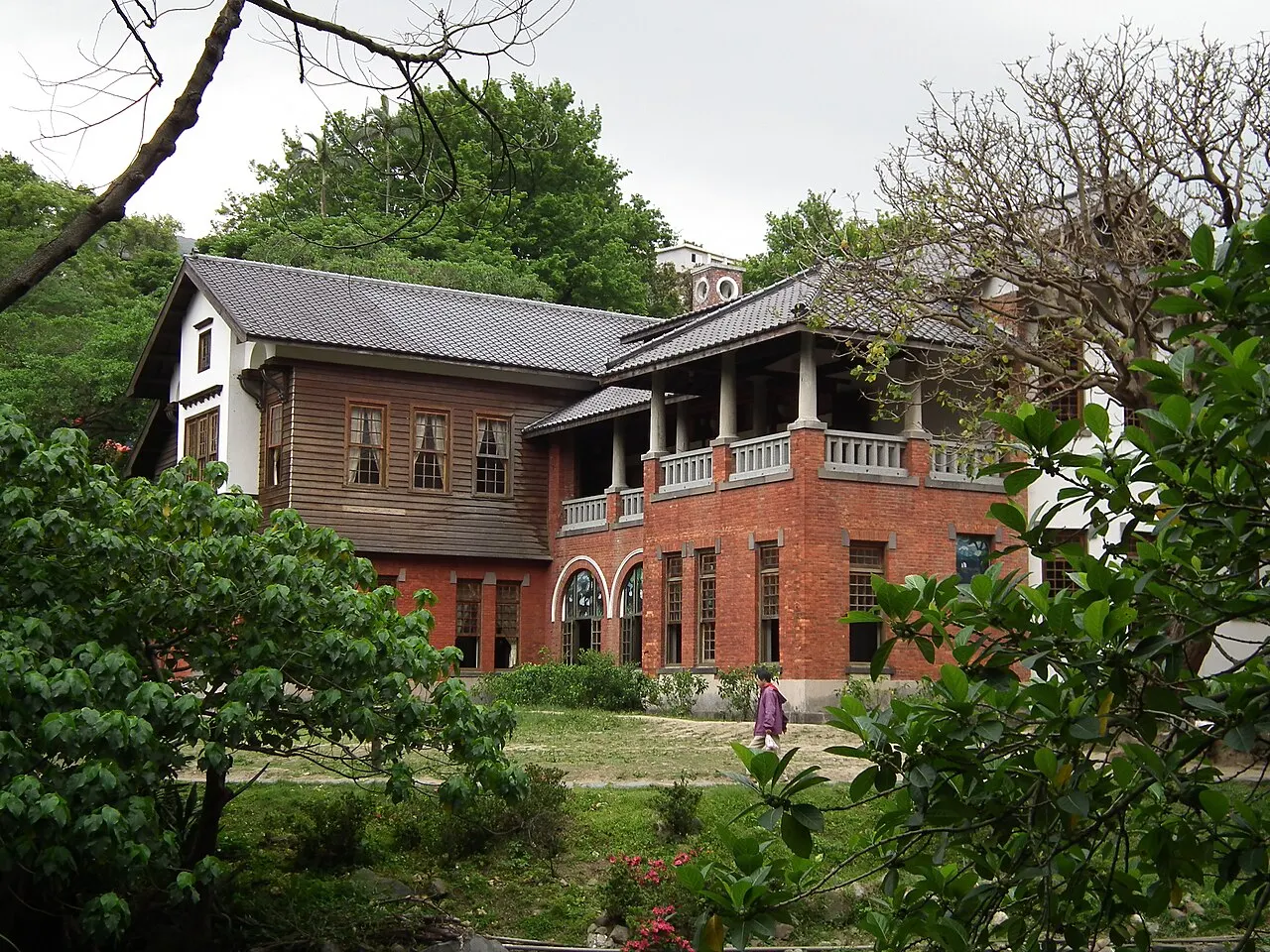
Beitou hot springs
A valley commercially developed since 1896, when the Japanese opened the first bathhouse. The Public Hot Springs Museum occupies the 1913 bathhouse and is free to enter; Thermal Valley gives off water vapor at 80–100°C. It's the only place in the world, along with Akita, where hokutolite occurs, a radioactive mineral first described here in 1905.
The Hot Spring Museum occupies the 1913 public bathhouse and charges no admission.
Check access
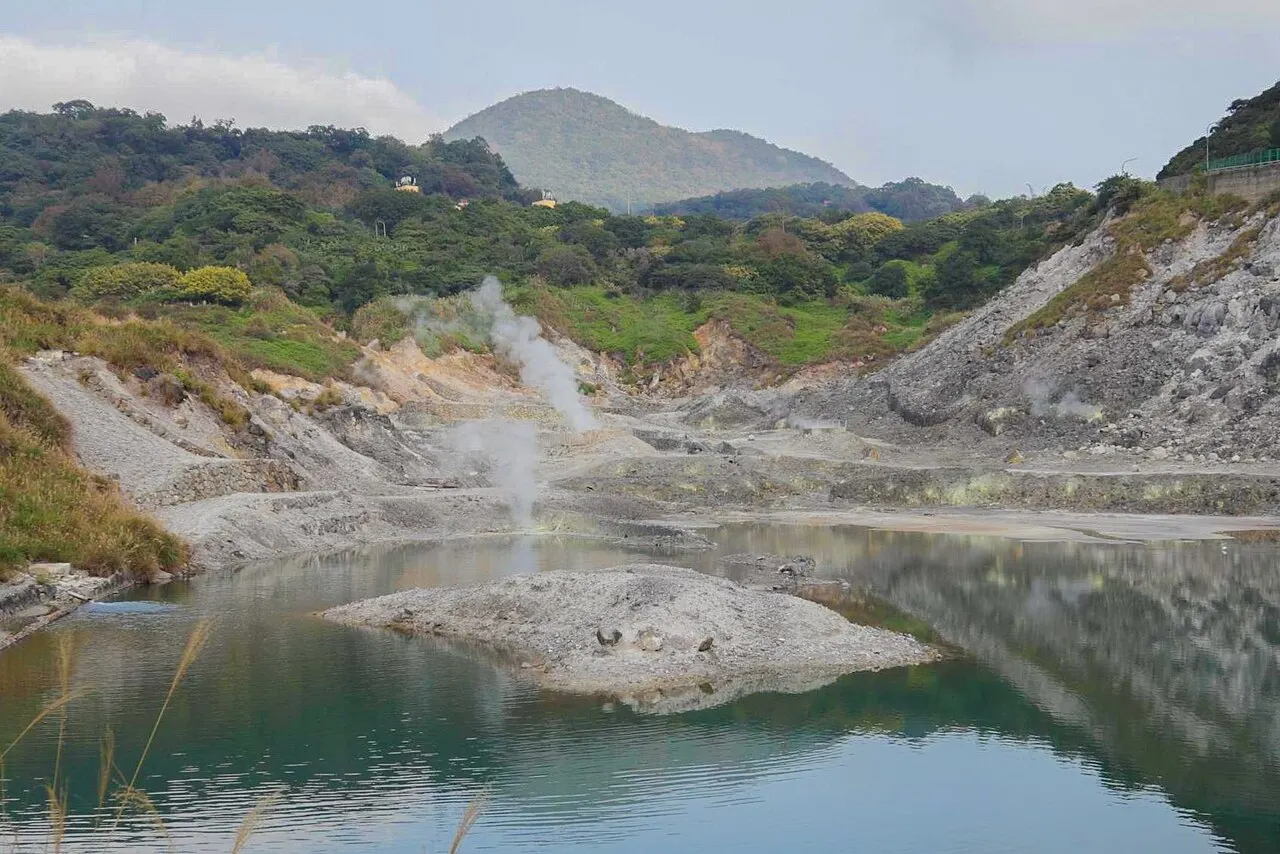
Yangmingshan
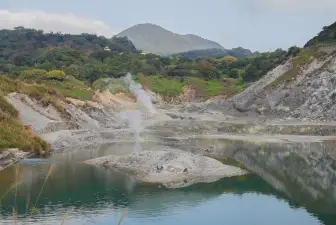
A national park 30–40 minutes from downtown, over the dormant Datun volcanic group. Qixingshan, 1,120 m, is the municipality's highest point; the Xiaoyoukeng fumaroles smell of sulfur from a hundred meters away. Cherry blossoms between February and March, and calla lilies in the Zhuzihu fields in March and April.
At Xiaoyoukeng, you can smell the sulfur a hundred meters from the steam vents.
Check access
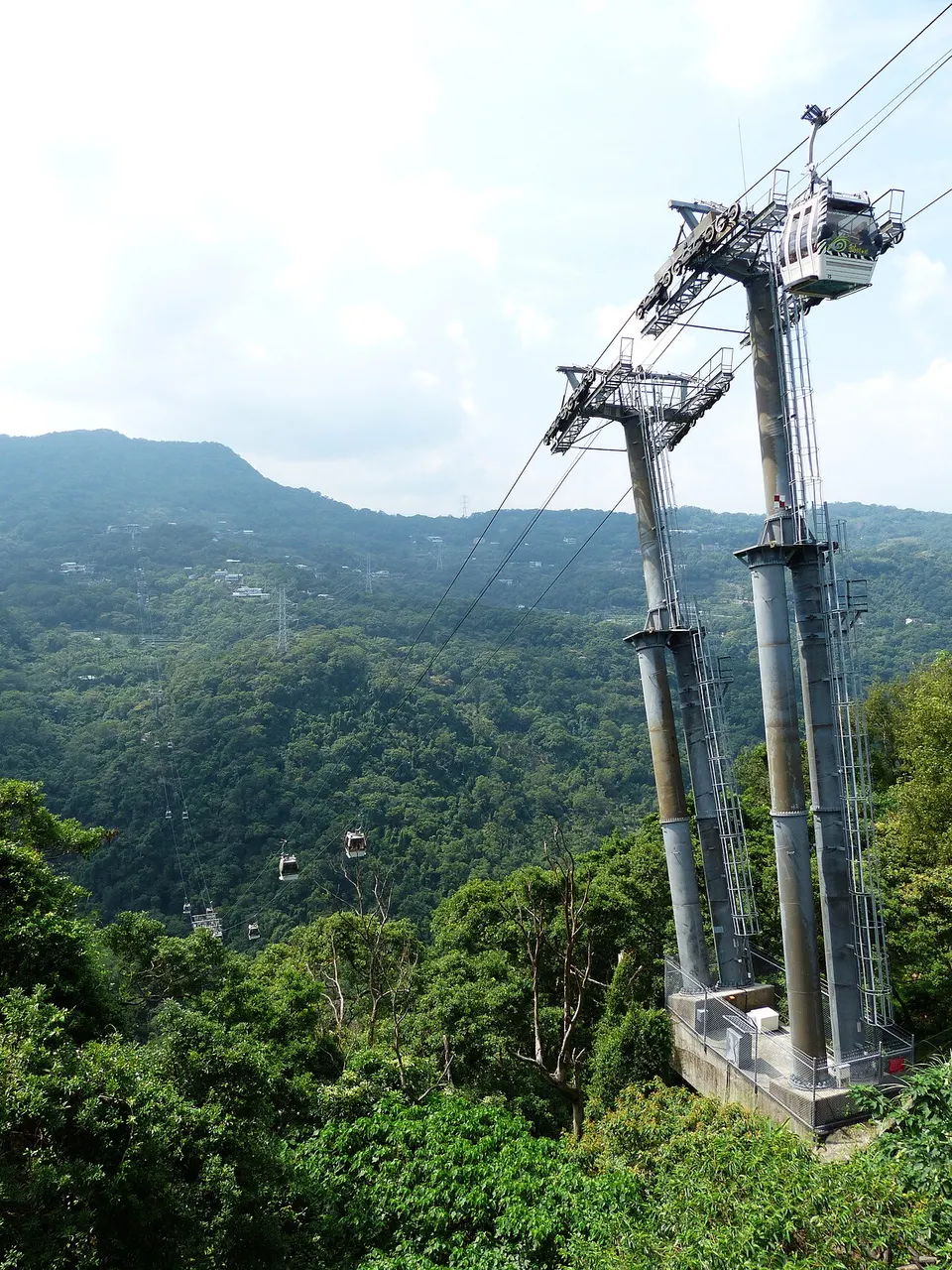
Maokong Gondola
Four kilometers of gondola opened in 2007 between Muzha Zoo and the tea-growing slopes of Maokong, with glass-floor cabins on some runs. Up top there are teahouses serving tieguanyin grown right there, open late. The ride up takes about 25 minutes and costs NT$70–120 depending on the section.
The 2007 gondola climbs in about 25 minutes, for NT$70 to 120, from Muzha's zoo to the tieguanyin teahouses that stay open late.
Check access
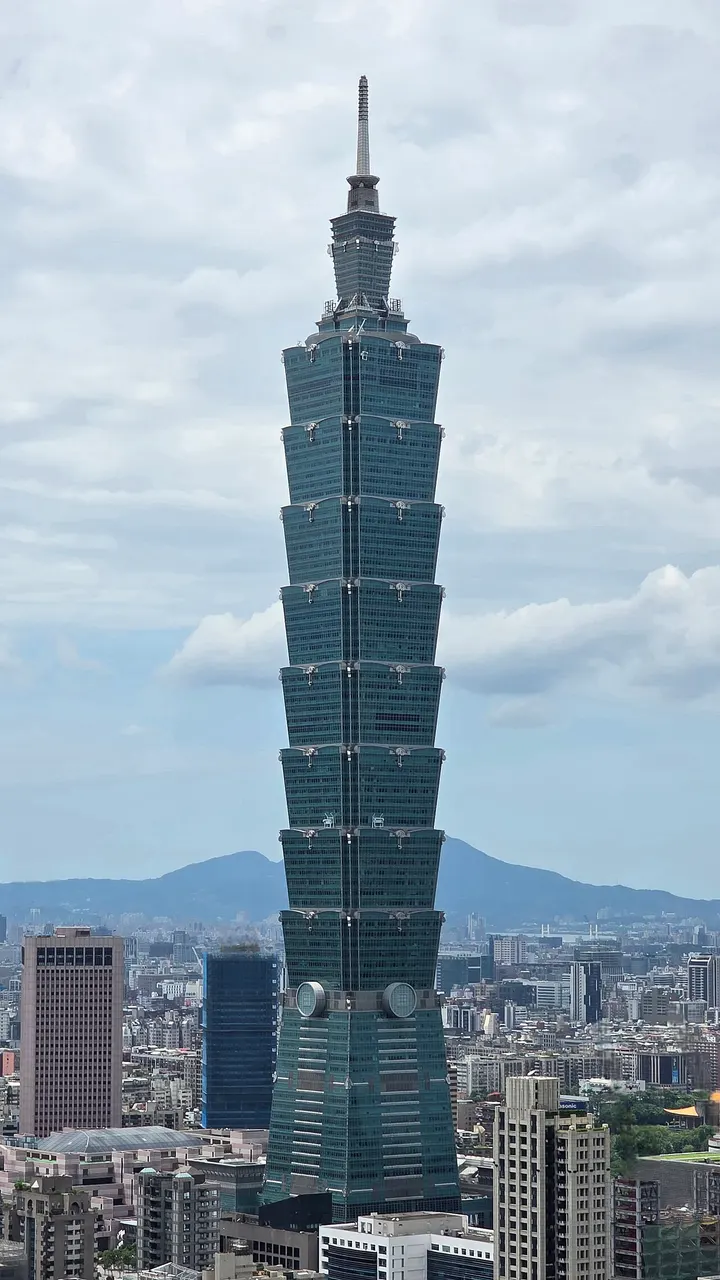
Taipei 101
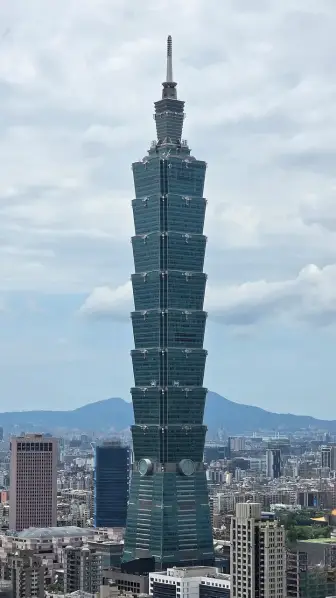
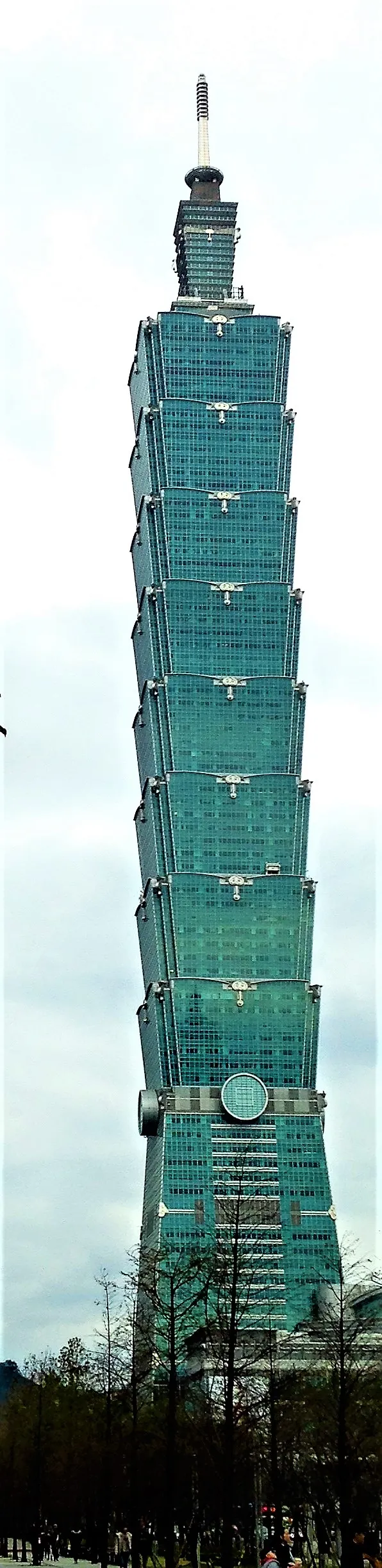
A 508 m, 101-floor tower designed by C.Y. Lee, opened on December 31, 2004, and the tallest building in the world until 2010. The observatory occupies floors 88 to 91; the elevator climbs at 1,010 m/min and takes 37 seconds, and on the 88th floor you can see the 660-ton tuned mass damper that stabilizes the tower in typhoons. It's open roughly 10am to 9pm, with admission around NT$600.
The observatory on floors 88 to 91 costs about NT$600, and in the late afternoon, the busiest time, it's more line than view. You can see the whole tower head-on, for free, from the Elephant Mountain lookout, 20 minutes up a staircase. If you do go in, book a slot for when the city is already lit, and don't miss the 660-ton damper on floor 88 that steadies the tower during typhoons.
Check access
Nilo’s itinerary
Start with the basic programme and choose extensions for the time you have.
Plan my days in the app ↗Day 1 · The old west: Bangka, Dadaocheng, and the river
Get to Longshan Temple by 8am, while the collective prayer is still happening, then walk five minutes to the restored Bopiliao alleys.
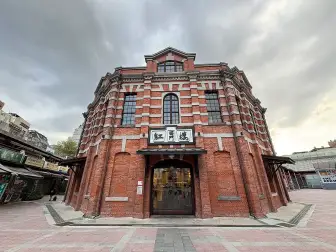
Have lunch on Huaxi Street or at a lu rou fan counter in Wanhua, then walk to Ximending to see the 1908 Red House.
Take the green line or a taxi to Dihua Street and walk the tea, herb, and dried-food shops from number 1 to 300, ducking into Yongle Market.
Stay for sunset at the Dadaocheng wharf, with bars on the dike and a view of the Tamsui River.
Have dinner at Ningxia night market, the most compact in the city, and try the oyster omelet and fried taro.
Day 2 · Museum, memorial, and hilltop views
Be at the National Palace Museum at 9am, at opening (closed Mondays), and set aside two to three hours for the bronze, jade, and calligraphy galleries.
Take bus R30 back to Shilin Station and have niurou mian for lunch on Yongkang Street, in Da'an.
Watch the changing of the guard at the Chiang Kai-shek Memorial, on the hour, and cross Liberty Square between the National Theater and the Concert Hall.
Climb Elephant Mountain Trail from Xiangshan Station exit 2 an hour before sunset; it's a 20-minute stair climb to the Taipei 101 viewpoint.
Head down to Xinyi. The Taipei 101 observatory is optional, and the sunset line is the worst of the day: if you go up, wait until the city lights are on; if you skip it, the trail lookout already gave you the view. Have dinner at Raohe night market, starting with the hujiao bing at the entrance.
If you stay longer
Day 3 · Volcanoes, hot springs, and tea
Take the red line to Xinbeitou and start at the 1913 Hot Springs Museum and the steam of Thermal Valley.
Choose a public bath or a private bathhouse in Beitou, for NT$60–800 depending on the type. Check the rules before entering: some require swimwear, while others have separate nude bathing areas for men and women.
Take the bus up to Yangmingshan and walk to the Xiaoyoukeng fumaroles, or the first stretch of the Qixingshan trail, about 1 hour 30 minutes round trip.
In the afternoon, cross the city to Muzha Zoo and take the Maokong Gondola, a 25-minute ride up through tieguanyin plantations.
Have tea at a teahouse up in Maokong at dusk and head back down in time for Shilin night market, if you're still hungry.
Food
 AI illustration
Niurou mian (牛肉麵)
Noodle soup with beef stewed for hours, in the hongshao version, dark broth with soy sauce and spices, or qingdun, clear broth. It was born in the military villages of the 1950s and got a municipal festival in 2005. NT$150 to 280 a bowl.
 AI illustration
Lu rou fan (滷肉飯)
Minced pork belly braised in soy sauce with brown sugar and garlic, served over white rice. It's the city's cheapest and most common dish, NT$35–60 for a small bowl, almost always ordered with a boiled egg and a soup on the side.
 AI illustration
Xiaolongbao (小籠包)
A thin-skinned dumpling filled with pork and gelatin broth, originally from Shanghai. Din Tai Fung became a dumpling house in 1972 on Xinyi Road and standardized 18 folds per piece; a basket of ten costs NT$250–320. Eat it off the spoon, with sliced ginger and black vinegar.
 AI illustration
Tea egg (茶葉蛋)
A boiled egg, its shell deliberately cracked, left for hours in a broth of black tea, soy sauce, and star anise. It sits in a pot next to the register at any 7-Eleven or FamilyMart, for NT$10–15, and is the standard smell of the island's convenience stores.
 AI illustration
Bubble tea (珍珠奶茶)
Black tea with milk and tapioca pearls, invented in Taiwan in the 1980s and now exported worldwide. Order your sugar and ice level: 半糖 is half sugar, 微糖 is a little, 去冰 is no ice. NT$45–80.
 AI illustration
Stinky tofu (臭豆腐)
Tofu fermented in vegetable brine, fried and served with pickled cabbage and garlic sauce, or simmered in spicy broth with duck blood. The smell arrives before the stall does; the fried version is the easiest way in. NT$60–100.
 AI illustration
Oyster omelette (蚵仔煎)
Small oysters, egg, green leaves, and sweet potato starch in a springy batter, topped with a sweet-and-sour red sauce. A classic night-market dish, especially in Shilin and Raohe. NT$70–110.
 AI illustration
Hujiao bing (胡椒餅)
A bun stuffed with marinated pork, scallion, and plenty of black pepper, baked stuck to the inner wall of a clay oven. The stall at the entrance to Raohe Market has the longest line in the city. NT$55–70, and it comes out scalding inside.
Day trips
Jiufen and Pingxi
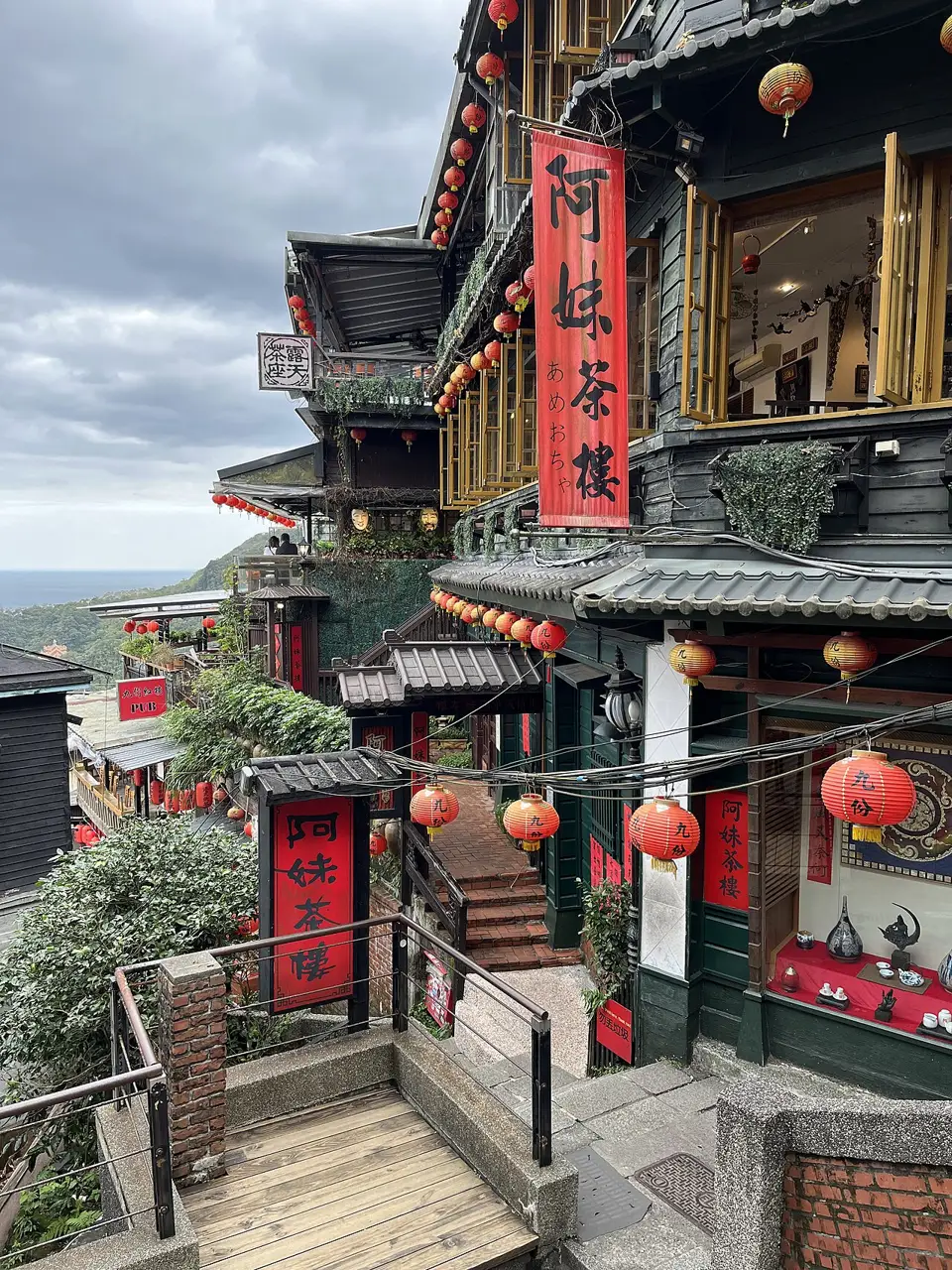
This old gold-mining village sits on the hillsides 35 km to the east, with stepped streets and teahouses over the sea. From Zhongxiao Fuxing, bus 1062 gets there in about 1 hour 20 minutes. The same day you can ride the Pingxi rail line, starting from Ruifang, and see the sky lanterns and Shifen Waterfall.
Tamsui and Bali
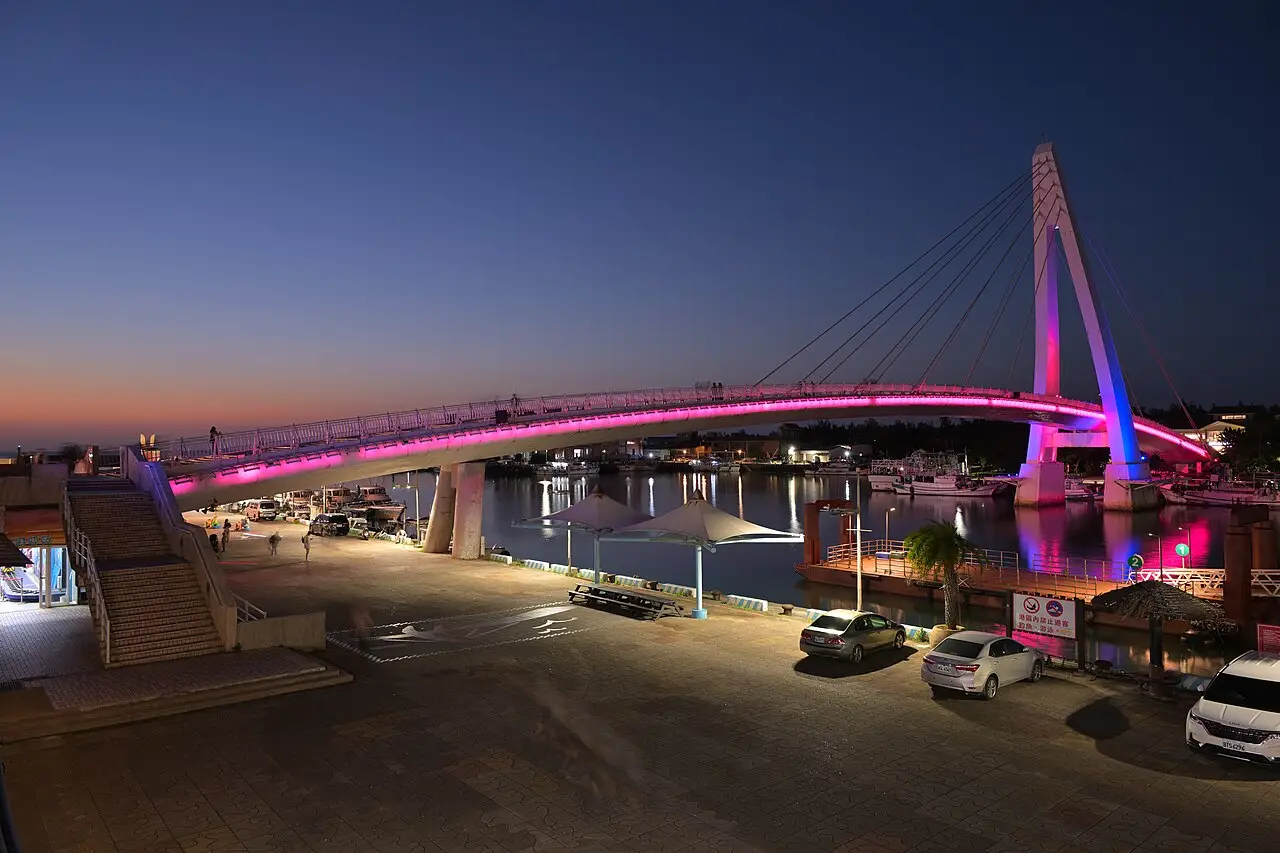
The end of the MRT red line, 35–40 minutes from Taipei Main Station. Home to Fort San Domingo, built by the Spanish in 1628 and rebuilt by the Dutch in 1644, the old-street row houses, and the 10-minute ferry to Bali on the opposite bank, with a bike path down to the sea.
Yehliu and Keelung
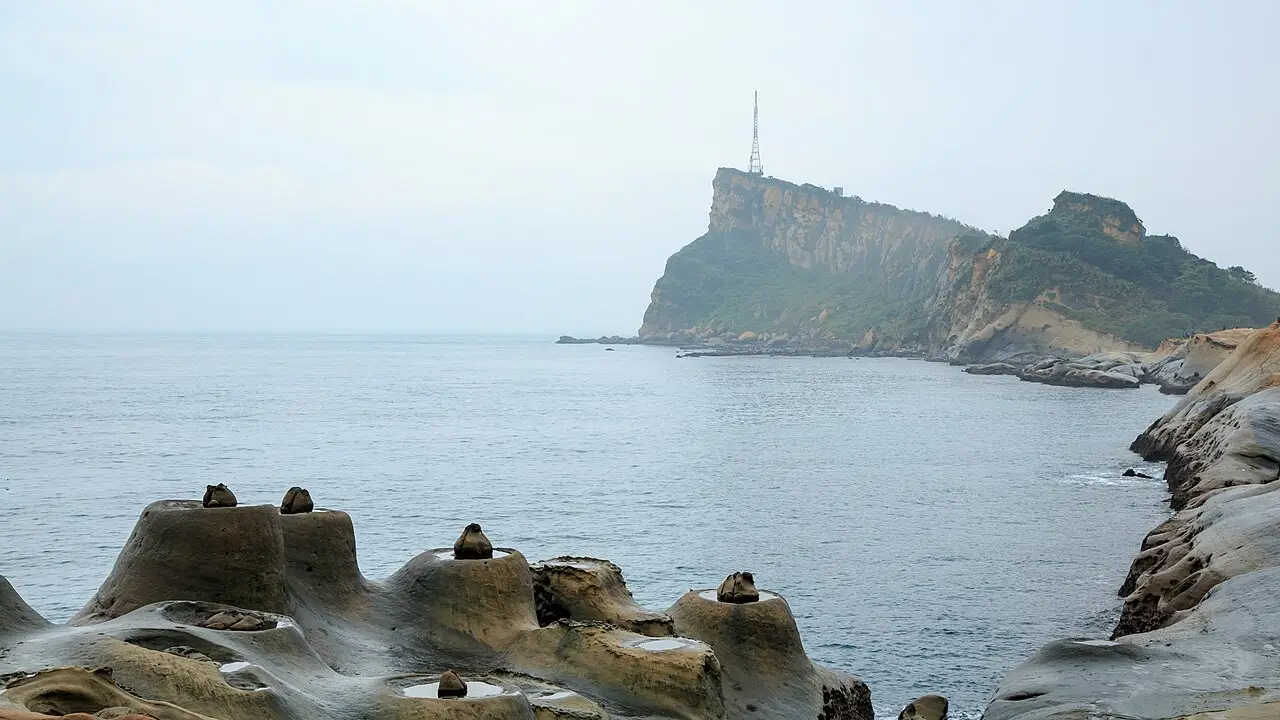
The Yehliu Geopark, 50 km to the north, shows off wind- and wave-eroded sandstone formations like the Queen's Head, worn down over some 4,000 years and expected to collapse within a few decades; it's about 1 hour 20 minutes on bus 1815 from Taipei Main Station. Come back through Keelung for dinner at Miaokou night market, around a temple from 1873.
Where to begin
The old west: Bangka, Dadaocheng, and the river
Get to Longshan Temple by 8am, while the collective prayer is still happening, then walk five minutes to the restored Bopiliao alleys.
Museum, memorial, and hilltop views
Be at the National Palace Museum at 9am, at opening (closed Mondays), and set aside two to three hours for the bronze, jade, and calligraphy galleries.
Volcanoes, hot springs, and tea
Take the red line to Xinbeitou and start at the 1913 Hot Springs Museum and the steam of Thermal Valley.
Money
The currency is the New Taiwan dollar (NT$), at about NT$31–32 per US dollar and about NT$5.7 per real in 2026. Convenience-store coffee runs NT$45–60, and café coffee NT$100–160; lu rou fan costs NT$35–60, and a bowl of niurou mian, NT$150–280. A sit-down dinner at an ordinary restaurant runs NT$250–500 per person; convenience-store beer costs NT$45–70, and a draft at a bar, NT$180–250. A metro ride runs NT$20–65; a hostel bed, NT$700–1,200; and a three-star hotel room, NT$2,500–4,200 a night. Cards work at shops, chains, and hotels, but night markets, street stalls, and temples are cash. ATMs at 7-Eleven and the post office accept foreign cards and are the simplest way to withdraw. No one tips anywhere: restaurants with table service already add 10% to the bill. The check is almost always paid at the counter by the door, never at the table. Keep the receipts: since 1951, the uniform invoice (統一發票) has doubled as an official lottery ticket. The draw is on the 25th of odd-numbered months, with prizes from NT$200 to NT$10 million; here, the proof of purchase is also a bet.
Getting there and around
Taoyuan airport, 40 km away, with more than one way into the city
Taoyuan International Airport (TPE) is about 40 km to the west, and there's more than one way out of it, which is already a decision to make while tired. The Airport MRT, opened in 2017, links the terminals to Taipei Main Station in about 36 min on the purple express, or about 50 min on the blue commuter, for NT$150. It runs between 6am and 11pm; both cost the same and stop in the same place. Buses 1819 and 1961 make the same trip for NT$130 to 160, in 55 to 80 min, and run 24 hours, which covers middle-of-the-night landings. The taxi costs NT$1,100 to 1,500. The Songshan city airport (TSA) handles domestic flights and short routes to Japan, Korea, and China, 15 min from downtown on the brown line. Taipei Main Station also has the THSR bullet trains: about 50 min to Taichung and 1 hour 35 minutes to 2 hours to Kaohsiung.
Six lines plus the airport branch
The MRT has six urban lines plus the airport branch, about 130 stations. It runs from 6am to midnight, every 2 to 6 min, and fares range from NT$20 to NT$65. Buy an EasyCard (悠遊卡) at any station or convenience store: NT$100 for the card, nonrefundable, plus whatever credit you load. It pays for the metro, buses (NT$15 per section, with a transfer discount), YouBike, convenience stores, and some taxis. Anyone staying a full month buys the Northern TPASS for NT$1,200, with 30 consecutive days of metro, buses, and regional trains. It also covers the Airport MRT, in Taipei, New Taipei, Keelung, and Taoyuan. YouBike 2.0 bikes have a dock every few blocks and cost about NT$10 per 30 min. Taxis are yellow, with a flag fall of around NT$85, and Uber operates legally. Eating, drinking (even water), and chewing gum are forbidden past the turnstile, on pain of a fine. The eastern extension of the red line to Guangci/Fengtian Temple, 1.4 km past Xiangshan, went into service on August 30, 2026. The Wanda–Zhonghe line has been in testing since May 2026, with opening planned for 2027. Sidewalks are short and broken up by arcades and parked scooters, but the city is walkable in stretches of 500 to 800 m between stations. Outside the center, the bus covers what the metro doesn't, in Yangmingshan, Tianmu, and on the slopes of Muzha, and it only stops if you wave, so hold out your arm as it approaches.
Safety
Taipei is one of the safest big cities in Asia. Violent crime is rare, and women walk alone in the small hours. An item forgotten on a platform bench usually stays there for hours, or comes back through the station counter or the neighborhood police post. The real risk is traffic. There are more than a million registered scooters in the metro area; they take over the right-hand lane and turn without signaling. Cross at the crosswalk, and look behind you too when cars are turning. Typhoons, from July to October, shut down transit and shops for up to 24 hours. Follow the Central Weather Administration (CWA) and the city's announcement of a day off. Earthquakes are frequent and almost always harmless, and modern buildings are designed for them. The advice is to stay inside, away from windows, and not to use the elevator. Scams exist but are localized: street invitations to “tea houses” and hostess bars on Linsen North Road and in parts of Zhongshan end in inflated bills. The only precaution needed is not to follow anyone who approaches you on the sidewalk, and not to hand over your card. Emergencies: 110 for police, 119 for fire and ambulance. There are neighborhood police stations (派出所) open 24 hours on almost every avenue. Tap water is treated, but hardly anyone drinks it straight. Fill your bottle at the free filtered, boiled-water fountains in metro stations and public buildings.
Etiquette tips
No eating or drinking past the turnstile
Eating and drinking is forbidden throughout the paid area of the MRT, including stairs and platforms, and the ban covers water and chewing gum. The fine ranges from NT$1,500 to NT$7,500 and is actually enforced.
The blue seats stay empty
Priority seats (博愛座) stay unoccupied even on a packed train. Sit there and you'll be stared at; give it up and nobody thanks you out loud, but the gesture is expected.
Stand right on the escalator
The whole city stands on the right and leaves the left free for people walking up. It's the one line where nobody improvises.
At the temple, enter through the dragon door
You enter through the right-hand door (the dragon) and leave through the left (the tiger), never through the middle, reserved for the deities. Don't step on the wooden threshold; step over it.
Chopsticks flat, pay at the register
Never stick chopsticks upright in rice. That's the form of offering made to the dead. Rest them on the edge of the bowl or on the holder, and pay at the register by the door on your way out, not at the table.
Return your tray and sort your trash
At food courts, noodle shops and convenience stores, take your tray to the return point and separate food scraps, plastic and paper. On the street, keep wrappers until you find a trash can. Household waste has its own collection: use the official bags and check the stop and schedule for your address, announced by the truck’s music.
Mistakes to avoid
Check your visa and complete the TWAC before departure
Ordinary Brazilian passports are not on Taiwan’s visa-exemption list. Check the application process with the Taipei office before buying your flight. Also complete the electronic arrival card, TWAC, on the National Immigration Agency’s official website within seven days before arrival. The form is free and does not replace a visa.
Counting on a card at the night market
Counting on a credit card at the night market. Stalls, temples, older taxis, and family-run shops work cash-only. Withdraw cash at a 7-Eleven ATM before heading out to dinner.
National Palace Museum on a Monday
Going to the National Palace Museum on a Monday, when it's closed. The same attention to the clock applies to Taipei 101: showing up in the late afternoon without a timed ticket means facing the longest line of the day.
August: thirty-six degrees and the risk of a typhoon shutting down the city
Scheduling the trip for August, the hottest month and the one with the highest risk of a typhoon shutting the city down for a full day. Or landing during the Lunar New Year without knowing neighborhood businesses stop for days.
The monsoon drizzle lasts for weeks
Going out without an umbrella between December and February. The northeast monsoon drizzle runs for weeks on end, and convenience stores sell umbrellas for NT$150–250 precisely because everyone forgets. It's worth buying one as soon as you land.
Useful phrases
你好 (ni hao)
Hello: works at any time of day
謝謝 (siè siè)
Thank you: the word you'll use the most
不好意思 (bu rrão i sse)
Excuse me / sorry: calls the waiter, asks to pass, opens any question
多少錢? (duo shao tchién)
How much does it cost?
這個,謝謝 (tchê gue, siè siè)
This one, please: pointing at the menu or the display case
不要香菜 (bu iao siang tsai)
No cilantro: swap for 不要辣 (bu iao la) to ask for no chili
Districts
Xinyi
A district planned in the 1980s–90s around the World Trade Center: Taipei 101, City Hall, malls, and Songshan Cultural Park, a former 1937 tobacco factory. This is where the expensive hotels, cocktail bars, and nightlife with a line are.
Da'an
An upscale university and residential neighborhood, home to National Taiwan University and Taiwan Normal University. It concentrates cafés, bookstores, and Yongkang Street; Da'an Forest Park, 26 hectares opened in 1994, is the area's green lung.
Zhongzheng
The government district: the 1919 Presidential Office Building, ministries, Taipei Main Station, the Chiang Kai-shek Memorial, and Liberty Square. By day it's bureaucracy and student backpacks; at night it empties out fast.
Wanhua (Bangka)
The oldest core, settled since 1709, with Longshan Temple, the restored Bopiliao alleys, and Huaxi Street. It has the city's oldest and poorest population, and also Ximending, the teen and LGBT pedestrian strip.
Datong (Dadaocheng)
The 19th-century tea port, with eclectic-façade townhouses on Dihua Street selling herbs, fabric, and dried food. Restored since the 2000s, it gained cafés, bars, and studios without losing its family shops; the Ningxia night market sits right next door.
Zhongshan
The stretch between Taipei Main Station and Songshan Airport, historically tied to Japan: Japanese-run hotels, bookstores, galleries, and the Taipei Fine Arts Museum, from 1983. Linsen North Road has the hostess bars and the more discreet nightlife.
Shilin
The north of the city, with Taipei's most famous night market, the National Palace Museum in Waishuangxi, and the Chiang Kai-shek Shilin Residence. Tianmu, further up, is the area for international schools, informal embassies, and the baseball stadium.
Beitou
A sulfurous thermal valley at the northern tip, reached by an MRT branch with a decorated train. Japanese-era wooden houses, public and private baths, and the most direct access to Yangmingshan.
History
before 1700 · Ketagalan villages in the basin
The plain between the Tamsui, Keelung, and Xindian rivers was occupied by the Ketagalan, an Austronesian people speaking Basay. The place names survive in names like Beitou, from the Basay word for “witch.”
1709 · Farming license in Bangka
The Qing court grants Chen Lai-chang permission to open farmland on the Taipei plain. The Bangka landing, today's Wanhua, becomes the basin's first Chinese commercial hub.
1853 · Clan feud and a change of port
The Ting-Jiao conflict between groups of Fujian immigrants drives the losers out of Bangka. They found Dadaocheng on the banks of the Tamsui, which takes over trade from the old port.
1860–1869 · Tea opens the city
The Treaty of Tianjin opens Tamsui to foreign trade. The Scotsman John Dodd exports the first shipment of oolong under the Formosa Tea brand in 1869, and Dadaocheng becomes the center of processing and foreign trading houses.
1884–1885 · Walled city and provincial capital
The five-gate wall is finished in 1884, in the middle of the Sino-French War. In 1885 Taiwan becomes a province, and governor Liu Ming-chuan installs electric light, telegraph, and the island's first railway from Taipei.
1895 · Taipei becomes Taihoku
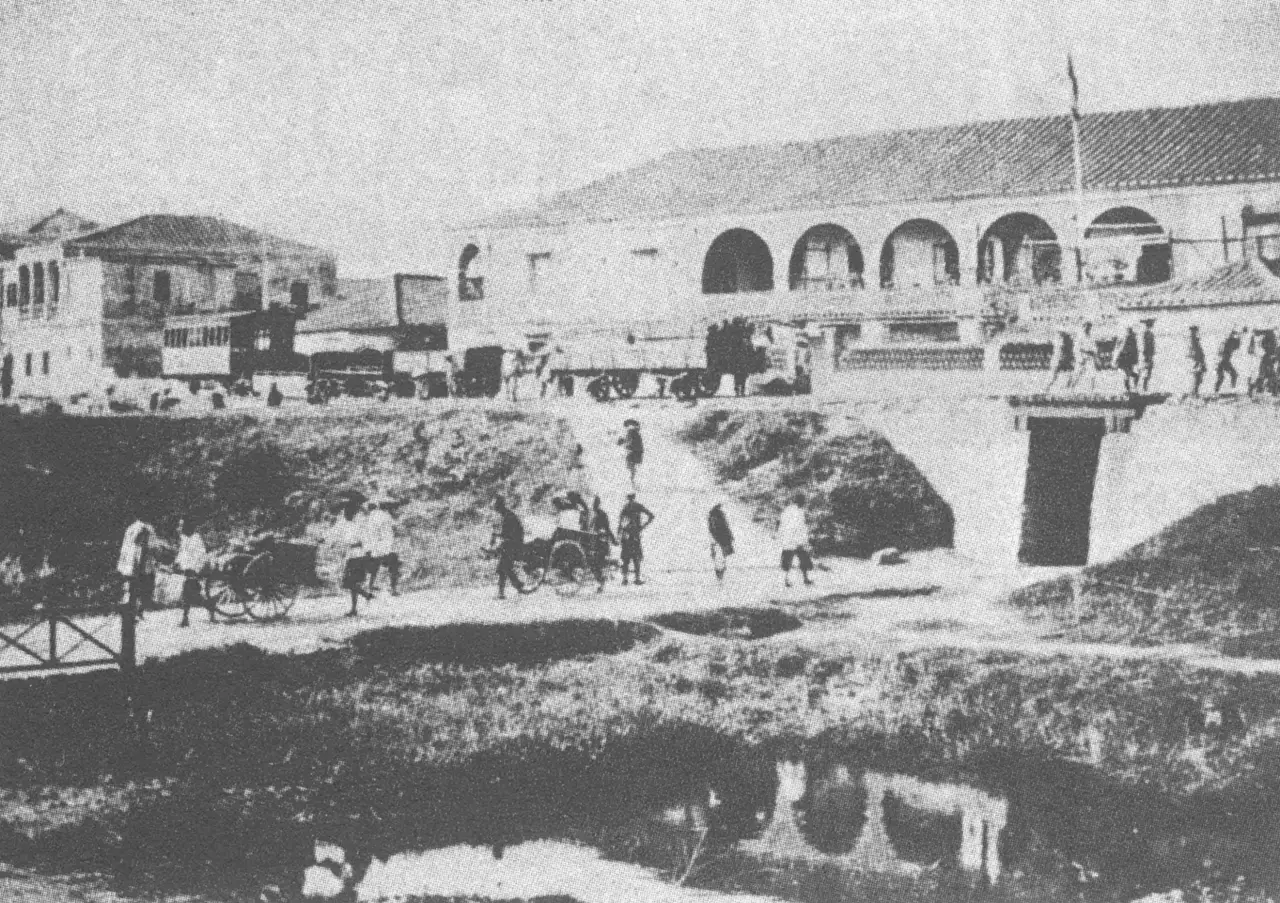
Under the Treaty of Shimonoseki, China cedes Taiwan to Japan. Taipei is chosen as the colonial capital, the wall is torn down and replaced with boulevards, and the city gains a grid layout, sanitation, and railways.
1919–1945 · Japanese colonial era: fifty years, until 1945
The Office of the Governor-General, today the Presidential Office Building, is completed in 1919. The Allied bombing of May 31, 1945 hits downtown, damages Longshan Temple, and kills more than three thousand people.
1947 · 228 Incident
On February 27, the seizure of smuggled cigarettes from a street vendor in Dadaocheng sparks protests. The Republic of China government's crackdown from February 28 onward kills thousands and opens four decades of censorship.
1949 · Provisional capital
Defeated in the civil war, Chiang Kai-shek moves the Republic of China's government to Taipei in December. More than a million migrants from the mainland arrive on the island and form the military dependents' villages, the juancun.
1968–1987 · Miracle and martial law
Taipei becomes a special municipality in 1967, effective 1968, and absorbs six neighboring districts. The economy grows at double digits under martial law, lifted only in July 1987 after 38 years.
1990–2026 · Democracy, the metro, and height
The Wild Lily student movement of 1990 speeds up the opening; the first direct presidential election is held in 1996, the same year as the first MRT line. Taipei 101 opens in 2004, and the eastern extension of the red line, to Guangci/Fengtian Temple, enters service on August 30, 2026.
Complete history
Bangka, Dadaocheng, and the tea port (1709–1869)
Taipei exists because of a river. The basin formed by the confluence of the Tamsui with the Keelung and the Xindian was a flood-prone plain occupied by Ketagalan villages when settlers from Fujian began arriving, under Qing license, starting in 1709. The anchorage at Bangka, today's Wanhua, was the first settlement: rice, camphor and timber went down the river to Tamsui and from there on to China. Rivalry between groups of immigrants decided the geography: after the 1853 conflict, those driven out founded Dadaocheng upriver, and it was there that tea made the city rich starting in 1869.
The 1884 city wall and the cession to Japan in 1895
The Qing administration only took Taipei seriously at the end. The five-gated wall was finished in 1884, with the French fleet blockading the north coast; the following year Taiwan became a province and governor Liu Ming-chuan installed telegraph lines, electric lighting and the island's first railway. Ten years later everything changed hands: under the Treaty of Shimonoseki, in 1895, China ceded Taiwan to Japan. The Japanese chose Taipei as capital, tore down the wall and turned the perimeter into boulevards. Zhongshan South, Zhonghua and Aiguo avenues still trace where the wall stood.
The Japanese half-century shaped the physical city
The half-century of Japanese rule defined the material city: sewer network, orthogonal grid of blocks, railway station, imperial university (today National Taiwan University, 1928), the 1919 Office of the Governor-General that became the Presidential Palace. It also left the Beitou baths, in use since 1896, and the habit of food served at narrow counters. The cycle ended in 1945 with Allied bombing and the island's transfer to the Republic of China. The euphoria was short-lived: the 228 Incident, in February 1947, began with a cigarette seizure in Dadaocheng and ended in a massacre, the prologue to the 38 years of martial law decreed in 1949.
Chiang Kai-shek moves the government to Taipei in 1949
In December 1949, defeated in the civil war, Chiang Kai-shek moved the Republic of China's government to Taipei and brought with him more than a million people, the National Palace Museum's collection, and a capital that called itself provisional. The city doubled in size within twenty years, spread onto the hillsides, built the military villages and later replaced them with towers. The economic miracle of the 1960s to 1980s filled the basin with small factories, backyard workshops, and scooters. The air was bad, the river was dead, and traffic was the worst in East Asia.
Political opening and public works
Political opening and public works fixed much of that. Martial law fell in 1987, the Wild Lily movement in 1990 forced constitutional reform, and in 1996 came direct presidential election and the first metro line. Since then the city has moved factories out of downtown, channeled and cleaned up part of the Tamsui, covered the basin with six MRT lines and turned warehouses into cultural parks. The 1937 tobacco factory became Songshan Cultural Park, the winery became Huashan. Taipei 101, from 2004, gave the city a landmark visible from any corner; population growth, however, stopped: Taipei has been losing residents to New Taipei since the 1990s, pushed out by property prices.
Beitou and Akita, in Japan, are the only places in the world where hokutolite occurs, a radioactive mineral described in Beitou in 1905.
Geography and shape of the city
Three rivers in the basin between ranges
The city occupies almost the entire Taipei Basin, a tectonic depression of about 240 km² less than 20 m above sea level, surrounded by mountains on all sides: the Datun volcanic group to the north, with Qixingshan at 1,120 m inside Yangmingshan National Park; the Nangang hills and the Four Beasts to the east and southeast; and the Linkou range to the west. Three rivers meet there: the Xindian from the south, the Keelung from the east, and the Tamsui, which carries everything to the sea 25 km to the northwest.
The monsoon climate and the dikes
High dikes separate the city from the water, which is why almost no street has a river view: reaching the bank means crossing a floodgate. The climate is humid subtropical, with a northeast monsoon that brings continuous drizzle in winter and typhoons between July and October.
The arcades and the Japanese grid
The street grid is Japanese in origin: orthogonal blocks numbered by section (段), with alleys and lanes identified by 巷 and 弄 numbers, which turns any address into a coordinate system. Zhongxiao and Zhongshan cross in the center and set the east-west and north-south axis for the whole numbering system. Sidewalks run under covered arcades, a legacy of a colonial-era rule against rain and sun, almost always partly taken up by parked scooters.
The Chiang Kai-shek Memorial Hall has 89 steps, one for each year of the generalissimo's life.
Culture
The capital of Chinese-language cinema
Taipei is the capital of Chinese-language cinema outside the mainland. The New Wave of the 1980s came out of here with Edward Yang, who filmed the city in “Taipei Story” and in “Yi Yi” (2000), and with Hou Hsiao-hsien, whose “A City of Sadness” (1989) was the first film to deal with the 228 Incident on the big screen. The Golden Horse Award, created in 1962 and handed out in Taipei in November, remains the leading award for independent Chinese-language cinema, precisely because it is not subject to Beijing's censorship. The old factories became theaters and studios: Huashan, a 1914 distillery, and Songshan, a 1937 tobacco plant.
The home base of Mandopop
In music, the city is the base of Mandopop (the labels, studios and big shows at Taipei Arena) and at the same time hosts a small, old indie circuit, with venues like Legacy, in Huashan, and The Wall, in Gongguan. Private-room karaoke (KTV) is the standard social outing, open until dawn and charged by the hour and per person. In literature, “Taipei People,” by Bai Xianyong (1971), fixed the portrait of the 1949 exiles, and Wu Ming-yi is the most translated contemporary name. The tradition of 24-hour bookstores began in 1999 at Eslite on Dunhua South. After that branch closed in 2020 and the Xinyi branch in 2023, overnight opening moved to Eslite Songyan, in Songshan Cultural and Creative Park, in January 2024.
Temple: the neighborhood square
Religious life is syncretic and everyday: Taoist and Buddhist temples work as the neighborhood square, with divination by wooden blocks, offerings, and neighbor associations. Xingtian Temple banned incense and food offerings in 2014 because of air pollution, without losing the line for its purification ritual. Baseball is the national sport, played in the professional CPBL league since 1990, with a stadium in Tianmu and the 2023 Taipei Dome, in Xinyi. Taiwan legalized same-sex marriage in May 2019, the first country in Asia to do so, and the October pride march, created in 2003, is the largest on the continent.
At Xingtian Temple, incense has not been burned since 2014.
Festivals and events
Lunar New Year
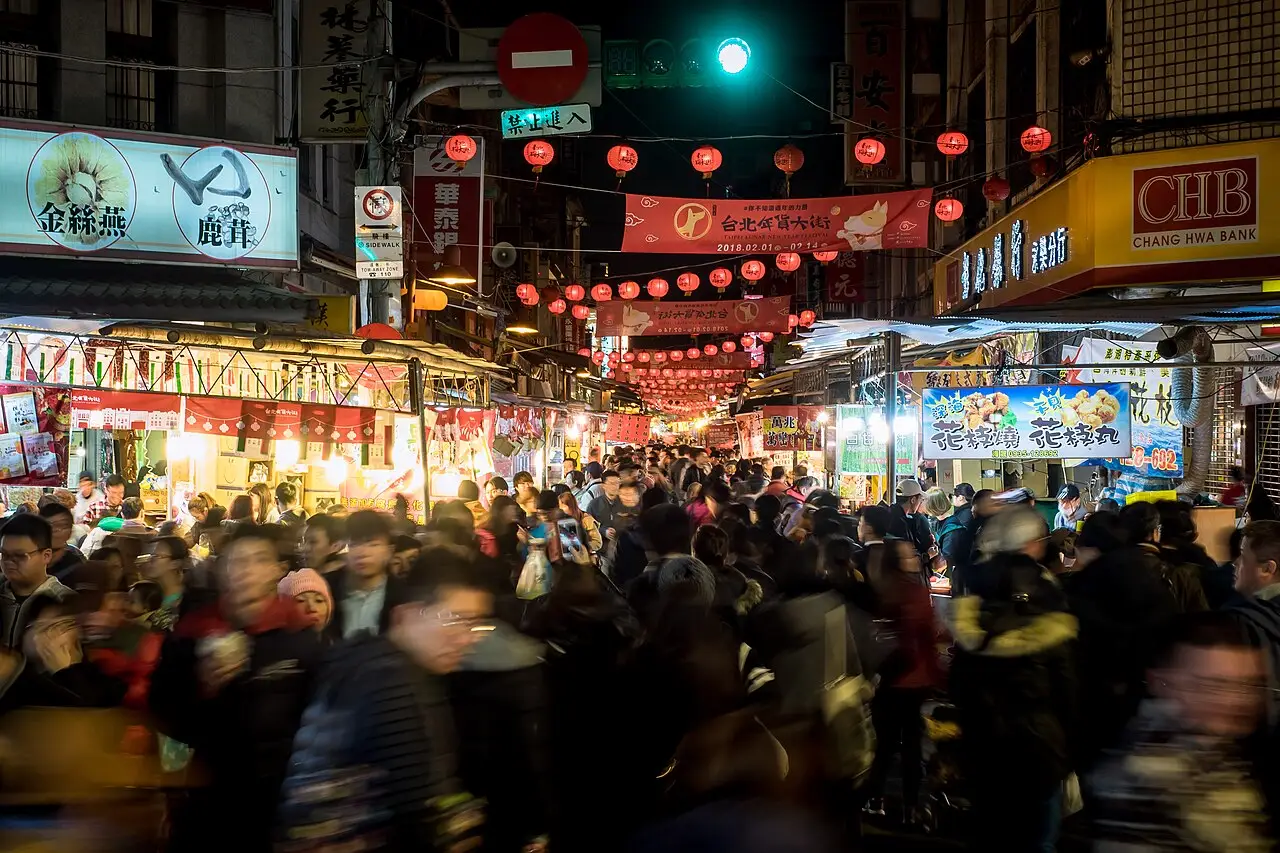
Between late January and mid-February, a five- to nine-day holiday. Dihua Street becomes a packed eve-of-new-year market, temples fill at midnight, and much of the family-run restaurant scene closes for three to five days.
Lantern Festival
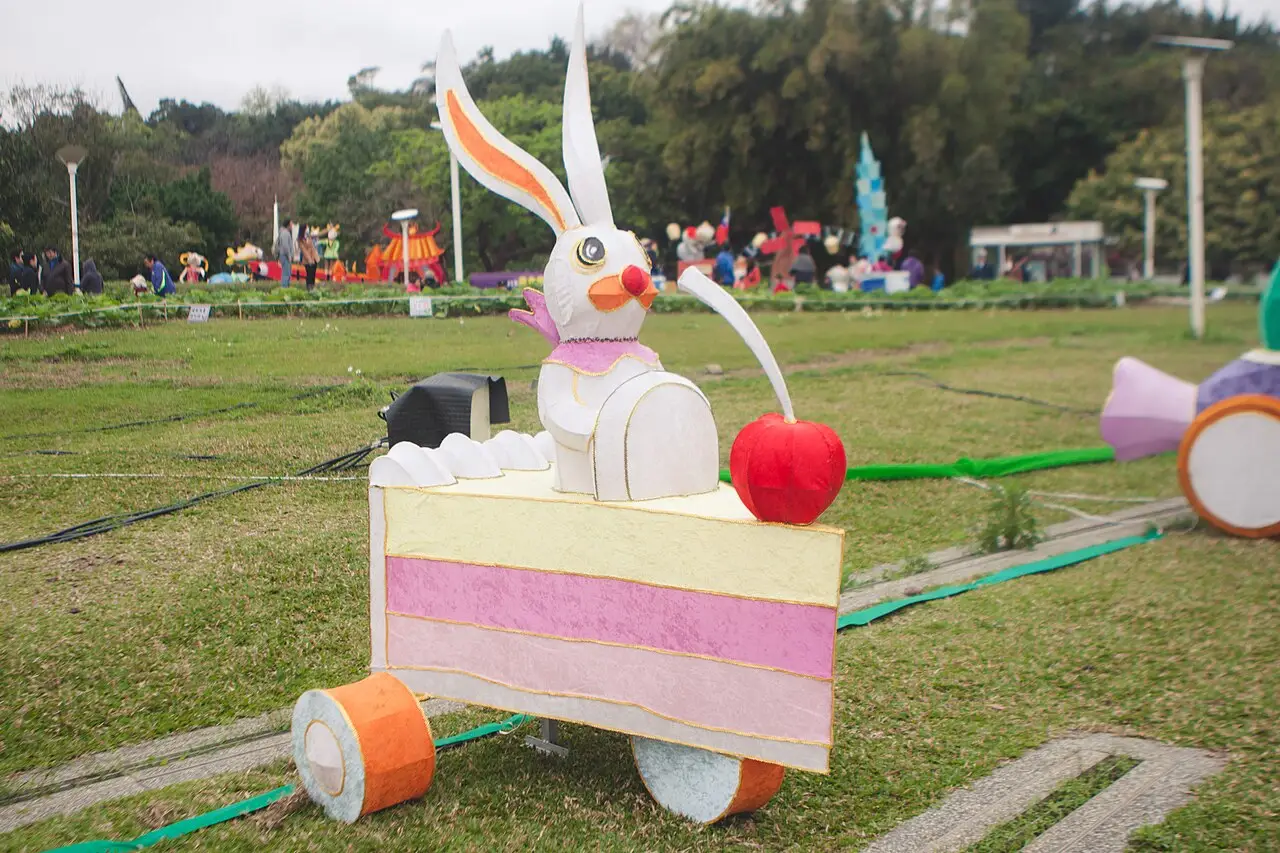
On the 15th day of the first lunar month, two weeks after the New Year. Taipei sets up a giant lantern display that changes location each year; in Pingxi, 40 km away, thousands of paper lanterns rise with wishes written on them in brush.
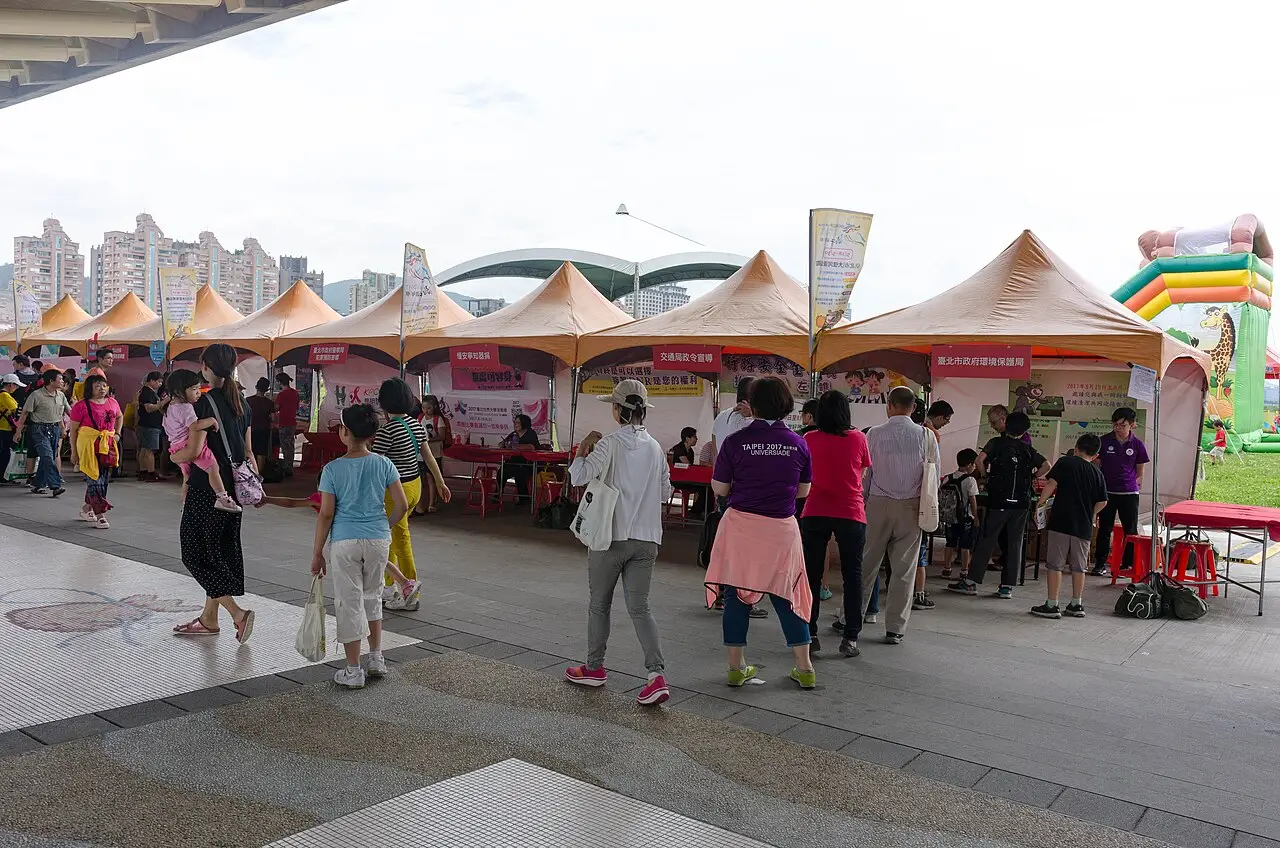
Dragon Boat Festival (Duanwu)
On the 5th day of the fifth lunar month, generally June. The races take place on the Keelung River, around Dajia, and people eat zongzi, glutinous rice wrapped in bamboo leaf.
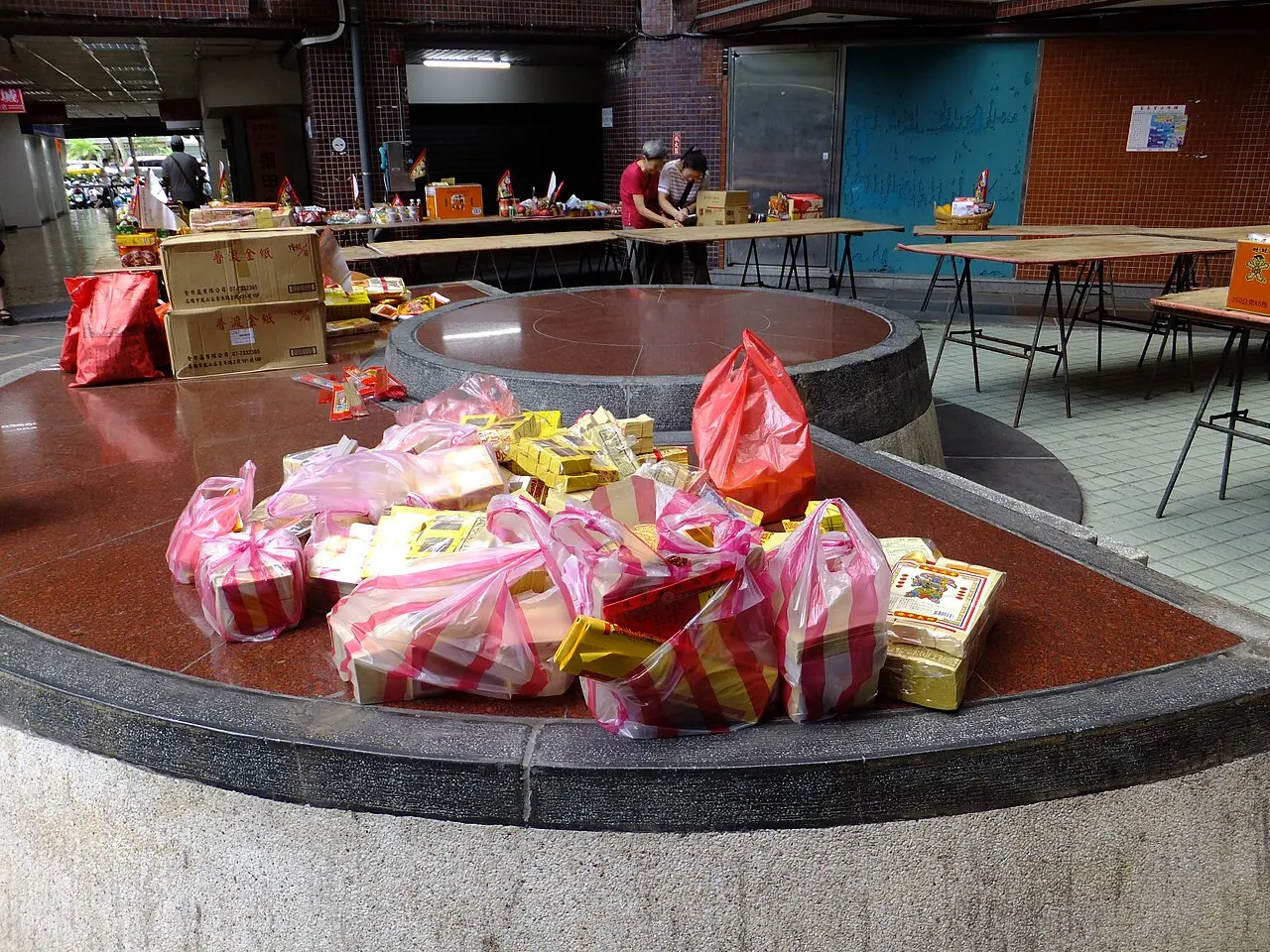
Ghost Month
The seventh lunar month, almost always August. Businesses and families set up offering tables on the sidewalk with fruit, cookies, and cans of soda, burn spirit money, and avoid moving house, weddings, and swimming.
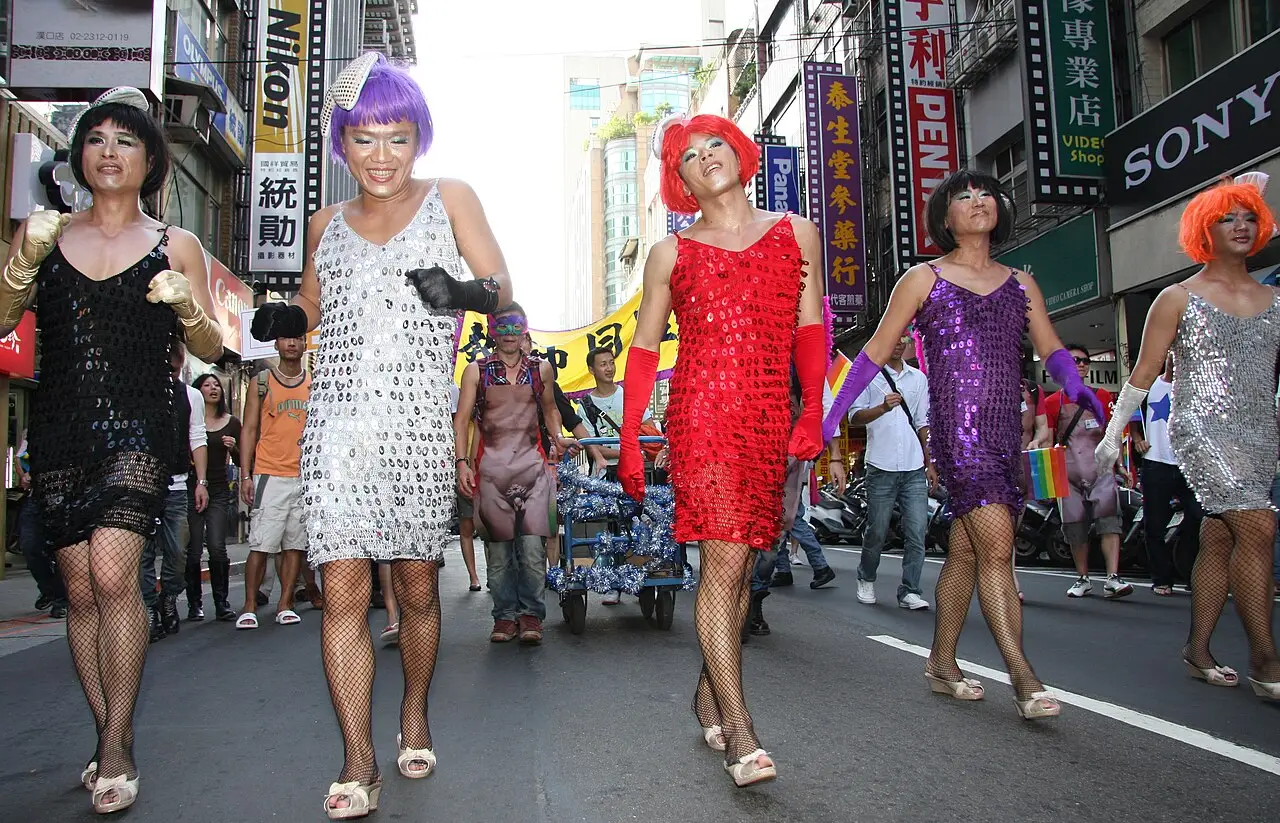
Taiwan Pride
Last Saturday of October, since 2003, starting from City Hall Plaza in Xinyi. It draws between 100 and 200 thousand people and is Asia's biggest LGBT event; hotels in the area sell out weeks in advance.
Books and films
“Yi Yi” (2000), by Edward Yang
Three hours with a middle-class family in Taipei's apartments and offices; it's the most precise portrait of how the city is organized inside its buildings.
“A City of Sadness” (1989), by Hou Hsiao-hsien
The first film to confront the 228 Incident and the years from 1945 to 1949, shot partly in Jiufen, which became a tourist destination because of it.
“Taipei People” (1971), by Bai Xianyong
Fourteen stories about mainland exiles who arrived in 1949 and grew old in the new city; it explains where the military villages, the northern Chinese restaurants, and the nostalgia of the central neighborhoods come from.
Frequently asked questions
Taipei: what is Jiufen and how do you get there?
A former gold-mining village on the hillsides 35 km to the east, with stepped streets and teahouses above the sea. From Zhongxiao Fuxing, bus 1062 gets there in about 1 hour 20 minutes.
Taipei: what's the currency and what's it worth?
The currency is the New Taiwan dollar (NT$), at about NT$31 to 32 to the US dollar and about NT$5.7 to the real in 2026.
Taipei: when is the best time to go?
October and November are the best months, with 22 to 28 °C, clear skies, and less rain, which is also why they're the busiest. If you can choose, avoid August, the hottest month and the one with the greatest risk of a typhoon shutting the city down for a day.
Taipei: can I eat or drink on the MRT?
Eating and drinking are banned throughout the paid area of the MRT, including stairs and platforms, and the ban covers water and chewing gum.
Taipei: what is niurou mian?
Noodle soup with beef braised for hours, either hongshao, a dark broth with soy sauce and spices, or qingdun, a clear broth.