Vietnam
Hoi An
Hội An: the old town of lanterns, the bicycle-reach vegetable gardens, and Mỹ Sơn at first light
Days I'd stay three days in Hội An: the first entirely in the old town, from the first hours of the morning to the lanterns of the night, the second by bicycle through the Trà Quế gardens, An Bàng beach, and the Bảy Mẫu palm forest, and the third for Mỹ Sơn early in the morning, getting back in time for one last walk through the center.
How the guide reaches this number
With two full days you can see the old town without rushing and do the bicycle outing, leaving Mỹ Sơn out; less than that reduces Hội An to a night of lanterns and misses what surrounds it. Between March and August, with calm seas, a fourth day for Cù Lao Chàm makes sense for anyone who likes snorkeling.
2–3
Start with the basic programme and choose extensions for the time you have.
When February to April; May to August stays dry but hot, with average highs of 33 to 34 °C at the Đà Nẵng station, and from September to January it rains, with the peak and the Thu Bồn floods in October and November.
How the guide reaches this number
The year in Hội An divides into the dry season and the rainy one, and the difference changes the trip. From February to April the weather is mild and dry: at the Đà Nẵng station, 30 km away, average highs run from 26 to 31 °C and rain stays between 24 and 35 mm a month. May to August stays dry but is the hot period, with average highs of 33 to 34 °C, and it is when the sea is calm and the speedboats to Cù Lao Chàm operate. September ushers in the rain: October averages 628 mm and about 20 rainy days, November 448 mm, and it is in these two months that the Thu Bồn usually overflows and covers the old town's riverfront. In 2025, according to Viet Nam News, the flood exceeded the 1964 peak, and the old town was under water more than once between late October and mid-November. December and January are still rainy and cooler, with average lows of 19 to 20 °C. Vietnamese holidays, especially Lunar New Year, and weekend nights fill the old town with domestic visitors.
Per person/day Budget around VND518,000; mid-range around VND1,340,000; comfortable around VND3,540,000 per person per day, based on spending reported by travelers to Budget Your Trip (checked October 2026).
How the guide reaches this number
Indicative figures, excluding travel to the destination.
Budget around VND518,000; mid-range around VND1,340,000; comfortable around VND3,540,000 per person per day, based on spending reported by travelers to Budget Your Trip (checked October 2026). Indicative figures, excluding travel to the destination.
Per person per day: accommodation, meals, urban transport, visits and a small allowance for extras. Flights excluded; larger purchases vary. Editorial estimate, not a quote.
Salta · among the cheapestZermatt · among the priciest
Cheaper than 95% of them. The tick marks the median. Compared by the middle of each city’s daily range, converted at the 24 Sept 2026 exchange rate.
 What Nilo thinks
I'd recommend Hội An to people who like eating on plastic stools, neighborhood cults, and watching a craft being made in front of them. In the houses, the ancestors' altar shares the space with that of the five household gods, and each Chinese hall keeps worshipping the protectors of those who built it, like the 108 Hainan merchants lost at sea. The double roofs of thin clay tiles and the yellow facades give unity to houses that were rebuilt over two centuries. At the table, I'd go after the white rose, the translucent shrimp parcel, and the cơm gà, rice cooked in chicken broth, and I'd leave the cao lầu for a neighborhood place, away from the riverfront. I'd leave Bà Nà for those who have already seen Mỹ Sơn and want a theme-park day, because the cable car leads to a place built for visitors, not to the region's history.For two centuries, Chinese junks and Japanese ships anchored on the Thu Bồn, and each community left its mark: the Japanese, the covered bridge; the Chinese, the assembly halls with green tiles and altars to Mazu and Quan Công; the Vietnamese, the deep merchant houses, with the shop at the front and the ancestors' altar inside. When the river silted up and trade moved to Đà Nẵng, the town stopped growing, and that is what preserved it. The result is an old town that is explored on foot and deserves more than one visit, with silk lanterns on yellow facades and a fish and herb market by the water. And it does not end at the quay: by bicycle, within minutes, the landscape turns into herb gardens, a brackish-water palm forest, and a long beach, and upriver stand the brick temples of Champa, which tell the story that came before all of this.
Quick facts
- Population
- About 110,700 residents in the three divisions that replaced the former city of Hội An in 2025: Hội An, with the old town and the Cẩm Nam and Cẩm Kim islands (37,222), Hội An Tây (42,370), and Hội An Đông (31,109), according to the Ministry of Home Affairs' 2025 list of administrative units. The Cù Lao Chàm archipelago is not included in this total.
- Founded
- The port begins to appear under the name Hội An in the late 16th century, under the Nguyễn lords; before that, the mouth of the Thu Bồn was the trading port of the Kingdom of Champa.
- Country and region
- Vietnam, city of Đà Nẵng, in the center of the country. Until 2025 Hội An was a city in Quảng Nam province, which was merged into Đà Nẵng in that year's administrative reform.
- Language
- Vietnamese. In the old town, many restaurants, hotels, and agencies offer menus and service in English.
- Currency
- Vietnamese dong (VND, ₫).
- Time zone
- Asia/Ho_Chi_Minh: UTC+7 year-round, with no daylight saving time.
- Best time to visit
- February to April; May to August stays dry but hot, with average highs of 33 to 34 °C at the Đà Nẵng station, and from September to January it rains, with the peak and the Thu Bồn floods in October and November.
- Average daily cost
- Budget around VND518,000; mid-range around VND1,340,000; comfortable around VND3,540,000 per person per day, based on spending reported by travelers to Budget Your Trip (checked October 2026). Indicative figures, excluding travel to the destination.
What’s new
Recent changes that affect the plan, with date and source.
- Mar 2026
The daily traditional arts performances included in the ticket moved from 66 Bạch Đằng Street to the Hoài River square, at Cao Hồng Lãnh 01, at 10:15 a.m., 3:15 p.m., and 4:15 p.m. source
When to go
February to April; May to August stays dry but hot, with average highs of 33 to 34 °C at the Đà Nẵng station, and from September to January it rains, with the peak and the Thu Bồn floods in October and November.
January
11 h 17 min of daylight
National holidays
Jan 1 – 3, 2027 · long weekend · Tết dương lịch
Jan 1, 2028 · Tết dương lịch
Source: Nager.Date. Holiday dates shift; check close to your trip.
April
Best time12 h 30 min of daylight
National holidays
Apr 30 – May 2, 2027 · long weekend · Ngày Giải phóng miền Nam, thống nhất đất nước
Source: Nager.Date. Holiday dates shift; check close to your trip.
May
12 h 52 min of daylight
National holidays
Apr 30 – May 2, 2027 · long weekend · Ngày Quốc tế lao động
Source: Nager.Date. Holiday dates shift; check close to your trip.
June
13 h 04 min of daylight
July
12 h 59 min of daylight
August
12 h 40 min of daylight
September
12 h 13 min of daylight
National holidays
Sep 2 – 5, 2027 · long weekend · Quốc khánh
Source: Nager.Date. Holiday dates shift; check close to your trip.
October
11 h 47 min of daylight
November
11 h 23 min of daylight
December
11 h 11 min of daylight
High, shoulder and low season
High · February to April
Dry and mild, with average highs of 26 to 31 °C: the best combination for walking, cycling to the gardens, and going to Mỹ Sơn. Lunar New Year, between late January and mid-February, fills the old town with domestic visitors and closes part of the small shops for a few days.
Shoulder · May to August
Still dry, but hot, with average highs of 33 to 34 °C: visits are made early and at dusk. It is the season of calm seas, when the speedboats to Cù Lao Chàm run regularly and An Bàng beach is at its best.
Low · September to January
The rainy season: October and November add up to more than 1,000 mm on average and bring the risk of a Thu Bồn flood in the old town and in An Hội. Most speedboats to Cù Lao Chàm stop, the sea turns rough, and December and January are cooler and still damp.
How the year changes
The year in Hội An divides into the dry season and the rainy one, and the difference changes the trip. From February to April the weather is mild and dry: at the Đà Nẵng station, 30 km away, average highs run from 26 to 31 °C and rain stays between 24 and 35 mm a month. May to August stays dry but is the hot period, with average highs of 33 to 34 °C, and it is when the sea is calm and the speedboats to Cù Lao Chàm operate. September ushers in the rain: October averages 628 mm and about 20 rainy days, November 448 mm, and it is in these two months that the Thu Bồn usually overflows and covers the old town's riverfront. In 2025, according to Viet Nam News, the flood exceeded the 1964 peak, and the old town was under water more than once between late October and mid-November. December and January are still rainy and cooler, with average lows of 19 to 20 °C. Vietnamese holidays, especially Lunar New Year, and weekend nights fill the old town with domestic visitors.
Nilo's tips
Two visits to the old town
The same street changes completely between 7 a.m. and 7 p.m. Early there is low light, closed shops, and space; at dusk, lanterns, boats, and crowds. Leave the middle hours for the hotel, the bicycle, or the tailor.
Use the ticket over two days
The 120,000 VND ticket gives five visits and is valid for up to three days of your stay: do the bridge, the Fujian hall, a museum, and an old house on the first day and save the last visit for when you pass through again. Keep the stub to enter and exit.
14th night of the lunar month
If your trip coincides with the 14th night of the lunar calendar, set the evening aside for the old town without electric light, from 5 to 10 p.m. Check the date, which changes every month.
Tailor on the first day
If you want made-to-measure clothing, order right on arrival, compare it across more than one shop, and leave time for two fittings. Bring a garment that fits you well to serve as a model.
Mỹ Sơn as the gate opens
The sanctuary opens at 6 a.m. and the tour buses arrive in mid-morning. Arrange the car to leave Hội An before 6 a.m. and return before lunch.
Cooking class and lanterns
Several schools and restaurants in town give Vietnamese cooking classes, some with a stop at the market or the gardens, and there are paper lantern workshops next to the Hoài River boat rides. Book the day before and check what the class includes.
Explore the map
Explore the map, read about the other places and plan your travel days in the app.
Open the appWhat to see
Leave for last, if time allows: Hội quán Quảng Triệu · Chợ đêm Hội An · Biển Cửa Đại · Hội An Memories Show
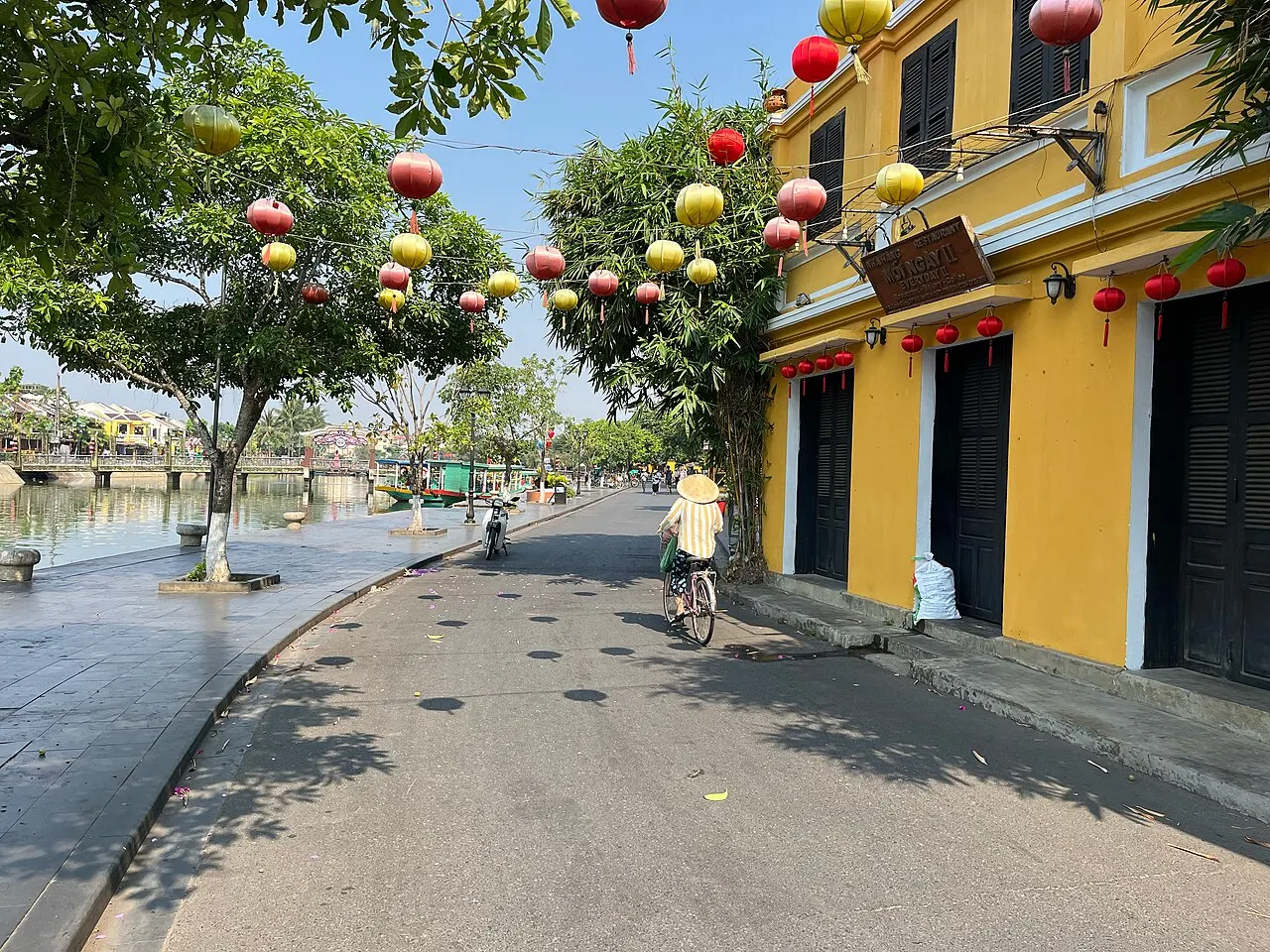
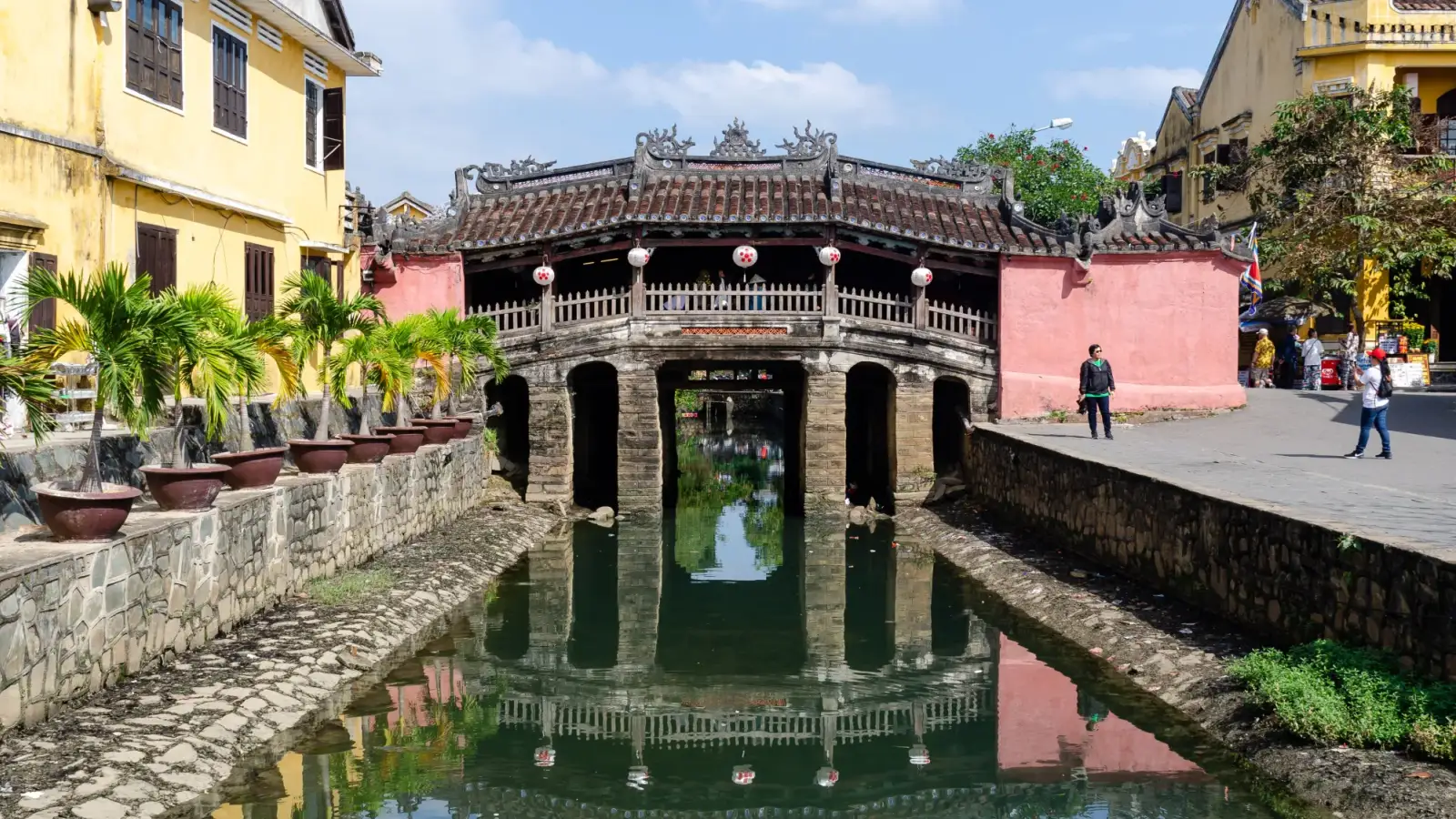
Phố cổ Hội An
The old town is the whole ensemble, more than any single monument: narrow, deep merchant houses, with the shop at the front, the storeroom in the middle, and the family altar facing inward, double roofs of thin clay tiles, and facades painted yellow. Walking the streets is free; the ticket, bought at the old town's booths, gives access to the houses, halls, temples, and museums, which the Đà Nẵng tourism authority's 2026 schedule lists as open from 8 a.m. to 5 p.m. There are two tiers: 80,000 VND covers the covered bridge or the Quan Công temple plus two more monuments; 120,000 VND covers the bridge or the temple, one museum, and three more monuments. The ticket is valid for up to three days of your stay and also includes the day's traditional arts performances and the Japanese tea ceremony at the Japanese Culture Gallery (Nguyễn Thị Minh Khai 06, at 9:30 a.m. and 4:30 p.m.); groups of eight or more get a free guide (conservation center notice, January 2026). From 9 a.m. to 9:30 p.m. in summer, and from 9 a.m. to 9 p.m. in winter, the streets are closed to motorbikes.
Check access
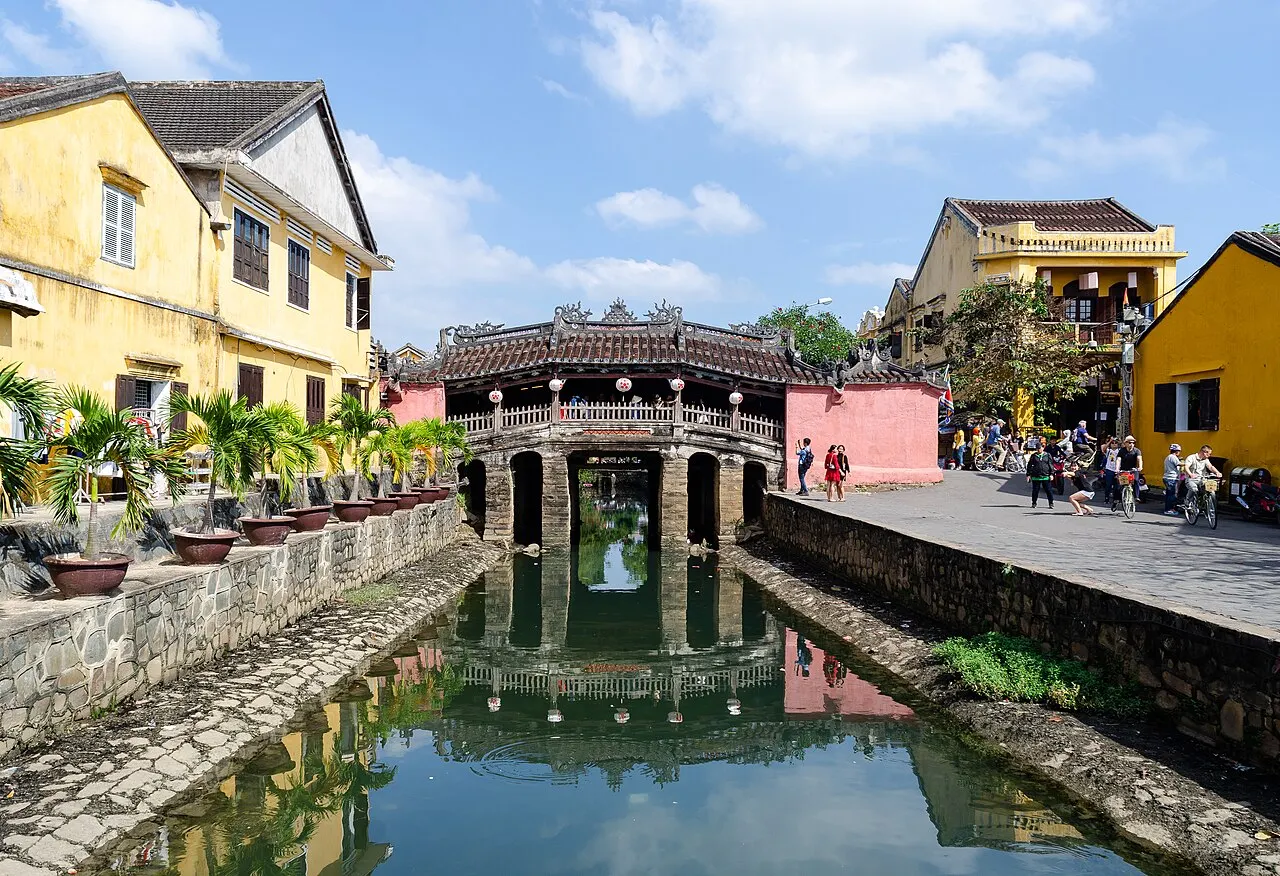
Chùa Cầu
The covered bridge, about 18 m long, crosses a small canal between Trần Phú and Nguyễn Thị Minh Khai. Tradition attributes its construction to Japanese merchants in 1593, and a small temple to the god Trấn Vũ was added at the north end, with its entrance in the middle of the bridge. The plaque Lai Viễn Kiều, the bridge for welcoming those who come from afar, was given by Lord Nguyễn Phúc Chu in 1719. Renovations in 1817, 1865, 1915, and 1986 replaced almost all the Japanese features with Vietnamese and Chinese elements, and the bridge underwent a major restoration in 2023 and 2024. Look at the wooden statues at the two ends: monkeys on one side, dogs on the other. The bridge appears on the 20,000 VND note and is one of the two fixed visits on the ticket.
Check access
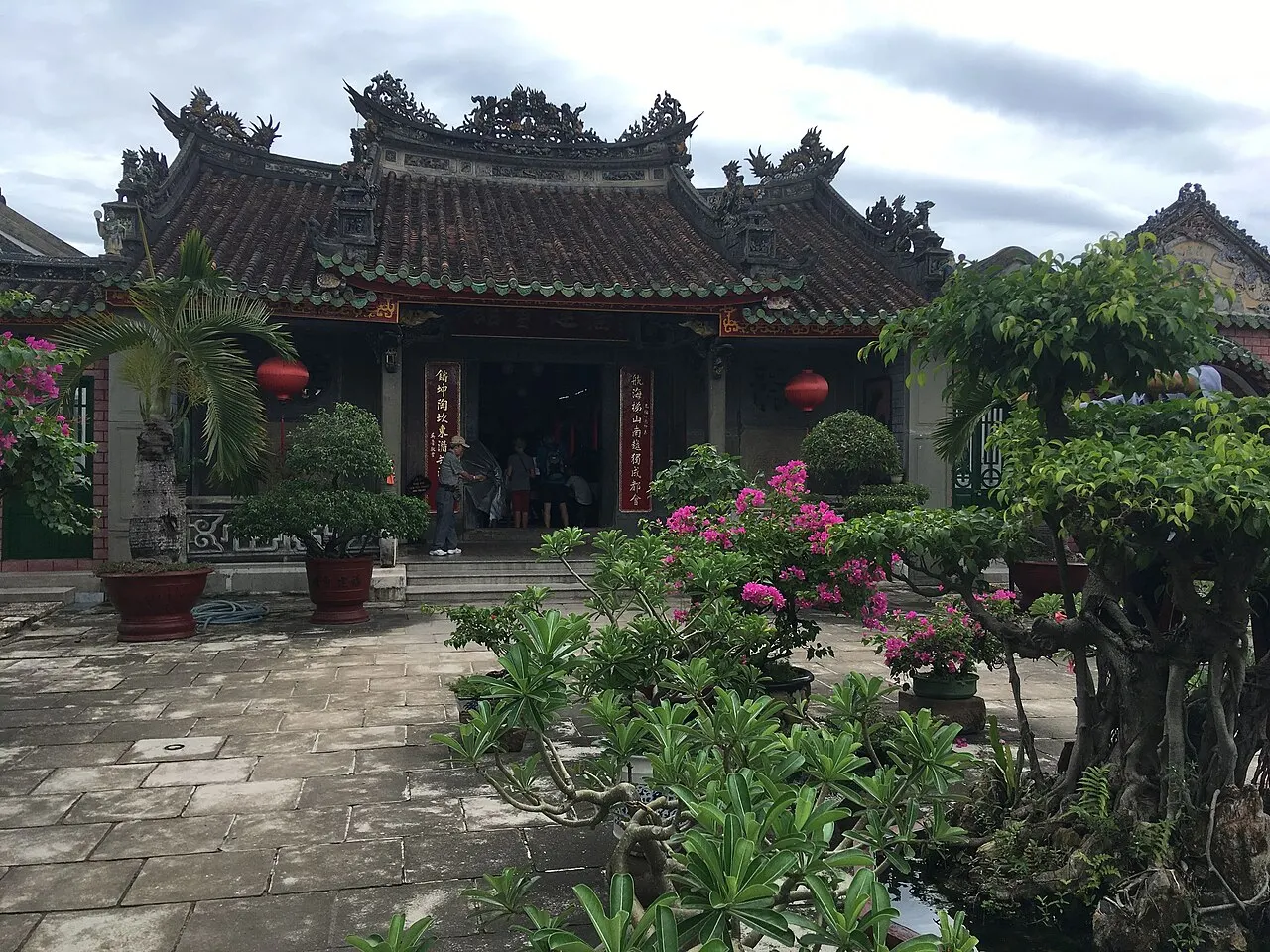
Hội quán Phúc Kiến
The Fujian community hall, at Trần Phú 46, is the largest of the town's five Chinese halls. It began as a thatched Buddhist temple built by Vietnamese in 1697, was bought by Fujian merchants in 1759, and became an assembly hall in 1792. The green-tiled gate comes from a renovation in the 1970s; behind it, courtyards lead to the main hall, dedicated to Mazu, the protector goddess of sailors, and to the six Fujian ministers loyal to the Ming. It is an active place of worship, with daily offerings.
Check access
Sông Hoài
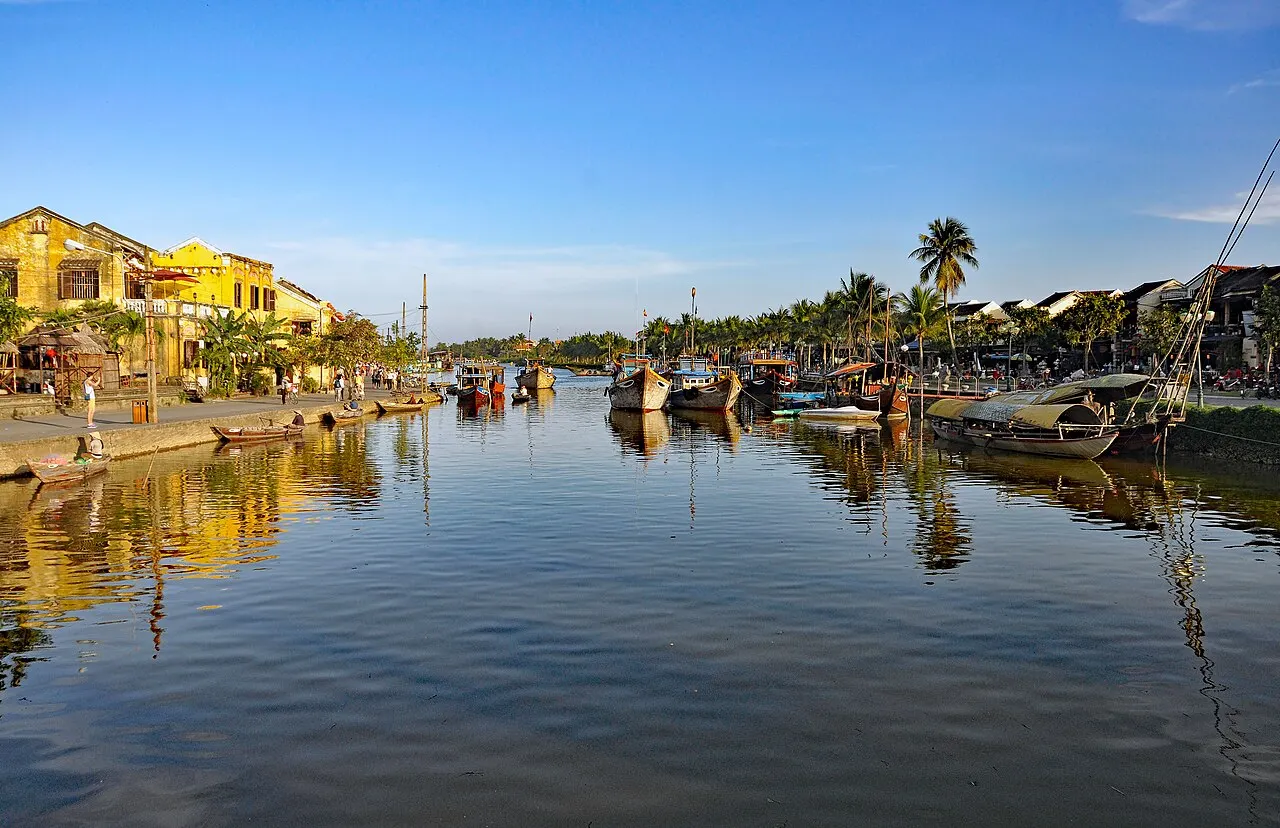
The arm of the Thu Bồn that runs in front of the old town is where the town gathers at dusk. Silk lanterns light up on the facades of Bạch Đằng and on An Hội island, boatmen offer short rides in which you release a paper lantern on the water, and the river fills with people. On the 14th night of each lunar month, since 1998, the town switches off the electric light in the old town between 5 and 10 p.m. and lights only lanterns, with music and traditional games such as bài chòi. If you take a boat, agree on the price before boarding and ask for a life jacket.
Check access
Nhà cổ Tấn Ký
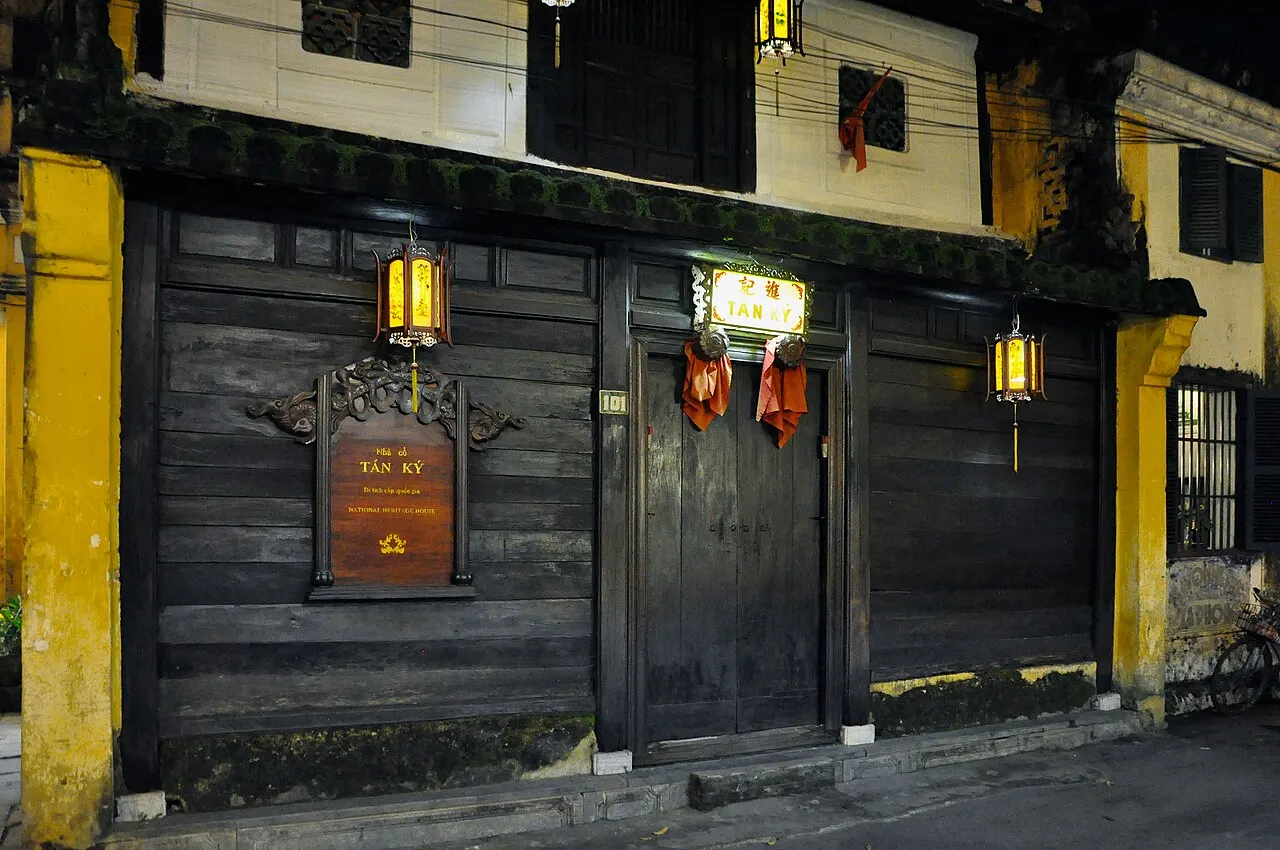
The Tấn Ký house, at Nguyễn Thái Học 101, is one of the merchant houses still lived in by the family, and the visit is usually led by a relative, with tea, in the front part. It shows the typical Hội An plan, a narrow and deep house, and the mix of influences: the crab-shell ceiling resting on three beams is Japanese-inspired, and Chinese poems inlaid in mother-of-pearl hang from the columns.
Check access
Chùa Ông (Quan Công)
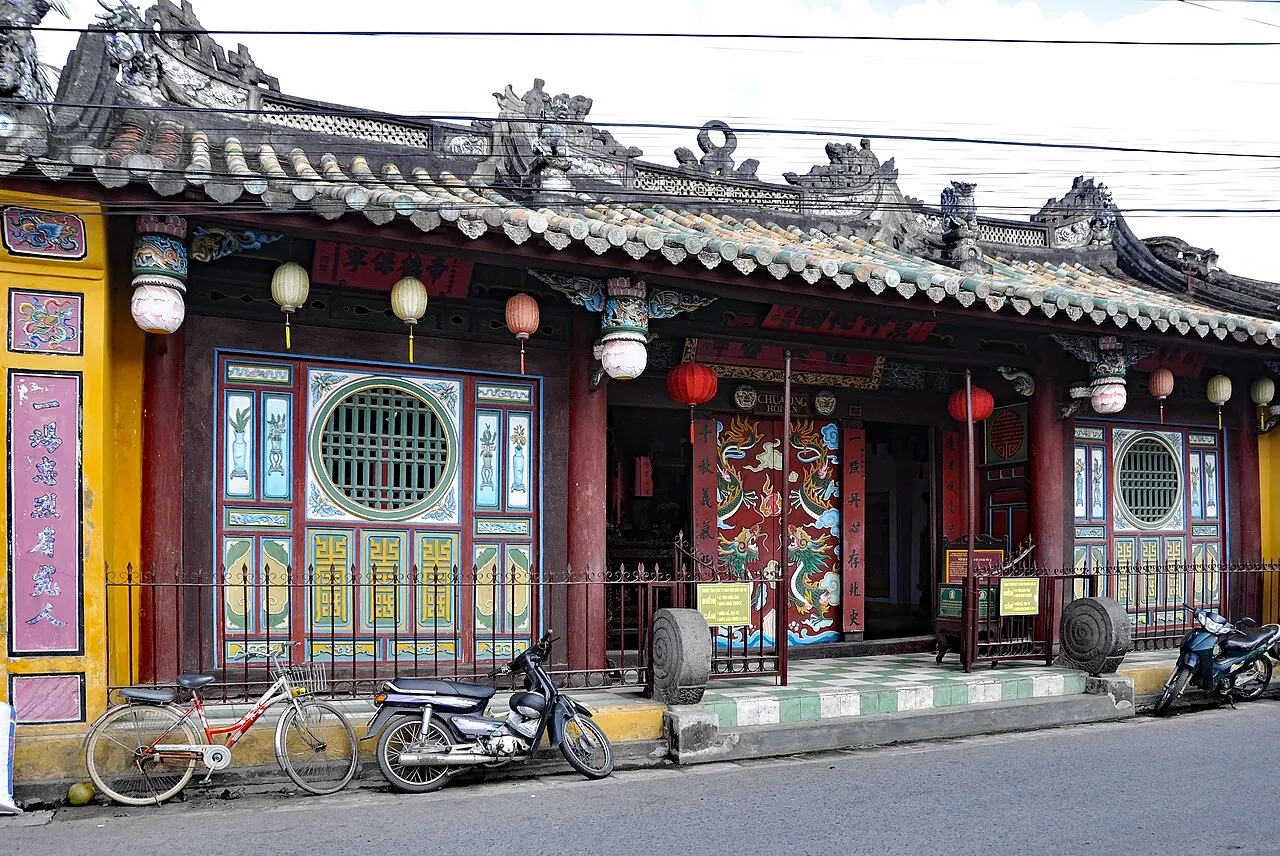
The Quan Công temple, at Trần Phú 24, was built in 1653 by Minh Hương and Vietnamese residents to honor the Chinese general Guan Yu, a symbol of loyalty, to whom merchants prayed for trust in their dealings. The rear hall holds a statue of the general almost 3 m tall, red-faced and in a green robe, between his two attendants. The temple's festivals fall on the 13th and 14th days of the first and sixth lunar months. On the ticket, the temple is the alternative to the covered bridge.
Check access
Bảo tàng Gốm sứ Mậu dịch
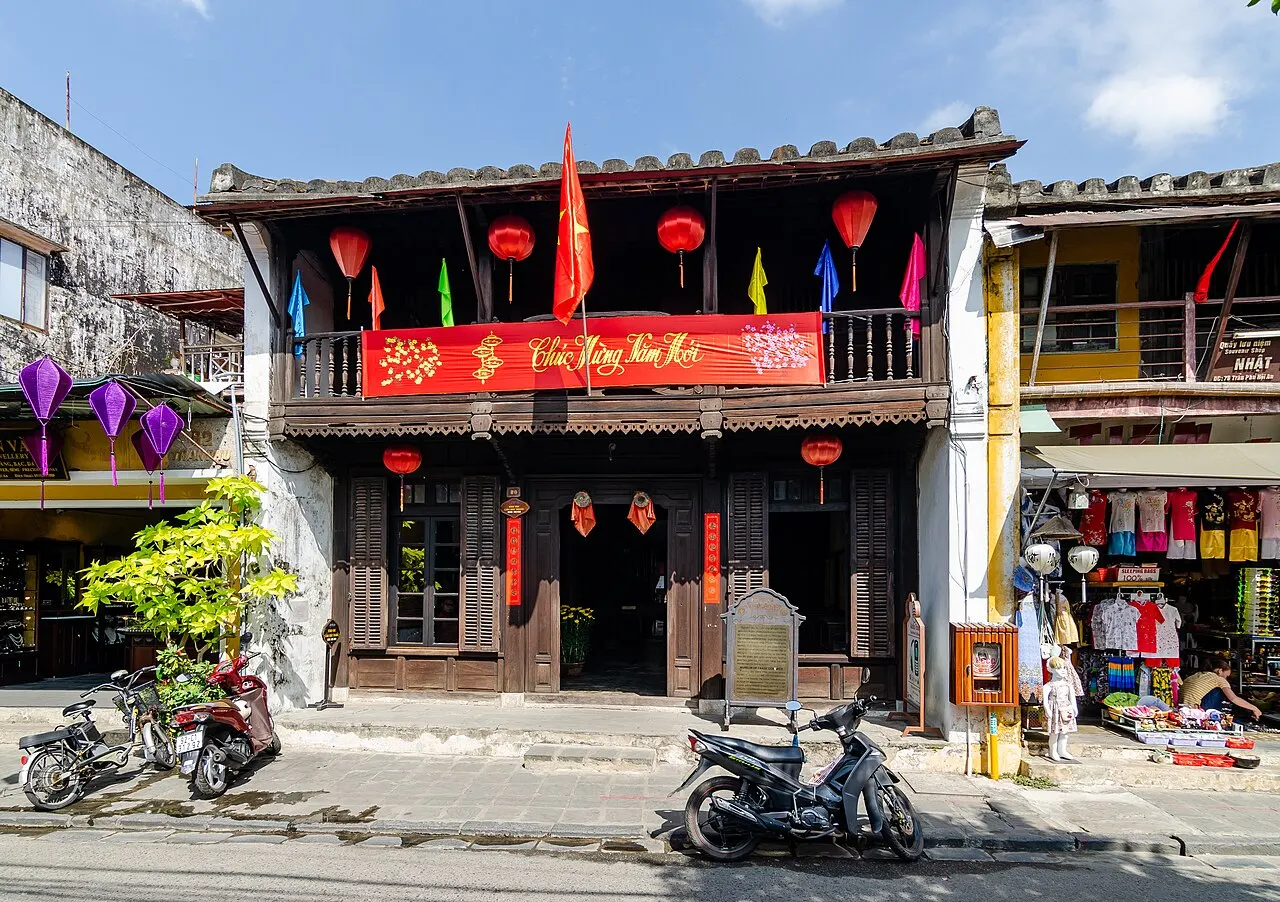
The Museum of Trade Ceramics, at Trần Phú 80, occupies a restored wooden house built around 1858 and displays pieces from Persia, China, Thailand, and India found in the region, proof of the old port's reach. The display cases are simple; what is worth it is climbing to the upper floor and walking through a whole old house, with its inner courtyard and a balcony over the street. It counts as the museum visit on the 120,000 VND ticket.
Check access
Chợ Hội An
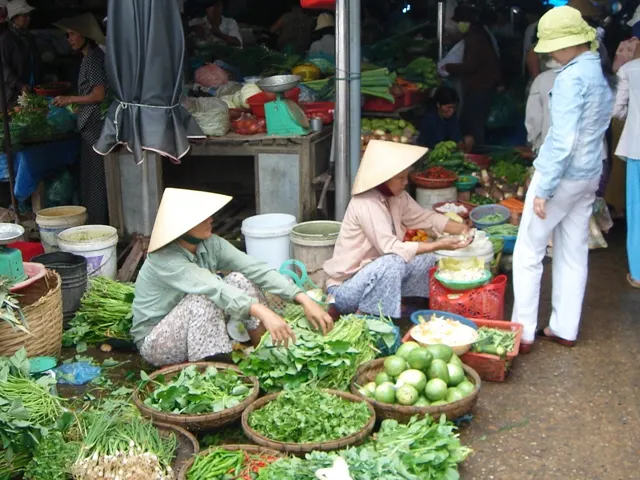
The central market, at Trần Phú 19, at the east end of the old town, brings together fish, vegetables, and herbs in the morning and a food court with stalls serving local dishes, such as cao lầu and mì Quảng, next to stalls with general Vietnamese food. Some stalls serve tourists with English menus and others serve rice and sides to the people who work there; tourist prices tend to be higher, so ask before you order.
Check access
Làng gốm Thanh Hà
The potter village of Thanh Hà lies on the bank of the Thu Bồn, about 3 km west of the old town, and took shape in the 16th century. The potters still throw pieces by hand on a foot-driven wheel, without a mold, and the technique is a national intangible heritage of Vietnam. Today production is mostly decorative. The village charges an admission of 35,000 VND and is open from 8 a.m. to 5:30 p.m. (2026 schedule of the Đà Nẵng tourism authority). The riverside path is an easy bicycle ride.
Check access
More places in the guide
Làng rau Trà Quế
The village of Trà Quế grows herbs and vegetables in beds between the town and the sea, about 3 km northeast of the old town. Visits offer a chance to follow the work in the garden, with a conical hat and a watering can, and some of the town's cooking classes pass through the village. The village charges an admission of 35,000 VND and receives visitors from 8 a.m. to 6 p.m. (2026 schedule). Go in the morning, when the farmers are in the fields, and continue by bicycle to An Bàng beach.
Rừng dừa Bảy Mẫu
The Bảy Mẫu palm forest, in Cẩm Thanh, covers more than 80 hectares of nipa palm, the brackish-water palm of the Thu Bồn river mouth, inside the Cù Lao Chàm-Hội An biosphere reserve. The ride is in the thuyền thúng, the round bamboo basket boat of the fishermen, through narrow canals; the boatmen usually spin the basket and show net fishing. The area has charged admission since 2017 (30,000 VND on the 2026 schedule of the Đà Nẵng tourism authority, from 8 a.m. to 6 p.m.) and was a base of resistance in the war, listed as a provincial relic in 2007.
Biển An Bàng
An Bàng is the beach of a fishing village a few kilometers north of the old town, with pale sand and relatively calm sea in the dry season. Seafood restaurants and cafés sit on the sand, and the atmosphere is quieter than at the Đà Nẵng beaches. From October to December the waves grow and swimming becomes dangerous.
Lune Center for the Performing Arts
The Lune company's theater, at Nguyễn Phúc Chu 01A, on An Hội island, presents acrobatics and dance with bamboo poles and baskets and themes from Vietnamese life, in a hall of about 300 seats, so the cheaper seats also have a good view. It is an expensive outing by the town's standards: Wikivoyage listed 700,000 to 1,600,000 VND per adult in December 2024. Titles, times, and prices change; check the schedule and buy from the company's website or box office.
Hội quán Quảng Triệu
The Cantonese community hall, at Trần Phú 176, near the covered bridge, was built in 1885. It has a quiet courtyard with statuary and, at the back, a garden with a ceramic dragon fountain. For anyone who has already seen the Fujian hall, it is a variation on the same theme.
Chợ đêm Hội An
The night market takes over Nguyễn Hoàng Street, on An Hội island, just past the bridge over the Hoài River. It is stalls of lanterns, crafts, and snacks, with prices aimed at visitors. It works well as a route between the riverfront and dinner, not as an outing in itself.
Biển Cửa Đại
Cửa Đại is the beach closest to the old town, about 5 km away, next to the river mouth. Since 2000 it has been losing sand, with retreats of up to 100 m in some stretches, and it lives with walls, sandbags, and pumping to rebuild the strip; the waves of October to December 2024 damaged the coast again. The road to it also leads to the speedboat pier for Cù Lao Chàm.
Hội An Memories Show
At the Hội An Memories theme park, on an island in the Thu Bồn east of the old town, a large-scale night show tells the story of the port, with more than 500 performers on a 25,000 m² stage. Before the main show there are smaller performances scattered around the park. According to the 2026 schedule of the Đà Nẵng tourism authority, the park opens from 4 to 9 p.m. and closes on Tuesdays; park entry costs 100,000 VND, and the show costs 600,000 to 1,200,000 VND depending on the section. Anyone who prefers the real town can leave it for another trip.
Nilo’s itinerary
Start with the basic programme and choose extensions for the time you have.
Plan my days in the app ↗Day 1 · The old town, from morning to lanterns
Early, before 8 a.m., walk along the still-empty Trần Phú and look at the Chùa Cầu from the outside, in the low light.
At 8 a.m., when the monuments open, buy the 120,000 VND ticket at a booth in the old town and use the fixed visit at the Chùa Cầu.
Continue east along Trần Phú: the Fujian hall and the Museum of Trade Ceramics, which counts as the museum visit; one block down, on Nguyễn Thái Học, is the Tấn Ký house. That leaves one ticket visit for the next day.
Lunch at the central market, at the east end of Trần Phú: cao lầu or mì Quảng at the food court.
In the hot hours, go back to the hotel or bike to the potter village of Thanh Hà, about 3 km west along the riverside, and watch the potters at the wheel.
At 3:15 or 4:15 p.m., the traditional music and singing performance included in the ticket, at the Hoài River square (Cao Hồng Lãnh 01, in the upstairs hall).
At dusk, walk along Bạch Đằng as the lanterns light up, cross the bridge to An Hội island, and pass through the night market on the way to dinner; if you want the boat, agree on the price beforehand and ask for a life jacket.
If you prefer an evening show, the Lune Center theater is on the same island, with a performance at 6 p.m. and no shows on Mondays and Fridays, according to the 2026 Đà Nẵng tourism schedule; check the price on the day.
Day 2 · By bicycle: gardens, beach, and palm forest
Early, pedal northeast to the village of Trà Quế and follow the work in the gardens before the sun gets strong.
Continue to An Bàng beach: a swim in the dry season and a fish lunch at the restaurants on the sand.
In the afternoon, head down the coast road toward the river mouth and enter Cẩm Thanh for the basket-boat ride in the Bảy Mẫu palm forest.
Return to town by the Cửa Đại road late in the afternoon and use the last ticket visit on a hall or an old house you missed, before 5 p.m., or on a tailor fitting.
If you stay longer
Day 3 · Mỹ Sơn
Day trip
The sanctuary of the kings of Champa lies 43 km by road from Hội An, in a valley ringed by mountains: more than 70 brick temples and tombs built between the 4th and 13th centuries, largely destroyed by American bombing in a single week of the war, but with restored groups and sculptures in the museum next to the entrance. It is open daily from 6 a.m. to 5 p.m., and the ticket for foreigners costs 150,000 VND. From the parking lot, a free electric car covers the roughly 2 km to the ruins. Leave Hội An before 6 a.m. to arrive in low light and ahead of the groups, by car with a driver or on a tour; the visit takes the morning, and the trails are slippery in the rain.
Food
Cao lầu
The dish of Hội An: thick, firm rice noodles, brownish in color, with slices of roast pork, crunchy squares of fried dough, fresh herbs and greens, and just a little broth at the bottom. Traditionally the noodles were made with water from the Bá Lễ well, attributed to the Cham. It is eaten at lunch, in simple eateries and at the market.
Mì Quảng
The wide rice noodles of the former Quảng Nam province, tinted with turmeric and served with little broth, just enough to moisten the herbs, topped with shrimp, pork, or chicken. The broth is clear and not spicy, and the dish is everywhere, from restaurants to roadside stalls.
Bánh bao bánh vạc
The white rose: little parcels of translucent rice dough, with a pleated edge like petals, filled with minced shrimp and served with fried onion and a fish sauce with lime. A small family production supplies a good share of the town's restaurants.
Cơm gà
Rice cooked in chicken broth, with shredded chicken, scallion oil, fried onion, herbs, and a tangy fish sauce. Many places serve it with a bowl of broth and pickles.
Bánh mì
The short, crisp French-style bread filled with pâté, meats, herbs, pickles, and chili, bought wrapped in paper at stalls and shops around town. CNN called Hội An the bánh mì capital of Vietnam, and every stall has its own sauce.
Bánh xèo
The crisp rice-flour pancake, fried and filled, which you fold, wrap in rice paper with greens, and dip in the sauce.
Hoành thánh
Wontons of Chinese influence, served in soup or fried, one of the recipes the Chinese communities left in the town.
Where to eat
- Central market (Trần Phú 19)
The market's food court brings together stalls of cao lầu, mì Quảng, bánh xèo, and rice dishes, from the most touristy to those that serve the people who work in the market. It is the place to try several Hội An dishes in a single meal; ask the price first.
- North of the old town
On the residential streets north of the protected core are the mì Quảng and cao lầu places frequented by locals, with low plastic stools, larger portions, and neighborhood prices, especially at breakfast and lunch.
- Madam Khánh (Trần Cao Vân 115) · Trần Cao Vân
Bánh mì with pâté and meats and the house chili sauce, to eat on the go or take to the beach.
Source · 2026-10-19
- Thiên Bảo Quán (Hồng Phong 68B) · Hồng Phong, north of the center
Simple bánh xèo, rolled at the table in rice paper with greens and dipped in the sauce, at a low-stool place off the tourist circuit.
Source · 2026-10-19
- An Bàng
Fish, squid, and grilled shellfish at the restaurants on the sand, for a beach-day lunch; choose by freshness at the counter and check the price by weight before ordering.
· 2026-10-19
Day trips
Mỹ Sơn
The sanctuary of the kings of Champa lies 43 km by road from Hội An, in a valley ringed by mountains: more than 70 brick temples and tombs built between the 4th and 13th centuries, largely destroyed by American bombing in a single week of the war, but with restored groups and sculptures in the museum next to the entrance. It is open daily from 6 a.m. to 5 p.m., and the ticket for foreigners costs 150,000 VND. From the parking lot, a free electric car covers the roughly 2 km to the ruins. Leave Hội An before 6 a.m. to arrive in low light and ahead of the groups, by car with a driver or on a tour; the visit takes the morning, and the trails are slippery in the rain.
Cù Lao Chàm
The archipelago about 18 km from Cửa Đại, the core of the Cù Lao Chàm-Hội An biosphere reserve, has beaches, reefs for snorkeling, the Hải Tạng pagoda, from 1758, and the village of Tân Hiệp next to the pier. The speedboat takes 15 to 20 minutes, and the VnExpress guide updated in July 2026 indicates 350,000 VND (boat, visit fee, and environmental fee), while the 2026 schedule of the Đà Nẵng tourism authority lists the visit from 7 a.m. to 4 p.m. Tourist speedboats go out in calm seas, generally from March to August; the rest of the year most do not operate. The island asks that you not bring disposable plastic bags.
Đà Nẵng and the Marble Mountains
Đà Nẵng is 30 km to the north, and on the way, 9 km south of the center, are the Marble Mountains (Ngũ Hành Sơn), five limestone and marble hills with caves, pagodas, and viewpoints, which call for sturdy footwear because of the stairs; the Thủy Sơn hill is open from 7 a.m. to 5 p.m., with a ticket of 40,000 VND per adult. In the center, the Museum of Cham Sculpture gathers sculptures from Mỹ Sơn and other Cham temples; it is open from 7:30 a.m. to 5 p.m., with a ticket of 60,000 VND (2026 schedule of the Đà Nẵng tourism authority). A taxi, Grab, or a car with a driver makes the trip.
Bà Nà
The former French hill station, at 1,487 m in the Trường Sơn range, lies about 40 km west of the center of Đà Nẵng and is now the Sun World Ba Na Hills park, with a cable car, the Golden Bridge, the mountain train, and an amusement park. The adult ticket for those who do not live in Đà Nẵng costs 1,000,000 VND in 2026 and is valid for up to three consecutive days. It is a theme park; go on a clear day and early, by car with a driver.
Where to begin
The old town, from morning to lanterns
Early, before 8 a.m., walk along the still-empty Trần Phú and look at the Chùa Cầu from the outside, in the low light.
Money
The currency is the Vietnamese dong (VND), and stalls, markets, boats, and neighborhood eateries work in cash. ATMs are not scarce around the old town; check the bank's fee before withdrawing. Some prices checked: the old town ticket costs 80,000 or 120,000 VND depending on the number of visits (conservation center, January 2026), and Mỹ Sơn costs 150,000 VND for foreigners (Ban Quản lý Mỹ Sơn, schedule in force at the October 2026 check). In the neighborhood eateries listed by Wikivoyage, a bowl of mì Quảng cost 20,000 to 30,000 VND and one of cao lầu 40,000 VND in November 2023, and a bánh mì 25,000 to 30,000 VND in 2022; in the old town, snacks, coffees, and drinks usually cost double the neighborhood price. The Bà Nà cable car costs 1,000,000 VND per adult who does not live in Đà Nẵng (2026 schedule). At tailor shops it is common to leave a deposit of about 25% before cutting, and refunds are rare; order one piece at a time. Boats on the Hoài River and cars for outings are agreed beforehand, at the total price.
Getting there and around
The nearest airport is Đà Nẵng International (DAD), about 28 km to the north, roughly 40 minutes by car. From the terminal, the simplest way is a taxi or a ride-hailing car (Grab), with the price seen in the app before you get in; Wikivoyage listed 300,000 to 500,000 VND by taxi in November 2023, and a fixed price agreed beforehand usually comes out cheaper than the meter. There are also shared vans that hotels book. The useful train station is Đà Nẵng, because only a few trains stop at Trà Kiệu, 15 km away. From Huế, tourist vans take about three hours to reach the hotel in Hội An.
Inside the old town, you walk: from 9 a.m. to 9:30 p.m. in summer and from 9 a.m. to 9 p.m. in winter the streets are reserved for pedestrians and bicycles, and Phan Châu Trinh becomes a pedestrian street from 5:30 p.m. For the vegetable gardens, the potter village, and the beaches, the bicycle is the town's transport: the terrain is flat, many hotels lend them, and shops rent them by the day. Electric carts and motorbike taxis (xe ôm) or ride-hailing cover the rest.
Renting a motorbike calls for care: according to Wikivoyage, a foreigner can legally ride only with a temporary Vietnamese license or with an International Driving Permit accompanied by a valid home-country license for motorbikes, and most rental scooters are over 50 cc, which requires that license. Before renting, check whether your travel insurance covers motorbikes. For Mỹ Sơn, Bà Nà, and Đà Nẵng, the most practical option is a car with a driver arranged at the hotel, or a tour. Speedboats to Cù Lao Chàm leave from the Cửa Đại pier and run only in calm seas, generally from March to August.
From São Paulo, the cheapest that showed up was R$ 9,253, in may 2027.
Fares found by travellers, collected in october 2026.
See flights in may 2027 ↗Partner link: we may earn a commission at no cost to you.
Safety
Hội An is a calm town for visitors, and what calls for the most attention is traffic and water. Outside the old town, motorbikes circulate in great numbers, including in narrow alleys; cross the street at a steady pace and, on a bicycle, take the back roads to the beaches. Motorbike accidents, often linked to alcohol, are a serious problem in Vietnam, and it is worth traveling with insurance that covers treatment and evacuation. The October and November floods can cover the riverfront and An Hội island and cut roads: follow the national weather service's warnings and the hotel's guidance, and prefer lodging on higher ground in those months. At sea, the waves from October to December make swimming dangerous at An Bàng and Cửa Đại. Scams are about price, not violence: commissions at tailor shops and stores recommended by drivers, and boat or tour prices changed after the service. At Mỹ Sơn, stay on the marked trails: the area was bombed in the war and, although the authorities state it has been cleared of munitions, help is far away. Tap water is not for drinking; use bottled or filtered water.
Before you go
- Plug
- types A, C, F and G
- Voltage
- 220 V
- Driving side
- on the right
- Emergency
- Police 113 · Ambulance 115 · Fire 114
- Country code
- +84
- Official language
- Vietnamese
- Currency
- Vietnamese đồng (VND)
Source: Wikidata (CC0), checked September 2026.
Etiquette tips
Halls and temples are places of worship
The Chinese halls and the Quan Công temple receive daily offerings. Speak quietly in front of the altars, don't touch the offerings, and don't stand between the altar and someone praying to take a photo.
An old house is someone's home
In merchant houses that are still lived in, the family shows the front part; don't go into the inner rooms without an invitation. A small tip for whoever leads the visit is customary.
Full moon night
On the 14th night of the lunar month, the old town switches off the electric light on purpose; avoid phone flashlights and flash pointed at people and boats.
Agree beforehand
Boats, cars with drivers, and made-to-measure clothing have a price agreed beforehand: the total amount, what it includes, and when it is paid. Bargaining calmly is part of it; changing what was agreed afterward is not.
Mistakes to avoid
Thinking the ticket is charged to walk the streets and skipping it: the streets are free, but the houses, halls, and museums require the ticket, which is valid for up to three days.
Visiting the old town only between 10 a.m. and 4 p.m., in the heat and with the tour groups, and missing early morning and dusk, when it is another place.
Planning the trip for October or November without a plan B: it is the peak of rain and Thu Bồn floods, and hotels on the riverfront and in An Hội can flood.
Ordering made-to-measure clothing on the last day, with no time for fittings and adjustments, or at the shop the hotel or the driver recommended, which usually receive a commission.
Renting a scooter without a Vietnamese license or an International Permit with a motorbike category, which is illegal, and without checking beforehand whether your travel insurance covers motorbikes.
Counting on Cù Lao Chàm between September and February: with rough seas, most tourist speedboats don't go out.
Useful phrases
Xin chào (sin chow)
Hello
Cảm ơn (gahm uhn)
Thank you
Bao nhiêu tiền? (bow nyew tyen)
How much is it?
Không cay (kohm kigh)
Not spicy
Tính tiền (tin tyen)
The check, please
Một vé (moht veh)
One ticket
Where to stay
- Old town and its immediate surroundings · First-time visitors who want to set out on foot early and return to the hotel in the hot hours.: It is a few steps from the bridge, the halls, and the riverfront, and the streets without motorbikes during the day make the area calm. The drawbacks are the crowds from late afternoon into the evening, the limited supply inside the protected core, and the flood risk near the river in October and November.
- North of the old town (Hai Bà Trưng, Ba Triệu, Trần Hưng Đạo) · Those looking for budget and mid-range hotels, a pool, and neighborhood eateries, without giving up walking to the center.: It is where the largest supply of family-run hotels is concentrated, an easy walk from the old town and on slightly higher ground than the riverfront. Farther north, past Lê Hồng Phong, the new town has recent buildings, construction, and little of what you come to see; check the walking distance before booking.
- An Hội Island · Those who want to dine and go out at night near the water.: It faces the old town, next to the night market, the bars, and the Lune Center. In return, it is noisy until late and one of the first areas to flood during high water.
- Cẩm Thanh and the rice paddies · Those traveling with time, who like quiet and don't mind pedaling.: Rural stays among rice paddies and canals, near the Bảy Mẫu palm forest and on the way to the beaches. The old town is a bicycle ride away, and getting back at night calls for a taxi or some stamina.
- An Bàng · Those who want the sea every day and the old town as an outing.: Stays near the beach and fish restaurants on the sand, with the old town a few kilometers away by bicycle or taxi. Outside the dry season, the rough sea takes away much of the reason to sleep there.
· 2026-10-19
Districts
Phố cổ (old town)
The protected core, in the former Minh An quarter: wooden merchant houses, assembly halls, temples, the market, and the riverfront. It is where most of the visit happens, on foot, and where the crowds gather from late afternoon into the evening.
An Hội Island
Across the Hoài River, linked to the old town by a pedestrian bridge. It holds the night market, bars, restaurants with views of the bank, and the Lune Center theater; at night it is the livelier side.
Cẩm Nam
The island east of An Hội, more residential, with neighborhood houses, simple restaurants, and a view of the old town across the water.
North of the old town
The streets Hai Bà Trưng, Ba Triệu, and Trần Hưng Đạo, just above the protected core, have the largest supply of budget and mid-range hotels and neighborhood eateries; farther north, beyond Lê Hồng Phong, the new town is made of recent buildings.
Cẩm Thanh
Rice paddies, canals, and the nipa palm forest between the town and the sea, now in the Hội An Đông ward. It is the area of basket-boat rides and rural stays.
An Bàng
A fishing village on the beach north of the river mouth, now within Hội An Tây, with seafood restaurants and stays near the sand.
Cửa Đại
The beach and the road that lead to the mouth of the Thu Bồn, with resorts and the speedboat pier for Cù Lao Chàm; the strip of sand has been eroding since 2000.
History
1st c. BC · The first traders
More than 50 sites of the Sa Huỳnh culture have been found in the dunes of the Thu Bồn, with Han dynasty coins and iron tools that point to trade with China since the 1st century BC.
4th–13th c. · The port of Champa
While Mỹ Sơn was the religious center of the Cham kingdom and Trà Kiệu the seat of power, the mouth of the Thu Bồn served as the trading port.
1471 · Đại Việt takes over
Emperor Lê Thánh Tông annexes the Cham territory, and the region passes to the Vietnamese kingdom.
1593–1595 · The Japanese bridge
According to tradition, Japanese merchants build the covered bridge over the canal that separated their quarter from the Chinese quarter; the date has no conclusive proof.
1604–1635 · The Japanese quarter
At least 75 Japanese merchant ships call at Hội An over three decades; from 1617 a Japanese quarter takes shape, and it declines when the Tokugawa shogunate closes Japan.
1775 · Destroyed in war
During the Tây Sơn rebellion, the Trịnh army takes Quảng Nam and razes almost the whole merchant quarter, sparing the religious buildings.
1888 · Đà Nẵng takes the trade
With Đà Nẵng made a French concession and the river mouth silted up, many Chinese merchants move there; much of today's houses and halls take their present form in this period.
1999 · World Heritage
The old town joins the UNESCO list as a well-preserved example of a Southeast Asian trading port of the 15th to 19th centuries, in the same year as Mỹ Sơn.
2025 · Flood and a new map
In July, Quảng Nam is merged into Đà Nẵng and Hội An is split into three administrative wards; between late October and mid-November, Thu Bồn floods cover the old town more than once, and on November 18 the streets had 1 to 1.5 m of water.
Complete history
Long before the name Hội An, the mouth of the Thu Bồn was already a place of exchange. Archaeologists have found dozens of Sa Huỳnh culture sites in the river's dunes, with Chinese coins from the Han dynasty, and the region later became the port of the Kingdom of Champa, an Austronesian-speaking people whose sanctuary stood upriver, at Mỹ Sơn. In 1471 the Vietnamese kingdom of Đại Việt annexed the area, and from the late 16th century the Nguyễn lords, who ruled the south of the country, opened the port to foreign trade to finance the war against the Trịnh of the north.
That calculation is what made the town. The Nguyễn needed bronze and gunpowder, Ming China restricted direct trade with Japan, and Hội An became the meeting point of the two: Japanese ships brought ironware and took away silk, sugar, and aromatic wood. In the early 17th century there was a Japanese quarter by the river. When Japan closed itself off, in the 1630s, the Chinese took over the trade, reinforced by the Ming loyalist refugees who fled the Qing conquest, the Minh Hương, who married Vietnamese and ended up assimilated. The assembly halls seen today on Trần Phú Street and around it are the legacy of those communities, organized by province of origin: Fujian, Canton, Chaozhou, and Hainan.
The decline came in two stages. In 1775, during the Tây Sơn rebellion, the Trịnh army destroyed almost the whole merchant quarter, and the port was reborn smaller. In the 19th century the river mouth silted up, the Nguyễn dynasty restricted trade with the West, and after 1888 Đà Nẵng, a French concession with a deep-water port, drew the merchants away. The town remained the administrative seat of Quảng Nam but stopped growing, and so escaped the urban renewal of the 20th century. Much of the wooden housing visitors walk through today took its present form in that 19th century of local trade.
The rediscovery began in the 1990s with the Polish architect Kazimierz Kwiatkowski, who worked on the conservation of Hội An and Mỹ Sơn and has a statue in the town. In 1999 both entered the World Heritage list, and tourism turned family homes into shops, tailors, and restaurants. In 2025 the country's administrative reform dissolved the city of Hội An and Quảng Nam province: the historic center became the Hội An ward (phường) of the city of Đà Nẵng. The same year, floods in late October and November inundated the old town more than once, a reminder that the river that made the port still sets the calendar.
Geography and shape of the city
Hội An lies on the north bank of the Thu Bồn River, a few kilometers before it reaches the sea, on a low plain of dunes, alluvium, and canals. The old town, about 2 km², is a grid of streets parallel to the river: Bạch Đằng runs along the water's edge, Nguyễn Thái Học and Trần Phú come right behind, and the covered bridge links Trần Phú to Nguyễn Thị Minh Khai, to the west. The ground rises very little from the river to the north, which is why autumn floods reach several blocks. Across the river channel lie the islands of An Hội, to the west, and Cẩm Nam, to the east, connected by bridges. North of the old town stretches the new town, where new construction is allowed. To the east, between the town and the sea, are the Trà Quế vegetable gardens, the rice paddies, and the Cẩm Thanh nipa palm forest, in the tidal zone of the river mouth. The coast is a single long beach that runs from Đà Nẵng, about 30 km to the north, and changes its name along the way: An Bàng and, closer to the river mouth, Cửa Đại. Offshore, about 18 km from Cửa Đại, lie the Cù Lao Chàm islands, which together with the town form the Cù Lao Chàm-Hội An UNESCO biosphere reserve, created in 2009. The climate is tropical monsoon with the central Vietnam pattern: at the Đà Nẵng station, October averages 628 mm of rain and November 448 mm, while February, March, and April stay between 24 and 35 mm.
Culture
Hội An lives more on everyday life than on the court: unlike Huế, the former imperial capital to the north, its culture is made of merchant houses, neighborhood cults, and fishermen's festivals. In the houses, the ancestors' altar shares the space with that of the five household gods, and the cult of Quan Công, the Chinese general of loyalty, is especially strong among merchants. Each Chinese hall venerates the protectors of its community: Mazu in Fujian, the 108 merchants lost at sea in the Hainan hall, General Ma Yuan in the Chaozhou hall.
Music and popular games survive in daily performances and on moon nights: bài chòi, a sung card game in which the players sit in raised huts and a singer announces the cards in verse, appears in the old town on the 14th night of each lunar month. Fishermen sing the bả trạo, a rowing song, at the Whale festival, in honor of the spirit that saves the shipwrecked. Since 2023 Hội An has been part of the UNESCO Creative Cities Network, and crafts are everywhere: silk lanterns, Thanh Hà ceramics, the carpentry and boatbuilding of the village of Kim Bồng, on Cẩm Kim island, recognized as national intangible heritage in 2016, and made-to-measure clothing, produced by about 400 tailor shops, most able to deliver a simple garment in a day.
Festivals and events
Đêm phố cổ (full moon night)
On the 14th night of each lunar month, from 5 to 10 p.m., the old town switches off the electric light, closes to vehicles, and is lit only by lanterns, with music, traditional games, chess, and bài chòi. The dates change every month on the Gregorian calendar; check the lunar calendar before planning.
Tết Nguyên Đán (Lunar New Year)
The country's most important holiday falls between late January and mid-February. The old town fills with Vietnamese visitors.
Dragon boat festival of the villages
On the 15th day of the first and seventh lunar months, the villages around the town hold the festival at the communal houses: the dragon boats are blessed and, at night, taken out to sea and burned, a rite to ward off the illnesses of the change of season.
Quan Công temple festival
On the 13th and 14th days of the first and sixth lunar months, the Quan Công temple receives offerings and worshippers from across the town.
Books and films
Rice Talks: Food and Community in a Vietnamese Town, Nir Avieli
An ethnography of Hội An's food, written from years of research in the town: it explains why cao lầu, festival dishes, and family meals say who belongs to which community.
Kiến trúc phố cổ Hội An, Yuichi Fukukawa and others
Showa Women's University's survey of the old town's architecture, with plans of the merchant houses, roofs, and halls; it is the basis of much of what is known about how the houses work.
Frequently asked questions
Hội An: how do I get there from the airport?
The nearest airport is Đà Nẵng International (DAD), about 28 km to the north, roughly 40 minutes by car. From the terminal, the simplest way is a taxi or a ride-hailing car (Grab), with the price seen in the app before you get in; Wikivoyage listed 300,000 to 500,000 VND by taxi in November 2023, and a fixed price agreed beforehand usually comes out cheaper than the meter. There are also shared vans that hotels book. Inside the old town, from 9:00 to 21:30 in summer and from 9:00 to 21:00 in winter, the streets are reserved for pedestrians and bicycles.
Hội An: do I have to pay to enter the old town?
Walking the streets of the old town is free; the ticket, bought at the old town's booths, gives access to the houses, halls, temples, and museums, which the Đà Nẵng tourism authority's 2026 schedule lists as open from 8:00 to 17:00. There are two tiers: 80,000 VND covers the covered bridge or the Quan Công temple plus two more monuments; 120,000 VND covers the bridge or the temple, one museum, and three more monuments. The ticket is valid for up to three days of your stay and also includes the day's traditional arts performances and the Japanese tea ceremony at the Japanese Culture Gallery (Nguyễn Thị Minh Khai 06, at 9:30 and 16:30).
Hội An: how many days should I stay?
I'd stay three days in Hội An: the first entirely in the old town, from the first hours of the morning to the lanterns of the night, the second by bicycle through the Trà Quế gardens, An Bàng beach, and the Bảy Mẫu palm forest, and the third for Mỹ Sơn early in the morning, getting back in time for one last walk through the center. With two full days you can see the old town without rushing and do the bicycle outing, leaving Mỹ Sơn out; less than that reduces Hội An to a night of lanterns and misses what surrounds it. Between March and August, with calm seas, a fourth day for Cù Lao Chàm makes sense for anyone who likes snorkeling.
Hội An: how do I visit Mỹ Sơn?
The sanctuary of the kings of Champa lies 43 km by road from Hội An. It is open daily from 6:00 to 17:00, and the ticket for foreigners costs 150,000 VND; from the parking lot, a free electric car covers the roughly 2 km to the ruins. Leave Hội An before 6:00 to arrive in low light and ahead of the groups, by car with a driver or on a tour; the visit takes the morning, and the trails are slippery in the rain.
Hội An: when is the best time to go?
February to April; May to August stays dry but hot, with average highs of 33 to 34 °C at the Đà Nẵng station, and from September to January it rains, with the peak and the Thu Bồn floods in October and November.
Hội An: can I rent a motorbike?
Renting a motorbike calls for care: according to Wikivoyage, a foreigner can legally ride only with a temporary Vietnamese license or with an International Driving Permit accompanied by a valid home-country license for motorbikes, and most rental scooters are over 50 cc, which requires that license. Before renting, check whether your travel insurance covers motorbikes. For the vegetable gardens, the potter village, and the beaches, the bicycle is the town's transport: the terrain is flat, many hotels lend them, and shops rent them by the day.
Other cities in the country
Vietnam ↗- Days
- 2–3
- When
- Oct–Nov
- Per person/day
- Average 25–45 USDMid-range · per person/day
Cost scope
Per person per day: accommodation, meals, urban transport, visits and a small allowance for extras. Flights excluded; larger purchases vary. Editorial estimate, not a quote.
- Days
- 2–3
- When
- Jan–Mar · Dec
- Per person/day
- Average 1,500,000–2,500,000 VNDMid-range · per person/day
Cost scope
Per person per day: accommodation, meals, urban transport, visits and a small allowance for extras. Flights excluded; larger purchases vary. Editorial estimate, not a quote.
- Days
- 2–3
- When
- Mar · Oct–Nov
- Per person/day
- Average 1,190,000 VNDMid-range · per person/day
Cost scope
Per person per day: accommodation, meals, urban transport, visits and a small allowance for extras. Flights excluded; larger purchases vary. Editorial estimate, not a quote.