Vietnam
Sa Pa
Sapa: the Mường Hoa Valley on foot and Fansipan by cable car
Days I'd stay two full days in Sapa, not counting the trip from Hanoi, which takes half a day: one for the Mường Hoa Valley on foot, from Lao Chải to Tả Van, and another for Fansipan and the center.
How the guide reaches this number
Two days also leave room to pick the clearest day for the cable car. A third day adds Cát Cát in the morning and, in the afternoon, Road 4D with the Love Waterfall and the Ô Quy Hồ Pass, or, instead of the road, the herbal bath in Tả Phìn; if that day is a Sunday, I'd go to the Bắc Hà market. With just one day, I'd do the valley and leave Fansipan for another trip, unless the summit is clear.
2–3
Start with the basic programme and choose extensions for the time you have.
When October, November and March; September has the rice terraces ripe and is the busiest month, but it is still in the rainy season (April to September, peaking from June to August), and from December to February it is cold, with frequent fog.
How the guide reaches this number
October, November and March are the best months: they fall outside the rainy season, which runs from April to September, and the national tourism authority points to autumn for the clearest sky. September is the busiest month, because the rice in the Mường Hoa Valley ripens and the terraces turn golden, and the Vietnam Mountain Marathon also takes place in September; it is beautiful, but it still rains a lot (more than 300 mm on average for the month), and rain or wind can bring the harvest forward, as happened in 2024. April and May have mild weather and flowers, with rain already increasing. June to August is the peak of the rain (more than 450 mm a month in July and August), with green terraces, muddy trails and the risk of landslides. December to February is cold, with a January average of 8.6 °C, frequent fog and frost on Fansipan; snow is rare, but it happens. National holidays fill the town.
Per person/day Budget around VND461,000; mid-range around VND1,190,000; comfortable around VND3,140,000 per person per day, based on spending reported by travelers to Budget Your Trip (checked October 2026).
How the guide reaches this number
Indicative figures, excluding travel to the destination.
Budget around VND461,000; mid-range around VND1,190,000; comfortable around VND3,140,000 per person per day, based on spending reported by travelers to Budget Your Trip (checked October 2026). Indicative figures, excluding travel to the destination.
Per person per day: accommodation, meals, urban transport, visits and a small allowance for extras. Flights excluded; larger purchases vary. Editorial estimate, not a quote.
Salta · among the cheapestZermatt · among the priciest
Cheaper than 97% of them. The tick marks the median. Compared by the middle of each city’s daily range, converted at the 24 Sept 2026 exchange rate.
 What Nilo thinks
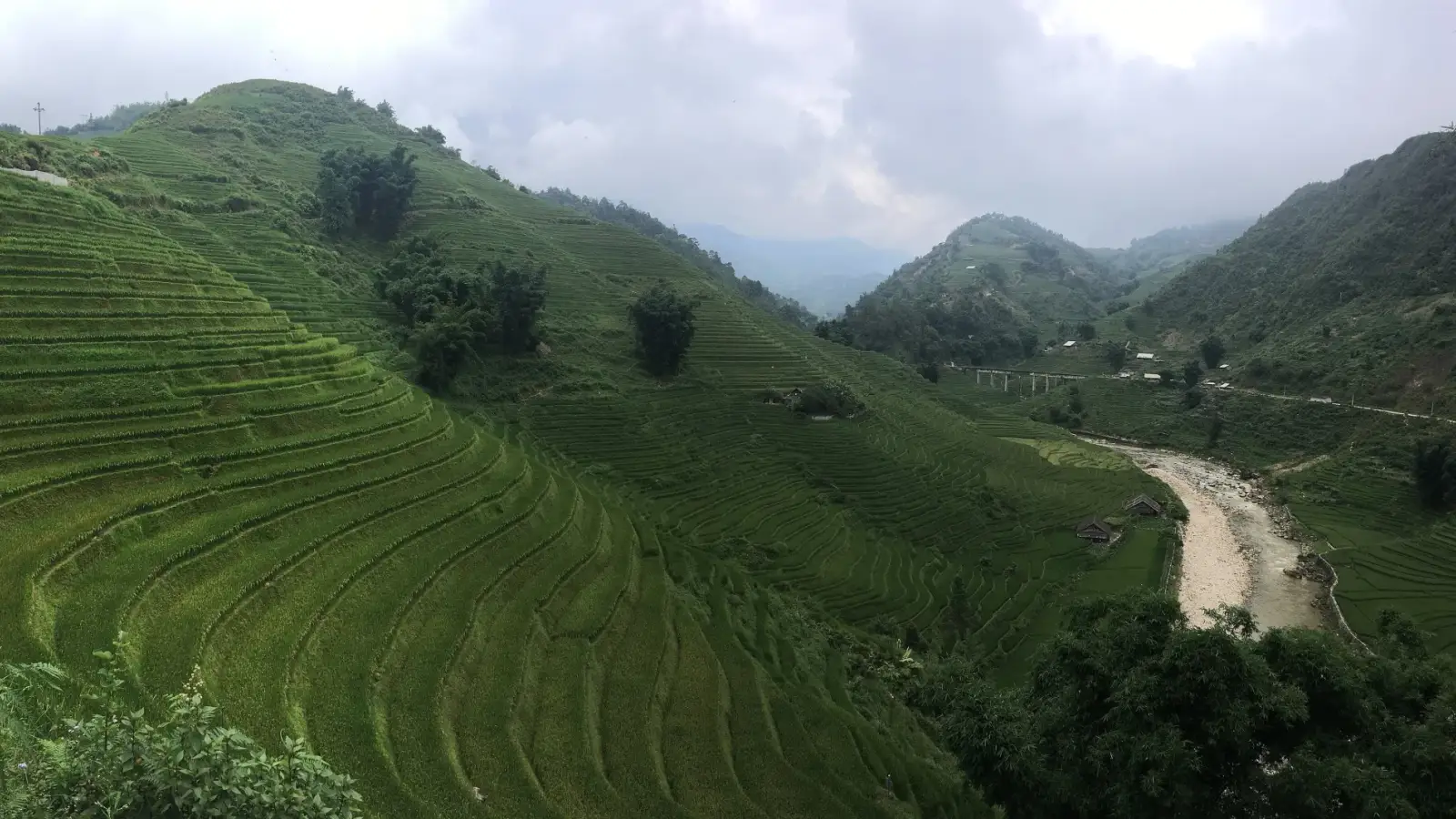
I'd recommend Sapa to people who like to walk all day, who like handmade cloth and who like mountain food without ceremony. What interests me most here is how long things take: hemp planted in March and harvested in June, indigo that dyes the cloth over months, a new outfit that is ready almost a year later. It changes how you look at the embroidery in the market. The architecture mixes the colonial summer resort around the square with the new tourism buildings, which weigh more today. At the table, I'd share a thắng cố with corn liquor and try the cold-water fish raised with waterfall water. I'd see Saturday's love market knowing that today it is a show organized in the square, and I'd save my curiosity for the festivals the villages hold at the start of the lunar year, such as the Giáy Roóng Pọc in Tả Van.What brings people to Sapa lies below the town. In the Mường Hoa Valley, the villages of Lao Chải and Tả Van live off rice grown on terraces that turn green in summer and ripen in September, and the trails run between the houses and the paddies. Many of those houses take in guests, and it is possible to sleep in the valley instead of going back to town. On the other side, Fansipan, which for a long time took days of walking, is now within reach of a cable car that climbs 1,410 m in about 15 minutes. And to the north, in Tả Phìn, the Red Dao use forest herbs in a medicinal bath now offered to visitors as well.
Quick facts
- Population
- 21,883 registered residents in the urban core (Sa Pa ward), according to a document discussed in a public consultation on the reorganization of wards and reported by the provincial newspaper in May 2026; the former Sa Pa district, 681 km² and abolished in July 2025, had 81,857 inhabitants in the 2019 census.
- Founded
- The Hmong, Dao and Giáy villages are older; the French hill station begins in 1903, with an expedition of the Indochina geographic service and a military post.
- Country and region
- Vietnam, Lào Cai Province (merged with Yên Bái in July 2025), Hoàng Liên Sơn range, in the northwest of the country.
- Language
- Vietnamese; the Hmong, Dao and Giáy languages, among others, are also spoken in the villages.
- Currency
- Vietnamese dong (VND).
- Time zone
- Asia/Ho_Chi_Minh: UTC+7, no daylight saving time.
- Best time to go
- October, November and March; September has the rice terraces ripe and is the busiest month, but it is still in the rainy season (April to September, peaking from June to August), and from December to February it is cold, with frequent fog.
- Average daily cost
- Budget around VND461,000; mid-range around VND1,190,000; comfortable around VND3,140,000 per person per day, based on spending reported by travelers to Budget Your Trip (checked October 2026). Indicative figures, excluding travel to the destination.
When to go
October, November and March; September has the rice terraces ripe and is the busiest month, but it is still in the rainy season (April to September, peaking from June to August), and from December to February it is cold, with frequent fog.
January
10 h 55 min of daylight
National holidays
Jan 1 – 3, 2027 · long weekend · Tết dương lịch
Jan 1, 2028 · Tết dương lịch
Source: Nager.Date. Holiday dates shift; check close to your trip.
February
11 h 26 min of daylight
April
12 h 40 min of daylight
National holidays
Apr 30 – May 2, 2027 · long weekend · Ngày Giải phóng miền Nam, thống nhất đất nước
Source: Nager.Date. Holiday dates shift; check close to your trip.
May
13 h 13 min of daylight
National holidays
Apr 30 – May 2, 2027 · long weekend · Ngày Quốc tế lao động
Source: Nager.Date. Holiday dates shift; check close to your trip.
June
13 h 29 min of daylight
July
13 h 22 min of daylight
August
12 h 54 min of daylight
September
12 h 16 min of daylight
National holidays
Sep 2 – 5, 2027 · long weekend · Quốc khánh
Source: Nager.Date. Holiday dates shift; check close to your trip.
December
10 h 46 min of daylight
High, shoulder and low season
Shoulder · March to May
Mild weather and flowers. March is still dry; April and May already enter the rainy season, with rain increasing. A good time for hiking, with the cloud deciding the Fansipan day.
Low · June to August
Peak of the rainy season, with green terraces, muddy trails and a risk of landslides on the roads. Leave slack in the itinerary.
High · September
The rice ripens in the Mường Hoa Valley and the month is the busiest of the year, with the national holiday on September 2 and the Vietnam Mountain Marathon. It is still the rainy season, and rain can bring the harvest forward. Book lodging and transport in advance.
Shoulder · October and November
Outside the rainy season, with the clearest sky of the year, after the ripe-rice season. The best combination for hiking and for the view of Fansipan.
Low · December to February
Cold, fog and frost at the top; snow is rare. The Lunar New Year, in January or February, is the exception, with many people traveling.
How the year changes
October, November and March are the best months: they fall outside the rainy season, which runs from April to September, and the national tourism authority points to autumn for the clearest sky. September is the busiest month, because the rice in the Mường Hoa Valley ripens and the terraces turn golden, and the Vietnam Mountain Marathon also takes place in September; it is beautiful, but it still rains a lot (more than 300 mm on average for the month), and rain or wind can bring the harvest forward, as happened in 2024. April and May have mild weather and flowers, with rain already increasing. June to August is the peak of the rain (more than 450 mm a month in July and August), with green terraces, muddy trails and the risk of landslides. December to February is cold, with a January average of 8.6 °C, frequent fog and frost on Fansipan; snow is rare, but it happens. National holidays fill the town.
Nilo's tips
Check the summit before you buy
The cable car costs the same in sun or cloud. I'd save the ride for the first day the summit is clear and keep the other days' plans flexible enough to swap.
In the rainy season, trail shoes
From April to September the mud on the trails between the terraces gets slippery. I'd bring shoes with real soles and leave the city sneakers at the hotel.
For the trail, a village guide
A guide who lives in the valley knows the shortcuts between the terraces and the house where you can have lunch. I'd agree on the price, the route and what is included before setting out.
Explore the map
Explore the map, read about the other places and plan your travel days in the app.
Open the appWhat to see
Leave for last, if time allows: Hồ Sa Pa · Thác Bạc · Chợ Sa Pa · Bảo tàng Sa Pa
Fansipan
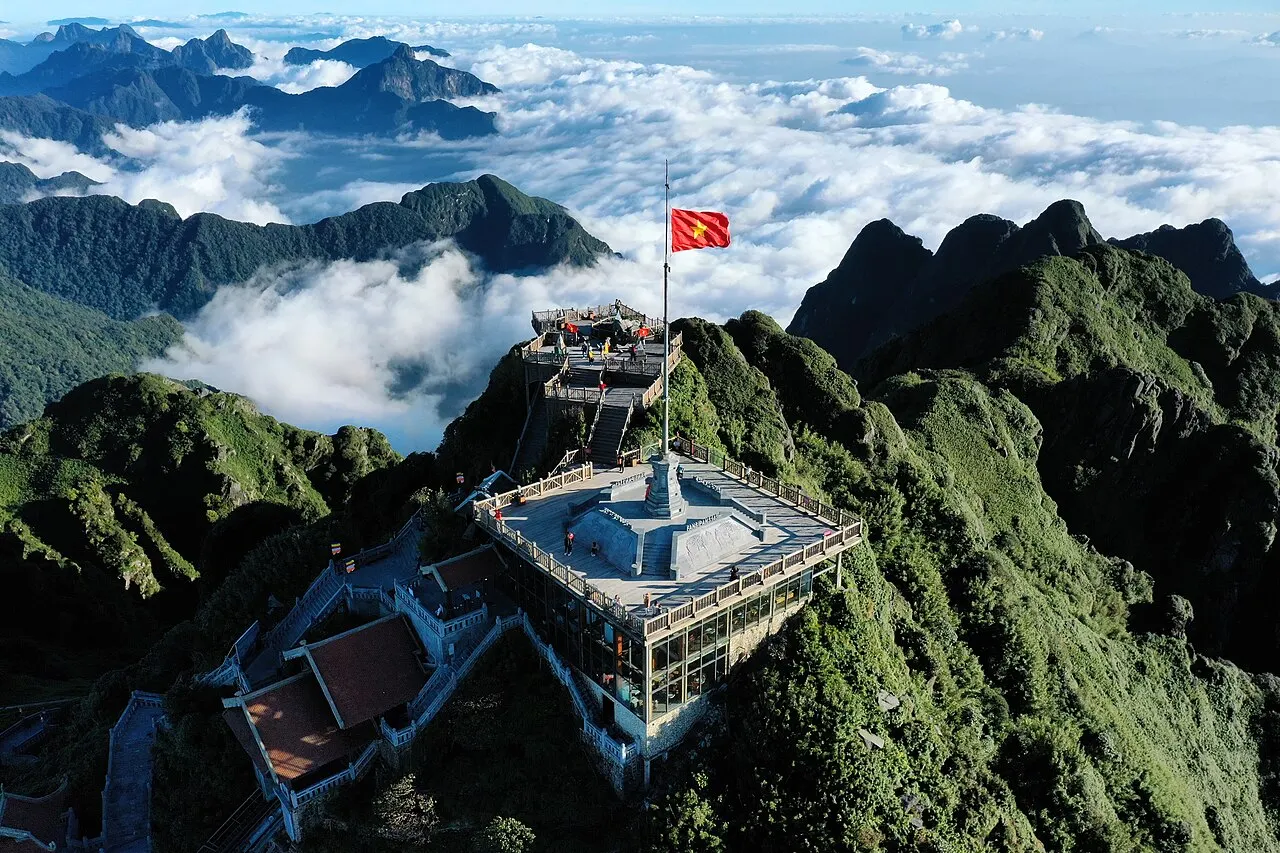
The highest peak in Vietnam: 3,143 m by the figure used in official tourism (a 2010 measurement gave 3,147.3 m). The most common route is the Sun World Fansipan Legend complex: a mountain train leaves the center of Sapa and takes about 6 minutes to reach the cable car station, the cable car climbs 1,410 m of elevation over about 6.3 km in about 15 minutes, and from the top you reach the summit by hundreds of stone steps or by a funicular. There are pagodas and a large Buddha statue near the top, and in winter there can be frost. Hiking up, through Hoàng Liên National Park, usually takes two to three days, with a night in a camp at about 2,800 m; experienced hikers do it in one. Operators sell the trek with guides and porters; check the park's access rules when you book.
Check access
Thung lũng Mường Hoa
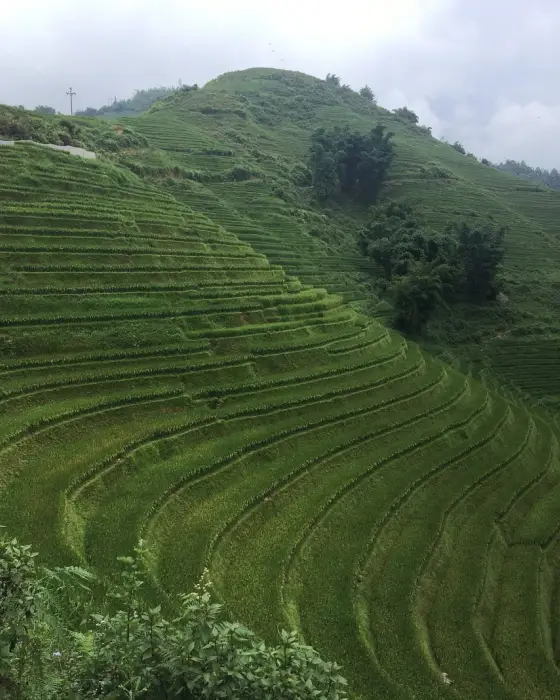
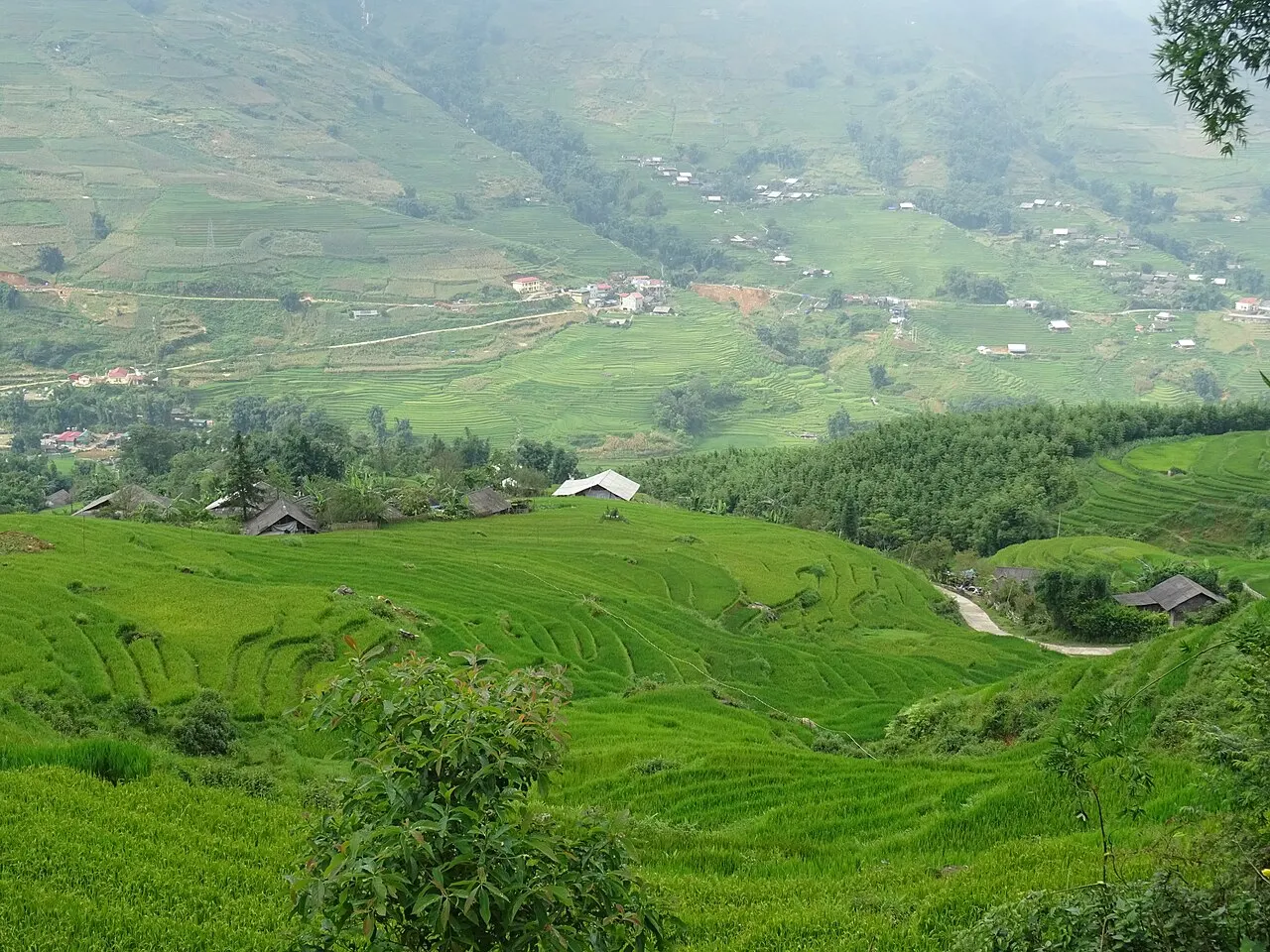
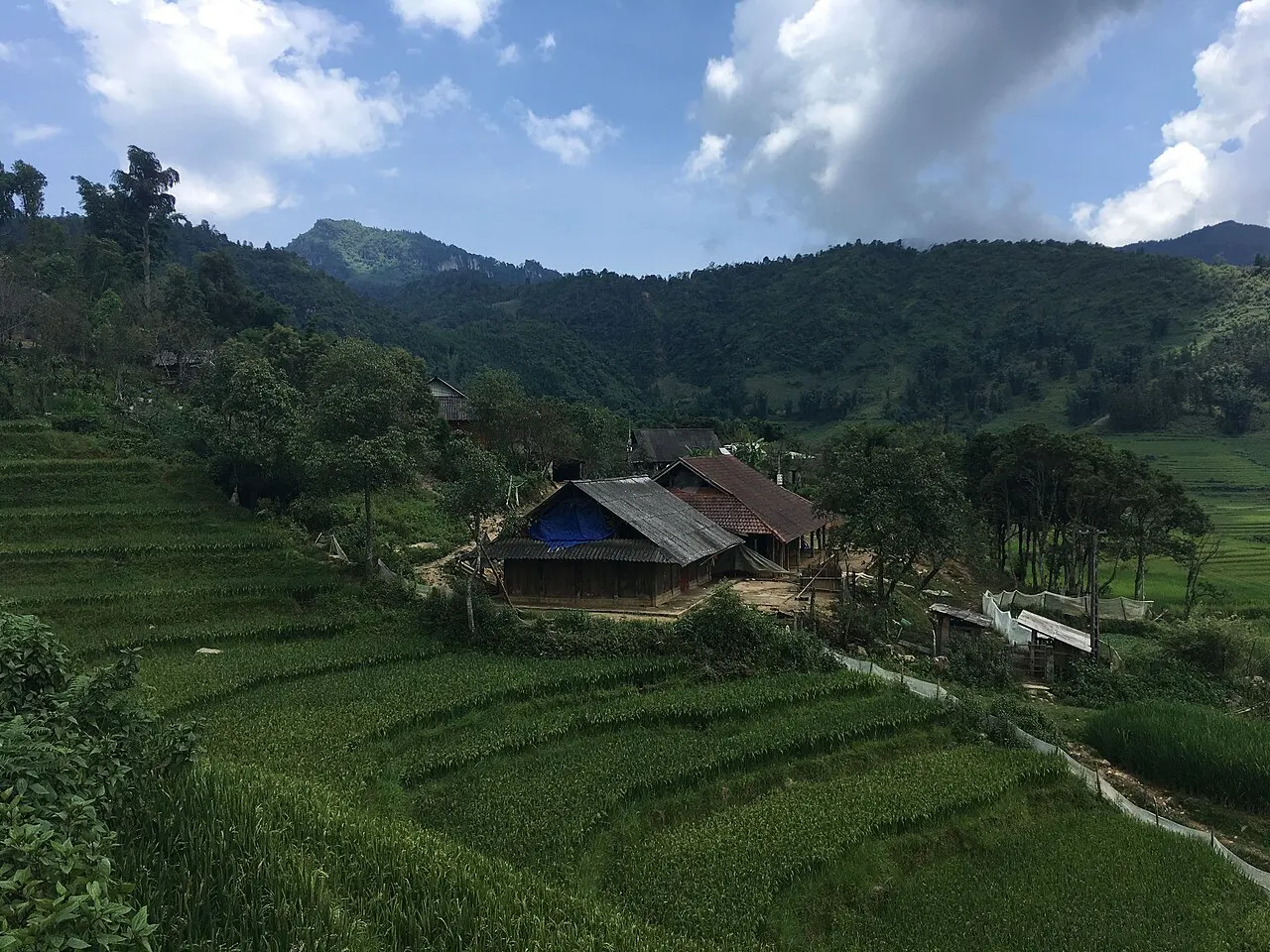
The valley of rice terraces south of town is the landscape that defines Sapa. The most popular hike goes down from the center to the villages of Lao Chải and Tả Van, on trails between paddies and houses, and ends with a ride back to town. The terraces turn green in summer and ripen in September, when the valley gets the most visitors; in October and November the sky is usually clearer. In the rainy season, from April to September, the mud trails get slippery.
Check access
Bản Cát Cát
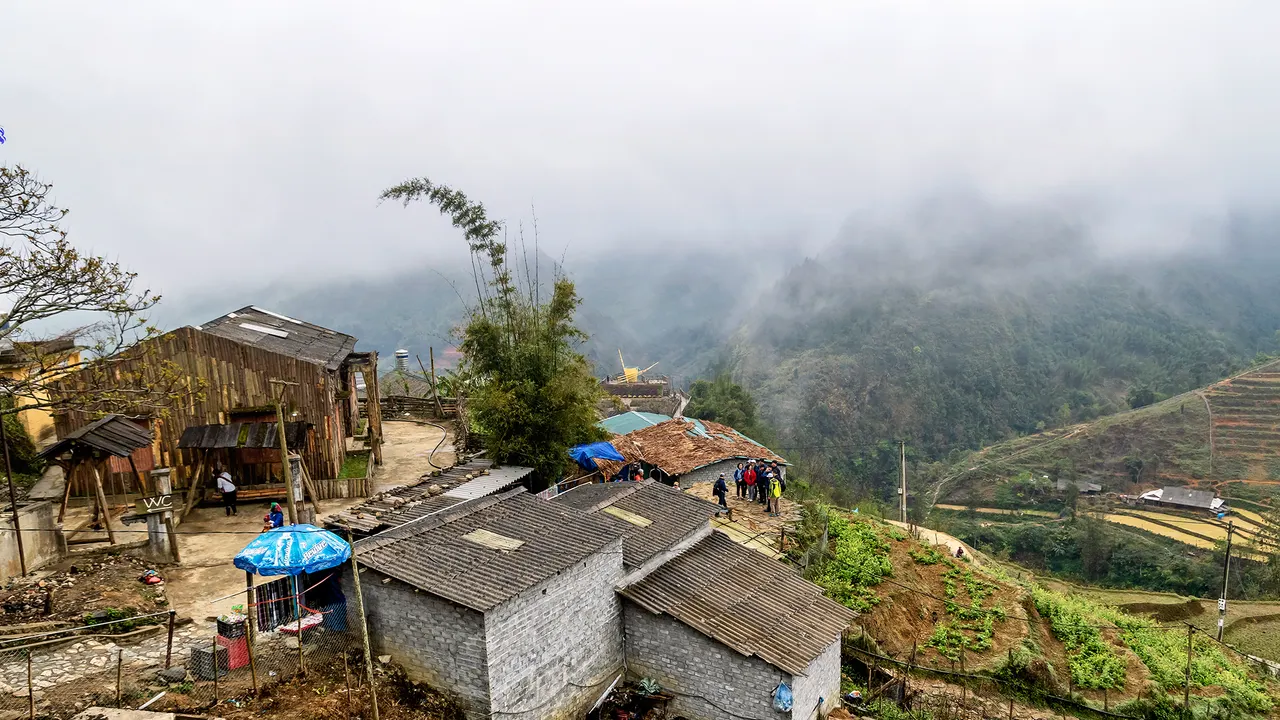
A Hmong village about 2 km from the center, the closest and the most visited. A paved path winds down between houses, weaving and indigo-dyeing workshops, and the waterfall. The entrance ticket is bought at the village gate (Wikivoyage listed 70,000 VND per adult and 30,000 VND for children under 10 in August 2024); the waterfall also charges a public visitor fee, 10,000 VND from age 16 and 5,000 VND for ages 6 to 15, under the rule published in January 2025. The way back is uphill, and many people take a motorbike taxi.
Check access
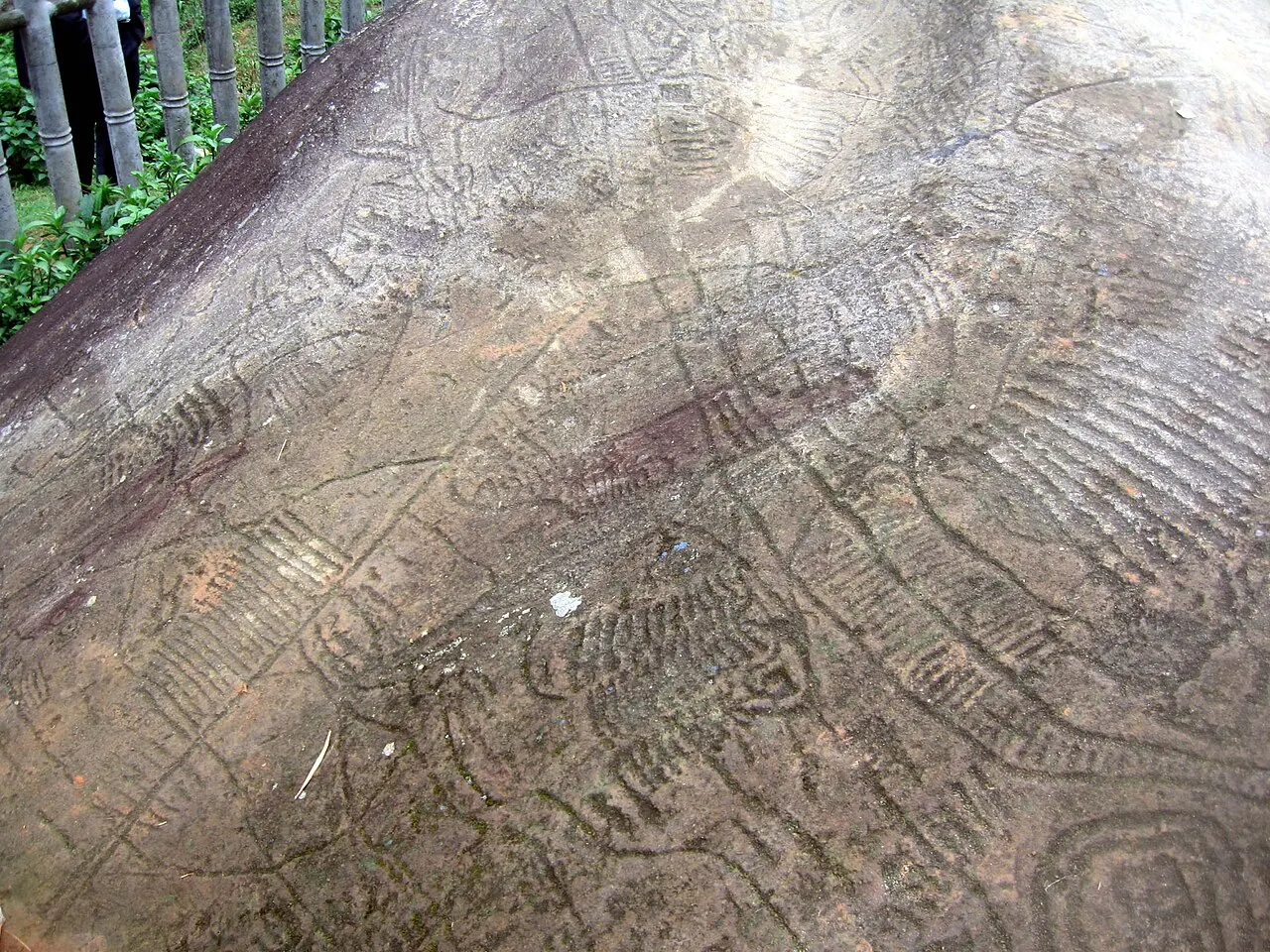
Bãi đá cổ Sa Pa
A field of nearly 200 stone blocks carved with figures and signs, in the Mường Hoa Valley, about 8 km from the center, recognized as a national historic site in 1994. The date and meaning of the carvings are still debated. It lies on the way between Sapa and Tả Van, and is worth a stop for anyone doing the valley.
Check access
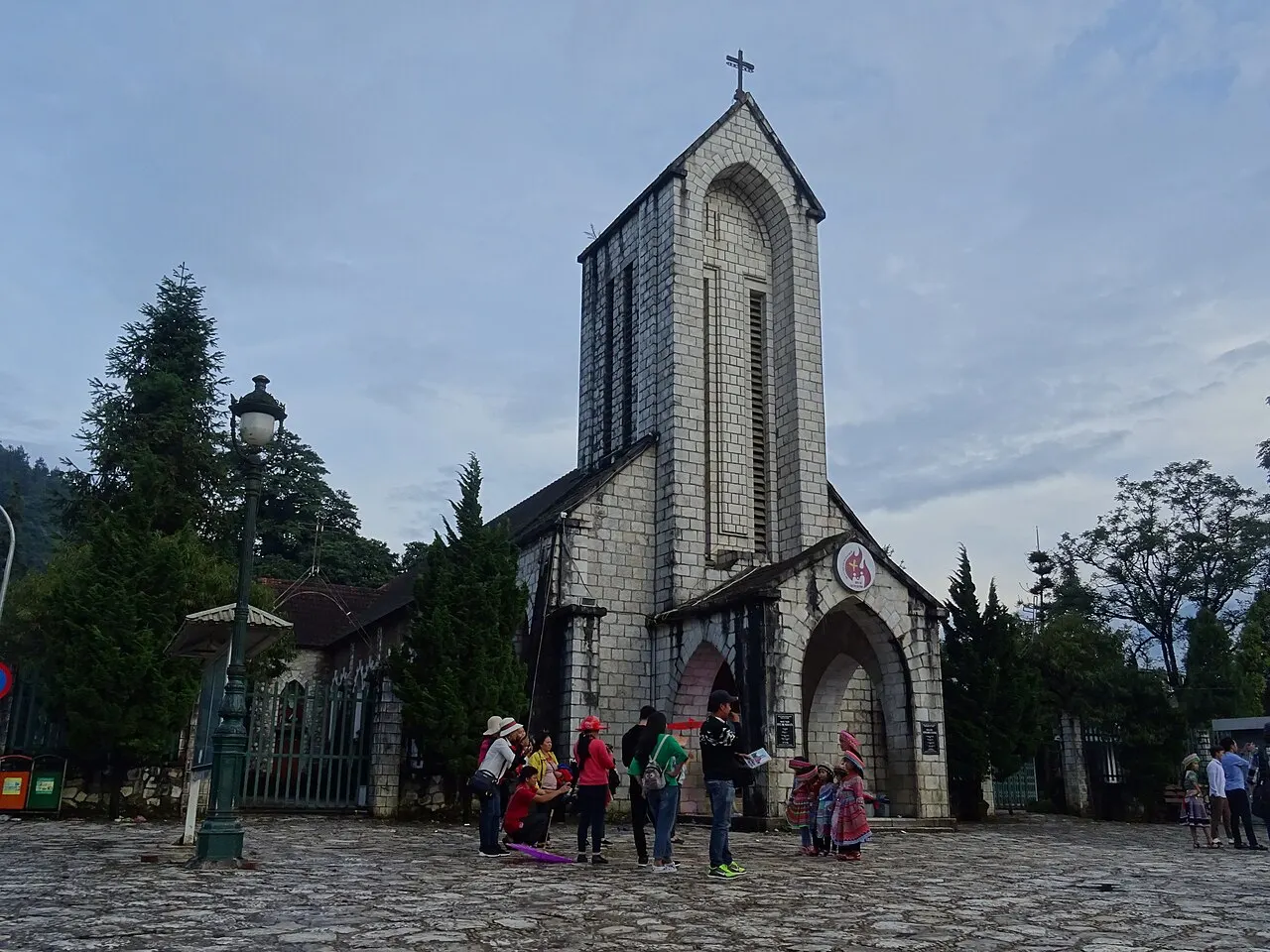
Nhà thờ đá Sa Pa
The stone church built by the French on the central square; sources disagree on the exact year, somewhere between the late 19th century and the 1930s. It is the town's meeting point, and on Saturday nights the square in front hosts the chợ tình, the old love market, now presented as a song and dance show for visitors.
Check access
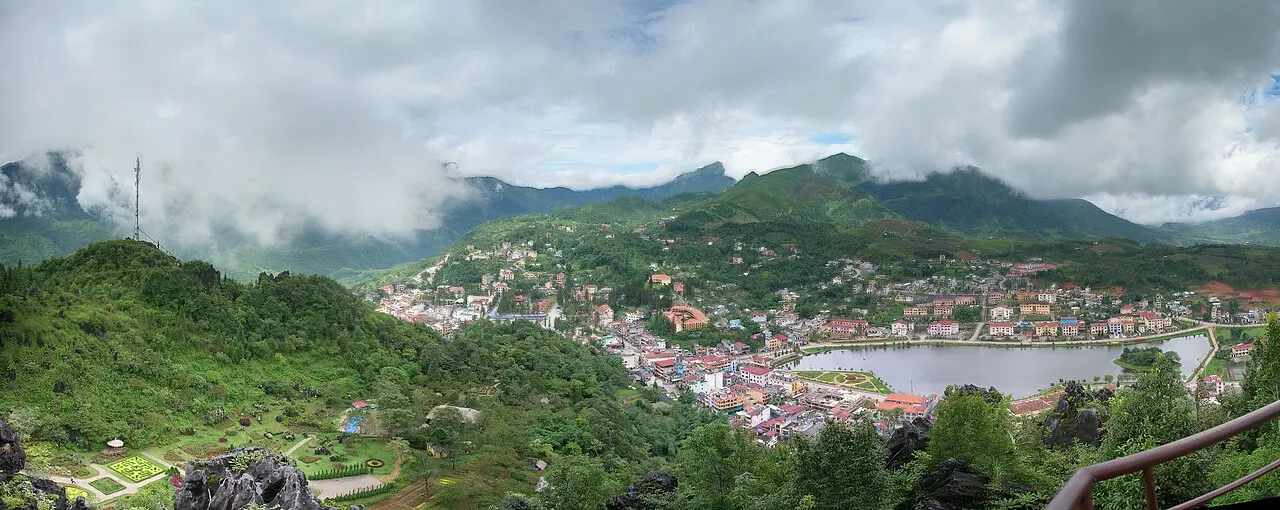
Núi Hàm Rồng
The mountain right behind the square, with flower gardens, rock formations and viewpoints over the town and the valley. The way up is by stairs and trails; check the entry conditions at the gate.
Check access
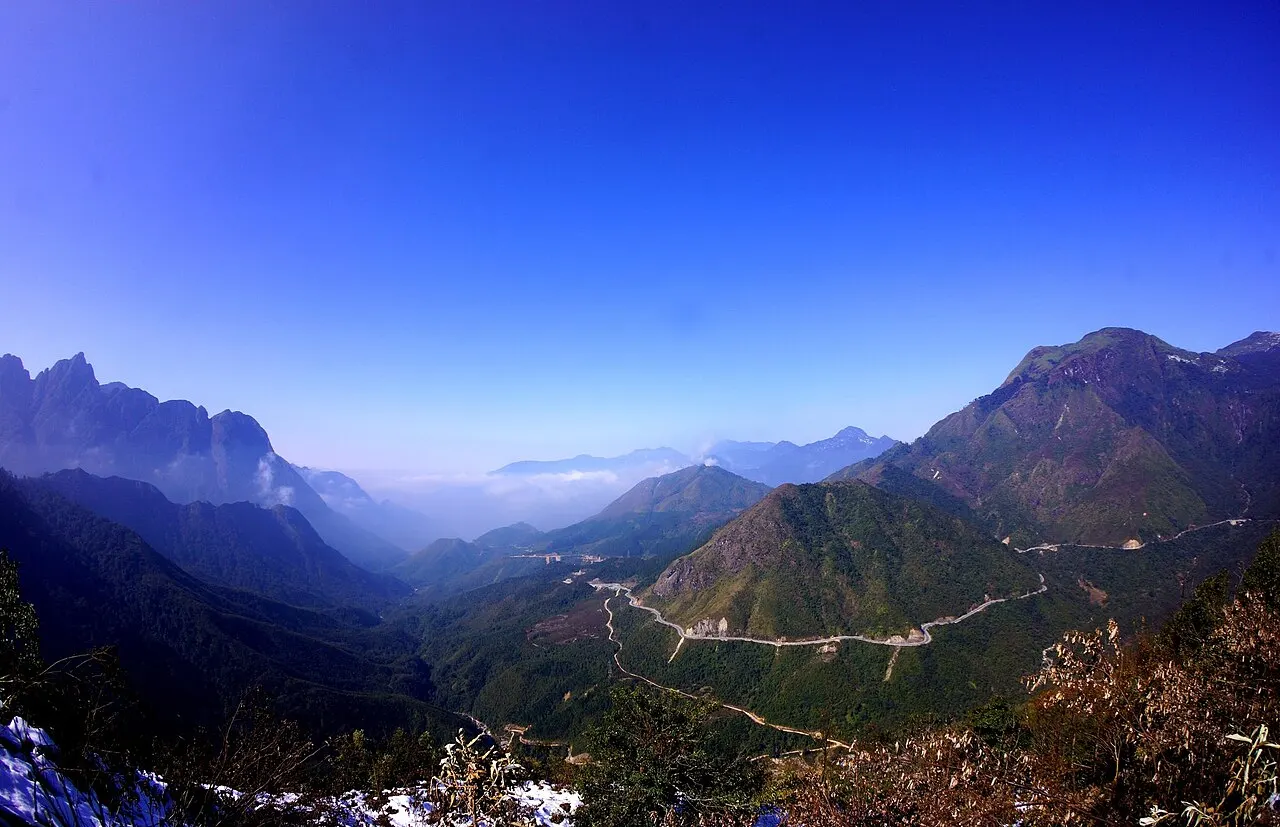
Đèo Ô Quy Hồ
The mountain pass on Road 4D, at 1,991 m, between Lào Cai and Lai Châu, with views of the Hoàng Liên Sơn range. The road has drop-offs on one side and rock walls on the other, and fog can close off the view suddenly; I'd go with a local driver and on a day of settled weather.
Check access
Tả Phìn
A village of the Red Dao about 10 km north of the center. Families gather herbs in the forest, dry them and boil them for the medicinal bath offered to visitors. The village also has a cave and brocade workshops.
Check access
Thác Tình Yêu
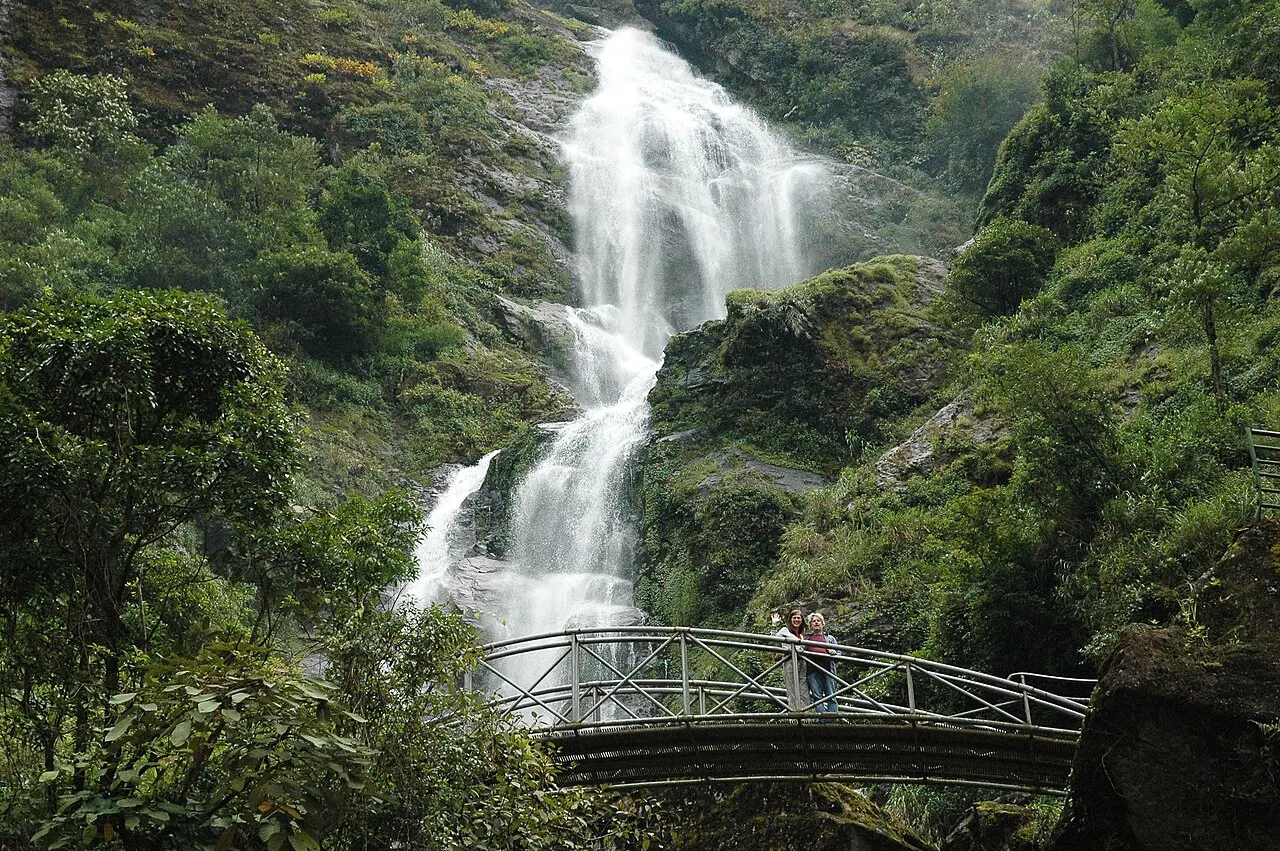
The Love Waterfall is inside Hoàng Liên National Park, on the Sapa side of the Ô Quy Hồ Pass. From the park entrance it is about a 30-minute walk on a forest trail to the falls, and the park entrance is paid. If you only have time for one waterfall, I'd choose this one for the walk, and see the Silver Waterfall in passing.
Check access
More places in the guide
Hồ Sa Pa
The lake in the center of town, next to the layout of the old summer resort. It is more a place you pass through than an attraction, useful for getting your bearings between the square and the hotels.
Thác Bạc
The Silver Waterfall, about 200 m high, is about 12 km from the center, beside National Road 4D, on the way to the Ô Quy Hồ Pass. It is a quick roadside stop that combines with the Love Waterfall and the pass.
Chợ Sa Pa
The town market, in the center. For textiles, embroidery and silver made in the villages, the back and the upper floor are the places recommended by a Hmong guide interviewed by national tourism, who advises asking how long the piece took to make.
Bảo tàng Sa Pa
The Sapa culture museum, in the center, behind the tourist information office. Wikivoyage lists it as free. It is a short visit, useful on a rainy day, before heading to the villages.
Nilo’s itinerary
Start with the basic programme and choose extensions for the time you have.
Plan my days in the app ↗Day 1 · Fansipan and the center
Check the weather early; if the summit is open, this is the Fansipan day. If it is closed, swap with Day 2.
Take the Mường Hoa mountain train from the center to the cable car station, and the cable car to the top, a 1,410 m climb.
From the top, climb to the summit by the stone steps or the funicular, visit the pagodas and head down in early afternoon.
Back in the center, walk to the stone church and the lake.
In late afternoon, climb Hàm Rồng through the gardens to the viewpoints over the town.
In the evening, have dinner at the grill stalls in the center; if it is Saturday, the church square hosts the chợ tình from 8 p.m.
Day 2 · The Mường Hoa Valley on foot
Leave the center early, with a local guide or a downloaded route, and head down into the Mường Hoa Valley.
Pass through the terraces and the village of Lao Chải; from there to the Tả Van bridge it is about 3.5 km of trail.
In the valley, stop at the Bãi đá cổ, the field of carved stones, about 8 km from the center; check its position on the map to fit it into the route you choose.
Have lunch in Tả Van.
Return to Sapa by taxi or motorbike taxi along the road; if you want to sleep in the valley, you can stay at a homestay in Tả Van and return the next morning.
If you stay longer
Day 3 · Cát Cát, the waterfalls and Ô Quy Hồ
In the morning, walk the roughly 2 km down to Cát Cát, see the weaving and the waterfall, and return by motorbike taxi.
After lunch, continue by car with a driver along Road 4D and stop briefly at Thác Bạc, about 12 km away.
At the entrance to Hoàng Liên National Park, walk about 30 minutes to the Love Waterfall and return by the same trail.
If the weather holds, continue to the Ô Quy Hồ Pass, at 1,991 m, for the view of the range, and be back in Sapa before dark.
Alternative: swap Road 4D for Tả Phìn, to the north, with the Red Dao herbal bath.
On a rainy day, swap the afternoon for the Sapa culture museum, in the center (check beforehand that it is open).
If this day falls on a Sunday, swap everything for the Bắc Hà market.
Food
Thắng cố
A Hmong stew made with bones, offal and horse meat, simmered for hours with nearly 20 herbs and spices from the mountain. It comes with xôi ngũ sắc, the five-color sticky rice, or rượu ngô, the corn liquor from Bắc Hà.
Cá hồi Sa Pa
Cold-water fish raised above 1,800 m with water brought from the Silver Waterfall. It appears in hot pot (lẩu), raw and grilled, in the town's restaurants.
Charcoal skewers
The grill stalls serve pork belly wrapped in cải mèo (a mountain leaf mustard), meat with mushrooms, boneless chicken feet, sweet potato, egg and sausage, seasoned with mắc khén, a wild pepper from the region.
Lợn cắp nách
A small mountain pig breed; the name means "pig carried under the arm". It appears roasted, or seasoned and grilled inside bamboo tubes.
Cơm lam with gà đen
Sticky rice cooked inside bamboo tubes over embers, served with gà đen, the region's dark-skinned chicken, steamed or grilled.
Thịt trâu gác bếp
Buffalo meat smoked over the wood stove, seasoned with mắc khén and hạt dổi, aromatic seeds from the northwest. It appears at the grill stalls and as a snack.
Where to eat
- Sapa center, grill streets
Charcoal skewers with pork belly in cải mèo, egg, sweet potato and smoked buffalo, seasoned with mắc khén. It is the cheap meal for a cold night and the easiest way to taste the flavors of the mountain.
- Town restaurants and Road 4D
Cá hồi Sa Pa, the cold-water fish raised in the mountains, in hot pot (lẩu cá hồi), raw or grilled.
- Mountain-cuisine restaurants in the center
Thắng cố, lợn cắp nách and cơm lam with gà đen, the dark-skinned chicken. Thắng cố is traditionally made with horse meat and offal; anyone who doesn't eat horse should ask before ordering.
- Tả Van and Tả Phìn
At homestays, dinner is whatever the family cooks that day, with rice, vegetables from the garden and meat. Agree beforehand if you have a dietary restriction.
· 2026-10-19
Day trips
Bắc Hà market
About 97 km of mountain road from Sapa (OSRM route calculation), passing near Lào Cai; the trip there, the market and the return take the whole day. The market runs only on Sundays and brings together mountain peoples selling textiles, brocades, horses, poultry and blacksmith tools. Go with a driver or on a tour, leaving early.
Where to begin
Fansipan and the center
Check the weather early; if the summit is open, this is the Fansipan day. If it is closed, swap with Day 2.
Cát Cát, the waterfalls and Ô Quy Hồ
In the morning, walk the roughly 2 km down to Cát Cát, see the weaving and the waterfall, and return by motorbike taxi.
Money
The currency is the Vietnamese dong (VND). For the Fansipan climb, the operating group's own page listed in March 2026: round-trip cable car at 850,000 VND per adult (over 1.4 m) and about 550,000 VND for children 1 to 1.4 m, with children under 1 m generally free; the Mường Hoa train at 200,000 VND and the summit funicular at 150,000 VND. The two trains have prices that vary by season, and there are combos with lunch. Since January 1, 2025 there is also a public visitor fee, 10,000 VND from age 16 and 5,000 VND for ages 6 to 15 at the Cát Cát waterfall, a rule the same resolution provided for the summit area; check at the entrance whether it is still the same. The entrance to the village of Cát Cát is sold at the gate (70,000 VND per adult and 30,000 VND for children under 10, according to Wikivoyage in August 2024), and the Hoàng Liên National Park entrance, for the Love Waterfall, is also paid. Trail guides, homestays and herbal baths have prices agreed with the provider; ask for the price per person and what is included before you commit.
Getting there and around
From Hanoi: bus on the expressway
There is no airport in Sapa; the project for an airport in the region was still at the investor-selection stage in July 2026. The nearest airport is Nội Bài in Hanoi (HAN), and from there the trip continues by road or by train from Hanoi. The fastest link is by road: about 313 km on the Nội Bài–Lào Cai expressway, 5 to 7 hours by regular bus and 4 to 6 hours by executive minibus (limousine), depending on traffic. Several companies run the Hanoi–Sapa line; check the boarding point and the arrival point when you buy.
From Hanoi: overnight train to Lào Cai
Vietnam Railways overnight trains link Hanoi and Lào Cai every day (the summer 2026 announcement cited the SP3/SP4 and SP7/SP8 pairs), in about 8 to 9 hours. From Lào Cai station to Sapa it is about 33 km of mountain road, 50 to 75 minutes by bus, minibus or taxi. Check schedules, fares and cabin types with Vietnam Railways before you buy.
In town and in the valley
The center is walkable, but it is uphill and downhill the whole time. For Cát Cát, Lao Chải, Tả Van and Tả Phìn there are taxis and motorbike taxis; I'd agree on the price before leaving. Road 4D to Thác Bạc and Ô Quy Hồ has curves, drop-offs and fog, and I'd do that stretch with a local driver. Anyone thinking of renting a motorbike should first check the license rules for foreigners and what their own travel insurance covers.
To Fansipan
The Mường Hoa mountain train leaves from the center and takes about 6 minutes to reach the cable car station; you can also go to the station by car. The cable car climbs in about 15 minutes, and at the top the funicular is optional.
From São Paulo, the cheapest that showed up was R$ 11,730, in january 2027.
Fares found by travellers, collected in october 2026.
See flights in january 2027 ↗Partner link: we may earn a commission at no cost to you.
Safety
The main risks in Sapa come from the mountains. In the rainy season, from April to September, heavy rain can cause landslides, close roads and cancel trains, as in September 2024, when Storm No. 3 (Yagi) suspended trains between Hanoi and Lào Cai; follow the forecast. National Road 4D, at the Ô Quy Hồ Pass, has had many serious accidents. On the trail, mud and slippery terraces call for shoes with good soles, and Fansipan on foot should be done only with a guide and cold-weather gear. Sellers who follow visitors along the trail are common, and the authorities ask that people not buy from them. Tap water is not for drinking: use bottled or filtered water.
Before you go
- Plug
- types A, C, F and G
- Voltage
- 220 V
- Driving side
- on the right
- Emergency
- Police 113 · Ambulance 115 · Fire 114
- Country code
- +84
- Official language
- Vietnamese
- Currency
- Vietnamese đồng (VND)
Source: Wikidata (CC0), checked September 2026.
Etiquette tips
Don't give money or sweets to children
Sapa's authorities ask visitors not to give money or gifts to children who sell or beg on the street, and in 2023 they sent this message by text to people arriving. The city government even fined a mother who sent her children out to sell.
Don't buy from people who follow and insist
The official request also applies to sellers who follow the visitor along the trail or the street: do not buy from or hire anyone who insists. If you want handicrafts, go to the market or a workshop and ask how long the piece took to make.
At a homestay, agree beforehand
Anyone sleeping at a homestay eats what the family serves, at the family's hours. Agree on the price, dinner and breakfast before you arrive, and say so if you have a dietary restriction.
Mistakes to avoid
Underestimating the cold
The town sits at about 1,500 m and the summit at 3,143 m. Even outside winter, the top of Fansipan calls for a coat.
Going to Ô Quy Hồ on a foggy day
On the Sapa side, fog covers the pass for much of the day in winter and can cut visibility to a few meters. With no view, the road only adds risk; wait for a clear day.
Thinking Cát Cát sums up the villages
Cát Cát is the closest and the best prepared for visitors. Lao Chải, Tả Van and Tả Phìn show a different rhythm.
Counting on the train reaching Sapa
The train goes as far as Lào Cai. From there it is still about 33 km of mountain road.
Useful phrases
Xin chào
Hello (pron. sin chow)
Cảm ơn
Thank you (pron. kam un)
Không, cảm ơn
No, thank you (pron. khom, kam un); useful with insistent sellers
Bao nhiêu tiền?
How much? (pron. bow nyew tyen)
Tôi muốn đi Tả Van
I want to go to Tả Van (pron. toy moo-on dee tah van)
Nhà vệ sinh ở đâu?
Where is the bathroom? (pron. nya vay sinh uh doh)
Where to stay
- Sapa center · Those arriving without a car, short on time, or wanting Fansipan and the square on foot.: The mountain train station, the restaurants, the market and the buses from Hanoi are all within walking distance. The downside is that the center is hilly, with construction and tall buildings, and for the valley trails you still have to walk down or take a car.
- Tả Van and Lao Chải · Those who want to sleep among the terraces and link two days of hiking.: The valley homestays sit along the trails and let you wake up already in the landscape. In return, comfort is simple, getting back to town depends on a car or motorbike taxi, and dinner follows the family's schedule.
- Tả Phìn · Those looking for a quieter village and the Red Dao herbal bath.: It is about 10 km north, away from the most visited valley. For Fansipan and for Mường Hoa, it depends on transport for every outing.
· 2026-10-19
Districts
Sapa center (Sa Pa ward)
The town around the lake, the square and the stone church, with hotels, restaurants, the market and the station of the mountain train that goes to the cable car. It suits those arriving without a car who want everything on foot.
Cát Cát
A Hmong village about 2 km from the center, downhill, with a waterfall, weaving and indigo dyeing. It is the closest village and the best organized for visitors, with an entrance fee.
Lao Chải and Tả Van
The villages of the Mường Hoa Valley, surrounded by terraces, south of the center. Tả Van is home to the Giáy village where the Roóng Pọc festival takes place. The homestays that take in guests are concentrated in the valley.
Tả Phìn
A village of the Red Dao about 10 km north of the center, known for its medicinal herbal baths and embroidery.
Hàm Rồng
The mountain right behind the center, with gardens and viewpoints over the town and the valley.
History
mid-19th century · Villages on the slopes
The Hmong village of Cát Cát forms around this time, with families settling on the slopes and farming terraces, according to Vietnamese Wikipedia.
1903 · The French expedition
An expedition of the Indochina geographic service reaches the village of Sa Pả, and the French set up a military post. Local historiography treats this as the start of the town.
1909–1918 · Hotel and first villas
The first hotel opens in 1909, and the first summer villas appear in 1918. Sapa becomes the summer refuge of the colonial administration of the north.
1951 · Indochina War
Tourism stops during the war, and the town is bombed in 1951.
1979 · Border war
The war between Vietnam and China destroys much of the old villas and the pine forests of the region.
1991 · The province returns, and so do the visitors
Lào Cai is reestablished as a province, and tourism restarts with the opening of the country's economy.
2016 · Fansipan cable car
The cable car from the base to the top of Fansipan goes into operation, taking about 15 minutes for a climb that takes two to three days on foot.
2025 · New administrative division
On July 1, 2025, Vietnam abolishes the district level, and Lào Cai Province merges with Yên Bái, with its administrative center in Yên Bái. The urban core of Sapa becomes Sa Pa ward, and the valley villages become communes such as Tả Van and Tả Phìn.
Complete history
Before the town
The peoples who give Sapa its character today arrived before it did. Hmong, Dao, Giáy, Tày and other groups lived on the slopes of the Hoàng Liên Sơn range and carved terraces for rice; the village of Cát Cát, just below the center, formed in the mid-19th century. In the 2019 census, the Hmong were about half the population of the former district, the Dao about a quarter, and the Kinh, the country's majority group, less than a fifth.
The hill station
The French arrived in 1903, with a geographic service expedition and a military post. The cool climate did the rest: a hotel in 1909, a sanatorium, villas from 1918 on, and a tourism office. The town you see today around the square, with the stone church and the lake, comes from that colonial resort layout.
Wars and recovery
The Indochina War interrupted the seasons, and in 1979 the border war with China destroyed much of the old villas. Tourism only returned after 1991, when Lào Cai Province was reestablished and the country opened its economy. Since then Sapa has grown as a trekking center and, from 2016, as the destination of the Fansipan cable car.
Sapa today
In 2025 an administrative reform abolished the district level across the country and merged provinces: Lào Cai absorbed Yên Bái, and the administrative center of the new province is in the former capital of Yên Bái, not in the city of Lào Cai. The urban center of Sapa became Sa Pa ward, and the valley villages now belong to communes such as Tả Van and Tả Phìn. For visitors, the practical effect is that the town and the villages appear under different administrative names on maps and signs.
Geography and shape of the city
A town on a slope
Sapa sits on a slope of the Hoàng Liên Sơn range, between about 1,500 and 1,650 m above sea level. The center is organized around the lake and the square of the stone church; from there the streets drop south toward the valley.
The Mường Hoa Valley
South of the center, the Mường Hoa River runs through a valley of rice terraces where the villages of Lao Chải and Tả Van lie. The field of carved stones (Bãi đá cổ), about 8 km from the center, is in the valley, and from Lao Chải to the Tả Van bridge it is about 3.5 km of trail. The road follows the valley, and the trails cut across the terraces between the houses.
Fansipan and the Ô Quy Hồ Pass
Fansipan rises to 3,143 m, about 9 km southwest of town, inside Hoàng Liên National Park. National Road 4D skirts the range through the Ô Quy Hồ Pass, at 1,991 m, on the way to Lai Châu Province.
Mountain climate
The annual average is close to 15 °C. January averages 8.6 °C and has recorded a low of -6.1 °C; July is around 19.8 °C. The rainy season runs from April to September, peaking from June to August with more than 450 mm in July and August; from October to March it rains little. Fog can cut visibility to a few meters on the mountain passes.
Culture
Mountain peoples
Sapa lives on the coexistence of the Kinh, Vietnam's majority group, and the mountain peoples: Black Hmong, Red Dao, Giáy, Tày, Xá Phó and others. In the 2019 census of the former district, the Hmong were about half of the population. A Hmong guide interviewed by national tourism speaks of 93 villages and hamlets and six ethnic groups in the region.
Hemp, indigo and embroidery
Hmong clothing starts in the field: hemp is planted around March and harvested in June, the cloth is dyed with indigo for four to six months, and a new outfit takes almost a year to finish. In Cát Cát, the dyed cloth is polished on stone with beeswax. Batik and embroidery are shown in workshops open to visitors, including short classes.
Herbal medicine
The Red Dao of Tả Phìn are known for the forest herbs used in medicinal baths, foot soaks and steam treatments. The bath has become an activity for visitors, but it is still tied to the knowledge of the families.
Trekking and mountain running
The trails between villages are the town's main activity, and there are guides who live in the villages themselves and take visitors to the family's house. In September, the Vietnam Mountain Marathon brings runners from dozens of countries for courses of 10 to 100 km (in 2025, September 19 to 21, with participants from 47 countries and territories); the national tourism authority mentions about 4,000 competitors.
Festivals and events
Tết Nguyên Đán
The Lunar New Year, in January or February depending on the calendar. It is the most important holiday in the country, and many people travel; book transport in advance.
Roóng Pọc
Festival of the Giáy on the Dragon day of the first lunar month, held in Tả Van.
Gầu Tào (Sải Sán)
Hmong festival at the start of the year, in the villages, at the beginning of the lunar calendar.
Tết nhảy
Red Dao ritual with dances, held around the time of the Lunar New Year.
Chợ tình
Every Saturday night, from 8 p.m., on the square in front of the stone church. It was where young people from the villages met and sang; today it is organized as a show for visitors, with free admission, according to the provincial newspaper in 2024.
Books and films
My Sa Pa: Ly Thy Ker (Vietnam National Authority of Tourism)
Interview by the national tourism authority with a Black Hmong guide from Sapa about hemp, indigo, herbal baths and what to buy at the market. It helps you understand what you see in the villages before you arrive.
Frequently asked questions
Sapa: how do I get there from Hanoi?
There is no airport in Sapa. The nearest airport is Nội Bài in Hanoi (HAN), and from there the trip continues by road or by train from Hanoi. The fastest link is by road: about 313 km on the Nội Bài–Lào Cai expressway, 5 to 7 hours by regular bus and 4 to 6 hours by executive minibus (limousine), depending on traffic; check the boarding point and the arrival point when you buy. Vietnam Railways overnight trains link Hanoi and Lào Cai every day, in about 8 to 9 hours, and from Lào Cai station to Sapa it is about 33 km of mountain road, 50 to 75 minutes by bus, minibus or taxi. Check schedules, fares and cabin types with Vietnam Railways before you buy.
Sapa: how many days should I stay?
I'd stay two full days in Sapa, not counting the trip from Hanoi, which takes half a day: one for the Mường Hoa Valley on foot, from Lao Chải to Tả Van, and another for Fansipan and the center. Two days also leave room to pick the clearest day for the cable car. A third day adds Cát Cát in the morning and, in the afternoon, Road 4D with the Love Waterfall and the Ô Quy Hồ Pass, or, instead of the road, the herbal bath in Tả Phìn; if that day is a Sunday, I'd go to the Bắc Hà market. With just one day, I'd do the valley and leave Fansipan for another trip, unless the summit is clear.
Sapa: how do I get up Fansipan, and how much does it cost?
The most common route is the Sun World Fansipan Legend complex: a mountain train leaves the center of Sapa and takes about 6 minutes to reach the cable car station, the cable car climbs 1,410 m of elevation over about 6.3 km in about 15 minutes, and from the top you reach the summit by hundreds of stone steps or by a funicular. The operating group's own page listed in March 2026: round-trip cable car at 850,000 VND per adult (over 1.4 m) and about 550,000 VND for children 1 to 1.4 m, with children under 1 m generally free; the Mường Hoa train at 200,000 VND and the summit funicular at 150,000 VND. The two trains have prices that vary by season. Since January 1, 2025 there is also a public visitor fee, 10,000 VND from age 16 and 5,000 VND for ages 6 to 15, charged at the Cát Cát waterfall and provided by the same resolution for the summit area; check at the entrance whether it is still the same. Hiking up, through Hoàng Liên National Park, usually takes two to three days, with a night in a camp at about 2,800 m; operators sell the trek with guides and porters; on foot, go only with a guide and cold-weather gear, and confirm the park's access rules when you book.
Sapa: should I hike the Mường Hoa Valley on my own or with a guide, and where does it end?
The most popular hike goes down from the center to the villages of Lao Chải and Tả Van, on trails between paddies and houses; from Lao Chải to the Tả Van bridge it is about 3.5 km of trail. You can set out early with a local guide or a downloaded route. A guide who lives in the valley knows the shortcuts between the terraces and the house where you can have lunch; I'd agree on the price, the route and what is included before setting out. After lunch in Tả Van, the return to Sapa is by taxi or motorbike taxi along the road; if you want to sleep in the valley, you can stay at a homestay in Tả Van and return the next morning. In the rainy season, from April to September, the mud trails get slippery.
Sapa: when is the best time to go?
October, November and March; September has the rice terraces ripe and is the busiest month, but it is still in the rainy season (April to September, peaking from June to August), and from December to February it is cold, with frequent fog.
Sapa: how do I get to the Bắc Hà market?
It is about 97 km of mountain road from Sapa, passing near Lào Cai; the trip there, the market and the return take the whole day. The market runs only on Sundays and brings together mountain peoples selling textiles, brocades, horses, poultry and blacksmith tools. Go with a driver or on a tour, leaving early.
Sapa: what should I do about persistent sellers and children asking on the street?
Sapa's authorities ask visitors not to give money or gifts to children who sell or beg on the street. The official request also applies to sellers who follow the visitor along the trail or the street: do not buy from or hire anyone who insists. If you want handicrafts, go to the market or a workshop and ask how long the piece took to make.
Other cities in the country
Vietnam ↗- Days
- 2–3
- When
- Oct–Nov
- Per person/day
- Average 25–45 USDMid-range · per person/day
Cost scope
Per person per day: accommodation, meals, urban transport, visits and a small allowance for extras. Flights excluded; larger purchases vary. Editorial estimate, not a quote.
- Days
- 2–3
- When
- Jan–Mar · Dec
- Per person/day
- Average 1,500,000–2,500,000 VNDMid-range · per person/day
Cost scope
Per person per day: accommodation, meals, urban transport, visits and a small allowance for extras. Flights excluded; larger purchases vary. Editorial estimate, not a quote.
- Days
- 2–3
- When
- Feb–Apr
- Per person/day
- Average 1,340,000 VNDMid-range · per person/day
Cost scope
Per person per day: accommodation, meals, urban transport, visits and a small allowance for extras. Flights excluded; larger purchases vary. Editorial estimate, not a quote.