Philippines
Bohol
Bohol: limestone hills, tarsiers in Corella, the Loboc River, and the reefs of Balicasag
Days I'd stay three days in Bohol, and at least two.
How the guide reaches this number
The first is for the interior: tarsiers in Corella, the river and church at Loboc, the Bilar road, and the Chocolate Hills viewpoint, which together fill a full day by car. The second is for the sea, with dolphins off Pamilacan and the reef at Balicasag. With two days, I'd do only that and stay in Panglao, near the boats. The third day brings together Baclayon, the blood compact monument, Dauis, and Panglao on land, and also works as a reserve if the sea closes on the boat day. Those who want the quiet beaches of Anda or the east of the island should add nights there, and not squeeze them into a day trip.
2–3
Start with the basic programme and choose extensions for the time you have.
When February to April; from November to January heavy downpours are more likely, May to July is the hottest and most humid period, and from August to October the southwest monsoon alternates calm and rainy weeks.
How the guide reaches this number
Bohol is warm all year, with daytime averages of about 28 °C in the mildest season. From November to April the northeast monsoon blows, the most pleasant period, but from November to January heavy downpours are more likely; February to April usually brings together the most settled weather of the year and less rain. May to July is the hottest and most humid time. From August to October, the southwest monsoon brings calm weeks alternating with rain, and in the second half of the year the island can be hit by typhoons: Odette (Rai), in December 2021, was one of the worst in the province's history. For dolphin watching, March to June is the best phase, though they appear all year. The Chocolate Hills turn brown in the dry season and green after the rains. Holy Week, Christmas, and New Year fill the hotels.
Per person/day Add up lodging per night, meals per person, the Chocolate Hills fee and the boat or car tours you book; Panglao in high season changes the total considerably.
How the guide reaches this number
Per person per day: accommodation, meals, urban transport, visits and a small allowance for extras. Flights excluded; larger purchases vary. Editorial estimate, not a quote.
 What Nilo thinks
I would recommend Bohol to people who like small towns with a plaza and a church, and market and harbor food. The island follows the calendar of its parishes: every town has its patron saint festival, and May holds many of them, from Tagbilaran, which celebrates St. Joseph, to Loboc. Sikwate, a thick chocolate made with highland tablea, usually comes with a rice cake at breakfast or as a snack, and I would order it instead of coffee. To eat, I would go for the fish of the day, as kinilaw cured in coconut vinegar or off the grills of the stalls, and I would leave a glass of tuba for those who drink. If the trip could be timed by that reason, I would go in May, even with the humid heat, to find the towns in festival mood, and I would keep the beach for the afternoons.Bohol is an island you understand through the ground. The limestone that forms more than a thousand conical hills in the center of the island also opened the caves of Panglao, feeds the springs of the Loboc River, and was cut into blocks to raise the coral-stone churches of the 17th to 19th centuries, several rebuilt after the 2013 earthquake. In the midst of this landscape lives the Philippine tarsier, one of the smallest primates in the world, protected in a forest sanctuary in Corella. On the other side, on the coast, Panglao opens onto the Bohol Sea, with reefs that drop off in walls, turtles at Balicasag, and dolphins off Pamilacan, where families who once hunted these animals now live from showing them. I'd come for that combination: geology, wildlife, history, and sea on an island you cross by car, with the beach at Panglao as a base.
Quick facts
- Population
- 1,412,726 residents in Bohol Province in the 2024 Census of Population of the Philippine Statistics Authority (PSA); 106,120 in the city of Tagbilaran, the capital, in the same census.
- Founded
- Province created by Royal Order of March 3, 1854, separated from Cebu; Tagbilaran received its city charter on June 18, 1966.
- Country and region
- Philippines, Central Visayas region (Region VII).
- Language
- Cebuano, in the variety spoken in Bohol; Filipino (Tagalog) and English in government, business, and tourism.
- Currency
- Philippine peso (PHP, ₱).
- Time zone
- Philippine time, UTC+8, with no daylight saving time.
- Best time to go
- February to April; from November to January heavy downpours are more likely, May to July is the hottest and most humid period, and from August to October the southwest monsoon alternates calm and rainy weeks.
- Average cost per day
- Add up lodging per night, meals per person, the Chocolate Hills fee and the boat or car tours you book; Panglao in high season changes the total considerably.
When to go
February to April; from November to January heavy downpours are more likely, May to July is the hottest and most humid period, and from August to October the southwest monsoon alternates calm and rainy weeks.
January
11 h 37 min of daylight
National holidays
Jan 1 – 3, 2027 · long weekend · Bagong Taon
Dec 30, 2027 – Jan 2, 2028 · long weekend · Bagong Taon
Jan 26, 2028 · Chinese New Year
Source: Nager.Date. Holiday dates shift; check close to your trip.
February
Best time11 h 50 min of daylight
National holidays
Feb 6, 2027 · Chinese New Year
Source: Nager.Date. Holiday dates shift; check close to your trip.
March
Best time12 h 04 min of daylight
National holidays
Mar 25 – 28, 2027 · long weekend · Huwebes Santo, Biyernes Santo, Sabado de Gloria
Source: Nager.Date. Holiday dates shift; check close to your trip.
April
Best time12 h 20 min of daylight
National holidays
Apr 9 – 11, 2027 · long weekend · Araw ng Kagitingan
Apr 9, 2028 · Araw ng Kagitingan
Apr 13 – 16, 2028 · long weekend · Huwebes Santo, Biyernes Santo, Sabado de Gloria
Source: Nager.Date. Holiday dates shift; check close to your trip.
May
12 h 34 min of daylight
National holidays
May 1, 2027 · Araw ng Paggawa
Source: Nager.Date. Holiday dates shift; check close to your trip.
June
12 h 41 min of daylight
National holidays
Jun 12, 2027 · Araw ng Kalayaan
Source: Nager.Date. Holiday dates shift; check close to your trip.
July
12 h 38 min of daylight
August
12 h 26 min of daylight
National holidays
Aug 21, 2027 · Araw ng Kamatayan ni Senador Benigno Simeon "Ninoy" Aquino Jr.
Aug 30, 2027 · Araw ng mga Bayani
Source: Nager.Date. Holiday dates shift; check close to your trip.
September
12 h 11 min of daylight
October
11 h 55 min of daylight
National holidays
Oct 31, 2026 · All Saints' Day Eve
Oct 31, 2027 · All Saints' Day Eve
Source: Nager.Date. Holiday dates shift; check close to your trip.
November
11 h 41 min of daylight
National holidays
Nov 1, 2026 · Araw ng mga Santo
Nov 30, 2026 · Araw ni Gat Andres Bonifacio
Nov 1, 2027 · Araw ng mga Santo
Nov 28 – 30, 2027 · long weekend · Araw ni Gat Andres Bonifacio
Source: Nager.Date. Holiday dates shift; check close to your trip.
December
11 h 34 min of daylight
National holidays
Dec 6 – 8, 2026 · long weekend · Kapistahan ng Immaculada Concepcion
Dec 24 – 27, 2026 · long weekend · Christmas Eve, Araw ng Pasko
Dec 30, 2026 · Araw ng Kamatayan ni Dr. Jose Rizal
Dec 31, 2026 · Huling Araw ng Taon
Dec 8, 2027 · Kapistahan ng Immaculada Concepcion
Dec 24 – 26, 2027 · long weekend · Christmas Eve, Araw ng Pasko
Dec 30, 2027 – Jan 2, 2028 · long weekend · Araw ng Kamatayan ni Dr. Jose Rizal, Huling Araw ng Taon
Source: Nager.Date. Holiday dates shift; check close to your trip.
High, shoulder and low season
High · Holy Week, Christmas, and New Year
Holy Week falls in March or April. Hotels are full and pricier, especially in Panglao; book ahead. More people on the boats and at the Carmen viewpoint.
Shoulder · February to April, outside Holy Week
The best weather of the year, with less rain, which helps the boat trips. The hills turn brown in the dry season, and the good phase for dolphins begins in March.
Low · May to January, outside Christmas and New Year
May to July is hot and humid; from August to October the southwest monsoon alternates calm and rainy weeks; from November to January heavy downpours are more likely. Typhoon risk in the second half of the year, with boats canceled. After the rains, the hills turn green.
How the year changes
Bohol is warm all year, with daytime averages of about 28 °C in the mildest season. From November to April the northeast monsoon blows, the most pleasant period, but from November to January heavy downpours are more likely; February to April usually brings together the most settled weather of the year and less rain. May to July is the hottest and most humid time. From August to October, the southwest monsoon brings calm weeks alternating with rain, and in the second half of the year the island can be hit by typhoons: Odette (Rai), in December 2021, was one of the worst in the province's history. For dolphin watching, March to June is the best phase, though they appear all year. The Chocolate Hills turn brown in the dry season and green after the rains. Holy Week, Christmas, and New Year fill the hotels.
Nilo's tips
Hire the interior car with the route in writing
I'd agree on the stops and the price with the driver before setting out, including Corella, Loboc, Bilar, and Carmen. The standard package sometimes includes stops you don't care about, and changing on the way leads to arguments.
Check the sea before the boat
I'd book the island boat for the day with the calmest forecast of your stay. When PAGASA issues storm warnings, the boats don't sail, and a spare day keeps you from missing Balicasag.
Choose the boat by the guidelines
Before paying, I'd ask the operator whether it follows the Tourism Office's dolphin-watching guidelines: at most 20 minutes near the animals and no one in the water.
Carry small bills
I'd carry ₱20 to ₱100 notes for tricycles, entrance fees, and stalls. Many drivers have no change for large bills.
Explore the map
Explore the map, read about the other places and plan your travel days in the app.
Open the appWhat to see
Leave for last, if time allows: Blood Compact Shrine · Bilar Man-Made Forest · Hinagdanan Cave · Virgin Island
Chocolate Hills
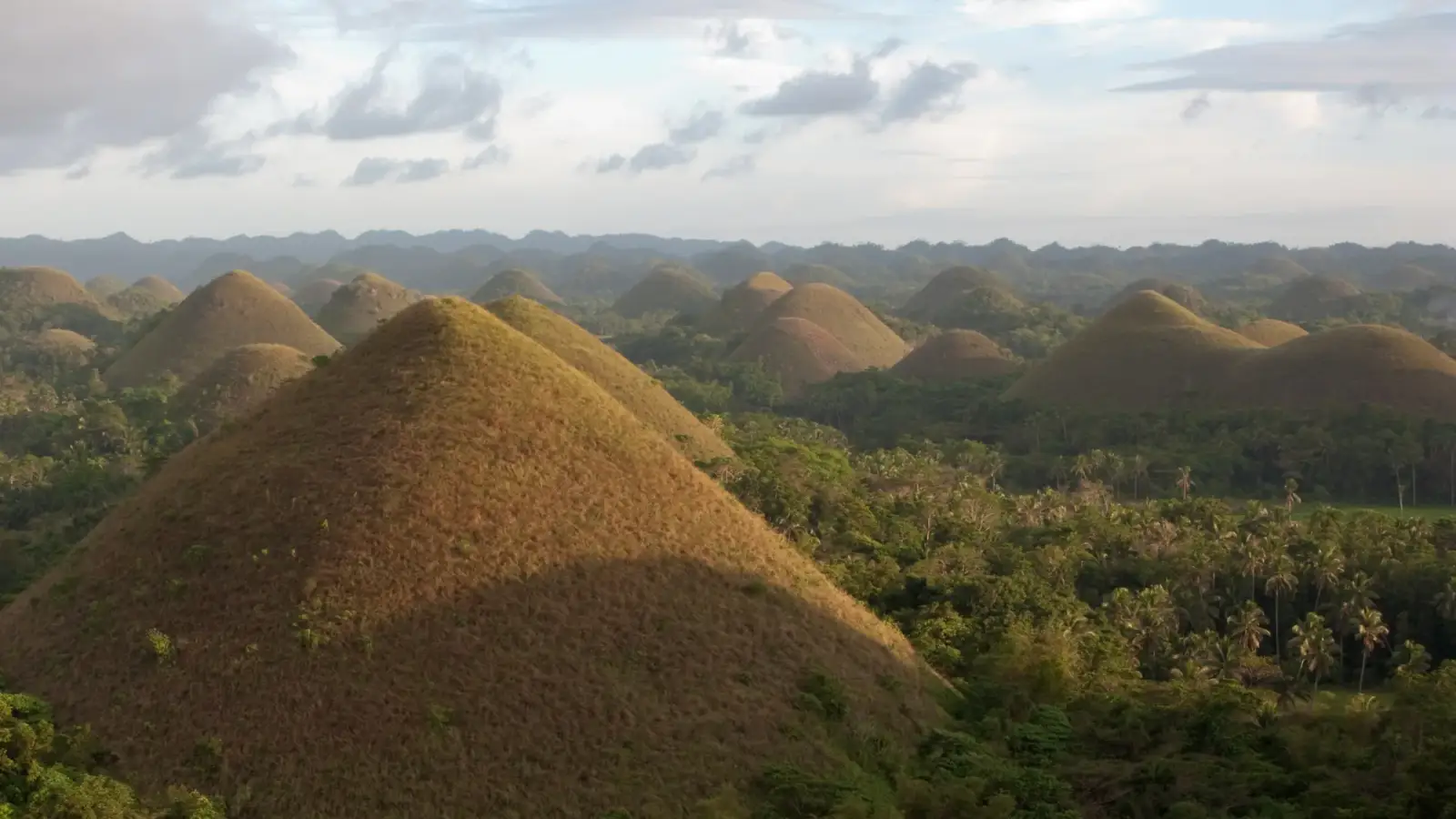
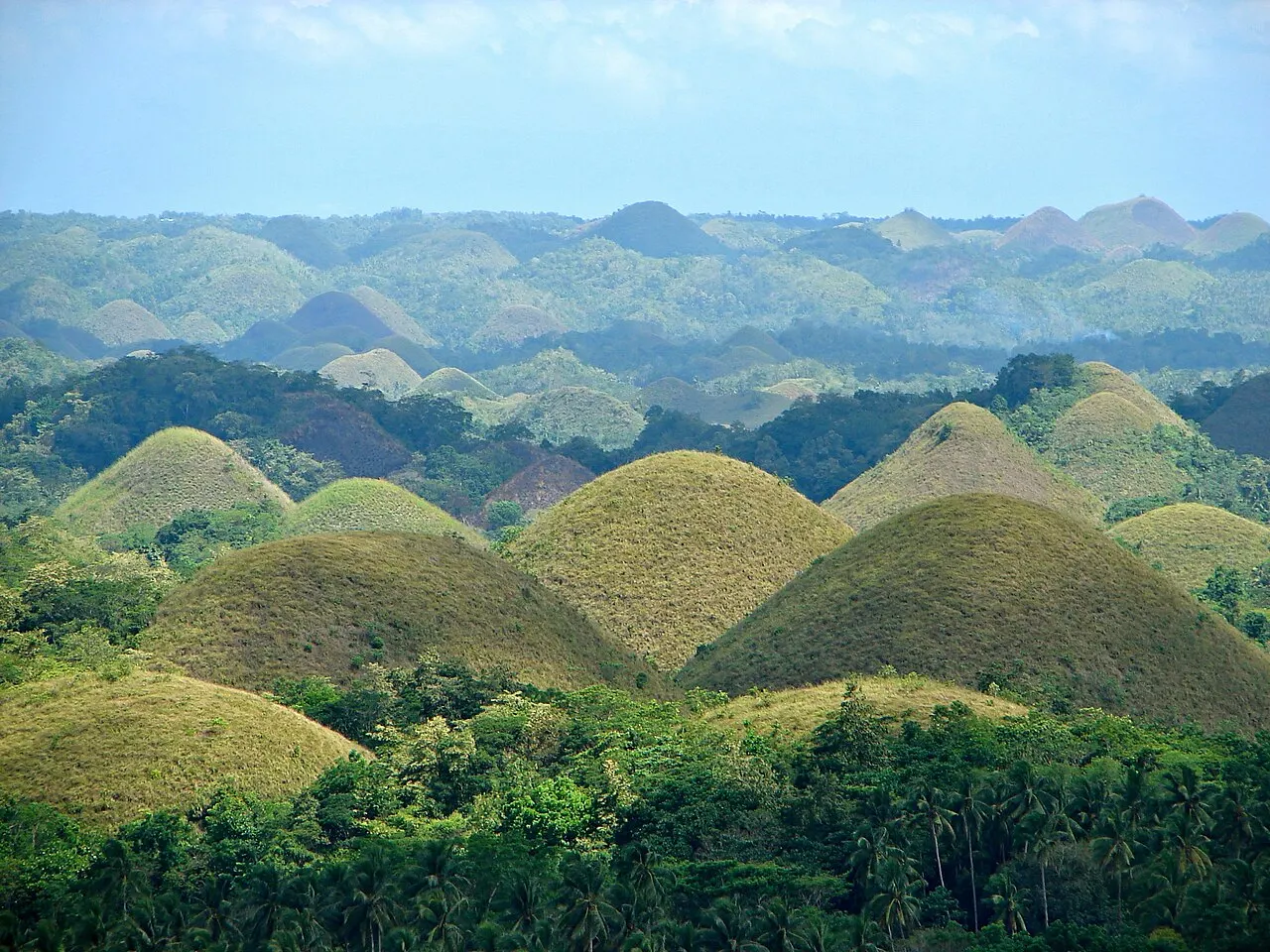
A field of conical limestone hills covered in grass, mostly between 30 and 50 m high, which turn brown in the dry season. The count varies by source, from 1,268 (the figure UNESCO cites) to 1,776. The government viewpoint, the Chocolate Hills Complex, is in Carmen, about 55 km from Tagbilaran, and is reached by a staircase of more than 200 steps. The entrance fee is set by the municipality: the schedule that took effect on October 1, 2025 charges ₱150 for adults who are not Bohol residents, according to the regional guide bohol-philippines.com, and the provincial government asked for it to be reviewed, so check at the counter. Sagbayan Peak, 18 km away, is the other viewpoint.
Check access
Philippine Tarsier Sanctuary
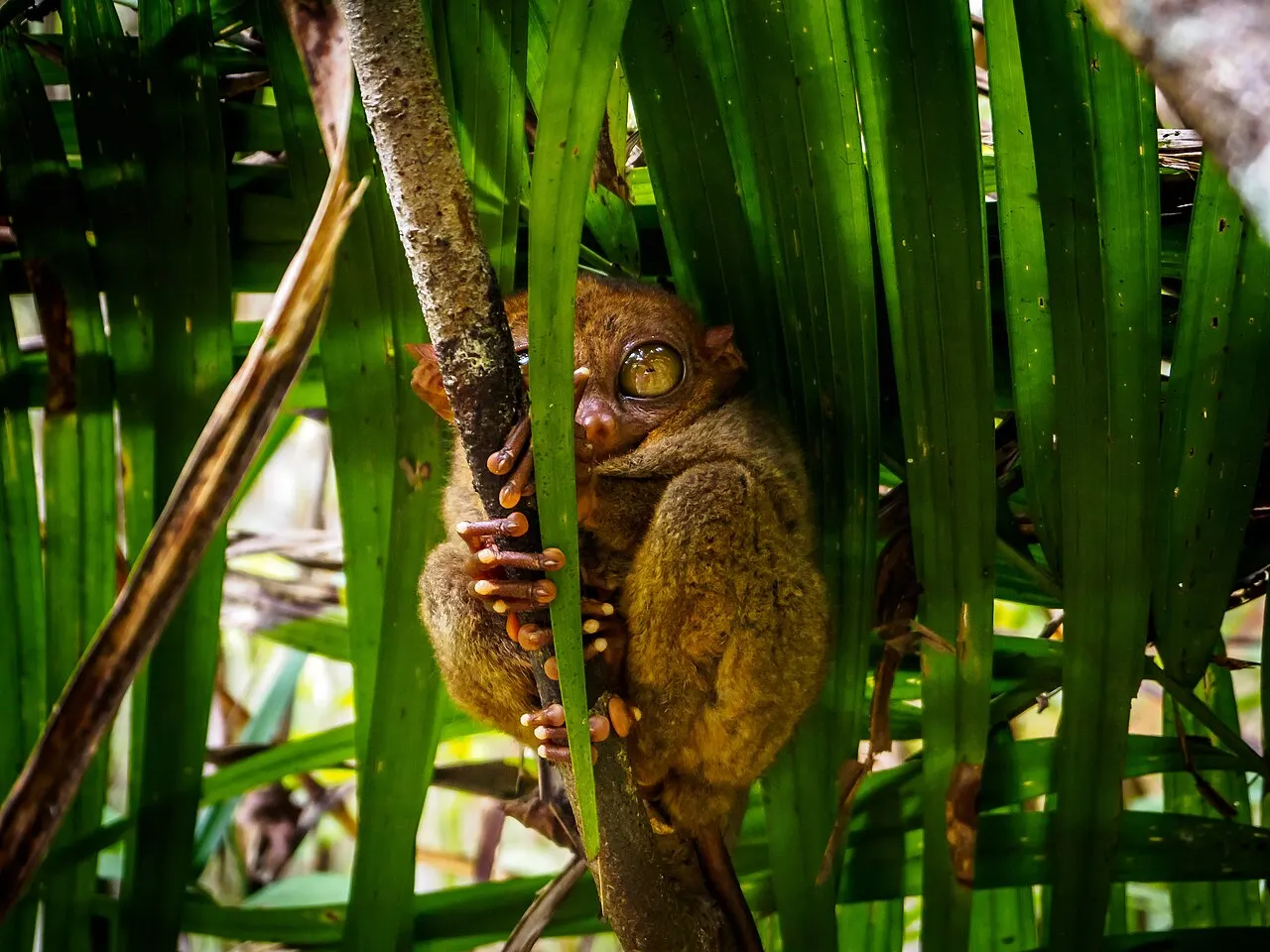
The sanctuary of the Philippine Tarsier Foundation, created in 1996, is in Corella, about 30 minutes from Tagbilaran. The Philippine tarsier, one of the smallest primates in the world, is nocturnal and spends the day asleep, clinging to branches; the visit, guided along a forest trail, calls for silence and no flash. Hours and fee vary among unofficial sources, so confirm on arrival.
Check access
Balicasag Island
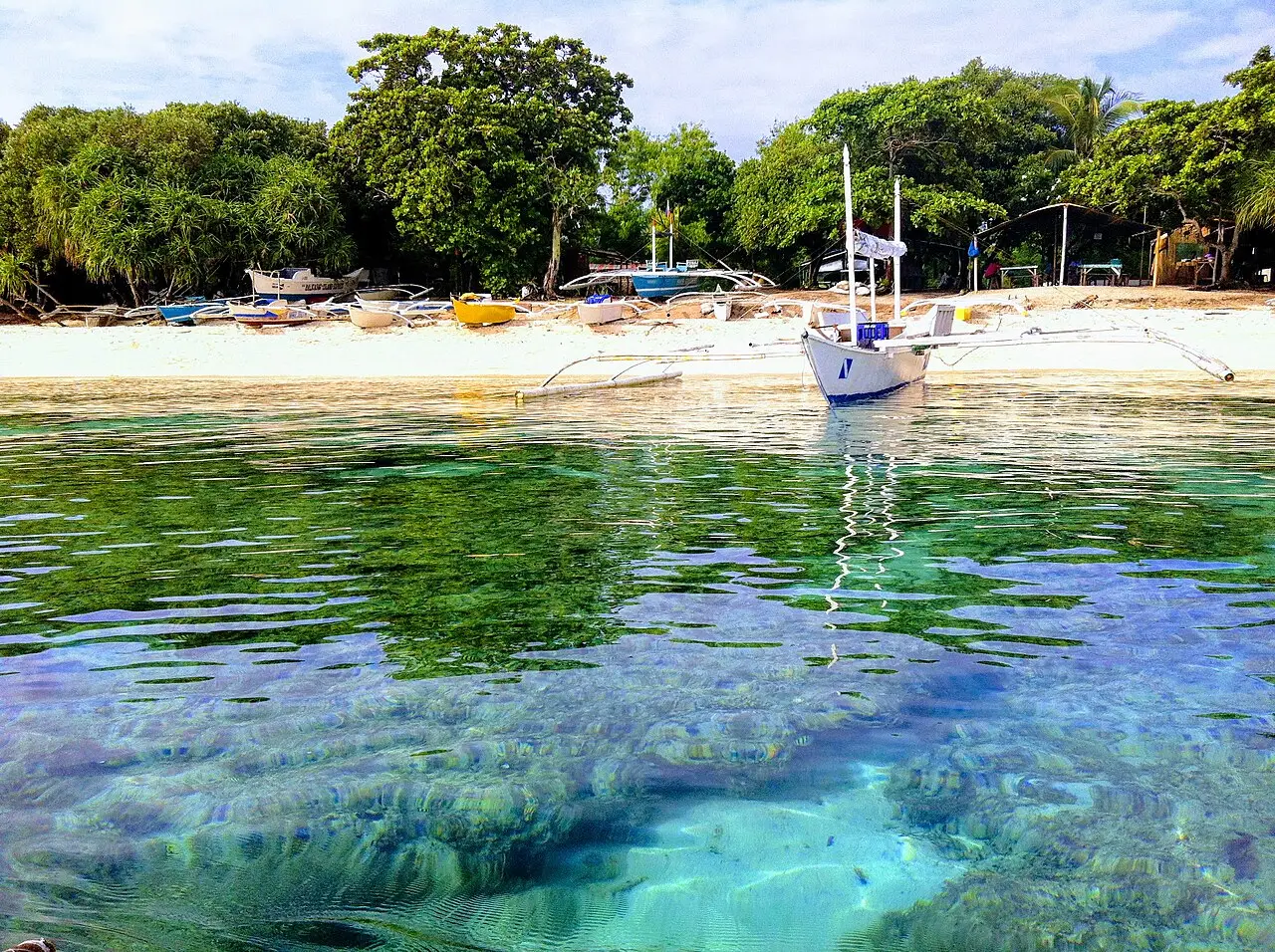
A small island off Panglao, about 8 km from Alona Beach, with a marine sanctuary, a shallow reef for snorkeling, and a wall for scuba diving, where turtles appear. It is part of the Bohol Marine Triangle. According to operators, there is a municipal environmental fee and a daily visitor limit; confirm when booking the boat.
Check access
Loboc River
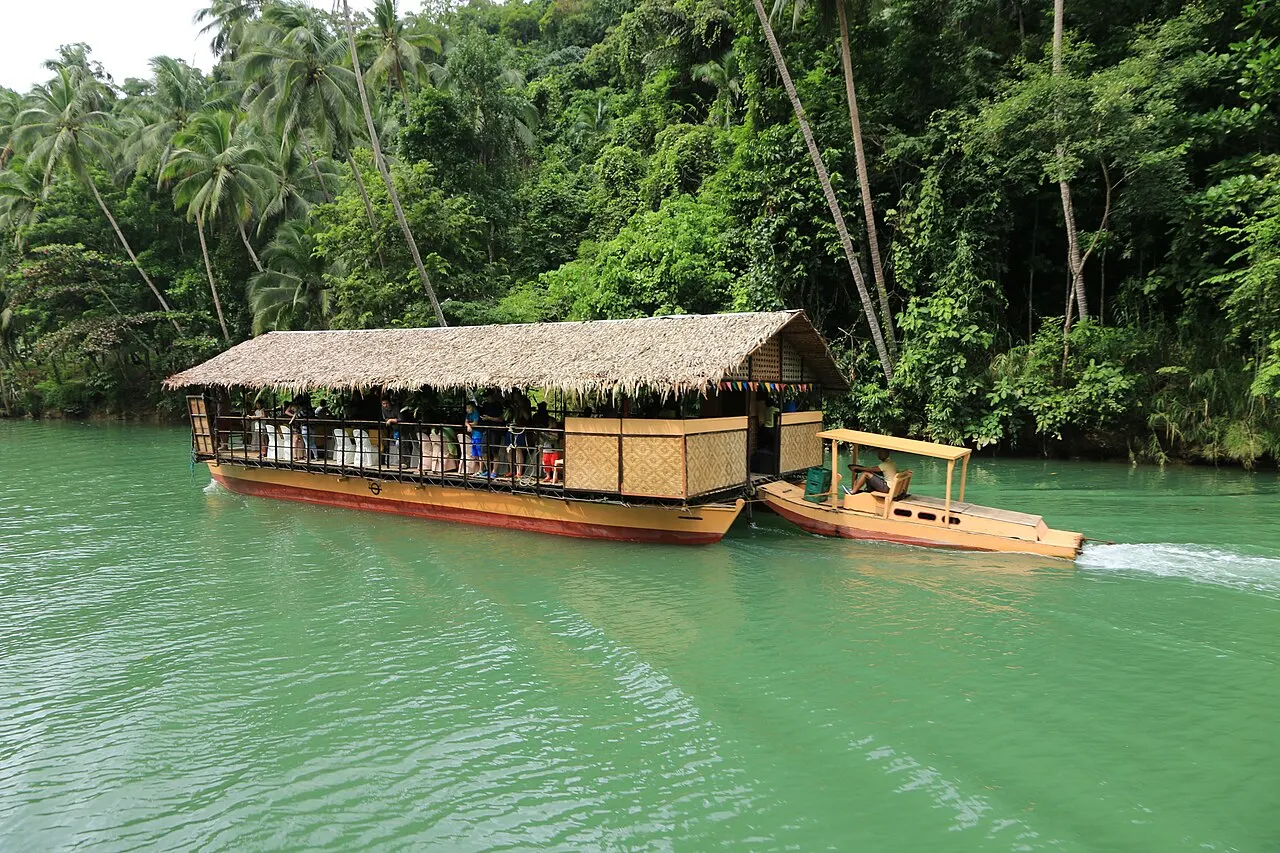
The river that runs from the interior to the south coast is traveled by restaurant barges with a buffet lunch and music, between the forest, the Loboc spring, and the Busay falls. The price varies by operator, and in high season the wait at the boarding point can reach two hours, according to operators. If you don't want the lunch, you can see the river from the bridges and the bank.
Check access
Loboc Church
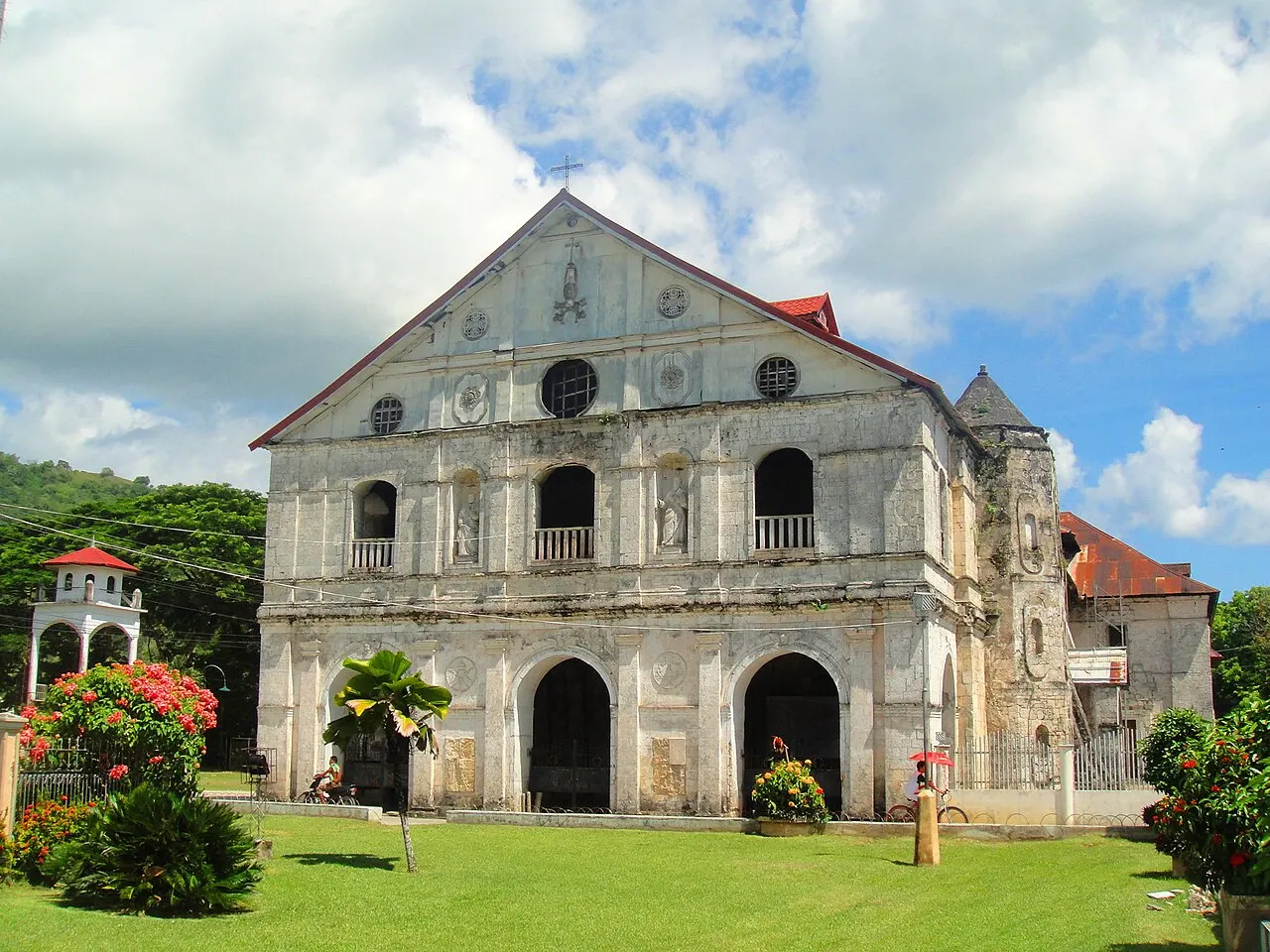
The Loboc church, of Jesuit origin, is the seat of the oldest parish in Bohol, created in 1602. The 2013 earthquake destroyed much of it; restored under the supervision of the National Museum, it reopened on May 16, 2021. Inside are altarpieces from the Jesuit and Recollect periods and ceiling paintings from the 1920s.
Check access
Baclayon Church
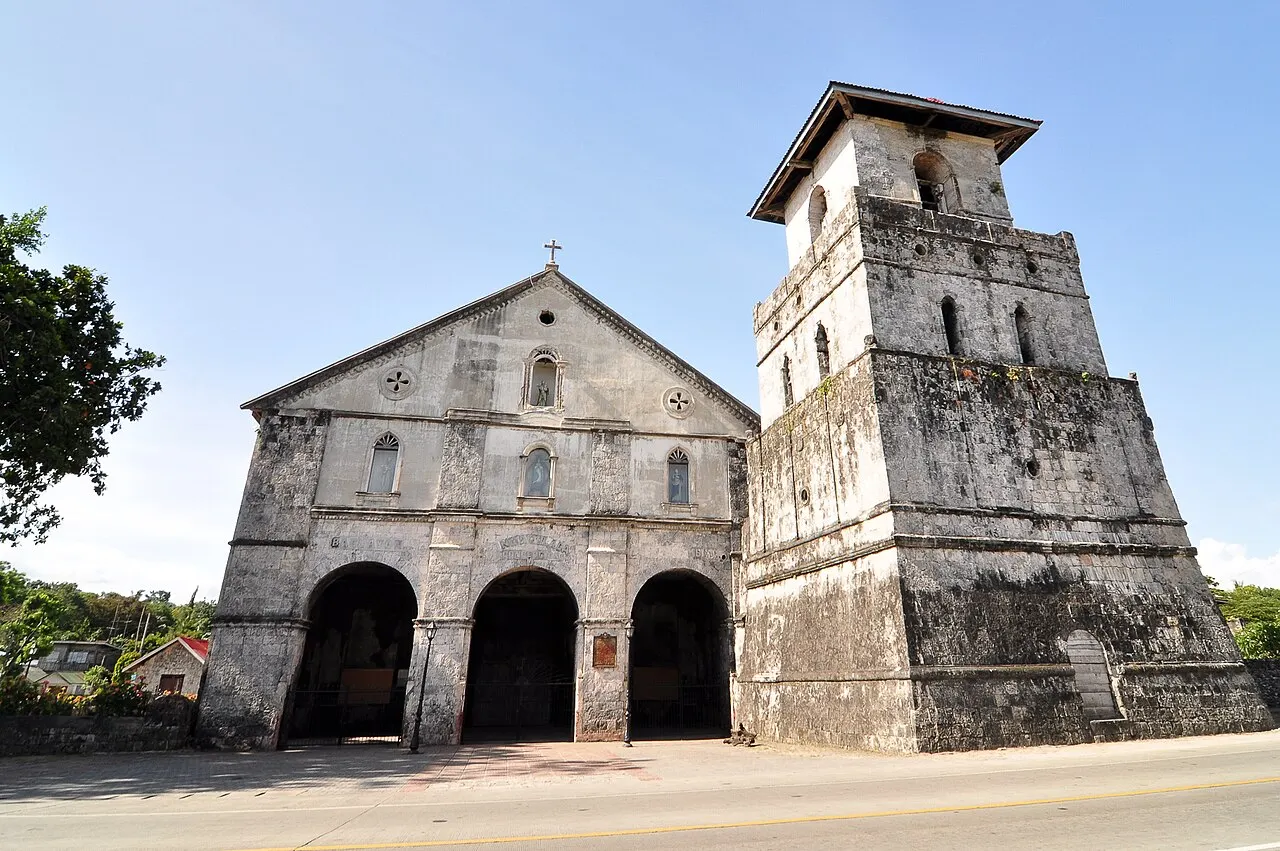
The Church of the Immaculate Conception, completed in 1727 with coral blocks, is a National Cultural Treasure. It lost its portico and tower in the 2013 earthquake and reopened restored on February 27, 2018. The adjoining convent works as a museum of religious art, and behind it a bakery makes broas, a cookie tied to the use of the yolks left over when egg white went into the mortar of the buildings.
Check access
Pamilacan Island
An island in the municipality of Baclayon, 12.5 km south of Bohol, whose residents traded hunting dolphins, whales, and rays for watching tours. Dolphins appear in the surrounding sea, and the island has a Spanish watch fort and white-sand beaches. The guidelines of the province's Tourism Office recommend at most 20 minutes near the animals and ask that no one swim with them, touch them, or feed them.
Check access
Alona Beach
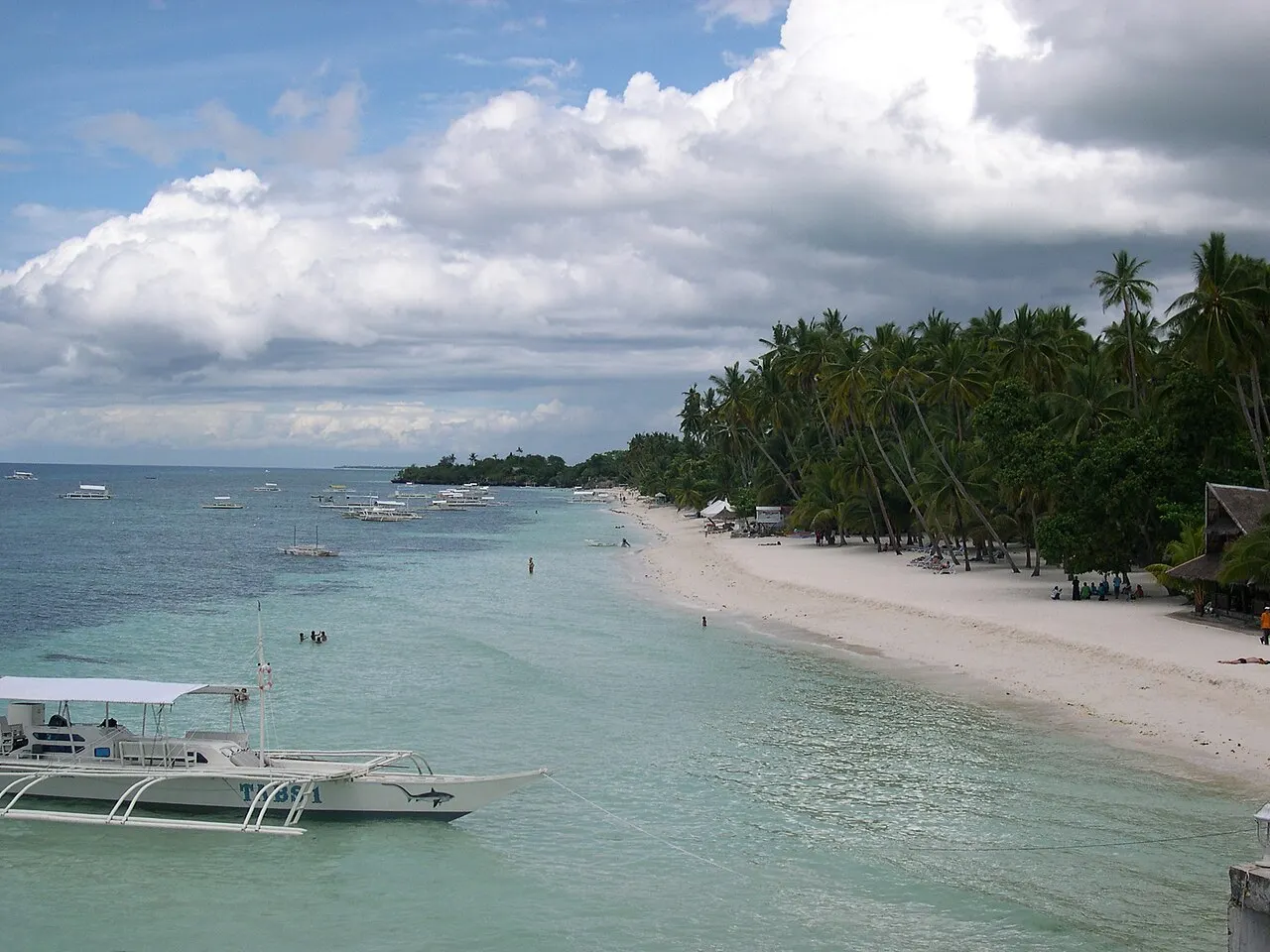
The most developed beach on Panglao, with less than 1 km of white sand between low cliffs, a reef close to shore, and boat departures for diving and for the islands. It is practical for those staying a few days; those looking for quiet prefer the beaches on the west of the island.
Check access
Dauis Church
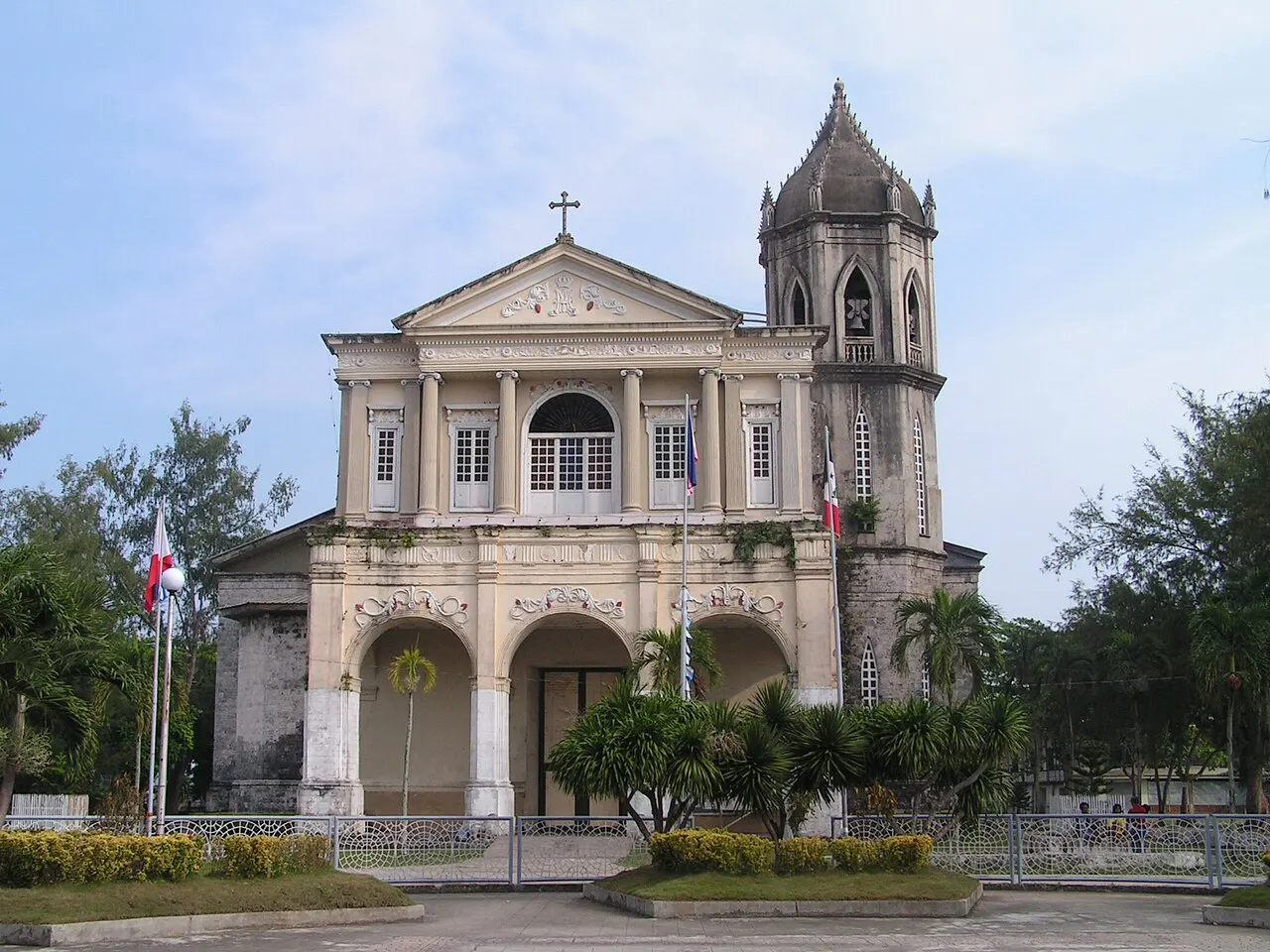
The Church of the Assumption, founded by the Jesuits in 1697, got its stone structure from 1863 on. Damaged in 2013, it was rebuilt from 2015 to 2017. It is a National Cultural Treasure and known for the well inside the church.
Check access
More places in the guide
Panglao Church
The Church of St. Augustine, near the sea in the town of Panglao, is a National Cultural Treasure. Beside it stands the five-story octagonal watchtower of 1851, part of the group of Bohol watchtowers.
Blood Compact Shrine
A monument in Bool, Tagbilaran, depicting the 1565 blood compact between Legazpi and Sikatuna, facing the sea. It is a short stop along the east coast road. The exact site of the compact is disputed: a marker installed in 2006 by the National Historical Institute, at Hinawanan Bay in Loay, places the ceremony aboard the ship San Pedro.
Bilar Man-Made Forest
A stretch of the road between Loboc and Bilar lined with mahogany trees planted in a reforestation project. Mahogany is not native, and the forest shelters little local wildlife. Many people stop in the middle of the road to take photos; if you stop, stay on the shoulder.
Hinagdanan Cave
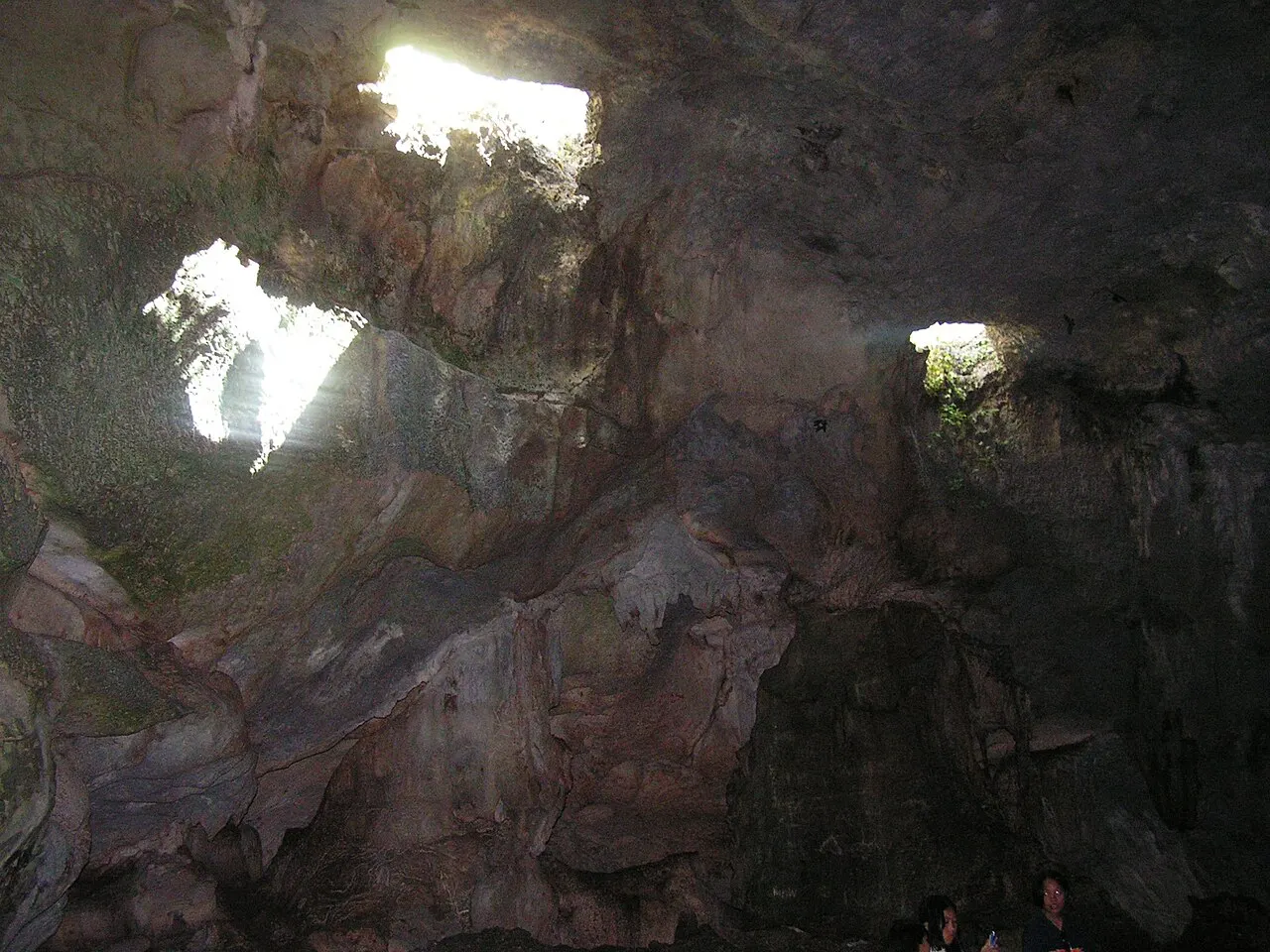
A limestone cave in Dauis, lit by light coming in through holes in the roof, with stalactites and an inner lagoon. You go down slippery steps with a guide rope. Swimming in the lagoon is no longer recommended because of pollutants seeping down through the karst soil.
Virgin Island
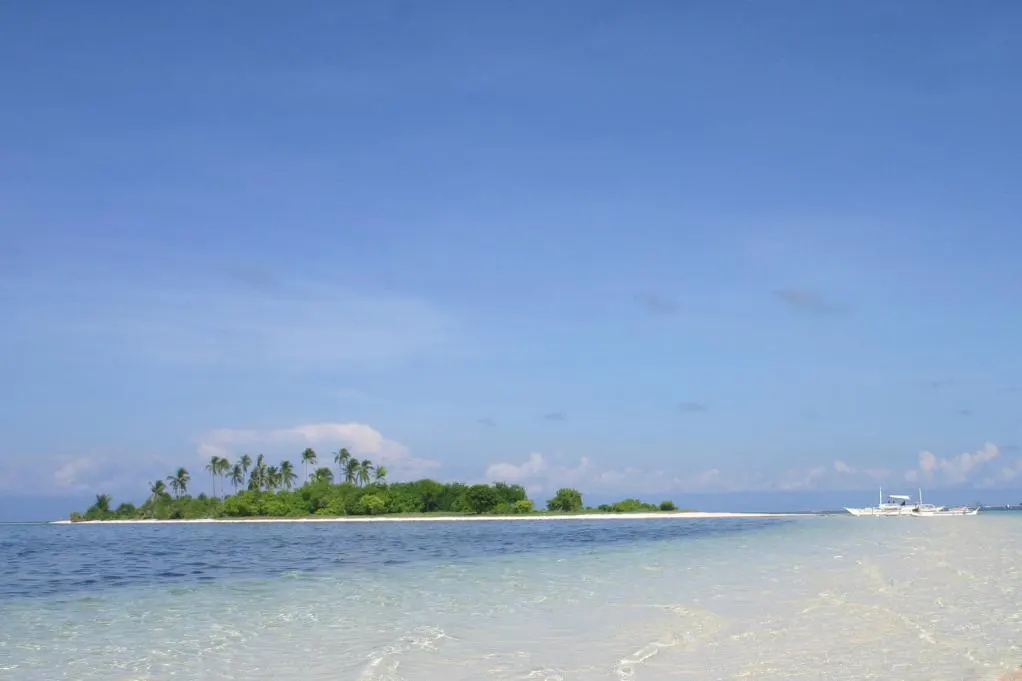
A crescent-shaped sandbar west of Panglao, whose center lies under about 15 cm of water even at low tide. It is part of many boat tours along with Balicasag.
Nilo’s itinerary
Start with the basic programme and choose extensions for the time you have.
Plan my days in the app ↗Day 1 · The interior: tarsiers, the Loboc River, and the Chocolate Hills
Leave early from Panglao or Tagbilaran with a car and driver hired the day before.
First stop at the Philippine Tarsier Sanctuary, in Corella, about 30 minutes from Tagbilaran. Visit in silence and without flash.
Continue to Loboc and see the church, reopened in 2021 after its restoration. If you want lunch on the river, board a restaurant barge; in high season, allow time for the line.
Continue to Bilar along the mahogany forest road. If you stop for a photo, stay on the shoulder.
In the afternoon, climb to the Chocolate Hills Complex viewpoint, in Carmen. Have cash for the fee and confirm the amount at the counter.
On the way back to the coast, stop at the Baclayon church if it is still open, or leave it for the third day.
Day 2 · The sea: Pamilacan and Balicasag
The day before, book a boat at Alona Beach that combines dolphin watching off Pamilacan with the stop at Balicasag. Pamilacan lies in a different direction, and combining the two in the same outing leaves less time on the reef, according to the regional guide bohol-philippines.com; check the sea forecast before setting out.
During the watching, the province's guidelines recommend staying at most 20 minutes near the animals, without chasing them and with no one in the water.
At Balicasag, snorkel the sanctuary reef or dive the wall if you are certified. Pay the island fees as the operator indicates.
Return to Alona in the early afternoon and stay on the beach. If the boat includes Virgin Island, the stop is short, depends on the tide, and has a separate fee; confirm beforehand that the sandbar is open.
Have dinner at Alona Beach, where the restaurants sit right on the sand.
If you stay longer
Day 3 · Tagbilaran and Panglao on land
In the morning, go to Bool, in Tagbilaran, to see the blood compact monument, and continue along the coast to the Baclayon church and convent museum, about 7 km from Tagbilaran, if they did not fit on the first day. Try the broas from the bakery behind the convent.
Cross the bridges to Dauis: visit the Church of the Assumption and go down to the Hinagdanan cave, without swimming in the lagoon.
Continue to the town of Panglao to see the Church of St. Augustine and the octagonal watchtower.
End the afternoon at a beach on the west of Panglao, such as Danao, Doljo, or Momo, or at Alona.
Food
Calamay
A sweet of glutinous rice, coconut milk, and brown sugar, cooked over a wood fire and sold in half a coconut shell sealed with red paper. The one from Jagna, in the southeast, is the best known.
Peanut kisses
Little mounds of ground peanut, sugar, and egg white, the most common travel gift from Bohol. They are sold in souvenir shops and markets all over the island.
Broas
Elongated sponge-cake cookies, associated with Baclayon, where a bakery behind the convent makes them. The recipe is tied to the use of the yolks left over when egg white went into the mortar of the buildings.
Sikwate
Thick hot chocolate made with tablea, tablets of pure roasted, pressed cacao. The cacao comes from the highlands of Bilar, Balilihan, Sierra Bullones, Pilar, and Batuan, and the drink usually comes with a rice cake at breakfast or as a snack.
Kinilaw
Fish or seafood cured in coconut or cane vinegar, or in the juice of the local lime, with ginger. It is eaten close to where the boat landed the fish.
Kinampay
An old variety of purple yam from Bohol, with violet flesh and a floral fragrance, the base of ube halaya, the yam sweet. It is the theme of the Ubi Festival, in January.
Asin tibuok
Salt from Alburquerque made with coconut husks soaked in seawater, burned, and boiled in a clay pot until it forms a block that is scraped fresh. It has a smoky flavor.
Tuba and bahalina
Tuba is the fermented drink made from the sap of the coconut flower; bahalina is tuba aged with mangrove bark, which gives it a dark color.
Where to eat
- Alona Beach
Restaurants and bars on the sand, with grilled fish and seafood and international cuisine, generally at mid to high prices for the island. Good for dinner after a boat day.
- Loboc
The buffet lunch on the river's restaurant barges is the program, more for the scenery and the music than for the cooking. In town there are stalls selling local food.
- Tagbilaran
Carinderias (simple restaurants with ready-made dishes displayed at the counter) and the mall food courts, the cheapest options of the trip. A good place to buy calamay, peanut kisses, and tablea to take home.
- Baclayon
The broas from the bakery behind the convent, to try on the spot or take away, and the highland tablea sikwate to go with them.
- Markets and fishing ports
Kinilaw of the day's fish, cured in coconut vinegar, and grilled fish served with puso, rice cooked in pouches of coconut leaf.
· 2026-10-19
Day trips
Anda
A peninsula in the southeast, 98 km from Tagbilaran, with white-sand beaches and fewer people than Panglao. The natural cave pools and Lamanok Island are geosites of the geopark, as are the Can-umantad falls. The road takes a good part of the day; I'd go with one or two nights there, and not as a tight day trip.
Danao
In the interior, north of the Chocolate Hills, the municipality of Danao brings together, in the Magtangtang district, the Danao Adventure Park, with outdoor adventure activities on a forested slope (every day, 8 a.m. to 5 p.m., according to the Tourism Office), and the sea of clouds, which forms in the early morning when the weather helps. It was also in Magtangtang that Francisco Dagohoy set up the base of his revolt. It is far from Panglao: confirm the road time with the driver before deciding.
Alicia
In the east of the island, the Alicia Panoramic Park shows the Binabaje hills, up to 400 m, and the 195 m Princess Manan-aw cave is one of the geosites. Those who like geology can see Alicia schist here, the oldest rock identified in Bohol. It is far from Panglao and pairs better with a night in the east or in Anda.
Where to begin
The interior: tarsiers, the Loboc River, and the Chocolate Hills
Leave early from Panglao or Tagbilaran with a car and driver hired the day before.
The sea: Pamilacan and Balicasag
The day before, book a boat at Alona Beach that combines dolphin watching off Pamilacan with the stop at Balicasag. Pamilacan lies in a different direction, and combining the two in the same outing leaves less time on the reef, according to the regional guide bohol-philippines.com; check the sea forecast before setting out.
Tagbilaran and Panglao on land
In the morning, go to Bool, in Tagbilaran, to see the blood compact monument, and continue along the coast to the Baclayon church and convent museum, about 7 km from Tagbilaran, if they did not fit on the first day. Try the broas from the bakery behind the convent.
Money
The currency is the Philippine peso (₱). Resorts, malls, and dive shops usually accept cards, but tricycles, motorcycle taxis, stalls, and entrance fees call for cash, and the Tourism Office recommends carrying small bills because many drivers have no change. There are ATMs in Tagbilaran and at Alona Beach; Philippine banks usually charge a withdrawal fee on foreign cards. The costs that weigh most are the car with a driver for the interior and the boat to the islands, both charged per vehicle and negotiated; for four to six people, chartering the boat usually comes out cheaper per person, and for two the shared tour generally pays off, according to the regional guide bohol-philippines.com. The advertised boat price usually covers only the boat and the boatman: the Balicasag sanctuary fee, the small transfer boat at the reef, and the Virgin Island fee are paid separately, according to the same guide. Entrance fees, such as the one for the Chocolate Hills (₱150 for non-resident adults since October 2025, according to the same guide, with a review requested by the province), are small and change by municipal decision.
Getting there and around
Bohol-Panglao International Airport (TAG) is on Panglao Island, about 2 km from Alona Beach. It receives domestic flights from Manila and other Philippine cities and international flights, today mostly from South Korean airlines. At the exit there are private drivers and hotel transfers; confirm the price of the car before getting in. For the 2 km to Alona, a tricycle will do, and the buses between the Tagbilaran terminal and Alona pass by the airport, according to Wikivoyage.
From Cebu, the most common connection is the fast ferry to the port of Tagbilaran, about two hours' travel with several departures a day (OceanJet and other companies). OceanJet asks you to arrive for check-in 30 minutes ahead and to carry ID with the same name as the ticket. Other ports on the island also have regular lines: Tubigon receives boats from Cebu, and from Jagna boats leave for Camiguin and Mindanao.
Those arriving in the Philippines from abroad complete the free registration in the government's eTravel system (etravel.gov.ph). Visa rules depend on the passport; check with the consulate before buying the ticket.
To get around the island, the Tourism Office lists Grab in Tagbilaran and surroundings, V-Hire vans with fixed routes between towns, buses for long distances from the integrated terminal in Dao, Tagbilaran, jeepneys and multicabs, tricycles for short stretches, and motorcycle taxis (habal-habal) for hard-to-reach places. Agree on the price before getting in and carry small bills.
The most practical way to do the interior in a day is to hire a car with a driver, offered by hotels and agencies in Panglao and Tagbilaran. Renting a motorbike requires a helmet and a valid license; the police set up frequent checkpoints, especially on the Panglao bridges. For the islands of Balicasag, Pamilacan, and Virgin Island, the boats leave from Alona and other Panglao beaches.
Safety
Bohol has low crime rates, and the precautions are those of any busy tourist area: watch for pickpockets on Alona Beach and at terminals, and for price scams in unagreed transport. The most concrete risk is on the road and at sea. Motorbikes require a helmet and a license, and the police set up frequent checkpoints on the Panglao bridges. For boats, check the forecast and storm warnings from PAGASA, the Philippine weather agency, and do not board in rough seas; with a typhoon signal, boats may not sail. Dengue circulates on the island: the regional office of the Department of Health recorded 1,275 cases in Bohol between January 1 and June 14, 2025, so use repellent. The island lies in a seismic zone, as the 2013 earthquake showed; follow local instructions in case of a tremor.
Before you go
- Plug
- types A, B and C
- Voltage
- 220 V
- Driving side
- on the right
- Emergency
- General 911
- Country code
- +63
- Official languages
- Filipino, English and Taglish
- Currency
- Philippine peso (PHP)
Source: Wikidata (CC0), checked September 2026.
Etiquette tips
Dolphins and whales
The guidelines of the province's Tourism Office ask that the boat slow down near whales, not cut through groups of dolphins, not chase mothers with calves, and stay at most 20 minutes near the animals, and that no one swim with them, touch them, or feed them. If the boatman ignores these guidelines, ask him to back off.
Tarsiers
They are nocturnal animals and sensitive to noise. At the sanctuary, speak softly, use no flash, and do not touch the animals.
Churches
They are working parishes, not just monuments. Save the beachwear for the beach and do not walk through the nave during Mass.
Agreed price
With tricycles, motorcycle taxis, and boats, agree on the amount before setting out. This is the Tourism Office's own recommendation and avoids arguments at the end.
Geopark
The hills, caves, and reefs are geosites, and the Tourism Office asks visitors not to leave trash and to respect the protected areas. On the reefs, that means not stepping on or touching the coral.
Mistakes to avoid
Trying to see the hills, the tarsiers, the river, and the islands in the same day. The interior and the sea call for separate days.
Expecting brown hills in the rainy season. After the rains the grass turns green.
Stopping in the middle of the Bilar mahogany forest road to take photos. The stretch has car and bus traffic.
Swimming in the lagoon of the Hinagdanan cave. The water receives pollutants from the soil and bathing is no longer recommended.
Hiring a dolphin-watching boat that chases the animals or lets passengers into the water, against the watching guidelines of the province's Tourism Office.
Arriving during Holy Week, Christmas, or New Year without a reserved place to stay.
Useful phrases
Maayong buntag
Good morning (ma-A-iong bun-TAG).
Salamat
Thank you (sa-LA-mat).
Palihog
Please (pa-LI-hog).
Tagpila?
How much is it? (tag-PI-la).
Asa dapit ang C.R.?
Where is the bathroom? (A-sa DA-pit ang see-ar); in the Philippines the bathroom is called the comfort room.
Lami ang pagkaon
The food is delicious (la-MI ang pag-KA-on).
Amping!
Take care, goodbye (am-PING).
Where to stay
- Alona Beach (Panglao) · Those staying a few days who want a beach, restaurants, dive shops, and boats to the islands within walking distance of the hotel.: It has the island's largest supply of lodging, from dorms to resorts, and lies about 2 km from the airport. The drawback is the bustle: the strip of sand is short and crowded with boats and bars, and the interior is more than an hour away by car.
- West Panglao beaches (Danao, Doljo, Momo) · Those who want a beach with fewer crowds and don't mind relying on tricycles or transfers.: The resorts are more spread out and the beaches less crowded than Alona. Restaurants and boat departures are farther away, so every trip calls for arranged transport.
- Tagbilaran · Those arriving by boat from Cebu, traveling on a tight budget, or planning to use buses and vans for the interior.: It is close to the port, the Dao bus terminal, the malls, and the hospitals, and is the shortest starting point for Corella and Loboc. It has no beach, and the islands require going to Panglao.
- Baclayon · Those who want a small seaside town near Tagbilaran and put the interior and Pamilacan first.: It is about 7 km from Tagbilaran, has homestays in old mansions and resorts, and is the municipality that Pamilacan Island belongs to. It has fewer restaurants and less nightlife than Panglao.
- Anda · Those with more time who want a quiet beach in the southeast.: The beaches are calm and there is moderately priced lodging, but the trip from Tagbilaran takes a good part of the day, and the interior and Panglao are too far for a same-day round trip.
· 2026-10-19
Districts
Tagbilaran
Capital and port for the boats from Cebu, with shopping malls, the bus terminal in Dao, hospitals, and the cathedral. It suits those arriving by boat, relying on public transport, or wanting the shortest starting point for the interior. It has no beach.
Dauis
The first municipality of Panglao after the bridges, with the Church of the Assumption and the Hinagdanan Cave. It lies between the city and the beaches, and has dive centers that go out to Pamilacan and to Napaling, one of the dive sites on the Panglao coast.
Alona Beach
A strip of sand less than 1 km long in the Tawala district of Panglao, about 2 km from the airport. It is the busiest area on the island: resorts, bars, restaurants, dive shops, and the boats to Balicasag.
Panglao (town proper) and the western beaches
The seat of the municipality, with the Church of St. Augustine and the 1851 watchtower, and beaches less crowded than Alona, such as Danao, Doljo, and Momo. It suits those who prefer fewer crowds and accept relying on tricycles.
Baclayon
A coastal town east of Tagbilaran, with the 1727 church and old houses. Pamilacan Island belongs to the municipality. It offers homestays and resorts.
Loboc
An inland town on the banks of the Loboc River, with the Jesuit church, the boarding point for the floating restaurants, and the town's children's choir. It lies on the way between the south coast and the hills.
Corella
An inland municipality, near Tagbilaran, home to the sanctuary of the Philippine Tarsier Foundation.
Carmen
A municipality in the center of the island, home to the main Chocolate Hills viewpoint, about 55 km from Tagbilaran.
Anda
A peninsula in the southeast, 98 km from Tagbilaran, with quiet beaches, cave pools, and Lamanok Island. Worth it with an overnight stay.
History
1563 · The Ternate attack
A fleet sent by the Sultanate of Ternate, in the Moluccas, attacked Bohol. Datu Pagbuaya, one of the chiefs of Panglao, left the island with part of the population and settled in Dapitan, in northern Mindanao.
1565 · The Sandugo
In March, Miguel López de Legazpi and Datu Sikatuna sealed a blood compact, the Sandugo (“one blood”). The episode appears on the flag and seal of the province and gives its name to the July festival. The exact location is disputed: in 2006, the National Historical Institute placed a marker at Hinawanan Bay, in Loay.
1596 · The Jesuits in Baclayon
The Jesuits Juan de Torres and Gabriel Sánchez founded the oldest Christian settlement in Bohol at Baclayon. The present coral-stone church was completed in 1727.
1744–1829 · The Dagohoy revolt
Francisco Dagohoy led the longest revolt in Philippine history, lasting about 85 years. His base was in a cave in Magtangtang, today in the municipality of Danao.
1854 · Bohol becomes a province
A Royal Order of March 3 separated Bohol from Cebu, and Tagbilaran was chosen as the capital. The separation was suspended around 1860 and resumed on July 22, 1864.
1900–1901 · Philippine-American War
The uprising led by Pedro Samson was met with a scorched-earth policy that burned 20 of the island's 35 towns. Bohol was organized as an American province in October 1901.
1942–1945 · Japanese occupation
Japanese troops landed in Tagbilaran in May 1942. Local guerrillas resisted, and Filipino and American troops landed on April 11, 1945.
1988 · The protected hills
The Chocolate Hills were declared a National Geological Monument. In 1997, Proclamation No. 1037 created the protected area covering Carmen, Batuan, Sagbayan, Bilar, Valencia, and Sierra Bullones.
2013 · The October 15 earthquake
A magnitude 7.2 quake, with its epicenter near Sagbayan, destroyed or damaged historic churches such as those of Baclayon and Loboc and raised stretches of seabed in Loon and Maribojoc.
2018 · The Panglao airport
Bohol-Panglao International Airport began operating in November and replaced the old Tagbilaran airport, keeping the code TAG.
2021 · Typhoon Odette (Rai)
In December, the typhoon felled trees and flooded much of the province; Bohol was the province with the most deaths in the country, and local civil defense described it as one of the worst in its history.
2023 · UNESCO Global Geopark
On May 24, the island became the first UNESCO Global Geopark in the Philippines, with geosites such as the Chocolate Hills, the Danajon double barrier reef, and the Maribojoc marine terrace.
Complete history
Before the Spanish, Bohol was part of the trade routes between Cebu, Butuan, and the Moluccas. In Panglao, archaeologists found Chinese porcelain from the Tang, Song, and Ming dynasties. The island's name comes from bo-ol, a tree that once grew there, and survives in Bool, the Tagbilaran district where the blood compact monument stands. That trade also drew attacks: in 1563 a fleet from Ternate raided the island, and part of the population left for Mindanao.
When Legazpi arrived, in 1565, the local chiefs distrusted him because of the Portuguese attacks of the previous years. The blood compact with Datu Sikatuna dispelled the distrust and became the province's founding myth. The Jesuits arrived in 1596, founded Baclayon and later Loboc, and the island filled with coral-stone churches and watchtowers, also built to spot the raids that came from the southern sea. When the Jesuits were expelled, in 1768, the Augustinian Recollects took over the parishes and enlarged many of these churches.
Spanish rule faced two revolts on the island: that of Tamblot, a babaylan (native priest), in 1621, and that of Francisco Dagohoy, which began in 1744 and ended only in 1829. This second revolt is remembered by a historical marker in Magtangtang, in the municipality of Danao, where Dagohoy's base stood. In 1854 Bohol separated from Cebu as a province of its own, with Tagbilaran as its capital.
The 20th century brought the war against the United States, with towns burned in 1900 and 1901, the Japanese occupation from 1942 to 1945, and, in 1957, a president born on the island: Carlos P. García, from Talibon. In the following decades, deforestation of the uplands and economic crisis fed a communist guerrilla presence in the interior, which the government declared over only in the 2010s.
In recent decades, tourism has come to shape the island. The 2013 earthquake brought down churches that were rebuilt over the following years (Baclayon reopened in 2018, Loboc in 2021), the Panglao airport opened in 2018, and the geopark title, in 2023, turned geology into a reason to visit. The debate over what can be built among the hills returned in 2024, when a resort in Sagbayan was closed after national attention.
Geography and shape of the city
Bohol Province covers 4,821 km² of land, counting the oval main island and the smaller islands, and has 261 km of coastline. The island is separated from Cebu to the west by the Cebu Strait and washed to the south by the Bohol Sea. The terrain is hills and plateaus; about half the island is limestone, and the island rose from the sea in stages over millions of years, which explains the marine terraces and the caves. In the center, the Chocolate Hills form a field of conical hills among rice paddies, a cone karst landscape created by rain and groundwater dissolving the limestone. The Loboc River drains the center of the island to the south coast, and to the north lies the Danajon double barrier reef. The capital, Tagbilaran, lies on the southwest coast, facing Panglao Island, with the two municipalities of Dauis and Panglao, white-sand beaches in the south, and narrow reefs that drop off in walls. From November to April the northeast monsoon (amihan) blows, the mildest season; from August to October comes the southwest monsoon (habagat), with unsettled weather. The interior is cooler than the coast.
Culture
Religious life in Bohol is Catholic and organized around the parishes founded by Jesuits and Recollects. Each town has its patron saint festival, and May holds many of them: Tagbilaran celebrates St. Joseph, and Loboc has its festival in the same month.
Loboc has a musical tradition. The Loboc Children's Choir has won competitions in the country and abroad, and music is part of the boat trip on the river. In July, the Sandugo festival fills Tagbilaran with street dance parades and a reenactment of the blood compact.
In the southeast of the island live the Eskaya, a community in Duero, Guindulman, Pilar, and Sierra Bullones that keeps its own auxiliary language, Eskayan, with a syllabary of more than a thousand characters taught in community schools. In daily life they speak the Cebuano of Bohol.
The sea is also a working culture: in Pamilacan, old families of dolphin and ray hunters now live from watching tours, and Panglao has more than 70 dive and freediving centers.
Festivals and events
Ubi Festival (January)
A celebration of the purple yam in Tagbilaran, with an exhibition, a ubi contest, agricultural seminars, and cultural performances. Check the dates for the year with the Provincial Tourism Office.
May fiestas
The month of patron saint festivals across the island. Tagbilaran celebrates St. Joseph from May 1, and Loboc also holds its festival in May.
Sandugo (July)
The province's festival fills the whole month in Tagbilaran with street dance, contests, and shows recalling the blood compact of 1565. The program is posted on the Tourism Office website.
Panglao fiesta (August)
On August 27 and 28, the town of Panglao celebrates St. Augustine, the town's patron saint.
Books and films
Panaghoy sa Suba (2004)
A film by Cesar Montano, spoken in Visayan and set in Bohol during the Second World War, with the Japanese occupation and the colonial legacy centered on a river boatman.
The Last Language on Earth, by Piers Kelly (2022)
The story of the Eskaya community of southeastern Bohol told through the language and the syllabary it keeps, published by Oxford University Press.
Frequently asked questions
Bohol: how do I get from the airport to Alona Beach?
Bohol-Panglao International Airport (TAG) is on Panglao Island, about 2 km from Alona Beach. At the exit there are private drivers and hotel transfers; confirm the price of the car before getting in. For the 2 km to Alona, a tricycle will do, and the buses between the Tagbilaran terminal and Alona pass by the airport, according to Wikivoyage.
Bohol: how do I get there from Cebu?
From Cebu, the most common connection is the fast ferry to the port of Tagbilaran, about two hours' travel with several departures a day (OceanJet and other companies). OceanJet asks you to arrive for check-in 30 minutes ahead and to carry ID with the same name as the ticket. Other ports on the island also have regular lines: Tubigon receives boats from Cebu.
Bohol: what do I need to enter the Philippines?
Those arriving in the Philippines from abroad complete the free registration in the government's eTravel system (etravel.gov.ph). Visa rules depend on the passport; check with the consulate before buying the ticket.
Bohol: how many days should I stay?
I'd stay three days in Bohol, and at least two. The first is for the interior: tarsiers in Corella, the river and church at Loboc, the Bilar road, and the Chocolate Hills viewpoint, which together fill a full day by car. The second is for the sea, with dolphins off Pamilacan and the reef at Balicasag. With two days, I'd do only that and stay in Panglao, near the boats. The third day brings together Baclayon, the blood compact monument, Dauis, and Panglao on land, and also works as a reserve if the sea closes on the boat day. Those who want the quiet beaches of Anda or the east of the island should add nights there, and not squeeze them into a day trip.
Bohol: when is the best time to go?
February to April, which usually brings together the most settled weather of the year and less rain. From November to January heavy downpours are more likely, May to July is the hottest and most humid period, and from August to October the southwest monsoon alternates calm and rainy weeks; in the second half of the year the island can be hit by typhoons. Holy Week, Christmas, and New Year fill the hotels.
Bohol: where should I stay, Panglao or Tagbilaran?
Alona Beach, on Panglao, suits those staying a few days who want a beach, restaurants, dive shops, and boats to the islands within walking distance of the hotel; it lies about 2 km from the airport, but the strip of sand is short and crowded with boats and bars, and the interior is more than an hour away by car. On the west Panglao beaches (Danao, Doljo, Momo), the resorts are more spread out and the beaches less crowded than Alona, but restaurants and boat departures are farther away, and every trip calls for arranged transport. Tagbilaran is close to the port, the Dao bus terminal, the malls, and the hospitals, and is the shortest starting point for Corella and Loboc; it has no beach, and the islands require going to Panglao.
Bohol: can I visit Anda as a day trip?
Anda is the peninsula in the southeast, 98 km from Tagbilaran, with white-sand beaches and fewer people than Panglao. The road takes a good part of the day; I'd go with one or two nights there, and not as a tight day trip.
Bohol: how can I see the dolphins without disturbing them?
The boats to Pamilacan leave from Alona and other Panglao beaches. The guidelines of the province's Tourism Office ask that the boat slow down near whales, not cut through groups of dolphins, not chase mothers with calves, and stay at most 20 minutes near the animals, and that no one swim with them, touch them, or feed them. Before paying, ask the operator whether it follows these guidelines; if the boatman ignores them, ask him to back off. For dolphin watching, March to June is the best phase, though they appear all year.
Bohol: do I need to carry cash?
Resorts, malls, and dive shops usually accept cards, but tricycles, motorcycle taxis, stalls, and entrance fees call for cash, and the Tourism Office recommends carrying small bills because many drivers have no change. There are ATMs in Tagbilaran and at Alona Beach; Philippine banks usually charge a withdrawal fee on foreign cards. The advertised boat price usually covers only the boat and the boatman: the Balicasag sanctuary fee, the small transfer boat at the reef, and the Virgin Island fee are paid separately, according to the regional guide bohol-philippines.com.
Bohol: how much is the entrance to the Chocolate Hills viewpoint?
The government viewpoint, the Chocolate Hills Complex, is in Carmen, about 55 km from Tagbilaran, and is reached by a staircase of more than 200 steps. The entrance fee is set by the municipality: the schedule that took effect on October 1, 2025 charges ₱150 for adults who are not Bohol residents, according to the regional guide bohol-philippines.com, and the provincial government asked for it to be reviewed, so check at the counter.
Bohol: what safety precautions should I take?
Bohol has low crime rates, and the precautions are those of any busy tourist area: watch for pickpockets on Alona Beach and at terminals, and for price scams in unagreed transport. The most concrete risk is on the road and at sea. Motorbikes require a helmet and a license, and the police set up frequent checkpoints on the Panglao bridges. For boats, check the forecast and storm warnings from PAGASA, the Philippine weather agency, and do not board in rough seas; with a typhoon signal, boats may not sail. Dengue circulates on the island: the regional office of the Department of Health recorded 1,275 cases in Bohol between January 1 and June 14, 2025, so use repellent. The island lies in a seismic zone, as the 2013 earthquake showed; follow local instructions in case of a tremor.
Other cities in the country
Philippines ↗- Days
- 1–2
- When
- Jan–Feb · Dec
- Per person/day
- Average 35–60 USDMid-range · per person/day
Cost scope
Per person per day: accommodation, meals, urban transport, visits and a small allowance for extras. Flights excluded; larger purchases vary. Editorial estimate, not a quote.
- Days
- 3–4
- When
- Jan–May · Dec
- Per person/day
- Average 2,700 PHPMid-range · per person/day
Cost scope
Per person per day: accommodation, meals, urban transport, visits and a small allowance for extras. Flights excluded; larger purchases vary. Editorial estimate, not a quote.