Fiji
Fiji
Fiji from Nadi: boats from Port Denarau to the Mamanuca and Yasawa islands, the Coral Coast by road, and kava in the villages
Days I'd book five days based in Nadi.
How the guide reaches this number
The first on land, for the temple, the market and the Sabeto valley; the second on a boat to the Mamanuca; the third and fourth in the Yasawas, with a night at a resort on the chain, because the Yasawa Flyer only passes once a day in each direction; and the fifth on the Coral Coast, between the Sigatoka dunes and Natadola beach. In this plan, the village visit comes through the Yasawa resort, and I wouldn't leave it out, because it is where the trip stops being only beach. With six days, I'd add the village of Navala, in the highlands, on an organized tour. Anyone going for the mantas, from May to October, needs three days at a resort near their channel, and should add those nights to the plan. Suva and Pacific Harbour need at least one night away and fit into a longer trip.
5–6
Start with the basic programme and choose extensions for the time you have.
When May to October; this is the dry season, with calmer seas and better visibility for snorkeling, and June to August is the busiest season.
How the guide reaches this number
From November to April it rains more and it is cyclone season.
May to October; this is the dry season, with calmer seas and better visibility for snorkeling, and June to August is the busiest season. From November to April it rains more and it is cyclone season.
Per person/day Budget around FJD192; mid-range around FJD453; comfortable around FJD1,020 per person per day, based on spending reported by travelers to Budget Your Trip (checked October 2026).
How the guide reaches this number
Indicative figures, excluding travel to the destination. Country average.
Budget around FJD192; mid-range around FJD453; comfortable around FJD1,020 per person per day, based on spending reported by travelers to Budget Your Trip (checked October 2026). Indicative figures, excluding travel to the destination. Country average.
Per person per day: accommodation, meals, urban transport, visits and a small allowance for extras. Flights excluded; larger purchases vary. Editorial estimate, not a quote.
 What Nilo thinks
I'd recommend Fiji to people who like a warm reef, choral singing and trying what is eaten outside the resort. The Methodist Church has in Fiji a larger share of the population than in any other country; on the other side, Fiji Hindi grew out of the Awadhi of the girmit workers and absorbed words from Fijian and English, and in Sigatoka it is the Hare Krishna temple that dominates the town's skyline. In the markets you find nama, a seaweed eaten raw. For today's culture, the Vou Hub, the space in Nadi where the VOU dance company performs, stages shows with drums, singing, dance and theater; I'd keep it for the evening of a rainy day.Fiji is chosen for its islands: the Mamanuca, low and ringed by reef just off the coast of Nadi, and the Yasawa, a row of volcanic hills stretching more than 80 km to the northeast. Nadi has no beach that competes with them, and for that very reason it is worth a morning: that is where the country's other side shows. In the center, market stalls sell the yaqona root that you take as a gift to a village, and restaurants serve the curry and roti of the descendants of the Indian workers brought to the cane fields from 1879. Between one reef day and another, the trip can include a kava circle, in which you clap once before drinking and three times afterward, in a village on the islands or in the highlands.
Quick facts
- Population
- 935,285 in Fiji (Fiji Bureau of Statistics projection for 2026, based on the 2017 census, which counted 884,887). Nadi is the country's third-largest city, after Suva and Lautoka.
- Founded
- Nadi became a township in 1947. Fiji has been independent since October 10, 1970.
- Country and region
- Fiji, Western Division; west coast of Viti Levu, in Melanesia, South Pacific
- Language
- English, Fijian (iTaukei) and Hindi; Fiji Hindi is the everyday language of many Indo-Fijians. English works in hotels, on boats and on tours.
- Currency
- Fijian dollar (FJD)
- Time zone
- UTC+12 (Fiji time). The government decides year by year whether to adopt daylight saving time; there has been none since 2020–2021.
- Best time to visit
- May to October; this is the dry season, with calmer seas and better visibility for snorkeling, and June to August is the busiest season. From November to April it rains more and it is cyclone season.
- Average daily cost
- Budget around FJD192; mid-range around FJD453; comfortable around FJD1,020 per person per day, based on spending reported by travelers to Budget Your Trip (checked October 2026). Indicative figures, excluding travel to the destination. Country average.
When to go
May to October; this is the dry season, with calmer seas and better visibility for snorkeling, and June to August is the busiest season. From November to April it rains more and it is cyclone season.
January
23° to 31°C
365 mm of rain
13 h 04 min of daylight
National holidays
Jan 1, 2027 · New Year's Day
Jan 1, 2028 · New Year's Day
Jan 3, 2028 · New Year's Day (observed)
Source: python-holidays. Holiday dates shift; check close to your trip.
February
23° to 32°C
336 mm of rain
12 h 40 min of daylight
March
23° to 31°C
351 mm of rain
12 h 12 min of daylight
National holidays
Mar 26, 2027 · Good Friday
Mar 27, 2027 · Easter Saturday
Mar 29, 2027 · Easter Monday
Source: python-holidays. Holiday dates shift; check close to your trip.
April
23° to 31°C
188 mm of rain
11 h 41 min of daylight
National holidays
Apr 14, 2028 · Good Friday
Apr 15, 2028 · Easter Saturday
Apr 17, 2028 · Easter Monday
Source: python-holidays. Holiday dates shift; check close to your trip.
May
21° to 30°C
92 mm of rain
Best time11 h 17 min of daylight
National holidays
May 17, 2027 · Girmit Day
May 28, 2027 · Ratu Sir Lala Sukuna Day
Source: python-holidays. Holiday dates shift; check close to your trip.
August
19° to 29°C
65 mm of rain
Best time11 h 31 min of daylight
National holidays
Aug 14, 2027 · Prophet Mohammed's Birthday (estimated)
Aug 16, 2027 · Prophet Mohammed's Birthday (observed, estimated)
Source: python-holidays. Holiday dates shift; check close to your trip.
October
21° to 30°C
87 mm of rain
Best time12 h 29 min of daylight
National holidays
Oct 10, 2027 · Fiji Day
Oct 29, 2027 · Diwali (estimated)
Source: python-holidays. Holiday dates shift; check close to your trip.
November
22° to 31°C
127 mm of rain
12 h 57 min of daylight
National holidays
Nov 8, 2026 · Diwali (estimated)
Nov 9, 2026 · Diwali (observed, estimated)
Source: python-holidays. Holiday dates shift; check close to your trip.
December
23° to 31°C
210 mm of rain
13 h 11 min of daylight
National holidays
Dec 25, 2026 · Christmas Day
Dec 26, 2026 · Boxing Day
Dec 28, 2026 · Boxing Day (observed)
Dec 25, 2027 · Christmas Day
Dec 26, 2027 · Boxing Day
Dec 27, 2027 · Christmas Day (observed)
Dec 28, 2027 · Boxing Day (observed)
Source: python-holidays. Holiday dates shift; check close to your trip.
High, shoulder and low season
High · June to August; late December and early January
Dry season and school holidays in Australia and New Zealand: flights, resorts and tours fill up and should be booked as soon as the dates are settled. At the end of the year, the peak is smaller and falls in the rainy season.
Shoulder · May, September and October
Still the dry season, with calm seas, good visibility and mantas in the Yasawas, but with fewer people than in midyear.
Low · February to April and November
Hot, rainy season, within the cyclone season, with flights and lodging generally cheaper and emptier beaches. The waterfalls are full, but trails get slippery, some areas flood and the sea can suspend boats.
How the year changes
Fiji is warm all year, and what changes is the rain. May to October is the cooler, dry season, with an average temperature around 22 °C, calmer seas and the best visibility for snorkeling; it is also the manta season in the Yasawas. June to August is the busiest period, when Australians and New Zealanders flee their winter and their school holidays fill flights and resorts; book ahead. From November to April, the hot, humid season brings heavy rain and is the official cyclone season, most active between January and February; in exchange, flights and lodging tend to be cheaper, the waterfalls are full and the trails are slippery. There is a smaller peak of travelers at Christmas and New Year. The west of Viti Levu, where Nadi, the islands and the Coral Coast lie, gets far less rain than Suva.
The same numbers as a table
| Month | Temperature °C | Rain mm |
|---|---|---|
| January | 23 to 31 | 365 |
| February | 23 to 32 | 336 |
| March | 23 to 31 | 351 |
| April | 23 to 31 | 188 |
| May · | 21 to 30 | 92 |
| June · | 20 to 29 | 57 |
| July · | 19 to 29 | 51 |
| August · | 19 to 29 | 65 |
| September · | 20 to 29 | 72 |
| October · | 21 to 30 | 87 |
| November | 22 to 31 | 127 |
| December | 23 to 31 | 210 |
Nilo's tips
Choose the Yasawa resort by its position on the chain
For the mantas, from May to October, stay at a resort near their channel, such as Barefoot Manta, Mantaray Island or Paradise Cove, and for three days: Tourism Fiji recommends this minimum stay because they may not show up on a single day. For the Sawa-i-Lau caves, stay in the north of the chain, where anyone sleeping nearby arrives before the groups.
Buy the yaqona before leaving town
For a village visit on your own, buy the root at the Nadi or Lautoka market before taking the road.
Keep a sulu in your backpack
A cloth to tie at the waist covers the legs in the village and the temple, and comes off in seconds when you return to the beach.
Ask for the bus card refund
The disposable electronic bus card expires 30 days after issue. Before then, any remaining balance is refunded in cash at a Vodafone store or an authorized agent, with the card and an ID.
Allow for the sea and the weather
Boat trips depend on the sea; on a windy day, departures change. Put the island day early in the trip, to have room to reschedule.
Explore the map
Explore the map, read about the other places and plan your travel days in the app.
Open the appWhat to see
Leave for last, if time allows: Garden of the Sleeping Giant · Port Denarau · Cloud 9 · Momi Battery Historical Park · Kula Wild Adventure Park
Mamanuca Islands
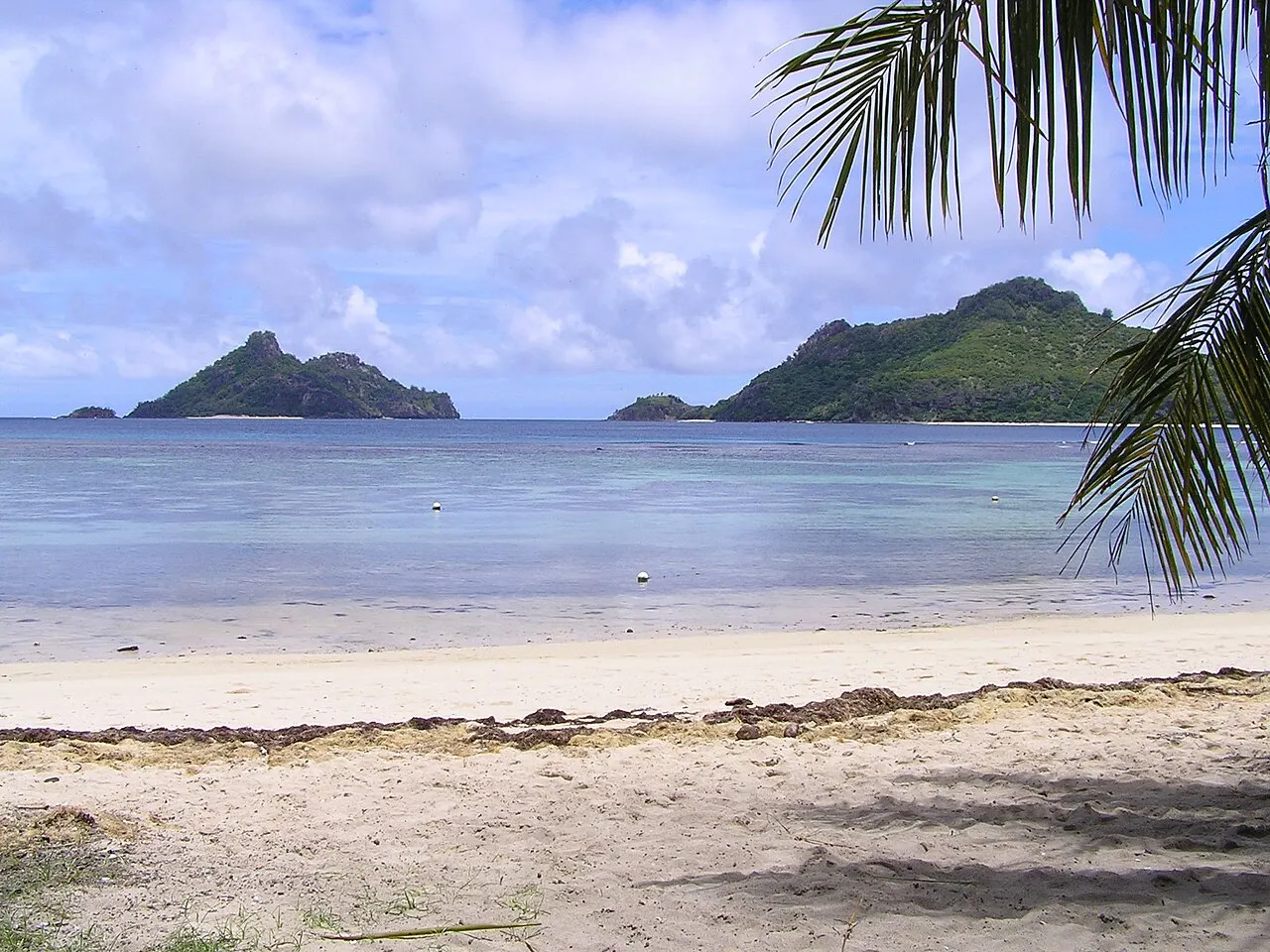
About 20 volcanic islands and islets just west of Nadi, with white-sand beaches, living reefs and clear water, where the reality show Survivor has been filmed since 2016. They are the destination of day trips from Port Denarau: islands set up for a full day, with lunch, snorkeling and kayaking, beach clubs, sandbanks and sailing cruises. There are also resorts to sleep in, from backpacker lodging to a private island.
Check access
Yasawa Islands
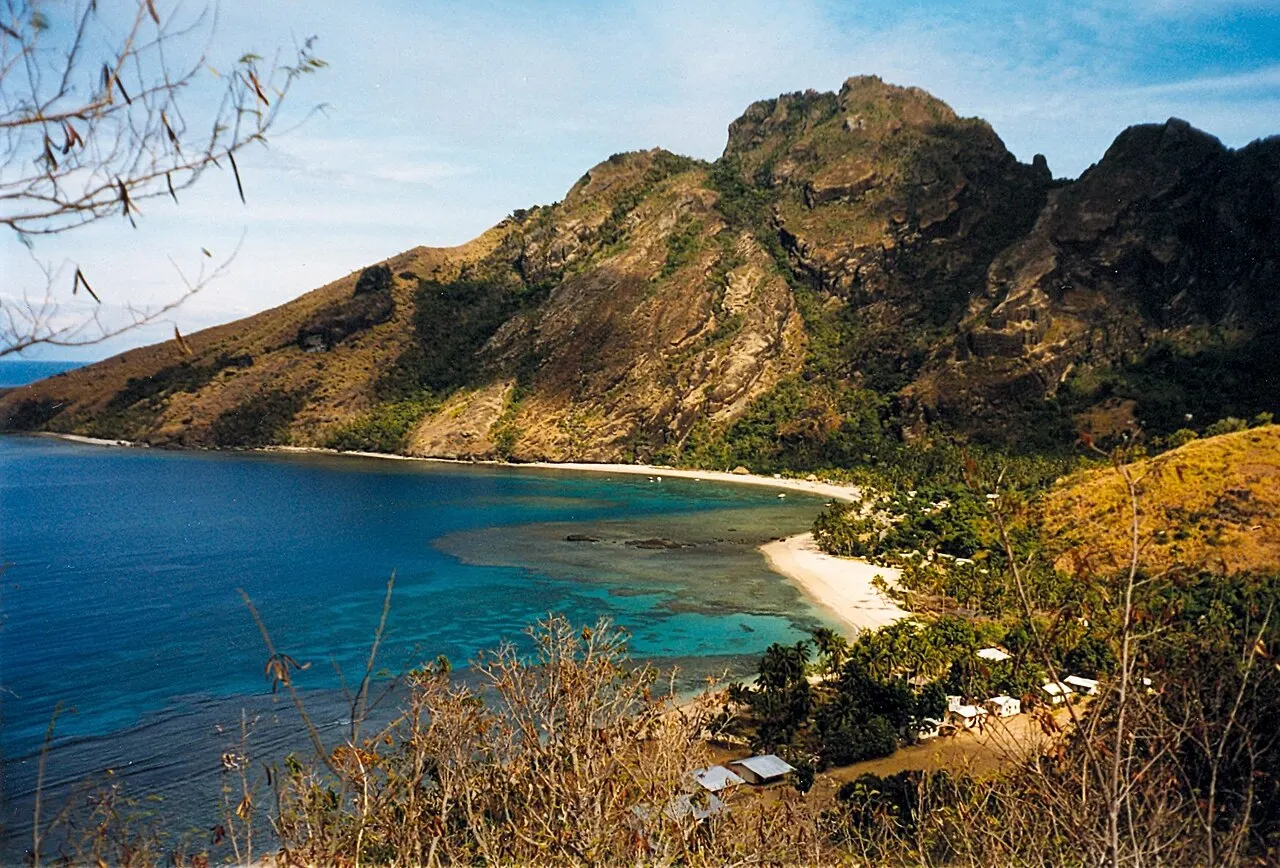
The chain of volcanic islands north of the Mamanuca, higher and more isolated, with villages, long beaches, viewpoints and small resorts. Until 1987, a government policy closed the chain to tourism with accommodation on land, except for guesthouses on private land on the island of Tavewa. The Yasawa Flyer runs the daily service from Port Denarau, and the resorts organize snorkeling, kava and village visits. Between May and October, there are mantas in a shallow channel in the middle of the chain, and the resorts closest to it take guests out to swim with them.
Check access
Sigatoka Sand Dunes National Park
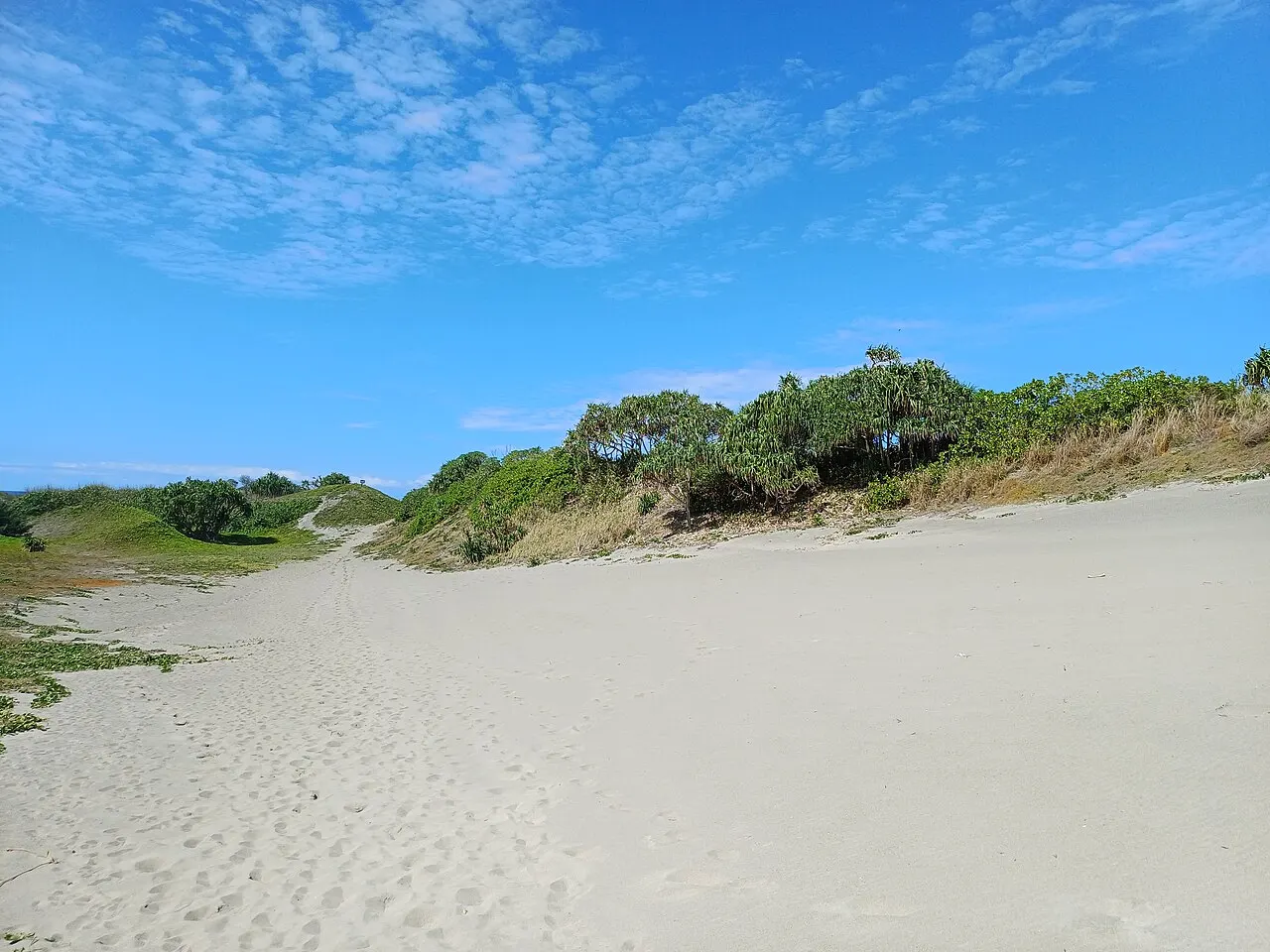
Dunes 20 to 60 m high at the mouth of the Sigatoka River, Fiji's first national park, since 1989, looked after by the National Trust of Fiji. The sand holds Lapita pottery and graves about 2,600 years old, and shards still turn up along the way. There are two trails, a one-hour one, with bird-watching, and a two-hour one, which climbs the dunes. The visitor center is on the Queens Road, about ten minutes by car from the town of Sigatoka, and the park is open every day, holidays included, from 08:00 to 16:30, with a break from 13:00 to 14:00. There is almost no shade: go early in the morning or in the late afternoon.
Check access
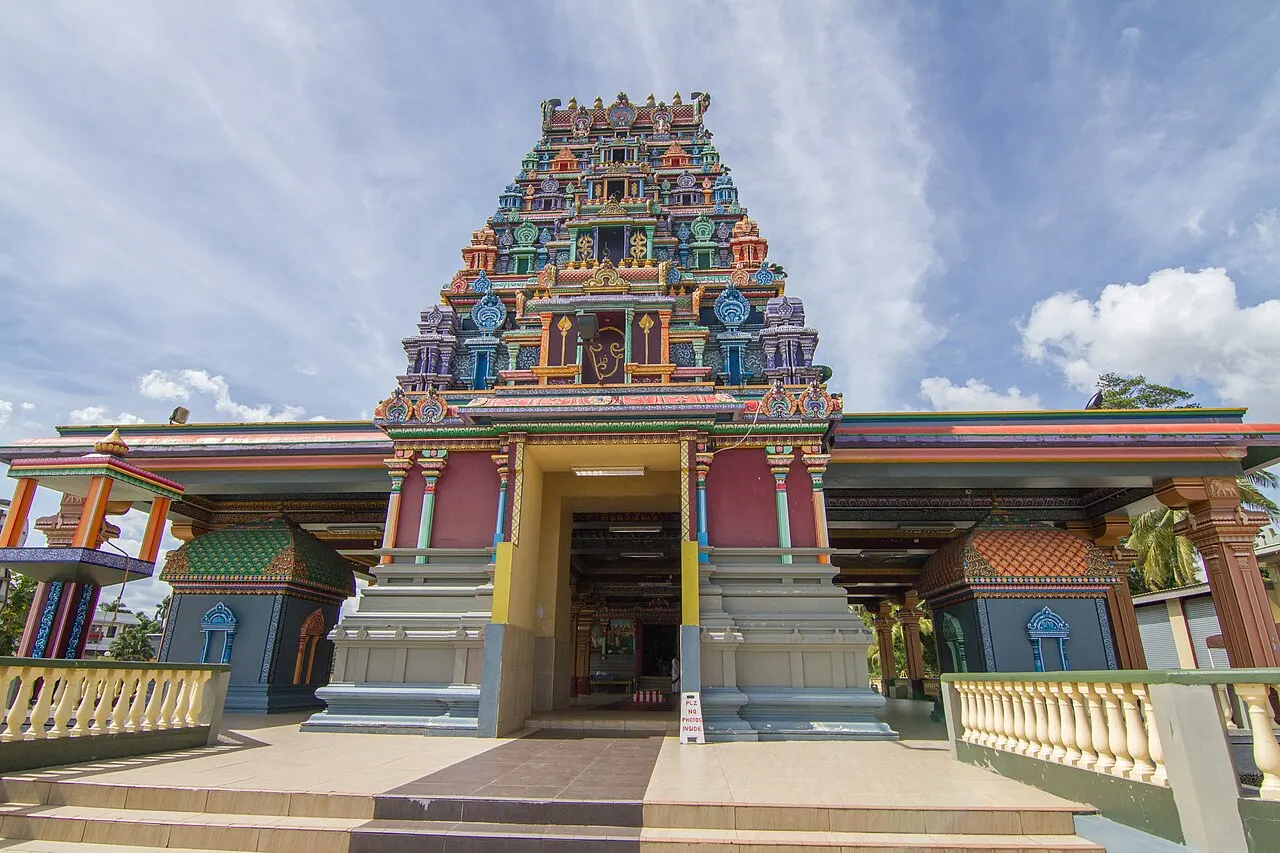
Sri Siva Subramaniya Temple
The largest Hindu temple in the Southern Hemisphere stands at the far south end of Nadi's main street and was consecrated in 1994, in the Dravidian style, with pyramid-shaped towers covered in sculptures of warriors, kings and gods painted in strong colors; artisans from Tamil Nadu came to restore them for the centenary of the association that maintains the temple, in 2026. There is a small admission fee, and guided visits leave every half hour, from 08:30 to 15:00. The rules: shoulders and knees covered, shoes off, and photos only from outside; the inner sanctuary is reserved for those who come to pray. Next door, the temple restaurant serves vegetarian food and masala tea.
Check access
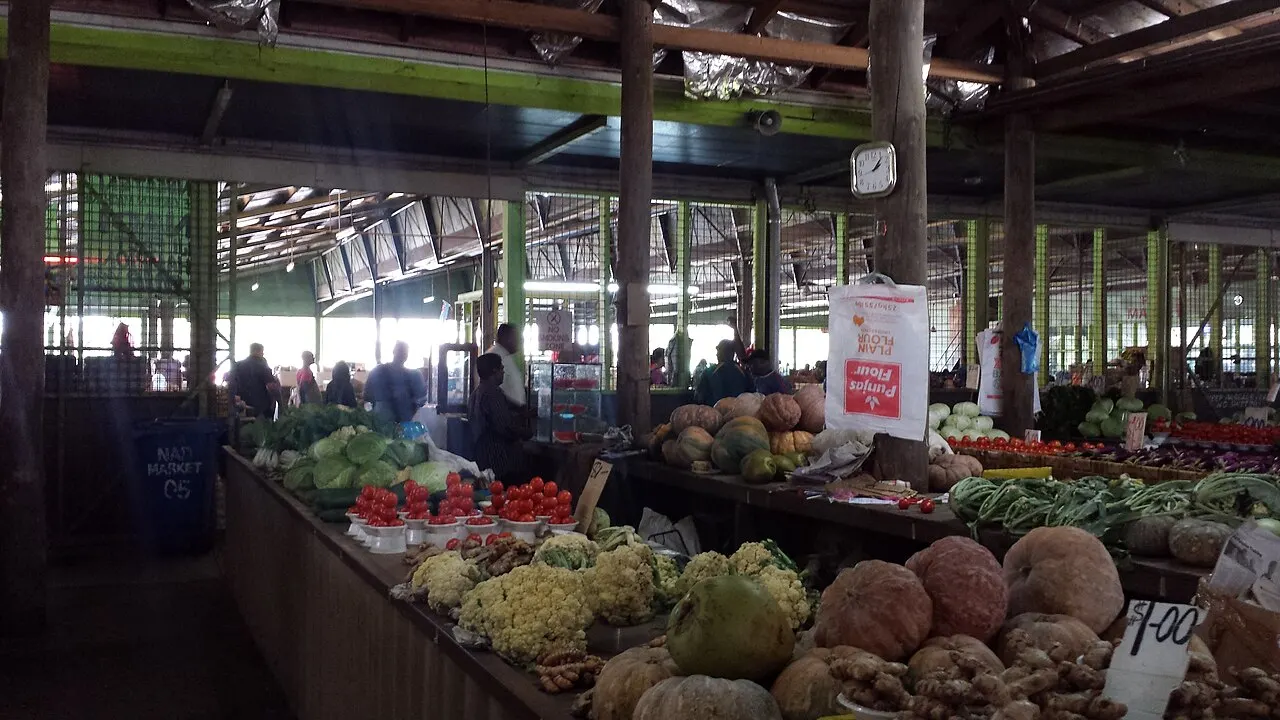
Nadi Municipal Market
Nadi's fruit and vegetable market, in the center, sells what the land of Viti Levu produces in season, from pineapple and banana to greens and root crops, and also the yaqona root for kava, which is what you take as a gift to a village. Fiji's markets close on Sundays, and the best selection is early in the morning. The handicraft market is nearby, at the corner of the Queens Road and Koroivolu Avenue.
Check access
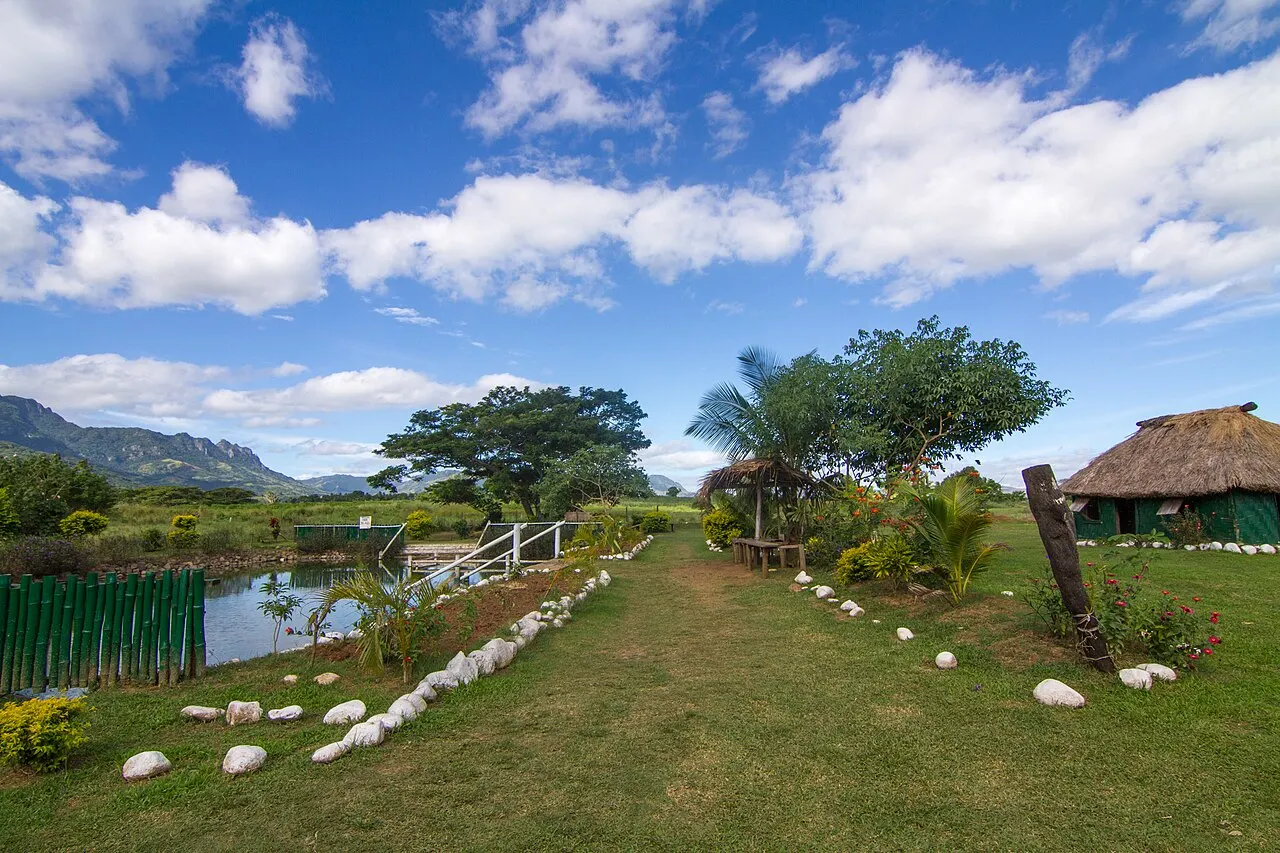
Sabeto Hot Springs and Mud Pool
Mud and thermal water pools in the Sabeto valley. The ritual is to cover your body in mud, let it dry in the sun and move through the hot-water pools, and village women offer massages for an extra fee. It is open every day, from 09:00 to 17:00, charges a small fee and is part of most half-day tours around Nadi; bring clothes that can get dirty.
Check access
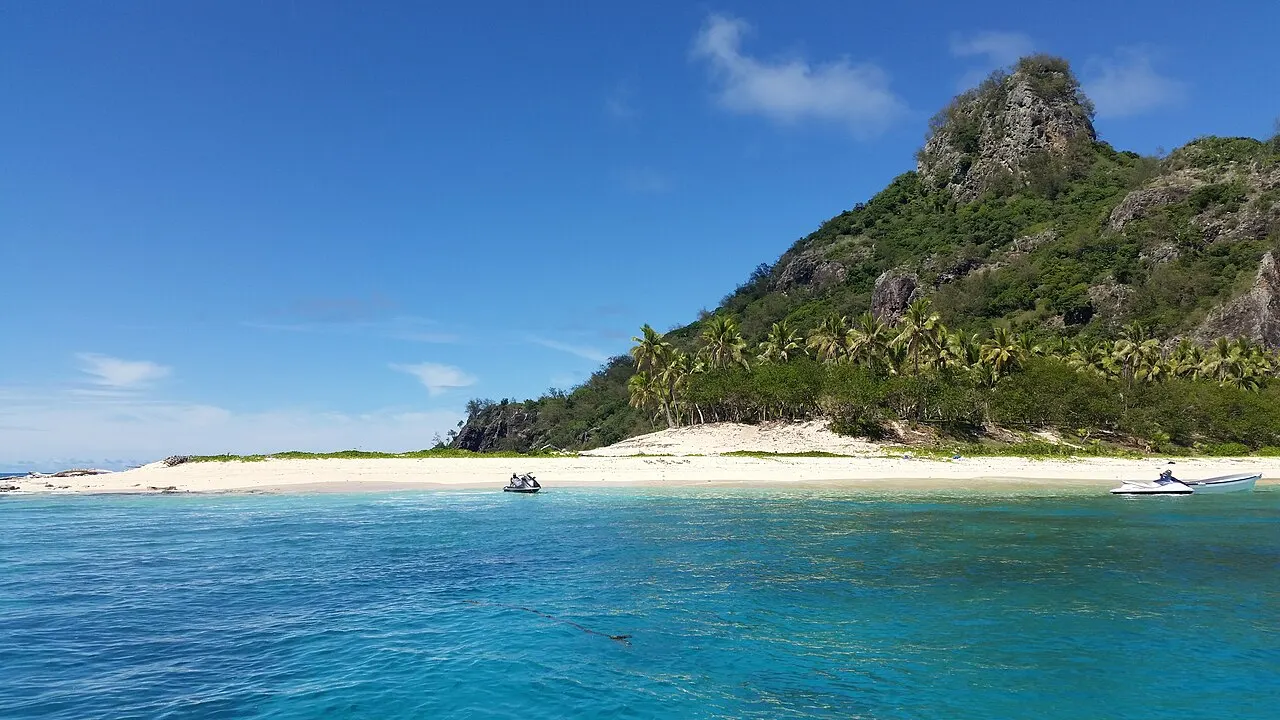
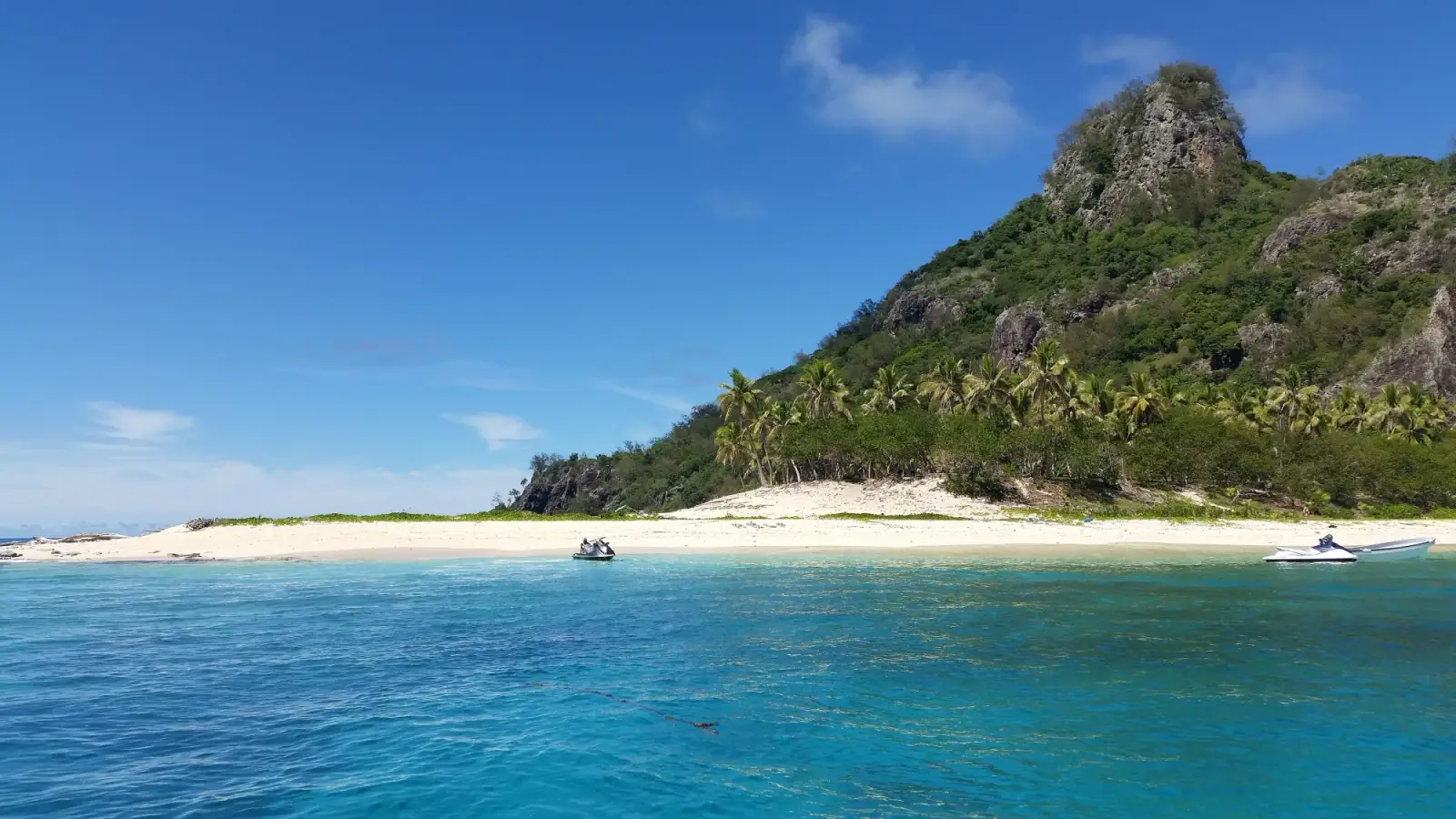
Monuriki
An uninhabited islet in the Mamanuca, 178 m at its highest point, where Cast Away, with Tom Hanks, was filmed. You reach it on day trips from Port Denarau, by cruise or jet ski, or by boat from nearby resorts. The island is one of the few places where the endangered Fiji crested iguana lives, and it has been in a forest restoration program since 2011; the people of Yanuya are its traditional guardians.
Check access
Sawa-i-Lau
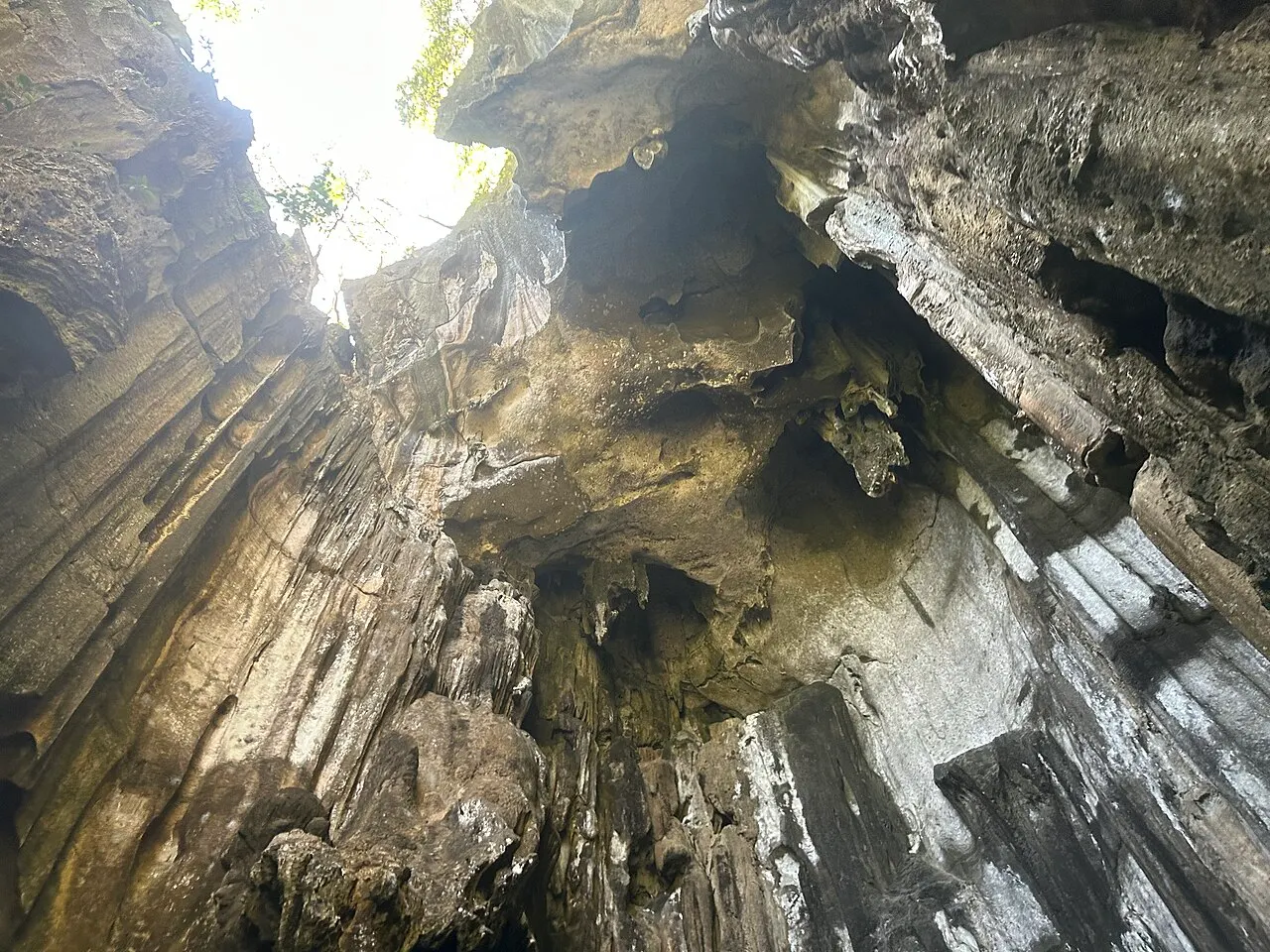
Two limestone caves on the island of Sawa-i-Lau, in the north of the Yasawas, each with a saltwater pool. The first is lit by an opening in the ceiling; the second can only be reached through a submerged tunnel, with a guide. A local legend says a giant hawk lived in the cave. It is a tour much sought after by the resorts in the north of the chain, and anyone who sleeps nearby arrives before the groups.
Check access
Tavuni Hill Fort
A Fijian fortification on a 90 m limestone ridge in the Sigatoka valley, one of the most accessible in the country, with a wide view over the river and the valley. It is an example of how the old Fijian villages fortified themselves on high ground.
Check access
More places in the guide
Natadola Beach
A long beach of pale sand on the southwest coast of Viti Levu, protected by a reef that forms a calm-water lagoon, good for swimming. The wave that breaks outside the lagoon is one of the most used for surf lessons in Fiji. Two resorts sit on the beach, about 55 minutes by car from Nadi airport.
Garden of the Sleeping Giant
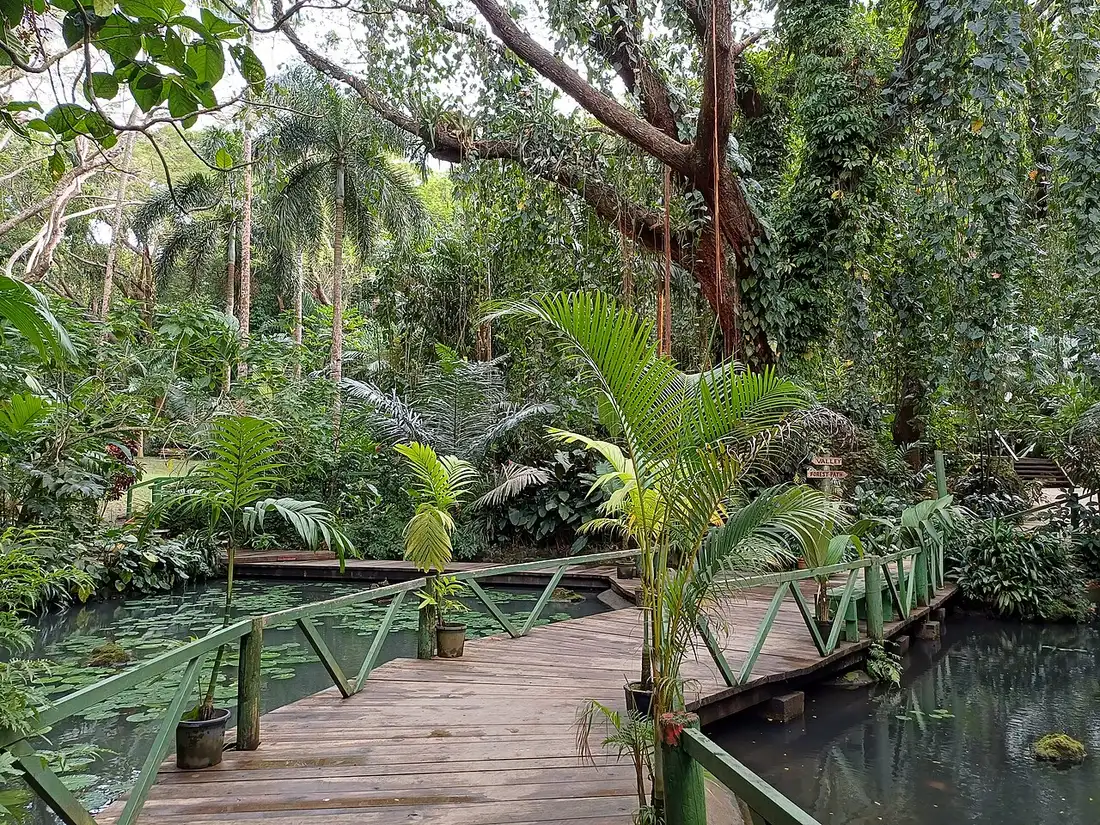
The garden that the actor Raymond Burr started in 1977 as an orchid nursery, in the Sabeto valley, at the foot of the Sleeping Giant range. It has a large orchid collection, native plants, ponds and a short forest trail. In 2021, during the pandemic, the garden closed and later reopened with reduced hours: confirm the days and hours before you go.
Port Denarau
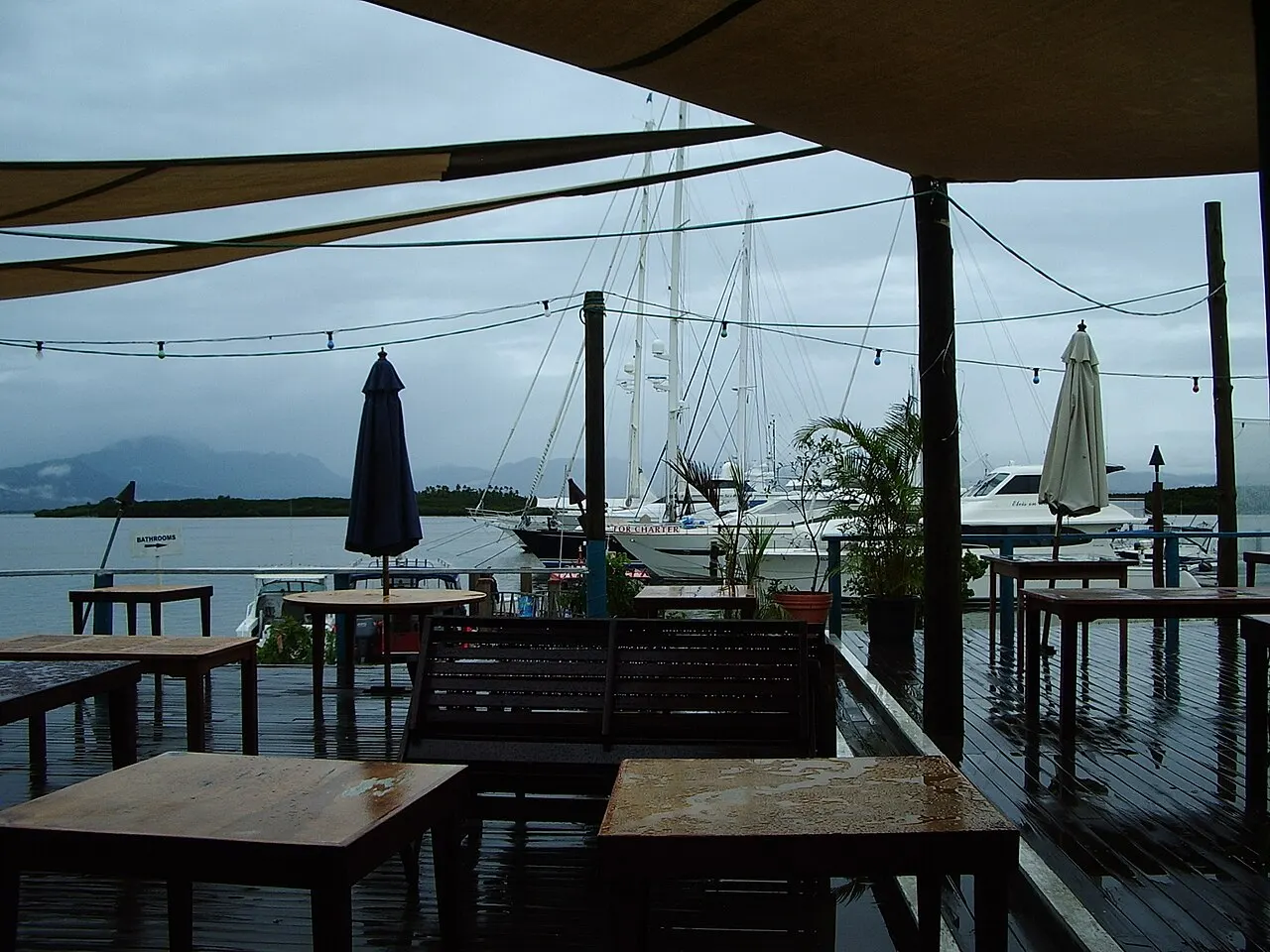
The Denarau marina, with restaurants, shops, a supermarket and the boat agencies, is the departure point for the Mamanuca and Yasawa islands and for sunset cruises. It is less than five minutes from the Denarau resorts and 15 to 20 minutes from the lodgings in Nadi. It is worth it as a starting point and a place for dinner; it does not justify a trip on its own.
Cloud 9
A floating bar anchored in the sea of the Mamanuca, with a sun deck, loungers, cocktails and DJs, known for its parties; it charges no landing fee. You get there by boat from Port Denarau or from the island resorts. It suits anyone who wants a day of partying at sea, not anyone looking for a beach or silence.
Momi Battery Historical Park
The two 6-inch guns installed from the end of 1940 to watch the Navula passage, the only deep entrance in the reef of western Viti Levu, through which an enemy ship could come to attack Nadi and Lautoka. A 10 to 15 minute walk passes the guns, the magazine and the command post, and the visitor center tells the story. It is about 45 minutes by car from Nadi, on a side road near Momi Bay.
Kula Wild Adventure Park
An animal park on the Coral Coast that breeds endangered Fijian species in captivity, such as the iguana and turtles, with an aviary, a small marine center and water slides. It is the natural stop for anyone traveling with children.
Nilo’s itinerary
Start with the basic programme and choose extensions for the time you have.
Plan my days in the app ↗Day 1 · Nadi: the temple, the market and the Sabeto valley
In the morning, start with the Sri Siva Subramaniya Temple, at the far south end of the Queens Road: guided visits leave every half hour from 08:30. Go with shoulders and knees covered.
Have a masala tea at the vegetarian restaurant next to the temple.
Walk through the center to the Nadi market to see the fruit and buy yaqona root, if you will be visiting a village in the next few days; the markets close on Sundays, so on a Sunday swap the order and leave the market for another day. The handicraft market is near it.
Have curry and roti for lunch at an Indo-Fijian restaurant in the center.
In the afternoon, take a taxi or tour to the Sabeto valley: the mud bath and thermal pools at Sabeto (open until 17:00) and, if it is open, the Garden of the Sleeping Giant.
In the late afternoon, head down to Wailoaloa for sunset over the bay and dinner at one of the beach bars.
Day 2 · A day by boat in the Mamanuca
Go early to Port Denarau, 15 to 20 minutes from the lodgings in Nadi; many tours include the hotel transfer.
Choose a kind of day: a fully equipped island (lunch, snorkeling and kayaks), a beach club, a sandbank, a sailing cruise or the cruise that stops at Monuriki, the Cast Away island.
Bring sunscreen, a towel, swimwear and cash for extras.
Return to Port Denarau in the afternoon and have dinner at the marina.
Day 3 · Up the Yasawas on the Yasawa Flyer
Take the transfer bus from your hotel to Port Denarau; the Yasawa Flyer leaves at 08:45.
After the stop at South Sea Island, the catamaran goes up the chain; depending on the resort, the trip takes from two to five hours, and the resort's boat meets the ship on the way.
In the afternoon, snorkel on the resort's reef, walk to a viewpoint or take a village visit organized by the resort.
In the evening, the kava circle or the resort's dinner. Sleep on the island.
Day 4 · Mantas or caves, and the return
From May to October, if the resort is near the manta channel, go out in the morning with it to try to see them: one morning is a chance, not a guarantee, and anyone going for them should stay three days. In the north of the chain, go to the Sawa-i-Lau caves.
Have lunch at the resort and take the boat out to the Yasawa Flyer on its return run, at the time the resort tells you.
Arrive at Port Denarau around 18:00, with a bus on to your hotel in Nadi or Denarau.
Day 5 · The Coral Coast: dunes, fort and beach
Leave Nadi very early, by rental car or tour, on the Queens Road heading south; the town of Sigatoka is 61 km from Nadi.
Reach the Sigatoka Sand Dunes right at opening, at 08:00, and do one of the trails before the heat; the park closes from 13:00 to 14:00.
Climb to the Tavuni Hill Fort to see the Sigatoka valley from above.
Have lunch in Sigatoka and continue to Natadola Beach, to swim in the lagoon in the afternoon.
Return to Nadi before dark, avoiding the road at night.
If you stay longer
Day 6 · Navala and the highlands
Day trip
Fiji's best-known village for its architecture: more than 200 bure, thatched houses of the same size, in a highland valley of Ba, across a river. You get there by the gravel road that climbs from Ba, an hour by car from that town on the northwest coast. Several Nadi agencies run the day tour with transport, sevusevu and a guide; on your own, you need a car that can handle gravel, kava for the chief and a sulu. The village charges an entrance fee and a fee for taking photographs. It does not operate on Sundays.
Food
Kokoda
Raw fish marinated in lime juice until opaque, then mixed with coconut milk, tomato, onion and chili. It is the dish you see most on menus, a relative of the poisson cru of Tahiti, and works as a starter or a light lunch.
Lovo
The Fijian earth oven: meat, fish, cassava and taro wrapped in leaves and cooked for hours over hot stones, covered with earth. It is food for feasts and weddings, and at the resorts it usually appears at one dinner a week.
Rourou and palusami
Rourou is taro leaf, cooked in a stew with coconut milk. Palusami are small parcels of taro leaf filled with thick coconut cream and onion, often with canned meat, and baked in the lovo.
Cassava and taro
Cassava, called tavioka, replaced yam as the base of the table and comes boiled in salted water beside stews and curries. Taro, dalo, plays the same role.
Curry, roti and dhal
Indo-Fijian cooking: curry of meat, fish or vegetables, lentil dhal and roti, the flatbread. In Nadi, it is the easiest meal to find outside the resorts, and the crab curry with coconut milk blends the country's two cuisines.
Fish suruwa
Fijian-style fish curry, soupier, served with rice or cassava.
Vakalolo
A sweet of grated cassava with ginger, sugar, cardamom and coconut milk, wrapped in a leaf and cooked. It shares the dessert table with steamed coconut pudding.
Masala tea
The tea with milk and spices of Indo-Fijian homes, drunk at any hour.
Kava (yaqona)
Fiji's drink, made from the dried, ground root of a pepper plant (Piper methysticum) mixed with water in a large communal bowl and served in a cup, the bilo. It tastes of earth, which many people find strange, and has a mild sedative effect. It is drunk at ceremonies and in conversation circles, in villages, at resorts and in kava bars.
Where to eat
- Saravana Bhavan · Sri Siva Subramaniya Temple, central Nadi
A vegetarian restaurant next to the temple, with full meals and masala tea; handy for combining with the morning visit.
Source · 2026-10-19
- Central Nadi and Martintar
Curry, dhal and roti at the Indo-Fijian restaurants, the most affordable meal outside the resorts, plus Chinese and Japanese cooking in Martintar.
- Nadina · Port Denarau
A Fijian-cuisine restaurant at the marina, for trying kokoda, rourou and coconut-milk dishes before or after a day on the boat.
Source · 2026-10-19
- Vavavi Experience · Wailoaloa
A half-day lovo class with Vavavi Experience, a family business: preparing the earth oven, grating coconut, making the cream and wrapping the food in leaves, and then eating.
Source · 2026-10-19
- Beach bars of Wailoaloa
Fish, kokoda and burgers on the sand, with live music at several of them and the sunset over Nadi Bay.
- Island resorts
On the islands, the meal is almost always the resort's, often with one lovo dinner a week. Anyone who needs a special diet should notify the resort beforehand and bring whatever is hard to find.
· 2026-10-19
Day trips
Navala and the highlands
Fiji's best-known village for its architecture: more than 200 bure, thatched houses of the same size, in a highland valley of Ba, across a river. You get there by the gravel road that climbs from Ba, an hour by car from that town on the northwest coast. Several Nadi agencies run the day tour with transport, sevusevu and a guide; on your own, you need a car that can handle gravel, kava for the chief and a sulu. The village charges an entrance fee and a fee for taking photographs. It does not operate on Sundays.
Koroyanitu National Heritage Park
The mountain park behind Lautoka, created in 1989 and run by the community, with forest trails, waterfalls and Mount Batilamu, at about 1,100 m. The base is the village of Abaca, 15 km and about 30 minutes by car from Lautoka, and about an hour from Nadi. The Batilamu trail takes three to four hours to the top; go with a guide, bring a sulu for the village and plenty of water.
Pacific Harbour and Beqa
On the south coast of Viti Levu, about 2 hours 30 minutes by car from Nadi, Pacific Harbour presents itself as the adventure capital of Fiji: diving with bull sharks at the Shark Reef Marine Reserve, in the Beqa lagoon, rafting on the Navua River and the resorts of the island of Beqa, home of the fire walk. As a day trip from Nadi it is tiring; it works better with a night in the area.
Suva
The capital lies in the wet southeast of Viti Levu, about 3 hours 30 minutes by car from Nadi, or 30 minutes by plane to Nausori. It has the Fiji Museum, in the Thurston Gardens, with the most important collection of Fijian objects in the world, including a 13 m double-hulled canoe and the rudder of the Bounty (every day from 09:00 to 16:30, until 19:00 on Thursdays), the municipal market and, 15 or 20 minutes away, the trails and natural pools of the Colo-i-Suva Forest Park. To see it at a relaxed pace, sleep a night.
Where to begin
Nadi: the temple, the market and the Sabeto valley
In the morning, start with the Sri Siva Subramaniya Temple, at the far south end of the Queens Road: guided visits leave every half hour from 08:30. Go with shoulders and knees covered.
A day by boat in the Mamanuca
Go early to Port Denarau, 15 to 20 minutes from the lodgings in Nadi; many tours include the hotel transfer.
Mantas or caves, and the return
From May to October, if the resort is near the manta channel, go out in the morning with it to try to see them: one morning is a chance, not a guarantee, and anyone going for them should stay three days. In the north of the chain, go to the Sawa-i-Lau caves.
The Coral Coast: dunes, fort and beach
Leave Nadi very early, by rental car or tour, on the Queens Road heading south; the town of Sigatoka is 61 km from Nadi.
Money
The currency is the Fijian dollar (FJD). Credit cards are accepted at hotels, resorts, tours, larger restaurants and big stores, but generally with a 3% surcharge; taxis, the bus card top-up, markets, small shops and many local restaurants want cash. The ATMs at the airport, in Namaka, Martintar, Denarau and central Nadi limit withdrawals to FJD 2,000 a day. Some price references: the Fiji Museum, in Suva, charges FJD 5 per adult and FJD 2 per child aged 2 to 12 (Tourism Fiji, checked in October 2026); the table published on the National Trust of Fiji website, undated, gives FJD 10 per adult at the Sigatoka dunes and the Momi battery; and half a kilo of yaqona root for the sevusevu runs around FJD 30 to 40 in the markets. Boat tours and Yasawa Flyer tickets vary by operator and season; check the South Sea Cruises or Yasawa Adventures (Awesome Adventures) website before booking. Bring cash also for village entrance fees and community charges, such as those at Navala and on the Koroyanitu trail.
Getting there and around
Arriving in Nadi
Nadi International Airport (NAN) is 9 km from town and receives almost all of the country's international flights. In the arrivals hall there are Vodafone and Digicel counters, which sell SIM cards with a passport, and ATMs. Yellow taxis wait at the exit; they have meters, with a flag-fall of FJD 7.50 according to Tourism Fiji, so check that the meter is switched on and have Fijian dollars in cash. Many hotels have transfers, and private or shared transfers should be booked at least 24 hours ahead.
In Nadi and Denarau
Local buses stop when you wave and are paid for with a disposable electronic card, sold at the Vodafone counter in arrivals. In Denarau, the Bula Bus passes every 10 to 15 minutes through the resorts and Port Denarau. At rush hour, from 07:00 to 08:30 and from 16:30 to 18:00, traffic on the Queens Road delays transfers.
Boats to the islands
The boats leave from Port Denarau: regular catamarans and day trips to the Mamanuca, water taxis on demand and the Yasawa Flyer, from South Sea Cruises, which leaves at 08:45, stops at South Sea Island, goes up the Yasawa chain to the Blue Lagoon and returns to Port Denarau around 18:00. At the Yasawa resorts, a boat comes out to collect the passenger beside the catamaran. The bus transfer between most hotels in Nadi, Wailoaloa and Denarau and the marina is included in the ticket. Anyone staying at several Yasawa resorts buys the Bula Pass, for 5 to 15 days, which allows hopping on and off the Flyer at will. There are also seaplanes and helicopters to some resorts.
Around the island
For the Coral Coast and the interior, the most practical option is a rental car or an organized tour; people drive on the left, and side roads can have potholes or be gravel. Express buses connect Nadi to Suva along the Queens Road, and any stretch between the two towns costs less than FJD 25 by bus, according to Tourism Fiji. By car, Nadi to Suva takes about 3 hours 30 minutes; by plane, from Nadi to Nausori, Suva's airport, it is about 30 minutes.
Safety
Fiji is a calm destination for travelers, and the crime that affects visitors in Nadi is generally minor, such as small scams and thefts. Use a taxi with the meter running, do not leave bags unattended, including in temples, and at night prefer a taxi to walking. At sea, the biggest risk is the sea itself: currents on the reef, coral cuts and small boats at night or in bad weather. For fishing trips, choose an operator with insurance and a certificate from the Maritime Safety Authority of Fiji, which every commercial fishing operator must have. In cyclone season, from November to April, follow the warnings of the Fiji Meteorological Service and the hotel's guidance. The US CDC lists dengue, Zika and leptospirosis among the health risks in Fiji: use repellent and avoid standing water and floodwater. The sun is strong all year. In an emergency, call 911; the police answer at 917 and the fire service at 910.
Before you go
- Plug
- type I
- Voltage
- 240 V
- Driving side
- on the left
- Emergency
- General, Ambulance 911 · Police 917 · Fire 910
- Country code
- +679
- Official languages
- English, Fijian and Fiji Hindi
- Currency
- Fijian dollar (FJD)
Source: Wikidata (CC0), checked September 2026.
Etiquette tips
Bula to begin with
Bula is the greeting you hear from the plane onward, and it works at any hour of the day. Answering with another bula opens any conversation.
The kava circle
At the ceremony, you sit cross-legged on the floor. When you receive the bilo, clap once before drinking and three times afterward.
Inside the village
Cover your shoulders and legs; the sulu, a cloth tied at the waist, does the job. Take off your hat and sunglasses, carry your bag in your hand, speak quietly, ask permission before taking photos or entering a house, and leave your shoes at the door.
Tulou
When passing between people who are sitting or through a crowded space, lower your head and body a little and say tulou, excuse me.
At the Hindu temple
Shoulders and knees covered, shoes off, and photos only from outside.
At a meal in a family home
You eat sitting on a mat on the floor, after the prayer, the masu, and thank the hosts at the end.
Mistakes to avoid
Arriving at the village empty-handed
The custom is to bring the sevusevu, a bundle of root or a packet of kava, and hand it to the chief on arrival, as a request for permission and a thank-you. Anyone on an organized tour has the kava provided by the guide; anyone going on their own buys the root at the market beforehand.
Scheduling a village visit on Sunday
Sunday is sacred, most village tours do not run and the markets close. Leave Sunday for the beach or the resort.
Treating Nadi as a beach destination
Nadi's beach exists, but the reason for the trip is the islands and the Coral Coast. Anyone who stays the whole week in Nadi starts every island or Coral Coast day with a round-trip transfer.
Crossing by small boat at night or in rough seas
Tourism Fiji recommends not using the small fiberglass boats between islands at night or in bad weather. Arrange transfer times with the resort with plenty of margin.
Going to the Sigatoka dunes at noon
There is no shade, and the National Trust advises against walking in the hottest hours. Arrive early or in the late afternoon, with water, a hat and closed shoes.
Forgetting the card surcharge
Most businesses charge 3% extra on cards. For markets, taxis and the bus card top-up, withdraw cash beforehand.
Useful phrases
Bula (mboo-la)
Hello; a wish for life and health, used at any hour
Yadra (YAHN-dra)
Good morning
Vinaka (vee-NAH-ka)
Thank you
Kerekere (keh-reh-KEH-reh)
Please
Tulou (too-LOH-oo)
Excuse me
Io (EE-oh)
Yes
Sega (SEH-nga, with a nasal ng, no hard g)
No
Moce (MOH-the, with the English th)
Goodbye
E vica? (eh VEE-tha)
How much?
Sega na leqa (SEH-nga na LEH-ngga)
No problem
Namaste
Hello, in Hindi, among Indo-Fijians
Where to stay
- Denarau · Anyone who wants a resort with a pool and beach, travels with children or will take several boat trips from Port Denarau.: The resorts of international chains are less than five minutes from the marina, and the Bula Bus links the hotels with one another and with Port Denarau. In exchange, the peninsula is separated from town by a bridge and is a resort enclave: to eat cheaply, go to the market or see Nadi's daily life, you need a taxi or bus.
- Wailoaloa and Martintar · Anyone on a smaller budget, spending few days in Nadi or taking a seaplane to the islands.: They concentrate the budget and mid-range lodging, beach bars and restaurants, near the airport, and the island boats include transfers from here. The beach is urban, and not the reason for the trip; trips to Port Denarau take 15 to 20 minutes.
- Namaka, near the airport · Anyone who arrives late or leaves early.: It is a few minutes from the terminal, with transit hotels, supermarkets and ATMs. It has no beach or attraction of its own.
- Mamanuca Islands · Anyone who wants to sleep on an island without spending hours on a boat, from backpackers to couples at a luxury resort.: The islands are close to Port Denarau, with regular catamarans, water taxis and resorts at every price. The nearest ones also receive day visitors, and the atmosphere is busier than in the Yasawas.
- Yasawa Islands · Anyone who sleeps at least one night on the islands and wants village and trail; for the mantas, from May to October, three days at a resort near their channel.: The resorts are small and spread along the chain, and with the Bula Pass you can combine several. Food and activities almost always depend on the resort itself, and rough seas can delay the transfer.
- Coral Coast · Families and anyone who prefers snorkeling from the beach, waterfalls and inland villages, without a boat every day.: The fringing reef allows swimming and snorkeling straight from the hotel, and Sigatoka, the dunes and Natadola are close. The drawback is the distance from the Port Denarau boats: the resorts near Sigatoka are 45 minutes or more by road from the airport.
· 2026-10-19
Districts
Nadi (center)
The real town, along the Queens Road: shops, the fruit and vegetable market, the handicraft market, Indian restaurants and the Sri Siva Subramaniya temple at the far south end. Good for a morning of shopping and food, not for a beach stay.
Martintar and Namaka
The neighborhoods between the airport and the center, cut through by the Queens Road. They have transit hotels, supermarkets, pharmacies, ATMs and Nadi's nightlife, concentrated in Martintar.
Wailoaloa
Nadi's urban beach, north of town and near the airport, with budget and mid-range lodging, beach bars and restaurants on the sand. It is also the base for the seaplanes that fly to some island resorts.
Denarau
A resort peninsula of 2.55 km² linked to Nadi by a short bridge, with an 18-hole golf course and hotels of international chains. Port Denarau, the marina with restaurants and a supermarket, is where the boats leave for the Mamanuca and the Yasawas. The Bula Bus runs between the resorts and the marina.
Sabeto
The green valley north of Nadi, at the foot of the Sleeping Giant range, with the orchid garden, the thermal mud pools and the zipline. It lies on the way to Lautoka and to Vuda, where tradition places the arrival of the first Fijians.
Mamanuca Islands
The archipelago right in front of Nadi, with resorts at every price, from backpacker places to private islands, and several day-trip islands. It is the most accessible and the busiest.
Yasawa Islands
The northernmost chain, higher, longer and more isolated, with small resorts on islands with villages. It suits anyone who wants to stay a few nights, swim with mantas in season and see village life.
Coral Coast
The south coast of Viti Levu from Sigatoka, with resorts spread along the Queens Road and on nearby islets, a reef that allows snorkeling from the beach, waterfalls and villages in the interior. It is far from the Port Denarau boats.
History
2nd millennium BC · The first inhabitants
Austronesian peoples arrive in the archipelago; later come Melanesian populations, with Polynesian influence. In the Sigatoka dunes, archaeologists found Lapita pottery and a burial ground about 2,600 years old.
1643 · Tasman sights Fiji
The Dutchman Abel Tasman is the first known European to see the islands, as he passes Vanua Levu and the north of Taveuni.
1789 · Bligh crosses the archipelago
After the mutiny on the Bounty, William Bligh passes between Viti Levu and Vanua Levu in an open boat and is the first European to sight the Yasawas. The strait between the two larger islands is called Bligh Water.
1871–1874 · The Kingdom of Fiji
Seru Epenisa Cakobau, chief of Bau, is proclaimed Tui Viti, king of Fiji, in a government backed by European settlers that cannot collect taxes or control the interior.
1874 · The cession to Great Britain
On October 10, Cakobau and other chiefs cede the islands to the United Kingdom, and Fiji becomes a Crown colony.
1879 · Indian workers arrive
In May, the ship Leonidas lands the first indentured workers from India at Levuka, for the sugarcane fields. The system, called girmit, brought more than 60,000 people until 1916.
1882 · Suva becomes the capital
The colonial administration leaves Levuka, which has no room to grow between the mountain and the sea, and settles in Suva.
1940–1945 · Nadi in the Second World War
The United States Navy sets up a base in Nadi, and the Momi battery, built from the end of 1940, comes to guard the only deep passage in the reef on the west coast.
1947 · The township of Nadi is born
The colonial government opens offices in the upper part of Nadi, commerce settles around them, and the village gains township status.
1970 · Independence
The British flag comes down in Suva at sunset on October 9, and Fiji wakes up independent on October 10, the anniversary of the cession.
1975 · The first hotel in Denarau
The Regent of Fiji, now the Westin, opens on land in Denarau bought by an American developer in 1969. Between 1988 and 1991, a Japanese group clears mangroves to build a golf course, a marina and more hotels.
1987 · Coups and the Yasawas opened
Two military coups overthrow the government and turn the Dominion of Fiji into a republic. The same year, the government stops prohibiting tourism with accommodation on land in the Yasawas.
1989 · The first national park
The Sigatoka dunes become Fiji's first national park, managed by the National Trust of Fiji.
2006 · Bainimarama's coup
Commodore Frank Bainimarama seizes power; Fiji is suspended from the Commonwealth in 2009 for not calling elections.
Complete history
Islands inhabited for three millennia
Fiji has been inhabited since the second millennium BC, first by Austronesian peoples and then by Melanesian populations, with constant exchange with Tonga and Samoa. The Fijians built large double-hulled canoes, the drua, and a village architecture of their own, with thatched houses called bure. The Sigatoka dunes hold Lapita pottery and graves about 2,600 years old, and part of what came out of there is in the Fiji Museum, in Suva.
Chiefs, missionaries and settlers
Europeans passed through the archipelago from the seventeenth century, but only settled in the nineteenth, in Levuka, on the island of Ovalau, in search of sea cucumber to sell to China and later cotton. The clans fought among themselves for power, and Seru Epenisa Cakobau, of Bau, became the strongest chief. With the support of settlers, he was proclaimed king in 1871, but the government did not last, and on October 10, 1874 the chiefs ceded the islands to Great Britain.
Girmit and the Indo-Fijians
For the sugarcane fields that replaced cotton, Governor Arthur Gordon brought indentured workers from India. The first ship, the Leonidas, arrived in May 1879, and until 1916 more than 60,000 people came on five-year contracts, the girmit, in conditions that historians compare to slavery. Most stayed. That is why western Viti Levu, cane country, has Hindu temples, mosques, roti and curry, and why in Nadi you hear Fiji Hindi as much as Fijian.
Independence and the coups
Fiji became independent on October 10, 1970, on the same date as the cession. The political divide between native Fijians and Indo-Fijians marked the following decades: two coups in 1987, the civilian coup of 2000, which toppled the government of Mahendra Chaudhry, and the military coup of 2006, after which Fiji was even suspended from the Commonwealth. Many Indo-Fijians emigrated, and their share of the population fell considerably. For the visitor, this history shows up little in daily routine, but it explains the coexistence of two cultures side by side, each with its own language, religion and cuisine.
Nadi, from airport to tourism
Nadi grew with the war, when the United States Navy built a base there, and with the country's international airport, set on the drier side of the island. Denarau began receiving hotels in 1975, and the Yasawas only opened to tourism with accommodation on land in 1987. Today tourism, alongside sugarcane, sustains the region, and Nadi has the largest concentration of hotels in Fiji.
Geography and shape of the city
The dry side of Viti Levu
Viti Levu, the largest island, holds almost three quarters of Fiji's population. The trade winds arrive from the southeast and drop their rain on Suva and the mountains; the west, where Nadi and Lautoka lie, gets much less rain and has a real dry season. That is why the sugarcane fields, the airport and most of the resorts are on the west side.
Nadi, Denarau and the mountains
Nadi spreads across the plain of Nadi Bay, between the airport, to the north, and the old town, on the bank of the Nadi River. The Queens Road connects everything and continues to Lautoka and to the south. Denarau is a peninsula of resorts linked by a short bridge, 5 km from town. Behind the plain rises the range called the Sleeping Giant, and the Sabeto valley at its foot.
Two archipelagos offshore
The Mamanuca are a group of about 20 volcanic islands and islets west of Nadi, several of them covered at high tide. The Yasawa, to the north, are about 20 mountainous volcanic islands, with peaks of 250 to 600 m, stretching more than 80 km to the northeast. Tourism Fiji puts the distance from Nadi to the Yasawas at 50 to 80 km, and the boat trip to the end of the chain takes from two to five hours.
The Coral Coast and the Sigatoka River
South of Nadi, the coast of Viti Levu is protected by a fringing reef, which allows snorkeling from the beach. The Sigatoka River, the longest in Fiji, runs down from the interior and empties near the town of Sigatoka, where wind and river sand formed the dunes of the national park. The Sigatoka valley is the country's vegetable garden.
Culture
The village and the sevusevu
Native Fijian life, iTaukei, is organized in villages with a chief, communal land and rules of respect. The custom is for the visitor to bring the sevusevu, a bundle of root or a packet of powdered kava, and hand it to the chief in an exchange of formal words that asks permission to enter and thanks the village for its welcome. Then comes the kava circle and the talanoa, the long conversation with stories and music. Inside the village, shoulders and legs are covered, hats and sunglasses come off, bags are carried in the hand and shoes stay at the door of the houses; in many villages, touching someone's head is an offense.
Two cultures side by side
Fiji is 69% Christian, 24% Hindu and almost 6% Muslim, according to the 2017 census. The Methodist Church gathers about two thirds of native Fijians, and Sunday is a day of worship and choral singing. The Indo-Fijians, descendants of the girmit workers, maintain temples, mosques, Fiji Hindi and festivals such as Diwali, which is a national holiday. In Nadi, the two cultures share the same street.
Meke, masi and the fire walk
The meke is the sung dance that tells stories: the men with strong movements, sometimes with club and spear, the women with softer gestures and fans. The masi is the bark cloth printed with geometric patterns, used in ceremonies and sold as a handicraft. The descendants of the Sawau people, of the island of Beqa, keep the tradition of walking over red-hot stones, which can now be watched at some resorts on the Coral Coast and in Pacific Harbour.
Rugby
Rugby sevens is the national sport, and the Fiji team has won the Hong Kong tournament 18 times and two World Cups in the format. There are local tournaments throughout the year, such as the Coral Coast 7's, in January.
Festivals and events
Coral Coast 7's
January. Rugby sevens tournament on the Coral Coast.
Girmit Day
May, national holiday. It commemorates the arrival of the Indian girmit workers, from 1879.
Bula Festival
July, for one week, in Nadi. The town's festival, organized by the Nadi Bula Festival Trust, with a week of programming and a contest that crowns the festival queen.
Fiji Week and Fiji Day
The week that ends on October 10, a national holiday, the anniversary of the cession of 1874 and of independence in 1970, with religious services of the three main faiths and cultural performances.
Diwali
October or November, depending on the Hindu lunar calendar; national holiday. Indo-Fijian homes and temples fill with lights and sweets.
Next edition: 8 – 9 November 2026 (checked Sept 2026) source
Books and films
Cast Away (2000)
Robert Zemeckis's film with Tom Hanks was shot on Monuriki, in the Mamanuca, and is the reason the islet receives day cruises.
The Blue Lagoon (1980)
The film was shot partly on a remote island in Fiji. The iguana that appears in it caught the attention of a researcher who was studying the Fiji banded iguana; he went to Monuriki and identified it as a different species, the crested iguana.
Survivor
The American reality show has been recorded in the Mamanuca islands since 2016, and the seasons show the islands and the reef that you see from the day-trip boats.
Frequently asked questions
Fiji: how do you get from Nadi airport to town?
Nadi International Airport (NAN) is 9 km from town and receives almost all of the country's international flights. In the arrivals hall there are Vodafone and Digicel counters, which sell SIM cards with a passport, and ATMs. Yellow taxis wait at the exit; they have meters, with a flag-fall of FJD 7.50 according to Tourism Fiji, so check that the meter is switched on and have Fijian dollars in cash. Many hotels have transfers, and private or shared transfers should be booked at least 24 hours ahead.
Fiji: how many days should you book?
I'd book five days based in Nadi. The first on land, for the temple, the market and the Sabeto valley; the second on a boat to the Mamanuca; the third and fourth in the Yasawas, with a night at a resort on the chain, because the Yasawa Flyer only passes once a day in each direction; and the fifth on the Coral Coast, between the Sigatoka dunes and Natadola beach. In this plan, the village visit comes through the Yasawa resort, and I wouldn't leave it out, because it is where the trip stops being only beach. With six days, I'd add the village of Navala, in the highlands, on an organized tour. Anyone going for the mantas, from May to October, needs three days at a resort near their channel, and should add those nights to the plan. Suva and Pacific Harbour need at least one night away and fit into a longer trip.
Fiji: how do you get to the Mamanuca and Yasawa islands?
The boats leave from Port Denarau: regular catamarans and day trips to the Mamanuca, water taxis on demand and the Yasawa Flyer, from South Sea Cruises, which leaves at 08:45, stops at South Sea Island, goes up the Yasawa chain to the Blue Lagoon and returns to Port Denarau around 18:00. At the Yasawa resorts, a boat comes out to collect the passenger beside the catamaran. The bus transfer between most hotels in Nadi, Wailoaloa and Denarau and the marina is included in the ticket. Anyone staying at several Yasawa resorts buys the Bula Pass, for 5 to 15 days, which allows hopping on and off the Flyer at will. There are also seaplanes and helicopters to some resorts.
Fiji: how do you visit a village?
The custom is to bring the sevusevu, a bundle of root or a packet of kava, and hand it to the chief on arrival, as a request for permission and a thank-you. Anyone on an organized tour has the kava provided by the guide; anyone going on their own buys the root at the market beforehand. In the village, cover your shoulders and legs; the sulu, a cloth tied at the waist, does the job. Take off your hat and sunglasses, carry your bag in your hand, speak quietly, ask permission before taking photos or entering a house, and leave your shoes at the door. Sunday is sacred, and most village tours do not run.
Fiji: how do you get to the Coral Coast and the Sigatoka dunes?
For the Coral Coast and the interior, the most practical option is a rental car or an organized tour; people drive on the left, and side roads can have potholes or be gravel. The town of Sigatoka is 61 km from Nadi along the Queens Road. The visitor center of Sigatoka Sand Dunes National Park is on the Queens Road, about ten minutes by car from the town of Sigatoka, and the park is open every day, holidays included, from 08:00 to 16:30, with a break from 13:00 to 14:00. There is almost no shade: go early in the morning or in the late afternoon.
Fiji: when is the best time to go?
Fiji is warm all year, and what changes is the rain. May to October is the cooler, dry season, with an average temperature around 22 °C, calmer seas and the best visibility for snorkeling; it is also the manta season in the Yasawas. June to August is the busiest period, when Australians and New Zealanders flee their winter and their school holidays fill flights and resorts; book ahead. From November to April, the hot, humid season brings heavy rain and is the official cyclone season, most active between January and February; in exchange, flights and lodging tend to be cheaper, the waterfalls are full and the trails are slippery. There is a smaller peak of travelers at Christmas and New Year. The west of Viti Levu, where Nadi, the islands and the Coral Coast lie, gets far less rain than Suva.
Fiji: is it safe?
Fiji is a calm destination for travelers, and the crime that affects visitors in Nadi is generally minor, such as small scams and thefts. Use a taxi with the meter running, do not leave bags unattended, including in temples, and at night prefer a taxi to walking. At sea, the biggest risk is the sea itself: currents on the reef, coral cuts and small boats at night or in bad weather. For fishing trips, choose an operator with insurance and a certificate from the Maritime Safety Authority of Fiji, which every commercial fishing operator must have. In cyclone season, from November to April, follow the warnings of the Fiji Meteorological Service and the hotel's guidance. The US CDC lists dengue, Zika and leptospirosis among the health risks in Fiji: use repellent and avoid standing water and floodwater. The sun is strong all year. In an emergency, call 911; the police answer at 917 and the fire service at 910.