Australia
Sydney
The harbor, the Opera House, the beaches, and the ferries
Days Start with the basic programme and choose extensions for the time you have.
How the guide reaches this number
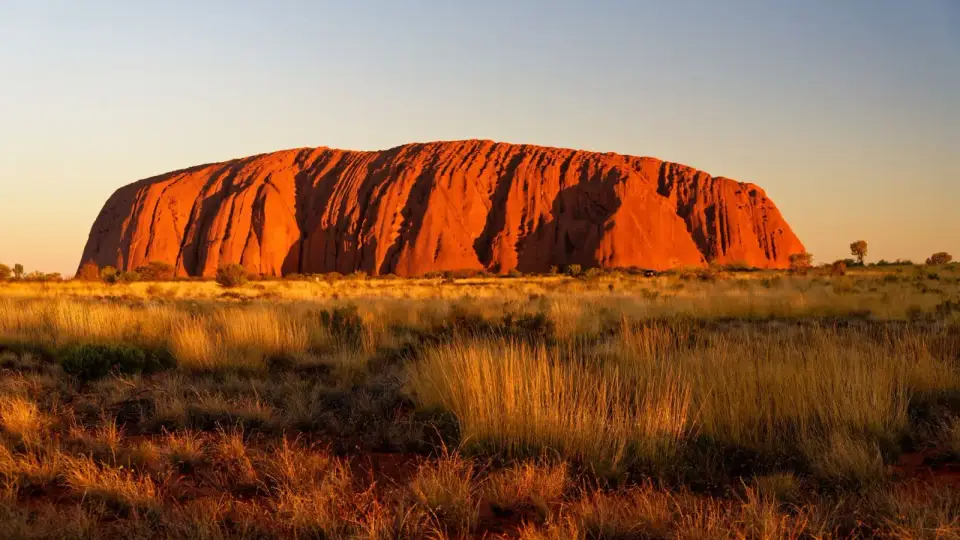
A fourth day is worth it for the Blue Mountains, as a day trip by train. The city suits anyone who wants to swim, walk, and eat well, and it disappoints anyone looking for a dense historic center and packed late nights: the CBD empties after 7pm on weekdays, and the nightlife that the 2014 lockout laws pushed out of Kings Cross ended up in Newtown and on Enmore Road. It isn't cheap either, with a double room in a mid-range hotel at A$220–380. With just one day, start at Circular Quay at 8am, walk around the Opera House, and cross the Royal Botanic Garden to Mrs Macquaries Point. Then take the F1 ferry to Manly, have fish for lunch near the beach, come back in the late afternoon, and eat dinner standing up in Woolloomooloo. Don't be surprised if the inside of the Opera House disappoints: the one-hour guided tour costs A$50 booked ahead, and the building looks better from outside. The country's distances are real, 880 km to Melbourne and about 2,800 km to Uluru, so don't try to string everything together in one trip.
3–4
When October–November and March–April; winter (Jun–Aug) is dry and sunny, with 8–17 °C
How the guide reaches this number
The seasons are the same as Brazil's, with summer from December to February. Summer (December to February): 19–27 °C on the coast, high humidity, heat waves passing 40 °C in the western suburbs, and the “southerly buster,” a cold front that arrives late afternoon and drops the temperature ten degrees within minutes. Autumn (March to May) brings 15–25 °C and a still-warm sea; together with spring, it offers the year’s best conditions. Winter (June to August): 8–17 °C, dry, sunny, water at 17–19 °C and almost no day without sun. Older houses lack proper heating, so the cold is felt more indoors than outdoors here. Spring (September to November): 17–24 °C, with showers and wind. It rains year-round, about 1,100–1,200 mm, concentrated between February and June, and it rains hard and fast, not a light drizzle. High season is December–January, with school holidays, crowded beaches and peak lodging prices, plus Easter. If you can choose, go in October–November or March–April; the month I'd avoid is January, for the heat, the crowds and the fares.
Per person/day budget A$130–180; comfortable A$280–450 (2026), lodging included
How the guide reaches this number
Per person per day: accommodation, meals, urban transport, visits and a small allowance for extras. Flights excluded; larger purchases vary. Editorial estimate, not a quote.
 What Nilo thinks
I'd spend three days in Sydney: one for the harbor, with the Opera House and the ferry to Manly, another for the built city, from the convict barracks to the bridge on foot, and the third for Bondi Beach and the Inner West. A fourth day is worth it for the Blue Mountains, as a day trip by train. The city suits anyone who wants to swim, walk, and eat well, and it disappoints anyone looking for a dense historic center and packed late nights: the CBD empties after 7pm on weekdays, and the nightlife that the 2014 lockout laws pushed out of Kings Cross ended up in Newtown and on Enmore Road. It isn't cheap either, with a double room in a mid-range hotel at A$220–380. With just one day, start at Circular Quay at 8am, walk around the Opera House, and cross the Royal Botanic Garden to Mrs Macquaries Point. Then take the F1 ferry to Manly, have fish for lunch near the beach, come back in the late afternoon, and eat dinner standing up in Woolloomooloo. Don't be surprised if the inside of the Opera House disappoints: the one-hour guided tour costs A$50 booked ahead, and the building looks better from outside. The country's distances are real, 880 km to Melbourne and about 2,800 km to Uluru, so don't try to string everything together in one trip.At Circular Quay, ferries pull in at the foot of the Opera House like buses, carrying people in suits alongside people with surfboards under their arms. Sydney is built around this harbor, with more than 240 km of shoreline. The ferry to Manly takes about 30 minutes, you can walk across the Harbour Bridge for free, and the clifftop trail from Bondi to Coogee passes four tidal pools. About 40% of Greater Sydney's residents were born abroad, so follow the immigrants when choosing where to eat: yum cha in Haymarket on Sundays, bánh mì in the Vietnamese neighborhood and, at night, a meat pie from the Woolloomooloo trailer. Come in October and November or March and April, away from January's heat and crowds, and allow three days, with a fourth for the Blue Mountains.
Quick facts
- Population
- about 5.6 million in Greater Sydney (ABS estimate, Jun 2025); about 230,000 in the City of Sydney's central area
- Founded
- January 26, 1788 (penal colony)
- Country and region
- Australia: capital of the state of New South Wales (NSW); Canberra is the national capital
- Language
- English; about 40% of Greater Sydney households speak another language at home (Mandarin, Arabic, Cantonese, Vietnamese, Greek)
- Currency
- Australian dollar (A$, AUD); 10% GST already included in listed prices
- Time zone
- UTC+10 (AEST); UTC+11 during daylight saving, October to April
- Best time to visit
- October–November and March–April; winter (Jun–Aug) is dry and sunny, with 8–17 °C
- Average daily cost
- budget A$130–180; comfortable A$280–450 (2026), lodging included
When to go
October–November and March–April; winter (Jun–Aug) is dry and sunny, with 8–17 °C
January
20° to 27°C
91 mm of rain
February
20° to 28°C
132 mm of rain
May
12° to 22°C
101 mm of rain
June
10° to 18°C
143 mm of rain
July
9° to 18°C
80 mm of rain
August
10° to 20°C
75 mm of rain
September
12° to 22°C
63 mm of rain
December
18° to 27°C
73 mm of rain
How the year changes
The seasons are the same as Brazil's, with summer from December to February. Summer (December to February): 19–27 °C on the coast, high humidity, heat waves passing 40 °C in the western suburbs, and the “southerly buster,” a cold front that arrives late afternoon and drops the temperature ten degrees within minutes. Autumn (March to May) brings 15–25 °C and a still-warm sea; together with spring, it offers the year’s best conditions. Winter (June to August): 8–17 °C, dry, sunny, water at 17–19 °C and almost no day without sun. Older houses lack proper heating, so the cold is felt more indoors than outdoors here. Spring (September to November): 17–24 °C, with showers and wind. It rains year-round, about 1,100–1,200 mm, concentrated between February and June, and it rains hard and fast, not a light drizzle. High season is December–January, with school holidays, crowded beaches and peak lodging prices, plus Easter. If you can choose, go in October–November or March–April; the month I'd avoid is January, for the heat, the crowds and the fares.
The same numbers as a table
| Month | Temperature °C | Rain mm |
|---|---|---|
| January | 20 to 27 | 91 |
| February | 20 to 28 | 132 |
| March · | 18 to 26 | 118 |
| April · | 15 to 24 | 114 |
| May | 12 to 22 | 101 |
| June | 10 to 18 | 143 |
| July | 9 to 18 | 80 |
| August | 10 to 20 | 75 |
| September | 12 to 22 | 63 |
| October · | 15 to 24 | 68 |
| November · | 17 to 25 | 91 |
| December | 18 to 27 | 73 |
Nilo's tips
The airport train costs A$21–22; from Mascot, normal fare
The airport station adds an access fee that doesn't count toward any daily cap, and the ride comes to about A$21–22 per person. The Airport Link takes 13–15 minutes to Central; with light luggage, walk 1.5 km to Mascot station and pay just the normal fare, or take bus 400 to Bondi Junction. For a group of four, the taxi at A$45–60 comes out cheaper than the train.
Fridays and weekends, the daily cap drops to A$9.65
The daily transport cap is A$19.30 from Monday to Thursday, and it drops to A$9.65 on Fridays, weekends, and public holidays. Save the plans that eat up fares for those days, like the ferry, the train to Katoomba, or a trip to Parramatta, and keep Monday for walking.
Go to Manly on the F1 ferry, normal fare A$6.90 to A$8.60
The F1 makes the same crossing that tour operators sell as a cruise, for the normal Opal fare. It leaves from Circular Quay and takes 30 minutes. Get to the wharf at 8am, ahead of the tour groups, and save the return trip for late afternoon, when the light hits the city head-on.
Harbour Bridge on foot is free; climbing costs A$200–400
The east sidewalk, to Milsons Point, already gives you the harbor view at no cost. If you want more height, climb the 200 steps of the Pylon Lookout, in the southeast pylon, for about A$27. BridgeClimb goes up over the arch to 134 m and costs A$200–400 depending on the time slot. It's only worth it if you want the climb itself, because the view is the same as from the lookout.
Get to Bondi before 8am and swim between the flags
After 8am, the sand, the parking lot and the bus fill up. The red and yellow flags move every day depending on the rip currents. In summer, the UV index goes past 11 and skin burns in 10 to 15 minutes at midday. With rough seas, swim in the Icebergs pool, which gets waves washing over it and costs about A$10.
Have lunch in Cabramatta, 30 km west: bánh mì for A$8-12
Cabramatta is Australia's main Vietnamese neighborhood, and lunch there is worth the trip away from the waterfront. Besides bánh mì, phở runs A$16–20 a bowl. If you don't have time to go that far, try the yum cha in Haymarket, downtown, which fills up between 11am and 2pm on Sundays and charges by the basket, A$7–12 each.
Explore the map
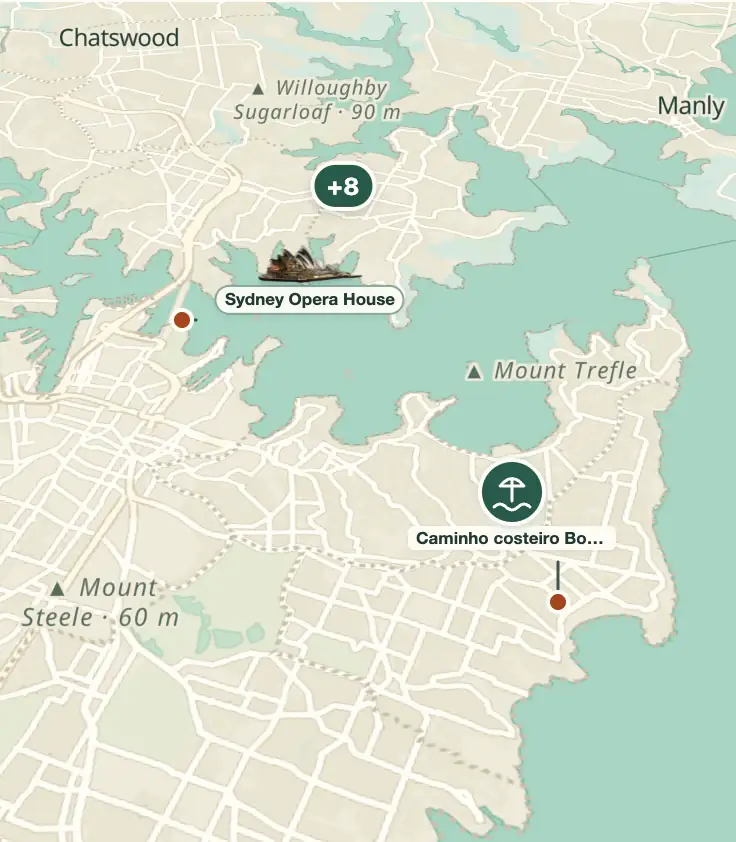
© OpenStreetMap · OpenFreeMap · © OpenMapTiles
Explore the map, read about the other places and plan your travel days in the app.
Open the appWhat to see
Sydney: The sandstone and the drowned river valley
Outside downtown, Sydney is horizontal: detached houses with a yard across some 12,400 km², one of the lowest-density urban footprints among the world's big cities.
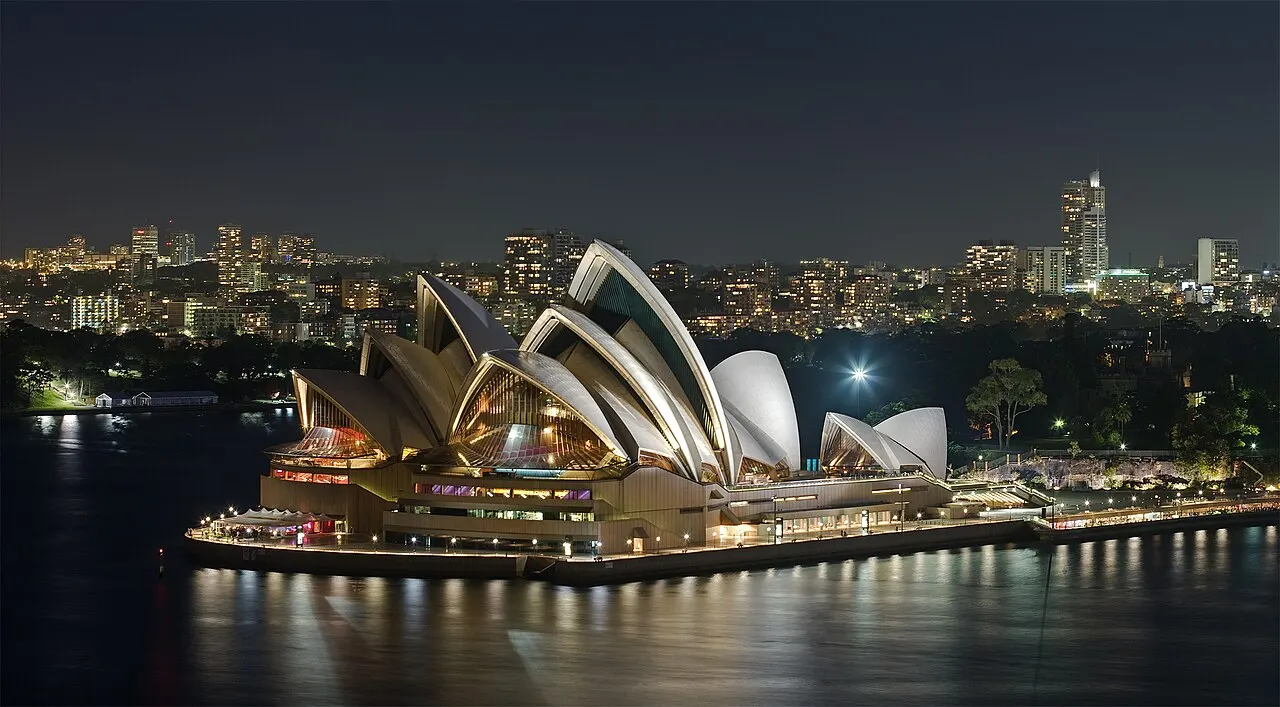
Sydney Opera House
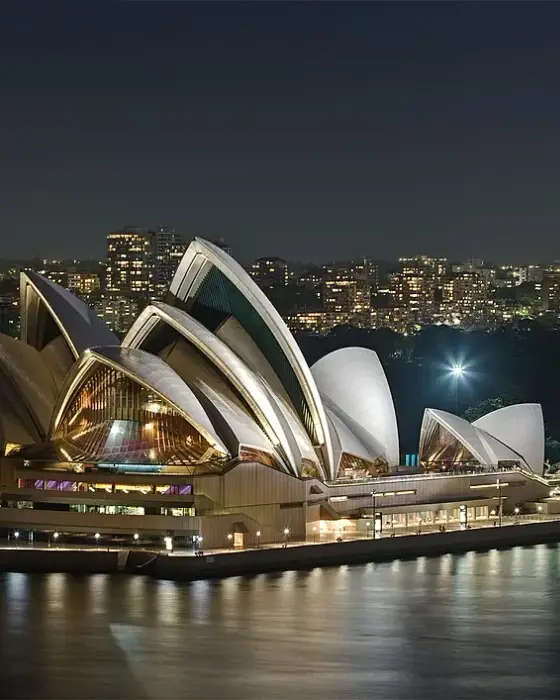
Competition won by Jørn Utzon in 1957, opened on October 20, 1973; the shells are clad in more than a million Swedish ceramic tiles in two shades, which make it change color with the light. World Heritage since 2007; daily guided tours, tickets A$50 booking ahead.
The shells change tone with the light because of the ceramic tile cladding, in a competition-winning design that took years to open and today offers guided tours.
Check access

Circular Quay and the ferries
The wharf where all the ferry lines depart, ordinary transport and not a tour: the crossing to Manly takes about 30 minutes and costs the normal Opal fare. It is the best spot in the city to see how it is organized around the water.
The ferries from this wharf operate as ordinary transport, not a sightseeing trip, and the ride to Manly takes about 30 minutes at the Opal fare.
Check access

Royal Botanic Garden and Mrs Macquaries Point
A garden opened in 1816 on the colony's first farmland, with 30 hectares, free entry and a straight view to the Opera House. At the tip, a seat carved into the sandstone in 1810 for the governor's wife marks the spot where bridge and Opera House line up in the same frame.
Opened in 1816, the garden covers 30 hectares with free admission, looks out on the Opera House, and the chair carved into the sandstone in 1810 marks the spot where the bridge also enters the frame.
Check access
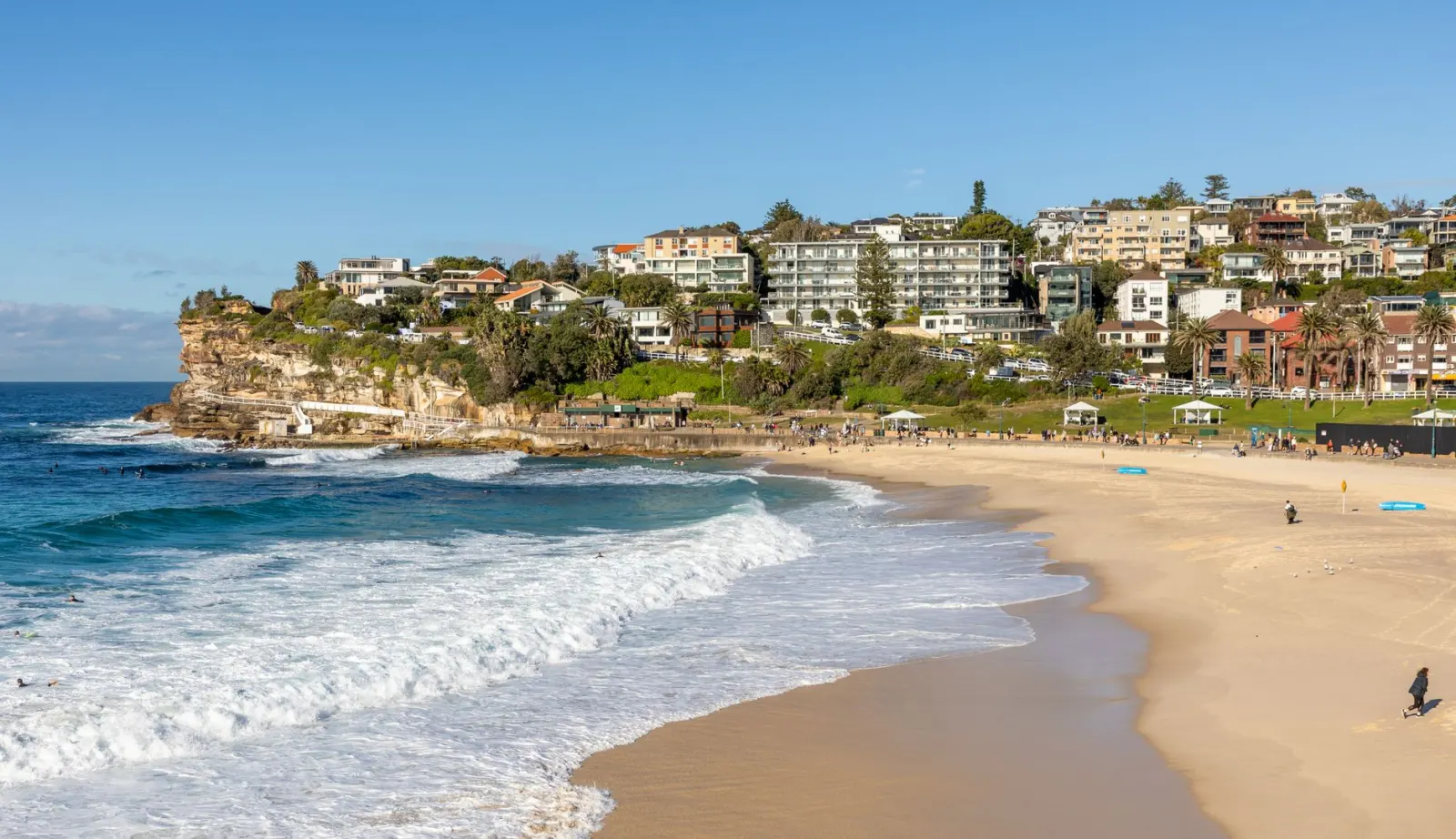
Bondi–Coogee coastal walk
Six kilometers of clifftop trail, about two hours, passing Tamarama, Bronte, Waverley Cemetery and four ocean pools. At Bondi Icebergs, a 1929 pool that waves crash into, a swim costs about A$10.
The clifftop trail passes other beaches, a cemetery and four tidal pools, and at Bondi Icebergs, the 1929 pool that the sea washes over, a swim costs about A$10.
Check access

Sydney Harbour Bridge
A 503 m steel arch opened on March 19, 1932, 134 m above the water. You can cross on foot for free along the eastern footway, climb the 200 steps of the Pylon Lookout (about A$27), or do the BridgeClimb up the arch (A$200–400 depending on the time).
Besides the free walk across on the east sidewalk, the 503 m steel arch, 134 m above the water, has a separate paid lookout, and the BridgeClimb up the arch costs A$200 to A$400 depending on the time slot.
Check access

The Rocks and Cadman's Cottage
The founding neighborhood of 1788, with Cadman's Cottage (1816), the oldest residential building in the center, and streets that escaped demolition thanks to the 1970s green bans. The Rocks museum has free entry.
It's the oldest residential building downtown.
Check access
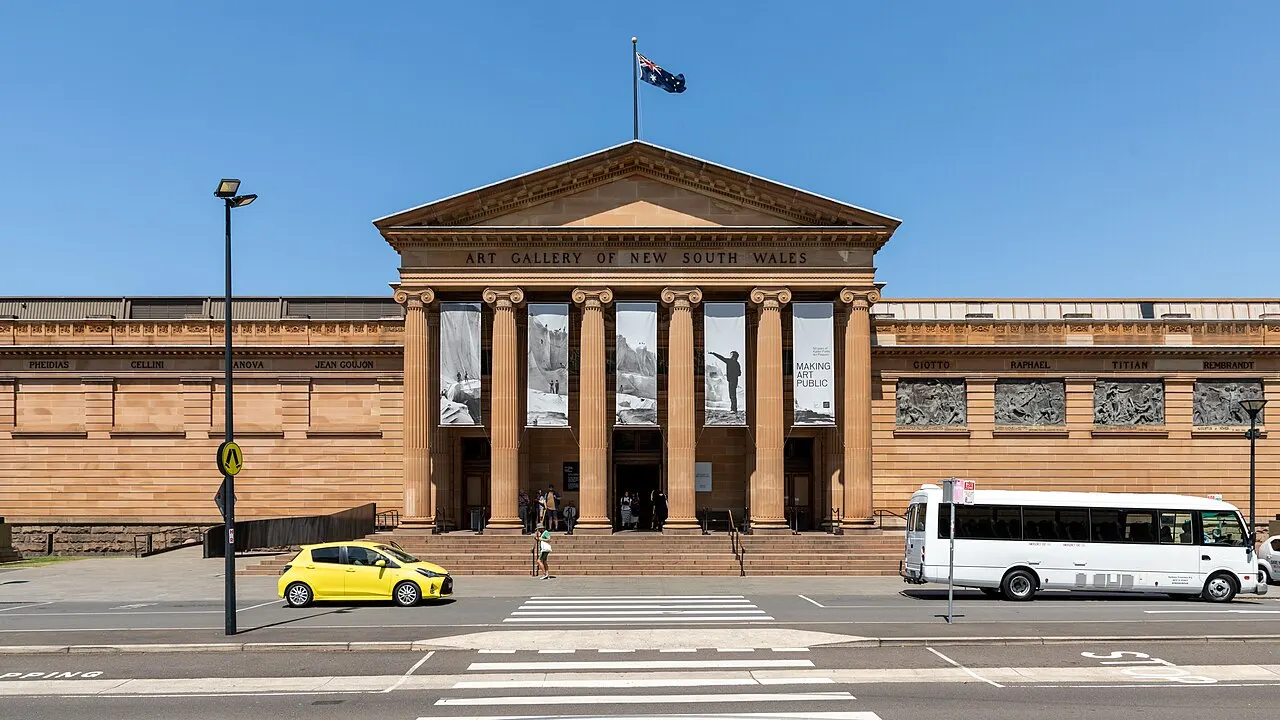
Art Gallery of New South Wales
A museum from 1871 with an Australian, European and Asian collection and one of the country's leading collections of Aboriginal art; the Naala Badu wing, opened in December 2022, occupies a former WWII fuel bunker. Free entry to the permanent collection.
Since 1871 it has held Australian, European, Asian and Aboriginal collections, with free entry to the permanent collection, and the 2022 wing sits inside a former WWII fuel tank.
Check access

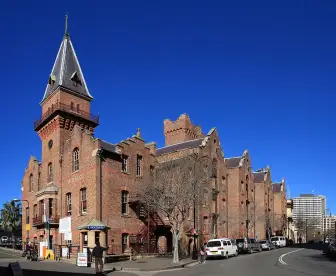
Hyde Park Barracks
Convict barracks designed in 1819 by Francis Greenway, himself deported for forgery; today a museum and World Heritage site of the penal era. The visit reconstructs the convicts' routine from objects found under the floorboards.
Greenway, transported for forgery, designed the convict barracks, today a museum and World Heritage site, and daily routine can be read in objects found under the floorboards.
Check access
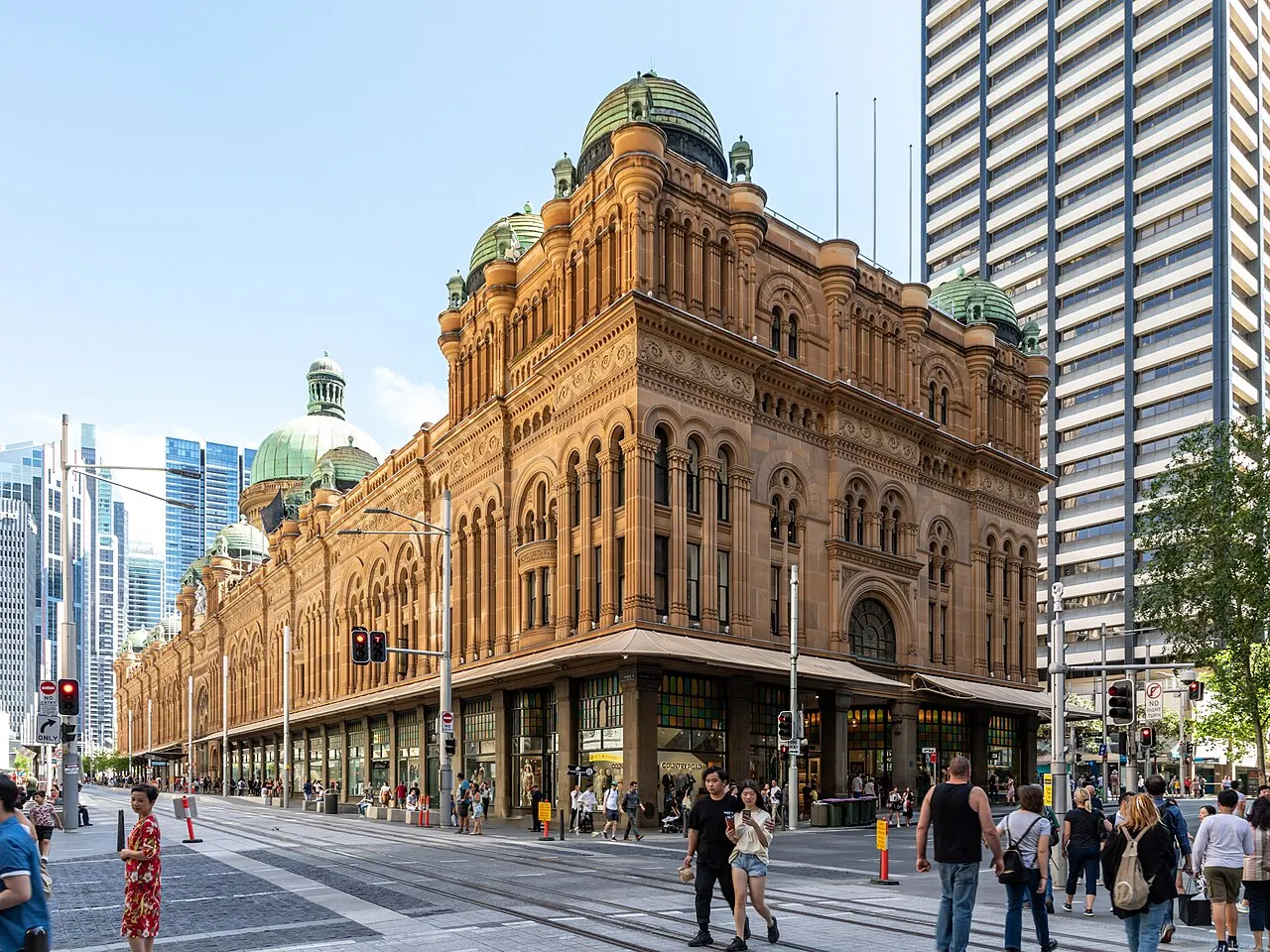
Queen Victoria Building and Sydney Tower Eye
The QVB, from 1898, is a four-story Victorian arcade market, saved from demolition in the 1980s. Three blocks away, the 309 m Sydney Tower Eye is the tallest point in the city, and its glassed-in observation deck is 250 m above the ground.
The QVB, from 1898, is an arcade shopping mall, and the Sydney Tower Eye charges to take you to the observation deck at 250 m, in a city where Mrs Macquaries Point frames the bridge and the Opera House for free.
Check access
Nilo’s itinerary
Start with the basic programme and choose extensions for the time you have.
Plan my days in the app ↗Day 1 · The harbor
Start at Circular Quay at 8am, before the tour buses, and walk the loop to the Opera House.
Take the one-hour guided tour of the Sydney Opera House (A$50 booked ahead, A$55 at the door), then walk through the Royal Botanic Garden to Mrs Macquaries Point, where the bridge and the Opera House fit in the same frame.
Take the F1 ferry to Manly (30 min, regular Opal fare), have fish for lunch, and walk 20 minutes to Shelly Beach.
Take the ferry back in the late afternoon, with the light facing the city.
Eat dinner standing up in Woolloomooloo, at the Harry's Café de Wheels trailer, open since 1938.
Day 2 · Hyde Park Barracks, museums, Haymarket, and the bridge on foot
Get to the Hyde Park Barracks (1819) at opening time and spend an hour on the city's penal origins.
Visit the Art Gallery of NSW, with the Naala Badu wing and free entry to the permanent collection, or the Australian Museum, from 1827.
Have yum cha for lunch in Haymarket between 12pm and 2pm, paying by the basket.
Climb the Pylon Lookout, in the bridge's southeast pylon (200 steps, about A$27), and walk across on the east sidewalk to Milsons Point.
Spend the late afternoon in The Rocks and head back along the Barangaroo Reserve waterfront to Walsh Bay.
Day 3 · Beach and Inner West
Get to Bondi before 8am and swim between the flags or at the Icebergs pool (1929, about A$10).
Follow the coastal walk from Bondi to Coogee: 6 km, about 2 hours, with stops at Tamarama, Bronte, and Waverley Cemetery.
Have lunch in Coogee and take the bus back downtown along Anzac Parade.
Spend the afternoon on King Street in Newtown, among secondhand bookstores, record shops, and murals.
Have Vietnamese or Greek food for dinner in Marrickville and finish with live music on Enmore Road.



If you stay longer
Day 4 · Blue Mountains (Katoomba)
Day trip
The Blue Mountains are 100 km to the west, about 2 hours on the direct train from Central or 1 hour 30 minutes by car. Expect sandstone escarpments 300 m high, the Three Sisters rock formation, the Wentworth Falls waterfalls, and trails that descend into the valley; bring a coat, because it runs 5 to 8 °C cooler than downtown.
Food
 AI illustration
Flat white
An espresso with fine-microfoam steamed milk, served in a small cup; the city's coffee culture comes from postwar Italian and Greek immigration and became an export standard. Costs A$5–6.50 (2026) and is drunk before 11am.
 AI illustration
Meat pie
An individual pastry pie with ground beef and gravy, eaten by hand with ketchup on top. Sydney's version is the “tiger,” served since 1938 from the Harry's Café de Wheels trailer, in Woolloomooloo, stacked with mashed potato, crushed peas and gravy on top of the pie.
 AI illustration
Sydney rock oyster
A native species (Saccostrea glomerata), smaller and more mineral than the Pacific oyster, farmed in the Hawkesbury, Georges River and Wallis Lake estuaries. Served raw, with lemon, half a dozen for A$22–30 at a restaurant.
 AI illustration
Yum cha
A Cantonese dim sum lunch served from trolleys, a legacy of Chinese migration waves since the gold rush. Haymarket and Chatswood fill up between 11am and 2pm on Sundays; it's charged by the basket, A$7–12 each.
 AI illustration
Bánh mì and phở of Cabramatta
The baguette sandwich with meat, pâté, pickles and coriander costs A$8–12 and a bowl of phở A$16–20 in the country's main Vietnamese neighborhood, formed by refugees who arrived after 1975. Marrickville and Bankstown have a similar concentration.
 AI illustration
Sydney brunch
A mid-morning meal of eggs, avocado, ricotta and fruit, formalized in the 1990s by cook Bill Granger, who opened in Darlinghurst in 1993 and popularized ricotta hotcakes and avocado on toast. A dish runs A$22–32.
 AI illustration
Grilled fish and fish and chips
Barramundi, snapper and john dory dominate menus; the Sydney Fish Market, which moved into a new building at Blackwattle Bay in the mid-2020s, sells retail in the morning. A serve of fried fish and chips at the beach runs A$18–25.
 AI illustration
Lamington and pavlova
The lamington is a cube of sponge cake coated in chocolate and shredded coconut, sold at bakeries and school fêtes; the pavlova is a meringue with cream and fruit, contested with New Zealand. Both show up on any Christmas table, which here falls at the height of summer.
Day trips

Blue Mountains (Katoomba)
The Blue Mountains are 100 km to the west, about 2 hours on the direct train from Central or 1 hour 30 minutes by car. Expect sandstone escarpments 300 m high, the Three Sisters rock formation, the Wentworth Falls waterfalls, and trails that descend into the valley; bring a coat, because it runs 5 to 8 °C cooler than downtown.

Royal National Park
35 km to the south; train to Cronulla then ferry to Bundeena (30 minutes total crossing), or train to Otford. Established in 1879, it's the world's second-oldest national park, with the 26 km Coast Track, roadless beaches and the Figure Eight Pools, which should only be visited at low tide and calm seas.
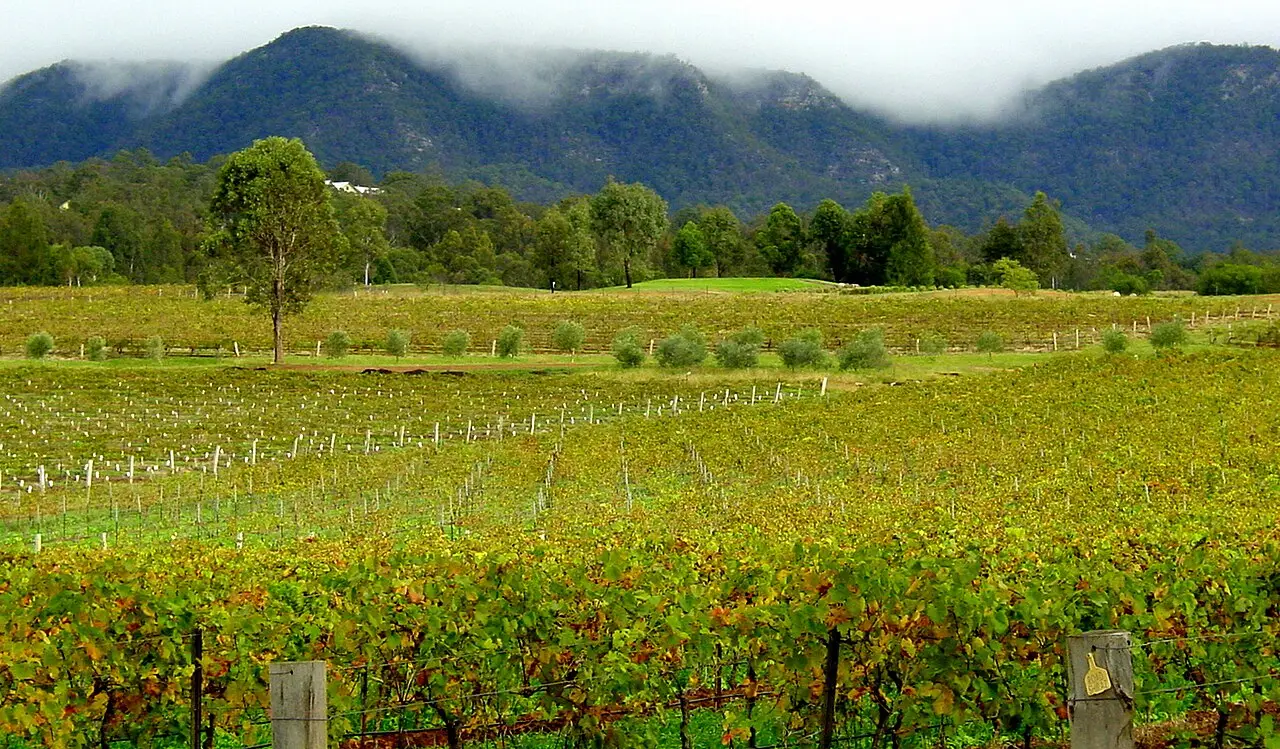
Hunter Valley
160 km to the north, about 2 hours by car; with no direct train to the wineries, an organized tour or a designated driver is the practical solution. It's Australia's oldest wine region, planted in the 1820s, known for semillon and shiraz.
Where to begin
The harbor
Start at Circular Quay at 8am, before the tour buses, and walk the loop to the Opera House.
Hyde Park Barracks, museums, Haymarket, and the bridge on foot
Get to the Hyde Park Barracks (1819) at opening time and spend an hour on the city's penal origins.
Beach and Inner West
Get to Bondi before 8am and swim between the flags or at the Icebergs pool (1929, about A$10).
Money
The currency is the Australian dollar (A$), and the price on the tag already includes the 10% GST: what's written is what you pay. A contactless card handles almost everything: many cafés and bars no longer take cash, and some charge a 1–2% card surcharge, always posted at the counter. 2026 ranges: coffee A$5–6.50; a simple lunch or bakery meal A$18–28; a main course at a mid-range restaurant A$32–48; a schooner of beer (425 ml) A$10–14; a hostel dorm bed A$45–70; a mid-range hotel double room A$220–380; the daily transport cap A$19.30. Tipping isn't mandatory or expected, because the national minimum wage runs around A$25 an hour; at a sit-down dinner, 10% reads as a compliment rather than an obligation. What nobody warns you about is the opposite: on weekends and public holidays many places add a 10–15% surcharge to the bill. Foreign visitors can claim the GST back through the airport's TRS scheme, for purchases over A$300 made at a single merchant within the 60 days before the flight, receipt in hand.
Getting there and around
Kingsford Smith airport: 8 km from downtown, separate terminals
Kingsford Smith Airport (SYD) is 8 km from downtown, and the international terminal (T1) is separated from the domestic ones (T2/T3) by a five-minute train or bus ride. By train, the fare includes an extra access fee for the airport station and comes to about A$21–22 per person, unless you board at the neighboring Mascot station. A taxi or rideshare to downtown costs A$45–60 and takes 20–35 minutes depending on traffic. The new Western Sydney International (Nancy-Bird Walton), 45 km to the west, is due to open by the end of 2026, with a metro line planned for 2027: check before buying a ticket through it.
Nobody buys a ticket: tap the card
Trains, metro, buses, light rail, and ferries share the same fare system, and nobody buys a ticket: just tap a contactless card, phone, or watch on the reader when getting on and off (“tap on, tap off”). The Opal card is still free at newsagents and convenience stores, but it's no longer required. Fares vary by distance: train A$3.79 to A$9.55, bus A$3.20 to A$5.05, ferry A$6.90 to A$8.60, with a 30% off-peak discount and a daily cap of A$19.30 Monday to Thursday and A$9.65 on Fridays, weekends, and public holidays; the weekly cap is A$50. Forgetting to tap off charges the maximum fare. The metro is automated and runs every few minutes, ferries leave from Circular Quay, and the center is walkable, but hilly. Bike share exists on a small scale, private e-scooters aren't allowed on NSW streets, and anyone renting a car drives on the left and pays tolls on nearly every motorway. For regional trips, intercity trains leave from Central and stay within the same system: Katoomba, in the Blue Mountains, is about 2 hours away, and Newcastle 2 hours 30 minutes.
Safety
Sydney has low violent crime rates for a city its size, and the real risks are environmental. The first is the sea: rip currents kill an average of at least 21 people a year on Australian beaches, almost always outside the flags. If you get pulled out, don't swim against the current: float and wave. The second is the sun, with extreme UV between October and March. The third is the heat in the west of the city, where 40 °C is common in January. Urban wildlife is rarely a problem: the funnel-web spider lives in the region, but there has been an antivenom since 1981 and no recorded deaths since then. Between August and October, Australian magpies swoop at the heads of cyclists and pedestrians near their nests, and the fix everyone uses is crossing the street. Downtown, incidents cluster in the early hours of Friday and Saturday around George Street and Kings Cross, and they are tied to alcohol. Bag and bike theft happens at Central and on late-night trains. Tap water is safe to drink, the emergency number is 000, and when crossing the street, look right first, because that's the side the cars come from.
Etiquette tips
Swim between the red and yellow flags
The red and yellow flags mark the stretch with lifeguards, and their position changes every morning, following the current. Outside them there's no one watching, and rip currents pull even experienced swimmers out of the shallows in seconds.
Flag the bus and tap the card twice
The bus only stops if you put your arm out at the stop, and you must tap the card both getting on and off; without the second tap, you're charged the line's maximum fare.
At the pub, order at the bar and pay on the spot
There's no table service or running tab at most pubs; groups take turns buying rounds (a “shout”), and whoever skips their round gets noticed.
Sit in the front seat of the taxi
Riding alone in the back seat comes across as treating the driver like staff; sitting up front and chatting is the local norm, including in rideshares.
Take the Acknowledgement of Country seriously
Meetings, shows and even flights open with an Acknowledgement of Country to the Gadigal or to the people of that land. It isn't decorative formality and nobody treats it as a joke.
Beaches and parks are alcohol-free zones
Drinking at Bondi, in many parks and on public transport draws a fine, genuinely enforced on event days. Public barbecuing is allowed; an open bottle isn't.
Mistakes to avoid
Cramming Sydney, Melbourne and Uluru into one week
Thinking you can fit Sydney, Melbourne, and Uluru into one week. Just plot it on a map: it's 880 km to Melbourne (a 1 hour 30 minute flight) and about 2,800 km to Uluru, with no practical road between them.
Ignoring the airport station fee
Taking the airport train without knowing about its own station fee, which doesn't count toward any daily cap and triples the cost for a family of four.
Underestimating the summer sun
Underestimating the sun on a cloudy day or in a cool breeze, when skin burns without you feeling the heat. Wear a hat, a shirt and sunscreen even under overcast skies, and look for shade at midday.
Sticking to the stretch between the Opera House and Bondi
Staying inside the perimeter between the Opera House and Bondi and never going west of downtown, where more than half the city lives and much of the food is: Cabramatta, Lakemba, Bankstown, and Parramatta.
Treating January 26 as a neutral holiday
Treating January 26 as a neutral civic holiday. For many residents it's Invasion Day or Survival Day, with marches downtown, and the date is openly political.
Useful phrases
How ya going?
How's it going? It's a greeting, not a request for a report; you answer “good, you?” and keep walking.
No worries
You're welcome / it's fine / no problem. It works as a thank-you reply, an accepted apology and a conversation closer.
Arvo
Afternoon. “This arvo” means this afternoon; the same logic shortens afternoon, service station (“servo”) and bottle shop (“bottle-o”).
A schooner, thanks
A 425 ml glass of beer, the standard pub size in Sydney; the smaller glass is the “middy” (285 ml). Pronounced “skoo-ner.”
Tap on, tap off
Tapping the card on the reader when getting on and off transport. It's the instruction printed on every gate and bus reader.
Cossie / swimmers
Swimwear, in the Sydney variant; in Melbourne they say “bathers,” and in Brisbane, “togs.”
Districts
CBD and Circular Quay
The office core, between Central Station and the water, with the Opera House, the Royal Botanic Garden and the ferry terminal within a 15-minute walk. Empties out after 7pm on weekdays, except for the bar strip near Martin Place.
The Rocks
The first colonial neighborhood, tucked against the bridge's south pillar, with sandstone row houses, alleys like Suez Canal and preserved workers' cottages at Susannah Place (1844). A street market on weekends and a cluster of historic pubs.
Surry Hills and Darlinghurst
A former slum described by Ruth Park in the 1940s, today the densest square kilometer of restaurants and cafés in the city. Darlinghurst and Oxford Street are the historic axis of LGBT life and of Mardi Gras.
Newtown and the Inner West
King Street concentrates bookshops, live music, cheap food and most of what's left of Sydney's nightlife; Enmore Road became an entertainment precinct with an extended license in 2023. Next door, Marrickville mixes a Greek and Vietnamese community with warehouse breweries.
Bondi and the eastern beaches
Bondi, Tamarama, Bronte and Coogee form a string of beaches linked by a coastal path, with lifesaving clubs dating to 1906 and rock-cut ocean pools. It's expensive, crowded in summer, and works best early in the morning.
Manly and the northern beaches
Across the harbor, 30 minutes by ferry from Circular Quay, with an ocean beach on one side and a harbor beach on the other. From there the coast runs 30 km of beaches and lagoons up to Palm Beach.
Parramatta
The region's second center, 24 km to the west, founded as early as 1788 as the colony's farming zone; home to the Old Government House (1799), a World Heritage site, new towers, and the metro area's geographic population center.
Haymarket, Cabramatta and the southwest
Haymarket is the city center's Chinatown, with yum cha and late-night food. 30 km to the west, Cabramatta is the country's main Vietnamese neighborhood since refugees arrived after 1975, and Lakemba holds the Lebanese community and the Ramadan night market.
History
30,000+ years ago · Gadigal and the Eora nation
The Gadigal clan occupies the harbor's south shore; rock engravings, shell middens and sandstone shelters survive in Ku-ring-gai Chase and along the coast. The Sydney Cove area is called Warrane.
1770 · Cook at Botany Bay
James Cook's Endeavour anchors at Botany Bay on April 29, 1770 and stays eight days. Joseph Banks describes the site as fit to host a colony.
1788 · The First Fleet
Eleven ships under Arthur Phillip, with about 1,400 people, nearly 750 convicts, leave Botany Bay for lack of water and anchor at Port Jackson on January 26. The settlement is named after Lord Sydney, the British Home Secretary.
1789 · Smallpox in the harbor
A smallpox epidemic sweeps through the bay's communities in April 1789 and kills half or more of the coastal Eora population. Pemulwuy's armed resistance continues until 1802.
1810–1821 · Macquarie builds the city
Governor Lachlan Macquarie turns the penal camp into a city: aligned streets, a hospital, churches and the Hyde Park Barracks (1819), designed by Francis Greenway, a convicted forger who became the government's architect.
1851 · Gold and growth
The discovery of gold at Ophir and Bathurst multiplies the colony's population; convict transport to NSW had already ended in 1840, after about 80,000 landings. Sydney turns from a port town into a commercial city.

1901 · Federation at Centennial Park
The Commonwealth of Australia is proclaimed on January 1, 1901 at Centennial Park, in Sydney. Rivalry with Melbourne leads to the creation of Canberra as a neutral capital, chosen in 1908.

1932 · The harbor bridge
The Sydney Harbour Bridge opens on March 19, 1932, with a 503 m arch, 134 m in height and about six million rivets, built in the midst of the Depression. A far-right militant cuts the ribbon with a sword before the state premier.

1942 · Submarines in the harbor
On the night of May 31 into June 1, 1942, three Japanese midget submarines enter Port Jackson and torpedo the floating barracks HMAS Kuttabul; 21 sailors die. Traces of the anti-submarine net are still visible at Watsons Bay.
1973 · The Opera House and the end of White Australia
The Sydney Opera House opens on October 20, 1973, ten years late and about fourteen times over its original budget. That same year the federal government formally ends the White Australia immigration policy, and the city's makeup changes within a generation.

2000–2026 · Olympics, metro and the west
The September 2000 Games, at Homebush, reorganized the rail network. Since 2019 three driverless metro sections have opened, including the harbor tunnel in August 2024, and a new airport in the west (Western Sydney International) is due by the end of 2026.
 AI illustration
Complete history
Inhabited for tens of thousands of years
The Sydney basin has been inhabited for tens of thousands of years by Dharug, Dharawal and Guringai-speaking peoples; on the harbor's south shore, the Gadigal. That occupation is recorded in the sandstone: thousands of engravings of fish, kangaroos and human figures on coastal rock platforms, plus shell middens in caves now inside residential suburbs. In April 1770 James Cook's Endeavour anchors at Botany Bay for eight days; naturalist Joseph Banks's report, combined with the loss of the American colonies in 1783, convinces London to dump convicts on the other side of the world. The First Fleet leaves Portsmouth in May 1787, reaches Botany Bay in January 1788, judges the place short of fresh water, and moves up the coast to Port Jackson, where it anchors on January 26.
Smallpox, convicts, and Macquarie's street plan (1789–1851)
In April 1789 a smallpox epidemic kills half or more of the coastal Eora, and Pemulwuy's resistance lasts until 1802. The colony lives first on forced labor, with about 80,000 convicts landed in New South Wales by 1840. Then it turns to wool, with the Macarthurs' merino sheep. Between 1810 and 1821, Governor Lachlan Macquarie imposes a street plan, named streets, a hospital, and public buildings, many of them designed by Francis Greenway, a transported forger. One of them, the Hyde Park Barracks of 1819, now holds the memory of the convicts. From 1851 gold brings people and money, but it is Melbourne that grows faster, and the rivalry between the two results in Canberra: a compromise capital, chosen in 1908, on empty land halfway between them.
A century of building and arriving
The 20th century brings construction and immigration. A bubonic plague outbreak in 1900, starting on The Rocks' docks, gives the government the excuse to seize and demolish the historic waterfront. The Harbour Bridge is built between 1924 and 1932 by Dorman Long, of Middlesbrough, with about 1,400 workers and sixteen deaths; the tram network, one of the largest in the Empire, is dismantled by 1961 in favor of the car. In 1942, Japanese midget submarines enter the harbor and sink the HMAS Kuttabul. After the war, the federal immigration program brings Italians and Greeks (Leichhardt, Marrickville) and the end of the White Australia policy, in 1973, opens the door to the Vietnamese who arrive in Cabramatta after 1975, the Lebanese who settle in Lakemba and Bankstown, and the Chinese waves of the 1980s and 1990s.
The Sydney Opera House and the green bans (1957–2000)
The Opera House comes out of an international competition in 1957, with 233 entries, won by the Dane Jørn Utzon. Construction begins in 1959, and in 1966 Utzon is forced to resign when the state government withholds payments; the building opens on October 20, 1973, at A$102 million funded by a state lottery, and Utzon never came back to see it. In the 1970s, the green bans of the construction union led by Jack Mundey blocked demolitions and saved The Rocks and Kelly's Bush, one of the rare cases in the world where workers vetoed projects for environmental and heritage reasons. The Olympics of September 2000, at Homebush, rebuilt the rail network and cleaned up the Parramatta River.
Land prices and new infrastructure reshape the city
Today's Sydney is defined by two processes. The first is land price: the median house value in Greater Sydney passed A$1.6 million (mid-2020s), pushing young people and immigrants west and turning Parramatta into a second center, with towers, a university and a courthouse. The second is infrastructure: driverless metro since 2019, a harbor tunnel opened in August 2024, an extension to Bankstown due in 2026, the Western Sydney International (Nancy-Bird Walton) airport due by the end of 2026, and the Metro West line announced for the early 2030s. The 2014 lockout laws, which shut the doors of bars in Kings Cross and downtown at 1:30am and were repealed in 2020–2021, emptied out Kings Cross and shifted nightlife to Enmore Road and Newtown. The summer of 2019–2020, with bushfire smoke covering the center for weeks, made clear that climate is an urban variable too.
The Opera House changes color over the course of the day because its shells alternate Swedish tiles in two tones.
At the tip of the Royal Botanic Garden there's a bench carved into the sandstone in 1810 for Governor Macquarie's wife.
Geography and shape of the city
The sandstone and the drowned river valley
Sydney sits in a basin of Hawkesbury sandstone tilted to the east, between the Pacific and the escarpment of the Blue Mountains, about 60 km from downtown. The harbor, Port Jackson, is no ordinary bay: it is a river valley drowned by the rising sea at the end of the last ice age, which explains the deep inlets, the steep slopes, and the more than 240 km of indented shoreline. This geography splits the city into north and south and concentrates the crossings at three points: the 1932 bridge, the 1992 road tunnel, and the 2024 metro tunnel, plus the ferries, which are still routine transportation and not a sightseeing trip.
Rivers, a hot plain and the line of beaches
To the south, the Georges River and Botany Bay; to the west, the Parramatta River and a hotter, drier plain, where summer temperatures run 5 to 10 °C above those on the coast; to the east, a line of sandstone and white-sand beaches, from Bondi to Cronulla.
A center built along old tracks and a sprawling city
The center is small and irregular because it grew from 1788 tracks, with no plan at all: narrow streets between Circular Quay and Central Station, with the civic axis on Macquarie Street and the commercial one on George Street, largely pedestrianized since 2020. Outside that core, Sydney is horizontal: detached houses with a yard across some 12,400 km², one of the lowest-density urban footprints among the world's big cities.
Culture
Back on the map: the names Gadigal, Barangaroo, and Warrane
Aboriginal culture is no longer treated as an archaeological past: the names Gadigal, Barangaroo, and Warrane are back on the map, and public events open with a formal acknowledgment of the traditional owners of the land. On January 26, the date the holiday calls Australia Day and Aboriginal people call Invasion Day or Survival Day, the Yabun festival draws tens of thousands of people to Victoria Park. The Art Gallery of NSW and the Australian Museum, from 1827 and the oldest in the country, keep permanent Indigenous collections curated by artists from the communities themselves.
A city built on theater and rock
In contemporary production, Sydney is a city of theater and rock: the Sydney Theatre Company (1978) and Belvoir trained Cate Blanchett, Hugo Weaving and Toni Collette; Opera Australia and the Sydney Symphony fill the Opera House year-round; AC/DC was born here in 1973, followed by INXS, Midnight Oil and today's electronic scene led by Flume. In literature, Patrick White won the Nobel in 1973 while living beside Centennial Park, Ruth Park wrote about the slums of Surry Hills, and Kate Grenville reopened the question of the colonial frontier. Film has a physical base at the Fox Studios in Moore Park, opened in 1998, where The Matrix and part of Star Wars were shot.
Nightlife: Newtown, Enmore Road and Marrickville
For a night out, head to the Inner West, west of downtown: Newtown, Enmore Road and Marrickville hold the live music, the late-opening bars and the warehouse breweries.
Festivals and events
 AI illustration
Sydney Festival and Yabun
January. Three weeks of theater, music and installations in public spaces since 1977; on January 26, the Yabun Festival, at Victoria Park, is the country's largest celebration of Aboriginal culture that day, alongside Invasion Day marches downtown.

Sydney Gay and Lesbian Mardi Gras
Late February or early March. A night parade on Oxford Street with hundreds of thousands of spectators; it began on June 24, 1978 as a protest broken up by police, with 53 people arrested, now honored as the “78ers.”

Vivid Sydney
Late May to mid-June. About three weeks of light projections on facades (the Opera House, the Museum of Contemporary Art, Customs House) plus concerts and talks; running since 2009, it's the city's biggest-attendance event.
 AI illustration
Sydney Film Festival
June, about two weeks. Founded in 1954, based at the State Theatre, a 1929 hall with 2,000 seats, and awards its top prize by international jury vote.

New Year's Eve and the Sydney to Hobart
December 26 and 31. The Sydney–Hobart race starts from the harbor on the 26th and crosses 630 nautical miles to Tasmania; on the 31st there are fireworks at 9pm and midnight, with about a million people along the waterfront and free vantage points filling before noon.
Books and films
The Secret River, by Kate Grenville (2005)
A novel about a deported convict who settles on the Hawkesbury River and takes part in the violence against the Darug. It's the book that most changed Australia's public conversation about the colony's founding.
Puberty Blues, by Kathy Lette and Gabrielle Carey (1979; 1981 film)
Two teenage girls on Cronulla beach in the 1970s describe the surf hierarchy, the car, the sand and the place set aside for girls. It explains the city's beach culture from the inside.
The Adventures of Priscilla, Queen of the Desert (1994)
Three drag performers leave a Sydney theater on a bus bound for the outback. It captures Oxford Street before Mardi Gras went mainstream, and the contrast between the city and the rest of the country.
Frequently asked questions
Sydney: Can you fit Sydney, Melbourne and Uluru into one week?
Just plot it on a map: it's 880 km to Melbourne (a 1 hour 30 minute flight) and about 2,800 km to Uluru, with no practical road between them.
Sydney: How much does the airport train to downtown cost?
The train costs about A$21 to 22 per person, because the airport station charges an extra access fee, and it takes 13 to 15 minutes to Central. With light luggage, walk 1.5 km to Mascot station and pay just the normal fare; a taxi or rideshare costs A$45 to 60 and takes 20 to 35 minutes.
Sydney: Do I need to carry cash?
No: a contactless card handles almost everything, and many cafés and bars no longer take cash; some charge a 1 to 2% card surcharge, always posted at the counter. The currency is the Australian dollar (A$), and the price on the tag already includes the 10% GST.
Sydney: Where's it safe to swim at the beaches?
Between the red and yellow flags, which mark the stretch patrolled by lifeguards and change position every morning, following the current. Outside them there's no supervision, and the currents can pull an experienced swimmer out of the shallows in seconds.
Sydney: What's the real risk for visitors?
The real risks are environmental: rip currents, almost always outside the flags, extreme UV sun between October and March, and 40 °C heat in the west of the city in January. Violent crime is low for a city this size, and downtown, incidents cluster in the early hours of Friday and Saturday around George Street and Kings Cross.
Other cities in the country
Australia ↗- Days
- 3
- When
- Mar–May
- Per person/day
- Average 180–260 A$Mid-range · per person/day
Cost scope
Per person per day: accommodation, meals, urban transport, visits and a small allowance for extras. Flights excluded; larger purchases vary. Editorial estimate, not a quote.
- Days
- 2–3
- When
- May–Sep
- Per person/day
- Average 220–380 A$Mid-range · per person/day
Cost scope
Per person per day: accommodation, meals, urban transport, visits and a small allowance for extras. Flights excluded; larger purchases vary. Editorial estimate, not a quote.
- Days
- 3–4
- When
- May–Sep
- Per person/day
- Average 150–260 A$Mid-range · per person/day
Cost scope
Per person per day: accommodation, meals, urban transport, visits and a small allowance for extras. Flights excluded; larger purchases vary. Editorial estimate, not a quote.