New Zealand
Queenstown
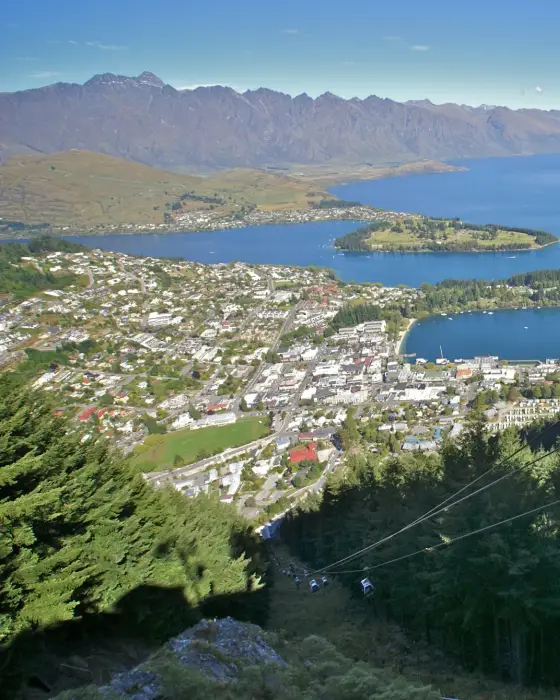
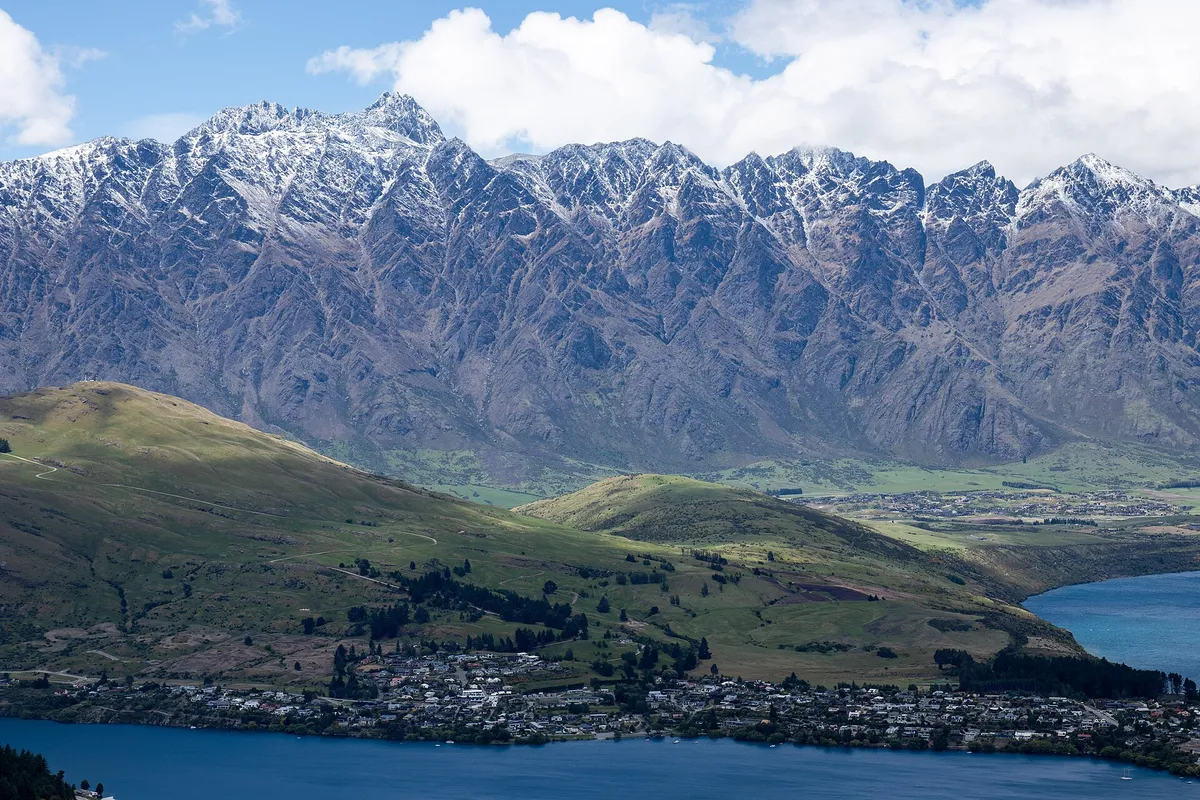
Bungy, gondola and Lake Wakatipu below The Remarkables
Days Start with the basic programme and choose extensions for the time you have.
How the guide reaches this number
Give the first to the lake and Bob's Peak, the second to the Kawarau, Gibbston and Arrowtown, and the third to Glenorchy and the head of the lake. The town suits people who want activity in the landscape, from bungy to skiing to the 6 to 7 hour round-trip hike to Routeburn Flats. Anyone looking for museums, old architecture or a town that doesn't live off tourism will be let down, because almost all of the six-block downtown sells tours. With a single day, stick to the lake: ride the gondola up in the morning, walk down the Tiki Trail and have lunch at Steamer Wharf. In the afternoon, loop through the Queenstown Gardens and finish at the Kawarau Bridge, 23 km away, where bungy was born. The letdown is the price, because with one adrenaline activity the bill easily passes NZ$600 a day, and only the trails, the wharf and the lookouts charge nothing.
3–4
When March and April (dry autumn, yellow poplars and larches); late June to September for skiing
How the guide reaches this number
March and April are the best months: settled days, dry air, fewer people than in summer, and the poplars and larches turning yellow in Arrowtown and Glenorchy in the second half of April. Summer, December to February, brings highs of 22–24°C, lows of 10–12°C, daylight until almost 10pm, and the absolute peak of prices and occupancy between December 26 and mid-January. The UV index reaches 11 or 12, and skin burns in 10 to 15 minutes because of the clean air and the thin ozone layer over New Zealand. Winter, June to August, brings highs of 8–10°C, lows between −2 and 1°C, near-daily frost, and snow more on the mountains than in town. The ski season usually runs from late June to early October, peaking during the two weeks of July school holidays, when hotels and ski passes hit their top price. Spring, September to November, is windy and unsettled but cheap, and by November the trails are open and the days are long. Rain, about 900 mm a year, is spread evenly and doesn't define a season. What defines one is the northwest wind, which can close the airport and the mountain roads in any month. May falls in the gap: the ski fields haven't opened yet, the high trails already catch snow, and much of the mountain activity isn't running yet.
Per person/day about NZ$130 backpacker, NZ$250–380 mid-range, NZ$600+ with one adrenaline activity a day in high season
How the guide reaches this number
Per person per day: accommodation, meals, urban transport, visits and a small allowance for extras. Flights excluded; larger purchases vary. Editorial estimate, not a quote.
 What Nilo thinks
Stay three days in Queenstown and add a fourth if you want Milford Sound. Give the first to the lake and Bob's Peak, the second to the Kawarau, Gibbston and Arrowtown, and the third to Glenorchy and the head of the lake. The town suits people who want activity in the landscape, from bungy to skiing to the 6 to 7 hour round-trip hike to Routeburn Flats. Anyone looking for museums, old architecture or a town that doesn't live off tourism will be let down, because almost all of the six-block downtown sells tours. With a single day, stick to the lake: ride the gondola up in the morning, walk down the Tiki Trail and have lunch at Steamer Wharf. In the afternoon, loop through the Queenstown Gardens and finish at the Kawarau Bridge, 23 km away, where bungy was born. The letdown is the price, because with one adrenaline activity the bill easily passes NZ$600 a day, and only the trails, the wharf and the lookouts charge nothing.Queenstown fills a bay of Lake Wakatipu, with The Remarkables rising almost sheer behind the water. The town was born from the 1862 gold rush and today lives off adventure: bungy jump off the Kawarau Bridge, where paid jumps began in 1988, ride the gondola up to Bob's Peak and race through the Shotover canyons by jetboat. Almost everything costs money, so balance the bill with what's free, like the Queenstown Gardens, the wharf and the trails. At dinner, order Otago lamb or cervena with a glass of Central Otago Pinot Noir, then join the Fergburger line, open into the small hours. Come in March or April, with settled weather and the poplars turning yellow in Arrowtown, or between late June and September to ski. Set aside three days, plus one for Milford Sound.
Quick facts
- Population
- around 29,000 in the urban area (June 2025 estimate); around 59,000 in the Queenstown-Lakes district, with daily peaks above 100,000 people in high season
- Founded
- Gold on the Arrow and Shotover rivers in 1862; the town was surveyed and proclaimed in 1863. Māori name: Tāhuna, “shallow bay”
- Country and region
- New Zealand: Otago region, South Island
- Language
- New Zealand English; te reo Māori is an official language and appears in names, signs, and greetings. The local iwi is Ngāi Tahu
- Currency
- New Zealand dollar (NZD): about NZ$1.70 per US$1 and around R$3.20 per NZ$1 in September 2026
- Time zone
- UTC+12 (NZST) and UTC+13 during daylight saving, from the last Sunday of September to the first Sunday of April
- Best time to visit
- March and April (dry autumn, yellow poplars and larches); late June to September for skiing
- Average daily cost
- about NZ$130 backpacker, NZ$250–380 mid-range, NZ$600+ with one adrenaline activity a day in high season
When to go
March and April (dry autumn, yellow poplars and larches); late June to September for skiing
How the year changes
March and April are the best months: settled days, dry air, fewer people than in summer, and the poplars and larches turning yellow in Arrowtown and Glenorchy in the second half of April. Summer, December to February, brings highs of 22–24°C, lows of 10–12°C, daylight until almost 10pm, and the absolute peak of prices and occupancy between December 26 and mid-January. The UV index reaches 11 or 12, and skin burns in 10 to 15 minutes because of the clean air and the thin ozone layer over New Zealand. Winter, June to August, brings highs of 8–10°C, lows between −2 and 1°C, near-daily frost, and snow more on the mountains than in town. The ski season usually runs from late June to early October, peaking during the two weeks of July school holidays, when hotels and ski passes hit their top price. Spring, September to November, is windy and unsettled but cheap, and by November the trails are open and the days are long. Rain, about 900 mm a year, is spread evenly and doesn't define a season. What defines one is the northwest wind, which can close the airport and the mountain roads in any month. May falls in the gap: the ski fields haven't opened yet, the high trails already catch snow, and much of the mountain activity isn't running yet.
Nilo's tips
Watch the jumps for free from the deck at the Kawarau Bridge
The Kawarau Bridge observation deck is free and never closes. In the morning, before the tour groups, you can watch about fifteen jumps without paying anything. Jump if jumping is your plan; if you only want to understand why the town lives off it, the deck is enough.
Buy the Bee Card on landing: fare drops from NZ$4 to NZ$2.50
The bus doesn't take contactless bank cards, and paying cash makes the fare more expensive. Buy the card as soon as you land, at the i-SITE or a partner shop. Bring it on the ferry too, the prettiest ride in the system, at the same single fare.
Take the gondola up and hike on to the Ben Lomond Saddle
Almost everyone stops at the Bob's Peak lookout, at the top of the gondola, to photograph the same angle. With half a day free and a good forecast, take the trail on to the Ben Lomond Saddle, 3 to 4 hours round trip from the lookout. There the landscape changes completely and the crowds vanish.
Wait more than an hour at Fergburger, or go to the shops next door
Fergburger opens from 8:30am to 5am and has a line at any hour, and even after midnight the wait runs past an hour. If you don't have time for that, the bakery and the gelato shop next door, run by the same owners, have no line.
Do Gibbston by electric bike, for NZ$90 to 120 a day
At the Gibbston wineries, the tasting fee is usually waived when you buy a bottle, and after five wines driving back is a bad idea. Rent an e-bike for NZ$90–120 a day and ride the Queenstown Trail section between the wineries, about 11 km of separated cycle path and across the old suspension bridge. For the summer concerts in January and February, take the town's charter bus, for the same reason.
Go to Milford by guided bus, for NZ$200 to 260
Milford Sound is four hours by road each way, with mountain curves and left-hand traffic. Inside the Homer Tunnel the road narrows to a single lane, and by the return trip fatigue has already set in. A guided bus costs NZ$200–260, and someone else drives for you; by plane it's 35 minutes for NZ$500 or more. In winter the road can close for avalanches, so check before leaving town.
Explore the map

© OpenStreetMap · OpenFreeMap · © OpenMapTiles
Explore the map, read about the other places and plan your travel days in the app.
Open the appWhat to see
Queenstown, on a moraine, by New Zealand's third-largest lake
The water rises and falls on its own by about 10 cm every 26.7 minutes, a seiche caused by the wind and the shape of the basin; Ngāi Tahu tradition explains it as the breathing of the giant Matau, burned in the lakebed. Downtown, six blocks, is crossed on foot in fifteen minutes and holds the tour agencies, the restaurants and the bars.
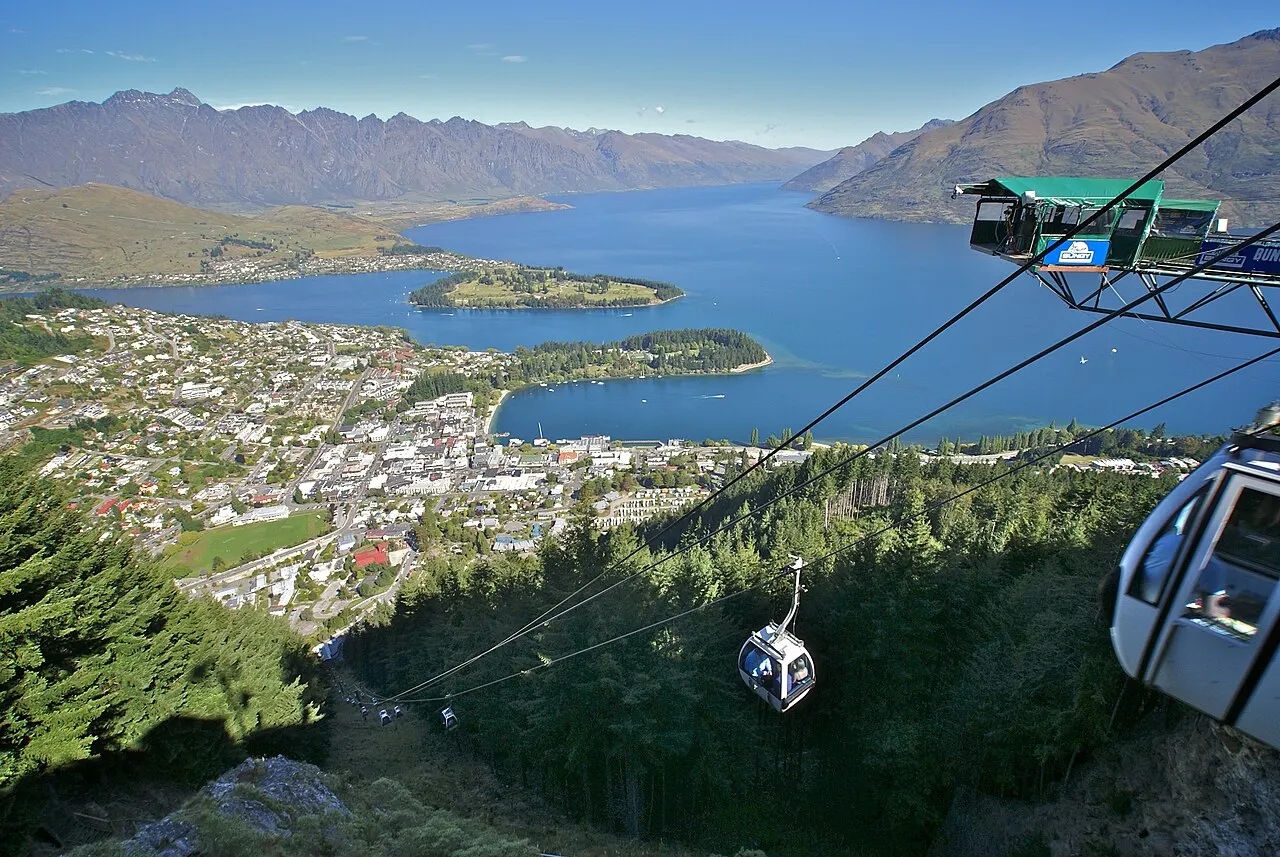
Skyline Gondola and Bob's Peak
Opened in 1967, it climbs 450 m at a 37.1° gradient, the steepest in the Southern Hemisphere, to a lookout at 790 m with the luge track, ziplines, and the 47 m Ledge Bungy. Round trip about NZ$64; you can walk down the Tiki Trail in about 45 minutes.
It's the view that explains the geography, with the lake, the town and the mountains seen from the top of Bob's Peak. Go up in the morning, with clear skies, and walk down the Tiki Trail.
Check access

Kawarau Bridge and the 1988 bungy
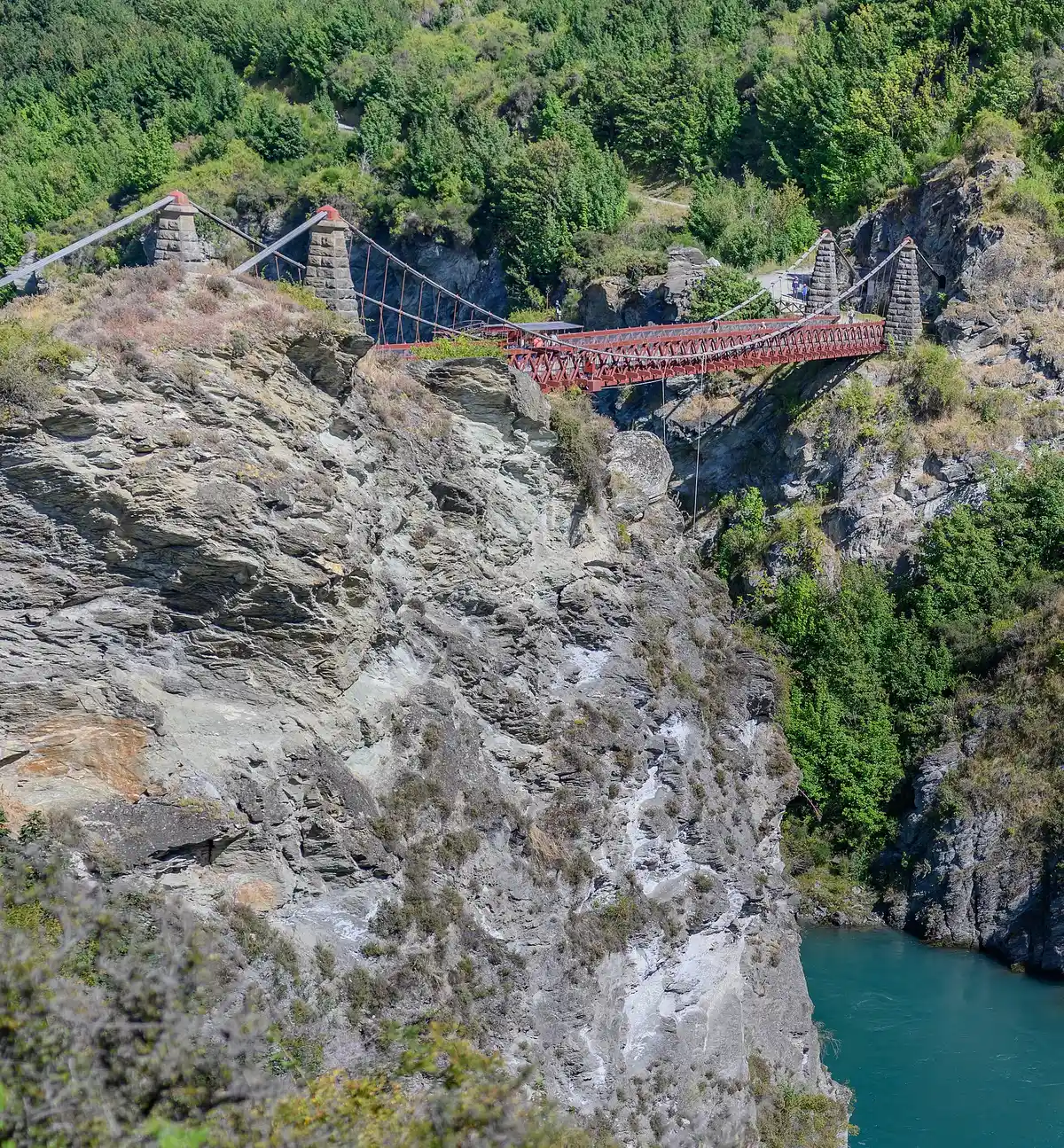
An 1880 suspension bridge over the Kawarau River, where A. J. Hackett opened the world's first commercial bungy. A 43 m jump with the option to touch the water, NZ$320; watching from the observation deck is free and takes as long as you want.
It's where commercial bungy was born, and the town explains itself from there. Go in the morning, before the groups, and watch the jumps for free from the deck if you're not jumping.
Check access
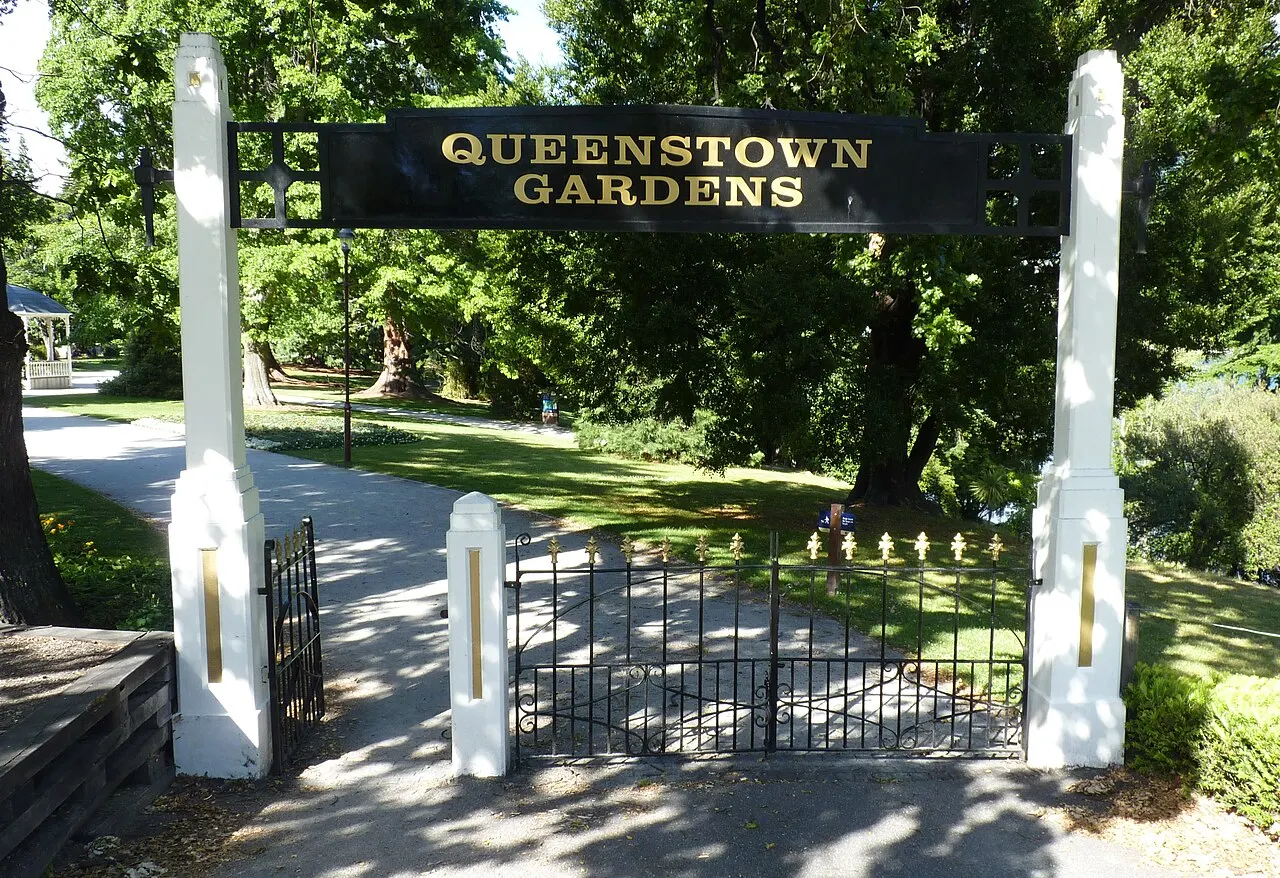
Queenstown Gardens
A reserve from 1867 on a moraine peninsula, with a rose garden, sequoias, an 18-basket disc golf course, and a flat 1.5 km loop by the water. It's the free counterpoint to a city that charges for everything.
The 1867 reserve, on the moraine peninsula, holds the rose garden and the flat 1.5 km loop, and is the free counterpoint to a town that charges for everything.
Check access

Glenorchy and Paradise
46 km along the road opened in 1962 to the head of the lake, with the Bennetts Bluff lookout halfway there and the red wharf on arrival. From there run the Routeburn Track, the Dart River jetboats, and the Isengard and Lothlórien filming locations.
The road, opened in 1962, runs 46 km to the head of the lake, and from there you reach the Routeburn, the Dart River jetboats and the filming locations of Isengard and Lothlórien.
Check access

Waterfront and Steamer Wharf
Marine Parade and the wharf concentrate the action: stone benches, gulls, the TSS Earnslaw's boarding point, and a gravel beach where the water stays at 10–12°C year round. It's the one place where the whole city shows up at once.
It's worth it because it's where the whole town appears at once, with the TSS Earnslaw boarding point and the gravel beach. It's the place to sit at the end of the day, on the stone benches by the water.
Check access
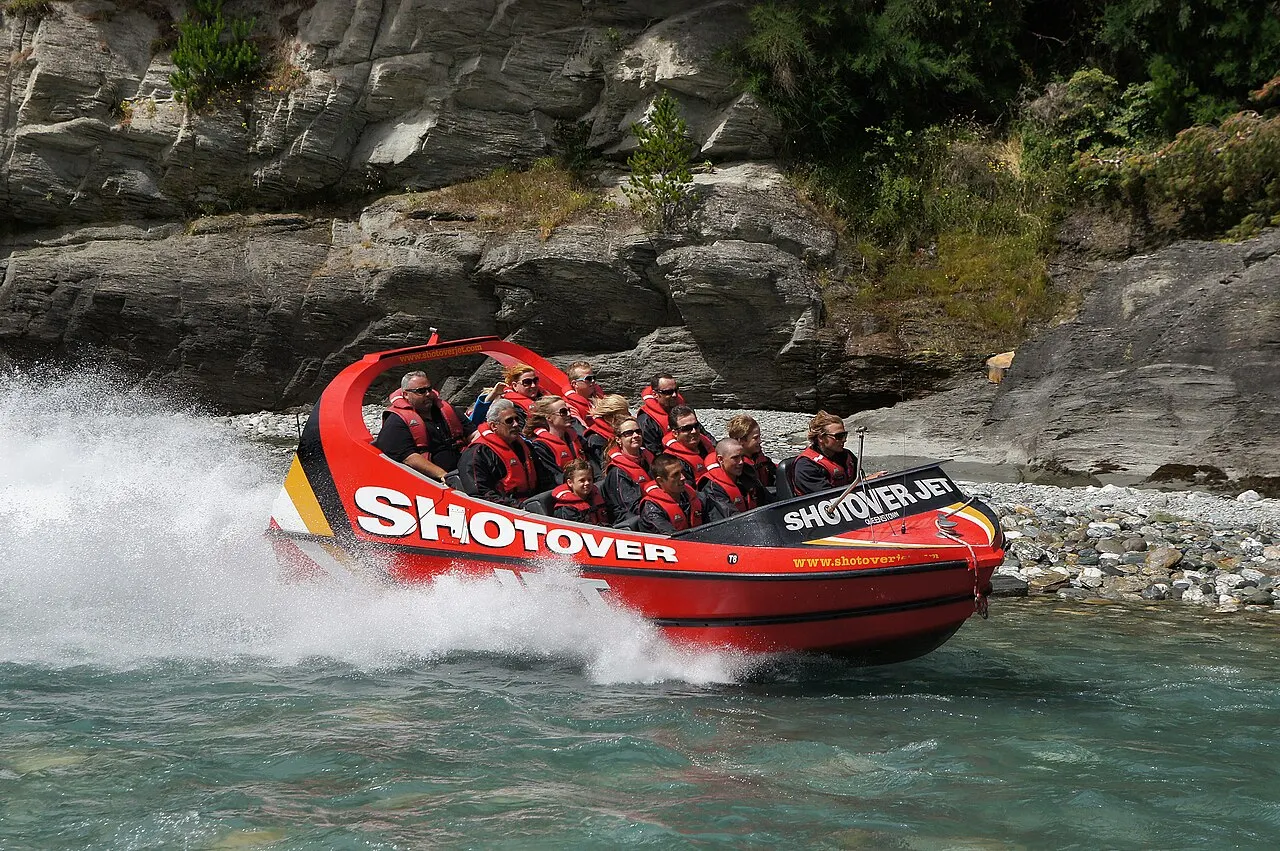
Shotover Jet
Operating since 1965, it's the only company licensed to enter the Shotover River's canyons, passing within centimeters of the schist walls at up to 85 km/h, with 360° spins. A 25-minute ride, from about NZ$173.
Worth it for the no-prep adrenaline: it's the only company licensed in the Shotover canyons, and the 25-minute ride passes within centimeters of the schist walls. Book ahead in high season.
Check access

Arrowtown and the Chinese settlement
An 1862 main street with preserved timber and stone facades, and, by Bush Creek, the restored huts of the Guangdong miners, including Ah Lum's 1909 store. In April the poplars and larches on the street turn yellow and the village fills up.
Worth it for the preserved 1862 main street and the restored huts of the Chinese miners by Bush Creek, the part of the gold rush still standing. Go early, before the village fills up, especially in April.
Check access
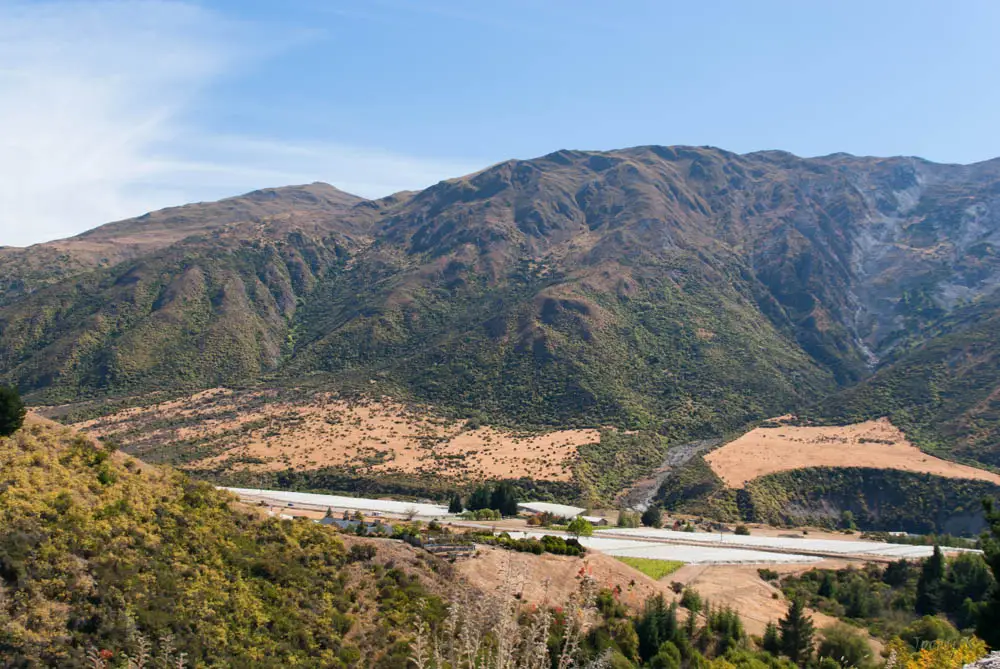
Gibbston Valley and the Queenstown Trail
Central Otago's highest and coolest wine sub-region, the world's southernmost commercial wine region (around 45°S), with Pinot Noir on about three-quarters of the vines. The Queenstown Trail, opened in 2012 and now around 130 km, links the city to Arrowtown and Gibbston entirely on cycle paths.
Worth it for wine drinkers: it's the highest, coolest subregion of Central Otago, and the Queenstown Trail links the wineries by bike path. Do the stretch by e-bike, so you don't drive after the tasting.
Check access

TSS Earnslaw and Walter Peak
A 1912 coal-fired steamer, 51 m long, with the boilers in open view and shovel-fed during the crossing. Crosses to Walter Peak farm in 40 minutes; the crossing alone costs about NZ$89, and with lunch and a shearing demonstration it's over NZ$189.
The TSS Earnslaw, a 1912 steamer with boilers fed by shovel, makes the 40-minute crossing to Walter Peak for NZ$89, or more than NZ$189 with a meal and farm show, in a town where NZ$600 a day is already the real bill. If the budget is tight, watch the boat for free from Steamer Wharf, leaving and coming back.
Check access
Nilo’s itinerary
Start with the basic programme and choose extensions for the time you have.
Plan my days in the app ↗Day 1 · The lake, the mountain above, and the steamer
Have breakfast downtown and walk the 1.5 km loop through the Queenstown Gardens, on the moraine peninsula, going in by the rose garden and coming out on Marine Parade.
Ride the gondola up to Bob's Peak and stay at the lookout; if you want to continue on foot to the Ben Lomond Saddle, allow 3 to 4 hours round trip, which takes the whole afternoon.
Walk down the Tiki Trail in 45 minutes and have lunch at Steamer Wharf, by the water.
Board the 2pm or 4pm TSS Earnslaw sailing to Walter Peak: a 40-minute crossing with the boilers in view, and the option of a sheep-shearing show and coffee at the farm.
Join the Fergburger line after 10pm and eat on the Marine Parade steps, looking at the lights of Kelvin Heights.
Day 2 · Kawarau, wine, and the gold village
Head to the Kawarau Bridge in the morning (23 km, 25 minutes) and watch or jump the world's first commercial bungy, opened in 1988; the observation deck is free.
Rent a bike in Gibbston and ride the Queenstown Trail's winery stretch, about 11 km one way on a separated path and over the old suspension bridge.
Have lunch at a valley winery and do a Central Otago Pinot Noir tasting (NZ$15–30, often waived with a bottle purchase).
Continue on to Arrowtown (20 km): Buckingham Street, the Bush Creek Chinese settlement with Ah Lum's 1909 store, and the Lakes District Museum.
Head back at dusk, stopping at Lake Hayes, which mirrors The Remarkables when there's no wind.
Day 3 · The head of the lake and hot water
Drive the 46 km to Glenorchy along the road built in 1962, stopping at the Bennetts Bluff lookout halfway there.
Walk the Glenorchy Lagoon Walkway, a flat 30–40 minutes among willows and waterbirds, and photograph the red wharf.
Choose between the Dart River jetboat, a drive out to Paradise (gravel road, the Isengard filming location), or hiking to Routeburn Flats, 6 to 7 hours round trip.
Head back via Arthurs Point and finish at the Onsen hot pools, in open-air tubs above the Shotover gorge (booking required).
Dinner downtown with a lamb or cervena dish and a glass of Bannockburn Pinot.


If you stay longer
Day 4 · Milford Sound
Day trip
288 km via Te Anau and the Homer Tunnel (1954, 1.2 km, single-lane with traffic light): 4 hours of driving each way, 12 to 13 hours door to door with the two-hour fiord cruise. NZ$200–260 by guided bus or 35 minutes by plane for NZ$500+; the road can close for avalanches in winter.
Food
 AI illustration
Fergburger
A burger joint on Shotover Street, open since 2001 and running from 8:30am to 5am, with a line at any hour. The bun is 15 cm across, the venison version is called Sweet Bambi, and the bill runs NZ$16–22; the same family's bakery and gelateria sit right next door.
 AI illustration
Cheese rolls
A Southland specialty: grated cheese mixed with powdered onion soup and evaporated milk, rolled in white sandwich bread and toasted on the griddle. Sold in cafés as a side to soup, three for about NZ$10; the local nickname is “southern sushi.”
 AI illustration
Bluff oysters and green-lipped mussels
Ostrea chilensis oysters are dredged in Foveaux Strait and exist only between March 1 and August 31, at about NZ$40–50 a dozen. The green mussels are farmed and available year round, cooked in white wine.
 AI illustration
Lamb and cervena
Otago lamb and farmed venison, sold as cervena, dominate dinner menus, seared and served rare. Main course at a downtown restaurant, NZ$40–58.
 AI illustration
Central Otago Pinot Noir
The region has had commercial plantings since the 1970s (Gibbston Valley Wines dates to 1981) and makes a dark-fruited, high-acid Pinot because of the wide temperature range. Glass at a bar NZ$15–22, five-wine tasting at a winery NZ$15–30, often waived with a purchase.
 AI illustration
Cromwell stone fruit
Cherries, apricots, peaches, and nectarines from the Clutha valley, sold at roadside stands on SH6 between December and February. A kilo of cherries in season runs NZ$15–30, and it's the region's most visible farm product.
 AI illustration
Flat white and the all-day coffee breakfast
The flat white is the default order, at NZ$6–7.50, and breakfast served until 2pm (eggs, avocado, cured salmon) is a New Zealand institution that runs NZ$22–30. Many cafés close at 3pm.
 AI illustration
Pavlova, hokey pokey, and L&P
The national dessert of meringue with cream and kiwifruit, vanilla ice cream with crunchy caramel bits, and a lemon soda invented in Paeroa in 1907. These are the three items any New Zealander recognizes as their own, and all three show up in supermarkets.
Day trips

Milford Sound
288 km via Te Anau and the Homer Tunnel (1954, 1.2 km, single-lane with traffic light): 4 hours of driving each way, 12 to 13 hours door to door with the two-hour fiord cruise. NZ$200–260 by guided bus or 35 minutes by plane for NZ$500+; the road can close for avalanches in winter.

Wānaka
Wānaka is 70 km away, about 1 hour over the Crown Range Road, New Zealand's highest paved road (1,076 m at its highest point), with a stop at the Cardrona Hotel, from 1863. There, the lake is calmer than Queenstown's, and you can see the Wānaka tree standing in the water, taste wine at Rippon winery and hike the Roys Peak track (5 to 6 hours round trip, 1,200 m of climbing).
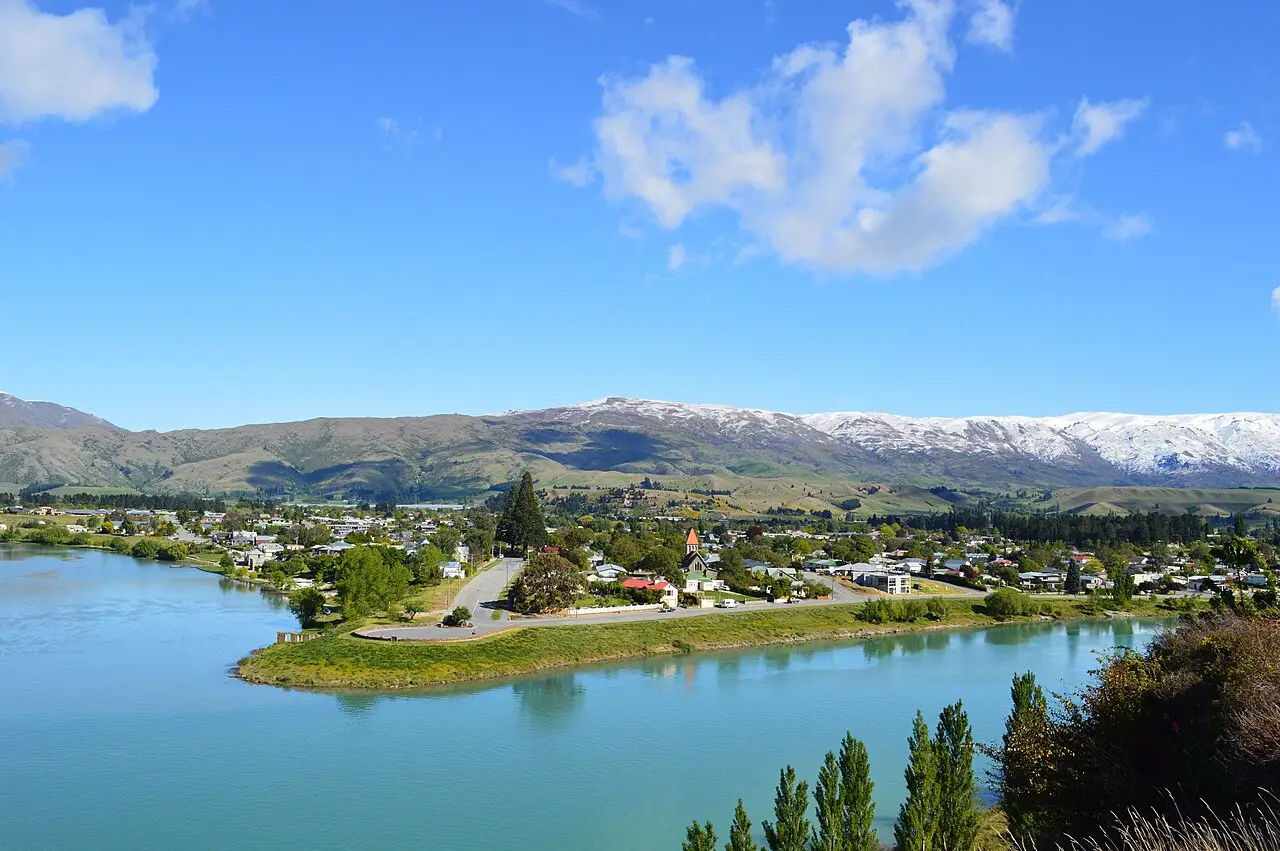
Cromwell and Bannockburn
60 km through the Kawarau Gorge in 45 minutes, into the heart of Central Otago's orchards and wineries. Old Cromwell was submerged by Lake Dunstan when the Clyde dam filled in 1992, and the rebuilt historic quarter by the water, plus Bannockburn's hydraulic mining cliffs, explain the landscape better than any lookout.
Where to begin
The lake, the mountain above, and the steamer
Have breakfast downtown and walk the 1.5 km loop through the Queenstown Gardens, on the moraine peninsula, going in by the rose garden and coming out on Marine Parade.
Kawarau, wine, and the gold village
Head to the Kawarau Bridge in the morning (23 km, 25 minutes) and watch or jump the world's first commercial bungy, opened in 1988; the observation deck is free.
The head of the lake and hot water
Drive the 46 km to Glenorchy along the road built in 1962, stopping at the Bennetts Bluff lookout halfway there.
Money
The currency is the New Zealand dollar, around NZ$1.70 to the US dollar and NZ$1 ≈ R$3.20 in September 2026. The 15% GST is already built into every posted price, so the number on the sign is the number you pay. On public holidays almost every restaurant adds a 15% surcharge, noted on the menu. Contactless card works everywhere except the bus: there it's Bee Card or exact cash, and many places add a 2–3% surcharge for credit card or American Express. Cash is nearly dispensable. Tipping isn't expected, there's no line for it on the card machine, and nobody's offended. September 2026 ranges, all approximate: flat white NZ$6–7.50; Fergburger NZ$16–22; café lunch NZ$25–35; restaurant main NZ$40–58; craft beer pint NZ$13–16; glass of Pinot NZ$15–22; bed in a shared room NZ$50–85; mid-range hotel NZ$280–450 in high season; day ski pass NZ$160–195; gondola round trip NZ$64; Kawarau bungy NZ$320. Add to the trip the NZ$100 International Visitor Conservation and Tourism Levy (IVL) and the NZeTA at NZ$17 through the app or NZ$23 through the website, both paid before boarding. As of September 2026 the district charged no accommodation levy of its own, despite the 2019 referendum. Check when you book.
From the airport to the center
Guide estimate
Scroll to compare all columns
| Route | Time | Price |
|---|---|---|
| ZQN → town center · Orbus route 1 (every 15 min at peak) | about 25 min | about NZ$2.50 with the Bee Card, NZ$4 in cash |
| ZQN → town center · taxi or Uber | varies | NZ$35–55 |
| ZQN → hotel or hostel · hotel shuttle | varies | free for guests |
Getting there and around
Queenstown Airport: 8 km from downtown, the country's fourth-busiest
Queenstown Airport (ZQN) sits in Frankton, 8 km from downtown, is New Zealand's fourth-busiest (around 2.4 million passengers a year), and has no scheduled flights between 10pm and 6am because of noise restrictions. It gets direct flights from Auckland, Christchurch, Wellington, Sydney, Melbourne, Brisbane and the Gold Coast. Travelers from Brazil arrive via Santiago, Sydney or Auckland, always with a domestic connection at the end. From the airport to downtown, Orbus route 1 leaves every 15 minutes at peak times and takes about 25 minutes. The fare in September 2026 is about NZ$2.50 with the Bee Card and NZ$4 in cash, and the card itself costs NZ$5 plus a NZ$5 minimum top-up, sold at the i-SITE and at partner stores. A taxi or Uber to downtown runs NZ$35–55. Hotel and hostel shuttles are free for guests and pick up at the curb outside arrivals.
Orbus network: six routes under one fare
Within the basin, the Orbus network runs half a dozen routes at a single fare, linking Fernhill, downtown, Frankton, Remarkables Park, Arthurs Point, Lake Hayes Estate, Jack's Point and Arrowtown. The Arrowtown route runs less often, so check the schedule before counting on it. The Kelvin Heights ferry takes the same ticket. Downtown is completely walkable, 1 km end to end, but everything around it is uphill, and a bike makes sense: the Queenstown Trail has about 130 km of separated bike path to Arrowtown and Gibbston, with e-bike rental at NZ$90–120 a day. To leave the region, InterCity buses run to Wānaka (1 hour 30 minutes), Te Anau (2 hours 30 minutes), Dunedin (4 hours 30 minutes) and Christchurch (about 8 hours); there's no passenger train. If you rent a car, drive on the left; single-lane bridges are signposted with an arrow showing who has the right of way, downtown parking is paid and scarce, and from June to September the Crown Range and the ski-field roads may require chains, which the rental company charges extra for.
Safety
Queenstown has rare violent crime, and most nighttime trouble comes down to drunk people leaving the bars at 4am. Standard caution applies with an unattended drink and with walking alone up the dark slope to Fernhill. The real risk here is environmental, and it's the one I'd take seriously. Lake Wakatipu's water sits at 10–12°C year round with no lifeguards: cold shock incapacitates in minutes, and there's a drowning somewhere every year. In the mountains, weather turns within an hour, the northwest wind kicks up strong gusts, and there's avalanche risk off-piste from June to October. Log your hike intention, carry a waterproof jacket, and check the MetService forecast and the New Zealand Avalanche Advisory bulletin. Don't drink unfiltered stream water: there's giardia. On the road, the accident rate for visiting drivers is high: driving on the left, narrow lanes, single-lane bridges, black ice on winter mornings, and mandatory chains on some climbs. Around Glenorchy and on the way to Milford there are sandflies (namu), which carry no disease but bite relentlessly: repellent handles it. ACC, the public accident insurance, covers injury treatment for visitors, but not repatriation, cancellation, or lost income, and most travel policies exclude adventure sports without a specific add-on: read the exclusion before you jump. Emergencies: 111.
Etiquette tips
Take your shoes off indoors
In a New Zealand home, shoes stay at the door: including in many DOC huts and lodges. On arrival in the country, muddy trail boots must be declared and may be washed by biosecurity.
Don't tip by reflex
Waiters and drivers are paid an hourly wage and don't count on tips; leaving 10% causes more confusion than gratitude. Rounding up the bill for exceptional service is fine, nothing more.
Say Māori names in full
Whakatipu, Tāhuna, Wānaka, and Aoraki are said with every vowel, not shortened; “kia ora” works as a hello at any counter. Māori vowels: a as in “father,” e as in “pet,” i as “ee,” o closed, u as “oo.”
Single-lane bridge: the arrow decides
The large black arrow shows who has right of way; the small red arrow shows who waits. If you're waiting, stop before the bridge, and thank the other driver with two fingers raised off the wheel: the standard greeting on country roads.
Don't sit on a table or countertop
In Māori culture, surfaces where food is prepared or served are noa and shouldn't be sat on, a rule taken seriously in community spaces and schools. Likewise, don't put a hat, hairbrush or backpack on the dining table.
At the bar, order at the counter and pay on the spot
Most pubs have no table service: you go to the bar, order, pay and carry your drinks back. In rounds, everyone buys one in turn, and leaving without buying yours gets noticed.
Mistakes to avoid
Arriving in high season without a booking
Arriving in high season without a booking, as if you could sort it out at the counter. Between December 26 and mid-January and during the July school holidays, hotels, the bungy, buses to Milford and dinner tables after 7pm book out weeks ahead, and kitchens close early, around 9pm.
Underestimating sun that doesn't feel hot
Underestimating the sun, which stays strong here even in cold air. The summer UV index tops 11, sunburn comes in 10–15 minutes even at 18°C with wind, and the winter snow glare burns just the same: SPF 50 and sunglasses earn their keep all twelve months.
Trusting the morning weather
Treating the morning's weather as the day's weather. The weather in the basin turns within an hour, the northwest wind comes down warm and then drops away, and trails like Ben Lomond or the Routeburn call for a windbreaker and an extra layer even in January.
Milford Sound as a half-day trip
Thinking Milford Sound fits into a half-day trip. It's a twelve- to thirteen-hour trip door to door, much of it on the same single-lane road through the Homer Tunnel. In winter it can close over avalanche risk.
Bringing dirty boots without declaring them
Bringing food, seeds, or dirty boots without declaring them. New Zealand biosecurity applies an instant NZ$400 fine per undeclared item at arrival, and a forgotten piece of fruit in your bag counts as an item.
Useful phrases
Kia ora
Hello, and also “cheers” and “thanks”: a Māori greeting used by everyone, from the bus to phone support (pron. “kee-ah oh-rah”)
Sweet as
“Great,” “all good,” “no worries.” The “as” doesn't complete any comparison and answers almost any sentence
Chur
Cheers, thanks, among friends and at the bar counter; it also signals agreement with what the other person just said
Yeah, nah
“No,” said politely and without closing the door; “nah, yeah” means yes. The last word is the one that counts
Tramping
Mountain hiking, usually with an overnight in a hut; “hiking” is barely used, the backpack is a pack and the shelter is a DOC hut
Tāhuna / Whakatipu Waimāori
The Māori name for Queenstown, “shallow bay,” and the name of the lake (pron. “tah-hoo-nah” and “fah-kah-tee-poo”)
Districts
Downtown (The Mall, Shotover, and Beach Street)
Six flat blocks between the wharf and the slope, holding almost all the lodging, the bars, the activity agencies and the Fergburger line. You can walk it end to end in fifteen minutes, and it's where almost everything you pay for in town is concentrated.
Frankton
The functional neighborhood 8 km away, on the lake arm: airport, hospital, cheaper supermarkets, the Remarkables Park and Five Mile malls, and the Te Atamira arts center. It's where the people who serve downtown live and work.
Fernhill and Sunshine Bay
Slopes west of downtown, climbing in tight bends, with holiday-rental apartments and a front-row view of The Remarkables. Cheaper than downtown and connected by bus route 1, but always uphill on foot.
Kelvin Heights
A peninsula across the Frankton Arm, with the Queenstown Golf Club course and residential homes. The ferry crosses in about 20 minutes with the same Bee Card as the buses, and it's the most scenic ride on the network.
Arthurs Point
A village 5 km north, in the Shotover gorge, home to the Shotover Jet base, the Onsen hot pools, and Canyon Brewing. Beyond that, it's a handful of houses and a narrow bridge.
Arrowtown
A mining village from 1862, 20 km away, with the original facades of Buckingham Street, the Bush Creek Chinese settlement and the Lakes District Museum. Day visitors fill it by day; at night it belongs to its year-round residents.
Gibbston
The Kawarau valley, 25 minutes by road, with the bungy bridge and Central Otago's coolest wine sub-region. It's not a neighborhood, it's a string of wineries along SH6 linked to the city by cycle trail.
Jack's Point and Hanley's Farm
New subdivisions 15–20 km south, at the base of The Remarkables, built since the 2010s to absorb growth. No tourist interest, but it's where the long-term rentals are, and the explanation for the housing crisis.
History
14th–18th c. · The pounamu route
Ngāi Tahu and earlier iwi crossed the Whakatipu basin on seasonal expeditions, hunting and carrying pounamu (jade) from the West Coast. Nobody wintered there: the basin worked as a corridor, without permanent settlement.
1853 · The first European on the lake
Scotsman Nathanael Chalmers reaches the shore of the Wakatipu guided by Reko, chief of Tuturau, and returns ill down the Clutha River on a flax raft. The account opens the basin to sheep farming.
1860 · Rees's sheep
William Gilbert Rees and Nicholas von Tunzelmann take up huge grazing runs around the lake. Rees builds a shearing shed exactly where central Queenstown stands today.
1862 · Gold on the Arrow and the Shotover
Jack Tewa and later William Fox find gold in the Arrow River; in November, two of Rees's shearers, Thomas Arthur and Harry Redfern, find gold in the Shotover. The Shotover would earn a reputation as the richest river in the world by volume.

1863 · A town in a year
Queenstown is surveyed and proclaimed a borough; Rees's shed becomes the Queen's Arms hotel, today's Eichardt's. Steamers start crossing the lake because there's no road.
1865–1880 · The Chinese miners
With the West Coast rush draining Otago, the provincial council invites miners from Guangdong to rework the tailings. The Chinese settlement at Bush Creek, in Arrowtown, is the mark that remained, and New Zealand would charge a poll tax on Chinese arrivals only from 1881 to 1944.

1912 · The TSS Earnslaw steamer
Launched in February 1912 in Kingston after arriving by train in pieces from Dunedin, the coal-fired ship supplied roadless farms with coal, mail, and sheep. It's still sailing, with the same shovel-fed boilers.

1947 · Coronet Peak
New Zealand's first commercial ski field opens, 25 minutes from downtown. Winter stops being a dead season and the city gains a second one.
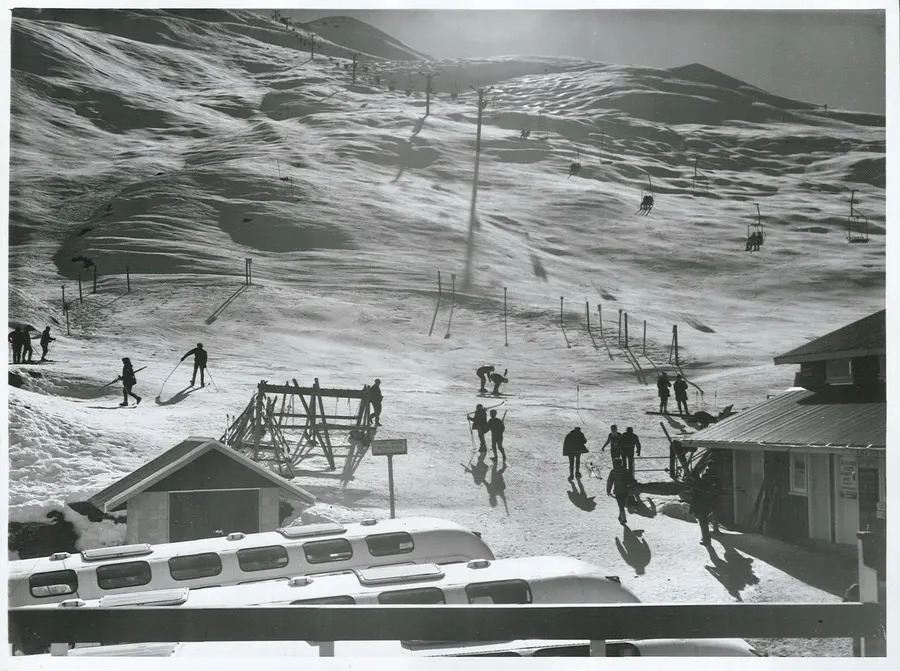
1962–1967 · Road, jetboat, and gondola
The road to Glenorchy is finished in 1962, taking away the steamer's supply role; Shotover Jet begins operating in 1965; the Bob's Peak gondola opens in 1967. The city starts selling scenery in bulk.
1988 · The first commercial bungy jump
A. J. Hackett and Henry van Asch install the world's first permanent commercial bungy jump on the 1880 Kawarau Bridge: 43 m. Within a decade, Queenstown becomes synonymous with paid risk sport.
1998–2003 · Ngāi Tahu and Middle-earth
The 1998 settlement returns to the Ngāi Tahu iwi about NZ$170 million, a formal apology, and dual place names on the map. Between 2001 and 2003, Peter Jackson's trilogy films Glenorchy, Paradise, and the Kawarau Gorge, and international arrivals soar.
Complete history
Before 1860: a seasonal path, not a settlement
Until 1860, the Whakatipu basin was just a route people passed through. Ngāi Tahu and earlier iwi came up from the coast on seasonal expeditions to hunt and to move pounamu, West Coast jade, through the alpine passes; winter sent everyone back to the coast, and no permanent settlement took hold on the lakeshore. The first European to see the water was Nathanael Chalmers, in 1853, guided by Reko of Tuturau. Seven years later William Gilbert Rees and Nicholas von Tunzelmann took up huge grazing runs around the lake, and Rees built a shearing shed in the bay where the town center now stands. In November 1862 two of his shearers, Thomas Arthur and Harry Redfern, took gold from the Shotover River: months after Jack Tewa and William Fox found gold in the Arrow River. Within a year Rees's farm had become a town: Queenstown was surveyed and proclaimed in 1863, the shed became the Queen's Arms hotel (today's Eichardt's), and the Shotover earned a reputation as the richest river in the world by cubic meter.
The easy gold ran out fast
The easy gold ran out fast. From 1865 the West Coast rush pulled miners out of Otago, and the provincial council invited workers from Guangdong to rework tailings the Europeans had abandoned; the Chinese settlement at Bush Creek, in Arrowtown, was occupied from the 1870s to the 1920s and is now restored, with Ah Lum's 1909 store still standing. The treatment was harsh: between 1881 and 1944 New Zealand charged a poll tax exclusively on Chinese arrivals, for which the government issued a formal apology in 2002. Without gold, the basin shrank to a sheep and lake-service economy, with just a few hundred residents in Queenstown around 1900. With no road, the lake was the highway: the TSS Earnslaw, launched in 1912, carried coal, mail, and livestock to isolated farms for fifty years.
Skiing (1947), the road (1962), and jetboating: the twentieth-century turnaround
The turnaround was built piece by piece over the 20th century. Coronet Peak opened in 1947 as the country's first commercial ski field and invented the winter season; the Glenorchy road was finished in 1962 and retired the steamer as a freight carrier; Shotover Jet began running the gorge in 1965; the Bob's Peak gondola rose in 1967; The Remarkables opened as a ski area in 1985. The decisive stroke came in November 1988, when A. J. Hackett and Henry van Asch hung an elastic cord from the 1880 Kawarau suspension bridge and started selling a 43-meter fall for a fixed price. The idea became an industry (the 134 m Nevis Bungy in 1999, canyon swing, zipline, skydiving over the lake, heliskiing) and forced the country to write rules: since 2014 every adventure activity operator needs certification audited by WorkSafe.
The Ngāi Tahu settlement (1998) and The Lord of the Rings change the city
In 1998 the reparation settlement with the Ngāi Tahu iwi returned around NZ$170 million, an apology from the Crown, and dual place names on the map, giving the iwi an economic weight it still holds in the region. Between 2001 and 2003 The Lord of the Rings trilogy filmed Glenorchy and Paradise as Isengard and Lothlórien, the Kawarau Gorge as the Argonath, and Deer Park Heights as the flight from Edoras; The Hobbit, Top of the Lake (2013), and sequences from Mission: Impossible, Fallout (2018) followed. From 1996 to 2019 the district's population nearly tripled, New Zealand's fastest growth, and Frankton airport became the country's fourth-busiest.
The pandemic (2020–2022) wipes out nearly all tourism revenue
With New Zealand's borders closed from March 2020 to mid-2022, the country's most tourism-dependent district lost nearly all its revenue and much of its temporary workforce within weeks. Recovery was fast from 2023, and by 2025–26 airport traffic and hotel occupancy had already passed 2019 levels. What remained was the cost: median house price in the NZ$1.2–1.3 million range, chronic housing shortage for the people working the restaurants and the ski runs, people living in vans in Frankton, and a permanent fight over who pays for water and roads. In June 2019, about 81% of district voters approved a 5% accommodation levy in a referendum; the central government never passed the law, and as of September 2026 Queenstown still had no visitor levy of its own (check before you travel).
Before 1860, the Māori crossed the lake basin carrying jade, but no one spent the winter there.
Geography and shape of the city
Queenstown, on a moraine, by New Zealand's third-largest lake
Queenstown sits 310 m above sea level on a glacial moraine at the northern tip of a bay of Lake Wakatipu, in a basin carved by a glacier that retreated about 15,000 years ago. The lake is New Zealand's third-largest: 291 km², 80 km long in a zigzag shape, no more than 5 km wide and 380 m deep, so its bed lies well below sea level. The water rises and falls on its own by about 10 cm every 26.7 minutes, a seiche caused by the wind and the shape of the basin; Ngāi Tahu tradition explains it as the breathing of the giant Matau, burned in the lakebed.
Schist, gold, and the mountains around it
The terrain is Otago schist, and that's where the gold came from, in quartz veins. To the east, The Remarkables rise almost sheer to Double Cone, 2,319 m; to the north, Ben Lomond closes off the city at 1,748 m; above downtown, Bob's Peak at 790 m.
A single road stretches the city out to Frankton
The town has no regular grid: downtown is a six-block rectangle between the water and the hillside, and the rest stretches out in a ribbon along a single road, SH6A, to Frankton, on the arm of the lake where the airport sits and where the Kawarau River, the Wakatipu's only outlet, flows out. The Southern Alps steal the rain to the west: Milford Sound gets more than 6,000 mm a year, while Queenstown, on the dry side of the range, gets around 900 mm, with dry air, harsh light and big swings in temperature.
Culture
A third of residents were born outside New Zealand
Queenstown is a town of passage that organizes itself around the people who work in it. About a third of residents were born outside New Zealand, many on working holiday visas (Brazilians, Argentines, Filipinos, Britons, Germans), and the median age is well below the national average. That shapes the nightlife: four blocks (The Mall, Cow Lane, Searle Lane, Shotover Street) are packed with bars serving until 4am, with après-ski from July on and a staff turnover that changes the same bar's accent every season. It also shapes the town's central problem. With the median house near NZ$1.2–1.3 million, whoever serves your coffee lives in a shared room in Frankton or inside a van, and the lack of worker housing is the standing political issue.
Adventure: the local culture, from jetboating (1965) to bungy jumping (1988)
Adventure tourism is what defines local life. The jetboat was invented in New Zealand by Bill Hamilton in the 1950s and reached the Shotover in 1965; there, in 1988, the commercial bungy jump industry began; then came the 134 m Nevis, the 109 m drop canyon swing, zip lines on Bob's Peak, skydiving over the lake, and heli-skiing. All of this operates under a mandatory certification regime audited by WorkSafe since 2014, with a recorded briefing, double harness checking, and boarding refusal for a declared medical condition. Film came along with it: The Lord of the Rings trilogy used the whole basin as a backdrop between 2001 and 2003; Jane Campion's Top of the Lake (2013) used Glenorchy as the setting for the dark side of the same landscape; and there are sequences of Vertical Limit (2000), X-Men Origins: Wolverine (2009), and Mission: Impossible - Fallout (2018) shot in the region.
The Māori and Central Otago layers, behind the tourism
Beneath the tourism there's a Māori layer and a Central Otago layer that rarely make the brochure. The land belongs to the Ngāi Tahu iwi, whose 1998 reparation settlement returned dual place names on the map (the lake is Whakatipu Waimāori) and an economic base visible in ventures across the district; Matariki, the Māori new year, has been a public holiday since 2022 and is marked by watching the Pleiades cluster at dawn in June or July. The region's artistic tradition is one of dry inland light: Grahame Sydney's paintings and Brian Turner's poetry portray Central Otago without a single postcard mountain. The Te Atamira arts center, opened in Frankton in 2021, is where the city keeps its exhibitions, theater, and community programming; the Lakes District Museum, in Arrowtown, keeps the rest.
In the bars of Shotover Street, service runs until 4am.
Outside the brochure, the region has the Māori culture of Ngāi Tahu and the art of Central Otago; that's where I would spend more time.
Festivals and events
 AI illustration
Queenstown Winter Festival
Late June, four days. Held since 1975 to open the ski season: a parade on Shotover Street, fireworks over the lake, a plunge into the 10°C lake, and comedy races at Coronet Peak.
 AI illustration
Arrowtown Autumn Festival
Third week of April, in Arrowtown, since 1985. A parade, street market, and gold-panning contest, at the peak of the poplars' yellow. It's the busiest weekend of autumn in the basin.
 AI illustration
Matariki
June or July, movable date, a public holiday since 2022. Marks the Māori new year with watching the star cluster at dawn, hautapu (a food ceremony), and events organized by Ngāi Tahu; nearly everything closes that day.
 AI illustration
Queenstown Marathon
Third Saturday of November, with around 10,000 entrants across the marathon, half marathon, and 10 km, almost the whole course on the Queenstown Trail. Fills the city on an otherwise low-season weekend, and entries sell out months ahead.
 AI illustration
Summer concerts in Gibbston
January and February, outdoors at the wineries of the Kawarau valley, with a lineup that often includes international acts. Tickets NZ$100–180 and a chartered bus from the city, because you don't drive back after tasting.
Books and films
The Lord of the Rings, Peter Jackson's trilogy (2001–2003)
The trilogy turned the landscape around Queenstown into a set recognizable worldwide, and still shapes half the tours sold in the city. Watch it before you go: you'll recognize the Kawarau Gorge and the Glenorchy fields with no signpost needed.
Top of the Lake, by Jane Campion (2013)
A miniseries filmed in and around Glenorchy, with the same postcard landscape serving as the setting for an investigation into violence and isolation in a small community. It's the exact counterpoint to the promotional material.
The Luminaries, by Eleanor Catton (2013)
A Booker Prize–winning novel set in New Zealand's 1866 gold rush, with prospectors, Chinese miners, moneylending, and the claims office. It explains the economy and the hierarchies that founded Queenstown and Arrowtown four years earlier.
Frequently asked questions
Queenstown: Do you need to book ahead in high season?
Between December 26 and mid-January and during the July school holidays, hotels, the bungy, buses to Milford and dinner tables after 7pm book out weeks ahead, and kitchens close early, around 9pm.
Queenstown: How do you get from the airport to downtown?
By bus: Orbus line 1 covers the 8 km between the airport (ZQN), in Frankton, and downtown in about 25 minutes, with departures every 15 minutes at peak times. The fare costs about NZ$2.50 with the Bee Card and NZ$4 in cash.
Queenstown: Can you do Milford Sound in a day?
Yes, but it's the whole day: it's 288 km via Te Anau and the Homer Tunnel, 4 hours of driving each way and 12 to 13 hours door to door with the two-hour fiord cruise. In winter, the road can close for avalanches.
Queenstown: How much does a day in town cost?
Budget about NZ$130 a day as a backpacker, NZ$250 to 380 at a midrange standard and NZ$600 or more with one adrenaline activity a day in high season. The currency is the New Zealand dollar, and NZ$1 is worth about R$3.20 in September 2026.
Queenstown: What's the best time to go?
March and April are the best months: settled days, dry air, fewer people than in summer, and the poplars and larches turning yellow in Arrowtown and Glenorchy in the second half of April.
Other cities in the country
New Zealand ↗- Days
- 2–3
- When
- Jan–Apr · Nov–Dec
- Per person/day
- Average 180–280 NZ$Mid-range · per person/day
Cost scope
Per person per day: accommodation, meals, urban transport, visits and a small allowance for extras. Flights excluded; larger purchases vary. Editorial estimate, not a quote.