French Polynesia
Papeete (Tahiti)
Papeete's market, the island loop, marae, and Teahupo'o
Days Start with the basic programme and choose extensions for the time you have.
How the guide reaches this number
This isn't the island for anyone who only wants turquoise water and white sand, which call for another flight or the ferry to Moorea, 30 to 45 minutes from downtown. With just one day, get to the market at five, have a casse-croûte for lunch downtown, spend the afternoon at the museum in Punaauia, and head back for dinner at the roulottes on Place Vaiete. What disappoints is downtown Papeete itself, which empties after 5pm and barely opens on Sunday, so I'd save Sunday for the island loop or for a ma'a tahiti ordered ahead at a guesthouse. To get around, rent a car, because outside the stretch between Papeete and Punaauia buses are rare, especially at night.
3–4
When May to October, the dry season of the austral winter
How the guide reaches this number
The climate is tropical maritime with two seasons, and here winter is the good news. May through October is the austral winter: dry, with highs of 27–29 °C, lows of 20–22 °C, sea around 26 °C and steady trade winds. It's the best season and also the most expensive, peaking in July and August with the Heiva and French school holidays. November through April is the hot, humid season: 30–32 °C, high humidity, heavy but short rain most days, and cyclone risk between January and March, though Tahiti is hit far less often than the islands to the west. September, October and May strike the best balance between good weather and price. The month I'd avoid, given the choice, is February: hot, rainy, and with a real chance of getting stuck onshore by rough seas.
Per person/day about 12,000–20,000 XPF per person (≈€100–170) with a guesthouse, simple meals, and a rental car; a resort hotel multiplies that
How the guide reaches this number
Per person per day: accommodation, meals, urban transport, visits and a small allowance for extras. Flights excluded; larger purchases vary. Editorial estimate, not a quote.
 What Nilo thinks
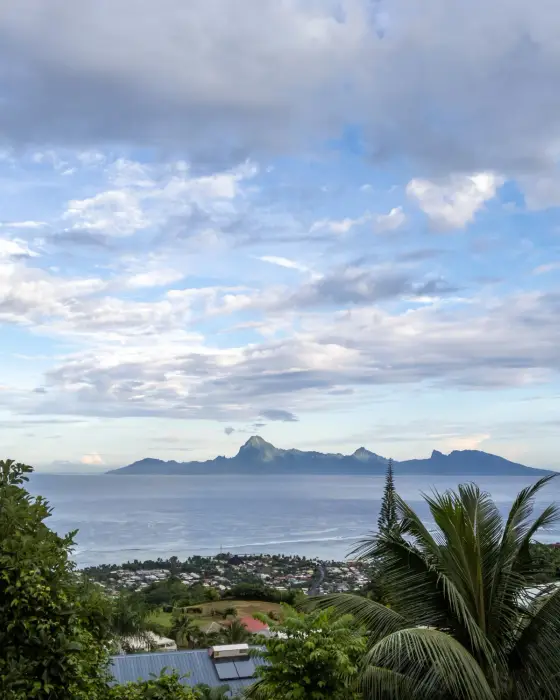
I'd spend three days on the island of Tahiti: one for downtown Papeete and the Museum of Tahiti and the Islands, another for the 114 km loop along the coast, and the third for Tahiti Iti or the Papenoo valley. This isn't the island for anyone who only wants turquoise water and white sand, which call for another flight or the ferry to Moorea, 30 to 45 minutes from downtown. With just one day, get to the market at five, have a casse-croûte for lunch downtown, spend the afternoon at the museum in Punaauia, and head back for dinner at the roulottes on Place Vaiete. What disappoints is downtown Papeete itself, which empties after 5pm and barely opens on Sunday, so I'd save Sunday for the island loop or for a ma'a tahiti ordered ahead at a guesthouse. To get around, rent a car, because outside the stretch between Papeete and Punaauia buses are rare, especially at night.Tahiti is mountains before it's beach: two extinct volcanoes joined by an isthmus, with Mount Orohena at 2,241 m, sheer-walled valleys and black sand along the coast. In Papeete, the capital of French Polynesia, life starts in the small hours at the market, among tiaré flowers, fish and the coconut doughnuts that run out early. Try poisson cru, tuna cured in lime with coconut milk, and have dinner at the roulottes on Place Vaiete, the food trucks that take over the waterfront square at dusk. By car, the 114 km road loops around the main island and passes the Arahurahu marae and the Faarumai waterfalls; on the other side of the isthmus, in Tahiti Iti, the road ends at Teahupo'o, where the wave from the 2024 Olympic event breaks. The turquoise lagoons from the photos are in Bora Bora and the Tuamotus, and in their place Tahiti has the market, the stone marae and the Museum of Tahiti and the Islands, which tells the story of navigation, tattooing and the nuclear tests. Come between May and October, in the dry season, and set aside three days for the island.
Quick facts
- Population
- about 26,000 in the commune of Papeete; about 136,000 in the urban area; about 189,000 on the island of Tahiti; about 280,000 in French Polynesia
- Founded
- Missionary settlement in the 1820s; capital of the protectorate from 1842
- Country and region
- French Polynesia: an overseas collectivity of France; island of Tahiti, Society Islands
- Language
- French and reo tahiti (Tahitian), both current; English works in tourism and barely outside it
- Currency
- CFP franc (XPF), pegged to the euro at a fixed rate: 1 € = 119.33 XPF
- Time zone
- UTC−10, no daylight saving
- Best time to visit
- May to October, the dry season of the austral winter
- Average daily cost
- about 12,000–20,000 XPF per person (≈€100–170) with a guesthouse, simple meals, and a rental car; a resort hotel multiplies that
When to go
May to October, the dry season of the austral winter
January
24° to 31°C
268 mm of rain
February
25° to 31°C
245 mm of rain
March
25° to 32°C
167 mm of rain
April
25° to 31°C
99 mm of rain
November
24° to 30°C
105 mm of rain
December
24° to 31°C
279 mm of rain
How the year changes
The climate is tropical maritime with two seasons, and here winter is the good news. May through October is the austral winter: dry, with highs of 27–29 °C, lows of 20–22 °C, sea around 26 °C and steady trade winds. It's the best season and also the most expensive, peaking in July and August with the Heiva and French school holidays. November through April is the hot, humid season: 30–32 °C, high humidity, heavy but short rain most days, and cyclone risk between January and March, though Tahiti is hit far less often than the islands to the west. September, October and May strike the best balance between good weather and price. The month I'd avoid, given the choice, is February: hot, rainy, and with a real chance of getting stuck onshore by rough seas.
The same numbers as a table
| Month | Temperature °C | Rain mm |
|---|---|---|
| January | 24 to 31 | 268 |
| February | 25 to 31 | 245 |
| March | 25 to 32 | 167 |
| April | 25 to 31 | 99 |
| May · | 24 to 30 | 104 |
| June · | 23 to 30 | 75 |
| July · | 22 to 29 | 44 |
| August · | 22 to 29 | 41 |
| September · | 22 to 29 | 50 |
| October · | 23 to 30 | 103 |
| November | 24 to 30 | 105 |
| December | 24 to 31 | 279 |
Nilo's tips
Go to the market between five and seven in the morning
By eight, the fish and flower stalls on the ground floor of the Marché de Papeete are already emptying out. Between five and seven they're full; after that only the crafts and souvenir stalls upstairs are left.
Flights land near 4am: arrange pickup when booking
At four in the morning nothing is open near Faa'a airport (PPT), 5 km from downtown, and few guesthouses will pick up a guest without arranging it beforehand. Almost every international flight lands in the middle of the night, so notify the guesthouse when you book, not the night before.
Book the car, 6,000 to 9,000 XPF, for the whole day
Without stopping, the 114 km loop already takes three to four hours, and outside the Papeete strip buses are few and far between. On the road, go by the PK, the kilometer point by which addresses on the island are given.
Bring cash, at 119.33 XPF per euro, and skip the tip
At the roulottes, the market and small guesthouses, cards don't work. The exchange rate is fixed, so there's no rate to track. Withdraw cash in Papeete before flying to any smaller island, where ATMs are rare. The bill has no tip line, and no one expects you to leave one.
At night, have dinner at the Place Vaiete roulottes for 1,200–2,000 XPF
Downtown Papeete empties out after 5pm, and the night moves to Place Vaiete, which turns into a roulotte lot at dusk. Dinner there runs 1,200–2,000 XPF, compared with 2,500–4,500 at a restaurant, and a Hinano costs between 500 and 800. Buy drinks to go during the day, because shops are usually closed at night.
To see the Teahupo'o wave, hire a fisherman's boat on site
At Teahupo'o, at the end of the road on Tahiti Iti, there's little to see from land. Anyone who wants to see the wave for real hires a fisherman's boat on the spot, not online.
Explore the map

© OpenStreetMap · OpenFreeMap · © OpenMapTiles
Explore the map, read about the other places and plan your travel days in the app.
Open the appWhat to see
Papeete (Tahiti): Two volcanoes joined by an isthmus
Papeete and the neighboring communes form a continuous strip on the northwest coast, from Faa'a to Arue, squeezed between the mountain and the lagoon, and the capital's downtown is the rectangle between the waterfront boulevard Pomare and the market, where almost everything you do on foot is located.
Marché de Papeete
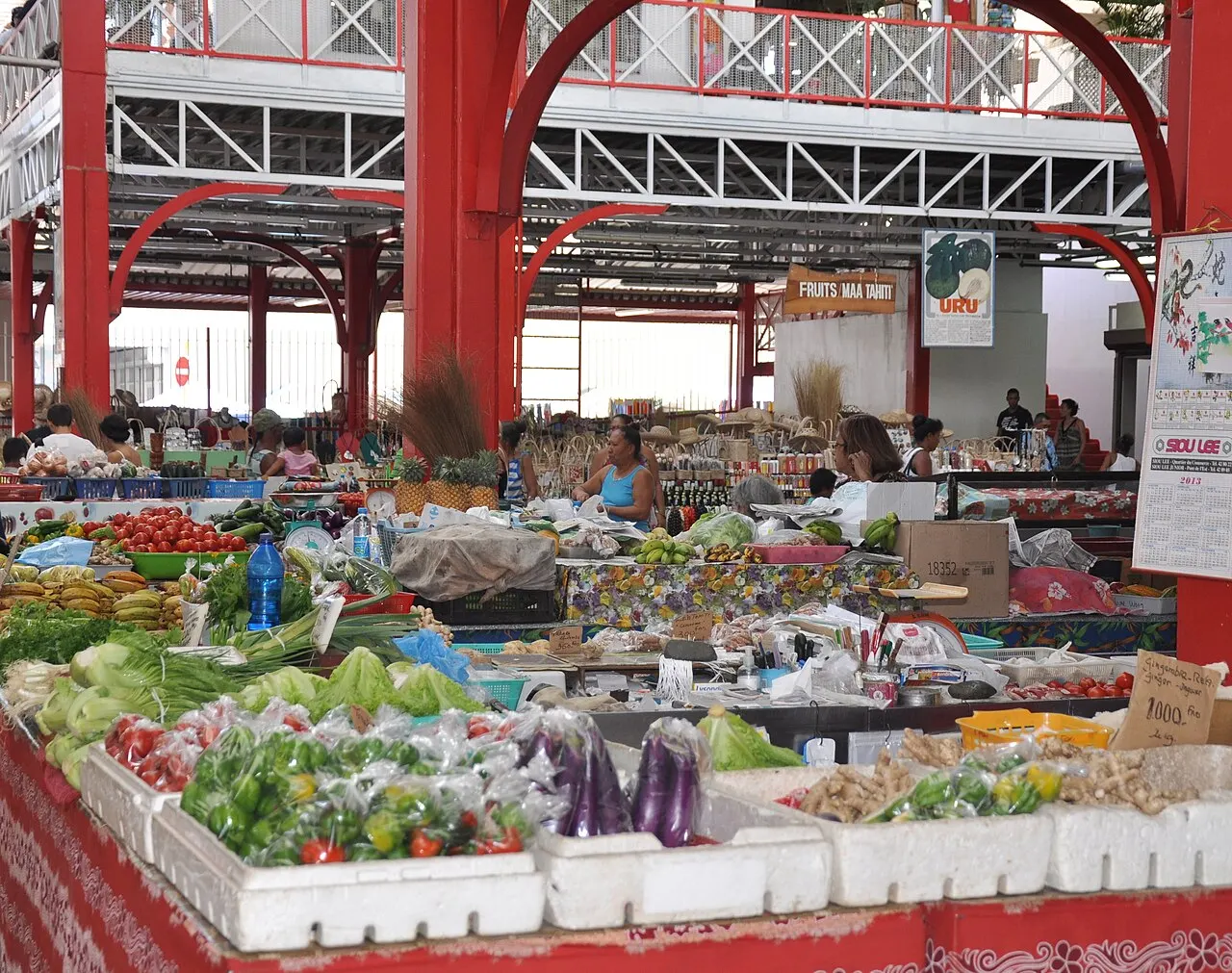
Two-story municipal market, in its current building since 1987 and heir to the city's first market, from 1847. Fish and flowers are on the ground floor, crafts and tifaifai upstairs. Go between five and seven in the morning, because by eight the activity is already winding down; on Sundays it closes before nine.
It's where Papeete happens early in the morning, with fish and flowers on the ground floor and handicrafts upstairs.
Check access

Place Vaiete and the roulottes
The waterfront square that turns into a lot full of food trucks (the roulottes) at nightfall. It's the cheapest place to eat in Papeete and the only thing happening downtown after seven in the evening.
At dusk the square turns into a parking lot of food trucks, the roulottes, the cheapest way to eat in Papeete and the only activity downtown after seven.
Check access
Museum of Tahiti and the Islands
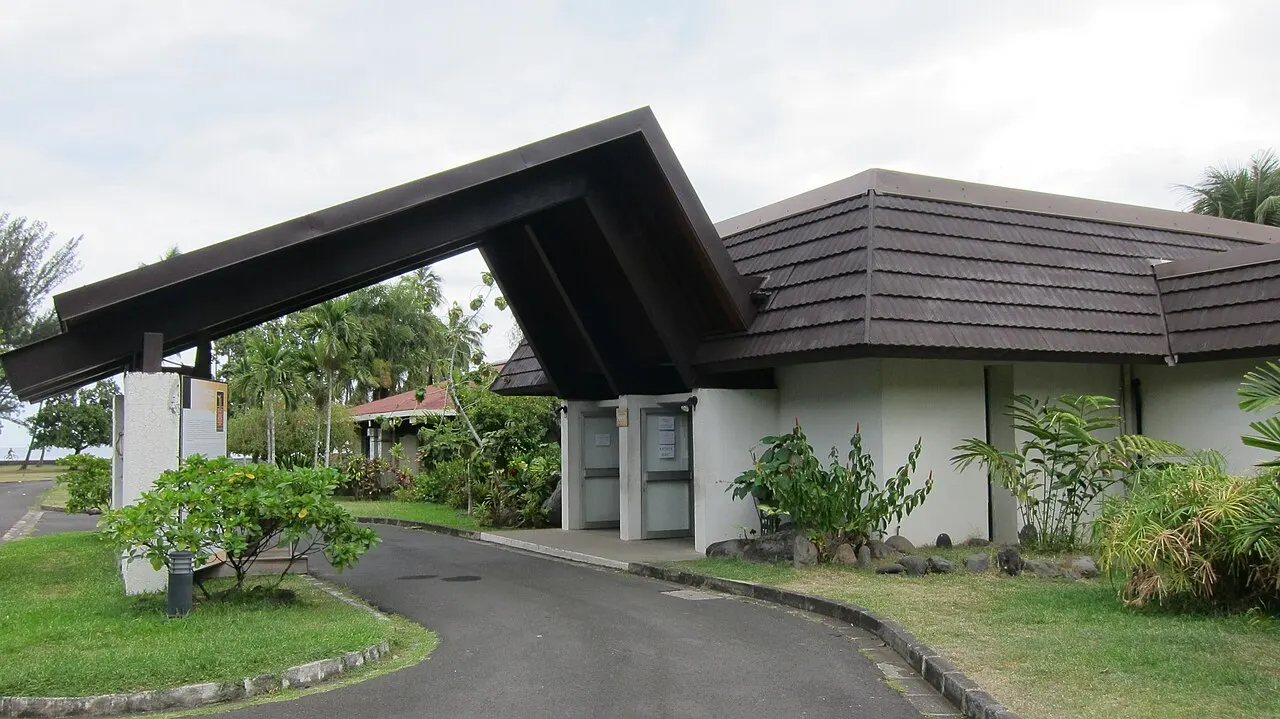
In Punaauia, reopened in 2023 after a long renovation. It's the best introduction to the territory there is: navigation, marae, tattooing, the nuclear tests and the 20th century told by Polynesians.
Check access

Point Venus and the lighthouse
The island's northern tip, on Matavai Bay, where Cook measured the transit of Venus in 1769. Black sand, strong waves and the 1867 lighthouse, designed by Robert Louis Stevenson's father. About 10 km from the center.
Cook measured the transit of Venus in 1769 at Matavai, a point of black sand and strong waves, site of the 1867 lighthouse, about 10 km from downtown; it was designed by Robert Louis Stevenson's father.
Check access
Marae Arahurahu
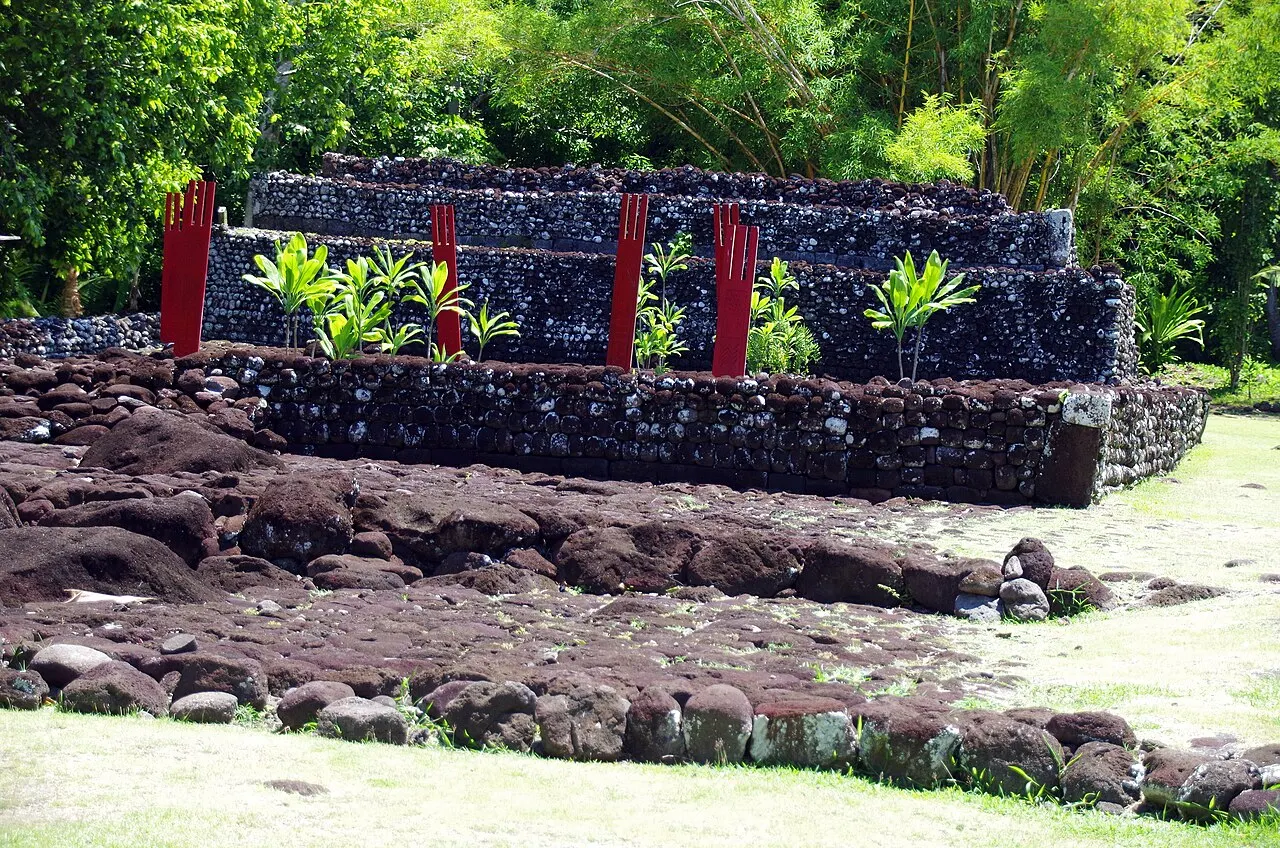
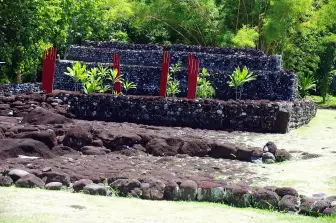
In Paea, this is the only fully restored marae on the island that you can visit, tucked into a closed valley. The stone platforms and tikis show what a Polynesian temple looked like before the conversion dismantled the others.
It's the only stone temple on the island fully restored and open to visitors, in an enclosed valley; in Paea; tikis and stone platforms.
Check access

Papenoo Valley
On the east coast, the only way into the interior by vehicle, and only by 4x4. It climbs through the old volcanic crater to Lake Vaihiria, past waterfalls and marae. Hire a guide; the road closes when it rains.
Driving into the interior can only be done by 4x4, climbing to Lake Vaihiria between waterfalls, and the road closes with rain.
Check access
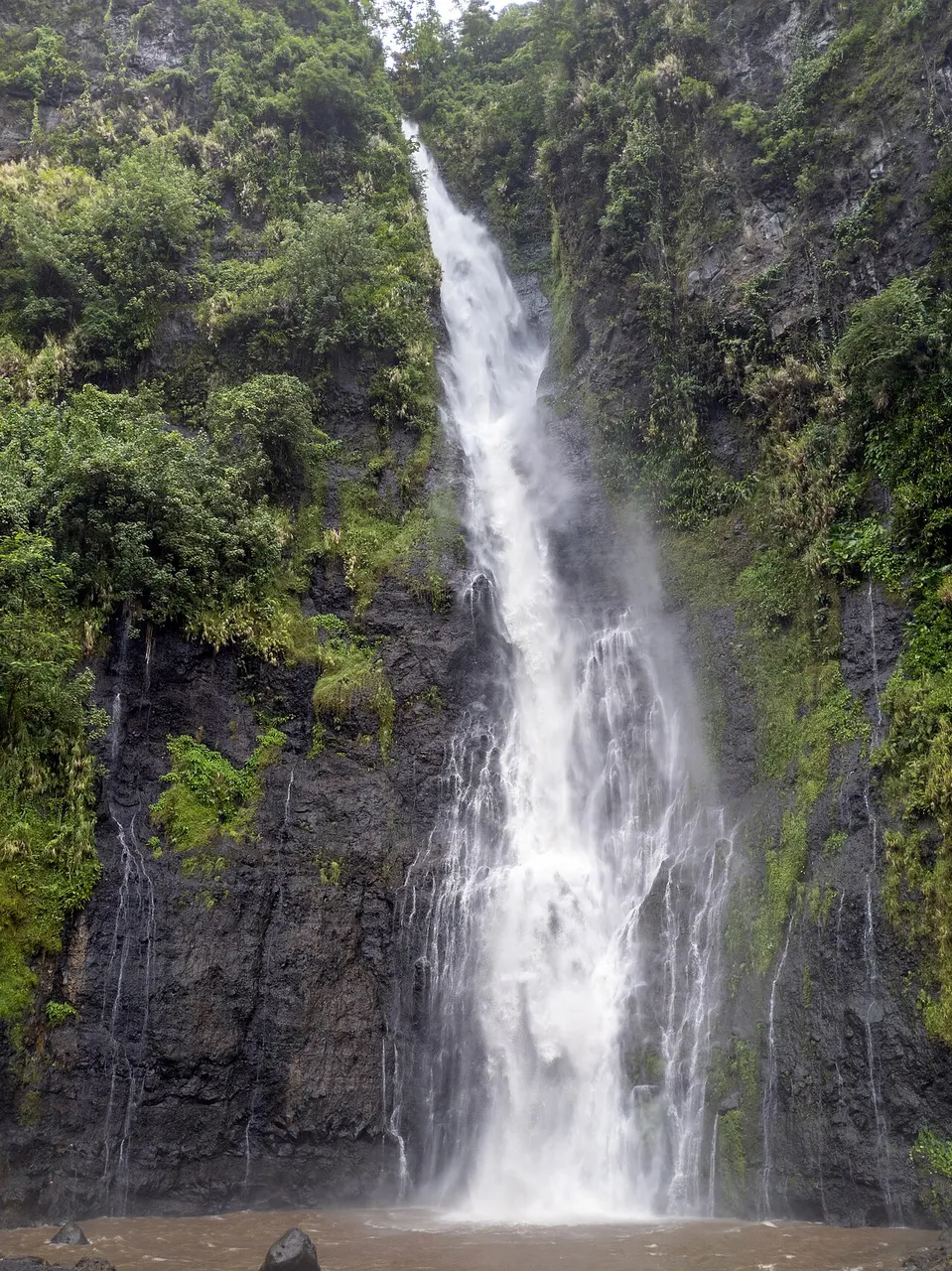
Faarumai Waterfalls
Three falls in Tiarei, the highest around 100 m, a ten-minute walk from the parking lot. Access has been closed by rockfall more than once: check ahead.
The tallest, about 100 m, is a ten-minute walk from where you leave the car in Tiarei, and the path has been blocked by rockfall more than once.
Check access
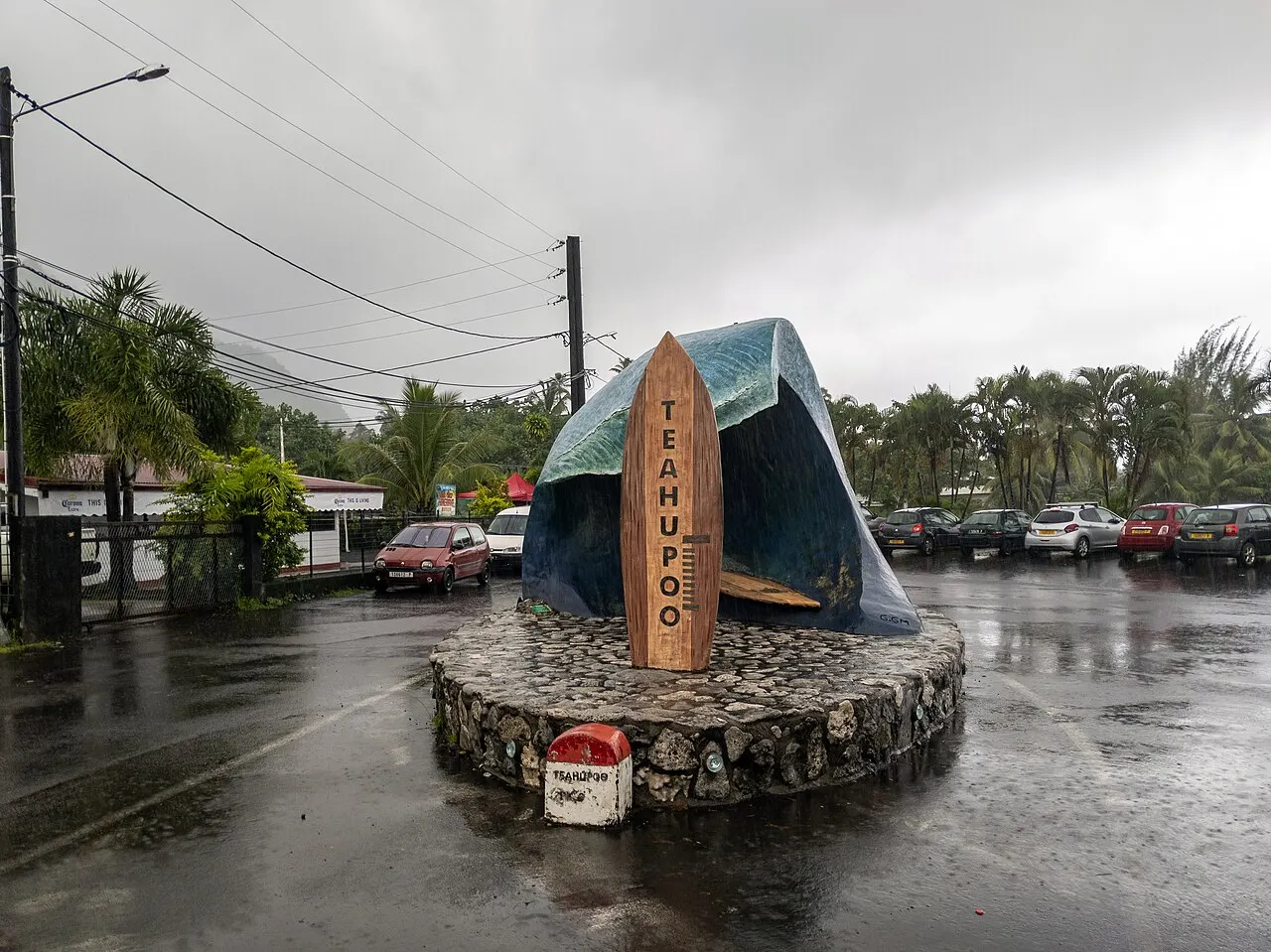
Teahupo'o
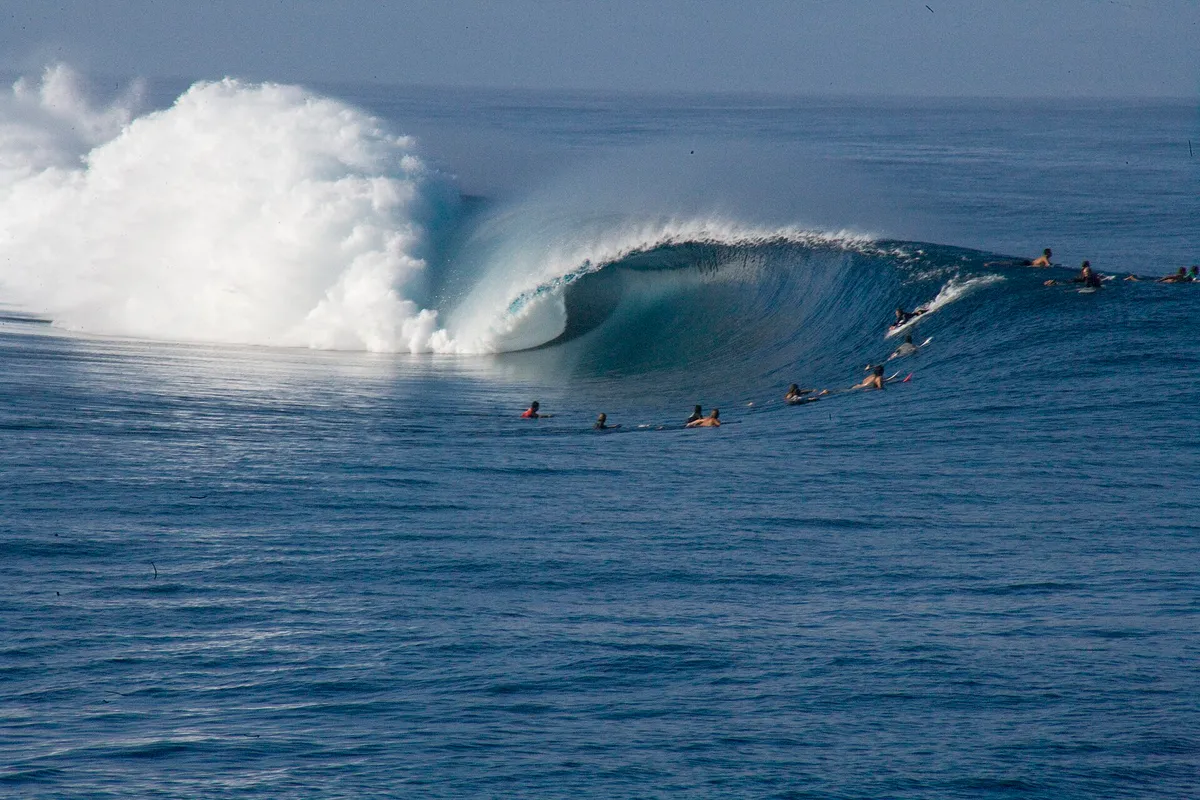
At the end of the road on Tahiti Iti, the wave that breaks over a shallow reef and hosted the 2024 Olympic surfing event. There's little to see from land; the real view takes a local fisherman's boat, hired on the spot.
From land you can see little of the wave that hosted the Olympic surfing event over the shallow reef, and only a local fisherman's boat hired on the spot shows the wave itself.
Check access
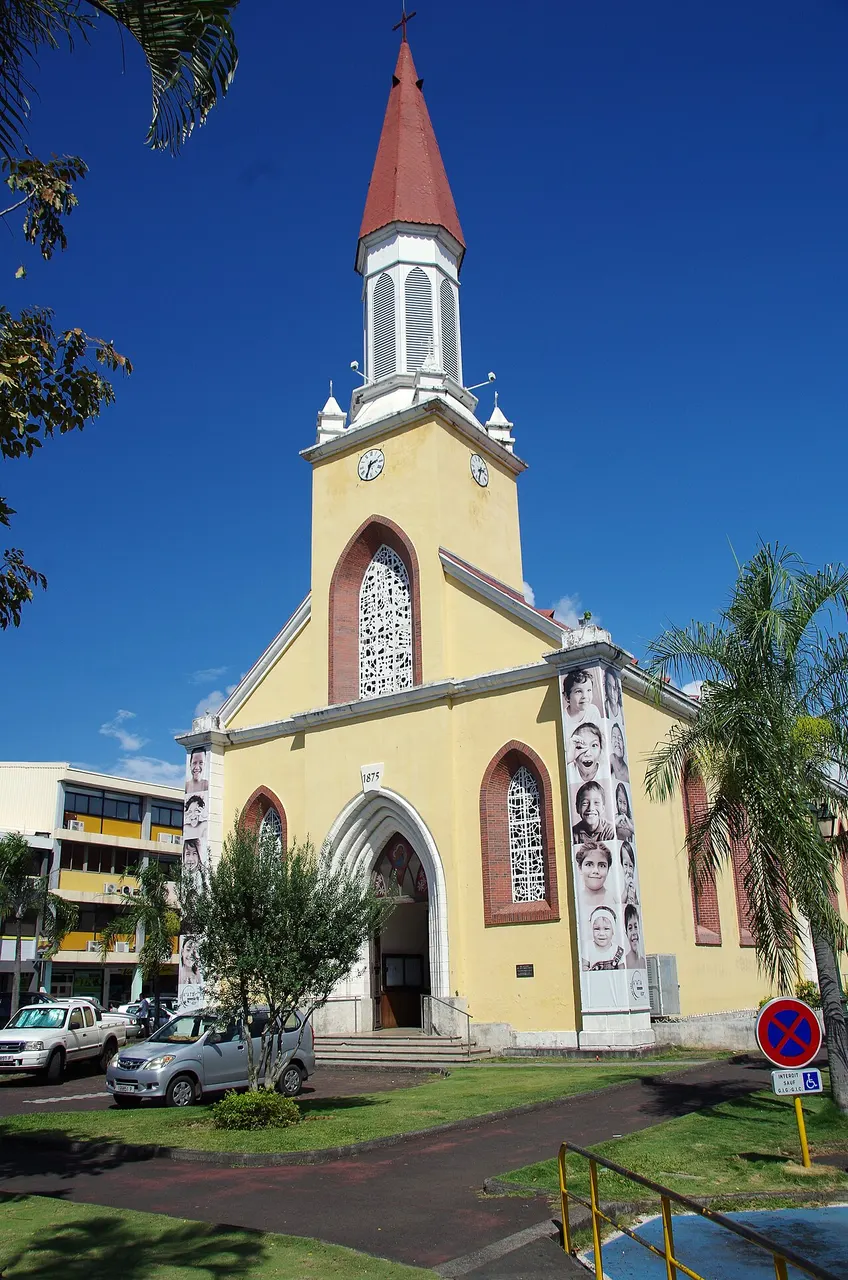
Notre-Dame de Papeete Cathedral
Completed in 1875, the oldest building still standing in the city. A modest yellow façade, stained glass and wood inside; it serves as point zero for the PK markers that orient every address on the island.
Completed in 1875, it's the oldest church still standing in Papeete, but inside it holds only stained glass and wood. It's worth five minutes at the door for being the zero point of the PK, from which every address on the island is measured.
Check access
Nilo’s itinerary
Start with the basic programme and choose extensions for the time you have.
Plan my days in the app ↗Day 1 · Early Papeete and the west coast
Get to the Marché de Papeete between five and seven: fish, flowers, and coffee on the second floor before the aisles fill up.
Walk through downtown to Notre-Dame Cathedral, Boulevard Pomare, the Paofai gardens, and the To'ata esplanade.
Have a casse-croûte or chao men for lunch at a downtown snack bar, like almost everyone does.
Spend the afternoon at the Museum of Tahiti and the Islands, in Punaauia, the best introduction to navigation, the marae, and the territory's history.
End the afternoon at the public beach at PK 18 and have dinner at the roulottes on Place Vaiete.
Day 2 · Around the main island
Head out early by car along the east coast: Point Venus and the lighthouse on Matavai Bay.
Stop at the Faarumai waterfalls, in Tiarei, and take the short walk to the biggest fall (check that access is open).
Stop at the Trou du Souffleur blowhole in Arahoho, where the sea shoots up through a hole in the rock.
Have lunch in Taravao, on the isthmus, and detour up to the plateau if the weather is clear.
Head back along the south coast, stopping at the Vaipahi garden and the Arahurahu marae, in Paea.
Day 3 · Tahiti Iti or the interior
Option A: drive to the end of the road at Teahupo'o and hire a local boat to see the wave up close.
Option B: head up the Papenoo valley by 4x4, with a guide, to Lake Vaihiria, with marae and waterfalls along the way.
Have ma'a tahiti for lunch at a guesthouse if it's Sunday, and order it the day before.
Watch the late afternoon from the Tahara'a lookout, in Arue, with Matavai Bay below.
Spend your last evening at the roulottes, or at an 'ori tahiti rehearsal if it's Heiva season.


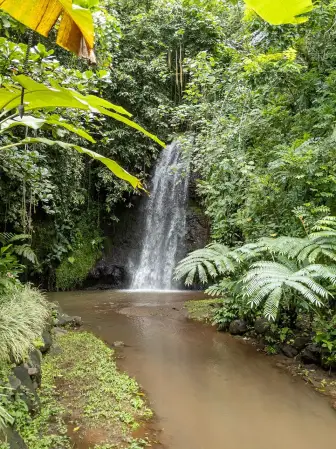


If you stay longer
Day 4 · Moorea
Day trip
The ferry crossing is short and frequent, with several departures a day. Cook's Bay and Opunohu Bay, the Belvédère lookout, and the lagoon that Tahiti doesn't have. You can go and come back the same day, but one night pays off far more.
Food
 AI illustration
I'a ota (poisson cru au lait de coco)
Raw tuna cubed, cured in lime and served with coconut milk squeezed fresh, cucumber and carrot. It's the national dish and the measure of any restaurant: if the coconut milk comes from a can, look elsewhere.
 AI illustration
Ma'a tahiti and the ahima'a
The Sunday meal roasted in an underground stone oven: pork, chicken, fish, taro, breadfruit and fafa (taro leaf with chicken). Served at guesthouses and some hotels on Sundays; order ahead.
 AI illustration
Po'e
A dessert of mashed fruit (banana, papaya or pumpkin) thickened with starch and topped with coconut milk. Sweet, dense, and sold by the portion at the market.
 AI illustration
Chao men and hakka cooking
A legacy of Chinese immigration that arrived in 1865 for the Atimaono cotton plantation. Tahitian chao men, ma'a tinito and roast-pork casse-croûte are everyday food, not exotica.
 AI illustration
Casse-croûte
A half-baguette sandwich, the island's standard lunch. It comes from the French bakery tradition, now everyday island food. Costs a fraction of a restaurant meal and carries you through the afternoon.
 AI illustration
Firi firi
A figure-eight donut made with coconut milk and fried early in the morning. Sold on the street until around nine and then it's gone.
 AI illustration
Hinano and the Tahiti Drink
The local beer, present at every table, and the rum-and-juice cocktail sold ready-bottled. Liquor stores keep set hours and tend to close at night.
Day trips

Moorea
The ferry crossing is short and frequent, with several departures a day. Cook's Bay and Opunohu Bay, the Belvédère lookout, and the lagoon that Tahiti doesn't have. You can go and come back the same day, but one night pays off far more.

Tetiaroa
An atoll 55 km to the north, once owned by Marlon Brando, reachable by short flight or authorized boat tour. It's a bird and turtle sanctuary: access is limited, so book well ahead.

Bora Bora and Huahine
50 to 55 minutes by Air Tahiti flight. Not an honest day trip: plan on at least two nights, and book weeks ahead between June and September.
Where to begin
Early Papeete and the west coast
Get to the Marché de Papeete between five and seven: fish, flowers, and coffee on the second floor before the aisles fill up.
Around the main island
Head out early by car along the east coast: Point Venus and the lighthouse on Matavai Bay.
Tahiti Iti or the interior
Option A: drive to the end of the road at Teahupo'o and hire a local boat to see the wave up close.
Money
The currency is the CFP franc (XPF), pegged to the euro at a fixed rate of 1 € = 119.33 XPF, so there's no exchange rate to track. French Polynesia is expensive: almost everything is imported and freight is baked into the price. A meal at a roulotte runs 1,200–2,000 XPF, a restaurant dish 2,500–4,500, a Hinano beer 500–800, and a small rental car 6,000–9,000 a day. A guesthouse runs 8,000 to 18,000 XPF a night; a lagoon resort starts on a different scale entirely. Cards are accepted in downtown Papeete, at supermarkets and hotels, but carry cash for roulottes, the market, small guesthouses and anything outside the urban strip. ATMs exist in Papeete and the larger communes and get scarce on the smaller islands. Tipping isn't expected: service is already in the price, so insisting can come across as awkward.
Getting there and around
Faa'a airport, 5 km along the coastal road
Faa'a international airport (PPT) sits 5 km from downtown Papeete, on the same coastal road, and is the territory's only airport with long-haul flights. A taxi to the center runs about 2,000–3,000 XPF by day, more at night. There's an urban bus on the route during business hours, and most guesthouses will pick up guests if you give notice. International flights arrive almost all at night, and that's no small detail: settle your arrival plan before booking, because nothing opens at four in the morning.
Tere Tahiti buses, a car for the island loop, and the ferry to Moorea
Within the island, public transport is the Réseau Tere Tahiti bus network, useful along the Papeete–Punaauia–Pirae strip and thin outside it, with very few trips at night and on Sundays. To cover the island, rent a car: the 114 km loop road takes three to four hours without stopping. There's no train, and Tahiti Iti has unpaved stretches. For the other islands, the Aremiti and Terevau ferries reach Moorea in 30 to 45 minutes from downtown Papeete, several times a day, and Air Tahiti connects the islands by plane. Book weeks ahead in July and August.
Safety
French Polynesia is one of the calmest destinations in the Pacific for crime against people, and walking around Papeete by day is usually safe. What does exist is opportunistic theft: items left in a rental car, a bag on the sand while you swim, and some alcohol-related trouble downtown late at night, around the bars on boulevard Pomare. Avoid that stretch on foot after dark. The real risks, though, are physical, and that's where I'd pay attention: strong rip currents on the unprotected beaches of the east coast, coral cuts that infect fast, stonefish in the lagoon (wear water shoes), equatorial sun that burns in twenty minutes, dengue and other mosquito-borne illnesses from daytime mosquitoes, and interior trails that need a guide because the valley walls collapse in rain. Health care is French and good, with a referral hospital in Papeete, but very expensive without coverage: get insurance that covers inter-island evacuation.
Etiquette tips
Greet before anything else
“Ia ora na” on entering a shop, an office or a conversation. Getting straight to the point reads as rude, and the response tends to slow down if you skip this part.
Take your shoes off entering a home
Take off your shoes when you enter any home, including family guesthouses, and leave them on the porch, like everyone else.
The flower behind the ear: taken or available
Behind the left ear signals taken; to the right, available. It's a playful rule, not a strict one, and people notice and will comment.
Don't touch or climb on marae
The marae, stone platforms that served as temple and court, are sacred sites still in use today. Stay on the marked paths, don't move stones, and don't picnic on the platforms.
Ask before photographing people and ceremonies
Ask before photographing people, especially at dance rehearsals, in churches, and at the market. A request made face-to-face is usually accepted; a camera raised from a distance closes doors.
Swimwear belongs at the beach
Walking into a shop, the market or a restaurant in a bikini or shirtless is frowned upon in a place where the church still holds a central role.
Mistakes to avoid
Chasing the postcard landscape
Assuming Tahiti is the postcard landscape. Many go looking for the turquoise lagoon from the postcards, but that belongs to Bora Bora and the Tuamotu; Tahiti is mountainous, with a lot of black sand and a capital that has traffic jams.
Papeete can be seen in a day
Booking everything in Papeete and spending the whole trip there. The city can be seen in a day; the value is in the loop around the island, in Tahiti Iti and the neighboring islands.
Counting on cards outside Papeete
Counting on cards working everywhere. Roulottes, the market, small guesthouses and the islands off the main circuit run on cash, and the nearest ATM can be an island away.
Going to the market after noon
Going to the Marché de Papeete after noon, when the fish and flowers on the ground floor are already gone and only the crafts upstairs remain. The market runs in the small hours and early morning; in the afternoon the whole center empties out, and on Sundays almost everything closes.
Bora Bora is 260 km away: that's a flight
Underestimating the distances by sea. Bora Bora is 260 km away. That's a flight, not a day trip, and in high season spots sell out weeks ahead.
Useful phrases
Ia ora na (ee-ah-oh-rah-nah)
Hello, good morning: the greeting that opens everything
Māuruuru (mah-oo-roo-oo-roo)
Thank you; “māuruuru roa” is thank you very much
Nana (nah-nah)
Bye, see you
E aha te huru? (eh-ah-hah-teh-hoo-roo)
How are you?
Maita'i (my-tah-ee)
Good, fine: works as an answer and as a compliment
Fiu (fee-oo)
Fed up, sick of it: a word used all day long, including in French
Districts
Downtown Papeete
Downtown Papeete is the rectangle between the waterfront boulevard Pomare and the market, and it holds banks, administration, pearl shops and almost all of the city's daytime life. It suits anyone who wants to get everything done on foot during the day, because it empties out after 5pm.
Quartier du Marché
Around the Marché de Papeete, between rue François Cardella, rue Colette, and rue du 22 Septembre. This is where the city wakes up: flowers, fish, tifaifai, monoï, and the only crowd that exists before seven in the morning.
Paofai and the front de mer
The Paofai gardens and the To'ata esplanade run along the west shore of the center. The Heiva happens here, locals go running at dawn, and families sit by the water in the late afternoon.
Fare Ute and Motu Uta
The container port, the warehouses and the dock for the schooners that supply the Tuamotu and Marquesas. Nothing touristy, and the best visual explanation of how the territory actually works.
Faa'a
Polynesia's most populous commune, right by the airport, climbing the hillside in neighborhoods built by the migration of the 1960s and 1970s. Political base of the independence movement and the direct counterpoint to the postcard image.
Punaauia
To the west, a coast of pale-sand beaches, the Museum of Tahiti and the Islands, and the public beach at PK 18. Home to much of the middle class and nearly every foreign resident.
Pirae and Arue
East of the center, more residential, with the Fautaua valley, Pōmare V's tomb and the climb to the Tahara'a lookout.
Taravao and Tahiti Iti
The isthmus and the peninsula. On one side, the Taravao plateau, with pastures and fog; on the other, the fishing villages as far as Teahupo'o, where the road ends and the rest of the coast can only be reached by boat or on foot.
History
c. 200–900 · Polynesian settlement
Navigators arriving from the west, likely from Samoa and Tonga, reach the island in double-hulled canoes guided by stars, swell and birds. They bring pigs, dogs, chickens, taro, breadfruit and a valley-based social order.
14th–18th c. · Marae and chiefdoms
The island splits into districts ruled by ariʻi, each with its own marae, a stone platform that is temple, court, and genealogical archive at once. The marae at Taputapuātea, on neighboring Raiatea, is the religious center of all of eastern Polynesia.
1767 · The first European ship
Samuel Wallis anchors the HMS Dolphin in Matavai Bay. The encounter opens with a bombardment and ends in trade; word of a fertile island in the South Pacific reaches Europe and doesn't stop spreading.
1769 · Cook and the transit of Venus
James Cook sets up an observatory at Point Venus to measure Venus's passage across the sun and calculate the Earth's distance from it. The point keeps the name and the 1867 lighthouse.
1788–1789 · The Bounty
William Bligh spends five months collecting breadfruit saplings to feed enslaved people in the Caribbean. The mutiny that follows on the way back fixes Tahiti in the European imagination for good.
1797–1815 · Mission and conversion
The London Missionary Society lands at Matavai in 1797. In 1815, victorious at the battle of Fe'i Pi, Pomare II adopts Christianity and takes the island with him; marae are dismantled and writing arrives via the missionary alphabet.
1842–1880 · Protectorate and colony
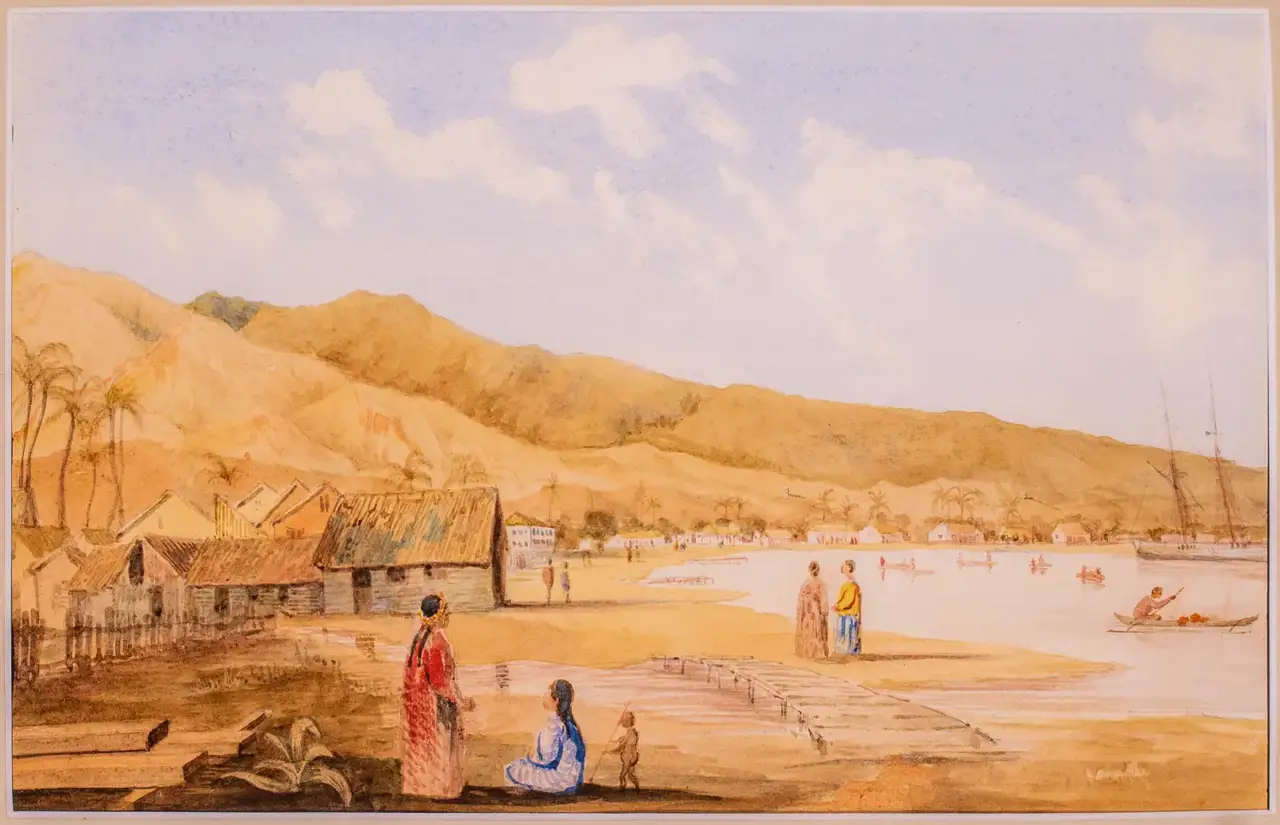
Admiral Dupetit-Thouars imposes the French protectorate in 1842, against the resistance of Queen Pōmare IV, and the Franco-Tahitian War lasts from 1844 to 1847. In 1880 Pōmare V cedes the kingdom and the territory becomes a colony.
1891–1901 · Gauguin
Paul Gauguin lands in 1891, lives in Mataiea and Punaauia and leaves for the Marquesas in 1901. His canvases fix an image of Tahiti for Europe that the island itself would spend the following century correcting.
1946 · From colony to territory
French Polynesia becomes an overseas territory and its inhabitants receive French citizenship. Schools, hospitals and administration begin building up in Papeete.
1963–1996 · The nuclear tests
The Pacific Experimentation Center is set up in 1963 and carries out 193 tests at Moruroa and Fangataufa between 1966 and 1996. The economy militarizes, the countryside empties out and Papeete triples in size in twenty years. The health consequences and compensation for victims remain disputed.

1984–2024 · Autonomy and the Teahupo'o wave
The 1984 statute and the 2004 revision give Polynesia self-government in almost everything except defense, justice, and currency. In 2024 the Olympic surfing event of the Paris Games is held at Teahupo'o, in the south of the island, and puts the wave on television around the world.
Complete history
A two-million-year-old volcano, valleys inhabited since the third century
The island of Tahiti was born from a hot spot under the Pacific plate about two million years ago, in two eruptions that produced two mountains joined by an isthmus: Tahiti Nui, the big one, and Tahiti Iti, the small one. When the first Polynesian navigators arrived, sometime between the 3rd and 10th centuries, they found deep, fertile valleys opening like slices around an impassable center. The island organized itself by these valleys, not around a capital: each with its own chief, its own marae, and its own access to the lagoon.
European ships arrive between 1767 and 1788
The arrival of European ships undid, within thirty years, an island organized by valleys and chiefs. Wallis arrived in 1767, Bougainville in 1768, Cook in 1769, and Bligh in 1788, and each ship left iron, which reshaped the wars between districts, and a description of the island that became a literary genre in Europe. They also left diseases against which there was no defense, and epidemics cut down the population in the decades that followed. The London Missionary Society settled at Matavai in 1797, while Pomare II, the only chief with muskets, was winning the wars between districts. In 1815, after winning the battle of Fe'i Pi, he adopted Christianity and led the whole island to conversion, and the marae began to be dismantled.
Papeete began as the island's best-protected anchorage
Papeete emerged after the conversion, as the anchorage best protected by a pass in the reef. Missionaries settled there in the 1820s, trade followed, and when France imposed the protectorate in 1842 there was already a port to govern. The Franco-Tahitian War lasted until 1847 and ended with Queen Pōmare IV on the throne and France in charge; in 1880, her son signed the annexation. A fire in 1884 and the German bombardment of 1914 wiped out much of the wooden town, which explains why almost nothing downtown dates from before the 20th century.
The Pacific Experimentation Center arrives in 1963
The decisive shift, though, is 1963. With the setup of the Pacific Experimentation Center, the French state poured money, salaried jobs and an international airport into an economy that until then ran on copra, vanilla and pearl. In twenty years the island went from rural to urban: whole families left the valleys and the outer islands and settled on the slopes of Faa'a and Punaauia, where they remain. Papeete today has the traffic, cost of living and inequality of an average French city, inside a territory whose income depends on transfers and tourism.
Tahitian returns to schools, radio, and the Heiva
In recent decades, the island has been taking back what the missionaries and the French school system had erased. Tahitian, banned in schools for decades, has returned to classrooms and the radio; the Heiva, which the missionaries had emptied, is now the largest dance and song competition in Polynesia; and tattooing, whose word the world borrowed from here, tatau, has been rebuilt from navigators' drawings and records from the Marquesas. Papeete is where this revival happens day to day, in classrooms, on the radio, and at Heiva rehearsals.
Geography and shape of the city
Two volcanoes joined by an isthmus
Tahiti covers 1,045 km² and is made of two extinct volcanoes joined by the Taravao isthmus: Tahiti Nui, with Mount Orohena at 2,241 m, and Tahiti Iti, lower and almost roadless.
A closed interior and a coastal strip
The interior is impassable by car (vertical-walled valleys, over 3,000 mm of rain a year at the highest points) so practically the whole population lives on the coastal strip, a few hundred meters wide between mountain and lagoon, and a single 114-km loop road circles the main island.
Papeete, the landfill and the PK
Papeete sits on the northwest coast, protected by a reef with a navigable pass, and has long since spilled past its own limits: the continuous urban strip runs from Faa'a and Punaauia in the west to Pirae and Arue in the east, with the airport built on reclaimed reef land and the port on another landfill, Motu Uta. The city doesn't number by neighborhood: addresses follow PK, kilometer markers counted from Papeete's cathedral, and that's how everything is organized along one line.
There is no shortcut through the middle of the island, which is mountain: the roads follow the coast.
Addresses are given in PK, the kilometer counted from the cathedral: the public beach at Punaauia is PK 18.
Culture
Reo Tahiti returns to schools after decades away
The island's living culture is organized around a comeback. Reo tahiti, absent from schools for decades, is now taught, sung on the radio and spoken at home by a large part of the population; tattooing (tatau, a word English and Portuguese both borrowed from here) was rebuilt from navigators' engravings and Marquesan patterns, and is practiced by tattooists who openly debate what can and can't be drawn on a visitor. The hīmene, dense-harmony choral chants introduced by the missionaries and reworked by Tahitians, still fill the Protestant churches on Sunday morning, and it's worth stepping into one to listen.
Tahitian dance and music
The 'ori tahiti dance is the most visible expression of this revival and the most misunderstood from outside: its serious competitive tradition involves schools, choreographers, tō'ere orchestras and narrative themes that sometimes touch on political history. Hotel shows give visitors only a limited impression of that tradition. The crafts follow suit: the tifaifai, an appliqué quilt inherited from the female missionaries and turned into a family heirloom; black pearl cultivated in the Tuamotu, with its own quality rules; monoï, tiare flower macerated in coconut oil, with a protected designation of origin since 1992.
A literary scene with no folklore
Beyond folklore, the island has a literary scene in French and Tahitian (Chantal Spitz, Titaua Peu), documentary films about the nuclear tests, and world-class surfing. In politics, the contest between autonomists and pro-independence parties dominates local life, and Faa'a, the most populous commune in Polynesia, is the stronghold of the independence movement.
'Ori tahiti is competitive dance, with schools, choreographers, and tō'ere orchestras.
Festivals and events

Heiva i Tahiti
Every July, on the To'ata esplanade. Polynesia's biggest competition of traditional dance, song and sport, with groups that rehearse all year. Tickets sell out; buy as soon as they open.
 AI illustration
Matari'i i ni'a
Mid-November, when the Pleiades reappear on the horizon and the season of abundance begins. Revived since the 2000s with ceremonies at marae and at the Museum of Tahiti.
 AI illustration
Hawaiki Nui Va'a
Late October or early November. The three-leg outrigger canoe race links Huahine, Raiatea, Taha’a and Bora Bora. It is the sporting event that most engages the territory, with people in Papeete following it closely.
 AI illustration
Tahiti Pro Teahupo'o
In August, the Teahupo'o wave hosts the Tahiti Pro, a stop on the WSL world surfing tour. The peninsula fills up and the road at the end becomes impassable.
 AI illustration
Autonomy Day, June 29
Holiday marking the statute of autonomy, with parades and speeches. It's the day the debate over Polynesia's political status moves from the bar to the podium.
Books and films
“L'Île des rêves écrasés,” by Chantal Spitz (1991)
The first novel published by a Tahitian author. It tells how the arrival of the nuclear center affects a family living in a valley and dismantles the island-paradise myth from the inside.
“Les Immémoriaux,” by Victor Segalen (1907)
Written by a doctor in the French Navy who arrived shortly after Gauguin's death. It narrates the conversion from the viewpoint of a genealogy reciter watching oral memory vanish.
“Noa Noa,” by Paul Gauguin (1901)
The painter's Tahitian diary. Read it as a document of the European gaze that manufactured the myth, not as a portrait of the island. It's useful precisely because it leaves the seams showing.
Frequently asked questions
Papeete (Tahiti): Does Tahiti have the turquoise lagoon from the postcards?
No: the turquoise lagoon from the postcards belongs to Bora Bora and the Tuamotus. Tahiti is mountainous, has a lot of black sand and a capital with traffic jams.
Papeete (Tahiti): What's the currency, and what's it worth in euros?
The currency is the CFP franc (XPF), pegged to the euro at a fixed rate of 1 € = 119.33 XPF, so there's no exchange rate to track.
Papeete (Tahiti): What's the best time to go?
The best time is May to October, the austral winter: dry, with highs of 27 to 29 °C, sea around 26 °C and steady trade winds. It's also the most expensive, peaking in July and August; September, October and May balance good weather and price.
Papeete (Tahiti): Is the city safe?
Yes: French Polynesia is one of the calmest destinations in the Pacific for crime against people, and walking around Papeete by day is usually safe. In the small hours, avoid walking around the bars on boulevard Pomare.
Papeete (Tahiti): What is i'a ota?
It's the national dish: raw tuna cubed, cured in lime and served with coconut milk squeezed fresh, cucumber and carrot. If the coconut milk comes from a can, find another restaurant.