United States
Honolulu
Waikīkī, the crater of Diamond Head, Pearl Harbor and the coast of Oʻahu
Days Start with the basic programme and choose extensions for the time you have.
How the guide reaches this number
On the first, Diamond Head at 6 a.m. and the Waikīkī waterfront; on the second, the USS Arizona first thing and the historic center in the afternoon, with ʻIolani Palace and Chinatown; on the third, Hanauma Bay and the Makapuʻu lighthouse trail; on the fourth, the North Shore, by car, with Haleʻiwa, Waimea and the Pipeline. The order depends on the days of the week: the palace only has visits Tuesday through Saturday, and Hanauma Bay is closed on Mondays and Tuesdays. With five days, I'd add the Bishop Museum and the Honolulu Museum of Art, which explain what you saw on the other days, on a Wednesday to Friday, when both museums and Helena's are open; with six, Kailua and the Pali lookout, on the other side of the range. With only two days, I'd do Diamond Head and Waikīkī on one and Pearl Harbor with downtown on the other, and leave Hanauma and the North Shore for another trip. I'd make the reservations weeks ahead: without them, Diamond Head and the USS Arizona can drop out of the trip.
4–6
When April, May and September; these are the driest months, with 13 to 22 mm of rain, and they fall outside the visitor peaks of summer, the end of the year and the spring school break.
How the guide reaches this number
October is already rainier, and from November to March it rains more, but that is the season of the big North Shore waves and of humpback whales
April, May and September; these are the driest months, with 13 to 22 mm of rain, and they fall outside the visitor peaks of summer, the end of the year and the spring school break. October is already rainier, and from November to March it rains more, but that is the season of the big North Shore waves and of humpback whales
Per person/day Budget about 124 USD; mid-range about 329 USD; comfortable about 926 USD per person, based on spending that travelers report to Budget Your Trip (checked in October 2026).
How the guide reaches this number
Per person per day: accommodation, meals, urban transport, visits and a small allowance for extras. Flights excluded; larger purchases vary. Editorial estimate, not a quote.
 What Nilo thinks
I'd stay four days in Honolulu, sleeping in Waikīkī every night. On the first, Diamond Head at 6 a.m. and the Waikīkī waterfront; on the second, the USS Arizona first thing and the historic center in the afternoon, with ʻIolani Palace and Chinatown; on the third, Hanauma Bay and the Makapuʻu lighthouse trail; on the fourth, the North Shore, by car, with Haleʻiwa, Waimea and the Pipeline. The order depends on the days of the week: the palace only has visits Tuesday through Saturday, and Hanauma Bay is closed on Mondays and Tuesdays. With five days, I'd add the Bishop Museum and the Honolulu Museum of Art, which explain what you saw on the other days, on a Wednesday to Friday, when both museums and Helena's are open; with six, Kailua and the Pali lookout, on the other side of the range. With only two days, I'd do Diamond Head and Waikīkī on one and Pearl Harbor with downtown on the other, and leave Hanauma and the North Shore for another trip. I'd make the reservations weeks ahead: without them, Diamond Head and the USS Arizona can drop out of the trip.Honolulu is the capital of a kingdom that ceased to exist in 1893, and its marks are downtown: ʻIolani Palace, where the last queen was held prisoner, the statue of Kamehameha I and the church of coral blocks cut from the reef. A few kilometers away, Waikīkī is a beach that is almost entirely built, with sand brought from elsewhere and breakwaters that divide it into eight stretches, but the long, regular wave on which Duke Kahanamoku surfed is still there, under the profile of Diamond Head. To the west, the oil of the USS Arizona still rises to the surface at Pearl Harbor. And the city's cooking tells the story of the sugar plantations, with the rice and macaroni salad of the plate lunch, the Portuguese malasada, the Chinese and Japanese saimin and the raw tuna poke, alongside the taro poi that Hawaiians ate before all of them.
Quick facts
- Population
- 341,868 inhabitants in Urban Honolulu, the census-designated area of the city (U.S. Census Bureau estimate for 2025); 988,703 in the City and County of Honolulu, which covers the whole island of Oʻahu (2025 estimate)
- Founded
- Hawaiian settlement since the 11th century; capital of the Kingdom of Hawaii from 1845; City and County of Honolulu incorporated on April 30, 1907
- Country and region
- United States, state of Hawaii; southeast coast of the island of Oʻahu, in the North Pacific
- Language
- English and Hawaiian, the state's two official languages; Hawaiian Pidgin (Hawaiʻi Creole English) is spoken in daily life by a good share of residents
- Currency
- U.S. dollar (US$); businesses may add up to 4.712% general excise tax (GET) to the price on Oʻahu
- Time zone
- UTC−10 year-round (Hawaii time); there is no daylight saving time
- Best time to visit
- April, May and September; these are the driest months, with 13 to 22 mm of rain, and they fall outside the visitor peaks of summer, the end of the year and the spring school break. October is already rainier, and from November to March it rains more, but that is the season of the big North Shore waves and of humpback whales
- Average daily cost
- Budget about 124 USD; mid-range about 329 USD; comfortable about 926 USD per person, based on spending that travelers report to Budget Your Trip (checked in October 2026).
When to go
April, May and September; these are the driest months, with 13 to 22 mm of rain, and they fall outside the visitor peaks of summer, the end of the year and the spring school break. October is already rainier, and from November to March it rains more, but that is the season of the big North Shore waves and of humpback whales
How the year changes
Honolulu is warm all year, and the difference between the seasons lies more in the rain and the sea than in the temperature. According to NOAA's 1991–2020 normals, at the airport, the average high runs from 26.9 °C in January to 31.6 °C in August, and the low from 19.3 °C to 24.2 °C. The driest months run from April to September, with 13 to 22 mm of rain a month; October already has 38 mm, and from November to March it rains more, up to 60 mm in March, almost always in showers. In the Northern Hemisphere winter, swells from the North Pacific bring the big waves to the North Shore, and humpback whales pass along the coast from November to May, with more sightings from January to March. In summer, the sea on the North Shore is calm, and it is the time to swim and snorkel at Waimea. The Central Pacific hurricane season runs from June 1 to November 30, most active from July to October; in 2026, Hurricane Lala, in August, caused flooding and power outages across the state, and Nolo, in September, closed state parks on several islands. The Pearl Harbor memorial's hours page points to summer, the end-of-year holidays and the spring school break as the busiest periods, and that is when the Diamond Head, USS Arizona and Hanauma Bay reservations run out first.
Nilo's tips
Build the week around opening days
Honolulu's schedules don't fit together in just any order. ʻIolani Palace receives visits Tuesday through Saturday, Hanauma Bay is open Wednesday through Sunday, Helena's Tuesday through Friday and the Honolulu Museum of Art Wednesday through Sunday. On your Pearl Harbor day, remember that the USS Arizona boats stop from noon to 1 p.m. for lunch: a morning slot leaves the afternoon free for downtown.
Do the outdoor things in the morning
Diamond Head opens at 6 a.m., Hanauma Bay at 6:45 a.m. and the Makapuʻu trail at 7 a.m., and none of the three has shade along the way. Starting early avoids the midday sun and secures the first reservation slots.
Rent a car only for the island days
In Waikīkī and downtown, the bus and walking will do, and a car only adds parking. For Hanauma, Makapuʻu, Kailua and the North Shore, rent for one or two days and bring small bills for the Hanauma Bay parking lot.
Read the sea by the season
In winter, North Pacific swells make the North Shore a place to watch the waves from the sand, and it is better to swim on the south side, at Waikīkī and Ala Moana. In summer, Waimea Bay is usually calm and clear.
Buy the HOLO card on the first day
A ride with the card costs US$3, against US$3.25 in cash, includes a two-hour transfer between bus and metro and stops charging when the day's spending reaches US$7.50.
Explore the map
Explore the map, read about the other places and plan your travel days in the app.
Open the appWhat to see
Honolulu: Between the harbor and the crater
In the city, directions are given in relation to the mountains and the sea: mauka means inland, toward the mountains, and makai, toward the sea. The system makes sense in a city squeezed between the two. Waikīkī is almost entirely artificial: the Ala Wai canal drained the swamps in the 1920s, breakwaters divided the beach into eight stretches and, between the 1920s and the 1970s, sand arrived from elsewhere, including California. Busy on weekdays and empty at night.

Waikīkī Beach
Honolulu's urban beach, with Diamond Head in the background, is made up of eight stretches separated by breakwaters, from Fort DeRussy to Kaimana Beach. The long, regular wave suits beginners at surfing and longboarding, and half of the strip of water is reserved for surfers. At Kūhiō Beach stands the bronze statue of Duke Kahanamoku, from 1990, the Olympic swimmer who made surfing popular around the world. From mid-September to the end of March, the sun sets over the sea, visible from the sand.
It is Honolulu’s beach and the base for almost every trip to Oʻahu, with a long wave suited to beginner surfers, the statue of Duke Kahanamoku and Diamond Head in the background. Almost entirely artificial and divided into eight stretches, it is nevertheless where the city spends the day.
Check access

Diamond Head State Monument
The Lēʻahi crater has a trail built in 1908 for coastal defense: 1.3 km from the crater floor to the summit, with a 171 m climb, steep stairs, a 69 m lit tunnel and the fire-control command post completed in 1911. From the top you can see the coast from Koko Head to Waiʻanae and, in winter, sometimes humpback whales. Anyone who doesn't live in Hawaii needs a reservation at gostateparks.hawaii.gov, made up to 30 days ahead: US$5 admission per person and US$10 parking per car, card only. The park is open from 6 a.m. to 6 p.m.; the last slot is 4 p.m., with entry until 4:30 p.m. The parks agency recommends allowing 1.5 to 2 hours for the climb and descent, with water, a hat and sturdy shoes.
The 1908 trail climbs 171 m to the former fire-control post, with views of the coast from Koko Head to Waiʻanae. Non-Hawaii residents need a reservation, available up to 30 days ahead, and the first slot, at 6 a.m., avoids the sun on a shadeless climb.
Check access
Pearl Harbor National Memorial
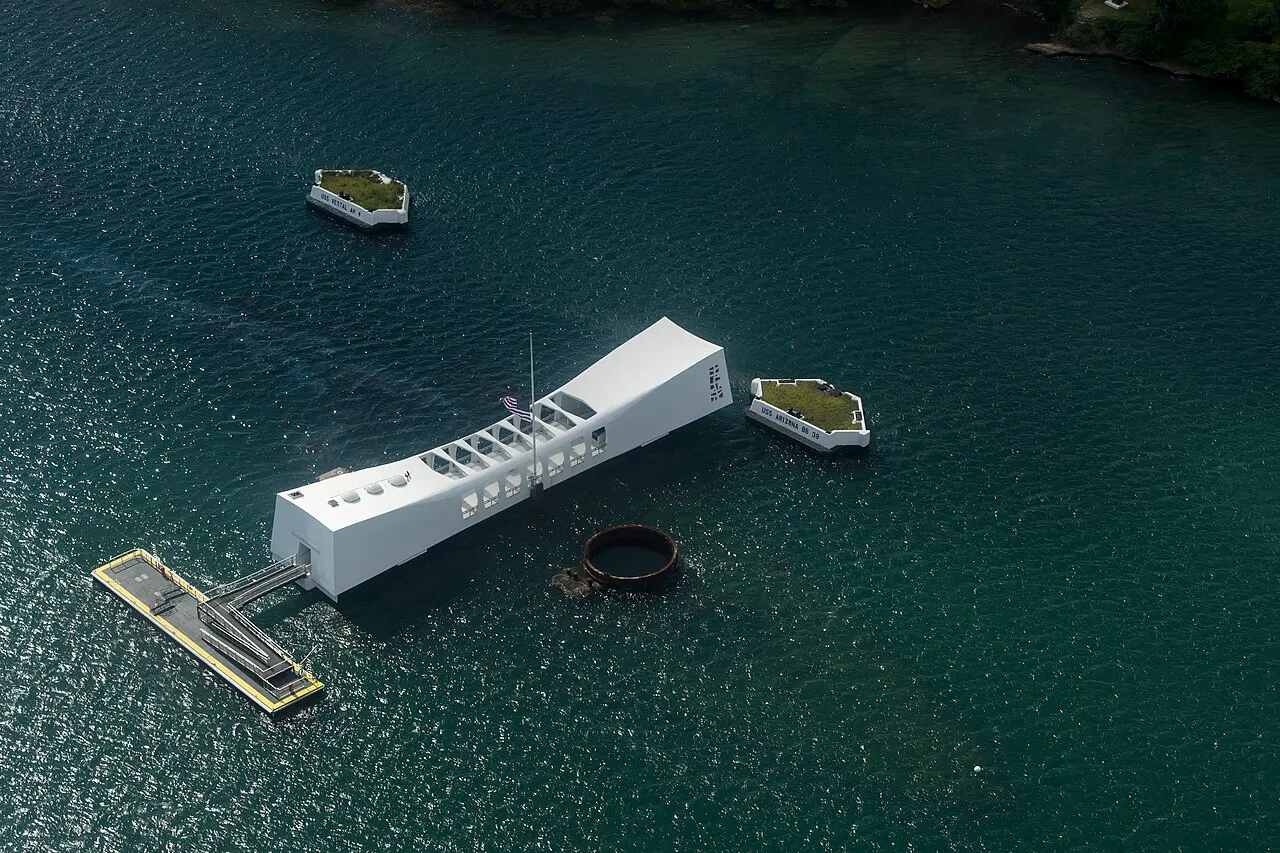
The memorial to the attack of December 7, 1941 has a visitor center and two free museums, open from 7 a.m. to 5 p.m., and the USS Arizona program: a Navy boat takes you to the memorial built in 1962 over the sunken hull, where 1,102 of the ship's 1,177 dead remain, and oil still rises to the surface. It takes about 45 minutes, with 10 to 15 at the memorial; boats leave every 15 minutes, from 8 a.m. to 3:30 p.m., with a lunch break from noon to 1 p.m. The ticket is booked on Recreation.gov, with a US$1 fee, 56 days ahead at 3 p.m. (Hawaii time), with an extra batch the day before, at the same time. Bags that hide their contents are not allowed (clear plastic bags are permitted), paid bag storage is next to the entrance, and parking costs US$7 a day. The submarine Bowfin, the battleship Missouri and the aviation museum are run separately and charge admission.
The memorial above the hull of the USS Arizona, where 1,102 of the ship’s 1,177 dead remain, explains why Honolulu is also a military city. Admission is free, but the boat requires a reservation on Recreation.gov, released 56 days ahead and the day before, at 3 p.m. Boats pause from noon to 1 p.m.
Check access

ʻIolani Palace
The residence of the Hawaiian kings from Kalākaua to Liliʻuokalani, completed in 1882, the palace is the only official residence of a monarch on American soil. After the overthrow of 1893 it served as the seat of government until 1969 and, in 1895, held the deposed queen in an upstairs room. Restored, it opened as a museum in 1978. The visits, guided or with audio, cover both floors, take 60 to 90 minutes and run Tuesday through Saturday; booking is strongly recommended, and anyone who arrives without one depends on availability.
The only official residence of a monarch on American soil, home of the Hawaiian rulers until 1893 and Queen Liliʻuokalani’s prison in 1895. It is the best place to understand the overthrown kingdom’s history; visits run Tuesday through Saturday, with booking recommended.
Check access

Bishop Museum
Founded in 1889 by Charles Reed Bishop in memory of his wife, Princess Bernice Pauahi Bishop, last heir of the Kamehameha dynasty, it is the largest museum in Hawaii and holds the largest collection of Polynesian cultural objects in the world. It is the place to understand Hawaii before the foreign ships, and the natural history collection exceeds 24 million specimens. It is in Kalihi, away from the Waikīkī circuit; it is open every day, from 9 a.m. to 5 p.m., and closed on Thanksgiving, Christmas Eve, Christmas Day and New Year's Day.
Hawaii’s largest museum and the world’s largest collection of Polynesian culture, founded in 1889 in memory of the last Kamehameha heir. It is in Kalihi, outside the Waikīkī circuit, which is why it goes on day five, Wednesday through Friday, with the Honolulu Museum of Art.
Check access
Hanauma Bay
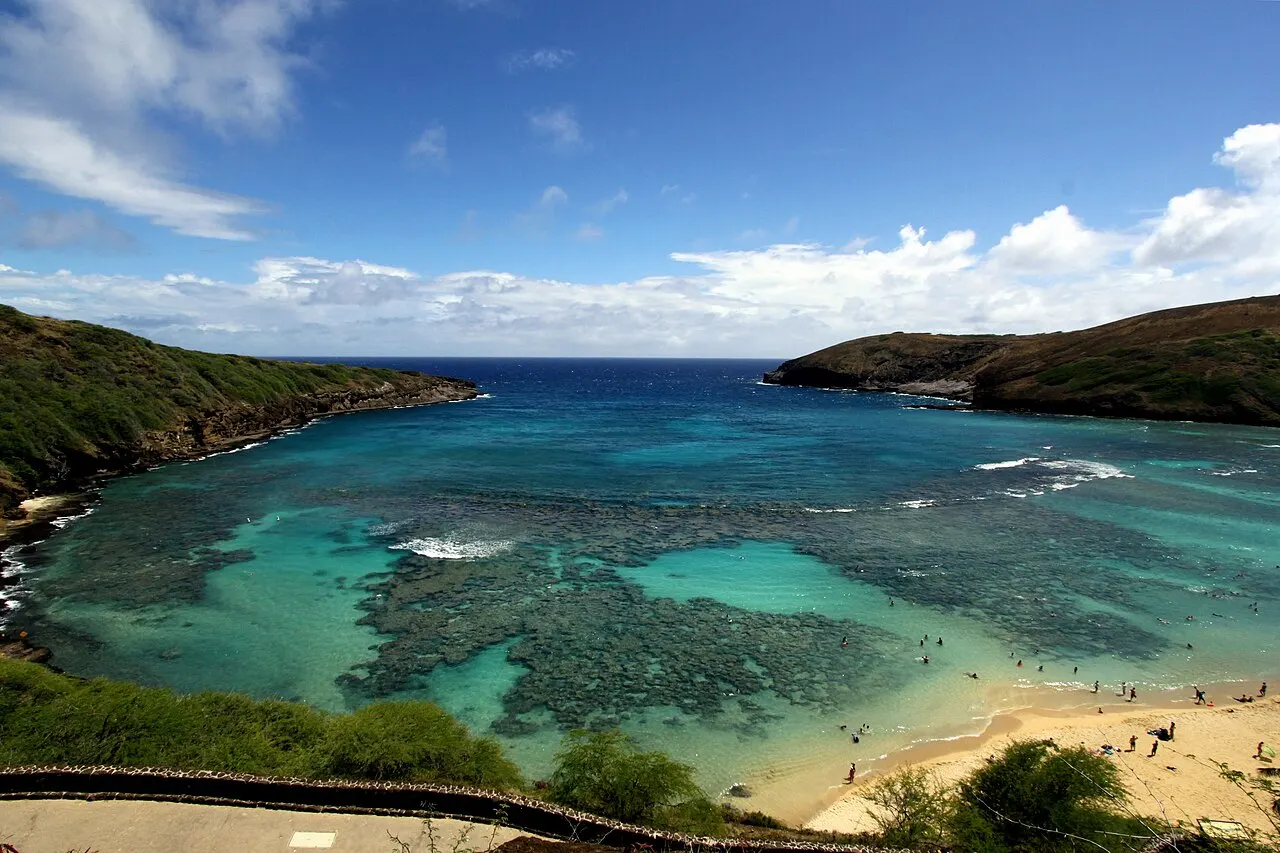
A bay formed about 32,000 years ago inside a crater open to the sea, it has been a nature preserve and marine conservation area since 1967, with about 400 species of fish and green sea turtles. It is open Wednesday through Sunday; visitors enter from 6:45 a.m. to 1:30 p.m., and everyone watches an educational video before going down. For non-residents, admission costs US$25 plus an online fee, children up to 12 are free, and parking is US$3, cash only. Reservations open two days ahead, at 7 a.m. Hawaii time, and sell out; there are a few tickets without a reservation, handed out when the gate opens.
A bay inside a crater, protected since 1967, with about 400 species of fish and green sea turtles, good for a first snorkeling outing. The logistics matter: closed Mondays and Tuesdays, reservations open only two days ahead at 7 a.m., and the video is mandatory.
Check access

Chinatown Historic District
The neighborhood of Chinese workers who left the plantations was destroyed by fires in 1886 and 1900 and rebuilt with the low brick buildings that make up the historic district today. Oʻahu Market, from 1904, still sells fish and vegetables in an open hall divided into stalls, and on the surrounding streets are restaurants and, to the east, the cultural institutions of the arts district.
One of the oldest Chinatowns in the United States, rebuilt after the 1900 fire, with the 1904 Oʻahu Market still selling fish. It fits into lunch on the historic downtown day.
Check access

Makapuʻu Point Lighthouse Trail
At the east tip of Oʻahu, an old access road to the lighthouse has become a paved trail of 3.2 km round trip, climbing to 150 m in elevation, with sun, wind and no shade, water or restrooms. From the top you see the 1909 lighthouse, which is not open to visitors, Waimānalo Bay and, from November to May, humpback whales, with more sightings from January to March. The area opens at 7 a.m.
A paved trail of 3.2 km round trip to a lookout with a view of the 1909 lighthouse and the east coast, and, from November to May, humpback whales. It fits on the same day as Hanauma Bay, just after it.
Check access
Nuʻuanu Pali Lookout
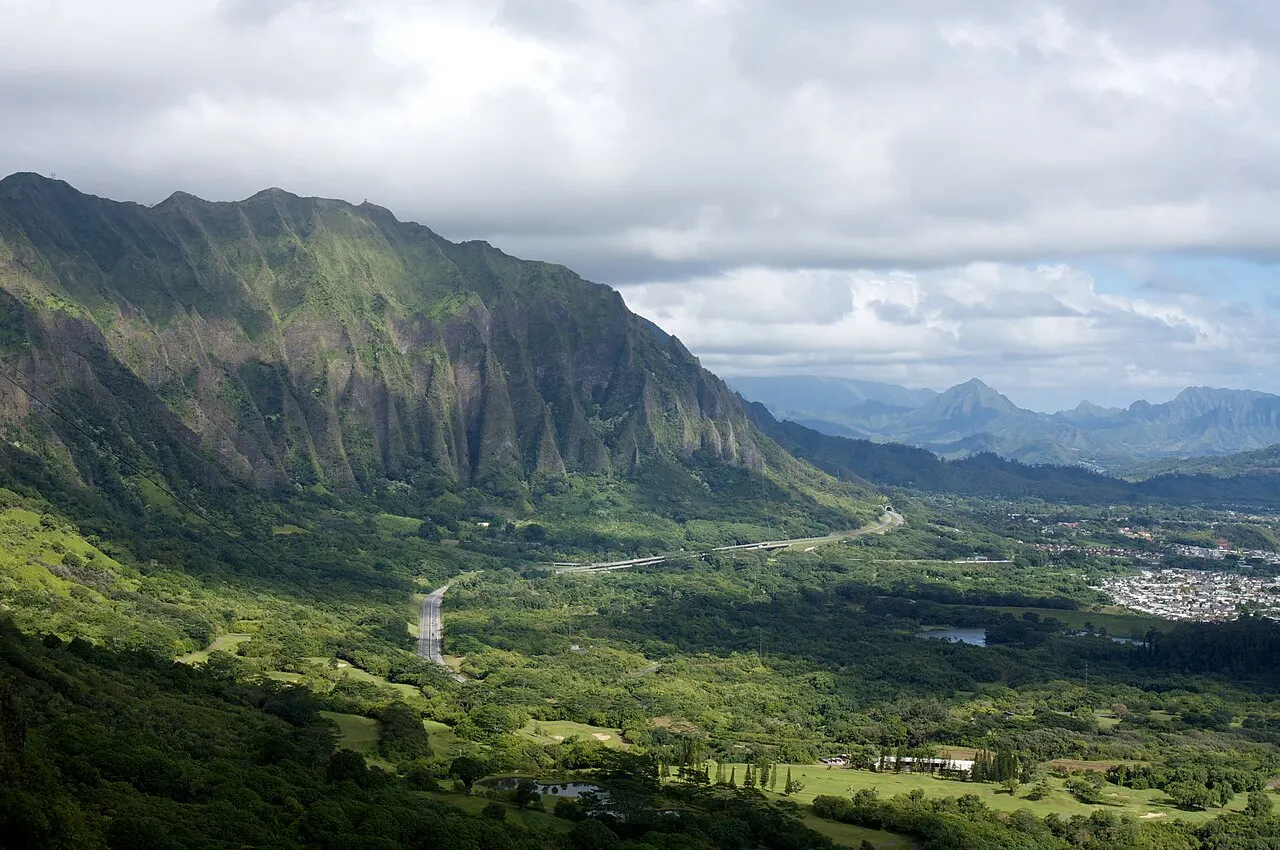
A lookout at 366 m in elevation on the edge of the Koʻolau range, with views over the whole windward coast, from Kāneʻohe to Kailua. The wind is often strong enough to lean into. It was in the Nuʻuanu valley that Kamehameha I won the battle of 1795. It is open from 6 a.m. to 6 p.m., and parking costs US$7 per car for non-residents.
A lookout at 366 m on the edge of the range, above the valley of the 1795 battle and the Kailua coast. It is a half-hour stop on the way to Kailua, rather than an outing in itself.
Check access
Nilo’s itinerary
Start with the basic programme and choose extensions for the time you have.
Plan my days in the app ↗Day 1 · Diamond Head early and the Waikīkī waterfront
Up to 30 days ahead, book the 6 a.m. slot at Diamond Head at gostateparks.hawaii.gov: US$5 admission per person and, if you go by car, US$10 parking.
Go by car, taxi or ride-hailing app to the crater, about 4 km from central Waikīkī, and enter within the first 30 minutes of your reserved slot.
Climb the 1.3 km to the fire-control post at the top and allow 1.5 to 2 hours round trip; the last stretch is all stairs.
On the way back, stop at Leonard's, at 933 Kapahulu Avenue, for malasadas, and continue on foot through Kapiʻolani Park to the start of the beach.
Spend midday on the beach, starting from Kūhiō Beach, where the statue of Duke Kahanamoku stands.
In the afternoon, have lunch or dinner, a plate lunch, at Rainbow Drive-In, at 3308 Kanaina Avenue, in Kapahulu.
From mid-September to the end of March, return to the sand to watch the sun set over the sea.
Day 2 · Pearl Harbor in the morning and the historic center in the afternoon
Do this day between Tuesday and Saturday, when there are visits to ʻIolani Palace, and book both beforehand: the USS Arizona on Recreation.gov (56 days ahead, at 3 p.m., or the day before, at the same time) and the palace at iolanipalace.org.
Choose one of the morning boats, from 8 a.m. on (the programs stop from noon to 1 p.m.), and arrive at the memorial an hour early, without a bag or with only a clear plastic bag; by car, it is about 20 km from Waikīkī, and the morning traffic heading west is heavy.
Before the boat, see the two museums at the visitor center, which are free; the 23-minute film plays at 15 and 45 minutes past each hour.
Take the USS Arizona program, about 45 minutes, and continue to downtown Honolulu.
Have lunch in Chinatown and stop by Oʻahu Market, from 1904, and Maunakea Marketplace.
In the early afternoon, take the ʻIolani Palace visit, which lasts 60 to 90 minutes.
From the palace, walk to the statue of Kamehameha I, in front of Aliʻiōlani Hale, and finish at Kawaiahaʻo Church, built of coral blocks.
Day 3 · Hanauma Bay and the Makapuʻu lighthouse
Do this day between Wednesday and Sunday and book Hanauma Bay exactly two days ahead, at 7 a.m. Hawaii time: US$25 per person plus an online fee, children up to 12 are free.
Leave Waikīkī early for the bay, about 16 km to the east, and bring US$3 in cash for parking; entry runs from 6:45 a.m. to 1:30 p.m.
Watch the mandatory video, go down to the beach and snorkel without touching the coral; the beach is cleared at 3:30 p.m.
Continue along the coastal road to the parking lot of the Makapuʻu lighthouse trail, at the east tip of the island.
Climb the paved trail, 3.2 km round trip, with water and a hat: there is no shade. From November to May, look for humpback whales out at sea.
Return to Waikīkī along the same coast in the late afternoon.
Day 4 · The North Shore: Haleʻiwa, Waimea and the Pipeline
Leave Waikīkī by car early in the morning: it is about an hour to Haleʻiwa without traffic. Since March 2026, slope-stabilization work on Kamehameha Highway, by Waimea Bay, may delay the return.
Start with the old town of Haleʻiwa, with the galleries of the former plantation town, and order a shave ice at Matsumoto, open since 1951.
Continue along the coast to Waimea Bay: in summer, the sea is usually calm and you can swim; from November to March, the big waves are for watching from the sand.
Climb to Puʻu o Mahuka Heiau, on the hill above the bay, for the view of the north coast, and observe the temple from outside the walls.
Continue to ʻEhukai Beach Park, across from the Pipeline, and respect the flags and lifeguards.
Return to Waikīkī on the same road in the late afternoon.


If you stay longer
Day 5 · The Bishop Museum and the Honolulu Museum of Art
Do this day from Wednesday to Friday: Helena's is open Tuesday through Friday, and the Honolulu Museum of Art, Wednesday through Sunday.
Start at the Bishop Museum, at 1525 Bernice Street, in Kalihi, open every day from 9 a.m. to 5 p.m., to see Hawaiian history and culture before the foreign ships.
Have Hawaiian food for lunch in Kalihi, such as the kālua pig and laulau at Helena's Hawaiian Food, at 1240 North School Street, open from 10 a.m. to 7:30 p.m.
In the afternoon, go to the Honolulu Museum of Art, at 900 South Beretania Street, open from 10 a.m. to 6 p.m., and on Fridays until 9 p.m.
On a Thursday or Friday, with a ticket bought at the monthly release, swap part of the afternoon for the Shangri La visit, which leaves from the museum itself; not in September, when the house is closed.
End the day at Ala Moana Beach Park, between downtown and Waikīkī.
Day 6 · Kailua and Lanikai, over the Pali
Day trip
Kailua is about 19 km northeast of Honolulu, on the other side of the range, via the Pali Highway; you can stop at the Nuʻuanu Pali Lookout on the way (US$7 per car). Kailua Beach has about 4 km of sand, a gently sloping bottom and steady wind, good for windsurfing and kitesurfing, and kayaks set out from it to the Nā Mokulua islets, a seabird refuge. Lanikai, the neighboring community, has the other beach on the bay. Allow half a day, or a full day with beach time.

Food
Plate lunch
Hawaii's all-in-one lunch plate: two scoops of white rice, one of macaroni salad and a main dish, usually of Japanese or Korean origin, such as chicken katsu, teriyaki or kalbi short ribs. It was born from the lunch boxes of plantation workers and is sold at counters and drive-ins; with more than one meat, it is called a mixed plate.
Poke
Cubes of raw fish, usually ʻahi tuna, seasoned. The old version used sea salt, ʻinamona (roasted kukui nut) and limu (seaweed); the more common one today uses shoyu and sesame oil, with onion and scallion. It is sold at the fish counter and in the market, by weight.
Poi and Hawaiian food
Poi is a paste of cooked, mashed taro, served thicker or thinner, fresh or lightly fermented. It comes alongside kālua pig, pork roasted in the imu, the underground oven, and laulau, meat wrapped in taro leaves and steamed.
Loco moco
White rice, a hamburger patty, dark gravy and a fried egg on top. The dish is said to have been created in 1949 in Hilo, on the island of Hawaii, and it is on the menu of every drive-in in Honolulu.
Spam musubi
A grilled slice of Spam on a block of rice, held on with nori seaweed, in the shape of the Japanese onigiri. Cheap and easy to carry, it sits near the register of convenience stores and small groceries across the island.
Malasada
The fried dough without a hole, rolled in sugar, that Portuguese workers from Madeira and the Azores brought to the plantations starting in the 1870s. In Honolulu, the best-known version is Leonard's, open since 1952, and there are local fillings of haupia (coconut cream), guava and chocolate.
Shave ice
Very finely shaved ice, derived from Japanese kakigōri, topped with syrup in local flavors, such as guava, passion fruit, lychee or li hing mui (salted Chinese plum). It can come with ice cream, azuki beans or condensed milk. It is different from a snow cone made of crushed ice: the syrup soaks into the ice instead of running off.
Saimin
A wheat-noodle soup with egg in a dashi broth, with scallion and kamaboko (fish cake). It was born on the plantations, a blend of Chinese and Japanese influences, and is eaten at any hour.
Where to eat
- Leonard's Bakery · Kapahulu · $
Malasadas, the Portuguese fried dough without a hole, sugared or filled with haupia (coconut cream); open every day, from 5:30 a.m. to 7 p.m.
Source · 2026-10-15
- Rainbow Drive-In · Kapahulu · $
Plate lunch and loco moco at a drive-in opened in 1961, with dishes from US$12.75 to US$16.95 in October 2026.
Source · 2026-10-15
- Helena's Hawaiian Food · Kalihi · $$
Traditional Hawaiian food since 1946 (poi, kālua pig, laulau, pipikaula), awarded by the James Beard Foundation in 2000. Open Tuesday through Friday, from 10 a.m. to 7:30 p.m., and closed during some holiday periods, which it announces on its website.
Source · 2026-10-16
- Chinatown · $
Fresh fish, poke and fruit at the stalls of Oʻahu Market and prepared food at Maunakea Marketplace and the restaurants on the surrounding streets.
- Matsumoto Shave Ice · Haleʻiwa, on the North Shore · $
Shave ice with local fruit syrups, served since 1951 in the old town of Haleʻiwa.
Source · 2026-10-15
- La Mer · Waikīkī · $$$
French cooking in a dinner menu (US$265) or tasting menu (US$340) at the Halekulani hotel, before tax and gratuity. Open Tuesday through Saturday, from 5:30 p.m. to 8:30 p.m., with a formal dress code required (no T-shirts, shorts or caps). Reserve with a card; cancellation with less than 72 hours' notice costs US$125 per person.
Source · 2026-10-16
$: counter-service plate lunch, US$12.75–16.95 at Rainbow Drive-In · $$: restaurant with table service, plus tax and gratuity; the Oʻahu visitor spent an average of US$36 a day in restaurants in 2025 · $$$: dinner menu at US$265 and tasting menu at US$340 at La Mer, before tax and gratuity · 2026-10-16
Day trips
North Shore (Haleʻiwa, Waimea and Pipeline)
Pūpūkea, in the middle of Oʻahu's north coast, is 60 km from Honolulu by road, and from Waikīkī to Haleʻiwa is about an hour by car without traffic. Haleʻiwa is the former plantation town, with galleries and Matsumoto Shave Ice, open since 1951. Waimea Bay has calm water in summer and giant waves in winter, and the heiau (temple) of Puʻu o Mahuka, on the hill above, has a view over the bay and is observed from outside the walls. The Pipeline breaks in front of ʻEhukai Beach Park. From November to March is the season of waves and competitions, to watch from the sand; in summer, Waimea Bay is usually calm, but enter the water only according to the day’s conditions and lifeguard guidance. Since March 2026, slope-stabilization work on Kamehameha Highway, by Waimea Bay, may delay traffic.
Kailua and Lanikai, over the Pali
Kailua is about 19 km northeast of Honolulu, on the other side of the range, via the Pali Highway; you can stop at the Nuʻuanu Pali Lookout on the way (US$7 per car). Kailua Beach has about 4 km of sand, a gently sloping bottom and steady wind, good for windsurfing and kitesurfing, and kayaks set out from it to the Nā Mokulua islets, a seabird refuge. Lanikai, the neighboring community, has the other beach on the bay. Allow half a day, or a full day with beach time.
Where to begin
Diamond Head early and the Waikīkī waterfront
Up to 30 days ahead, book the 6 a.m. slot at Diamond Head at gostateparks.hawaii.gov: US$5 admission per person and, if you go by car, US$10 parking.
Pearl Harbor in the morning and the historic center in the afternoon
Do this day between Tuesday and Saturday, when there are visits to ʻIolani Palace, and book both beforehand: the USS Arizona on Recreation.gov (56 days ahead, at 3 p.m., or the day before, at the same time) and the palace at iolanipalace.org.
Hanauma Bay and the Makapuʻu lighthouse
Do this day between Wednesday and Sunday and book Hanauma Bay exactly two days ahead, at 7 a.m. Hawaii time: US$25 per person plus an online fee, children up to 12 are free.
The Bishop Museum and the Honolulu Museum of Art
Do this day from Wednesday to Friday: Helena's is open Tuesday through Friday, and the Honolulu Museum of Art, Wednesday through Sunday.
Money
The currency is the U.S. dollar, and cards and contactless payment work almost everywhere; the exceptions are places that take only cash, such as the Hanauma Bay parking lot. Hawaii has no sales tax but rather the GET (general excise tax), a general tax on business activity, charged to the business, which may pass it on to the customer: on Oʻahu, the maximum pass-through is 4.712% on the price. For lodging, the bill also adds state and county transient accommodations taxes, and it is worth asking before you book whether the hotel charges a daily fee on top of the advertised room rate. At a restaurant with table service, tipping is customary in the United States and comes on top: La Mer's menu, for example, states that prices do not include tax or gratuity and that parties of six or more pay a 20% service charge. Waikīkī hotels charged an average of US$278 a night in August 2026 and US$267 from January to August, according to the STR survey released by the state government. On food, the Oʻahu visitor spent an average of US$53 per person per day in 2025, of which US$36 in restaurants (preliminary DBEDT data). A counter-service plate lunch costs US$12.75 to US$16.95 at Rainbow Drive-In (October 2026), and, at La Mer, at the Halekulani hotel, the dinner menu is US$265 and the tasting menu US$340, before tax and gratuity. For attractions, Diamond Head charges US$5 per person, Hanauma Bay US$25, the Honolulu Museum of Art US$25, and the Pearl Harbor memorial is free, with a US$1 fee on the USS Arizona reservation. Many places charge less, or nothing, to people who live in Hawaii, the so-called kamaʻāina rate.
Getting there and around
From HNL airport to downtown and Waikīkī
Daniel K. Inouye International Airport (HNL) is about 5 km northwest of downtown and handled 22 million passengers in 2025. Since October 16, 2025, the Skyline metro station between terminals 1 and 2 connects the airport to the west of the island and to Middle Street, in Kalihi, but the metro does not yet reach downtown or Waikīkī: the section to downtown is scheduled for 2031. To get to Waikīkī, the options are TheBus, a taxi, a ride-hailing app or a rental car, picked up at the rental-car building next to terminal 2. By car, it is about 16 km to Waikīkī. The free Wiki Wiki Shuttle bus connects the terminals.
TheBus, Skyline and the HOLO card
TheBus and Skyline have a single fare. In cash, an adult bus fare costs US$3.25, with no transfers and exact change only. With the HOLO card, which costs US$2 and is sold at the machines in Skyline stations and at authorized retailers, the ride costs US$3 and works as a two-hour pass between bus and metro. The card stops charging when the day's spending reaches US$7.50, and there are 3-day (US$20) and 7-day (US$45) passes. The bus serves Waikīkī, downtown, Ala Moana and much of the island; check routes and schedules in the trip planner at thebus.org.
Car, traffic and parking
For Hanauma Bay, Makapuʻu, Kailua and the North Shore, a rental car gives you freedom with timing, and parking goes into the budget: US$10 per car at Diamond Head, US$7 at the Pearl Harbor memorial and the Pali lookout, US$3 in cash at Hanauma Bay. Honolulu traffic is heavy at rush hour, especially on the roads to the western suburbs, such as Kapolei, Pearl City and Waipahu. In Waikīkī and downtown, a car gets in the way more than it helps: the district is covered on foot, and the bus covers the rest.
Safety
For visitors, Honolulu's biggest risks come from the sea, the sun and the weather. In winter, North Shore waves can exceed 6 m and break over shallow reef; on extreme days, the state has closed all the beaches on the north coast by law. Swim at beaches with lifeguards, respect the flags and, if in doubt, stay on the sand. The ultraviolet index passes 12 in summer: sunscreen, a hat and water are necessary at Diamond Head and on the Makapuʻu trail, which have no shade. On trails in the rainy valleys, such as Mānoa, there is a risk of flash flooding, and swimming in fresh water is discouraged because of leptospirosis, transmitted by rat urine. The Pearl Harbor memorial asks that you keep your car locked and states that it is not responsible for theft; there and in the other attraction parking lots, don't leave a bag, documents or electronics in the car. Hurricane season runs from June to November; with an alert, follow the instructions of the weather service and civil defense, and check the state parks notices page (dlnr.hawaii.gov/dsp), which refunded the reservations for the days closed by the storms of 2026. In an emergency, call 911.
Etiquette tips
Treat the Arizona memorial as a cemetery
The USS Arizona is the tomb of 1,102 sailors and Marines. The park asks for silence, the phone only as a camera and appropriate clothing, with a shirt and shoes; on the boat and at the memorial, you may carry only water in a clear bottle.
Don't touch the coral or the animals
At Hanauma Bay, the law prohibits touching, stepping on or harming the coral and marine animals. The coral closest to the beach died in the 1980s, with crowds of up to 13,000 people a day; that is why visits are limited and begin with the mandatory video.
Choose sunscreen without oxybenzone and octinoxate
Sunscreens with those two filters, which damage coral, have been banned in Hawaii.
Count the tip separately
In the United States, a tip at the table is customary and is not included in the menu price. Check the bill: for larger groups, some restaurants already charge a service fee, such as La Mer, which adds 20% for six people or more.
Understand the kamaʻāina rate
Kamaʻāina, “child of the land,” is what Hawaii residents are called, and many hotels, restaurants and attractions give them a discount or free entry with a local ID. It is not an improper charge to the visitor: it is the place's policy, and it applies at Diamond Head, Hanauma Bay and the Honolulu Museum of Art.
View the heiau from outside
At Puʻu o Mahuka Heiau, the Hawaiian temple above Waimea Bay, the parks agency asks visitors to observe the site from outside the walls and not to enter, so as not to damage the walls and the stone paving.
Mistakes to avoid
Arriving at Diamond Head without a reservation
Anyone who doesn't live in Hawaii and arrives without a reservation is turned back at the gate, even on foot. Slots open 30 days ahead and sell out at the most popular times; and anyone who arrives more than 30 minutes after the start of the reserved slot may lose the spot.
Booking Hanauma Bay for a Monday or Tuesday
The bay is closed on Mondays and Tuesdays, on Christmas and on New Year's Day. The reservation opens only two days ahead, at 7 a.m. Hawaii time: anyone planning the week needs to leave a day from Wednesday to Sunday free for it.
Counting on Skyline to reach Waikīkī
The metro has reached the airport since October 2025, but it ends at Middle Street, in Kalihi. Until the downtown section opens, scheduled for 2031, the way to Waikīkī is by bus, taxi, ride-hailing app or car.
Bringing a backpack to Pearl Harbor
Purses, backpacks, fanny packs and camera bags that hide their contents are not allowed into the visitor center or the memorial; clear plastic bags are. The paid bag storage is run by the Bowfin submarine museum next to the entrance. In the parking lot, lock the car and leave nothing in view: the park is not responsible for theft.
Treating the North Shore's winter sea like Waikīkī's
From November to March, the waves at Waimea and the Pipeline break hard over shallow reef, and the Pipeline has killed experienced surfers. In that season, the North Shore is for watching from the sand and respecting the flags and lifeguards.
Going to the palace on a Sunday or Monday
Visits to ʻIolani Palace take place Tuesday through Saturday. Fit the historic center into one of those days and book the visit.
Useful phrases
Aloha
Hello and goodbye, in Hawaiian; the word also means love, affection and compassion
Mahalo
Thank you, in Hawaiian
ʻOno
Tasty, delicious; it is also the name of a fish, the wahoo
Mauka / makai
Toward the mountains / toward the sea: this is how many residents give directions
Kamaʻāina
A Hawaii resident; “kamaʻāina rate” is the discount for people with a local ID
Da kine
A Pidgin expression that stands in for any word that won't come to mind, such as “the thing” or “that one”
Where to stay
- Waikīkī, near Kalākaua Avenue · First trip, without a car · $$: It is where most of Oʻahu's hotels are, with the beach, restaurants and buses to downtown, Ala Moana and Pearl Harbor a few steps away. Diamond Head is about 4 km away, and a car is only needed on the days you tour the island.
- Waikīkī beachfront · Honeymooners and anyone who wants the sea at the door · $$$: The historic and luxury hotels, some from the early 20th century, sit right on the sand, between Fort DeRussy and Kūhiō Beach. They are the most expensive lodging tier in Honolulu.
- Waikīkī, Ala Wai canal side and Kūhiō Avenue · Tight budgets and longer stays · $: The inland blocks, between Kūhiō Avenue and the canal, have simpler hotels five or ten minutes' walk from the beach, with restaurants, cafés and markets on Kūhiō.
$: mid-range or budget hotel on Oʻahu, average of US$135 a night in August 2026 · $$: Waikīkī hotel, average of US$278 a night in August 2026 · $$$: luxury hotel on Oʻahu, average of US$531 a night in August 2026 · 2026-10-16
Districts
Waikīkī
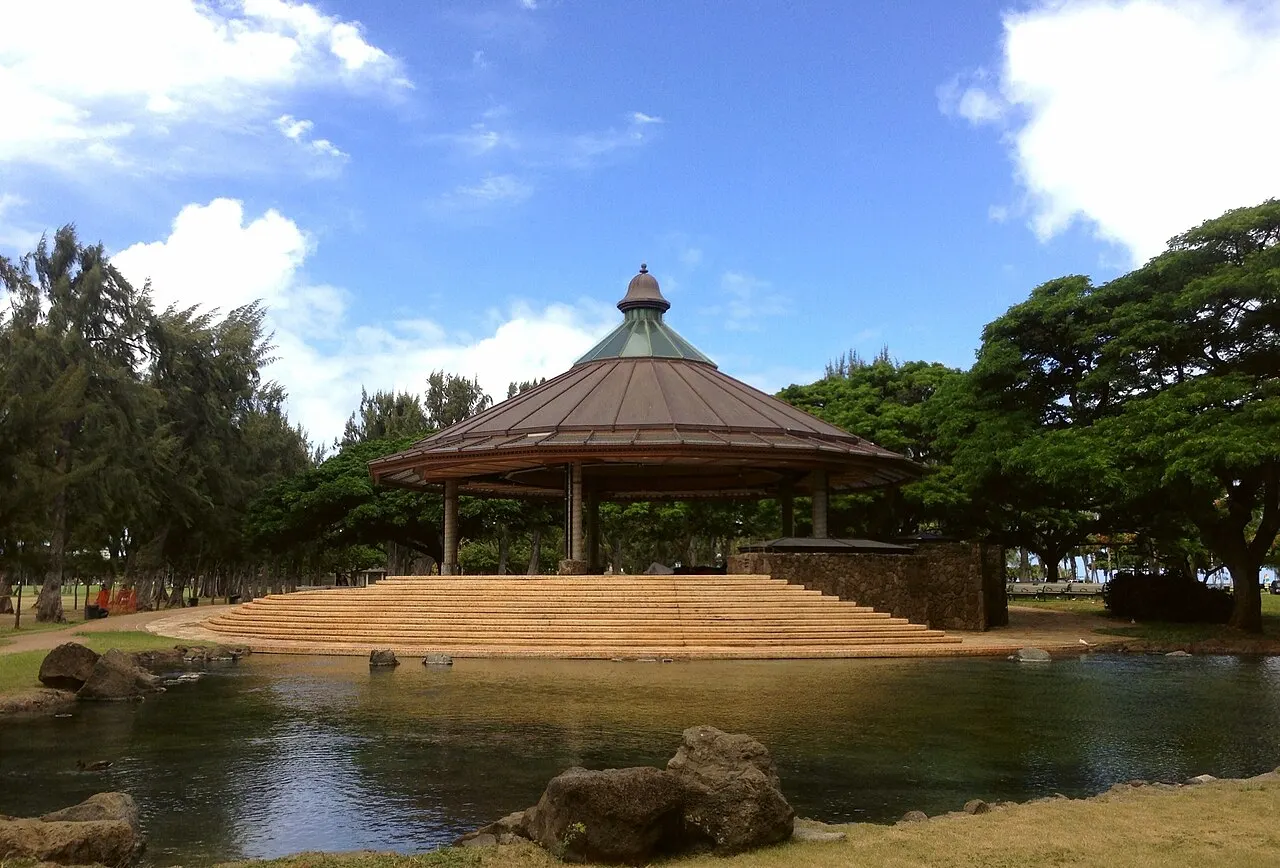
The tourist district, between the Ala Wai canal and the sea, with most of Oʻahu's hotel rooms. Kalākaua Avenue has the big hotels and the designer shops; Kūhiō Avenue, one block inland, has restaurants, markets and nightlife. The beach is divided into eight stretches, and the east end meets Kapiʻolani Park and Diamond Head.
Downtown and the Capitol District
The financial and government center, with ʻIolani Palace, the State Capitol, Aliʻiōlani Hale with the statue of Kamehameha I, Kawaiahaʻo Church and, on the waterfront, the Aloha Tower, from 1926. Busy on weekdays and empty at night.
Chinatown
One of the oldest Chinatowns in the United States, between the harbor, Nuʻuanu Stream and Beretania Street. It has Oʻahu Market, a covered fish and vegetable market opened in 1904, Maunakea Marketplace and, at the east end, the arts district, with several cultural institutions.
Kakaʻako
A former industrial district between downtown and Waikīkī, now being redeveloped, with new residential buildings, the Ward complex and the University of Hawaii medical school by the water.
Ala Moana
Between Kakaʻako and Waikīkī, with Ala Moana Center, the largest shopping mall in Hawaii, and Ala Moana Beach Park, the city's second-largest park.
Kapahulu and Kaimukī
The residential neighborhoods just behind Waikīkī and Diamond Head. Kapahulu Avenue has bakeries and local-food restaurants, such as Leonard's and Rainbow Drive-In; in Kaimukī, the shops are concentrated on Waiʻalae Avenue.
Mānoa
A green, rainy valley inland, with the main campus of the University of Hawaii, Lyon Arboretum and the Mānoa Falls trail.
Kalihi
A working-class neighborhood west of downtown, home to the Bishop Museum and to neighborhood Hawaiian-food restaurants, such as Helena's Hawaiian Food.
History
11th c. · A Polynesian settlement on the harbor
Oral traditions and artifacts point to a settlement where Honolulu now stands as early as the 11th century. The name, in Hawaiian, means “sheltered harbor.”
1794 · The first foreign ship in the harbor
In November 1794, the British captain William Brown is the first foreigner to enter what is now Honolulu Harbor. The harbor soon becomes a stopover for merchant ships between North America and Asia.
1795 · The Battle of Nuʻuanu
Kamehameha I conquers Oʻahu at the Battle of Nuʻuanu, high in the valley of the same name, and founds the Kingdom of Hawaii. Waikīkī is the kingdom's first capital, from 1795 to 1796.
1836–1842 · The church of coral blocks
Kawaiahaʻo Church, of the Protestant mission begun in 1820, is built from about 14,000 coral blocks cut by Hawaiian divers on a reef off the south coast of Oʻahu.
1845 · Honolulu becomes the kingdom's capital
Kamehameha III moves the capital from Lahaina, on Maui, to Honolulu. He and the kings who follow give the city the buildings of a modern capital, such as St. Andrew's Cathedral, ʻIolani Palace and Aliʻiōlani Hale.
1882 · ʻIolani Palace is finished
King Kalākaua completes the palace in November 1882, after laying the cornerstone on December 31, 1879. It was a royal residence until 1893.
1893 · The overthrow of the monarchy
On January 17, 1893, a Committee of Safety made up mostly of residents of American origin, backed by the landing of U.S. Marines, overthrows Queen Liliʻuokalani. After an attempted restoration, she is held prisoner in the palace and abdicates in 1895.
1898 · Annexation by the United States
The U.S. annexes Hawaii on July 7, 1898, through the Newlands Resolution. On November 23, 1993, the U.S. Congress passed, and President Bill Clinton signed, an apology resolution for the U.S. role in the overthrow of the kingdom.
1900 · The Chinatown fire
On January 20, 1900, the controlled burning of a building contaminated by bubonic plague gets out of control and destroys much of Chinatown, the neighborhood of Chinese workers who had left the plantations.
1941 · The attack on Pearl Harbor
On December 7, 1941, the Japanese attack on the naval base kills 2,403 people, military and civilian, and brings the United States into World War II. On the battleship USS Arizona alone, 1,177 sailors and Marines died.
1959 · Hawaii becomes a state
Hawaii becomes the 50th U.S. state, and Honolulu its capital. Air tourism and the first high-rise hotels in Waikīkī, from 1955, transform the island's economy.
1976 · Hōkūleʻa sails to Tahiti
The double-hulled canoe Hōkūleʻa goes from Hawaii to Tahiti using only traditional navigation techniques, guided by the Micronesian navigator Mau Piailug. The voyage marks the Hawaiian cultural renaissance of the 1970s.
2023–2025 · Skyline reaches the airport
The elevated Skyline metro opens its first segment on June 30, 2023 and, on October 16, 2025, reaches the airport and Middle Street. The section to downtown is scheduled for 2031.
Complete history
Honolulu was born from its harbor. The sheltered bay that gave the city its name, “sheltered harbor” in Hawaiian, already had a settlement in the 11th century, but the power on Oʻahu lay in Waikīkī and in Kailua, on the other side of the range. All that changed between 1794, when the Briton William Brown sailed into the harbor with the first foreign ship, and 1795, when Kamehameha I won the Battle of Nuʻuanu and brought the main islands under his kingdom (Kauaʻi and Niʻihau would only join in 1810). Waikīkī was the kingdom's first capital, and the court moved to Honolulu in 1809, drawn by the ships that crossed between North America and Asia.
In 1845, Kamehameha III made Honolulu the permanent capital. The city gained a coral church, an Anglican cathedral, a government palace and, in 1882, ʻIolani Palace, while the descendants of the American missionaries, who arrived in 1820, founded the sugar companies downtown. The plantations brought workers from China, Japan, Portugal, Korea and the Philippines, and that is where plate lunch, malasada and saimin come from. Diseases brought by foreigners rapidly reduced the native Hawaiian population.
The political turning point happened a few meters from the palace. In 1887, King Kalākaua was forced to accept a constitution that limited the power of the crown; in 1893, when Queen Liliʻuokalani tried to replace it, a committee of residents of American origin, with the support of U.S. Marines, overthrew the monarchy. The republic that followed banned Hawaiian as a language of instruction in public schools in 1896, and the United States annexed the islands in 1898. In 1900, the attempt to contain the plague by burning infected buildings destroyed Chinatown.
The 20th century made Honolulu a military and tourist city. Pearl Harbor, to the west, became the base of the Pacific fleet, and the Japanese attack of December 7, 1941 took the country to war. After statehood, in 1959, Hawaii received mass air tourism, and Waikīkī, a former swamp drained by the Ala Wai canal between 1921 and 1928, filled up with high-rise hotels from 1955. The reaction came in the 1970s, with the Hawaiian cultural renaissance: the voyage of the Hōkūleʻa to Tahiti in 1976, Hawaiian-language immersion schools from 1984 and the return of the language to public education in 1987.
Today's Honolulu lives off these layers. Most residents have Asian ancestry, the cooking blends the Hawaiian with what came from the plantations, the Hawaiian sovereignty movement keeps alive the memory of the overthrown kingdom, and the Hawaiian flag flown upside down, a symbol of the kingdom in distress, is the sign of protest, and the city faces a high cost of living, erosion of the beaches at Waikīkī and a metro, the Skyline, that is making its way slowly from the west of the island toward downtown.
ʻIolani Palace is the only official residence of a monarch on American soil, and Hawaii's last queen was held in an upstairs room in 1895.
Geography and shape of the city
Between the harbor and the crater
Honolulu occupies a narrow strip of the southeast coast of Oʻahu, between the sea and the Koʻolau range, whose valleys (Nuʻuanu, Mānoa, Pālolo) run down to the city. Downtown grew up beside the harbor; to the east are Kakaʻako, Ala Moana and Waikīkī, which ends at the foot of Diamond Head. The crater, called Lēʻahi in Hawaiian, was formed in a single explosive eruption about 300,000 years ago and is part of the Honolulu volcanic series, the same one that created Punchbowl Crater and Hanauma Bay.
Mauka and makai
In the city, directions are given in relation to the mountains and the sea: mauka means inland, toward the mountains, and makai, toward the sea. The system makes sense in a city squeezed between the two. Waikīkī is almost entirely artificial: the Ala Wai canal drained the swamps in the 1920s, breakwaters divided the beach into eight stretches and, between the 1920s and the 1970s, sand arrived from elsewhere, including California.
Dry on one side, rain on the other
The range holds back the rain carried by the trade winds, which is why Honolulu is dry for the tropics: 417 mm of rain a year at the airport, according to NOAA's 1991–2020 normals, against about 1,390 mm in Pūpūkea, on the North Shore. Average highs run from 26.9 °C in January to 31.6 °C in August, and the sea temperature stays between about 24 °C and 27 °C. The inland valleys, such as Mānoa, get rain almost every day.
Waikīkī is almost entirely artificial: the Ala Wai canal drained the swamps in the 1920s, and part of the sand came from California.
Culture
The Hawaiian renaissance
The Hawaiian language and arts nearly disappeared after the republic banned teaching in Hawaiian in public schools in 1896. The movement of the 1970s reversed that course: the Hōkūleʻa's voyage to Tahiti in 1976 proved traditional navigation, the Pūnana Leo immersion preschools opened in 1984, and Hawaiian returned to public schools in 1987. Today it is an official language of the state alongside English, even though UNESCO classifies it as critically endangered. In the city it appears in street names, on signs and at Kawaiahaʻo Church, which uses Hawaiian in part of its services.
Hula, ʻukulele and the aloha shirt
Hula is divided into two major families: kahiko, the ancient dance accompanied by chant and percussion, and ʻauana, which took in the guitar, the ʻukulele and the double bass in the 19th century. The ʻukulele, by the way, is of Portuguese origin and became popular in Hawaii. Honolulu hosts the King Kamehameha Hula Competition, which brings together groups from several countries, and the aloha shirt is accepted work attire in the city, where the custom of “Aloha Friday,” the Friday of casual dress, began.
Surfing and sports
The surfing of the Hawaiian kings spread around the world from the beaches of Waikīkī, with Duke Kahanamoku, a five-time Olympic swimming medalist between 1912 and 1924. The city has no professional team, because of the distance from the mainland, and the sports that draw crowds are University of Hawaii athletics and high school football. The Honolulu Marathon, created in 1973, is open to anyone, with no lottery, qualifying time or time limit.
A city of many origins
More than half of residents have Asian ancestry, mostly Japanese, Filipino and Chinese, and 8.4% are Native Hawaiian or from other Pacific Islands (2020 Census). Hawaiian Pidgin, an English-based creole formed among the plantation groups, is spoken by about 600,000 people as a first language in the state and was recognized as a language by the U.S. Census Bureau in 2015. The shaka gesture, with the thumb and little finger extended, is the state's official greeting.
Festivals and events
Honolulu Festival, March
A three-day festival with a large parade on Kalākaua Avenue and the Nagaoka fireworks over Waikīkī beach. The 31st edition is scheduled for March 5 to 7, 2027.
Lei Day, May 1
The day of the lei, the garland of flowers, celebrated since 1927. In Honolulu, the main celebration takes place at Kapiʻolani Park, with a lei contest, music and hula.
King Kamehameha Day, June 11
A state holiday in honor of Kamehameha I. The king's statue in front of Aliʻiōlani Hale is draped in lei, and a floral parade leaves ʻIolani Palace, passes the harbor, Kakaʻako, Ala Moana and Waikīkī and ends at Kapiʻolani Park. The Kamehameha Day hula competition takes place at the Blaisdell Center.
Aloha Festivals, September
A series of free Hawaiian cultural events created in 1946, with the festival's royal court, a floral parade that crosses Waikīkī to Kapiʻolani Park and the hoʻolauleʻa, Waikīkī's big street party, with local food and music.
Vans Triple Crown of Surfing, November and December
Three professional stops on the North Shore, since 1983: Haleʻiwa, Sunset Beach and the Pipeline Masters, at ʻEhukai Beach Park. You watch from the sand, for free.
Eddie Aikau Big Wave Invitational, December to March
The big-wave championship at Waimea Bay is held only if swells reach 20 feet (about 6 m) in open water. Since 1984 it has been held eleven times, the last in December 2024; in the 2025–2026 season there were no conditions.
Honolulu Marathon, December
Usually run on the second Sunday of December, with about 20,000 finishers a year. The 2026 edition is on December 13.
Books and films
Hawaii's Story by Hawaii's Queen (1898), Liliʻuokalani
The autobiography of Hawaii's last queen, written after her imprisonment in ʻIolani Palace, recounts her childhood at court, her rise to the throne and the overthrow of 1893 in the voice of the one who was deposed. Read before visiting the palace, it gives meaning to the room where she was held.
Hawaii (1959), James A. Michener
A historical novel published the year Hawaii became a state, in episodes that run from the formation of the islands and the arrival of the Polynesians to the American missionaries and the Chinese and Japanese plantation immigrants. The Polynesian part leans more on legend than on archaeology, but the book explains where Honolulu's mix comes from.
From Here to Eternity (1953), Fred Zinnemann
A film about American soldiers on Oʻahu in the months before the attack on Pearl Harbor, shot partly at the Schofield Barracks. It won eight Oscars and shows the military island that the Pearl Harbor memorial recalls.
The Descendants (2011), Alexander Payne
A Honolulu lawyer, sole trustee of 25,000 acres of family land on Kauaʻi, decides their fate while dealing with a family crisis. Filmed largely in Honolulu, it shows the neighborhood city, away from the hotels, and the question of land that runs through Hawaii's history.
Frequently asked questions
Honolulu: How do you get from the airport to Waikīkī?
The Skyline metro connects the airport to the west of the island and to Middle Street, in Kalihi, but it does not yet reach downtown or Waikīkī: the section to downtown is scheduled for 2031. To get to Waikīkī, the options are TheBus, a taxi, a ride-hailing app or a rental car.
Honolulu: How many days should you plan?
I'd stay four days in Honolulu, sleeping in Waikīkī every night. I'd make the reservations weeks ahead: without them, Diamond Head and the USS Arizona can drop out of the trip.
Honolulu: When should you book Hanauma Bay?
The bay is closed on Mondays and Tuesdays, on Christmas and on New Year's Day. The reservation opens only two days ahead, at 7 a.m. Hawaii time: anyone planning the week needs to leave a day from Wednesday to Sunday free for it.
Honolulu: What is the day trip to the North Shore like?
From Waikīkī to Haleʻiwa is about an hour by car without traffic. From November to March is the season of waves and competitions, to watch from the sand; in summer, Waimea Bay is usually calm, but enter the water only according to the day’s conditions and lifeguard guidance.
Honolulu: When is the best time to go?
April, May and September are the driest months, with 13 to 22 mm of rain, and they fall outside the visitor peaks of summer, the end of the year and the spring school break. From November to March it rains more, but that is the season of the big North Shore waves and of humpback whales.
Other cities in the country
United States ↗- Days
- 4–5
- When
- Apr–Jun · Sep–Oct
- Per person/day
- Average 180–320 USDMid-range · per person/day
Cost scope
Per person per day: accommodation, meals, urban transport, visits and a small allowance for extras. Flights excluded; larger purchases vary. Editorial estimate, not a quote.
- Days
- 4–5
- When
- Apr–May · Nov
- Per person/day
- Average 220–330 USDMid-range · per person/day
Cost scope
Per person per day: accommodation, meals, urban transport, visits and a small allowance for extras. Flights excluded; larger purchases vary. Editorial estimate, not a quote.
- Days
- 3
- When
- Sep–Oct
- Per person/day
- Average 180–280 USDMid-range · per person/day
Cost scope
Per person per day: accommodation, meals, urban transport, visits and a small allowance for extras. Flights excluded; larger purchases vary. Editorial estimate, not a quote.
- Days
- 4
- When
- May–Jun · Sep–Oct
- Per person/day
- Average 150–260 USDMid-range · per person/day
Cost scope
Per person per day: accommodation, meals, urban transport, visits and a small allowance for extras. Flights excluded; larger purchases vary. Editorial estimate, not a quote.
- Days
- 2–3
- When
- Jan–Apr · Nov–Dec
- Per person/day
- Average 200–350 USDMid-range · per person/day
Cost scope
Per person per day: accommodation, meals, urban transport, visits and a small allowance for extras. Flights excluded; larger purchases vary. Editorial estimate, not a quote.
- Days
- 3
- When
- Feb–May · Oct–Dec
- Per person/day
- Average 250–350 USDMid-range · per person/day
Cost scope
Per person per day: accommodation, meals, urban transport, visits and a small allowance for extras. Flights excluded; larger purchases vary. Editorial estimate, not a quote.
- Days
- 2–3
- When
- Mar–May · Oct–Nov
- Per person/day
- Average 200–350 USDMid-range · per person/day
Cost scope
Per person per day: accommodation, meals, urban transport, visits and a small allowance for extras. Flights excluded; larger purchases vary. Editorial estimate, not a quote.
- Days
- 3
- When
- Mar–May
- Per person/day
- Average 220–320 USDMid-range · per person/day
Cost scope
Per person per day: accommodation, meals, urban transport, visits and a small allowance for extras. Flights excluded; larger purchases vary. Editorial estimate, not a quote.
- Days
- 2–3
- When
- Sep–Oct
- Per person/day
- Average 190–330 USDMid-range · per person/day
Cost scope
Per person per day: accommodation, meals, urban transport, visits and a small allowance for extras. Flights excluded; larger purchases vary. Editorial estimate, not a quote.
- Days
- 2–3
- When
- Jun–Sep
- Per person/day
- Average 130–220 USDMid-range · per person/day
Cost scope
Per person per day: accommodation, meals, urban transport, visits and a small allowance for extras. Flights excluded; larger purchases vary. Editorial estimate, not a quote.
- Days
- 5–6
- When
- Jan–Apr · Nov–Dec
- Per person/day
- Average 368 USDMid-range · per person/day
Cost scope
Per person per day: accommodation, meals, urban transport, visits and a small allowance for extras. Flights excluded; larger purchases vary. Editorial estimate, not a quote.
- Days
- 2
- When
- Apr–May · Sep–Oct
- Per person/day
- Average 203 USDMid-range · per person/day
Cost scope
Per person per day: accommodation, meals, urban transport, visits and a small allowance for extras. Flights excluded; larger purchases vary. Editorial estimate, not a quote.
- Days
- 3
- When
- Apr · Sep–Oct
- Per person/day
- Average 251 USDMid-range · per person/day
Cost scope
Per person per day: accommodation, meals, urban transport, visits and a small allowance for extras. Flights excluded; larger purchases vary. Editorial estimate, not a quote.
- Days
- 3
- When
- May–Jun · Sep–Oct
- Per person/day
- Average 158 USDMid-range · per person/day
Cost scope
Per person per day: accommodation, meals, urban transport, visits and a small allowance for extras. Flights excluded; larger purchases vary. Editorial estimate, not a quote.