United States
Las Vegas
Themed casinos, resident shows and sandstone desert
Days Start with the basic programme and choose extensions for the time you have.
How the guide reaches this number
A third, if you have one, goes to Red Rock Canyon and to the springs that gave the city its name. It isn't a place for wandering without a plan or for looking for anything original, because what you come here to see are the copies. With 24 hours, stay on the Strip and follow the itinerary's first day: start at 9am at the south end, from Mandalay Bay to New York-New York, spend the hot hours, from 1pm to 4pm, inside the Bellagio and the Aria, and head back to the avenue at dusk for the Bellagio fountains. The old downtown and Red Rock are for anyone with more days. What disappoints is the scale: everything is farther, hotter and pricier than the photo promises, and the final bill comes in above what you planned, so add up resort fee, tax and parking before booking.
2–3
When March through May and October through November, with highs of 22 to 30 °C; July and August top 40 °C almost every day
How the guide reaches this number
March to May and October to November are the comfortable windows, with highs of 22 to 30 °C, nights of 10 to 18 °C and sun nearly every day. Summer, from June to September, tops 40 °C most afternoons, with a record of 48.9 °C on July 7, 2024 and nights that don't drop below 30 °C in July and August; during this period the street only works before 10am and after 7pm, and resort pools take up the middle hours. It rains little, about 110 mm a year, concentrated in winter and in the July and August monsoon storms, which flood avenues in minutes and stop within an hour. Winter has days of 14 to 18 °C, nights near 3 °C, wind and closed pools, but it's when Mount Charleston, 45 minutes away, has snow. Events set the high season, so check the calendar before booking: CES in January, March Madness in March, EDC in May, Formula 1 in November, the rodeo in December and New Year's Eve, when the Strip closes to cars. Avoid July for the heat and the CES and Formula 1 weeks for the prices.
Per person/day Budget US$100–150 including resort fee; mid-range 200–350; comfortable from 500, not counting the gaming table or show tickets
How the guide reaches this number
Per person per day: accommodation, meals, urban transport, visits and a small allowance for extras. Flights excluded; larger purchases vary. Editorial estimate, not a quote.
 What Nilo thinks
Las Vegas needs two days: one for the Strip end to end and another for the old downtown, between museums and bars where locals drink. A third, if you have one, goes to Red Rock Canyon and to the springs that gave the city its name. It isn't a place for wandering without a plan or for looking for anything original, because what you come here to see are the copies. With 24 hours, stay on the Strip and follow the itinerary's first day: start at 9am at the south end, from Mandalay Bay to New York-New York, spend the hot hours, from 1pm to 4pm, inside the Bellagio and the Aria, and head back to the avenue at dusk for the Bellagio fountains. The old downtown and Red Rock are for anyone with more days. What disappoints is the scale: everything is farther, hotter and pricier than the photo promises, and the final bill comes in above what you planned, so add up resort fee, tax and parking before booking.Along a single 6.8 km avenue, Las Vegas lines up the Luxor pyramid, the Paris tower at half scale and the Venetian's canal with boats; these replicas are the reason to come. Today, less than a quarter of resort revenue comes from gambling tables, with the rest from rooms, food, shows and conventions. Nightlife therefore revolves around residencies, the format Elvis Presley established at the International, and the Bellagio fountains, which dance for free. To the north, Fremont Street holds the old casinos, the Mob Museum and the retired signs at the Neon Museum. Eat like a shift worker: shrimp cocktail at Saginaw’s inside Circa, late-night adobada tacos and dim sum on Spring Mountain Road, the local Chinatown. Come from March to May or in October and November, and allow two days, plus one for Red Rock Canyon's red sandstone.
Quick facts
- Population
- about 680,000 in the municipality and about 2.5 million in Clark County (2026 estimates); about 41 million visitors a year
- Founded
- Named in 1829 by scout Rafael Rivera; Mormon fort in 1855; railroad land auction on May 15, 1905; municipality incorporated March 16, 1911
- Country and region
- United States: state of Nevada, Clark County, Mojave Desert, at 610 m elevation
- Language
- English; Spanish is the second language and appears in about a quarter of the county's households; Tagalog and Chinese follow
- Currency
- US dollar (US$); Clark County sales tax of 8.375%, almost never included in the listed price
- Time zone
- Pacific Time, UTC−8; with daylight saving, UTC−7, from the second Sunday in March to the first Sunday in November
- Best time to visit
- March through May and October through November, with highs of 22 to 30 °C; July and August top 40 °C almost every day
- Average daily cost
- Budget US$100–150 including resort fee; mid-range 200–350; comfortable from 500, not counting the gaming table or show tickets
When to go
March through May and October through November, with highs of 22 to 30 °C; July and August top 40 °C almost every day
January
5° to 15°C
14 mm of rain
February
7° to 17°C
20 mm of rain
June
24° to 37°C
1 mm of rain
July
28° to 40°C
10 mm of rain
August
27° to 39°C
8 mm of rain
September
23° to 35°C
8 mm of rain
December
4° to 14°C
12 mm of rain
How the year changes
March to May and October to November are the comfortable windows, with highs of 22 to 30 °C, nights of 10 to 18 °C and sun nearly every day. Summer, from June to September, tops 40 °C most afternoons, with a record of 48.9 °C on July 7, 2024 and nights that don't drop below 30 °C in July and August; during this period the street only works before 10am and after 7pm, and resort pools take up the middle hours. It rains little, about 110 mm a year, concentrated in winter and in the July and August monsoon storms, which flood avenues in minutes and stop within an hour. Winter has days of 14 to 18 °C, nights near 3 °C, wind and closed pools, but it's when Mount Charleston, 45 minutes away, has snow. Events set the high season, so check the calendar before booking: CES in January, March Madness in March, EDC in May, Formula 1 in November, the rodeo in December and New Year's Eve, when the Strip closes to cars. Avoid July for the heat and the CES and Formula 1 weeks for the prices.
The same numbers as a table
| Month | Temperature °C | Rain mm |
|---|---|---|
| January | 5 to 15 | 14 |
| February | 7 to 17 | 20 |
| March · | 10 to 22 | 11 |
| April · | 14 to 26 | 5 |
| May · | 19 to 31 | 2 |
| June | 24 to 37 | 1 |
| July | 28 to 40 | 10 |
| August | 27 to 39 | 8 |
| September | 23 to 35 | 8 |
| October · | 15 to 27 | 8 |
| November · | 9 to 20 | 8 |
| December | 4 to 14 | 12 |
Nilo's tips
See the Bellagio fountains after 8pm, from the lake railing
In the afternoon the Bellagio fountains run every 30 minutes, and after 8pm, every 15. Save the show for the evening and arrive a few minutes early, because the sidewalk railing fills up. Don't watch from the Strip's pedestrian bridges: since 2024 a Clark County law bans stopping on them, with fines of up to US$1,000. Only a brief pause for a photo is tolerated.
Use the RTC pass; the monorail charges separately
The monorail only runs on the east side of the Strip, doesn't reach the airport and doesn't accept the RTC ticket. It charges separately, about $6 per ride or $15 for the day pass. If the plan includes Fremont Street, stick with the RTC pass.
Before boarding, check which zone your hotel is in
A direct taxi ride between the Strip and Harry Reid has a flat zone rate, both ways. Find the hotel on the current zone rate table and check the extras before you get in. The driver may use surface streets or the freeway depending on traffic, and going through the tunnel, by itself, isn't a sign of overcharging.
Eat late: the graveyard special costs US$12–20
Between 11pm and 7am, the locals' casinos compete for late-night diners with the graveyard special, a plate of steak, eggs, potatoes and toast. For anyone who prefers other cuisine, several places on Spring Mountain Road, the Las Vegas Chinatown, stay open until 3am or 4am, with dishes at $15–35.
Red Rock Canyon: book a time slot from October to May
At Red Rock Canyon, a timed reservation is required to enter the scenic drive between 8am and 5pm from October 1 to May 31. The gate opens at 6am; entering before 8am falls outside that reservation window, but the applicable entry fee still applies. I would leave early for the light on the sandstone walls and to walk before the heat.
Compare the total cost of your stay before booking
Resort fee, taxes and parking at $18–30 a day change the math on a stay. Since May 2025 mandatory fees are included in the advertised total, so don't add the resort fee again when comparing hotels. CES week, with about 140,000 attendees in the first full week of January, and Formula 1 week, in November, push up room prices. If your dates are flexible, compare with the week before or after before you book.
Explore the map
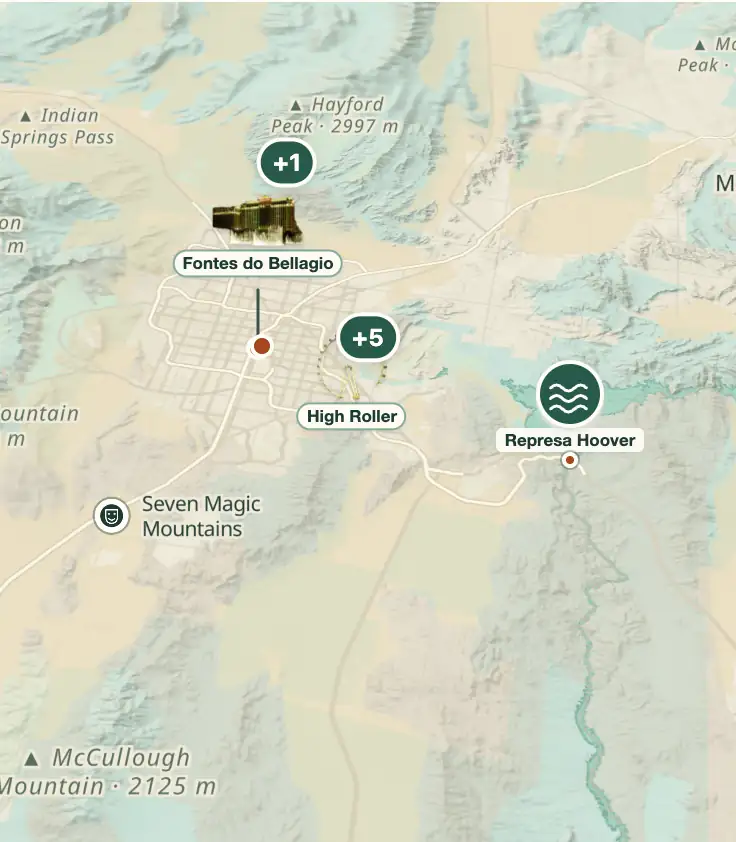
© OpenStreetMap · OpenFreeMap · © OpenMapTiles
Explore the map, read about the other places and plan your travel days in the app.
Open the appWhat to see
Las Vegas: The basin and the mountains
Las Vegas occupies a closed basin of the Mojave Desert, the Las Vegas Valley, about 1,600 km² at 610 m elevation, ringed by mountains visible from any corner: the Spring Mountains to the west, with Mount Charleston at 3,633 m and winter snow, Frenchman Mountain to the east, the Sheep Range to the north and the River Mountains to the south. In the middle of the basin, the Strip concentrates nearly all the hotels, theaters, arena stadiums and the Sphere, and everything there is bigger than it looks on the map.
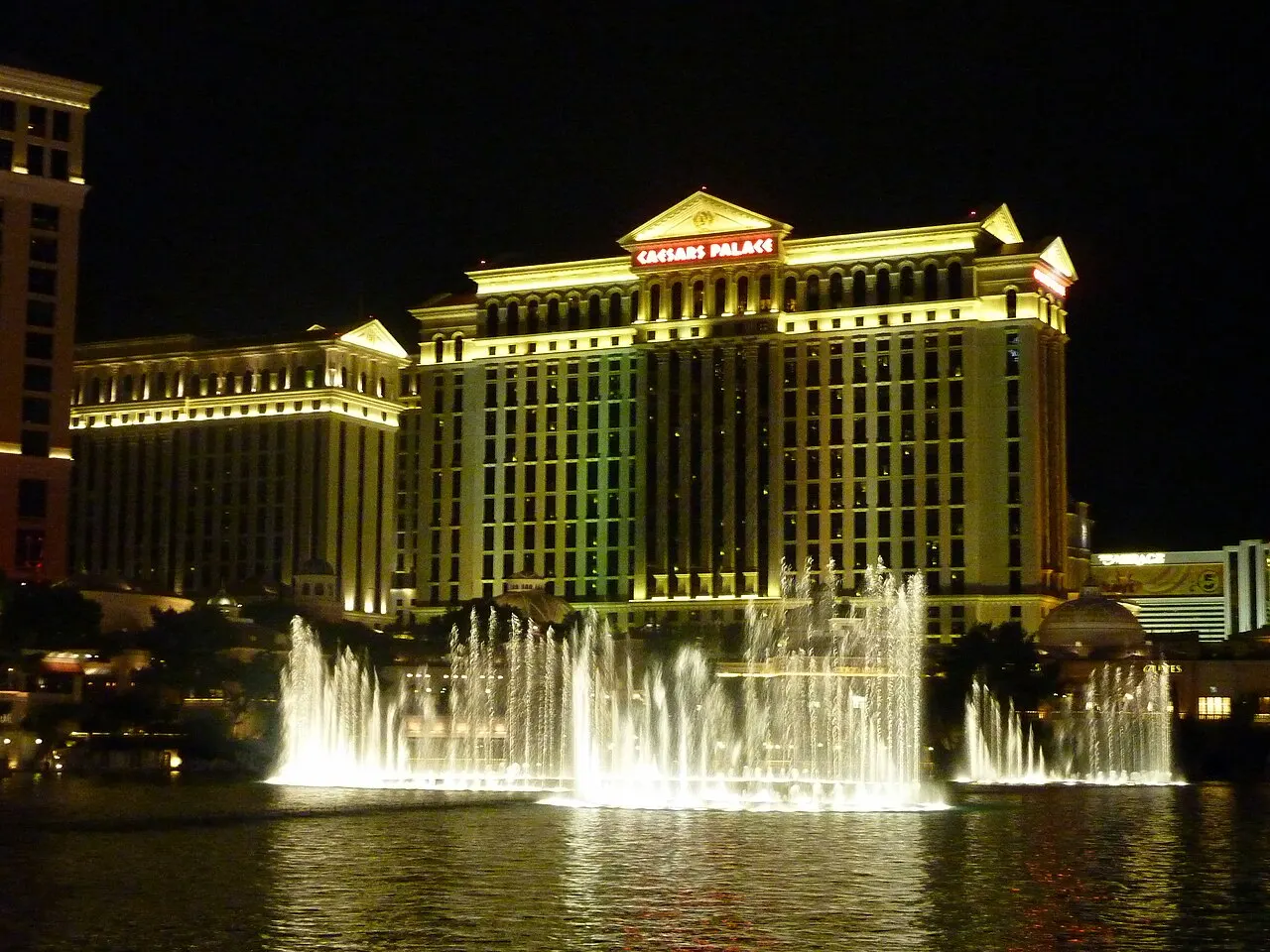
Fountains of Bellagio
An artificial lake of 3.4 hectares with about 1,200 nozzles that shoot water up to 140 m, opened October 15, 1998. Free shows every 30 minutes in the afternoon and every 15 minutes after 8pm; the choreography changes song and lasts 2 to 5 minutes.
The water rises up to 140 m from about 1,200 nozzles in a 3.4-hectare lake, the choreography changes with the music, and the free show runs more often after 8pm than in the afternoon.
Check access
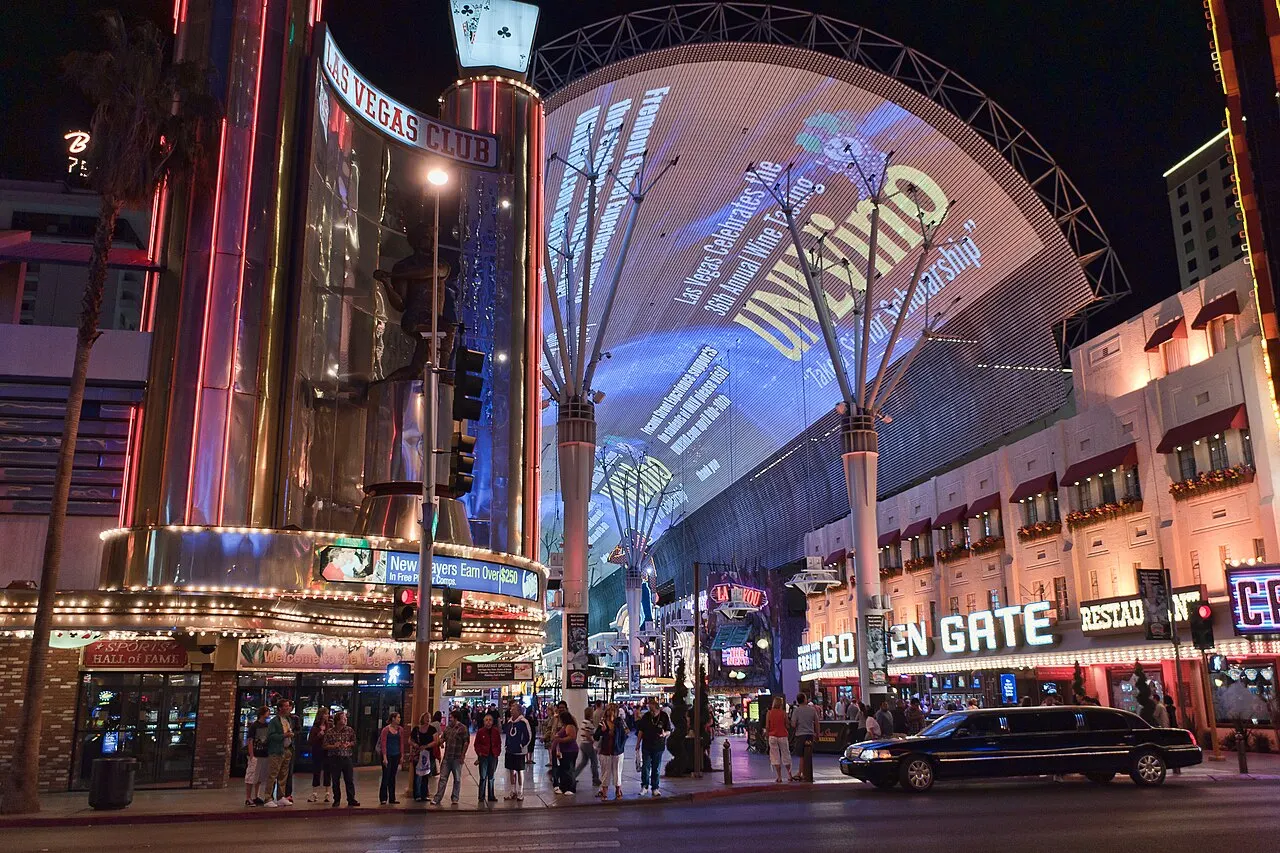
Fremont Street Experience
A pedestrian street covered since 1995 by a 420 m canopy that became a 4K video screen in the 2019 renovation. Free light shows every hour after dark, and the SlotZilla zipline runs beneath the canopy.
A 420 m canopy has stood over the street since 1995 and, in the 2019 renovation, became a 4K screen, with free light shows after dark and a zip line underneath.
Check access
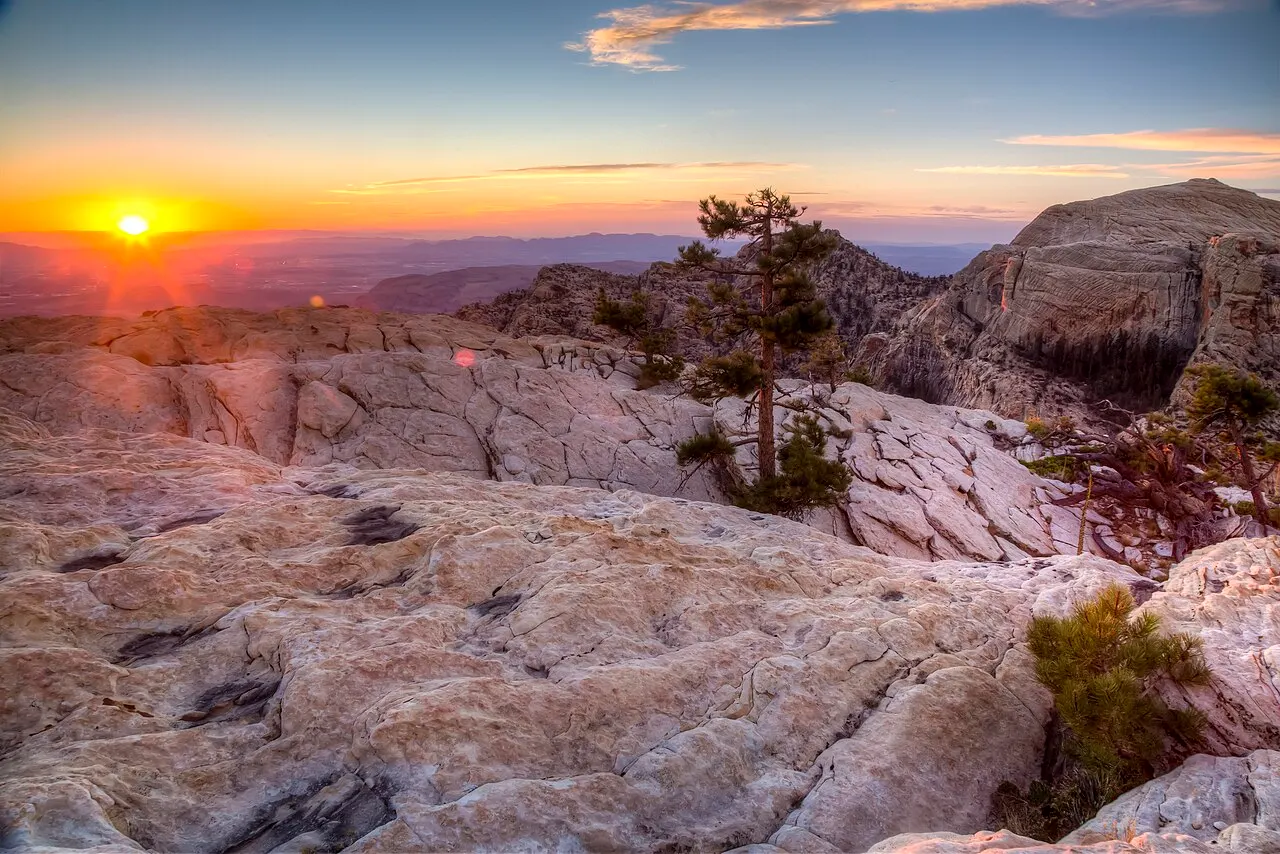
Red Rock Canyon
A conservation area 30 km west, with red Aztec sandstone walls up to 900 m high and a 21 km one-way scenic drive. From October 1 to May 31, entry between 8am and 5pm requires a timed reservation. The gate opens at 6am; check trail conditions before setting out.
Red sandstone walls up to 900 m tall line a one-way road, and from October 1 to May 31 entries from 8am to 5pm require a reservation, although the gate opens at 6am.
Check access

Sphere
A spherical venue opened on September 29, 2023, 112 m tall and 157 m wide, with 17,600 seats and the largest indoor LED screen in the world, at a resolution equivalent to 16K. The outer shell has about 1.2 million LED pucks and can be seen for free from the street; it cost about US$2.3 billion.
The spherical venue that opened on September 29, 2023, with 17,600 seats and the world's largest interior LED screen, shows its shell for free from the street and cost about $2.3 billion.
Check access

Neon Museum
A yard opened in 2012 with about 250 retired neon signs from demolished casinos, from the Stardust to the Moulin Rouge. The lobby is the concrete shell of the 1961 La Concha Motel, designed by Paul Revere Williams and cut into eight parts for the move in 2006 and reconstructed in 2008.
There are about 250 retired signs from demolished casinos, and the lobby is the shell of the La Concha Motel, from 1961, cut into pieces and rebuilt.
Check access

Mob Museum
A museum of organized crime opened in 2012 in the former 1933 federal courthouse, exactly where the Kefauver Committee heard testimony on November 15, 1950. It holds the wall from the 1929 Saint Valentine's Day Massacre, brought in from Chicago.
Check access

High Roller
An observation wheel 167.6 m tall opened in 2014 at the LINQ, with 28 enclosed, climate-controlled cabins. A full rotation takes 30 minutes and gives the clearest read on how flat the valley is and how it's ringed by mountains.
The 28 cabins are enclosed and air-conditioned, the ride lasts half an hour and shows the flat valley ringed by mountains.
Check access
Hoover Dam
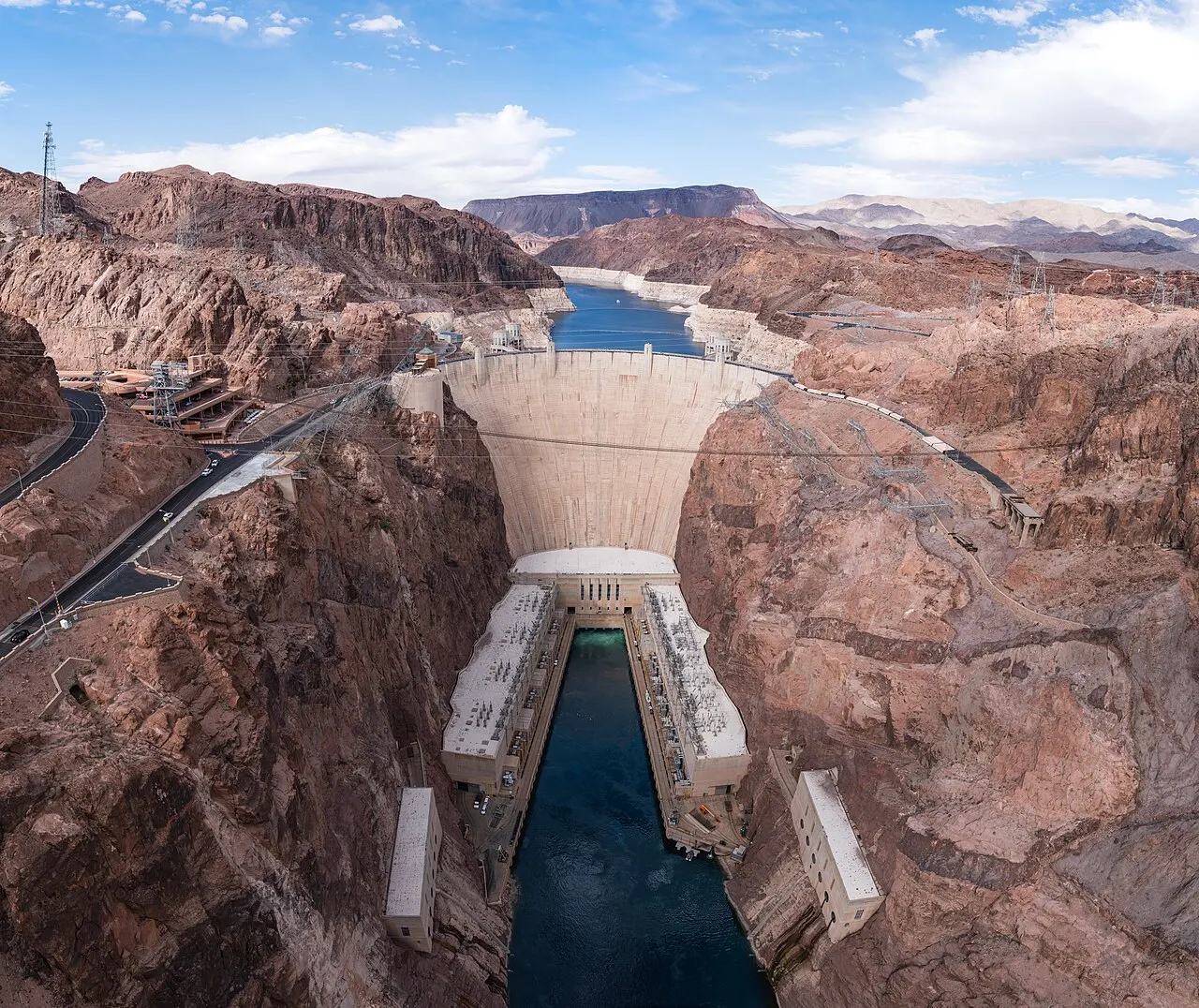
A 221 m arch-gravity dam completed in 1935, 45 km southeast, which created Lake Mead and supplied the power that let the city grow. Next to it runs the 2010 Mike O'Callaghan–Pat Tillman Memorial Bridge, with a pedestrian walkway 270 m above the Colorado River.
The dam created Lake Mead and supplied the power that fueled growth, and the bridge next to it carries a pedestrian walkway 270 m above the river.
Check access
The STRAT
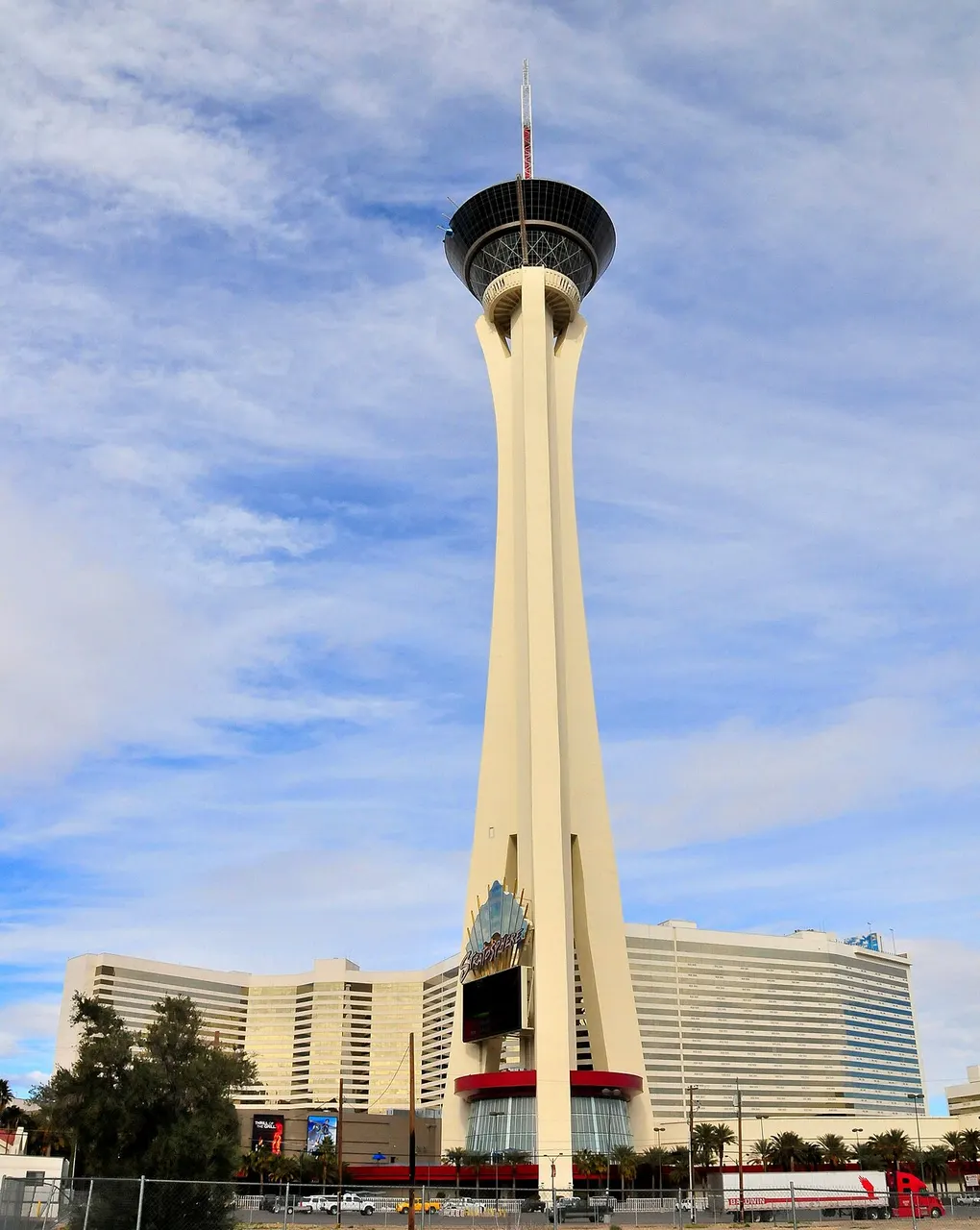
A 350 m tower opened in 1996 at the north end of the Strip, with indoor and outdoor observation decks. Big Shot and SkyJump offer thrill attractions high above the ground with their own days, hours and restrictions; check operations before buying. The STRAT website lists X-Scream as closed.
Check access
Nilo’s itinerary
Start with the basic programme and choose extensions for the time you have.
Plan my days in the app ↗Day 1 · The Strip end to end
Start at 9am at the south end, with the free tram linking Mandalay Bay, Luxor and Excalibur, then walk to New York-New York before the heat sets in.
At the intersections with Tropicana Avenue and Flamingo Road, follow the signs to pedestrian bridges. Use elevators when needed and avoid shortcuts across the middle of the avenue.
Have lunch at the food courts in the Miracle Mile or the Cosmopolitan, for US$15–25, instead of US$40 at a resort restaurant.
Set aside the three hottest hours, from 1pm to 4pm, for the interiors of the Bellagio and Aria: botanical garden, galleries and restaurants. If you want to try the Vegas Loop, plan a separate trip and check for an operating station; the system does not connect these two hotels.
Come back at dusk for the Bellagio fountains, which run every 15 minutes after 8pm, and end in front of the Sphere, whose outer shell you can see from the street with no ticket.
Day 2 · Old downtown, museums and locals' bars
Take the Deuce to Fremont Street: allow about 30–45 minutes from the middle of the Strip, depending on traffic. A 24-hour pass costs around US$8 according to the fare table checked in September 2026; confirm the price in the RTC app.
Start the day at the Mob Museum, set in the 1933 federal courthouse where the Kefauver Committee heard testimony on November 15, 1950.
Order the shrimp cocktail at Saginaw’s inside Circa and compare the tables: the blackjack minimum downtown tends to run half the Strip's.
Book ahead for the nighttime visit to the Neon Museum, where about 250 retired signs sit in an open yard behind the shell of the 1961 La Concha Motel.
Finish in Fremont East, between Las Vegas Boulevard and Eighth Street, where bars have neither casinos nor cover charges and most customers are locals.


If you stay longer
Day 3 · Red Rock, the old springs and the desert
Leave early for Red Rock Canyon, 30 km west. Between October 1 and May 31, reserve a time slot if you will enter the scenic drive between 8am and 5pm. To arrive before 8am, check the gate’s 6am opening and pay the applicable entry fee.
On the way back, stop at the Springs Preserve and the Old Mormon Fort, from 1855, to see where the springs that named the city stood before drying up in 1962.
Have lunch on Spring Mountain Road, in the Chinatown corridor, where the check runs US$15–35 per person.
Spend the afternoon at the National Atomic Testing Museum, which documents the roughly 100 atmospheric tests watched from downtown between 1951 and 1963.
Finish with sunset at Seven Magic Mountains, about 35 km south along I-15, roughly 25 minutes by car, with free parking and no shade.

Food
 AI illustration
Shrimp cocktail
Downtown’s signature dish: small shrimp in a sundae glass with tomato sauce and horseradish. The Golden Gate popularized the recipe in 1959 at 50 cents, but its restaurant closed in 2017. Today Saginaw’s inside Circa carries on this tradition; check the menu price before ordering.
 AI illustration
Resort buffet
The buffet is the local institution, now down to half a dozen places after the 2020 closures. Bacchanal, at Caesars, is the most complete, with about 500 dishes and dinner for US$85–110; the US$10 buffets that made the city famous no longer exist.
 AI illustration
Late-night steak
The graveyard special, a dish for the overnight shift served at off-Strip casino coffee shops, from 11pm to 7am: steak with eggs, potatoes and toast for US$12–20. It's food for people working through the night, not a tourist promotion.
 AI illustration
Chinatown on Spring Mountain Road
Five kilometers of strip malls with maybe the valley's best food per dollar spent: dim sum, ramen, Korean barbecue, hot pot, boba and Taiwanese seafood. Many places stay open until 3 or 4am, and the check runs US$15–35 per person.
 AI illustration
Northern Thai
Las Vegas has had one of the best-known northern Thai kitchens in the United States since Lotus of Siam earned national recognition in the late 1990s. Order khao soi, nam khao tod and larb; the northern menu is a separate section.
 AI illustration
Tijuana-style tacos
Adobada carved off the trompo to order, served in a doubled tortilla with avocado sauce, at places open into the small hours both on the Strip and on Charleston Boulevard. Three to five tacos cost US$12–18 and it's the city's most reliable cheap meal.
 AI illustration
Celebrity chef table
The Strip has many renowned restaurants, including Joël Robuchon at MGM Grand, Carbone Riviera at Bellagio, and restaurants by Thomas Keller, Nobu Matsuhisa, and José Andrés. Tasting menus can range from US$200 to over US$500 per person, depending on the restaurant and selection. Check the menu, reserve, and consult the chosen restaurant’s dress code.
 AI illustration
Chain burgers and cafés for a quick meal
In-N-Out, Shake Shack, and casino cafés offer quick meals, with indicative prices of US$8–20 depending on your order. Hours vary by location. To eat after a show or late at night, confirm that a kitchen near your hotel is open before heading out.
Day trips

Hoover Dam and Boulder City
45 km southeast on US-93, 40 minutes by car. The powerhouse tour descends 160 m by elevator; Boulder City, built in 1931 for the workers, remains one of only two Nevada cities where gambling is banned.

Valley of Fire
80 km northeast along I-15, about an hour away. Nevada’s first state park, opened in 1935, brings together red sandstone and the Atlatl Rock petroglyphs. Several trails close from May 15 to September 30 because of the heat; leaving early does not authorize entry to a closed section. The entire park closes from December 1 to 14. Check which areas are open on your date before setting out.

Grand Canyon
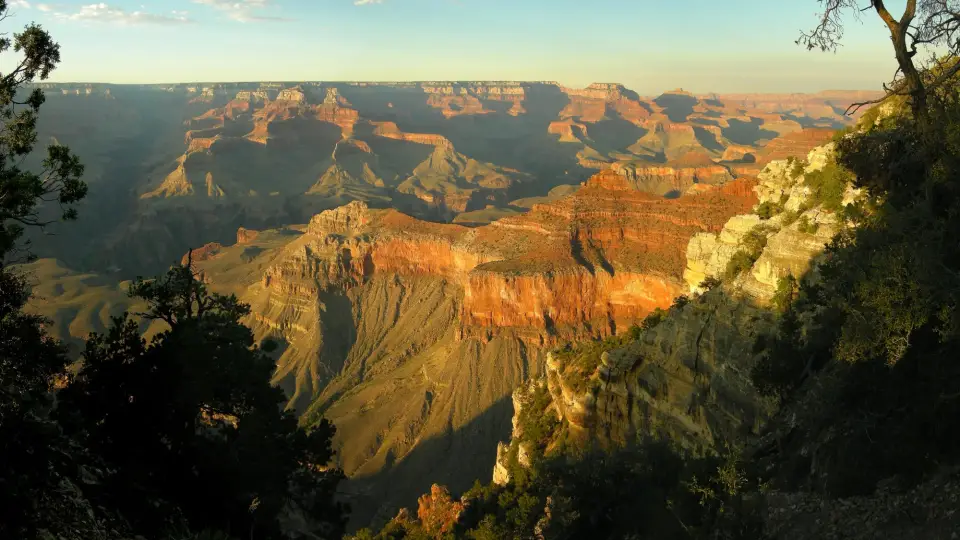
The West Rim, with the Skywalk glass bridge on Hualapai tribal land, is 200 km and 2 hours 15 minutes by car; the South Rim, in the national park, is 450 km and 4 hours 30 minutes, worth it only with an overnight stay. Scenic flights leave from Boulder City and take 45 minutes.
Where to begin
The Strip end to end
Start at 9am at the south end, with the free tram linking Mandalay Bay, Luxor and Excalibur, then walk to New York-New York before the heat sets in.
Old downtown, museums and locals' bars
Take the Deuce to Fremont Street: allow about 30–45 minutes from the middle of the Strip, depending on traffic. A 24-hour pass costs around US$8 according to the fare table checked in September 2026; confirm the price in the RTC app.
Red Rock, the old springs and the desert

Leave early for Red Rock Canyon, 30 km west. Between October 1 and May 31, reserve a time slot if you will enter the scenic drive between 8am and 5pm. To arrive before 8am, check the gate’s 6am opening and pay the applicable entry fee.
Money
The currency is the US dollar, and Clark County’s 8.375% sales tax is added at checkout. Hotel stays also carry a lodging tax of around 13.38%. Resort fees vary by hotel and can add tens of dollars per night to accommodation costs. The federal rule in force since May 2025 requires mandatory fees to be included in the advertised total price. Check the breakdown to see what is already included, the taxes, and optional services. Current Strip prices: coffee US$5–7, convenience-store water US$4–6, beer US$9–15, cocktails US$18–25, casual meals US$20–35, steakhouse dinners US$80–200, buffets US$45–110, show tickets US$60–300, and nightclub covers US$30–75. Off the Strip, prices fall by 30–50%. At the tables, Strip blackjack minimums are US$15–25 at night and US$5–10 downtown. Many casinos offer drinks to players, depending on house policy. US$1–2 per round is a customary tip; availability and service times vary. Tipping is part of the cost in the US: 18–20% at restaurants, US$2 per bag, US$3–5 per night for housekeeping, and US$5 for valet parking. Cards are accepted everywhere, but bring US$1 and US$5 bills for tips. Avoid casino ATMs, which charge US$8–10 per withdrawal, and lobby exchange counters with poor rates.
Getting there and around
Harry Reid Airport, 8 km from mid-Strip
Harry Reid International Airport (LAS), renamed in December 2021 and formerly known as McCarran, is about 8 km from the middle of the Strip and handles around 58 million passengers a year. There is no train between the airport and the Strip. Direct taxi trips between the airport and hotels in the Strip zones use zone fares. Check the current fare table and any surcharges before boarding; the tunnel and freeway may be part of a route suited to traffic conditions. The trip to the middle of the Strip usually takes 15–25 minutes. Uber and Lyft pick up in designated areas (Terminal 1, parking garage level 2M; Terminal 3, the garage’s valet level) and charge US$18–35 depending on demand. RTC Routes 108 and 109 leave from Terminal 1’s ground level for about US$2 and take 40–60 minutes with a transfer, an option that only makes sense with little luggage. Renting a car is worthwhile mainly for desert excursions: nearly every Strip resort charges US$18–30 per day for parking, and Friday and Saturday night traffic can take 40 minutes to cover 4 km.
The Deuce runs the Strip 24 hours a day
RTC operates the Deuce, a double-decker bus linking the Strip and downtown 24 hours a day. In September 2026, Strip route passes cost around US$6 for two hours, US$8 for 24 hours, and US$20 for three days. A single ride on residential routes is about US$2. The Las Vegas Monorail, opened in 2004 and purchased by the convention authority in 2020, covers 6.3 km with seven stations, all on the Strip’s east side, from MGM Grand to Sahara: around US$6 per ride or US$15 for a day pass, serving neither the airport nor the west side. RTC passes are not valid on it. It is easy to buy both and end up using only one. The Boring Company’s Vegas Loop carries passengers in electric cars through tunnels beneath the convention center, free on the LVCC section and a few dollars at resort stations. Free trams connect Mandalay Bay, Luxor, and Excalibur, and Bellagio, Aria, and Park MGM. On foot, allow twice what the map suggests: the Strip is 6.8 km long, a resort occupies 400–800 m of sidewalk, and several crossings require pedestrian bridges.
Safety
On the Strip, crowds, alcohol, and distraction favor theft, and violent incidents can also occur in tourist areas: pickpocketing, phones taken from tables, and chips or bags stolen in nightclubs are common incidents, alongside tampered ATMs and fake ticket sellers. Four common scams are the ‘free show ticket’ offer that ends in a two-hour timeshare presentation, VIP nightclub entry sold on the sidewalk, taxi charges that disregard the applicable fare, and a photo with a costumed character whose price is revealed afterward. Heat, which caused hundreds of deaths in Clark County in summer 2024, and traffic are major dangers. Las Vegas Boulevard has one of the country’s highest fatal pedestrian collision rates, particularly between midnight and 4am. At night, I’d avoid walking through blocks east and north of Fremont East, the Boulder Highway corridor, and the area west of the Strip known as Naked City, north of Sahara Avenue. Since October 2017, several resorts have inspected luggage at entrances; leave nothing visible inside a parked car.
Etiquette tips
Don't hand cash to the dealer
Put your bills on the felt and wait: by camera and audit rules, the dealer can't take anything directly from your hand. The same goes for collecting your chips.
Ask which drinks are included while playing
Before ordering, ask the staff whether the drink is complimentary and which options are included. Leaving US$1–2 for the person who brought your order is customary. How busy it is and the casino’s rules affect availability and service times.
Don't photograph tables or staff
The gaming floor bans photos of tables and staff, for bettors' privacy and security. Security will ask you to delete the photo and usually won't ask twice.
Cross using the walkways
At major Strip intersections, follow the signs to pedestrian bridges and authorized crossings. Do not cross the roadway elsewhere. Use stairs or elevators as directed and keep the path clear for people walking.
Marijuana is legal to buy and illegal to use in public
Nevada has allowed sales to adults 21 and over since 2017, but smoking on a sidewalk, in a casino, hotel room, car or federal land carries a fine. Legal consumption only happens at a residence or in licensed lounges.
Costumed characters charge for photos, and card slappers are legal
A photo with a costumed character on the sidewalk costs US$5–10, agreed beforehand; they're not employees of the casino or the city. The card slappers (handbillers) who snap cards into your hand are legal on the Strip, so just don't hold your hand out.
Mistakes to avoid
The rate that doubles at checkout
Comparing hotels only by their base rates can hide a big difference in your budget. Check the total stay cost with mandatory fees already included, plus lodging tax and any parking you plan to use. If a mandatory charge appears only at the end of the purchase, question the provider before paying.
The hotel “around the corner” has a 600 m hallway
Trusting the map's scale. The hotel “on the corner” is a 25-minute walk plus 600 m of interior corridor, and on a summer afternoon, above 40 °C, that is almost half an hour walking in the sun.
Renting a car to stay on the Strip
Renting a car for a trip that only happens on the Strip: you pay parking at both ends of the day, wait in the valet line and can't drink. Only rent a car for the day you go into the desert.
Alcohol, dry air and 610 m dehydrate you fast
Drinking all day at 42 °C without water. The mix of alcohol, dry air and 610 m of elevation dehydrates you fast, and the heat caused hundreds of deaths in Clark County in the summer of 2024: alternate every drink with a glass of water.
The Strip sits in Paradise, 6 km from downtown
Thinking the Strip is the city. It sits in Paradise, an unincorporated area, and the historic downtown is 6 km to the north, with cheaper tables and smaller buildings.
Useful phrases
Comp
A courtesy given by the casino (room, drink, dinner, tickets) calculated from the time and amount you gambled tracked on your player's card; short for “complimentary”
Resort fee
A mandatory daily charge of US$39 to 62 added on top of the room rate, theoretically for wi-fi, the gym and local calls; it lands on the bill at checkout
The Deuce
A double-decker tourist bus, running the Strip 24 hours a day; “take the Deuce” is the standard answer to anyone asking how to get downtown
Toke
A tip given to the dealer, usually a chip bet on their behalf on the next hand; “toking the dealer” is the normal gesture after a good hand
Off-Strip / locals casino
A neighborhood casino away from the boulevard, where minimum bets, food and parking run between half and a third of what the Strip charges
Graveyard shift
The overnight shift, 11pm to 7am, which employs a huge share of the city; the “graveyard special” is the cheap dish served at that hour in coffee shops
Districts
The Strip (Paradise and Winchester)
The 6.8 km of Las Vegas Boulevard South with about 30 major resorts, from Mandalay Bay to north of the Sahara, technically outside the City of Las Vegas. It's where nearly all the hotels, theaters, arena stadiums and the Sphere sit; everything is bigger than it looks on the map.
Downtown and Fremont Street
The original core from 1905, 6 km north of the Strip, with the old casinos under the 420 m canopy of the Fremont Street Experience. Lower minimum bets, human-scale buildings and the city's museums (Mob Museum, Neon Museum).
Fremont East and Downtown Container Park
An extension of downtown between Las Vegas Boulevard and Eighth Street, redeveloped from 2012 with Downtown Project funding. Bars without casinos, local beer, no cover charge and a crowd with more residents than tourists.
Arts District (18b)
A former warehouse zone around Main Street south of Charleston Boulevard, turned into galleries, breweries, thrift shops and independent restaurants. First Friday of the month has had a street fair since 2002.
Chinatown (Spring Mountain Road)
A roughly 5 km corridor of strip malls west of the Strip, started with the Chinatown Plaza in 1995 and now pan-Asian: Taiwanese, Korean, Japanese, Thai, Filipino, Vietnamese. Many places serve until 3 or 4am.
Summerlin
A planned neighborhood of about 100,000 residents on the valley's west side, started in 1990 on land bought by Howard Hughes, right against Red Rock Canyon. Golf, open-air shopping, a minor-league baseball stadium and restaurant prices well below the Strip's.
Henderson and Green Valley
A neighboring municipality to the southeast, Nevada's second largest with about 340,000 residents, born from the 1941 magnesium plant. A middle-class residential area, with the Ethel M chocolate factory and the most direct access to Lake Mead.
UNLV and Maryland Parkway
A university district east of the Strip, around the 33,000 students of the University of Nevada, Las Vegas, founded in 1957. Bookstores, cafés, cheap food and the Thomas & Mack Center, where the December rodeo takes place.
History
1829 · The caravan gives it a name
Scout Rafael Rivera, from Antonio Armijo's caravan between Santa Fe and Los Angeles, reaches the valley's artesian springs. The spot enters Old Spanish Trail maps as “las vegas,” the meadows.
1855 · The Mormon fort
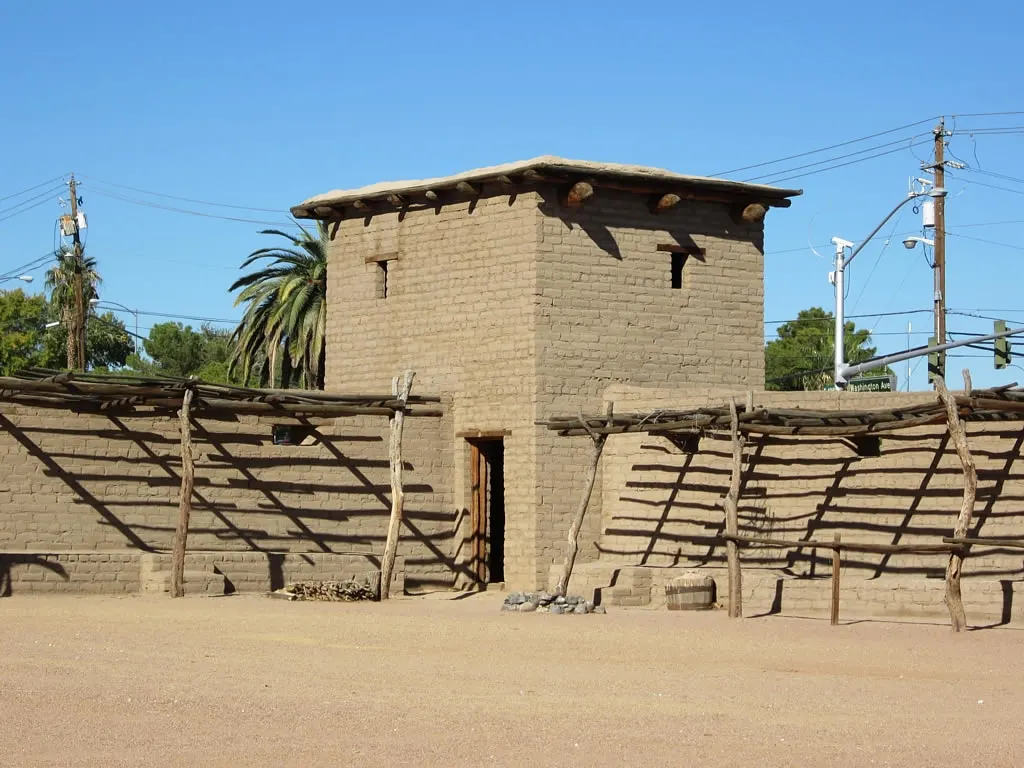
Thirty missionaries sent from Salt Lake City build an adobe fort by the springs to guard the mail route and abandon the post in 1857. A stretch of the wall survives at the corner of Las Vegas Boulevard and Washington and is Nevada's oldest structure.
1905 · The railroad auction
On May 15, 1905, the San Pedro, Los Angeles & Salt Lake Railroad sells about 1,200 lots next to the switching yard. The city is born as a water stop and locomotive changeover point between Salt Lake City and the coast.
1911 · The city and Block 16
Las Vegas is incorporated on March 16, 1911, with just over a thousand residents. Liquor and prostitution licenses are concentrated on a single block of First Street, Block 16, which operates until 1942.

1931 · Legal gambling and the dam
On March 19, 1931, Nevada relegalizes gambling and cuts the residency required for divorce to six weeks. That same year work begins on Boulder Dam, later renamed Hoover, 45 km away, drawing more than 5,000 workers through 1935.
1941–1946 · Highway 91 becomes the Strip
The El Rancho Vegas opens on April 3, 1941, outside city limits, where taxes were lower, launching the row of hotels along Highway 91. The Flamingo, run by Billy Wilkerson and Bugsy Siegel, opens on December 26, 1946; Siegel is killed in June 1947.
1951–1963 · Atomic tourism
The Nevada Test Site detonates its first bomb on January 27, 1951, about 105 km away. Roughly 100 atmospheric tests are watched from downtown, with times published in the newspapers, until the 1963 treaty moves detonations underground.
1955–1960 · Moulin Rouge and desegregation
The Moulin Rouge opens in May 1955 as the city's first racially integrated casino and closes within months. On March 26, 1960, an agreement signed in the already-empty building ends segregation at the Strip hotels.
1966–1970 · Hughes and the corporate era
Howard Hughes moves into the top floor of the Desert Inn in November 1966 and ends up buying six casinos. The 1967 and 1969 corporate gaming laws let publicly traded companies hold licenses and clear the way to push out mob money.
1989–1999 · The megaresort decade
The Mirage opens on November 22, 1989, cost US$630 million and creates the resort-as-attraction model. Implosions follow (the Dunes in 1993, the Sands in 1996) along with a run of openings: Luxor and Treasure Island in 1993, Bellagio in 1998, the Venetian in 1999.
 AI illustration
2017–2026 · Shooting, sports and the sphere
On October 1, 2017, a gunman kills 60 people at a festival across from Mandalay Bay, and hotels begin searching bags. In the years that follow come the Golden Knights (2017), Allegiant Stadium (2020), the Sphere (September 2023), Formula 1 on the Strip (November 2023) and the Super Bowl (February 2024).
 AI illustration
Complete history
The valley was on the map because it had water
The valley was on the map before the city because it had water. Artesian springs fed a patch of grass in the middle of the Mojave, and that grass gave the place its name for the caravans on the Old Spanish Trail from 1829; the Southern Paiute had lived there for centuries. John C. Frémont camped at the springs in May 1844, and his is the name the main downtown street got at the 1905 auction. Mormon missionaries built an adobe fort in 1855 and gave up in 1857; rancher Octavius Gass took over the land, which passed to Helen Stewart and was sold in 1902 to the railroad of Senator William A. Clark, the same man the county is named after. The auction of May 15, 1905 sold the lots in two days and created a railroad town of repair shops and a stopover hotel. The place then shrank: Nevada banned gambling in 1909, and the shops moved to Caliente after the 1922 strike, which left the town with just over 2,000 residents.
Two laws on the same day in 1931: casino and quick divorce
The turning point has a date, and it is two laws from 1931. On March 19, Nevada relegalized gambling and cut the residency required for divorce to six weeks, creating two industries at once. That same year the federal government started building the dam 45 km away and built Boulder City to house the workers. Because Boulder City was planned, dry and casino-free, the workers' wages ended up in the bars on Fremont Street. The dam was finished in 1935 and solved the desert's two physical limits: cheap power and water stored in Lake Mead. World War II brought the Henderson magnesium plant in 1941 and the aerial gunnery school that became Nellis Air Force Base. The population went from 8,400 people in 1940 to 24,600 in 1950.
The Strip was born outside the city on purpose
The Strip was born outside the city on purpose. In 1941 the El Rancho Vegas was built outside the municipal boundary, where taxes and rules were the county's, and every hotel that followed did the same, which is why Las Vegas's most famous address was never actually in Las Vegas. Building money came, in the 1950s and 1960s, from loans by the Teamsters' pension fund and from hidden partners, with systematic diversion of cash before the count, known as the skim; the Kefauver Committee hearings, in 1950 and 1951, exposed part of it to the country. At the same time, the valley ran a rigid segregation: Black workers lived on the Westside and could neither stay nor be seated at the hotels where Black performers were on stage. The Moulin Rouge, opened in 1955, was the first integrated casino and lasted months; the agreement of March 26, 1960, signed in the by-then-closed building, formally ended segregation at the hotels.
Howard Hughes buys casinos, 1966–1970
The image cleanup came through finance. Howard Hughes bought six casinos between 1966 and 1970, and the 1967 and 1969 corporate gaming laws let publicly traded companies obtain licenses, swapping hidden partners for shareholders and bank credit. The MGM Grand fire, on November 21, 1980, killed 85 people and rewrote the United States fire code. On November 22, 1989, the Mirage opened, a megaresort financed by junk bonds, and the following decade filled the Strip with themes: Excalibur in 1990, Luxor and Treasure Island in 1993, Bellagio in 1998, the Venetian in 1999, Paris in 1999. Clark County jumped from 741,000 residents in 1990 to 1.38 million in 2000 and 1.95 million in 2010, with planned neighborhoods like Summerlin and Green Valley swallowing the desert. The 2008 crisis hit Nevada harder than any other state: a national record for foreclosures, and the Fontainebleau tower stood unfinished from 2009 to 2023.
Less gambling, more shows and sports, with water at the limit
Today's city is trying to depend less on the gaming table. Less than a quarter of Strip resort revenue comes from gambling; the rest comes from rooms, food, drink, entertainment and conventions, and CES alone, in January, brings in about 140,000 people. The massacre of October 1, 2017, which killed 60 people, changed hotel security and became a landmark in local memory. Since then the valley has also entered professional sports, with the Golden Knights, the Raiders and the Aces, and entertainment gained the Sphere in September 2023 and, that November, the Formula 1 Grand Prix, which runs right on the Strip. The limit is still water: about 90% comes from the Colorado River through Lake Mead, which hit a historic low in July 2022, and a 2021 state law restricts, starting in 2027, the use of Colorado water on lawns deemed non-functional. The rule covers areas such as flower beds and landscaping at commercial properties and condos; it doesn't cover every single-family home's yard or recognized recreational-use areas.
Geography and shape of the city
The basin and the mountains
Las Vegas sits in a closed basin of the Mojave Desert, the Las Vegas Valley, about 1,600 km² at 610 m elevation, ringed by mountains visible from any corner: the Spring Mountains to the west, with Mount Charleston at 3,633 m and winter snow, Frenchman Mountain to the east, the Sheep Range to the north and the River Mountains to the south. There's no permanent river: only the Las Vegas Wash, a drainage channel that carries used water to Lake Mead, and dry beds that fill within minutes during the July and August storms.
Where the water comes from
The artesian springs that gave the place its name dried up in 1962, and today about 90% of the water comes from the Colorado River, drawn from Lake Mead where a third deep intake was completed in 2015 to maintain the supply at lower water levels. It rains about 110 mm a year.
The grid and the Strip
The street layout is a mile-by-mile grid aligned to federal survey lines, with six- to eight-lane avenues and 1.6 km blocks, which makes the valley designed for the car; the exception is downtown, whose grid turns a few degrees to follow the 1905 railroad. The Strip is the 6.8 km stretch of Las Vegas Boulevard South that lies outside the municipality, in the unincorporated areas of Paradise and Winchester, created in 1950 and 1951 specifically to keep the city from annexing the casinos and taxing them.
The avenues form a grid of 1.6 km blocks, designed for the car.
Culture
Fixed residencies: the format Las Vegas invented
The cultural form Las Vegas invented is the residency: an artist lives in the city and it's the audience that travels. Elvis Presley gave 636 performances at the International, later the Hilton, between July 1969 and December 1976, and set the format; Celine Dion took it to the Colosseum at Caesars between 2003 and 2019, with over a thousand nights. Cirque du Soleil opened Mystère at Treasure Island in 1993 and then “O” at Bellagio in 1998, KÀ in 2004, and Michael Jackson ONE in 2013: Love, the Beatles show, closed in July 2024 after 18 years. Magic shows also have a fixed address, from Penn & Teller at the Rio since 2001 to David Copperfield at the MGM Grand. Since 2023 the Sphere added a new category: U2 opened the venue with 40 shows between September 2023 and March 2024.
Culinary Union Local 226, the hotel workers' union
Las Vegas is also a working city. The Culinary Union Local 226 represents about 60,000 housekeepers, servers and cooks and is one of the strongest unions in the United States, able to shut down the Strip during contract negotiations. It's this workforce, made largely of Mexican and Filipino immigrants, that keeps the 24-hour shift running, and it's also who votes: Nevada is a swing state, and Clark County's vote decides statewide elections. The valley has produced bands who write about it from the inside, like The Killers, whose 2006 album “Sam's Town” is named after a neighborhood casino, and Imagine Dragons and Panic at the Disco, formed in the city in the 2000s.
Since 2017, professional sports
Since 2017 professional sports have become the calendar's second pillar. The Vegas Golden Knights started in the NHL in October 2017, five days after the Route 91 massacre, and won the Stanley Cup in 2023; the Raiders moved from Oakland in 2020 to Allegiant Stadium, a $1.9 billion, 65,000-seat venue. The Aces, the WNBA women's team, were champions in 2022, 2023 and 2025. On the site of the old Tropicana casino, imploded in October 2024, the future stadium for the Athletics baseball team is already rising, with an opening set for 2028. Before sports, the city had already entered architectural history: in 1972, the book “Learning from Las Vegas” proposed reading the Strip's signage and parking lots as serious architecture and changed the discipline's debate worldwide.
Elvis gave 636 shows at the same hotel.
Festivals and events
CES
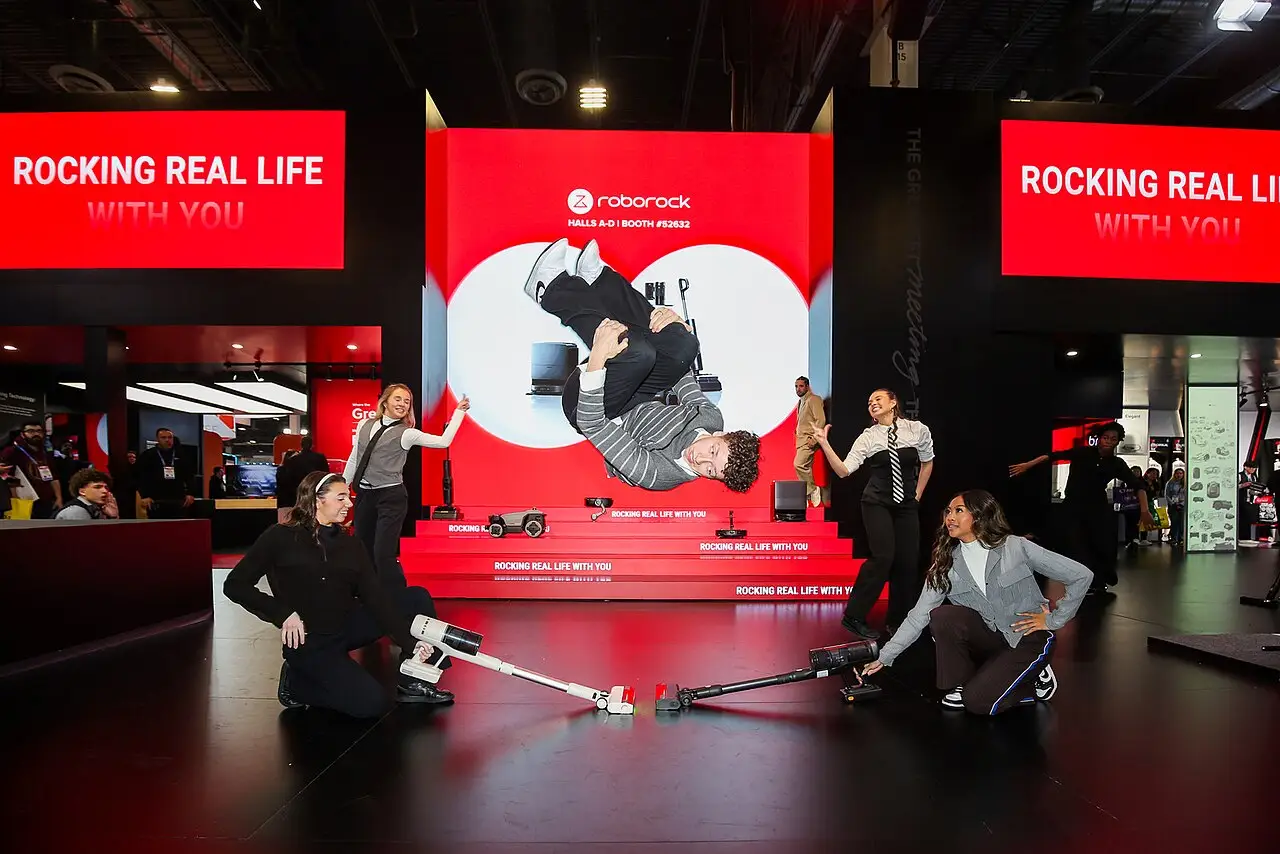
The first full week of January, at the Las Vegas Convention Center and nearby: about 140,000 attendees and the world's largest electronics show. Hotel rates double or triple, and taxis become impractical at opening and closing hours.

Electric Daisy Carnival (EDC)
The third weekend of May, at the Las Vegas Motor Speedway, since 2011: three nights of electronic music from sunset to sunrise, with a combined attendance of about 500,000. Traffic on I-15 north at 2am and 6am is an event in itself.
 AI illustration
Life is Beautiful
Created in 2013, it brought music, art and food to downtown Las Vegas, leaving murals on buildings. In 2024, the organizer changed the format to A Big Beautiful Block Party. Check the announcement, location and dates of the next edition before planning your trip; the former 18-block circuit is not a guaranteed annual event.

Las Vegas Grand Prix (Formula 1)
A night race in November, run since 2023 on a roughly 6.2 km street circuit that includes 2.4 km of the Strip itself. In the two weeks before it, expect grandstands, closed streets and the year's peak hotel prices.
National Finals Rodeo
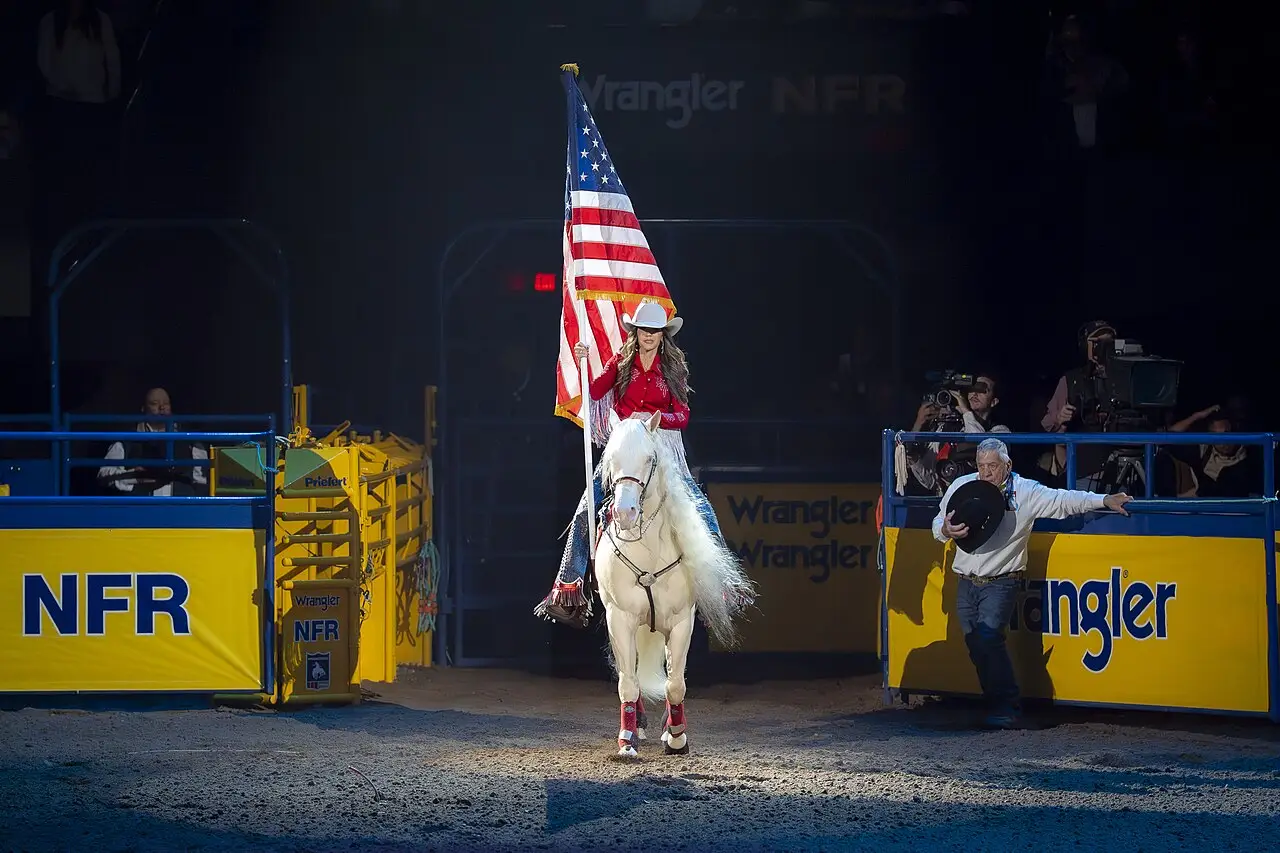
Ten nights in early December at the Thomas & Mack Center, at UNLV, since 1985. It's the finale of the United States rodeo season and fills the city with hats and belt buckles; hotels and restaurants see a completely different crowd.
Books and films
Casino (Martin Scorsese, 1995)
An adaptation of Nicholas Pileggi's nonfiction book about Frank Rosenthal and the skimming of cash from the Stardust in the 1970s. It's the most precise portrait of the end of the era when the mob ran the Strip.
Learning from Las Vegas (Venturi, Scott Brown and Izenour, 1972)
An architecture study built on a 1968 field survey by Yale students, which read the sign, the parking lot and the highway as legitimate urban forms. It changed how the world discusses city and signage.
Sam's Town (The Killers, 2006)
An album named after a neighborhood casino on Boulder Highway, written from the point of view of someone who lives in the valley, not someone visiting. It's a counterweight to the image the city sells of itself.
Frequently asked questions
Las Vegas: how do you compare hotels without a surprise on the final bill?
Check the total stay cost with mandatory fees already included, plus lodging tax and any parking you plan to use. If a mandatory charge appears only at the end of the purchase, question the provider before paying.
Las Vegas: what's the Hoover Dam day trip like?
The dam is 45 km southeast on US-93, 40 minutes by car, and the powerhouse tour descends 160 m by elevator. Along the way, Boulder City, built in 1931 for the workers, remains to this day one of only two Nevada cities where gambling is banned.
Las Vegas: how much tax do you add to the price?
Clark County sales tax is 8.375% and is only added at checkout; hotel room rates also carry about 13.38% in lodging tax.
Las Vegas: how do you exchange cash for chips at the table?
Put your bills on the felt and wait: by camera and audit rules, the dealer can't take anything directly from your hand. The same goes for collecting your chips.
Las Vegas: what are the most common scams?
The most common scams are four: the "free ticket to a show" pitch that ends in a two-hour timeshare presentation, VIP club entry sold on the sidewalk, taxi fares that ignore the rate that actually applies, and photos with costumed characters whose price only comes up afterward.
Other cities in the country
United States ↗- Days
- 4–5
- When
- Apr–Jun · Sep–Oct
- Per person/day
- Average 180–320 USDMid-range · per person/day
Cost scope
Per person per day: accommodation, meals, urban transport, visits and a small allowance for extras. Flights excluded; larger purchases vary. Editorial estimate, not a quote.
- Days
- 4–5
- When
- Apr–May · Nov
- Per person/day
- Average 220–330 USDMid-range · per person/day
Cost scope
Per person per day: accommodation, meals, urban transport, visits and a small allowance for extras. Flights excluded; larger purchases vary. Editorial estimate, not a quote.
- Days
- 3
- When
- Sep–Oct
- Per person/day
- Average 180–280 USDMid-range · per person/day
Cost scope
Per person per day: accommodation, meals, urban transport, visits and a small allowance for extras. Flights excluded; larger purchases vary. Editorial estimate, not a quote.
- Days
- 4
- When
- May–Jun · Sep–Oct
- Per person/day
- Average 150–260 USDMid-range · per person/day
Cost scope
Per person per day: accommodation, meals, urban transport, visits and a small allowance for extras. Flights excluded; larger purchases vary. Editorial estimate, not a quote.
- Days
- 2–3
- When
- Jan–Apr · Nov–Dec
- Per person/day
- Average 200–350 USDMid-range · per person/day
Cost scope
Per person per day: accommodation, meals, urban transport, visits and a small allowance for extras. Flights excluded; larger purchases vary. Editorial estimate, not a quote.
- Days
- 3
- When
- Feb–May · Oct–Dec
- Per person/day
- Average 250–350 USDMid-range · per person/day
Cost scope
Per person per day: accommodation, meals, urban transport, visits and a small allowance for extras. Flights excluded; larger purchases vary. Editorial estimate, not a quote.
- Days
- 3
- When
- Mar–May
- Per person/day
- Average 220–320 USDMid-range · per person/day
Cost scope
Per person per day: accommodation, meals, urban transport, visits and a small allowance for extras. Flights excluded; larger purchases vary. Editorial estimate, not a quote.
- Days
- 2–3
- When
- Sep–Oct
- Per person/day
- Average 190–330 USDMid-range · per person/day
Cost scope
Per person per day: accommodation, meals, urban transport, visits and a small allowance for extras. Flights excluded; larger purchases vary. Editorial estimate, not a quote.
- Days
- 2–3
- When
- Jun–Sep
- Per person/day
- Average 130–220 USDMid-range · per person/day
Cost scope
Per person per day: accommodation, meals, urban transport, visits and a small allowance for extras. Flights excluded; larger purchases vary. Editorial estimate, not a quote.
- Days
- 5–6
- When
- Jan–Apr · Nov–Dec
- Per person/day
- Average 368 USDMid-range · per person/day
Cost scope
Per person per day: accommodation, meals, urban transport, visits and a small allowance for extras. Flights excluded; larger purchases vary. Editorial estimate, not a quote.
- Days
- 4–6
- When
- Apr–May · Sep
- Per person/day
- Average 329 USDMid-range · per person/day
Cost scope
Per person per day: accommodation, meals, urban transport, visits and a small allowance for extras. Flights excluded; larger purchases vary. Editorial estimate, not a quote.
- Days
- 2
- When
- Apr–May · Sep–Oct
- Per person/day
- Average 203 USDMid-range · per person/day
Cost scope
Per person per day: accommodation, meals, urban transport, visits and a small allowance for extras. Flights excluded; larger purchases vary. Editorial estimate, not a quote.
- Days
- 3
- When
- Apr · Sep–Oct
- Per person/day
- Average 251 USDMid-range · per person/day
Cost scope
Per person per day: accommodation, meals, urban transport, visits and a small allowance for extras. Flights excluded; larger purchases vary. Editorial estimate, not a quote.
- Days
- 3
- When
- May–Jun · Sep–Oct
- Per person/day
- Average 158 USDMid-range · per person/day
Cost scope
Per person per day: accommodation, meals, urban transport, visits and a small allowance for extras. Flights excluded; larger purchases vary. Editorial estimate, not a quote.