United States
San Francisco
Orange bridge, prison island, cable cars and murals
Days Start with the basic programme and choose extensions for the time you have.
How the guide reaches this number
It's not a city for improvisers, because Alcatraz sells out two to four weeks ahead, nor for anyone counting on sun, since the weather changes from hill to hill. With just one day, get to the Ferry Building at 9am, ideally on a market day, and from there ride the cable car up California Street to Nob Hill, then walk down to Chinatown for dim sum. In the afternoon, walk across the Golden Gate Bridge in a jacket, because that's when the wind picks up and the fog can close in on the span. The tourist waterfront disappoints: Fisherman's Wharf sells frozen crab outside the season, which runs from November to June. Haight Street charges tourist prices for secondhand clothes, and the stretch of Market near Sixth still has closed stores and a visible street crisis.
3
When September and October: the warmest, clearest months with the least fog, between 21 °C and 24 °C
How the guide reaches this number
September and October are the best months: the northwest wind eases, the fog retreats and highs sit between 21 °C and 24 °C under clear skies. From June to August the pattern flips, with highs of 16 °C to 19 °C and more wind and fog along the west coast. The Mission, sheltered by the hills, breaks the pattern and runs noticeably warmer than the beach, so what you wear depends as much on the neighborhood as on the day. Winter, from December to March, is mild and rainy, with 8 °C to 15 °C and almost all of the year's rain, about 600 mm, concentrated in a few storms. April and May are dry, windy and busy. Peak pricing runs from June to August and returns in October, with big conventions at Moscone; January and February are the cheapest months. Pack layers year-round and a windbreaker, which you'll take off and put back on several times in the same day.
Per person/day $180–280 per person in the mid-range, with hotel, public transport, and two meals (2026)
How the guide reaches this number
Per person per day: accommodation, meals, urban transport, visits and a small allowance for extras. Flights excluded; larger purchases vary. Editorial estimate, not a quote.
 What Nilo thinks
Set aside three days for San Francisco and eat in the neighborhoods, away from the tourist sights: spend the first on the eastern waterfront and the hills, the second at Alcatraz and the Presidio, and the third in Golden Gate Park all the way to the ocean. It's not a city for improvisers, because Alcatraz sells out two to four weeks ahead, nor for anyone counting on sun, since the weather changes from hill to hill. With just one day, get to the Ferry Building at 9am, ideally on a market day, and from there ride the cable car up California Street to Nob Hill, then walk down to Chinatown for dim sum. In the afternoon, walk across the Golden Gate Bridge in a jacket, because that's when the wind picks up and the fog can close in on the span. The tourist waterfront disappoints: Fisherman's Wharf sells frozen crab outside the season, which runs from November to June. Haight Street charges tourist prices for secondhand clothes, and the stretch of Market near Sixth still has closed stores and a visible street crisis.Almost every late afternoon, the fog locals call Karl pours through the Golden Gate and covers the bridge's orange towers. Walking across the span on foot, in a jacket, is how you see it up close. San Francisco fits into 121 km², but it spreads over more than forty hills, and each neighborhood has its own weather: the Mission can be sunny while the beach disappears into the fog. Climb the slopes on the cable car, which has been running since 1873, and cross the bay to Alcatraz, the federal penitentiary closed in 1963, with the audio guide recorded by former inmates. Eat a burrito in the Mission, dim sum in Chinatown and clam chowder served inside a sourdough loaf, the bread that arrived with the Gold Rush bakers. Come in September or October, when the fog pulls back and highs sit between 21 °C and 24 °C, and plan for three days.
Quick facts
- Population
- about 830,000 in the city; about 4.6 million in the metro area; about 7.7 million across the nine Bay Area counties
- Founded
- 1776: Presidio on 9/17 and Mission San Francisco de Asís on 10/9; the village was called Yerba Buena until 1/30/1847
- Country and region
- United States, state of California; consolidated city and county since 1856
- Language
- English; Spanish, Cantonese, Mandarin, Tagalog, and Vietnamese are widely present: about 44% of the population speaks another language at home
- Currency
- US dollar ($); card and phone payment accepted practically everywhere
- Time zone
- UTC−8, and UTC−7 during daylight saving (March to November)
- Best time to visit
- September and October: the warmest, clearest months with the least fog, between 21 °C and 24 °C
- Average daily cost
- $180–280 per person in the mid-range, with hotel, public transport, and two meals (2026)
When to go
September and October: the warmest, clearest months with the least fog, between 21 °C and 24 °C
January
7° to 15°C
99 mm of rain
February
8° to 16°C
101 mm of rain
March
9° to 17°C
69 mm of rain
April
10° to 19°C
35 mm of rain
May
11° to 20°C
12 mm of rain
June
12° to 22°C
4 mm of rain
July
13° to 23°C
0 mm of rain
August
14° to 23°C
1 mm of rain
November
9° to 18°C
52 mm of rain
December
7° to 15°C
105 mm of rain
How the year changes
September and October are the best months: the northwest wind eases, the fog retreats and highs sit between 21 °C and 24 °C under clear skies. From June to August the pattern flips, with highs of 16 °C to 19 °C and more wind and fog along the west coast. The Mission, sheltered by the hills, breaks the pattern and runs noticeably warmer than the beach, so what you wear depends as much on the neighborhood as on the day. Winter, from December to March, is mild and rainy, with 8 °C to 15 °C and almost all of the year's rain, about 600 mm, concentrated in a few storms. April and May are dry, windy and busy. Peak pricing runs from June to August and returns in October, with big conventions at Moscone; January and February are the cheapest months. Pack layers year-round and a windbreaker, which you'll take off and put back on several times in the same day.
The same numbers as a table
| Month | Temperature °C | Rain mm |
|---|---|---|
| January | 7 to 15 | 99 |
| February | 8 to 16 | 101 |
| March | 9 to 17 | 69 |
| April | 10 to 19 | 35 |
| May | 11 to 20 | 12 |
| June | 12 to 22 | 4 |
| July | 13 to 23 | 0 |
| August | 14 to 23 | 1 |
| September · | 13 to 24 | 2 |
| October · | 12 to 22 | 20 |
| November | 9 to 18 | 52 |
| December | 7 to 15 | 105 |
Nilo's tips
From the airport, take BART: 30 minutes and about $11
BART leaves from inside SFO's international terminal and is the cheapest, most predictable way out. A taxi or ride-hailing app costs $60–90 and can take 60 minutes if Highway 101 is jammed. Timing decides it: trains only run until midnight, and if you land after that you depend on a car. Install Clipper on your phone while you're still on the plane; it pays for BART, Muni and the cable car.
Take the California cable car line and skip the wait at Powell
At the Powell/Market terminus, the wait for the cable car builds while crew members turn the car around on the platform, and it isn't worth the wait. The California line, which cuts across Nob Hill, charges the same fare per ride and usually has room. Before boarding, visit the free museum on Mason Street, where the sheaves of the 1873 system spin at 15 km/h.
Book Alcatraz before your flight
The good time slots sell out two to four weeks ahead, and only Alcatraz City Cruises is authorized to take visitors to the island. The ferry leaves from Pier 33, and resellers that show up in search results charge double, so buy directly from the operator. Pick the first departure of the day and set aside 2 hours 30 minutes on the island, because the audio guide, with recordings from former inmates and guards, takes time.
Bring a windbreaker: on the waterfront, the wind picks up from 2pm
After the wind picks up at two in the afternoon, the fog comes in through the Golden Gate by the end of the day, even when the sky was clear at noon. Bring a jacket for any afternoon at the beach, in the Sunset, the Richmond, on the bridge and along the north waterfront, and dress in layers even in August, when highs sit between 16 °C and 19 °C. If the day dawns gray, head to the Mission, to the east. Sheltered by the Twin Peaks hills, it's the sunniest neighborhood in the city and can be 6 °C warmer than the beach at the same moment.
Have dinner on Clement or Irving
In the Avenues, Clement Street, in the Richmond, and Irving Street, in the Sunset, serve Chinese, Russian and Vietnamese food for about half the bill downtown. Dim sum there is cheaper and busier than in Chinatown, usually served from 10:30am to 2:30pm, for $15–25 per person. In Chinatown itself, swap Grant Avenue, the street of shops for visitors, for Stockton Street, one block up, where the neighborhood buys live fish and vegetables early in the morning.
First weekend of October: free festival at Golden Gate Park
Hardly Strictly Bluegrass hasn't charged admission since 2001, thanks to a fund Warren Hellman left in his will to keep it free of sponsorship too. It takes over the park in the best season of the year, with highs of 21 °C to 24 °C and no fog. Outside Lands, in August and in the same park, is paid and sells out months ahead. October is also big-convention season at Moscone, and hotel rates climb, so book early or stay outside downtown.
Explore the map

© OpenStreetMap · OpenFreeMap · © OpenMapTiles
Explore the map, read about the other places and plan your travel days in the app.
Open the appWhat to see
San Francisco: The peninsula and the forty hills
There are more than forty named hills within the city's 121 km²: Twin Peaks and Mount Davidson reach about 280 m, and streets like Filbert, between Hyde and Leavenworth, have a 31.5% grade.

Golden Gate Bridge
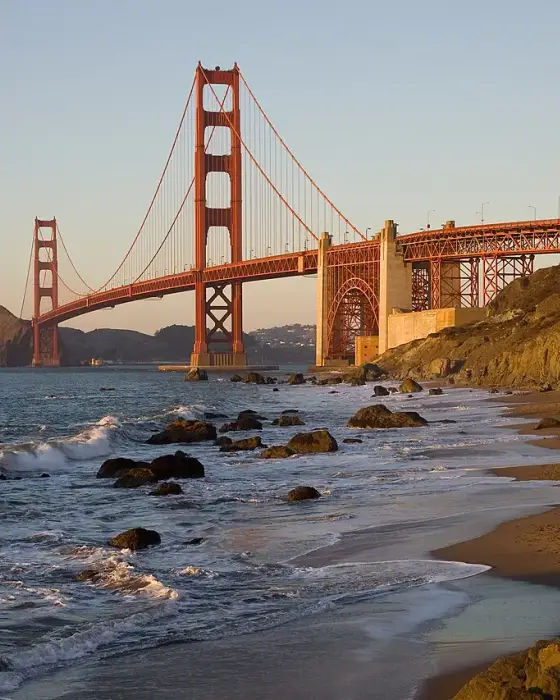
Suspension bridge opened on May 27, 1937, with a 1,280 m main span and 227 m towers; it was the longest in the world for 27 years. The International Orange color was chosen by consulting architect Irving Morrow for its contrast against the fog; the east-side walkway opens to pedestrians during the day, and the crossing takes 30 to 40 minutes.
The bridge, opened in May 1937, was the longest in the world for 27 years; the walk across on the east side takes 30 to 40 minutes, and International Orange was the color Irving Morrow chose to stand out in the fog; it measures 1,280 m in the main span and 227 m at the towers.
Check access
Alcatraz
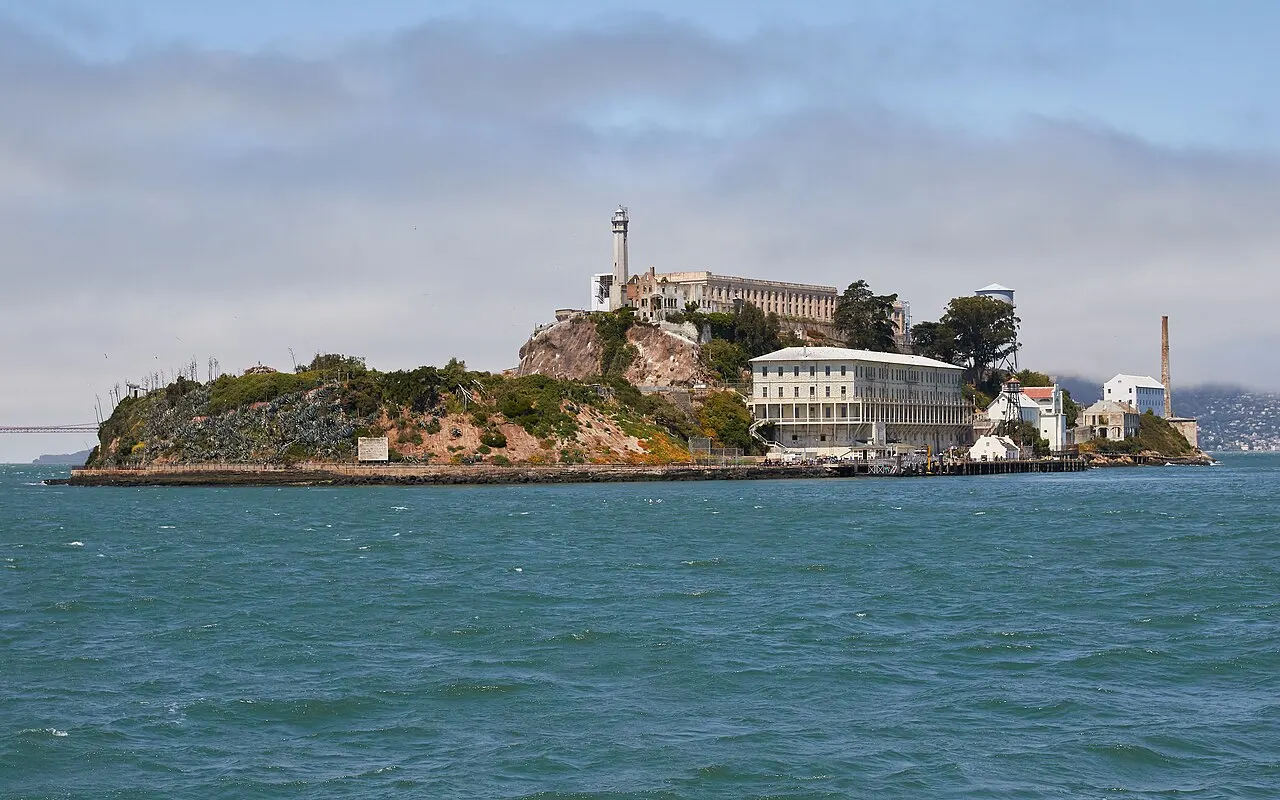
An island about 2 km off the coast, a federal penitentiary between 1934 and 1963 and later occupied by Indigenous activists from November 1969 to June 1971. The ferry leaves from Pier 33, the audio guide uses recordings from former inmates and guards, and tickets tend to sell out weeks in advance.
Alcatraz Island is about 2 km off the coast.
Check access
Cable cars
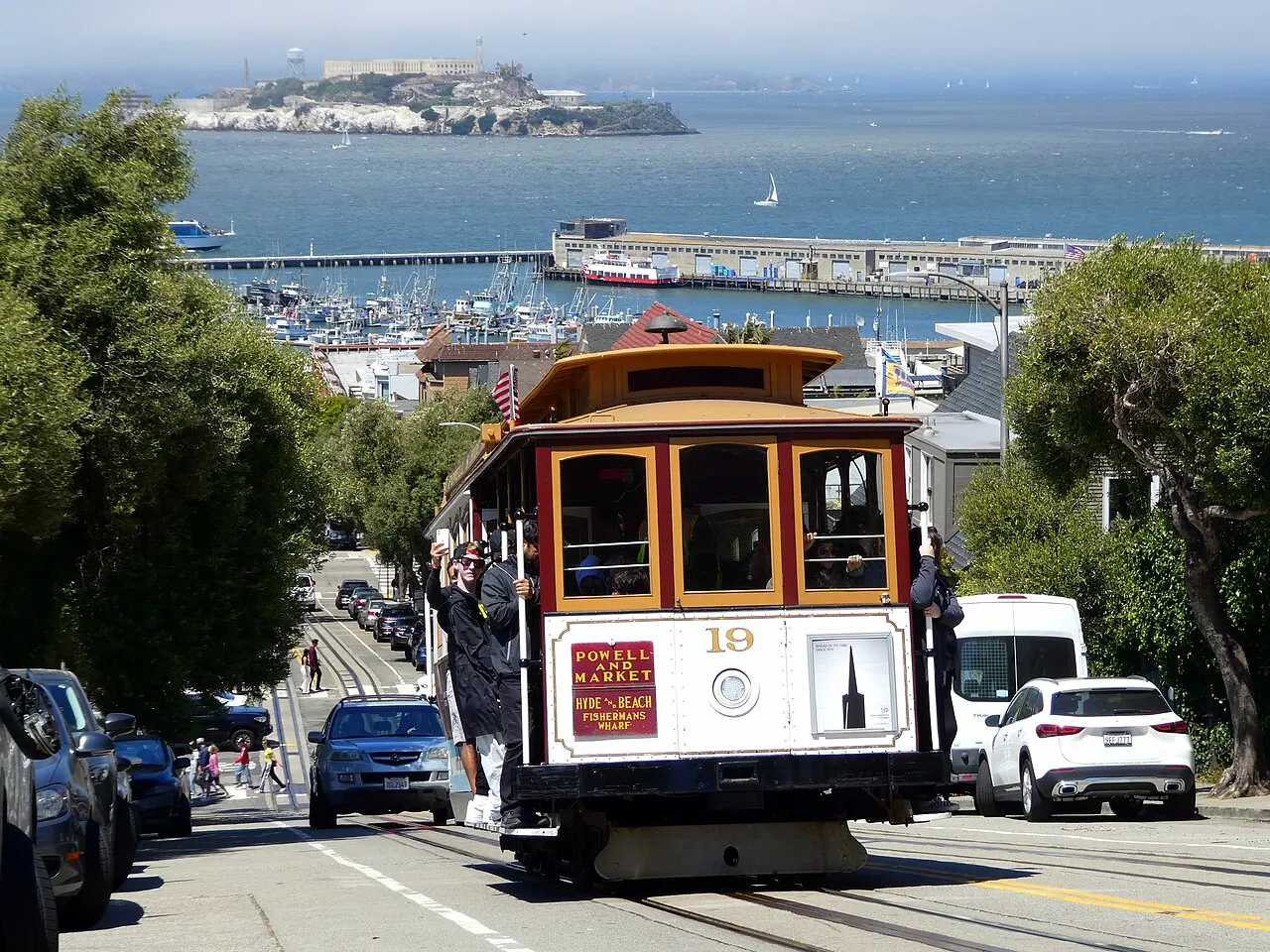
Three lines remaining from the original 23, running since 1873 on Andrew Hallidie's underground cable system, moving at 15 km/h. It's the only National Historic Landmark in the country that moves; the Cable Car Museum, on Mason Street, shows, for free, the sheaves that pull the cables.
Three lines have run since 1873 on Hallidie's cable system and move at 15 km/h; it's the only American national monument that moves, and the Cable Car Museum, on Mason Street, displays the sheaves for free.
Check access
Golden Gate Park
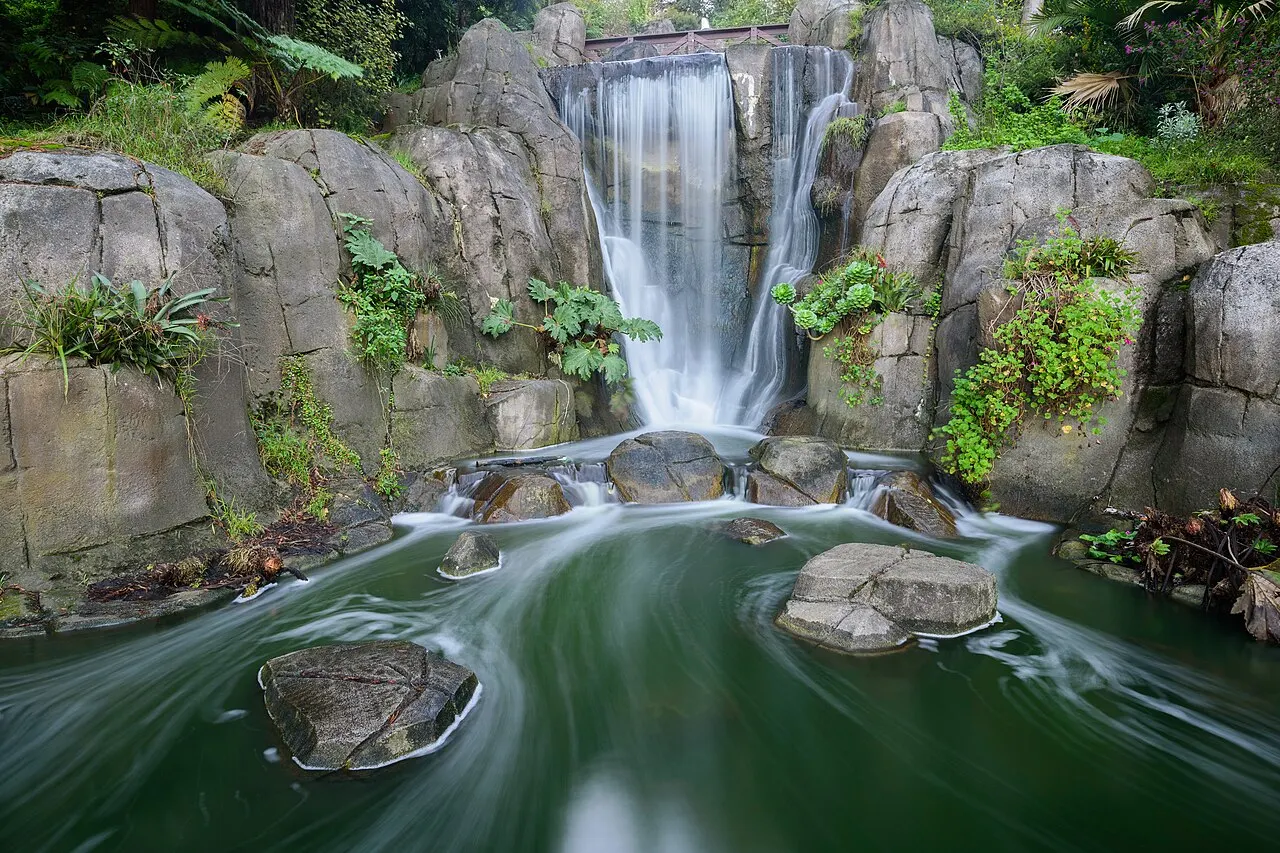
412 hectares laid out from 1870 over sand dunes by William Hammond Hall and maintained by John McLaren for 53 years; it's about 20% larger than Central Park. Inside it are the 1894 Japanese Tea Garden, the 1879 Conservatory of Flowers, a herd of bison, and a Dutch windmill at the western end.
The park is about 20% larger than Central Park.
Check access

Ferry Building
A 1898 ferry terminal with a 75 m clock tower inspired by Seville's Giralda, a survivor of the 1906 and 1989 earthquakes. It reopened in 2003 as a permanent food market; the farmers market runs Tuesday, Thursday, and Saturday mornings.
The 1898 building, with a tower inspired by the Giralda, survived the 1906 and 1989 earthquakes, reopened in 2003 as a permanent food market, and the farmers market takes over Tuesday, Thursday and Saturday mornings.
Check access

Coit Tower
A 64 m concrete tower atop Telegraph Hill, built in 1933 with money left by Lillie Hitchcock Coit. The ground floor has murals painted in 1934 by 26 artists of the federal PWAP program; the climb up the Filbert Steps passes private gardens and a flock of wild parrots.
Lillie Hitchcock Coit left the money for the tower.
Check access

Presidio and Palace of Fine Arts
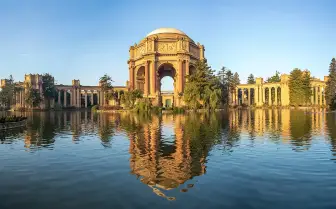
A Spanish military base in 1776, an American one from 1846 to 1994, and today a roughly 600-hectare urban national park. It holds the Palace of Fine Arts, the only survivor of the 1915 Exposition (designed by Bernard Maybeck, redone in concrete in 1965), and Tunnel Tops, a park opened in July 2022 over the highway tunnel.
The military base is today a national park of about 600 hectares, where visitors find Maybeck's Palace, redone in concrete in 1965, and also Tunnel Tops, opened in 2022 above the tunnel; it was Spanish in 1776 and American from 1846 to 1994.
Check access
Mission Dolores and the murals
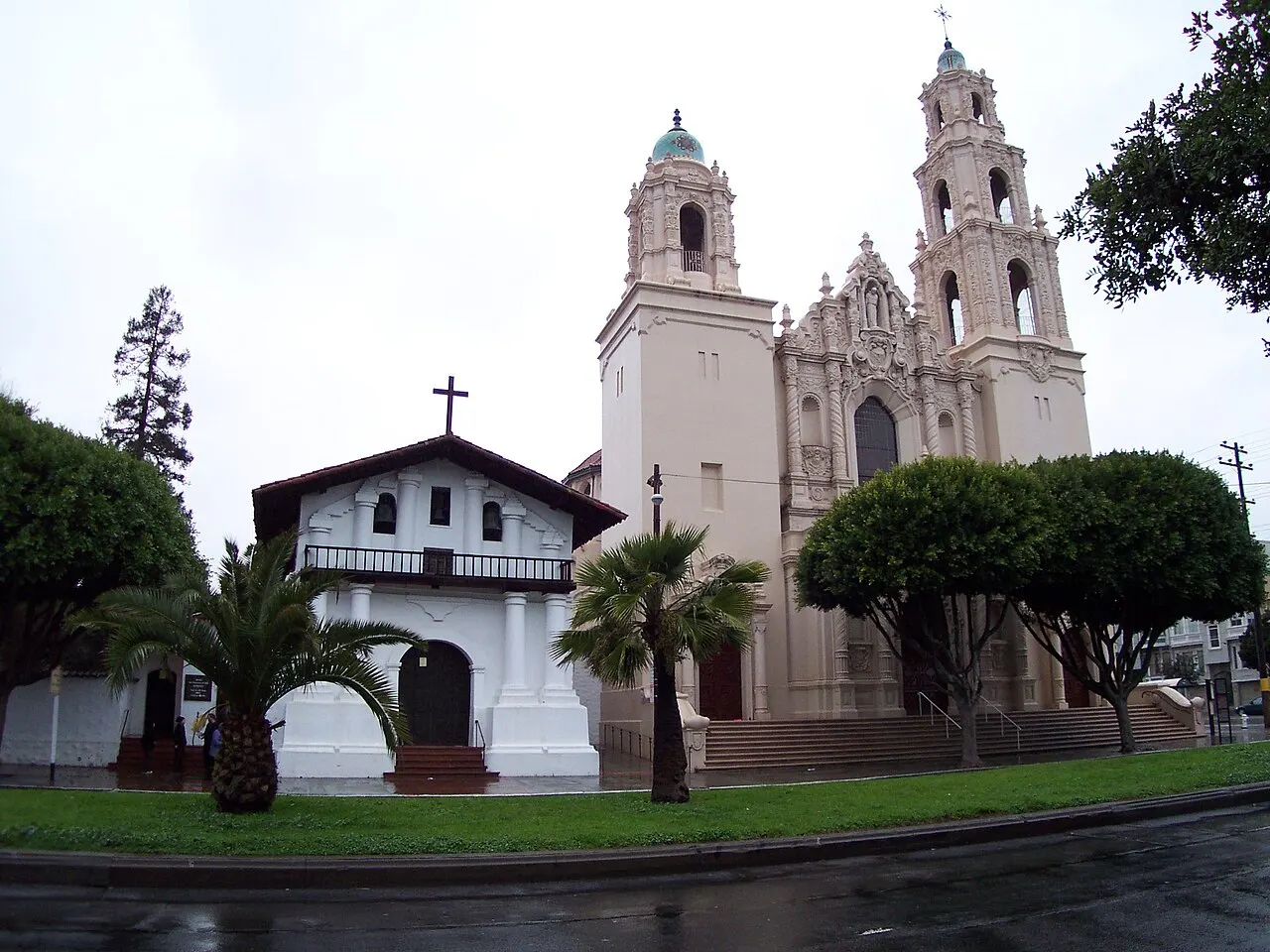
The adobe chapel completed in 1791 is the oldest standing building in the city, with a ceiling of wood lashed with rawhide and the cemetery used in “Vertigo.” A few blocks away, Balmy Alley gathers political murals painted since 1972, and Clarion Alley since 1992.
It's the oldest standing building in the city.
Check access
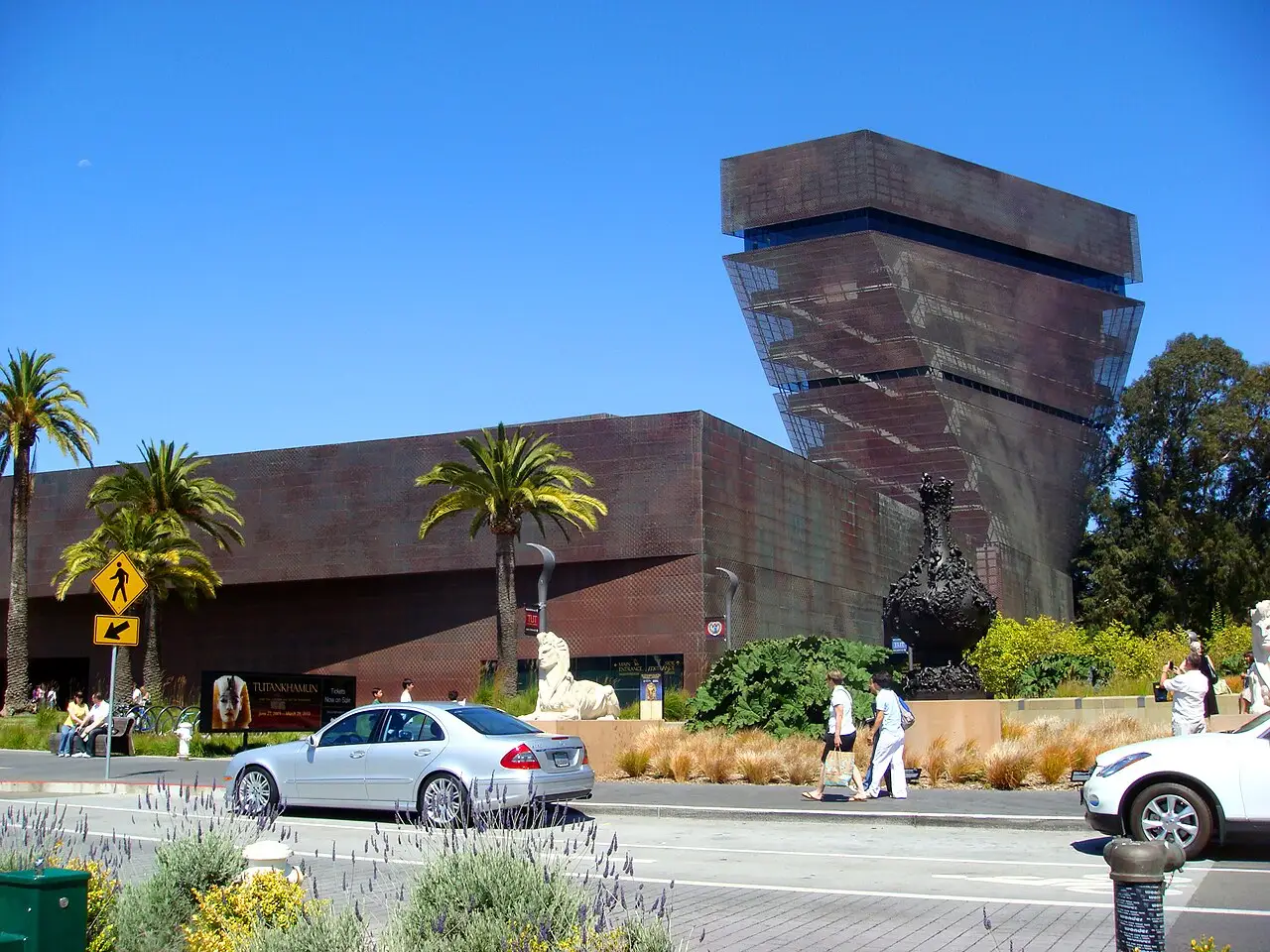
de Young and California Academy of Sciences
Two museums facing each other in the park. The de Young was rebuilt in 2005 by Herzog & de Meuron, with a perforated-copper facade and a free-access observation tower; the Academy of Sciences, by Renzo Piano, opened in 2008 with a 2.5-hectare living roof, planetarium, aquarium, and rainforest under a dome.
The de Young and the Academy of Sciences sit facing each other, and one afternoon only allows time for one of them, because crossing the 412-hectare park already takes time. Choose by taste; without a ticket, you can go up for free to the de Young's observation tower, rebuilt by Herzog & de Meuron in 2005.
Check access
Nilo’s itinerary
Start with the basic programme and choose extensions for the time you have.
Plan my days in the app ↗Day 1 · The east shore, the hills, and the old center
Start at the Ferry Building at 9am; if it's Tuesday, Thursday, or Saturday, the farmers market is set up on the bay side.
Take the California Street cable car up to Nob Hill, see Grace Cathedral, and walk down Mason to the free Cable Car Museum.
Have lunch in Chinatown (dim sum or rice noodles) and walk a block over to Stockton Street to see the neighborhood shops.
Cross into North Beach, step into City Lights, and follow the Filbert Steps up to Coit Tower for the 1934 murals and the view.
End at Fisherman's Wharf in the late afternoon: clam chowder in a sourdough bread bowl and Irish coffee at Buena Vista.
Day 2 · Alcatraz in the morning, the Presidio in the afternoon
Catch the first ferry to Alcatraz from Pier 33, with a ticket bought weeks ahead; set aside 2 hours 30 minutes on the island with the audio guide.
On the way back, follow the shoreline to the Palace of Fine Arts and enter Presidio park.
Go up to Tunnel Tops, opened in 2022, for a view of the bridge from above, and head down to Crissy Field on the trail.
Walk across the Golden Gate Bridge on the east-side path: 30 to 40 minutes each way, with strong wind in the afternoon.
Have dinner in Hayes Valley or head back downtown for a show at Davies Hall or the War Memorial Opera House.
Day 3 · Mission, park, and ocean
Have breakfast in the Mission, walk past the murals of Balmy Alley and Clarion Alley and step into the adobe chapel of Mission Dolores.
Have a burrito on 24th Street for lunch and climb up to Dolores Park to see the city from the lawn.
Take the metro or a bus to Golden Gate Park and pick a museum: de Young or the California Academy of Sciences.
Cross the park on foot or by bike to the Pacific and head north, to the ruins of the Sutro Baths and the Lands End trail.
Have dinner on Clement Street or Irving Street, where neighborhood restaurants cost half of downtown prices.




Food
 AI illustration
Mission burrito
A format created in Mission taquerias in the 1960s: a large steamed tortilla, rice, beans, meat, cheese, and salsa, all wrapped in foil. The “super” also adds guacamole and sour cream; it runs $12–18 and usually makes two meals.
 AI illustration
Sourdough bread
Natural fermentation brought by gold-rush bakers; Boudin has been running since 1849. The dominant bacterium in this dough was isolated and named in 1971 as Lactobacillus sanfranciscensis, after the city.
 AI illustration
Cioppino
A fish and seafood stew with tomato and white wine, created by Genoese and Sicilian fishermen from the port in the late 19th century. It comes with bread for dipping and runs $30–45 a plate.
 AI illustration
Dungeness crab
A North Pacific species served whole and cooked, with butter or in cioppino. The commercial season roughly runs from November to June, and several openings have been delayed in recent years to protect whales; outside of it, the crab at Fisherman's Wharf is frozen.
 AI illustration
Dim sum
Cantonese dumplings traditionally served from carts or by order in Chinatown, between 10:30am and 2:30pm. The cheaper, busier version is on Clement and Irving streets, in the heart of the Avenues' Chinese community.
 AI illustration
Irish coffee
Coffee with Irish whiskey, sugar, and whipped cream, served at Buena Vista Café since 1952, when the bar reproduced the recipe from Shannon Airport. The drinks come out in rows of preheated glasses, by the hundreds a day.
 AI illustration
Burmese tea leaf salad
Lahpet thoke: fermented tea leaf with peanuts, fried garlic, tomato, cabbage, and lime. The Bay Area has one of the largest Burmese communities in the US, and the dish has been a menu staple since the 1990s.
 AI illustration
It's-It
An ice cream sandwich between two oatmeal cookies, dipped in chocolate, created in 1928 at the Playland at the Beach amusement park. Sold in neighborhood stores for about $3.
Day trips

Muir Woods and Sausalito
A redwood forest 25 km to the north, across the Golden Gate; 40 to 60 minutes by car. Parking and shuttle require a booking with date and time since 2018. There's no way to show up without a reservation. You can return by ferry from Sausalito, about 30 minutes to the Ferry Building.

Berkeley and Oakland
25 to 40 minutes by BART through the tunnel under the bay. Berkeley has the University of California campus, from 1868, Telegraph Avenue, and the food scene that began with Chez Panisse in 1971; Oakland has Lake Merritt, the OMCA museum, and lower prices.

Napa and Sonoma
Wine regions 80–110 km to the north, 1 hour 15 minutes to 1 hour 45 minutes by car with no traffic. Napa charges $30–75 for a wine tasting and almost always requires a reservation; Sonoma is cheaper and less formal. There's no useful public transit: go with a designated driver or on a tour.
Where to begin
The east shore, the hills, and the old center
Start at the Ferry Building at 9am; if it's Tuesday, Thursday, or Saturday, the farmers market is set up on the bay side.
Alcatraz in the morning, the Presidio in the afternoon
Catch the first ferry to Alcatraz from Pier 33, with a ticket bought weeks ahead; set aside 2 hours 30 minutes on the island with the audio guide.
Mission, park, and ocean
Have breakfast in the Mission, walk past the murals of Balmy Alley and Clarion Alley and step into the adobe chapel of Mission Dolores.
Money
The currency is the US dollar, and practically everything is paid by card or phone. There is, however, a 2019 city law that requires physical stores to accept cash, so no one can turn down your bills. Reference prices in 2026: drip coffee $4–6, burrito $12–18, casual lunch $18–28, dinner at a mid-range restaurant $45–75 per person without drinks, draft beer $9–13, cocktail $16–22, mid-range hotel $220–350 a night, hostel bed $55–90. The price you read is never the price you pay, and that goes for everything: the roughly 8.6% sales tax never appears on the tag and gets added at the end. Lodging pays a 14% city tax plus tourism promotion fees, which pushes the surcharge to around 16%. Tipping at a table-service restaurant is 18% to 20% and is a real part of the server's wage. Many places still add 5% to 8% for an “SF Mandate” or “health surcharge,” which funds employees' health plans and doesn't replace the tip: it's a common mistake to think it does. At cafés and counters, rounding up or leaving 10% is enough.
Getting there and around
Airport: 21 km south, BART leaves from the international terminal
The international airport (SFO) is 21 km to the south, and the simplest way out is inside the terminal itself: BART departs from there and reaches downtown in about 30 minutes for roughly $11 (2026), with trains running from early morning until midnight. A taxi or app ride costs $60–90 and takes 25 to 60 minutes, and the gap between those two numbers is just Highway 101 traffic. Oakland (OAK) is about 1 hour away by BART with a driverless automated connector, and San José (SJC) is 1 hour by car or Caltrain. Caltrain departs from the 4th & King station toward the peninsula and Silicon Valley, and has run electrified since September 2024, with faster and more frequent trips.
The Muni network and the Clipper card
Within the city, buses, trolleybuses, light rail, the historic F-line streetcars, and the three cable car lines are all run by Muni. A single bus or metro fare has been $3 since January 2026, with free transfers for 120 minutes; the cable car costs $9 separately and rises to $12 on January 4, 2027. Pay with a Clipper card (physical or on your phone) or by tap; a day pass including the cable car currently runs around $15 and, starting January 2027, is replaced by the Cable Car Plus, at $18. BART covers the Market–Mission corridor and the crossing to Oakland and Berkeley, and the Central Subway, opened in 2022, linked SoMa to Chinatown. The city is walkable over short distances, but the hills are real: 100 m on the map can mean 30 m of elevation change. There are Bay Wheels bike shares and a flat route known as “the Wiggle” between downtown and Golden Gate Park; taxis exist, apps are everywhere, and Waymo's self-driving cars, which have run with no one behind the wheel since 2022, have been open to anyone since June 2024.
Safety
What threatens visitors in San Francisco is theft of what they carry, and rarely violence. Car break-ins are the city's most common crime: they take less than ten seconds and happen in broad daylight at tourist spots like Lands End, Twin Peaks, the Palace of Fine Arts and Alamo Square. Leave absolutely nothing visible, not even an empty bag or a charger cable, and empty the trunk before you park, not after, because anyone watching acts the moment you stash your things. The numbers have dropped sharply since the 2023 peak, but the pattern holds. Snatching phones from people's hands near the curb is also common on Market Street and outside stations. The Tenderloin, the stretch of Sixth at Market and parts of SoMa concentrate open-air drug use and encampments; walking through them by day is common, and most interactions go no further than a request for money, but avoid walking there alone at night and stay off shortcuts down empty side streets. Violent crime in the city is below the average for big American cities. Learn the earthquake basics (move away from windows, protect your head, stay where you are), even though the chance of feeling a strong tremor in a few days is minimal. Visitors from outside the US need an ESTA ($40.27 in 2026) or a visa, obtained before boarding, because this can't be sorted out at the airport counter.
Etiquette tips
Say “San Francisco” or “the City”
“San Fran” marks a visitor by the first syllable, and “Frisco” annoys a good share of longtime residents. Anywhere in the Bay Area, “the City” already means San Francisco and no other.
On the cable car, hold on tight and follow the conductor
The car only stops for someone who signals, and there are curves where standing on the running board is forbidden. The conductor calls it out loud, and the order is meant to be followed right away. Let people off before you board, and pay the conductor on board if you don't have a Clipper card.
On the check: health surcharge of 5% to 8%, tip of 18% to 20% on top
When you see an “SF Mandate,” “health surcharge,” or “service fee” of 5% to 8%, that goes to the staff's health plan. The 18% to 20% tip is still expected on top.
Don't photograph unhoused people
The housing and fentanyl crisis is visible in parts of downtown and is daily life for the people who live there. Photographing people lying on the sidewalk or encampments is a direct insult and often leads to confrontation.
Turn your wheels when parking on a hill
It's a city law with a fine attached: wheels turned toward the curb when the car points downhill, away from it when pointing uphill, parking brake always set.
Order at the counter and wait for your first name
At cafés, food trucks, and most casual places, you order and pay at the register, choose the tip on the screen, and your name is called when it's ready. No one comes to your table at this kind of place.
Mistakes to avoid
Arriving in July with summer clothes
If you arrive in July in summer clothes, you'll find highs of 16 °C to 19 °C along the coast, with wind and fog: a cold summer, not much warmer than the 8 °C to 15 °C winter. The sweatshirt shops at Fisherman's Wharf make their living off visitors who make this mistake.
Confusing the city with Silicon Valley
Confusing San Francisco with Silicon Valley. Google, Apple, and Meta sit 50 to 70 km south, in Mountain View, Cupertino, and Menlo Park, and a round-trip drive eats half a day in Highway 101 traffic. What you see at the end of the trip is parking lots and closed buildings.
Waiting to buy Alcatraz tickets on the day
Leaving Alcatraz tickets until the last minute. No boat other than the official operator lands on the island, and without a ticket bought in advance, the visit simply doesn't happen.
Renting a car to get around only within the city
Renting a car to get around only within the city. Garages at $40–60 a day, parking meters on nearly every street, tow trucks during street-sweeping hours, and a high risk of break-ins: in a 121 km² city with public transit, the car gets in the way more than it helps.
From Fisherman's Wharf to Coit Tower, 1.5 km with an 80 m climb
Underestimating the hills on foot. From Fisherman's Wharf to Coit Tower is about 1.5 km with 80 m of elevation gain and stairs. Measuring only the distance on the map, without looking at the elevation, is the classic itinerary mistake, and the map never warns you.
Useful phrases
“The City”
San Francisco, in the mouth of anyone from the Bay Area. Avoid “San Fran” and “Frisco.”
“Hella”
A Northern California intensifier: “hella good” means “very good.” Barely used in the rest of the country.
“Karl the Fog”
Nickname for the afternoon fog, treated as a proper-named character since a social media account created in 2010.
“Muni” (pronounced “MYOO-nee”)
The municipal system of buses, streetcars, and cable cars, distinct from BART, which is the regional train.
“I got bipped”
Local slang for “they broke my car window and took what was inside.”
“The Avenues”
Richmond and Sunset, the grid neighborhoods west of Golden Gate Park, where the streets are numbered by avenue.
Districts
Mission
The Latino core since the 1940s, between Mission, Valencia, and 24th streets, with taquerias, bakeries, and the political murals of Balmy Alley and Clarion Alley. It's the sunniest neighborhood in the city, sheltered from the fog by the Twin Peaks hills, and where the housing fight is most visible.
Chinatown
North America's oldest Chinatown, formed from 1849 across about 24 blocks around Grant Avenue and Stockton Street. Grant sells to visitors; Stockton feeds the people who live there, with fish and produce stalls at dawn.
North Beach
Old Italian neighborhood next to Chinatown, with Washington Square, the 1953 City Lights bookstore, and the cafés that sustained the beats. It holds the nightlife of Columbus Avenue and Broadway.
Castro
A gay neighborhood since the early 1970s, organized around the intersection of Castro and 18th. The landmarks are the Castro Theatre, a 1922 movie palace that reopened on February 6, 2026, after a $41 million renovation, and 575 Castro Street, where Harvey Milk's camera shop used to be.
Haight-Ashbury
Victorian houses along the eastern edge of Golden Gate Park, epicenter of the 1967 Summer of Love. Today Haight Street lives on secondhand clothes, record shops, and used bookstores, at tourist-neighborhood prices.
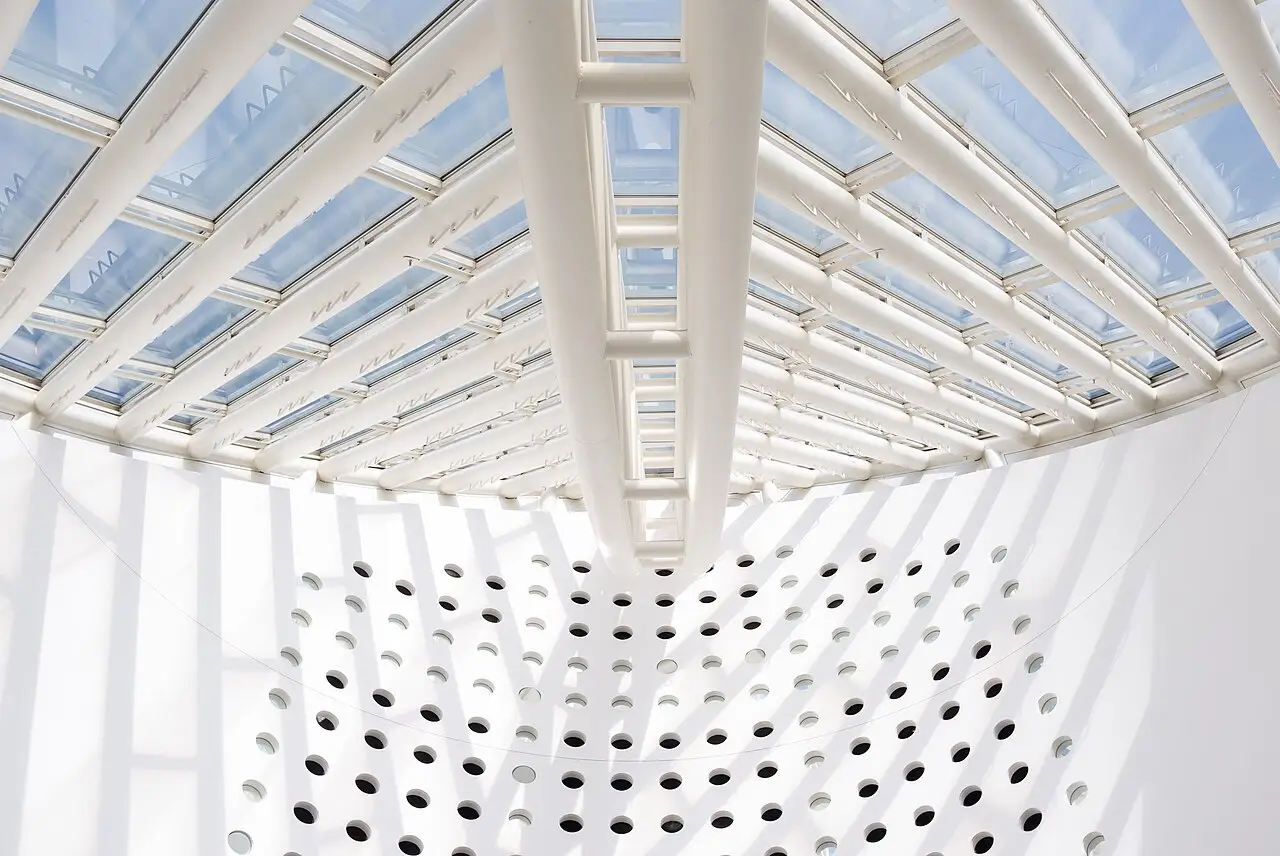
SoMa (South of Market)
A zone of warehouses and workshops southeast of Market Street, occupied since the 1990s by tech offices, the Moscone convention center, SFMOMA, and Oracle Park stadium. At night, with no game or convention, the streets go empty.
Richmond and Sunset
The “Avenues”: miles of low houses in a grid west of Golden Gate Park, the coldest and foggiest part of the city. Clement Street, in Richmond, and Irving Street, in Sunset, hold Chinese, Russian, and Vietnamese restaurants at neighborhood prices.
Nob Hill and Russian Hill
The railroad barons' hills, today residential and expensive, crossed by the three cable car lines. Home to Grace Cathedral, the winding block of Lombard Street, and many of the public stairways that stand in for streets too steep to be roads.
History
1776 · Spanish presidio and mission
The expedition of Juan Bautista de Anza sets up the military presidio on September 17 and Mission San Francisco de Asís on October 9. The Ohlone people, who had occupied the peninsula for thousands of years, are reduced to a few hundred people within two generations.

1846–1848 · From Yerba Buena to San Francisco
The US Navy takes the village in July 1846, during the war with Mexico, and on January 30, 1847 the name changes from Yerba Buena to San Francisco. By early 1848 the settlement had fewer than a thousand residents.
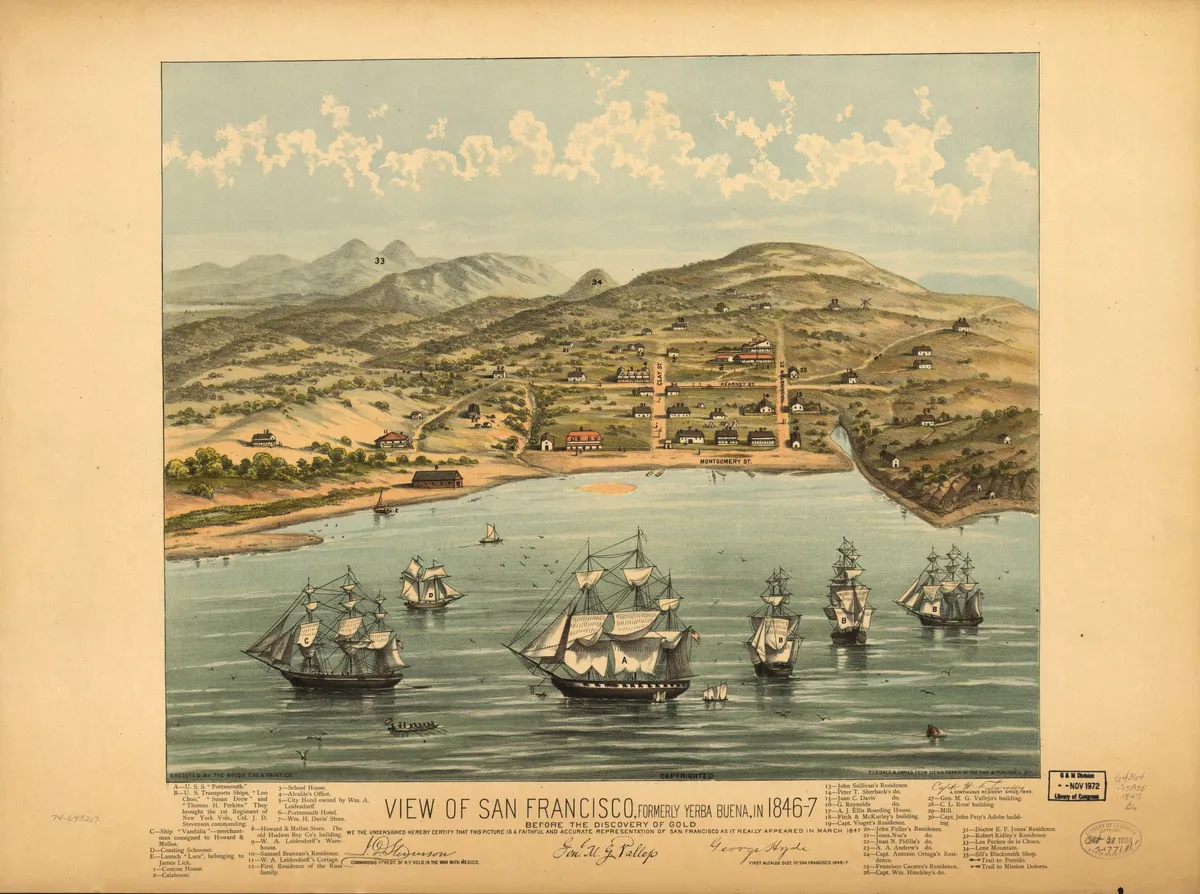
1848–1852 · Gold rush
Gold found at Sutter's Mill in January 1848 takes the population from about a thousand to 25,000 in 1849 and to more than 35,000 by 1852. Ships abandoned by their crews rotted in the cove and are now buried beneath the Financial District.

1869–1873 · Railroad and cable car
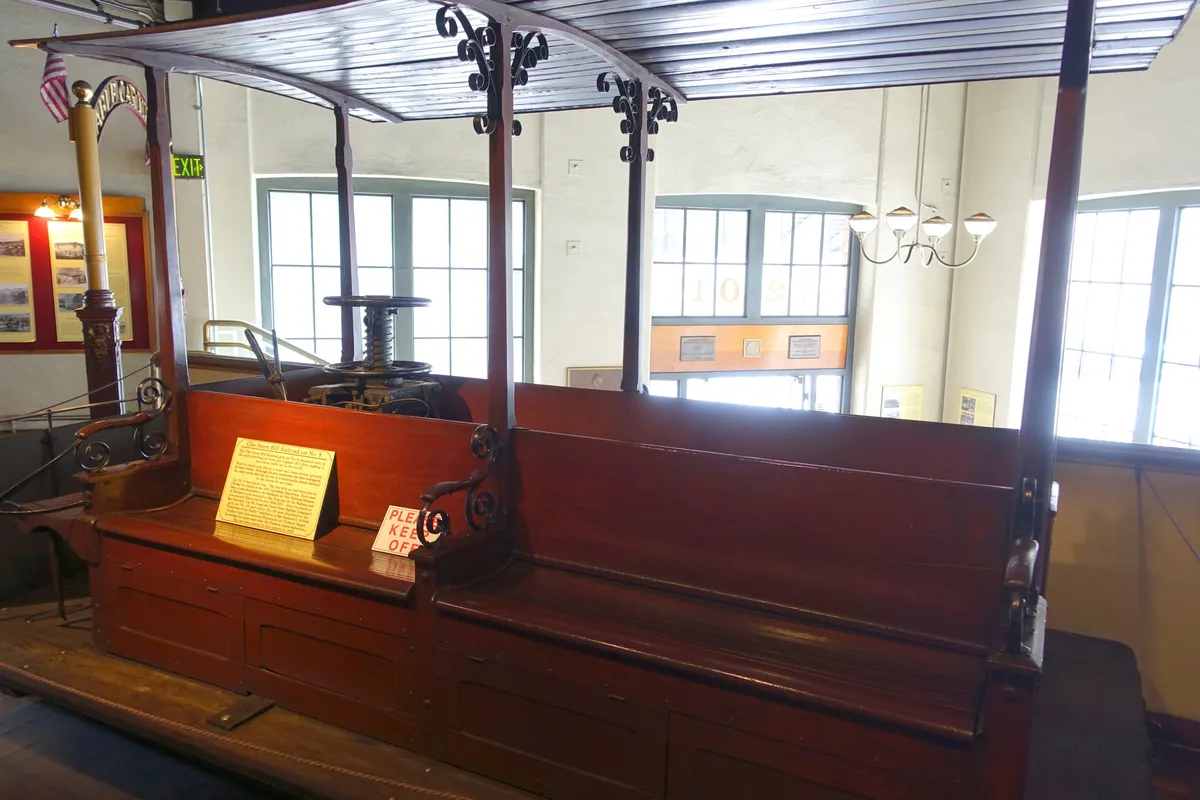
The transcontinental railroad reaches the bay in 1869 and links the city to the rest of the country. On August 2, 1873, Andrew Hallidie sets the first cable car running on Clay Street, solving the problem of hills too steep for animal traction.
1906 · Earthquake and fire
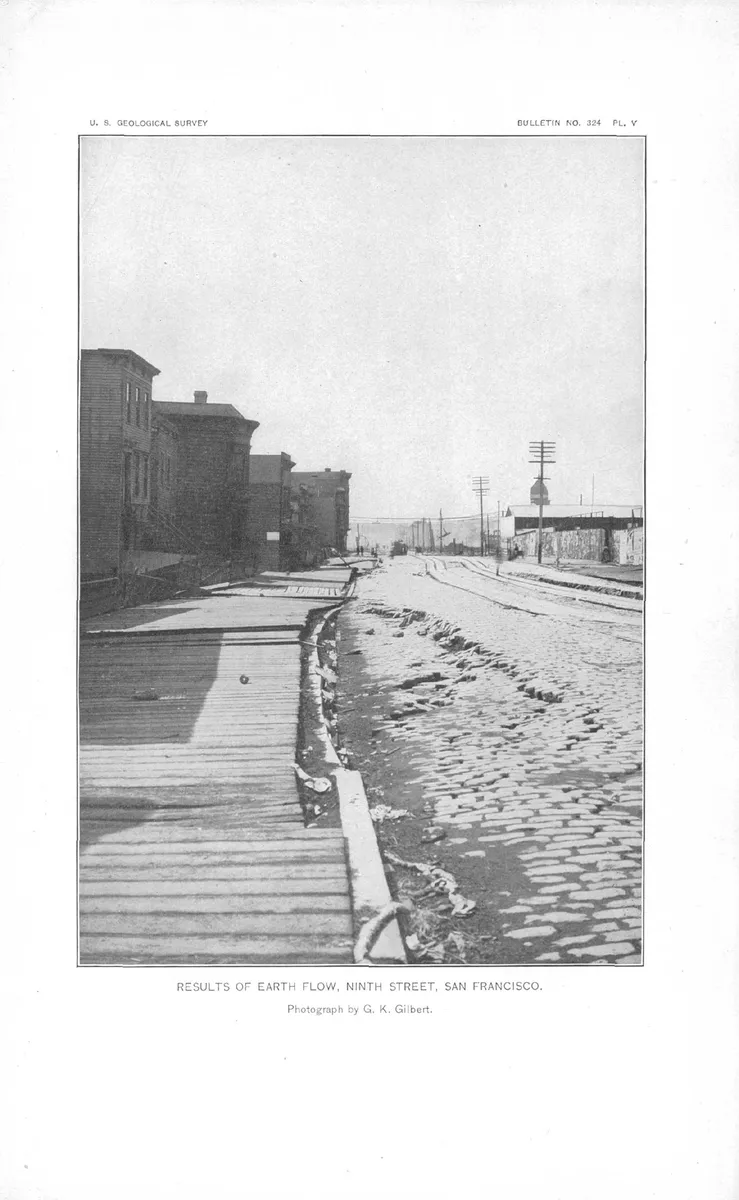
On April 18, at 5:12am, a quake of approximate magnitude 7.9 ruptures 477 km of the San Andreas fault. The fire burned for three days, destroyed about 28,000 buildings and 80% of the built-up area, killed around 3,000 people, and left more than 200,000 homeless.
1915 · Panama-Pacific Exposition
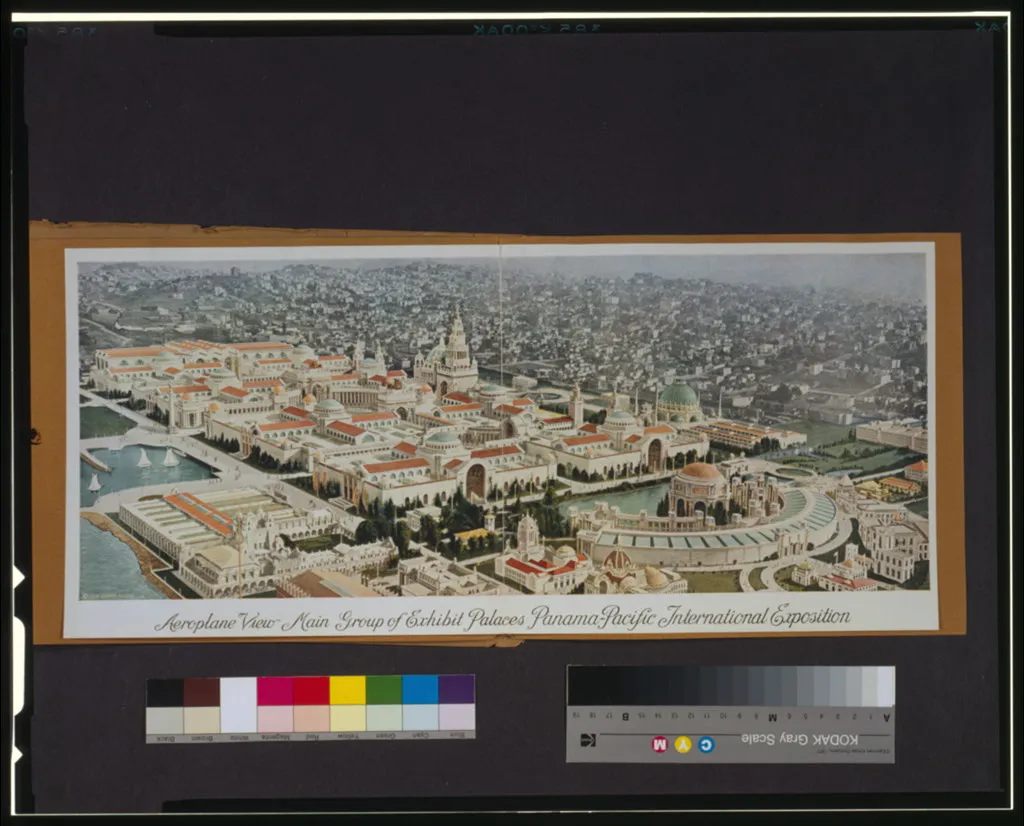
The city celebrates the Panama Canal and its own rebuilding with a world's fair that drew about 18 million visits. What remains of it is the Palace of Fine Arts, by Bernard Maybeck.
1934–1937 · General strike and the two bridges
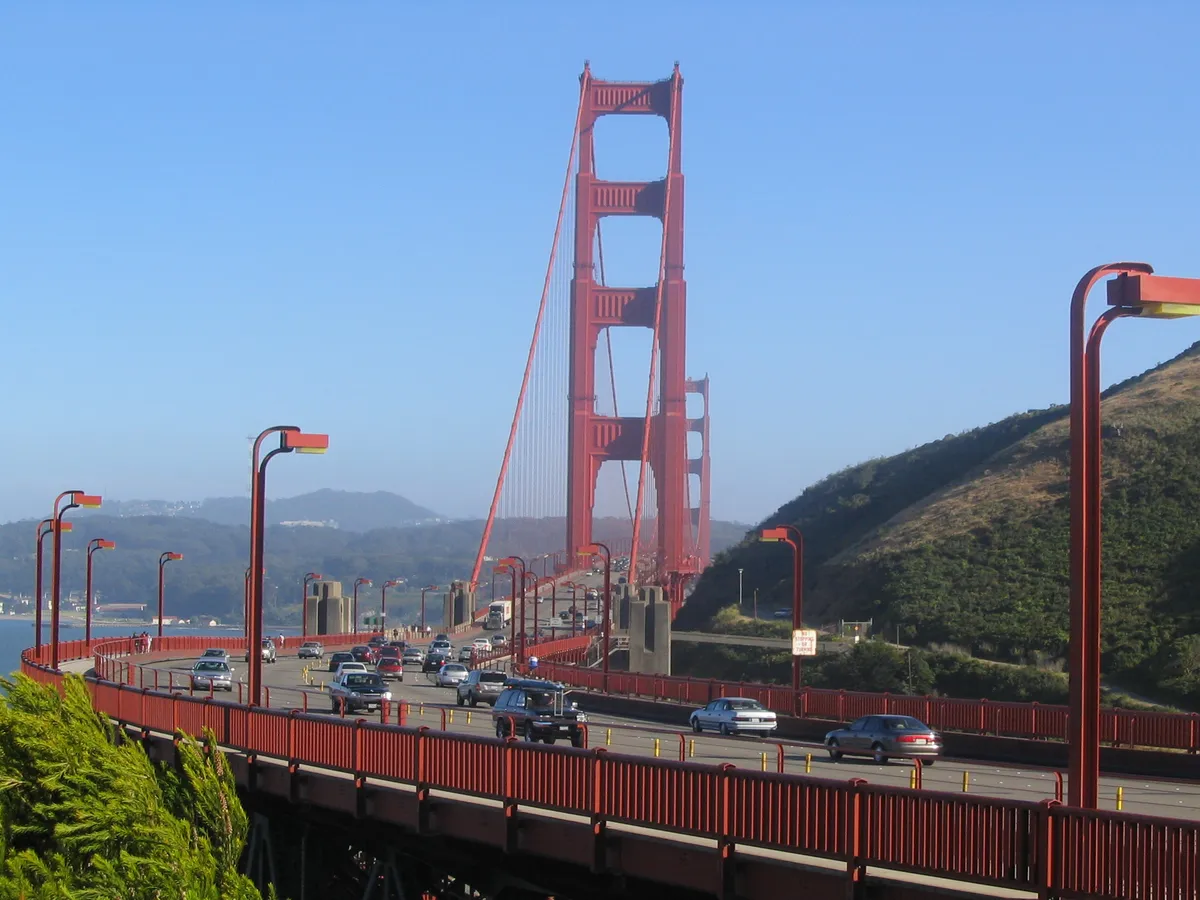
The longshoremen's strike in July 1934 shut down the port and turned into a four-day general strike, the foundation of local unionism. Next came the Bay Bridge, in November 1936, and the Golden Gate, on May 27, 1937.
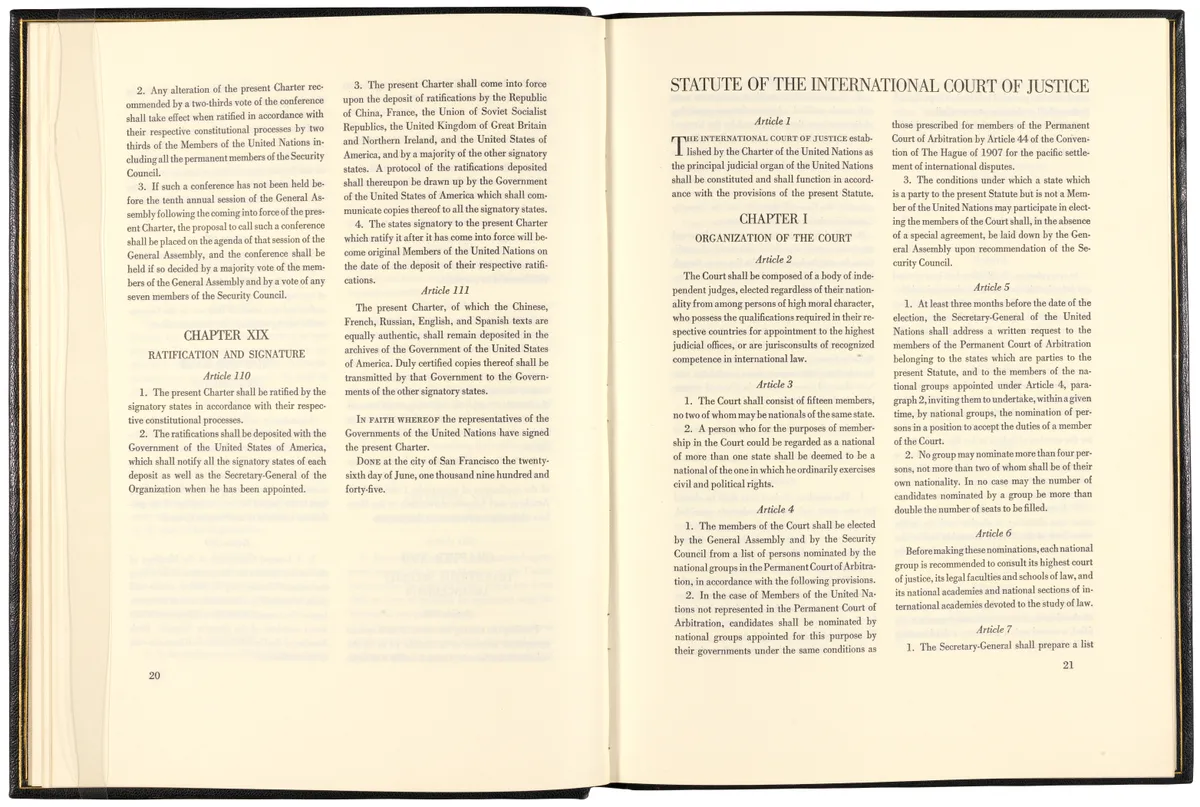
1945 · Signing of the UN Charter
Delegates from 50 countries sign the United Nations Charter on June 26, at the Herbst Theatre of the War Memorial. The city was chosen for its position on the Pacific, then the main theater of the war.
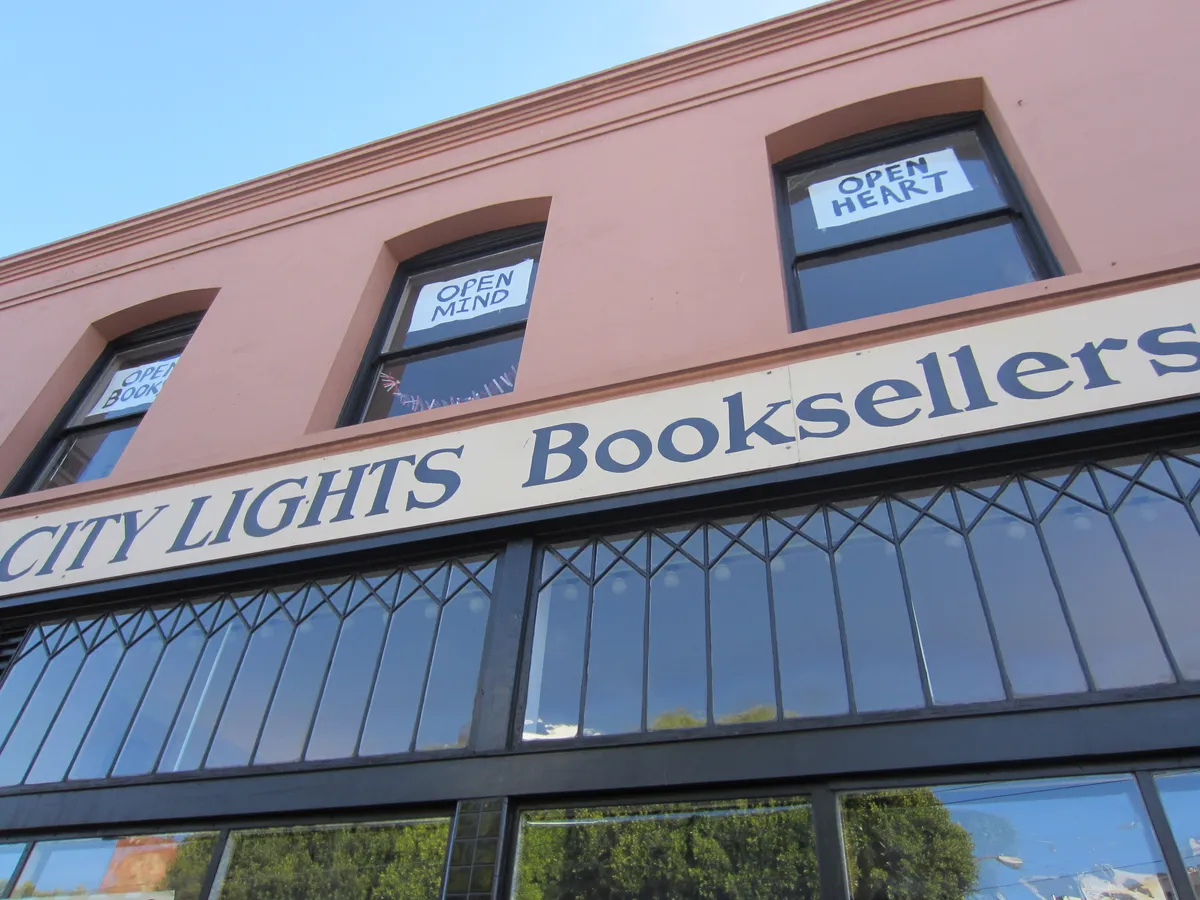
1955–1967 · Beats and the Summer of Love
Allen Ginsberg reads “Howl” at the Six Gallery in October 1955; police seize the book at City Lights, and the obscenity trial is won in 1957. Ten years later, about 100,000 people converge on Haight-Ashbury in the summer of 1967.
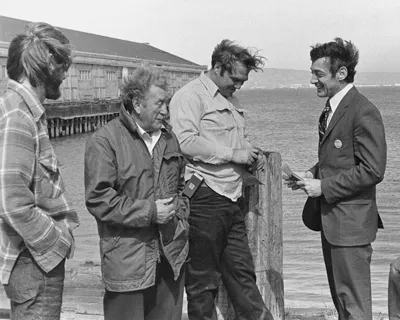
1977–1978 · Harvey Milk
Elected supervisor in November 1977, Milk was the first openly gay man to hold elected office in California. He and Mayor George Moscone were assassinated at City Hall on November 27, 1978, by former supervisor Dan White.
1989–2026 · Loma Prieta and the tech cycles
The earthquake of October 17, 1989, magnitude 6.9, doomed the elevated Embarcadero freeway, demolished in 1991 and replaced by today's waterfront. Then came the dot-com bubble (1995–2001), the platform boom of the 2010s, the emptying of downtown during the pandemic, and the concentration of artificial-intelligence companies starting in 2023.

Complete history
The Spanish fort and mission of 1776
In 1776 the crown orders the bay entrance occupied before the Russians or the English can do it, and in the same half-year installs a fort at the peninsula's northwest tip and a Franciscan mission in a valley sheltered from the wind, about 5 km away. Both spots still exist: the Presidio became a national park in 1994, and the adobe chapel of Mission Dolores, finished in 1791, is the oldest standing building. The human cost was the near-total disappearance of the region's Ohlone people, killed by disease and forced labor. Under Mexican rule from 1821, the place was a hide-trading anchorage with a few hundred residents, called Yerba Buena.
Gold changes everything in eighteen months
News of the gold discovery at Sutter's Mill, in January 1848, reaches New York and Asia by the end of the year; in 1849 tens of thousands of people land, and within eighteen months the village becomes the gateway port to a continent. To make room, Yerba Buena Cove was filled with sand from the hills and the hulls of abandoned ships, and the Financial District stands on that unstable landfill today. The rush also decides who lives where: the Chinese, who arrive from 1849 on, form North America's oldest Chinatown in the 1850s, where the workers of the 1869 transcontinental railroad later return, and the neighborhood survives the exclusion laws of 1882; the Irish and Italians settle the Mission and North Beach. Nevada silver money, in the 1860s and 1870s, raises the mansions of Nob Hill and pays for the cable car that made it possible to build on the slopes.
The 1906 fire destroyed what was left of the nineteenth century
The earthquake of April 18, 1906, erased the nineteenth-century city. The shaking brought down some of the buildings and broke the water mains; the fire that followed, fed by explosions used as improvised firebreaks, consumed 80% of the built-up area in three days. The rebuilding was fast and conservative: the street grid and building heights were redone as before, with reinforced masonry, and instead of Daniel Burnham's monumental plan, the same old grid. The 1915 Exposition announced that the city was back. In the following decades came the 1934 general strike, the two bridges that ended the reliance on ferries, the wartime shipyard economy, which brought tens of thousands of Black workers from the South, and, in 1942, the forced removal of Japantown's residents under Executive Order 9066.
A social laboratory in the second half of the century
The second half of the twentieth century made San Francisco a social laboratory. The beats settle in North Beach in the 1950s around City Lights, opened in 1953 by Lawrence Ferlinghetti; Haight-Ashbury takes in the counterculture in 1967; the Castro becomes, in the 1970s, the first American neighborhood with an openly gay majority and elects Harvey Milk in 1977. The assassination of Milk and Moscone in 1978 and the lenient sentence given to Dan White triggered the White Night riots in May 1979. From 1981 the AIDS epidemic hit the city harder than any other in proportion to population, killing thousands of residents within a decade and producing, at the same time, a network of community care and medical activism that became an international model.
Short economic cycles
The recent economy has gone through three fast cycles: dot-com, platforms and artificial intelligence. The dot-com bubble filled SoMa with offices between 1995 and 2001 and emptied it within months; the next cycle, of platforms and apps, pushed rents to the highest in the United States between 2011 and 2019 and sharpened the housing conflict in the Mission. The pandemic flipped the picture. With remote work, more than a third of downtown office space sat empty, and streets like Market and Sixth piled up closed stores and an open fentanyl crisis. Since 2023, the concentration of artificial intelligence companies in SoMa and the Mission has brought capital and jobs back without solving housing, and Mayor Daniel Lurie, sworn in in January 2025, was elected on a promise to bring downtown back to life. The population fell from 874,000 in 2020 to about 800,000 and has been creeping back up since.
The Financial District sits on the hulls of abandoned ships.
Geography and shape of the city
The peninsula and the forty hills
There are more than forty named hills within the peninsula's 121 km²: Twin Peaks and Mount Davidson reach about 280 m, and streets like Filbert, between Hyde and Leavenworth, have a 31.5% grade.
O'Farrell's street plan and the eastern landfill
The street grid was drawn by Jasper O'Farrell in 1847 and laid over the terrain without compromise, which produces intersections on top of ridges, public stairways where the street can't climb and the diagonal slash of Market Street, which leaves two grids misaligned at a 36-degree angle. Much of the city's east side is landfill: the Financial District sits on the old Yerba Buena Cove, and the Marina District on rubble from 1906 and from the 1915 exposition, precisely where the ground liquefied in the 1989 earthquake.
The fog and the winter rain
The climate is cool-summer Mediterranean: the Pacific offshore stays between 11 °C and 14 °C year-round, and when the Central Valley heats up, the warm air rises and draws marine air over the cold water, which condenses and enters through the Golden Gate as the summer afternoon fog. Rain concentrates from November to March, with about 600 mm a year, and June, July, and August are practically dry.
More than forty named hills in a hundred and twenty-one square kilometers.
Culture
Music and literary scene: from Beat poetry to punk
Beat poetry, psychedelic rock and punk all came out of this city. Peter D. Martin and Lawrence Ferlinghetti opened City Lights in 1953 (the first all-paperback bookstore in the US), which also became the publisher of Allen Ginsberg's “Howl.” A decade later, psychedelic rock spilled out of the Fillmore and Avalon ballrooms with the Grateful Dead, Jefferson Airplane and Janis Joplin; in the 1980s punk passed through the Mabuhay Gardens with the Dead Kennedys. In literature, the city has three canonical portraits: Dashiell Hammett's “The Maltese Falcon” (1930), Armistead Maupin's “Tales of the City” (from 1976) and Amy Tan's “The Joy Luck Club” (1989), about two generations of Chinatown.
Opera, ballet, symphony and museums
Institutional life is older and more solid than the city's improvised reputation suggests. The San Francisco Opera, founded in 1923, performs at the War Memorial Opera House; the San Francisco Ballet, from 1933, is the country's oldest and has performed a full-length “Nutcracker” since 1944. The Symphony has occupied Davies Hall since 1980 and was led by Michael Tilson Thomas from 1995 to 2020 and by Esa-Pekka Salonen until 2025. In the visual arts, besides SFMOMA, the Asian Art Museum has occupied the former central library since 2003, the Legion of Honor holds the European collection in a 1924 building above the sea, and the Contemporary Jewish Museum operates in a 1907 electrical substation expanded by Daniel Libeskind in 2008.
Baseball, basketball, and the bay
In sports, the Giants have played baseball at Oracle Park since 2000 (titles in 2010, 2012 and 2014), and the Warriors moved from Oakland to the Chase Center, in SoMa, in 2019. The 49ers have played football in Santa Clara, 65 km away, since 2014. Beyond sports, the city has a long history of protest: this is where the disability rights movement of the 1970s was born, with the 25-day occupation of a federal building in 1977, as were the first community networks responding to AIDS in the 1980s. It's also an open-air technology lab: Waymo's self-driving cars have been circulating without a driver since 2022, and since June 2024 they've served anyone across the whole city.
The rainbow flag was born here: Gilbert Baker and other artists created it for the Gay Freedom Day parade on June 25, 1978.
Festivals and events

Chinese New Year Parade
February or early March, at night, between Second Street and Chinatown. It has existed since the 1860s and is the largest parade of its kind outside Asia, with an 82 m dragon carried by about 100 people.

Bay to Breakers
Third Sunday of May: a 12 km race from the bay to the Pacific, run since 1912. Half the field runs in costume, and the climb up Hayes Street, with an 11% grade, is the classic stretch.
 AI illustration
SF Pride
Last weekend of June, with the Dyke March on Saturday and the parade on Market Street on Sunday. It has run since 1970 and draws hundreds of thousands of people; the street parties fill Civic Center.

Outside Lands
Three days in August inside Golden Gate Park, since 2008. It's the city's biggest music festival and one of the few events where the Polo Field is closed off; tickets sell out months in advance.
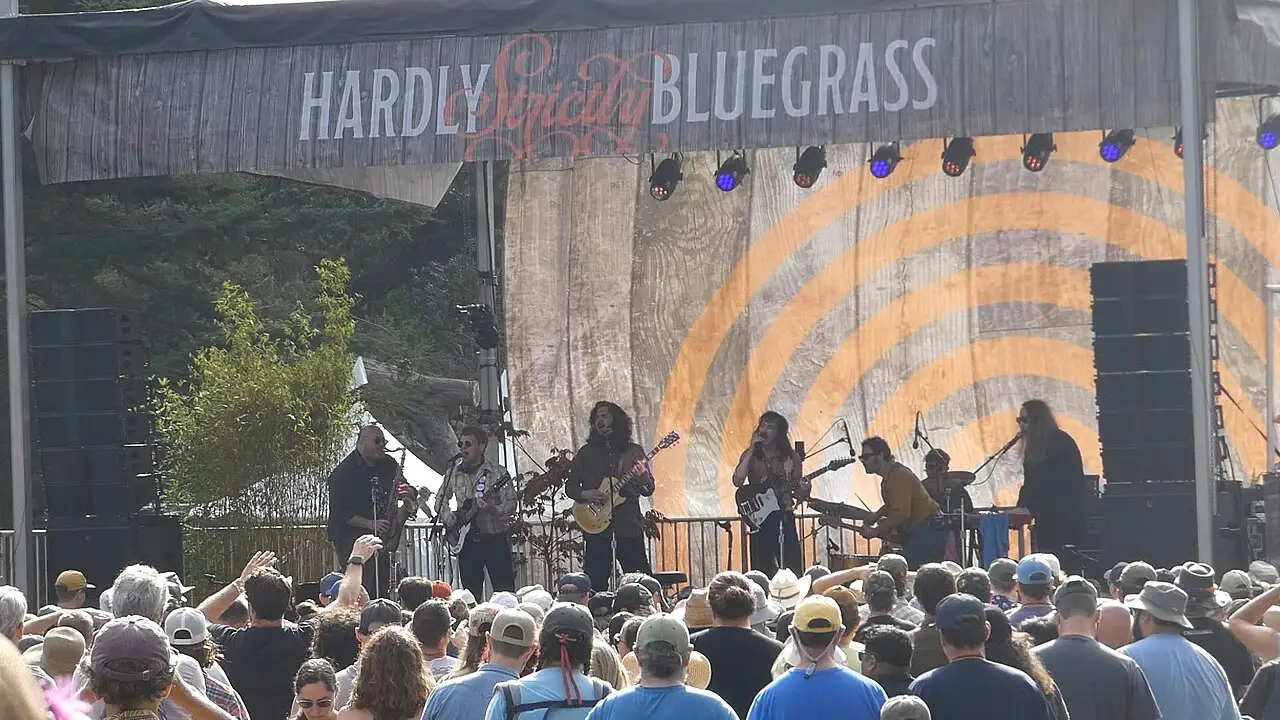
Hardly Strictly Bluegrass
First weekend of October, also in Golden Gate Park, free since 2001 by the will of financier Warren Hellman, who left a fund to keep it free of tickets and sponsorship.
Books and films
“The Maltese Falcon,” Dashiell Hammett (1930)
Dashiell Hammett lived on Post Street and worked in the city as a Pinkerton agency detective, and it shows in the novel: the book's geography is literal, with Burritt Alley, the tunnels and the downtown hotels. Take the book along and follow Sam Spade's steps through downtown.
“Vertigo,” Alfred Hitchcock (1958)
Hitchcock shot “Vertigo” on location at Mission Dolores, at Fort Point under the bridge, on Lombard Street and at Lands End. It's the best-known portrait of the city in the days when the waterfront didn't yet have the elevated Embarcadero Freeway, built later and torn down after the 1989 earthquake.
“Milk,” Gus Van Sant (2008)
Reconstructs the 1977 election and the 1978 assassination of Harvey Milk, filmed on the actual Castro Street and at the shop at number 575. It explains where the neighborhood's political weight comes from.
Frequently asked questions
San Francisco: Can you visit in summer clothes in July?
No: anyone arriving in July in summer clothes finds highs of 16 °C to 19 °C on the coastal strip, with wind and fog. The sweatshirt shops at Fisherman's Wharf make their living off visitors who make this mistake.
San Francisco: How much does a taxi from the airport to downtown cost?
A taxi or app ride costs $60 to 90 and takes 25 to 60 minutes, and the gap between those two numbers is just Highway 101 traffic.
San Francisco: What do you call the city without sounding like a tourist?
Say “San Francisco” or “the City,” which already means San Francisco throughout the whole Bay Area. “San Fran” marks a visitor by the first syllable, and “Frisco” annoys a good share of longtime residents.
San Francisco: What's the biggest risk for visitors?
Car break-ins are the city's most common crime: they take less than ten seconds and happen in broad daylight at tourist spots like Lands End, Twin Peaks, Palace of Fine Arts and Alamo Square.
San Francisco: What is the Mission burrito?
The Mission burrito is a style created in the neighborhood's taquerias in the 1960s: a large steamed tortilla, rice, beans, meat, cheese and sauce, all wrapped in aluminum foil.
Other cities in the country
United States ↗- Days
- 4–5
- When
- Apr–Jun · Sep–Oct
- Per person/day
- Average 180–320 USDMid-range · per person/day
Cost scope
Per person per day: accommodation, meals, urban transport, visits and a small allowance for extras. Flights excluded; larger purchases vary. Editorial estimate, not a quote.
- Days
- 4–5
- When
- Apr–May · Nov
- Per person/day
- Average 220–330 USDMid-range · per person/day
Cost scope
Per person per day: accommodation, meals, urban transport, visits and a small allowance for extras. Flights excluded; larger purchases vary. Editorial estimate, not a quote.
- Days
- 4
- When
- May–Jun · Sep–Oct
- Per person/day
- Average 150–260 USDMid-range · per person/day
Cost scope
Per person per day: accommodation, meals, urban transport, visits and a small allowance for extras. Flights excluded; larger purchases vary. Editorial estimate, not a quote.
- Days
- 2–3
- When
- Jan–Apr · Nov–Dec
- Per person/day
- Average 200–350 USDMid-range · per person/day
Cost scope
Per person per day: accommodation, meals, urban transport, visits and a small allowance for extras. Flights excluded; larger purchases vary. Editorial estimate, not a quote.
- Days
- 3
- When
- Feb–May · Oct–Dec
- Per person/day
- Average 250–350 USDMid-range · per person/day
Cost scope
Per person per day: accommodation, meals, urban transport, visits and a small allowance for extras. Flights excluded; larger purchases vary. Editorial estimate, not a quote.
- Days
- 2–3
- When
- Mar–May · Oct–Nov
- Per person/day
- Average 200–350 USDMid-range · per person/day
Cost scope
Per person per day: accommodation, meals, urban transport, visits and a small allowance for extras. Flights excluded; larger purchases vary. Editorial estimate, not a quote.
- Days
- 3
- When
- Mar–May
- Per person/day
- Average 220–320 USDMid-range · per person/day
Cost scope
Per person per day: accommodation, meals, urban transport, visits and a small allowance for extras. Flights excluded; larger purchases vary. Editorial estimate, not a quote.
- Days
- 2–3
- When
- Sep–Oct
- Per person/day
- Average 190–330 USDMid-range · per person/day
Cost scope
Per person per day: accommodation, meals, urban transport, visits and a small allowance for extras. Flights excluded; larger purchases vary. Editorial estimate, not a quote.
- Days
- 2–3
- When
- Jun–Sep
- Per person/day
- Average 130–220 USDMid-range · per person/day
Cost scope
Per person per day: accommodation, meals, urban transport, visits and a small allowance for extras. Flights excluded; larger purchases vary. Editorial estimate, not a quote.
- Days
- 5–6
- When
- Jan–Apr · Nov–Dec
- Per person/day
- Average 368 USDMid-range · per person/day
Cost scope
Per person per day: accommodation, meals, urban transport, visits and a small allowance for extras. Flights excluded; larger purchases vary. Editorial estimate, not a quote.
- Days
- 4–6
- When
- Apr–May · Sep
- Per person/day
- Average 329 USDMid-range · per person/day
Cost scope
Per person per day: accommodation, meals, urban transport, visits and a small allowance for extras. Flights excluded; larger purchases vary. Editorial estimate, not a quote.
- Days
- 2
- When
- Apr–May · Sep–Oct
- Per person/day
- Average 203 USDMid-range · per person/day
Cost scope
Per person per day: accommodation, meals, urban transport, visits and a small allowance for extras. Flights excluded; larger purchases vary. Editorial estimate, not a quote.
- Days
- 3
- When
- Apr · Sep–Oct
- Per person/day
- Average 251 USDMid-range · per person/day
Cost scope
Per person per day: accommodation, meals, urban transport, visits and a small allowance for extras. Flights excluded; larger purchases vary. Editorial estimate, not a quote.
- Days
- 3
- When
- May–Jun · Sep–Oct
- Per person/day
- Average 158 USDMid-range · per person/day
Cost scope
Per person per day: accommodation, meals, urban transport, visits and a small allowance for extras. Flights excluded; larger purchases vary. Editorial estimate, not a quote.