United States
Seattle
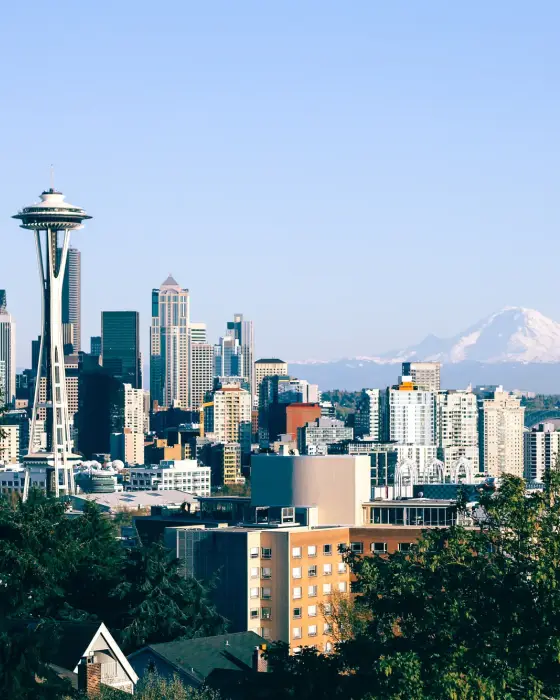
Pike Place, the waterfront, Space Needle and Mount Rainier
Days Start with the basic programme and choose extensions for the time you have.
How the guide reaches this number
Stay two days: one for the market, the waterfront and downtown, and another for the Seattle Center, Queen Anne and the canal. A third, if you have it, goes to the old city, the Asian neighborhood and Capitol Hill, and one more day leads to Mount Rainier, 2 hours 30 minutes away by road one-way. This isn't a city for anyone who wants busy streets at midnight, because downtown empties out after 7pm. With just one day, get to Pike Place before 9:30am and go down the Overlook Walk to the waterfront park. In the afternoon, take the monorail to the Seattle Center and, if the sky is clear, climb Queen Anne to Kerry Park to see Rainier behind the buildings. What disappoints is the Space Needle, expensive for anyone who could instead go up for free to Rem Koolhaas's library, and downtown, where the offices that pay the highest salaries in the country sit a few blocks from one of the largest unhoused populations in the United States. From November to March, daylight drops to about eight hours at the solstice and there are few events, so aim for summer.
2–3
When Mid-June to mid-September, the dry season; July and August are the driest months
How the guide reaches this number
Summer is the reason to come: from mid-June to mid-September it rains little, highs sit between 22 and 27 °C and, in June, the sun sets after 9pm, which leaves time for a walk after dinner. October starts to get wet; November, December and January concentrate the rain and the gray, with highs of 7 to 10 °C and about eight hours of daylight at the December solstice. Annual rainfall is roughly 950 mm, less than New York or Miami, but it falls on about 150 days a year, as a fine, persistent drizzle that calls for a hooded jacket more than an umbrella. Spring is unpredictable: the cherry trees in the University of Washington's central quad bloom between the second half of March and early April and fill the campus. High season runs from July to September, with peak hotel rates and restaurant reservations required; low season from November to March. If you can choose, avoid November, which combines winter darkness with an empty calendar.
Per person/day about $130–220 per person on a mid-range trip; about $70–90 on a budget trip (approximate 2026 figures)
How the guide reaches this number
Per person per day: accommodation, meals, urban transport, visits and a small allowance for extras. Flights excluded; larger purchases vary. Editorial estimate, not a quote.
 What Nilo thinks
Come to Seattle for the cold water, the mountain in the background and a tidy, understated city. Stay two days: one for the market, the waterfront and downtown, and another for the Seattle Center, Queen Anne and the canal. A third, if you have it, goes to the old city, the Asian neighborhood and Capitol Hill, and one more day leads to Mount Rainier, 2 hours 30 minutes away by road one-way. This isn't a city for anyone who wants busy streets at midnight, because downtown empties out after 7pm. With just one day, get to Pike Place before 9:30am and go down the Overlook Walk to the waterfront park. In the afternoon, take the monorail to the Seattle Center and, if the sky is clear, climb Queen Anne to Kerry Park to see Rainier behind the buildings. What disappoints is the Space Needle, expensive for anyone who could instead go up for free to Rem Koolhaas's library, and downtown, where the offices that pay the highest salaries in the country sit a few blocks from one of the largest unhoused populations in the United States. From November to March, daylight drops to about eight hours at the solstice and there are few events, so aim for summer.At Pike Place, fishmongers throw salmon over the counter, in a 1907 market built into nine levels on the hillside above Puget Sound. From there, the Overlook Walk footbridge goes down to the waterfront, and the monorail leads to the Seattle Center, home to the Space Needle and Dale Chihuly's blown glass. The city got rich selling shovels to Klondike prospectors, assembled airplanes at Boeing and later launched grunge, Starbucks and Amazon. At the table, order Puget Sound oysters at happy hour and grilled salmon on a cedar plank. With clear skies, Mount Rainier, a 4,392 m volcano, appears at the end of the streets, and locals let you know “the mountain is out.” Come between mid-June and mid-September, in the dry season, and set aside two days, leaving a third for Capitol Hill and the Asian neighborhood.
Quick facts
- Population
- about 817,000 in the city (2025 state estimate); about 2.4 million in King County and about 4.1 million in the metro area
- Founded
- The Denny party landed at Alki Point on November 13, 1851; the town was incorporated on December 2, 1869
- Country and region
- United States, state of Washington, King County, Pacific Northwest coast
- Language
- English; after that, Spanish, Chinese, Vietnamese, Tagalog, Somali, and Amharic are the most-spoken languages at home
- Currency
- US dollar ($)
- Time zone
- Pacific Time, UTC−8 (UTC−7 during daylight saving, March to November)
- Best time to visit
- Mid-June to mid-September, the dry season; July and August are the driest months
- Average daily cost
- about $130–220 per person on a mid-range trip; about $70–90 on a budget trip (approximate 2026 figures)
When to go
Mid-June to mid-September, the dry season; July and August are the driest months
January
3° to 9°C
147 mm of rain
February
3° to 10°C
96 mm of rain
March
4° to 12°C
106 mm of rain
April
6° to 15°C
81 mm of rain
May
9° to 19°C
48 mm of rain
October
8° to 16°C
99 mm of rain
November
5° to 11°C
160 mm of rain
December
3° to 8°C
145 mm of rain
How the year changes
Summer is the reason to come: from mid-June to mid-September it rains little, highs sit between 22 and 27 °C and, in June, the sun sets after 9pm, which leaves time for a walk after dinner. October starts to get wet; November, December and January concentrate the rain and the gray, with highs of 7 to 10 °C and about eight hours of daylight at the December solstice. Annual rainfall is roughly 950 mm, less than New York or Miami, but it falls on about 150 days a year, as a fine, persistent drizzle that calls for a hooded jacket more than an umbrella. Spring is unpredictable: the cherry trees in the University of Washington's central quad bloom between the second half of March and early April and fill the campus. High season runs from July to September, with peak hotel rates and restaurant reservations required; low season from November to March. If you can choose, avoid November, which combines winter darkness with an empty calendar.
The same numbers as a table
| Month | Temperature °C | Rain mm |
|---|---|---|
| January | 3 to 9 | 147 |
| February | 3 to 10 | 96 |
| March | 4 to 12 | 106 |
| April | 6 to 15 | 81 |
| May | 9 to 19 | 48 |
| June · | 12 to 22 | 37 |
| July · | 14 to 25 | 15 |
| August · | 14 to 25 | 25 |
| September · | 12 to 22 | 41 |
| October | 8 to 16 | 99 |
| November | 5 to 11 | 160 |
| December | 3 to 8 | 145 |
Nilo's tips
Get to Pike Place between 8:30 and 9:30am
The Pike Place stalls start well before 9am, and by 10:30am the main corridor is already jammed. Start at the Pike Place Fish Market, where they've thrown salmon over the counter since 1986, and go down the nine levels to Post Alley. After 4pm the market gets moving again, and you can make the same walk without the crowds.
$3.00 covers any stretch of the Link
The Link light rail fare doesn't change with distance: one tap of the ORCA card when you board covers the whole trip, with no need to tap again when you get off. ORCA costs $3, and the day pass is $6, which pays for itself in two rides.
The ferry only charges you westbound
The round trip to Bainbridge Island costs $11.35 for walk-on passengers and is charged only when leaving Colman Dock; on the way back, you get off without going through a turnstile. The crossing takes 35 minutes, and it's on the return that the Seattle skyline appears in full from the deck. Winslow is a five-minute walk from the terminal, so you can go and come back in half a morning.
Go to Pioneer Square on the first Thursday, at night
The neighborhood empties out at 7pm, except on the first Thursday of the month, when the art galleries all open together at night and the streets fill up. Take advantage of the evening to go up to the observation deck of the 1914 Smith Tower. On the way back, after 10pm, stick to First or Fourth Avenue. Third Avenue, between Pike and Pine, sees public drug use and occasional arguments, almost never directed at passersby.
Order the Olympia oyster at happy hour, dine before 10pm
At the late-afternoon happy hour, oysters go for $1.50–2.50 apiece, and on weekdays the kitchen closes around 10pm, even with the bar open until 2am. Try the Olympia, the only native oyster of Puget Sound, about the size of a coin, alongside the Kumamoto, small and sweet, and follow straight on with dinner. When the bill comes, remember that the roughly 10.35% tax and the 18% to 20% tip aren't in the menu price.
Watch salmon climb the Ballard Locks, for free (June–Sept)
Between June and September, windows below the waterline let you watch salmon swimming against the current. The Hiram M. Chittenden Locks have operated since 1917, and admission is free, as is the adjoining botanical garden. Light rail doesn't reach the neighborhood, so go by bus, at the same fare as the rest of the city.
Explore the map
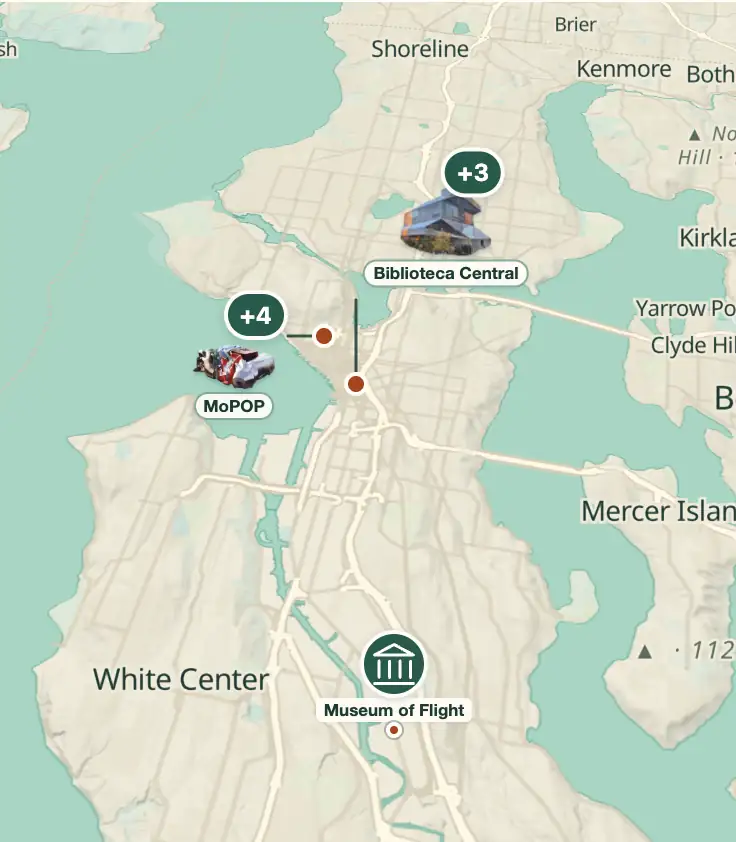
© OpenStreetMap · OpenFreeMap · © OpenMapTiles
Explore the map, read about the other places and plan your travel days in the app.
Open the appWhat to see
Seattle: The isthmus between the sea and the lake
The terrain is a series of parallel hills left by the Puget glacier, running north-south, producing grades of up to 20% in Queen Anne, Capitol Hill and Beacon Hill and streets that end in stairs.
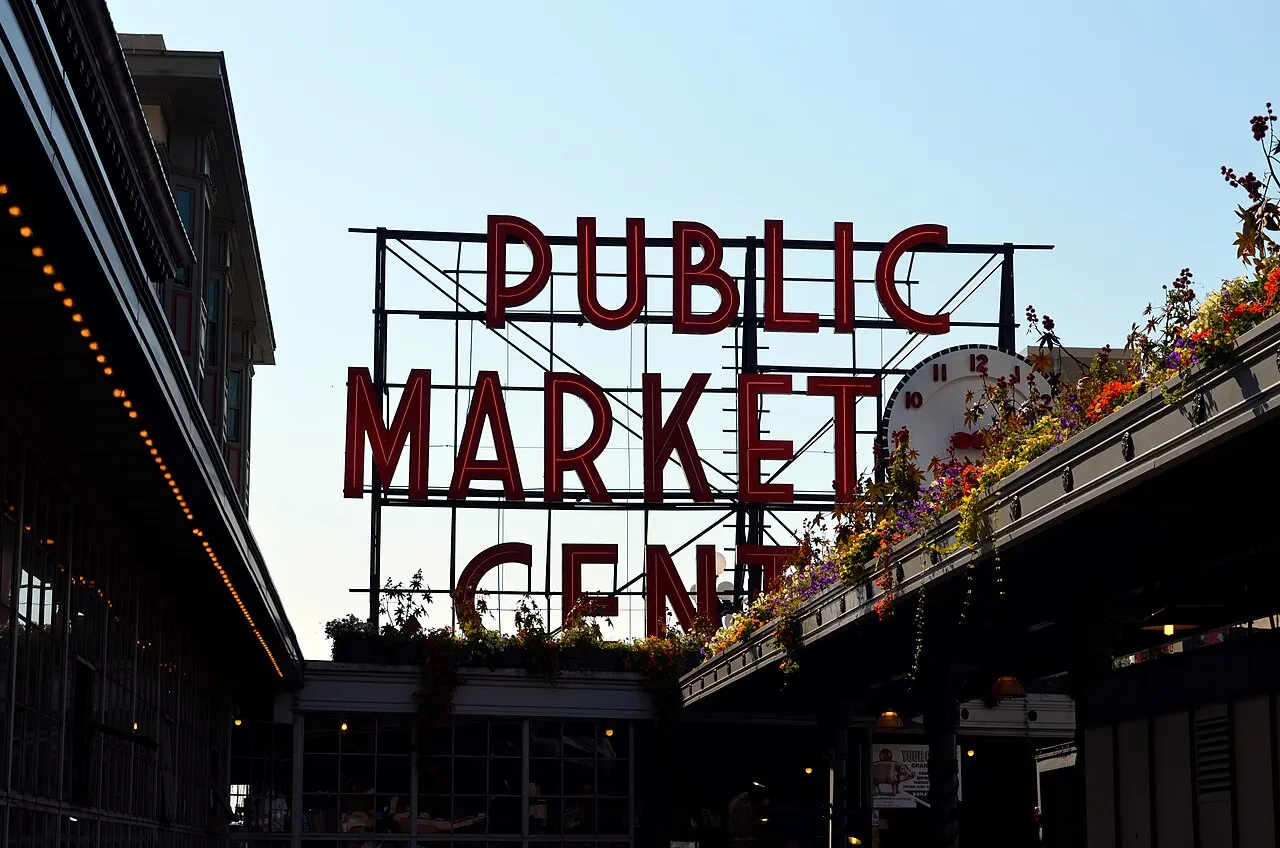
Pike Place Market
A public market opened on August 17, 1907, to cut out the middleman between producer and consumer; today it draws about 10 million visits a year across nine levels built into the hillside. At the Pike Place Fish Market, fishmongers have been throwing salmon over the counter since 1986, and Starbucks, which was born next to the market in 1971, keeps its oldest still-running store, from 1976, at number 1912 on the same street.
The market emerged in 1907 to cut out the middleman between producer and buyer, and today occupies nine levels built into the hillside, where fishmongers have thrown salmon since 1986.
Check access

Central Library
A glass-and-steel building by Rem Koolhaas and Joshua Prince-Ramus, opened in May 2004. The “book spiral” lays out all the nonfiction on a continuous four-story ramp, with no break in the shelf numbering. Free admission and a view from the tenth floor.
In Koolhaas and Prince-Ramus's glass building, the visit holds up because the nonfiction collection runs along a continuous four-story ramp with no break in the call numbers, with free admission and a view from the tenth floor.
Check access
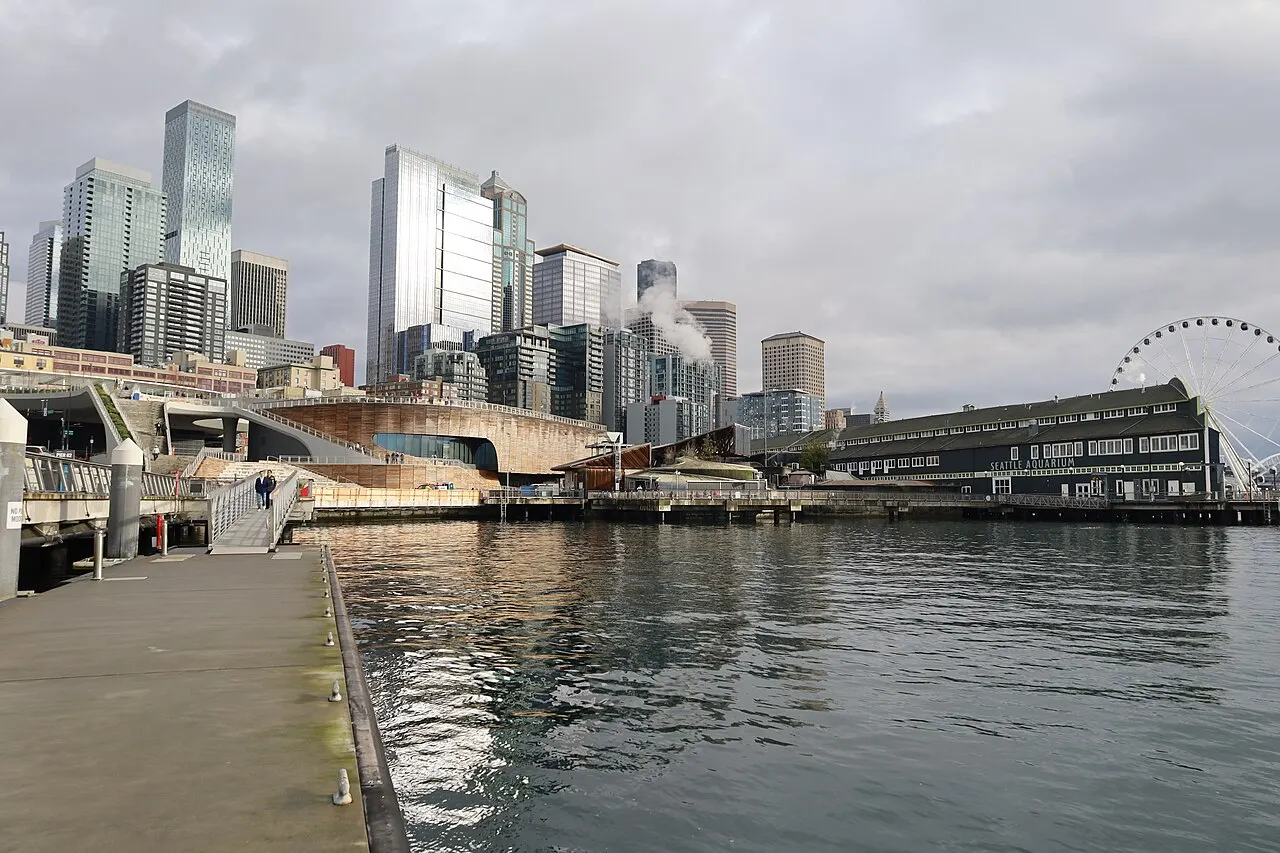
The waterfront and Seattle Aquarium
With the viaduct torn down in 2019, the waterfront became a park, completed in 2025, and the Overlook Walk footbridge links Pike Place to the water's edge without stairs. In 2024 the aquarium opened the Ocean Pavilion, with a circular tropical tank of about 1.2 million liters.
The demolition of the viaduct in 2019 turned the waterfront into a park finished in 2025, and a footbridge links Pike Place to the water's edge with no stairs, while the circular tank holds about 1.2 million liters.
Check access
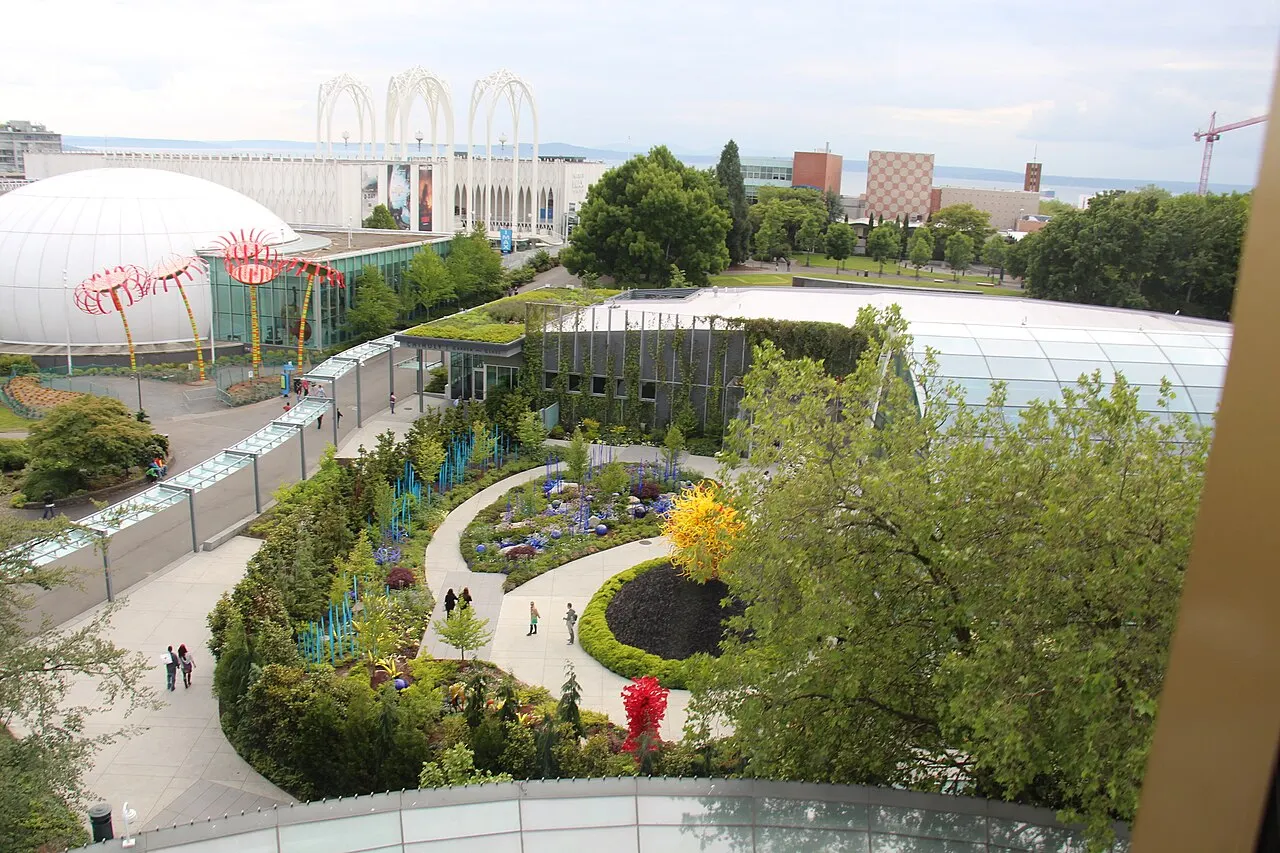
Chihuly Garden and Glass
Opened in 2012 next to the Space Needle, it gathers the blown-glass installations of Dale Chihuly, born in Tacoma in 1941. The central conservatory holds a suspended piece over 30 m long in red, orange, and yellow.
The spot next to the Space Needle earns its place with the blown-glass piece hanging in the central greenhouse, which runs over 30 m and combines red, orange and yellow.
Check access
MoPOP
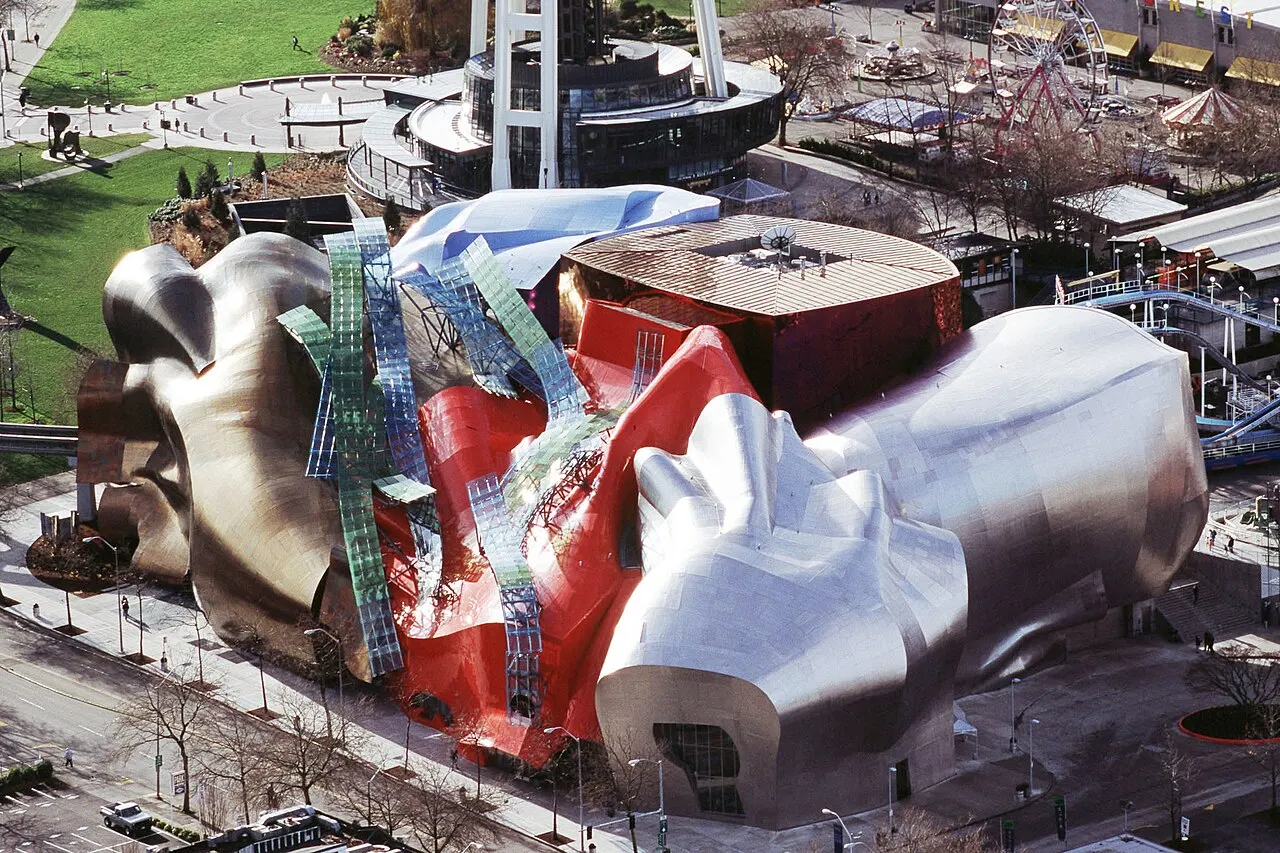
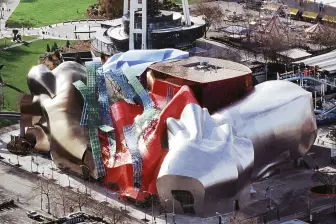
A pop-culture museum designed by Frank Gehry and opened in 2000, with colored metal sheets pierced by the monorail track. It holds collections on Jimi Hendrix and grunge, plus permanent exhibits on science fiction and horror film.
The mass of colored panels cut through by the monorail track, designed by Frank Gehry and opened in 2000, holds the memory of Jimi Hendrix and grunge, plus science fiction and horror film.
Check access
Pioneer Square and the underground
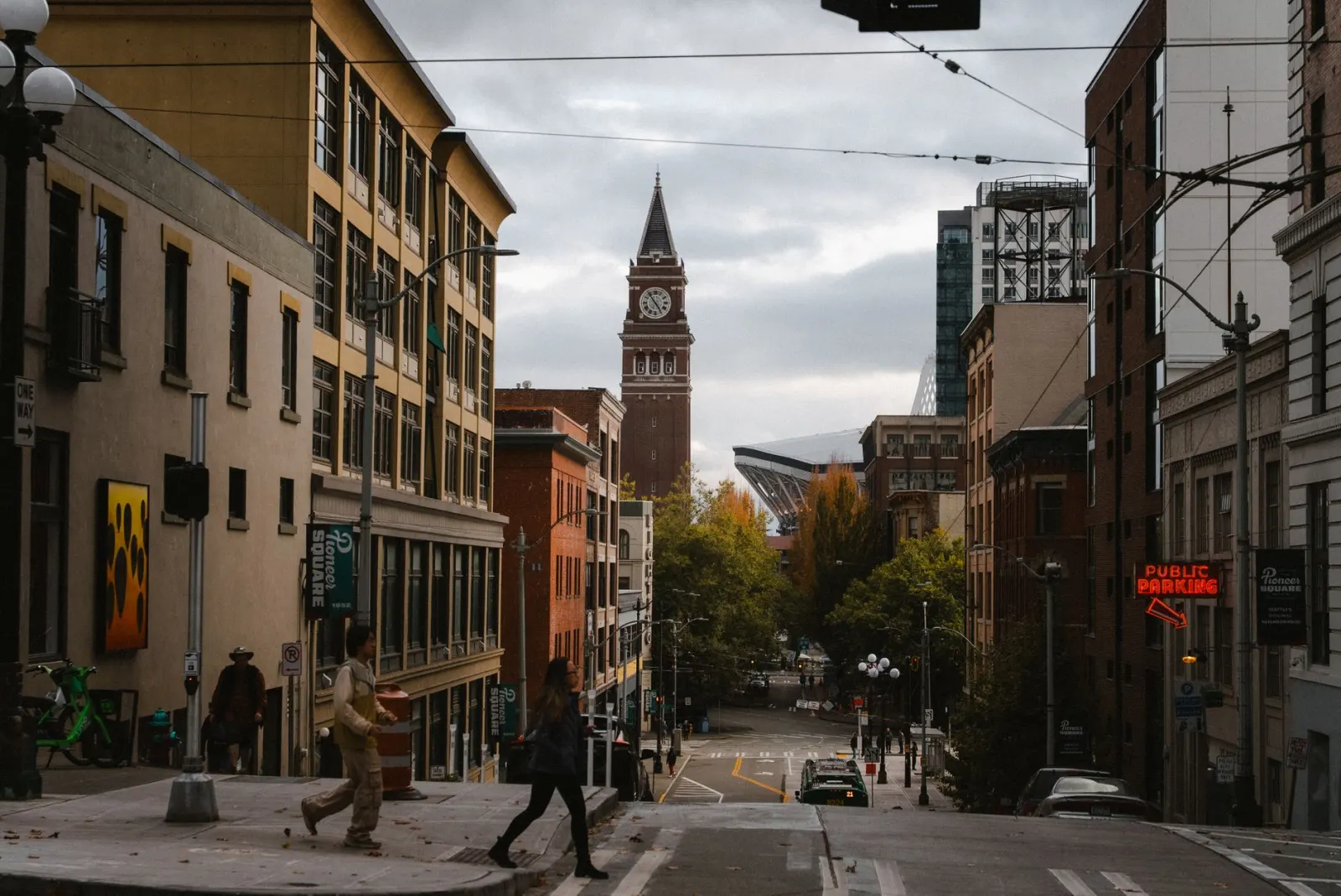
The city's original core, rebuilt in brick after the 1889 fire. It holds the Klondike Gold Rush National Historical Park (free admission), the 1914 Smith Tower, the tallest building west of the Mississippi until 1931 and on the West Coast until 1962, and tours of the old buried street level.
The brick core, rebuilt after the 1889 fire, is worth the walk through the walkways on the old, buried street level, and the Smith Tower stood as the tallest building on the West Coast until 1962.
Check access

Ballard Locks
The Hiram M. Chittenden Locks, operating since 1917, that overcome the 6 to 8 m drop between Puget Sound and Lake Union. The fish ladder has underwater windows where you can watch salmon swim upstream between June and September. Free admission, with an adjoining botanical garden.
The locks, which overcome a 6 to 8 m drop, justify the visit because you can watch salmon pass by through underwater windows from June to September, and admission is free.
Check access
Kerry Park, Gas Works, and Discovery Park
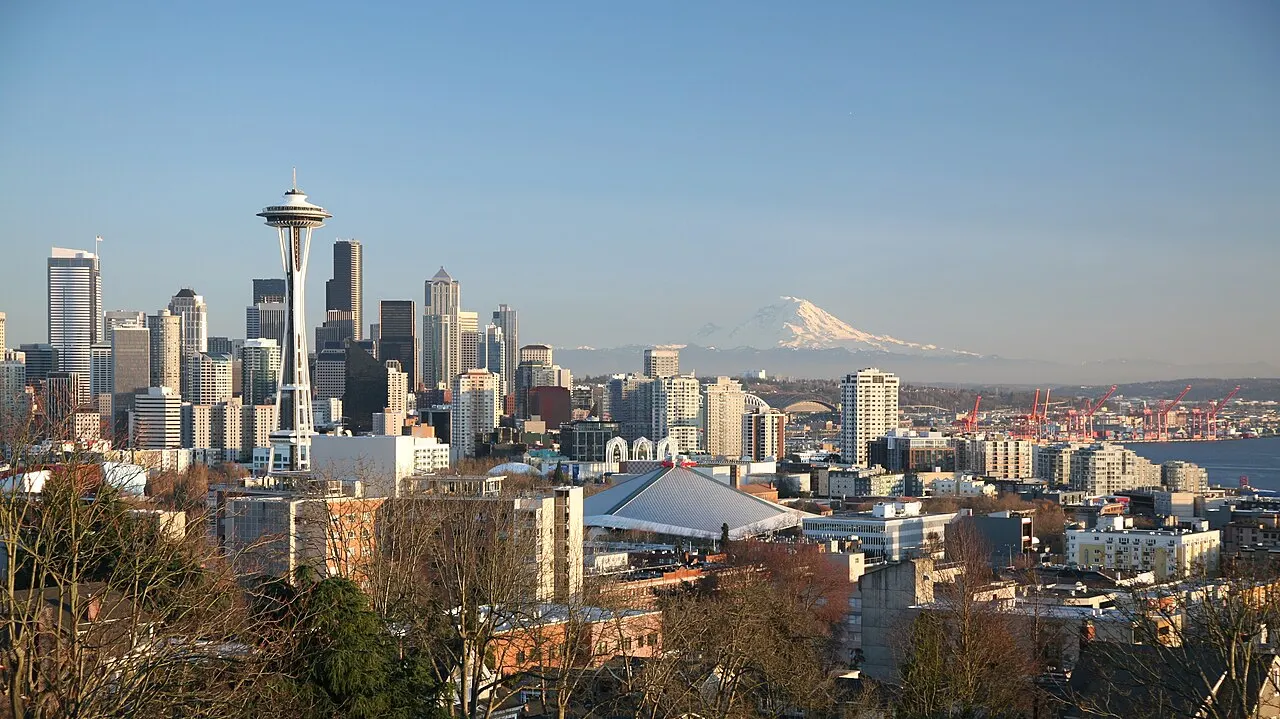
Kerry Park, in Queen Anne, gives the classic view of downtown with Mount Rainier in the background. Gas Works Park, from 1975, preserved the towers of an 1906 gasworks on a hill above Lake Union. Discovery Park covers 216 hectares, with beach, bluff, and the 1881 West Point lighthouse.
Kerry, Gas Works and the 216 ha park bring together downtown with Rainier in the background, the gasworks towers on the hill and the bluff with the 1881 West Point lighthouse.
Check access

Space Needle
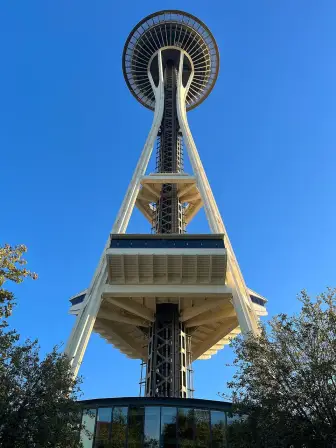
A 184 m tower built in just over a year for the 1962 World's Fair, with an observation deck at about 158 m. Since the 2018 renovation, the rotating floor is made of glass. Tickets run $35–45; buy a timed slot.
The 1962 tower, 184 m tall with its platform at 158 m, is skippable because two free viewpoints show the same downtown: the tenth floor of the Central Library and Kerry Park, in Queen Anne, with Rainier in the background. If you want to go up, buy the combined ticket with the Chihuly, which costs more than the tower alone, with a set time slot.
Check access
Nilo’s itinerary
Start with the basic programme and choose extensions for the time you have.
Plan my days in the app ↗Day 1 · Market, waterfront, and downtown
Arrive at Pike Place Market between 8:30 and 9:30am, start at the fish stalls, and work your way down the nine levels to Post Alley.
Use the Overlook Walk footbridge to reach the waterfront park, completed in 2025, and choose between the Seattle Aquarium and a walk to Olympic Sculpture Park.
Have chowder or oysters for lunch on the waterfront and head back up Union Street to First Avenue.
In the afternoon, visit the Seattle Art Museum, with the 15 m “Hammering Man” sculpture on the sidewalk; on Thursdays the museum stays open until 8pm, and on the first Thursday of the month admission is free.
End at Rem Koolhaas's Central Library, free admission, climbing the book spiral to the tenth floor.
Day 2 · Seattle Center, Queen Anne, and the canal
Take the monorail from Westlake to Seattle Center.
Pick two of the three attractions on the grounds: Space Needle, Chihuly Garden and Glass, and MoPOP; a combo ticket is cheaper and requires a timed slot.
Have lunch in Lower Queen Anne and climb on foot (or by bus, because of the 20% grade) to the Kerry Park viewpoint.
Head north to the Ballard Locks: watch the boats pass through and the fish ladder, with salmon visible June through September.
Have dinner on Ballard Avenue or head down to Fremont to see the concrete troll under the Aurora Bridge before dark.



If you stay longer
Day 3 · The old city, the Asian neighborhood, and Capitol Hill
Start at the Klondike Gold Rush National Historical Park, in Pioneer Square, which is free and takes 40 minutes.
Take a tour of the street level buried in 1889 and climb the observation deck of the 1914 Smith Tower.
Walk to the Chinatown-International District: Wing Luke Museum in the morning or early afternoon, lunch in Little Saigon or at Uwajimaya.
Head up to Capitol Hill by train or bus, cross Volunteer Park and see the Asian Art Museum and the 1912 conservatory.
End the afternoon in Capitol Hill, with a walk along the Pike/Pine corridor, and have an early dinner there.
Food
 AI illustration
Salmon
Five species arrive from the North Pacific; sockeye from the Copper River, between May and June, and king (chinook) are the priciest. The classic preparation grills the fillet on a cedar plank, a technique inherited from coastal peoples.
 AI illustration
Oysters
Farmed in Puget Sound, Totten Inlet, and Hood Canal. The Olympia is the only native species and is about the size of a coin; the Kumamoto is small and sweet. Bars run oyster happy hours for $1.50–2.50 apiece in the late afternoon.
 AI illustration
Dungeness crab and chowder
Dungeness is served whole and cooked, with melted butter, mostly between October and January. Northwest chowder is thinner than the Boston kind and gets smoked salmon in some versions.
 AI illustration
Seattle-style teriyaki
Grilled chicken with sweet sauce over rice, served in a box, a format created by Toshihiro Kasahara in 1976 and replicated by hundreds of neighborhood shops. It costs $12–16 and is the city's standard workday lunch.
 AI illustration
Seattle dog
A hot dog with cream cheese spread on the bun and grilled onions on top, sold from carts outside the bars of Capitol Hill and Pioneer Square after midnight. $8–10.
 AI illustration
Coffee
The city adopted Italian espresso in the 1980s and exported the habit. Besides Starbucks, from 1971, there are local roasters with their own lines; a latte costs $5–6.50 and comes without sugar by default. The sugar sits on the counter.
 AI illustration
Pho, banh mi, and Filipino food
Vietnamese immigration after 1975 and Filipino immigration, much earlier, built the city's cheap food scene. A bowl of pho runs $13–17 and a banh mi $6–9, in Little Saigon and along Rainier Avenue.
 AI illustration
Rainier cherries and summer fruit
The Rainier cherry, yellow with a red blush, was developed at Washington State University in the 1950s and appears at Pike Place stalls between June and July. Blueberries, raspberries, and blackberries follow in August.
Day trips

Mount Rainier National Park
The Paradise area, in Mount Rainier National Park, is 145 km away and about 2 hours 30 minutes by car, at 1,650 m, with trails through wildflower meadows in July and August. There's no public transit, and in high season you need to book an entry time.

Bainbridge Island
Bainbridge Island is 35 minutes by ferry from Colman Dock, without a car, for $11.35 round trip. The village of Winslow is a five-minute walk from the terminal, and the Japanese American Exclusion Memorial, 20 minutes away, marks the departure point of March 1942.
Snoqualmie Falls and North Bend
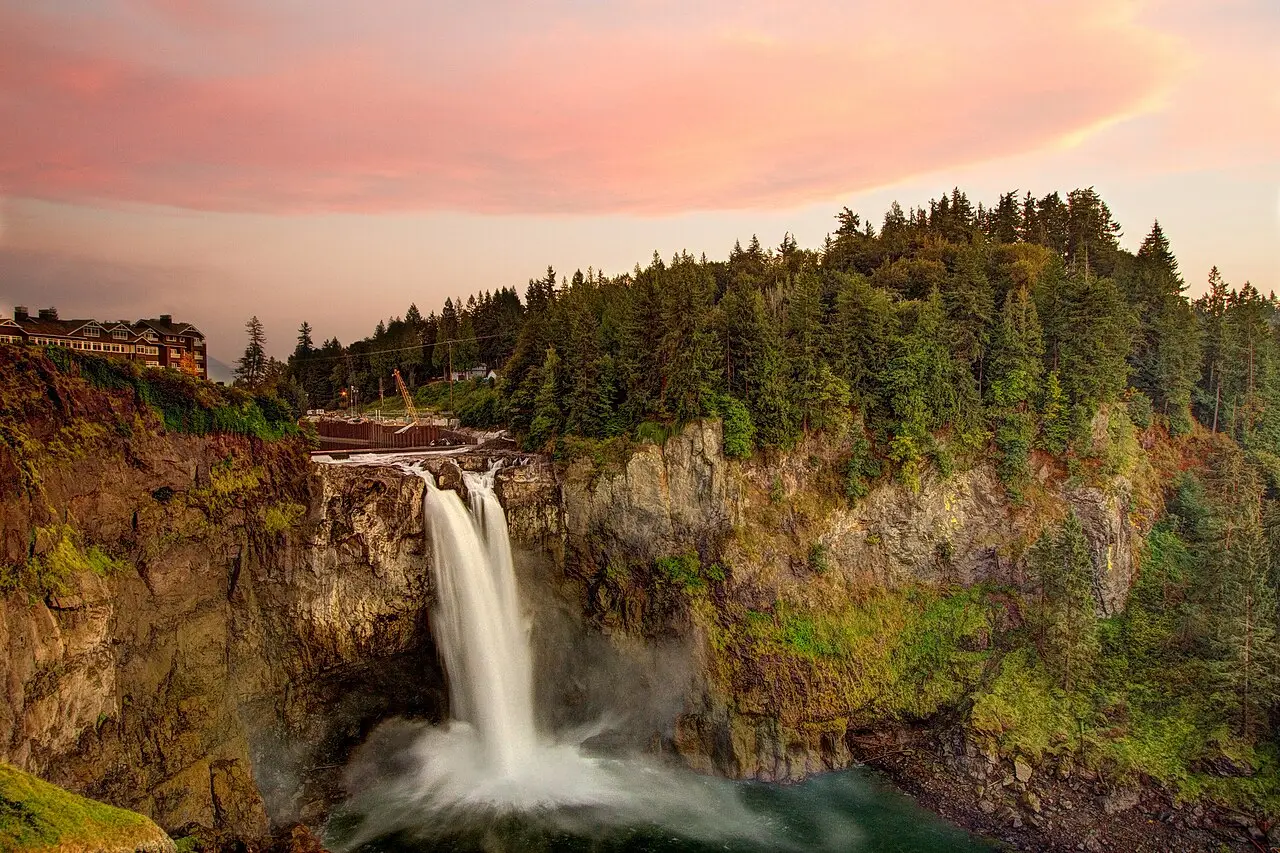
Snoqualmie Falls is a 45-minute drive east on I-90: an 82 m waterfall with a free lookout and an 1899 hydroelectric plant built into the rock. North Bend, next door, is where “Twin Peaks” was filmed.
Where to begin
Market, waterfront, and downtown
Arrive at Pike Place Market between 8:30 and 9:30am, start at the fish stalls, and work your way down the nine levels to Post Alley.
Seattle Center, Queen Anne, and the canal
Take the monorail from Westlake to Seattle Center.
The old city, the Asian neighborhood, and Capitol Hill
Start at the Klondike Gold Rush National Historical Park, in Pioneer Square, which is free and takes 40 minutes.
Money
The currency is the US dollar, and the number on the price tag isn't the number you pay. Sales tax in Seattle runs about 10.35% and never shows up on the label or the menu: add it to everything before deciding. Cards are accepted everywhere, including street carts and buses, and cash is nearly dispensable, though useful at the market stalls. Approximate 2026 ranges: espresso $4–6, counter lunch $15–25, dinner at a mid-range restaurant $35–60 per person without drinks, a beer $8–11, a mid-range hotel $220–350 in summer and $150–220 off-season. A tip of 18% to 20% is standard at a table-service restaurant. Counter card readers suggest 15% to 25% and there's no obligation to accept the suggestion, even though the screen waits for you to. Washington has no state income tax, which pushes revenue collection onto consumption and explains the high rate. Brazilians need a B1/B2 visa, ESTA doesn't apply to Brazil, and the MRV fee stands at $185 per person. The so-called Visa Integrity Fee, of $250, was approved in 2025 but wasn't being charged as of mid-2026, so confirm before booking.
Getting there and around
SEA sits 22 km south: Link Line 1 reaches downtown
Seattle-Tacoma International Airport (SEA) sits 22 km south of downtown. Link Line 1 connects the SEA/Airport station to Westlake, downtown, in about 40 minutes, for a flat fare of $3.00. The station sits at the end of a covered walkway from the fourth floor of the parking garage. Just tap your card once, when boarding. Taxi or rideshare costs $45–70 and takes 30 to 50 minutes, longer at I-5 rush hour. The ORCA card costs $3 and works for train, bus, streetcar, monorail, and ferries; you can also tap a credit card or phone instead. The day pass costs $6.
The bus covers what the train doesn't reach
Within the city, King County Metro buses charge a flat fare of $2.75 and cover what the train doesn't reach: Ballard, Fremont, Queen Anne, West Seattle. The 1962 monorail runs from Westlake to Seattle Center in two minutes for about $4 and accepts ORCA. Washington State Ferries leave Colman Dock for Bainbridge Island (35 min) and Bremerton (60 min). Pedestrians pay $11.35 round trip, charged only westbound, so the return goes through without a turnstile or a warning. Downtown is walkable, but the hills are real: between Pike Place and the top of Capitol Hill there's nearly 100 m of elevation gain, and it's worth taking the bus instead of climbing it all on foot. Bike- and scooter-share apps are available, and the Burke-Gilman bike path runs about 30 km along the canal and Lake Washington. Parking downtown costs $25–45 a day.
Safety
Seattle has low violent crime by the standard of large American cities and high property crime, and that shifts the alert: the real risk for a visitor is a car break-in and bag or phone theft in a busy spot. Don't leave anything visible in the vehicle, and don't move anything into the trunk after parking, because that transfer is exactly what people watch for. Third Avenue between Pike and Pine, the area around Pioneer Square after 10pm, and the intersection of 12th and Jackson in Little Saigon see concentrated public drug use and occasional arguments. It's uncomfortable, almost never directed at passersby, and resolves itself by walking a block over: at night prefer First or Fourth Avenue. On trails and the waterfront the risk is hypothermia and fast-changing weather, not wildlife. Puget Sound's water sits between 8 and 13 °C year-round, and from a distance it never looks that cold. Emergency is 911, hospital care is expensive and billed to the patient, so travel insurance with medical coverage isn't optional.
Etiquette tips
Wait for the signal to cross
Even with an empty street and no car in sight, pedestrians wait for the white walk signal. Crossing against it draws attention and remains a traffic violation in the state.
Don't open your umbrella
Local rain is fine and continuous, and the solution is a hood and a waterproof jacket. An umbrella in Seattle marks you as a visitor faster than an accent, and on downtown's narrow sidewalks it gets in the way.
Sort your trash three ways
Sorting trash into compost, recycling and landfill is required by city law, including in food courts and cafés. Food scraps and napkins go in the compost, not the regular trash.
Board at the front and pay as you board
There's no conductor. Tap your ORCA on the validator as you get on; if paying cash, have exact change, because there's no change given. To get off, use the middle door and pull the cord before your stop.
Suggest a date and time to keep talking
Service is attentive, but conversation with a stranger rarely goes past the initial friendliness, a habit locals themselves call the Seattle Freeze. If you want to keep it going, suggest a day and time; the answer is usually yes.
Marijuana is legal, smoking it in public isn't
Marijuana sales are legal for people 21 and over in licensed stores, with ID checked at the door. Using it on the street, in a park, in a car or on a hotel balcony is an infraction, and so is drinking alcohol in public.
Mistakes to avoid
Buying the Space Needle ticket before checking the sky
Booking the Space Needle for a fixed day and time before checking the forecast. The view that justifies the ticket is the one of Mount Rainier, which only shows up on a clear day; with drizzle, what you see from up top is downtown under the clouds. Decide the day for the tower in the morning, by looking at the sky.
Treating Rainier as an afternoon outing
Treating Mount Rainier as an afternoon outing. From downtown to the Paradise area it's about 2 hours 30 minutes each way just driving, and the Sunrise area only opens roughly July through September.
Leaving a bag visible inside the car
Leaving a backpack, bag, or charger visible inside the car. Car break-ins are the most common crime in the city, happen in daylight, and are frequent at trailhead and viewpoint parking lots.
Trusting the app's crossing time
Blindly trusting the app's estimated time to cross the canal. The Ballard, Fremont and University drawbridges open for boats and stop traffic for up to ten minutes outside rush hour, because there the boat has priority over the car. Build some slack into the trip.
Tax and tip add nearly a third
Adding up only the menu price. Tax of about 10.35% plus a tip of 18% to 20% add nearly a third to the final bill, and the menu price never includes either.
Useful phrases
The mountain is out
Mount Rainier is visible; it works as a greeting on a clear day
Sun break
A patch of sun between clouds, sometimes just ten minutes long; it shows up in the weather forecast under that name
The Seattle Freeze
The friendliness that never turns into an invitation; residents use the phrase about themselves
Pike Place, not Pike's
The market is called Pike Place Market; saying “Pike's” marks you as a visitor instantly
The Ave
University Way NE, the commercial strip of the university neighborhood: no one calls it by its official name
Go Hawks
Cheering for the Seahawks; on game day it works as a greeting between strangers
Districts
Downtown and Pike Place
The commercial and financial center between First and Sixth Avenue, with the market at the western end, the Seattle Art Museum and its 15 m “Hammering Man” on First Avenue, and the department stores on Pine. It empties out after 7pm, except on game day.
Pioneer Square
The city's oldest blocks, of red brick and Romanesque arches built after 1889. Art galleries open together on the first Thursday of the month, and the sports bars exist because of the two stadiums four blocks south.
Chinatown-International District
An Asian neighborhood since the 1880s, split into Chinatown, the former Japanese Nihonmachi, and Little Saigon, east of the expressway. It's home to the Wing Luke Museum, the Uwajimaya market, and the city's densest cluster of cheap restaurants.
Belltown and South Lake Union
Belltown is the flat land created by leveling Denny Hill, today full of residential towers and nightlife bars. South Lake Union became Amazon's urban campus in the 2010s, with the three glass domes of the Spheres (2018) and the history and industry museum, MOHAI, on the lakeshore.
Capitol Hill
A hill just east of downtown, the city's densest neighborhood and the center of LGBTQ+ life since the 1970s. Bars and restaurants cluster along the Pike/Pine corridor; to the north sit 1900s mansions and Volunteer Park, from 1904, with the Asian Art Museum in an art deco building from 1933.
Queen Anne and Seattle Center
Lower Queen Anne surrounds the grounds of the 1962 fair: Space Needle, MoPOP, Chihuly, Climate Pledge Arena, and KEXP radio's open studio. Upper Queen Anne is residential, sits atop a 20% grade, and holds the Kerry Park viewpoint.
Fremont, Wallingford, and Ballard
North of the canal. Fremont declared itself the “center of the universe,” keeps a concrete troll from 1990 under the Aurora Bridge and a statue of Lenin brought from Slovakia in 1993. Ballard was a Norwegian fishing village until being annexed in 1907 and today gathers breweries, the Sunday market, and the locks.
West Seattle and Columbia City
West Seattle sits across the bay, has Alki Beach (where the settlers landed in 1851) and a head-on view of the skyline; you get there by bridge, bus, or water taxi in about 10 minutes. Columbia City, to the south and served by the Link, is among the zip codes with the most languages spoken in the country.
History
before 1850 · Lushootseed villages on the Duwamish
The lower Duwamish River and the shores of Elliott Bay were the territory of Lushootseed-speaking villages, with longhouses of red-cedar planks. The economy revolved around salmon, cedar, and trade along Puget Sound.
1851–1852 · Alki Point and the move to the bay
Arthur Denny's party landed at Alki Point on November 13, 1851. The following year they moved to the eastern shore of Elliott Bay, where the water was deep enough for ships, and named the settlement after Si'ahl, a Duwamish and Suquamish leader.
1853–1888 · The sawmill and Skid Road
Henry Yesler's sawmill, from 1853, was the city's first industry and created its first road: the log skid down the hill, today's Yesler Way. The term skid road passed into English as a synonym for a rundown neighborhood.
1889 · The great fire
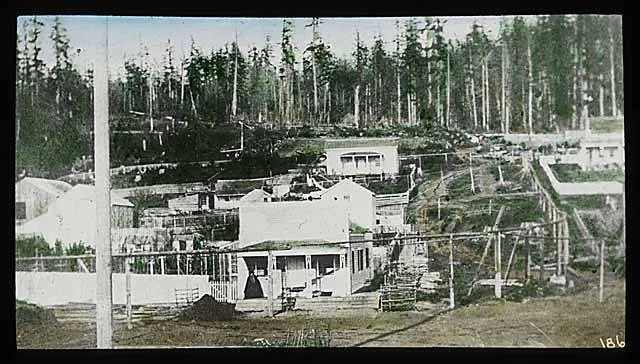
On June 6, 1889, a glue pot caught fire in a carpentry shop and the blaze consumed about 29 blocks downtown. Rebuilding was done in brick and stone, and street level was raised. The old ground floor became the underground you can now tour in Pioneer Square.

1897–1909 · Klondike gold and the 1909 fair
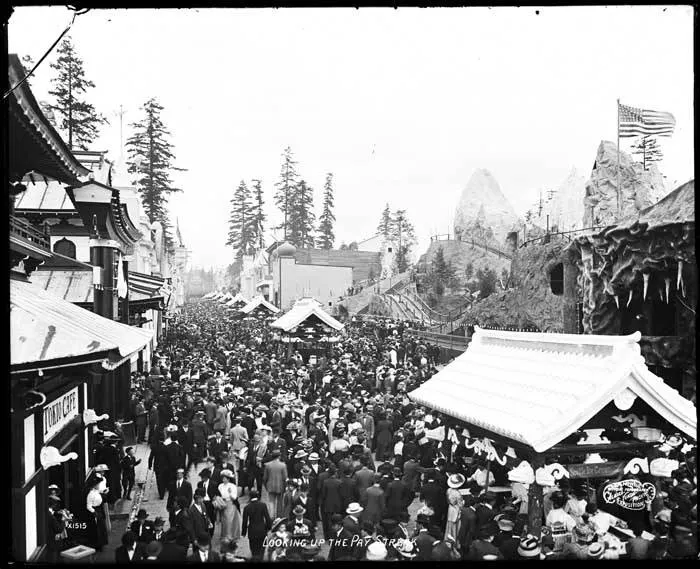
On July 17, 1897, the steamer Portland docked with gold from the Yukon and Seattle sold itself as the port where you bought the gear. The 1909 Alaska-Yukon-Pacific Exposition cemented the reputation and laid out the University of Washington campus.
1898–1930 · The leveling of Denny Hill
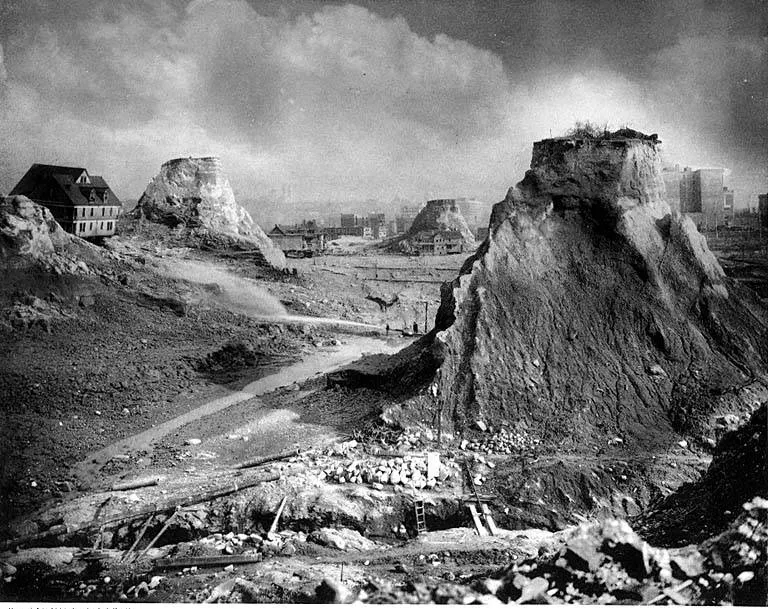
Hydraulic-mining water jets tore down whole hills and pushed the earth into the bay. The Denny Regrade removed a rise of nearly 30 m to create the flat ground north of downtown, where Belltown now stands.
1916–1919 · Boeing and the first general strike
William Boeing founded his airplane factory in 1916: parts came out of the Red Barn, a wooden shipyard on the banks of the Duwamish River, and were assembled in a hangar on Lake Union. In February 1919, about 65,000 workers walked out for five days in the first general strike in US history.

1942 · The forced removal from Nihonmachi
Executive Order 9066 removed about 7,000 Japanese Americans from the region to internment camps; the first left Bainbridge Island on March 30, 1942. The Japanese neighborhood, next to Chinatown, never returned to its former size.
1962 · The Century 21 World's Fair
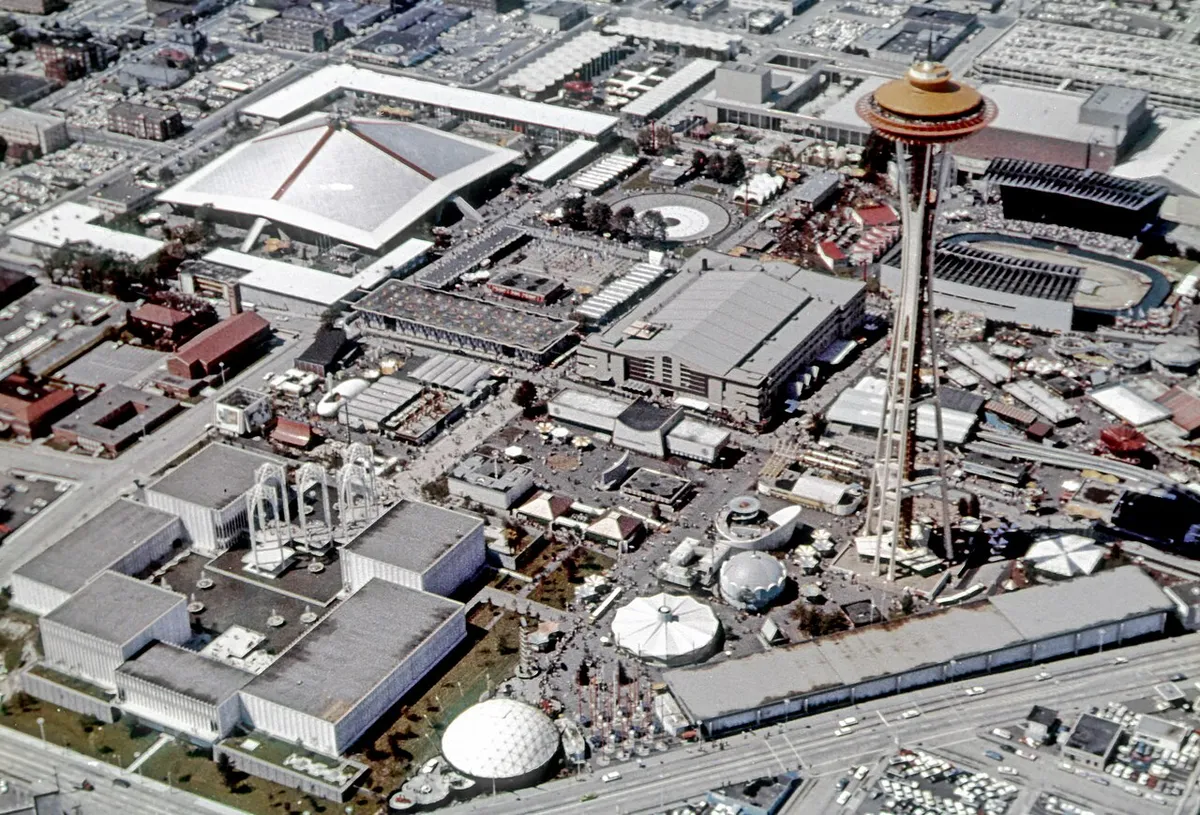
The 1962 exposition drew nearly 10 million visitors in six months and left behind the Space Needle, the monorail, and the 30 hectares of Seattle Center. The tower was built in just over a year.
1969–1971 · The Boeing Bust
The cancellation of the supersonic transport and a drop in orders cut Boeing's workforce from about 100,000 to under 40,000. In 1971 two realtors rented a billboard: “Will the last person leaving SEATTLE turn out the lights.”

1979–today · Software, coffee, and cranes
Microsoft moved to the region in 1979, Starbucks was born at Pike Place in 1971, and Amazon in 1994, fixing the tech hub in South Lake Union by the 2010s. In 2019 the waterfront viaduct was torn down and replaced by a tunnel; the waterfront park was completed in 2025.

Complete history
Lushootseed-speaking villages
Before 1850 the lower Duwamish was the territory of Lushootseed-speaking villages, with cedar-plank longhouses and an economy of salmon, cedar and seaborne trade. On November 13, 1851, Arthur Denny's party, settlers from Illinois, landed at Alki Point; the following year they crossed to the east shore of Elliott Bay, where the water was deep enough for cargo ships, and named the settlement after Si'ahl, the Duwamish and Suquamish leader who negotiated with the newcomers. The Treaty of Point Elliott, in 1855, transferred the land and created reservations outside the city, and an 1865 city ordinance even barred Native people from staying within city limits. Henry Yesler's sawmill, opened in 1853, was the first industry and shaped the geography of work for decades.
The fire of 1889 remade downtown
On June 6, 1889, a fire that started in a carpentry shop destroyed about 29 blocks downtown. Rebuilding in brick came together with raising street level, done to solve the sewage the tide kept pushing back: the old ground floor became the underground now open to tour in Pioneer Square. Eight years later, on July 17, 1897, the steamer Portland docked with gold from the Klondike, and the city organized itself to sell shovels, flour, and tickets, not to mine. The population jumped from about 43,000 in 1890 to about 237,000 in 1910. Between 1898 and 1930, water jets leveled Denny Hill and pushed millions of cubic meters of earth into the bay, and the 1909 Alaska-Yukon-Pacific Exposition introduced the city to the rest of the country.
Boeing set up its first factory in 1916
William Boeing set up his first factory in 1916, and aviation would define local employment for the next fifty years. In February 1919, in a port that already concentrated strong unions and Scandinavian, Japanese, Chinese, and Filipino immigration, 65,000 workers walked out for five days in the first general strike in the United States. World War II turned Boeing into a bomber factory and drew thousands of Black workers from the South to the Central District. At the same time, Executive Order 9066 removed about 7,000 Japanese Americans from the region to internment camps starting in March 1942, and Nihonmachi, the Japanese neighborhood next to Chinatown, lost nearly its entire population.
The 1962 World's Fair: Space Needle and monorail
The 1962 World's Fair was a deliberate bet on repositioning: nearly 10 million visitors in six months and, as legacy, the Space Needle, the monorail, and the grounds of Seattle Center. The euphoria ended with the Boeing crisis. Between 1969 and 1971 Boeing lost orders and had its supersonic transport project canceled by Congress, and employment fell from about 100,000 to under 40,000. Recovery didn't come from metal: Microsoft moved from Albuquerque to the region in 1979, Starbucks opened at Pike Place in 1971 and became a national chain in the 1990s, the label Sub Pop launched Soundgarden and Nirvana starting in 1988, and Amazon started in a garage in 1994.
The new wealth in South Lake Union
The turn of the century began with two shocks. In November 1999, protests against the WTO meeting shut down downtown, and on February 28, 2001, the magnitude 6.8 Nisqually earthquake condemned the concrete viaduct that separated downtown from the water. The swap took almost two decades: the tunnel that replaced the viaduct opened in February 2019, the viaduct was demolished the same year, and the waterfront park that took its place was finished in 2025. Meanwhile, Amazon concentrated the new wealth in South Lake Union, with an urban campus instead of a suburban park, and housing prices more than doubled between 2012 and 2022, pushing longtime residents to the south end of the county. Light rail reached Lynnwood in 2024 and Redmond in 2025. The result is a young, expensive and unequal city: about half of adults have a college degree, the median salary is among the highest in the country, and one of the largest unhoused populations in the United States lives a few blocks from the downtown offices.
Nihonmachi, the old Japanese neighborhood, sits right against Chinatown, and there's no mark on the ground between the two.
Geography and shape of the city
The isthmus between the sea and the lake
Seattle occupies an isthmus about 8 km wide between Puget Sound (a glacially carved arm of the sea, salty and deep) and Lake Washington, with Lake Union wedged in the middle; the Ship Canal, opened in 1917, links the three bodies of water and forces north-south traffic across drawbridges that open for boats.
The hills and the mountain in the distance
The terrain is a series of parallel hills left by the Puget glacier, running north-south, producing grades of up to 20% in Queen Anne, Capitol Hill and Beacon Hill and streets that end in stairs. On a clear day you can see the Olympic Mountains to the west, the Cascade Range to the east and Mount Rainier, an active 4,392 m volcano, about 90 km to the south; when it appears, locals say “the mountain is out.”
The crooked grid and the faults
The grid is orthogonal, but rotates in Pioneer Square, because the first platters couldn't agree on the orientation of the blocks. The meeting of the two layouts still produces crooked intersections on Yesler Way. The city sits atop the Seattle Fault and within 200 km of the Cascadia subduction zone, which explains the seismic retrofits visible on older facades.
Culture
Music: the city's biggest cultural product
Music is the city's biggest cultural export. Jimi Hendrix was born in Seattle in 1942 and is buried in Renton; Ray Charles recorded his first records here in the 1940s and Quincy Jones grew up in the Central District. In 1988 the label Sub Pop started releasing Soundgarden, Mudhoney, and Nirvana, and the 1991 album Nevermind turned a local scene into a global label; Pearl Jam and Alice in Chains came out of the same basement circuit. Local hip-hop runs from Sir Mix-a-Lot, in the 1980s, to Macklemore. Public radio station KEXP 90.3 FM keeps a studio with a live audience at Seattle Center, with free admission and a café open to the public.
Film, TV and glass art
In film, “Sleepless in Seattle” (1993) sold the romantic Seattle of the Lake Union houseboats, while “Singles” (1992), shot on Capitol Hill, captured the cheap grunge-era city; the series “Twin Peaks” shot its exteriors in the Snoqualmie area, a 45-minute drive away. In glass art, Seattle is the home of Dale Chihuly, whose pieces fill the garden and galleries that bear his name at Seattle Center.
Sports organize the calendar
Sports organize the calendar: the Seahawks (NFL football) and Sounders (soccer) play at Lumen Field, the Mariners (baseball) at T-Mobile Park since 1999, the Kraken (hockey) at Climate Pledge Arena since 2021, and the Storm (women's basketball) has four WNBA titles. In June and July 2026 Lumen Field hosted World Cup matches. Nightlife concentrates along the Pike/Pine corridor, in Capitol Hill, on Ballard Avenue, and in Belltown; bars close at 2am and kitchens stop well before that, around 10pm on weekdays.
On Seahawks game day, the team jersey shows up all over the street.
Bruce Lee is buried at Lake View Cemetery, in Capitol Hill, just north of Volunteer Park.
Festivals and events

Northwest Folklife
Memorial Day weekend, in late May, at Seattle Center. A festival of music and dance from immigrant and Native traditions of the region, no ticket required, sustained by voluntary donation.
Seattle International Film Festival (SIFF)
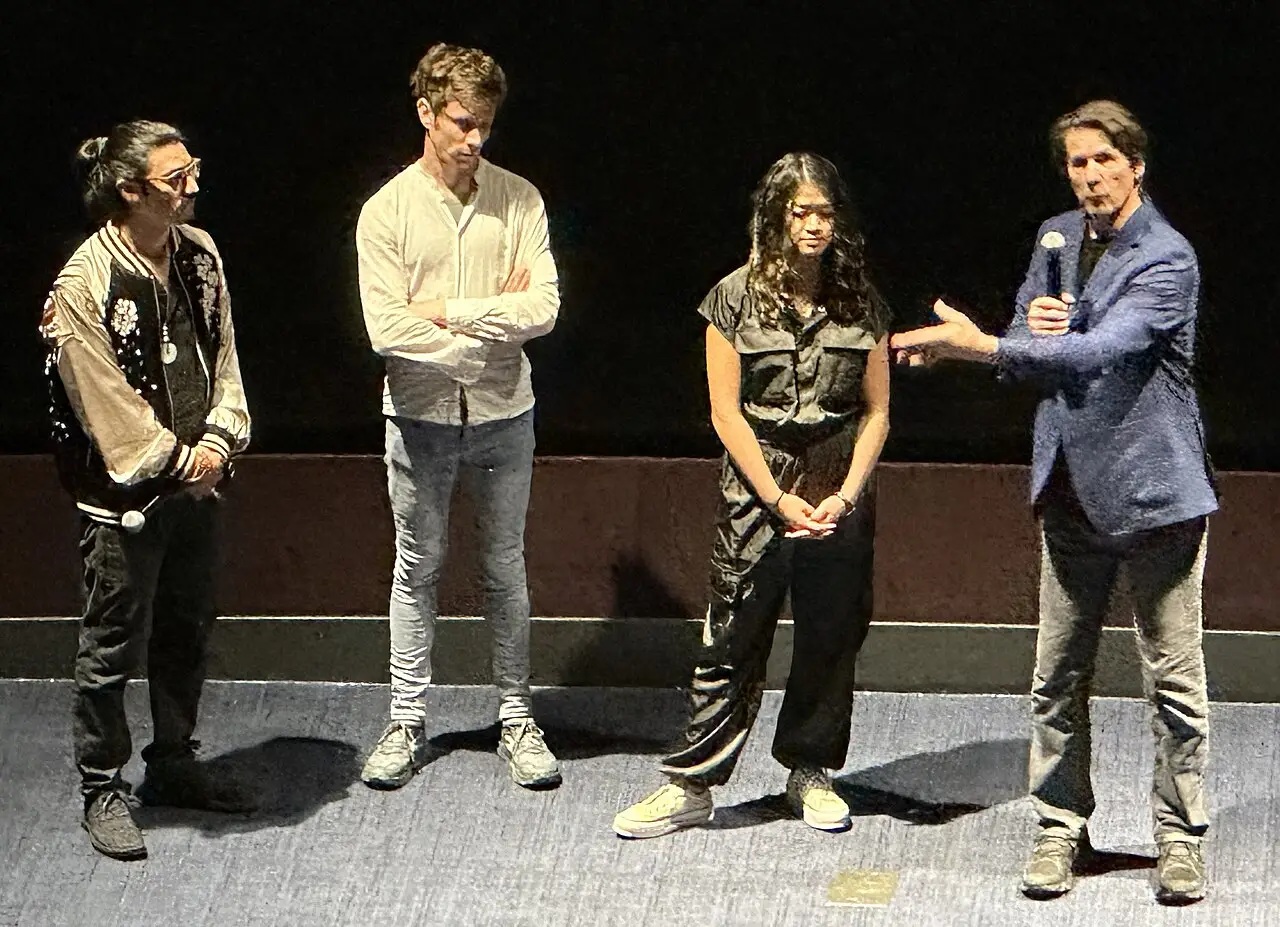
May into early June: about three weeks and several hundred films across venues around the city. It's among the best-attended film festivals in the United States.
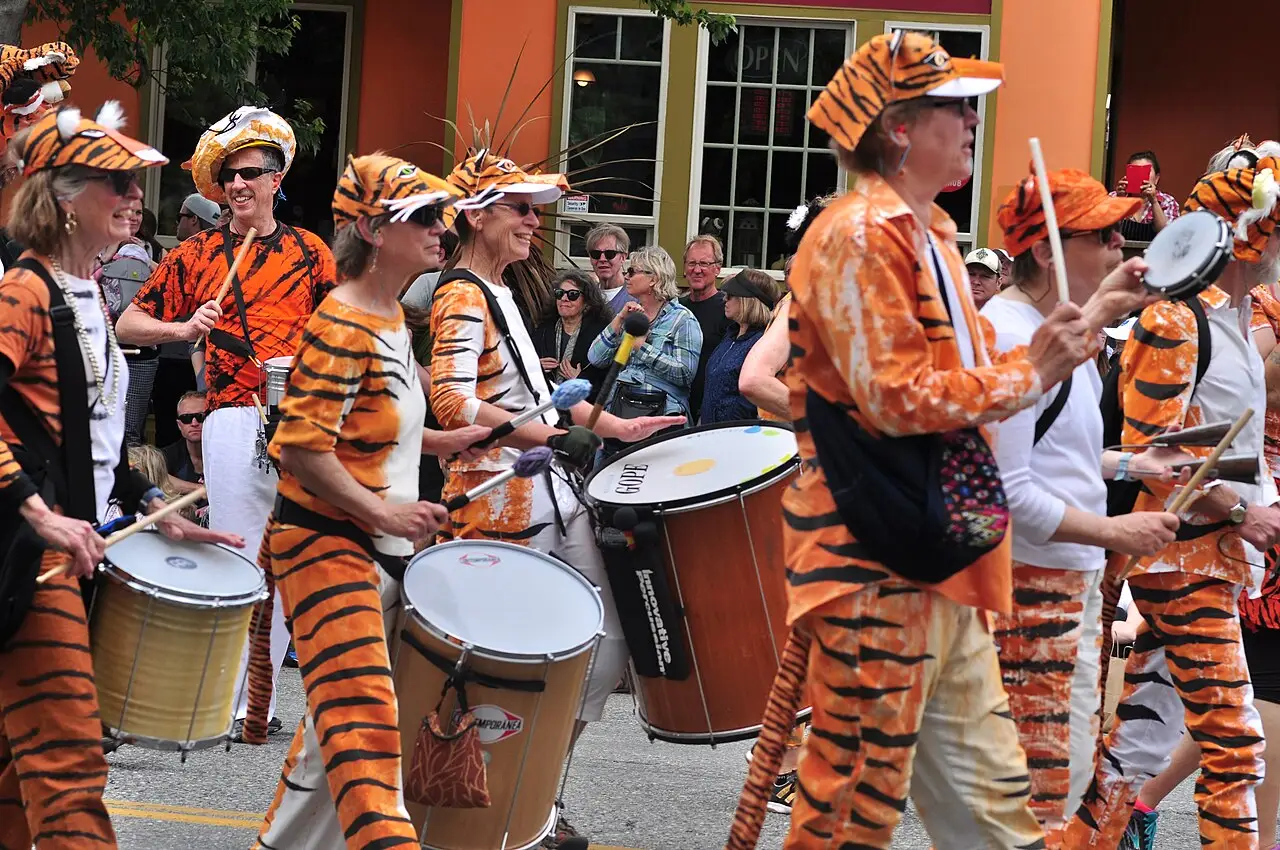
Fremont Solstice Parade
The Saturday closest to the June solstice, in the Fremont neighborhood. An unsponsored parade with no written words, opened by a squadron of body-painted cyclists.
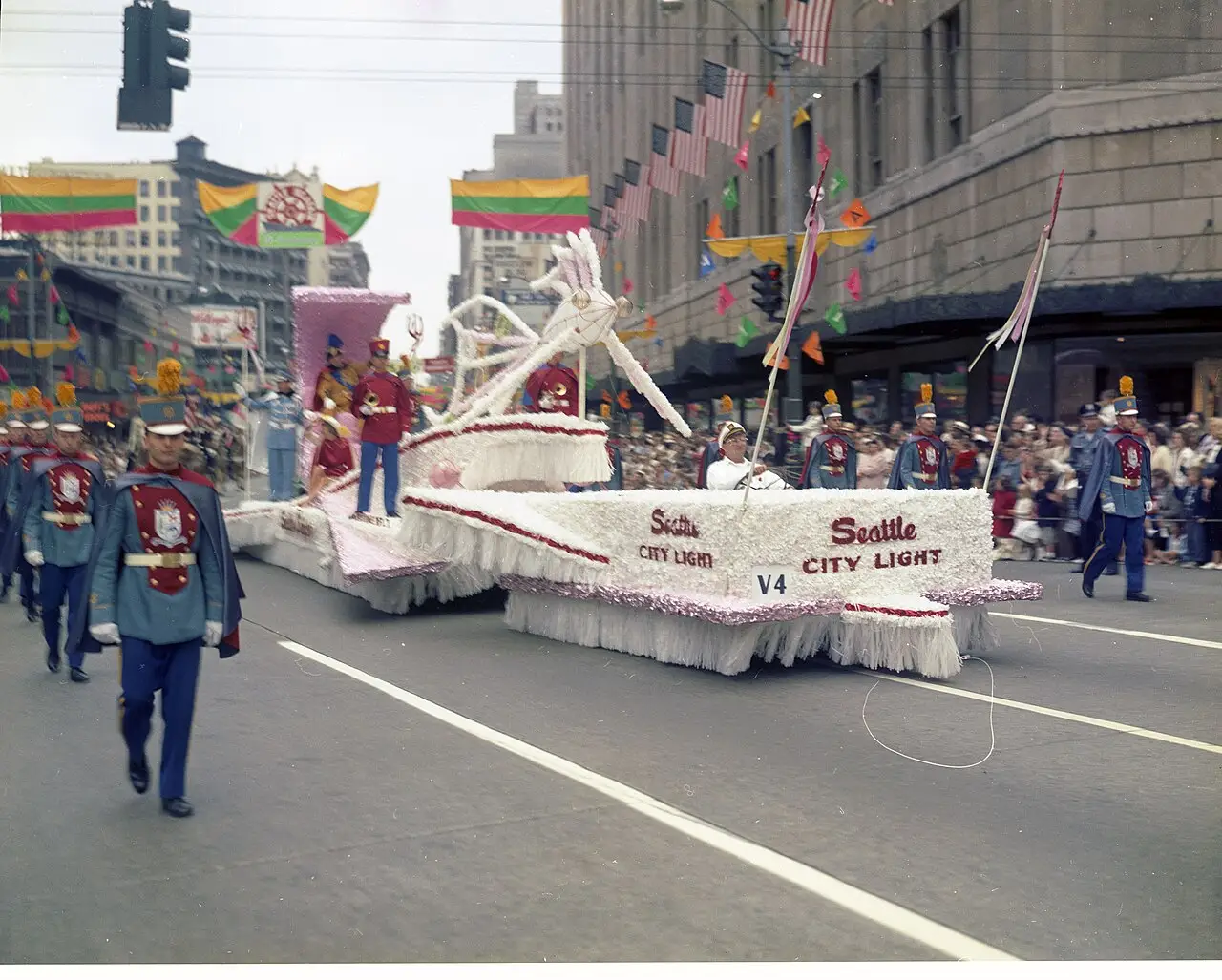
Seafair
From July into early August. A month of nautical and neighborhood events that closes with hydroplane boat races on Lake Washington and Blue Angels flyovers, which shut down bridges for a few hours.
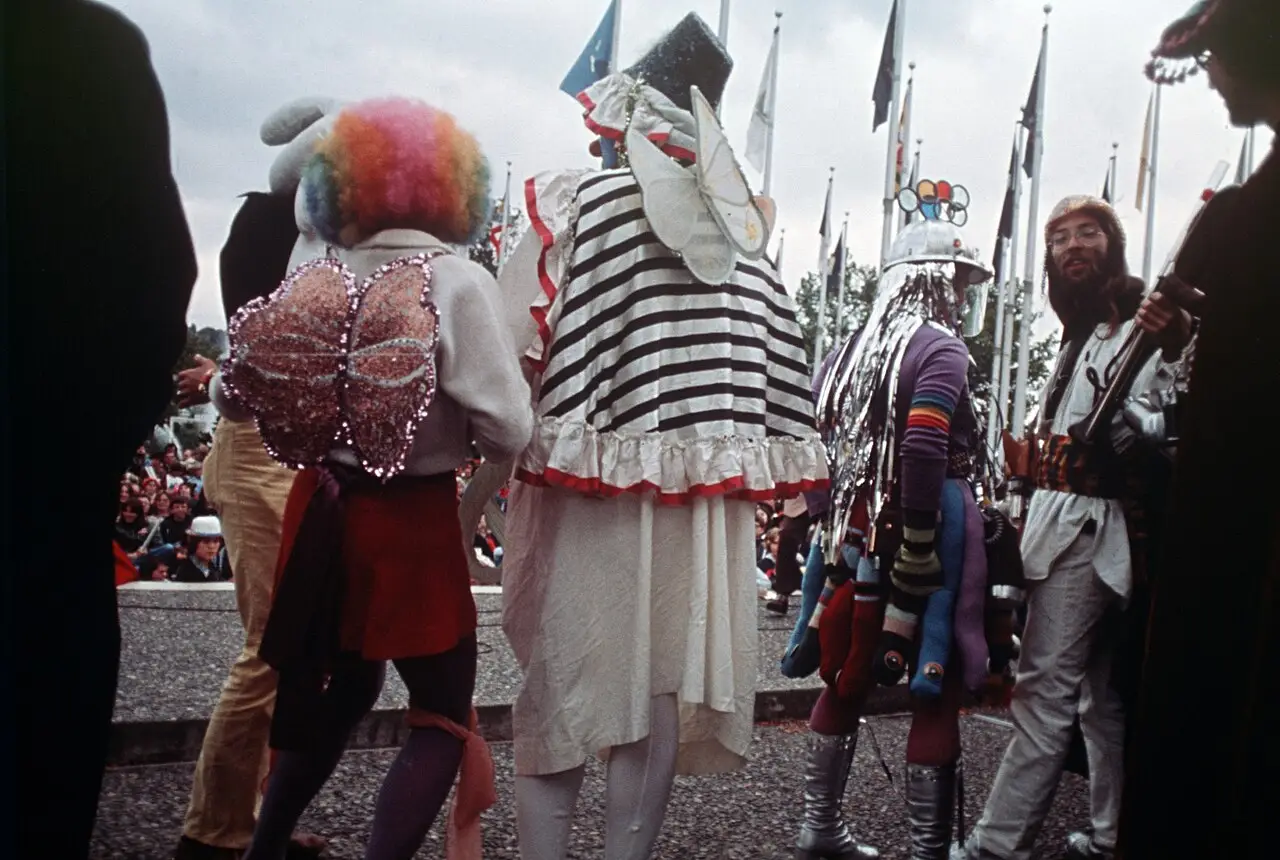
Bumbershoot
Labor Day weekend, in early September, at Seattle Center. A music and arts festival that has existed since 1971 and marks the informal end of summer.
Books and films
“Skid Road,” by Murray Morgan (1951)
Seattle's informal history told through its characters: the mill worker, the mayor, the bootlegger. Still the book that best explains why the city has the shape it has.
“Singles” (1992), by Cameron Crowe
Filmed in Capitol Hill at the height of the grunge explosion, with members of Pearl Jam and Soundgarden on screen. It captures the cheap city that existed before tech money.
“Where'd You Go, Bernadette,” by Maria Semple (2012)
A satirical novel about contemporary Seattle's private schools, rain, and software engineers. It's the sharpest portrait of the local upper middle class.
Frequently asked questions
Seattle: how do you get from Sea-Tac Airport to downtown?
Link Line 1 connects the SEA/Airport station to Westlake, downtown, in about 40 minutes, for a flat fare of $3.00.
Seattle: how far is Mount Rainier?
The Paradise area, in Mount Rainier National Park, is 145 km away and about 2 hours 30 minutes by car, at 1,650 m, with trails through wildflower meadows in July and August.
Seattle: does the price tag already include tax?
No: sales tax in Seattle runs about 10.35% and never shows up on the price tag or the menu, so add that to everything before deciding.
Seattle: when is the best time to go?
Summer is the reason to come: from mid-June to mid-September it rains little, highs sit between 22 and 27 °C and, in June, the sun sets after 9pm, which leaves time for a walk after dinner.
Seattle: can I cross against the signal if the street is empty?
No: even with an empty street and no car in sight, pedestrians wait for the white walk signal, and crossing against it remains a traffic violation in the state.
Other cities in the country
United States ↗- Days
- 4–5
- When
- Apr–Jun · Sep–Oct
- Per person/day
- Average 180–320 USDMid-range · per person/day
Cost scope
Per person per day: accommodation, meals, urban transport, visits and a small allowance for extras. Flights excluded; larger purchases vary. Editorial estimate, not a quote.
- Days
- 4–5
- When
- Apr–May · Nov
- Per person/day
- Average 220–330 USDMid-range · per person/day
Cost scope
Per person per day: accommodation, meals, urban transport, visits and a small allowance for extras. Flights excluded; larger purchases vary. Editorial estimate, not a quote.
- Days
- 3
- When
- Sep–Oct
- Per person/day
- Average 180–280 USDMid-range · per person/day
Cost scope
Per person per day: accommodation, meals, urban transport, visits and a small allowance for extras. Flights excluded; larger purchases vary. Editorial estimate, not a quote.
- Days
- 4
- When
- May–Jun · Sep–Oct
- Per person/day
- Average 150–260 USDMid-range · per person/day
Cost scope
Per person per day: accommodation, meals, urban transport, visits and a small allowance for extras. Flights excluded; larger purchases vary. Editorial estimate, not a quote.
- Days
- 2–3
- When
- Jan–Apr · Nov–Dec
- Per person/day
- Average 200–350 USDMid-range · per person/day
Cost scope
Per person per day: accommodation, meals, urban transport, visits and a small allowance for extras. Flights excluded; larger purchases vary. Editorial estimate, not a quote.
- Days
- 3
- When
- Feb–May · Oct–Dec
- Per person/day
- Average 250–350 USDMid-range · per person/day
Cost scope
Per person per day: accommodation, meals, urban transport, visits and a small allowance for extras. Flights excluded; larger purchases vary. Editorial estimate, not a quote.
- Days
- 2–3
- When
- Mar–May · Oct–Nov
- Per person/day
- Average 200–350 USDMid-range · per person/day
Cost scope
Per person per day: accommodation, meals, urban transport, visits and a small allowance for extras. Flights excluded; larger purchases vary. Editorial estimate, not a quote.
- Days
- 3
- When
- Mar–May
- Per person/day
- Average 220–320 USDMid-range · per person/day
Cost scope
Per person per day: accommodation, meals, urban transport, visits and a small allowance for extras. Flights excluded; larger purchases vary. Editorial estimate, not a quote.
- Days
- 2–3
- When
- Sep–Oct
- Per person/day
- Average 190–330 USDMid-range · per person/day
Cost scope
Per person per day: accommodation, meals, urban transport, visits and a small allowance for extras. Flights excluded; larger purchases vary. Editorial estimate, not a quote.
- Days
- 5–6
- When
- Jan–Apr · Nov–Dec
- Per person/day
- Average 368 USDMid-range · per person/day
Cost scope
Per person per day: accommodation, meals, urban transport, visits and a small allowance for extras. Flights excluded; larger purchases vary. Editorial estimate, not a quote.
- Days
- 4–6
- When
- Apr–May · Sep
- Per person/day
- Average 329 USDMid-range · per person/day
Cost scope
Per person per day: accommodation, meals, urban transport, visits and a small allowance for extras. Flights excluded; larger purchases vary. Editorial estimate, not a quote.
- Days
- 2
- When
- Apr–May · Sep–Oct
- Per person/day
- Average 203 USDMid-range · per person/day
Cost scope
Per person per day: accommodation, meals, urban transport, visits and a small allowance for extras. Flights excluded; larger purchases vary. Editorial estimate, not a quote.
- Days
- 3
- When
- Apr · Sep–Oct
- Per person/day
- Average 251 USDMid-range · per person/day
Cost scope
Per person per day: accommodation, meals, urban transport, visits and a small allowance for extras. Flights excluded; larger purchases vary. Editorial estimate, not a quote.
- Days
- 3
- When
- May–Jun · Sep–Oct
- Per person/day
- Average 158 USDMid-range · per person/day
Cost scope
Per person per day: accommodation, meals, urban transport, visits and a small allowance for extras. Flights excluded; larger purchases vary. Editorial estimate, not a quote.