United States
New York
Broadway, museums, parks and neighborhoods to eat in
Days Start with the basic programme and choose extensions for the time you have.
How the guide reaches this number
It's not a restful trip: the city has no quiet hour, and a quiet room is expensive, at $280–420 a night. With a single day, take the Staten Island Ferry at 8:30am and walk up to the 9/11 Memorial. Have lunch in Chinatown and cross the Brooklyn Bridge in the late afternoon. Times Square disappoints, with costumed characters charging for photos and billboards kept lit by city law, and fifteen minutes there is plenty. What's worth it there is the TKTS booth, which sells same-day Broadway tickets at up to 50% off.
4–5
When April to June and September to October (15–25°C, brief rain)
How the guide reaches this number
The two comfortable windows are April to June and September to October, with 15–25 °C, long days, and brief rain. Summer runs from mid-June to mid-September, with highs of 28–33 °C, high humidity, and heat waves where it can feel like 38 °C; the subway platform runs hotter than the street and the trains are freezing, so a spare shirt is worth packing in August. Winter runs from December to March, with highs of 3–7 °C, lows below freezing, and about 65 cm of snow a year on average, mostly in January and February. Rain is spread across all twelve months, about 1,200 mm a year, with no dry season; September and October bring the occasional hurricane remnant. Peak-price season runs from late November to January 1, when hotel rates can nearly double, and returns in May and June; January and February have the cheapest hotels of the year. August is heavy going: muggy heat, a city full of tourists, and half the locals out of town.
Per person/day $180–320 per person for mid-range travel (approx., 2026)
How the guide reaches this number
Per person per day: accommodation, meals, urban transport, visits and a small allowance for extras. Flights excluded; larger purchases vary. Editorial estimate, not a quote.
 What Nilo thinks
Set aside four or five days, enough to leave Manhattan and get to know Brooklyn and Queens. It's not a restful trip: the city has no quiet hour, and a quiet room is expensive, at $280–420 a night. With a single day, take the Staten Island Ferry at 8:30am and walk up to the 9/11 Memorial. Have lunch in Chinatown and cross the Brooklyn Bridge in the late afternoon. Times Square disappoints, with costumed characters charging for photos and billboards kept lit by city law, and fifteen minutes there is plenty. What's worth it there is the TKTS booth, which sells same-day Broadway tickets at up to 50% off.From the deck of the free Staten Island Ferry, the southern tip of Manhattan appears in full, with the skyscrapers rising out of the water. New York has brought five boroughs together under one city hall since 1898, and 36% of residents were born in another country. That's why the food follows the subway lines: dim sum in Chinatown, Southern dinner in Harlem, Chinese counters in Flushing and bagels in Williamsburg. Art and parkland split the Fifth Avenue axis. The Metropolitan sits on the edge of Olmsted and Vaux's Central Park, and farther south, on 53rd Street, MoMA holds “The Starry Night.” At night, choose between a Broadway musical, discounted at the TKTS booth, and the jazz sets at the Village Vanguard. Come from April to June or in September and October, and plan for four or five days to cross the East River to Brooklyn and Queens.
Quick facts
- Population
- about 8.5 million in the city; about 20 million in the metro area
- Founded
- 1624, as New Amsterdam, a Dutch outpost; renamed New York in 1664
- Country and region
- United States, New York State, northeastern Atlantic coast
- Language
- English; Spanish as the second street language; more than 200 languages spoken in the city
- Currency
- US dollar ($); the 8.875% tax isn't included in the sticker price
- Time zone
- UTC−5 in winter; UTC−4 during daylight saving time (2nd Sunday of March to 1st Sunday of November)
- Best time to visit
- April to June and September to October (15–25°C, brief rain)
- Average daily cost
- $180–320 per person for mid-range travel (approx., 2026)
When to go
April to June and September to October (15–25°C, brief rain)
January
-2° to 4°C
93 mm of rain
February
-1° to 6°C
81 mm of rain
March
2° to 10°C
109 mm of rain
July
21° to 29°C
117 mm of rain
August
21° to 29°C
116 mm of rain
November
6° to 12°C
91 mm of rain
December
1° to 7°C
111 mm of rain
How the year changes
The two comfortable windows are April to June and September to October, with 15–25 °C, long days, and brief rain. Summer runs from mid-June to mid-September, with highs of 28–33 °C, high humidity, and heat waves where it can feel like 38 °C; the subway platform runs hotter than the street and the trains are freezing, so a spare shirt is worth packing in August. Winter runs from December to March, with highs of 3–7 °C, lows below freezing, and about 65 cm of snow a year on average, mostly in January and February. Rain is spread across all twelve months, about 1,200 mm a year, with no dry season; September and October bring the occasional hurricane remnant. Peak-price season runs from late November to January 1, when hotel rates can nearly double, and returns in May and June; January and February have the cheapest hotels of the year. August is heavy going: muggy heat, a city full of tourists, and half the locals out of town.
The same numbers as a table
| Month | Temperature °C | Rain mm |
|---|---|---|
| January | -2 to 4 | 93 |
| February | -1 to 6 | 81 |
| March | 2 to 10 | 109 |
| April · | 8 to 17 | 104 |
| May · | 13 to 22 | 101 |
| June · | 18 to 27 | 115 |
| July | 21 to 29 | 117 |
| August | 21 to 29 | 116 |
| September · | 17 to 25 | 110 |
| October · | 11 to 18 | 111 |
| November | 6 to 12 | 91 |
| December | 1 to 7 | 111 |
Nilo's tips
On OMNY, use one card for the whole week
From the 13th ride of the week on, the rest are free, with a cap of $35. Each person needs their own card or phone: sharing one between two people throws the cap off. A physical OMNY card costs $2 if you do not want to use your bank card.
On weekends, check the service change notice on the platform
The map on the wall doesn't show weekend service changes, and several lines change route. Check the app too before you go down the stairs. From Friday night to Monday morning, allow a few extra minutes on each ride.
Take the free Staten Island ferry at 8:30am
At 8:30am you can catch the next boat back and walk up to the 9/11 Memorial. The ferry leaves Whitehall every 15–30 minutes and takes 25; stay on the outside deck, with the Statue of Liberty to starboard.
Order the slice that just came out of the oven, for $4–5
Do not order the one waiting in the display case. You eat the slice folded in half. At the halal cart, chicken over yellow rice runs $10–14, and the line is usually shorter at noon than at night.
At TKTS, buy only at the booth
Same-day tickets go for up to 50% off, and the line starts forming at 3pm. At full price, Broadway costs $80–250, and an off-Broadway play runs $40–70. In the line, people offer “TKTS tickets,” but TKTS only sells at the booth.
At the Met, ask at the desk before the kiosk
Visitors from outside the state pay about $30, and New York State residents and students from NY, NJ and CT pay what they wish. The ticket is valid for three days and includes the Cloisters, in Washington Heights. At MoMA, go early, because the galleries fill up from 1pm, and the free Friday evenings are for state residents.
Explore the map
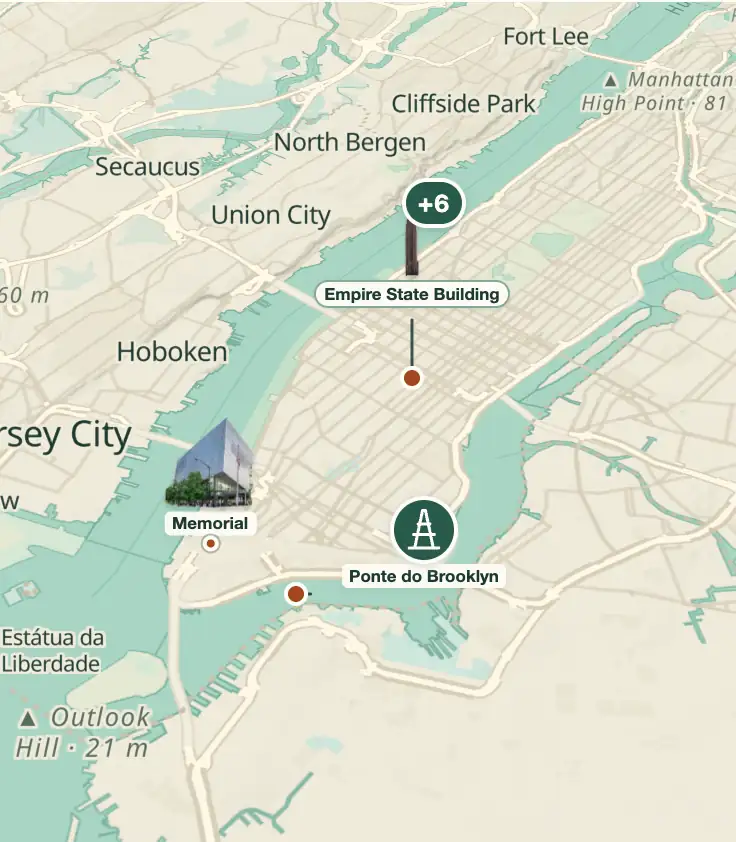
© OpenStreetMap · OpenFreeMap · © OpenMapTiles
Explore the map, read about the other places and plan your travel days in the app.
Open the appWhat to see
New York: The archipelago, the schist, and the East River
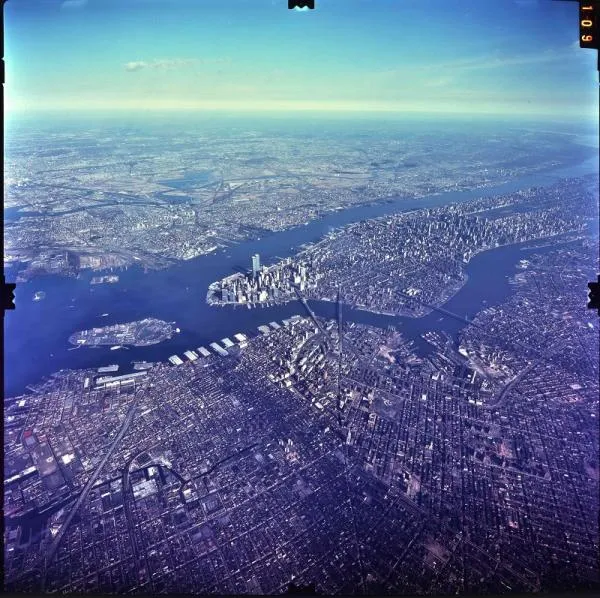
New York occupies an archipelago at the mouth of the Hudson, and of all the boroughs only the Bronx is on the mainland. Manhattan is 21.6 km long by 3.7 km at its widest: above 14th Street, the 1811 grid organizes the numbered streets and avenues, and below it the colonial layout continues, with named streets that turn without warning.

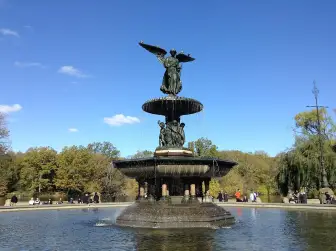
Central Park
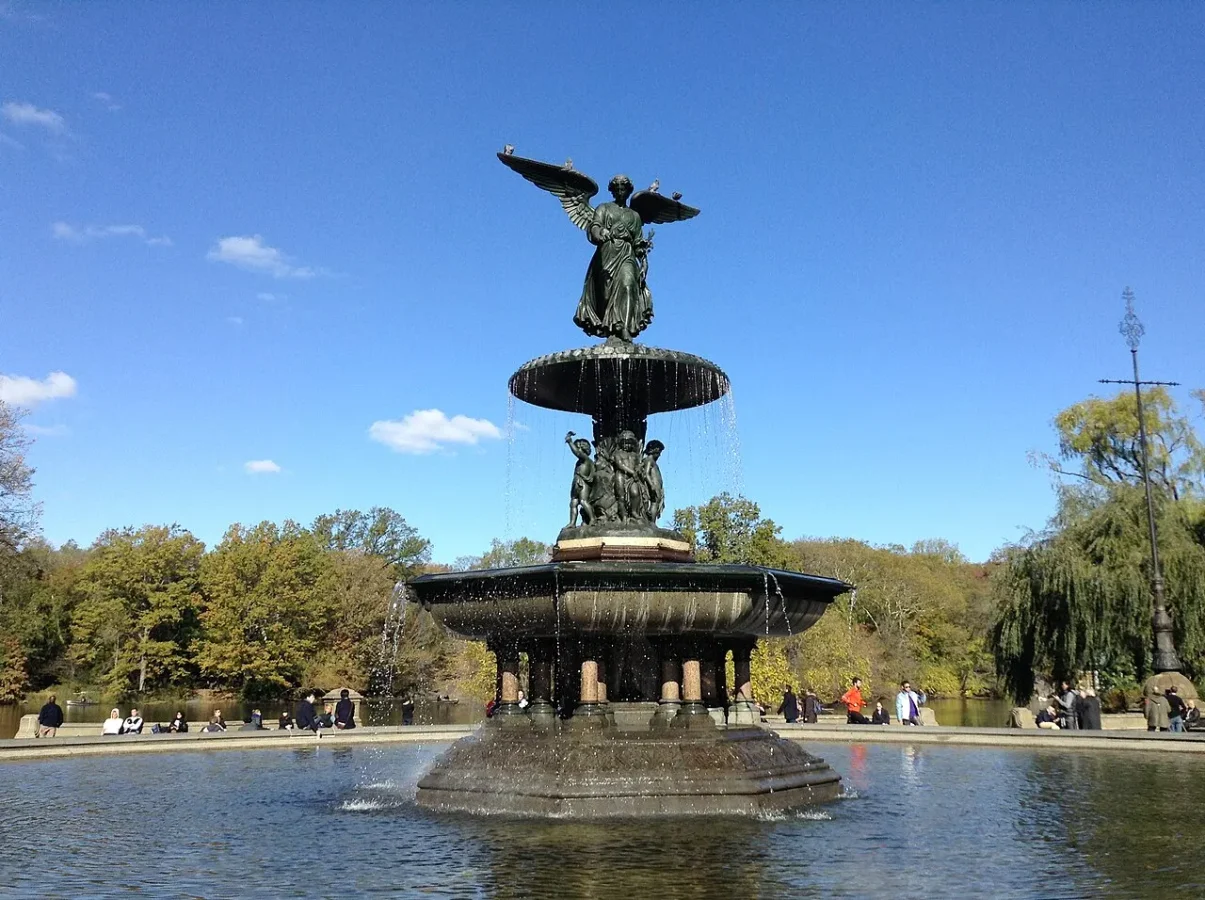
341 hectares designed by Olmsted and Vaux starting in 1858, with rock outcrops, lakes, and grade-separated crossings to keep cars away from pedestrians, a solution unheard of at the time. Admission is free, and from Bethesda Terrace to the Reservoir is about 1 km on foot.
It's Manhattan's best free outing: 341 hectares of rock outcrops, lakes and grade-separated crossings designed by Olmsted and Vaux. Go early and walk from Bethesda Terrace to the Reservoir, about 1 km.
Check access
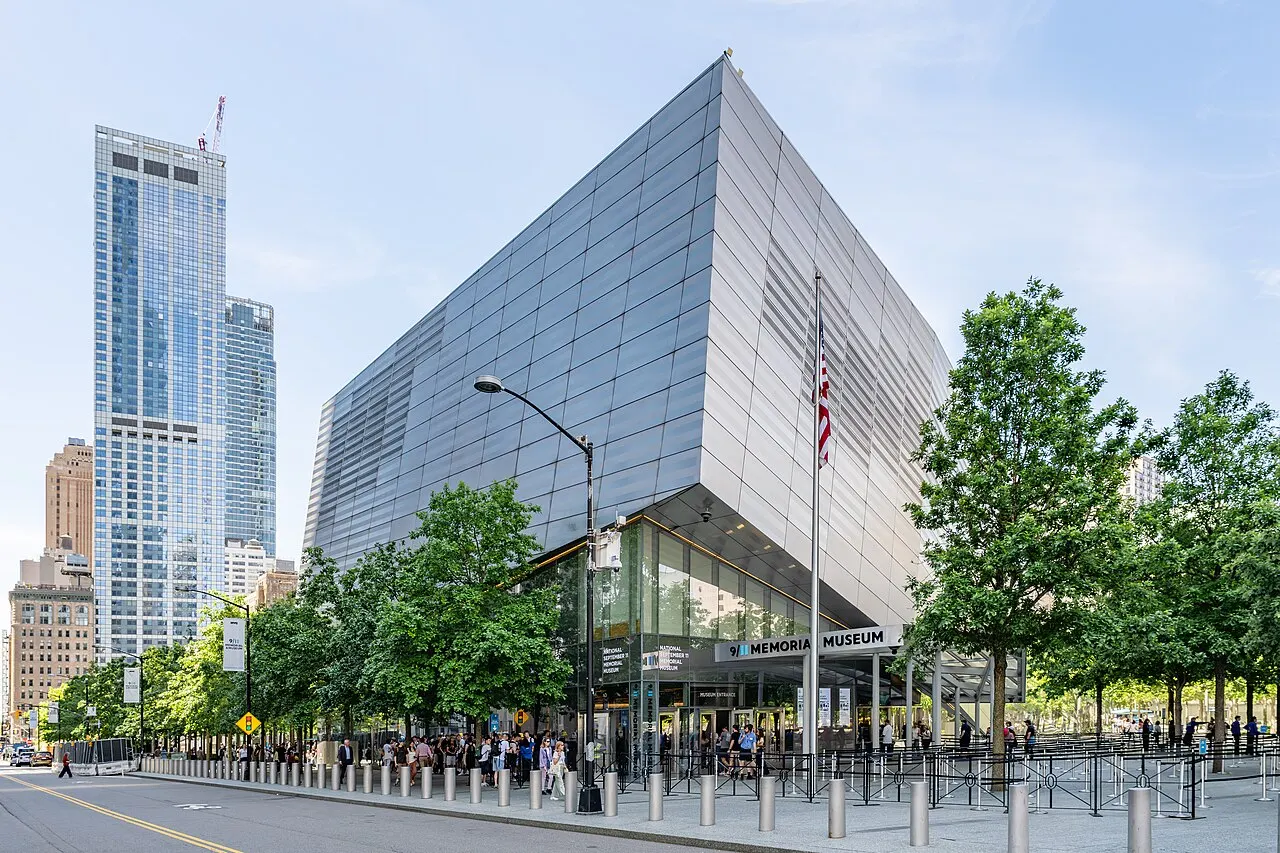
9/11 Memorial and Museum
Two square pools occupy the exact footprints of the towers, and engraved in bronze around the edge are the 2,983 names of the victims of 2001 in New York, at the Pentagon and on Flight 93, and the six from the 1993 attack. The outdoor memorial is free; the underground museum charges admission and takes 2–3 hours.
It's essential because the outdoor memorial is free, can be seen quickly, and brings together in bronze the names of the victims of 2001 and 1993 over the towers' footprints. If you have 2 to 3 hours, also go down to the underground museum, which charges admission.
Check access
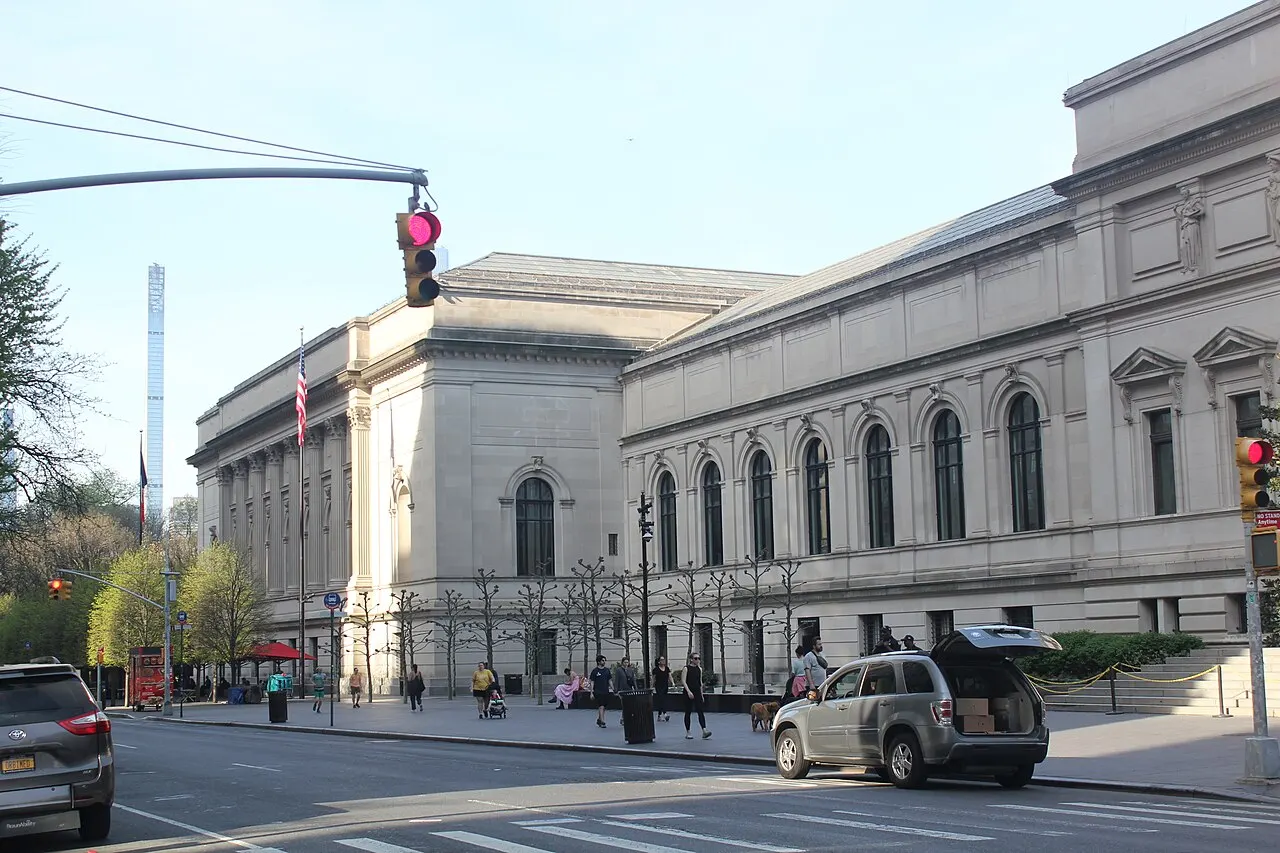
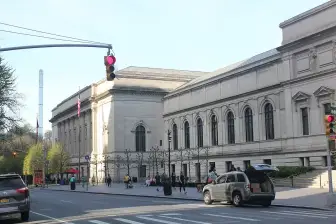
Metropolitan Museum of Art
Two million objects spanning 5,000 years, from the Egyptian Temple of Dendur to armor and European painting. Non-residents pay full admission (about $30); New York State residents and students from NY, NJ, and CT pay what they wish. The ticket is valid for three days, including the Cloisters.
It goes from the Temple of Dendur to armor and European painting; out-of-towners pay full price, about $30.
Check access

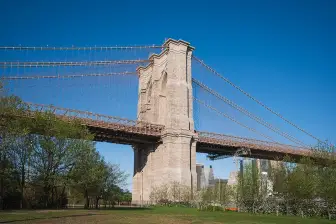
Brooklyn Bridge
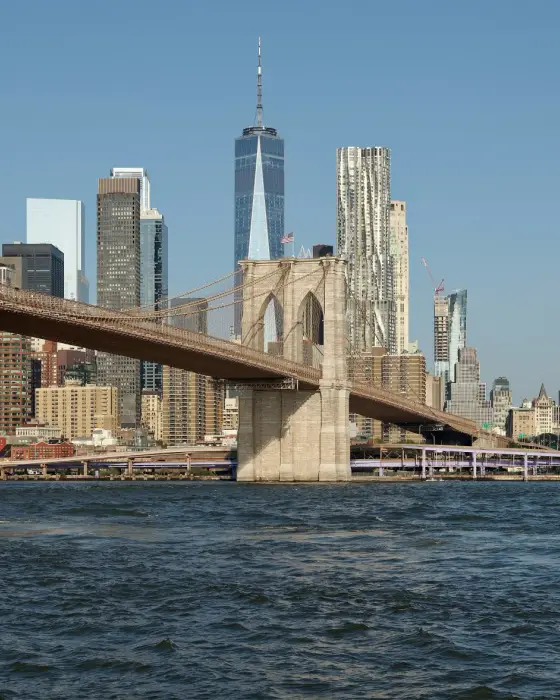
Opened in 1883, the world's first steel-cable suspension bridge, with a 1.8 km wooden walkway suspended above the traffic. It's about 40 minutes on foot. Going Brooklyn → Manhattan, the skyline faces you the whole way across; leaving from Manhattan in the late afternoon, the front view comes on arrival, from Brooklyn Bridge Park, with the sunset behind the buildings.
It's essential because the 1.8 km wooden walkway, suspended above the traffic, gives you the Manhattan skyline throughout the whole crossing. Cross Brooklyn → Manhattan to have the view facing you during the 40-minute walk, or leave Manhattan in the late afternoon and watch the sunset from Brooklyn Bridge Park.
Check access
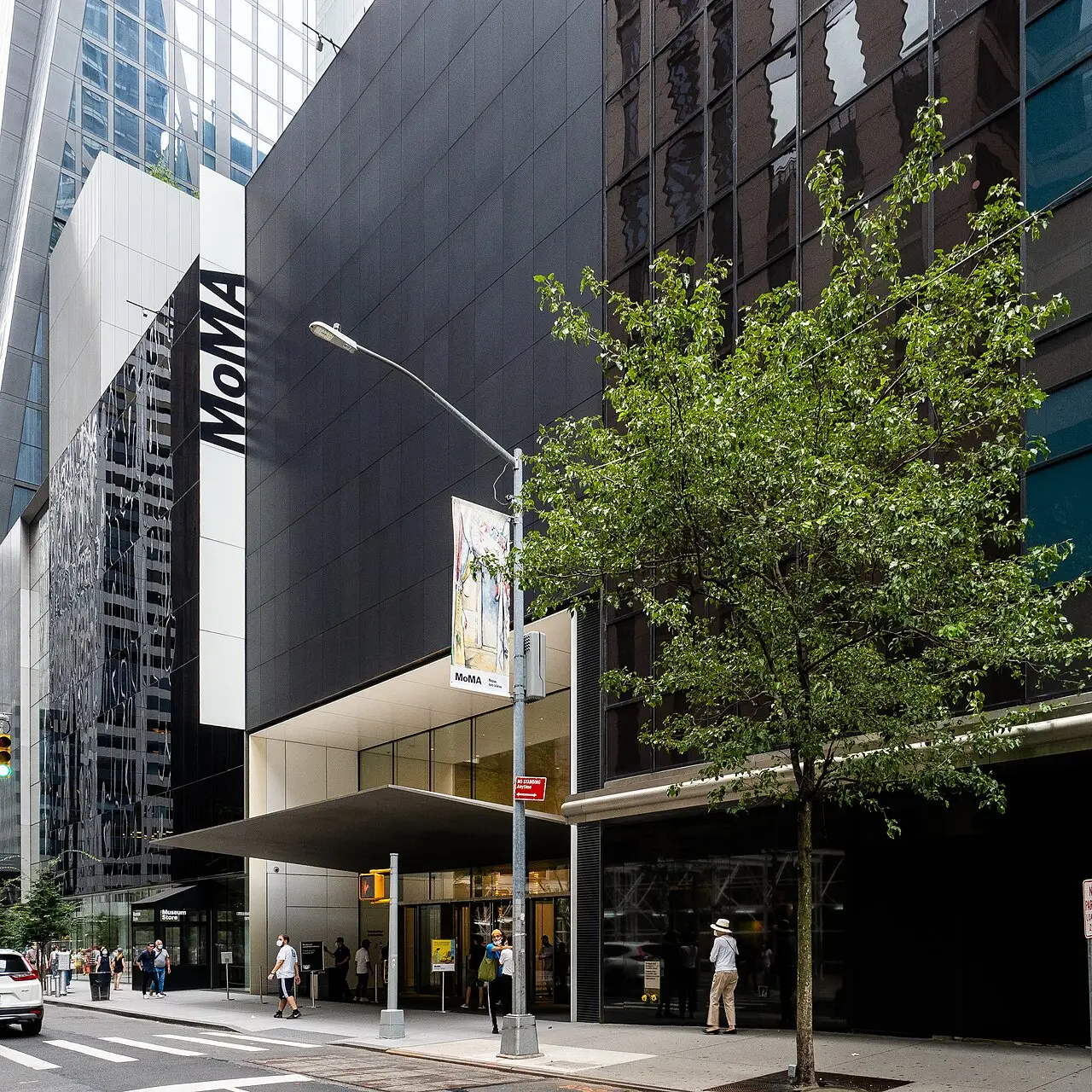
Museum of Modern Art (MoMA)
The collection that defines the canon of modern art: “The Starry Night,” “Les Demoiselles d'Avignon,” Monet's water lilies in a room of their own. It's on 53rd Street and fills up after 1pm; the free Friday evenings are only for New York State residents, with a reservation, so out-of-town visitors pay admission.
It's worth it for the collection that defines the canon of modern art, with The Starry Night, Les Demoiselles d'Avignon and Monet's water lilies in a room of their own. Arrive early, because the museum fills up after 1pm, and expect to pay admission: the free Friday evenings are only for New York State residents.
Check access

Empire State Building
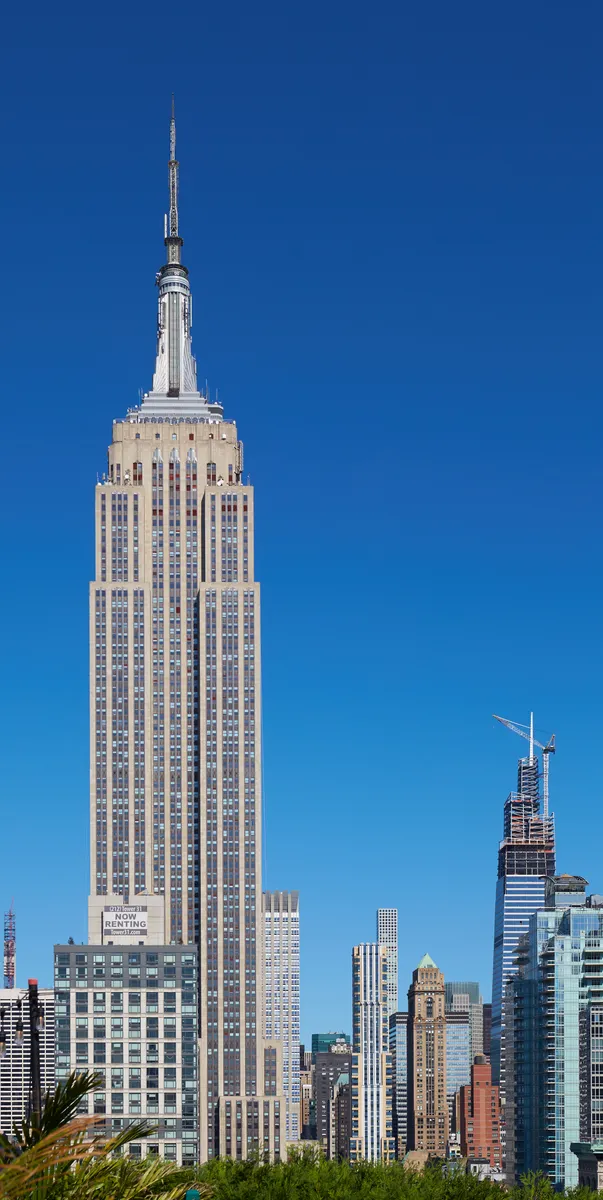
381 m to the roof, 443 m with the antenna; finished in 1931 after 410 days of construction. The observation decks are on the 86th floor, open-air, and the 102nd, enclosed; about $45–90 depending on floor and time slot, with shorter lines right at opening.
It's worth it for the open-air observation deck on the 86th floor, in the 381 m building finished in 1931. Go right at opening, when the line is shorter, and decide beforehand whether the enclosed 102nd floor is worth paying close to $90 instead of $45.
Check access

Grand Central Terminal
Opened in 1913, with 44 platforms, more than any other station in the world. The main concourse ceiling shows a sky of 2,500 stars painted backwards, an error never fixed; below it, the Whispering Gallery carries a voice from one corner of the arch to the other.
Opened in 1913, with 44 platforms, it shows on the concourse ceiling a sky of 2,500 stars painted backwards and never corrected, and the arch carries a whisper from one corner to the other.
Check access

The High Line
2.3 km of linear park on an elevated freight rail spur from 1934, decommissioned in 1980 and reopened as a park starting in 2009. It runs from Gansevoort Street to 34th Street, cuts through Chelsea, and ends at the Hudson Yards complex; free entry.
Entry is free and the 2.3 km park cuts through Chelsea, from Gansevoort Street to 34th Street, on the 1934 spur reopened as a park from 2009.
Check access
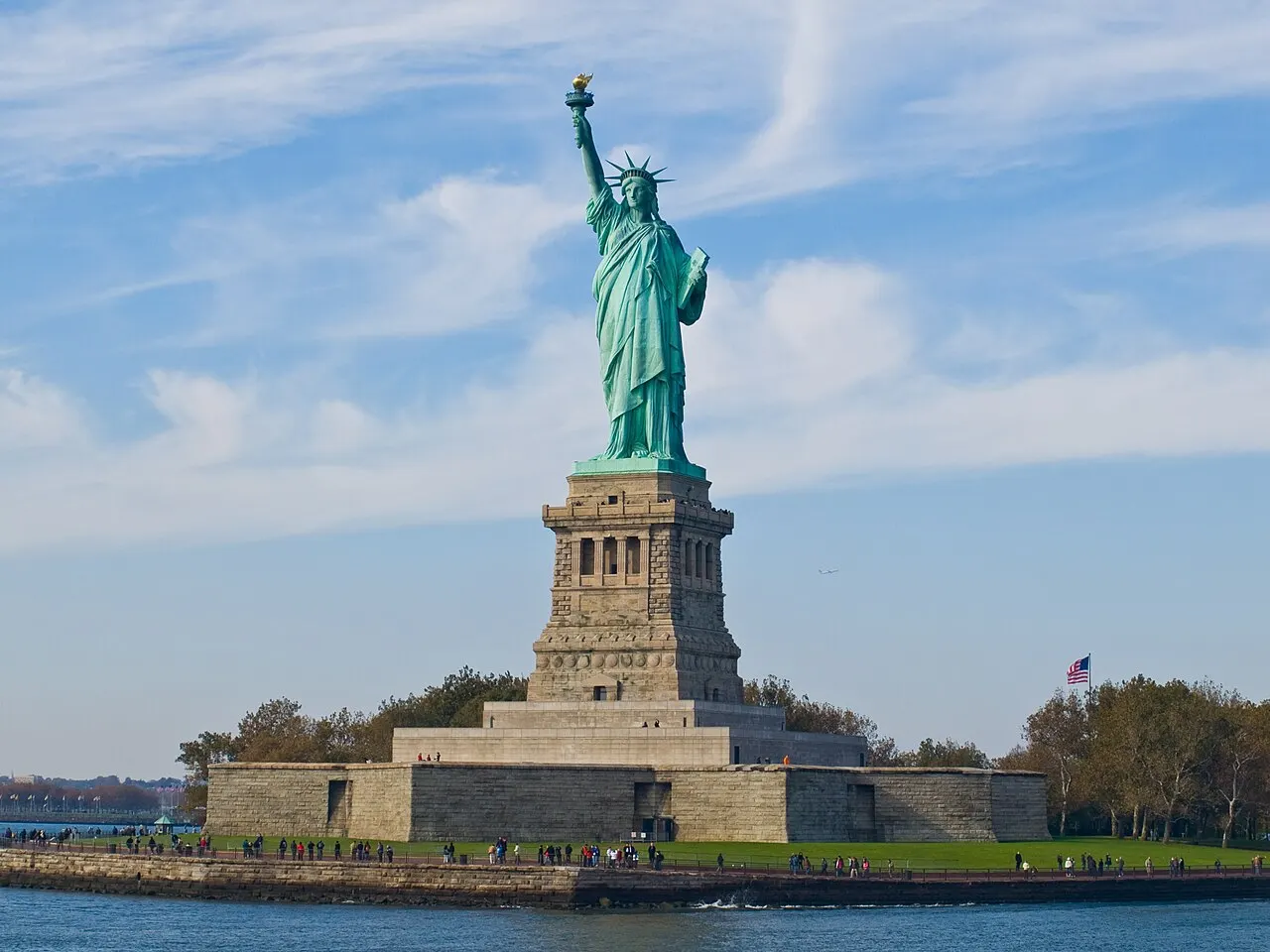
Statue of Liberty and Ellis Island
Dedicated October 28, 1886, 93 m including the pedestal, hammered copper over a structure engineered by Gustave Eiffel. The ferry leaves from Battery Park and the ticket includes Ellis Island; access to the crown requires booking months ahead and climbing 162 steps.
The statue's 93 m can be seen for free from the deck of the Staten Island Ferry, in a 25-minute crossing with it to starboard. Climbing to the crown requires booking months ahead and 162 steps, and the visit combined with Ellis Island takes the whole day.
Check access
Nilo’s itinerary
Start with the basic programme and choose extensions for the time you have.
Plan my days in the app ↗Day 1 · The bay, the south of the island, and the bridge
Board the Staten Island Ferry at 8:30am at Whitehall Terminal; it's free, with departures every 15–30 minutes. The crossing takes 25 minutes with the Statue of Liberty to starboard, and you can come back on the next boat.
Walk up to the 9/11 Memorial, where the two pools sit in the exact footprints of the towers; the outdoor memorial is free and the underground museum needs 2–3 hours.
Have lunch in Chinatown, around Mott, Bayard, and Grand Streets: dim sum or a bowl of noodles for $10–18.
Cross the Brooklyn Bridge walkway to DUMBO, 1.8 km in about 40 minutes, and head down to Brooklyn Bridge Park for sunset with Manhattan right in front of you.
Have dinner in Brooklyn and head back on the A, F, or R lines, 20 minutes to central Manhattan.
Day 2 · The park, museums, and Harlem
Enter Central Park at 59th Street and follow it to Bethesda Terrace and the Lake; 3–4 km of walking take about 1 hour 30 minutes with stops.
Visit the Metropolitan Museum of Art, on Fifth Avenue at 82nd Street, where two hours are enough for the Temple of Dendur, the American Wing and European painting. Check the pricing policy at the ticket desk: New York State residents and students from NY, NJ and CT pay what they wish.
Have lunch on the Upper West Side, or buy a pretzel and a hot dog from a cart and eat sitting in the park, $8–12.
Take the 2 or 3 train to 125th Street in Harlem to see the facade of the Apollo Theater (1914) and the Studio Museum, and have Southern or Senegalese food for dinner on Frederick Douglass Boulevard.
Finish with jazz at the Village Vanguard, open since 1935, with sets at 8pm and 10pm and a $30–45 cover. Tickets are only sold on the club's website, up to an hour before the show.
Day 3 · Brooklyn, Queens, and a show
Have a bagel breakfast in Brooklyn, in Williamsburg or Park Slope, for $6–12.
Walk along Bedford Avenue and head down to the East River shore to see Manhattan across the water; from April to October, Smorgasburg gathers dozens of food stalls on Saturdays.
Take the 7 train to Flushing, Queens: lunch at the stalls of the Golden Shopping Mall or the dining halls on Main Street, $10–18.
Take the 7 back to Long Island City and pick between MoMA PS1 and Gantry Plaza State Park in the late afternoon, with a straight-on view of Midtown.
At night, see a show: the TKTS booth in Times Square sells same-day tickets at up to 50% off, with the line forming from 3pm, and an off-Broadway play costs $40–70.
Day 4 · Prospect Park, Greenpoint and Bushwick
Start the morning at Prospect Park, by the same designers as Central Park, and step into the Brooklyn Museum right next door.
Walk through the brownstones of Park Slope and take the G train, which cuts across Brooklyn without going through Manhattan, to Greenpoint, in the north of the borough, along the East River.
In Greenpoint, where a Polish community still lives, order an egg cream at a lunch counter: milk, seltzer and Fox's U-Bet chocolate syrup, invented in Brooklyn.
Walk on past the murals and record shops into Bushwick and save the night for one of its clubs, which don't fill up until after 1am.
The city's bars close at 4am: there's no rush to get back to Manhattan.

If you stay longer
Day 5 · Astoria and Jackson Heights
Start the morning in Astoria, Queens' Greek and Middle Eastern neighborhood, in the most linguistically diverse borough in the country.
Take the 7 train to Jackson Heights and walk the ten blocks where Colombians, Tibetans and Indians live side by side.
Have lunch at the halal cart, which has a shorter line at noon than at night: grilled chicken over yellow rice, salad, white sauce and red hot sauce, for $10–14.
At night, have dinner at a Colombian or Tibetan restaurant in Jackson Heights, near the 7 train station.
Head back to Manhattan on the same 7 train.
Food
 AI illustration
Pizza slice (“slice”)
Thin, gas-oven crust, folded in half to eat standing up. $4–5 for a plain slice at counter pizzerias; the local rule is to buy where the slice comes hot out of the oven, not out of the display case.
 AI illustration
Bagel with cream cheese and lox
Boiled before baking, which gives it the smooth crust; “lox” is salmon cured in brine, served with capers and red onion. A $6–12 breakfast; order it “toasted with a schmear” for a toasted bagel with a spread of cream cheese.
 AI illustration
Pastrami on rye
Beef brisket cured, smoked, and steamed, sliced thick on rye bread with mustard. It was born in the Jewish delis of the Lower East Side in the late 19th century; the sandwich costs $25–30 at the old-school spots and feeds two.
 AI illustration
Halal cart chicken and rice
Chopped grilled chicken over yellow rice, salad, white sauce, and red hot sauce. Sold from carts by Egyptian, Bangladeshi, and Afghan vendors since the 1990s; $10–14 a plate, and the lines are longer at night than at noon.
 AI illustration
Cart hot dog and pretzel
The hot dog comes out of hot water, topped with mustard and onions stewed in red sauce; the pretzel is baked, coarse-salted, the size of two hands. $3–6 each; it's sidewalk food, not a meal.
 AI illustration
New York cheesecake
Heavy on cream cheese, cookie-crumb crust, baked in a water bath: dense, no gelatin, served cold and unadorned in its classic form. One slice feeds two people and costs $10–14.
 AI illustration
Dim sum and regional Chinese food
Dumplings served from carts in Manhattan's Chinatown and in the dining halls of Flushing, Queens, which also has Sichuan, Xi'an, and Dongbei cooking. A $10–18 lunch; in Flushing, the Golden Shopping Mall works as a food court of independent stalls.
 AI illustration
Egg cream and black-and-white cookie
The egg cream has no egg and no cream: it's milk, seltzer, and Fox's U-Bet chocolate syrup, invented in Brooklyn around 1900. The black-and-white cookie is a flattened cakey cookie iced half vanilla, half chocolate, sold at any bakery for $3–5.
Day trips
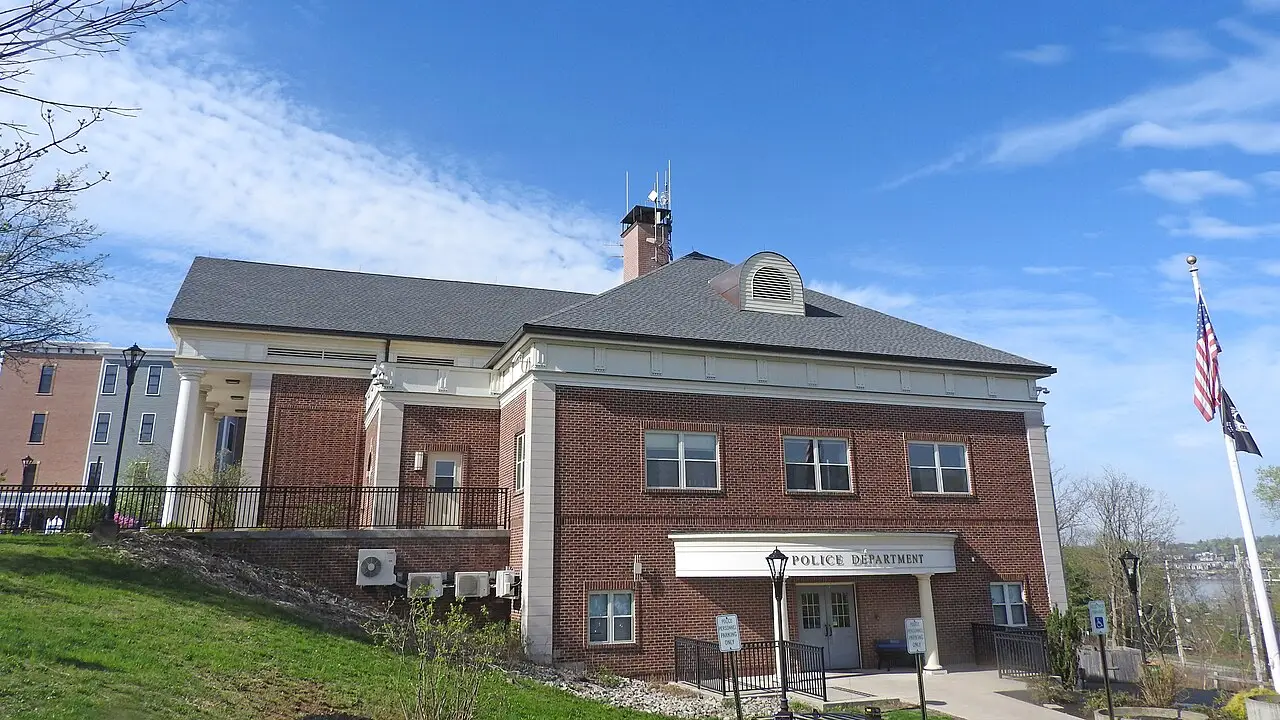
Beacon, in the Hudson Valley
80 km north. Metro-North's Hudson Line train from Grand Central, 1 hour 20 minutes and $20–35 round trip, with the river on your left the whole way. The Dia Beacon museum occupies a former Nabisco packaging plant, with 28,000 m² of minimalist art lit only by natural light; it's closed on certain days of the week outside summer.
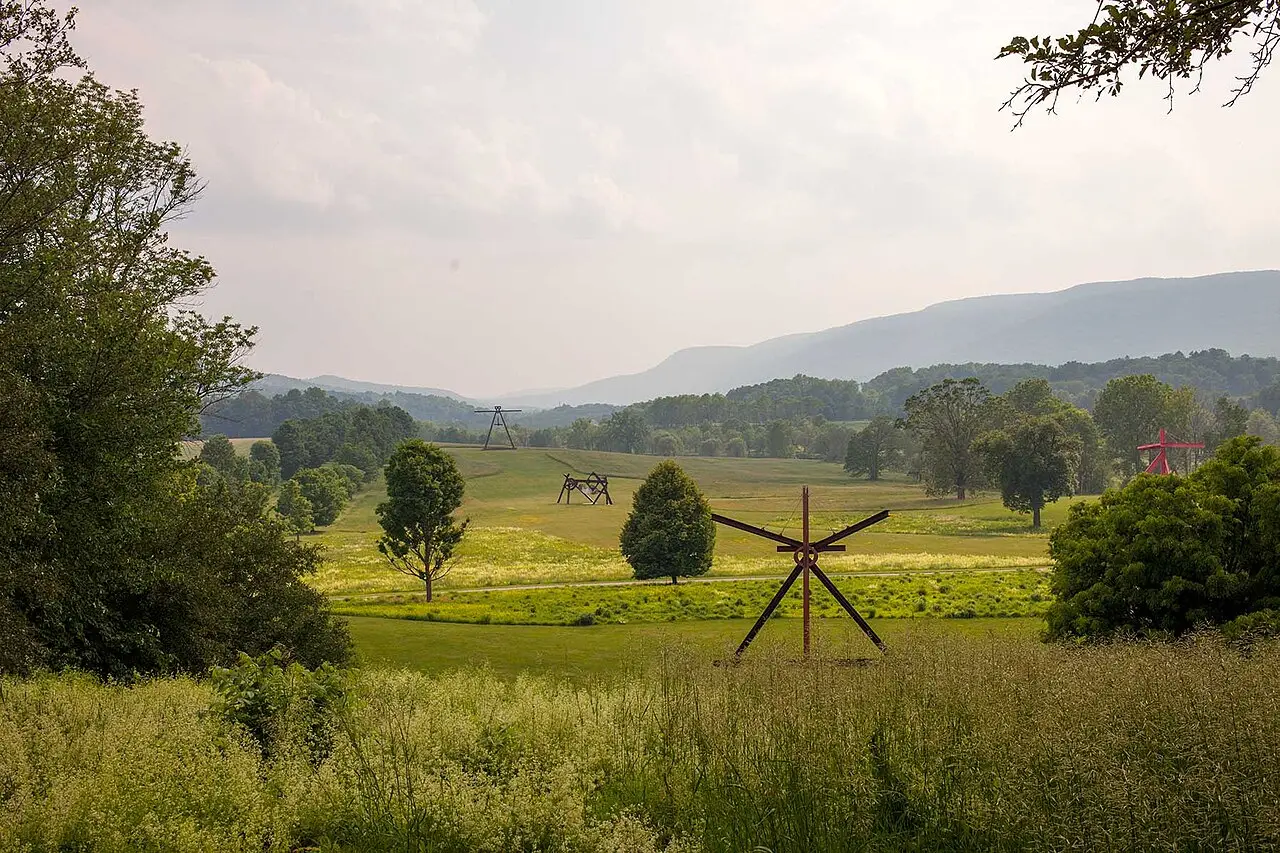
Storm King Art Center
Storm King Art Center is 95 km north, in New Windsor, about 1 hour 30 minutes by car or 2 hours by bus with a shuttle, leaving from Port Authority. It covers 200 hectares of hills with outdoor sculptures by Calder, Serra and di Suvero; it's open from April to November and closed in winter.
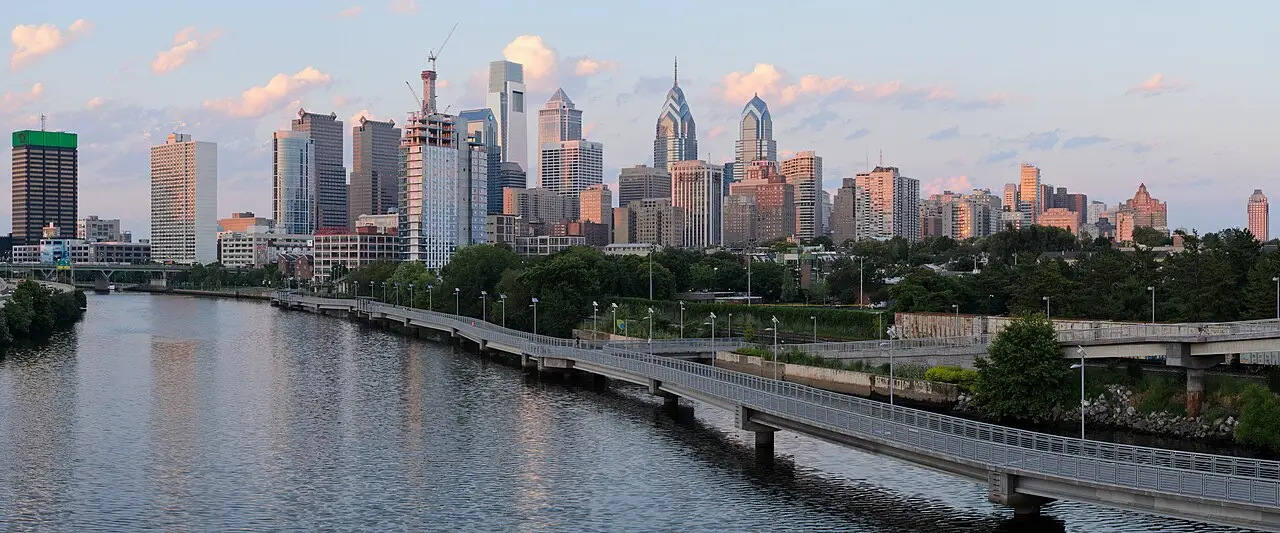
Philadelphia
150 km southwest. Amtrak from Penn Station in 1 hour 15 minutes to 1 hour 30 minutes, $40–120 depending on how far ahead you book, or bus in 2–2.5 hours for $15–30. You can see Independence Hall, the Liberty Bell, and the Museum of Art in one day and head back that night.
Where to begin
The bay, the south of the island, and the bridge
Board the Staten Island Ferry at 8:30am at Whitehall Terminal; it's free, with departures every 15–30 minutes. The crossing takes 25 minutes with the Statue of Liberty to starboard, and you can come back on the next boat.
The park, museums, and Harlem
Enter Central Park at 59th Street and follow it to Bethesda Terrace and the Lake; 3–4 km of walking take about 1 hour 30 minutes with stops.
Brooklyn, Queens, and a show

Have a bagel breakfast in Brooklyn, in Williamsburg or Park Slope, for $6–12.
Money
The currency is the US dollar, and cards are accepted almost everywhere, including street carts and buses; some grocery stores still require a $10 minimum for card purchases, and store ATMs charge $3–5 in fees. Two amounts never show up in the posted price, so the tag is never the final price: the 8.875% sales tax, charged at checkout (clothing and shoes under $110 per item are exempt) and the tip, which at a table-service restaurant runs 18–20% and at a bar counter is $1–2 per drink; card readers usually suggest 20%, 25%, and 30%, and you can type in a different amount with no problem. 2026 ranges: drip coffee $4–6, a slice of pizza $4–5, a quick lunch $15–25, a mid-range dinner $45–80 per person with one drink, a draft beer $9–12, a cocktail $18–22, a museum ticket $25–35, Broadway $80–250. A mid-range hotel runs $280–420 a night, plus about 15% in taxes and flat per-room fees; a hostel or shared room, $60–110. Brazilians need a B1/B2 visa, because Brazil isn't part of the visa waiver program; the DS-160 form fee is $185, and there's an additional integrity fee of $250 approved in 2025 whose collection for tourism was still suspended in 2026: confirm with the consulate before you travel.
From the airport to the center
Guide estimate
Scroll to compare all columns
| Route | Time | Price |
|---|---|---|
| JFK → Penn Station · AirTrain and LIRR | 50–70 min | AirTrain about US$8.50, plus the train |
| JFK → Manhattan · yellow cab | 45–90 min | US$95–115 in practice |
| LaGuardia → subway at Jackson Heights · Q70 bus | 10–15 min | free |
| LaGuardia → Midtown · taxi | varies | US$40–60 |
| Newark → Penn Station · AirTrain and NJ Transit | 45 min | about US$17 |
| Newark → Manhattan · taxi or ride app | varies | over US$90 |
Getting there and around
New York's airports: JFK, LaGuardia, and Newark
There are three airports, and the choice shapes your first day. JFK is 24 km from downtown: the AirTrain (about $8.50) connects the terminals to the A and E subway lines, at Howard Beach or Jamaica, or to the LIRR train to Penn Station, which is the fastest route, 50 to 70 minutes total; the yellow cab charges a flat JFK–Manhattan fare of $70, plus tolls, fees, and tip, which comes to $95–115 in practice, in 45–90 minutes. LaGuardia is 13 km away and has no train: the Q70 SBS bus is free and reaches the 7, E, F, M, and R subway lines at Jackson Heights and Woodside in 10–15 minutes, while a cab costs $40–60 to Midtown. Newark (EWR) is in New Jersey, 26 km away: AirTrain plus NJ Transit train to Penn Station costs about $17 and takes 45 minutes, and a cab or rideshare runs over $90 with the tunnel toll. Set aside 60–90 minutes for the trip to any airport, and more on a rainy day.
Subway: 24 hours, 472 stations, one flat fare
The subway runs 24 hours, with 472 stations and 36 lines, and it's the fastest way to make almost any trip. The fare is flat, $3.00 since January 4, 2026, paid by tapping at OMNY with a credit card, debit card or phone. The MetroCard has been withdrawn, and the last refill was on December 31, 2025; a physical OMNY card costs $2. Using the same card or device for every ride, your 13th ride of the week and every one after it are free, with a cap of $35 per week, Monday to Sunday. The bus charges the same fare, with a free transfer within two hours; on SBS lines (light blue), pay at the machine on the sidewalk before boarding and keep the receipt. Three things make you pay a fare for nothing: the “uptown” and “downtown” platforms often don't connect once you're past the turnstile; from Friday night to Monday morning, several lines change routes because of work on the tracks; and “express” trains skip stations. Beyond the subway, the Staten Island Ferry is free and passes right by the Statue of Liberty, NYC Ferry costs about $4.50, Citi Bike charges by day pass or by the minute, yellow cabs and ride-hailing apps work everywhere, and since January 5, 2025, cars pay a $9 congestion toll to enter Manhattan below 60th Street, passed on in the fare. Walking covers short distances: ten numbered streets make about 800 m and take ten minutes, but each block between two avenues counts for about three streets.
Safety
New York ranks among the safest large cities in the United States per capita, with about 350–400 homicides a year in recent years, nearly all tied to local conflicts and far from the areas visitors go. The real risk for a newcomer is opportunity: pickpockets in a packed car, on the escalator, and in the crush of Times Square; an open bag hanging on a restaurant chair; a phone held out near the subway doors as they're closing. In Times Square, costumed characters charge for photos after they're taken, vendors offer a “free” CD and then demand payment, and there are scalpers selling observation-deck tickets that don't work: the official price only exists at the box office or the building's own website. At night, pick a car with more people in it or the one with the conductor, marked by a black-and-white striped sign in the middle of the platform, and wait for the train in the area covered by cameras. Areas with higher crime rates, like parts of the South Bronx, Brownsville, and East New York, aren't on the tourist routes. Emergency is 911; for anything that isn't an emergency (a complaint, information, lost and found) the number is 311.
Etiquette tips
Walk on the right and step out of the flow to stop
The sidewalk works like a traffic lane. Anyone checking a map, answering the phone, or taking a photo steps to the wall or the curb; stopping in the middle of the current is the most noticed social offense in the city.
On the escalator, stand right, walk left
On the subway, at airports and in stores, stand on the right on the escalator and leave the left free for people walking up. Blocking both sides with luggage draws an immediate remark.
Let people out before you get on
Stand beside the door, not in front of it, and board after the outgoing flow has ended. Holding the door delays the entire line and doesn't reopen anything. The mechanism has no sensor like an elevator's.
The tip is part of the wage
Waiters and bartenders can legally be paid a reduced base wage under state law, and the tip fills out their income. 18–20% for table service, $1–2 per drink at the bar, $1–2 per bag with a porter, 15–20% for a taxi.
Reach the counter with your order ready
At delis, carts, cafés, and pizzerias the line moves fast and expects you to already know what you want, down to the bread, the cheese, and whether it's to go. Deciding on the spot stalls the line and provokes visible impatience.
The greeting “How are you?” only expects “good, you?”
The expected answer is “good, you?” and the conversation moves on. Likewise, “we should grab coffee sometime” is a friendly goodbye that rarely turns into an invitation with a set date.
Mistakes to avoid
Sticking to Midtown and Times Square
Staying only in Midtown and Times Square and concluding that's what the city is. It's a common mistake on day one. More than half of residents live in Brooklyn and Queens, and the subway takes 20 to 30 minutes to get there.
Not checking weekend service
Not checking weekend service changes. Between Friday night and Monday morning, lines change route, skip stations, or stop running; the notice is on the platform sign and in the app, never on the printed map, which keeps lying with total confidence.
The uptown and downtown platforms don't connect past the turnstile
Mixing up the “uptown” and “downtown” platforms. At many local stations the two don't connect once you're past the turnstile, and fixing the mistake costs a new fare and a street crossing.
Thinking the price tag is the final price
Thinking the price on the tag is the final price. Add 8.875% tax at checkout and another 18–20% tip on a restaurant bill: a meal listed at $40 comes out to about $51.
Opening an alcoholic drink on the street
Opening a can or bottle of alcohol on the street, in the park, or on the beach. It's an open-container violation, with a fine of about $25, and police enforce it regularly.
Useful phrases
“On line”
In line. In New York you stand “on line,” not “in line” like in the rest of the country.
“The city”
Manhattan. Someone who lives in Brooklyn or Queens says they're “going into the city,” even though they're already in it.
“Bodega”
A corner store open late, with an egg sandwich at the counter and, almost always, a resident cat.
“Regular coffee”
Coffee with milk and sugar. If you just order “coffee” at a cart or deli, that's what you get.
“A bagel with a schmear”
A bagel with a spread of cream cheese. “Schmear” comes from Yiddish and means the spread-on layer.
“Stand clear of the closing doors, please”
The subway's recorded announcement. The doors close right after and don't reopen.
Districts
Midtown Manhattan
The strip between 34th and 59th Streets: offices, Times Square, the 41 Broadway theaters, Grand Central, and the Empire State Building. Good for catching a show or transit; expensive to sleep in, and it empties out at night outside the theater corridor.
Lower Manhattan and the Financial District
Wall Street, the Stock Exchange, the 9/11 memorial, and the crooked colonial street layout. It became a residential neighborhood after 2001, with hotels cheaper than Midtown and direct access to the bay's ferries.
Greenwich Village, SoHo, and the Lower East Side
The south of the island, off the grid: four-story buildings, fire escapes, street-level shops, and the highest concentration of bars and jazz clubs. The Village holds the Stonewall Inn (1969); the Lower East Side was the neighborhood of immigrant tenements and is now a nightlife district.
Upper West Side and Upper East Side
The two residential sides of Central Park. To the west, family apartment buildings, the Museum of Natural History, and Lincoln Center; to the east, Museum Mile with the Met, the Guggenheim, and the Frick, and the expensive shopping of Madison Avenue.
Harlem and Washington Heights
From north of the park to the tip of the island. Harlem is the historic center of Black American culture, with the Apollo Theater (1914), choir-filled churches on Sundays, and Southern and West African restaurants; Washington Heights is Dominican, with merengue on the street and The Cloisters museum at the top of the park.
Williamsburg, Greenpoint, and Bushwick
North Brooklyn, along the East River. From Manhattan, the L train reaches Williamsburg and Bushwick in 15–25 minutes; Greenpoint sits on the G line, which links Brooklyn to Queens without going through Manhattan. Bars, restaurants, murals and record shops; Greenpoint holds onto its Polish community and Bushwick has the clubs that open after 1am.
Park Slope, Prospect Heights, and DUMBO
Central Brooklyn and the waterfront under the bridges. Brownstone houses, Prospect Park (by the same designers as Central Park, 1867), the Brooklyn Museum, and Brooklyn Bridge Park, source of the classic skyline photo framed between the piers of the Manhattan Bridge.
Queens: Astoria, Long Island City, Jackson Heights, and Flushing
The most linguistically diverse borough in the country. Astoria is Greek and Middle Eastern, Long Island City has the new skyscrapers and MoMA PS1, Jackson Heights packs Colombians, Tibetans, and Indians into ten blocks, and Flushing has the city's biggest Chinatown, bigger than Manhattan's.
History
until 1624 · Lenapehoking, Lenape land
The archipelago was inhabited by the Lenape, who called the larger island Manna-hata. In 1609 the Englishman Henry Hudson, sailing for a Dutch company, entered the bay and sailed up the river that now bears his name; his report on beaver pelts sealed the place's commercial fate.

1624–1664 · New Amsterdam becomes New York
The Dutch West India Company sets up an outpost on the southern tip of Manhattan; in 1626 Peter Minuit records the purchase of the island from the Lenape for goods valued at 60 guilders. In September 1664 an English fleet arrives at the harbor, Peter Stuyvesant surrenders without firing a shot, and the city is renamed in honor of the Duke of York.

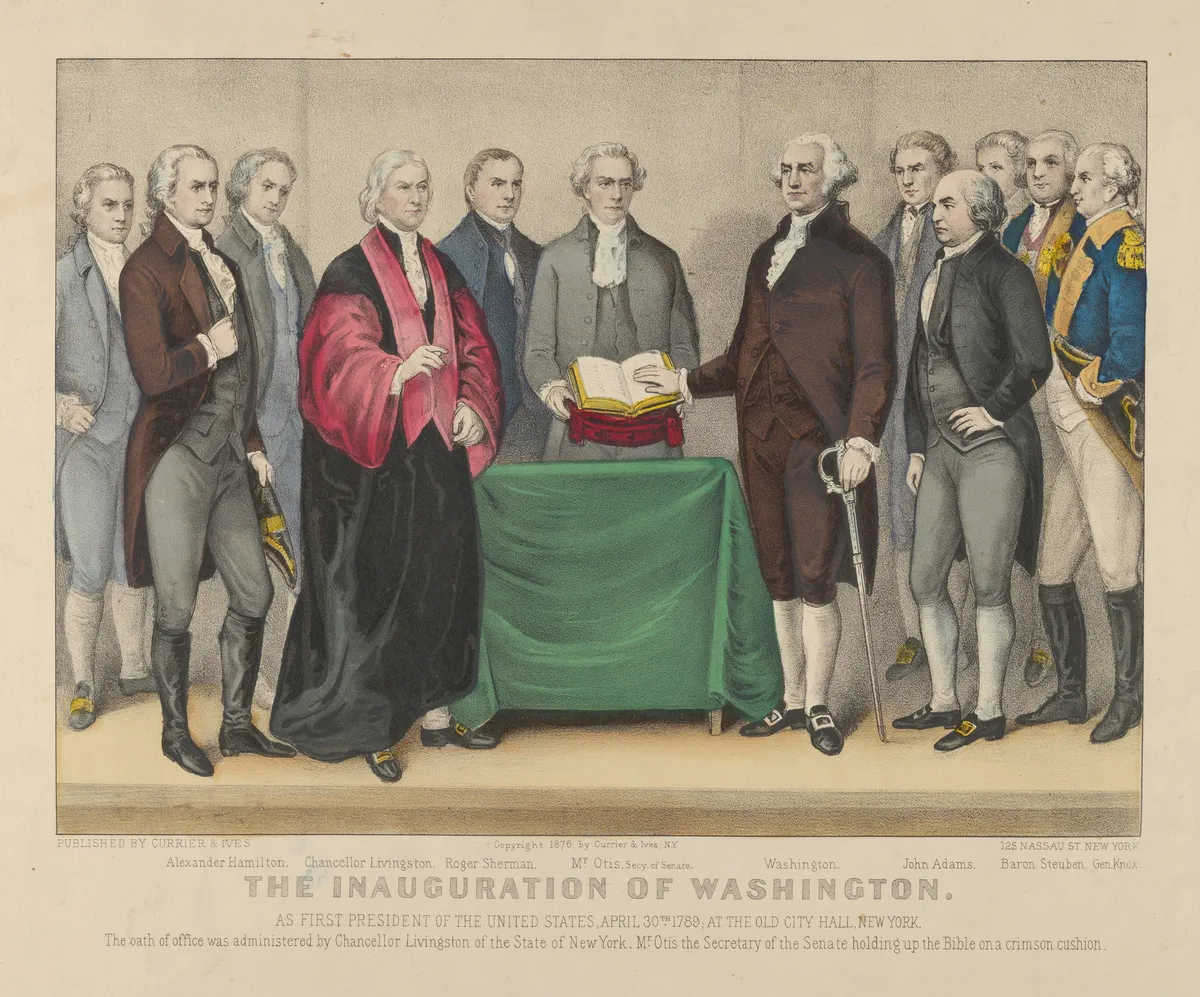
1776–1789 · Fire, occupation, and Washington's inauguration
A fire destroys about a quarter of the city in September 1776, and the British occupy it for seven years, until November 1783. Between 1785 and 1790 New York is the country's capital; George Washington is sworn in on the balcony of Federal Hall, on Wall Street, on April 30, 1789.
1811 · The grid plan
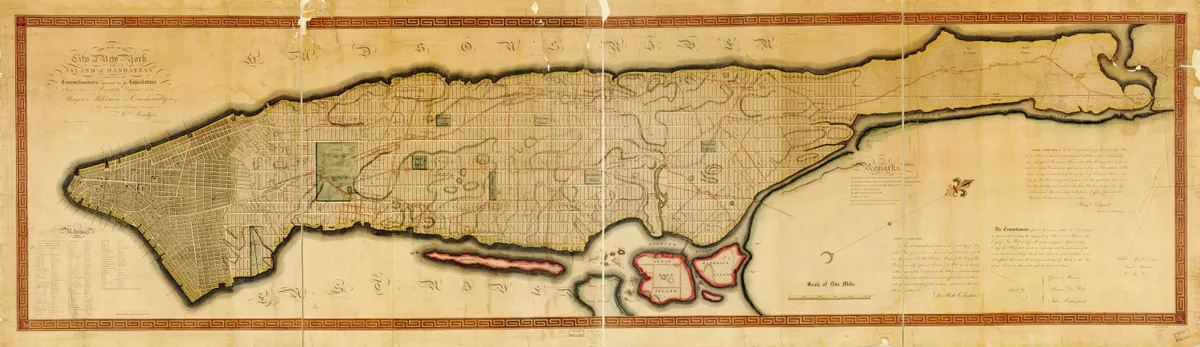
The Commissioners' Plan imposes a grid of 12 avenues and 155 numbered streets on Manhattan above 14th Street, over land that was still pasture and marsh. That's why, to this day, an address in the city is explained with two numbers.
1825 · Erie Canal
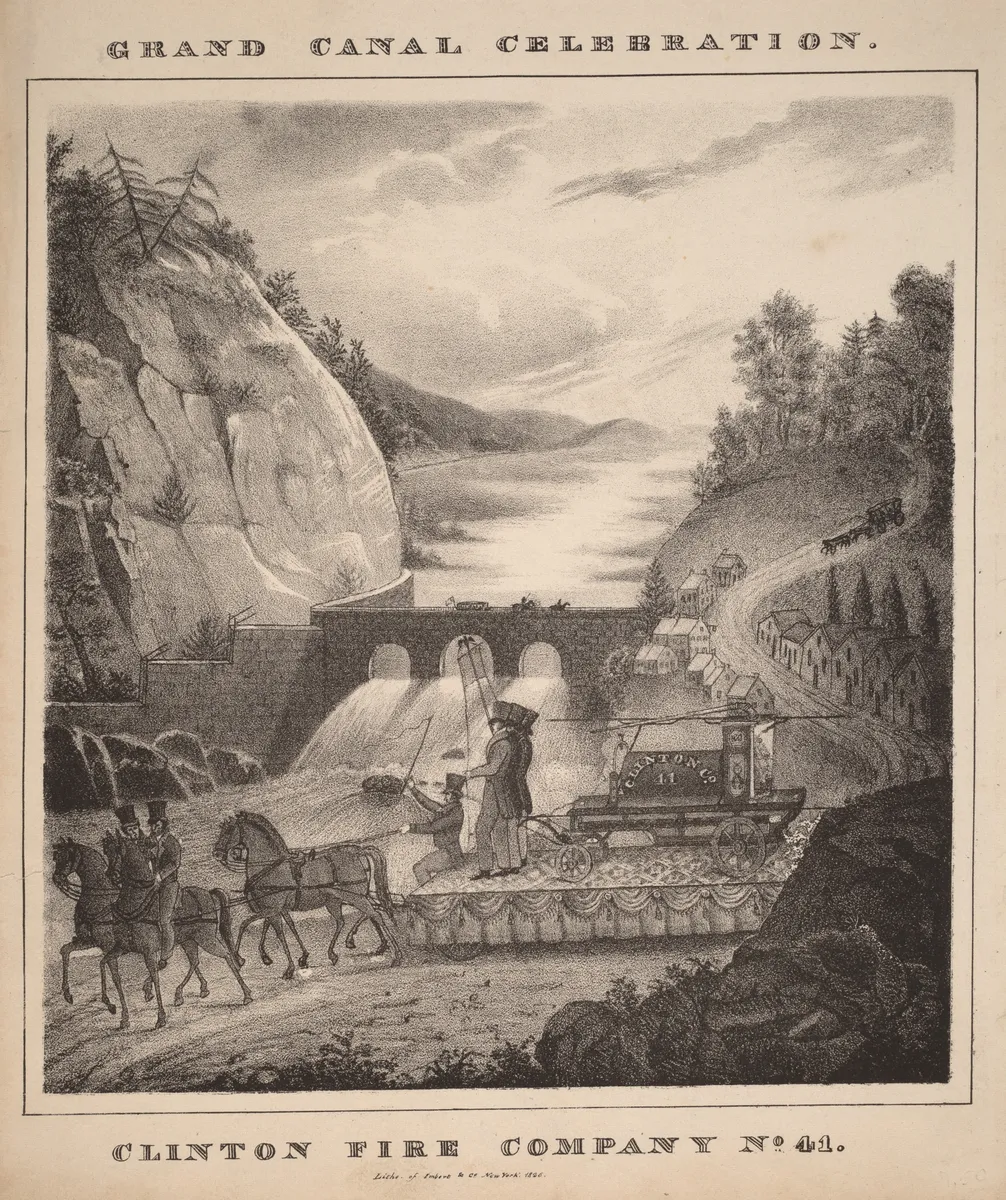
The canal links the Great Lakes to the Hudson, and produce from the interior starts shipping out through the Port of New York instead of New Orleans or Montreal. The population jumps from 123,000 in 1820 to 1.2 million in 1880.
1883–1886 · The bridge and the statue
The Brooklyn Bridge opens on May 24, 1883, after 14 years of construction, with a 486 m span, then the longest in the world. On October 28, 1886, the Statue of Liberty, a French gift designed by Bartholdi with structural engineering by Gustave Eiffel, is dedicated on the island in the bay.

1892–1954 · Ellis Island
About 12 million immigrants pass through the federal station in the bay over 62 years, peaking at about 1 million in 1907. The 1924 quota law closes much of that door, and the station becomes little more than a detention center until it shuts down.

1898–1904 · Five boroughs and the first subway
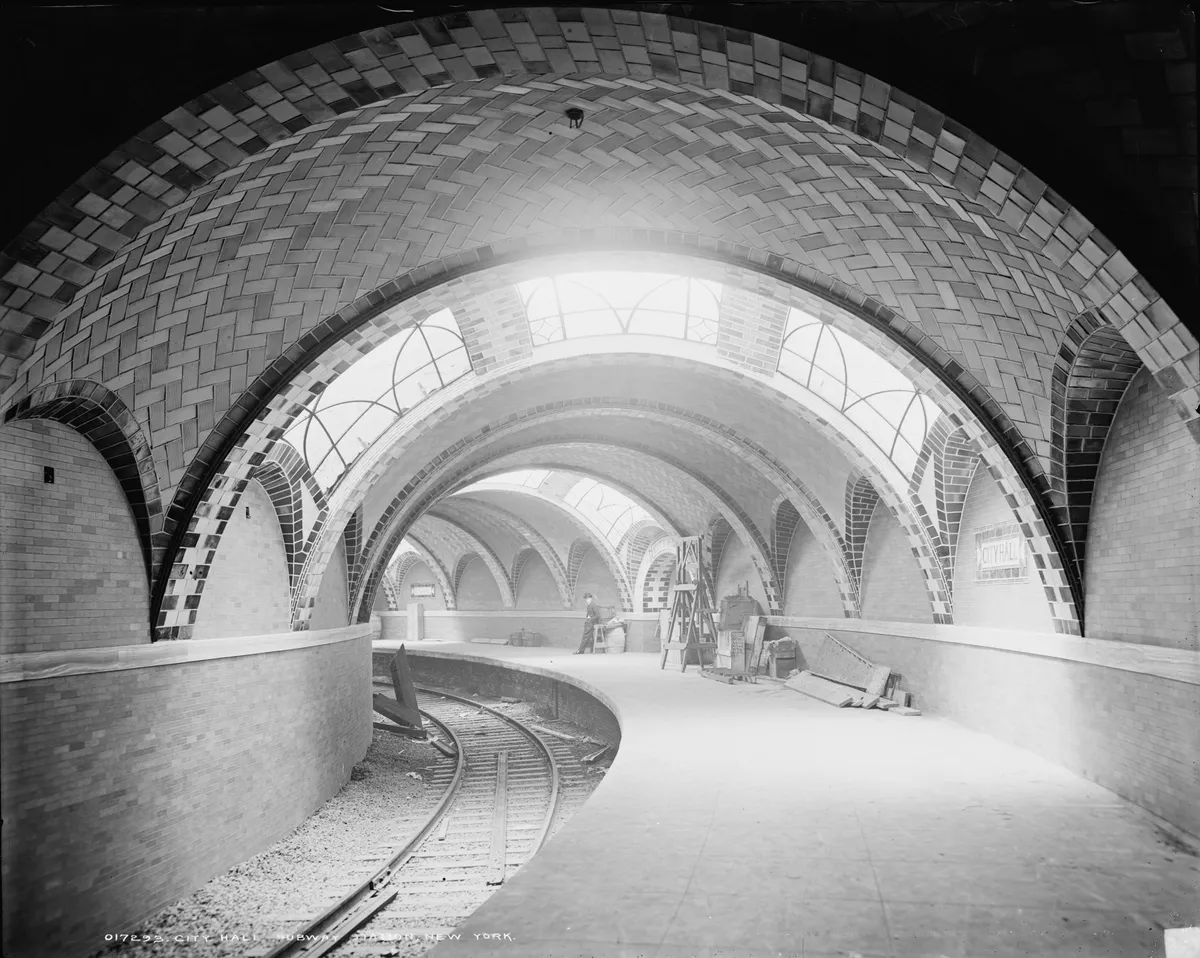
On January 1, 1898, Manhattan, Brooklyn, Queens, the Bronx, and Staten Island merge into a single city government of 3.4 million residents. On October 27, 1904, the first stretch of the IRT subway opens, and from then on every new station decides where the city grows.
1929–1945 · The crash, skyscrapers, and Robert Moses
The stock market crash of October 1929 doesn't stop construction: the Chrysler Building finishes in 1930 and the Empire State Building in 1931, raised in 410 days. Starting in 1934, Robert Moses, never once elected to office, begins rewriting the city with bridges, parks, and expressways.
1975–1990 · Near bankruptcy and peak violence
In 1975 the city runs out of cash and the federal government refuses an immediate bailout, which produces the headline “Ford to City: Drop Dead.” Violence peaks in 1990, with 2,245 homicides; the number falls below 300 in 2017 and 2018 and goes back above 400 between 2020 and 2022.
2001–2026 · September 11 and what came after
The attacks on the World Trade Center kill 2,753 people in Manhattan on September 11, 2001, and reshape the lower part of the island, now more residential than before. In 2012 Hurricane Sandy floods the subway, in 2020 the city becomes the first epicenter of the pandemic in the US, in January 2025 the congestion toll below 60th Street takes effect, and in January 2026 the subway fare rises to $3.

Complete history
From Hudson's voyage to the English takeover (1609–1664)
New York exists because of the harbor. The bay is deep, sheltered by Staten Island and Long Island, doesn't freeze in winter, and links the Atlantic to the interior through a river navigable for more than 200 km. That's what the Dutch saw when Henry Hudson sailed up the river in 1609 chasing beaver pelts, and what the Dutch West India Company developed starting in 1624, with an outpost at the southern tip of Manhattan called New Amsterdam. The colony was small (about 1,500 people in 1664) but 18 languages were already spoken there, and any religion that paid its taxes was tolerated, because trade came first. When the English took the city without firing a shot, in September 1664, they inherited that rule and kept it: the city never had a single ethnic identity to defend.
The 1811 plan organizes Manhattan's expansion
The 19th century created the scale. The Commissioners' Plan of 1811 laid a rectangular grid over all of Manhattan above 14th Street, with 12 avenues and 155 numbered streets on land that was still farms and marsh. It was a real estate tool, which made it possible to sell identical lots before any city existed. In 1825 the Erie Canal linked the Great Lakes to the Hudson, and the port began shipping out the produce of the whole continent. Immigration followed: the Irish fleeing the famine of the 1840s, Germans after 1848, Italians and Eastern European Jews between 1880 and 1920, who crowded into the tenements of the Lower East Side at densities of up to 700 people per hectare. Central Park, designed by Frederick Law Olmsted and Calvert Vaux in 1858, dates from the same moment as those tenements, and was partly a response to them.
In 1898 and 1904, the city gains five boroughs and the subway
The turn between 1898 and 1904 assembled the urban machine that still runs today. On January 1, 1898, Manhattan, Brooklyn (until then the fourth-largest city in the United States), Queens, the Bronx and Staten Island became a single city of 3.4 million people. Six years later the subway opened, and the logic flipped: instead of the line following the neighborhood, the neighborhood followed the line. The Bronx and Queens filled up over the next three decades, block by block, behind the new stations. At the same time, steel and the elevator pushed downtown skyward: the Woolworth in 1913, the Chrysler in 1930 and the Empire State in 1931, in the depths of the Depression, with 102 floors raised in 410 days.
Rebuilding and near collapse
The 20th century brought rebuilding and near collapse. Between 1934 and 1968 Robert Moses, who never ran for office, built 13 bridges, hundreds of kilometers of expressways, 658 playgrounds and entire housing projects, and tore down neighborhoods in the way. The Cross Bronx Expressway split the Bronx in two in the 1950s and is still cited as one of the causes of the abandonment and fires of the following decade. Industry and the middle class left for the suburbs, the tax base shrank, and in 1975 the city ran out of money to meet its payroll. Violence peaked in 1990, with 2,245 homicides. The drop in crime in the 1990s and 2000s gave the city back to its residents and, in the same measure, made it more expensive: the average rent for a one-bedroom apartment in Manhattan is over $4,000 a month (2026).
The city today: September 11, Sandy, and the pandemic
Three crises and a transit reform shaped today's city. On September 11, 2001, the attacks on the World Trade Center killed 2,753 people in Manhattan and transformed the Financial District, now more residential than it was. In October 2012 Hurricane Sandy flooded subway tunnels and the entire low-lying waterfront, and became the case for the coastal protection works under way in Lower Manhattan and Brooklyn. In March 2020 the city was the first epicenter of the pandemic in the United States, lost more than 40,000 residents to Covid and saw its population fall about 5% in two years, much of it recovered since. In transportation, in January 2025 New York began charging a $9 congestion toll below 60th Street, the first in the United States, and in January 2026 the subway fare rose to $3 and the MetroCard, in circulation since 1993, was retired.
Geography and shape of the city
The archipelago, the schist, and the East River
New York occupies an archipelago at the mouth of the Hudson: of all the boroughs, only the Bronx is on the mainland. Manhattan is 21.6 km long and 3.7 km across at its widest, and rests on a bedrock of schist. Despite its name, the East River is a tidal strait between the bay and Long Island Sound, which is why it has strong currents and so many bridges and tunnels.
The 1811 grid and the colonial layout
Above 14th Street, the 1811 grid organizes everything: avenues run north-south, numbered streets run east-west, 20 streets equal about 1.6 km, and a block between avenues runs 250–280 m; that's why walking ten streets is fast and crossing two avenues is long. Below 14th Street the colonial layout survives, with named streets that bend without warning, and Broadway cuts across the island on a diagonal that in part follows an old Lenape trail, creating the triangular squares where it crosses the avenues (Union, Madison, Herald, Times).
The shoreline and the climate
The city has about 837 km of shoreline, and the highest natural point is Todt Hill, on Staten Island, at 124 m. The climate is transitional between continental and humid subtropical: hot, muggy summers, cold winters with snow, and rain spread across all twelve months.
The gray rock that breaks through the grass in Central Park is the schist on which all of Manhattan rests, exposed right at the surface.
Going east to west, a single Manhattan block between two avenues measures 250 to 280 m, more than three times the distance between two numbered streets, which is why a crosstown walk takes longer than the map suggests.
Culture
Broadway: 41 theaters, 12 million tickets a season
New York sells theater. The 41 Broadway houses, nearly all between 41st and 54th Streets, sold about 12 million tickets in the 2024–25 season, and off- and off-off-Broadway add up to hundreds of smaller houses, from 99 to 499 seats, where most of what becomes a hit gets tested first. Lincoln Center brings together the Metropolitan Opera, the New York Philharmonic (founded in 1842, one of the oldest still active in the world) and the New York City Ballet in a complex opened in 1962 over a Puerto Rican neighborhood demolished for it: the same neighborhood shown in “West Side Story,” filmed there shortly before demolition.
Nearly every American genre passed through here
Almost every American popular genre of the 20th century passed through here, and almost always through a specific neighborhood. Jazz came out of 1920s Harlem and still plays in old rooms like the Village Vanguard, open since 1935, with two sets a night. Hip-hop was born on August 11, 1973, at a birthday party DJ Kool Herc played in the community room of 1520 Sedgwick Avenue, in the Bronx. Salsa was codified by the Fania label, founded in 1964 by Dominican musician Johnny Pacheco and New York lawyer Jerry Masucci, with Puerto Rican and Cuban musicians from the Bronx and Spanish Harlem. Punk came out of CBGB, on the Bowery, between 1974 and 1978. The city is also the world's largest contemporary art market, with about 300 galleries concentrated in Chelsea and the Lower East Side, and May and November auctions that set international prices.
The Yankees, the Knicks, and the US Open divide the sports calendar
Sports work as a calendar: the Yankees, with 27 World Series titles, play in the Bronx and the Mets in Queens from April to October; the Knicks and the Rangers share Madison Square Garden from October to April; the US Open takes over Flushing Meadows from late August through the first half of September; the marathon crosses all five boroughs on the first Sunday of November. The city hosts the headquarters of the major American publishers, of The New York Times (1851) and The New Yorker magazine (1925), and produces much of the country's television. Nightlife is decentralized and late: bars close at 4am, the clubs in Bushwick and Ridgewood don't fill up until after 1am, and since 2017 the city has kept an office dedicated to the nightlife economy.
The New York Philharmonic has been playing since 1842, before the city had a subway, skyscrapers or Central Park.
Festivals and events

Macy's Thanksgiving Day Parade
Fourth Thursday of November, 8:30am to noon, from the Upper West Side down to 34th Street. Giant balloons since 1927; to see it up close you need to be at the barricades before 7am, and the evening before you can watch the balloons get inflated near the Museum of Natural History.

NYC Pride
Last week of June, with the march on the final Sunday heading down 5th Avenue to the Village. It marks the Stonewall Inn uprising of June 28, 1969, and draws about 2 million people into the streets.
West Indian American Day Carnival
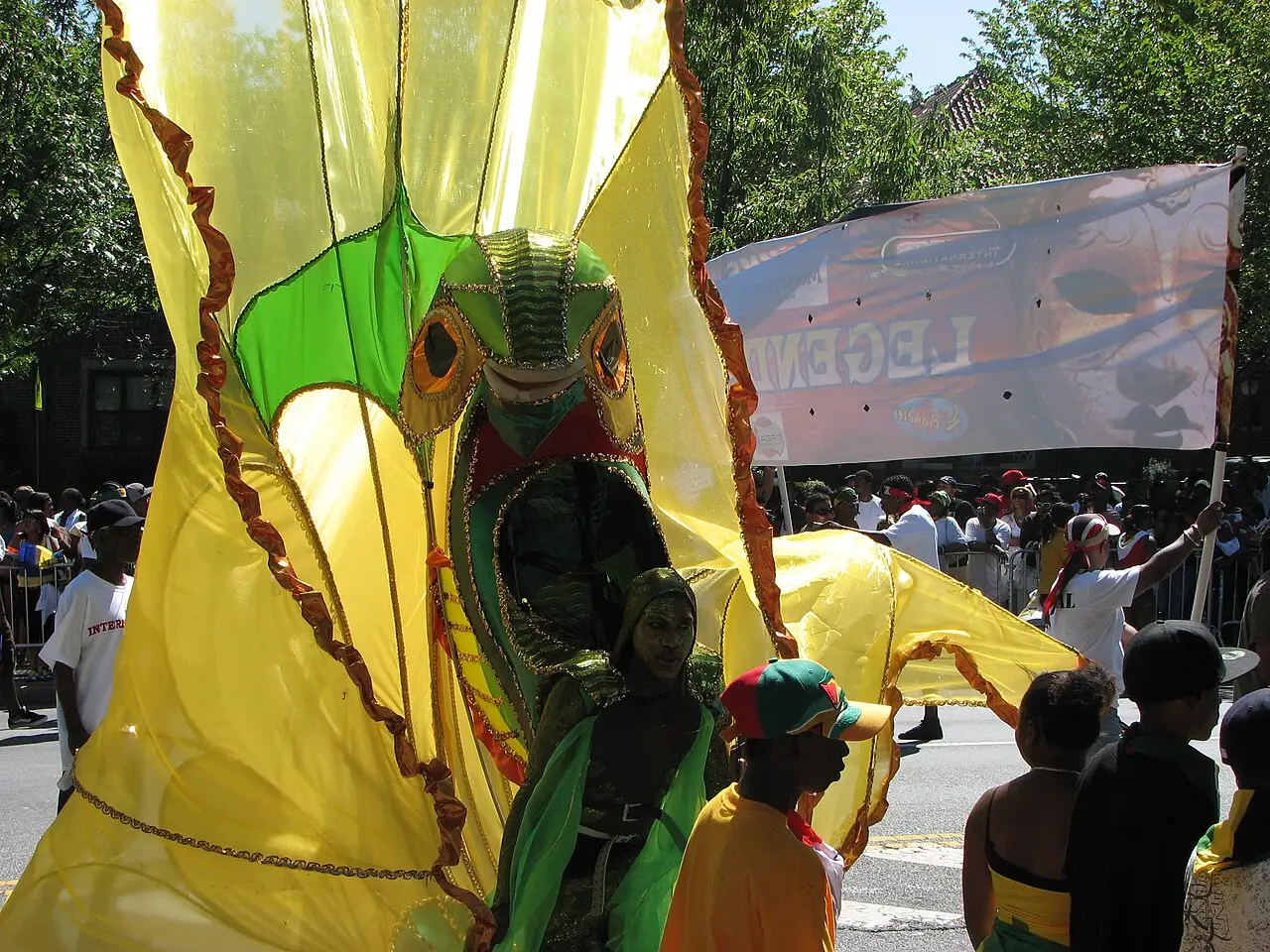
Labor Day Monday, the first Monday of September, on Eastern Parkway in Brooklyn. A Caribbean carnival with sound trucks and costumes; the early morning before it is J'Ouvert, which starts at 6am with paint and steel drums.
 AI illustration
US Open
The main draw runs from late August through the first half of September, at the Billie Jean King National Tennis Center, in Flushing Meadows; the week before is qualifying. Day sessions in the early rounds are the cheapest and give access to several courts on the same ticket.

New York City Marathon
First Sunday of November, about 50,000 runners crossing all five boroughs from Staten Island to Central Park. It closes bridges and avenues all day; 4th Avenue in Brooklyn and 1st Avenue in Manhattan are the stretches with the biggest crowds.
Books and films
“Here Is New York,” E. B. White (1949)
A thirty-page essay that splits the city into three kinds of residents: the one born there, the one who commutes in and back out to the suburbs every day, and the one who came from far away chasing something. Written in the summer of 1948, it still describes the present.
“Do the Right Thing,” Spike Lee (1989)
A hot day on one block of Bed-Stuy, Brooklyn. It shows how race, corner-store commerce, and temperature combine within a hundred meters of street, and how the rest of the city only shows up in the distance.
“The Death and Life of Great American Cities,” Jane Jacobs (1961)
Written in the Village while Robert Moses was trying to cut an expressway through the neighborhood. It explains why the busy sidewalk, the short block, and mixed use work, and why 20th-century urban planning nearly destroyed them.
Frequently asked questions
New York: Can you get to know the city staying only in Midtown and Times Square?
No: Midtown and Times Square are the New York of offices and Broadway theaters, and more than half of residents live in Brooklyn and Queens, 20 to 30 minutes away by subway.
New York: How do you get from JFK to Manhattan?
JFK is 24 km from downtown: the AirTrain (about $8.50) connects the terminals to the A and E subway lines, at Howard Beach or Jamaica, or to the LIRR train to Penn Station, which is the fastest route, 50 to 70 minutes total. The yellow cab charges a flat $70 fare between JFK and Manhattan, plus tolls, fees, and tip, which comes to $95 to 115 in practice, in 45 to 90 minutes.
New York: How do you get to Beacon, in the Hudson Valley?
Beacon is 80 km to the north, 1 hour 20 minutes by Metro-North's Hudson Line train from Grand Central, for $20 to 35 round trip, with the river on your left the whole way.
New York: How do you pay, with card or cash?
The currency is the US dollar, and cards are accepted almost everywhere, including street carts and buses; some grocery stores still require a $10 minimum for card purchases, and store ATMs charge $3 to 5 in fees.
New York: What's the best time to visit?
The two comfortable windows are April to June and September to October, with 15 to 25 °C, long days, and brief rain.
Other cities in the country
United States ↗- Days
- 4–5
- When
- Apr–May · Nov
- Per person/day
- Average 220–330 USDMid-range · per person/day
Cost scope
Per person per day: accommodation, meals, urban transport, visits and a small allowance for extras. Flights excluded; larger purchases vary. Editorial estimate, not a quote.
- Days
- 3
- When
- Sep–Oct
- Per person/day
- Average 180–280 USDMid-range · per person/day
Cost scope
Per person per day: accommodation, meals, urban transport, visits and a small allowance for extras. Flights excluded; larger purchases vary. Editorial estimate, not a quote.
- Days
- 4
- When
- May–Jun · Sep–Oct
- Per person/day
- Average 150–260 USDMid-range · per person/day
Cost scope
Per person per day: accommodation, meals, urban transport, visits and a small allowance for extras. Flights excluded; larger purchases vary. Editorial estimate, not a quote.
- Days
- 2–3
- When
- Jan–Apr · Nov–Dec
- Per person/day
- Average 200–350 USDMid-range · per person/day
Cost scope
Per person per day: accommodation, meals, urban transport, visits and a small allowance for extras. Flights excluded; larger purchases vary. Editorial estimate, not a quote.
- Days
- 3
- When
- Feb–May · Oct–Dec
- Per person/day
- Average 250–350 USDMid-range · per person/day
Cost scope
Per person per day: accommodation, meals, urban transport, visits and a small allowance for extras. Flights excluded; larger purchases vary. Editorial estimate, not a quote.
- Days
- 2–3
- When
- Mar–May · Oct–Nov
- Per person/day
- Average 200–350 USDMid-range · per person/day
Cost scope
Per person per day: accommodation, meals, urban transport, visits and a small allowance for extras. Flights excluded; larger purchases vary. Editorial estimate, not a quote.
- Days
- 3
- When
- Mar–May
- Per person/day
- Average 220–320 USDMid-range · per person/day
Cost scope
Per person per day: accommodation, meals, urban transport, visits and a small allowance for extras. Flights excluded; larger purchases vary. Editorial estimate, not a quote.
- Days
- 2–3
- When
- Sep–Oct
- Per person/day
- Average 190–330 USDMid-range · per person/day
Cost scope
Per person per day: accommodation, meals, urban transport, visits and a small allowance for extras. Flights excluded; larger purchases vary. Editorial estimate, not a quote.
- Days
- 2–3
- When
- Jun–Sep
- Per person/day
- Average 130–220 USDMid-range · per person/day
Cost scope
Per person per day: accommodation, meals, urban transport, visits and a small allowance for extras. Flights excluded; larger purchases vary. Editorial estimate, not a quote.
- Days
- 5–6
- When
- Jan–Apr · Nov–Dec
- Per person/day
- Average 368 USDMid-range · per person/day
Cost scope
Per person per day: accommodation, meals, urban transport, visits and a small allowance for extras. Flights excluded; larger purchases vary. Editorial estimate, not a quote.
- Days
- 4–6
- When
- Apr–May · Sep
- Per person/day
- Average 329 USDMid-range · per person/day
Cost scope
Per person per day: accommodation, meals, urban transport, visits and a small allowance for extras. Flights excluded; larger purchases vary. Editorial estimate, not a quote.
- Days
- 2
- When
- Apr–May · Sep–Oct
- Per person/day
- Average 203 USDMid-range · per person/day
Cost scope
Per person per day: accommodation, meals, urban transport, visits and a small allowance for extras. Flights excluded; larger purchases vary. Editorial estimate, not a quote.
- Days
- 3
- When
- Apr · Sep–Oct
- Per person/day
- Average 251 USDMid-range · per person/day
Cost scope
Per person per day: accommodation, meals, urban transport, visits and a small allowance for extras. Flights excluded; larger purchases vary. Editorial estimate, not a quote.
- Days
- 3
- When
- May–Jun · Sep–Oct
- Per person/day
- Average 158 USDMid-range · per person/day
Cost scope
Per person per day: accommodation, meals, urban transport, visits and a small allowance for extras. Flights excluded; larger purchases vary. Editorial estimate, not a quote.