Canada
Montreal
Bagels, Mont Royal, the old city and the festivals
Days Start with the basic programme and choose extensions for the time you have.
How the guide reaches this number
A third day, if you have it, goes to the Olympic east end and the Expo 67 islands. Montreal is a city for walking, and switching from French to English every couple of blocks is no problem. The weather is what weighs on a visit, because about 210 cm of snow falls between November and April, and March is the worst month, with ice that melts and refreezes on the sidewalks; if you need guaranteed sunshine, pick another destination. With just one day, walk into Notre-Dame at 9am and climb to the Kondiaronk Belvedere. Then head down Avenue du Mont-Royal to Schwartz's for smoked meat and finish with a cinq à sept at a microbrewery on Rue Beaubien. The letdown is Olympic Park, with much of the complex closed or under construction while the roof replacement runs until 2027 and the reopening is set for 2028. To see French-speaking neighborhood Montreal, head to the working-class east, from the Marché Maisonneuve to Rue Ontario Est, where anyone getting around only in English understands far less of the city.
2–3
When Late May to mid-October; September and the first half of October best balance heat, price, and crowds
How the guide reaches this number
The year splits abruptly into two very different halves. January and February have highs around −6 °C and lows of −14 °C, with a wind chill below −30 °C on windy days, and about 210 cm of snow falls between November and April. The city doesn't stop, but the cold calls for real winter clothing, waterproof and in layers, and shoes that won't slip on ice. March and early April are the worst time to visit: gray, snow melting into slush and nothing open outdoors except the cabanes à sucre, which make up for some of it. Summer is hot and humid, with highs of 26 °C in July and a humidex above 35 °C during heat waves. That's when almost all the festivals take place and streets close to traffic. September and the first half of October have the best weather of the year (15 to 22 °C, little rain, red foliage on Mont Royal in early October) and lower prices than July; if I could pick the dates, I'd choose that window. High season: June to August, plus the Formula 1 weekend and Christmas. Low season: November and the first half of December.
Per person/day C$160–280 per person on an average trip; about C$100 on a budget (2026)
How the guide reaches this number
Per person per day: accommodation, meals, urban transport, visits and a small allowance for extras. Flights excluded; larger purchases vary. Editorial estimate, not a quote.
 What Nilo thinks
Stay two days: the old city, the Old Port and downtown on one, and the mountain, bagels and the Plateau on the other. A third day, if you have it, goes to the Olympic east end and the Expo 67 islands. Montreal is a city for walking, and switching from French to English every couple of blocks is no problem. The weather is what weighs on a visit, because about 210 cm of snow falls between November and April, and March is the worst month, with ice that melts and refreezes on the sidewalks; if you need guaranteed sunshine, pick another destination. With just one day, walk into Notre-Dame at 9am and climb to the Kondiaronk Belvedere. Then head down Avenue du Mont-Royal to Schwartz's for smoked meat and finish with a cinq à sept at a microbrewery on Rue Beaubien. The letdown is Olympic Park, with much of the complex closed or under construction while the roof replacement runs until 2027 and the reopening is set for 2028. To see French-speaking neighborhood Montreal, head to the working-class east, from the Marché Maisonneuve to Rue Ontario Est, where anyone getting around only in English understands far less of the city.The first image of Montreal is usually the line at the Mile End bagel bakeries, open 24 hours, where the bagel is boiled in honey water and baked in a wood-fired oven. The city brings together Notre-Dame in the old town, the old port and Mont Royal, the park designed by Frederick Law Olmsted, the same man behind Central Park, and opened in 1876, with the whole island in view from the Kondiaronk Belvedere. In the Plateau, spiral staircases climb up the outside of the houses, and in summer the streets go pedestrian-only for festivals, like the Jazz Fest. At the table, the smoked meat from Schwartz's, served since 1928, shares the fame with poutine. In shops the greeting is “bonjour, hi,” and the word you answer with picks the language of the conversation, with the same service in either. The best weather runs from September through the first half of October, with red foliage on Mont Royal, so give the city two days.
Quick facts
- Population
- about 1.8 million in the city; about 2 million on the island; about 4.4 million in the metropolitan area (2026 estimates)
- Founded
- Ville-Marie, May 17, 1642, by Paul de Chomedey de Maisonneuve and Jeanne Mance; the Iroquoian village of Hochelaga was already there when Jacques Cartier arrived in 1535
- Country and region
- Canada, province of Quebec; island of Montreal, on the St. Lawrence River, 250 km southwest of Quebec City
- Language
- French, Quebec's sole official language since 1974, a rule expanded by the 1977 Charter of the French Language; about half of the island's residents describe themselves as French-English bilingual
- Currency
- Canadian dollar (CAD); GST 5% + QST 9.975% (about 15% combined) are added only at the register, never on the price tag
- Time zone
- UTC−5 in winter and UTC−4 during daylight saving (March to November)
- Best time to visit
- Late May to mid-October; September and the first half of October best balance heat, price, and crowds
- Average daily cost
- C$160–280 per person on an average trip; about C$100 on a budget (2026)
When to go
Late May to mid-October; September and the first half of October best balance heat, price, and crowds
January
-12° to -4°C
82 mm of rain
February
-10° to -3°C
71 mm of rain
March
-5° to 3°C
85 mm of rain
April
2° to 11°C
97 mm of rain
November
0° to 6°C
82 mm of rain
December
-7° to -1°C
104 mm of rain
How the year changes
The year splits abruptly into two very different halves. January and February have highs around −6 °C and lows of −14 °C, with a wind chill below −30 °C on windy days, and about 210 cm of snow falls between November and April. The city doesn't stop, but the cold calls for real winter clothing, waterproof and in layers, and shoes that won't slip on ice. March and early April are the worst time to visit: gray, snow melting into slush and nothing open outdoors except the cabanes à sucre, which make up for some of it. Summer is hot and humid, with highs of 26 °C in July and a humidex above 35 °C during heat waves. That's when almost all the festivals take place and streets close to traffic. September and the first half of October have the best weather of the year (15 to 22 °C, little rain, red foliage on Mont Royal in early October) and lower prices than July; if I could pick the dates, I'd choose that window. High season: June to August, plus the Formula 1 weekend and Christmas. Low season: November and the first half of December.
The same numbers as a table
| Month | Temperature °C | Rain mm |
|---|---|---|
| January | -12 to -4 | 82 |
| February | -10 to -3 | 71 |
| March | -5 to 3 | 85 |
| April | 2 to 11 | 97 |
| May · | 10 to 19 | 89 |
| June · | 15 to 24 | 103 |
| July · | 18 to 27 | 92 |
| August · | 17 to 26 | 107 |
| September · | 13 to 21 | 88 |
| October · | 6 to 13 | 109 |
| November | 0 to 6 | 82 |
| December | -7 to -1 | 104 |
Nilo's tips
Arrive in the morning: the 747 pass (C$12.75) is valid for 24 hours
The machine on arrival doesn't sell single tickets, only the 24-hour ARTM ticket, good for metro and bus until the same time the next day. Anyone arriving in the morning covers the whole first day, while anyone arriving near midnight throws half of it away. Express bus 747 connects the airport to Berri-UQAM 24 hours a day, in 45 to 70 minutes. The taxi has a flat rate of C$48–55 and only breaks even with four people and luggage, and Uber and Eva charge about the same.
The 10-ride ticket is gone: do the math by day
From the fourth ride of the day on, the 24-hour pass, about C$12.75, works out cheaper than the C$3.75 single fare; with fewer rides, the single fare wins. Either way, buy the rechargeable OPUS card, about C$6, at the first station you set foot in.
Eat the bagel on the sidewalk: Mile End bakeries are open 24 hours
The bagel goes stiff on the way back to the hotel, so eat the sesame one right there. There's a line at St-Viateur and Fairmount at any hour, and it moves fast. If you come during the day, arrive before 8am, when the line is shorter, have coffee at a roaster on rue Saint-Viateur and climb from there to the Kondiaronk Belvedere, at 233 m, before the viewpoint fills up.
At Notre-Dame, go in at 9am; at Schwartz's, wait in line
Around 11am the tour groups arrive, and Victor Bourgeau's cobalt-blue vault with gold stars disappears behind the crowd. Admission to the basilica costs about C$15. At Schwartz's, by contrast, the line moves fast and isn't worth skipping. Order the “medium” fat smoked meat, C$13–18, and eat it at the counter.
Check the tip base before you tap the screen
Since May 2025, Quebec law has required card machines to calculate the suggested tip on the pre-tax amount, but the screen still shows the highest percentages first. Choose the percentage yourself, keeping an eye on the pre-tax total. At a bar, leave about C$1 per drink, and at coffee counters and fast-food places, nothing.
Avoid July 1 and come in September, with 15 to 22°C
On July 1, almost every lease in Quebec ends, and the whole city carries boxes through the streets of the Plateau and Petite-Patrie. The welcome exception in summer is the Jazz Fest, from late June to early July, when downtown goes pedestrian-only for ten days. If you can choose, come in September or the first half of October, with lower prices. In winter, cross downtown through the 33 km of the RÉSO, entering at Square-Victoria–OACI station, instead of braving the icy sidewalks.
Explore the map

© OpenStreetMap · OpenFreeMap · © OpenMapTiles
Explore the map, read about the other places and plan your travel days in the app.
Open the appWhat to see
Montreal: The island and the mountain
Winter explains much of the design: about 210 cm of snow a year justify the 33 km of corridors of the RÉSO, the underground city linking ten metro stations, train stations, universities and downtown malls without ever leaving the heat, and also the Plateau's outdoor spiral staircases, born from late-19th-century building codes that pushed the staircase outside to free up interior space and reduce fire risk.
Notre-Dame Basilica
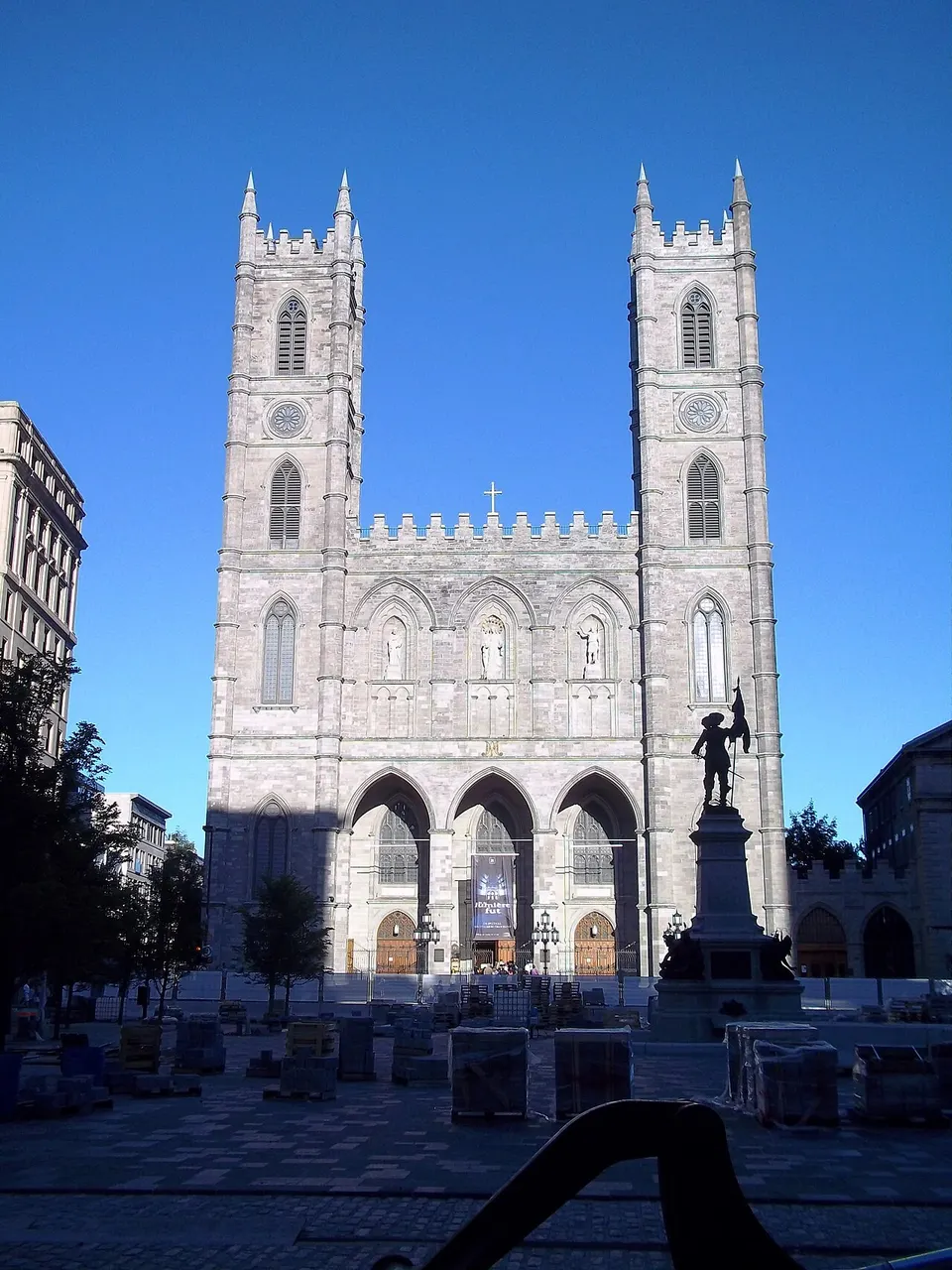
Neo-Gothic, built between 1824 and 1829 by Irishman James O’Donnell, who converted to Catholicism so he could be buried there. The interior, by Victor Bourgeau (1872–1880), has a cobalt-blue vault with gold stars and a Casavant organ of about 7,000 pipes; entry about C$15.
James O'Donnell converted to Catholicism so he could be buried in the basilica he built, where Bourgeau brought together the cobalt vault with gold-toned stars and the Casavant organ with about 7,000 pipes, and admission costs about C$15.
Check access
Parc du Mont-Royal
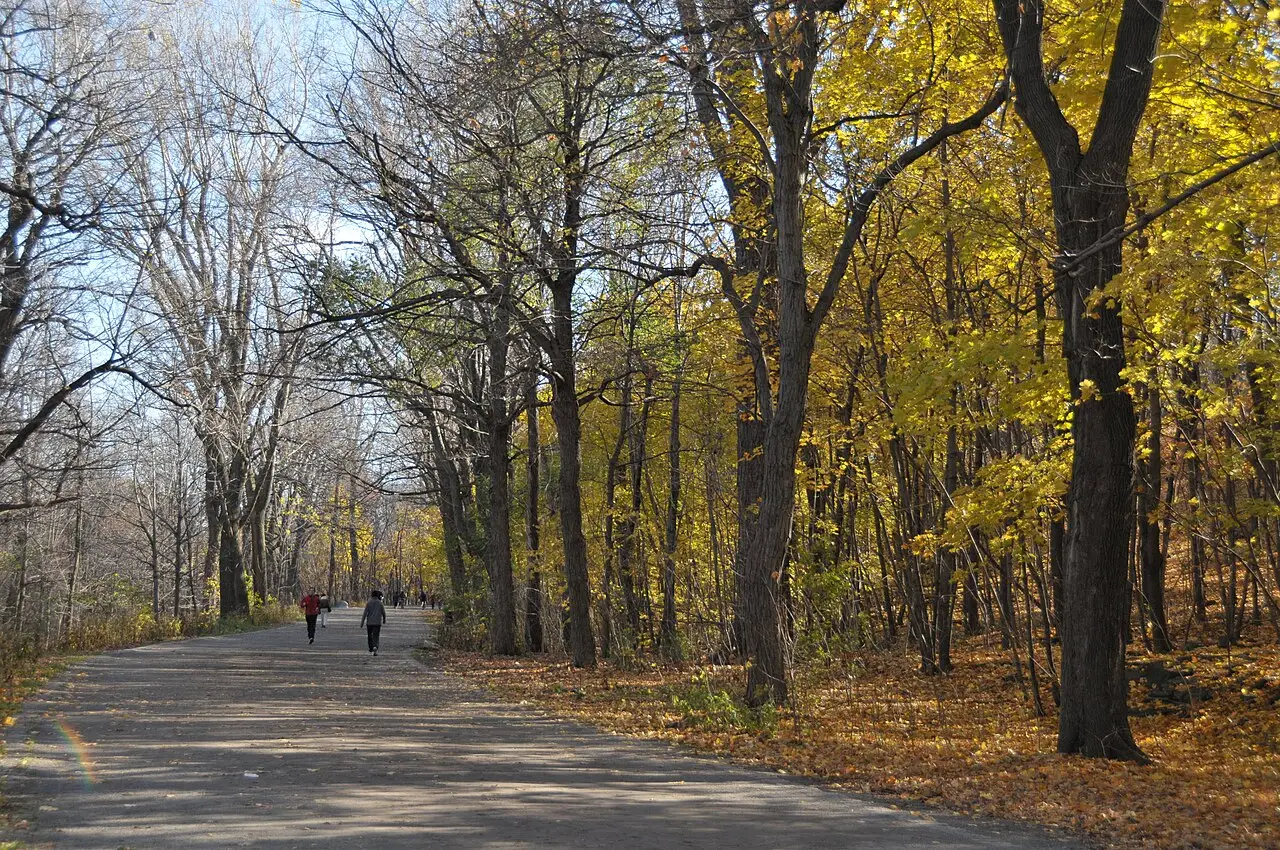
Designed by Frederick Law Olmsted, the same designer as Central Park, and opened in 1876; from the Kondiaronk lookout you see the whole island and the river. The 31.4 m steel cross on top dates from 1924 and replaces the wooden one planted by Maisonneuve in 1643; on summer Sundays the tam-tams play by the Cartier monument.
In the park designed by Frederick Law Olmsted, author of Central Park, the Kondiaronk Belvedere is the point from which you see the whole island and the river, and at the top stands the 31.4 m steel cross, on the site of the wooden one Maisonneuve planted.
Check access

Pointe-à-Callière and the Vieux-Port
The museum was built over the archaeological site of the 1642 founding and goes down into the Saint-Pierre River collector, a 19th-century tunnel you can walk through. Nearby, the wharf has the 1922 clock tower, raised in memory of sailors killed in the First World War, and the 60 m ferris wheel installed in 2017.
The museum was built on the site where the city was born in 1642 and descends into a 19th-century tunnel you walk through, beside the pier with the 1922 clock tower and the 60 m Ferris wheel.
Check access
Saint Joseph’s Oratory of Mount Royal
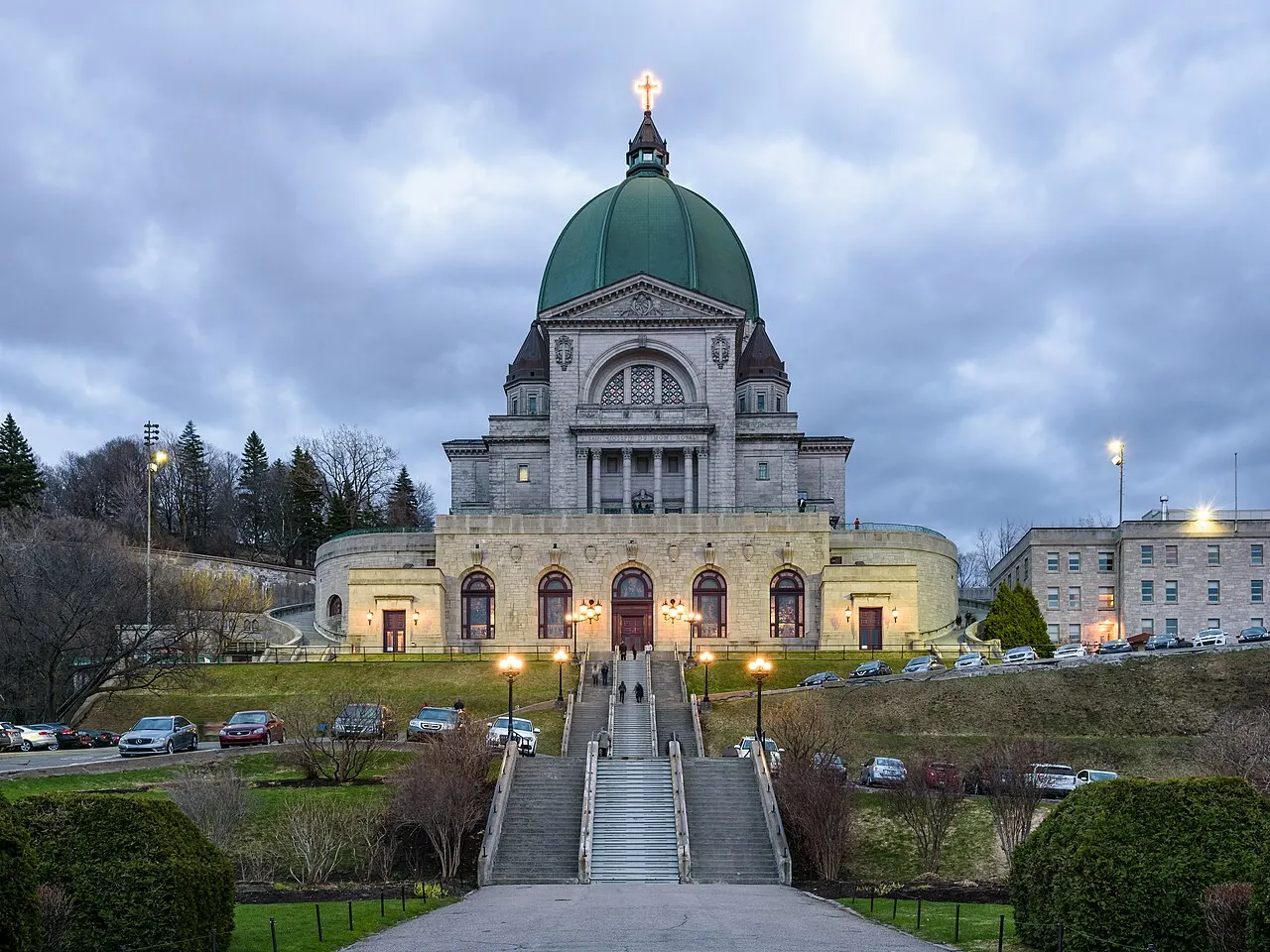
A 97 m-tall domed basilica, started by Brother André in 1904 as a wooden chapel and completed in 1967. Pilgrims still climb the 99 wooden steps at the center of the staircase on their knees; the lookout sits about 263 m above sea level, the highest accessible point in the city.
Pilgrims still climb the 99 wooden steps on their knees, in the center of the staircase, toward the domed basilica that began as a chapel, and the viewpoint sits about 263 m above sea level.
Check access
Espace pour la vie
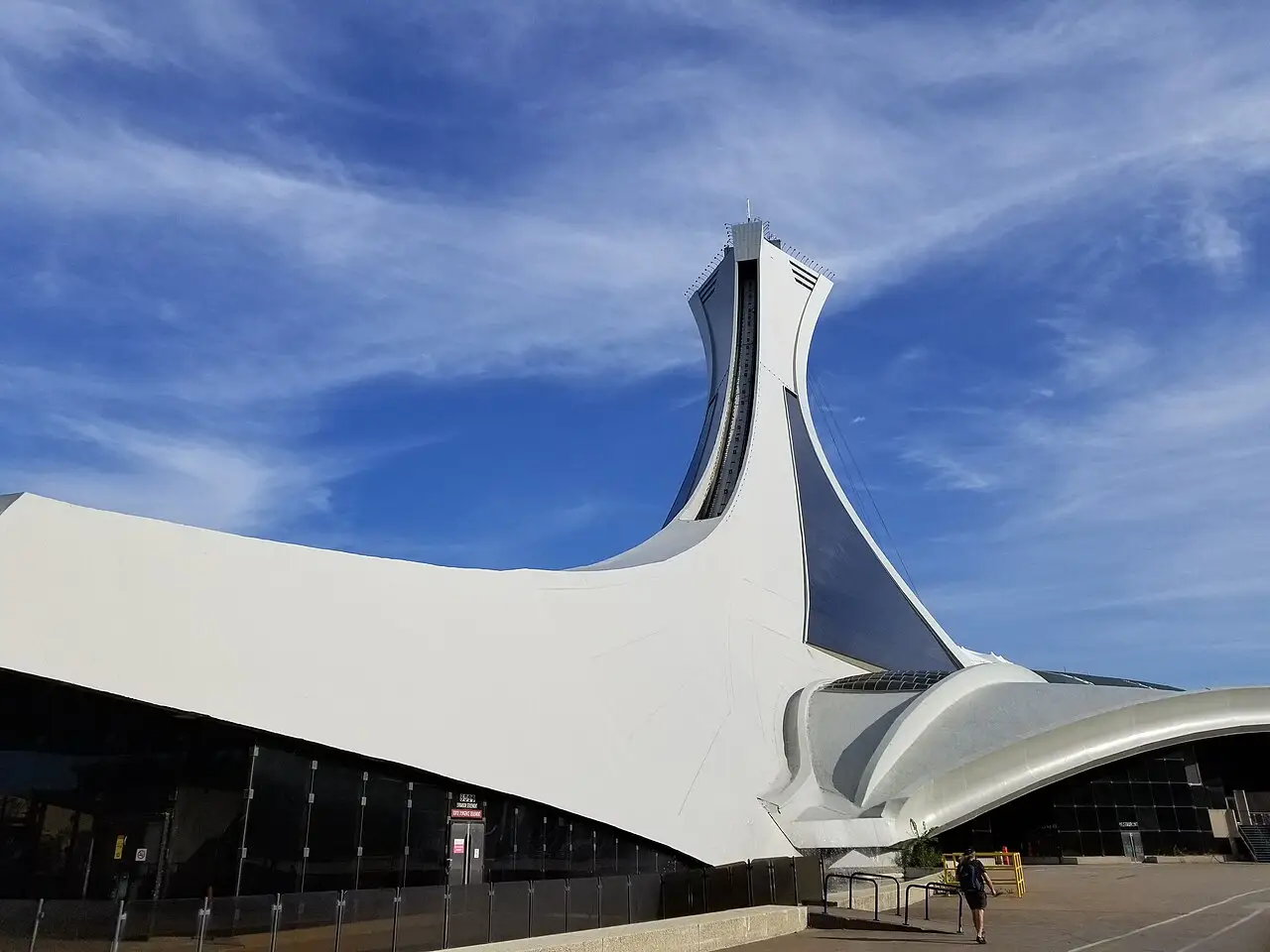
A group of four institutions in the east: the Botanical Garden, created in 1931 by Brother Marie-Victorin, with 75 ha and Chinese and Japanese gardens; the Biodôme, set inside the 1976 Olympic velodrome; plus the Insectarium and the Planetarium. In September and October the garden hosts the Jardins de Lumière lanterns at night.
To the east are the Botanical Garden, with Chinese and Japanese gardens, the Biodôme set up inside the 1976 Olympic velodrome, the Insectarium and the Planetarium.
Check access
Montreal Museum of Fine Arts
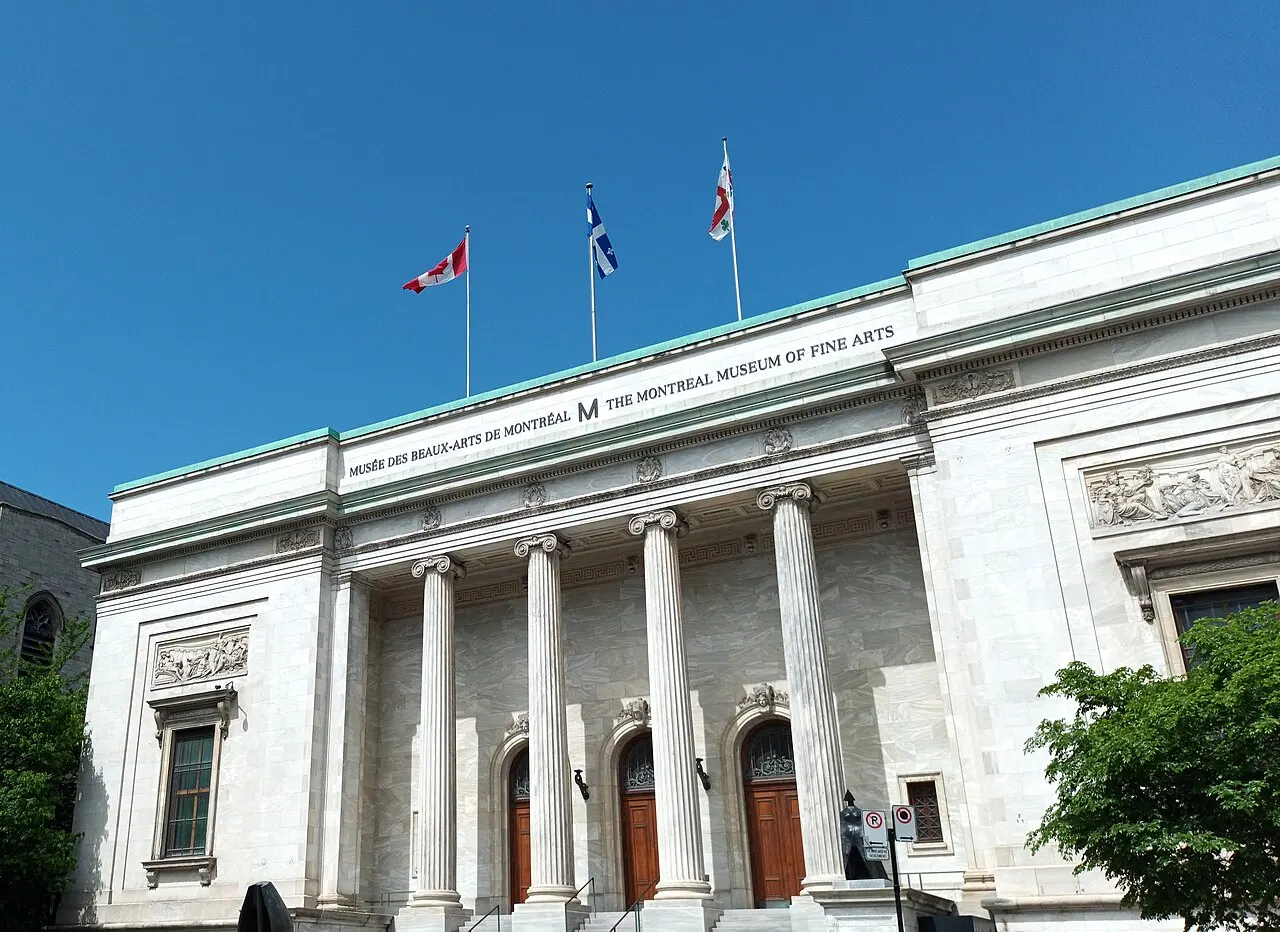
Founded in 1860, Canada’s oldest museum, today spread over five pavilions linked under Rue Sherbrooke Ouest, with about 47,000 works, from ancient Egypt to Inuit and Quebec art. The permanent collection is free for those under 21.
Founded in 1860, this is Canada's oldest museum, and anyone under 21 doesn't pay for the permanent collection.
Check access
Marché Jean-Talon and Marché Atwater
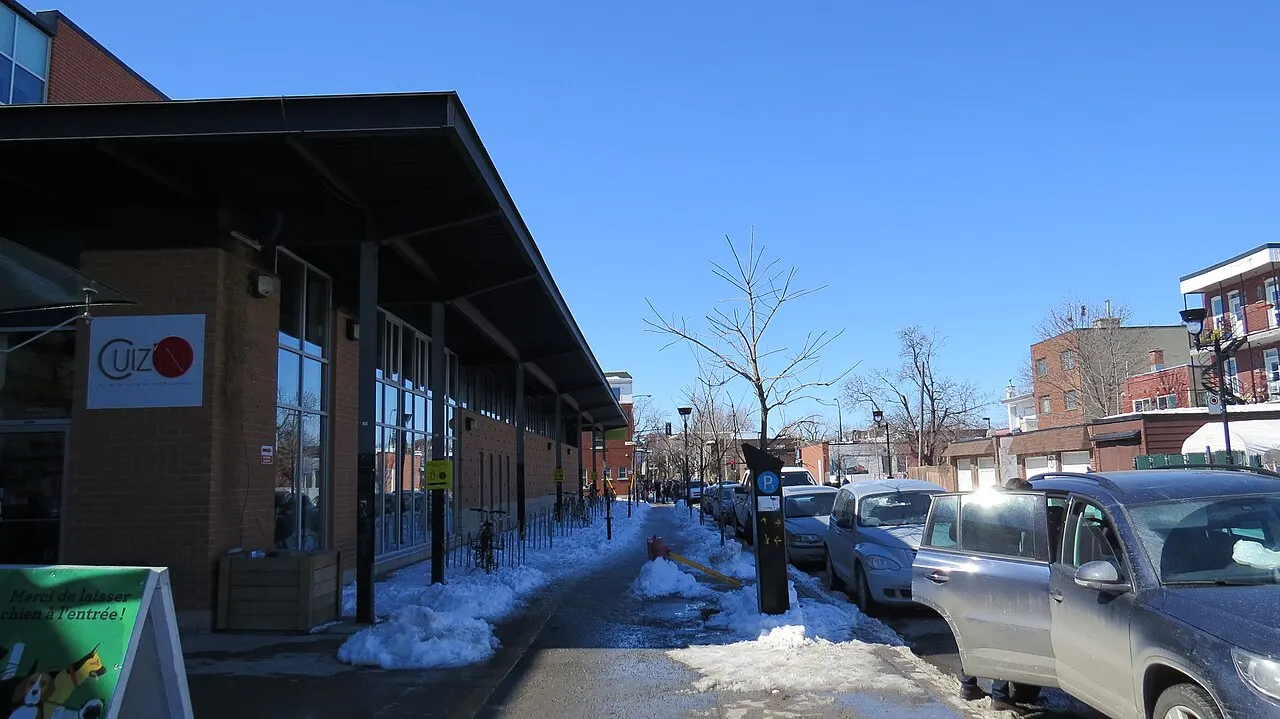
The two public markets from 1933 that still work as neighborhood supply, not as an attraction. Jean-Talon, in the Petite-Italie, is one of the largest open-air markets in North America; Atwater, with its art deco tower, sits on the edge of the Lachine Canal.
Jean-Talon is in Petite-Italie and Atwater is on the edge of the Lachine Canal, two markets from 1933; they still function as neighborhood supply, not as attractions.
Check access
Habitat 67 and the Lachine Canal
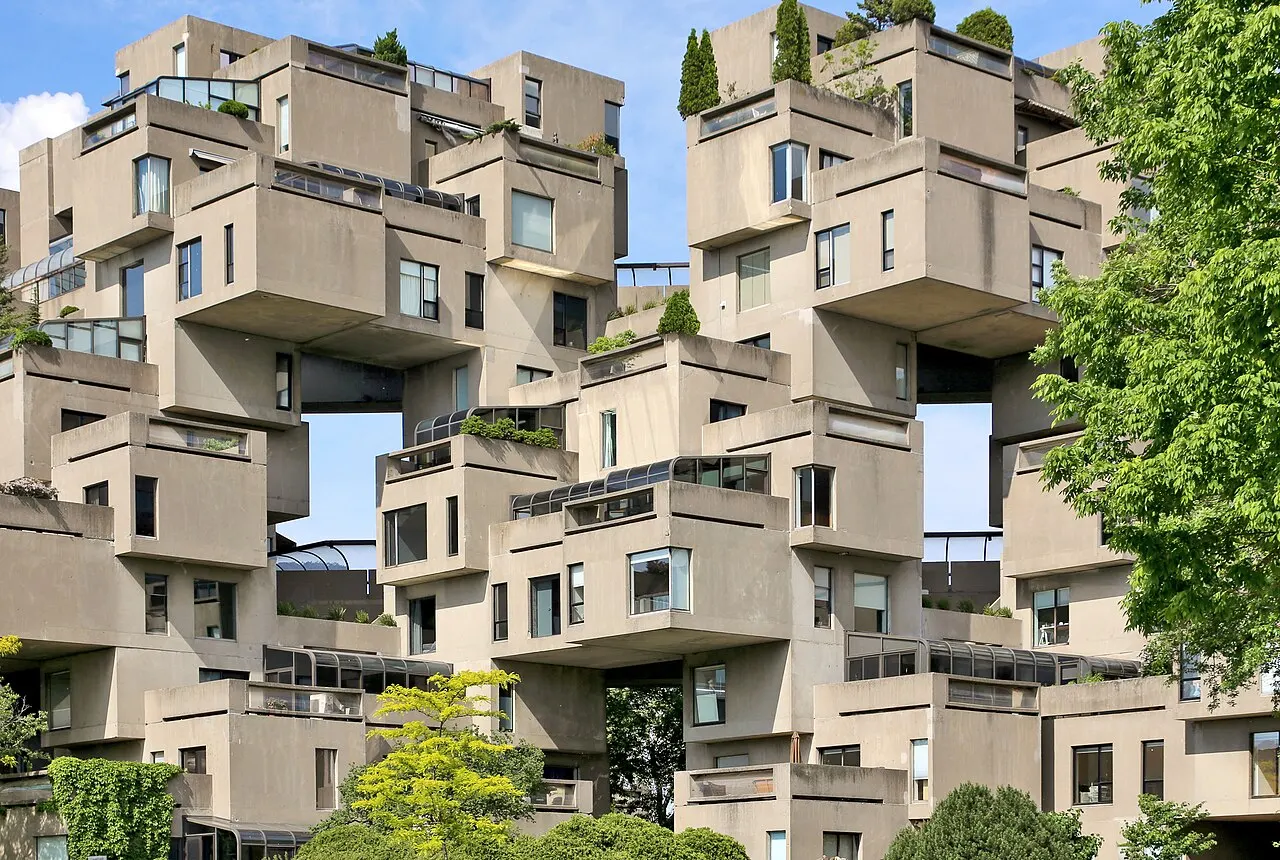
Moshe Safdie’s housing complex for Expo 67 stacks 354 precast concrete boxes into 158 apartments, each with a rooftop terrace on the neighbor below; it’s best seen from the canal or by boat. From the Vieux-Port a bike path of about 14 km runs along the canal to Lake Saint-Louis, flat all year round.
The complex is best seen from the canal or by boat.
Check access
Parc Jean-Drapeau
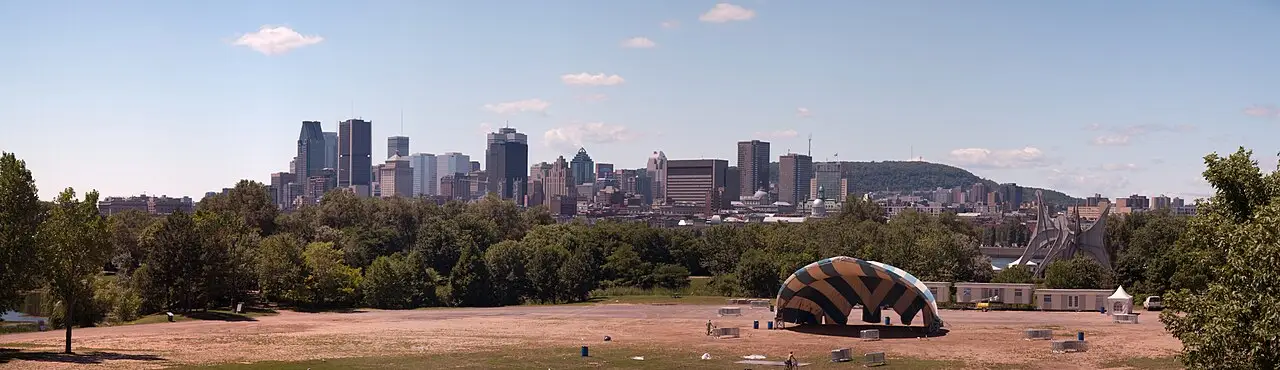
The two Expo 67 islands, a few metro stops from downtown. Home to Buckminster Fuller’s Biosphère, a 76 m geodesic dome that lost its acrylic skin in a fire in 1976, the 4.361 km Circuit Gilles-Villeneuve, open to walkers and cyclists outside of events, and the casino set in the former France and Quebec pavilions.
What's left of Expo 67 on the two islands is the Biosphere without the acrylic skin that burned in 1976, the 4.361 km circuit open to walkers and the casino in the old France and Quebec pavilions. Habitat 67, from the same year, you can see from the Lachine Canal for free.
Check access
Nilo’s itinerary
Start with the basic programme and choose extensions for the time you have.
Plan my days in the app ↗Day 1 · The old city, the port, and downtown
Start at 9am at Notre-Dame Basilica, on Rue Notre-Dame Ouest (about C$15): see the blue vault with gold stars and the Casavant organ before the tour groups arrive, around 11am.
Walk two blocks to the Pointe-à-Callière museum and go down into the basement, built over the ruins of the 1642 founding and over the Saint-Pierre River collector.
Have lunch near the Vieux-Port and walk along Rue Saint-Paul to Place Jacques-Cartier; the 1922 clock tower stands at the tip of the Jacques-Cartier pier.
In the afternoon, walk up Rue Saint-Jacques, the old banking district, toward downtown; if it's raining or below zero, enter the RÉSO at Square-Victoria–OACI station and cross underground.
Finish in the Quartier des Spectacles: Place des Arts, the fountain plaza, and dinner somewhere on Rue Sainte-Catherine or Rue Saint-Denis.
Day 2 · The mountain, the bagel, and the Plateau
At 8am, eat a hot sesame bagel at St-Viateur or Fairmount, in the Mile End, and have coffee at one of the roasters on Rue Saint-Viateur.
Climb Parc du Mont-Royal via Rue Peel or Chemin Olmsted to the Kondiaronk lookout, at 233 m, to see the whole island and the river; the 1924 cross is fifteen minutes further on.
Go down Avenue du Mont-Royal and walk back through the Plateau, looking at the triplexes’ spiraling outdoor staircases and the murals down the side streets.
Have smoked meat for lunch at Schwartz's, on Boulevard Saint-Laurent, and order it “medium”; the line is standing only and moves fast.
Spend the late afternoon at the Marché Jean-Talon, in Petite-Italie, and finish with a cinq à sept at a microbrewery on Rue Beaubien or Rue Saint-Denis.


If you stay longer
Day 3 · The Olympic east and the Expo islands
Take the green metro line to Pie-IX for the Botanical Garden, 75 ha open since 1931 with its Chinese and Japanese gardens, and for the Biodôme, inside the 1976 velodrome.
See the Montreal Tower, leaning 165 m at 45°; check first whether the funicular and the lookout are open, since work on the stadium roof continues until 2027.
Have lunch at Marché Maisonneuve or on Rue Ontario Est, in Hochelaga, where prices are half what they are downtown.
Continue on the yellow metro line to Jean-Drapeau for Buckminster Fuller's Biosphère, the Circuit Gilles-Villeneuve (4.361 km, open to walkers and cyclists outside events) and the view of downtown across the water.
Head back along the shore, passing Habitat 67, and take the Lachine Canal bike path by Bixi to Marché Atwater.
Food
 AI illustration
Montreal bagel
Boiled in honeyed water before going into a wood-fired oven, it’s smaller, sweeter, denser, and has a bigger hole than the New York one. St-Viateur (1957) and Fairmount (1919) run 24 hours in the Mile End; eat it hot, from the paper bag, sesame or poppy, about C$1.50 each.
 AI illustration
Smoked meat
Beef brisket cured for about ten days in spices, smoked, steamed, and hand-cut onto rye bread with yellow mustard. Schwartz’s, on Boulevard Saint-Laurent, has been doing this since 1928; ask for “medium” fat, sandwich about C$13–18.
 AI illustration
Poutine
French fries, fresh cheese curds that squeak against the teeth, and hot brown gravy poured on top, in that exact order. It was born in rural Quebec in the late 1950s and turns into a late-night meal at places open until dawn like La Banquise, in the Plateau; about C$10–16.
 AI illustration
Tourtière
A savory ground-meat pie seasoned with clove and cinnamon, a Christmas and New Year’s Eve dish with regional variations. The Saguenay version uses cubed meat and potato and bakes for hours. It shows up year-round at casse-croûtes and cabanes à sucre, usually with homemade fruit ketchup.
 AI illustration
Cabane à sucre and tire d’érable
Between late February and April the sugar shacks serve pea soup, beans, ham, omelet, oreilles de crisse, and pancakes with all the syrup you want, about C$35–60 per person. On the patio, boiled syrup is poured over snow and rolled onto a stick: that’s the tire d’érable.
 AI illustration
Portuguese grilled chicken
A legacy of Portuguese immigration in the Plateau starting in the 1950s: butterflied chicken, marinated and charcoal-grilled with piri-piri, sold at counter rotisseries on Rue Rachel and Rue Saint-Urbain. Half a chicken with potatoes and rice runs around C$15.
 AI illustration
Casse-croûte steamie
The steamed hot dog, with the bun steamed too, ordered “all dressed”: mustard, chopped onion, relish, and shredded cabbage. It comes with fries and a “liqueur” (soft drink) at neighborhood counters, and costs a fraction of any other meal in the city.
 AI illustration
Pouding chômeur and queue de castor
The “unemployed man’s pudding” is a simple cake baked inside maple syrup sauce with cream, a recipe from the 1930s crisis that still appears on nearly every dessert menu. In winter, in the Vieux-Port, the street alternative is the queue de castor, flattened fried dough with sugar and cinnamon.
Day trips

Quebec City
250 km northeast via highways 20 or 40: about 3 hours by car and about 3 hours 15 minutes by VIA Rail train from Gare Centrale, with few departures a day. It's the only walled historic center north of Mexico, with the 1608 Place-Royale and the 1893 Château Frontenac; you can do it as a day trip, but one night gets you much more.

Mont-Tremblant and the Laurentides
Mont-Tremblant is about 130 km northwest, 1 hour 30 minutes by car on Highway 15 or by direct bus. It's a ski resort from December to April and has national park trails in summer; the P'tit Train du Nord, a former railway converted into 234 km of flat bike path, has sections you can reach from Saint-Jérôme.

Cantons-de-l’Est
80 to 150 km southeast, 1 hour to 1 hour 45 minutes by car. Magog and Lake Memphrémagog, the Benedictine abbey of Saint-Benoît-du-Lac with its cheeses and Gregorian chant at vespers, wine and ice-cider routes, and dozens of cabanes à sucre open in March and April.
Where to begin
The old city, the port, and downtown
Start at 9am at Notre-Dame Basilica, on Rue Notre-Dame Ouest (about C$15): see the blue vault with gold stars and the Casavant organ before the tour groups arrive, around 11am.
The mountain, the bagel, and the Plateau
At 8am, eat a hot sesame bagel at St-Viateur or Fairmount, in the Mile End, and have coffee at one of the roasters on Rue Saint-Viateur.
The Olympic east and the Expo islands
Take the green metro line to Pie-IX for the Botanical Garden, 75 ha open since 1931 with its Chinese and Japanese gardens, and for the Biodôme, inside the 1976 velodrome.
Money
The currency is the Canadian dollar, and the price on the tag never includes tax: at the register you add 5% federal GST and 9.975% provincial QST, almost 15% in total, and there has been no tourist refund since the federal program ended in 2007. At sit-down restaurants, also count the tip, which here is part of the price. 2026 price ranges: coffee C$3–5; sandwich or filled bagel C$8–14; lunch C$18–25; dinner with a glass of wine C$50–80; microbrewery draft beer C$8–10; mid-range hotel C$180–300 in July and August, C$130–200 between November and April, plus a 3.5% provincial lodging tax. Contactless cards are accepted almost everywhere, from food trucks to festival stalls, and cash is only needed at markets and some casse-croûtes. Wine and spirits are sold only in the state-run SAQ stores. Beer and everyday wine are available at dépanneurs and supermarkets until 11pm, and the legal drinking age is 18.
Getting there and around
Montréal-Trudeau airport: 20 km west, express bus 747
Montréal-Trudeau Airport (YUL) is 20 km west of downtown, and getting out is simple. Express bus 747 reaches downtown in 45 to 70 minutes, at any hour of the day, and accepts the C$12.75 24-hour pass, bought at the machine on arrival. Taxi, Uber and Eva charge a similar fare, in the C$48–55 range. The REM branch to the airport was not yet in service as of September 2026, expected around 2027. VIA Rail trains leave from Gare Centrale for Quebec City, Ottawa and Toronto, and intercity buses depart from the rue Berri station, next to Berri-UQAM metro.
The metro has run on rubber tires since 1966 and smells like hot rubber
The metro has four lines and 68 stations, and it has run on rubber tires since October 14, 1966: it's quiet and smells of warm rubber. It runs from 5:30am to about 1am (1:30am on Saturdays), and each station was designed by a different architect: it's worth getting off at Champ-de-Mars, Namur and Berri-UQAM just to look. Buses, including night routes, round out the network, along with the REM, an automated light metro that opened in 2023 to the South Shore and was extended in 2025. ARTM fares for 2026 in zone A: single fare C$3.75, two fares C$7.00, 24 hours about C$12.75 and monthly C$110 since July 1, 2026. The old 10-fare ticket has been discontinued. The reloadable card costs about C$6. Bixi public bikes have more than 900 stations and have run year-round since 2023, with an unlock fee of about C$1.25 plus C$0.20 per minute. Downtown is flat and walkable, and if you drive, one local rule applies: no right turn on a red light anywhere on the island.
Safety
Montreal is one of the safest large cities in North America, with a homicide rate of around 1 per 100,000 residents a year, well below the Canadian average for cities its size. The crime most likely to affect a visitor is theft: bike theft, break-ins into cars parked with a bag in view, and pickpockets at packed festivals and on the orange metro line at rush hour. At night, the stretch of Rue Sainte-Catherine Est near Berri-UQAM and some RÉSO entrances gather people experiencing homelessness and visible drug use. The scene is uncomfortable but rarely dangerous; avoid arguments and don't film anyone. When the bars empty out, at 3am, in the Vieux-Port and on Boulevard Saint-Laurent, there are occasional late-night fights. The most real risk is seasonal and physical: icy sidewalks after a thaw and refreeze, falls on the spiral outdoor staircases, and blocks of ice and snow that crash down from eaves and cornices in the Plateau on sunny days in February and March. Walk away from the wall. Tap water is safe to drink across the island, healthcare for foreigners is expensive (get insurance), and the emergency number is 911.
Etiquette tips
Start in French
A “bonjour” before any question changes the tone of the whole conversation; if you don’t speak the language, “bonjour, do you speak English?” works in most downtown places. Complaining about having to speak French in Quebec is the fastest social mistake in the city.
Tip is part of the bill
At a table-service restaurant, 15% of the pre-tax amount is the minimum and 18–20% is expected; at a bar, about C$1 per drink. Taxis and hairdressers follow the same logic; coffee counters and fast food don’t.
Shoes stay at the door
In someone's home, take your shoes off at the door, winter and summer. With salt, sand and street slush nine months a year, the custom keeps the house clean.
Quebec French has its own norms and literature
Quebec French has its own standard, dictionary, literature, and four centuries of separate history. Treating it as a deviant version of Paris French ends conversations politely and permanently.
Don't turn right on red, even with an empty street
On the island of Montreal it’s illegal to turn right on red, even with the street empty: the only exception in the province. Pedestrians cross outside the crosswalk all the time, but the fine exists and gets enforced in campaigns.
In winter, respect the cleared sidewalk
People who shovel their own entrance don't like seeing snow tracked back onto it; and during snow removal, the cones and orange signs hung the night before mean the car will be towed at 7am. Walk on the side of the street where the salt has already been spread.
Mistakes to avoid
Rubber-soled boots and a hat that covers the ears
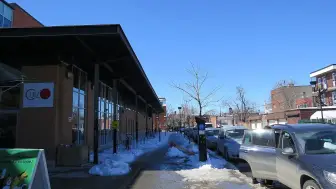
Underestimating winter. The cold here is nothing like southern Brazil's: without a knee-length waterproof coat, a hat that covers your ears, gloves and rubber-soled boots, −20 °C with wind will drive you off the street in ten minutes. The ice under the snow knocks down more people than the cold.
The real bill is 1.3 times what’s written
Adding up the menu price in your head. Nearly 15% tax gets added only at the register plus 15–20% tip at a restaurant: the real bill for a dinner is about 1.3 times what's printed on the menu, and that math usually comes too late.
Turning right on red is illegal
Renting a car to stay on the island. Parking is expensive and confusing, turning right on red is illegal, and in winter snow removal operations tow anyone who ignores the orange signs hung a day in advance.
Arriving or moving on July 1
Scheduling arrival, a move, or a cheap hotel for July 1, Quebec’s lease turnover day. Hotels get pricier and the central streets clog up with moving trucks.
Treating Montreal as a French city
Treating Montreal like a French city. The vocabulary (dépanneur, magasiner, char, tuque), the food, the Catholic heritage dismantled in the 1960s, and the winter created something else; and getting around only in English cuts out much of what you understand about the east side of the island.
Useful phrases
Bonjour, ça va ?
Hello, how are you? The standard opener for any conversation, including business ones; just saying “bonjour” is already enough on entering any place
Bienvenue
You’re welcome: in Quebec this is how you answer “merci,” where in France you’d say “de rien”
Je vais au dépanneur
I’m going to the corner store. The “dep” is the convenience store on every block that sells beer until 11pm
C’est correct
It’s all good, no worries. Works as agreement, as an accepted apology, and as closing a subject
On se prend un cinq à sept ?
Want to grab a drink after work? Literally “a five to seven,” the local happy hour
Attache ta tuque
Hold on, here it comes: literally “tie down your hat,” said before something intense or fast
Districts
Vieux-Montréal
The stone core of the 17th to 19th centuries between Rue Saint-Antoine and the river, with cobblestones on Rue Saint-Paul, Place Jacques-Cartier and the old banks of Rue Saint-Jacques. It's the most touristy and most expensive area to eat in; it's best early in the morning or after 9pm.
Centre-ville and Quartier des Spectacles
Office towers, McGill, the shops on Rue Sainte-Catherine and the entrance to the RÉSO. Within one square kilometer around Place des Arts sit more than thirty venues and squares used by the summer festivals.
Plateau-Mont-Royal
Brick triplexes with spiraling outdoor staircases, Canada’s most densely populated neighborhood, between Avenue Mont-Royal and Avenue Saint-Denis. This is where most of the mid-size bars, bookshops, and restaurants sit, and where the students live.
Mile End
Layers of Jewish, Greek, and Portuguese immigration stacked in a few blocks, with the city’s two bagel bakeries, synagogues, Orthodox churches, and cafes that double as offices. Ubisoft set up here in 1997, and much of the 2000s indie rock scene was born here.
Petite-Italie and Villeray
Around the Marché Jean-Talon, with old Italian cafes, the Madonna della Difesa church and its Guido Nincheri frescoes. Villeray, next door, is residential and has Rue de Castelnau and Rue Villeray as its neighborhood shopping strips.
Le Village
The stretch of Rue Sainte-Catherine Est east of Saint-Hubert, the center of the city’s LGBT life since the 1980s. In summer the street closes to cars and gets a suspended art installation that changes every season.
Griffintown and Saint-Henri
The former Irish and working-class industrial strip along the Lachine Canal, now covered in new buildings, with Rue Notre-Dame Ouest’s antique shops and restaurants and the Marché Atwater and its 1933 art deco tower.

Hochelaga-Maisonneuve
The working-class Francophone east, with the Olympic Park, the Botanical Garden, the Marché Maisonneuve, and Rue Ontario Est. Lower prices, less English on the street, and the best place to see the city off the tourist circuit.
History
1535 · Cartier at Hochelaga
Jacques Cartier sails up the St. Lawrence and finds Hochelaga, a fortified Iroquoian village at the foot of the mountain he names Mont Royal. The village had already vanished by the time the French returned, in the early 17th century.
1642 · Founding of Ville-Marie
On May 17, about fifty colonists of the Société Notre-Dame land with Maisonneuve and Jeanne Mance to found a religious mission at Pointe-à-Callière. Mance opens the Hôtel-Dieu in 1645, one of the first hospitals in North America.
1701 · The Great Peace of Montreal
Thirty-nine Indigenous nations and New France sign the treaty here that ends nearly a century of Iroquois wars. Freed from siege, Montreal becomes the continent’s center of the fur trade.
1760 · Capitulation and British rule
On September 8 the city surrenders to three converging British armies, a year after the fall of Quebec City. The 1763 Treaty of Paris hands New France to London, and an Anglophone merchant minority takes control of the economy.
1825 · The Lachine Canal
The canal’s opening bypasses the rapids and links the port to the Great Lakes, anchoring factories, mills, and refineries along its banks. Griffintown, Pointe-Saint-Charles, and Saint-Henri fill up with Irish and French-Canadian workers.
1849 · Parliament in flames
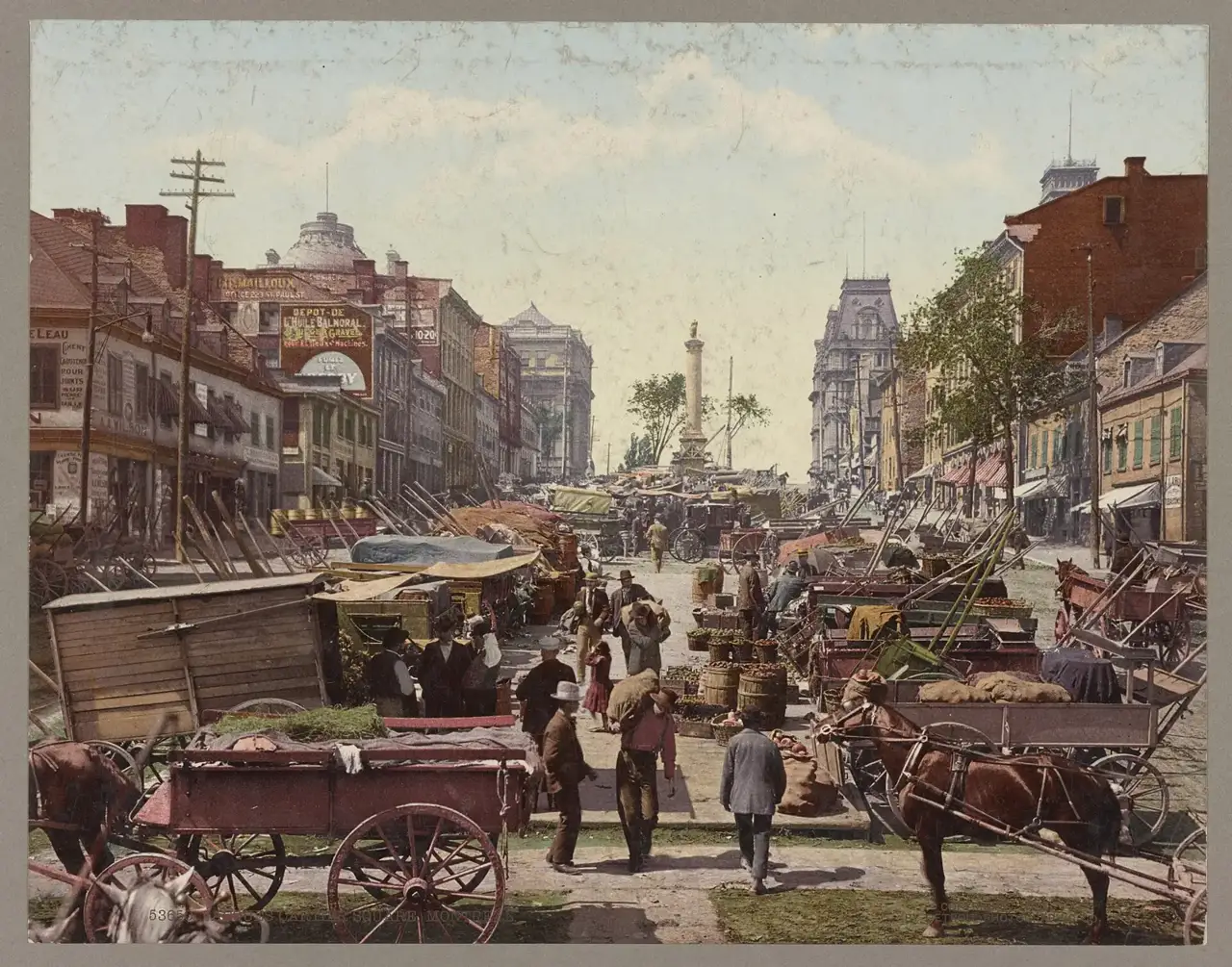
Capital of the Province of Canada since 1844, the city loses the title after protesters set fire to Parliament, on today’s Place d’Youville, in April 1849. The capital then bounces between other cities and ends up in Ottawa.
1859–1900 · Canada’s metropolis
The Victoria Bridge (1859) and the Canadian Pacific headquarters make Montreal the country’s rail and financial hub. The Golden Square Mile, at the foot of the mountain, holds a huge share of Canada’s wealth in this period.
1960–1966 · Quiet Revolution and the metro
In one decade Quebec strips the Church of control over schools and hospitals and nationalizes electricity. On October 14, 1966 the rubber-tired metro opens, with each station designed by a different architect.
1967 · Expo 67
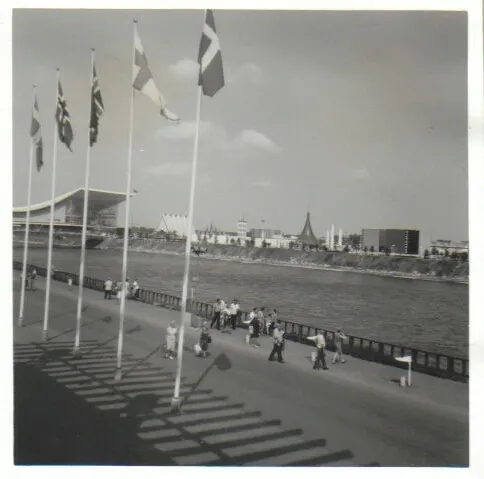
The world’s fair draws more than 50 million visits over two islands expanded with rock excavated from the metro. What remains are Buckminster Fuller’s Biosphère and Moshe Safdie’s Habitat 67.
1976 · The Olympics and the debt
Roger Taillibert's stadium and its leaning tower are delivered unfinished, and the debt isn't fully paid off until 2006, about C$1.6 billion later. The roof never worked properly and is being replaced again.

1977–1995 · Bill 101 and the referendums
The 1977 Charter of the French Language makes French mandatory at work, in shops, and at school. In the 1980 and 1995 referendums sovereignty is rejected (in 1995 by 50.58% to 49.42%), while part of the Anglophone elite moves to Toronto.
 AI illustration
Complete history
The Lachine Rapids interrupted river travel
For anyone sailing up the St. Lawrence from the Atlantic, the rapids blocked boats and forced everything to be unloaded right there; that's where the St. Lawrence Iroquoians kept Hochelaga, visited by Cartier in 1535, and where on May 17, 1642, Maisonneuve and Jeanne Mance founded Ville-Marie, a missionary project funded by French devotees. The religious project failed, but trade thrived: by the end of the 17th century the city was the starting point for fur expeditions to the Great Lakes, and the Great Peace of 1701, signed with 39 Indigenous nations, secured that trade.
1760–1763: the British conquest and the new English-speaking elite
The British conquest of 1760 and the 1763 treaty replaced the elite that ran the economy: residents stayed Catholic and French-speaking while a Scottish and English minority took over banks, railways, and shipping. It was that minority that opened the Lachine Canal in 1825, drew to its banks the factories that made Montreal Canada’s industrial city, and built the Victoria Bridge in 1859. Two migratory waves formed the working-class city: the Irish fleeing famine in 1847 (six thousand of them died of typhus in the Pointe-Saint-Charles sheds, remembered today by the Black Rock) and French Canadians coming from the countryside. Between 1844 and 1849 the city was capital of the Province of Canada, until it lost the post when a riot burned down Parliament.
Canada's largest city: a port of entry for immigrants
In the early 20th century Montreal was Canada's largest city and a port of entry: Eastern European Jews settled along Boulevard Saint-Laurent, followed by Italians, Greeks, Portuguese, Haitians, Lebanese, Vietnamese and North Africans. Each wave left a layer on top of the previous one, almost always along the same axis, which is why bagels, smoked meat, Portuguese grilled chicken and Italian coffee are all within a few blocks of one another. Meanwhile the French-speaking majority still earned lower wages and had no access to running the companies, a situation the Quiet Revolution of the 1960s dismantled in little more than ten years, secularizing schools and hospitals and creating a Quebec state.
The metro, Expo 67, the October Crisis, and the 1976 Olympics
The 1960s and 1970s packed everything in: the metro in 1966, Expo 67, the October Crisis of 1970 with the kidnapping and killing of minister Pierre Laporte by the FLQ, the 1976 Olympics and its debt, and the Charter of the French Language in 1977. The language law stabilized French and, together with the uncertainty of the 1980 and 1995 referendums, sped up the exodus of company headquarters to Toronto, which passed Montreal in population around 1976 and in economy soon after. The city lived through two hard decades, worsened by the ice storm of January 1998, which left more than a million households without power for up to a month.
Cheap rent and four universities rebuilt the city
The recovery came a different way: cheap rent, four universities (McGill, Université de Montréal, Concordia, and UQAM) and about 200,000 students made the city a base for creative and technical industries. Cirque du Soleil (1984) set up headquarters in Saint-Michel, Ubisoft opened a studio in the Mile End in 1997, and the Mila institute, tied to Yoshua Bengio, turned Montreal into one of the world’s hubs for artificial intelligence research. The municipal mergers of 2002 and the demergers of 2006 left the island with a complicated political geography: 19 boroughs in the city of Montreal and 15 independent municipalities around it. Today’s challenge is different: rising housing costs, the Olympic stadium roof under repair until 2027, and a transit expansion (the automated REM and the extension of the metro’s blue line) that redraws the island for the first time since 1966.
On Boulevard Saint-Laurent, bagel, smoked meat and Portuguese chicken sit a few steps from each other, without changing streets.
Geography and shape of the city
The island and the mountain
Montreal occupies the largest island of the Hochelaga archipelago, 50 km by 16 km and 483 km², bordered by the St. Lawrence River to the south and the Rivière des Prairies to the north, at the point where the Ottawa River flows in. In the middle of the island stands Mont Royal, 233 m, one of the Monteregian Hills: intrusive igneous rock that resisted glacial erosion and stayed standing while the plain around it was leveled.
The grid, turned 45 degrees
The city climbs from the port to the mountain in terraces, and the street grid is turned about 45° from true north: what locals call “north” is actually northwest, and Boulevard Saint-Laurent, “the Main,” splits addresses between east and west, with numbering starting from the river. The main streets run parallel to the St. Lawrence (Sherbrooke, Sainte-Catherine, Notre-Dame, Mont-Royal) and the cross streets climb, which makes the city easy to read on foot.
RÉSO: 33 km of underground city against the snow
Winter explains much of the layout: about 210 cm of snow a year justify the 33 km of corridors of the RÉSO, the underground city that links ten metro stations, train stations, universities and downtown malls without leaving the heated indoors, and also the spiral outdoor staircases of the Plateau, born of late-19th-century building codes that pushed stairs outside to free up interior space and reduce fire risk.
What's called “north” here is actually northwest.
Culture
Spectacle on an industrial scale
Montreal exports live performance: circus, jazz and comedy. Cirque du Soleil, founded in 1984 by street performers from Baie-Saint-Paul, is headquartered in Saint-Michel, next to the École nationale de cirque and the TOHU venue, and turned contemporary circus into a Quebec export. The International Jazz Festival, created in 1980, takes over the Quartier des Spectacles with hundreds of concerts, most of them free and outdoors; Just for Laughs (Juste pour rire), founded in 1983, is the world's largest comedy festival and returned in 2025 under new owners after its 2024 cancellation. Place des Arts is home to the Orchestre symphonique de Montréal and the Opéra de Montréal, and the roughly 200,000 university students at McGill, the Université de Montréal, Concordia and UQAM make up the audience that keeps the city's small venues going.
Everything revolves around language
The city's literature and film revolve around language. Michel Tremblay put joual, the working-class French of the east side, on stage with Les Belles-Sœurs in 1968 and divided Quebec; Gabrielle Roy had already captured the working poverty of Saint-Henri in Bonheur d'occasion (1945); Mordecai Richler wrote about Jewish Montreal in the Mile End; and Dany Laferrière, who arrived from Haiti in 1976, was elected to the Académie française in 2013. In film, the National Film Board (Office national du film) invented much of Canadian documentary and animation, Denys Arcand won the Oscar for best foreign-language film with Les Invasions barbares (2003) and Xavier Dolan made his debut at 20. In music, the city gave the world Leonard Cohen, Arcade Fire, Godspeed You! Black Emperor and Grimes.
Hockey organizes the calendar
The sport that organizes the calendar is hockey. The Montreal Canadiens, founded in 1909, have 24 Stanley Cups, more than any other NHL team, and play at the Centre Bell in front of about 21,000 people; on game nights downtown bars fill up and the orange metro line is a crowd of red jerseys. In June the Canadian Grand Prix of Formula 1 has taken over Île Notre-Dame since 1978 and doubles hotel prices. CF Montréal plays soccer at Stade Saputo, and in summer the street doubles as cultural infrastructure: stretches of Sainte-Catherine, Mont-Royal, Saint-Denis, and Wellington close to cars, and the Mural festival covers the buildings of Boulevard Saint-Laurent in paint.
On Rue Crescent, a mural about 20 stories tall shows Leonard Cohen's face.
Festivals and events

Festival International de Jazz
Late June to early July, since 1980, in the Quartier des Spectacles. About two-thirds of the shows are free, on street stages, and downtown closes to cars for ten days.

Canadian Grand Prix (F1)
In June, at the Circuit Gilles-Villeneuve on Île Notre-Dame, run since 1978. It’s the most expensive weekend of the year to sleep in the city; book months ahead or avoid the date.

Juste pour rire / Just for Laughs
In July, since 1983, with ticketed shows and free performances in the Quartier Latin. The festival returned in 2025 under new owners after the insolvency that canceled the 2024 edition.
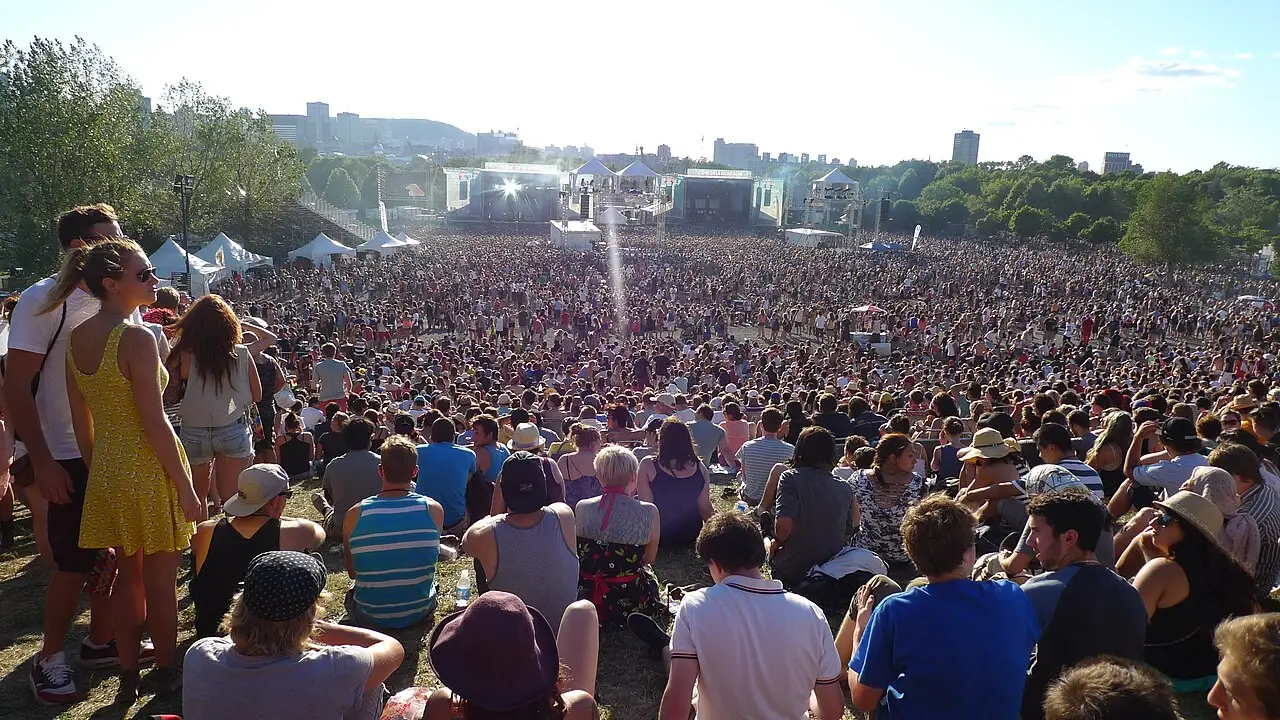
Osheaga
On the first weekend of August, at Parc Jean-Drapeau, since 2006. Three days of music on the islands, with about 135,000 people in total and access via the yellow metro line.

Igloofest and Montréal en lumière
Igloofest brings outdoor electronic music to the Vieux-Port docks in January and February, with a snowsuit contest, sometimes at −20°C. In late February, Montréal en lumière closes with Nuit blanche, a night of museums and installations open into the small hours, with the metro running all night.
Books and films
Bonheur d’occasion, by Gabrielle Roy (1945)
The novel that captured working-class Saint-Henri and Francophone poverty along the Lachine Canal during the Second World War. It won the Prix Fémina and explains the city before the Quiet Revolution better than any manual; in English, The Tin Flute.
Les Belles-Sœurs, by Michel Tremblay (1968)
The play that put joual, the popular French of Montreal’s east side, on stage and split Quebec in two. Fifteen women pasting a million trading stamps in a Plateau kitchen. It’s the key to understanding why language here is a political matter.
Jésus de Montréal, by Denys Arcand (1989)
A group of actors stages the Passion at Saint Joseph’s Oratory and the play spins out of control. The film travels through the city of the 1980s (empty churches, advertising, hospitals, the metro) and shows what was left of religion after Quebec secularized in one generation.
Frequently asked questions
Montreal: how do you get from the airport to downtown?
Express bus 747 reaches downtown in 45 to 70 minutes, at any time of day, and accepts the C$12.75 24-hour pass, bought at the machine in the arrivals hall.
Montreal: can you go to Quebec City and back in the same day?
Yes, but one night gets you much more: Quebec City is 250 km to the northeast, about 3 hours by car or 3 hours 15 minutes by VIA Rail train from Gare Centrale, with few departures a day.
Montreal: how much tax is added to the price tag?
The currency is the Canadian dollar, and the price on the tag never includes tax: at the register you add 5% federal GST and 9.975% provincial QST, almost 15% in total, and there has been no tourist refund since the federal program ended in 2007.
Montreal: how do you start a conversation if I don't speak French?
A "bonjour" before any question changes the tone of the whole conversation; if you don't speak the language, "bonjour, do you speak English?" works in most downtown places.
Montreal: how safe is the city?
Montreal is one of the safest large cities in North America, with a homicide rate of around 1 per 100,000 residents a year, well below the Canadian average for cities its size.
Other cities in the country
Canada ↗- Days
- 2–3
- When
- Sep–Oct
- Per person/day
- Average 130–260 C$Mid-range · per person/day
Cost scope
Per person per day: accommodation, meals, urban transport, visits and a small allowance for extras. Flights excluded; larger purchases vary. Editorial estimate, not a quote.
- Days
- 2–3
- When
- Jul–Sep
- Per person/day
- Average 190–330 CADMid-range · per person/day
Cost scope
Per person per day: accommodation, meals, urban transport, visits and a small allowance for extras. Flights excluded; larger purchases vary. Editorial estimate, not a quote.
- Days
- 3–4
- When
- Jun–Sep
- Per person/day
- Average 145 CADMid-range · per person/day
Cost scope
Per person per day: accommodation, meals, urban transport, visits and a small allowance for extras. Flights excluded; larger purchases vary. Editorial estimate, not a quote.
- Days
- 2–3
- When
- Feb · Jun–Oct
- Per person/day
- Average 210 CADMid-range · per person/day
Cost scope
Per person per day: accommodation, meals, urban transport, visits and a small allowance for extras. Flights excluded; larger purchases vary. Editorial estimate, not a quote.