Canada
Toronto
Immigrant neighborhoods, lake islands, and the CN Tower
Days Start with the basic programme and choose extensions for the time you have.
How the guide reaches this number
A third, if you have it, goes to the ravines, the east and the Don Valley. Anyone expecting a postcard-perfect historic center will be disappointed, because as far as monuments go, the city has one 553.3 m tower and two big museums, and the charm lies in the immigrant neighborhoods. With just one day, take the ferry to the islands before 10am, when the terminal line is still short, and walk from Ward's Island to Hanlan's Point, an hour with downtown in view across the water. Back on the shore, have a peameal bacon sandwich for lunch at St. Lawrence Market, which closes Mondays, and walk 20 minutes to the Distillery District. For dinner, take the streetcar to Chinatown at Spadina and Dundas or to Kensington Market, two blocks from there. Skip November, gray and cold, with no blossoms or big festival.
2–3
When September to mid-October
How the guide reaches this number
Winter runs from December to March: an average of −5 °C in January, lows of −15 °C that the lake wind makes feel like −25 °C, and about 110 cm of snow a year spread over short squalls. Spring is unsettled and short, and the High Park cherry blossoms last about a week, between late April and early May, when the whole city turns out to see them. Summer is hot and humid: average highs of 27 °C in July, with days of 33 °C that the humidex pushes to 40 °C, late-afternoon thunderstorms and everyone out on the street. It's high season, with festivals almost every weekend. September and the first half of October are the best window: 18–23 °C, dry air, foliage in the ravines and TIFF, which drives up hotel prices. November is the month I'd avoid: gray, cold rain, 5 °C, nothing blooming and no big festival. February is cold, but has winter programming and low prices.
Per person/day C$130–260 per person with a mid-range hotel, public transit and two meals out
How the guide reaches this number
Per person per day: accommodation, meals, urban transport, visits and a small allowance for extras. Flights excluded; larger purchases vary. Editorial estimate, not a quote.
 What Nilo thinks
Set aside two days: the first for the lake, downtown and the market, the second for the museums, the university and Queen West. A third, if you have it, goes to the ravines, the east and the Don Valley. Anyone expecting a postcard-perfect historic center will be disappointed, because as far as monuments go, the city has one 553.3 m tower and two big museums, and the charm lies in the immigrant neighborhoods. With just one day, take the ferry to the islands before 10am, when the terminal line is still short, and walk from Ward's Island to Hanlan's Point, an hour with downtown in view across the water. Back on the shore, have a peameal bacon sandwich for lunch at St. Lawrence Market, which closes Mondays, and walk 20 minutes to the Distillery District. For dinner, take the streetcar to Chinatown at Spadina and Dundas or to Kensington Market, two blocks from there. Skip November, gray and cold, with no blossoms or big festival.Almost half of Toronto's residents were born outside Canada, and it shows up on the plate first: Tamil kottu roti on Markham Road, Jamaican patty tucked into coco bread and Azorean piri-piri chicken on Dundas West. The city also has its own sandwich, the peameal bacon one from St. Lawrence Market, a legacy of the meatpacking plants that gave it the nickname Hogtown. From the waterfront, ferries take about 15 minutes to a car-free archipelago on Lake Ontario, with the CN Tower and the whole skyline in view. On land, the Victorian brick buildings of the old distillery form the Distillery District, and the ROM and Frank Gehry's Art Gallery of Ontario hold cultures from around the world and the Group of Seven. Come from September to mid-October, with dry air and foliage in the ravines, and set aside two days.
Quick facts
- Population
- about 2.9 million in the city, about 6.5 million in the metro area and about 7.1 million in Greater Toronto (2026 estimates; last full census, 2021: 2,794,356)
- Founded
- 1793, as York; incorporated as the City of Toronto in 1834
- Country and region
- Canada, province of Ontario, of which it is the capital
- Language
- English; French is the country's other official language; more than 160 languages are spoken in the city
- Currency
- Canadian dollar (CAD, C$)
- Time zone
- UTC−5 in winter and UTC−4 during daylight saving time (March to November)
- Best time to visit
- September to mid-October
- Average daily cost
- C$130–260 per person with a mid-range hotel, public transit and two meals out
When to go
September to mid-October
January
-9° to -1°C
66 mm of rain
February
-8° to 0°C
58 mm of rain
March
-4° to 5°C
54 mm of rain
April
2° to 12°C
79 mm of rain
May
8° to 20°C
83 mm of rain
June
13° to 25°C
95 mm of rain
July
16° to 28°C
84 mm of rain
August
15° to 27°C
77 mm of rain
November
0° to 8°C
70 mm of rain
December
-5° to 2°C
66 mm of rain
How the year changes
Winter runs from December to March: an average of −5 °C in January, lows of −15 °C that the lake wind makes feel like −25 °C, and about 110 cm of snow a year spread over short squalls. Spring is unsettled and short, and the High Park cherry blossoms last about a week, between late April and early May, when the whole city turns out to see them. Summer is hot and humid: average highs of 27 °C in July, with days of 33 °C that the humidex pushes to 40 °C, late-afternoon thunderstorms and everyone out on the street. It's high season, with festivals almost every weekend. September and the first half of October are the best window: 18–23 °C, dry air, foliage in the ravines and TIFF, which drives up hotel prices. November is the month I'd avoid: gray, cold rain, 5 °C, nothing blooming and no big festival. February is cold, but has winter programming and low prices.
The same numbers as a table
| Month | Temperature °C | Rain mm |
|---|---|---|
| January | -9 to -1 | 66 |
| February | -8 to 0 | 58 |
| March | -4 to 5 | 54 |
| April | 2 to 12 | 79 |
| May | 8 to 20 | 83 |
| June | 13 to 25 | 95 |
| July | 16 to 28 | 84 |
| August | 15 to 27 | 77 |
| September · | 12 to 23 | 77 |
| October · | 6 to 15 | 73 |
| November | 0 to 8 | 70 |
| December | -5 to 2 | 66 |
Nilo's tips
After 47 paid trips a month, the rest of transit is free
The automatic monthly cap, in effect since late August 2026, only adds up rides paid with the same method. Pay every TTC fare with a tap card or with Presto on your phone, without switching. Each fare, C$3.30, is good for unlimited transfers for 2 hours.
At rush hour, go from Pearson downtown on the UP Express
Taxis and ride-hailing apps depend on the Gardiner and can take up to 70 minutes at that time, while the train doesn't hit traffic. If someone in the arrivals hall says the “machine is broken” to offer you a ride, ignore them and head straight for the official taxi line.
Buy island ferry tickets online and arrive before 10am
In summer, the line at the Jack Layton Terminal easily tops an hour, and the worst time is Saturday at two in the afternoon. With your ticket bought online, arrive before 10am. If you miss that window, the water taxi from Queens Quay makes the crossing for more money.
St. Lawrence Market closes Mondays: go early on another day
The peameal bacon sandwich, sliced on the spot for about C$9–12, comes off the counter with no wait before the midday rush starts. If Monday is your free day, go to Kensington Market, an open-air street market with no doors to close.
Go to High Park's cherry blossoms early, before the crowds
The cherry trees that Japan gave to High Park in 1959 stay in bloom for about a week, between late April and early May, and in the afternoon the whole city shows up. If your trip falls in that window, check the bloom status the day before and arrive early. The rest of the year, the park's 161 ha and Grenadier Pond see far fewer people.
Have dinner in the east, on Markham Road, for C$12–18
The city's most distinctive immigrant food is in Scarborough, in the east, with kottu roti and hoppers on Markham Road and Eglinton East. The Indo-Chinese Hakka food around Agincourt and Brimley Road is a cuisine that practically only exists here and in Calcutta. Take Line 2 to the end and switch to a bus, or combine the meal with the Scarborough Bluffs, entering through Bluffer's Park. Have dinner at 6pm, because the ride back downtown by public transit takes longer than the map promises.
Explore the map
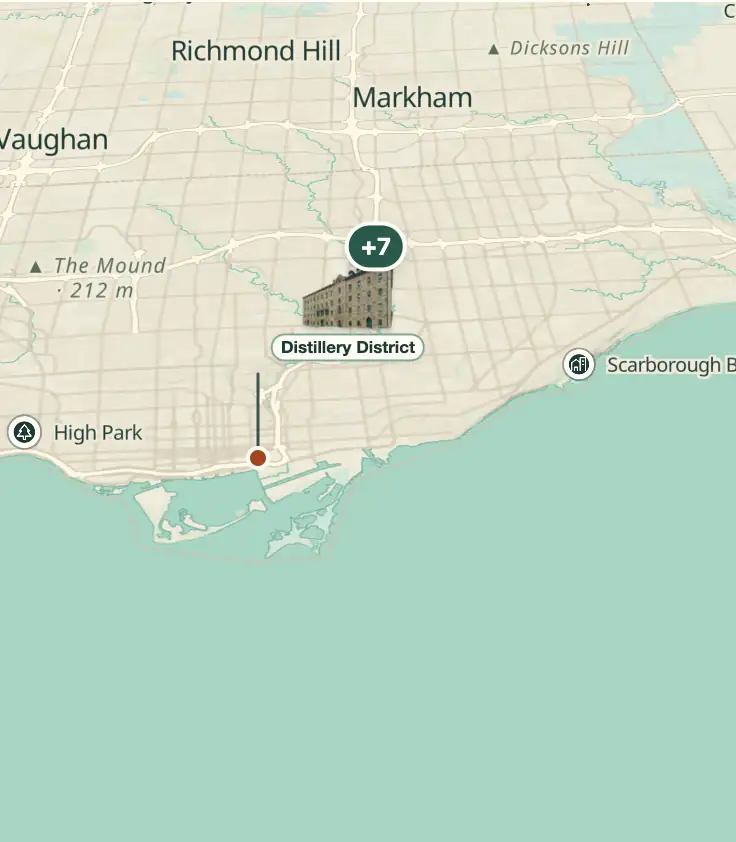
© OpenStreetMap · OpenFreeMap · © OpenMapTiles
Explore the map, read about the other places and plan your travel days in the app.
Open the appWhat to see
Toronto: The glacial step, the rivers and the ravines
The urban fabric follows the British agricultural concessions: east-west avenues every 2 km (Bloor, St. Clair, Eglinton, Lawrence, Sheppard, Finch, Steeles), with Yonge Street as the north-south axis that splits the numbering into "east" and "west": downtown is an almost perfect grid, flat and easy to read.
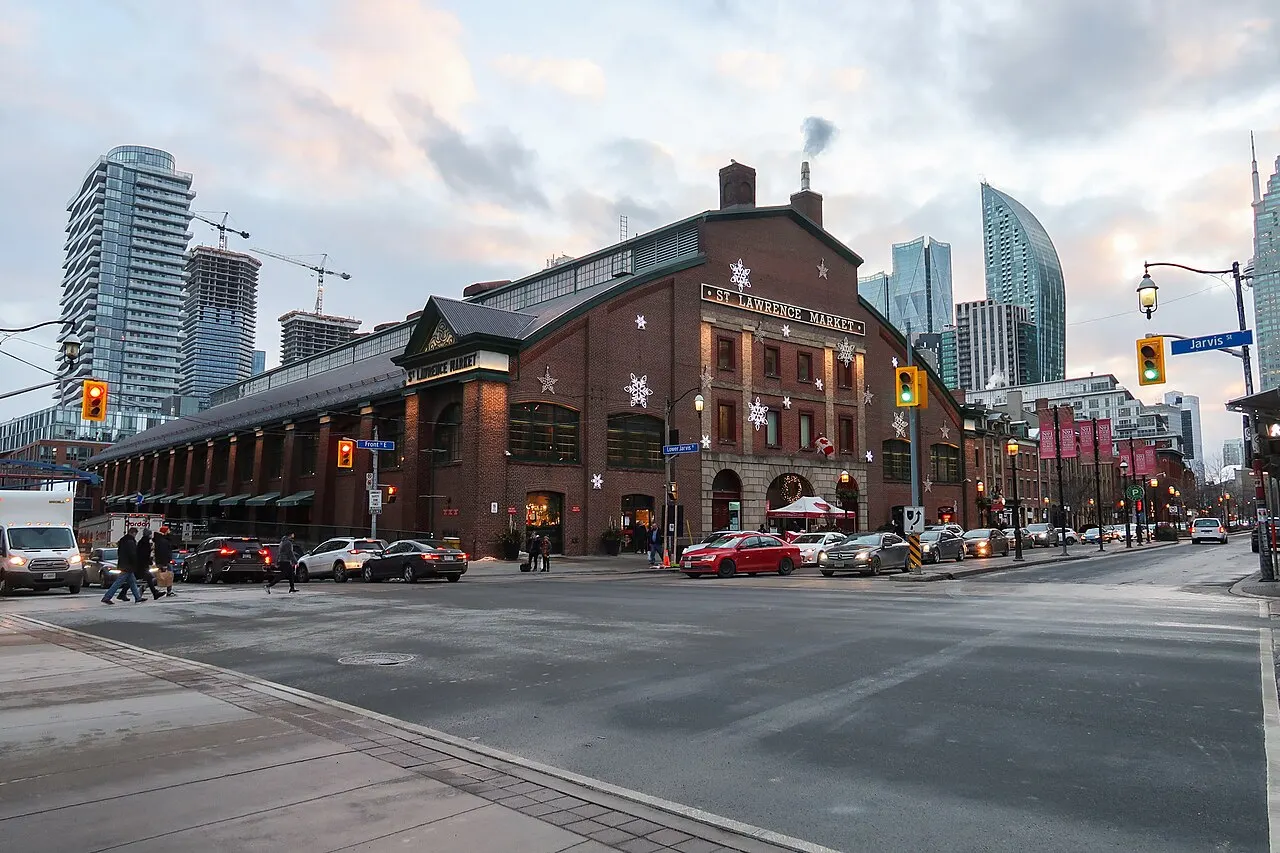
St. Lawrence Market
The south market has operated on this site since 1803 and in the current building since 1902, built over the old 1845 city hall, whose portico is still embedded in the facade. It's where you eat the peameal bacon sandwich. Closed Mondays.
Since 1803 the market has operated on the site, and it's where you eat the peameal bacon sandwich, and anyone who looks at the facade finds the portico of the old city hall built into it.
Check access

Distillery District
Thirteen acres of the old Gooderham & Worts, which in 1860 was the largest distillery in the British Empire; 40-odd Victorian industrial brick buildings, restored and closed to cars since 2003. It has served as a film backdrop for decades.
In 1860 it was the largest distillery in the British Empire, and the 40-odd brick buildings, closed to cars, serve as a film set.
Check access

Toronto Islands
An archipelago of 15 islands 1.5 km off the shore, car-free, reached by ferries from the Jack Layton Terminal (about a 15-minute crossing, about C$9 round trip). Ward's Island has 260 houses of permanent residents; Hanlan's Point has Canada's oldest clothing-optional beach and the 1808 Gibraltar Point lighthouse.
The ferry, about C$9 round trip, reaches the 15-island, car-free archipelago 1.5 km from shore, and at Hanlan's Point are the country's oldest nude beach and the lighthouse, while Ward's Island still has permanent residents.
Check access

Royal Ontario Museum (ROM)
Opened in 1914, it's Canada's largest museum, with about 13 million objects spanning natural history and world cultures. The facade of aluminum and glass crystals is the Michael Lee-Chin Crystal, by Daniel Libeskind (2007), wedged forcibly into the original building. Set aside 3 hours.
It's the largest museum in Canada, opened in 1914.
Check access
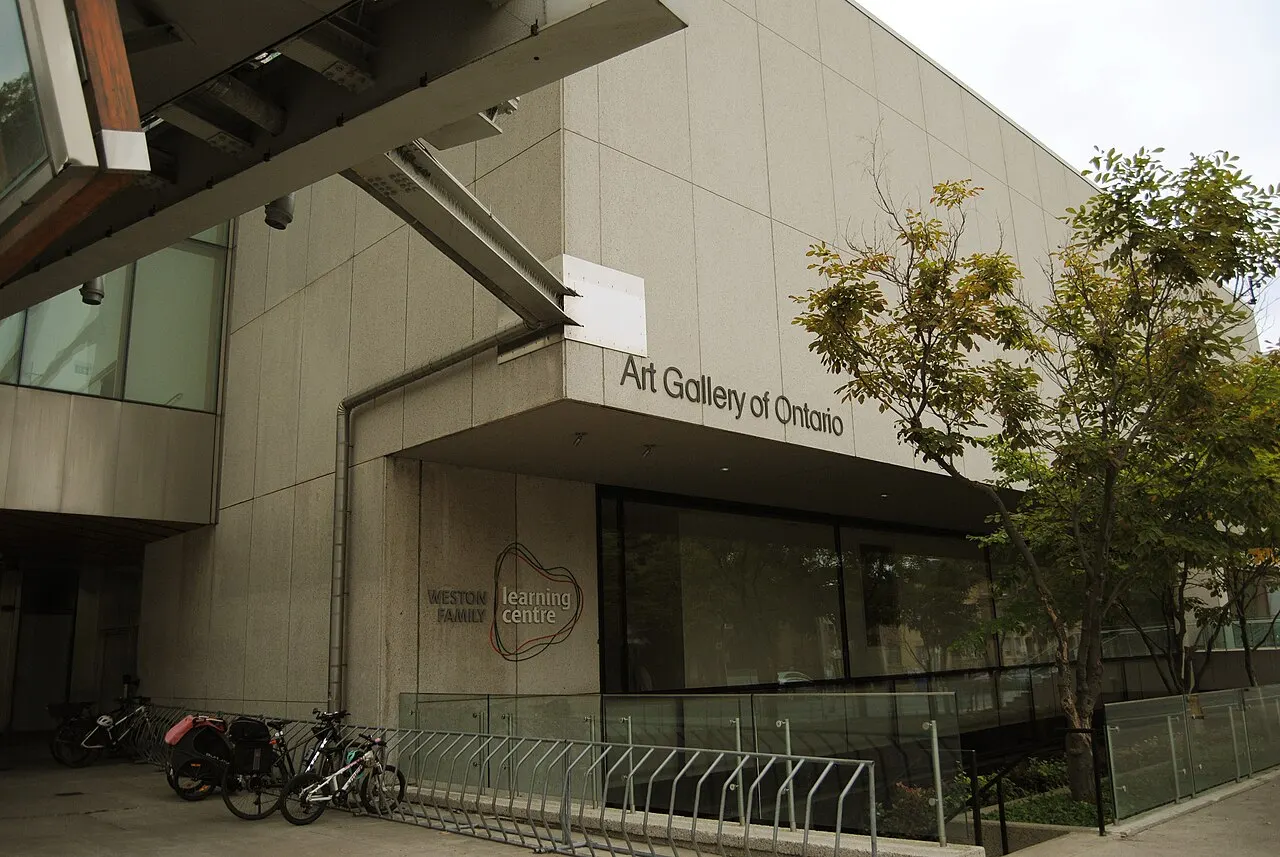
Art Gallery of Ontario (AGO)
The Art Gallery of Ontario (AGO) holds the country's largest collection of Canadian art, with the Group of Seven and Tom Thomson, plus the Thomson collection of European art and ship models. Frank Gehry's 2008 renovation added the glass-and-wood gallery over Dundas and the spiral staircase. Admission is free for anyone 25 and under.
The AGO holds the country's largest collection of Canadian art, with the Group of Seven and Tom Thomson, and Gehry added the gallery over Dundas and the spiral staircase, and admission is free for anyone 25 and under.
Check access
Nathan Phillips Square and the two city halls
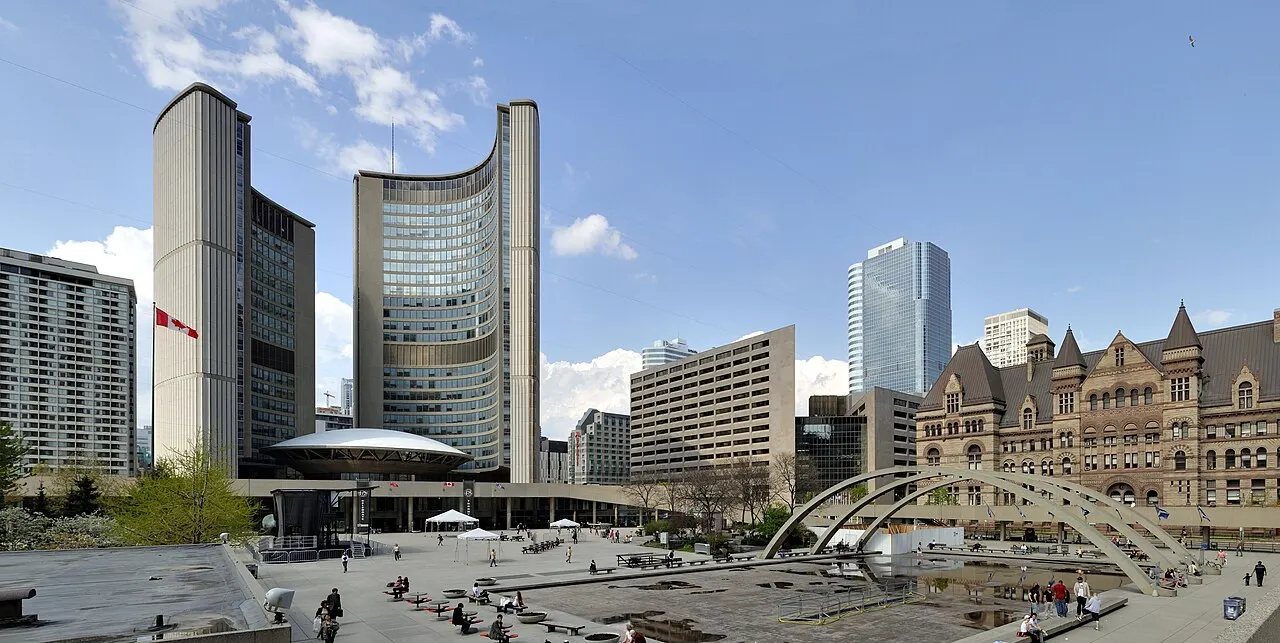
The new city hall, by Finnish architect Viljo Revell (1965), is two curved towers of different heights embracing the disk-shaped council chamber; it won a competition with 520 entries from 42 countries. Across Bay Street stands the old city hall by E. J. Lennox (1899), in pink sandstone. The square has a skating rink from November to March.
The pair of curved volumes wrapping around the council chamber, winner among hundreds of entries from dozens of nations, stands facing the pink-tiled block and the rink that freezes over in winter.
Check access

High Park and Evergreen Brick Works
High Park covers 161 ha, with Grenadier Pond and cherry trees donated by Japan in 1959, which bloom for about a week between late April and early May. In the Don Valley, Evergreen Brick Works occupies the brickworks that ran from 1889 to 1984 and supplied half the city's brick; today it has trails, a Saturday market and an exposed geological quarry.
It's worth it at two moments: during the week when High Park's cherry trees bloom, and on Saturday, market day at Evergreen Brick Works, the old brickworks in the Don Valley, surrounded by trails.
Check access

Scarborough Bluffs
Clay and sand cliffs up to 90 m high along 15 km of the eastern shore, a cut exposing 12,000 years of glacial sediment. The easiest access is Bluffer's Park, with a beach and parking; the upper edge, at Scarborough Bluffs Park, is unstable and lacks railing in several stretches.
The cliff that exposes the glacial sediments has easy access through Bluffer's Park, with a beach and parking, and the upper edge is unstable and has no railing in several spots.
Check access

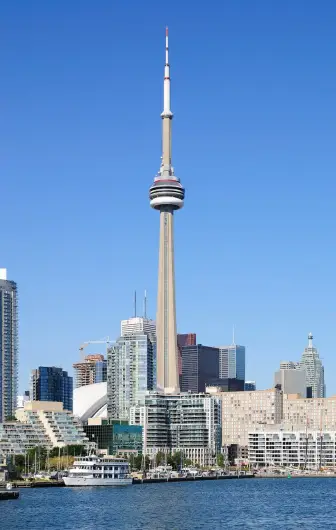
CN Tower
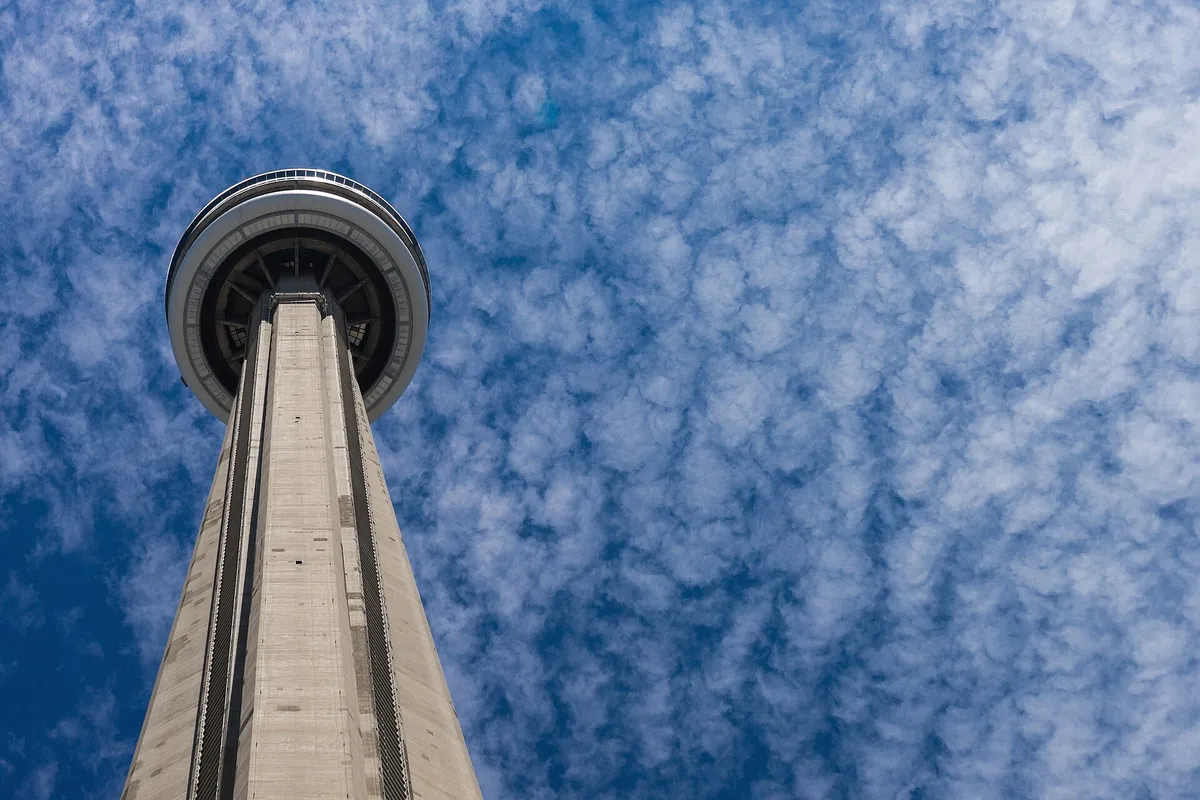
A 553.3 m communications tower completed in 1976, world record for a freestanding structure until 2007. The lookout is at 346 m, the glass floor at 342 m and the SkyPod at 447 m; the EdgeWalk lets you walk clipped to a rail on the outer edge, at 356 m. Ticket about C$45–65; book a time slot and go early.
The ticket costs C$45–65, with a set time, for a viewpoint at 346 m over a flat city, and the same silhouette appears for free from the islands' shoreline. Go up only if you insist on the glass floor or the EdgeWalk, and early.
Check access
Nilo’s itinerary
Start with the basic programme and choose extensions for the time you have.
Plan my days in the app ↗Day 1 · Downtown, the lake and the market
Take the ferry at the Jack Layton Terminal before 10am, disembark at Ward's Island and walk back along the islands' shoreline to Hanlan's Point, about 1 hour of walking with the skyline in front of you.
Back on the mainland, pass through Union Station (1927) and the PATH to the base of the CN Tower; the silhouette the islands show you for free is already the best view of it, and going up is only worth it for the glass floor or the EdgeWalk.
Have a peameal bacon sandwich for lunch at St. Lawrence Market (closed Mondays) and walk among the Georgian houses of Front Street.
Walk to the Distillery District, about 20 minutes, and explore the buildings of Gooderham & Worts, active from 1832 to 1990.
Have dinner in the Spadina-Dundas Chinatown or in Kensington Market, two blocks away.
Day 2 · Museums, the university and Queen West
Start the day at the ROM, at Bloor and Queen's Park: Libeskind's Crystal (2007), the dinosaur galleries and the collection of Indigenous cultures of Canada.
Cut through the University of Toronto campus (1827), past University College and Hart House, to Kensington Market for lunch.
Head to the AGO, on Dundas West: the Group of Seven, Tom Thomson, the Thomson collection and Frank Gehry's wooden staircase.
Go down Queen West to Graffiti Alley (Rush Lane) and Trinity Bellwoods; continue along Ossington or Dundas West for dinner.
End with a show at the Horseshoe Tavern (1947) or a concert at Massey Hall (1894).


If you stay longer
Day 3 · Ravines, the east and the Don Valley
Take subway Line 2 to Broadview and walk across the Prince Edward Viaduct (1918), with views of the Don Valley and the Luminous Veil, installed in 2003.
Go down into the valley to Evergreen Brick Works, a brickworks that operated from 1889 to 1984, with trails, an exposed geological quarry pit and a Saturday market.
Have lunch in the Danforth, Greektown, or head to Leslieville; if the day is warm, go to The Beaches boardwalk.
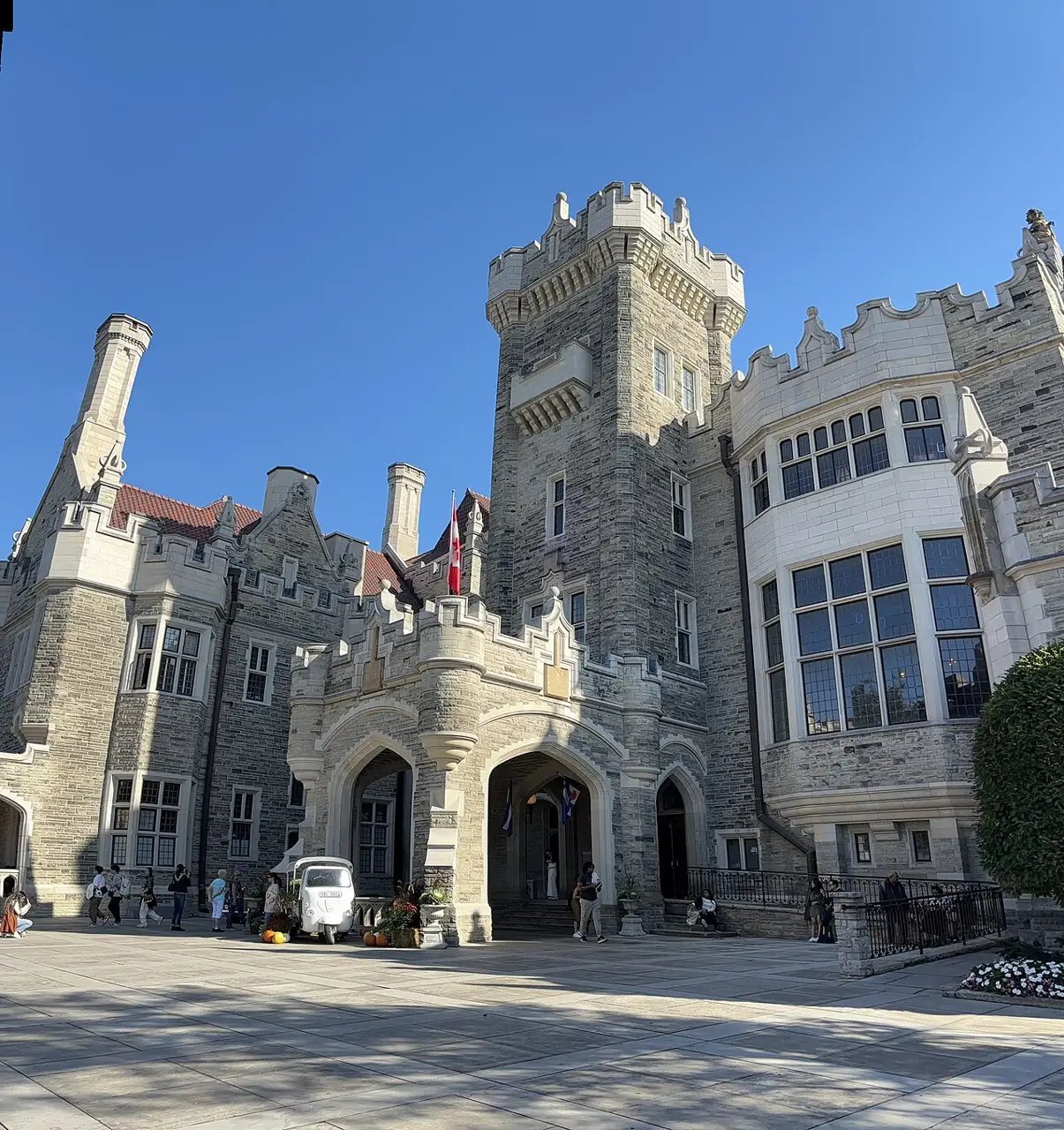
Climb up to Casa Loma (1911–1914) and look from the garden at the escarpment of the old Lake Iroquois shoreline, which Davenport Road follows 30 m below.
If you prefer, swap the whole day for the Scarborough Bluffs, entering through Bluffer's Park, and have kottu roti or Hakka food for dinner in Scarborough.


Food
 AI illustration
Peameal bacon sandwich
Brined pork loin coated in cornmeal, sliced thick and grilled on a flat-top, served in a soft bun with mustard. It's the most specifically Torontonian dish there is: it came out of the meatpackers that earned the city the nickname Hogtown. Counters at St. Lawrence Market, about C$9–12.
 AI illustration
Jamaican patty with coco bread
A yellow curry pastry filled with spiced ground beef, eaten inside a sweet coconut bun split in half. Sold at Caribbean bakeries on Eglinton West, in Scarborough and at subway station kiosks, about C$3–7. Ask for “mild” if you don't want heat.
 AI illustration
Trinidadian roti and doubles
“Buss-up-shut” roti is torn flatbread served with curried lamb, chickpeas and potato; doubles are two fried flatbreads (bara) with curried channa, eaten in the morning. Concentrated in the west and in Scarborough, about C$4 for doubles, C$15–20 for a full roti.
 AI illustration
Indo-Chinese Hakka food
Chili chicken, Manchurian and Hakka noodles, created by Chinese communities settled in Calcutta and brought here in the 1970s. Scarborough, especially around Agincourt and Brimley Road, is the world center of this cuisine outside India.
 AI illustration
Sri Lankan kottu roti and hoppers
Toronto has the largest Tamil diaspora outside South Asia, and kottu (roti chopped on the flat-top with egg, vegetables and curry to the rhythm of two spatulas) is the signature dish. Markham Road and Eglinton East hold most of the restaurants; dinner for C$12–18.
 AI illustration
Portuguese chicken and pastel de nata
A legacy of Azorean immigration in the 1950s–70s around Dundas West, College and Ossington: half a chicken with piri-piri, potatoes and rice to go, C$15–22, and pastel de nata for about C$2.50.
 AI illustration
Butter tart
An individual tart with shortcrust pastry and a filling of butter, brown sugar, syrup and egg, with or without raisins. The local debate is whether the filling should be runny. It's the Ontario dessert par excellence, sold at bakeries and markets for C$3–5.
 AI illustration
Double-double coffee and local beer
“Double-double” is the standard order at Tim Hortons. For beer, Steam Whistle operates out of the 1929 railway roundhouse at the foot of the CN Tower; since 2024 beer and wine can also be bought at grocery stores and convenience stores, alongside the state-run LCBO.
Day trips

Niagara Falls and Niagara-on-the-Lake
Niagara Falls is about 130 km to the southwest, 1 hour 30 minutes to 2 hours by car on the QEW; there are direct buses from Union Station and a seasonal GO train in about 2 hours. Horseshoe Falls is 57 m high with a crest of about 670 m, and the boats run from April to November. Niagara-on-the-Lake is 20 km to the north, with the Shaw Festival and dozens of icewine wineries.

Hamilton and the Niagara Escarpment
Hamilton is about 70 km to the west, 1 hour by car or GO train to the Hamilton GO Centre. The city has more than 100 waterfalls on the escarpment (among them Webster's Falls and the 41 m Tews Falls), plus the Royal Botanical Gardens and the Art Gallery of Hamilton, from 1914.
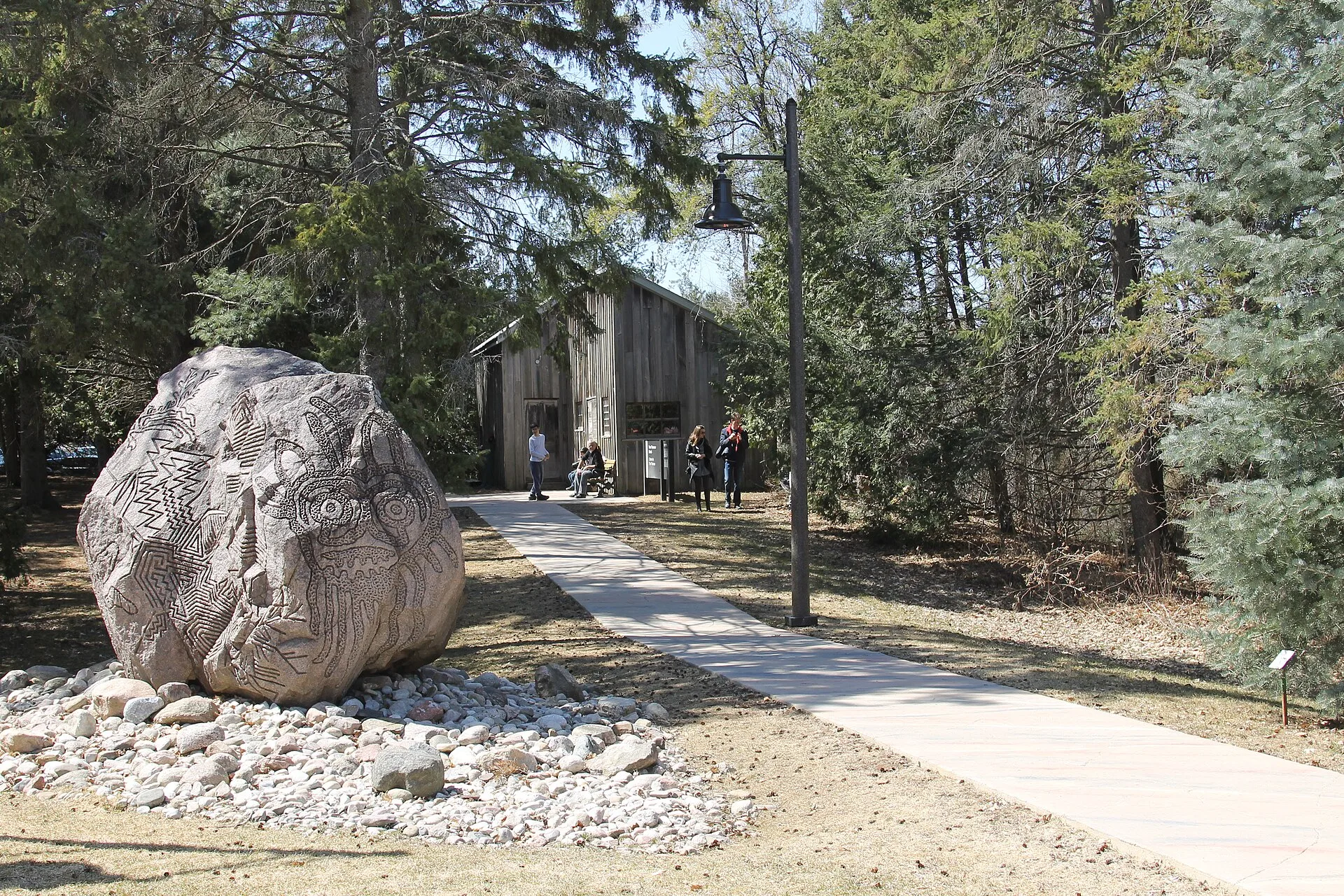
Kleinburg and the McMichael Canadian Art Collection
Kleinburg is about 40 km to the north, 45 min by car, with no direct public transit. The McMichael Canadian Art Collection holds the largest collection of the Group of Seven in a forest above the Humber Valley, and six members of the group are buried on the grounds.
Where to begin
Downtown, the lake and the market
Take the ferry at the Jack Layton Terminal before 10am, disembark at Ward's Island and walk back along the islands' shoreline to Hanlan's Point, about 1 hour of walking with the skyline in front of you.
Museums, the university and Queen West
Start the day at the ROM, at Bloor and Queen's Park: Libeskind's Crystal (2007), the dinosaur galleries and the collection of Indigenous cultures of Canada.
Ravines, the east and the Don Valley
Take subway Line 2 to Broadview and walk across the Prince Edward Viaduct (1918), with views of the Don Valley and the Luminous Veil, installed in 2003.
Money
The currency is the Canadian dollar, and the price on the tag is never the final price: add 13% HST at the register on almost everything except unprepared market food. The 2026 ranges are coffee C$3–5, a beer at a bar C$8–12, a simple lunch C$15–22, an average dinner C$35–65 per person without drinks, a short rideshare trip C$15–25, and a mid-range downtown hotel room C$220–380 a night, plus about 6% municipal accommodation tax and the HST. Tipping isn't optional for table service: 15% is the floor, the card machine will suggest 18%, 20%, and 25%, and at a coffee counter nobody expects it. Contactless cards handle everything, including the streetcar, and cash is rare; if you need to withdraw, avoid the “white label” ATMs in convenience stores, which charge high fees, and use those of the five big banks. There's also a cost that comes before boarding, the entry authorization for Brazilians: the eTA costs C$7 and is valid for five years, but only for those who have held a Canadian visa in the last 10 years or hold a valid US nonimmigrant visa, and only for arrival by air. Anyone who doesn't qualify applies for a visitor visa, for C$100 plus C$85 for biometrics, with processing times that can run past two months.
Getting there and around
From Pearson to downtown: the UP Express in 25 minutes
Pearson International Airport (YYZ) is 22 km to the northwest and has Terminals 1 and 3, with no Terminal 2. The UP Express links the airport to Union Station in 25 minutes, with departures every 15 min, for C$9.25 with Presto. A taxi or rideshare costs C$60–85 and takes 30 to 70 minutes, depending on the Gardiner. There's also the TTC's 900 bus to Kipling station for the regular fare, the cheapest and slowest option. Billy Bishop Airport (YTZ), on the island, handles regional flights and is a 10-minute walk from downtown through a pedestrian tunnel opened in 2015, or a 90-second ferry ride: the crossing is over before you can settle in. Union Station, from 1927, houses the GO regional trains and VIA Rail (Montreal about 5 hours, Ottawa about 4 hours 30 minutes, New York about 12 hours).
TTC subway and light rail on five lines, with Line 1 shaped like a U
Five TTC rapid transit lines cross the city: three subway lines, Line 1 Yonge-University (a U shape), Line 2 Bloor-Danforth (east-west), and Line 4 Sheppard, and two light rail lines, Line 5 Eglinton, opened on February 8, 2026, after more than a decade of construction, and Line 6 Finch West, opened on December 7, 2025. On top of those there are 11 streetcar lines and a dense bus network, with the Blue Night overnight network from 2am to 5am, and the subway runs from about 6am (8am on Sundays) until about 1:30am. The fare is flat, C$3.30, paid with a Presto card, a contactless credit or debit card, or a phone, and it includes unlimited transfers for 2 hours; the physical Presto card costs C$4 and can be added to your phone for free, and the day pass costs about C$13.50. Since August 31, 2026, after 47 paid trips in a month, the rest are free. The 501 Queen is the longest streetcar route in North America, and when it stops with its doors open, cars behind it are required to stop. Downtown is flat and walkable, the PATH covers 30 km of underground passageways, useful in winter, and Bike Share Toronto has thousands of bikes at docking stations. The bike lanes on Bloor, Yonge, and University have been a political and legal fight since 2024, so check the current layout before planning your route.
Safety
Toronto has low violent crime rates by North American standards: the homicide rate usually hovers around 2 per 100,000 people, close to that of big European cities, and the real risk for visitors is theft, rarely violence. What happens most is bike theft, phone snatching at subway doors just as they close, and break-ins to parked cars; the wave of vehicle thefts from residential garages since 2023 doesn't affect pedestrians. The east-downtown area around Moss Park, Sherbourne, and Dundas East, plus some subway stations, sees visible drug use and mental health crises, an uncomfortable scene but rarely aimed at passersby, which calls for attention rather than a detour. In the early hours of Friday and Saturday, the Entertainment District (King and Richmond, between Spadina and John) sees fights as the clubs let out between 2am and 3am, so leave earlier or call a taxi or rideshare to the door. The biggest physical risk of the year is ice on the sidewalks in January and February, and boots with rubber soles prevent most falls. Two scams repeat themselves: clipboards collecting fake donations at Yonge and Dundas, and unlicensed drivers at the airport who say the “machine is broken”; use the official taxi line or an app. The emergency number is 911; for city services, 311.
Etiquette tips
Stop behind the streetcar
When a streetcar opens its doors in the middle of the street, the cars behind it must stop by law until the last passenger reaches the sidewalk. On foot, you step straight onto the asphalt and cross without rushing; honking is considered aggressive.
Stand right on the escalator
On the subway, people standing still keep to the right and leave the left clear for those walking up. On platforms, wait beside the door and let everyone out before boarding.
The tip is part of the bill
15% is the minimum at table-service restaurants, 18% is the suggested standard, and the card machine calculates it on the total including tax. At cafés, food trucks and counters, no one expects a tip.
The tax comes after
Sales tax is added at the register and doesn't appear on the price tag or the menu, because that's the pricing convention across all of Canada. No one is trying to trick you when the total goes up.
“Sorry” doesn't admit fault
“Sorry” works as “excuse me,” “coming through,” and “apologies for existing here,” and it's said even by the person who got bumped. Answering with another “sorry” closes the matter.
Where you can't smoke
Ontario law bans smoking tobacco and cannabis (legal since 2018, minimum age 19) on bar and restaurant patios, playgrounds, sports courts and within 20 m of those areas, plus 9 m of hospital entrances. It's allowed on sidewalks, but smoking in line or at a bus stop draws looks.
Mistakes to avoid
Trying to cross a 630 km² city on foot
Treating Toronto as walkable end to end. It's 630 km², and Yonge Street runs more than 20 km within the city limits. It's easy to start walking a stretch and give up halfway, without ever leaving the same neighborhood. Plan by corridor (Queen, Bloor, Danforth, Eglinton) and use the subway and streetcar to jump between them.
A wool coat doesn't cut it at −8 °C
Underestimating winter and the lake wind. At −8 °C with gusts, a wool coat won't do: you need a windbreaker, a hat, gloves and waterproof boots with rubber soles, because the sidewalk freezes over. On the plus side, you can cross a good chunk of downtown through the PATH without stepping outside.
Planning visits to museums that have closed
Planning to visit museums that no longer exist. The Ontario Science Centre closed in June 2024 over structural roof risk, and its Ontario Place replacement isn't due until the end of the decade. Confirm hours and renovations (ROM, Casa Loma, the market) before heading out.
The Jack Layton line can run past an hour
Leaving the crossing to the islands for a summer Saturday afternoon, when the line stretches out with no warning. Buy the ticket ahead of time and avoid the rush.
C$40 becomes C$53 with HST and tip
Budgeting at sticker prices. A dinner advertised at C$40 becomes about C$53 with 13% HST and an 18% tip, and the hotel's nightly rate picks up another 6% or so in municipal tax. Add this in from day one, or the bill arrives as a surprise every night.
Useful phrases
Washroom
Bathroom. “Toilet” and “bathroom” sound odd in a public setting; ask “where's the washroom?”
Double-double
Coffee with two sugars and two creams: the standard counter order
Loonie / toonie
The C$1 coin (with a loon engraved on it) and the C$2 coin
The Ex
The Canadian National Exhibition, the late-August fair at Exhibition Place
The 6ix
The city's nickname, popularized by Drake, referring to the six municipalities merged in 1998
Sorry (soh-ri)
Works as “excuse me,” “pardon me” and “heads up”; doesn't imply admitting fault
Districts
Financial District and Harbourfront
The Bay/King/Front quadrilateral holds the headquarters of the five big banks, the TSX exchange and Union Station, linked by 30 km of underground corridors (the PATH). To the south, the rebuilt waterfront has the Harbourfront Centre, Queens Quay and the ferry terminal.
St. Lawrence and the Distillery District
The city's oldest neighborhood, with the market that has run there since 1803 and the Georgian houses of Front Street, joins up to the east with the Victorian industrial complex of the Gooderham & Worts distillery (1832–1990), today pedestrian-only, with galleries, breweries and the Christmas market.
Kensington Market and Chinatown
Kensington is an open-air market inherited from Eastern European Jews and, in turn, from Portuguese, Caribbean and Latin American communities; a protected historic district, closed to cars on select Sundays from May to October. Right next to it, the Spadina-Dundas Chinatown is the largest of several in the city.
Queen West, Ossington and Trinity Bellwoods
The city's strip of independent shops, galleries and bars, from Graffiti Alley (Rush Lane) to Parkdale. Trinity Bellwoods is the picnic park for the twenty- and thirty-somethings on summer weekends.
The Annex, Yorkville and Queen's Park
Red-brick Victorian houses around the University of Toronto (1827), with the ROM and the Ontario Legislative Assembly (1893). Yorkville was the folk neighborhood of the 1960s and became the city's luxury address, with the country's priciest storefronts.
Church-Wellesley and Cabbagetown
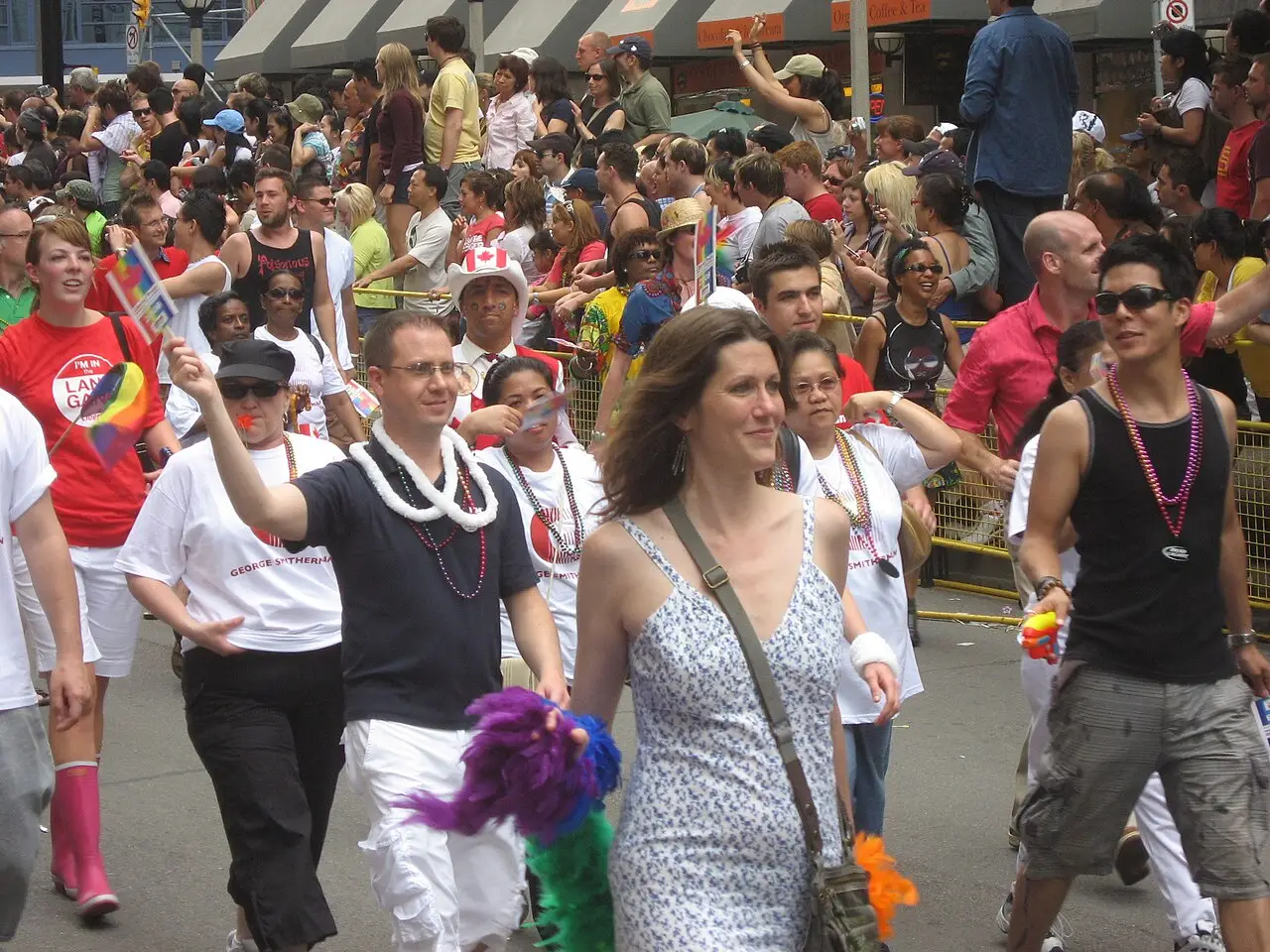
The Village, between Church and Wellesley, is the historic center of Canadian LGBTQ+ life and home to Pride. To the east, Cabbagetown holds the largest continuous area of preserved Victorian houses in North America, and the Necropolis cemetery (1850).
Leslieville, Danforth and The Beaches
East of the Don River: the Danforth is Greektown, with tavernas and the Taste of the Danforth festival; Leslieville is ex-industrial, with brunch and antique shops; The Beaches has 3 km of boardwalk on the lake and is the only central neighborhood with a usable beach.
Scarborough, North York and the west
Most of the city lies outside downtown: Agincourt and Markham Road (Chinese, Tamil, Sri Lankan), Thorncliffe Park (South Asian), Little Jamaica on Eglinton West, Little India on Gerrard, Roncesvalles (Polish) and Parkdale, home to the largest Tibetan community in North America.
History
17th c.–1759 · The trail and the French fort
The Toronto Carrying Place linked the mouth of the Humber River to Lake Simcoe and, through it, to the interior of the Great Lakes; the name comes from the Mohawk tkaronto, “where there are trees in the water.” The French built Fort Rouillé in 1750, where Exhibition Place now stands, and burned it themselves in 1759 while retreating before the British.
1787 · The Toronto Purchase
The British Crown acquires the area from the Mississaugas of the Credit in a poorly documented agreement with no clear boundaries. The dispute was only settled in 2010, with C$145 million in compensation.
1793 · Founding of York
John Graves Simcoe installs the capital of Upper Canada in the bay and builds Fort York. The town is born as a garrison and military port, not as a trading post.
1813 · Battle of York
In April, American troops occupy the town for six days, loot it and burn the parliament buildings. The British burning of Washington in 1814 was presented as a response to this episode.
1834 · The city of Toronto
York is incorporated with 9,252 inhabitants and takes back the Indigenous place name. The first mayor, William Lyon Mackenzie, leads the failed 1837 rebellion against the Family Compact oligarchy.
1847 · The typhus year
About 38,000 Irish fleeing the Great Famine land in a city of 20,000 people and are housed in fever sheds at the edge of the harbor. It is the first mass migration to change the city's makeup.
1904 · The Great Fire
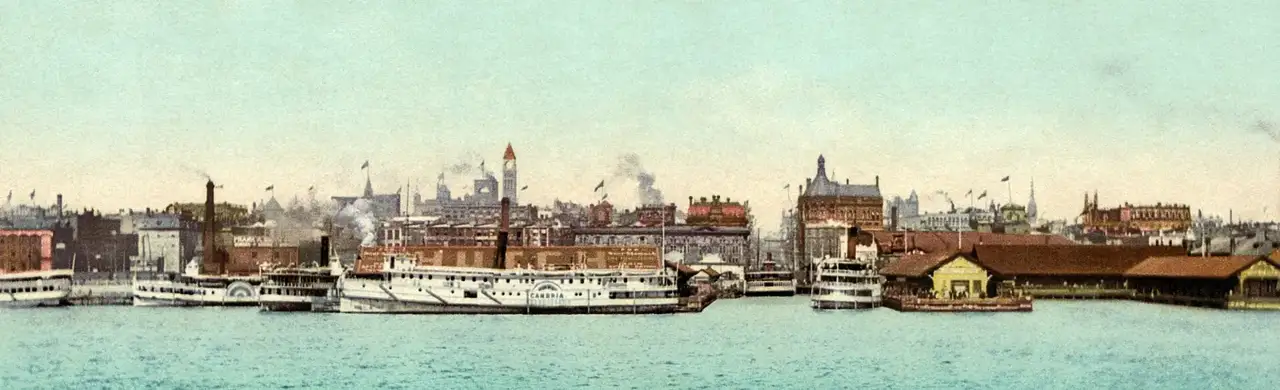
On April 19, fire destroys about 100 buildings in the warehouse district west of Bay Street, with no direct deaths. The downtown is rebuilt under a stricter building code, in brick and stone.

1954 · Subway and Hurricane Hazel
On March 30, the Yonge line opens, Canada's first subway. On October 15, Hurricane Hazel kills 81 people in the Humber Valley and leads to a ban on building in floodplains, the origin of the green ravine belt.

1967–1990 · The city of immigration
The 1967 points system removes the racial criterion from immigration law. In three decades the British, Protestant city of blue laws turns into a metropolis where almost half the population was born outside Canada.
1976 · The CN Tower
The 553.3 m communications tower opens and holds the record for the world's tallest freestanding structure for 31 years. It marks the end of the industrial port and the start of the glass waterfront.
1998 · The megacity
On January 1, Ontario merges Toronto, North York, Scarborough, Etobicoke, York and East York into a single municipal government of about 2.4 million people, against the result of local plebiscites. This is the origin of the nickname “the 6ix.”

Complete history
The Carrying Place trail and the French fort, up to 1787
Toronto began as an overland shortcut between two lakes. Before any European building, the Toronto Carrying Place linked the mouth of the Humber River to Lake Simcoe and, through it, to Georgian Bay and the interior of the continent. It was a portage that saved days of canoeing, controlled by the Wendat, the Seneca, and later the Mississauga. The name comes from the Mohawk tkaronto, “where there are trees in the water,” which described fishing weirs in the narrows of Lake Simcoe and slid across the maps until it stuck to this shore of Lake Ontario. The French built Fort Rouillé in 1750 and burned it in 1759, retreating before the British. In 1787 the Crown bought the area from the Mississaugas of the Credit in a deal so poorly recorded that the dispute was only settled in 2010, with C$145 million in compensation.
A town founded as a military post
The European town was founded as a military post. In 1793 John Graves Simcoe moved the capital of Upper Canada to a bay enclosed by a sand peninsula and named the place York: far from the American border, defensible by Fort York. The choice was tested in April 1813, when American troops occupied the town for six days and burned the parliament buildings. In 1834 York became Toronto, with 9,252 inhabitants and William Lyon Mackenzie as its first mayor; three years later he led the failed 1837 rebellion against the Family Compact, the oligarchy that controlled offices and land.
Railway and religion
The 19th century left two lasting marks: the railway and religion. Toronto became the rail hub of southern Ontario and the province's financial center: Bay Street is a direct heir of that. Meatpackers like the William Davies Company earned it the nickname Hogtown and, along the way, the peameal sandwich. In 1847 about 38,000 Irish fleeing the Great Famine landed in a city of 20,000 people. The Orange Order dominated city hall for decades and imposed what was called “Toronto the Good”: no shopping, no streetcars and no drinking on Sundays, under a regime of blue laws that only unwound between the 1950s and 1970s. The Great Fire of April 19, 1904 destroyed about 100 buildings west of Bay Street and rewrote the building code.
The subway and Hurricane Hazel, both from 1954
1954 is the year that shapes the contemporary city. On March 30, the Yonge line opened, the country's first subway; on October 15, Hurricane Hazel killed 81 people and tore whole houses out of the Humber Valley, leading to a ban on building in the floodplains. That's why the city today has about 11,000 hectares of wooded ravines cutting through residential neighborhoods. The same year gave birth to Metropolitan Toronto, the federation that paid for the postwar suburbs, expressways and schools. The demographic turning point came in 1967, when the points system removed the racial criterion from immigration law: in three decades the Protestant, British city became one where almost half the residents were born outside Canada and more than 160 languages are spoken.
The 1976 CN Tower and the 1998 merger of six municipalities
Over the last five decades, the industrial waterfront port has given way to towers. The CN Tower, opened in 1976 beside the rail yards by the lake, became the symbol of that shift, and in 1998 an amalgamation merged six municipalities into a single city of about 2.4 million people, against the vote of local referendums. In 2003, the SARS epidemic killed 44 people and paralyzed tourism for months. Since the 2000s, Toronto has built more residential towers than any other city in North America and covered its waterfront in glass buildings, and even so its housing has become among the most expensive in Canada, alongside Vancouver's. The economy still rests on the same three pillars it had in 1850: banking, the movement of goods, and newly arrived people, and has added a film industry big enough to earn the city the nickname Hollywood North, with series and movies that use Toronto's streets to stand in for New York, Chicago, or Boston.
Geography and shape of the city
The glacial step, the rivers and the ravines
Toronto sits on a plain of glacial till that descends in gentle steps to Lake Ontario, 76 m above sea level. The most visible step is the old shoreline of glacial Lake Iroquois, formed about 12,000 years ago: it's the escarpment that Davenport Road follows and where Casa Loma was planted, 30 m above downtown. Four river systems cut through the plain (the Humber to the west, the Don through the center, the Rouge and Highland Creek to the east) and have carved about 11,000 hectares of ravines that, after the 1954 Hurricane Hazel, were banned from development and became the largest connected system of urban parks in North America. The Toronto Islands were a sand peninsula until an 1858 storm opened the eastern channel.
The concession grid and Yonge
The urban fabric follows the British agricultural concessions: east-west avenues every 2 km (Bloor, St. Clair, Eglinton, Lawrence, Sheppard, Finch, Steeles), with Yonge Street as the north-south axis that splits the numbering into “east” and “west”. Downtown is an almost perfect grid, flat and easy to read.
The expressways: Gardiner, Don Valley, and the 401
Onto that grid came three layers of infrastructure: the Gardiner Expressway (1955–1966), which cut the city off from the lake; the Don Valley Parkway through the valley; and Highway 401, which widens to 18 lanes in the city's north and is one of the busiest highways on the continent.
The islands were a peninsula until an 1858 storm.
Highway 401 reaches 18 lanes on the north side of the city.
Culture
Film, TIFF, and theater
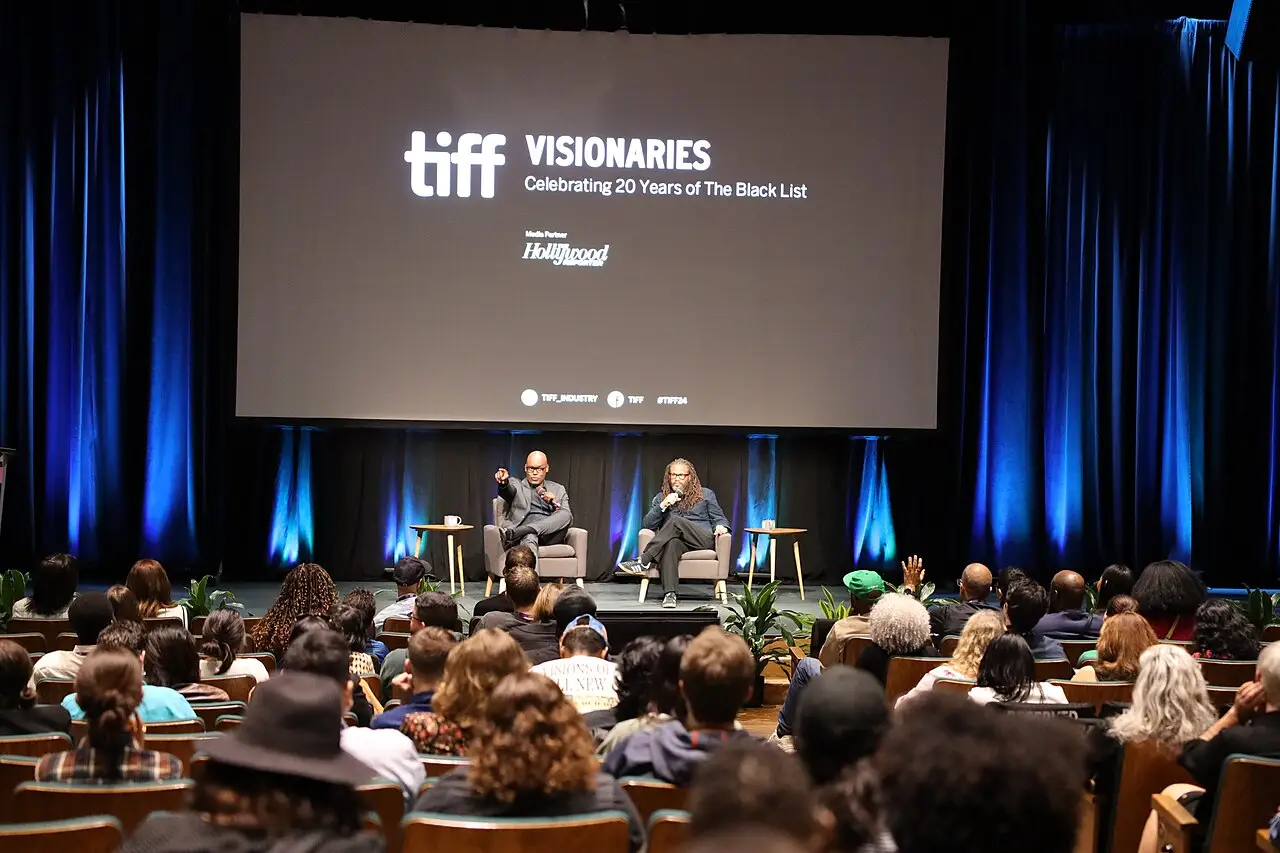
TIFF was born in 1976 as the Festival of Festivals, gathering the best films from other festivals, and today it's the biggest commercial showcase for film in North America, with an audience award that often foreshadows the Oscars; TIFF Lightbox, at King and John, works as a year-round cinematheque. The city films so much for others (from “Videodrome” to series that pretend to be New York, Chicago, or Boston) that it earned the nickname Hollywood North. In theater, Mirvish runs historic houses like the Royal Alexandra (1907) and the Princess of Wales, and the district is often cited as the third-largest English-language theater hub, after London and New York.
Live music, from Massey Hall to Scarborough rap
Live music runs through historic venues: Massey Hall (1894, closed in 2018 for renovation and reopened in 2021), the Horseshoe Tavern (1947, where everyone from Willie Nelson to the Rolling Stones has played), El Mocambo, the Danforth Music Hall and Roy Thomson Hall (1982), home of the Toronto Symphony. In the 2000s the city exported Broken Social Scene and Feist; in the 2010s, Drake and The Weeknd, who fixed “the 6ix” in the global vocabulary and changed the city's symbolic geography. Toronto rap speaks of the housing complexes of Scarborough and North York, not downtown. In literature, Margaret Atwood, Michael Ondaatje, Dionne Brand, Austin Clarke and Catherine Hernandez wrote the city from the ravines, immigrant labor and the periphery.
The Maple Leafs, no Stanley Cup since 1967, still sell out
The Maple Leafs (NHL) haven't won the Stanley Cup since 1967 and still sell out the arena; the Blue Jays won the World Series in 1992 and 1993 and play at Rogers Centre, the world's first stadium with a fully functional retractable roof (1989); the Raptors won the NBA title in 2019 and drew something like 1 to 2 million people to the parade at Nathan Phillips Square; and Toronto FC took the MLS Cup in 2017. The Hockey Hall of Fame occupies the former 1885 Bank of Montreal branch at Yonge and Front. Outside downtown, the Aga Khan Museum (2014, designed by Fumihiko Maki, in Don Mills) is the only museum in North America devoted to Islamic and Persian art.
The Maple Leafs have been waiting for the Stanley Cup since 1967.
Festivals and events

Toronto Caribbean Carnival (Caribana)
From mid-July to early August, with the Grand Parade on the Saturday of the August civic holiday, along Lake Shore Boulevard, starting from Exhibition Place. Created in 1967 by Caribbean immigrants, it's the largest carnival parade in North America; the parade requires a ticket, and there's a costume-judging day (King and Queen Show).
TIFF: Toronto International Film Festival
Eleven days in early September, with about 200 to 300 films at downtown venues (King West, Yonge-Dundas). Individual tickets go on sale weeks in advance; the week pushes downtown hotel prices up.
Pride Toronto
Last week of June, with the parade on Sunday starting from the Church-Wellesley Village and heading down Yonge. It's one of the largest in the world, with the Dyke March on Saturday and Trans March on Friday.
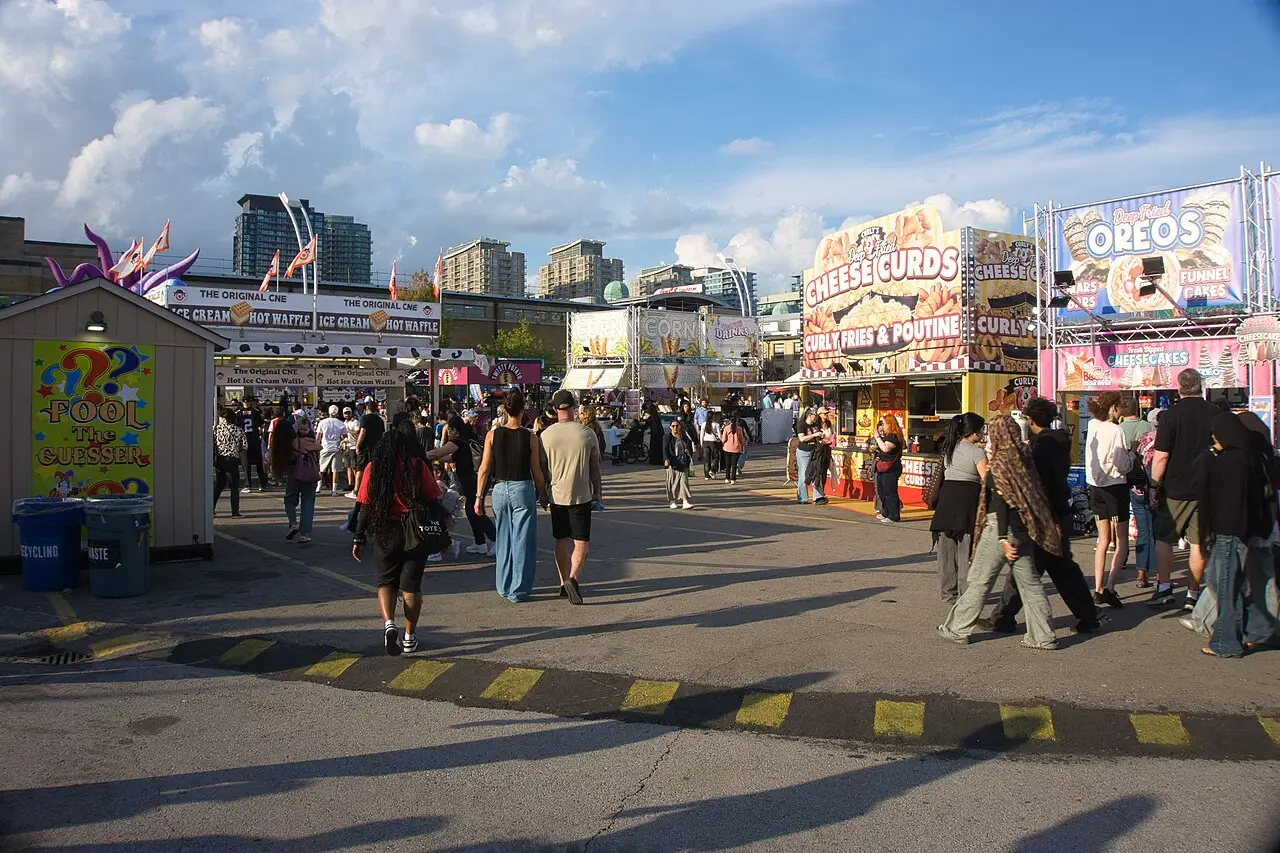
Canadian National Exhibition (The Ex)
From mid-August to Labour Day, at Exhibition Place. Running since 1879: an amusement park, agricultural fair, experimental fried food and the Canadian International Air Show on the final weekend.

Nuit Blanche
One night between late September and early October, with contemporary art installations open from sunset to sunrise in squares, public buildings and parking lots. Free, created in 2006 following the Parisian model.
Books and films
In the Skin of a Lion (Michael Ondaatje, 1987)
A novel about the Macedonian and Italian immigrants who built the Bloor Viaduct (1918) and the R. C. Harris water treatment plant; it tells the city through the invisible labor that built it.
Scott Pilgrim vs. the World (Edgar Wright, 2010)
Filmed entirely in Toronto and, unlike the rest of Hollywood North, without pretending to be another city: Casa Loma, Lee's Palace, Sneaky Dee's and winter on Bathurst appear under their own names.
Take Care (Drake, 2011)
The album that fixed “the 6ix” in the global vocabulary and shifted the city's symbolic center to the housing complexes of Scarborough and North York.
Frequently asked questions
Toronto: how do you get from Pearson Airport to downtown?
The UP Express links the airport to Union Station in 25 minutes, with departures every 15 min, for C$9.25 with Presto.
Toronto: how do you get to Niagara Falls?
Niagara Falls is about 130 km to the southwest, 1 hour 30 minutes to 2 hours by car on the QEW; there are direct buses from Union Station and a seasonal GO train in about 2 hours.
Toronto: is the price tag the final price?
No: when you pay, add 13% HST to the price tag on almost everything, except raw market food.
Toronto: what's winter like?
Winter runs from December to March: an average of −5 °C in January, lows of −15 °C that the lake wind makes feel like −25 °C, and about 110 cm of snow a year spread across short snowstorms.
Toronto: can I get off the streetcar in the middle of the avenue?
Yes: when the streetcar opens its doors in the middle of the street, the cars behind it must stop by law until the last passenger reaches the sidewalk, so step straight onto the asphalt and cross without rushing.
Other cities in the country
Canada ↗- Days
- 2–3
- When
- May–Oct
- Per person/day
- Average 160–280 C$Mid-range · per person/day
Cost scope
Per person per day: accommodation, meals, urban transport, visits and a small allowance for extras. Flights excluded; larger purchases vary. Editorial estimate, not a quote.
- Days
- 2–3
- When
- Jul–Sep
- Per person/day
- Average 190–330 CADMid-range · per person/day
Cost scope
Per person per day: accommodation, meals, urban transport, visits and a small allowance for extras. Flights excluded; larger purchases vary. Editorial estimate, not a quote.
- Days
- 3–4
- When
- Jun–Sep
- Per person/day
- Average 145 CADMid-range · per person/day
Cost scope
Per person per day: accommodation, meals, urban transport, visits and a small allowance for extras. Flights excluded; larger purchases vary. Editorial estimate, not a quote.
- Days
- 2–3
- When
- Feb · Jun–Oct
- Per person/day
- Average 210 CADMid-range · per person/day
Cost scope
Per person per day: accommodation, meals, urban transport, visits and a small allowance for extras. Flights excluded; larger purchases vary. Editorial estimate, not a quote.