United States
Chicago
Chicago's skyscrapers, museums, lakefront and neighborhoods
Days Start with the basic programme and choose extensions for the time you have.
How the guide reaches this number
This isn't a city for anyone chasing natural scenery, crooked streets or everything clustered downtown. The food and nightlife are in the neighborhoods, 20 or 30 minutes by train. With just one day, start at 10am at the Cultural Center and walk across to Millennium Park, all on foot. Have an early Italian beef for lunch and go into the Art Institute, which opens at 11am and closes on Tuesdays, for three hours. Close with the architecture boat tour in the late afternoon, between March and November. Winter disappoints anyone who wants to walk the streets: from December to February, life moves indoors, and between January and March hotel rates drop by half. After 7pm the Loop turns beautiful and empty, so have dinner in the neighborhoods.
4
When Mid-May to June and September through mid-October
How the guide reaches this number
Chicago has a continental climate, and the gap between the July high and the January low tops 35 °C. The two best windows are mid-May to late June and September to mid-October, with 18 to 26 °C and the boats running. Summer, June to August, brings highs of 26 to 31 °C, high humidity, late-afternoon thunderstorms and every festival in full swing. Winter, December to February, has average highs of 0 to 3 °C, frequent lows below −10 °C and about 90 cm of snow over the season. Skip January if your plan is to be out on the streets, although hotels run half-price and the museums sit empty from January to March. Spring is unsettled and arrives late, and April still swings between 20 °C and 4 °C in the same weekend. Hotel peaks follow the conventions at McCormick Place more than the season, so check whether a big convention falls during your trip.
Per person/day US$150–260 per person on an average trip; about US$90 on a budget mode
How the guide reaches this number
Per person per day: accommodation, meals, urban transport, visits and a small allowance for extras. Flights excluded; larger purchases vary. Editorial estimate, not a quote.
 What Nilo thinks
Give Chicago four days: two for the Loop, the architecture and the lakefront, one for Pilsen, Wicker Park and Logan Square, and one for the South Side. This isn't a city for anyone chasing natural scenery, crooked streets or everything clustered downtown. The food and nightlife are in the neighborhoods, 20 or 30 minutes by train. With just one day, start at 10am at the Cultural Center and walk across to Millennium Park, all on foot. Have an early Italian beef for lunch and go into the Art Institute, which opens at 11am and closes on Tuesdays, for three hours. Close with the architecture boat tour in the late afternoon, between March and November. Winter disappoints anyone who wants to walk the streets: from December to February, life moves indoors, and between January and March hotel rates drop by half. After 7pm the Loop turns beautiful and empty, so have dinner in the neighborhoods.Chicago burned down almost entirely in October 1871 and rebuilt itself with the steel-frame skyscraper, which is why the Loop is best explored looking up. The architecture boat travels up the river's three branches in 90 minutes and explains the city's skyline, and the Tiffany dome of the old library, 11.5 m across, sits a few blocks from Cloud Gate. The Art Institute holds “Nighthawks” and “American Gothic,” and the lakefront opens 48 km of shoreline to the public. The food lives in the neighborhoods, 20 or 30 minutes by train: tacos in Pilsen, Italian beef dunked in its broth, tavern-style pizza cut into squares. Since the Loop empties out at night outside show nights, dinner happens in the neighborhoods. Come from mid-May to late June or from September to mid-October, with highs of 18 to 26 °C, and give the city four days.
Quick facts
- Population
- about 2.73 million in the city; about 9.4 million in the metro area
- Founded
- Du Sable's trading post around 1780; village in 1833, city on March 4, 1837
- Country and region
- United States, state of Illinois, Cook County, Midwest region
- Language
- English; Spanish is the second language, spoken at home by about a quarter of residents
- Currency
- US dollar (USD); 10.5% sales tax, added on top of the sticker price
- Time zone
- UTC−6 (CST) and UTC−5 during daylight saving time, March to November: one hour behind New York
- Best time to visit
- Mid-May to June and September through mid-October
- Average daily cost
- US$150–260 per person on an average trip; about US$90 on a budget mode
When to go
Mid-May to June and September through mid-October
January
-7° to 0°C
38 mm of rain
February
-5° to 3°C
37 mm of rain
March
0° to 9°C
48 mm of rain
April
5° to 16°C
91 mm of rain
July
20° to 29°C
90 mm of rain
August
19° to 28°C
101 mm of rain
November
2° to 10°C
60 mm of rain
December
-4° to 3°C
46 mm of rain
How the year changes
Chicago has a continental climate, and the gap between the July high and the January low tops 35 °C. The two best windows are mid-May to late June and September to mid-October, with 18 to 26 °C and the boats running. Summer, June to August, brings highs of 26 to 31 °C, high humidity, late-afternoon thunderstorms and every festival in full swing. Winter, December to February, has average highs of 0 to 3 °C, frequent lows below −10 °C and about 90 cm of snow over the season. Skip January if your plan is to be out on the streets, although hotels run half-price and the museums sit empty from January to March. Spring is unsettled and arrives late, and April still swings between 20 °C and 4 °C in the same weekend. Hotel peaks follow the conventions at McCormick Place more than the season, so check whether a big convention falls during your trip.
The same numbers as a table
| Month | Temperature °C | Rain mm |
|---|---|---|
| January | -7 to 0 | 38 |
| February | -5 to 3 | 37 |
| March | 0 to 9 | 48 |
| April | 5 to 16 | 91 |
| May · | 11 to 22 | 104 |
| June · | 17 to 27 | 102 |
| July | 20 to 29 | 90 |
| August | 19 to 28 | 101 |
| September · | 15 to 25 | 70 |
| October · | 8 to 18 | 88 |
| November | 2 to 10 | 60 |
| December | -4 to 3 | 46 |
Nilo's tips
Buy the $5 pass right at O'Hare
A CTA one-day pass costs $5, the same as a single ride out of O'Hare. Buy the pass at the machine before heading down to the platform: the airport turnstile charges nothing extra, and the pass also covers the rest of the day on trains and buses.
See the Tiffany dome for free, 10am to 5pm
It's the largest Tiffany dome in the world, with about 30,000 pieces of glass, in the old central library, today's Cultural Center. The building is just across the street from Millennium Park, charges no admission and, on cold days, doubles as a shelter, with heating and restrooms. The free Dame Myra Hess concerts played there until 2021 and now happen at the Seventeenth Church of Christ, Scientist, at 55 East Wacker Drive. On a Wednesday, pair the dome with the 12:15pm concert.
Skydeck at opening, boat in the late afternoon
At opening time, the Skydeck line is much shorter, and in the late afternoon the light hits both banks of the river at an angle. Skydeck admission, at the Willis Tower, starts at $32 and already includes the Ledge glass boxes. The 90-minute architecture boat tour starts at $57, runs from March to November and sells out on weekends, so book a weekday late afternoon.
Sunday in Logan Square, cash in Pilsen
The Logan Square farmers market sets up on Sundays, and several old-school Pilsen taquerias take cash only. The market runs May through October, 8:30am to 3pm, next to the 1918 column and beside the Blue Line station. Afterward, head to Pilsen, where almost everything opens by noon, and get off the Pink Line at 18th Street with small bills in your pocket.
Order the Italian beef “dipped, hot”
Say “dipped, hot” at the counter and the sandwich comes soaked in jus, with spicy giardiniera, for $10 to 15. Eat it standing up, hunched over the paper with your elbows out, the way it's eaten in the city, so the jus drips on the paper and not on your clothes.
Read the bottom of the check before the tip
Many places add a 3 to 5% fee at the bottom of the bill, which doesn't replace the 18 to 22% tip. Tax, 10.5% or more, is also left out of menu prices, so add all three before picking a restaurant. At the bar, leave $1 to 2 per drink in cash, which reaches the bartender's hand faster and brings the next round sooner.
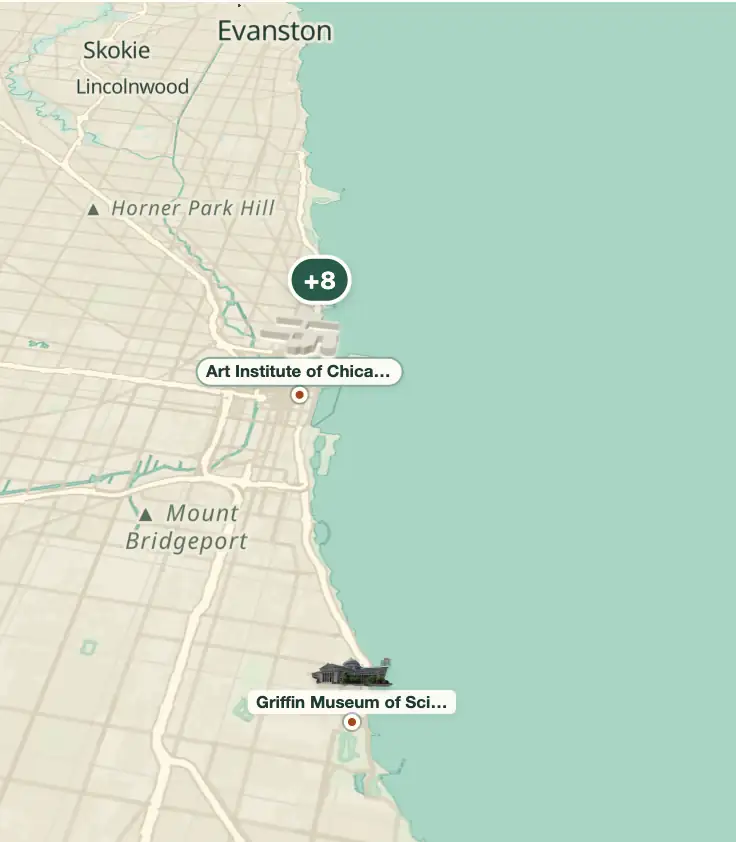
Explore the map
© OpenStreetMap · OpenFreeMap · © OpenMapTiles
Explore the map, read about the other places and plan your travel days in the app.
Open the appWhat to see
Chicago: The plain, the lake, and the reversed river
Chicago sits on a nearly flat glacial plain at the southwest tip of Lake Michigan, and the Chicago River, which enters downtown and splits into a Y, gives the North Side, South Side, and West Side their names. Across that plain runs a grid aligned with the compass points and numbered from the intersection of State Street and Madison Street, and at its center the CTA's elevated lines close the rectangle of the Loop.

Millennium Park and Cloud Gate
A 99,000 m² park opened in 2004 over a former rail yard. Home to Anish Kapoor's Cloud Gate (110 tons of polished stainless steel with no visible seams), Frank Gehry's concert pavilion, and Jaume Plensa's Crown Fountain, with two 15 m towers that project faces and spout water in summer. Free admission.
Visitors to the park, which opened in 2004, get in free and find the 110-ton Cloud Gate, Frank Gehry's concert pavilion, and Crown Fountain, whose towers project faces and spit water in summer.
Check access
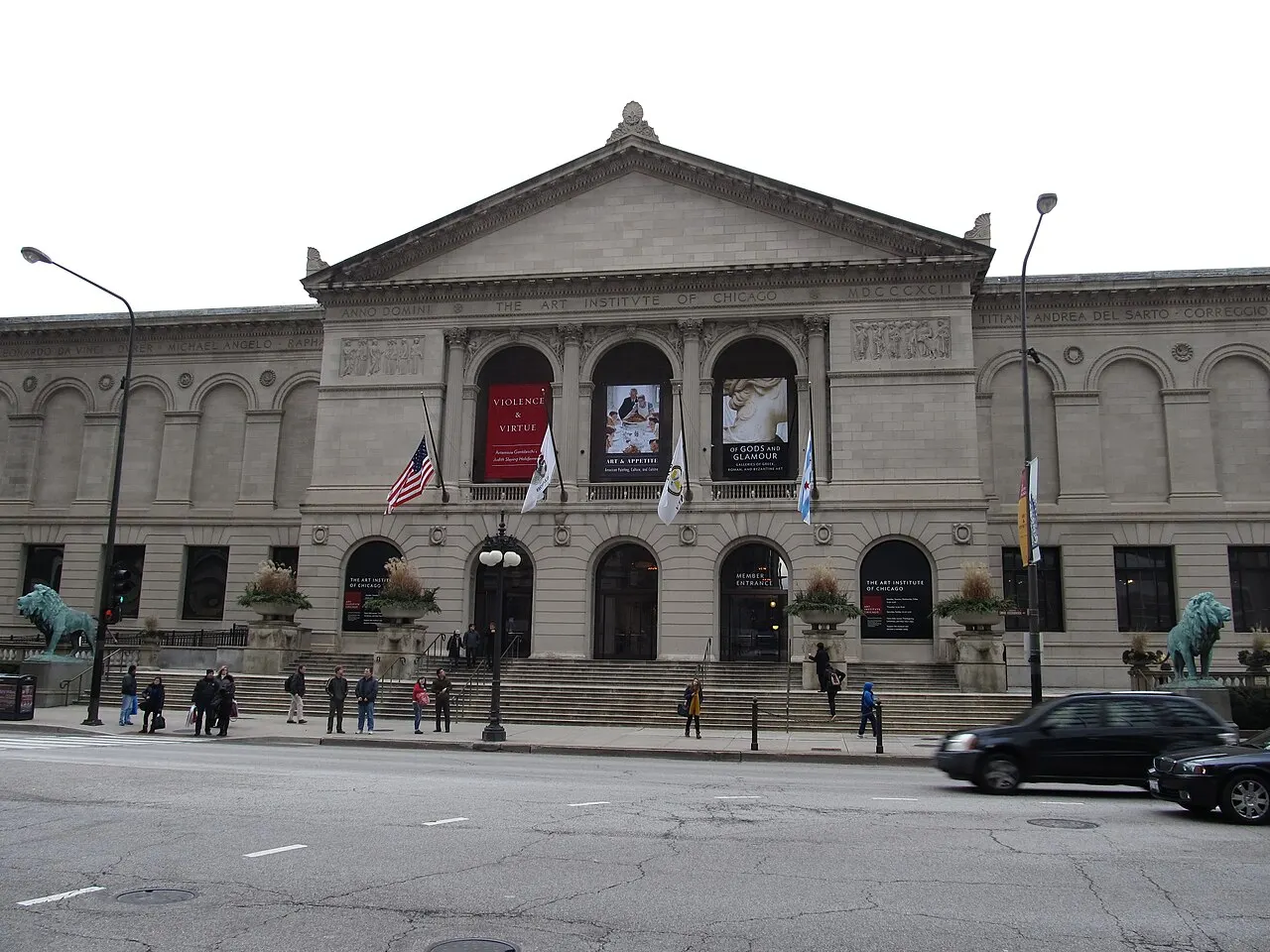
Art Institute of Chicago
Founded in 1879, it's one of the largest art museums in the country, with Grant Wood's “American Gothic” (1930), Edward Hopper's “Nighthawks” (1942) and Seurat's “A Sunday on La Grande Jatte.” The two bronze lions on the front steps date from 1894. Admission is $32, with a discount for Illinois residents, and the museum opens to the public at 11am every day except Tuesday.
Three famous paintings justify the ticket, with a discount for Illinois residents; Grant Wood, 1930; admission $32, opens at 11am.
Check access

Chicago Architecture Center River Cruise
A roughly 90-minute boat tour along the river's three branches, with a volunteer guide trained by the center. It's the most efficient way to understand why the city has the skyline it has; it runs March through November, costs from $57, and tends to sell out on weekends.
A volunteer trained by the center explains, from the water, why the skyline looks the way it does; about 90 minutes; from $57.
Check access
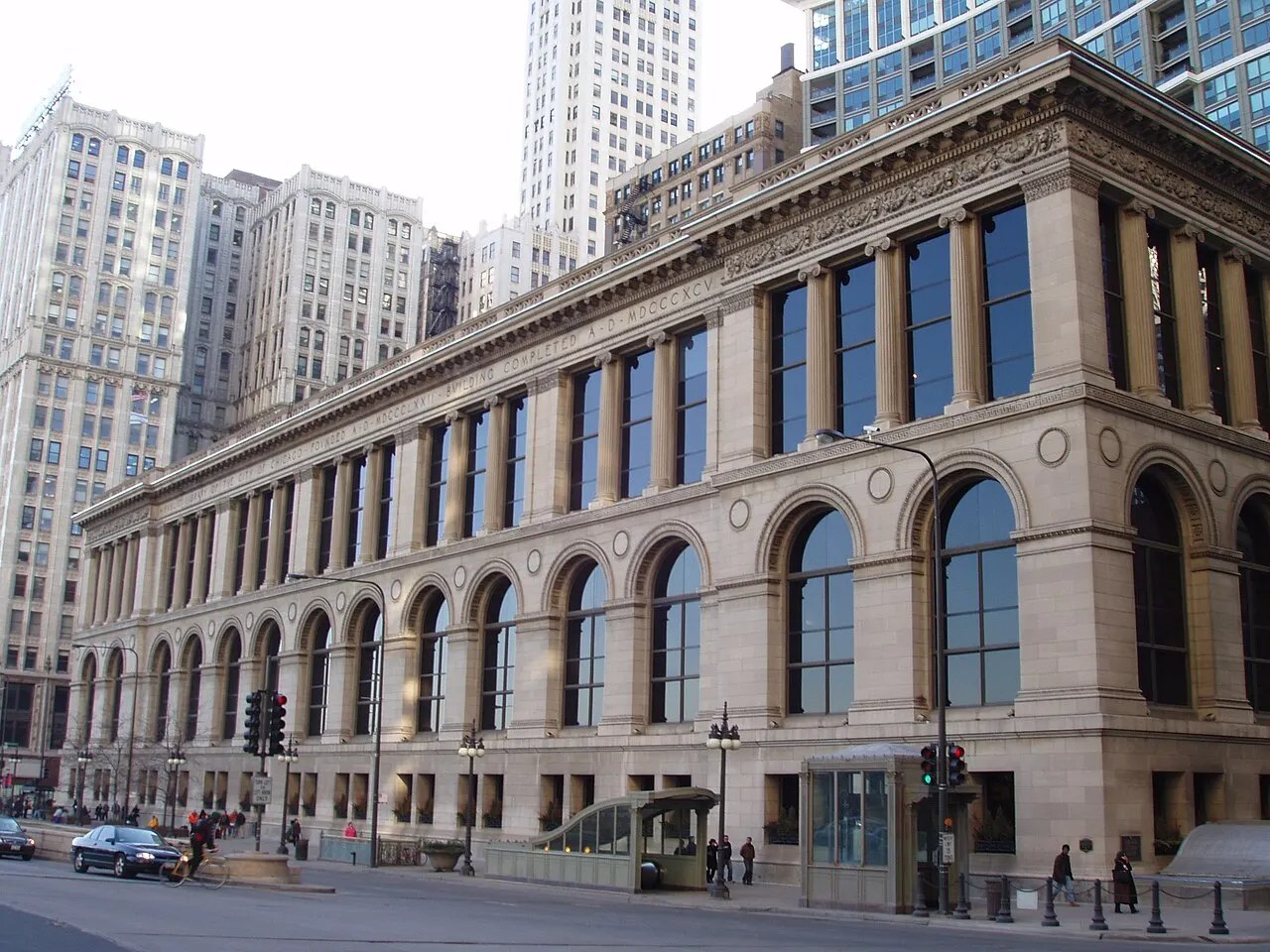
Chicago Cultural Center
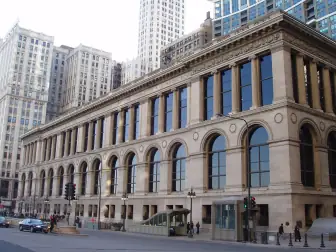
Opened in 1897 as the first central public library, home to the largest Tiffany glass dome in the world, 11.5 m across with about 30,000 pieces. Free admission, 10am to 5pm.
The city's first central public library is free to enter; Tiffany dome, 11.5 m; about 30,000 pieces.
Check access
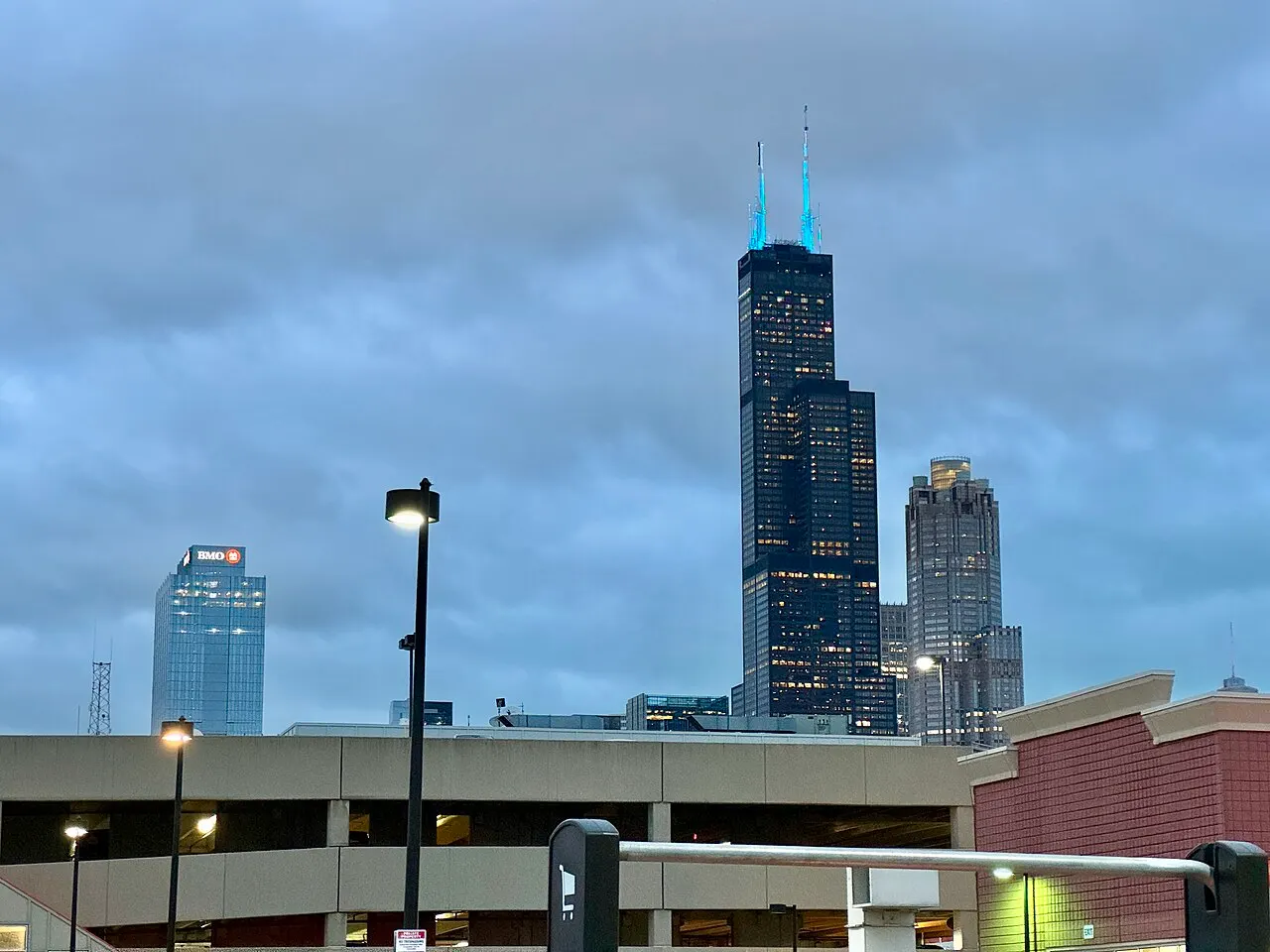
Willis Tower Skydeck
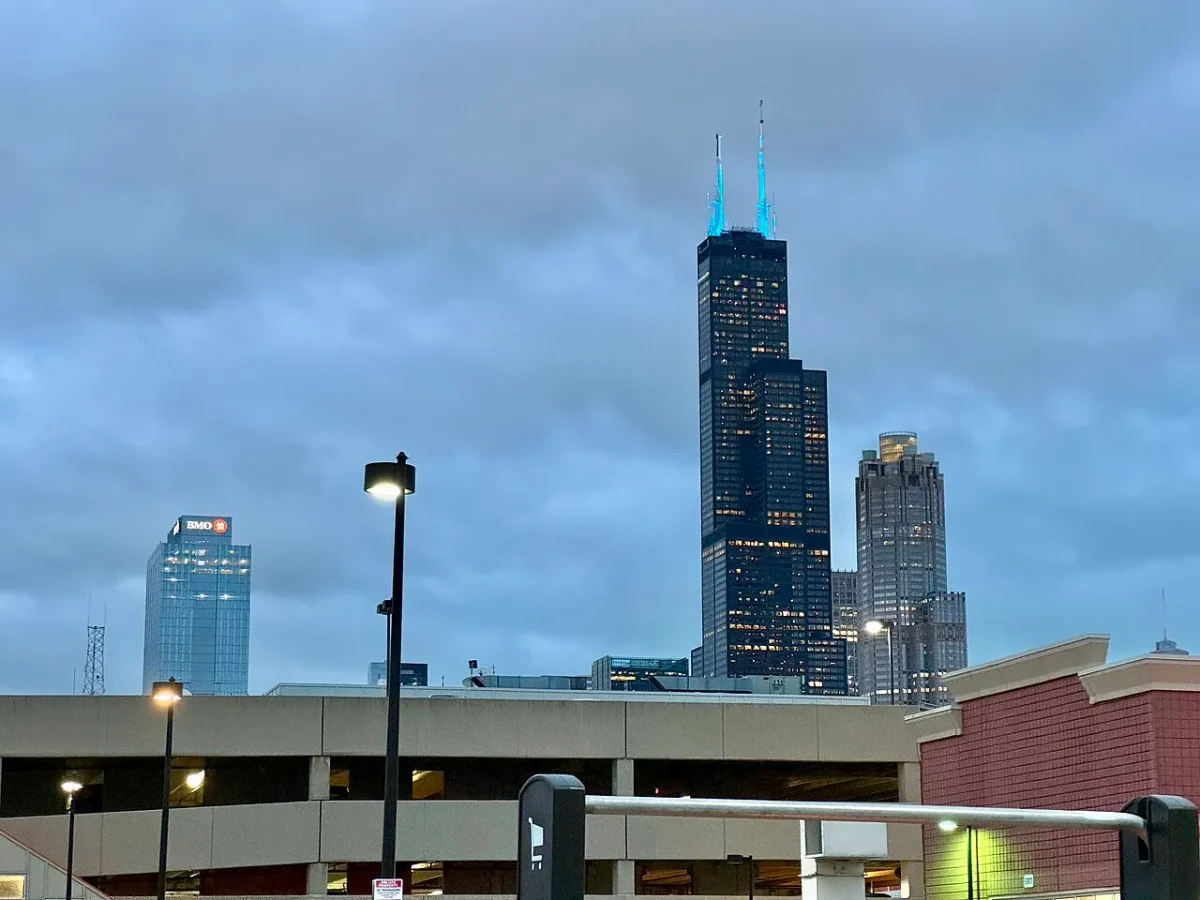
Completed in 1973 as the Sears Tower, it stands 442 m to the roof and was the world's tallest building for 25 years. The observation deck is on the 103rd floor, and the glass boxes of the Ledge extend 1.2 m out from the facade; tickets start at $32, with a shorter line right at opening.
The Sears Tower, completed in 1973 at 442 m, held the world height record for 25 years, and the observation deck on the 103rd floor has glass boxes that jut 1.2 m out from the building.
Check access

Field Museum
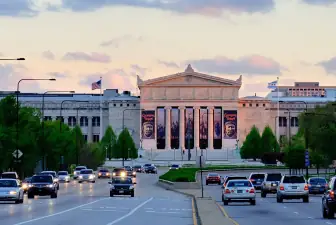
A natural history museum descended from the 1893 Exposition, on the Museum Campus. Displays “Sue,” the most complete Tyrannosaurus rex skeleton ever found, at 12.3 m, and the largest anthropological collection in the Americas.
Sue is the most complete Tyrannosaurus rex skeleton ever found, 12.3 m long, in this museum that's an heir of the 1893 Exposition. The largest anthropological collection in the Americas is also here.
Check access
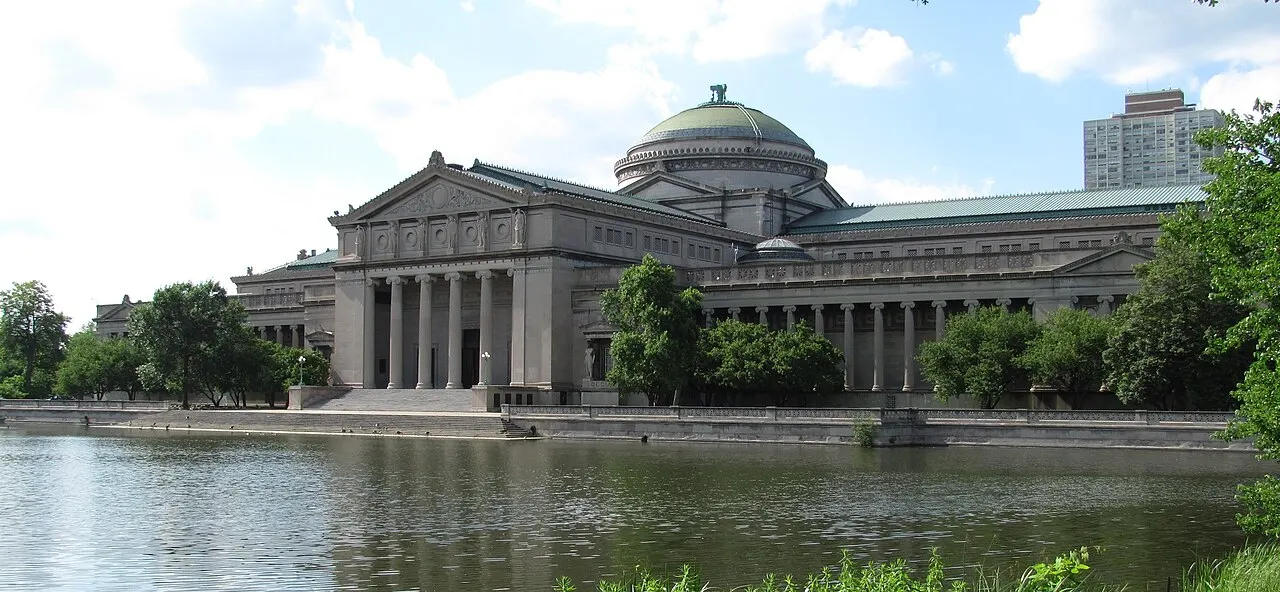
Griffin Museum of Science and Industry
Occupies the 1893 Palace of Fine Arts, the only Columbian Exposition pavilion still standing, in Hyde Park. Permanent pieces include the German U-505 submarine captured in 1944 and a full-scale coal mine.
The only fair pavilion still standing holds a captured submarine and a full-size coal mine; Palace of Fine Arts, 1893; U-505, 1944.
Check access
The Rookery and Loop architecture
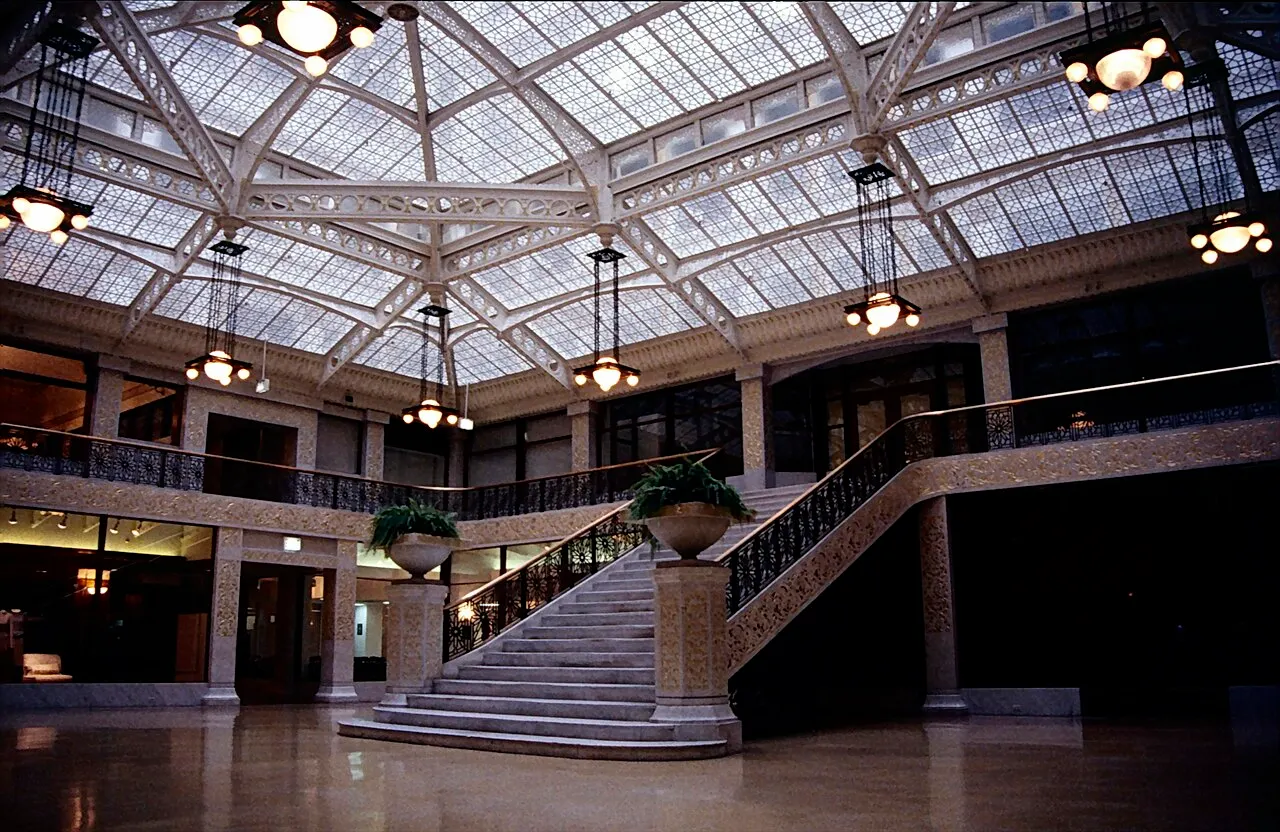
An 1888 building by Burnham & Root at 209 South LaSalle, with an interior courtyard redesigned by Frank Lloyd Wright in 1905 in marble and gold leaf. A few minutes from the Monadnock (1891) and Adler & Sullivan's Auditorium Building (1889).
Wright redesigned, in 1905, with marble and gold leaf, the courtyard of the Burnham and Root building, raised in 1888 and located a few minutes from the Monadnock and the Auditorium.
Check access

Chicago Riverwalk
A roughly 1.25-mile public promenade on the south bank of the river's main branch, between Lake Shore Drive and Lake Street, completed in stages through 2016. Links bars, boat docks, and concrete stairways, and lets you cross downtown without crossing an avenue.
It's about 2 km of walkway between Lake Shore Drive and Lake Street, finished in 2016, and you already pass through it on the way to the architecture boat, without needing to set aside a separate hour for it.
Check access
Nilo’s itinerary
Start with the basic programme and choose extensions for the time you have.
Plan my days in the app ↗Day 1 · The Loop, the river, and the lakefront
Start at 10am, when the Chicago Cultural Center opens, at 78 East Washington Street, free admission, and go up to the third floor to see the 11.5 m Tiffany dome.
Cross the street to Millennium Park: Cloud Gate, Frank Gehry's pavilion, and the Crown Fountain are a 15-minute walk from one another.
Have an Italian beef “dipped” at a downtown spot and eat it standing up, hunched over the paper, because the bread soaked in jus drips.
Set aside three hours for the Art Institute, entering from Michigan Avenue between the 1894 lions, and start on the second floor before heading down.
In the late afternoon, when the light hits both banks of the river at an angle, take the 90-minute architecture boat tour leaving from the Riverwalk, which runs from March to November.
Day 2 · The west and northwest neighborhoods
Take the Pink Line to 18th Street and start in Pilsen: the murals on 16th Street and the National Museum of Mexican Art, free admission.
Have tacos for lunch on 18th Street; most spots open at noon and several of the oldest ones only take cash.
Take the Blue Line to Damen and explore Wicker Park, with used bookstores, record shops and the six-corner intersection with Milwaukee Avenue.
Follow Milwaukee on foot or by Divvy to Logan Square, with the 1918 column in the middle of the square as a meeting point, and have dinner there.
Close the night at a neighborhood bar; a shot of Malört is the local rite of arrival, and nobody expects you to like it.
Day 3 · South Side, museums, and a ballpark
Take Metra Electric or the number 6 bus to Hyde Park and start at the Griffin Museum of Science and Industry, in the 1893 pavilion, including the U-505 submarine.
Walk to Frank Lloyd Wright's Robie House, from 1910, and cross the University of Chicago campus toward Jackson Park.
Head back through the Museum Campus and pick just one: the Field Museum, with “Sue,” the 12.3 m T. rex, or the Shedd Aquarium: the two don't fit in the same day.
If it's baseball season, catch the White Sox at Rate Field, next to the Sox-35th stop, right on the South Side. The Cubs play at Wrigley Field, on the North Side, and are a trip for another night, on the Red Line to Addison.
Have deep-dish for dinner and order as soon as you sit down, because the oven takes 30 to 45 minutes.
Day 4 · Loop architecture and the lakefront
Start at 9am at the Rookery, at 209 South LaSalle, to see the marble-and-gold-leaf light court Frank Lloyd Wright redesigned, then walk to the Monadnock (1891) and the Auditorium Building by Adler & Sullivan (1889), a few minutes away.
Head down to the Riverwalk and cover the roughly 2 km public path along the river's south bank, past bars, boat docks and concrete stairways, without crossing a single avenue.
Cross the Michigan Avenue bridge to the Wrigley Building (1924) and the Tribune Tower (1925) right next to it, at the start of the Magnificent Mile.
Rent a Divvy bike and ride a stretch of the Lakefront Trail, the unbroken 29 km path along the lake.
Close the day with a bag of Chicago mix, the sweet-and-salty popcorn the Loop's shops made popular, before downtown empties out after 7pm outside show nights.



Food
 AI illustration
Chicago-style hot dog
A beef sausage on a poppy seed bun with yellow mustard, neon-green relish, chopped onion, tomato wedges, a pickle spear, sport peppers, and celery salt. Never ketchup. It costs $5–8 at a neighborhood stand and is eaten standing up.
 AI illustration
Italian beef
Thinly sliced roast beef, cooked in its own seasoned juice and served on a French roll with spicy giardiniera or sweet peppers. Order it “dipped” to have the whole roll dunked in the juice; you eat it hunched over the paper, for $10–15.
 AI illustration
Deep-dish
Pizza baked in a tall pan, with a buttery crust, cheese on the bottom and tomato sauce on top, which Pizzeria Uno claims to have invented in 1943. The oven takes its time, so order as soon as you sit down, and expect one slice to be enough.
 AI illustration
Tavern-style
The pizza the city actually eats day to day: a thin, crisp crust, toppings to the edge, and cut into squares, the “party cut.” Served in neighborhood bars, and pairs with beer, not a formal dinner.
 AI illustration
Maxwell Street Polish
A grilled Polish sausage with caramelized onions and mustard, served on a hot dog bun. Born at the Maxwell Street market in the early 20th century and survives at a handful of spots open 24 hours.
 AI illustration
Jibarito
A Puerto Rican sandwich invented in Humboldt Park in the 1990s, where two slices of fried, flattened plantain replace the bread. The standard filling is steak, garlic, cheese, lettuce, and tomato.
 AI illustration
Chicago mix
Caramel popcorn mixed with cheddar cheese popcorn in the same bag, a combination popularized by Loop shops. Sweet and salty at once, it's the city's standard edible gift.
 AI illustration
Malört
Absinthe-flavored liquor from the Jeppson's brand, bitter to the point of ritual: the shot is served at neighborhood bars to first-timers. No one drinks it for the taste: the fun is watching the face of whoever tries it.
Day trips
Oak Park
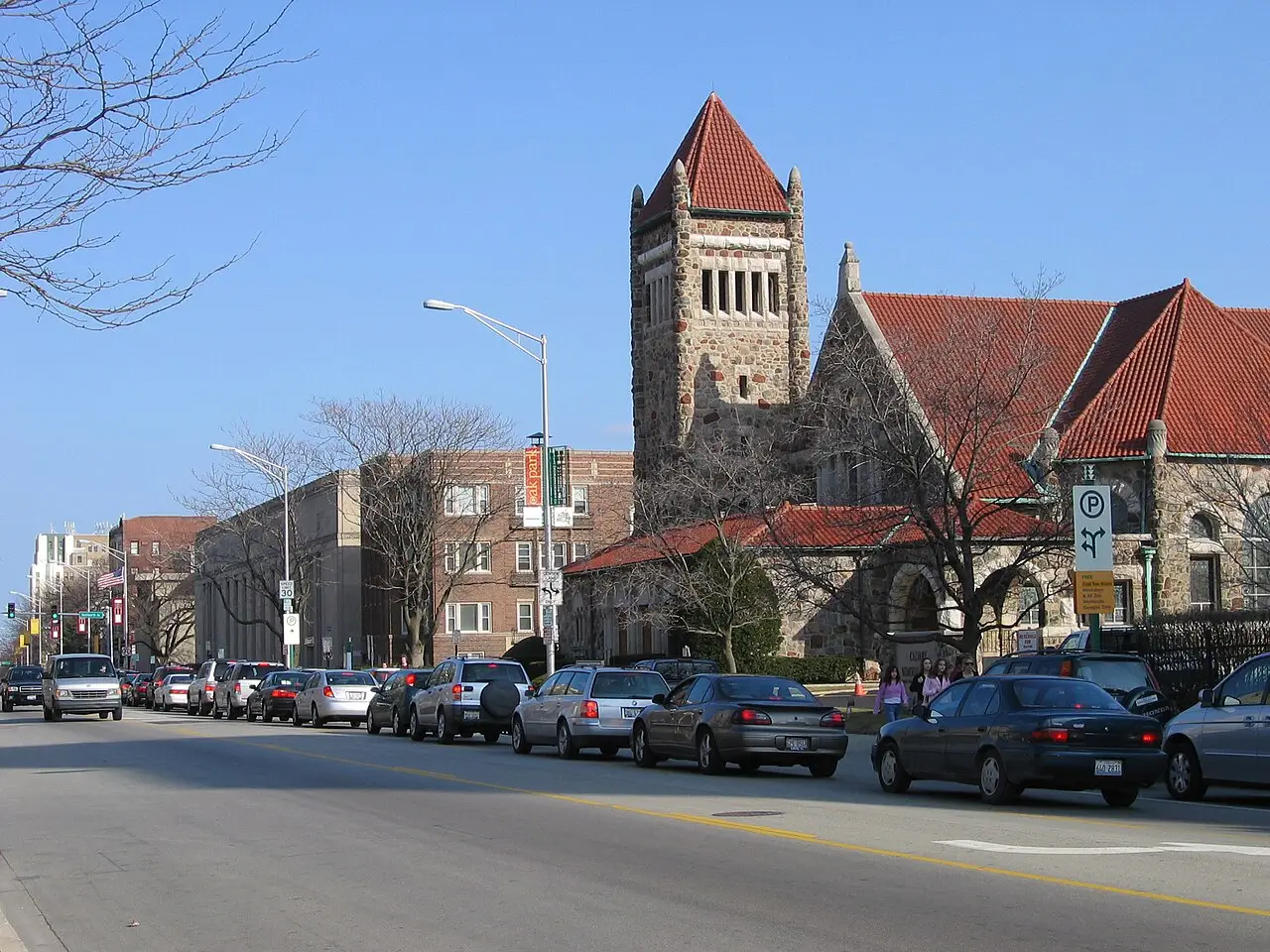
16 km west, about 25 minutes on the Green Line to Harlem/Lake or 20 minutes by Metra. Home to the largest concentration of Frank Lloyd Wright buildings in the world, with 25 structures, including his 1889 home and studio and the 1908 Unity Temple, a UNESCO World Heritage Site since 2019.

Indiana Dunes National Park
80 km east, about 1 hour 10 minutes by car or the South Shore Line train to Dune Park and Beverly Shores. 24 km of Lake Michigan beach and dunes up to 60 m, with short trails and a view of the Chicago skyline across the water.

Milwaukee
145 km north, 1 hour 30 minutes by car or about 1 hour 30 minutes on the Amtrak Hiawatha train, with several daily departures from Union Station. Worth it for the Milwaukee Art Museum, by Santiago Calatrava, whose brise-soleil opens and closes twice a day, and for the city's German brewing culture.
Where to begin
The Loop, the river, and the lakefront
Start at 10am, when the Chicago Cultural Center opens, at 78 East Washington Street, free admission, and go up to the third floor to see the 11.5 m Tiffany dome.
South Side, museums, and a ballpark
Take Metra Electric or the number 6 bus to Hyde Park and start at the Griffin Museum of Science and Industry, in the 1893 pavilion, including the U-505 submarine.
Loop architecture and the lakefront
Start at 9am at the Rookery, at 209 South LaSalle, to see the marble-and-gold-leaf light court Frank Lloyd Wright redesigned, then walk to the Monadnock (1891) and the Auditorium Building by Adler & Sullivan (1889), a few minutes away.
Money
The currency is the US dollar, and cards are accepted almost everywhere, including buses and taxis. A few old-school hot dog stands and several longtime Pilsen taquerias still take cash only. Price ranges in 2026: coffee $4–6; hot dog $5–8; Italian beef $10–15; simple lunch $15–25; sit-down dinner $40–75 per person without drinks; draft beer $7–11; cocktail $15–19; museum admission $25–40; mid-range hotel $180–330 a night in high season and about half that from January to March. Two taxes change the math. Sales tax rose to 10.5% in August 2026 and never shows up on the price tag. Lodging adds about 17.5% in city and state taxes to the nightly rate, and since May 2026 hotels with a hundred rooms or more in and around downtown charge another 1.5%, close to 19% in total. Tipping is part of the price and isn't optional: 18 to 22% at restaurants with table service, $1 to 2 per drink at the bar, 15 to 20% for taxis, $2 to 5 a day for housekeeping. Check the bottom of the bill before you add it up: since the pandemic, many restaurants tack on a 3 to 5% service charge that doesn't replace the tip, and the city has only banned charging it without notice, not the charge itself.
From the airport to the center
Guide estimate
Scroll to compare all columns
| Route | Time | Price |
|---|---|---|
| O’Hare → the Loop · Blue Line (24 hours) | about 45 min | US$5 with a single card or stored value, nothing extra with the day pass |
| O’Hare → downtown · taxi or ride-hailing | 40–75 min | US$45–75 |
| Midway → the Loop · Orange Line | about 25 min | standard fare, US$2.50 |
| Midway → downtown · taxi | varies | US$35–50 |
Getting there and around
The Blue Line runs 24 hours to the Loop
O'Hare airport (ORD) is 27 km northwest of downtown and is served 24 hours a day by the CTA Blue Line, which takes about 45 minutes to the Loop. Leaving the airport carries a special $5 fare when you pay with a single-ride card or stored value (2026), but if you go through the turnstile with a day pass you don't pay that surcharge. A taxi or rideshare costs $45 to $75 and takes 40 to 75 minutes, depending on traffic on the Kennedy Expressway. Midway (MDW), 16 km southwest, is served by the Orange Line, about 25 minutes to the Loop at the regular fare, and a taxi runs $35–50. Both airports have shared vans at an in-between price, slower because of the stops.
Subway: eight color-coded lines, with the “L” elevated above the city
Within the city, the CTA runs eight color-coded train lines (the “L,” for elevated) and more than 120 bus routes, with the Loop's ring of tracks at the center. The fare is $2.25 on the bus and $2.50 on the train, and up to two transfers within two hours are free. The CTA canceled the 25-cent increase that was to take effect in February 2026. A one-day pass costs $5, a three-day pass $15, a seven-day pass $20 and a thirty-day pass $75. Pay with a Ventra card, sold at stations and drugstores, or tap a credit card or phone on the reader. For the suburbs, Metra trains leave from four downtown stations with their own tickets, and the South Shore Line runs to Indiana. The Divvy bike-share network has about a thousand stations, with protected bike lanes on Milwaukee, on Dearborn and on the Lakefront Trail, 29 km along the lake. Walking is easy in the Loop and the North Side neighborhoods, thanks to the numbered grid. Renting a car only makes sense for day trips.
Safety
Chicago's reputation is bigger than the risk a visitor faces. Lethal violence is concentrated in a few West and South Side neighborhoods, such as Austin, Englewood and West Garfield Park, far from the areas where tourists stay and get around. The Loop, Near North, Lincoln Park, Wicker Park, Hyde Park and Pilsen have rates comparable to other big American cities. The practical risks are different: phone snatching at the train door just as it closes, bike theft, break-ins to cars and occasional muggings at empty stations late at night. Put your phone in your pocket before the doors open, as locals do. After midnight, avoid deserted platforms, especially on the Blue Line and at the ends of the lines, and take a rideshare instead. On summer nights, crowds on Michigan Avenue and at the beaches sometimes end with police closing off the block. If the crowd changes direction, leave with it, without rushing. The emergency number is 911, and for lost items and city complaints the number is 311.
Etiquette tips
Ketchup on the hot dog
Asking for ketchup on a hot dog isn't forbidden, but most stands don't even keep the bottle on the counter, and someone will say something. The local standard is mustard, relish, onion, tomato, pickle, sport peppers and celery salt, and ketchup on fries is fine.
Stand right on the escalator
At L stations and airports, the left side is reserved for people walking up. Standing side by side blocks the way and earns a polite elbow.
Respect “dibs” in winter
After a snowstorm, whoever digs out the street spot marks it with a chair, cone, or bucket. It isn't law and the city removes the objects, but taking a marked spot is the fastest way to start a fight on the block.
Pick a team and don't mix them
“Cubs or Sox?” is an introductory question, and answering “both” sounds like not answering. Picking a side in jest is perfectly fine; wearing both jerseys isn't.
Tipping in the US: part of the server's wage
The 18 to 22% at a restaurant is part of the server's wage, unrelated to exceptional performance. Leaving 10% is read as an explicit complaint.
On the bus and the train, let people off first
The L's doors are narrow and the platform is short at several stations. Wait beside the door, give up the front seats without being asked, and take your backpack off your back during busy hours.
Mistakes to avoid
Deep-dish as an everyday pizza
Assuming deep-dish is everyday pizza. It's as heavy as a whole meal, it's mostly visitor food and it spends 30 to 45 minutes in the oven, so if you order it, do so as soon as you sit down. To eat like locals, go for tavern-style, thin and cut into squares.
Michigan Avenue is colder than your neighborhood
Underestimating the wind off Lake Michigan. In winter, with average highs of 0 to 3 °C and lows that drop past −10 °C, it pushes the wind chill well below what the thermometer says, and it blows hardest on Michigan Avenue and the river bridges. Pack a hat and gloves from November to March, even when the forecast looks mild.
The food is 20 or 30 minutes away by train
Sticking to the Loop and Michigan Avenue. Downtown empties out at night, and the food is in the neighborhoods: Pilsen, Logan Square, Chinatown, Argyle Street, Devon Avenue and Bridgeport are 20 or 30 minutes away by train, and that's where people eat dinner.
State and Madison is zero, 800 per mile
Ignoring how addresses work. All numbering starts at the corner of State and Madison, at 800 numbers per mile, so “2400 North” is three miles from zero. Reading the number before you head out tells you how far you'll walk and saves you an unnecessary taxi.
Renting a car to stay in the Loop
Renting a car to stay downtown. A Loop garage costs $35 to $60 a day, Lake Shore Drive jams up during both rush hours, and the L covers almost everything. Save the car for a day trip to Oak Park or the dunes. A single day of parking costs more than the $20 week pass.
Useful phrases
The L
Chicago's urban train, short for “elevated.” Nobody calls it the subway, even on the underground stretches.
Pop
Soda. Asking for “soda” marks you as an outsider on the spot.
Dipped, hot
How you order italian beef: the whole roll dunked in the juice, with spicy giardiniera. There's also “wet” (just a little juice) and “sweet” (with sweet peppers).
Dibs
The informal claim on a parking spot you dug out of the snow, marked with a chair or cone. Holds from December to March, by consensus, not by law.
Cubs or Sox?
“Cubs or White Sox?”. A social identification question that places you on the north or south side of the city.
The lake is east
'The lake is east.' The orientation rule everyone uses, since Lake Michigan appears at the end of any street running eastward.
Districts
The Loop
The financial, civic, and theater center, bounded by the elevated train ring. Home to the Art Institute, Millennium Park, the Chicago Board of Trade, and the historic skyscrapers; empties out after 7pm outside show nights.
River North and the Magnificent Mile
The stretch of Michigan Avenue north of the river, with street-level shops, hotels, the country's largest concentration of shopping galleries, and landmarks like the Wrigley Building (1924) and the Tribune Tower (1925). Where most visitors stay.
Wicker Park and Bucktown
A former Polish, then Puerto Rican neighborhood, built around the six-corner intersection of Milwaukee, North, and Damen. Today it's full of secondhand bookshops, record stores, bars, and chef-driven kitchens; Blue Line stop at Damen.
Pilsen
A Czech neighborhood in the 19th century and Mexican since the 1950s, along 18th Street. Murals cover almost every block, the National Museum of Mexican Art has free admission, and it has the highest density of taquerias in the city.
Hyde Park
Seven miles south of downtown, around the University of Chicago (1890). Home to the Griffin Museum of Science and Industry, Frank Lloyd Wright's Robie House, and, in Jackson Park, the Obama Presidential Center, opened in June 2026, whose museum tickets, sold in advance, sold out from June through October.
Bronzeville
The center of African American life during the Great Migration, between 26th and 51st streets, east of State Street. Home to Alison Saar's Great Migration Monument, historic jazz and blues houses, and an ongoing residential revival.
Logan Square
A northwest neighborhood built around a square with a 1918 column, on the axis of the Boulevard System. Restaurants, breweries, and a farmers market on Sundays; the Blue Line serves the Logan Square and California stops.
Andersonville and Argyle Street
In the far north, Andersonville kept the Swedish storefronts of Clark Street and became a hub for independent shops and the LGBT community; a few blocks away, Argyle Street has clustered Vietnamese and Chinese restaurants since the 1970s.
History
around 1780 · Du Sable on the Chicago River
Jean Baptiste Point du Sable, a trader of African and French descent from the Caribbean, sets up a trading post at the river mouth. He is recognized as the area's first permanent non-Native resident.
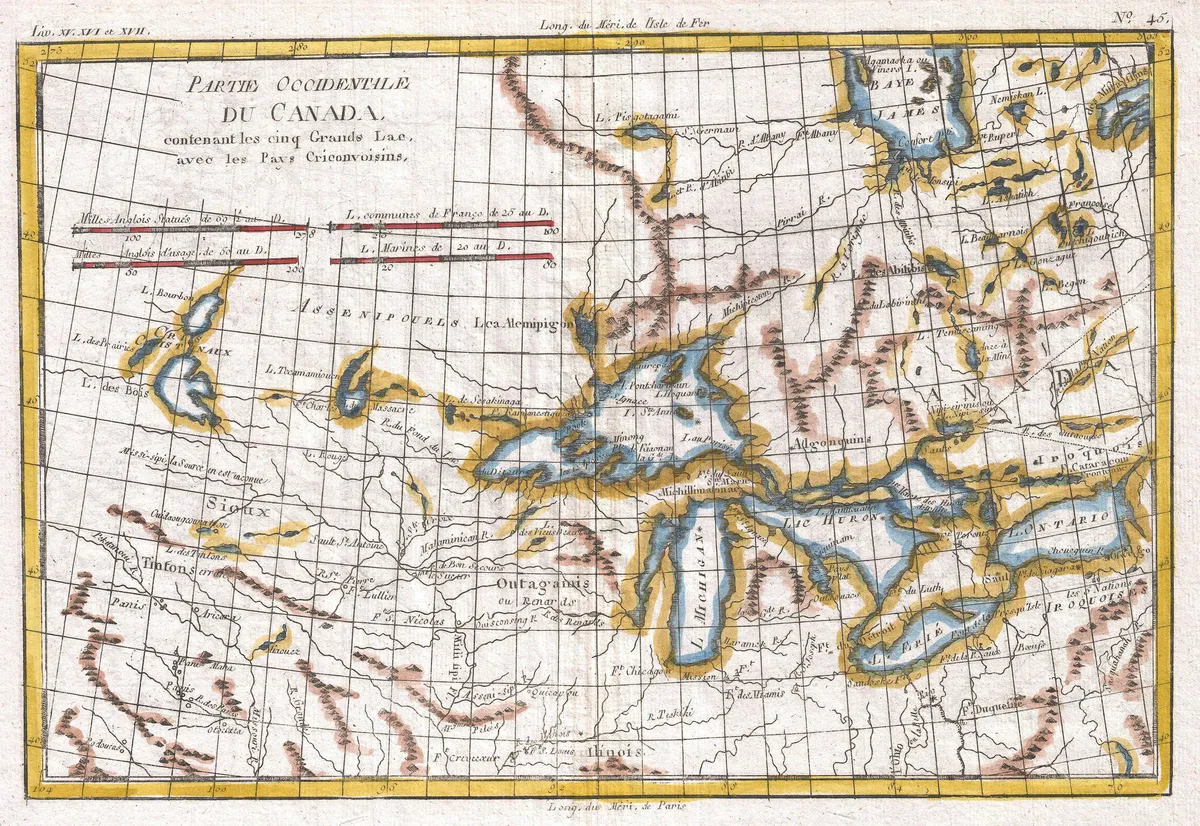
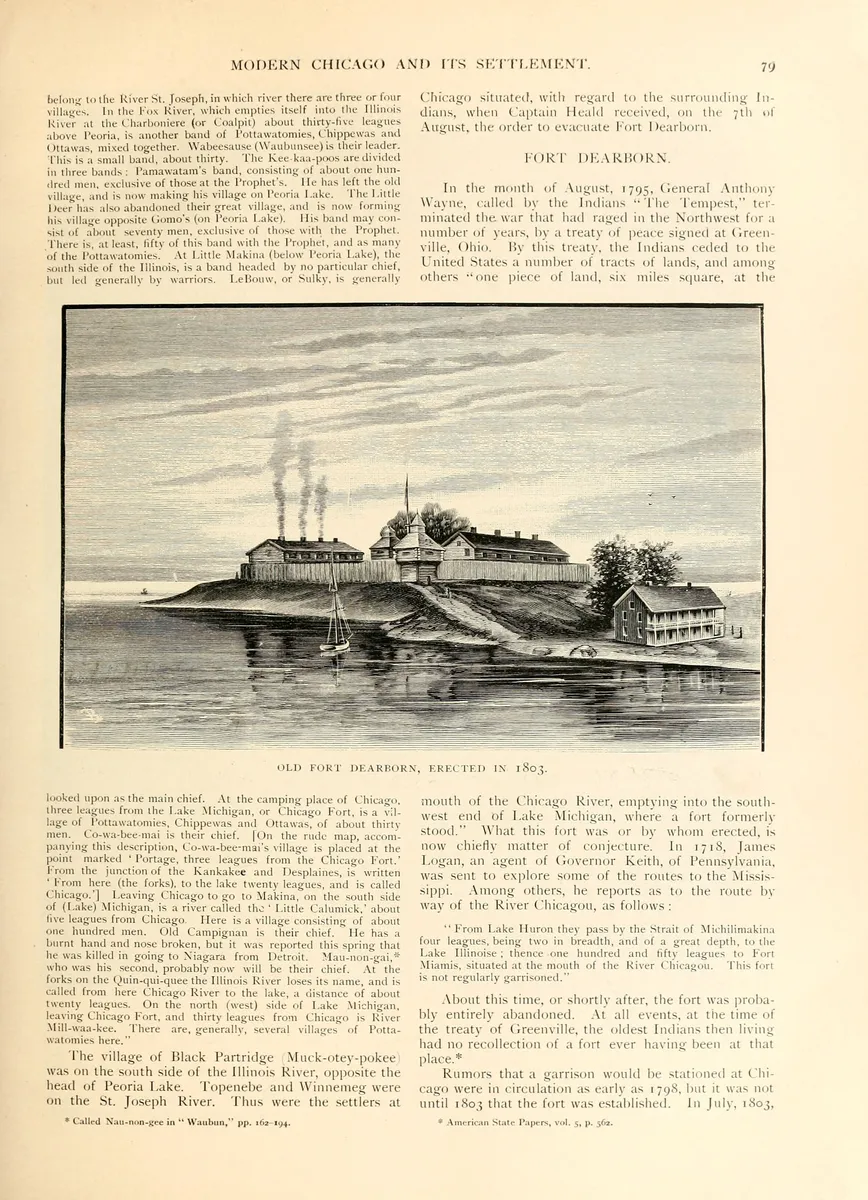
1803–1812 · Fort Dearborn
The US Army builds the fort on the south bank of the river to control the portage. It is destroyed in August 1812 in a clash during the war with the British and their Native allies.
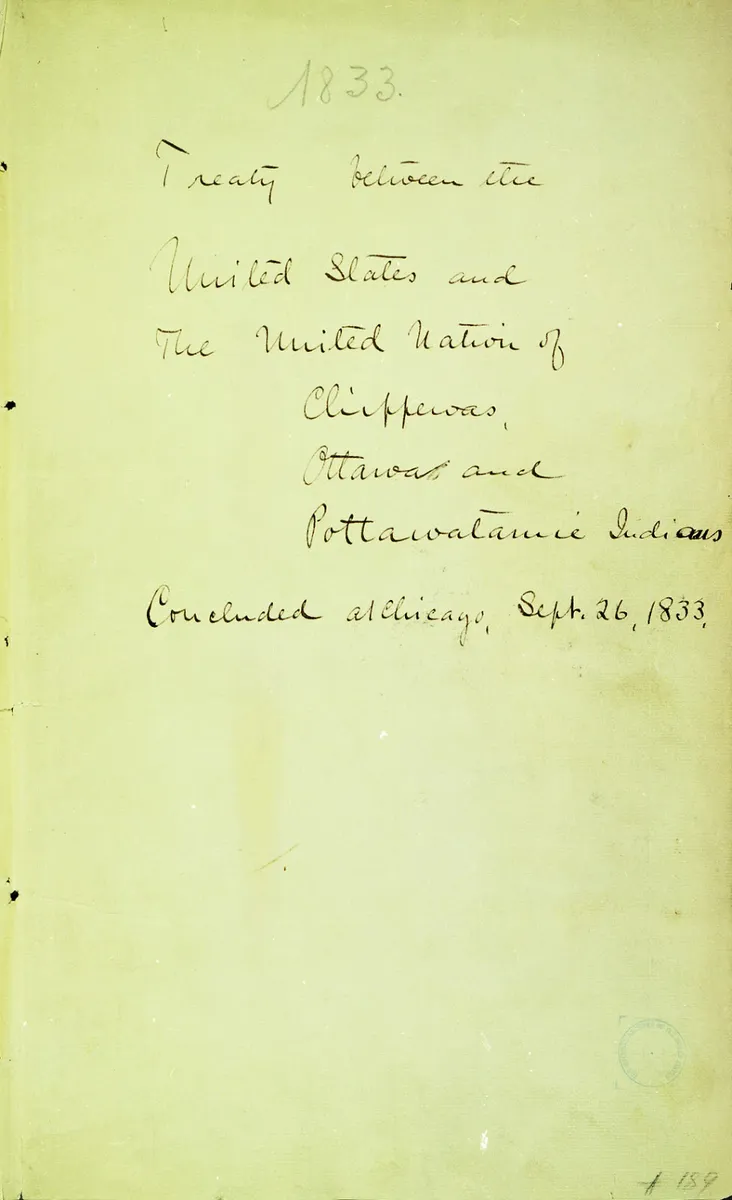
1833 · A village of 350 people
Chicago is incorporated as a village the same year as the Treaty of Chicago, which forces the cession of Potawatomi land and the removal of Native peoples west of the Mississippi. By 1837 it's already a city.
1848 · Canal, railroad, and exchange
The Illinois & Michigan Canal opens, linking Lake Michigan to the Mississippi system, and the first locomotive of the Galena & Chicago Union runs. The Chicago Board of Trade is founded the same year.

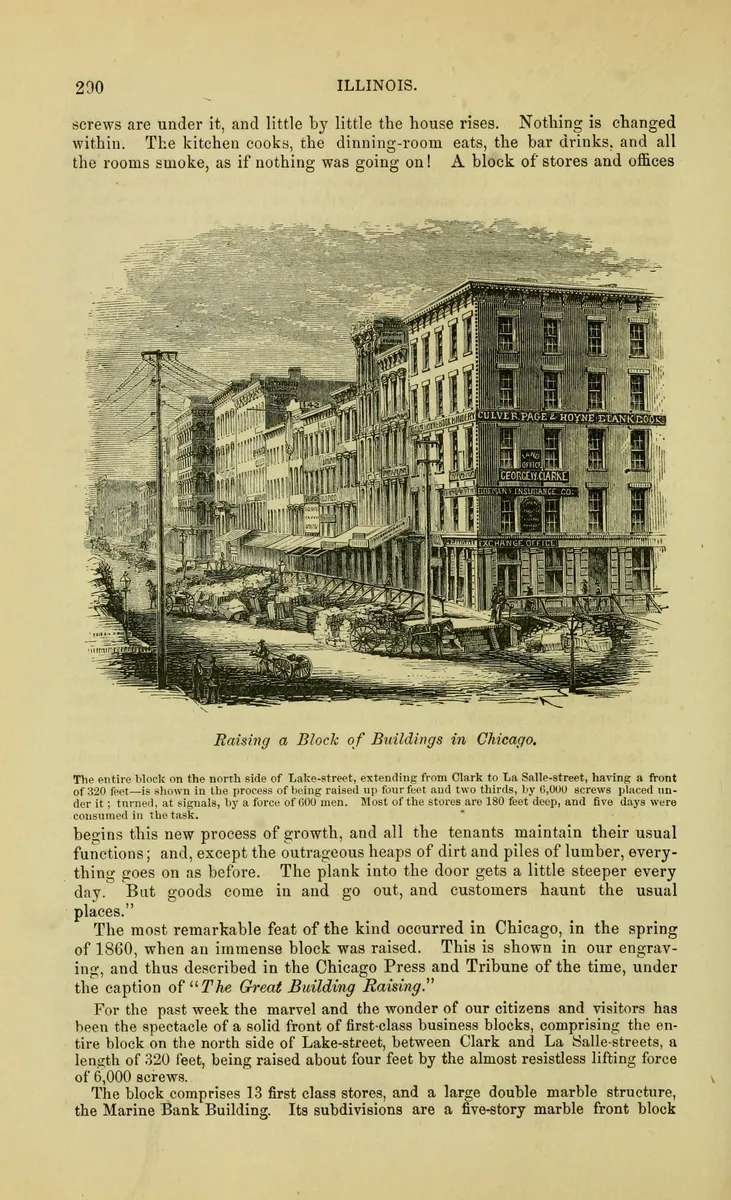
1855–1869 · The city is raised
To install gravity sewers on swampy ground, entire blocks are lifted with screw jacks, masonry buildings included. Streets and sidewalks rise up to 1.8 m.
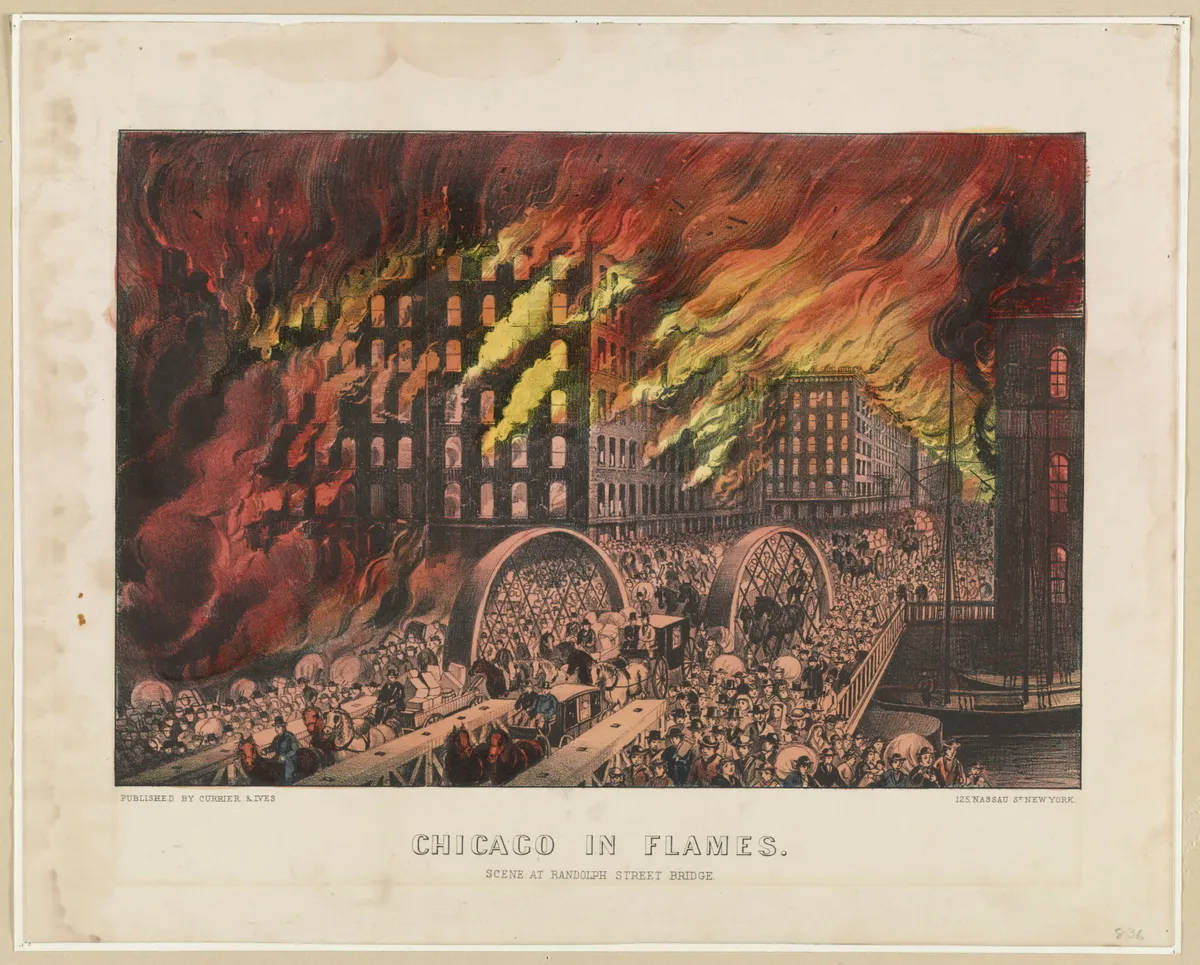
Oct. 8–10, 1871 · The Great Fire
The fire burns about 3.3 square miles of downtown, kills around 300 people, and leaves nearly 100,000 homeless. Rebuilding draws an entire generation of architects to the city.
1885 · The skyscraper is born
The Home Insurance Building, by William Le Baron Jenney, is raised on a metal frame that carries the walls' load. The method defines the Chicago School and every tall building that came after.

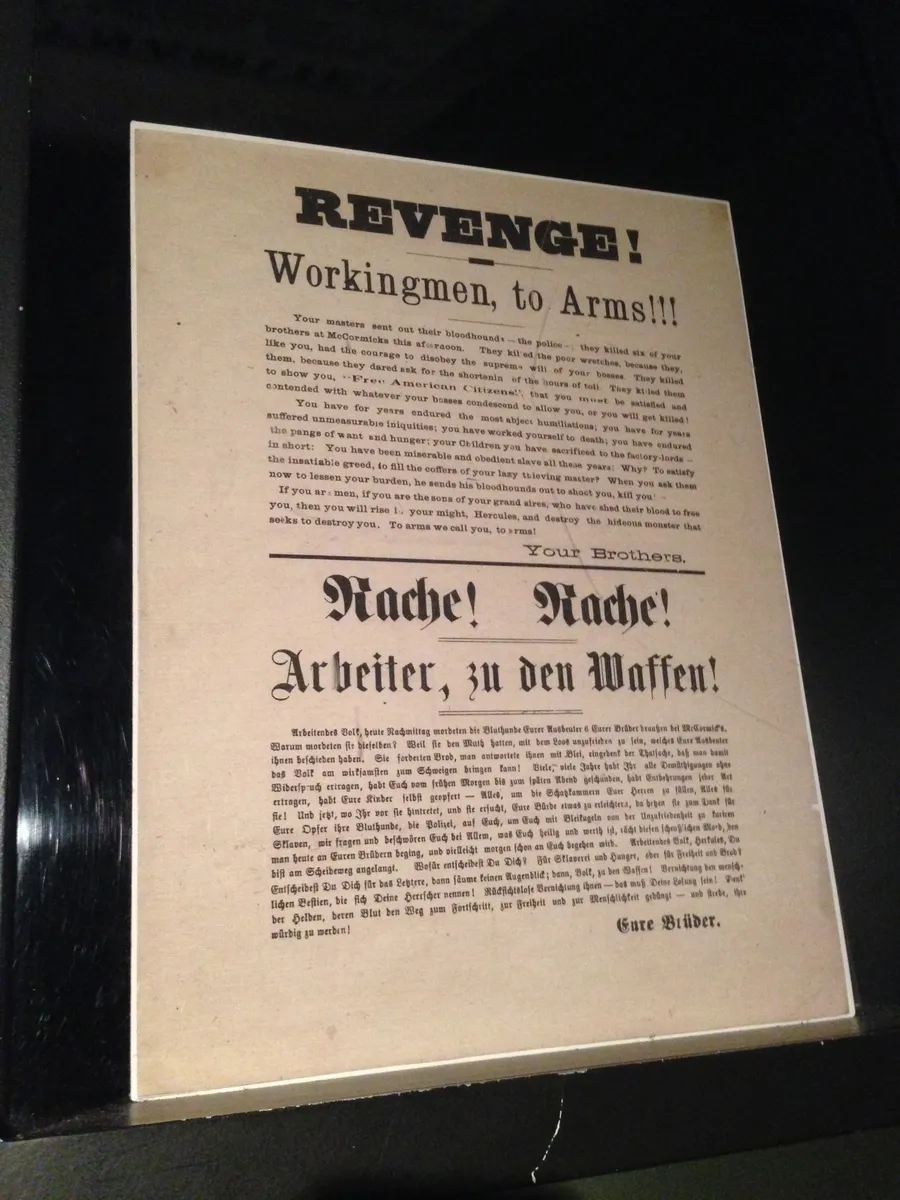
1886 · Haymarket
On May 4, a bomb explodes at a rally for the eight-hour workday at Haymarket Square; deaths and a contested trial follow. The episode is the origin of May Day.
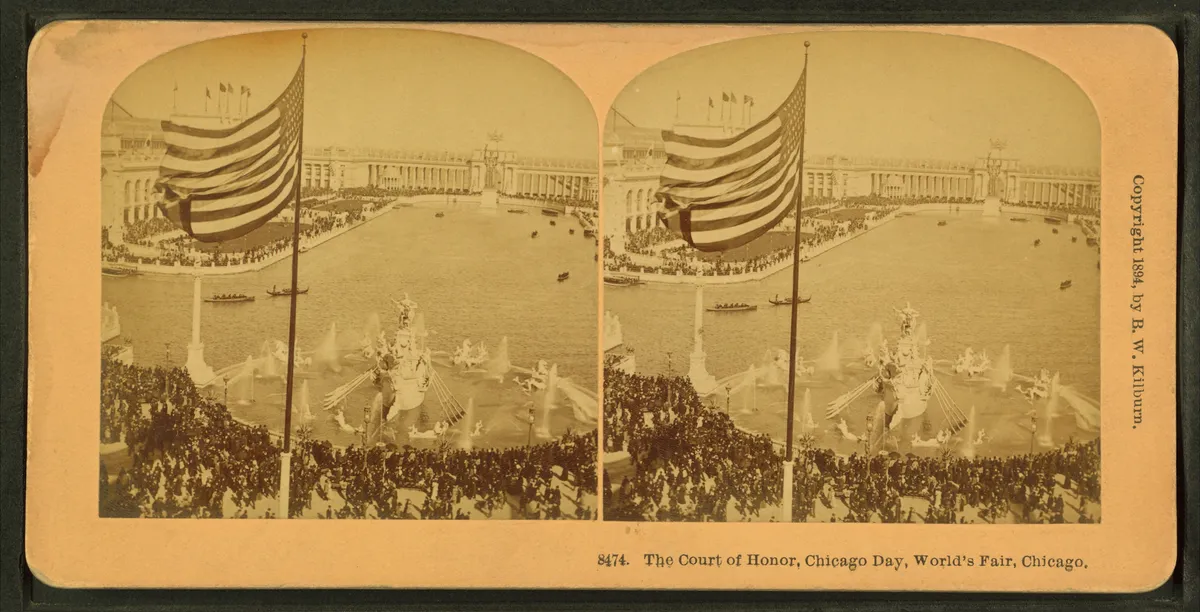
1893 · World's Columbian Exposition
The world's fair in Jackson Park draws about 27 million visits in six months. The neoclassical “White City,” directed by Daniel Burnham, launches American monumental urban planning.
1900 · The river changes direction
With the opening of the Sanitary and Ship Canal, the Chicago River begins to flow inland instead of into the lake. Sewage stops contaminating the city's drinking water source.

1916–1970 · The Great Migration
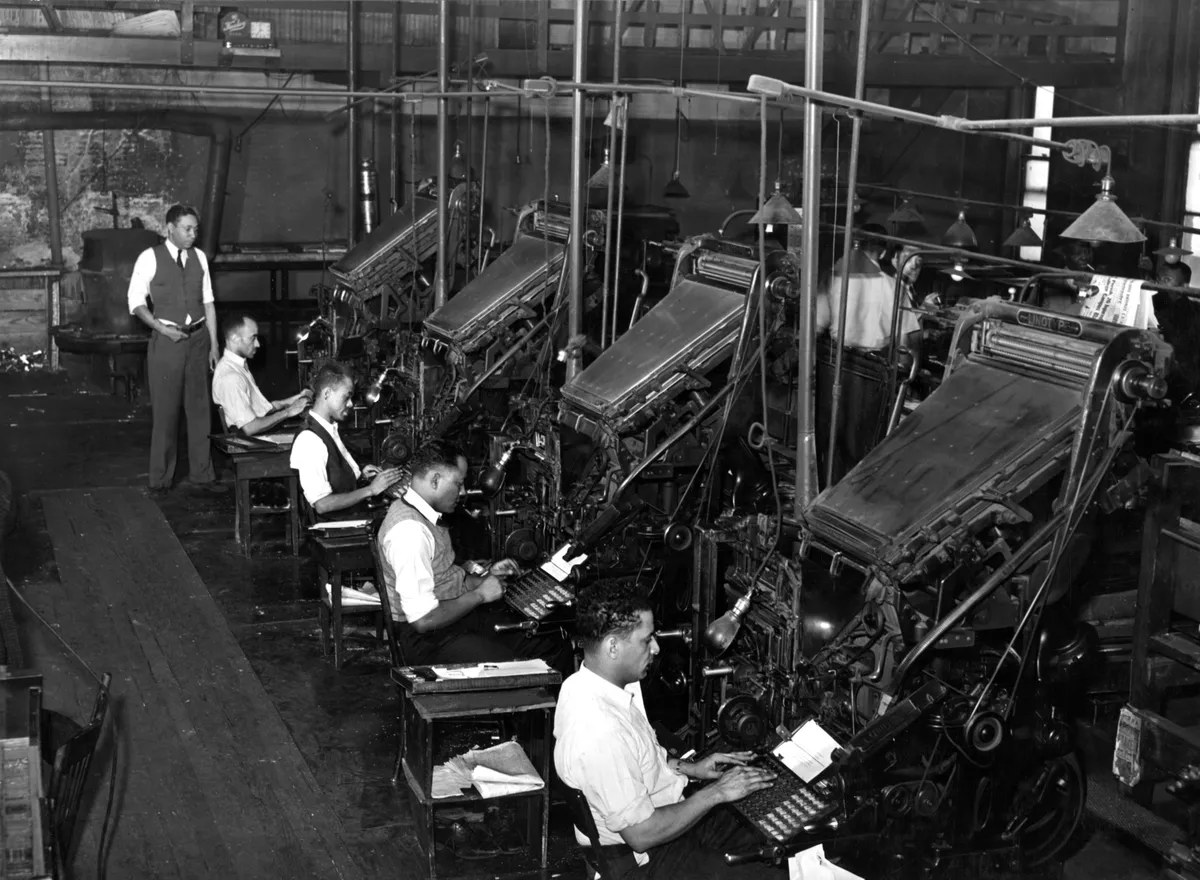
About half a million African Americans leave the rural South and arrive via the Illinois Central, settling the South Side. Out of that population come the Chicago Defender, modern gospel, and electric blues.
Complete history
The portage between Lake Michigan and the Mississippi
Chicago exists because of a detail of topography. Between the Chicago River, which flows into Lake Michigan, and the Des Plaines River, which flows into the Mississippi, there were only a few miles of swampy ground: the Chicago portage, crossed for centuries by the peoples who traded between the Great Lakes and the Gulf. Around 1780 Jean Baptiste Point du Sable set up a trading post there; in 1803 the Army built Fort Dearborn; by 1833, the year of the Treaty of Chicago that expelled the Potawatomi, the village had about 350 people. The opening of the Illinois & Michigan Canal in 1848 closed that gap of land with navigable water, and the first railroad arrived the same year. By 1856 Chicago was already the largest rail hub in the United States, and the city became the place where the wheat, timber, and cattle of the interior turned into a number: the Chicago Board of Trade, founded in 1848, invented the standardized futures contract, and the Union Stock Yards, opened in 1865, industrialized slaughter and employed tens of thousands. That labor is portrayed in “The Jungle,” by Upton Sinclair, from 1906.
Raised streets, the 1871 fire and the skyscraper
The city always had to fight its own ground. Because the soil was too flat and swampy for gravity sewers, between 1855 and the late 1860s entire blocks were raised with screw jacks, brick buildings included, up to 1.8 m above the original level. In October 1871 the Great Fire destroyed about 3.3 square miles of downtown in three days, killed around 300 people, and left nearly 100,000 homeless. Rebuilding turned the place into a laboratory: in 1885 William Le Baron Jenney completed the Home Insurance Building with the load shifted from the walls to a metal frame, and from there Burnham & Root, Adler & Sullivan, and Holabird & Roche made downtown the workshop of the Chicago School. The 1893 World's Columbian Exposition, in Jackson Park, crowned the process with 27 million visits, and in 1900 engineers reversed the flow of the Chicago River to send sewage to the Mississippi instead of the lake.
The Haymarket bombing, May 4, 1886
Growth came with conflict. On May 4, 1886, a bomb exploded at Haymarket Square during the campaign for the eight-hour workday, ending in deaths and a trial that made Chicago a landmark of the world labor movement; the Pullman Strike of 1894 halted rail traffic across half the country. Between 1916 and 1970 the Great Migration brought about half a million African Americans from the rural South; they settled Bronzeville and the South Side, creating the Chicago Defender, Thomas A. Dorsey's gospel music, and electric blues. The reception was violent: the race riot of 1919 left 38 dead, and restrictive covenants in property deeds, followed by bank redlining, drew a segregation that still shapes the city's map. Prohibition, from 1920 to 1933, gave Al Capone's bootlegging the international fame the city spent the following century trying to shake. On December 2, 1942, under the stands of Stagg Field, Enrico Fermi's team produced history's first controlled nuclear chain reaction.
The Daley political machine, 1955 to 2011
From the postwar period on, the city was run by a political machine. Richard J. Daley was mayor from 1955 to 1976 and used the office to rebuild downtown, cut expressways through the city, and raise massive housing projects like Cabrini-Green and the Robert Taylor Homes, which concentrated poverty and were demolished between 1995 and 2011. It was against that geography that Martin Luther King held his 1966 Chicago Freedom Movement for open housing, and it was in front of the cameras of the 1968 Democratic Convention that city police cracked down on protesters in Grant Park. The Sears Tower, completed in 1973 at 442 m, was the world's tallest building until 1998. In 1983 Harold Washington became the city's first Black mayor, breaking the machine for a term and a half, and between 1989 and 2011 Richard M. Daley, the first Daley's son, redirected the budget toward parks, bike lanes, and downtown. Millennium Park, opened in 2004 four years late and at a cost of about $475 million, is the most visible piece of that policy.
Chicago today: services and the North–South divide
Today's Chicago has fewer people than in 1950, when it peaked at 3.62 million, and lives on services: finance and derivatives at the CME, law, healthcare, logistics, six research universities, and one of the busiest airports in the world. The internal contrast remains the central question: the North Side and the Loop concentrate investment while parts of the West and South Sides lost residents, businesses, and schools for decades. There are signs of correction under way: the Obama Presidential Center opened in Jackson Park in June 2026, and the conversion of empty LaSalle Street office towers into housing and the Red Line extension to the far south are moving forward on long timelines with results still in dispute. For visitors, the city presents itself as a compact, legible core surrounded by dozens of neighborhoods that function almost like small towns, each with its own food and its own calendar.
Chicago grew on the portage, the narrow strip of land between the Great Lakes basin and the Mississippi basin, and became the largest hub of canals and railroads on the continent.
Geography and shape of the city
The plain, the lake, and the reversed river
Chicago sits on a nearly flat glacial plain about 180 m above sea level, at the southwest tip of Lake Michigan, and its highest natural point barely reaches 205 m. The lake defines everything: 48 km of shoreline within the city, almost entirely given over to parks and public beaches, a result of the principle of keeping the lakefront “forever open, clear and free” that dates to the 19th century and was cemented in Daniel Burnham's 1909 Plan of Chicago. The Chicago River enters downtown and splits into a Y (north branch, south branch, and main branch) and it's this Y that gives the North Side, South Side, and West Side their names; since 1900 it has flowed inland rather than into the lake.
The grid and the rectangle of the Loop
The street network is a near-perfect grid aligned with the compass points, with numbering starting at the intersection of State Street and Madison Street: 800 numbers per mile, eight blocks per mile, so that any address tells you the exact distance to downtown. The CTA's elevated lines form the rectangle of the Loop over Lake, Wabash, Van Buren, and Wells streets, and the business district grew within and around that ring.
The climate and the lake breeze
The climate is humid continental, with hot, humid summers, long cold winters, and a lake breeze that in summer keeps the shoreline several degrees cooler than the inland neighborhoods, and does the opposite in winter.
There's no slope in Chicago: the city sits on a plain at about 180 m, and the highest natural point barely reaches 205 m.
Culture

Great Migration electric blues and Chess
Chicago's musical legacy comes in two waves. The first is electric blues: musicians who came up from the Mississippi Delta during the Great Migration plugged in their guitars to be heard in noisy bars, and Chess Records, at 2120 South Michigan Avenue, recorded Muddy Waters, Howlin' Wolf, Willie Dixon and Chuck Berry between 1950 and 1967. That repertoire is what brought the Rolling Stones to record in the same room in 1964. The second is house music, born in the early 1980s at the Warehouse club, where Frankie Knuckles blended disco and soul records with drum machines; the city exported the genre to the whole world. Alongside all that are the Chicago Symphony Orchestra, the modern gospel Thomas A. Dorsey created in the 1930s, the avant-garde jazz of the AACM (1965) and a rap scene that runs from Common and Kanye West to the drill of the late 2000s and Chance the Rapper.
The Second City (1959) and Steppenwolf (1974)
Chicago is also a center of theater and literature. The Second City opened in 1959 and turned improv into a method for training comedians; Steppenwolf, founded in 1974 by a group that included John Malkovich and Gary Sinise, established the raw, physical acting style that defined American theater outside Broadway. In literature, Carl Sandburg dubbed the city “City of the Big Shoulders” in 1914; Richard Wright published “Native Son” in 1940; Gwendolyn Brooks, from Bronzeville, became in 1950 the first Black person to win a Pulitzer; Nelson Algren, Saul Bellow, and Studs Terkel wrote the city from the inside, and Mike Royko did the same in a daily newspaper column for thirty years.
Cubs to the north, White Sox south of Madison
Sports work as a geographic divide. The Cubs play at Wrigley Field on the North Side and the White Sox on the South Side, at 35th and Shields; the informal dividing line is Madison Street, and the question “Cubs or Sox?” is a test of where you're from. The Bears play football at Soldier Field (1924), on the lakefront, and the Bulls won six NBA titles between 1991 and 1998 with Michael Jordan, which is why the red number 23 jersey shows up on streets all over the planet. Beyond the stadiums, the city keeps a strong neighborhood life: more than 570 parks, farmers markets from May to October, public beaches with flags and lifeguards in summer, and a nearly weekly calendar of street festivals between June and September.
Before anyone asks your name, the question is “Cubs or Sox?” Your team tells people whether you're from the North Side or the South Side.
Festivals and events
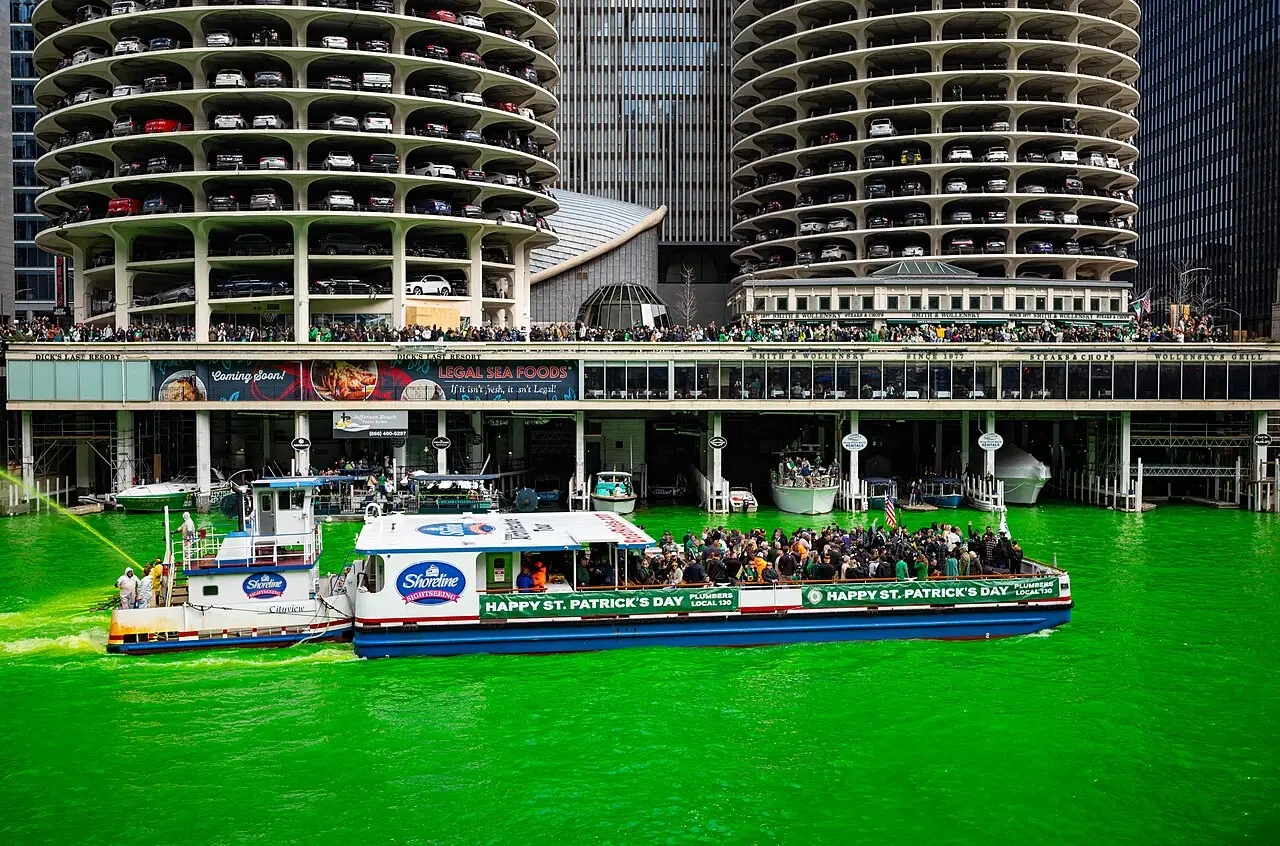
St. Patrick's Day
The Saturday closest to March 17. The main branch of the Chicago River is dyed green around 10am, a ritual repeated since 1962, and the parade sets off shortly after along Columbus Drive.

Chicago Blues Festival
Early June, in Millennium Park. Free since its first edition in 1984, it's the largest free blues festival in the world, with three days of stages in the park.
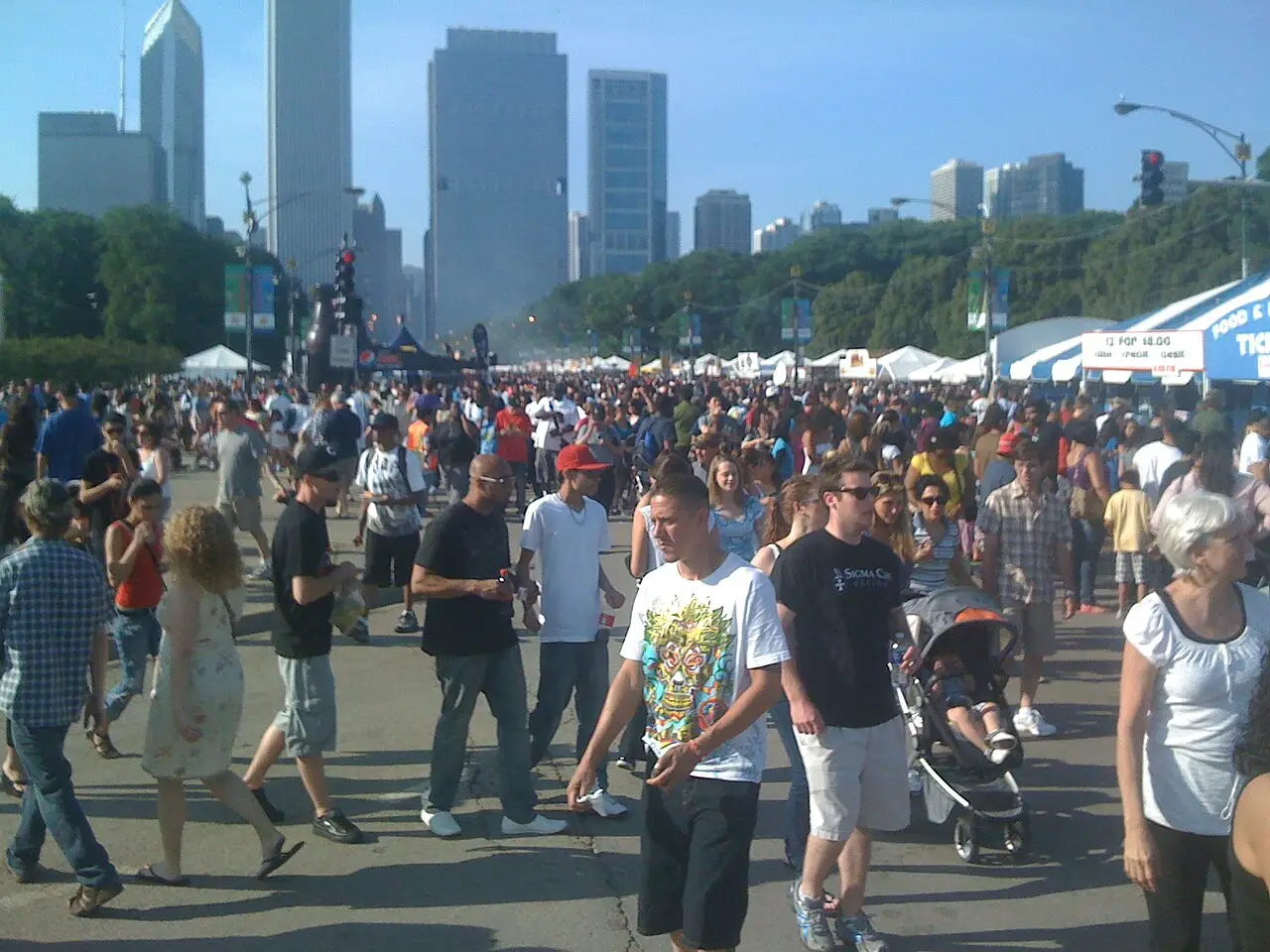
Taste of Chicago
July, in Grant Park, with smaller editions in the neighborhoods in August and September. Created in 1980, it brings together the city's restaurants in booths with small portions sold by tickets; entry is free, the food isn't.

Lollapalooza
Four days in late July or early August, in Grant Park, the festival's permanent home since 2005. Draws about 100,000 people a day and disrupts traffic and hotel prices across downtown.

Christkindlmarket
From late November to December 24 in Daley Plaza, modeled on Nuremberg's market and running since 1996. Wooden stalls, mulled wine served in collectible mugs, and extended hours on weekends.
Books and films
“The Devil in the White City,” Erik Larson (2003)
Recounts the building of the 1893 World's Columbian Exposition alongside the crimes of a serial killer. Explains the ambition, the rush, and the engineering that defined the city at the end of the 19th century.
“Native Son,” Richard Wright (1940)
A novel set on the South Side of the Great Migration, written by someone who came from Mississippi to Chicago at 19. The most direct read on the racial geography that still shapes the city's map.
“The Blues Brothers,” John Landis (1980)
Shot on real locations across the Daley Center, Maxwell Street, and the South Side, with Aretha Franklin, James Brown, Ray Charles, and John Lee Hooker on screen. Captures the city and its music shortly before downtown was rebuilt.
Frequently asked questions
Chicago: which pizza should you order to eat like a local?
To eat like a local, go for tavern-style, thin and cut into squares.
Chicago: can you get from O'Hare to the Loop by train at any hour?
Yes: the CTA's Blue Line serves O'Hare 24 hours a day and takes about 45 minutes to the Loop.
Chicago: how do you get to Oak Park?
Oak Park is 16 km to the west, about 25 minutes on the Green Line to Harlem/Lake or 20 minutes by Metra.
Chicago: can you pay for everything with a card?
Almost everything: cards are accepted practically everywhere, including buses and taxis, but a few old-school hot dog stands and several longtime Pilsen taquerias only take cash.
Chicago: when is the best time to go?
The two best windows are mid-May to late June and September to mid-October, with 18 to 26 °C and the boats running.
Other cities in the country
United States ↗- Days
- 4–5
- When
- Apr–Jun · Sep–Oct
- Per person/day
- Average 180–320 USDMid-range · per person/day
Cost scope
Per person per day: accommodation, meals, urban transport, visits and a small allowance for extras. Flights excluded; larger purchases vary. Editorial estimate, not a quote.
- Days
- 4–5
- When
- Apr–May · Nov
- Per person/day
- Average 220–330 USDMid-range · per person/day
Cost scope
Per person per day: accommodation, meals, urban transport, visits and a small allowance for extras. Flights excluded; larger purchases vary. Editorial estimate, not a quote.
- Days
- 3
- When
- Sep–Oct
- Per person/day
- Average 180–280 USDMid-range · per person/day
Cost scope
Per person per day: accommodation, meals, urban transport, visits and a small allowance for extras. Flights excluded; larger purchases vary. Editorial estimate, not a quote.
- Days
- 2–3
- When
- Jan–Apr · Nov–Dec
- Per person/day
- Average 200–350 USDMid-range · per person/day
Cost scope
Per person per day: accommodation, meals, urban transport, visits and a small allowance for extras. Flights excluded; larger purchases vary. Editorial estimate, not a quote.
- Days
- 3
- When
- Feb–May · Oct–Dec
- Per person/day
- Average 250–350 USDMid-range · per person/day
Cost scope
Per person per day: accommodation, meals, urban transport, visits and a small allowance for extras. Flights excluded; larger purchases vary. Editorial estimate, not a quote.
- Days
- 2–3
- When
- Mar–May · Oct–Nov
- Per person/day
- Average 200–350 USDMid-range · per person/day
Cost scope
Per person per day: accommodation, meals, urban transport, visits and a small allowance for extras. Flights excluded; larger purchases vary. Editorial estimate, not a quote.
- Days
- 3
- When
- Mar–May
- Per person/day
- Average 220–320 USDMid-range · per person/day
Cost scope
Per person per day: accommodation, meals, urban transport, visits and a small allowance for extras. Flights excluded; larger purchases vary. Editorial estimate, not a quote.
- Days
- 2–3
- When
- Sep–Oct
- Per person/day
- Average 190–330 USDMid-range · per person/day
Cost scope
Per person per day: accommodation, meals, urban transport, visits and a small allowance for extras. Flights excluded; larger purchases vary. Editorial estimate, not a quote.
- Days
- 2–3
- When
- Jun–Sep
- Per person/day
- Average 130–220 USDMid-range · per person/day
Cost scope
Per person per day: accommodation, meals, urban transport, visits and a small allowance for extras. Flights excluded; larger purchases vary. Editorial estimate, not a quote.
- Days
- 5–6
- When
- Jan–Apr · Nov–Dec
- Per person/day
- Average 368 USDMid-range · per person/day
Cost scope
Per person per day: accommodation, meals, urban transport, visits and a small allowance for extras. Flights excluded; larger purchases vary. Editorial estimate, not a quote.
- Days
- 4–6
- When
- Apr–May · Sep
- Per person/day
- Average 329 USDMid-range · per person/day
Cost scope
Per person per day: accommodation, meals, urban transport, visits and a small allowance for extras. Flights excluded; larger purchases vary. Editorial estimate, not a quote.
- Days
- 2
- When
- Apr–May · Sep–Oct
- Per person/day
- Average 203 USDMid-range · per person/day
Cost scope
Per person per day: accommodation, meals, urban transport, visits and a small allowance for extras. Flights excluded; larger purchases vary. Editorial estimate, not a quote.
- Days
- 3
- When
- Apr · Sep–Oct
- Per person/day
- Average 251 USDMid-range · per person/day
Cost scope
Per person per day: accommodation, meals, urban transport, visits and a small allowance for extras. Flights excluded; larger purchases vary. Editorial estimate, not a quote.
- Days
- 3
- When
- May–Jun · Sep–Oct
- Per person/day
- Average 158 USDMid-range · per person/day
Cost scope
Per person per day: accommodation, meals, urban transport, visits and a small allowance for extras. Flights excluded; larger purchases vary. Editorial estimate, not a quote.