Australia
Melbourne
Counter coffee, laneways, live music and trams
Days Start with the basic programme and choose extensions for the time you have.
How the guide reaches this number
With five, you can fit in the Great Ocean Road or the Yarra Valley without rushing. Come to Melbourne for the coffee, the live music, the neighborhoods and the immigrant food rather than for a monument. If you arrive looking for a postcard, you'll find the center dull for the first few hours. With just one day, start under the clocks at Flinders Street Station and walk through the laneways to the La Trobe Reading Room at the State Library. Have a souvlaki for lunch on Lonsdale Street and cross Princes Bridge to the free collection at NGV International. Late in the afternoon, take the tram to Fitzroy and stay for the 8pm show in Collingwood. What disappoints is the sky, because wind and drizzle can take up a whole afternoon in any month, but almost everything is ten minutes by tram from somewhere indoors.
3
When March to May (autumn); January is hot and expensive
How the guide reaches this number
The seasons are the same as in Brazil, because both are in the Southern Hemisphere, only colder. Summer, from December to February, has an average high of 25 to 26 °C and peaks above 40 °C when the wind blows in from the interior, sometimes carrying smoke from bushfires hundreds of kilometers away. Fall, from March to May, is the most stable season: 18 to 22 °C, clear skies and the European trees in the Fitzroy and Carlton gardens changing color. Winter, from June to August, stays between 6 and 15 °C, with gray skies and persistent drizzle, but it rarely freezes and never snows in the city; if you want snow you have to go to the mountains, 3 hours away. Spring, from September to November, is the most unstable, with strong winds and the local reputation for “four seasons in one day,” which comes from the clash between hot desert air and cold fronts from Bass Strait. Rain is spread throughout the year, about 530 mm annually, with no dry season, so a light jacket and an umbrella make sense in any month. Hotels fill up and get pricier in January, with the Australian Open, and at the end of September, with the AFL Grand Final. The most comfortable window runs from mid-March to May.
Per person/day A$180–260 per person per day
How the guide reaches this number
Per person per day: accommodation, meals, urban transport, visits and a small allowance for extras. Flights excluded; larger purchases vary. Editorial estimate, not a quote.
 What Nilo thinks
Three days cover the city: one for the grid and the laneways downtown, another for the market and the inner-north neighborhoods, and the third for the Shrine, the botanic gardens and the bay at St Kilda. With five, you can fit in the Great Ocean Road or the Yarra Valley without rushing. Come to Melbourne for the coffee, the live music, the neighborhoods and the immigrant food rather than for a monument. If you arrive looking for a postcard, you'll find the center dull for the first few hours. With just one day, start under the clocks at Flinders Street Station and walk through the laneways to the La Trobe Reading Room at the State Library. Have a souvlaki for lunch on Lonsdale Street and cross Princes Bridge to the free collection at NGV International. Late in the afternoon, take the tram to Fitzroy and stay for the 8pm show in Collingwood. What disappoints is the sky, because wind and drizzle can take up a whole afternoon in any month, but almost everything is ten minutes by tram from somewhere indoors.Melbourne reveals itself through the service laneways that cut across the downtown grid, where cafés, bars and shops hide behind unmarked doors, in basements and on the second floors of office buildings. The flat white at the counter on Degraves Street is the local ritual, and the graffiti of Hosier Lane changes week by week. The city grew rich on the gold of 1851 and changed with every wave of immigrants since 1945, and you can taste it: souvlaki on Lonsdale Street, bánh mì in Richmond and Footscray, and parma in almost every pub. At dusk, a colony of little penguins comes back from the sea to the St Kilda breakwater, for free, and at night the tram takes you to the live music of Fitzroy and Collingwood. Come in autumn, from March to May, with a jacket in your bag whatever the month, and set aside three days.
Quick facts
- Population
- about 5.3 million in Greater Melbourne (2026 est.); about 180,000 in the City of Melbourne
- Founded
- 1835 as a colonial camp, named Melbourne in 1837; Wurundjeri Woi-wurrung land for more than 40,000 years
- Country and region
- Australia, continent's southeast (state of Victoria)
- Language
- Australian English; more than 200 languages spoken at home
- Currency
- Australian dollar (AUD, A$); about R$3.60 per A$1 (Sept. 2026)
- Time zone
- AEST UTC+10; daylight saving AEDT UTC+11 from the 1st Sunday of October to the 1st Sunday of April
- Best time to visit
- March to May (autumn); January is hot and expensive
- Average daily cost
- A$180–260 per person per day
When to go
March to May (autumn); January is hot and expensive
January
16° to 26°C
47 mm of rain
February
16° to 26°C
46 mm of rain
June
8° to 15°C
45 mm of rain
July
7° to 14°C
40 mm of rain
August
8° to 15°C
48 mm of rain
September
9° to 18°C
52 mm of rain
October
11° to 20°C
52 mm of rain
November
13° to 22°C
61 mm of rain
December
14° to 24°C
61 mm of rain
How the year changes
The seasons are the same as in Brazil, because both are in the Southern Hemisphere, only colder. Summer, from December to February, has an average high of 25 to 26 °C and peaks above 40 °C when the wind blows in from the interior, sometimes carrying smoke from bushfires hundreds of kilometers away. Fall, from March to May, is the most stable season: 18 to 22 °C, clear skies and the European trees in the Fitzroy and Carlton gardens changing color. Winter, from June to August, stays between 6 and 15 °C, with gray skies and persistent drizzle, but it rarely freezes and never snows in the city; if you want snow you have to go to the mountains, 3 hours away. Spring, from September to November, is the most unstable, with strong winds and the local reputation for “four seasons in one day,” which comes from the clash between hot desert air and cold fronts from Bass Strait. Rain is spread throughout the year, about 530 mm annually, with no dry season, so a light jacket and an umbrella make sense in any month. Hotels fill up and get pricier in January, with the Australian Open, and at the end of September, with the AFL Grand Final. The most comfortable window runs from mid-March to May.
The same numbers as a table
| Month | Temperature °C | Rain mm |
|---|---|---|
| January | 16 to 26 | 47 |
| February | 16 to 26 | 46 |
| March · | 14 to 24 | 37 |
| April · | 11 to 21 | 55 |
| May · | 10 to 17 | 45 |
| June | 8 to 15 | 45 |
| July | 7 to 14 | 40 |
| August | 8 to 15 | 48 |
| September | 9 to 18 | 52 |
| October | 11 to 20 | 52 |
| November | 13 to 22 | 61 |
| December | 14 to 24 | 61 |
Nilo's tips
Coffee stops at 3pm
Counters open at 7am, and anyone who leaves coffee for 4pm finds the door shut and loses the afternoon looking for another one. Arrive with your order ready, drink and size: flat white, long black, latte, piccolo or magic. “A coffee” isn't a complete order, and payment is usually taken upfront. It runs A$5–6.50, with the same recipe at any counter in the city.
Don't tap the myki inside the free zone
Tapping your card on the tram reader turns the free ride into a paid one. It's different when you leave the Free Tram Zone: when the tram heads to Fitzroy, St Kilda or Richmond, tap your myki before the boundary. Anyone caught without tapping on pays a A$305 fine.
The market is closed Monday and Wednesday
It's common to see people arrive at the closed gate of the Queen Victoria Market with the whole day planned around it. On other days, go before 9am, start at the deli hall and leave the fruit for last, when the stalls start dropping prices. In summer, it's worth going back at night, when the night market swaps the stalls for street food.
Free penguins 6 km from downtown
It's the same species as the paid tour on Phillip Island, the little penguin, which comes back from the sea at dusk on the St Kilda Pier breakwater. The island is 140 km away and the tour runs on a set schedule, while the pier is reached by tram 96. Arrive at sunset, don't feed the penguins and turn off your flash, because it's a wild colony, with no organized show.
Friday before the AFL Grand Final: free parade to the MCG
Tickets to the AFL Grand Final, on the last Saturday of September at the MCG, are practically out of reach for the general public, so don't waste the day trying. Go the day before: the Friday has been a state holiday since 2015, and the teams' parade to the MCG is free and brings the whole fan base out onto the street.
Keep three free, covered places in reserve for a rainy day
The weather turns fast, and a day that started on the street usually ends under a roof. At NGV International, on St Kilda Road, people lie on the floor to look up at Leonard French's stained-glass ceiling. The La Trobe Reading Room at the State Library offers a free desk to anyone under the dome. At the Shrine of Remembrance, the light on the Stone of Remembrance repeats every half hour from 10:30am.
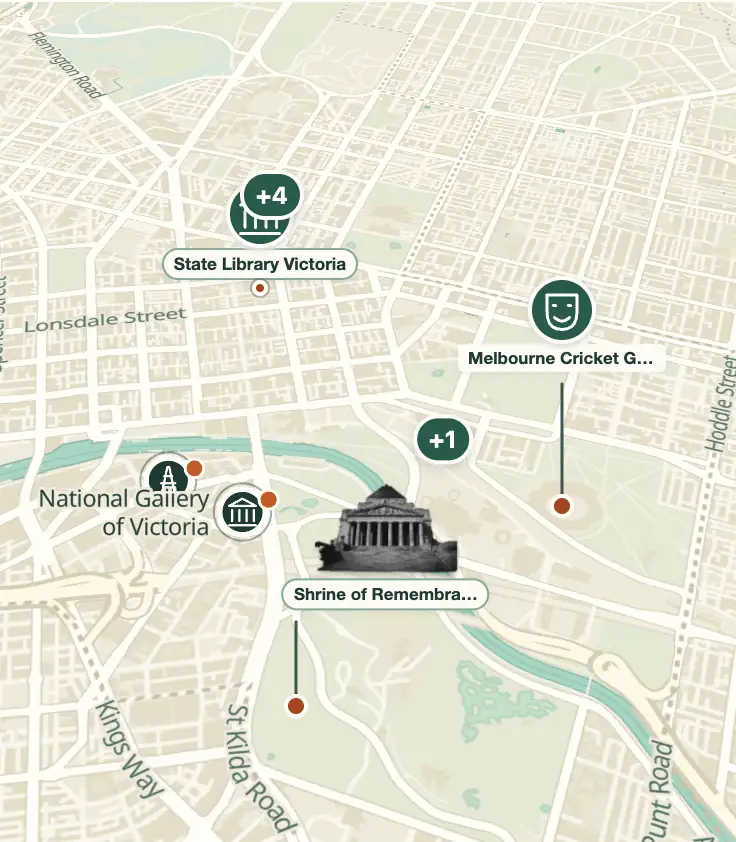
Explore the map
© OpenStreetMap · OpenFreeMap · © OpenMapTiles
Explore the map, read about the other places and plan your travel days in the app.
Open the appWhat to see
Melbourne: The bay and the Yarra River
The Yarra River (Birrarung, to the Wurundjeri) comes down from the mountains to the east and empties at Port Melbourne. Downtown sits about 5 km upstream, at the point where a rock bar once separated fresh water from salt and marked how far ships could go, and it was there, in 1837, that the grid was laid out between Spencer, Spring, La Trobe and Flinders streets.
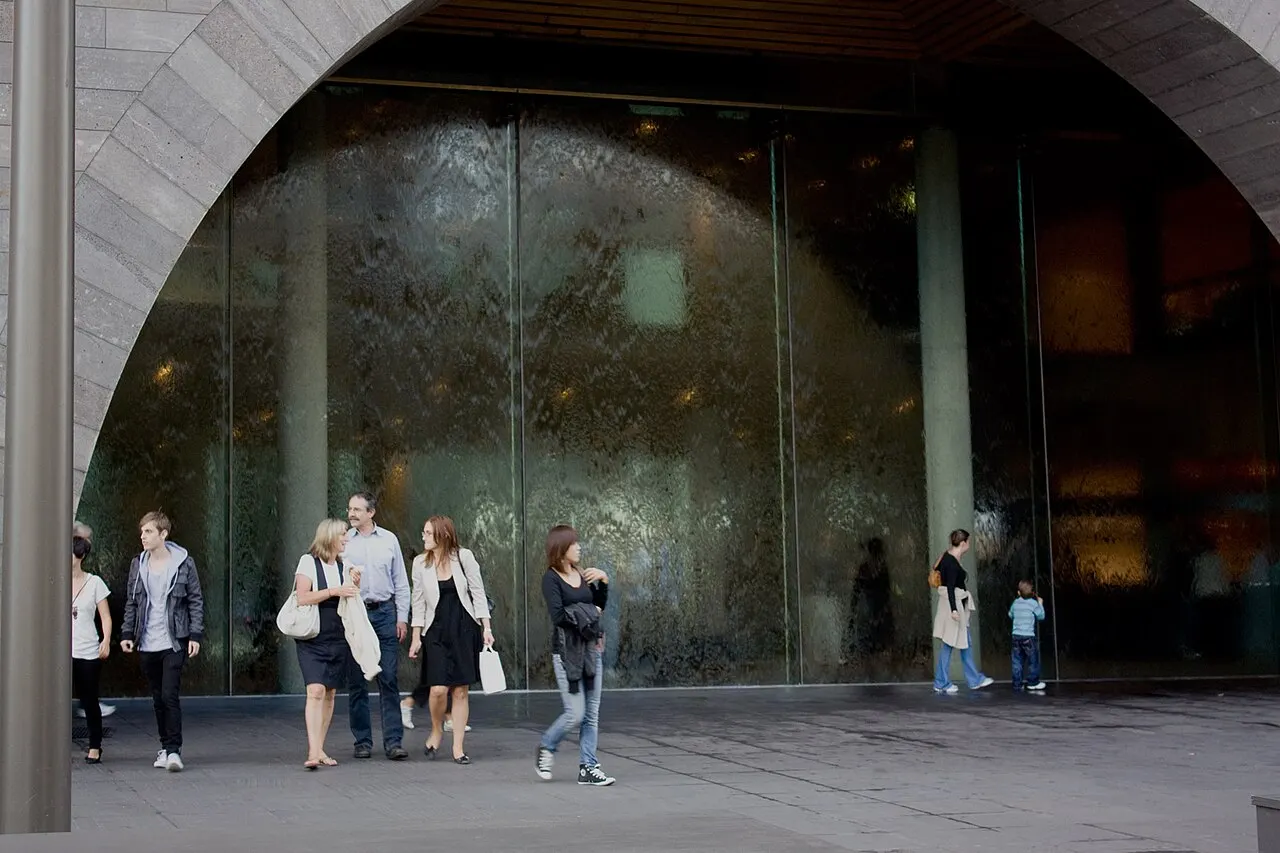
National Gallery of Victoria (NGV International)
Australia's oldest and largest art museum, founded in 1861; Roy Grounds' building on St Kilda Road dates from 1968. Free entry to the collection, a water wall on the façade, and Leonard French's stained-glass ceiling over the Great Hall, where people lie down on the floor.
The art museum that no other of its kind in Australia exceeds in age or size was founded in 1861, and the Roy Grounds building dates from 1968, with free entry to the collection, a water wall and the Leonard French stained-glass ceiling, under which people lie on the floor.
Check access
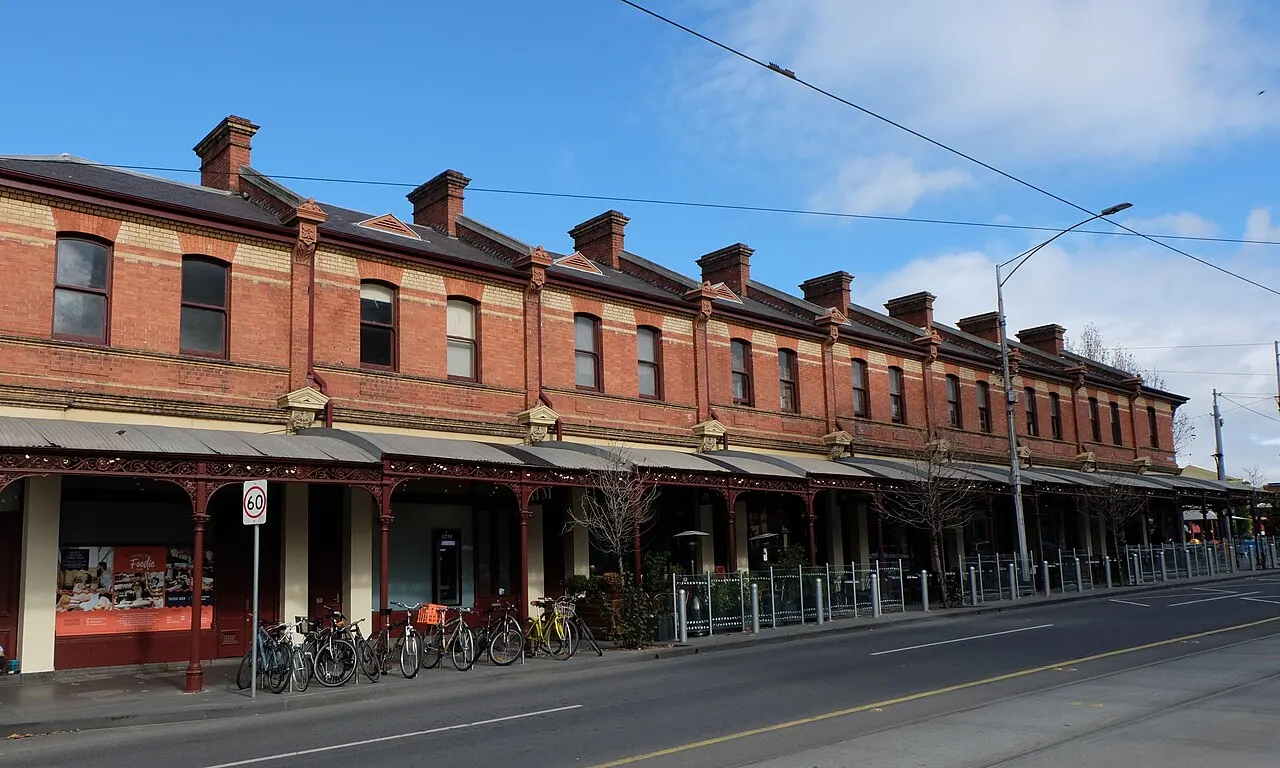
Queen Victoria Market
A market operating since 1878 over about 7 hectares, with roughly 600 stalls of fruit, meat, fish, cheese and clothing. Closed Mondays and Wednesdays; on summer nights the night market opens with street food.
The market, running since 1878 on a site of about 7 hectares, brings together some 600 stalls of fruit, meat, fish, dairy and clothing, closes on Monday and Wednesday, and on summer nights switches to serving street-food snacks.
Check access

Laneways and street art
Hosier Lane, Rutledge Lane and AC/DC Lane hold authorized street art that changes week to week. In the same blocks are the Block Arcade (1892), with its mosaic floor, and the Royal Arcade (1870), the country's oldest arcade, with the Gog and Magog statues striking the hour since 1892.
The authorized graffiti changes week by week in these laneways, and on the same blocks the mosaic floor and the statues that strike the hour sit inside the arcades.
Check access

State Library Victoria
Founded in 1856, among the world's first free public libraries. The La Trobe Reading Room, opened in 1913, is an octagonal hall with a 34.75-meter dome and six floors of gallery; free entry and open desks for anyone.
The library dates from 1856 and is among the first free-access libraries in the world, while the octagonal reading room opened in 1913 has a 34.75 m dome and six floors, with free entry and desks open to anyone.
Check access

Royal Exhibition Building and Carlton Gardens
An 1880 pavilion designed by Joseph Reed, with a 68-meter dome, built for the International Exhibition. It housed the first federal parliament on May 9, 1901 and has been a UNESCO World Heritage site since 2004, the first Australian building on the list.
The international exhibition pavilion, by Joseph Reed, hosted the first federal parliament on May 9, 1901, and in 2004 became the first building in Australia on the UNESCO list.
Check access
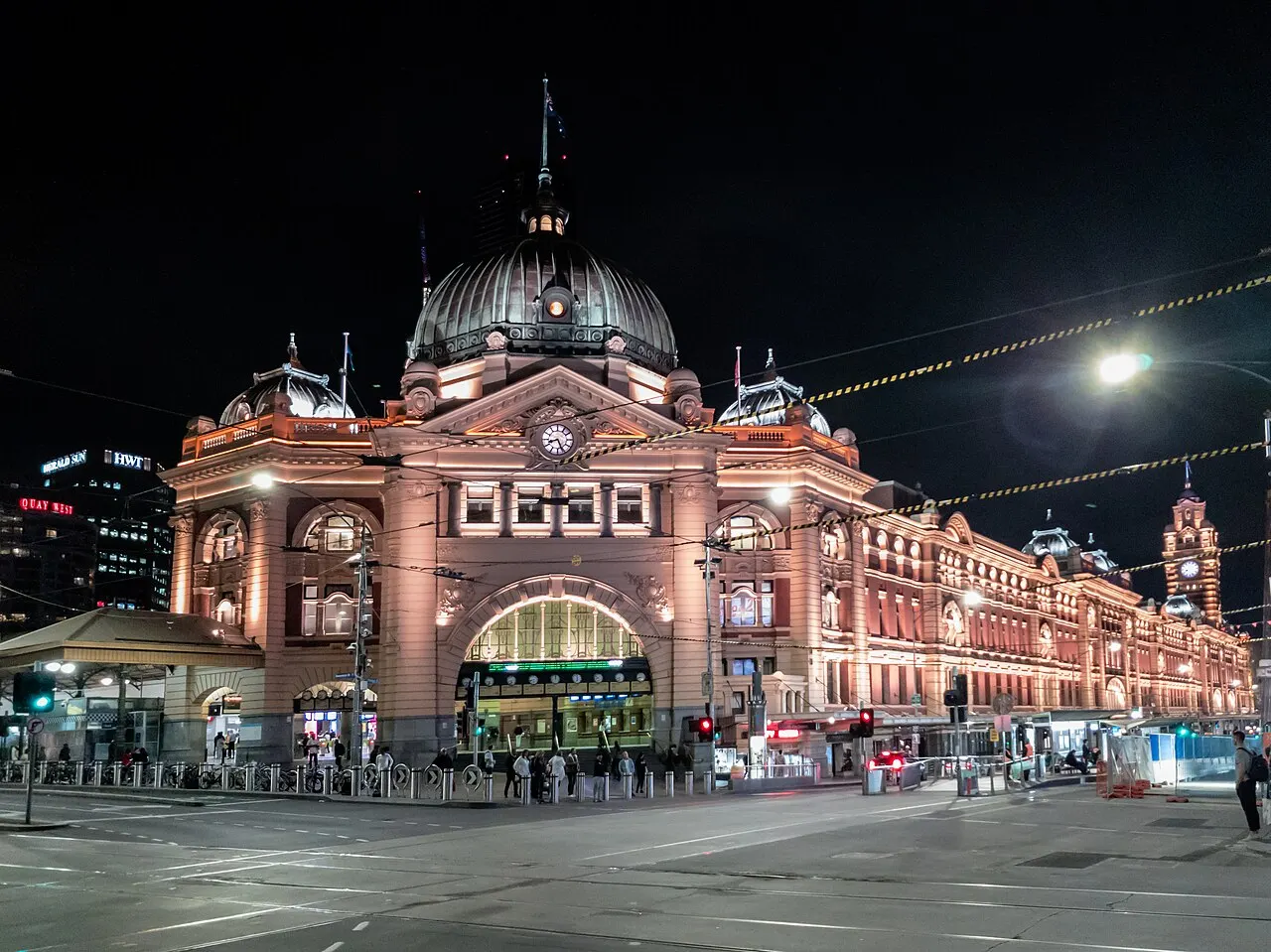
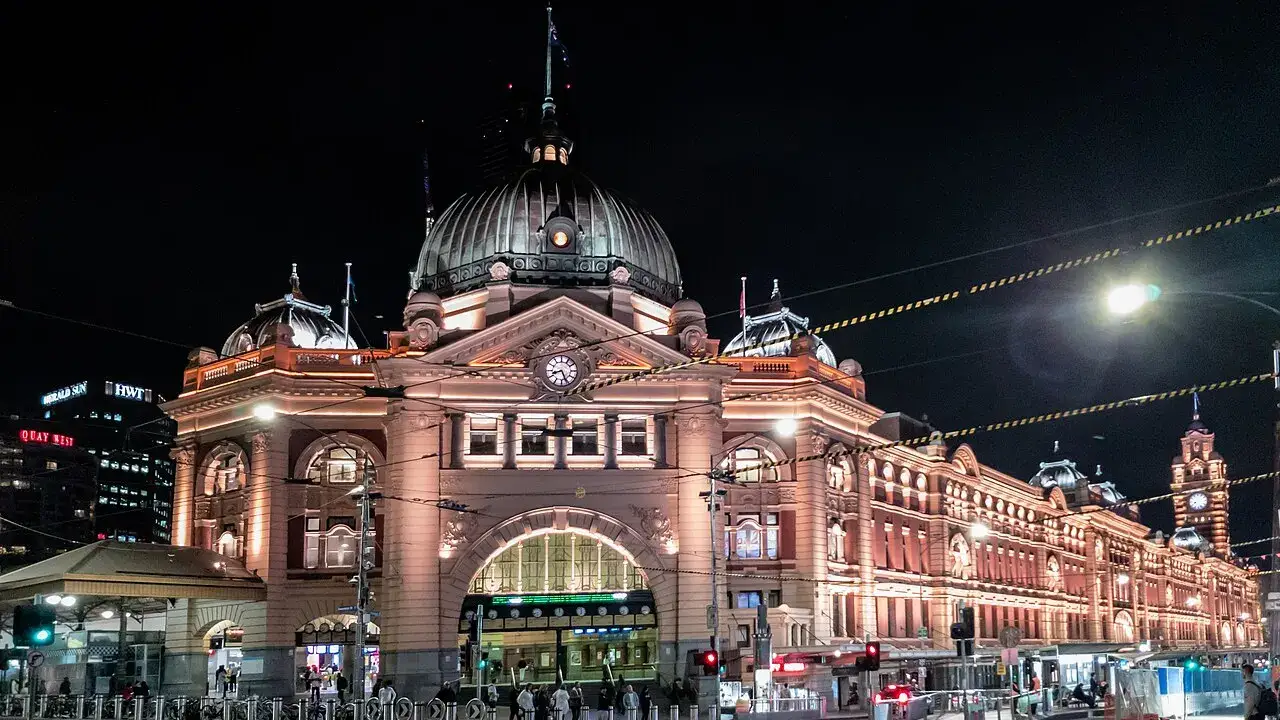
Flinders Street Station
A domed, yellow-brick building completed in 1910, designed by Fawcett and Ashworth, with the concourse under the clocks that show each line's next departure. “Under the clocks” is the city's default meeting spot.
The concourse sits under the clocks showing the next departure for each line, and the phrase “Under the clocks” names the city's meeting spot.
Check access
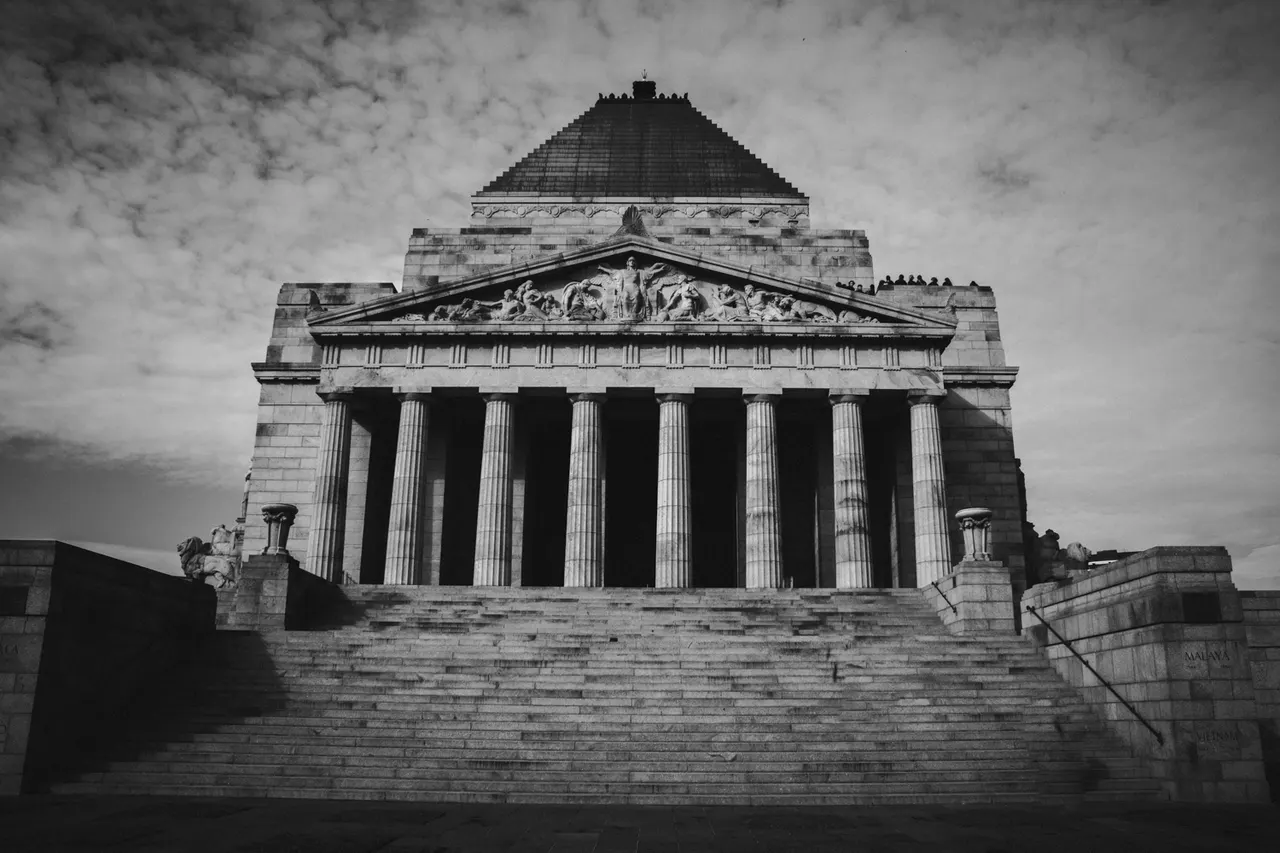
Shrine of Remembrance
A memorial to the dead of World War I opened in 1934, classical in plan and built of stone, on the axis of St Kilda Road. A ray of sunlight strikes the Stone of Remembrance at 11am on November 11, and on other days the effect is recreated with artificial light every half hour, starting at 10:30am.
The stone monument to the dead of the First World War receives a ray of sunlight on the Stone of Remembrance at 11am on November 11, and outside that date a lamp mimics the beam every half hour, starting at 10:30am.
Check access

Royal Botanic Gardens and Old Melbourne Gaol
The Royal Botanic Gardens and the Old Melbourne Gaol sit at opposite ends of the center. The gardens, 38 hectares on the south bank of the Yarra, have been there since 1846, hold more than 8,500 plant species and have free admission. At the northern end of the grid, the 1845 prison keeps the cell, the replica armor and the death mask of Ned Kelly, hanged there on November 11, 1880.
The free garden sits on the south bank, at one end of downtown, and at the other the gaol holds a cell, a replica of the armor and the death mask of Ned Kelly, who was hanged there.
Check access
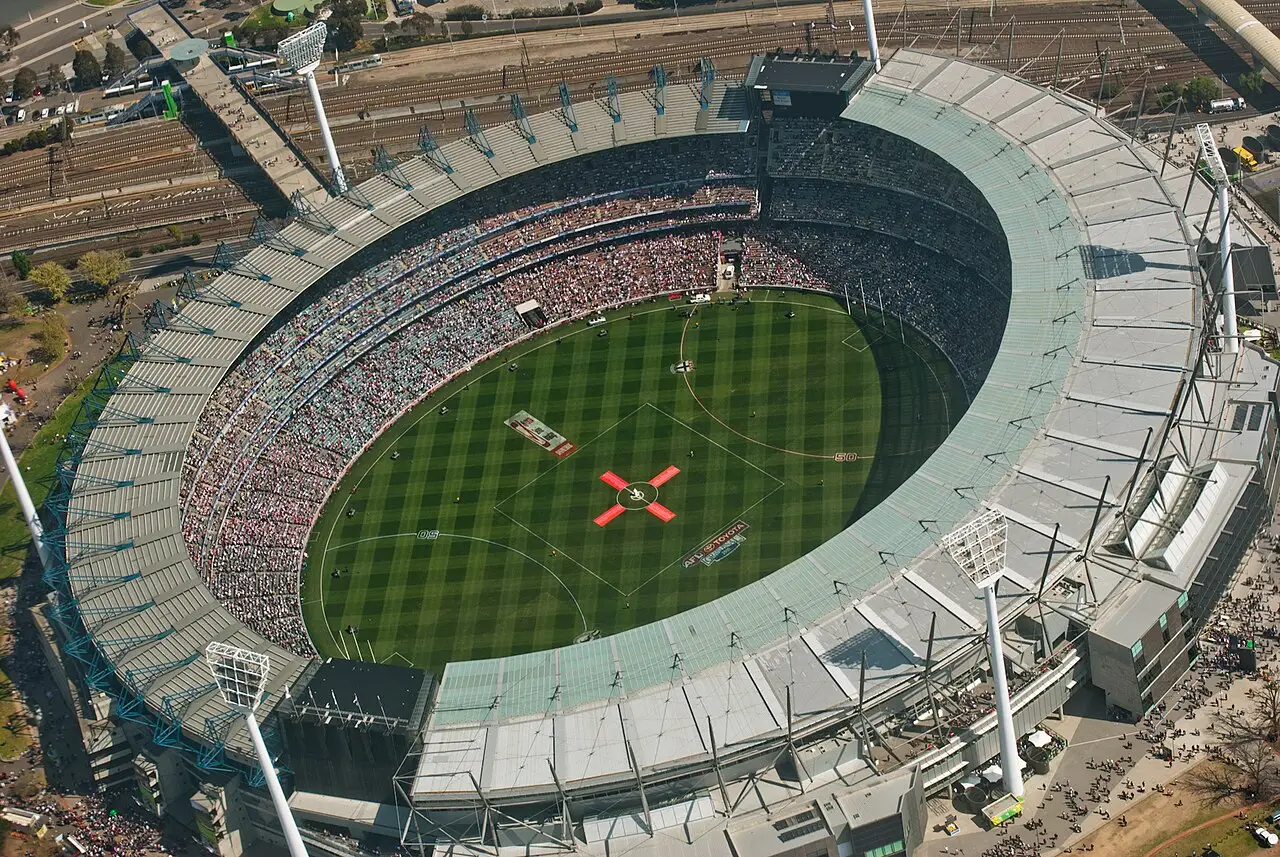
Melbourne Cricket Ground (MCG)
A stadium opened in 1853, seating 100,024, host to the 1956 Olympic Games, the AFL Grand Final in September and the Boxing Day cricket Test on December 26. The daily tours pass through the changing rooms, the pitch and the National Sports Museum.
The daily tour shows the locker room, the pitch and the museum of a 100,024-seat stadium that only makes sense full. It takes an hour and a half, and it's no substitute for an ordinary Saturday match.
Check access
Nilo’s itinerary
Start with the basic programme and choose extensions for the time you have.
Plan my days in the app ↗Day 1 · The grid, the laneways and the river
Start under the clocks at Flinders Street Station, a 1910 building, then cross to Federation Square.
Walk the laneway circuit: Degraves Street, Centre Place, Hosier Lane, and the Victorian arcades Block Arcade (1892) and Royal Arcade (1870).
Go up to the La Trobe Reading Room at State Library Victoria, an octagonal hall with a 34.75-meter dome opened in 1913, free entry.
Cross the Princes Bridge to the NGV International, on St Kilda Road: free collection, a water wall on the façade and Leonard French's stained-glass ceiling.
Have dinner in the Chinatown of Little Bourke Street, active since the gold rush that began in 1851, and finish at a basement bar on Bourke or Little Collins.
Day 2 · North: market, museum and neighborhoods
Get to Queen Victoria Market before 9am (it is closed Mondays and Wednesdays) for the deli hall and the fruit stalls.
Walk on to Carlton: the Royal Exhibition Building (1880, World Heritage since 2004), Carlton Gardens and the Melbourne Museum next door.
Have lunch on Lygon Street and, before 3pm, when the cafés close, get your coffee at a roaster in Fitzroy, on Brunswick Street or Gertrude Street.
Walk Brunswick Street and Smith Street; on Saturdays the Rose Street Artists' Market opens from 11am to 5pm.
Finish with live music in Collingwood or Richmond: doors open around 8pm and the show usually wraps up before midnight.
Day 3 · South: memory, garden and bay
Start at the Shrine of Remembrance (1934) and head down to the Royal Botanic Gardens, 38 hectares open since 1846.
Take the tour of the Melbourne Cricket Ground, from 1853 and seating 100,000, or go up to the Melbourne Skydeck, on the 88th floor of the Eureka Tower (297 m).
Catch tram 96 to St Kilda and walk along Acland Street, with its central-European bakeries open since the 1930s.
Go to the St Kilda Pier breakwater at sunset: a little penguin colony comes back from the sea at dusk, free, no feeding and no flash.
Head back via Chapel Street, through Windsor and Prahran, for dinner before the tram back downtown.


Food
 AI illustration
Flat white and long black
Espresso with fine, smooth-textured steamed milk (flat white) or two shots of espresso served over hot water (long black). Coffee culture arrived with Italians and Greeks in the 1950s and turned into an industry: local roasters, cafés open from 7am to 3pm, A$5–6.50 a cup.
 AI illustration
Parma
A breaded chicken cutlet topped with Napoli sauce, ham and melted cheese, served with fries and salad at almost every pub for A$26–34. In Victoria it's called a parma; across the state border it's a parmi, and people take the argument seriously.
 AI illustration
Dim sim
A large dumpling of meat and cabbage, a 1940s Melbourne invention credited to William Wing Young of the South Melbourne Market. Sold steamed or fried at fish-and-chip shops and at footy grounds, always with soy sauce.
 AI illustration
Souvlaki
A meat skewer in pita bread with onion, tomato and tzatziki, a legacy of Australia's largest Greek diaspora. Concentrated on Lonsdale Street downtown and in the restaurants of Oakleigh; A$14–20 a sandwich.
 AI illustration
Bánh mì and phở
The Vietnamese sandwich on French-style bread (A$9–13) and the rice-noodle soup arrived with the refugees who landed from 1975 onward. Victoria Street in Richmond and downtown Footscray are the two historic addresses.
 AI illustration
Brunch
A meal served from 8am to 3pm with eggs, feta, avocado, sourdough and coffee; A$22–32. It's the default social format for Saturday and Sunday, almost always without a reservation, with a 20-to-40-minute line at the well-known addresses.
 AI illustration
Acland Street cakes
Bakeries opened by Jewish and Polish immigrants in St Kilda since the 1930s sell kugelhopf, almond torte, strudel and cream cake displayed in the window, bought by the slice and eaten on the sidewalk.
 AI illustration
Yarra Valley pinot noir
Cool-climate wines produced 60 km from the city since 1838, with the region's revival starting in the 1960s. Found by the glass for A$14–20 at any wine bar in the city, alongside chardonnays from the same region.
Day trips
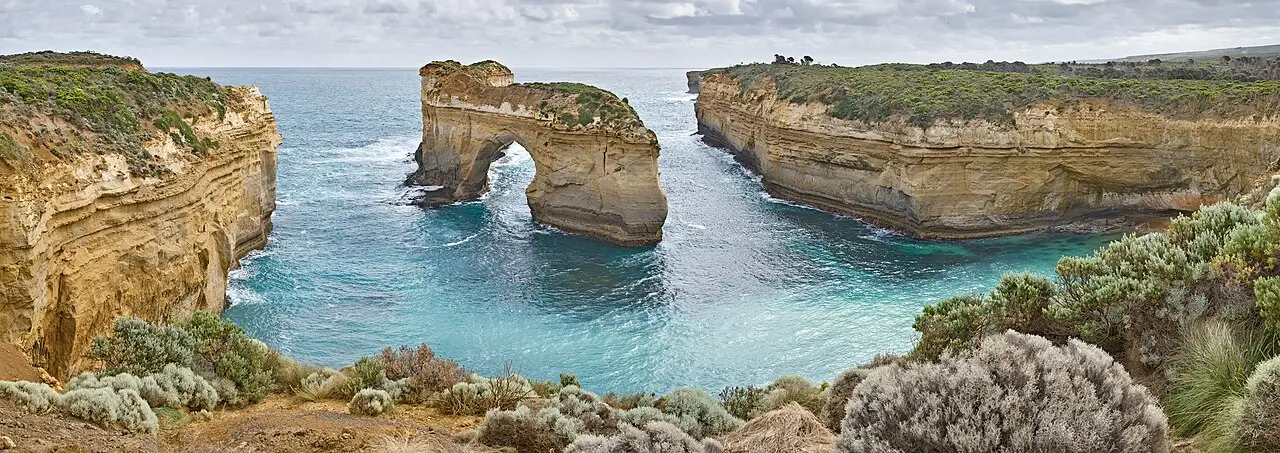
Great Ocean Road and the Twelve Apostles
Spend the night in Apollo Bay or Port Campbell. That way the Twelve Apostles show up early, with low light and the road clear of tour buses.

Yarra Valley and Dandenong Ranges
60 to 70 km east, about 1 hour by car or by train to Lilydale and Belgrave. Pinot noir and chardonnay vineyards producing since 1838, the Healesville Sanctuary for Australian wildlife, and the 1900 Puffing Billy steam train crossing the eucalyptus forest.
Phillip Island
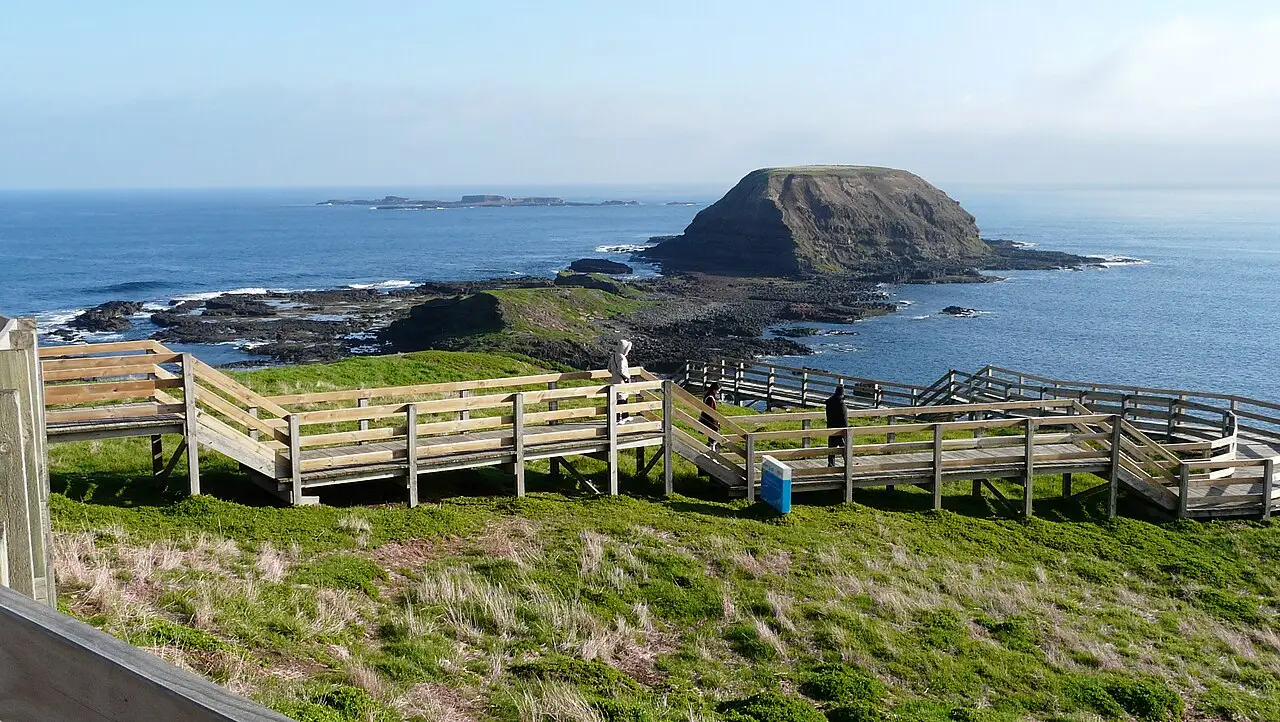
140 km southeast, 2 hours via the South Gippsland Highway or a full-day tour. The Little Penguin Parade at Summerland Beach happens every day of the year at dusk, with tickets and a start time that shifts with sunset; the island also has a seal colony and a motorcycle-racing circuit.
Where to begin
The grid, the laneways and the river
Start under the clocks at Flinders Street Station, a 1910 building, then cross to Federation Square.
North: market, museum and neighborhoods
Get to Queen Victoria Market before 9am (it is closed Mondays and Wednesdays) for the deli hall and the fruit stalls.
South: memory, garden and bay
Start at the Shrine of Remembrance (1934) and head down to the Royal Botanic Gardens, 38 hectares open since 1846.
Money
The currency is the Australian dollar (AUD, A$), worth about R$3.60 in September 2026. Real ranges: espresso A$5–6.50; brunch A$22–32; pub parma A$26–34; a mid-range restaurant dinner A$45–75 per person without drinks; a pint A$10–14; a glass of wine A$14–20; bánh mì A$9–13. A hostel bed A$45–75, a mid-range hotel A$180–300 a night, peaking in January and late September. The 10% tax (GST) is already built into the listed price, and there's no tipping obligation, since the national minimum wage is over A$24 an hour. At a good dinner, 10% is optional and generous. Cards and phones are accepted almost everywhere, even at market stalls, but many places charge a 1% to 2% card surcharge and an extra 10% to 15% on public holidays, always posted at the door or on the menu. Anyone leaving the country can claim a GST refund through the airport's Tourist Refund Scheme, for purchases over A$300 made at the same store within the previous 60 days, with the receipt and the goods in hand. Budget A$180–260 per person per day with a simple hotel, transport and two meals out.
Getting there and around
Airport: 23 km to the northwest, no rail to downtown
Melbourne Airport (MEL), in Tullamarine, sits 23 km northwest of downtown and has no rail link: the train project remains delayed, with no confirmed date. The SkyBus leaves Terminal 4 for Southern Cross Station every 10 minutes, takes 30 to 45 minutes and costs about A$25 one way. A taxi or rideshare runs A$65 to A$90 and takes 25 to 50 minutes, depending on traffic. Some budget flights land at Avalon (AVV), 55 km to the southwest, with its own bus of about 50 minutes. Within the city the network has three overlapping layers: radial trains out of downtown, surface trams and suburban buses. The Metro Tunnel opened on November 30, 2025, with the Anzac, Arden, Parkville, State Library and Town Hall stations, and since February 1, 2026, the Sunbury, Cranbourne and Pakenham lines run through it, while the Frankston line went back to the City Loop.
Tap the myki on the way in and on the way out
Your ticket is the myki card, sold for about A$6 at stations, convenience stores and machines. Tap on and off on trains and buses, and when you get on and off trams outside the free zone. The whole metropolitan area became a single fare zone in 2023: a 2-hour fare costs A$5.70, the daily cap is A$11.40 on weekdays and drops to A$8 on weekends and public holidays. Inside the Free Tram Zone, which covers the central grid, Docklands, Queen Victoria Market and Federation Square, the tram is free and you don't tap anything. When you cross the zone boundary you must tap on first, with a A$305 fine for traveling without a valid ticket. The tram network has about 250 km of track and 24 routes, the largest in the world by length, and tram 35 (City Circle) runs free with heritage cars. On Friday and Saturday nights the Night Network keeps trains and trams running all night. The center is flat and you can cross it on foot in 30 minutes from end to end. There are shared bikes, but the City of Melbourne ended its e-scooter share scheme in August 2024.
Safety
Melbourne is a safe city by world standards, and the biggest risk is opportunistic theft: a phone left on the café table, a backpack hung on the back of a chair, a bag on the bar floor. After midnight on Friday and Saturday, the stretch of King Street downtown gets rowdy as the clubs empty out, and it's the one spot worth going around. The rest of the grid and the neighborhood commercial streets stay busy and calm. Scams are rare: the most common is an unannounced card surcharge and the taxi that claims the card machine is broken, and booking through an app solves both. The real danger, and the one almost no one takes seriously, is the sun: the UV index goes above 11 in summer, Australia has the world's highest skin-cancer rate, and sunscreen, a hat and shade between 10am and 4pm aren't overkill. On ocean beaches, always swim between the red and yellow flags; the bay beaches are calm, but the ones facing Bass Strait have rip currents. From August to October it's magpie-swooping season in parks and bike paths: when there's a sign warning of it, cross to the opposite sidewalk instead of arguing with the bird. Tap water is safe to drink across the whole city. Emergency, from any phone: 000.
Etiquette tips
Stand on the left on the escalator
Whoever stands stays on the left, whoever walks uses the right. It holds at every station and is taken seriously at rush hour, when blocking the right draws comments.
Order your coffee by name and size
At the counter, coffee has proper names: say the style and the size in one go, without waiting to be asked, the way the morning line does.
Pay for the whole round
At the pub there's the “shout”: each person in the group pays for a full round, in sequence. Leaving before paying your round is a serious lapse, and turning down someone's round also requires an explanation.
Let people off before you get on
On the tram and the train, whoever is exiting has priority and no one pushes. Don't stand blocking the door and move toward the middle of the carriage; give up a marked seat without waiting to be asked.
Listen to the Acknowledgement of Country
Events, museums, concerts and games begin with an acknowledgment of the Wurundjeri Woi-wurrung and the Kulin people as the traditional owners of the land. Listen in silence, without walking around the room, and stand if everyone else is standing.
Cross at the crossing and on the light
Crossing outside a marked crossing is an offense, and police do fine for it downtown. The speeding-up audible signal means time is running out; whoever has already started finishes crossing, whoever hasn't waits.
Mistakes to avoid
Half of what matters is a ten-minute tram ride away
Staying only within the downtown grid. It's easy to lose a day that way: half of what matters is a ten-minute tram ride away, in Fitzroy, Carlton, Brunswick, Richmond, St Kilda and Footscray.
Heading out at 24°C with nothing in hand
Heading out in the morning at 24°C with nothing in hand. The cold front from the south drops the temperature ten degrees in under an hour and brings wind. It's worth always carrying a light jacket, even on clear days.
Validating the myki in the free zone
Validating the myki inside the Free Tram Zone and paying for something that was already free. Or worse: crossing the zone's border without validating, which brings a hefty fine.
Renting a car to get around the city
Renting a car to get around the city. Parking downtown runs over A$25 an hour, trams have right of way, and at signposted intersections a right turn is a hook turn: you start in the left lane and wait with the car stopped in the middle of the intersection until the light changes, which demands full attention from anyone who's never done it.
The Great Ocean Road as a half-day trip
Planning the Great Ocean Road as a half-day trip. The Twelve Apostles are about 275 km away, 3 hours 30 minutes one way, and doing it all in a single day takes thirteen and a half hours; the right way is to spend a night outside the city.
Useful phrases
How ya going?
“How's it going?”: it's a greeting, not a question; the reply is “good, and you?” and the conversation either continues or ends right there
No worries
“You're welcome,” “no problem,” “consider it done”; it stands in for thank you, sorry and you're welcome all at once
Ta
“Thanks,” short and informal, said when getting change, a cup or a card handed back
Arvo
“Afternoon”; “this arvo” means this afternoon and “Sunday arvo” means Sunday afternoon, the social time slot par excellence
Parma
The pub chicken parmigiana; the name changes state to state, and in Victoria it's parma, never parmi
The G
The Melbourne Cricket Ground; “meet you at the G” sets up a meeting at the stadium, no further explanation needed
Districts
Hoddle Grid (downtown)
The 1837 grid between Spencer, Spring, La Trobe and Flinders streets, with 30-meter avenues and service laneways between them. It holds offices, theaters, the Chinatown of Little Bourke Street and the highest density of cafés in Australia.
Fitzroy and Collingwood
The city's first two suburbs, today the axis of bars, secondhand bookshops, galleries and live music between Brunswick Street and Smith Street. Victorian terrace houses with lacework iron share the block with 1960s housing estates.
Carlton
The postwar Italian neighborhood around Lygon Street, tucked against the University of Melbourne and the Carlton Gardens. Sidewalk restaurants, the Cinema Nova and the Melbourne Museum next to the Royal Exhibition Building.
Southbank and the Arts Precinct
The Yarra's south bank, rebuilt from the 1990s onward over an industrial area. It brings together the NGV International, the Arts Centre with its pierced 162-meter spire, Hamer Hall, the Crown casino and the Eureka Tower.
St Kilda
A Victorian-era beach suburb on the bay, 6 km from downtown on tram 96. Luna Park has run since 1912, Acland Street has central-European bakeries from the 1930s, and the breakwater shelters a little penguin colony.
Brunswick
A working-class north along Sydney Road, with Italian, Greek, Lebanese and Turkish heritage. Bakeries, bridal-wear shops, backyard bars and music studios; served by tram 19 and the Upfield line.
Richmond
East of downtown, between the MCG and the river. Victoria Street has been the city's Vietnamese street since the 1980s, and Bridge Road lives off factory outlets; workers' cottages have turned into pricey addresses.
Footscray and the west
Across the Maribyrnong River, 15 minutes by train from downtown. A market with live fish, Ethiopian, Eritrean and Vietnamese stalls, cheaper rent and the country's biggest concentration of East African restaurants.
History
40,000 years ago · The Wurundjeri on the Birrarung
The Wurundjeri Woi-wurrung people, of the Kulin nation, occupy the valley of the river they call Birrarung. The banks and bay wetlands are a base for fishing, eel hunting and gatherings between clans.
1835 · Batman, Fawkner and the annulled treaty
On June 6, 1835, John Batman signs a supposed treaty with Wurundjeri elders for 240,000 hectares, paid in blankets and knives. Governor Bourke annuls the document in August, but the settlers stay.
1837 · Hoddle's grid
Surveyor Robert Hoddle lays out blocks of 201 by 100 meters, 30-meter streets and service laneways between them. The settlement is named for Lord Melbourne, then British prime minister.
1851 · Separation and the gold rush
Victoria separates from New South Wales on July 1, 1851, and weeks later gold appears in Ballarat and Bendigo. The colony's population goes from 77,000 to over 300,000 in three years.
1854 · Eureka Stockade
Miners rebel against the license fee in Ballarat, 110 km away, on December 3, 1854, and about thirty are killed. The episode speeds up male suffrage and the secret ballot in Victoria.

1880–1888 · “Marvellous Melbourne”
The 1880 International Exhibition opens Joseph Reed's Royal Exhibition Building, and the 1888 Centennial repeats the feat. In 1885 journalist George Augustus Sala coins the nickname at the height of the property bubble.

1891–1893 · The bank crash
The bubble bursts, construction stalls and thirteen banks suspend payments in 1893. Sydney takes the economic lead, and Melbourne takes nearly forty years to recover its pace.
1901–1927 · Australia's provisional capital
The first federal parliament meets in the Royal Exhibition Building on May 9, 1901. The country's government runs from Melbourne until the move to Canberra in 1927.
1956 · The Southern Hemisphere's Olympics
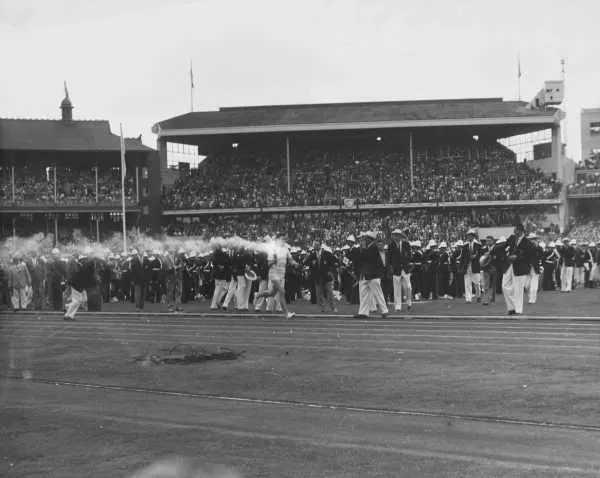
Melbourne hosts the Games between November and December 1956, the first held outside the northern hemisphere. The MCG becomes the Olympic stadium and the city debuts television for the occasion.
1945–1990 · The migration waves
Greeks, Italians and Maltese arrive after the war; Vietnamese from 1975; Chinese, Indians and East Africans since the 1990s. Lygon Street, Sydney Road, Victoria Street and Footscray are the map of those arrivals.
 AI illustration
2020–2026 · Lockdown and the Metro Tunnel
The city racks up 262 days of lockdown in 2020 and 2021, the highest total in the world. On November 30, 2025, the Metro Tunnel opens with five new stations, and the full timetable takes effect on February 1, 2026.
 AI illustration
Complete history
Batman's 1835 treaty and the Hoddle Grid
The city was born from a land deal made without the British Crown's authorization. In June 1835 John Batman, acting for a syndicate of Tasmanian graziers, negotiated with Wurundjeri Woi-wurrung elders a document that traded about 240,000 hectares for blankets, knives, axes and flour; weeks later John Pascoe Fawkner landed with another group on the same stretch of river. Governor Richard Bourke annulled the treaty in August 1835, because the Crown didn't recognize Indigenous nations as having the right to sell land or even to own it, but he legalized the settlement and charged the settlers. In 1837 the surveyor Robert Hoddle drew the grid the city still uses: blocks of 201 by 100 meters, streets 30 meters wide and the narrow delivery lanes that today house cafés and graffiti.
The gold rush and Victoria's separation in 1851
Gold rewrites everything in 1851. Victoria separates from New South Wales on July 1, and in August the first finds turn up in Ballarat, Bendigo and Castlemaine. In three years the colony jumps from 77,000 to over 300,000 people, with Irish, Chinese, Americans, Germans and Italians arriving through the port; gold revenue pays for the University of Melbourne (1853), the free public library (1856) and the sewer system. The miners' revolt against the license fee at the Eureka Stockade, in December 1854, costs about thirty lives and pushes Victoria toward male suffrage and the secret official ballot: the “Australian ballot,” later copied by the United States and the United Kingdom.
One of the richest cities in the world
Between 1880 and 1890 Melbourne is one of the richest cities in the world per capita. The 1880 International Exhibition and the 1888 Centennial fill the Royal Exhibition Building, cable trams start running in 1885, and that same year English journalist George Augustus Sala coins “Marvellous Melbourne.” The party was a property bubble financed by British credit: in 1891 construction stalls, in 1893 thirteen banks close their doors and the city loses people to Sydney and the countryside. The Victorian architecture left behind (lacy iron on the balconies of Fitzroy and Carlton, stone banks on Collins Street) is the frozen portrait of that decade.
Administrative capital, then city of immigration
The 20th century makes Melbourne first the administrative capital and then the cultural capital. The Federation's parliament meets in the Royal Exhibition Building on May 9, 1901, and the national government stays in the city until 1927. After the Second World War the federal immigration program brings Greeks, Italians, Maltese and Yugoslavs to the factories of Fitzroy, Collingwood and Brunswick, and the 1956 Olympic Games give the city a stadium, an expanded airport and television. On October 15, 1970, the collapse of the West Gate Bridge under construction kills 35 workers, the country's worst industrial accident. From 1975 Vietnamese arrive and, after 1990, Chinese, Indians, Sudanese and Ethiopians, and each wave leaves a whole commercial street as its address.
Metro Tunnel: new stations since November 2025
On November 30, 2025, the Metro Tunnel opened new stations downtown, and since February 1, 2026, the whole train network has run on a rewritten timetable built to use them.
The lacework iron on the balconies of Fitzroy and Carlton dates from the 1880s.
Much of the city you see today is recent: the Vietnamese shopping streets of Richmond and Footscray were born with the refugees who arrived from 1975 on, and the Metro Tunnel stations opened in 2025.
Geography and shape of the city
The bay and the Yarra River
Melbourne occupies the northern tip of Port Phillip Bay, an almost enclosed inlet of about 1,930 km² linked to Bass Strait by a mouth only 3.5 km wide. The Yarra River (Birrarung, to the Wurundjeri) comes down from the mountains to the east and empties at Port Melbourne; downtown sits about 5 km upstream, at the point where a rock bar once separated fresh water from salt and set the limit of where ships could anchor.
Plain to the west, ranges to the east, a crooked grid
To the west and north the city spreads across flat volcanic plains with no natural obstacle, which produced nearly 70 km of continuous suburb out to Melton and Craigieburn; to the east the land climbs into the Dandenong Ranges, reaching 633 meters at Mount Dandenong, home to the leafiest neighborhoods. Hoddle's grid doesn't point to true north: it's rotated about 13 degrees to follow the curve of the river, which is why the sun enters diagonally on downtown streets.
Oceanic climate and ten-degree swings in a day
The climate is temperate oceanic, with rain spread across the whole year and the local trait of a sudden shift: hot air coming from inland meets cold fronts from the south, and the temperature can drop ten degrees in an hour.
Culture
Australian rules football was born here
Australian rules football was born here: the first recorded match was between Scotch College and Melbourne Grammar in August 1858, and the rules were written in 1859 in a hotel in Jolimont, a few meters from the MCG. Nine of the eighteen AFL clubs are from Melbourne (the tenth Victorian club, Geelong, is 75 km away), and the season ends at the MCG with the Grand Final. The sports calendar covers the whole year: the Australian Open in January, the Formula 1 Grand Prix at Albert Park in March, the Melbourne Cup at Flemington on the first Tuesday in November and the Boxing Day Test on December 26.
The highest density of live music
Melbourne has the highest density of live music venues in Australia and a garage rock lineage that runs from AC/DC and Nick Cave's Birthday Party to Courtney Barnett and King Gizzard & the Lizard Wizard. The community radio stations 3RRR and PBS, funded by listener subscriptions since the 1970s, decide much of what the city listens to. In February 2010, about 20,000 people marched in defense of small venues against the demands of the licensing law, and the government signed an agreement that same month that eased them; the result is a nightlife spread across downtown basements and pubs in Collingwood, Brunswick and Richmond, with shows starting at 8pm and ending early.
City of Literature since 2008
UNESCO named Melbourne a City of Literature in 2008, the second in the world after Edinburgh: there's an independent bookshop in nearly every neighborhood, and the Melbourne Writers Festival runs between August and September. Local cinema has deep roots. The Story of the Kelly Gang, shot in Victoria and screened in December 1906, is considered the world's first narrative feature film, and the Melbourne International Film Festival has run since 1952. More than a third of residents were born outside Australia and more than 200 languages are spoken at home, which shows on the commercial streets: Greek on Lonsdale, Italian on Lygon, Vietnamese on Victoria Street, Arabic and Turkish on Sydney Road, Mandarin and Cantonese in Box Hill.
Festivals and events
Australian Open
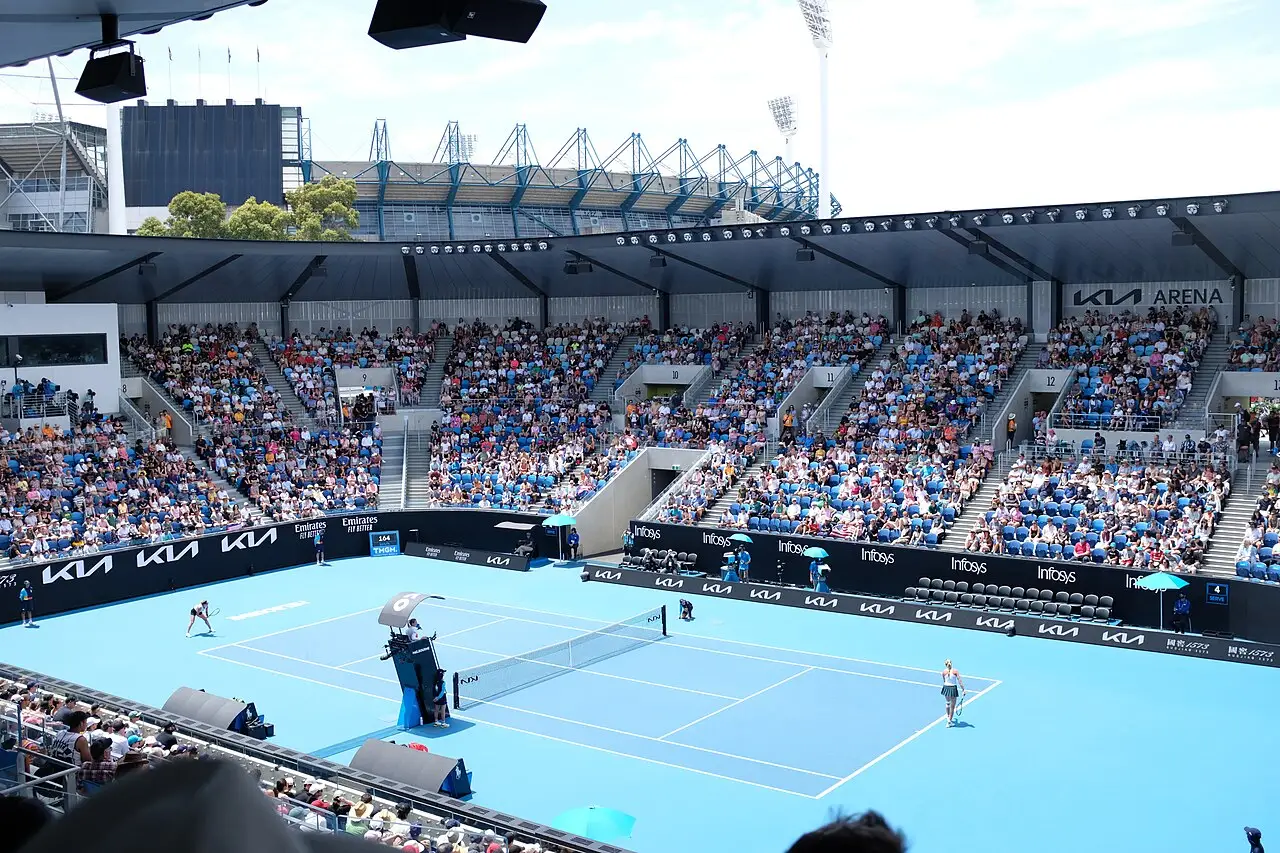
Two weeks in January at Melbourne Park, the year's first Grand Slam and at its current site since 1988. A first-day ticket for the outer courts runs around A$60; hotels rise 30% to 60% that week.

Moomba
A long March weekend, since 1955, on the banks of the Yarra and in Alexandra Gardens. Water-skiing on the river, the Birrarung Marr bridge-jumping championship, a funfair and a Monday parade; free admission.
Melbourne International Comedy Festival
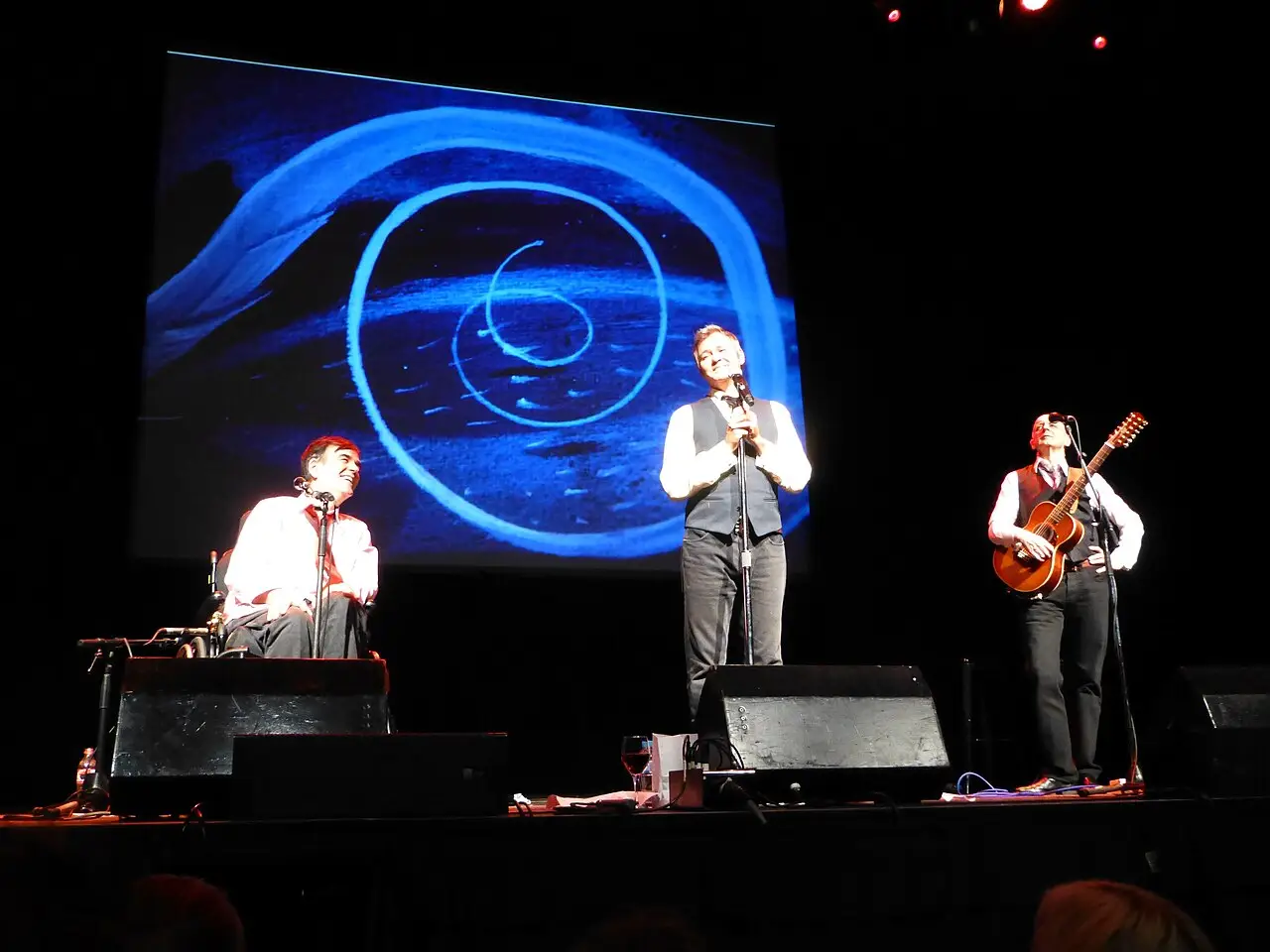
About four weeks between late March and late April, one of the three biggest comedy festivals in the world. Based at Melbourne Town Hall, with hundreds of venues across downtown; tickets between A$25 and A$60.

AFL Grand Final
The last Saturday of September at the MCG, decided in front of 100,000 people. Anyone without a stadium seat watches the match in pubs and on big screens around the city.
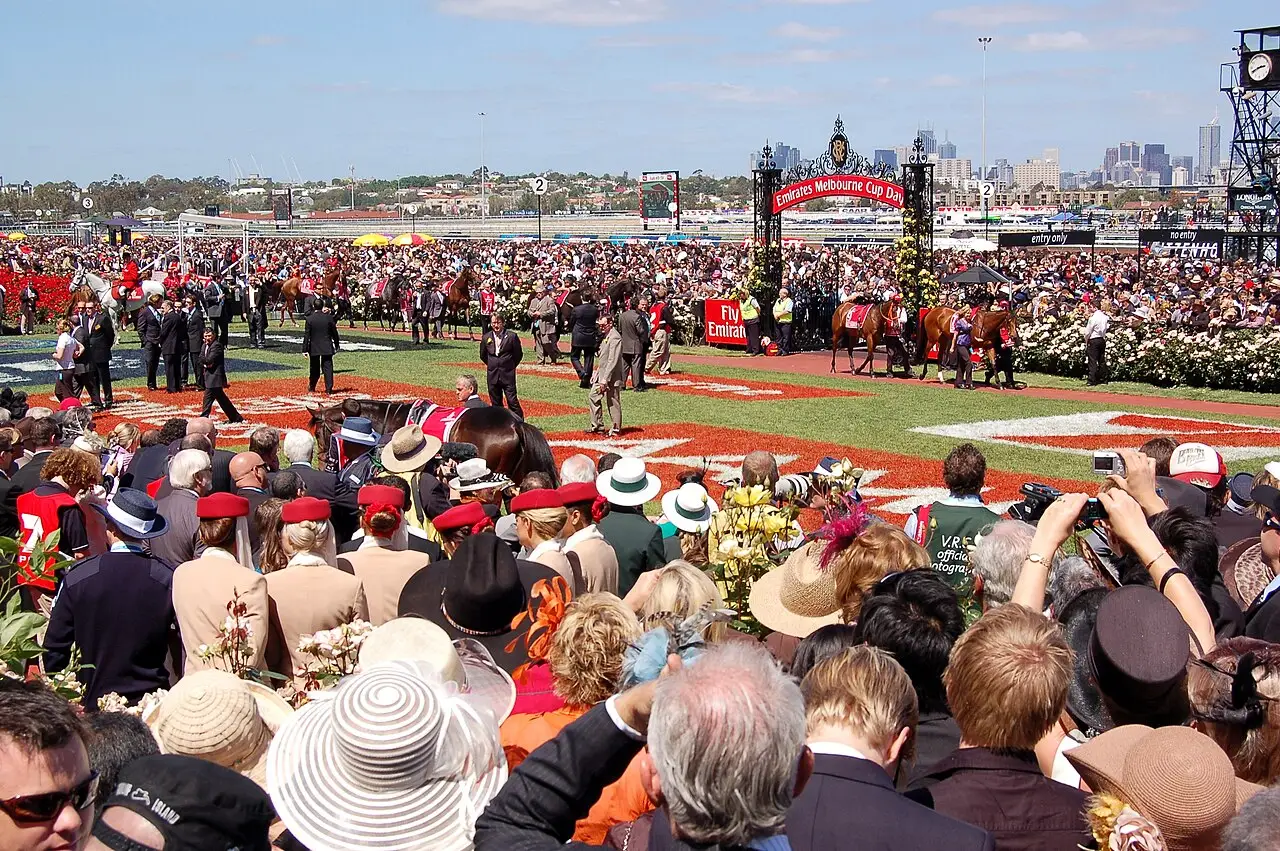
Melbourne Cup
The first Tuesday of November at Flemington, a 3,200-meter race run since 1861 and a metropolitan-area holiday since 1877. The whole week is the Cup Carnival, with a dress code, hats, and the city stopping at 3pm.
Books and films
Monkey Grip, by Helen Garner (1977)
A novel about share houses in Carlton and Fitzroy in the 1970s that fixed the Fitzroy pool and the bohemian north in the city's imagination; still the most-cited portrait of cheap-rent Melbourne.
Animal Kingdom, by David Michôd (2010)
A film about a crime family in Melbourne's suburbs, inspired by real cases from the 1980s; it shows the city of garages, drawn curtains and low fences that postcards leave out.
Sometimes I Sit and Think, and Sometimes I Just Sit, by Courtney Barnett (2015)
An album that sings about Preston, Northcote and buying a brick house in the suburbs; the geography, the weekend boredom and the accent are all in the lyrics.
Frequently asked questions
Melbourne: How do you get from the airport to downtown?
By SkyBus, because Tullamarine Airport, 23 km to the northwest, has no train: the bus leaves Terminal 4 for Southern Cross Station every 10 minutes, takes 30 to 45 minutes and costs about A$25. A taxi or rideshare costs A$65 to A$90 and takes 25 to 50 minutes, depending on traffic.
Melbourne: What's the currency, and what's the exchange rate for the Brazilian real?
The currency is the Australian dollar (AUD, A$), worth about R$3.60 in September 2026.
Melbourne: What's the best time to go?
Autumn, from March to May, is the most stable season: 18 to 22 °C, clear skies and the European trees in the gardens of Fitzroy and Carlton changing color. January is hot and expensive.
Melbourne: Is the city safe?
Yes, by world standards: the biggest risk is opportunistic theft, like a phone left on the café table or a bag on the bar floor. After midnight on Fridays and Saturdays, it's worth avoiding the stretch of King Street downtown, where the chaos of clubs letting out concentrates.
Melbourne: What's the difference between a flat white and a long black?
The flat white is espresso with steamed milk with fine, smooth foam; the long black is two shots of espresso served over hot water.
Other cities in the country
Australia ↗- Days
- 3–4
- When
- Mar–Apr · Oct–Nov
- Per person/day
- Average 280–450 A$Mid-range · per person/day
Cost scope
Per person per day: accommodation, meals, urban transport, visits and a small allowance for extras. Flights excluded; larger purchases vary. Editorial estimate, not a quote.
- Days
- 2–3
- When
- May–Sep
- Per person/day
- Average 220–380 A$Mid-range · per person/day
Cost scope
Per person per day: accommodation, meals, urban transport, visits and a small allowance for extras. Flights excluded; larger purchases vary. Editorial estimate, not a quote.
- Days
- 3–4
- When
- May–Sep
- Per person/day
- Average 150–260 A$Mid-range · per person/day
Cost scope
Per person per day: accommodation, meals, urban transport, visits and a small allowance for extras. Flights excluded; larger purchases vary. Editorial estimate, not a quote.