New Zealand
Rotorua
Geysers, Māori villages and redwoods around a volcanic lake
Days I'd stay two full days in Rotorua.
How the guide reaches this number
The first is for the city: the village of Whakarewarewa in the morning, the lakeshore in the afternoon and the hāngī dinner at Te Puia in the evening. The second is for the volcanic valleys of the south, Wai-O-Tapu early because of Lady Knox and Waimangu down to Lake Rotomahana, with the redwoods at the end of the day. A third day is justified only with a destination outside the city, and I'd choose it by interest: Hobbiton, a little over an hour away by road, for those who like the films; the Waitomo caves, two hours away, to see the glowworms from a boat; or the eastern lakes and the Buried Village, for those who prefer to stay close.
2
Start with the basic programme and choose extensions for the time you have.
When November to March; April and October are cooler, and winter, from June to August, is the rainiest period
How the guide reaches this number
Summer, from December to February, has the highest average highs, near 23 °C, the longest days and the greatest demand: the Waimangu boat is more in demand, Hobbiton needs booking well ahead and the southern roads take more time. November and March keep the warmth with fewer people, and November is, on average, the driest month. In autumn, April and May cool down and rain increases. Winter, from June to August, has highs of 12 °C to 13 °C, lows near 4 °C, frosts and July as the rainiest month; in return, it is the season of Matariki. The geothermal activity runs all year, and almost all attractions are open in every season.
Per person/day Budget around NZD80; mid-range around NZD193; comfortable around NZD427 per person per day, based on spending reported by travelers to Budget Your Trip (checked October 2026).
How the guide reaches this number
Indicative figures, excluding travel to the destination.
Budget around NZD80; mid-range around NZD193; comfortable around NZD427 per person per day, based on spending reported by travelers to Budget Your Trip (checked October 2026). Indicative figures, excluding travel to the destination.
Per person per day: accommodation, meals, urban transport, visits and a small allowance for extras. Flights excluded; larger purchases vary. Editorial estimate, not a quote.
Salta · among the cheapestZermatt · among the priciest
Cheaper than 57% of them. The tick marks the median. Compared by the middle of each city’s daily range, converted at the 24 Sept 2026 exchange rate.
 What Nilo thinks
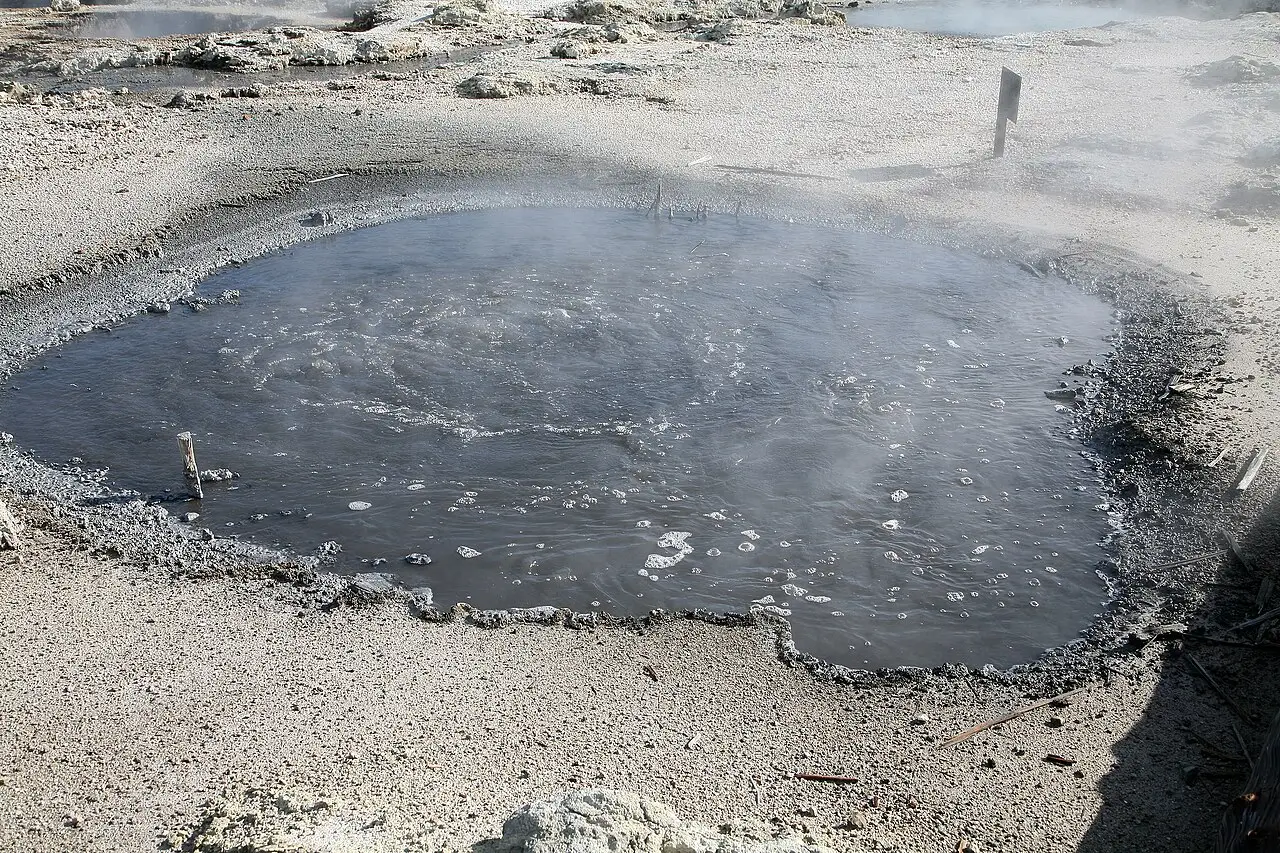
I'd recommend Rotorua to anyone who likes to travel slowly, ask more than photograph and eat without ceremony. Here geothermal heat is a household thing: in a Māori village south of the center, the Parekohuru pool cooks an ear of corn in eight minutes, and lunch ends with a spiced molasses pudding steamed in the vents, served with cream. Many of the guides grew up in the valley itself. The city alternates the half-timbering of the Bath House, one of the most photographed buildings in the country, with the stretch of shops and restaurants that earned it the nickname Roto-Vegas. To see local creativity outside the paid circuit, I'd set aside an afternoon for the Arts Village, a community center with more than 30 art and culture groups, with exhibitions and classes for adults and children.In Rotorua, the ground is warm. In the middle of the city, among motels and ordinary streets, mud pools bubble in a public park, and in a Māori village residents cook lunch in the steam that comes out of the earth. The city sits inside a volcanic caldera, and that is what organizes it: south of the center, the Whakarewarewa valley has the Pōhutu geyser, which rises up to 30 meters; along the Taupō road, Wai-O-Tapu and Waimangu, the latter born of the 1886 eruption, show orange-rimmed pools and lime-green and blue lakes. Alongside the geology are the people: the Te Arawa have lived here for seven centuries, and much of what there is to visit is theirs, from haka performances to the hāngī dinner. When the sulfur wears you down, there are redwoods more than 70 meters tall ten minutes by car from the center and a district with 18 lakes.
Quick facts
- Population
- About 58,500 people in the urban area and 78,000 in the Rotorua Lakes District, a Stats NZ estimate for June 2025; in the 2023 census, 46% of urban-area residents identified as Māori
- Founding
- Māori settlement by the Te Arawa people since the 14th century; the modern town came out of the Fenton Agreement of 1880 and became a borough in 1922
- Country and region
- New Zealand, North Island; Bay of Plenty region, Rotorua Lakes District
- Language
- English and te reo Māori; signs, place names and greetings in Māori are common
- Currency
- New Zealand dollar (NZD, NZ$); 15% GST is already included in the price
- Time zone
- NZST, UTC+12; daylight saving time (NZDT, UTC+13) from late September to early April
- Best time to go
- November to March; April and October are cooler, and winter, from June to August, is the rainiest period
- Average daily cost
- Budget around NZD80; mid-range around NZD193; comfortable around NZD427 per person per day, based on spending reported by travelers to Budget Your Trip (checked October 2026). Indicative figures, excluding travel to the destination.
When to go
November to March; April and October are cooler, and winter, from June to August, is the rainiest period
January
Best time14 h 31 min of daylight
National holidays
Jan 1 – 4, 2027 · long weekend · New Year's Day, Day after New Year's Day
Jan 1 – 4, 2028 · long weekend · New Year's Day, Day after New Year's Day
Source: Nager.Date. Holiday dates shift; check close to your trip.
February
Best time13 h 29 min of daylight
National holidays
Feb 6 – 8, 2027 · long weekend · Waitangi Day
Feb 5 – 7, 2028 · long weekend · Waitangi Day
Source: Nager.Date. Holiday dates shift; check close to your trip.
March
Best time12 h 21 min of daylight
National holidays
Mar 26 – 29, 2027 · long weekend · Good Friday, Easter Monday
Source: Nager.Date. Holiday dates shift; check close to your trip.
April
11 h 05 min of daylight
National holidays
Apr 24 – 26, 2027 · long weekend · Anzac Day
Apr 14 – 17, 2028 · long weekend · Good Friday, Easter Monday
Source: Nager.Date. Holiday dates shift; check close to your trip.
May
10 h 04 min of daylight
June
9 h 31 min of daylight
National holidays
Jun 5 – 7, 2027 · long weekend · King's Birthday
Jun 25 – 27, 2027 · long weekend · Matariki
Source: Nager.Date. Holiday dates shift; check close to your trip.
July
9 h 46 min of daylight
August
10 h 39 min of daylight
September
11 h 50 min of daylight
October
13 h 04 min of daylight
National holidays
Oct 24 – 26, 2026 · long weekend · Labour Day
Oct 23 – 25, 2027 · long weekend · Labour Day
Source: Nager.Date. Holiday dates shift; check close to your trip.
December
Best time14 h 48 min of daylight
National holidays
Dec 25 – 28, 2026 · long weekend · Christmas Day, Boxing Day
Dec 25 – 28, 2027 · long weekend · Christmas Day, Boxing Day
Source: Nager.Date. Holiday dates shift; check close to your trip.
High, shoulder and low season
High · December to February
Warmth, long days and the greatest demand. The Waimangu boat is the most in demand, and the southern roads take more time; book Waimangu and Hobbiton ahead.
Shoulder · March to May and September to November
Mild temperatures and fewer people. November is the driest month on average; April and May cool down and bring more rain.
Low · June to August
Cold, frost and the rainiest period, with highs of 12 °C to 13 °C. The attractions stay open, and it is the season of Matariki.
How the year changes
Summer, from December to February, has the highest average highs, near 23 °C, the longest days and the greatest demand: the Waimangu boat is more in demand, Hobbiton needs booking well ahead and the southern roads take more time. November and March keep the warmth with fewer people, and November is, on average, the driest month. In autumn, April and May cool down and rain increases. Winter, from June to August, has highs of 12 °C to 13 °C, lows near 4 °C, frosts and July as the rainiest month; in return, it is the season of Matariki. The geothermal activity runs all year, and almost all attractions are open in every season.
Nilo's tips
Pōhutu up close or from afar
Pōhutu is inside Te Puia; you can also see it from the village of Whakarewarewa, but from farther away. If the geyser is the priority, pay for Te Puia by day; if the priority is people and everyday life, the village.
Wai-O-Tapu starts with the geyser
Start at the visitor center, where you buy the ticket and where the only restroom is, and drive on to Lady Knox, two minutes away, to be there by 9:45; the same ticket covers the geyser and the main circuit, which you do afterward.
A spa with a local owner
Besides the Polynesian Spa, Wai Ariki, on the lakeshore, is a spa owned by the Ngāti Whakaue that incorporates Māori wellness practices; for a simpler soak, the foot bath at Kuirau Park is free.
Rain doesn't ruin the day
Eat Streat is covered, the thermal pools work in the rain and Mārama, at Te Puia, runs in any weather. Bring a rain jacket: the climate is humid all year.
Explore the map
Explore the map, read about the other places and plan your travel days in the app.
Open the appWhat to see
Leave for last, if time allows: Lake Rotorua · Skyline Rotorua · Hell's Gate · Agrodome · Okere Falls
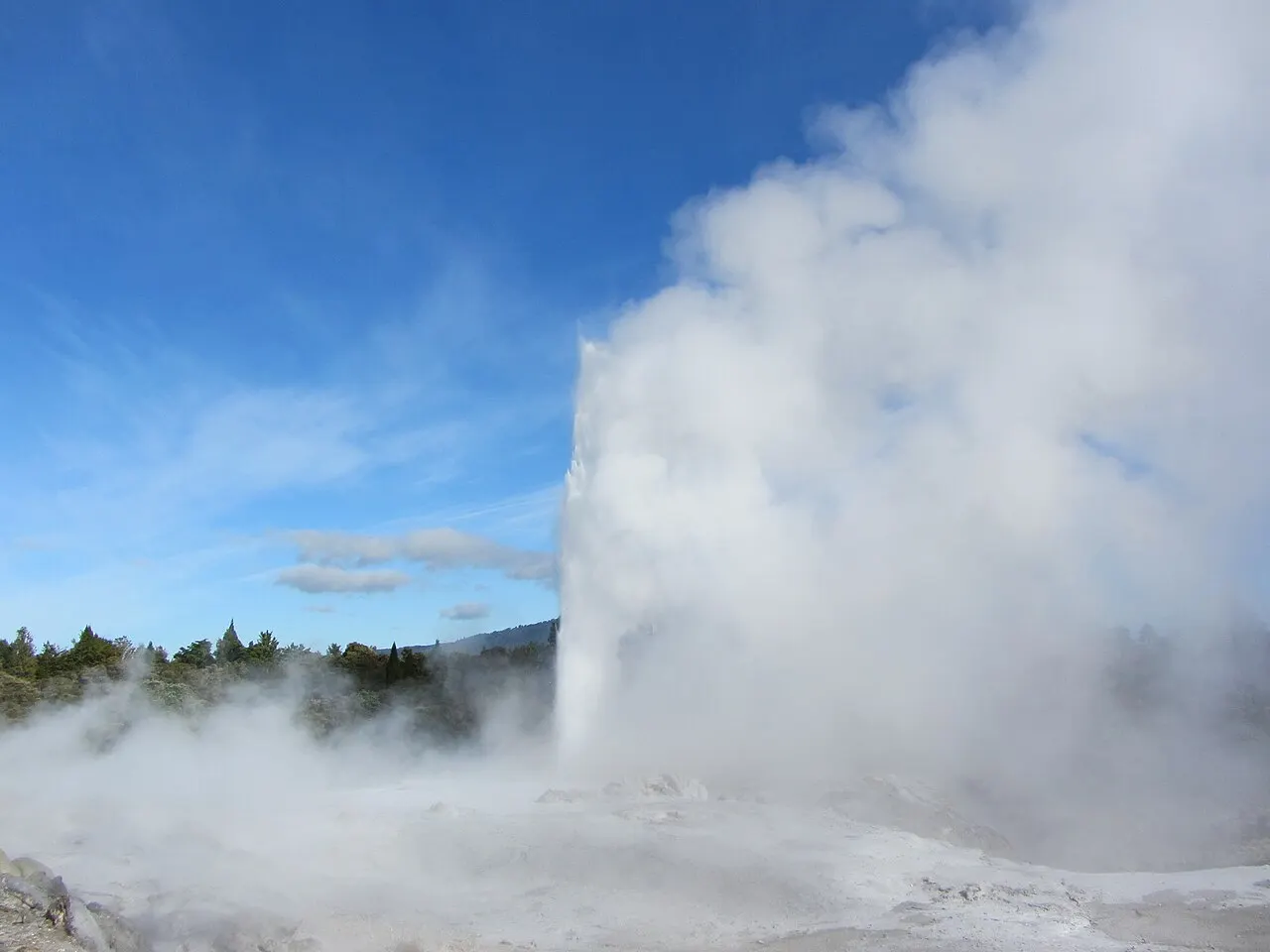
Te Puia
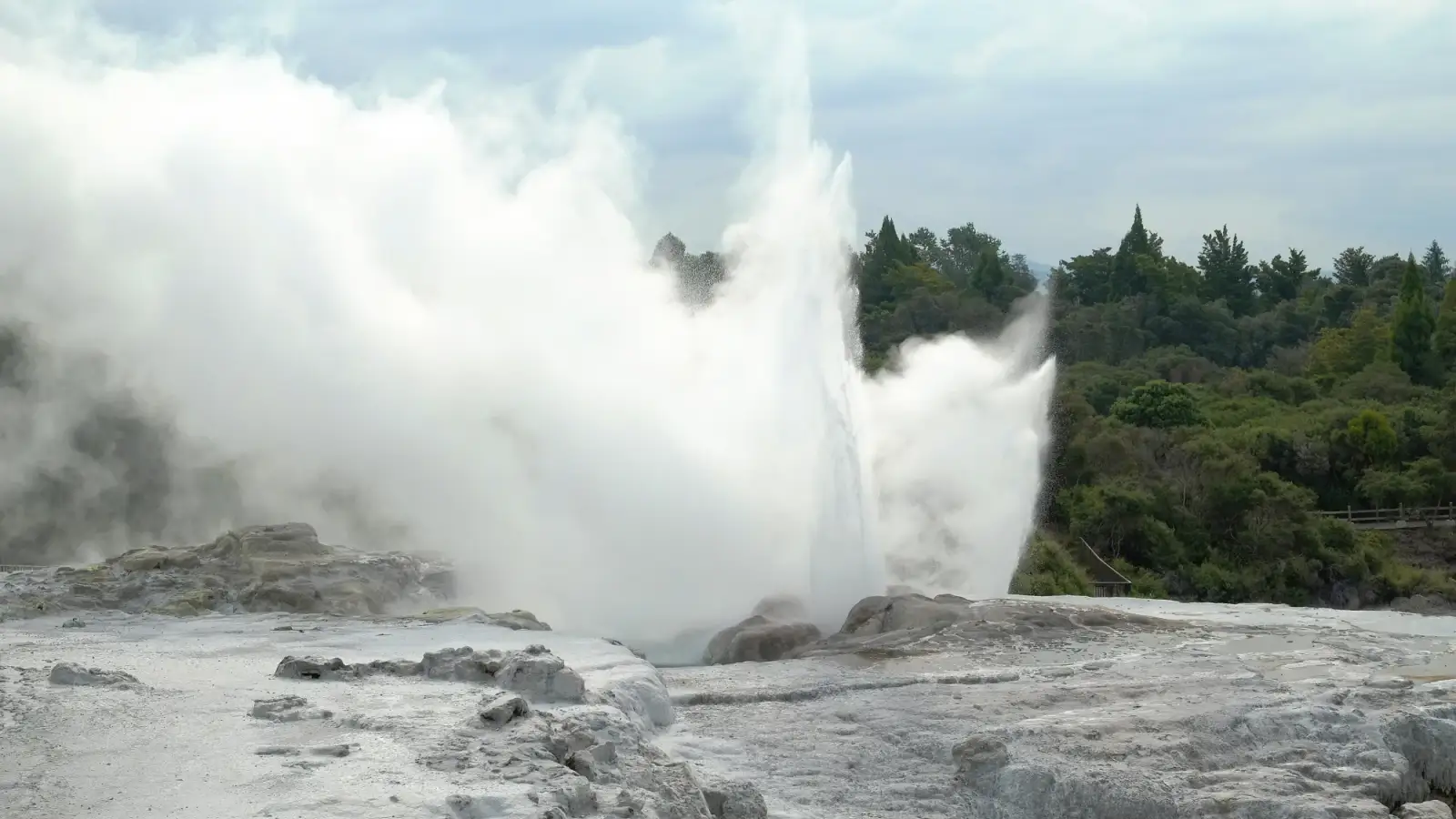
Te Puia occupies the geothermal valley of Te Whakarewarewa, on Hemo Road, south of the center. Daytime entry is always guided: the Te Rā tour lasts 90 minutes, leaves every hour and takes in the Pōhutu geyser, which Te Puia itself presents as the largest active geyser in the Southern Hemisphere (it erupts up to 20 times a day and reaches 30 meters, with no guaranteed time), the kiwi conservation center and the New Zealand Māori Arts and Crafts Institute, where you can see students carving wood and weaving flax. There are versions with a cultural performance in the carved meeting house and with a hāngī lunch. In the evening, Te Pō combines a song and dance performance, hot chocolate on the geyser terrace and a hāngī buffet, and Mārama is a lit walk of about 1.5 km through the valley. The site is open from 8:45 to 17:00, the last tour leaves at 16:00, dinners run in sittings at 17:30 and 19:15, and payment is by card only. Prices on the official site in October 2026: NZ$105 for Te Rā, NZ$203 for Te Pō and NZ$49 for Mārama.
Check access
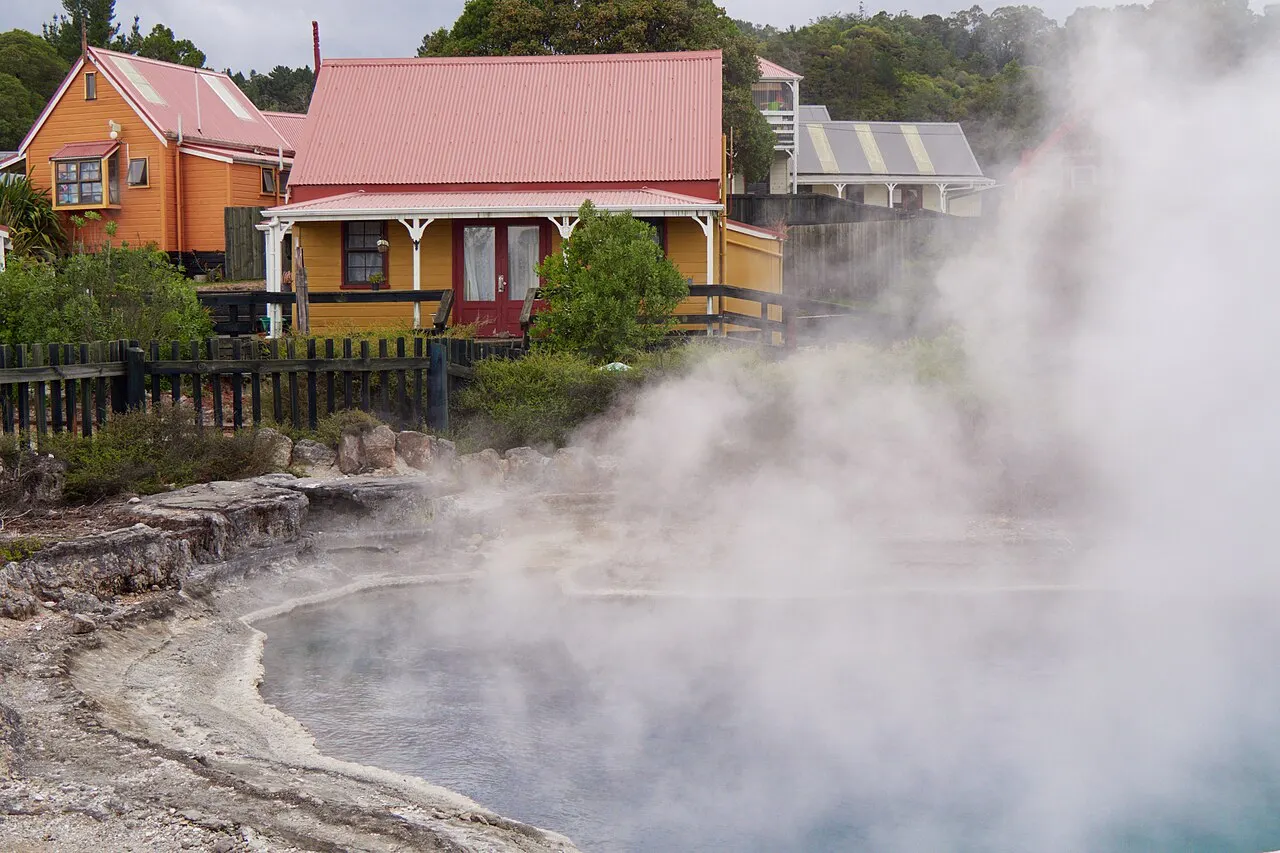
Whakarewarewa Living Māori Village
On the other side of the same valley, on Tryon Street, the village of Whakarewarewa is home to the Tūhourangi Ngāti Wāhiao, who have welcomed visitors for more than two centuries and own and operate the visit. You can enter the village only with a guide: the guided tour lasts one hour, leaves at 9:00, 10:00, 11:00, 12:00, 13:15, 14:00 and 15:00, with 20 to 30 people per group, and passes among houses, churches, the marae, the World War II memorial arch and the pools that serve as stove and bathtub, with a view of Pōhutu in the neighboring valley; along the way you taste corn cooked in a hot spring. The cultural performance is a separate ticket: 30 minutes of song, haka, poi and stick games, every day at 12:30, with extra sessions on scattered dates and limited places. The self-guided trails, of 30 to 60 minutes, lead to steaming lakes you can see only from here, but do not reach Pōhutu. The village closes to the public at 16:00. In the price list that runs from October 1 to September 30, the guided tour costs NZ$58 per adult and NZ$29 per child aged 5 to 15, the performance NZ$37 and NZ$20, and the trails NZ$42 and NZ$21; book the tour, because the groups are small.
Check access
Admission: NZ$58 (checked Oct 2026) source
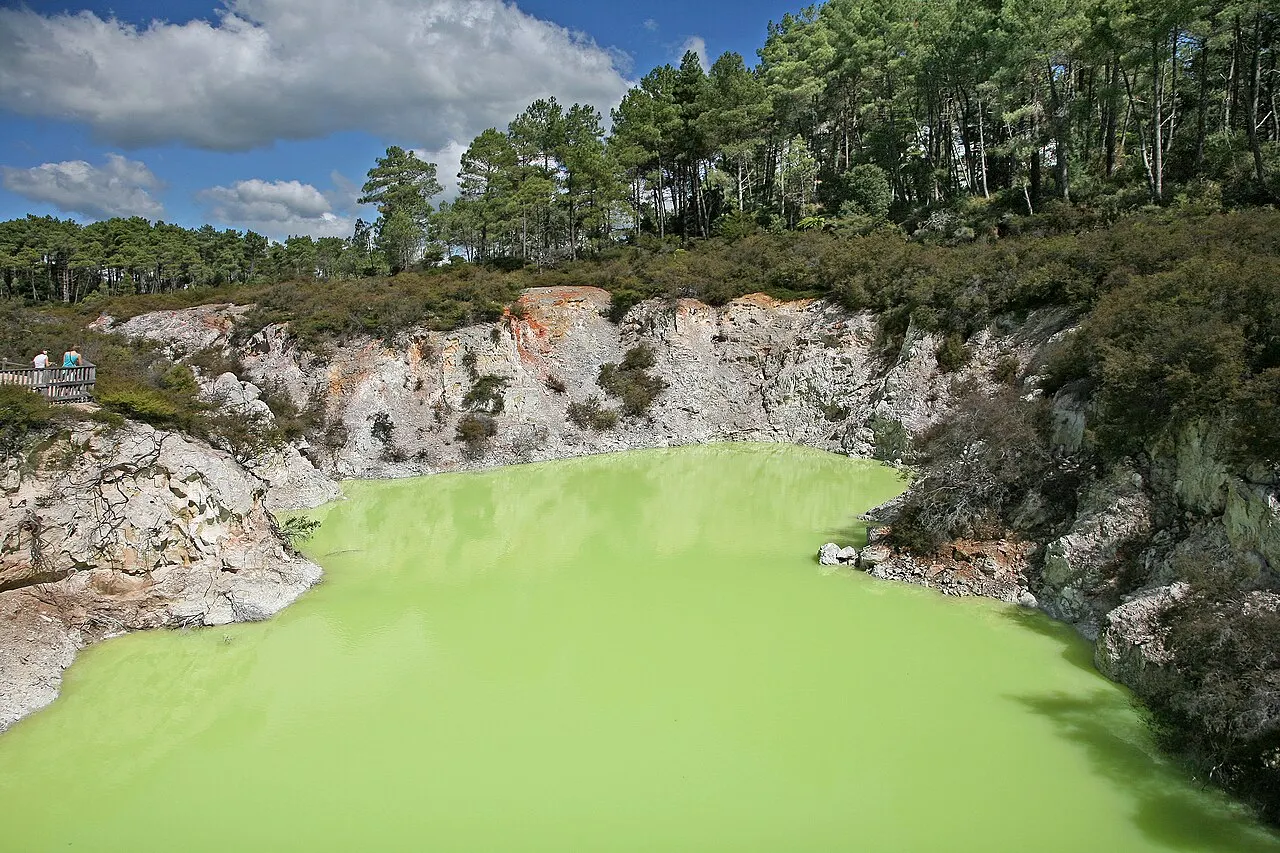
Wai-O-Tapu Thermal Wonderland
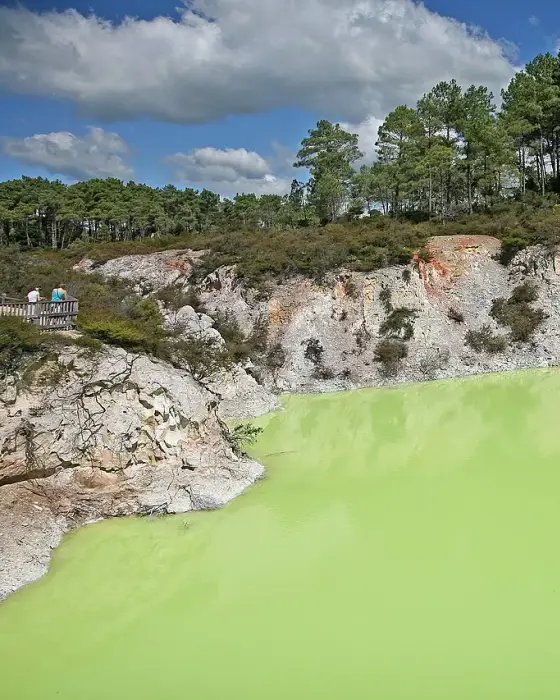
About 27 km south of Rotorua on the SH5, plus 2 km from the signed entrance, Wai-O-Tapu gathers the region's strongest colors on a compact site: the Champagne Pool, with its orange rim and bubbles, the mineral palette of the Artist's Palette and the lime-green Roto Kārikitea lake. Three linked circuits run from 1.5 km to about 3 km; the shortest passes the highlights, and the full one goes down to a waterfall. The Lady Knox geyser is two minutes by car from the visitor center, and the park requires you to drive to it; staff set it off at 10:15 every day with the help of an organic soap, and the jet reaches 10 to 20 meters. The park asks you to arrive at the geyser by 9:45. Tickets are bought at the visitor center or online. It is open every day from 8:30 to 16:30, with last entry at 15:00, takes cards only and has no restrooms in the park or at the geyser, only at the visitor center.
Check access
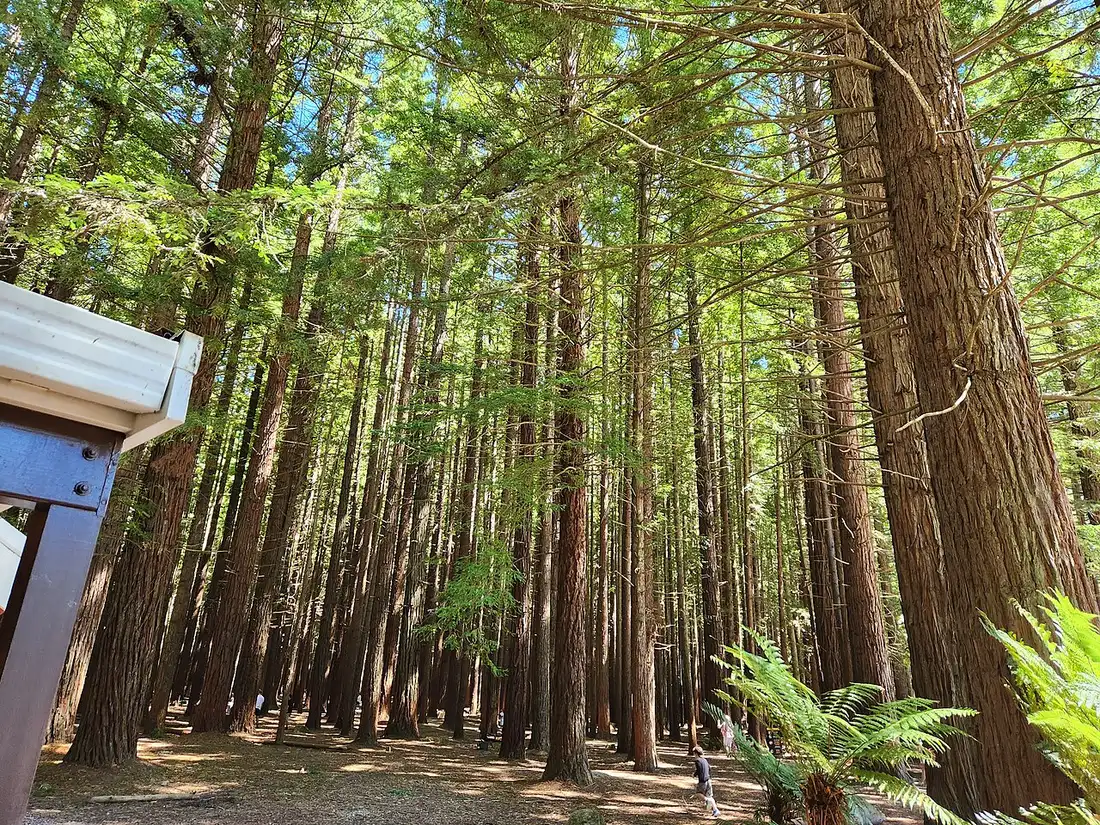
Whakarewarewa Forest (The Redwoods)
About ten minutes by car from the center, the Whakarewarewa forest covers 5,600 hectares and began in 1899 as a trial of about 170 timber species; the California redwoods, now more than 70 meters tall, give the grove its character. Access is free. The trails leave from the redwoods i-SITE, where you pick up a map, and range from half an hour in the memorial grove to all-day routes. The forest has more than 180 km of mountain bike trails, with rental shops at the entrance on Waipa State Mill Road. It is a working forest: trucks and machinery operate in it, and the signed detours must be respected.
Check access
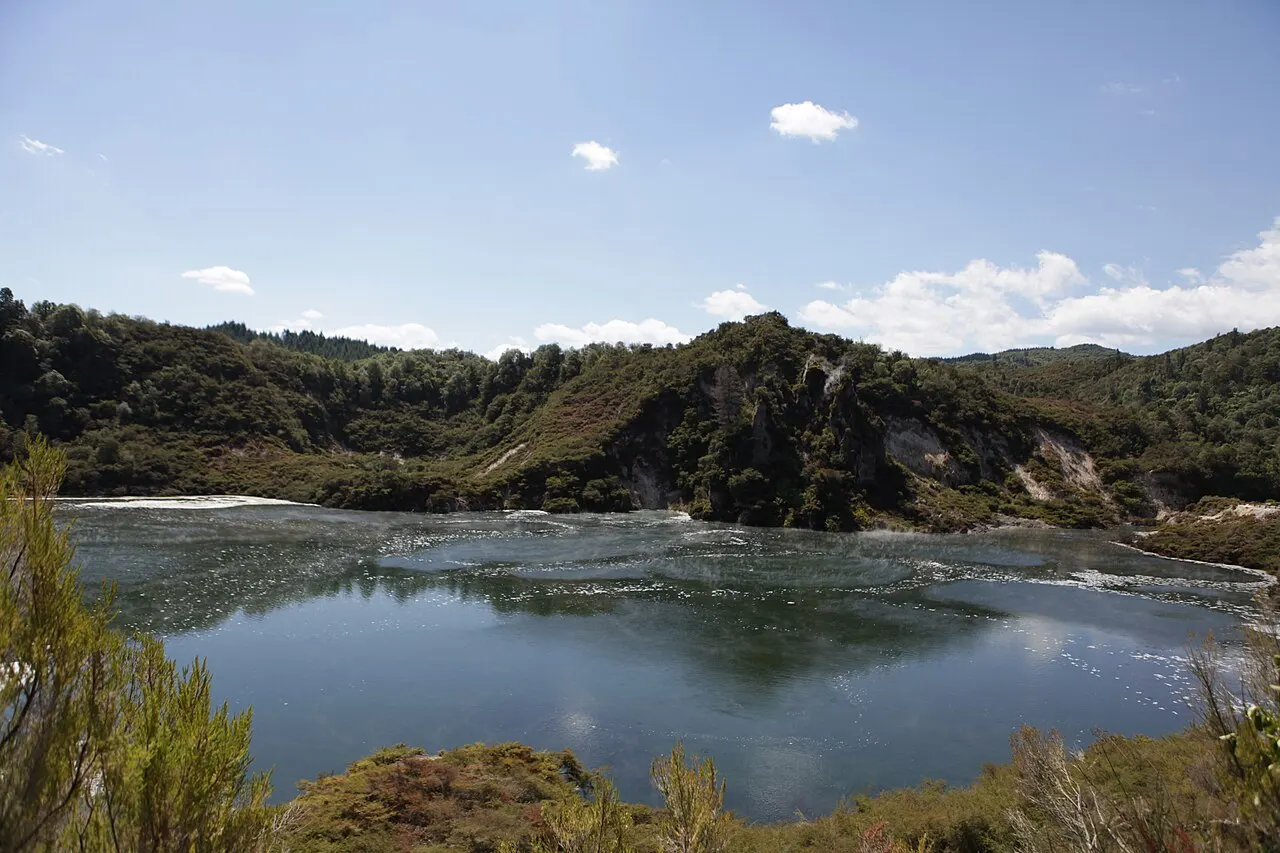
Waimangu Volcanic Valley
The Waimangu valley was born of the Mount Tarawera eruption on June 10, 1886, and is one of the youngest geothermal systems in the world. The visit is a walk downhill through the bush, on trails of 1.5 km to 4.5 km, past Frying Pan Lake, the largest hot spring in the world by surface area, the blue lake of Inferno Crater and silica terraces. Internal buses take you back to the top from stops along the way. At the end, a boat makes a guided 45-minute cruise on Lake Rotomahana, over the place where the Pink and White Terraces once stood. The valley is open from 8:30 to 17:00; the full experience, with the walk and the boat, cost NZ$135 in October 2026, takes three hours or more and has last entry at 13:30. It is about 25 minutes by car from the center, turning off the SH5 onto Waimangu Road.
Check access
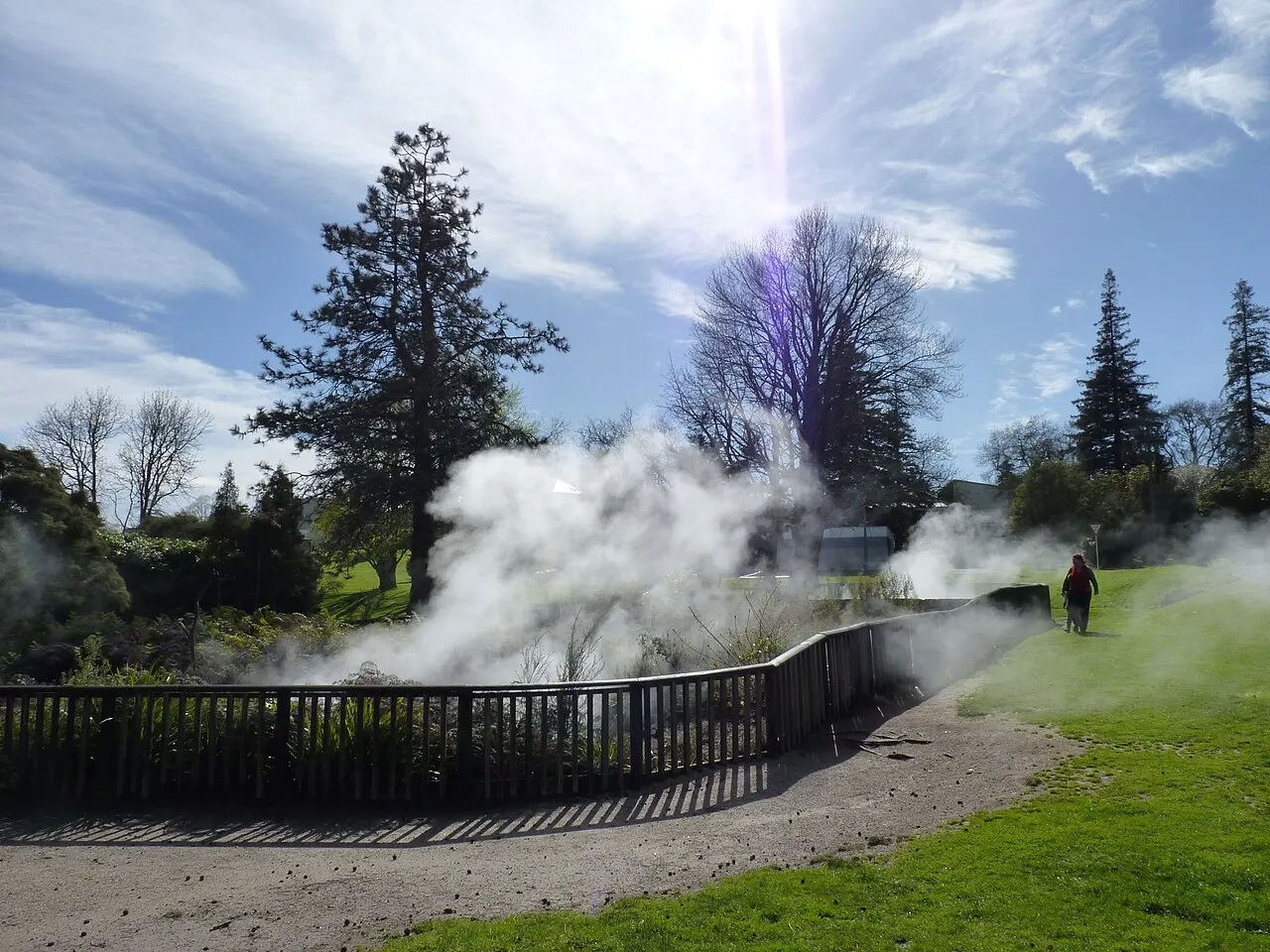
Kuirau Park
A free public park at the corner of Pukuatua and Ranolf streets, a short walk from the center. Walkways cross a crater lake that gives off steam, mud pools and hot springs, among flower beds and playground equipment, and there is a free thermal foot bath. On Saturdays, from 6:00 to 13:00, the farmers' market fills the park with food stalls. Parking is also free.
Check access
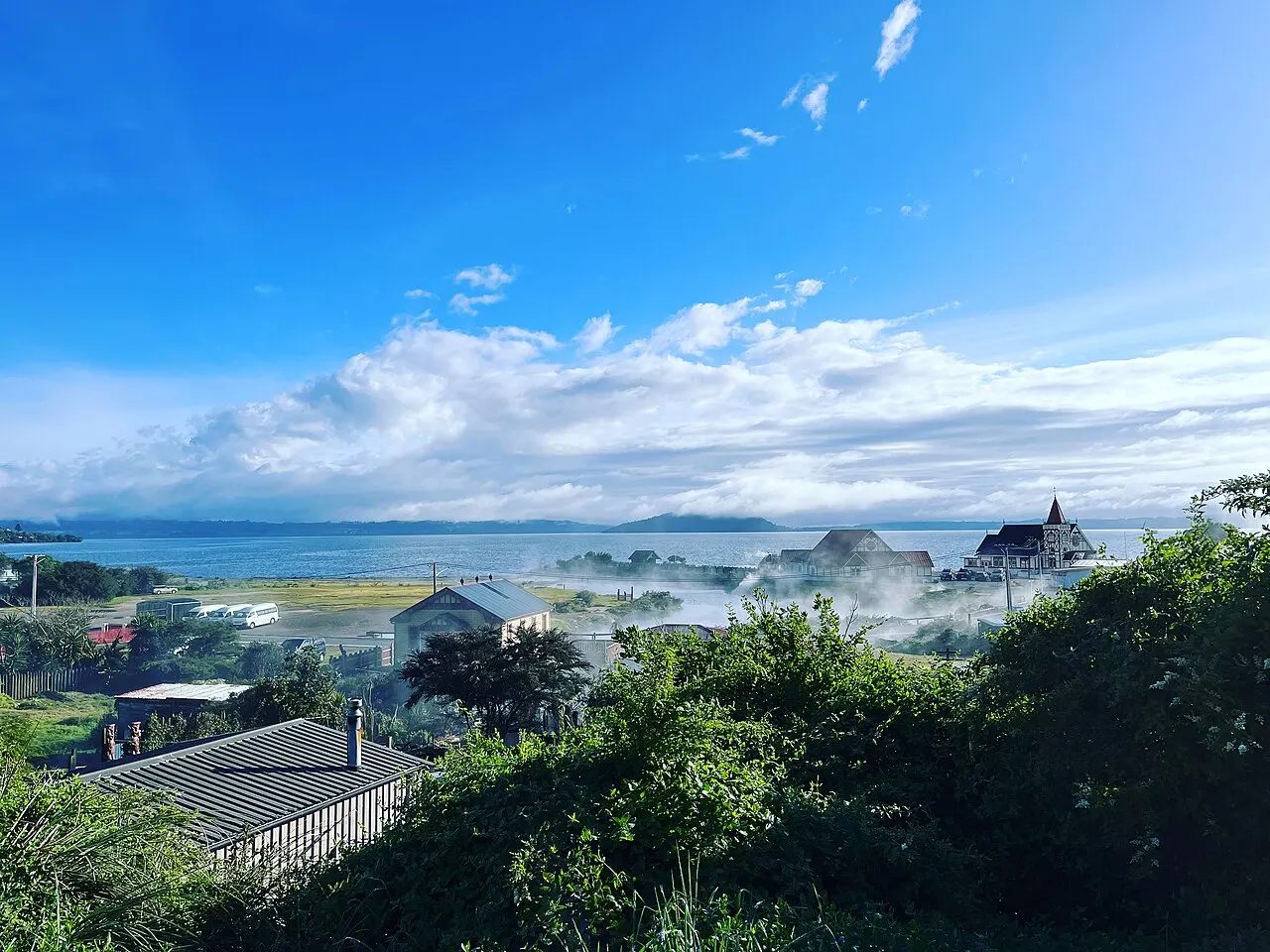
Ōhinemutu
The Māori village where Rotorua began sits on the lakeshore, about ten minutes on foot from the center, and is still home to a few hundred descendants of the Ngāti Whakaue, who gave up the land where the city was built. Steam rises from vents between the houses, and there are fenced-off boiling pools. The Tamatekapua meeting house, with carvings inlaid with pāua shell, is not open to the public, but can be seen from outside. The visit is free; stay on the sidewalks and remember that the streets have traffic.
Check access
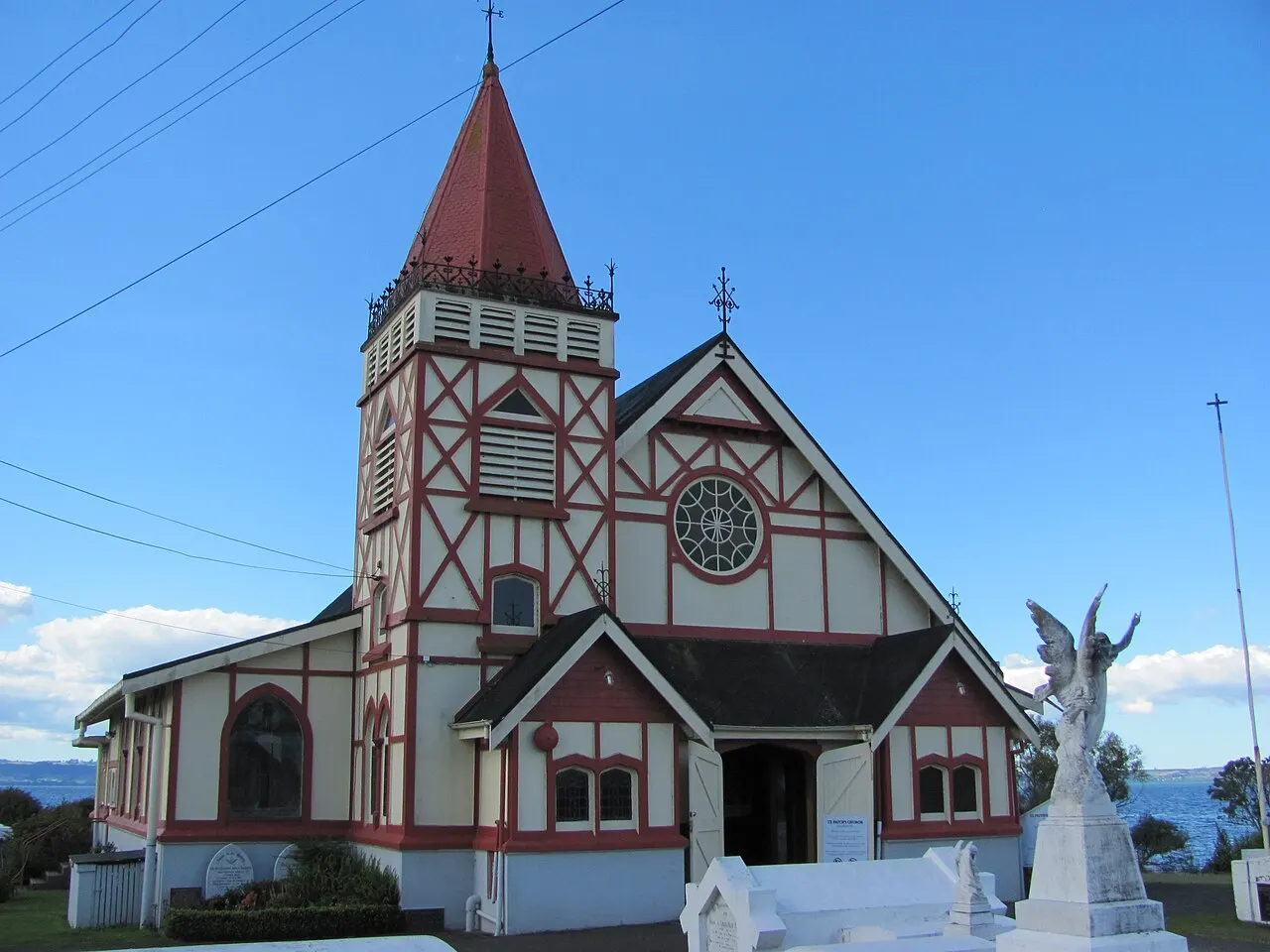
St Faith's Anglican Church
On the lakeshore in Ōhinemutu, the Anglican church of St Faith's has a Tudor-style facade and a Māori interior, with carvings, tukutuku woven panels and stained glass. One of the windows shows Christ wearing a Māori cloak, etched so that he seems to walk on the lake seen through the glass. Behind the church, the military cemetery has aboveground graves because of the geothermal activity.
Check access
Government Gardens
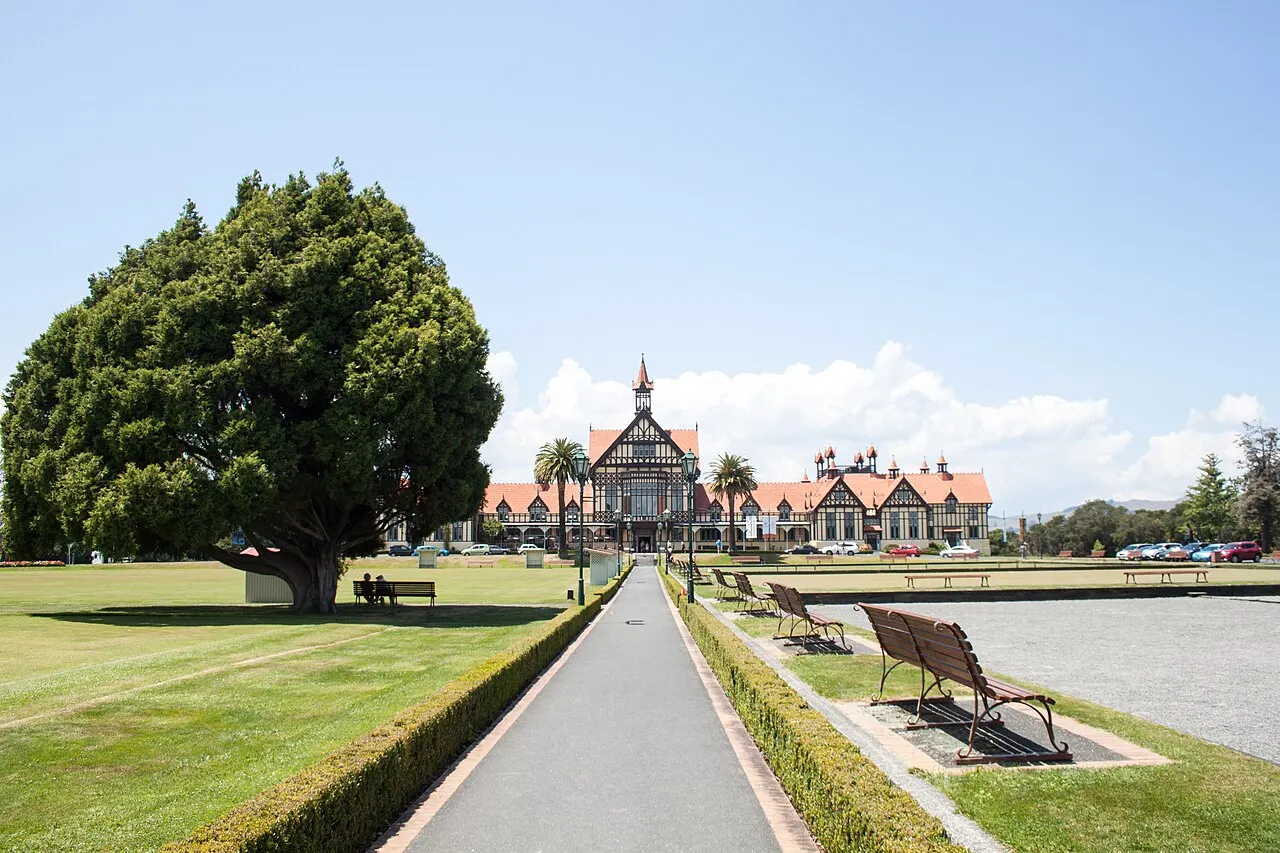
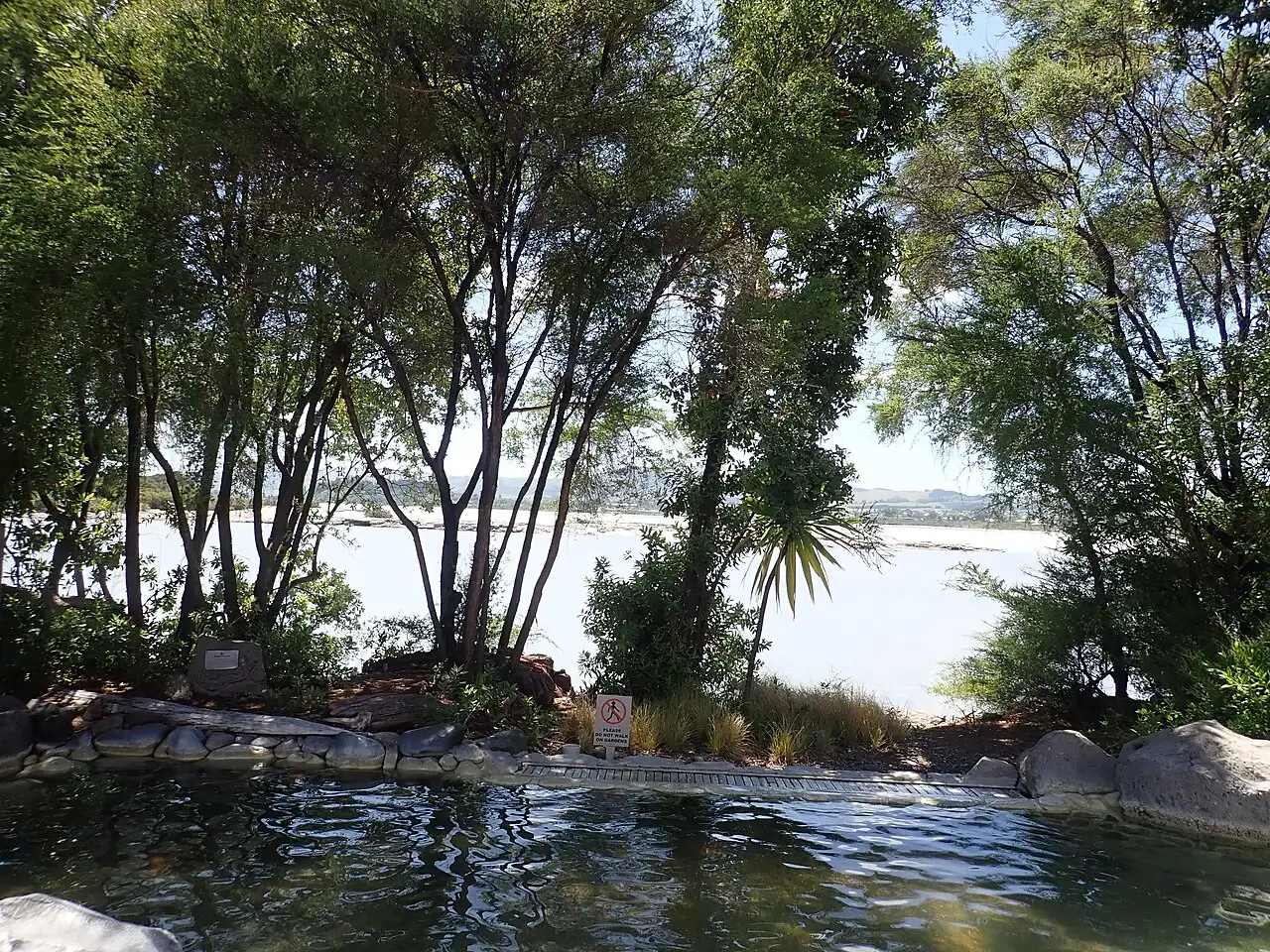
The Government Gardens, on the lakeshore and minutes from the center, occupy the land that the local Māori ceded to the Crown in the late 19th century for a spa. The Bath House, in Tudor style, opened in 1908 and houses the Rotorua Museum, which is closed for renovation and seismic strengthening. The garden remains open, with geothermal pools, bowling and croquet lawns, the Te Arawa soldiers' memorial, the Klamath Falls rose garden (in bloom from mid-November to June) and the Te Runanga tea house, from 1903. On the same shore, the Motutara walkway (Sulphur Bay) passes between hot springs and sulfur vents, in a bird reserve; do not leave the path.
Check access
Rotorua Museum (Bath House) closed for renovation and seismic strengthening, completion expected in 2027 (checked Oct 2026) source
More places in the guide
Polynesian Spa
The city's thermal bath, on Hinemoa Street, uses two waters: that of the Priest spring, acidic and rich in sulfate, tied to a priest who sought relief from arthritis in 1878, and that of the Rachel spring, alkaline, piped in since 1902. The Pavilion area, for ages 12 and over only, has eight hot pools; the Deluxe Lake Spa has mineral pools and a lake view; there are family and private pools. It is open every day from 9:00 to 23:00, with last entry at 22:00; prices vary by area and package, and it is best to book on the site.
Redwoods Treewalk
Across from the redwoods i-SITE, on Long Mile Road, a series of suspension bridges among the redwoods takes on average 30 to 40 minutes. By day it is a canopy walk; from sunset, the Nightlights, lanterns by David Trubridge, light up the route. In October 2026, the daytime Treewalk cost NZ$45 per adult and NZ$28 per child aged 5 to 15; the night version, NZ$45 to NZ$55 per adult, with a date and time set at purchase.
Buried Village of Te Wairoa
On Tarawera Road, on the way to Lake Tarawera, the archaeological site of the village of Te Wairoa, buried in the 1886 eruption, tells the story of the catastrophe with excavations and a museum. The Te Wairoa Falls trail follows the stream and goes down to the base of a 30-meter waterfall. It is open Wednesday to Sunday, from 10:00, with last entry at 15:45; it is closed on Mondays and Tuesdays.
Lake Rotorua
The largest of the district's lakes is, beneath the water, a volcanic crater. From the waterfront, next to Eat Streat, cruises, jet boats and floatplanes depart. In the middle of the lake, Mokoia Island is a bird sanctuary reached only on organized tours; it is the setting of the story of Hinemoa, who, forbidden to marry Tūtānekai, swam across the lake, guided by the sound of his flute.
Skyline Rotorua
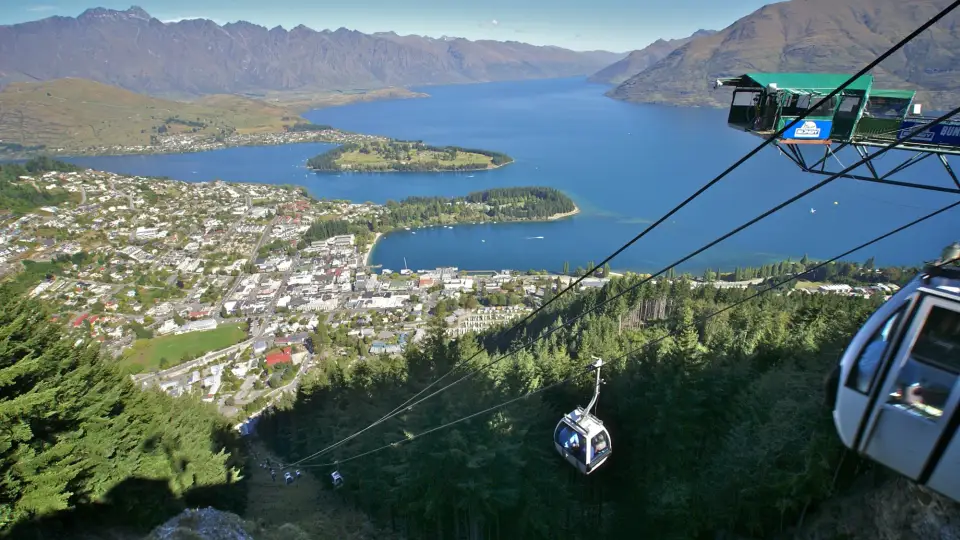
On the Fairy Springs road, a gondola climbs the slopes of Mount Ngongotahā to a complex with a restaurant and luge tracks for riding down in carts. City buses reach the base. Check prices and combinations on the official site before going.
Hell's Gate
About 16 km northeast of Rotorua, on the SH30, the Tikitere park is presented by RotoruaNZ as the most active geothermal reserve in Rotorua. A circuit of about 2.5 km passes boiling pools, a 2.4-meter mud volcano and a hot-water waterfall. The English name comes from a visit by the playwright George Bernard Shaw, in 1934; for the Māori, the place is one of healing, and the complex offers mud baths and sulfurous-water pools.
Agrodome
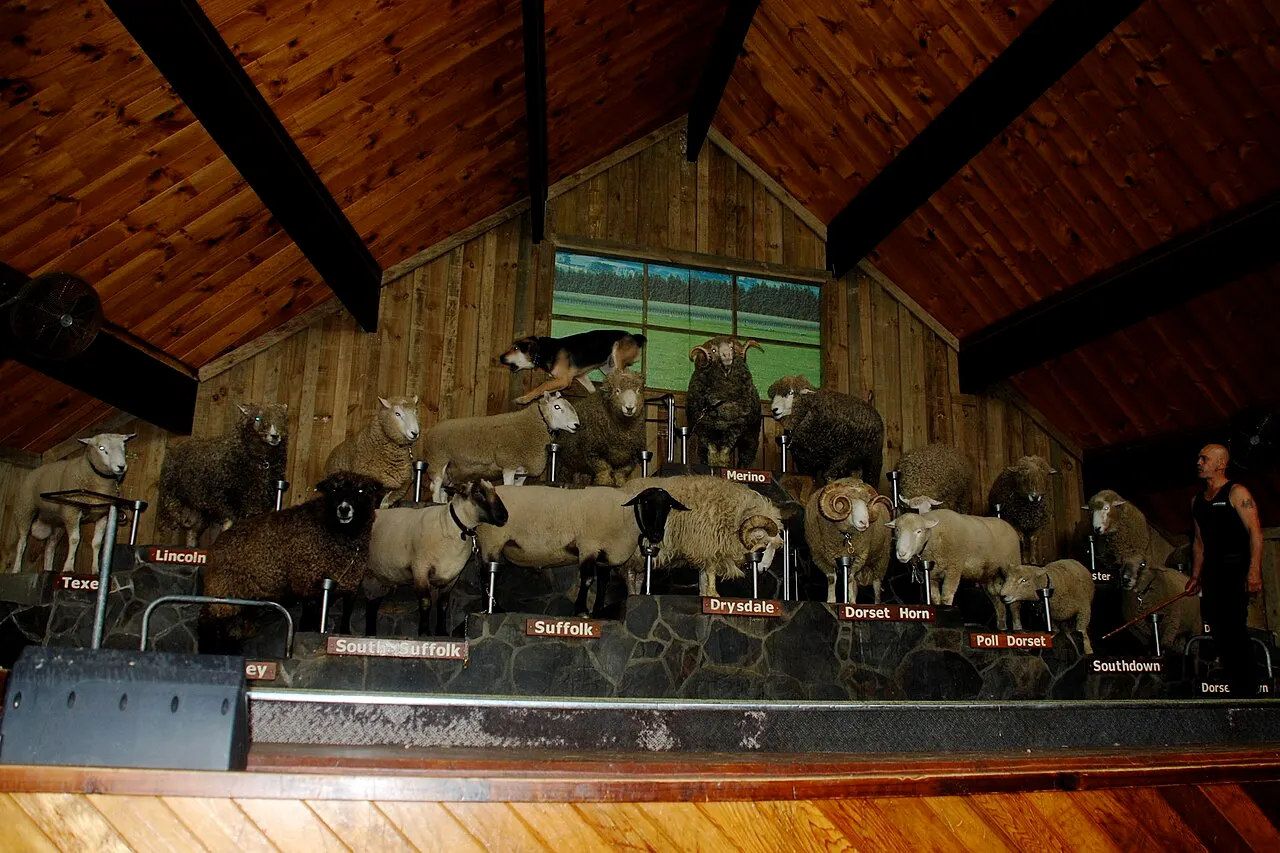
A model farm in the Ngongotahā area, with a sheep and shearing show and a tractor ride among the animals. It is a family outing; check the show times on the site.
Okere Falls
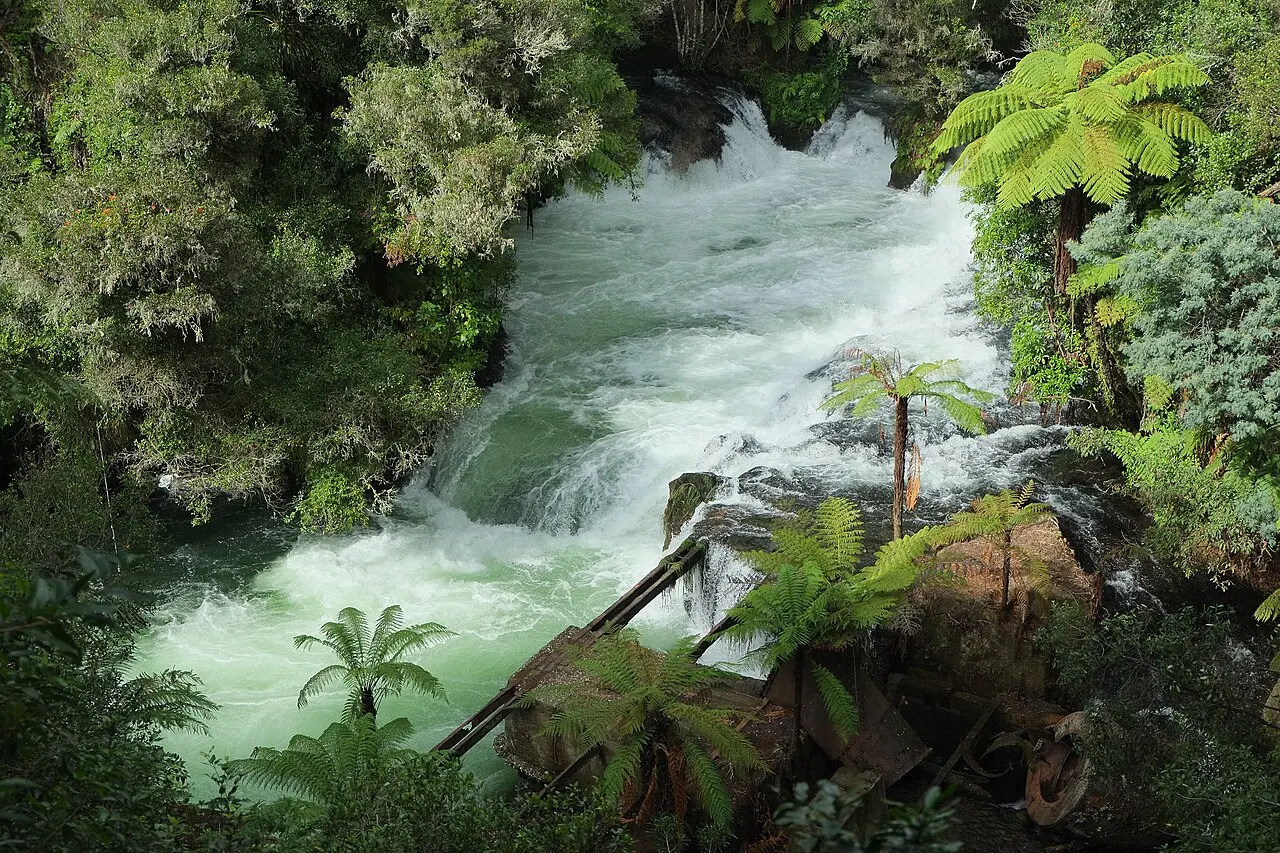
On the SH33, to the northeast, the Kaituna River forms the 7-meter Tutea Falls, which RotoruaNZ describes as the highest waterfall in the world run by commercial rafting. Local companies make the descent in seven-person rafts or two-person kayaks. For those who only want to look, there are trails through the bush along the river; do not leave valuables in view in the car.
Nilo’s itinerary
Start with the basic programme and choose extensions for the time you have.
Plan my days in the app ↗Day 1 · Whakarewarewa, the villages and the lakeshore
9:00: one-hour guided tour of the village of Whakarewarewa, with corn cooked in the hot spring; book ahead, because the groups are small.
After the tour: the self-guided trails to the steaming lakes (separate ticket) or a coffee at the Geyser Café, at the entrance.
11:30: lunch booked in the village, a hāngī meal or a hāngī pie.
12:30: the village's cultural performance, 30 minutes of song and dance (separate ticket, limited places).
Early afternoon: by car or taxi to Kuirau Park; cross the park on the walkways and use the foot bath.
From Kuirau, walk to Ōhinemutu: Tamatekapua from outside and St Faith's church from inside.
Continue along the waterfront to the Government Gardens, with the Bath House from outside and the Motutara walkway (Sulphur Bay).
Late afternoon: a soak at the Polynesian Spa, on Hinemoa Street.
19:15: Te Pō dinner at Te Puia, with a performance and hot chocolate on the Pōhutu terrace (book the sitting).
Day 2 · The volcanic valleys of the south and the redwoods
Drive out on the SH5 around 9:00 and stop at the Wai-O-Tapu visitor center for the ticket (or bring the one bought online) and the restroom, the only one in the park.
From there, two minutes by car to the Lady Knox geyser, where you should be by 9:45; the show is at 10:15. Afterward, go back to the visitor center and do the circuit: the short one passes the Champagne Pool and the Artist's Palette; allow about two hours for the full one.
Around 12:30, head north to Waimangu Road and enter Waimangu before 13:30, the last entry for the experience with the boat.
Walk down the valley, take the 45-minute cruise on Lake Rotomahana and return to the top on the internal bus.
Late afternoon: back to Rotorua and a short walk in the redwood grove, from the forest i-SITE.
At dusk: Treewalk with the Nightlights, at a booked time.
Dinner on Eat Streat. Without a car, swap the morning for the i-SITE transfer to Waimangu, at 9:00, and leave Wai-O-Tapu out.
Food
Hāngī
The Māori earth oven: meat and vegetables go in baskets onto heated stones in a pit, covered with damp cloths and earth, and cook for hours in the steam. In Rotorua, some kitchens use geothermal heat in place of the stones. It appears at the cultural dinners of Te Puia, Mitai and Te Pā Tū and in the dishes served in the village of Whakarewarewa.
Hāngī pie
The hāngī filling (meat or vegetables cooked in steam) wrapped in puff pastry, with beef, chicken or vegetarian options. In the village of Whakarewarewa, the Geyser Café, in the entrance building, sells the pie from 10:00 to 14:00, and the meal version, with salad and corn, is served at set times in late morning and early afternoon; the village recommends booking the food packages.
Steambox food
Dishes cooked in the natural steam of geothermal springs, offered by some restaurants and tours. The steam comes out of the ground at a temperature high enough to cook slowly.
Rēwena bread
Māori sourdough bread: the starter is made of boiled potato mashed with flour and sugar, left to ferment for days, and gives a slightly sweet and sour taste. It usually accompanies the hāngī, as on the menu of the Te Pō dinner.
Hot-spring corn
In the village of Whakarewarewa, ears of corn cooked in a boiling mineral pool; they appear only for those who take the guided tour or order the village's hāngī meal.
Craft beer
The Croucher brewery, from Rotorua, serves its beers at BREW, on Eat Streat, which also roasts coffee.
Ice cream
Lady Janes, on Eat Streat, is a traditional ice cream parlor in the city, with more than 40 flavors.
Where to eat
- BREW (Croucher Brewing) · Eat Streat (end of Tutanekai Street)
A covered block of restaurants, with a sidewalk heated by geothermal warmth, that works in rain or cold: pub, steak, seafood, tapas, Indian and Italian. It is the simple choice for dinner after a day at the parks. BREW serves the beers of the local Croucher brewery, with pub food.
Source · 2026-10-20
- Lady Janes Ice Cream Parlour · Eat Streat
Ice cream for dessert, with more than 40 flavors and coffee, in a traditional ice cream parlor in the city.
Source · 2026-10-20
- Village of Whakarewarewa
The village's hāngī meal (beef and chicken, potato, kūmara and vegetables cooked in the vents and the hot spring, with dessert) or the hāngī pie, served at the Geyser Café at the entrance, which can be used without buying a ticket. It is the lunch that makes sense on the day of the visit; the village recommends booking the food packages.
- Te Puia, Mitai and Te Pā Tū (cultural dinners)
A hāngī feast with a song and dance performance. Te Puia serves the buffet with rēwena bread and ends on the geyser terrace; the Mitai village, on the Fairy Springs road, cooks in an earth oven for up to four hours and includes a walk to a glowworm spring; Te Pā Tū, with round-trip transport from central Rotorua, serves the feast in a tawa forest and changes the menu with the season. Booking is advised.
- Kuirau Park (Saturday)
The farmers' market from 6:00 to 13:00 is the place for a market-stall breakfast or lunch, with fruit and local products.
· 2026-10-20
Day trips
Hobbiton (Matamata)
Matamata is about 70 km and 55 minutes by car from Rotorua, and the Hobbiton set, at The Shire's Rest, is about 15 minutes from the center of Matamata. The set is on private land and can be visited only on a guided tour, with advance booking: the Signature tour takes about two and a half hours, with 1.5 hours of guided walking and a stop at the Green Dragon Inn, and cost NZ$130 per adult in October 2026. Without a car, operators such as GreatSights run the tour from Rotorua, with hotel pickup.
Waitomo Caves
Waitomo is about two hours by car west of Rotorua. At the Waitomo Glowworm Cave, the 45-minute visit ends with a boat ride under glowworms, from NZ$85; Ruakuri, at an hour and a half, and Aranui are the other caves, and there are inner-tube options (black water rafting). Book ahead. Operators in Rotorua combine Waitomo and Hobbiton in the same tour.
Where to begin
Whakarewarewa, the villages and the lakeshore
9:00: one-hour guided tour of the village of Whakarewarewa, with corn cooked in the hot spring; book ahead, because the groups are small.
The volcanic valleys of the south and the redwoods
Drive out on the SH5 around 9:00 and stop at the Wai-O-Tapu visitor center for the ticket (or bring the one bought online) and the restroom, the only one in the park.
Money
The currency is the New Zealand dollar (NZ$), and the 15% GST is already in the price. Cards work almost everywhere, and Te Puia and Wai-O-Tapu do not accept cash. Tickets are the biggest expense of the visit; in October 2026, on the official sites: Te Rā at Te Puia, NZ$105; Te Pō dinner, NZ$203; guided tour of the village of Whakarewarewa, NZ$58 per adult, and the village's cultural performance, separately, NZ$37; full experience at Waimangu, NZ$135; daytime Treewalk, NZ$45 per adult; Signature tour of Hobbiton, NZ$130 per adult; Waitomo caves, from NZ$85. Kuirau Park, Ōhinemutu, the Government Gardens and the Whakarewarewa forest are free. A city bus fare costs NZ$3.20 in cash.
Getting there and around
Getting there
Rotorua Regional Airport is 9 km northeast of the center, with daily Air New Zealand flights to Auckland, Wellington and Christchurch. From the airport to the center, there are car rental desks in the terminal and a Cityride city bus line; check the line's schedule on the Baybus site before landing. By car, Auckland is about three hours away, via Hamilton or via Matamata. InterCity long-distance buses stop at the i-SITE, at 1167 Fenton Street. There is no passenger train.
City bus
The Baybus Cityride network has 11 routes, most every half hour, and reaches Ngongotahā, the airport and the attractions on the Fairy Springs road. In October 2026, an adult fare within Rotorua cost NZ$3.20 in cash and NZ$2.60 with the Bee Card, which must be tapped on boarding and on leaving; the one-day pass (Daysaver) cost NZ$8.
A car for the southern parks
Wai-O-Tapu, Waimangu, the Buried Village and the eastern lakes are outside the city lines. A rental car is the simplest way to do the south in a day; in summer, allow more time on the road. Without a car, a transfer leaves the i-SITE for Waimangu at 9:00 and returns at 13:30, by reservation and with a minimum of two adults; tour operators run the other combinations.
On foot and by bike
The center, Ōhinemutu, Kuirau Park, the Government Gardens and Eat Streat can all be done on foot. There are several bike rental shops, including at the entrance to the forest, and a cycle path runs around almost the whole lake.
Safety
Rotorua is a quiet city, and the most real risk is geothermal: boiling water, superheated steam and unstable ground outside the walkways. Gases from the ground collect in enclosed places or below ground level, and the smell of sulfur indicates they are present. In natural hot springs and streams, do not put your head in the water, because of the risk of amoebic meningitis. There are reports of car thefts and robberies at spots such as the Okere Falls parking lot and Kuirau Park after dark: do not leave valuables in view in the car and prefer the park by day. In New Zealand, people drive on the left.
Before you go
- Plug
- type I
- Voltage
- 230 V
- Driving side
- on the left
- Emergency
- General 111
- Country code
- +64
- Official languages
- Māori, New Zealand Sign Language and English
- Currency
- New Zealand dollar (NZD)
Source: Wikidata (CC0), checked September 2026.
Etiquette tips
Ōhinemutu and Whakarewarewa are homes
In the inhabited villages, people live there. In Ōhinemutu, stay on the sidewalks and do not photograph residents' houses; in Whakarewarewa, you move around the village only with a guide. The Tamatekapua meeting house is not open to the public.
A geothermal barrier is not a suggestion
Water and mud can be boiling, and the ground around a pool can give way. Stay inside the walkways and fences, also in the free parks and in Ōhinemutu.
Hobbiton asks for ID to drink
At the Green Dragon Inn, to be served alcohol you must show a passport, a New Zealand driver's license or the 18+ hospitality card.
Mistakes to avoid
Arriving at Wai-O-Tapu after 10:00
Lady Knox is presented once a day, at 10:15, two minutes by car from the visitor center, and the park asks you to arrive by 9:45; anyone who starts with the circuit or arrives late misses the geyser.
Leaving Waimangu for late afternoon
The full experience with the boat has last entry at 13:30 and takes three hours or more; anyone who arrives after that does not get the boat.
Showing up at Hobbiton without a booking
The set can be visited only on a guided tour, on private land, and the time slots sell out; the ticket office on site has the same availability as the website.
Putting your head under in a natural spring
In natural thermal pools and streams, do not put your head under: water that has passed through the ground can transmit amoebic meningitis. See a doctor if you have flu symptoms after a bath like that.
Counting on a bus to the south
The city lines do not reach the southern parks; without a car, book a transfer or a tour beforehand.
Useful phrases
Kia ora
Hello; also used to say thank you
Nau mai, haere mai
Welcome
Manuhiri
Visitors, guests
Manaakitanga
Hospitality, care for those who arrive
Kai
Food
Taonga
Treasure, a precious possession
Kaitiaki
Guardian, one who looks after a place
Wharenui
The carved meeting house of the marae
Where to stay
- Center and Eat Streat · Anyone traveling without a car or who wants to have dinner and walk back.: From here you can walk to Kuirau Park, Ōhinemutu, the Government Gardens, the Polynesian Spa, the waterfront and the restaurants of Eat Streat; InterCity buses and city lines leave from Fenton Street. The drawback is that the southern parks, the Buried Village and Hobbiton require a car, transfer or tour.
- Whakarewarewa and south Fenton Street · Anyone with a car who wants to be near Te Puia, the village of Whakarewarewa and the redwood forest.: The village, Te Puia, the redwoods i-SITE and the Treewalk are a few minutes away, and the south side of the city is the way to the SH5, toward Waimangu and Wai-O-Tapu. The drawback is depending on a car or bus to have dinner in the center.
· 2026-10-20
Districts
Center and Eat Streat
The grid of streets between Fenton and the lake concentrates hotels, motels, shops and restaurants. Eat Streat, at the end of Tutanekai Street, is a covered block of restaurants with a heated sidewalk. From here you can walk to Kuirau Park, the Government Gardens, the Polynesian Spa and the waterfront, where the lake boats depart.
Ōhinemutu
The Māori village of the Ngāti Whakaue, on the lakeshore and about ten minutes on foot from the center. It has the Tamatekapua meeting house, St Faith's church and steam rising between the houses. It is a residential neighborhood: the streets have traffic, and the visit is made along the sidewalks.
Whakarewarewa
The geothermal valley south of the center, with Te Puia on one side and the inhabited village on the other. Just to the east begins the Whakarewarewa forest, with the redwoods i-SITE, the Treewalk and the bike trails. It is the area for anyone who wants to stay close to Māori culture and the forest.
Fairy Springs and Ngongotahā
The Fairy Springs road, which leaves the center toward Ngongotahā, holds the Skyline gondola, the Mitai village and, farther on, Agrodome and Ngongotahā. It is the area most sought out by families.
Eastern lakes
Tarawera Road passes lakes Tikitapu and Ōkāreka on the way to Lake Tarawera and the Buried Village. It is an area of lake beaches, fishing, water skiing and trails, with few services.
Volcanic south
Along the SH5, toward Taupō, are Waimangu and Wai-O-Tapu, plus trails such as Mount Kākaramea (Rainbow Mountain). There is no city bus: you go by car, transfer or tour.
Northeast
Along the SH30 and SH33 are Hell's Gate, at Tikitere, and Okere Falls, on the Kaituna River, the base for rafting. It is also the way to Lake Rotoiti and the Bay of Plenty coast.
History
14th c. · The arrival of the Te Arawa
Descendants of the Te Arawa canoe settle the lakeshore. According to tradition, the explorer Ihenga named the lake Te Rotorua-nui-a-Kahumatamomoe, in honor of his uncle; roto means lake and rua, second.
1823 · The invasion of Mokoia
During the Musket Wars, a coalition led by the Ngāpuhi attacks Mokoia Island, in the middle of the lake, and defeats the Te Arawa.
1838 · Mission on the island
The missionary Thomas Chapman sets up a mission on Mokoia, after a first attempt at Te Koutu was abandoned.
1880 · The Fenton Agreement
The Ngāti Whakaue lease land to the Crown to create a town around the hot springs, with 99-year leases. Fenton Street, the main street in the center, is named after the judge of the agreement.
1886 · The Tarawera eruption
On June 10, Mount Tarawera erupts, buries the village of Te Wairoa, kills more than a hundred people and destroys the Pink and White Terraces, the country's greatest tourist attraction. The Waimangu valley was born of the same eruption.
1894 · The train from Auckland
The railway links Rotorua to Auckland, and health tourism grows. Passenger trains stopped running in 2001.
1908 · The government bathhouse
Prime Minister Joseph Ward opens the Bath House, in Tudor style, in the Government Gardens. It is the first major state investment in New Zealand tourism and now houses the Rotorua Museum.
2016 · Museum closed
The Bath House closes for failing to meet seismic standards; strengthening work began in June 2024.
2020 · Te Puia returns to Māori hands
A law transfers ownership of Te Puia and the New Zealand Māori Arts and Crafts Institute from the Crown to entities of the Wāhiao Tūhourangi and the Ngāti Whakaue.
Complete history
A people and a lake
The history of Rotorua begins with the Te Arawa, who reached the lakeshore in the 14th century and built a fortified village at Ōhinemutu. The heat of the ground was used for cooking, bathing and warming houses, and tradition attributes the hot springs to a request by the priest Ngātoro-i-rangi to the gods of Hawaiki, the homeland. The people of Ōhinemutu came to be called Ngāti Whakaue, a name that still appears among the owners of land and businesses in the city.
War, mission and lease
In the early 19th century, the Musket Wars reached the lake: in 1823, a coalition from the north attacked Mokoia and defeated the Te Arawa. Traders and missionaries followed, and in the 1860s the lakeshore saw fighting from the New Zealand Wars. In 1880, instead of selling, the Ngāti Whakaue leased land to the Crown under the Fenton Agreement, so that a hot-springs town could be founded. The following year, a law gave the government the exclusive right to buy or lease land with hot springs, and most of the plots ended up sold; in 1993, the Crown reached an agreement with the Ngāti Whakaue to return donated land that no longer served its original use.
The eruption that changed tourism
In the 1880s, travelers came from far away to see the Pink and White Terraces, silica staircases on the shore of Lake Rotomahana, guided by residents of the region's villages. On June 10, 1886, the eruption of Mount Tarawera tore a rift across the landscape, buried the village of Te Wairoa and made the terraces disappear. Tourism shifted to the Whakarewarewa valleys and the new government bathhouse, and many of today's guides at Te Puia and in the village of Whakarewarewa descend from the guides of that time.
A spa and culture city
The railway of 1894 brought guests from Auckland, and the Bath House of 1908 turned the Government Gardens into a European-style spa resort. Rotorua became a borough in 1922 and a city in 1962. The Whakarewarewa forest began in 1899 as a trial of timber species, and today the agriculture, forestry and fishing sector contributes the most to the district's economy. The city has one of the highest proportions of Māori population in the country, and the villages, marae and local iwi businesses are a central part of what visitors find.
Geography and shape of the city
Inside the caldera
Rotorua occupies the Rotorua caldera, formed by an eruption about 240,000 years ago, at an elevation of about 280 meters. Lake Rotorua is the largest of the district's 18 lakes; Mokoia Island lies in the middle of it. To the south and east, the Taupō volcanic zone continues in thermal valleys, craters and lakes such as Tarawera and Rotomahana.
Where the ground boils
Geothermal activity appears in bands. In the center, Kuirau Park, the Government Gardens and Sulphur Bay steam at the water's edge. South of the center, the Whakarewarewa valley holds Te Puia and the inhabited village. Farther south, along the SH5, are Waimangu and Wai-O-Tapu; to the northeast, Hell's Gate. Hydrogen sulfide gives the city the rotten-egg smell that many visitors notice on arrival.
How the city is laid out
The center is a compact grid between Fenton Street and the lake, with Eat Streat at the end of Tutanekai Street, by the shore. Ōhinemutu sits at the water's edge, ten minutes on foot from the center. Whakarewarewa lies south of the center, and the redwood forest to the southeast. The Fairy Springs road, toward Ngongotahā, concentrates attractions for families.
Climate
The climate is mild and humid. In the 1991 to 2020 normals, the average high is above 22 °C in January and February and falls to 12 °C in July, with lows near 4 °C in winter and frequent frosts. It rains all year, about 1,356 mm; July is the rainiest month and November the driest.
Culture
Te Arawa and the welcome
Rotorua is the territory of the Te Arawa iwi, and many of the attractions are Māori-owned and managed: Te Puia, the village of Whakarewarewa, the Wai Ariki spa of the Ngāti Whakaue. The pōhiri, a welcome ceremony, opens several visits; the call of an elder woman (karanga), the speeches and the poi and haka performances are part of it. Kapa haka is the name of the group song and dance seen in the shows.
Carving, weaving and pounamu
The New Zealand Māori Arts and Crafts Institute, inside Te Puia, houses the national schools of carving and weaving; you can watch the students at work. In the center, studios such as Mountain Jade and Puawai Jade cut pounamu, New Zealand's green stone, in view of the public. The quality of the pieces sold in shops varies.
Matariki
The Māori new year is marked by the appearance of the Matariki star cluster in winter and, since 2022, is a national holiday, on a moving date in late June or early July. In Rotorua, Te Pā Tū holds a four-hour feast dedicated to Matariki from May to October.
Cycling and the outdoors
The Whakarewarewa forest made Rotorua one of the centers of mountain biking: the city received the International Mountain Bicycling Association's gold Ride Centre level, has hosted the Crankworx Rotorua festival since 2015 and, in October, the Whaka 100 race. Trout fishing in the lakes, kayaking and trails round out the calendar of those who live here.
Festivals and events
Saturday market at Kuirau Park
Every Saturday, from 6:00 to 13:00: producers, fruit and food stalls in the geothermal park.
Matariki
A national holiday on a moving date, in late June or early July, that marks the Māori new year; themed events and feasts in the city.
Crankworx Rotorua
An annual mountain bike festival with a week of downhill and tricks competitions in the Whakarewarewa forest; check the date of each edition on the event site.
Next edition: 10 – 14 March 2027 (checked Oct 2026) source
Whaka 100
In October, the forest's mountain bike race, with routes from 5 km for children to 100 km and to the Miler, 175 km of narrow trail.
Books and films
The Lord of the Rings and The Hobbit (Peter Jackson's films)
The Shire of both trilogies was filmed on the farm near Matamata that is now Hobbiton; watching the films beforehand changes the visit to the set.
Frequently asked questions
Rotorua: how do you get there and from the airport to the center?
Rotorua Regional Airport is 9 km northeast of the center, with daily Air New Zealand flights to Auckland, Wellington and Christchurch. From the airport to the center, there are car rental desks in the terminal and a Cityride city bus line; check the line's schedule on the Baybus site before landing. By car, Auckland is about three hours away, via Hamilton or via Matamata. InterCity long-distance buses stop at the i-SITE, at 1167 Fenton Street. There is no passenger train.
Rotorua: how many days should you stay?
I'd stay two full days in Rotorua. The first is for the city: the village of Whakarewarewa in the morning, the lakeshore in the afternoon and the hāngī dinner at Te Puia in the evening. The second is for the volcanic valleys of the south, Wai-O-Tapu early because of Lady Knox and Waimangu down to Lake Rotomahana, with the redwoods at the end of the day. A third day is justified only with a destination outside the city, and I'd choose it by interest: Hobbiton, a little over an hour away by road, for those who like the films; the Waitomo caves, two hours away, to see the glowworms from a boat; or the eastern lakes and the Buried Village, for those who prefer to stay close.
Rotorua: Te Puia or the village of Whakarewarewa, if there is time for only one?
Te Puia and the village of Whakarewarewa are in the same geothermal valley and see the same geyser. With time for only one, I'd choose by priority: Te Puia to see Pōhutu up close, the kiwi and the carving school; the village of Whakarewarewa to understand how people live over the steam, with residents as guides. Anyone with a free morning and evening can do the village by day and the Te Pō dinner at Te Puia. At Te Puia, daytime entry is always guided: the Te Rā tour lasts 90 minutes, leaves every hour, and payment is by card only. You can enter the village only with a guide: the guided tour lasts one hour, with 20 to 30 people per group; book it, because the groups are small.
Rotorua: how do you visit Wai-O-Tapu and see the Lady Knox geyser?
About 27 km south of Rotorua on the SH5, plus 2 km from the signed entrance, Wai-O-Tapu gathers the region's strongest colors on a compact site: the Champagne Pool, with its orange rim and bubbles, the mineral palette of the Artist's Palette and the lime-green Roto Kārikitea lake. Three linked circuits run from 1.5 km to about 3 km; the shortest passes the highlights, and the full one goes down to a waterfall. The Lady Knox geyser is two minutes by car from the visitor center, and the park requires you to drive to it; staff set it off at 10:15 every day with the help of an organic soap, and the jet reaches 10 to 20 meters. The park asks you to arrive at the geyser by 9:45. Tickets are bought at the visitor center or online. It is open every day from 8:30 to 16:30, with last entry at 15:00, takes cards only and has no restrooms in the park or at the geyser, only at the visitor center.
Rotorua: how do you visit the Waimangu valley?
The Waimangu valley was born of the Mount Tarawera eruption on June 10, 1886, and is one of the youngest geothermal systems in the world. The visit is a walk downhill through the bush, on trails of 1.5 km to 4.5 km, past Frying Pan Lake, the largest hot spring in the world by surface area, the blue lake of Inferno Crater and silica terraces. Internal buses take you back to the top from stops along the way. At the end, a boat makes a guided 45-minute cruise on Lake Rotomahana, over the place where the Pink and White Terraces once stood. The valley is open from 8:30 to 17:00; the full experience, with the walk and the boat, cost NZ$135 in October 2026, takes three hours or more and has last entry at 13:30. It is about 25 minutes by car from the center, turning off the SH5 onto Waimangu Road. Without a car, a transfer leaves the i-SITE for Waimangu at 9:00 and returns at 13:30, by reservation and with a minimum of two adults; tour operators run the other combinations.
Rotorua: can you get around without a car?
The center, Ōhinemutu, Kuirau Park, the Government Gardens and Eat Streat can all be done on foot. There are several bike rental shops, including at the entrance to the forest, and a cycle path runs around almost the whole lake. The Baybus Cityride network has 11 routes, most every half hour, and reaches Ngongotahā, the airport and the attractions on the Fairy Springs road. In October 2026, an adult fare within Rotorua cost NZ$3.20 in cash and NZ$2.60 with the Bee Card, which must be tapped on boarding and on leaving; the one-day pass (Daysaver) cost NZ$8. The city lines do not reach the southern parks; without a car, book a transfer or a tour beforehand.
Rotorua: how do you get to Hobbiton?
The Hobbiton set is at The Shire's Rest, about 15 minutes from the center of Matamata, which is about 70 km and 55 minutes by car from Rotorua. The set is on private land and can be visited only on a guided tour, with advance booking: the Signature tour takes about two and a half hours, with 1.5 hours of guided walking and a stop at the Green Dragon Inn, and cost NZ$130 per adult in October 2026. The time slots sell out, and the ticket office on site has the same availability as the website. At the Green Dragon Inn, to be served alcohol you must show a passport, a New Zealand driver's license or the 18+ hospitality card. Without a car, operators such as GreatSights run the tour from Rotorua, with hotel pickup.
Rotorua: when is the best time to go?
Summer, from December to February, has the highest average highs, near 23 °C, the longest days and the greatest demand: the Waimangu boat is more in demand, Hobbiton needs booking well ahead and the southern roads take more time. November and March keep the warmth with fewer people, and November is, on average, the driest month. In autumn, April and May cool down and rain increases. Winter, from June to August, has highs of 12 °C to 13 °C, lows near 4 °C, frosts and July as the rainiest month; in return, it is the season of Matariki. The geothermal activity runs all year, and almost all attractions are open in every season.
Rotorua: is it safe?
Rotorua is a quiet city, and the most real risk is geothermal: boiling water, superheated steam and unstable ground outside the walkways. Gases from the ground collect in enclosed places or below ground level, and the smell of sulfur indicates they are present. In natural hot springs and streams, do not put your head in the water, because of the risk of amoebic meningitis. There are reports of car thefts and robberies at spots such as the Okere Falls parking lot and Kuirau Park after dark: do not leave valuables in view in the car and prefer the park by day. In New Zealand, people drive on the left.
Other cities in the country
New Zealand ↗- Days
- 2–3
- When
- Jan–Apr · Nov–Dec
- Per person/day
- Average 180–280 NZ$Mid-range · per person/day
Cost scope
Per person per day: accommodation, meals, urban transport, visits and a small allowance for extras. Flights excluded; larger purchases vary. Editorial estimate, not a quote.
- Days
- 3–4
- When
- Mar–Apr
- Per person/day
- Average 250–380 NZ$Mid-range · per person/day
Cost scope
Per person per day: accommodation, meals, urban transport, visits and a small allowance for extras. Flights excluded; larger purchases vary. Editorial estimate, not a quote.