Australia
Tasmania
Tasmania, the island south of mainland Australia, with Hobart, its 19th-century convict prisons and its national parks
Days I'd stay at least three days in Tasmania, based in Hobart: the first for Sullivans Cove, Salamanca Place, Battery Point and the Female Factory; the second for MONA, by ferry, and the top of kunanyi in the afternoon; and the whole third for Port Arthur, by car.
How the guide reaches this number
With five days, I'd add a day on Bruny Island and finish at Wineglass Bay, sleeping in Coles Bay instead of returning to Hobart the same day. Cradle Mountain is more than four hours away by road and needs at least two more days, preferably as the final stop for those continuing north to the Devonport ferry.
3–5
Start with the basic programme and choose extensions for the time you have.
When December to March; June brings Dark Mofo and the winter cold, and September to November is the low season.
How the guide reaches this number
The austral summer, from December to February, is the high season: long days, with 15.3 hours of daylight at the solstice, average highs of 21 °C to 23 °C in Hobart, trails open and a city full with the Sydney to Hobart race and Taste of Summer at New Year. March keeps average highs near 21 °C outside the two high seasons cited by Tourism Australia, and I'd choose it for walking in Freycinet and Cradle Mountain. Autumn, through May, cools quickly. Winter, from June to August, is also high season because of Dark Mofo: highs are near 13 °C, kunanyi usually has snow and the summit road can close with ice, and mountain trails call for cold-weather gear. Spring, from September to November, is the low season, with average highs from 15.7 °C in September to 19.1 °C in November. At any time of year, the top of kunanyi and Cradle Mountain can have snow.
Per person/day Budget around AUD107; mid-range around AUD238; comfortable around AUD493 per person per day, based on spending reported by travelers to Budget Your Trip (checked October 2026).
How the guide reaches this number
Indicative figures, excluding travel to the destination. Hobart average.
Budget around AUD107; mid-range around AUD238; comfortable around AUD493 per person per day, based on spending reported by travelers to Budget Your Trip (checked October 2026). Indicative figures, excluding travel to the destination. Hobart average.
Per person per day: accommodation, meals, urban transport, visits and a small allowance for extras. Flights excluded; larger purchases vary. Editorial estimate, not a quote.
Salta · among the cheapestZermatt · among the priciest
Pricier than 71% of them. The tick marks the median. Compared by the middle of each city’s daily range, converted at the 24 Sept 2026 exchange rate.
 What Nilo thinks
I'd recommend Tasmania to those who like architecture from mixed eras, uncommon ingredients and museums off the beaten path. The island grows saffron, truffles and wasabi, and I'd look for these products on Hobart's menus and in producers' shops before thinking about a souvenir. The capital combines the Georgian with newer layers: Hadley's Orient Hotel has been receiving guests since 1834, Murray, Macquarie and Elizabeth streets have Art Deco buildings from the 1930s, and the tallest building on the island is the Wrest Point casino, from 1973, designed by Roy Grounds, who also designed the two houses MONA preserved on the Berriedale peninsula. Long before MONA, Lady Jane Franklin opened the Lady Franklin Gallery in 1843, at Acanthe Park, the first private museum in Australia. The casino I'd look at from the outside, as part of the Sandy Bay landscape, without planning an evening around it.Tasmania is the island state of southern Australia, with a cool climate, mountains, wet forests and a ragged coast. Hobart, the capital, grew up as a prison and whaling port in a cove at the foot of a 1,271 m mountain, and it still looks the part: sandstone warehouses cut by convicts, wooden cottages in Battery Point and a dock where fishing boats still tie up. Upriver, a collector dug a museum about sex and death into the rock, and it was MONA that turned the city into an art destination. Beyond the city lies the other half of the island: the Port Arthur convict site, which tells the penal story without softening it, Bruny Island with its penguins and cheeses, the white curve of Wineglass Bay and glacial lakes in mountains where it can snow in the middle of summer. The trip is organized around roads, weather and the park pass.
Quick facts
- Population
- About 580,700 people in the state of Tasmania (Australian Bureau of Statistics estimate for 31 March 2026); 254,930 in Greater Hobart (ABS estimate for 2024).
- Founded
- Hobart was founded on 20 February 1804 at Sullivans Cove by David Collins, after a first military camp at Risdon Cove in 1803. The land belongs to the muwinina, who called it nipaluna.
- Country and region
- Australia, state of Tasmania, an island about 240 km south of the mainland, on the other side of Bass Strait.
- Language
- English. Several places have dual names in palawa kani, the language of the Tasmanian Aboriginal community: kunanyi/Mount Wellington, nipaluna/Hobart.
- Currency
- Australian dollar (AUD, A$).
- Time zone
- Australia/Hobart: UTC+10 in standard time (AEST) and UTC+11 in daylight saving time (AEDT).
- Best time to visit
- December to March; June brings Dark Mofo and the winter cold, and September to November is the low season.
- Average daily cost
- Budget around AUD107; mid-range around AUD238; comfortable around AUD493 per person per day, based on spending reported by travelers to Budget Your Trip (checked October 2026). Indicative figures, excluding travel to the destination. Hobart average.
When to go
December to March; June brings Dark Mofo and the winter cold, and September to November is the low season.
January
13° to 23°C
44 mm of rain
Best time14 h 58 min of daylight
National holidays
Jan 1 – 3, 2027 · long weekend · New Year's Day
Jan 23 – 26, 2027 · long weekend · Australia Day
Jan 1 – 3, 2028 · long weekend · New Year's Day
Jan 26, 2028 · Australia Day
Source: Nager.Date. Holiday dates shift; check close to your trip.
March
12° to 21°C
37 mm of rain
Best time12 h 24 min of daylight
National holidays
Mar 26 – 29, 2027 · long weekend · Good Friday, Easter Monday
Source: Nager.Date. Holiday dates shift; check close to your trip.
April
9° to 18°C
43 mm of rain
10 h 55 min of daylight
National holidays
Apr 14 – 17, 2028 · long weekend · Good Friday, Easter Monday
Source: Nager.Date. Holiday dates shift; check close to your trip.
May
8° to 16°C
39 mm of rain
9 h 41 min of daylight
June
6° to 13°C
46 mm of rain
9 h 02 min of daylight
July
5° to 13°C
45 mm of rain
9 h 19 min of daylight
August
6° to 14°C
63 mm of rain
10 h 23 min of daylight
September
7° to 16°C
56 mm of rain
11 h 48 min of daylight
October
8° to 18°C
53 mm of rain
13 h 14 min of daylight
November
10° to 19°C
49 mm of rain
14 h 36 min of daylight
December
12° to 21°C
54 mm of rain
Best time15 h 19 min of daylight
National holidays
Dec 25 – 28, 2026 · long weekend · Christmas Day, Boxing Day
Dec 25 – 28, 2027 · long weekend · Christmas Day, Boxing Day
Source: Nager.Date. Holiday dates shift; check close to your trip.
High, shoulder and low season
High · December to February
Summer: long days and average highs of 21 °C to 23 °C in Hobart, trails open and a city full with the Sydney to Hobart race and Taste of Summer at New Year. I'd book lodging early in Hobart, Coles Bay and Cradle Mountain.
Shoulder · March to May
Autumn: March still has average highs near 21 °C and less crowding than summer; in May the highs drop to about 15 °C and the days shorten.
High · June to August
Winter: highs near 13 °C, frequent snow on kunanyi and a summit road that may close. Demand rises in June because of Dark Mofo, and mountain trails call for cold-weather gear.
Low · September to November
Spring: low season according to Tourism Australia, with average highs from 15.7 °C in September to 19.1 °C in November in Hobart, and it is easier to book.
How the year changes
The austral summer, from December to February, is the high season: long days, with 15.3 hours of daylight at the solstice, average highs of 21 °C to 23 °C in Hobart, trails open and a city full with the Sydney to Hobart race and Taste of Summer at New Year. March keeps average highs near 21 °C outside the two high seasons cited by Tourism Australia, and I'd choose it for walking in Freycinet and Cradle Mountain. Autumn, through May, cools quickly. Winter, from June to August, is also high season because of Dark Mofo: highs are near 13 °C, kunanyi usually has snow and the summit road can close with ice, and mountain trails call for cold-weather gear. Spring, from September to November, is the low season, with average highs from 15.7 °C in September to 19.1 °C in November. At any time of year, the top of kunanyi and Cradle Mountain can have snow.
The same numbers as a table
| Month | Temperature °C | Rain mm |
|---|---|---|
| January · | 13 to 23 | 44 |
| February · | 13 to 22 | 38 |
| March · | 12 to 21 | 37 |
| April | 9 to 18 | 43 |
| May | 8 to 16 | 39 |
| June | 6 to 13 | 46 |
| July | 5 to 13 | 45 |
| August | 6 to 14 | 63 |
| September | 7 to 16 | 56 |
| October | 8 to 18 | 53 |
| November | 10 to 19 | 49 |
| December · | 12 to 21 | 54 |
Nilo's tips
Holiday Pass from three park days
The daily pass costs A$49.15 per vehicle and is valid for 24 hours; the Holiday Pass, A$98.35 per vehicle, is valid for two months in all parks. Two daily passes cost practically the same as the Holiday Pass, and from three park days I'd buy the two-month one. Count South Bruny National Park and Tasman National Park too. For Cradle Mountain, add the park bus, charged separately to holders of this pass.
The week around MONA
The museum is closed on Tuesdays and Wednesdays. I'd save those days for Port Arthur or Bruny Island and book MONA with a timed entry for a morning from Thursday to Monday.
Take the Bruny ferry early
The Kettering ferry does not run to a booked time: the ticket you buy is valid for the next departure. I'd take one of the first of the morning, to have the whole day on the island and get back before dark.
Go up kunanyi on the clearest day
I'd keep the climb for the clearest day of the stay and check whether the summit road is open. With low cloud, the lookout shows nothing.
Explore the map
Explore the map, read about the other places and plan your travel days in the app.
Open the appWhat to see
Leave for last, if time allows: Constitution Dock · Royal Tasmanian Botanical Gardens · Cascade Brewery
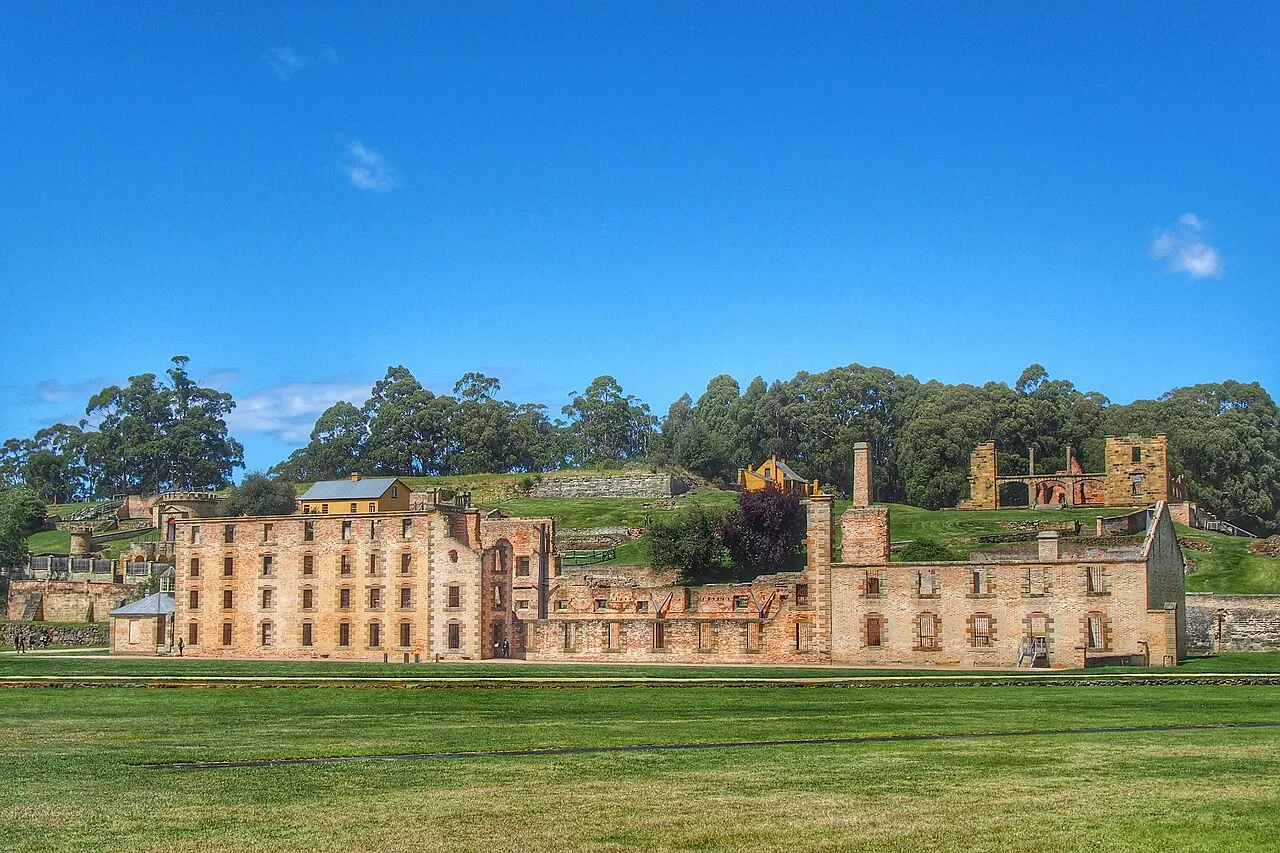
Port Arthur Historic Site
The former prison on the Tasman Peninsula, 90 minutes by car from Hobart, received the colony's repeat-offender convicts from 1833 to 1877. The sandstone buildings made by the prisoners are spread across a park on the edge of the bay: the ruins of the penitentiary, the cross-shaped Separate Prison, where prisoners were hooded and kept silent, the guard tower, the church and the asylum. Across the water lie Point Puer, the boys' prison, and the Isle of the Dead cemetery. General admission lets you wander at your own pace and includes the free talks by the guides, which change time every day; guided tours, the boat to the Isle of the Dead and the evening lantern tour are paid separately. The Memorial Garden remembers the 35 victims of the 1996 massacre. Open every day from 9:00 to 17:00, except on Christmas Day; the site has been part of the World Heritage list since 2010.
Check access
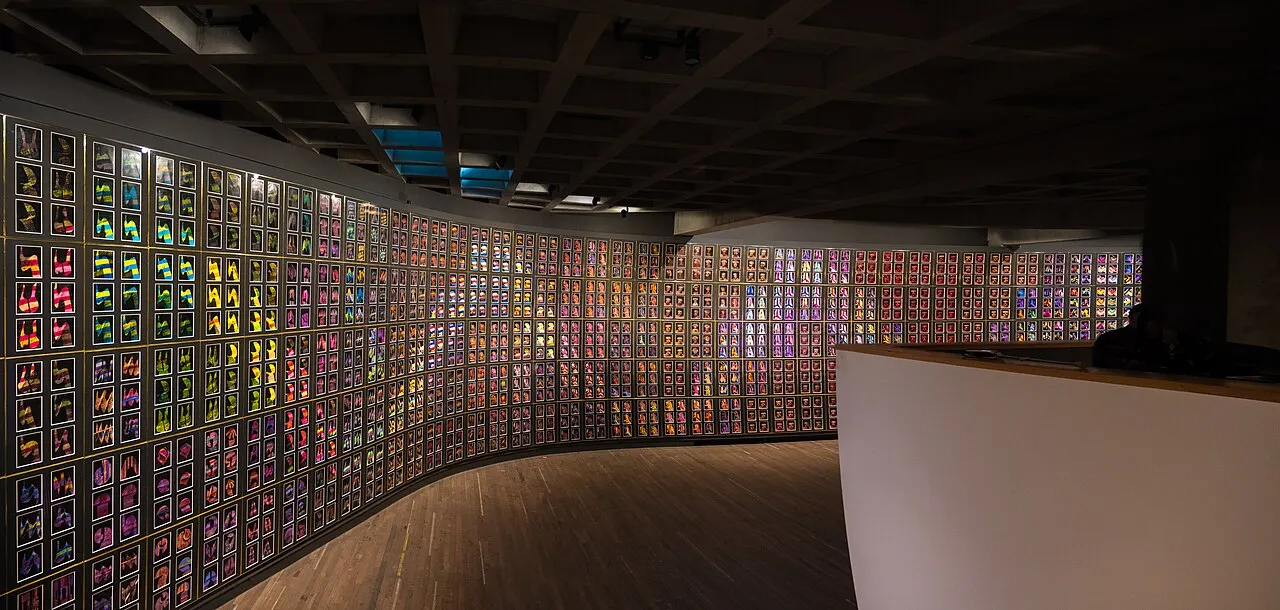
Museum of Old and New Art
MONA, the private museum of the collector David Walsh, is carved into the cliff of the Berriedale peninsula, upriver: you enter through a ground-level pavilion and descend a spiral staircase to three windowless floors, where antiquities sit alongside contemporary art centered on sex and death. The ferry ride, about 30 minutes from the Brooke Street pier, is part of the visit. It is open Thursday to Monday, from 10:00 to 17:00, with entry by timed ticket; Tasmanians do not pay but still need a ticket, and children under 12 do not pay. The museum does not accept cash, and some works are not suitable for children.
Check access
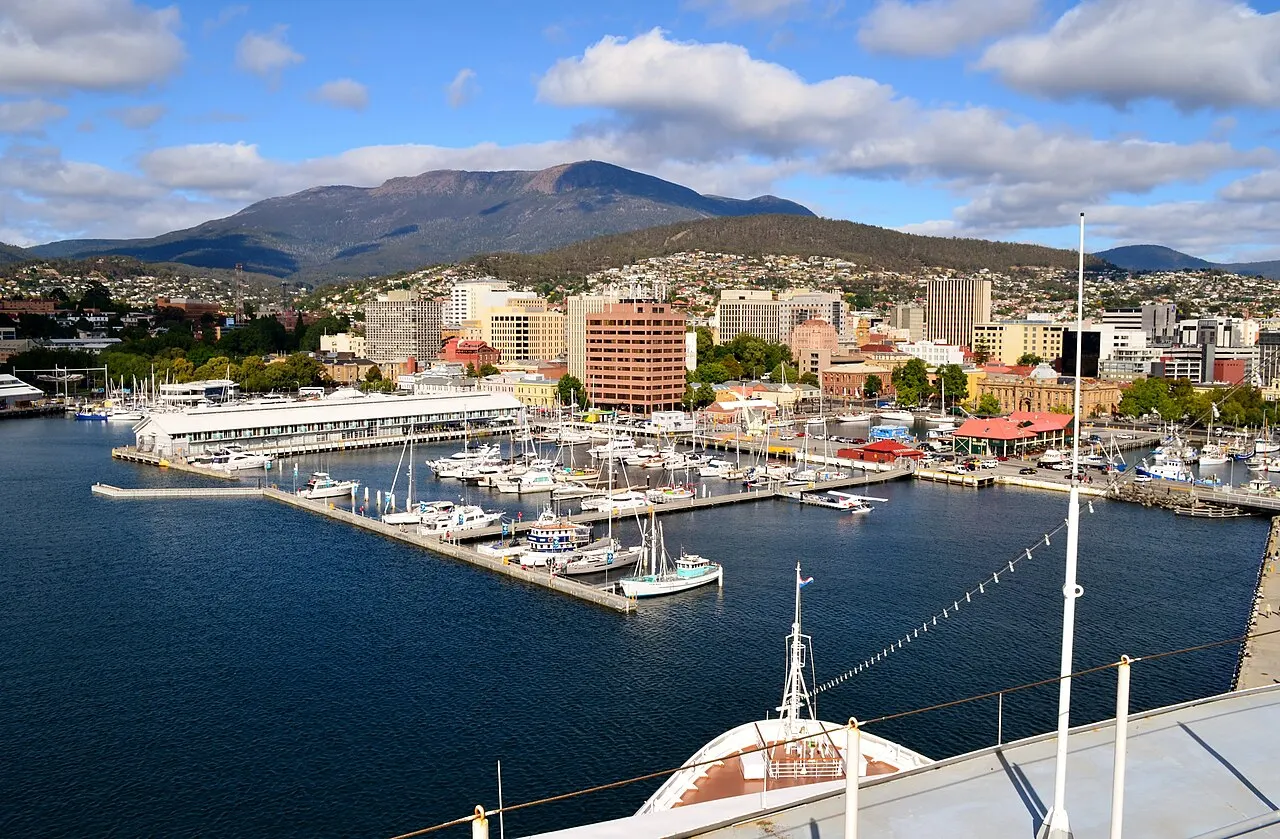
kunanyi / Mount Wellington
The 1,271 m mountain that dominates Hobart has a paved road of about 22 km to the summit, opened in 1937, and an enclosed lookout with views of the city, the Derwent estuary and, on a clear day, the mountains of the west. From The Springs stop, at 720 m, walks leave for places such as the Organ Pipes, the wall of dolerite columns that can be seen from the city, which starts on the Pinnacle Track. Entry to Wellington Park is free, but the weather changes fast: it can snow at any time of year, the road closes when icy, and the park closes on days of extreme fire danger. Without a car, you can go up on the Explorer bus, which leaves in front of the Tasmanian Travel and Information Centre at 9:30, 11:00, 12:30 and 14:00, and also at 15:30 from October to April; the trip lasts 2.5 hours, with 30 minutes at the top.
Check access
Pinnacle Road closed to vehicles to the summit for annual maintenance; tracks open: 16 – 19 November 2026 (checked Oct 2026) source
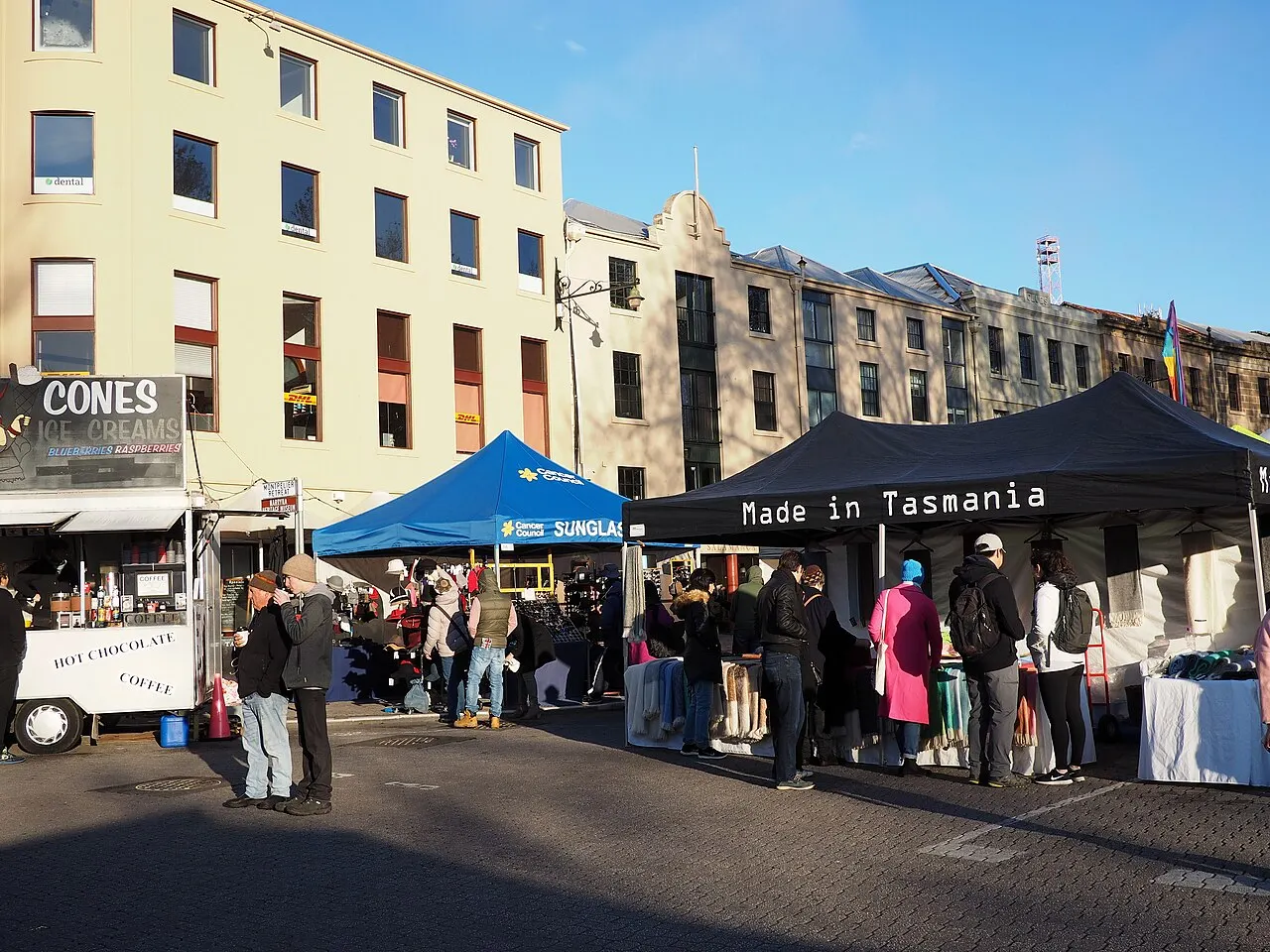
Salamanca Market
The Saturday market fills Salamanca Place from 8:30 to 15:00, with more than 350 stalls selling crafts in Tasmanian wood, glass, ceramics, clothing, cheese, bread, wine, spirits and hot food. After a trial with six stalls in November 1971, the official opening was in January 1972, with twelve. It is run by the city council and draws between 25,000 and 40,000 people each Saturday, which makes it the most visited attraction on the island.
Check access
Wineglass Bay
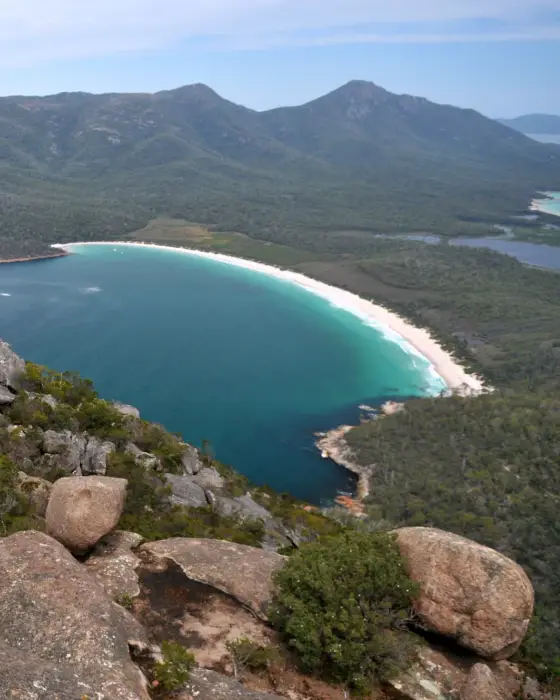
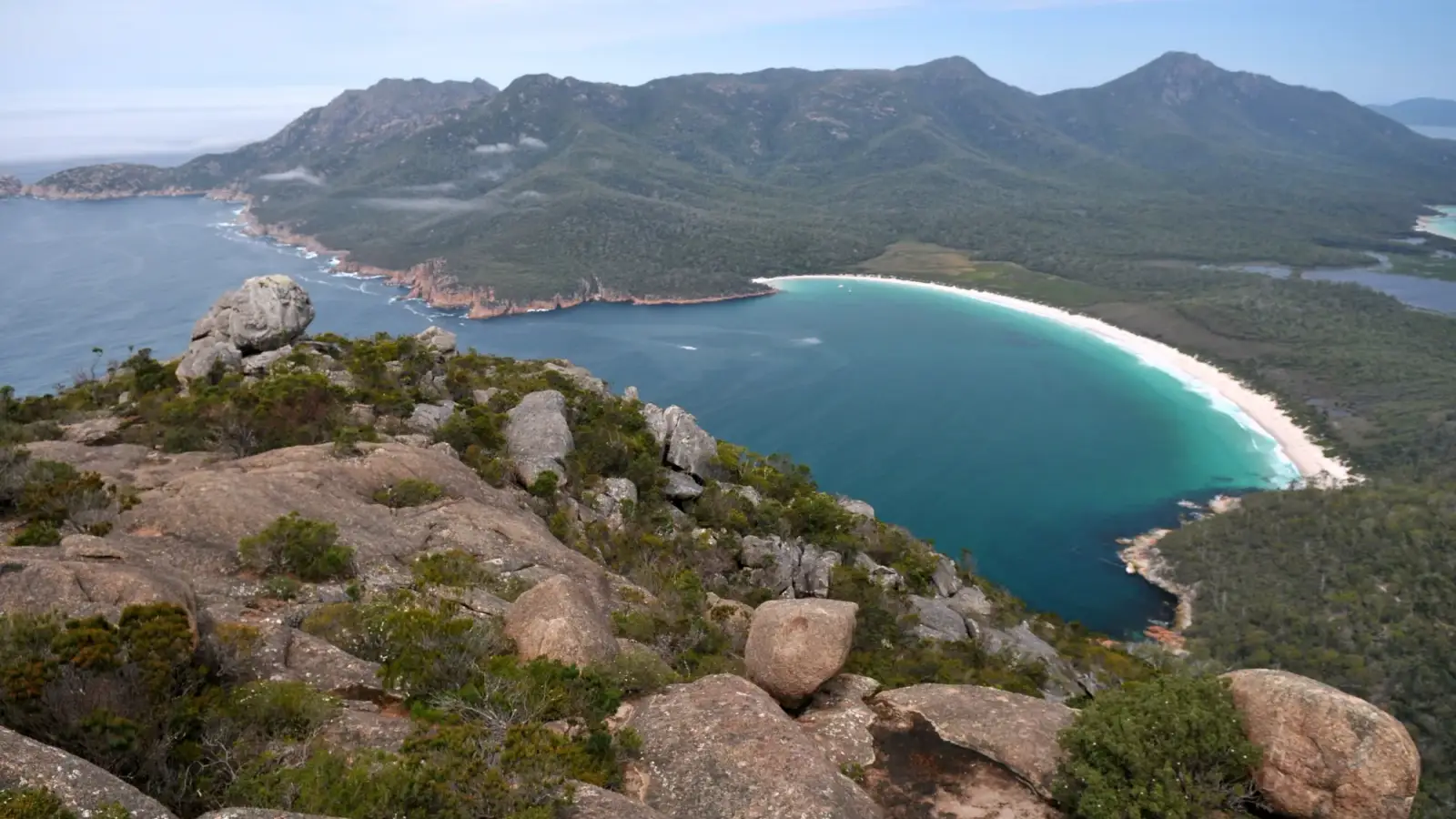
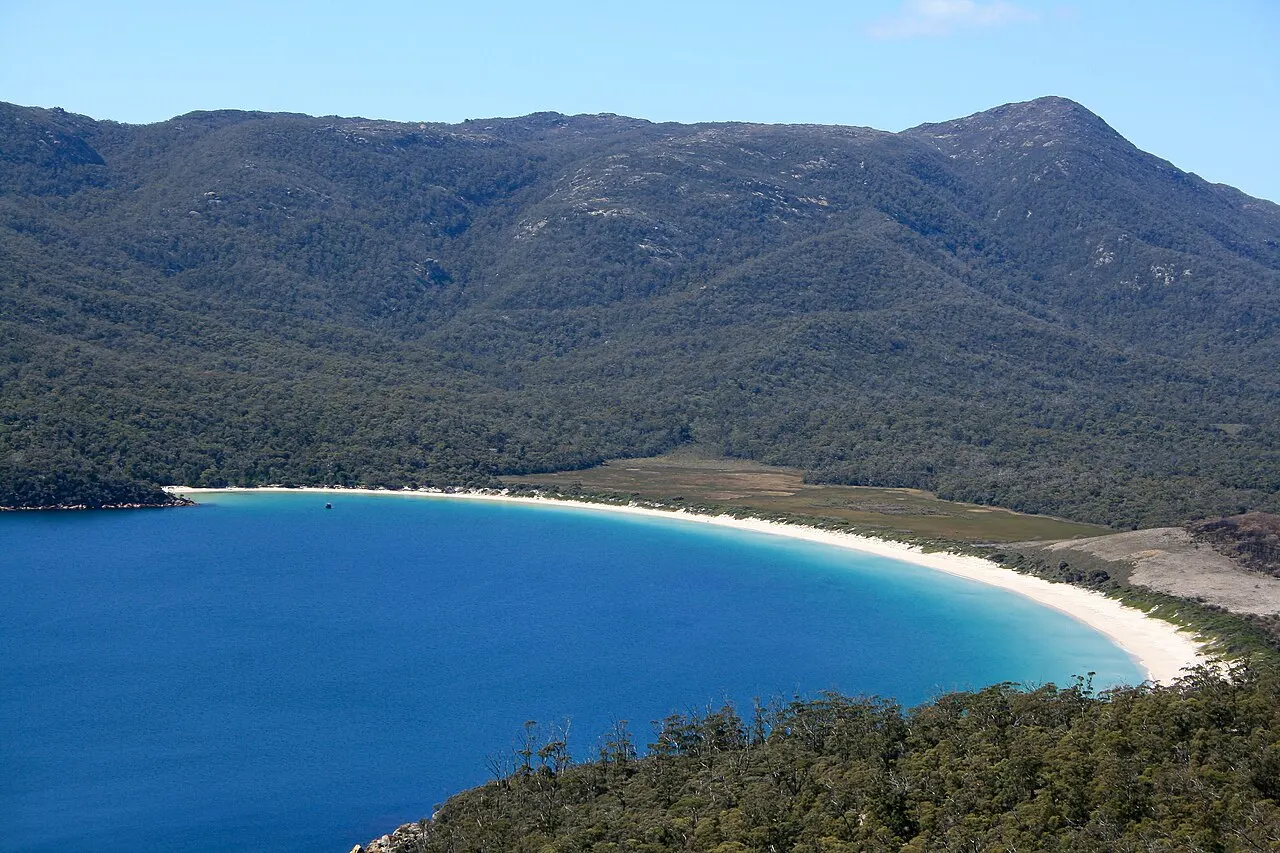
The arc-shaped bay of white sand, on the ocean side of the Freycinet Peninsula, is the best-known image of the east coast. The lookout is 2.6 km round trip from the trailhead parking lot, 1 to 1.5 hours, along an uphill path among the pink granites of the Hazards; going down to the beach is another trail, 6 km and 2.5 to 3.5 hours round trip. The park is two and a half to three hours by car from Hobart and requires a park pass.
Check access
Salamanca Place
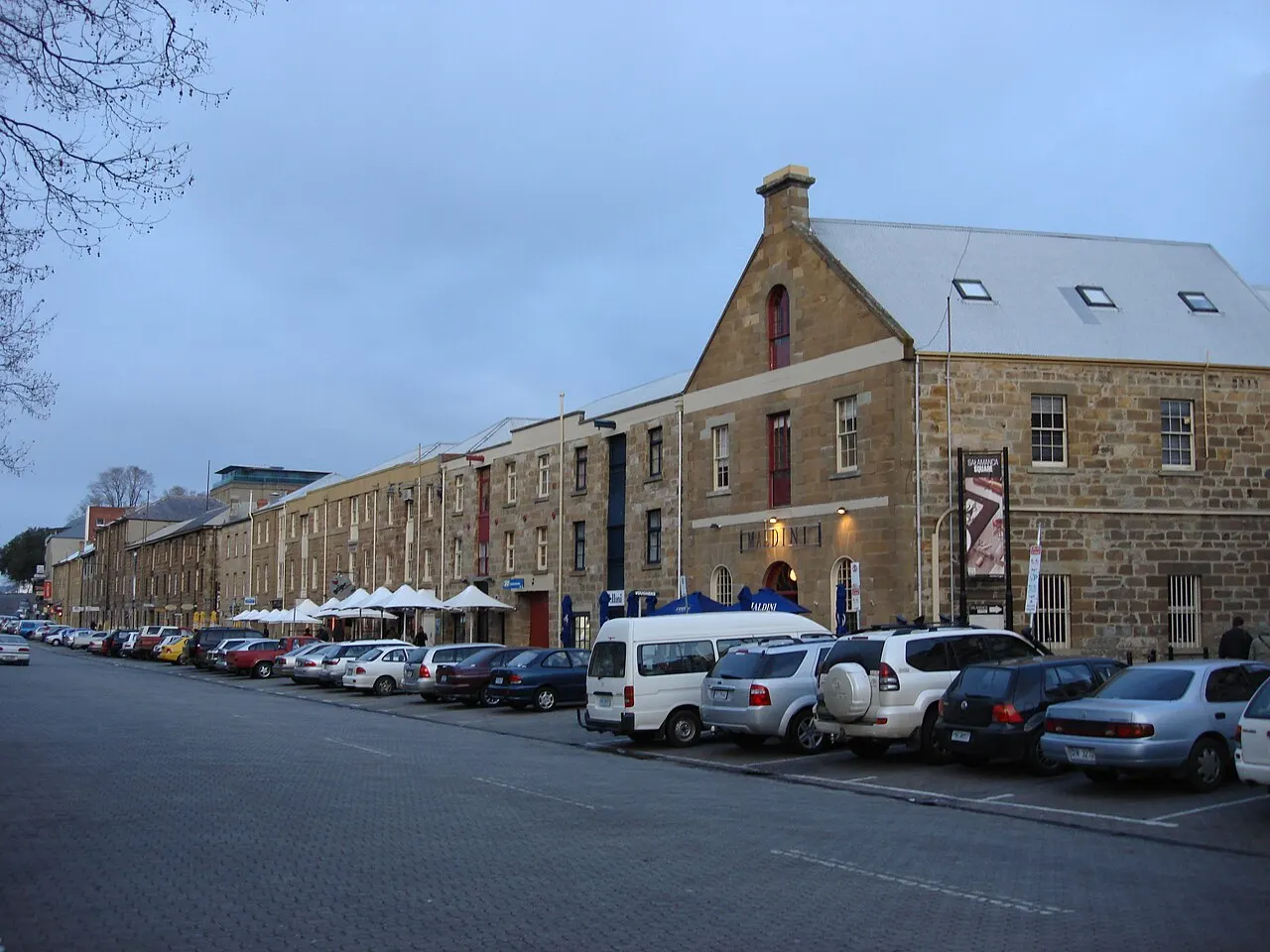
On the other days of the week, the Georgian sandstone warehouses go back to being what the market hides: a row of galleries, cafés, bars and the Salamanca Arts Centre facing the port. The stone came from the Battery Point cliff, and Kelly's Steps, cut into the rock in 1839, connect the street to the neighborhood above.
Check access
Battery Point
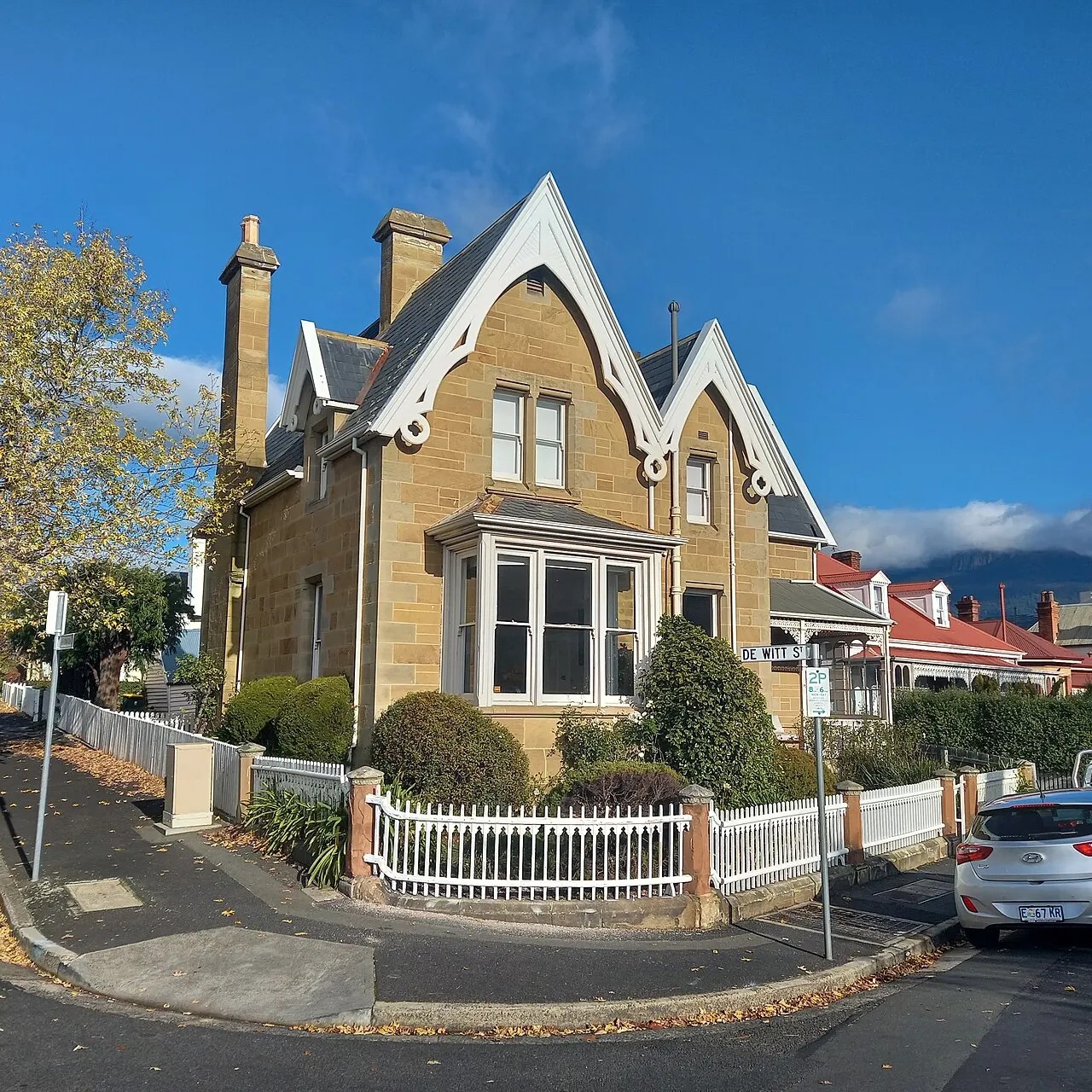
Hobart's oldest neighborhood preserves wooden cottages with picket fences, terraced townhouses and the small circular square of Arthur Circus, whose houses were built for garrison officers. It is worth climbing Kelly's Steps, passing St George's church, from 1838, and walking down to Princes Park, where the cannon battery that gave the place its name once stood.
Check access
Bruny Island
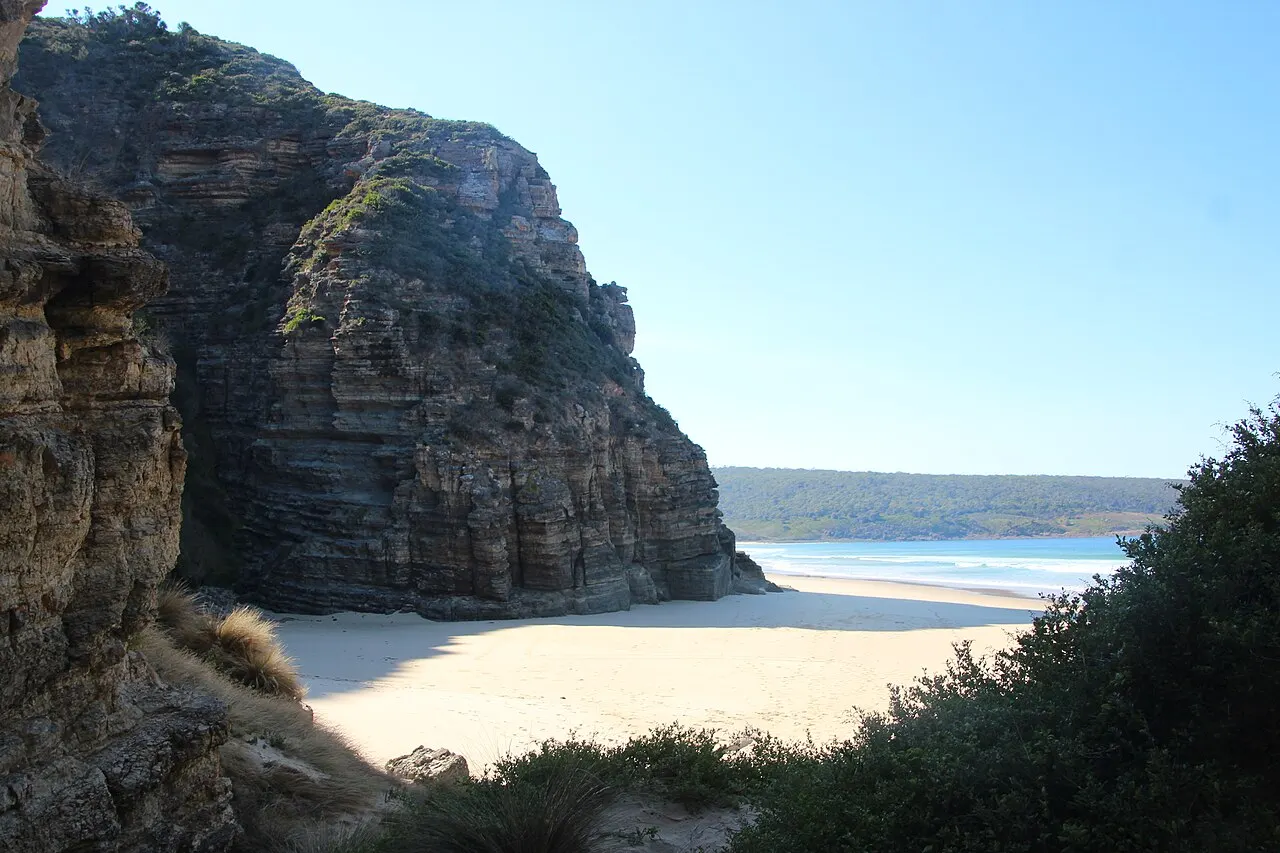
The island south of Hobart has two halves joined by a narrow sandy isthmus, The Neck, and shelters colonies of shearwaters and little penguins. In the south are Adventure Bay, where Furneaux and Cook anchored, and South Bruny National Park, with dolerite cliffs above 200 m and the Cape Bruny lighthouse, lit in 1838, which offers guided tours; the park requires a pass, like every national park in Tasmania. Cheese, oyster and wine producers open their doors along the road. You get there by the Kettering ferry, which crosses in 20 minutes.
Check access
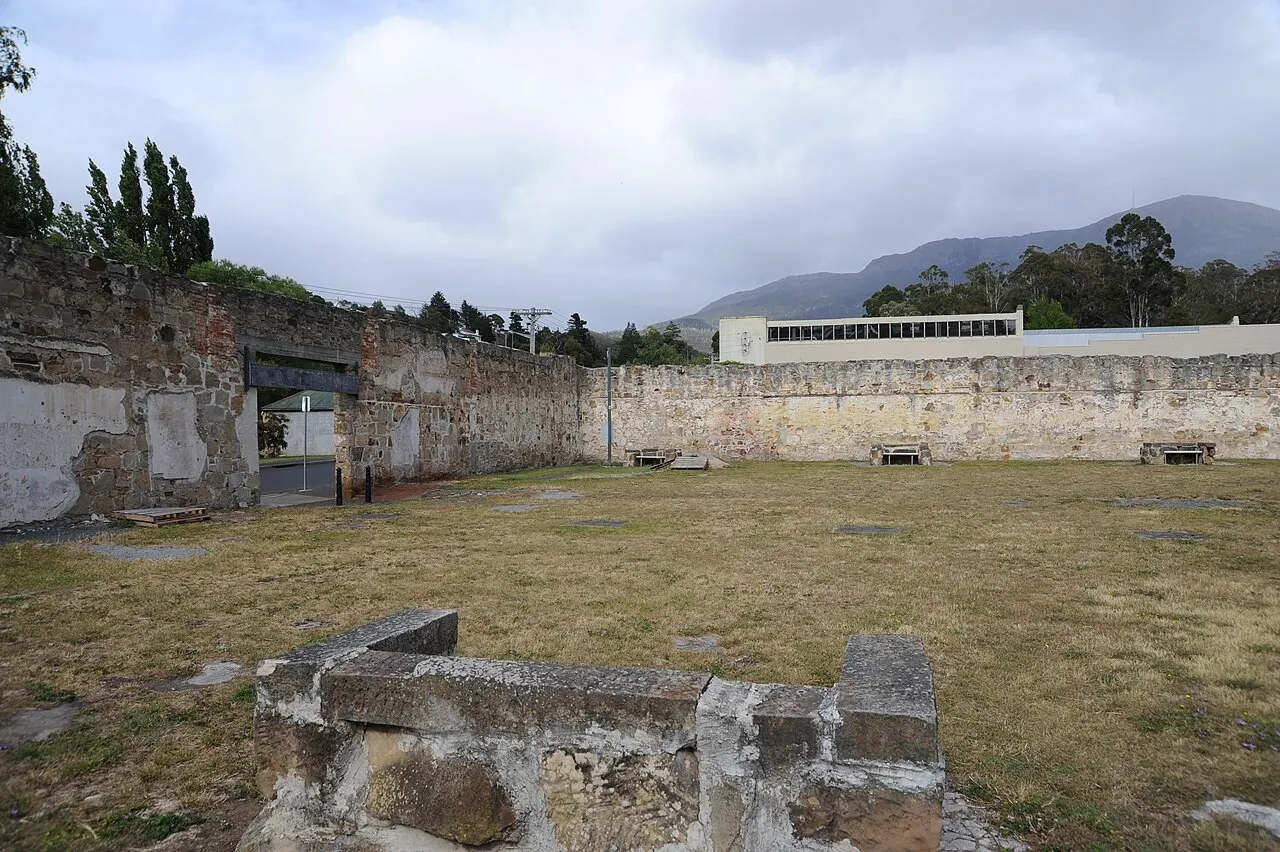
Cascades Female Factory Historic Site
From 1828 to 1856, this workhouse in South Hobart held convict women on damp, overcrowded ground, with a great deal of disease and death. Three of the five original yards remain, and the interpretation center, reopened in 2022, tells the story of the women who passed through. It is the only site of its kind with remains that let you understand how these prisons worked. Open every day from 9:30 to 16:30, except on Christmas Day; the visit is by paid ticket with a guided tour (the Convict Women's Tour leaves daily from 10:00), and booking is advisable.
Check access
More places in the guide
Tasmanian Museum and Art Gallery
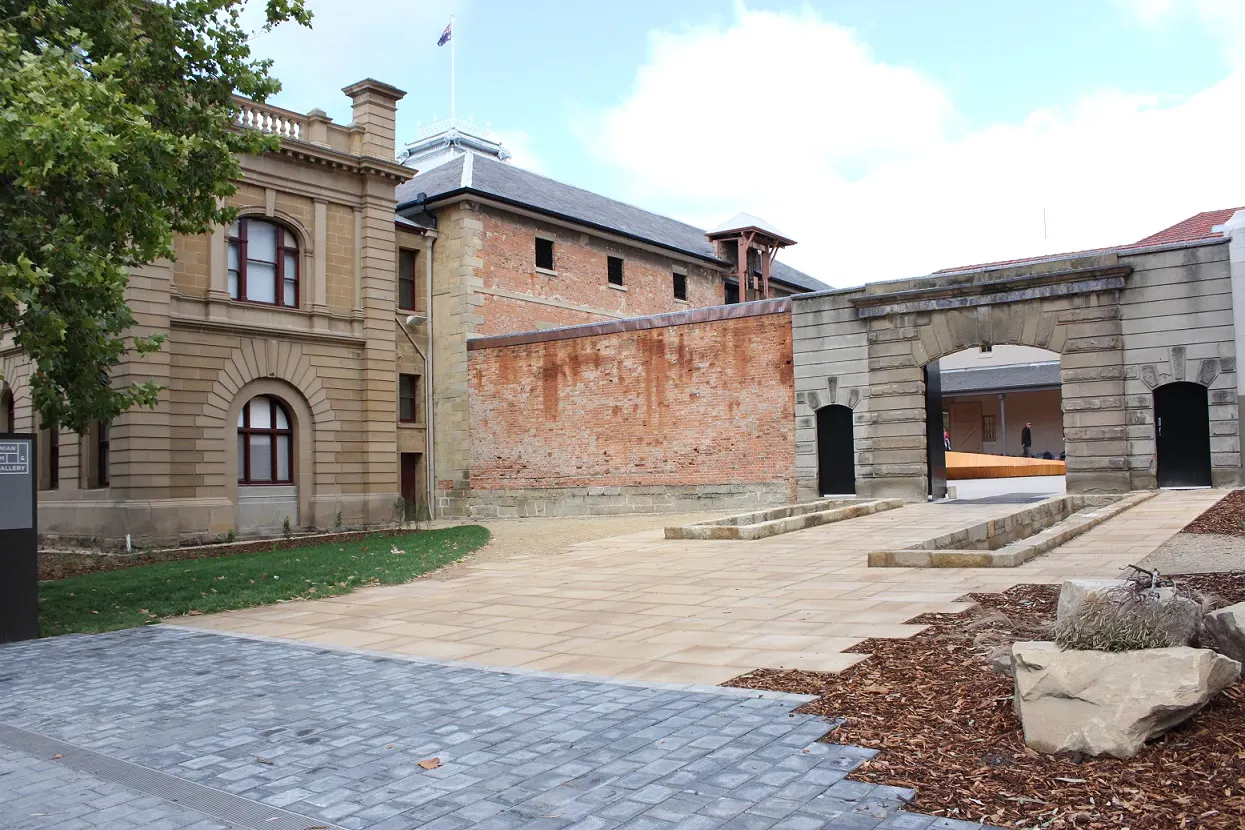
The state museum, founded by the Royal Society of Tasmania in the 1840s, occupies a group of buildings by the port that includes the Commissariat Store, from 1810. It is the place to understand Aboriginal and colonial history and the island's nature before heading out to the parks. Opening days and hours are on the museum's website.
Richmond Bridge
Built by convicts between 1823 and 1825 with hand-cut sandstone, it is the oldest stone arch bridge in Australia. It stands in the Georgian village of Richmond, 25 km north of Hobart, on the route through the Coal River valley.
Bonorong Wildlife Sanctuary
A wildlife rescue and rehabilitation sanctuary in Brighton, north of Hobart, where about 200 animals of 25 species, such as Tasmanian devils, wombats and kangaroos, live in enclosures. It is a place to see the Tasmanian devil up close, a species declared endangered in 2008 after a facial tumor disease greatly reduced the wild population. A private bus leaves central Hobart twice a day.
Russell Falls
The tiered waterfall in Mount Field National Park, 64 km northwest of Hobart, is a 20-minute round-trip walk on pavement and boardwalks among tree ferns. The area has been protected since 1885, Tasmania's first nature reserve.
Cradle Mountain
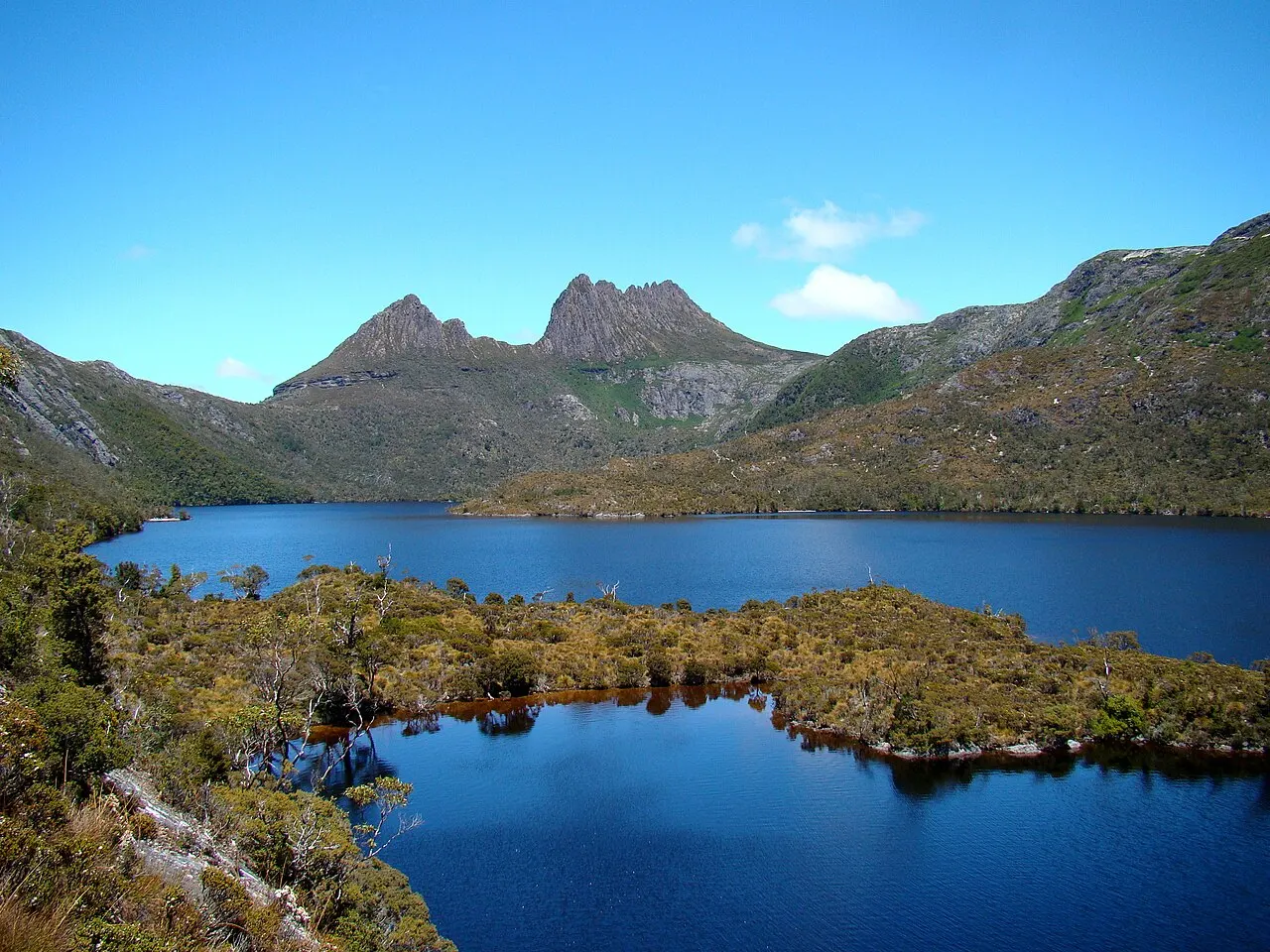
The 1,545 m mountain and the glacial lake Dove Lake, in the northwest of the island, make up Tasmania's best-known alpine landscape. The Dove Lake circuit is 6 km and takes 2 to 3 hours; wombats often appear in the fields. It is about four and a half hours by car from Hobart, so it counts as an extension of the trip.
Constitution Dock
The walled dock in the heart of Sullivans Cove shelters fishing boats that supply the fish trade and the waterside restaurants. Between Christmas and New Year, it is the finishing point and party spot of the Sydney to Hobart yacht race.
Royal Tasmanian Botanical Gardens
A garden of about 14 hectares in the Queens Domain, created in 1818, with 19th-century trees, collections of Tasmanian plants and the Subantarctic Plant House, a cool greenhouse with plants from Macquarie Island.
Cascade Brewery
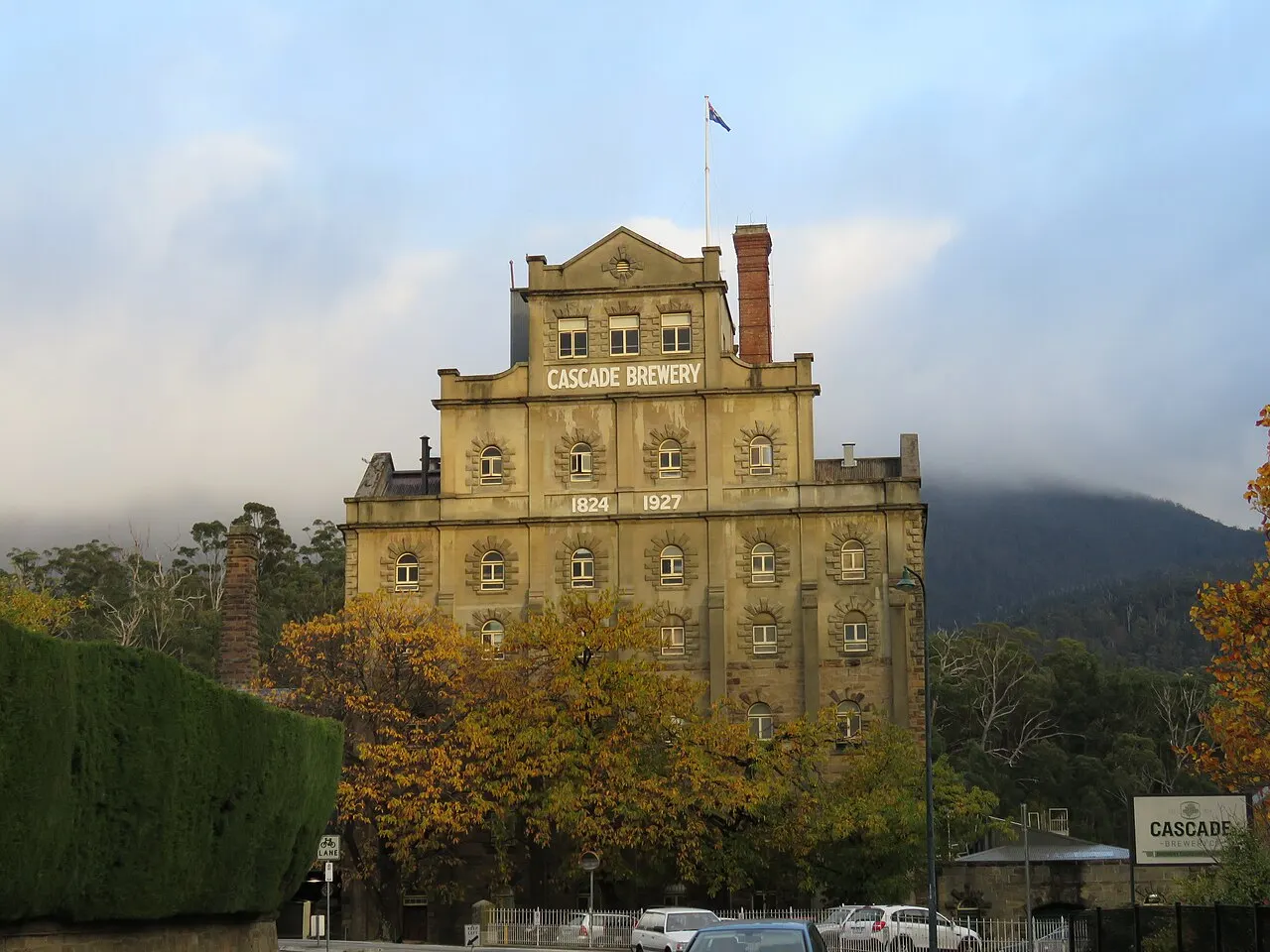
The oldest continuously operating brewery in Australia occupies a stone building at the foot of kunanyi, in South Hobart, built with convict labor. It offers guided tours and a shop.
Nilo’s itinerary
Start with the basic programme and choose extensions for the time you have.
Plan my days in the app ↗Day 1 · Sullivans Cove, Salamanca Place, Battery Point and the Female Factory
Start at the waterfront of Sullivans Cove: Constitution Dock, Princes Wharf and the sandstone warehouses of Salamanca Place. If it's a Saturday, the morning belongs to Salamanca Market, from 8:30 to 15:00.
Climb Kelly's Steps to Battery Point and wander the streets of cottages to Arthur Circus and St George's church; come down through Princes Park.
Have fish for lunch at the restaurants around Constitution Dock.
In the early afternoon, go by taxi, car or bus to the Cascades Female Factory, in South Hobart, and arrive in time for a guided tour: the site closes at 16:30.
Back at the port, if there's time left, the Tasmanian Museum and Art Gallery is next to Constitution Dock; check the museum's website to see whether it is open that day.
Have dinner on Salamanca Place or in North Hobart, on Elizabeth Street.
Day 2 · MONA by ferry and the top of kunanyi
Choose a day from Thursday to Monday and book your MONA entry time; the museum opens at 10:00. Take the first ferry of the morning from the Brooke Street pier; the crossing takes about 30 minutes.
Spend about two and a half hours in the museum and return on an early-afternoon ferry, in time for lunch in the center.
At 14:00, take the Explorer bus to the top of kunanyi/Mount Wellington, in front of the Tasmanian Travel and Information Centre; from May to September it is the last departure of the day, and from October to April there is another at 15:30. Bring a jacket even in summer.
With a car, the alternative is to spend the whole morning at MONA and drive up in the late afternoon, if the road is open.
Day 3 · Port Arthur and the Tasman Peninsula
Leave Hobart early by car for Port Arthur, 90 minutes away; the site opens at 9:00.
Take general admission with one of the guides' free talks, or pay for a guided tour; the Separate Prison, the penitentiary and the church need at least half a day.
Stop by the Memorial Garden before leaving.
On the way back, after Eaglehawk Neck, take Blowhole Road (C338), a dirt road with limited parking, to Tasmans Arch, Devils Kitchen and the Blowhole, formations carved by the sea a few steps from the car, inside Tasman National Park (a park pass is required). The park's highest cliffs can be seen by boat or on the Cape Hauy and Cape Raoul trails, which call for another day.
Return to Hobart before dark, to avoid wildlife on the road.
If you stay longer
Day 4 · Bruny Island
Day trip
Kettering is about 40 minutes by car south of Hobart, and the ferry crosses to the island in 20 minutes, with departures every 20 minutes from 6:10 to 19:00 (round trip from A$58.60 per vehicle). One day is enough for The Neck, Adventure Bay and the Cape Bruny lighthouse, at the far south, with stops at cheese and oyster producers. South Bruny National Park, where the lighthouse is, requires a park pass. The island is about 50 km long: leave early.
Day 5 · Freycinet National Park and Wineglass Bay
Day trip
Two and a half to three hours by car from Hobart, along the east coast and through Coles Bay. The Wineglass Bay lookout takes 1 to 1.5 hours round trip; the descent to the beach, 2.5 to 3.5 hours. With five to six hours on the road in total, it works better with an overnight stay in Coles Bay, or as a stop on the way to Launceston and the north.
Food
Scallop pie
A pastry pie with scallops in a mild curry sauce is the bakery food associated with Tasmania. Local scallops have a fishing season, and some bakeries sell the pie only when there are scallops from the island.
Oysters and seafood
Bruny Island has an oyster farm open to the public, and abalone is among the products the state tourism agency associates with the island. In Hobart, the fishing boats at Constitution Dock supply the fish trade and the restaurants around the dock.
Leatherwood honey
A single-flower honey from the leatherwood tree, endemic to the wet forests of the west, harvested between January and March by beekeepers who camp in the bush. It is on Slow Food's Ark of Taste and appears at stalls in Salamanca Market.
Tasmanian whisky
In 1992, Bill Lark opened the island's first whisky distillery since the 1830s, after managing to change the federal law that blocked small stills. In 2020 there were more than 22 whisky distilleries in Tasmania, the largest concentration in Australia.
Cool-climate wine
Pinot noir, chardonnay and sparkling wines come from valleys such as the Coal River, north of Hobart, the Derwent and the Tamar, near Launceston. The cold makes the island a supplier of base wine for the sparkling wines of mainland producers.
Where to eat
- Constitution Dock and Sullivans Cove
Fish and seafood on the waterfront, at restaurants supplied by the dock's fishing boats. Good for a lunch between the port and Salamanca.
- Salamanca Place
On Saturdays, the market's stalls with hot food, cheeses, leatherwood honey, bread and spirits; on other days, cafés and bars in the sandstone warehouses, good for trying the island's wines and whiskies.
- North Hobart (Elizabeth Street)
One of Hobart's main streets for restaurants, bars and nightlife, with varied cuisines. It is where the city eats out, away from the tourist circuit of the port.
- Bakeries in Hobart, Richmond and the Tasman Peninsula
The scallop pie, a scallop and curry pie, is counter food at bakeries; look for the ones that say they use scallops from the island, which are sometimes unavailable out of season.
- Bruny Island
Cheeses from local producers, oysters opened on the spot and wine, bought directly at the farm gates along the road. It works as the day's lunch on the island.
· 2026-10-19
Day trips
Bruny Island
Kettering is about 40 minutes by car south of Hobart, and the ferry crosses to the island in 20 minutes, with departures every 20 minutes from 6:10 to 19:00 (round trip from A$58.60 per vehicle). One day is enough for The Neck, Adventure Bay and the Cape Bruny lighthouse, at the far south, with stops at cheese and oyster producers. South Bruny National Park, where the lighthouse is, requires a park pass. The island is about 50 km long: leave early.
Freycinet National Park and Wineglass Bay
Two and a half to three hours by car from Hobart, along the east coast and through Coles Bay. The Wineglass Bay lookout takes 1 to 1.5 hours round trip; the descent to the beach, 2.5 to 3.5 hours. With five to six hours on the road in total, it works better with an overnight stay in Coles Bay, or as a stop on the way to Launceston and the north.
Maria Island
The island, a national park with no cars, shops or cafés, is reached by the passenger ferry from Triabunna, on the east coast along the Tasman Highway (A3), the same road as Freycinet; the crossing takes about 45 minutes and booking is required. There you get around on foot or by bicycle between the historic settlement of Darlington, beaches and the sandstone Painted Cliffs, which can be visited safely only up to two hours before or after low tide; wombats, kangaroos and devils are common. Bring food, water and cold-weather clothing for the whole day, and the park pass.
Richmond and the Coal River valley
Richmond is 25 km north of Hobart: the Georgian village has the oldest stone bridge in Australia, from 1823 to 1825, and the valley around it has a concentration of cool-climate wineries. It fits in a morning or an afternoon, combined with the Bonorong Wildlife Sanctuary, in Brighton.
Mount Field National Park
64 km northwest of Hobart, through the Derwent valley. Russell Falls is a 20-minute round-trip walk, and the circuit that passes the Horseshoe and Lady Barron falls takes about two hours. A park pass is required.
Cradle Mountain
An extension, not a day trip: it is about 4.5 hours and 375 km from Hobart, and 1.5 hours from Devonport, where the ferry from the mainland arrives. It needs at least two days with an overnight stay near the park, for the Dove Lake circuit (6 km, 2 to 3 hours) and other trails. The car stays at the visitor center while the park bus is running.
Where to begin
Sullivans Cove, Salamanca Place, Battery Point and the Female Factory
Start at the waterfront of Sullivans Cove: Constitution Dock, Princes Wharf and the sandstone warehouses of Salamanca Place. If it's a Saturday, the morning belongs to Salamanca Market, from 8:30 to 15:00.
MONA by ferry and the top of kunanyi
Choose a day from Thursday to Monday and book your MONA entry time; the museum opens at 10:00. Take the first ferry of the morning from the Brooke Street pier; the crossing takes about 30 minutes.
Port Arthur and the Tasman Peninsula
Leave Hobart early by car for Port Arthur, 90 minutes away; the site opens at 9:00.
Money
The currency is the Australian dollar. MONA and the Dark Mofo feast do not accept cash, and the SkyBus sells tickets only by card. Some prices published on the official websites on 19 October 2026: general admission to Port Arthur costs A$55 per adult (A$27.50 for children), and guided tours start at A$65; the daily national parks pass costs A$49.15 per vehicle carrying up to eight people, or A$24.55 per person on foot, by bicycle or by bus; the Holiday Pass, valid for up to two months in all parks, costs A$98.35 per vehicle or A$49.20 per person. Cradle Mountain has its own daily pass, A$30.70 per adult with the park bus included; those who hold the Holiday Pass pay for the bus separately, A$15.50 per adult for 72 hours. The Bruny ferry costs from A$58.60 per vehicle, round trip. MONA charges admission to visitors aged 12 and over who do not live in Tasmania, with an online booking fee; the prices are on the museum's visit page. Park prices are adjusted every year for inflation.
Getting there and around
Hobart International Airport (HBA) is in Cambridge, about 17 km northeast of the center, and is Tasmania's main airport. The SkyBus links the terminal to the center every 30 minutes; tickets can be bought only by credit card, on the website, in the app, at the kiosks or from the driver. The other gateway is the Spirit of Tasmania ferry, which crosses Bass Strait between Geelong, near Melbourne, and Devonport, in the north of the island, in 9 to 11 hours, usually overnight and with space for a car.
In Hobart, the center, Sullivans Cove, Salamanca and Battery Point can be covered on foot, with some hills. The Metro Tasmania bus network serves the neighborhoods, Berriedale and Glenorchy; fares were suspended under a state government program with a set end date, so check the Metro website to see whether it still applies when you travel. For MONA, the museum's ferry leaves from the Brooke Street pier and takes about 30 minutes; buses 510, 520, 522 and X20 also stop nearby. For the top of kunanyi, there is the Explorer bus, a 2.5-hour trip with 30 minutes at the summit.
Outside Hobart, a rental car is the practical choice: Port Arthur is 90 minutes away, Freycinet 2.5 to 3 hours and Cradle Mountain about 4.5 hours. In Australia you drive on the left. Every national park requires a pass, sold online and at visitor centers; at Cradle Mountain, private cars cannot go to Dove Lake while the park bus is running, and the bus is charged separately. Without a car, the alternative is a day tour from Hobart.
Bruny Island is reached by the Kettering ferry, about 40 minutes south of Hobart: the crossing takes 20 minutes, with departures every 20 minutes from 6:10 to 19:00. The ticket can be bought on the spot, at the terminal, and is valid for the next available ferry.
Safety
The risks that most change a trip to Tasmania are in nature and on the road. On kunanyi and Cradle Mountain, the weather turns in minutes: bring a waterproof jacket and layers, check the forecast and turn back if visibility drops, as the park itself recommends. The kunanyi road closes with ice or snow, and Wellington Park closes entirely on days of extreme or catastrophic fire danger. The climb to the summit of Cradle Mountain is long, exposed and slippery in winter. Outside the cities, avoid driving at night, when wildlife is active and crosses the roads, and remember that you drive on the left.
Before you go
- Plug
- type I
- Voltage
- 230 V
- Driving side
- on the left
- Emergency
- General 000
- Country code
- +61
- Official language
- English
- Currency
- Australian dollar (AUD)
Source: Wikidata (CC0), checked September 2026.
Etiquette tips
Dual names
Signs and maps use the palawa kani names alongside the English ones, such as kunanyi/Mount Wellington. Using both names is the current practice, including at the official tourism agencies.
The Port Arthur Memorial Garden
The garden at the historic site remembers the 35 people killed in 1996. It is a place for quiet reflection, and the tragedy is still recent for many families on the island; it is not a subject to treat as a curiosity.
Art with a warning
MONA shows works about sex and death, some of them explicit. The museum's free app, The O, has content warnings and a map of the rooms, and helps you decide what to see with children.
Mistakes to avoid
Trying to do the east coast and Wineglass Bay as a short day trip: it is two and a half to three hours by car each way, before the trail.
Going to MONA on a Tuesday or Wednesday, when the museum is closed.
Counting on the daily parks pass for Cradle Mountain: it is not valid there, where there is a separate pass with the bus included.
Going up kunanyi in a T-shirt because the morning in Hobart dawned warm: the top is colder, windy and can snow in any month.
Driving at night on park and country roads, when wildlife crosses the road.
Planning Salamanca Market for a weekday: it takes place only on Saturdays.
Useful phrases
G'day
Hello, good morning: the informal Australian greeting.
Tassie
Tasmania, in the nickname the locals themselves use.
Arvo
Afternoon, as in “this arvo,” meaning this afternoon.
Cheers
Thank you, and also the word for a toast.
nipaluna
Hobart, in palawa kani.
kunanyi
Hobart's mountain, Mount Wellington, in palawa kani.
lutruwita
Tasmania, in palawa kani.
Where to stay
- Sullivans Cove and central Hobart · Those traveling without a car, arriving by SkyBus and wanting to walk to the MONA ferry, Salamanca and the kunanyi buses.: It has hotels in every category near the port and the departure points for buses and tours. The drawback is limited parking in the center for those renting a car.
- Battery Point and Salamanca · Those who want to stay in a historic house or guesthouse, near the Salamanca restaurants and the Saturday market.: The streets are residential and quiet, a few minutes on foot from the port. The drawback is the hills and steep stairs between the neighborhood and the port.
- North Hobart · Those who put restaurants and bars first and don't mind walking or taking a bus to the port.: It is on Elizabeth Street, the downtown dining street. The port and the MONA ferry are a longer walk or a short bus ride away.
- Coles Bay (Freycinet) · Those going to Wineglass Bay who don't want to do the east coast in a single day.: It is the village at the park entrance, where the trails start early, before the crowds. In summer, I'd book well in advance.
- Cradle Mountain · Those extending the trip to the northwest to do Dove Lake and the alpine trails.: The lodgings are next to the visitor center, where the park bus leaves from. Beyond that there is no town: the locality had 66 residents in the 2016 census.
· 2026-10-19
Districts
Sullivans Cove
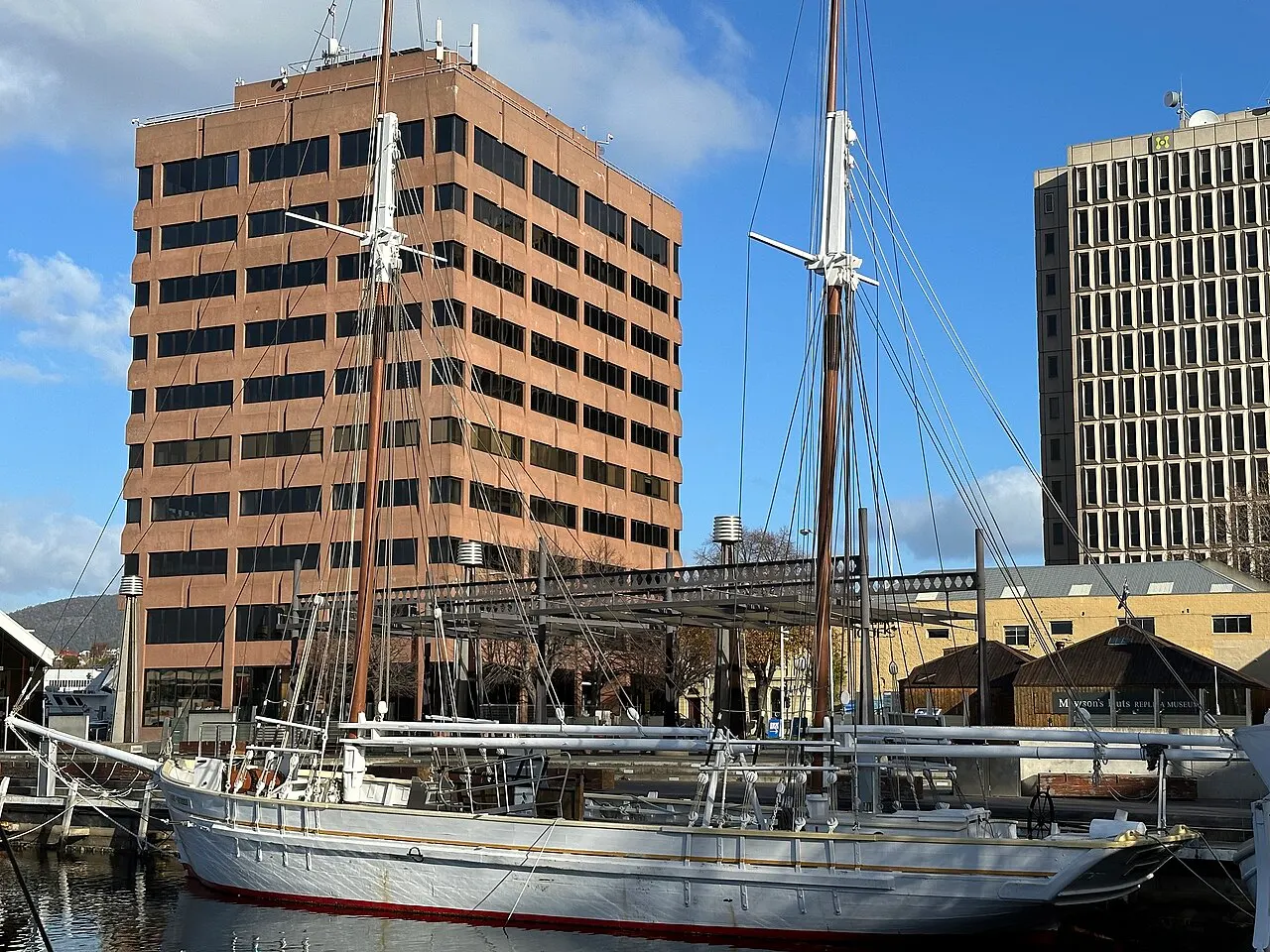
Hobart's original port, between Constitution Dock, the Brooke Street pier, where the MONA ferry leaves, and Princes Wharf. It has hotels, the visitor information center and the bus stops for the airport and kunanyi.
Salamanca Place
The row of Georgian sandstone warehouses facing the port, now home to galleries, cafés, bars and the arts center. On Saturdays, the whole street is taken over by Salamanca Market.
Battery Point
The residential promontory south of Salamanca, with wooden cottages, terraced townhouses, Arthur Circus square and St George's church. It is named for a cannon battery installed in 1818 and is reached on foot by Kelly's Steps, from 1839.
North Hobart
The stretch of Elizabeth Street north of the center has restaurants, bars and music venues, and it is where the city goes out to dinner away from the port circuit.
South Hobart
The Hobart Rivulet valley, at the foot of the mountain, with the Cascade Brewery and the Cascades Female Factory. It is more residential and serves as a route to kunanyi.
Sandy Bay
The neighborhood along the shore, south of Battery Point, with the university, hotels and houses overlooking the Derwent.
Berriedale
A suburb upriver, in the municipality of Glenorchy, where MONA occupies the peninsula of the Moorilla winery. Most visitors arrive by ferry.
History
Before 1642 · Palawa land
Tasmanian Aboriginal people, who today call themselves palawa or pakana, had lived on the island for tens of thousands of years. The muwinina occupied the Hobart region; the nuenonne, Bruny Island.
1642 · Abel Tasman sights the island
On 24 November, the Dutch navigator made the first European record of the island, which Europeans would call Van Diemen's Land until 1856.
1804 · Hobart Town at Sullivans Cove
After a camp at Risdon Cove in 1803, David Collins moved the British settlement to Sullivans Cove in 1804. The colony began as a penal settlement and soon became a whaling port of the Southern Ocean.
1825–1831 · Black War
The peak of the conflict between settlers and Aboriginal people left about 1,100 dead and martial law for more than three years. By 1830, the Aboriginal population had fallen to about 300 people, and most of the survivors were taken to Flinders Island.
1830–1877 · Port Arthur
The timber-cutting camp of 1830 became the destination for repeat-offender convicts from 1833 to 1877, with the Separate Prison, completed in 1853, meant to punish through silence and isolation.
1853–1856 · End of transportation and a new name
The sending of convicts ended in 1853, after about 75,000 to 80,000 people had been transported, depending on the count. On 1 January 1856, the colony was renamed Tasmania.
1876 · Death of Truganini
The nuenonne woman, born around 1812, died in Hobart, and the colonial government declared the Aboriginal population extinct. The claim was rejected by historians and by today's palawa community.
1996 · The Port Arthur massacre
On 28 April, a gunman killed 35 people at the historic site. The tragedy led Australia to restrict semi-automatic firearms nationwide.
2010 · World Heritage
Port Arthur and the Cascades Female Factory were added to the UNESCO list as part of the Australian Convict Sites, a group of eleven penal sites.
2011 · MONA opens
On 21 January, the collector David Walsh opened the Museum of Old and New Art in Berriedale, a private museum dug into the rock on the edge of the Derwent.
Complete history
Long before any European ship, the island was the territory of the Tasmanian Aboriginal peoples, divided into groups with their own lands: the muwinina in the estuary where Hobart now stands, the nuenonne on Bruny Island and in the D'Entrecasteaux Channel. The Dutchman Abel Tasman made the first European record of the island in 1642, and the name Van Diemen's Land lasted until 1856. French and British ships passed through the south in the late 18th century, and Adventure Bay, on Bruny, received Tobias Furneaux in 1773 and James Cook in 1777.
The British occupation began as a prison. In 1803, a military camp was set up at Risdon Cove; in 1804, David Collins moved the settlement to Sullivans Cove, where the city grew. The Derwent became one of the great whaling and sealing ports of the Southern Ocean, and the sandstone warehouses of Salamanca Place, built with stone cut from the Battery Point cliff, stored what came in and went out. The spread of farms onto Aboriginal land led to the Black War, whose peak, between 1825 and 1831, ended with most of the survivors being removed to Flinders Island.
For half a century, the island received tens of thousands of convicts. Port Arthur, on the Tasman Peninsula, was the destination for repeat offenders, and the Cascades Female Factory, in South Hobart, held women. Transportation ended in 1853, and in 1856 the colony was renamed Tasmania. Hobart Town became a city in 1842 and was called simply Hobart from 1881. The death of Truganini, in 1876, was used by the colonial government to declare the Aboriginal people extinct, a narrative that palawa descendants and historians reject.
The 20th century gave the island roads and parks: Mount Field and Freycinet became national parks in 1916, and the road to the top of kunanyi opened in 1937, built as a work program for the unemployed. In 1996, the Port Arthur massacre killed 35 people and changed the country's gun law. In 2010, Port Arthur and the Female Factory joined the World Heritage list; in 2011, MONA opened in Berriedale and, with the Dark Mofo and Mona Foma festivals, gave Hobart a cultural calendar that draws visitors from outside the island even in winter.
Geography and shape of the city
Tasmania covers about 68,400 km² and lies some 240 km south of the Australian mainland. Mountainous and indented, it has Mount Ossa (1,617 m) as its highest point, and about 42% of the territory is in reserves, 21% of it as World Heritage. Hobart occupies both banks of the Derwent estuary, in the southeast: the old city grew around Sullivans Cove, with Battery Point on the promontory to the south and the commercial center laid out in a grid behind the port, while the suburbs climb the slopes of kunanyi/Mount Wellington, 1,271 m high, which has a paved road of about 22 km to the summit. The airport is in Cambridge, about 17 km northeast of the center. The climate is temperate and cool: in Battery Point, the average maximum runs from 22.7 °C in January to 12.6 °C in July (1991 to 2020 normals), rainfall totals about 565 mm a year, and the top of kunanyi can have snow in any season. Among the large Australian cities, Hobart has the fewest hours of sun per day, and also the longest day at the summer solstice, at 15.3 hours. Launceston, the second city, is 198 km to the north, and Devonport, where the ferry from the mainland arrives, is 284 km away.
Culture
MONA changed Hobart's place on Australia's cultural map. Besides the museum, David Walsh's group created Dark Mofo, a winter festival with large-scale public artworks, music and a night feast on the edge of the port, which turns June, the darkest month, into a travel season.
Aboriginal culture gained visibility with the dual naming policy of 2013, which made kunanyi/Mount Wellington official, and with the use of palawa kani words, such as nipaluna for Hobart. Walking tours led by palawa guides, such as takara nipaluna, tell the story of the city from that point of view.
Hobart keeps institutions that are old for its size: the Theatre Royal, from 1837, is the oldest continuously operating theater in the country, and the 1845 synagogue, in the Egyptian Revival style, is the oldest in Australia. The city is also the departure port for Australian and French Antarctic expeditions, and the Royal Hobart Regatta, held since 1830, is the oldest sporting event on the island.
Festivals and events
Dark Mofo
In June, in the days leading up to the winter solstice. An art and music festival run by MONA, with public installations, evening performances and the Winter Feast, a food market with bonfires on Princes Wharf and on the lawns of Salamanca. The feast charges adults an entry fee and does not accept cash.
Sydney to Hobart Yacht Race
The race starts in Sydney on 26 December and covers 630 nautical miles; the boats arrive at Constitution Dock over the following days, up to New Year, and the dock becomes a meeting point.
Next edition: 26 December 2026 (checked Oct 2026) source
Taste of Summer
Around New Year, on the Hobart waterfront. A food and drink festival of the island, held since 1988, with producers, artisans and restaurants on the pier, in the same week that the race boats arrive in Hobart.
Next edition: 27 December 2026 – 3 January 2027 (checked Oct 2026) source
Books and films
For the Term of His Natural Life, by Marcus Clarke
Published in installments and released as a book in 1874 as His Natural Life (the long title dates from 1884), the novel follows a man transported for a crime he did not commit. It is the best-known portrait of convict life in colonial Australia, with much of the action in the prisons of Van Diemen's Land.
The Nightingale, by Jennifer Kent
A 2018 film set in 1825 in Van Diemen's Land, in the midst of the Black War: an Irish convict woman and an Aboriginal tracker cross the island. It is harsh, and it is the most direct way to understand the violence of colonization.
Frequently asked questions
Tasmania: how do you get to the island and from Hobart airport to the center?
Hobart International Airport (HBA) is in Cambridge, about 17 km northeast of the center, and is Tasmania's main airport. The SkyBus links the terminal to the center every 30 minutes; tickets can be bought only by credit card, on the website, in the app, at the kiosks or from the driver. The other gateway is the Spirit of Tasmania ferry, which crosses Bass Strait between Geelong, near Melbourne, and Devonport, in the north of the island, in 9 to 11 hours, usually overnight and with space for a car.
Tasmania: how many days should you stay?
I'd stay at least three days in Tasmania, based in Hobart: the first for Sullivans Cove, Salamanca Place, Battery Point and the Female Factory; the second for MONA, by ferry, and the top of kunanyi in the afternoon; and the whole third for Port Arthur, by car. With five days, I'd add a day on Bruny Island and finish at Wineglass Bay, sleeping in Coles Bay instead of returning to Hobart the same day. Cradle Mountain is more than four hours away by road and needs at least two more days, preferably as the final stop for those continuing north to the Devonport ferry.
Tasmania: which national parks pass should you buy?
Every national park requires a pass, sold online and at visitor centers. Going by the prices published on the official websites on 19 October 2026, the daily pass costs A$49.15 per vehicle carrying up to eight people, or A$24.55 per person on foot, by bicycle or by bus, and is valid for 24 hours; the Holiday Pass, valid for up to two months in all parks, costs A$98.35 per vehicle or A$49.20 per person. Two daily passes cost practically the same as the Holiday Pass, and from three park days I'd buy the two-month one; count South Bruny National Park and Tasman National Park too. Cradle Mountain has its own daily pass, A$30.70 per adult with the park bus included; those who hold the Holiday Pass pay for the bus separately, A$15.50 per adult for 72 hours. Park prices are adjusted every year for inflation.
Tasmania: how do you visit MONA?
MONA, the private museum of the collector David Walsh, is carved into the cliff of the Berriedale peninsula, upriver: you enter through a ground-level pavilion and descend a spiral staircase to three windowless floors, where antiquities sit alongside contemporary art centered on sex and death. The ferry ride, about 30 minutes from the Brooke Street pier, is part of the visit. It is open Thursday to Monday, from 10:00 to 17:00, with entry by timed ticket; Tasmanians do not pay but still need a ticket, and children under 12 do not pay. The museum does not accept cash, and some works are not suitable for children.
Tasmania: what is a visit to Port Arthur like?
Port Arthur Historic Site, the former prison on the Tasman Peninsula, 90 minutes by car from Hobart, received the colony's repeat-offender convicts from 1833 to 1877. The sandstone buildings made by the prisoners are spread across a park on the edge of the bay: the ruins of the penitentiary, the cross-shaped Separate Prison, where prisoners were hooded and kept silent, the guard tower, the church and the asylum. Across the water lie Point Puer, the boys' prison, and the Isle of the Dead cemetery. General admission lets you wander at your own pace and includes the free talks by the guides, which change time every day; guided tours, the boat to the Isle of the Dead and the evening lantern tour are paid separately. The Memorial Garden remembers the 35 victims of the 1996 massacre. Open every day from 9:00 to 17:00, except on Christmas Day; the site has been part of the World Heritage list since 2010.
Tasmania: how do you get up kunanyi/Mount Wellington?
Hobart's 1,271 m mountain, kunanyi/Mount Wellington, has a paved road of about 22 km to the summit, opened in 1937, and an enclosed lookout with views of the city, the Derwent estuary and, on a clear day, the mountains of the west. From The Springs stop, at 720 m, walks leave for places such as the Organ Pipes, the wall of dolerite columns that can be seen from the city, which starts on the Pinnacle Track. Entry to Wellington Park is free, but the weather changes fast: it can snow at any time of year, the road closes when icy, and the park closes on days of extreme fire danger. Without a car, you can go up on the Explorer bus, which leaves in front of the Tasmanian Travel and Information Centre at 9:30, 11:00, 12:30 and 14:00, and also at 15:30 from October to April; the trip lasts 2.5 hours, with 30 minutes at the top. I'd keep the climb for the clearest day of the stay and check whether the summit road is open. With low cloud, the lookout shows nothing.
Tasmania: how do you get to Bruny Island?
Bruny Island is reached by the Kettering ferry, about 40 minutes south of Hobart: the crossing takes 20 minutes, with departures every 20 minutes from 6:10 to 19:00. The ticket can be bought on the spot, at the terminal, and is valid for the next available ferry. The Bruny ferry costs from A$58.60 per vehicle, round trip. One day is enough for The Neck, Adventure Bay and the Cape Bruny lighthouse, at the far south, with stops at cheese and oyster producers. South Bruny National Park, where the lighthouse is, requires a park pass. The island is about 50 km long: leave early.
Tasmania: can you do Wineglass Bay as a day trip?
Wineglass Bay, in Freycinet National Park, is two and a half to three hours by car from Hobart, along the east coast and through Coles Bay. The Wineglass Bay lookout takes 1 to 1.5 hours round trip; the descent to the beach, 2.5 to 3.5 hours. With five to six hours on the road in total, it works better with an overnight stay in Coles Bay, or as a stop on the way to Launceston and the north. The park requires a park pass.
Tasmania: when is the best time to go?
The austral summer, from December to February, is the high season: long days, with 15.3 hours of daylight at the solstice, average highs of 21 °C to 23 °C in Hobart, trails open and a city full with the Sydney to Hobart race and Taste of Summer at New Year. March keeps average highs near 21 °C outside the two high seasons cited by Tourism Australia, and I'd choose it for walking in Freycinet and Cradle Mountain. Autumn, through May, cools quickly. Winter, from June to August, is also high season because of Dark Mofo: highs are near 13 °C, kunanyi usually has snow and the summit road can close with ice, and mountain trails call for cold-weather gear. Spring, from September to November, is the low season, with average highs from 15.7 °C in September to 19.1 °C in November. At any time of year, the top of kunanyi and Cradle Mountain can have snow.
Tasmania: what precautions should you take in nature and on the road?
The risks that most change a trip to Tasmania are in nature and on the road. On kunanyi and Cradle Mountain, the weather turns in minutes: bring a waterproof jacket and layers, check the forecast and turn back if visibility drops, as the park itself recommends. The kunanyi road closes with ice or snow, and Wellington Park closes entirely on days of extreme or catastrophic fire danger. The climb to the summit of Cradle Mountain is long, exposed and slippery in winter. Outside the cities, avoid driving at night, when wildlife is active and crosses the roads, and remember that you drive on the left.
Other cities in the country
Australia ↗- Days
- 3–4
- When
- Mar–Apr · Oct–Nov
- Per person/day
- Average 280–450 A$Mid-range · per person/day
Cost scope
Per person per day: accommodation, meals, urban transport, visits and a small allowance for extras. Flights excluded; larger purchases vary. Editorial estimate, not a quote.
- Days
- 3
- When
- Mar–May
- Per person/day
- Average 180–260 A$Mid-range · per person/day
Cost scope
Per person per day: accommodation, meals, urban transport, visits and a small allowance for extras. Flights excluded; larger purchases vary. Editorial estimate, not a quote.
- Days
- 2–3
- When
- May–Sep
- Per person/day
- Average 220–380 A$Mid-range · per person/day
Cost scope
Per person per day: accommodation, meals, urban transport, visits and a small allowance for extras. Flights excluded; larger purchases vary. Editorial estimate, not a quote.
- Days
- 3–4
- When
- May–Sep
- Per person/day
- Average 150–260 A$Mid-range · per person/day
Cost scope
Per person per day: accommodation, meals, urban transport, visits and a small allowance for extras. Flights excluded; larger purchases vary. Editorial estimate, not a quote.
- Days
- 3
- When
- Jul–Oct
- Per person/day
- Average 181 AUDMid-range · per person/day
Cost scope
Per person per day: accommodation, meals, urban transport, visits and a small allowance for extras. Flights excluded; larger purchases vary. Editorial estimate, not a quote.