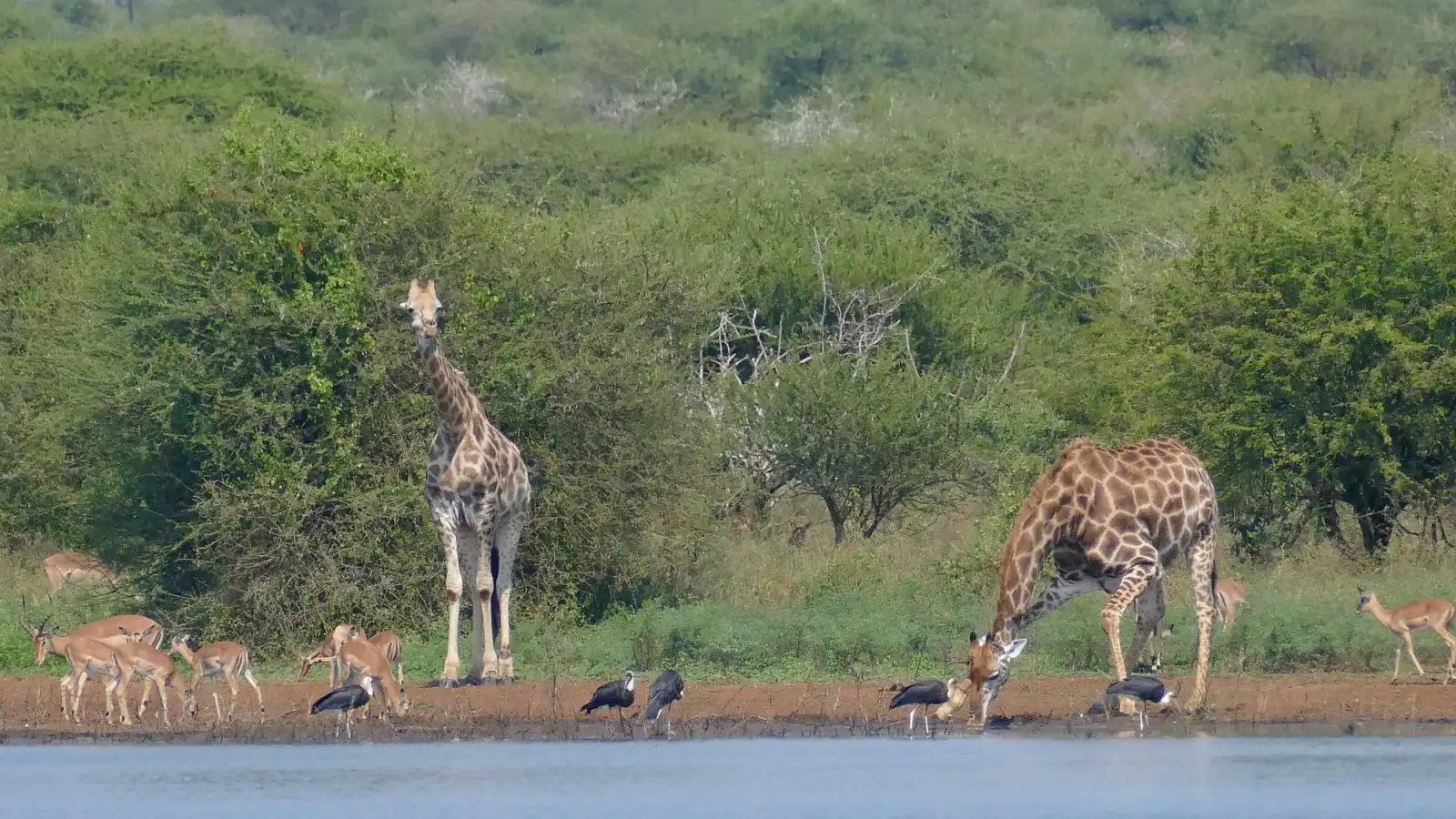
South Africa
Kruger
Kruger, the national park of nearly 2 million hectares in northeastern South Africa, for a self-drive safari with nights in the rest camps inside it
Days I'd stay three days in Kruger, with two nights inside the park: the first at Skukuza and the second at Lower Sabie, both in the south, where there are more animals and the gates are less than an hour's drive from Hazyview.
How the guide reaches this number
Three days allow two mornings on the road at camp opening, a guided sunset drive and the late afternoon at Sunset Dam, without the rush of covering distances. With a fourth day, I'd sleep in Hazyview on the way out and do the Panorama Route, from God's Window to the Three Rondavels. Anyone who doesn't want to drive can swap the two nights in the camps for two nights in a Sabi Sand lodge, with the safaris run by guides. The center and north of the park, from Satara to Punda Maria, call for another trip, with more days.
3–4
Start with the basic programme and choose extensions for the time you have.
When May to September; it is the dry season, with lower bush and animals near the water.
How the guide reaches this number
April and October are transitional, and from November to March it rains, is hotter and the malaria risk is higher
May to September; it is the dry season, with lower bush and animals near the water. April and October are transitional, and from November to March it rains, is hotter and the malaria risk is higher
Per person/day Budget around ZAR756; mid-range around ZAR1,730; comfortable around ZAR3,300 per person per day, based on spending reported by travelers to Budget Your Trip (checked October 2026).
How the guide reaches this number
Indicative figures, excluding travel to the destination.
Budget around ZAR756; mid-range around ZAR1,730; comfortable around ZAR3,300 per person per day, based on spending reported by travelers to Budget Your Trip (checked October 2026). Indicative figures, excluding travel to the destination.
Per person per day: accommodation, meals, urban transport, visits and a small allowance for extras. Flights excluded; larger purchases vary. Editorial estimate, not a quote.
Salta · among the cheapestZermatt · among the priciest
Cheaper than 61% of them. The tick marks the median. Compared by the middle of each city’s daily range, converted at the 24 Sept 2026 exchange rate.
 What Nilo thinks
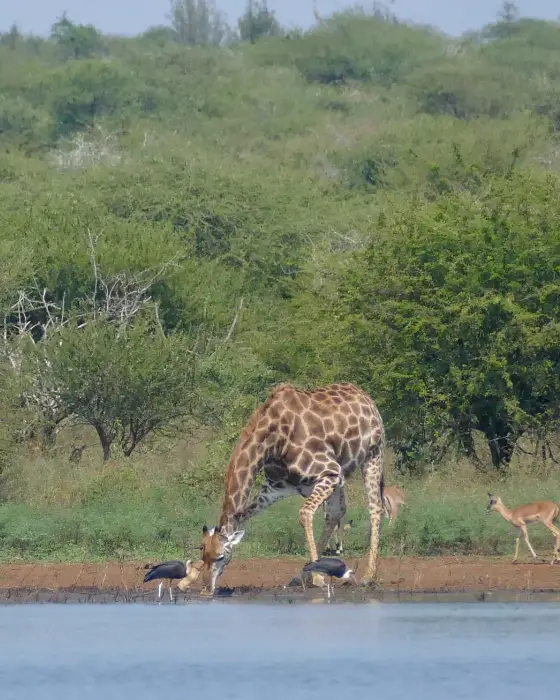
I'd recommend Kruger to anyone who likes open landscape, conservation stories told in the places themselves and food cooked over embers. The camps hold layers of that history: Pretoriuskop, the oldest, has by tradition kept the exotic flowering plants that the others may not have, and at Skukuza the library opened in 1961 preserves the memory of the warden whose Tsonga nickname became the name of the place. The end of the day revolves around the braai, with wood bought at the camp shop, boerewors on the grill with pap, or a potjiekos cooking slowly in the three-legged cast-iron pot, and an Amarula, the liqueur made from the fruit of the marula that grows on the southern savanna. I'd choose June or July to go, in the middle of the dry season, when the bush is low and the animals depend on the rivers and dams; the green of summer looks beautiful in photos, but it hides what you came looking for.In Kruger, the safari is something you do on your own: you rent a car at the edge of the park, go through the gate the moment it opens and drive slowly along paved and dirt roads where elephants, buffalo and lions cross your path. The reward is the freedom to sit for an hour in front of a dam with hippos, decide your route from the sightings board at reception and get back to camp before the gate closes, to have dinner with the bush making noise on the other side of the fence. The south of the park, between the Crocodile and Sabie rivers, holds the animals and the most sought-after camps, such as Skukuza and Lower Sabie. Next door, with no fence, are private reserves such as Sabi Sand, where others drive the vehicle. And to the west, the Drakensberg escarpment adds a day of viewpoints, canyon and waterfalls to the trip.
Quick facts
- Population
- The park has no town. Skukuza, the village of the main camp and administrative seat, had 1,599 residents in the 2011 census; Hazyview, the most used base town outside the gate, had 4,236 in the same census
- Founded
- 1898, when the government of the South African Republic (the Transvaal) protected the area as the Sabie Game Reserve; Kruger National Park was created by the National Parks Act of 1926, which joined that reserve with the Singwitsi reserve and neighboring farms
- Country and region
- South Africa: the provinces of Mpumalanga and Limpopo, in the Lowveld; to the east, the border with Mozambique, and to the north the Limpopo River, the border with Zimbabwe
- Language
- English at reception desks, on signs and on guided drives; in Mpumalanga, the languages most spoken at home are siSwati, isiZulu, Xitsonga and Sepedi (2022 census), and many place names are in Afrikaans
- Currency
- South African rand (ZAR, R). The park's fuel stations accept Visa and Mastercard; ATMs only at Skukuza and Letaba
- Time zone
- South Africa Standard Time (SAST), UTC+2, with no daylight saving time
- Best time to go
- May to September; it is the dry season, with lower bush and animals near the water. April and October are transitional, and from November to March it rains, is hotter and the malaria risk is higher
- Average daily cost
- Budget around ZAR756; mid-range around ZAR1,730; comfortable around ZAR3,300 per person per day, based on spending reported by travelers to Budget Your Trip (checked October 2026). Indicative figures, excluding travel to the destination.
What’s new
Recent changes that affect the plan, with date and source.
- Mar 2026
The Letaba high-level bridge, destroyed by the January 2026 floods, reopened to traffic in March, restoring the link with the center-north of the park. source
- Jul 2026
The three rebuilt culverts on the H4-1, the Sabie River road between Skukuza and Lower Sabie, were finished in July, with wider openings; the park's reconstruction after the floods continues, with a budget of R950 million. source
When to go
May to September; it is the dry season, with lower bush and animals near the water. April and October are transitional, and from November to March it rains, is hotter and the malaria risk is higher
January
13 h 31 min of daylight
National holidays
Jan 1 – 3, 2027 · long weekend · New Year's Day
Jan 1, 2028 · New Year's Day
Source: Nager.Date. Holiday dates shift; check close to your trip.
February
12 h 55 min of daylight
March
12 h 14 min of daylight
National holidays
Mar 20 – 22, 2027 · long weekend · Human Rights Day
Mar 26 – 29, 2027 · long weekend · Good Friday, Family Day
Mar 18 – 21, 2028 · long weekend · Human Rights Day
Source: Nager.Date. Holiday dates shift; check close to your trip.
April
11 h 29 min of daylight
National holidays
Apr 24 – 27, 2027 · long weekend · Freedom Day
Apr 14 – 17, 2028 · long weekend · Good Friday, Family Day
Source: Nager.Date. Holiday dates shift; check close to your trip.
May
Best time10 h 54 min of daylight
National holidays
May 1, 2027 · Workers' Day
Source: Nager.Date. Holiday dates shift; check close to your trip.
June
Best time10 h 35 min of daylight
National holidays
Jun 16, 2027 · Youth Day
Source: Nager.Date. Holiday dates shift; check close to your trip.
August
Best time11 h 15 min of daylight
National holidays
Aug 7 – 9, 2027 · long weekend · National Women's Day
Source: Nager.Date. Holiday dates shift; check close to your trip.
September
Best time11 h 57 min of daylight
National holidays
Sep 24 – 26, 2027 · long weekend · Heritage Day
Source: Nager.Date. Holiday dates shift; check close to your trip.
October
12 h 41 min of daylight
November
13 h 20 min of daylight
National holidays
Nov 4, 2026 · Election Day
Source: Nager.Date. Holiday dates shift; check close to your trip.
December
13 h 41 min of daylight
National holidays
Dec 16, 2026 · Day of Reconciliation
Dec 25 – 27, 2026 · long weekend · Christmas Day, St. Stephen's Day
Dec 16 – 19, 2027 · long weekend · Day of Reconciliation
Dec 25 – 27, 2027 · long weekend · Christmas Day, St. Stephen's Day
Source: Nager.Date. Holiday dates shift; check close to your trip.
High, shoulder and low season
High · May to September
Dry season: the bush stays low, water concentrates in the rivers and dams and animals are easier to find. Warm, dry days, with highs between 26 and 31 °C at Skukuza, and cold early mornings, of about 6 °C in June and July; the gates open at 6:00 a.m. and close at 5:30 p.m. from May to July. In September, National Parks Week brings more South African visitors.
Shoulder · April and October
Transitional months. April still has little rain and the bush starts to dry out; October is hot, with the first rains, and the gates start opening at 5:30 a.m. They work well for anyone who can't travel in the full dry season.
Low · November to March
Rainy season, with highs above 32 °C and about 100 mm of rain in December and January. The park turns green and flowery, days are longer and the camp gates open at 4:30 a.m. from November to January, but tall bush hides the animals. It is the period of highest malaria risk. Floods, like those of January 2026, can close roads and camps.
How the year changes
Kruger has two seasons. From April to September it is the dry season: warm, dry days, cold nights and low bush, with water limited to the rivers and dams, where the animals gather; it is the time SANParks gives as the best for seeing animals. At Skukuza, average highs are between 26 and 31 °C in those months, lows fall to about 6 °C in June and July, and on night drives you need warm clothing. From October to March the heat and the rains arrive: from November to March highs exceed 32 °C, December and January each have about 100 mm of rain, the bush turns green and tall and the animals spread out, which makes them harder to find. It is also when the malaria risk is higher (November to April), when days are longer and the gates open at 5:30 a.m. The recommendation of this guide is May to September; April and October are transitional months that also work. In September, National Parks Week usually brings more South African visitors to the south of the park.
Nilo's tips
Sleep inside the park
Anyone who sleeps at Skukuza or Lower Sabie starts the day already in the middle of the south, without spending the first hour on the road to the gate, and can return from the guided sunset drive straight to the cabin. From November to January there is a bonus: the camp gates open at 4:30 a.m., an hour before the entrance gates.
Book the guided drives on arrival
The sunset and night drives leave from the camps and are booked at reception; book as soon as you arrive. They are the only way to drive around the park after the gates close.
Fill in the form beforehand
SANParks asks that the gate registration and indemnity form be printed and filled in before arrival, and handed in with an ID document for each person. It saves time in the queue at opening.
Fuel up at the camps
The main camps have a fuel station, which accepts cards. In the south, there is no reason to set out with a low tank.
Choose the gate by the camp
For Skukuza, enter through the Paul Kruger Gate, 12 km from the camp; for Lower Sabie coming from the N4, through Crocodile Bridge, 34 km away. Phabeni is the closest to Hazyview, but has no late entry, and SANParks advises against Numbi.
Explore the map
Explore the map, read about the other places and plan your travel days in the app.
Open the appWhat to see
If time is short, I would skip: Letaba Elephant Hall · Masorini Ruins · Thulamela
Leave for last, if time allows: Nkuhlu Picnic Spot · Olifants Rest Camp · Stevenson-Hamilton Memorial Library · Pretoriuskop Rest Camp
Skukuza Rest Camp
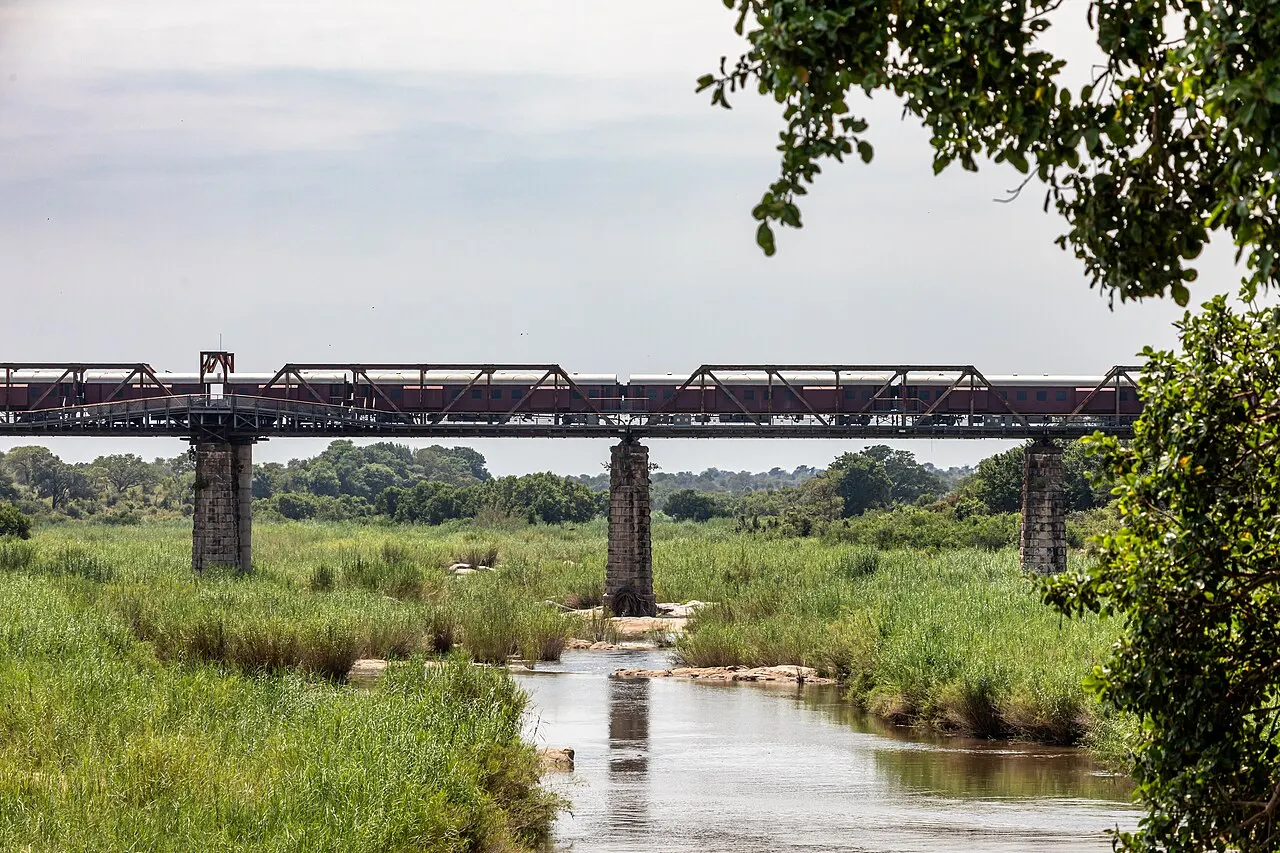
The park's largest camp and its administrative headquarters, on the south bank of the Sabie River, 12 km from the Paul Kruger Gate. It has a reception, restaurant, shop, bank, ATM, fuel station, car rental, pools for guests and, 5 km away, Skukuza airport. It is a good starting point for the SANParks guided drives (morning, sunset and night) and for the south of the park, where SANParks says the Big Five can be seen in the surroundings. From the riverbank you can see the old Selati railway bridge, where a hotel has operated since 2019. It is large and busy, and anyone looking for peace will find more calm in the smaller camps.
Check access
Sunset Dam
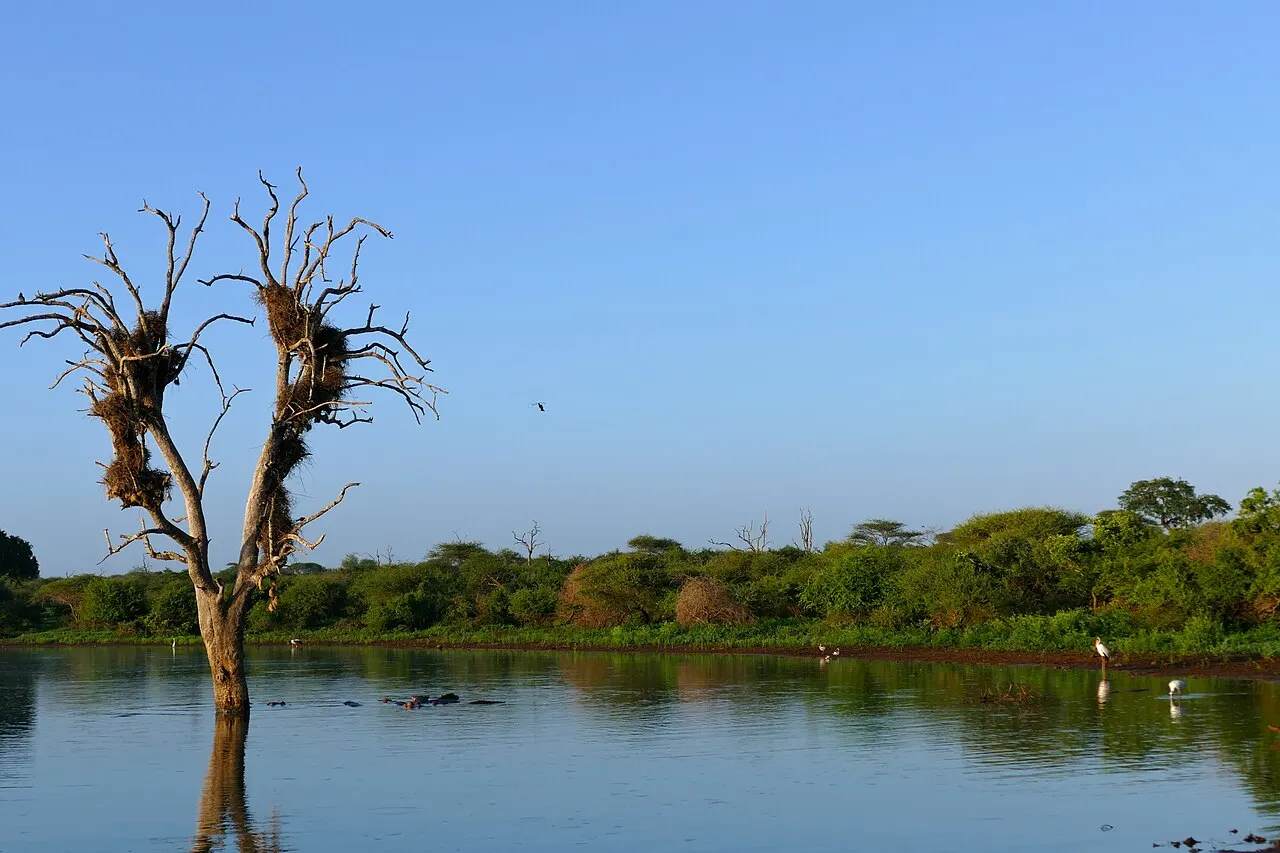
A small dam beside the paved road, 1 km from the Lower Sabie gate, with hippos, big crocodiles and many waterbirds, and a coming and going of other animals that arrive to drink. Viewing is done from inside the car. Because it is so close to the camp, it fills up with cars, especially in the late afternoon, before the gate closes.
Check access
Lake Panic Bird Hide
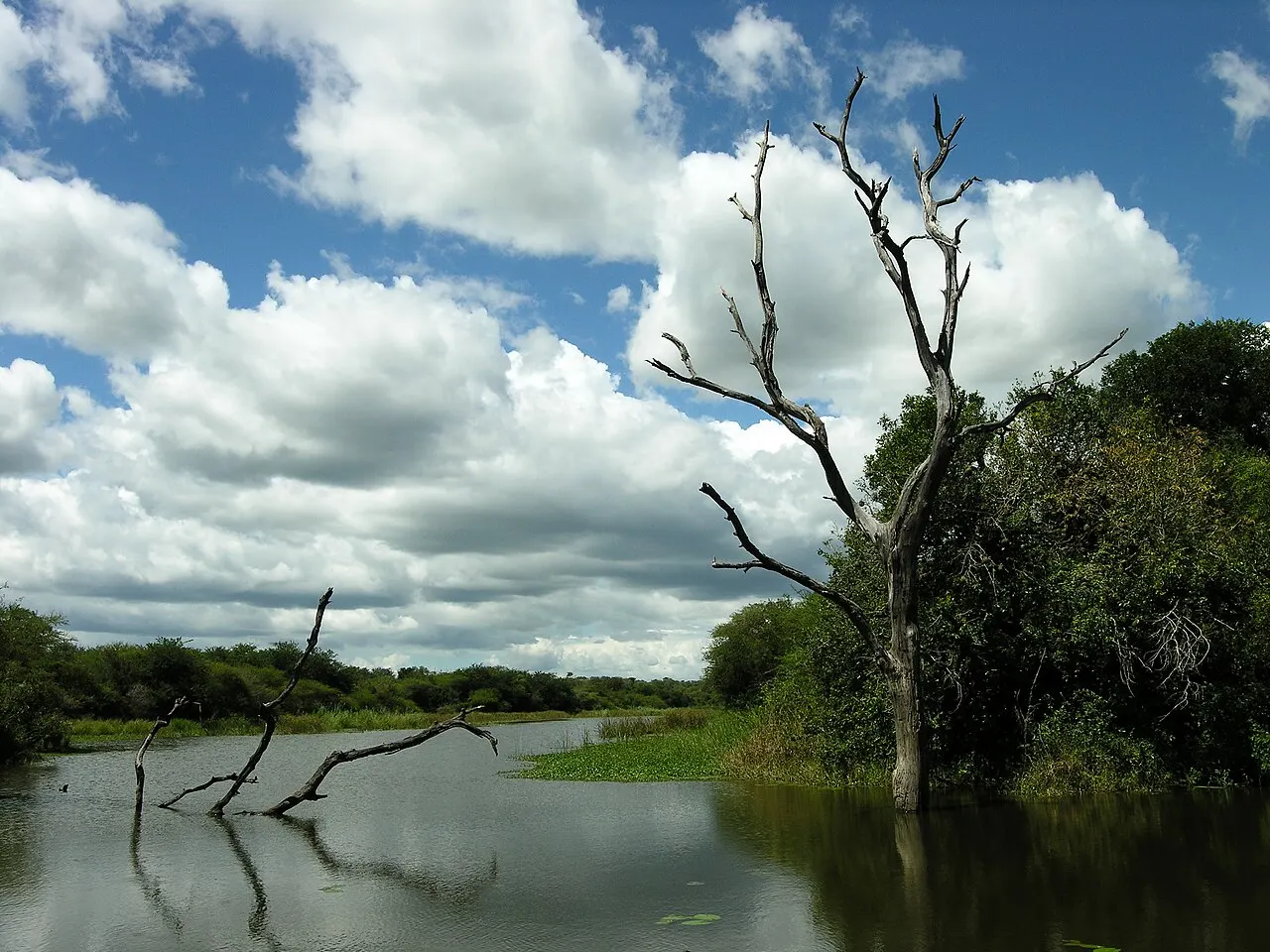
An observation hide over a reservoir about 7 km from Skukuza, where you sit in silence in front of the water. Hippos, crocodiles and many bird species are frequent. It is the place to rest from the wheel in the late morning or in the afternoon, because at the hide you are allowed to get out of the vehicle.
Check access
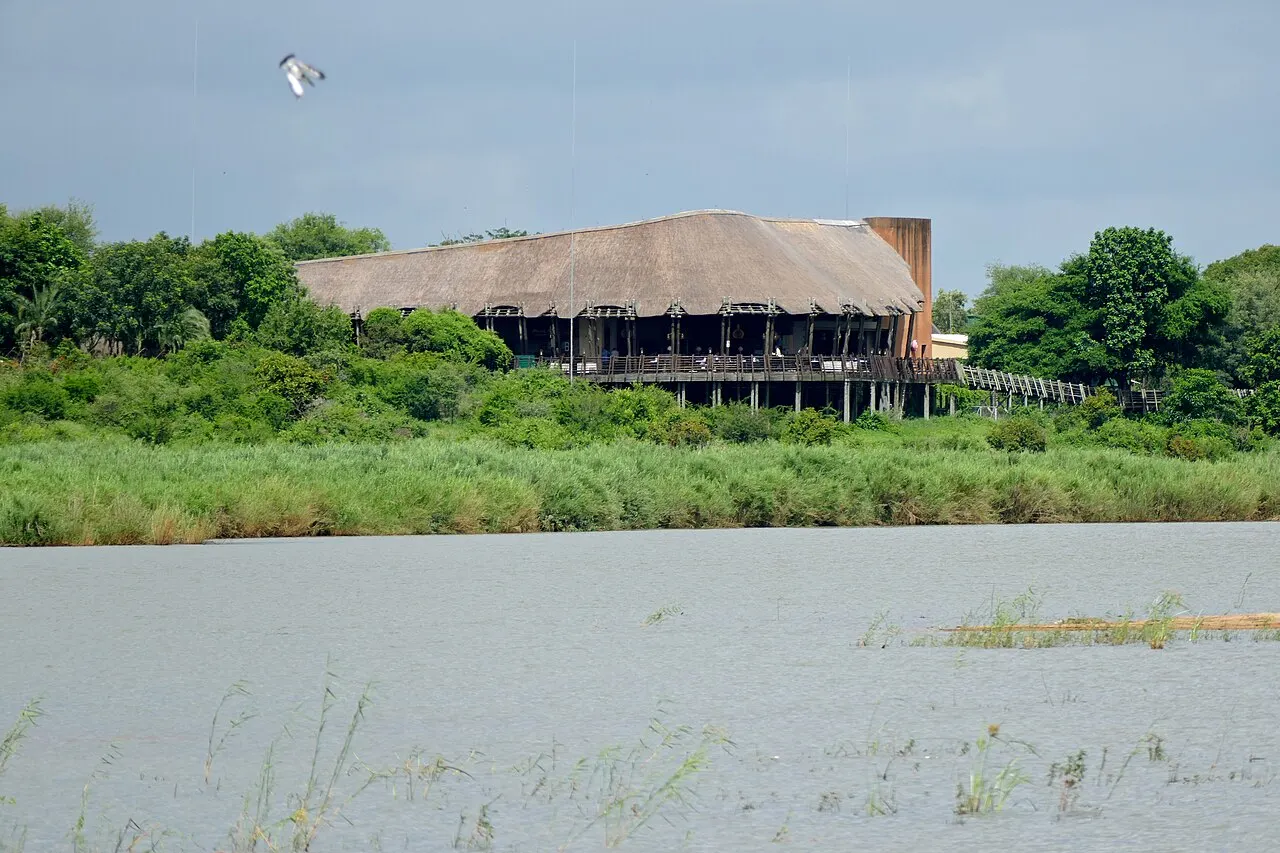
Lower Sabie Rest Camp
A camp on the bank of the Sabie, with a view of the river and the Lebombo Mountains, surrounded by huge sycamore figs. The surrounding area, of basalt and sweet grass, gathers lions, cheetahs, elephants, hippos, rhinos and herds of buffalo that, according to SANParks, reach 800 animals. It has a restaurant, shop, fuel station and pool, but no ATM. It is 34 km from the Crocodile Bridge gate and about 58 km from the Paul Kruger Gate, almost two hours at an average of 30 km/h.
Check access
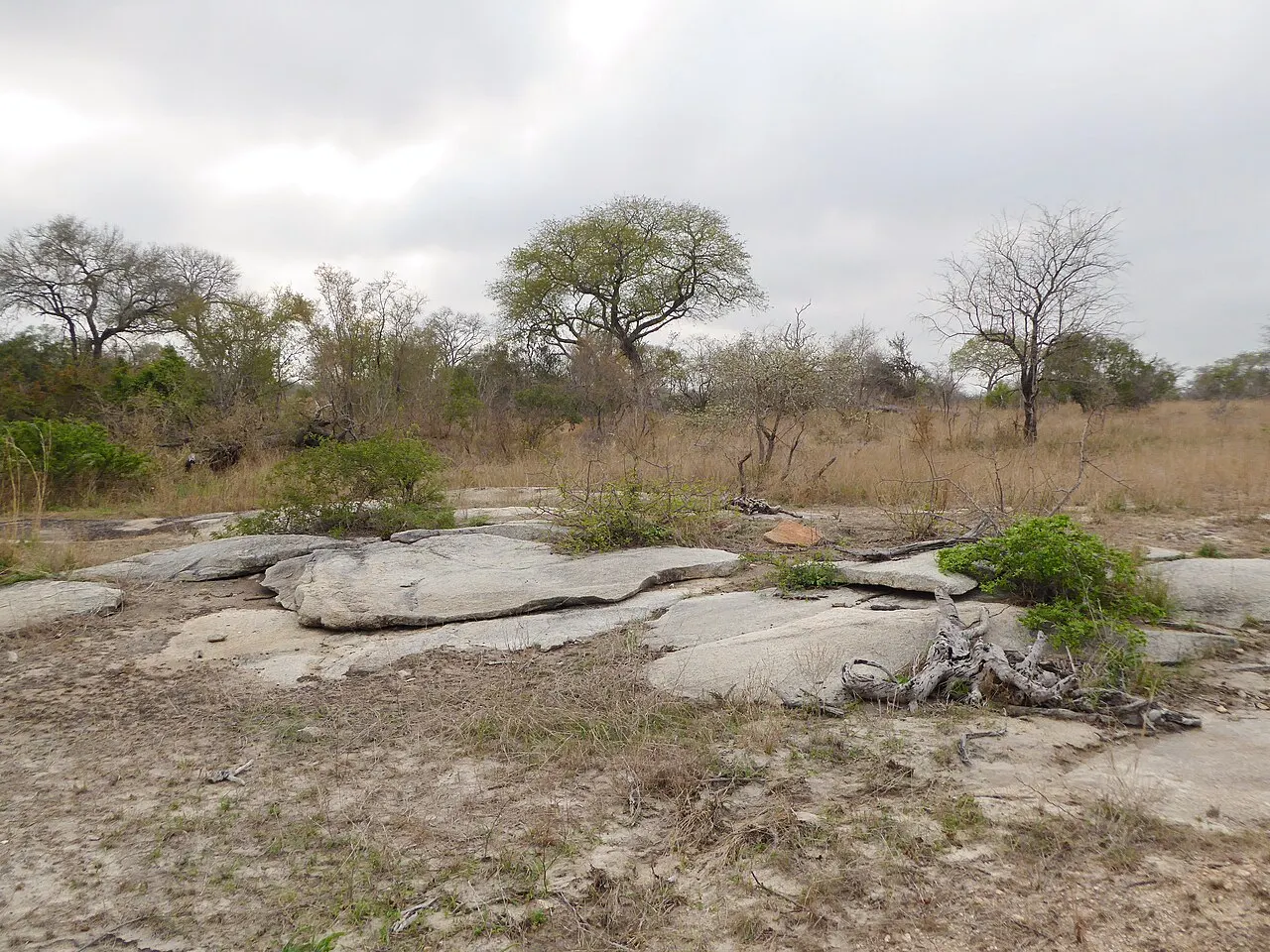
Sabi Sand Nature Reserve
South Africa's first private nature reserve, founded in 1948, with about 650 km² between the Sabie and Sand rivers, adjoining Skukuza to the west and with no fence between it and Kruger since 1993. Lodges such as Londolozi, MalaMala and Singita run guided safaris for their guests. Entry through the Shaws, Newington or Gowrie gates is only allowed for lodge guests and carries its own fee, per person and per vehicle. It is the alternative for anyone who prefers being driven to driving, at the price of lodge rates.
Check access
Admission: ZAR 170 (checked Oct 2026) source
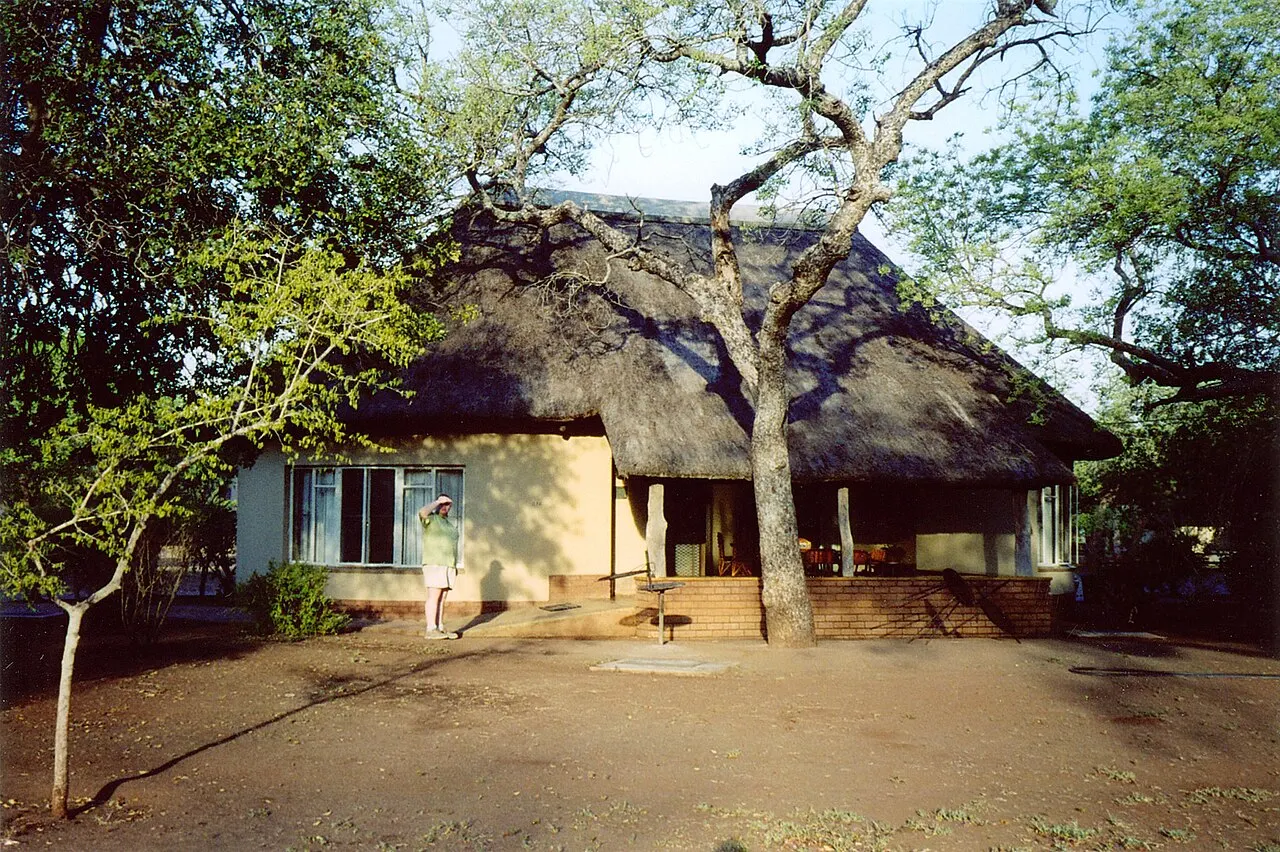
Satara Rest Camp
The park's second-largest camp, in the center, in an area of open bush where animals are abundant and varied; it is big cat country, and during South African school holidays the roads and sightings get crowded. The huts are laid out in circles. It is about 94 km from Skukuza, more than three hours at the recommended speed, and so it works better as an overnight stay than as a round-trip outing.
Check access
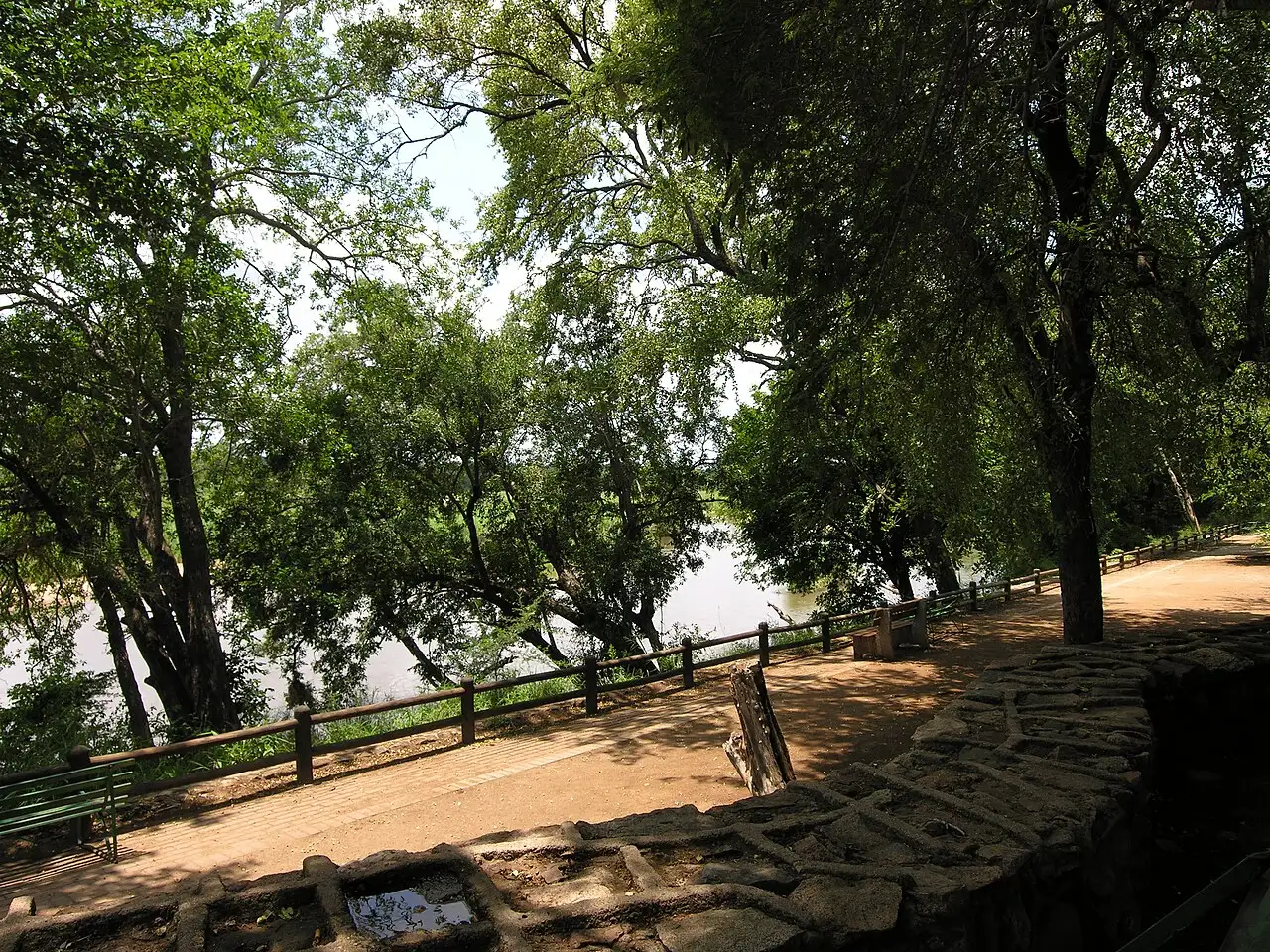
Nkuhlu Picnic Spot
A picnic area on the bank of the Sabie River, on the H4-1 road, about 20 km from Lower Sabie. It is one of the authorized stops for getting out of the car, having coffee or lunch while looking at the river, halfway between Skukuza and Lower Sabie.
Check access
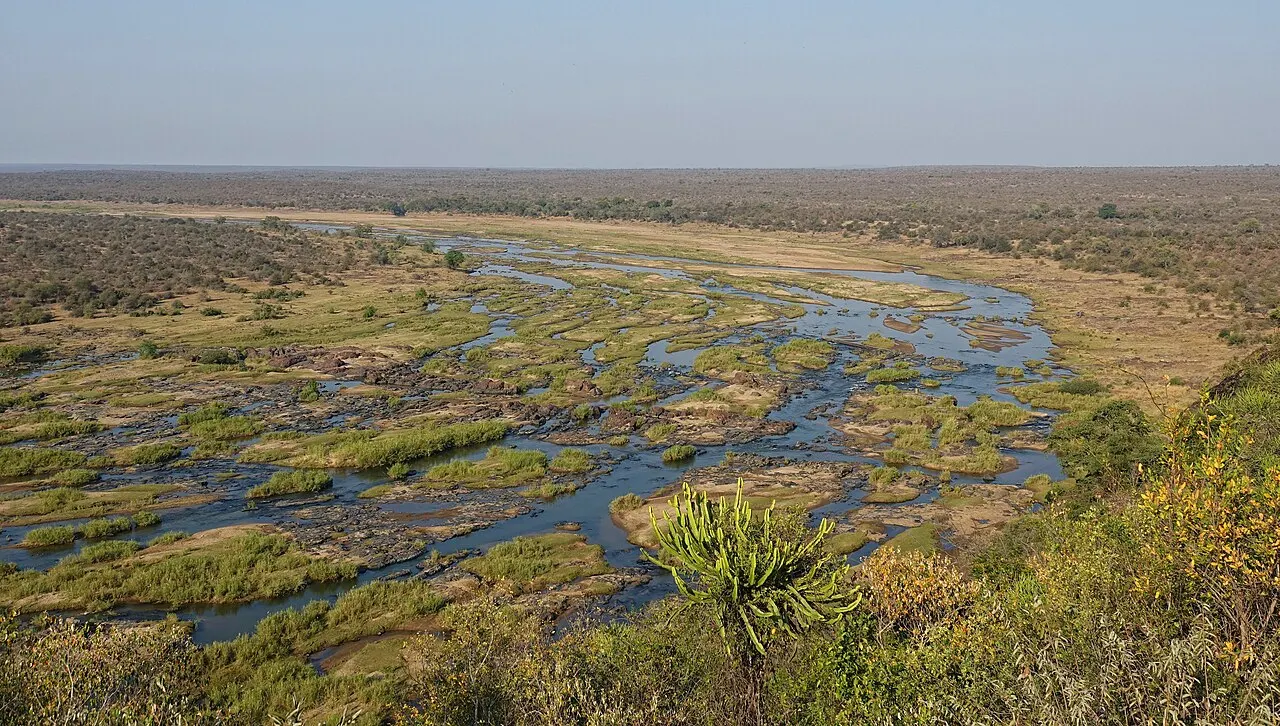
Olifants Rest Camp
A camp on top of a hill above the Olifants River, with viewpoints from which you look down at the river and the animals that come to drink. It lies in the center of the park, far from the southern gates, and calls for at least one overnight stay.
Check access
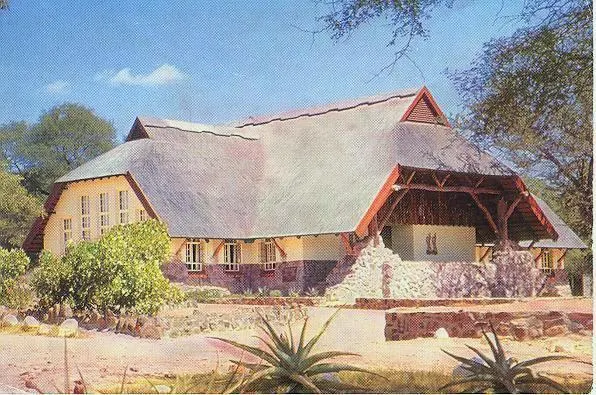
Stevenson-Hamilton Memorial Library
A library and small museum inside Skukuza camp, opened in 1961, with books on ecology and history, objects from the park and the memory of James Stevenson-Hamilton. It fits into the hot hours of midday, when the animals rest.
Check access
More places in the guide
Pretoriuskop Rest Camp
Kruger's oldest camp, among granite domes in the southwest of the park, 9 km from the Numbi gate. By tradition, it has kept exotic flowering plants in the garden, something prohibited in the other camps, and the region is home to sable antelope and wild dogs. According to the British government, SANParks advises against the Numbi gate, after an attack that killed a tourist and violent incidents on the R538 road; the camp can be reached through the Phabeni gate, 24 km away.
Letaba Elephant Hall
A museum about elephants at Letaba camp, in the center-north, with the tusks of the so-called Magnificent Seven, elephants with enormous tusks that lived in the park. The camp was hit by the January 2026 floods and is reopening units in stages; for anyone staying in the south, the trip isn't worth the distance.
Masorini Ruins
An Iron Age site on top of a hill, 12 km from the Phalaborwa gate, where the baPhalaborwa smelted iron in the 19th century. The huts and furnaces have been rebuilt, there is a small museum at the foot of the hill and guided visits to the top. It is of interest to anyone entering from the north; from Hazyview it is out of reach.
Thulamela
Ruins of the stone walls of a chiefdom from 450 to 500 years ago, in the far north of the park. The visit is guided, from Punda Maria or the Pafuri picnic spot, at 7:00 a.m., for people over 12, and it is advisable to book a week ahead. It is a full day's drive from the south of the park.
Nilo’s itinerary
Start with the basic programme and choose extensions for the time you have.
Plan my days in the app ↗Day 1 · From Hazyview to Skukuza through the south of the park
Leave Hazyview before dawn and be at the Phabeni gate, 10 km away, when it opens (5:30 a.m. from October to March, 6:00 a.m. from April to September), with the gate registration form already filled in and your passport at hand.
Pay the conservation fee, keep the gate permit, which will be asked for on exit, and drive slowly to Skukuza: the 39 km take about an hour and 20 minutes at an average of 30 km/h, and with stops the whole morning goes on this stretch.
Check in at Skukuza (the chalets are available from 2:00 p.m.), check the reception's sightings board for what was seen that morning and book the guided sunset drive at reception.
In the midday heat, have lunch at the camp and visit the Stevenson-Hamilton Memorial Library; from the riverbank you can see the old Selati railway bridge.
In the middle of the afternoon, drive the 7 km to Lake Panic Bird Hide and sit for an hour in front of the reservoir, with hippos and birds.
Return to Skukuza in time for the sunset drive, about three hours in an open vehicle, which ends with a stretch in the dark with a spotlight. Have dinner around your unit's barbecue.
Day 2 · The Sabie River road to Lower Sabie
Be at the camp gate when it opens and make the most of the first hours, the best for seeing animals, in the surroundings of Skukuza; if you prefer, you can book the morning guided walk, with two armed guides, for people over 12.
Come back for coffee and vacate the unit by 10:00 a.m.
Head east on the H4-1, the road that follows the Sabie River to Lower Sabie, about 46 km; it is the busiest road in the park, and it is worth stopping wherever there is water in sight.
Stop at Nkuhlu Picnic Spot, about 20 km from Lower Sabie, for lunch or coffee on the riverbank.
Check in at Lower Sabie from 2:00 p.m. and rest at the pool or in the river-facing restaurant area during the hottest hours.
In the late afternoon, go to Sunset Dam, 1 km from the gate, and stay in the car watching hippos and crocodiles until close to the closing of the camp gate.
Day 3 · One last morning in the south and departure
Leave when the Lower Sabie gate opens and make the short loop to the Mlondozi dam, 17 km away, where there is a picnic area; the round trip adds up to about an hour and 10 minutes without stops, and buffalo, lions and cheetahs roam the basalt plains of the area.
Return to Lower Sabie and vacate the unit by 10:00 a.m.
To do the Panorama Route the next day, leave through the Paul Kruger Gate, about 58 km from Lower Sabie on the H4-1 via Skukuza, almost two hours without stops, and continue to Hazyview (41 km); leave with room to spare, counting the stops, before the gate closes.
Sleep in Hazyview.
Anyone not doing the Panorama Route who continues to KMIA or Johannesburg can leave through the Crocodile Bridge gate, 34 km from Lower Sabie, and take the N4.
If you stay longer
Day 4 · Panorama Route and Blyde River Canyon
Day trip
The road along the Drakensberg escarpment, west of Hazyview, brings together viewpoints and waterfalls of the Blyde River Canyon Nature Reserve. From Hazyview to Graskop it is about 49 km, an hour by car. From Graskop, the R534 passes the Pinnacle, a 30 m quartzite column, 3 km away, and God's Window, 9 km away, a viewpoint over 700 m cliffs from which you see the Lowveld; near there, along side roads west of the R532, Lisbon Falls drops 92 m and Berlin Falls 80 m. Going north on the R532 are Bourke's Luck Potholes, about 35 km from Graskop, cylindrical holes carved in the rock where the Treur and Blyde rivers meet, and the Three Rondavels viewpoint, about 53 km away, three rounded peaks that resemble traditional huts above the canyon. The return to Hazyview via the north adds up to about 90 km and an hour and 40 minutes. Most viewpoints charge admission at the entrance; go on a clear day, because the escarpment's mist can hide the view.
Food
Braai
The South African barbecue, cooked on a grill over wood or charcoal, is the evening meal in the camps: the units have a barbecue, and the shops sell wood, charcoal and meat. The SANParks bush braai drives combine a late-afternoon drive, dinner outdoors and a short stretch at night.
Boerewors
A sausage with an Afrikaans name (boer, farmer; wors, sausage) that, under South African rules, contains at least 90% beef, pork, lamb or goat, and the rest seasoning. It is one of the meats on the braai grill.
Pap
A firm porridge of maize meal, cooked in water or milk until it becomes a thick mass, served with meat and sauces. It is the base of the meal across much of southern Africa.
Biltong
Cured, seasoned meat, air-dried, in strips or slices; it can be beef or game, such as kudu or ostrich. It is the snack you take in the car during the safari.
Potjiekos
A stew of meat and vegetables cooked slowly outdoors in a three-legged cast-iron pot, the potjie, over a little wood or charcoal. The name means little-pot food.
Vetkoek
Fried dough bread from the South African tradition, which is called igwinya in Xhosa and Zulu.
Koeksister
A braid of fried dough dipped in sugar syrup, a sweet from the Afrikaner tradition.
Amarula and marula
The marula is a tree native to the savanna, common in southern Kruger; its fruit is used to make Amarula, a creamy South African liqueur of 17% alcohol with a fruity caramel taste.
Macadamia and bananas of Hazyview
The plantations around Hazyview produce bananas and macadamia nuts, sold at stalls and shops in town.
Where to eat
- Kruger camps
Braai at your own unit: the camp shops sell meat, boerewors, wood and charcoal, and almost all units have a kitchen and a barbecue. The restaurants in the larger camps, such as Skukuza and Lower Sabie, handle breakfast after the early drive and lunch, with a short menu. To eat in the middle of the day without going back to the camp, bring a snack and biltong and stop at an authorized picnic spot, such as Nkuhlu.
- Hazyview
The town has the biggest choice of restaurants in the region, from cafés with pancakes and breakfast to à la carte restaurants and a brewery, almost all along the R40 and the road to Sabie. It is the place for a dinner with more choice after a day in the park, and for buying bananas and macadamias from the surrounding plantations.
- Graskop
The town is known for its pancake houses, with sweet and savory fillings, and is the most practical lunch stop on the Panorama Route, between God's Window and Bourke's Luck.
· 2026-10-19
Day trips
Panorama Route and Blyde River Canyon
The road along the Drakensberg escarpment, west of Hazyview, brings together viewpoints and waterfalls of the Blyde River Canyon Nature Reserve. From Hazyview to Graskop it is about 49 km, an hour by car. From Graskop, the R534 passes the Pinnacle, a 30 m quartzite column, 3 km away, and God's Window, 9 km away, a viewpoint over 700 m cliffs from which you see the Lowveld; near there, along side roads west of the R532, Lisbon Falls drops 92 m and Berlin Falls 80 m. Going north on the R532 are Bourke's Luck Potholes, about 35 km from Graskop, cylindrical holes carved in the rock where the Treur and Blyde rivers meet, and the Three Rondavels viewpoint, about 53 km away, three rounded peaks that resemble traditional huts above the canyon. The return to Hazyview via the north adds up to about 90 km and an hour and 40 minutes. Most viewpoints charge admission at the entrance; go on a clear day, because the escarpment's mist can hide the view.
Pilgrim's Rest and Sabie
Pilgrim's Rest, 16 km from Graskop and about 70 km from Hazyview, is an entire mining village protected as a national monument: alluvial gold was discovered there in 1873, and within a year close to 1,500 prospectors arrived. The return can pass through Sabie, 30 km from Graskop on the R532, and Mac-Mac Falls, 65 m high. It combines with the Panorama Route for anyone who prefers fewer viewpoints and more walking around the village.
Where to begin
From Hazyview to Skukuza through the south of the park
Leave Hazyview before dawn and be at the Phabeni gate, 10 km away, when it opens (5:30 a.m. from October to March, 6:00 a.m. from April to September), with the gate registration form already filled in and your passport at hand.
The Sabie River road to Lower Sabie
Be at the camp gate when it opens and make the most of the first hours, the best for seeing animals, in the surroundings of Skukuza; if you prefer, you can book the morning guided walk, with two armed guides, for people over 12.
Money
The currency is the South African rand (ZAR, R). On top of accommodation, each visitor pays a daily conservation fee for each day in the park, charged at the gate, with three bands: foreigners, citizens of SADC countries (the Southern African Development Community), and South Africans and residents, and a reduced price for children aged 2 to 11. SANParks adjusts the schedule every year, effective November 1 to October 31, and publishes the rates on the Kruger tariffs page. A 1% community levy is added to all accommodation and activity bookings. For long trips, it is worth comparing with the SANParks international Wild Card, an annual pass that replaces the daily fees in participating parks. Accommodation in the camps is booked through the SANParks reservations center (+27 12 428 9111) or on the website, and bookings normally open 11 months before the date, which matters for Skukuza and Lower Sabie in the dry season and during South African school holidays; on the page consulted in October 2026, rates started at R508 per night for a camping area and R640 per night for a cabin, both at Pretoriuskop, and the other categories vary by camp. Guided drives, walks and the bush braai are charged separately, with a price per adult and per child given at booking. At Sabi Sand, each entry pays one fee per person and another per vehicle, adjusted every calendar year, on top of the lodge rate. Inside Kruger, only Skukuza has a bank, and ATMs exist only at Skukuza and Letaba; the fuel stations accept Visa, Mastercard and cash. On the Panorama Route, most viewpoints charge their own admission at the entrance.
Getting there and around
To get there, there are daily flights from Johannesburg to Kruger Mpumalanga International Airport (KMIA, code MQP), between Mbombela and White River, which also receives flights from Cape Town and Durban. Airlink flies from Johannesburg and Cape Town to Skukuza airport, inside the park, and there are flights to Hoedspruit (Eastgate), closer to the Orpen gate. From KMIA to Hazyview it is about 50 km by road. By car from Johannesburg, SANParks calculates 430 km to the Phabeni gate and 460 km to the Paul Kruger Gate, along the N4 to Mbombela and then the R40.
Most foreign visitors fly to the edge of the park and rent a car: there are rental companies at KMIA, in Hoedspruit and inside Skukuza camp. The park's tourist roads are paved or well-kept dirt. Motorcycles are prohibited, and open vehicles only enter with authorization. Inside the park, the limit is 50 km/h on pavement, 40 km/h on dirt and 20 km/h in the camps, and SANParks recommends keeping an average of 30 km/h; do not drive off the roads or on roads marked as prohibited.
The entrance gates open at 5:30 a.m. from October to March and at 6:00 a.m. from April to September. They close at 5:30 p.m. from May to July, at 6:00 p.m. in March, April, August, September and October, and at 6:30 p.m. from November to February. The camp gates close at the same time, but open at 4:30 a.m. from November to January. Arriving late at the entrance gate means being kept out. Late entry, until 9:00 p.m., is accepted only in an emergency, with proof, and with a paid escort (R500 per vehicle) to a designated camp: from the Paul Kruger Gate to Skukuza, from Numbi to Pretoriuskop, from Malelane to Berg-en-Dal and Malelane, from Crocodile Bridge, Punda Maria and Orpen to the camps of the same name. At Phabeni, Phalaborwa and Pafuri there is no late entry.
The road times in this guide are calculated at the average of 30 km/h that SANParks recommends, without counting stops: about 25 minutes from the Paul Kruger Gate to Skukuza (12 km), an hour and 20 minutes from Phabeni to Skukuza (39 km), an hour and a half from Skukuza to Lower Sabie (46 km), almost two hours from Lower Sabie to the Paul Kruger Gate and an hour and 10 minutes from Crocodile Bridge to Lower Sabie (34 km). Each stop to look at an animal adds to that time, and the margin before the gate closes should allow for them. Anyone who doesn't drive has two options: the open-vehicle guided drives that leave from the camps (in the morning, about half an hour before the gate opens; at sunset; and at night, at 7:30 p.m. or 8:00 p.m., depending on the season), which do not accept children under 6, or a safari operator from Hazyview. There is also a transfer service between KMIA and the park, of about an hour and 20 minutes.
Safety
Inside the park, the main risk is the animals themselves: stay in the car outside marked areas and do not walk around the camps at night without a flashlight. Walks take place only with two armed guides, for a maximum of eight people over 12. Kruger is in a malaria area, with a risk that is generally low but higher from November to April; SANParks recommends consulting a doctor about prophylaxis, using repellent and keeping the screens closed from dusk to dawn. Anyone who has a fever up to five weeks after the trip should ask for a malaria test. Violence against tourists inside the park is rare; in May 2026, two South African visitors were killed in an attack inside Kruger, and the suspects were arrested. The British government reports that SANParks advises against using the Numbi gate, after a violent attack that killed a tourist, and records protests and violent incidents on the R538, the road that leads to it; for the southwest of the park, the Phabeni and Paul Kruger gates serve the same region. Outside the park, the general precautions for South Africa apply: the British government warns of car theft and robberies at traffic lights, intersections and gas stations, especially at night. Keep windows closed and belongings out of sight in towns, fill up before the tank reaches half and avoid driving at night off the main roads. Protests by neighboring communities have also blocked other access roads, such as the Mkhuhlu road, which leads to the Paul Kruger Gate; check the SANParks advisories before setting out. The SANParks roadside assistance number is 0800 030 666.
Before you go
- Plug
- types C, D, M and N
- Voltage
- 230 V
- Driving side
- on the left
- Emergency
- Police, Ambulance, Fire 112
- Country code
- +27
- Official languages
- English, Afrikaans, Southern Ndebele, Northern Sotho, Sesotho, Swazi, Tsonga, Tswana, Venda, Xhosa, Zulu and South African Sign Language
- Currency
- rand (ZAR)
Source: Wikidata (CC0), checked September 2026.
Etiquette tips
Stay inside the car
Outside the camps, picnic spots and marked hides, no one gets out of the vehicle, and no part of the body may stick out of the window or sunroof. Doors stay closed.
Do not feed any animal
Feeding or disturbing animals is a serious offense. Monkeys, baboons and hyenas that get used to receiving food become aggressive and end up being put down; put food away before leaving the chalet, because monkeys open refrigerators and cupboards.
Quiet at night
Between 9:30 p.m. and 6:00 a.m. the noise restriction applies in the camps. The cell phone should only be used in the camps, at the gates and in emergencies.
Rhinos stay off social media
Because of poaching, the guidance is not to post where a rhino was seen.
Drinking has its place
Drinking is prohibited in public areas, such as roads, parking lots, picnic spots and gates. Anyone sleeping in the park may drink in their own accommodation and in the restaurants.
No drones and no pets
Drones are prohibited in and over national parks, and no pets enter Kruger.
Mistakes to avoid
Trying to cover distances that are too big. SANParks itself warns that the park is enormous and that driving slowly and stopping often yields more sightings than covering many kilometers.
Calculating road time from the maximum speed. At the 30 km/h average that SANParks recommends, the 46 km between Skukuza and Lower Sabie take about an hour and a half without stops, and being late for the gate brings a fine.
Leaving food on the porch or in an open car. Monkeys and baboons take whatever is within reach.
Forgetting warm clothes in winter. From May to August the early mornings are cold, and open-vehicle drives that leave before dawn or after sunset call for a coat.
Counting on an ATM at any camp. Only Skukuza and Letaba have them.
Planning a day visit to Sabi Sand. Entry through the reserve's gates is provisioned for lodge guests.
Choosing the entrance gate without checking the advisories. According to the British government, SANParks advises against the Numbi gate after an attack that killed a tourist, and there have been protests and violent incidents on the R538, the road that leads to it; protests have also closed the Mkhuhlu road, which leads to the Paul Kruger Gate.
Useful phrases
Avuxeni
Hello (Xitsonga)
Inkomu
Thank you (Xitsonga)
Sawubona
Hello (siSwati)
Ngiyabonga
Thank you (siSwati)
Dankie
Thank you (Afrikaans)
Goeie môre
Good morning (Afrikaans)
Braai
Barbecue (Afrikaans, used throughout the country)
Where to stay
- Skukuza Rest Camp · First-time visitors who want the center of the south of the park, with more services: It is 12 km from the Paul Kruger Gate and 5 km from Skukuza airport, has a bank, ATM, car rental, restaurant and all the SANParks guided drives, and the Big Five can be seen in the surroundings. Sleeping inside the park lets you be on the road as soon as the camp gate opens. The drawback is size: it is the busiest camp, and the nearby roads have more cars.
- Lower Sabie Rest Camp · Those who want a riverside camp, in one of the areas with the most animals in the south: It has a view of the Sabie and the Lebombo Mountains, Sunset Dam 1 km away and easy access to the basalt plains and the H4-1. It is 34 km from the Crocodile Bridge gate, convenient for anyone coming along the N4. It has no ATM, and from Hazyview you have to cross the south of the park.
- Hazyview · Those who prefer a hotel or guesthouse, travel on a tighter budget or want to combine the park with the Panorama Route: It is 10 km from the Phabeni gate and 41 km from the Paul Kruger Gate, has many hotels, guesthouses and restaurants, and is the natural starting point for Graskop and the Blyde canyon. In return, each day in the park starts and ends at a gate, with the daily fee paid on each entry, and the first part of the morning is spent on the road to the Skukuza area, an hour and 20 minutes from Phabeni at the recommended average.
- Sabi Sand · Those who prefer to be guided and can afford lodge rates: The reserve's lodges run guided safaris for their guests, in an area with no fence between it and Kruger. Access through the Shaws, Newington and Gowrie gates is only for guests, and each entry pays the reserve fee on top of the lodge rate, which varies from one lodge to another.
- Graskop · Those who want to sleep on the escarpment to see the viewpoints early, before the mist and the tour buses: It is 3 km from the Pinnacle and 9 km from God's Window, at about 1,400 m of altitude, with cooler nights. It is about an hour from Hazyview and farther from the Kruger gates, so it serves the night of the Panorama Route, not the safari days.
· 2026-10-19
Districts
Southern Kruger
Between the Crocodile and Sabie rivers lies the most visited region, with the most animals per kilometer, which SANParks calls Marula. This is where Skukuza, Lower Sabie, Pretoriuskop, Berg-en-Dal and Crocodile Bridge are, along with the gates closest to Hazyview and Mbombela. It suits anyone with few days who wants the best chances of seeing the Big Five; the trade-off is traffic on the main roads, such as the H4-1 between Skukuza and Lower Sabie.
Central Kruger
From the banks of the Sabie to the Olifants River, the Satara and Orpen region has open plains of sweet grass that attract herbivores, and with them cheetahs, lions and leopards. It is the choice for anyone who already knows the south or wants fewer cars; it is far from Hazyview, and the most direct access is the Orpen gate, from Hoedspruit.
Northern Kruger
Almost half the park lies north of the Olifants: Letaba, Mopani, Shingwedzi, Punda Maria and the Pafuri triangle, on Makuleke land. There are fewer animals per area, the mopane scrub is continuous, distances are long, and the region is considered the best in the park for birdwatching. It is the choice for anyone returning to Kruger; after the January 2026 floods, Letaba and Shingwedzi were still closed at the end of the month, and Letaba is reopening units in stages.
Hazyview
A small town among banana and macadamia plantations, 10 km from the Phabeni gate and 41 km from the Paul Kruger Gate, near Skukuza. It has hotels, guesthouses, restaurants and safari operators, and also serves as a base for the Panorama Route. Anyone sleeping here pays the park fee for each day of entry and starts the day at the edge of the park; from November to January, you lose the hour between the opening of the camps (4:30 a.m.) and that of the entrance gates (5:30 a.m.).
Sabi Sand
A private reserve of about 650 km² on Kruger's western boundary, between the Sabie and Sand rivers, with no fence between it and the park since 1993. The lodges run the guided safaris, and access through the Shaws, Newington and Gowrie gates is only for guests. It suits anyone who prefers not to drive and can afford lodge rates.
Escarpment and Graskop
West of Hazyview, the road climbs to the Drakensberg escarpment, where Graskop, Sabie and Pilgrim's Rest are, along with the Blyde River Canyon Nature Reserve and the Panorama Route viewpoints. The climate is cooler and wetter, with frequent mist in summer.
History
c. 40,000 years ago · The first signs of people
According to SANParks, people have lived in the region for about 40,000 years. The San left rock paintings in stone shelters, some still visible at sites such as Frances Koppie.
from AD 200 · Iron Age farmers
Iron Age communities settled in the Lowveld; malaria kept the population low, but trade in glass beads, ivory and hides grew between the 12th and 18th centuries.
15th–17th c. · Thulamela
In the far north, a chiefdom linked to the Great Zimbabwe culture built a stone-walled palace on top of a hill. Gold and ivory went to the Indian Ocean coast in exchange for beads and cloth.
19th c. · The iron smelters of Masorini
The baPhalaborwa, who spoke a Sotho language, smelted iron ore in dome-shaped clay furnaces on Masorini hill and traded spearheads and tools with the Venda and with the Portuguese on the coast.
1898 · The Sabie Game Reserve
The government of the South African Republic protected the Sabie River area to control hunting and save dwindling animal populations. The reserve covered the southern third of today's park.
1902 · Stevenson-Hamilton takes charge
James Stevenson-Hamilton became the reserve's first warden, a post he held until 1946. The Tsonga called him Skukuza, a name that passed to the main camp.
1923 · The first tourists, by train
The Round in Nine rail excursions began crossing the reserve on the Selati line, with an overnight stay aboard the train at Sabie Bridge, the place that is now Skukuza.
1926 · Kruger National Park is born
The National Parks Act, passed on June 11, 1926, joined the Sabie and Singwitsi reserves and neighboring farms under the name of President Paul Kruger.
1928 · The first huts
The first huts for tourists were built at Satara, Pretoriuskop and Skukuza. The camps were only fenced in 1932.
1969 · The removal of the Makuleke
The government forcibly took the land of the Makuleke people, in the far north, and moved about 1,500 people to the south. Before that, other communities had already been removed from the reserve in the decades after 1902.
1993 · The Sabi Sand fence comes down
The last fences between Sabi Sand and Kruger were torn down, and animals went back to moving freely between the private reserve and the park.
1998 · The land returns to the Makuleke
The 1996 land claim returned 198.42 km² in the north of the park to the Makuleke. The community decided not to move back there and manages the area with SANParks, with lodges run in partnership with private companies.
2002 · The Greater Limpopo
Kruger, Limpopo National Park in Mozambique and Gonarezhou in Zimbabwe formed the Greater Limpopo Transfrontier Park, and part of the border fences was removed.
2026 · The January floods
Floods in January 2026 damaged roads, bridges and camps; at the end of the month, the Letaba and Shingwedzi camps and the Pafuri border post were still closed. The reconstruction, budgeted at R950 million, reopened the Letaba high-level bridge in March and the H4-1 culverts in July.
Complete history
The Lowveld was inhabited long before it became a reserve. The San painted rock shelters, Iron Age farmers settled from the year 200, and in the north chiefdoms such as Thulamela emerged, linked to the gold and ivory trade that went down to the Indian Ocean coast. Malaria kept the population low, and the region kept large herds until the 19th century, when hunters, prospectors and ox-wagon drivers began crossing it on the road between Lydenburg and Delagoa Bay, where Maputo stands.
Uncontrolled hunting reduced the animals so fast that, in 1898, the government of the South African Republic protected the Sabie River area, in the southern third of today's park. After the Boer War, James Stevenson-Hamilton took over the reserve in 1902 and spent 44 years running it. He set up his base in an old fort on the bank of the Sabie, fought poaching and persuaded the railways that animals could attract tourists: in 1923, the trains of the Round in Nine excursion were already stopping at Sabie Bridge, where passengers slept in the carriage and listened to the warden's stories around the campfire.
The National Parks Act of 1926 turned the reserves into Kruger National Park, named for Paul Kruger, the Transvaal president who had argued for protecting the area. In 1927 the Pretoriuskop area was opened to the first visitors, with a permit and no overnight stays; the first huts came in 1928, and the park grew as a holiday place for South African families, with camps, roads and rules that still shape the visit. The same history has a side of exclusion: communities living within the boundaries were removed over the 20th century, such as the Makuleke, in 1969.
After the end of apartheid, the return of the land to the Makuleke in 1998 created a model in which the community owns the area and manages it together with SANParks. In the same years, fences with neighboring private reserves, such as Sabi Sand in 1993, and later with Mozambique and Zimbabwe, were removed to form a continuous ecosystem. The most visible challenge today is rhino poaching, which has led the park to track animals and to ask visitors not to post where they saw them. The January 2026 floods were a reminder that the rivers that draw the animals also cut roads and bridges.
Geography and shape of the city
Kruger is a strip about 360 km long from north to south and 65 km wide on average, between the border with Mozambique, to the east, and the farmland and private reserves to the west. Altitude runs from about 200 m in the east to 840 m in the southwest, and annual rainfall varies from 400 to 750 mm. Six rivers organize the park: the Crocodile and the Sabie in the south, the Olifants and the Letaba crossing it from west to east, the Luvuvhu and the Limpopo in the far north. The Olifants separates the two great vegetation zones: to the south, savanna of thorn trees and marulas, with sweet grass and more grazing animals; to the north, mopane scrub dominates. In the south you can also read the geology in the vegetation: granite domes and sour grass, which is less palatable, at Pretoriuskop, in the west; basalt, sweet grass and open plains near Lower Sabie and Satara, in the east, beneath the Lebombo Mountains. Outside the park, to the west, the Drakensberg escarpment rises steeply to more than 1,400 m at Graskop, with 700 m cliffs at God's Window, and it is from there that you see the whole Lowveld.
Culture
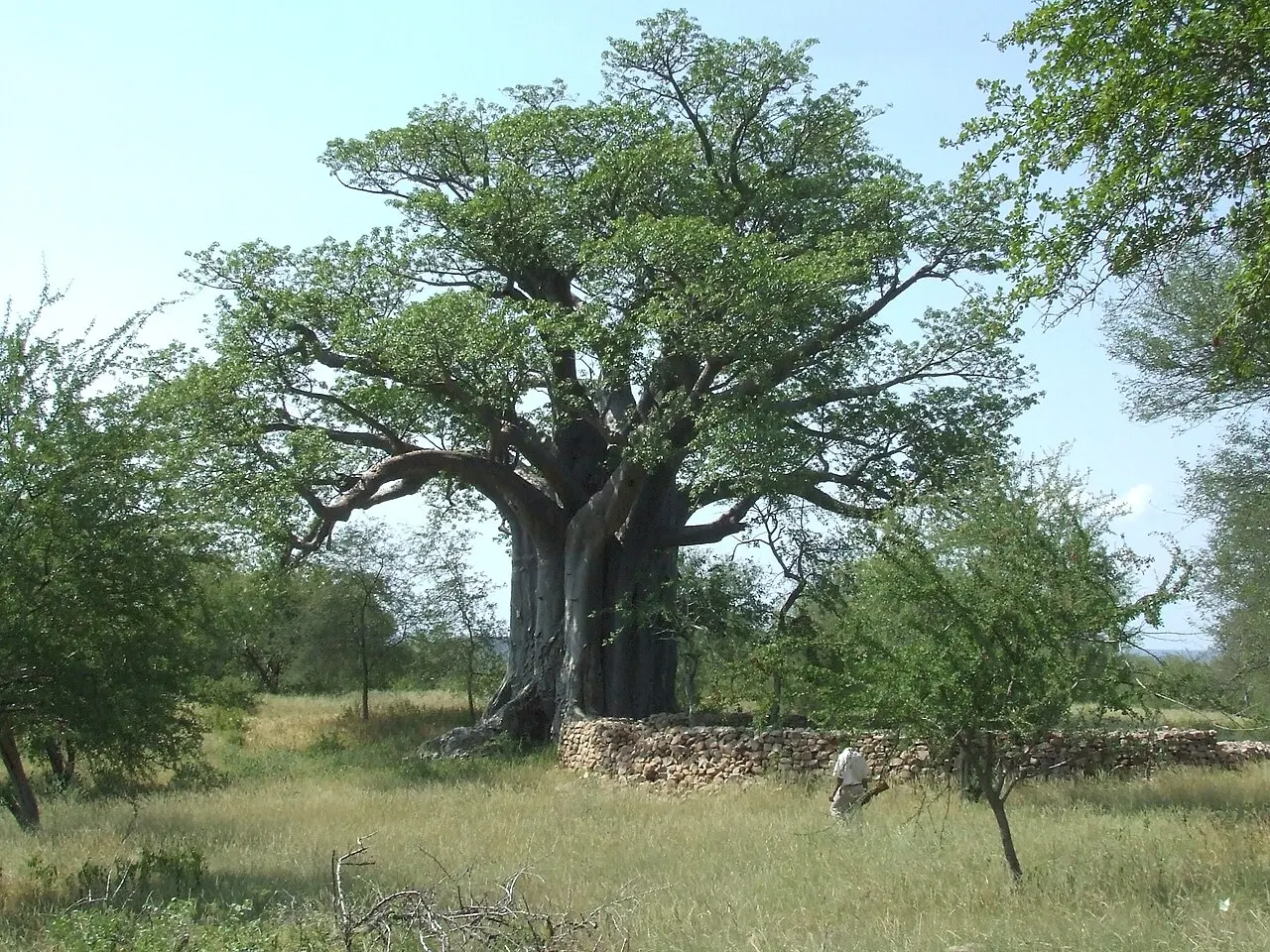
Life in Kruger revolves around the car, the gate and the sightings board. At camp receptions, a sightings board records the animals seen recently, and that is where many people decide the next day's route. In the evening, the program is the braai in front of the cabin, the sounds of the bush on the other side of the fence and, at Skukuza, wildlife films shown every night except Sundays. Quiet is the rule: SANParks enforces a noise restriction between 9:30 p.m. and 6:00 a.m.
Swati, Zulu, Tsonga (also called Shangaan), Pedi and Ndebele communities live around the park, and their languages are the most spoken in Mpumalanga. The name Skukuza comes from the nickname the Tsonga gave Stevenson-Hamilton, and many historic sites inside the park, such as Thulamela, Masorini and the graves of chiefs such as Nyongane Mkhabela, record peoples who lived there before the reserve. In the far north, the land returned to the Makuleke in 1998 remains inside Kruger and is jointly managed by the community and SANParks, with lodges built in partnership with private companies.
Conservation is an everyday matter. Armed rangers accompany the walks, the park monitors rhinos with trackers, and visitors are told not to post on social media where they saw a rhino. The park is also very popular with South Africans themselves, who come in their own cars and sleep in the public camps, and during the country's school holidays the roads around camps such as Satara fill up.
Festivals and events
National Parks Week (SANParks Week)
It usually takes place in September, during Heritage Month, when South African citizens enter participating parks free of charge during the day. In 2025 Kruger received 39% more visitors during the week; for foreigners, it means busier gates and roads in the south. Check the dates on the SANParks website.
Books and films
Jock of the Bushveld, by Percy FitzPatrick (1907)
An account of the author's travels as an ox-wagon transport driver through the Lowveld in the 1880s, with his dog Jock. It helps you understand the region before the reserve; the place where Jock was born is one of the historic sites marked inside the park.
South African Eden, by James Stevenson-Hamilton (1937)
The first warden tells how the Sabie Game Reserve became Kruger National Park, with the ideas and conflicts of four decades.
Battle at Kruger (2007)
An eight-minute amateur video filmed in 2004 at Transport Dam, in the south of the park, with buffalo, young lions and crocodiles. It became one of the most-watched nature videos on YouTube and got a National Geographic documentary in 2008; it shows well the kind of scene you see from inside the car.
Frequently asked questions
Kruger: how do you get there?
There are daily flights from Johannesburg to Kruger Mpumalanga International Airport (KMIA, code MQP), between Mbombela and White River, which also receives flights from Cape Town and Durban. Airlink flies from Johannesburg and Cape Town to Skukuza airport, inside the park, and there are flights to Hoedspruit (Eastgate), closer to the Orpen gate. From KMIA to Hazyview it is about 50 km by road. By car from Johannesburg, SANParks calculates 430 km to the Phabeni gate and 460 km to the Paul Kruger Gate, along the N4 to Mbombela and then the R40. Most foreign visitors fly to the edge of the park and rent a car: there are rental companies at KMIA, in Hoedspruit and inside Skukuza camp. There is also a transfer service between KMIA and the park, of about an hour and 20 minutes.
Kruger: how many days should you stay?
I'd stay three days in Kruger, with two nights inside the park: the first at Skukuza and the second at Lower Sabie, both in the south, where there are more animals and the gates are less than an hour's drive from Hazyview. Three days allow two mornings on the road at camp opening, a guided sunset drive and the late afternoon at Sunset Dam, without the rush of covering distances. With a fourth day, I'd sleep in Hazyview on the way out and do the Panorama Route, from God's Window to the Three Rondavels. Anyone who doesn't want to drive can swap the two nights in the camps for two nights in a Sabi Sand lodge, with the safaris run by guides. The center and north of the park, from Satara to Punda Maria, call for another trip, with more days.
Kruger: is it better to sleep inside the park or in Hazyview?
Anyone who sleeps at Skukuza or Lower Sabie starts the day already in the middle of the south, without spending the first hour on the road to the gate, and can return from the guided sunset drive straight to the cabin. From November to January, the camp gates open at 04:30, an hour before the entrance gates. Hazyview is 10 km from the Phabeni gate and 41 km from the Paul Kruger Gate, has many hotels, guesthouses and restaurants, and is the natural starting point for Graskop and the Blyde canyon. In return, each day in the park starts and ends at a gate, with the daily fee paid on each entry, and the first part of the morning is spent on the road to the Skukuza area, an hour and 20 minutes from Phabeni at the recommended average. Bookings at the camps normally open 11 months before the date, which matters for Skukuza and Lower Sabie in the dry season and during South African school holidays.
Kruger: what time do the gates open and close?
The entrance gates open at 05:30 from October to March and at 06:00 from April to September. They close at 17:30 from May to July, at 18:00 in March, April, August, September and October, and at 18:30 from November to February. The camp gates close at the same time, but open at 04:30 from November to January. Arriving late at the entrance gate means being kept out. Late entry, until 21:00, is accepted only in an emergency, with proof, and with a paid escort (R500 per vehicle) to a designated camp: from the Paul Kruger Gate to Skukuza, from Numbi to Pretoriuskop, from Malelane to Berg-en-Dal and Malelane, from Crocodile Bridge, Punda Maria and Orpen to the camps of the same name. At Phabeni, Phalaborwa and Pafuri there is no late entry.
Kruger: what is the park fee and how is it paid?
On top of accommodation, each visitor pays a daily conservation fee for each day in the park, charged at the gate, with three bands: foreigners, citizens of SADC countries (the Southern African Development Community), and South Africans and residents, and a reduced price for children aged 2 to 11. SANParks adjusts the schedule every year and publishes the rates on the Kruger tariffs page; check the rate for the year of your trip. A 1% community levy is added to all accommodation and activity bookings. For long trips, it is worth comparing with the SANParks international Wild Card, an annual pass that replaces the daily fees in participating parks. Guided drives, walks and the bush braai are charged separately, with a price per adult and per child given at booking.
Kruger: can you do a safari without driving?
Anyone who doesn't drive has two options: the open-vehicle guided drives that leave from the camps (in the morning, about half an hour before the gate opens; at sunset; and at night, at 19:30 or 20:00, depending on the season), which do not accept children under 6, or a safari operator from Hazyview. There is also a transfer service between KMIA and the park, of about an hour and 20 minutes. Another option is to sleep in a lodge in Sabi Sand, a private reserve with no fence between it and Kruger, where the lodges run guided safaris for their guests. Access through the Shaws, Newington and Gowrie gates is only for guests, and each entry pays the reserve fee on top of the lodge rate, which varies from one lodge to another.
Kruger: when is the best time to go?
The recommendation of this guide is May to September; April and October are transitional months that also work. From April to September it is the dry season: warm, dry days, cold nights and low bush, with water limited to the rivers and dams, where the animals gather; it is the time SANParks gives as the best for seeing animals. At Skukuza, average highs are between 26 and 31 °C in those months, lows fall to about 6 °C in June and July, and on night drives you need warm clothing. From October to March the heat and the rains arrive: from November to March highs exceed 32 °C, December and January each have about 100 mm of rain, the bush turns green and tall and the animals spread out, which makes them harder to find. It is also when the malaria risk is higher (November to April), when days are longer and the gates open at 05:30. In September, National Parks Week usually brings more South African visitors to the south of the park.
Kruger: which gate should you use?
Choose the gate by the camp: for Skukuza, enter through the Paul Kruger Gate, 12 km from the camp; for Lower Sabie coming from the N4, through Crocodile Bridge, 34 km away. Phabeni is the closest to Hazyview, but has no late entry. The British government reports that SANParks advises against using the Numbi gate, after a violent attack that killed a tourist, and records protests and violent incidents on the R538, the road that leads to it; for the southwest of the park, the Phabeni and Paul Kruger gates serve the same region. Protests by neighboring communities have also blocked other access roads, such as the Mkhuhlu road, which leads to the Paul Kruger Gate; check the SANParks advisories before setting out.
Kruger: is it safe?
Inside the park, the main risk is the animals themselves: stay in the car outside marked areas and do not walk around the camps at night without a flashlight. Walks take place only with two armed guides, for a maximum of eight people over 12. Kruger is in a malaria area, with a risk that is generally low but higher from November to April; SANParks recommends consulting a doctor about prophylaxis, using repellent and keeping the screens closed from dusk to dawn. Anyone who has a fever up to five weeks after the trip should ask for a malaria test. Violence against tourists inside the park is rare; in May 2026, two South African visitors were killed in an attack inside Kruger, and the suspects were arrested. The British government reports that SANParks advises against using the Numbi gate, after a violent attack that killed a tourist, and records protests and violent incidents on the R538, the road that leads to it; for the southwest of the park, the Phabeni and Paul Kruger gates serve the same region. Outside the park, the general precautions for South Africa apply: the British government warns of car theft and robberies at traffic lights, intersections and gas stations, especially at night. Keep windows closed and belongings out of sight in towns, fill up before the tank reaches half and avoid driving at night off the main roads. Protests by neighboring communities have also blocked other access roads, such as the Mkhuhlu road, which leads to the Paul Kruger Gate; check the SANParks advisories before setting out. The SANParks roadside assistance number is 0800 030 666.
Kruger: what is the day trip outside the park?
The Panorama Route, the road along the Drakensberg escarpment, west of Hazyview, brings together viewpoints and waterfalls of the Blyde River Canyon Nature Reserve. From Hazyview to Graskop it is about 49 km, an hour by car. From Graskop, the R534 passes the Pinnacle, a 30 m quartzite column, 3 km away, and God's Window, 9 km away, a viewpoint over 700 m cliffs from which you see the Lowveld; near there, along side roads west of the R532, Lisbon Falls drops 92 m and Berlin Falls 80 m. Going north on the R532 are Bourke's Luck Potholes, about 35 km from Graskop, cylindrical holes carved in the rock where the Treur and Blyde rivers meet, and the Three Rondavels viewpoint, about 53 km away, three rounded peaks that resemble traditional huts above the canyon. The return to Hazyview via the north adds up to about 90 km and an hour and 40 minutes. Most viewpoints charge admission at the entrance; go on a clear day, because the escarpment's mist can hide the view.
Other cities in the country
South Africa ↗- Days
- 5
- When
- Mar–Apr · Oct–Nov
- Per person/day
- Average 50–100 USDMid-range · per person/day
Cost scope
Per person per day: accommodation, meals, urban transport, visits and a small allowance for extras. Flights excluded; larger purchases vary. Editorial estimate, not a quote.
- Days
- 2
- When
- May–Sep
- Per person/day
- Average 100–180 USDMid-range · per person/day
Cost scope
Per person per day: accommodation, meals, urban transport, visits and a small allowance for extras. Flights excluded; larger purchases vary. Editorial estimate, not a quote.