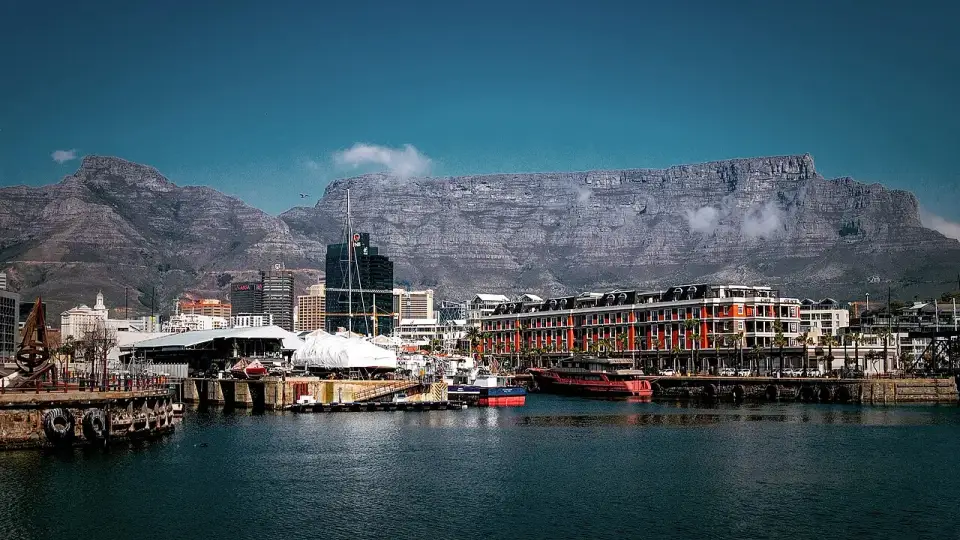
South Africa
Johannesburg
Apartheid Museum, Soweto and Constitution Hill
Days Start with the basic programme and choose extensions for the time you have.
How the guide reaches this number
On the first, do the Apartheid Museum, Constitution Hill and downtown; the second is for Soweto. There's no historic center to cross on foot and no waterfront, and anyone who likes to wander aimlessly will be frustrated, because almost everything requires a car. Sandton, where many people stay, is an office district wrapped around a big mall. With only one day, enter the Apartheid Museum at 9am and stay the full 2 hours 30 minutes. Then head to Soweto, have shisa nyama for lunch on Vilakazi Street and spend the afternoon with a local guide between Orlando West and Kliptown. What disappoints is access: galleries with locked doors, tours that only exist with a booking and scheduled blackouts that cancel your plan in the middle of the afternoon, so call ahead and book in advance.
2
When May to September, dry and sunny; cold nights
How the guide reaches this number
At 1,750 m, Johannesburg has a plateau climate: rainy summers, dry winters and no truly hot season, and anyone expecting African heat spends the first nights in a jacket. From October to March, highs stay between 25 and 28 °C and the city turns green. In these months it rains almost every afternoon for an hour, in short storms with heavy thunder and occasional hail, and that's when almost all of the 700–750 mm of annual rain falls; schedule outdoor visits for the morning. From May to August it hardly rains at all: days are 17–21 °C, with constant sun, dry air and long visibility, but nights drop to 2–7 °C, with frost in the higher suburbs, and few old buildings have heating. July is the harshest month, with early mornings near freezing and the temperature inversion trapping smoke from burning over the Highveld. September and October bring the purple jacarandas, densest in Pretoria, 60 km away. From mid-December to mid-January are the school vacations: traffic is light and hotels lower their prices, but many restaurants and shops close for two or three weeks, and the city empties out toward the coast.
Per person/day Budget R500–900; mid-range R1,800–3,200 per person (about US$100–180), with a hotel in Rosebank or Melville, meals and app rides (approximate, 2026)
How the guide reaches this number
Per person per day: accommodation, meals, urban transport, visits and a small allowance for extras. Flights excluded; larger purchases vary. Editorial estimate, not a quote.
 What Nilo thinks
Give Johannesburg two days and come to understand the country's history, since this is no place for a restful break. On the first, do the Apartheid Museum, Constitution Hill and downtown; the second is for Soweto. There's no historic center to cross on foot and no waterfront, and anyone who likes to wander aimlessly will be frustrated, because almost everything requires a car. Sandton, where many people stay, is an office district wrapped around a big mall. With only one day, enter the Apartheid Museum at 9am and stay the full 2 hours 30 minutes. Then head to Soweto, have shisa nyama for lunch on Vilakazi Street and spend the afternoon with a local guide between Orlando West and Kliptown. What disappoints is access: galleries with locked doors, tours that only exist with a booking and scheduled blackouts that cancel your plan in the middle of the afternoon, so call ahead and book in advance.Johannesburg was born in 1886 on top of the largest gold deposit ever found, and the yellow hills of mine tailings still show up at the end of the avenues. This is where South Africa's 20th century makes the most sense. At the Apartheid Museum, a random draw decides which of the two racial turnstiles you enter through; at Constitution Hill, the prison held Gandhi and Mandela; in Soweto, Vilakazi Street has the homes of two Nobel Peace Prize winners. Right there, pick your raw meat at the counter of a shisa nyama and try the kota, a quarter loaf stuffed with fries and atchar. On weekends, the markets of Braamfontein and Maboneng show a downtown that's coming back to life. The city covers 1,645 km² designed for cars, so split each day by area and get around by app. Come in the dry season, from May to September, with constant sun and 17–21 °C days, and if you can choose, make it September, when the purple jacarandas start to bloom.
Quick facts
- Population
- 4.80 million in the metropolitan municipality per the 2022 census; the continuous conurbation with Ekurhuleni and Tshwane tops 14 million and Gauteng province reaches about 16 million
- Founded
- September–October 1886, in the triangle of the public farm Randjeslaagte, months after George Harrison found the gold-bearing conglomerate at Langlaagte; the proclamation of the mining claims is dated September 8, 1886
- Country and region
- South Africa: Gauteng province, Highveld plateau, 1,750 m altitude (highest point: the Northcliff ridge, about 1,807 m); 60 km from Pretoria, about 578 km from Durban via the N3 highway, and 1,400 km from Cape Town
- Languages
- The country has had 12 official languages since 2023. In Joburg, isiZulu is the most common mother tongue (about 23%) and English is the lingua franca of the street, shops and business; also Sesotho, Setswana, Sepedi, Xitsonga, isiXhosa and Afrikaans
- Currency
- South African rand (ZAR, R): about R18 per dollar and about R3.3 per Brazilian real in 2026.
- Time zone
- SAST, UTC+2 year-round, no daylight saving
- Best time to visit
- May to September, dry and sunny; cold nights
- Average daily cost
- Budget R500–900; mid-range R1,800–3,200 per person (about US$100–180), with a hotel in Rosebank or Melville, meals and app rides (approximate, 2026)
When to go
May to September, dry and sunny; cold nights
January
15° to 26°C
132 mm of rain
February
15° to 26°C
102 mm of rain
March
13° to 25°C
95 mm of rain
April
11° to 22°C
42 mm of rain
October
12° to 25°C
68 mm of rain
November
13° to 25°C
101 mm of rain
December
14° to 26°C
130 mm of rain
How the year changes
At 1,750 m, Johannesburg has a plateau climate: rainy summers, dry winters and no truly hot season, and anyone expecting African heat spends the first nights in a jacket. From October to March, highs stay between 25 and 28 °C and the city turns green. In these months it rains almost every afternoon for an hour, in short storms with heavy thunder and occasional hail, and that's when almost all of the 700–750 mm of annual rain falls; schedule outdoor visits for the morning. From May to August it hardly rains at all: days are 17–21 °C, with constant sun, dry air and long visibility, but nights drop to 2–7 °C, with frost in the higher suburbs, and few old buildings have heating. July is the harshest month, with early mornings near freezing and the temperature inversion trapping smoke from burning over the Highveld. September and October bring the purple jacarandas, densest in Pretoria, 60 km away. From mid-December to mid-January are the school vacations: traffic is light and hotels lower their prices, but many restaurants and shops close for two or three weeks, and the city empties out toward the coast.
The same numbers as a table
| Month | Temperature °C | Rain mm |
|---|---|---|
| January | 15 to 26 | 132 |
| February | 15 to 26 | 102 |
| March | 13 to 25 | 95 |
| April | 11 to 22 | 42 |
| May · | 7 to 20 | 20 |
| June · | 5 to 17 | 7 |
| July · | 4 to 17 | 2 |
| August · | 6 to 20 | 5 |
| September · | 10 to 24 | 16 |
| October | 12 to 25 | 68 |
| November | 13 to 25 | 101 |
| December | 14 to 26 | 130 |
Nilo's tips
The airport Gautrain only runs until about 9pm
After 9pm the train has already stopped, so anyone landing later needs to book a transfer before flying. Until then, the Gautrain takes you from OR Tambo to Sandton in about 15 minutes, with trains every 12–20 minutes from 5:20am. The trip costs R230–270, and the rechargeable card is about R21–35 extra, at the same ticket office. In the arrivals hall, turn down cars from anyone who approaches you, however good the price offered.
9am at the Apartheid Museum, 2pm at Constitution Hill
The chronological route through the Apartheid Museum, from 1948 to 1994, demands a full 2 hours 30 minutes, and anyone who arrives late ends up tired right in the section that demands the most attention. At 2pm, move on to Constitution Hill, with the 1893 Old Fort, the Number Four section and the 2004 Constitutional Court. Take the guided tour, because it's the guide who shows you that the courtroom windows sit at sidewalk level, with the feet of passersby in the judges' view.
See downtown by day, with a guide, and confirm access first
You don't walk alone in the CBD, and at night it's off the itinerary even with a guide. Ponte City only takes visitors by booking, usually through the NGO Dlala Nje, based on the ground floor. The Johannesburg Art Gallery still has uncertain access, so call ahead and arrive by car or app. The Top of Africa viewpoint, atop the Carlton Centre, has stayed closed since 2020, so see the tower only from outside.
Soweto on day two; always with a local guide
Hired in the neighborhood, the guide asks residents for permission to take photos. Leave your hotel at 8:30am and do the Hector Pieterson Museum at 10am, Vilakazi Street at 11:30am, and Kliptown at 2pm. Finish at 4pm at Chaf Pozi, at the foot of the Orlando Towers, with a shisa nyama done the local way.
Markets have their day: Saturday, Sunday, or Friday night
Outside market days, the same blocks sit empty and your whole impression of the city changes. Saturday is the Neighbourgoods Market at 70 Juta Street, in Braamfontein, 9am to 3pm. Sunday is the Market on Main, in Maboneng, and Friday and Saturday nights belong to the Fordsburg market.
Bring R200–500 in cash and claim the VAT back at the airport
Contactless cards cover almost everything, even at market stalls, but carry R200–500 in cash for places without a card machine. Since there's no self-service at South African gas stations, the attendant gets R5–10, and so does the car guard in a numbered vest. At restaurants, leave 10–15% for whoever served you. Keep the receipts for bigger purchases, because the VAT is refunded at the airport counter on departure.
Explore the map

© OpenStreetMap · OpenFreeMap · © OpenMapTiles
Explore the map, read about the other places and plan your travel days in the app.
Open the appWhat to see
Johannesburg: The ridge, the terrain and the water
Johannesburg sits on the Witwatersrand ridge, a watershed at 1,750 m altitude between the Limpopo basin to the north and the Vaal and Orange basin to the south, and that's why it has no sizable river and depends on water transferred from the Vaal and the Lesotho Highlands Water Project, more than 400 km away.

Apartheid Museum
Opened in November 2001 in Ormonde, next to Gold Reef City. Your ticket randomly assigns you a “white” or “non-white” entrance, and you go through the matching turnstile before seeing the first room. The route is chronological, from 1948 to 1994, and in one of the rooms, 131 hangman's nooses hang from the ceiling, one for each political prisoner executed by the State; allow 2 hours 30 minutes. Admission around R150–200 (2026).
The ticket randomly assigns you the "white" or "non-white" turnstile before the first room, the route runs from 1948 to 1994, and in one of the rooms, 131 hangman's nooses hang, one for each political prisoner executed.
Check access
Constitution Hill
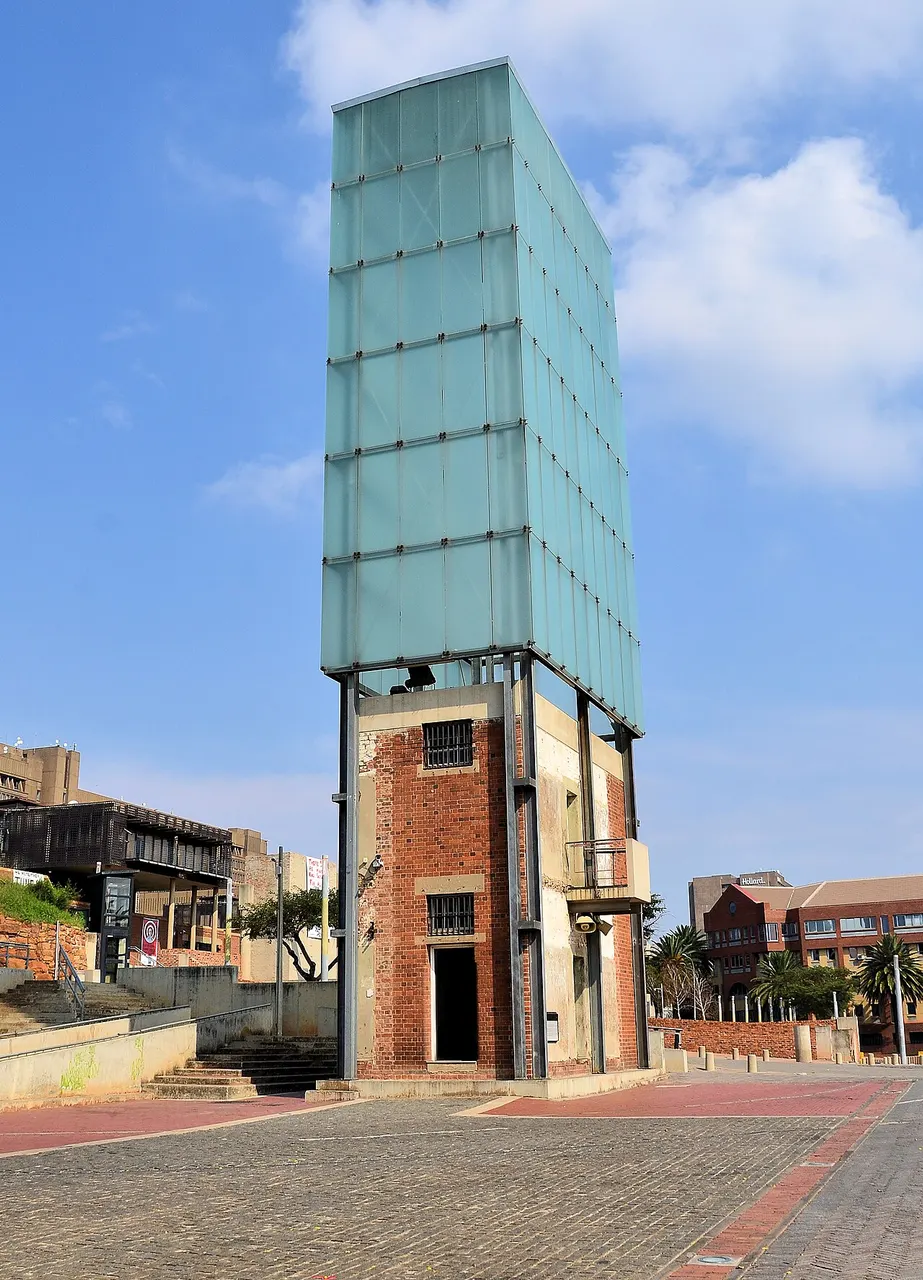
The Old Fort prison complex, from 1893, with the Number Four section for Black prisoners and the Women's Jail; Gandhi was held there in 1906 and 1908, Mandela in 1962. The Constitutional Court, opened in 2004, was built with the bricks of the demolished block where prisoners awaited trial, and the windows of the courtroom sit at sidewalk level, showing the feet of passersby.
Gandhi (1906 and 1908) and Mandela (1962) passed through the Old Fort, and the 2004 Constitutional Court, built with bricks from the demolished block, has windows at sidewalk level that show the feet of passersby.
Check access
Hector Pieterson Museum and Orlando West
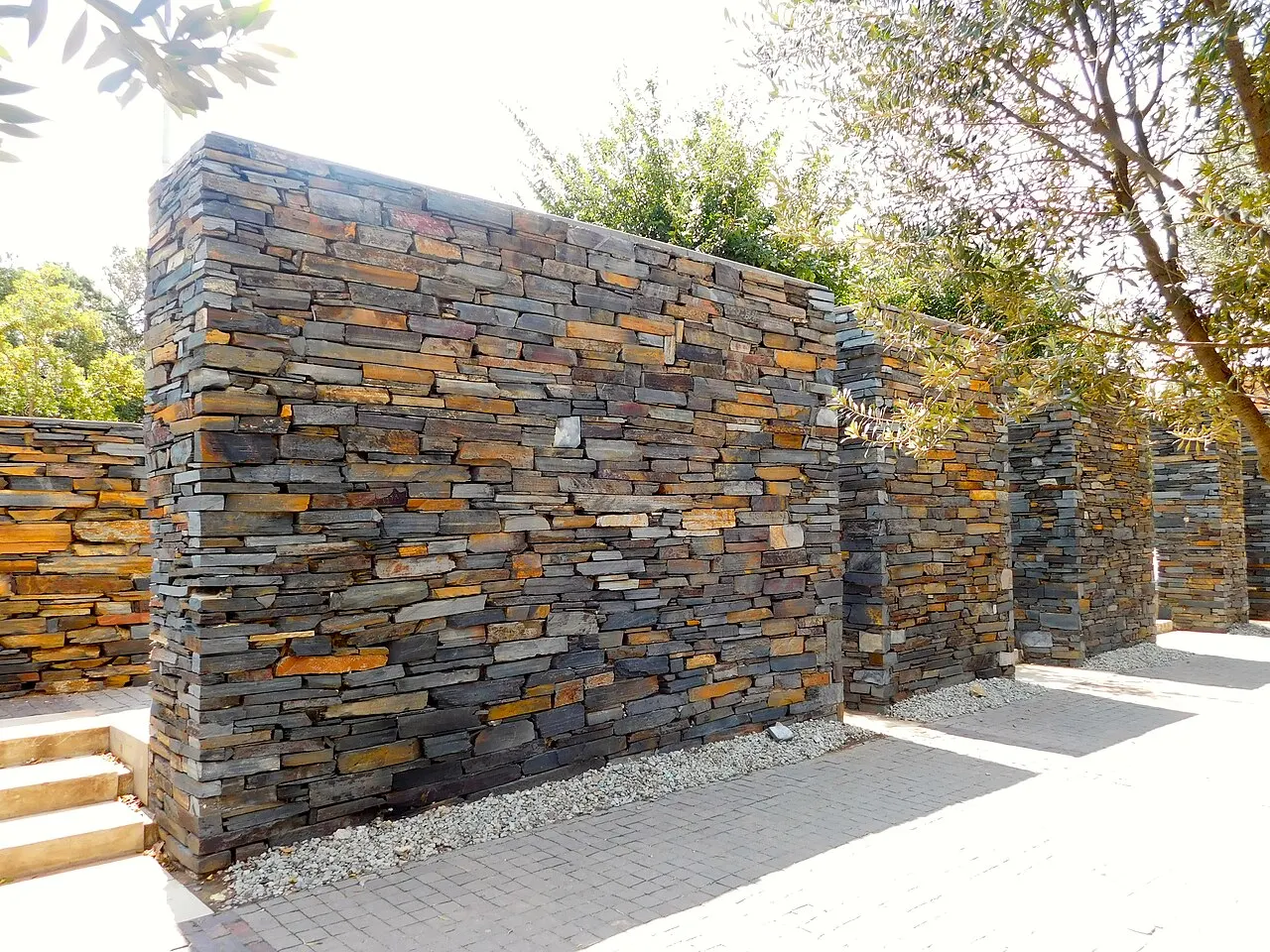
Opened in 2002 about 300 m from where the 12-year-old student was shot on June 16, 1976. Houses Sam Nzima's photograph, recorded testimony and the map of the march. Two blocks away is Vilakazi Street, the only street in the world with two Nobel Peace Prize laureates' homes: Nelson Mandela, at number 8115, a museum since 2009, and Desmond Tutu.
A cluster of neighborhoods 20 to 25 km to the southwest, with somewhere between 1.3 and 1.8 million residents.
Check access
Walter Sisulu Square, Kliptown
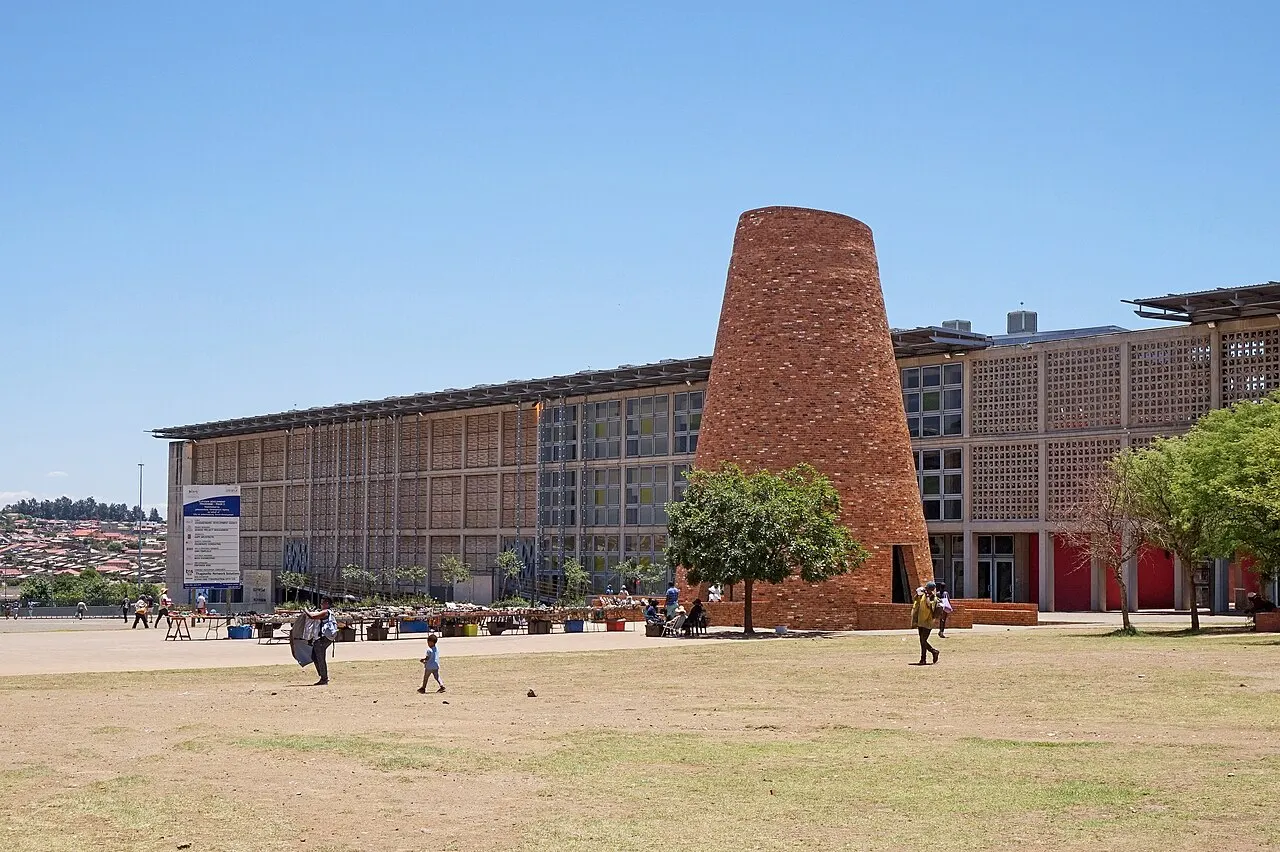
The plot where the Congress of the People adopted the Freedom Charter on June 26, 1955, under police watch. The square was inaugurated in 2005 with a cone-shaped brick monument holding the document's ten clauses. It sits in Soweto's most deprived neighborhood, which is part of what you see there.
On the site where the Congress of the People adopted the Freedom Charter on June 26, 1955, the monument opened in 2005 holds a brick cone that houses the ten clauses, and the poorest part of Soweto is part of what you see there.
Check access
Ponte City and Hillbrow
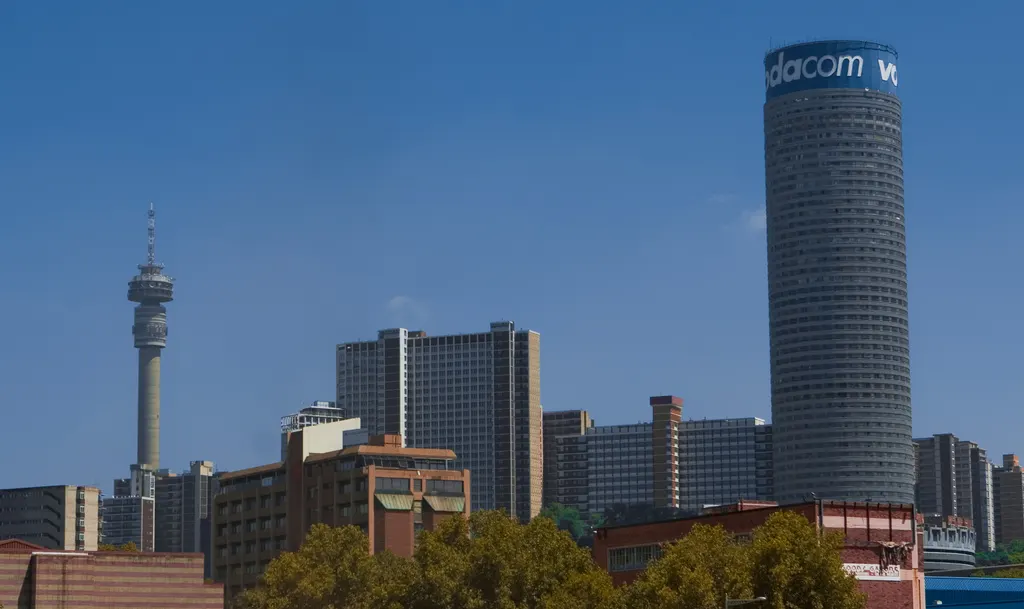
A cylindrical tower from 1975, 54 stories and 173 m tall, with a central core 30 m across that at one point filled up with several stories of rubble in the 1990s. Today it's residential and you can only get in on a booked visit, usually with the NGO Dlala Nje, based on the ground floor; the climb to the top gives the best reading of downtown's geography.
The 54-story, 173 m building has a central shaft that at one point filled with floors of rubble in the 1990s, and the ride to the top gives the sharpest geographic reading of downtown.
Check access

Origins Centre and Wits Art Museum
On the Wits campus in Braamfontein: the Origins Centre, from 2006, displays San rock art, stone tools and datings spanning 100,000 years of southern African occupation; the Wits Art Museum, opened in 2012, holds about 13,000 works, with one of the country's largest collections of classical and contemporary African art.
On the Wits campus, the Origins Centre, from 2006, covers 100,000 years of occupation with San rock art and stone tools, and the Wits Art Museum, from 2012, holds about 13,000 works of African art.
Check access
Museum Africa and Market Theatre
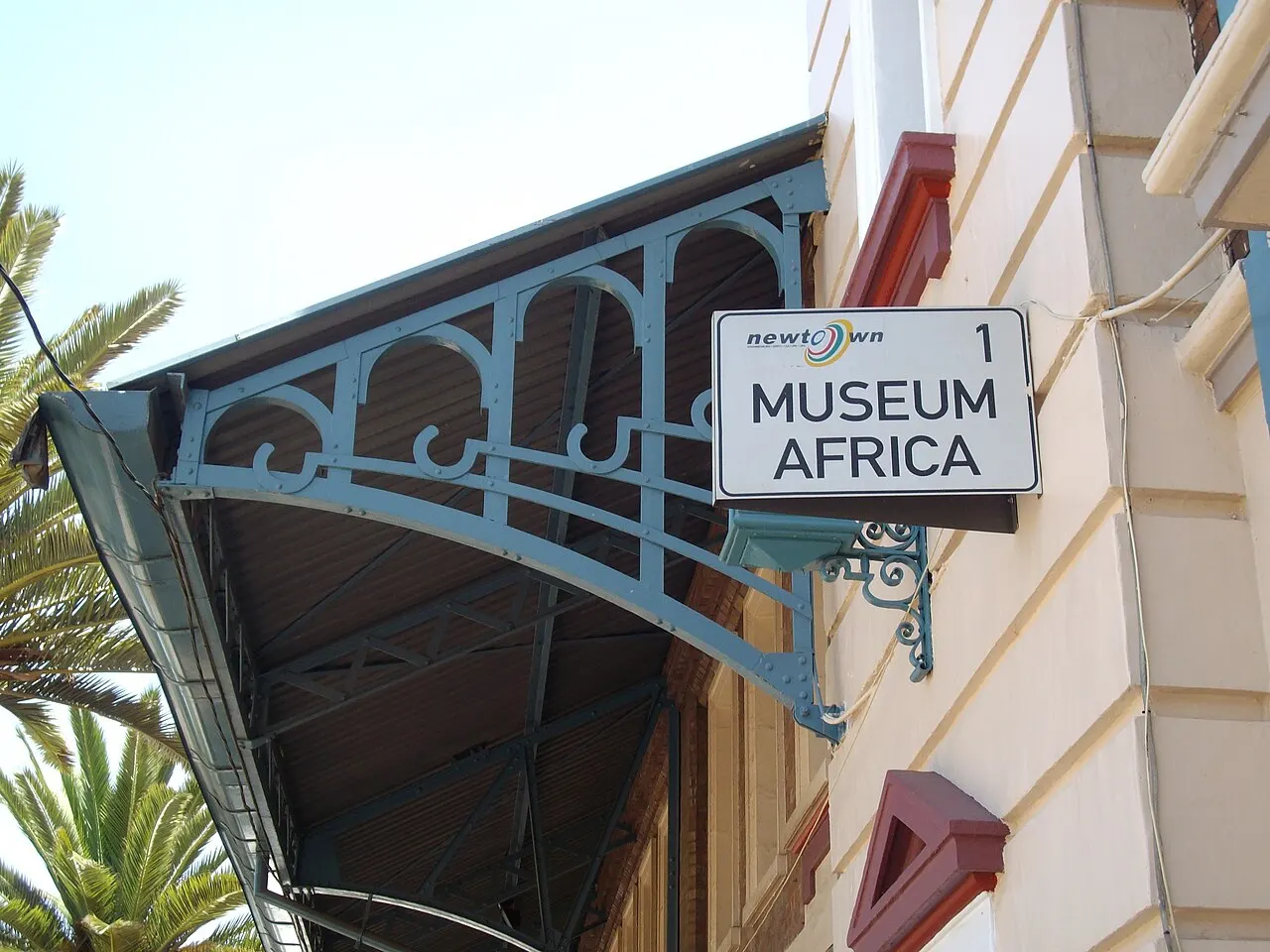
Museum Africa occupies the 1913 fruit-market building in Newtown, with the Bensusan photography collection, a reconstructed courtyard dwelling and a room on the city's music. Next door, the Market Theatre has run since 1976 and was the stage where plays like “Woza Albert!” and “Sizwe Banzi Is Dead” toured during censorship.
Museum Africa occupies the 1913 fruit market, in Newtown, with photographs, a restored courtyard house and the city's music, and the Market Theatre, next door, has staged productions since 1976 and broke through censorship.
Check access

FNB Stadium (Soccer City)
94,736 seats and a ceramic mosaic cladding that imitates an African calabash, renovated between 2007 and 2009. It hosted the opening match and final of the 2010 World Cup and, on February 13, 1990, Mandela's first big rally in Soweto after his release; his first speech as a free man had been in Cape Town two days earlier. On December 10, 2013, the stadium hosted Mandela's memorial service, and the funeral was in Qunu five days later. Guided tours on non-match days.
The guided tour only exists on days without a match, and the stadium has nothing that the day in Soweto doesn't already show better, from Orlando West to Kliptown. The calabash mosaic and the 94,736 seats can be seen from outside, on the road between Ormonde and Soweto that you already travel.
Check access
Johannesburg Art Gallery
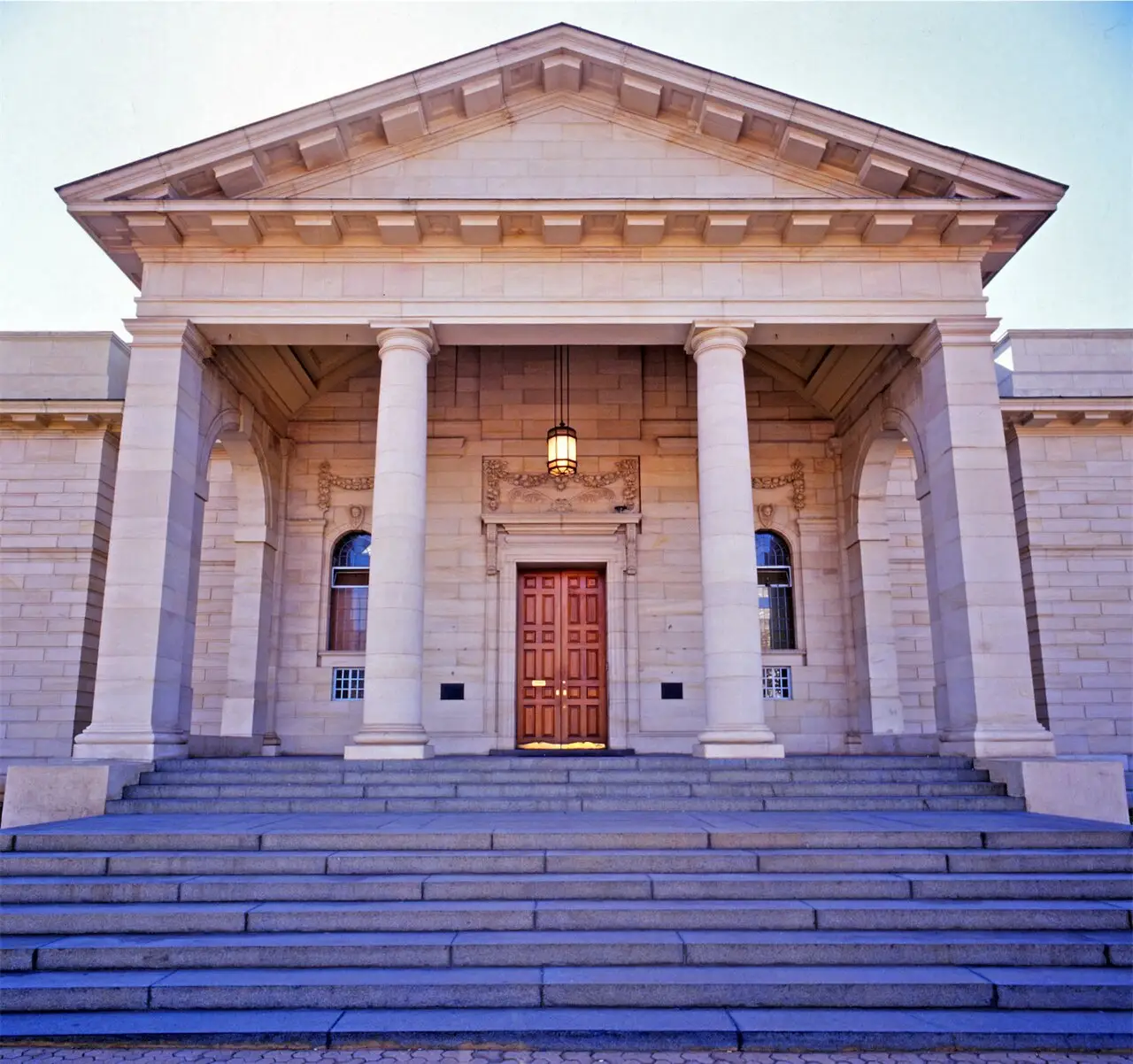
Opened in 1910 in Joubert Park, in a building designed by Edwin Lutyens, with about 9,000 works: from the European collection donated early in the century to 20th-century South African art. The building has suffered from leaks and closed rooms for years, and access is irregular: check that it's open before you go, and arrive by car or app.
The collection of about 9,000 works occupies a 1910 Lutyens building with leaks, rooms closed for years and erratic access, and plenty of people find the door locked. Call ahead, and even with confirmation, expect half the rooms to be closed; for art without that risk, the Wits Art Museum, opened in 2012 in Braamfontein, holds a collection of about 13,000 works.
Check access
Nilo’s itinerary
Start with the basic programme and choose extensions for the time you have.
Plan my days in the app ↗Day 1 · From the Apartheid Museum to Constitution Hill and downtown
Enter the Apartheid Museum at 9am, in Ormonde, next to Gold Reef City: your ticket randomly assigns you the “white” or “non-white” door, and you go in through whichever you got. Set aside 2 hours 30 minutes and start with the outdoor ramp.
Have lunch at 12:30pm at Gold Reef City or head back to Braamfontein, 12 km north, to eat on the blocks around Juta Street; if it's Saturday, the market at 70 Juta Street runs from 9am to 3pm.
At 2pm, visit Constitution Hill, with the 1893 Old Fort, the Number Four section, the Women's Jail and the 2004 Constitutional Court, built with the bricks of the block where prisoners awaited trial. Set aside 2 hours and take the guided tour.
At 4:30pm, walk through Braamfontein to the Nelson Mandela Bridge, a 284 m cable-stayed bridge opened in 2003 that links the neighborhood to downtown over forty railroad tracks.
Have dinner at 7pm on 7th Street in Melville, or in the courtyard of 44 Stanley in Milpark, and head back by app, requested from inside the restaurant.
Day 2 · Soweto, from Orlando West to Kliptown
Leave at 8:30am for Orlando West, 25 km southwest, on a walking or bike tour booked with a local guide.
Enter the Hector Pieterson Museum at 10am and look for Sam Nzima's photograph and the map of the march.
At 11:30am, walk Vilakazi Street and the Mandela House, a museum since 2009, and have shisa nyama for lunch at one of the restaurants on the street itself.
Arrive at 2pm at Walter Sisulu Square, in Kliptown, where the Freedom Charter was adopted on June 26, 1955, and see the brick cone monument unveiled in 2005.
Finish at 4pm at the Orlando Towers, with a 100 m jump for anyone who wants it, or just at the braai at Chaf Pozi, at their foot, with a view over the township.


Food
 AI illustration
Kota (spatlo)
A quarter of a loaf of sliced bread, hollowed out and filled with chips, polony, a “russian” sausage, cheese, egg and a spoonful of spicy mango atchar. A Gauteng-townships invention, sold at corner kiosks all day; R35–70. Order “with everything” or point out each item.
 AI illustration
Shisa nyama and braai
“Burning meat,” in Zulu: you pick the raw cut at the counter, it's weighed, grilled and served on paper, to share by hand. Chaf Pozi, at the foot of Orlando's towers, is Soweto's best-known address for it. The home braai in the backyard is the same principle.
 AI illustration
Pap and chakalaka
White maize meal cooked firm and shaped into a ball by hand, served with chakalaka (a sauté of onion, tomato, carrot, curry and beans) and a meat gravy called sheba. It's the base of the daily plate at any canteen and the required companion to grilled meat.
 AI illustration
Boerewors
A coiled sausage of coarsely ground beef with coriander, cloves and vinegar; South African law requires at least 90% meat. On the grill it goes whole, in a coil, and in a bread roll it becomes a “boerie roll,” the local stadium and market hot dog.
 AI illustration
Vetkoek / amagwinya
A fried dough ball the size of a fist, served savory with curried mince for lunch or sweet, with jam and cheese, for breakfast. It costs R10–25 on the sidewalk and is the cheapest item on the South African street-food menu.
 AI illustration
Mogodu and walkie talkies
Mogodu is tripe cooked for hours with pap, a midweek dish at neighborhood restaurants and market stalls. “Walkie talkies” are chicken feet and heads grilled over coals, sold in small portions on the street: working-class food, not a tourist curiosity.
 AI illustration
Peri-peri and prego roll
Portuguese and Mozambican heritage from the neighborhoods of Rosettenville and La Rochelle: chicken butterflied and grilled with chili pepper sauce, and the prego, a garlic steak in a bread roll. Nando's was born in Rosettenville in 1987 and became a global chain from there.
 AI illustration
Umqombothi and the rest of the counter
Homemade sorghum-and-maize beer, cloudy and slightly sour, served in a shared vessel and tied to family ceremonies. On the same counter sit the industrial Castle and Black Label, Klipdrift brandy with cola, Amarula liqueur and rooibos tea, drunk all day long and caffeine-free.
Day trips

Cradle of Humankind and Sterkfontein
50 km northwest, about 50 minutes by car. UNESCO World Heritage Site since 1999: the Sterkfontein Caves yielded the “Mrs Ples” skull in 1947 and the near-complete “Little Foot” skeleton, excavated between 1994 and 1998, and the Rising Star system revealed Homo naledi in 2013. Combined ticket with the Maropeng center around R250–350; confirm the caves are open, as they have been closed before for repairs and flooding.

Pretoria (Tshwane)
60 km north; 40 to 50 minutes by Gautrain, from Sandton to Hatfield, for R90–120. The country's administrative capital: the Union Buildings, designed by Herbert Baker and completed in 1913, with the 9 m Mandela statue unveiled in 2013; the Voortrekker Monument, from 1949, which explains Afrikaner nationalist mythology; and about 70,000 jacarandas that bloom in October.
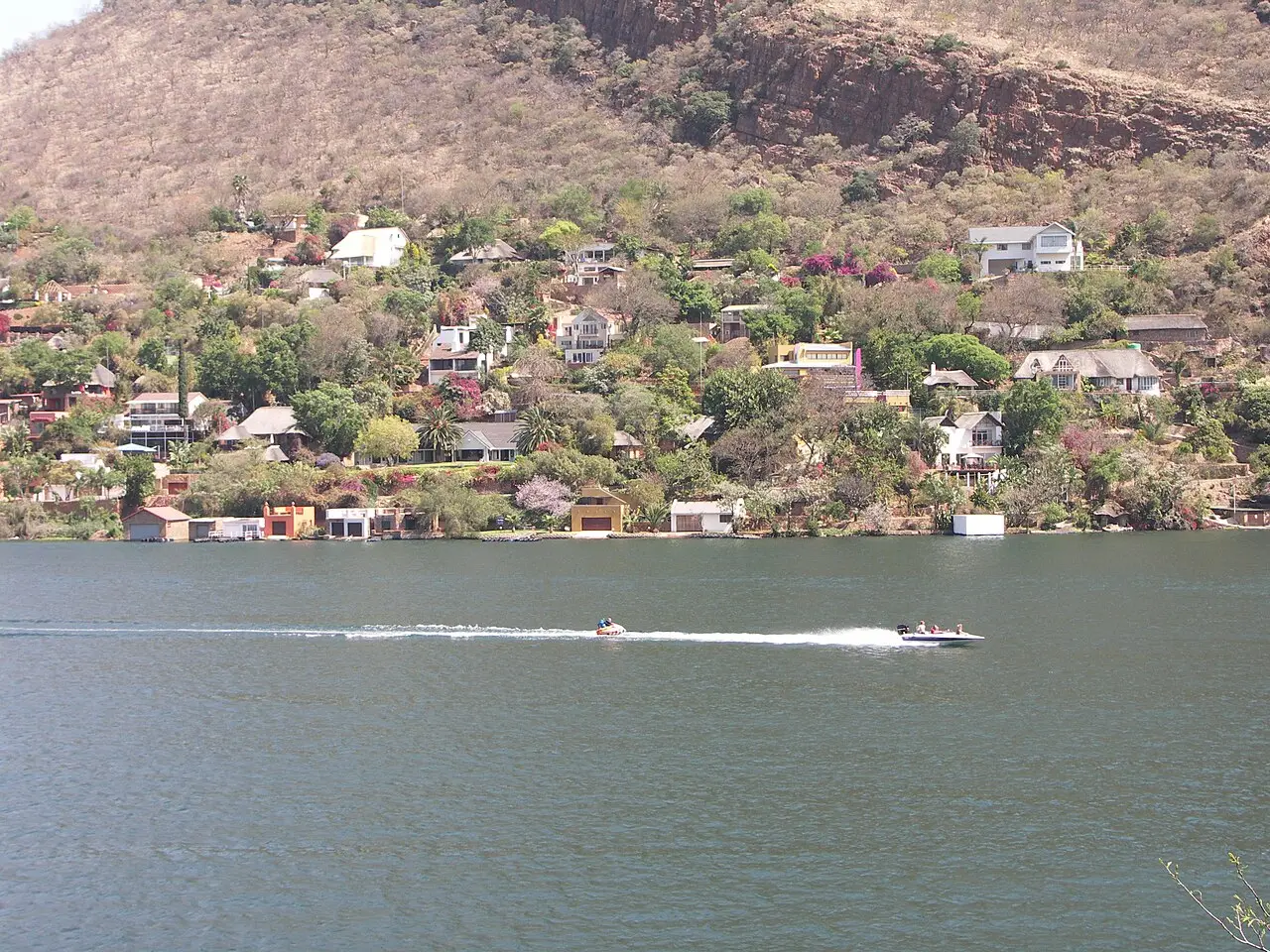
Hartbeespoort and Pilanesberg
Hartbeespoort is 50 km away (about 1 hour), with a dam, the Magaliesberg cable car and roadside markets: a good half-day trip. Pilanesberg, 180 km away and about 2 hours 30 minutes, is a 550 km² park inside an extinct volcanic crater, malaria-free, with the Big Five; a guided half-day safari for R700–1,200, and the Sun City resort sits right next door.
Where to begin
From the Apartheid Museum to Constitution Hill and downtown
Enter the Apartheid Museum at 9am, in Ormonde, next to Gold Reef City: your ticket randomly assigns you the “white” or “non-white” door, and you go in through whichever you got. Set aside 2 hours 30 minutes and start with the outdoor ramp.
Soweto, from Orlando West to Kliptown
Leave at 8:30am for Orlando West, 25 km southwest, on a walking or bike tour booked with a local guide.
Cradle of humankind, art and the north
Leave at 8am for the Cradle of Humankind, 50 km northwest (about 50 min), after checking whether the Sterkfontein caves are open.
Money
The currency is the rand (ZAR, R), at about R18 per dollar and about R3.3 per Brazilian real in 2026. Tap-to-pay works for almost everything, including ride-hailing apps, markets and gas stations, but carry cash for what doesn't take a card machine: tips, street stalls, car guards. 2026 ranges, approximate: coffee R35–55; a simple lunch R100–180; a main course at a mid-range restaurant R180–320. A full dinner with wine R450–800 per person; beer R35–60; a house wine bottle R220–400. App ride R60–180; hostel bed R350–550; mid-range hotel night R1,200–2,500. Tipping is expected and is part of workers' income: 10–15% at restaurants, and small change for whoever helps at the gas pump and the parking spot. VAT is 15% and already included in the price. Purchases over R250 qualify for a refund at the airport counter, with the receipt and a filled-out form.
Getting there and around
OR Tambo Airport: 24 km, the busiest in Africa
OR Tambo (JNB) is 24 km east of downtown, in Ekurhuleni, and is Africa's busiest airport, with between 21 and 24 million passengers a year. The Gautrain links the terminal to Sandton, and you buy the card at the same ticket office: without it, the turnstile won't open. By Uber or Bolt, count on R350–550 to Sandton and R300–450 to downtown. Lanseria Airport (HLA), to the northwest, handles low-cost domestic flights and has no train, only cars or shuttles. Never accept a ride from anyone who approaches you in the arrivals hall, and if you're in a rental car, drive straight to your hotel.
The Gautrain covers just one axis
The Gautrain covers the Park Station–Rosebank–Sandton–Midrand–Centurion–Pretoria/Hatfield axis, with feeder buses on the same card: the leg costs R30–80 within Johannesburg and R90–120 from Sandton to Hatfield, but the line doesn't serve the west or the south. For Soweto, Rea Vaya, Africa's first BRT, running since August 2009, links the CBD to the township for R9.90–28, with a dedicated lane and enclosed stations. Minibus taxis, 15-seat vans, carry most of the region's workers for R12–25 a leg and are hailed with hand signals from the sidewalk, one for each destination; the first time, go with someone who knows the route. Metrobus and Metrorail trains are unreliable. In practice, visitors get around by Uber or Bolt, between R60 and R180 for most trips, requesting the car from inside the building. The neighborhoods are too far apart to walk, with 15 km from downtown to Sandton and no continuous sidewalk, and cycling is only worth it in a group or on a guided tour, like the ones in Soweto.
Safety
Violent crime in Johannesburg is high in absolute numbers, but it's concentrated in identifiable areas and times, and almost all of it can be avoided with simple rules. Don't walk at night anywhere, including the leafy northern suburbs. In the CBD, Hillbrow, Berea, Yeoville and Joubert Park, don't walk around alone: by day, go with a guide, and at night, don't go. On the street, the most common crime against visitors is the smash-and-grab at traffic lights, so drive with the windows up, doors locked, nothing visible inside the car and enough distance from the car in front to maneuver. At OR Tambo there's a scam of following rental cars to the hotel: if you're suspicious, drive to a busy gas station or a police station instead of parking. Only withdraw cash inside a mall or bank branch, and turn down anyone who offers help at the ATM. During scheduled blackouts, traffic lights go off and streets go dark, so avoid driving at those times. Use Uber or Bolt, check the license plate and get in from inside the building, not from the sidewalk. Emergencies: 10111 (police), 10177 (ambulance) and 112 from a cell phone. The health side is easy: the Highveld is at 1,750 m and has no malaria or yellow fever risk, and the certificate is only required from travelers arriving from an endemic country. Tap water is treated and safe to drink, although supply interruptions are frequent.
Etiquette tips
Greet before asking for anything
Getting straight to the point sounds rude. Say “howzit,” “sawubona” or “good morning,” wait for the reply, and only then ask your question: at the counter, at reception, at the gas station and when getting into a minibus taxi.
The handshake has three parts
Palm, thumbs interlocked, palm again, often with the left hand supporting your own forearm. If the other person starts it, go along; missing the second part isn't a problem, pulling your hand away mid-way is.
“Just now” isn't now
“Now now” means shortly, “just now” means later, and “now” could still mean today. If you need an actual time, ask for the number instead of trusting the expression.
Don't photograph people without asking
Ask permission before photographing people, especially in Soweto, Alexandra and the CBD, where there's a long history of residents being photographed as scenery. On a guided tour, let the guide ask for you.
During a blackout, the intersection line sorts itself out
A traffic light here is called a “robot.” When it goes dark, the four directions take turns, one car at a time, in order of arrival, with no one coordinating. Cutting that order annoys people more than any honking.
In Johannesburg, race is a common topic; it isn't a casual one
The census categories (black, coloured, Indian, white) still structure public policy and come up in normal conversation. Listen to the local vocabulary before using it, and don't turn the subject into a joke.
Mistakes to avoid
Walking between neighborhoods
Thinking you can walk between neighborhoods. It's 15 km from the CBD to Sandton, without a continuous sidewalk. Plan every trip as an app ride, and count 30–50 minutes during rush hour.
Staying only in Sandton
Booking everything in Sandton and going home saying you've seen Johannesburg. Sandton is a fifty-year-old financial district. What explains the city lies 15 to 30 km away, and that's where your days should go.
Soweto on your own and without context
Going to Soweto on your own on the first day and without context. A walking or cycling tour with a local guide in Orlando West costs R400–800 per person. It runs 3 to 4 hours, and takes care of orientation, safety and explanation at once.
Bag in plain sight on the passenger seat
Leaving a bag, phone or backpack visible on the passenger seat with the window open: it's the favorite target of smash-and-grab robberies at traffic lights. Drive with the windows up, doors locked and nothing in view, and always stop with space between you and the car in front.
Public transport after eight
Counting on public transit after 8pm. The Gautrain shuts down around 9pm, Rea Vaya cuts its frequency sharply at night and minibus taxis practically stop, so from then on the way out is the app, with pickup from inside the building.
Useful phrases
Sawubona
hello, to one person (sa-u-BOH-na, in isiZulu); to more than one, “sanibonani”
Ngiyabonga
thank you (ngui-ya-BON-ga, isiZulu); in Sesotho, “kea leboha”
Howzit
what's up: a South African English greeting that doesn't expect a report, just a “sharp” back
Sharp sharp
cool, agreed, understood; usually comes with a raised thumb and closes the conversation
Sho't left
“drop me right there”: used to ask for a stop at the next corner in a minibus taxi
Robot
traffic light; “turn left at the robot” is a common, literal instruction, not a playful bit of slang
Districts
CBD and Marshalltown
The original 1886 grid, with Gandhi Square, Diagonal Street and the old mining-house district. Emptied of offices in the 1990s, it's now a busy popular center of shops, street markets and scattered restoration; visit by day, ideally on a guided tour.
Braamfontein
University neighborhood around Wits, founded in Johannesburg in 1922. Concentrates publishers, theaters, cafés and weekend markets; the cable-stayed Nelson Mandela Bridge, 284 m, opened in 2003, links the neighborhood to downtown over forty rail lines.
Newtown
Former fruit and vegetable market converted into a cultural district: Market Theatre since 1976, Museum Africa, Mary Fitzgerald Square and Tshimologong, Wits's tech hub. Busiest on performance nights.
Maboneng and Jeppestown
Industrial blocks in the eastern downtown, redeveloped starting with Arts on Main in 2009: galleries, studios and the Market on Main on Sundays. The original developer went bankrupt in 2018, and the area is smaller and rougher than its reputation suggests; walk within the perimeter and take an app ride back.
Hillbrow, Berea and Yeoville
The densest residential area in southern Africa, with towers from the 1960s and 1970s, among them Ponte City, from 1975, with 54 stories, 173 m and a hollow core in the middle. Yeoville, on Rockey Street, is the heart of the city's Congolese, Nigerian and Zimbabwean diaspora. To see Hillbrow and Yeoville, book a daytime guided tour.
Soweto
A cluster of neighborhoods 20–25 km southwest, with somewhere between 1.3 and 1.8 million residents. Orlando West has Vilakazi Street, Mandela House and the Hector Pieterson Museum; Kliptown has the Freedom Charter square; the two painted towers in Orlando belong to a decommissioned power plant.
Sandton
A financial district created from the 1970s and consolidated when the Stock Exchange moved there in 2000. It has Sandton City, Nelson Mandela Square with its 6 m statue from 2004, and The Leonardo tower, 234 m tall and completed in 2019, the tallest building in Africa. Alexandra, a township from 1912, is 4 km away.
Rosebank, Melville and Fordsburg
Three distinct kinds of neighborhood life: Rosebank has galleries on the Keyes Art Mile, a Sunday market on a parking-garage rooftop and a Gautrain station; Melville has bars and restaurants on 7th Street, with a student crowd; Fordsburg has the 1970s Oriental Plaza and Indian, Pakistani and Somali food served late, with a night market on Fridays and Saturdays.
History
13th–18th c. · Stone-walled settlements on the Highveld
Sotho-Tswana-speaking communities build circular stone-walled villages across the plateau, several of them within today's city limits. Melville Koppies and the Klipriviersberg reserve hold foundations and iron-smelting furnaces predating any European colonization.
1836–1852 · The Transvaal farms
After the Difaqane and the Great Trek, Boer families register farms in the region, which becomes part of the South African Republic (ZAR), recognized in 1852. Randjeslaagte, Doornfontein, Langlaagte and Turffontein are farm names before they are neighborhoods.
1886 · The Main Reef outcrop
George Harrison finds the gold-bearing conglomerate on the Langlaagte farm and sells his claim for ten pounds. President Paul Kruger proclaims public mining claims on September 8, and the surveyor lays out the plots the following month.
1890–1899 · Cyanidation and deep mining
The MacArthur-Forrest process makes low-grade ore profitable and extraction descends hundreds of meters, demanding capital and labor on an industrial scale. Population goes from zero to about 100,000 in thirteen years, and the Jameson Raid, between December 1895 and January 1896, exposes the clash between the mines' uitlanders and the ZAR.
1899–1902 · Anglo-Boer War
British troops occupy the city on May 31, 1900, and the gold passes to the Empire's control. Labor is reorganized into closed male compounds and, between 1904 and 1906, 63,000 indentured Chinese laborers are brought to the Rand.
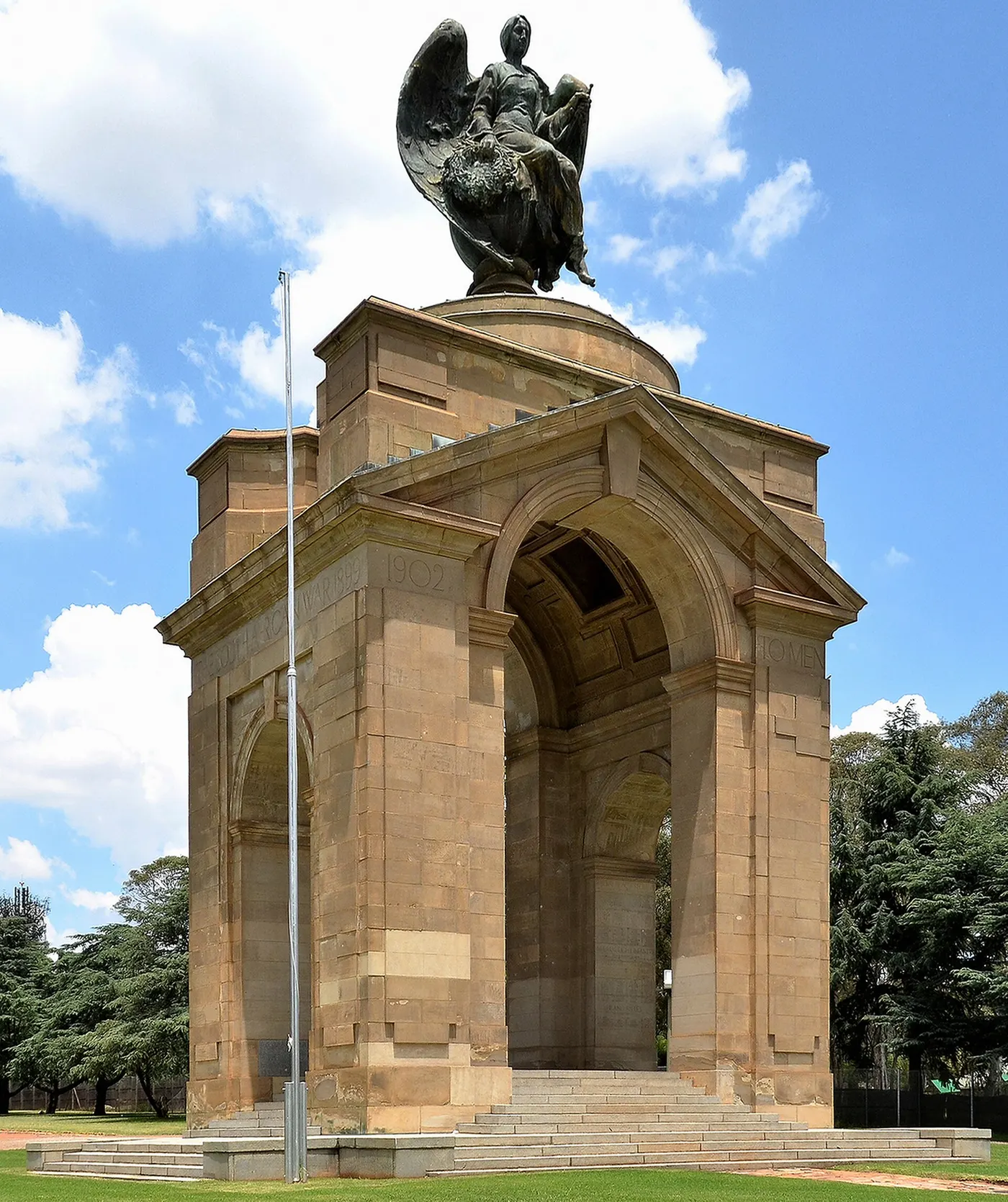
1904–1913 · Klipspruit and the land law
A bubonic plague outbreak in 1904 serves as pretext to burn down a downtown neighborhood and evict Black and Indian residents to Klipspruit, 20 km southwest: the seed of Soweto. The 1913 Natives Land Act reserves 7% of the country's territory for the Black majority and pushes rural people toward the mines.

1922 · The Rand Revolt
The strike by white miners against hiring Black workers into skilled jobs turns into an armed insurrection. Jan Smuts responds with artillery and aircraft, about 200 people die, and the racial job bar comes out reinforced by law.
1955 · Kliptown and Sophiatown
On June 26, the Congress of the People adopts the Freedom Charter on open ground in Kliptown, a text that becomes the basis of the 1996 Constitution. On February 9 of that same year, the forced removals begin from Sophiatown, one of the few urban neighborhoods where Black people could still own property; the site is renamed Triomf.
1963–1964 · Rivonia
Police raid the Liliesleaf farm in Rivonia on July 11, 1963, and arrest the ANC's underground leadership. At the trial, Mandela gives his speech from the dock on April 20, 1964, and is sentenced to life imprisonment on June 12.

June 16, 1976 · Soweto Uprising
Thousands of students march against the mandatory use of Afrikaans in schools; police open fire and Hector Pieterson, 12 years old, becomes the first photographed death. Protests spread across the country for months, and the date became a national holiday, Youth Day.

1990–2026 · Transition, Sandton and the services crisis
Mandela speaks at Soweto's stadium on February 13, 1990, the April 27, 1994 election creates Gauteng province, and the unified municipality is born in December 2000, the year the Stock Exchange moves to Sandton and downtown hollows out. Then came Rea Vaya in 2009, the Gautrain and the World Cup in 2010, and from 2019 on, scheduled blackouts, water outages and unmaintained hijacked buildings: the Marshalltown fire, on August 31, 2023, killed 77 people.
 AI illustration
Complete history
The gold of the Witwatersrand, the city's origin
Gold is the reason the city exists. The Witwatersrand, the “ridge of white waters,” is an arc of conglomerate rock holding the largest gold deposit ever found, formed in a delta about 2.9 billion years ago and later concentrated by the impact that opened the Vredefort crater. When George Harrison exposed the outcrop at Langlaagte in 1886, the gold ran in a continuous east-west band rather than in alluvial nuggets: that meant machinery, British capital and thousands of workers from the very first year. That's why the city was born big and in the wrong place, with no river, no port and far from everything, at an altitude of 1,750 m, and why it still drinks water pumped from the Vaal and the mountains of Lesotho.
Deep mining created the social structure
Deep mining created the social structure the 20th century inherited. From 1890 on, companies like those of Cecil Rhodes and Barney Barnato needed cheap, rotating labor: they recruited men from across southern Africa on months-long contracts, housed them in closed compounds and forbade families from joining them. The 1911 Mines and Works Act reserved skilled jobs for whites, the 1913 Natives Land Act pulled the ground out from under anyone who might have stayed in the countryside, and the 1922 Rand Revolt confirmed the arrangement at gunpoint. The city that emerged had the money downtown, white people north of the ore line and the people who did the work in neighborhoods to the southwest, linked by train and by dormitory.
Apartheid set the design in concrete
Legal apartheid, from 1948, set in concrete the division that mining had created. The Group Areas Act of 1950 classified every neighborhood by race and allowed mass removals: Sophiatown was destroyed from 1955 and its 60,000 residents were moved to Meadowlands; Pageview and Fietas, home to Indian merchants, were emptied in the 1960s and 1970s, with the shops moved to the Oriental Plaza in Fordsburg. In 1963 the southwestern townships got the acronym name Soweto (South Western Townships) and were separated from the white suburbs by strips of empty land, highways and the row of mine dumps itself. In Kliptown, in 1955, the Freedom Charter argued for the opposite of all this; in Rivonia, in 1963, those who defended it were arrested; and on June 16, 1976, the students of Orlando West took to the streets against compulsory teaching in Afrikaans, in an uprising that spread across the country.
The transition from 1990 to 2000 and the move to Sandton
The democratic transition changed the laws faster than the city's geography. Between 1990 and 1994 the restrictions on movement fell, and downtown filled with Black residents and migrants from Mozambique, Zimbabwe, Nigeria and the Democratic Republic of the Congo, while property owners and companies withdrew to the north. The Johannesburg Stock Exchange left Diagonal Street for Sandton in 2000, the same year the old separate councils were merged into a single metropolitan municipality. Downtown was left with buildings without managers, the “hijacked buildings,” and Sandton became a brand-new financial district 15 km away. Alexandra, a township founded in 1912, ended up four kilometers from the towers of Sandton and is the most cited image of South African inequality.
Reinvestment and the services crisis, since 2010
Over the last twenty years the city has swung between reinvestment and infrastructure collapse. The 2010 World Cup brought Rea Vaya, Africa's first BRT corridor, the Gautrain and the renovation of Soccer City; Maboneng, Braamfontein and Victoria Yards showed that downtown blocks can work again, even though Maboneng's original developer went into liquidation in 2018. At the same time, the municipality piled up political instability, with more than half a dozen mayors since 2016, Eskom's scheduled blackouts became routine from 2019 and Rand Water supply failures became part of the calendar. Visitors find both side by side: revived blocks and services that fail.
The 60,000 residents of Sophiatown were taken to Meadowlands.
Geography and shape of the city
The ridge, the terrain and the water
Johannesburg sits on the Witwatersrand ridge, a watershed at an altitude of 1,750 m that separates the Limpopo basin to the north from the Vaal and Orange basin to the south; that's why the city has no sizable river and depends on water transferred from the Vaal and from the Lesotho Highlands Water Project, more than 400 km away. The terrain is a rolling plateau with rocky outcrops (koppies), and the difference between the lowest point, in the south, and the Northcliff ridge, at about 1,807 m, is about 200 m.
A grid that follows the ore
The city grid follows the ore: the reef runs east-west, and alongside it line up Main Reef Road, the railway, the old mines and the yellow mine-waste dumps, many now reprocessed or grassed over. North of that line are the leafy suburbs of Parktown, Houghton, Rosebank and Sandton, served by wide avenues; to the south and southwest, Soweto and the historic townships, separated by strips of open land that were deliberate buffer zones.
High-altitude climate and a city built for cars
The climate is subtropical highland (Cwb), with a rainy summer and a dry, sunny winter, and the roughly ten million trees planted in the northern suburbs form a canopy so dense it shows on satellite images as an urban forest. The city covers about 1,645 km² and was designed for the car: most of life happens on streets without continuous sidewalks, in malls and in gated complexes.
The year's 700–750 mm of rain falls almost entirely between October and March, in late-afternoon storms that last about an hour.
Culture
Nearly all of the country's urban music came from here
Almost all urban South African popular music came from here. Marabi was born in the yards and slums of downtown in the 1920s, with piano and organ at clandestine liquor-selling parties; the 1950s brought pennywhistle kwela and Sophiatown jazz, with Miriam Makeba, Hugh Masekela, Dolly Rathebe and the Manhattan Brothers big band, all documented by Drum magazine. After 1994, kwaito slowed down house music and put township slang on top (Arthur Mafokate, Boom Shaka, Trompies, Mandoza), and from 2016 amapiano, created in the townships of Gauteng with the deep bass of the log drum, became the country's main cultural export, led by Kabza De Small and DJ Maphorisa. Pantsula, a fast-footed dance that emerged on the streets in the 1950s, still goes along with all of it.
A tradition of its own in urban writing
In words and images, the city has its own tradition of urban chronicle. The Drum of the 1950s trained Can Themba, Es’kia Mphahlele, Bloke Modisane and Nat Nakasa, with photography by Jürgen Schadeberg and Bob Gosani. Nadine Gordimer, winner of the 1991 Nobel Prize in Literature, wrote almost all her work in Parktown; Ivan Vladislavić made walking through Johannesburg a method; Phaswane Mpe put Hillbrow at the center of the South African novel in 2001. In film, “Come Back, Africa” was shot clandestinely in Sophiatown in 1959, “Tsotsi” won the Oscar for best foreign-language film in 2006 and “District 9” used Chiawelo, in Soweto, as a set in 2009. The contemporary art market is the largest on the continent, with Everard Read (opened in 1913), Goodman and Stevenson, and the FNB Art Joburg fair in September.
Sport and religion on the weekend
Sport and religion fill the weekend. The derby between Kaizer Chiefs, founded in 1970, and Orlando Pirates, from 1937, is the Soweto Derby and fills FNB Stadium twice a season; cricket is played at the Wanderers, in Illovo, nicknamed the Bullring, and rugby at Ellis Park, where South Africa won the Rugby World Cup final on June 24, 1995. On Sunday morning, whole buses carry worshippers of independent African churches (the Zion Christian Church is the country's largest) and Regina Mundi, in Moroka, still bears bullet marks on its ceiling from shots fired inside the church during the 1976 uprising.
Africa's first gay pride march set out from Hillbrow on October 13, 1990, still under apartheid.
Festivals and events
 AI illustration
Youth Day: June 16
National holiday marking the 1976 uprising. Rallies, choirs and walks at the Hector Pieterson Memorial and along the march route in Orlando West; the Basha Uhuru Freedom Festival, at Constitution Hill, usually happens the same week.
 AI illustration
Standard Bank Joy of Jazz: late September
Three nights and several stages at the Sandton Convention Centre, with South African and international lineups. It's the country's biggest jazz festival and fills up Sandton's hotels; buy tickets ahead.
 AI illustration
FNB Art Joburg: early September
Contemporary art fair created in 2008, also at the Sandton Convention Centre, with galleries from across the continent. The same week, galleries in Rosebank and on the Keyes Art Mile open exhibitions and stay open late.

Joburg Pride: October
The African continent's first pride march set off from Hillbrow on October 13, 1990, still under apartheid. Today the main parade takes place in the Sandton area, with side events throughout the month.
 AI illustration
Heritage Day and the Soweto Marathon: September 24 and November
On September 24, Heritage Day has, in practice, become national braai day, with barbecues in the street, in parks and backyards. The Soweto Marathon, on the first Sunday in November, runs through Orlando, Kliptown and FNB Stadium and draws tens of thousands of runners.
Books and films
Tsotsi (Gavin Hood, 2005)
Shot in Soweto and Alexandra and based on Athol Fugard's novel, it won the Oscar for best foreign language film in 2006. It puts on screen the physical distance between the township and the walled suburb: the geography apartheid drew and the city has kept.
Portrait with Keys, by Ivan Vladislavić (2006)
One hundred and thirty-eight fragments about walking through the northern suburbs in the 1990s and 2000s. It's the best account there is of what walls, electric fences, automatic gates and security-company signs did to the idea of a street.
Stimela, by Hugh Masekela (1974)
The song of the coal train that brought workers from Mozambique, Malawi, Lesotho and Zimbabwe to the Rand's mines. In seven minutes it explains why the city exists, who built it and under what conditions: more than any museum panel could.
Frequently asked questions
Johannesburg: how do you get from OR Tambo Airport to Sandton?
By Gautrain, in about 15 minutes, for R230 to 270 plus the R21 to 35 card, bought at the same ticket office and without which the turnstile won't open; trains run from 5:20am to about 9pm. After that, take Uber or Bolt, for R350 to 550 to Sandton.
Johannesburg: what's the currency, and how much is the rand worth?
The currency is the rand (ZAR, R), at about R18 per dollar and about R3.3 per Brazilian real in 2026.
Johannesburg: what's the climate like?
A plateau climate, at 1,750 m: from October to March highs sit at 25 to 28 °C, with a storm most afternoons, and from May to August it doesn't rain, with 17 to 21 °C days and 2 to 7 °C nights; bring a jacket any time of year.
Johannesburg: how do you ask for information without sounding rude?
Say "howzit," "sawubona" or "good morning," wait for the reply, and only then ask your question: at the counter, at reception, at the gas station and when getting into a minibus taxi.
Johannesburg: what's safety like in the city?
Violent crime is high, but concentrated in identifiable areas and times: don't walk anywhere at night, visit the CBD, Hillbrow and Soweto by day and with a guide, drive with windows up and nothing in sight, and call Uber or Bolt from inside the building.
Other cities in the country
South Africa ↗- Days
- 5
- When
- Mar–Apr · Oct–Nov
- Per person/day
- Average 50–100 USDMid-range · per person/day
Cost scope
Per person per day: accommodation, meals, urban transport, visits and a small allowance for extras. Flights excluded; larger purchases vary. Editorial estimate, not a quote.