Tanzania
Zanzibar
Stone Town, coral beaches, spices and Forodhani
Days Start with the basic programme and choose extensions for the time you have.
How the guide reaches this number
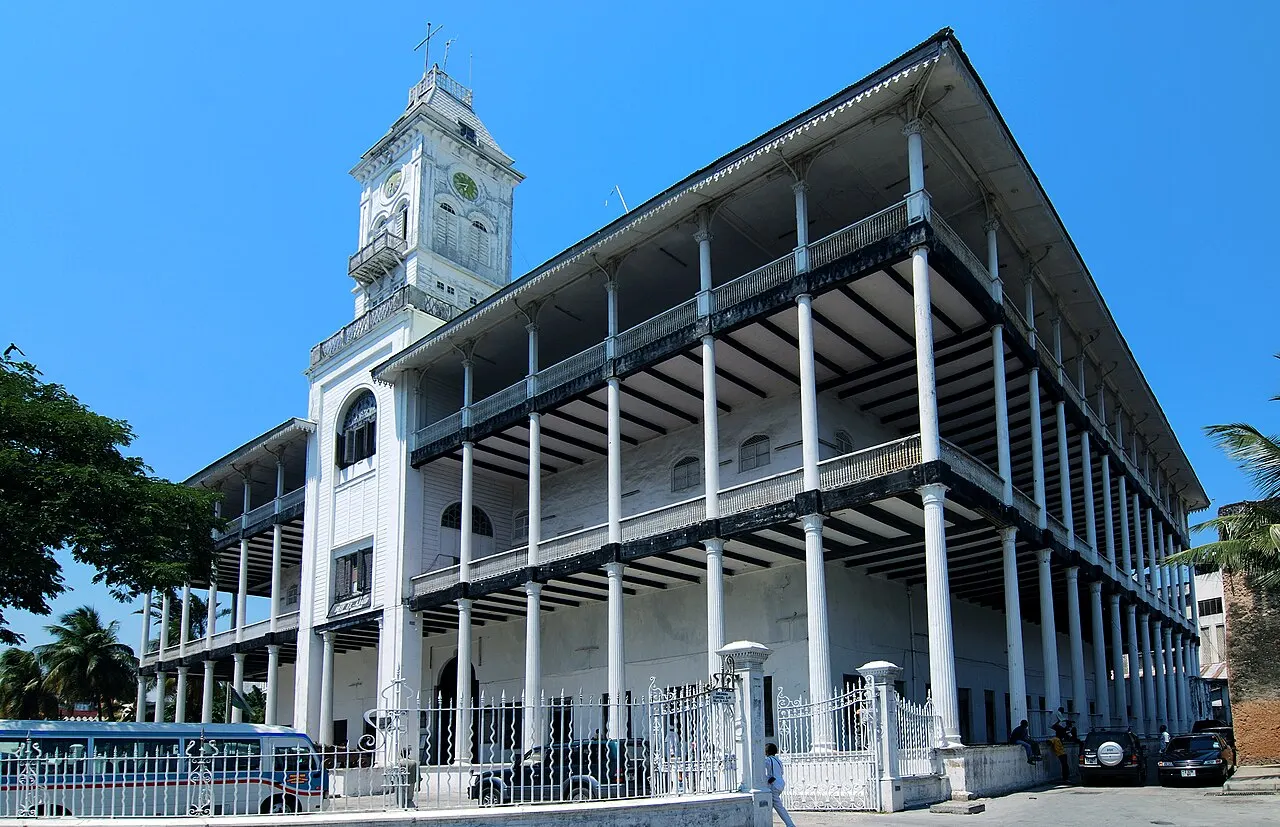
Save the third for the north, where the tide barely changes the beach, and leave the fourth free. With just one day, start at 7am at the Darajani market and walk to the Anglican Cathedral, in Mkunazini, to see the holding chambers. Have rice and fish for lunch at a local restaurant, for 8,000–15,000 TZS, walk along the waterfront to the Old Fort and, from 6pm on, have dinner at the Forodhani stalls. The island doesn't suit anyone looking for a long night out, because drinks are only served at licensed venues and nightlife comes down to Shangani, Kendwa and Paje. On the east coast, anyone who wants to swim at any hour gets frustrated without checking the tide table, and in Kiwengwa and Matemwe the resorts have privatized stretches of village beach. The biggest letdown is the House of Wonders, the image on almost every postcard of the island: it lost much of its facade in the 2020 collapse and in 2026 was still closed, covered in scaffolding.
4
When June to October (dry and windy) and January to February (hot and calm); avoid April
How the guide reaches this number
The climate is equatorial and hot all year round, between 25°C and 33°C, with high humidity, but the seasons are defined by two monsoons. From June to October blows the kusi, from the southeast: dry season, cooler nights, rougher sea on the east coast. It's the best overall time and also the high season. From December to February the kaskazi dominates, from the northeast: calm sea, good diving visibility, strong heat, and the price peak between December 20 and January 5. The long rains, masika, run from March to May, and April is the month I would avoid: it rains heavily and often, several beach lodges close for maintenance, and the dirt roads turn bad. November brings the short rains, vuli, with late-afternoon downpours that don't ruin the day. Two dates change the trip more than the rain does: Ramadan, when street activity drops during the day and returns after sunset, and Sauti za Busara, in February.
Per person/day US$45–70 budget, US$110–170 mid-range, on top of mandatory government fees
How the guide reaches this number
Per person per day: accommodation, meals, urban transport, visits and a small allowance for extras. Flights excluded; larger purchases vary. Editorial estimate, not a quote.
 What Nilo thinks
Stay four days: Stone Town on the first, from the market to the cathedral and the waterfront, and the spice farms and Jozani forest on the second. Save the third for the north, where the tide barely changes the beach, and leave the fourth free. With just one day, start at 7am at the Darajani market and walk to the Anglican Cathedral, in Mkunazini, to see the holding chambers. Have rice and fish for lunch at a local restaurant, for 8,000–15,000 TZS, walk along the waterfront to the Old Fort and, from 6pm on, have dinner at the Forodhani stalls. The island doesn't suit anyone looking for a long night out, because drinks are only served at licensed venues and nightlife comes down to Shangani, Kendwa and Paje. On the east coast, anyone who wants to swim at any hour gets frustrated without checking the tide table, and in Kiwengwa and Matemwe the resorts have privatized stretches of village beach. The biggest letdown is the House of Wonders, the image on almost every postcard of the island: it lost much of its facade in the 2020 collapse and in 2026 was still closed, covered in scaffolding.Stone Town's lanes, narrow and unmarked, run between 19th-century coral-stone houses. Back then, Zanzibar was the capital of the Omani sultanate and the Western Indian Ocean's largest trading post for clove, ivory and enslaved people. That history left behind the carved wooden doors, the Omani Old Fort and the Anglican Cathedral in Mkunazini, built over the slave market closed in 1873. At dusk, the Forodhani Gardens turn into a food market, with grilled octopus skewers and Zanzibar pizza, which has no relation to the Italian dish. Outside the city, spice farms show clove growing on the tree and the Jozani forest shelters the red colobus. Warm-water beaches stretch from Nungwi in the north to Paje in the southeast. Come from June to October, in the dry season, or from January to February, with calm seas, and plan for four days, leaving one free.
Quick facts
- Population
- about 220,000 in the Mjini district (Zanzibar City), about 890,000 in the Mjini Magharibi region and about 1.89 million in the archipelago (2022 census); Stone Town has about 30,000 residents
- Founded
- Swahili settlement since the 6th–10th c. (Unguja Ukuu); the present stone city was built between 1830 and 1900
- Country and region
- Tanzania: Zanzibar is a semi-autonomous region; Unguja island, Zanzibar archipelago
- Language
- Swahili (kiswahili), in the kiunguja variant that formed the base of standard Swahili; English in tourism; Arabic in religious contexts
- Currency
- Tanzanian shilling (TZS); about 2,600–2,700 TZS per US$1 (approximate, 2026); dollars accepted at hotels and tours
- Time zone
- UTC+3 (East Africa), no daylight saving
- Best time to visit
- June to October (dry and windy) and January to February (hot and calm); avoid April
- Average daily cost
- US$45–70 budget, US$110–170 mid-range, on top of mandatory government fees
When to go
June to October (dry and windy) and January to February (hot and calm); avoid April
March
25° to 33°C
177 mm of rain
April
25° to 31°C
409 mm of rain
AvoidMay
24° to 30°C
298 mm of rain
November
23° to 31°C
201 mm of rain
December
24° to 32°C
168 mm of rain
How the year changes
The climate is equatorial and hot all year round, between 25°C and 33°C, with high humidity, but the seasons are defined by two monsoons. From June to October blows the kusi, from the southeast: dry season, cooler nights, rougher sea on the east coast. It's the best overall time and also the high season. From December to February the kaskazi dominates, from the northeast: calm sea, good diving visibility, strong heat, and the price peak between December 20 and January 5. The long rains, masika, run from March to May, and April is the month I would avoid: it rains heavily and often, several beach lodges close for maintenance, and the dirt roads turn bad. November brings the short rains, vuli, with late-afternoon downpours that don't ruin the day. Two dates change the trip more than the rain does: Ramadan, when street activity drops during the day and returns after sunset, and Sauti za Busara, in February.
The same numbers as a table
| Month | Temperature °C | Rain mm |
|---|---|---|
| January · | 25 to 33 | 74 |
| February · | 24 to 33 | 51 |
| March | 25 to 33 | 177 |
| April | 25 to 31 | 409 |
| May | 24 to 30 | 298 |
| June · | 23 to 29 | 52 |
| July · | 22 to 29 | 31 |
| August · | 21 to 29 | 38 |
| September · | 21 to 30 | 37 |
| October · | 22 to 31 | 116 |
| November | 23 to 31 | 201 |
| December | 24 to 32 | 168 |
Nilo's tips
Check tide tables before choosing a lodge on the east coast
On the east coast (Paje, Jambiani, Bwejuu), the tide swing passes 3 m, and twice a day the sea pulls back hundreds of meters over the reef. Check the tide for the days of your stay and bring neoprene reef shoes because of the sea urchins. If your plan is to swim any time, sleep in Kendwa, 3 km from Nungwi.
The last daladala back to town leaves in early afternoon
With no fixed schedule, the pickup leaves when it fills up, and the last runs back usually leave too early for a beach day trip. Daladalas leave from Darajani and Creek Road and cost 400 to 2,000 TZS depending on distance. Route 116 goes to Nungwi, 324 and 326 to Bwejuu, Paje and Jambiani, 309 to Jozani and Makunduchi, and 505 to the airport and Bububu. To go and come back the same day, a private Stone Town–Nungwi taxi runs US$40–60, with the price agreed out loud before getting in.
At Forodhani, from 6pm, confirm the price before they cook
Zanzibar pizza costs 5,000 to 12,000 TZS, too wide a range to find out the price only when it's time to pay. It's worth ordering: a fried envelope of dough, with meat, onion, egg, mayonnaise and cheese, with no relation to the Italian dish.
Go to the Darajani market at 7am and buy cloves in bulk
At 7am you walk the aisles before the heat, and at 11am, through the crowd. The 1904 central market, on Creek Road, runs from before dawn to early afternoon and is the cheapest place on the island to buy clove, cardamom, cinnamon and nutmeg in bulk. The same little bag costs several times more at the Shangani shops. Ask permission before photographing inside; refusal is common and isn't hostility.
Bring dollars from 2009 or newer; shillings cover the rest
Hotels, diving and parks quote in dollars, and an old or damaged bill is handed back at the counter with no appeal. Check your bills one by one before you fly and bring shillings too, which pay for food, daladala and the market. Stone Town's ATMs (CRDB, NMB, Exim, People's Bank of Zanzibar) release about 400,000 TZS per withdrawal. Paying the hotel in cash avoids the 3.5% to 5% that cards usually add.
Listen to taarab for free at a rehearsal in Stone Town
Hotels charge a steep price to put the taarab orchestra, with its violin, oud and qanun, on stage, and the rehearsals at Stone Town's clubs welcome listeners. The two clubs keeping the genre alive are Ikhwani Safaa, founded in 1905, and the Culture Musical Club, from 1958. Ask at your guesthouse's front desk which day of the week the rehearsal falls on, arrive early and sit at the back, without taking photos.
Explore the map

© OpenStreetMap · OpenFreeMap · © OpenMapTiles
Explore the map, read about the other places and plan your travel days in the app.
Open the appWhat to see
Zanzibar: The coral island and its two halves
Stone Town sits on a peninsula on Unguja's west coast, a coral island 85 km long from north to south, and it's from there that daladalas and taxis leave for the beaches: Nungwi, in the north, is 55 km away by road.
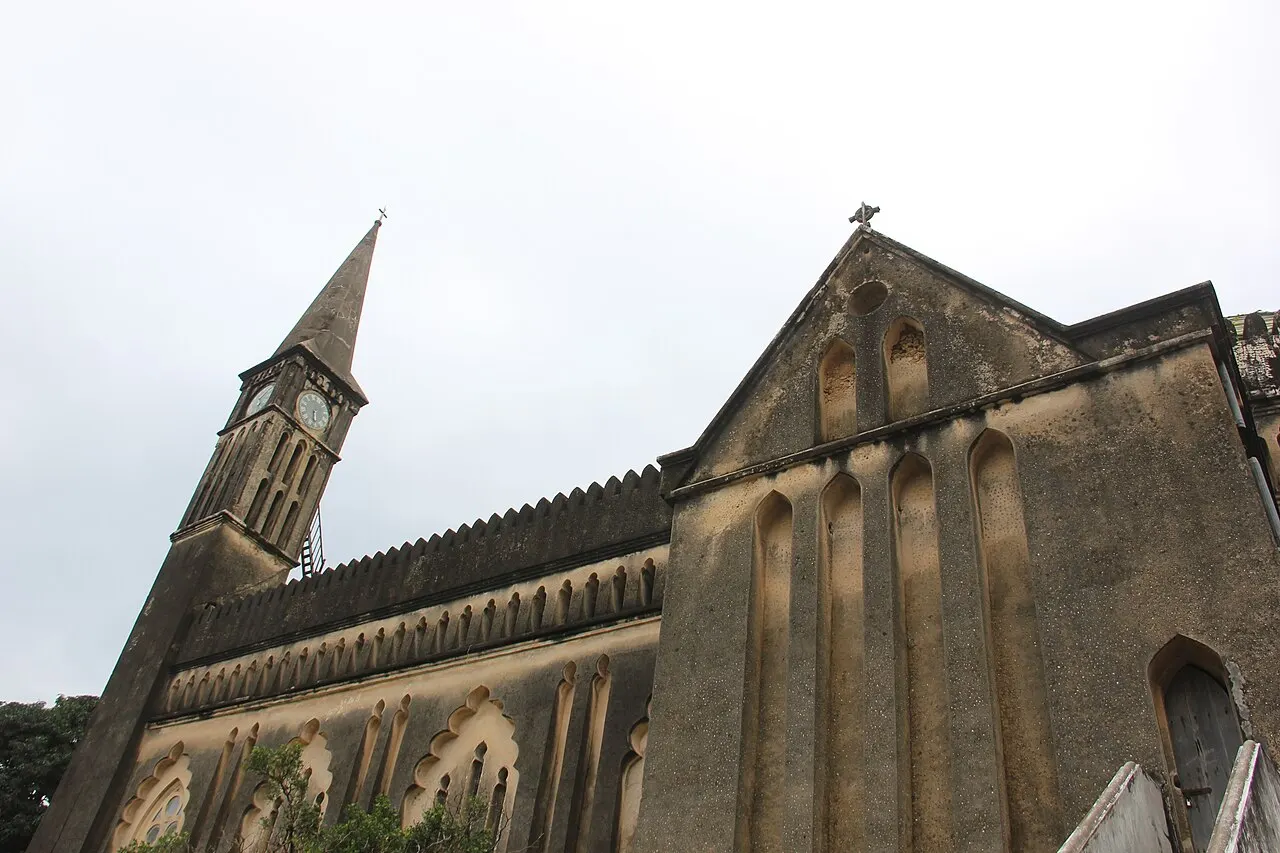
Christ Church Anglican Cathedral
Built from 1873 on the site of the slave market closed that same year, in the Mkunazini neighborhood. The main altar marks the spot of the whipping post, the basement holds holding chambers, and the courtyard has the 1998 stone memorial by Clara Sörnäs, with original chains.
The Anglican cathedral has occupied the site of the slave market closed that year since 1873; the high altar marks the spot of the whipping post, the holding chambers remain underneath, and a 1998 memorial displays chains from that era.
Check access

Forodhani Gardens
A strip of garden on the waterfront, opened in 1936 and renovated in 2009 with support from the Aga Khan Trust for Culture. From 6pm it turns into an open-air food market, with dozens of stalls selling skewers, grilled octopus and Zanzibar pizza.
The waterfront garden, opened in 1936 and renovated in 2009, turns at night into the city's open-air food market, with skewers, octopus and Zanzibar pizza.
Check access

Darajani Market
The 1904 central market on Creek Road, with sheds for fish, meat and fruit and the spice aisle: clove, cardamom, cinnamon, nutmeg and pepper. Runs from before dawn to early afternoon.
The 1904 central market on Creek Road is where the island buys fish, meat, fruit and spices, in sheds separated by product.
Check access
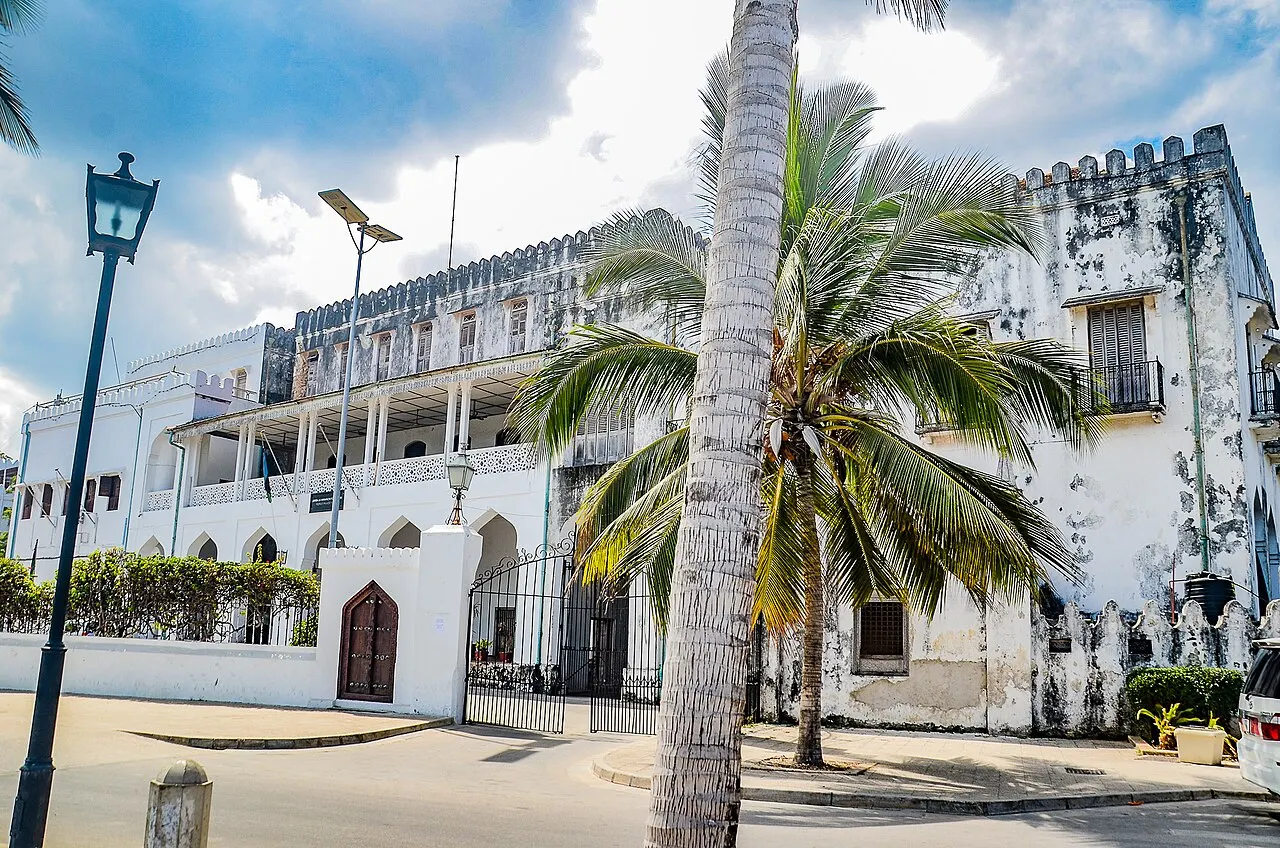
Palace Museum (Beit el-Sahel)
The sultans' 19th-century residence, on the waterfront next to the House of Wonders, with original furniture, Princess Salme's bedroom and Seyyid Said's tomb in the garden. It explains, in an hour, the Omani genealogy that organized the city.
The Beit el-Sahel, the sultans' residence in the 19th century, sits on the waterfront and shows original furniture, Princess Salme's bedroom and Seyyid Said's tomb in the garden; in one hour, the Omani genealogy becomes clear.
Check access
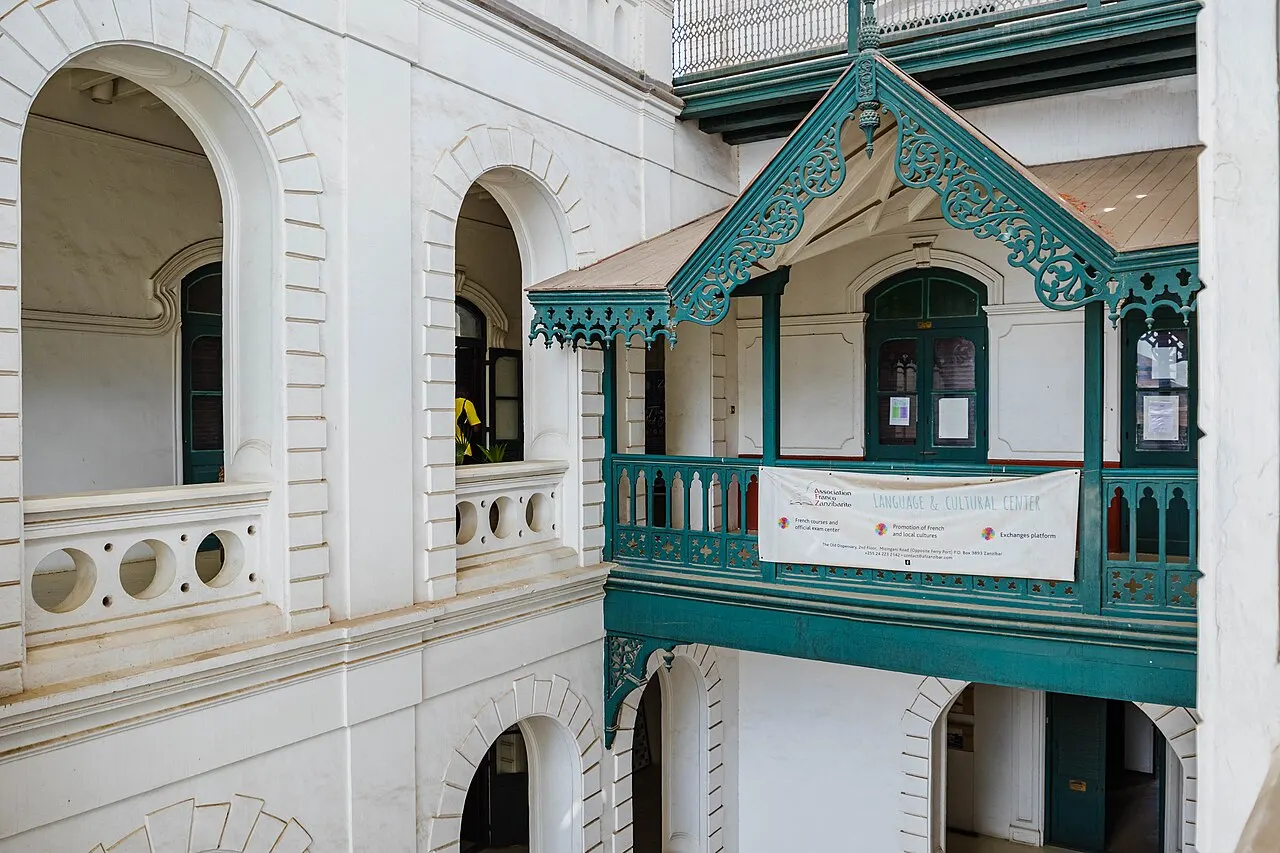
Old Dispensary (Ithnashiri)
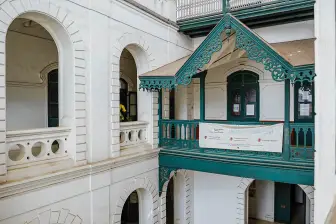
A building from 1887–1894 commissioned by merchant Tharia Topan as a charity hospital, with carved wooden balconies, stained glass and stucco: the island's most complete example of Indo-Swahili architecture. Restored in the 1990s by the Aga Khan Trust for Culture, today it has free entry on the ground floor.
It's the island's most complete example of Indo-Swahili architecture.
Check access
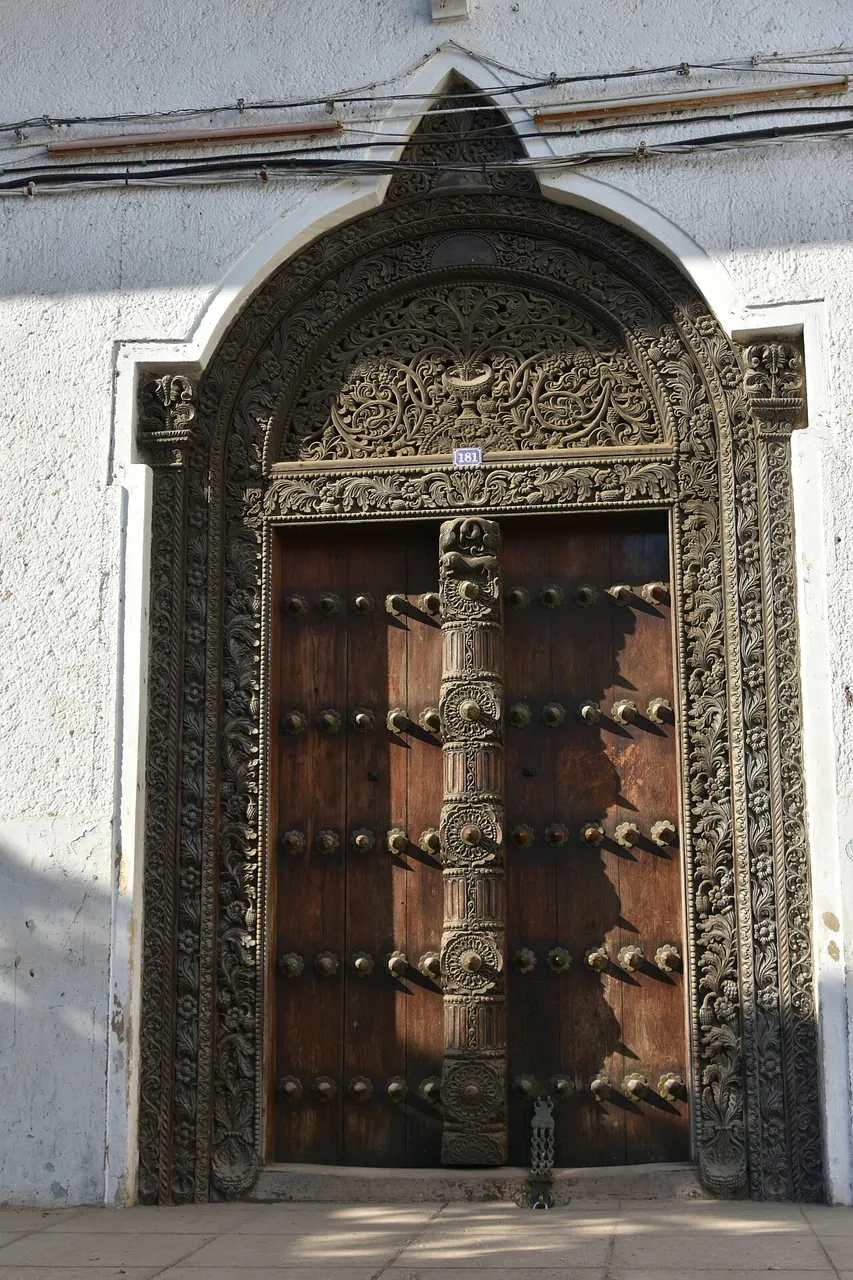
The carved doors
Over five hundred historic doors are catalogued in Stone Town, in two types: the Omani-Swahili, rectangular, with a carved lintel and Quranic verses, and the Indian, with a rounded arch and brass spikes. The brass spikes copy an Indian device against elephants, an animal that never lived on the island.
Check access
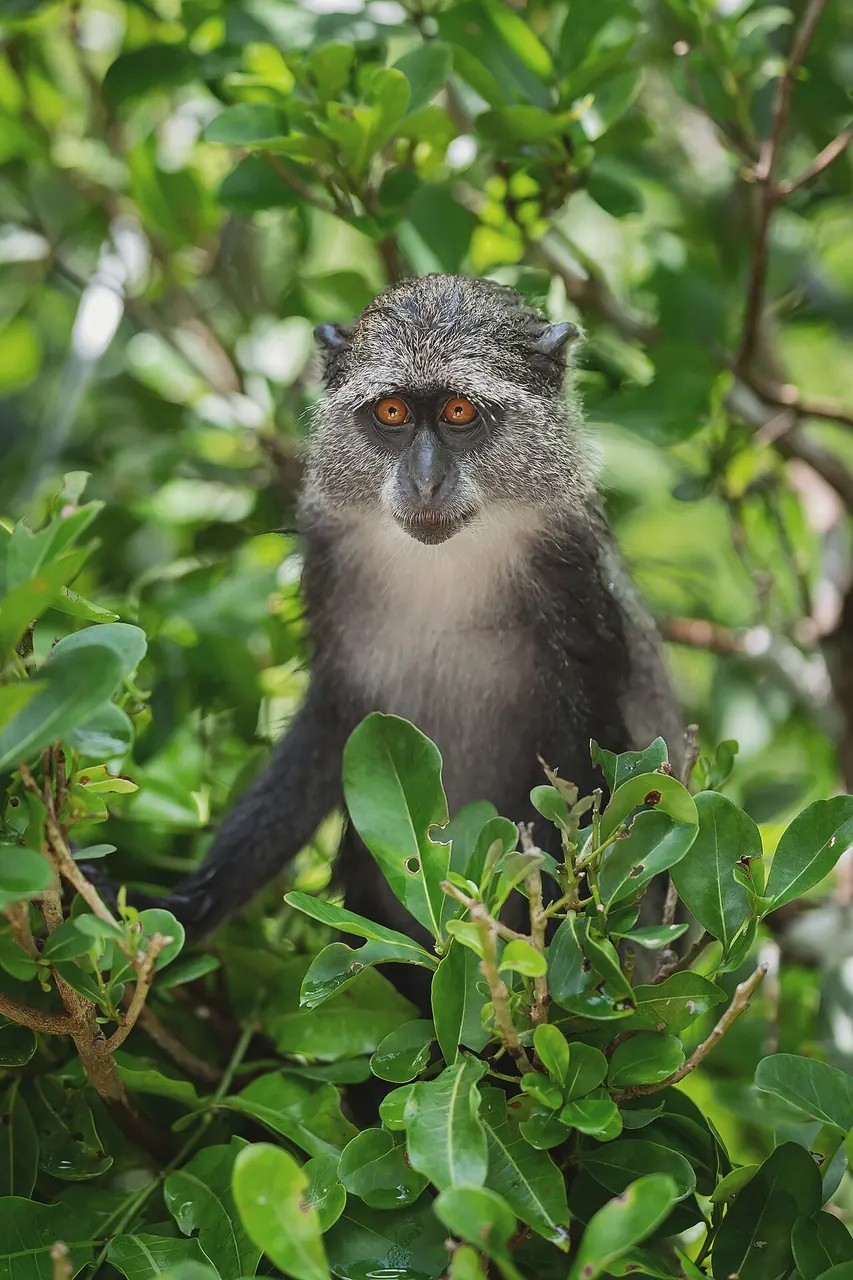
Jozani-Chwaka Bay National Park
35 km from the city, this is Unguja's last large remaining forest, protected as a national park since 2004. It's home to the Zanzibar red colobus (Piliocolobus kirkii), endemic and with an estimated population of a few thousand, and a wooden boardwalk over the Pete mangrove.
35 km from the city and a national park since 2004, it's the island's last large remaining forest, home to the Zanzibar red colobus (Piliocolobus kirkii), endemic and with a small population, and a boardwalk over the Pete mangrove.
Check access
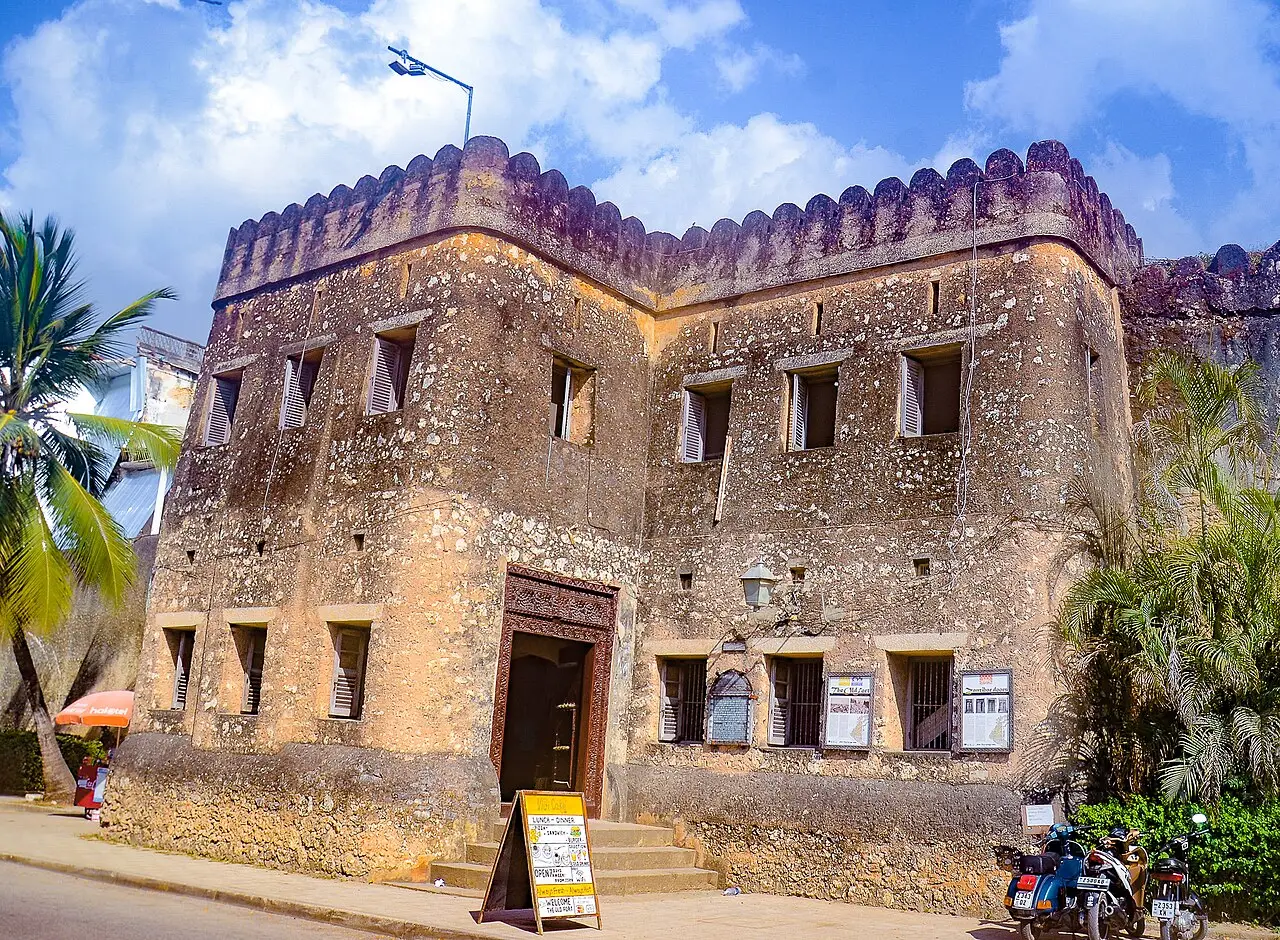
Old Fort (Ngome Kongwe)
Omani fortress built between 1698 and 1701 over the remains of a Portuguese chapel, with coral-stone walls and round towers. Today it holds an open-air amphitheater, craft stalls and a café, and it's the main stage for the Sauti za Busara and ZIFF festivals.
Outside Sauti za Busara, in February, and ZIFF, in July, the 1698–1701 Omani fort is a courtyard with craft stalls and a café. It sits right next to Forodhani and fits into the minutes before the stalls open, at 6pm.
Check access
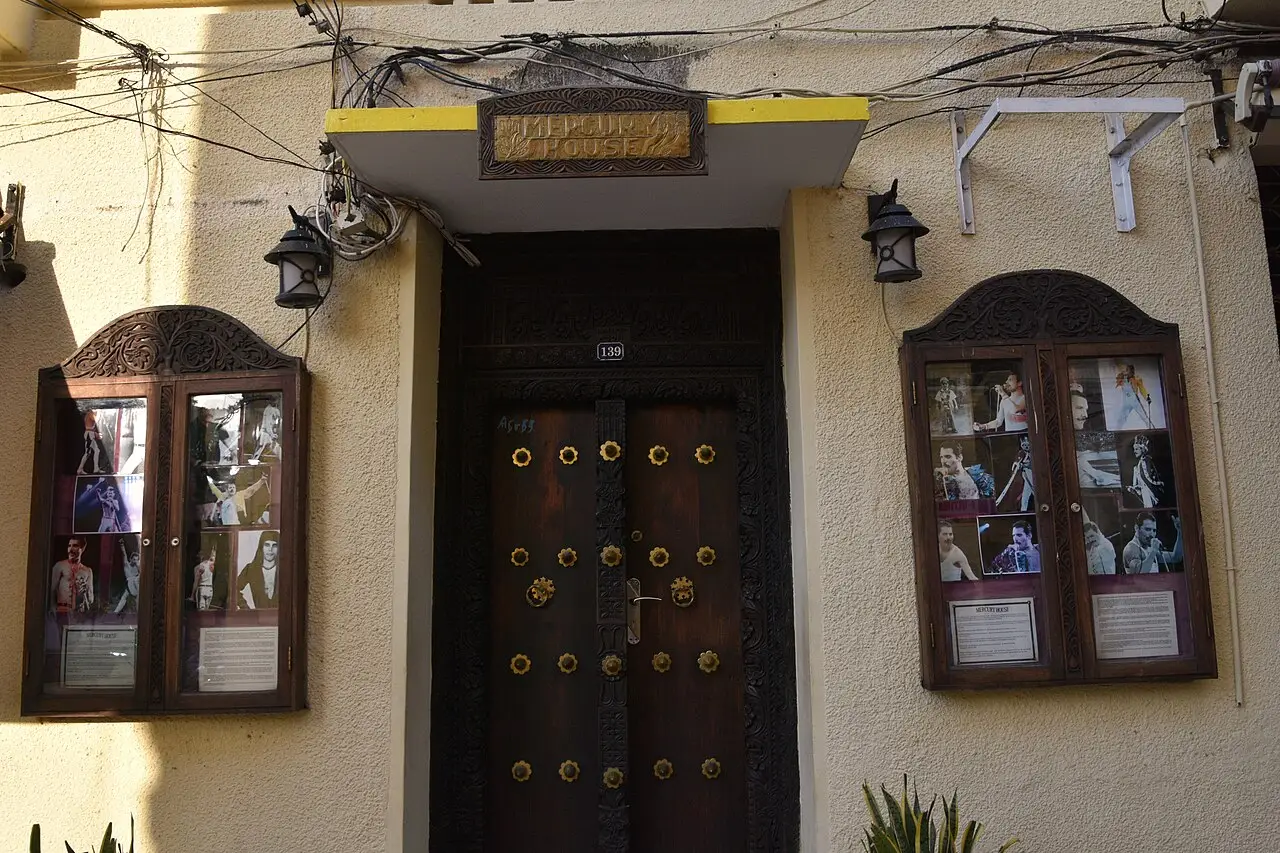
Freddie Mercury's House
Farrokh Bulsara was born in Stone Town on September 5, 1946, to a Parsi family working for the British administration. The house in Shangani has run as a museum since 2019 and documents the island's Parsi community as much as the musician.
The house became a museum in 2019 and documents the Parsi community as much as the musician born there on September 5, 1946. It's a short stop in Shangani on the way to sunset, not worth a trip on its own.
Check access
Nilo’s itinerary
Start with the basic programme and choose extensions for the time you have.
Plan my days in the app ↗Day 1 · Stone Town on foot, from market to sea
Start at 7am at Darajani Market, before the heat: the fish aisle, the spice aisle and a mandazi with chai at the corner stall.
Head to Christ Church Anglican Cathedral, in Mkunazini, and go down to the holding chambers of the old slave market; allow 45 minutes.
Cross to the waterfront via the Old Dispensary and the Palace Museum (Beit el-Sahel), passing the House of Wonders, closed for repairs since the 2020 collapse and visible from outside only.
Late afternoon at the Old Fort and the lanes of Shangani, stopping at Freddie Mercury's House.
Have dinner at the Forodhani Gardens stalls from 6pm: octopus skewers, urojo and a Zanzibar pizza.
Day 2 · Spices, forest and the southeast coast
Leave at 8:30am for a spice farm in Kizimbani or Kidichi (30–40 min), where you'll identify clove, nutmeg, cinnamon and vanilla on the plant.
Stop at the Kidichi Persian Baths, from 1850, built by Seyyid Said for his wife Binte Irich Mirza: Persian stucco right in the middle of clove country.
Have lunch and continue to Jozani-Chwaka Bay National Park: the endemic red colobus trail and the boardwalk over the Pete mangrove, about 2 hours.
Carry on 20 km to Paje to see the lagoon at low tide and the kitesurfers; wear water shoes in the sea because of the urchins.
Head back before 6:30pm. The southeast road has no lighting, and there are pedestrians and bicycles on it.
Day 3 · The north of the island and the sea without tide
Go early to Nungwi, 55 km north, by private taxi (1 hour 15 minutes), with the round-trip price agreed beforehand, because the last daladala pickups head back in early afternoon. Start at the dhow shipyards at the tip, where the hulls are built without a drawn plan.
Swim in Kendwa, 3 km away, with constant depth at any tide.
If you'd rather dive, head out from Matemwe to the Mnemba Atoll: shallow reef, with the best visibility from December to February.
On the way back, stop at the Mangapwani caves, coral chambers used to hide enslaved people after the 1873 ban.
End the day in Shangani, at the waterfront sunset, and eat mishkaki in Ng'ambo, away from the tourist circuit.
Day 4 · Free day
Free day: use it to rest, go back to the place you liked most or cover a setback.


Food
 AI illustration
Urojo (Zanzibar mix)
A yellow soup of turmeric and green mango, served with potato bhajia, boiled cassava, store-bought fries, coconut chutney and tamarind. Eaten in the late afternoon at street stalls, for 2,000–5,000 TZS, with every stall defending its own tamarind ratio.
 AI illustration
Zanzibar pizza
A Forodhani invention unrelated to the Italian dish: a thin dough opened by hand, filled with minced meat, onion, egg, mayonnaise and cheese, folded into an envelope and fried on the griddle. There's a sweet version with banana, chocolate and condensed milk; it costs between 5,000 and 12,000 TZS.
 AI illustration
Pweza wa nazi
Octopus slow-cooked in coconut milk with curry, garlic and lime, the most characteristic dish of the island's home cooking. It shows up grilled on skewers at Forodhani stalls and stewed at village restaurants along the east coast.
 AI illustration
Mishkaki
Skewers of beef or goat marinated in lime juice, garlic and spices, grilled over coals and served with salt, pilipili pepper and a piece of cassava. It's the standard nighttime street food across Ng'ambo.
 AI illustration
Pilau and biryani
Two rice dishes of Persian and Indian origin adopted as festive food: pilau is cooked together with the meat and spices, while biryani has the rice and sauce prepared separately and then layered. They appear at weddings, at Eid and on Fridays.
 AI illustration
Wali wa nazi and mchuzi wa samaki
The island's standard lunch: rice cooked in coconut milk with the day's fish in a tomato, coconut and tamarind sauce, served with mchicha (sautéed greens). At a local restaurant it runs 8,000–15,000 TZS.
 AI illustration
Mandazi, vitumbua and kaimati
Fried snacks for breakfast and late afternoon: mandazi is a lightly sweet dough with cardamom, vitumbua is a round rice-and-coconut cake, and kaimati is a crispy little ball dipped in syrup. Sold on trays on the street at dawn.
 AI illustration
Sugarcane juice and chai ya tangawizi
Sugarcane juice is pressed fresh in hand-crank mills, with whole lime and ginger fed through with the cane, for about 1,000–2,000 TZS. At night, coffee (kahawa) vendors circulate with metal pots, serving it in tiny cups with coconut candy, kashata.
Day trips

Prison Island (Changuu)
Prison Island (Changuu) sits 5 km off the coast, 25 to 30 minutes by boat from Forodhani. The 1893 prison never held inmates and became a quarantine station, and the draw is the colony of Aldabra giant tortoises, gifted by the Seychelles in 1919, some over a hundred years old. Combine the trip with the Nakupenda sandbank, which only appears at low tide.

Jozani and the southeast coast
Jozani National Park sits 35 km from Stone Town, about 50 minutes by paved road. Protected since 2004, it's home to the Zanzibar red colobus, endemic to the island, and a boardwalk over the mangrove, and 20 km further on, Paje and Jambiani begin, letting you combine forest and beach in the same day.

Pemba Island
Pemba, the archipelago's second-largest island, lies 50 km north of Unguja, half an hour by air or two hours by fast boat from the Malindi terminal. It's the clove island, greener and far less visited than Unguja, and worth it for anyone with time to spare after Stone Town and the beaches.
Where to begin
Stone Town on foot, from market to sea
Start at 7am at Darajani Market, before the heat: the fish aisle, the spice aisle and a mandazi with chai at the corner stall.
Spices, forest and the southeast coast
Leave at 8:30am for a spice farm in Kizimbani or Kidichi (30–40 min), where you'll identify clove, nutmeg, cinnamon and vanilla on the plant.
Money
The currency is the Tanzanian shilling (TZS), at about 2,600–2,700 per dollar in 2026, and you'll need both currencies at once: hotels, dives, tours, and park entries are usually quoted in dollars; food, daladala, and market shopping, in shillings. Dollar bills must be from the 2009 series or later, with no tears or stamps, and $100 bills get better exchange rates than small ones. A bill outside that rule is refused. Cards are accepted at mid- and high-end hotels, often with a 3.5% to 5% surcharge, and local restaurants run cash-only. Price ranges for 2026: street coffee or tea 500–1,500 TZS; a plate at Forodhani 5,000–12,000 TZS; lunch at a local restaurant 8,000–20,000 TZS; a main dish at a tourist restaurant 20,000–45,000 TZS; a Kilimanjaro beer 3,000–6,000 TZS at a neighborhood bar and up to 10,000 at a hotel; a guesthouse US$25–50, a mid-range hotel US$70–150, a beach resort US$150–400. Add the mandatory fees before closing your budget: a visa at US$50, local insurance at about US$44, and the infrastructure fee of US$1 to 5 per person per night, charged by the hotel according to its classification. A tip isn't automatic; 5% to 10% at restaurants and something between US$5 and 10 a day for guides is the common practice.
Getting there and around
Abeid Amani Karume Airport: 7 km south of Stone Town
Abeid Amani Karume International Airport (ZNZ) sits about 7 km south of Stone Town, and Terminal 3, opened in the early 2020s, handles international flights. A taxi into the city costs US$10–15 and takes 20 to 30 minutes. There's no meter, the price is agreed before getting in, and ride-hailing apps work in the urban area. From Dar es Salaam there are two routes: a 20-minute flight or an Azam Marine fast ferry, crossing in about 2 hours for around US$35 economy class for foreigners, paid in dollars, boarding at the Malindi terminal. Even coming from mainland Tanzania, you go through Zanzibar immigration and get your own stamp in your passport. Tanzania's electronic tourist visa (US$50, single entry, up to 90 days) covers the islands, but since October 2024 Zanzibar also requires mandatory local travel insurance of about US$44, bought on Zanzibar's official portal, even for those who already hold an international policy. The policy is valid for 92 days, and only the one from Zanzibar's state insurer (ZIC) is accepted. Brazilians need a visa and, coming from a yellow-fever-risk country, an international vaccination certificate.
Daladala: a pickup with wooden benches
On the island, public transport is the daladala, a pickup truck with wooden benches in the bed, running numbered routes out of Darajani and Creek Road. The fare is low but varies with distance and follows no fixed schedule. The alternatives are private taxi, shared vans sold by any guesthouse, and motorbike. Renting a scooter requires a local Zanzibar license, obtained from the traffic police for about 25,000 TZS with an international driving permit. Police checkpoints are frequent, with fines for those without one. Traffic drives on the left. Stone Town is only walkable: no car fits through the narrow lanes.
Safety
Visitors to Zanzibar rarely face violent crime, and the real problem is opportunistic theft: a bag snatched in a poorly lit Stone Town lane after 10pm, a phone grabbed by a pair on a motorbike along Creek Road, a backpack left on the sand. Don't walk alone along the beach between hotels at night, especially on the stretch between Nungwi and Kendwa, and use the room safe for passport and cash. The papasi at the ferry terminal and in Forodhani are persistent but not dangerous. A firm “hapana, asante” ends the conversation, even if it needs repeating several times on the same block. The most concrete health risk is malaria: repellent from dusk to dawn, long sleeves and prophylaxis discussed with a doctor before traveling. Those arriving from Brazil are required to show a yellow-fever certificate. Tap water isn't for drinking. In the sea, reef urchins justify neoprene water shoes, and the current between the coast and the sandbanks runs strong at the tide's turn. The motorbike is the island's biggest source of trauma: narrow roads, loose sand on curves and helmets that are almost always inadequate. During election periods there have been protests and clashes, including in the October 2025 cycle. Avoid political gatherings and follow local guidance on those days.
Etiquette tips
Clothing off the beach
In Stone Town and the villages, shoulders and knees covered, for men and women alike. Bikinis, swim trunks and bare torsos stay on the hotel sand; walking through town in a swimsuit is what bothers residents most.
Ramadan in the street
During the fasting month, no eating, drinking or smoking in public between dawn and sunset, not even a sip from a water bottle. Hotel restaurants still serve, but behind closed doors.
Shikamoo before anything else
To anyone clearly older you say “shikamoo,” and the reply is “marahaba.” “Jambo” is Swahili made for tourists; “habari” and “mambo” are the real greeting, and you never start a conversation without greeting first.
Use your right hand to eat and greet
Eating, handing over money, taking change and shaking hands are done with the right hand; the left has a hygienic function. Holding your own right forearm with your left hand while handing something over is a sign of respect.
Ask before taking photos
Ask before photographing people, especially women, children and the inside of the Darajani market. Refusal is common and isn't hostility; it's just how the place works.
Affection, alcohol and discretion
Kissing and hugging in public are frowned upon even between heterosexual couples, and Tanzanian law criminalizes same-sex relations: LGBT travelers generally keep total discretion. Alcoholic drinks only at licensed venues, never on the sidewalk.
Mistakes to avoid
Booking the east coast expecting to swim anytime
Booking Paje, Jambiani or Bwejuu expecting to swim at any hour. Twice a day the sea pulls back hundreds of meters over the reef, and at low tide there's no water to swim in near the sand.
A bill older than 2009 gets refused, no appeal
Bringing old or damaged dollar bills. Bills from before 2009, torn or pen-marked, are refused at hotels, exchange bureaus and immigration, and there's no appeal: the cashier hands the bill back and calls the next person.
Visa, insurance and fee add up to about US$100–130
Budgeting only for flight and hotel. On a week on the island, visa, insurance and the nightly fee add up to about US$100–130 per person, and none of the three is optional.
Taxi or “free guide” without agreeing on a price
Getting into a taxi or accepting a “free guide” without agreeing on a price. The papasi, middlemen who approach at the port and in Forodhani, live off commission. The price is set beforehand, stated out loud, and a firm “hapana, asante” is answer enough.
Treating Zanzibar as an extension of the mainland
Treating Zanzibar as an administrative extension of the mainland. There's an immigration post on arrival even for a domestic flight from Dar es Salaam, separate conduct laws, and stricter limits on alcohol and dress than in Arusha or Dar.
Useful phrases
Habari?
How are you? (ha-BAH-ri): the reply is “nzuri,” good
Shikamoo / Marahaba
A respectful greeting to someone older and the required reply (shi-ka-MOH / ma-ra-HAH-ba)
Karibu / Asante sana
Welcome / thank you very much (ka-REE-bu / a-SAHN-te SAH-na)
Bei gani?
How much does it cost? (bay GAH-ni): the question that opens any negotiation
Hapana, asante
No, thank you (ha-PAH-na): the polite formula for turning away vendors
Pole pole
Slowly (POH-le POH-le): used both as a concrete request and as a comment on the island's pace
Districts
Stone Town (Mji Mkongwe)
The historic center listed by Unesco in 2000, with about 30,000 residents, car-free lanes and over five hundred catalogued carved doors. It holds boutique hotels in 19th-century mansions, offices, mosques and street commerce; you can walk it end to end in twenty minutes, but nobody gets the route right the first time.
Shangani
The peninsula's western tip, once home to consulates and the great merchant houses. Today it holds the priciest hotels, Freddie Mercury's House, sunset-facing cafés and the only stretch of Stone Town with steady nightlife.
Malindi and the port
North of the peninsula: the ferry terminal for Dar es Salaam and Pemba, the fish market, warehouses and the Malindi Mosque, with a conical minaret rare on this coast. This is where those arriving by boat come in, and where the papasi work hardest.
Darajani and Creek Road
The old, filled-in waterline, now an avenue with the 1904 central market, spice stalls, butcher shops and daladala squares. It's the functional border between the old and the modern city, and the starting point for any trip into the island's interior.
Ng'ambo and Michenzani
Literally “the other side”: the working-class half of the city, home to most Zanzibaris. Michenzani is marked by long parallel blocks built to an East German design between 1968 and 1975, now dense housing with shops on the ground floor.
Nungwi and Kendwa
The far north, 55–60 km from the city. Artisanal dhow shipyards, a wide beach little affected by the tide, the island's largest concentration of resort hotels, and its loudest nightlife, including the full-moon parties at Kendwa.
Paje, Jambiani and Bwejuu
Southeast, 50 to 60 km from the city. Paje is East Africa's kitesurfing hub thanks to steady wind and a shallow lagoon; Jambiani and Bwejuu are long fishing and seaweed-farming villages, with smaller guesthouses and a tide that exposes the reef.
Kiwengwa and Matemwe
Northeast, the belt of large package resorts, mostly Italian and Russian, with stretches of privatized beach. Matemwe is the base for diving at the Mnemba Atoll, a few kilometers off the coast.
History
6th–10th c. · Unguja Ukuu, a monsoon port
The Unguja Ukuu site, in the island's southwest, shows Sassanid pottery, glass and Indian beads: Zanzibar was already a stop on the route linking the Gulf to the Swahili coast. The northeast monsoon brought ships between December and March, and the southeast monsoon carried them back between June and September.
1107 · The Kizimkazi mosque
A Kufic inscription dated 500 AH, in southern Unguja, is one of East Africa's oldest Islamic records. It marks the consolidation of Islam among the Bantu communities of the coast, the process that produced Swahili culture.
1503–1698 · Portuguese presence
Portugal dominates the coast after Vasco da Gama's voyages and collects tribute from local sheikhs, without founding a large city on Unguja. The cycle ends when the Omanis take Fort Jesus, in Mombasa, in 1698.
1698–1701 · Oman takes over and builds the fort
The Omanis expel the Portuguese and build the Ngome Kongwe (Old Fort) over the remains of a Portuguese chapel. The island comes to be administered by governors from Muscat.
1818–1840 · Clove and the capital moves
Clove is introduced around 1818 and transforms the island's fertile west into plantations run on enslaved labor. In 1840 Sultan Seyyid Said bin Sultan moves the capital of his domain from Muscat to Zanzibar.
1873 · End of the slave market
Under British pressure, Sultan Barghash signs the treaty closing the public market at Mkunazini, through which hundreds of thousands of people had passed in the 19th century. Slavery is only abolished by law in 1897.

1883 · The House of Wonders
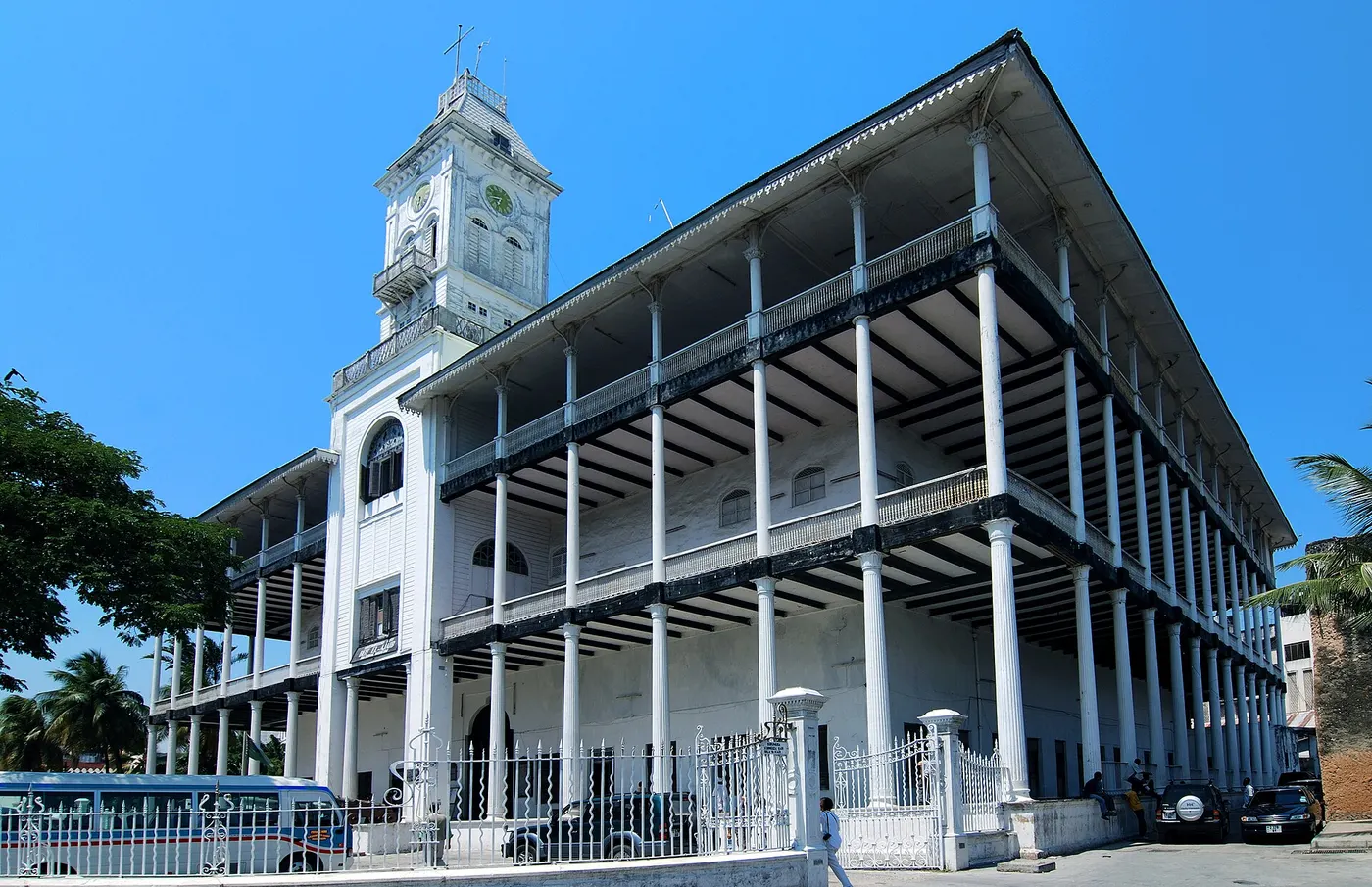
Barghash opens the Beit el-Ajaib, East Africa's first building with electric light and an elevator. The name comes from exactly that: the wonders were the engineering.
8/27/1896 · The 38-minute war
The British Navy bombards the palace to depose Sultan Khalid bin Barghash, installed without London's approval. The conflict lasts about 38 minutes and is recorded as the shortest documented war.

1963–1964 · Independence and revolution
On December 10, 1963, Zanzibar ceases to be a British protectorate, becoming a constitutional monarchy. On January 12, 1964, the revolution topples the sultanate, with widely varying death-toll estimates, and brings Abeid Amani Karume to power.
4/26/1964 · Union with Tanganyika
Zanzibar unites with Tanganyika, and the country takes the name Tanzania that October. The agreement preserves a separate president, parliament and laws for the islands, an arrangement still politically contested today.
2000 · Stone Town on the Unesco list and the tourism turn
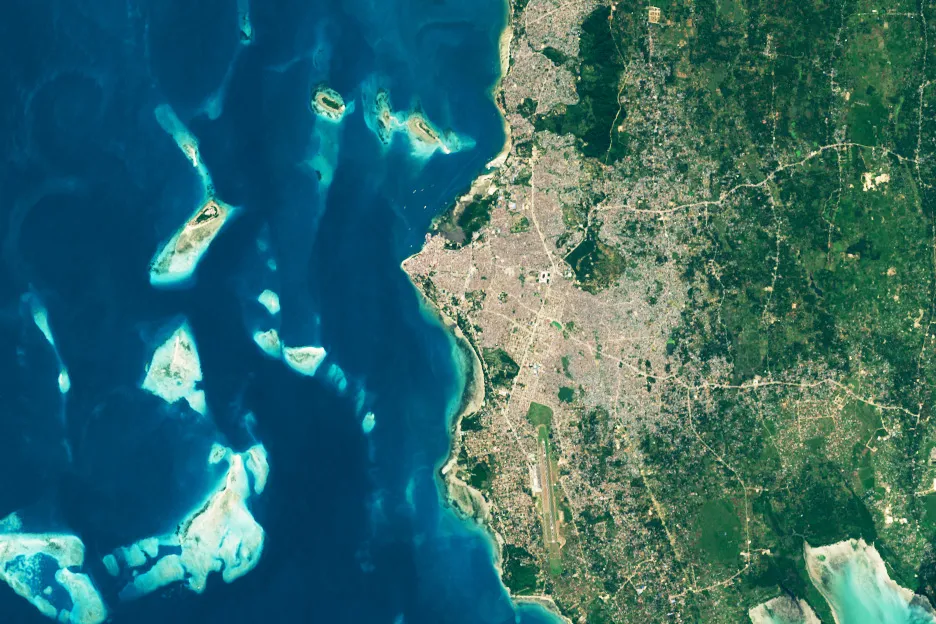
The listing of Mji Mkongwe as a World Heritage Site in 2000 speeds up restoration and the arrival of tourism, which becomes the leading sector of the economy. Annual visitor numbers rise from the hundreds of thousands to over 700,000 in the 2020s.
 AI illustration
Complete history
The kaskazi and kusi: the monsoons that brought the ships
Zanzibar grew thanks to the monsoons. The northeast one, the kaskazi, gave ships from the Persian Gulf and Gujarat their sailing window to the African coast, between December and March, and the southeast one, the kusi, gave them the window back, between June and September. That's why traders spent months on the coast, long enough to build houses, marry and learn the local language. The Unguja Ukuu site, occupied from the 6th to the 10th century, already held Sassanid pottery, Islamic glass and Indian beads. From that mingling of Bantu coastal peoples with Muslim merchants came Swahili culture: a Bantu language with Arabic vocabulary, coral-stone architecture and Sunni Islam. The 1107 Kufic inscription at the Kizimkazi mosque is the oldest document of that process on Unguja.
The 19th century shapes the city you visit
The 19th century is what shapes the city you visit. Portugal controlled the coast between 1503 and 1698 without leaving much beyond ruins, and it was Oman that made Zanzibar a capital. Around 1818 the first clove seedlings arrived; the island's west, with its deep soil, became plantation land, and in 1840 Sultan Seyyid Said moved his court from Muscat here. The economic model had three legs: clove, ivory from the continental interior, and enslaved labor. Caravans led by figures like Tippu Tip went as far as the Congo River and returned with ivory and people; the Mkunazini market was the largest in the western Indian Ocean. Gujarati and Ismaili merchants financed the caravans and built much of Stone Town's balconied houses. That same trade paid for the city's carved wooden doors.
Britain closed the slave market in 1873
British pressure dismantled the system in stages. In 1873 Sultan Barghash closed the public slave market, and the Anglican Cathedral was built on the site starting that same year. In 1890 the Anglo-German Heligoland Treaty turned Zanzibar into a British protectorate, and in 1896 London's refusal to accept Sultan Khalid produced the 38-minute bombardment that tore the tower off the House of Wonders. Slavery was only legally abolished in 1897. The protectorate consolidated a society stratified by origin: Omani Arabs at the top of land ownership, Indians in trade, mainland Africans and island Shirazis at the bottom, and that stratification is the key to understanding 1964.
Independence, revolution and union
Independence came on December 10, 1963, with the sultanate preserved. Thirty-three days later, on January 12, 1964, the revolution led by Afro-Shirazi Party militants toppled the monarchy in an uprising of a few hours followed by large-scale violence against the Arab and Indian communities; death-toll estimates range from two thousand to twenty thousand and remain disputed. Abeid Amani Karume took power, nationalized land and trade, and on April 26 signed the union with Tanganyika that created Tanzania. The following years were a period of closing off: the Michenzani housing blocks, built with East German design and funding between 1968 and 1975, are the physical mark of that phase. Karume was assassinated in 1972. The multiparty opening of 1992 brought repeatedly contested island elections, with serious episodes in 2001, and a national unity government from 2010.
After Unesco in 2000: restoration and tourism
The present was built on Stone Town's listing on the Unesco roll, in 2000. Restoration driven by institutions such as the Aga Khan Trust for Culture recovered the Old Dispensary and the Forodhani Gardens, and tourism became the islands' leading employer, with over 700,000 annual visitors in the 2020s. Success brought its own problems: pressure on the water table, speculation over coastal land, historic buildings collapsing from lack of upkeep, and the House of Wonders, which lost much of its facade during restoration work in December 2020 and was still under repair in 2026. At the same time, Zanzibar gained new cultural visibility: Abdulrazak Gurnah, born on the island in 1948, received the Nobel Prize in Literature in 2021 for a body of work that deals precisely with trade, migration and colonial memory on this coast.
The Persian Baths of Kidichi, from 1850, were built by Seyyid Said for his wife Binte Irich Mirza, with Persian stucco work set amid the clove plantation.
Stone Town's carved wooden doors were paid for by the trade in cloves, ivory, and enslaved people.
Geography and shape of the city
The coral island and its two halves
Unguja is a coral island of about 1,666 km², 85 km long on its north-south axis, separated from the mainland by the Zanzibar Channel, some 35 km wide and less than 50 m deep. It's continental shelf rather than an oceanic island, which explains why its land fauna resembles the mainland's. The highest point, the Masingini ridge, is about 120 m. There's a sharp divide between the west, with deep soil and accessible fresh water, home to the city and the clove plantations, and the east of coral rag, rocky and dry, where people fish and farm seaweed.
Stone Town, unplanned lanes and the baraza
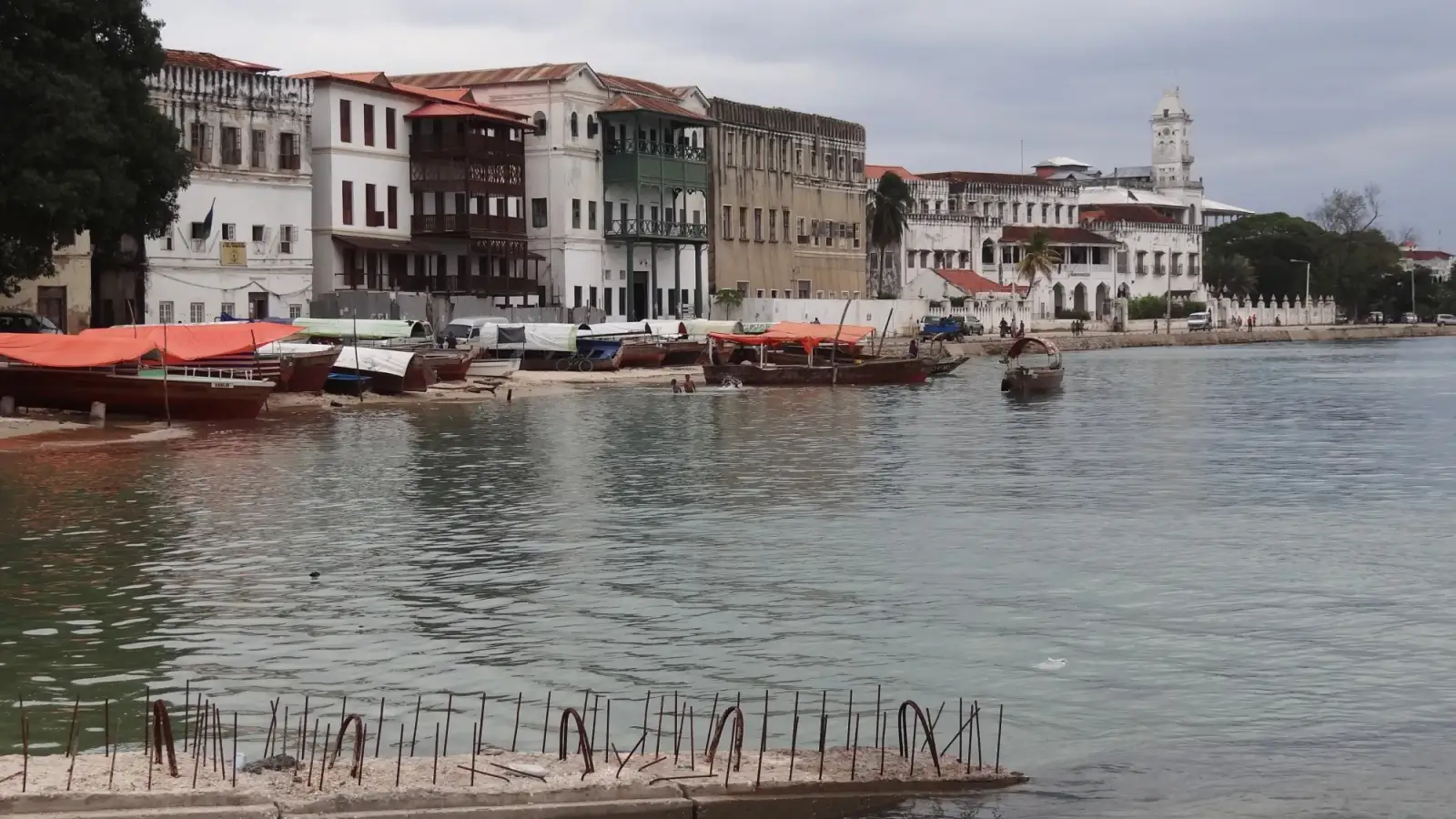
Stone Town occupies a triangular peninsula on the west coast, with a sheltered natural harbor; the arm of sea that once separated it from the Ng'ambo neighborhood was filled in during the 1950s and became Creek Road, where the Darajani market and the daladala terminals now sit. The street grid follows no plan: lanes 2 to 4 m wide run between two- to four-story houses, each with an inner courtyard and a masonry bench (baraza) against the facade, serving as a public living room.
The tide on the east and north coasts
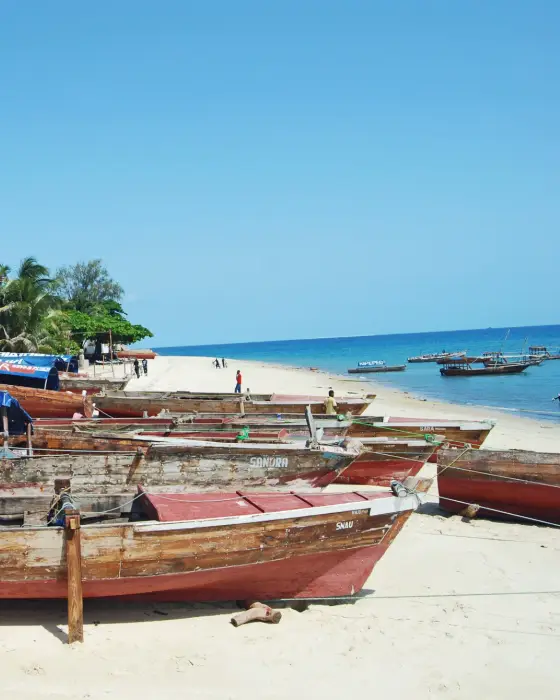
The tide is the most practical geographic factor for a newcomer, and it behaves differently depending on the shore: sharper on the east coast, exposed to the open ocean; steadier in the north, at Nungwi and Kendwa.
Culture
Taarab, Zanzibar's orchestra
The music that defines the island is taarab: an orchestra of violin, oud, accordion, qanun and percussion, backing poetry sung in Swahili, a format that arrived from Egypt in the late 19th century through Sultan Barghash's court. Siti binti Saad (c. 1880–1950) was the first East African artist to record (in Bombay, from 1928), and the first to sing taarab in Swahili rather than Arabic, which popularized the genre beyond the palace. The Ikhwani Safaa club, founded in 1905, and the Culture Musical Club, from 1958, keep that orchestra alive to this day. Bi Kidude, who died in 2013 at over ninety, brought the kidumbak and the unyago songs, a female initiation ritual, to the stage and became the international face of Zanzibari music.
Gurnah gave the island's literature world weight
Zanzibar's literature gained world weight with Abdulrazak Gurnah, born on the island in 1948, exiled to the United Kingdom after 1964 and Nobel Prize in Literature in 2021. Novels such as “Paradise” (1994) and “By the Sea” deal with caravan trade, German and British colonialism and exile, the same history the museums of Stone Town tell, seen from inside. Long before him, Princess Salme bint Said, daughter of Sultan Seyyid Said, eloped with a German merchant in 1866 and in 1886 published “Memoirs of an Arabian Princess,” likely the first autobiography by an Arab woman, with court life told by someone who grew up inside it.
Islam organizes daily life
Daily life is organized by Islam (the islands' population is Muslim in an estimated proportion above 95%) and by the sea's calendar. Women on the southeast coast have farmed seaweed (mwani) on stakes in the lagoon since the 1990s, an activity that accounts for a significant share of household income in the villages; in Nungwi, wooden dhows are still built without a drawn plan. Soccer has its own federation, affiliated with CAF, and the local team, the Zanzibar Heroes, competes in regional tournaments. Alcohol consumption is legal but restricted to licensed venues, and public nightlife is concentrated in Shangani, Kendwa and Paje.
Taarab rehearsals welcome listeners, and silence is usually the only thing asked of those who watch.
Festivals and events
 AI illustration
Sauti za Busara
February, at the Old Fort: East Africa's largest live-music festival since 2004, with several days of shows (four in 2026, from February 5 to 8) from across the continent and an opening parade that crosses Stone Town.

ZIFF: Zanzibar International Film Festival
In July, also at the Old Fort, created in 1998 as the Festival of the Dhow Countries. It screens African and Indian Ocean cinema on an open-air screen, with free village showings.

Mwaka Kogwa
Four days in late July in Makunduchi, in the south: the Persian new year (Nowruz) preserved by the Shirazis. Men ritually fight with banana-tree stalks to work off the year's grievances, and a straw hut is burned; the harvest is predicted from the direction of the smoke.
 AI illustration
Ramadan and Eid al-Fitr
Movable dates on the lunar calendar: in 2027 Ramadan should start around February 8. During the month, local restaurants close by day and the city only comes alive after sunset; Eid is the biggest holiday of the year, with three days of visits and food.
 AI illustration
Revolution Day and Union Day
January 12 marks the 1964 revolution with military parades at Amaan Stadium; April 26 celebrates the union with Tanganyika. On both, offices and banks close and traffic on Creek Road is diverted.
Books and films
“Paradise,” by Abdulrazak Gurnah (1994)
A novel by Abdulrazak Gurnah, born in Zanzibar in 1948 and the 2021 Nobel laureate in Literature: a boy is handed over as debt collateral and crosses East Africa in a trade caravan on the eve of the First World War. It tells from the inside the economy that built Stone Town.
“Memoirs of an Arabian Princess,” by Emily Ruete (1886)
Salme bint Said, daughter of Sultan Seyyid Said, eloped with a German merchant in 1866 and wrote in Hamburg what is likely the first autobiography by an Arab woman. She describes the inside of the palaces, the harem and the clove plantations in domestic detail.
“As Old as My Tongue” (2006), by Andy Jones
A documentary about Bi Kidude, taarab singer and mistress of the unyago rituals, who died in 2013. It serves as an introduction to the island's music and to women's role in Swahili culture, with footage of rehearsals at Stone Town's clubs.
Frequently asked questions
Zanzibar: Can you swim at any hour on the east coast?
No: on the east coast the sea pulls back hundreds of meters over the reef twice a day, and swimming depends on the tide's timing.
Zanzibar: How do you get to Prison Island (Changuu)?
Prison Island (Changuu) is 5 km off the coast, 25 to 30 minutes by boat from Forodhani.
Zanzibar: Which currency to bring, dollars or shillings?
The currency is the Tanzanian shilling (TZS), at about 2,600 to 2,700 per dollar in 2026, and you'll need both currencies at once: hotels, dives, tours, and park entries are usually quoted in dollars; food, daladala, and market shopping, in shillings.
Zanzibar: What's the climate like throughout the year?
The climate is equatorial and hot all year round, between 25°C and 33°C, with high humidity, but the seasons are defined by two monsoons.
Zanzibar: What are the safety risks for visitors?
Violent crime against visitors is rare in Zanzibar, and the real problem is opportunistic theft: a bag snatched in a poorly lit Stone Town lane after 10pm, a phone grabbed by a pair on a motorbike on Creek Road, a backpack left on the sand.