Mauritius
Mauritius
Lagoons, the mountain of the escaped enslaved, the depot of the Indian immigrants and the forests of the southwest
Days Start with the basic programme and choose extensions for the time you have.
How the guide reaches this number
The north and west are less than half an hour from Port Louis, but the southwest, with Le Morne and Chamarel, is more than an hour from the north, and that is why I'd split the stay between two bases. The first day goes to Port Louis, with the Aapravasi Ghat, the slavery museum and the Central Market, and ends in the north; the second to the Pamplemousses garden and the Cap Malheureux coast. On the third I'd head down to the southwest via Ganga Talao, the Gorges viewpoint and Chamarel, and sleep near Le Morne, to climb the mountain early on the fourth. The fifth follows the south coast to Mahébourg, with Île aux Aigrettes and Blue Bay, and leaves the last night near the airport. With a sixth day, I'd go to Île aux Cerfs, leaving from Trou d'Eau Douce. Mauritius is not for anyone who wants to see everything from a single resort: whoever stays on the same beach all week spends the mornings in the car or never leaves the hotel. And Grand Baie, which concentrates shops and bars, I'd use as a base and not as an outing.
5–6
When May and September to November: drier weather and mild temperatures, outside the cyclone peak, which is concentrated from January to March; the season runs from November to April, or to May according to the British government's warning, October is the driest month of the year, and December the one with the most visitors
How the guide reaches this number
In Mauritius, what decides the season is rain and cyclone risk, more than heat. Summer, from November to April, is hot and humid, with February and March the rainiest months, and cyclones concentrate between January and March, in a season that the British government extends from November to May. Winter, from June to September, is cooler and drier; May and October are transition months, and October is the driest of the year. At the Plaisance station, on the southeast coast, average highs run from 30.2 °C in January to 24.6 °C in July, and rainfall falls from 263 mm in February to 50 mm in October (1991 to 2020 normals). The plateau is always a few degrees cooler and much rainier, with August lows of 15.9 °C in Vacoas; the west is the driest and hottest side, and the east the windiest. By number of visitors, December was the busiest month of 2025, followed by October and November, with February and June the emptiest. That is why May and the period from September to November combine dry, mild weather with less cyclone risk. If you go from January to March, leave spare days, because during a cyclone no one can leave their lodging.
Per person/day Add up lodging per night, meals per person and the rental car or taxi for each day; between the north and the southwest it is an hour or more by road, and changing bases changes the total.
How the guide reaches this number
Per person per day: accommodation, meals, urban transport, visits and a small allowance for extras. Flights excluded; larger purchases vary. Editorial estimate, not a quote.
 What Nilo thinks
I'd stay five days, not counting the arrival day. The north and west are less than half an hour from Port Louis, but the southwest, with Le Morne and Chamarel, is more than an hour from the north, and that is why I'd split the stay between two bases. The first day goes to Port Louis, with the Aapravasi Ghat, the slavery museum and the Central Market, and ends in the north; the second to the Pamplemousses garden and the Cap Malheureux coast. On the third I'd head down to the southwest via Ganga Talao, the Gorges viewpoint and Chamarel, and sleep near Le Morne, to climb the mountain early on the fourth. The fifth follows the south coast to Mahébourg, with Île aux Aigrettes and Blue Bay, and leaves the last night near the airport. With a sixth day, I'd go to Île aux Cerfs, leaving from Trou d'Eau Douce. Mauritius is not for anyone who wants to see everything from a single resort: whoever stays on the same beach all week spends the mornings in the car or never leaves the hotel. And Grand Baie, which concentrates shops and bars, I'd use as a base and not as an outing.Mauritius is known for its reef lagoons, but it was also the first British test of indentured immigration, the system that replaced slavery on the sugar plantations after 1835 and was later copied in other colonies. On the quay of Port Louis, 14 stone steps mark where workers from India came in, whose descendants are now the majority of the population; in the southwest, the monolith of Le Morne is remembered as the refuge of the enslaved people who fled the plantations. In between lie a rainy plateau of craters, forests with birds found nowhere else and dunes of colored earth at Chamarel. Hindu, Muslim, Christian and Chinese festivals are national holidays: the Tamil Cavadee, Maha Shivaratri, which brings close to half a million pilgrims to Lake Ganga Talao, Eid al-Fitr, Christmas and Chinese New Year, and the Catholic pilgrimage to the tomb of Père Laval completes the calendar. The food follows the same mixture, from stall dholl puri to Creole rougaille and the mine frit of Chinatown.
Quick facts
- Population
- 1,194,974 residents on the island of Mauritius and 1,240,316 in the Republic of Mauritius, which includes Rodrigues and the outer islands (Statistics Mauritius estimate for July 1, 2026); Port Louis, the capital, had 140,403 residents in the 2022 census
- Founded
- First Dutch colony in 1638, abandoned in 1710; French occupation from 1715, with Port Louis as the administrative seat since 1736; British from 1810 to 1968
- Country and region
- Republic of Mauritius, southwest Indian Ocean, Mascarene archipelago; the main island measures about 65 km by 45 km
- Language
- Mauritian Creole (kreol morisien), the home language of 90% of residents; Bhojpuri and French follow (2022 census). English and French serve as official languages
- Currency
- Mauritian rupee (MUR, written Rs), with banknotes from Rs 25 to Rs 2,000
- Time zone
- UTC+4
- Best time to visit
- May and September to November: drier weather and mild temperatures, outside the cyclone peak, which is concentrated from January to March; the season runs from November to April, or to May according to the British government's warning, October is the driest month of the year, and December the one with the most visitors
- Average daily cost
- Add up lodging per night, meals per person and the rental car or taxi for each day; between the north and the southwest it is an hour or more by road, and changing bases changes the total.
When to go
May and September to November: drier weather and mild temperatures, outside the cyclone peak, which is concentrated from January to March; the season runs from November to April, or to May according to the British government's warning, October is the driest month of the year, and December the one with the most visitors
How the year changes
In Mauritius, what decides the season is rain and cyclone risk, more than heat. Summer, from November to April, is hot and humid, with February and March the rainiest months, and cyclones concentrate between January and March, in a season that the British government extends from November to May. Winter, from June to September, is cooler and drier; May and October are transition months, and October is the driest of the year. At the Plaisance station, on the southeast coast, average highs run from 30.2 °C in January to 24.6 °C in July, and rainfall falls from 263 mm in February to 50 mm in October (1991 to 2020 normals). The plateau is always a few degrees cooler and much rainier, with August lows of 15.9 °C in Vacoas; the west is the driest and hottest side, and the east the windiest. By number of visitors, December was the busiest month of 2025, followed by October and November, with February and June the emptiest. That is why May and the period from September to November combine dry, mild weather with less cyclone risk. If you go from January to March, leave spare days, because during a cyclone no one can leave their lodging.
Nilo's tips
Split your stay between two bases
The island looks small, but from Grand Baie to Chamarel it is about 76 km and more than an hour without traffic. One base in the north or west and another in the southwest or southeast cut road time in half; a last night in Mahébourg leaves the airport a few minutes away.
Port Louis in the morning, on a weekday
The Aapravasi Ghat interpretation center closes on Sundays and holidays and at 12 p.m. on Saturdays, and the Blue Penny Museum does not open on Sundays. Do the capital Monday to Friday, starting at 9 a.m., and leave before the late-afternoon rush.
The stamps at quarter past
At the Blue Penny Museum, the Post Office stamps are visible for only 10 minutes, starting at quarter past each hour of opening. See the rest of the museum first and be in the stamp room at that minute.
Chamarel with local cash or a card
The geopark accepts only rupees in cash, cards (except Diners) or local mobile payment, and does not split payments. It is Rs 800 per nonresident adult, and the last ticket sale is at 5 p.m. from October to May.
Île aux Aigrettes only with the foundation
The islet can only be visited on the Mauritian Wildlife Foundation's guided tour, boat included, 1.5 to 2 hours. Book on the foundation's website before the southeast day and fit Blue Bay in afterward.
From January to March, follow the weather service
Cyclone warnings run from class I, 36 to 48 hours before gusts of 120 km/h, to class IV, when they have already arrived. At class III, finish preparations and do not go out; at IV, stay indoors until the all-clear. Rental car insurance usually stops applying during a cyclone.
Explore the map
Explore the map, read about the other places and plan your travel days in the app.
Open the appWhat to see
Mauritius: Volcano, plateau and reef
All around, a coral reef encloses shallow lagoons of calm water, and in Tamarin Bay, in the west, are the island's best-known surf waves. Pamplemousses, with the botanical garden, is 15 minutes inland.

Aapravasi Ghat
The immigration depot built in 1849 on the quay of Port Louis, through which about half a million indentured workers from India passed until 1923. What remains are the 14 stone steps of the quay, the 1865 gateway and parts of the hospital and the sheds; it has been a World Heritage site since 2006. The Beekrumsing Ramlallah interpretation center, opened in 2014, explains the system with free admission, Monday to Friday from 9 a.m. to 4 p.m. and Saturdays from 9 a.m. to 12 p.m. The visit takes about an hour.
The 14 stone steps and the 1865 gateway are what remains of the depot through which about half a million workers from India passed, ancestors of most islanders. The free interpretation center explains the system in an hour.
Check access

Le Morne Brabant
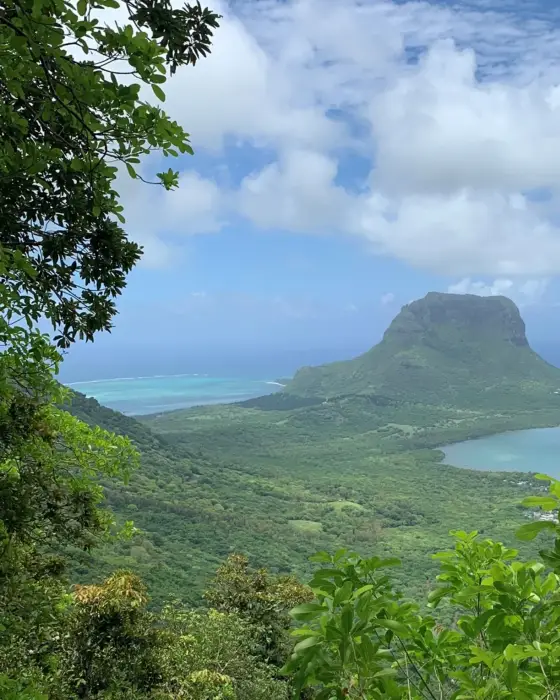
A 556 m basalt monolith at the southwest tip of the island, ringed by lagoon. Oral tradition says that escaped enslaved people sheltered at the top threw themselves off the cliff when a police expedition arrived, in 1835, to tell them they were free; the story is treated as legend, and University of Mauritius research in 2003 did not confirm it. The cultural landscape has been a World Heritage site since 2008. The trail to the summit is about 3.5 km, can be done with or without a guide, and Wikivoyage estimates 3 to 4 hours, without saying whether the figure includes the descent: set aside the whole morning. The final stretch is steep and rocky, and it is not safe in the rain.
The 556 m monolith is a World Heritage site as a refuge for escaped enslaved people, and the roughly 3.5 km trail to the summit offers views of the southwest lagoon. It calls for the whole morning, an early start and a dry day.
Check access
Black River Gorges National Park
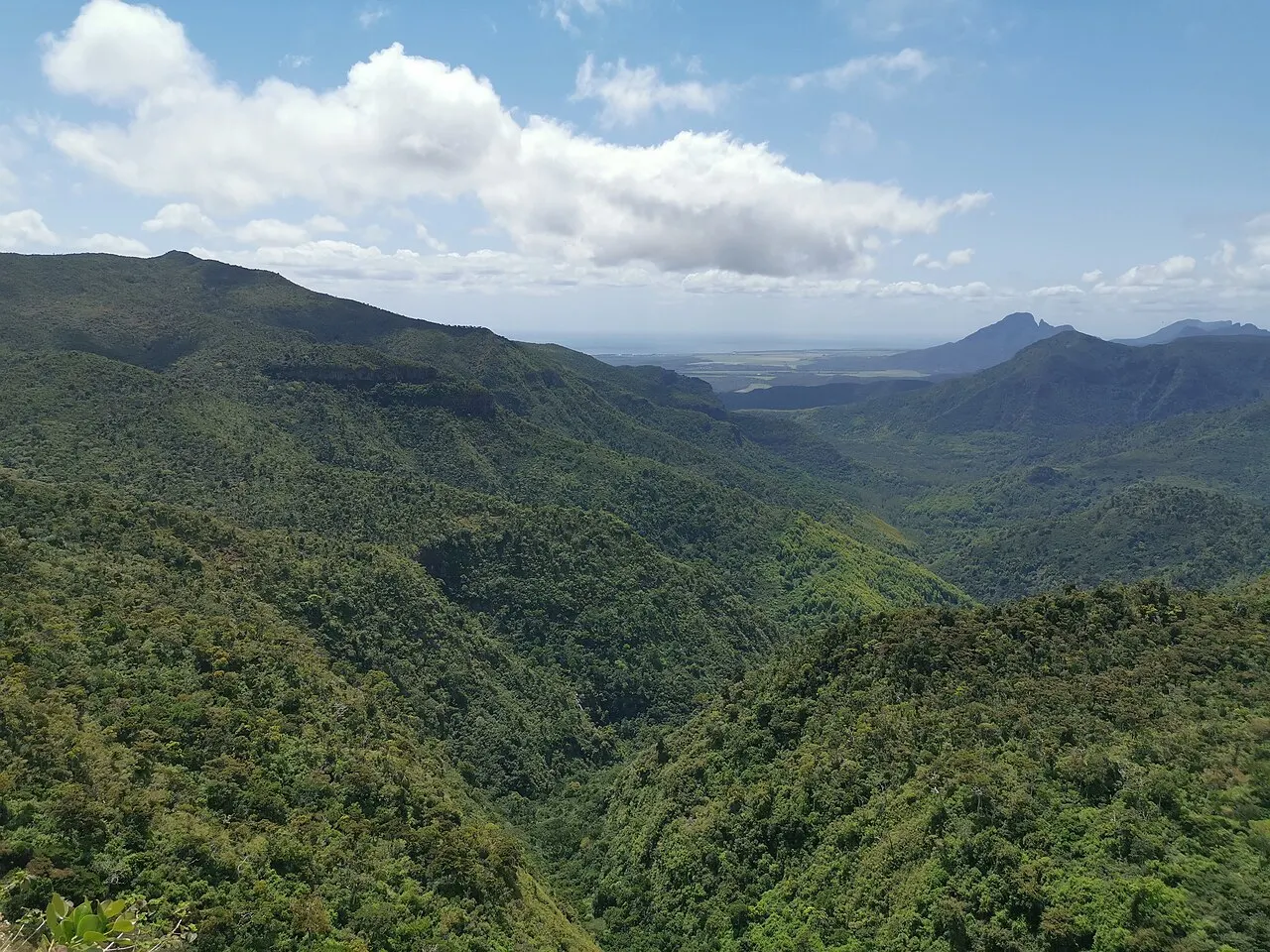
The island's largest national park, created in 1994, with 67.54 km² of high-altitude rainforest, dry forest and heath, and about 60 km of trails. It holds most of the native forest that remains and the endemic birds, such as the pink pigeon and the Mauritius kestrel. From the Plaine Champagne road you reach the Gorges viewpoint and Alexandra Falls; the island's highest point, Piton de la Petite Rivière Noire, 828 m, is in the same mountain region.
It holds most of the remaining native forest and endemic birds such as the pink pigeon, across 67.54 km² with about 60 km of trails. The Gorges viewpoint and Alexandra Falls are on the road, minutes from Chamarel.
Check access

Intercontinental Slavery Museum
Museum of slavery and indenture, opened on September 4, 2023 in the former military hospital of 1736–1740, the oldest building on the island, built by enslaved people from Mozambique, Madagascar and West Africa and by Indian craftsmen from Pondicherry and Karikal. Among the pieces are everyday objects used by enslaved people and the 63 plaster busts modeled by Eugène de Froberville in 1846, on loan from the château de Blois. Opening hours are not published on the official website; call ahead (214 3608).
Opened in 2023 in the military hospital of 1736–1740, built by enslaved Africans and Malagasy people and by Indian craftsmen, it complements Aapravasi Ghat with the history of slavery. It is on the same street as the quay; confirm opening hours by phone.
Check access
Central Market
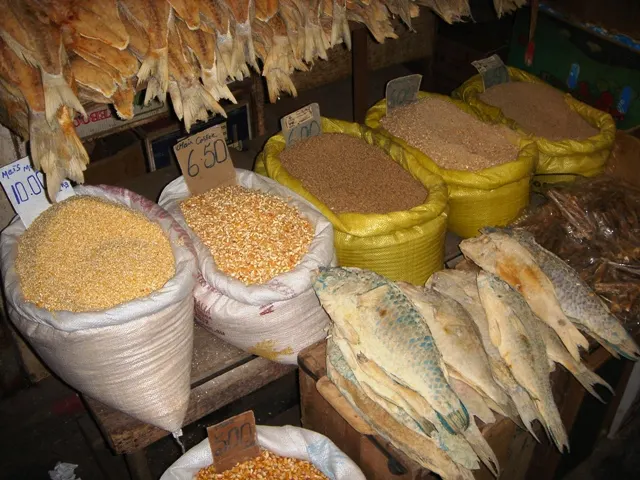
Port Louis's covered market, between Rue Farquhar and Rue William Newton, sells fruit, vegetables, spices, herbs and snacks such as dholl puri and gato pima. It is the cheapest place in the capital to eat standing up and where you find shoppers from all over the island. Very crowded, it calls for care with bags and phones.
This is where you find the capital’s cheapest dholl puri and gato pima, among fruit and spice stalls. Crowded and cramped, it calls for care with your bag.
Check access
Sir Seewoosagur Ramgoolam Botanical Garden
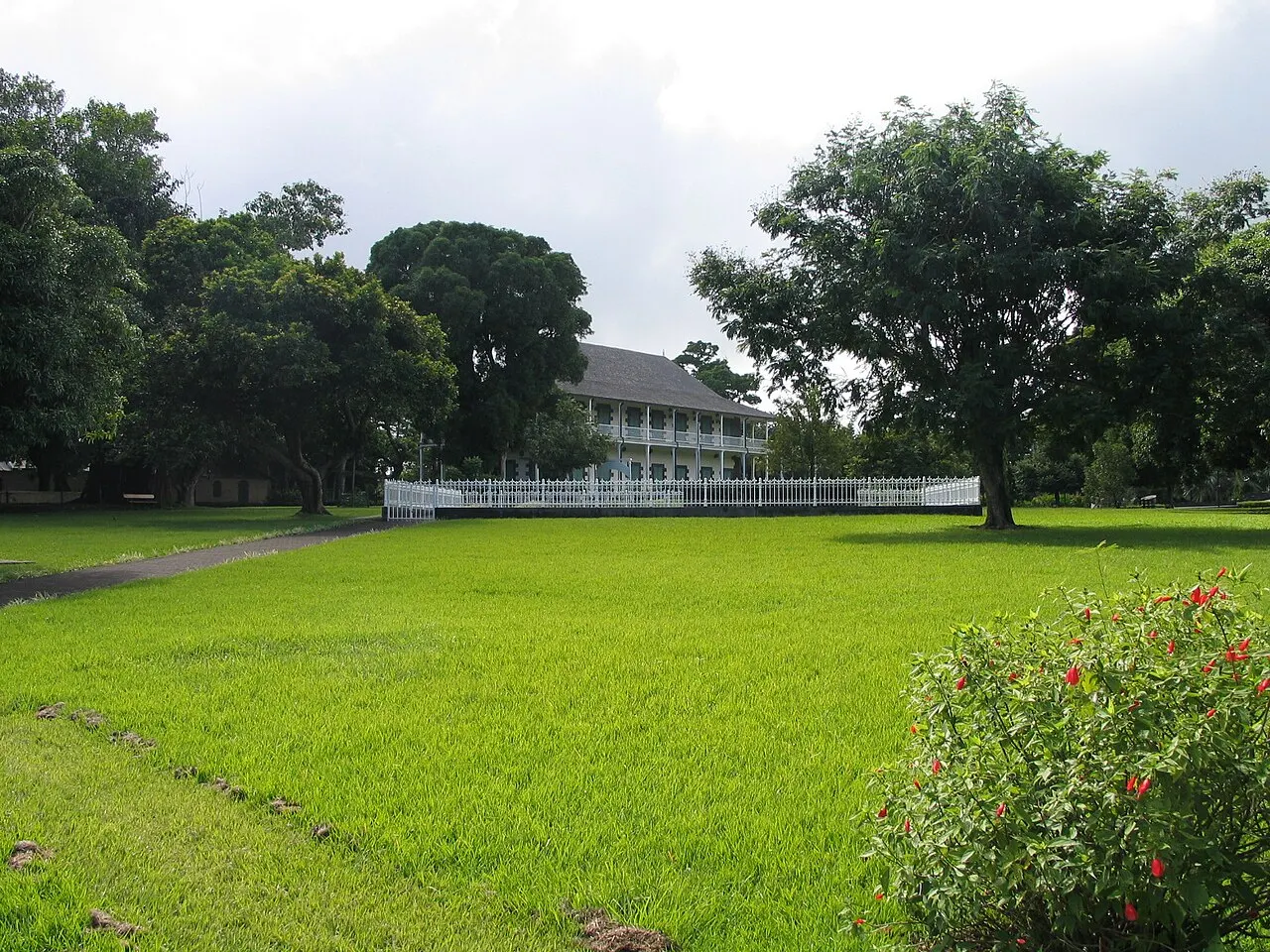
The botanical garden at Pamplemousses, about 12 km from Port Louis, traces back to the estate of Mahé de La Bourdonnais, from 1735, and took its present design under Pierre Poivre from 1770. The pond of giant water lilies (Victoria amazonica), the palms and the iron gate of 1868 are the highlights. Open every day from 8:30 a.m. to 5:30 p.m.; noncitizens pay Rs 300, and accredited guides charge Rs 50 to Rs 100 per person, depending on group size (checked in October 2026).
Pierre Poivre’s garden of 1770 has the giant water lily pond and palms, 12 km from Port Louis. An accredited guide costs Rs 50 to Rs 100 per person and gives the visit meaning.
Check access
Seven Coloured Earths of Chamarel
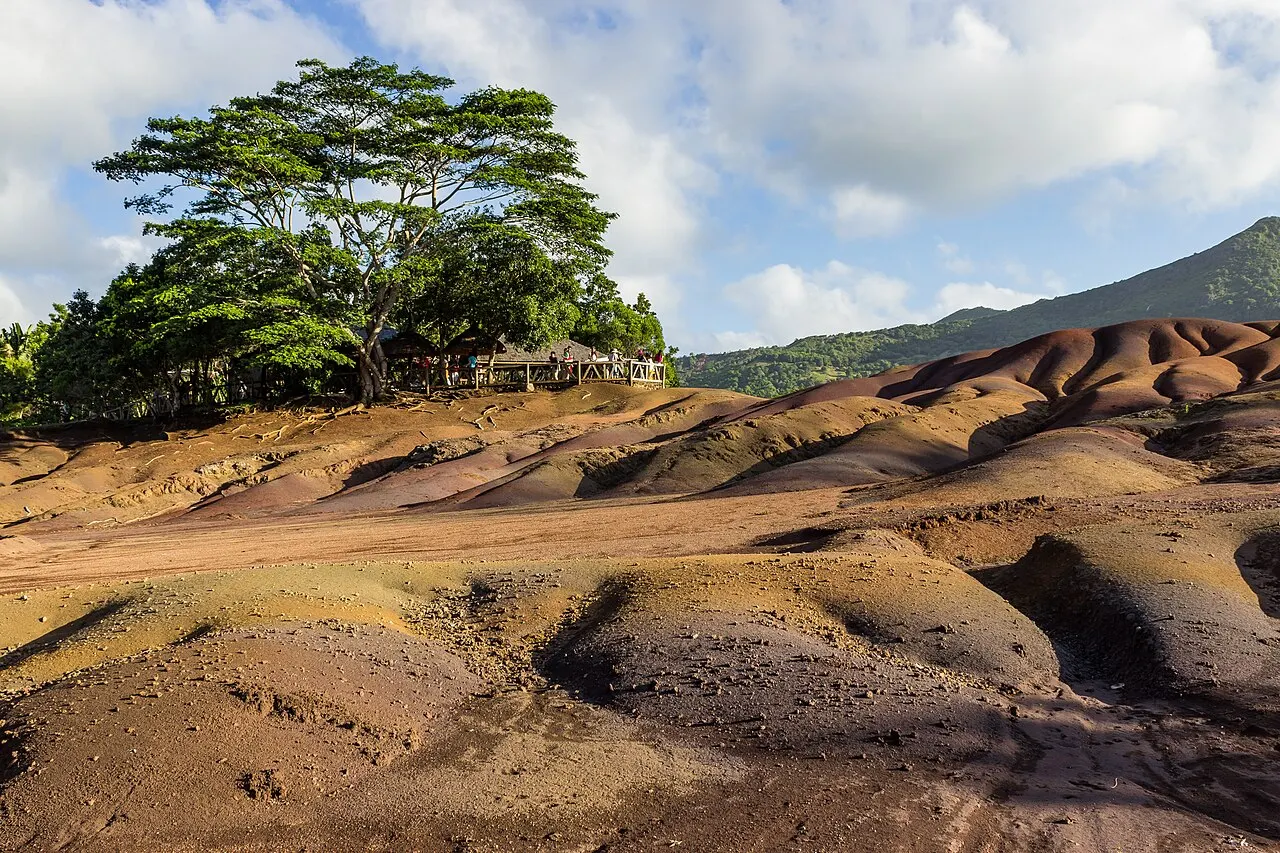
Volcanic clay dunes, bare of vegetation, in bands of red, brown, violet and yellow, high in the southwest. The geopark ticket includes the two viewpoints of the Chamarel waterfall, the island's tallest, at about 100 m, and a park of Aldabra giant tortoises. Nonresidents pay Rs 800 per adult, in rupees or by card only; it opens from 8:30 a.m. to 5:30 p.m. from October to May and until 5 p.m. from June to September (checked in October 2026). The dunes are 3 km from the entrance, and the visit takes from 45 minutes to 2 hours.
The colored clay dunes and the waterfall of about 100 m are included in the same Rs 800 ticket, on the route between the Gorges and Le Morne. The visit takes 45 minutes to 2 hours and does not replace the national park’s forest next door.
Check access
Ganga Talao
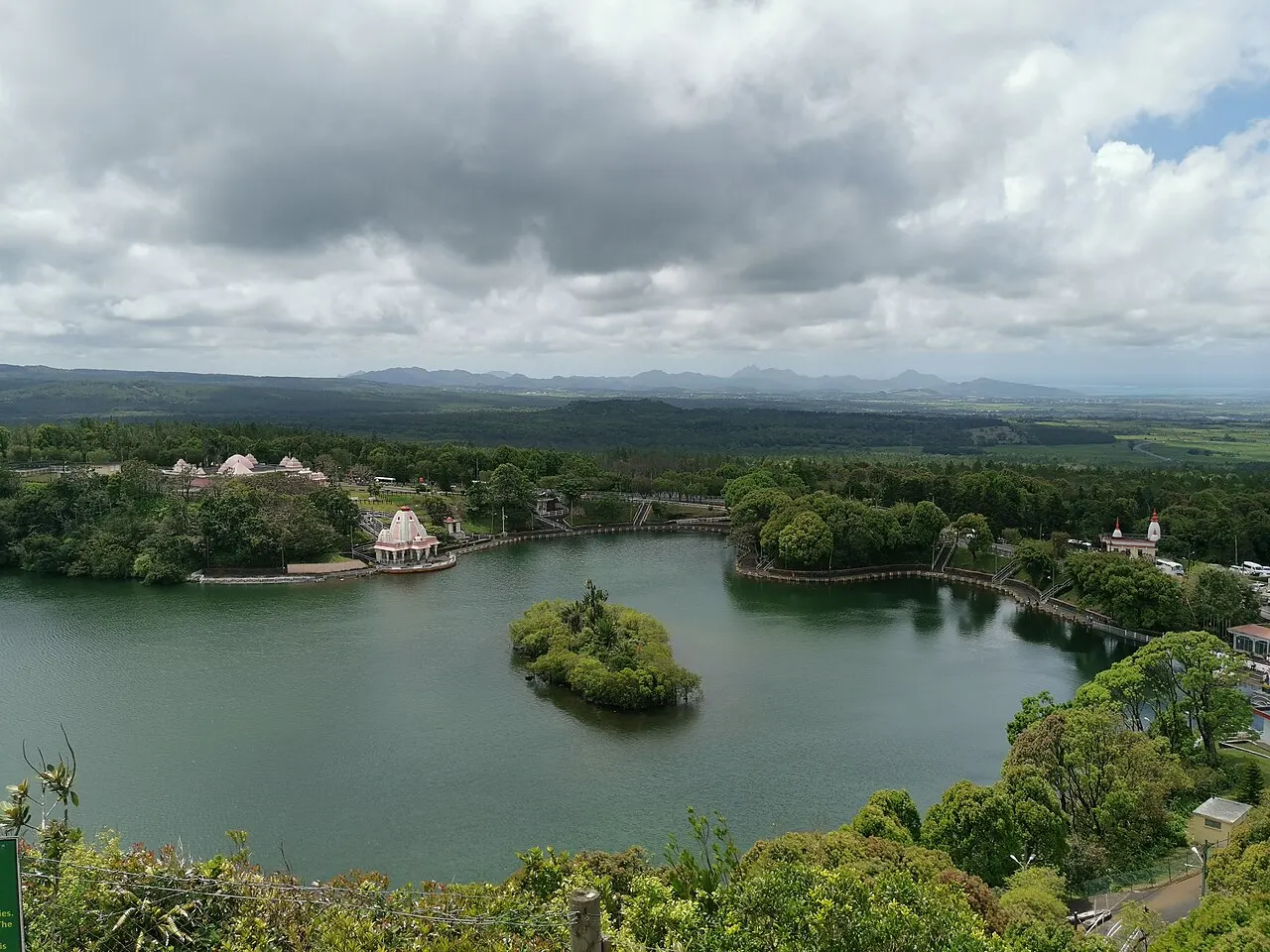
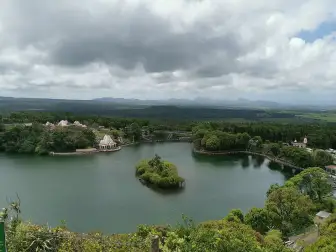
A crater lake at about 550 m, in the south of the plateau, also called Grand Bassin, sacred to Mauritian Hindus since the first recorded pilgrimage, in 1898. At Maha Shivaratri close to half a million people go there, many on foot from home. At the entrance stand the statues of Shiva (Mangal Mahadev) and Durga, 33 m each; the Shiva statue dates from 2007.
The crater lake is the center of Maha Shivaratri, which draws close to half a million pilgrims, and is on the route from the south to the Gorges. The 33 m statues of Shiva and Durga mark the arrival.
Check access
Île aux Aigrettes
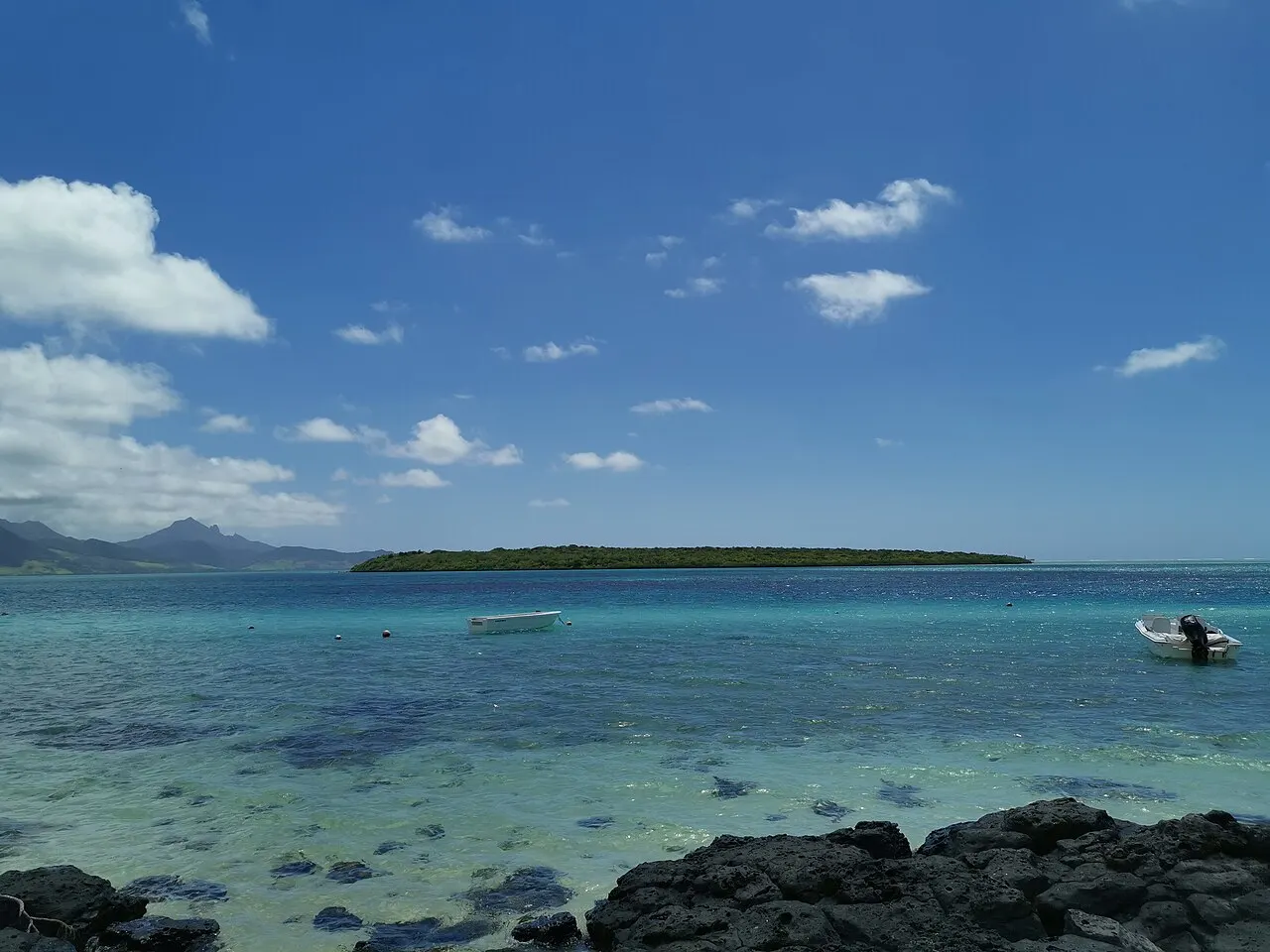
A 26 ha islet of coral limestone in Mahébourg bay, about 850 m from the coast, a nature reserve since 1965. The Mauritian Wildlife Foundation restored the island's last dry coastal forest there and reintroduced species such as the pink pigeon, Telfair's skink and Aldabra giant tortoises. It can only be visited on a guided tour by the foundation, 1.5 to 2 hours, with a short boat crossing, booked on its website.
It is the only place to see the island’s original dry coastal forest, restored by the Mauritian Wildlife Foundation, with pink pigeons and Aldabra tortoises. Visits are only on the foundation’s guided tour, boat included, lasting 1.5 to 2 hours.
Check access
Nilo’s itinerary
Start with the basic programme and choose extensions for the time you have.
Plan my days in the app ↗Day 1 · Port Louis: the port, the market and the immigrant depot
Start at 9 a.m. at the Aapravasi Ghat, on the quay: the interpretation center opens Monday to Friday from 9 a.m. to 4 p.m. and Saturdays until 12 p.m., and the visit takes about an hour.
Cross the street to the old military hospital, home of the Intercontinental Slavery Museum, after confirming the hours by phone (214 3608).
Have a dholl puri or a gato pima for lunch at the Central Market, bought from the stalls.
Continue on foot through Chinatown to the Jummah Mosque, from 1853, and return via the Place d'Armes.
In mid-afternoon, go into the Blue Penny Museum, at the Caudan Waterfront, and time the stamp room for a quarter past the hour, when they are lit for 10 minutes.
Leave the Caudan by 4 p.m., when the Blue Penny closes and before the late-afternoon rush, and continue by car or bus to the north (Grand Baie is about 25 km away). Sleep there.
Day 2 · The Pamplemousses garden and the north coast
Leave Grand Baie at 8:30 a.m. for the Pamplemousses botanical garden, about 14 km away, which opens at 8:30 a.m. Hire an accredited guide at the gate.
Set aside two hours for the water lily pond, the palms and the iron gate of 1868.
Return to the north and have lunch in Grand Baie.
In the afternoon, go to Cap Malheureux, 6 km away, to see the red-roofed church Notre-Dame Auxiliatrice with Coin de Mire in the background, and finish with a lagoon swim at Pereybère.
Sleep in the north again.
Day 3 · Plateau, Grand Bassin, Gorges and Chamarel
Leave the north early for the south; skirt Port Louis before the rush or expect traffic.
Stop at Ganga Talao (Grand Bassin) to see the crater lake and the 33 m statues.
Continue along the Plaine Champagne road to Alexandra Falls and the Gorges viewpoint, in Black River Gorges National Park, about 12 minutes by car from the lake.
Descend to Chamarel, about 11 minutes from the viewpoint, and reach the Seven Coloured Earths by 4 p.m.: the last ticket sale is at 5 p.m. from October to May, and from June to September the park closes at 5 p.m.
Sleep in the southwest, near the Le Morne peninsula, about 20 minutes by car from Chamarel.
Day 4 · Le Morne in the morning, lagoon in the afternoon
Start the Le Morne trail early, on a dry day: it is about 3.5 km to the top, and Wikivoyage's estimate of 3 to 4 hours does not say whether it includes the descent, so set aside the whole morning. The final stretch is steep and rocky.
Bring water, a hat and shoes with good grip; turn back if it rains.
Have lunch on the peninsula and spend the afternoon at the Le Morne lagoon.
At the end of the day, go to the Slave Route monument, at the foot of the mountain, with the inscription of the poem Le Morne Territoire Marron, by Richard Sedley Assonne.
Sleep in the southwest again.
Day 5 · The south coast to Mahébourg and Blue Bay
Head east along the south coast road, stopping at the Maconde viewpoint, near Baie du Cap, and at Gris Gris beach, in Souillac, about 35 minutes by car from Le Morne.
Continue to Mahébourg and save the afternoon for the guided visit to Île aux Aigrettes, run only by the Mauritian Wildlife Foundation, 1.5 to 2 hours.
Finish with snorkeling or a swim in the Blue Bay lagoon, 6 minutes from Mahébourg.
Sleep in Mahébourg or Blue Bay, a few minutes from the airport.




If you stay longer
Day 6 · Île aux Cerfs and the east coast
Day trip
The islet lies opposite Trou d'Eau Douce, on the east coast, about 43 km and 50 minutes by car from Port Louis, or 40 km from Grand Baie, without traffic. You get there only by boat: the Trou d'Eau Douce ferry or tour speedboats and catamarans. The lagoon around it is so shallow that you can walk more than 100 m in the water; on weekends it fills up.
Food
Dholl puri
A thin flatbread stuffed with ground yellow split peas, served with bean curry and tomato sauce. It is the island's most common street snack, sold at stalls and carts, and came from Indo-Mauritian cooking.
Gato pima
A fried split-pea fritter with chili, the local version of the Indian vada, sold as a street snack alongside samosas and eggplant fritters (gato brinzel).
Rougaille
A tomato sauce cooked with onion, garlic, chili, ginger and thyme, served with fish, meat or vegetables, or on its own as a side (rougaille touni). It belongs to both Creole and Franco-Mauritian cooking.
Vindaye
Fried fish or octopus coated in a mix of whole mustard seed, turmeric, ginger, vinegar and chili. A Creole dish derived from the Indian vindaloo.
Briani
The Mauritian biryani, rice cooked with spices and meat, one of the dishes common across the island. In Port Louis some restaurants make halal briani the specialty of the house.
Mine frit and bol renversé
Sino-Mauritian dishes: mine frit is fried noodles with vegetables and meat; bol renversé is rice topped with vegetables, meat or shrimp and a fried egg, served turned out onto a deep plate. Chinatown, in Port Louis, has the highest concentration of Chinese restaurants.
Alouda
A cold milk drink with basil seeds and colored agar cubes, flavored with vanilla or almond. It is sold at market stalls and kiosks.
Rum and coffee from Chamarel
The island has sugarcane rum distilleries, among them the Rhumerie de Chamarel, from 2008, with a museum and tasting. Coffee is also grown in Chamarel, and is served at the Seven Coloured Earths geopark.
Where to eat
- Port Louis, Central Market · $
Dholl puri, gato pima, samosas and alouda at the stalls, the cheapest food in the capital.
- Port Louis, Chinatown · $$
Sino-Mauritian and Cantonese cooking at lunch; many places close at night.
- Caudan Waterfront · $$
Food court and restaurants with harbor views, serving local, Indian and international food.
- Chamarel · $$$
Rum from the Rhumerie de Chamarel with tasting and an on-site restaurant, and coffee grown in the region.
- Flic en Flac and Grand Baie · $$
Restaurants serving Mauritian, Chinese and Indian food on the coastal road, with rougaille, vindaye and curry.
$: street-stall snack or market meal · $$: main course at a neighborhood or mall restaurant · $$$: hotel or distillery restaurant, with a reservation · 2026-10-16
Day trips
Île aux Cerfs and the east coast
The islet lies opposite Trou d'Eau Douce, on the east coast, about 43 km and 50 minutes by car from Port Louis, or 40 km from Grand Baie, without traffic. You get there only by boat: the Trou d'Eau Douce ferry or tour speedboats and catamarans. The lagoon around it is so shallow that you can walk more than 100 m in the water; on weekends it fills up.
Curepipe, Trou aux Cerfs and Eureka
Curepipe is the end of the Metro Express line out of Port Louis. There, the Trou aux Cerfs crater is 605 m above sea level and about 80 m deep, and you reach it by car or on foot. Eureka, the Creole house of 1830 with 109 doors and windows, now a museum, is in Moka, which has no station: go by taxi or bus from Port Louis. Combining the two takes a day, not half.
Le Pouce
The thumb-shaped peak, 812 m, in the Moka range, rises above Port Louis and is reached by trail. The view takes in the capital and the plateau; go in dry weather and leave early.
Where to begin
Port Louis: the port, the market and the immigrant depot
Start at 9 a.m. at the Aapravasi Ghat, on the quay: the interpretation center opens Monday to Friday from 9 a.m. to 4 p.m. and Saturdays until 12 p.m., and the visit takes about an hour.
The Pamplemousses garden and the north coast
Leave Grand Baie at 8:30 a.m. for the Pamplemousses botanical garden, about 14 km away, which opens at 8:30 a.m. Hire an accredited guide at the gate.
Plateau, Grand Bassin, Gorges and Chamarel
Leave the north early for the south; skirt Port Louis before the rush or expect traffic.
The south coast to Mahébourg and Blue Bay
Head east along the south coast road, stopping at the Maconde viewpoint, near Baie du Cap, and at Gris Gris beach, in Souillac, about 35 minutes by car from Le Morne.
Money

The currency is the Mauritian rupee (MUR, written Rs), in banknotes from Rs 25 to Rs 2,000 and coins from Rs 1 to Rs 20. At the paid sites on the itinerary, the prices checked in October 2026 are these: Rs 800 per nonresident adult at the Seven Coloured Earths of Chamarel, which accept only rupees in cash or by card, never foreign currency; Rs 300 at the Pamplemousses botanical garden, plus Rs 50 to Rs 100 per person for the accredited guide, paid to the guide at the end; and Rs 325 at the Blue Penny Museum. The Aapravasi Ghat is free. Buses and the market ask for exact change, and at the airport car park the exit for a rental car is paid in cash. At markets and craft fairs the possible discount is around 10% to 20%; in shops the price barely changes, and long haggling is not the custom. For the day's exchange rate, check with a bank or a currency exchange office, because the rupee's rate varies.
Getting there and around

From the airport, in the southeast of the island
Sir Seewoosagur Ramgoolam International Airport (MRU) is in Plaine Magnien, in the southeast, 4 km from Mahébourg and about 48 km from Port Louis; booking apps sometimes place it in the capital, which is not true. ATMs and currency exchange offices are past the baggage carousel. There are three ways out: international rental companies have a counter at the airport; a taxi can be arranged with the hotel before you arrive, or through the Yugo app, which books at a fixed price (there is no Uber on the island); and many hotels sell the transfer. By OpenStreetMap's route calculation it is about 40 minutes to Port Louis and 56 minutes to Grand Baie (72 km), without traffic; rush hour near the capital adds a lot to that time. On the night of arrival, those who land by mid-afternoon continue to the northern base or to Port Louis; those who land at night can sleep in Mahébourg or Blue Bay, a few minutes away, and start Port Louis the next morning, about 45 minutes by car. Before boarding for Mauritius, fill out the online Mauritius All in One form and bring the QR code printed, along with proof of onward ticket. The arrivals hall is packed in the morning, when the flights from Europe land.
Buses and Metro Express
Buses are the cheapest transport and cover almost the whole island: in Port Louis, those to the north and east leave from Immigration Square and those to the south and west from Victoria Square. You pay the conductor, preferably with exact change, and some drivers skip empty stops. According to the tourism authority, city buses run from 5:30 a.m. to 8 p.m. and rural ones from 6:30 a.m. to 6:30 p.m., with a late service between Port Louis and Curepipe until 11 p.m.; the air-conditioned express buses are faster and less frequent. The Metro Express, the light rail, links Port Louis to Curepipe via Rose Hill, Quatre Bornes and Vacoas, with a branch to the university at Réduit. A single ticket or the MECard are bought at station machines, in cash or by card, and you must validate on entering and leaving; the official site gives operating hours as 6 a.m. to 7 p.m.
Car, taxi and hired tour
Traffic keeps to the left, with a limit of 110 km/h on the motorway and 50 km/h in urban areas. Cars from a licensed rental company have yellow plates; a foreign license must be in English or French, or accompanied by an international permit, and rental companies usually require a minimum age and years of driving. Bring yellow chalk in the car, because the local rule is to mark the position of the vehicle on the asphalt after an accident, and do not drink before driving: the limit is very low. Taxis have no meter, so agree on the fare beforehand; taxis and drivers also sell full-day tours of the island. In the southwest and south, where there are fewer buses, a car or hired driver saves hours.
Safety

Mauritius has little violence against visitors, and the most common risk is theft: bags left on the beach, break-ins at vacation rentals and robbery in tourist areas such as Port Louis, Grand Baie and Flic en Flac. Do not walk alone at night on a beach or on a poorly lit street, especially on the back streets of the Port Louis business district, and leave your passport in the safe. The climb to Fort Adelaide has a reputation as not very safe for those who go alone. There are reports of sexual assault against tourists. In the sea, swim inside the lagoons that the reef protects. Where the reef is missing, as at Gris Gris, near Souillac, big waves hit the cliff directly: that is a viewpoint, not a swimming beach. On a boat trip, wear the life jacket, obey the skipper and do not sit at the bow of speedboats; the boat must have a license from the Ministry of Tourism and a radio link with the coast guard. Wear reef shoes because of sea urchins; a stonefish sting is rare but can be fatal and needs urgent care, and many hotels keep the antivenom. Lionfish and jellyfish also sting. Reef fish can carry ciguatera, a toxin, and avoiding the viscera and gonads of the fish reduces the risk. Dengue and chikungunya circulate: use repellent during the day. Before travelling, consult a travel health service to assess which vaccines are indicated for your profile and destination. In traffic, accidents are frequent, motorcycles often ride without headlights and there are pedestrians and cyclists even on the motorway. During cyclone season, follow the weather service bulletins: at class III the advice is to finish preparations and avoid going out, and at class IV, with gusts of 120 km/h, you stay indoors until the all-clear. Emergencies: 999 or 112 for the police, 114 for the ambulance (SAMU), 115 or 995 for the fire service. The tourist police can be reached at 213 1740 and 210 3894.
Etiquette tips
Do not buy from beach or street vendors
The British government recommends not doing business with beach and street vendors, and renting only lodging registered with the Mauritius Tourism Authority. A boat trip must have a license from the Ministry of Tourism, life jackets for everyone and a radio link with the coast guard.
Rolling papers are banned
Carrying or importing cigarette rolling paper is illegal in Mauritius, and penalties for any drug, including cannabis, are heavy, with detention before trial. Pack your own bag and do not carry anyone else's package.
Respect the park rules
At the Chamarel geopark, picnicking, bringing pets and picking plants are forbidden, and drones need authorization. At the Blue Penny Museum you may not photograph the stamp room.
Agree on the price first
Taxis have no meter, and the fare is settled before you get in. At the market the discount is small, 10% to 20% at most, and in shops the price is fixed.
Conservative society
Same-sex relations were decriminalized in October 2023, but society is conservative and attitudes vary across the island. Discretion with public displays of affection avoids trouble.
Mistakes to avoid
Thinking you can cross the island quickly
Mauritius measures about 65 km by 45 km, but the road goes through towns, curves and traffic: from Grand Baie to Chamarel it is about 76 km and more than an hour without traffic. Staying the whole week at one base and visiting the rest on day trips means spending a good part of the trip in the car.
Seeing Port Louis only through the Caudan
Many people pass through the capital only for the Caudan Waterfront mall. The Aapravasi Ghat, the Central Market, the slavery museum and Chinatown are a few blocks away and explain the island better than any beach.
Climbing Le Morne late or in the rain
The trail takes 3 to 4 hours, and the final stretch is steep and rocky. Starting in the midday heat or after rain makes the path dangerous; leave early, on a dry day.
Forgetting the entry form
The Mauritius All in One is filled out online before arriving, and the QR code is checked at the airport. Without it, immigration takes longer.
Scheduling everything for January to March with no slack
That is when cyclones usually pass, and at class IV no one leaves home. An itinerary with no spare day loses what was booked.
Useful phrases
Bonzour
Good morning, hello: the standard greeting in Mauritian Creole
Ki manier?
How are you? The reply is “Mo bien, mersi,” I'm fine, thank you
Mersi boukou
Thank you very much
Komie?
How much? Works for price and quantity
Sa bis-la kot ale?
Where does this bus go?
Kot twalet?
Where is the restroom?
Pa grav
No problem, it's fine
Where to stay
- North (Grand Baie, Pereybère, Trou aux Biches) · First trip, anyone who wants restaurants and boat trips nearby · $$: The coast with the most lodging, food and transport, about 25 km from Port Louis. In exchange, it is the most built-up part and the farthest from the southwest.
- West (Flic en Flac, Tamarin) · Anyone who wants a long beach, diving and the southwest within reach · $$: A dry, warm coast, about 30 minutes from Port Louis and closer to Chamarel and Le Morne. The nightlife is calmer than in the north.
- Southwest (Le Morne, La Gaulette) · Couples, hiking and anyone who doesn't mind isolation · $$$: The peninsula has beach hotels at the foot of the mountain, which take up much of the shoreline. There is little bus service and little commerce, and Le Morne is 20 minutes from Chamarel.
- Southeast (Mahébourg, Blue Bay) · First and last night, smaller budget, anyone who wants a town with local life · $: It is a few minutes from the airport, near the marine park and Île aux Aigrettes, with family guesthouses and a Monday market.
- East (Belle Mare, Trou d'Eau Douce) · Anyone who wants to stay near Île aux Cerfs · $$$: Boats to Île aux Cerfs leave from Trou d'Eau Douce. It is the windiest and rainiest coast, and more than an hour from the southwest.
$: family guesthouse or bed and breakfast · $$: mid-range hotel or apartment near the beach · $$$: beach resort · 2026-10-16
Districts
Port Louis
The capital, on the northwest bay, holds the port, the Central Market, Chinatown, the Aapravasi Ghat, the slavery museum and the Caudan Waterfront. By day it is the busiest city on the island; at night the center empties and residents return to the suburbs of the plateau.
North
Grand Baie, Pereybère, Trou aux Biches, Mont Choisy and Cap Malheureux form the most built-up lagoon coast on the island, with hotels, apartments, restaurants and water sports. Pamplemousses, with the botanical garden, is 15 minutes inland.
West
Flic en Flac and Tamarin have the long beaches of the dry coast, diving close to the sand and the Tamarin waves. It is the base closest to Chamarel, Le Morne and the Black River Gorges.
Southwest
The Le Morne peninsula, Chamarel and the edge of the national park make up the least urbanized region of the island, with beach hotels on the peninsula and villages up high. There is little public transport; here a car or a hired taxi makes a difference.
Central plateau
Curepipe, Vacoas-Phoenix, Quatre Bornes, Rose Hill and Moka are the inland towns, residential and commercial. The first four are on the Metro Express line out of Port Louis; Moka has no station. Cooler and rainier, they have the Trou aux Cerfs crater, in Curepipe, and the colonial house of Eureka, in Moka.
South and southeast
Mahébourg, the town closest to the airport, Blue Bay and the south coast to Souillac and Gris Gris. This is the Grand Port region, where the Dutch landed, with the Blue Bay marine park and the Île aux Aigrettes reserve.
East
Trou d'Eau Douce and Belle Mare are the reference points of the east coast; boats to Île aux Cerfs leave from Trou d'Eau Douce, and Centre de Flacq has a large market. It is the windiest and rainiest coast on the island.
History
1507 · Portuguese pass through and sail on
Portuguese navigators visit the uninhabited island, which appears on the first Portuguese maps as Ilha do Cirne or do Cerne, probably because of the ship Cisne, of Diogo Fernandes Pereira. They leave no colony. Rodrigues, the neighboring island to the east, takes its name from the Portuguese Diogo Rodrigues, who passed it in 1528.
1598–1710 · The Dutch name and the end of the dodo
A Dutch fleet lands at Grand Port in 1598 and names the island Mauritius, in honor of Prince Maurice of Nassau. The colony of 1638 brings enslaved people from Madagascar, harvests ebony and is abandoned in 1710. The last widely accepted sighting of the dodo, a bird found only there, dates from 1662.
1715–1810 · Isle de France
France takes the island in 1715 and renames it Isle de France. From 1735, Governor Mahé de La Bourdonnais makes Port Louis a naval base and shipyard and boosts sugar, using enslaved labor brought from Madagascar, Mozambique, the Swahili coast and South Asia.
1810 · Grand Port and the surrender
In August 1810 the French navy defeats the British at the Battle of Grand Port, in the southeast bay. Even so, the island surrenders on December 3, 1810, and the Treaty of Paris of 1814 confirms British possession.
1835 · Abolition of slavery
Abolition takes effect on February 1, 1835 and frees 66,343 people; the owners receive £2,112,632 in compensation. The date is a national holiday.
1849–1923 · The immigration depot
To replace enslaved labor, the British make Mauritius the first test of indentured immigration. The Port Louis depot, built in 1849, receives about half a million workers from India until 1923.
1960 · Cyclones Alix and Carol
In January 1960 Alix passes between Mauritius and Réunion, with gusts of 200 km/h, and on February 27 Carol hits the island. Carol, with gusts of 256 km/h, kills 42 people, destroys or damages about 100,000 houses and leaves more than 100,000 people homeless.
1968–1992 · Independence and republic
Mauritius becomes independent on March 12, 1968, with Seewoosagur Ramgoolam as prime minister; the flag ceremony takes place at the Champ de Mars racecourse. The republic is proclaimed on March 12, 1992.
2006–2008 · Two World Heritage sites
UNESCO inscribes the Aapravasi Ghat in 2006 and the cultural landscape of Le Morne, a refuge for escaped enslaved people, in 2008.
2020 · The Wakashio in the southeast lagoon
The bulk carrier MV Wakashio runs aground on July 25, 2020 off Pointe d'Esny, near the Blue Bay marine park, and spills about 1,000 tons of oil starting August 6. On August 31, thousands of people protest in Port Louis.
2024–2025 · The Chagos agreement
The United Kingdom announces on October 3, 2024 the transfer of sovereignty over the Chagos archipelago to Mauritius, and the agreement is signed on May 22, 2025, with Diego Garcia leased to the British for at least 99 years.
Complete history
An island with no residents until the 17th century
Mauritius had no human population when the Europeans arrived, so everything you see of culture on the island came from elsewhere, brought by people who arrived by choice or by force. The Dutch occupied Grand Port bay from 1638, cut ebony, brought sugarcane from Java and enslaved people from Madagascar, and left in 1710. Along the way came the island's most famous extinction: the dodo, a flightless bird found only there, vanished less than a century after sailors described it, with the last accepted record in 1662.
The Isle de France and sugar
The French arrived in 1715 and, under Mahé de La Bourdonnais, from 1735, Port Louis became a naval port, shipyard and capital. The military hospital built between 1736 and 1740, today the home of the Intercontinental Slavery Museum, was raised by about 40 enslaved people from Mozambique, Madagascar and West Africa, all belonging to the French East India Company, and by Indian masons and carpenters from Pondicherry and Karikal. The sugarcane plantation economy rested on enslaved labor, and flight into the forests and mountains, marronnage, was constant: Le Morne, in the southwest, is remembered as the refuge of those fugitives.
British in government, French in the city
The British took the island in 1810 but left much of the administration in the hands of the French inhabitants and changed little in the city they had built; French remains the most spoken language after Creole and the language of formal settings. The abolition of February 1, 1835 freed 66,343 people and compensated the owners. To keep the mills running, the Crown tested indentured immigration in Mauritius: the Port Louis depot, opened in 1849, received about half a million workers from India until 1923, and the system was later copied in other colonies. Most Mauritians today descend from that wave, which explains the landscape of temples, Bhojpuri and the calendar of Hindu festivals.
From sugar to tourism
The island remained dependent on sugar until independence in 1968, and the cyclones of 1960, which left more than 100,000 homeless and destroyed about 60% of the cane harvest, showed the risk of that dependence. Then came textile export zones, financial services and, from the 1980s, beach hotels. In 2025, 1,487,012 visitors arrived, 1,364,903 of them on vacation. The memory of slavery and immigration gained institutions of its own in recent decades: the Aapravasi Ghat and Le Morne joined the UNESCO list in 2006 and 2008, and the slavery museum opened on September 4, 2023, as the Truth and Justice Commission had recommended.
The immigration depot in Port Louis received about half a million workers from India between 1849 and 1923.
Geography and shape of the city
Volcano, plateau and reef
The island was born of volcanoes, and the relief still shows it: a central plateau at about 670 m, ringed by mountain ranges, with the highest point at Piton de la Petite Rivière Noire, 828 m, in the southwest. Craters such as Trou aux Cerfs, in Curepipe, and Lake Ganga Talao are landmarks of the landscape. All around, a coral reef encloses shallow lagoons of calm water, and in Tamarin Bay, in the west, are the island's best-known surf waves.
The coasts and the plateau
The west and north are the drier, warmer coasts, with Flic en Flac, Tamarin, Grand Baie and Trou aux Biches. The east is windier and rainier, and the central plateau, home to Curepipe, Vacoas and Moka, is much cooler and damper: annual rainfall averages from about 900 mm on the coast to 1,500 mm on the plateau. Port Louis sits on a bay on the northwest coast, pressed against the Moka mountains, with Le Pouce, 812 m, and Pieter Both, 820 m, on the horizon.
Climate
The weather service divides the year into a hot, humid summer, from November to April, and a cooler, drier winter, from June to September, with May and October as transitions. At the Plaisance station, on the southeast coast, the 1991 to 2020 normals run from highs of 30.2 °C in January to 24.6 °C in July, with lows of 18.8 °C in August; rainfall drops from 263 mm in February to 50 mm in October. On the plateau, in Vacoas, at 423 m, August lows are 15.9 °C.
The island's highest point is Piton de la Petite Rivière Noire, 828 m, in the southwestern mountains.
Culture
Four roots in one calendar
About 48% of Mauritians are Hindu, 32% Christian and 18% Muslim (2022 census), and the state recognizes holidays of all three groups and Chinese New Year. You see it in the street: Hindu and Tamil temples, the Jummah Mosque, from 1853, on the edge of Chinatown, Catholic churches and religious festivals whose dates change every year. The official list also includes two holidays of remembrance, February 1, for the abolition of slavery, and November 2, for the arrival of the indentured workers.
Sega, seggae and Bhojpuri
Sega was born among the enslaved, played with the ravanne (goatskin drum), the maravanne (rattle) and the triangle, and danced with the feet never leaving the ground, the movement in the hips. Ti Frère brought the genre out of private gatherings in the 1960s, and Kaya fused sega and reggae into seggae; his death in a cell in 1999 set off riots across the country. Traditional Mauritian sega entered UNESCO's intangible heritage list in 2014, and the geet gawai, a pre-wedding ceremony of Bhojpuri songs led by women, in 2016.
A literature in French, English and Kreol
Mauritius appears in world literature mainly through Paul et Virginie, by Bernardin de Saint-Pierre, who lived on the island from 1768 to 1771, and through the dodo of Alice in Wonderland. Authors from the island include Malcolm de Chazal, Ananda Devi, Nathacha Appanah and Dev Virahsawmy, who writes mostly in Kreol; J. M. G. Le Clézio, Nobel laureate in 2008, holds Mauritian citizenship. In sports, soccer is the most popular, but much of the island's Saturday program is horse racing at the Champ de Mars, a racecourse inaugurated in 1812, with a season from late March to early December.
Festivals and events
Thaipoosam Cavadee, January or February
A Tamil festival in honor of Murugan, in which devotees, after a period of fasting and a vegetarian diet, carry the cavadee (kavadi) to the temple. It is a holiday; in 2027 it falls on January 22.
Abolition of slavery, February 1
A holiday that remembers the abolition of 1835. Since 1987 there has been an annual commemoration at Le Morne, mainly by the Creole community.
Spring Festival, January or February
Chinese New Year is a national holiday, and Sino-Mauritian families prepare traditional cakes such as gato zinzli and gato lacire. In 2027 it falls on February 6.
Maha Shivaratri, February or March
The island's largest Hindu festival: close to half a million pilgrims walk to Ganga Talao, many carrying the kanwar, a small altar to Shiva, and return with water from the lake. In 2027 the holiday is March 6.
Independence and Republic, March 12
A national holiday marking independence, in 1968, and the republic, in 1992.
Père Laval pilgrimage, September
Jacques-Désiré Laval, a missionary who worked with the formerly enslaved from 1841 and was beatified in 1979, died on September 9, 1864, the date of his feast day. The pilgrimage goes to his tomb, in Sainte-Croix, on the outskirts of Port Louis.
Arrival of the indentured workers, November 2
A holiday that remembers the arrival of the Indian workers, marked every year with a Hindu ceremony at the Aapravasi Ghat.
Divali, October or November
The Hindu festival of lights is a national holiday. In 2026 it falls on November 8; in 2027, on October 29.
Books and films
Paul et Virginie (1788), Jacques-Henri Bernardin de Saint-Pierre
The novel of two childhood friends who fall in love on the Isle de France, written after the author lived on the island from 1768 to 1771, made Mauritius known across the French-speaking world. The Blue Penny Museum has a room devoted to it.
Le Chercheur d'or (1985), J. M. G. Le Clézio
The 2008 Nobel laureate, from a family tied to Mauritius, tells of Alexis's childhood in a house in Mauritius and the search for a pirate's treasure on Rodrigues. The descriptions of the sea and the plantations explain the world of the descendants of French settlers.
Les Rochers de Poudre d'Or (2003), Nathacha Appanah
The first novel by the author born in Mahébourg, a descendant of indentured workers, deals with the arrival of the Indian immigrants on the island and won the Prix RFO du livre. It is the reading that puts a face on the history of the Aapravasi Ghat.
Forgotten Island of Santosha (1974), Larry and Roger Yates
The surf documentary that took Tamarin Bay, on the west coast, then called Santosha Bay by surfers, to the world.
Frequently asked questions
Mauritius: how do you get out of the airport?
The airport (MRU) is in Plaine Magnien, in the southeast, about 48 km from Port Louis, and there is no Uber on the island. There are rental cars at the airport counter, a taxi arranged with the hotel or through the Yugo app, at a fixed price, and the transfer many hotels sell.
Mauritius: what do I need to fill out before arriving?
Before boarding, fill out the online Mauritius All in One form and bring the QR code printed, along with proof of onward ticket. The QR code is checked at the airport, and without it immigration takes longer.
Mauritius: how many days should I stay?
I'd stay five days, not counting the arrival day, split between two bases, because the southwest, with Le Morne and Chamarel, is more than an hour from the north. With a sixth day, I'd go to Île aux Cerfs, leaving from Trou d'Eau Douce.
Mauritius: do I need cash?
The Seven Coloured Earths of Chamarel charge Rs 800 per nonresident adult and accept only rupees in cash or by card, never foreign currency. Buses and the market ask for exact change, and at the airport car park the exit for a rental car is paid in cash.
Mauritius: where is it safe to swim?
Swim inside the lagoons that the reef protects. Where the reef is missing, as at Gris Gris, near Souillac, big waves hit the cliff directly, and that is a viewpoint, not a swimming beach.