South Africa
Cape Town
Table Mountain, two oceans, vineyards and Robben Island
Days Start with the basic programme and choose extensions for the time you have.
How the guide reaches this number
Mountain, two oceans and vineyards lie within 50 km of one another, but almost every trip needs a car or rideshare. That's why the city doesn't suit anyone who wants to walk at night or rely on the bus alone. It also doesn't suit anyone who wants to swim in warm water in the Atlantic, which stays between 12 and 16 °C all year. With one day, ride the cable car up before 9am, have lunch in Bo-Kaap and spend the afternoon at the District Six Museum. The view from the top shows the geography, and the museum tells the story of the removals that shaped it. If budget matters, avoid December to February, when lodging runs 40 to 80% above average and lines on the mountain grow. Most of the population lives far from the postcards, in the Cape Flats, which are best visited with a local guide and by day.
5
When October and November, March and April; December to February is peak season, more expensive; rain concentrated June to August
How the guide reaches this number
The southern summer runs from December to February, with 16–27 °C, clear skies, almost no rain and the southeaster blowing hard for days on end. It's high season, with lodging 40 to 80% above average and long lines on the mountain and for Robben Island. Winter, June to August, brings Atlantic fronts, 8–18 °C, concentrated rain and rough seas. It's also when the peninsula turns green and southern right whales start arriving in False Bay and Hermanus, from June to November, peaking in September. The best windows are October and November and March and April, with days of 18–25 °C, less wind than in January, mid-range prices and water that's still bearable in False Bay. If you're after beach and mountain, avoid July, with rain, the northwester and short days. In any month, check the cable car before driving up Tafelberg Road, because in strong wind it closes and the visit ends at the door.
Per person/day R900–1,800 per person (approx. US$50–100), excluding airfare
How the guide reaches this number
Per person per day: accommodation, meals, urban transport, visits and a small allowance for extras. Flights excluded; larger purchases vary. Editorial estimate, not a quote.
 What Nilo thinks
Give Cape Town five days: three for the city and the peninsula, one for Stellenbosch or Hermanus and one free, for when the wind shuts the cable car. Mountain, two oceans and vineyards lie within 50 km of one another, but almost every trip needs a car or rideshare. That's why the city doesn't suit anyone who wants to walk at night or rely on the bus alone. It also doesn't suit anyone who wants to swim in warm water in the Atlantic, which stays between 12 and 16 °C all year. With one day, ride the cable car up before 9am, have lunch in Bo-Kaap and spend the afternoon at the District Six Museum. The view from the top shows the geography, and the museum tells the story of the removals that shaped it. If budget matters, avoid December to February, when lodging runs 40 to 80% above average and lines on the mountain grow. Most of the population lives far from the postcards, in the Cape Flats, which are best visited with a local guide and by day.In Cape Town, Table Mountain, with a plateau almost 3 km long at its summit, rises right beside downtown. The cloud that settles over it has a local name: the tablecloth. Each side of the peninsula has different waters: the cold Atlantic at Camps Bay and warmer False Bay, with the penguins of Boulders and fish from Kalk Bay harbor. In Bo-Kaap, eat Cape Malay bobotie; at Cape Flats counters, order a gatsby, a long loaf filled with fries and cut into four to share. Most of the population lives in the Cape Flats, moved there by law between 1950 and 1984, a history told at the District Six Museum. Come in October and November or March and April, with temperatures of 18 to 25 °C. Allow five days, because strong southeasterly winds close the cable car and it's worth keeping a spare day to go up.
Quick facts
- Population
- about 4.8 million in the metropolitan municipality, the City of Cape Town (2022 census)
- Founded
- April 6, 1652 (VOC resupply outpost); Khoikhoi and San occupation going back millennia before that
- Country and region
- South Africa, Western Cape province; the country's legislative capital
- Language
- Afrikaans, isiXhosa and English are the province's three official languages; the country has 12
- Currency
- South African rand (ZAR, R); about R18 per dollar and about R3.3 per real in 2026
- Time zone
- SAST, UTC+2, no daylight saving
- Best time to visit
- October and November, March and April; December to February is peak season, more expensive; rain concentrated June to August
- Average daily cost
- R900–1,800 per person (approx. US$50–100), excluding airfare
When to go
October and November, March and April; December to February is peak season, more expensive; rain concentrated June to August
January
17° to 27°C
9 mm of rain
February
17° to 27°C
10 mm of rain
May
10° to 21°C
61 mm of rain
June
8° to 18°C
92 mm of rain
July
7° to 18°C
85 mm of rain
August
8° to 18°C
72 mm of rain
September
9° to 20°C
44 mm of rain
December
16° to 26°C
13 mm of rain
How the year changes

The southern summer runs from December to February, with 16–27 °C, clear skies, almost no rain and the southeaster blowing hard for days on end. It's high season, with lodging 40 to 80% above average and long lines on the mountain and for Robben Island. Winter, June to August, brings Atlantic fronts, 8–18 °C, concentrated rain and rough seas. It's also when the peninsula turns green and southern right whales start arriving in False Bay and Hermanus, from June to November, peaking in September. The best windows are October and November and March and April, with days of 18–25 °C, less wind than in January, mid-range prices and water that's still bearable in False Bay. If you're after beach and mountain, avoid July, with rain, the northwester and short days. In any month, check the cable car before driving up Tafelberg Road, because in strong wind it closes and the visit ends at the door.
The same numbers as a table
| Month | Temperature °C | Rain mm |
|---|---|---|
| January | 17 to 27 | 9 |
| February | 17 to 27 | 10 |
| March · | 15 to 26 | 13 |
| April · | 12 to 24 | 40 |
| May | 10 to 21 | 61 |
| June | 8 to 18 | 92 |
| July | 7 to 18 | 85 |
| August | 8 to 18 | 72 |
| September | 9 to 20 | 44 |
| October · | 12 to 22 | 28 |
| November · | 13 to 24 | 25 |
| December | 16 to 26 | 13 |
Nilo's tips
At 7:30am, check online if the cable car will open
The cable car closes for wind, and with the southeaster blowing it's worth swapping it for Lion's Head the same day. If it's open, buy online, about 10% cheaper than at the counter, and go up before 9am. After that hour the wait splits in two, the ticket line and the cabin line, and the online ticket skips the first.
Buy the R40 myconnect card in airport arrivals
Without a myconnect card you can't board the MyCiTi A01 bus, which runs from the airport to the Civic Centre. Buy yours at the kiosk in the arrivals hall, after customs, before looking for the stop. The card costs R40, and the line grows when the big international flights land. If it's too long, call an Uber or Bolt, which cost R300–450 to the City Bowl.
For Robben Island, book the 9am ferry
Afternoon seas cancel more crossings than morning ones, and the whole visit takes about 3 hours 30 minutes. Book the 9am departure from the Nelson Mandela Gateway, at the V&A, days ahead. If the ferry is canceled, go to the District Six Museum, on Buitenkant Street, which tells the other half of the same story and doesn't depend on the sea.
Saturday morning, go to the Neighbourgoods Market
On Saturday morning, the Neighbourgoods Market fills the Old Biscuit Mill in Woodstock, and the Hout Bay harbor market is the other good option. Go early and leave Woodstock before dark. If it's a Sunday between November and April, trade the market for the late-afternoon concert at Kirstenbosch, with a ticket bought online, a blanket and a picnic basket.
The gatsby costs R90 to 160 and serves two to four people
It's a roughly 30 cm baguette cut in four, with fries inside the bread. At a Cape Flats takeaway it costs R90–160, so order one for the group, not one each. Bring small change, because neighborhood counters, minibus taxis (R12–25 a ride), and car guards only deal in small bills, and R100–200 is enough for the day.
Do the peninsula in one day, leaving at 8am.
Cape Point is about 70 km from downtown, and the circuit along both coasts takes the whole day. It passes through Camps Bay and Hout Bay on the Atlantic coast, reaches Cape Point, and returns via False Bay, with the Boulders penguins and a fish lunch in Kalk Bay on the way back. Before leaving, check whether Chapman's Peak Drive is open, because its 9 km and 114 curves, with a toll, close on days of strong wind or heavy rain. In the park, don't leave food visible in the car or a backpack open, because the baboons open both car and backpack.
Explore the map
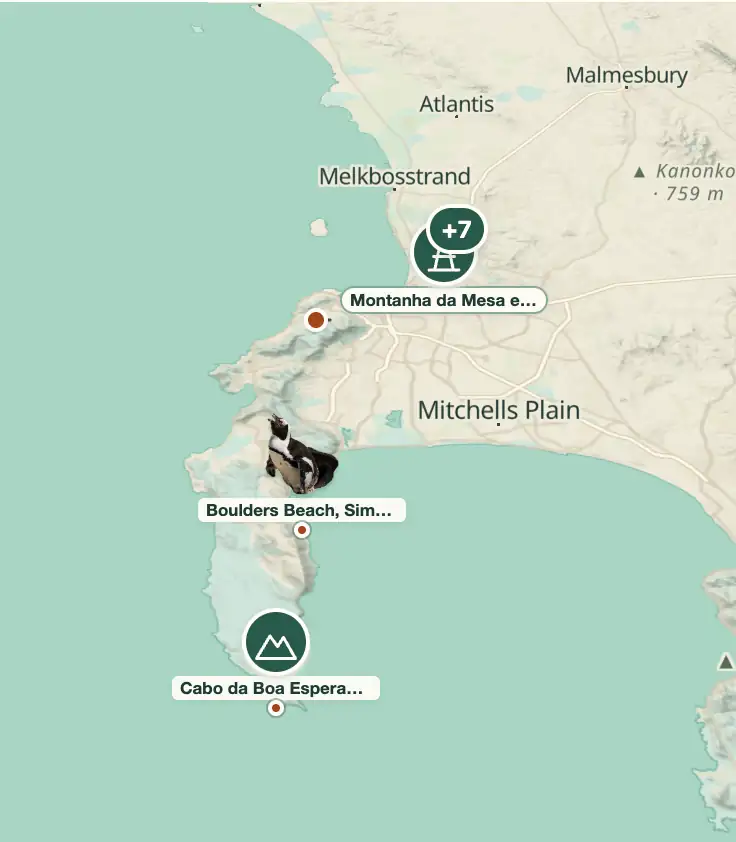
© OpenStreetMap · OpenFreeMap · © OpenMapTiles
Explore the map, read about the other places and plan your travel days in the app.
Open the appWhat to see
Cape Town: The mountain and the amphitheater
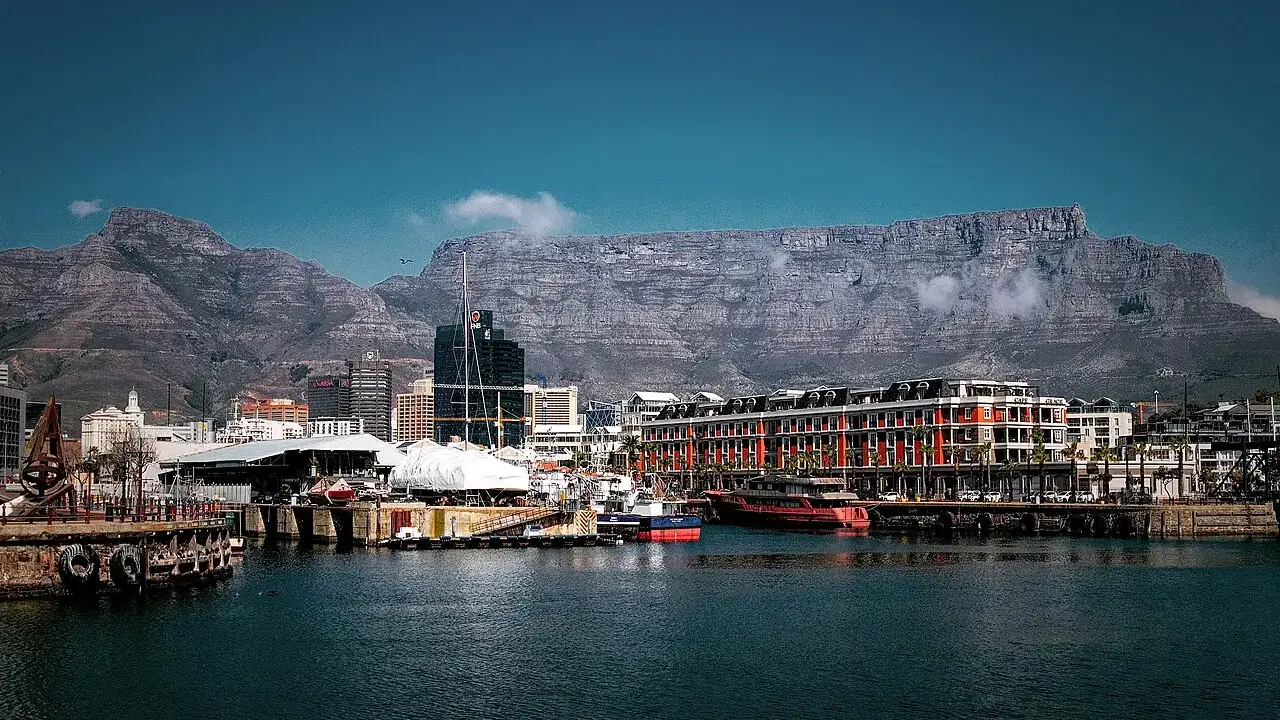
Cape Town occupies the northern base of the Cape Peninsula, where Table Mountain, Devil's Peak, Lion's Head, and Signal Hill enclose the City Bowl, the amphitheater holding the historic center and the port above Table Bay. The peninsula separates two seas: on the Atlantic side, the cold Benguela current keeps the water between 12 and 16 °C, and in False Bay, to the east, it reaches 17 to 22 °C in summer.

Table Mountain and the cable car
A 1,086 m plateau inside Table Mountain National Park. The cable car has run since 1929 and has used rotating 65-seat cabins since 1997, turning a full circle during the 5-minute ride up; a round trip for an adult cost R395–420 in 2026, with about a 10% discount buying online. It closes for wind without warning. Check the website in the morning.
The rotating cabins do a full turn on the way up.
Check access
Robben Island
An island 11 km off the coast, a political prison from 1961 to 1991, a UNESCO World Heritage Site since 1999. The visit, about 3 hours 30 minutes, leaves from the Nelson Mandela Gateway, at the V&A, costs around R600 per adult and is partly guided by former political prisoners. Book days ahead; rough seas cancel crossings.
Part of the visit is guided by former political prisoners.
Check access

District Six Museum
In a former Methodist church on Buitenkant Street, it holds the neighborhood map painted on the floor, with the names of erased streets and signatures of former residents. It tells the 1966–1982 removals through the voice of those who were removed; the visit takes 1 hour to 1 hour 30 minutes.
The museum tells the 1966–1982 removals through the voice of those who were removed, on the neighborhood map painted on the floor of the former church on Buitenkant Street; the visit takes 1 hour to 1 hour 30 minutes.
Check access

Bo-Kaap and the Auwal Masjid
The mosque on Dorp Street, opened in 1794, is the oldest in South Africa, and the Bo-Kaap Museum occupies a house from the 1760s at 71 Wale Street. The bright facade colors are recent; the architecture, with a stoep in front and a flat roof, is 18th-century.
It's the oldest mosque in South Africa.
Check access

Kirstenbosch
A botanical garden founded in 1913 on the mountain's eastern slope, with 36 cultivated hectares within a 528-hectare estate. It grows only indigenous flora, mostly fynbos and proteas; the 130 m Boomslang canopy walkway opened in 2014. Admission is around R200–260 for adults.
It cultivates only indigenous flora, mainly fynbos and proteas.
Check access
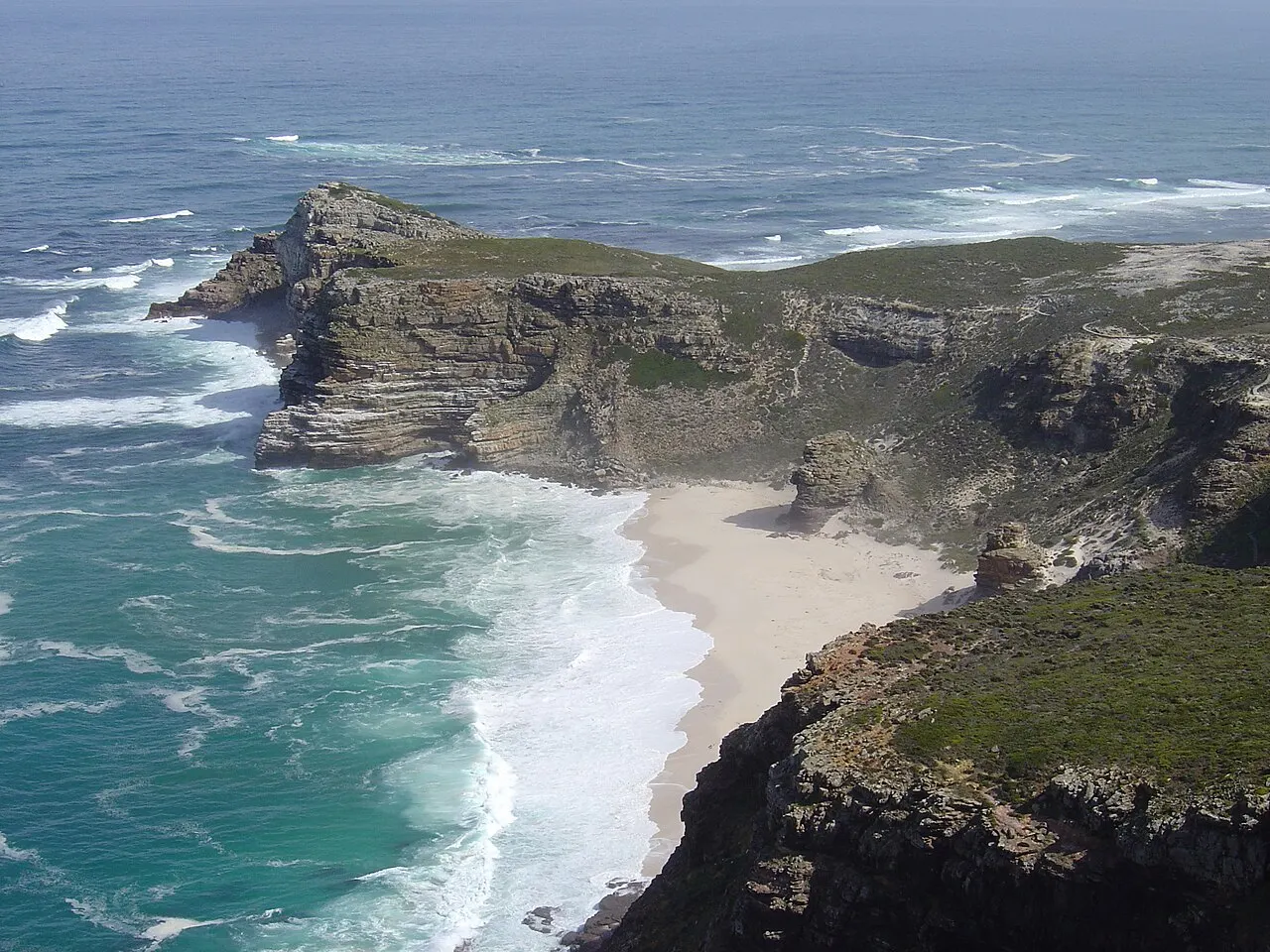
Cape of Good Hope and Cape Point
The southern tip of the peninsula, about 70 km from the center, inside the national park. The old lighthouse, from 1860, sits at 249 m and was too high for the fog, so they built another at 87 m, in 1919. Conservation fee around R450–500 per foreign adult; baboons open cars and backpacks.
The old lighthouse was too high above the fog.
Check access
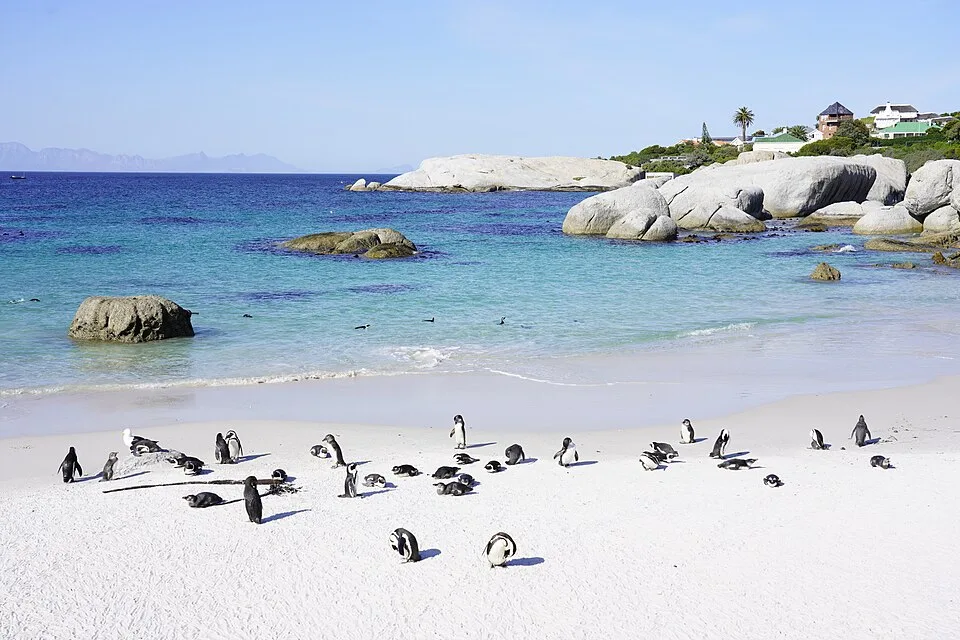
Boulders Beach, Simon's Town
An African penguin colony established in 1982 from two breeding pairs, today with about 2,000 to 3,000 birds. SANParks boardwalks let you get close without stepping into the nesting area; the species is critically endangered and the colony is monitored.
The African penguin colony started from two breeding pairs.
Check access

V&A Waterfront and Zeitz MOCAA
A still-operating harbor, opened in 1860 by Prince Alfred, redeveloped as a commercial area in 1988. Inside it, the Zeitz MOCAA occupies a 1921 grain silo hollowed out by Thomas Heatherwick and opened in 2017. It's the largest contemporary African art museum on the continent.
The continent's largest museum of contemporary African art.
Check access

Company's Garden
The vegetable garden planted by the VOC in 1652 to supply ships, today a 6-hectare park with an avenue of oak trees, the Iziko South African Museum and the planetarium. On the same axis stands the Slave Lodge, from 1679, which housed the Company's enslaved people and is now a museum of slavery.
The VOC's 1652 vegetable garden is now a 6-hectare park that works as a corridor between museums: what weighs on the axis is the Slave Lodge, from 1679, and it's enough on its own for an hour.
Check access
Nilo’s itinerary
Start with the basic programme and choose extensions for the time you have.
Plan my days in the app ↗Day 1 · The mountain and the center
Check the cable car website at 7:30am; if it's open, go up before 9am to skip the line and the cloud, and set aside 2 hours on the plateau between the viewpoints and the Dassie Walk loop.
Come down and walk through the Company's Garden to the Iziko South African Museum and the Slave Lodge, from 1679, on the corner of Wale and Adderley.
Walk up Wale Street to Bo-Kaap: the Bo-Kaap Museum at number 71, the 1794 Auwal Masjid on Dorp Street, and a koeksister or daltjie from a neighborhood bakery.
At 12 noon sharp, listen for the Noon Gun firing on Signal Hill. The cannon has marked the hour since 1806 and can be heard from much of the City Bowl.
Have dinner on Bree Street or Kloof Street and go back by app, even if it's six blocks.
Day 2 · Robben Island and the 20th-century city
Take the 9am ferry from the Nelson Mandela Gateway, at the V&A Waterfront, with a ticket bought ahead; the whole visit takes about 3 hours 30 minutes between the crossing, the bus tour of the island and the cell block.
Back on the mainland, have lunch at the V&A and set aside 2 hours for the Zeitz MOCAA, in the 1921 grain silo converted in 2017.
Take an app ride to the District Six Museum, on Buitenkant Street, and see the neighborhood map painted on the floor; add the Castle of Good Hope, 600 m away, if you have time left.
Walk the Sea Point promenade in the late afternoon, 11 km of seafront path, with the Mouille Point lighthouse (1824) at one end.
Have fish or Cape Malay food for dinner in Sea Point and head back to your hotel by car or rideshare, even if it's only a few blocks, because at night phone and bag snatching is concentrated there.
Day 3 · The whole peninsula, by car
Leave at 8am along the Atlantic coast, pass through Camps Bay and Hout Bay and take Chapman's Peak Drive: 9 km, 114 bends, opened in 1922, with a toll and closures on windy or rainy days.
Continue to the Cape Point gate, pay the conservation fee and do the 1860 lighthouse and the Cape of Good Hope viewpoint; don't leave food in sight because of the baboons.
Come back along the False Bay coast and stop at Boulders Beach, in Simon's Town, for the African penguin colony on the SANParks boardwalks.
Have fish for lunch in Kalk Bay, at the harbor, and walk to the colorful beach huts of St James and Muizenberg.
End the day in Constantia, at a vineyard operating since 1685, or at a late-afternoon Kirstenbosch concert, if it's a Sunday between November and April.
Day 4 · Stellenbosch and Franschhoek
Day trip
50 km and about 45 min to Stellenbosch via the N1/R310; another 30 km to Franschhoek. Vineyards planted since 1679 and 1688 (by Huguenots), a historic center of Cape Dutch architecture and the Franschhoek Wine Tram, which runs between estates. Go with a driver or an app if you'll be tasting wine.
Day 5 · Free day
Free day: use it to rest, go back to the place you liked most or cover a setback.




Food
 AI illustration
Gatsby
A roughly 30 cm baguette cut into four, filled with fries, sauce and a protein: masala steak, polony, chicken or sausage. Invented in Athlone in the 1970s and sold late at Cape Flats takeaways; one feeds two to four people for R90–160.
 AI illustration
Bobotie
Minced meat seasoned with curry, turmeric and chutney, baked under a layer of egg and milk with a bay leaf, served with yellow rice and sambal. A Cape Malay Sunday-table dish, found in nearly every restaurant that calls itself Cape Malay.
 AI illustration
Snoek
A local fish (Thyrsites atun) grilled on the braai with apricot jam or smoked and flaked into a pâté. Sold fresh from fish trucks and at the harbors of Kalk Bay and Hout Bay, mostly between April and September.
 AI illustration
Cape koeksister
A fried dough ball, soaked in cinnamon-and-cardamom syrup and rolled in coconut: different from the Afrikaner koeksister, which is plaited and dry. Eaten on Sunday morning, bought at bakeries in Bo-Kaap and Athlone.
 AI illustration
Braai and shisa nyama
A barbecue (braai) is a social event, and the word is also used as a verb. In the Cape Flats and in Gugulethu, the shisa nyama sell by weight: you choose the meat at the counter, someone grills it and you eat it with pap and chakalaka. Boerewors, a spiral sausage with coriander, always goes on the grill.
 AI illustration
Samoosa and daltjies
The Cape samoosa is triangular, small and fried, with minced meat, potato or cheese; the daltjie (chilli bite) is a chickpea fritter with spinach and chili. Sold at bakeries and stalls in Bo-Kaap and on Wale Street, and in quantity during Ramadan.
 AI illustration
Rooibos
An infusion made from the leaves of Aspalathus linearis, a shrub that only grows in the Cederberg mountains, about 250 km away. It has no caffeine, has a brick-red color and is served with milk. Order a red cappuccino for the café version.
 AI illustration
Cape wine
Chenin blanc (steen) is the country's most-planted grape, and pinotage is a cross created in Stellenbosch in 1925 by Abraham Perold. Vin de Constance, a sweet Constantia wine exported since the 18th century, is the region's historic label; a decent supermarket bottle runs R90–200.
Day trips
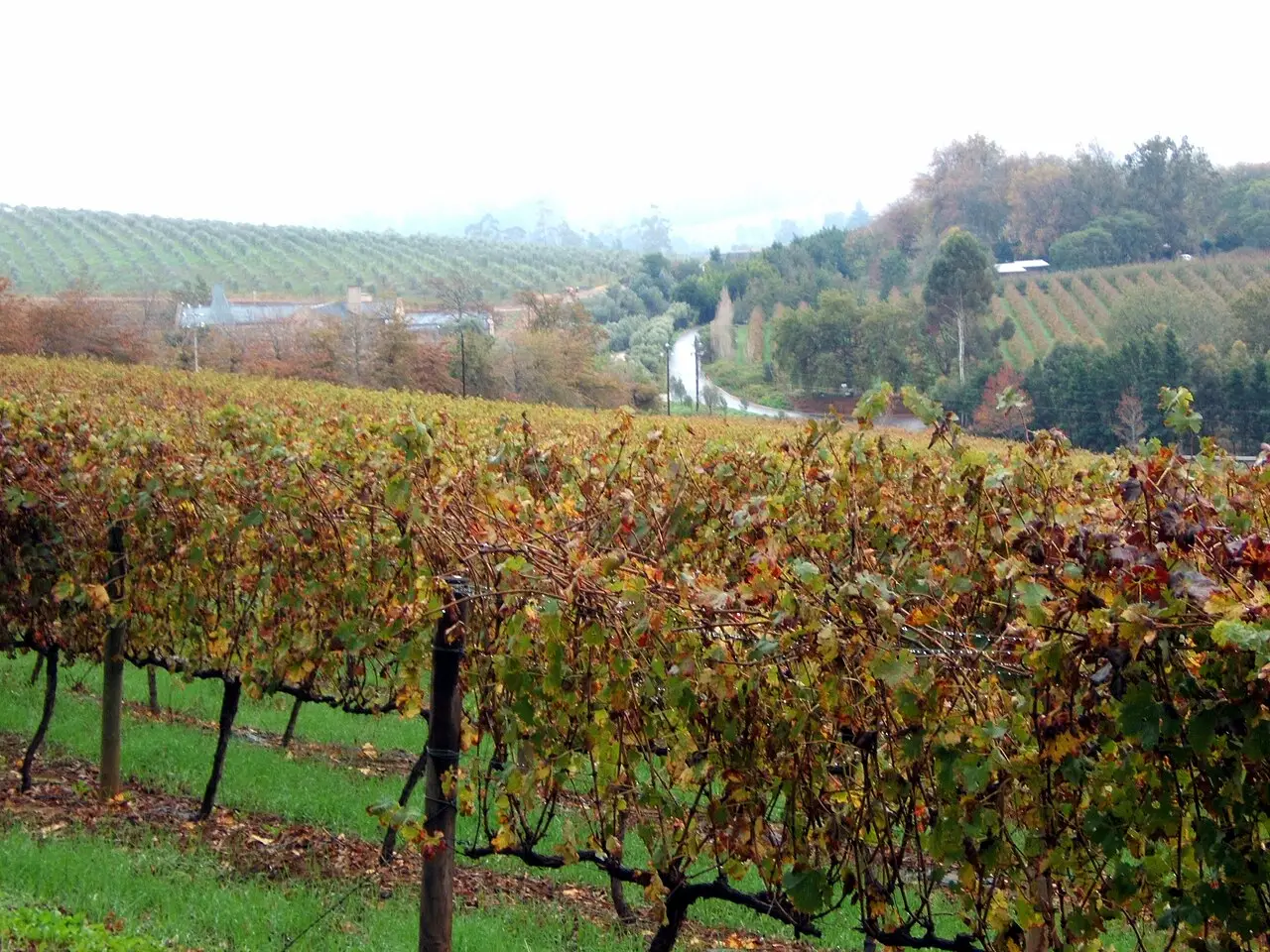
Stellenbosch and Franschhoek
50 km and about 45 min to Stellenbosch via the N1/R310; another 30 km to Franschhoek. Vineyards planted since 1679 and 1688 (by Huguenots), a historic center of Cape Dutch architecture and the Franschhoek Wine Tram, which runs between estates. Go with a driver or an app if you'll be tasting wine.
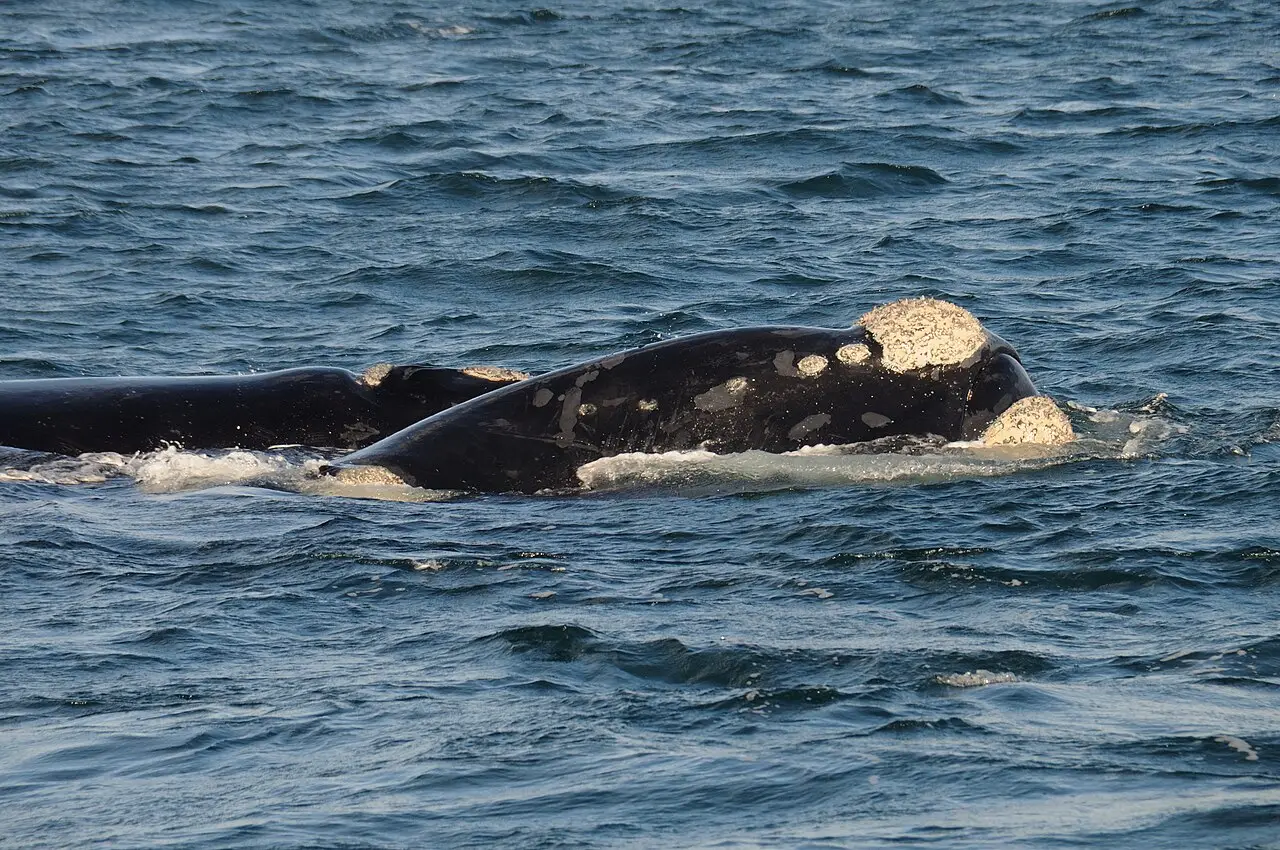
Hermanus and the whale coast
120 km and about 1 hour 30 minutes via the N2 and R43, with a detour along Clarence Drive. In Hermanus, the southern right whale can be seen from the sidewalk, no boat needed, and the town keeps an official crier, with a kelp horn, to announce where it is. Those who want to extend the day continue to Cape Agulhas, 220 km and 2 hours 30 minutes from Cape Town, where the official divide between the Atlantic and Indian oceans lies.
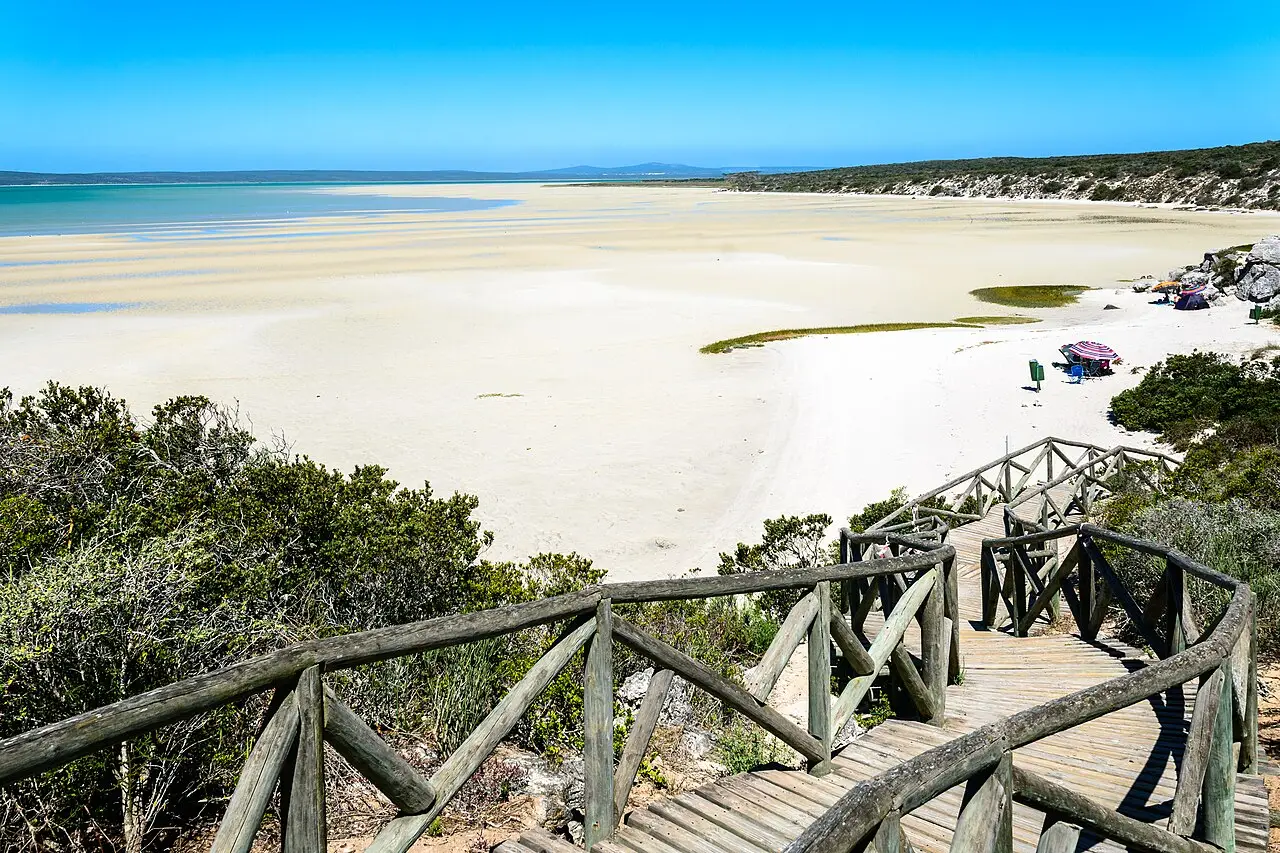
West Coast National Park and Langebaan
110 km and about 1 hour 15 minutes via the R27. A shallow turquoise lagoon, flamingos and, between August and September, the wildflower fields of the Postberg section, open only during those two months. Combine it with an oyster-and-mussel stop in Yzerfontein or Langebaan.
Where to begin
The mountain and the center
Check the cable car website at 7:30am; if it's open, go up before 9am to skip the line and the cloud, and set aside 2 hours on the plateau between the viewpoints and the Dassie Walk loop.
Robben Island and the 20th-century city
Take the 9am ferry from the Nelson Mandela Gateway, at the V&A Waterfront, with a ticket bought ahead; the whole visit takes about 3 hours 30 minutes between the crossing, the bus tour of the island and the cell block.
The whole peninsula, by car
Leave at 8am along the Atlantic coast, pass through Camps Bay and Hout Bay and take Chapman's Peak Drive: 9 km, 114 bends, opened in 1922, with a toll and closures on windy or rainy days.
Money
The currency is the rand (ZAR, R), trading in 2026 at about R18 to the dollar and R3.3 to the Brazilian real. Reference prices: café coffee R35–55; simple lunch or bakery R90–150; dinner at a mid-range restaurant R250–450 per person without drinks; beer R35–60; a decent bottle of wine at the supermarket R90–200; short Uber ride R60–120; hostel bed R350–600 and mid-range hotel R1,400–2,800 a night. Cards are accepted almost everywhere, even at market stalls. Minibus taxis, car guards and some street markets, however, take cash only, so carry R100–200 in small bills. Withdraw from ATMs inside malls or bank branches, never from a standalone machine on the street, and refuse help from strangers at the machine. Tipping is expected, and at restaurants it's 10–15%; check whether a service charge is already on the bill, which is common for groups of six or more. Leave R5–10 for the car guard in the vest when you return to your car, R10–20 for the gas station attendant, and R20–50 a day for guides. VAT is 15% and already included in prices. Purchases over R250 qualify for a refund at the VAT Refund counter at the airport, with a receipt in your name and the goods on hand. There's no municipal tourist tax, but hotels usually add a 1% tourism levy to the nightly rate.
Getting there and around
Airport: 20 km along the N2, no direct train
The international airport (CPT) is about 20 km east of downtown along the N2 and has no rail link. The MyCiTi A01 bus connects the terminal to the Civic Centre, in the CBD, in 25 to 45 minutes depending on traffic, for somewhere between R110 and R150 in 2026, with fares adjusted on July 1, 2026. Before boarding, buy a myconnect card at the kiosk in arrivals; it costs R40 and got a new design on February 14, 2026. Uber and Bolt operate from a signposted pickup point and cost R300–450 to the City Bowl, and licensed taxis charge more. Turn down unmarked taxis offered inside the terminal.
MyCiTi and the myconnect card
Within the city, MyCiTi is the reliable system, with corridors to Sea Point, Camps Bay, Hout Bay, Table View and the airport. A myconnect top-up runs from R35 to R600, with unlimited-travel packages for 1, 3 and 7 days or a month. The Metrorail/PRASA train has come back in stages after years of vandalism. For visitors, the useful line is the southern one to Simon’s Town, via Muizenberg, Kalk Bay and Boulders, by day and in first class. Confirm it's running before counting on it. Minibus taxis cover what the rest doesn't, for R12–25 a ride; they stop anywhere and take cash only. The conductor at the window, the gaaitjie, signals the destination by hand, but you can just ask. Uber and Bolt are cheap and widely used. The City Bowl, Bo-Kaap and the 11 km Sea Point promenade are walkable by day. At night, use a car or rideshare even for short distances. By bike, the Atlantic coast and Chapman’s Peak are doable, but off those roads the traffic is dangerous for cyclists.
Safety
The real risk in Cape Town is property crime, and simple rules avoid it. In the CBD, on Long Street and in Sea Point, phone and bag snatching happen mostly at night. Don't walk around with your phone in your hand, leave your passport at the hotel and carry only the day's cash. At traffic lights, keep the windows up and nothing visible on the seat, because smash-and-grab is common on the N2, the M3 and the roads into downtown. On the trails there are occasional muggings on Lion’s Head, Signal Hill, Table Mountain and in Newlands Forest. Hike in a group, in the morning and on a busy route, with the park's emergency number (086 110 6417) saved on your phone. The city's lethal violence is concentrated in Cape Flats neighborhoods affected by gang turf wars, where visitors have no reason to go alone. Townships are best visited with a host or local operator, and by day. The common scams are three: inflated charges for “official parking,” street money exchange and unsolicited help at ATMs. Refuse that help and go to another ATM, inside a mall. Also save 10111 for the police and 10177 for medical emergencies, or dial 112 from any cell phone.
Etiquette tips
Pay the car guard
Men in reflective vests watch over cars parked on the street. It's not a scam: it's an informal occupation tolerated by the city. Give R5–10 when you come back, and say on arrival that you'll be back.
Braai is bring and braai
When invited to a braai, bring your own meat and drink, unless told otherwise. Whoever lit the fire runs the grill; don't flip someone else's meat or poke the coals unless invited.
“Just now” isn't now
“Now now” means soon, “just now” means at some undetermined point later, and “now” could mean anything. If the time matters, ask for it on the clock.
Say thanks with two flashes of your hazard lights
On the highway, whoever's slower pulls onto the shoulder to let others pass; whoever passes says thanks with two taps of the hazard lights. Do it: skipping it gets noticed.
After the drought, water became a serious matter
After the 2015–2018 drought the habit stuck: two-minute showers, tap off while brushing teeth, a sign on the hotel wall. Following it is a basic sign of good manners.
Township, only with a host
Visiting Langa, Gugulethu or Khayelitsha on your own and photographing houses and children is frowned upon and unwise. Go with a guide or local operator, by day, and ask permission before any photo of a person.
Mistakes to avoid
Cape Agulhas: Africa's real southernmost point
Thinking the Cape of Good Hope is Africa's southernmost point. The continent's southern tip is Cape Agulhas, about 220 km from the city by road, and that's where the official divide between the Atlantic and Indian oceans lies, far from Cape Point.
Climbing without checking the wind
Climbing the mountain without checking the wind and without water, a jacket and a flashlight. The weather turns in minutes on the plateau, Platteklip Gorge takes 1 hour 30 minutes to 3 hours of exposed climbing, and hypothermia rescues are routine for Wilderness Search and Rescue.
The Atlantic isn't warm
Getting into the Atlantic expecting warm water. In Clifton and Camps Bay the Benguela current keeps it at 12–16 °C year-round. The bearable water is on the other side of the peninsula, in Muizenberg and St James, in False Bay. A single quick dip is enough to settle the question for good.
Waiting until the day to buy Robben Island tickets
Leaving Robben Island tickets to buy on the day. Crossings fill up and get canceled with rough seas; book ahead and have a plan B for the same morning.
Counting on public transportation for everything
Counting on public transport for everything. There's no train to the airport, MyCiTi doesn't cover the whole peninsula, and after dark the practical answer is Uber, Bolt or a rental car.
Useful phrases
Howzit
“How's it going?” used as a hello, without expecting a long answer (how-zit)
Lekker
Good, tasty, nice: from Afrikaans, works for food, a party or the weather (lek-ker)
Baie dankie
Thank you very much, in Afrikaans (buy-ah dun-kee)
Molo / Enkosi
Hello (to one person) and thank you, in isiXhosa (mo-lo / en-ko-see); for several people, “molweni”
Just now / now now
“A while from now, no set time” and “very soon”: in that order of urgency
Sharp sharp
Agreed, all good, also used as a goodbye (sharp sharp)
Districts
City Bowl / CBD
Historic and financial center, between Adderley Street, Long Street and the Company's Garden, with Parliament and City Hall. Busy from 7am to 6pm on weekdays, empties afterward: at night life concentrates on Bree and Kloof Street.
Bo-Kaap
Slope of Signal Hill, houses from the 1760s onward painted in bold color since the 1990s, steep cobblestone streets. Historic Cape Malay neighborhood, with the 1794 Auwal Masjid; it's a residential area and noise after 10pm really bothers people.
Gardens, Oranjezicht and Tamboerskloof
Tree-lined slopes above the center, with Kloof Street as a hub of cafés and restaurants. A calm base for walking into the CBD and starting trails along Tafelberg Road.
Woodstock and Salt River
Former industrial and working-class belt east of the center, today with galleries, studios and the Saturday Neighbourgoods Market at the Old Biscuit Mill. Also the city's most visible case of gentrification and eviction; at night it's not a place to walk around.
Green Point, Sea Point and Mouille Point
Dense coastal strip to the west, with the 11 km promenade, the DHL Stadium (2010) and the 1824 Mouille Point lighthouse. A neighborhood of apartment blocks, bakeries and a seawater pool in Sea Point.
Camps Bay, Clifton, Bakoven and Hout Bay
The Atlantic coast on the other side of Lion's Head, with white-sand beaches, water at 12–16 °C and expensive restaurants facing the Twelve Apostles. Farther south, Hout Bay has a fishing harbor, a Saturday market and the entrance to Chapman's Peak.
Southern Suburbs
Observatory (student-heavy and cheap), Rondebosch and Newlands (university, the city's highest rainfall, a brewery from 1820), Constantia (vineyards since 1685). Green, residential, served by the southern railway line.
Cape Flats
Langa (1927), Gugulethu, Nyanga, Mitchells Plain and Khayelitsha hold most of the city's population. They have a jazz scene, braai restaurants and cultural tours, but visit with a guide or local host, by day.
History
until 1652 · Khoikhoi, San and the Camissa river
The Goringhaiqua and Gorachouqua herders brought cattle to the valley they called ǁHui !Gaeb. Fresh water flowed down the mountain along the Camissa, today channeled beneath the city center.
1488–1510 · Portuguese round the Cape
Bartolomeu Dias rounds the cape in 1488 and Vasco da Gama passes in 1497. The death of viceroy Francisco de Almeida in Table Bay, in 1510, keeps the Portuguese from setting up a fixed post there.
1652 · The VOC's garden
Jan van Riebeeck lands on April 6 with three ships to plant vegetables and supply ships bound for Batavia. The station was not a colony: it existed to supply ships.
1658–1808 · Slavery and the Cape's Islam
The VOC imports enslaved people from Bengal, the Coromandel Coast, Madagascar and the Indonesian archipelago. The exile of Sheikh Yusuf of Macassar in 1694 is the root of the Cape Malay community; the Auwal Masjid, from 1794 on Dorp Street, is the country's first mosque.
1795–1814 · British rule
The British win at Muizenberg (1795), retake the colony at Blaauwberg on January 8, 1806 and formally receive it in 1814. The port comes to serve the route to India.
1834 · Abolition and the Tweede Nuwe Jaar
Slavery is abolished in the British Empire on December 1, 1834, with forced apprenticeship until 1838. The day off granted on January 2 became the Kaapse Klopse carnival.
1869–1910 · Suez, diamonds and Parliament
The opening of the Suez Canal in 1869 pulls traffic away from the Cape route, but the Kimberley diamonds (1867) and Witwatersrand gold (1886) make the port the entry gate for capital. In 1910 the Union of South Africa installs Parliament in the city.

1948–1966 · Apartheid and the Group Areas Act
The National Party wins in 1948 and the 1950 Group Areas Act zones the city by race. On February 11, 1966 District Six is declared a whites-only area.

1966–1984 · Removals to the Cape Flats
About 60,000 people are removed from District Six by 1982 and the houses are demolished. Langa (1927), Nyanga (1946), Gugulethu and Khayelitsha (1983) receive the population pushed onto the sandy plain.
1964–1990 · Robben Island and the balcony
Nelson Mandela serves 18 years on the island, from 1964 to 1982, then at Pollsmoor and Victor Verster. On February 11, 1990 he speaks from the City Hall balcony to the Grand Parade, hours after being released.
 AI illustration
2015–2026 · Drought, Day Zero and the present
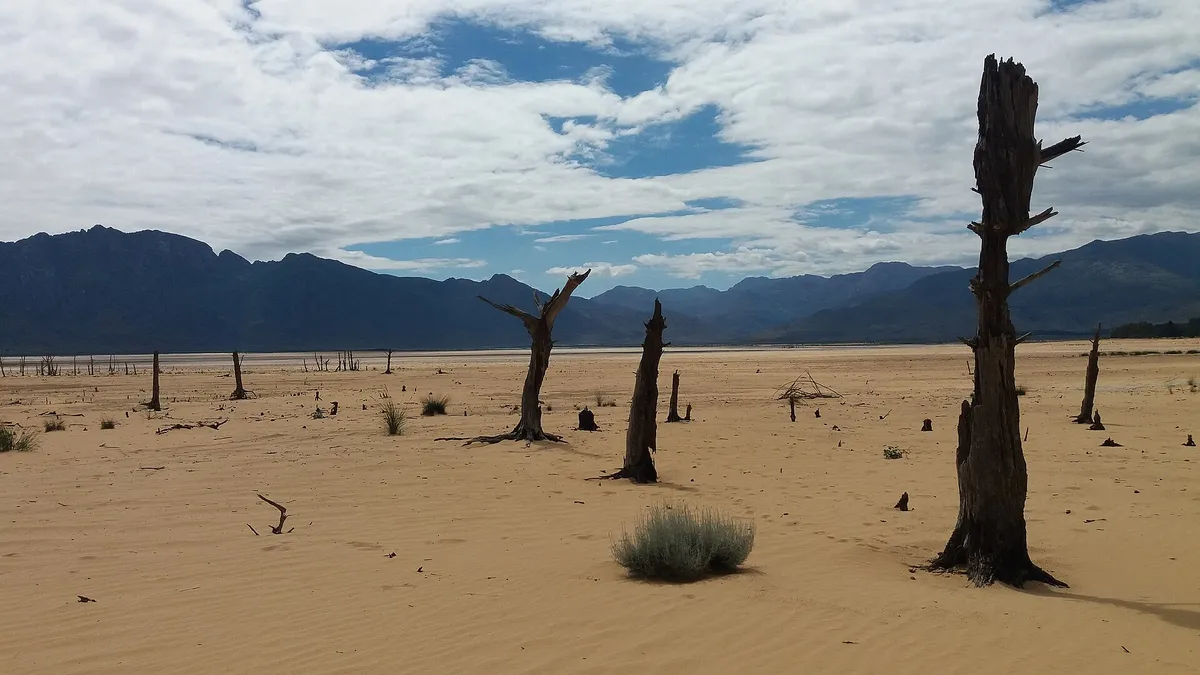
The 2015–2018 drought pushed the city to a quota of 50 liters per person per day and to postponing Day Zero. Since 2023 the municipality has been buying and generating power outside Eskom to reduce scheduled blackouts.
Complete history
The Khoikhoi and the Camissa River, before 1652
Before the Europeans arrived, the valley between the mountain and the bay was pasture. The Khoikhoi (the Goringhaiqua, the Gorachouqua and the coastal Goringhaicona group) brought cattle and sheep down to the fresh water that ran off the mountain in the Camissa River, now channeled under Adderley Street, and the San hunted on the slopes. Bartolomeu Dias rounded the cape in 1488 and Vasco da Gama sailed past in 1497, but the Portuguese never set up a post there: in 1510 the viceroy Francisco de Almeida was killed in Table Bay in a clash with local herders, and the route began avoiding the bay. The post the Portuguese avoided was founded by the Dutch. On April 6, 1652, Jan van Riebeeck of the Dutch East India Company landed with three ships and an administrative order, with no settlement plan: grow vegetables, raise livestock and supply ships bound for Batavia.
From pantry to slave society, in six years
Six years after its founding, the colony was already a slave society. Starting in 1658 the VOC imported enslaved people from Bengal, the Coromandel Coast, Madagascar and the Indonesian archipelago; in 1694 it exiled to the Cape the political and religious leader Sheikh Yusuf of Macassar. From that population came the community now called Cape Malay, South African Islam and much of the local cuisine. The Auwal Masjid, opened in 1794 on Dorp Street, in Bo-Kaap, is the country's oldest mosque, and it was in Cape Muslim schools that Afrikaans first appeared in writing, in Arabic script, in the 19th century. Meanwhile the Khoikhoi lost cattle and land in two wars (1659–60 and 1673–77) and, after the 1713 smallpox epidemic, the valley's social structure stopped existing as a political unit.
The British and the 1834 abolition of slavery
The British took the Cape in 1795, at the Battle of Muizenberg, briefly gave it back and retook it at Blaauwberg on January 8, 1806; the formal cession came in 1814. Slavery was abolished on December 1, 1834, with four years of forced apprenticeship until 1838, and the day off enslaved people received the day after New Year became the Tweede Nuwe Jaar, the January 2 carnival the city still holds. The opening of the Suez Canal, in 1869, pulled traffic away from the Cape route, but the Kimberley diamonds (1867) and Witwatersrand gold (1886) turned the port into the gateway for capital, machinery and immigrants. In 1910, the Union of South Africa split the capitals: Pretoria got the executive, Bloemfontein the judiciary, and Cape Town got Parliament, which still sits here.
The Group Areas Act and District Six, 1950-1966
Segregation in the Cape predates apartheid, but it was apartheid that drew it neighborhood by neighborhood. The Group Areas Act of 1950 allowed that zoning; on February 11, 1966, District Six, a mixed neighborhood right next to downtown, was declared a white area, and by 1982 some 60,000 people had been removed to the Cape Flats, the sandy plain to the east, and their homes demolished. The land stayed practically empty for forty years. Between 1955 and 1984, the region was also classified as a Coloured Labour Preference Area, which restricted legal housing for Black Africans to the townships of Langa, Nyanga, and Gugulethu, and led, in 1983, to the creation of Khayelitsha. On Robben Island, 11 km off the coast, Nelson Mandela served his sentence from 1964 to 1982; on February 11, 1990, a few hours after walking out of Victor Verster prison, he spoke from the balcony of City Hall to the crowd on the Grand Parade.
The apartheid-era plan that still organizes the city
The layout inherited from the apartheid era still organizes the city today. Most of the population lives in the Cape Flats and spends one to two hours each way to reach the City Bowl; income, housing and access to water still follow the lines drawn in 1950. The 2015–2018 drought came close to emptying the reservoirs and imposed a quota of 50 liters per person per day: consumption dropped by more than half and the habit stuck in hotel bathrooms. In the 2010s and 2020s tourism, financial services and a tech hub concentrated in the CBD, in Woodstock and in the V&A Waterfront, while the April 2021 fire destroyed the Jagger Library at the University of Cape Town and damaged Rhodes Memorial. Since 2023 the municipality has been buying and generating electricity outside Eskom to cushion scheduled blackouts, and the southern railway line, to Simon's Town, has resumed operating in stages.
Cape Malay food comes from the enslaved people the VOC brought from Asia and Madagascar starting in 1658.
The District Six land stayed nearly empty for forty years.
Geography and shape of the city
The mountain and the amphitheater
The city occupies the northern base of the Cape Peninsula, a strip of land about 52 km long that ends at Cape Point. The terrain is Table Mountain Group sandstone resting on granite and Malmesbury shale: Table Mountain reaches 1,086 m at Maclear’s Beacon and has a flat plateau of nearly 3 km, flanked by Devil’s Peak (1,000 m) to the east and Lion’s Head (669 m) with Signal Hill (350 m) to the west. These four landforms enclose the City Bowl, the amphitheater that holds the historic center and the port, above Table Bay. From there the city spreads in three layers: the Dutch grid of the City Bowl and Bo-Kaap, the Victorian garden suburbs that stretched along the railway to Simon’s Town, and the Cape Flats, the sandy plain to the east where apartheid placed most of the population and where the N1 and N2 now run between neighborhoods of low houses and informal settlements.
Two seas with very different temperatures
The peninsula separates two seas of very different temperature: on the Atlantic side the cold Benguela current keeps the water between 12 and 16 °C; in False Bay, to the east, the water reaches 17–22 °C in summer.
The Cape Doctor and the cloud over the mountain
The climate is Mediterranean (Csb), with dry summers and rain concentrated in winter, from June to August. In summer, the southeasterly Cape Doctor blows, sometimes for days at a time, pushing over the plateau the lenticular cloud locals call the “tablecloth.”
Lion's Head is 669 m, and Signal Hill, next to it, 350 m.
Culture
The music of the Cape: goema and the jazz of Abdullah Ibrahim
Cape music has a root of its own: goema, a fast rhythm played on a barrel drum, inherited from the enslaved and from the January 2 carnival. It entered South African jazz through Abdullah Ibrahim, whose tune “Mannenberg,” recorded in 1974 with Basil Coetzee and Robbie Jansen, became an unofficial anthem of the resistance. The scene is still alive in downtown clubs and in Cape Flats homes; the Cape Town International Jazz Festival, at the CTICC, is the continent's biggest gathering of the genre. The Afrikaans heard on the street comes largely from the same root, and the Afrikaaps movement, in the 2010s, publicly reclaimed that origin.
Coetzee, Wicomb and the written city
In literature, the city appears in J. M. Coetzee (2003 Nobel laureate, a professor at UCT for decades), in Zoë Wicomb, in Sindiwe Magona and in Richard Rive's memoirs of District Six. In visual art, the Zeitz MOCAA, in the V&A silo since 2017, and the Norval Foundation, opened in 2018 in Steenberg, gave the city two large museums of contemporary African art, alongside galleries like Stevenson and Goodman. Film uses the city in two ways: as a cheap, versatile location, at the Cape Town Film Studios opened in Faure in 2010, and as subject matter, in films spoken in Cape Afrikaans, like Noem My Skollie (2016).
Rugby, road races and religion in the landscape
In sports, the Stormers rugby team moved from historic Newlands to the DHL Stadium in Green Point in 2021, cricket is still played at Newlands, and soccer has Cape Town City. The two dates that bring the city to a halt happen on the streets: the Cape Town Cycle Tour, in March, with about 35,000 cyclists over 109 km, and the Two Oceans, on a Saturday in April, with a 56 km ultramarathon around the peninsula. Beyond sports, religion also marks the landscape, with the Bo-Kaap mosque, the kramats scattered across the peninsula, St George's Anglican Cathedral, where Desmond Tutu preached from 1986 to 1996, and the African independent churches that fill open lots in the Cape Flats on Sundays.
Festivals and events
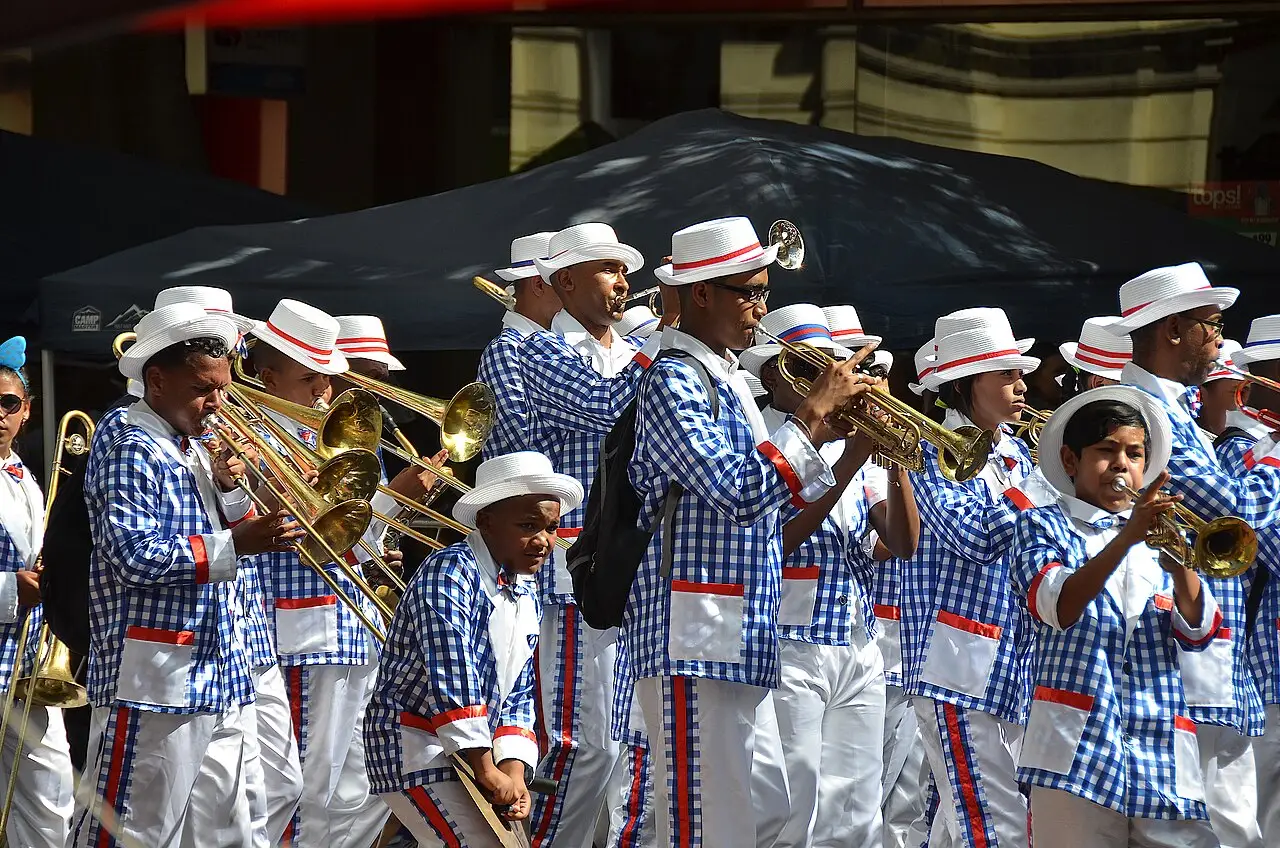
Kaapse Klopse / Tweede Nuwe Jaar
January 2. A minstrel carnival with dozens of troupes, umbrellas, banjo and goema, setting out from Bo-Kaap and the center; it inherits the day off enslaved people received the day after New Year, after 1834. It draws more than 10,000 participants.
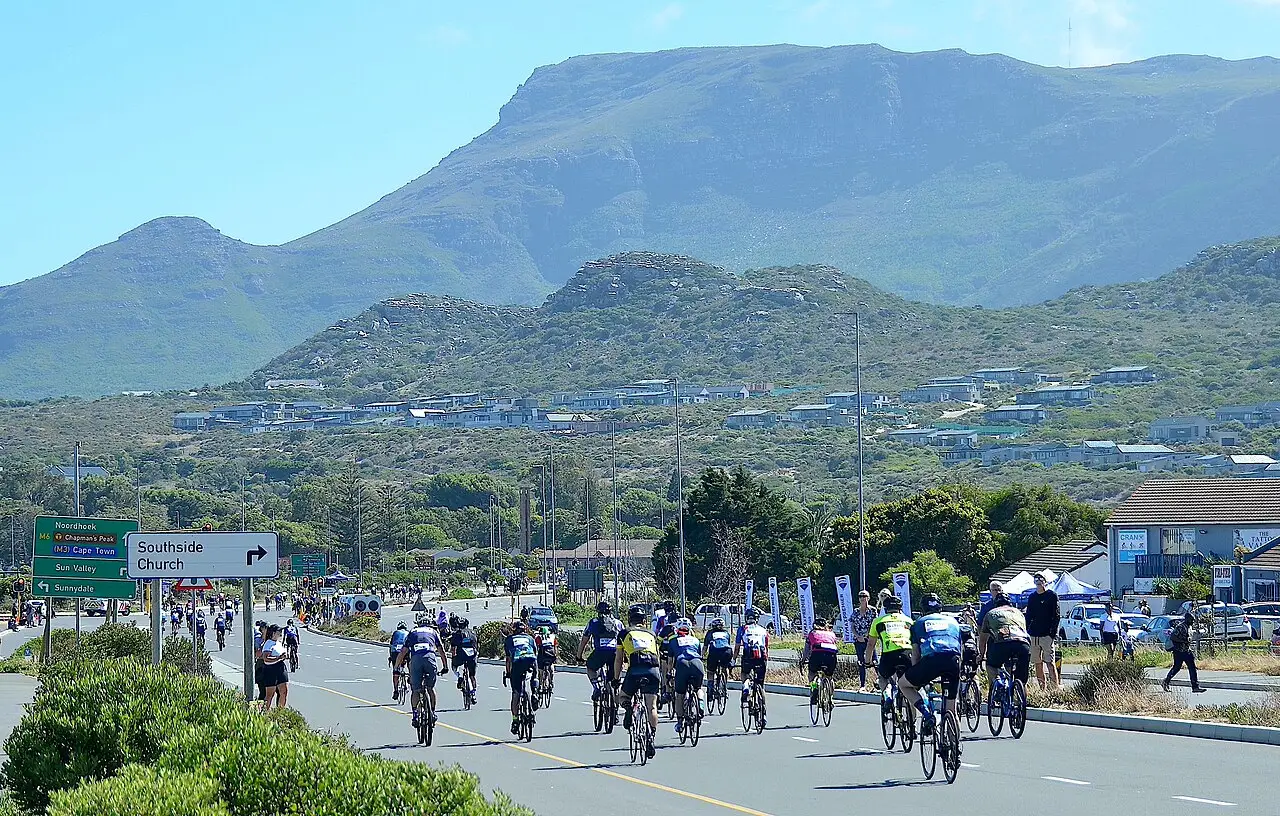
Cape Town Cycle Tour
A Sunday in March. A 109 km road race around the peninsula, with about 35,000 entrants; it closes Chapman's Peak, Simon's Town and the Atlantic coast from 6am into the early afternoon. Plan your travel that day.
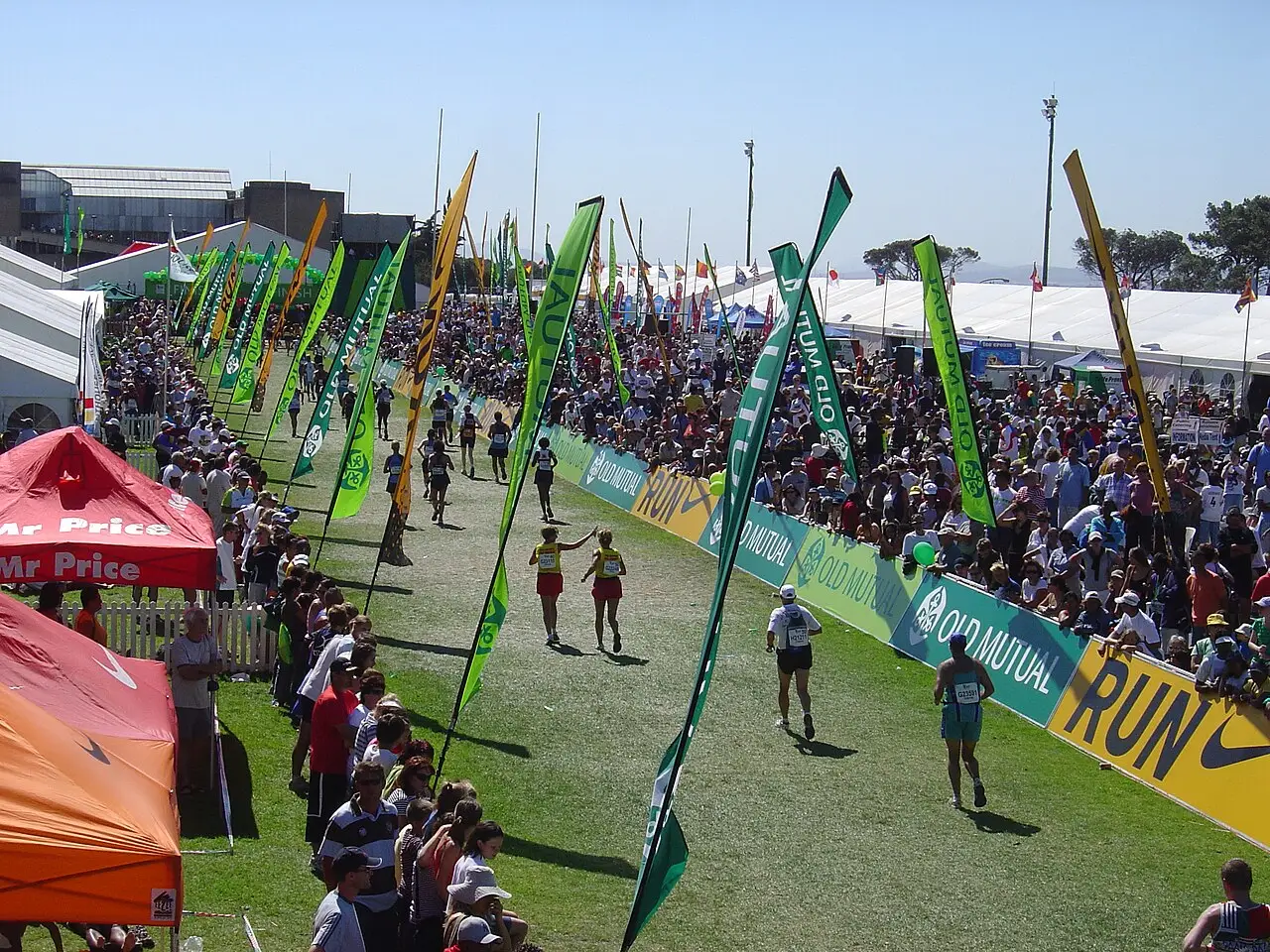
Two Oceans Marathon
On a Saturday in April, no longer on Easter weekend. The 56 km ultramarathon starts on Newlands' Main Road, passes through Muizenberg, Chapman's Peak, and Constantia Nek, and finishes on the University of Cape Town (UCT) campus; the 21 km half marathon runs the following Sunday. The race has existed since 1970.

Cape Town International Jazz Festival
Southern autumn, usually late March to April, at the Cape Town International Convention Centre. Two days, five stages, a mix of South African and international names; tickets sell out weeks ahead.

Kirstenbosch Summer Sunset Concerts
Late-afternoon Sundays, from November to April, on the botanical garden's lawn. People bring a blanket, a picnic basket and wine; tickets sell online and are often sold out for the well-known shows.
Books and films
Long Walk to Freedom (Nelson Mandela, 1994)
Much of the original manuscript was written and hidden on Robben Island; the prison chapters explain what you see on the island visit and the crowd at the Grand Parade in 1990.
Noem My Skollie (Daryne Joshua, 2016)
A film spoken in Cape Afrikaans about gangs, prison and oral storytelling in the Cape Flats of the 1960s; it shows the side of the city the mountain hides from the postcard.
Mannenberg (Abdullah Ibrahim, 1974)
Recorded with Basil Coetzee and Robbie Jansen, the tune takes its name from a neighborhood created by forced removal and became an anthem of goema-jazz and of resistance to apartheid.
Frequently asked questions
Cape Town: what is Africa's southernmost point?
Africa's southern tip is Cape Agulhas, about 220 km from the city by road. That's also where the official divide between the Atlantic and the Indian Ocean lies, far from Cape Point.
Cape Town: how do you get from the airport to downtown?
By the MyCiTi A01 bus, which goes to the Civic Centre, in the CBD, in 25 to 45 minutes for R110 to R150 in 2026; first, buy the R40 myconnect card at the arrivals kiosk, without which you can't board. Uber and Bolt cost R300 to 450 to the City Bowl.
Cape Town: how far are Stellenbosch and Franschhoek?
50 km and about 45 min to Stellenbosch via the N1/R310; another 30 km to Franschhoek.
Cape Town: what's the currency, and how much do things cost?
The currency is the rand (ZAR, R), trading in 2026 at about R18 to the dollar and R3.3 to the Brazilian real. Reference prices: café coffee R35 to 55; simple lunch or bakery R90 to 150; dinner at a mid-range restaurant R250 to 450 per person without drinks; beer R35 to 60; a decent bottle of wine at the supermarket R90 to 200; short Uber ride R60 to 120; hostel bed R350 to 600 and mid-range hotel R1,400 to 2,800 a night.
Cape Town: what's the weather like in summer?
The southern summer runs from December to February, with 16 to 27 °C, clear skies, almost no rain and the southeaster blowing hard for days on end.
Other cities in the country
South Africa ↗- Days
- 2
- When
- May–Sep
- Per person/day
- Average 100–180 USDMid-range · per person/day
Cost scope
Per person per day: accommodation, meals, urban transport, visits and a small allowance for extras. Flights excluded; larger purchases vary. Editorial estimate, not a quote.