Nigeria
Lagos
Afrobeat, the markets of Isale Eko and the Brazilian Quarter
Days Start with the basic programme and choose extensions for the time you have.
How the guide reaches this number
Combine short walks with transport and adjust the order to opening hours and market activity; a driver does not remove the traffic. A second day allows a visit to Fela’s house in Ikeja and a choice of activity in Yaba or Iganmu. For the evening, check whether the New Afrika Shrine has a concert and arrange both journeys with a trusted driver. If the programme does not fit your dates, have dinner in Victoria Island. A third day is for Nike Art Gallery and Lekki Conservation Centre, or a boat outing organised separately. I would not combine beach, reserve, gallery and several districts in one day: each choice benefits from time to pause and understand what you are seeing.
1–3
When November to February is a good window for less frequent rain.
How the guide reaches this number
December brings more concerts and demand for accommodation; harmattan can bring dust.
November to February is a good window for less frequent rain. December brings more concerts and demand for accommodation; harmattan can bring dust.
Per person/day Separate accommodation per night, meals per person and transport between districts.
How the guide reaches this number
A driver and the concert calendar can change the total considerably.
Separate accommodation per night, meals per person and transport between districts. A driver and the concert calendar can change the total considerably.
Per person per day: accommodation, meals, urban transport, visits and a small allowance for extras. Flights excluded; larger purchases vary. Editorial estimate, not a quote.
 What Nilo thinks
With one day, I would choose Lagos Island: Freedom Park, Tafawa Balewa Square, Popo Aguda, the markets of Isale Eko and the National Museum. Combine short walks with transport and adjust the order to opening hours and market activity; a driver does not remove the traffic. A second day allows a visit to Fela’s house in Ikeja and a choice of activity in Yaba or Iganmu.
For the evening, check whether the New Afrika Shrine has a concert and arrange both journeys with a trusted driver. If the programme does not fit your dates, have dinner in Victoria Island. A third day is for Nike Art Gallery and Lekki Conservation Centre, or a boat outing organised separately. I would not combine beach, reserve, gallery and several districts in one day: each choice benefits from time to pause and understand what you are seeing.I would come to Lagos for music and make time for places that help explain it. In Ikeja, Fela Kuti’s house became the Kalakuta Republic Museum, and the New Afrika Shrine hosts concerts worth checking before crossing the city. On Lagos Island, choose the fabric corridors of Balogun, the townhouses of Popo Aguda and the National Museum in Onikan.
Read more
At lunch, a buka, a simple local restaurant, is a chance to try amala with ewedu and gbegiri; jollof with dodo and suya offer other combinations. Transport needs planning: concentrate each day in one part of the city and arrange the return. One day lets you start with the island; two allow time for Fela’s mainland, and a third can be devoted to art and nature in Lekki.
Quick facts
- Urban scale
- A metropolis spanning Lagos Island, Ikoyi, Victoria Island, the Lekki peninsula and extensive mainland districts.
- Founded
- Awori settlement at Iddo and Èkó; presence of the Kingdom of Benin, a historical kingdom in present-day southern Nigeria, around 1550.
- Country and region
- Nigeria, Lagos State, southwest, Gulf of Guinea coast
- Language
- English is the official language; Yoruba and Nigerian Pidgin dominate the street
- Currency
- Naira (₦, NGN); check rates and fees when exchanging or withdrawing.
- Time zone
- WAT, UTC+1, no daylight saving
- Best time to visit
- November to February is a good window for less frequent rain. December brings more concerts and demand for accommodation; harmattan can bring dust.
- Travel budget
- Separate accommodation per night, meals per person and transport between districts. A driver and the concert calendar can change the total considerably.
When to go
November to February is a good window for less frequent rain. December brings more concerts and demand for accommodation; harmattan can bring dust.
March
26° to 32°C
68 mm of rain
April
26° to 32°C
146 mm of rain
May
25° to 31°C
236 mm of rain
June
24° to 29°C
434 mm of rain
July
24° to 28°C
209 mm of rain
August
24° to 28°C
91 mm of rain
September
24° to 29°C
218 mm of rain
October
25° to 30°C
189 mm of rain
How the year changes
Lagos is hot and humid for much of the year. I would choose November to February to reduce the chance of rain disrupting transport; the dry season usually extends into March. Harmattan can carry dust from the Sahara and leave the sky hazy.
In the rainy season, especially June and July, allow for flooding and have an indoor alternative. An August break in rainfall does not guarantee dry days. December appeals to visitors seeking Detty December concerts and parties, but demand for rooms and traffic increase: compare dates and districts before booking rather than expecting every hotel’s price to rise equally.
The same numbers as a table
| Month | Temperature °C | Rain mm |
|---|---|---|
| January · | 25 to 32 | 11 |
| February · | 26 to 32 | 41 |
| March | 26 to 32 | 68 |
| April | 26 to 32 | 146 |
| May | 25 to 31 | 236 |
| June | 24 to 29 | 434 |
| July | 24 to 28 | 209 |
| August | 24 to 28 | 91 |
| September | 24 to 29 | 218 |
| October | 25 to 30 | 189 |
| November · | 25 to 31 | 52 |
| December · | 24 to 32 | 10 |
Nilo's tips
Check whether Cowry suits your journey
The Cowry card is used on regulated services such as LAMATA buses and trains. Before buying or loading it, check your journey’s start and end, the day’s service and the sales channel. Buying it “before anything else” makes little sense if you will not use those services.
Arrange pickup at the right terminal
Check the terminals on your ticket and agree on the meeting point and driver’s identification before flying. Allow time for a connection that requires leaving a terminal. Keep entry documents and the e-visa approval letter, when applicable, accessible in print as well; follow NIS and airline instructions.
Make time for Balogun’s fabrics
Start in the morning to browse the stalls without relying on a universal cutoff time. Ask about fabrics and compare prices; a local guide can help with directions and conversations but does not replace care with bags and phones. Agree on the exit meeting point before entering the aisles.
Plan the ferry and the return
A crossing can avoid a congested bridge, but the terminal must suit your destination. Check the route, fare and last return with LAGFERRY or the operator. For Tarkwa Bay, arrange the specific boat outing with lifejackets and an assessment of sailing conditions; arriving by water does not remove the road journey afterwards.
Choose your evening around the Shrine programme
The New Afrika Shrine is in Ikeja, far from some island bases. Check the artist, time and admission before arranging transport. In October, follow the Felabration calendar, linked to Fela’s birthday on 15 October; that edition’s programme determines which evenings to attend. Plan the return as well.
Have an alternative to your card
Carry small notes for markets and local services without displaying the whole day’s budget. Check whether the seller accepts your card: POS may be a cash-withdrawal and transfer agent, and local transfers may require a compatible account. Agree on price and payment before the service.
Explore the map
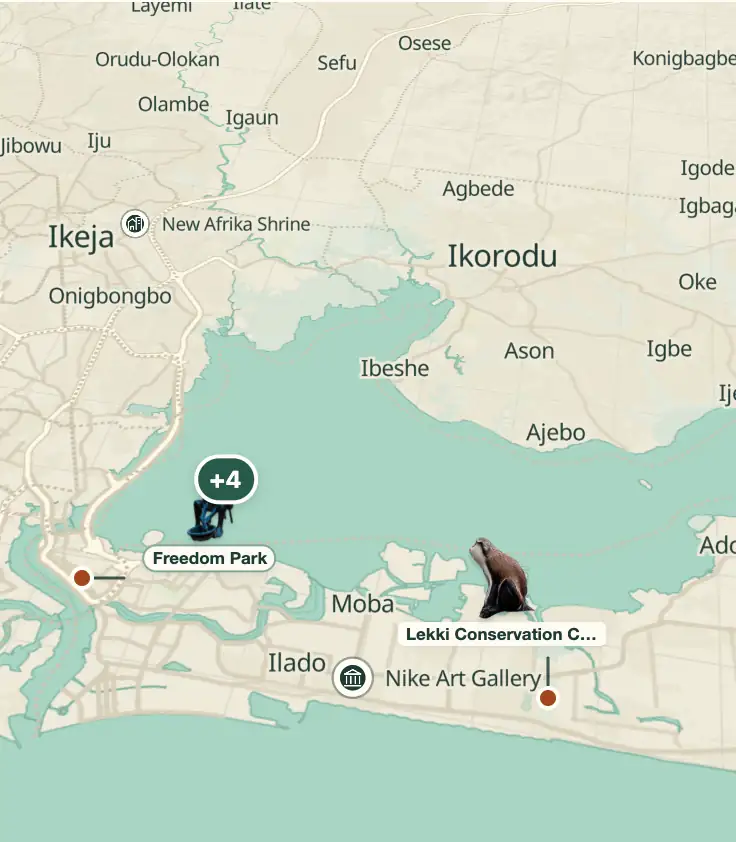
© OpenStreetMap · OpenFreeMap · © OpenMapTiles
Explore the map, read about the other places and plan your travel days in the app.
Open the appWhat to see
Lagos: The sand, the lagoon, and the channel
Lagos occupies a sandy coastal plain between the Atlantic and a lagoon system, at elevations that rarely exceed 10 meters.
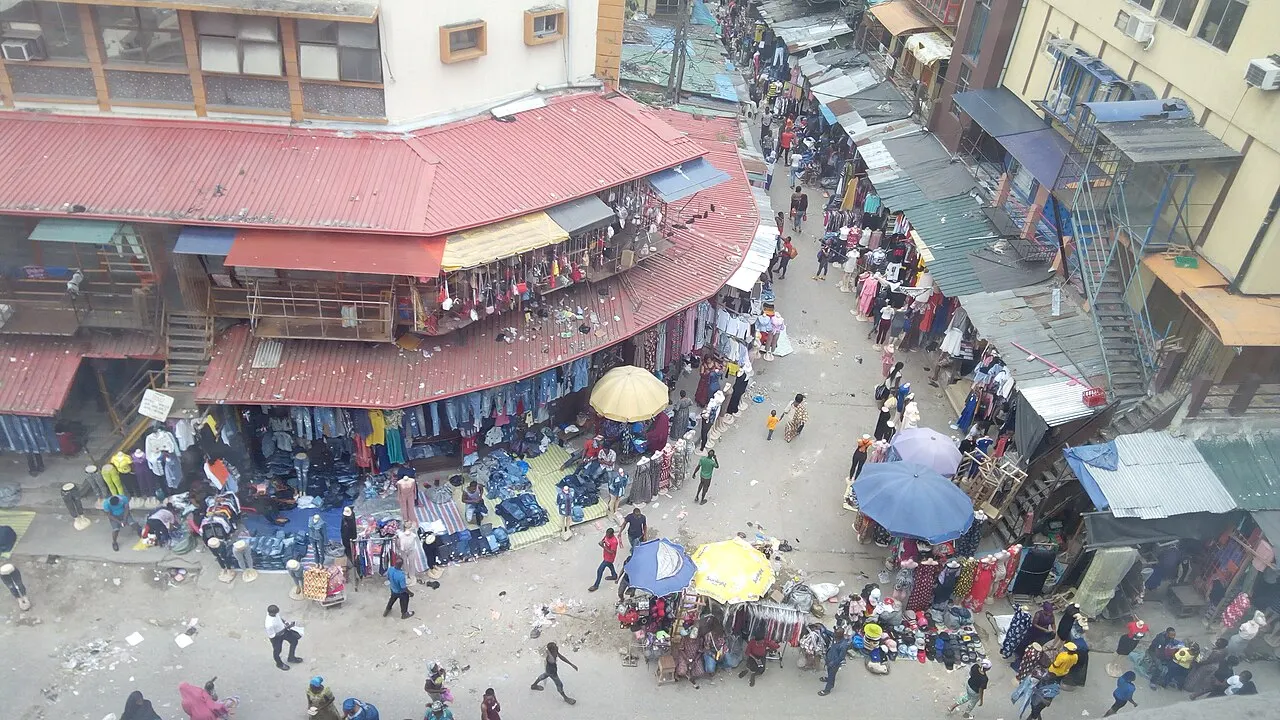
Idumota, Balogun, and the Iga Idunganran
The commercial cluster of Isale Eko: Idumota sells everything wholesale, Balogun is the fabric corridor, and the palace of the Oba of Lagos, Iga Idunganran, dating from the 17th century, sits a few blocks away. Go in the morning, with small notes and no open backpack.
Idumota is the wholesale district, Balogun gathers the fabrics, the Iga Idunganran palace, dating to the 17th century, is a few blocks away, and it's best to go in the morning with small bills and your bag zipped shut.
Check access
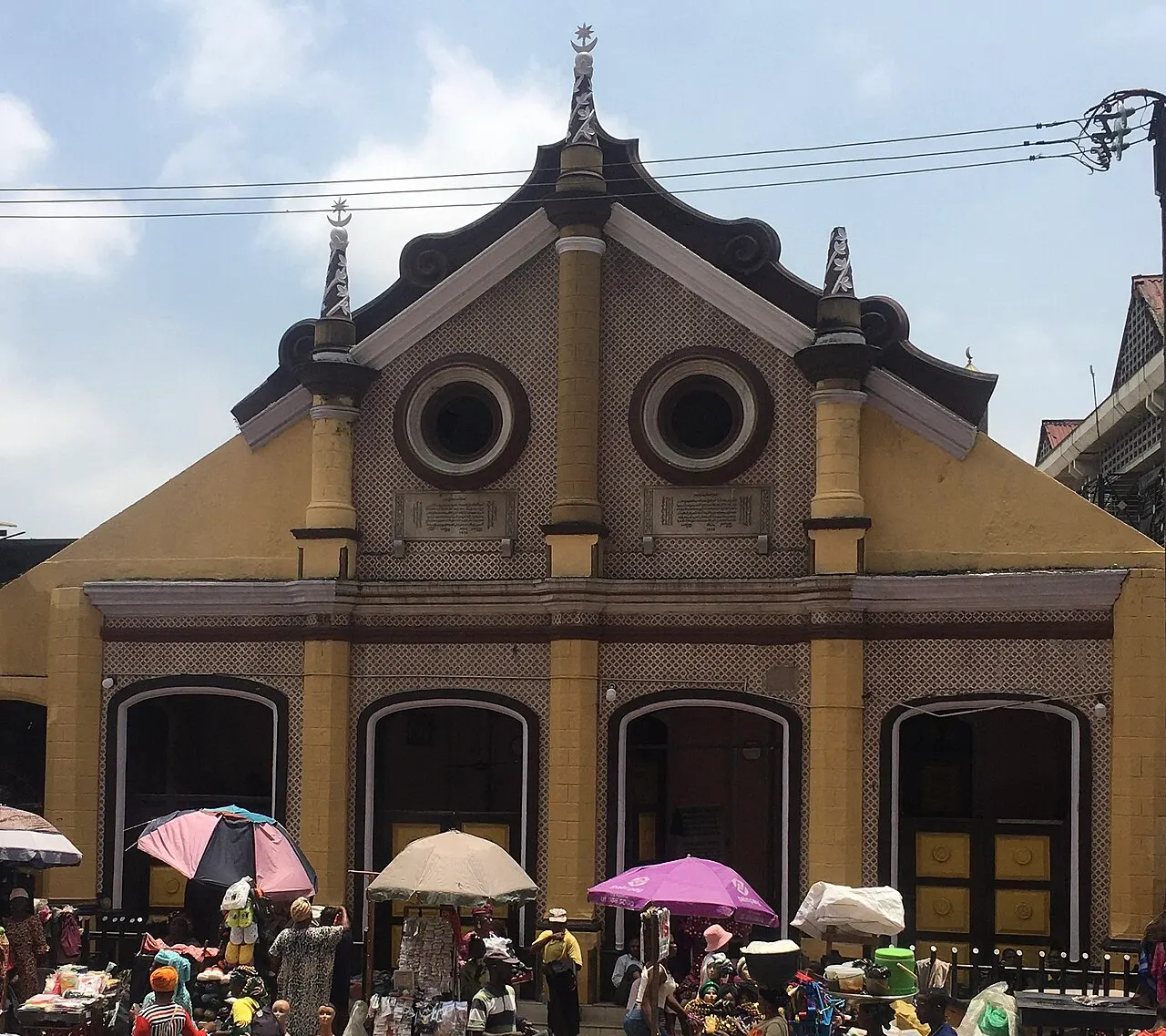
Popo Aguda and the Shitta-Bey mosque
The Brazilian quarter, between Campos, Bamgbose, and Tokunboh streets, holds stucco townhouses built by returnees from Brazil and Cuba. The Shitta-Bey mosque, opened in 1894 and designed by Afro-Brazilian builders, is the most complete example of this style in West Africa.
Those who returned from Brazil and Cuba built the townhouses between Campos, Bamgbose and Tokunboh streets, and the Shitta-Bey mosque, designed by Afro-Brazilians, is the most complete example of that style in West Africa.
Check access
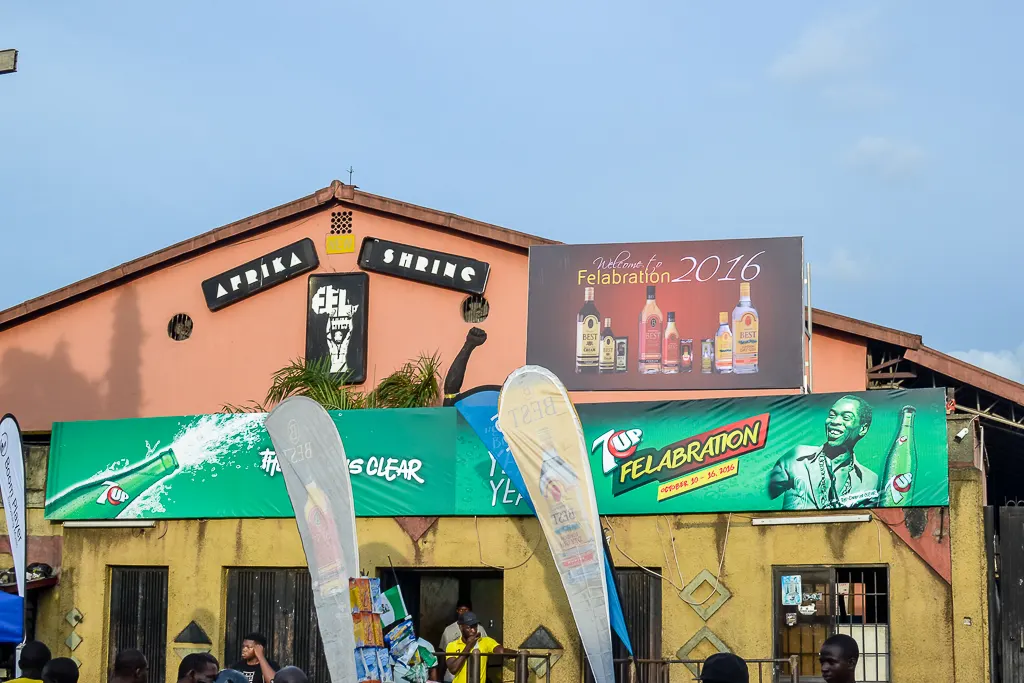
New Afrika Shrine
A concert venue in Ikeja built in 2000 by Femi and Yeni Kuti to replace the original Shrine. Concrete floor, plastic chairs, a big band and loud horns; the Kuti family's shows tend to run Thursday to Sunday, and Felabration happens there every October.
In Ikeja, Femi and Yeni built the building that replaced the Shrine in 2000, where the Kuti family usually performs Thursday to Sunday; Felabration comes here every October.
Check access

Freedom Park
On Broad Street, in Lagos Island, on the site where the British held political prisoners. Converted into a cultural park by architect Theo Lawson and opened in October 2010, on independence's 50th anniversary: the foundations of the cells were kept visible, and the courtyard hosts concerts, theater, and an open-air bar.
Theo Lawson's park, opened in October 2010 on Broad Street, occupies the grounds where political prisoners were held, leaves the foundations of the cells in view, and puts on shows, theater and an open-air bar in the courtyard.
Check access
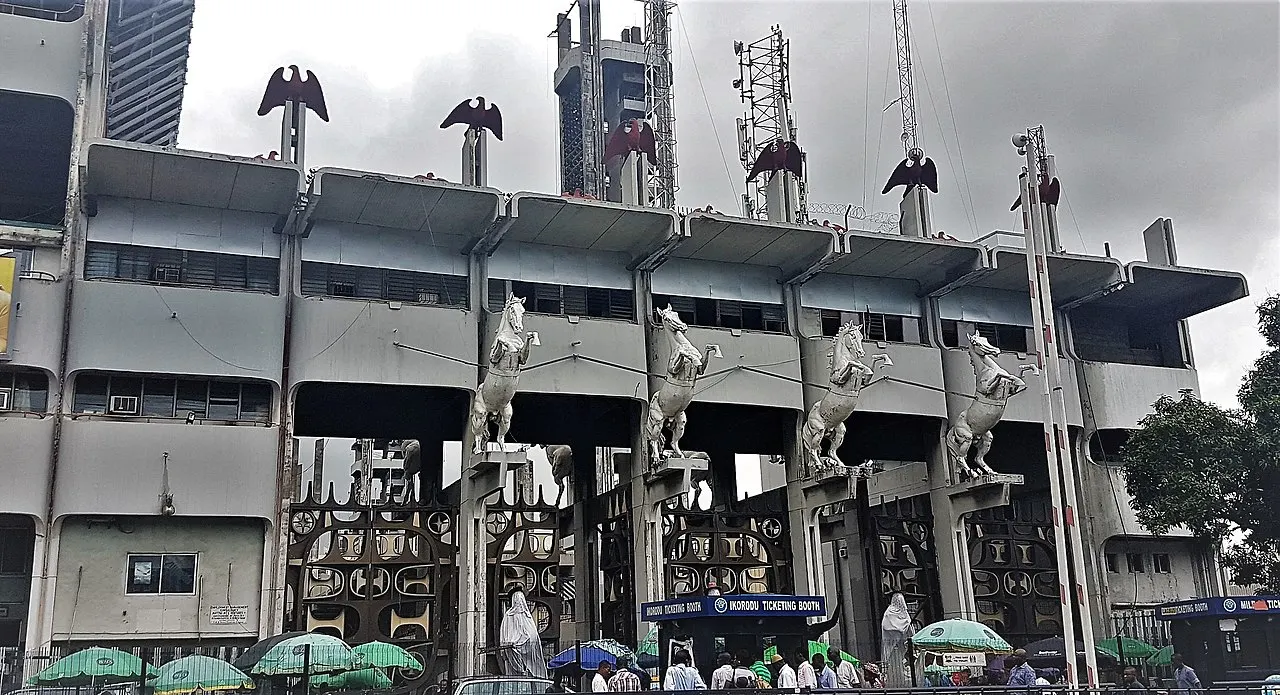
Tafawa Balewa Square
Tafawa Balewa Square occupies the old colonial racecourse where Nigeria's green and white flag was first raised, in 1960. The gateway with four white horses and seven eagles, from 1972, is the city's most reproduced postcard image.
On the former racecourse, the green and white flag was raised for the first time in 1960, and the 1972 gate is the most reproduced postcard image of the whole city.
Check access
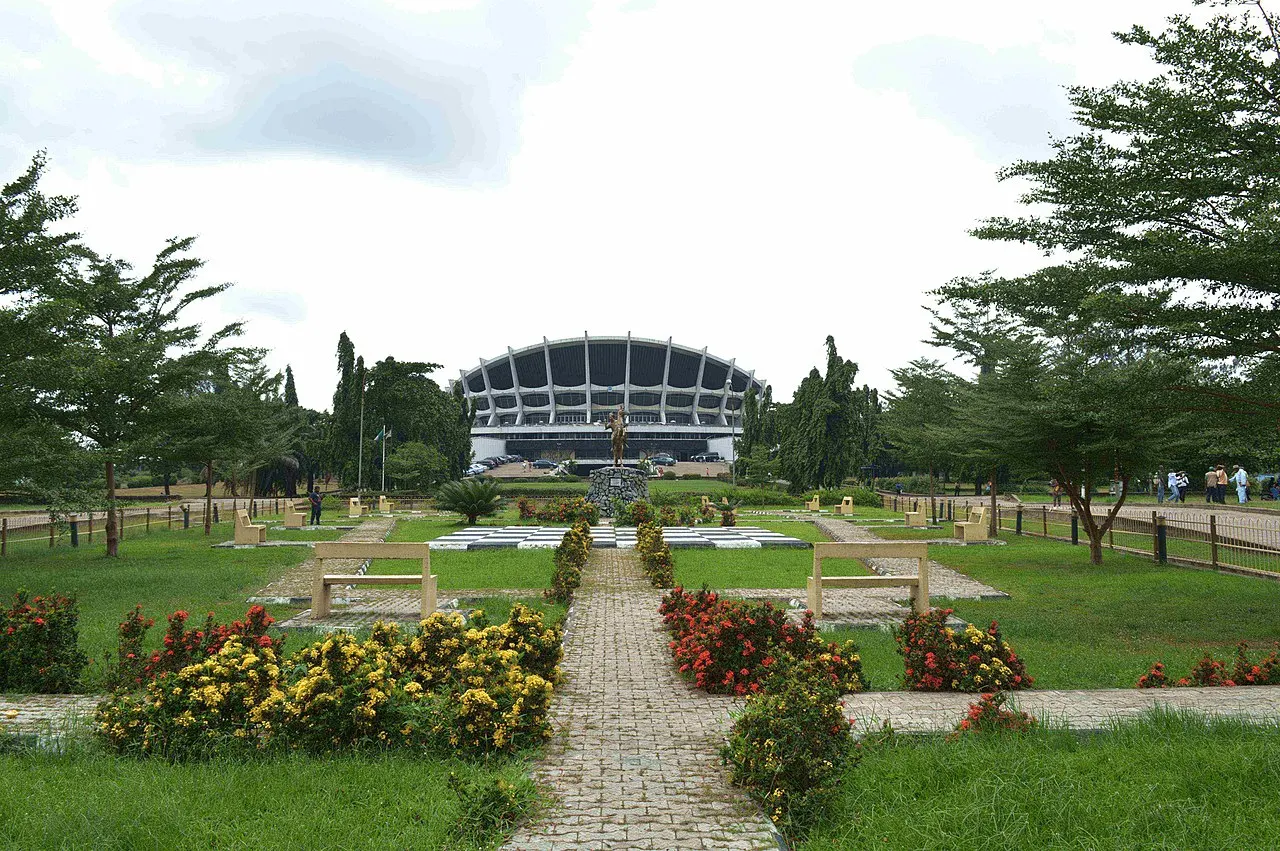
National Arts Theatre, Iganmu
In Iganmu, the former National Arts Theatre building was inspired by the Palace of Culture and Sports in Varna, Bulgaria, and hosted FESTAC in 1977. The complex reopened on 1 October 2025 as the Wole Soyinka Centre for Culture and Creative Arts. Check the programme and visit conditions to explore beyond the exterior architecture.
The centre reopened in October 2025 and is worth visiting when its programme or building access matches your interests. Check before travelling to Iganmu; without an accessible activity, use the time elsewhere on the mainland.
Check access

Nike Art Gallery
Five floors in Lekki with thousands of works gathered by Nike Davies-Okundaye, a textile artist who also runs adire and batik workshops. Admission is free, and the collection ranges from traditional fabrics to contemporary Nigerian painting.
Nike Davies-Okundaye gathered thousands of works and keeps adire and batik workshops running, the collection ranges from traditional fabrics to contemporary Nigerian painting, and admission is free.
Check access

Lekki Conservation Centre
A 78-hectare reserve in Lekki run by the Nigerian Conservation Foundation. Forest, paths and walkways offer a break between the peninsula’s built-up districts. Check admission, opening and accessibility of your intended route before going; the suspended walkway is not the only way to explore the reserve.
Worth visiting for the preserved forest in Lekki and a route suited to your mobility. Check walkway conditions, allow time and arrange the return; the visit offers more than crossing a suspended structure.
Check access
Nilo’s itinerary
Start with the basic programme and choose extensions for the time you have.
Plan my days in the app ↗Day 1 · Isale Eko, the old city
Start the morning at Freedom Park, on Broad Street: the former colonial prison of Her Majesty, opened as a cultural park in 2010, with the foundations of the cells preserved in the courtyard.
Cross over to Tafawa Balewa Square, where independence was proclaimed on October 1, 1960, and walk along Campos and Bamgbose Street, in Popo Aguda, to see the Agudás' townhouses and the Shitta-Bey mosque, from 1894.
Visit Idumota and Balogun market in daylight, with a local guide if this is your first visit. Agree on a meeting point and departure plan; carry small notes and keep your phone and wallet put away.
Walk past the Iga Idunganran palace and end the afternoon at the National Museum, in Onikan, with the Nok terracottas, the Ife bronzes and Murtala Mohammed's car.
Have dinner in Victoria Island and arrange the return to your hotel with a trusted driver. Do not turn the end of the day into an improvised night walk.


If you stay longer
Day 2 · The mainland: Fela, Yaba, and the theater
Start at the Kalakuta Republic Museum, Fela Kuti's house on Gbemisola Street, in Ikeja, open to the public since 2012 and kept with his room and clothes.
Have lunch at a buka, a simple local restaurant, in the residential area of Ikeja GRA. Amala with ewedu and gbegiri is a choice for exploring Yoruba cooking; if ordering Chapman and avoiding alcohol, check the bitters in the recipe. Computer Village can be an alternative if electronics trading interests you.
Yaba can fit the route if time allows and you want to explore the university area of Akoka. Check access to the University of Lagos campus before going; adapt the visit to the journey to Iganmu rather than adding stops as an obligation.
In Iganmu, visit the Wole Soyinka Centre for Culture and Creative Arts, formerly National Arts Theatre, according to its programme and admission conditions. The building inspired by Varna’s Palace of Culture reopened in October 2025. Confirm the visit before crossing the city; if no accessible activity is available, spend longer in Ikeja or Yaba.
If the New Afrika Shrine has a concert that interests you, arrange both journeys with a trusted driver. Check the artist, time and admission that day; the itinerary does not depend on a member of the Kuti family performing. Without a show, choose dinner and return to the hotel using the arranged transport.
Day 3 · Nature and art in Lekki
Start at Lekki Conservation Centre, a 78-hectare reserve run by the Nigerian Conservation Foundation. Check opening, admission and walkway conditions before leaving. Allow the morning for the forest without expecting particular animals to appear or guaranteed access to every structure.
Have lunch in the part of Lekki you are already visiting rather than travelling to Victoria Island just for a meal. Ask about the day’s dishes and ingredients; leave the afternoon for the gallery and return.
At Nike Art Gallery, explore painting, sculpture and textiles associated with Nike Davies-Okundaye’s work. Adire is resist-dyed cloth traditionally associated with indigo. Ask about pieces that catch your attention; workshops and meetings require separate confirmation and are not automatically part of a visit.
If you prefer the water, replace this Lekki day with an organised outing to Tarkwa Bay. Agree on the boat, lifejackets, sailing conditions and return with the operator. The beach’s more sheltered position does not guarantee wave-free water or safe swimming; assess the day’s conditions before entering.
If you're driving, leave Lekki early. Traffic heading back builds fast once evening sets in.


Food
 AI illustration
Jollof rice
Long-grain rice cooked in a base of tomato, red pepper, chili, and onion, usually with beef or chicken stock. “Party jollof,” cooked in a big pot over firewood for events, has a slightly charred bottom, the part everyone fights over; served with fried chicken, roast beef, and fried plantain (dodo).
 AI illustration
Suya
Thin skewers of beef seasoned with yaji, a mix of ground peanuts, ginger, garlic, and chili, grilled over coals by Hausa mallams. Sold at night, on the roadside, wrapped in paper with raw onion, tomato, and more yaji on top; the spicy roasted goat version is called asun.
 AI illustration
Amala with ewedu and gbegiri
The quintessential Yoruba dish: a brown paste of dried yam flour (amala) served with a green, viscous jute-leaf soup (ewedu), a black-eyed pea puree (gbegiri), and a pepper sauce with meat. The combination is called abula and is eaten with the right hand, at a neighborhood buka, at lunchtime.
 AI illustration
Egusi with pounded yam
A thick soup of ground melon seeds, palm oil and leaves that may include meat, smoked fish and tripe. It comes with a dough called “swallow”, such as pounded yam, cassava eba or fufu, used to scoop up the soup. Ask about ingredients if you have dietary restrictions and eat in a way that is comfortable for you.
 AI illustration
Catfish pepper soup
A clear, very spicy broth with uziza, utazi, and calabash nutmeg seeds, made with a live catfish the customer picks out: hence the nickname “point and kill.” It's late-afternoon food, from a beer parlour, taken with a cold Star or Gulder.
 AI illustration
Boli with epa
Ripe plantain roasted over charcoal and sold with roasted peanuts (epa) and a chili sauce with palm oil. It costs a few hundred naira, shows up on every corner of the mainland in the late afternoon and is the cheapest snack in the city.
 AI illustration
Akara with ogi
A fried fritter of peeled, whipped black-eyed peas, eaten for breakfast with ogi (also called pap or akamu), a fermented corn porridge served warm. Sold early in the morning from street trays, alongside soft loaf bread and puff-puff.
 AI illustration
Chapman
A drink of citrus soft drinks, grenadine or blackcurrant syrup, cucumber, lemon and ice, common in Lagos restaurants. Many recipes include dashes of Angostura, an alcoholic bitter. If you need an alcohol-free drink, request a version without alcoholic bitters and check the house recipe.
Day trips
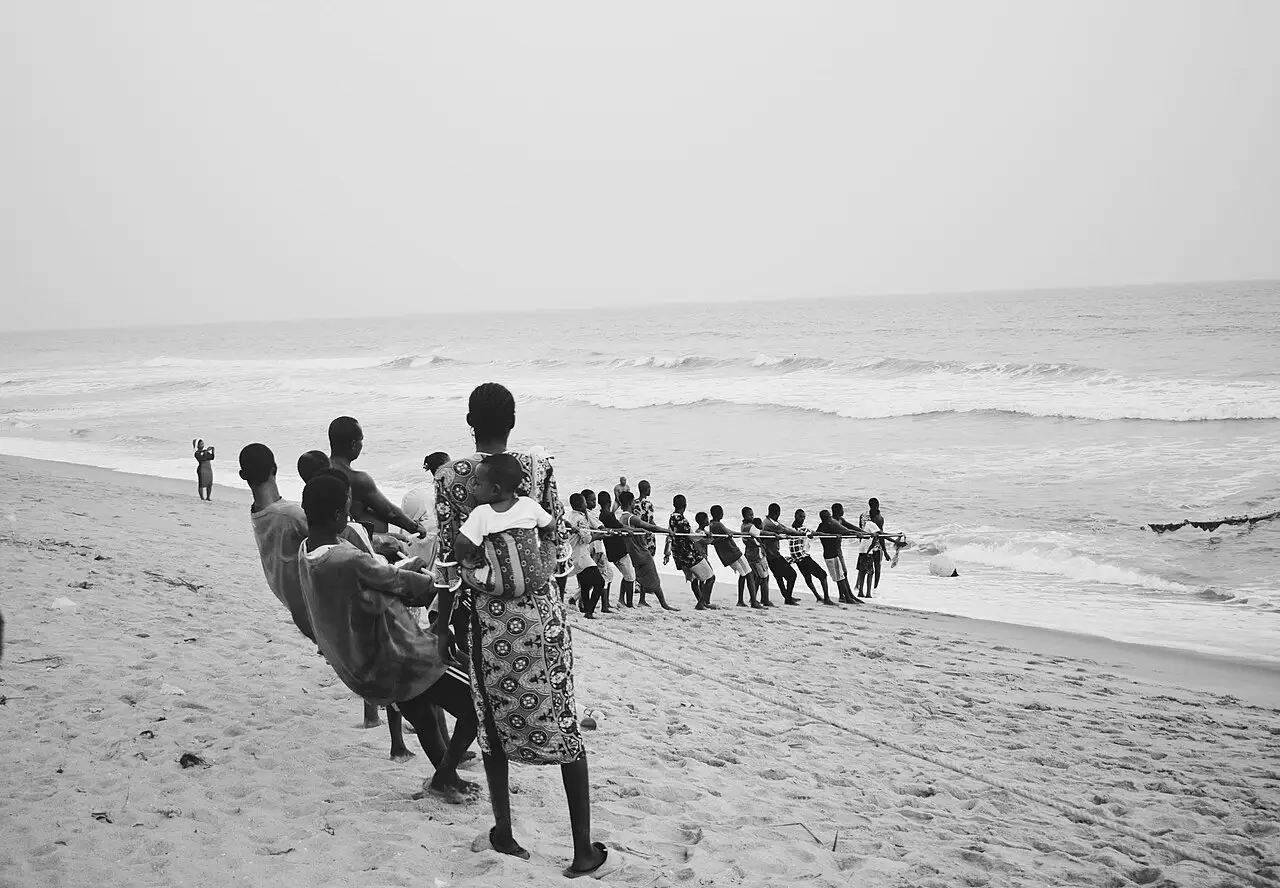
Badagry
60 km west along the Badagry Expressway, 1 hour 30 minutes to 3 hours by car depending on traffic. It was one of the largest ports of the Atlantic slave trade: you can see the Badagry Heritage Museum, the Vlekete slave market, chains and shackles at the Mobee Family Museum, the Point of No Return on Gberefu beach, and Nigeria's first two-story building, from 1845.
Abeokuta
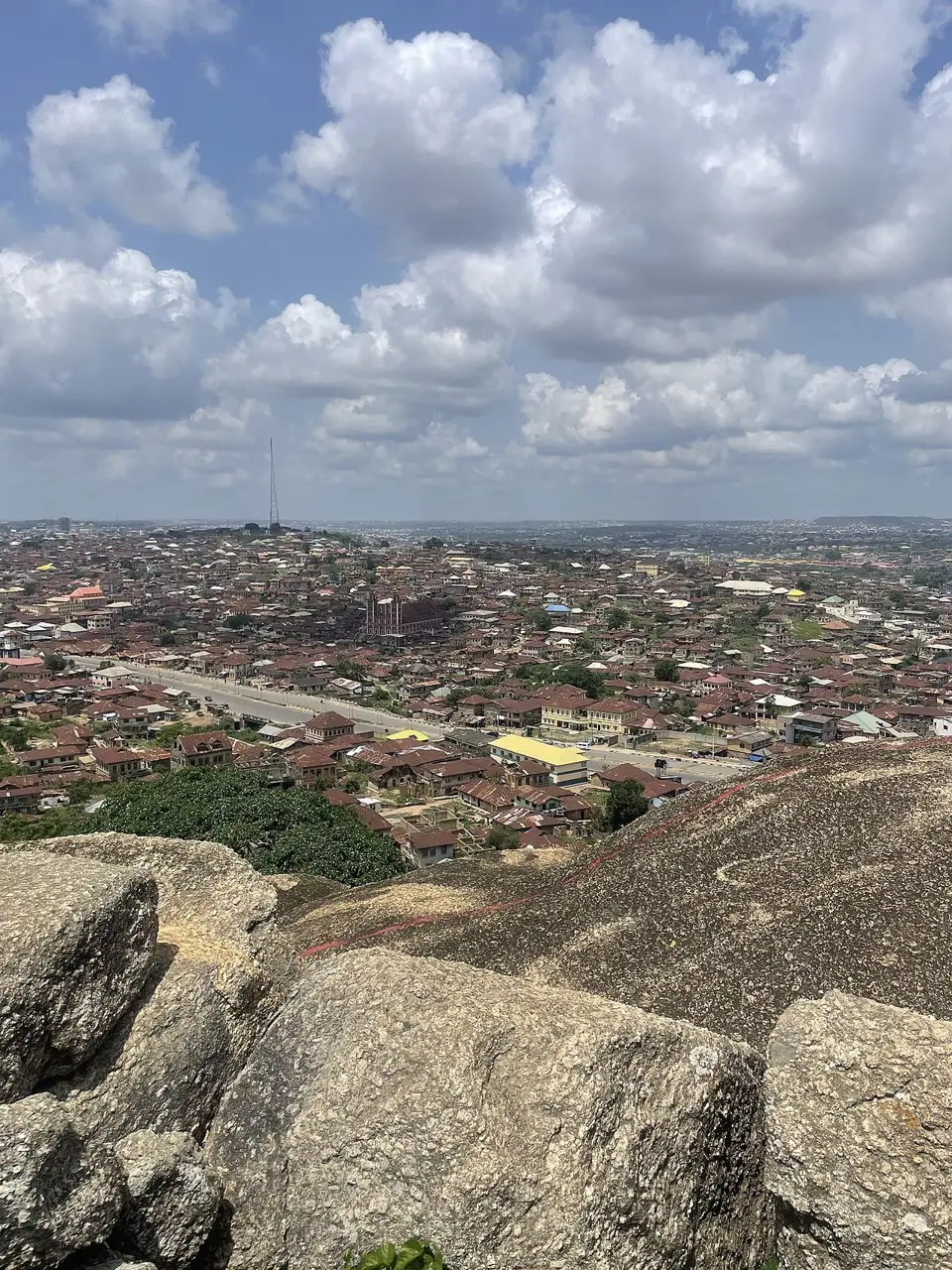
100 km north, in Ogun State, 2 to 3 hours along the Lagos-Abeokuta Expressway. Olumo Rock, a refuge for the Egba during the 19th-century wars, has stairs and a lookout over the city; Itoku market sells adire, the indigo-dyed cloth, and it's the hometown of Fela Kuti and Wole Soyinka.
 AI illustration
Epe and the Lekki coast
70 to 90 km east along the Lekki-Epe Expressway, 1 hour 30 minutes to 2 hours 30 minutes. Epe's fish market sits on the lagoon shore, Lufasi nature park preserves forest and birds along the way, and the stretch between Ibeju and Eleko holds beaches open to the Atlantic, with strong currents and little lifeguard infrastructure.
Where to begin
Isale Eko, the old city
Start the morning at Freedom Park, on Broad Street: the former colonial prison of Her Majesty, opened as a cultural park in 2010, with the foundations of the cells preserved in the courtyard.
Nature and art in Lekki
Start at Lekki Conservation Centre, a 78-hectare reserve run by the Nigerian Conservation Foundation. Check opening, admission and walkway conditions before leaving. Allow the morning for the forest without expecting particular animals to appear or guaranteed access to every structure.
Money
The currency is the naira (₦, NGN). Build your budget by separating the room per night, meals per person and transport between districts; hiring a car for the day can cost more than admission fees. Compare accommodation for your dates, especially during December concerts, and check the exchange rate and transaction fees before changing money.
Cards may work at hotels, malls and restaurants, but check whether your card network is accepted. Carry small notes for markets and smaller businesses. A “POS” sign can also mean an agent offering cash withdrawals and transfers; it does not guarantee acceptance of a foreign card. Local transfers usually require a compatible account or service. Agree on the price and payment method before eating or boarding.
Before withdrawing, check card acceptance, limits and fees; a particular bank is not a guarantee. Use a secure location and decline help from strangers. Change money at an authorised business. A tip for an agreed service is different from a demand made under pressure: small notes do not guarantee that a threat will end.
Getting there and around
From the airport to your hotel
Murtala Muhammed Airport (LOS) is in Ikeja, on the mainland. Check the arrival and connection terminals on your ticket; MMIA, GAT and MMA2 should not be treated as a single arrivals hall. Arrange the meeting in advance with a trusted driver or hotel transfer, check their identification and allow for traffic to Lagos Island, Ikoyi or Victoria Island. The exact address matters more than a generic distance “to the islands”.
Before departure, check the Nigerian immigration service or consulate for documents required for your passport and itinerary. If travelling on an e-visa, keep the approval letter accessible and bring a printed copy, as NIS advises. Confirm yellow fever certificate rules with the health authority and airline; do not rely on arranging vaccination or a visa on arrival.
Choose transport for the journey
Lagos combines BRT buses, trains, ferries and local road transport; none reaches every place in the guide. The Blue Line links Marina to Mile 2, and the Red Line links Agbado to Oyingbo. Check LAMATA for the day’s service and the Cowry card used on regulated services before going to a station. Danfos are yellow vans and kekes are passenger tricycles: confirm destination and fare before boarding.
For a first visit crossing several districts, I would arrange a familiar car and driver with addresses and the return agreed. An available app is not a guarantee of safety or airport pickup. Keep windows closed in traffic. Short walks can form part of the day, but pavements, crossings and flooding vary even in Ikoyi and Lekki Phase 1. For ferries, check the terminal, return journey and safety equipment with the operator.
Safety
Lagos calls for security planning: theft, armed robbery and kidnapping are risks. Local company or a familiar district does not make a journey safe by itself. Check travel advisories before leaving and arrange transport and the return with someone you trust; avoid walking alone at night. Do not resist a robbery.
In traffic, keep doors locked, windows closed and valuables out of sight. An intimidating street demand is not a compulsory tip; avoid confrontation and seek help to leave the situation. Do not cross floodwater, which can hide open drains.
Before travelling, seek health advice on yellow fever, malaria prevention and protection against mosquitoes. Check that your insurance covers treatment and possible evacuation.
Nigerian law criminalises same-sex relationships, and LGBTQIA+ people also face discrimination, violence and blackmail. Consider these risks when planning your trip and protecting your personal information.
Etiquette tips
Greet before you ask
A “good morning” before asking the price is a friendly way to start a conversation. Follow how the person introduces themselves; you need not perform a ritual or assume every seller expects the same address.
Forms of address
Sir, ma, aunty and uncle can be respectful forms of address without implying family ties. In Yoruba contexts, gestures and greetings vary with age and situation; a visitor can greet respectfully without copying unfamiliar gestures.
Use your right hand
The right hand is traditionally preferred for giving and receiving objects in many local contexts. If you use your left hand or need assistance, explain naturally; the interaction need not become an etiquette test.
Ask before you photograph
Ask permission before photographing people and markets. With police officers, soldiers, bridges, the port of Apapa, airports and government buildings, the rule is strict: photographing a security installation can get you detained, and the explanation comes afterward.
Don't throw money at parties
At an owambe, a celebration such as a wedding, you may see banknotes being “sprayed”. The Central Bank prohibits this as currency abuse; being a host does not create an exception. For a cash gift, use an envelope or a transfer you can make.
Haggle without rushing
At stalls where bargaining is part of the sale, ask the price and compare before offering another amount. There is no compulsory half-price discount, and the seller can refuse. In shops with marked prices, ask whether negotiation is possible.
Mistakes to avoid
Judging the airport trip by distance alone
The journey depends on the address, bridges, time and rain. Check traffic before leaving and allow time beyond the airline’s required arrival time. A night in Ikeja may make sense before an early flight if it reduces an uncertain journey.
Confusing Lagos Island with Victoria Island
Lagos Island contains Isale Eko and the historic core; Victoria Island concentrates businesses, hotels and restaurants. Give the driver the full name and address of the place, not just “the island”. Check the arrival point before confirming the journey.
Leaving documents and health checks until arrival
Check visas and documents for your passport and itinerary before buying or boarding. Nigeria requires proof of yellow fever vaccination, but confirm how the rule and any exceptions apply with the health authority and airline. Seek health advice in advance; do not rely on immediate airport vaccination as a solution.
Relying on one payment method
Check card acceptance and carry small notes for market purchases and local transport. A “POS” or transfer sign does not mean a foreign card will work. Agree on payment before the service; a demand under threat is not a tip.
Phone in hand inside a car stuck in traffic
Holding your phone in your hand inside a stopped car, especially at night at the slowest traffic points: that's where a hand comes through the window.
Useful phrases
Ẹ káàárọ̀ (é-kaa-RÓ)
Good morning, in Yoruba; the form starting with “ẹ” is the respectful one, used with elders
Ẹ ṣé (é-SHÉ)
Thank you, in Yoruba
Báwo ni? (BÁ-wo ni)
How are you?, in Yoruba
Ẹ̀ló ni? (È-LÓ ni)
How much is it?, in Yoruba
Abeg, how much? (a-BEG)
Please, how much is it?, in Nigerian Pidgin
No wahala (no wa-HA-la)
No problem, all good; in Pidgin, works as both an answer and a farewell
Districts
Lagos Island (Isale Eko)
The historic and commercial core, with the Oba's palace, Balogun Market, Idumota, Tinubu Square, and the Brazilian neighborhood of Popo Aguda. By day it's West Africa's largest textile retail hub and the density is extreme; by night it nearly empties out.
Ikoyi
Former colonial residential quarter that became Nigeria's most expensive address, with embassies, clubs, the Ikoyi Club (1938), and the Ikoyi Cemetery. Wide, tree-lined streets, good for walking, almost no street commerce.
Victoria Island and Eko Atlantic
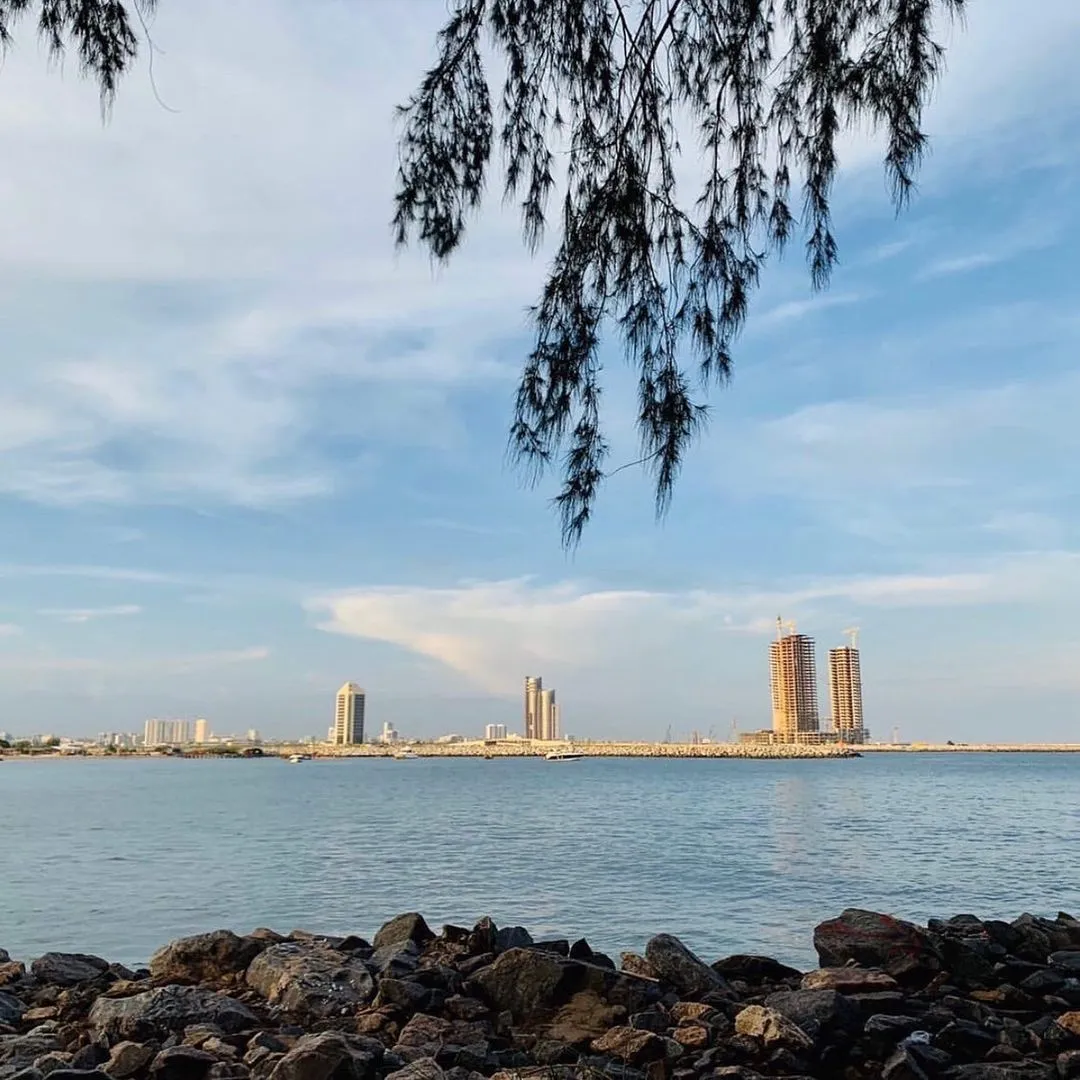
The business district: bank headquarters, hotels, restaurants, and galleries like Terra Kulture. Adjacent to it, Eko Atlantic is a new city on 10 km² of land reclaimed from the sea, still under construction, with nearly empty streets.
Lekki and Ajah
The Lekki peninsula extends east along the Lekki-Epe Expressway, with residential areas, galleries and Lekki Conservation Centre; Ajah lies farther along the corridor. Allow a day for each area, as journeys can take longer than expected. The demolition of Maroko in 1990 belongs to the transformation of a specific part of the city, not the origin of the whole peninsula.
Ikeja
Administrative capital of Lagos State and site of the international airport. Home to Ikeja GRA, with bars and restaurants, the Computer Village in Otigba, West Africa's largest electronics market, the Kalakuta museum, and the New Afrika Shrine.
Yaba and Akoka
The university and tech corridor: the University of Lagos, in Akoka, the Yaba College of Technology, and the startup cluster known as Yabacon Valley. It has the Tejuosho market and the used-book stalls of Sabo.
Surulere and Iganmu
Middle-class mainland neighborhood, with the National Stadium (1972) and, in Iganmu, the National Arts Theatre from 1976. It was the center of nightlife in the 1970s and 1980s and still has music venues, bukas, and barbershops open late.
Makoko and Ebute-Metta
Makoko has areas on land and water, including stilt homes beside the lagoon. Ebute-Metta is a neighbouring mainland area; the two names do not describe a single district accessible only by canoe. Arrange any community visit with local representatives, permission for photographs and confirmed access conditions; residents and their homes should not be viewed without consent.
History
15th c. · Èkó, an Awori settlement
Awori fishermen and farmers, a Yoruba subgroup, occupy Iddo island and the spit that is now Lagos Island. Portuguese navigators arrive around 1472 and call the inlet Lago de Curamo, after the lagoons: hence the name Lagos, while the local name Èkó never stopped being used.
c. 1550 · The Kingdom of Benin takes Èkó
Oba Orhogbua, ruler of the Kingdom of Benin in present-day southern Nigeria, sets up a military base on the island and appoints a local representative. The line of Lagos obas is born from that occupation, and the palace is still called Iga Idunganran today.
18th c.–1851 · Port of the Atlantic slave trade
Lagos becomes one of the gulf's main embarkation points after nearby ports close, exporting tens of thousands of enslaved people, chiefly to Brazil and Cuba. The rivalry between Oba Kosoko, tied to the trade, and his rival Akitoye gives the British Navy the pretext it was looking for.
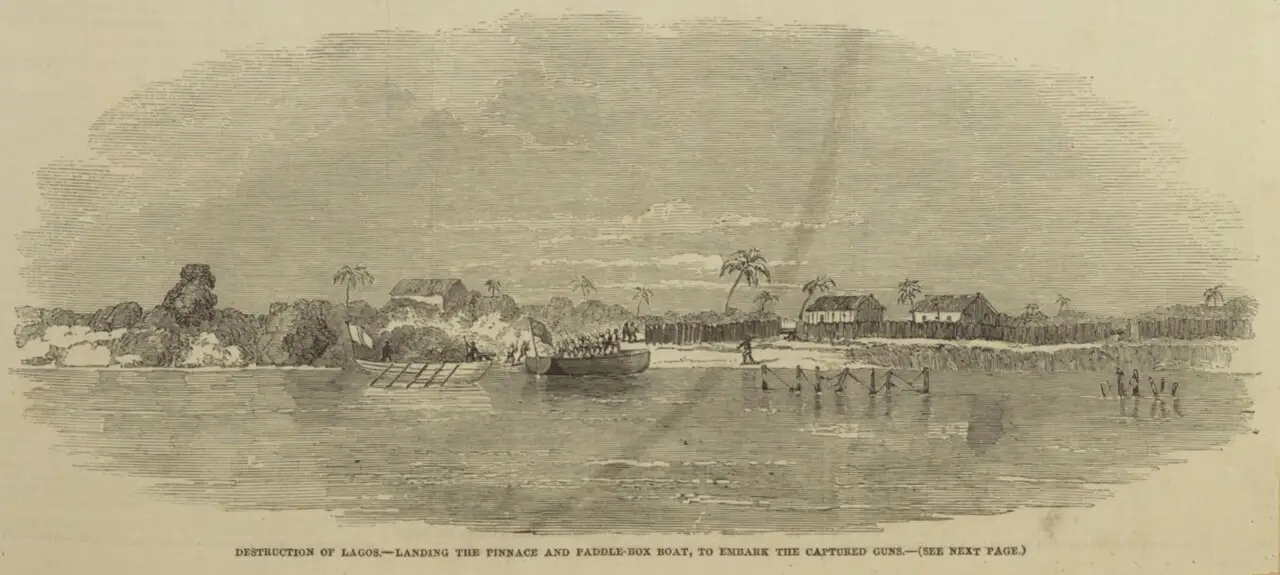
1851 · British bombardment
In December 1851 the British squadron bombards the island, deposes Kosoko, and restores Akitoye to the throne. A British consul stays, and with him, permanent interference.
1861 · Treaty of cession
On August 6, 1861, Oba Dosunmu signs, under naval pressure, the cession of Lagos to the British Crown. The city becomes a colony and the entry point of British rule over what would become Nigeria.
1880–1900 · Agudás and Saros
Freed people and their descendants returning from Brazil and Cuba (Agudás) and from Sierra Leone (Saros) settle in Popo Aguda, on the island, bringing surnames like Da Silva, Pereira, and Da Rocha. They're the ones who build the townhouses with carved facades and mosques like the Shitta-Bey, from 1894.
1914 · Amalgamation and capital
The Northern and Southern protectorates are unified by Frederick Lugard on January 1, 1914, and Lagos becomes the capital of the new colonial Nigeria. The port, the railway, and the administration all concentrate in the city.
1960 · Independence
On October 1, 1960, independence is proclaimed at the former racecourse, renamed Tafawa Balewa Square. Lagos remains the federal capital of the newly born country.
1970–1977 · Oil, migration, and FESTAC
The end of the Biafra war in 1970 and the oil boom pull in millions of migrants; the population multiplies within a decade, and “go-slow” enters the vocabulary. In January and February 1977 the city hosts FESTAC, the pan-African festival that fills the National Theatre, opened in 1976.
1991 · The capital moves to Abuja
On December 12, 1991, the military government moves the federal capital to Abuja. Lagos loses the ministries and keeps the port, the banks, the media, and the music.
 AI illustration
2008–2024 · Mass transit and land reclaimed from the sea
BRT began operating in 2008 and the Blue Line connected Marina to Mile 2 in 2023. Red Line infrastructure was commissioned in February 2024; commercial passenger service between Agbado and Oyingbo began on 15 October that year. Eko Atlantic also transformed the coast of Victoria Island through reclamation and new districts.
Complete history
The lagoon offers a port on a coast without one
Lagos exists because the lagoon offers a sheltered port on a coastline that almost has none. The Awori, a Yoruba subgroup, occupied Iddo and the sandy spit that is now Lagos Island when the Portuguese passed the coast around 1472 and named the place Lago de Curamo. Around 1550 Oba Orhogbua, of the Kingdom of Benin, a historical kingdom in present-day southern Nigeria, set up a war camp there and left a representative. This is how the dynasty of Lagos obas was born, and where the Iga Idunganran palace comes from. In the following centuries the shelter became business: as nearby ports gradually closed, Lagos turned into one of the largest embarkation points for enslaved people on the Gulf of Guinea, bound chiefly for Brazil and Cuba.
It was trade that brought the British
It was this trade that brought the British. In December 1851 the Navy bombarded the island, deposed Oba Kosoko, and installed a more pliable rival; ten years later, on August 6, 1861, Oba Dosunmu signed, under threat of cannon, the cession of Lagos to the Crown. The colony grew with those returning across the Atlantic: the Saros, freed people from Sierra Leone, and the Agudás, returnees from Brazil and Cuba, who settled in Popo Aguda and built stucco townhouses, churches, and the Shitta-Bey mosque, from 1894, with Afro-Brazilian labor and design. In 1914 the amalgamation of the Northern and Southern protectorates made Lagos the capital of colonial Nigeria, with the port, the railway, and the administration in the same square kilometer.
Independence was declared here
Independence was declared in Lagos on October 1, 1960, at the former racecourse that became Tafawa Balewa Square. Then came the coups of 1966, the Biafra war (1967–1970), and soon after, oil money. Between 1970 and 1980 the metro area's population went from about 1.5 million to over 4 million, in growth the infrastructure never caught up with: the Third Mainland Bridge, 11.8 km long, wasn't finished until 1990 and for decades was Africa's longest bridge. In 1977 FESTAC gathered delegations from across the Black world at the newly built National Theatre, while soldiers attacked Fela Kuti's Kalakuta commune that same year, in retaliation for the album Zombie.
Hard times in the 1980s and 1990s
The 1980s and 1990s were hard: structural adjustment, devaluation of the naira, military rule, and mass evictions; in July 1990 the demolition of the Maroko neighborhood removed about 300,000 people from the land that is now Lekki Phase 1. On December 12, 1991, the capital moved to Abuja and Lagos was left with what really mattered to the economy: the port of Apapa, the banks, the record labels, and the press. With the return to democracy in 1999, Lagos State began collecting its own taxes on a scale unprecedented in the country and investing in works: BRT in 2008, road expansion, the first urban trains.
Afrobeats, Nollywood, and Africa's biggest industry
Today's Lagos adds up all these layers. The city is home to Africa's biggest music industry (the Afrobeats of Wizkid, Burna Boy, Asake and Ayra Starr is produced and mixed here) and to Nollywood, one of the most prolific film industries in the world by number of titles. In October 2020 the #EndSARS protests against police violence occupied the Lekki toll gate and ended in gunfire on the night of October 20, a turning point in the young generation's relationship with the state. The first two urban rail lines, the Blue and the Red, began operating in 2023 and 2024. Between April 27 and 29, 2024, the route of the Lagos-Calabar coastal highway demolished part of the Landmark Beach complex, on Victoria Island, and reopened the debate over who pays the price of public works. At the same time, the sea is advancing: Eko Atlantic has reclaimed about 10 km² from the ocean, and the city lives with annual floods at an elevation of just a few meters.
Geography and shape of the city
The sand, the lagoon, and the channel
Lagos occupies a sandy coastal plain between the Atlantic and a lagoon system, at elevations that rarely exceed 10 meters. The central body of water is the Lagos Lagoon, about 50 km long, linked to the sea by a single dredged channel protected by two breakwaters built in the early 20th century.
The islands, the mainland, and three bridges
What people call “the islands” is a barrier chain: Lagos Island, the historic core; Ikoyi, separated by a ditch that became a canal; Victoria Island; and the Lekki peninsula, which stretches almost 60 km to the east. The mainland, where the vast majority of the population lives, starts at Ebute-Metta, Yaba, Surulere and Apapa and spreads out through Ikeja, Oshodi, Mushin, Agege, Alimosho and Ikorodu. Three bridges stitch the two sides together: the Carter, from 1901 and rebuilt, the Eko, from 1975, and the Third Mainland, from 1990, 11.8 km long. They concentrate the bottlenecks, because practically all of the metro area's commuter traffic passes over them.
The unplanned street grid and the heavy rains
The street grid wasn't planned for this volume; it grew through private plotting, landfill, and floodplain occupation, which explains the pattern of dead-end streets, insufficient drainage, and quick flooding in Lekki, Victoria Island, and the Ajah corridor after heavy rain. The climate is tropical monsoon, hot year-round, with a rainy season from April to October and a dry spell in August that locals call the “August break.”
It's possible to walk all day without ever going above ten meters over the sea.
Three bridges connect the islands to the mainland, and that's where traffic gets stuck.
Culture
Afrobeat, afrobeats and other scenes
Lagos is an important centre of Nigerian music. Fela Anikulapo Kuti developed afrobeat by combining highlife, jazz and Yoruba rhythms in long pieces with politically critical lyrics; the Kalakuta house-museum and New Afrika Shrine help trace that story. Afrobeats, with an “s”, encompasses other forms of contemporary pop associated with artists such as Wizkid, Davido, Burna Boy and Tiwa Savage. Juju, fuji, gospel and alté are also part of the city: seek a programme that matches what you want to hear rather than expecting the same music at every venue.
Nollywood at industrial scale
Lagos brings together Nollywood film production, premieres and debate; Living in Bondage (1992) was a landmark in its expansion through video. Films, series and streaming releases offer different views of the city; fiction does not replace its history. Lagos also appears in writing by authors such as Sefi Atta, Teju Cole and Chris Abani. For visual art, visit galleries such as Nike Art Gallery, Rele and Terra Kulture or follow ART X Lagos: these are entry points into a local scene that existed before the fair.
Celebrations, religion and social life
Owambe is the name for a large celebration, such as a wedding or family party. Aso-ebi, fabric chosen by the hosts for a group of guests, can mark family or friendship ties; if invited, ask what to wear and how to participate. Churches, mosques and Yoruba religious traditions are part of the city but do not define every resident’s routine. Bars and viewing centres, places to watch matches, bring people together around football. A venue’s programme, a family invitation and street life show different aspects of Lagos.
Chapman does not automatically mean alcohol-free: check whether the recipe contains Angostura or another alcoholic bitter.
Festivals and events
Eyo (Adamu Orisa)
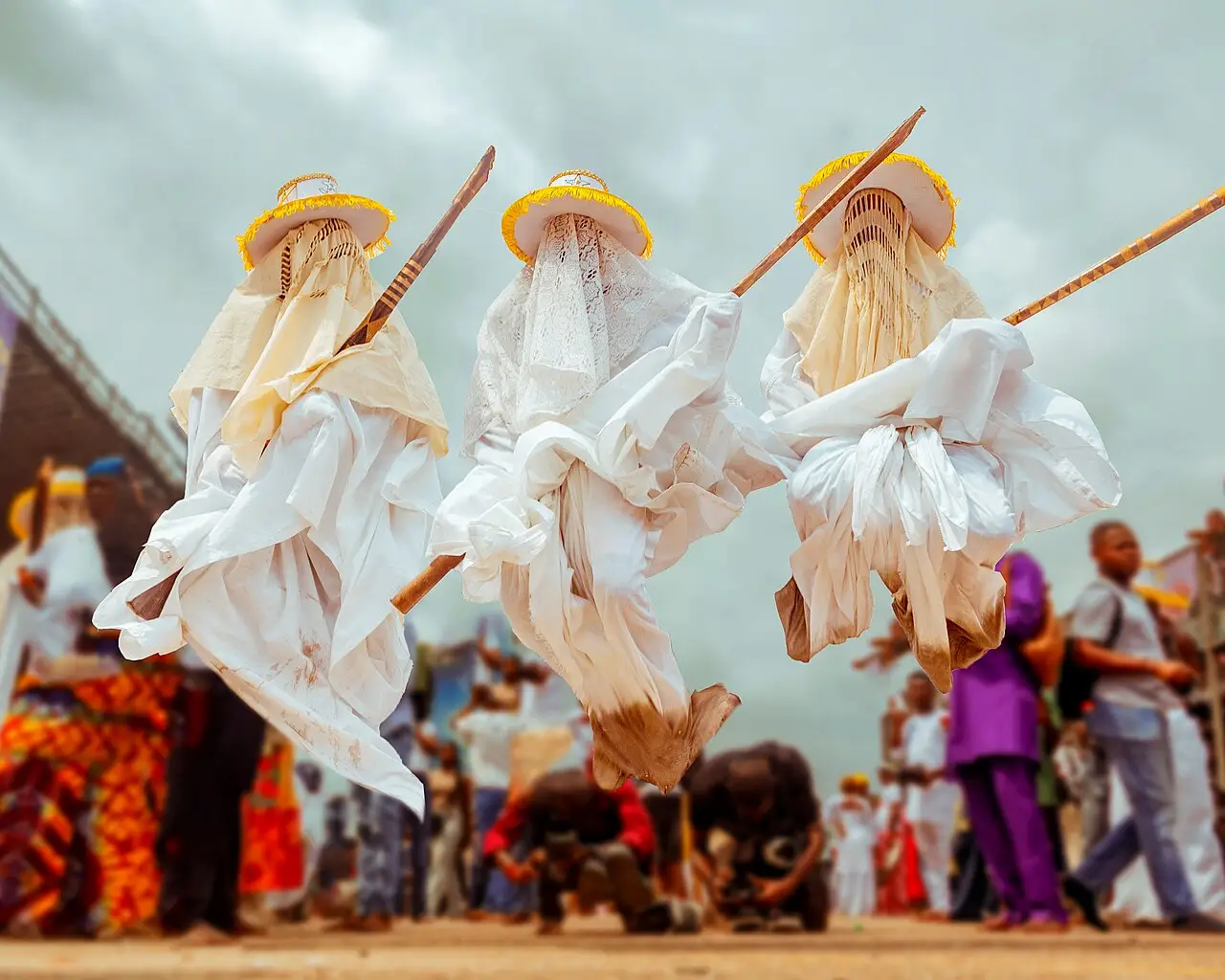
It has no fixed date: it's called to honor an oba or another important figure who has died, and announced weeks ahead. Hundreds of masqueraders covered in white, with wide-brimmed hats and a staff (opambata), take over Lagos Island on foot; that day, motorcycles aren't allowed and heeled shoes are off-limits in the parade area.

Felabration
A week around October 15, Fela Kuti's birthday. The festival has existed since 1998 and today takes place at the New Afrika Shrine, in Ikeja, with seven nights of shows, panels and a parade, cheap or free admission on several days and a full house until dawn.

Lagos' Fanti Carnival
On Easter Monday, in Lagos Island. A legacy of the Agudás who returned from Brazil and Cuba in the 19th century, mixing carnival troupes, costumes, and brass bands; it's Nigeria's oldest carnival and centers on the streets of Popo Aguda.

Art X Lagos
African contemporary art fair in early November, usually at the Federal Palace Hotel, in Victoria Island. Launched in 2016, it brings together galleries from across the continent and the diaspora; admission runs a few thousand naira.
 AI illustration
Detty December
Detty December brings together concerts, parties and diaspora gatherings through December and the turn of the year; it is not a festival with a single opening date. Choose events that interest you, check tickets and arrange the return. Demand for rooms and traffic can rise, but prices depend on the hotel and dates.
Books and films
Every Day Is for the Thief, Teju Cole (2007)
A Nigerian returns from New York and rediscovers Lagos in short chapters: the consulate line, the routine bribe, the generator, the book market. It's the most precise portrait of the city's daily friction.
King of Boys, Kemi Adetiba (2018)
Kemi Adetiba’s thriller follows a businesswoman connected to markets, crime and politics. Watch for the drama and its portrayal of power struggles in Lagos; the characters and events belong to a work of fiction.
Zombie, Fela Kuti (1976)
The album that turned music into a challenge to military rule. Twenty-five minutes of horns and repetition that explain the city's relationship with the uniform, the groove, and disobedience.
Frequently asked questions
Lagos: How long does it take from Victoria Island to the airport?
The 22 km between Victoria Island and the airport, in Ikeja, can take 40 minutes at 6am on a Sunday or three hours at 5pm on a Friday. Plan your timing by traffic, not by distance on the map, and sleep near Ikeja the night before an international flight.
Lagos: Are the domestic and international terminals together?
The international terminal (MMIA) and the two domestic ones (GAT and MMA2) are a few kilometers apart, and getting between them requires a taxi, which catches many people by surprise.
Lagos: What's there to see in Badagry, and how long does it take?
Badagry is 60 km west along the Badagry Expressway, 1 hour 30 minutes to 3 hours by car depending on traffic. It was one of the largest ports of the Atlantic slave trade, and you can see the Badagry Heritage Museum, the Vlekete slave market and the Point of No Return.
Lagos: What's the currency, and what's it worth?
In September 2026 the dollar was worth about ₦1,323 on the official market and between ₦1,380 and ₦1,390 on the parallel market, and the real hovered around ₦250 to ₦260.
Lagos: What's the climate like throughout the year?
Lagos is hot year-round, between 24 °C and 33 °C, and what changes over the year is the rain and the humidity.