Botswana
Okavango Delta
Okavango Delta: mokoro through the channels, safari in Moremi and a flight over the delta, all from Maun
Days I'd stay four days in Maun, and three at the very least.
How the guide reaches this number
The first belongs to the scenic flight, which shows where the water is that week and places Chief's Island and the channels that the rest of the trip covers in pieces; the second, to the mokoro, which gets close to the water without a motor; the third, to Moremi, where dry land and flooded plains lie side by side and the animals gather in the dry season. I'd give the fourth to Nxai Pan and Baines' Baobabs, which show the region's other face, that of the Kalahari salt pans. Those who can afford a camp inside the delta should swap the second and third days for two nights there, arriving by light plane, because the mokoro and the safari are already in the daily rate and the daily 4x4 drive disappears. Chobe and Tsodilo call for an overnight stay and are left for a longer trip.
3–4
Start with the basic programme and choose extensions for the time you have.
When June to October; in October the heat often passes 40 °C, and from December to March it rains in the afternoons and the heat is humid.
How the guide reaches this number
The delta has two seasons that do not coincide. Local rain falls from December to March, in late-afternoon storms, with days of up to 40 °C and high humidity. The flood, however, comes from afar: the water from Angola's rains arrives slowly and peaks between June and August, in the dry winter, when days are mild and nights can drop close to zero, with occasional frost. From July to October the pools dry up and animals gather at permanent water, which is when game viewing in Moremi is at its best. September and October heat up again, and October is the toughest month, with highs above 40 °C. The mokoro trip depends on that year's water level; when the flood is weak, some camps suspend the mokoro, so confirm with the operator before fixing the date.
Per person/day Add up lodging in Maun per night, meals per person, the daily Moremi fee, the mokoro and the scenic flight; a night at a camp inside the delta changes the total more than everything else.
How the guide reaches this number
Per person per day: accommodation, meals, urban transport, visits and a small allowance for extras. Flights excluded; larger purchases vary. Editorial estimate, not a quote.
 What Nilo thinks
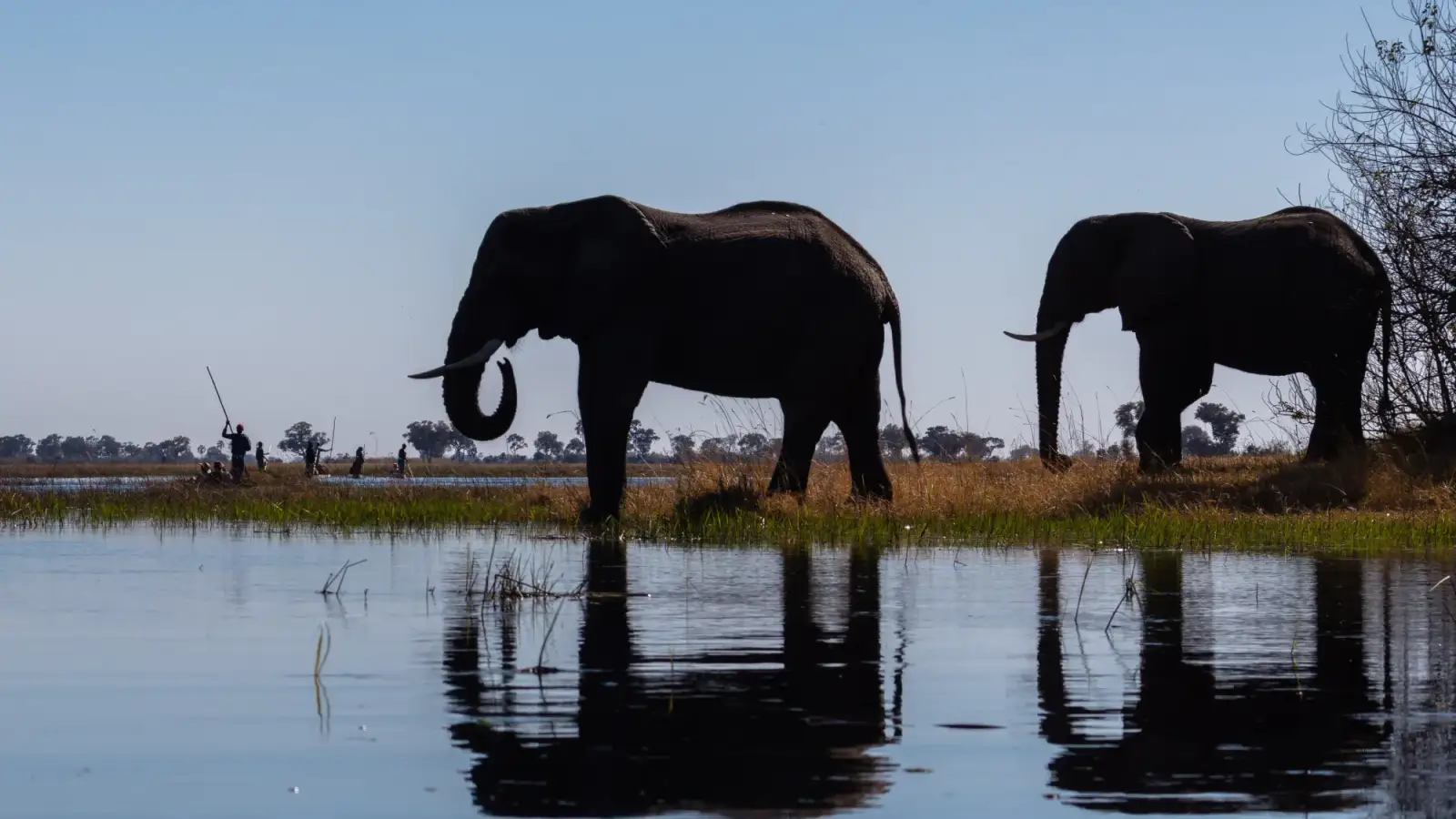
I'd recommend the Okavango Delta to anyone who likes animals seen up close, flat landscapes that reveal themselves slowly and towns that still feel like a frontier post. In Maun, herders still bring cattle in to sell, donkeys and goats stand about in the streets and block houses with zinc roofs have taken the place of the traditional rondavels. Herero women walk by in long dresses of Victorian cut, and the basket weavers of Ngamiland keep cooperatives where you can buy and learn the weave. At the table, I'd try the bogobe jwa lerotse, the sorghum porridge with melon served at weddings, and the mopane worm stewed with onion and tomato, served with pap, when it is in season. With time, I'd go to the villages of the Panhandle, such as Sepupa and Shakawe, which many people skip by using Maun only as a stopover and which show how people live off the river away from the safari circuit.The Okavango River does not flow into the sea. It comes down from the highlands of Angola, enters Botswana and spreads over the Kalahari sand in a fan of channels, papyrus lagoons and islands that began as termite mounds, until almost all the water evaporates or is drunk by plants. The strangest part is the calendar: the flood arrives in the dry winter, months after the rains, and turns the delta into an oasis at the height of the drought, when elephants, buffalo, lions and lechwe come from far away to be near the water. Maun, on the Thamalakane, lives off this: it was a cattle and hunting post and became the town of light-plane pilots, safari operators and mokoro polers, the canoe pushed standing up, with a pole, that takes visitors through the channels almost in silence. Next door, the Moremi Game Reserve keeps the mix of dry land and water that the Batawana decided to protect in 1963, before the country even existed.
Quick facts
- Population
- 85,293 inhabitants in Maun (2022 census, Statistics Botswana). Maun still has the official status of a village.
- Founding
- Maun became the Batawana capital in 1915. The Moremi Game Reserve was proclaimed in 1963, and the delta was added to the UNESCO World Heritage List in 2014.
- Country and region
- Botswana, North-West District (Ngamiland), whose administrative center is Maun.
- Language
- Setswana and English are official; English is widely used in commerce and tourism. In the delta, the languages of the river peoples are also spoken, such as those of the Wayeyi and the Hambukushu.
- Currency
- Pula (BWP), divided into 100 thebe. Scenic flights and delta camps usually charge in US dollars.
- Time zone
- UTC+2 (Central Africa Time), year-round.
- Best time to visit
- June to October; in October the heat often passes 40 °C, and from December to March it rains in the afternoons and the heat is humid.
- Average cost per day
- Add up lodging in Maun per night, meals per person, the daily Moremi fee, the mokoro and the scenic flight; a night at a camp inside the delta changes the total more than everything else.
When to go
June to October; in October the heat often passes 40 °C, and from December to March it rains in the afternoons and the heat is humid.
January
13 h 12 min of daylight
National holidays
Jan 1 – 3, 2027 · long weekend · New Year's Day
Jan 1, 2028 · New Year's Day
Source: Nager.Date. Holiday dates shift; check close to your trip.
February
12 h 44 min of daylight
March
12 h 13 min of daylight
National holidays
Mar 26 – 29, 2027 · long weekend · Good Friday, Easter Monday
Source: Nager.Date. Holiday dates shift; check close to your trip.
April
11 h 38 min of daylight
National holidays
Apr 14 – 17, 2028 · long weekend · Good Friday, Easter Monday
Source: Nager.Date. Holiday dates shift; check close to your trip.
May
11 h 10 min of daylight
National holidays
May 1, 2027 · Labour Day
May 6 – 9, 2027 · long weekend · Ascension Day
Source: Nager.Date. Holiday dates shift; check close to your trip.
July
Best time11 h 02 min of daylight
National holidays
Jul 1 – 4, 2027 · long weekend · Sir Seretse Khama Day
Jul 17 – 19, 2027 · long weekend · Presidents' Day
Source: Nager.Date. Holiday dates shift; check close to your trip.
September
Best time11 h 59 min of daylight
National holidays
Sep 30 – Oct 3, 2027 · long weekend · Independence Day
Source: Nager.Date. Holiday dates shift; check close to your trip.
October
Best time12 h 33 min of daylight
National holidays
Sep 30 – Oct 3, 2027 · long weekend · Botswana Day holiday
Source: Nager.Date. Holiday dates shift; check close to your trip.
November
13 h 04 min of daylight
December
13 h 20 min of daylight
National holidays
Dec 25 – 27, 2026 · long weekend · Christmas Day, Boxing Day
Dec 25, 2027 · Christmas Day
Dec 26, 2027 · Boxing Day
Source: Nager.Date. Holiday dates shift; check close to your trip.
High, shoulder and low season
High · June to October
The flood peaks between June and August and, from July to October, animals gather at permanent water, the best period for Moremi. Mornings from June to August are cold; October passes 40 °C. It is also when the daily rate at delta camps is highest and the Moremi campsites fill up first.
Shoulder · April, May and November
April and May are the transition to the dry season, with cooler days and the water still on its way to the south of the delta. In November the heat remains strong and the first rains arrive at the end of the month or in December.
Low · December to March
It rains in late-afternoon storms, days reach 40 °C and humidity rises; stretches of road in Moremi become difficult and the malaria risk is higher. It is the time when Nxai Pan and Makgadikgadi turn green and receive herds.
How the year changes
The delta has two seasons that do not coincide. Local rain falls from December to March, in late-afternoon storms, with days of up to 40 °C and high humidity. The flood, however, comes from afar: the water from Angola's rains arrives slowly and peaks between June and August, in the dry winter, when days are mild and nights can drop close to zero, with occasional frost. From July to October the pools dry up and animals gather at permanent water, which is when game viewing in Moremi is at its best. September and October heat up again, and October is the toughest month, with highs above 40 °C. The mokoro trip depends on that year's water level; when the flood is weak, some camps suspend the mokoro, so confirm with the operator before fixing the date.
Nilo's tips
Share the plane
The scenic flight is usually charged per plane, not per person. With five passengers, each person's cost drops considerably; it is worth gathering people at the campsite or the operator.
Pula in cash for Moremi
The park fee is paid to the DWNP on arrival, in pula, separate from the campsite. Withdraw cash in Maun before you leave.
Layers for the early morning
On winter safaris the vehicle leaves before sunrise, open to the air, and the temperature can be close to zero. Bring a hat and a jacket that fit in your pack when the afternoon warms up.
Malaria before the luggage
Prophylaxis starts days before the trip. Book the appointment well ahead, because the whole northwest is a transmission area.
Explore the map
Explore the map, read about the other places and plan your travel days in the app.
Open the appWhat to see
If time is short, I would skip: Lake Ngami
Leave for last, if time allows: Nhabe Museum
Okavango Delta
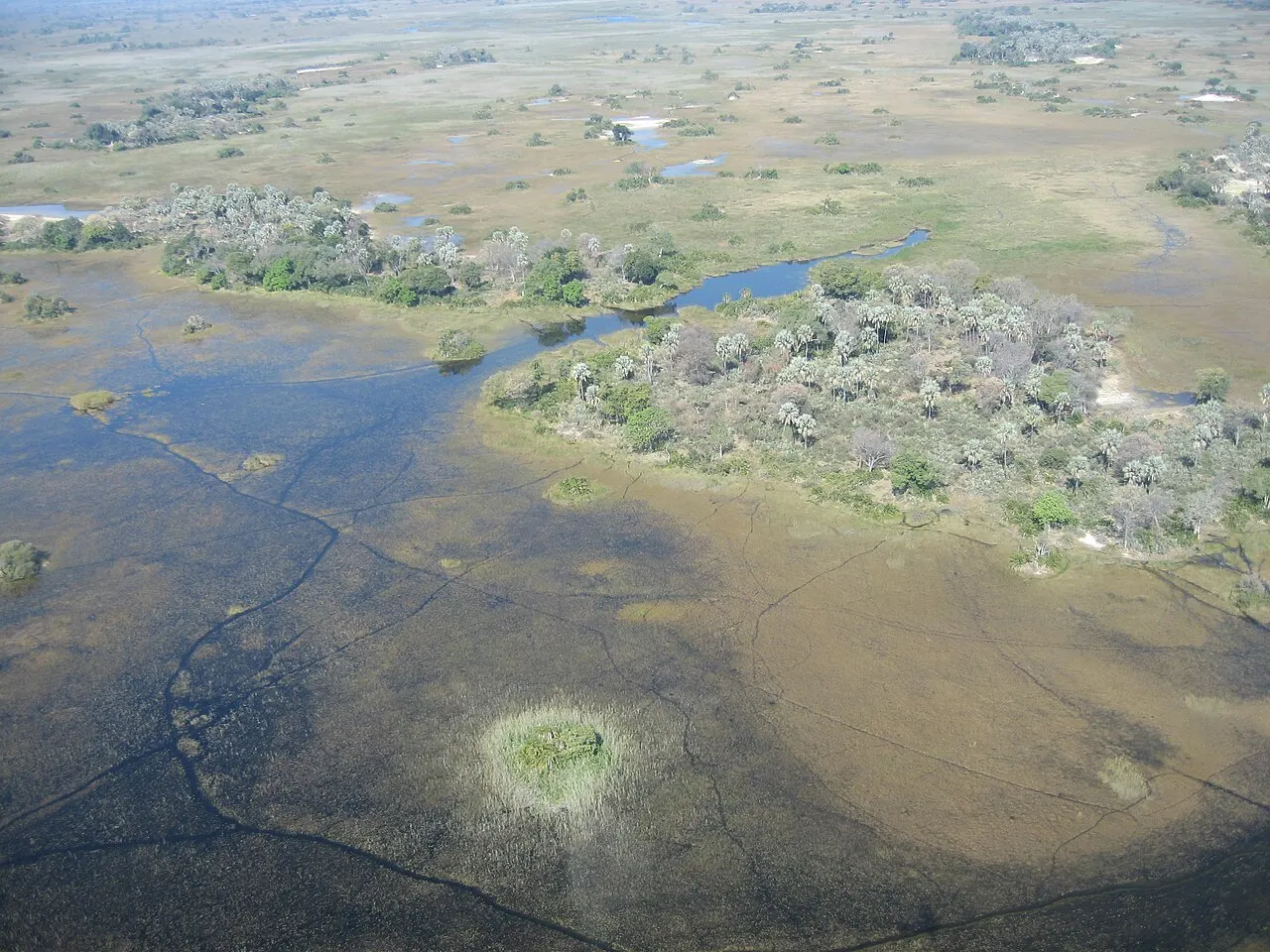
From the air, the delta shows the pattern of channels, lagoons and islands all at once, and it changes with the water level from one week to the next. Scenic flights in light planes or helicopters leave from Maun airport, and the operators are opposite the terminal, on Mathiba I Road. For planes, the price is usually fixed per aircraft, so sharing the flight with other passengers lowers each person's cost; a departure fee per person is added. The flight is better on a day with light wind.
Check access
Moremi Game Reserve
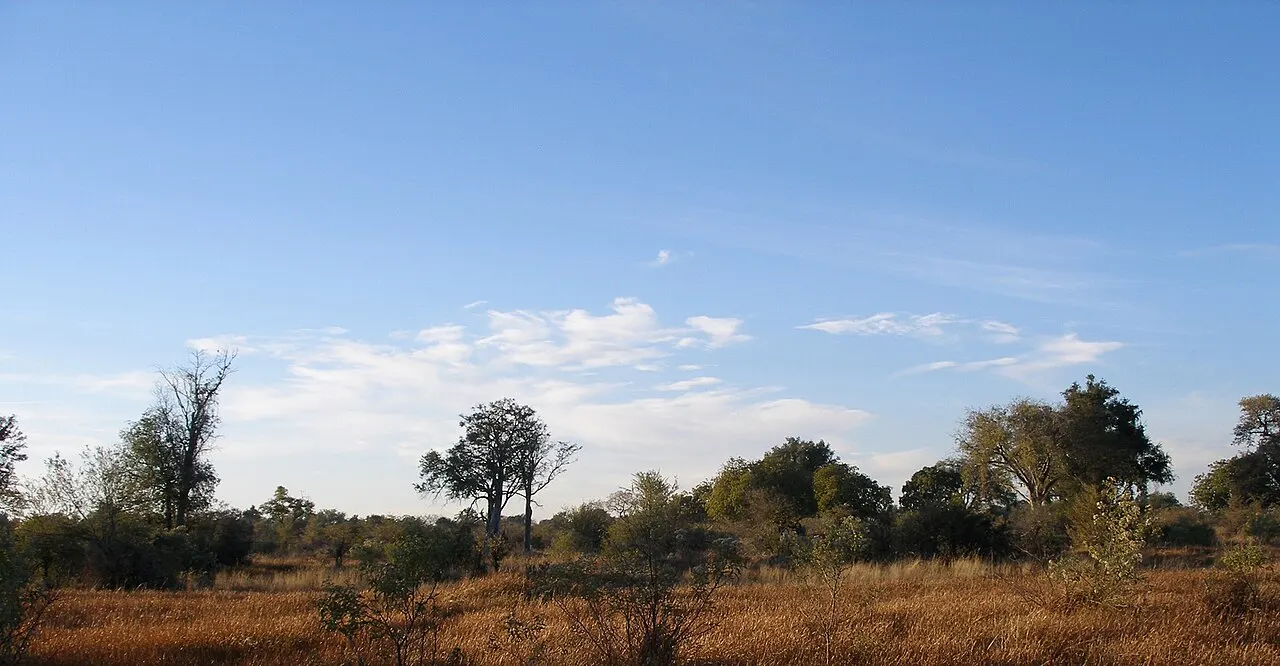
The reserve the Batawana proclaimed in 1963 occupies the east of the delta and puts side by side dry land with mopane woodland and acacias, floodplains and lagoons. It has lion, leopard, elephant, buffalo, giraffe, hippopotamus, red lechwe and a population of African wild dogs studied since 1989, and more than 400 bird species have been recorded. Game viewing is best from July to October, when the pools dry up and wildlife gathers at permanent water. The roads change with the flood: in high water there are flooded stretches, in summer there is deep sand.
Check access
Admission: BWP 270 (checked Oct 2026) source
Boro River
One of the channels that drain the delta to the south, emptying into the Thamalakane. On its floodplains and in the neighboring areas are the stations from which mokoros hired in Maun set out: the poler pushes the canoe standing up, almost without a sound, and the trip usually includes a guided walk on an island. Departure depends on the water level that year.
Check access
Xakanaxa
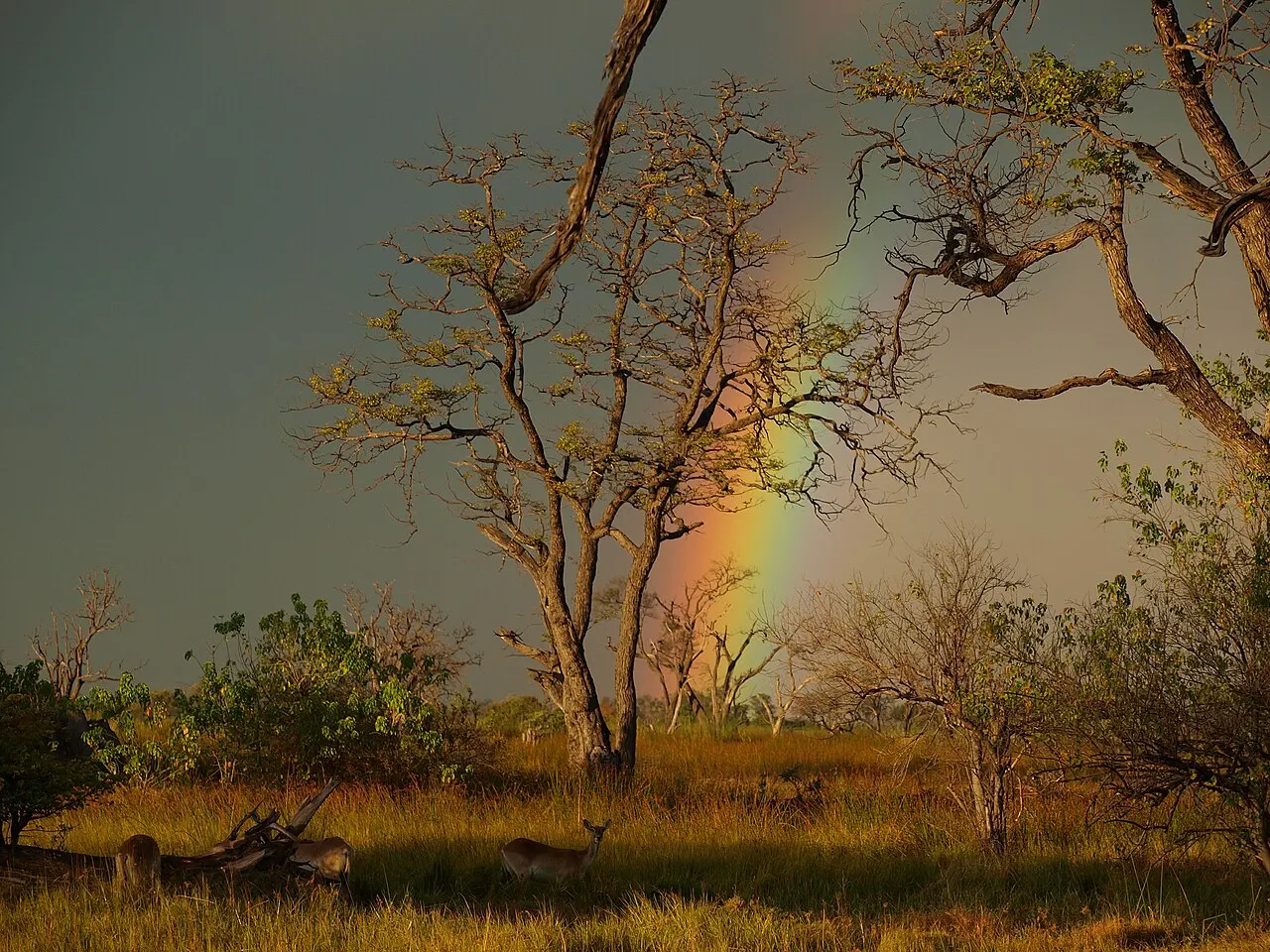
A sector of Moremi on the shores of permanent lagoons, where dry land meets the channels, and one of the reserve's four camping areas. The lagoons are the place to watch waterbirds, and the sector is farther from Maun than the south gate, so it usually belongs in itineraries with an overnight stay.
Check access
Third Bridge
A rustic campsite in Moremi near the Sekiri River, surrounded by papyrus, which the Botswana tourism authority names as a favorite of self-drive campers. It is inside the reserve and requires a 4x4 and an advance booking with the campsite's concessionaire.
Check access
Chief's Island
The largest island in the delta, more than 70 km long and about 15 km wide, was the chief's exclusive hunting ground and is now the protected core where the resident wildlife gathers when the water rises. It lies in the heart of the delta, within Moremi: visitors who do not sleep in a concession camp see it from above, on scenic flights.
Check access
Khwai River
The river that forms part of Moremi's northern boundary, near the north gate and the village of Khwai, home to the Bugakhwe. On the north bank is the Khwai community area, with its own camps and no park entry fee; on the south, the North Gate campsite, already inside the reserve.
Check access
Thamalakane River
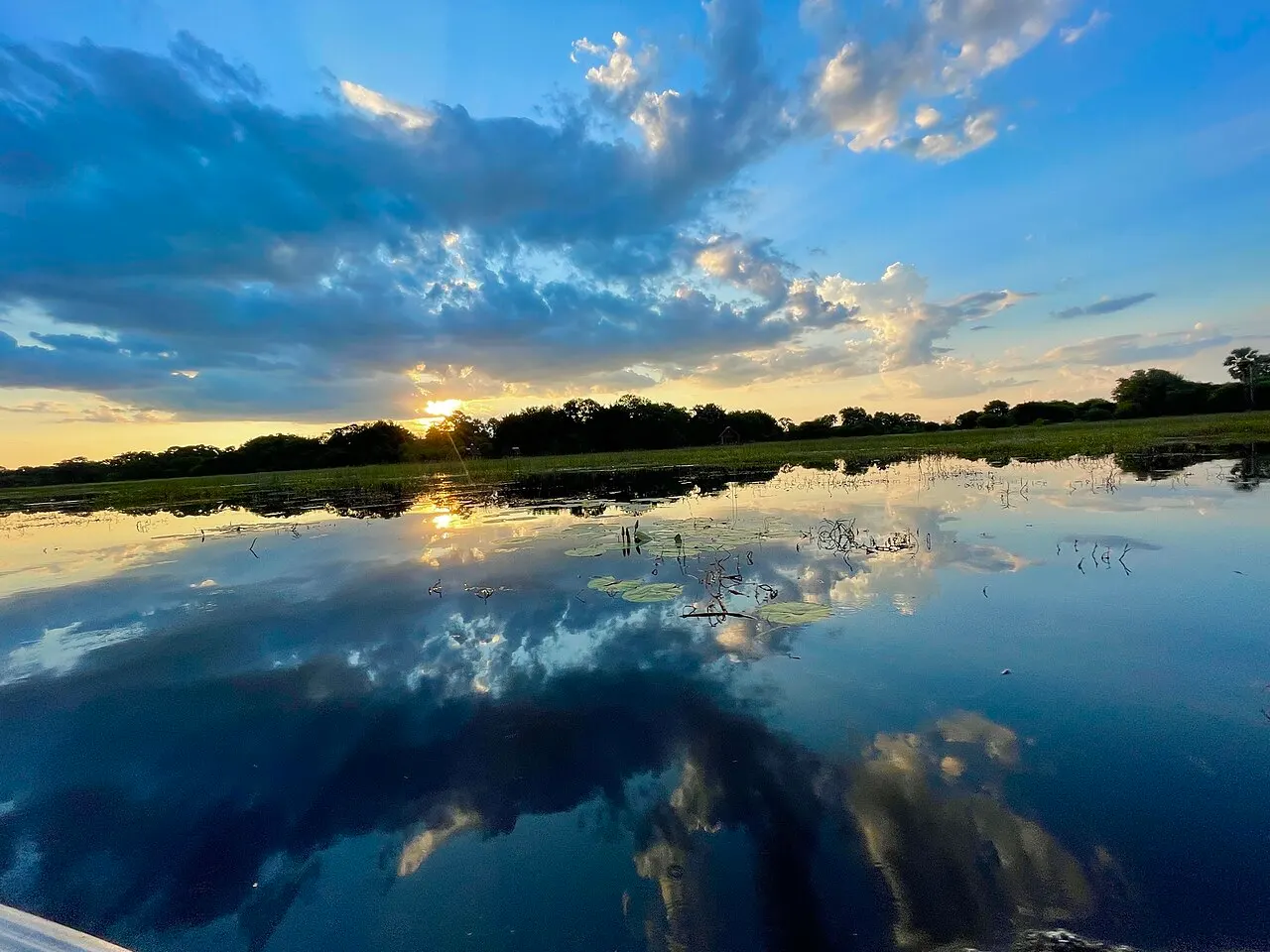
The river that runs through Maun follows a geological fault and receives the Boro at a right angle. On its banks are the hotels and campsites of Matlapaneng, and in the wider stretches red lechwe can still graze alongside donkeys, goats and cattle. It is the place for the end of the day if you are not in the delta.
Check access
Nhabe Museum
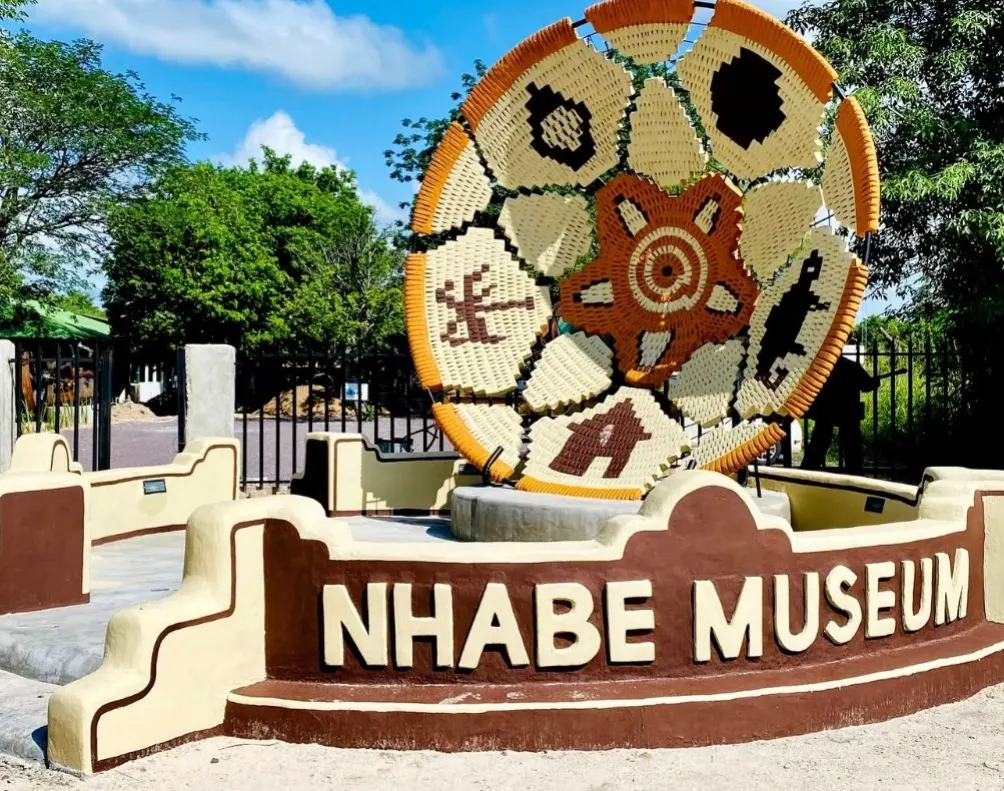
A museum in Maun opened in April 1996, in a building from 1939 that served as a British military watch post in the Second World War. It gathers objects, oral history and local art of the peoples of Ngamiland, and a large monumental basket marks the entrance. Worth a short stop on a day in Maun; confirm the opening hours by phone before you go.
Check access
More places in the guide
Lake Ngami
The lake that Livingstone described in 1849 is today a remnant that fills only when the delta's water arrives through the Thaoge River. In a flood year it attracts birds and animals; in a dry year, the trip to the southwest shore of the delta is not worth it.
Nilo’s itinerary
Start with the basic programme and choose extensions for the time you have.
Plan my days in the app ↗Day 1 · Maun and the delta from above
In the morning, a scenic flight from Maun Airport. Book ahead with one of the operators on Mathiba I Road, confirm whether the price is per plane or per person, and add the departure fee per person.
Ask for a route over the channels and islands and, if the flight time allows, over Chief's Island. If the wind is strong, move the flight to the afternoon of day 2, after the mokoro returns; day 4, to Nxai Pan, leaves early and does not leave room for the flight.
Lunch in central Maun and, in the afternoon, a short stop at the Nhabe Museum (confirm the opening hours first).
Late afternoon on the bank of the Thamalakane, in Matlapaneng, where you are staying. Arrange the next day's pickup with the operator.
Day 2 · Mokoro in the channels north of Maun
Early departure from Matlapaneng with the operator, by 4x4, to the mokoro station; the drive takes about an hour and a half.
A mokoro trip with a community poler through the channels of the Boro area, followed by a guided walk on an island and a picnic lunch.
Return to Maun in the afternoon; the return time changes with the season, so ask when booking.
If the water is too low for the mokoro that week, use the day for the helicopter flight or move the trip to Moremi forward.
Day 3 · Moremi Game Reserve
Leave at dawn, in the 4x4 and with the operator's driver, for Moremi's south gate (South Gate), to start the safari while the light is still low.
Morning game drive across the plains and mopane woodland; the guide chooses the tracks according to the water and the sand.
Pay the park fee in pula, if it is not included in the package.
Back in Maun in the late afternoon, before dark. Do not book a departing flight for this day.
If you stay longer
Day 4 · Nxai Pan National Park
Day trip
East of Maun, north of the road between Maun and Nata. The park protects the bed of a fossil lake of about 40 km² and Baines' Baobabs, a group of ancient trees painted in the 19th century by Thomas Baines. In the rainy season, from December to April, it has giraffe, zebra, wildebeest and predators, but the roads can become difficult; from May to September access is easier. You go with an operator from Maun, by 4x4, on a long day; anyone driving alone needs a 4x4.
Food
Seswaa
Beef or goat boiled with little more than salt until it falls apart, then shredded or pounded. Traditionally prepared by men in a three-legged iron pot, it is the dish of weddings, funerals and national holidays, and it is sold ready-made in snack bars and supermarkets in Maun.
Pap and bogobe
The side for almost every meal: a firm porridge of maize meal (pap) or sorghum (bogobe). When the sorghum ferments before cooking, it becomes ting, which tastes sour.
Morogo
Sautéed leafy greens, similar to spinach, served alongside pap and meat.
Magwinya
Fried dough balls, sold at stalls, markets and bus stations. It is the easiest road snack to find.
Mopane worm
The caterpillar of the mopane moth, gathered in the wild, is eaten dried and crunchy as a snack or rehydrated and cooked with onion and tomato, served with pap. It appears in season and in several forms: dried and salted, stewed or fried.
Bogobe jwa lerotse
Sorghum porridge mixed with lerotse, a cooking melon typical of Botswana. It is a wedding dish.
Madila and ginger beer
Madila is fermented milk, eaten plain or mixed into porridge. Homemade ginger beer, made from ground ginger, sugar and a day of fermentation, is the non-alcoholic drink of celebrations.
Where to eat
- Central Maun · $
Seswaa with pap, morogo and magwinya, ready-made at local snack bars and supermarket counters. It is the cheapest and most direct way to try Botswana's food between one outing and the next.
- Matlapaneng
The campsites and hotels along the Thamalakane have a restaurant or bar serving food, also open to people who are not staying there. They serve those who do not want to go back to the center after the outing.
- Delta camps · $$$
Meals are included in the daily rate and served in the camp itself, often around the fire or outdoors at night. Tell them about dietary restrictions in advance.
$: Plate of seswaa with pap at a local snack bar: P30–60 (national reference from May 2026, measured in Gaborone and Francistown) · $$: Main course at a mid-range international restaurant: P120–200 (same national reference, May 2026) · $$$: Set-menu dinner at a safari lodge: P250–600 (same reference, May 2026); at delta camps, food is included in the daily rate · 2026-10-19
Day trips
Nxai Pan National Park
East of Maun, north of the road between Maun and Nata. The park protects the bed of a fossil lake of about 40 km² and Baines' Baobabs, a group of ancient trees painted in the 19th century by Thomas Baines. In the rainy season, from December to April, it has giraffe, zebra, wildebeest and predators, but the roads can become difficult; from May to September access is easier. You go with an operator from Maun, by 4x4, on a long day; anyone driving alone needs a 4x4.
Makgadikgadi Pans
The Makgadikgadi salt pans, southeast of the delta, are the bed of the ancient Lake Makgadikgadi. In the dry season, most of it is a white, salty crust; after the rains, zebra and wildebeest migrate from the Boteti River to the Ntwetwe pan. It lies in the same direction as Nxai Pan, reached by the road to Nata or through the village of Gweta, and needs at least one overnight stay to be worth the trip.
Chobe National Park
The neighboring park to the northeast, created in 1968, with about 11,700 km², is famous for the herds of elephants and buffalo that come down to drink at the Chobe River in the dry winter. The gateway town is Kasane, linked to Maun by Air Botswana flights; by land, the route passes through Nata. It is an extension with an overnight stay, not a day trip.
Tsodilo Hills
A UNESCO World Heritage Site since 2001, with more than 4,500 rock paintings on four hills sacred to the San and the Hambukushu, with a museum and guided trails. They are about 40 km from Shakawe by dirt road, in the same direction as the Panhandle, and combine with it on a trip with an overnight stay; operators from Maun also run the trip there.
Panhandle (Sepupa, Seronga and Shakawe)
The narrow stretch of the Okavango in the northwest, where the river runs deep between two faults before opening out like a fan, shows the side of the delta that the safari camps do not show: villages beside papyrus and palms, fishing, birdwatching and boat trips. The Botswana tourism authority recommends the villages of the west bank and the Panhandle to those with time. There are daily buses from Maun to Shakawe, stopping at Sepupa, on a trip of about 6 hours. In Sepupa, lodging is the Swamp Stop, a riverside camp that sells boat and mokoro trips; in and around Shakawe there are houseboats and camps with boats and fishing. The best-known mokoro departs from Seronga, on the other bank, with the Polers Trust, but the crossing from Sepupa is by chartered boat and expensive, with no regular water taxi; confirm before counting on it. It is an extension of two nights or more, which can include Tsodilo.
Where to begin
Maun and the delta from above
In the morning, a scenic flight from Maun Airport. Book ahead with one of the operators on Mathiba I Road, confirm whether the price is per plane or per person, and add the departure fee per person.
Moremi Game Reserve
Leave at dawn, in the 4x4 and with the operator's driver, for Moremi's south gate (South Gate), to start the safari while the light is still low.
Money
The currency is the pula (BWP), divided into 100 thebe, with notes from P10 to P200. Bring pula in cash for Moremi: the entry fee, charged per person per day and added to the vehicle fee, is paid to the Department of Wildlife and National Parks (DWNP) at the gate, separate from the campsite booking, and the card machine does not always work there. Moremi and Chobe are in the country's most expensive fee bracket, and the amount is under review; confirm it when booking. Scenic flights and camps inside the delta usually charge in US dollars. On plane flights, the price is fixed per aircraft and divided among the passengers, plus a departure fee per person. At concession camps, the daily rate is per person and usually includes meals, drinks, activities and park fees, and it rises from July to October. At the border, foreign vehicle fees have not accepted foreign currency since 2019, but they do accept cards.
Getting there and around
Arriving by air
Maun Airport (MUB) is in the middle of town, two blocks from the main shopping center. It receives Air Botswana flights from Gaborone and Kasane and Airlink flights from Johannesburg and Cape Town; FlyNamibia connects Maun with Windhoek. Confirm the routes at the time of your trip, because they change.
Arriving by land
From Gaborone there are daily buses that take 9 to 10 hours (P278 in 2023, paid on board); from Francistown, about 6 hours. To continue from Maun to Kasane, take the bus heading to Francistown, get off at Nata and catch another one north there, leaving as early as possible. By car, the A3 links Nata to Maun.
In Maun
The center, from Riley's Hotel to the airport, can be done on foot. For Matlapaneng and the camps to the north, there are taxis and blue-plated kombis (combis); in 2023 a taxi to the northern campsites cost around P30, and kombi route 1 goes to the airport and the campsites. Taxis have no dispatch center: save a driver's phone number. After dark fewer taxis run, because driving at night is dangerous due to animals on the road.
Getting into the delta
There are three ways: with an operator from Maun, who takes you by 4x4 to the mokoro stations and to Moremi; by light plane to a camp inside the concessions, with activities included; or driving yourself to Moremi and Khwai. The last requires a 4x4 with recovery equipment and a snorkel for water crossings, plus a campsite booked in advance.
Safety
Botswana has a low crime rate, and Maun calls for the usual care of any town. The real risk is the animals and the road. In the delta, hippos, crocodiles, elephants and lions roam free; attacks on tourists are rare, and the rule is to follow the guide's instructions at all times and not to enter the water of the channels and lagoons, where crocodiles and hippos live. On the road, the danger is driving at night, with animals on the road, and crossing Moremi unprepared: there are flooded stretches and deep sand, and away from the main roads help is slow to arrive. The Okavango, Ngamiland and Chobe are malaria transmission areas, more intense in the rainy season; the CDC recommends preventive medication, which starts days before the trip, as well as repellent and a mosquito net. Botswana has one of the highest HIV prevalence rates in the world: use a condom and do not share needles. Outside the towns, drink bottled water.
Before you go
- Plug
- types D, G and M
- Voltage
- 230 V
- Driving side
- on the left
- Emergency
- General 911 · Ambulance 997 · Fire 998 · Police 999
- Country code
- +267
- Official language
- English
- Currency
- Botswana pula (BWP)
Source: Wikidata (CC0), checked September 2026.
Etiquette tips
Dumela, with rra or mma
Dumela opens a conversation, and dumelang is used when speaking to more than one person. To address someone respectfully, add rra for a man and mma for a woman: dumela, rra; dumela, mma.
In the mokoro, the poler is in charge
Follow the poler's instructions on how to sit and on how far to keep from hippos and crocodiles. A hippo can easily tip a mokoro, which is why the poler decides the route.
You hail a taxi with your hand
In Maun, the local gesture is to stretch your arm out parallel to the ground, palm down, and wiggle your fingers. An available taxi usually gives a light honk to offer the ride.
Pula in the toast
When raising a glass, you say pula, the word for rain.
Mistakes to avoid
Booking the mokoro without asking about the water
The level changes from one year to the next, and in weak flood years some camps suspend the mokoro. Ask the operator where the water is that week.
Arriving in Moremi without a booked campsite
The campsites are run by concessionaires and must be booked in advance; the park fee, paid in pula at the gate, is charged separately, even if the voucher says everything is paid.
Driving after dark
Donkeys, cattle and wild animals sleep on the road. Plan your trips to arrive in daylight.
Packing only hot-weather clothes in winter
From June to August, the morning is cold and the afternoon is hot. On dawn safaris, in an open vehicle, a jacket and layers make a difference.
Bringing medication without a prescription
Botswana punishes drug trafficking severely, and undeclared controlled medication can lead to a fine and even prison. Carry the prescription for each person.
Useful phrases
Dumela, rra / Dumela, mma
Hello, sir / Hello, madam
Dumelang
Hello (to more than one person)
Ke a leboga
Thank you
Ka tsweetswee
Please
Ee / Nnyaa
Yes / No
Go siame
All right; bye (informal)
Sala sentle
Stay well (to the person staying)
Tsamaya sentle
Go well (to the person leaving)
Ke bokae?
How much is it?
Pula!
Rain! (also a toast)
Where to stay
- Matlapaneng, on the road to Shorobe and Moremi · Those doing the mokoro and Moremi with operators from Maun who want to stay by the river, from camping to a hotel with a pool.: The campsites, chalets and hotels sit along the Thamalakane, 6 to 10 km northeast of the airport, and the operators pick up guests there. The drawback is depending on a taxi or kombi to get to the center, and some campsites have a noisy bar.
- Central Maun, near the airport · Those who arrive on a flight and head to a delta camp the next day, or who need banks and shops nearby. · $$: The core between Riley's Hotel and the airport can be done on foot, with supermarkets and the flight companies close at hand. It lacks the riverbank, and the streets are hot during the day.
- Delta camps · Those who can afford to sleep inside the concessions and prefer that mokoro, boat and safari be part of the lodging. · $$$: You arrive by light plane from Maun, and the daily rate usually includes meals, activities and a guide. It is the most direct way to see the heart of the delta, but it costs much more than sleeping in Maun, and rates vary by camp and season.
- Moremi and Khwai campsites · Those traveling in their own or a rented 4x4, with experience in sand and water crossings.: Third Bridge, Xakanaxa, South Gate and North Gate are inside the reserve, and Khwai has community campsites outside it, with no park entry fee. Sleeping there saves hours on the road, but it requires advance booking with the concessionaires, an equipped vehicle and self-reliance, because help is slow to arrive.
$: Camping in Maun and Matlapaneng: P45–120 per person per night in 2022 · $$: Hotel room in Maun: starting prices between P550 and P950 per room per night in 2022, depending on the hotel · $$$: Camp inside the delta: daily rate per person, charged in dollars, with meals, activities and park fees; it is the most expensive bracket, and the price rises from July to October · 2026-10-19
Districts
Central Maun
The core that runs from Riley's Hotel to the airport, with banks, supermarkets, the Old Mall and the offices of the flight companies on Mathiba I Road, opposite the terminal. You can walk it, but it is hot. It suits anyone who arrives on one flight and leaves the next day.
Matlapaneng
On the road to Shorobe and Moremi, 6 to 10 km northeast of the airport, by the bridge over the Thamalakane. It has a cluster of campsites, chalets and riverside hotels, from which operators pick up guests for the mokoro and safaris.
Boseja
A neighborhood across the Thamalakane, cut by one of Maun's main roads, with a self-catering hotel and parking for those traveling by car.
Moremi Game Reserve
The reserve in the east of the delta, with sectors known by the names of their gates and campsites: South Gate, Xakanaxa, Third Bridge and North Gate, by the Khwai River.
Khwai
A community area north of Moremi, across the Khwai River, run by the Khwai Development Trust, with camps and the village of Khwai, near the north gate.
Delta camps
The private concessions in the heart of the delta, reached by light plane, where the camps include activities such as mokoro, boat trips and game drives.
Panhandle
The narrow, deep stretch of the river in the northwest, with the villages of Seronga, Sepupa and Shakawe, sought out mostly for fishing, birdwatching and boat trips.
History
late 18th century · The Batawana arrive in Ngamiland
After a dispute over the chieftaincy, Tawana and his group split from the Bangwato of Serowe and settle in the northwest, first at Lake Ngami.
1849 · Livingstone at Lake Ngami
David Livingstone describes Lake Ngami, today a lake that fills only in flood years, as a sheet of water about 130 km long.
1850s · Batawana control over the delta
With the ivory trade booming, the Batawana consolidate their political dominance over the Okavango.
1885 · Bechuanaland Protectorate
Britain declares the protectorate that would give rise to Botswana, leaving the Tswana chiefs in power.
1915 · Maun becomes the capital
After Ngami, Toteng and Tsao, the Batawana fix their capital at Maun, until then a small Wayeyi village on the Thamalakane.
1963 · The Moremi Game Reserve is born
The Batawana, led by Elizabeth Pulane Moremi, widow of Chief Moremi III, proclaim the reserve to curb uncontrolled hunting and the advance of cattle.
1966 · Independence
Bechuanaland becomes the Republic of Botswana, with Seretse Khama as its first president; September 30 is a national holiday.
late 1960s · The first safari camps
The first modern camps appear in the delta, the seed of the safari tourism that transformed Maun.
2014 · World Heritage Site
On June 22, 2014, the Okavango Delta becomes the thousandth site inscribed on the UNESCO list.
2020–2021 · Rhinos relocated
Poaching kills 92 rhinos in the delta region, and the government moves the remaining ones out of the Okavango.
Complete history
The peoples of the delta
Long before safaris, the Okavango was the territory of five peoples with their own languages: the Hambukushu, the Dceriku and the Wayeyi, who combined millet and sorghum farming, fishing, hunting and cattle, and the Bugakhwe and the ǁAnikhwe, San hunters and fishers. The Wayeyi lived around Seronga and in the south of the delta, where Maun now stands; the town's very name comes from the Seyei word for “place of the river reeds.”
The power of the Batawana
In the late 18th century, a breakaway group of the Bangwato, led by Tawana, arrived in Ngamiland. In the 1850s, with the ivory trade at its height, the Batawana came to control the delta politically, although most lived on its edges: the tsetse fly, which kills cattle, made the swamps risky for herds. The capital moved several times before settling in Maun in 1915.
From protectorate to reserve
In 1885 the region became part of the Bechuanaland Protectorate, a British arrangement that left the Tswana chiefs in power. In 1963, before independence, the Batawana made a decision that shapes today's visit: Elizabeth Pulane Moremi, widow of Chief Moremi III, proclaimed a game reserve on the eastern side of the delta. Because it was a reserve rather than a national park, the Basarwa who lived there were allowed to stay. In the 1970s, the old royal hunting grounds were incorporated.
High-cost, low-volume tourism
The first modern safari camps appeared in the late 1960s, and the asphalt road that linked Nata to Maun in the early 1990s sped up the town's change from a cattle and hunting post into the home of tour operators and aviation companies. Botswana chose a model of high spending per visitor and few visitors, to limit environmental impact: in 2017 the delta received 52,638 visitors. In 2014 the Okavango became UNESCO's thousandth World Heritage Site.
Geography and shape of the city
A delta that ends in the desert
The Okavango River forms in Angola, crosses Namibia and enters Botswana at Mohembo. There it runs deep between two geological faults, in the stretch called the Panhandle, and from Seronga it opens out like a fan. The delta is very flat: the water drops about 60 m between Mohembo and Maun, and 96% to 98% of it is lost to evaporation, plant transpiration and seepage. Only a small fraction leaves through the Thamalakane and Boteti rivers.
The flood in the dry season
The January and February rains fall in the highlands of Angola, and the flood wave takes months to spread across the delta. The peak comes between June and August, in Botswana's dry winter, when the flooded area can triple and animals from across the region move closer to the water. In the region itself, rainfall is about 450 mm a year, almost all of it between December and March.
Islands, channels and dry land
About 70% of the islands began as termite mounds where a tree took root. The largest is Chief's Island, raised by a geological fault, more than 70 km long, which gathers the resident animals when the water rises. The east of the delta, where dry land meets the channels, is occupied by the Moremi Game Reserve; there the main channels have names such as Boro, Santantadibe and Maunachira.
Maun and the Thamalakane
The Thamalakane runs along a fault that dams the delta on the south. Maun has spread over both banks of the river, at about 930 m above sea level, among shopping centers, block houses with zinc roofs and the tourist camps along the road to Shorobe and Moremi.
Culture
People of many origins
Ngamiland brings together the Batawana, who gave Maun its role as capital, and peoples with roots in Central Africa, such as the Hambukushu, Basubiya and Wayeyi, who have known the delta for generations. Also living there are the Banoka, called the river Bushmen, the Bakgalagadi and the Herero, who came from Namibia and whose women wear long, colorful dresses of Victorian cut.
Basketry
Basketry has its own place in Maun: there are cooperatives of Ngamiland basket weavers, shops that sell baskets and offer weaving lessons, and craft shops around the airport.
The pilots' town
Maun is home to numerous safari operators and air taxi companies that supply the delta camps, and the traffic of light aircraft is part of the landscape. The TV series Bush Pilots, from 2012, was filmed there.
Arts
The Maun International Arts Festival usually brings together music, dance, poetry, theater, comedy and visual arts, with workshops for local artists; the 2022 edition was in November.
Pula
The word pula means rain in Setswana, gives its name to the currency and is used as a toast, where other countries would wish good health.
Festivals and events
Maun International Arts Festival
A festival of live music, dance, hip-hop, poetry, theater, comedy and visual arts, with workshops for artists. The date changes from one edition to the next; the 2022 one was in November, and it is wise to confirm whether there will be an edition in the year of your trip.
Sir Seretse Khama Day
National holiday on July 1, in honor of the first president.
President's Day
National holiday in mid-July.
Botswana Day
Independence holiday, on September 30. It is one of the dates when seswaa turns up at celebrations.
Books and films
Missionary Travels and Researches in South Africa (David Livingstone, 1857)
The account in which Livingstone describes his arrival at Lake Ngami, in 1849, and the peoples of the region, helps explain how northwestern Botswana entered European maps.
The End of Eden (Rick Lomba, 1986)
A 1986 documentary in which the South African filmmaker and conservationist defended the delta against the advance of cattle, a concern that remains present in the debate over the Okavango's future.
Bush Pilots (TV series, 2012)
Filmed in Maun, it shows the work of the light-aircraft pilots who supply the delta camps, the part of the logistics that tourists barely see.
Frequently asked questions
Okavango Delta: how do you get to Maun?
Maun Airport (MUB) is in the middle of town, two blocks from the main shopping center. It receives Air Botswana flights from Gaborone and Kasane and Airlink flights from Johannesburg and Cape Town; FlyNamibia connects Maun with Windhoek. Confirm the routes at the time of your trip, because they change. By land, from Gaborone there are daily buses that take 9 to 10 hours (P278 in 2023, paid on board); from Francistown, about 6 hours. To continue from Maun to Kasane, take the bus heading to Francistown, get off at Nata and catch another one north there, leaving as early as possible. By car, the A3 links Nata to Maun.
Okavango Delta: how do you get around Maun?
The center, from Riley's Hotel to the airport, can be done on foot. For Matlapaneng and the camps to the north, there are taxis and blue-plated kombis (combis); in 2023 a taxi to the northern campsites cost around P30, and kombi route 1 goes to the airport and the campsites. Taxis have no dispatch center: save a driver's phone number. After dark fewer taxis run, because driving at night is dangerous due to animals on the road.
Okavango Delta: how many days should you stay?
I'd stay four days in Maun, and three at the very least. The first belongs to the scenic flight, which shows where the water is that week and places Chief's Island and the channels that the rest of the trip covers in pieces; the second, to the mokoro, which gets close to the water without a motor; the third, to Moremi, where dry land and flooded plains lie side by side and the animals gather in the dry season. I'd give the fourth to Nxai Pan and Baines' Baobabs, which show the region's other face, that of the Kalahari salt pans. Those who can afford a camp inside the delta should swap the second and third days for two nights there, arriving by light plane, because the mokoro and the safari are already in the daily rate and the daily 4x4 drive disappears. Chobe and Tsodilo call for an overnight stay and are left for a longer trip.
Okavango Delta: can you see the delta from Maun, or do you need to sleep at a camp?
There are three ways into the delta: with an operator from Maun, who takes you by 4x4 to the mokoro stations and to Moremi; by light plane to a camp inside the concessions, with activities included; or driving yourself to Moremi and Khwai. The last requires a 4x4 with recovery equipment and a snorkel for water crossings, plus a campsite booked in advance. At the delta camps, the daily rate usually includes meals, activities and a guide. It is the most direct way to see the heart of the delta, but it costs much more than sleeping in Maun, and rates vary by camp and season.
Okavango Delta: when is the best time to go?
June to October. The water from Angola's rains arrives slowly and peaks between June and August, in the dry winter, when days are mild and nights can drop close to zero, with occasional frost. From July to October the pools dry up and animals gather at permanent water, which is when game viewing in Moremi is at its best. It is also when the daily rate at delta camps is highest and the Moremi campsites fill up first. September and October heat up again, and October is the toughest month, with highs above 40 °C. Local rain falls from December to March, in late-afternoon storms, with days of up to 40 °C and high humidity.
Okavango Delta: how do you pay the Moremi entry fee?
Bring pula in cash: the entry fee, charged per person per day and added to the vehicle fee, is paid to the Department of Wildlife and National Parks (DWNP) at the gate, separate from the campsite booking, and the card machine does not always work there. Withdraw cash in Maun before you leave. The campsites are run by concessionaires and must be booked in advance; the park fee is charged separately, even if the voucher says everything is paid. Moremi and Chobe are in the country's most expensive fee bracket, and the amount is under review; confirm it when booking. At concession camps, the daily rate is per person and usually includes meals, drinks, activities and park fees.
Okavango Delta: how does the scenic flight work?
Scenic flights in light planes or helicopters leave from Maun airport, and the operators are opposite the terminal, on Mathiba I Road. For planes, the price is usually fixed per aircraft, so sharing the flight with other passengers lowers each person's cost; a departure fee per person is added. Scenic flights usually charge in US dollars. The flight is better on a day with light wind.
Okavango Delta: is it safe?
Botswana has a low crime rate, and Maun calls for the usual care of any town. The real risk is the animals and the road. In the delta, hippos, crocodiles, elephants and lions roam free; attacks on tourists are rare, and the rule is to follow the guide's instructions at all times and not to enter the water of the channels and lagoons, where crocodiles and hippos live. On the road, the danger is driving at night, with animals on the road, and crossing Moremi unprepared: there are flooded stretches and deep sand, and away from the main roads help is slow to arrive. The Okavango, Ngamiland and Chobe are malaria transmission areas, more intense in the rainy season; the CDC recommends preventive medication, which starts days before the trip, as well as repellent and a mosquito net. Botswana has one of the highest HIV prevalence rates in the world: use a condom and do not share needles. Outside the towns, drink bottled water.
Okavango Delta: what is the day trip from Maun?
Nxai Pan National Park lies east of Maun, north of the road between Maun and Nata. The park protects the bed of a fossil lake of about 40 km² and Baines' Baobabs, a group of ancient trees painted in the 19th century by Thomas Baines. In the rainy season, from December to April, it has giraffe, zebra, wildebeest and predators, but the roads can become difficult; from May to September access is easier. You go with an operator from Maun, by 4x4, on a long day; anyone driving alone needs a 4x4. Chobe, Tsodilo, the Panhandle and Makgadikgadi call for an overnight stay.