Rwanda
Kigali
Kigali: the memorial that explains Rwanda and, in the north, the gorillas of the Virunga volcanoes
Days I'd book three days, and four if you can.
How the guide reaches this number
The first is for Kigali, with the memorial in the morning and Nyamirambo in the afternoon; the second starts at Kimironko and ends in the north, sleeping in Musanze or Kinigi; the third is the gorilla day, meeting at 7:00 at the park headquarters. You can go back to Kigali the same night, but I'd sleep one more night in the north and use the fourth day for Dian Fossey or the golden monkeys and for Lakes Burera and Ruhondo. With a fifth day, I'd go to Akagera, for the savanna and the rhinoceroses. Seeing the gorillas on a round trip from Kigali in a single day is possible, but I'd avoid it: you would have to set out before dawn, and the trail can last more than four hours.
3–4
Start with the basic programme and choose extensions for the time you have.
When June to August and January; September, December and February are transition months, half dry and half rainy, and the rains run from mid-February to May and from mid-September to mid-December, with April the rainiest month
How the guide reaches this number
Kigali lies just south of the Equator, but the altitude holds the temperature down: the daily average is 21 °C, with highs rarely above 30 °C and nights that call for a light jacket. The year is divided by the rains, not by the heat. The longer dry season runs from June to mid-September, with little cloud, and it is when roads and trails are easiest; the short dry season runs from mid-December to mid-February. That is why June, July, August and January are the fully dry months, and September, December and February are split. The rains return from mid-February to May, with April the rainiest month (154 mm on average), and from mid-September to mid-December. For the gorillas, the dry season means less muddy trails but concentrates demand: permits sell out months ahead from June to September and from December to February. In the rains there are last-minute openings, and the Virunga forest is cold and damp in any month. April 7 and the week after it are a period of official mourning.
Per person/day Add up lodging per night, meals per person, transport to Musanze and the entry fees; the gorilla permit alone costs more than several days of travel and changes the total.
How the guide reaches this number
Per person per day: accommodation, meals, urban transport, visits and a small allowance for extras. Flights excluded; larger purchases vary. Editorial estimate, not a quote.
 What Nilo thinks
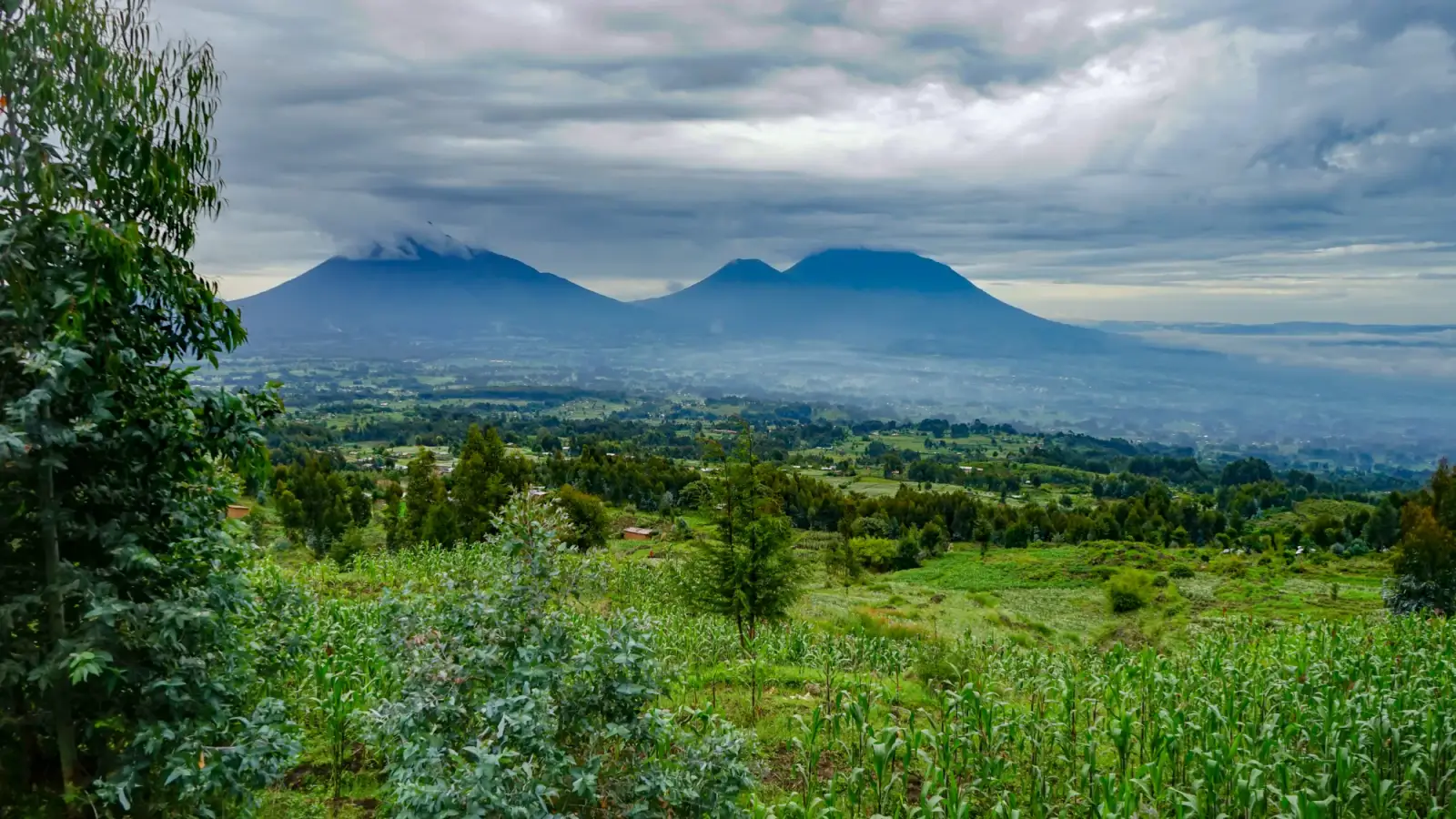
I'd recommend Kigali to people who like capitals that are still being drawn, crafts with a story and eating at the counter alongside the people who live there. In simple bars the skewer may come as zingalo, goat tripe, and it is enough to say oya, no, when ordering; anyone who orders an Amstel usually gets two bottles at once. The new architecture has one symbol, the dome of the convention center, designed by the German Roland Dieterle, which lights up at night on top of Kimihurura, while in Nyamirambo the Green Mosque, from the 1930s, is the oldest in the city. Among souvenirs, I'd choose an imigongo, a geometric painting in black, brown and white made with cow dung by a cooperative in Nyakarambi, near Tanzania, because it is a craft of Rwanda's own. Anyone looking for the Hôtel des Mille Collines because of the movies will find a working hotel, and the film that made it known was shot in South Africa.Kigali spreads across hills and valleys, and several of them play a part in the visit: on Nyarugenge, the city the Germans founded in 1907; in Gisozi, the memorial that explains how the genocide against the Tutsi killed hundreds of thousands of people in about one hundred days of 1994; in Nyamirambo, the capital's most intense street life, with mosques, tailors and the smoke of brochettes at dusk. The city is clean and orderly, and more than thirty years after the genocide it has art galleries, music festivals and a calendar in which the last Saturday of each month is given to community work. About two hours by road to the north, the Virunga volcanoes hold the reason that brings most visitors to Rwanda: one hour in front of a family of mountain gorillas, after a climb through woodland and bamboo.
Quick facts
- Population
- 1,745,555 inhabitants in the City of Kigali, which comprises the districts of Gasabo, Kicukiro and Nyarugenge (census of August 31, 2022, National Institute of Statistics of Rwanda)
- Founded
- 1907, when the German colonial resident Richard Kandt set up the administrative seat on Nyarugenge hill; capital of the country since independence in 1962
- Country and region
- Rwanda, East Africa. The City of Kigali is one of the country's five first-level divisions, alongside the four provinces
- Language
- Kinyarwanda, English, French and Swahili are official. Kinyarwanda is the everyday language; English is useful throughout the tourism sector, and French is widely spoken in Kigali
- Currency
- Rwandan franc (RWF, written FRw or RF). US dollars are accepted for large payments, such as the gorilla permit and upscale hotels
- Time zone
- Central Africa Time, UTC+2, with no daylight saving time
- Best time to go
- June to August and January; September, December and February are transition months, half dry and half rainy, and the rains run from mid-February to May and from mid-September to mid-December, with April the rainiest month
- Average cost per day
- Add up lodging per night, meals per person, transport to Musanze and the entry fees; the gorilla permit alone costs more than several days of travel and changes the total.
When to go
June to August and January; September, December and February are transition months, half dry and half rainy, and the rains run from mid-February to May and from mid-September to mid-December, with April the rainiest month
January
16° to 28°C
84 mm of rain
Best time12 h 13 min of daylight
National holidays
Jan 1 – 3, 2027 · long weekend · New Year's Day, New Year's Day
Jan 1, 2028 · New Year's Day
Jan 2, 2028 · New Year's Day
Source: Nager.Date. Holiday dates shift; check close to your trip.
February
16° to 28°C
84 mm of rain
12 h 10 min of daylight
National holidays
Jan 30 – Feb 1, 2027 · long weekend · National Heroes' Day
Jan 29 – Feb 1, 2028 · long weekend · National Heroes' Day
Source: Nager.Date. Holiday dates shift; check close to your trip.
March
16° to 27°C
129 mm of rain
12 h 07 min of daylight
National holidays
Mar 26 – 29, 2027 · long weekend · Good Friday, Easter Monday
Source: Nager.Date. Holiday dates shift; check close to your trip.
April
17° to 26°C
136 mm of rain
12 h 04 min of daylight
National holidays
Apr 7, 2027 · Tutsi Genocide Memorial Day
Apr 7 – 9, 2028 · long weekend · Tutsi Genocide Memorial Day
Apr 14 – 17, 2028 · long weekend · Good Friday, Easter Monday
Source: Nager.Date. Holiday dates shift; check close to your trip.
May
17° to 26°C
89 mm of rain
12 h 02 min of daylight
National holidays
May 1, 2027 · Labour Day
Source: Nager.Date. Holiday dates shift; check close to your trip.
July
15° to 27°C
10 mm of rain
Best time12 h 01 min of daylight
National holidays
Jul 1 – 4, 2027 · long weekend · Independence Day, Liberation Day
Source: Nager.Date. Holiday dates shift; check close to your trip.
August
16° to 28°C
30 mm of rain
Best time12 h 03 min of daylight
National holidays
Aug 6 – 8, 2027 · long weekend · Umuganura Day
Aug 15, 2027 · Assumption Day
Source: Nager.Date. Holiday dates shift; check close to your trip.
September
16° to 28°C
65 mm of rain
12 h 06 min of daylight
October
16° to 27°C
109 mm of rain
12 h 09 min of daylight
November
16° to 26°C
121 mm of rain
12 h 13 min of daylight
December
16° to 27°C
76 mm of rain
12 h 14 min of daylight
National holidays
Dec 25 – 27, 2026 · long weekend · Christmas Day, Boxing Day
Dec 25, 2027 · Christmas Day
Dec 26, 2027 · Boxing Day
Source: Nager.Date. Holiday dates shift; check close to your trip.
High, shoulder and low season
High · June to August and January
The fully dry months of the two dry seasons: easier trails and roads and peak demand. Gorilla permits sell out months ahead, and the lodges near Kinigi fill up.
Shoulder · September, December and February
Transition months: the first half of September and the second half of December are still dry, and February dries out until the middle of the month. Demand for permits stays high, but the chance of rain on the trail grows.
Low · March to May and October to November
The rains leave trails and secondary roads muddy, and April is the rainiest month. Permits are available closer to the date.
How the year changes
Kigali lies just south of the Equator, but the altitude holds the temperature down: the daily average is 21 °C, with highs rarely above 30 °C and nights that call for a light jacket. The year is divided by the rains, not by the heat. The longer dry season runs from June to mid-September, with little cloud, and it is when roads and trails are easiest; the short dry season runs from mid-December to mid-February. That is why June, July, August and January are the fully dry months, and September, December and February are split. The rains return from mid-February to May, with April the rainiest month (154 mm on average), and from mid-September to mid-December. For the gorillas, the dry season means less muddy trails but concentrates demand: permits sell out months ahead from June to September and from December to February. In the rains there are last-minute openings, and the Virunga forest is cold and damp in any month. April 7 and the week after it are a period of official mourning.
The same numbers as a table
| Month | Temperature °C | Rain mm |
|---|---|---|
| January · | 16 to 28 | 84 |
| February | 16 to 28 | 84 |
| March | 16 to 27 | 129 |
| April | 17 to 26 | 136 |
| May | 17 to 26 | 89 |
| June · | 16 to 27 | 20 |
| July · | 15 to 27 | 10 |
| August · | 16 to 28 | 30 |
| September | 16 to 28 | 65 |
| October | 16 to 27 | 109 |
| November | 16 to 26 | 121 |
| December | 16 to 27 | 76 |
Nilo's tips
Buy the permit before the ticket
The order is permit, then flight and hotel. The 96 daily gorilla permits are bought through the Irembo portal or from a licensed operator, and the permit date is what fixes the rest of the trip.
The car to the trailhead is on you
The park does not carry anyone from the Kinigi headquarters to the start of the trail. Book a 4x4 with a driver before you arrive, or the most expensive morning of the trip depends on getting a ride.
Hire the porter
The porters in blue overalls wait at the start of the trail. For a few dollars they carry your backpack and give you a hand on the climb, and the money stays with the communities around the park.
A local SIM on the first day
With an MTN or Airtel SIM registered with your passport, mobile money pays for motorbikes, buses and the market, and the car app works without negotiating the price.
Car-free Sunday
If you are in Kigali on the first or third Sunday of the month, get out before 10:00: the center closes to pedestrians and bicycles, and the group exercise on the avenue is the best sample of the city's Sunday.
Explore the map
Explore the map, read about the other places and plan your travel days in the app.
Open the appWhat to see
Leave for last, if time allows: Kandt House Museum · Campaign Against Genocide Museum · Ntarama Genocide Memorial · Mount Bisoke · Nyandungu Eco-Park
Kigali Genocide Memorial
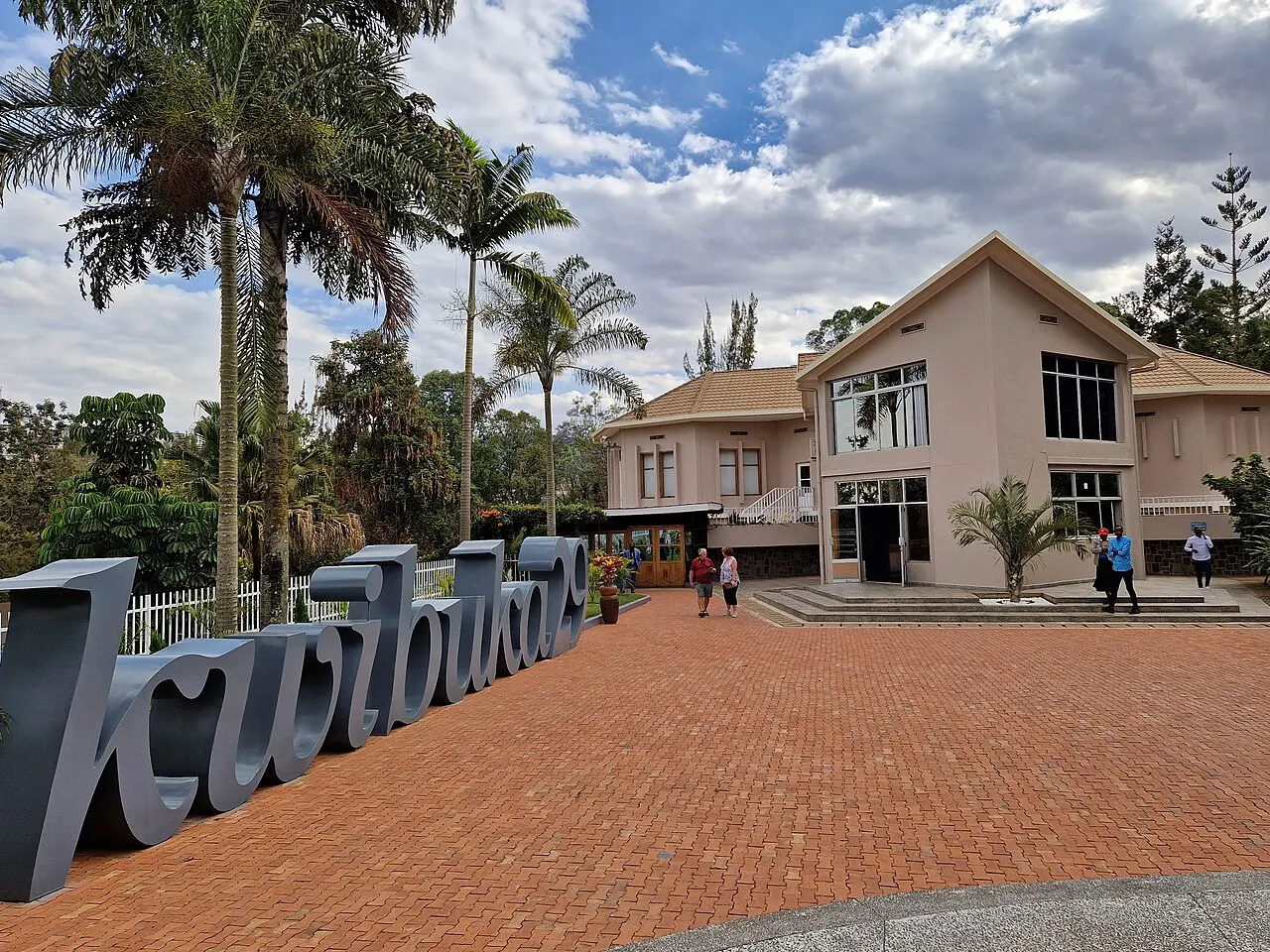
In Gisozi, the memorial was inaugurated in April 2004, on the tenth anniversary of the genocide, over the mass graves where more than 250,000 people brought from across the capital are buried. Upstairs there are three permanent exhibitions: the largest tells the history of Rwanda from the colonial period to 1994 and the trials that followed, another is devoted to the children who were killed, with photographs and what is known about each one, and the third deals with other genocides of the 20th century. It is open every day from 9:00 to 17:00, with last entry at 16:00; on the last Saturday of the month, because of umuganda, it opens from 13:00 to 17:00. Admission is free, the Ubumuntu package with an audio guide costs US$ 30, and there is a guided tour for mixed groups once a day, at 9:30. Children under 12 are not admitted, photography is prohibited inside the museum and allowed in the gardens, and the memorial itself recommends booking on its website and setting aside at least an hour and a half.
Check access
Volcanoes National Park
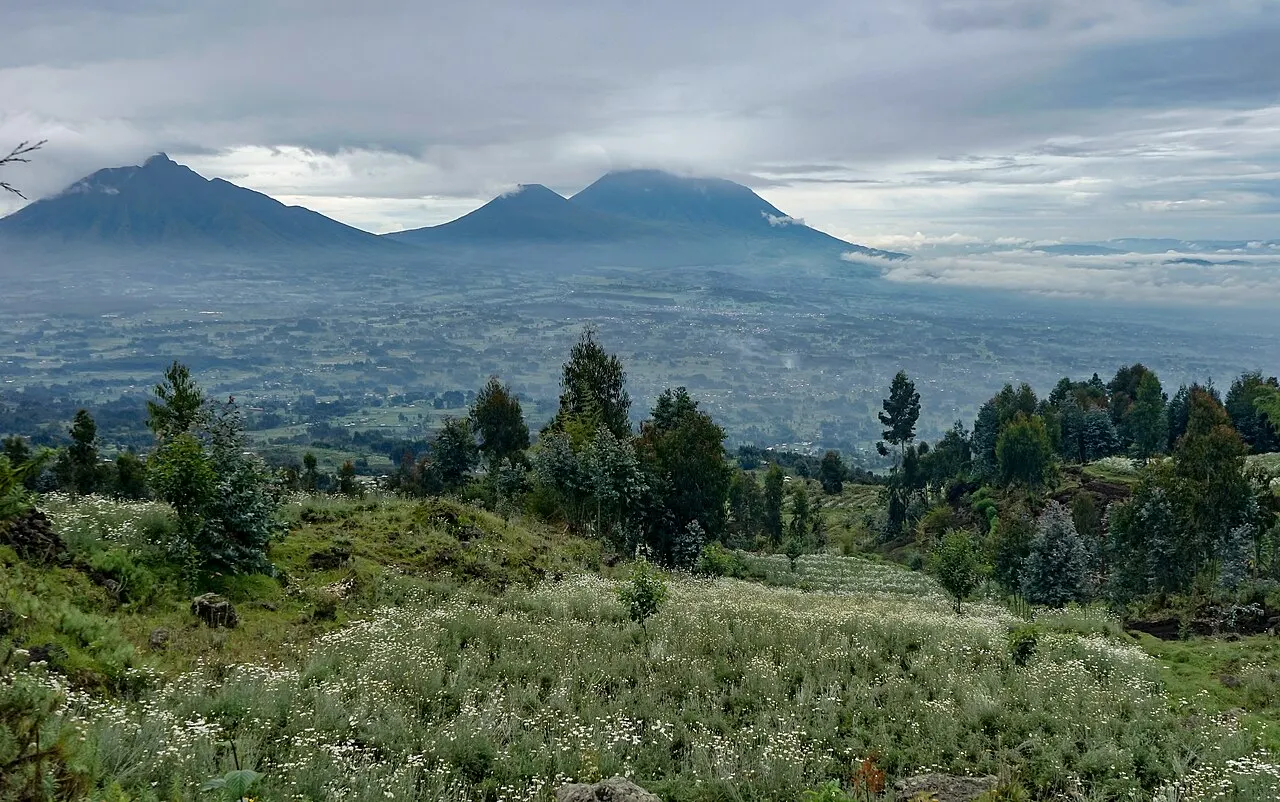
Created in 1925, it was the first national park in Africa, and it is where Rwanda receives visitors who come to see the mountain gorillas. Twelve families are habituated to visitors, and each receives at most eight people a day for one hour. The meeting is at 7:00 at the park headquarters in Kinigi, where the rangers form the groups according to fitness. Depending on where the family is, the walk takes from 30 minutes to more than four hours, between 2,500 m and 4,000 m in elevation, through farmland, bamboo forest and dense woodland. The permit costs US$ 1,500 per person per day, the minimum age is 15, and it is bought through the official Irembo portal or from a licensed operator. The same park offers the golden monkey visit, with daily departures from Kinigi, and volcano hikes.
Check access
Admission: US$1,500 (checked Oct 2026) source
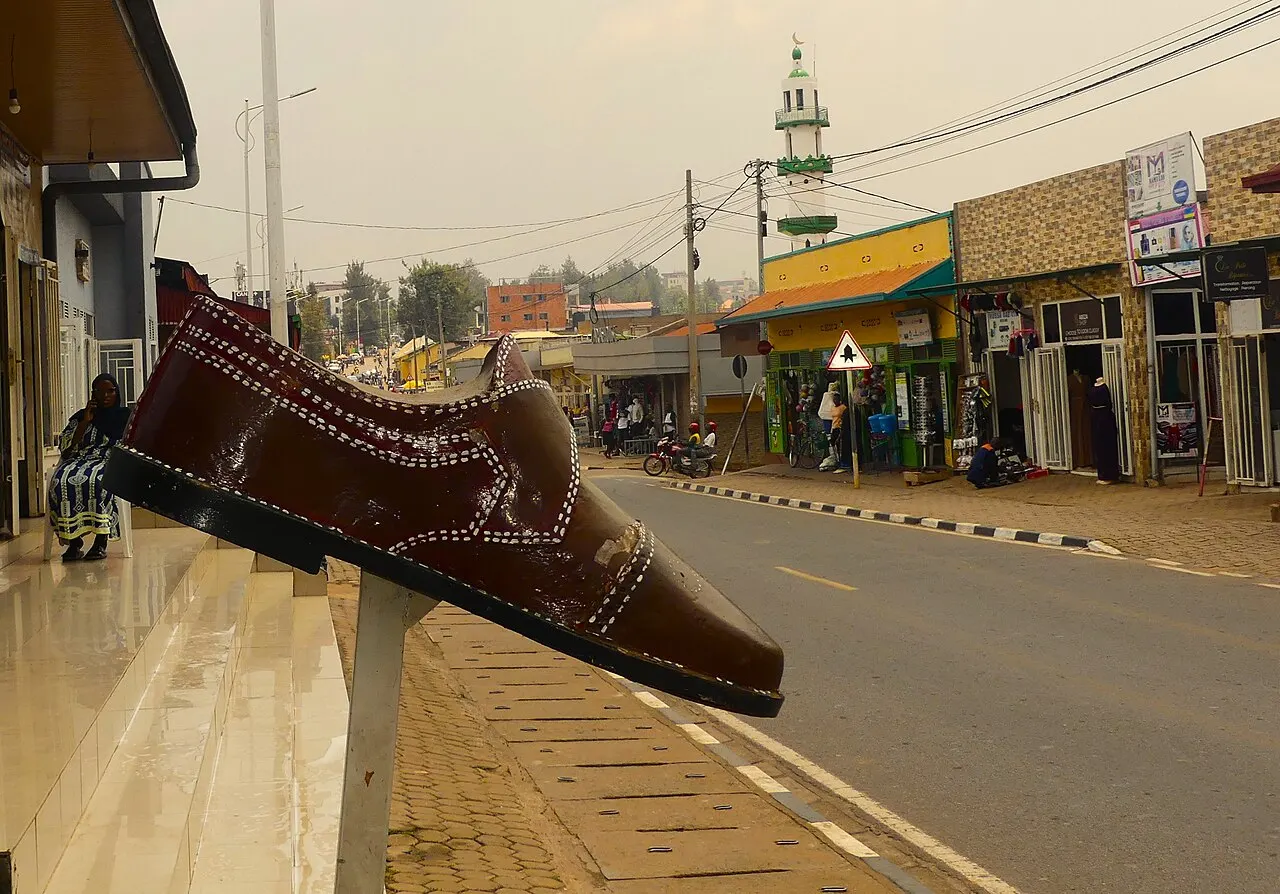
Nyamirambo
Kigali's second neighborhood, built in the 1920s by the Belgian administration for Swahili officials and traders, is still the city's Muslim quarter and its liveliest nightlife area, with street commerce, mosques and bars that grill brochettes. The Nyamirambo Women's Center, an initiative for women of the neighborhood, runs guided walks and cooking classes, and it is the easiest way to get into the neighborhood with some context.
Check access
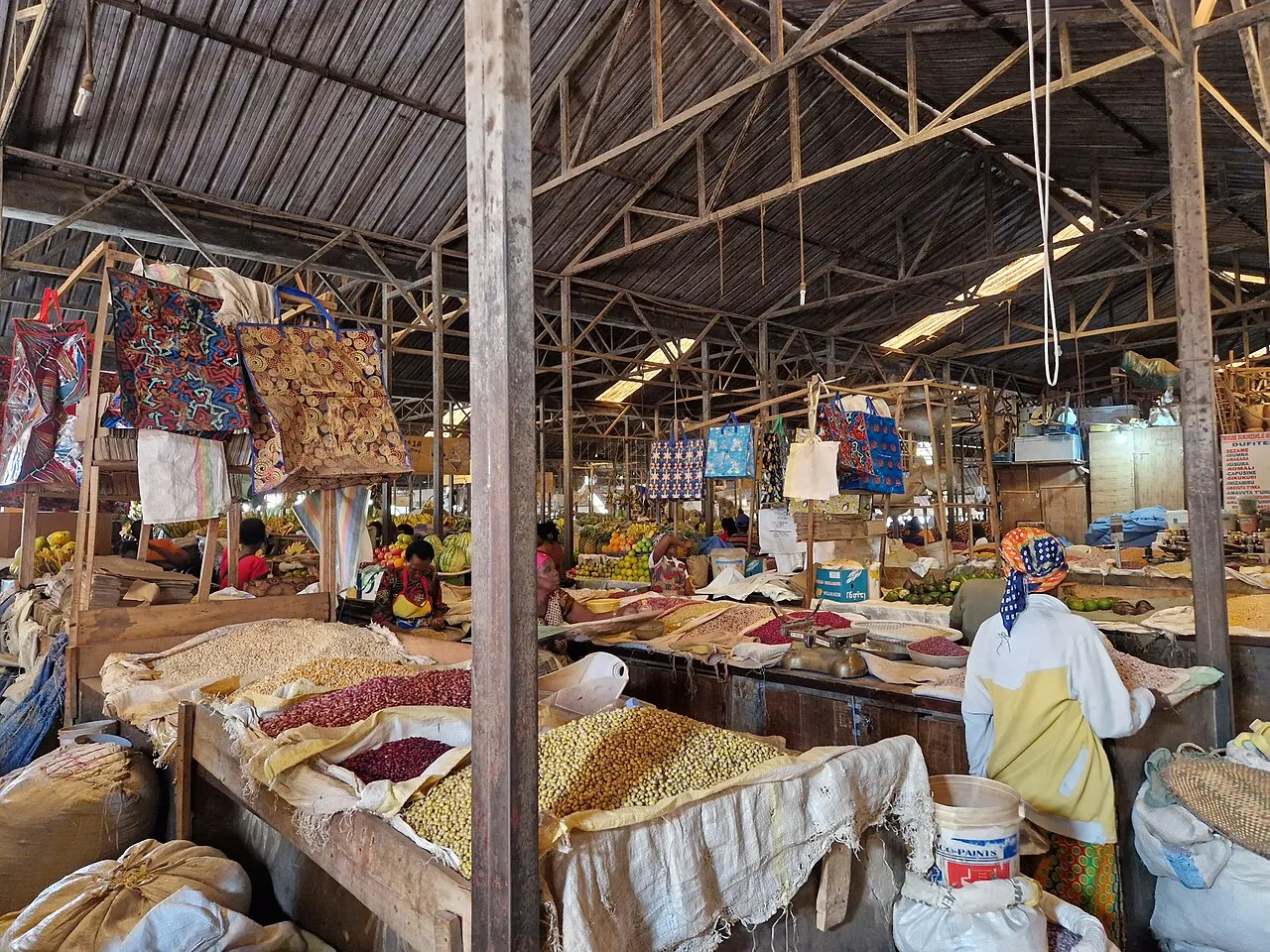
Kimironko Market
Gasabo's big market sells fruit, vegetables, grains, clothing and fabrics, and has a crafts section with woven agaseke baskets, kitenge fabrics, carvings, drums and jewelry. It is the most complete place in the city for souvenirs, and haggling is expected.
Check access
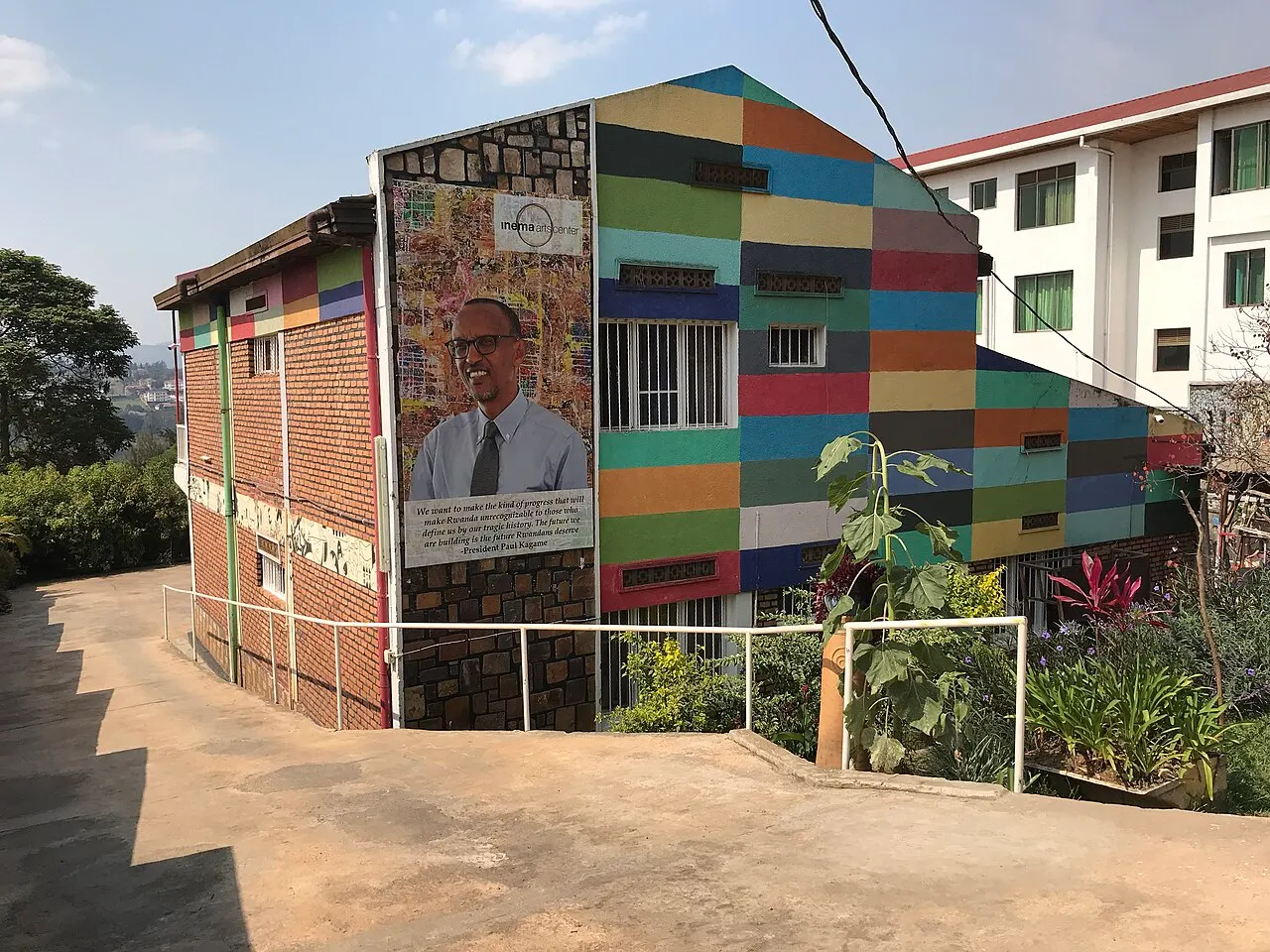
Inema Arts Center
Founded in 2012 by the brothers Innocent Nkurunziza and Emmanuel Nkuranga in Kacyiru, it combines a gallery, studios and an artists' residency. It is open every day, has a café and runs workshops and guided visits. It is the simplest way into the contemporary art being made in Rwanda today.
Check access
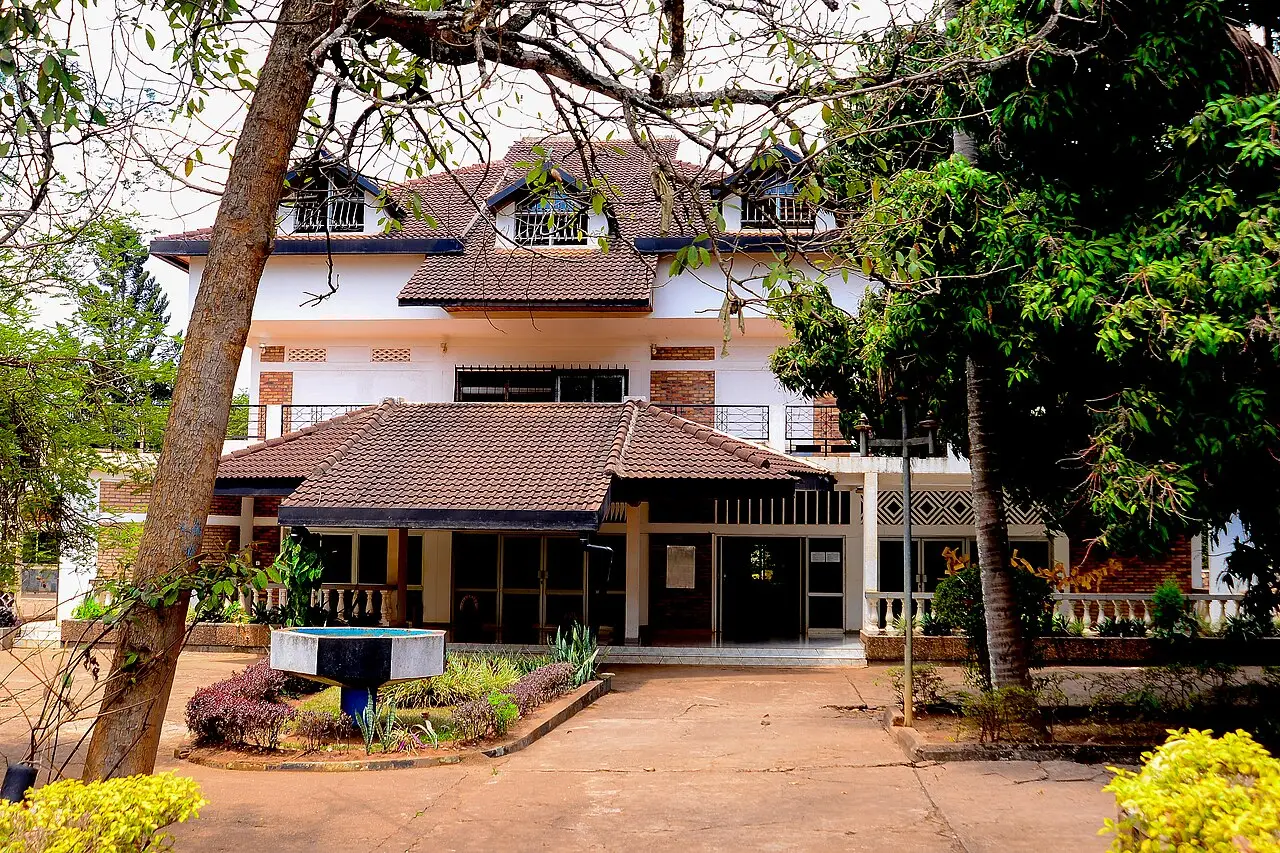
Rwanda Art Museum
In Kanombe, next to the airport, President Habyarimana's former residence has become an art museum, with Rwandan and foreign collections and temporary exhibitions. In the garden lie the remains of the presidential plane shot down on April 6, 1994, preserved as a historic site. It is open every day from 8:00 to 18:00 except on April 7, when it is closed; on umuganda Saturday, according to Visit Rwanda, it opens from 11:00 to 18:00.
Check access
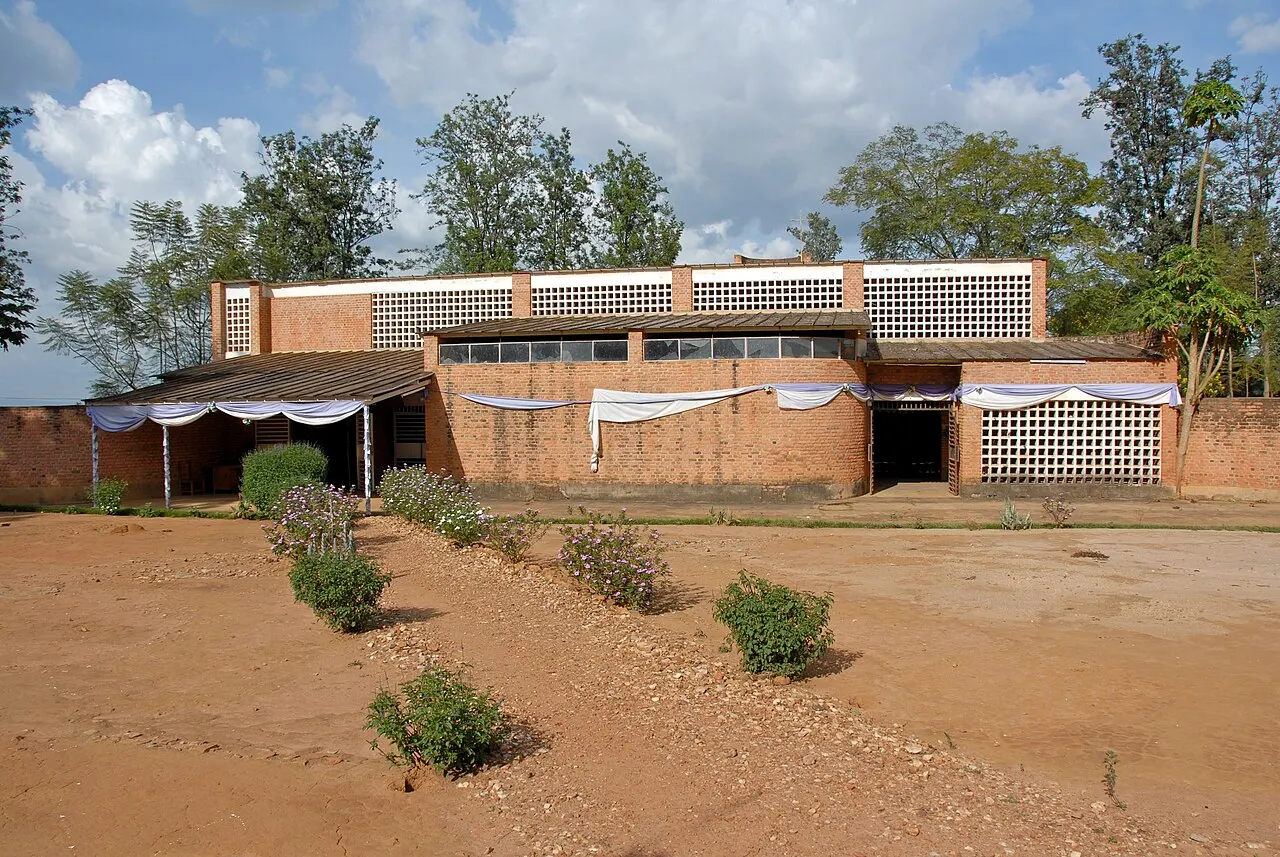
Nyamata Genocide Memorial
In the town of Nyamata, about 40 minutes south of Kigali, a church where more than 10,000 people were killed during the genocide has become a memorial. Together with Gisozi, Murambi and Bisesero, it is part of the World Heritage Site inscribed by UNESCO in 2023.
Check access
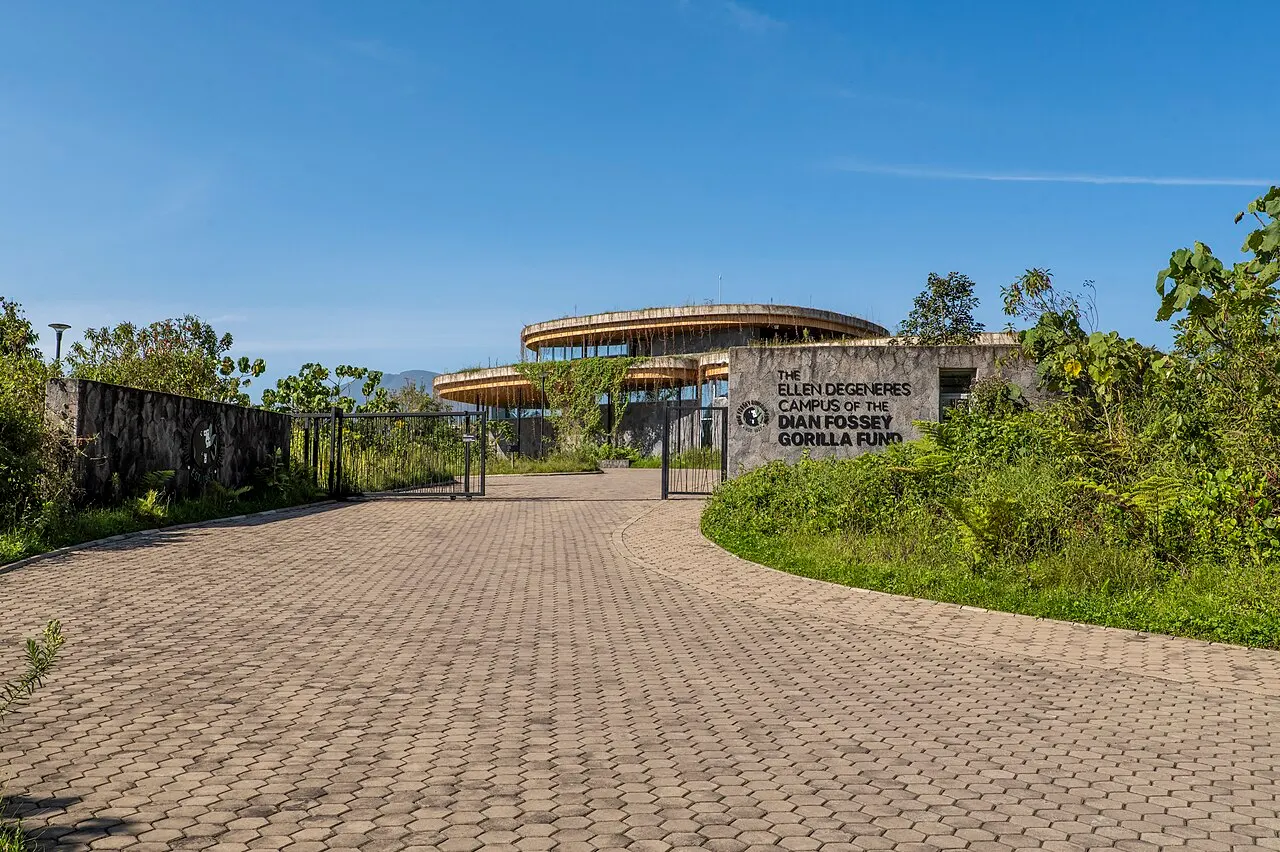
Ellen DeGeneres Campus of the Dian Fossey Gorilla Fund
A few minutes from the park headquarters, in Kinigi, the research campus of the Dian Fossey Gorilla Fund has a museum with indoor and outdoor exhibits on the gorillas, the park and the life of Dian Fossey, plus a café and a view of the volcanoes. The suggested contribution for the visit is US$ 20.
Check access
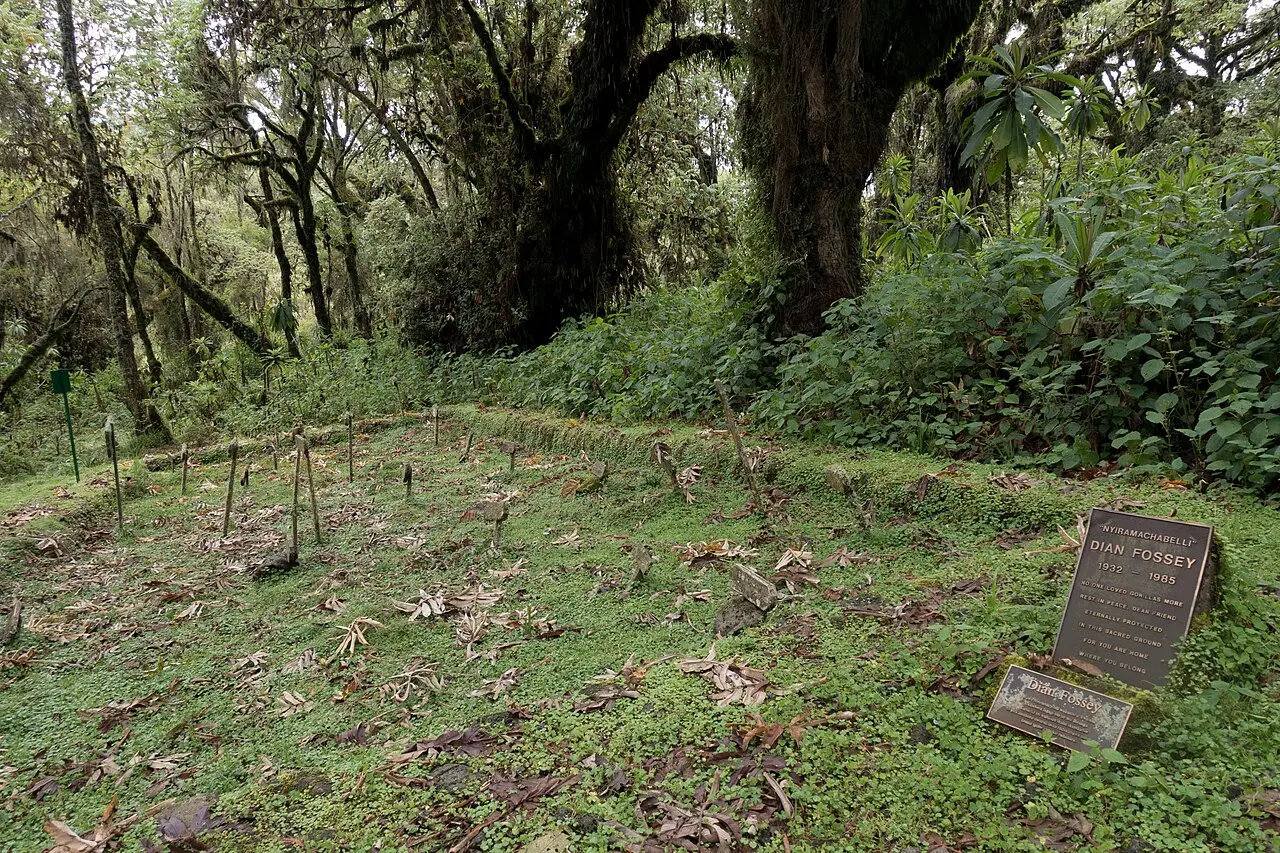
Dian Fossey's grave
The American primatologist arrived in the Virunga in 1967, founded the Karisoke research center in the saddle between Karisimbi and Bisoke, and was murdered there in 1985. She is buried near the old research center, inside the park. The trip starts with a drive from the park headquarters of about 30 minutes, and the climb goes above 3,000 m. Visit Rwanda gives two walking times: two to three hours through the forest, on the gorilla page, and one hour to an hour and a half of climbing, on the hiking page. Count on the whole morning. A permit and a guide are required.
Check access
More places in the guide
Lakes Burera and Ruhondo
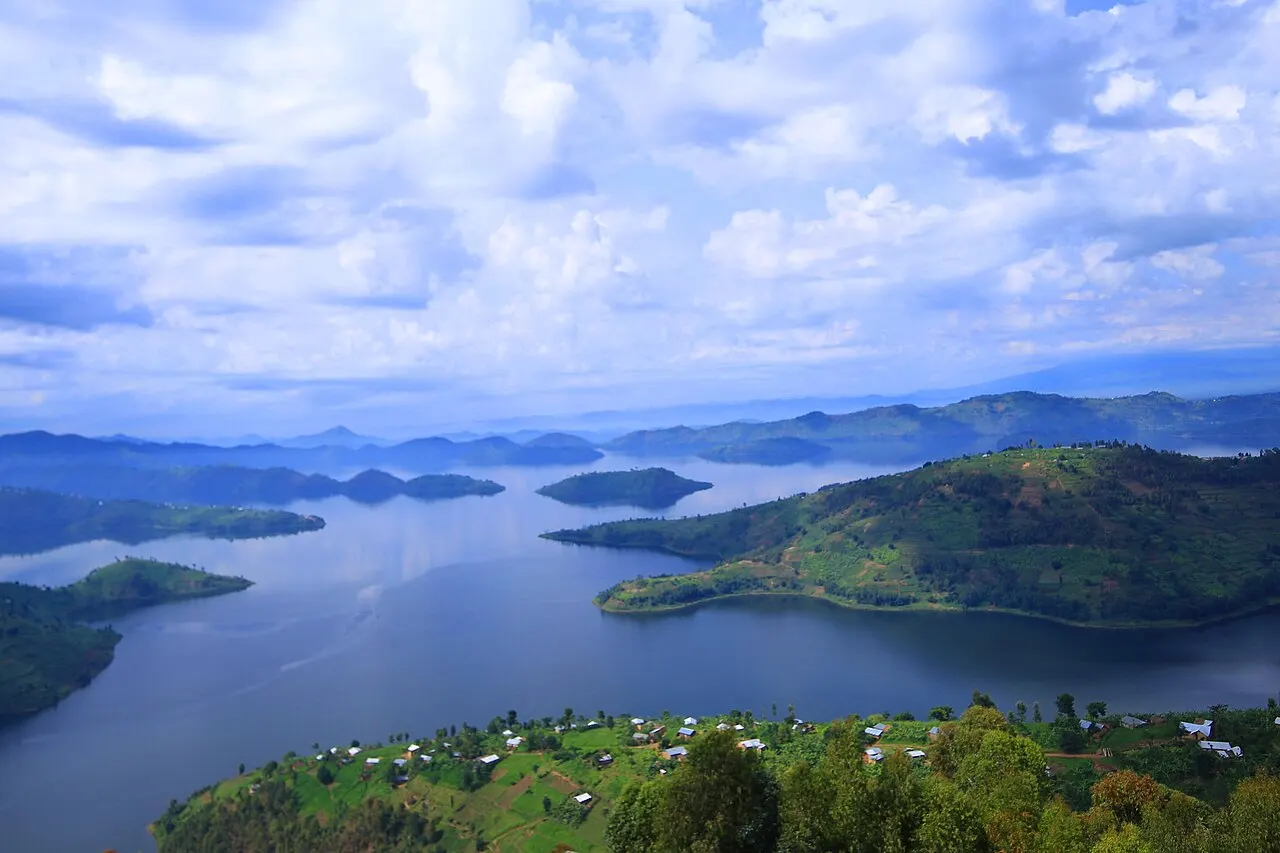
The two twin lakes lie at the foot of the Virunga, near Musanze, among hills cultivated in terraces. A viewpoint over both can be reached by car, and you can rent a boat for a trip on the lake. It is the quiet plan for the afternoon after a hike.
Kandt House Museum
The house of the German resident Richard Kandt, in the center, was Kigali's first European-style building. The museum, which used to be a natural history museum, now tells of life in Rwanda before the colony, the German and Belgian periods and the history of the city itself. It is open every day from 8:00 to 18:00 except on April 7, when it is closed; on umuganda Saturday, according to Visit Rwanda, it opens from 11:00 to 18:00.
Campaign Against Genocide Museum
Inside the Parliament, in Kimihurura, the museum recounts the military campaign of the Rwandan Patriotic Front that ended the genocide. The building housed 600 soldiers of the Front from December 1993, during the implementation of the Arusha accords, and it keeps the machine gun the soldiers used to stop government forces from entering.
Ntarama Genocide Memorial
Another former church, about 20 minutes north of Nyamata, turned into a memorial, with a garden and a wall bearing the names of the victims. It is usually combined with Nyamata on the same outing from Kigali.
Mount Bisoke
A volcano in the park with a crater lake at the top, at 3,700 m. The hike takes from five hours to a full day and requires a permit and a guide. Shorter, the walk to Lake Ngezi, at the foot of Bisoke, takes about three hours.
Nyandungu Eco-Park
A 120-hectare wetland in eastern Kigali, restored as a park with woodland, trails and good birdwatching.
Nilo’s itinerary
Start with the basic programme and choose extensions for the time you have.
Plan my days in the app ↗Day 1 · The memorial and Nyamirambo
9:00: Kigali Genocide Memorial, in Gisozi, at opening time. Book on the website, set aside at least an hour and a half and, if you want a guide without paying for a private visit, join the mixed group at 9:30.
Lunch at the memorial café or at a mélange spot in the center.
Afternoon: motorbike or ride-hailing car to Nyamirambo and a guided walk with the Nyamirambo Women's Center, booked beforehand.
Late afternoon and dinner: goat brochette with ibitoke at one of the bars in Nyamirambo.
If it is the last Saturday of the month, reverse the order: Nyamirambo after noon and the memorial from 13:00 to 17:00.
Day 2 · Kimironko, art and the road north
Morning: Kimironko Market, for baskets, fabrics and whole-bean coffee.
Inema Arts Center, in Kacyiru, on the way to the center.
Early afternoon: bus from Nyabugogo to Musanze, about two hours, or a car with a driver.
On arrival, confirm with your lodging or the operator the 4x4 that will take you to the Kinigi headquarters before 7:00 and to the trailhead.
Night in Musanze or in Kinigi.
Day 3 · The gorillas
Before 7:00: Volcanoes National Park headquarters, in Kinigi, for registration, briefing and the forming of groups.
By car to the start of the trail; hire a porter there if you are carrying a backpack, and pay at the end.
A walk of 30 minutes to more than four hours to the family, and one hour with the gorillas.
Afternoon: Ellen DeGeneres Campus of the Dian Fossey Gorilla Fund, a few minutes from the headquarters.
Night in Musanze or Kinigi. If the trip ends here, return to Kigali by bus or car, about two hours.
If you stay longer
Day 4 · Dian Fossey or golden monkeys, and the lakes
Morning, with a permit already bought, one of the two: the golden monkey visit, with daily departures from Kinigi, or the climb to Dian Fossey's grave, 30 minutes by car from the headquarters, which can take the whole morning.
Afternoon: viewpoint and boat on Lakes Burera and Ruhondo; anyone who went to the grave and got back late can swap the boat for the viewpoint alone, by car.
Late afternoon: return to Kigali, about two hours, or continue to Rubavu, on Lake Kivu, about 1 hour 20 minutes by road from Musanze.
Food
Brochette
A grilled skewer, almost always of goat, sometimes of beef, fish or chicken, served with fries or with fried or grilled plantain. It is what people order most in the evening at the bars, and it is also sold at roadside stalls.
Mélange
The lunch buffet: you build your own plate with plantain, beans, sweet potato, cassava, rice, greens and, depending on the place, meat, fish or fries. It is the quick, cheap weekday meal.
Isombe
Cassava leaves cooked with onion and ground peanuts, one of the most typical dishes of Rwandan cooking.
Ibitoke
Green plantain, steamed, mashed or fried. It goes with almost everything, from brochettes to mélange.
Ibihaza
Pumpkin cooked with beans, a common lunch dish.
Ugali
A firm paste of maize or cassava flour, eaten with beans, greens or meat.
Ikivuguto
Fermented milk, thick and slightly sour, drunk as a meal or as an accompaniment.
Urwagwa
Homemade banana beer, traditionally sold in jerrycans and now also bottled; the Akarusho brand sells it in cans.
Rwandan coffee and tea
The country produces single-origin coffee and good-quality black and green tea. There are cooperative visits near Kigali, Lake Kivu and Huye, and whole-bean coffee is the most practical souvenir.
Primus and Mützig
The most common mass-market beers, in small or large bottles, almost all made by Bralirwa, in the west of the country.
Where to eat
- Nyamirambo
Goat brochette with fries or ibitoke at the neighborhood's bars, which grill until late. It is the city's most typical dinner and the cheapest, and the neighborhood is the best for eating street food at night.
- Center and commercial neighborhoods
Mélange at weekday lunch: a buffet of plantain, beans, isombe, sweet potato and meat, served to people short of time. It is the quickest way to try several Rwandan dishes at once.
- Kimironko
Fruit, vegetables and grains at the market, plus Rwandan coffee and tea to take home. Good for putting together a snack before heading north.
- Kigali Genocide Memorial café · Gisozi
The café inside the memorial serves food and drink. It solves lunch without a trip elsewhere after a long visit.
Source · 2026-10-19
- Kimihurura and Kiyovu
Indian, Ethiopian, Chinese, Italian and French cooking in neighborhood restaurants, for anyone who wants something else after a few days of brochette. Dishes take time to come out at dinner: expect a wait.
- Musanze
Simple cafés and restaurants for breakfast before the trail and brochettes in the evening; no food is sold inside the park, so bring a snack and water for gorilla day.
· 2026-10-19
Day trips
Akagera National Park
In the east, next to Tanzania, about two hours by car from Kigali, it is Rwanda's only savanna and has the big five: lion, rhinoceros, buffalo, elephant and leopard. Managed by African Parks since 2010, it received 70 white rhinoceroses in June 2025. It can only be visited by car, with an operator or driving yourself, and the boat trip on Lake Ihema shows hippos, crocodiles and water birds. Fees and bookings are on the African Parks page. Avoid blue clothing, which attracts the tsetse fly, and bring repellent.
Nyungwe National Park
A mountain forest in the southwest, a World Heritage Site since 2023, with 13 species of primates. The canopy walkway is 160 m long and 70 m high, an hour's walk from the Uwinka reception, and costs US$ 40 for foreign visitors. The chimpanzee search starts at 5:30. Uwinka is on the road between Huye and Rusizi, 90 km past Huye: it is not a round trip in one day from Kigali, and calls for at least one night. The road ends at Rusizi, next to the border with the Congo, where the British government advises against non-essential travel within 10 km of the border.
Admission: US$40 (checked Oct 2026) source
Lake Kivu, at Rubavu
Rubavu, formerly Gisenyi, sits on the shore of Lake Kivu, right at the border with the Democratic Republic of the Congo, with beaches, water for swimming and boat trips. It is about 1 hour 20 minutes by road from Musanze, on the bus line between Rubavu and Kigali, which makes the lake the natural rest after the gorillas, with an overnight stay. Before going, read your government's advisory: the risks from the fighting in the Congo can reach the Rwandan side, and border crossings can close without notice.
Where to begin
The memorial and Nyamirambo
9:00: Kigali Genocide Memorial, in Gisozi, at opening time. Book on the website, set aside at least an hour and a half and, if you want a guide without paying for a private visit, join the mixed group at 9:30.
Kimironko, art and the road north
Morning: Kimironko Market, for baskets, fabrics and whole-bean coffee.
The gorillas
Before 7:00: Volcanoes National Park headquarters, in Kinigi, for registration, briefing and the forming of groups.
Dian Fossey or golden monkeys, and the lakes
Morning, with a permit already bought, one of the two: the golden monkey visit, with daily departures from Kinigi, or the climb to Dian Fossey's grave, 30 minutes by car from the headquarters, which can take the whole morning.
Money
The currency is the Rwandan franc (RWF), with banknotes from 500 to 5,000. Local services are paid in francs, and large amounts, such as the gorilla permit (US$ 1,500 per person per day) and upscale hotels, are usually charged or accepted in dollars. Visa cards are more widely accepted than Mastercard, and it is worth confirming when you book. Mobile money (MTN MoMo and Airtel Money) is the most common means of payment, from shops and stalls to motorbikes and buses, and requires a local SIM registered with your passport. There are ATMs in Kigali and the larger towns, but they can run out of cash on weekends. Banks and exchange offices close on Sundays and holidays, and US$ 50 bills or larger printed from 2006 onward get a better rate. Coins below FRw 100 hardly circulate, and shops round to the nearest hundred. The Genocide Memorial is free; the package with an audio guide costs US$ 30. Tipping is optional: Visit Rwanda suggests about US$ 10 a day for the guide and driver and US$ 2 for the trail porter, in cash. Prices checked on the official pages in October 2026.
Getting there and around
Arrival
Kigali International Airport (KGL) is in Kanombe, about 5 km east of the center by road. RwandAir operates most of the flights, and Brussels Airlines, KLM, Qatar Airways, Turkish Airlines, Kenya Airways and Ethiopian also fly in. From the terminal there are taxis, ride-hailing cars and buses to Remera, the center and Nyabugogo.
Entry and visa
Citizens of all countries can get a visa on arrival; those who are not exempt can also apply online beforehand. Visit Rwanda gives a cap of US$ 50 for single entry and US$ 70 for multiple entry, and a free 30-day visa on arrival for citizens of African Union, Commonwealth and Francophonie countries. Anyone arriving from a country with yellow fever transmission needs the vaccination certificate. In 2026, because of an Ebola outbreak in the Democratic Republic of the Congo, the Rwandan government put health screening in place at Kigali airport, and these measures may change without notice. Rules vary by nationality: check with the Directorate General of Immigration and your government's advisory before traveling.
Apps and taxis
Move, from Volkswagen, and Yego, a Rwandan company, work as car apps; Yego also books motorbikes. They are simpler than bargaining with a street taxi, which costs more than a motorbike.
Moto-taxi
It is the fastest and most widely used way to get around. The price is agreed beforehand, payment is usually by mobile money and a helmet is mandatory: the driver carries one for the passenger. Visit Rwanda warns that travel insurance may not cover motorbikes.
City bus
The numbered lines do not accept cash: you pay with the Tap&Go card, bought at terminals and from agents and topped up by mobile money. Nyabugogo, on the valley floor, is the main terminal.
To Musanze
From the Nyabugogo bus station, buses to Musanze leave every half hour, run by Virunga Express, Kigali Bus Service, Ritco and International Express, on a trip of about two hours; the fare was FRw 3,000 in April 2024. The ticket is bought at the company's counter on the spot. By car with a driver, Visit Rwanda estimates two and a half hours to the foot of the park.
To the gorilla trailhead
The park does not take anyone from the Kinigi headquarters to the start of the trail, which can be 20 to 45 minutes away on bad roads. Anyone arriving by motorbike or taxi depends on getting a ride, and operators rarely accept individual passengers. Book a 4x4 with a driver beforehand, through the operator or your lodging.
By road
The highways between cities are paved; traffic drives on the right, speed limits are enforced with radar and police checkpoints are frequent. By land you enter from Uganda at Gatuna or Cyanika and from Tanzania at Rusumo; the road borders with Burundi and the Democratic Republic of the Congo were closed, according to Wikivoyage, and it is worth confirming before you go.
Umuganda
On the last Saturday of the month, from 8:00 to 11:00, traffic is restricted and public transport almost stops. Do not schedule a transfer, a bus or a flight close to that time.
Safety
Crime levels in Rwanda are relatively low, and the British government (advisory updated on September 4, 2026) records cases in Kigali of burglary, theft, bag snatching and violent robbery. Watch your pockets and backpacks in crowded markets and at the Nyabugogo bus station; at night, prefer a ride-hailing car arranged in advance to walking. Some military zones in Kigali have no signs or lighting, and anyone who enters them may be detained, just as photographing certain government buildings is prohibited. The police can be reached at 112; for an ambulance, call 912, or 112 asking for medical assistance. Motorbikes and shared vans are the transport most vulnerable to accidents, and outside the cities many roads have no lighting at night. On the border with the Democratic Republic of the Congo, the risks from fighting on the Congolese side can reach Rwanda, crossings can close without notice, and the British government advises against non-essential travel to the parts of Rusizi district within 10 km of the border, including the Rwandan islands in Lake Kivu; check your government's advisory before going west. On the gorilla trails, park guides, some of them armed, accompany every group. In Kigali the malaria risk is low because of the altitude, but it rises in Akagera and on the shore of Lake Kivu; talk to a doctor about prevention. Some lakes have schistosomiasis, so ask before swimming in fresh water. On trails above 2,500 m, bring water, rain clothing and sturdy footwear. Relations between people of the same sex are not a crime in Rwanda, but may be frowned upon, and public displays of affection attract attention. Carry your passport or a copy on the roads, where there are police checkpoints.
Before you go
- Plug
- types C, E and G
- Voltage
- 230 V
- Driving side
- on the right
- Emergency
- Police, Fire 112 · Ambulance 912
- Country code
- +250
- Official languages
- Kinyarwanda, English, French and Swahili
- Currency
- Rwandan franc (RWF)
Source: Wikidata (CC0), checked September 2026.
Etiquette tips
Greet before you ask
A muraho, or mwaramutse in the morning, before asking or buying is part of the conversation. To turn down an offer on the street, a firm and polite no is enough.
Ethnicity is not a topic of conversation
After 1994, ethnicity was removed from documents, and there are laws against genocide ideology and divisionism. Do not ask anyone whether they are Hutu or Tutsi.
Respect at the memorial
The memorial asks for respectful dress and behavior. Photography is not allowed inside the museum; in the gardens it is.
Umuganda is for everyone
At the last-Saturday community work, Visit Rwanda invites visitors to take part, and there are cleaning, planting and building tasks for anyone who wants to help.
Clothing
The dress code is informal. Shorts are accepted, but going shirtless is frowned upon, and women generally feel more comfortable in a skirt or dress to the knee.
Photography
Photographing high-level official buildings, such as the presidency, and military installations is prohibited; there are signs where the restriction applies. Drones require permission from the civil aviation authority.
With the gorillas
Keep the distance the guide indicates, and do not eat, drink or smoke near the group. Anyone with the flu or a cold should not go: gorillas catch human diseases.
Mistakes to avoid
Scheduling travel on the morning of umuganda
On the last Saturday of the month, from 8:00 to 11:00, shops close and buses stop. The airport transfer, the trip to Musanze and the memorial, which that day opens only at 13:00, are left for the afternoon.
Bringing a plastic bag
Plastic bags have been banned since 2008 and are confiscated at the airport. Bring a cloth bag.
Taking children to the memorial or to the gorillas
The memorial does not admit children under 12, and the minimum age for the gorillas is 15.
Drinking tap water or ice
Tap water is not potable. Prefer a bottle with an intact seal, and avoid ice at simple stalls.
Relying on a single card
Visa is more widely accepted than Mastercard, and mobile money dominates small payments. Carry francs in cash for the countryside.
Leaving the permit for the last minute
In the dry season permits run out months ahead, and anyone arriving with flights and hotel already paid may find no availability on any day of the stay.
Useful phrases
Muraho (mu-RA-ho)
Hello, at any time of day
Mwaramutse (mua-ra-MU-tse)
Good morning
Mwiriwe (mui-RI-ue)
Good evening, as a greeting
Amakuru? (a-ma-KU-ru)
How are you?
Ni meza (ni ME-za)
Fine, I'm well
Murakoze (mu-ra-KO-ze)
Thank you
Yego / Oya
Yes / No
Mbabarira (mba-ba-RI-ra)
Sorry
Igura angahe? (i-GU-ra an-GA-he)
How much is it?
Irahenze cyane (i-ra-HEN-ze KIA-ne)
It's very expensive
Amazi (a-MA-zi)
Water
Urabeho (u-ra-BE-ho)
Goodbye
Where to stay
- Nyarugenge (center) and Kiyovu · People who will use buses and walk, and want to be close to the bus station, the banks and historic hotels.: The Nyabugogo bus station, where the buses to the north leave from, is in the valley just to the west, and the Gisozi memorial is a short ride away. Kiyovu, on the slope, is quieter and has upscale restaurants. The drawback is the climb between neighborhoods and the distance of 5 km or more from the airport; the city's cheaper options are outside the center.
- Kimihurura, Kacyiru and Remera · People who want restaurants, cafés and quick access to the airport, and will get around by ride-hailing car.: These are the neighborhoods of restaurants, the Kigali Heights mall and the Inema Arts Center, and Remera is on the way out to the airport and the Kimironko market. The drawback is depending on a motorbike or car for almost everything, because the distances between the hills are large.
- Nyamirambo · People traveling on a tight budget who want to be near street life, the bars and the guided walk.: It has simple guesthouses and the busiest nightlife in the city. The drawback is being on the opposite side from the airport and farther from the restaurant neighborhoods of the east, and the noise at night.
- Kinigi · People going to see the gorillas who prefer to wake up a few minutes from the park headquarters.: Sleeping in Kinigi avoids the road before 7:00, and options range from a guesthouse 300 m from the headquarters to expensive lodges around the park, many with transport included. The drawback is the limited supply outside the lodges, the high price and the cold at night.
- Musanze · People who want more options and lower prices in the north and will rent a car or hire a driver.: The town has guesthouses, hotels, restaurants, a market and ATMs, and direct buses from Kigali. The drawback is needing arranged transport to Kinigi in the small hours and from there to the trailhead.
· 2026-10-19
Districts
Nyarugenge (center)
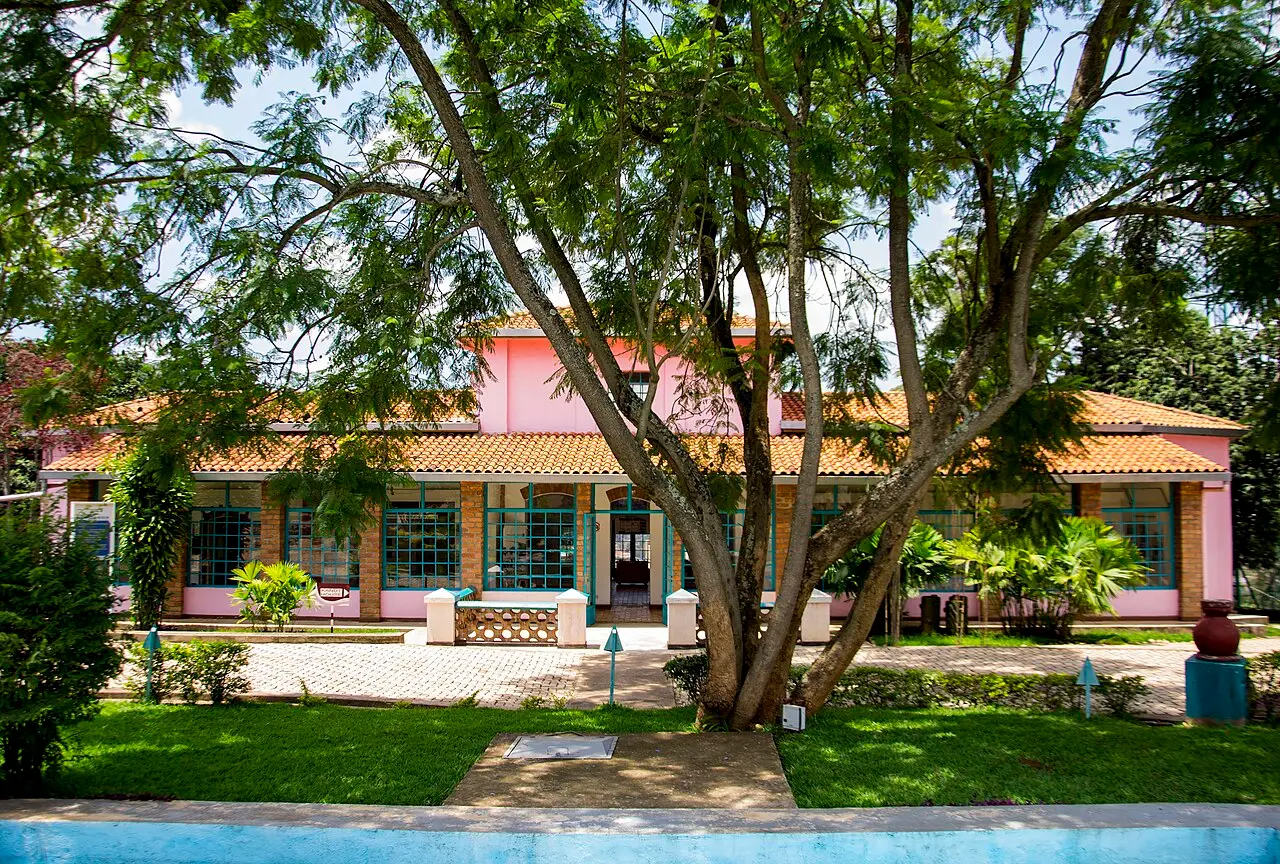
The mu mujyi, the center, where the city began in 1907: banks, the Kigali City Tower, old hotels such as the Mille Collines, the Kandt House and the pedestrian street Imbuga City Walk. It is the best base for anyone getting around on foot and by bus.
Kiyovu
On the eastern slope of Nyarugenge, large houses and upscale restaurants since colonial times, plus embassies. Quiet, close to the center and with a lot of climbing.
Nyamirambo
Southwest of the center, built in the 1920s for Swahili officials and traders, many of them Muslim. It is the neighborhood of street commerce, mosques and brochette bars, and the one with the city's liveliest nightlife.
Kimihurura and Kacyiru
The government side: Parliament, ministries, the presidency and the convention center. It also has a concentration of restaurants, cafés, the Kigali Heights mall and the Inema Arts Center.
Gisozi
A suburb in Gasabo district, home to the Kigali Genocide Memorial, a short motorbike or car ride from the center.
Remera and Kimironko
In the east, with Amahoro Stadium, the indoor arena and the large Kimironko market. Close to the airport and well served by buses.
Nyarutarama
The wealthiest neighborhood, with the country's only golf course and Lake Nyarutarama, which has a trail around it that is good for birdwatching.
Kanombe
On the eastern edge, about 5 km from the center by road: the international airport and the Rwanda Art Museum, in the former presidential residence.
Musanze and Kinigi
In the north, outside Kigali. Musanze is the gateway town to the parks, with more lodging and shops; Kinigi is the village where the Volcanoes National Park headquarters stands, the meeting point for groups at 7:00.
History
14th c. · The kingdom is born near Kigali
According to oral tradition, the Kingdom of Rwanda was founded on the shores of Lake Muhazi, about 40 km east of the present-day city. The kings' capital would later be at Nyanza, in the south.
1907 · Richard Kandt chooses Nyarugenge
Appointed German resident in Rwanda, Kandt sets up the administrative seat on Nyarugenge hill for its central position, its view and its security. His house was the first European-style building in the city.
1916 · The Belgians take the city
Belgian troops capture Kigali on May 6, 1916, during the First World War. In 1922 the League of Nations gives Belgium the mandate over Ruanda-Urundi.
1930s · Ethnicity goes onto the identity card
The Belgian administration classifies the population as Hutu, Tutsi and Twa and prints the category on compulsory documents, fixing as a rigid group a distinction that had previously allowed mobility.
1962 · Capital of an independent country
At independence, Kigali wins out over Nyanza and Butare for its central location. It then had about 6,000 inhabitants.
1990–1994 · Civil war and the Arusha accords
The Rwandan Patriotic Front enters the country from Uganda in 1990. The 1993 peace accords bring to Kigali a UN peacekeeping force and 600 soldiers of the Front, quartered in the building that is now the Parliament.
1994 · The genocide against the Tutsi
On April 6, President Juvénal Habyarimana's plane is shot down near the airport. From April 7, over about one hundred days, militias and government forces kill Tutsi and moderate Hutu. The Patriotic Front takes Kigali on July 4, now the Liberation Day holiday.
2004 · The Gisozi Memorial opens
On the tenth anniversary of the genocide, the Kigali Genocide Memorial is inaugurated over the mass graves where more than 250,000 victims lie.
2008 · End of the plastic bag
Rwanda bans plastic bags by law. The rule still applies today, including to the luggage of people arriving.
2023 · Memorials on the UNESCO list
Gisozi, Nyamata, Murambi and Bisesero become a single World Heritage Site. In the same year the Nyungwe forest is also added to the list.
Complete history
Before the colony
The territory of Kigali belonged to the Kingdom of Rwanda, which according to oral tradition arose in the 14th century near Lake Muhazi and later held its court at Nyanza, in the south. Hutu, Tutsi and Twa spoke the same language and shared clans and customs. The difference between them carried social weight, tied to cattle and land, and King Kigeli Rwabugiri, at the end of the 19th century, deepened that distance through systems of forced labor and clientage.
A new city
Kigali only became a city in 1907, when the German Richard Kandt chose Nyarugenge hill for the colonial residence. The first traders were Greeks and Indians. The Belgians, who took Rwanda in 1916, governed the colony from Usumbura, today Bujumbura, and Kigali stayed small: it had about 6,000 residents when it became the capital, at independence in 1962. In the 1930s Belgium printed ethnicity on identity cards, and the classification came to separate people for life.
From 1959 to 1994
The revolution of 1959 to 1962 overthrew the monarchy and sent hundreds of thousands of Tutsi into exile in neighboring countries. In 1990 the Rwandan Patriotic Front, formed mostly of Tutsi exiles, entered the country from Uganda. The peace signed at Arusha in 1993 did not hold: on the night of April 6, 1994, President Habyarimana's plane was shot down near Kigali airport, and the genocide began the next day. In about one hundred days, Tutsi and moderate Hutu were killed in organized attacks, often by neighbors. Rwanda's Constitution speaks of more than one million dead; most academic estimates put the toll between 500,000 and 662,000 Tutsi. The Patriotic Front took Kigali on July 4.
After the genocide
The city rebuilt its buildings and streets and grew fast with the return of exiles and migration from the countryside: from 600,000 inhabitants in 2002 to 1.75 million in the 2022 census. Ethnicity was removed from documents, the gacaca community courts tried part of the crimes, and laws against genocide ideology and divisionism weigh on how the subject is discussed in public. April 7 opens the period of mourning every year, and the Gisozi and Nyamata memorials became World Heritage Sites in 2023. The 2013 master plan guides growth and came with evictions in areas of informal housing, and Human Rights Watch reported the removal of poor people and children from the streets to detention centers.
Geography and shape of the city
Hills and valleys
Kigali occupies a succession of hills linked by steep slopes, at an average elevation of 1,567 m, with valleys at about 1,300 m. Mount Kigali reaches 1,853 m and Mount Jali, to the north, 2,071 m. Walking is possible, but almost every route between neighborhoods involves a climb.
One center and many suburbs
The west of the city is blocked by the high slopes of Mount Kigali, so Kigali grew eastward, hill by hill, as far as Kanombe, where the airport is. The business center, on Nyarugenge hill, thus ended up on the western edge of the urban area. There are three districts: Nyarugenge to the southwest, Kicukiro to the southeast and Gasabo, which occupies the whole northern half.
Rivers and wetlands
The Nyabarongo, one of the headstreams of the Nile, marks the city's western and southern limits. The Nyabugogo runs through the valley floor where the bus station is. The wetlands along the rivers hold back rainwater, and some, such as Nyandungu and the village of Umusambi, have become parks.
The volcanic north
Volcanoes National Park covers 160 km² in the far northwest, next to the Democratic Republic of the Congo and Uganda. It protects five of the eight Virunga volcanoes: Karisimbi, the highest, at 4,507 m, Bisoke, Muhabura, Gahinga and Sabyinyo. Musanze, also called Ruhengeri, is the gateway town; the park headquarters is in Kinigi.
Culture
Dance and drums
The intore dance was born at the royal court of Nyanza: the dancers, called the chosen ones, received military training and dance with fiber wigs and spears, leaping to groups of seven to nine drums. There are performances in cultural villages, museums and hotels, and Kigali groups, such as Massamba Intore's Gakondo Group, keep traditional music on the city's stages.
Music today
Rwandan hip-hop mixes dancehall, rap and R&B, with influence from the Congo and the Great Lakes. Since 2011 the Kigali Up festival has brought together local and foreign artists in July or August, and the Hobe Rwanda Festival combines music, dance and art in September.
Cinema
Films about the genocide such as Sometimes in April and Shake Hands with the Devil were shot in Kigali. Local production, known as Hillywood, set out to show more than 1994, and since 2023 the Kigali Cine Junction festival has screened films outdoors in Nyamirambo and Biryogo and reopened the old Elmay cinema, known as Kwa Mayaka.
Fashion and crafts
Kigali Fashion Week takes place in July and Rwanda Cultural Fashion Week in September, with designers who mix Western cuts and Rwandan references. Woven baskets, used to store food and given as wedding gifts, and ceramics made with Twa techniques remain in use.
Contemporary art
Galleries and studios such as the Inema Arts Center and the Niyo Arts Gallery show painting and sculpture by Rwandan and regional artists, with workshops open to visitors.
Religion
Most people are Christian, with Protestants and Catholics in similar proportions. Islam is more present in Kigali than in the rest of the country, about 6% of residents, concentrated in Nyamirambo.
Sport
Football fills Amahoro Stadium, which seats 45,000, with the clubs APR and Rayon Sports, and the indoor arena next door, with 10,000 seats, hosts basketball, handball and volleyball. From September 21 to 28, 2025, Kigali hosted the UCI Road World Championships, the first in Africa.
Umuganda
On the last Saturday of every month, from 8:00 to 11:00, residents aged 18 to 65 do compulsory community work: cleaning, planting, building houses for people in need. Local authorities use the gathering to inform the neighborhood. The practice dates from before the colonial period, was used as mobilization in 1994 and has had its current form since 2009.
Festivals and events
Kwibuka
On April 7, a national holiday, the annual commemoration of the genocide begins. The president lights the flame of hope at the Gisozi Memorial, followed by an official week of mourning. National museums close on the 7th, and the mood is one of reflection.
Liberation and Independence Day
On July 1 the country celebrates the independence of 1962, and on July 4 the Patriotic Front's capture of Kigali in 1994. Both are holidays.
Umuganura
National harvest day, a holiday in early August.
Kwita Izina
The annual naming ceremony for baby gorillas, at the foot of Volcanoes National Park, adapts the Rwandan custom of naming a child before the family. Since 2005, 460 gorillas have been named in 21 editions. The date is announced by the Rwanda Development Board, and the 2026 edition was on September 4.
Car-free Sunday
On the first and third Sunday of every month, from 7:00 to 10:00, avenues in central Kigali close for walking, cycling and group exercise.
Kigali Up
A music festival held since 2011 in July or August, with reggae, blues and African music and a few thousand people in the audience.
Kigali Fashion Week
A fashion week in July, with Rwandan designers, designers from other African countries and newcomers.
Books and films
We Wish to Inform You That Tomorrow We Will Be Killed with Our Families, by Philip Gourevitch
The American journalist's reportage on the genocide and the years that followed. It prepares you for the visit to the memorial.
Shake Hands with the Devil, by Roméo Dallaire
The commander of the UN peacekeeping force tells of the mission in Kigali in 1994 and the international refusal to act. The book became a film in 2007, shot in Rwanda.
Our Lady of the Nile, by Scholastique Mukasonga
A novel by a Rwandan author about a girls' boarding school in the country's mountains in the early 1970s, where the division between Hutu and Tutsi already organizes daily life.
Sometimes in April (2005)
An HBO film shot in Rwanda, about two brothers on opposite sides in 1994, with scenes at the Hôtel des Mille Collines.
Hotel Rwanda (2004)
Terry George's film about the 1,268 people who sheltered in the Hôtel des Mille Collines during the genocide, based on the story of the hotel's manager at the time.
Gorillas in the Mist, by Dian Fossey
The primatologist's book about her years at Karisoke gave its name to the 1988 film about her life. It explains why the Virunga became a destination.
Frequently asked questions
Kigali: how do you get from the airport to the center?
Kigali International Airport (KGL) is in Kanombe, about 5 km east of the center by road. From the terminal there are taxis, ride-hailing cars and buses to Remera, the center and Nyabugogo. The numbered bus lines do not accept cash: you pay with the Tap&Go card, bought at terminals and from agents and topped up by mobile money. On the last Saturday of the month, from 8:00 to 11:00, traffic is restricted and public transport almost stops: do not schedule a transfer at that time.
Kigali: do you need a visa?
Citizens of all countries can get a visa on arrival; those who are not exempt can also apply online beforehand. Visit Rwanda gives a cap of US$ 50 for single entry and US$ 70 for multiple entry, and a free 30-day visa on arrival for citizens of African Union, Commonwealth and Francophonie countries. Anyone arriving from a country with yellow fever transmission needs the vaccination certificate. In 2026, because of an Ebola outbreak in the Democratic Republic of the Congo, the Rwandan government put health screening in place at Kigali airport, and these measures may change without notice. Rules vary by nationality: check with the Directorate General of Immigration and your government's advisory before traveling.
Kigali: how many days should you set aside?
I'd book three days, and four if you can. The first is for Kigali, with the memorial in the morning and Nyamirambo in the afternoon; the second starts at Kimironko and ends in the north, sleeping in Musanze or Kinigi; the third is the gorilla day, meeting at 7:00 at the park headquarters. You can go back to Kigali the same night, but I'd sleep one more night in the north and use the fourth day for Dian Fossey or the golden monkeys and for Lakes Burera and Ruhondo. With a fifth day, I'd go to Akagera, for the savanna and the rhinoceroses. Seeing the gorillas on a round trip from Kigali in a single day is possible, but I'd avoid it: you would have to set out before dawn, and the trail can last more than four hours.
Kigali: can you see the gorillas on a same-day round trip from Kigali?
It is possible, but I'd avoid it: you would have to set out before dawn, and the trail can last more than four hours. The meeting is at 7:00 at the Volcanoes National Park headquarters in Kinigi, and by car with a driver Visit Rwanda estimates two and a half hours from Kigali to the foot of the park. The park does not take anyone from the Kinigi headquarters to the start of the trail, which can be 20 to 45 minutes away on bad roads: book a 4x4 with a driver beforehand, through the operator or your lodging. Sleeping in Kinigi avoids the road before 7:00; Musanze has more options and lower prices, but needs arranged transport to Kinigi in the small hours and from there to the trailhead.
Kigali: how do you buy the gorilla permit?
The permit costs US$ 1,500 per person per day, the minimum age is 15, and it is bought through the official Irembo portal or from a licensed operator. The order is permit, then flight and hotel: there are 96 daily permits, and the permit date is what fixes the rest of the trip. Permits sell out months ahead from June to September and from December to February; in the rains there are last-minute openings. Twelve families are habituated to visitors, and each receives at most eight people a day for one hour. Anyone with the flu or a cold should not go: gorillas catch human diseases.
Kigali: how do you visit the Genocide Memorial?
In Gisozi, the memorial was inaugurated in April 2004, on the tenth anniversary of the genocide, over the mass graves where more than 250,000 people brought from across the capital are buried. It is open every day from 9:00 to 17:00, with last entry at 16:00; on the last Saturday of the month, because of umuganda, it opens from 13:00 to 17:00. Admission is free, the Ubumuntu package with an audio guide costs US$ 30, and there is a guided tour for mixed groups once a day, at 9:30. Children under 12 are not admitted, photography is prohibited inside the museum and allowed in the gardens, and the memorial itself recommends booking on its website and setting aside at least an hour and a half. The memorial asks for respectful dress and behavior.
Kigali: when is the best time to go?
June, July, August and January are the fully dry months, and September, December and February are split. The longer dry season runs from June to mid-September, with little cloud, and it is when roads and trails are easiest; the short dry season runs from mid-December to mid-February. The rains return from mid-February to May, with April the rainiest month (154 mm on average), and from mid-September to mid-December. For the gorillas, the dry season means less muddy trails but concentrates demand: permits sell out months ahead from June to September and from December to February. In the rains there are last-minute openings, and the Virunga forest is cold and damp in any month. April 7 and the week after it are a period of official mourning.
Kigali: how do you pay for things?
The currency is the Rwandan franc (RWF), with banknotes from 500 to 5,000. Local services are paid in francs, and large amounts, such as the gorilla permit (US$ 1,500 per person per day) and upscale hotels, are usually charged or accepted in dollars. Visa cards are more widely accepted than Mastercard, and it is worth confirming when you book. Mobile money (MTN MoMo and Airtel Money) is the most common means of payment, from shops and stalls to motorbikes and buses, and requires a local SIM registered with your passport. There are ATMs in Kigali and the larger towns, but they can run out of cash on weekends. Banks and exchange offices close on Sundays and holidays, and US$ 50 bills or larger printed from 2006 onward get a better rate. Carry francs in cash for the countryside.
Kigali: how do you get around the city?
Move, from Volkswagen, and Yego, a Rwandan company, work as car apps; Yego also books motorbikes. They are simpler than bargaining with a street taxi, which costs more than a motorbike. The moto-taxi is the fastest and most widely used way to get around. The price is agreed beforehand, payment is usually by mobile money and a helmet is mandatory: the driver carries one for the passenger. Visit Rwanda warns that travel insurance may not cover motorbikes. The numbered bus lines do not accept cash: you pay with the Tap&Go card, bought at terminals and from agents and topped up by mobile money. Nyabugogo, on the valley floor, is the main terminal.
Kigali: is it safe?
Crime levels in Rwanda are relatively low, and the British government (advisory updated on September 4, 2026) records cases in Kigali of burglary, theft, bag snatching and violent robbery. Watch your pockets and backpacks in crowded markets and at the Nyabugogo bus station; at night, prefer a ride-hailing car arranged in advance to walking. Some military zones in Kigali have no signs or lighting, and anyone who enters them may be detained, just as photographing certain government buildings is prohibited. The police can be reached at 112; for an ambulance, call 912, or 112 asking for medical assistance. Motorbikes and shared vans are the transport most vulnerable to accidents, and outside the cities many roads have no lighting at night. On the border with the Democratic Republic of the Congo, the risks from fighting on the Congolese side can reach Rwanda, crossings can close without notice, and the British government advises against non-essential travel to the parts of Rusizi district within 10 km of the border, including the Rwandan islands in Lake Kivu; check your government's advisory before going west. On the gorilla trails, park guides, some of them armed, accompany every group. In Kigali the malaria risk is low because of the altitude, but it rises in Akagera and on the shore of Lake Kivu; talk to a doctor about prevention. Some lakes have schistosomiasis, so ask before swimming in fresh water. On trails above 2,500 m, bring water, rain clothing and sturdy footwear. Relations between people of the same sex are not a crime in Rwanda, but may be frowned upon, and public displays of affection attract attention. Carry your passport or a copy on the roads, where there are police checkpoints.
Kigali: which day trip should you take?
Akagera National Park lies in the east, next to Tanzania, about two hours by car from Kigali; it is Rwanda's only savanna and has the big five: lion, rhinoceros, buffalo, elephant and leopard. It can only be visited by car, with an operator or driving yourself, and the boat trip on Lake Ihema shows hippos, crocodiles and water birds. Fees and bookings are on the African Parks page. Avoid blue clothing, which attracts the tsetse fly, and bring repellent. Closer by, in the town of Nyamata, about 40 minutes south of Kigali, a church where more than 10,000 people were killed during the genocide has become a memorial; the Ntarama memorial, another former church about 20 minutes north of Nyamata, is usually combined with it on the same outing from Kigali. Nyungwe is not a round trip in one day from Kigali, and calls for at least one night.