Tanzania
Serengeti
Safari on Tanzania's northern circuit: Serengeti, Ngorongoro Crater and Tarangire from Arusha
Days I'd set aside six days of safari, with a night in Arusha beforehand.
How the guide reaches this number
That is the time that lets you go and return by road without spending the trip inside the car: one day for Tarangire, one day crossing Ngorongoro and Olduvai to the Serengeti, one full day in Seronera, one day that changes with the month (Ndutu, the Grumeti River or the Moru Kopjes), one day back to the crater rim and a morning on the crater floor before returning to Arusha. With five days, I'd drop the day that depends on the month and stay only in Seronera. With fewer than five, I'd take the Serengeti out of the plan and stay in Tarangire, Manyara and Ngorongoro, because the road of about 325 km eats the time. Those with more time can add Arusha National Park on the day before the flight or, between July and October, nights in the northern Serengeti for the Mara crossings; neither is necessary for the trip to make sense.
6
Start with the basic programme and choose extensions for the time you have.
When June to October and January to February; June to October is the dry season, with the herds in the west and north and Tarangire at its peak, and the herds stay on the Ndutu plains from late December to March, sometimes into April, with the births in February.
How the guide reaches this number
March to May is the long rains, and April is the wettest month.
June to October and January to February; June to October is the dry season, with the herds in the west and north and Tarangire at its peak, and the herds stay on the Ndutu plains from late December to March, sometimes into April, with the births in February. March to May is the long rains, and April is the wettest month.
Per person/day Budget around TZS170,000; mid-range around TZS388,000; comfortable around TZS743,000 per person per day, based on spending reported by travelers to Budget Your Trip (checked October 2026).
How the guide reaches this number
Indicative figures, excluding travel to the destination.
Budget around TZS170,000; mid-range around TZS388,000; comfortable around TZS743,000 per person per day, based on spending reported by travelers to Budget Your Trip (checked October 2026). Indicative figures, excluding travel to the destination.
Per person per day: accommodation, meals, urban transport, visits and a small allowance for extras. Flights excluded; larger purchases vary. Editorial estimate, not a quote.
Salta · among the cheapestZermatt · among the priciest
Pricier than 63% of them. The tick marks the median. Compared by the middle of each city’s daily range, converted at the 24 Sept 2026 exchange rate.
 What Nilo thinks
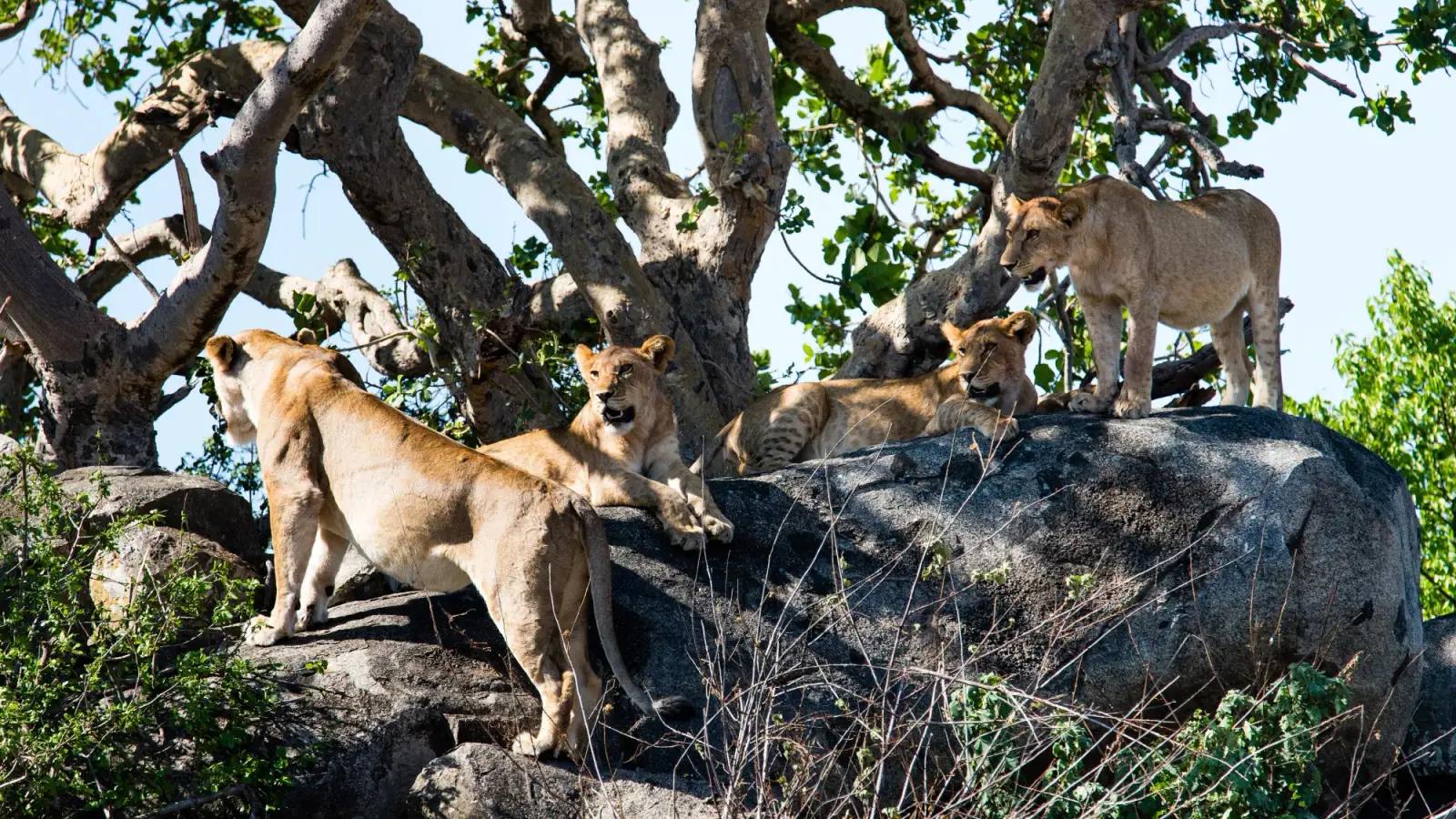
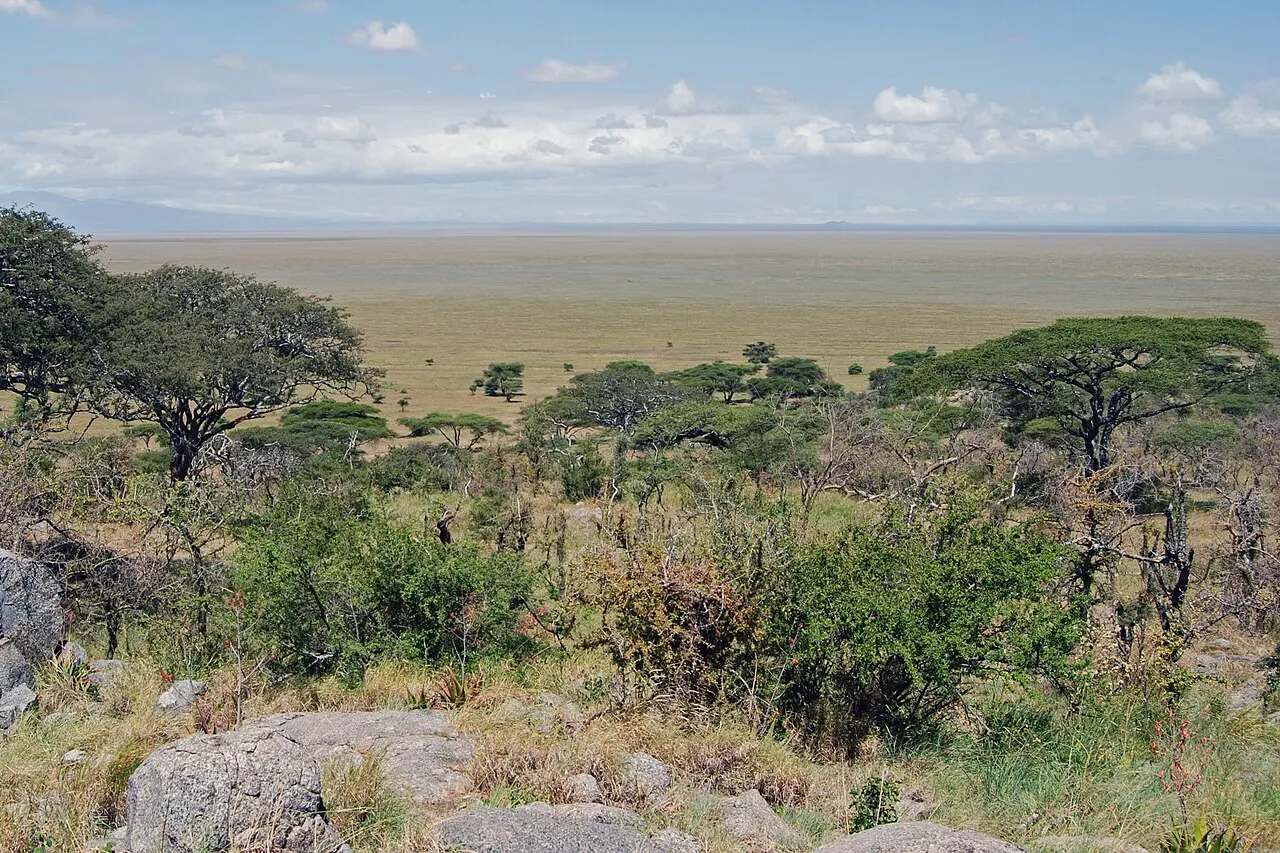
I'd recommend the Serengeti to people who like watching wildlife with patience, craters and alkaline lakes, and simple street food. The region is also about its people: Ngorongoro owes its name, according to one version, to the sound of Maasai cattle bells, and Arusha is home to Christian, Muslim, Sikh and Hindu communities. In the city, the building that tells the most history is the old German boma of 1900, raised on a rise above the plain to impose colonial order and now turned into a museum. At the table, I'd order mishkaki with chapati at a bar in Arusha and, on a cold night before heading up to the crater, a bowl of mtori, the northern plantain and meat stew. For a cultural boma, one of the Maasai villages prepared to receive guests, I'd go with a local operator who can explain what you're seeing, because the herding shown there is the same way of life at stake in the plan to resettle families out of the conservation area.The Serengeti is the savanna the world recognizes: short grass to the horizon, lone acacias and granite kopjes where lions lie down to watch over the plain. What gives the trip its meaning is the migration, which changes region through the year and makes every month a different safari. The Serengeti does not stand alone. To reach it by road, you cross the Ngorongoro Conservation Area, where Maasai herders share the land with wildlife and where a steep-walled volcanic caldera holds lions, buffalo and black rhinos. On the way lies Olduvai, the gorge where fossils and tools told part of the story of our species. Closer to Arusha, Tarangire gathers elephants and baobabs around a dry-season river. It is a trip of dirt roads and long hours in a jeep, planned around the month and the part of the park where the herds are.
Quick facts
- Population
- There are no permanent residents in Serengeti National Park, only staff, researchers and lodge crews. Arusha, the city safaris start from, had 617,631 inhabitants in the 2022 census (Arusha City Council, Tanzania National Bureau of Statistics).
- Founding
- The Serengeti became a national park under British administration between 1940 and 1951, when its boundaries were fixed; in 1959 the eastern part was split off as the Ngorongoro Conservation Area, and the Tanzanian parks authority (TANAPA) dates the current park to that year.
- Country and region
- Tanzania. The Serengeti lies in the Mara and Simiyu regions, up against the Kenyan border; Ngorongoro and Arusha are in the Arusha region, and Tarangire and Manyara in the Manyara region.
- Language
- Swahili and English; Maasai communities speak Maa.
- Currency
- Tanzanian shilling (TZS). Park, conservation and lodging fees inside protected areas are charged in US dollars.
- Time zone
- East Africa Time (Africa/Dar_es_Salaam): UTC+3 all year, with no daylight saving time.
- Best time
- June to October and January to February; June to October is the dry season, with the herds in the west and north and Tarangire at its peak, and the herds stay on the Ndutu plains from late December to March, sometimes into April, with the births in February. March to May is the long rains, and April is the wettest month.
- Average cost per day
- Budget around TZS170,000; mid-range around TZS388,000; comfortable around TZS743,000 per person per day, based on spending reported by travelers to Budget Your Trip (checked October 2026). Indicative figures, excluding travel to the destination.
When to go
June to October and January to February; June to October is the dry season, with the herds in the west and north and Tarangire at its peak, and the herds stay on the Ndutu plains from late December to March, sometimes into April, with the births in February. March to May is the long rains, and April is the wettest month.
January
Best time12 h 14 min of daylight
National holidays
Jan 1 – 3, 2027 · long weekend · Mwaka mpya
Jan 9 – 12, 2027 · long weekend · Sikukuu ya Mapinduzi ya Zanzibar
Jan 1, 2028 · Mwaka mpya
Jan 12, 2028 · Sikukuu ya Mapinduzi ya Zanzibar
Source: Nager.Date. Holiday dates shift; check close to your trip.
March
12 h 07 min of daylight
National holidays
Mar 26 – 29, 2027 · long weekend · Ijumaa Kuu, Jumatatu ya Pasaka
Source: Nager.Date. Holiday dates shift; check close to your trip.
April
12 h 04 min of daylight
National holidays
Apr 7, 2027 · Siku ya Karume
Apr 24 – 26, 2027 · long weekend · Sikukuu ya Muungano
Apr 7 – 9, 2028 · long weekend · Siku ya Karume
Apr 14 – 17, 2028 · long weekend · Ijumaa Kuu, Jumatatu ya Pasaka
Source: Nager.Date. Holiday dates shift; check close to your trip.
May
12 h 00 min of daylight
National holidays
May 1, 2027 · Sikukuu ya Wafanyakazi
Source: Nager.Date. Holiday dates shift; check close to your trip.
July
Best time11 h 59 min of daylight
National holidays
Jul 7, 2027 · Saba Saba
Source: Nager.Date. Holiday dates shift; check close to your trip.
August
Best time12 h 02 min of daylight
National holidays
Aug 8, 2027 · Nane Nane
Source: Nager.Date. Holiday dates shift; check close to your trip.
October
Best time12 h 10 min of daylight
National holidays
Oct 14 – 17, 2027 · long weekend · Siku ya Nyerere
Source: Nager.Date. Holiday dates shift; check close to your trip.
November
12 h 14 min of daylight
December
12 h 16 min of daylight
National holidays
Dec 9, 2026 · Siku ya Uhuru
Dec 25 – 27, 2026 · long weekend · Krismasi, Siku ya kufungua Zawadi
Dec 9 – 12, 2027 · long weekend · Siku ya Uhuru
Dec 25, 2027 · Krismasi
Dec 26, 2027 · Siku ya kufungua Zawadi
Source: Nager.Date. Holiday dates shift; check close to your trip.
High, shoulder and low season
High · June to October
Dry season, firm tracks and low grass. The migration passes through the western corridor and reaches the north and the Mara River from July to October; Tarangire has its biggest concentrations. It is when there are the most vehicles at the crossing points and the most demand for the northern camps.
Shoulder · November to February
Short rains in November and December, with the herds returning south through an area with few tracks; December is uncertain. The herds stay on the Ndutu plains from late December to March, sometimes into April, with the births in February, and the southern camps are in high demand in February.
Low · March to May
Long rains; April is the wettest month. Some tracks become difficult, the herds are in transit to the north and there are few lodgings on the way. According to fee schedules published by operators, TANAPA's fees for the Serengeti are lower from mid-March to mid-May.
How the year changes
The northern circuit has two rainy seasons and one dry one. June to October is the dry season: the tracks are firm, the grass drops, Tarangire has its biggest concentrations around the river, and the migration moves from the western corridor (May and June) to the north and the Mara River (July to October). It is also the time of the most vehicles at the crossings. In the south, the herds stay on the Ndutu plains from late December to March, sometimes into April, with the births in February; December is an uncertain month, because their arrival depends on the rains. From March to May come the long rains; April is the wettest month, some tracks become difficult, and the herds are in transit to the north, with few lodgings on the way. November and December bring the short rains and the herds' return to the south along the eastern edge of the park, a phase that is hard to follow. In Arusha, at 1,400 meters, temperatures usually range between 10 °C and 30 °C; on the crater rim, which is higher, the nights are cold all year.
Nilo's tips
Choose the month before the camp
The herds are in the south from late December to March, sometimes into April, with the births in February, pass through the west in May and June and are in the north from July to October. I'd choose the month first, then the region of the park, and only then where to sleep.
Count the entries into Ngorongoro
Each conservation area permit is good for one entry of up to 24 hours. The road itinerary counts at least two, plus one with Ndutu, plus one if you sleep in Karatu before the descent and plus one if the stay on the rim goes past 24 hours. I'd ask the operator for a quote with each permit on a separate line.
Share the vehicle in the crater
The crater service fee is per vehicle, not per person. In a group, the cost per head falls a lot, and I'd find travel companions before fixing the date of the descent.
Paying at the gate
According to operators, park gates only accept Visa or Mastercard cards. I'd bring two cards from different networks, even with the package paid, in case of an extra fee.
Fly the long stretch
Anyone traveling from July to October who wants the Mara River saves almost two days on the road by flying from Arusha to Kogatende. I'd book the outbound flight and return by road through the center of the park.
Explore the map
Explore the map, read about the other places and plan your travel days in the app.
Open the appWhat to see
Leave for last, if time allows: Grumeti River · Lake Manyara National Park · Naabi Hill · Shifting Sands · Arusha Declaration Museum · National Museum of Natural History
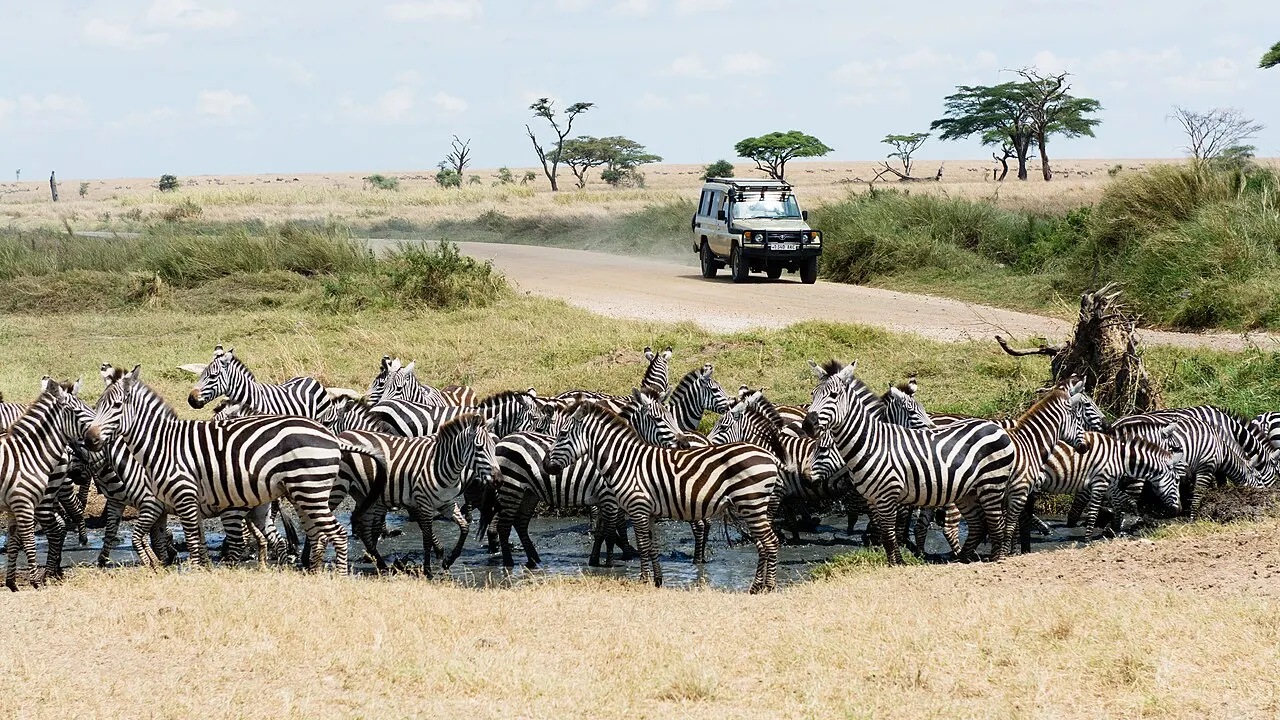
Seronera
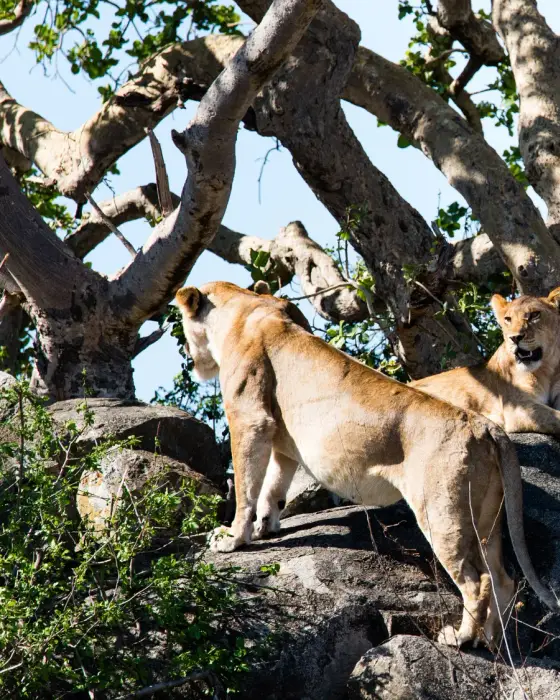
The Seronera river valley is the heart of the Serengeti and the best bet for anyone with few days: the valley and the surrounding kopjes keep a resident population of lions, leopards, cheetahs, buffalo and impalas all year, even when the migration is far away. The kopjes, granite outcrops among the grass, serve as observation posts for the big cats. Seronera has the main airstrip, the park headquarters and the densest network of tracks, which makes it easy to return to camp in the middle of the day. The park offers dawn balloon flights, booked separately.
Check access
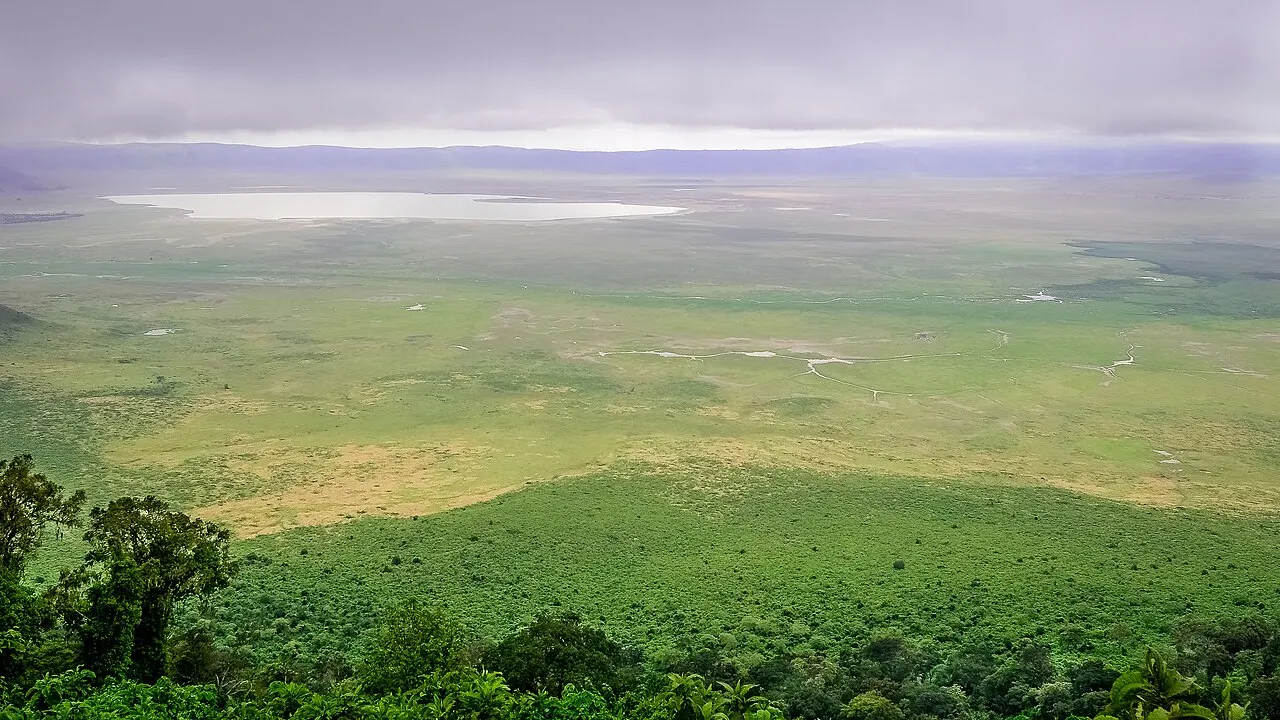
Ngorongoro Crater
The largest intact, unflooded volcanic caldera in the world, according to the Ngorongoro authority: a 260 km² floor, 610-meter walls and more than 25,000 animals, including lions, elephants, buffalo, leopards and the black rhino. The descent is only made in a 4x4 with a licensed guide, and each vehicle pays the crater service fee (US$295 for non-residents of East Africa, fee schedule consulted in October 2026). Driving begins at 6 a.m.; descents stop at 4 p.m., and everyone must be out by 6 p.m. Outside designated areas, nobody gets out of the car, and at most five vehicles may stop beside the same animal.
Check access
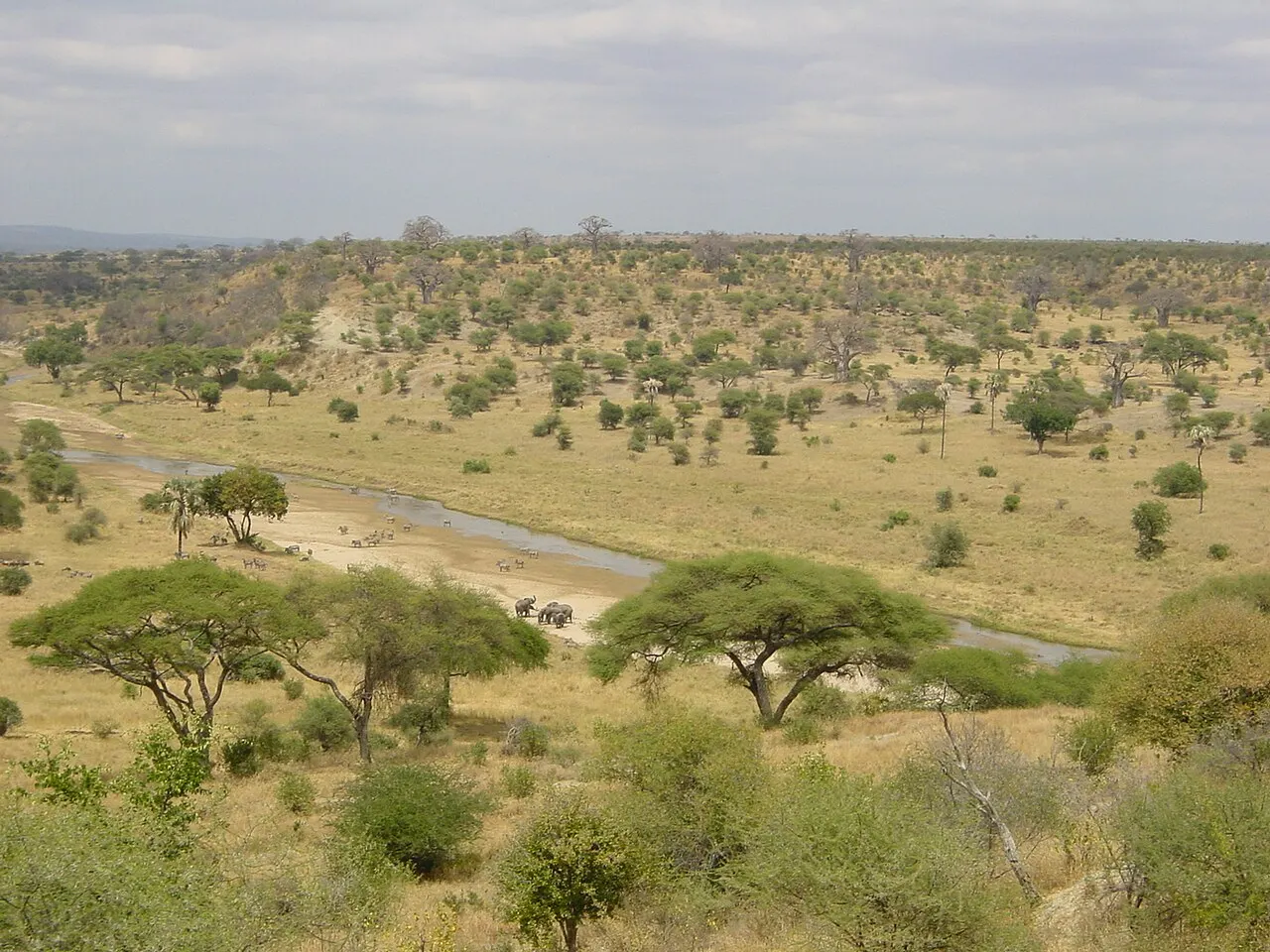
Tarangire National Park
Established in 1970 and covering 2,850 km², Tarangire is known for its density of elephants and for its baobabs. In the dry season, from June to October, the Tarangire River draws herds of zebras, wildebeest and buffalo from across the region. There are more than 550 bird species, and abandoned termite mounds shelter dwarf mongooses. The park is less than two hours from Arusha on the paved road, and TANAPA offers guided walks, authorized night drives and dawn balloon flights there.
Check access
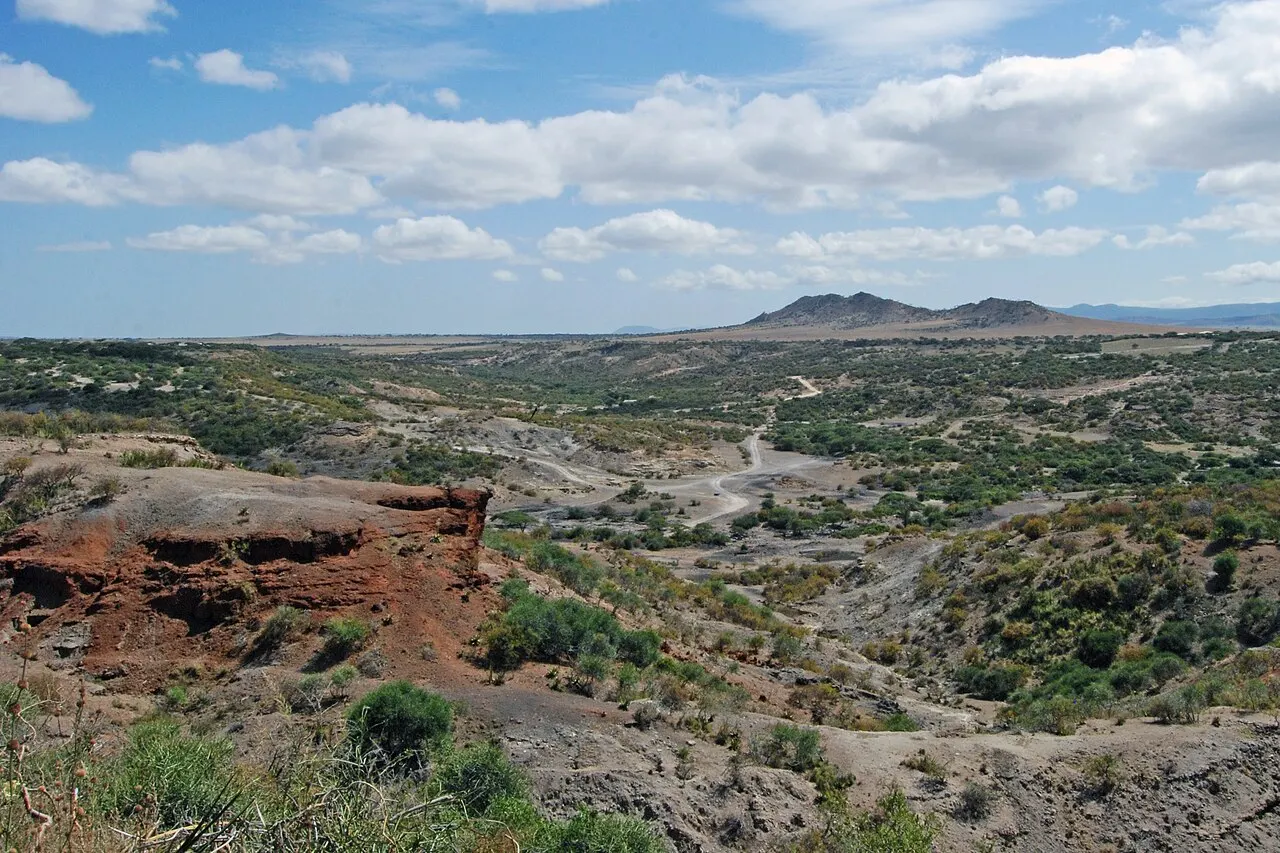
Olduvai Gorge
A gorge 55 km long and up to 100 meters deep, cut by erosion through the sediments of an ancient lake, where the Leakeys found fossils of Paranthropus boisei and Homo habilis. The museum sits on the edge of the gorge, a few kilometers from the monument with the two giant skulls on the road to the Serengeti; it displays fossils, tools and replicas of the Laetoli footprints and has a shelter overlooking the gorge, where guides give talks. Visiting the excavations requires an official guide. Entry costs US$35.40 per adult non-resident of East Africa.
Check access
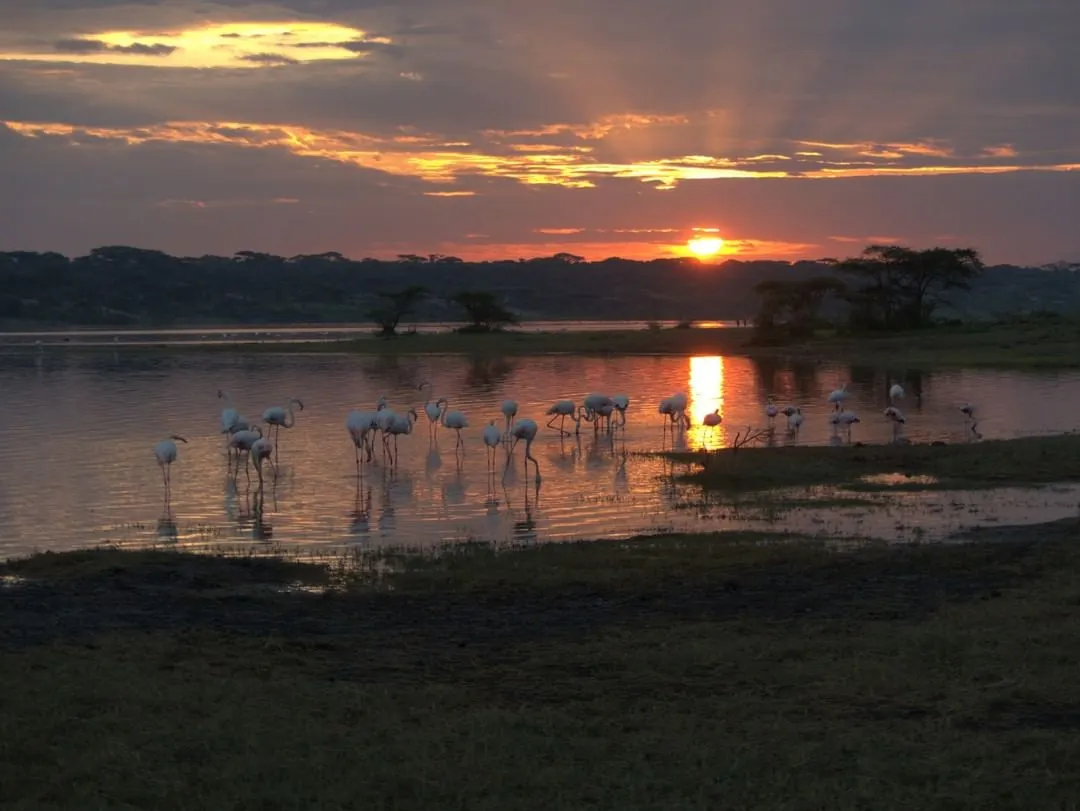
Lake Ndutu
The plains around lakes Ndutu and Masek, on the southern edge of the Serengeti and inside the Ngorongoro Conservation Area, are the nursery of the migration. The herds arrive from late December to March, sometimes into April, and in February thousands of wildebeest calves are born each day, which draws lions, cheetahs and hyenas. The rest of the year, the area still has resident wildlife, but without the large concentrations.
Check access
Moru Kopjes
A group of kopjes southwest of Seronera, home to a small number of black rhinos, rarely seen. The rocks hold paintings attributed to the Maasai, and the granite landscape rising over the plain offers some of the park's most open views.
Check access
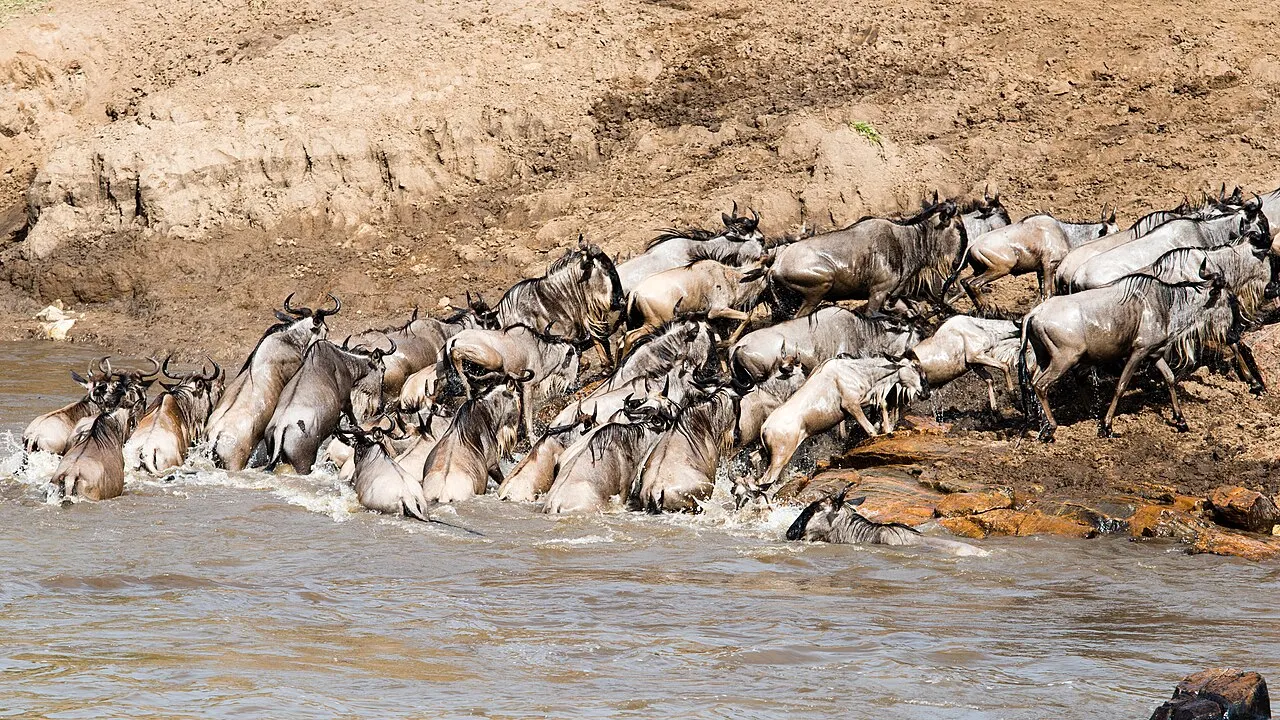
Mara River
In the far north of the park, on the Kenyan border, the Mara River is where the migration crossings happen, usually between July and August, sometimes as early as June and sometimes until October. Crocodiles wait on the banks, and vehicles gather at the crossing points; TANAPA has its own rules for the crossings, such as keeping a distance from the herds. The region is far from Seronera and is usually reached by plane, via the Kogatende airstrip.
Check access
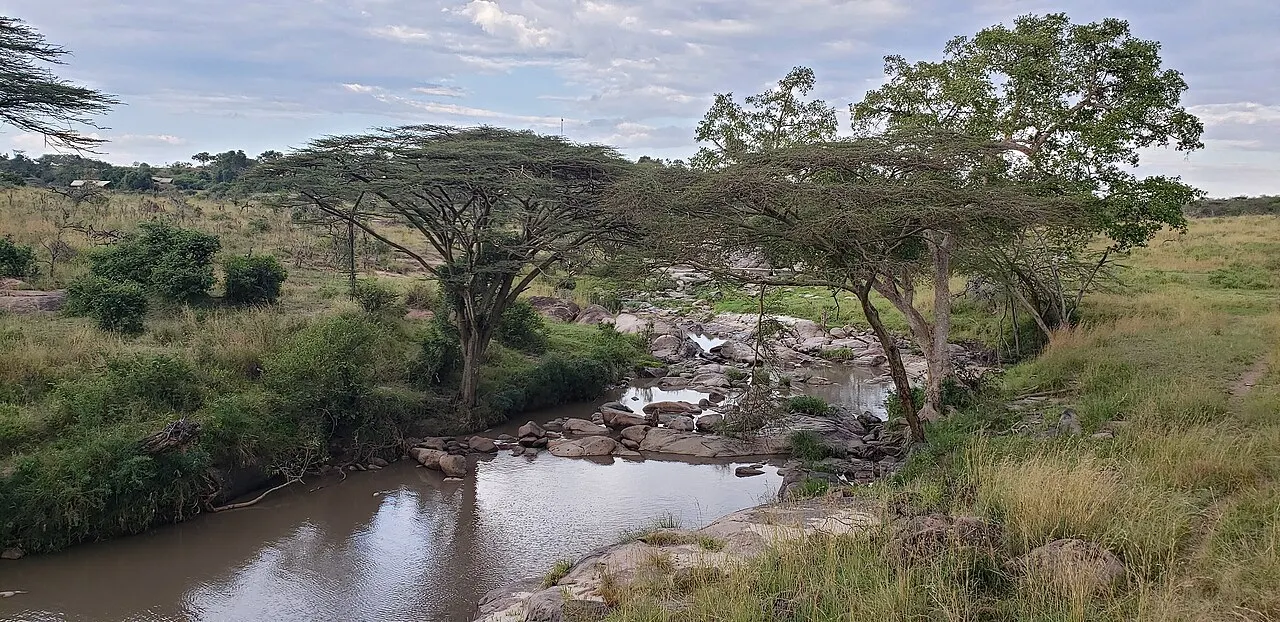
Grumeti River
The river of the western corridor, lined with riverine forest with colobus monkeys, crocodiles and hippos. The herds usually pass through in May and June, and some cross it. Outside that season, the long trip west yields less than one more day in Seronera.
Check access
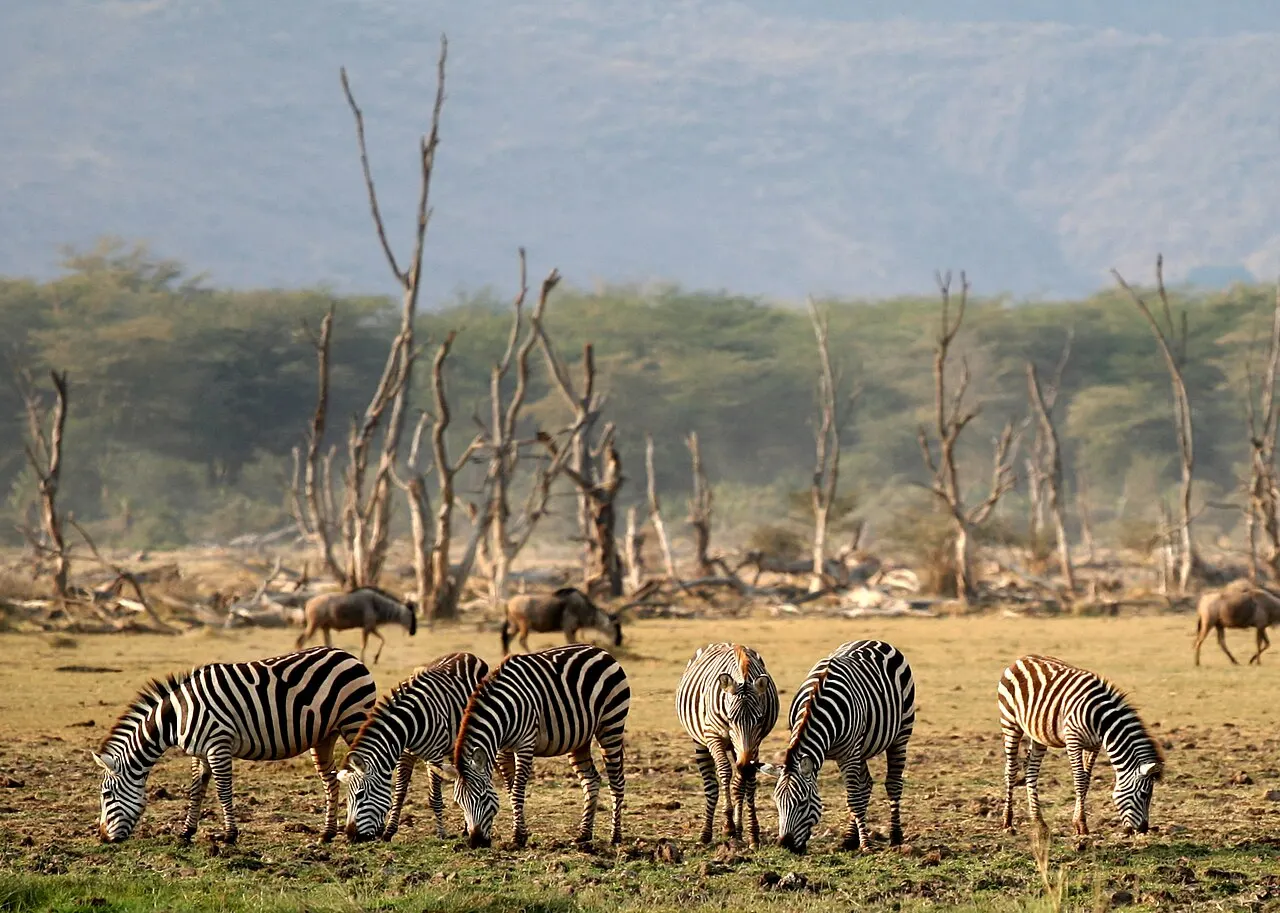
Lake Manyara National Park
A 648.7 km² park, of which 262.7 km² is the alkaline lake, squeezed between the Rift wall and the water. At the entrance there is a groundwater forest with blue monkeys and baboons; farther on, a hot spring, the lesser flamingos that feed on the lake and a 470-meter suspended walkway over the forest. The park is famous for its tree-climbing lions, a behavior not always seen.
Check access
More places in the guide
Naabi Hill
The hill by the main gate of the Serengeti for those arriving by the road from Arusha. While the driver sorts out the permits, a short climb to the top shows the southern plains stretching to the horizon.
Shifting Sands
An isolated dune of dark volcanic ash from Ol Doinyo Lengai, near Olduvai Gorge, which the wind pushes west by 15 to 29 meters a year, according to the Ngorongoro authority. The magnetic ash keeps the grains together. The visit has its own fee, US$35.40 per adult non-resident of East Africa, and a dirt-road detour.
Arusha Declaration Museum
A small museum next to the Uhuru Monument, in central Arusha, devoted to the 1967 Arusha Declaration, Julius Nyerere's political program. It interests anyone who wants to understand Tanzania after independence.
National Museum of Natural History
Housed in the old German boma of 1900, in Arusha, the museum has rooms on human evolution, with models of australopithecines, on the region's fauna and plants and on the history of the city. A giant tortoise more than a hundred years old wanders the courtyard.
Nilo’s itinerary
Start with the basic programme and choose extensions for the time you have.
Plan my days in the app ↗Day 1 · From Arusha to Tarangire
Leave Arusha early, after a night in town, on the paved road south: the Tarangire gate is less than two hours away.
Spend the morning along the Tarangire River, where the water gathers elephants, zebras and buffalo in the dry season, among the baobabs.
Have lunch in the park with the meal brought by the operator and make a second loop along the banks in the early afternoon.
Leave the park in time to reach Mto wa Mbu or Karatu before dark, where you sleep.
Day 2 · Along the Ngorongoro rim to the Serengeti
Enter the Ngorongoro Conservation Area through the Lodoare gate, near Karatu, early in the morning; the permit is good for 24 hours.
Stop at the rim viewpoint to see the crater floor; the descent is left for the last day.
Detour to the Olduvai Gorge museum, a few kilometers from the skulls monument, for the talk at the shelter overlooking the gorge.
Continue across the plains to the Naabi Hill gate and climb the hill while the driver sorts out the park permits.
Do the stretch to Seronera as a game drive, watching the kopjes from the road, and arrive before the end of the afternoon; night in central Serengeti.
Day 3 · Seronera from morning to afternoon
Head out at first light along the Seronera River, the hour when the big cats are still active.
Return to camp in the middle of the day, when the heat keeps the animals still.
Make the second outing in the late afternoon through the kopjes of the valley, and be back before the end of the driving hours.
Day 4 · The day that depends on the month
Anyone who wants to fly in a balloon leaves Seronera at dawn, with a reservation made beforehand, after a full day seeing the valley from the ground.
From late December to March, sometimes into April, head south to the Ndutu plains, where the herds are and, in February, the births; December is uncertain. Ndutu is inside the Ngorongoro Conservation Area, and entering from the Serengeti means one more permit.
In May and June, swap the south for the western corridor and the Grumeti River, where the herds usually pass.
In the other months, go to the Moru Kopjes, southwest of Seronera, and use the rest of the day in the valley.
Sleep again in central Serengeti or, in the Ndutu season, in a camp there.
Day 5 · Back to the crater rim
Anyone who slept in central Serengeti makes one last early outing and heads to the Naabi Hill gate; there you enter the Ngorongoro Conservation Area again, with the itinerary's second permit.
Anyone who slept at a Ndutu camp is already inside the conservation area and does not pass Naabi Hill: continue straight across the plains, and since the day 4 permit expires after 24 hours, this day's is the itinerary's third.
In both variants, cross the plains to the highlands and sleep in a lodge or camp on the crater rim, to descend early the next morning without leaving the area; sleeping in Karatu requires one more permit on day 6.
Day 6 · The crater floor and the return to Arusha
Descend into the crater as soon as driving begins, at 6 a.m., with the operator's licensed guide; the service fee is paid per vehicle.
Drive the floor around Lake Magadi and the swamps, without getting out of the vehicle outside designated points, and take a break at the authorized picnic site.
Climb out and leave the conservation area by early afternoon, within the 24 hours of the day 5 permit if possible (the operator confirms the count), and take the road to Arusha, about 180 km away, to arrive before dark.
Food
Nyama choma
Grilled meat, usually goat or beef, served in pieces on a board, with salt and chili. It is the dish of Arusha's bars and grill houses in the late afternoon, to share at the table.
Mishkaki
Skewers of marinated beef grilled over coals, sold at street stalls and bars, often with chapati or french fries.
Chipsi mayai
French fries mixed with beaten eggs and fried together in the pan, like an omelet. Also called zege, it started on the streets of Dar es Salaam in the 1980s and is sold freshly made all over the country, with kachumbari (a tomato and onion salad) or pili-pili, the chili sauce.
Ugali
A firm cornmeal porridge that goes with meat, fish or greens and is eaten by hand, rolled into a small ball to scoop up the sauce.
Mtori
A plantain and meat stew, sometimes with potato, milk or cream, born in the Moshi and Arusha region. It is thick and can be breakfast, lunch or dinner.
Ndizi nyama
Plantain cooked with meat, a common dish in banana-growing regions such as Mto wa Mbu.
Pilau
Rice cooked with a mix of spices and often meat. It shows the Indian and coastal influence on Tanzanian cooking.
Chapati and mandazi
Chapati is the flatbread that goes with stews; mandazi is a fried, slightly sweet dough ball eaten at breakfast with chai, tea with milk.
Northern coffee
The slopes of Kilimanjaro are among Tanzania's main arabica coffee regions, and coffee is also one of Karatu's crops. The harvest traditionally runs from October to February.
Where to eat
- Arusha, bars and grill houses
Nyama choma and mishkaki in the late afternoon, with chapati or french fries, at tables built for sharing. It is the most typical street meal before heading out on safari.
- Arusha and roadside towns
Chipsi mayai made to order at stalls and snack bars, with kachumbari and pili-pili, a quick and cheap meal at the stops between Arusha and Karatu.
- Arusha, local food restaurants
Mtori, the region's plantain and meat stew, and pilau, the spiced rice, to get to know northern cooking beyond the barbecue.
- Mto wa Mbu
Plantain dishes, such as ndizi nyama, in a town that lives off bananas and sits on the road between Tarangire, Manyara and Ngorongoro.
- Inside the parks
There are no restaurants open to the public: meals are handled by the lodge, the camp or the operator, with lunch brought for authorized picnics. Mention dietary restrictions beforehand.
· 2026-10-19
Day trips
Arusha National Park
A small 322 km² park at the foot of Mount Meru, with the Ngurdoto crater and the alkaline Momella lakes, home to flamingos, giraffes, buffalo and colobus monkeys. The main gate is about 25 km east of the city, and Kilimanjaro airport is 35 km away. It allows guided walks and canoeing, and fits the day before the flight home, as a half day or a full day.
Lake Eyasi
A salt lake southwest of the crater, in Karatu, on whose shores the Hadza, hunter-gatherers, live; the Datooga, herders and blacksmiths, live in the Yaeda Valley. The town of Mang'ola, on the shore, is about an hour's drive from Karatu (route calculation on OpenStreetMap). Visits to the communities usually start from Karatu; an overnight stay by the lake avoids the round trip in a single day.
Empakaai Crater
A caldera about 8 km wide in the Ngorongoro highlands, with a soda lake that covers more than half the floor and attracts flamingos. From the rim, on a clear day, you can see Ol Doinyo Lengai and Lake Natron. It is about 62 km and two hours of track from the Ngorongoro crater rim (route calculation on OpenStreetMap). The walk down takes about an hour and the climb back two and a half hours, always with an armed ranger from the Ngorongoro authority.
Lake Natron
An alkaline lake to the north, on the Kenyan border, where thousands of lesser flamingos feed, at the foot of the Ol Doinyo Lengai volcano. Engaresero, the village on the shore, with the human footprint site, is about 136 km and five hours by road from Mto wa Mbu (route calculation on OpenStreetMap), much of it on dirt. It calls for at least one night in the area.
Where to begin
From Arusha to Tarangire
Leave Arusha early, after a night in town, on the paved road south: the Tarangire gate is less than two hours away.
Along the Ngorongoro rim to the Serengeti
Enter the Ngorongoro Conservation Area through the Lodoare gate, near Karatu, early in the morning; the permit is good for 24 hours.
The day that depends on the month
Anyone who wants to fly in a balloon leaves Seronera at dawn, with a reservation made beforehand, after a full day seeing the valley from the ground.
Money
The currency is the Tanzanian shilling (TZS), used in markets, restaurants and transport in Arusha. Inside the protected areas, however, fees are charged in US dollars per person per 24 hours. In the Ngorongoro Conservation Area, the fee schedule consulted in October 2026 charges non-residents of East Africa US$70.80 per adult (16 and older) and US$23.60 per child aged 5 to 15; the descent into the crater costs US$295 per vehicle; Olduvai Gorge and Shifting Sands, US$35.40 per adult; and anyone sleeping in a lodge or fixed camp pays a US$59 concession fee per night. The Serengeti, Tarangire and Manyara have their own TANAPA schedules, with lower 24-hour rates in the low season; check the current schedule on the TANAPA website or with the operator before booking a package. According to operators, park gates accept Visa or Mastercard cards and do not accept cash. In a package with an operator, these fees are usually included, and it is worth checking item by item what is in the price.
Getting there and around
Getting there
Kilimanjaro International Airport (JRO) is about 60 km east of Arusha, on the road to Moshi, and handled more than 1 million passengers in 2024. Do not expect regular public transport from it: safari operators usually pick up passengers, and taxis are available. Arusha Airport, west of the city, is the base for domestic flights in small planes.
Safari by car
There is no public transport inside the parks. The circuit is done in a 4x4 with a driver-guide from a licensed operator; commercial vehicles need a tourism license to enter the conservation area. From Arusha, Tarangire is less than two hours away and Manyara about an hour and a half, and the road to the Serengeti is about 325 km and eight hours, crossing Ngorongoro to the Naabi Hill gate.
Flights within the circuit
Small planes link Arusha to the airstrips at Seronera, Kirawira (western corridor), Lobo and Kogatende (north), and also to Lake Manyara. The baggage limit is usually 10 to 15 kg in a soft bag. Flying to the north is the practical way to see the Mara crossings without spending two days on the road.
Hours and road rules
In the Ngorongoro Conservation Area, driving is allowed from 6 a.m. to 6 p.m., with a limit of 50 km/h on the roads and 25 km/h in the craters; driving off the tracks is prohibited. In the national parks, driving at night is also prohibited, except for the night drives that TANAPA authorizes in parks such as Tarangire and Manyara. Outside the towns, driving at night is discouraged because of the risk of accidents.
Safety
Inside the parks, with a licensed operator and following the driving rules, the biggest risk is the road. Accidents are frequent on Tanzanian highways, park tracks can become impassable after heavy rain, and driving at night outside the towns is discouraged. In Tanzania, including in cities, there are bag thefts and robberies, sometimes armed: avoid carrying a lot of cash or visible valuables and do not accept rides from strangers. At police checkpoints on the road, ask for the officer's identification; the police should not demand payment on the spot. Same-sex relations are a crime in Tanzania, and public displays of affection between them can lead to arrest. Photographing or filming protests is illegal. There is a risk of malaria, and a yellow fever vaccination certificate is required of those arriving from a country with transmission. Medical care in the parks is limited, and serious cases may require evacuation.
Before you go
- Plug
- types D and G
- Voltage
- 230 V
- Driving side
- on the left
- Emergency
- Police 112 · Fire 114 · Ambulance 115
- Country code
- +255
- Official languages
- Swahili and English
- Currency
- Tanzanian shilling (TZS)
Source: Wikidata (CC0), checked September 2026.
Etiquette tips
Photographing people
In the Ngorongoro Conservation Area, photographing residents is prohibited outside the cultural bomas. Elsewhere, ask before pointing the camera at someone.
Staying in the vehicle
In the parks and the conservation area, you only get out of the vehicle at designated points. Shouting, imitating animals, banging on the bodywork and honking to draw the animals' attention is prohibited.
Distance from the animals
The Ngorongoro authority asks for a minimum distance of 25 meters and limits to five the number of vehicles around the same animal or kill, in silence.
Nothing leaves the park
Feathers, bones, eggs, stones and plants stay where they are, and trash goes back in the vehicle to be disposed of at the lodge or camp.
Mistakes to avoid
Counting a single entry into Ngorongoro
The conservation area permit is good for one entry of up to 24 hours. A road safari pays for at least two (on the way to the Serengeti and on the way back), plus one if you go to Ndutu from the Serengeti, plus one if you sleep outside the area, in Karatu, before descending into the crater, and plus one if the stay on the rim goes past 24 hours.
Expecting Mara crossings in February
In February the herds are in the south, hundreds of kilometers from the Mara River. The month of the trip decides the region of the park.
Underestimating the road
Arusha to the Serengeti is about 325 km and eight hours, much of it on dirt. A two- or three-day itinerary spends more time driving than watching animals.
Reaching the crater gate late
Descents stop at 4 p.m. Anyone who arrives after that misses the descent for that day.
Bringing plastic bags
They are banned in the country and collected on arrival by air; bring cloth bags.
Buying a safari from someone who approaches you on the street
The British government advises against buying tours from street intermediaries and checking that the company appears on the list of licensed operators of the Tanzanian operators' association.
Useful phrases
Jambo / Habari?
Hello / How are you?
Nzuri
Fine (reply to habari)
Karibu
Welcome; also said when offering something
Asante (sana)
Thank you (very much)
Tafadhali
Please
Hapana, asante
No, thank you
Pole pole
Slowly
Bei gani?
How much is it?
Simba
Lion
Tembo
Elephant
Twiga
Giraffe
Nyumbu
Wildebeest
Where to stay
- Arusha · Those arriving on an international flight who need a night before and after the safari, with banks, pharmacies and a market nearby.: It is where operators pick up passengers and where the roads and domestic flights depart. The drawback is distance: the Serengeti is about 325 km away, and the international airport about 60 km.
- Karatu and Mto wa Mbu · Those who want to sleep between Tarangire and the crater, or on the night before entering the conservation area on the way to the Serengeti, outside the protected-area fees.: They sit on the paved road and shorten the morning of entering Ngorongoro. In return, you do not sleep inside a park or on the crater rim, and anyone who sleeps in Karatu the night before the descent pays a new entry permit.
- Central Serengeti (Seronera) · A first visit, in any month, for those who want resident animals near camp.: It has lodges, camps and campgrounds with quick access to the Seronera valley and the airstrip. According to operators, anyone sleeping in a lodge or fixed camp pays a nightly concession fee on top of the park fee, and at the peak of the dry season there are more vehicles in the valley.
- Southern Serengeti and Ndutu · Those traveling from late December to March to see the herds and, in February, the births.: It puts you in the middle of the herds at the right time. Outside that season, the area has only resident wildlife; it is inside the Ngorongoro Conservation Area, with its own fees.
- Northern Serengeti (Lobo and Kogatende) · Those traveling between July and October who want to see the Mara River crossings.: The camps are near the crossing points and the airstrips. It is the most remote area of the park: without a flight, the trip from Seronera takes up much of a day.
- Ngorongoro Crater rim · Those who want to descend into the crater right at the start of driving hours, at 6 a.m.: The lodges are a few minutes from the descent roads and have views of the caldera. The rim is cold at night, and lodging carries a concession fee of US$59 per adult per night, on top of entry to the area.
· 2026-10-19
Districts
Arusha
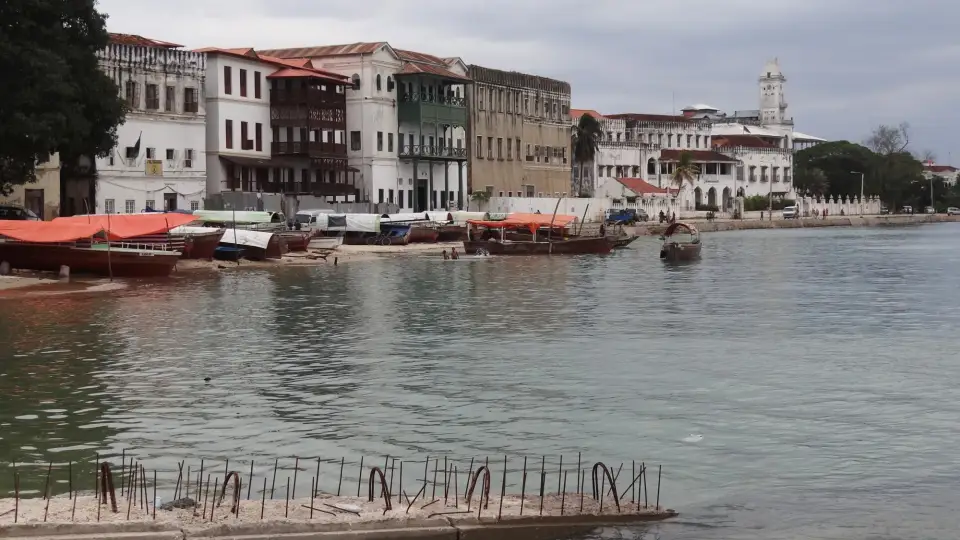
A city of 617,631 inhabitants (2022 census) at the foot of Mount Meru, home to operators, hotels, banks and markets. It has the Arusha Declaration Museum and the National Museum of Natural History, in the old German boma. It works for the first and last night of the trip.
Karatu and Mto wa Mbu
Two towns on the paved road between Arusha and Ngorongoro. Mto wa Mbu, 112 km from Arusha, sits next to Lake Manyara and lives off bananas; Karatu, home of the Iraqw, hugs the crater rim and has lodges for those planning to enter Ngorongoro early.
Ngorongoro Conservation Area
A multiple-use territory where Maasai herders live, with the crater, Olduvai Gorge, the Olmoti and Empakaai craters and, to the west, the Ndutu plains. The road to the Serengeti crosses it from end to end.
Central Serengeti (Seronera)
The Seronera river valley, with the park's densest network of tracks, its main airstrip and its administrative headquarters. It has resident wildlife all year and is the simplest area for a first visit.
Southern Serengeti and Ndutu
Short-grass plains between the park and the conservation area, around lakes Ndutu and Masek. The herds and the wildebeest births arrive here from late December to March, sometimes into April, with the births in February; the rest of the year, the resident animals stay.
Western corridor
The strip that runs down to Lake Victoria along the Grumeti and Mbalageti rivers, with crocodiles and hippos. The herds usually pass through between May and June.
Northern Serengeti (Lobo and Kogatende)
Woodland and hills up to the Mara River, far from Seronera and served by airstrips. They receive the Mara crossings between July and October.
Tarangire and Manyara
The two parks closest to Arusha, less than two hours away on the paved road, linked by the Kwa Kuchinja wildlife corridor. They usually open or close the circuit.
History
c. 3.6 million years ago · The Laetoli footprints
Bipedal hominids walk across damp volcanic ash on the southern plains; the trail, about 27 meters long with roughly 70 footprints, was excavated by Mary Leakey's team in 1978 and 1979.
c. 1.9 million years ago · Homo habilis at Olduvai
The gorge holds remains of Homo habilis, later of Paranthropus boisei and Homo erectus, with the stone tools that gave their name to the Oldowan tradition.
19th century · The Maasai in the highlands
Maasai herders drive out the Iraqw, who had been there for about 2,000 years, and the Datooga, who arrived around 1700. In the 1830s, the Arusha Maasai settle at the foot of Mount Meru.
1900 · The German boma of Arusha
The administration of German East Africa builds a military fort in Arusha, using forced labor; the building now houses the National Museum of Natural History.
1916 · Arusha under the British
In the First World War, the British take Arusha; the railway arrives from Moshi in 1928 and 1929, and the town becomes a regional administrative center.
1931 · Louis Leakey at Olduvai
Louis Leakey's expedition finds hand axes in the gorge and begins more than three decades of excavations with Mary Leakey.
1951 · The park boundaries
After the parks law of 1948, the boundaries of Serengeti National Park are fixed, and the movement of the Maasai who lived there becomes restricted.
1959 · Ngorongoro split from the Serengeti
About 8,300 km² to the east become the Ngorongoro Conservation Area, designed to reconcile wildlife and Maasai herding. That same year, Mary Leakey finds the Zinjanthropus skull at Olduvai, and Bernhard and Michael Grzimek release the book and film Serengeti Shall Not Die.
1961 · Tanganyika's independence
Documents transferring independence to Tanganyika are signed by the United Kingdom in Arusha.
1967 · The Arusha Declaration
Julius Nyerere's government launches in Arusha the political program of Tanzanian socialism, known as the Arusha Declaration.
1979 · World Heritage Site
The Ngorongoro Conservation Area joins the UNESCO list for its natural value; in 2010 it receives mixed status, for the paleoanthropological value of Olduvai.
1994–2015 · The Rwanda tribunal
Arusha hosts the International Criminal Tribunal for Rwanda, which indicted 93 people; a branch of the UN residual mechanism remains in the city.
2021 · The resettlement plan
The Tanzanian government begins carrying out a plan to move the Maasai out of the Ngorongoro Conservation Area to Msomera; Human Rights Watch reports coercion, and the government presents it as voluntary.
Complete history
Human origins on the savanna floor
Before it was a safari destination, the region was one of the places where the story of human evolution was written. At Laetoli, on the southern plains, footprints preserved in volcanic ash show hominids walking upright about 3.6 million years ago. At Olduvai, a gorge 55 km long and up to 100 meters deep, erosion exposed layers with fossils and stone tools. It was there that Mary Leakey found, in July 1959, the skull now called Paranthropus boisei, and that the Leakeys' team found in 1960 the jawbone that defined Homo habilis.
Herders, settlers and hunters
The Iraqw and the Datooga occupied the highlands before the Maasai arrived, who in the 19th century came to dominate the pastures with their cattle. German colonization reached Arusha in 1896 and built the boma, the fort, in 1900; inside the crater, two German brothers kept a farm until the First World War. Under the British, hunting decrees in the 1920s restricted killing, and the railway linked Arusha to Moshi.
A park, a conservation area and a dispute
The Serengeti was declared a national park between 1940 and 1951, and the Maasai who lived inside it were moved to Ngorongoro, set apart in 1959 as a multiple-use area, where cattle and wildlife share the space. That coexistence is at the center of a conflict that continues: the 2009 wildlife law restricted settlement in the crater, and since 2021 the government has been carrying out a resettlement plan to Msomera, about 600 km away. The government presents it as voluntary; Human Rights Watch reports that it has been conducted coercively. Lonely Planet recommends choosing local, ethically run operators when visiting Ngorongoro.
Arusha, city of treaties
Arusha grew as a town of Greek and British farmers, Indian merchants and colonial officials. After independence, it was the stage for the 1967 Arusha Declaration, the peace accords for Rwanda in 1993 and for Burundi in 2000, and the international tribunal for the Rwandan genocide. Today it is the seat of the East African Community and of the African Court on Human and Peoples' Rights, as well as the starting point for northern safaris.
Geography and shape of the city
Rift, volcanoes and plain
The northern circuit follows the eastern arm of the Great Rift Valley. Arusha sits at 1,400 meters of altitude, on the southern slope of 4,566-meter Mount Meru. To the west, the Rift wall rises to the volcanic highlands of Ngorongoro, a group of extinct volcanoes whose largest caldera has a 260 km² floor and is 610 meters deep. On the other side of the highlands, ash from these volcanoes and from the still-active Ol Doinyo Lengai formed the soil of the short-grass plains of the southern Serengeti.
The three parts of the Serengeti
The park covers 14,763 km². In the south lie the almost treeless plains, dotted with kopjes, granite outcrops that predators use as lookouts. The western corridor follows the Grumeti and Mbalageti rivers toward Lake Victoria, with riverine forest and small ridges. The north, of open woodland and hills, runs from Seronera to the Mara River on the Kenyan border, the only permanent river in the ecosystem, which continues into the Maasai Mara National Reserve.
Alkaline lakes and seasonal rivers
Manyara is a shallow, alkaline lake at 960 meters of altitude, with no outlet, whose surface grows and shrinks with the rain. Tarangire takes its name from the river that crosses it and that, in the June to October dry season, is the main source of fresh water for the animals. The long rains run from March to May and the short rains in November and December.
Culture
The Maasai and their cattle
The Maasai are herders, and cattle organize the economy and social life of the families living in the Ngorongoro Conservation Area, where the authority's mission includes supporting traditional herding. For visitors, the area offers cultural bomas, villages prepared to receive guests, with a fee of US$20 per vehicle. The conflict over resettling families out of the area is part of the region's present, and not only of its history.
Iraqw, Hadza and Datooga
The Iraqw are the largest group in Karatu, a highland district that grows onions, wheat, barley and coffee. On the shores of Lake Eyasi live the Hadza, hunter-gatherers, and in the Yaeda Valley the Datooga, herders. The Karatu district lists the Yaeda Valley among its attractions, for visits to these communities.
An international city
Arusha brings together Tanzanians of many origins, descendants of Arabs and Indians and a small foreign community, tied to regional institutions and tourism.
Science in the park
The Serengeti has been a field laboratory since 1966, when the Serengeti Research Institute was founded in Seronera to study the migration. Long-term research follows lions, elephants and giraffes in the parks of the circuit.
Festivals and events
Karibu-KiliFair
An annual East African tourism fair, in June, at the Magereza Ground, across from Arusha airport. The first day is reserved for industry professionals; on the other days, the public enters with a ticket.
Nane Nane
A national holiday on August 8; the name means eight eight in Swahili.
Siku ya Uhuru
Independence Day, on December 9, a national holiday with official ceremonies.
Birthing season
It is not a festival, but it is the event of the natural calendar: in February, on the Ndutu plains, thousands of wildebeest are born each day, and lodgings in the area become hard to book.
Books and films
Serengeti Shall Not Die (Bernhard and Michael Grzimek, 1959)
A book and documentary that made the Serengeti known to the world, made by a father and son who flew over the plains to count the herds, in the year Ngorongoro was split from the park.
Hatari! (Howard Hawks, 1962)
A film with John Wayne about hunters who capture animals for zoos, shot partly at the Momella lakes and on Mount Meru, near Arusha. It shows the outlook of its time on wildlife, now outdated.
Serengeti Symphony (Hugo van Lawick, 1998)
A Dutch documentary on the Serengeti's wildlife and migration, filmed across the seasons.
Frequently asked questions
Serengeti: how do you get from the airport to Arusha?
Kilimanjaro International Airport (JRO) is about 60 km east of Arusha, on the road to Moshi, and handled more than 1 million passengers in 2024. Do not expect regular public transport from it: safari operators usually pick up passengers, and taxis are available. Arusha Airport, west of the city, is the base for domestic flights in small planes.
Serengeti: how many days of safari?
I'd set aside six days of safari, with a night in Arusha beforehand. That is the time that lets you go and return by road without spending the trip inside the car: one day for Tarangire, one day crossing Ngorongoro and Olduvai to the Serengeti, one full day in Seronera, one day that changes with the month (Ndutu, the Grumeti River or the Moru Kopjes), one day back to the crater rim and a morning on the crater floor before returning to Arusha. With five days, I'd drop the day that depends on the month and stay only in Seronera. With fewer than five, I'd take the Serengeti out of the plan and stay in Tarangire, Manyara and Ngorongoro, because the road of about 325 km eats the time. Those with more time can add Arusha National Park on the day before the flight or, between July and October, nights in the northern Serengeti for the Mara crossings; neither is necessary for the trip to make sense.
Serengeti: when is the best time to go?
June to October and January to February; June to October is the dry season, with the herds in the west and north and Tarangire at its peak, and the herds stay on the Ndutu plains from late December to March, sometimes into April, with the births in February. March to May is the long rains, and April is the wettest month.
Serengeti: when and how can you see the Mara River crossings?
In the far north of the park, on the Kenyan border, the Mara River is where the migration crossings happen, usually between July and August, sometimes as early as June and sometimes until October. Crocodiles wait on the banks, and vehicles gather at the crossing points; TANAPA has its own rules for the crossings, such as keeping a distance from the herds. The region is far from Seronera and is usually reached by plane, via the Kogatende airstrip. Anyone traveling from July to October who wants the Mara River saves almost two days on the road by flying from Arusha to Kogatende.
Serengeti: how many Ngorongoro permits does a safari pay for?
The conservation area permit is good for one entry of up to 24 hours. A road safari pays for at least two (on the way to the Serengeti and on the way back), plus one if you go to Ndutu from the Serengeti, plus one if you sleep outside the area, in Karatu, before descending into the crater, and plus one if the stay on the rim goes past 24 hours. In a package with an operator, the fees are usually included, and it is worth checking item by item what is in the price; I'd ask the operator for a quote with each permit on a separate line.
Serengeti: what is the descent into Ngorongoro Crater like?
The descent is only made in a 4x4 with a licensed guide, and each vehicle pays the crater service fee (US$295 for non-residents of East Africa, fee schedule consulted in October 2026). Driving begins at 6:00; descents stop at 16:00, and everyone must be out by 18:00 Outside designated areas, nobody gets out of the car, and at most five vehicles may stop beside the same animal.
Serengeti: can you do the safari without an operator?
There is no public transport inside the parks. The circuit is done in a 4x4 with a driver-guide from a licensed operator; commercial vehicles need a tourism license to enter the conservation area. The British government advises against buying tours from street intermediaries and checking that the company appears on the list of licensed operators of the Tanzanian operators' association.
Serengeti: is it worth flying within the circuit?
Small planes link Arusha to the airstrips at Seronera, Kirawira (western corridor), Lobo and Kogatende (north), and also to Lake Manyara. The baggage limit is usually 10 to 15 kg in a soft bag. Flying to the north is the practical way to see the Mara crossings without spending two days on the road.
Serengeti: is it safe?
Inside the parks, with a licensed operator and following the driving rules, the biggest risk is the road. Accidents are frequent on Tanzanian highways, park tracks can become impassable after heavy rain, and driving at night outside the towns is discouraged. In Tanzania, including in cities, there are bag thefts and robberies, sometimes armed: avoid carrying a lot of cash or visible valuables and do not accept rides from strangers. At police checkpoints on the road, ask for the officer's identification; the police should not demand payment on the spot. Same-sex relations are a crime in Tanzania, and public displays of affection between them can lead to arrest. Photographing or filming protests is illegal. There is a risk of malaria, and a yellow fever vaccination certificate is required of those arriving from a country with transmission. Medical care in the parks is limited, and serious cases may require evacuation.
Serengeti: what can you do near Arusha the day before the flight home?
Arusha National Park, a small 322 km² park at the foot of Mount Meru, has the Ngurdoto crater and the alkaline Momella lakes, home to flamingos, giraffes, buffalo and colobus monkeys. The main gate is about 25 km east of the city, and Kilimanjaro airport is 35 km away. It allows guided walks and canoeing, and fits the day before the flight home, as a half day or a full day.
Other cities in the country
Tanzania ↗- Days
- 4
- When
- Jan–Feb · Jun–Oct
- Per person/day
- Average 110–170 USDMid-range · per person/day
Cost scope
Per person per day: accommodation, meals, urban transport, visits and a small allowance for extras. Flights excluded; larger purchases vary. Editorial estimate, not a quote.