Seychelles
Seychelles
Mahé, Praslin and La Digue: three of the Seychelles' granite islands, linked by ferry
Days I'd book five full days for the three islands, not counting arrival day: two on Mahé, one on Praslin and two on La Digue, with a night on the island between them.
How the guide reaches this number
Each ferry crossing takes up part of the day, and the three islands are different enough that cutting one changes the trip. On Mahé, the first day is Victoria and Beau Vallon, and the second is for the mountains, with an early trail and the southern coves by car. Praslin fits in a day if it starts on the morning ferry: the Vallée de Mai until early afternoon and Anse Lazio until sunset. On La Digue, the night on the island lets you go to Anse Source d'Argent at high tide on one day and have the next morning for the east coast and Nid d'Aigle, before the ferry back. With six days, I'd add a boat day from Praslin, to Curieuse and St Pierre, for the giant tortoises and the snorkeling.
5–6
Start with the basic programme and choose extensions for the time you have.
When April, October and November; these are the transition months between the two seasons, with variable winds and outside both the rain of the northwest monsoon (December to March) and the southeast trade wind (May to September)
How the guide reaches this number
The climate is warm all year, with the sea between 27 and 29 °C, and the choice of season depends on wind and rain more than on temperature. From December to March, the northwest monsoon brings the hottest, most humid months and most of the rain; on La Digue, January exceeds 400 mm, while July stays below 80 mm. Even so, the rain usually comes in short showers, and the sky can change from one side of the same island to the other. From May to September the southeast trade wind blows: it is the driest, coolest season, good for hiking, but with more wind and rough sea on some beaches and on the ferry crossing. April, October and November are the transition months between the two seasons, with variable winds, and the best for snorkeling and for combining the three islands. December and January, July and August and Easter are the busiest periods, with pricier accommodation that is harder to find.
Per person/day Budget around SCR1,420; mid-range around SCR3,240; comfortable around SCR6,150 per person per day, based on spending reported by travelers to Budget Your Trip (checked October 2026).
How the guide reaches this number
Indicative figures, excluding travel to the destination. Country average.
Budget around SCR1,420; mid-range around SCR3,240; comfortable around SCR6,150 per person per day, based on spending reported by travelers to Budget Your Trip (checked October 2026). Indicative figures, excluding travel to the destination. Country average.
Per person per day: accommodation, meals, urban transport, visits and a small allowance for extras. Flights excluded; larger purchases vary. Editorial estimate, not a quote.
 What Nilo thinks
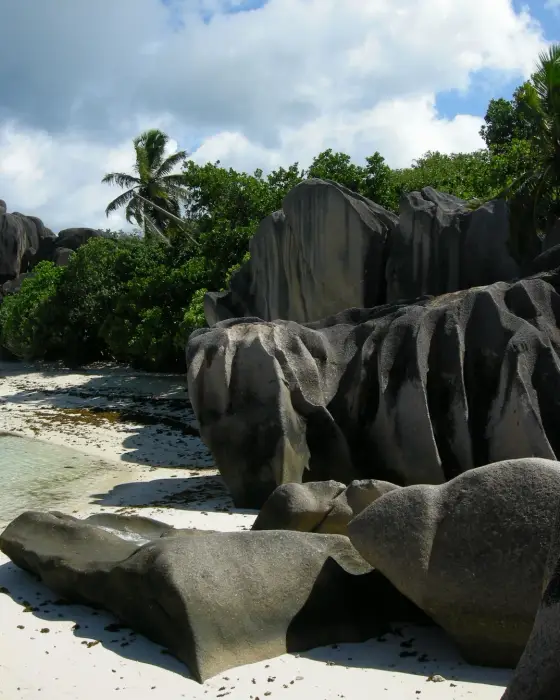
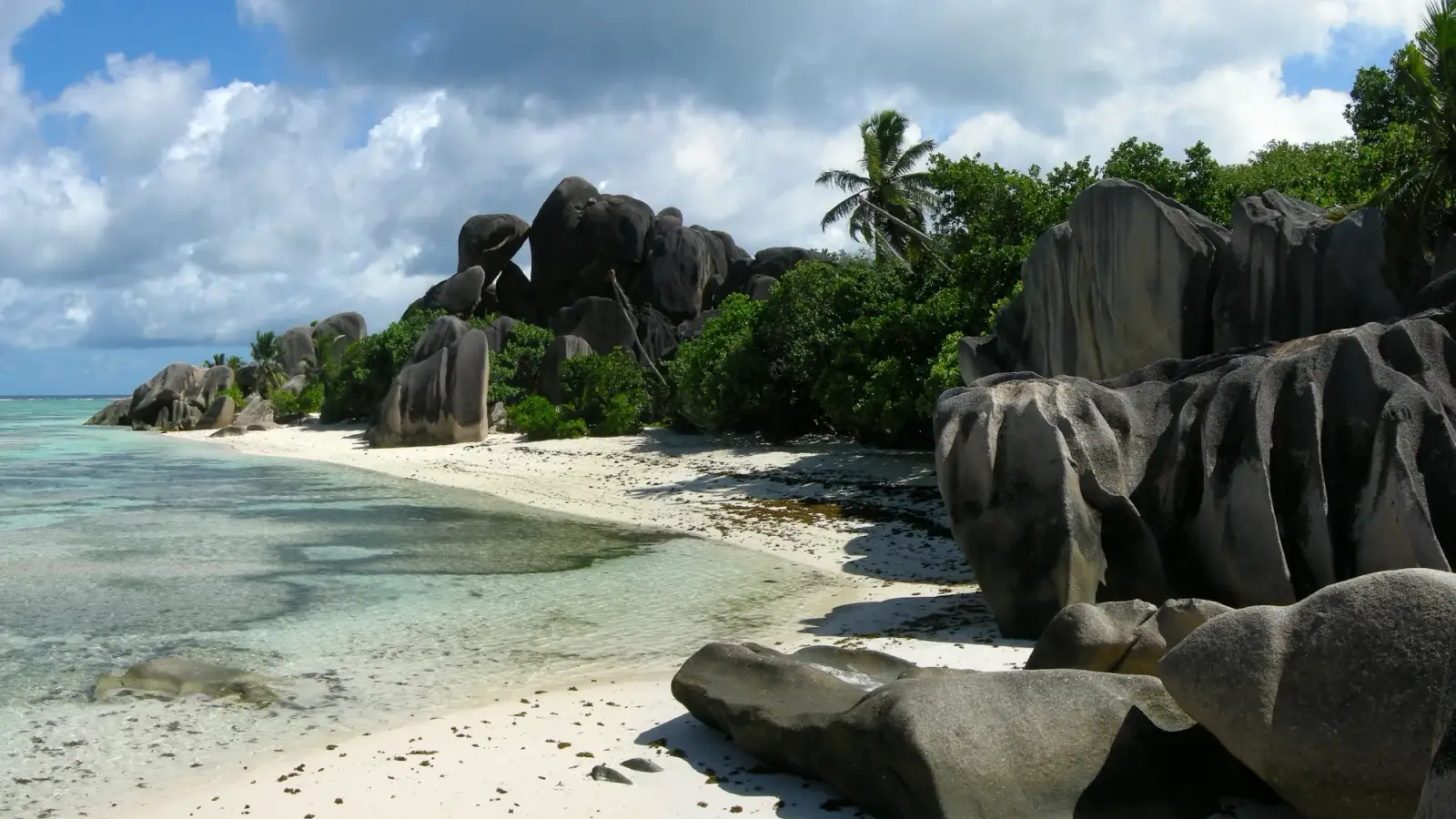
I'd recommend the Seychelles to anyone who likes fish and coconut cooking, small capitals that can be understood in a few streets and nature protected by rules taken seriously. The table tells the story of the mix of people who made the country better than any museum: kat-kat banane combines green banana and fish in coconut milk, kari bernik is a limpet curry, limpets being a mollusk from the rocks, fruit bat curry is also Creole cooking, and it is not unusual for the dish to arrive decorated with fresh flowers. In Victoria, the Catholic cathedral of the Immaculate Conception and the Anglican cathedral of St Paul share the center with mosques and Hindu temples, and among the Indo-Seychellois you can still hear Tamil. For sleeping, I'd choose a guesthouse on an inhabited island over a private-island resort, because that is where you shop, pray and eat alongside the people who live in the Seychelles.The inner islands of the Seychelles sit on a piece of granite continent that broke loose between Madagascar and India, and you see it everywhere: forested mountains on Mahé, rounded boulders that cut the beaches into coves, a palm on Praslin that exists only there and on the neighboring island and bears the largest seed in the world. Each of the three islands has a different rhythm. Mahé has the capital, Victoria, which you cross on foot in a morning, and a mountain range with trails a few minutes from the sea. Praslin holds the coco de mer forest of the Vallée de Mai. La Digue is small and covered by bicycle, among ox carts and the beach that appears in almost every photo of the country. The culture that ties it all together is Creole, from the language to the curry with coconut milk, and was born of people who came from elsewhere to islands that no one had inhabited.
Quick facts
- Population
- About 121,000 residents in the whole country (estimate of the resident population in mid-2024, National Bureau of Statistics); the vast majority live on Mahé
- Founded
- The first French settlers landed on the island of Sainte Anne in 1770; the settlement that became Victoria, on Mahé, was founded in 1778 under the name L'Établissement and renamed in 1841
- Country and region
- Republic of Seychelles, in the western Indian Ocean, northeast of Madagascar; Mahé, Praslin and La Digue are part of the inner, granite islands
- Language
- Seychellois Creole (kreol seselwa), English and French are the three official languages; Creole is the mother tongue of about 91% of the population
- Currency
- Seychellois rupee (SCR); hotels, ferries and tours are usually priced in euros, and Visa and Mastercard cards are accepted at most tourist businesses
- Time zone
- UTC+4 year-round, with no daylight saving time
- Best time
- April, October and November; these are the transition months between the two seasons, with variable winds and outside both the rain of the northwest monsoon (December to March) and the southeast trade wind (May to September)
- Average cost per day
- Budget around SCR1,420; mid-range around SCR3,240; comfortable around SCR6,150 per person per day, based on spending reported by travelers to Budget Your Trip (checked October 2026). Indicative figures, excluding travel to the destination. Country average.
What’s new
Recent changes that affect the plan, with date and source.
- Jan 2026
Since January 1, 2026, small accommodations, up to 24 rooms, no longer charge the tourism environmental levy. At medium ones, up to 50 rooms, it is SCR 75 per person per night; at those with 51 rooms or more, island resorts and yachts, SCR 100. source
When to go
April, October and November; these are the transition months between the two seasons, with variable winds and outside both the rain of the northwest monsoon (December to March) and the southeast trade wind (May to September)
January
25° to 30°C
427 mm of rain
12 h 22 min of daylight
National holidays
Jan 1 – 3, 2027 · long weekend · New Year's Day, New Year Holiday
Jan 1, 2028 · New Year's Day
Jan 2, 2028 · New Year Holiday
Source: Nager.Date. Holiday dates shift; check close to your trip.
February
25° to 31°C
251 mm of rain
12 h 15 min of daylight
March
25° to 31°C
205 mm of rain
12 h 08 min of daylight
National holidays
Mar 26 – 29, 2027 · long weekend · Good Friday, Easter Saturday, Easter Monday
Source: Nager.Date. Holiday dates shift; check close to your trip.
April
26° to 32°C
196 mm of rain
Best time12 h 00 min of daylight
National holidays
Apr 14 – 17, 2028 · long weekend · Good Friday, Easter Saturday, Easter Monday
Source: Nager.Date. Holiday dates shift; check close to your trip.
May
26° to 31°C
171 mm of rain
11 h 54 min of daylight
National holidays
May 1, 2027 · Labour Day
May 27 – 30, 2027 · long weekend · The Fete Dieu
Source: Nager.Date. Holiday dates shift; check close to your trip.
June
25° to 30°C
122 mm of rain
11 h 52 min of daylight
National holidays
Jun 18 – 20, 2027 · long weekend · National Day
Jun 26 – 29, 2027 · long weekend · Independence Day
Source: Nager.Date. Holiday dates shift; check close to your trip.
July
24° to 29°C
80 mm of rain
11 h 53 min of daylight
August
24° to 29°C
115 mm of rain
11 h 58 min of daylight
National holidays
Aug 15, 2027 · Assumption of Mary
Source: Nager.Date. Holiday dates shift; check close to your trip.
September
25° to 29°C
184 mm of rain
12 h 05 min of daylight
November
25° to 30°C
215 mm of rain
Best time12 h 20 min of daylight
National holidays
Nov 1, 2026 · All Saints' Day
Oct 30 – Nov 1, 2027 · long weekend · All Saints' Day
Source: Nager.Date. Holiday dates shift; check close to your trip.
December
25° to 31°C
298 mm of rain
12 h 23 min of daylight
National holidays
Dec 5 – 8, 2026 · long weekend · The Feast of the Immaculate Conception
Dec 25 – 27, 2026 · long weekend · Christmas Day
Dec 8, 2027 · The Feast of the Immaculate Conception
Dec 25, 2027 · Christmas Day
Source: Nager.Date. Holiday dates shift; check close to your trip.
High, shoulder and low season
High · December and January, July and August, and Easter
Pricier accommodation that is harder to find, especially on La Digue, and fuller ferries; book ahead. December and January fall in the rainy northwest monsoon, and July and August in the southeast trade wind, drier and windier.
Shoulder · April, October and November
The transition months between the two seasons, with variable winds, outside both the monsoon rain and the trade wind; the best for snorkeling and crossings. The Festival Kreol takes place in October.
Shoulder · May, June and September
Southeast trade wind: dry, cool days, good for hiking, but with more wind and rough sea on some beaches and on the ferry crossing, outside the holiday demand peaks.
Shoulder · February and March
Still in the northwest monsoon: hot, humid and with heavy showers, but outside the holiday demand peaks.
How the year changes
The climate is warm all year, with the sea between 27 and 29 °C, and the choice of season depends on wind and rain more than on temperature. From December to March, the northwest monsoon brings the hottest, most humid months and most of the rain; on La Digue, January exceeds 400 mm, while July stays below 80 mm. Even so, the rain usually comes in short showers, and the sky can change from one side of the same island to the other. From May to September the southeast trade wind blows: it is the driest, coolest season, good for hiking, but with more wind and rough sea on some beaches and on the ferry crossing. April, October and November are the transition months between the two seasons, with variable winds, and the best for snorkeling and for combining the three islands. December and January, July and August and Easter are the busiest periods, with pricier accommodation that is harder to find.
The same numbers as a table
| Month | Temperature °C | Rain mm |
|---|---|---|
| January | 25 to 30 | 427 |
| February | 25 to 31 | 251 |
| March | 25 to 31 | 205 |
| April · | 26 to 32 | 196 |
| May | 26 to 31 | 171 |
| June | 25 to 30 | 122 |
| July | 24 to 29 | 80 |
| August | 24 to 29 | 115 |
| September | 25 to 29 | 184 |
| October · | 25 to 30 | 191 |
| November · | 25 to 30 | 215 |
| December | 25 to 31 | 298 |
Nilo's tips
Pick your beach time by the tide
At Anse Source d'Argent, high tide is the time to swim and low tide the time to walk between the coves. If you sleep on La Digue, you can fit the beach to the right tide, instead of depending on the ferry schedule.
Combined ticket on Praslin
The Seychelles Islands Foundation sells a ticket for the Vallée de Mai and Fond Ferdinand, with one entry to each reserve within ten days. Children under 12 do not pay, but must show ID.
Ferry: ID in hand and half an hour early
Cat Cocos asks passengers to be at the jetty 30 minutes early, with a passport. Changing the departure time once costs SCR 25, up to one hour before departure and subject to availability.
Hotel size and the nightly levy
The environmental levy depends on the size of the accommodation: none at small ones, up to 24 rooms, and SCR 75 or SCR 100 per person per night at medium and large ones. On a long stay, the difference adds up.
See a real coco de mer without buying the nut
Victoria's Botanical Gardens have coco de mer for those not going to Praslin, and the Vallée de Mai shows the palm in the forest. Buying the nut requires a certificate and weighs down your luggage.
Explore the map
Explore the map, read about the other places and plan your travel days in the app.
Open the appWhat to see
Leave for last, if time allows: Sri Navasakthi Vinayagar Temple · Victoria Clock Tower · Anse Soleil · Domaine de Val des Prés · Fond Ferdinand Nature Reserve · Veuve Nature Reserve · Nid d'Aigle · Anse Sévère
Anse Source d'Argent
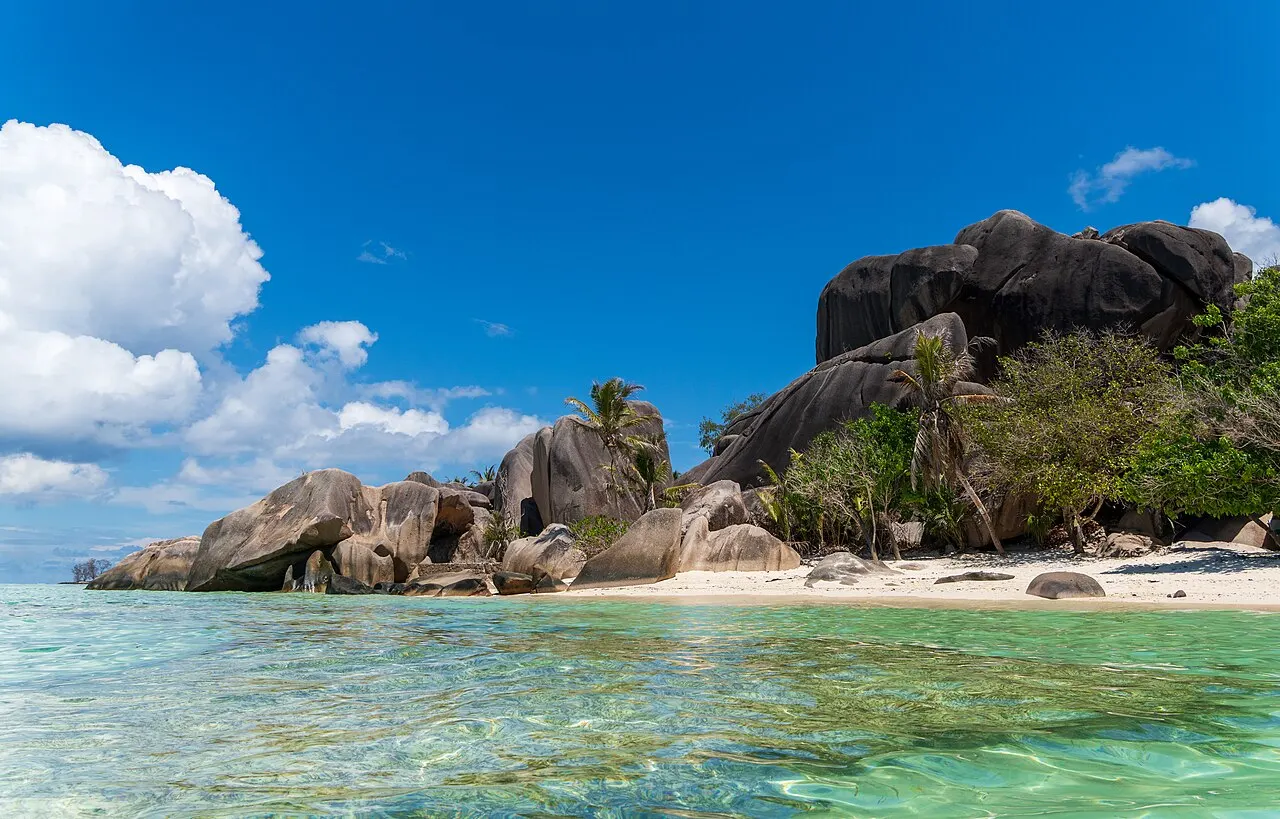
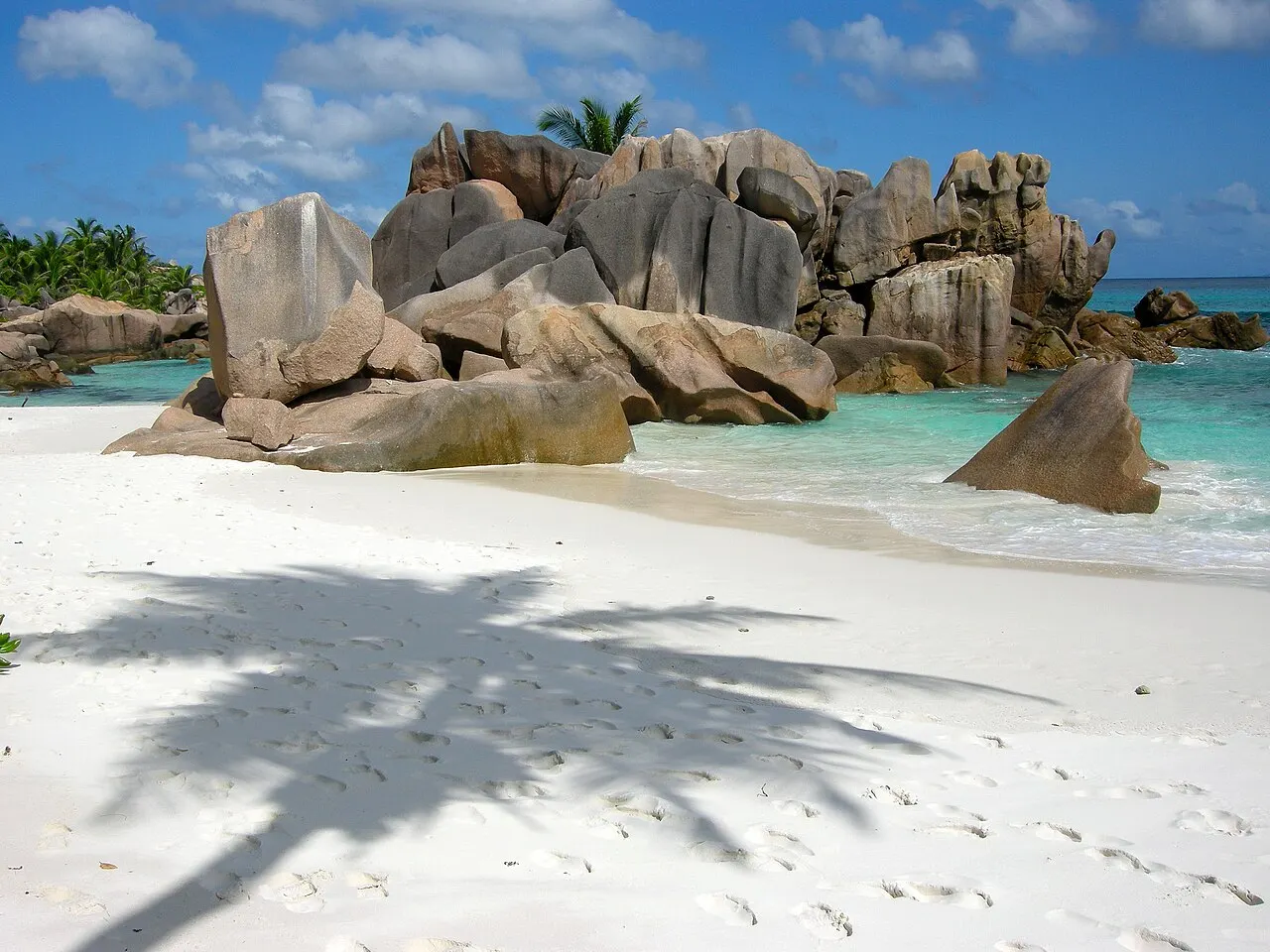
The most photographed beach in the Seychelles lies on the southwest coast of La Digue: white sand, shallow water sheltered by a reef and huge granite boulders, smoothed by time, that divide small coves. Access is through the former plantation of L'Union Estate, with an entrance fee. The tide rules the visit: at low tide the water is too shallow for swimming and it is time to walk between the coves; at high tide the lagoon is good for swimming and beginner snorkeling. It is busiest around midday.
Check access
Vallée de Mai
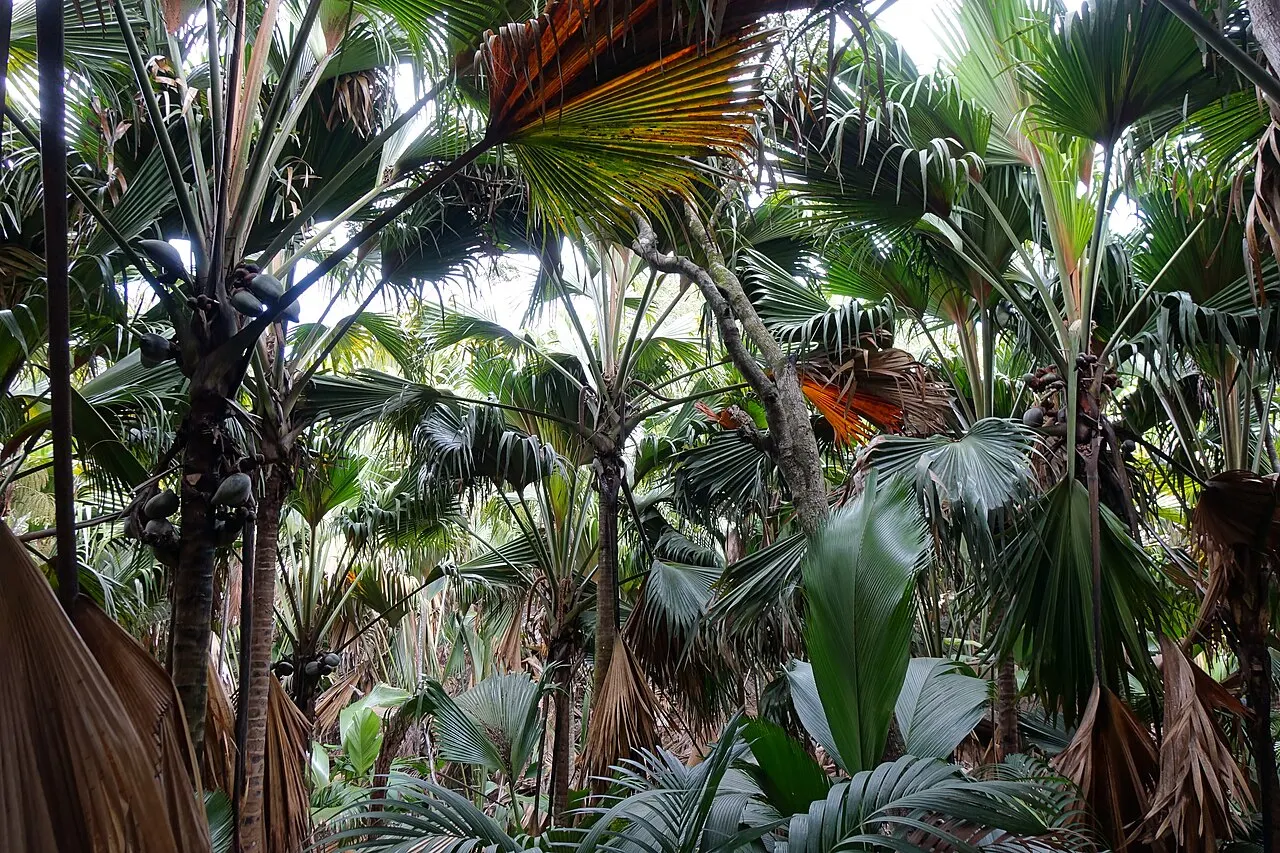
A nature reserve on Praslin and a UNESCO World Heritage Site since 1983, with 19.5 hectares of forest of endemic palms. The star is the coco de mer, which bears the largest seed in the plant kingdom, but the forest shelters five other endemic palms and animals found only there and on a few neighboring islands, such as the Seychelles black parrot. The trails run from about 1.5 km to 4 km. It is open every day from 08:30 to 16:30, with last entry at 15:30, and closes on Christmas and New Year's Day. Admission is SCR 450, payable in rupees, euros, dollars or pounds; the ticket can be bought online on the Seychelles Islands Foundation website. Flash photography is not allowed.
Check access
Opening hours: Mon–Sun 08:30–16:30 (checked Oct 2026) source
Morne Seychellois National Park
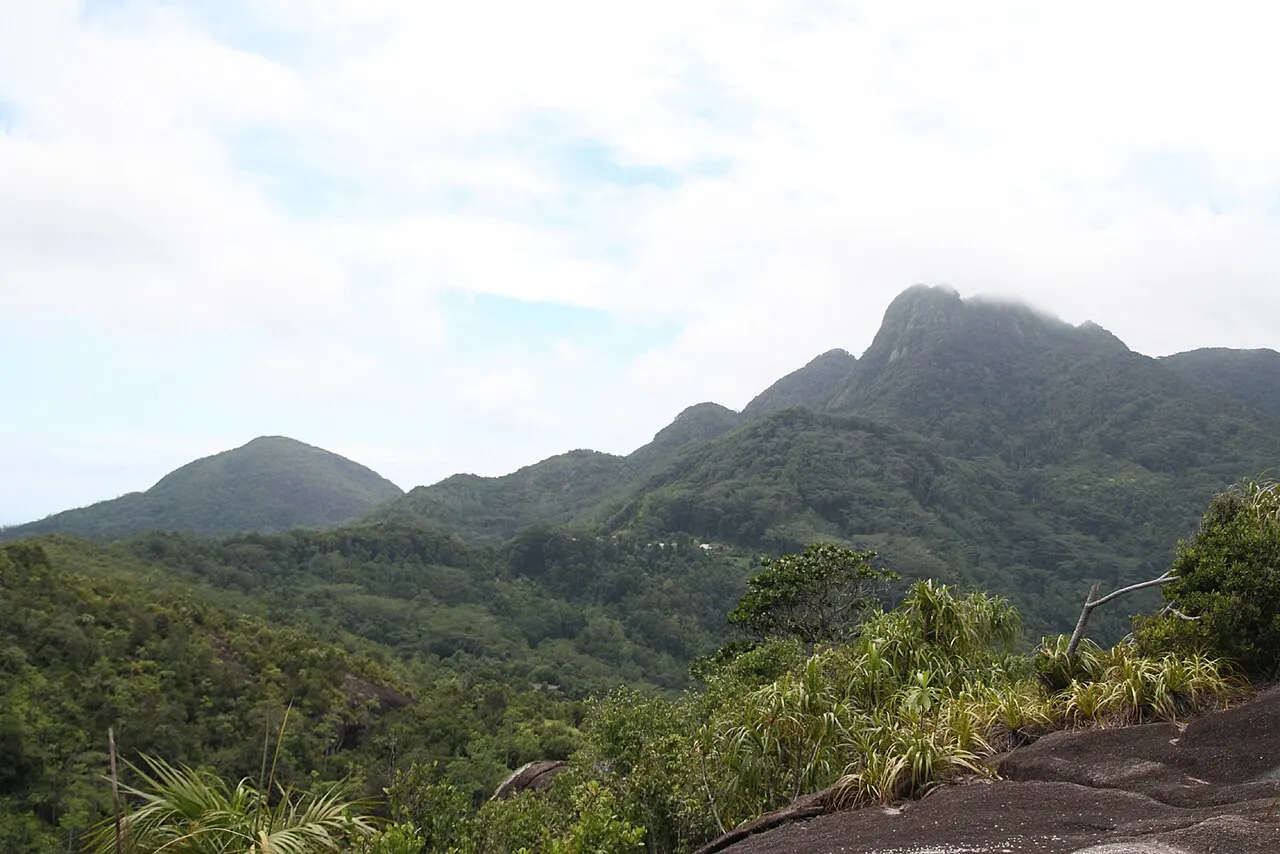
The park covers about a fifth of Mahé with forest, granite boulders and the Morne Seychellois, at 905 m the highest point in the country. Above 600 m there are patches of primary forest with rare plants, such as the jellyfish tree and the pitcher plant Nepenthes pervillei. For those short on time, the Copolia trail takes about two hours round trip to a plateau with a view over Victoria and the Sainte Anne marine park. By car, the Sans Souci road crosses the park from Victoria to Port Glaud.
Check access
L'Union Estate
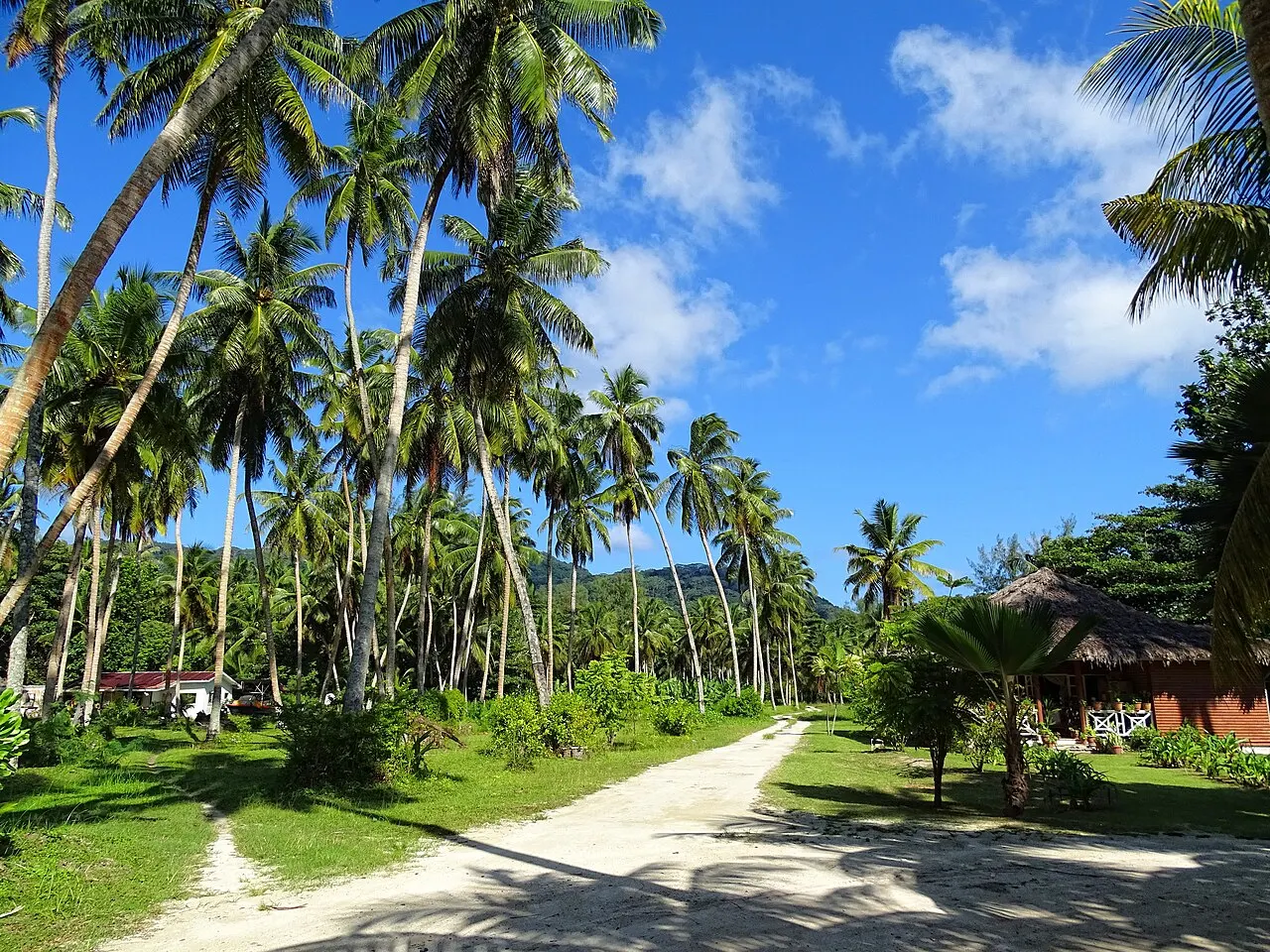
A former coconut and vanilla plantation on La Digue, now a park and the obligatory way to Anse Source d'Argent. It has a traditional copra mill, a farmhouse in French colonial style, a vanilla plantation and an enclosure with Aldabra giant tortoises. Entry is paid and the ticket is valid for the whole day, with free entry and exit; in September 2026, it cost SCR 150 per non-resident adult.
Check access
Anse Lazio
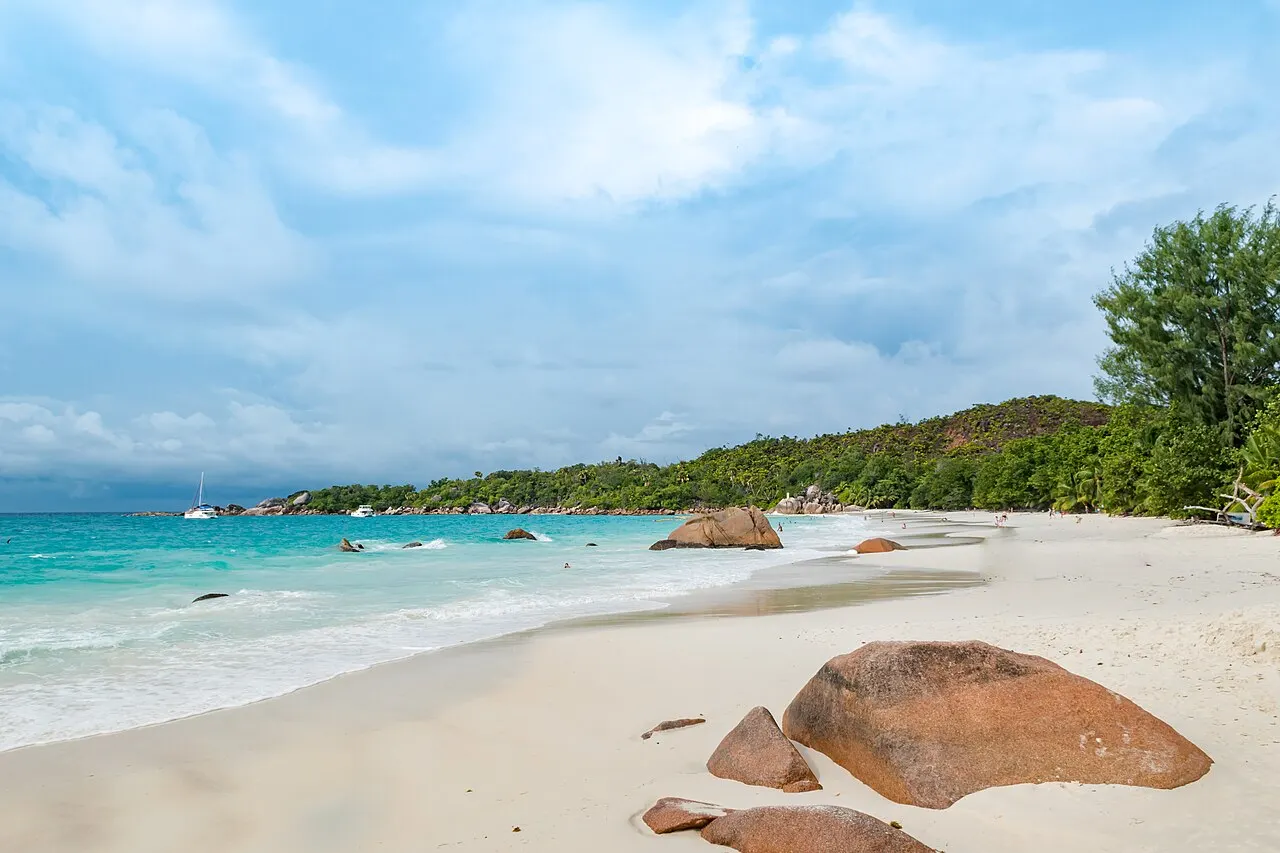
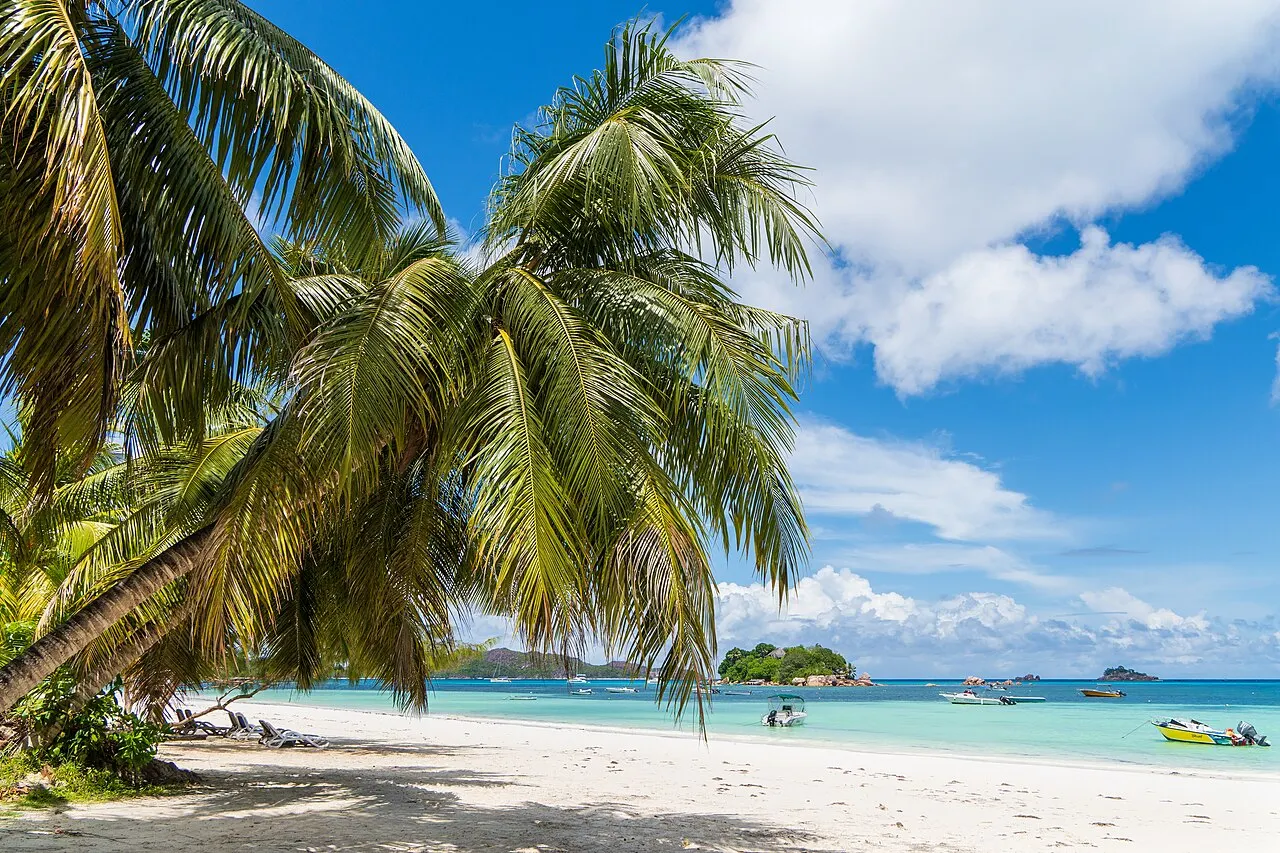
A beach at the far northwest of Praslin, with clear water, good for swimming and snorkeling, granite boulders at the ends and vegetation reaching the sand. It is far from the ferry port and calls for a car, taxi or bus.
Check access
Sir Selwyn Selwyn-Clarke Market
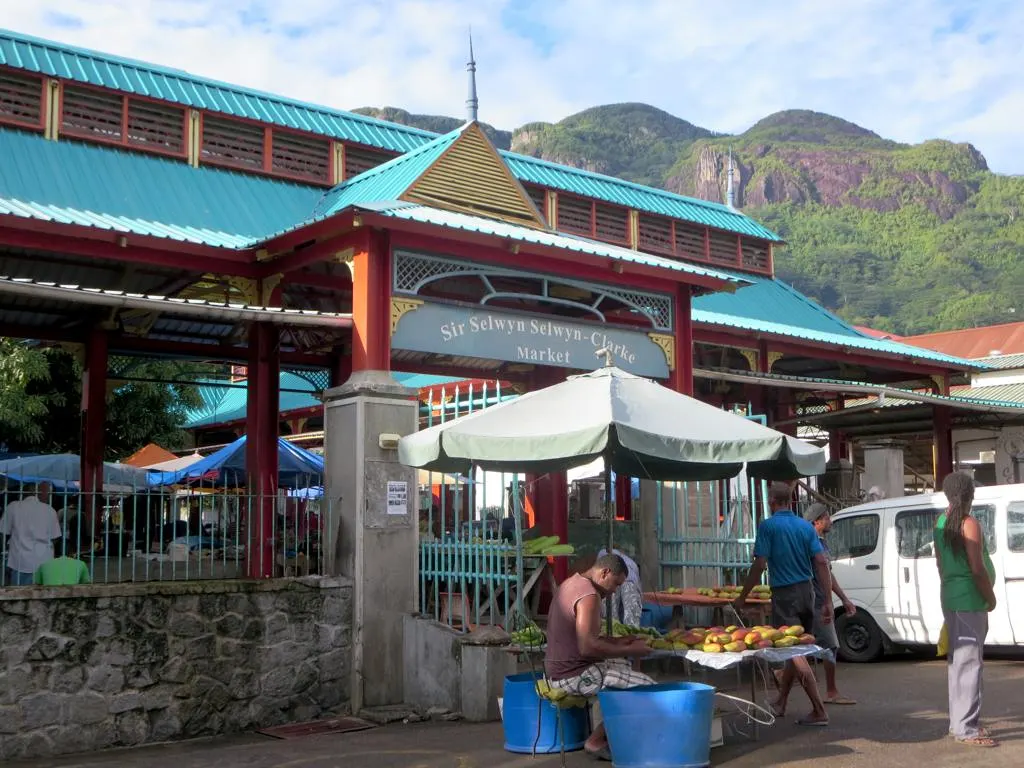
Victoria's central market sells fresh fish, tropical fruit and spices grown on the islands. It is worth going early, when there is more fish and more activity.
Check access
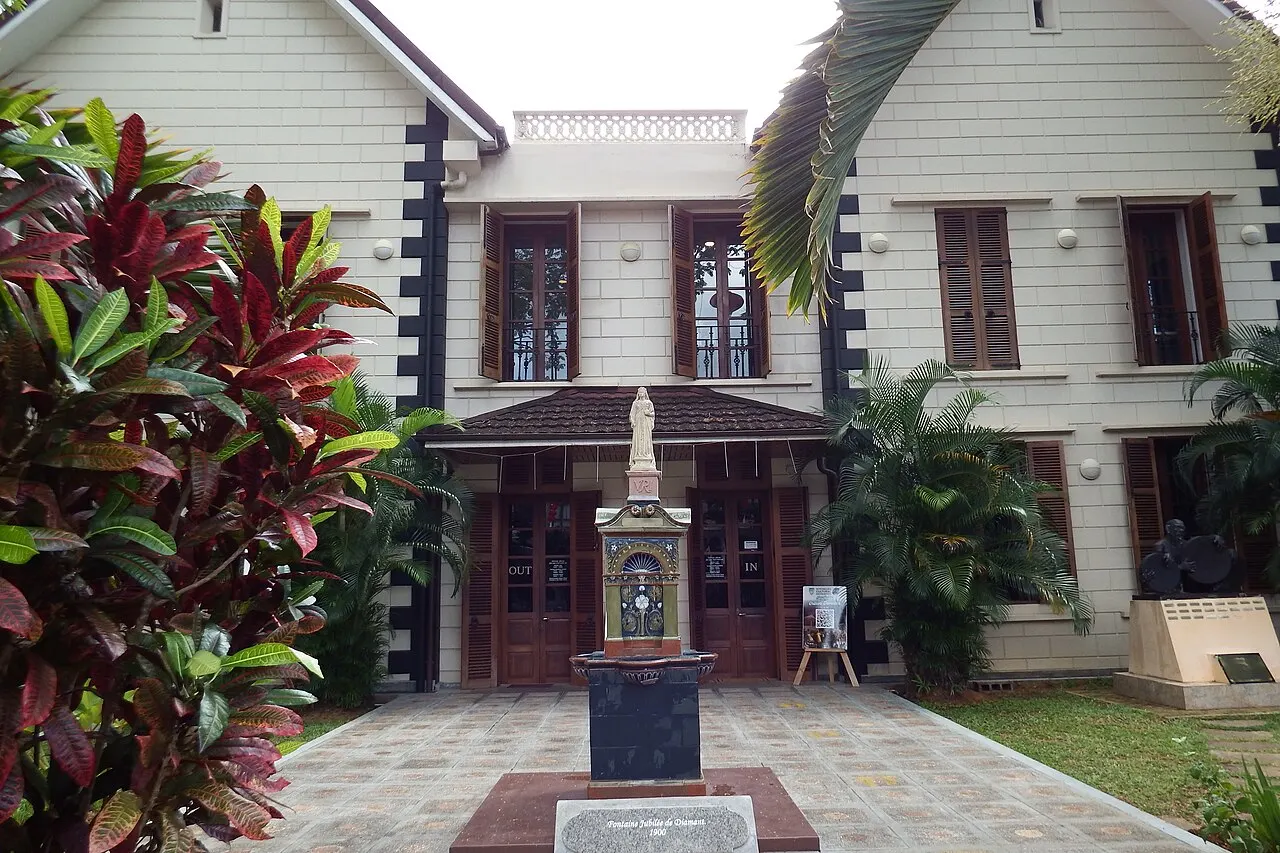
National Museum of History
A museum in Victoria that tells of the settlement of the islands, slavery, plantation life and independence. It holds the Stone of Possession set up by the French in 1756, the oldest monument in the country. Check the opening hours before going.
Check access
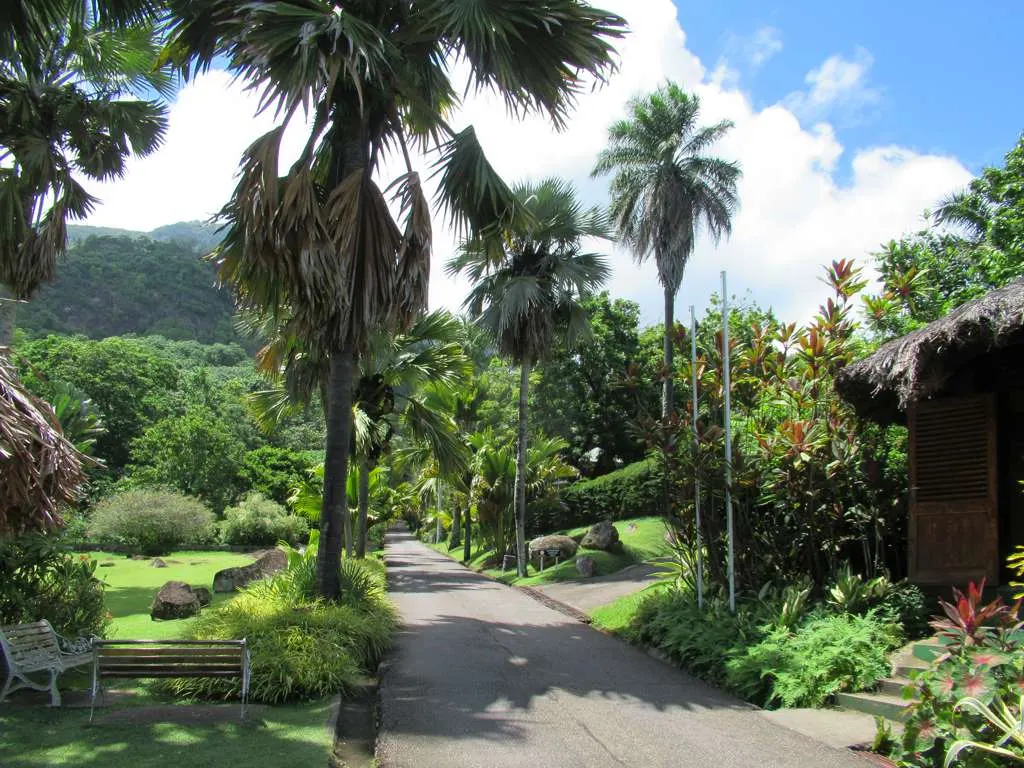
Seychelles National Botanical Gardens
A garden in Mont Fleuri, on the southern edge of Victoria, and one of the oldest national monuments. It has native palms, including the coco de mer, an enclosure of giant tortoises and a colony of fruit bats. It is the easiest way to see a coco de mer on Mahé.
Check access
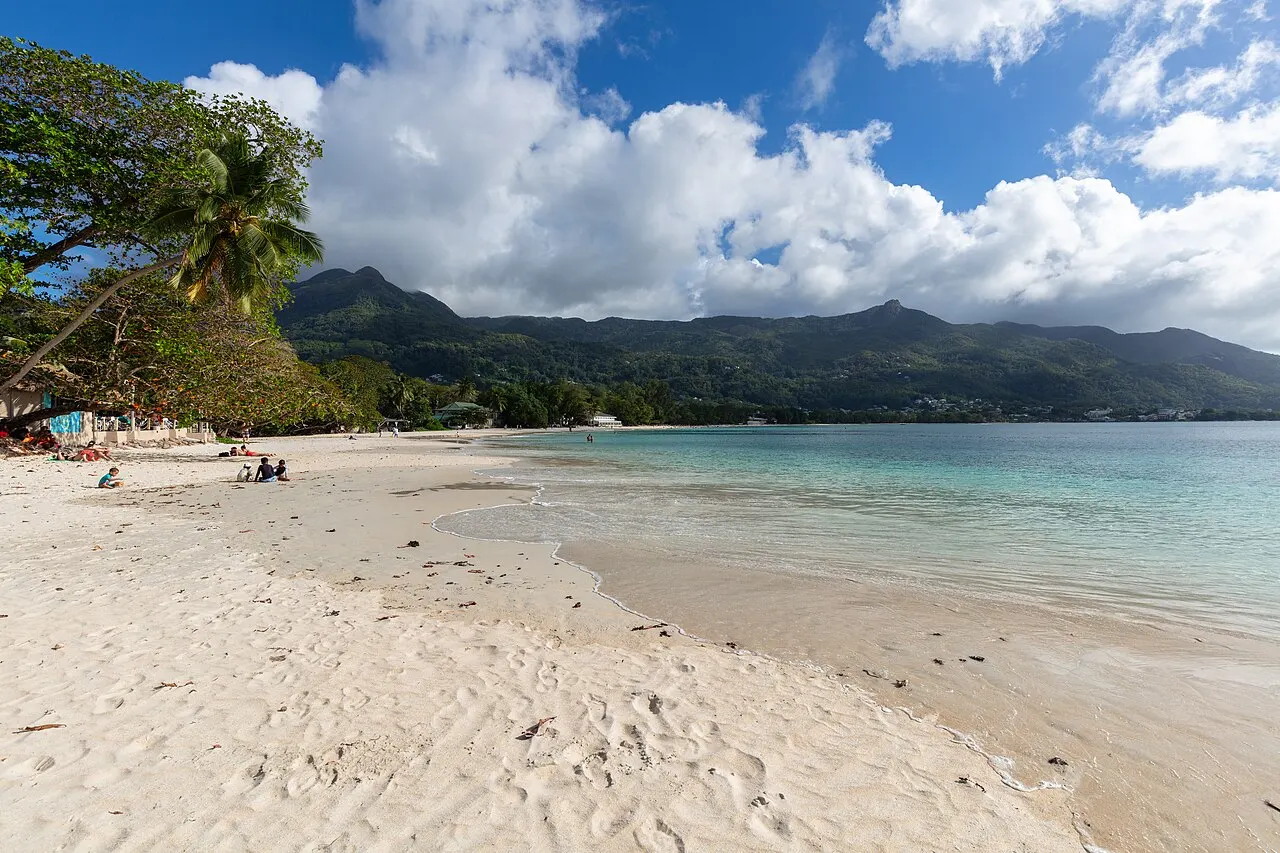
Beau Vallon
Mahé's most popular beach, on the northwest coast: a strip of about 2 km of white sand with dive centers, water sports, hotels and restaurants. It is the area with the most nightlife outside Victoria.
Check access
More places in the guide
Anse Major
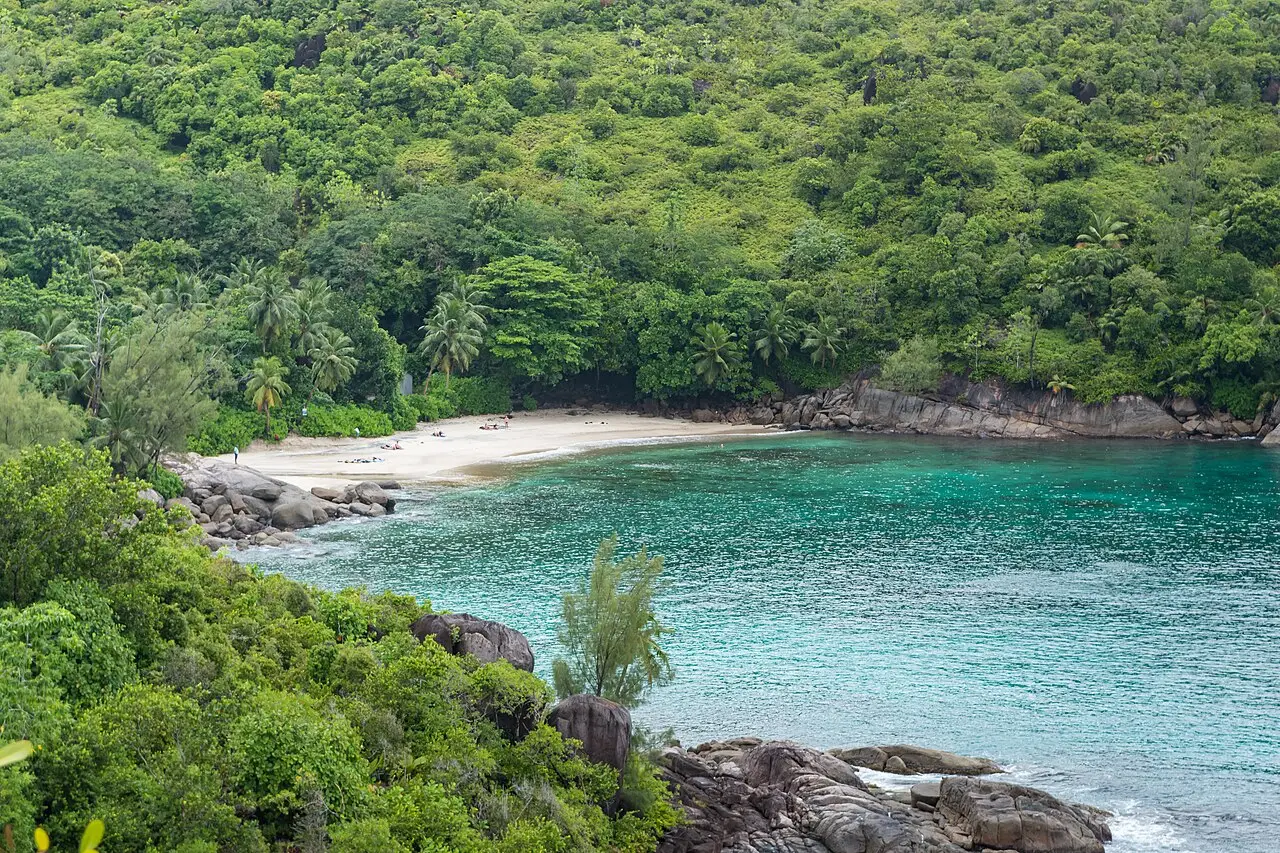
A small, secluded beach in northwest Mahé, with no road: you reach it by a trail that leaves from Bel Ombre and passes through Morne Seychellois park, taking 45 minutes to an hour and a half each way, depending on pace, or by boat. Bring water and set out early, before the heat.
Anse Volbert
The beach of the Côte d'Or, on Praslin's north coast, is the island's main one: white sand, calm, shallow water, boulders at the western end and a line of hotels, restaurants and dive operators. The boats to Curieuse and St Pierre leave from here.
Grand Anse
A wide beach on the east coast of La Digue, with white sand, boulders and woodland around. With no reef to protect it, it gets strong waves and seasonal currents, and swimming is not always safe; it is a beach for local surfers. The trail to Petite Anse and Anse Cocos starts here.
Anse Cocos
A beach on La Digue's east coast, reached by a trail from Grand Anse, passing Petite Anse. The boulders form natural pools at one end, but the open sea calls for the same care as at Grand Anse.
Sri Navasakthi Vinayagar Temple
A Hindu temple in Victoria, dedicated to Vinayagar (Ganesha) and attended by the Indo-Seychellois community, the second-largest religious community in the country. It is a few blocks from the market and the clock tower, and fits well into the same walk through the center.
Victoria Clock Tower
The small clock tower at Victoria's central intersection, inspired by London's Little Ben, is now a national monument. It serves as a landmark for getting your bearings in town; the visit is simply passing by.
Anse Soleil
A small cove in southwest Mahé, sheltered and good for swimming, between boulders and vegetation. You reach it by car along a narrow road.
Domaine de Val des Prés
The crafts village of Anse aux Pins brings together Creole architecture and craftsmanship: the Gran Kaz farmhouse, built around 1870, the Kaz Rosa, a 20th-century workers' house, and the Maison de Coco, made from coconut-palm materials. There are workshops and shops selling coconut-fiber and straw work.
Fond Ferdinand Nature Reserve
A reserve in southern Praslin, also managed by the Seychelles Islands Foundation, with coco de mer and guided trails that cross streams and climb to viewpoints over Praslin and the neighboring islands. There is an entrance fee, and the foundation sells a combined ticket with the Vallée de Mai.
Veuve Nature Reserve
A small reserve in the center of La Digue that protects the Seychelles paradise flycatcher, called veuve (widow) by locals. It has short trails and an information center at the entrance, and admission is free. Bring insect repellent.
Nid d'Aigle
The highest point on La Digue, at 333 m, reached by a trail of about 4 km, with little shade and some tiring stretches. The view takes in the island and its neighbors, including Praslin.
Anse Sévère
A beach north of La Passe, a short ride from the jetty, good for snorkeling near the rocks, with reef fish and, at times, turtles and rays.
Nilo’s itinerary
Start with the basic programme and choose extensions for the time you have.
Plan my days in the app ↗Day 1 · Victoria and Beau Vallon
Start early at the Sir Selwyn Selwyn-Clarke Market and walk through the center: the clock tower and the Hindu temple are a few blocks away.
Visit the National Museum of History to see the Stone of Possession of 1756 and understand the settlement of the islands (check the day's opening hours).
Continue on foot or by taxi to the Botanical Gardens, in Mont Fleuri, to see the coco de mer, the giant tortoises and the fruit bats.
In the afternoon, take the bus or drive to Beau Vallon, on the other side of the ridge, to swim and watch the sunset on the northwest coast. Sleep in Beau Vallon or northern Mahé.
Day 2 · Mahé's mountains and the south
Set out early for a trail before the heat: Anse Major, from Bel Ombre (45 minutes to an hour and a half each way), or Copolia, on the Sans Souci road (about two hours round trip, with a view over Victoria and Sainte Anne).
By car, cross the ridge on the Sans Souci road to the west coast and head south.
Have lunch and swim at Anse Soleil or Anse à la Mouche, sheltered coves.
On the way back north along the east coast, stop at the Domaine de Val des Prés crafts village, in Anse aux Pins. Sleep on Mahé again, near Victoria if the ferry is early.
Day 3 · Praslin: the Vallée de Mai and Anse Lazio
Take a morning Cat Cocos ferry from the Victoria jetty to Baie Sainte Anne (about 1 hour 15 minutes), arriving at the jetty 30 minutes early with your passport.
From the port, go by taxi, rental car or bus to the Vallée de Mai and set aside one to two hours for the trails (last entry at 15:30).
Have lunch on the Côte d'Or or at Grand Anse and, in mid-afternoon, go to Anse Lazio, on the northwest of the island, to swim until the end of the day.
Sleep on the Côte d'Or, from where the boats to the neighboring islands leave.
Day 4 · Curieuse and St Pierre
Day trip
Curieuse lies just off Praslin's north coast and is reached by boat from Anse Volbert, on the Côte d'Or, on an outing that usually combines the island with snorkeling at St Pierre, a nearby granite islet. The island and the surrounding sea form a national marine park, with hundreds of giant tortoises brought from Aldabra between 1978 and 1982, a mangrove trail between Anse José and Baie Laraie and the ruins of the old leper colony, with the Doctor's House, now a national monument. There is a park entrance fee, charged separately or included in the tour.
Day 5 · La Digue: L'Union Estate and Anse Source d'Argent
Take a ferry from Baie Sainte Anne to La Passe (15 minutes) and leave your luggage at the guesthouse.
Rent a bicycle near the jetty and pedal about 2 km south, along the flat road, to L'Union Estate.
See the copra mill, the farmhouse and the tortoises and continue to Anse Source d'Argent, timing your swim for high tide.
On the way back to La Passe, stop at the Veuve Nature Reserve to try to see the paradise flycatcher (check the information center's hours first). Sleep on La Digue.
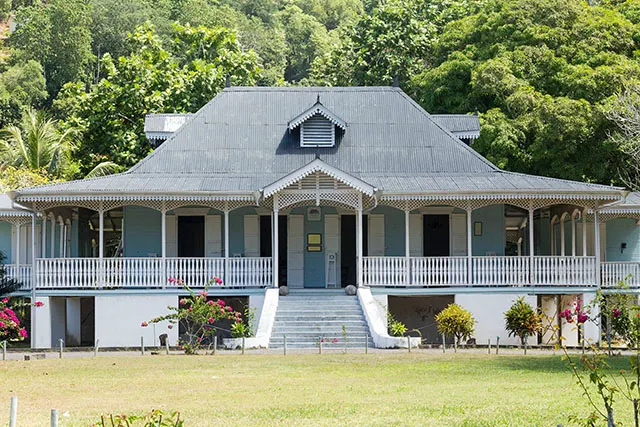
If you stay longer
Day 6 · La Digue's east coast and the return
Very early, climb Nid d'Aigle (333 m), about 4 km with little shade, to see the island and its neighbors.
Pedal to Grand Anse and continue on foot along the trail to Petite Anse and Anse Cocos; swim only where the sea is calm and there is no current warning.
Return the bicycle and take the ferry back to Mahé, direct or with a stop at Praslin (about 1 hour 45 minutes), checking the day's time on the Cat Cocos timetable.
Food
Kari koko
A curry with coconut milk, made with fish, octopus or chicken and served with rice. It is the base of the islands' Creole cooking, which brings together Indian spices, African and Malagasy techniques and the coconut of the old plantations.
Kari zourit
Octopus curry, one of the traditional dishes of Seychellois cooking, usually simmered in coconut milk.
Bourzwa griye
Grilled red snapper (vermelho), one of the most prized fish on the islands. The fish also appears steamed, baked, wrapped in banana leaf, salted or smoked.
Satini reken
Shark chutney: the cooked meat, skinned, is shredded and sautéed with onion, spices, bilimbi juice (a sour fruit) and lime. It goes with rice and curry.
Ladob
Plantain and sweet potato, sometimes cassava or breadfruit, cooked in coconut milk. In the sweet version, they are cooked with sugar, nutmeg and vanilla pod; in the savory one, salted fish takes the place of the sugar.
Bouyon bred
A fish soup with leafy greens, a relative of French bouillabaisse.
Salad palmis
A salad of finely sliced coconut-palm heart.
Lasos piman
The local chili sauces, which go into the cooking or accompany many Creole dishes.
Seybrew, Eku and Takamaka rum
Seybrew and Eku are beers brewed in the country, and the dark Takamaka rum is the best-known local drink. Buying beer at roadside shops costs far less than at the hotel.
Kalou
Fermented palm wine, a traditional drink of the islands.
Where to eat
- Victoria
Around the market, Creole takeaway counters serve fish or octopus curry with rice, lentils and satini, the cheapest meal on the islands; in the market, tropical fruit and spices to take home.
- Beau Vallon
Beach restaurants and bars with grilled fish, such as red snapper, and Creole dishes. It is the area of Mahé with the most choice at night.
- Côte d'Or and Grand Anse, Praslin
Seafront restaurants with seafood and Creole curry, including octopus, and takeaway counters with the dish of the day at a lower price.
- La Passe and Anse Réunion, La Digue
Creole takeaway with fish and pork curry and rice, to eat on the beach, and grocery stores with ready-made food. For a calmer dinner, there are hotel restaurants near the jetty.
· 2026-10-19
Day trips
Curieuse and St Pierre
Curieuse lies just off Praslin's north coast and is reached by boat from Anse Volbert, on the Côte d'Or, on an outing that usually combines the island with snorkeling at St Pierre, a nearby granite islet. The island and the surrounding sea form a national marine park, with hundreds of giant tortoises brought from Aldabra between 1978 and 1982, a mangrove trail between Anse José and Baie Laraie and the ruins of the old leper colony, with the Doctor's House, now a national monument. There is a park entrance fee, charged separately or included in the tour.
Sainte Anne Marine National Park
About 5 km off Victoria, the first marine park in the Indian Ocean, created in 1973, protects eight small islands and the surrounding reefs. Glass-bottom boats leave from Victoria and arrive in about 20 minutes, for snorkeling and lunch on one of the islands, such as Moyenne or Cerf. Fishing is prohibited inside the park, and the visit has an entrance fee.
Cousin Island
A bird reserve about 1 km across, bought in 1968 by the organization now called BirdLife International to save the Seychelles warbler. It shelters hundreds of thousands of seabirds and rare species of the islands. You reach it by boat from Praslin; the island receives visitors only in the morning, Monday to Friday, and closes on weekends and holidays.
Where to begin
Victoria and Beau Vallon
Start early at the Sir Selwyn Selwyn-Clarke Market and walk through the center: the clock tower and the Hindu temple are a few blocks away.
Mahé's mountains and the south
Set out early for a trail before the heat: Anse Major, from Bel Ombre (45 minutes to an hour and a half each way), or Copolia, on the Sans Souci road (about two hours round trip, with a view over Victoria and Sainte Anne).
Praslin: the Vallée de Mai and Anse Lazio
Take a morning Cat Cocos ferry from the Victoria jetty to Baie Sainte Anne (about 1 hour 15 minutes), arriving at the jetty 30 minutes early with your passport.
La Digue: L'Union Estate and Anse Source d'Argent
Take a ferry from Baie Sainte Anne to La Passe (15 minutes) and leave your luggage at the guesthouse.
La Digue's east coast and the return
Very early, climb Nid d'Aigle (333 m), about 4 km with little shade, to see the island and its neighbors.
Money
The currency is the Seychellois rupee (SCR). Foreigners can pay for hotels, ferries, car rental, tours and some entrance fees in euros or dollars, but change comes in rupees, and when the price tag shows both prices the exchange rate applied is usually unfavorable. Visa and Mastercard are accepted at almost every tourist business; banks and ATMs are mostly in Victoria, at the airport and near Beau Vallon, with branches also on Praslin and La Digue. In October 2026, admission to the Vallée de Mai cost SCR 450 (Seychelles Islands Foundation; children under 12 do not pay); in September 2026, L'Union Estate cost SCR 150 per non-resident adult. Since January 1, 2026, the tourism environmental levy is no longer charged at small accommodations (up to 24 rooms, as defined by the Seychelles Revenue Commission); at medium ones, up to 50 rooms, it is SCR 75 per person per night, and at those with 51 rooms or more, island resorts and yachts, SCR 100. Children up to 12 do not pay. Many restaurants already include a service charge of 5% to 10%, and tipping is not mandatory.
Getting there and around
From the airport to Victoria
Seychelles International Airport (SEZ) is on the east coast of Mahé, south of Victoria, and is the country's only international gateway. There are car rental counters at the arrivals exit, taxis and SPTC buses to Victoria; on the bus, bring rupees in small notes, because change for large notes is not guaranteed. Before flying to the country, every foreign visitor needs the Travel Authorisation, applied for online on the government's official portal (seychelles.govtas.com), and proof of accommodation and onward ticket.
Ferries between the islands
Cat Cocos links Mahé (Victoria jetty), Praslin (Baie Sainte Anne) and La Digue (La Passe). The crossing takes about 1 hour 15 minutes from Mahé to Praslin, 1 hour 45 minutes from Mahé to La Digue with a stop at Praslin and 1 hour 10 minutes on the direct route, which has few departures a week; between Praslin and La Digue it is 15 minutes. Schedules change by day of the week and are published by the company, and it is worth booking online in high season. You must arrive at the jetty 30 minutes early, with a passport or ID. Inter Island Ferry also runs the Praslin–La Digue leg.
By air
Air Seychelles flies between Mahé and Praslin's airport several times a day, on a short flight. It costs more than the ferry, but avoids the rough sea in the trade-wind months.
Bus
SPTC runs buses on Mahé and Praslin, with a single fare per trip regardless of distance; official timetables are on the company's website and app, which also sells a rechargeable card. The buses pass the main hotels, but the roads are narrow and the driver may refuse large luggage.
Car
On Mahé and Praslin, renting a car is the simplest way to explore. Traffic drives on the left, and the roads are narrow, winding and steep in places, which calls for low speeds. On La Digue there are no rental cars.
La Digue: bicycle and ox cart
La Digue is covered by bicycle, rented near the jetty or through your guesthouse; the west-coast road is flat. There are few taxis, and they are expensive, and the ox cart still makes short transfers near the jetty. Many guesthouses pick guests up at the ferry; confirm beforehand.
Safety
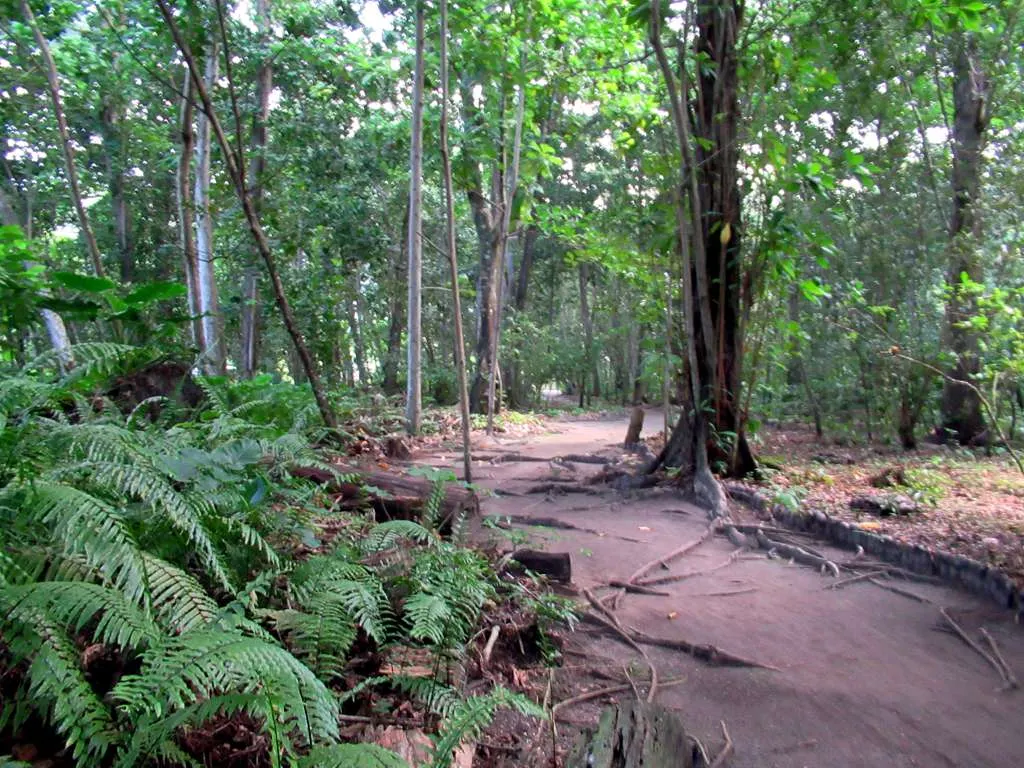
The Seychelles are a peaceful destination, and the most concrete risks are the sea and opportunistic theft. Strong currents appear on beaches with no reef and in the season of the southeast trade wind: respect the warning signs and avoid swimming alone on isolated beaches. Do not leave a bag or phone alone on the sand or items in view in the car, and prefer lit streets at night. In Beau Vallon, the side road behind the beach has some suspicious activity at night, though those who are there tend to ignore passersby. Mosquitoes transmit dengue and chikungunya; use repellent, especially on forest trails and at the Veuve Nature Reserve. Outside Victoria, medical care is limited, and insurance with evacuation cover is prudent for anyone going to small islands.
Before you go
- Plug
- type G
- Voltage
- 240 V
- Driving side
- on the left
- Emergency
- General 112 · Police 133 · Ambulance 151 · General 999
- Country code
- +248
- Official languages
- French, English and Seychellois Creole
- Currency
- Seychellois rupee (SCR)
Source: Wikidata (CC0), checked September 2026.
Etiquette tips
Greet in Creole
A “bonzour” when you walk into a shop or speak to someone, and a “mersi” on the way out, open the conversation. English and French handle the rest.
Sunday Mass is an occasion to dress up
Seychellois dress well for Mass. If you want to attend a service, go in modest clothing, not beachwear.
Coco de mer with a certificate
The coco de mer is protected. A nut sold legally comes with an export certificate, which customs asks for on departure. Corals and some shells used in jewelry may also be protected.
In the reserves, no flash and no touching
In the Vallée de Mai and Fond Ferdinand, flash photography is prohibited. In the marine parks, fishing is prohibited and coral is neither stepped on nor collected.
Tipping is not obligatory
The service charge of 5% to 10% usually comes on the bill. Leaving the change or a little more is a courtesy, not a rule.
Mistakes to avoid
Landing without the authorization and without a hotel
The Travel Authorisation is applied for online before the flight, and immigration checks the accommodation booking for the whole stay. If you arrive without one, you may have to book and pay at the airport counter before passing through.
Swimming at Anse Source d'Argent at low tide
At low tide the water barely covers your knees. If you plan your beach day without looking at the tide table, you may arrive at the wrong time.
Going into the sea at Grand Anse under a warning flag
The beaches on La Digue's east coast, and others exposed to the trade wind, have strong currents for part of the year. The color of the water tells you nothing about the current; the warning signs do.
Counting on a rental car on La Digue
There is none. The island runs on bicycles, and the few taxis are expensive. A big suitcase on the ferry and the bicycle is also a hassle: many guesthouses handle the transfer from the jetty.
Paying in euros where the price is in rupees
With a two-currency price tag, paying in euros almost always costs more. Having rupees for the market, the bus and takeaway food avoids the conversion.
Leaving your bag on the sand
Beach thefts happen, especially on isolated beaches. Do not leave a bag alone while you swim, and avoid swimming alone on a deserted beach.
Useful phrases
Bonzour
Good morning
Bonswar
Good evening (when arriving)
Koma sava?
How are you?
Mersi
Thank you
Silvouple
Please
Konbyen sa?
How much is this?
Mon pa konpran
I don't understand
Eskiz mwan
Excuse me
Wi / Non
Yes / No
Orevwar
See you later
Where to stay
- Beau Vallon, Mahé · For those who want a beach, restaurants and bars within walking distance, and a bus to Victoria, without depending on a car every day.: It is the area of Mahé with the most hotels, restaurants and bars and the most nightlife outside Victoria, and it is close to the Anse Major trail. The drawback is that it is the busiest beach on the island.
- Southern Mahé · For those who travel by car and prefer quiet coves and smaller hotels, near Anse Soleil and Anse à la Mouche.: Calmer beaches and fewer people. In exchange, it is far from Victoria and the ferry jetty, and the roads are narrow and slow; without a car, getting around depends on the bus.
- Côte d'Or (Anse Volbert), Praslin · For those going to Curieuse, St Pierre and Cousin who want a calm beach, restaurants and dive operators in the same stretch.: It is Praslin's tourist center and the departure point for the boats. The Vallée de Mai and the port of Baie Sainte Anne are a short drive or bus ride away, and Anse Lazio a little farther.
- La Passe and Anse Réunion, La Digue · For those who want to sleep on the island to reach Anse Source d'Argent at the right tide and get around by bicycle.: They lie between the jetty and L'Union Estate, along the flat west-coast road, with shops, banks and takeaway food nearby. Accommodation is limited and sells out in high season, and the nights are very quiet.
· 2026-10-19
Districts
Victoria
The capital, on the northeast coast of Mahé, is small and can be covered on foot in a morning: the Sir Selwyn Selwyn-Clarke Market, the clock tower, the Hindu temple and the National Museum of History are a few blocks from one another. It works as a starting point for the ferries and for the boats to the Sainte Anne marine park; at night, there is little going on.
Beau Vallon and northern Mahé
Beau Vallon Bay, on the northwest coast, has the busiest beach on Mahé, with about 2 km of sand between Bel Ombre and Mare Anglaise, dive centers, restaurants and bars. The trail to Anse Major starts at Bel Ombre, at the western end of the bay.
Mahé's mountains
Morne Seychellois National Park covers about a fifth of the island, with forest, trails and the country's highest peak. The Sans Souci road crosses the ridge from Victoria to the west coast and is the quickest way to see the interior.
Southern Mahé
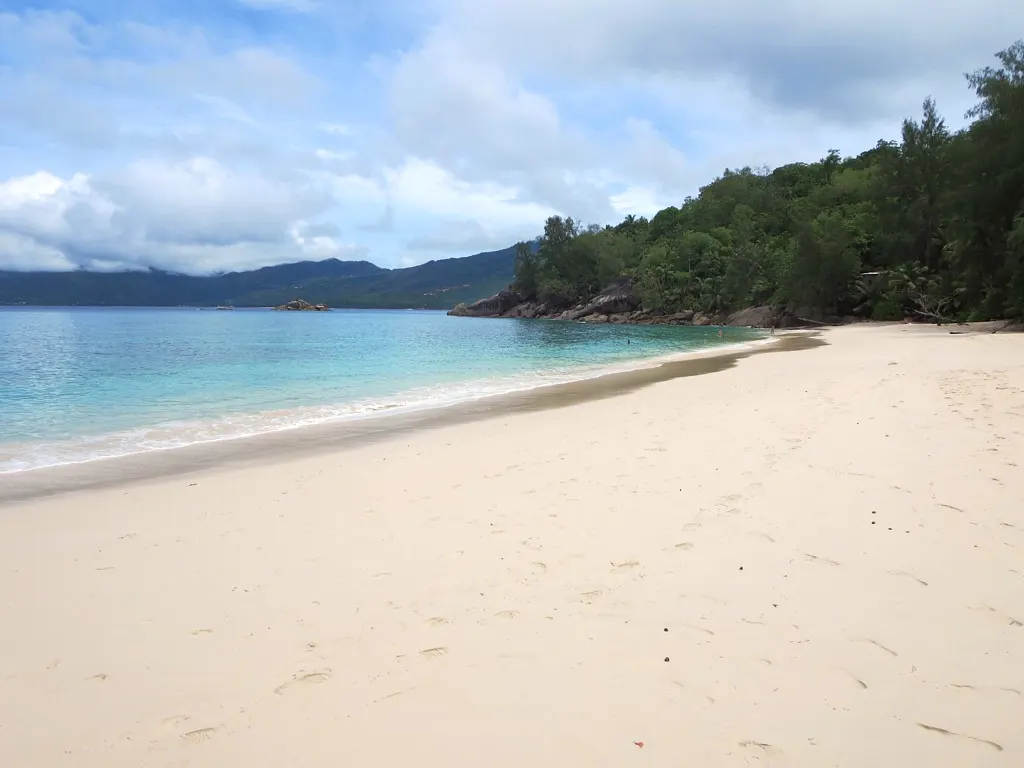
Smaller, quieter beaches, such as Anse Soleil and Anse à la Mouche, the crafts village of Anse aux Pins and narrow, winding roads. You need a car or patience with the bus.
Baie Sainte Anne and the interior of Praslin
Baie Sainte Anne is where the ferries from Mahé and La Digue dock. From there the road climbs through the interior to the Vallée de Mai and the Fond Ferdinand reserve and descends to Grand Anse, on the west coast, near Praslin's airport.
Côte d'Or and northern Praslin
The Côte d'Or, or Anse Volbert, is Praslin's main beach: calm, shallow water, hotels, restaurants, dive schools and the boats to Curieuse and St Pierre. Anse Lazio lies at the far northwest of the island.
La Passe
The village around La Digue's jetty, where the ferries arrive and the bicycles are rented. It has shops, banks, grocery stores and Creole takeaway counters; from here you pedal to almost everything on the island.
Anse Réunion
South of La Passe, along the flat west-coast road, are the guesthouses near L'Union Estate and Anse Source d'Argent. It is the most convenient area for anyone who wants to reach the beach at the right tide.
East coast of La Digue
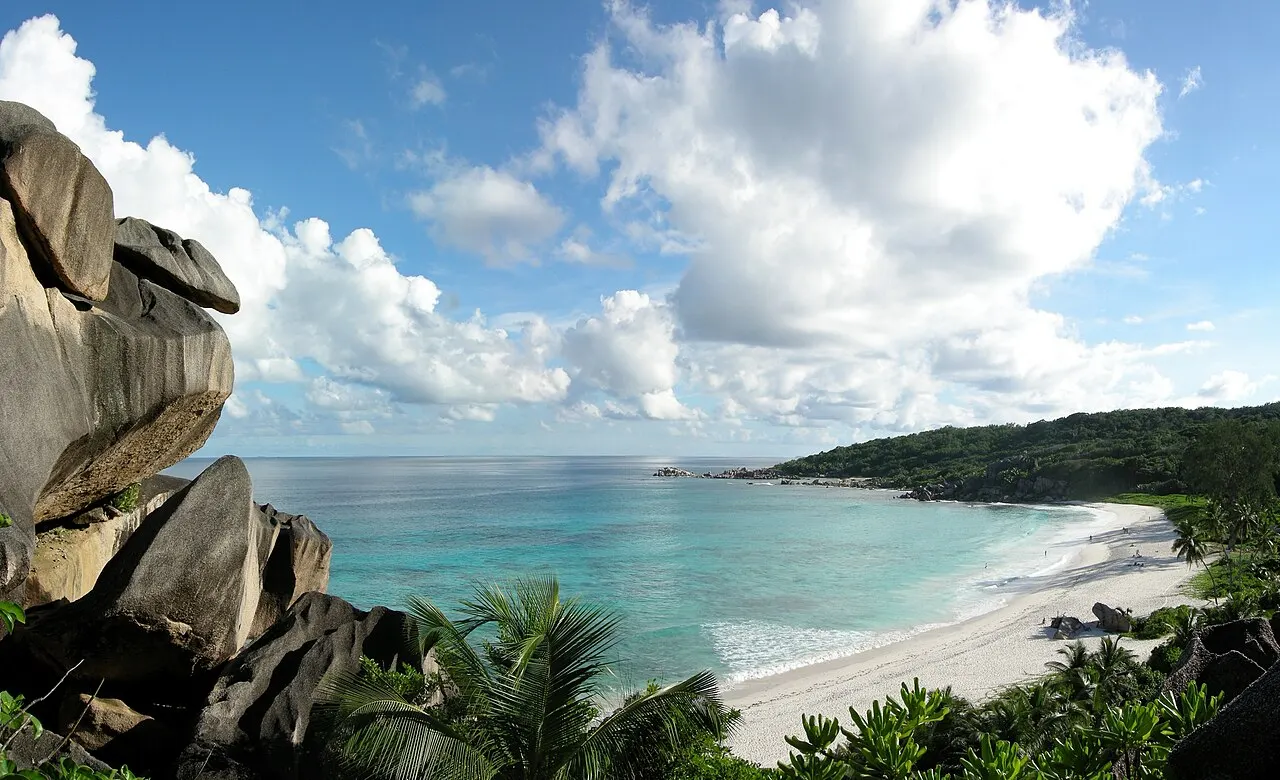
Grand Anse, Petite Anse and Anse Cocos face the open sea, with no reef. They are beaches for looking and walking more than for swimming, linked by a trail.
History
1503 · The Portuguese sight the islands
Ships of Vasco da Gama's fourth armada pass the archipelago, then uninhabited. Arab and Maldivian traders probably already knew it, but there is no proof of permanent settlement.
1609 · First recorded landing
The crew of the English ship Ascension, of the East India Company, goes ashore. For more than a century the islands remain an occasional stopover for pirates and navigators.
1756 · The Stone of Possession
Captain Corneille Nicholas Morphey sets up on Mahé the stone claiming the islands for France. The name comes from the minister Jean Moreau de Séchelles, and the stone is now in the National Museum of History in Victoria.
1770 · The first settlers
The ship Thélémaque leaves on the island of Sainte Anne 15 white settlers and 13 enslaved people, African and Indian. The plantation economy begins.
1778 · L'Établissement
The French found on Mahé the settlement that the British would rename Victoria in 1841.
1794–1814 · From French to British
Faced with a British frigate, the administrator Quéau de Quinssy negotiates instead of resisting, and the islands remain French as neutral territory. After the capture of the Isle de France (Mauritius) in 1810, the Treaty of Paris of 1814 hands them to the United Kingdom.
1835 · Abolition of slavery
The end of slavery dismantles the labor-intensive plantations, and coconut comes to dominate both farming and the kitchen. Freed African workers, as well as Indian and Chinese workers, keep arriving.
1903 · A separate colony
The Seychelles stop being a dependency of Mauritius and become a British colony in their own right.
1971 · The international airport opens
With the airport on Mahé, tourism grows fast and overtakes the plantations as the base of the economy.
1976–1977 · Independence and coup
The country becomes an independent republic in 1976. A year later, France-Albert René overthrows President James Mancham and, in 1979, the constitution establishes a one-party state.
1981 · The fake rugby players
Mercenaries led by Mike Hoare arrive disguised as a rugby team on vacation and attempt a coup. After a shootout at the airport, most of them flee on a hijacked Air India plane.
1983 · Vallée de Mai on the UNESCO list
The coco de mer forest of Praslin, a nature reserve since 1966, is inscribed as a World Heritage Site.
1993 · Multiparty politics returns
A new constitution restores multiparty elections. René remains president until 2004.
2020–2025 · Change of power
In 2020, the opposition wins the presidential election for the first time since 1977, with Wavel Ramkalawan. In October 2025, Patrick Herminie, of United Seychelles, wins the runoff and takes office.
Complete history
Islands with no native people
The Seychelles had no population when the Europeans arrived. Arab and Maldivian navigators probably knew the islands, and the Portuguese charted them in the early 16th century, but settlement began only after France claimed them in 1756. Every Seychellois today descends from someone who came from elsewhere: French settlers, enslaved Africans and Malagasy, and later Indian and Chinese traders and workers. From this mix come the Creole language, the cuisine of curries with coconut milk and the predominantly Catholic religion.
Plantations, coconut and vanilla
The French colony was born to plant, with enslaved labor brought by the ship Thélémaque in 1770 and by those who came after. When the British took over, in 1814, they left the land with the French elite, the so-called gran blan, and French and Creole remained the languages of the islands. After abolition in 1835, coconut took over the plantations, and copra (the dried flesh of the coconut) and vanilla sustained the economy until the mid-20th century. On La Digue, the copra mill and the farmhouse at L'Union Estate show that era on a small scale.
From the airport to the one-party state
The international airport opened in 1971 and changed the country within a few years: hotels multiplied, and tourism became the main economic activity. Independence came in 1976, and France-Albert René's coup in 1977 led to a one-party regime that lasted until the early 1990s, marked by coup attempts, such as that of the mercenaries disguised as rugby players in 1981.
The country today
With about 121,000 residents, the Seychelles are the least populous country in Africa. Tourism and tuna fishing, with one of the world's largest tuna canneries in the port of Victoria, sustain the economy, and a good part of the islands and the surrounding sea is protected as a park or reserve. Since 1993 the country has held multiparty elections, and power has changed hands twice, in 2020 and in 2025.
Geography and shape of the city
Granite in the middle of the ocean
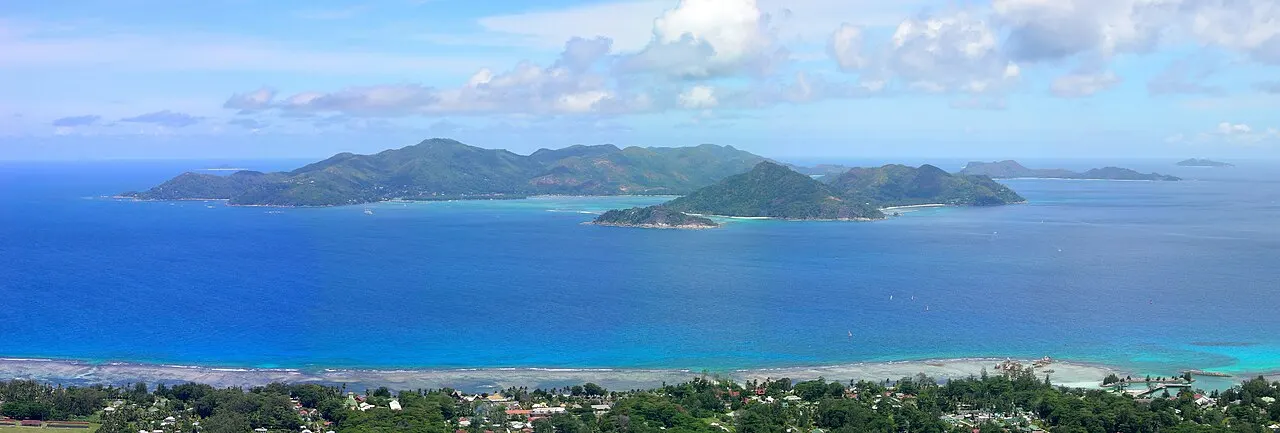
The inner islands sit on a submerged block of granite, the Seychelles microcontinent, which lay between Madagascar and India before Gondwana broke apart. That is why Mahé, Praslin and La Digue are mountainous, covered in forest and ringed by rounded granite boulders, while the outer islands, such as Aldabra atoll, are low and made of coral. There are 42 granite islands and two coral islands on the inner platform, with 244 km² and 98% of the country's population.
Three islands, three scales
Mahé covers 157.3 km² and has the country's highest point, Morne Seychellois, at 905 m; the capital, Victoria, is on the northeast coast, and the airport is a little south of it. Praslin, at 38.5 km², lies 44 km northeast of Mahé, with the ferry port at Baie Sainte Anne and the Vallée de Mai forest in the interior. La Digue covers 10 km² and almost the whole population lives on the west coast, between the La Passe jetty and Anse Réunion; the east coast, with no reef to protect it, faces the open sea.
Two seasons and the transition months
The climate is hot and humid all year, with temperatures between 24 and 30 °C on Mahé. From December to March the northwest monsoon blows, the hottest and wettest season. From May to September the southeast trade wind blows, drier and cooler, with more wind and rough seas on some exposed beaches. April, October and November are the transition months between the two, with variable winds. The warning signs on the beaches matter more than the color of the water. Most of the islands lie outside the cyclone belt.
Culture
A Creole culture
Seychellois culture is Creole in the fullest sense: it was born of the mixing of Africans, Malagasy, French, Indians and Chinese on land with no earlier population. Seychellois Creole, French-based, is the mother tongue of about 91% of the population and one of three official languages, alongside English and French. Parliament debates in Creole, laws are published in English, and in daily life sentences mix all three.
Moutya, sega and kontredans
The music is made of drums and simple strings, with the violin and guitar arriving later. The moutya, a dance from the time of slavery in which emotions and revolt were expressed, was added in 2021 to UNESCO's intangible heritage list and still takes place at beach parties. The sega, danced with swaying hips and shuffling feet, is common to Mauritius and Réunion, and the kontredans, inherited from the European contredanse, appears in the school and district competitions of the Festival Kreol.
Faith and Sunday
According to the 2022 census, about 61% of Seychellois are Catholic, and Sunday Mass is a social occasion, for which people dress up. Hinduism is the second religion, practiced mainly by the Indo-Seychellois community, with a temple in the center of Victoria.
Protecting nature
Conservation is state policy: the Sainte Anne marine park, from 1973, was the first in the Indian Ocean, Cousin Island has been a bird reserve since 1968, and two sites, Aldabra atoll and the Vallée de Mai, are World Heritage Sites. For visitors, this shows up in entrance fees at the reserves, rules of conduct in the marine parks and certificates required to take coco de mer home.
Festivals and events
Festival Kreol
In October, the country's biggest cultural event spreads across Mahé, Praslin and La Digue: concerts, sega and kontredans contests, Creole food, storytelling and debates about Creole language and identity, often outdoors and near the sea. Each year's program is published through the official tourism and culture channels.
Assumption Festival on La Digue
On August 15, Assumption Day, La Digue, which has a Catholic majority, celebrates the island festival, which is a national holiday.
National Day
On June 29, the country celebrates the independence won in 1976.
Books and films
The Seychelles Affair, by Mike Hoare
The book by the mercenaries' leader about the attempted coup of 1981, in which the group arrived disguised as a rugby team on vacation. It helps to understand the one-party country and the Cold War in the Indian Ocean, told by the man who lost.
Goodbye Emmanuelle (1977), by François Leterrier
A French erotic film shot on La Digue, with a score by Serge Gainsbourg. It shows the island of the 1970s, when the Seychelles became a jet-set destination right after the airport opened.
Frequently asked questions
Seychelles: how do I get from the airport to Victoria?
Seychelles International Airport (SEZ) is on the east coast of Mahé, south of Victoria, and is the country's only international gateway. There are car rental counters at the arrivals exit, taxis and SPTC buses to Victoria; on the bus, bring rupees in small notes, because change for large notes is not guaranteed.
Seychelles: what do I need to enter the country?
Before flying to the country, every foreign visitor needs the Travel Authorisation, applied for online on the government's official portal (seychelles.govtas.com), and proof of accommodation and onward ticket. Immigration checks the accommodation booking for the whole stay, and if you arrive without one, you may have to book and pay at the airport counter before passing through.
Seychelles: how many days should I plan, and how should I split them between the islands?
I'd book five full days for the three islands, not counting arrival day: two on Mahé, one on Praslin and two on La Digue, with a night on the island between them. Each ferry crossing takes up part of the day, and the three islands are different enough that cutting one changes the trip. On Mahé, the first day is Victoria and Beau Vallon, and the second is for the mountains, with an early trail and the southern coves by car. Praslin fits in a day if it starts on the morning ferry: the Vallée de Mai until early afternoon and Anse Lazio until sunset. On La Digue, the night on the island lets you go to Anse Source d'Argent at high tide on one day and have the next morning for the east coast and Nid d'Aigle, before the ferry back. With six days, I'd add a boat day from Praslin, to Curieuse and St Pierre, for the giant tortoises and the snorkeling.
Seychelles: how do I get from one island to another?
Cat Cocos links Mahé (Victoria jetty), Praslin (Baie Sainte Anne) and La Digue (La Passe). The crossing takes about 1 hour 15 minutes from Mahé to Praslin, 1 hour 45 minutes from Mahé to La Digue with a stop at Praslin and 1 hour 10 minutes on the direct route, which has few departures a week; between Praslin and La Digue it is 15 minutes. Schedules change by day of the week and are published by the company, and it is worth booking online in high season. You must arrive at the jetty 30 minutes early, with a passport or ID. Inter Island Ferry also runs the Praslin to La Digue leg. Air Seychelles flies between Mahé and Praslin's airport several times a day, on a short flight; it costs more than the ferry, but avoids the rough sea in the trade-wind months.
Seychelles: is it worth sleeping on La Digue, or can I see Anse Source d'Argent on a day trip?
I'd sleep at least one night on La Digue. From Mahé, the crossing, direct or via Praslin, eats up much of the day; from Praslin it's only 15 minutes, but if you sleep on the island you can pick your Anse Source d'Argent hour by the high tide and go before or after the midday crowds. At low tide the water is too shallow for swimming and it is time to walk between the coves; at high tide the lagoon is good for swimming and beginner snorkeling. Access to the beach is through the former plantation of L'Union Estate, with paid entry and a ticket valid for the whole day, with free entry and exit; in September 2026, it cost SCR 150 per non-resident adult.
Seychelles: how do I get around La Digue?
On La Digue there are no rental cars. The island is covered by bicycle, rented near the jetty or through your guesthouse; the west-coast road is flat. There are few taxis, and they are expensive, and the ox cart still makes short transfers near the jetty. Many guesthouses pick guests up at the ferry; confirm beforehand.
Seychelles: when is the best time to go?
April, October and November; these are the transition months between the two seasons, with variable winds and outside both the rain of the northwest monsoon (December to March) and the southeast trade wind (May to September). They are also the best for snorkeling and for combining the three islands. December and January, July and August and Easter are the busiest periods, with pricier accommodation that is harder to find.
Seychelles: when is the Vallée de Mai open, and how much does it cost?
The Vallée de Mai, on Praslin, is open every day from 08:30 to 16:30, with last entry at 15:30, and closes on Christmas and New Year's Day. Admission is SCR 450, payable in rupees, euros, dollars or pounds; the ticket can be bought online on the Seychelles Islands Foundation website. Flash photography is not allowed. The foundation sells a ticket for the Vallée de Mai and Fond Ferdinand, with one entry to each reserve within ten days. Children under 12 do not pay, but must show ID.
Seychelles: which boat trip is worth an extra day?
Curieuse lies just off Praslin's north coast and is reached by boat from Anse Volbert, on the Côte d'Or, on an outing that usually combines the island with snorkeling at St Pierre, a nearby granite islet. The island and the surrounding sea form a national marine park, with hundreds of giant tortoises brought from Aldabra between 1978 and 1982, a mangrove trail between Anse José and Baie Laraie and the ruins of the old leper colony, with the Doctor's House, now a national monument. There is a park entrance fee, charged separately or included in the tour.
Seychelles: is it better to pay in rupees or in euros?
The currency is the Seychellois rupee (SCR). Foreigners can pay for hotels, ferries, car rental, tours and some entrance fees in euros or dollars, but change comes in rupees, and when the price tag shows both prices the exchange rate applied is usually unfavorable. Having rupees for the market, the bus and takeaway food avoids the conversion. Visa and Mastercard are accepted at almost every tourist business; banks and ATMs are mostly in Victoria, at the airport and near Beau Vallon, with branches also on Praslin and La Digue.
Seychelles: do hotels charge a tourism levy?
Since January 1, 2026, the tourism environmental levy is no longer charged at small accommodations (up to 24 rooms, as defined by the Seychelles Revenue Commission); at medium ones, up to 50 rooms, it is SCR 75 per person per night, and at those with 51 rooms or more, island resorts and yachts, SCR 100. Children up to 12 do not pay.
Seychelles: what are the risks for visitors?
The Seychelles are a peaceful destination, and the most concrete risks are the sea and opportunistic theft. Strong currents appear on beaches with no reef and in the season of the southeast trade wind: respect the warning signs and avoid swimming alone on isolated beaches. Do not leave a bag or phone alone on the sand or items in view in the car, and prefer lit streets at night. In Beau Vallon, the side road behind the beach has some suspicious activity at night, though those who are there tend to ignore passersby. Mosquitoes transmit dengue and chikungunya; use repellent, especially on forest trails and at the Veuve Nature Reserve. Outside Victoria, medical care is limited, and insurance with evacuation cover is prudent for anyone going to small islands.