Zimbabwe
Victoria Falls
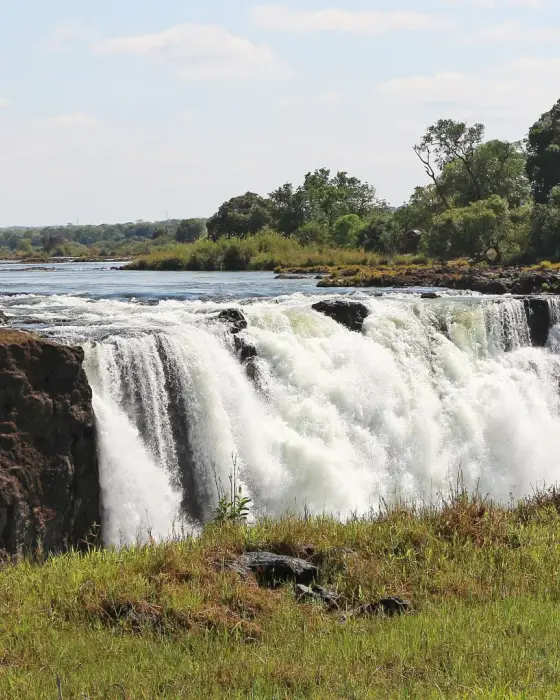
Victoria Falls, the Zambezi's plunge between Zimbabwe and Zambia, seen from both sides, with the river above, the gorges below and Chobe a day away
Days I'd stay three days at Victoria Falls, sleeping in Victoria Falls, on the Zimbabwe side, which has the park a walk from the center.
How the guide reaches this number
The first day is on the Zimbabwean side: the rainforest trail first thing, the middle of the bridge with the pass and, in the late afternoon, the cruise on the Zambezi above the falls. The second crosses the bridge into Zambia, with the Knife-Edge Bridge, Livingstone Island when the river is low and the Livingstone museum in the afternoon. The third goes to Chobe National Park, in Botswana, on a day trip with a boat in the morning and a game drive in the afternoon. With a fourth day, I'd go rafting down Batoka Gorge or take a safari in Zambezi National Park. Anyone with only one day should take the Zimbabwe side in the morning and the river in the afternoon.
3–4
Start with the basic programme and choose extensions for the time you have.
When June to August; from February to May the flood sends up so much mist that it hides part of the falls and soaks the trails, and from September to December the Zambian side can be almost dry, which is Devil's Pool season
How the guide reaches this number
A visit changes more with the river than with the calendar. The Zambezi rises from February to May, peaking in April: this is when the falls have the most water and force, but the mist climbs so high that it hides the base and sometimes the curtain itself, and anyone on the trails comes out soaked. From June to August the river falls, but the falls still carry plenty of water, the mist usually lets you see more of the curtain, the weather is dry and the nights are cold (in Livingstone, average lows of 7.6 °C in July). It is also the start of the dry season in the parks, when animals gather near water in Chobe. From September to December the river drops, to about a tenth of April's volume in November; the Zambian side can dry up in large part, the basalt wall shows, and it is Devil's Pool season. October is the hottest month, with average highs of 35.6 °C. The rains run from November to March, with the highest volume in January (175 mm on average). In years of severe drought, like 2019, the falls at year's end are much smaller.
Per person/day Add up lodging per night, meals per person, the entry fees on both sides of the falls, the visas and the activities you choose; tours and flights over the falls weigh more than lodging.
How the guide reaches this number
Per person per day: accommodation, meals, urban transport, visits and a small allowance for extras. Flights excluded; larger purchases vary. Editorial estimate, not a quote.
 What Nilo thinks
I'd recommend Victoria Falls to people who like scenery on a geological scale, towns with a border history and home cooking based on maize and peanuts. Livingstone was laid out as a segregated colonial town: government and white commerce to the north, west and in the center, African neighborhoods such as Maramba to the east and south, and the shops of Indians and people of mixed heritage between the two. In Zambia, according to the country's guides, church is a welcome topic of conversation, asking about children helps break the ice, and many people hold the other's hand while talking, with no romantic meaning. To eat, I'd look for ifisashi, a Zambian stew of greens with peanuts, and maheu, a non-alcoholic fermented maize drink served cold. And I'd give Livingstone more attention than a quick lunch: much bigger than Victoria Falls, it's where you see an ordinary Zambian town.The first thing you notice about Victoria Falls is usually the white column of mist rising from the horizon, visible from up to 50 km away, and soon after, the roar of the water. The Zambezi runs wide and gentle across a plain of islands and hippos and then, suddenly, falls whole into a basalt chasm 1.7 km long, so narrow that the drop can be seen head-on from the opposite edge. The mist rising from the gorge waters a rainforest in the middle of the savanna and, on full-moon nights, forms a lunar rainbow. The falls are shared between two countries, and that is part of the charm: from Zimbabwe you see the curtain head-on, from Zambia you get close to the edge, and between the two a steel bridge from 1905 spans the gorge. Below it, the river runs through rapids down zigzagging gorges; above, cruises leave at sunset among hippos and, in the dry season, elephants crossing the river. And about 70 km away, in Botswana, the Chobe River gathers one of the largest elephant populations in Africa.
Quick facts
- Population
- 35,199 in the town of Victoria Falls, Zimbabwe (2022 census), and 177,393 in Livingstone, Zambia (2022 census)
- Founding
- Victoria Falls began as a settlement in 1901 and grew with the arrival of the railway and the bridge opened in 1905; Livingstone was founded in 1905, after an earlier colonial settlement at Old Drift, on the riverbank, around 1897
- Country and region
- Zimbabwe (Matabeleland North province) and Zambia (Southern Province), separated by the Zambezi River; the Botswana border at Kazungula is about 70 km from Victoria Falls
- Language
- English on both sides. In Zimbabwe, Shona and Ndebele are the most widely spoken of the 16 official languages; in Livingstone and southern Zambia, Tonga
- Currency
- In Zimbabwe, the US dollar (US$) is used for most payments, alongside the Zimbabwe gold (ZiG), the official currency since April 2024. In Zambia, the kwacha (ZMW)
- Time zone
- UTC+2 (Central Africa Time), the same in Zimbabwe, Zambia and Botswana, with no daylight saving time
- Best time to visit
- June to August; from February to May the flood sends up so much mist that it hides part of the falls and soaks the trails, and from September to December the Zambian side can be almost dry, which is Devil's Pool season
- Average cost per day
- Add up lodging per night, meals per person, the entry fees on both sides of the falls, the visas and the activities you choose; tours and flights over the falls weigh more than lodging.
What’s new
Recent changes that affect the plan, with date and source.
- Feb 2026
The Zimbabwe parks authority adjusted the falls fees when VAT on tourist services came into effect: the international entrance at the main gate went from US$50 to US$58, and the full-moon night visit to US$116. source
- Jan 2026
For those who need a visa, Zambia doubled the price of the single-entry visa, from US$25 to US$50, and double- and multiple-entry visas went to US$80; the KAZA visa, valid for Zambia and Zimbabwe, remains at US$50. source
When to go
June to August; from February to May the flood sends up so much mist that it hides part of the falls and soaks the trails, and from September to December the Zambian side can be almost dry, which is Devil's Pool season
January
19° to 31°C
175 mm of rain
13 h 05 min of daylight
National holidays
Jan 1 – 3, 2027 · long weekend · New Year's Day
Jan 1, 2028 · New Year's Day
Source: Nager.Date. Holiday dates shift; check close to your trip.
February
19° to 31°C
133 mm of rain
12 h 40 min of daylight
National holidays
Feb 21, 2027 · Robert Mugabe National Youth Day
Feb 19 – 21, 2028 · long weekend · Robert Mugabe National Youth Day
Source: Nager.Date. Holiday dates shift; check close to your trip.
March
18° to 31°C
83 mm of rain
12 h 12 min of daylight
National holidays
Mar 26 – 29, 2027 · long weekend · Good Friday, Easter Saturday, Easter Monday
Source: Nager.Date. Holiday dates shift; check close to your trip.
April
15° to 31°C
20 mm of rain
11 h 41 min of daylight
National holidays
Apr 18, 2027 · Independence Day
Apr 14 – 18, 2028 · long weekend · Good Friday, Easter Saturday, Easter Monday, Independence Day
Source: Nager.Date. Holiday dates shift; check close to your trip.
May
11° to 29°C
2 mm of rain
11 h 16 min of daylight
National holidays
May 1, 2027 · Worker's Day
May 22 – 25, 2027 · long weekend · Africa Day
Source: Nager.Date. Holiday dates shift; check close to your trip.
August
11° to 30°C
0 mm of rain
Best time11 h 31 min of daylight
National holidays
Aug 7 – 10, 2027 · long weekend · Heroes' Day, Defence Forces Day
Source: Nager.Date. Holiday dates shift; check close to your trip.
September
15° to 34°C
1 mm of rain
12 h 00 min of daylight
October
19° to 36°C
11 mm of rain
12 h 30 min of daylight
November
20° to 34°C
78 mm of rain
12 h 58 min of daylight
December
20° to 32°C
142 mm of rain
13 h 12 min of daylight
National holidays
Dec 19 – 22, 2026 · long weekend · Unity Day
Dec 25 – 27, 2026 · long weekend · Christmas Day, Boxing Day
Dec 22, 2027 · Unity Day
Dec 25, 2027 · Christmas Day
Dec 26, 2027 · Boxing Day
Source: Nager.Date. Holiday dates shift; check close to your trip.
High, shoulder and low season
High · June to August
Dry season, with no measurable rain (Livingstone's normals give less than 1 mm a month), and cold nights (average low of 7.6 °C in July). The river has dropped since the April peak, but the falls still have plenty of water, and the lower mist lets you see more of the curtain. In the parks, it's the start of the dry season, when animals look for water. Bring a warm layer for early-morning excursions and boat trips.
Shoulder · January to May
Rain and flood: January is the rainiest month (175 mm on average), the rains ease through April, and the river rises from February to May, peaking in April. The mist soaks the trails and can hide the base and part of the curtain; this is when the falls have the most force and noise. The Devil's Pool is closed, and the rafting stretch depends on the river level.
Low · September to December
Low water: the river falls to about a tenth of April's volume in November, the Zambian side can dry up in large part, the basalt wall shows, and it is Devil's Pool season, from the end of August to the end of December. October is the hottest month, with average highs of 35.6 °C, and the rains return in November.
How the year changes
A visit changes more with the river than with the calendar. The Zambezi rises from February to May, peaking in April: this is when the falls have the most water and force, but the mist climbs so high that it hides the base and sometimes the curtain itself, and anyone on the trails comes out soaked. From June to August the river falls, but the falls still carry plenty of water, the mist usually lets you see more of the curtain, the weather is dry and the nights are cold (in Livingstone, average lows of 7.6 °C in July). It is also the start of the dry season in the parks, when animals gather near water in Chobe. From September to December the river drops, to about a tenth of April's volume in November; the Zambian side can dry up in large part, the basalt wall shows, and it is Devil's Pool season. October is the hottest month, with average highs of 35.6 °C. The rains run from November to March, with the highest volume in January (175 mm on average). In years of severe drought, like 2019, the falls at year's end are much smaller.
The same numbers as a table
| Month | Temperature °C | Rain mm |
|---|---|---|
| January | 19 to 31 | 175 |
| February | 19 to 31 | 133 |
| March | 18 to 31 | 83 |
| April | 15 to 31 | 20 |
| May | 11 to 29 | 2 |
| June · | 8 to 27 | 0 |
| July · | 8 to 26 | 0 |
| August · | 11 to 30 | 0 |
| September | 15 to 34 | 1 |
| October | 19 to 36 | 11 |
| November | 20 to 34 | 78 |
| December | 20 to 32 | 142 |
Nilo's tips
Two entrances, two tickets
Each country charges its own entrance, and one isn't valid for the other: on the Zimbabwe side, US$58 for foreigners at the main gate (February 2026 schedule); on the Zambia side, published sources disagree on the current price, so check at the ticket office. If you can only visit one side, I'd choose Zimbabwe, which has the head-on view of most of the falls; the Zambian side is worth more in flood season, for the closeness, and at low water, for Livingstone Island.
KAZA visa if you'll be crossing
The rule depends on the passport: many nationalities enter Zambia, Zimbabwe or both without a visa, and then the math changes. For those who need a visa for both countries, the KAZA costs US$50, is valid for 30 days for Zimbabwe and Zambia with unlimited entries between the two and covers day trips to Botswana; it is issued at the Victoria Falls and Livingstone airports, at the bridge border and at Kazungula, or online. In that case, if the plan includes crossing the bridge, coming back and also going to Chobe, I'd ask for the KAZA on arrival.
Bridge pass to see without a visa
Anyone who only wants to go to the middle of the Victoria Falls Bridge, for the view or the bungee, asks for a bridge pass at the Zimbabwe post with their passport and returns without entering Zambia.
Dollars in small bills
On the Zimbabwe side, many businesses accept only dollars in cash, and change in small bills is hard to get. I'd bring 1, 5, 10 and 20 notes for taxis, tips, the visa and craft markets, and keep the card for hotels and tours.
Lunar rainbow
On full-moon nights, the park on the Zimbabwe side opens for the night visit, with a US$116 ticket, to see the rainbow the moon forms in the mist. I'd book only with a clear-sky forecast.
Explore the map
Explore the map, read about the other places and plan your travel days in the app.
Open the appWhat to see
Leave for last, if time allows: Mosi-oa-Tunya Game Park · The Big Tree
Victoria Falls National Park
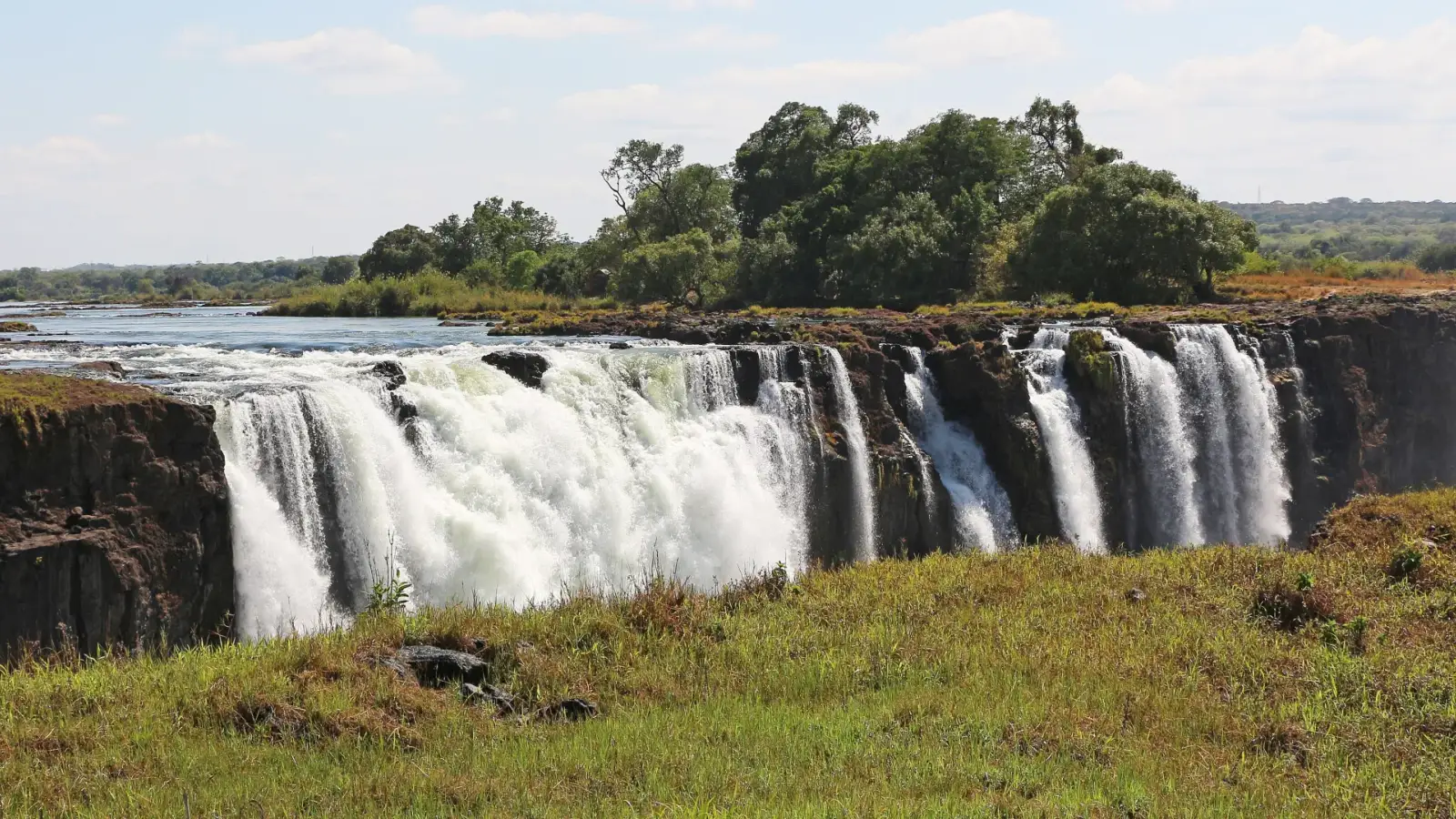
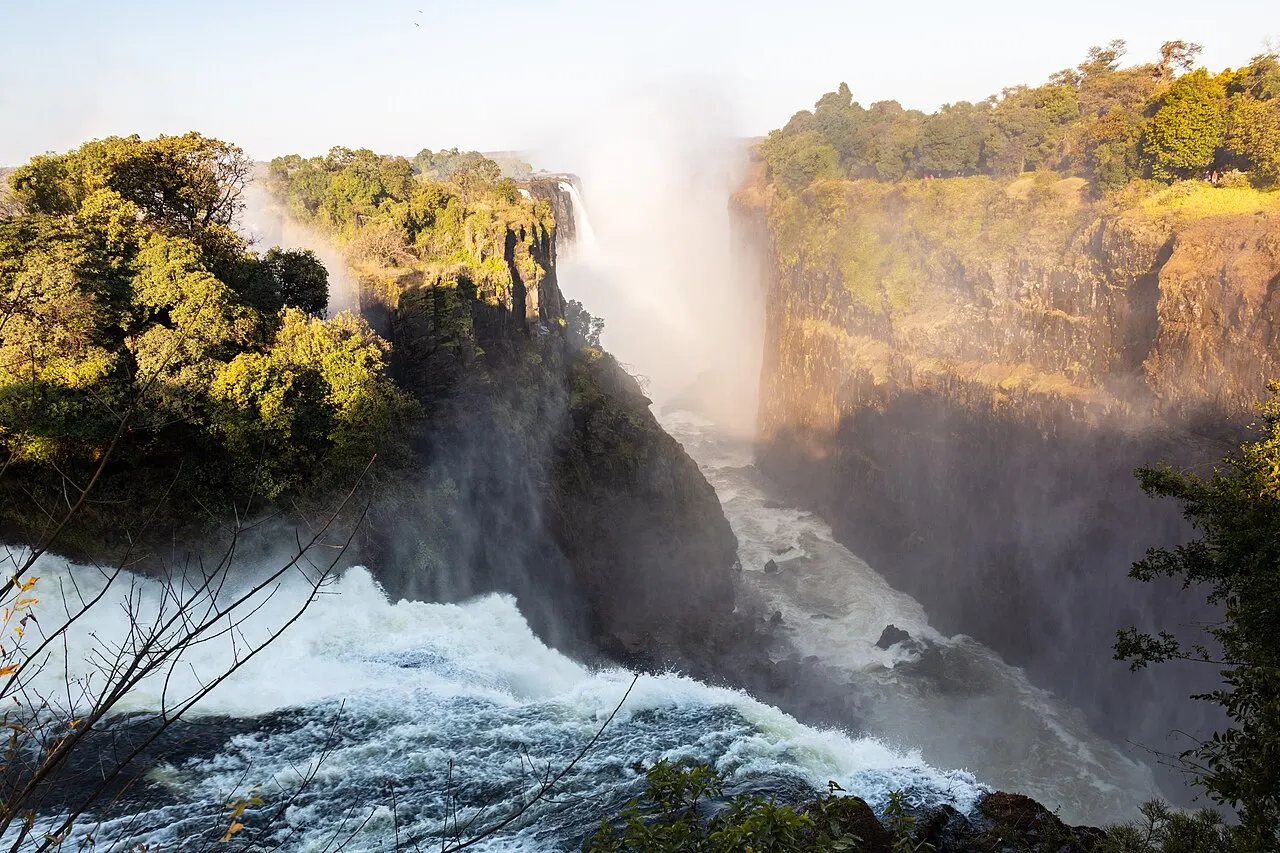
The rainforest trail on the Zimbabwe side is the main visit: about two kilometers of path with viewpoints facing Devil's Cataract, Main Falls and Rainbow Falls, and the statue of David Livingstone, with the motto he championed engraved on it. The Zimbabwe tourism authority says 70% of the head-on view of the falls is had from this side. The international ticket at the main gate rose to US$58 in February 2026, and each entry is valid once; the gate is next to the border post, a walk from the center. In flood season the mist soaks the path and sometimes hides the falls themselves; at low water, the basalt wall shows. On full-moon nights there are visits to see the lunar rainbow, with a separate ticket.
Check access
Mosi-oa-Tunya National Park
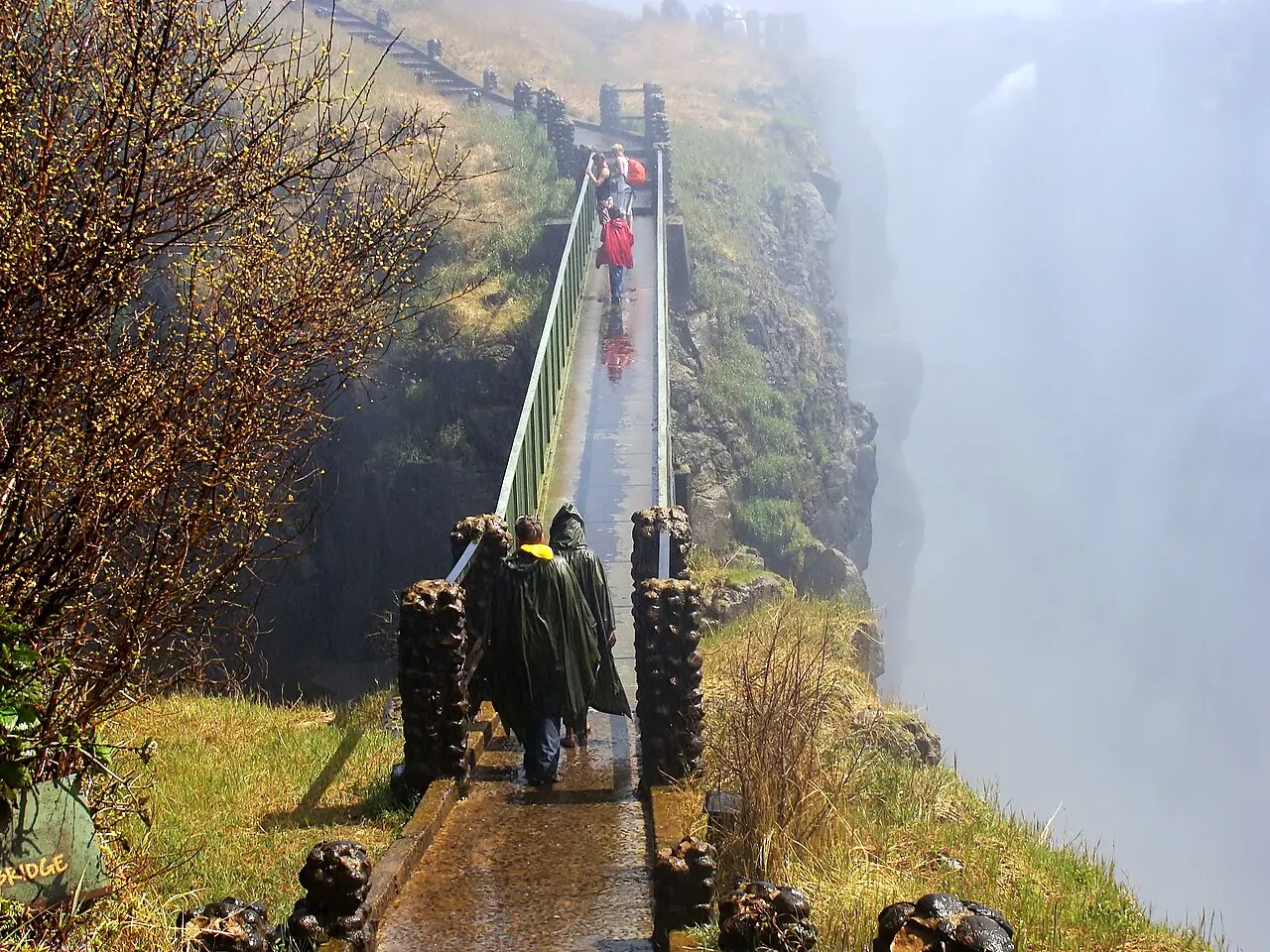
The Zambian entrance to the falls, about 10 km from the center of Livingstone and next to the border post, leads along a short trail to the Knife-Edge Bridge, the footbridge over the gorge facing Eastern Cataract and Rainbow Falls, and along a steep path to the Boiling Pot, the whirlpool where the river turns into the second gorge. Another path goes to the riverbank above the falls. The entrance fee is charged separately from the Zimbabwean one; published sources disagree on the current price for foreigners, so check at the ticket office. On this side the falls are closer and wetter in flood season, and can dry up in large part between September and December.
Check access
Victoria Falls Bridge
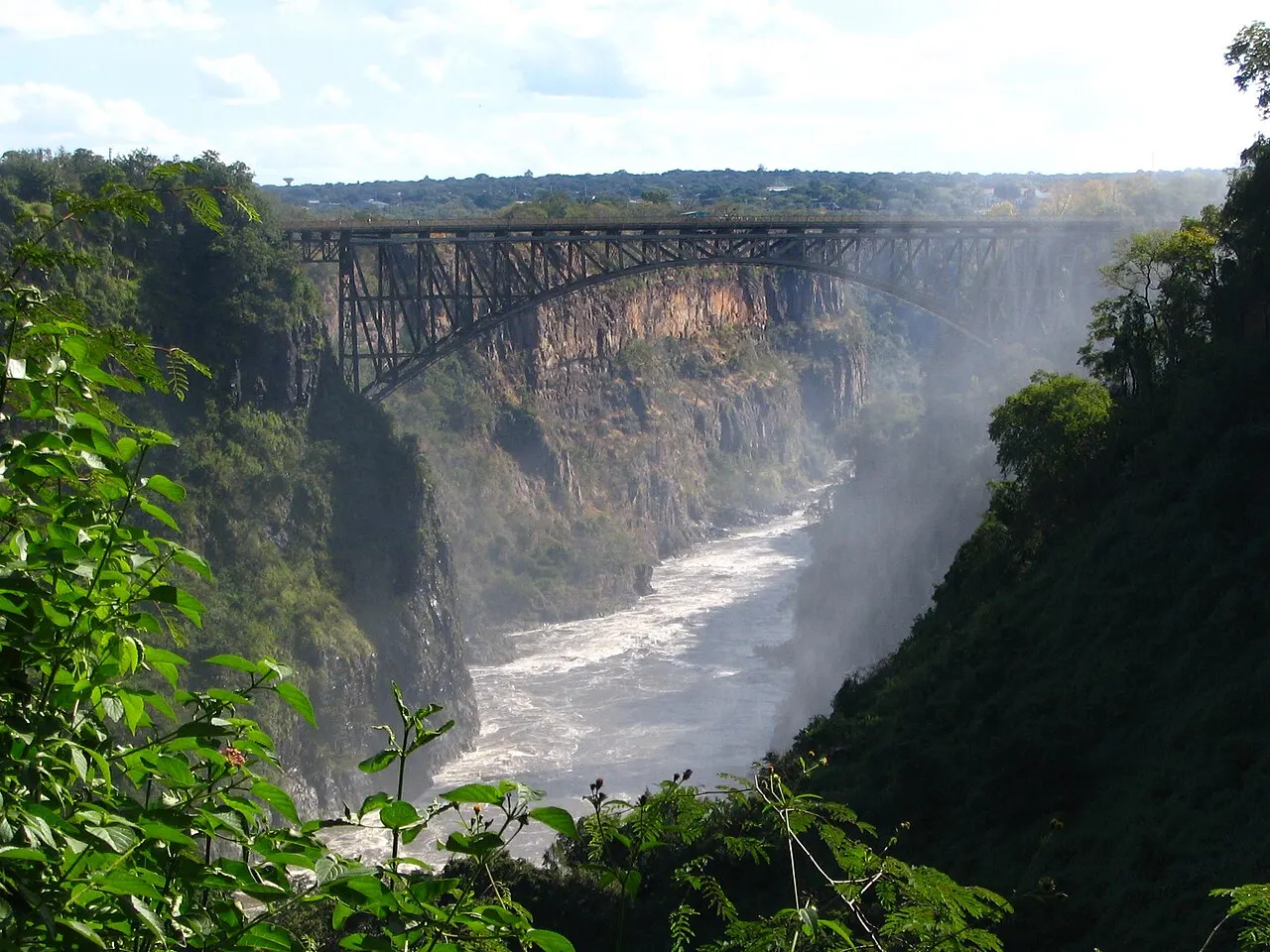
The 198-meter steel bridge, opened in 1905, crosses the second gorge 128 meters above the low-water river and links the two borders, with road, rail and a pedestrian walkway. From the middle you see the falls through the slit of the gorge. To walk out there without entering Zambia, ask at the Zimbabwe border post for a bridge pass, with your passport. On the bridge there is a 111-meter bungee jump, a swing and a zip line, and guided visits to the structure under the deck; on the Zambian side, a small museum about the construction has free admission.
Check access
Livingstone Island
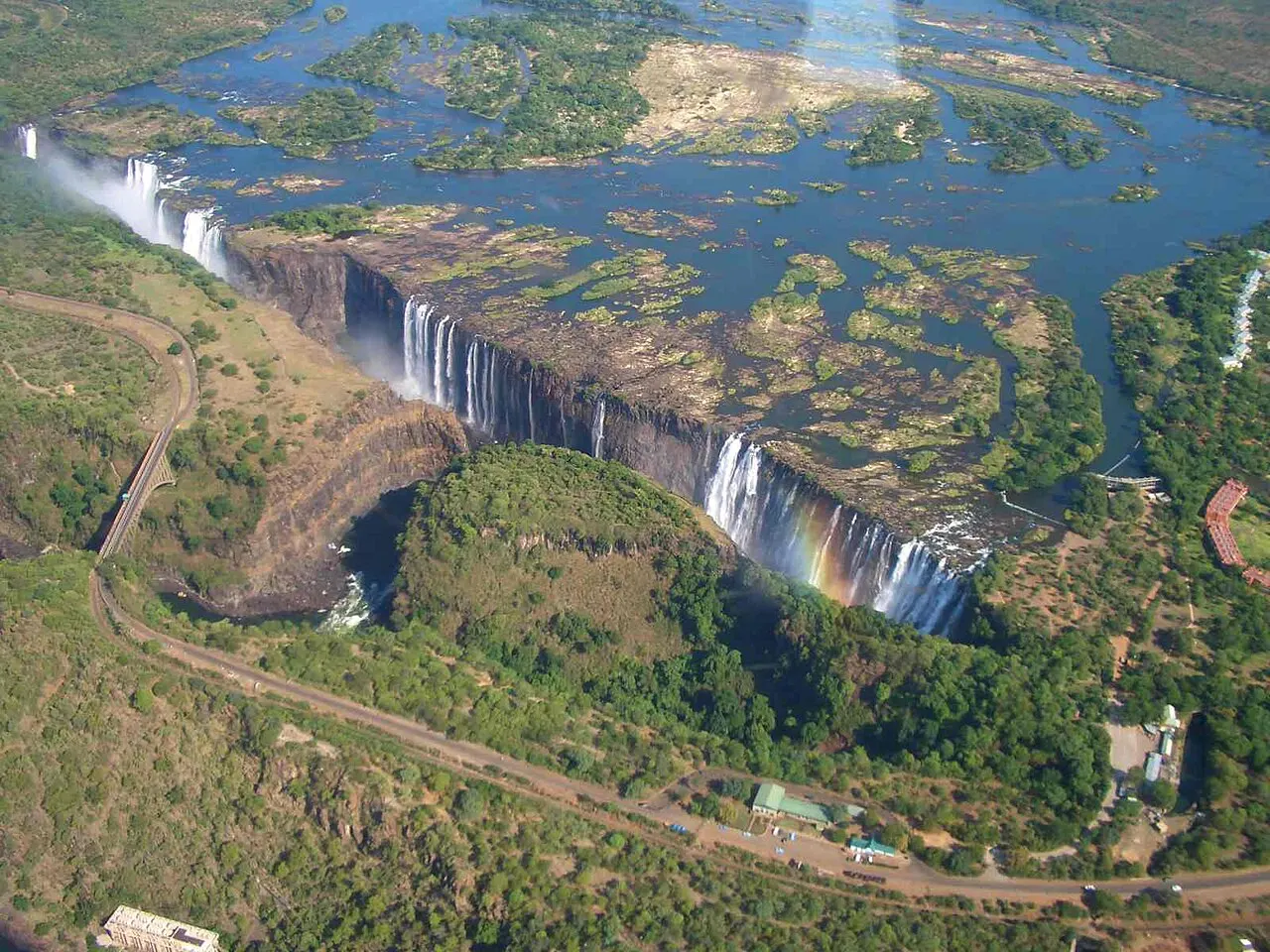
The island at the top of the falls, from which David Livingstone saw the falls in 1855, can only be visited with the authorized operator, in groups of up to 32 people, on a boat of about 10 minutes that leaves from the Zambian bank. Between the end of August and the end of December, depending on the river level, guides take those who want to swim to the Devil's Pool, a natural pool on the lip of the falls; from January to the end of August, with the river high, the pool used is Angel's Pool, when it is open. Book ahead, because sessions have limited places; getting to the island on your own is not allowed.
Check access
Zambezi River
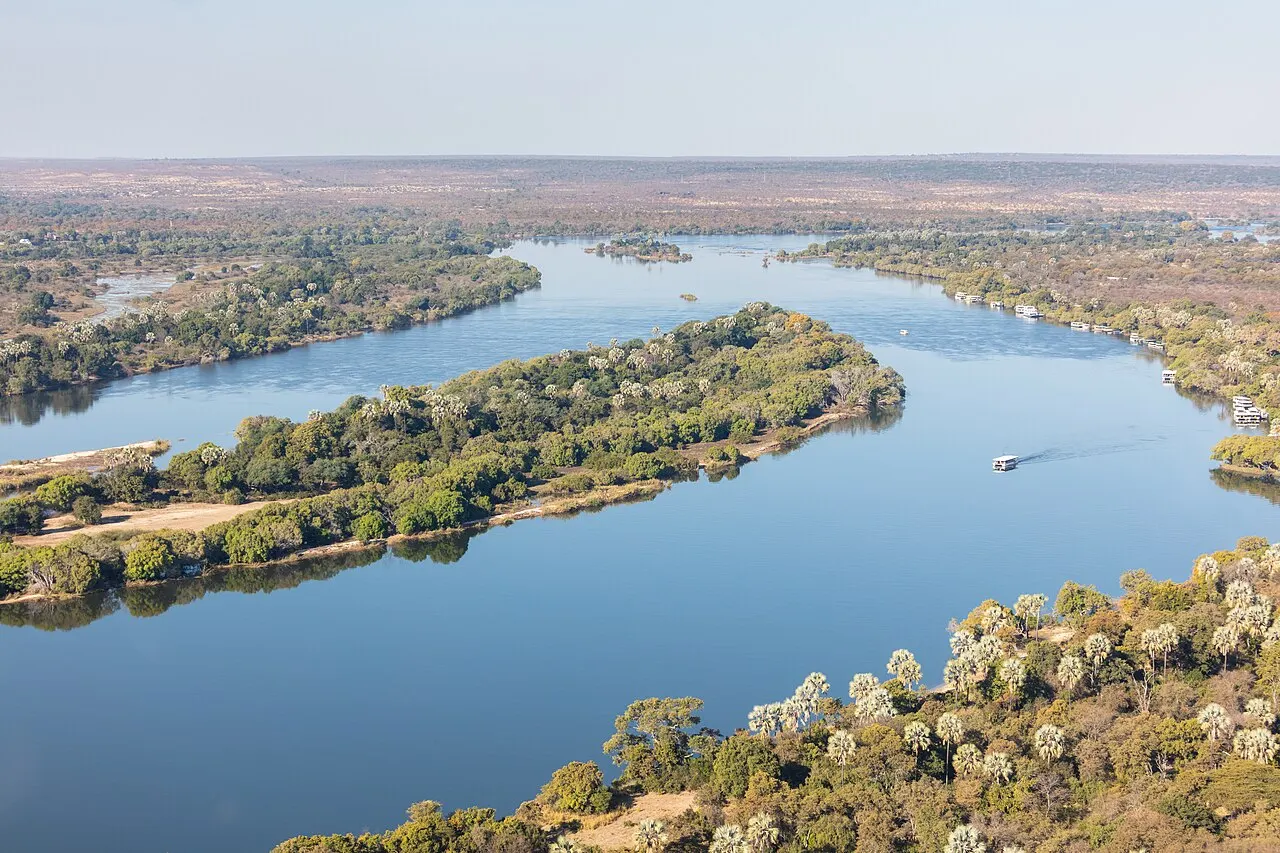
Above the falls, the Zambezi runs wide and full of islands, with hippos and crocodiles on the banks and elephants crossing in the dry season. The most common way to see it is the sunset cruise, of about two hours, which leaves from both sides of the border; there are also morning departures and birdwatching trips. The boats vary a lot in size and atmosphere on board, from small and calm to large and noisy, so it's worth asking before you book.
Check access
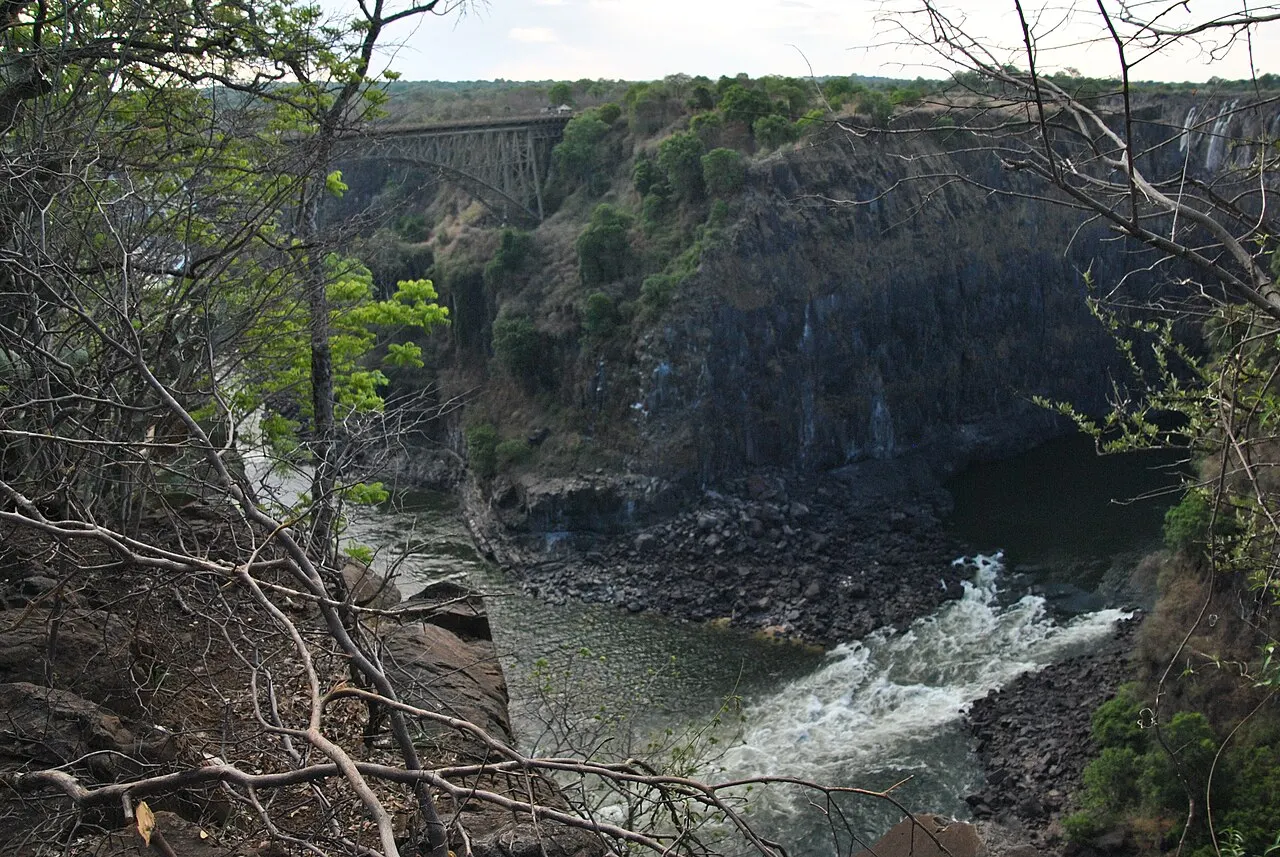
Batoka Gorge
The gorge below the falls, where the river runs through rapids between basalt walls, is where the falls' whitewater rafting takes place, with full-day descents that end in a steep climb or a cable-car ride. The water level in the gorges varies by up to 20 meters between flood and drought, so the navigable stretch changes through the year; ask the operator which route is open. The same walls shelter birds of prey such as the taita falcon and Verreaux's eagle.
Check access
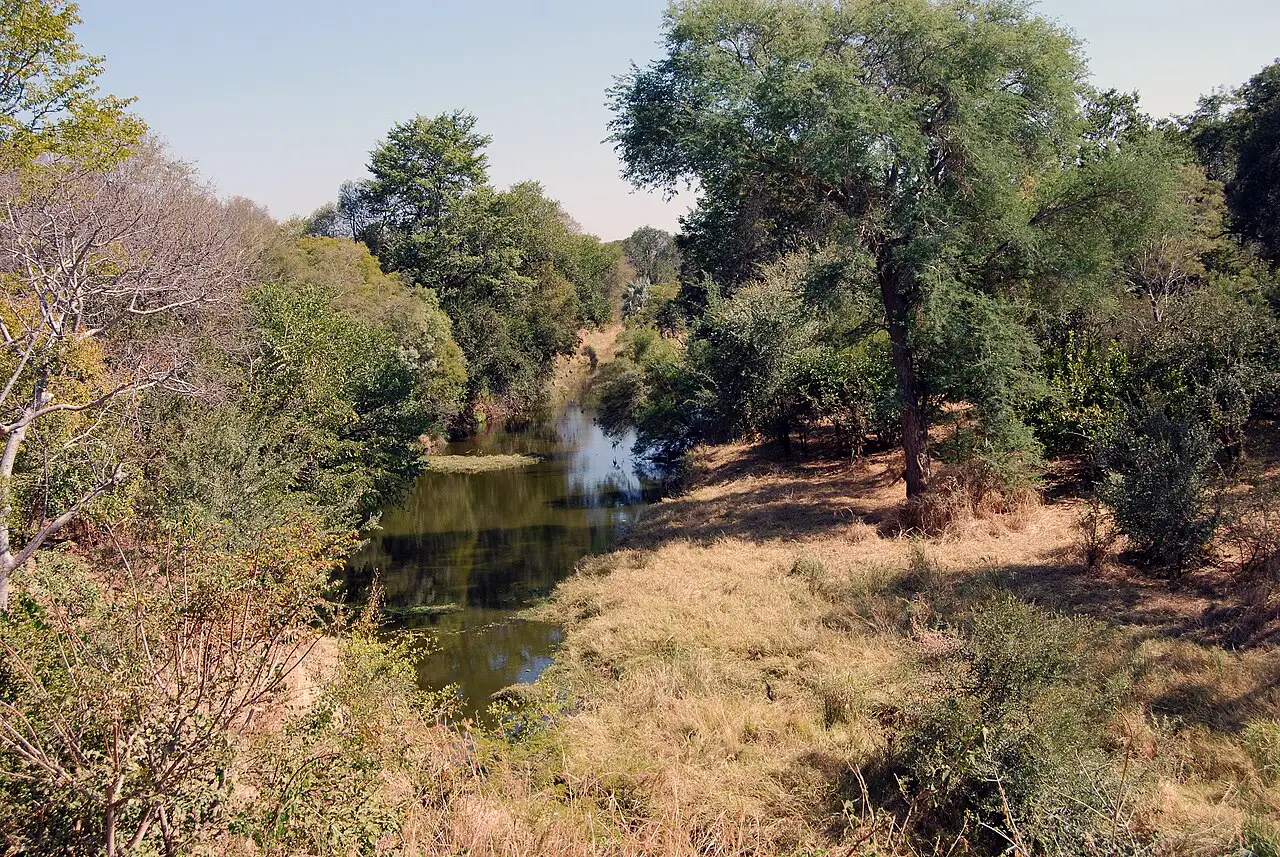
Zambezi National Park
The national park that begins just upstream from Victoria Falls, with 56,000 hectares, separated from the falls park in 1979. The road along the Zambezi and the 25 km Chamabondo trail, which starts 5 km from town, let you see elephants, buffalo, giraffes, zebras and antelopes such as the sable antelope, plus more than 400 bird species. It is the closest safari to town, done in an operator's vehicle.
Check access
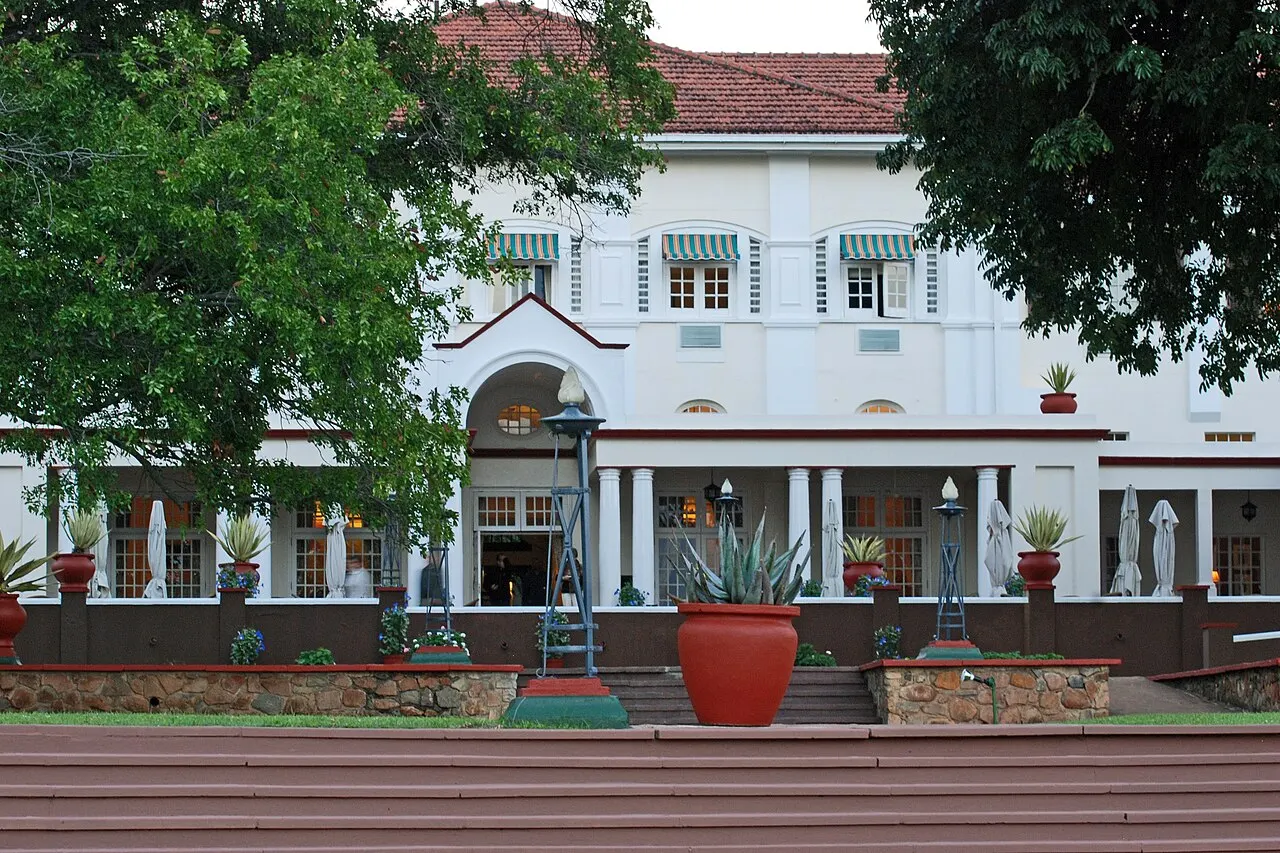
Victoria Falls Hotel
The hotel opened in 1904 for railway passengers presents itself as the oldest luxury hotel in Zimbabwe, and its lounges and corridors hold period maps and photographs. Stanley's Terrace, on the lawn facing the bridge and the mist of the falls, serves afternoon tea every day from 3 to 5 p.m.; those who aren't staying there should book ahead. The 1949 conference that discussed creating the Federation of Rhodesia and Nyasaland met here, as did the 1963 one that led to its end.
Check access
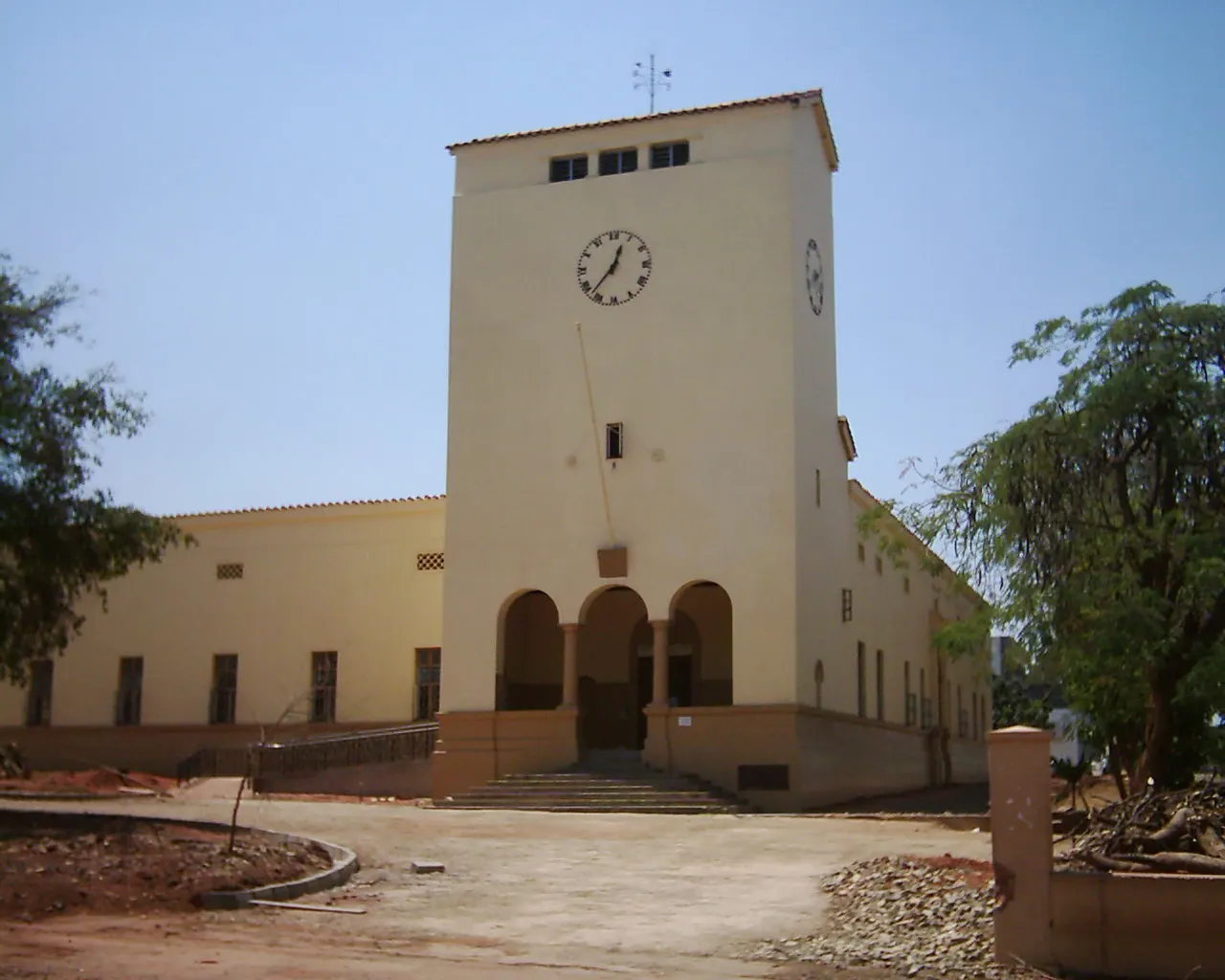
Livingstone Museum
Zambia's largest and oldest museum, founded in 1934, occupies a 1951 building on Mosi-oa-Tunya Road in the center of Livingstone. The archaeology, ethnography, history and art galleries run from the Stone Age to independence, and the room dedicated to David Livingstone holds letters, diaries and objects donated by his family. Admission for foreigners costs US$5.
Check access
More places in the guide
Mosi-oa-Tunya Game Park
The wildlife section of the Zambian park, northwest of the falls, is small and fenced, with giraffes, zebras, buffalo, antelopes and a group of white rhinos (ten in 2022) guarded day and night by rangers. The guided walks to see the rhinos are the main draw. Inside it lies the Old Drift cemetery, where the first settlers are buried.
The Big Tree
An ancient baobab just outside the town of Victoria Falls, with an estimated age of about 2,000 years. Since the surrounding woodland has wild animals, it's best to go by taxi or with a tour, not on foot.
Nilo’s itinerary
Start with the basic programme and choose extensions for the time you have.
Plan my days in the app ↗Day 1 · The Zimbabwe side and the river above the falls
Get to the entrance of Victoria Falls National Park right at opening, early in the morning, on foot from the center, before the heat and the groups; in flood season, bring a rain cover and a sealed bag for your phone.
Walk the rainforest trail from end to end, from the Devil's Cataract viewpoint to the last point facing Rainbow Falls, without hurrying: it's about two kilometers, and the heat builds through the morning.
Leave by the same gate and walk to the border post next door; with your passport, ask for the bridge pass and go to the middle of the Victoria Falls Bridge to see the gorge and, if you like, the bungee jump.
Have lunch in the center of Victoria Falls, near Elephant Walk, and rest during the hottest hours.
In the late afternoon, take a sunset cruise on the Zambezi above the falls, booked the day before, leaving from the riverfront.
Have dinner in town and return to your hotel by car or taxi.
Day 2 · Across the bridge: Zambia and Livingstone
Cross the border over the Victoria Falls Bridge early, on foot or by taxi, with Zambia's entry rule and the rule for returning to Zimbabwe checked for your passport (exemption, visa or KAZA).
Enter Mosi-oa-Tunya National Park at the gate next to the Zambian post, cross the Knife-Edge Bridge and, if your legs allow, go down the steep path to the Boiling Pot.
Between the end of August and the end of December, swap part of the morning for the reserved visit to Livingstone Island and the Devil's Pool, boarding on the Zambian bank upstream from the falls; the rest of the year, the island takes visits with another pool, when the river allows.
Take a taxi to the center of Livingstone, about 10 km away, and have lunch of nshima with kapenta or a stew at a restaurant in the center.
In the afternoon, visit the Livingstone Museum, on Mosi-oa-Tunya Road, with the archaeology galleries and the David Livingstone room.
Take a taxi back to the border before dark and cross the bridge back to Victoria Falls.
Day 3 · Chobe National Park (Botswana)
Day trip
The Kazungula border is about 70 km from Victoria Falls, and the town of Kasane, the park's gateway, lies just beyond. Day tours leave town early in the morning, cross the border, take a cruise on the Chobe River until about 12:30, stop for lunch and continue to a game drive in the afternoon, returning at the end of the day (about seven hours of program, according to a local operator). The stretch of river by Kasane is probably the most visited part of the park, because of its proximity to the falls, and in the dry season, from May to October, it gathers large herds of elephants on the bank; the park's elephant population is estimated at about 50,000. The KAZA visa covers day trips to Botswana, and many nationalities enter without a visa; check whether park fees are included in the price and, with children, bring the full birth certificate and, if one parent isn't traveling, the declaration signed by that parent.
If you stay longer
Day 4 · Batoka Gorge or a safari on the Zambezi
For those who want adventure: a full day of rafting in Batoka Gorge, leaving early from town with lunch included by the operator; confirm when you book which stretch of the river is open.
For those who prefer animals: an early-morning safari in Zambezi National Park, along the riverside road or the Chamabondo trail, in an operator's vehicle.
Those who did the safari can round out the day with a helicopter flight over the falls, in late morning, or with afternoon tea at Stanley's Terrace at the Victoria Falls Hotel, from 3 to 5 p.m., booked beforehand.
Finish with a dinner with drums and dancing at the Victoria Falls Safari Lodge complex, booked well in advance, or a quiet evening in the center.
Food
Sadza and nshima
The firm white cornmeal porridge that goes with lunch and dinner on both sides of the river: sadza (or isitshwala) in Zimbabwe, nshima in Zambia. It comes with a stew of beef, chicken or fish, beans and greens, and is eaten by hand, preferably the right, rolling a small ball to pick up the accompaniment. Simple restaurants in the centers of both towns serve the full dish.
Kapenta
The small sardine from Lake Tanganyika, taken to the lakes of the region, eaten dried and fried, with onion and tomato, as a side to sadza or nshima. In Zimbabwe it is also called matemba.
Bream
Grilled or fried freshwater fish, one of the specialties that Zimbabwe's guides recommend trying, served with sadza, potatoes or rice.
Mopane worm
The caterpillar of a moth that lives in mopane trees, dried or fried, is a traditional source of protein in Zimbabwe and Zambia. It turns up dried in the region's markets.
Biltong and boerewors
South African legacies that spread across the region: biltong is seasoned meat dried in the shade, sold as a snack; boerewors is a long, seasoned sausage, grilled on the braai, the barbecue of southern Africa, and served with sadza.
Mazoe
An intensely colored orange concentrate, diluted in water, which is almost an institution in Zimbabwe. It is everywhere drinks are sold.
Chibuku and local beers
Chibuku is the traditional beer made from maize or sorghum, thick and sour, sold in plastic cartons like milk boxes. Among the lagers, there is Zambezi, on the Zimbabwe side, and Mosi, the best known in Zambia. The sundowner, the light drink at sunset, is a custom across southern Africa, and the cruises on the Zambezi are the local version of it.
Where to eat
- Victoria Falls town center
Sadza with beef or chicken stew, greens and beans at the simple restaurants in the center, which serve the everyday food of residents for far less than the hotels. Good for getting to know Zimbabwe's basic dish without a themed itinerary.
- Stanley's Terrace (The Victoria Falls Hotel) · Victoria Falls town center
Afternoon tea on the terrace of the 1904 hotel, served every day from 3 to 5 p.m., with the bridge and the mist of the falls ahead; the terrace also has a light-meal menu from 11 a.m. to 10 p.m. Those who aren't staying at the hotel should book with the hotel's food and beverage manager.
Source · 2026-10-19
- The Boma, Dinner & Drum Show · Victoria Falls Safari Lodge, southwest of the center
Dinner with a drum and dance show at the Victoria Falls Safari Lodge complex, designed for tourists, with regional dishes served as a buffet. It is the program for those who want to try several local foods in a single evening; reservations are made through the restaurant's website.
Source · 2026-10-19
- Livingstone town center
Nshima with the traditional sides, such as kapenta, pumpkin leaves (chibwabwa) and stews, at the Zambian restaurants in the center and on the street known as Kutaway. It is everyday food, far cheaper than at hotel restaurants.
· 2026-10-19
Day trips
Chobe National Park (Botswana)
The Kazungula border is about 70 km from Victoria Falls, and the town of Kasane, the park's gateway, lies just beyond. Day tours leave town early in the morning, cross the border, take a cruise on the Chobe River until about 12:30, stop for lunch and continue to a game drive in the afternoon, returning at the end of the day (about seven hours of program, according to a local operator). The stretch of river by Kasane is probably the most visited part of the park, because of its proximity to the falls, and in the dry season, from May to October, it gathers large herds of elephants on the bank; the park's elephant population is estimated at about 50,000. The KAZA visa covers day trips to Botswana, and many nationalities enter without a visa; check whether park fees are included in the price and, with children, bring the full birth certificate and, if one parent isn't traveling, the declaration signed by that parent.
Where to begin
The Zimbabwe side and the river above the falls
Get to the entrance of Victoria Falls National Park right at opening, early in the morning, on foot from the center, before the heat and the groups; in flood season, bring a rain cover and a sealed bag for your phone.
Across the bridge: Zambia and Livingstone
Cross the border over the Victoria Falls Bridge early, on foot or by taxi, with Zambia's entry rule and the rule for returning to Zimbabwe checked for your passport (exemption, visa or KAZA).
Batoka Gorge or a safari on the Zambezi
For those who want adventure: a full day of rafting in Batoka Gorge, leaving early from town with lunch included by the operator; confirm when you book which stretch of the river is open.
Money
On the Zimbabwe side, the US dollar is used for most payments, and the Zimbabwe gold (ZiG), the official currency since April 2024, shows up more in residents' everyday shopping. Bring dollars in small bills: the British government recommends this even for paying the visa, and many businesses accept only cash. Visa and Mastercard cards work in hotels, at tour operators and in the larger supermarkets in town, but the network sometimes goes down. Exchange money only at authorized places: changing money on the street is illegal in Zimbabwe. On the Zambia side, the currency is the kwacha; ATMs in Livingstone dispense only kwacha, and activities are usually charged in dollars and in cash. Change any leftover kwacha before going back, because they can't be exchanged in Zimbabwe. Prices checked in October 2026: Zimbabwe falls park entrance, US$58 for foreigners at the main gate (February 2026 schedule, VAT included); Livingstone Museum, US$5; KAZA visa, US$50. In Zambia, since January 1, 2026, the single-entry visa costs US$50 and the double- or multiple-entry visa US$80, for those who need a visa. The Zambian departure tax, equivalent to US$25 on international flights, is normally already included in the ticket; if not, it is paid in kwacha.
Getting there and around
Victoria Falls International Airport (VFA) is 18 km south of town, with flights to Johannesburg, Cape Town, Addis Ababa, Nairobi, Windhoek, Gaborone, Kasane and destinations within Zimbabwe. It operates 24 hours; the way into town is along the A8 road, and at the airport there are transfers to hotels and other points in town, tour operators and car rental companies. On the Zambian side, Harry Mwaanga Nkumbula International Airport (LVI) is near Livingstone; a taxi into town should not cost more than US$10, and the Yango app works, paying in cash.
By land, the A8 road links Victoria Falls to Hwange (109 km) and Bulawayo (440 km). The Zimbabwe railway company runs a weekly overnight train between Bulawayo and Victoria Falls, with old carriages and schedules worth confirming at the station; a luxury Rovos Rail train links the town to Pretoria a few times a month. Intercape buses link Livingstone to Windhoek, in Namibia, and there are buses between Livingstone and Lusaka, 470 km away.
Within Victoria Falls, almost everything is within 3 km of the falls, and the center can be covered on foot by day. Taxis are easy to find; at night, always take a car, because the trail between the falls and the Victoria Falls Hotel and the roads out of town cross woodland with animals. Many outlying hotels have a free transfer to the center and the park.
Crossing into Zambia means crossing the bridge. The border posts are at both ends: on the Zimbabwe side, next to the park entrance; on the Zambia side, next to the Zambian entrance to the falls. You can make the trip on foot or by taxi, and from the Zambian post blue taxis charge about US$10 to Livingstone. If you only want to reach the middle of the bridge, ask for a bridge pass at the Zimbabwe post, with no need for a Zambian visa.
For Chobe, in Botswana, the Kazungula border is about 70 km from Victoria Falls, and Kasane lies just beyond. On the Zambian side, the Kazungula bridge has linked Livingstone to Botswana since 2021. Most people make the trip on day tours with transfer included; those going on their own need a car or taxi to the border.
From São Paulo, the cheapest that showed up was R$ 7,974, in december 2026.
Fares found by travellers, collected in october 2026.
See flights in december 2026 ↗Partner link: we may earn a commission at no cost to you.
Safety
On the Zimbabwe side there are tourist police, in yellow vests, around the park and the center of Victoria Falls. In both towns, the most common risks for visitors are insistent vendors and money changers near the border and the craft markets, who are best dismissed firmly, and opportunistic theft from people who flash cash. At night, take a car: the British government recommends not walking after dark in Zambia, and the trail linking the falls to the Victoria Falls Hotel is not safe in the dark. Wild animals roam the town and the roads out of it; elephants, buffalo and hippos are dangerous and should not be approached. On the river and in adventure activities there have been serious accidents, including deaths: follow the guides' instructions and check that your insurance covers bungee and rafting. The region has malaria, and anyone visiting the parks should take precautions; use repellent at dusk and see a doctor before the trip. Zimbabwe and Zambia criminalize same-sex relations, and public displays of affection can draw unwanted attention. In Zimbabwe, long power cuts and water rationing happen; ask your hotel how it gets its supply.
Before you go
- Plug
- types D and G
- Voltage
- 220 V
- Driving side
- on the left
- Emergency
- General 999 · Ambulance 994 · Police 995 · Fire 993
- Country code
- +263
- Official languages
- English, Shona, Northern Ndebele, Chewa, Barwe, Kalanga, Khoisan, Ndau, Tsonga, Zimbabwe Sign Language, Sesotho, Tonga, Tswana, Venda, Xhosa and Nambya
- Currency
- United States dollar (USD)
Source: Wikidata (CC0), checked September 2026.
Etiquette tips
Greet before you ask
In Zambia, starting a conversation straight with a question sounds rude. Say hello and ask how the person is before requesting information, even with a taxi driver or at a counter.
Right hand for food, if possible
Sadza and nshima are eaten by hand, preferably the right. To show respect in a handshake, rest your left hand on your right wrist or elbow; a handshake that is too firm can sound aggressive.
Keep the camera away from police and official buildings
In Zimbabwe it is illegal to photograph police officers, soldiers, government buildings and demonstrations, and the police enforce the rule. Avoid photographing the border posts too.
No camouflage clothing
Civilians may not wear camouflage-pattern clothing in Zimbabwe. Worth remembering when packing for a safari.
Bargaining is part of the craft markets
At craft markets, the opening price is meant to be negotiated, calmly and without pressure. Offer what you think is fair.
Mistakes to avoid
Paying the entrance on one side and thinking it is valid on the other: Zimbabwe and Zambia charge separate tickets, and each entry to the Zimbabwean park is valid only once.
Crossing the bridge without first checking each country's entry rule for your own passport. Many nationalities are visa-exempt on one side or both; anyone who needs a visa and buys a single-entry one can't come back, and the choice between a multiple-entry visa, KAZA or just the bridge pass has to be made beforehand.
Going in March or April expecting the photograph of the whole wall of water: in flood season, the mist usually covers a good part of the falls.
Counting on the Devil's Pool in any month. It only opens with the river low, usually from the end of August to the end of December, and it requires a reservation.
Leaving camera and phone unprotected on the trail during flood season. Rain covers can be rented at the Zambian entrance, but water gets into everything that isn't in a sealed bag.
Walking at night between the falls, the Victoria Falls Hotel and the outlying lodges. The trail and the roads cut through woodland with elephants and buffalo.
Crossing into Zimbabwe with kwacha in your pocket: they can't be exchanged on the other side.
Taking children on the day trip to Chobe without the full birth certificate (original or certified copy), which Botswana requires of minors under 18 on entry and exit, and, if one parent isn't traveling, without the declaration signed by that parent.
Useful phrases
Salibonani
Hello (greeting in Northern Ndebele, a language widely spoken on the Zimbabwe side)
Linjani?
How are you all? (plural form of the Ndebele greeting)
Ngiyabonga
Thank you (Ndebele)
Mosi-oa-Tunya
The smoke that thunders: the name of the falls in the Kololo language, used by the Lozi, and the name of the Zambian park
Shungu na mutitima
The boiling water: the Tonga name for the falls
Where to stay
- Victoria Falls town center · First-time visitors who arrive without a car and want to walk to the falls park and the bridge.: The park entrance, the border post, the tour agencies, the restaurants and the supermarkets are a walk away, and there are hostel, guesthouse and historic hotel options. The drawback: at night you need a taxi even for short trips, and street vendors are insistent near the center.
- Victoria Falls riverfront · Those who want calm, river views and animals nearby, and don't mind depending on a transfer.: The lodges on the Zambezi bank upstream from town are close to the cruise departure point and the entrance to Zambezi National Park. It is a few kilometers from the center and the falls, and getting around depends on the hotel's transport or a taxi, especially at night.
- Livingstone town center · Those traveling on a tight budget, who want to get to know the Zambian town or arrive through Livingstone airport.: It concentrates lower-priced hostels and guesthouses, banks, markets and the museum. The drawback is distance: the falls are about 10 km away, and visiting the Zimbabwe side means crossing the border with the right visa.
- Livingstone riverfront · Those who want to sleep on the Zambezi on the Zambian side, close to the falls entrance and the departure point for Livingstone Island.: The lodges and the hotel complex by the falls give easy access to the Zambian park and the island, with animals wandering through the gardens. They are expensive options, far from the town's shops, and almost everything depends on transfers.
· 2026-10-19
Districts
Victoria Falls town center
The core of the town on the Zimbabwe side, around the train station, the Victoria Falls Hotel and the pedestrian street Elephant Walk, with tour agencies, restaurants, supermarkets and the craft market behind the post office. The entrance to the falls park and the border post are a walk away, and most addresses are within 3 km of the falls. It is the most practical base for anyone arriving without a car.
Victoria Falls riverfront
The bank of the Zambezi upstream from the town, where hotels and lodges sit between the riverside woodland and the entrance to Zambezi National Park. It is the departure point for river cruises and the quietest side, with animals close by; in exchange, you depend on a transfer or hotel transport to reach the park and the center.
Livingstone town center
The Zambian town, about 10 km from the falls, laid out along Mosi-oa-Tunya Road, with the Livingstone Museum, colonial buildings, banks, markets and most of the lower-priced hostels and guesthouses. To reach the falls you take a taxi or the hostels' transfer.
Livingstone riverfront
The Zambian bank of the Zambezi, upstream from the falls, with lodges at the water's edge and, right by the falls, a hotel complex whose gardens giraffes and zebras wander through. It is close to the Zambian park entrance and to the departure point for Livingstone Island, but far from the town's shops.
History
c. 200 million years ago · The basalt plateau
Lava flows from the Jurassic period formed the basalt plateau the Zambezi crosses today. The cracks in this basalt, filled with softer material, are the lines that erosion gradually opened into chasms.
c. 20,000 years ago · The river finds its present course
The ancient Lake Makgadikgadi, in present-day Botswana, overflowed to the east and began carving the Batoka Gorge. Over time the falls retreated upstream, leaving behind the series of zigzagging gorges seen below the bridge.
Stone Age and Iron Age · People on the riverbank
Excavations around the falls have found tools from the Early and Middle Stone Age and traces of iron smelting from the end of the first millennium. The peoples of the region gave the falls names of their own: Shungu na mutitima in Tonga, and Mosi-oa-Tunya in the Kololo language used by the Lozi.
1715 · The falls on a European map
A map by Nicolas de Fer already marks the falls in the correct position, with trade routes that David Livingstone would follow 140 years later.
1855 · Livingstone on the island
On November 16, the Scottish missionary David Livingstone was taken by canoe to the island at the top of the falls, today's Livingstone Island, and named the falls after Queen Victoria. The local name is still in use and both are recognized by UNESCO.
c. 1897 · Old Drift
The river crossing above the falls, made first by canoe and then by a cable-drawn barge, gave rise to a colonial settlement on the water's edge. Malaria killed so many residents that they moved to higher ground, where Livingstone began; the old Old Drift cemetery is now inside the Zambian park.
1904 · The railway and the hotel
The tracks from Bulawayo reached the south bank and the Victoria Falls Hotel opened its doors to receive the passengers. The town of Victoria Falls grew as a tourist center around the station.
1905 · The bridge over the gorge
The Victoria Falls Bridge, prefabricated in Darlington, England, opened on September 12, part of Cecil Rhodes's plan for a Cape to Cairo railway. That same year Livingstone was founded on the north side.
1907–1935 · Livingstone as capital
The British South Africa Company moved the territory's capital to Livingstone in 1907; from 1911 to 1935 it was the capital of Northern Rhodesia, until the move to Lusaka. The colonial buildings in the center date from this period.
1966–1980 · The closed border
After Zambia's independence (1964) and Rhodesia's unilateral declaration (1965), Zambia restricted crossings in 1966 and fully reopened the border only in 1980. In 1975, peace talks took place in a railway carriage parked in the middle of the bridge, without agreement.
1980 · Zimbabwe's independence and adventure tourism
With Zimbabwe's independence, visitors returned and the region became a center for rafting, bungee jumping and scenic flights in the 1980s.
1989 · World Heritage Site
The falls were added to the UNESCO World Heritage List as Mosi-oa-Tunya / Victoria Falls.
2021 · The Kazungula Bridge
In May, the 923-meter bridge between Zambia and Botswana opened at Kazungula, replacing the ferry and shortening the way to Chobe from Livingstone.
2024 · The Zimbabwe gold
In April, Zimbabwe launched the ZiG as its official currency. The US dollar is still accepted and dominates tourism prices in Victoria Falls.
Complete history
The falls are ancient, and so is human settlement around them: there are stone tools and traces of iron smelting along the banks, and every people that arrived gave the falls a name. The Tonga called them Shungu na mutitima, the boiling water; the Ndebele, aManz' aThunqayo; the Kololo, whose language the Lozi use, Mosi-oa-Tunya, the smoke that thunders. Before the 19th century, chiefdoms such as Mukuni's, southeast of present-day Livingstone, organized life on the north bank, and in 1838 the Kololo, coming from the south, conquered the Lozi kingdom and began appointing chiefs among the peoples of the falls as well.
David Livingstone arrived in November 1855, taken there by Chief Sekeletu, and the name he gave the falls caught on in Europe. Tourism, however, only began with the railway. Cecil Rhodes wanted tracks from the Cape to Cairo and had the bridge built where the mist from the falls would wet the trains; it opened in 1905, a year after the Victoria Falls Hotel began receiving passengers arriving from Bulawayo. On the north bank, the settlement of Old Drift, ravaged by malaria, moved to higher ground and became Livingstone, capital of Northern Rhodesia until 1935.
In the 20th century, the political border began to weigh on the visit. When Zambia became independent in 1964, and Rhodesia declared an unrecognized independence in 1965, crossings of the border were restricted and watched, and the war of the 1970s emptied the southern side. The peace of 1980 brought adventure tourism: rafting on the Batoka rapids, bungee jumping from the bridge, flights over the falls. In the 2000s, Zimbabwe's political and economic crisis shifted visitors to Livingstone, which gained hotels along the river.
Today the two towns live off the same tourism and complement each other. Victoria Falls received city status in 2020 and is the most-used base, with the park a walk from the center. Livingstone has the museum, shopping at local prices and access to the edge of the falls. The KAZA visa, valid in both countries, and the Kazungula bridge, opened in 2021 toward Botswana, have made it simpler to cross borders on a single trip. The variation in the river's volume, sharper in drought years like 2019, worries the tourism sector in both countries.
Geography and shape of the city
The Zambezi reaches the falls wide and shallow, running over a basalt plateau between tree-covered islands. At one point the rock breaks open in a transverse chasm 1,708 meters long, and the whole river falls into it at once, from 80 to 108 meters high. Because the chasm is narrow, the drop can be seen head-on from the opposite edge of the gorge, and the only exit for the water is an opening of about 110 meters that leads to the Boiling Pot and a series of zigzagging gorges; the Victoria Falls Bridge crosses the second of them. Two islands divide the curtain of water at the crest: Cataract Island, near the Zimbabwean bank, and Livingstone Island, in the middle. From west to east, the sections of the falls are Devil's Cataract, Main Falls, Rainbow Falls (the tallest) and Eastern Cataract; the Zimbabwe trail runs in front of the first three, and the Zambian one stands next to Eastern Cataract, with the Knife-Edge Bridge pointing at Rainbow Falls. The constant mist feeds a rainforest on both edges, with mahogany, palms and lianas that don't appear in the rest of the surrounding mopane savanna. The town of Victoria Falls lies on the south bank, next to the park; Livingstone is about 10 km north of the river. The region is hot and semiarid: in Livingstone, average highs range from 26 °C in July to 35.6 °C in October, and almost all the rain falls from November to March (1991–2020 normals).
Culture
The falls have many names because many peoples lived around them. On the north bank, the Leya of Chief Mukuni and the Tonga have occupied the region for centuries, and the annual ceremony of the Bene Mukuni people, with singing, dancing and drums, recalls the arrival of ancestors from what is now Congo. On the south bank, the town of Victoria Falls gathers people from various regions of Zimbabwe, and Ndebele, Shona, Tonga and Nambya live alongside English. The ethnography gallery of the Livingstone Museum shows objects and musical instruments of the peoples of Zambia.
The colonial legacy still shapes the visit. The Victoria Falls Hotel, from 1904, keeps its afternoon tea and its galleries of old photographs; the train station is next to it; and the custom of tea at four o'clock continues in many Zimbabwean homes. In Livingstone, buildings from the time when the town was the capital still stand in the center, and the 1981 Swedish film based on The Grass Is Singing, by Doris Lessing, used the town as the setting for a 1950s Rhodesian village.
The most visible culture for new arrivals is that of adventure tourism, which grew in the 1980s: bungee jumping from the bridge, rafting on the rapids, helicopter flights over the falls (the so-called flight of the angels; Livingstone wrote that scenery so beautiful must have been gazed upon by angels in flight) and the T-shirts that prove every feat. At the craft markets in both towns they sell wood and stone carvings, textiles and basketry, with prices negotiated.
At night, the Zambian side has bars and clubs in central Livingstone, where much of the music played comes from Congo. Soccer is the most popular sport in Victoria Falls. On the Zimbabwe side, nightlife centers on the hotel bars and a few places in the center.
Festivals and events
Bene Mukuni Ceremony
Once a year, between August and October, on a date announced locally, near Livingstone. The Bene Mukuni people, led by Chief Mukuni, retrace with singing, dancing and drums the story of their ancestors' migration from Kola, in present-day Congo, to the falls.
Victoria Falls Carnival
A festival of music, arts and culture in the town of Victoria Falls, promoted by the Zimbabwe tourism authority. The date changes from one edition to the next (the 2022 one was in late April, with two- and three-day passes); check the year's program before planning your trip around it.
Full-moon nights
On full-moon nights, the park on the Zimbabwe side opens for night visits, with a separate ticket, to see the lunar rainbow that forms in the mist when the sky is clear and there is enough spray.
National holidays
Zimbabwe's independence is celebrated on April 18 (1980) and Zambia's in October (1964), with official celebrations in the towns.
Books and films
Missionary Travels and Researches in South Africa, by David Livingstone
The 1857 account of the journeys in which Livingstone reached the falls was a best seller in its day. Read now, it shows how a 19th-century European described the falls and the peoples of the Zambezi, and helps explain the name and the statue found in the park.
The Grass Is Singing, by Doris Lessing
Lessing's first novel, from 1950, is set in colonial Southern Rhodesia and deals with race relations between white farmers and Black workers. The 1981 Swedish adaptation was filmed in Livingstone, used as a 1950s Rhodesian village.
Frequently asked questions
Victoria Falls: how do you get from the airport to town?
Victoria Falls International Airport (VFA) is 18 km south of town, with flights to Johannesburg, Cape Town, Addis Ababa, Nairobi, Windhoek, Gaborone, Kasane and destinations within Zimbabwe. It operates 24 hours; the way into town is along the A8 road, and at the airport there are transfers to hotels and other points in town, tour operators and car rental companies. On the Zambian side, Harry Mwaanga Nkumbula International Airport (LVI) is near Livingstone; a taxi into town should not cost more than US$10, and the Yango app works, paying in cash.
Victoria Falls: how do the entrances on the two sides work?
Each country charges its own entrance, and one isn't valid for the other: on the Zimbabwe side, US$58 for foreigners at the main gate (February 2026 schedule); on the Zambia side, published sources disagree on the current price, so check at the ticket office. If you can only visit one side, I'd choose Zimbabwe, which has the head-on view of most of the falls; the Zambian side is worth more in flood season, for the closeness, and at low water, for Livingstone Island. Each entry to the Zimbabwean park is valid only once.
Victoria Falls: do I need a visa to see both sides?
The rule depends on the passport: many nationalities enter Zambia, Zimbabwe or both without a visa. For those who need a visa for both countries, the KAZA costs US$50, is valid for 30 days for Zimbabwe and Zambia with unlimited entries between the two and covers day trips to Botswana; it is issued at the Victoria Falls and Livingstone airports, at the bridge border and at Kazungula, or online. Anyone who needs a visa and buys a single-entry one can't come back. In Zambia, since January 1, 2026, the single-entry visa costs US$50 and the double- or multiple-entry visa US$80, for those who need a visa. Anyone who only wants to go to the middle of the Victoria Falls Bridge, for the view or the bungee, asks for a bridge pass at the Zimbabwe post with their passport and returns without entering Zambia.
Victoria Falls: how do you cross into Zambia?
Crossing into Zambia means crossing the bridge. The border posts are at both ends: on the Zimbabwe side, next to the park entrance; on the Zambia side, next to the Zambian entrance to the falls. You can make the trip on foot or by taxi, and from the Zambian post blue taxis charge about US$10 to Livingstone. If you only want to reach the middle of the bridge, ask for a bridge pass at the Zimbabwe post, with no need for a Zambian visa.
Victoria Falls: how many days should I stay?
I'd stay three days at Victoria Falls, sleeping in Victoria Falls, on the Zimbabwe side, which has the park a walk from the center. The first day is on the Zimbabwean side: the rainforest trail first thing, the middle of the bridge with the pass and, in the late afternoon, the cruise on the Zambezi above the falls. The second crosses the bridge into Zambia, with the Knife-Edge Bridge, Livingstone Island when the river is low and the Livingstone museum in the afternoon. The third goes to Chobe National Park, in Botswana, on a day trip with a boat in the morning and a game drive in the afternoon. With a fourth day, I'd go rafting down Batoka Gorge or take a safari in Zambezi National Park. Anyone with only one day should take the Zimbabwe side in the morning and the river in the afternoon.
Victoria Falls: when is the best time to go?
June to August; from February to May the flood sends up so much mist that it hides part of the falls and soaks the trails, and from September to December the Zambian side can be almost dry, which is Devil's Pool season.
Victoria Falls: how do you visit Livingstone Island and the Devil's Pool?
The island at the top of the falls, from which David Livingstone saw the falls in 1855, can only be visited with the authorized operator, in groups of up to 32 people, on a boat of about 10 minutes that leaves from the Zambian bank. Between the end of August and the end of December, depending on the river level, guides take those who want to swim to the Devil's Pool, a natural pool on the lip of the falls; from January to the end of August, with the river high, the pool used is Angel's Pool, when it is open. Book ahead, because sessions have limited places; getting to the island on your own is not allowed.
Victoria Falls: how do you do the day trip to Chobe?
The Kazungula border is about 70 km from Victoria Falls, and the town of Kasane, the park's gateway, lies just beyond. Day tours leave town early in the morning, cross the border, take a cruise on the Chobe River until about 12:30, stop for lunch and continue to a game drive in the afternoon, returning at the end of the day (about seven hours of program, according to a local operator). The stretch of river by Kasane is probably the most visited part of the park, because of its proximity to the falls, and in the dry season, from May to October, it gathers large herds of elephants on the bank; the park's elephant population is estimated at about 50,000. The KAZA visa covers day trips to Botswana, and many nationalities enter without a visa; check whether park fees are included in the price and, with children, bring the full birth certificate and, if one parent isn't traveling, the declaration signed by that parent.
Victoria Falls: what money should I bring?
On the Zimbabwe side, the US dollar is used for most payments, and the Zimbabwe gold (ZiG), the official currency since April 2024, shows up more in residents' everyday shopping. Bring dollars in small bills: the British government recommends this even for paying the visa, and many businesses accept only cash. Visa and Mastercard cards work in hotels, at tour operators and in the larger supermarkets in town, but the network sometimes goes down. Exchange money only at authorized places: changing money on the street is illegal in Zimbabwe. On the Zambia side, the currency is the kwacha; ATMs in Livingstone dispense only kwacha, and activities are usually charged in dollars and in cash. Change any leftover kwacha before going back, because they can't be exchanged in Zimbabwe.
Victoria Falls: is it safe?
On the Zimbabwe side there are tourist police, in yellow vests, around the park and the center of Victoria Falls. In both towns, the most common risks for visitors are insistent vendors and money changers near the border and the craft markets, who are best dismissed firmly, and opportunistic theft from people who flash cash. At night, take a car: the British government recommends not walking after dark in Zambia, and the trail linking the falls to the Victoria Falls Hotel is not safe in the dark. Wild animals roam the town and the roads out of it; elephants, buffalo and hippos are dangerous and should not be approached. On the river and in adventure activities there have been serious accidents, including deaths: follow the guides' instructions and check that your insurance covers bungee and rafting. The region has malaria, and anyone visiting the parks should take precautions; use repellent at dusk and see a doctor before the trip. Zimbabwe and Zambia criminalize same-sex relations, and public displays of affection can draw unwanted attention. In Zimbabwe, long power cuts and water rationing happen; ask your hotel how it gets its supply.