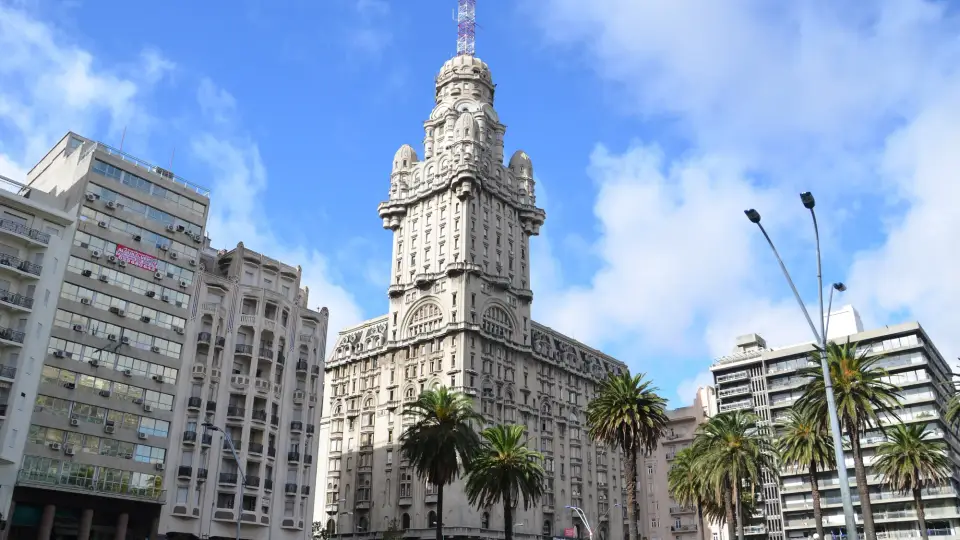
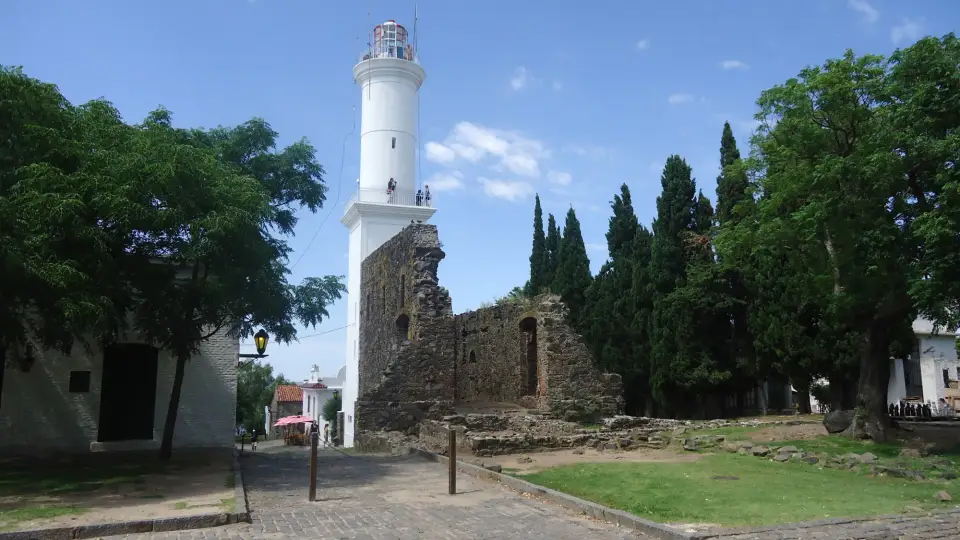
Uruguay
Punta del Este
Two beaches on one peninsula, Casapueblo at sunset and the coast out to José Ignacio
Days Start with the basic programme and choose extensions for the time you have.
How the guide reaches this number
With a fourth day and a car, I'd go to Pueblo Garzón and have lunch at the Bodega Garzón, reserving a day ahead. Montevideo, 130 km away, deserves its own overnight stay, and I wouldn't do it as a day trip. Punta del Este does not suit anyone looking for a historic city to explore on foot, or anyone going between April and November expecting a beach: what the trip offers is sea, art and landscape, and that depends on the season. With only one day, start at the port in the morning, have a chivito for lunch, see La Mano and Gorlero in the afternoon and continue by taxi to Casapueblo an hour and a half before sunset, to see the rooms and be on the terrace 40 minutes beforehand.
3–4
When December to March; January and February concentrate the crowds and the prices, and from April to November the town is empty, with no lifeguards and seasonal services closed
How the guide reaches this number
Punta del Este changes more with the season than with the weather. From December to March, the beaches have lifeguards, the bar on Isla Gorriti opens and the shops on Ruta 10 are running; January and February concentrate almost everything, and in the first quarter of 2026 the city received 333,276 nonresident visitors, against 88,111 in the second, according to the Ministry of Tourism. In the 1961 to 1990 normals, January has highs of 25 °C and lows of 18 °C, and the constant wind makes the heat bearable. December and March have the same beach service with fewer people, and the Film Festival falls at the end of February. From April to November, the peninsula is left almost to the residents; July has highs of 14 °C and lows of 9 °C, with wind that makes it feel colder. Casapueblo and the MACA stay open, and it is the time for anyone who wants the coast empty; for Isla Gorriti, check at the port whether there is a launch. Rain falls all year, with no dry month.
Per person/day Budget about 2,040 UYU; mid-range about 4,660 UYU; comfortable about 8,900 UYU per person, according to the spending travelers report to Budget Your Trip (consulted in October 2026).
How the guide reaches this number
Per person per day: accommodation, meals, urban transport, visits and a small allowance for extras. Flights excluded; larger purchases vary. Editorial estimate, not a quote.
 What Nilo thinks
Stay three days: one on the peninsula, with the port, Isla Gorriti and the two beaches; one at Punta Ballena, with the Arboretum Lussich and sunset at Casapueblo; and one on the east coast, with the La Barra bridge, the MACA and José Ignacio. With a fourth day and a car, I'd go to Pueblo Garzón and have lunch at the Bodega Garzón, reserving a day ahead. Montevideo, 130 km away, deserves its own overnight stay, and I wouldn't do it as a day trip. Punta del Este does not suit anyone looking for a historic city to explore on foot, or anyone going between April and November expecting a beach: what the trip offers is sea, art and landscape, and that depends on the season. With only one day, start at the port in the morning, have a chivito for lunch, see La Mano and Gorlero in the afternoon and continue by taxi to Casapueblo an hour and a half before sunset, to see the rooms and be on the terrace 40 minutes beforehand.Punta del Este is the spit of land where the Río de la Plata ends and the Atlantic begins, and you can see the difference from the same boardwalk: Playa Mansa, on one side, hardly has a wave; Brava, a few blocks away, takes the Atlantic surf on the sand where the fingers of La Mano stand. The peninsula has a port where sea lions fight over scraps from the fish stalls, an island of pines fifteen minutes away by boat and an avenue of shop windows that only fills from December to March. The best part lies at the ends of the coast. To the west, at Punta Ballena, Carlos Páez Vilaró spent decades raising Casapueblo without plans, curve upon curve, and the museum still bids the sun goodbye every evening with the artist's recorded voice. To the east, past the wavy bridge of 1965, come the galleries of La Barra, the sculpture park of the MACA and José Ignacio, the fishing village between two lagoons. And the chivito, the sandwich all of Uruguay eats, came out of a kitchen on this peninsula in the 1940s.
Quick facts
- Population
- 18,193 inhabitants in the locality of Punta del Este and 99,926 in the neighboring locality of Maldonado, with which it forms a conurbation (INE census, 2023)
- Founding
- Declared a village by law 3,186 of July 5, 1907, and a city by law 12,397 of July 2, 1957; Juan Díaz de Solís named the port on February 2, 1516
- Country and region
- Uruguay, South America; department of Maldonado, on the peninsula that separates the Río de la Plata from the Atlantic Ocean, 5 km from the city of Maldonado
- Language
- Spanish, in the Río de la Plata variety, which uses “vos” instead of “tú”
- Currency
- Uruguayan peso (UYU, written $ or $U); about 40 pesos per US dollar on September 24, 2026
- Time zone
- UTC−3 year-round; Uruguay abolished daylight saving time in 2015
- Best time to visit
- December to March; January and February concentrate the crowds and the prices, and from April to November the town is empty, with no lifeguards and seasonal services closed
- Average cost per day
- Budget about 2,040 UYU; mid-range about 4,660 UYU; comfortable about 8,900 UYU per person, according to the spending travelers report to Budget Your Trip (consulted in October 2026).
When to go
December to March; January and February concentrate the crowds and the prices, and from April to November the town is empty, with no lifeguards and seasonal services closed
How the year changes

Punta del Este changes more with the season than with the weather. From December to March, the beaches have lifeguards, the bar on Isla Gorriti opens and the shops on Ruta 10 are running; January and February concentrate almost everything, and in the first quarter of 2026 the city received 333,276 nonresident visitors, against 88,111 in the second, according to the Ministry of Tourism. In the 1961 to 1990 normals, January has highs of 25 °C and lows of 18 °C, and the constant wind makes the heat bearable. December and March have the same beach service with fewer people, and the Film Festival falls at the end of February. From April to November, the peninsula is left almost to the residents; July has highs of 14 °C and lows of 9 °C, with wind that makes it feel colder. Casapueblo and the MACA stay open, and it is the time for anyone who wants the coast empty; for Isla Gorriti, check at the port whether there is a launch. Rain falls all year, with no dry month.
Nilo's tips
Pay with a card issued abroad
Until April 30, 2027, restaurants, bars, car rental without a driver and visits to registered wineries take 9 points of VAT off for people who do not live in Uruguay, as long as payment is by debit or credit card issued abroad or electronic money. At hotels, VAT is already zeroed with the foreign document. Carry pesos only for what does not take cards.
Rent the car only for the days outside the peninsula
The peninsula, the port and the two beaches can be done on foot, and COT connects the terminal to Montevideo and José Ignacio. Punta Ballena, the MACA and Garzón are far from the main lines, and a car for two days covers the coast, or for three if it includes Garzón.
At Casapueblo, be on the terrace 40 minutes before sunset
The museum opens at 10 a.m. and closes at sunset, and the Ceremonia del Sol, with the recording of Páez Vilaró's voice, takes place once a day. The museum asks for at least 40 minutes on the terrace before sunset to guarantee a spot; I'd arrive an hour and a half early, to see the rooms without hurrying. Combine it with the Arboretum Lussich, 5.7 km away, in the same afternoon.
Bring your food to Isla Gorriti
The beach bar opens only in summer and bonfires are prohibited. Water, a sandwich and sunscreen go on the launch; there are 25 picnic tables scattered around the island.
Explore the map
Explore the map, read about the other places and plan your travel days in the app.
Open the appWhat to see
Punta del Este: The peninsula and the two waters
To the east, the coast is a sequence of open beaches and coastal lagoons, those of Diario, José Ignacio and Garzón, cut by the Arroyo Maldonado at La Barra. The center of the resort: Avenida Gorlero with banks, currency exchange offices, a casino and the artisans' fair at Plaza Artigas, the port with the fish stalls and the launches to the islands, the lighthouse and the Iglesia de la Candelaria at the tip. Everything is done on foot, between Mansa and Brava, and it is the most practical place for anyone arriving without a car.

Casapueblo
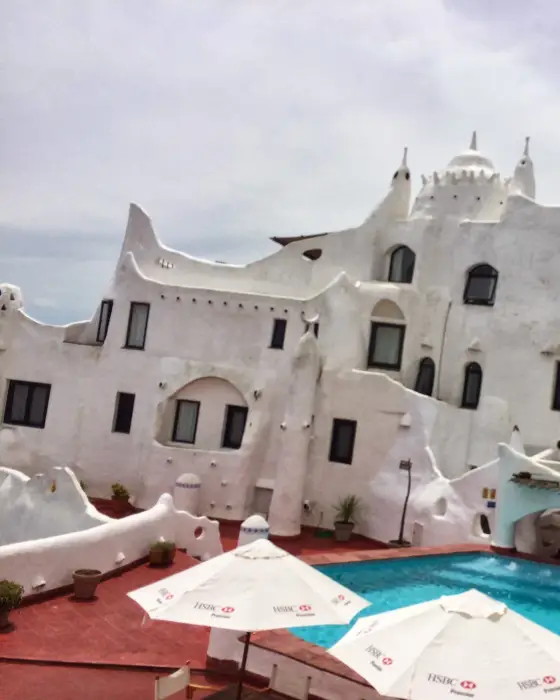
The house, studio and museum that the artist Carlos Páez Vilaró built without plans at Punta Ballena, starting in 1958, in white lime and curves, compared to Mediterranean houses and inspired, he said, by the nest of the hornero bird. The route has five rooms, three terraces and a cinema with documentaries about his life, and one room remembers his son, Carlos Páez Rodríguez, a survivor of the 1972 Andes plane crash. The museum opens every day at 10 a.m. and closes at sunset, when a recording of the artist's voice reads a poem at the Ceremonia del Sol. Admission costs UYU 600; residents and people over 65 pay UYU 500, and children under 12 do not pay (October 2026). It is 15 km from the peninsula.
Páez Vilaró’s sculptural house is a visit unlike any other on this coast, and the late afternoon on its terraces, with the Ceremonia del Sol, happens once a day. Allow time for the rooms and be on the terrace 40 minutes before sunset.
Check access

José Ignacio
The fishing village on a 2 km rocky point, about 36 km east by road, lies between the lagoons of José Ignacio and Garzón. The name comes from a ranch founded in 1763, and the lighthouse was lit in 1877 at the point, surrounded by reefs. West of the point lies Playa Brava, wide and with big surf. Since the 1960s, Argentine vacationers and celebrities have built houses there, and expensive restaurants came with them; the 2023 census counted 168 permanent residents.
The village between two lagoons, with its 1877 lighthouse and Playa Brava, shows the eastern coast without the peninsula’s tower blocks and is reason enough for a day with a car.
Check access
Fundación Pablo Atchugarry
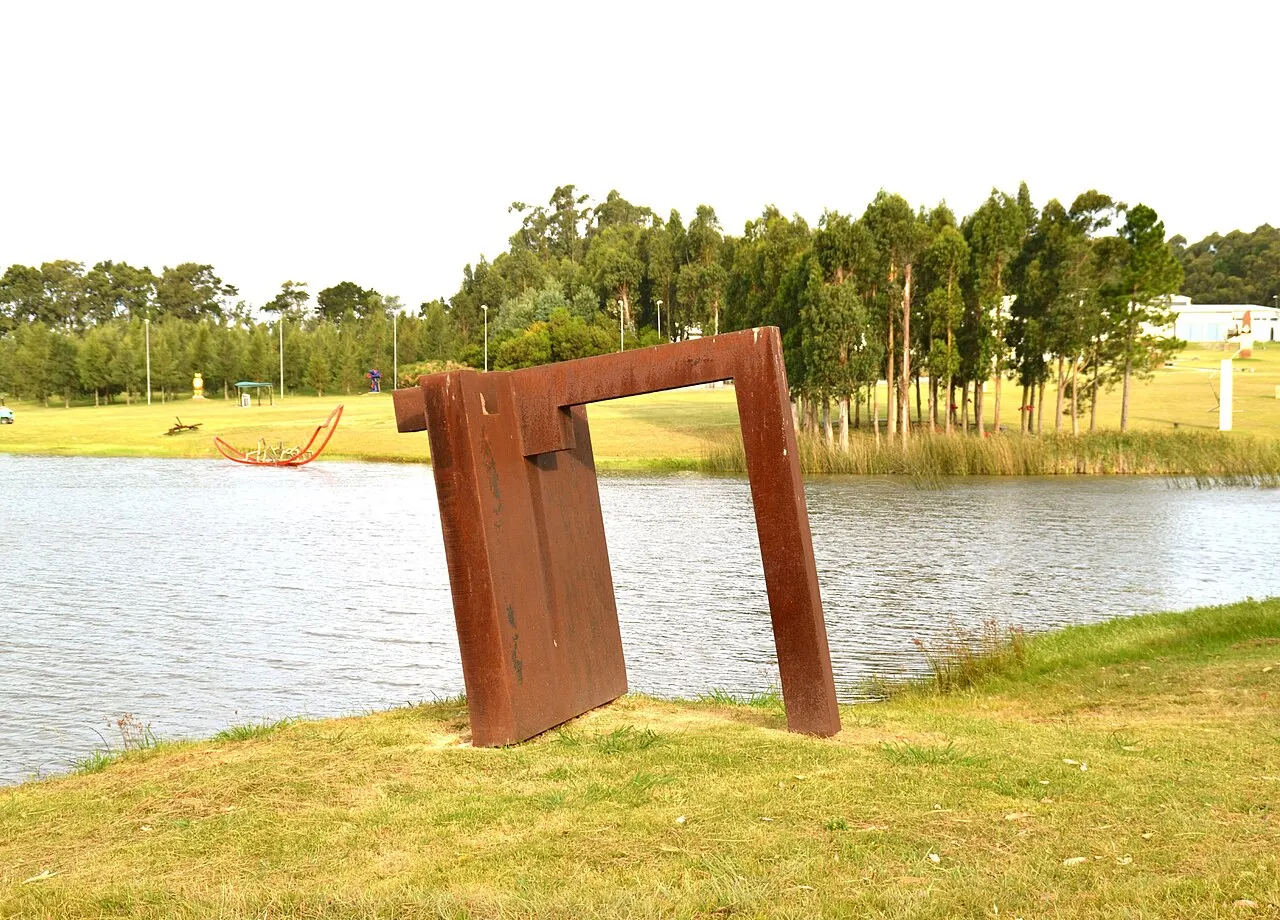
The foundation of the Uruguayan sculptor Pablo Atchugarry occupies 40 hectares on Ruta 104, km 4.5, in Manantiales, with a park of more than 70 sculptures and the MACA, the Museo de Arte Contemporáneo Atchugarry, opened in 2022 in a building by Carlos Ott. The permanent collection includes Gonzalo Fonseca, Julio Le Parc, Carlos Cruz-Diez, Wifredo Lam and Louise Nevelson, among others. Admission is free, and the museum is open Wednesday to Monday, 10 a.m. to 6 p.m. (October 2026); on Tuesdays it is closed.
A museum and 40-hectare sculpture park with free admission and a collection including Le Parc, Cruz-Diez, Lam and Nevelson. It is the coast’s best art stop and closes on Tuesdays.
Check access
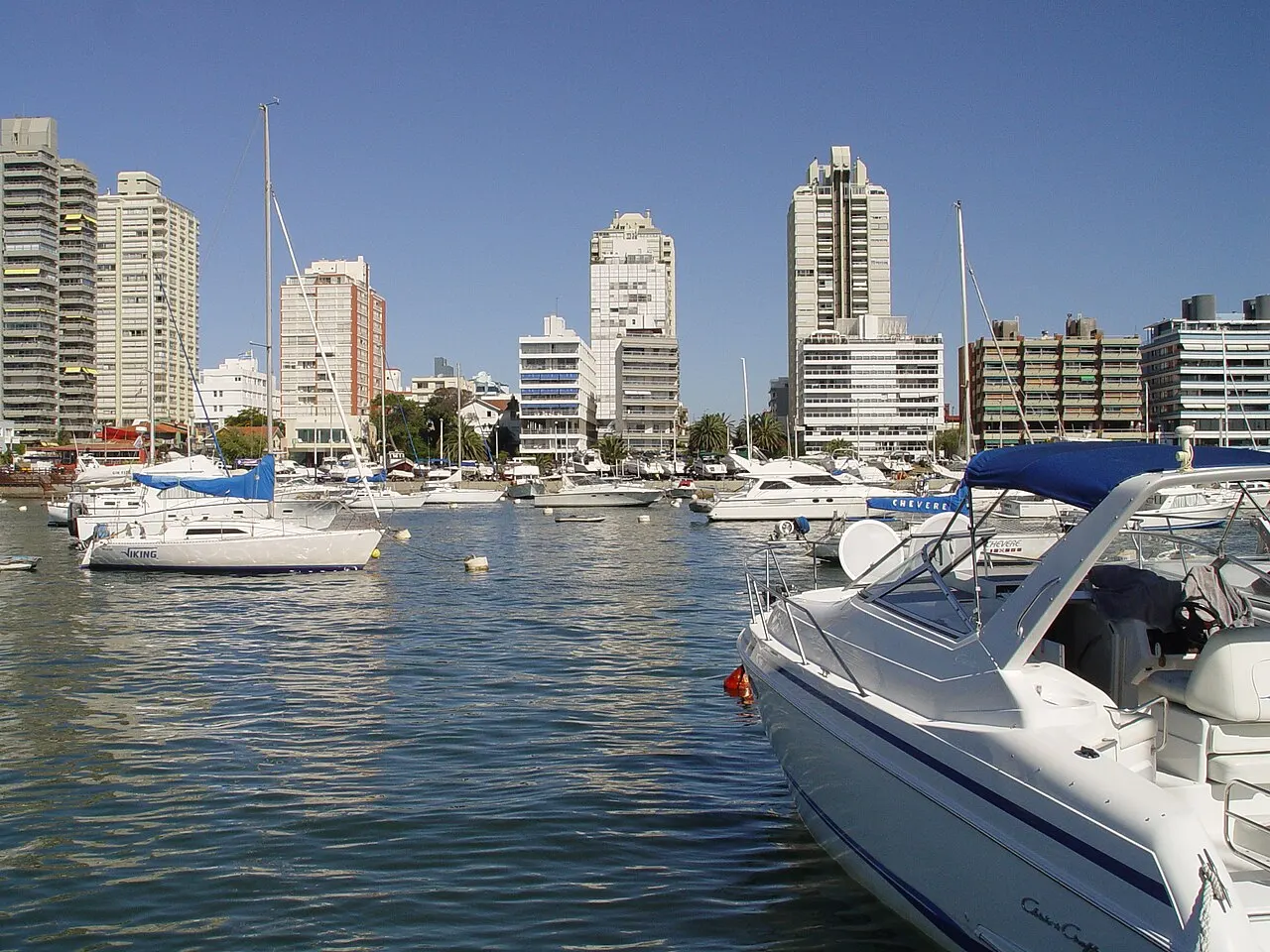
Puerto de Punta del Este
The marina on the western tip of the peninsula, officially Puerto Nuestra Señora de la Candelaria, has berths, small fishing boats and stalls that sell the day's catch in front of the customer. Sea lions climb onto the dock after scraps: watch from a distance, because they are wild animals. The launches to Isla Gorriti and the tours to Isla de Lobos leave from the port.
The fish stalls and sea lions on the dock are a natural start to a day on the peninsula, and boats for the two islands leave from here.
Check access
Isla Gorriti
An island of 21 hectares in front of the port, 15 minutes by boat, with pines, the beaches Puerto Jardín and Playa Honda and the remains of the Spanish batteries built from 1763, plus gravestones from the old cemetery. It is a nature reserve and a national historic site: there is no new construction, no one may sleep there and fires are prohibited. The beach bar opens only in summer. The island is open all year, but no official source guarantees a launch outside the season: from April to November, check at the port before counting on the crossing.
A fifteen-minute boat ride leads to pine woods with a beach, Spanish batteries and 18th-century gravestones. Bring food: fires are prohibited and the bar opens only in summer. From April to November, check boat availability at the port before counting on the crossing.
Check access
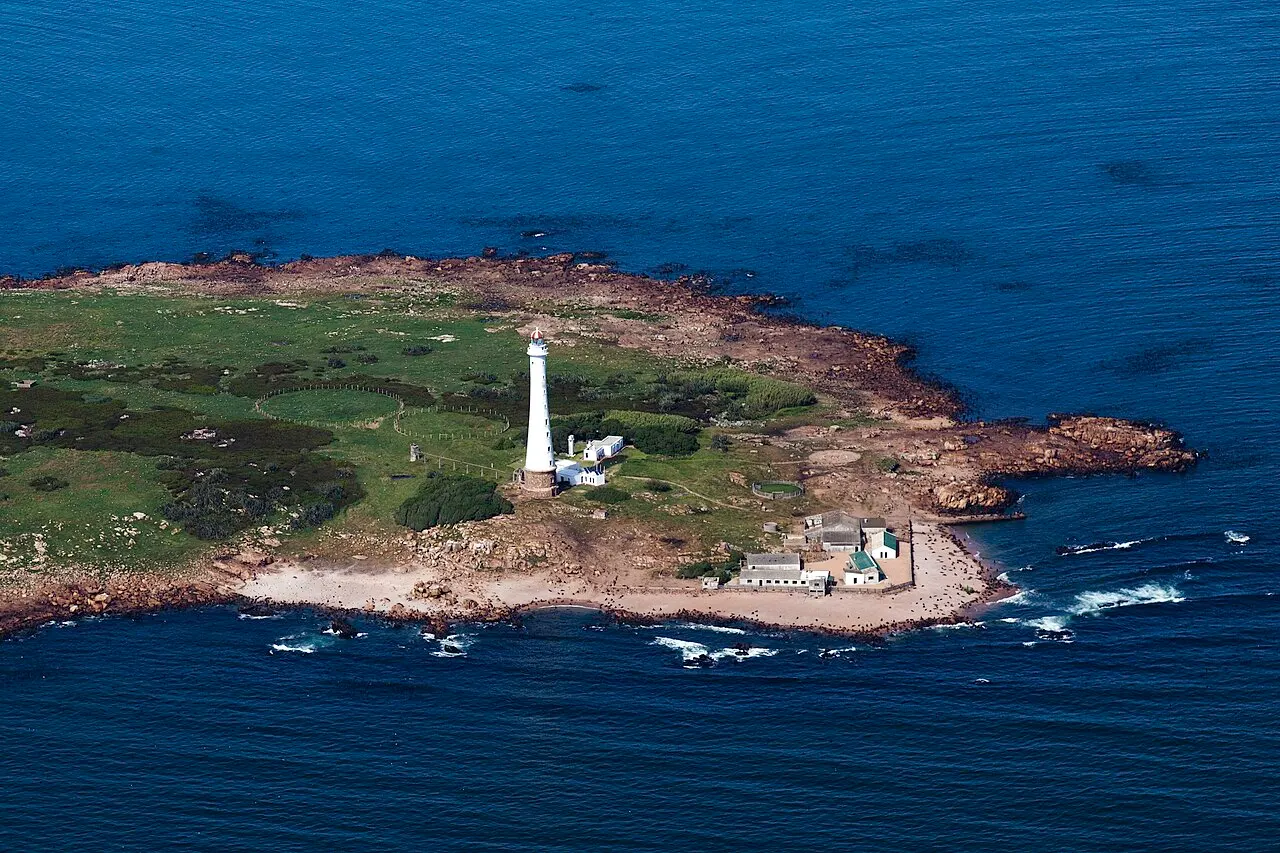
Isla de Lobos
A rock of 43.5 hectares, 8.1 km from the coast, with colonies of sea lions and South American fur seals and a lighthouse from 1858, rebuilt in 1906. Since August 2024 it has been a national park, together with the neighboring islet and the surrounding sea. The visit is made on boats chartered at the port of Punta del Este; before paying, ask the operator how long the tour lasts and whether the sea allows departure that day.
The national park created in 2024 protects colonies of sea lions and fur seals, viewed on boat trips from the port. Departure depends on sea conditions that day.
Check access

Playa Mansa
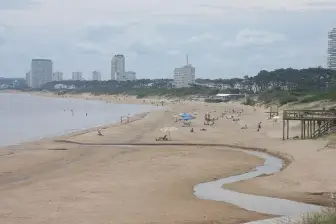
The beach on the Río de la Plata side, west of the peninsula, sheltered by Isla Gorriti, with small waves and a bottom that deepens gradually. It is the families' choice, has lifeguards in summer and, because it faces west, is where you see the sun drop over the bay.
It is the peninsula’s calm-water beach, with lifeguards in summer; facing west, it is where you watch the sun set over the bay.
Check access
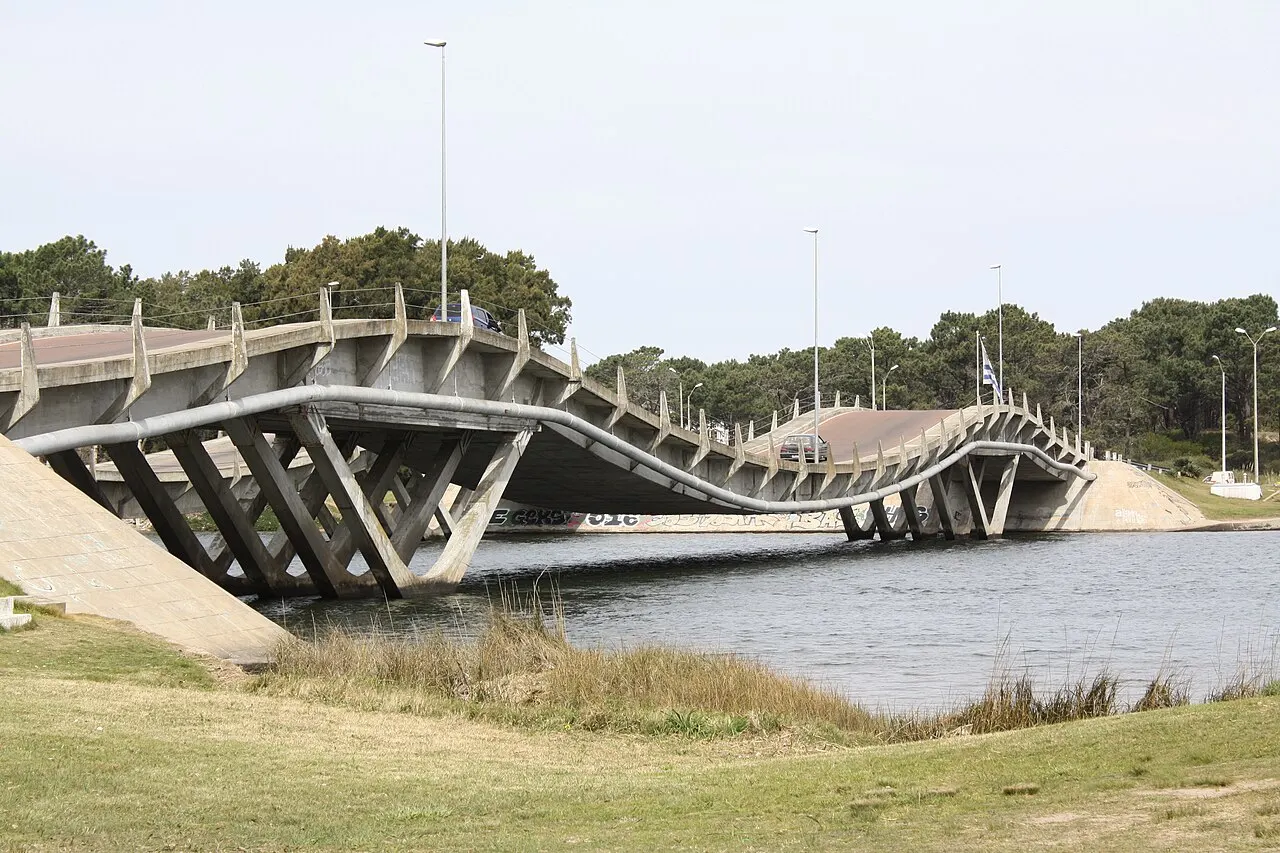
Puente Leonel Viera
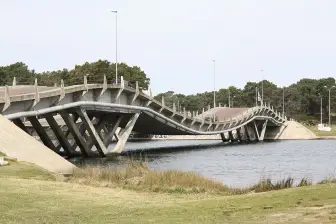
The wavy bridge over the Arroyo Maldonado, opened in 1965, was the first application of the builder Leonel Viera's tensioned-band technique: three spans of 30, 90 and 30 meters in prestressed concrete. In 1999 it gained a twin 20 meters away, to split the traffic. It is 10.8 km from Plaza Artigas, at the entrance to La Barra.
The wavy bridge of 1965, Leonel Viera’s first stress-ribbon structure, lies on the route to the eastern coast and is crossed without a detour.
Check access
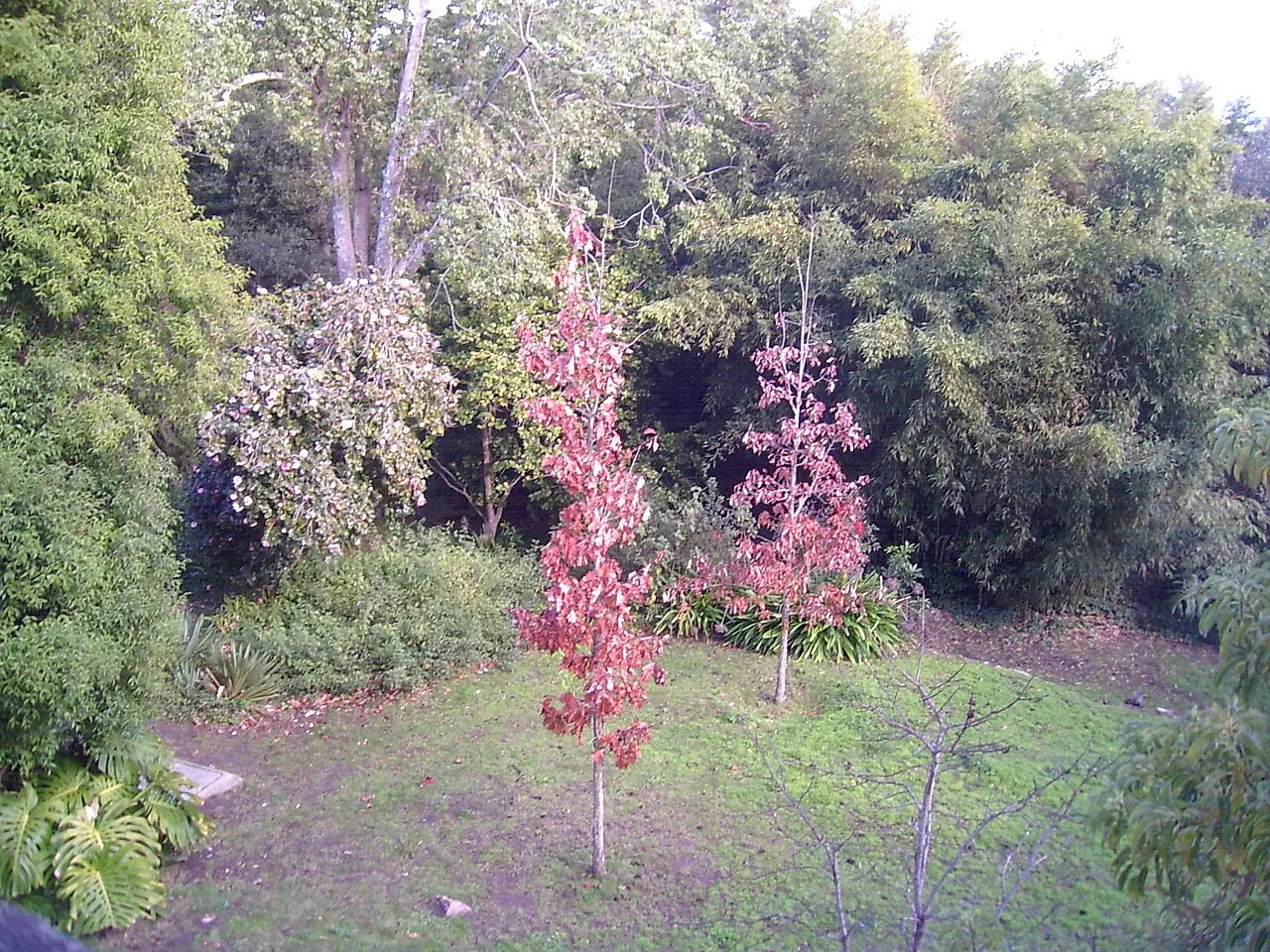
Arboretum Lussich
A forest of 192 hectares on the hill behind Punta Ballena, planted from 1897 by Antonio Lussich on dune and rock, with 400 exotic species and 80 native to Uruguay, according to a survey by the Facultad de Agronomía cited by the Intendencia; eucalyptus alone accounts for 45 species. It has belonged to the Intendencia de Maldonado since 1979. It is 16.5 km from the peninsula and 5.7 km from Casapueblo, which lets you combine the two in the same afternoon. According to the Intendencia, it is open from 9 a.m. to 7 p.m. every day from December 15 to the end of Tourism Week and from 9 a.m. to 5:30 p.m. in winter, with guided visits at 10 a.m., 2 p.m. and 5 p.m.; the same page gives different hours for the forest reserve, so check before you go.
The 192-hectare forest planted by Lussich from 1897 is 5.7 km from Casapueblo and completes the same afternoon in Punta Ballena.
Check access
Nilo’s itinerary
Start with the basic programme and choose extensions for the time you have.
Plan my days in the app ↗Day 1 · The peninsula: port, Isla Gorriti and the two beaches
Start in the morning at the port, on the western tip of the peninsula, where the fishermen sell the day's catch and the sea lions climb onto the dock.
Take a launch to Isla Gorriti, 15 minutes away, and spend the morning among the Spanish batteries and the Puerto Jardín beach. Bring water and food, because the bar opens only in summer and fires are prohibited.
Head back for a chivito lunch on the peninsula.
In the afternoon, walk along the rambla to the 1860 lighthouse and the Iglesia de la Candelaria and go up Avenida Gorlero to the artisans' fair at Plaza Artigas.
Cross over to Parada 1 on Playa Brava, where La Mano stands, and end the day at Playa Mansa, facing west, to watch the sun drop over the bay.
Day 2 · Punta Ballena: the arboretum and Casapueblo
Spend the morning at the beach: Mansa for calm water, Brava for surf, always in front of a lifeguard post.
After lunch, go by car or taxi to the Arboretum Lussich, 16.5 km and about 20 minutes away, and walk through the forest planted from 1897. In summer it closes at 7 p.m., and in winter at 5:30 p.m.; check with the Intendencia beforehand.
Drive the 5.7 km down to Casapueblo about an hour and a half before sunset, tour the five rooms (UYU 600 in October 2026) and be on the terrace at least 40 minutes beforehand, as the museum asks of anyone who wants a spot at the ceremony.
Stay for the Ceremonia del Sol and head back to the peninsula, 15 km away.
Day 3 · East: La Barra, the MACA and José Ignacio
Choose a day that is not Tuesday, when the MACA closes.
Leave in the morning by car along the rambla of Brava and cross the Puente Leonel Viera, 10.8 km from Plaza Artigas, to enter La Barra.
Continue 11 km to the Fundación Pablo Atchugarry, on Ruta 104, km 4.5, open from 10 a.m. with free admission, and set aside two hours for the museum and the sculpture park.
Continue 24 km to José Ignacio and have lunch at a beach restaurant; in summer, reserve.
In the afternoon, walk to the 1877 lighthouse and along the village's Playa Brava, and return by Ruta 10, about 40 minutes to the peninsula.






If you stay longer
Day 4 · Pueblo Garzón and Bodega Garzón
Day trip
The village of Garzón, about 69 km and 1 hour 15 minutes by car to the northeast, once had 2,000 residents when it had a mill and a train station and today has 178 (2023 census). Around the square are the chapel and the old general store, which the chef Francis Mallmann turned into a hotel and restaurant in 2004. The Bodega Garzón is 12 km from the village and serves lunch with a reservation at least 24 hours ahead, with menus of UYU 3,900 and UYU 5,000 per person (October 2026), at times between 12:30 p.m. and 3 p.m. On the way back, an 11 km detour from José Ignacio leads to the circular bridge over Laguna Garzón. Without a car, this day does not work.
Food
Chivito
Uruguay's national sandwich was born in Punta del Este in the 1940s, at the restaurant El Mejillón, run by Antonio Carbonaro, which no longer exists. It has griddled sirloin steak, ham, bacon, mozzarella, lettuce, tomato, boiled egg and mayonnaise, and comes with french fries. The “chivito al plato” is the same thing without the bun.
Fish from the port
At the port on the peninsula, the stalls of the small-scale fishermen clean and sell the day's catch in front of the customer, and the restaurants of the neighboring rambla work mostly with seafood.
Asado
Meat over the coals is the favorite dish of more than half of Uruguayans: besides the rib cut, the parrilla serves sausage, morcilla, chinchulines and mollejas.
Torta frita
Flour dough fried in fat, round and with a cut in the middle, eaten with mate on rainy afternoons, savory, with sugar or with dulce de leche.
Dulce de leche
Dulce de leche is the country's most representative dairy product, and it goes from the pastry shop to the bread at breakfast. Uruguay celebrates International Dulce de Leche Day on October 11.
Tannat
The red grape with which Uruguay presents its wine abroad, the theme of the “Tannat al Mundo” campaign that the Intendencia de Maldonado supports. Inland from José Ignacio, the Bodega Garzón plants vineyards on ballast, a soil of decomposed granite, and opens the winery for visits and lunch.
Where to eat
- Península · $
Chivito al pan with french fries, the sandwich born on the peninsula in the 1940s.
- Port · $$
Fish of the day and seafood at the restaurants on the port's rambla, next to the fishermen's stalls.
- Parador La Huella · José Ignacio · $$$
Cooking of “sea, land and fire,” as the restaurant describes itself, on the Playa Brava of José Ignacio. Reservations are made on the website.
Source · 2026-10-15
- Restaurante Bodega Garzón · Garzón · $$$
A lunch of fire cooking advised by Francis Mallmann, with menus of UYU 3,900 and UYU 5,000 per person, among the vineyards. Reserve 24 hours ahead.
Source · 2026-10-15
- Garzón Hotel & Restaurante · Pueblo Garzón · $$$
Clay oven, parrilla and fish from the coast in the old general store on the village square, opened by Francis Mallmann in 2004.
Source · 2026-10-15
$: simple meal, about UYU 525 (Numbeo average, October 2026) · $$: three-course dinner without drinks, about UYU 875 per person (Numbeo: UYU 1,750 for two, October 2026) · $$$: menus of UYU 3,900 to 5,000 per person, like those at Bodega Garzón (October 2026) · 2026-10-15
Day trips
Pueblo Garzón and Bodega Garzón
The village of Garzón, about 69 km and 1 hour 15 minutes by car to the northeast, once had 2,000 residents when it had a mill and a train station and today has 178 (2023 census). Around the square are the chapel and the old general store, which the chef Francis Mallmann turned into a hotel and restaurant in 2004. The Bodega Garzón is 12 km from the village and serves lunch with a reservation at least 24 hours ahead, with menus of UYU 3,900 and UYU 5,000 per person (October 2026), at times between 12:30 p.m. and 3 p.m. On the way back, an 11 km detour from José Ignacio leads to the circular bridge over Laguna Garzón. Without a car, this day does not work.
Piriápolis
40 km and about 50 minutes to the west, Piriápolis was the first resort in Uruguay, conceived by the businessman Francisco Piria from 1890 at the foot of Cerro Pan de Azúcar. The Rambla de los Argentinos, named for the Argentine guests of Piria's hotels, and the chapel of San Antonio, at the top of the hill, with a panoramic view, make a half-day outing. The COT buses that run from Punta del Este to Montevideo along the coast stop there.
Montevideo
The capital is 130 km away, about 2 hours 15 minutes by car or 2 hours 20 minutes to 2 hours 30 minutes on the COT buses that leave from the Punta del Este terminal. It is a long trip to go and return in the same day; for the rambla and the Ciudad Vieja, it is worth sleeping there and reading the Montevideo guide.
Where to begin
The peninsula: port, Isla Gorriti and the two beaches
Start in the morning at the port, on the western tip of the peninsula, where the fishermen sell the day's catch and the sea lions climb onto the dock.
Punta Ballena: the arboretum and Casapueblo
Spend the morning at the beach: Mansa for calm water, Brava for surf, always in front of a lifeguard post.
East: La Barra, the MACA and José Ignacio
Choose a day that is not Tuesday, when the MACA closes.
Money
The currency is the Uruguayan peso (UYU), written with $ or $U, at about 40 pesos per US dollar on September 24, 2026. Some businesses accept dollars, euros, Argentine pesos and reais, but the peso is the reference currency. For those who do not live in Uruguay, there are two tax advantages that call for attention to the means of payment. The first is hotels without VAT all year, with a document issued abroad. The second is valid until April 30, 2027: 9 points of VAT taken off at restaurants, bars and cafés, on car rental without a driver and on visits to registered wineries, as long as you pay with a debit or credit card issued abroad or electronic money. Paying in cash eliminates the discount. For a price reference, the Numbeo average in October 2026 gave UYU 525 for a meal at an inexpensive restaurant and UYU 1,750 for a three-course dinner for two at a mid-range restaurant, without drinks; the sample is small and mixes high and low season. Admission to Casapueblo costs UYU 600, the MACA and the Museo Ralli are free, and the menu at the Bodega Garzón restaurant costs from UYU 3,900 to 5,000 per person (October 2026).
Getting there and around
From Laguna del Sauce airport (PDP), 21 km away
Capitán de Corbeta Carlos A. Curbelo International Airport, known as Laguna del Sauce, is on Ruta 93, 21 km from Plaza Artigas, about 30 minutes by car. It receives regional flights, some of them only in season, and the airport's website lists car rental companies. The COT lines between Montevideo and Punta del Este do not include the airport in the timetable, and you get in by car, taxi or transfer.
From Montevideo and Carrasco airport (MVD)
Those who fly to Montevideo arrive at Carrasco airport. The COT buses leave from the Tres Cruces terminal, stop at Carrasco airport and reach the Punta del Este terminal in about 2 hours 20 minutes to 2 hours 30 minutes; some continue to José Ignacio. The Montevideo to Punta del Este fare was UYU 466 on the COT timetable consulted in October 2026. COPSA runs the same route. By car, it is 130 km along the Ruta Interbalnearia, about 2 hours 15 minutes without traffic.
From Buenos Aires
There is no direct boat to Punta del Este. Buquebus and Colonia Express cross the Río de la Plata to Colonia del Sacramento or Montevideo and sell the combination with a bus to Punta del Este, with schedules that change by season.
Local buses, taxi and car
CODESA operates the urban lines between Maldonado, the peninsula, La Barra, Manantiales and José Ignacio, and publishes schedules and maps on its website. The peninsula can be covered on foot, but Casapueblo, the Arboretum Lussich, the MACA and Garzón are far from the main lines, and a rental car handles those stretches better. In Uruguay you drive on the right, with low beams on and seat belts mandatory, the maximum speed on national roads is 110 km/h and the alcohol tolerance for drivers is zero.
Safety
According to the British government, outside Montevideo crime rates in Uruguay are generally lower, but the usual precautions apply, and a car left on the street with objects in view is a frequent target for break-ins; prefer paid parking or a busy, well-lit street. The risks that weigh most are others. At sea, Playa Brava has surf and currents, and part of it has no lifeguard post. Swim in front of a post, between December and March, and follow the flags: red is danger for swimming, and black is electrical storm, when you should not stay on the beach or near the coast. On the roads, serious accidents are common according to the same source, and driving calls for extra attention. From December to March, forest fires can start in the dry areas, which explains the ban on fire on Isla Gorriti. The emergency number is 911.
Etiquette tips
In the mate circle, the gourd goes back to whoever serves
Mate is drunk in a circle, with a single gourd. The person who serves, the cebador, prepares one mate at a time for each person in the circle, and the gourd goes back to them before moving on to the next.
No fires on Isla Gorriti
Bonfires and barbecues used to be allowed and were banned because of the fire risk in the pine grove. Bring ready-made food and use the picnic tables.
Respect the beach flags
Beaches with lifeguards use flags: green, good conditions for swimming; yellow, caution; red, danger from currents, rocks or uneven bottom; red with a green cross, unfit water; black, electrical storm, when you should not stay on the beach or near the coast.
Dogs on the beach only where allowed
On the peninsula, the Intendencia allows dogs at paradas 39 and 40 on Mansa and 25, 26 and 27 on Brava, always on a leash; on the other beaches, the Prefectura Naval receives complaints.
Mistakes to avoid
Going in July expecting a beach holiday
Going between April and November expecting the January city. July highs stay around 14 °C, the wind is constant, lifeguards work only from December to March and part of the seasonal services close.
Thinking everything is within walking distance of the peninsula
Counting on the peninsula as the center of everything. Casapueblo is 15 km away, the MACA 21 km and José Ignacio about 36 km, and the bus lines do not stop at everyone's door. For Punta Ballena and the east coast, rent a car or book a taxi.
Arriving at Casapueblo at sunset
Arriving at Casapueblo with the sun already low. The museum asks you to be on the terrace at least 40 minutes before sunset to get a spot at the Ceremonia del Sol, and the rooms need time before that.
Paying in cash and losing the VAT discount
Paying for restaurants and car rental in cash. Until April 30, 2027, anyone who doesn't live in Uruguay and pays with a card issued abroad gets 9 points of VAT taken off.
Scheduling the MACA on a Tuesday
The museum and the programming of the Fundación Pablo Atchugarry close on Tuesdays. Leave the east coast for another day of the week.
Swimming at Brava far from a lifeguard post
Going into the sea at Playa Brava on a stretch without a lifeguard post, or outside the lifeguard season, December to March. It is the beach with open surf, and the red flag warns of currents, rocks or uneven bottom.
Useful phrases
Hola, ¿cómo andás?
Hi, how are you? With “vos,” as people speak in Uruguay
¿Dónde para el ómnibus a José Ignacio?
Where does the bus to José Ignacio stop? In Uruguay, the word for bus is “ómnibus”
Un chivito al pan, por favor
A chivito in a bun, please
¿Puedo pagar con tarjeta extranjera?
Can I pay with a foreign card? It is what secures the VAT discount
La cuenta, por favor
The check, please
Ta
Okay, agreed. The most common short reply in Uruguay
Where to stay
- Península · First trip, especially without a car · $$: The port, Gorlero, the two beaches and the bus terminal are within walking distance, and the launches to Isla Gorriti leave from there. In January, it is also the most crowded and noisy stretch.
- Playa Mansa · Families with children · $$: The buildings and hotels of the Rambla Williman face the calm water and the Playa Deportiva at Parada 9, and the peninsula is a walk along the shore.
- La Barra · Anyone who wants surf beaches and summer nightlife · $$$: It lies across the wavy bridge, near the beaches of Montoya and Bikini and the galleries and nightclubs of Ruta 10. Outside the season, much of the commerce closes.
- José Ignacio · Anyone looking for quiet who has a car · $$$: The village between two lagoons is quiet and expensive, full of summer residences and exclusive restaurants, and about 40 minutes by car from the peninsula.
- Maldonado · Anyone traveling on a small budget or out of season · $: The capital of the department is a year-round city, 5 km from the peninsula, connected to it by the CODESA lines, and does not depend on the season.
$: hostel or simple hotel, preferably in Maldonado; no price range checked in this edition · $$: mid-range hotel on the peninsula or at Mansa; the January and February rate is the highest of the year, check the dates · $$$: beach hotel in La Barra or José Ignacio; check the dates · 2026-10-15
Districts
Península
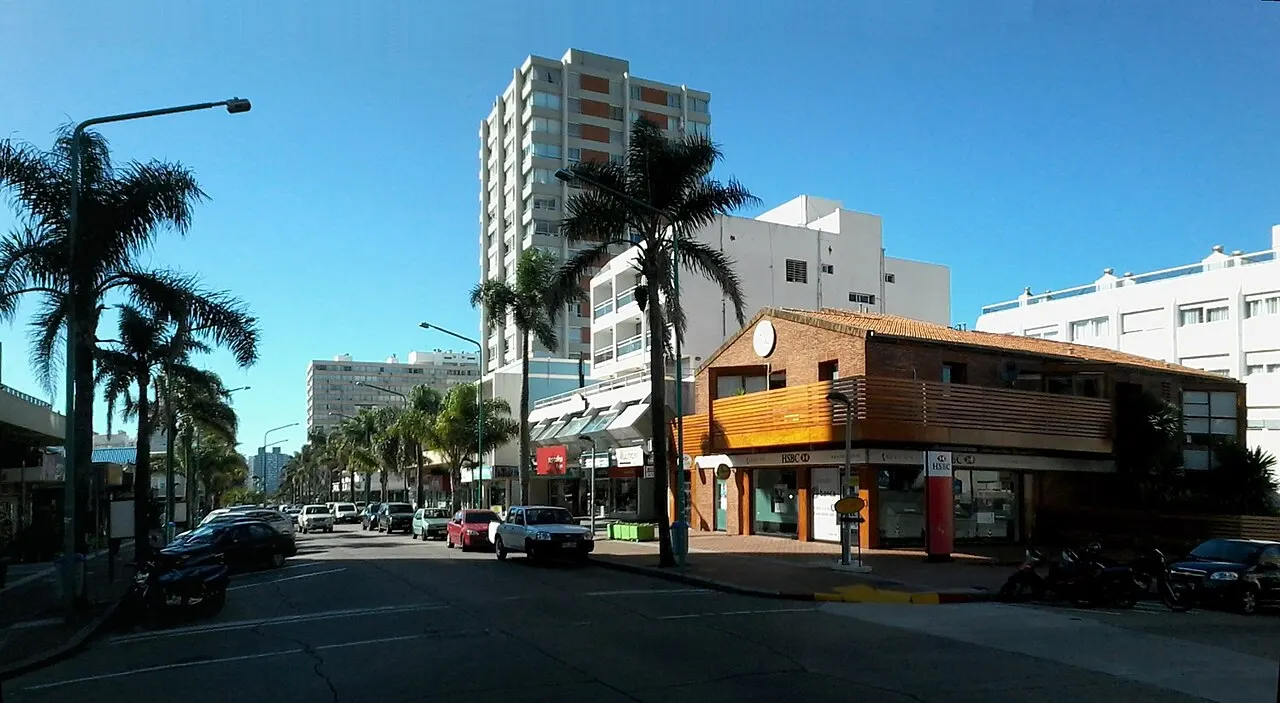
The center of the resort: Avenida Gorlero with banks, currency exchange offices, a casino and the artisans' fair at Plaza Artigas, the port with the fish stalls and the launches to the islands, the lighthouse and the Iglesia de la Candelaria at the tip. Everything is done on foot, between Mansa and Brava, and it is the most practical place for anyone arriving without a car.
Playa Mansa
The west front, along the Rambla Claudio Williman, with apartment towers, beach hotels and calm water. At Parada 9 the Playa Deportiva has volleyball, soccer and swimming crossings, every day from 8 a.m. to 9 p.m. in summer. It is the beach for anyone with children.

Playa Brava, San Rafael and Beverly Hills
The east front, facing the Atlantic, starts at La Mano, at Parada 1, and runs to the Arroyo Maldonado. Behind it lie the residential neighborhoods of houses with gardens, such as San Rafael and Beverly Hills, home to the Museo Ralli. It has strong surf, winter windsurfing and stretches without a lifeguard post.
Maldonado
The capital of the department, 5 km from the center of the peninsula, with 99,926 residents in the 2023 census. It is the year-round city of the conurbation, founded in the 18th century, with its own bus terminal and CODESA lines to the peninsula.
Punta Ballena
The rocky promontory 15 km to the west, with the Ruta Panorámica Carlos Páez Vilaró over the range, Casapueblo on the cliffs and the Arboretum Lussich on the hill behind. It is the place for sunset over the bay of Maldonado, and it needs a car or a taxi.
La Barra
The former fishing village on the east bank of the Arroyo Maldonado, across the wavy bridge, with 1,229 residents in the 2023 census. In summer, Ruta 10 fills with art galleries, antique shops, restaurants and nightclubs, and the beaches of Montoya and Bikini come just after.
Manantiales
A resort on a rocky point 13 km east of the peninsula, with Playa Bikini to the west and El Chorro to the east. Inland along Ruta 104 are the country summer houses and the MACA.
José Ignacio
A small peninsula 2 km long, about 36 km east by road, between the lagoons of José Ignacio and Garzón, with a lighthouse from 1877 on the stone point. The 2023 census counted 168 permanent residents; in summer it receives the vacation homes of celebrities and exclusive restaurants, and the Intendencia sums the place up with the local motto “Aquí sólo corre el viento.”
History
1516 · Solís and the port of Candelaria
On February 2, 1516, the feast of the Virgin of Candelaria, Juan Díaz de Solís's expedition to the Río de la Plata named the port Nuestra Señora de la Candelaria, a name it keeps in the official register. The expedition also noted Isla Gorriti and Isla de Lobos.
1763 · Batteries on Isla Gorriti
With Spaniards and Portuguese disputing the border of the Río de la Plata, the Spanish crown began fortifying Isla Gorriti, whose batteries crossed fire with those on the coast. The gun emplacements are still on the island.
1806 · The island surrenders to the British
During the British invasions of the Río de la Plata, the British fleet bombarded Isla Gorriti, which surrendered after two days.
1827 · The attack on the Brazilian fort
In the Cisplatine War, General Juan Antonio Lavalleja led a three-day operation to drive out the small Brazilian garrison occupying a fort on the peninsula, near today's intersection of Avenida Gorlero and Calle 27. The attack failed.
1843 · The peninsula sold to the Lafones
On June 13, 1843, the brothers Samuel and Alejandro Lafone bought the peninsula for 4,500 pesos, and Isla Gorriti for another 1,500. They used the point to work salt pans.
1860 · The lighthouse
The lighthouse at the tip of the peninsula opened in 1860, built with materials brought from Europe to guide ships passing between the river and the ocean. It still stands, near the Iglesia de la Candelaria, built in 1941.
1896 · Lussich buys Punta Ballena
On October 5, 1896, Antonio Lussich, owner of a marine salvage company, bought 1,800 hectares of rock and dune at Punta Ballena; the following year he began planting trees from several continents against the wind and the sand. The park that remains is the Arboretum Lussich.
1907 · Village status and the first summer visitors
In 1907 the first organized summer visitors arrived, Argentine and Montevidean families brought by the steamer Golondrina, and law 3,186 of July 5 gave the cluster of houses on the peninsula the status of village, under the name Punta del Este.
1951 · The film festival
On the initiative of the Argentine businessman Mauricio Litman, the first Festival Internacional de Cine de Punta del Este took over the cinema of the Cantegril Country Club, with foreign delegations and films by Bresson, Ophüls and Mankiewicz. The festival was interrupted after two editions and later returned, organized by the Intendencia de Maldonado.
1958 · Casapueblo begins
The artist Carlos Páez Vilaró bought an oceanfront plot at Punta Ballena and built a small wooden hut from boards found on the beach. Around it grew Casapueblo, built without plans over decades, where he lived and worked until his death in 2014.
1965 · The wavy bridge at La Barra
Leonel Viera's bridge over the Arroyo Maldonado connected Punta del Este to La Barra in 1965, with a prestressed concrete deck in waves. The link turned the fishing village and the beaches to the east into a resort.
1967 and 1986 · International summits
In 1967, Punta del Este hosted the summit of the presidents of the Americas, with Lyndon Johnson attending. In September 1986, the Uruguay Round of the GATT opened here, the trade negotiation that led to the creation of the World Trade Organization.
1982 · La Mano on Playa Brava
In February 1982, the Chilean sculptor Mario Irarrázabal made, during an international open-air sculpture meeting, the five-fingered hand that rises from the sand at Parada 1 on Brava. Of the works from that summer, it is the only one still on the beach.
2015 · The circular bridge over Laguna Garzón
In December 2015, the circular bridge designed by the Uruguayan architect Rafael Viñoly replaced the two-car ferry that crossed Laguna Garzón, on the border with the department of Rocha, and opened up the coast east of José Ignacio.
2022 · The MACA
On January 8, 2022, the Fundación Pablo Atchugarry opened the Museo de Arte Contemporáneo Atchugarry in Manantiales, designed by the architect Carlos Ott, on a 40-hectare site with a sculpture park.
2024 · Isla de Lobos becomes a national park
In August 2024, the government included Isla de Lobos, the neighboring islet and the surrounding sea, about 40 km², in the National System of Protected Areas as a national park, to protect the colonies of sea lions and fur seals.
Complete history
A port of passage and a disputed border
For three centuries, the peninsula was more a navigation point than a place to live. Solís passed by in 1516 and named the port; Spaniards and Portuguese disputed the northern bank of the Río de la Plata, and the Spanish crown fortified Isla Gorriti from 1763 to protect the bay of Maldonado. The island also served as a cemetery for crew members who died aboard and as a quarantine for those arriving from the Atlantic. In 1806 the British bombarded it; in 1827, in the war between the United Provinces and Brazil, Lavalleja tried without success to take the Brazilian fort on the peninsula. In 1843 the whole point was sold to private owners, the Lafone brothers, who worked salt pans, and in 1860 it got the lighthouse that still marks the point.
From dune to resort
At the end of the 19th century, the region was sand and dune, with a cluster of houses for seafarers and for customs and lighthouse employees. In 1889 the first hotel on the peninsula opened, in 1896 Antonio Lussich bought land at Punta Ballena, and from 1897 he planted trees to hold the sand; pines and eucalyptus spread along the coast. In 1907, the first organized summer visitors, Argentines and Montevideans, landed from the steamer Golondrina, and law 3,186 made the peninsula a village, with the definitive street plan already drawn by the surveyor Francisco Surroca. Avenida Gorlero was named after the first intendente of Maldonado in 1918, and the train arrived in 1930.
The resort of the region
By the mid-20th century, Punta del Este was already receiving the elite of the Río de la Plata. The 1951 film festival brought foreign delegations; in 1957 the village became a city; Carlos Páez Vilaró began Casapueblo at Punta Ballena in 1958, and the La Barra bridge, from 1965, opened the coast to the east. The city hosted diplomatic meetings, such as the 1967 summit of the Americas and the opening of the Uruguay Round of the GATT in 1986. In the 1980s, apartment towers took over the fronts of Mansa and Brava, and real estate came to sustain the economy alongside tourism. The last train left the Punta del Este station on November 28, 1982; where the tracks ran, Bulevar Artigas passes today.
The city today
Today the peninsula forms a conurbation with the city of Maldonado: in the 2023 census, the locality of Punta del Este had 18,193 residents and Maldonado had 99,926. The season is short and intense: in the first quarter of 2026, Punta del Este was the main destination for Uruguay's nonresident visitors, with 333,276 people and an average stay of 12.1 days; in the whole country, 835,237 of that quarter's 1,181,795 visitors lived in Argentina. Growth continues eastward, through the country plots of La Barra, Manantiales and José Ignacio, and crossed Laguna Garzón with the 2015 bridge. Art followed that movement, with the MACA, opened in 2022 on Ruta 104, and the sea gained protection: since 2024, Isla de Lobos has been a national park.
Geography and shape of the city
The peninsula and the two waters
Punta del Este sits on a low, narrow peninsula that juts south, 5 km from the city of Maldonado. By the convention of the Treaty of the Río de la Plata, from 1973, the point marks the boundary between the river and the ocean. The west side, Playa Mansa, is sheltered by Isla Gorriti and by the peninsula itself and has small waves; the east side, Playa Brava, takes the Atlantic swell. Stretches of beach are identified by the number of the “parada,” the bus stop on the rambla, or by the name of the beach bar in front. In the center of the peninsula, the streets are numbered too, and Avenida Gorlero is the only one known by name.
The islands and the coast
In front of the port, about 2 km away, lies Isla Gorriti, with 21 hectares of pines and two beaches. 8.1 km from the coast, Isla de Lobos is a rocky outcrop of 43.5 hectares and the southernmost emerged point of Uruguay, with colonies of sea lions and fur seals. To the west, Punta Ballena is the end of the Sierra de la Ballena, a fault zone about 530 million years old, and has the rock cliffs over the sea where Casapueblo stands. To the east, the coast is a sequence of open beaches and coastal lagoons, those of Diario, José Ignacio and Garzón, cut by the Arroyo Maldonado at La Barra.
Climate
The climate is temperate oceanic, and it is windy on the peninsula almost every day. In the 1961 to 1990 normals for the Punta del Este station, January has highs of 25 °C and lows of 18 °C, and July has highs of 14 °C and lows of 9 °C. Rain, about 1,010 mm a year, is spread over all twelve months, with no dry season. The wind off the sea holds back the heat in summer and sharpens the cold in winter.
Playa Mansa lies, by the 1973 convention, on the Río de la Plata, and Playa Brava, a few blocks away, on the Atlantic Ocean.
Culture
Páez Vilaró and Casapueblo
The cultural figure of the coast is Carlos Páez Vilaró (1923–2014), painter, ceramist, muralist and composer of candombe, who left murals in several countries, among them one of 162 m at the headquarters of the Organization of American States in Washington. Casapueblo, the house he built at Punta Ballena without plans and without straight lines, is at once museum, studio and hotel. In 1972, his son was on the Uruguayan Air Force plane that crashed in the Andes; the father led searches during the 70 days of the disappearance and told the story in the book “Entre mi hijo y yo, la Luna.”
Open-air art
Contemporary art settled east of the bridge. The MACA, opened in 2022 in Manantiales, has seven rooms, a cinema, a theater and a sculpture park, and all its programming is free. Along Ruta 10, in La Barra, the galleries and antique shops open with the season. La Mano, on Brava, came out of an open-air sculpture meeting in 1982 and became the symbol of the city.
Film and music
The Festival Internacional de Cine de Punta del Este, created in 1951, is, according to the organizers, the main film festival in Uruguay and has free admission to venues in Punta del Este. On the night of August 24, the eve of Independence Day, all of Uruguay dances to old music at the Noche de la Nostalgia, a party born in 1978 at a Montevideo discotheque.
Mate and the thermos
Uruguay consumes about 8.6 kg of yerba mate per person a year, more than Argentina and Paraguay according to the UNDP, and in the country the water for mate comes from the thermos more than from the kettle. In a circle, the person who prepares it, the cebador, serves one at a time and gets the gourd back.
The chivito originated in the 1940s at El Mejillón restaurant, at the junction of calles 31 and 32.
Festivals and events
Festival Internacional de Cine de Punta del Este, February
The 29th edition is scheduled for February 20 to 26, 2027, with Ibero-American fiction and documentary competitions, international showcases and free admission at venues in Punta del Este, such as the Sala Cantegril.
Carnival, February or March
The two days of Carnival are a national holiday in Uruguay, and the long weekend fills the coast; in 2027 they fall on February 8 and 9.
Tourism Week, March or April
It is the official name Uruguay has given, since 1919, to Easter week, when the State separated the holidays from the Church. It is the five working days of Holy Week: in 2027, March 22 to 26, with the 25th and 26th on the list of national holidays.
Noche de la Nostalgia, August 24
On the eve of the Independence Day holiday, nightclubs across the country play only old music, in a tradition that began in Montevideo in 1978.
Books and films
Entre mi hijo y yo, la Luna (1982), Carlos Páez Vilaró
The creator of Casapueblo tells of the 70 days in which he searched for his son after the Uruguayan plane crashed in the Andes in 1972. It explains the tribute room that the museum at Punta Ballena keeps and the man who built the house.
Society of the Snow (2023), J. A. Bayona
The film about Uruguayan Air Force flight 571, based on the book by Pablo Vierci. Carlos Páez Rodríguez, the surviving son, appears in the role of his own father, Carlos Páez Vilaró.
La construcción del boom (2026), Leonardo Altman Macchio
A study published by the Universidad de la República on tourism, territory and scale in Maldonado and Punta del Este between 1974 and 1982, the years when the towers took over the fronts of the beaches.
Frequently asked questions
Punta del Este: how do you get there from Montevideo or Carrasco airport?
The COT buses leave from the Tres Cruces terminal, stop at Carrasco airport and reach Punta del Este in about 2 hours 20 minutes to 2 hours 30 minutes, for UYU 466 on the October 2026 timetable. By car, it is 130 km along the Ruta Interbalnearia, about 2 hours 15 minutes without traffic.
Punta del Este: how many days should I stay?
Stay three days: one on the peninsula, one at Punta Ballena with sunset at Casapueblo and one on the east coast, with La Barra, the MACA and José Ignacio. With a fourth day and a car, I'd go to Pueblo Garzón and have lunch at the Bodega Garzón.
Punta del Este: how do you do the day in Pueblo Garzón?
The village is about 69 km and 1 hour 15 minutes by car, and without a car this day does not work. The Bodega Garzón, 12 km from it, serves lunch with a reservation at least 24 hours ahead, with menus of UYU 3,900 and UYU 5,000 per person (October 2026).
Punta del Este: when is the best time to go?
From December to March, the beaches have lifeguards and the shops on Ruta 10 are running; December and March have the same beach service with fewer people. From April to November the peninsula is left almost to the residents, and July has highs of 14 °C.
Punta del Este: how do tourists pay less tax?
Anyone who doesn't live in Uruguay gets hotels without VAT all year with a foreign document and, until April 30, 2027, 9 points of VAT taken off at restaurants, bars, car rental without a driver and visits to registered wineries. The discount requires a card issued abroad or electronic money.
Other cities in the country
Uruguay ↗- Days
- 2–3
- When
- Mar–Apr · Oct–Dec
- Per person/day
- Average 90–140 USDMid-range · per person/day
Cost scope
Per person per day: accommodation, meals, urban transport, visits and a small allowance for extras. Flights excluded; larger purchases vary. Editorial estimate, not a quote.
- Days
- 1–3
- When
- Mar–Apr · Oct–Nov
- Per person/day
- Average 3,150 UYUMid-range · per person/day
Cost scope
Per person per day: accommodation, meals, urban transport, visits and a small allowance for extras. Flights excluded; larger purchases vary. Editorial estimate, not a quote.