Brazil
Foz do Iguaçu
Iguaçu Falls, Itaipu and three countries at the border
Days Start with the basic programme and choose extensions for the time you have.
How the guide reaches this number
Add a third if you want Itaipu and the crossing to Ciudad del Este. Build each day around the water, because the falls and Itaipu lie in opposite directions from downtown. Anyone expecting a pretty downtown to stroll will be disappointed, since it's functional, with wide streets, and shuts at 6pm. With just one day, enter the Brazilian park in the first time slot and walk the 1.2 km trail to the Devil's Throat walkway. Have lunch at Porto Canoas and spend the afternoon at the Parque das Aves, across the road. Finish at the Marco das Três Fronteiras, 20 minutes from downtown, to see the three countries at sunset.
2–3
When April to June, with 25 to 28°C and the falls still full; avoid July, vacation month, and the January–February summer, hot, humid, and crowded
How the guide reaches this number
The climate is humid subtropical with no dry season: there's no month without rain. Between 1,700 and 1,800 mm fall each year, spread over every month. Summer (December to March) brings highs of 32 to 38 °C, high humidity, late-afternoon downpours and the peak of visitors, with hotels and lines full between Christmas and Carnival. Fall (April to June) is the best window: 25 to 28 °C by day, less frequent rain and still-high flow over the falls. Winter (June to August) is mild, with days of 22 to 26 °C and early mornings of 6 to 10 °C, and now and then a cold front knocks the high down to 12 °C. Pack a jacket even in July, which is school-vacation month and high season. Spring (September to November) is unsettled, with October among the rainiest months. February brings heavy heat, mosquitoes and the chance that heavy rain will temporarily close the Devil's Throat walkways. In a long drought the falls lose volume, and in an extreme flood the park closes trails; either way, the notice goes up on the park website the same day, so check before leaving your hotel.
Per person/day R$350–550 per person (about US$65–100) with a mid-range hotel, simple meals, and one park a day (2026)
How the guide reaches this number
Per person per day: accommodation, meals, urban transport, visits and a small allowance for extras. Flights excluded; larger purchases vary. Editorial estimate, not a quote.
 What Nilo thinks
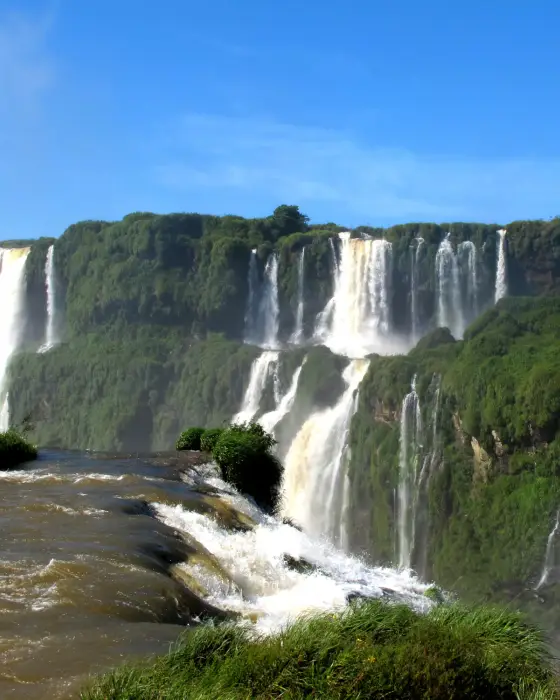
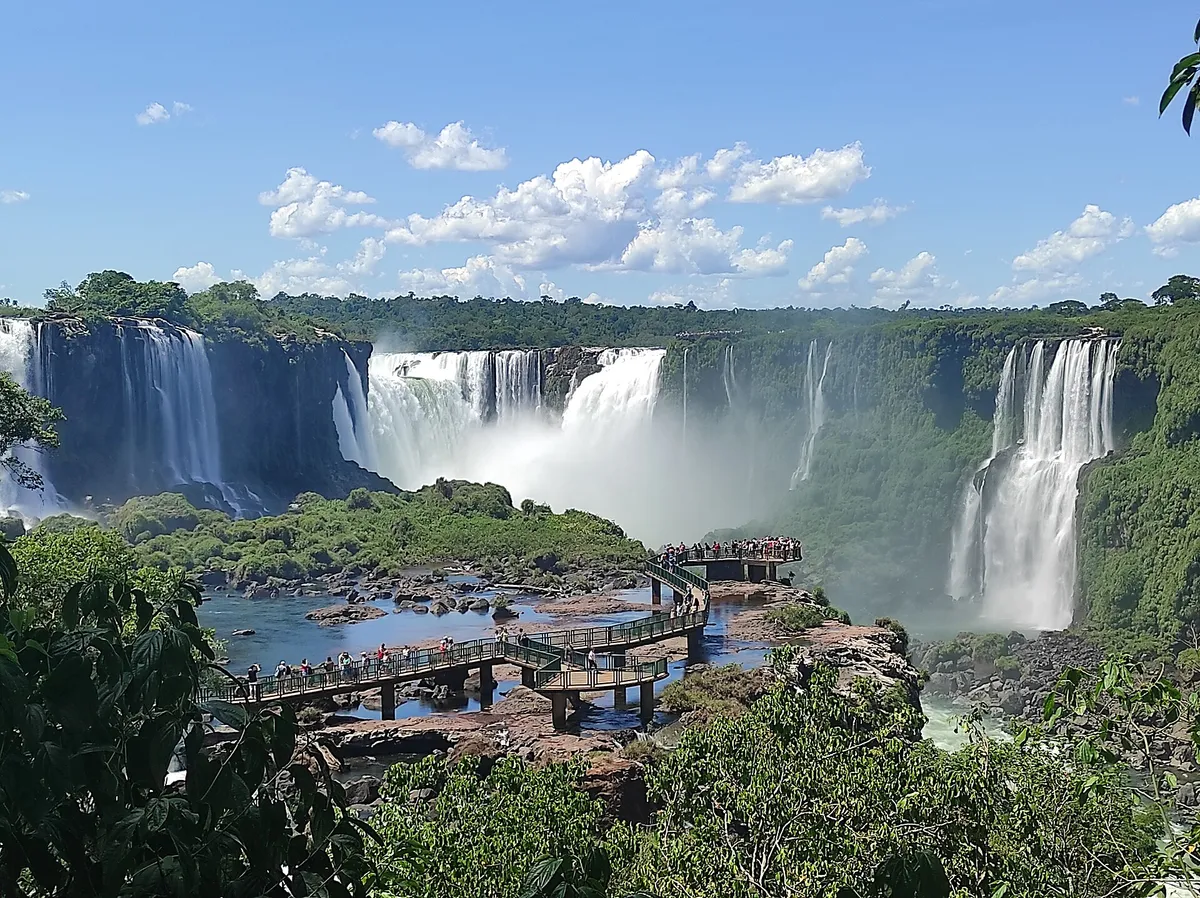
Spend two days in Foz: one for the Brazilian side of the Falls and the Parque das Aves, the other for the whole Argentine side. Add a third if you want Itaipu and the crossing to Ciudad del Este. Build each day around the water, because the falls and Itaipu lie in opposite directions from downtown. Anyone expecting a pretty downtown to stroll will be disappointed, since it's functional, with wide streets, and shuts at 6pm. With just one day, enter the Brazilian park in the first time slot and walk the 1.2 km trail to the Devil's Throat walkway. Have lunch at Porto Canoas and spend the afternoon at the Parque das Aves, across the road. Finish at the Marco das Três Fronteiras, 20 minutes from downtown, to see the three countries at sunset.At Iguaçu Falls, the river opens into a 2.7 km front and plunges over about 275 cascades; at the Devil's Throat, a walkway comes within 20 m of water falling as much as 80 m. On the Brazilian side, the canyon trail shows the whole front, and on the Argentine side, where about 80% of the falls are, the walkways run right over the water. The border rounds out the trip: Paraguay is 8 km from downtown, across the Friendship Bridge, and Itaipu, the 7,919 m dam whose construction quadrupled the city, is 12 km away. Eat esfiha in Vila Portes, chipa in the bridge line, and rodízio in Vila Yolanda, and try tereré, the cold mate the border drinks in a circle. Come from April to June, with 25 to 28°C and the falls still full, and stay two days, one for each side of the Falls.
Quick facts
- Population
- about 299,000 in the municipality (IBGE 2026 estimate); about 800,000 across the triple frontier counting Ciudad del Este and Puerto Iguazú
- Founded
- Colônia Militar do Iguaçu, November 22, 1889; municipality installed on June 10, 1914, the city's official anniversary
- Country and region
- Brazil: far west of Paraná state, South Region; borders Argentina (Iguaçu River) and Paraguay (Paraná River)
- Language
- Portuguese; Spanish and Guaraní circulate at the border; Arabic and Mandarin are heard in the shops of Vila Portes and Ciudad del Este
- Currency
- Brazilian real (BRL); Paraguayan guaraní (PYG) in Paraguay and Argentine peso (ARS) in Argentina; the US dollar is accepted in Ciudad del Este
- Time zone
- UTC−3 year-round; Argentina and Paraguay are also UTC−3 (Paraguay abolished daylight saving in 2024), so you don't change your clock crossing the bridge
- Best time to visit
- April to June, with 25 to 28°C and the falls still full; avoid July, vacation month, and the January–February summer, hot, humid, and crowded
- Average daily cost
- R$350–550 per person (about US$65–100) with a mid-range hotel, simple meals, and one park a day (2026)
When to go
April to June, with 25 to 28°C and the falls still full; avoid July, vacation month, and the January–February summer, hot, humid, and crowded
January
21° to 32°C
180 mm of rain
AvoidFebruary
20° to 32°C
150 mm of rain
AvoidMarch
19° to 31°C
153 mm of rain
July
11° to 23°C
107 mm of rain
AvoidAugust
12° to 25°C
84 mm of rain
September
14° to 27°C
155 mm of rain
October
17° to 29°C
247 mm of rain
November
18° to 30°C
172 mm of rain
December
20° to 31°C
219 mm of rain
How the year changes
The climate is humid subtropical with no dry season: there's no month without rain. Between 1,700 and 1,800 mm fall each year, spread over every month. Summer (December to March) brings highs of 32 to 38 °C, high humidity, late-afternoon downpours and the peak of visitors, with hotels and lines full between Christmas and Carnival. Fall (April to June) is the best window: 25 to 28 °C by day, less frequent rain and still-high flow over the falls. Winter (June to August) is mild, with days of 22 to 26 °C and early mornings of 6 to 10 °C, and now and then a cold front knocks the high down to 12 °C. Pack a jacket even in July, which is school-vacation month and high season. Spring (September to November) is unsettled, with October among the rainiest months. February brings heavy heat, mosquitoes and the chance that heavy rain will temporarily close the Devil's Throat walkways. In a long drought the falls lose volume, and in an extreme flood the park closes trails; either way, the notice goes up on the park website the same day, so check before leaving your hotel.
The same numbers as a table
| Month | Temperature °C | Rain mm |
|---|---|---|
| January | 21 to 32 | 180 |
| February | 20 to 32 | 150 |
| March | 19 to 31 | 153 |
| April · | 17 to 28 | 161 |
| May · | 13 to 24 | 186 |
| June · | 12 to 22 | 146 |
| July | 11 to 23 | 107 |
| August | 12 to 25 | 84 |
| September | 14 to 27 | 155 |
| October | 17 to 29 | 247 |
| November | 18 to 30 | 172 |
| December | 20 to 31 | 219 |
Nilo's tips
Park ticket: bought for a time slot, the day before
Between 11am and 2pm the line for the internal bus peaks, and anyone entering in that window spends part of the visit standing and waiting. Buy your ticket online the day before, choosing the 9am slot, and start the trail before the tour groups arrive.
Brazilian side one day and the Argentine side the next
The Brazilian trail, 1.2 km, shows the whole system head-on and helps you understand what you'll see up close the next day. The Argentine side holds about 80% of the total drop, with 4 km of walkways above and below the water. If you want to go back there on a second consecutive day, validate your ticket as you leave the first. The new entry comes at a 50% discount, within the ticket's 72-hour validity.
Get the Cartão Único before your first bus
A ride costs R$5.00 with the Cartão Único or paid on board, but only the card gives you 90 minutes of transfers between lines. The “120 Parque Nacional” line leaves from the TTU, downtown, and serves both the airport and the falls. After 10pm service thins out, and a ride-hailing app becomes the only option.
Don't exchange money on the bridge
The exchange booths on the bridge make up their rates and give no receipt, so change money at a downtown agency. In Ciudad del Este and Puerto Iguazú, the total changes depending on whether you pay in guaraníes, pesos, reais or dollars. Ask the rate before closing the purchase; it's a routine question, and no one takes offense.
Ciudad del Este empties out after 5pm: go early
Shops on the other side open at 7am, and early in the morning the bridge takes 20 minutes to cross, versus more than 1 hour at peak times. The bridge is 8 km from downtown. The allowance is US$500 per person every 30 days, and enforcement on the BR-277 and at the airport is routine.
Full moon: book weeks ahead, accept the cancellation risk
The Paseo Luna Llena, on the Argentine side, only runs on five nights a month around the full moon, with limited spots, and doesn't run on cloudy nights. It takes groups along the walkway to the Devil's Throat in the dark, with a separate ticket. If the tour matters to you, choose your travel dates by the lunar calendar and book weeks ahead. On the Brazilian side, night visits only happen on occasional dates.
Explore the map

© OpenStreetMap · OpenFreeMap · © OpenMapTiles
Explore the map, read about the other places and plan your travel days in the app.
Open the appWhat to see
Foz do Iguaçu: The two rivers and the basalt step
In downtown Foz, the Urban Transport Terminal, the currency exchange houses, the budget hotels, and the everyday shops sit between Av. Brasil and Av. Juscelino Kubitschek, the axes of the grid of wide avenues inherited from the Itaipu boom.
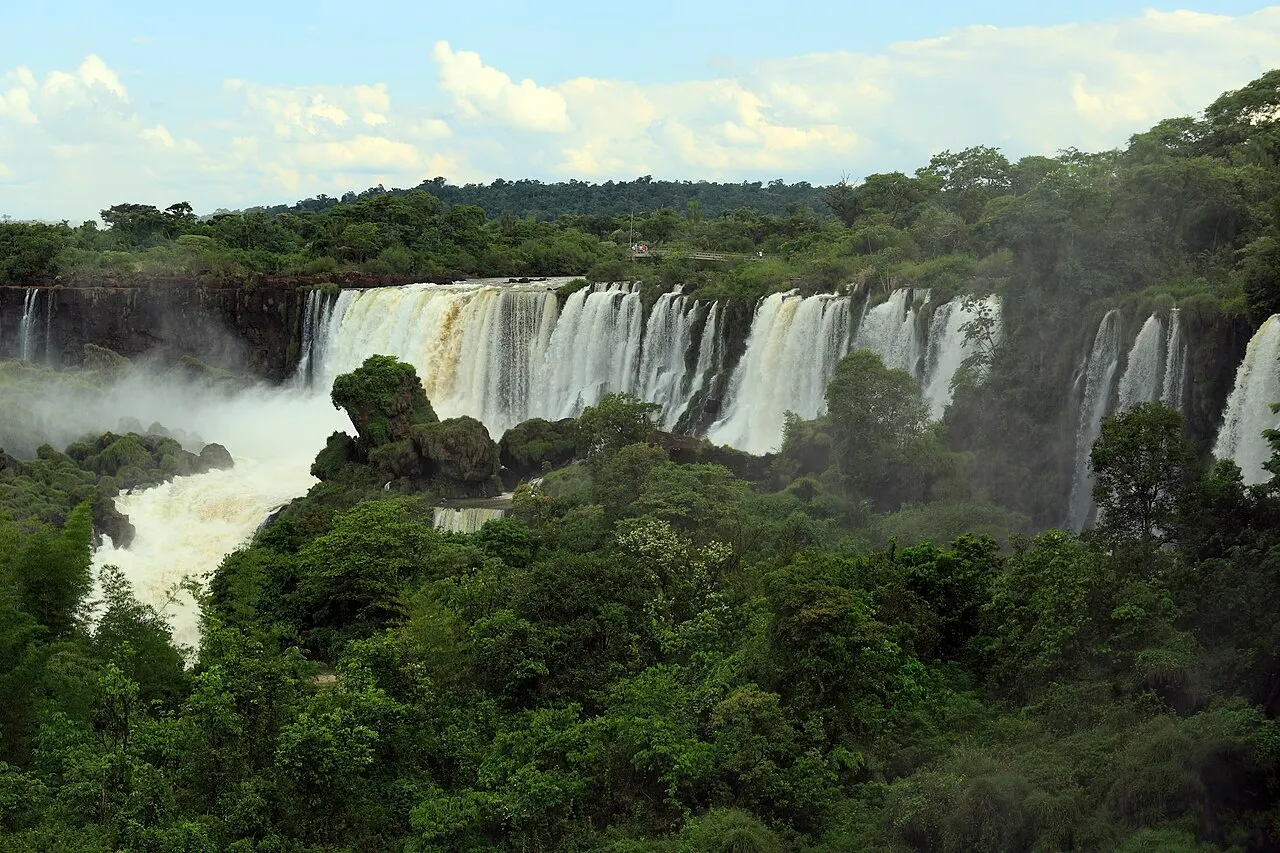
Iguazu Falls: Brazilian side
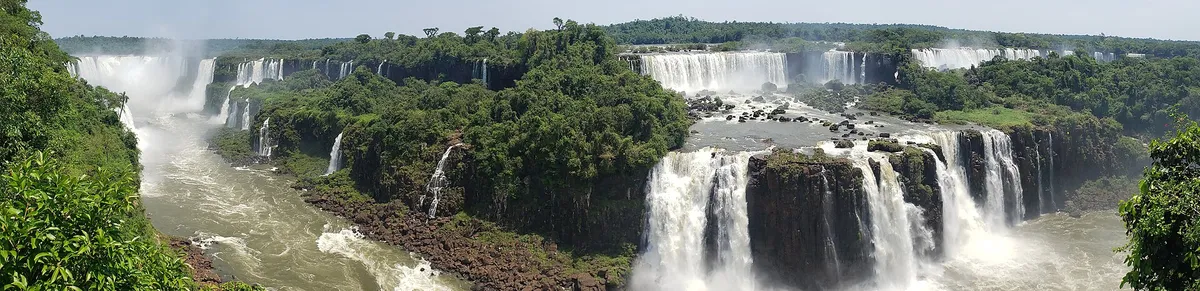
The main trail runs 1.2 km along the canyon rim and gives you the panoramic view of the whole system: the Brazilian side has only about 20% of the falls, but this is where you see the entire front. 2026 admission: R$134 (foreigners), R$121 (Brazilians and Mercosur citizens), R$26 (residents of 14 municipalities in the region); internal bus included, free for children up to age 6.
The canyon-edge trail is the place to see the whole front of the falls, even though most of them are in the other country; 1.2 km; R$134, R$121, or R$26.
Check access
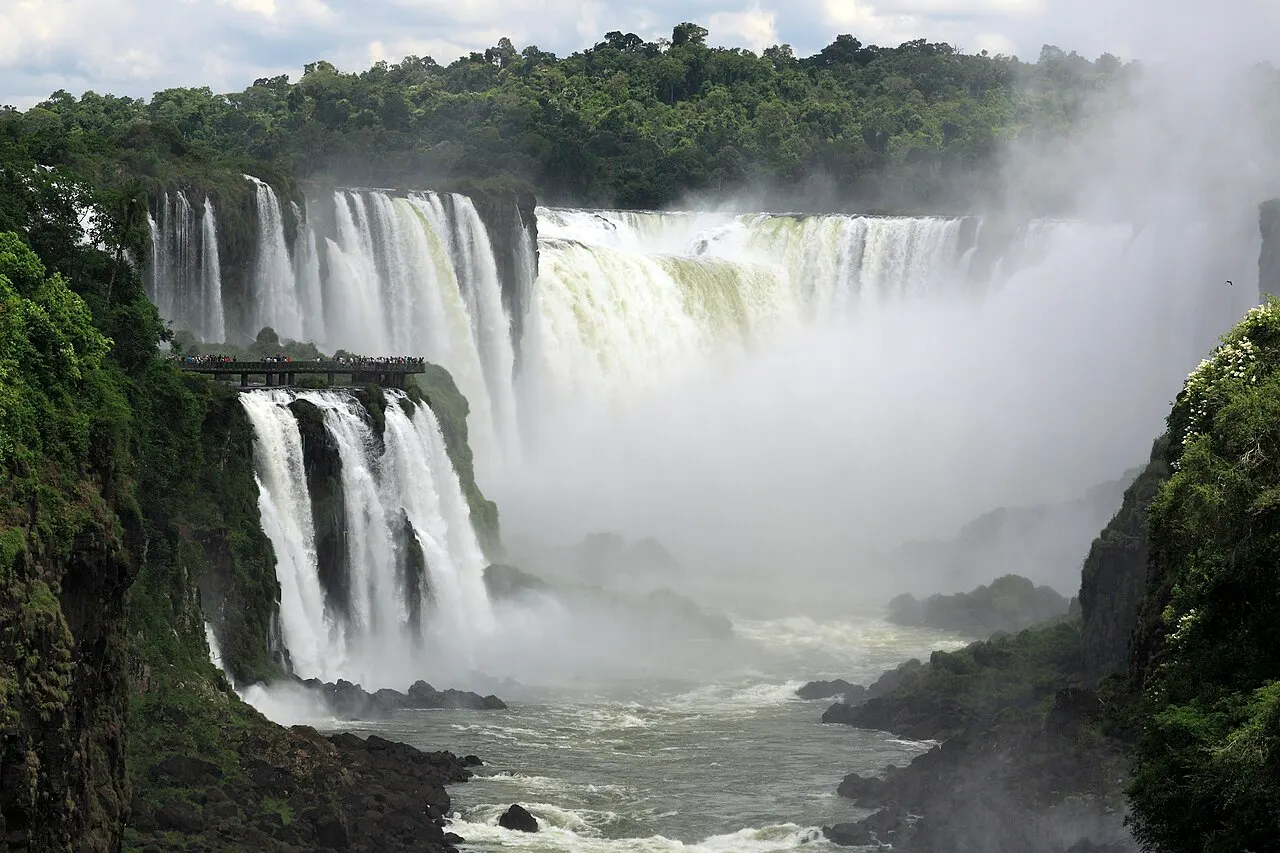
Devil's Throat
A walkway over the river that ends 20 m from the U-shaped falls, about 80 m tall, the highest-flow point in the whole system. It really soaks you. A rain poncho helps, and the panoramic elevator next to it takes you back up to Porto Canoas level.
The walkway ends 20 m from the U-shaped, roughly 80 m falls, and you really do get wet, so the poncho earns its place, while the elevator takes you back up to Porto Canoas.
Check access
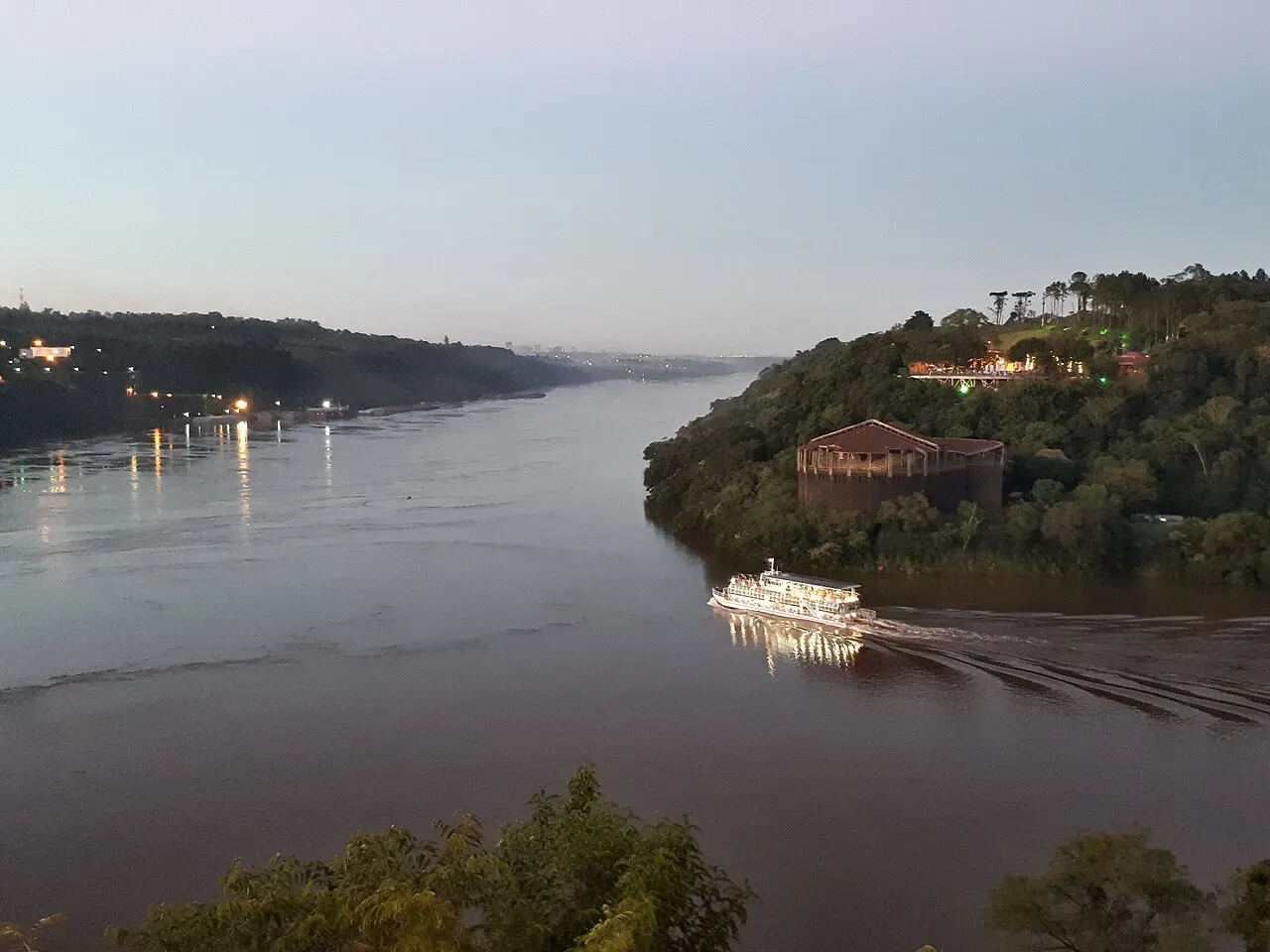
Marco das Três Fronteiras
A Brazilian obelisk at the confluence of the Iguaçu and Paraná rivers, facing the twin markers of Argentina and Paraguay. Renovated in 2016, it has a restaurant, a nightly show, and the city's best sunset.
The obelisk at the junction of the two rivers faces the twin markers of the neighboring countries and is the city's best late afternoon; Argentina and Paraguay; renovated in 2016.
Check access

Parque das Aves
Opened in 1994 across from the national park, it holds about 1,300 birds from more than 140 species in walk-through aviaries, focused on rescue and breeding of endangered Atlantic Forest species. Entry about R$100–130; takes 2 hours.
Immersive aviaries house about 1,300 birds from more than 140 species and handle the rescue and breeding of endangered Atlantic Forest species; admission runs about R$100 to 130, and the visit takes two hours inside.
Check access
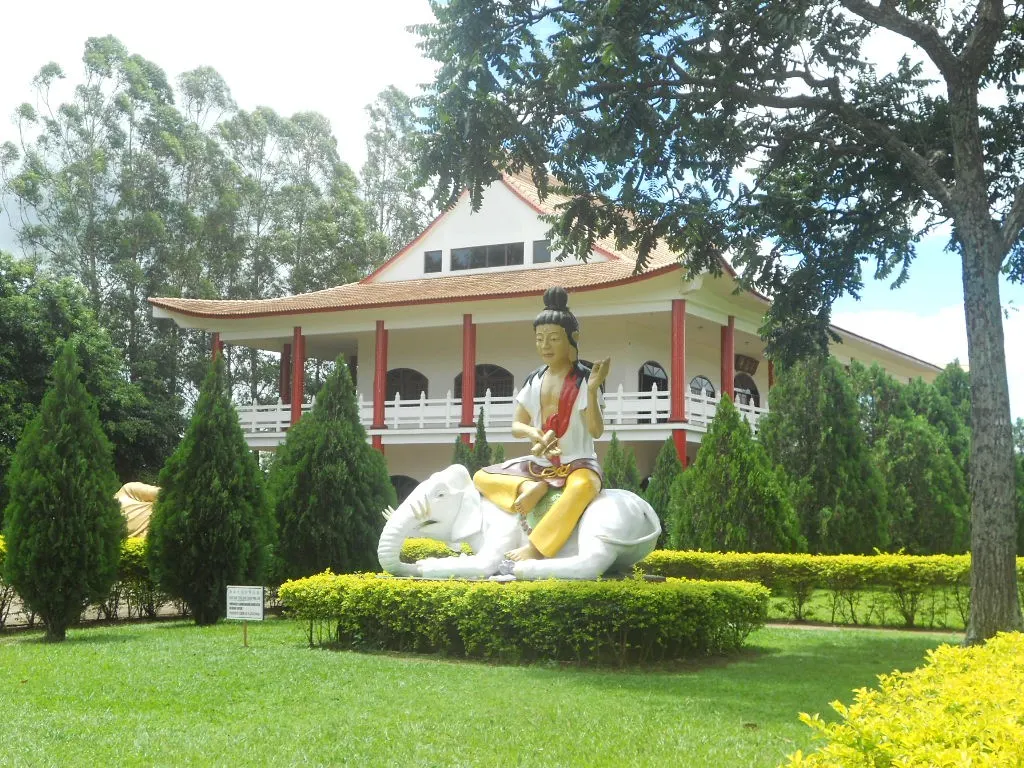
Chen Tien Buddhist Temple
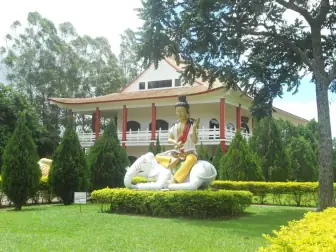
Founded in 1996 in the hills of the Três Lagoas neighborhood by the Chinese and Taiwanese communities, with 120 stone statues, a 7 m Buddha, and a 7 m Kuan Yin. Free entry; shoulders and knees must be covered.
The temple atop the neighborhood gathers stone statues and two large figures, and admission is free with shoulders and knees covered; 120 statues, 1996; Buddha and Kuan Yin, 7 m.
Check access
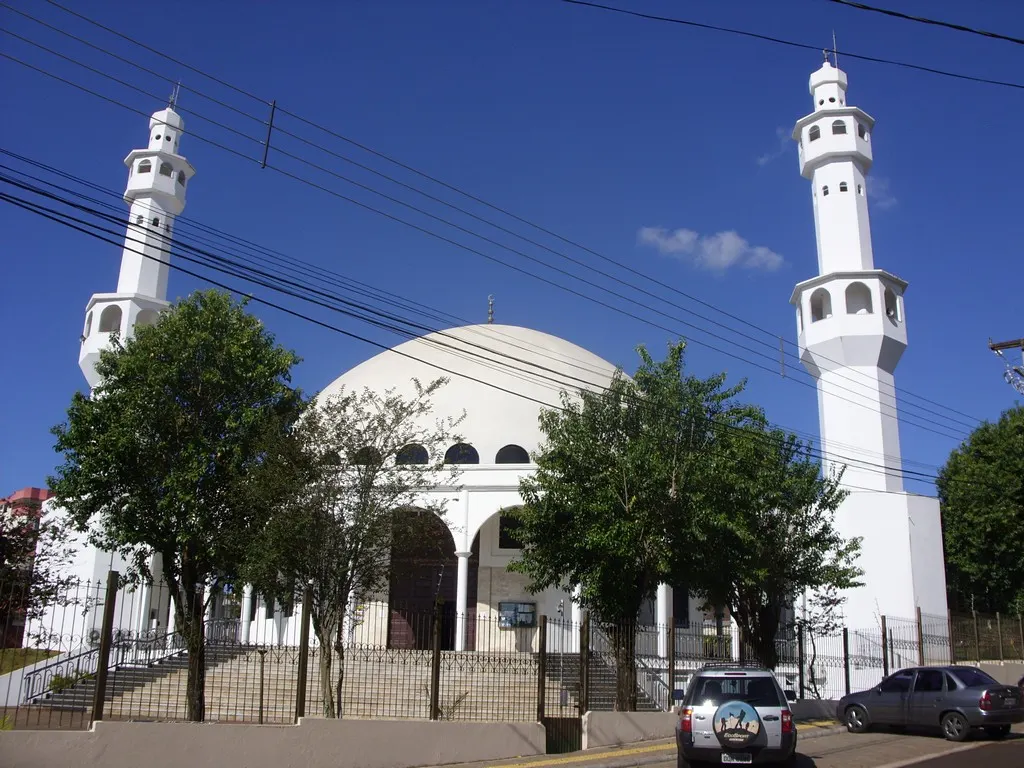
Omar Ibn Al-Khattab Mosque
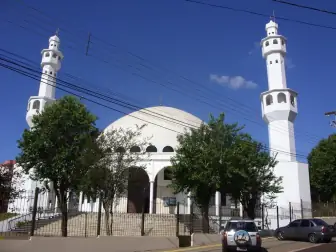
Opened in 1983 on Av. Juscelino Kubitschek, it's the hub of the triple frontier's Arab community, with an Ottoman-style blue dome and room for about 800 worshippers. Guided visits at set hours, outside prayer times.
Opened in 1983, the mosque has an Ottoman-inspired blue dome and capacity for about 800 worshippers, and takes guided visits outside prayer times.
Check access

Friendship Bridge and Ciudad del Este
The 552 m bridge, opened in 1965, is crossed daily by tens of thousands of people on foot, by motorbike, and by car. On the other side is a shopping district for electronics and perfume, and Brazil's overland duty-free allowance is US$500 per person every 30 days.
The 552 m bridge, opened in 1965, is the daily route, on foot, by motorbike, or by car, to the electronics and perfume shops of Ciudad del Este. Cross at 7am, when the shops open and the crossing takes 20 minutes, and buy within the US$500-per-person, every-30-days allowance.
Check access
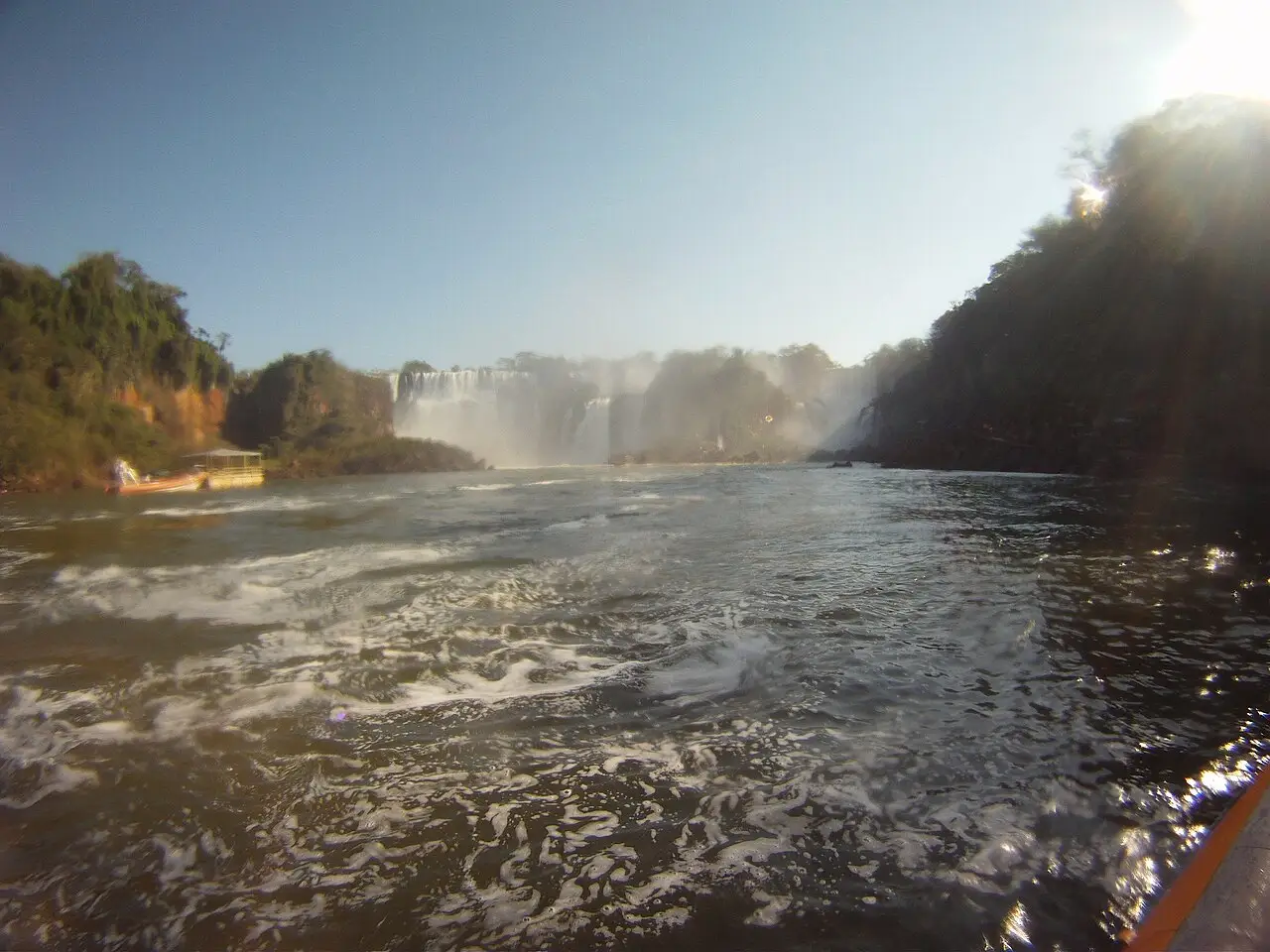
Macuco Safari
An inflatable boat that heads upriver right under the Três Mosqueteiros falls; combined with an electric trolley and a 3 km forest trail. Takes about 2 hours, starts at about R$400 (2026), and is paid separately from the park ticket.
Check access
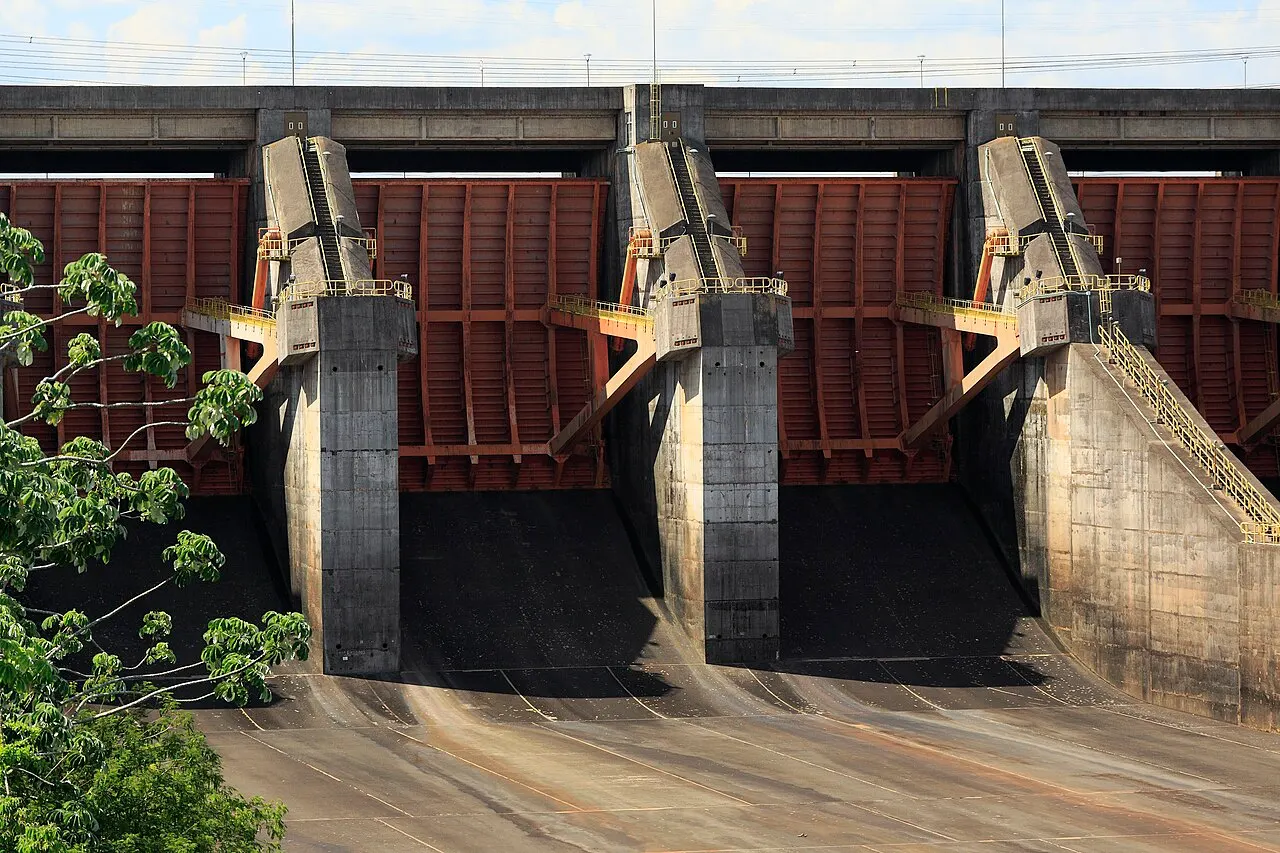
Itaipu Hydroelectric Plant
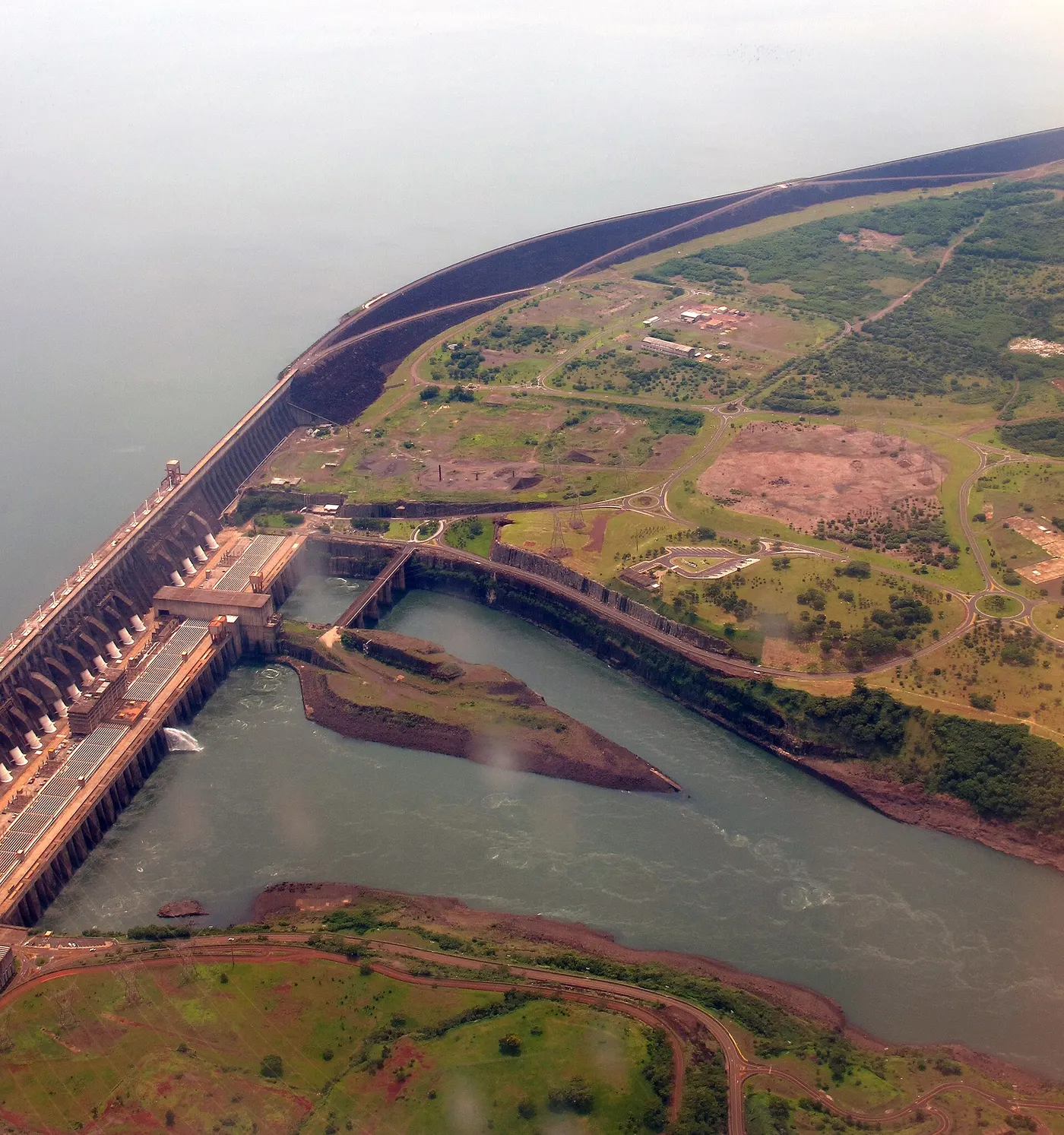
A dam 7,919 m long and 196 m high, 20 generating units, and 14,000 MW installed: about 8% of Brazil's electricity and most of Paraguay's. The Panoramic Visit crosses over the spillway; the Special Circuit goes into the powerhouse and requires closed-toe shoes and a reservation.
The 7,919 m, 14,000 MW dam impresses with its size, but it's 12 km from downtown, in the opposite direction from the falls; the visit takes an afternoon, and the Special Circuit requires closed-toe shoes and a booking. On a two-day stay, both days go to the Falls, one for each side, and Itaipu is for whoever has a third.
Check access
Nilo’s itinerary
Start with the basic programme and choose extensions for the time you have.
Plan my days in the app ↗Day 1 · The Brazilian side of the falls and sunset at the border
Buy your ticket online the day before for the first time slot and reach the Visitor Center by 9am, ahead of the tour buses.
Walk the full 1.2 km Cataratas Trail at an easy pace: the view opens up in stages, and the best panorama is in the middle of the route.
Finish on the Devil's Throat walkway (bring a rain poncho) and take the panoramic elevator up to Porto Canoas for lunch.
In the afternoon, visit Parque das Aves, across the road, for 2 hours. It's your only chance to see toucans, macaws, and a harpy eagle up close.
End the day at Marco das Três Fronteiras, 20 minutes from downtown, with the obelisk facing Argentina's and Paraguay's markers at sunset.
Day 2 · The Argentine side, up close to the falls
Leave at 8am for Puerto Iguazú (about 20 km, 30 to 40 minutes), ID in hand; non-Mercosur foreigners stop at the Federal Police and Argentine immigration.
In Iguazú National Park, do the Upper Circuit first, then the Lower: together about 4 km of walkways over and under the falls.
Go to the Garganta del Diablo last: about 1 km of walkway over the river from Estación Cataratas, with the internal train running on a variable schedule.
Set aside 1 hour for lunch inside the park or an empanada in Puerto Iguazú, and check your ticket: it's valid 72 hours, with 50% off on the second consecutive day.
Head back via the Argentine Hito Tres Fronteras in late afternoon and cross the Tancredo Neves bridge again before 8pm, when the line grows.


If you stay longer
Day 3 · Ciudad del Este early, Itaipu in the afternoon, and border food
Cross the Friendship Bridge at 7am, when the shops of Ciudad del Este open and the crossing takes 20 minutes, and buy electronics and perfume within the allowance of US$500 per person every 30 days.
Head back before lunch, eat river fish or Arab food in Vila Portes, and continue to Itaipu with your visit booked; choose the Special Circuit if you want to enter the powerhouse (closed-toe shoes and ID required).
After the 7,919 m dam, head to the Bela Vista Biological Refuge or the Ecomuseum, which explain the wildlife rescue and the archaeology of the 1982 reservoir.
On the way back, go up to the Chen Tien Buddhist Temple, in Três Lagoas, then stop by the Omar Ibn Al-Khattab Mosque, on Av. Kubitschek.
Have dinner at a rodízio in Vila Yolanda and finish with a stroll along Av. Jorge Schimmelpfeng, where the city comes out at night.

Food
 AI illustration
All-you-can-eat churrasco
A legacy of gaúcho and inland-Paraná culture, served in large houses along Av. das Cataratas and in Vila Yolanda, with picanha, ribs, and a salad buffet. R$90–160 per person (2026); book ahead on weekends.
 AI illustration
Esfiha and kibbeh
The Lebanese and Syrian community at the border, formed from the 1950s and 1970s onward, keeps Arab bakeries and snack shops running in Vila Portes and downtown. Open beef esfiha, raw and fried kibbeh, shawarma, and Syrian bread come out warm all day, at R$6–14 apiece.
 AI illustration
Chipa
A Paraguayan roll of cassava starch, cheese, and egg, ring-shaped, sold by street vendors from thermal baskets at traffic lights, bus terminals, and the bridge line. R$3–6 apiece; eat it warm, in the first block.
 AI illustration
Paraguayan soup
Despite the name, it's not a soup: it's a savory cake of cornmeal, cheese, and onion, baked and served in slices alongside meat. It shows up at buffets, parties, and Paraguayan restaurants on both sides of the bridge.
 AI illustration
Vori vori
A thick chicken broth with little cornmeal-and-cheese dumplings, a common Paraguayan winter dish at the border. Heavy, cheap, and served at lunch.
 AI illustration
Tereré
Yerba mate steeped in ice-cold water with ice, lime, and medicinal herbs (the “yuyos”), drunk from a horn cup through a metal straw, always in a circle. The cup and the yerba can be bought from any street vendor downtown.
 AI illustration
River fish
Surubi, dourado, and pacu from the Paraná and Iguaçu rivers, served grilled, on the griddle, or stewed, mostly at restaurants in Porto Meira and along the Itaipu reservoir. A dish for two runs R$120–200.
 AI illustration
Empanadas and alfajores
Argentina next door supplies knife-cut beef empanadas, milanesa and dulce de leche alfajores, which you'll find both in Puerto Iguazú and in bakeries around Foz. Empanadas cost R$8–15, and the alfajor is the souvenir everyone brings back across the bridge.
Day trips

Puerto Iguazú and Iguazú National Park (Argentina)
20 km and 30 to 40 minutes by car over the Tancredo Neves bridge. A full day: about 4 km of walkways, about 80% of the falls, and the Garganta del Diablo seen from above; 2026 ticket 60,000 pesos for foreigners, valid 72 hours, with 50% off on the second consecutive day.

Ciudad del Este and Salto Monday (Paraguay)
8 km to the Friendship Bridge (20 minutes with no line, over 1 hour at peak times) plus another 10 km to Presidente Franco, where the Monday River drops 45 m over three falls. Half a day of shopping plus a nearly empty waterfall.

The Jesuit missions of San Ignacio Miní (Argentina)
San Ignacio Miní is about 250 km away, or 3 hours 30 minutes by car via Puerto Iguazú along the RN-12, and the red sandstone ruins of the mission founded in 1632 have been a World Heritage Site since 1984. On the way are the semiprecious-stone mines of Wanda, 50 km from Puerto Iguazú.
Where to begin
The Brazilian side of the falls and sunset at the border
Buy your ticket online the day before for the first time slot and reach the Visitor Center by 9am, ahead of the tour buses.
Ciudad del Este early, Itaipu in the afternoon, and border food
Cross the Friendship Bridge at 7am, when the shops of Ciudad del Este open and the crossing takes 20 minutes, and buy electronics and perfume within the allowance of US$500 per person every 30 days.
Money
The currency is the real, and credit cards and Pix work in practically every Brazilian business, even street vendors: even a chipa basket has a QR code hanging off it. 2026 ranges: coffee R$5–8, self-service lunch by weight R$35–55, dinner at a mid-range restaurant R$60–120 per person, all-you-can-eat R$90–160, a beer at a bar R$10–18, city bus R$5.00, an app ride within the city R$15–35, hostel R$70–140, mid-range hotel R$250–450, and a resort hotel on Rodovia das Cataratas R$600–1,500. Tickets weigh more than food: national park R$121–134, Parque das Aves about R$100–130, boat ride starting at about R$400, Itaipu visit R$48–185 depending on the circuit. On the Paraguayan side the dollar is king and the real is accepted at a bad rate. On the Argentine side bring pesos or a card, and check beforehand which rate your bank applies, because the Argentine rate moves fast. A 10% tip usually comes on the bill and is optional; taxis don't expect one. Avoid exchanging money at the makeshift counters on the Friendship Bridge: use a registered exchange house downtown with a receipt.
Getting there and around
Airport: 11 km from downtown, on the way to the park
Foz do Iguaçu International Airport (IGU) is about 11 km from downtown via the BR-469, on the way to the national park, and gets direct flights from São Paulo, Rio, Curitiba, Brasília, Porto Alegre, and Campinas. The terminal was expanded by operator CCR in the 2020s. From the airport to downtown there are three prices for the same trip: the National Park line city bus for R$5.00, a taxi or app for R$45–80, and a hotel transfer for R$60–100 per person (2026). The international bus station is on Av. Costa e Silva, about 5 km from downtown, and runs long-distance buses: Curitiba in about 10 hours (640 km), São Paulo in about 15 hours, with direct routes to Asunción and Buenos Aires. On the Argentine side there's a second airport, Puerto Iguazú (IGR), about 25 km away, useful for those arriving from Buenos Aires.
City buses: R$5 and 90 minutes of transfers with the card
City buses are run by Foztrans and take the Cartão Único smartcard: the fare has been R$5.00 since May 2026, the same whether you pay on board in cash or by card, but only card users get the 90-minute free transfer. Pay on board and you'll pay twice for any trip that needs a change. The hub is the urban bus terminal (TTU) downtown, where lines leave for the National Park and the airport (the “120 Parque Nacional”), for the Friendship Bridge and for Itaipu. Buses come every 20 to 30 minutes and thin out after 10pm. Uber and 99 work well and are the practical answer to the city's real distances: downtown to the park is 25 km, and downtown to Itaipu is 12 km in the opposite direction. The city is flat, with bike lanes on Av. das Cataratas and Av. Tancredo Neves, but the heat and the distances make cycling something for your own neighborhood, not for sightseeing. International taxis and vans cross to Puerto Iguazú (about 20 km) and Ciudad del Este (about 8 km), and wait while you get stamped when you need to.
Safety
Foz do Iguaçu is a border city with border-city problems, but visitors spend almost all their time in well-policed tourist areas (the national park, Rodovia das Cataratas, Itaipu, Marco das Três Fronteiras) where the real risk is low. Outside them, the precautions depend on time and place. Bag and phone snatching happens downtown and in the crowds on the Friendship Bridge, especially on busy days; a parked car with luggage in view is a problem in Vila Portes and Porto Meira; and downtown empties after 6pm when the shops close, so at that hour use a ride-hailing app instead of walking. On the Paraguayan side, the shops of Ciudad del Este are open from 7am to 5pm and empty fast: avoid carrying visible shopping bags when walking back across the bridge, and don't accept “help” from middlemen offering currency exchange or a priority line. There are three common scams: made-up exchange rates at the booths on the bridge, fake guides selling park tickets in the parking lot, and taxis without meters charging double for the international ride, so agree on the fare first or use an app. Inside the park the risk is natural: don't go past the railings, don't get into the river, and bring insect repellent. Emergency numbers: 190 (police), 192 (Samu ambulance), 193 (fire department).
Etiquette tips
Don't say thanks over tereré
In the circle, handing back the cup in silence keeps your turn; saying “thank you” gives it up.
Ask the currency before paying
On the Paraguayan and Argentine side, the final price depends on the currency chosen at the counter.
Crossing the border isn't “international travel”
For locals, going to Ciudad del Este or Puerto Iguazú is like going to the next neighborhood over. Treating the crossing as an exotic adventure sounds odd; “I'm just popping over to Paraguay” is what everyone says.
Don't feed the coatis
The park's coatis come up to anyone holding food, and they scratch and bite; feeding them gets you a fine. Keep your snack in a closed backpack and don't take photos with food in your hand.
Haggle in the arcades, not in shops with price tags
In the street markets and arcades of Vila Portes and Ciudad del Este, negotiating price and quantity is part of the deal. In a mall, supermarket, or restaurant, the price is the price.
Respect lunch hours
Many restaurants serve from 11:30am to 2:30pm and close in the afternoon, and border shops open early, at 7 or 8am. Showing up at 3pm for lunch usually ends at a snack bar.
Mistakes to avoid
Seeing only one side of the falls
Assuming both sides of the falls are the same and seeing only one. From Brazil, the panorama takes 2 to 3 hours on the trail; from Argentina, you walk above the water, beside most of the falls, and the visit takes a full day. If you have two mornings, use one on each side.
Same-day ticket and arriving at noon
Buying your ticket on the spot and showing up at noon. The Brazilian park sells by date and time slot, and high-season morning slots sell out. Since the line for the internal bus is longest between 11am and 2pm, buy the day before and pick the first slot.
Downtown to the park is 25 km
Underestimating the distances. Downtown to the park is 25 km, to the airport 11 km, and to Itaipu 12 km in the opposite direction: trying to fit in the falls in the morning, Itaipu in the afternoon, and Argentina the same day usually knocks one of the three out.
Crossing the border without checking stamp rules
Crossing the border without checking the stamp requirement. Brazilians use an ID card to enter Argentina and Paraguay, but foreigners from outside Mercosur have to stop at the Federal Police and the other country's immigration, and since April 10, 2025, citizens of the US, Canada, and Australia need an electronic visa to re-enter Brazil. Confirm the current rule before you travel.
US$500 per person every 30 days
Blowing past the shopping allowance. Brazil's overland duty-free allowance is US$500 per person every 30 days. Above that, customs charges tax on the way back, and enforcement on the BR-277 and at the airport happens routinely, year-round.
Useful phrases
“Vou ali no Paraguai” (vo a-LEE noh pa-ra-GWY)
Crossing the Friendship Bridge and coming back the same day: the standard phrase for a trip to Ciudad del Este
“Do lado de lá” (doh LA-doh jee LAH)
Argentina or Paraguay, depending on context; the country's name is almost never said out loud
“Bora tomar um tereré?” (BOR-ah toh-MAR oom te-re-RE)
An invitation to the cold yerba mate circle; saying yes is the norm, and the cup always circulates the same direction
“Mba'éichapa” (Guaraní; mba-EI-cha-pa)
“How's it going?”: a greeting used by Paraguayans on both sides of the border
“¿Cuánto sale?” (Spanish)
“How much is it?”. The question that opens any purchase in Ciudad del Este or Puerto Iguazú
“Aceita real?” (a-SAY-ta he-AL)
The obligatory question on the Paraguayan and Argentine side: the answer is usually yes, at a worse rate than the official exchange
Districts
Centro
A grid between Av. Brasil and Av. Juscelino Kubitschek, with the urban bus terminal, currency exchange houses, budget hotels, and everyday shops. Runs from 8am to 6pm and empties out after that.
Vila Yolanda and Jardim Central
Middle-class residential neighborhoods east of downtown, home to the churrasco rodízios and Av. Jorge Schimmelpfeng, the main strip for bars and New Year's Eve. This is where locals come for dinner and a night out.
Vila A
A planned complex built by Itaipu in the 1970s to house engineers and workers, with curved streets, heavy tree cover, and its own school, hospital, and club. It's still one of the municipality's most comfortable addresses.
Vila Portes and Jardim Jupira
The strip hugging the Friendship Bridge, with import-goods arcades, Arab restaurants and the stream of people crossing into Ciudad del Este. It's packed during the day and empties at night, when the shops close.
Porto Meira
A neighborhood on the Paraná riverbank, next to the Tancredo Neves bridge and the old ferry crossing, with customs, neighborhood shops, and lower-income areas. It's the natural way out to Puerto Iguazú.
Três Lagoas and Cidade Nova
Neighborhoods formed by the migration during Itaipu's construction, now among the city's most populous and youngest. Neighborhood shops, little tourist presence, and long distances to downtown.
Rodovia das Cataratas (BR-469)
The BR-469 corridor links downtown to the park and brings together resort hotels, the airport, Parque das Aves, and the Hotel das Cataratas, opened in 1958 and the only lodging inside the national park.
Jardim São Paulo and Morumbi
The southern and southeastern growth vector, with the heaviest residential density added over the last two decades. Interesting to visitors mainly as a distance marker: it's a 20-to-30-minute bus ride to downtown.
History
1542 · Cabeza de Vaca sees the falls
The Spaniard Álvar Núñez Cabeza de Vaca crosses the region on his way to Asunción and records the falls, naming them Salto de Santa María. The Guaraní name, Iguaçu, “great water,” is the one that stuck.
17th c. · Guairá, Jesuits, and bandeirantes
The area is part of the Jesuit province of Guairá, with missions founded from 1610 and destroyed by São Paulo's bandeirantes between 1628 and 1632. The Guaraní population is taken south, and the west goes without stable settlement for two centuries.
1860–1888 · Logging camps and yerba groves
Argentine and Paraguayan companies harvest yerba mate and timber along the upper Paraná with indebted laborers, the mensús, and ship everything downriver to Buenos Aires. Brazil has almost no administrative presence here.
1889 · Colônia Militar do Iguaçu
Installed on November 22, 1889, one week after the Proclamation of the Republic, to mark sovereignty on the border. The settlement had a few dozen residents, most speaking Spanish and Guaraní.
1914 · The municipality is born
Vila Iguaçu becomes a municipality on March 14, 1914, and is installed on June 10. In 1918 the name changes to Foz do Iguaçu.
1939 · Iguaçu National Park
Created by Decree-Law 1,035, of January 10, 1939, under the Vargas government: Brazil's second national park, after Itatiaia. It protects 185,000 hectares of inland Atlantic Forest.

1943–1946 · Federal Territory of Iguaçu
Vargas carves western and southwestern Paraná into a federal territory with its capital in Foz do Iguaçu, as part of the “March to the West” policy. The 1946 Constitution gives the area back to the state.
1965 · Friendship Bridge
Opened on March 27, 1965, at 552 m over the Paraná River, it links Foz to Ciudad del Este and gives Paraguay a road outlet to the Atlantic through the port of Paranaguá. It's ground zero for border trade.

1973–1984 · Itaipu changes everything
The Itaipu Treaty is signed on April 26, 1973, construction begins in 1975, the Paraná River is diverted in October 1978, the reservoir fills in October 1982, and the first turbine spins in May 1984. The population jumps from about 33,000 (1970) to about 136,000 (1980).
1986 · World Heritage Site
UNESCO inscribes Iguaçu National Park as a Natural Heritage Site in 1986; the neighboring Argentine park had already been listed in 1984. From then on, tourism becomes local public policy.
1995–2026 · From border shoppers to a university
Exchange rates, tighter customs enforcement, and seizures crash the shopping tourism that had sustained the city through the 1980s and 90s, and Foz responds with hotels, events, and the founding of UNILA in 2010. Visits to the Brazilian park topped 2 million a year again after the 2020–2021 border closures.
Complete history
Before everything, there was the river and the Guaraní
Before anything else there was the river and the Guaraní, who called the falls Iguaçu, “great water.” The first European to record them was Álvar Núñez Cabeza de Vaca, in 1542, on his way to Asunción. In the 17th century the region was part of the Jesuit province of Guairá, with missions built from 1610 on and broken up by the bandeiras, slaving expeditions from São Paulo, between 1628 and 1632: the Guaraní were taken south, the missions fell to ruin, and western Paraná dropped off Brazil's administrative map for two hundred years. The ones who moved back in, in the late 19th century, were Argentine and Paraguayan companies, the obrages, which harvested yerba mate and timber with debt-bound laborers, the mensús, and shipped the output downriver.
The Colônia Militar do Iguaçu, in 1889
In the late 19th century, western Paraná was worked by Argentine and Paraguayan yerba mate and timber companies, and the Brazilian state responded by setting up the Colônia Militar do Iguaçu on November 22, 1889, one week after the Proclamation of the Republic, in a settlement where almost no one spoke Portuguese. On March 14, 1914, the place became a municipality, formally installed on June 10, and in 1918 it took its current name. Between 1943 and 1946, Getúlio Vargas turned the region into the Federal Territory of Iguaçu, with Foz as its capital, an attempt to nationalize the border that lasted only three years. The most lasting move of the era came earlier: on January 10, 1939, Decree-Law 1,035 created Iguaçu National Park, protecting the falls and 185,000 hectares of forest before farming arrived.
The 1965 bridge and the paved federal highway
The link to the rest of the country came in two stages. The first was the Friendship Bridge, opened on March 27, 1965, which connected Foz to Ciudad del Este and made Paraguay a next-door neighbor; the second was the paving of the BR-277 highway to Paranaguá, which put the city 640 km from Curitiba by road. The bridge brought the trade in imported goods, the highway brought tourism, and through the 1970s and 1980s Foz lived off both. The “trip to Paraguay” became a household routine: cross, shop and be back before lunch.
What rebuilt the city was Itaipu
The Itaipu treaty with Paraguay was signed on April 26, 1973, and construction began in 1975, at its peak employing about 40,000 people at once. The Paraná River was diverted in October 1978, and the reservoir filled in October 1982, drowning the Sete Quedas falls at Guaíra, 170 km north; the first of the 20 turbines started spinning in May 1984. Over the same period, Foz jumped from about 33,000 residents in 1970 to about 136,000 in 1980. The dam left behind whole neighborhoods built for its workers and engineers, such as Vila A, along with a hospital, an expanded airport, and a population that had quadrupled with no urban plan to match. When construction ended, the jobs vanished all at once and the outskirts kept growing.
The 1990s ended the shopping tourism boom
In the 1990s, exchange-rate shifts, tougher enforcement and seizures ended the mass shopping tourism that had kept hotels and charter buses going, and the city began to professionalize tourism at the falls. The park, a World Heritage Site since 1986, got a services concession in 1999 and an internal bus system; the city invested in convention centers and air links; and UNILA, a federal university created in 2010 to take in students from across Latin America, brought a few thousand young people from elsewhere. The border closures of 2020 and 2021 showed how much the local economy depends on open bridges, and since 2022 visitor numbers have returned to previous levels. The new Integration Bridge between Brazil and Paraguay, a 760 m cable-stayed span, had its structure completed in December 2022, but its opening to traffic was tied to the access works on the Paraguayan side.
Geography and shape of the city
The two rivers and the basalt step
Foz do Iguaçu sits on a spit of land between two rivers: the Paraná, which runs north-south and separates Brazil from Paraguay, and the Iguaçu, which comes from the east (rising 60 km from Curitiba and running 1,320 km) and separates Brazil from Argentina before flowing into the Paraná, 23 km below the falls. The terrain is a low basalt plateau, between 150 and 250 m in elevation, formed by Cretaceous lava flows (about 130 million years ago) that stacked hard rock over soft rock; where the Iguaçu meets that basalt step, the river opens into a 2.7 km front and drops in about 275 falls, up to 80 m at the Devil's Throat. Average flow is about 1,500 m³/s, but in floods like June 2014 it topped 45,000 m³/s, and in prolonged droughts it drops below 500 m³/s.
The city 25 km from the water
Downtown Foz lies 25 km from the falls, on a grid of wide avenues inherited from the Itaipu boom, with Av. Brasil and Av. Juscelino Kubitschek as its main axes. The BR-277 comes in from the east, the BR-469 (Rodovia das Cataratas) runs down to the park and the airport, and Av. Tancredo Neves heads up to the dam.
The subtropical climate
The climate is humid subtropical (Cfa), with rain year-round (about 1,700–1,800 mm) and summers of 32 to 38 °C.
In June 2014, the Iguaçu poured more than 45,000 m³ of water per second over the falls, thirty times the volume of a normal day.
Culture
Layers of immigration stacked up fast
Foz is a city of immigration layers stacked up in a short time. Before 1950 there were already Paraguayans and Argentines; between the 1950s and 1970s came Lebanese and Syrian immigrants, who today run mosques (the Omar Ibn Al-Khattab, from 1983, is the most visible), Arabic schools, and the shops of Vila Portes; in the 1970s and 80s came Chinese and Taiwanese immigrants, who built the Chen Tien Temple in 1996; the Itaipu works brought in people from Rio Grande do Sul, Santa Catarina, and the Northeast, who introduced churrasco, chimarrão, and forró. The municipality counts more than 70 nationalities. The practical result is ordinary and visible: on a single block there's a halal butcher, a currency exchange, a Paraguayan barbershop, and a steakhouse.
UNILA, the Technology Park and the music of Vila Yolanda
Formal cultural life is small for a city this size and revolves around three institutions. UNILA, a federal university created in 2010, brings together students from all over Latin America and fills downtown with spoken Spanish; the Itaipu Technology Park (PTI), set up in the old construction-camp lodgings, has labs, a museum and public programming; and the national park itself funds wildlife research and is the largest indirect employer. Live music is concentrated on Av. Jorge Schimmelpfeng and in the bars of Vila Yolanda, with sertanejo, cover rock and, often, Paraguayan polka and guarania played on the harp.
Amateur soccer and futsal
The strongest local sports are amateur soccer and futsal; the professional team, Foz do Iguaçu FC, plays in the state divisions at Estádio ABC. The religious calendar mixes Catholic Masses, evangelical services, which have grown sharply since the 1990s, Friday prayers at the mosque and Buddhist celebrations at the Chen Tien Temple.
Festivals and events
 AI illustration
Cataratas Tourism Festival
June or July, at an event center on Rodovia das Cataratas: the largest tourism trade fair in southern Brazil, with days open to the public and hotels booked solid that week.
 AI illustration
Paseo Luna Llena, on the Argentine side
In Parque Nacional Iguazú, on the Argentine side, on five nights a month around the full moon, with limited spots, a separate ticket and the walkway covered in the dark out to the Devil's Throat. Book weeks in advance, because spots sell out, and be aware that the tour is canceled on cloudy nights.

Itaipu Monumental Lighting
Generally Friday and Saturday nights, when the spillway and the 7.9 km dam get a scenic light show and the visit runs extended hours. Schedule and prices change every year.
 AI illustration
Illuminated Christmas
November and December, with decorations, choirs, and shows at Marco das Três Fronteiras, at Itaipu, and on Av. Brasil. Works as a secondary high season, ahead of the New Year's peak.
 AI illustration
New Year's at the Falls
December 31, with fireworks on Av. Jorge Schimmelpfeng and at Marco das Três Fronteiras. Hotels require multi-night packages and rates tend to double.
Books and films
The Mission (1986), by Roland Joffé
Filmed largely at the falls and on the Iguaçu River, it recreates the destruction of the Guaraní Jesuit missions in the 18th century and helps make sense of mission ruins such as San Ignacio Miní.
“Adeus a Sete Quedas” (1982), a column by Carlos Drummond de Andrade
Published in the Jornal do Brasil days before the Itaipu reservoir filled, it's the piece that fixed the price the dam exacted: a set of falls larger than Iguaçu, drowned in October 1982.
El Río Oscuro (1943), by Alfredo Varela
A novel about the mensús of the upper Paraná yerba groves, the basis for the Argentine film Las Aguas Bajan Turbias (1952). It explains who worked this border before there was a city, a bridge, or a dam.
Frequently asked questions
Foz do Iguaçu: What's different between the Brazilian and Argentine sides?
From Brazil, the panorama takes 2 to 3 hours on the trail; from Argentina, you walk above the water, beside most of the falls, and the visit takes a full day.
Foz do Iguaçu: How do you pay in the city?
The currency is the real, and credit cards and Pix work in practically every Brazilian business, even street vendors: even a chipa basket has a QR code hanging off it.
Foz do Iguaçu: What's the climate like throughout the year?
The climate is humid subtropical, with no dry season: there's no month without rain. Summer, from December to March, has highs of 32 to 38°C and late-afternoon downpours; fall, from April to June, is the best window, with 25 to 28°C by day; and winter, from June to August, has days of 22 to 26°C and early mornings of 6 to 10°C.
Foz do Iguaçu: What's the real risk for visitors?
Foz do Iguaçu is a border city with border-city problems, but visitors spend almost all their time in well-policed tourist areas (the national park, Rodovia das Cataratas, Itaipu, Marco das Três Fronteiras) where the real risk is low.
Foz do Iguaçu: Where can you eat a churrasco rodízio?
Rodízio, a legacy of Rio Grande do Sul and inland Paraná, is served at large houses on Av. das Cataratas and in Vila Yolanda, with picanha, ribs, and a salad buffet, in the R$90 to 160 per person range in 2026.
Other cities in the country
Brazil ↗- Days
- 4
- When
- Apr–Jun
- Per person/day
- Average 615 BRLMid-range · per person/day
Cost scope
Per person per day: accommodation, meals, urban transport, visits and a small allowance for extras. Flights excluded; larger purchases vary. Editorial estimate, not a quote.
- Days
- 2–3
- When
- Apr–May · Sep
- Per person/day
- Average 400–700 BRLMid-range · per person/day
Cost scope
Per person per day: accommodation, meals, urban transport, visits and a small allowance for extras. Flights excluded; larger purchases vary. Editorial estimate, not a quote.
- Days
- 2–3
- When
- Jan–Mar · Sep–Dec
- Per person/day
- Average 350–550 BRLMid-range · per person/day
Cost scope
Per person per day: accommodation, meals, urban transport, visits and a small allowance for extras. Flights excluded; larger purchases vary. Editorial estimate, not a quote.
- Days
- 1–2
- When
- May–Sep
- Per person/day
- Average 260–520 BRLMid-range · per person/day
Cost scope
Per person per day: accommodation, meals, urban transport, visits and a small allowance for extras. Flights excluded; larger purchases vary. Editorial estimate, not a quote.
- Days
- 3–4
- When
- Jun–Sep
- Per person/day
- Average 400–700 BRLMid-range · per person/day
Cost scope
Per person per day: accommodation, meals, urban transport, visits and a small allowance for extras. Flights excluded; larger purchases vary. Editorial estimate, not a quote.
- Days
- 3–5
- When
- Mar–Apr · Nov
- Per person/day
- Average 397 BRLMid-range · per person/day
Cost scope
Per person per day: accommodation, meals, urban transport, visits and a small allowance for extras. Flights excluded; larger purchases vary. Editorial estimate, not a quote.
- Days
- 2–4
- When
- Mar–May · Sep
- Per person/day
- Explore costsGuide estimate
Cost scope
Per person per day: accommodation, meals, urban transport, visits and a small allowance for extras. Flights excluded; larger purchases vary. Editorial estimate, not a quote.
- Days
- 4–5
- When
- Aug–Nov
- Per person/day
- Explore costsGuide estimate
Cost scope
Per person per day: accommodation, meals, urban transport, visits and a small allowance for extras. Flights excluded; larger purchases vary. Editorial estimate, not a quote.
- Days
- 3–4
- When
- Jul–Sep
- Per person/day
- Explore costsGuide estimate
Cost scope
Per person per day: accommodation, meals, urban transport, visits and a small allowance for extras. Flights excluded; larger purchases vary. Editorial estimate, not a quote.
- Days
- 3–4
- When
- Sep–Nov
- Per person/day
- Explore costsGuide estimate
Cost scope
Per person per day: accommodation, meals, urban transport, visits and a small allowance for extras. Flights excluded; larger purchases vary. Editorial estimate, not a quote.
- Days
- 2–4
- When
- May–Sep
- Per person/day
- Explore costsGuide estimate
Cost scope
Per person per day: accommodation, meals, urban transport, visits and a small allowance for extras. Flights excluded; larger purchases vary. Editorial estimate, not a quote.
- Days
- 3–5
- When
- Jun–Sep
- Per person/day
- Explore costsGuide estimate
Cost scope
Per person per day: accommodation, meals, urban transport, visits and a small allowance for extras. Flights excluded; larger purchases vary. Editorial estimate, not a quote.
- Days
- 3–4
- When
- Jun–Aug
- Per person/day
- Explore costsGuide estimate
Cost scope
Per person per day: accommodation, meals, urban transport, visits and a small allowance for extras. Flights excluded; larger purchases vary. Editorial estimate, not a quote.
- Days
- 4–5
- When
- Jan–Mar · Sep–Dec
- Per person/day
- Explore costsGuide estimate
Cost scope
Per person per day: accommodation, meals, urban transport, visits and a small allowance for extras. Flights excluded; larger purchases vary. Editorial estimate, not a quote.
- Days
- 3–4
- When
- Oct–Dec
- Per person/day
- Average 1,110 BRLMid-range · per person/day
Cost scope
Per person per day: accommodation, meals, urban transport, visits and a small allowance for extras. Flights excluded; larger purchases vary. Editorial estimate, not a quote.
- Days
- 3–4
- When
- Aug–Sep
- Per person/day
- Explore costsGuide estimate
Cost scope
Per person per day: accommodation, meals, urban transport, visits and a small allowance for extras. Flights excluded; larger purchases vary. Editorial estimate, not a quote.
- Days
- 4–7
- When
- Apr–Sep
- Per person/day
- Explore costsGuide estimate
Cost scope
Per person per day: accommodation, meals, urban transport, visits and a small allowance for extras. Flights excluded; larger purchases vary. Editorial estimate, not a quote.
- Days
- 3–4
- When
- Jan · Sep–Dec
- Per person/day
- Explore costsGuide estimate
Cost scope
Per person per day: accommodation, meals, urban transport, visits and a small allowance for extras. Flights excluded; larger purchases vary. Editorial estimate, not a quote.
- Days
- 2
- When
- Aug–Dec
- Per person/day
- Average 442 BRLMid-range · per person/day
Cost scope
Per person per day: accommodation, meals, urban transport, visits and a small allowance for extras. Flights excluded; larger purchases vary. Editorial estimate, not a quote.
- Days
- 3–5
- When
- Jan–Feb · Sep–Dec
- Per person/day
- Explore costsGuide estimate
Cost scope
Per person per day: accommodation, meals, urban transport, visits and a small allowance for extras. Flights excluded; larger purchases vary. Editorial estimate, not a quote.
- Days
- 3–5
- When
- May–Sep
- Per person/day
- Explore costsGuide estimate
Cost scope
Per person per day: accommodation, meals, urban transport, visits and a small allowance for extras. Flights excluded; larger purchases vary. Editorial estimate, not a quote.
- Days
- 2–3
- When
- Apr–Sep
- Per person/day
- Average 484 BRLMid-range · per person/day
Cost scope
Per person per day: accommodation, meals, urban transport, visits and a small allowance for extras. Flights excluded; larger purchases vary. Editorial estimate, not a quote.
- Days
- 3
- When
- Apr–May · Aug
- Per person/day
- Average 478 BRLMid-range · per person/day
Cost scope
Per person per day: accommodation, meals, urban transport, visits and a small allowance for extras. Flights excluded; larger purchases vary. Editorial estimate, not a quote.
- Days
- 3–4
- When
- Aug–Dec
- Per person/day
- Explore costsGuide estimate
Cost scope
Per person per day: accommodation, meals, urban transport, visits and a small allowance for extras. Flights excluded; larger purchases vary. Editorial estimate, not a quote.
- Days
- 2
- When
- Apr–May · Sep
- Per person/day
- Explore costsGuide estimate
Cost scope
Per person per day: accommodation, meals, urban transport, visits and a small allowance for extras. Flights excluded; larger purchases vary. Editorial estimate, not a quote.
- Days
- 3
- When
- Sep–Dec
- Per person/day
- Explore costsGuide estimate
Cost scope
Per person per day: accommodation, meals, urban transport, visits and a small allowance for extras. Flights excluded; larger purchases vary. Editorial estimate, not a quote.
- Days
- 3–5
- When
- Apr–Nov
- Per person/day
- Average 427 BRLMid-range · per person/day
Cost scope
Per person per day: accommodation, meals, urban transport, visits and a small allowance for extras. Flights excluded; larger purchases vary. Editorial estimate, not a quote.
- Days
- 4
- When
- Jul–Sep
- Per person/day
- Explore costsGuide estimate
Cost scope
Per person per day: accommodation, meals, urban transport, visits and a small allowance for extras. Flights excluded; larger purchases vary. Editorial estimate, not a quote.
- Days
- 4–5
- When
- May–Sep
- Per person/day
- Explore costsGuide estimate
Cost scope
Per person per day: accommodation, meals, urban transport, visits and a small allowance for extras. Flights excluded; larger purchases vary. Editorial estimate, not a quote.
- Days
- 3
- When
- May–Sep
- Per person/day
- Explore costsGuide estimate
Cost scope
Per person per day: accommodation, meals, urban transport, visits and a small allowance for extras. Flights excluded; larger purchases vary. Editorial estimate, not a quote.