Brazil
Porto Seguro
Porto Seguro: the Historic City of the Discovery in town and, across the Buranhém River, the beaches of Arraial d'Ajuda, Trancoso and Caraíva
Days Start with the basic programme and choose extensions for the time you have.
How the guide reaches this number
The first belongs to the main town: the Historic City in the morning, the beach in the afternoon and the Passarela at night. The second is for Arraial, from the church to the pools of Parracho and the cliffs of Pitinga. The third is for Trancoso and Praia do Espelho, in the order the tide asks for, with the Quadrado late in the afternoon. The fourth, if there is one, I'd give to Recife de Fora at low tide and the Jaqueira Reserve. Caraíva stays outside this count: it is about two hours by road from Trancoso, much of it dirt, and the village is worth it only with at least one night there, so I'd add it as a separate extension. Those who only want a beach party can stay in the main town and use Taperapuã; those who want quiet should sleep in Trancoso or Caraíva.
3–4
When August and September, the driest months on average; December to February is summer, hotter, more crowded and more expensive, and March, April, November and December have the most rain.
How the guide reaches this number
The weather is warm all year, with average highs of 25 °C to 29 °C and well-distributed rain, about 1,400 mm a year. August and September are the driest months on average, with highs near 26 °C and cooler nights, around 19 °C to 20 °C; it is the safest time for the dirt roads to Espelho and Caraíva. From December to February it is summer and high season: warmer sea, highs of 28 °C to 29 °C, crowded villages, ferry lines and higher prices. March, April, November and December have the highest average rainfall, which can make the dirt roads difficult. In any month, tours to the natural pools depend on low tide, and the best tides usually fall in the weeks of the full and new moon.
Per person/day Add up lodging per night, meals per person, the ferry to Arraial and the boat or buggy tours you choose; December, January and Carnival change the total a lot.
How the guide reaches this number
Per person per day: accommodation, meals, urban transport, visits and a small allowance for extras. Flights excluded; larger purchases vary. Editorial estimate, not a quote.
 What Nilo thinks
I'd stay three days, based in Arraial d'Ajuda, and four if possible. The first belongs to the main town: the Historic City in the morning, the beach in the afternoon and the Passarela at night. The second is for Arraial, from the church to the pools of Parracho and the cliffs of Pitinga. The third is for Trancoso and Praia do Espelho, in the order the tide asks for, with the Quadrado late in the afternoon. The fourth, if there is one, I'd give to Recife de Fora at low tide and the Jaqueira Reserve. Caraíva stays outside this count: it is about two hours by road from Trancoso, much of it dirt, and the village is worth it only with at least one night there, so I'd add it as a separate extension. Those who only want a beach party can stay in the main town and use Taperapuã; those who want quiet should sleep in Trancoso or Caraíva.On this coast, the tide decides a good part of the day. The pools of Espelho, Parracho and Recife de Fora only appear when the water drops, and the Trancoso River can be crossed on foot only then, so the tide table is worth more than a fixed itinerary. The other piece is the Buranhém River ferry: on one side are the airport, the Historic City and the night of the Passarela do Descobrimento; on the other, ten minutes across, begins the road to the beach villages, each with its own rhythm. Arraial d'Ajuda combines cliffs and restaurants within walking distance; Trancoso is organized around a grass square with the church at the edge of the sea; Caraíva, with no cars and no ATM, is the simplest of the three, with forró at night. Around them are the Pataxó villages and the Atlantic Forest recognized by UNESCO as World Heritage, and the history they tell begins well before the arrival of Cabral's fleet in 1500.
Quick facts
- Population
- 184,087 inhabitants in the municipality (IBGE estimate for 2026; 168,326 in the 2022 Census). The municipality includes the districts of Arraial d'Ajuda (25,157 in the 2022 Census), Trancoso (18,618) and Caraíva (13,214).
- Founded
- Town founded in the 1530s by the grantee Pero do Campo Tourinho, who received the captaincy of Porto Seguro in 1534; municipality emancipated on June 30, 1891.
- Country and region
- Brazil, state of Bahia, far south of Bahia (Discovery Coast).
- Language
- Portuguese.
- Currency
- Real (BRL).
- Time zone
- UTC−3, no daylight saving time.
- Best time to go
- August and September, the driest months on average; December to February is summer, hotter, more crowded and more expensive, and March, April, November and December have the most rain.
- Average cost per day
- Add up lodging per night, meals per person, the ferry to Arraial and the boat or buggy tours you choose; December, January and Carnival change the total a lot.
When to go
August and September, the driest months on average; December to February is summer, hotter, more crowded and more expensive, and March, April, November and December have the most rain.
How the year changes
The weather is warm all year, with average highs of 25 °C to 29 °C and well-distributed rain, about 1,400 mm a year. August and September are the driest months on average, with highs near 26 °C and cooler nights, around 19 °C to 20 °C; it is the safest time for the dirt roads to Espelho and Caraíva. From December to February it is summer and high season: warmer sea, highs of 28 °C to 29 °C, crowded villages, ferry lines and higher prices. March, April, November and December have the highest average rainfall, which can make the dirt roads difficult. In any month, tours to the natural pools depend on low tide, and the best tides usually fall in the weeks of the full and new moon.
Nilo's tips
The tide table before the calendar
Espelho, Parracho and Recife de Fora depend on low tide, which changes time every day. I'd book those outings first and fit the rest around them.
The ferry on foot
Pedestrians pay only on the way to Arraial and skip the car line. To go to the main town for dinner or to see the Historic City, I'd cross on foot and use a taxi or ride-hailing app on the other side.
Cash for Caraíva
There is no ATM in the village. I'd withdraw cash in Trancoso or Arraial before taking the dirt road.
The road after rain
Before setting out for Espelho or Caraíva after days of rain, I'd ask at the inn how the dirt stretch is; in a low car, you can get stuck.
Explore the map
Explore the map, read about the other places and plan your travel days in the app.
Open the appWhat to see
Porto Seguro: The river that divides
Humid tropical, warm all year: average highs range from 25 °C in June and July to 29 °C in February, and lows from 19 °C in August to 24 °C. The lower part of the main town, by the Buranhém River, with the ferry dock, the pier where boats leave for Recife de Fora and the Passarela do Descobrimento, which at night brings together bars, restaurants and crafts.
Historic City of Porto Seguro
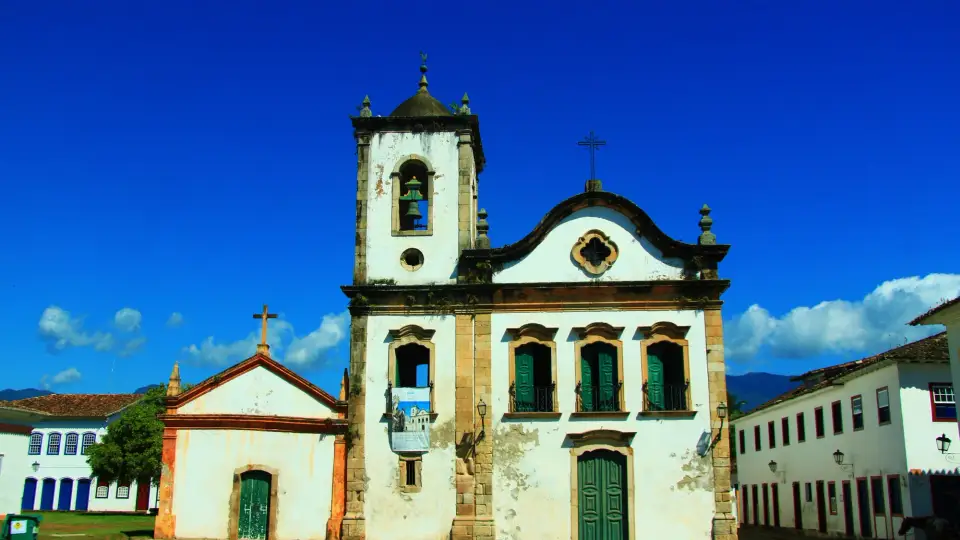
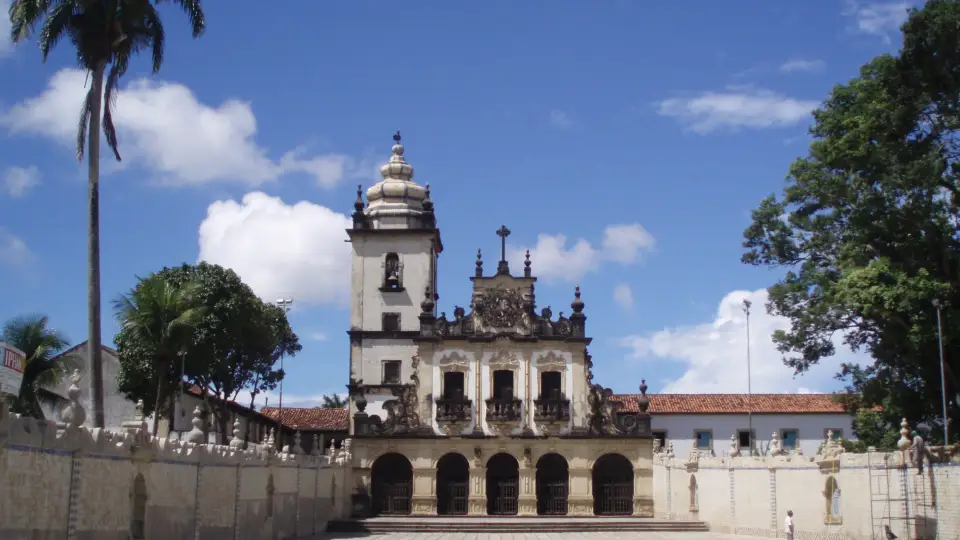
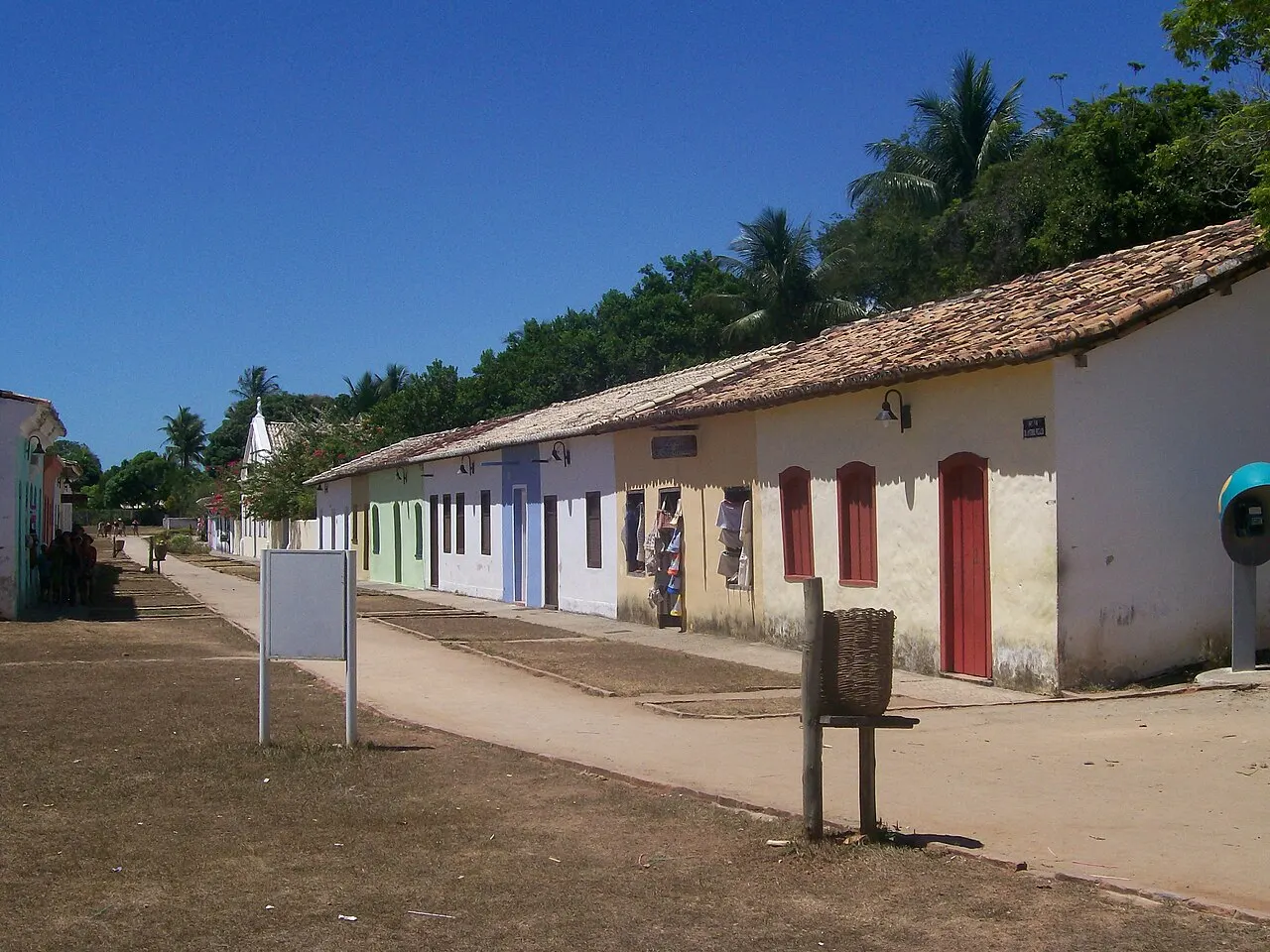
The oldest core of the main town occupies the heights above the river and the sea, on a lawn with low, colorful houses. The visit begins at the Marco do Descobrimento, a stone column with the Portuguese coat of arms whose origin is debated, and continues to the Church of Nossa Senhora da Pena, which stands on the site of the 1535 mother church; the present building dates from the 18th century and holds old sacred images. Alongside, the former Casa de Câmara e Cadeia houses the museum, with pieces of Indigenous culture and navigation instruments. The Church of the Misericórdia usually opens only on special dates, and farther on are the lighthouse, with a view of the lower town, and the Church of São Benedito, next to Jesuit ruins. The complex has been a National Monument since 1973. There is parking at the top, with no stairs, but the dirt and grass ground makes wheelchairs difficult. Confirm the museum's and churches' hours with the Tourism Office, since they are not published in a current source.
The Buranhém River empties into the sea next to downtown Porto Seguro and separates the main town, to the north, from Arraial d'Ajuda, to the south.
Check access
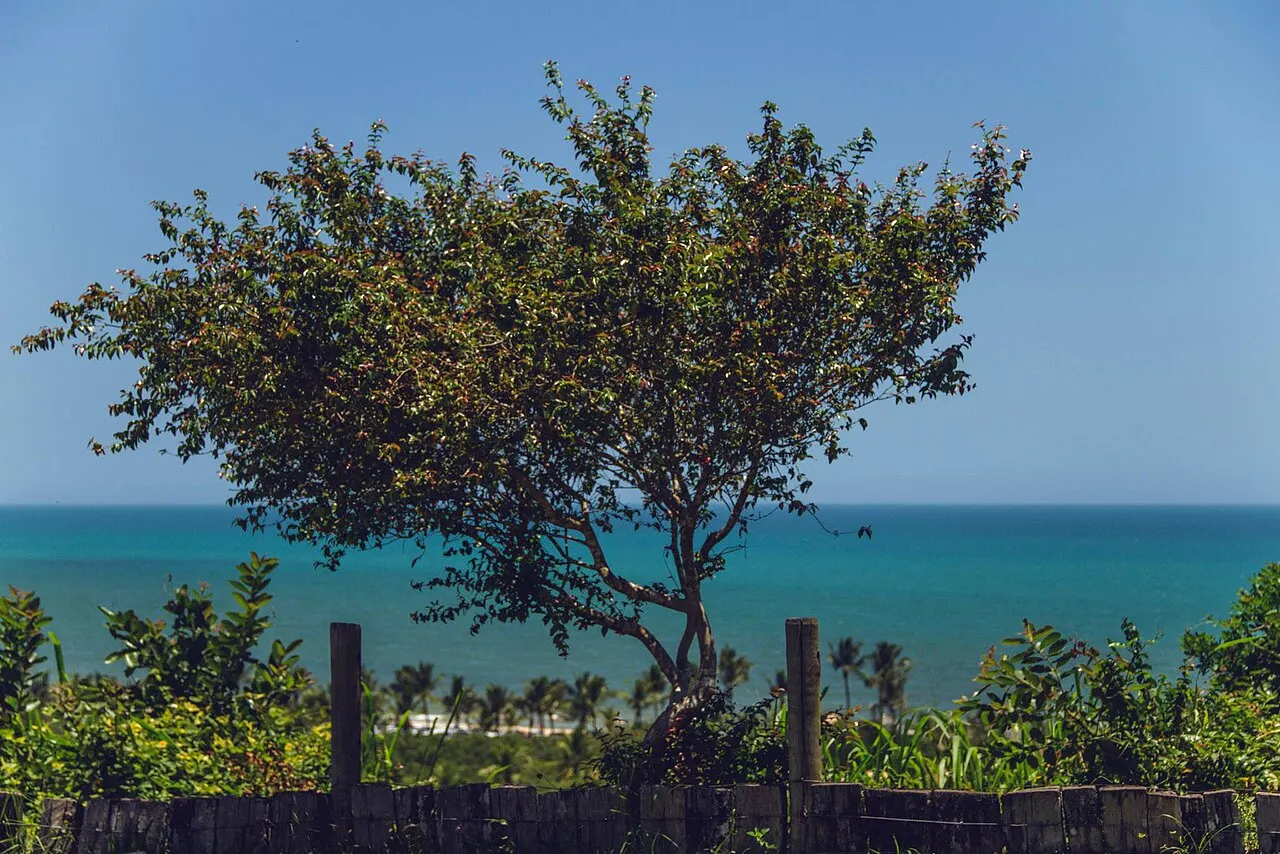
Quadrado of Trancoso
The square that gave rise to Trancoso is a rectangular lawn, despite the name, with colorful houses on both sides and the small colonial-era Church of São João Batista at the far end, on the bluff, facing the sea. The Jesuit village of 1586 grew around it. The Quadrado lies within the area protected by Iphan, and changes to facades, roofs or the lawn require the agency's approval. The houses have become restaurants, shops and inns, and at night the square is the center of the village. Behind the church, the view takes in the beaches and the Trancoso River below.
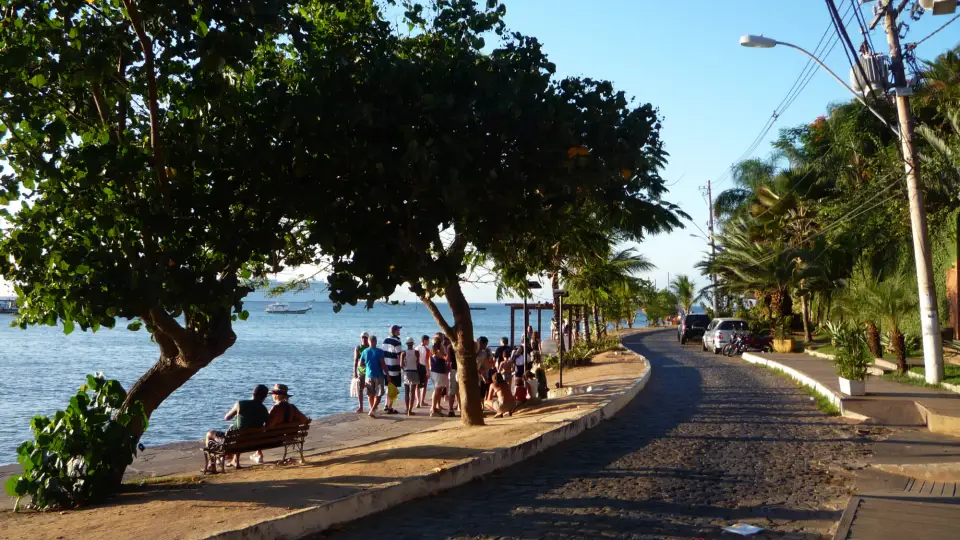
A village on the bluff, around the Quadrado, with pricier inns and restaurants, wide beaches below and the dirt road that continues to Espelho and Caraíva.
Check access

Praia do Espelho
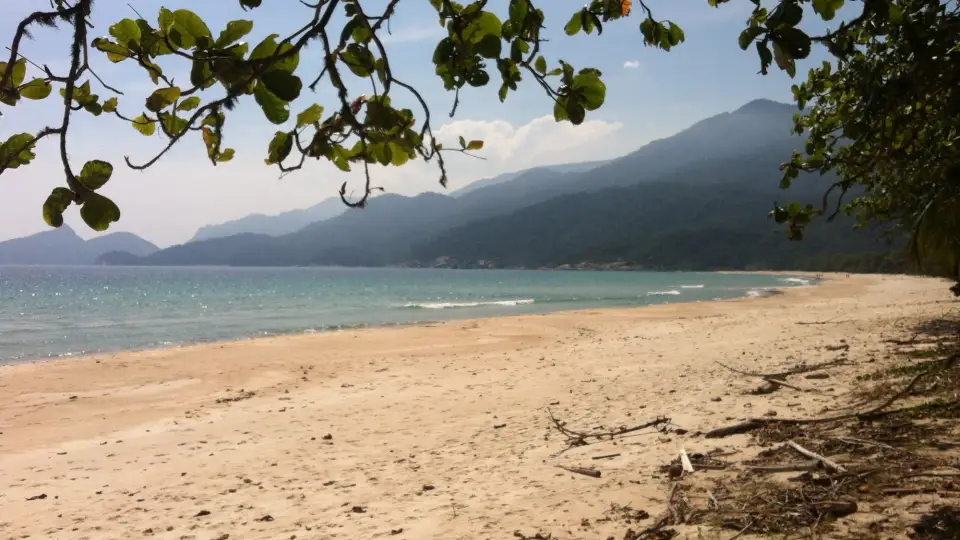
About 24 km south of the Quadrado, at the end of a stretch of dirt road, the pale-sand beach under cliffs forms warm pools among the reefs at low tide. The parking lots are on top of the cliff and are paid. Plan by the tide table: at high tide, the pools disappear. After heavy rain, the road calls for a high-clearance car or a 4x4. It can also be reached from Caraíva, along the sand, by boat or by car.
Highway BR-367 reaches the main town from Eunápolis, where it crosses BR-101.
Check access
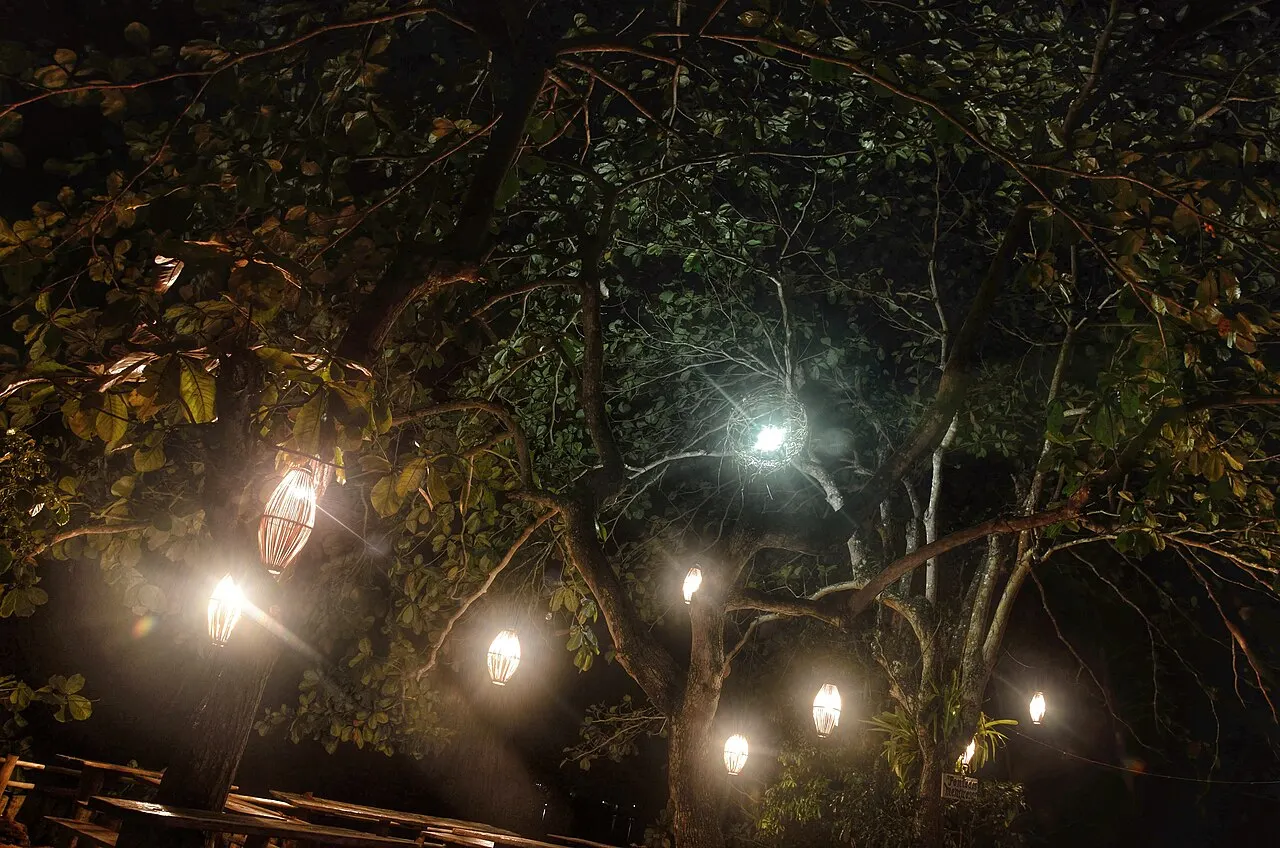
Caraíva
The village sits on a spit of sand between the Caraíva River and the sea, and has no cars: vehicles stay in the parking lot on the other side of the river, and the boat crossing is under 200 meters. The streets are sand, the inns are generally simple, and at night forró pé de serra fills the dance halls. Electricity arrived relatively recently and still fails at summer peaks, and there is no bank or ATM. By day, you float down the river, go to the Pataxó village of Barra Velha, or to Ponta do Corumbau. Avoid arriving at night.
A village between the Caraíva River and the sea, car-free, with sand streets, simple inns and forró at night.
Check access
Passarela do Descobrimento
Known as Passarela do Álcool, it is the pedestrian street of the center, near the pier, which at night works as an open-air market: bars, restaurants, drink stands and craft shops. It is the classic night out for those who sleep in the main town, and pairs well with the ferry back to Arraial, which runs all night.
In the main town, the Historic City occupies the heights, near the bus station and the airport, which is about 2 km from the center.
Check access
Recife de Fora Municipal Marine Park
A protected coral reef bank of about 17.5 km², some five nautical miles from the coast, or about an hour by boat from the center. At low tide, part of the reef is exposed and forms natural pools for snorkeling. The visit depends on the tide and can only be made on an authorized tour, stepping only on the marked area; boats leave the center at the time the day's tide allows. There is a municipal visitation fee in addition to the tour: check the amount, date and what is included with the agency when booking.
South of the Buranhém, Arraial d'Ajuda sits on a plateau surrounded by Atlantic Forest and mangrove, and drops down to the beaches; at Taípe, the cliffs reach 20 m. Coral reefs run along the coast and form pools at low tide, as at Parracho, Espelho and Recife de Fora, a marine park about an hour by boat from the center.
Check access
Jaqueira Pataxó Reserve
A forest area kept by the Pataxó within the Coroa Vermelha Indigenous Land, north of the center. The visit is guided by the community: a talk about the people's history, a dance performance, a guided tour of the village and, on many tours, fish roasted in patioba leaf. The last kilometers are dirt road. Opening days, hours and price change; arrange with the reserve or a local agency before going.
On the border with Santa Cruz Cabrália, to the north, where the first Mass of 1500 was celebrated.
Check access
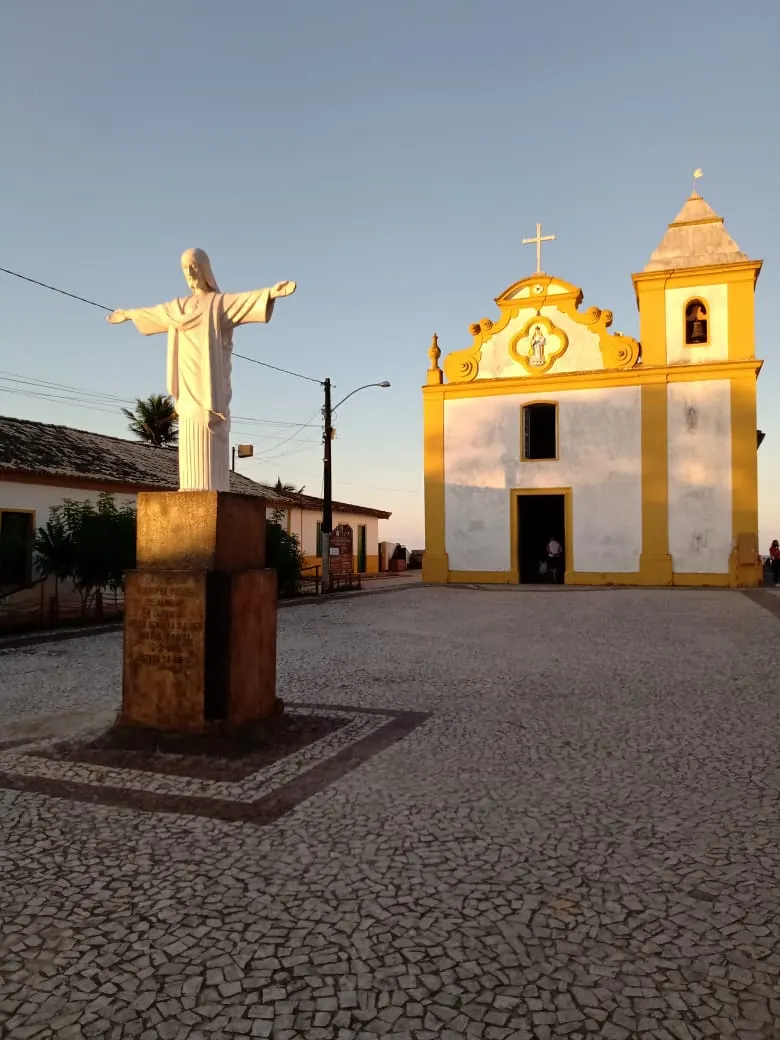
Church of Nossa Senhora d'Ajuda
The church of Arraial d'Ajuda was begun by the Jesuits in 1550, and the present building dates from 1772. It stands on top of the plateau, in the square where the vans from the ferry end their route, and is the center of the pilgrimage of August 6 to 15. A natural starting point for heading down to the beaches or into Rua do Mucugê.
The ferry crosses the mouth in about ten minutes; by road, the detour is more than 50 km. This crossing organizes the trip: the main town has the airport, bus station and services, and the beach districts are on the other side.
Check access
Rua do Mucugê
The main tourist street of Arraial d'Ajuda, with shops, studios and restaurants. Next to it, the Broadway is a cobbled street with bars. At night it is the center of the village's activity.
Across the river, on top of a plateau, with the church of Nossa Senhora d'Ajuda, Rua do Mucugê and the beaches of Mucugê, Parracho, Pitinga and Taípe below.
Check access
Nilo’s itinerary
Start with the basic programme and choose extensions for the time you have.
Plan my days in the app ↗Day 1 · Porto Seguro: the Historic City and the Passarela
In the morning, cross the ferry on foot if you are in Arraial (about ten minutes) and go up by taxi or ride-hailing app to the Historic City, in the upper part of the main town.
Start at the Marco do Descobrimento and the Church of Nossa Senhora da Pena, continue to the museum in the former Casa de Câmara e Cadeia, the lighthouse and the Church of São Benedito; allow about three hours.
Have moqueca for lunch downtown, in the lower part.
In the afternoon, take a bus or ride-hailing app to Taperapuã Beach, 7 km from the center, if you want a beach with huts and music; those who prefer quiet rest and save the sea for the next day.
At night, stroll the Passarela do Descobrimento, near the pier, and return to Arraial on the ferry, which runs all night, hourly overnight.
Day 2 · Arraial d'Ajuda: church, cliffs and pools
Start at the Church of Nossa Senhora d'Ajuda, at the top of the main square.
Go down to Mucugê Beach and walk ten minutes south to Parracho, where the natural pool forms at low tide.
At lunchtime, take a van or drive to Pitinga Beach, with its colorful cliffs; those with energy can walk about 25 minutes to Lagoa Azul.
With children, swap Pitinga for an afternoon at the Arraial d'Ajuda Eco Parque, checking first that it is open that day.
Late in the afternoon, head up to Rua do Mucugê and the Broadway for dinner.
Day 3 · Trancoso and Praia do Espelho
Day trip
Trancoso is about 25 km south of Porto Seguro counting the ferry crossing, about half an hour by car from the center of Arraial; the Águia Azul buses and the vans leave from the Arraial side of the ferry. Praia do Espelho is about 24 km beyond the Quadrado, with a final dirt stretch and paid parking on top of the cliff. Go by rental car, taxi or transfer, and order the day by the tide: if low tide falls in the morning, start at Espelho and finish at the Quadrado; if it falls in the afternoon, do the Quadrado and Praia dos Coqueiros first.



If you stay longer
Day 4 · Recife de Fora and the Jaqueira Reserve
The day before, book the Recife de Fora tour for the day low tide allows, and arrange the visit to the Jaqueira Pataxó Reserve with the reserve itself or an agency, checking the opening days (there are reports that it closes on Sundays).
If low tide falls in the morning, do Recife de Fora first: the boat leaves from the center of Porto Seguro, and the tour takes about four and a half hours. After lunch downtown, continue to Jaqueira, to the north, and allow three to four hours for the visit.
If low tide falls in the afternoon, reverse the order: Jaqueira in the morning, lunch downtown and Recife de Fora in the afternoon.
If you have time left on the way to Jaqueira, stop at Coroa Vermelha, where the first Mass of 1500 was celebrated, to see the Pataxó crafts.
Have dinner downtown and cross the ferry to Arraial.

Food
Moqueca baiana
Fish or seafood cooked and served in a clay pot, with tomato, onion, cilantro and dendê oil, the African hallmark of the Bahian version, often with coconut milk. It usually comes as a portion for two, in downtown restaurants and beach huts.
Fish in patioba leaf
A Pataxó preparation: the fish, seasoned with annatto, onion and cilantro, is wrapped in thick leaves of the patioba palm and roasted over embers for about 20 minutes; the leaf's oil perfumes the meat. It comes with boiled cassava (aipim) and farofa. It appears on visits to the Jaqueira Reserve and in some restaurants in the region.
Acarajé
A fritter of black-eyed pea dough, onion and salt, fried in dendê oil, which the baianas split open and fill with vatapá, caruru, sautéed shrimp and hot pepper. It is sold by baianas at stands, on the waterfront and downtown, as a late-afternoon snack.
Bobó de camarão
Shrimp cooked with green herbs and coconut milk, mixed into a cassava purée with dendê, ginger and dried shrimp, and served with white rice. It shares the menu with moqueca in Bahian restaurants.
Tapioca and coconut water
On the sand, vendors and beach huts make filled tapioca crepes on a griddle, sweet or savory, and open chilled green coconuts. It is the simplest snack of a beach day.
Where to eat
- Porto Seguro center
Moqueca baiana and bobó de camarão at a regional-food restaurant, as a portion for two, at lunch after the Historic City or at dinner before the Passarela.
- Orla Norte
Platters of fish, shrimp and squid and acarajé from stands at the Taperapuã huts, for those spending the day on the beach.
- Coroa Vermelha
Fish roasted in patioba leaf, a Pataxó preparation with annatto and cilantro, served with cassava and farofa on visits to the Jaqueira Reserve; confirm whether the meal is included when arranging the visit.
- Arraial d'Ajuda
Dinner on Rua do Mucugê and the Broadway, where Bahian cooking, grilled fish and restaurants of other cuisines mix, with the advantage of walking back.
- Trancoso
Restaurants set in the houses of the Quadrado, with fish and seafood cooking, for dinner after the day at Espelho.
- Caraíva
Fish and moqueca at simple restaurants in the village, before the forró.
$: tapioca, acarajé or a platter at a beach hut · $$: moqueca as a portion for two or a main course at a restaurant · $$$: restaurant on the Quadrado of Trancoso or with author cuisine · 2026-10-16
Day trips
Trancoso and Praia do Espelho
Trancoso is about 25 km south of Porto Seguro counting the ferry crossing, about half an hour by car from the center of Arraial; the Águia Azul buses and the vans leave from the Arraial side of the ferry. Praia do Espelho is about 24 km beyond the Quadrado, with a final dirt stretch and paid parking on top of the cliff. Go by rental car, taxi or transfer, and order the day by the tide: if low tide falls in the morning, start at Espelho and finish at the Quadrado; if it falls in the afternoon, do the Quadrado and Praia dos Coqueiros first.
Caraíva
The village is about 60 km south of Trancoso, with much of the way on dirt road: by car, close to two hours in dry weather; by Águia Azul bus, about 3 hours from the Arraial side of the ferry. From the parking lot in Nova Caraíva, a boat crosses the river to the village in a few minutes. Given the distance, it does not work as a same-day round trip: it is an extension of at least one night, added to the days at your base. Arrive by day, walk the village, float down the river or go to the Barra Velha village, and stay for the forró. Bring cash.
Where to begin
Porto Seguro: the Historic City and the Passarela
In the morning, cross the ferry on foot if you are in Arraial (about ten minutes) and go up by taxi or ride-hailing app to the Historic City, in the upper part of the main town.
Arraial d'Ajuda: church, cliffs and pools
Start at the Church of Nossa Senhora d'Ajuda, at the top of the main square.
Recife de Fora and the Jaqueira Reserve

The day before, book the Recife de Fora tour for the day low tide allows, and arrange the visit to the Jaqueira Pataxó Reserve with the reserve itself or an agency, checking the opening days (there are reports that it closes on Sundays).
Money
The currency is the real (BRL). In Porto Seguro, Arraial d'Ajuda and Trancoso, cards are accepted at most restaurants, shops and inns, and Pix, the Brazilian instant payment system, is also common, but it is wise to carry cash for the ferry, whose companies do not always accept cards, for beach vendors and for vans. In Caraíva there is no bank or ATM: withdraw cash before taking the road. In November 2024, the pedestrian crossing on the ferry cost R$ 5.40, charged only on the way to Arraial. Tours such as Recife de Fora add up the boat and the municipal visitation fee; check what is included when booking. In restaurants, the 10% service charge works as a tip: it is not mandatory, and the establishment must state the percentage and amount on the bill or menu. Prices rise in summer, the high season.
Getting there and around
Getting there by air
Porto Seguro Airport (BPS), run by Sinart, is in the upper part of the main town, about 2 km from the center and some ten minutes by car. All year it receives flights from Azul, Gol and LATAM from cities such as São Paulo, Rio de Janeiro, Belo Horizonte, Brasília and Salvador, and from Aerolíneas Argentinas from Buenos Aires (Aeroparque); in the summer season there are also seasonal flights and charters from Buenos Aires (Ezeiza) and other Argentine cities. Routes change with the season, so check with the airline before buying. At arrivals there is a taxi desk, ride-hailing apps work, and the city bus stops about 100 m from the terminal, heading to the ferry area. Salvador is about 700 km away by road.
The Buranhém River ferry
It connects the center of Porto Seguro to Arraial d'Ajuda 24 hours a day: every half hour during the day and every hour overnight, with a crossing of about ten minutes. The line of cars forms on Rua do Cais, and attendants collect fares there; pedestrians and passengers pay only in the direction from Porto Seguro to Arraial. In November 2024, pedestrians paid R$ 5.40 and a car with driver R$ 20 on weekdays and R$ 24.75 on weekends and holidays. Not all companies accept cards. In high season and on holidays, the line of cars can exceed an hour.
From the airport to the districts
A taxi or ride-hailing app straight to Arraial or Trancoso usually goes by road, because the detour avoids the ferry, and the route is more than 50 km longer and costs more. The most economical option with some comfort is to drive to the ferry, cross on foot and take a van, bus or taxi on the Arraial side; the vans end at the church square. On the way back for a flight, the road avoids the risk of a ferry line.
Buses and vans
Viação Águia Azul connects the Arraial side of the ferry to the center of Arraial, Trancoso and Nova Caraíva, the stop before the boat crossing. To Caraíva it is about 3 hours, on a basic bus, with few departures a day; check current times on the company's website or at the stop. Vans leave when full and cover short stretches, such as from the center of Arraial to Pitinga.
Car
Renting a car makes sense for Praia do Espelho, Caraíva and the remote beaches. Highway BR-367 reaches the main town from Eunápolis, where it crosses BR-101. After Trancoso, the way to Espelho and Caraíva is dirt; in dry weather, ordinary cars usually get through, and after heavy rain the stretch calls for a high vehicle or a 4x4. Avoid driving those stretches at night.
Long-distance buses
Buses to other cities leave from the bus station, in the upper part of the main town; from Salvador, the trip takes about 12 hours, usually overnight.
Safety
The precautions are those of a very busy beach destination. Do not leave your phone, wallet and keys alone on the sand while you go into the sea, carry your bag in front on the Passarela and in the ferry lines, and prefer a taxi or ride-hailing app at night on empty streets in the main town. On open-sea beaches, watch the flags and lifeguard notices and avoid swimming far from the reef strip when the sea is rough. In the natural pools, the corals cut: water shoes help. The dirt roads to Espelho and Caraíva have little signage and lighting, and it is better to drive them by day. Dengue circulates on the coast of Bahia; use repellent, especially in the rainy summer.
Etiquette tips
Ask before taking photos in the villages
At the Jaqueira Reserve and in Pataxó villages, ask before photographing people, dances and rituals. The visit is led by the community, and the crafts sold there are the families' income.
Stay on the marked reef area
At Recife de Fora and the natural pools, step only where the guide indicates and do not remove corals, shells or animals: trampling damages the reef, and the visit is limited to a marked area.
Settle the chair at the beach hut
At beach huts, ask when you sit down whether chairs and umbrellas are charged separately or whether there is a minimum order. The rule changes from hut to hut.
The 10% on the bill
The service charge appears itemized on the bill and is not mandatory: it works as a tip. It is common to pay it when the service pleased you; those who prefer not to can ask to have it removed.
Mistakes to avoid
Calling a ride-hailing app from the airport straight to Arraial
The route usually goes by road, more than 50 km longer. Going to the ferry and crossing on foot costs less.
Returning to the airport by ferry at peak hours
In summer and on holidays, the line of cars exceeds an hour. To avoid missing your flight, go back by road or cross on foot.
Booking Espelho or Recife de Fora without checking the tide
At high tide, the natural pools disappear. The tide table decides the day.
Going to Caraíva without cash
There is no bank or ATM in the village. Withdraw cash in Porto Seguro, Arraial or Trancoso.
Arriving in Caraíva at night
The dirt road, the parking lot and the boat crossing are easier by day, and the village's sand streets have little lighting.
Taking the dirt road after days of rain in a low car
The way to Espelho and Caraíva bogs down. Ask at your inn how the road is before setting out.
Useful phrases
Oxente! / Oxe!
A Bahian expression of surprise or disbelief, a shortening of «ô, gente».
Porreta
Very good, excellent.
Buzu
Bus, in Bahian speech.
Aipim
Cassava, the root that goes with fish and into bobó.
Beiju
Tapioca, in Bahian speech.
A que horas é a maré baixa hoje?
The question that decides the trip to the natural pools. (What time is low tide today?)
A balsa sai de quanto em quanto tempo?
To find out how often the crossing runs. (How often does the ferry leave?)
Aceita Pix ou só dinheiro?
Pix is the Brazilian instant payment system, widely used in shops. (Do you accept Pix or only cash?)
Where to stay
- Arraial d'Ajuda · First trip, couples and families who want beaches and dinner within walking distance: It is ten minutes by ferry from the center of Porto Seguro and on the road to Trancoso, Espelho and Caraíva, with beaches, restaurants and Rua do Mucugê on foot or by van. The downside is depending on the ferry to reach the main town and the airport, and its line in summer.
- Porto Seguro center · Those arriving late by plane or bus, those who want to go out at night and those who will not rent a car: The airport, bus station, Historic City, the Recife de Fora pier and the Passarela are all close. The downtown beach is less popular, and to reach the beaches of Arraial and Trancoso you have to cross the ferry.
- Orla Norte · Those who want a hotel or resort with a pool and a beach with facilities: The hotels face beaches such as Taperapuã, with huts and service all day. It is far on foot from the center and from everything on the other side of the river, and the livelier huts have loud music.
- Trancoso · Those who want a more upscale inn, quiet and restaurants on the Quadrado: The Quadrado and the beaches of Coqueiros and Nativos are on foot, and Espelho and Caraíva are closer than from Arraial. It is the priciest area, and the main town, the airport and Recife de Fora are more than half an hour away, plus the ferry.
- Caraíva · Those who accept simplicity, no car and electricity that may fail at the summer peak: Sleeping in the village is the only way to have the river, the beach and the forró without two long dirt-road trips on the same day. The inns are generally simple, many in the back of residents' houses, there is no ATM, and everything outside the village requires a boat and a dirt road.
$: simple inn or hostel in central Porto Seguro or in Caraíva · $$: inn in Arraial d'Ajuda or hotel on the Orla Norte · $$$: upscale inn or hotel in Trancoso · 2026-10-16
Districts
Porto Seguro center
The lower part of the main town, by the Buranhém River, with the ferry dock, the pier where boats leave for Recife de Fora and the Passarela do Descobrimento, which at night brings together bars, restaurants and crafts. It is practical for those arriving by plane or bus who want to go out at night.
Historic City
The high ground where Pero do Campo Tourinho built the mother church in 1535: the stone marker, the churches, the museum in the former Casa de Câmara e Cadeia (town hall and jail) and a lawn with a sea view. It takes about three hours to see, preferably in the morning.
Orla Norte
The strip of beaches north of the center, with Taperapuã 7 km away, big beach huts with music, hotels and resorts. It suits those who want a beach with facilities and daytime parties, and it depends on buses, a car or a ride-hailing app.
Arraial d'Ajuda
Across the river, on top of a plateau, with the church of Nossa Senhora d'Ajuda, Rua do Mucugê and the beaches of Mucugê, Parracho, Pitinga and Taípe below. It is the most balanced base for those who want beaches, restaurants within walking distance and road access to Trancoso.
Trancoso
A village on the bluff, around the Quadrado, with pricier inns and restaurants, wide beaches below and the dirt road that continues to Espelho and Caraíva.
Caraíva
A village between the Caraíva River and the sea, car-free, with sand streets, simple inns and forró at night. It lies at the end of a dirt road and a boat crossing, and calls for at least one night.
Coroa Vermelha
On the border with Santa Cruz Cabrália, to the north, where the first Mass of 1500 was celebrated. It is Pataxó Indigenous Land, with crafts for sale, and gives access to the Jaqueira Reserve.
History
1500 · Cabral's fleet sights Monte Pascoal
On April 22, Pedro Álvares Cabral's expedition sights Monte Pascoal, about 62 km south of the present town. On April 26, Friar Henrique de Coimbra celebrates the first Mass on the islet of Coroa Vermelha, and on May 1 Pero Vaz de Caminha dates his letter to the king «from this Porto Seguro, from your Island of Vera Cruz».
1534 · Captaincy of Porto Seguro
John III creates the hereditary captaincies, and that of Porto Seguro is granted to Pero do Campo Tourinho in a charter of May 27, 1534. The strip ran from the Mucuri River to the Poxim River.
1535 · The grantee's mother church
Tourinho builds the first Mother Church of Nossa Senhora da Pena on the high ground where the Historic City stands today. The present building dates from the 18th century.
1549–1550 · The Jesuits in Arraial
The first Jesuits arrive with Tomé de Sousa in 1549, and the church of Nossa Senhora d'Ajuda is begun in 1550. Today's building dates from 1772.
1586 · The village that became Trancoso
The Jesuits found the village of São João Batista dos Índios, origin of the town of Trancoso, around a square with the church at its far end.
1587 · An almost empty captaincy
Gabriel Soares de Sousa describes the captaincy as «practically uninhabited» after the Aimoré attacks.
1761 · Back to the Crown
The Portuguese Crown reincorporates the captaincy, which becomes part of the great captaincy of Bahia.
1891 · Municipality
Porto Seguro is emancipated on June 30, 1891.
1961 · Monte Pascoal National Park
The mountain sighted in 1500 and the surrounding forest become a national park, on traditional Pataxó territory; today its management involves ICMBio, Funai and the Pataxó communities.
1968–1973 · The Historic City protected
The historic site is listed as national heritage in 1968, and a 1973 federal decree declares the Upper City area a National Monument.
Late 1970s · Travelers discover Trancoso
Hippies arrive in Trancoso, then a lawn with houses and a church; from the 1990s on, roads and airports multiply tourism in the region.
1996 · Coroa Vermelha Indigenous Land
The Pataxó territory of Coroa Vermelha, between Porto Seguro and Santa Cruz Cabrália, is demarcated. Pataxó crafts are the main activity there.
1997 · The new airport
Porto Seguro airport, opened in 1982, reopens with a new terminal and a longer runway for large aircraft.
1999 · World Heritage
UNESCO inscribes the Discovery Coast Atlantic Forest Reserves, a group of protected areas in Bahia and Espírito Santo that includes the Monte Pascoal, Descobrimento and Pau Brasil national parks.
Complete history
The landing of 1500
On April 22, 1500, Pedro Álvares Cabral's fleet sighted an isolated mountain on the southern coast of Bahia and called it Monte Pascoal. On April 24, the fleet anchored in a sheltered harbor it named Porto Seguro; the Portuguese made their first contact with the peoples of the beach and, on April 26, celebrated the first Mass on the islet of Coroa Vermelha. The scribe Pero Vaz de Caminha described it all in a letter to King Manuel I, dated May 1 «from this Porto Seguro». The original was kept in the Torre do Tombo in Lisbon, where it was located in 1773, and it was only published in 1817, by Manuel Aires de Casal, in the Corografia Brasílica. The exact point of the first landing is disputed among Porto Seguro, Santa Cruz Cabrália and Prado, and that is why the whole region presents itself as the Discovery Coast.
A difficult captaincy
In 1534, the Crown divided the coast into hereditary captaincies and gave that of Porto Seguro to Pero do Campo Tourinho. In 1535 he built the church of Nossa Senhora da Pena on the heights above the Buranhém River, where the Historic City stands today. The Jesuits arrived in 1549, began the church of Arraial d'Ajuda in 1550 and in 1586 founded the village of São João Batista dos Índios, which gave rise to Trancoso. Colonization made little progress: in 1587, after the Aimoré attacks, the captaincy was described as practically uninhabited, and in 1761 the Crown reincorporated it into the captaincy of Bahia.
From sleepy town to beach destination
Modern recognition came through history: the Upper City site was listed in 1968 and declared a National Monument in 1973. In the same decade, backpackers found Arraial d'Ajuda and Trancoso still isolated. The airport, opened in 1982 and expanded in 1997, and the roads brought mass tourism to the main town, while Trancoso became a destination of expensive inns and Caraíva stayed car-free.
The Pataxó and the forest
The Pataxó live in several territories of the municipality and its neighbors: Coroa Vermelha, demarcated in 1996, with the Jaqueira Reserve; Barra Velha, near Caraíva; and the villages of Monte Pascoal, whose park, created in 1961 on traditional territory, is now managed with the participation of the communities. In 1999, UNESCO inscribed the Discovery Coast Atlantic Forest Reserves as a World Heritage Site, and it is in those forest fragments and in the villages that the history before 1500 remains visible to visitors.
The exact point of the first landing is disputed among Porto Seguro, Santa Cruz Cabrália and Prado. The first Mass, that one with a fixed place, took place on the islet of Coroa Vermelha, on April 26, 1500.
Geography and shape of the city
The river that divides
The Buranhém River empties into the sea next to downtown Porto Seguro and separates the main town, to the north, from Arraial d'Ajuda, to the south. The ferry crosses the mouth in about ten minutes; by road, the detour is more than 50 km. This crossing organizes the trip: the main town has the airport, bus station and services, and the beach districts are on the other side.
Upper City and lower city
In the main town, the Historic City occupies the heights, near the bus station and the airport, which is about 2 km from the center. Below, by the river, are the pier, the Passarela do Descobrimento and the shops. To the north runs the Orla Norte, with Taperapuã Beach 7 km from the center, as far as Coroa Vermelha and Santa Cruz Cabrália.
Cliffs, reefs and forest
South of the Buranhém, Arraial d'Ajuda sits on a plateau surrounded by Atlantic Forest and mangrove, and drops down to the beaches; at Taípe, the cliffs reach 20 m. Coral reefs run along the coast and form pools at low tide, as at Parracho, Espelho and Recife de Fora, a marine park about an hour by boat from the center. The municipality is large, at 2,285 km², and the road turns to dirt after Trancoso, toward Praia do Espelho and Caraíva.
Climate
Humid tropical, warm all year: average highs range from 25 °C in June and July to 29 °C in February, and lows from 19 °C in August to 24 °C. Rain is well distributed, about 1,400 mm a year, with August and September the driest months on average and March, April, November and December the rainiest.
Culture
The Pataxó
The Indigenous presence is part of daily life in the region. In Coroa Vermelha, Pataxó crafts, such as seed necklaces and kitchen utensils, are sold in the village; at the Jaqueira Reserve, the community receives visitors to talk about its history, dance and show the village; near Caraíva is the Barra Velha village; and in the villages of Monte Pascoal, Pataxó guides lead trails created with ICMBio's support.
Axé, capoeira and forró
In the main town, the sound of the Orla Norte huts and the Passarela is axé, and capoeira circles form by the water. In Caraíva, the nights are forró pé de serra. Arraial d'Ajuda and Trancoso sit between the two, with bars, live music and restaurants that make the night.
The legacy of the 1970s
The travelers who reached Arraial d'Ajuda and Trancoso in the late 1970s left behind small inns, crafts and a village rhythm. Trancoso became a destination of expensive inns and hotels, but the Quadrado is still a square for religious festivals, and the calendar of saints still organizes the villages' year.
Saints' festivals
The Catholic festivals mix procession, samba and street music: São Sebastião and São Brás in the Quadrado of Trancoso, the pilgrimage of Nossa Senhora d'Ajuda in August and the Discovery Week in the Historic City, in April.
Trancoso's square is a rectangle of grass; the name stuck from the way residents have always called it.
Festivals and events
Festa de São Sebastião (Trancoso)
January 20, starting the evening before. Residents sing and play drums and guitars in the Quadrado, and the party continues through the night with samba and forró.
Festa de São Brás (Trancoso)
It begins the night of February 2 and lasts about 24 hours, with a procession through the Quadrado and a wooden pole raised in front of the church. It is the oldest religious festival in the village.
Discovery Week
In the week of April 22, the Historic City hosts a stage in the square, food stands and projections on the Church of Nossa Senhora da Pena.
Pilgrimage of Nossa Senhora d'Ajuda
From August 6 to 15, pilgrims gather at the church of Arraial d'Ajuda.
Books and films
Letter of Pero Vaz de Caminha (1500)
The account by the scribe of Cabral's fleet to King Manuel I, dated «from this Porto Seguro» on May 1, 1500: Monte Pascoal, the first contacts on the beach, the barter and the first Mass. Located in the Torre do Tombo in 1773 and published in 1817, it is short, in the public domain and helps in recognizing the places of the Discovery Coast.
The Discovery of Brazil (Humberto Mauro, 1937)
A film that stages the arrival of 1500 with texts from Caminha's letter and a score by Heitor Villa-Lobos. It shows how the episode became a national narrative, and why the region presents itself as the cradle of the country.
Frequently asked questions
Porto Seguro: how do I get from the airport to Arraial d'Ajuda?
A direct taxi or ride-hailing car usually goes by road, more than 50 km longer and more expensive. It costs less to drive to the ferry, in the center, cross on foot and take a van, bus or taxi on the Arraial side.
Porto Seguro: how does the ferry to Arraial d'Ajuda work?
It runs 24 hours a day, every half hour during the day and every hour overnight, with a crossing of about ten minutes. In November 2024 pedestrians paid R$ 5.40, only on the way to Arraial, and not all companies accept cards.
Porto Seguro: how many days should I stay?
Three days, based in Arraial d'Ajuda, and four if possible: the main town, Arraial, Trancoso with Praia do Espelho and, on the fourth, Recife de Fora and the Jaqueira Reserve. Caraíva stays outside this count and calls for at least one night in the village.
Porto Seguro: where should I stay?
Arraial d'Ajuda is the most balanced base, ten minutes by ferry from the main town and on the road to Trancoso, but it depends on the ferry line in summer. The center suits those arriving late or going out at night, and those who only want a beach party can stay in the main town; Trancoso is the priciest and quietest area.
Porto Seguro: how do I visit Trancoso and Praia do Espelho?
Go by rental car, taxi or transfer: Espelho is about 24 km beyond the Quadrado, with a final dirt stretch. If low tide falls in the morning, start at Espelho and finish at the Quadrado; if it falls in the afternoon, do the Quadrado and Praia dos Coqueiros first.
Porto Seguro: can I visit Caraíva and return the same day?
It does not work: the village is about 60 km south of Trancoso, much of it on dirt road, close to two hours by car in dry weather, and the last stretch is a boat across the river from Nova Caraíva. It is an extension of at least one night; arrive by day and bring cash.
Porto Seguro: how do I visit Recife de Fora?
Only on an authorized tour, which leaves the center at the time the day's low tide allows, about an hour by boat. There is a municipal visitation fee in addition to the tour: check the amount, date and what is included with the agency when booking.
Porto Seguro: when is the best time to go?
August and September, the driest months on average and the safest for the dirt roads. December to February is summer, hotter, more crowded and more expensive, and March, April, November and December have the most rain.
Porto Seguro: do I need cash?
In Porto Seguro, Arraial and Trancoso, cards are accepted at most places and Pix is common, but carry cash for the ferry, whose companies do not always accept cards, for beach vendors and for vans. In Caraíva there is no bank or ATM.
Other cities in the country
Brazil ↗- Days
- 4
- When
- Apr–Jun
- Per person/day
- Average 615 BRLMid-range · per person/day
Cost scope
Per person per day: accommodation, meals, urban transport, visits and a small allowance for extras. Flights excluded; larger purchases vary. Editorial estimate, not a quote.
- Days
- 2–3
- When
- Apr–May · Sep
- Per person/day
- Average 400–700 BRLMid-range · per person/day
Cost scope
Per person per day: accommodation, meals, urban transport, visits and a small allowance for extras. Flights excluded; larger purchases vary. Editorial estimate, not a quote.
- Days
- 2–3
- When
- Jan–Mar · Sep–Dec
- Per person/day
- Average 350–550 BRLMid-range · per person/day
Cost scope
Per person per day: accommodation, meals, urban transport, visits and a small allowance for extras. Flights excluded; larger purchases vary. Editorial estimate, not a quote.
- Days
- 1–2
- When
- May–Sep
- Per person/day
- Average 260–520 BRLMid-range · per person/day
Cost scope
Per person per day: accommodation, meals, urban transport, visits and a small allowance for extras. Flights excluded; larger purchases vary. Editorial estimate, not a quote.
- Days
- 3–4
- When
- Jun–Sep
- Per person/day
- Average 400–700 BRLMid-range · per person/day
Cost scope
Per person per day: accommodation, meals, urban transport, visits and a small allowance for extras. Flights excluded; larger purchases vary. Editorial estimate, not a quote.
- Days
- 2–3
- When
- Apr–Jun
- Per person/day
- Average 350–550 BRLMid-range · per person/day
Cost scope
Per person per day: accommodation, meals, urban transport, visits and a small allowance for extras. Flights excluded; larger purchases vary. Editorial estimate, not a quote.
- Days
- 3–5
- When
- Mar–Apr · Nov
- Per person/day
- Average 397 BRLMid-range · per person/day
Cost scope
Per person per day: accommodation, meals, urban transport, visits and a small allowance for extras. Flights excluded; larger purchases vary. Editorial estimate, not a quote.
- Days
- 2–4
- When
- Mar–May · Sep
- Per person/day
- Explore costsGuide estimate
Cost scope
Per person per day: accommodation, meals, urban transport, visits and a small allowance for extras. Flights excluded; larger purchases vary. Editorial estimate, not a quote.
- Days
- 4–5
- When
- Aug–Nov
- Per person/day
- Explore costsGuide estimate
Cost scope
Per person per day: accommodation, meals, urban transport, visits and a small allowance for extras. Flights excluded; larger purchases vary. Editorial estimate, not a quote.
- Days
- 3–4
- When
- Jul–Sep
- Per person/day
- Explore costsGuide estimate
Cost scope
Per person per day: accommodation, meals, urban transport, visits and a small allowance for extras. Flights excluded; larger purchases vary. Editorial estimate, not a quote.
- Days
- 3–4
- When
- Sep–Nov
- Per person/day
- Explore costsGuide estimate
Cost scope
Per person per day: accommodation, meals, urban transport, visits and a small allowance for extras. Flights excluded; larger purchases vary. Editorial estimate, not a quote.
- Days
- 2–4
- When
- May–Sep
- Per person/day
- Explore costsGuide estimate
Cost scope
Per person per day: accommodation, meals, urban transport, visits and a small allowance for extras. Flights excluded; larger purchases vary. Editorial estimate, not a quote.
- Days
- 3–5
- When
- Jun–Sep
- Per person/day
- Explore costsGuide estimate
Cost scope
Per person per day: accommodation, meals, urban transport, visits and a small allowance for extras. Flights excluded; larger purchases vary. Editorial estimate, not a quote.
- Days
- 3–4
- When
- Jun–Aug
- Per person/day
- Explore costsGuide estimate
Cost scope
Per person per day: accommodation, meals, urban transport, visits and a small allowance for extras. Flights excluded; larger purchases vary. Editorial estimate, not a quote.
- Days
- 4–5
- When
- Jan–Mar · Sep–Dec
- Per person/day
- Explore costsGuide estimate
Cost scope
Per person per day: accommodation, meals, urban transport, visits and a small allowance for extras. Flights excluded; larger purchases vary. Editorial estimate, not a quote.
- Days
- 3–4
- When
- Oct–Dec
- Per person/day
- Average 1,110 BRLMid-range · per person/day
Cost scope
Per person per day: accommodation, meals, urban transport, visits and a small allowance for extras. Flights excluded; larger purchases vary. Editorial estimate, not a quote.
- Days
- 4–7
- When
- Apr–Sep
- Per person/day
- Explore costsGuide estimate
Cost scope
Per person per day: accommodation, meals, urban transport, visits and a small allowance for extras. Flights excluded; larger purchases vary. Editorial estimate, not a quote.
- Days
- 3–4
- When
- Jan · Sep–Dec
- Per person/day
- Explore costsGuide estimate
Cost scope
Per person per day: accommodation, meals, urban transport, visits and a small allowance for extras. Flights excluded; larger purchases vary. Editorial estimate, not a quote.
- Days
- 2
- When
- Aug–Dec
- Per person/day
- Average 442 BRLMid-range · per person/day
Cost scope
Per person per day: accommodation, meals, urban transport, visits and a small allowance for extras. Flights excluded; larger purchases vary. Editorial estimate, not a quote.
- Days
- 3–5
- When
- Jan–Feb · Sep–Dec
- Per person/day
- Explore costsGuide estimate
Cost scope
Per person per day: accommodation, meals, urban transport, visits and a small allowance for extras. Flights excluded; larger purchases vary. Editorial estimate, not a quote.
- Days
- 3–5
- When
- May–Sep
- Per person/day
- Explore costsGuide estimate
Cost scope
Per person per day: accommodation, meals, urban transport, visits and a small allowance for extras. Flights excluded; larger purchases vary. Editorial estimate, not a quote.
- Days
- 2–3
- When
- Apr–Sep
- Per person/day
- Average 484 BRLMid-range · per person/day
Cost scope
Per person per day: accommodation, meals, urban transport, visits and a small allowance for extras. Flights excluded; larger purchases vary. Editorial estimate, not a quote.
- Days
- 3
- When
- Apr–May · Aug
- Per person/day
- Average 478 BRLMid-range · per person/day
Cost scope
Per person per day: accommodation, meals, urban transport, visits and a small allowance for extras. Flights excluded; larger purchases vary. Editorial estimate, not a quote.
- Days
- 3–4
- When
- Aug–Dec
- Per person/day
- Explore costsGuide estimate
Cost scope
Per person per day: accommodation, meals, urban transport, visits and a small allowance for extras. Flights excluded; larger purchases vary. Editorial estimate, not a quote.
- Days
- 2
- When
- Apr–May · Sep
- Per person/day
- Explore costsGuide estimate
Cost scope
Per person per day: accommodation, meals, urban transport, visits and a small allowance for extras. Flights excluded; larger purchases vary. Editorial estimate, not a quote.
- Days
- 3
- When
- Sep–Dec
- Per person/day
- Explore costsGuide estimate
Cost scope
Per person per day: accommodation, meals, urban transport, visits and a small allowance for extras. Flights excluded; larger purchases vary. Editorial estimate, not a quote.
- Days
- 3–5
- When
- Apr–Nov
- Per person/day
- Average 427 BRLMid-range · per person/day
Cost scope
Per person per day: accommodation, meals, urban transport, visits and a small allowance for extras. Flights excluded; larger purchases vary. Editorial estimate, not a quote.
- Days
- 4
- When
- Jul–Sep
- Per person/day
- Explore costsGuide estimate
Cost scope
Per person per day: accommodation, meals, urban transport, visits and a small allowance for extras. Flights excluded; larger purchases vary. Editorial estimate, not a quote.
- Days
- 4–5
- When
- May–Sep
- Per person/day
- Explore costsGuide estimate
Cost scope
Per person per day: accommodation, meals, urban transport, visits and a small allowance for extras. Flights excluded; larger purchases vary. Editorial estimate, not a quote.
- Days
- 3
- When
- May–Sep
- Per person/day
- Explore costsGuide estimate
Cost scope
Per person per day: accommodation, meals, urban transport, visits and a small allowance for extras. Flights excluded; larger purchases vary. Editorial estimate, not a quote.