Brazil
Jalapão
Orange dunes, springs where the body floats, and green-water waterfalls in the cerrado of eastern Tocantins, with Mateiros as the base and sand roads that call for a 4x4
Days Start with the basic programme and choose extensions for the time you have.
How the guide reaches this number
On the first, I'd sleep in Ponte Alta, after sunset at the Pedra Furada. On the second, I'd pass through the Cânion Sussuapara and reach the dunes in the afternoon window, on the way to Mateiros, where I'd stay three nights: one day to climb the Serra do Espírito Santo before dawn and rest in the afternoon, and another for the Cachoeira do Formiga, the Comunidade Mumbuca and the Ceiça and Buritizinho fervedouros, which are close to one another. On the fifth, I'd move to São Félix do Tocantins for the Fervedouro Bela Vista and the Cachoeira da Arara, and the next day leave through the north, via Lagoa do Tocantins. With four days, I'd cut São Félix and go back from Mateiros to Palmas through Ponte Alta the next morning; with less than that, most of the time goes to the road. The Cachoeira da Velha I'd leave for anyone with a sixth day.
4–5
When May to September; this is the dry season, with firmer sand roads and almost no rain from June to August.
How the guide reaches this number
From August to October average highs exceed 35 °C, and from November to April the rains turn the roads to mud and limit access to several sights
May to September; this is the dry season, with firmer sand roads and almost no rain from June to August. From August to October average highs exceed 35 °C, and from November to April the rains turn the roads to mud and limit access to several sights
Per person/day Add up lodging per night, meals per person, the guide or agency with a 4x4 vehicle, Mateiros's tourism fee and the entry fees of the fervedouros you choose; a package with transport changes the total considerably.
How the guide reaches this number
Per person per day: accommodation, meals, urban transport, visits and a small allowance for extras. Flights excluded; larger purchases vary. Editorial estimate, not a quote.
 What Nilo thinks
I'd spend five days in the Jalapão, plus the departure day back to Palmas. On the first, I'd sleep in Ponte Alta, after sunset at the Pedra Furada. On the second, I'd pass through the Cânion Sussuapara and reach the dunes in the afternoon window, on the way to Mateiros, where I'd stay three nights: one day to climb the Serra do Espírito Santo before dawn and rest in the afternoon, and another for the Cachoeira do Formiga, the Comunidade Mumbuca and the Ceiça and Buritizinho fervedouros, which are close to one another. On the fifth, I'd move to São Félix do Tocantins for the Fervedouro Bela Vista and the Cachoeira da Arara, and the next day leave through the north, via Lagoa do Tocantins. With four days, I'd cut São Félix and go back from Mateiros to Palmas through Ponte Alta the next morning; with less than that, most of the time goes to the road. The Cachoeira da Velha I'd leave for anyone with a sixth day.The Jalapão is cerrado on a grand scale: sandstone plateaus that vanish into the horizon, buriti palm veredas and almost no people, fewer than one resident per square kilometer. What draws visitors is the combination of three landscapes that rarely appear together. The orange dunes are born of erosion from the neighboring ridge and have a stream of clear water running at their foot. The fervedouros are springs where water rises through the sand with such force that the body floats, and each has its own color, from blue to green. And the rivers, like the Novo and the Formiga, run clear over white sand. Between one place and another there is sand road, which sets the pace of the trip and makes Mateiros, a town of fewer than 3,000 inhabitants, the meeting point for those who come from afar. In Mumbuca, about 30 km away, artisans sew with buriti silk the capim dourado that grows in the veredas, a craft attributed to the Xerente people, who are said to have passed it on to the community in the 1920s.
Quick facts
- Population
- 2,955 inhabitants in Mateiros and 1,919 in São Félix do Tocantins (IBGE, 2026 municipal estimates); in the 2022 Census they were 2,748 and 1,783. The Jalapão region has a density of about 0.8 inhabitants per km²
- Founded
- Mateiros was a district of Ponte Alta from 1963 and became a municipality under State Law No. 251 of February 20, 1991, installed on January 1, 1993; the same law made São Félix do Tocantins a municipality. Jalapão State Park was created by Law No. 1,203 of January 12, 2001
- Country and region
- Brazil, North Region; eastern Tocantins. Mateiros is about 300 km from Palmas by road, and the pavement ends at Ponte Alta do Tocantins
- Language
- Portuguese
- Currency
- Real (BRL, R$)
- Time zone
- UTC−3 (Tocantins time, no daylight saving time)
- Best time to visit
- May to September; this is the dry season, with firmer sand roads and almost no rain from June to August. From August to October average highs exceed 35 °C, and from November to April the rains turn the roads to mud and limit access to several sights
- Average daily cost
- Add up lodging per night, meals per person, the guide or agency with a 4x4 vehicle, Mateiros's tourism fee and the entry fees of the fervedouros you choose; a package with transport changes the total considerably.
When to go
May to September; this is the dry season, with firmer sand roads and almost no rain from June to August. From August to October average highs exceed 35 °C, and from November to April the rains turn the roads to mud and limit access to several sights
How the year changes
The dry season, from May to September, is the time to visit. The sand roads are firmer, the water in the fervedouros is clearer, and the clear sky favors sunrise at the Serra do Espírito Santo and late afternoon at the dunes. In the 1991 to 2020 normal for the Alto Parnaíba (MA) station, the nearest with World Meteorological Organization data, June, July and August total 0 to 3 mm of rain a month, with average lows of 17 to 18 °C. From August to October average highs exceed 35 °C, peaking in September, and walking at midday is hard going. September is also the month of the capim dourado harvest, allowed from the 20th. October is a transition, still very hot, with the first rains and the cerrado turning green. From November to April it rains heavily, with more than 190 mm a month from January to March at the same station; the waterfalls run full, but the roads turn to mud and access to several sights is limited.
Nilo's tips
Book a licensed agency
I'd choose an agency or condutor with a Naturatins license and ask for the number before paying. Without one, you can't enter the dunes or the Serra do Espírito Santo, which depend on a park voucher, and driving on soft sand takes experience few people have.
Ask what the package includes
The 4x4 vehicle, driver, condutor, entry fees for the fervedouros and waterfalls, the Mateiros fee and meals show up in different combinations from agency to agency. I'd compare packages item by item, not by the final price.
Sunscreen only after the swim
The fervedouros forbid sunscreen, repellent and moisturizer on the skin. I'd wear a UV-protection shirt and a hat on fervedouro days and save the sunscreen for after the water.
The serra calls for the small hours
The Serra do Espírito Santo trail starts in the dark for sunrise, and the descent is already in the heat. I'd go to bed early the night before, bring a flashlight and two liters of water, and leave the afternoon free.
Cash, fuel and signal
Cell signal is missing on most of the dirt roads, and the internet at some pousadas is unreliable. I'd carry cash for entry fees and purchases in Mumbuca, download maps before leaving Palmas and, if driving myself, leave Palmas with a full tank and ask at the pousada where to refuel before each long stretch.
Keep the fee receipt
The receipt for the R$30 Mateiros fee, with a QR code, may be requested at the sights. I'd pay before arriving, through the agency or by Pix when possible, and keep one copy on my phone and another printed.
Explore the map
Explore the map, read about the other places and plan your travel days in the app.
Open the appWhat to see
Jalapão: Plateaus and sand
About 20 have been cataloged in the region, most of them on private land between Mateiros and São Félix do Tocantins. It is the most practical base for the dunes, the Serra do Espírito Santo, the Cachoeira do Formiga, the Comunidade Mumbuca and the group of fervedouros north of town. It is a small town, with fewer than 3,000 inhabitants, and the internet at some pousadas is unreliable.

Dunas do Jalapão
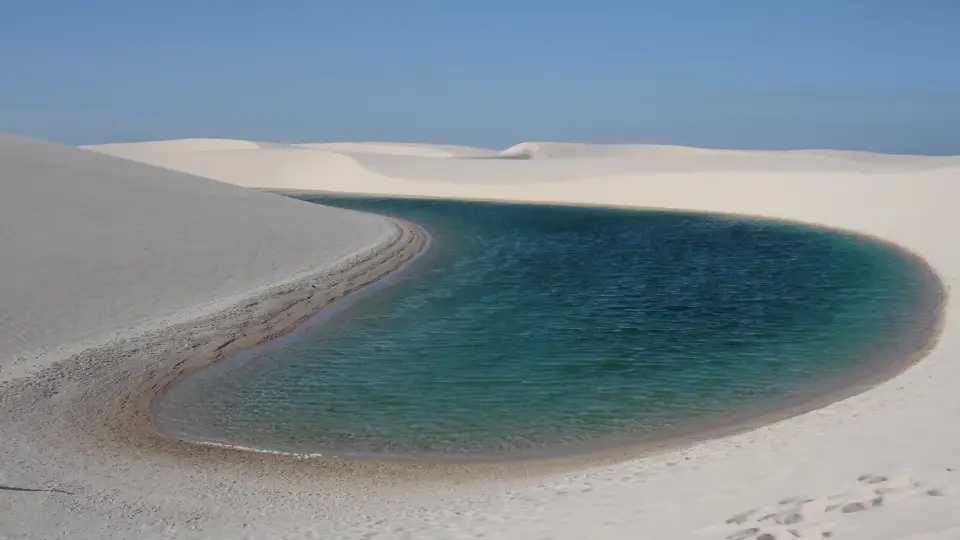
Dunes of fine, orange sand, formed by the erosion of the neighboring ridge's sandstone, with a stream of clear water running at the base. They lie inside Jalapão State Park, about 30 km from Mateiros. In the first half of 2023 they received 24,123 visitors, and the whole park totaled 50,302 in 2025. Late afternoon is the favored time, when low light brings out the color of the sand. Under the rules Naturatins published in 2023, entering the dunes and the Serra do Espírito Santo requires a guide or local condutor and a voucher issued by the park administration; in February 2026, park oversight again cited the voucher and the management of visits to the dunes as tools in use. The same 2023 rules set entry windows in the morning and afternoon and prohibit climbing up or down the sandstone wall, flying a drone without authorization and bringing alcoholic drinks; swimming in the ponds beside the dunes was banned in 2017. Confirm times and rules with the agency before you go.
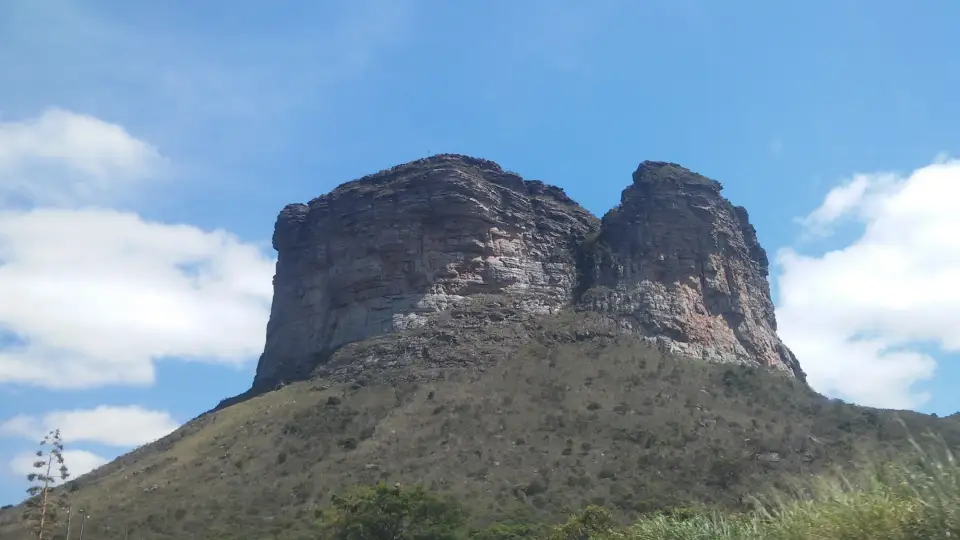
The Jalapão is a mosaic of sandstone plateaus (chapadões), up to about 800 m in elevation, with plains of pale sand between them. Constant erosion of the sandstone in the ranges forms the orange dunes, which sit at the foot of the Serra do Espírito Santo, inside Jalapão State Park, whose territory is divided between Mateiros and São Félix do Tocantins.
Check access

Serra do Espírito Santo
A sandstone wall beside the dunes, inside Jalapão State Park. The trail climbs a steep stretch, with benches for resting, to the first viewpoint, where groups arrive for sunrise; from there it is about 3 km along the top to the second viewpoint, overlooking the dunes. The route is around 7 km round trip and takes three to four hours. The climb is done with a condutor and a voucher, before dawn, and the descent already happens in the heat: bring a flashlight, water and closed shoes.
The town of Mateiros sits at 493 m, and the municipality is the only one in Tocantins that borders Piauí, in addition to Bahia and Maranhão.
Check access
Fervedouro do Ceiça
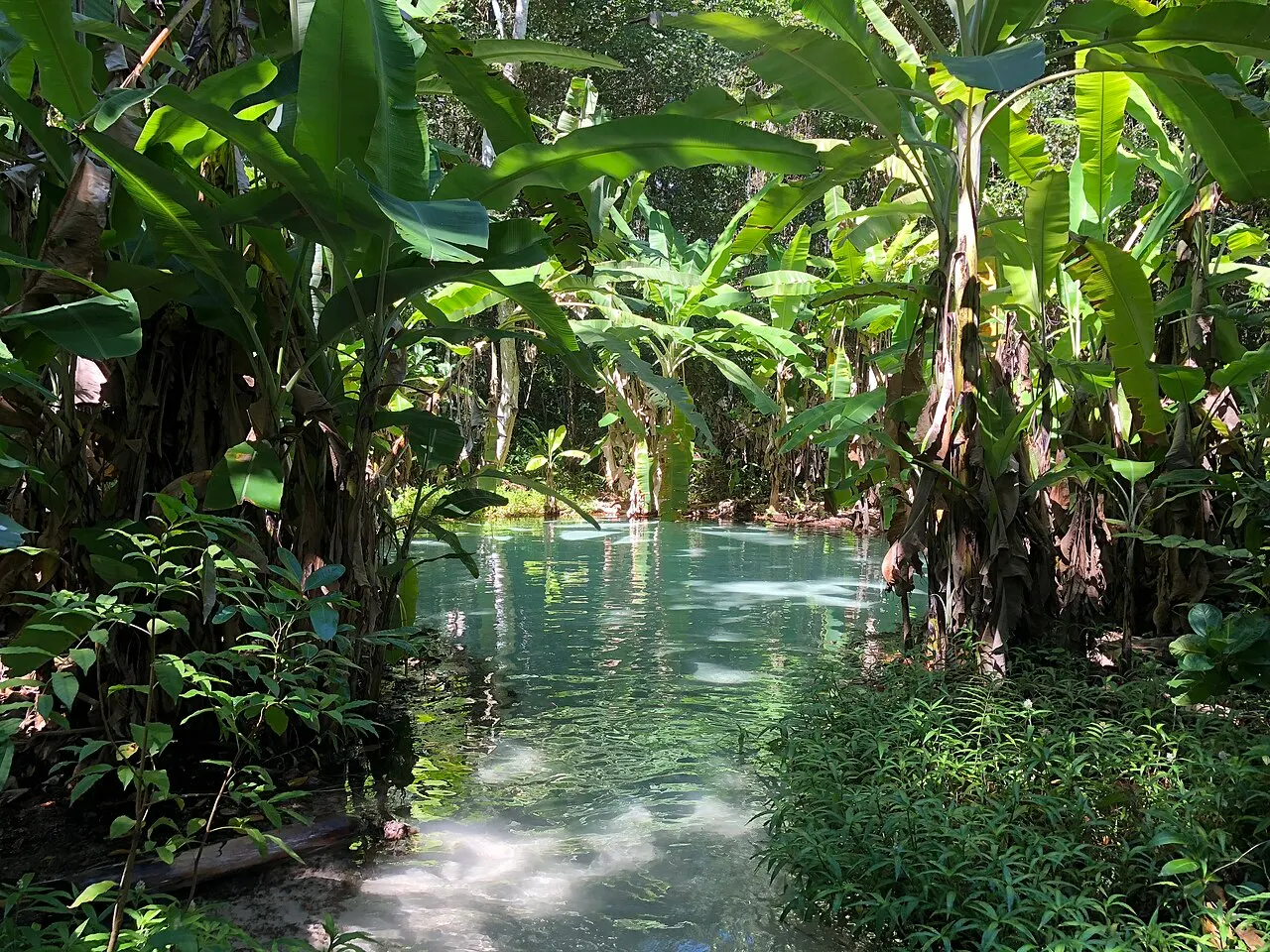
Described as the first fervedouro opened to the public, on private property north of Mateiros. The water, blue to emerald, wells up out of the sand, and the visitor floats without effort. As at the other fervedouros, the entry fee is paid at the property, groups are small, time in the water is limited and sunscreen, repellent or moisturizer on the skin is forbidden.
The region is crossed by fast, clear-water rivers: the Novo, the Sono, the Soninho, the Balsas, the Preto and the Caracol.
Check access

Cachoeira do Formiga
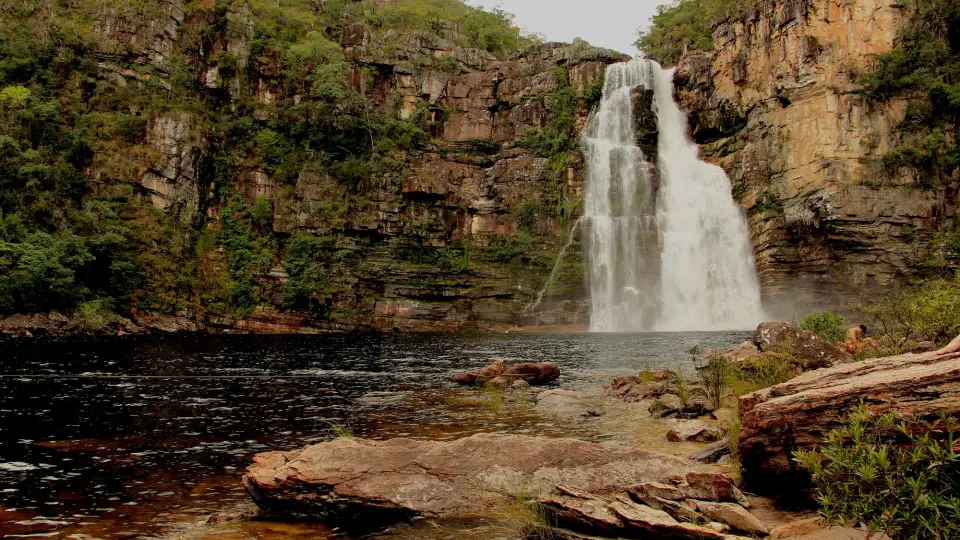
A waterfall of clear green water over white sand, about 30 km from Mateiros, on a property with a camping area. Unlike the Cachoeira da Velha, here swimming is the point. The entry fee is charged at the property, and arriving early avoids the crowds.
The climate is tropical, with two sharply defined seasons.
Check access
Fervedouro Bela Vista
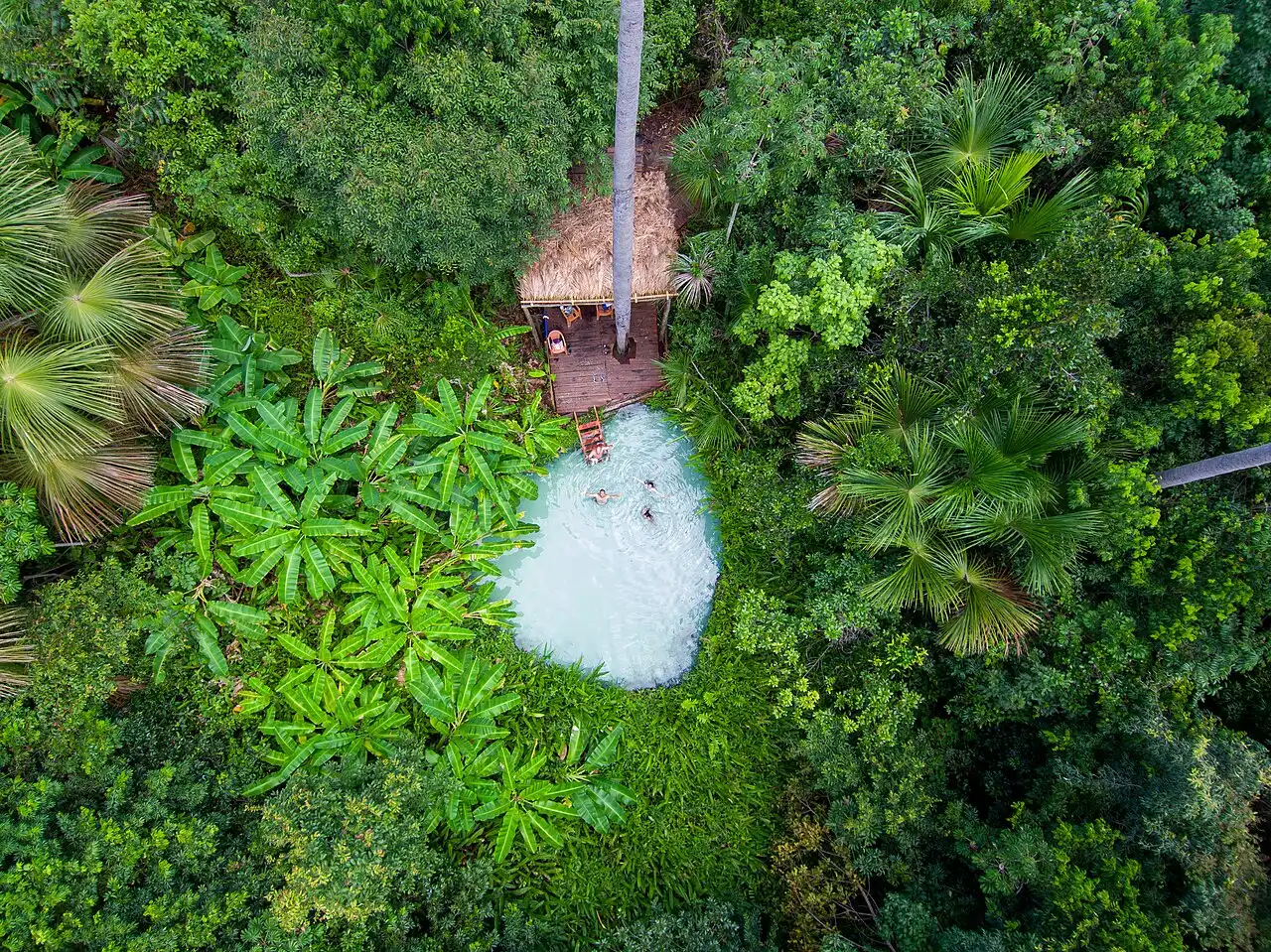
A fervedouro about 6 km from São Félix do Tocantins, inside a property with a pousada, which takes groups of up to ten people. Guests of the pousada can enter at night, after the tour groups have left. It is on the natural route for anyone sleeping in São Félix.
In the damp meadows along them grow the buriti palm veredas and the capim dourado.
Check access
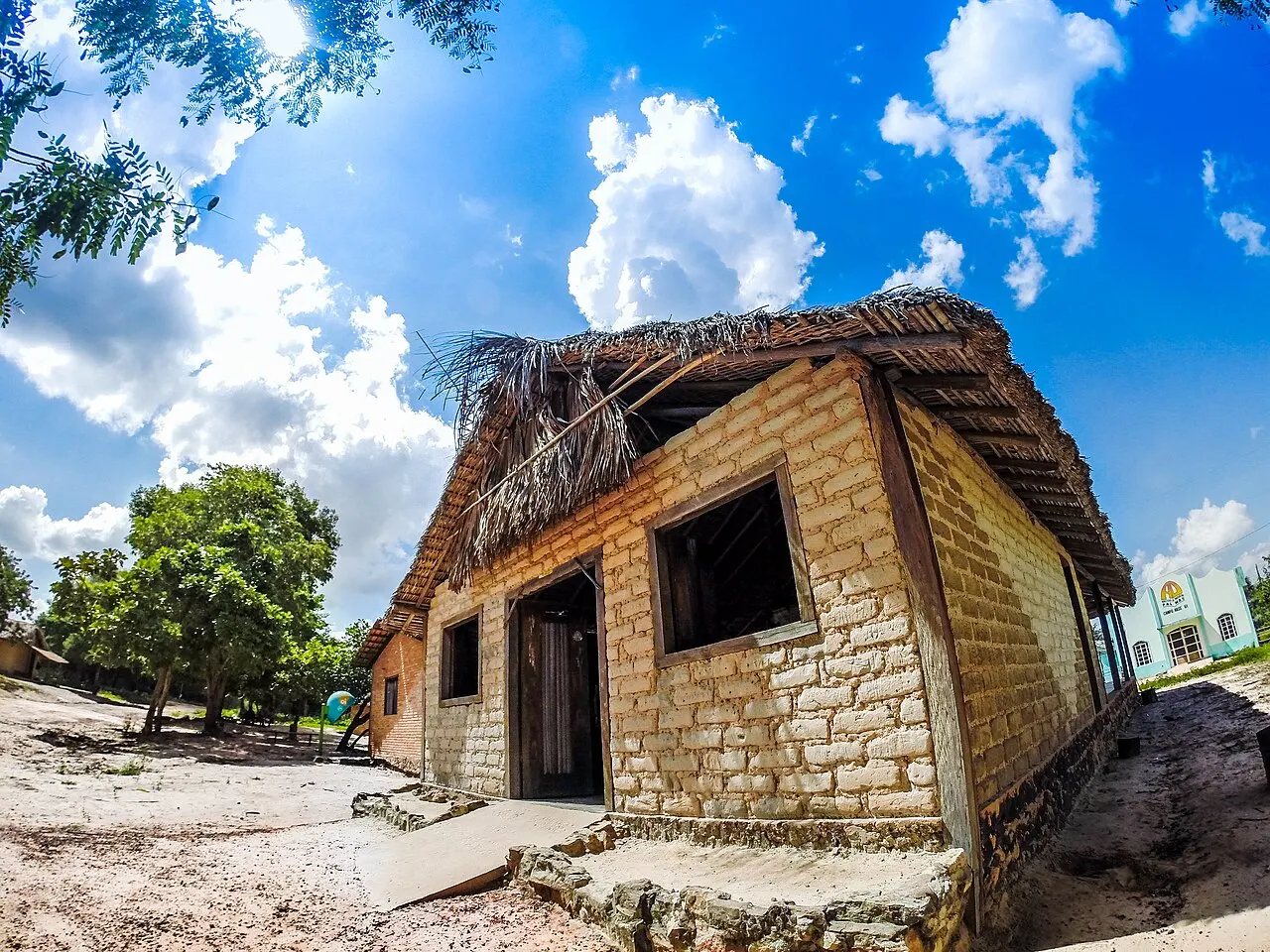
Comunidade Mumbuca
A quilombola settlement where the capim dourado craft began. The artisans, organized in an association led by women, sell bags, hats, mandalas and jewelry sewn with buriti silk. Buying there leaves the money with the people who make the pieces.
Seat of the municipality that shares the territory of Jalapão State Park with São Félix do Tocantins and, along with Ponte Alta, the town with the best tourist infrastructure in the region.
Check access
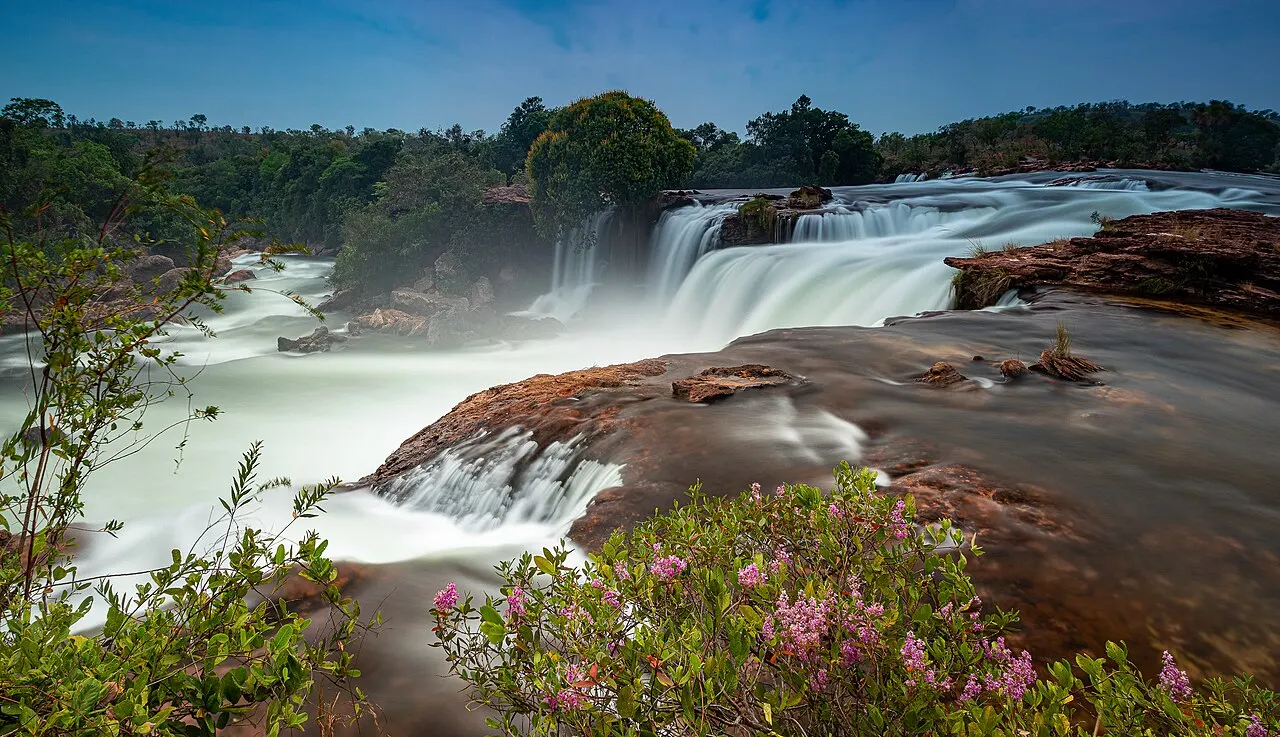
Cachoeira da Velha
The largest waterfall in the Jalapão, on the Rio Novo, inside the state park: two falls in a semicircle, separated by a rock wall, about 100 m wide with a 15 m drop. Access is by car to an observation platform and is free; swimming in the falls is forbidden because of the force of the water. Travel guides mention rafting runs on the Rio Novo from there; operation and duration vary, and it is necessary to confirm with the agencies before you go. It is in the north of the park, far from the other stops.
At the nearest World Meteorological Organization station with a published normal, in Alto Parnaíba (MA), about 170 km from Mateiros, the 1991 to 2020 average records 0 to 3 mm of rain a month from June to August and more than 190 mm a month from January to March; from August to October average highs exceed 35 °C, peaking in September.
Check access
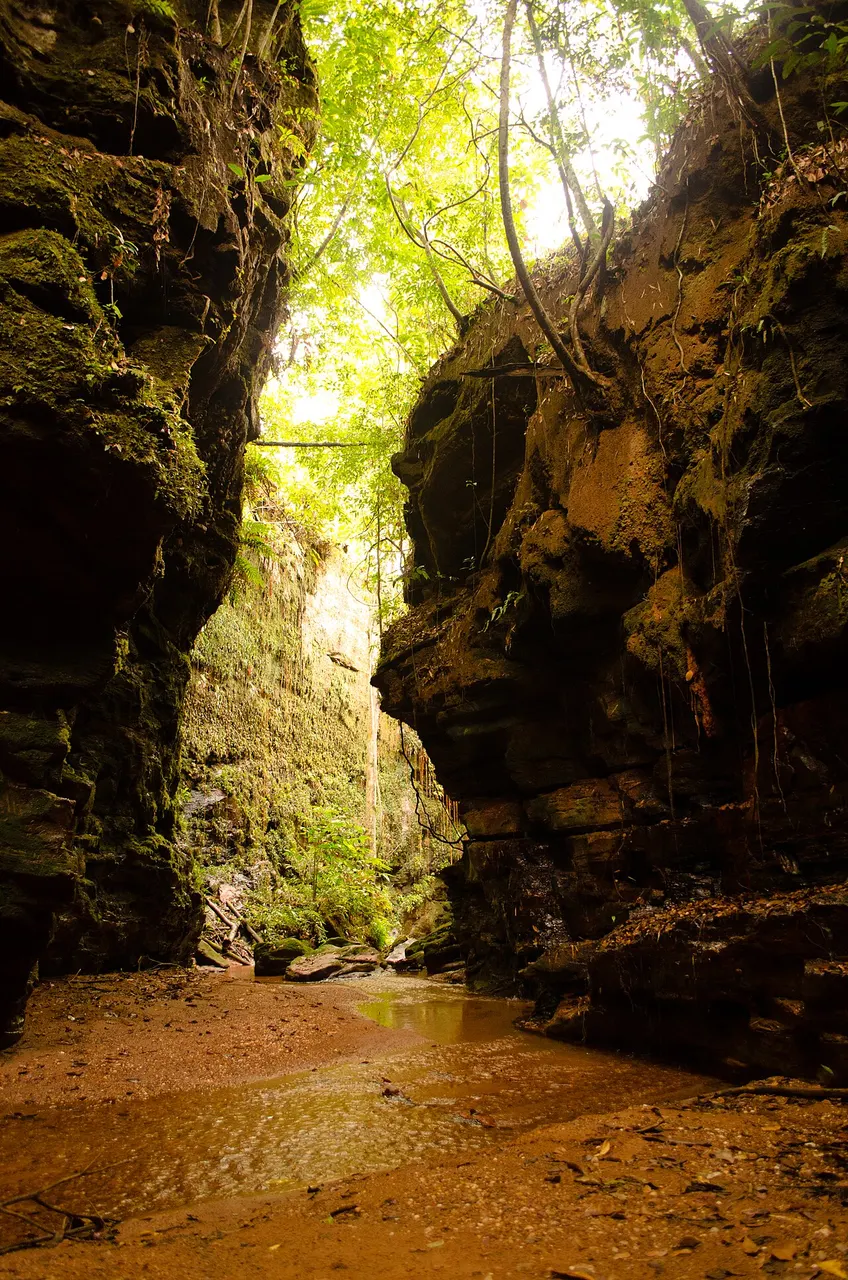
Cânion Sussuapara
A narrow canyon about 15 km from Ponte Alta do Tocantins, where water drips slowly down the rock walls. The visit is short and is usually the first stop on the way from Ponte Alta to Mateiros.
The town where the pavement from Palmas ends, known as the gateway to the Jalapão.
Check access

Pedra Furada
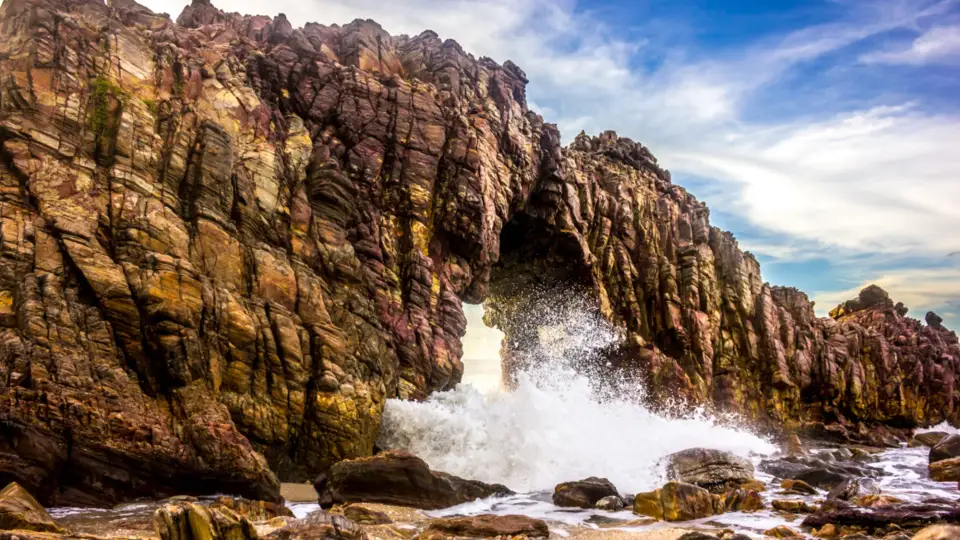
A sandstone formation with a hole through it, as the name says, about 30 km from Ponte Alta do Tocantins. It is a common stop for watching the sunset at the entrance to the Jalapão and works well as the first afternoon's plan for anyone arriving from Palmas and sleeping in Ponte Alta.
It is near the Cânion Sussuapara and the Pedra Furada, and it is the first night of many itineraries.
Check access
Nilo’s itinerary
Start with the basic programme and choose extensions for the time you have.
Plan my days in the app ↗Day 1 · From Palmas to Ponte Alta, with sunset at the Pedra Furada
Leave Palmas in the morning on the TO-030 and the TO-130, on pavement, to Ponte Alta do Tocantins, about 160 km away.
Drop your bags at the pousada and have lunch in town.
In mid-afternoon head to the Pedra Furada, about 30 km away, to arrive before sunset.
Return to Ponte Alta for dinner and sleep; the next day's road is long and sandy.
Day 2 · Cânion Sussuapara, the sand road and late afternoon at the dunes
Leave Ponte Alta early and stop at the Cânion Sussuapara, about 15 km away, for a short visit before the heat.
Continue on the TO-255 toward Mateiros with the 4x4 and the condutor, stopping for lunch on the way.
Enter the Dunas do Jalapão in the afternoon window, with the park voucher, and stay until the light drops; leave at the time set by the park.
Continue to Mateiros, about 30 km from the dunes, and sleep there for the next three nights.
Day 3 · Sunrise at the Serra do Espírito Santo
Leave Mateiros before dawn with the condutor to start the Serra do Espírito Santo trail before sunrise, with a flashlight, water and closed shoes.
Watch the sunrise from the first viewpoint and continue along the top to the second viewpoint, above the dunes; the whole route takes three to four hours.
Return to Mateiros for lunch and leave the afternoon free to rest, through the hottest hours of the day.
Dine and sleep in Mateiros.
Day 4 · Cachoeira do Formiga, Mumbuca and the fervedouros north of Mateiros
Arrive early at the Cachoeira do Formiga, about 30 km from Mateiros, to swim before the pool fills up.
Continue to the Comunidade Mumbuca, about 10 km from there, to see the artisans' work and buy capim dourado pieces at the association.
Have lunch on the way or bring a snack, according to the condutor's plan, without returning to Mateiros.
In the afternoon visit the Fervedouro do Ceiça and the Fervedouro do Buritizinho, near Mumbuca; get in the water without sunscreen or repellent.
Return to Mateiros for the last night in town.




If you stay longer
Day 5 · São Félix do Tocantins: Fervedouro Bela Vista and Cachoeira da Arara
Leave Mateiros in the morning toward São Félix do Tocantins, about 80 km on the TO-110, a dirt road.
Visit the Fervedouro Bela Vista, about 6 km from São Félix.
In the afternoon go to the Cachoeira da Arara, about 16 km from town, or stay at the Praia do Alecrim, on the Rio Soninho.
Sleep in São Félix. The next day, leave through the north, on the TO-030 and the TO-247 to Lagoa do Tocantins and from there to Palmas, about 240 km with dirt stretches; I wouldn't book a flight for the same afternoon.

Food
Fish of the biome
The gastronomy catalog of Mateiros, released by Sebrae in December 2025, highlights fish of the biome among the regional products. The catalog does not detail species or preparations; ask at the pousada or restaurant which fish is local.
Mangaba
A cerrado fruit listed among the regional products of Mateiros. In the town's catalog, it becomes the sauce for the Filé Rosa Jalapão, served with plantain purée.
Cagaita
A tart cerrado fruit. In the Mateiros catalog, it appears as the sauce for a pirarucu dish.
Coco catolé
The small nut of a palm native to the cerrado, listed among the regional products of Mateiros.
Pimenta-de-macaco
A cerrado spice, listed among the regional products of Mateiros.
Where to eat
- Restaurante Mama Cadela · Mateiros
Pirarucu in cagaita sauce, a tart cerrado fruit. The Sebrae gastronomy catalog for Mateiros lists the dish at this place but does not detail the type of service, prices or hours; confirm at the pousada whether the restaurant is still open.
Source · 2026-10-16
- Pé Rachado Gastrobar · Mateiros
Steak flambéed in honey cachaça, another dish listed in the Mateiros catalog. The catalog only mentions the dish; confirm hours and whether it is operating before you go.
Source · 2026-10-16
- Comunidade Mumbuca and pousadas in the region
The Mateiros catalog includes experiences in the Comunidade Mumbuca and at pousadas that combine cooking with traditional ways of life, without detailing the dishes. Arrange it with the agency or the condutor before you go, because the meal depends on booking with whoever is hosting.
$: snack or simple dish at a restaurant in Mateiros, São Félix or Ponte Alta · $$: à la carte lunch or dinner at a restaurant in Mateiros · $$$: dinner with a signature dish at a restaurant or pousada in Mateiros · 2026-10-16
Day trips
Cachoeira da Velha
The largest waterfall in the Jalapão is in the north of the park, on the Rio Novo, far from the other stops: by the OpenStreetMap layout it is about 115 km from Mateiros, on dirt and sand, and the travel time depends on the state of the tracks, so the condutor is the better judge. Viewing, from a platform, is free, and swimming in the falls is forbidden. Travel guides mention rafting on the Rio Novo from there; check with the agencies whether the run is being offered. It works as a sixth day, sleeping one more night in Mateiros.
Lagoa do Japonês
A lagoon in Pindorama do Tocantins, southwest of Ponte Alta, about 90 km from town by the OpenStreetMap road layout. It is an extension for anyone spending one extra night in Ponte Alta at the start of the trip, with an entry fee charged at the property.
Where to begin
From Palmas to Ponte Alta, with sunset at the Pedra Furada
Leave Palmas in the morning on the TO-030 and the TO-130, on pavement, to Ponte Alta do Tocantins, about 160 km away.
Cânion Sussuapara, the sand road and late afternoon at the dunes
Leave Ponte Alta early and stop at the Cânion Sussuapara, about 15 km away, for a short visit before the heat.
Sunrise at the Serra do Espírito Santo
Leave Mateiros before dawn with the condutor to start the Serra do Espírito Santo trail before sunrise, with a flashlight, water and closed shoes.
Cachoeira do Formiga, Mumbuca and the fervedouros north of Mateiros
Arrive early at the Cachoeira do Formiga, about 30 km from Mateiros, to swim before the pool fills up.
São Félix do Tocantins: Fervedouro Bela Vista and Cachoeira da Arara
Leave Mateiros in the morning toward São Félix do Tocantins, about 80 km on the TO-110, a dirt road.
Money
The currency is the real (R$). Since May 1, 2026, the Mateiros city government charges a tourism fee of R$30 per person, valid for up to eight consecutive days. Press reports on the fee mention payment by Pix, by transfer or at authorized points; anyone without a Brazilian bank account should ask the agency or the pousada where to pay. The receipt, with a QR code, must be shown at inspections and at the sights. Registered residents, children up to 10, people over 65, people with disabilities and municipal employees on duty are exempt. On an agency package, check whether the fee is already included. The fervedouros and waterfalls on private property charge admission separately: a survey updated in March 2026 indicated entry fees of R$10 to R$25 per person at the fervedouros. Viewing the Cachoeira da Velha is free. Because cell signal is missing on most roads and the internet at some pousadas is unreliable, carry cash for entry fees and small purchases. To know the total cost of the trip, ask the agencies what the package includes: the 4x4 vehicle, driver, condutor, entry fees, municipal fee and meals are usually charged in different ways.
Getting there and around
Getting there via Palmas
The gateway is Palmas Airport (PMW), about 20 km from the center of the Tocantins capital. The most-used route follows the TO-030 to Santa Tereza do Tocantins and the TO-130 to Ponte Alta do Tocantins, where the pavement ends; for Mateiros, continue on the TO-255, a dirt road. Mateiros is about 300 km from Palmas by this route, and the trip takes five to six hours.
The circuit and the exit to the north
Many itineraries run as a circuit: they enter through Ponte Alta, continue to Mateiros, cross to São Félix do Tocantins on the TO-110, a dirt road, and leave through the north, on the TO-030 and the TO-247 to Lagoa do Tocantins, and from there by pavement to Palmas; it can also be done in the opposite direction. By the OpenStreetMap layout, São Félix to Palmas by this route is about 240 km. The stretch to Lagoa do Tocantins mixes dirt and pavement and is under paving works: in November 2025 the state government delivered about 25 km of paved road on the TO-030 as far as the bridge over the Rio do Sono. Confirm the state of the road with the agency before setting out.
Agency or your own car
Inside the Jalapão the roads are dirt and soft sand, and four-wheel drive is indispensable. Most visitors travel with an agency, which provides the vehicle, the driver and the condutor. Anyone who rents a 4x4 in Palmas and drives on their own needs experience on sand and, even so, hires a local guide or condutor to enter the dunes and the Serra do Espírito Santo, which require a park voucher. Agencies and condutores need a Naturatins license; check the number before you sign. There is no cell signal on most of the dirt roads, so agree on meeting points and times before each stretch.
Distances between the sights
The sights are far from one another and from the towns. By the OpenStreetMap road layout, Ponte Alta is about 160 km from Mateiros, Mateiros about 80 km from São Félix do Tocantins, and the dunes, the Fervedouro do Ceiça and the Cachoeira do Formiga about 30 km from Mateiros. The Comunidade Mumbuca is a few kilometers from the Ceiça and the Buritizinho, which allows combining the three in the same day. On sand, speed is low and the time varies with the season and the state of the road; the condutor is the best judge of each stretch.
Safety
The main risks in the Jalapão come from distance and weather. Sand roads bog down vehicles without four-wheel drive and anyone who does not know the terrain, the stretches between sights are long and poorly marked, and there is no cell signal on most of the dirt roads; traveling with a condutor or an agency licensed by Naturatins solves most of this, and anyone driving alone should leave the day's route with the pousada. The heat is strong, with average highs above 35 °C from August to October: the descent of the Serra do Espírito Santo and walks on the dunes call for water, a hat and early-morning or late-afternoon hours. Medical care is limited: in Mateiros, the public service is the Centro Municipal de Saúde Cristo Rei, which in March 2026 was the subject of a court ruling over lack of equipment, and a 2020 report put the nearest hospital for São Félix in Porto Nacional, about 255 km away. Bring personal medication and a first-aid kit. In the fervedouros the body does not sink, but there is no firm bottom to stand on, and you must follow the instructions of the person in charge. At the falls of the Cachoeira da Velha, swimming is forbidden because of the force of the water. In the dry season the cerrado burns easily, and campfires are forbidden in the park.
Etiquette tips
Enter the fervedouro clean
Sunscreen, repellent, moisturizer and makeup are forbidden in the water. The rule exists to protect the spring's water. Nor do people jump or dive in headfirst, because the movement stirs up the sand on the bottom.
Respect each group's time
The fervedouros take small groups, usually of up to ten people, for about 15 to 20 minutes. When there is a line, the time may be shortened. Getting out on time is what lets the next group in.
Stay on the dune trail
On the dunes, you climb and descend by the paths the condutor indicates. The rules Naturatins published in 2023 prohibit using the sandstone wall, flying a drone without authorization, and bringing alcoholic drinks, loud music, campfires and pets into the park. Check with the agency whether anything has changed.
Buy capim dourado already made into pieces
Tocantins rules forbid capim dourado from leaving the region in its natural state. Buy finished pieces, preferably from the Mumbuca association or local artisans, and do not pull stalks in the veredas.
Mistakes to avoid
Renting a car without 4x4
After Ponte Alta the roads are soft sand and dirt. An ordinary car gets stuck, and even a 4x4 needs someone who knows how to drive on sand, which is why most people go with an agency.
Arriving at the dunes without a voucher
Entry to the dunes and the Serra do Espírito Santo depends on a voucher issued by the park administration and, under the 2023 rules, on a guide or local condutor. Without a booking made by the condutor or the agency, you do not get in.
Underestimating distances
An afternoon at the dunes and a morning at the Cachoeira do Formiga look close on the map, but each stretch is driven slowly on sand. Plan one group of neighboring sights per day instead of crossing the region.
Putting on sunscreen before the fervedouro
Anyone who goes straight from the waterfall or the trail to the fervedouro with sunscreen on the skin does not get in. Leave the sunscreen for after the swim or wear clothing with sun protection.
Expecting to swim at the Cachoeira da Velha
The Velha is viewed from the platform, and swimming in the falls is forbidden because of the current. For a swim, the Cachoeira do Formiga is the option.
Forgetting the Mateiros fee
Since May 2026, visitors to Mateiros pay R$30 per person and must keep the receipt, which may be requested at the sights. Anyone without Pix should ask the agency or pousada about authorized payment points, and anyone traveling on a package should check whether the fee is already included.
Useful phrases
Fervedouro
A spring where water rises under pressure through the sand and makes the body float
Vereda
A damp meadow with buriti palms along a watercourse, where the capim dourado grows
Chapadão
A flat-topped plateau with sheer edges, common in the Jalapão landscape
Seda de buriti
The fine fiber of young buriti leaves, used to sew the capim dourado pieces
Atolar
To get a car stuck in sand or mud, the most common problem on the roads of the region
Where to stay
- Mateiros · For anyone doing the main itinerary in three or four nights who wants to stay near the dunes, the Serra do Espírito Santo, the Cachoeira do Formiga and the fervedouros north of town.: Along with Ponte Alta, it is the town with the best tourist infrastructure in the Jalapão, and the one closest to most of the sights, between 20 and 35 km by road. The downside is the small-town infrastructure, with fewer than 3,000 inhabitants, and the distance of about 80 km to the São Félix fervedouros.
- São Félix do Tocantins · For one night at the end of the itinerary, for anyone who wants the Fervedouro Bela Vista early in the morning and the Cachoeira da Arara.: It is a few kilometers from the Fervedouro Bela Vista, the Fervedouro do Alecrim and the Praia do Alecrim. It is smaller and has fewer options than Mateiros, and it is far from the dunes and the Serra do Espírito Santo.
- Ponte Alta do Tocantins · For the first night, for anyone arriving from Palmas in the afternoon who wants to see the sunset at the Pedra Furada and the Cânion Sussuapara the next day.: It is where the pavement ends and it has good tourist infrastructure. It does not work as a base for the rest of the trip: Mateiros is about 160 km away by sand road.
$: camping or a simple pousada in the towns · $$: pousada with breakfast in Mateiros, São Félix or Ponte Alta · $$$: pousada with more facilities in Mateiros or São Félix · 2026-10-16
Districts
Mateiros
Seat of the municipality that shares the territory of Jalapão State Park with São Félix do Tocantins and, along with Ponte Alta, the town with the best tourist infrastructure in the region. It is the most practical base for the dunes, the Serra do Espírito Santo, the Cachoeira do Formiga, the Comunidade Mumbuca and the group of fervedouros north of town. It is a small town, with fewer than 3,000 inhabitants, and the internet at some pousadas is unreliable.
Comunidade Mumbuca
A quilombola settlement about 30 km from Mateiros, near the TO-110, on the road to São Félix. This is where the capim dourado craft began, and the artisans' association sells the pieces directly. The visit combines well with the fervedouros along the way.
São Félix do Tocantins
A small town in the north-central Jalapão, split in two by the Ribeirão São Félix, with simple lodging. It is a few kilometers from the Fervedouro Bela Vista, the Fervedouro do Alecrim and the Praia do Alecrim, on the Rio Soninho, and about 16 km from the Cachoeira da Arara. It is the last night for anyone doing the full circuit and leaving the Jalapão to the north, through Novo Acordo and Lagoa do Tocantins.
Ponte Alta do Tocantins
The town where the pavement from Palmas ends, known as the gateway to the Jalapão. It is near the Cânion Sussuapara and the Pedra Furada, and it is the first night of many itineraries. It has good tourist infrastructure, but it is about 160 km from Mateiros by dirt road.
History
18th century · The first settlements
Migrants from Piauí, Maranhão and Bahia settled the Jalapão backlands. The municipal history of São Félix do Tocantins records the settlement that gave rise to the town in 1736.
1909 · The origin of Mumbuca
Black families from Bahia settle near Mateiros and form the quilombola community of Mumbuca, four days' walk from Porto Nacional, the nearest town in the early twentieth century.
1920s · Capim dourado comes to Mumbuca
The technique of sewing capim dourado with buriti silk is attributed to the Xerente people, who taught it to the families of Mumbuca.
1963 · Mateiros becomes a district
A municipal law creates the district of Mateiros within Ponte Alta do Norte, then part of northern Goiás. The name comes from the veados-mateiros (brocket deer) common in the region.
1988 · Tocantins is born
On October 5, 1988, northern Goiás becomes the state of Tocantins, installed on January 1, 1989, and the Jalapão comes to belong to the new state.
1991 · Mateiros and São Félix become municipalities
State Law No. 251 of February 20, 1991, makes Mateiros and São Félix do Tocantins municipalities. Both are installed, with their first elected city governments, from 1993.
1993 · The craft leaves the backlands
Mumbuca's capim dourado pieces are shown at the first Folklore, Typical Foods and Crafts Fair of Tocantins (Fecoarte), in Palmas, and begin to be sold outside the region.
2001 · The park and the ecological station
Jalapão State Park is created on January 12, with about 159,000 hectares spread across Mateiros and São Félix do Tocantins. On September 27, a federal decree creates the Serra Geral do Tocantins Ecological Station, of 716,000 hectares, now managed by ICMBio.
2008 · The Jalapão on television
The American network CBS films the 18th season of Survivor in the region, aired from February 2009 as Survivor: Tocantins. In 2017, the TV Globo telenovela O Outro Lado do Paraíso also shoots scenes there.
2022 · Licensed condutor
Naturatins Normative Instruction No. 04 of May 26, 2022, begins requiring licenses for guides, condutores and companies operating in the park.
2024 · Capital of capim dourado
Federal Law No. 15,050 of December 20, 2024, gives Mateiros the title of National Capital of Capim Dourado.
2025 · More visits to the park
Jalapão State Park receives 50,302 visitors in the year, 16.6% more than the 43,131 of 2024, according to Naturatins.
2026 · Tourism fee in Mateiros
In April the Mateiros city government makes official a fee of R$30 per visitor, valid for up to eight days, charged from May 1.
Complete history
Settling the backlands
The Jalapão was settled slowly, by migrants coming mainly from Piauí, Maranhão and Bahia. São Félix do Tocantins keeps the settlement of 1736 in its municipal history. Isolation was the rule: in the early twentieth century, the people of Mumbuca walked four days to reach Porto Nacional, the nearest town.
Mumbuca and the capim dourado
Mumbuca began in 1909, when Black families from the Bahian backlands settled near where Mateiros now stands. From contact with the region's Indigenous people, probably the Xerente, came the technique of sewing capim dourado with the fine fiber of the buriti palm, known locally as silk. For decades it was a household craft. In 1993 the pieces were shown at the first Fecoarte, in Palmas, and the craft became the main source of income for the community and for other localities in the Jalapão. Today the harvest has a fixed calendar, from September 20 to November 20, and the grass leaves the region only as a finished piece.
From northern Goiás to Tocantins
Until 1988 the Jalapão was the far edge of northern Goiás, distant from the capital, Goiânia. The creation of Tocantins in 1988 brought the region closer to a state government of its own, now based in Palmas, and redrew the map: Mateiros and São Félix do Tocantins stopped being districts and became municipalities under the same state law, in 1991.
Protection and tourism
In 2001 the state created Jalapão State Park, on land in Mateiros and São Félix do Tocantins, and the federal government created the Serra Geral do Tocantins Ecological Station beside it, with 716,000 hectares; together with the Jalapão APA (environmental protection area) and the Nascentes do Rio Parnaíba National Park, the two form a continuous chain of protected cerrado areas. The filming of Survivor: Tocantins in 2008, and of the telenovela O Outro Lado do Paraíso in 2017, brought the dunes and the fervedouros to television. Visitor numbers grew, and rules came with them: licenses for guides and condutores in 2022, and entry to the dunes and the Serra do Espírito Santo only with a voucher. In 2025 the park received 50,302 visitors, 16.6% more than the year before, and in 2026 Mateiros, a town of fewer than 3,000 residents, began charging a municipal tourism fee, which the city government justifies by citing about 50,000 visitors a year.
Geography and shape of the city
Plateaus and sand
The Jalapão is a mosaic of sandstone plateaus (chapadões), up to about 800 m in elevation, with plains of pale sand between them. Constant erosion of the sandstone in the ranges forms the orange dunes, which sit at the foot of the Serra do Espírito Santo, inside Jalapão State Park, whose territory is divided between Mateiros and São Félix do Tocantins. The town of Mateiros sits at 493 m, and the municipality is the only one in Tocantins that borders Piauí, in addition to Bahia and Maranhão.
Rivers, veredas and fervedouros
The region is crossed by fast, clear-water rivers: the Novo, the Sono, the Soninho, the Balsas, the Preto and the Caracol. In the damp meadows along them grow the buriti palm veredas and the capim dourado. The fervedouros are springs where groundwater wells up under pressure through deep layers of fine sand; the sand stays in suspension, there is no firm bottom to stand on, and the body is pushed back to the surface. About 20 have been cataloged in the region, most of them on private land between Mateiros and São Félix do Tocantins.
Climate and distances
The climate is tropical, with two sharply defined seasons. At the nearest World Meteorological Organization station with a published normal, in Alto Parnaíba (MA), about 170 km from Mateiros, the 1991 to 2020 average records 0 to 3 mm of rain a month from June to August and more than 190 mm a month from January to March; from August to October average highs exceed 35 °C, peaking in September. The sights are spread out: by the road layout in OpenStreetMap, Mateiros is about 30 km from the dunes, the Fervedouro do Ceiça and the Cachoeira do Formiga, and about 80 km from São Félix do Tocantins, almost all on dirt and sand.
The fervedouros are alike in the experience: the body floats and the water changes color. I'd do two or three, chosen along the day's route, instead of trying to do them all.
Almost everything that justifies the trip is about 30 km from Mateiros. I'd concentrate the nights there and treat Ponte Alta and São Félix as a stopover.
Culture
Capim dourado and buriti silk
The living culture of the Jalapão passes through the hands of its artisans. The capim dourado is harvested in the veredas once a year, from September 20, and sewn with the silk, the fine fiber taken from the young leaves of the buriti. Mumbuca is the core, but the craft has spread to Mateiros, São Félix do Tocantins and other localities. Selling the pieces is the activity that brings in the most income in these communities, alongside subsistence farming and tourism.
The viola de buriti
In Mumbuca, in the 1940s, the viola de buriti was born, a regional variant of the Brazilian viola made from the light wood of the palm stalk. It has four strings, no top or back, and the fretless neck is held on with taboca bamboo clamps. In 2018 the association of Mumbuca's artisans asked Iphan to register the instrument as intangible heritage.
Festivals of the backlands
The calendar follows the harvest and religion. In Mumbuca, the Capim Dourado Harvest Festival takes place in September, when the grass may be cut. In São Félix do Tocantins, the festivities for Our Lady of the Immaculate Conception, the patron saint, run from November 29 to December 8.
Festivals and events
Capim Dourado Harvest Festival
September, in the Comunidade Mumbuca, in Mateiros, during the period when harvesting capim dourado is allowed, from September 20. Confirm the date for the year with the community or the agency.
Festivities for Our Lady of the Immaculate Conception
From November 29 to December 8, in São Félix do Tocantins. The patron saint's festival, with the main day on December 8.
Books and films
Survivor: Tocantins (CBS, 2009)
The 18th season of the American reality show was filmed in the Jalapão in 2008 and showed the world its plateaus, rivers and dunes, with the teams named Timbira and Jalapao.
O Outro Lado do Paraíso (TV Globo, 2017)
The telenovela used the Jalapão as a setting and brought the dunes and the fervedouros to prime time on Brazilian television.
Passarim do Jalapão, by Dorivã
A song by the Tocantins singer-songwriter Dorivan Borges da Silva, who performs as Dorivã Passarim do Jalapão. A regional hit, it gives its title to his first album, whose compositions deal with the cultural roots of Tocantins.
Frequently asked questions
Jalapão: How do you get there from Palmas?
The gateway is Palmas Airport (PMW). From Palmas, the TO-030 and the TO-130 run on pavement to Ponte Alta do Tocantins, where the pavement ends; for Mateiros, continue on the TO-255, a dirt road. Mateiros is about 300 km away, a trip of five to six hours.
Jalapão: How many days should you stay?
Five days, plus the departure day back to Palmas: the first night in Ponte Alta, three in Mateiros and the last in São Félix do Tocantins. With four days, you can cut São Félix; with less than that, most of the time goes to the road.
Jalapão: Can you go in your own car, without an agency?
Only with a 4x4 and experience on soft sand, and even then you must hire a guide or local condutor to enter the dunes and the Serra do Espírito Santo, which require a park voucher. Agencies and condutores need a Naturatins license.
Jalapão: Who pays the Mateiros fee?
Mateiros has charged R$30 per person since May 2026, valid for up to eight consecutive days. Children up to 10, people over 65, people with disabilities, registered residents and municipal employees on duty are exempt. On a package, check whether the fee is already included.
Jalapão: How do you pay the fee and the entry charges?
The fee is paid by Pix, bank transfer or at authorized points; without a Brazilian bank account, ask the agency or the pousada. Fervedouros and waterfalls on private property charge admission separately, R$10 to R$25 at the fervedouros (March 2026): carry cash.
Jalapão: When is the best time to go?
May to September, the dry season, with firmer sand roads and clearer water in the fervedouros. From August to October average highs exceed 35 °C, and from November to April the rains turn the roads to mud and limit access to several sights.
Jalapão: What is a visit to a fervedouro like?
The water rises from the sand under pressure and the body floats, but there is no firm bottom to stand on: follow the instructions of the person in charge. Groups are small, for 15 to 20 minutes, with no sunscreen, repellent, moisturizer or makeup on the skin, and no jumping or diving in headfirst.
Jalapão: Can you swim at the Cachoeira da Velha?
No: the Velha is viewed from a platform, free of charge, and swimming in the falls is forbidden because of the force of the water. It is about 115 km from Mateiros and works as a sixth day; for a swim, the option is the Cachoeira do Formiga.
Jalapão: What is medical care like in the region?
Limited: in Mateiros, the public service is the Centro Municipal de Saúde Cristo Rei, the subject of a court ruling over lack of equipment in March 2026, and a 2020 report put the nearest hospital for São Félix in Porto Nacional, about 255 km away. Bring medication and a first-aid kit.
Other cities in the country
Brazil ↗- Days
- 4
- When
- Apr–Jun
- Per person/day
- Average 615 BRLMid-range · per person/day
Cost scope
Per person per day: accommodation, meals, urban transport, visits and a small allowance for extras. Flights excluded; larger purchases vary. Editorial estimate, not a quote.
- Days
- 2–3
- When
- Apr–May · Sep
- Per person/day
- Average 400–700 BRLMid-range · per person/day
Cost scope
Per person per day: accommodation, meals, urban transport, visits and a small allowance for extras. Flights excluded; larger purchases vary. Editorial estimate, not a quote.
- Days
- 2–3
- When
- Jan–Mar · Sep–Dec
- Per person/day
- Average 350–550 BRLMid-range · per person/day
Cost scope
Per person per day: accommodation, meals, urban transport, visits and a small allowance for extras. Flights excluded; larger purchases vary. Editorial estimate, not a quote.
- Days
- 1–2
- When
- May–Sep
- Per person/day
- Average 260–520 BRLMid-range · per person/day
Cost scope
Per person per day: accommodation, meals, urban transport, visits and a small allowance for extras. Flights excluded; larger purchases vary. Editorial estimate, not a quote.
- Days
- 3–4
- When
- Jun–Sep
- Per person/day
- Average 400–700 BRLMid-range · per person/day
Cost scope
Per person per day: accommodation, meals, urban transport, visits and a small allowance for extras. Flights excluded; larger purchases vary. Editorial estimate, not a quote.
- Days
- 2–3
- When
- Apr–Jun
- Per person/day
- Average 350–550 BRLMid-range · per person/day
Cost scope
Per person per day: accommodation, meals, urban transport, visits and a small allowance for extras. Flights excluded; larger purchases vary. Editorial estimate, not a quote.
- Days
- 3–5
- When
- Mar–Apr · Nov
- Per person/day
- Average 397 BRLMid-range · per person/day
Cost scope
Per person per day: accommodation, meals, urban transport, visits and a small allowance for extras. Flights excluded; larger purchases vary. Editorial estimate, not a quote.
- Days
- 2–4
- When
- Mar–May · Sep
- Per person/day
- Explore costsGuide estimate
Cost scope
Per person per day: accommodation, meals, urban transport, visits and a small allowance for extras. Flights excluded; larger purchases vary. Editorial estimate, not a quote.
- Days
- 4–5
- When
- Aug–Nov
- Per person/day
- Explore costsGuide estimate
Cost scope
Per person per day: accommodation, meals, urban transport, visits and a small allowance for extras. Flights excluded; larger purchases vary. Editorial estimate, not a quote.
- Days
- 3–4
- When
- Jul–Sep
- Per person/day
- Explore costsGuide estimate
Cost scope
Per person per day: accommodation, meals, urban transport, visits and a small allowance for extras. Flights excluded; larger purchases vary. Editorial estimate, not a quote.
- Days
- 3–4
- When
- Sep–Nov
- Per person/day
- Explore costsGuide estimate
Cost scope
Per person per day: accommodation, meals, urban transport, visits and a small allowance for extras. Flights excluded; larger purchases vary. Editorial estimate, not a quote.
- Days
- 2–4
- When
- May–Sep
- Per person/day
- Explore costsGuide estimate
Cost scope
Per person per day: accommodation, meals, urban transport, visits and a small allowance for extras. Flights excluded; larger purchases vary. Editorial estimate, not a quote.
- Days
- 3–5
- When
- Jun–Sep
- Per person/day
- Explore costsGuide estimate
Cost scope
Per person per day: accommodation, meals, urban transport, visits and a small allowance for extras. Flights excluded; larger purchases vary. Editorial estimate, not a quote.
- Days
- 3–4
- When
- Jun–Aug
- Per person/day
- Explore costsGuide estimate
Cost scope
Per person per day: accommodation, meals, urban transport, visits and a small allowance for extras. Flights excluded; larger purchases vary. Editorial estimate, not a quote.
- Days
- 4–5
- When
- Jan–Mar · Sep–Dec
- Per person/day
- Explore costsGuide estimate
Cost scope
Per person per day: accommodation, meals, urban transport, visits and a small allowance for extras. Flights excluded; larger purchases vary. Editorial estimate, not a quote.
- Days
- 3–4
- When
- Oct–Dec
- Per person/day
- Average 1,110 BRLMid-range · per person/day
Cost scope
Per person per day: accommodation, meals, urban transport, visits and a small allowance for extras. Flights excluded; larger purchases vary. Editorial estimate, not a quote.
- Days
- 3–4
- When
- Aug–Sep
- Per person/day
- Explore costsGuide estimate
Cost scope
Per person per day: accommodation, meals, urban transport, visits and a small allowance for extras. Flights excluded; larger purchases vary. Editorial estimate, not a quote.
- Days
- 4–7
- When
- Apr–Sep
- Per person/day
- Explore costsGuide estimate
Cost scope
Per person per day: accommodation, meals, urban transport, visits and a small allowance for extras. Flights excluded; larger purchases vary. Editorial estimate, not a quote.
- Days
- 3–4
- When
- Jan · Sep–Dec
- Per person/day
- Explore costsGuide estimate
Cost scope
Per person per day: accommodation, meals, urban transport, visits and a small allowance for extras. Flights excluded; larger purchases vary. Editorial estimate, not a quote.
- Days
- 2
- When
- Aug–Dec
- Per person/day
- Average 442 BRLMid-range · per person/day
Cost scope
Per person per day: accommodation, meals, urban transport, visits and a small allowance for extras. Flights excluded; larger purchases vary. Editorial estimate, not a quote.
- Days
- 3–5
- When
- Jan–Feb · Sep–Dec
- Per person/day
- Explore costsGuide estimate
Cost scope
Per person per day: accommodation, meals, urban transport, visits and a small allowance for extras. Flights excluded; larger purchases vary. Editorial estimate, not a quote.
- Days
- 3–5
- When
- May–Sep
- Per person/day
- Explore costsGuide estimate
Cost scope
Per person per day: accommodation, meals, urban transport, visits and a small allowance for extras. Flights excluded; larger purchases vary. Editorial estimate, not a quote.
- Days
- 2–3
- When
- Apr–Sep
- Per person/day
- Average 484 BRLMid-range · per person/day
Cost scope
Per person per day: accommodation, meals, urban transport, visits and a small allowance for extras. Flights excluded; larger purchases vary. Editorial estimate, not a quote.
- Days
- 3
- When
- Apr–May · Aug
- Per person/day
- Average 478 BRLMid-range · per person/day
Cost scope
Per person per day: accommodation, meals, urban transport, visits and a small allowance for extras. Flights excluded; larger purchases vary. Editorial estimate, not a quote.
- Days
- 3–4
- When
- Aug–Dec
- Per person/day
- Explore costsGuide estimate
Cost scope
Per person per day: accommodation, meals, urban transport, visits and a small allowance for extras. Flights excluded; larger purchases vary. Editorial estimate, not a quote.
- Days
- 2
- When
- Apr–May · Sep
- Per person/day
- Explore costsGuide estimate
Cost scope
Per person per day: accommodation, meals, urban transport, visits and a small allowance for extras. Flights excluded; larger purchases vary. Editorial estimate, not a quote.
- Days
- 3
- When
- Sep–Dec
- Per person/day
- Explore costsGuide estimate
Cost scope
Per person per day: accommodation, meals, urban transport, visits and a small allowance for extras. Flights excluded; larger purchases vary. Editorial estimate, not a quote.
- Days
- 3–5
- When
- Apr–Nov
- Per person/day
- Average 427 BRLMid-range · per person/day
Cost scope
Per person per day: accommodation, meals, urban transport, visits and a small allowance for extras. Flights excluded; larger purchases vary. Editorial estimate, not a quote.
- Days
- 4
- When
- Jul–Sep
- Per person/day
- Explore costsGuide estimate
Cost scope
Per person per day: accommodation, meals, urban transport, visits and a small allowance for extras. Flights excluded; larger purchases vary. Editorial estimate, not a quote.
- Days
- 3
- When
- May–Sep
- Per person/day
- Explore costsGuide estimate
Cost scope
Per person per day: accommodation, meals, urban transport, visits and a small allowance for extras. Flights excluded; larger purchases vary. Editorial estimate, not a quote.