Brazil
Salvador
Pelourinho, Candomblé, acarajé and Baía de Todos os Santos
Days Start with the basic programme and choose extensions for the time you have.
How the guide reaches this number
A third leaves room for Barra and Rio Vermelho at a more relaxed pace, combining the waterfront, the Jorge Amado and Zélia Gattai memorial, and food from the street stalls. In the historic centre, leave time between churches to walk through the squares and continue to Santo Antônio Além do Carmo. São Francisco and the Museum of Sacred Art are closed to visitors; choose indoor visits according to current calendars. For music, check Pelourinho’s programme rather than relying on a fixed day. With only one day, I would stay between the upper city and Comércio: Praça Municipal, Catedral Basílica, Pelourinho, and the descent in Elevador Lacerda if it is operating. This gives context to the relationship between churches, government and port without crossing the whole city. Beaches and other neighbourhoods deserve their own time for both visiting and travelling.
2–3
When September to March; April to July is usually wetter, and festivals and Carnival affect crowds
How the guide reaches this number
Salvador is warm throughout the year; rainfall and the festival calendar matter more when choosing dates than a cold season. Rain tends to be more frequent from April to July. September to March generally offers better conditions for combining walks and beach time, but neither period guarantees sunshine. Check the forecast close to your trip and keep alternatives for rainy days.
Per person/day Budget R$150–250; mid-range R$350–550; comfortable from R$800: during Carnival and New Year's lodging doubles or triples
How the guide reaches this number
Per person per day: accommodation, meals, urban transport, visits and a small allowance for extras. Flights excluded; larger purchases vary. Editorial estimate, not a quote.
 What Nilo thinks
I would allow two days to begin exploring Salvador: one for the upper city and historic centre, another for Bonfim and the lower city. A third leaves room for Barra and Rio Vermelho at a more relaxed pace, combining the waterfront, the Jorge Amado and Zélia Gattai memorial, and food from the street stalls.
In the historic centre, leave time between churches to walk through the squares and continue to Santo Antônio Além do Carmo. São Francisco and the Museum of Sacred Art are closed to visitors; choose indoor visits according to current calendars. For music, check Pelourinho’s programme rather than relying on a fixed day.
With only one day, I would stay between the upper city and Comércio: Praça Municipal, Catedral Basílica, Pelourinho, and the descent in Elevador Lacerda if it is operating. This gives context to the relationship between churches, government and port without crossing the whole city. Beaches and other neighbourhoods deserve their own time for both visiting and travelling.I would start a visit to Salvador at Praça Municipal: the Upper Town’s buildings on one side, the bay ahead and the connection to Comércio through Elevador Lacerda. A walk through Pelourinho can continue to Santo Antônio Além do Carmo, with time to enter churches that are open and pause in the squares.
Read more
On a second day, Bonfim and Ribeira show another side of the bay. With more time, I would add Barra and Rio Vermelho: a coastal walk, Casa do Rio Vermelho according to its opening calendar and acarajé from the neighbourhood’s stalls. For the evening, I would look at programmes in Pelourinho and Rio Vermelho to choose a performance and plan the journey back.
Quick facts
- Population
- 2.42 million residents in the municipality (IBGE Census 2022)
- Founded
- March 29, 1549, by Tomé de Sousa, as São Salvador da Bahia de Todos os Santos; capital of Brazil until 1763
- Country and region
- Brazil: capital of the state of Bahia, Northeast region; municipality of about 693 km²
- Language
- Portuguese; the local speech carries hundreds of words of Yoruba and Bantu origin (axé, dendê, caruru, cafuné, muvuca)
- Currency
- Brazilian real (R$). Pix requires access to a participating account; use a combination of cards and cash if you do not have one
- Time zone
- UTC−3 year-round; Brazil has not observed daylight saving time since 2019
- Best time to visit
- September to March; April to July is usually wetter, and festivals and Carnival affect crowds
- Average daily cost
- Budget R$150–250; mid-range R$350–550; comfortable from R$800: during Carnival and New Year's lodging doubles or triples
When to go
September to March; April to July is usually wetter, and festivals and Carnival affect crowds
April
24° to 30°C
285 mm of rain
May
23° to 28°C
302 mm of rain
June
22° to 27°C
238 mm of rain
July
21° to 27°C
194 mm of rain
August
21° to 27°C
130 mm of rain
How the year changes
Salvador is warm throughout the year; rainfall and the festival calendar matter more when choosing dates than a cold season. Rain tends to be more frequent from April to July. September to March generally offers better conditions for combining walks and beach time, but neither period guarantees sunshine. Check the forecast close to your trip and keep alternatives for rainy days.
December, January and February combine heat, holidays and festivities. Lavagem do Bonfim takes place in January, Festa de Iemanjá on 2 February, and Carnival changes dates each year. If an event is your reason for visiting, confirm its programme before booking and choose accommodation with road closures and journeys in mind.
For a visit that does not revolve around a major festival, September to November can be a good choice. Still check events and public holidays for your dates: the city is not empty simply because Carnival is months away.
The same numbers as a table
| Month | Temperature °C | Rain mm |
|---|---|---|
| January · | 24 to 31 | 77 |
| February · | 24 to 31 | 99 |
| March · | 24 to 31 | 147 |
| April | 24 to 30 | 285 |
| May | 23 to 28 | 302 |
| June | 22 to 27 | 238 |
| July | 21 to 27 | 194 |
| August | 21 to 27 | 130 |
| September · | 22 to 28 | 99 |
| October · | 23 to 29 | 91 |
| November · | 23 to 30 | 108 |
| December · | 24 to 31 | 63 |
Nilo's tips
Check how the metro fits your itinerary
Use the metro for the journeys it serves, such as the airport connection to Lapa. For Barra, Rio Vermelho and Bonfim, check the onward leg before leaving. The free bus between the airport and the station is part of the arrival journey, but the metro ticket is paid; check fares and transfers with the operator.
See the bay from Praça Municipal
Praça Municipal offers a view of Baía de Todos os Santos before you descend to Comércio. Combine Elevador Lacerda with Mercado Modelo and allow time to walk around Praça Cairu. If the elevator is not operating, check the available access before rearranging the route.
Choose an evening by Pelourinho’s programme
Tuesday is associated with the Bênção in Pelourinho, but the neighbourhood’s music is not confined to one fixed evening. Check the performance schedule, venue and time when choosing your visit. If you plan to visit museums that day, check each institution’s calendar rather than assuming they all open or close together.
Acarajé at five in the afternoon, at Largo de Santana
In Rio Vermelho, acarajé makes a good stop between a walk and an evening around the neighbourhood’s squares. Watch the fritter being cooked in dendê and choose your filling and amount of pepper. To compare preparations, try abará too: the black-eyed pea mixture is steamed inside a banana leaf rather than fried.
Allow time for the northern coast
Itapuã, Stella Maris and Praia do Flamengo lie farther from the Historic Centre. If you want to explore these stretches, choose one and plan the journey from your accommodation instead of fitting the whole coast into a day. Check sea conditions and the water-quality bulletin before deciding to swim.
Check closures before choosing museums
São Francisco and the Museum of Sacred Art are closed to visitors. In the historic centre, Catedral Basílica offers an introduction to religious architecture; check its opening hours. For modern art, MAM-BA is in Solar do Unhão beside the bay. Check the exhibition and event programme before setting aside part of the day.
Explore the map

© OpenStreetMap · OpenFreeMap · © OpenMapTiles
Explore the map, read about the other places and plan your travel days in the app.
Open the appWhat to see
Salvador: The peninsula and the fault
The climate is humid tropical, with no cold season, averaging 25°C to 27°C and about 2,100 mm of rain a year, concentrated between April and July.
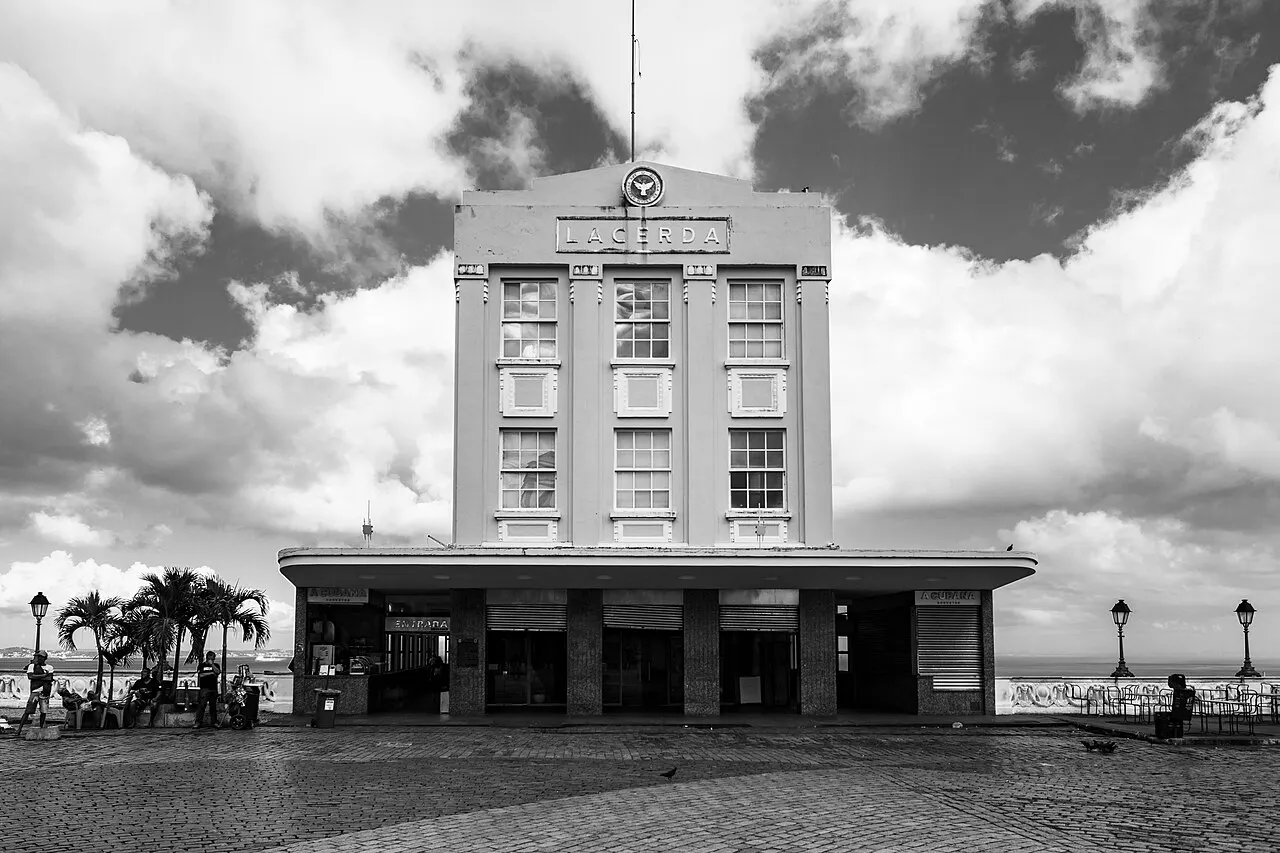
Lacerda Elevator
Elevador Lacerda connects Praça Municipal in the upper city with Praça Cairu beside the port, across a 72 m height difference. The connection opened in 1873; the present art deco tower dates from 1930. It is urban transport and a useful introduction to the relationship between the administrative centre and the bay. The view opens out from the upper square; check the fare and operating status before going down.
Opened in 1873, the urban elevator that no other in Brazil beats for age climbs 72 m in about 30 seconds and links Praça Municipal to Praça Cairu.
Check access

Historic Center and Largo do Pelourinho
About 1 km² of civil and religious architecture from the 17th to 19th centuries, listed by Unesco in 1985 as the largest preserved colonial ensemble in Latin America. The triangular square was a public punishment site for enslaved people until the 19th century; today it houses the Fundação Casa de Jorge Amado and the headquarters of Olodum.
In 1985, Unesco listed about 1 km² as the largest preserved colonial ensemble in Latin America, and the triangular square was once used to publicly punish enslaved people.
Check access
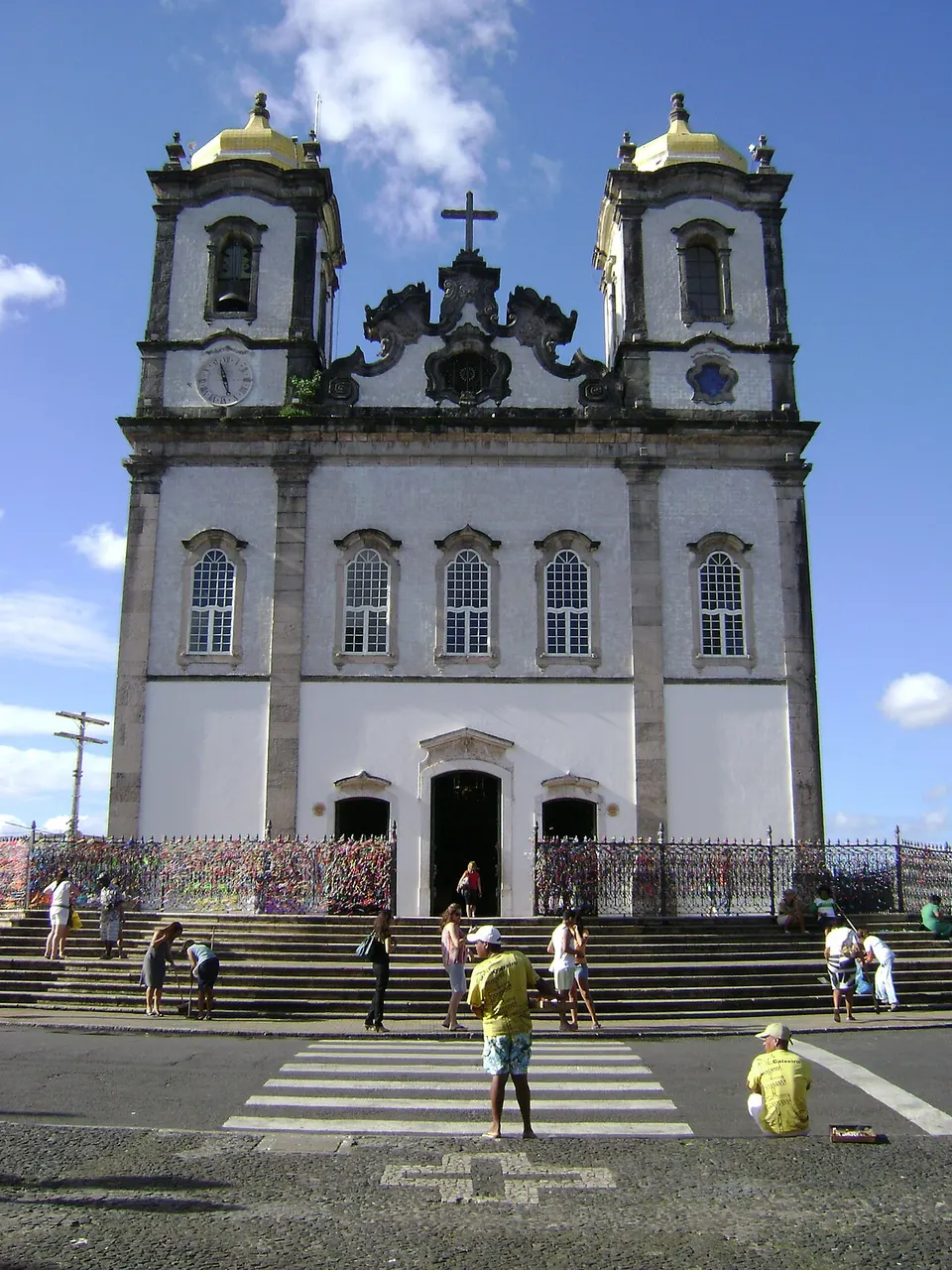
Igreja do Senhor do Bonfim
Built starting in 1745 atop the Colina Sagrada, it's the city's most popular shrine and the center of the syncretism between Senhor do Bonfim and Oxalá. The Sala dos Milagres holds thousands of wax and wood ex-votos hanging from the ceiling, and the ribbons sold at the gate measure 47 cm, the same length as the statue's right arm.
Built starting in 1745 on the Colina Sagrada, it's the most visited temple and the center of the syncretism between the Senhor do Bonfim and Oxalá, with thousands of ex-votos hanging from the ceiling, while the ribbons measure 47 cm, the same length as the image's right arm.
Check access
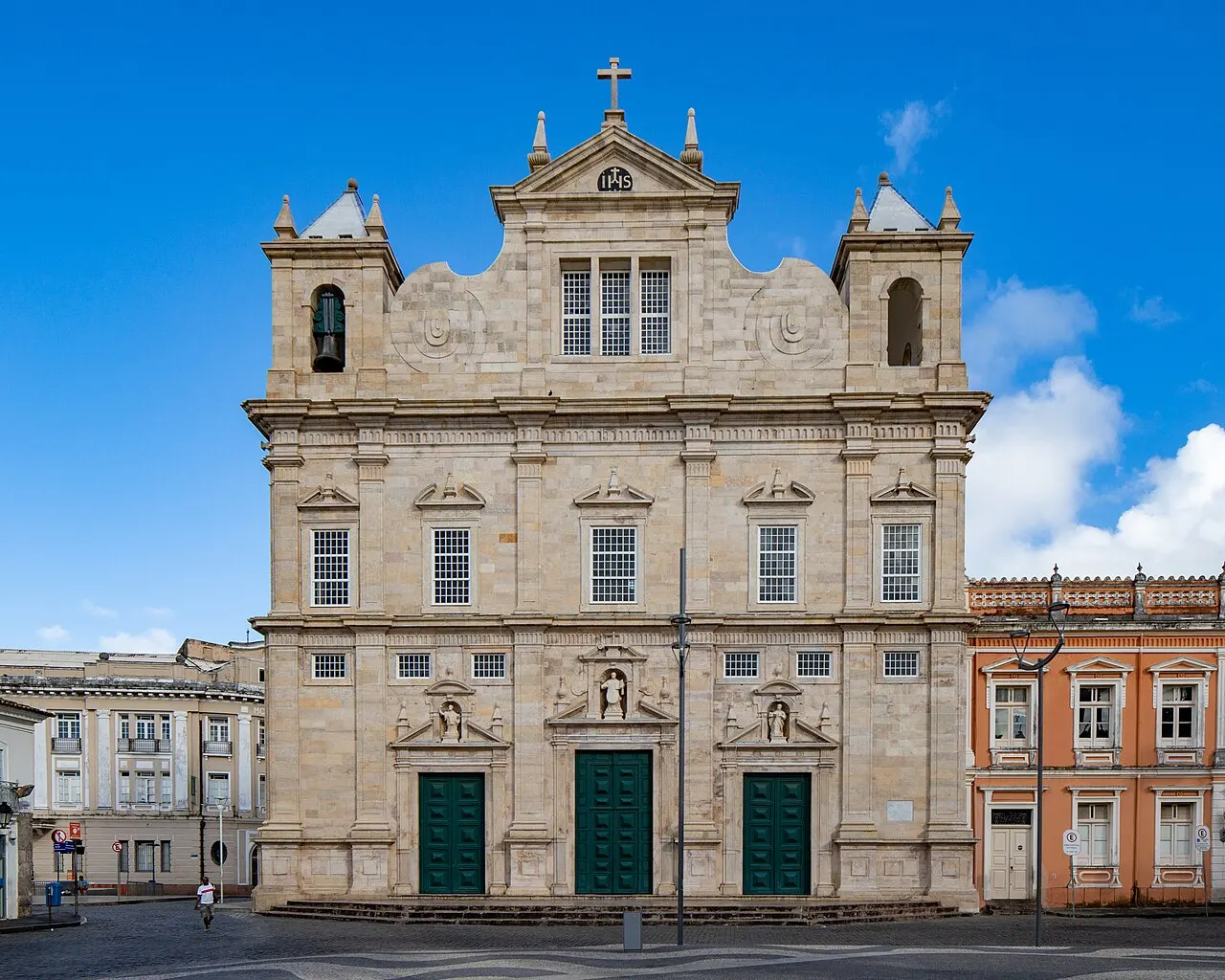
Cathedral Basilica
Formerly the church of the Jesuit College, built between 1657 and 1672 in lioz stone cut in Portugal and brought over as ship ballast. It holds the tomb of governor-general Mem de Sá, who died in 1572, and a sacristy with rosewood cabinets and tile panels.
The stone came cut from Portugal as ship's ballast, and the sacristy holds rosewood cabinets and tiled panels; built between 1657 and 1672; tomb of Mem de Sá, who died in 1572.
Check access
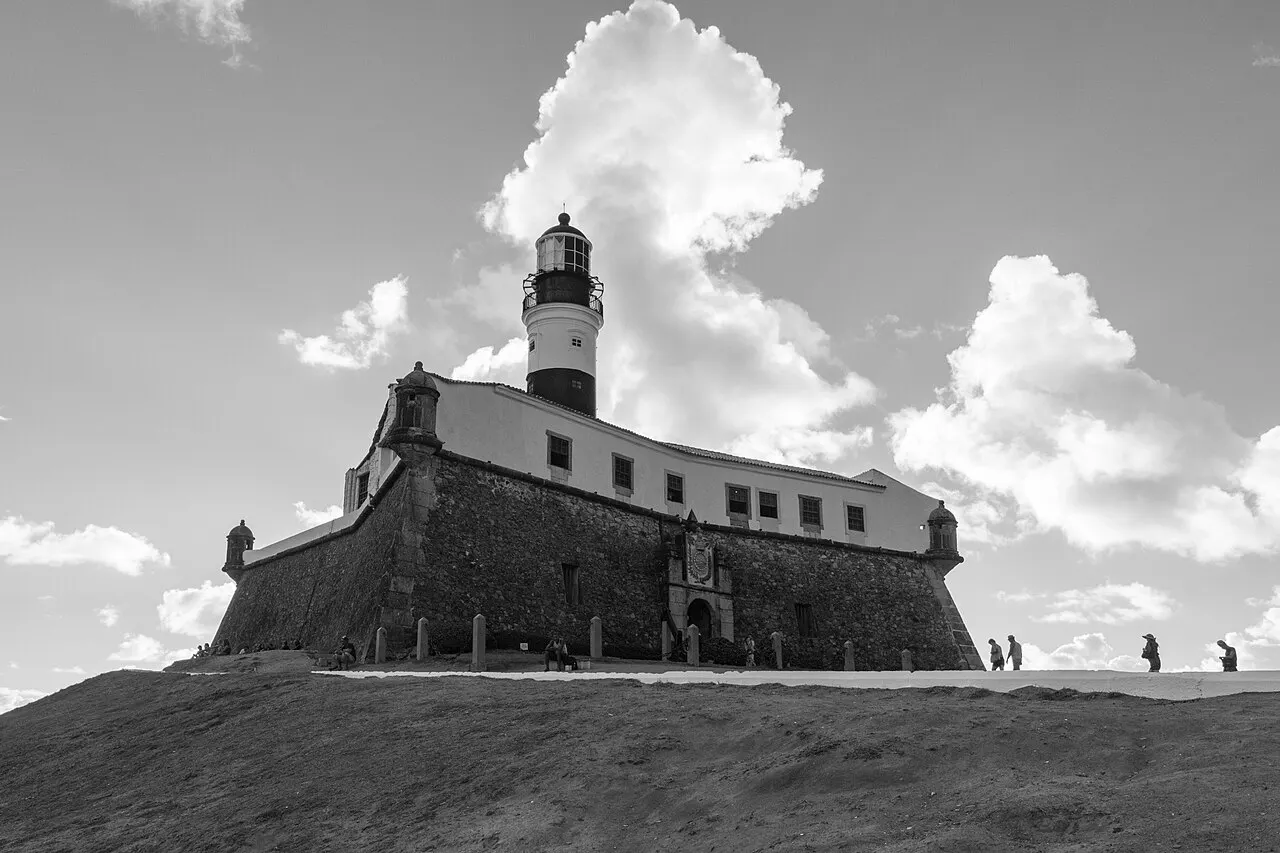
Forte de Santo Antônio da Barra and Barra Lighthouse
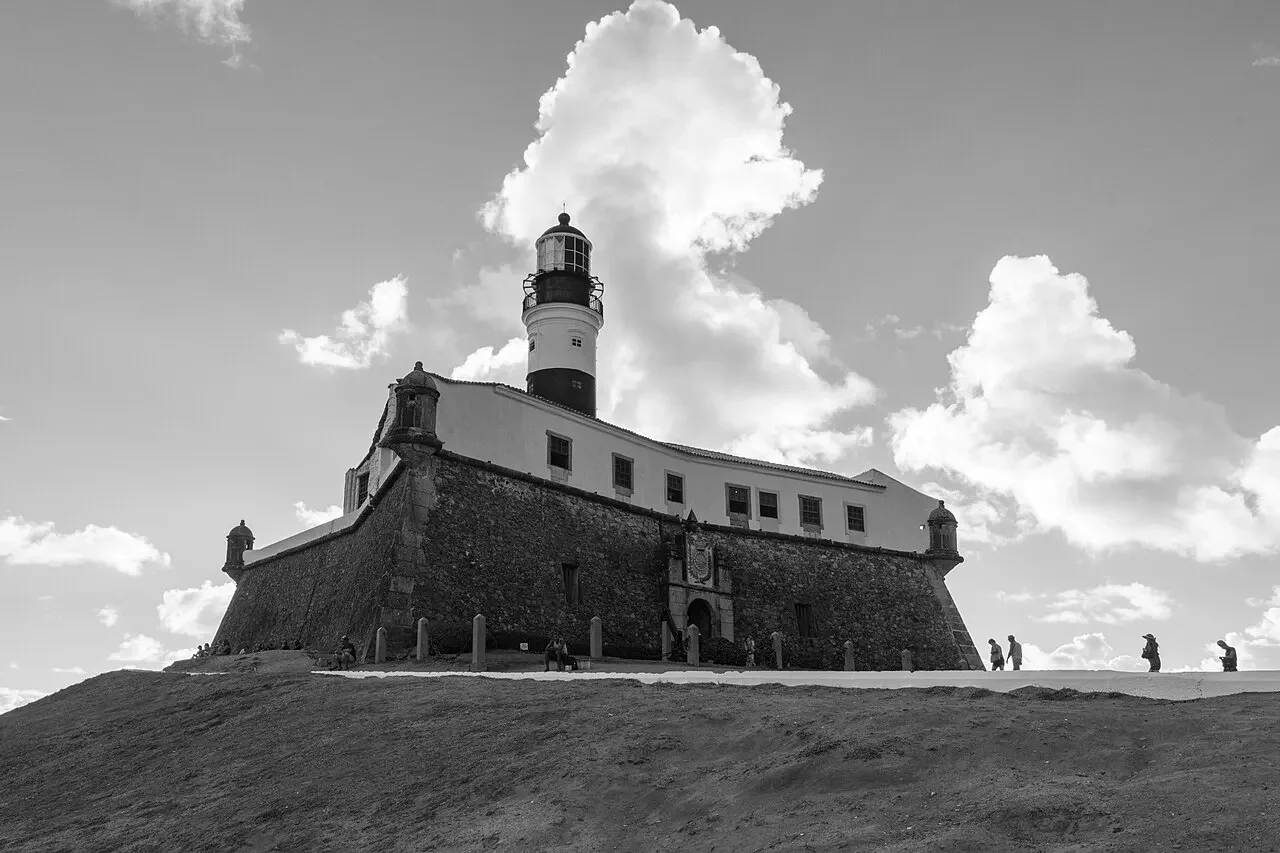
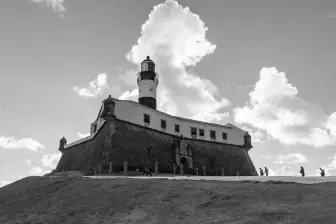
A fortress begun at the end of the 16th century and finished in 1698, at the point separating the bay from the Atlantic; the lighthouse is considered the oldest in the Americas and got its current tower in 1839. Inside is the Museu Náutico da Bahia, with a collection of the bay's shipwrecks, for about R$20.
At the point that separates the bay from the Atlantic, the fortress completed in 1698 houses the lighthouse considered the oldest in the Americas and, inside, the nautical museum that shows shipwrecks for about R$20.
Check access
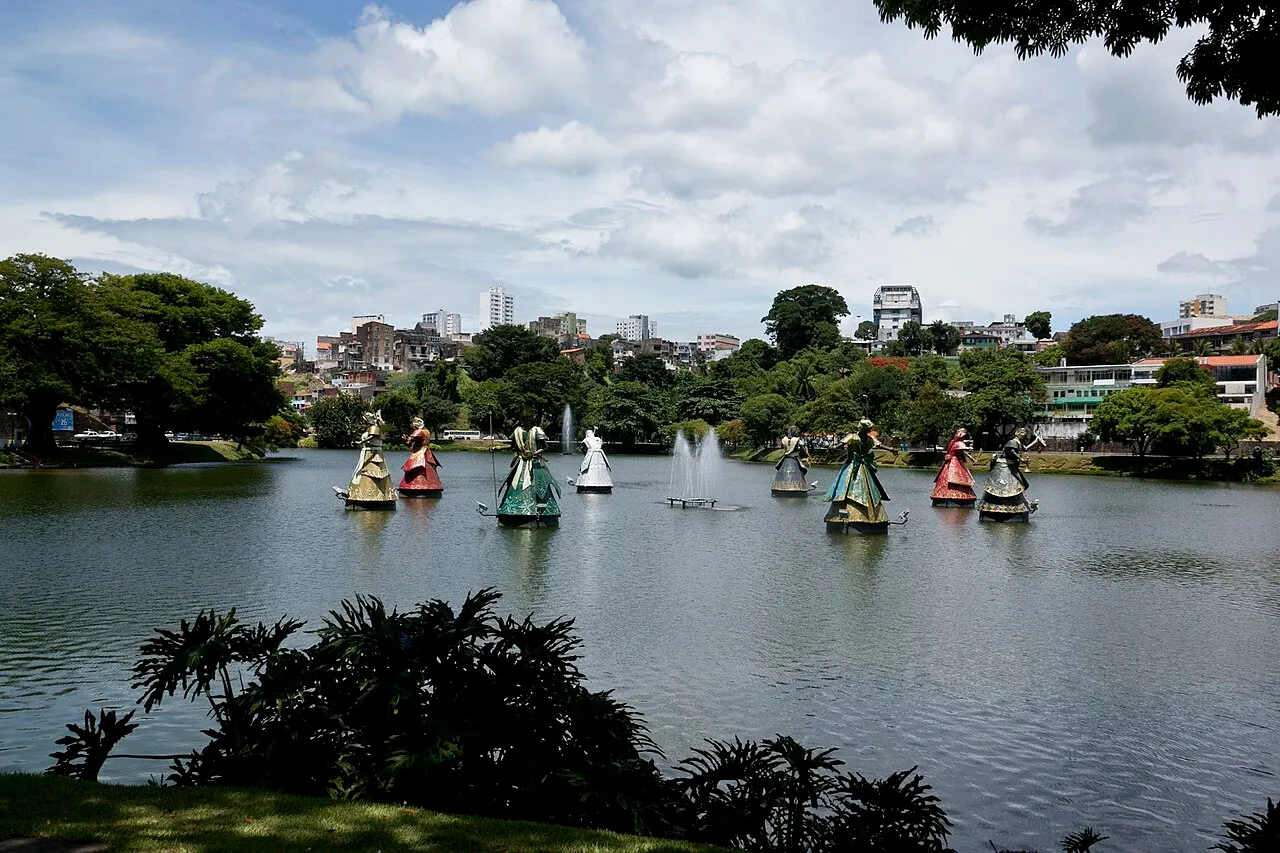
Dique do Tororó
A freshwater lagoon in the middle of the city, next to the Arena Fonte Nova, with eight roughly 4 m sculptures of orixás by Tatti Moreno, installed over the water in 1998. It's the most direct place to see how Candomblé occupies Salvador's public space.
Tatti Moreno's eight orixá sculptures, about 4 m tall, have stood over the lagoon since 1998, next to the Arena Fonte Nova: this is where candomblé shows up in public space.
Check access

Mercado Modelo
Mercado Modelo occupies the former customs house, built in 1861, in the lower city. Craftwork, hammocks, instruments and spices introduce materials and objects associated with Bahia. Combine a visit with Praça Cairu and Elevador Lacerda. If shopping, compare pieces, workmanship and prices between stalls before choosing.
There are more than 250 craft stalls in an 1861 building, and the first price quoted runs 30% to 40% above what you'll end up paying. Free is the capoeira circle on the lower terrace: set aside about thirty minutes and follow it with the ride down the Elevador Lacerda.
Check access

Solar do Unhão and MAM-BA
At Solar do Unhão, the house, chapel and former warehouse form a waterfront complex on Baía de Todos os Santos. Lina Bo Bardi adapted the buildings between 1959 and 1963 for the Museum of Modern Art of Bahia. The wooden spiral staircase and the relationship between architecture and water reward exploration; exhibitions and events provide reasons to return. Check MAM-BA’s programme before visiting.
Lina Bo Bardi's renovation and the nail-free spiral staircase date from 1959–1963, but what fills the Solar do Unhão is the Jam no MAM, only on Saturday late afternoons: on other days it's a small museum out of the way between Comércio and Barra.
Check access
Church and Convent of São Francisco
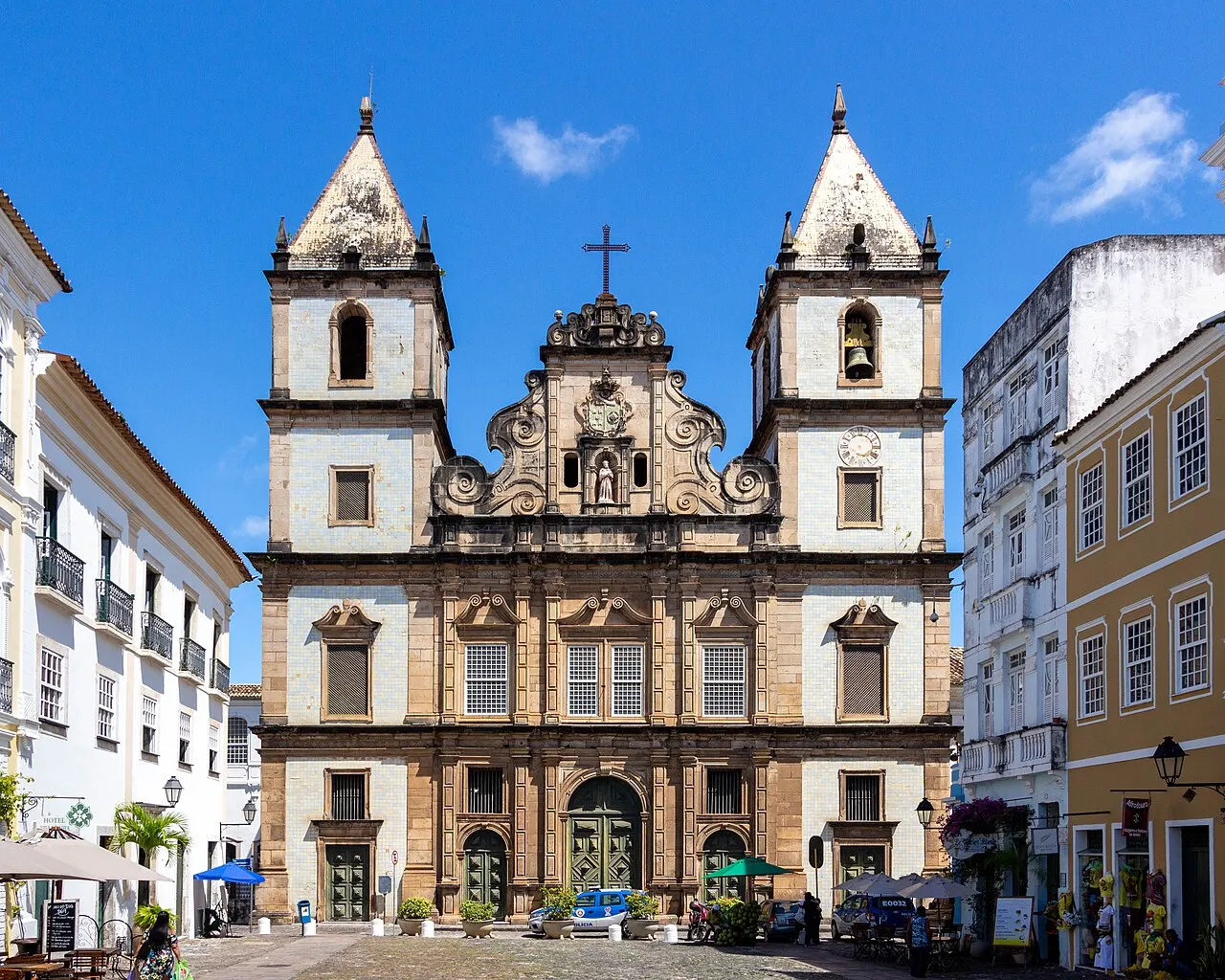
The Church and Convent of São Francisco bring together gilded woodwork and a cloister lined with eighteenth-century Portuguese tiles. The interior has been closed since part of the ceiling collapsed in February 2025 and is undergoing restoration. The works schedule is not a guaranteed reopening date: check access before travelling. The 1703 façade of the Third Order can be seen from the street.
Inside, only after it reopens; until then, the visit is limited to the façade of the Ordem Terceira, seen from the street in about twenty minutes. Spend the rest of the time at the Museu de Arte Sacra.
Check access
Nilo’s itinerary
Start with the basic programme and choose extensions for the time you have.
Plan my days in the app ↗Day 1 · Cidade Alta and the Historic Center
Start at Praça Municipal in front of Palácio Rio Branco and look across the bay from above. Save the descent in Elevador Lacerda for the lower-city part of your itinerary, avoiding a trip down and back up just to retrace the route.
Walk to the Terreiro de Jesus and go into the Cathedral Basilica, built between 1657 and 1672 in lioz stone brought from Portugal as ship ballast.
Continue to Largo do Cruzeiro de São Francisco to see the 1703 façade of the Third Order from the street. The interior of the Church and Convent of São Francisco is closed for restoration; this stop does not include entry.
Have lunch in the Pelourinho or Santo Antônio and walk down the Largo do Pelourinho to the Igreja de Nossa Senhora do Rosário dos Pretos, built by the brotherhood of Black people over the course of the 18th century.
Continue to Santo Antônio Além do Carmo and finish around Largo do Carmo, pausing for a meal or to look at the houses. The Museum of Sacred Art on Rua do Sodré is closed to visitors and should not be counted as a stop on this day.
Day 2 · Bonfim, the bay, and Cidade Baixa
Go early to the Colina Sagrada and step into the Igreja do Senhor do Bonfim; ask for a ribbon at the gate and see the Sala dos Milagres, with wax and wood ex-votos hanging from the ceiling.
Walk down the Itapagipe peninsula to the Ribeira, have an ice cream by the bay, and look at the city from the side almost no itinerary includes.
Go back to Comércio and into the Mercado Modelo, in the old customs house building, from 1861; the capoeira circle happens on the lower terrace, and haggling is part of the purchase.
Take transport to Solar do Unhão and MAM-BA beside the bay. Check which exhibitions are open; if you want a musical performance, check the event schedule and tickets rather than assuming there will be a show on your visiting day.
End the day at the Dique do Tororó, with the eight orixá sculptures set in the water in 1998 and the Arena Fonte Nova in the background.



If you stay longer
Day 3 · Barra, the shore, and Rio Vermelho
Start at Porto da Barra, facing Baía de Todos os Santos, and walk along the waterfront towards the fort. If you want to swim, check Inema’s bathing-water bulletin and local conditions; calm-looking water does not guarantee suitable swimming conditions.
Climb up to the Forte de Santo Antônio da Barra and the Barra Lighthouse, considered the oldest in the Americas; the Museu Náutico da Bahia costs about R$20.
Have moqueca in a clay pot for lunch (order rice, pirão, and farofa alongside) and spend the afternoon on the shore between Barra and Ondina.
If you want to visit Casa do Rio Vermelho, the memorial to Jorge Amado and Zélia Gattai, set aside part of the afternoon and check the last admission before leaving Barra. Afterwards, head to Largo de Santana and choose an acarajé stall for a stop before the evening.
Stay at Largo da Mariquita or Rua da Paciência for the night; if it's a Tuesday, trade all of this for the Bênção in the Pelourinho.
Food
 AI illustration
Acarajé
A fritter of peeled, ground black-eyed peas, fried in dendê palm oil and split open to hold vatapá, caruru, tomato salad, dried shrimp, and pepper. It's sold by baianas de tabuleiro (a trade registered as intangible heritage by IPHAN in 2005) and costs R$12–25 depending on the stall and filling.
 AI illustration
Abará
Abará uses black-eyed-pea batter steamed inside a banana leaf. Its contrast with acarajé’s fried crust offers a way to explore two preparations at a stall. Ask about fillings and ingredients: portions and recipes vary from place to place.
 AI illustration
Moqueca baiana
Fish, shrimp, or crab cooked in a clay pot from Maragogipinho with coconut milk, dendê, tomato, bell pepper, onion, and cilantro; served with rice, pirão, and farofa. The Espírito Santo version, without dendê or coconut, is a different dish. At a good restaurant it serves two for R$160–280.
 AI illustration
Vatapá and caruru
Vatapá is a bread or cornmeal cream with dried shrimp, peanuts, cashews, coconut milk, ginger, and dendê; caruru is chopped okra cooked with dried shrimp, peanuts, and dendê. They appear as acarajé filling, as a side dish, and, in caruru's case, as votive food served to children on September 27.
 AI illustration
Bobó de camarão
Bobó combines a creamy cassava base with shrimp, coconut milk, dendê palm oil and coriander. Its texture differs from moqueca, where pieces of fish or seafood sit in broth. Check ingredients and side dishes with the restaurant, especially if you have an allergy or dietary restriction.
 AI illustration
Xinxim de galinha
Chicken sautéed with dried shrimp, peanuts, cashews, and dendê, of Yoruba origin and linked to Oxum in the terreiros. Less exported than moqueca and easier to find at a neighborhood restaurant than in the tourist area.
 AI illustration
Cocada, bolinho de estudante, and quindim
Sweets come from coconut and Recôncavo sugar: white or brown cocada from street trays for R$3–6, bolinho de estudante (tapioca with coconut, fried and rolled in cinnamon sugar) and quindim made of egg yolk and coconut. Vendors circulate along the beach and the squares of the Centro.
 AI illustration
Coconut water and cold beer
Coconut water is sold at kiosks and stalls along the coast. Bars may serve large beer bottles to share, poured into small glasses and kept in an insulated holder. “Estupidamente gelada” is an expression you may see on a menu or hear in conversation; choose the drink and size you prefer and check the price before ordering.
Day trips
Itaparica Island
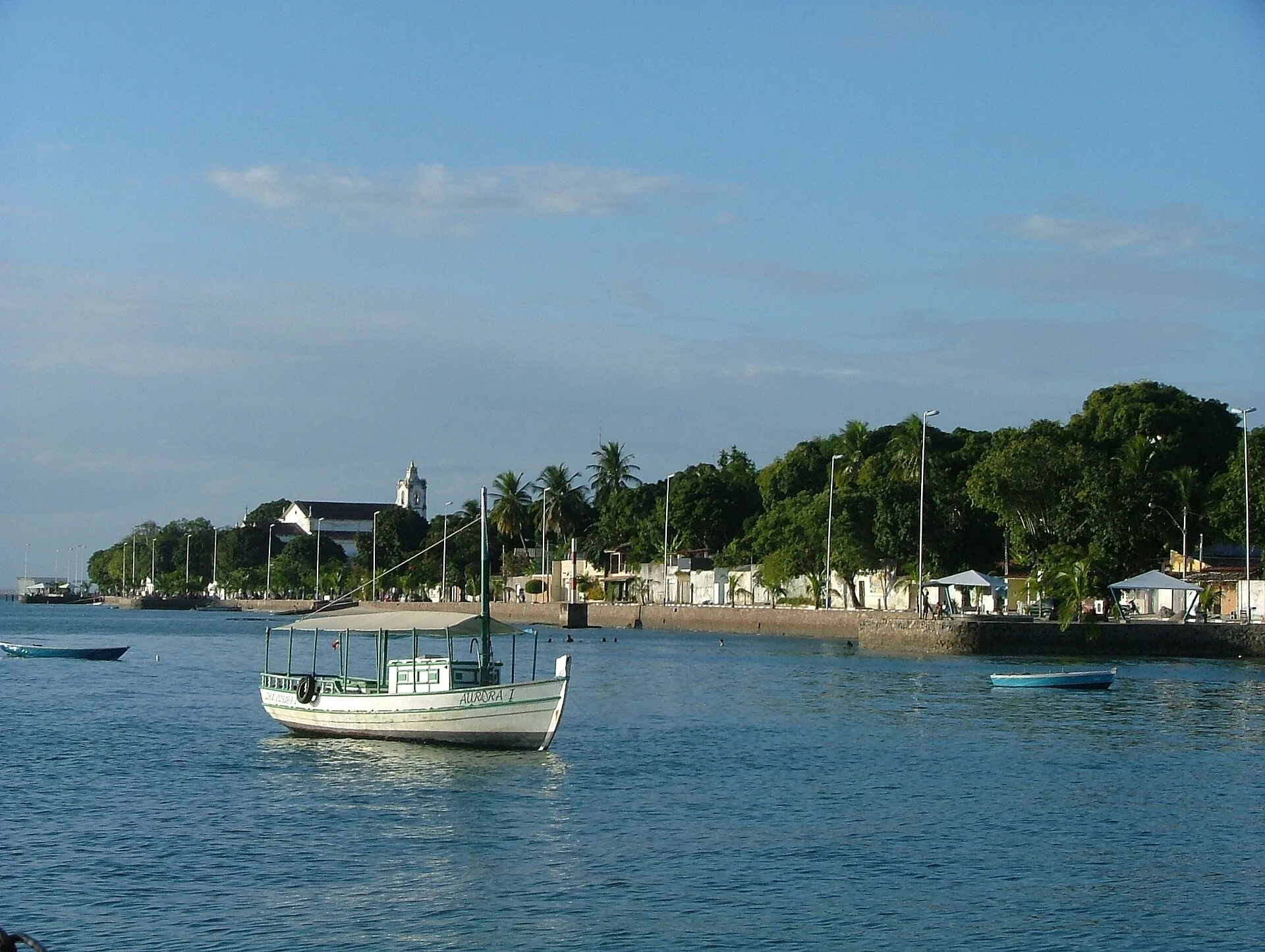
Across the Baía de Todos os Santos, Itaparica Island is reached by launch: it leaves from the Terminal Náutico, next to the Mercado Modelo, and gets to Mar Grande in about 40 minutes, crossing the bay with the city in view. Drivers take the ferry at the São Joaquim terminal, because the 12.4 km bridge promised for the island is still pending.

Praia do Forte
Praia do Forte, in the municipality of Mata de São João, is about 75 km north of central Salvador. Projeto Tamar’s local base began working with the community in 1982; the sea turtle conservation project itself dates from 1980. The visitor centre explains this work. The ruins of Castelo Garcia d’Ávila are another possible visit in the area. For a day trip, decide what you want to see and arrange transport both ways; journey time depends on your starting point and traffic.
Cachoeira and São Félix
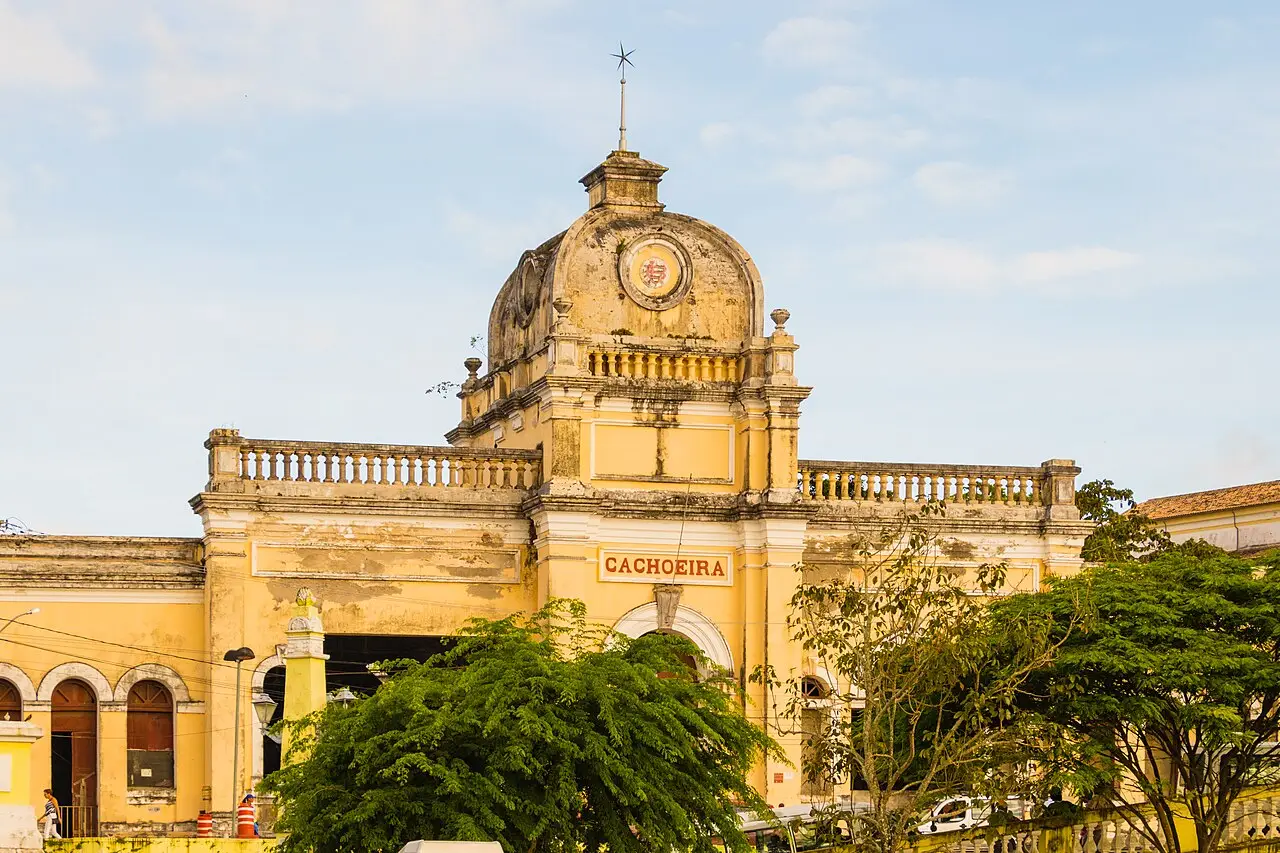
Cachoeira and São Félix are about 110 km away, about 2 hours by car, in the Recôncavo of sugar and tobacco. They're two colonial towns facing each other, linked by the Dom Pedro II bridge, from 1885, and Cachoeira is home to the Irmandade da Boa Morte, a sisterhood of Black women whose festival takes place in mid-August.
Where to begin
Cidade Alta and the Historic Center
Start at Praça Municipal in front of Palácio Rio Branco and look across the bay from above. Save the descent in Elevador Lacerda for the lower-city part of your itinerary, avoiding a trip down and back up just to retrace the route.
Bonfim, the bay, and Cidade Baixa
Go early to the Colina Sagrada and step into the Igreja do Senhor do Bonfim; ask for a ribbon at the gate and see the Sala dos Milagres, with wax and wood ex-votos hanging from the ceiling.
Barra, the shore, and Rio Vermelho
Start at Porto da Barra, facing Baía de Todos os Santos, and walk along the waterfront towards the fort. If you want to swim, check Inema’s bathing-water bulletin and local conditions; calm-looking water does not guarantee suitable swimming conditions.
Money
Prices are in Brazilian reais (R$). As rough references for comparing menus, allow R$12–25 for a filled acarajé and R$160–280 for a moqueca for two; check the portion and included side dishes. These are indicative ranges that vary by place and season. For accommodation, compare the total for your dates and include journeys between your chosen neighbourhood and the places you want to visit. Carnival, New Year and major festivals call for particular attention to booking conditions.
Pix is a transfer payment: using it requires an account with a participating institution. A QR code at the counter does not mean every foreign card or bank account can pay. Ask which payment methods are accepted before ordering and keep some reais for small purchases. Check the amount on the terminal before tapping your card.
When comparing costs with your usual currency, check the current exchange rate and your bank’s or payment provider’s fees. On restaurant bills, check whether service is included before adding a tip.
Getting there and around
Luís Eduardo Magalhães Airport (SSA), 28 km from the Centro
Salvador airport (SSA) is about 28 km from the historic centre. To reach the metro, first take the free shuttle bus from the terminal to Aeroporto station; the station is not inside the airport. Line 2 runs to Acesso Norte, where you change to Line 1 for Lapa. Allow for the shuttle wait and the change of trains, especially with luggage.
The intercity bus terminal has operated in Águas Claras since January 2026. Check the terminal on your ticket rather than heading to the old address beside Shopping da Bahia. Boat departures use different terminals: the Terminal Náutico is near Mercado Modelo, while the ferry to Itaparica leaves from São Joaquim.
Metro for the main corridors; walking in the historic centre
The metro is useful for crossing the city and arriving from the airport, but does not follow the entire waterfront. Choose metro, bus or car according to your accommodation address and that day’s destination; check fares and transfer conditions with the operator.
Walking around Pelourinho and Santo Antônio Além do Carmo lets you visit churches and nearby streets without retracing the route by car. Expect hills, uneven paving and heat. Elevador Lacerda and the inclined railways connect the upper and lower city; check that they are operating before relying on them. Bonfim, Barra and Rio Vermelho involve longer journeys that are best planned separately.
Safety
Theft and robbery require attention in Salvador, including in areas visited by tourists. Police presence and busy streets do not guarantee safety. Step into a business to check your map or request transport; carry few valuables and keep belongings close at beaches, markets and crowded events. If threatened during a robbery, do not resist.
Plan your return journey before going out, especially at night. Ask your accommodation for current advice on the route and time, rather than choosing an unfamiliar slope or street just because the map shows a shortcut. When booking a car, check its registration and driver against the app and wait in a protected place. During Carnival, agree on a meeting point with your companions.
Keep a copy of your documents separate from the originals and check which ID each activity or journey requires. Watch the amount displayed on payment terminals. For a police emergency, call 190; seek local help and your country’s consular services when needed.
Etiquette tips
The Bonfim ribbon and three wishes
Bonfim ribbons appear on wrists and on the church railings. In popular belief, each of the three knots accompanies a wish, and the ribbon stays until it wears through. This is a devotional tradition: observe how people take part and ask permission before photographing them.
Candomblé terreiro: the rules for visiting a temple
A terreiro is a religious community, not a walk-in attraction. Contact the house itself before visiting to ask whether it welcomes visitors, on what occasions and with what clothing guidance. Follow the person welcoming you, and ask permission to photograph or record. Do not assume that an announced ceremony gives access to every space.
Ask before photographing a baiana
The baianas selling acarajé and the ones posing in the Pelourinho squares wear ritual clothing, not a costume. Ask first; those who pose for photos usually charge R$5–20, and it's fair to pay.
“With pepper?” is a serious question
Pepper sauce is added to the acarajé filling, and you can ask for none or just a little. If you have not tried that stall’s sauce, start with a small amount and adjust to your taste. Dendê and pepper are different ingredients: palm oil gives the fritter its colour and flavour; the sauce supplies the heat.
“My king,” “my queen,” and “my love” aren't flirting
You may hear “meu rei”, “minha rainha” or “meu amor” in shops and informal conversations. They can be affectionate forms of address without romantic intent. A friendly greeting is enough; there is no need to repeat an expression that feels unfamiliar to you.
Don't cross the circle during a capoeira session
The circle is closed by bodies and by the singing, and you enter and leave crouched, by the foot of the berimbau. If you film it, leave a coin in the hat: that's what keeps the street circle going.
Mistakes to avoid
Thinking Pelourinho is the whole city
Thinking the Pelourinho is the city. The Historic Center covers about 1 km² and holds what's left of the 18th century. The Salvador where people live is in the Subúrbio Ferroviário, in Cajazeiras, in Liberdade, and along the north shore, and that's where the music that becomes next year's Carnival comes from.
Choose the beach according to that day’s conditions
The waterfront changes considerably between Baía de Todos os Santos and the Atlantic. Choose a stretch of beach according to what you want to do, rather than simply its distance from your accommodation. For swimming, check Inema’s bathing-water bulletin and local guidance on sea conditions; Porto da Barra and Praia do Flamengo need that assessment too.
Check each museum’s calendar
Do not plan all your indoor visits without checking opening days: museums may have weekly closures, temporary exhibitions and restoration work. Build your day around institutions that will be open and keep a nearby alternative. For music in Pelourinho, consult the programme rather than relying on a fixed night.
Try different dishes across the visit
Acarajé, moqueca and bobó show different uses of dendê in Bahian cooking. Spread them across your visit to appreciate each preparation, and ask about ingredients and portion sizes before ordering. There is no need to try everything in one meal.
Stone ramp: walk before 10am
Underestimating the slope and the sun. Distances are deceiving on the map because almost everything is an uneven stone ramp: walk before 10am or after 4pm, carrying water, and use the elevator and inclined-plane lifts instead of walking down.
Useful phrases
Oxe / oxente
A mark of surprise or doubt, used mid-sentence: “oxe, e por quê?” (oxe, and why?)
Meu rei / minha rainha
Affectionate forms of address you may hear in shops and informal conversations; they do not necessarily imply closeness
Com pimenta?
A question about pepper sauce in acarajé; “sem pimenta” (no pepper) or “só um pouquinho” (just a little) lets you choose the amount
Axé
Vital energy in candomblé; on the street it became a greeting and a wish for strength, and gives its name to Carnival's musical genre
Painho / mainha
Dad and mom, but used as terms of affection between close people, including from parents to children
Vou ali e já volto
“Vou ali e já volto” announces a short absence without giving an exact return time; agree on a time if you have an appointment
Districts
Pelourinho and Terreiro de Jesus
The colonial heart of the Upper Town brings together squares, churches, museums and uneven stone streets. Pelourinho and Terreiro de Jesus are useful starting points for walking through the Historic Centre towards Carmo. Music programmes may extend your visit into the evening; check the event, venue and return journey, as activity varies from street to street.
Santo Antônio Além do Carmo
A continuation of the Historic Centre towards the north, with townhouses converted into small guesthouses with bay views. The atmosphere is more residential than in Pelourinho, and Rua Direita de Santo Antônio brings together small restaurants. When choosing a guesthouse, compare its location, access and facilities as well as the price.
Comércio and Cidade Baixa
The flat strip at the foot of the cliff, between the slope and the port: art deco and eclectic office buildings from the 1920s to 1950s, the Mercado Modelo, the Terminal Náutico, and the Igreja da Conceição da Praia. Office activity is concentrated on weekdays. For an evening or weekend visit, check the venues’ programmes and your return journey, as activity varies between streets and times of day.
Barra
At the tip of the peninsula, Barra lets you follow the transition from Baía de Todos os Santos to the Atlantic. Porto da Barra, Forte de Santo Antônio and the walk towards Ondina help organise a coastal visit. It is also an important stretch of Carnival’s Dodô circuit. Before swimming, check water quality and conditions that day.
Rio Vermelho
A neighborhood of bars, live-music venues, and restaurants on the Atlantic coast, east of Barra, where Jorge Amado lived from 1960 until his death in 2001. It's where people eat acarajé at night, at the stalls of Largo de Santana, and where the Festa de Iemanjá happens, on February 2.
Itapagipe and Bonfim
A peninsula northwest of the Centro, with the Igreja do Senhor do Bonfim atop the Colina Sagrada, the Ribeira along the bay, and early-20th-century working-class housing. Devotion to Senhor do Bonfim shapes a visit to the hill, the destination of January’s Lavagem do Bonfim procession.
Liberdade and Curuzu
Northeast of the centre, Liberdade and Curuzu have an important place in Salvador’s Black cultural life. Curuzu is home to Ilê Aiyê, the Afro-Brazilian Carnival group founded in 1974. It is a residential neighbourhood; check the group’s cultural programme to discover its work rather than expecting a performance on arrival.
North shore: Pituba, Itapuã, and Praia do Flamengo
The Atlantic strip running from Pituba, a vertical neighborhood of malls and offices, to Itapuã, the Lagoa do Abaeté and the open beaches of Flamengo and Stella Maris. When choosing a stretch of coast, consider its distance from the centre and sea conditions: these neighbourhoods differ in character and access.
History
1501 · The bay gets a name
The Portuguese expedition carrying Amerigo Vespucci enters the inlet on November 1, All Saints' Day, and names the bay. The territory was occupied by Tupinambá villages.
1536–1547 · The first attempt fails
Francisco Pereira Coutinho receives the captaincy of the Baía de Todos os Santos and founds Vila do Pereira, in what is now Barra. Conflict with the Tupinambá destroys the settlement, and the grantee dies around 1547.
1549 · Founding and capital
Tomé de Sousa arrives on March 29 with about a thousand people, including six Jesuits led by Manuel da Nóbrega, and builds a walled city atop the cliff. São Salvador is the seat of the general government and capital of the State of Brazil for 214 years.
1624–1625 · The Dutch year
The Dutch West India Company takes the city in May 1624. A Portuguese-Spanish fleet of 52 ships under Fadrique de Toledo retakes it a year later, in what became known as the Jornada dos Vassalos.
17th–18th c. · Sugar and the slave trade
The sugar mills of the Recôncavo make Salvador one of the two largest slave ports in the Americas, alongside Rio de Janeiro: an estimated 1.5 million Africans landed in Bahia, mostly from the Mina Coast and Angola. The city organizes itself around this trade and around the religious orders.
1763 · The capital leaves
The crown moves the seat of government to Rio de Janeiro, closer to the gold of Minas Gerais. Salvador loses political power and keeps its economic power while the sugar lasts.
1798–1799 · Bahian Conspiracy
Tailors, soldiers, and artisans, mostly Black and mixed-race, put up pamphlets calling for a republic and the end of slavery. Four of them (João de Deus, Manuel Faustino, Lucas Dantas, and Luís Gonzaga das Virgens) are hanged in Praça da Piedade in 1799.
1823 · Independence of Bahia
The independence declared in 1822 is only sealed by a war: the Portuguese troops of Madeira de Melo leave the city and the pacifying army enters Salvador on July 2, 1823. The date is the state's largest civic holiday.
1835 · Malê Revolt
Hundreds of enslaved and freed Africans, many of them Muslim Nagô and Hausa, take up arms in the early hours of January 25. The crackdown executes, whips, and deports, and pushes the empire to tighten control over free Africans.
1939–1978 · Oil and industry
Oil was discovered in Lobato, within the city, in January 1939. The Mataripe refinery (1950), the Aratu Industrial Center (1967), and the Camaçari Petrochemical Complex (1978) draw a migration that multiplies the population fivefold in four decades.
 AI illustration
1985–2018 · Heritage and metro
Unesco lists the Historic Center as a World Heritage Site in 1985, and the state government restores the Pelourinho between 1992 and 1995, a process that removed many of its residents. Metro Line 1 opens in 2014 and Line 2 reaches the airport in 2018.

Complete history
Founded as a state project
Salvador was founded as a state project, not as a settlement that grew. On the Baía de Todos os Santos, Francisco Pereira Coutinho's hereditary captaincy had lasted just over ten years and ended with its grantee dead, around 1547, and failures like that one led King João III to create the general government and send Tomé de Sousa to build a fortified city. Tomé de Sousa arrived on March 29, 1549, with about a thousand people, among them soldiers, exiled convicts, settlers and six Jesuits, and chose the top of the escarpment for military reasons: from there you could see the whole bay and defend the port with artillery. The split between the Cidade Alta, of government and churches, and the Cidade Baixa, of the docks and the customs house, was born that day and has never been undone.
Two centuries of Recôncavo sugar
What sustained the city for two centuries was the sugar of the Recôncavo and the transatlantic slave trade that supplied it. Salvador was one of the two largest slave ports in the Americas, alongside Rio de Janeiro: an estimated 1.5 million Africans landed in Bahia, most of them from the Mina Coast, on the Bight of Benin, and from Angola. That money paid for the gilded woodwork of São Francisco and the dozens of churches in the Centro, and that population produced Candomblé, capoeira, samba de roda, acarajé and the Black brotherhoods. The Rosário dos Pretos brotherhood, formed by enslaved and freed Africans, initially met in the old cathedral before building its own church. Its history reveals how a Black community organised itself within a slaveholding society. The roughly 80% of residents who identified as Black or mixed race in the 2022 Census are a direct consequence of that period.
Revolts and the independence of 1823, after the loss of the capital
In 1763, the Portuguese Crown moved the colonial government’s capital from Salvador to Rio de Janeiro, closer to the mining regions of Minas Gerais. Salvador retained its role linking the port to agricultural trade from the interior. Against this backdrop, the Bahian Conspiracy of 1798, organised by tailors, soldiers and other Black and mixed-race participants, ended with four executions by hanging in 1799.
Brazil declared independence in 1822, but it was only secured in Bahia after months of war, when Portuguese troops withdrew on 2 July 1823. The date remains central to Bahia’s civic calendar. In January 1835, the Malê Revolt mobilised hundreds of Muslim Africans and was suppressed by the Brazilian imperial authorities. During the 19th century, tobacco from the Recôncavo and cacao from the south of the state gained economic importance. In 1912, a political dispute led federal forces to bombard the city, striking what is now the Palácio Rio Branco and devastating much of the Public Library’s collection.
Industrialisation and new neighbourhoods
Industrialisation in the 20th century broadened the city’s economic activities and reshaped its layout. Oil was discovered in Lobato, within the municipality, in January 1939; then came the Mataripe refinery in 1950, the Aratu Industrial Center in 1967, and the Camaçari Petrochemical Complex in 1978. The population jumped from about 400,000 in 1950 to more than 2 million in 1991, and those people settled where there was land: in the Subúrbio Ferroviário, along the bay, and in inner neighborhoods like Cajazeiras. Investment ran the other way (along the Atlantic shore and Avenida Luís Viana Filho, the Paralela, opened in the 1970s) while the Historic Center was abandoned by owners and occupied by poor residents.
Unesco heritage restored, without its former residents
Unesco listed the Historic Center in 1985, and between 1992 and 1995 the state government restored the Pelourinho in a process that recovered the facades and removed most of the former residents; criticism of that model still shapes the debate over the Centro. Culture became formal economy: the street Carnival is the state's biggest tourism operation, and blocos afro, axé, capoeira and Candomblé sustain jobs year-round. Recent works focus on mobility: the metro in 2014, an extension to the airport in 2018, a BRT on Avenida ACM starting in 2022 and the 12.4 km bridge to Itaparica, still pending; IBGE’s 2025 estimates indicated a small decline in the municipality’s population compared with the previous year.
The government and the churches were in the Cidade Alta; the port was in the Cidade Baixa, 72 m below via the Elevador Lacerda.
Geography and shape of the city
The peninsula and the fault
Salvador occupies about 693 km² at the tip of a peninsula between the Atlantic Ocean, to the east, and the Baía de Todos os Santos, to the west: Brazil's largest bay, at about 1,100 km², with more than fifty islands. A geological fault cuts the city from north to south and creates a cliff 50 to 70 m high that separates the Cidade Alta from the Cidade Baixa; in the centre, stone lanes, the Gonçalves and Pilar inclined-plane lifts and the Elevador Lacerda connect the two areas.
A climate with no cold season
The climate is humid tropical, with no cold season, averaging 25 °C to 27 °C and about 2,100 mm of rain a year concentrated between April and July.
Expansion along the coast and Paralela
In the 20th century, Salvador expanded northwards, along the Atlantic coast towards Itapuã and along Avenida Paralela, which opened in the 1970s. These routes concentrate shopping centres and residential areas and provide access to the airport. The Subúrbio Ferroviário developed along the bay with a different urban history. When planning a visit, it helps to group outings in the centre separately from those on the more distant coast: journey times vary considerably with the route, transport and traffic.
Culture
Candomblé and capoeira
Salvador is the center of Candomblé in Brazil, and its terreiros are institutions with an address, a hierarchy and a history: Casa Branca do Engenho Velho, or Ilê Axé Iyá Nassô Oká, was the first terreiro protected by IPHAN, in 1984; Gantois is the house of Mãe Menininha, who died in 1986; Ilê Axé Opô Afonjá, in São Gonçalo do Retiro, was founded in 1910. The Ketu-Nagô, Jeje and Angola nations coexist, each with its own repertoire of songs and ritual language.
Capoeira also has a history of schools and masters in the city. Mestre Bimba developed capoeira regional and obtained official registration for his academy in 1937. Mestre Pastinha founded the Centro Esportivo de Capoeira Angola in 1941. Their distinct paths help explain different ways of teaching and playing capoeira. The capoeira circle has been on Unesco’s Intangible Cultural Heritage list since 2014.
The trio elétrico was born in 1950
The trio elétrico was born here: in 1950, Dodô and Osmar mounted amplified guitars on a 1929 Ford, the “fobica,” and invented the sound truck that still runs Carnival today. The blocos afro came later, as a political response: Ilê Aiyê, founded in 1974 in Curuzu, in Liberdade, was the first bloco made up only of Black members; Olodum, from 1979, came out of the Pelourinho and recorded with Paul Simon and Michael Jackson in the 1990s; the afoxé Filhos de Gandhy, created by dockworkers in 1949, parades with about ten thousand men in white and blue. Salvador’s musical life is also connected to the Tropicália of Caetano Veloso, Gilberto Gil, Gal Costa, Maria Bethânia and Tom Zé and, today, to BaianaSystem, which brings heavy bass and political lyrics to the trio elétrico. Samba de roda comes from the Recôncavo, the region around Baía de Todos os Santos, and received Unesco recognition in 2005.
From Gregório de Matos onward
The city's literature runs from Gregório de Matos, a satirical 17th-century poet nicknamed Boca do Inferno, to Castro Alves, who read “O Navio Negreiro” in 1868 and gives his name to the theater and the square where Carnival ends, and to Jorge Amado and João Ubaldo Ribeiro in the 20th century. In the visual arts, the Argentine-Brazilian Carybé spent five decades drawing orixás, and the French photographer Pierre Verger documented the bridge between Bahia and the Gulf of Benin. Both bodies of work have foundations open to the public. In soccer, the Ba-Vi between Bahia, founded in 1931 and Brazilian champion in 1959, and Vitória, from 1899, splits the city; the Arena Fonte Nova, rebuilt in 2013 for the World Cup, holds about 48,000 people. Nightlife concentrates in Rio Vermelho, at Largo de Santana and in Mariquita, and in the Pelourinho on Tuesdays.
Salvador's candomblé terreiros are institutions with an address; the Casa Branca was listed as a heritage site by IPHAN in 1984.
Festivals and events

Lavagem do Bonfim: January
Lavagem do Bonfim brings a procession from Igreja da Conceição da Praia to Colina Sagrada. Baianas dressed in white carry small jugs of scented water to wash the church steps. The date varies within January: check the year’s programme before booking your trip and choosing where to watch the procession.

Festa de Iemanjá: February 2
In Rio Vermelho, fishermen and members of the Candomblé community deliver gifts at the Casa do Peso starting at 4am; in the late afternoon the baskets are taken out to sea by boat. The whole neighborhood stops, and the party continues with music until dawn.

Carnival: February or March, six days
Three circuits: Dodô, between Barra and Ondina; Osmar, from Campo Grande to Praça Castro Alves; and Batatinha, in the Historic Center. Watching from the pipoca, the free-standing crowd, is free; a bloco's abadá (the costume that doubles as a pass) costs R$400 to R$2,500 depending on the act and the day, and a camarote box costs more.

July 2: Independence of Bahia
Commemorates the departure of Portuguese troops in 1823 and weighs more in the city than the national September 7. The Caboclo and Cabocla floats leave Lapinha and climb to Campo Grande in a procession lasting hours, with brass bands and thousands of people on foot.
Festa de Santa Bárbara: December 4
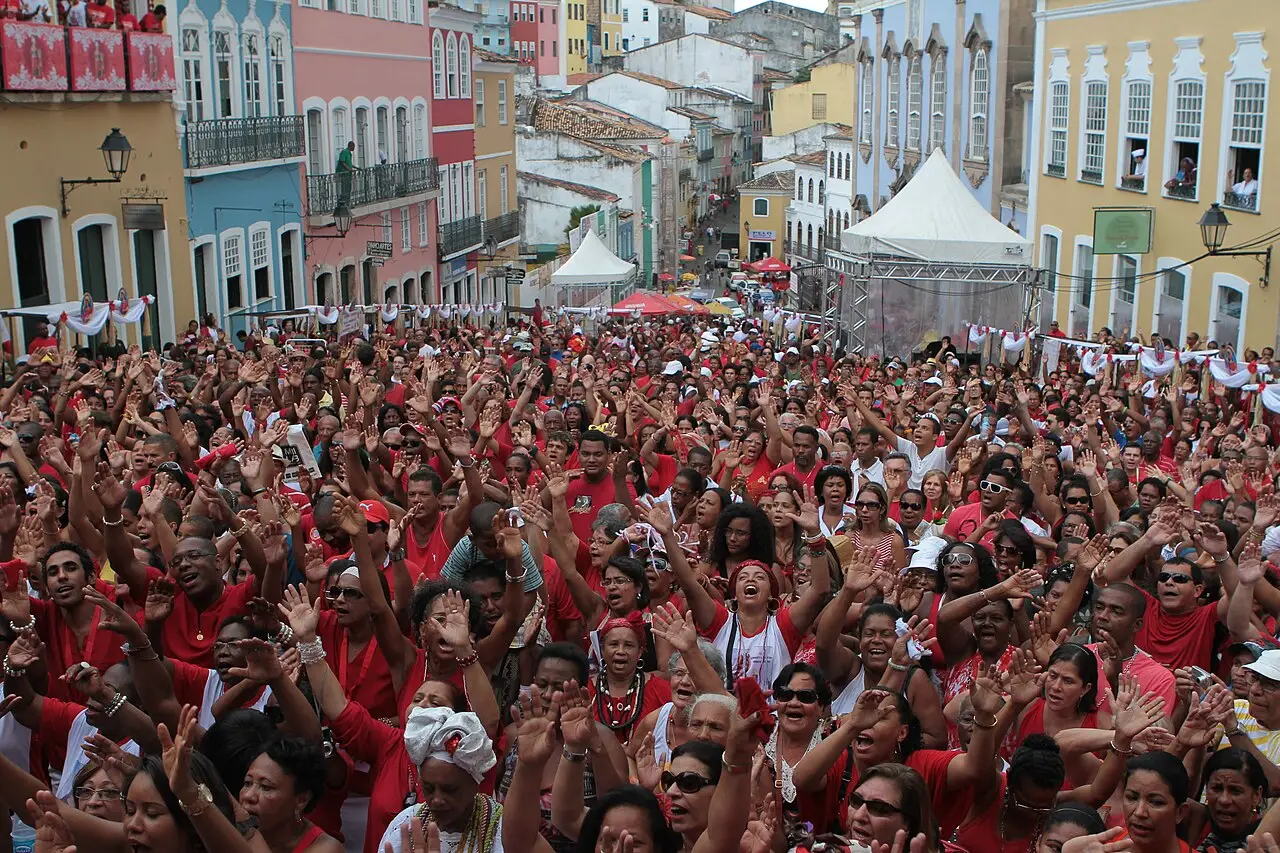
The festival brings together devotion to Saint Barbara and, among Candomblé practitioners, to Iansã. Mass, a procession and servings of caruru, an okra-based dish, are part of the celebrations in the Historic Centre. The fire station is a traditional stop along the route; do not assume the procession starts there. Check the annual programme for starting points and the streets it will follow.
Books and films
Capitães da Areia, Jorge Amado (1937)
The novel about the boys of the wharf maps the city's social geography (the trapiche, the Pelourinho, the terreiro, and the police) and was publicly burned in 1937, by order of the Estado Novo.
Ó Paí, Ó (2007), by Monique Gardenberg
On the last day of Carnival, the residents of a shared tenement in Pelourinho navigate encounters and conflicts amid the festivities. With Lázaro Ramos and Dira Paes, the film offers a view of neighbourhood life beyond the restored façades.
Canções Praieiras, Dorival Caymmi (1954)
The voice-and-guitar album that fixed the Bahia of the sea, the jangada fishermen and Iemanjá; much of Brazilian music's beach repertoire comes from these eight tracks.
Frequently asked questions
Salvador: Where do locals live, outside the Pelourinho?
The Salvador where people live is in the Subúrbio Ferroviário, in Cajazeiras, in Liberdade, and along the north shore, and that's where the music that becomes next year's Carnival comes from.
Salvador: How do you get from the airport to the Centro?
Salvador airport (SSA) is about 28 km from the historic centre. To reach the metro, first take the free shuttle bus from the terminal to Aeroporto station; the station is not inside the airport. Line 2 runs to Acesso Norte, where you change to Line 1 for Lapa. Allow for the shuttle wait and the change of trains, especially with luggage.
Salvador: How do you get to Itaparica Island?
Across the Baía de Todos os Santos, Itaparica Island is reached by launch: it leaves from the Terminal Náutico, next to the Mercado Modelo, and gets to Mar Grande in about 40 minutes, crossing the bay with the city in view.
Salvador: What's the currency, and what's the real worth?
The currency is the real (R$); in September 2026 the dollar hovers around R$5.4 and the euro around R$6.3, approximate and volatile.
Salvador: What's the climate like throughout the year?
Salvador sits less than 13 degrees from the Equator and has no cold season: highs run between 27°C and 31°C year-round, lows rarely drop below 22°C, and the sea stays between 26°C and 28°C at all times. What changes is the rain, about 2,100 mm a year concentrated from April to July, peaking in May and June, while the dry window runs from September to March.
Other cities in the country
Brazil ↗- Days
- 4
- When
- Apr–Jun
- Per person/day
- Average 615 BRLMid-range · per person/day
Cost scope
Per person per day: accommodation, meals, urban transport, visits and a small allowance for extras. Flights excluded; larger purchases vary. Editorial estimate, not a quote.
- Days
- 2–3
- When
- Apr–May · Sep
- Per person/day
- Average 400–700 BRLMid-range · per person/day
Cost scope
Per person per day: accommodation, meals, urban transport, visits and a small allowance for extras. Flights excluded; larger purchases vary. Editorial estimate, not a quote.
- Days
- 1–2
- When
- May–Sep
- Per person/day
- Average 260–520 BRLMid-range · per person/day
Cost scope
Per person per day: accommodation, meals, urban transport, visits and a small allowance for extras. Flights excluded; larger purchases vary. Editorial estimate, not a quote.
- Days
- 3–4
- When
- Jun–Sep
- Per person/day
- Average 400–700 BRLMid-range · per person/day
Cost scope
Per person per day: accommodation, meals, urban transport, visits and a small allowance for extras. Flights excluded; larger purchases vary. Editorial estimate, not a quote.
- Days
- 2–3
- When
- Apr–Jun
- Per person/day
- Average 350–550 BRLMid-range · per person/day
Cost scope
Per person per day: accommodation, meals, urban transport, visits and a small allowance for extras. Flights excluded; larger purchases vary. Editorial estimate, not a quote.
- Days
- 3–5
- When
- Mar–Apr · Nov
- Per person/day
- Average 397 BRLMid-range · per person/day
Cost scope
Per person per day: accommodation, meals, urban transport, visits and a small allowance for extras. Flights excluded; larger purchases vary. Editorial estimate, not a quote.
- Days
- 2–4
- When
- Mar–May · Sep
- Per person/day
- Explore costsGuide estimate
Cost scope
Per person per day: accommodation, meals, urban transport, visits and a small allowance for extras. Flights excluded; larger purchases vary. Editorial estimate, not a quote.
- Days
- 4–5
- When
- Aug–Nov
- Per person/day
- Explore costsGuide estimate
Cost scope
Per person per day: accommodation, meals, urban transport, visits and a small allowance for extras. Flights excluded; larger purchases vary. Editorial estimate, not a quote.
- Days
- 3–4
- When
- Jul–Sep
- Per person/day
- Explore costsGuide estimate
Cost scope
Per person per day: accommodation, meals, urban transport, visits and a small allowance for extras. Flights excluded; larger purchases vary. Editorial estimate, not a quote.
- Days
- 3–4
- When
- Sep–Nov
- Per person/day
- Explore costsGuide estimate
Cost scope
Per person per day: accommodation, meals, urban transport, visits and a small allowance for extras. Flights excluded; larger purchases vary. Editorial estimate, not a quote.
- Days
- 2–4
- When
- May–Sep
- Per person/day
- Explore costsGuide estimate
Cost scope
Per person per day: accommodation, meals, urban transport, visits and a small allowance for extras. Flights excluded; larger purchases vary. Editorial estimate, not a quote.
- Days
- 3–5
- When
- Jun–Sep
- Per person/day
- Explore costsGuide estimate
Cost scope
Per person per day: accommodation, meals, urban transport, visits and a small allowance for extras. Flights excluded; larger purchases vary. Editorial estimate, not a quote.
- Days
- 3–4
- When
- Jun–Aug
- Per person/day
- Explore costsGuide estimate
Cost scope
Per person per day: accommodation, meals, urban transport, visits and a small allowance for extras. Flights excluded; larger purchases vary. Editorial estimate, not a quote.
- Days
- 4–5
- When
- Jan–Mar · Sep–Dec
- Per person/day
- Explore costsGuide estimate
Cost scope
Per person per day: accommodation, meals, urban transport, visits and a small allowance for extras. Flights excluded; larger purchases vary. Editorial estimate, not a quote.
- Days
- 3–4
- When
- Oct–Dec
- Per person/day
- Average 1,110 BRLMid-range · per person/day
Cost scope
Per person per day: accommodation, meals, urban transport, visits and a small allowance for extras. Flights excluded; larger purchases vary. Editorial estimate, not a quote.
- Days
- 3–4
- When
- Aug–Sep
- Per person/day
- Explore costsGuide estimate
Cost scope
Per person per day: accommodation, meals, urban transport, visits and a small allowance for extras. Flights excluded; larger purchases vary. Editorial estimate, not a quote.
- Days
- 4–7
- When
- Apr–Sep
- Per person/day
- Explore costsGuide estimate
Cost scope
Per person per day: accommodation, meals, urban transport, visits and a small allowance for extras. Flights excluded; larger purchases vary. Editorial estimate, not a quote.
- Days
- 3–4
- When
- Jan · Sep–Dec
- Per person/day
- Explore costsGuide estimate
Cost scope
Per person per day: accommodation, meals, urban transport, visits and a small allowance for extras. Flights excluded; larger purchases vary. Editorial estimate, not a quote.
- Days
- 2
- When
- Aug–Dec
- Per person/day
- Average 442 BRLMid-range · per person/day
Cost scope
Per person per day: accommodation, meals, urban transport, visits and a small allowance for extras. Flights excluded; larger purchases vary. Editorial estimate, not a quote.
- Days
- 3–5
- When
- Jan–Feb · Sep–Dec
- Per person/day
- Explore costsGuide estimate
Cost scope
Per person per day: accommodation, meals, urban transport, visits and a small allowance for extras. Flights excluded; larger purchases vary. Editorial estimate, not a quote.
- Days
- 3–5
- When
- May–Sep
- Per person/day
- Explore costsGuide estimate
Cost scope
Per person per day: accommodation, meals, urban transport, visits and a small allowance for extras. Flights excluded; larger purchases vary. Editorial estimate, not a quote.
- Days
- 2–3
- When
- Apr–Sep
- Per person/day
- Average 484 BRLMid-range · per person/day
Cost scope
Per person per day: accommodation, meals, urban transport, visits and a small allowance for extras. Flights excluded; larger purchases vary. Editorial estimate, not a quote.
- Days
- 3
- When
- Apr–May · Aug
- Per person/day
- Average 478 BRLMid-range · per person/day
Cost scope
Per person per day: accommodation, meals, urban transport, visits and a small allowance for extras. Flights excluded; larger purchases vary. Editorial estimate, not a quote.
- Days
- 3–4
- When
- Aug–Dec
- Per person/day
- Explore costsGuide estimate
Cost scope
Per person per day: accommodation, meals, urban transport, visits and a small allowance for extras. Flights excluded; larger purchases vary. Editorial estimate, not a quote.
- Days
- 2
- When
- Apr–May · Sep
- Per person/day
- Explore costsGuide estimate
Cost scope
Per person per day: accommodation, meals, urban transport, visits and a small allowance for extras. Flights excluded; larger purchases vary. Editorial estimate, not a quote.
- Days
- 3
- When
- Sep–Dec
- Per person/day
- Explore costsGuide estimate
Cost scope
Per person per day: accommodation, meals, urban transport, visits and a small allowance for extras. Flights excluded; larger purchases vary. Editorial estimate, not a quote.
- Days
- 3–5
- When
- Apr–Nov
- Per person/day
- Average 427 BRLMid-range · per person/day
Cost scope
Per person per day: accommodation, meals, urban transport, visits and a small allowance for extras. Flights excluded; larger purchases vary. Editorial estimate, not a quote.
- Days
- 4
- When
- Jul–Sep
- Per person/day
- Explore costsGuide estimate
Cost scope
Per person per day: accommodation, meals, urban transport, visits and a small allowance for extras. Flights excluded; larger purchases vary. Editorial estimate, not a quote.
- Days
- 4–5
- When
- May–Sep
- Per person/day
- Explore costsGuide estimate
Cost scope
Per person per day: accommodation, meals, urban transport, visits and a small allowance for extras. Flights excluded; larger purchases vary. Editorial estimate, not a quote.
- Days
- 3
- When
- May–Sep
- Per person/day
- Explore costsGuide estimate
Cost scope
Per person per day: accommodation, meals, urban transport, visits and a small allowance for extras. Flights excluded; larger purchases vary. Editorial estimate, not a quote.