Brazil
São Paulo
Museums, markets, restaurants and immigrant neighborhoods
Days Start with the basic programme and choose extensions for the time you have.
How the guide reaches this number
Leave a third day, if available, for immigrant neighborhoods and creative districts farther out. This is not a destination for scenery: there is no beach, the river has become a highway corridor, and concrete dominates the distant view. With just one day, start at Pátio do Colégio at 9am, then walk to São Bento and the Farol Santander observation deck. Have lunch at Mercado Municipal and take the subway to Luz for the Pinacoteca in the afternoon, finishing with dinner in Pinheiros or Vila Madalena. The disappointing part is distance: getting between two worthwhile neighborhoods often takes forty minutes, and at 6pm that doubles. Leave a few hours unplanned to stop at neighborhood counters, where the city’s best food is found.
2–3
When April–May and September: little rain, 12–26 °C
How the guide reaches this number
The climate is subtropical highland, with an annual average of about 19 °C and two clear seasons, and it's still easy to get the clothing wrong. From December to March it's hot and rainy: highs of 27–32 °C, high humidity and near-daily late-afternoon storms that flood corridors like Marginal Tietê, Avenida Aricanduva and Radial Leste within minutes; January is the rainiest month, with about 240 mm. From June to August it's dry and cold: highs of 22–25 °C, lows of 8–13 °C, occasionally 5 °C, no heating in most homes, and the old drizzle growing rarer. August still has the worst air quality of the year, with weeks of white sky and a dry nose, which is why the best windows are April–May and September, with little rain, between 12 and 26 °C and clear days. Its reputation for cycling through four seasons in a day is deserved, and a 12 °C swing between morning and afternoon is normal year-round. Bring a light jacket even in summer, because every office, cinema and restaurant sits at 20 °C. Hotels here follow the business calendar, not the tourist one: pricier on weekdays, cheaper on weekends, unlike the rest of Brazil. Avoid the week between Christmas and New Year's if you want the city running, and avoid January if you don't like rain.
Per person/day R$250–350 budget; R$400–700 mid-range; R$1,200+ comfortable (approximate, 2026)
How the guide reaches this number
Per person per day: accommodation, meals, urban transport, visits and a small allowance for extras. Flights excluded; larger purchases vary. Editorial estimate, not a quote.
 What Nilo thinks
Set aside two days to eat well and see the museums and modern architecture: the first in the original city center, the second around Paulista and Ibirapuera. Leave a third day, if available, for immigrant neighborhoods and creative districts farther out. This is not a destination for scenery: there is no beach, the river has become a highway corridor, and concrete dominates the distant view. With just one day, start at Pátio do Colégio at 9am, then walk to São Bento and the Farol Santander observation deck. Have lunch at Mercado Municipal and take the subway to Luz for the Pinacoteca in the afternoon, finishing with dinner in Pinheiros or Vila Madalena. The disappointing part is distance: getting between two worthwhile neighborhoods often takes forty minutes, and at 6pm that doubles. Leave a few hours unplanned to stop at neighborhood counters, where the city’s best food is found.At MASP, on Avenida Paulista, the paintings stand free on crystal easels, inside a glass block that four red pillars suspend over the open plaza. Museums like this one, Niemeyer's architecture and the most varied table in South America are what bring people to São Paulo. That table is explained by the immigration that arrived with coffee: Italian pizza came through Brás, Syrian esfiha through 25 de Março and Japanese ramen through Liberdade. Seen from afar, São Paulo is concrete with no landscape, and what's worth the trip is in neighborhood lunch counters, old shopping arcades and restaurants with narrow doorways. Come in April and May or in September, months of little rain and clear days, and allow two days, with a third for the immigration neighborhoods if you have time.
Quick facts
- Population
- about 11.9 million in the municipality; about 21.5 million in the Metropolitan Region (IBGE estimates, 2025–2026)
- Founded
- January 25, 1554, as the Colégio de São Paulo de Piratininga
- Country and region
- Brazil · state of São Paulo, Southeast region
- Language
- Portuguese; English and Spanish only in hotels, museums and the Faria Lima–Itaim corridor
- Currency
- Real (BRL, R$) · about R$5.4 per US$1 in 2026
- Time zone
- UTC−3, no daylight saving since 2019
- Best time to visit
- April–May and September: little rain, 12–26 °C
- Average daily cost
- R$250–350 budget; R$400–700 mid-range; R$1,200+ comfortable (approximate, 2026)
When to go
April–May and September: little rain, 12–26 °C
January
19° to 29°C
292 mm of rain
February
20° to 29°C
258 mm of rain
March
19° to 28°C
229 mm of rain
June
14° to 23°C
60 mm of rain
July
13° to 23°C
48 mm of rain
August
13° to 25°C
32 mm of rain
October
17° to 27°C
127 mm of rain
November
17° to 27°C
144 mm of rain
December
19° to 28°C
231 mm of rain
How the year changes
The climate is subtropical highland, with an annual average of about 19 °C and two clear seasons, and it's still easy to get the clothing wrong. From December to March it's hot and rainy: highs of 27–32 °C, high humidity and near-daily late-afternoon storms that flood corridors like Marginal Tietê, Avenida Aricanduva and Radial Leste within minutes; January is the rainiest month, with about 240 mm. From June to August it's dry and cold: highs of 22–25 °C, lows of 8–13 °C, occasionally 5 °C, no heating in most homes, and the old drizzle growing rarer. August still has the worst air quality of the year, with weeks of white sky and a dry nose, which is why the best windows are April–May and September, with little rain, between 12 and 26 °C and clear days. Its reputation for cycling through four seasons in a day is deserved, and a 12 °C swing between morning and afternoon is normal year-round. Bring a light jacket even in summer, because every office, cinema and restaurant sits at 20 °C. Hotels here follow the business calendar, not the tourist one: pricier on weekdays, cheaper on weekends, unlike the rest of Brazil. Avoid the week between Christmas and New Year's if you want the city running, and avoid January if you don't like rain.
The same numbers as a table
| Month | Temperature °C | Rain mm |
|---|---|---|
| January | 19 to 29 | 292 |
| February | 20 to 29 | 258 |
| March | 19 to 28 | 229 |
| April · | 18 to 27 | 87 |
| May · | 15 to 23 | 66 |
| June | 14 to 23 | 60 |
| July | 13 to 23 | 48 |
| August | 13 to 25 | 32 |
| September · | 15 to 25 | 83 |
| October | 17 to 27 | 127 |
| November | 17 to 27 | 144 |
| December | 19 to 28 | 231 |
Nilo's tips
MASP: free admission on Tuesdays and Friday evenings
Outside Tuesdays and Friday evenings, the full rate is R$85 and the reduced rate is R$42. Free admission applies on Tuesdays, from 10am to 8pm, and on Fridays, from 6pm to 9pm, with last admission one hour before closing, and the museum closes on Mondays. Book the time online even during the free periods, because Tuesday tends to fill the galleries and lengthen the line. To see the glass easels with more room, I'd choose opening time on a paid day; if it's on a Tuesday, go in early and leave the Pietro Maria Bardi annex for last.
Reach the market before 9am for a freshly fried pastel
In the fair's first hour you can order the pastel at the moment the dough is being rolled out. It costs R$12–20, and the sugarcane juice with lime, R$8–12, and you eat it standing, at the stall's counter, while the dough is still crisp. Regular street markets sell from 8am to 2pm, Tuesday through Sunday, at a set location for each day.
Use the Bilhete Único: four buses in three hours for R$5.30
With it, a single fare covers up to four boardings on different buses, an integration that bank cards don't offer on buses. Request the Bilhete Único Comum ahead of time through SPTrans registration, because you either pick it up at a service point or pay to have it delivered. For a few metro or train trips, a QR code ticket may be simpler.
From GRU to downtown, the train is the cheapest way
It costs R$5.40, the regular CPTM fare, and reaches Brás or Luz in about 50 minutes. Line 13-Jade leaves from Aeroporto-Guarulhos station, linked to the terminals by free internal transportation, and has trains from 4am to midnight. The regular train ends at Engenheiro Goulart, where you change to Line 12. Every hour, from 5am on, the Expresso Aeroporto runs without transfers to Luz and Palmeiras-Barra Funda, stopping at Brás.
On Sundays: Gregorian mass at 10am and a car-free avenue
São Bento, Liberdade and the Paulista are connected by metro, and on Sunday all three have something going on. The Mosteiro de São Bento sings Mass at 10am in Gregorian chant, Praça da Liberdade has a craft and food fair, and the Paulista closes to cars and turns into a park full of people. Start with Mass, have lunch in Liberdade and finish the afternoon on the Paulista.
At the bakery, the counter costs less than the table
Order a pão na chapa and a média standing at the bakery counter: it costs R$12–22 and arrives in two minutes, while the same thing at a table comes with table prices and a table wait. It's the city's standard breakfast, from Brás to Itaim. Say good morning when you walk in, because there, silence comes across as rude.
Explore the map

© OpenStreetMap · OpenFreeMap · © OpenMapTiles
Explore the map, read about the other places and plan your travel days in the app.
Open the appWhat to see
São Paulo: The plateau with its back to the sea
The original core stood on a hill between the Tamanduateí and the Anhangabaú, where the Sé and the Pátio do Colégio stand today. The Tietê and Pinheiros were straightened between the 1930s and 1960s and gained the marginais along their banks, today the two busiest roads in the country.

MASP
The São Paulo Museum of Art was founded in 1947 by Assis Chateaubriand and Pietro Maria Bardi. Lina Bo Bardi's building, inaugurated in 1968, suspends a glass block on four red pillars with a 74 m unsupported span, creating an open space at street level on Avenida Paulista. Paintings stand on glass easels without walls behind them, and the 14-story Pietro Maria Bardi annex opened on March 28, 2025. Admission is free on Tuesdays, all day, and on Fridays from 6pm to 9pm; outside those periods, the full rate is R$85 and the reduced rate is R$42.
Lina Bo Bardi, in 1968, hangs a glass box on four red pillars and opens up the Paulista's open space for 74 m with no column, and the paintings sit on crystal easels with no wall behind them. Admission is free on Tuesdays, all day, and on Fridays from 6pm to 9pm.
Check access
Ibirapuera Park
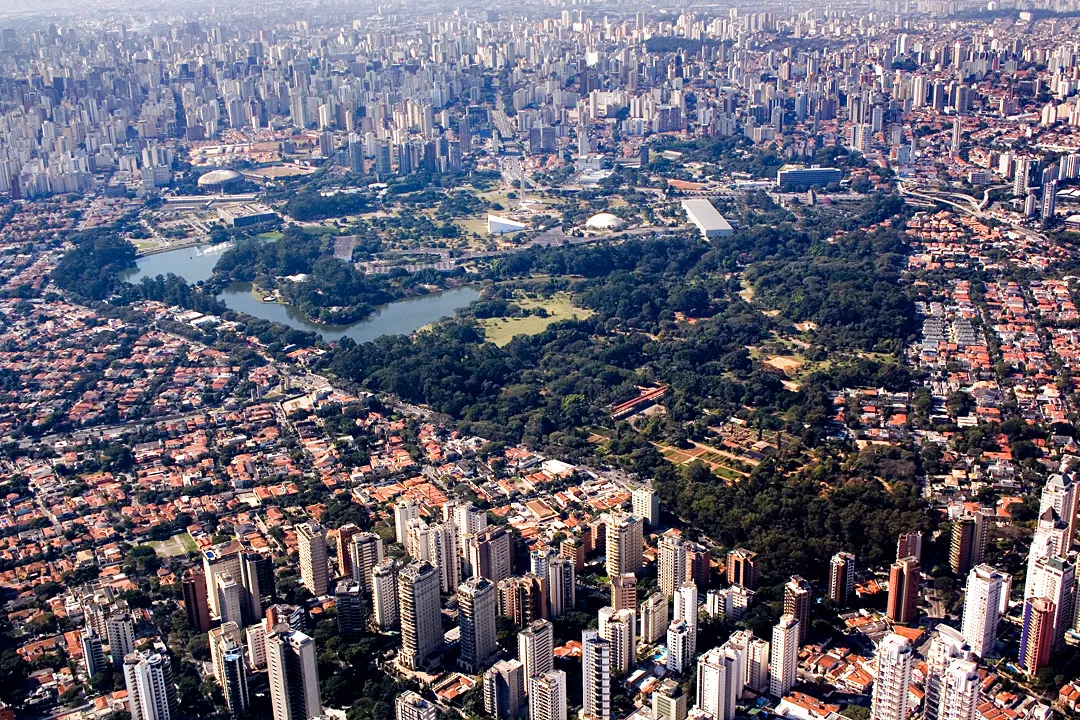
158 hectares opened on August 21, 1954, for the city's 400th anniversary, with an architectural complex by Oscar Niemeyer: the 600 m sinuous marquise, the Oca, the Bienal Pavilion and the Auditorium, finished only in 2005. It houses the MAM, the Museu Afro Brasil, the Japanese Pavilion and the Planetarium. Free admission.
There's Niemeyer's sinuous 600 m marquee, the Oca and the Bienal Pavilion; 158 hectares opened in 1954 for the city's 400th anniversary.
Check access
Pátio do Colégio, Sé and São Bento
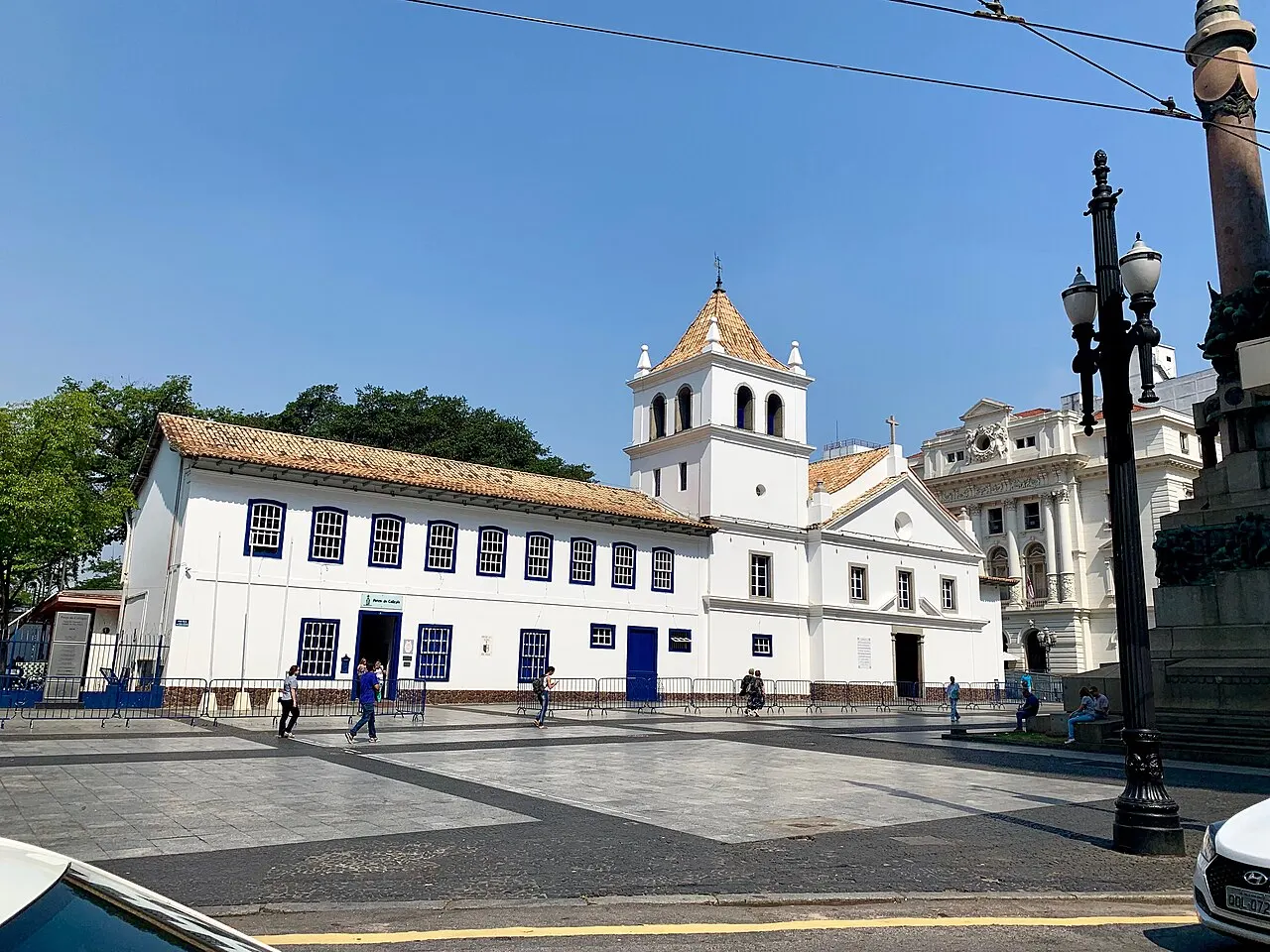
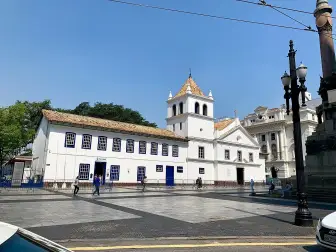
The three landmarks of the founding center, 900 m apart from each other. The Pátio do Colégio rebuilds the 1554 Jesuit complex and marks the city's founding point; the neo-Gothic Sé Cathedral took from 1913 to 1954 to complete and has 92 m towers; the São Bento Monastery holds Sunday mass at 10am with Gregorian chant and sells bread baked by the monks.
The Pátio reconstructs the 1554 Jesuit complex; the Sé took from 1913 to 1954 to be finished.
Check access
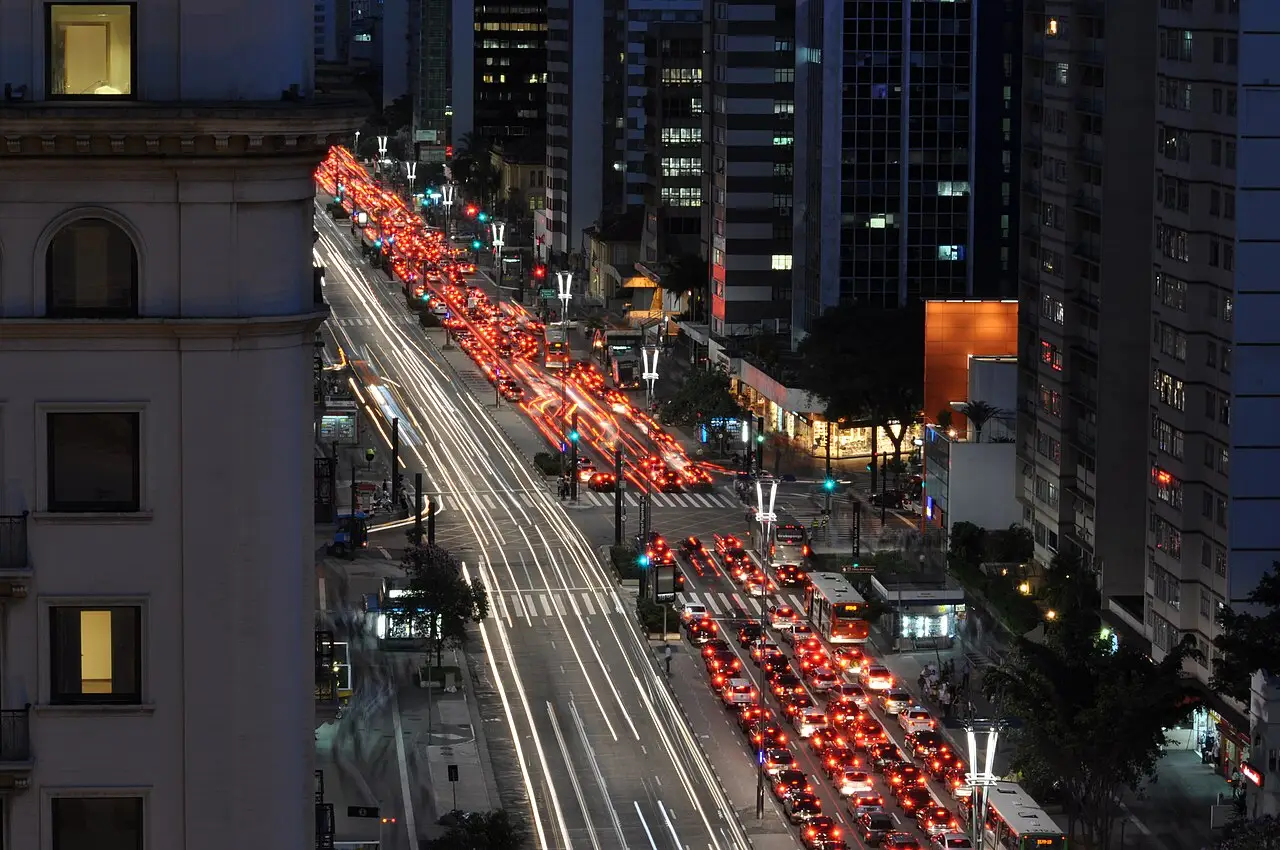
Avenida Paulista
Opened in 1891 on a ridge at about 800 m elevation, it was once a street of coffee farmers' mansions and became a banking corridor from the 1960s on. It runs 2.8 km, has four metro stations, and since 2016 closes to cars on Sundays from 9am to 6pm, when it fills with musicians, market stalls and about 100,000 people.
The avenue opened in 1891 on a ridge at about 800 m; it only became a banking axis in the 1960s.
Check access
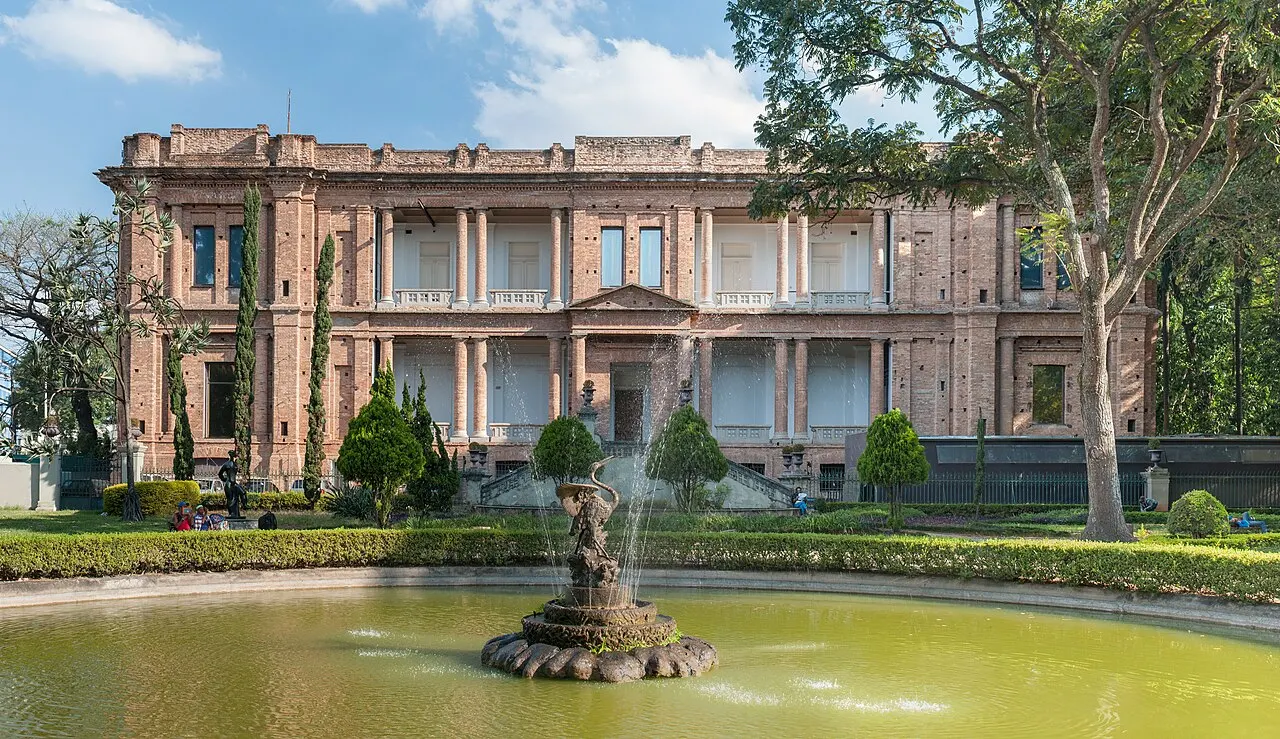
Pinacoteca do Estado
A museum of Brazilian art housed in a 1900 building by the Ramos de Azevedo firm, renovated by Paulo Mendes da Rocha in 1998, the most cited intervention in recent Brazilian architecture. It spans three neighboring sites (Pina Luz, Pina Estação and Pina Contemporânea, from 2023). Admission about R$40, free on Saturdays.
Paulo Mendes da Rocha renovated the building in 1998.
Check access
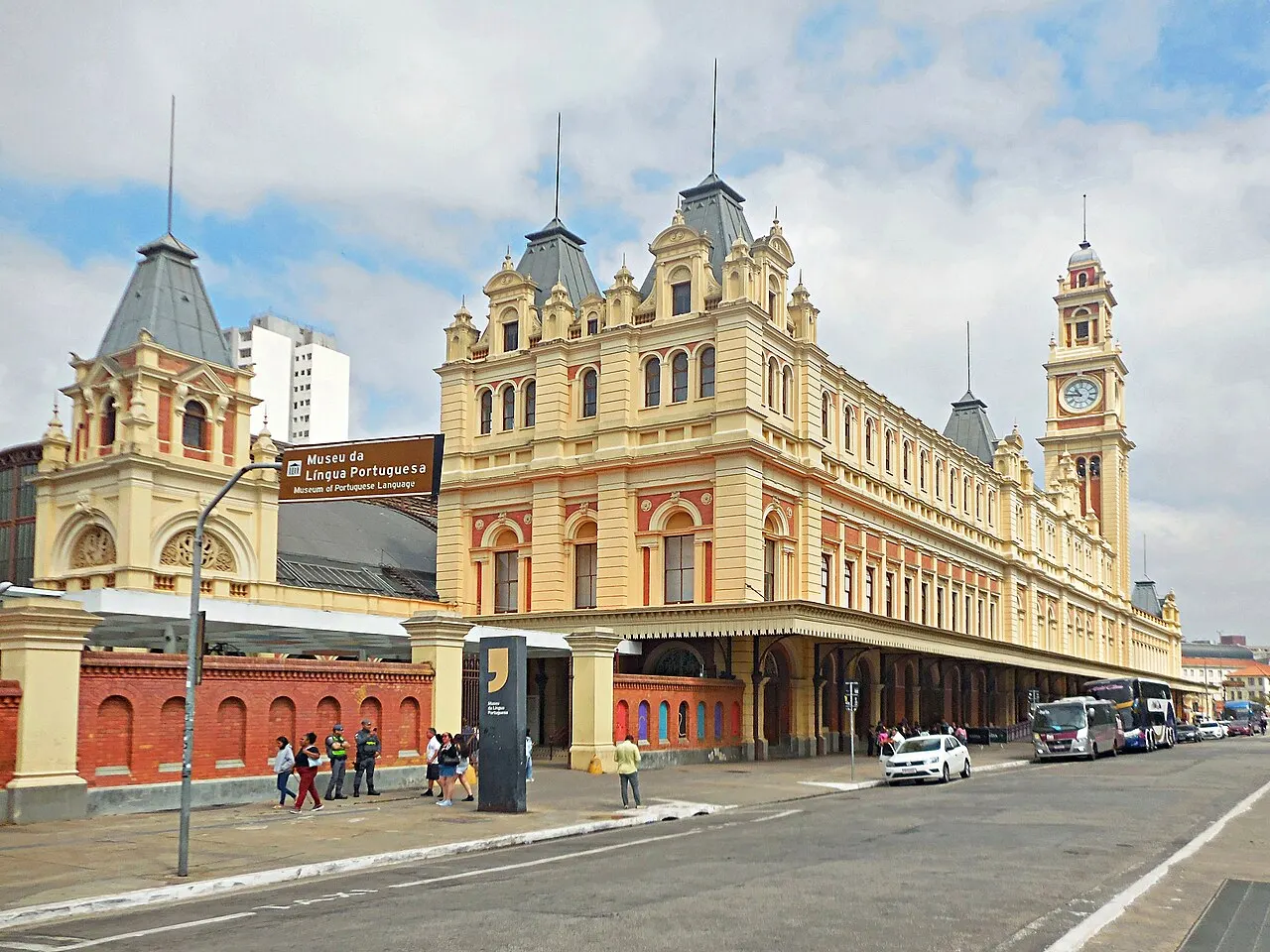
Estação da Luz and the Portuguese Language Museum
A railway station from 1901, with a prefabricated metal structure shipped from England and a 60 m clock tower. Since 2006 it has housed the Portuguese Language Museum, reopened on July 31, 2021, after the 2015 fire. It's an entire museum dedicated to a language, with sound installations instead of a physical collection.
The 1901 station, with a metal skeleton shipped ready-made from England and a 60 m clock tower, houses a museum devoted entirely to language, reopened on July 31, 2021 after the 2015 fire, built out of sound rather than objects.
Check access

Mercado Municipal
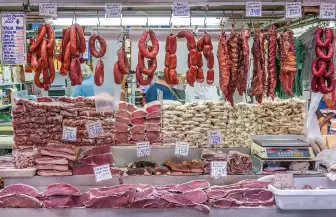
Opened in 1933, designed by the Ramos de Azevedo firm, with 32 stained-glass windows by Conrado Sorgenicht Filho depicting farming and livestock. On the mezzanine, you eat the mortadella sandwich (200 to 300 g of sliced meat) and the codfish pastel; downstairs, you buy fruit that vendors offer pre-cut. Ask the price before accepting.
The 1933 shed has 32 stained-glass windows of farming and livestock; upstairs they serve the mortadella sandwich with 200 to 300 g of sliced meat and the codfish pastel, and downstairs the fruit arrives pre-cut, so it's worth asking the price before accepting.
Check access

Farol Santander and the downtown skyline
The Altino Arantes Building, from 1947, stands 161 m tall and was modeled after the Empire State Building; today it functions as a cultural center with a lookout on the 26th floor, admission about R$50. From there you can see the Martinelli (1929, the country's first skyscraper), the Mirante do Vale (170 m, 1960) and the Itália Building (168 m, 1965).
The viewpoint on the 26th floor of the 161 m Edifício Altino Arantes shows the Martinelli, the Mirante do Vale and the Itália from above, and explains the topography of downtown, with its valleys taken over by avenues and viaducts. Admission costs about R$50.
Check access
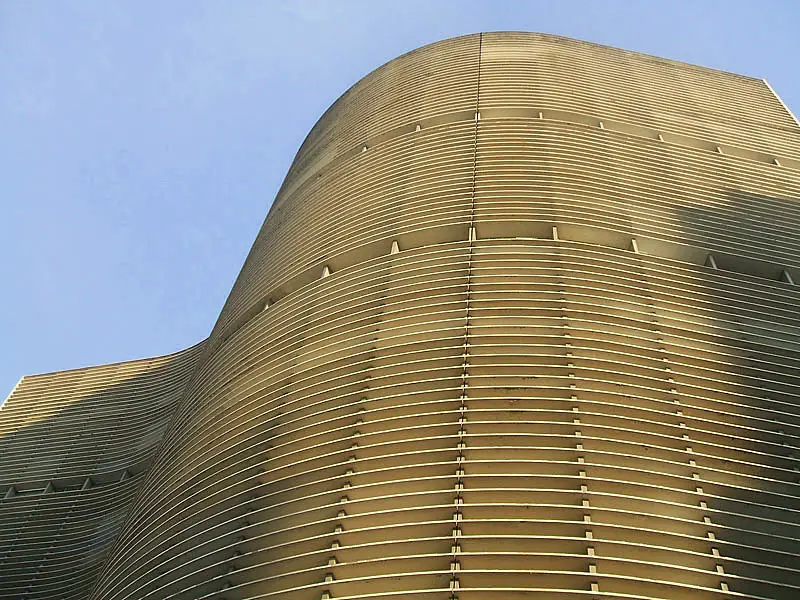
Copan Building
A residential building by Oscar Niemeyer completed in 1966: 115 m, 38 floors, about 1,160 apartments, about 5,000 residents, and an S-shaped facade covered in horizontal brises. It has its own postal code and a commercial gallery on the ground floor; the rooftop opens for scheduled visits at limited times.
It's a residential building: about 1,160 apartments, about 5,000 residents, and the rooftop only opens for scheduled visits at limited times. From the sidewalk, the 115 m S-shaped façade can be seen in thirty seconds, and the viewpoint that's open every day is the Farol Santander's, on the 26th floor.
Check access
Nilo’s itinerary
Start with the basic programme and choose extensions for the time you have.
Plan my days in the app ↗Day 1 · The founding center and its architecture
Have breakfast at 8am at a downtown counter bakery, with pão na chapa and a média.
At 9am, walk past the three founding landmarks, Pátio do Colégio, the Sé and São Bento, less than 1 km from one another.
At 11am, go up to the 26th-floor lookout of the Farol Santander (Edifício Altino Arantes) to understand the topography, then continue on foot through Praça do Patriarca and across the Viaduto do Chá to the Theatro Municipal.
Have lunch at 1pm on the mezzanine of the Mercado Municipal, with the mortadella sandwich, then take the metro to Luz.
At 3:30pm, choose either the Pinacoteca or the Museum of the Portuguese Language, depending on your interests and opening hours. Look at Luz station from outside as well, leave the area by 6pm, and have dinner in Bixiga.
Day 2 · Paulista, Ibirapuera and the 20th-century city
Get to MASP at 10am, when it opens, and see the crystal easels before the crowds; on Tuesdays, admission is free.
At 11:30am, walk along Avenida Paulista to the Casa das Rosas and Parque Trianon, with a detour to the Instituto Moreira Salles or the open-view terrace of Sesc Avenida Paulista.
At 1:30pm, have a pay-by-weight plate or a set lunch in Bela Vista or Consolação (R$40–65).
At 3pm, head to Ibirapuera Park by bus or ride-hailing car, allowing for traffic from your lunch stop. Walk between the Marquise, Oca, and Auditorium; for an indoor visit, choose either MAM or the Afro Brasil Museum in the Manoel da Nóbrega Pavilion, depending on the program.
Stroll through Beco do Batman in the late afternoon, while there's still light, and have dinner at 8pm in Pinheiros or Vila Madalena.


If you stay longer
Day 3 · Immigrant neighborhoods and creative periphery
Start the day at a street feira livre, with pastel and sugarcane juice for breakfast; the feira changes street depending on the day of the week.
At 11am, wander through Liberdade, among Japanese grocery stores and azuki sweets, with the square's fair if it's Sunday; have ramen or gyoza for lunch for R$40–70.
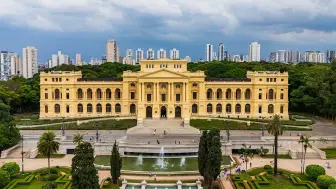
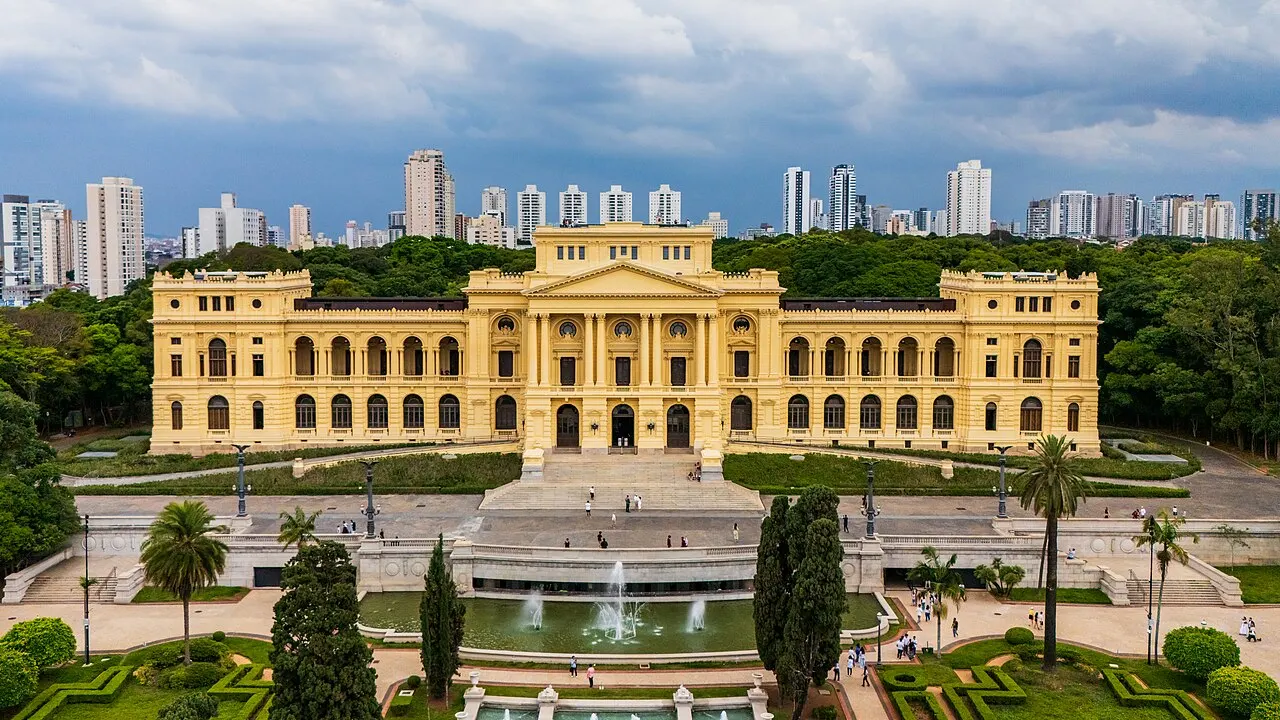
At 2pm, walk through Bom Retiro and Rua 25 de Março to see the popular commerce, or swap both for the Ipiranga Museum if you prefer history, setting aside 3 hours.
At 5pm, visit the halls and communal spaces of Sesc Pompeia to discover Lina Bo Bardi’s architecture. If you prefer to stay downtown, choose Sesc 24 de Maio and check which spaces are open to the public.
At 8:30pm, listen to samba de raiz at a samba school hall or a boteco in Mooca, and stay until after 10pm, when São Paulo's night gets going.
Food
 AI illustration
São Paulo-style pizza
A product of Italian immigration in Brás and Mooca, its dough is thicker than Neapolitan, with a thin crust and a generous topping; the margherita and mozzarella versions come with tomato slices. The city produces something around 1 million pizzas a day (industry estimate). Sunday night is the canonical day; a large pizza runs R$80 to R$150.
 AI illustration
Mortadella sandwich
French bread with 200 to 300 g of thinly sliced mortadella, served on the Mercado Municipal's mezzanine since the 1990s. Eaten standing, with a napkin, and usually feeds two people despite being sold as one portion. About R$45–60.
 AI illustration
Market pastel with sugarcane juice
A proper market pastel belongs at a street market, held on different streets depending on the day of the week, with sales from 8am to 2pm. Order it with sugarcane juice and eat it straight away, before it goes limp.
 AI illustration
Virado à paulista
Beans with cassava flour, rice, sautéed collard greens, pork chop, sausage, crackling, fried egg and breaded banana, all on one plate. It's the Monday dish at traditional botecos, a legacy of 19th-century cattle-drover food. R$45–80.
 AI illustration
Bauru
Created in 1934 at Ponto Chic, on Largo do Paissandu, by a law student from the city of Bauru: bread with the middle removed, roast beef, tomato, pickle and cheese melted in a double boiler. It became a generic name across Brazil, almost always made wrong.
 AI illustration
Esfiha, kibbeh and beirute
A legacy of Syrian-Lebanese immigration centered on 25 de Março and Paraíso. The open meat esfiha, raw kibbeh and the beirute sandwich are bakery and chain food, eaten any time of day. Esfiha R$6–12.
 AI illustration
Neighborhood Japanese and Korean food
Liberdade has had ramen, gyoza and azuki bean sweets since the 1950s, and the city has more sushi buffets than any other place outside Japan. Bom Retiro serves bibimbap and Korean barbecue in narrow-fronted restaurants, almost always without an English menu.
 AI illustration
Bakery: griddled bread and a média
The standard breakfast costs between R$12 and R$22: half a bread roll pressed on the griddle and a média, the cup of coffee with milk.
Day trips

Santos
Santos is about 72 km southeast, 1 hour to 1 hour 40 minutes by car or bus via the Anchieta or Imigrantes highways. It has the largest port in Latin America, the world's longest beachfront garden (about 5.3 km) and the Museu do Café, housed in the former Official Coffee Exchange, from 1922.

Paranapiacaba
Paranapiacaba is about 50 km southeast, 1 hour 30 minutes by car or by tourist train via Rio Grande da Serra. It's a railway village built by English engineers from 1867 on, high in the Serra do Mar, with wooden houses, a clock tower and almost permanent fog, at 800 m above sea level.

Embu das Artes
Embu das Artes is about 27 km west, 40 to 60 minutes by car. Its 17th-century colonial historic center has a Jesuit church from 1690, rustic furniture workshops and a craft fair on Saturdays and Sundays, from 9am to 6pm.
Where to begin
The founding center and its architecture
Have breakfast at 8am at a downtown counter bakery, with pão na chapa and a média.
Paulista, Ibirapuera and the 20th-century city
Get to MASP at 10am, when it opens, and see the crystal easels before the crowds; on Tuesdays, admission is free.
Immigrant neighborhoods and creative periphery
Start the day at a street feira livre, with pastel and sugarcane juice for breakfast; the feira changes street depending on the day of the week.
Money
The currency is the real (R$); in 2026, the dollar trades around R$5.4. Pix, the Central Bank’s instant transfer system, is accepted even at market stalls and by street vendors, and contactless cards are widely accepted in shops. On public transportation, bank cards work only on enabled equipment; on buses, this payment does not include fare integration. Use cash for valet tips, markets, and small purchases, and bring R$10 and R$20 bills, because getting change for R$100 is a recurring problem. Typical 2026 prices are: bakery coffee, R$5–9; specialty coffee shop espresso, R$10–18; weekday lunch special, R$35–60; buffet sold by weight, R$80–130 per kilogram (a normal plate costs R$40–65); dinner at a midrange restaurant, R$90–180 per person without drinks; 300 ml draft beer, R$12–20; 20-minute ride-hailing trip, R$25–45; three-star hotel, R$300–550 per night; hostel bed, R$90–170. Restaurant and bar bills include a printed 10% service charge: it is legally optional, but almost everyone pays, and asking to remove it is understood as a complaint. Taxi and ride-hailing drivers do not receive tips; at most, round up the fare. Airport exchange rates are the worst, so withdraw cash at Banco24Horas ATMs inside malls and supermarkets during the day, and avoid street ATMs at night.
From the airport to the center
Guide estimate
Scroll to compare all columns
| Route | Time | Price |
|---|---|---|
| Guarulhos → center · Line 13-Jade train (until midnight) | varies | the cheapest option |
| Guarulhos → Paulista, Tatuapé, Barra Funda or Congonhas · Airport Bus Service | varies | R$25–30 |
| Guarulhos → center · ride-hailing | 45–90 min | R$90–160 |
| Guarulhos → center · regular taxi | varies | R$130–200 |
| Congonhas → center · ride-hailing | short ride | R$30–60 |
| Viracopos → Barra Funda Terminal · executive coach | about 1h40 | check locally |
Getting there and around
Guarulhos Airport (GRU), 25 km away, with several options
From Guarulhos (GRU), 25 km northeast of the city and its international gateway, CPTM’s Line 13-Jade train is the cheapest option, with a R$5.40 ticket also valid on the subway and departures until midnight. Airport Bus Service serves the Paulista and República area, Tietê and Barra Funda terminals, and Congonhas. Check your route’s exact fare and stop before boarding. A ride-hailing trip costs R$90–160 and takes 45–90 minutes depending on the time; a regular taxi costs R$130–200. Congonhas (CGH), about 8 km from the center, handles domestic flights only and is served by buses and short ride-hailing trips (R$30–60). Line 17-Ouro now serves Congonhas, connecting with Line 5-Lilás at Campo Belo and Line 9-Esmeralda at Morumbi. As checked in September 2026, it runs Monday through Saturday, 6am to 10pm; confirm the schedule before your flight. Viracopos (VCP), in Campinas, is about 99 km away, with an executive bus to Barra Funda Terminal taking around 1 hour 40 minutes.
Subways, commuter trains, and buses between neighborhoods
Transportation combines the metro, commuter trains run by different companies, and more than 1,300 bus routes. In 2026, fares are R$5.30 on municipal buses, R$5.40 on the metro and trains, and R$9.38 for a combined bus and rail trip. The Bilhete Único lets you combine rides: the first card is free after SPTrans registration, with collection at a service point or delivery for a shipping fee. For single metro and train trips, QR code tickets are sold through official channels, including the TOP app. Contactless bank cards depend on enabled gates or buses; on buses, this payment does not include fare integration. Check the equipment's signage before relying on it. Lines 1-Azul, 2-Verde, 3-Vermelha, and 15-Prata normally run from 4:40am to midnight; check each operator for extensions and special schedules. Lines 1, 3, and 4 get packed from 7am to 9am and from 5:30pm to 7:30pm. Uber and 99 help with nighttime trips. The city has about 700 km of bike lanes and Bike Itaú/Tembici bike sharing. Sundays bring recreational bike lanes on several avenues, and Paulista closes to cars. If driving, check the municipal license-plate restrictions: based on the last digit, cars are barred from the Centro Expandido from 7am to 10am and 5pm to 8pm on one weekday per week. The fine is R$130.16 plus four license points; the rule also covers rentals and plates from other states.
Safety
Theft and robbery affect visitors in São Paulo, and some incidents involve threats or violence. Phones are stolen on busy sidewalks, through open car windows at traffic lights, outside metro stations, and from sidewalk bar tables. A common pattern involves two people, on a motorcycle or on foot; the consistent local advice is to hand over the device without resisting. Activate remote locking and your phone's theft protection before arriving, and record its IMEI. Avoid walking at night around Luz and Campos Elíseos, where the area known as Cracolândia shifts; around Praça da Sé and República after 9pm; and on lower Rua Augusta in the early hours of weekend mornings, when theft concentrates in nightclub lines. Sections of the riverside expressways and isolated overpasses are unsuitable for walking at any hour. On crowded buses and the metro, keep your backpack in front. Common scams include altered amounts on card terminals (check the display before entering your PIN), taxi drivers refusing to use the meter (use an app), and a “helper” offering to operate an ATM. Emergency numbers: 190 for police, 192 for an ambulance, and 193 for firefighters. Public emergency rooms operate 24 hours a day and treat foreign visitors free of charge; private hospitals require insurance or advance payment.
Etiquette tips
Greeting: one kiss on the cheek, never two
In the social greeting between women, or between a man and a woman, you give one kiss on the cheek; two is a Rio or Minas Gerais convention and causes a second of confusion. Between men, a handshake, and a hug if there's closeness. In a work setting, a handshake for everyone.
On the escalator, stand on the right and walk on the left
On the metro and in malls, the rule is strict: anyone who stands on the left side of the escalator blocks the way and hears a “com licença” in a warning tone. On the platforms, a stripe on the floor shows where not to stand until passengers have gotten off.
Say good morning when you walk in
Bakery, elevator, front desk, pharmacy, doctor's office: walking in silently reads as rudeness, not discretion. The same applies leaving: “thanks, see you later” closes the transaction.
Lunch is between 12pm and 2pm
Street restaurants in the business districts serve lunch between 12pm and 2pm and shut the kitchen afterward, so if you show up at 3pm you end up eating a sandwich. Dinner, by contrast, is late: 8:30pm to 10pm is the normal time to sit down.
The bill comes with 10% and splits evenly
The service charge comes printed on the bill. At a bar table, the default is to split the bill evenly, and if you want to separate what each person had, people usually sort that out when ordering, not at the end.
Talk about traffic, not money
Traffic, rain and soccer are safe topics with any stranger. Asking how much someone earns, what they pay in rent or why they live where they live is considered intrusive even among colleagues.
Mistakes to avoid
Renting a car and running into the rodízio
Renting a car to get around the city. The municipal rodízio bans your car from circulating one weekday a week, by plate digit, and the fine is steep. Add to that parking in a central neighborhood, R$25–50 per session, and the plan to drive around usually falls apart before it starts.
Jumping between opposite ends of the city
Building the day by jumping between opposite ends of the city: the Pinheiros–Ipiranga route takes 25 minutes at 11am and 70 minutes at 6pm. Pick one area per time block and use the metro to switch areas, never a car in the late afternoon.
Sé and Luz run from 9am to 6pm
Going downtown only at night. Sé, República and Luz hold the museums, the market and the architecture, and run well from 9am to 6pm on weekdays. After 6pm the foot traffic drops sharply and the mood changes. Flip the order: downtown by day, dinner in another neighborhood at night.
Lows of 8 °C and homes without heating
Assuming July and August are warm because it's Brazil. Lows drop to 8–13 °C, homes have no heating, and the swing between morning and afternoon reaches 15 °C. A coat and layers fix the whole year, and it's worth buying one in the first few days.
Check the map from a café table, not while walking
Walking down the sidewalk with your phone in hand. Phone theft is the city's most common crime and happens on the move, in any neighborhood. Check the map standing still, inside a café or a shop, and put the phone away before heading out.
Useful phrases
Meu / mano
A neutral vocative dropped mid-sentence, with no intimacy or aggression; it works like spoken punctuation
Da hora
Cool, great. Used for a show, a restaurant, a person or an idea
Vou de busão
I'm taking the bus. Oddly, “metrô” never becomes slang; “ônibus” does
Um pão na chapa e uma média
The standard bakery order: griddled buttered bread and a coffee with milk
A gente se tromba
We'll run into each other around, no set time. “Trombar” means to run into by chance
Deu ruim
It went wrong, got out of hand. Used from traffic to work, always with resignation
Districts
Downtown (Sé and República)
The founding core, with the Pátio do Colégio, Sé Cathedral, São Bento Monastery, Theatro Municipal, Copan Building and Martinelli Building within a 1.5 km radius. It runs well from 9am to 6pm on weekdays and empties out afterward; it's where the cheapest museums and the modernist buildings are.
Liberdade
The Japanese immigrant neighborhood since the 1910s, with suzurantō lanterns on the streets, Asian grocery shops, and a craft and food fair on Sundays at Praça da Liberdade. Today it's also Chinese, Korean and Taiwanese.
Bela Vista (Bixiga)
An Italian neighborhood formed by Calabrian immigrants in the late 19th century, with old-school cantinas on Rua 13 de Maio, street theaters and the Vai-Vai samba school's rehearsal hall. It holds the cheapest nightlife in the central-south area.
Bom Retiro and Brás
The two garment districts. Bom Retiro went from Jewish to Greek, to Korean, and today to Bolivian; Brás sells wholesale from 5am and holds the city's largest Northeastern-born community. Rua 25 de Março, between the two and the Sé, is Brazil's biggest popular retail hub.
Avenida Paulista and Consolação
The 2.8 km ridge that became the cultural and financial center of the 20th century: MASP, Itaú Cultural, Casa das Rosas, Sesc Paulista. On Sundays it closes to cars. Nearby, Rua Augusta runs downhill toward downtown, packed with bars, clubs and cinemas.
Vila Madalena and Pinheiros
A former working-class district turned hub for galleries, bars and restaurants, with Beco do Batman covered in graffiti since the 1980s. Pinheiros, next door, has the Rua Teodoro Sampaio market, the Pinheiros Municipal Market and the highest density of award-winning restaurants in the city.
Jardins and Itaim Bibi
The priciest area: 1950s houses in Jardim América, designer stores on Rua Oscar Freire, and corporate towers in Itaim and Faria Lima, where the money that left downtown now sits. Good for walking by day, expensive for dinner.
Mooca and Ipiranga
A former industrial zone of Italian weaving mills, with exposed-brick warehouses turned into restaurants and new buildings. Ipiranga holds the Ipiranga Museum and the park where independence was proclaimed in 1822.
History
1554 · Jesuit school on the plateau: the 1554 mass
On January 25, 1554, Jesuits Manuel da Nóbrega and José de Anchieta say the first mass on a hill between the Tamanduateí and Anhangabaú rivers. The settlement is born at 760 m elevation, deliberately far from the sea: easier to defend and easier to reach the interior from.
17th c. · The base of the bandeiras
São Paulo becomes the launching point for expeditions that enslave Indigenous people and search for metals in the backlands. The bandeiras push the Portuguese frontier far beyond Tordesillas and find gold in Minas Gerais in the 1690s, but leave the town poor.
1711 · From town to city
The town is raised to city status and gains, in 1827, one of the country's first two law schools, at Largo São Francisco. The school creates the first local intellectual elite and the first student press.
1822 · The Cry of Ipiranga
On September 7, 1822, D. Pedro proclaims independence on the banks of the Ipiranga stream, then rural land southeast of the city. The site becomes a park and, in 1890, gains the monument building that is today the Ipiranga Museum.
1867 · The coffee railway
The São Paulo Railway links Jundiaí to Santos through the city and descends the Serra do Mar via inclined planes. Coffee from inland São Paulo starts flowing through the city, and the farmers' money stays here: banks, streets, streetcars, electric light.
1888–1930 · The city of immigrants
After abolition, in 1888, the farms and factories import labor. About 2.5 million immigrants land in the state, mostly Italians, plus Portuguese, Spanish, Syrian-Lebanese and Germans. The city's population jumps from about 65,000 in 1890 to about 580,000 in 1920.

1908 · The Kasato Maru
On June 18, 1908, the ship Kasato Maru docks in Santos with 781 Japanese. A century later, Brazil hosts the largest community of Japanese descent outside Japan, centered on the Liberdade neighborhood.

1922 · Modern Art Week
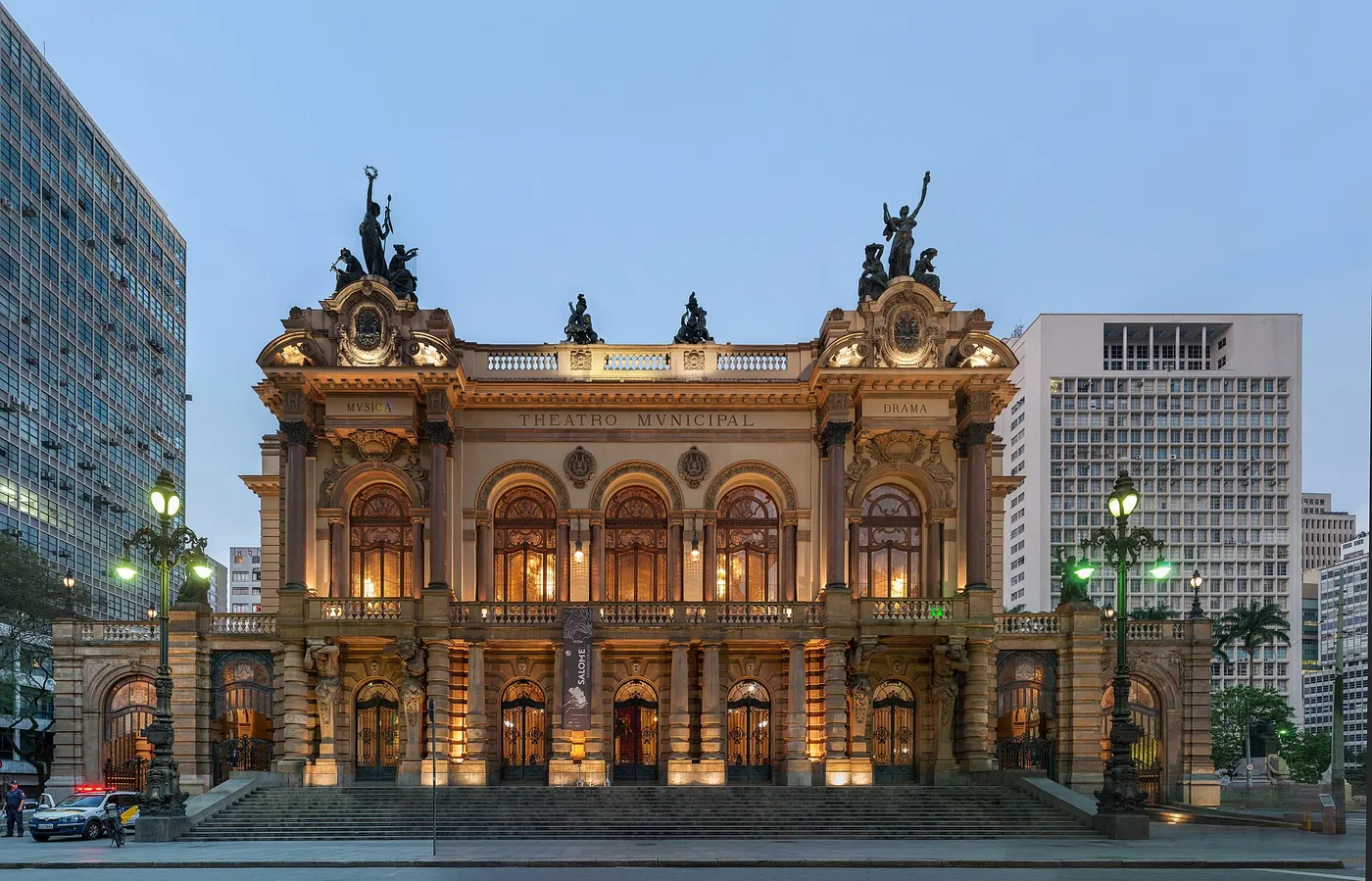
From February 13 to 17, 1922, the Theatro Municipal hosts Mário de Andrade, Oswald de Andrade, Anita Malfatti, Villa-Lobos and Di Cavalcanti amid boos. Brazilian modernism is born in a city that was industrializing at the same time.
1932 · Constitutionalist Revolution
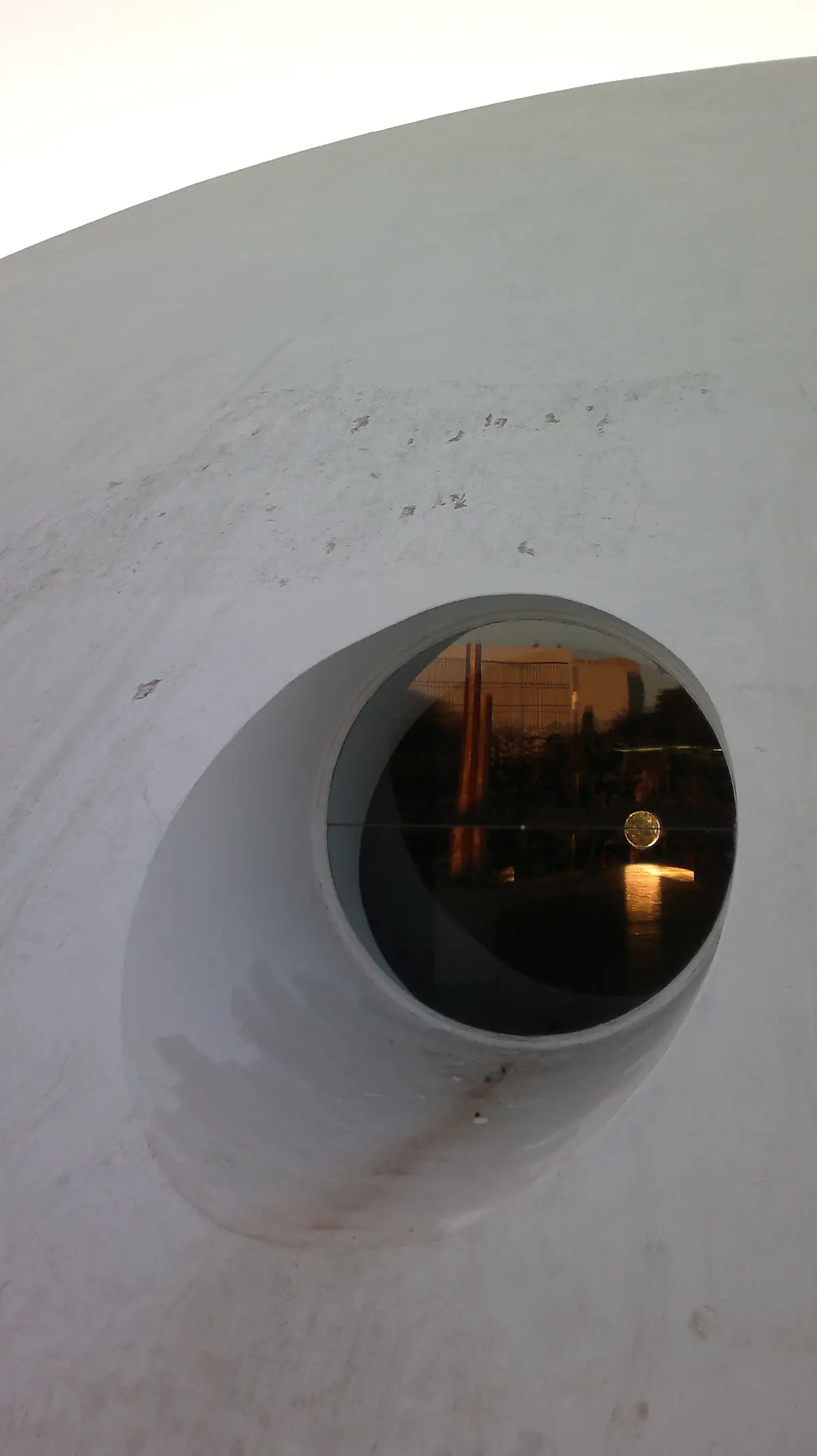
On July 9, 1932, São Paulo takes up arms against Getúlio Vargas's provisional government demanding a constitution. It loses the war in three months and gains the state's most important holiday, plus the Ibirapuera obelisk.
1954–1974 · From the 400th anniversary to the metro
The 400th anniversary, in 1954, delivers Ibirapuera Park designed by Oscar Niemeyer. Twenty years later, on September 14, 1974, the first metro line opens, between Jabaquara and Vila Mariana, while the ABC region's auto industry shapes the metropolis.
1978–today · Strikes, Diretas Já and Faria Lima
The metalworkers' strikes in the ABC region between 1978 and 1980 and the Diretas Já rally at Praça da Sé, on January 25, 1984, make the city the country's political stage. Since the 1990s industry has migrated inland and the economy has turned financial and service-based, concentrated in the Faria Lima–Berrini corridor.
Complete history
Three hundred years as a small city
São Paulo spent 300 years as a small city. Founded in 1554 as a Jesuit school on high ground between two rivers, it served for two and a half centuries as a base for the bandeiras: expeditions that enslaved Indigenous people and hunted metals, pushing Brazil's frontier westward. The gold found in Minas in the 1690s enriched other towns. In 1822 independence was proclaimed here, but on the banks of a stream surrounded by brush: Ipiranga was still countryside. In 1872, the city had about 31,000 people, fewer than Salvador, Recife or Rio.
Coffee and the railway: the 1867 economic turn
What changed everything was coffee and the railway. The São Paulo Railway, opened in 1867, linked western São Paulo state to the port of Santos through the city, and the city became the cash register of the plantations. Farmers bought land on Avenida Paulista, opened in 1891 on a ridge at 800 m elevation, and built mansions facing the street. With abolition, in 1888, came subsidized immigration: about 2.5 million foreigners entered through the state by 1930, mostly Italian, then Portuguese, Spanish, Syrian-Lebanese, Japanese from 1908 onward and Germans. The Brás Immigrant Hostel, opened in 1887 and closed in 1978, received more than 2.5 million people over nine decades. Each group settled its own patch: Italians in Bixiga, Brás and Mooca; Syrian-Lebanese on 25 de Março; Japanese in Liberdade; Jews and later Koreans and Bolivians in Bom Retiro.
Immigration fed the factories
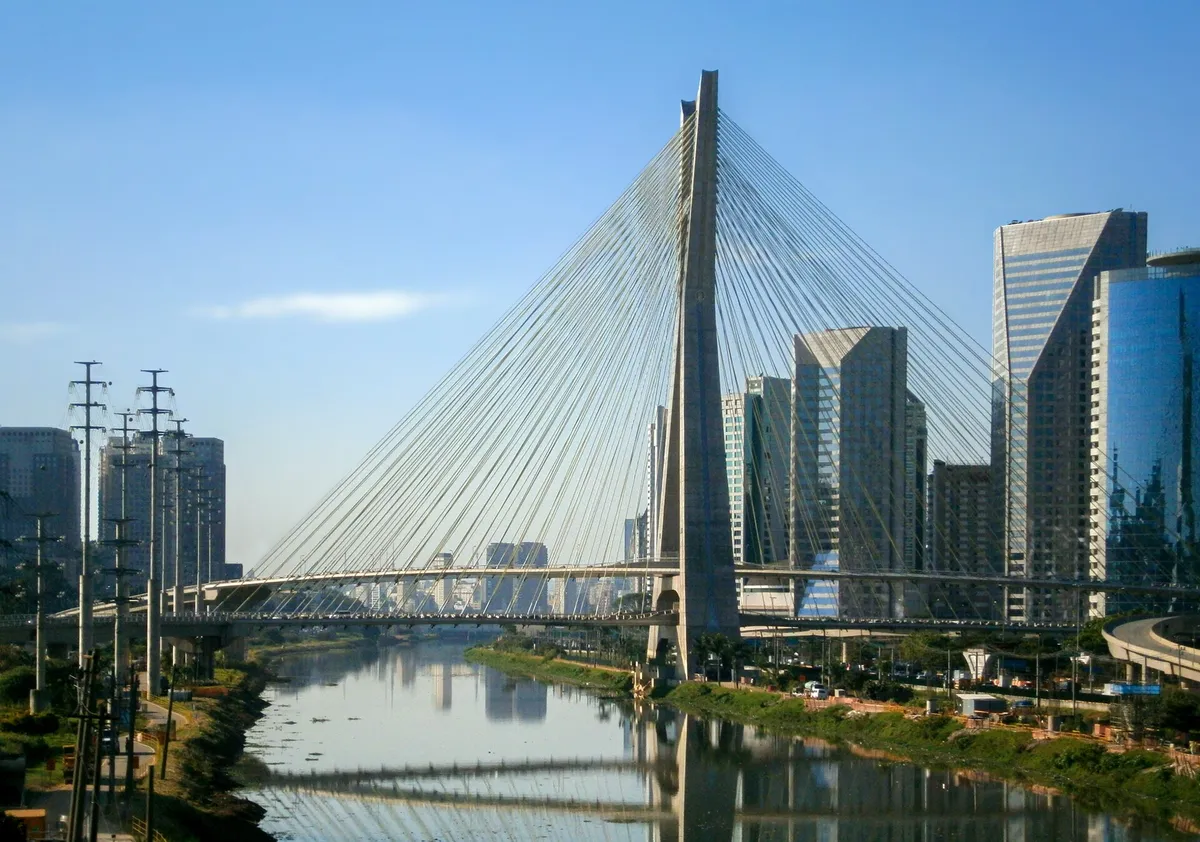
Industrial money, built by immigrants, soon turned into political power. The 1922 Modern Art Week, at the Theatro Municipal, was the first statement that Brazilian culture could be made outside Rio, then the capital. Ten years later, in 1932, the São Paulo elite went to war against Getúlio Vargas in the name of a constitution, lost in three months and turned the defeat into identity, which is why July 9 is still a holiday. Between 1940 and 1980 the population grew more than sixfold, with the arrival of millions of migrants from the Northeast and Minas Gerais who built the city and went to live on its outskirts. The metropolis grew through irregular subdivisions, and the favelas of Heliópolis and Paraisópolis were born of that mismatch between the people arriving and the housing available.
The car designed the modern city
The modern city was designed for the car. The Tietê and Pinheiros rivers were straightened between the 1930s and 1950s to become valley-bottom avenues, the marginais, and the Pinheiros' flow was even reversed by pumping to generate power on the Serra do Mar. The Costa e Silva overpass, now João Goulart and nicknamed Minhocão, cut through downtown in 1971 and devalued everything beneath it. The upper classes kept migrating southwest: from downtown to Paulista in the 1960s, from Paulista to Faria Lima in the 1990s, from Faria Lima to Berrini and Chucri Zaidan in the 2000s. Each move left behind a district of empty offices.
The historic center today: reopened museums and the Cracolândia
The historic center is caught in a long tug-of-war between abandonment, speculation and retrofit: museums reopen (the Portuguese Language Museum in 2021, after a fire; the Ipiranga Museum in 2022, after a long renovation) while the so-called Cracolândia has been shifting block by block since the 1990s.
The city grew after 1867, when the coffee railway began linking the interior to the port of Santos through São Paulo.
Geography and shape of the city
The plateau with its back to the sea
São Paulo sits on the Paulistano Plateau, at about 760 m elevation, in an amphitheater of hills ringed by the Serra do Mar to the southeast and the Serra da Cantareira to the north. The ocean is only about 70 km away in a straight line, but the 800 m escarpment made the city grow with its back to the sea: its rivers run inland, and the Tietê, which rises 22 km from the Atlantic, turns around and crosses the state toward Paraná.
From the founding hill to the marginais
The original core stood on a hill between the Tamanduateí and Anhangabaú, where the Sé and the Pátio do Colégio stand today; the street network spread out radially over the rolling terrain, with no regular grid, which explains streets that change names, viaducts everywhere and entire valleys taken over by avenues. The Tietê and Pinheiros were straightened between 1930 and 1960 and gained the marginais along their banks, today the two busiest roads in the country.
Reservoirs, mountains and scattered towers
To the south lie the Guarapiranga and Billings reservoirs, which supply the city and limit its expansion; to the north, the roughly 7,900-hectare Cantareira State Park. Verticalization is spread out, not concentrated: instead of a single skyscraper district, there are towers from Brás to Morumbi, and the business axis has moved three times in sixty years, downtown, Avenida Paulista, Faria Lima/Berrini.
São Paulo sits at about 760 m of altitude, on a plateau ringed by the Serra do Mar and the Cantareira.
Culture
Music, rap and literature from the periphery
São Paulo is home to the record labels, advertising production companies, publishers and leading drama schools of the country, and much of what Brazil consumes as mass culture is put together here before it circulates. The city invented its own line of urban samba with Adoniran Barbosa, Geraldo Filme and Paulo Vanzolini, whose sambas are geographically precise: they talk about stations, viaducts and evictions. From the 1990s on, the periphery became the creative center: Racionais MC's turned rap into protest literature with Sobrevivendo no Inferno (1997), followed by Criolo, Emicida, the Cooperifa poetry nights in Piraporinha and Ferréz's marginal literature movement in Capão Redondo. The 1980s rock scene (Titãs, Ira!, Ultraje a Rigor) came out of the west side's high schools, and percussion-heavy samba is still alive in the samba school halls from Vila Maria to Vai-Vai.
The Bienal, SP-Arte, Sesc and concert halls
The visual arts calendar is the densest in Latin America. The São Paulo Biennial, created in 1951 by Ciccillo Matarazzo, is the world's second-oldest art biennial after Venice and occupies Niemeyer's pavilion in Ibirapuera in odd-numbered years. SP-Arte, in April, is the biggest art fair in the southern hemisphere. Sesc, a system run by the retail trade sector, operates dozens of venues: Pompeia (renovated by Lina Bo Bardi in 1982, over a former drum factory), 24 de Maio (Paulo Mendes da Rocha, 2017) and Avenida Paulista, with theater, dance and concerts priced between R$10 and R$60. Sala São Paulo, opened in 1999 inside Estação Júlio Prestes, has a movable ceiling and hosts the Osesp orchestra; the Theatro Municipal, from 1911, keeps its own opera and ballet companies.
Soccer organizes the week
Soccer organizes the week. Corinthians (Neo Química Arena, in Itaquera, opened for the 2014 World Cup), Palmeiras (Allianz Parque, on the same site as the old Palestra Itália stadium) and São Paulo (Morumbis, from 1960, about 66,000 seats) split the city three ways, while Pacaembu, from 1940, stands as an art deco monument under concession. In November, the Interlagos racetrack hosts the São Paulo Formula 1 Grand Prix, run since 1973 on the 4.3 km counterclockwise circuit. Outside the stadiums, nightlife spreads across pockets that barely speak to each other: Augusta, Vila Madalena, Baixo Pinheiros, Rua Aspicuelta, and the electronic music scene in Barra Funda and Mooca warehouses, which tends to start at 2am.
When talking with strangers, start with soccer or the weather, usual topics when people meet in the city.
Festivals and events
 AI illustration
Street carnival and Anhembi Sambadrome
February or March. Street blocos re-emerged around 2010 and now bring millions of people onto the streets of Consolação, Vila Madalena and downtown, with gatherings starting at 7am. The top-tier samba school parades take place at the Anhembi Sambadrome, designed by Niemeyer and opened in 1991, on Friday and Saturday.
LGBT+ Pride Parade
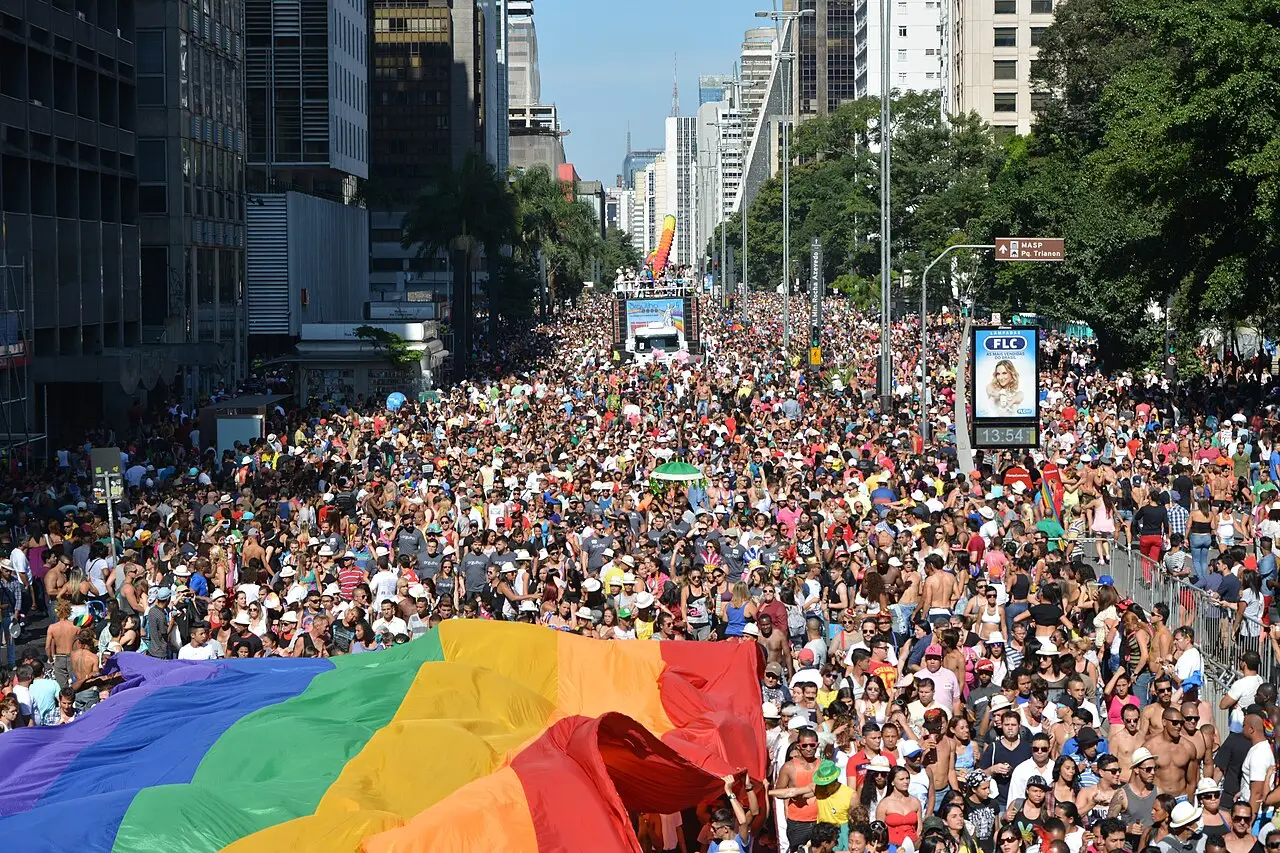
A Sunday in June, on Avenida Paulista. Held since 1997, it's one of the largest in the world, with an estimated crowd of 1 to 3 million people and about 20 trio elétrico sound trucks. The city fills up; hotels in the area raise prices months in advance.
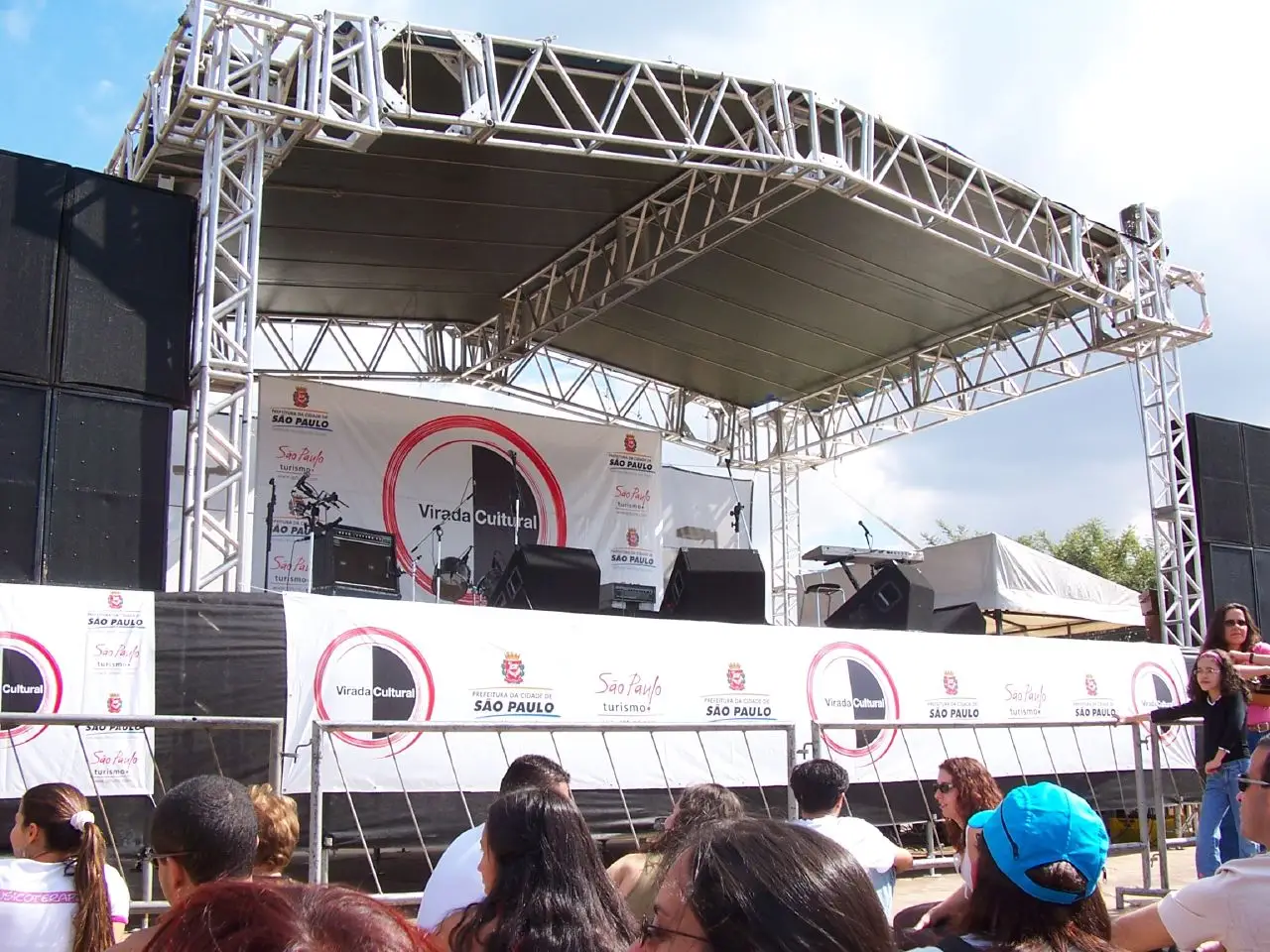
Virada Cultural
One weekend between May and June. Free 24-hour programming on stages across downtown and the outskirts, created in 2005 based on Paris's Nuit Blanche. The metro usually runs extended hours through the night of the event.
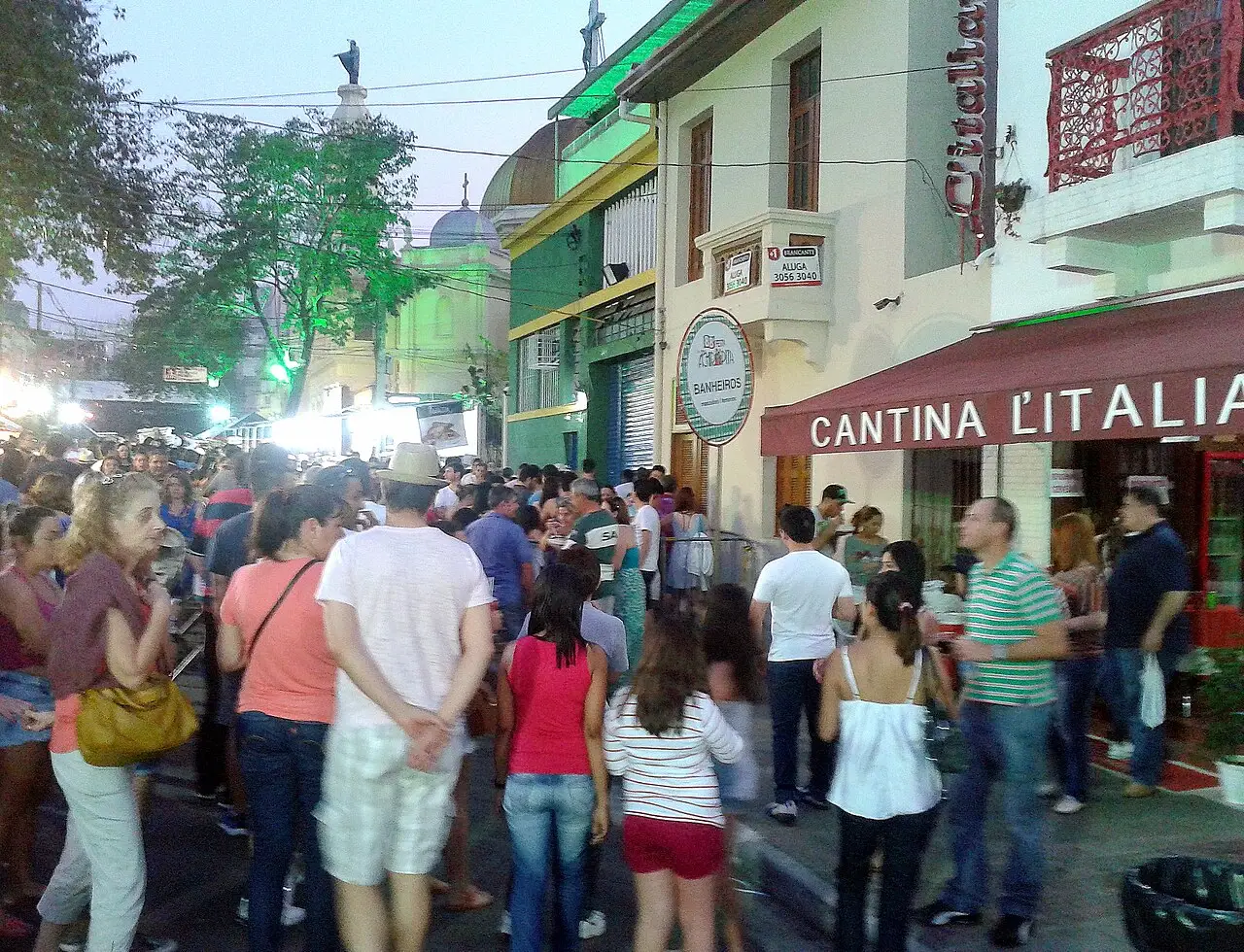
Festa da Achiropita
Every weekend in August, on Rua 13 de Maio, in Bixiga. A parish fair for Nossa Senhora Achiropita organized by descendants of Calabrian immigrants since 1926, with fogazza, fried polenta and eggplant parmigiana sold at street stalls.
 AI illustration
São Paulo Formula 1 Grand Prix
November, at Interlagos. Run since 1973 on a 4.309 km counterclockwise circuit built in 1940 on land from a failed real-estate subdivision. Seats at Senna's S corner sell out early, and the surrounding area becomes a three-day campsite.
Books and films
Sobrevivendo no Inferno: Racionais MC's (1997)
With “Sobrevivendo no Inferno,” Racionais MC's told the city's story from the south side, describing Capão Redondo, the bus, the police station and the cemetery with documentary precision. The album became required reading for the Unicamp university entrance exam in 2020.
Quarto de Despejo: Carolina Maria de Jesus (1960)
“Quarto de Despejo” (published in English as “Child of the Dark”) is the diary of Carolina Maria de Jesus, a waste picker who lived in the Canindé favela, on the banks of the Tietê, written between 1955 and 1960. The book sold more than 100,000 copies in its first year and shows the São Paulo that grew outside the plan.
Que Horas Ela Volta? Anna Muylaert (2015)
A film about a live-in maid from Pernambuco and her employers' home in Morumbi. It shows in detail the domestic geography of São Paulo's inequality: the maid's room, the pool, the service door.
Frequently asked questions
São Paulo: Is it worth renting a car to get around the city?
No: the municipal rodízio takes your car off the road one weekday a week, by plate digit, and parking in a central neighborhood costs R$25 to 50 per session.
São Paulo: How do you get from Guarulhos Airport to downtown?
The train is the cheapest option: Line 13-Jade, R$5.40 and about 50 minutes to Brás or Luz, changing to Line 12 at Engenheiro Goulart; every hour, the Expresso Aeroporto makes the trip without transfers. The Airport Bus Service serves the Paulista and República area, the Tietê and Barra Funda terminals and Congonhas, and a ride-hailing car costs R$90 to 160 and takes 45 to 90 minutes, depending on the time.
São Paulo: How long does it take to get to Santos?
Santos is about 72 km southeast, 1 hour to 1 hour 40 minutes by car or bus via the Anchieta or Imigrantes highways.
São Paulo: What's the best time to go?
The two best windows are April and May, and September: little rain, between 12 and 26 °C and clear days. From December to March it's hot and rainy; from June to August, dry and cold, with lows of 8 to 13 °C.
São Paulo: Greeting: one kiss on the cheek, never two?
In the social greeting between women, or between a man and a woman, you give one kiss on the cheek; two is a Rio or Minas Gerais convention and causes a second of confusion.
Other cities in the country
Brazil ↗- Days
- 4
- When
- Apr–Jun
- Per person/day
- Average 615 BRLMid-range · per person/day
Cost scope
Per person per day: accommodation, meals, urban transport, visits and a small allowance for extras. Flights excluded; larger purchases vary. Editorial estimate, not a quote.
- Days
- 2–3
- When
- Jan–Mar · Sep–Dec
- Per person/day
- Average 350–550 BRLMid-range · per person/day
Cost scope
Per person per day: accommodation, meals, urban transport, visits and a small allowance for extras. Flights excluded; larger purchases vary. Editorial estimate, not a quote.
- Days
- 1–2
- When
- May–Sep
- Per person/day
- Average 260–520 BRLMid-range · per person/day
Cost scope
Per person per day: accommodation, meals, urban transport, visits and a small allowance for extras. Flights excluded; larger purchases vary. Editorial estimate, not a quote.
- Days
- 3–4
- When
- Jun–Sep
- Per person/day
- Average 400–700 BRLMid-range · per person/day
Cost scope
Per person per day: accommodation, meals, urban transport, visits and a small allowance for extras. Flights excluded; larger purchases vary. Editorial estimate, not a quote.
- Days
- 2–3
- When
- Apr–Jun
- Per person/day
- Average 350–550 BRLMid-range · per person/day
Cost scope
Per person per day: accommodation, meals, urban transport, visits and a small allowance for extras. Flights excluded; larger purchases vary. Editorial estimate, not a quote.
- Days
- 3–5
- When
- Mar–Apr · Nov
- Per person/day
- Average 397 BRLMid-range · per person/day
Cost scope
Per person per day: accommodation, meals, urban transport, visits and a small allowance for extras. Flights excluded; larger purchases vary. Editorial estimate, not a quote.
- Days
- 2–4
- When
- Mar–May · Sep
- Per person/day
- Explore costsGuide estimate
Cost scope
Per person per day: accommodation, meals, urban transport, visits and a small allowance for extras. Flights excluded; larger purchases vary. Editorial estimate, not a quote.
- Days
- 4–5
- When
- Aug–Nov
- Per person/day
- Explore costsGuide estimate
Cost scope
Per person per day: accommodation, meals, urban transport, visits and a small allowance for extras. Flights excluded; larger purchases vary. Editorial estimate, not a quote.
- Days
- 3–4
- When
- Jul–Sep
- Per person/day
- Explore costsGuide estimate
Cost scope
Per person per day: accommodation, meals, urban transport, visits and a small allowance for extras. Flights excluded; larger purchases vary. Editorial estimate, not a quote.
- Days
- 3–4
- When
- Sep–Nov
- Per person/day
- Explore costsGuide estimate
Cost scope
Per person per day: accommodation, meals, urban transport, visits and a small allowance for extras. Flights excluded; larger purchases vary. Editorial estimate, not a quote.
- Days
- 2–4
- When
- May–Sep
- Per person/day
- Explore costsGuide estimate
Cost scope
Per person per day: accommodation, meals, urban transport, visits and a small allowance for extras. Flights excluded; larger purchases vary. Editorial estimate, not a quote.
- Days
- 3–5
- When
- Jun–Sep
- Per person/day
- Explore costsGuide estimate
Cost scope
Per person per day: accommodation, meals, urban transport, visits and a small allowance for extras. Flights excluded; larger purchases vary. Editorial estimate, not a quote.
- Days
- 3–4
- When
- Jun–Aug
- Per person/day
- Explore costsGuide estimate
Cost scope
Per person per day: accommodation, meals, urban transport, visits and a small allowance for extras. Flights excluded; larger purchases vary. Editorial estimate, not a quote.
- Days
- 4–5
- When
- Jan–Mar · Sep–Dec
- Per person/day
- Explore costsGuide estimate
Cost scope
Per person per day: accommodation, meals, urban transport, visits and a small allowance for extras. Flights excluded; larger purchases vary. Editorial estimate, not a quote.
- Days
- 3–4
- When
- Oct–Dec
- Per person/day
- Average 1,110 BRLMid-range · per person/day
Cost scope
Per person per day: accommodation, meals, urban transport, visits and a small allowance for extras. Flights excluded; larger purchases vary. Editorial estimate, not a quote.
- Days
- 3–4
- When
- Aug–Sep
- Per person/day
- Explore costsGuide estimate
Cost scope
Per person per day: accommodation, meals, urban transport, visits and a small allowance for extras. Flights excluded; larger purchases vary. Editorial estimate, not a quote.
- Days
- 4–7
- When
- Apr–Sep
- Per person/day
- Explore costsGuide estimate
Cost scope
Per person per day: accommodation, meals, urban transport, visits and a small allowance for extras. Flights excluded; larger purchases vary. Editorial estimate, not a quote.
- Days
- 3–4
- When
- Jan · Sep–Dec
- Per person/day
- Explore costsGuide estimate
Cost scope
Per person per day: accommodation, meals, urban transport, visits and a small allowance for extras. Flights excluded; larger purchases vary. Editorial estimate, not a quote.
- Days
- 2
- When
- Aug–Dec
- Per person/day
- Average 442 BRLMid-range · per person/day
Cost scope
Per person per day: accommodation, meals, urban transport, visits and a small allowance for extras. Flights excluded; larger purchases vary. Editorial estimate, not a quote.
- Days
- 3–5
- When
- Jan–Feb · Sep–Dec
- Per person/day
- Explore costsGuide estimate
Cost scope
Per person per day: accommodation, meals, urban transport, visits and a small allowance for extras. Flights excluded; larger purchases vary. Editorial estimate, not a quote.
- Days
- 3–5
- When
- May–Sep
- Per person/day
- Explore costsGuide estimate
Cost scope
Per person per day: accommodation, meals, urban transport, visits and a small allowance for extras. Flights excluded; larger purchases vary. Editorial estimate, not a quote.
- Days
- 2–3
- When
- Apr–Sep
- Per person/day
- Average 484 BRLMid-range · per person/day
Cost scope
Per person per day: accommodation, meals, urban transport, visits and a small allowance for extras. Flights excluded; larger purchases vary. Editorial estimate, not a quote.
- Days
- 3
- When
- Apr–May · Aug
- Per person/day
- Average 478 BRLMid-range · per person/day
Cost scope
Per person per day: accommodation, meals, urban transport, visits and a small allowance for extras. Flights excluded; larger purchases vary. Editorial estimate, not a quote.
- Days
- 3–4
- When
- Aug–Dec
- Per person/day
- Explore costsGuide estimate
Cost scope
Per person per day: accommodation, meals, urban transport, visits and a small allowance for extras. Flights excluded; larger purchases vary. Editorial estimate, not a quote.
- Days
- 2
- When
- Apr–May · Sep
- Per person/day
- Explore costsGuide estimate
Cost scope
Per person per day: accommodation, meals, urban transport, visits and a small allowance for extras. Flights excluded; larger purchases vary. Editorial estimate, not a quote.
- Days
- 3
- When
- Sep–Dec
- Per person/day
- Explore costsGuide estimate
Cost scope
Per person per day: accommodation, meals, urban transport, visits and a small allowance for extras. Flights excluded; larger purchases vary. Editorial estimate, not a quote.
- Days
- 3–5
- When
- Apr–Nov
- Per person/day
- Average 427 BRLMid-range · per person/day
Cost scope
Per person per day: accommodation, meals, urban transport, visits and a small allowance for extras. Flights excluded; larger purchases vary. Editorial estimate, not a quote.
- Days
- 4
- When
- Jul–Sep
- Per person/day
- Explore costsGuide estimate
Cost scope
Per person per day: accommodation, meals, urban transport, visits and a small allowance for extras. Flights excluded; larger purchases vary. Editorial estimate, not a quote.
- Days
- 4–5
- When
- May–Sep
- Per person/day
- Explore costsGuide estimate
Cost scope
Per person per day: accommodation, meals, urban transport, visits and a small allowance for extras. Flights excluded; larger purchases vary. Editorial estimate, not a quote.
- Days
- 3
- When
- May–Sep
- Per person/day
- Explore costsGuide estimate
Cost scope
Per person per day: accommodation, meals, urban transport, visits and a small allowance for extras. Flights excluded; larger purchases vary. Editorial estimate, not a quote.