Brazil
Rio de Janeiro
Beaches, lookouts, samba and the Tijuca Forest
Days Start with the basic programme and choose extensions for the time you have.
How the guide reaches this number
With one day, I would stay between the Copacabana and Ipanema waterfronts, a boteco break and Sugarloaf if visibility is good. With more time, I would include Corcovado and the gardens, then choose Centro interiors by their calendars and an afternoon in Pequena África. Niterói or an outing in the Zona Norte are alternatives, without stacking both into one afternoon. The Centro has good stretches for walking; journeys between distant neighbourhoods need more planning. On the fourth day, I would leave the beach time flexible, going to Barra only if I wanted that journey.
4
When April to mid-June usually brings gentler heat; September and early October are another option.
How the guide reaches this number
Beach and viewpoint plans also depend on the day’s forecast and visibility.
April to mid-June usually brings gentler heat; September and early October are another option. Beach and viewpoint plans also depend on the day’s forecast and visibility.
Per person/day Budget about R$ 240; mid-range about R$ 615; comfortable about R$ 1,650 per person, based on what travellers report to Budget Your Trip (checked October 2026).
How the guide reaches this number
Hostels, simple meals and public transport keep you at the budget end; beachfront hotels, ride-hailing and paid viewpoints push you to the comfortable end. Carnival and New Year’s Eve need a quote for your dates.
Budget about R$ 240; mid-range about R$ 615; comfortable about R$ 1,650 per person, based on what travellers report to Budget Your Trip (checked October 2026). Hostels, simple meals and public transport keep you at the budget end; beachfront hotels, ride-hailing and paid viewpoints push you to the comfortable end. Carnival and New Year’s Eve need a quote for your dates.
Per person per day: accommodation, meals, urban transport, visits and a small allowance for extras. Flights excluded; larger purchases vary. Editorial estimate, not a quote.
 What Nilo thinks
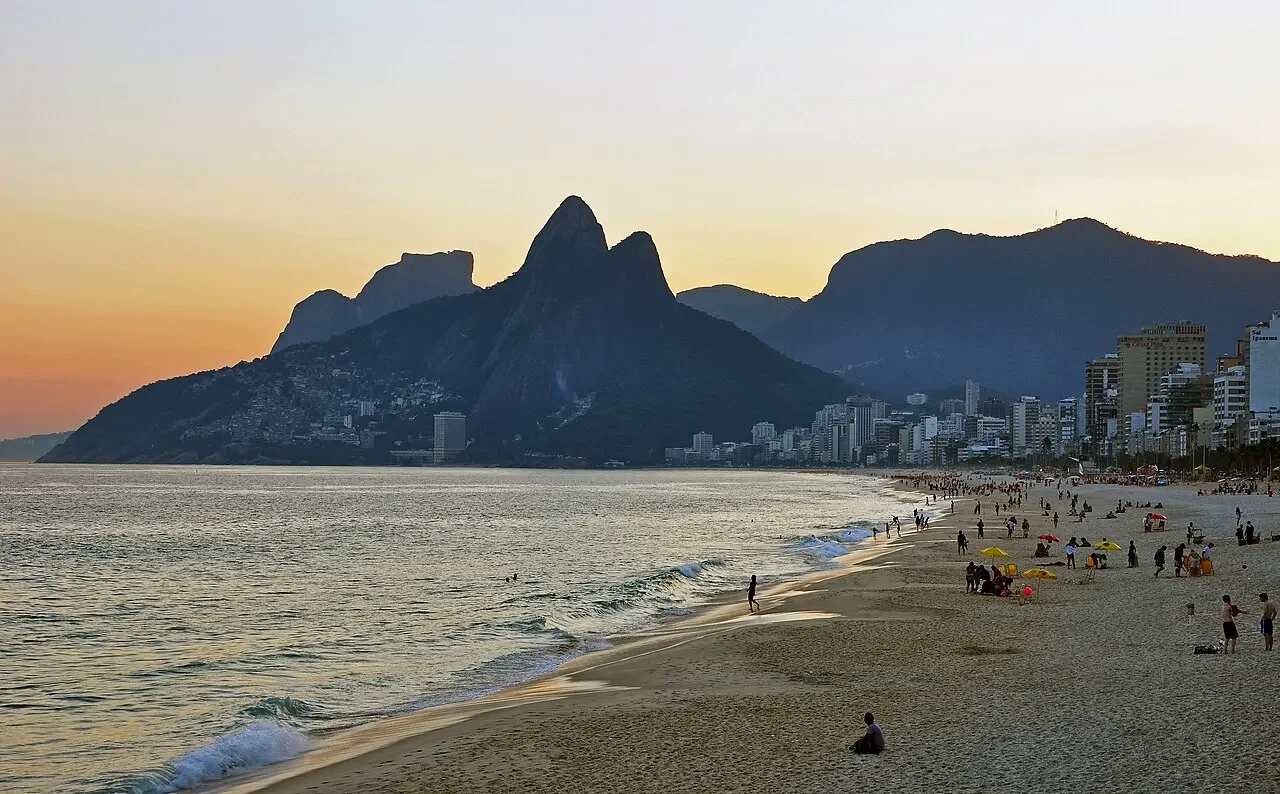
I would allow four days to alternate beaches, viewpoints, forest and history, with freedom to change the order with the weather. With one day, I would stay between the Copacabana and Ipanema waterfronts, a boteco break and Sugarloaf if visibility is good. With more time, I would include Corcovado and the gardens, then choose Centro interiors by their calendars and an afternoon in Pequena África. Niterói or an outing in the Zona Norte are alternatives, without stacking both into one afternoon. The Centro has good stretches for walking; journeys between distant neighbourhoods need more planning. On the fourth day, I would leave the beach time flexible, going to Barra only if I wanted that journey.In the late afternoon, walking the Copacabana or Ipanema promenade is a good way to start getting to know Rio. From Pedra do Arpoador, the light changes over the beach and Dois Irmãos; applause for the sunset appears when weather and season help the spectacle. The viewpoints then show how hills and bay organise the city: choose Corcovado for visibility and allow time for both stages of Sugarloaf. Tijuca Forest offers a different pace, with gardens, trails and waterfalls. Pause at botecos, choose a samba gathering from the programme and leave room for the Centro and Pequena África, where the port, slavery and culture meet in history. April to mid-June usually brings gentler heat, but each day’s forecast helps decide between an ascent and the beach.
Quick facts
- Population
- About 6.7 million in the municipality (IBGE estimate for 2025). The metropolitan region has a larger population; these are different geographical areas.
- Founded
- March 1, 1565, by Estácio de Sá, as São Sebastião do Rio de Janeiro
- Country and region
- Brazil · capital of the state of Rio de Janeiro, Southeast region, Atlantic coast
- Language
- Brazilian Portuguese. In Rio you will hear both você and tu, often with a third-person verb. An s at the end of a syllable may sound like “sh”.
- Currency
- Brazilian real (BRL, R$). Pix is a widely used instant payment system, but it requires access to an account at a participating institution. Have a card or cash alternative.
- Time zone
- UTC−3 year-round; Brazil abolished daylight saving time in 2019
- Best time to go
- April to mid-June usually brings gentler heat; September and early October are another option. Beach and viewpoint plans also depend on the day’s forecast and visibility.
- Average daily cost
- Budget about R$ 240; mid-range about R$ 615; comfortable about R$ 1,650 per person, based on what travellers report to Budget Your Trip (checked October 2026). Hostels, simple meals and public transport keep you at the budget end; beachfront hotels, ride-hailing and paid viewpoints push you to the comfortable end. Carnival and New Year’s Eve need a quote for your dates.
When to go
April to mid-June usually brings gentler heat; September and early October are another option. Beach and viewpoint plans also depend on the day’s forecast and visibility.
How the year changes
April to mid-June is a good window for combining beaches and sightseeing, with heat generally less intense than in summer; September and early October are another option. This is seasonal guidance, not a promise of sunshine: cold fronts and rain can change plans in any month. From December to March, heat, humidity and heavy showers call for breaks, water and attention to local alerts. Winter, June to August, alternates beach days with cooler spells. Carnival moves between February and March, and blocos follow their own programmes before and after the parades. New Year, Carnival and school holidays influence demand for accommodation; compare rates for your dates and leave flexibility to choose viewpoints according to visibility.
Nilo's tips
Choose Corcovado for visibility
A morning visit can leave more room in the rest of the day, but does not guarantee fewer clouds or no queue. The train leaves Cosme Velho; allow time to reach the station and follow your ticket time. Before booking, check the forecast, rescheduling terms and access notices.
Allow time for Sugarloaf
I would choose late-afternoon light and arrive with a margin for queues. The visit has two stages, stopping on Morro da Urca before the summit; there is no need to rush the connection. Sunset time changes through the year. Check your ticket’s boarding window, available categories and the last ascent before arranging dinner.
Plan the Centro around opening calendars
Choose the interiors you want to see before choosing the day: the Real Gabinete, Theatro Municipal, Colombo and Paço Imperial have separate schedules. The Museum of Tomorrow is closed on Wednesdays. A weekday helps combine shops and the library; weekends also offer exhibitions and walks. For an evening return, check street activity and transport.
Cross the bay with time for Niterói
The Praça XV–Praça Arariboia ferry costs R$5.00, with a crossing time advertised by the operator of up to 22 minutes. The MAC is not beside the terminal: add the onward journey in Niterói. Galleries open Tuesday to Sunday, 10am–6pm, with last entry at 5:30pm; the courtyard opens daily, 9am–6pm. Go earlier if you want to enter the museum and check the return departure. Caminho Niemeyer and the ocean beaches are separate outings needing their own time.
Have an alternative to Pix
Small notes are useful on the beach and at markets, but ask how a vendor takes payment before ordering. Pix requires access to a participating account; confirm card and cash alternatives. Agree on chair rental terms, check the bill and compare fees before exchanging or withdrawing money.
Check the samba programme at Pedra do Sal
The outdoor samba gathering is a good occasion to visit Pedra do Sal, but check the programme before choosing a night: rain and events can change the schedule. To explore the history, follow the Pequena África circuit by day, including Cais do Valongo. Plan your pickup point for the return and avoid searching for transport along isolated streets.
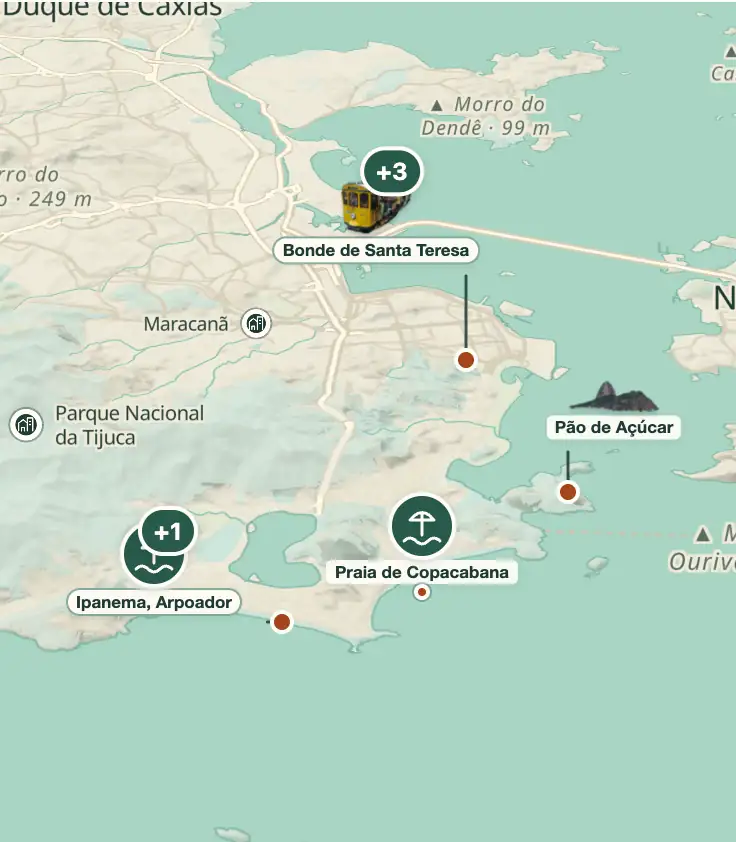
Explore the map
© OpenStreetMap · OpenFreeMap · © OpenMapTiles
Explore the map, read about the other places and plan your travel days in the app.
Open the appWhat to see
Rio de Janeiro: The plain and the monoliths
The climate is tropical Atlantic, with a hot, rainy summer from December to March and a dry, mild winter; the post-1970 expansion into Barra da Tijuca and Recreio followed Lúcio Costa's master plan (1969) and produced the only part of the city designed for cars.
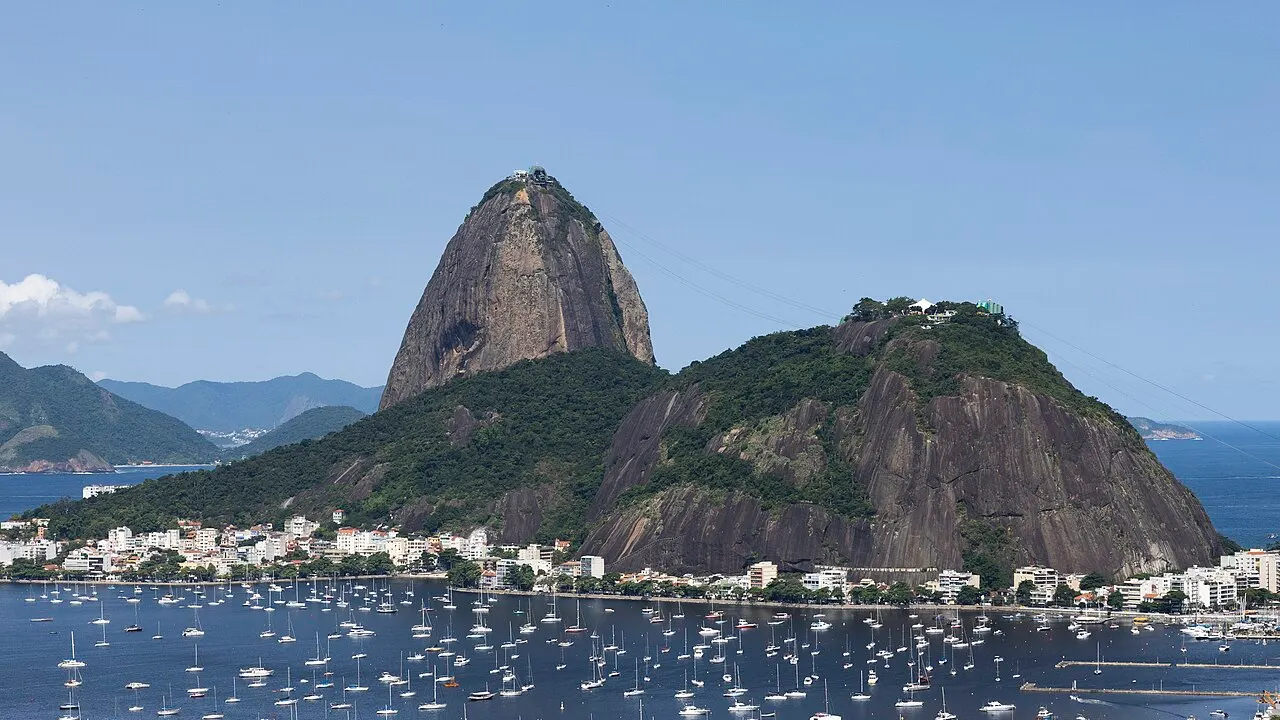
Sugarloaf Mountain
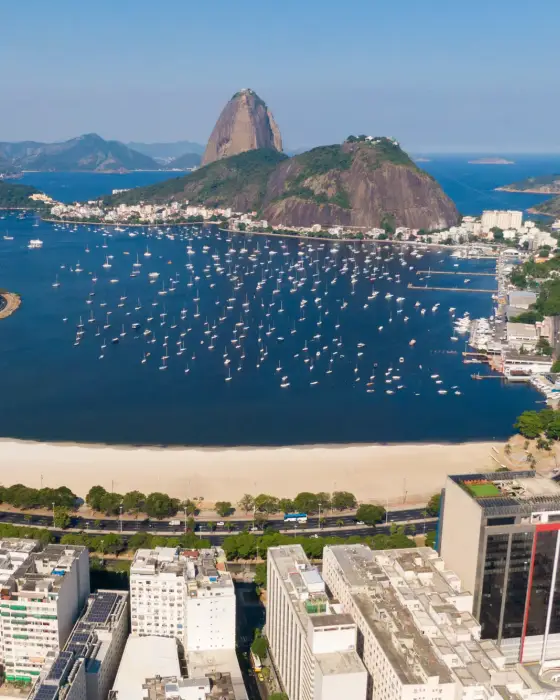
Sugarloaf, at 396 m, stands at the entrance to Guanabara Bay. The cable car leaves Praia Vermelha in Urca, stopping at Morro da Urca, at 220 m, before the second stage to the summit. The aerial link dates from 1912. In the late afternoon, allow time for both stages and queues: sunset attracts more visitors and its time changes through the year. Check prices, ticket categories and the last ascent on the park’s website before buying.
Check access
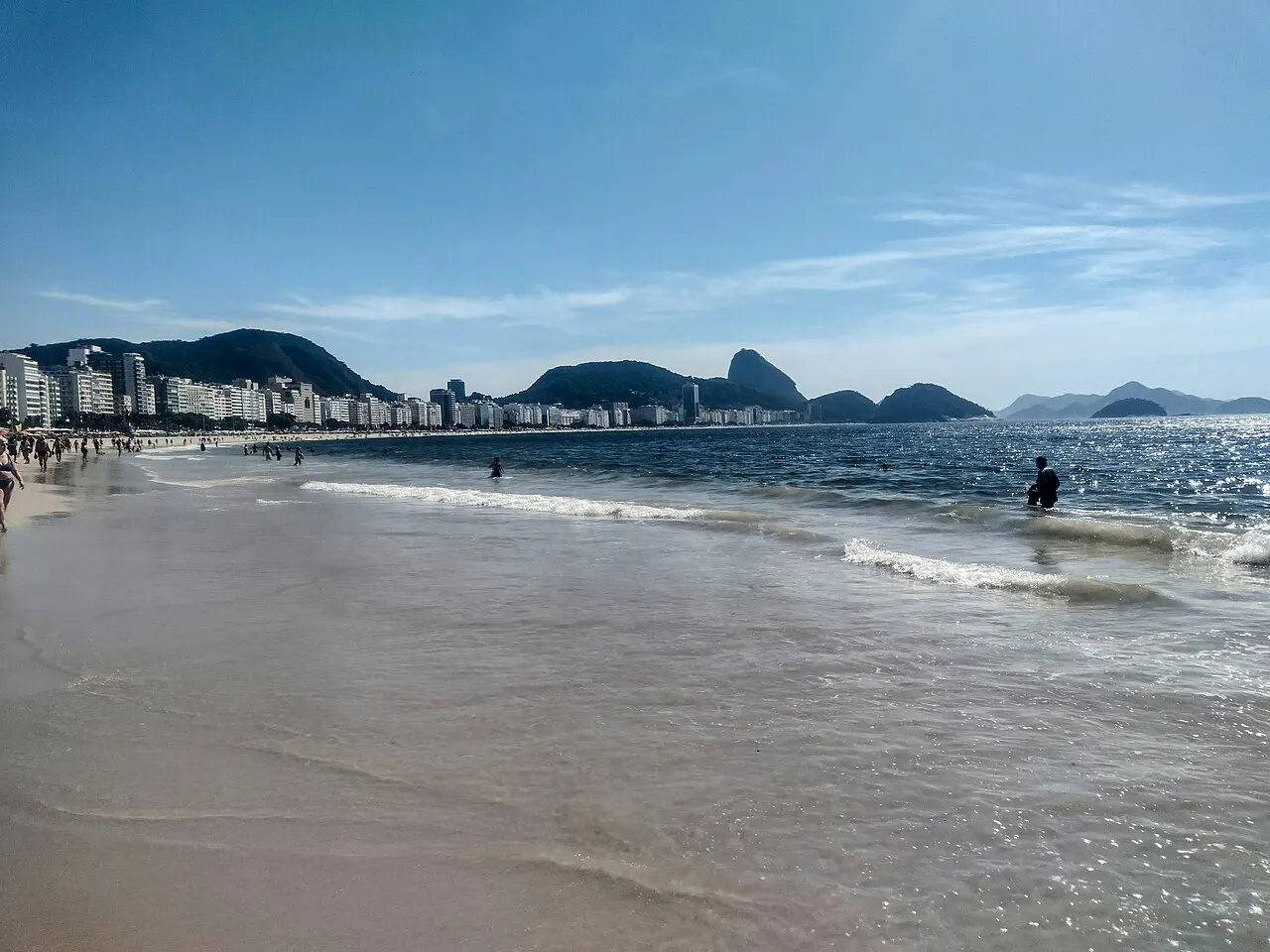
Copacabana Beach
Four kilometers of sand between Leme and Arpoador, with the wave-patterned Portuguese-stone promenade redesigned by Roberto Burle Marx in 1970. The beach is divided into numbered lifeguard posts, each stretch with its own crowd, and functions as a public square: footvolley, walkers, kiosks, and vendors hawking iced mate tea, Globo crackers, and coalho cheese grilled on the spot.
Four km from Leme to Arpoador work as a public square, the wave-pattern boardwalk was redone by Burle Marx in 1970, and the numbered lifeguard posts divide the stretch by crowd.
Check access

Ipanema, Arpoador, and Posto 9
The beach that bossa nova exported in 1962 with “The Girl from Ipanema,” written by Tom Jobim and Vinicius de Moraes in a bar on Rua Montenegro, now renamed Rua Vinicius de Moraes. At the eastern tip, the Pedra do Arpoador draws a crowd that applauds the sunset behind the Dois Irmãos, a 1990s habit that became a local rule.
Bossa nova exported this beach in 1962.
Check access

Christ the Redeemer
The Art Deco statue inaugurated in 1931 stands on Corcovado, at 710 m: a 30 m figure on an 8 m pedestal. Its creators include Heitor da Silva Costa, Paul Landowski and Gheorghe Leonida. Trains leave Cosme Velho on a railway opened in 1884; authorised vans provide another way up. Choose a time allowing for the journey to your departure point and check visibility: low cloud may hide the view. Read the change and cancellation terms of your chosen seller before buying.
Worth visiting for the monument and the view from Corcovado when visibility is good. Allow time for the ascent; with little time or low cloud, choose another viewpoint or an outing at ground level.
Check access
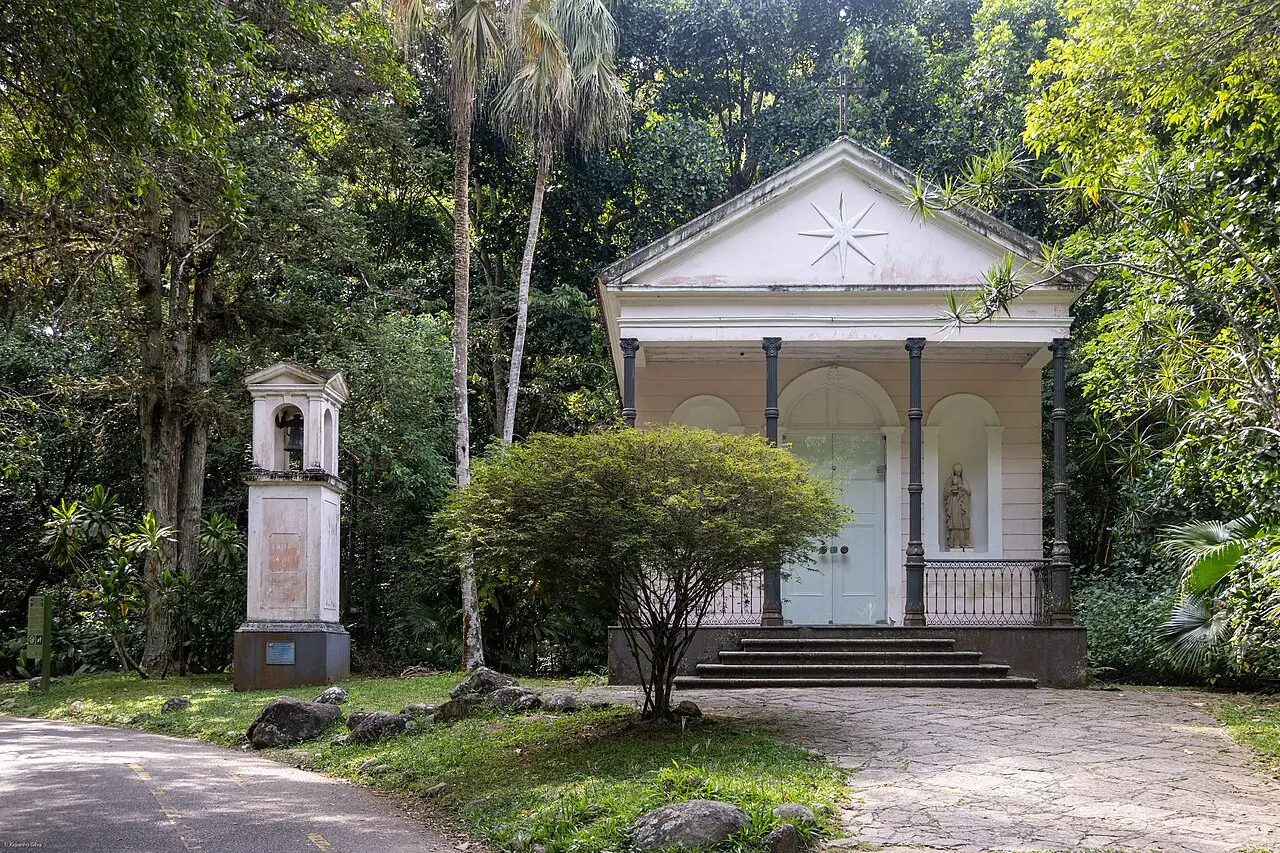
Tijuca National Park
About 39 km² of replanted Atlantic Forest inside the city, with trails, waterfalls and the Cascatinha Taunay. Mirante Dona Marta and Vista Chinesa, an Oriental-style pavilion from 1903, offer the two best free views over the Zona Sul. The Pedra Bonita trail, short and with no climbing, leads up to 696 m and the hang-gliding ramp where flights launch toward São Conrado.
Crosshatched by trails, the replanted Atlantic rainforest of about 39 km² holds the Vista Chinesa, a 1903 pavilion, and the Mirante Dona Marta, both with free panoramas of the Zona Sul, plus the non-technical Pedra Bonita trail, which reaches 696 m and the hang-gliding ramp that paragliders launch from.
Check access
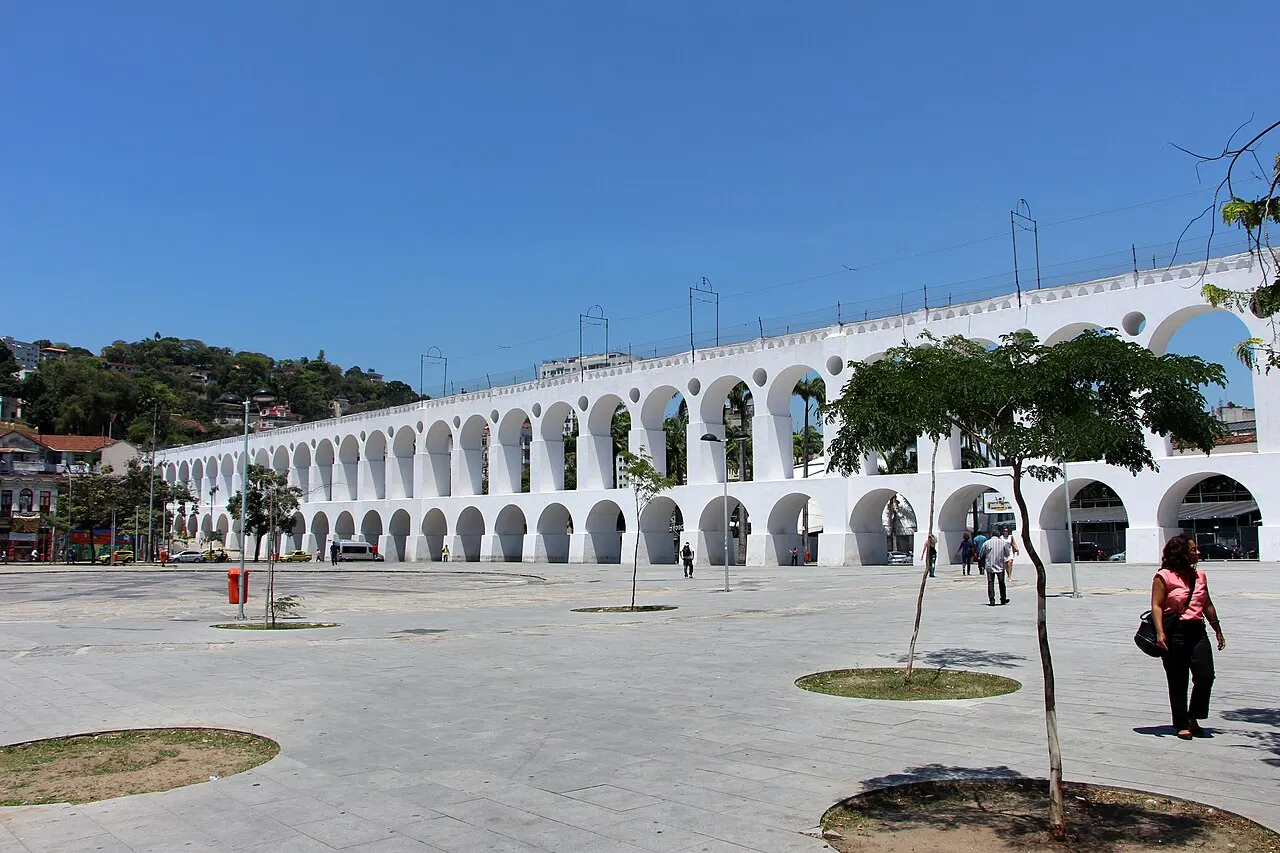
Lapa Arches and the Selarón Steps
The Carioca Aqueduct, completed in 1750, is 270 m long, has 42 arches, and stands 17.6 m tall; since 1896 it has carried the Santa Teresa tram instead of water. 300 m away, the Selarón Steps climb 215 steps covered in tiles from more than 60 countries, a work the Chilean artist Jorge Selarón began in 1990 and kept adding to until his death in 2013.
The aqueduct, finished in 1750, is 270 m long with 42 arches and has carried the Santa Teresa tram since 1896, and Selarón started in 1990 the 215-step staircase covered in tiles from more than 60 nations, and kept it up until he died, in 2013.
Check access

Santa Teresa Tram
The yellow tram connects the Centro with Santa Teresa’s steep streets, crossing the Lapa Arches. The electric line opened in 1896 and resumed in 2015 after the interruption following the 2011 accident. Head to the Rua Lélio Gama station and plan a daytime ride: service ends in the early evening on weekdays and at 5pm on weekends and holidays. Ticket sales can close earlier on busy days; check operations and fares before leaving. If dining in the neighbourhood, arrange another way back.
The tram, opened in 1896 and relaunched in 2015 after the serious 2011 accident, crosses the Arcos over the gap and climbs narrow slopes up to Largo dos Guimarães, with a token fare and a long line on Saturday and Sunday.
Check access

Historic Center
In the Centro, the Theatro Municipal, inaugurated in 1909, shows the ambition of the republican capital; the Real Gabinete Português de Leitura, from 1887, has a Neo-Manueline reading room worth visiting for the space itself. Colombo, from 1894, adds mirrors and counters to a coffee break. Near Praça XV, the Paço Imperial, from 1743, brings colonial architecture together with art exhibitions. Interiors have different calendars: check the library, theatre tour sessions and palace exhibitions before planning. Weekends can also work for culture and walking, without assuming every door will be open.
Worth visiting for architecture, history and exhibitions. Choose interiors according to each institution’s calendar; a theatre visit depends on an available session and does not define opening times throughout the Centro.
Check access

Praça Mauá and the Port District
The Museum of Tomorrow, by Santiago Calatrava, opened in December 2015, deals with climate and the future rather than a permanent collection; next door, the MAR has occupied a 1918 mansion since 2013, linked by a footbridge to a former bus terminal. A few minutes’ walk away is Valongo Wharf, excavated in 2011 and declared a World Heritage Site in 2017, part of the Pequena África circuit that includes Pedra do Sal, the birthplace of urban samba.
The Museu do Amanhã, running since 2015, is about climate and the future rather than a collection, and the MAR next to it has occupied an 1918 mansion since 2013, linked by a walkway to a former bus terminal; a few minutes' walk away is the Cais do Valongo, unearthed in 2011 and inscribed as a World Heritage site in 2017, part of the Pequena África circuit along with the Pedra do Sal.
Check access
Nilo’s itinerary
Start with the basic programme and choose extensions for the time you have.
Plan my days in the app ↗Day 1 · Beach, Sugarloaf and sunset
Start at 8am on the Copacabana promenade, between Posto 3 and Posto 5, and have a mate with Globo crackers sitting on the sand.
Walk to Arpoador along the seafront (about 3 km) and climb the rock; the viewing platform is free and takes ten minutes.
Have lunch at a boteco in Ipanema or Copacabana. Choose a few snacks from the menu to share and pause before heading to Urca.
Take transport to Praia Vermelha in Urca to ascend Sugarloaf. I would reserve the late afternoon, allowing for queues and the stop on Morro da Urca; check sunset and ticket times.
For dinner in Botafogo, leave Praia Vermelha by bus, authorised taxi or ride-hailing car. Praia Vermelha has no metro station; choose a restaurant with suitable kitchen hours and arrange your return.
Day 2 · Forest, Christ, and cobblestone streets
Book the ascent to Corcovado from Cosme Velho for a time you can reach without rushing. Check the forecast and visibility; the first departure does not guarantee fewer clouds.
After descending, pause in Parque Lage’s gardens, open 8am–6pm. The mansion is closed for restoration: do not plan on visiting its interior or courtyard café. Some paths have steps and uneven surfaces; choose a section suited to your mobility.
Walk to the Botanical Garden, founded by Dom João VI in 1808, and stroll the royal-palm avenue planted starting in 1809.
If you want to include Vista Chinesa, check access first: Estrada Dona Castorina is closed to vehicles 7–9am on weekdays and 7am–7pm on weekends and holidays. At permitted times, check park operations and arrange both journeys. Walking up involves a climb and takes time; if it does not fit the day, stay longer at the Botanical Garden.
In the evening, choose a restaurant in Santa Teresa and continue to Lapa if a samba gathering interests you. Use another form of transport for dinner and the return: the tram is a daytime outing, not a night connection between these stops. Check the venue’s programme before leaving.
Day 3 · Centro, Pequena África and an afternoon choice
Start in the Centro and choose interiors according to their calendars: a Theatro Municipal tour, the Real Gabinete reading room or Paço Imperial exhibitions. Pause at Colombo; do not assume all four places open together.
Continue to Praça Mauá. The Museum of Tomorrow closes on Wednesdays; on other days, check admission and allow time for the exhibitions. If it is closed or you prefer being outdoors, walk the Boulevard Olímpico without making the museum compulsory.
Go to Valongo Wharf and Pedra do Sal, in the Pequena África circuit, ideally with a guide from the neighborhood itself.
For the afternoon, choose Niterói or the Zona Norte. To visit the MAC, cross early enough on the Praça XV–Praça Arariboia ferry (R$5.00; up to 22 minutes according to the operator), add transport to the museum and arrive before last entry at 5:30pm. Galleries close on Mondays.
If you choose the Zona Norte, build the afternoon around a match or a Maracanã visit, depending on the calendar. Afterwards, dine in Tijuca if a restaurant interests you. Do not feel obliged to add this alternative to the Niterói crossing: each route deserves time and a return plan.
Day 4 · Leblon, Barra and the Dona Marta lookout
Start in Leblon, between the beach and the Lagoa, among the bookshops and galleries, and have an açaí bowl, served chilled with granola and banana.
On Sunday, visit the Feira Hippie at Praça General Osório for crafts and artwork. On other days, keep the morning free for the beach or a café.
Take a car or a ride-hailing app up to the Dona Marta lookout, one of the two best free views in the Zona Sul.
To explore Barra, take transport and choose a stretch of waterfront for a walk and a rest. The beach is long, but the plan does not require walking all of it. Allow for traffic both ways; for fewer journeys, stay between Leblon and Ipanema.
Go back to Ipanema for dinner and order a caipirinha made to order, with cachaça and Tahiti lime.


Food
 AI illustration
Feijoada
Black beans stewed with salted and smoked meats, served with rice, sautéed collard greens, toasted cassava flour (farofa), orange, and crackling. A long lunch dish, traditionally eaten on Saturdays, with a caipirinha or a draft beer alongside; portions are large and usually feed two.
 AI illustration
Iced Mate with Globo Crackers
The carioca beach pairing: roasted mate tea, iced and sweetened, sold in 300–500 ml cups by vendors carrying barrels on their backs, alongside a light cassava-starch cracker, savory or sweet, in a plastic bag. Each costs around R$8–12 in 2026.
 AI illustration
Boteco: Salt-Cod Fritters and Draft Beer
A pavement table, a foamy draught beer and snacks to share make a boteco a good break between outings. Cod fritters, shrimp pastries, pork crackling and olives can arrive gradually, following conversation and appetite. Check the menu, portion sizes and how the bar handles the table’s bill.
 AI illustration
Roast Pork and Pineapple Sandwich
The specialty of Cervantes, in Copacabana, open since 1955 and a classic end-of-night stop: sliced roast pork leg, melted cheese and a ring of pineapple on a French roll. It serves until the small hours, and at 4am there's still a line at the counter.
 AI illustration
Dried Beef with Cassava
Salted beef, soaked, shredded and fried, served with aipim, Rio’s word for cassava, boiled or fried: a classic at the bars of Santa Teresa and the Zona Norte. Eat it with a fork, shared, before the main course.
 AI illustration
Açaí in a Bowl
Frozen açaí pulp, blended and served cold with granola and banana, in a 300–500 ml cup for R$18–30. Amazonian by origin and carioca by adoption since the 1990s, it’s post-beach and post-gym food, not dessert.
 AI illustration
Street-Market Pastel with Sugarcane Juice
A thin pastry, fried to order and filled with cheese, meat, or shrimp, served with cold sugarcane juice and lime. Found at the open-air street markets that rotate through the neighborhoods on fixed weekdays. The one at Praça Nossa Senhora da Paz, in Ipanema, runs on Fridays.
 AI illustration
Caipirinha
Cachaça, Tahiti lime cut into chunks, sugar and ice, muddled to order; at a beach stall it costs R$20–35, and at an Ipanema bar it can double.
Day trips
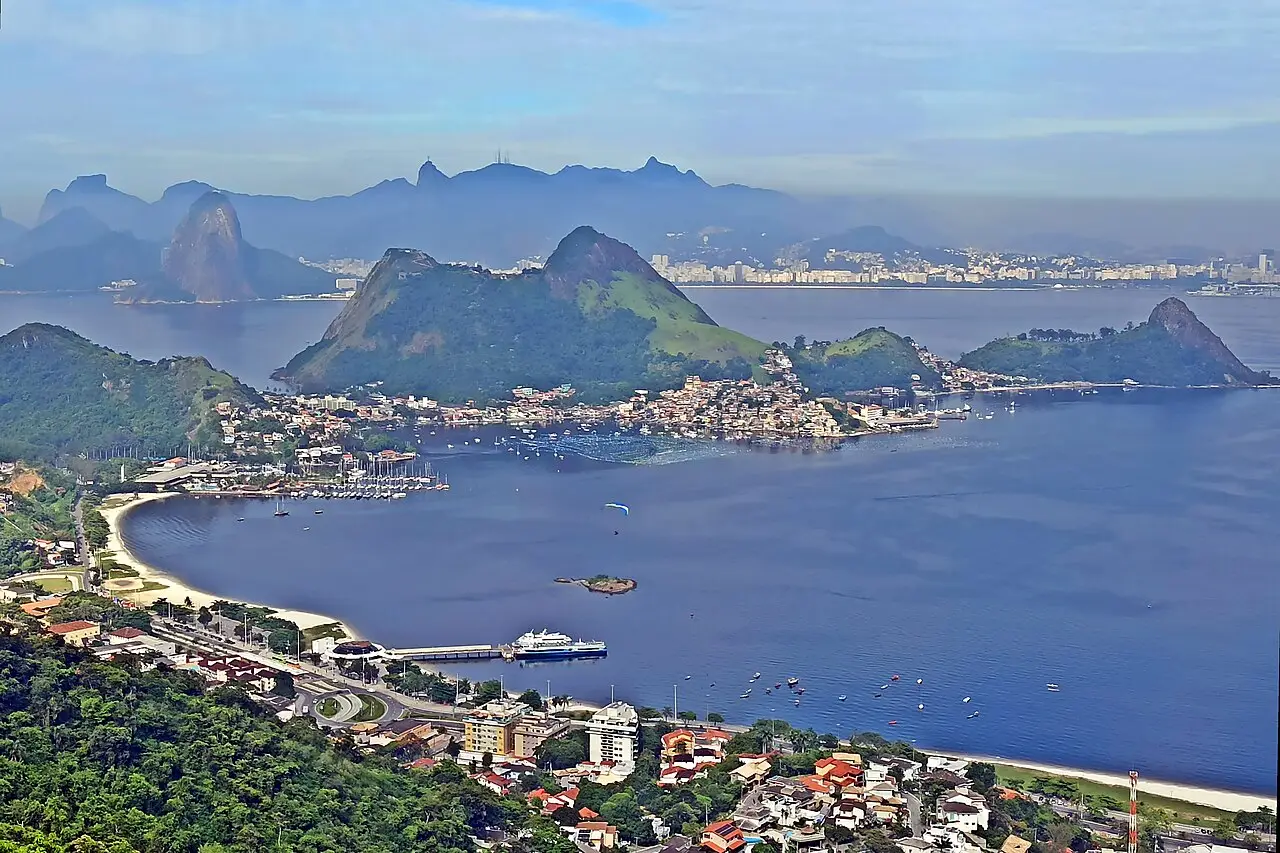
Niterói
The Praça XV–Praça Arariboia crossing offers another perspective on Guanabara Bay: R$5.00 and up to 22 minutes advertised by the operator. In Niterói, choose Oscar Niemeyer’s MAC, inaugurated in 1996, or a walk around Caminho Niemeyer and the waterfront. Add travel between the terminal and sights; for the MAC galleries, go Tuesday to Sunday and arrive before 5:30pm. Itacoatiara and Camboinhas are on the ocean coast and need a separate journey, best planned as their own outing. Check ferry departures for the return.
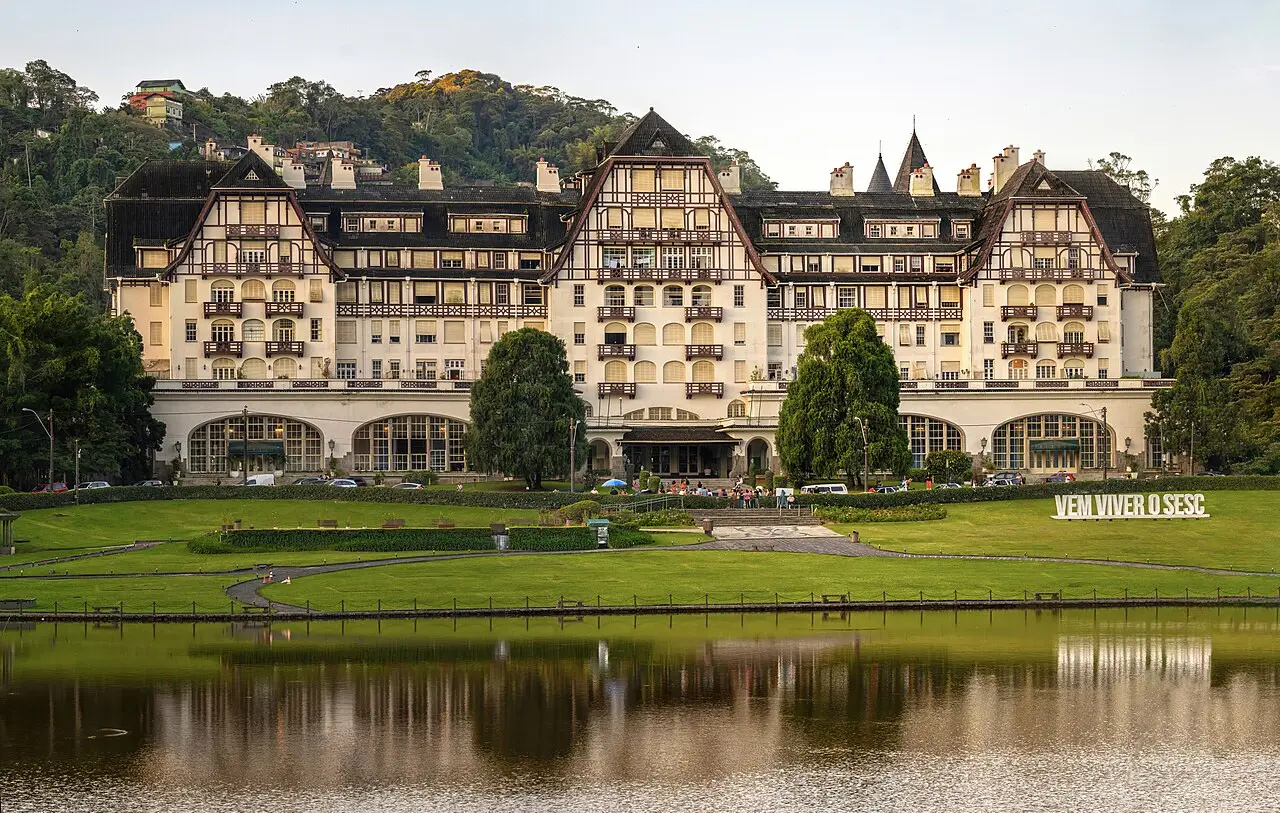
Petrópolis
About 68 km north, 1 hour 30 minutes by car or bus up into the mountains, 800 m above sea level and 5 to 8 °C cooler than Rio. It was the Empire's summer capital: the Museu Imperial occupies Dom Pedro II's palace, and the Casa de Santos Dumont, from 1918, has the staircase you can only climb starting with your right foot.
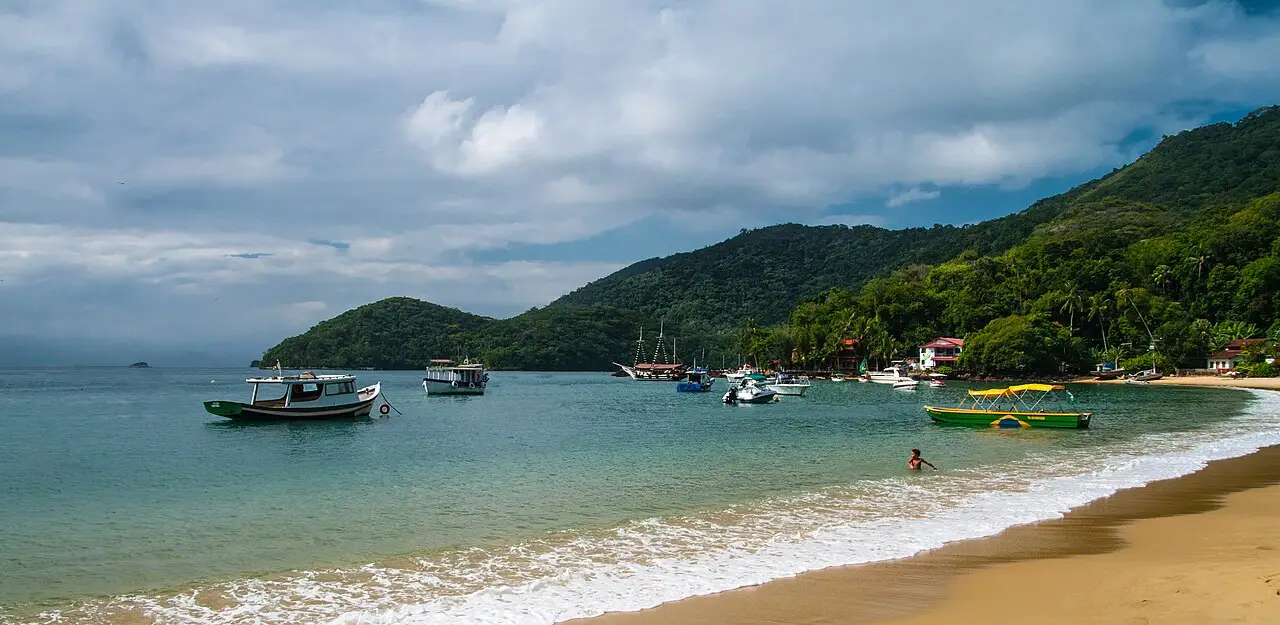
Ilha Grande
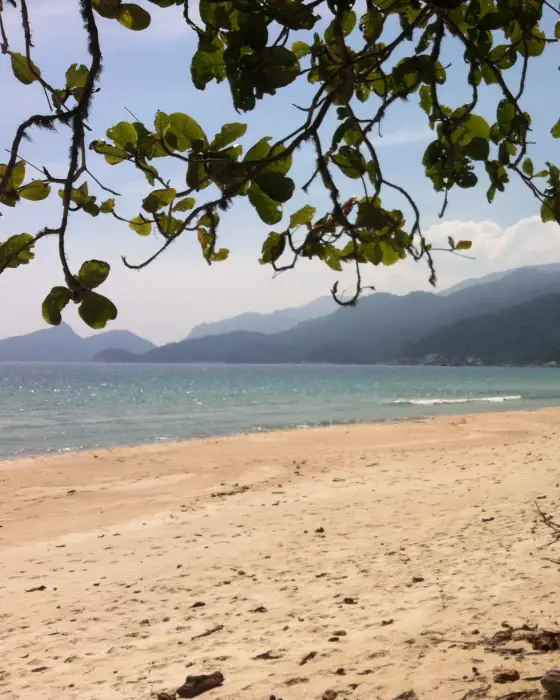
About 150 km to the west: two and a half hours by car to Conceição de Jacareí or Angra dos Reis, plus 30 to 50 minutes by boat. A car-free island with 106 beaches, a former penal colony shut down in 1994, and Atlantic Forest trails; you can do it as a day trip, but it’s worth spending a night in Abraão.
Where to begin
Beach, Sugarloaf and sunset
Start at 8am on the Copacabana promenade, between Posto 3 and Posto 5, and have a mate with Globo crackers sitting on the sand.
Forest, Christ, and cobblestone streets
Book the ascent to Corcovado from Cosme Velho for a time you can reach without rushing. Check the forecast and visibility; the first departure does not guarantee fewer clouds.
Centro, Pequena África and an afternoon choice
Start in the Centro and choose interiors according to their calendars: a Theatro Municipal tour, the Real Gabinete reading room or Paço Imperial exhibitions. Pause at Colombo; do not assume all four places open together.
Money
The local currency is the real, shown as R$ or BRL. Cards are common, but check that a business accepts your card network and carry small notes for beach stalls and markets. Pix appears on signs and menus: you need an account at a participating institution to use it, rather than simply a card issued abroad. Agree on prices for chairs, umbrellas and food before ordering, and check the amount on the card terminal.
Work out accommodation per night, meals per person, transport and admission separately; a beachfront room rate is not every traveller’s daily budget. Compare accommodation for your actual dates, as Carnival and New Year can change the bill substantially.
A suggested restaurant service charge, often 10%, is optional; check whether it is already included before adding a tip. When exchanging or withdrawing money, compare the amount you receive after fees and use a secure location without displaying large sums.
What getting around costs
Guide estimate
Scroll to compare all columns
| Mode | Fare |
|---|---|
| Metro, lines 1, 2 and 4 | R$7.90 |
| City bus | R$5.00 |
| BRT | R$5.00 |
| SuperVia train | Check the fare with SuperVia |
| Ferry Praça XV → Praça Arariboia (Niterói), up to 22 min | R$5.00 |
Getting there and around
From Galeão and Santos Dumont to the Centro and the Zona Sul
Galeão–Antonio Carlos Jobim (GIG), on Ilha do Governador, receives international and domestic flights. An authorised taxi or ride-hailing car simplifies the journey with luggage; compare prices and travel time to your accommodation before leaving. A public-transport option combines the TransCarioca BRT to Vicente de Carvalho with metro line 2, requiring a transfer between systems and fares. Santos Dumont (SDU), beside the Centro, handles domestic flights, including services to São Paulo. The VLT provides access from the airport and a metro connection, but allow for walking and waiting during the transfer. At both airports, use official pickup points and check your vehicle.
Three lines covering the waterfront axis
Metro lines 1, 2 and 4 connect the Centro with the Zona Sul and Barra. In October 2026, the published public fare is R$7.90; check operations and payment options with MetrôRio before travelling. Municipal buses and BRT extend the network using Jaé, while the VLT serves the Centro and port area and trains reach other neighbourhoods and municipalities. For Niterói, choose the right terminal: Praça XV–Praça Arariboia costs R$5.00, with a crossing time advertised by the operator of up to 22 minutes; Charitas is a different line with a different fare. Check departures before heading to the pier. Many nearby sights in the Zona Sul and Centro are walkable, but distances, hills and tunnels make a walk across the entire city impractical. Parts of the waterfront and Lagoa have cycle paths; choose a route suited to your experience and traffic conditions.
Safety
Theft and robbery, including armed robbery, are risks in Rio; looking after belongings reduces exposure but does not guarantee safety. Carry few valuables and avoid conspicuous phone use in the street or on the sand. If threatened, do not resist. Plan your return before going out at night and avoid isolated stretches and the beach after dark. Activity and lighting vary from street to street in the Centro and port area. Ask locally about your route and check the driver and registration before entering a ride-hailing car; an app does not remove the risk. Do not follow GPS shortcuts through unfamiliar areas. A guide cannot make security predictable in a community with armed groups; consult current advice before considering a visit. Check agreed prices and the card terminal amount before paying. Express kidnapping is violent crime, not a routine sales scam. Call 190 for police emergencies. During heavy rain, follow Civil Defence alerts and avoid flooded areas and unstable slopes; on the beach, heed flags and lifeguards’ advice about currents.
Etiquette tips
Greetings and personal space
Two cheek kisses are common in social settings, but depend on familiarity and individual preference. A spoken greeting or a handshake also works. Follow your host’s lead and respect anyone who prefers no physical contact.
Beachwear stays on the beach
Swim trunks, bikinis and going shirtless are normal on the sand and on the block facing it. To go into a restaurant, market, bus or hotel lobby, wear a T-shirt and shorts. Keep a T-shirt in your beach bag for the walk back.
Agree on beach rental terms
Before settling in, ask the price of the chair and umbrella, whether food or drinks are included and when to pay. Terms vary between stalls. Remember which vendor rented them to you and check the bill before leaving.
Check the service charge
Restaurants commonly suggest a 10% service charge. Payment is optional. Check whether it is already on the bill; adding more or asking for its removal is your choice, rather than a social rule applying to the entire country.
Confirm the meeting time
A barbecue at someone’s home may have a flexible start; a restaurant booking or a tour departure does not. Ask your host when things are meant to begin and let them know if you are running late. Do not assume all residents expect a fixed delay.
Talking football
Flamengo, Vasco, Fluminense and Botafogo appear on shirts, flags and in conversation. Asking “de que time você é?” may bring out a family story or a memorable match. Rivalry and banter are common, but interest varies; listen before joining the teasing.
Mistakes to avoid
Christ the Redeemer on a low-cloud day
Low cloud can hide the city from Corcovado. Check the forecast and visibility images before choosing your ascent; arriving early does not guarantee a clear sky. If your dates allow, keep another possible day and check ticket rescheduling terms before buying.
Taking too much to the beach
Take what you need for the beach and leave other valuables somewhere secure. A paper copy of your ID can avoid carrying the original; a digital copy means bringing and protecting your phone. Do not leave a bag or phone unattended while swimming.
Treating the Zona Sul as the whole city
Copacabana, Ipanema and Leblon can fill a trip, but there are other rewarding ways into Rio. Follow colonial history in the Centro, explore the links between the port, slavery and samba in Pequena África, or choose a football match or samba-school rehearsal in the Zona Norte when scheduled. Follow your interests rather than treating neighbourhoods as a compulsory checklist.
Copacabana to Barra: an hour by car
Copacabana and Barra look close on a map; tunnels, routes around hills and traffic can lengthen the journey. Check the route when leaving and allow a margin for a timed ticket or appointment. Short walks work well within a neighbourhood; crossing the city requires transport and time.
Going to Carnival with no booking and no plan
Carnival changes demand for rooms and how streets operate. Compare accommodation in advance and follow bloco programmes: meeting points, times and routes can change. Sambadrome parades require a ticket for your chosen section; street blocos offer another way to take part. Plan the return to your hotel and what you want to do between celebrations.
Useful phrases
Tudo bem?
How’s it going? Works as “hi,” as a question, and as a goodbye; the standard reply is “tudo bem” or “tudo joia”
Quanto é?
How much is it? Ask before accepting the cup of mate, the corn, the chair, or the photo
Valeu!
Thanks, in informal register; used between strangers constantly, including when getting off the bus
Uma água de coco, por favor
A request for coconut water; the vendor cracks the coconut on the spot and hands it back with a straw, the fruit still cold
Pode ser no Pix?
“Can I pay by Pix?” Useful if you already have access to a participating account; otherwise ask whether cards or cash are accepted.
Com licença
Excuse me: used when passing between people on the sand, on a packed bus, or in front of someone sunbathing; short, and it’s enough
Districts
Copacabana and Leme
A corridor neighborhood with 4 km of beach and very high density, home to the oldest population and the most working-class shops in the Zona Sul. It's where the hotels, the 24-hour pharmacies and New Year's Eve are; at dawn the beachfront promenade turns into one big open-air gym.
Ipanema and Leblon
Between the beach and Lagoa, Ipanema and Leblon bring together expensive accommodation, bookshops, galleries, cafés and restaurants. On Sundays, the Feira Hippie fills Praça General Osório with crafts and artwork. On the sand, the numbered postos make useful meeting points; Posto 9 is one of the best known.
Botafogo and Humaitá
A middle-class neighborhood that became the hub for bars, independent movie theaters and chef-driven cooking from the 2010s on. A good base for staying in the Zona Sul for less than in Ipanema, with the metro and a view of Sugarloaf across the cove.
Flamengo, Catete, and Glória
Buildings from the 1930s and 1940s, tree-lined streets and the Aterro do Flamengo, a 1.2 km² landfill park with sports courts, a bike path and the Museum of Modern Art. The Catete Palace was the seat of the presidency until 1960 and is now the Museum of the Republic.
Santa Teresa and Lapa
Santa Teresa is a hillside neighborhood of nineteenth-century mansions, artists’ studios, and cobblestone slopes, served by the yellow tram since 1896 and settled by artists since the 1970s. At its foot lies Lapa, dominated by the Arches of the colonial aqueduct: by day it’s a thoroughfare and a construction site, but on Friday and Saturday whole blocks turn into samba, choro, and forró venues.
Downtown and the port district
Churches, public buildings, shops and offices reveal different periods of the Centro. Activity varies by street and time: museums and cultural centres also welcome weekend visitors, each on its own schedule. The port area leads to Praça Mauá, the Museum of Tomorrow and Cais do Valongo, recognised by UNESCO in 2017.

Tijuca, Vila Isabel, and Madureira
The middle-class and working-class Zona Norte, far from the beach circuit and essential for understanding the city: this is where you find the Maracanã, the rehearsal halls of the big samba schools and the Mercadão de Madureira, the go-to market for Afro-Brazilian religious goods.
Barra da Tijuca and Recreio
Post-1970 expansion designed by Lúcio Costa: wide avenues, gated condominiums, malls and 18 km of beach with strong surf. It's where the 2016 Olympic Park was built and where many of the TV studios are, 25–60 minutes by car from the Zona Sul.
History
1502 · The bay mistaken for a river
A Portuguese expedition enters Guanabara Bay on January 1, 1502, and mistakes it for a river mouth. The wrong name stuck: Rio de Janeiro (“River of January”).
1555–1567 · Antarctic France
Nicolas Durand de Villegagnon sets up a French colony on an island in the bay with the support of the Tamoio people and Huguenots. It took Portugal twelve years and three military campaigns to drive it out.
1565 · A military founding, on March 1
Estácio de Sá founds the city on March 1, between Sugarloaf Mountain and Praia Vermelha, and dies in combat in 1567. His uncle, Mem de Sá, moves the settlement to Morro do Castelo, which is easier to defend.
1763 · Colonial capital
The capital of the State of Brazil moves from Salvador to Rio, the natural port for shipping out the gold and diamonds of Minas Gerais. The city grows up around the customs house and the trafficking of enslaved Africans.
1808 · The court crosses the Atlantic
Fleeing Napoleon, Dom João VI lands with about 10 to 15 thousand people and turns Rio into the capital of the Portuguese Empire, the only time the seat of a European kingdom moved to another continent. With the court come the Banco do Brasil, the printing press, the library and the Botanical Garden.
1822–1889 · Capital of the Empire
With independence declared by Dom Pedro I, Rio becomes the capital of a slaveholding empire that doesn’t abolish slavery until May 13, 1888. Valongo Wharf, in the port district, received between 500,000 and a million enslaved Africans between 1811 and 1831.

1897 · Morro da Providência
Soldiers back from the War of Canudos occupy a hill near the Centro while waiting for pay and housing. The settlement gives its name to the phenomenon: favela, after a plant from the Bahian backlands.
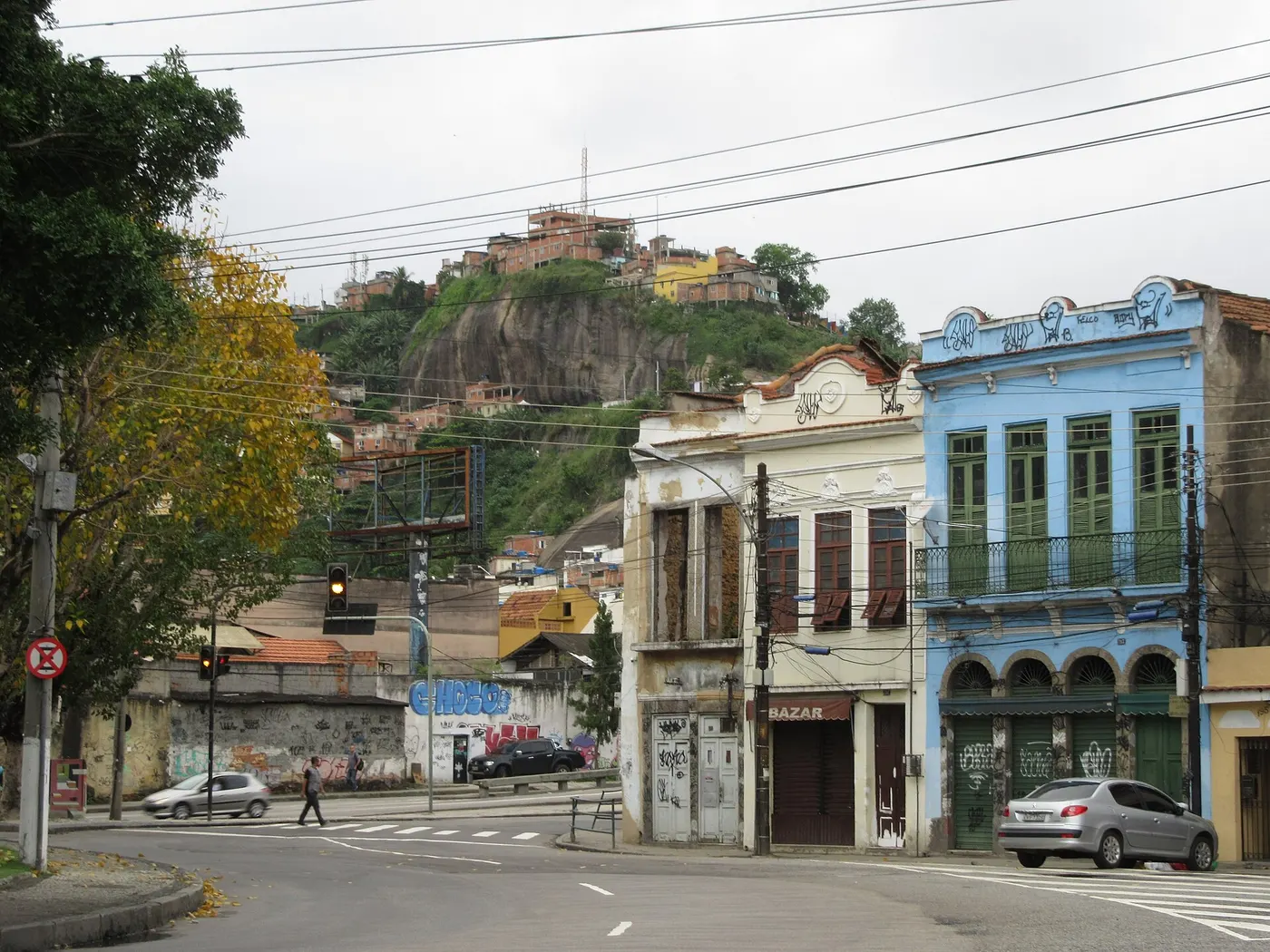
1902–1906 · Pereira Passos’s great demolition
Mayor Pereira Passos tears down tenements and cuts through Avenida Central (today Rio Branco), copying Haussmann’s Paris. Oswaldo Cruz’s sanitation campaign triggers the Vaccine Revolt in November 1904.
1916–1931 · Samba, radio, and Christ
“Pelo Telefone” was registered in 1916 and became a hit at Carnival in 1917, a landmark in the spread of recorded samba. Samba schools emerged in the late 1920s, including Deixa Falar in Estácio in 1928. Christ the Redeemer was inaugurated on 12 October 1931, eight years after the Copacabana Palace.
1960–1975 · Losing the capital
Brasília is inaugurated on April 21, 1960, and Rio becomes the short-lived state of Guanabara, merged into the state of Rio de Janeiro in 1975. The city loses public-sector jobs, company headquarters, and political weight within a few decades.
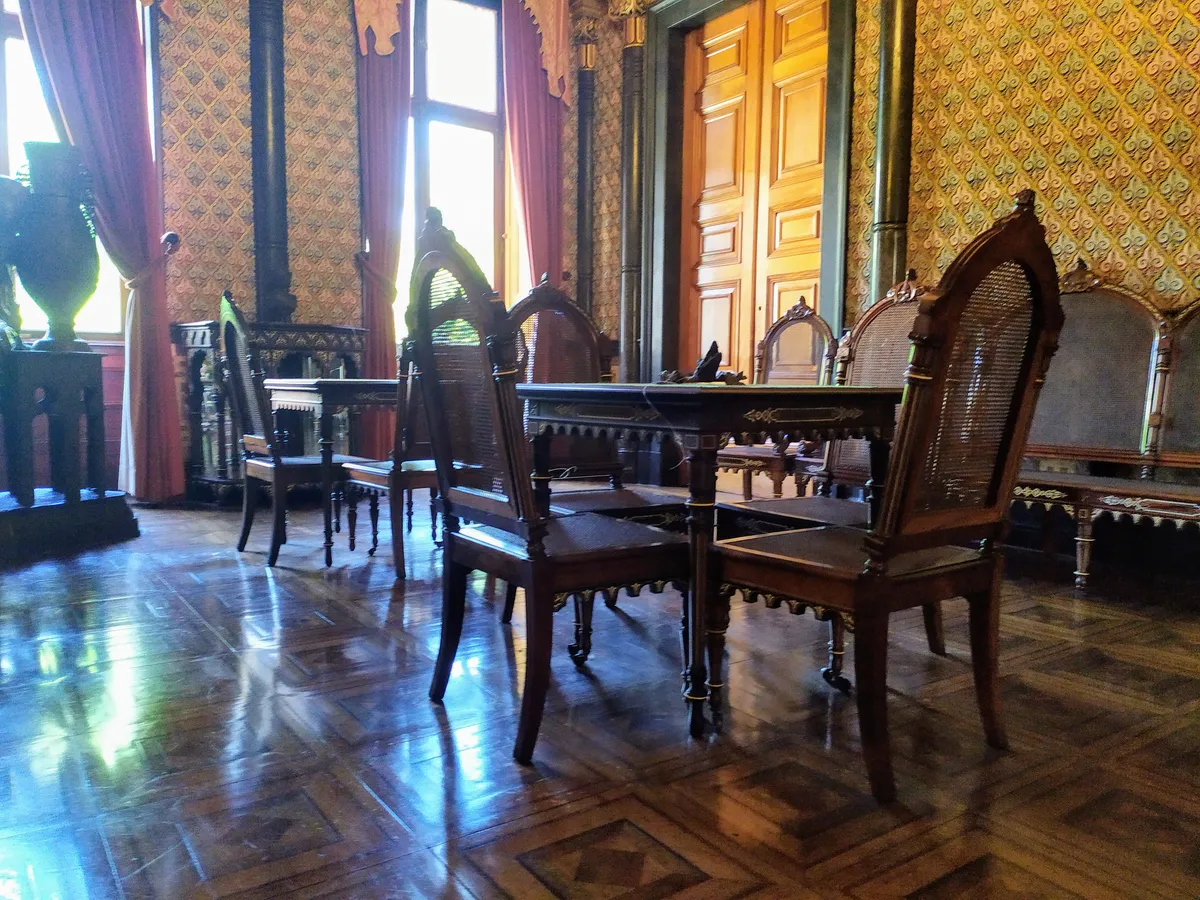
1992–2016 · The mega-events
Eco-92 opens the series in 1992; the 2007 Pan American Games, the 2014 World Cup and the 2016 Olympics fund the VLT light rail, the BRT, metro line 4 and the redevelopment of the port district. The state's fiscal crisis from 2016 on stalled much of what came after.
 AI illustration
Complete history
The military founding of 1565 and the fight with the French
Rio started as a military problem, not an urban plan. Guanabara Bay is the best natural shelter on the southeastern coast, which is why the French settled there in 1555 with support from the Tamoio people. The city Estácio de Sá founded in 1565 was, literally, a war camp to retake the mouth of the bay. That origin explains the geography of colonial power: forts at the bay's entrance, hills occupied by convents and barracks, and a center squeezed between four hills that the following centuries would dismantle one by one.
Minas gold, the port and the capital of 1763
The turning point came from gold. When Minas Gerais started exporting the metal in the late 17th century, Rio became the funnel everything passed through, and in 1763 it took over the colonial capital from Salvador. The port also made the city the largest landing point for enslaved Africans in the Americas: serious estimates put the number at somewhere between 500,000 and one million people through the Valongo Wharf alone, between 1811 and 1831. Nothing explains today's carioca culture (samba, candomblé, capoeira, jongo, cuisine) better than that forced migration, concentrated in the area that became known as Pequena África.
The court switched hemispheres in 1808
In 1808 the Portuguese court crossed the Atlantic to escape Napoleon, and Rio gained all at once the Banco do Brasil, a printing press, a military academy, a botanical garden and a European elite forced to settle in a tropical city of narrow streets. When Dom Pedro I declared independence in 1822, the machinery of the state was already here, and it stayed. Slavery was abolished in 1888, and the next year the monarchy fell. With no formal work for the freed people, settlement of the hills began, Providência's in 1897, and ever since the city has grown with the hillside favelas right next to the formal neighborhoods, pressed against each other.
A century of demolitions and landfill
The 20th century was made of demolitions and landfills. Pereira Passos tore down the colonial houses between 1902 and 1906 to open Avenida Central; Morro do Castelo, the city's birthplace, was leveled in 1922, and the material was used as landfill. In 1965 the Aterro do Flamengo, designed by Affonso Eduardo Reidy with landscaping by Roberto Burle Marx, created 1.2 km² of park over the sea. At the same time, the culture industry was being born here: national radio in the 1930s, bossa nova in 1958, Cinema Novo in the 1960s, funk carioca from the 1980s on.
From 1960 to the mega-events: Rio after the capital
Losing the capital in 1960 took away the economic engine that had sustained the city since 1763, and Rio spent half a century relearning what it lives on: oil from the Campos Basin, tourism, film and TV, universities and services. The mega-events between 2007 and 2016 brought real infrastructure (the VLT light rail in the Centro, the BRT to the Zona Oeste, metro line 4 out to Barra, museums in the port district) and also a fiscal crisis that hit soon after. Today the city lives with two processes at once: the redevelopment of the port and the Centro, with cultural squats and buildings converted into housing, and the control of entire territories by criminal factions and militias, which has been the dominant political issue since the 2000s.
Rio was founded in 1565 between Sugarloaf and Vermelha beach and soon moved to Castelo Hill, easier to defend.
Geography and shape of the city
The plain and the monoliths
Rio occupies a narrow coastal plain between the Atlantic and the Serra do Mar, punctured by gneiss and granite monoliths left over from erosion: Corcovado (710 m), Sugarloaf (396 m), Pedra da Gávea (842 m, the largest coastal monolith in the world) and the Tijuca massif, which cuts the city into two halves. Guanabara Bay, about 380 km², opens to the east; Rodrigo de Freitas Lagoon, 2.2 km², sits wedged between Ipanema, Leblon and the Botanical Garden.
The terrain, the tunnels and the forest
The granite massif squeezed between the sea and the bay makes Rio a linear city that depends on tunnels such as the 2.8 km Rebouças, opened in 1967, the Santa Bárbara and the Novo and Velho tunnels into Copacabana; going from one neighborhood to the next can mean crossing a mountain. In the middle of this terrain lies the Tijuca Forest, about 39 km² inside the city limits, and it was replanted: from 1861 on, Major Archer planted seedlings to restore the springs destroyed by coffee farming.
Climate, Barra and the hillsides
The climate is tropical Atlantic, with a hot, rainy summer from December to March and a dry, mild winter; the post-1970 expansion into Barra da Tijuca and Recreio followed Lúcio Costa's master plan (1969) and produced the only part of the city designed for cars. About a fifth of the population lives in favelas, a rough estimate, almost always on hillsides, where summer rain is a landslide risk.
Culture
Where samba became a national genre
In the port area, Pequena África connects the history of Black communities with the formation of urban samba. Pedra do Sal and gatherings at Tia Ciata’s home in the former Praça Onze are landmarks in that story. “Pelo Telefone”, registered in 1916 and popular at Carnival in 1917, helped bring the genre to records; treating it as a single point of origin obscures a collective process. Choro, bossa nova and funk carioca have their own histories in the city. To hear live music, check programmes for samba gatherings, Lapa venues and samba-school rehearsals: dates and access vary, especially outside the run-up to Carnival.
Soccer, beach sports and religion
Soccer takes up a big share of the city's conversation. Rio has four big clubs (Flamengo, Fluminense, Vasco da Gama and Botafogo), and when two of them meet, the bars and the Maracanã fill up; Flamengo has the largest fan base in Brazil. On the sand, sport is organized and territorial: footvolley, altinha (a circle where the ball can't touch the ground) and beach volleyball, which had one of its great centers in Rio before becoming an Olympic sport in 1996. Religion is also plural and visible, with the popular Catholicism of the Festa da Penha, the Candomblé and Umbanda terreiros in the Baixada and the suburbs, and the evangelical churches, today the main religious force in the Zona Norte and Zona Oeste.
Literature, cinema, television and nightlife
A large share of the country's cultural output came, and still comes, from Rio. Machado de Assis, born on Morro do Livramento in 1839, wrote here the novels that founded modern Brazilian prose; Clarice Lispector lived in Leme; the Cinema Novo of Glauber Rocha and Nelson Pereira dos Santos took shape in the city in the 1960s, and the country's two biggest TV networks keep studios in Barra and Jardim Botânico. Nightlife starts late (bars at 8pm, samba at 10pm, dance parties at midnight) and happens more on the street than behind closed doors. Museums and cultural centers are concentrated in the Centro and the port zone, and several of them, such as the CCBB, are free or almost free.
Ordering a “caipirinha de vodca” is common in Rio, but the vodka version has its own name, caipiroska, and the one with sake is called caipisake.
When arranging to meet, ask when things start and let people know if you are late. A barbecue may be flexible; a booking or tour departure calls for punctuality.
Festivals and events

Carnival (February or March)
Samba-school parades and street blocos offer different Carnival experiences. At the Sambódromo Marquês de Sapucaí, designed by Oscar Niemeyer and inaugurated in 1984, your section changes how you see the parade and the ticket price. On the street, check each bloco’s calendar, route and access rules. Carnival dates move each year between February and March; the city’s programme extends beyond the main days.

Copacabana New Year’s Eve (December 31)
The 31 December celebration brings concerts and fireworks to the Copacabana waterfront. White clothing and tributes to Iemanjá belong to different traditions of the night, with no obligation to take part. Stages, access points, road closures and special metro operations change by edition: check the announced plan for your year and arrange travel, return and a meeting point before entering the crowd.
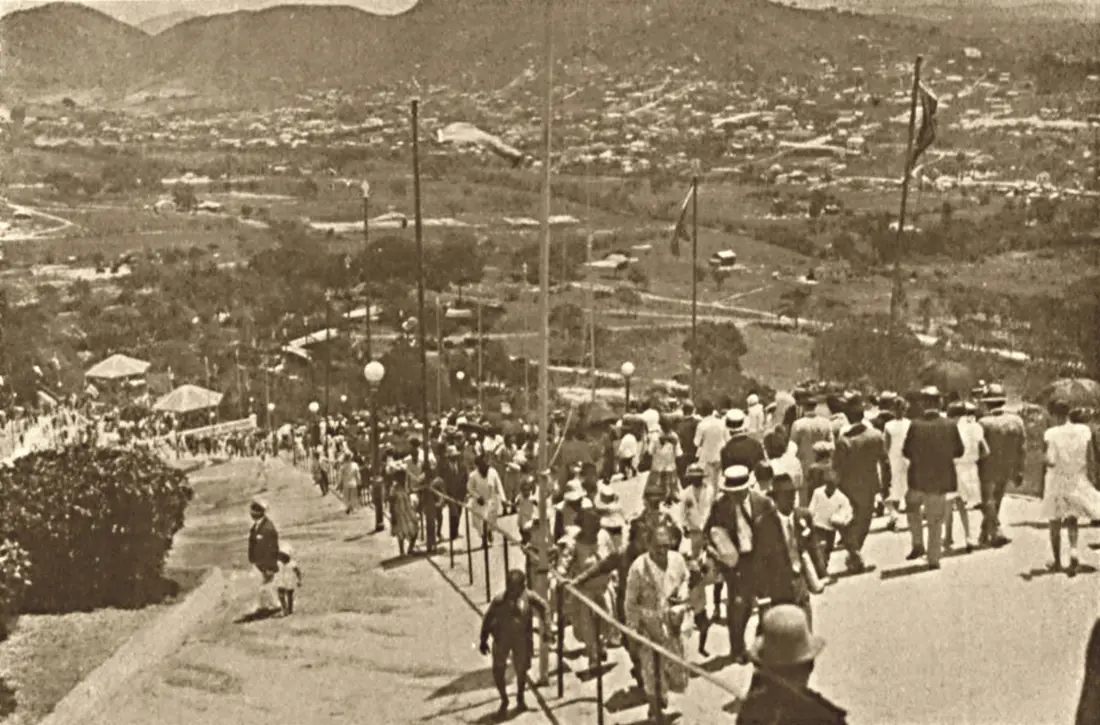
Festa da Penha (October)
A pilgrimage to the church of Nossa Senhora da Penha, in the Zona Norte, with 382 steps carved into the rock that pilgrims climb to fulfill vows, many on their knees. It dates from the 18th century and, until the 1930s, was one of the cradles of samba in the city.

Festival do Rio (September–October)
Latin America's largest film festival by number of screenings, with hundreds of films in theaters in the Centro, Botafogo and the Zona Sul over about two weeks. Single tickets are cheap and sell out fast for Brazilian titles.
 AI illustration
Rock in Rio (September, held in alternating years)
A festival created in 1985 that now takes place at the Barra Olympic Park in major editions, typically every two years, with seven days split across two weekends and about 100,000 people a day. Check whether there’s an edition in the year of your trip before planning around it.
Books and films
City of God (film, 2002; novel by Paulo Lins, 1997)
Paulo Lins’s novel and its film adaptation follow characters in Cidade de Deus and the expansion of the drug trade over decades. These are works of fiction for exploring inequality, violence and representation; they do not sum up every resident’s life or replace discovering Rio’s varied neighbourhoods.
Rio de Janeiro: Carnival Under Fire, by Ruy Castro (2003; English translation 2004)
A journalistic and historical portrait of Rio written by the biographer of bossa nova, from the court’s arrival in 1808 to the 2000s. It’s the single best text for understanding why the city is at once a cultural capital and a city in crisis.
Chega de Saudade, by João Gilberto (LP, 1959)
The João Gilberto LP that set the bossa nova beat, developed at gatherings in Copacabana apartments near Posto 4, and that changed 20th-century popular music. Listen to the title track before you arrive: it's the song Brazil recognizes as the beginning of bossa nova.
Frequently asked questions
Rio de Janeiro: Christ the Redeemer on a low-cloud day?
No: the summit of Corcovado, at 710 m, is often inside the cloud, especially in summer, and the timed ticket isn't refunded because of the weather.
Rio de Janeiro: How do you get from the airports to the Zona Sul?
Galeão (GIG), on Ilha do Governador, receives international flights, and from there a ride-hailing car to the Zona Sul takes 40 to 70 minutes. Santos Dumont (SDU), right in the Centro on the edge of the bay, handles the air shuttle to São Paulo and domestic flights, and from there the VLT light rail and the metro get you where you're going in minutes.
Rio de Janeiro: How do you get to Niterói?
Across the bay, 20 minutes by ferry from Praça XV for R$7.70, or 40 minutes by car over the Rio, Niterói Bridge (13.3 km, opened in 1974).
Rio de Janeiro: Do I need cash at the beach?
Yes: bring R$50 to 100 in small bills for vendors, markets and beach-chair rental, which work in cash; almost everything else accepts Pix or contactless card.
Rio de Janeiro: What's the best time to go?
The best window runs from April to mid-June, in the fall: 22 to 28 °C, the sea around 23 °C, less rain and a city full of cariocas, not tourists.
Other cities in the country
Brazil ↗- Days
- 2–3
- When
- Apr–May · Sep
- Per person/day
- Average 400–700 BRLMid-range · per person/day
Cost scope
Per person per day: accommodation, meals, urban transport, visits and a small allowance for extras. Flights excluded; larger purchases vary. Editorial estimate, not a quote.
- Days
- 2–3
- When
- Jan–Mar · Sep–Dec
- Per person/day
- Average 350–550 BRLMid-range · per person/day
Cost scope
Per person per day: accommodation, meals, urban transport, visits and a small allowance for extras. Flights excluded; larger purchases vary. Editorial estimate, not a quote.
- Days
- 1–2
- When
- May–Sep
- Per person/day
- Average 260–520 BRLMid-range · per person/day
Cost scope
Per person per day: accommodation, meals, urban transport, visits and a small allowance for extras. Flights excluded; larger purchases vary. Editorial estimate, not a quote.
- Days
- 3–4
- When
- Jun–Sep
- Per person/day
- Average 400–700 BRLMid-range · per person/day
Cost scope
Per person per day: accommodation, meals, urban transport, visits and a small allowance for extras. Flights excluded; larger purchases vary. Editorial estimate, not a quote.
- Days
- 2–3
- When
- Apr–Jun
- Per person/day
- Average 350–550 BRLMid-range · per person/day
Cost scope
Per person per day: accommodation, meals, urban transport, visits and a small allowance for extras. Flights excluded; larger purchases vary. Editorial estimate, not a quote.
- Days
- 3–5
- When
- Mar–Apr · Nov
- Per person/day
- Average 397 BRLMid-range · per person/day
Cost scope
Per person per day: accommodation, meals, urban transport, visits and a small allowance for extras. Flights excluded; larger purchases vary. Editorial estimate, not a quote.
- Days
- 2–4
- When
- Mar–May · Sep
- Per person/day
- Explore costsGuide estimate
Cost scope
Per person per day: accommodation, meals, urban transport, visits and a small allowance for extras. Flights excluded; larger purchases vary. Editorial estimate, not a quote.
- Days
- 4–5
- When
- Aug–Nov
- Per person/day
- Explore costsGuide estimate
Cost scope
Per person per day: accommodation, meals, urban transport, visits and a small allowance for extras. Flights excluded; larger purchases vary. Editorial estimate, not a quote.
- Days
- 3–4
- When
- Jul–Sep
- Per person/day
- Explore costsGuide estimate
Cost scope
Per person per day: accommodation, meals, urban transport, visits and a small allowance for extras. Flights excluded; larger purchases vary. Editorial estimate, not a quote.
- Days
- 3–4
- When
- Sep–Nov
- Per person/day
- Explore costsGuide estimate
Cost scope
Per person per day: accommodation, meals, urban transport, visits and a small allowance for extras. Flights excluded; larger purchases vary. Editorial estimate, not a quote.
- Days
- 2–4
- When
- May–Sep
- Per person/day
- Explore costsGuide estimate
Cost scope
Per person per day: accommodation, meals, urban transport, visits and a small allowance for extras. Flights excluded; larger purchases vary. Editorial estimate, not a quote.
- Days
- 3–5
- When
- Jun–Sep
- Per person/day
- Explore costsGuide estimate
Cost scope
Per person per day: accommodation, meals, urban transport, visits and a small allowance for extras. Flights excluded; larger purchases vary. Editorial estimate, not a quote.
- Days
- 3–4
- When
- Jun–Aug
- Per person/day
- Explore costsGuide estimate
Cost scope
Per person per day: accommodation, meals, urban transport, visits and a small allowance for extras. Flights excluded; larger purchases vary. Editorial estimate, not a quote.
- Days
- 4–5
- When
- Jan–Mar · Sep–Dec
- Per person/day
- Explore costsGuide estimate
Cost scope
Per person per day: accommodation, meals, urban transport, visits and a small allowance for extras. Flights excluded; larger purchases vary. Editorial estimate, not a quote.
- Days
- 3–4
- When
- Oct–Dec
- Per person/day
- Average 1,110 BRLMid-range · per person/day
Cost scope
Per person per day: accommodation, meals, urban transport, visits and a small allowance for extras. Flights excluded; larger purchases vary. Editorial estimate, not a quote.
- Days
- 3–4
- When
- Aug–Sep
- Per person/day
- Explore costsGuide estimate
Cost scope
Per person per day: accommodation, meals, urban transport, visits and a small allowance for extras. Flights excluded; larger purchases vary. Editorial estimate, not a quote.
- Days
- 4–7
- When
- Apr–Sep
- Per person/day
- Explore costsGuide estimate
Cost scope
Per person per day: accommodation, meals, urban transport, visits and a small allowance for extras. Flights excluded; larger purchases vary. Editorial estimate, not a quote.
- Days
- 3–4
- When
- Jan · Sep–Dec
- Per person/day
- Explore costsGuide estimate
Cost scope
Per person per day: accommodation, meals, urban transport, visits and a small allowance for extras. Flights excluded; larger purchases vary. Editorial estimate, not a quote.
- Days
- 2
- When
- Aug–Dec
- Per person/day
- Average 442 BRLMid-range · per person/day
Cost scope
Per person per day: accommodation, meals, urban transport, visits and a small allowance for extras. Flights excluded; larger purchases vary. Editorial estimate, not a quote.
- Days
- 3–5
- When
- Jan–Feb · Sep–Dec
- Per person/day
- Explore costsGuide estimate
Cost scope
Per person per day: accommodation, meals, urban transport, visits and a small allowance for extras. Flights excluded; larger purchases vary. Editorial estimate, not a quote.
- Days
- 3–5
- When
- May–Sep
- Per person/day
- Explore costsGuide estimate
Cost scope
Per person per day: accommodation, meals, urban transport, visits and a small allowance for extras. Flights excluded; larger purchases vary. Editorial estimate, not a quote.
- Days
- 2–3
- When
- Apr–Sep
- Per person/day
- Average 484 BRLMid-range · per person/day
Cost scope
Per person per day: accommodation, meals, urban transport, visits and a small allowance for extras. Flights excluded; larger purchases vary. Editorial estimate, not a quote.
- Days
- 3
- When
- Apr–May · Aug
- Per person/day
- Average 478 BRLMid-range · per person/day
Cost scope
Per person per day: accommodation, meals, urban transport, visits and a small allowance for extras. Flights excluded; larger purchases vary. Editorial estimate, not a quote.
- Days
- 3–4
- When
- Aug–Dec
- Per person/day
- Explore costsGuide estimate
Cost scope
Per person per day: accommodation, meals, urban transport, visits and a small allowance for extras. Flights excluded; larger purchases vary. Editorial estimate, not a quote.
- Days
- 2
- When
- Apr–May · Sep
- Per person/day
- Explore costsGuide estimate
Cost scope
Per person per day: accommodation, meals, urban transport, visits and a small allowance for extras. Flights excluded; larger purchases vary. Editorial estimate, not a quote.
- Days
- 3
- When
- Sep–Dec
- Per person/day
- Explore costsGuide estimate
Cost scope
Per person per day: accommodation, meals, urban transport, visits and a small allowance for extras. Flights excluded; larger purchases vary. Editorial estimate, not a quote.
- Days
- 3–5
- When
- Apr–Nov
- Per person/day
- Average 427 BRLMid-range · per person/day
Cost scope
Per person per day: accommodation, meals, urban transport, visits and a small allowance for extras. Flights excluded; larger purchases vary. Editorial estimate, not a quote.
- Days
- 4
- When
- Jul–Sep
- Per person/day
- Explore costsGuide estimate
Cost scope
Per person per day: accommodation, meals, urban transport, visits and a small allowance for extras. Flights excluded; larger purchases vary. Editorial estimate, not a quote.
- Days
- 4–5
- When
- May–Sep
- Per person/day
- Explore costsGuide estimate
Cost scope
Per person per day: accommodation, meals, urban transport, visits and a small allowance for extras. Flights excluded; larger purchases vary. Editorial estimate, not a quote.
- Days
- 3
- When
- May–Sep
- Per person/day
- Explore costsGuide estimate
Cost scope
Per person per day: accommodation, meals, urban transport, visits and a small allowance for extras. Flights excluded; larger purchases vary. Editorial estimate, not a quote.