Brazil
Jericoacoara
Pedra Furada, dunes, freshwater lagoons and kitesurfing wind on Ceará's west coast
Days Start with the basic programme and choose extensions for the time you have.
How the guide reaches this number
The first belongs to the village: Pedra Furada along the beach at low tide, back over the Serrote, and sunset on the village beach or on the hill beside Praia da Malhada. The return over the Serrote starts with a steep climb and has no lighting: carry a flashlight if returning at dusk. The second is the east tour, with Praia do Preá and lunch and a swim at Lagoa do Paraíso. The third is the west tour, to the Tatajuba dunes and lagoon, crossing the Guriú River by ferry. With a fourth day, I would leave the schedule open to go back to a favorite lagoon, take a kitesurfing lesson at Preá in the second half of the year or repeat Pedra Furada at the time the tide allows. Two days are enough for the two tours, but they squeeze Pedra Furada and leave the arrival, which takes hours from Fortaleza, eating part of the time. To see the sun through the hole in Pedra Furada, I would plan the trip between July 15 and August 15, when the wind is also already steady and the lagoons are still full.
3–4
When July to September: dry, with steady wind and the lagoons still full; from September to December some lagoons dry up, and from January to June it rains more
How the guide reaches this number
The year divides into two halves. From January to June it rains more, the landscape turns green and the lagoons fill; outside the January vacations and holidays, there are fewer people and prices drop. From July to December the weather is dry, with sun most days and steady wind, the kitesurfing season, which runs from July to January.
Per person/day Add up the Sustainable Tourism Fee, the guesthouse per night, meals per person and the buggy or 4x4 tours; the transfer from the airport weighs on the first and last day.
How the guide reaches this number
Per person per day: accommodation, meals, urban transport, visits and a small allowance for extras. Flights excluded; larger purchases vary. Editorial estimate, not a quote.
 What Nilo thinks
I would stay three days in Jericoacoara. The first belongs to the village: Pedra Furada along the beach at low tide, back over the Serrote, and sunset on the village beach or on the hill beside Praia da Malhada. The return over the Serrote starts with a steep climb and has no lighting: carry a flashlight if returning at dusk. The second is the east tour, with Praia do Preá and lunch and a swim at Lagoa do Paraíso. The third is the west tour, to the Tatajuba dunes and lagoon, crossing the Guriú River by ferry.
With a fourth day, I would leave the schedule open to go back to a favorite lagoon, take a kitesurfing lesson at Preá in the second half of the year or repeat Pedra Furada at the time the tide allows. Two days are enough for the two tours, but they squeeze Pedra Furada and leave the arrival, which takes hours from Fortaleza, eating part of the time.
To see the sun through the hole in Pedra Furada, I would plan the trip between July 15 and August 15, when the wind is also already steady and the lagoons are still full.Jericoacoara began as a fishing cove among the dunes, far from the roads, and even today you reach the village over the sand, in a 4x4. No cars circulate inside it: the streets are sand, and the end of the afternoon brings together those who spent the day on the sea, at the lagoons or in the wind.
Read more
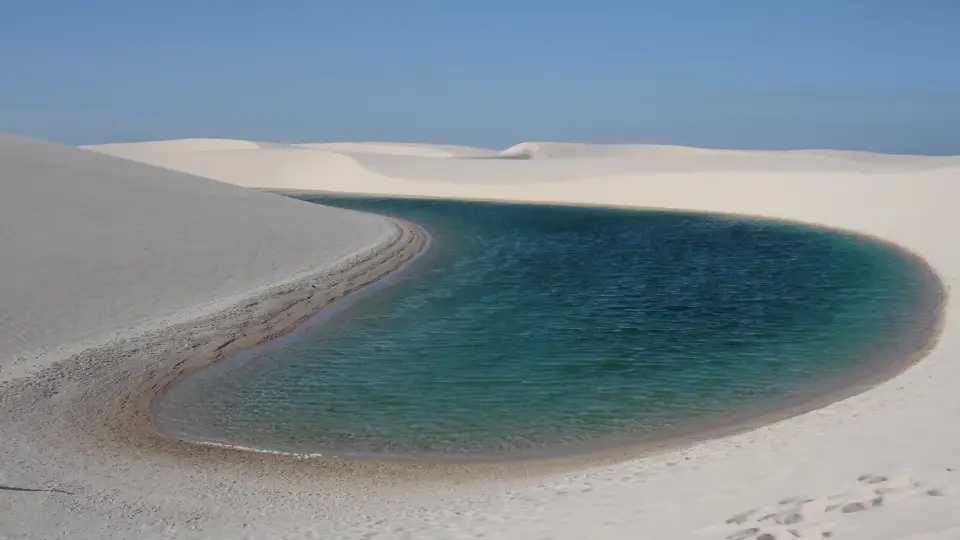
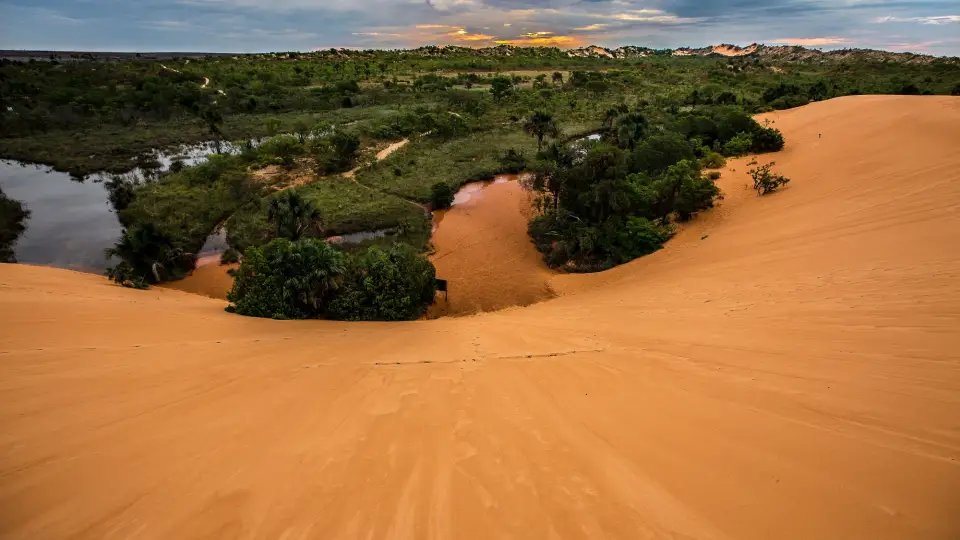
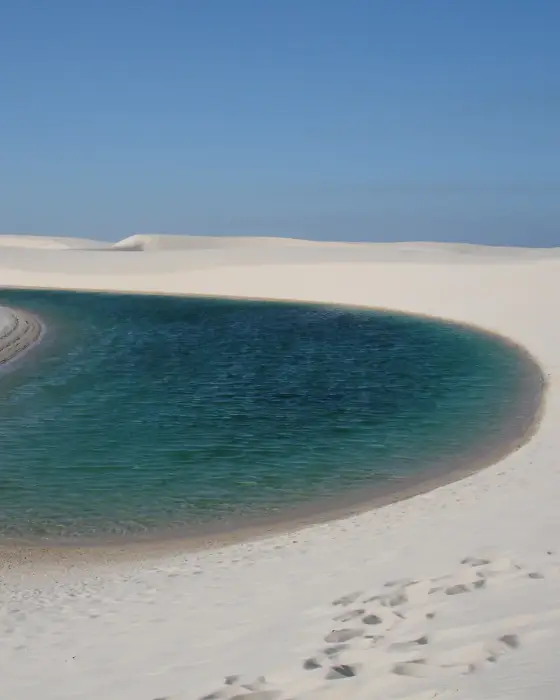
Around it is what I would come to see. Pedra Furada, an arch the sea opened at the base of the Serrote, can only be reached on foot, and the route changes with the tide. The freshwater lagoons depend on the rain of the first half of the year, and the largest of them, Lagoa do Paraíso, lies next to Jijoca, with beach clubs on the shore. To the west, the Tatajuba dunes sit across the Guriú River, crossed by ferry. In the second half of the year, the steady wind brings kitesurfing to Preá, and some lagoons dry up.
Quick facts
- Population
- 28,707 residents in the municipality of Jijoca de Jericoacoara, to which the village belongs (IBGE estimate for 2026; the 2022 Census counted 25,555)
- Founded
- Tremembé settlement before the Portuguese arrived; Jerônimo de Albuquerque's fort in 1614; the municipality of Jijoca de Jericoacoara was created in 1991
- Country and region
- Brazil: western coast of Ceará, Northeast region; the village is in the municipality of Jijoca de Jericoacoara, next to Jericoacoara National Park
- Language
- Portuguese, with the vocabulary of Ceará speech
- Currency
- Real (R$)
- Time zone
- UTC−3 year-round; Brazil has not observed daylight saving time since 2019
- Best time to visit
- July to September: dry, with steady wind and the lagoons still full; from September to December some lagoons dry up, and from January to June it rains more
- Average daily cost
- Add up the Sustainable Tourism Fee, the guesthouse per night, meals per person and the buggy or 4x4 tours; the transfer from the airport weighs on the first and last day.
When to go
July to September: dry, with steady wind and the lagoons still full; from September to December some lagoons dry up, and from January to June it rains more
How the year changes

The year divides into two halves. From January to June it rains more, the landscape turns green and the lagoons fill; outside the January vacations and holidays, there are fewer people and prices drop. From July to December the weather is dry, with sun most days and steady wind, the kitesurfing season, which runs from July to January.
To combine beach, tours and full lagoons, July to September is the most complete window. From September to December the wind continues, but some lagoons dry up; ask the driver which ones have water before choosing the tour. If the goal is to see the sun through the hole in Pedra Furada, the window runs from July 15 to August 15.
Long weekends and school vacations fill the village at any time of year. Book lodging and transfer ahead and pay the tourism fee beforehand, to avoid a line on arrival.
Nilo's tips
Pay the tourism fee before you go
The Sustainable Tourism Fee can be paid on the Jijoca de Jericoacoara city government website. With the receipt on your phone, arriving on a holiday or in high season goes faster, and it is asked for again on return from the tours.
Go to Pedra Furada by one route and return by the other
Along the beach, at low tide, it is about 30 minutes; over the Serrote, 40 to 50, at any tide. I would go along the sand and return over the hill, which doesn't depend on the tide. The return over the Serrote starts with a steep climb and has no lighting: carry a flashlight if returning at dusk.
Ask which lagoons have water
The lagoons fill with the rains from January to May, and some dry up from September to December. Before choosing between the east and west tours, ask the driver how they are on your dates.
Ask what the tour includes
Beach clubs, Buraco Azul, the dune slide and the canoe on the Guriú are usually paid separately. Compare the total, not just the tour price.
Explore the map
Explore the map, read about the other places and plan your travel days in the app.
Open the appWhat to see
Jericoacoara: Dunes, hill and sea
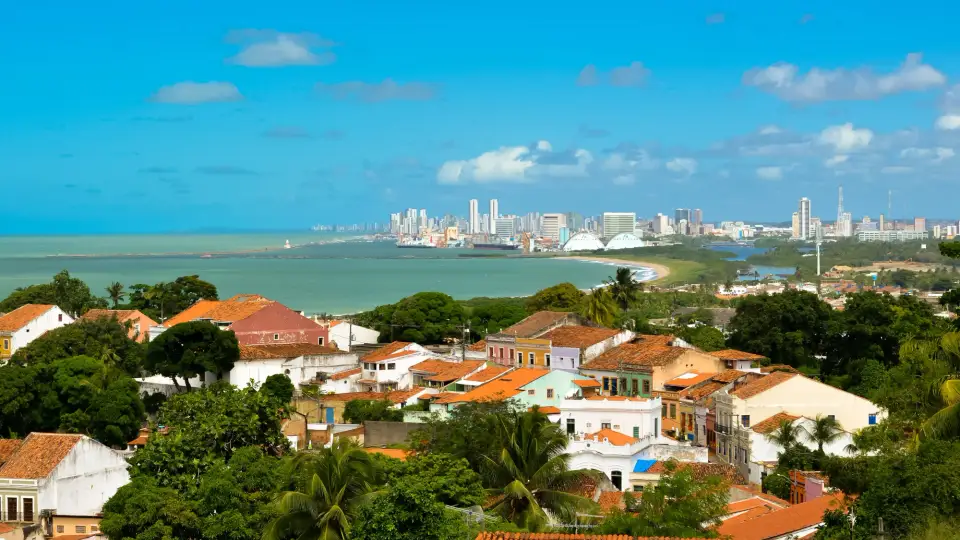
Jericoacoara National Park covers 8,863 hectares in the municipalities of Jijoca de Jericoacoara, Cruz and Camocim, with dunes, mangroves, restinga, lagoons and a 1 km marine strip. The core where the guesthouses, restaurants and shops are, on sand streets with no private cars. Almost everything is done on foot. At night, activity centers on the main streets and the beach, where many visitors gather at the end of the afternoon.
Pedra Furada
The rock arch carved by the waves at the base of the Serrote is the symbol of Jericoacoara. It can only be reached on foot: along the beach, at low tide, in about 30 minutes from the village; or over the Serrote, at any tide, in 40 to 50 minutes, with a steep descent at the end. Between July 15 and August 15, the sun sets in line with the hole in the rock. Check the tide table before heading out and, if you go along the sand, work out your return before the tide rises. If it is already rising, the only way back is over the Serrote, which starts with a steep climb and has no lighting: at sunset, bring a flashlight.
The rock arch carved by the sea is Jericoacoara’s defining image and can only be reached on foot, along the beach at low tide or over the Serrote; between July 15 and August 15, the sunset aligns with the opening.
Check access

Lagoa do Paraíso
Also called Lagoa de Jijoca, it has about 15 km² of freshwater surrounded by dunes and lies next to the municipal seat, outside the park, in the state Environmental Protection Area created in 2000. It is the long stop of the east tour, with time for lunch and a swim, and beach clubs on the shore that charged R$30 to R$50 admission in October 2025. The water level depends on that year's rains.
Jijoca’s large freshwater lagoon, outside the park, is the long stop on the east tour, with time for lunch and a swim; the clubs on its shore charge admission.
Check access
Tatajuba dunes
A dune field and lagoon near Camocim, about 25 km west of the village, next to the settlement of Nova Tatajuba, rebuilt after the dunes buried the old one. The west tour arrives here after crossing the Guriú River by ferry and usually sets aside about two hours for lunch and a swim in the Tatajuba lagoon. There are dune slides, charged separately.
The west tour combines the Guriú River ferry crossing, shifting dunes and the Tatajuba lagoon in Camocim: the landscape of dunes and freshwater that the village does not show.
Check access
Serrote and Jericoacoara Lighthouse
The Serrote is the rocky hill east of the village, and the lighthouse on top of it was inaugurated in 1952. The climb is part of the alternative route to Pedra Furada and shows the village, the beach and the dunes from above. Bring water and avoid the hours of strongest sun: there is no shade on the route.
The rocky hill east of the village holds the 1952 lighthouse and provides a route to Pedra Furada at any tide; from the top, the whole village and the dunes come into view.
Check access

Praia do Preá
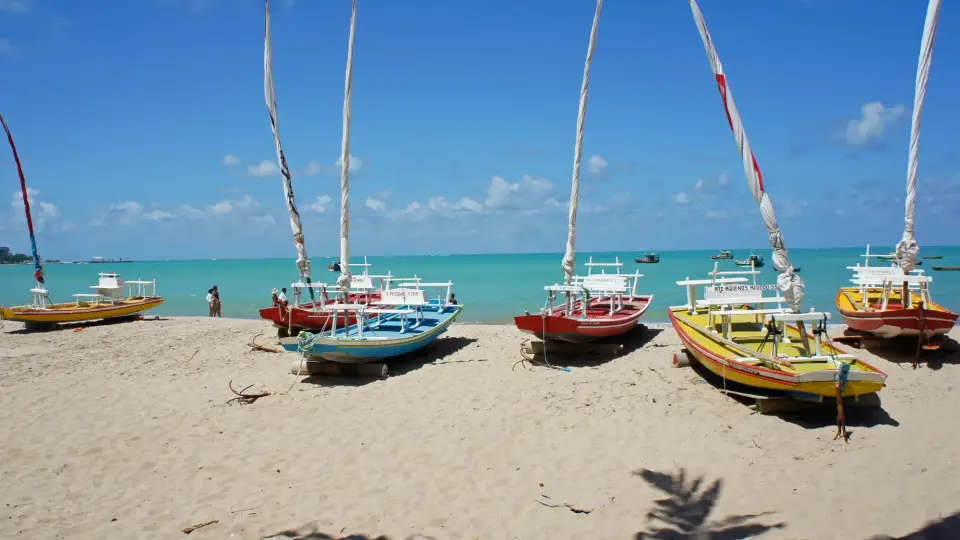
A beach in Cruz east of the village, with steady wind in the second half of the year, sought after for kitesurfing. For those who don't kitesurf, it is a stop on the east tour; for those who want to learn, it is where to look for lessons.
The beach in Cruz, east of the village, is where the steady winds of the second half of the year concentrate kitesurfing; for those who do not practice, it is a short stop on the east tour.
Check access

Guriú River
The mangrove of the Guriú River is on the way of the west tour. Fishermen take visitors by canoe to see the seahorse Hippocampus reidi, on a 30 to 40 minute trip charged separately (R$30 per person in October 2025). The animal must not be taken out of the water for a photo.
In the Guriú River mangrove, canoe trips show the seahorse Hippocampus reidi; it is a short, paid add-on to the west tour.
Check access
Duna do Pôr do Sol
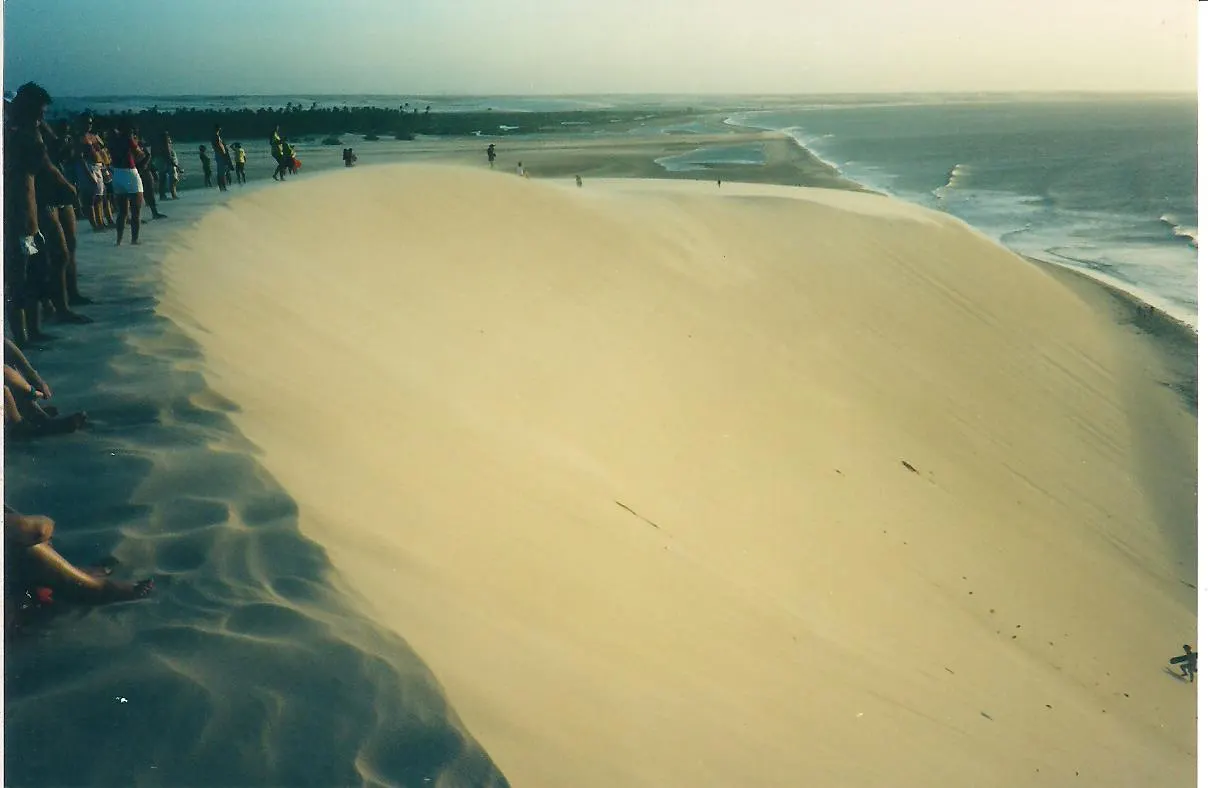
The dune next to the village was for years the most popular place to watch the sun set into the sea, and recent sources disagree about what is left of it. A guide from October 2025 says it no longer exists, carried off by tidal erosion; another, updated in October 2026, says it has lost some of its charm with the shifting sands, but that the end of the afternoon there is still worthwhile. For the same sunset, the village's own beach and the hill beside Praia da Malhada are the safe alternatives.
It used to be the village’s late-afternoon meeting point, but an October 2025 guide describes it as swept away by erosion and another, from October 2026, as reduced; the same sunset can be seen from the village beach and the hill beside Praia da Malhada.
Check access

Árvore da Preguiça
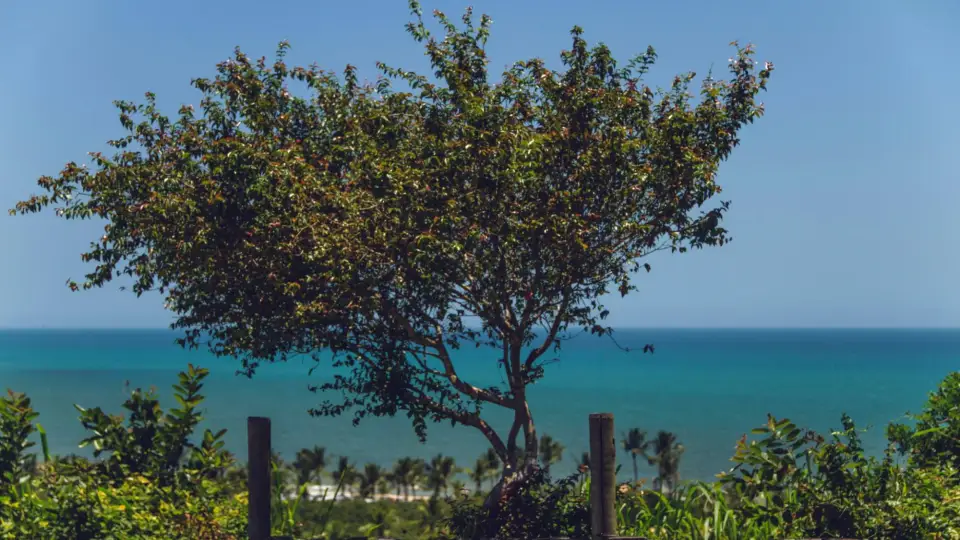
A buttonwood (Conocarpus erectus) with a leaning trunk, known as the Árvore da Preguiça, on Praia da Pedra do Frade. It is a quick photo stop on the way of the east tour.
It is a buttonwood with a horizontal trunk, a single tree that makes a photo stop on the east tour; it does not justify a separate trip.
Check access
Buraco Azul
An artificial rainwater lagoon, formed after the rains of 2018, on private land in Cruz with club facilities. Admission cost R$50 per person in October 2026 (it was R$40 in October 2025, when it opened from 8:30 a.m. to 4:30 p.m.). It is an optional stop on the east tour.
An artificial lagoon on private land in Cruz, with paid admission; it is an optional stop on the east tour, and those already stopping at Lagoa do Paraíso can skip it without missing the essentials.
Check access
Nilo’s itinerary
Start with the basic programme and choose extensions for the time you have.
Plan my days in the app ↗Day 1 · The village, Pedra Furada and the Serrote
In the morning, check the tide table at your lodging. With the tide going out, follow the beach from Praia da Malhada to Pedra Furada, in about 30 minutes.
Come back over the Serrote, which works at any tide, pass the lighthouse and look at the village and the dunes from above. Bring water: there is no shade.
Have lunch in the village and spend the hours of strongest sun in the shade or on the beach in front.
At the end of the afternoon, choose the beach or the hill beside Praia da Malhada for the sunset. Between July 15 and August 15, swap the plan for Pedra Furada, which lines up with the sun, and bring a flashlight: if the tide is rising, the way back has to be over the Serrote, with a steep climb and in the dark.
At night, have dinner in the village and, if you want to dance, look for a forró venue.
Day 2 · East tour: Preá and Lagoa do Paraíso
Leave around 9 a.m. on the east tour, by buggy, 4x4 or quad bike with an accredited driver.
Stop at the Árvore da Preguiça, on Praia da Pedra do Frade, and then at Praia do Preá, where the kitesurfing schools are concentrated.
If you like, enter the Buraco Azul, in Cruz (admission paid separately).
Have lunch and swim at Lagoa do Paraíso; the clubs on the shore charge admission, so agree with the driver where the group will stop.
Return to the village around 3:30 p.m., in time to rest before the sunset.
Day 3 · Tatajuba and the Guriú River (west tour)
Day trip
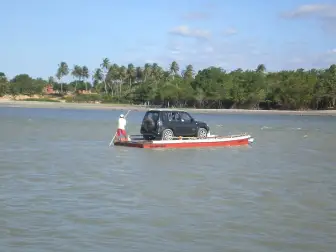
A full day to the west, in Camocim: departure around 9 a.m. and return around 3:30 p.m., by buggy, 4x4 or quad bike. The tour passes through Mangue Seco, crosses the Guriú River by ferry and reaches the dunes and lagoon of Tatajuba, where there is usually about two hours for lunch and a swim. The canoe to see seahorses (R$30 per person) and the dune slides (R$25) are extras (October 2025 prices). The shared tour cost R$80 per person.


If you stay longer
Day 4 · Free day
Free day: use it to rest, go back to the place you liked most or cover a setback.
Food
Peixada cearense
Fish cooked in a broth with vegetables and served with pirão made from cassava flour. It is on the menu of almost every restaurant in Ceará and, in a fishing village, it is the dish to order with the fish of the day.
Baião de dois
Rice cooked with beans (preferably green) and in their own broth, with onion, tomato, bell pepper, cilantro and scallion, often with coalho cheese and cream. The folklorist Câmara Cascudo attributed the dish's origin to Ceará, where it does not include dried beef.
Carne de sol and paçoca
Carne de sol is the salted, dried meat of the sertão. Ceará's paçoca is that meat fried and pounded with cassava flour, served as a side.
Tapioca
A disc made from cassava starch, heated on the griddle and filled to order, sweet or savory. It is the easiest snack to find in the village, morning and night.
Cajuína
Cashew juice clarified and sterilized in the bottle, nonalcoholic, amber in color and lightly sweet. It is traditional in Ceará and Piauí.
Cashew candy and rapadura
Cashew candy, cooked for hours, and rapadura, a hard block of cane molasses, sometimes with nuts or coconut, are sweets of sertão origin found in the region's shops.
Where to eat
- Vila de Jericoacoara · $
Tapioca filled on the griddle, as a snack in the morning or at night.
- Vila de Jericoacoara · $$
Peixada cearense or the fish of the day with pirão, to share at dinner.
- Lagoa do Paraíso · $$
Lunch at the beach clubs on the shore during the east tour; admission is usually charged separately from what you consume.
- Tatajuba · $$
Lunch at the lagoon during the west tour, with fish and baião de dois.
$: snack and tapioca in the village · $$: main course at a restaurant · $$$: restaurant with an author menu or beach club with a minimum spend · 2026-10-15
Day trips
Tatajuba and the Guriú River (west tour)
A full day to the west, in Camocim: departure around 9 a.m. and return around 3:30 p.m., by buggy, 4x4 or quad bike. The tour passes through Mangue Seco, crosses the Guriú River by ferry and reaches the dunes and lagoon of Tatajuba, where there is usually about two hours for lunch and a swim. The canoe to see seahorses (R$30 per person) and the dune slides (R$25) are extras (October 2025 prices). The shared tour cost R$80 per person.
Praia do Preá to learn kitesurfing
Praia do Preá, in Cruz, east of the village, is home to the kitesurfing schools and the steady wind from July to January. Those who want lessons book the whole day, with the transfer arranged with the school. Ask about the length of the course, the equipment included and the wind forecast before paying.
Where to begin
The village, Pedra Furada and the Serrote
In the morning, check the tide table at your lodging. With the tide going out, follow the beach from Praia da Malhada to Pedra Furada, in about 30 minutes.
East tour: Preá and Lagoa do Paraíso
Leave around 9 a.m. on the east tour, by buggy, 4x4 or quad bike with an accredited driver.
Money
Prices are in reais (R$). The Sustainable Tourism Fee costs R$41.50 per person for stays of up to 10 days, with R$4.15 for each extra day (amount published in May 2026). Children up to 12, people over 60, people with a disability with a medical report, Jijoca residents and village workers with proven employment are exempt. Pay beforehand on the Jijoca de Jericoacoara city government website or on arrival, at the station at the village entrance (open 24 hours) or at the Jijoca station, and keep the receipt.
The tours are the biggest expense after lodging. In October 2025, a travel guide listed the shared east tour at R$70 per person, the west at R$80, and the private buggy or quad bike at R$500 per vehicle; admission to beach clubs, Buraco Azul, the dune slide and the canoe on the Guriú is paid separately. Ask what is included before you book.
Before comparing with the currency you use, check the day's exchange rate and your bank's fees. Bring a card and some cash for the extras paid during the tours.
Getting there and around
Through Jericoacoara airport (JJD), in Cruz
Jericoacoara regional airport is in the municipality of Cruz, about 30 km from the village, and receives regular domestic flights from Azul, Gol and Latam; there are no international flights. From the airport, the trip to the village is by transfer in a 4x4 vehicle, because the last stretch is sand; allow 40 to 50 minutes. Arrange the transfer with your lodging or an agency before you land.
Through Fortaleza
Fortaleza is about 300 km away by road. Transfers from Fortaleza go by minibus to Jijoca and complete the trip in a 4x4 over the sand; the trip takes 4.5 to 6 hours, depending on the service and stops. For those arriving by car, private vehicles do not enter the village: the central parking lot in Jijoca charged R$30 a day in October 2025.
From Jijoca to the village
Between Jijoca and the village it is about 20 km. The shared 4x4 trucks (jardineiras) charged R$40 per person and leave when full; a private trip cost R$150, with immediate departure (October 2025 prices).
Inside the village and on the tours
The village has sand streets and is covered on foot. The tours east and west are done by buggy, 4x4 or quad bike, leaving around 9 a.m. and returning around 3:30 p.m. Hire an accredited driver, who works with an ID badge and uniform and has park authorization.
Safety
The most concrete risks in Jericoacoara are the sun, the sea and the wind. The walk to Pedra Furada and the climb up the Serrote have no shade: bring water, a hat and sunscreen, and avoid midday. On the beach, the strong wind of the second half of the year stirs up the sea; check conditions before entering the water and keep your distance from the kitesurfing area.
For the tours, hire accredited drivers, who work with ID and park authorization, and use a seat belt where there is one. On the way back from Pedra Furada at dusk, bring a flashlight. On the sand streets of the village, keep valuables close at night, as anywhere with many visitors.
For a police emergency, call 190; for urgent medical care, 192. On arrival, ask your lodging where the nearest health service is.
Etiquette tips
Pedra Furada is for photos, not for climbing
The arch is inside the national park. Wait your turn for the photo and do not climb on the rock.
Seahorses stay in the water
On the Guriú canoe trip, the seahorse is observed in the mangrove. Do not ask to hold it or to take it out of the water for a photo.
At a capoeira circle, watch before joining
The circle on the beach has someone who organizes it. If you want to take part, ask; if you film, consider leaving a contribution.
Mistakes to avoid
Going to Pedra Furada along the beach without checking the tide
The path along the sand only works at low tide. Those who go without checking may find the sea hitting the Serrote on the way back. Check the tide table or use the path over the hill.
Counting on all the lagoons being full at the end of the year
Some lagoons dry up from September to December. Ask the driver which ones have water on your dates before choosing the tour.
Trying to enter the village by car
Private cars do not enter. Leave the car at the Jijoca parking lot and continue by shared 4x4 truck, or arrange the full transfer beforehand.
Forgetting the fee receipt
Proof of payment of the Sustainable Tourism Fee is asked for on arrival and on return from the tours. Keep it on your phone and, if you can, printed.
Booking a tour without knowing what is included
Admission to beach clubs, Buraco Azul, the dune slide and the canoe on the Guriú is usually charged separately. Ask before paying.
Useful phrases
Macho
A common form of address in Ceará, between people who are close, with variants such as “má” and “macho véi”
Arre égua!
An interjection of astonishment in Ceará speech
Eita! / Vixe!
Interjections of surprise or fright
Estar liso
To be out of money
Abestado
Someone who is absent-minded or easily fooled
A maré tá baixando?
A useful question before heading along the beach to Pedra Furada
Where to stay
- Vila de Jericoacoara · First trip and anyone who wants to do everything on foot · $$: A few minutes from the beach, the tour departure point and the path to Pedra Furada, with no need for transport. At night, the central streets have activity and music.
- Praia da Malhada · Anyone who wants to be near the Serrote and Pedra Furada · $$$: It is on the east side of the village, from where you walk to Pedra Furada along the sand or over the hill, a little removed from the bustle of the central streets.
- Jijoca, on the shore of Lagoa do Paraíso · Couples and families who prefer quiet and a lagoon to nightlife · $$: The lagoon is at the door and a car can get there, but the village and Pedra Furada now require the 20 km trip in a 4x4.
- Preá · Anyone going to practice or learn kitesurfing · $$$: The schools and the wind are at the door, and Jericoacoara airport is close. The village is to the west, a 4x4 ride away.
$: simple guesthouse or hostel · $$: mid-range guesthouse · $$$: high-end guesthouse or hotel · 2026-10-15
Districts
Vila de Jericoacoara
The core where the guesthouses, restaurants and shops are, on sand streets with no private cars. Almost everything is done on foot. At night, activity centers on the main streets and the beach, where many visitors gather at the end of the afternoon.
Praia da Malhada
The east side of the village, next to the Serrote. The path to Pedra Furada starts here, along the sand at low tide or over the hill at any tide. It is also one of the places from which to watch the sunset.
Jijoca
The municipal seat, about 20 km from the village, where you find the parking lot for people arriving by car, the tourism fee station and the shore of Lagoa do Paraíso, with its beach clubs. Staying here trades the village's nightlife for quiet and direct access to the lagoon.
Preá and Cruz
To the east, in the municipality of Cruz, Praia do Preá is the center of kitesurfing in the second half of the year. Jericoacoara airport is in the same municipality, and on the way of the east tour are the Árvore da Preguiça and the Buraco Azul.
Tatajuba
To the west, already near Camocim, about 25 km from the village along the coast, with dunes and a lagoon. The settlement is called Nova Tatajuba because the old one was buried by the dunes. You get there on the west tour, which crosses the Guriú River by ferry.
History
before 1600 · Land of the Tremembé
The coastal strip where Jijoca and Jericoacoara now stand was part of the territory of the Tremembé people. The name Jericoacoara comes from Tupi and is translated as “turtle den.”
1614 · A fort by the Serrote
Jerônimo de Albuquerque builds the Fort of Nossa Senhora do Rosário near the Jericoacoara hill.
1629 · The place enters the maps
João Teixeira Albernaz the Elder's map of Ceará records the cove under the name “Iuracoaquara.”
1952 · The Serrote lighthouse
The lighthouse on top of the Serrote, the rocky hill east of the village, goes into operation.
1984 · Environmental Protection Area
Decree 90,379, of October 29, creates the Jericoacoara Environmental Protection Area, which includes the village and the surrounding dunes.
1985 · From fishing to tourism
Until 1985 the village was inhabited only by fishermen and was isolated. Tourism grows from then on, brought by travelers who crossed the dunes.
1991 · The municipality is born
Law 11,796 separates Jijoca from the municipality of Cruz and creates the municipality of Jijoca de Jericoacoara, to which the village now belongs.
1994 · Among the most beautiful beaches
The Washington Post includes Jericoacoara beach among the ten most beautiful in the world.
1998 · Electric light beneath the sand
Electricity reaches the village through an underground grid, replacing generators.
2002–2007 · National Park
A decree of February 4, 2002 creates Jericoacoara National Park from part of the Environmental Protection Area. Law 11,486, of 2007, redefines the boundaries and adds a 1 km marine strip.
2024–2026 · Concessions
The park is granted for 30 years to Consórcio Dunas, of Cataratas and Construcap (the concessionaire is Urbia Cataratas), and charging admission to people going only to the village is blocked in federal court. In September 2026, Fraport Brasil takes over Jericoacoara airport, in Cruz.
Complete history
A fishing cove on the road along the north coast
Before colonization, this stretch of coast was Tremembé territory. The name of the cove comes from Tupi and is usually translated as “turtle den”; the loggerhead, the hawksbill and the olive ridley are among the endangered species the park now protects. In 1614, Jerônimo de Albuquerque built the Fort of Nossa Senhora do Rosário near the hill. The place appears on João Teixeira Albernaz's map of 1629 under the name “Iuracoaquara.”
For centuries, what existed there was a fishing settlement among the dunes, far from the roads. The lighthouse on top of the Serrote dates from 1952. Until 1985, according to the standard account of the village's history, the people of Jericoacoara lived from fishing and had almost no regular contact with the rest of the state.
From isolation to protection
Legal protection arrived before mass tourism. In 1984, the federal government created the Jericoacoara Environmental Protection Area. In the following years, travelers who crossed the dunes spread the beach's fame, and in 1994 the Washington Post included it among the ten most beautiful in the world. The 1997 film “A Ostra e o Vento” was shot on the beach and at Pedra Furada.
The village changed quickly, and several decisions tried to contain that change. Electricity arrived in 1998 through an underground grid, with no poles on the landscape. In 2002, part of the Environmental Protection Area became a National Park, now managed by ICMBio, and its boundaries were redefined in 2007. Private cars do not enter the village: access over the sand is by authorized 4x4 vehicles, and getting around inside it is on foot.
Fees, concession and airport
The current debate centers on who pays for protection and who manages access. The Jijoca city government charges the Sustainable Tourism Fee to people who visit the village. In 2024, the park was granted for 30 years to Consórcio Dunas, of Cataratas and Construcap, now operated by the concessionaire Urbia Cataratas, with planned investments of about R$116 million and a contract that allowed charging admission. Charging people who go only to the village was suspended by the federal court, and in October 2025 the Federal Regional Court of the 5th Region upheld the ban, because the village lies outside the park's boundaries. As of May 2026 there was also no official date for charging admission to the park itself; the contract provides for a cap that starts at R$50.
Getting here has changed too. The regional airport of Jericoacoara, in the neighboring municipality of Cruz, opened in 2017 and received its first Latam flight, from Guarulhos, in December 2021. Since September 1, 2026 it has been operated by Fraport Brasil, which announced R$101.1 million in work on the apron, the runway and the terminal, with no set deadline. With about 1.5 million visitors in 2022, according to ICMBio, the park was among the three most visited in the country.
Electricity only reached the village in 1998, through an underground grid, with no poles on the landscape.
Geography and shape of the city
Dunes, hill and sea
Jericoacoara lies on Ceará's west coast, among dune fields, mangroves and restinga. East of the village, the Serrote is a rocky hill by the sea; Pedra Furada sits at its base, at the water's edge, and Praia da Malhada is on the Serrote's side.
A park around the village
Jericoacoara National Park covers 8,863 hectares in the municipalities of Jijoca de Jericoacoara, Cruz and Camocim, with dunes, mangroves, restinga, lagoons and a 1 km marine strip. The village, though surrounded by it, lies outside its boundaries. Between the village and the municipal seat, Jijoca, it is about 20 km of sand and road.
Lagoons that depend on rain
The lagoons of the region are freshwater and form among the dunes. They fill with the rains, concentrated from January to May, are full and clear from July to September, and some dry up from September to December. Lagoa do Paraíso, about 15 km², lies next to Jijoca, in a state Environmental Protection Area created in 2000. To the west, the Guriú River forms a mangrove before reaching the sea, and farther on are the dunes and the lagoon of Tatajuba, in Camocim.
Climate: rain in the first half of the year, wind in the second
The climate is hot and tropical. Rain is concentrated from January to May, and from July to December the weather is dry, with sun most days and steady wind, the season that draws kitesurfers.
The village lies outside the national park's boundaries, though surrounded by it; that is why the court blocked charging admission to people going only to the village.
Culture
A village that lives on tourism
Since the 1980s, tourism has been the municipality's main source of income, concentrated in the village. Around it, in the rural communities of Jijoca, bean, corn and cassava farming, fishing, crafts and carnauba harvesting continue. A good part of the work on the tours (buggy drivers, canoe operators on the Guriú, ferry operators) is done by people from the region.
Wind, sport and late afternoon
Jericoacoara beach is one of the most popular windsurfing spots in Brazil, and kitesurfing makes the region a sought-after destination from July to January, above all at Preá. The end of the afternoon brings visitors and locals together on the beach, with capoeira circles on the sand. At night, the options include bars and forró venues, the Northeast's partner dance.
On screen
Jericoacoara was a location for the film “A Ostra e o Vento,” by Walter Lima Jr. (1997), in which the wind is almost a character, and for the telenovela “Meu Bem Querer,” from 1998.
Festivals and events
Sunset at Pedra Furada: July 15 to August 15
It is not a festival, but it is the date that most shapes visits to the rock: in this period, the sun sets in line with the hole in the arch. The way back happens in the dark. Check the tide before heading out: if it is rising, the only way is over the Serrote, with a steep climb and no lighting, so bring a flashlight.
Fuzuê Cultural
Cultural program of the Jijoca de Jericoacoara city government, announced in September 2026. Check the city government's website for the next date and venue.
Municipal Tourism Week: September
City government event dedicated to tourism, with its second edition on September 21 and 22, 2026. The program is published on the city government's website.
Books and films
A Ostra e o Vento, by Walter Lima Jr. (1997)
Filmed partly in Jericoacoara, with Pedra Furada on screen, the film follows Marcela (Leandra Leal), the daughter of a lighthouse keeper on an isolated island, fascinated by the wind that batters the island. Based on the novel by Moacir C. Lopes, it shows the wind and the coast as forces of the plot.
Iracema, by José de Alencar (1865)
Subtitled “Legend of Ceará,” the novel is set on the coast and in the interior of the state in the early 17th century and became a symbol of Ceará. It helps explain how Ceará imagined its beaches, highlands and Indigenous peoples.
Frequently asked questions
Jericoacoara: How do you get there from Fortaleza?
Fortaleza is about 300 km away by road. Transfers go by minibus to Jijoca and complete the trip in a 4x4 over the sand, a trip of 4.5 to 6 hours; private vehicles do not enter the village.
Jericoacoara: How much is the tourism fee?
The Sustainable Tourism Fee costs R$41.50 per person for stays of up to 10 days, with R$4.15 for each extra day (amount published in May 2026). Children up to 12 and people over 60 are exempt. People with a disability and a medical report, Jijoca residents and village workers with proven employment are also exempt.
Jericoacoara: How many days should you stay?
Three days: one for the village and Pedra Furada, one for the east tour and one for the west tour. Two days are enough for the two tours, but they squeeze Pedra Furada and leave the arrival, which takes hours from Fortaleza, eating part of the time.
Jericoacoara: What is the Tatajuba tour like?
It is a full day to the west, by buggy, 4x4 or quad bike, leaving around 9 a.m. and returning around 3:30 p.m., crossing the Guriú River by ferry to the Tatajuba dunes and lagoon. The shared tour cost R$80 per person, and the seahorse canoe and the dune slides are extras (October 2025 prices).
Jericoacoara: When is the best time to go?
July to September: dry, with steady wind and the lagoons still full. From September to December some lagoons dry up, and from January to June it rains more.
Other cities in the country
Brazil ↗- Days
- 4
- When
- Apr–Jun
- Per person/day
- Average 615 BRLMid-range · per person/day
Cost scope
Per person per day: accommodation, meals, urban transport, visits and a small allowance for extras. Flights excluded; larger purchases vary. Editorial estimate, not a quote.
- Days
- 2–3
- When
- Apr–May · Sep
- Per person/day
- Average 400–700 BRLMid-range · per person/day
Cost scope
Per person per day: accommodation, meals, urban transport, visits and a small allowance for extras. Flights excluded; larger purchases vary. Editorial estimate, not a quote.
- Days
- 2–3
- When
- Jan–Mar · Sep–Dec
- Per person/day
- Average 350–550 BRLMid-range · per person/day
Cost scope
Per person per day: accommodation, meals, urban transport, visits and a small allowance for extras. Flights excluded; larger purchases vary. Editorial estimate, not a quote.
- Days
- 1–2
- When
- May–Sep
- Per person/day
- Average 260–520 BRLMid-range · per person/day
Cost scope
Per person per day: accommodation, meals, urban transport, visits and a small allowance for extras. Flights excluded; larger purchases vary. Editorial estimate, not a quote.
- Days
- 3–4
- When
- Jun–Sep
- Per person/day
- Average 400–700 BRLMid-range · per person/day
Cost scope
Per person per day: accommodation, meals, urban transport, visits and a small allowance for extras. Flights excluded; larger purchases vary. Editorial estimate, not a quote.
- Days
- 2–3
- When
- Apr–Jun
- Per person/day
- Average 350–550 BRLMid-range · per person/day
Cost scope
Per person per day: accommodation, meals, urban transport, visits and a small allowance for extras. Flights excluded; larger purchases vary. Editorial estimate, not a quote.
- Days
- 3–5
- When
- Mar–Apr · Nov
- Per person/day
- Average 397 BRLMid-range · per person/day
Cost scope
Per person per day: accommodation, meals, urban transport, visits and a small allowance for extras. Flights excluded; larger purchases vary. Editorial estimate, not a quote.
- Days
- 2–4
- When
- Mar–May · Sep
- Per person/day
- Explore costsGuide estimate
Cost scope
Per person per day: accommodation, meals, urban transport, visits and a small allowance for extras. Flights excluded; larger purchases vary. Editorial estimate, not a quote.
- Days
- 4–5
- When
- Aug–Nov
- Per person/day
- Explore costsGuide estimate
Cost scope
Per person per day: accommodation, meals, urban transport, visits and a small allowance for extras. Flights excluded; larger purchases vary. Editorial estimate, not a quote.
- Days
- 3–4
- When
- Sep–Nov
- Per person/day
- Explore costsGuide estimate
Cost scope
Per person per day: accommodation, meals, urban transport, visits and a small allowance for extras. Flights excluded; larger purchases vary. Editorial estimate, not a quote.
- Days
- 2–4
- When
- May–Sep
- Per person/day
- Explore costsGuide estimate
Cost scope
Per person per day: accommodation, meals, urban transport, visits and a small allowance for extras. Flights excluded; larger purchases vary. Editorial estimate, not a quote.
- Days
- 3–5
- When
- Jun–Sep
- Per person/day
- Explore costsGuide estimate
Cost scope
Per person per day: accommodation, meals, urban transport, visits and a small allowance for extras. Flights excluded; larger purchases vary. Editorial estimate, not a quote.
- Days
- 3–4
- When
- Jun–Aug
- Per person/day
- Explore costsGuide estimate
Cost scope
Per person per day: accommodation, meals, urban transport, visits and a small allowance for extras. Flights excluded; larger purchases vary. Editorial estimate, not a quote.
- Days
- 4–5
- When
- Jan–Mar · Sep–Dec
- Per person/day
- Explore costsGuide estimate
Cost scope
Per person per day: accommodation, meals, urban transport, visits and a small allowance for extras. Flights excluded; larger purchases vary. Editorial estimate, not a quote.
- Days
- 3–4
- When
- Oct–Dec
- Per person/day
- Average 1,110 BRLMid-range · per person/day
Cost scope
Per person per day: accommodation, meals, urban transport, visits and a small allowance for extras. Flights excluded; larger purchases vary. Editorial estimate, not a quote.
- Days
- 3–4
- When
- Aug–Sep
- Per person/day
- Explore costsGuide estimate
Cost scope
Per person per day: accommodation, meals, urban transport, visits and a small allowance for extras. Flights excluded; larger purchases vary. Editorial estimate, not a quote.
- Days
- 4–7
- When
- Apr–Sep
- Per person/day
- Explore costsGuide estimate
Cost scope
Per person per day: accommodation, meals, urban transport, visits and a small allowance for extras. Flights excluded; larger purchases vary. Editorial estimate, not a quote.
- Days
- 3–4
- When
- Jan · Sep–Dec
- Per person/day
- Explore costsGuide estimate
Cost scope
Per person per day: accommodation, meals, urban transport, visits and a small allowance for extras. Flights excluded; larger purchases vary. Editorial estimate, not a quote.
- Days
- 2
- When
- Aug–Dec
- Per person/day
- Average 442 BRLMid-range · per person/day
Cost scope
Per person per day: accommodation, meals, urban transport, visits and a small allowance for extras. Flights excluded; larger purchases vary. Editorial estimate, not a quote.
- Days
- 3–5
- When
- Jan–Feb · Sep–Dec
- Per person/day
- Explore costsGuide estimate
Cost scope
Per person per day: accommodation, meals, urban transport, visits and a small allowance for extras. Flights excluded; larger purchases vary. Editorial estimate, not a quote.
- Days
- 3–5
- When
- May–Sep
- Per person/day
- Explore costsGuide estimate
Cost scope
Per person per day: accommodation, meals, urban transport, visits and a small allowance for extras. Flights excluded; larger purchases vary. Editorial estimate, not a quote.
- Days
- 2–3
- When
- Apr–Sep
- Per person/day
- Average 484 BRLMid-range · per person/day
Cost scope
Per person per day: accommodation, meals, urban transport, visits and a small allowance for extras. Flights excluded; larger purchases vary. Editorial estimate, not a quote.
- Days
- 3
- When
- Apr–May · Aug
- Per person/day
- Average 478 BRLMid-range · per person/day
Cost scope
Per person per day: accommodation, meals, urban transport, visits and a small allowance for extras. Flights excluded; larger purchases vary. Editorial estimate, not a quote.
- Days
- 3–4
- When
- Aug–Dec
- Per person/day
- Explore costsGuide estimate
Cost scope
Per person per day: accommodation, meals, urban transport, visits and a small allowance for extras. Flights excluded; larger purchases vary. Editorial estimate, not a quote.
- Days
- 2
- When
- Apr–May · Sep
- Per person/day
- Explore costsGuide estimate
Cost scope
Per person per day: accommodation, meals, urban transport, visits and a small allowance for extras. Flights excluded; larger purchases vary. Editorial estimate, not a quote.
- Days
- 3
- When
- Sep–Dec
- Per person/day
- Explore costsGuide estimate
Cost scope
Per person per day: accommodation, meals, urban transport, visits and a small allowance for extras. Flights excluded; larger purchases vary. Editorial estimate, not a quote.
- Days
- 3–5
- When
- Apr–Nov
- Per person/day
- Average 427 BRLMid-range · per person/day
Cost scope
Per person per day: accommodation, meals, urban transport, visits and a small allowance for extras. Flights excluded; larger purchases vary. Editorial estimate, not a quote.
- Days
- 4
- When
- Jul–Sep
- Per person/day
- Explore costsGuide estimate
Cost scope
Per person per day: accommodation, meals, urban transport, visits and a small allowance for extras. Flights excluded; larger purchases vary. Editorial estimate, not a quote.
- Days
- 4–5
- When
- May–Sep
- Per person/day
- Explore costsGuide estimate
Cost scope
Per person per day: accommodation, meals, urban transport, visits and a small allowance for extras. Flights excluded; larger purchases vary. Editorial estimate, not a quote.
- Days
- 3
- When
- May–Sep
- Per person/day
- Explore costsGuide estimate
Cost scope
Per person per day: accommodation, meals, urban transport, visits and a small allowance for extras. Flights excluded; larger purchases vary. Editorial estimate, not a quote.