Brazil
Fortaleza
Downtown Fortaleza, Dragão do Mar, Beira-Mar and the crab of Praia do Futuro
Days Start with the basic programme and choose extensions for the time you have.
How the guide reaches this number
The first, in the Centro and Praia de Iracema: Mercado Central and the Cathedral in the morning, the Theatro José de Alencar with a booked tour, the Pinacoteca after lunch, Dragão do Mar in the afternoon and sunset at the Ponte dos Ingleses. The second, from the Cocó mangrove to the Museu da Fotografia, lunch at the Mercado dos Peixes, afternoon at Praia do Futuro and the evening on the Beira-Mar promenade, or at the crab night if it is a Thursday. With a third day, I'd go to Cumbuco, for the dunes, the lagoons and, from August to October, the kitesurfing wind; families with children can swap that day for Beach Park. With a fourth, Canoa Quebrada, leaving very early, or with a night there. Jericoacoara is about 300 km away and calls for an overnight stay: the Jericoacoara guide explains the trip.
2
When August to December: this is the dry season, with stronger wind from August to October; February to May is the rainy season (quadra chuvosa), with the most rain in March and April, and November is the most expensive month for hotels
How the guide reaches this number
Fortaleza is hot all year, averaging around 27 °C, and what changes is the rain and the wind. August to December is the dry season; from August to October the wind is stronger and steadier, which is great for kitesurfing at Cumbuco and calls for sunscreen and a hat on the waterfront. November was the most expensive month for hotels in the Kayak survey checked in October 2026, about 38% above the average, and December and January add school vacations and New Year's Eve. Rain is concentrated from January to June, strongest in March and April: Funceme calls the period from February to May the quadra chuvosa (rainy season). At that time the city is cheaper, with March about 28% below the hotel average in the same survey. July marks the transition to the dry season and brings school vacations and Fortal, at the end of the month.
Per person/day Budget about 188 BRL; mid-range about 442 BRL; comfortable about 914 BRL per person, based on spending reported by travelers to Budget Your Trip (checked October 2026).
How the guide reaches this number
Per person per day: accommodation, meals, urban transport, visits and a small allowance for extras. Flights excluded; larger purchases vary. Editorial estimate, not a quote.
 What Nilo thinks
I'd stay two days in Fortaleza. The first, in the Centro and Praia de Iracema: Mercado Central and the Cathedral in the morning, the Theatro José de Alencar with a booked tour, the Pinacoteca after lunch, Dragão do Mar in the afternoon and sunset at the Ponte dos Ingleses. The second, from the Cocó mangrove to the Museu da Fotografia, lunch at the Mercado dos Peixes, afternoon at Praia do Futuro and the evening on the Beira-Mar promenade, or at the crab night if it is a Thursday. With a third day, I'd go to Cumbuco, for the dunes, the lagoons and, from August to October, the kitesurfing wind; families with children can swap that day for Beach Park. With a fourth, Canoa Quebrada, leaving very early, or with a night there. Jericoacoara is about 300 km away and calls for an overnight stay: the Jericoacoara guide explains the trip.Fortaleza reveals itself in layers lying side by side along the coast. In the Centro, the 19th-century grid leads from the Mercado Central, with four floors of stalls selling lace, hammocks, leather and crafts, to the Theatro José de Alencar, with its art nouveau auditorium held up by Glasgow iron. A few minutes away, Praia de Iracema brings together the Centro Dragão do Mar, with museums, a planetarium and cinemas in a former stretch of port, and the Ponte dos Ingleses, a pier that never became a port and is now one of the most sought-after spots for sunset. To the east, Avenida Beira-Mar is where the city runs in the morning and dines at night, and beyond the Mucuripe port begins Praia do Futuro, with open sea, strong wind and barracas that on Thursdays serve crab with a comedy show and forró. All around are the dunes, cliffs and lagoons of the Ceará coast, one hour or a few hours away by road.
Quick facts
- Population
- 2,582,360 inhabitants in the municipality (IBGE estimate for 2026); 2,428,708 in the 2022 Census; 3,903,945 in the Fortaleza Metropolitan Region (2022 Census)
- Founding
- Raised to town status on April 13, 1726, around the fort the Dutch built in 1649 beside the Pajeú stream; a city since 1823
- Country and region
- Brazil: capital of the state of Ceará, in the Northeast, on the Atlantic coast
- Language
- Portuguese
- Currency
- Real (R$, BRL). Pix requires an account at a participating institution; carry a card and some cash if you don't have that access
- Time zone
- UTC−3 all year, no daylight saving time
- Best time to go
- August to December: this is the dry season, with stronger wind from August to October; February to May is the rainy season (quadra chuvosa), with the most rain in March and April, and November is the most expensive month for hotels
- Average daily cost
- Budget about 188 BRL; mid-range about 442 BRL; comfortable about 914 BRL per person, based on spending reported by travelers to Budget Your Trip (checked October 2026).
When to go
August to December: this is the dry season, with stronger wind from August to October; February to May is the rainy season (quadra chuvosa), with the most rain in March and April, and November is the most expensive month for hotels
How the year changes
Fortaleza is hot all year, averaging around 27 °C, and what changes is the rain and the wind. August to December is the dry season; from August to October the wind is stronger and steadier, which is great for kitesurfing at Cumbuco and calls for sunscreen and a hat on the waterfront. November was the most expensive month for hotels in the Kayak survey checked in October 2026, about 38% above the average, and December and January add school vacations and New Year's Eve. Rain is concentrated from January to June, strongest in March and April: Funceme calls the period from February to May the quadra chuvosa (rainy season). At that time the city is cheaper, with March about 28% below the hotel average in the same survey. July marks the transition to the dry season and brings school vacations and Fortal, at the end of the month.
Nilo's tips
Thursday at Praia do Futuro
I'd plan the trip to include a Thursday in Fortaleza: it is crab night at the Praia do Futuro barracas, with comedy and forró. I'd go and come back by ride-hailing car.
The 17th at the Theatro
The guided tour of the Theatro José de Alencar is by appointment and free on the 17th of each month, the theater's anniversary. For the other days the price is not published: I'd call or message the theater before settling on the day.
The bulletin before the swim
Semace publishes every week which stretches are suitable for swimming, and the result changes a lot from one week to the next. I'd look at the bulletin before choosing the day's beach.
Wind from August to October
For kitesurfing at Cumbuco, I'd go between August and October, when the wind is stronger and steadier. Anyone who has never tried it usually starts at Lagoa do Cauípe.
Explore the map
Explore the map, read about the other places and plan your travel days in the app.
Open the appWhat to see
Fortaleza: A coast facing north
The average temperature hovers around 27 °C all year. About 1,584 mm of rain falls per year (1991 to 2020 normal), concentrated from January to June, with the most in March and April; Funceme calls the period from February to May the quadra chuvosa (rainy season). The central stretch of Avenida Beira-Mar, which concentrates the oceanfront hotels, the promenade and the crafts fair. It is the neighborhood for anyone who wants to handle the trip on foot along the waterfront.
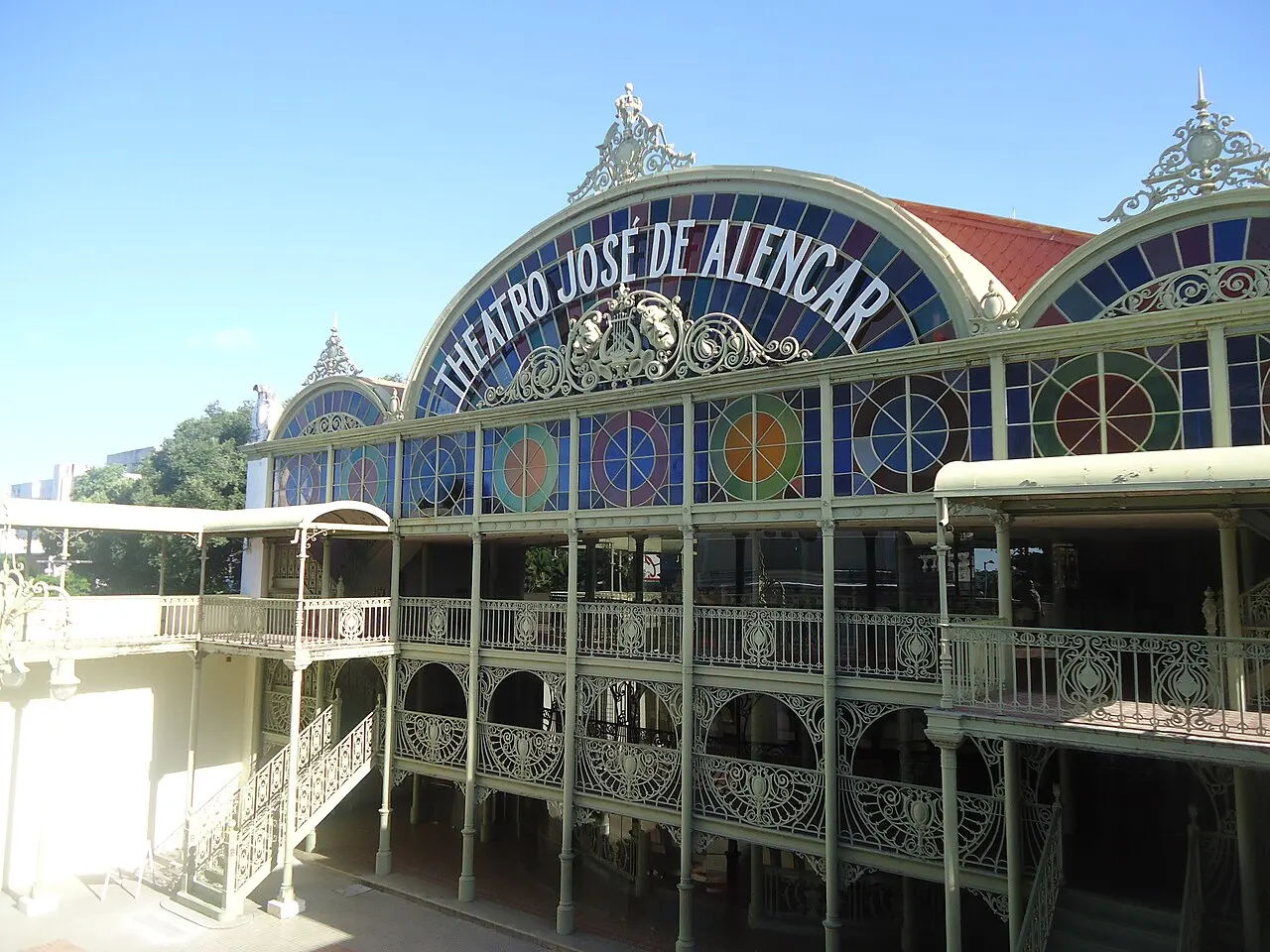
Theatro José de Alencar
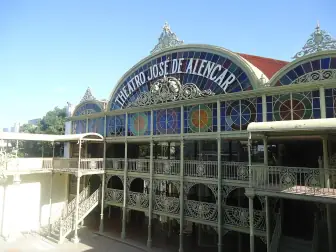
Inaugurated on June 17, 1910, it has an eclectic facade and an art nouveau auditorium, held up by a cast-iron structure brought from Glasgow. The side garden is by Roberto Burle Marx, from 1975. The guided tour shows areas normally closed to the public, such as the stage, backstage, foyer and garden, and must be booked in advance; on the 17th of each month, the theater's anniversary, it is free. No current price or hours are published for the other days: confirm by phone with the theater or through its official social media profile.
Visit it by day: the market, theater and museums keep daytime hours.
Check access

Centro Dragão do Mar de Arte e Cultura
The 30,000 m² complex, opened in 1999 in a former port area of Praia de Iracema, has an angular design by Fausto Nilo and Delberg Ponce de Leon. It houses the Museu da Cultura Cearense, on popular culture and the vaqueiro (cowboy), the Museu de Arte Contemporânea, the 90-seat Planetário Rubens de Azevedo, cinemas, a theater and an amphitheater. Access to the complex is free, and some attractions charge admission. In August 2026 it was open Tuesday to Friday from 8:30 a.m. to 9:30 p.m. and on weekends from 2:30 p.m. to 9:30 p.m. At night, the bars on the surrounding streets fill up.
The old bohemian waterfront district, with the Centro Dragão do Mar, the Ponte dos Ingleses and the Aterro, where the New Year's Eve party and pre-Carnival shows take place.
Check access
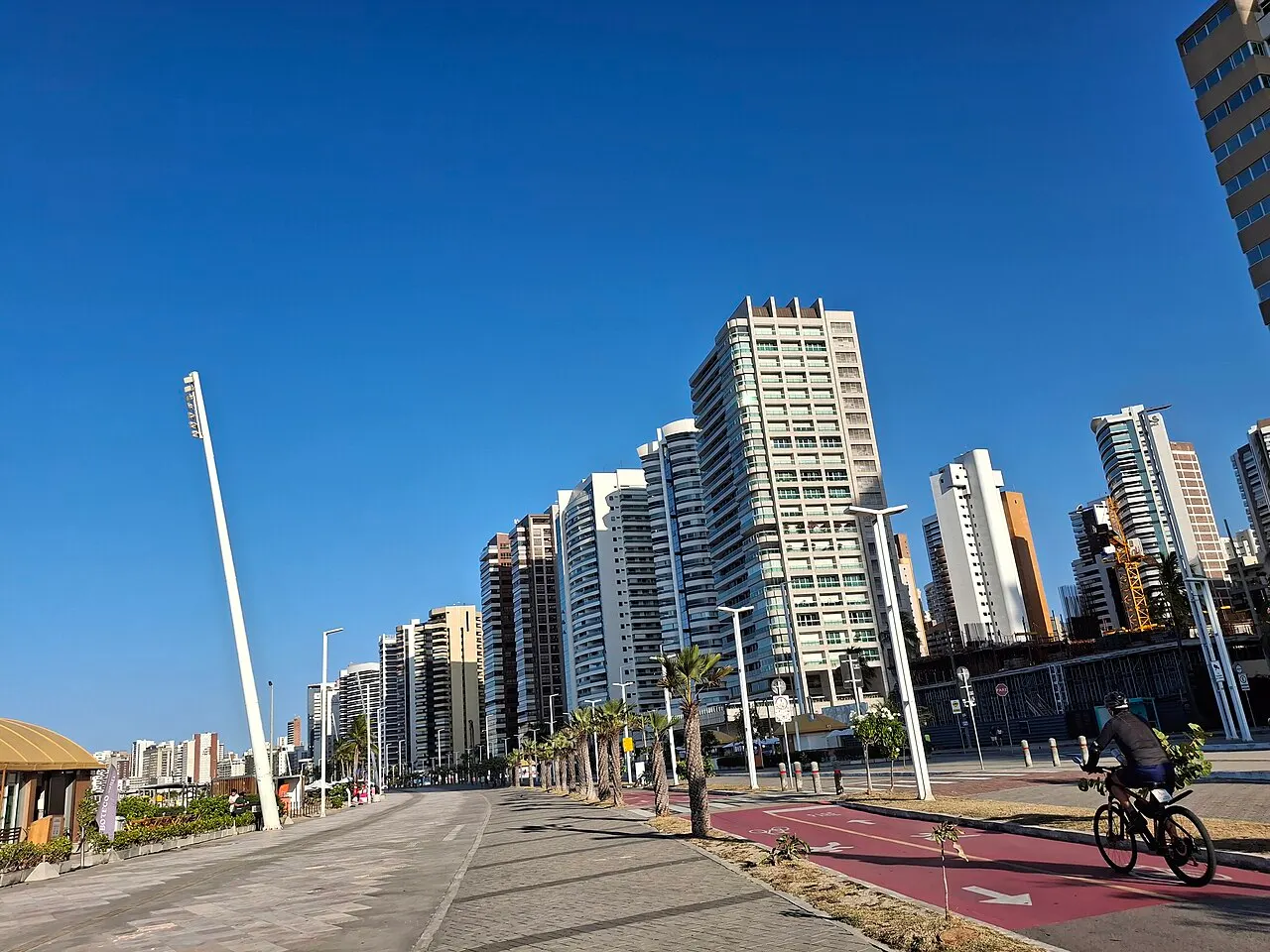
Avenida Beira-Mar
Opened in 1963, the waterfront avenue links Praia de Iracema to Mucuripe by way of Meireles, with a promenade for walking, running, cycling or skating, and sand for soccer and volleyball; near the high-rises the sea is calmer. Between Avenida Desembargador Moreira and Rua Nunes Valente is the crafts fair, rebuilt with 707 stalls and reopened in April 2022, which opens in the late afternoon and runs into the night, with crafts, hammocks, footwear and sweets. It is the walk that best shows the city today, from the morning run to dinner.
The Centro holds the 19th-century grid, the Mercado Central and the Cathedral, on the site of the fort. East of it, the urban waterfront runs from Praia de Iracema to Mucuripe along Avenida Beira-Mar, with Meireles in the middle; behind it lie Aldeota and Varjota, neighborhoods of shops, restaurants and bars. After the Mucuripe port begins Praia do Futuro, an open-sea beach, separated from the urban waterfront by the port zone.
Check access
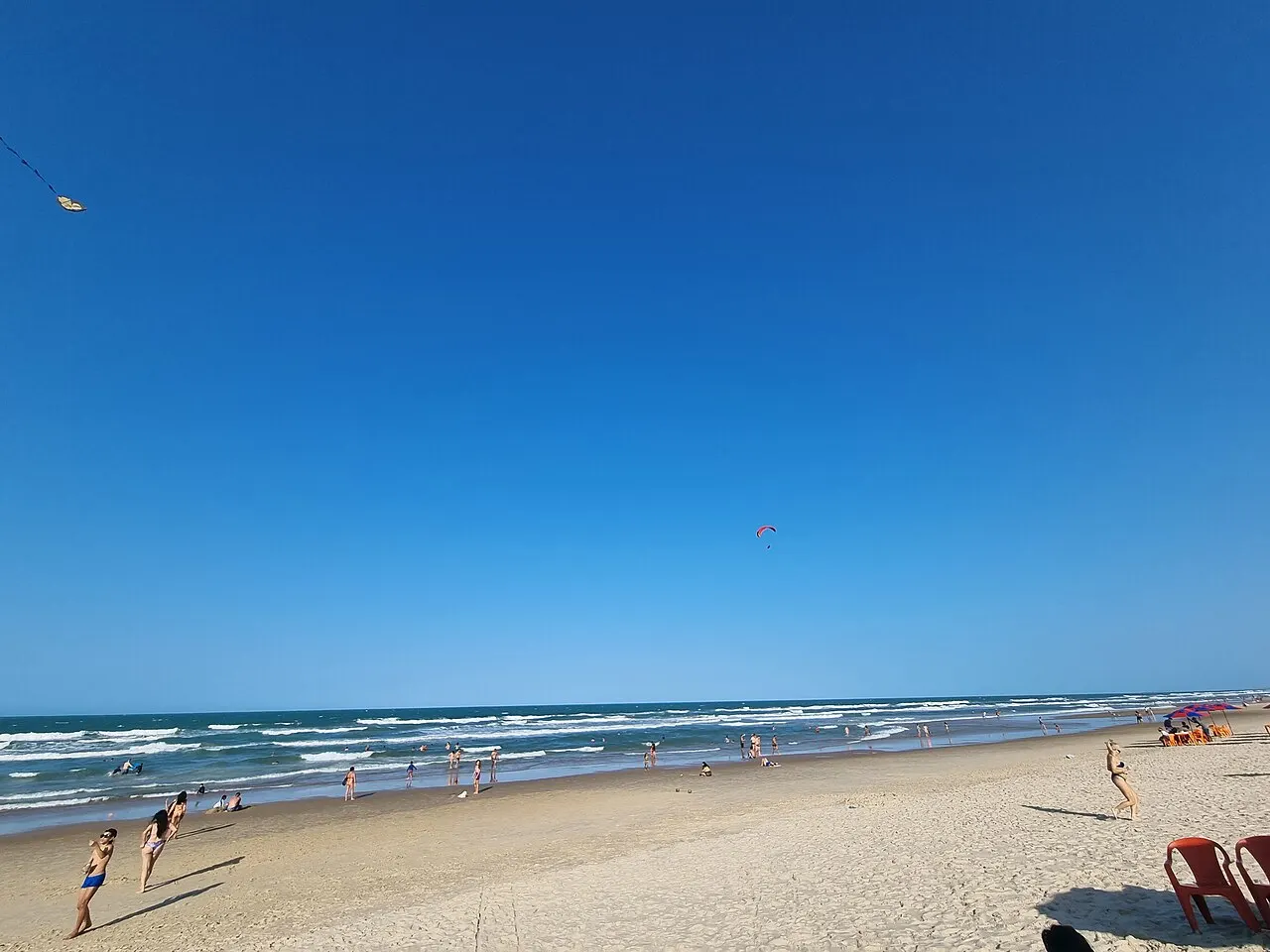
Praia do Futuro
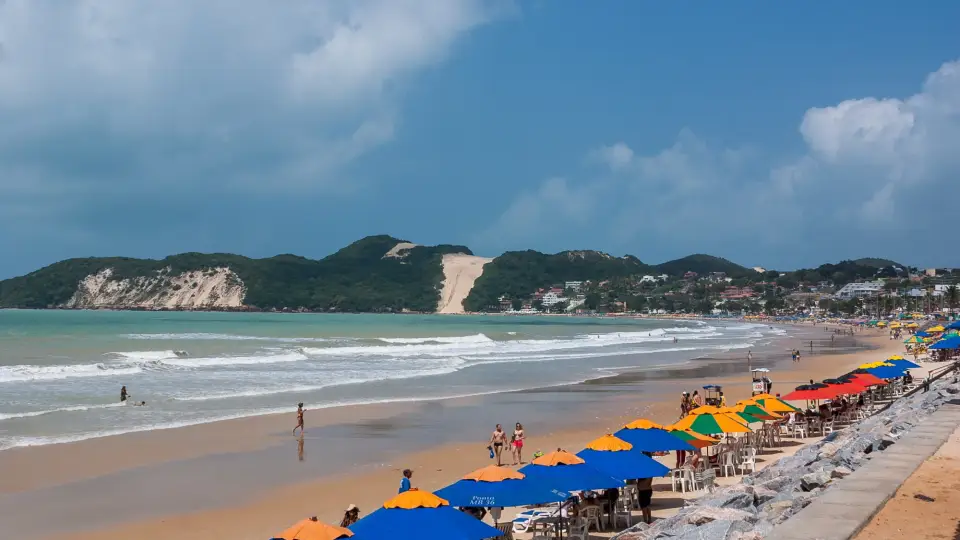
The open-sea beach east of the Mucuripe port is one of the most used by visitors to the city, with many barracas serving food and drinks on the sand. The wind is strong and so are the currents, so follow the lifeguards' flags. Water quality changes from week to week: in several 2026 bulletins no stretch here was suitable for swimming, so check the Semace bulletin before going into the sea. On Thursday nights, the barracas serve crab with comedy shows and forró.
The open-sea beach east of the port, with many barracas serving food and drinks on the sand, and the crab night on Thursdays.
Check access
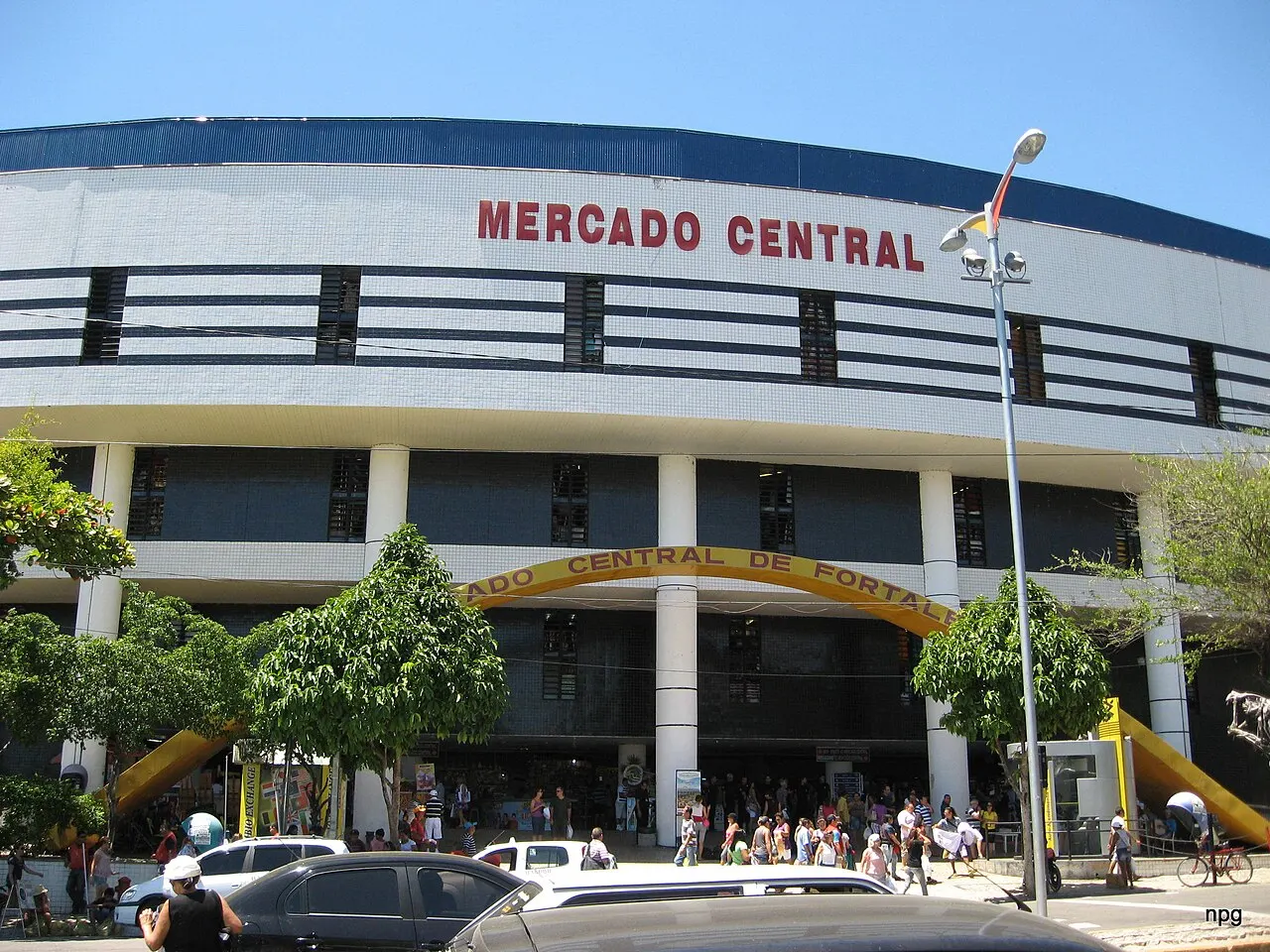
Mercado Central de Fortaleza
The current building, from 1998, has five floors, four of them with 553 stalls and one for parking. They sell crafts, bobbin lace, embroidery, hammocks, cashew nuts, leather goods, beachwear and souvenirs, such as jangada miniatures. It stands next to the Cathedral and the Fortaleza de Nossa Senhora da Assunção, near where the city began, and is best explored in the morning, with time to compare. The official website lists Sunday from 8 a.m. to 1 p.m.; for weekdays and Saturday it gives two schedules, from 8 or 9 a.m. to 5 or 6 p.m., so count on the 9 a.m. to 5 p.m. window. No hours are published for holidays.
Fortaleza sits on a low plain, about 16 m above sea level, with 34 km of coastline and about 15 beaches.
Check access
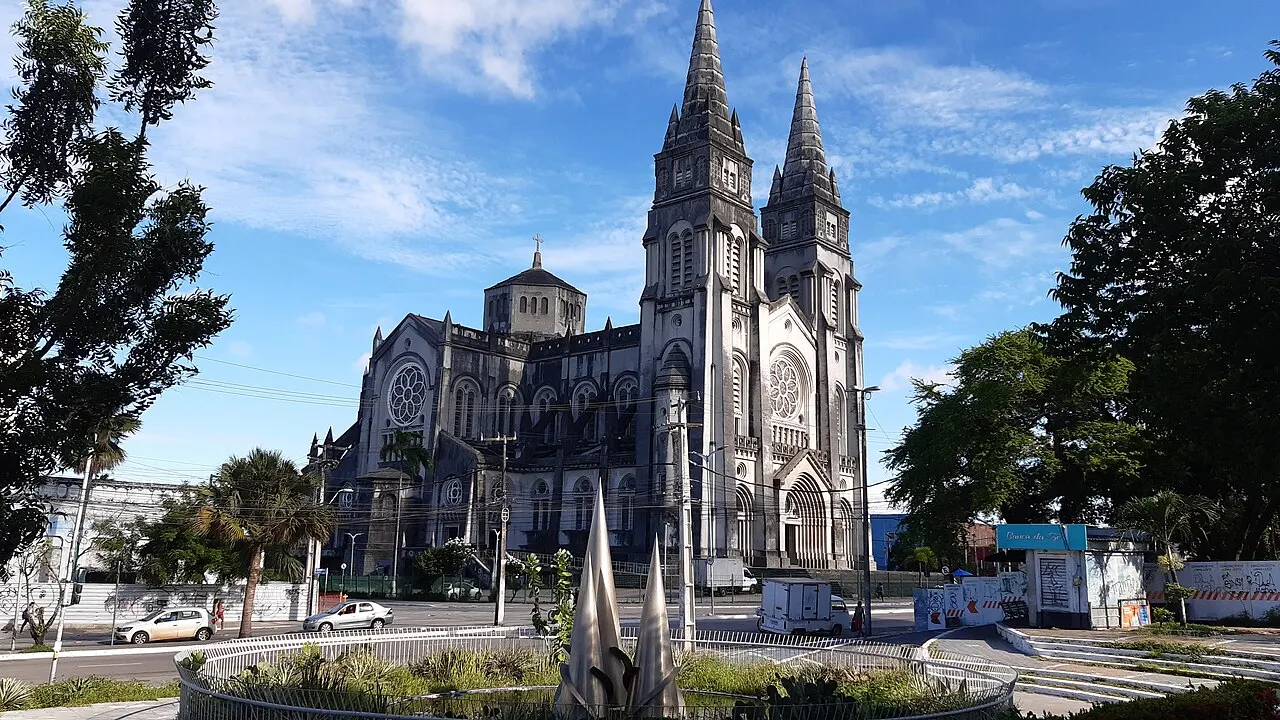
Catedral Metropolitana de Fortaleza
A neo-Gothic-inspired work with Romanesque elements, which took about 40 years to complete and was inaugurated on December 22, 1978. It holds about 5,000 people, the towers reach 75 m and the stained glass lights the nave. It occupies almost all of Praça da Sé, right against the Mercado Central.
The municipality covers about 312 km².
Check access

Pinacoteca do Ceará
Opened in December 2022 in the Estação das Artes complex, on Rua 24 de Maio, it holds the state government's art collection, with Ceará artists such as Antônio Bandeira, Aldemir Martins and Sérvulo Esmeraldo. Admission is free. In August 2026 it was open Wednesday to Friday from 10 a.m. to 6 p.m., Saturdays from noon to 8 p.m. and Sundays from 10 a.m. to 5 p.m.
The Ceará River, in the west, and the Cocó River, in the east, empty into the sea within the municipality, and near their mouths and that of the Pacoti, already on the eastern boundary, there are dunes and restinga (coastal scrub).
Check access

Ponte dos Ingleses
The pier began to be built in 1921 by an English company, to be the city's new port, and the work stopped before it could serve as one. It became a lookout and a promenade. A storm surge destroyed part of the structure in March 2018, and the bridge only reopened on August 25, 2024, with a concrete deck and railing, kiosks, an observation tower and a wooden sunset deck. It is one of the most popular spots in the city for watching the sunset.
It has hostels and simpler hotels; at night, life centers around the Dragão do Mar.
Check access

Mercado dos Peixes
In Mucuripe, at the eastern end of Beira-Mar, the stalls sell fish and seafood, and the market's own frying counters prepare what you buy, to eat there or take away. It is a simple lunch and the most direct way to eat the catch of the day without a restaurant menu.
The eastern end of Beira-Mar, with the Mercado dos Peixes, the boat departures and upscale hotels.
Check access
Nilo’s itinerary
Start with the basic programme and choose extensions for the time you have.
Plan my days in the app ↗Day 1 · The Centro, Dragão do Mar and sunset at the Ponte dos Ingleses
Start at the Mercado Central at 9 a.m., when all the published hours show the market open, and walk the four floors of stalls selling lace, hammocks, leather and crafts. On a Sunday it opens at 8 a.m. and closes at 1 p.m., so go early.
Leave by the side exit to the Catedral Metropolitana, right against the market, and, if it is open, go in to see the stained glass of the nave.
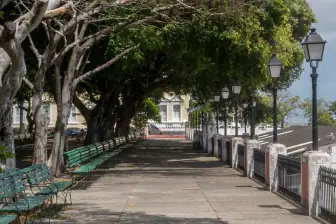
Walk through the Passeio Público, in the shade, and follow the Centro's grid streets to the Theatro José de Alencar.
Take the theater's guided tour at the time you booked in advance; if you couldn't get a slot, see the facade and the Burle Marx garden from outside.
Have lunch in the Centro and, Wednesday to Sunday, go into the Pinacoteca do Ceará, on Rua 24 de Maio, also in the Centro.
In the middle of the afternoon, take a car to the Centro Dragão do Mar, on Praia de Iracema, open Tuesday to Sunday, and choose between the Museu da Cultura Cearense, the contemporary art museum or a planetarium session. On weekends it only opens at 2:30 p.m.; on a Monday, swap the visit for a stroll along Praia de Iracema to the bridge.
Walk to the Ponte dos Ingleses for sunset on the deck at the tip.
Have dinner at the bars and restaurants around the Dragão do Mar and go back by ride-hailing car.
Day 2 · The Cocó mangrove, Mucuripe, Praia do Futuro and Beira-Mar at night
Go early to the Parque Estadual do Cocó and do the main trail through the mangrove before the strong heat.
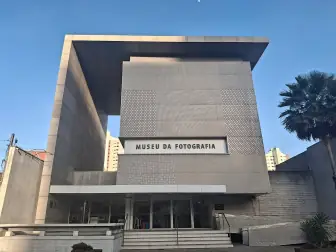
At noon, head to Varjota and visit the Museu da Fotografia Fortaleza, which opens at noon, Tuesday to Sunday; on a Monday, go straight to the Mercado dos Peixes and stretch the morning at the Cocó.
Have lunch at the Mercado dos Peixes, in Mucuripe: pick the fish at the stalls and ask for it to be fried at the market's own counters.
Take a car to Praia do Futuro and spend the afternoon at a barraca, after checking the Semace bulletin and the lifeguard's flag. If it is Thursday, stay for crab night and go back by car.
On other days, return in the late afternoon to Avenida Beira-Mar, walk the Meireles promenade to the crafts fair and have dinner on the waterfront or in Varjota.




Food
Crab
Served whole, you crack the shell to get the meat from the legs; it also appears as casquinha, in pastries and in rice. It is the dish of Thursday night at the Praia do Futuro barracas. Because of pollution in the local mangroves, most of the crab eaten today comes from Piauí and Maranhão, according to a UFC researcher.
Baião de dois
Rice cooked together with beans, preferably green beans, often with coalho cheese and cream. Its Ceará origin is recorded by Câmara Cascudo.
Paçoca de carne de sol
Fried carne de sol (salted, sun-dried beef) mixed with cassava flour. Carne de sol is a symbol of sertão cooking, and the paçoca arrived with it at the capital's tables.
Peixada cearense
A fish stew served with pirão, a cassava flour porridge.
Panelada
A well-seasoned stew of beef tripe and intestines, with chili, herbs, garlic, tomato and bell pepper.
Tapioca
A disc of cassava starch set on the griddle, filled with carne de sol, coalho cheese, coconut or sweets. It is breakfast and a snack, and the Centro das Tapioqueiras, in Messejana, gathers about 30 stalls with more than 60 fillings.
Cashew and rapadura
Cashew is abundant in Ceará and becomes juice and sweets. Rapadura, a hard, very sweet candy made from cane molasses, comes in bars, sometimes with nuts.
Where to eat
- Praia do Futuro · $$
Crab on Thursday night, whole to crack or as casquinha, in pastries and in rice, with a comedy show and forró at the barracas. On other days, the barracas serve food and drinks on the sand during the day.
- Mucuripe (Mercado dos Peixes) · $
Fish and shrimp picked at the stalls and fried at the market's own counters, to eat right there. It is the simplest meal on the waterfront, and the one most tied to the sea.
- Messejana (Centro das Tapioqueiras) · $
Tapioca with carne de sol and cheese, cuscuz and coffee, at the roughly 30 stalls gathered since 2002 at the start of the CE-040. Good as breakfast on the way to the eastern coast.
- Mestre Sussa · Meireles (Avenida Beira-Mar) · $$
Seafood, Ceará dishes and bar snacks, at a restaurant right on Avenida Beira-Mar. It is on the promenade, near the hotels, and handles a regional lunch or dinner without leaving the waterfront.
Source · 2026-10-16
- Marquês da Varjota · Varjota · $$
The Varjota gastronomic hub, revitalized in 2020 between Rua Frederico Borges and Rua Ana Bilhar, gathers bars and restaurants a few blocks from Beira-Mar. Here Portuguese cooking meets Ceará's: salt cod and seafood with local seasoning, a good choice for dinner after a walk along the waterfront.
Source · 2026-10-16
$: a meal at an inexpensive restaurant, R$ 30 per person on average (Numbeo, October 2026) · $$: mid-range restaurant, about R$ 75 per person (R$ 150 for a three-course dinner for two; Numbeo, October 2026) · $$$: restaurants above the mid-range; no checked price published · 2026-10-16
Day trips
Cumbuco
A beach in Caucaia, about 30 km west of the Centro, about 50 minutes by car; there are also metropolitan buses from Fortaleza. It is one of the best-known kitesurfing destinations in Brazil, with the strongest and steadiest wind from August to October, and beginners usually start at Lagoa do Cauípe before heading to the sea. Dune buggy rides stop at lagoons such as Parnamirim, with its esquibunda (sand-slide), and Banana; when the sea is calm, there are also jangada rides from the main beach. Agree on the buggy price before leaving and return before dark.
Canoa Quebrada
A beach village in Aracati, about 163 km east of Fortaleza, with red cliffs up to about 30 m above the sea, dunes and the moon-and-star symbol carved into the cliff. Rua Broadway concentrates bars, forró and reggae at night, and paragliding over the cliffs is one of the most sought-after tours. Viação São Benedito leaves from the Rodoviária João Thomé and the Messejana terminal for Aracati and Canoa, on a trip of about 4 hours with stops; by car or on a tour the trip is shorter. As a day trip, leave early; if you have time, sleep there.
Beach Park
A water park at Porto das Dunas, in Aquiraz, about 20 minutes from Fortaleza, opened in 1989. Among the rides is Insano, a water slide with a 41 m free fall. In October 2026 the Aqua Park was open Thursday to Tuesday, from 11 a.m. to 5 p.m., closed on Wednesdays; the calendar changes by month, so check the days and tickets on the park's website before going.
Where to begin
The Centro, Dragão do Mar and sunset at the Ponte dos Ingleses
Start at the Mercado Central at 9 a.m., when all the published hours show the market open, and walk the four floors of stalls selling lace, hammocks, leather and crafts. On a Sunday it opens at 8 a.m. and closes at 1 p.m., so go early.
The Cocó mangrove, Mucuripe, Praia do Futuro and Beira-Mar at night
Go early to the Parque Estadual do Cocó and do the main trail through the mangrove before the strong heat.
Money
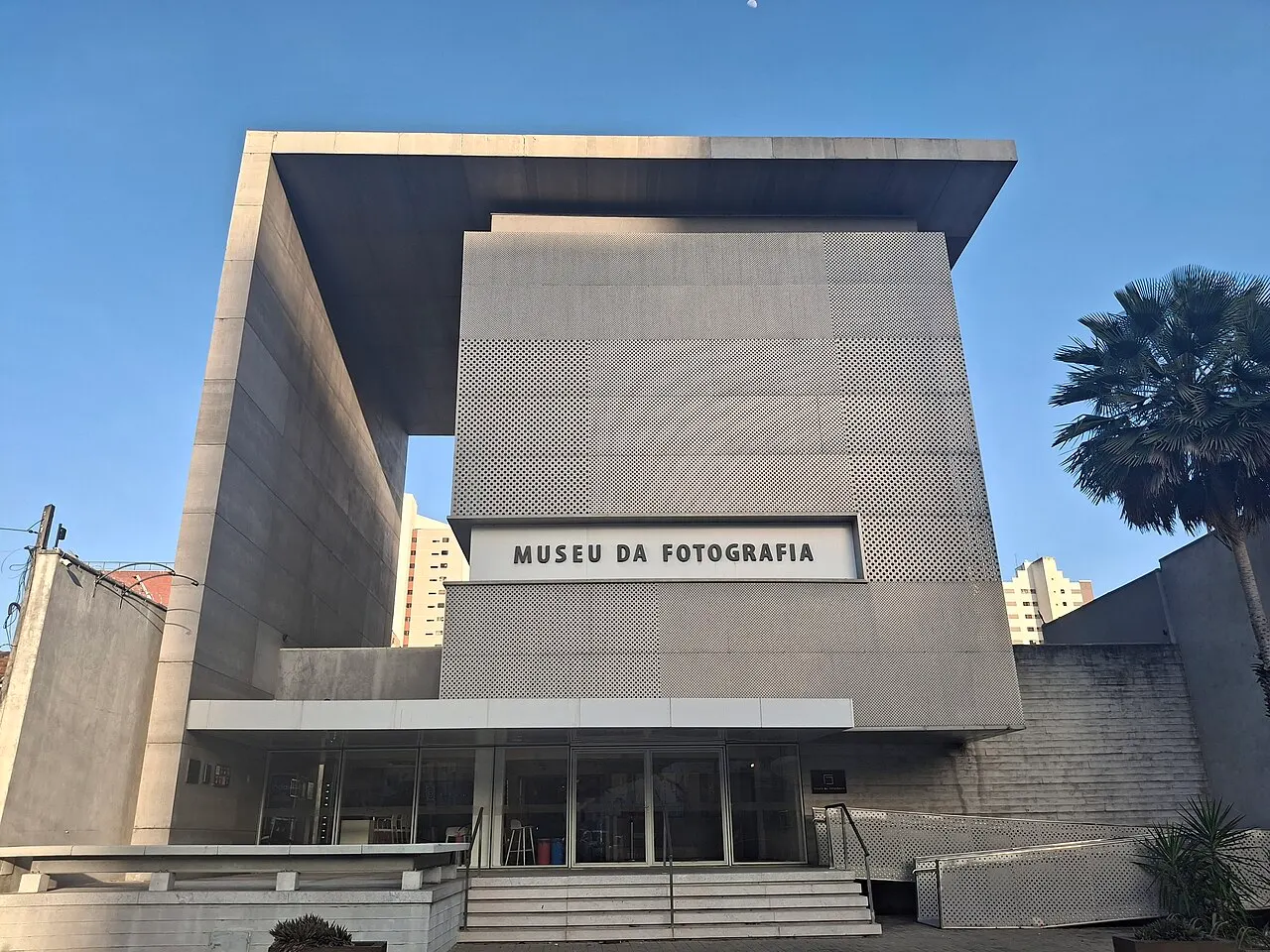
The currency is the real (R$, BRL). Pix requires an account at a participating institution, so carry a card and some cash. In October 2026, Numbeo listed R$ 30 as the average meal at an inexpensive restaurant and R$ 150 for a three-course dinner for two at a mid-range restaurant. On Kayak, checked on October 16, 2026, the average nightly rate for a double room in the city was R$ 532, with four-star hotels for about R$ 360 and pousadas and hostels from about R$ 80. The bus costs R$ 5.40 for a full fare, and the airport VLT and the Linha Nordeste charged no fare in August 2026. Much of the culture is free: the Dragão do Mar complex, the Pinacoteca and the Museu da Fotografia Fortaleza charge no admission, and the guided tour of the Theatro José de Alencar is free on the 17th of each month.
Getting there and around
From the airport to the waterfront
Pinto Martins International Airport (FOR) is inside the municipality, about 7 km from the Centro. Since February 2026, a VLT branch of about 2.4 km leaves from the elevated station in front of the terminal and reaches Expedicionários station in about 5 minutes; in August 2026 it ran in assisted operation, from 7 a.m. to 5 p.m., free of charge. At Expedicionários you take the VLT's Linha Nordeste (Parangaba–Iate) in the direction of Iate, with stops at Papicu, Mucuripe and Iate, at the eastern end of Beira-Mar; from there to the hotels in Meireles you still have to walk or take a car, depending on the block. Outside those hours, with large luggage or for Praia de Iracema, the airport taxi or a ride-hailing car handles the trip directly.
VLT and metro
Metrofor operates the metro and the VLTs. The Linha Nordeste, 13.2 km long with 11 stations between Parangaba and Iate, runs in assisted operation, free of charge, from 5:30 a.m. to 11:20 p.m., Monday to Saturday, and takes about 30 minutes end to end. It connects to the metro's Linha Sul at Parangaba. For the visitor, it is useful mainly on arrival from the airport and for getting from Mucuripe to Papicu; the Centro, Praia de Iracema and Praia do Futuro are off its route.
Bus
The full fare is R$ 5.40 since January 1, 2026, on buses and complementary transport. There are reduced-fare bands, the hora social, at certain weekday hours, on Sundays and on holidays; check the current fare with Etufor. The Bilhete Único, a prepaid card, lets you change lines within the integration period by paying one fare. For Praia do Futuro at night, prefer a car.
Taxi, ride-hailing and on foot
Taxis and ride-hailing cars are the practical way to connect the Centro, the waterfront and Praia do Futuro, and to get back at night. Use the official app, check the plate and driver before getting in and wait for the car in a busy place. Beira-Mar can be walked from end to end, and so can the Centro, by day; between Mucuripe and Praia do Futuro, the port zone is no route for pedestrians.
Out of the city
Intercity buses leave from the Rodoviária João Thomé: it is from there, and from the Messejana terminal, that Viação São Benedito departs for Aracati and Canoa Quebrada. For Cumbuco, in Caucaia, there are direct metropolitan buses. For Jericoacoara, about 300 km away, the usual route is a minibus transfer to Jijoca, with the last stretch by 4x4.
Safety
For visitors, the most common risks are opportunistic theft and robbery, especially after dark and on stretches with little foot traffic. The British government's advice for Brazil mentions arrastões (mass robberies) on public urban beaches, recommends not going to them after dark and says the phone is the preferred target, with more cases between 4 p.m. and 9 p.m. Avenida Beira-Mar has police posts and patrols and plenty of activity into the evening, but empties out in the small hours. On Praia de Iracema and around the Ponte dos Ingleses, Correio Braziliense reported in April 2026 robberies of pedestrians, mostly at night, when some stretches have little foot traffic: after sunset and after the Dragão do Mar bars, go back by ride-hailing car. Do not walk through the port zone between Mucuripe and Praia do Futuro, and do not wait for buses at night at the Praia do Futuro stops. Use the official app when calling a car and check the plate and driver. In the water, Praia do Futuro has strong wind and currents, and water quality changes every week: follow the lifeguards' flags and the Semace bulletin. The sun is strong all year.
Etiquette tips
«Macho» is a form of address
In Fortaleza, «macho» (and variants such as «má») is a regional way of addressing someone in conversation. It is not a provocation.
The show is part of Thursday
On crab night, the Praia do Futuro barracas book a comedian and a forró band. Anyone who prefers to talk in peace picks another night.
Book before going to the Theatro
The guided tour of the Theatro José de Alencar runs by appointment. Without a booked time, the visit is not guaranteed.
Mistakes to avoid
Choosing the beach by the map
Water quality at Fortaleza's beaches changes from week to week, and a stretch that is suitable in one bulletin may be unsuitable in the next. Semace publishes the weekly bulletin on its website and in its app; check it before deciding where to go into the sea.
Leaving the Centro for Monday
The Pinacoteca is open Wednesday to Sunday and Dragão do Mar Tuesday to Sunday, so a Monday in the Centro misses both. On Sunday, the Mercado Central closes at 1 p.m.
Counting on the airport VLT at night
In August 2026, the airport branch ran from 7 a.m. to 5 p.m. Anyone landing at night needs a taxi or a ride-hailing car.
Walking from Mucuripe to Praia do Futuro
On the map they look like neighbors, but the route passes through the port zone, which is not a path for pedestrians. Do this stretch by car.
Treating Canoa Quebrada as a half-day trip
It is about 163 km by road each way, and the bus stops in several towns. Without an early start, little time is left at the cliffs.
Walking the waterfront with your phone in hand
Phone theft is one of the most common problems in the busy areas of the waterfront, especially late in the afternoon and at night. Put the device away when walking near the street.
Useful phrases
Arre égua!
A Ceará interjection that adds emphasis to what is said
Macho
A regional form of address for calling someone in conversation
Abestado
Silly, absent-minded
Rebolar no mato
To throw away, to toss in the trash
Quanto custa?
A useful question at the stalls of the Mercado Central and the Mercado dos Peixes
Esse trecho está próprio para banho?
A question for the lifeguard or the barraca before going into the sea
Where to stay
- Meireles · First trip, anyone who wants the promenade and the largest choice of oceanfront hotels · $$: This stretch of Avenida Beira-Mar concentrates the oceanfront hotels, with the crafts fair, the waterfront restaurants and the bars of Varjota within walking distance; on Kayak, in October 2026, the hotels listed in the neighborhood ran from about R$ 241 to R$ 860 a night. The Centro, Dragão do Mar and Praia do Futuro are a car ride away, and the sea out front is not always suitable for swimming.
- Praia de Iracema · Smaller budgets and anyone who wants to be near Dragão do Mar and the Centro · $: It concentrates hostels and simpler hotels, with the Dragão do Mar, the Ponte dos Ingleses and the Centro a short distance away; on Kayak, in October 2026, there was a hostel from about R$ 84 a night. In return, some stretches have little foot traffic at night, and Correio Braziliense reported in April 2026 robberies of pedestrians in the neighborhood, mostly after dark: get back from the bars by car.
- Mucuripe · Anyone who wants an upscale hotel near the VLT's Iate station · $$$: The eastern end of Beira-Mar has high-category hotels, such as those Kayak listed at about R$ 524 to R$ 1,382 a night in October 2026, and is near the Mercado dos Peixes and the Iate station of the VLT's Linha Nordeste. By day, between 7 a.m. and 5 p.m. (August 2026 hours), you can get here from the airport by VLT with one change at Expedicionários; outside those hours, it is a taxi or ride-hailing car. It is the part of the waterfront farthest from the Centro, and the walk to Praia do Futuro passes through the port zone, which means going by car.
- Praia do Futuro · Anyone who wants an open-sea beach at the door · $$: The hotels here sit on the city's most sought-after open-sea beach, near the barracas; on Kayak, in October 2026, there were rates from about R$ 275 a night. It is far from the Centro and Beira-Mar, and the bus stops on the waterfront are no place to wait after dark: count on a car for everything.
$: hostel or simple pousada, from about R$ 80 a night (Kayak, checked October 16, 2026) · $$: four-star hotel, about R$ 360 a night (Kayak, checked October 16, 2026) · $$$: five-star hotel, about R$ 1,404 a night (Kayak, checked October 16, 2026) · 2026-10-16
Districts
Centro
Herbster's grid, the Mercado Central, the Cathedral, the Passeio Público, the Theatro José de Alencar and the Pinacoteca. Visit it by day: the market, theater and museums keep daytime hours.
Praia de Iracema
The old bohemian waterfront district, with the Centro Dragão do Mar, the Ponte dos Ingleses and the Aterro, where the New Year's Eve party and pre-Carnival shows take place. It has hostels and simpler hotels; at night, life centers around the Dragão do Mar.
Meireles
The central stretch of Avenida Beira-Mar, which concentrates the oceanfront hotels, the promenade and the crafts fair. It is the neighborhood for anyone who wants to handle the trip on foot along the waterfront.
Mucuripe
The eastern end of Beira-Mar, with the Mercado dos Peixes, the boat departures and upscale hotels. The VLT's Iate station is here.
Varjota
Blocks of bars and restaurants a few streets inland from Beira-Mar, and the Museu da Fotografia Fortaleza.
Aldeota
A residential and commercial neighborhood behind Meireles, with malls and offices, from which the Parque do Cocó is quickly reached.
Praia do Futuro
The open-sea beach east of the port, with many barracas serving food and drinks on the sand, and the crab night on Thursdays. It is far from the Centro and reached by car or bus.
Messejana
A neighborhood in the southeast of the city, on the way out to the eastern coast, known for the Centro das Tapioqueiras, at the start of the CE-040.
History
1603 · The first Portuguese attempt
Pero Coelho de Sousa lands at the mouth of the Ceará River, builds a small fort and names the place Nova Lisboa, but abandons the position.
1613 · Martim Soares Moreno
He expands the fort at the mouth of the Ceará River and renames it São Sebastião.
1649 · The Dutch fort at Pajeú
During the second Dutch occupation, Matias Beck builds Fort Schoonenborch beside the Pajeú stream, regarded as the starting point of the city.
1654 · Fortaleza de Nossa Senhora da Assunção
After the Dutch are expelled, the fort receives the name that will give the city its own.
1726 · Town
On April 13, the settlement around the fort is raised to the status of town. It is the date the city celebrates as its anniversary.
1799 · Capital
Ceará separates from Pernambuco, and Fortaleza becomes the capital of the captaincy.
1825 · Executions at Passeio Público
After the defeat of the Confederation of the Equator, a 1824 revolt against the imperial government, five of its leaders in Ceará, among them Padre Mororó, are executed between April and May 1825 in the square that is now the Passeio Público, also called Praça dos Mártires.
1875 · Adolfo Herbster's plan
The grid plan, commissioned by the municipal administration, organizes the expansion of the Centro; the layout can still be recognized in the streets.
1881–1884 · Dragão do Mar and abolition
In 1881, raft fishermen led by Francisco José do Nascimento, known as Dragão do Mar, refuse to carry enslaved people to the ships. On March 25, 1884, Ceará abolishes slavery, four years before the Lei Áurea.
1910 · Theatro José de Alencar
Inaugurated on June 17, with a cast-iron structure imported from Glasgow.
1915 and 1932 · The droughts and the corrals
In the great droughts, the government gathers migrants fleeing the interior in concentration camps, such as the one at Alagadiço, to keep them from reaching the capital. In 1932, about 73,000 people were confined across the state.
1963 · Avenida Beira-Mar
The waterfront avenue opens and carries the axis of hotels and the promenade to Meireles and Mucuripe.
1999 · Centro Dragão do Mar
On April 28, the cultural center opens on Praia de Iracema, in a former port area.
2024 · The Ponte dos Ingleses reopened
Closed since the storm surge of March 2018, the bridge reopens to the public on August 25, after an R$ 8 million renovation.
2026 · 300 years
The city celebrates 300 years since it was raised to town status, with a municipal holiday on April 13, and in February opens the airport VLT branch.
Complete history
A fort before the city
The Portuguese tried to settle in Ceará from 1603, when Pero Coelho de Sousa built a small fort at the mouth of the Ceará River and abandoned it. Martim Soares Moreno expanded the post in 1613, but it was the Dutch who left the core of the city: in 1649, during the second occupation, Matias Beck built Fort Schoonenborch beside the Pajeú stream. After the Dutch were expelled in 1654, the fort was renamed Fortaleza de Nossa Senhora da Assunção, and it still stands beside the Mercado Central and the Cathedral.
Town, capital and cotton port
The settlement around the fort became a town on April 13, 1726, when survivors of an indigenous attack on Aquiraz took refuge there. In 1799, when Ceará separated from Pernambuco, Fortaleza became the capital, and in 1823 it received the title of city. Cotton exported through the port paid for urban improvements in the second half of the 19th century. In 1875, Adolfo Herbster's plan organized the expansion into a grid, the geometry you walk through today in the Centro. The Ceará Belle Époque left the Theatro José de Alencar, from 1910, and tree-lined squares such as the Passeio Público.
The land of light
In 1881, the raft fishermen led by Francisco José do Nascimento, known as Dragão do Mar, refused to carry enslaved people to the ships that would take them to the south of the country. On March 25, 1884, Ceará abolished slavery, four years before the Lei Áurea of 1888. The raft fisherman's name is now on the cultural center on Praia de Iracema, and March 25 is a state holiday, the Data Magna do Ceará.
The droughts and the city that grew with them
Droughts in the sertão pushed migrants toward the capital from the 19th century on. In 1915 and in 1932, the government set up concentration camps, the «currais» (corrals), to keep them from reaching Fortaleza: the one at Alagadiço held about 8,000 people in 1915, and in 1932 about 73,000 were confined in camps spread across the state. The drought of 1915 is the setting of O Quinze, by Rachel de Queiroz. Even so, the city never stopped growing: by the end of the 1910s it was already the seventh largest in Brazil.
The turn toward the sea
Avenida Beira-Mar, opened in 1963, brought the hotels and the waterfront stroll to Meireles and Mucuripe. In 1973 Fortaleza gained the Castelão stadium, and in the same decade it became a metropolis and received the Industrial District. Tourism grew in the following decades: the Centro Dragão do Mar opened in 1999 in a port area of Praia de Iracema, and the renovated Castelão hosted six games of the 2014 World Cup. In 2026, the city celebrated 300 years since it was raised to town status.
Ceará abolished slavery on March 25, 1884, four years before the Lei Áurea, and the raft fisherman who led the refusal of 1881 gives his name to the Dragão do Mar.
Geography and shape of the city
A coast facing north
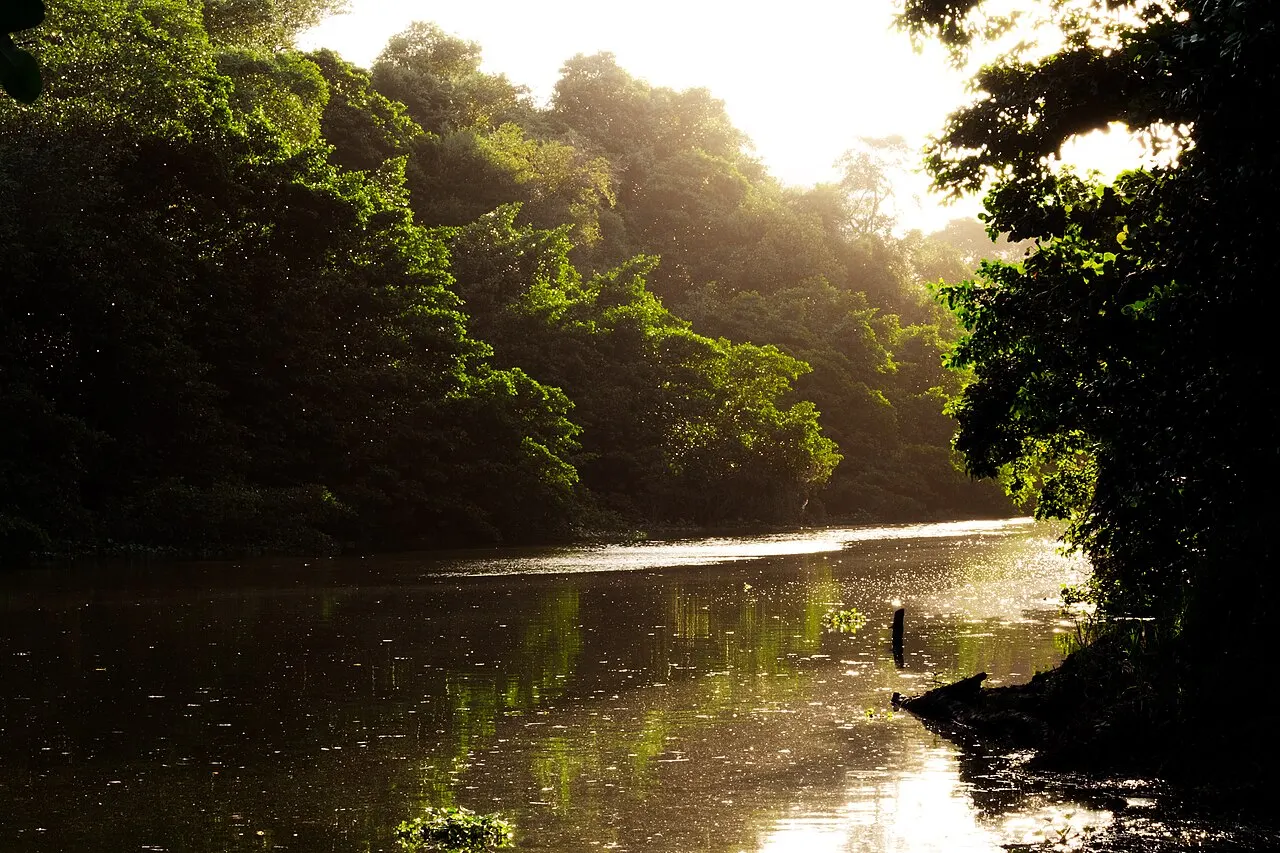
Fortaleza sits on a low plain, about 16 m above sea level, with 34 km of coastline and about 15 beaches. The municipality covers about 312 km². The Ceará River, in the west, and the Cocó River, in the east, empty into the sea within the municipality, and near their mouths and that of the Pacoti, already on the eastern boundary, there are dunes and restinga (coastal scrub). The Parque Estadual do Cocó protects the river's mangrove inside the city.
Three strips for the visitor
The Centro holds the 19th-century grid, the Mercado Central and the Cathedral, on the site of the fort. East of it, the urban waterfront runs from Praia de Iracema to Mucuripe along Avenida Beira-Mar, with Meireles in the middle; behind it lie Aldeota and Varjota, neighborhoods of shops, restaurants and bars. After the Mucuripe port begins Praia do Futuro, an open-sea beach, separated from the urban waterfront by the port zone.
Hot weather, wind and a rainy season
The average temperature hovers around 27 °C all year. About 1,584 mm of rain falls per year (1991 to 2020 normal), concentrated from January to June, with the most in March and April; Funceme calls the period from February to May the quadra chuvosa (rainy season). August to December is the dry season, and from August to October the wind is stronger and steadier, which draws kitesurfing to the coast.
Culture
Comedy and forró
Comedy and forró shows are part of Thursday night at the Praia do Futuro barracas, and in the 1990s music venues for both genres were common among the barracas in the area. Forró is the music people dance to most in the city's nightlife, with venues that have a fixed day of the week.
Dragão do Mar and the museums
The Centro Dragão do Mar brings together a contemporary art museum, a museum of Ceará popular culture, a planetarium, cinemas and a theater, and around it are the liveliest bars of Praia de Iracema. Beyond it, the Pinacoteca do Ceará, the Museu da Fotografia Fortaleza and the Museu da Imagem e do Som have free admission.
A city in literature
José de Alencar gave the state the novel Iracema, from 1865, subtitled «lenda do Ceará» (legend of Ceará), and the city has the character in statues on Praia de Iracema and at Lagoa de Messejana. The Casa de José de Alencar, in Messejana, is a museum with free admission. Rachel de Queiroz wrote O Quinze about the drought of 1915, and the literary group Padaria Espiritual arose in Fortaleza in 1892.
Music from here
Belchior, a singer-songwriter from Ceará, recorded the album Alucinação in 1976, with Como Nossos Pais and Apenas um Rapaz Latino-Americano. His name is on the Estação das Artes cultural complex and on the Centro Cultural Belchior, on Praia de Iracema.
Soccer
Ceará and Fortaleza play the Clássico-Rei, the game that inaugurated the Castelão in 1973. The renovated stadium holds 63,903 people and hosted six games of the 2014 World Cup; Ferroviário also plays home games there.
The Praia do Futuro crab night, with comedy and forró at the barracas, was already established by the mid-1990s.
Festivals and events
Pre-Carnival and Carnival
From January to Carnival, in February or March. The city government sets up show stages and blocos around the city: in 2026 the cycle ran from January 16 to February 17, with 25 stages, among them the Aterro and the Aterrinho on Praia de Iracema and Praça da Gentilândia, in Benfica.
City anniversary
April 13, the date it was raised to town status in 1726. In 2026, for the 300th anniversary, it was a municipal holiday, with shows the evening before on Praia de Iracema, in Jangurussu and in Granja Portugal.
Fortal
At the end of July. It is Fortaleza's out-of-season carnival, with trios elétricos, blocos and abadá sales; in 2026 it ran from July 23 to 26, at the Cidade Fortal, in the Manoel Dias Branco neighborhood.
New Year's Eve
December 31. The biggest free New Year's party takes place at the Aterro on Praia de Iracema, and the waterfront is packed.
Books and films
Iracema, by José de Alencar (1865)
The novel, subtitled «lenda do Ceará» (legend of Ceará), tells of the meeting between the Tabajara indigenous woman Iracema and the Portuguese Martim; the character appears in the statues on Praia de Iracema and at Lagoa de Messejana.
O Quinze, by Rachel de Queiroz (1930)
The novel of the 1915 drought, with part of the action on a farm near Quixadá and in the capital, shows the drought that pushed migrants out of the sertão.
Alucinação, by Belchior (1976)
The best-known album by the Ceará songwriter, with Como Nossos Pais and Apenas um Rapaz Latino-Americano. His name is now on the Estação das Artes complex and on a cultural center on Praia de Iracema.
Cine Holliúdy, by Halder Gomes (2012)
A comedy filmed in Fortaleza and the interior of Ceará, shown with Portuguese subtitles so that outside audiences can follow the Ceará way of speaking. A good primer for the local humor.
Frequently asked questions
Fortaleza: how do I get from the airport to the waterfront?
From 7 a.m. to 5 p.m. (August 2026 hours), a free VLT branch runs to Expedicionários station, where you change to the Linha Nordeste, which runs Monday to Saturday, toward Mucuripe and Iate; from there to the Meireles hotels you still walk or take a car. Otherwise, on Sundays or with large luggage, take a taxi or ride-hailing car.
Fortaleza: how many days should I stay?
Two days: one in the Centro and Praia de Iracema, from the Mercado Central to sunset at the Ponte dos Ingleses; another from the Cocó mangrove to Praia do Futuro and Beira-Mar. With a third day, Cumbuco is worth it; with a fourth, Canoa Quebrada.
Fortaleza: can I swim at Praia do Futuro?
It depends on the week: in several 2026 bulletins no stretch there was suitable for swimming, so check the Semace bulletin before going into the sea. The wind and currents are strong: follow the lifeguards' flags.
Fortaleza: what is crab night?
On Thursday nights, the Praia do Futuro barracas serve crab, whole to crack or as casquinha, plus pastel and rice, with a comedy show and forró. Go and come back by ride-hailing car: the bus stops there are no place to wait after dark.
Fortaleza: what precautions should I take at night?
The most common risks are opportunistic theft and robbery, especially after dark and on stretches with little foot traffic, and the phone is the preferred target. On Praia de Iracema and around the Ponte dos Ingleses, after sunset and after the Dragão do Mar bars, go back by ride-hailing car.
Fortaleza: when is the best time to go?
August to December, the dry season, with stronger wind from August to October. February to May is the rainy season (quadra chuvosa), with the most rain in March and April, and November is the most expensive month for hotels.
Fortaleza: how do I get to Cumbuco?
The beach is in Caucaia, about 30 km west of the Centro, about 50 minutes by car, and there are metropolitan buses. The kitesurfing wind is strongest and steadiest from August to October; agree on the buggy price before leaving and return before dark.
Fortaleza: can I visit Canoa Quebrada in a day?
Yes, leaving early: it is about 163 km by road each way, and the Viação São Benedito bus takes about 4 hours, with stops. By car or on a tour the trip is shorter; if you have time, sleep there.
Fortaleza: where should I stay?
Meireles concentrates the oceanfront hotels and lets you do the waterfront on foot. Praia de Iracema has hostels and simpler hotels, but stretches with little foot traffic at night; Mucuripe has upscale hotels near the VLT's Iate station.
Fortaleza: how much does it cost per day?
Based on spending reported by travelers to Budget Your Trip (checked October 2026), about 188 BRL on a budget, 442 BRL mid-range and 914 BRL comfortable, per person.
Other cities in the country
Brazil ↗- Days
- 4
- When
- Apr–Jun
- Per person/day
- Average 615 BRLMid-range · per person/day
Cost scope
Per person per day: accommodation, meals, urban transport, visits and a small allowance for extras. Flights excluded; larger purchases vary. Editorial estimate, not a quote.
- Days
- 2–3
- When
- Apr–May · Sep
- Per person/day
- Average 400–700 BRLMid-range · per person/day
Cost scope
Per person per day: accommodation, meals, urban transport, visits and a small allowance for extras. Flights excluded; larger purchases vary. Editorial estimate, not a quote.
- Days
- 2–3
- When
- Jan–Mar · Sep–Dec
- Per person/day
- Average 350–550 BRLMid-range · per person/day
Cost scope
Per person per day: accommodation, meals, urban transport, visits and a small allowance for extras. Flights excluded; larger purchases vary. Editorial estimate, not a quote.
- Days
- 1–2
- When
- May–Sep
- Per person/day
- Average 260–520 BRLMid-range · per person/day
Cost scope
Per person per day: accommodation, meals, urban transport, visits and a small allowance for extras. Flights excluded; larger purchases vary. Editorial estimate, not a quote.
- Days
- 3–4
- When
- Jun–Sep
- Per person/day
- Average 400–700 BRLMid-range · per person/day
Cost scope
Per person per day: accommodation, meals, urban transport, visits and a small allowance for extras. Flights excluded; larger purchases vary. Editorial estimate, not a quote.
- Days
- 2–3
- When
- Apr–Jun
- Per person/day
- Average 350–550 BRLMid-range · per person/day
Cost scope
Per person per day: accommodation, meals, urban transport, visits and a small allowance for extras. Flights excluded; larger purchases vary. Editorial estimate, not a quote.
- Days
- 3–5
- When
- Mar–Apr · Nov
- Per person/day
- Average 397 BRLMid-range · per person/day
Cost scope
Per person per day: accommodation, meals, urban transport, visits and a small allowance for extras. Flights excluded; larger purchases vary. Editorial estimate, not a quote.
- Days
- 2–4
- When
- Mar–May · Sep
- Per person/day
- Explore costsGuide estimate
Cost scope
Per person per day: accommodation, meals, urban transport, visits and a small allowance for extras. Flights excluded; larger purchases vary. Editorial estimate, not a quote.
- Days
- 4–5
- When
- Aug–Nov
- Per person/day
- Explore costsGuide estimate
Cost scope
Per person per day: accommodation, meals, urban transport, visits and a small allowance for extras. Flights excluded; larger purchases vary. Editorial estimate, not a quote.
- Days
- 3–4
- When
- Jul–Sep
- Per person/day
- Explore costsGuide estimate
Cost scope
Per person per day: accommodation, meals, urban transport, visits and a small allowance for extras. Flights excluded; larger purchases vary. Editorial estimate, not a quote.
- Days
- 3–4
- When
- Sep–Nov
- Per person/day
- Explore costsGuide estimate
Cost scope
Per person per day: accommodation, meals, urban transport, visits and a small allowance for extras. Flights excluded; larger purchases vary. Editorial estimate, not a quote.
- Days
- 2–4
- When
- May–Sep
- Per person/day
- Explore costsGuide estimate
Cost scope
Per person per day: accommodation, meals, urban transport, visits and a small allowance for extras. Flights excluded; larger purchases vary. Editorial estimate, not a quote.
- Days
- 3–5
- When
- Jun–Sep
- Per person/day
- Explore costsGuide estimate
Cost scope
Per person per day: accommodation, meals, urban transport, visits and a small allowance for extras. Flights excluded; larger purchases vary. Editorial estimate, not a quote.
- Days
- 3–4
- When
- Jun–Aug
- Per person/day
- Explore costsGuide estimate
Cost scope
Per person per day: accommodation, meals, urban transport, visits and a small allowance for extras. Flights excluded; larger purchases vary. Editorial estimate, not a quote.
- Days
- 4–5
- When
- Jan–Mar · Sep–Dec
- Per person/day
- Explore costsGuide estimate
Cost scope
Per person per day: accommodation, meals, urban transport, visits and a small allowance for extras. Flights excluded; larger purchases vary. Editorial estimate, not a quote.
- Days
- 3–4
- When
- Oct–Dec
- Per person/day
- Average 1,110 BRLMid-range · per person/day
Cost scope
Per person per day: accommodation, meals, urban transport, visits and a small allowance for extras. Flights excluded; larger purchases vary. Editorial estimate, not a quote.
- Days
- 3–4
- When
- Aug–Sep
- Per person/day
- Explore costsGuide estimate
Cost scope
Per person per day: accommodation, meals, urban transport, visits and a small allowance for extras. Flights excluded; larger purchases vary. Editorial estimate, not a quote.
- Days
- 4–7
- When
- Apr–Sep
- Per person/day
- Explore costsGuide estimate
Cost scope
Per person per day: accommodation, meals, urban transport, visits and a small allowance for extras. Flights excluded; larger purchases vary. Editorial estimate, not a quote.
- Days
- 3–4
- When
- Jan · Sep–Dec
- Per person/day
- Explore costsGuide estimate
Cost scope
Per person per day: accommodation, meals, urban transport, visits and a small allowance for extras. Flights excluded; larger purchases vary. Editorial estimate, not a quote.
- Days
- 3–5
- When
- Jan–Feb · Sep–Dec
- Per person/day
- Explore costsGuide estimate
Cost scope
Per person per day: accommodation, meals, urban transport, visits and a small allowance for extras. Flights excluded; larger purchases vary. Editorial estimate, not a quote.
- Days
- 3–5
- When
- May–Sep
- Per person/day
- Explore costsGuide estimate
Cost scope
Per person per day: accommodation, meals, urban transport, visits and a small allowance for extras. Flights excluded; larger purchases vary. Editorial estimate, not a quote.
- Days
- 2–3
- When
- Apr–Sep
- Per person/day
- Average 484 BRLMid-range · per person/day
Cost scope
Per person per day: accommodation, meals, urban transport, visits and a small allowance for extras. Flights excluded; larger purchases vary. Editorial estimate, not a quote.
- Days
- 3
- When
- Apr–May · Aug
- Per person/day
- Average 478 BRLMid-range · per person/day
Cost scope
Per person per day: accommodation, meals, urban transport, visits and a small allowance for extras. Flights excluded; larger purchases vary. Editorial estimate, not a quote.
- Days
- 3–4
- When
- Aug–Dec
- Per person/day
- Explore costsGuide estimate
Cost scope
Per person per day: accommodation, meals, urban transport, visits and a small allowance for extras. Flights excluded; larger purchases vary. Editorial estimate, not a quote.
- Days
- 2
- When
- Apr–May · Sep
- Per person/day
- Explore costsGuide estimate
Cost scope
Per person per day: accommodation, meals, urban transport, visits and a small allowance for extras. Flights excluded; larger purchases vary. Editorial estimate, not a quote.
- Days
- 3
- When
- Sep–Dec
- Per person/day
- Explore costsGuide estimate
Cost scope
Per person per day: accommodation, meals, urban transport, visits and a small allowance for extras. Flights excluded; larger purchases vary. Editorial estimate, not a quote.
- Days
- 3–5
- When
- Apr–Nov
- Per person/day
- Average 427 BRLMid-range · per person/day
Cost scope
Per person per day: accommodation, meals, urban transport, visits and a small allowance for extras. Flights excluded; larger purchases vary. Editorial estimate, not a quote.
- Days
- 4
- When
- Jul–Sep
- Per person/day
- Explore costsGuide estimate
Cost scope
Per person per day: accommodation, meals, urban transport, visits and a small allowance for extras. Flights excluded; larger purchases vary. Editorial estimate, not a quote.
- Days
- 4–5
- When
- May–Sep
- Per person/day
- Explore costsGuide estimate
Cost scope
Per person per day: accommodation, meals, urban transport, visits and a small allowance for extras. Flights excluded; larger purchases vary. Editorial estimate, not a quote.
- Days
- 3
- When
- May–Sep
- Per person/day
- Explore costsGuide estimate
Cost scope
Per person per day: accommodation, meals, urban transport, visits and a small allowance for extras. Flights excluded; larger purchases vary. Editorial estimate, not a quote.