Brazil
Morro de São Paulo
Morro de São Paulo: a car-free village on Tinharé Island, numbered beaches with calm water, and Boipeba just to the south
Days Start with the basic programme and choose extensions for the time you have.
How the guide reaches this number
In Morro, I'd use the first day for the village, the Gamboa trail and sunset at the fortress, the second for walking the numbered beaches to the pools of Quarta Praia and climbing to the lighthouse, and the third for Garapuá, a horseshoe cove of calm water in the south of Tinharé, by 4x4. Then I'd cross to Boipeba on the 8 a.m. pickup truck, because the neighboring island asks for a night: sleeping there, you can reach Cueira before or after the tour boats and walk to Moreré, a village on land where the tour boats almost never go. With three days, I'd stay only in Morro and, if Boipeba were a priority, swap Garapuá for the Volta à Ilha, which passes the Garapuá and Moreré pools and stops at Boca da Barra when the tide allows.
3–5
When September to February; January, New Year's Eve and the days after Carnival are the busiest, and April to June concentrate the rains
How the guide reaches this number
Morro de São Paulo is warm all year, and what changes the trip is the rain and the crowds. At the Salvador weather station (Ondina), across Todos os Santos Bay, the 1991 to 2020 normals record 63 mm to 108 mm of rain per month from September to February, against 285 mm in April, 302 mm in May and 238 mm in June; average highs range from 31 °C in summer to 27 °C in July and August. From September to February the weather tends to be steadier for the beach and boat tours. December, January and the days after Carnival concentrate vacations, parties and a full island; March is already a transition to the rainy season, with fewer people and cheaper lodging. From April to June, the chance of getting several days of rain in a row is high and speedboat tours become more uncertain; July remains unsettled, and August usually has better weather. Agencies offer outings to watch humpback whales between July and October, with dates that vary each year. In any month, the phase of the moon matters: the strongest low tides, which expose the natural pools, come at full and new moons.
Per person/day Add up lodging per night, meals per person, the TUPA on arrival, the catamaran or speedboat from Salvador and the boat tours you choose; December to February changes the total considerably.
How the guide reaches this number
Per person per day: accommodation, meals, urban transport, visits and a small allowance for extras. Flights excluded; larger purchases vary. Editorial estimate, not a quote.
 What Nilo thinks
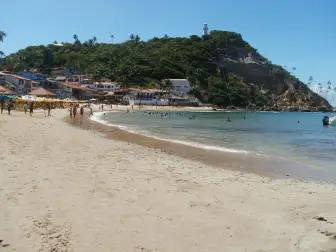
I'd stay five days: three in Morro de São Paulo and two sleeping in Boipeba. In Morro, I'd use the first day for the village, the Gamboa trail and sunset at the fortress, the second for walking the numbered beaches to the pools of Quarta Praia and climbing to the lighthouse, and the third for Garapuá, a horseshoe cove of calm water in the south of Tinharé, by 4x4. Then I'd cross to Boipeba on the 8 a.m. pickup truck, because the neighboring island asks for a night: sleeping there, you can reach Cueira before or after the tour boats and walk to Moreré, a village on land where the tour boats almost never go. With three days, I'd stay only in Morro and, if Boipeba were a priority, swap Garapuá for the Volta à Ilha, which passes the Garapuá and Moreré pools and stops at Boca da Barra when the tide allows.You discover Morro de São Paulo on foot. The boat pulls up at a pier at the foot of a hill, a ramp leads to the village's stone gate, and from there on there is not a single car: only wheelbarrows carrying luggage, narrow streets with shops and restaurants and paths that drop toward the sea. The beaches have numbers instead of names, and each has its own temperament: the First, narrow and quiet; the Second, with loungers by day and tables on the sand at night; the Third, where the speedboats leave from; the Fourth, shallow and long, with pools among the rocks when the tide goes out. History lies along the way: the walls of the fortress that guarded the entrance to Salvador, where you watch the sun sink over the channel, and the 1855 lighthouse at the top of the hill. To the south, the island empties out toward the cove of Garapuá, and across the Inferno River begins Boipeba, with a village of low houses, coconut groves at Cueira and the village of Moreré with its sand streets. On both islands, the tide table tells you which trail is open and which pools will appear.
Quick facts
- Population
- 18,662 inhabitants in the municipality of Cairu, which includes the islands of Tinharé and Boipeba (IBGE, 2026 estimate); 17,761 in the 2022 Census. IBGE does not publish a separate count for the village of Morro de São Paulo
- Founded
- Settlement founded in 1535 at the northern tip of Tinharé Island; Cairu, the seat of the municipality, dates from 1608
- Country and region
- Brazil, Northeast; Baixo Sul of Bahia, in the Cairu archipelago, 64 km from Salvador by sea
- Language
- Portuguese
- Currency
- Real (BRL, R$)
- Time zone
- UTC−3 year-round, no daylight saving time
- Best time to go
- September to February; January, New Year's Eve and the days after Carnival are the busiest, and April to June concentrate the rains
- Average cost per day
- Add up lodging per night, meals per person, the TUPA on arrival, the catamaran or speedboat from Salvador and the boat tours you choose; December to February changes the total considerably.
When to go
September to February; January, New Year's Eve and the days after Carnival are the busiest, and April to June concentrate the rains
How the year changes
Morro de São Paulo is warm all year, and what changes the trip is the rain and the crowds. At the Salvador weather station (Ondina), across Todos os Santos Bay, the 1991 to 2020 normals record 63 mm to 108 mm of rain per month from September to February, against 285 mm in April, 302 mm in May and 238 mm in June; average highs range from 31 °C in summer to 27 °C in July and August. From September to February the weather tends to be steadier for the beach and boat tours. December, January and the days after Carnival concentrate vacations, parties and a full island; March is already a transition to the rainy season, with fewer people and cheaper lodging. From April to June, the chance of getting several days of rain in a row is high and speedboat tours become more uncertain; July remains unsettled, and August usually has better weather. Agencies offer outings to watch humpback whales between July and October, with dates that vary each year. In any month, the phase of the moon matters: the strongest low tides, which expose the natural pools, come at full and new moons.
Nilo's tips
Sleep in Salvador before and after
From the airport to the crossings terminal is about 1 hour, and you only reach Morro the same day by landing by about 3 p.m. A night in Salvador on the way in and another on the way out take the rush out of both ends, including when rough seas swap the catamaran for the semi-overland route.
Full or new moon for the pools
The Volta à Ilha stops at the Garapuá and Moreré pools depend on a morning low tide, which is typical of those phases. I'd pick the tour date from the lunar calendar before locking in the rest.
A backpack for changing islands
Anyone going from Morro to Boipeba on the Volta à Ilha must tell the agency they are carrying luggage and getting off at Boca da Barra with it. A backpack works; a wheeled suitcase on sand does not.
Buy the Valença to Boipeba speedboat ahead
Seats on that leg sell out. Anyone changing in Valença should secure the second ticket and leave Morro with a margin of about 1 hour 30 minutes.
Gamboa: walk there, come back by boat
Walking there and back on the same low tide only works in a big hurry. Walking out along the beach, stopping at the clay cliff, and returning on the regular boat between the Gamboa pier and the Morro pier makes for a relaxed outing.
Explore the map
Explore the map, read about the other places and plan your travel days in the app.
Open the appWhat to see
Morro de São Paulo: The Cairu archipelago
To the west runs the Tinharé channel, which separates the islands from the mainland and leads to Valença, the port from which the speedboats to Morro and Boipeba depart. A narrow strip of sand behind a row of pousadas, a short slope from the center.
Fortaleza do Morro de São Paulo
The fortress ruins are just to the left as you pass through the stone gate at the top of the pier ramp. The complex gathers works from 1631 to 1730, with the Forte da Ponta, with bastions at its corners, and walls above the channel; it was listed by the federal heritage service in 1938. The visit is free and short, and the walls' position above the channel is good for watching the sunset. It is also known locally as Fortaleza do Tapirandu.
Cairu is a municipality made up of 26 islands, three of them inhabited.
Check access
Quarta Praia
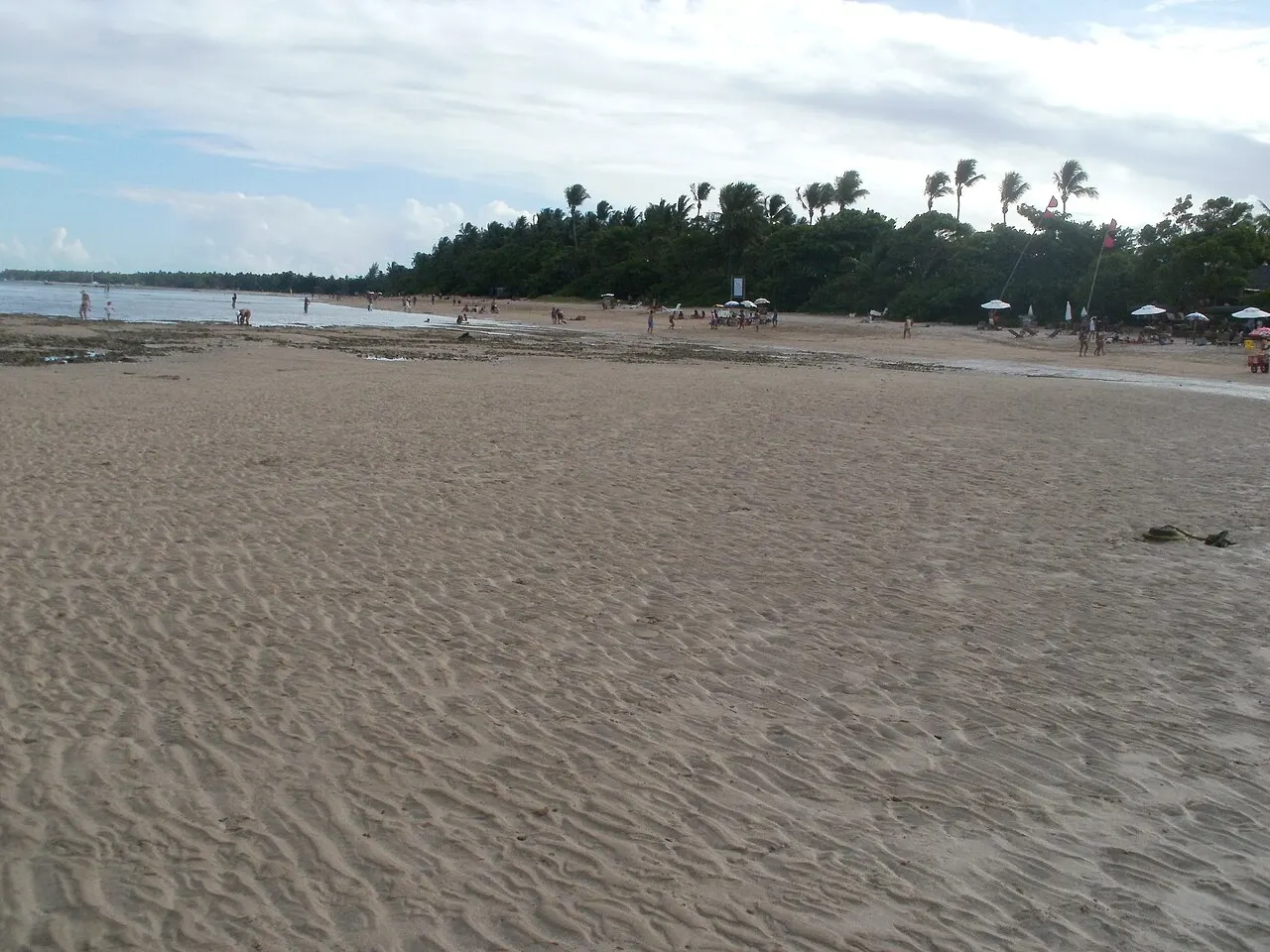
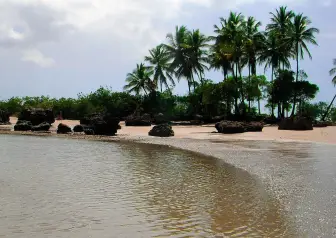
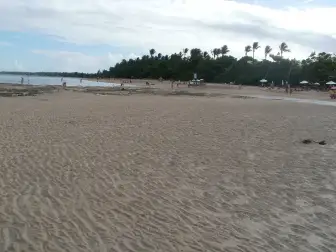
At low tide, the rocks at the start of Quarta Praia dam up shallow natural pools, good for children, and the firm sand invites a walk. The first stretch has beach stands; farther on, the beach turns wilder. From Primeira Praia to the start of Quarta it is about 2 km on foot along the sand. At high tide, enter with care because of the rocks.
Gamboa is on the other side of the hill, facing the mainland.
Check access
Praia de Garapuá
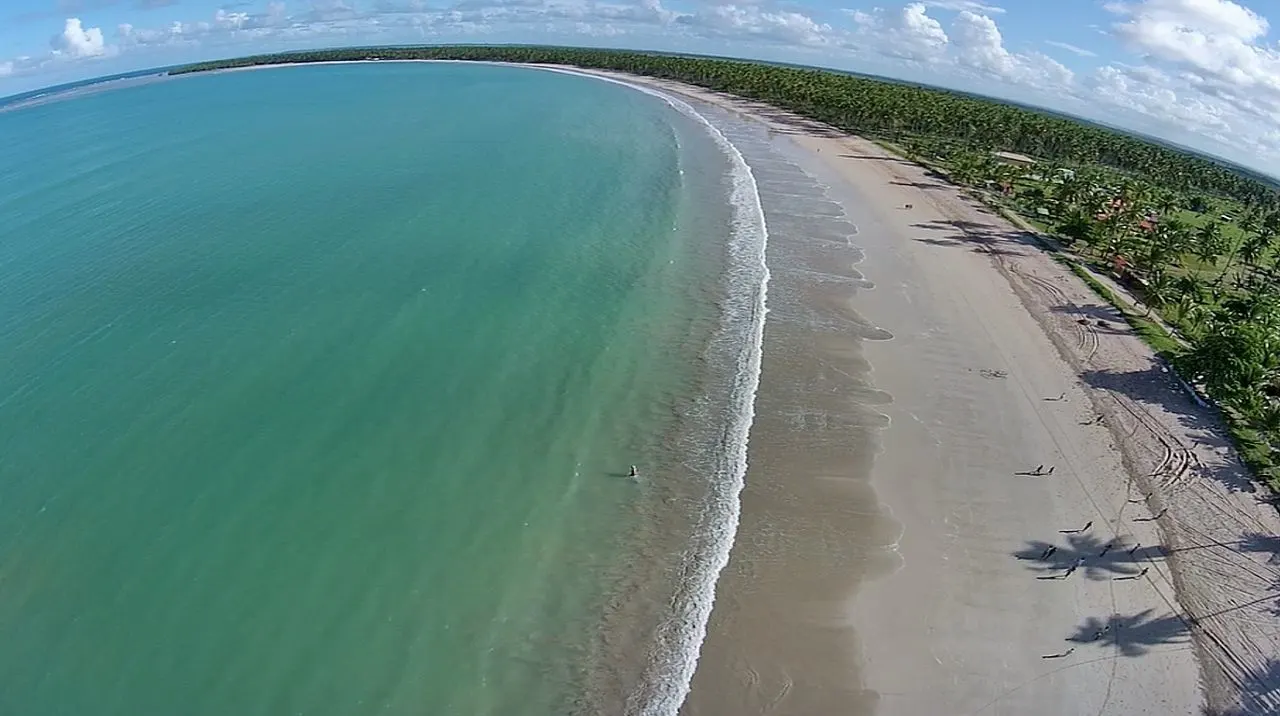
A horseshoe cove of calm water in front of a fishing village, with beach stands near the village and empty stretches a five-minute walk away. At low tide, boatmen take you to the natural pools, which form out at sea 15 minutes by boat away, with floating bars. You get there on the shared 4x4 tour that leaves from the Receptivo, at the back of Segunda Praia; the speedboat tours stop at the pools but do not land on the beach.
The climate is humid tropical, warm all year, with the rainiest season from April to July.
Check access
Cueira
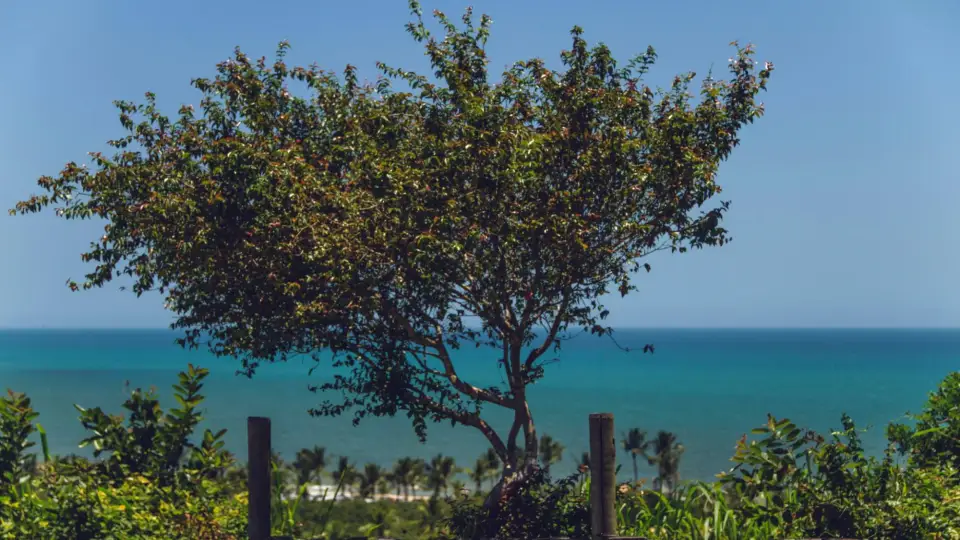
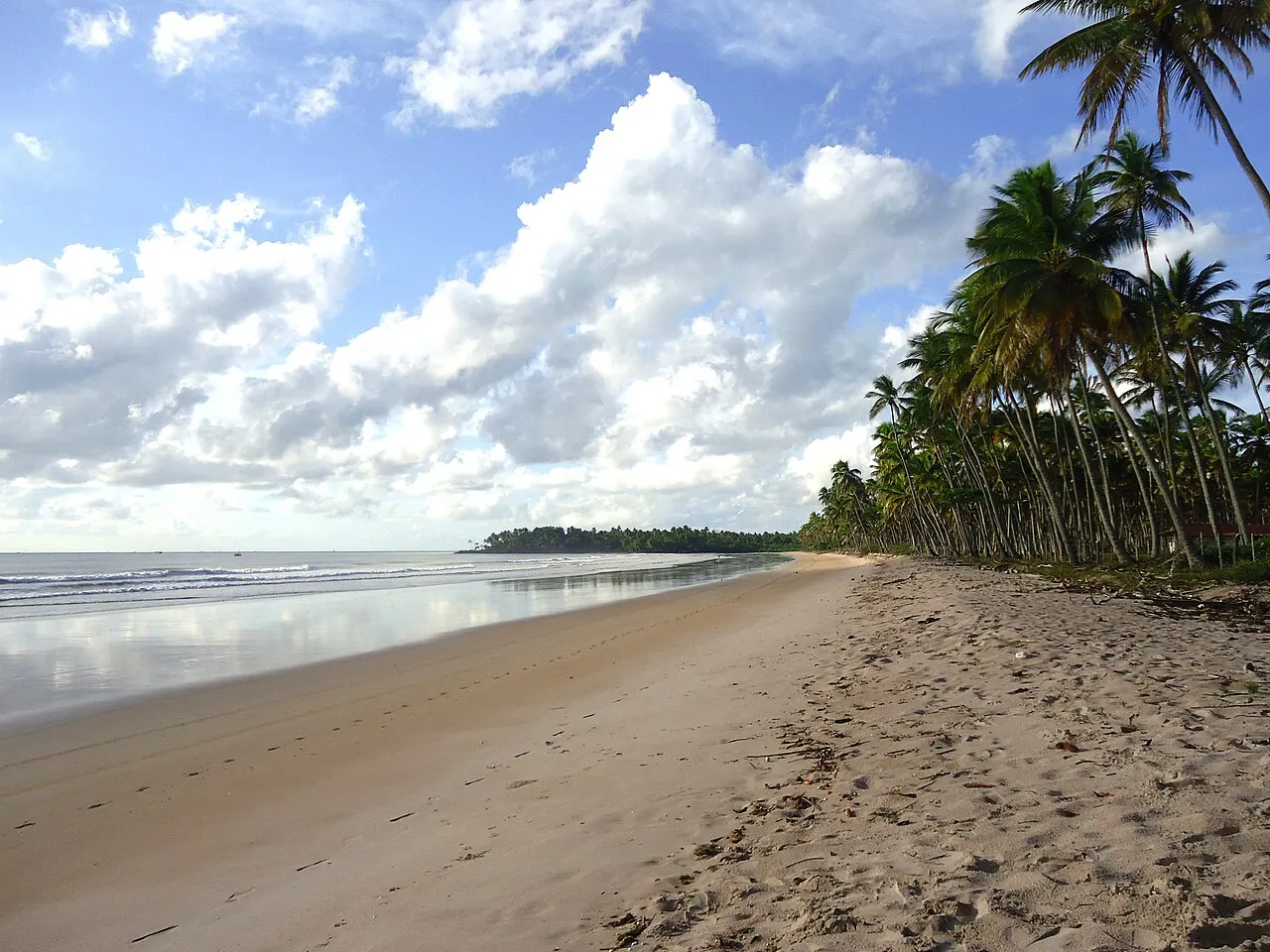
Boipeba's favorite beach, in a coconut grove with a few stands, a little over ten minutes' walk on a trail after Boca da Barra and neighboring Tassimirim. The sea usually has some swell. It is a stop for visitors who come from Morro to eat lobster at lunch, and those who sleep in Boipeba can arrive before or after the tour boats.
It appears on the menus of restaurants and stands in Morro and Boipeba and tends to cost less here than elsewhere on the coast.
Check access

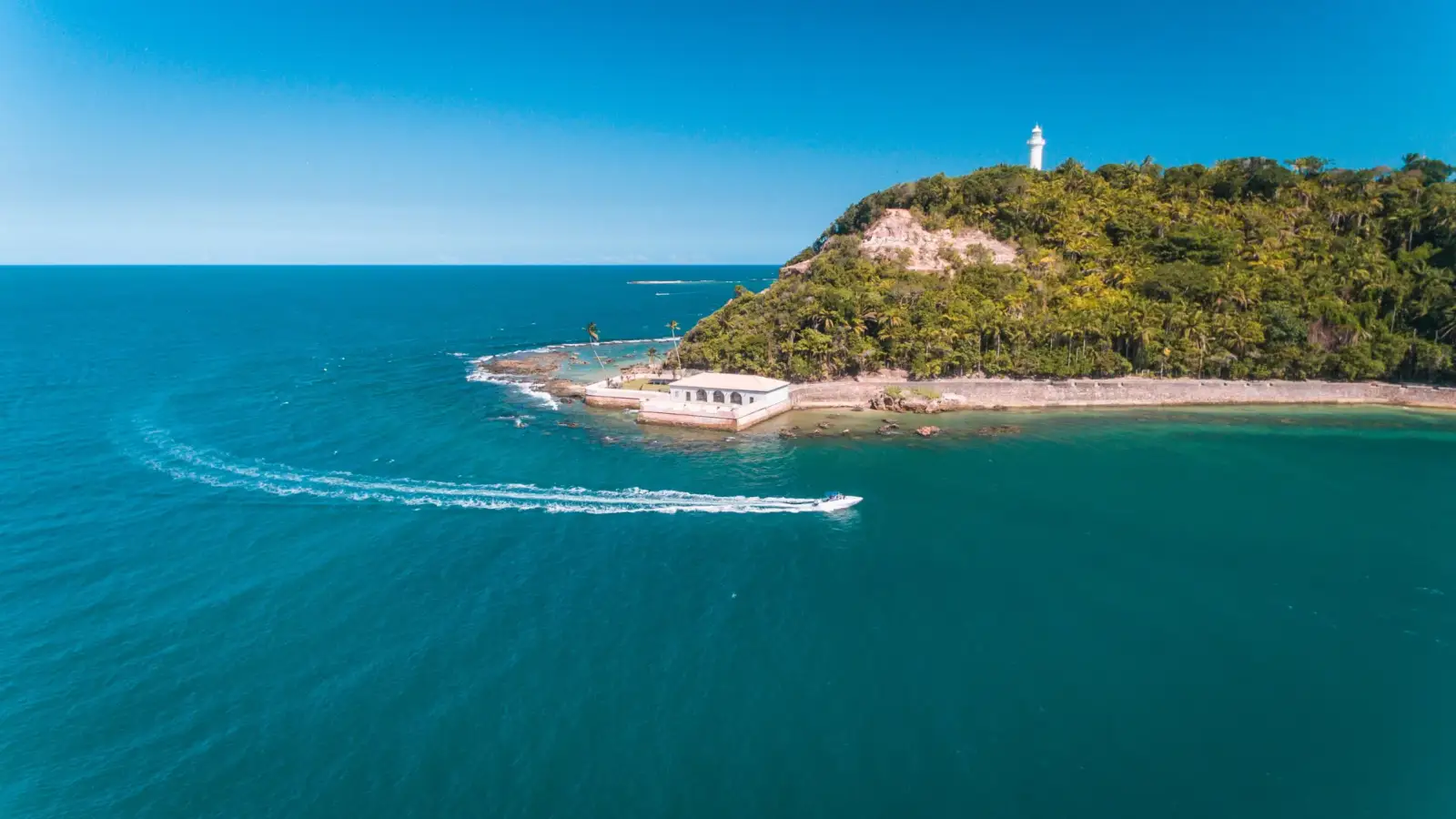
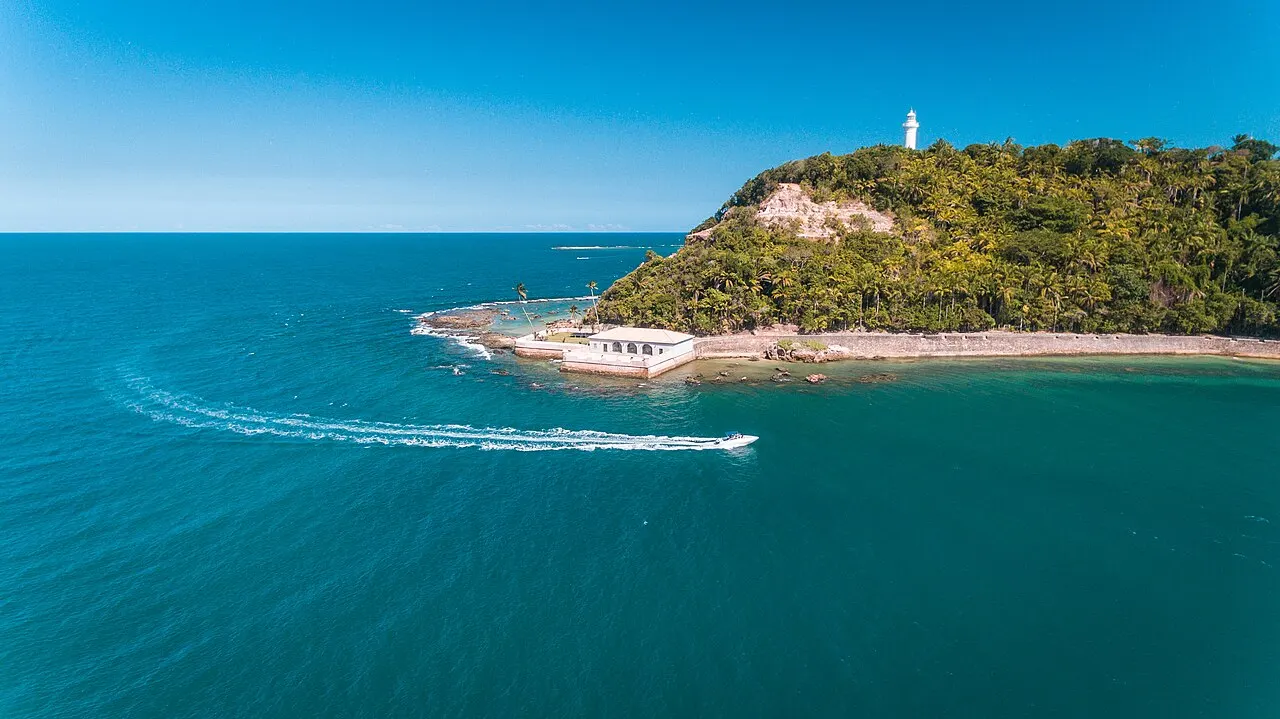
Farol do Morro
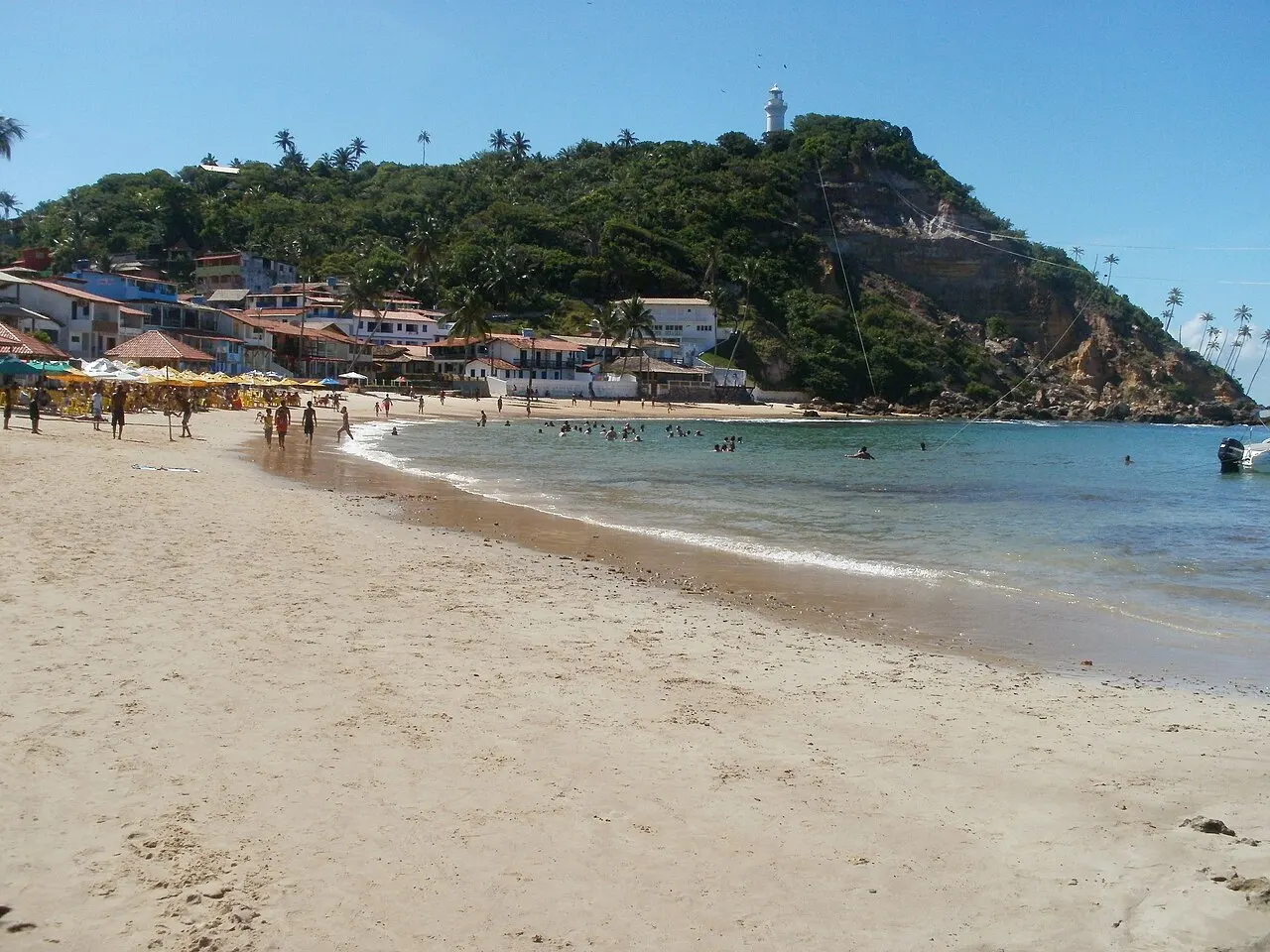
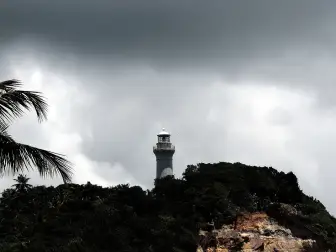
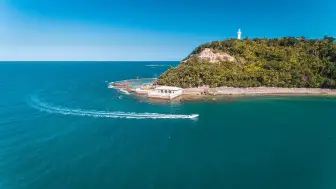
The 1855 lighthouse stands at the top of the hill, a climb up stairs from the center. The climb is free and the view takes in the first beaches and the open sea. Beside it starts the zip line that drops 340 meters to Primeira Praia, with a 50-meter fall and a landing in the water; it runs daily from 10 a.m. to 5 p.m., with no booking, and cost R$95 in November 2025, according to Viaje na Viagem. Belongings go down on a separate cable.
Tinharé holds Morro de São Paulo; to the south, separated by the estuary of the Inferno River, lies Boipeba, at 88 km².
Check access
Primeira Praia
The beach closest to the center is a narrow strip, sheltered by a row of pousadas, where the sea is a few steps from the tables. It tends to be less crowded than Segunda, and you can watch the zip-line descents from the lighthouse up close.
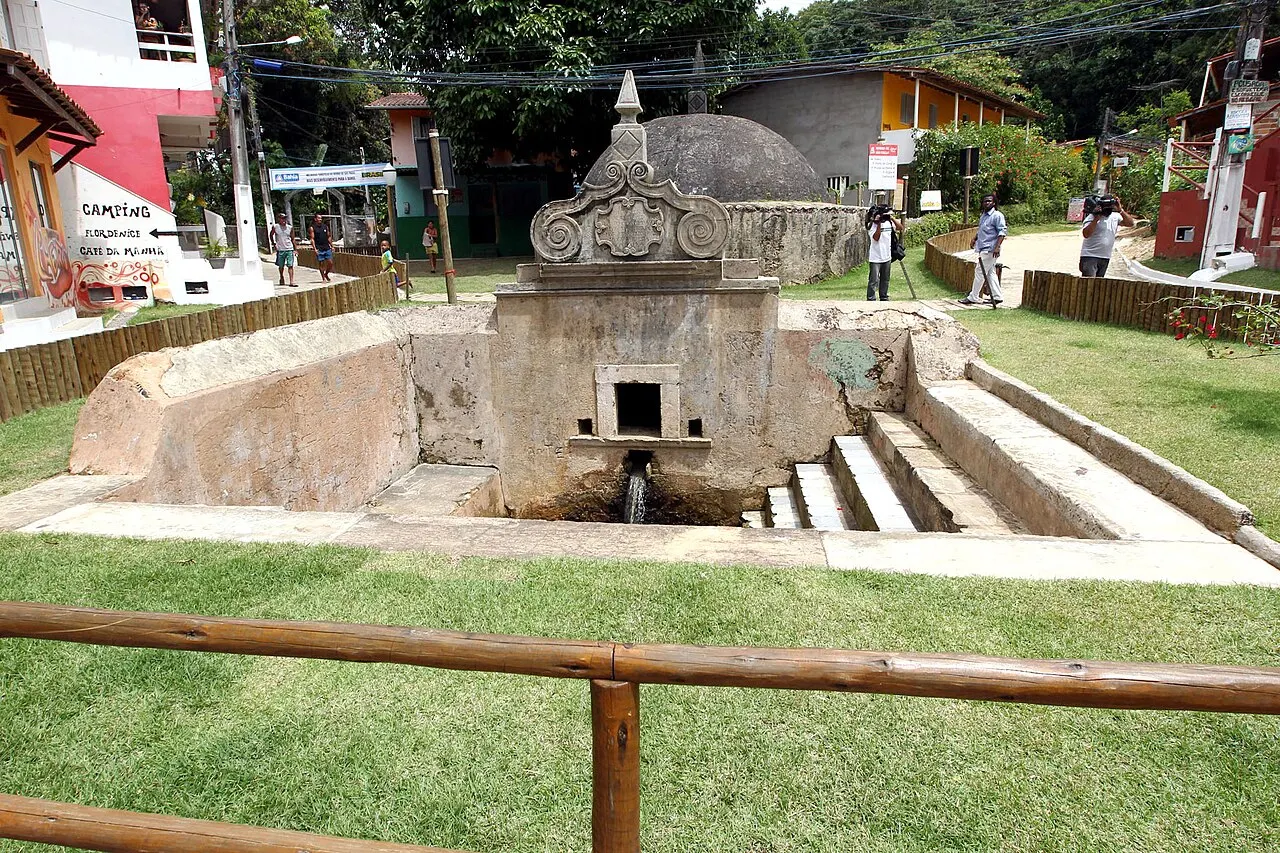
The village occupies the hill at the northern tip. The pier is at the bottom, facing the channel; a ramp leads to the stone gate and the square, and from there Rua da Fonte Grande runs toward the interior of the village.
Check access
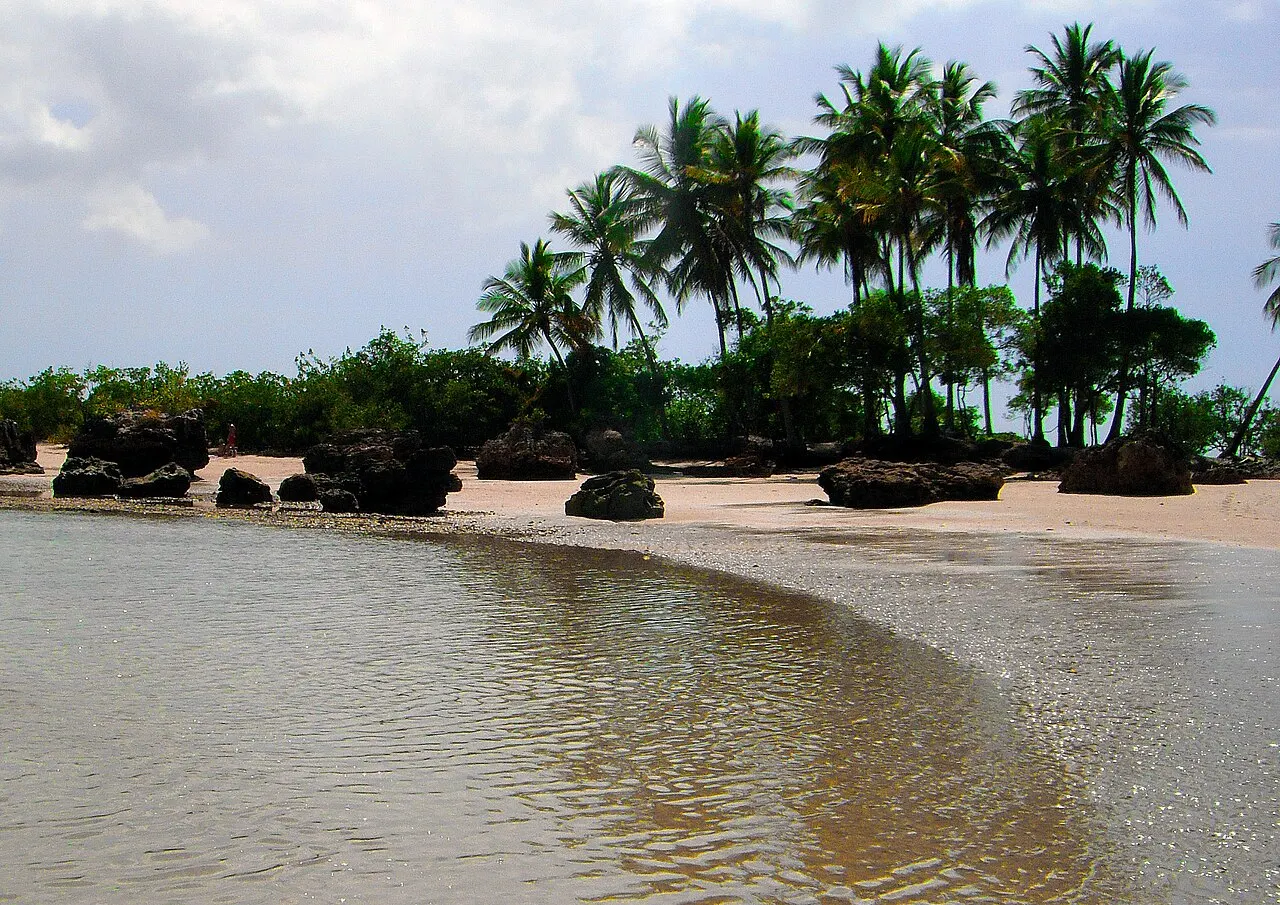
Segunda Praia
The busiest beach on the island, day and night. The stands rent umbrella and lounger sets (R$50 in low season, according to Viaje na Viagem in November 2025), and at night the restaurants on the deck set out tables on the sand with live music. At low tide, the sea is calm with a good bottom for swimming.
On the open-sea side, to the east, the beaches descend, numbered in the order they appear: Primeira, Segunda, Terceira and Quarta Praia are within walking distance, and Quinta Praia, also called Praia do Encanto, lies beyond a mangrove and can only be reached by the service road or by sea. Farther south, about 40 minutes by jeep, is the village of Garapuá.
Check access
Praia da Gamboa
The most interesting way there is on foot, at low tide: you leave by Rua do Porto de Cima, next to the Fonte Grande, pass through a stretch of woods and steps and continue along the sand to a clay cliff, where many people take a mud bath, and from there to the beach at Gamboa. Without stops, it is about 45 minutes and under 2 km. At high tide the passage is cut off, so the most practical plan is to go on foot and return by boat: there are regular boats between the pier in the village of Gamboa and the Morro pier (R$5 each way) and water taxis that leave from the stands area (R$10 per person with at least six passengers, or R$60 for a private boat), according to Viaje na Viagem, checked on October 16, 2026. When you land in Morro, show your TUPA receipt. The beach, at the mouth of the channel, has calm water, but not always blue.
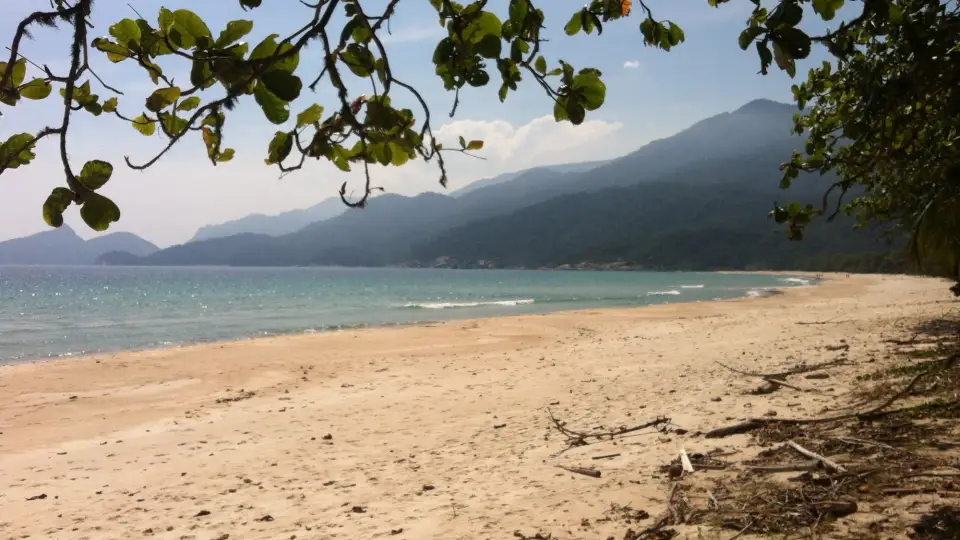
The tide changes the landscape twice a day: at low tide, the strip of sand widens and the rocks of Quarta Praia dam up shallow pools; at high tide, the sand disappears in stretches of Terceira Praia and the Gamboa trail is cut off. The biggest tidal ranges come at full and new moons.
Check access
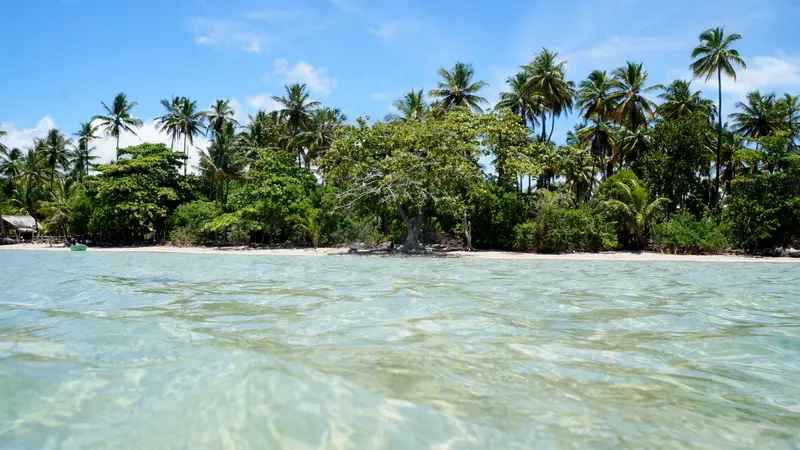
Piscinas Naturais de Moreré
Pools that form out at sea in front of Moreré at low tide, most visible at full and new moons. They receive the boats of the Volta à Ilha, so they can fill up with boats and people, which clouds the water. The beach at Moreré, when low tide at full or new moon dries it out, is only good for swimming again once the tide is coming in.
The second village of Boipeba, with sand streets and less bustle than Velha Boipeba.
Check access
Nilo’s itinerary
Start with the basic programme and choose extensions for the time you have.
Plan my days in the app ↗Day 1 · Arrival, the village, Gamboa and sunset at the fortress
Take a morning catamaran from the maritime terminal behind the Mercado Modelo, in Salvador; the crossing takes about 2 hours 30 minutes. If you get seasick, take medicine before boarding.
At the pier, hire a porter, climb the ramp and pay the TUPA at the booth at the top; keep the receipt.
Leave your bags at the pousada and have lunch at one of the beaches, where most restaurants open at lunchtime; in the center, almost all open only in the middle of the afternoon.
If low tide falls in the early afternoon, follow Rua da Fonte Grande to the fountain, take Rua do Porto de Cima and do the Gamboa trail along the beach, stopping at the clay cliff (about 45 minutes without stops). Return by regular boat from the Gamboa pier to the Morro pier, with the TUPA receipt at hand.
If the tide does not cooperate today, climb to the Farol do Morro and leave Gamboa for late afternoon on another day with low tide.
Late in the afternoon, go through the stone gate, turn left and watch the sunset from the walls of the Fortaleza do Morro de São Paulo.
At night, go down to Segunda Praia for dinner at one of the tables on the sand.
Day 2 · The numbered beaches to the pools of Quarta Praia
Check the tide table and set out from Primeira Praia about an hour before low tide, walking along the sand of Segunda and Terceira Praia.
At the start of Quarta Praia, about 2 km past Primeira, step into the pools that the rocks dam up at low tide and walk on the firm sand.
Have lunch at a stand at the start of Quarta Praia or on the Terceira Praia promenade, and walk back along the sand.
In the afternoon, if you did not go up on the first day, go to the Farol do Morro by the stairs from the center; if you like, ride the zip line down to Primeira Praia (daily from 10 a.m. to 5 p.m.).
Late afternoon on Segunda Praia, in a stand lounger, and dinner in the center.
Day 3 · Garapuá by 4x4
Choose for this day a low tide near midday and book the shared 4x4 tour to Garapuá the day before at an agency in the village.
Leave from the Receptivo, at the back of Segunda Praia, around 9:30 a.m.; the jeep stops at Quinta Praia, on the way out or back, depending on the tide.
In Garapuá, hire a boat on the beach to the natural pools, 15 minutes away, when the tide is low; the leg is not included in the 4x4.
Have lunch at the stands near the village and walk five minutes along the cove to reach the empty stretch of the beach.
Return by jeep in the middle of the afternoon and finish the day on Segunda Praia or in the center.

If you stay longer
Day 4 · To Boipeba: Velha Boipeba, Tassimirim and Cueira
Book the 8 a.m. pickup-truck transfer to Boipeba in advance; it crosses Tinharé by the dirt road and ends on a boat along the Inferno River to the Velha Boipeba pier.
At the pier, hire a porter to the pousada; if you stay on the beach, you walk on sand along the way.
Walk along the river to Boca da Barra beach and continue to the end of the sand; from there, a trail of a little over ten minutes leads to Tassimirim and Cueira.
Have lunch at Cueira; at low tide, Tassimirim has calm water among the rocks.
Late in the afternoon, the bar of the pousada O Céu de Boipeba, at the top of a hill near the village, is sought out for sunset; in June 2026, non-guests paid R$50, credited toward consumption. Have dinner on the square in Velha Boipeba and bring a flashlight if your pousada is on the beach.
Day 5 · Moreré, the pools and Bainema
Check the tide. If low tide is in the morning, walk along Boca da Barra and the trail to Cueira and continue along the beach to Moreré: about half an hour to a small stream that can only be crossed at low water, and ten more minutes to the village, about 40 minutes from Cueira. If the tide does not cooperate, go by tractor from the Ponto da Tiririca, at the back of Velha Boipeba, or by quad bike.
In Moreré, the natural pools are out at sea in front of the village and appear at low tide; ask in Moreré or at the pousada how to reach them on the day.
Take the short trail to the right of Moreré beach to Bainema, a beach with almost no buildings.
Have lunch in Moreré; if low tide has dried out the beach, wait for the water to return before swimming. Go back to Velha Boipeba by tractor or quad bike, because at high tide you cannot return along the sand.
Late in the afternoon, take a canoe or kayak trip through the mangroves or a boat to an oyster floating bar near Canavieiras, a village of Cairu. The departure from the island, the next day, is by the speedboats to Valença.

Food
Moqueca baiana
Fish or seafood stewed with tomato, onion, cilantro and dendê (palm) oil, sometimes with coconut milk, served in a clay pot. In Morro, some restaurants offer an “ensopado” version, without dendê; if you want the moqueca baiana, ask for it with dendê.
Lambreta
A shelled mollusk found practically only in Bahia. It goes into the pot with onion and seasonings and cooks in its own water until the shells open; the broth is usually served in a cup. Ask at the beach stands and the floating bars at the Garapuá pools, because it is not always available.
Lobster
It appears on the menus of restaurants and stands in Morro and Boipeba and tends to cost less here than elsewhere on the coast. On Cueira beach, in Boipeba, it is the reason for many lunch stops.
Bobó de camarão
Shrimp sautéed with green herbs and coconut milk, mixed into a cassava puree with dendê and ginger, served with rice. It is a dish of Bahia's Afro-Brazilian cuisine and appears next to the moquecas on the village menus.
Oysters from the floating bars of Cairu
Oysters farmed in the archipelago's rivers and served at floating bars near Canavieiras and Tapuia, villages of Cairu (not to be confused with the town of Canavieiras, in southern Bahia). The Volta à Ilha stops at one of these floating bars, and from Boipeba there are boat trips to eat them at sunset.
Fruit ice cream
The branch of Sorveteria da Ribeira, from Salvador, is across from the church, in the village center, with more than 60 flavors, among them mangaba, green coconut and tapioca.
Where to eat
- Caju · Village center (Caminho da Praia)
Moquecas and bobó in a restaurant decorated with straw and basketry, with starters such as coxinha de moqueca and desserts of cashew fruit and coconut. It is on the main street, where most restaurants usually open only in the middle of the afternoon: it is a choice for dinner.
Source · 2026-10-16
- Pedra Sobre Pedra · Segunda Praia (Rua da Prainha)
Bahian cooking with lobster, mariscada and shrimp in coconut, on a terrace at the top of the slope between Primeira and Segunda Praia, with a view of the evening bustle.
Source · 2026-10-16
- Maré Bar & Grill · Terceira Praia (promenade)
Moqueca at lunch, in the shade and with a sea view, and shrimp in pineapple; good for those on the beach who do not want to climb to the village.
Source · 2026-10-16
- Chez Max · Terceira Praia (promenade)
Naturally leavened pizza baked in a wood-fired oven and al dente pastas at a good-value Italian, for the nights when moqueca is not the plan.
Source · 2026-10-16
- Toca do Morcego · Village center (Caminho do Farol)
The village's most sought-after sunset, in a tree-shaded lounge with a view and a DJ; the menu runs from casquinha de siri (stuffed crab) to pizzas and sandwiches. It opens every afternoon at 4:30 p.m. and runs until 10 p.m.; on afternoons with a guest DJ, you need to buy a ticket beforehand.
Source · 2026-10-16
- Beach stands and the Garapuá pools
Lambreta cooked in its own water, with the broth served in a cup, when available. Ask at the stands and the floating bars at the pools.
- Sorveteria da Ribeira · Village center (across from the church)
Regional fruit ice creams, such as mangaba, green coconut and tapioca, at the branch of the Salvador ice cream shop.
Source · 2026-10-16
- Guido da Lagosta · Cueira (Boipeba)
Lobster on the beach, the lunch stop for those who walk to Cueira or come down from the tour boats.
Source · 2026-10-16
- Restaurante da Pousada Santa Clara · Velha Boipeba
Set-menu dinner, with three options of starter, main and dessert, renewed every night and with a foot in Bahian cooking. Non-guests must book, and the restaurant closes on Mondays.
Source · 2026-10-16
$: beach-stand snack, pastry or ice cream · $$: moqueca or seafood dish at a restaurant in the village or on the beach · $$$: set-menu dinner or lobster at a pousada restaurant · 2026-10-16
Day trips
Volta à Ilha of Tinharé and Boipeba
Morro's most popular speedboat tour lasts all day and leaves from Terceira Praia. It goes over open sea, stops at the natural pools of Garapuá and Moreré when the tide is low, lands at Boca da Barra, in Boipeba, for lunch there or at Cueira, a 15-minute walk away, passes an oyster floating bar in Canavieiras and makes a short stop in the historic town of Cairu, returning through the channel to the Morro pier. In November 2025 it cost R$350 per person, a price set by the city government. The stops at the pools depend on a low tide in the morning, typical of full and new moons; confirm the actual itinerary with the agency and bring the TUPA receipt for the return.
Where to begin
Arrival, the village, Gamboa and sunset at the fortress
Take a morning catamaran from the maritime terminal behind the Mercado Modelo, in Salvador; the crossing takes about 2 hours 30 minutes. If you get seasick, take medicine before boarding.
The numbered beaches to the pools of Quarta Praia
Check the tide table and set out from Primeira Praia about an hour before low tide, walking along the sand of Segunda and Terceira Praia.
Garapuá by 4x4
Choose for this day a low tide near midday and book the shared 4x4 tour to Garapuá the day before at an agency in the village.
To Boipeba: Velha Boipeba, Tassimirim and Cueira
Book the 8 a.m. pickup-truck transfer to Boipeba in advance; it crosses Tinharé by the dirt road and ends on a boat along the Inferno River to the Velha Boipeba pier.
Moreré, the pools and Bainema
Check the tide. If low tide is in the morning, walk along Boca da Barra and the trail to Cueira and continue along the beach to Moreré: about half an hour to a small stream that can only be crossed at low water, and ten more minutes to the village, about 40 minutes from Cueira. If the tide does not cooperate, go by tractor from the Ponto da Tiririca, at the back of Velha Boipeba, or by quad bike.
Money
The currency is the real (R$). The TUPA costs R$70 per visitor since December 20, 2025, with exemptions for children under 5, people over 60 and residents of Cairu and six neighboring municipalities, and a half fare for people with disabilities (the conditions are in “Arrival and the TUPA”); according to Viaje na Viagem, it can be paid by card at the kiosks or in cash or by card at the counters, and the increase to R$90 has been suspended since July 2026. The service prices that weigh most in the budget are transport and boat tours: in November 2025, according to Viaje na Viagem, the catamaran from Salvador cost R$152 outbound, the Volta à Ilha R$350 per person, a price set by the Cairu city government, the 4x4 tour to Garapuá R$130, the zip line R$95 and the umbrella set with two loungers at Segunda Praia R$50 in low season. The pickup-truck transfer to Boipeba cost R$150 per person. Porters, boatmen and tractor drivers work from fare tables, and asking the price before hiring avoids surprises. Pousada prices vary widely between low season and summer.
From Salvador to Morro, and from Morro to Boipeba
Guide estimate
Scroll to compare all columns
| Route | Time | Price |
|---|---|---|
| Salvador → Morro · catamaran | about 2 hours 30 minutes, 1 hour 30 minutes on open sea | R$152 outbound and R$139 return (November 2025) |
| Salvador → Morro · semi-overland transfer: boat, bus or van and speedboat | 1 hour by boat, up to 2 hours by road and 20 minutes by speedboat | R$142 (November 2025) |
| Salvador → Morro · on your own: ferry, bus and speedboat via Valença | about 4 hours 30 minutes, with waits | price not given |
| Salvador → Morro · single-engine plane | about 25 minutes | from R$753 per leg (November 2025) |
| Morro → Boipeba · pickup truck and boat, Expresso Madalena | 1 hour 10 minutes by pickup, plus the Inferno River crossing | R$150 per person (checked on October 16, 2026) |
| Morro → Valença · speedboat | 35 to 40 minutes | R$40 (December 2025) |
| Valença → Boipeba · speedboat | 1 hour 20 minutes | R$63 (December 2025) |
Getting there and around
From Salvador airport
From the airport to the maritime terminal behind the Mercado Modelo or to the São Joaquim Terminal, where the crossings leave from, count about 1 hour across the city. According to Viaje na Viagem, you can only reach Morro the same day by landing in Salvador by about 3 p.m. and booking the semi-overland transfer, which coordinates the connections; on your own, the limit is around 11 a.m. Otherwise, the safest plan is to sleep in Salvador and take the first catamaran or transfer the next day. The single-engine flight, more expensive, is the only way to go directly from the airport to the island.
From Salvador, by catamaran
The catamarans leave from the maritime terminal behind the Mercado Modelo, in Salvador, and reach the Morro pier in about 2 hours 30 minutes, 1 hour 30 minutes of it on open sea. Three companies run the route, Biotur, Ilha Bela and Farol do Morro, each at its own time. In November 2025, according to Viaje na Viagem, the ticket cost R$152 outbound and R$139 return, the last catamaran left Salvador at 2:30 p.m. and the last from Morro at 3 p.m.; check current fares and times on the companies' sites, because the schedules change by season. The return to Salvador tends to be bumpier. In rough seas, the trip is switched to the semi-overland route without advance notice, and Biotur recommends at least six hours between leaving Morro and a flight in Salvador.
Semi-overland, no open sea
Agencies sell a group transfer that leaves from the same terminal: boat to Mar Grande, on Itaparica Island (1 hour), bus or van to the Atracadouro Bom Jardim, near Valença (up to 2 hours), and speedboat to Morro (20 minutes). In November 2025, IslandTour charged R$142 from the maritime terminal. There are also departures from the airport and from hotels, with one hour more.
On your own
The cheapest route is the ferry from the São Joaquim Terminal to Bom Despacho, on Itaparica (1 hour, every hour from early morning), the bus from Bom Despacho to Valença (about 2 hours; ask to get off at the stop closest to the dock, before the bus station) and the speedboat from the Valença Hydroway Terminal to Morro (about 35 minutes; the last one left at 6 p.m. in November 2025). With waits, the trip takes about 4 hours 30 minutes, and the connections are not coordinated with each other.
By plane
Nine-seat single-engine planes fly from Salvador to Morro in about 25 minutes and land on the strip at Terceira Praia. In November 2025, Abaeté, the only airline with scheduled flights, charged from R$753 per leg.
Arrival and the TUPA
Catamarans and speedboats arrive at the same pier, at the foot of the village. At the top of the ramp is the TUPA booth, charged to every visitor: R$70 since December 20, 2025. You can pay on the spot or beforehand, through the portal tupa.cairu.ba.gov.br. Under municipal law (Law 586/2019 and Law 838/2026), the following do not pay: children under 5, people over 60 and residents of Cairu and of the neighboring municipalities of Valença, Taperoá, Nilo Peçanha, Igrapiúna, Ituberá and Camamu; people with disabilities, and a companion when needed, pay a half fare. The age exemption and the half fare depend on prior recognition at the TUPA Service Center, and the neighbors' exemption requires a photo ID and proof of residence issued no more than 90 days ago. Keep the receipt, because it is checked when a boat tour lands at the pier.
On the island
There are no cars on the village streets or on the beaches. Porters with wheelbarrows wait for each boat and charge per item; in November 2025, R$25 per small suitcase or backpack and R$30 per large suitcase, from the pier to any pousada up to Terceira Praia. Up to Terceira Praia, everything is done on foot. For Quarta and Quinta Praia, jeeps and taxis leave from the Receptivo, at the back of Segunda Praia, along a service road behind the beaches.
To Boipeba
There is no direct speedboat between the two islands. The agency Expresso Madalena runs a shared pickup-truck transfer along the dirt road through the interior of Tinharé to the southern tip (1 hour 10 minutes) and a boat that crosses the Inferno River to the Velha Boipeba pier; departures from Morro at 8 a.m., 12 p.m. and 5 p.m. and R$150 per person, according to Viaje na Viagem (checked on October 16, 2026). The alternative by sea requires a change in Valença: a speedboat from Morro to the Valença Hydroway Terminal (35 to 40 minutes, R$40 in December 2025; a ticket to the Atracadouro will not do) and another from Valença to Boipeba (1 hour 20 minutes, R$63 in December 2025, with seats that sell out). If you travel light, you can also take your backpack on the Volta à Ilha and get off at Boca da Barra. A fee of R$50 to enter through Boipeba was announced to start on December 20, 2026; the law provides that those who enter through Boipeba first and then go to Tinharé pay the difference to the Morro fee, but it does not say what those who make the reverse trip pay, so confirm on the TUPA portal before you go.
In Boipeba
There are no cars here either, except the ambulance. From the pier, you walk to the village or the beach; in December 2025, porters charged R$15 to R$30 per suitcase, depending on size and destination. For Moreré, the tractor with bench seats leaves from the Ponto da Tiririca, at the back of the village (R$15 per person each way in December 2025), and quad bikes run fixed-fare rides from the Ponto do Ribeirinho and the Tiririca. To continue your trip, the Boipeba speedboats go to Valença, Torrinha and Graciosa, on the mainland.
Safety
The most common risks in Morro de São Paulo and Boipeba come from the sea, the tide and the sun. The Gamboa trail follows the sand and is cut off at high tide; go on foot at low tide and return by boat. In Boipeba, anyone walking from Cueira to Moreré crosses a small stream that can only be forded at low tide and cannot return along the sand once it rises; there are tractors and quad bikes in the interior. At Quarta Praia, the rocks of the pools hurt at high tide. The catamaran crossing has a stretch on open sea and can be canceled in bad weather. At night in Boipeba, the paths between the beach pousadas and the village have no lighting, and a flashlight is missed. On November 30, 2024, three men were shot dead in Boipeba in an attack that police linked to a dispute between drug-trafficking factions in the Valença region; according to Correio, a family staying on the island cut its stay short after the case. Follow the local news before the trip and follow your pousada's guidance.
Etiquette tips
Keep your TUPA receipt
The fee receipt is checked again when you return from a boat tour through the main pier. Those entitled to an age exemption or a half fare should request recognition at the TUPA Service Center, with ID, before going through the checkpoint.
Agree on the price first
Porters, boatmen, tractor drivers and quad bike drivers charge by table, by item or by leg. Ask the price before handing over your suitcase or boarding the boat.
Step carefully in the natural pools
The pools at Garapuá, Moreré and Quarta Praia are formed by reefs and rocks. Walking on the coral and stirring up the bottom clouds the water and hurts the reef; prefer to swim and wear reef shoes where there are rocks.
Your trash goes back with you
Collection on the islands is expensive and depends on boats: in May 2026, most of the money spent from the TUPA went to waste management. Take back from the distant beaches what you brought.
Processions have the right of way
During the festivals of Nossa Senhora da Luz, in Morro, and of the Divino, in Boipeba, Masses and processions take over the streets and the sea. Make way and avoid loud sound along the route.
Mistakes to avoid
Flying on the day you return
The catamaran may be swapped for the semi-overland route because of the sea, and the trip becomes much longer. Biotur recommends at least six hours between leaving Morro and the flight; sleeping a night in Salvador is safer.
Booking a tour without checking the tide
The Gamboa trail is cut off at high tide, and the stops at the Garapuá and Moreré pools only happen when low tide coincides with the boat's passage. Check the tide table before buying the tour.
Buying the wrong speedboat to Boipeba
Anyone going from Morro to Boipeba by sea needs a ticket to the Valença Hydroway Terminal, not to the Atracadouro Bom Jardim, and a gap of about 1 hour 30 minutes before the speedboat from Valença to Boipeba.
Renting a car just for Morro and Boipeba
Cars do not enter the islands. The rental car sits in a lot on the mainland, charging a daily rate, while you walk.
Bringing a large wheeled suitcase
The pier ramp is steep, and in Boipeba anyone staying on the beach walks on sand from the moment of landing. A backpack or small suitcase makes it easier, and a porter handles the rest.
Useful phrases
Qual é o horário da maré baixa hoje?
What time is low tide today? A useful question for deciding between Gamboa, Quarta Praia and the natural pools
Quanto é para levar a mala até a pousada?
How much to take the suitcase to the pousada? To agree on the price with the porter at the pier
Onde fica o Receptivo?
Where is the Receptivo? The stand for jeeps and taxis at the back of Segunda Praia
Tem lambreta hoje?
Is there lambreta today? To ask at the stands and the floating bars
Com dendê, por favor
With dendê, please. To order the moqueca baiana rather than the ensopado
A lancha sai de onde?
Where does the speedboat leave from? The tours leave from Terceira Praia; the lines to Valença, from the pier
Where to stay
- Village center (Centro) · Those arriving with luggage, who want the pier close and like to walk to dinner and nights out: It is a few minutes from the pier, the fortress and the restaurants on the square and the Caminho da Praia. The drawback is having no beach at the door: for the sand, you go down to the numbered beaches and climb the ramp back up.
- Primeira Praia · First trip, couples and those who want a beach out front without leaving the center behind: It is the best-balanced location: walkable from the pier, a short slope from the center and close to Segunda Praia. The strip of sand is narrow, some stretches have no room for loungers and the sea can be a little choppier.
- Segunda and Terceira Praias · Those who want the movement of the beach by day and by night at their door: They sit on top of the stands, the restaurants with live music and the departure point of the tour boats, at Terceira. The same bustle is the drawback for those who want quiet at night, and along the Terceira promenade the sand only shows at low tide.
- Quarta and Quinta Praias · Those who want peace and an empty beach, and accept depending on transport: Scattered hotels and pousadas, toes in the sand, with shallow water and natural pools at Quarta. To reach the village and the busy beaches you need a jeep or taxi from the Receptivo, and Quinta can only be reached by the service road or by sea.
- Velha Boipeba (village) · Those going to Boipeba without carrying much, who want restaurants and nightlife nearby: The path from the pier to the village is paved, and the square concentrates the restaurants. The village pousadas are mostly simple, and Boca da Barra beach is about 15 minutes away on foot.
- Boca da Barra (Boipeba) · Those who want a beach pousada in Boipeba and still go to the village at night: It is the beach closest to the village, with charming beach pousadas just past the larger stands. From the pier to the pousada you walk on sand, and at night the way to the village calls for a flashlight.
- Moreré (Boipeba) · Those who want the quietest place on the itinerary and stay more days: A village of sand streets, far from the bustle of Velha Boipeba, with good-quality pousadas and the natural pools out front. Access is hard: tractor or quad bike through the interior, or speedboat with a landing in the water, because there is no pier.
$: simple pousada in the center or on the back streets behind the beaches · $$: pousada with a pool on Primeira, Segunda or Terceira Praia · $$$: beachfront pousada or hotel on Quarta and Quinta Praias, in Boca da Barra or in Moreré · 2026-10-16
Districts

Village center (Centro)
The village at the top of the hill: Praça Aureliano Lima, the church of Nossa Senhora da Luz, Rua da Fonte Grande and the Caminho da Praia, with shops, restaurants and pousadas. It is close to the pier and the fortress, and it is where everyone passes through at night.
Primeira Praia
A narrow strip of sand behind a row of pousadas, a short slope from the center. The sea can be a little choppier than at the other beaches, and this is where the zip line from the lighthouse ends.
Segunda Praia
The center of beach life and nightlife: wide sand, beach stands with loungers, restaurants with tables on the sand and live music at night. At low tide, the sea turns into a pool with good depth for swimming. At the back is the Receptivo, the stand for jeeps and taxis to the distant beaches.
Terceira Praia
It begins past the Ilha da Saudade, the tongue of sand that separates Segunda from Terceira, and runs along a promenade with restaurants and pousadas. This is where the tour boats leave from, and where the airstrip used by scheduled flights is. Along the promenade, sand only shows at low tide.
Quarta Praia
Long, with shallow water. The start has beach stands; after that, only scattered pousadas. At low tide, the rocks form shallow natural pools and the sand is firm for walking; at high tide, the same rocks call for care.
Quinta Praia (Praia do Encanto)
Separated from Quarta by a mangrove, with calm water and no rocks. With no access along the sand, it ends up used mostly by guests of the hotels in that stretch.
Gamboa
A village on the other side of the hill, facing the mainland, with a calm-water beach at the mouth of the channel. You get there on foot along the beach at low tide, or by boat from the Morro pier.
Garapuá
A small fishing village in the south of Tinharé, with a horseshoe cove of calm water and natural pools out at sea, 15 minutes by boat from the beach at low tide.
Velha Boipeba
The main village of Boipeba Island, on the bank of the Inferno River, with low houses, the church of Divino Espírito Santo and the square where the restaurants cluster. The pier for the speedboats is there.
Moreré
The second village of Boipeba, with sand streets and less bustle than Velha Boipeba. Out at sea in front lie the natural pools of Moreré; there is no pier, and access by land is by tractor or quad bike.
History
1531 · Martim Afonso de Sousa arrives at Tinharé
The expedition of Martim Afonso de Sousa lands on the island, which he calls “Tynharéa.” The Tupinambá lived there before the Portuguese arrived.
1535 · Founding of the settlement
Francisco Romero founds the village at the northern tip of the island. The place watches over the false bar of Todos os Santos Bay, an entry route to Salvador.
1537 · Jesuits in Boipeba
Portuguese Jesuits settle on Boipeba Island, one of the oldest settlements in Bahia.
1616 · The parish of Divino Espírito Santo
The bishop of Salvador, dom Constantino Barradas, creates the parish of Divino Espírito Santo in Boipeba. The island's Divino festival traces its origin to that date.
1628 · The Dutch sack
Admiral Piet Heyn attacks and sacks the island, four years after a Dutch fleet had landed there.
1631 · Work begins on the fortress
The engineer Paulo Nunes Tinoco records works between September and November 1631. The first fort, Nossa Senhora da Conceição, had six pieces of artillery in the drawing of the time.
1654 · Cornerstone of the Cairu convent
The Franciscans lay the cornerstone of the church of Santo Antônio in Cairu, four years after founding the convent in wattle and daub. Its facade is regarded as the first expression of the Baroque in Brazilian architecture.
1728–1730 · The New Fort
Works begun on April 4, 1728 raise the Forte da Ponta, quadrangular, with bastions at the corners; the inscription over the gate reads 1730.
1746 · The Fonte Grande
The Fonte Grande is built, described as the largest colonial water supply system in Bahia.
1855 · The lighthouse
The lighthouse is raised at the top of the hill, on the site of the original chapel of Nossa Senhora da Luz, the village's patron saint.
1938 · Listing of the fortress
On May 24, 1938, the Fortaleza do Morro de São Paulo is entered in the Livro do Tombo Histórico and the Livro de Belas Artes of the federal heritage register.
1942 · The Itagiba
On August 17, 1942, the German submarine U-507 torpedoes the ship Itagiba near the lighthouse. Thirty-six people die; some of the survivors are taken to Valença.
1992 · The Tinharé-Boipeba APA
The Tinharé and Boipeba Islands Environmental Protection Area (APA) is created, covering both islands.
2025–2026 · The TUPA goes up, and the next increase is suspended
The visitor fee rises from R$50 to R$70 on December 20, 2025; in January 2026, a law extends the exemption to residents of six neighboring municipalities. In July 2026, the city government suspends the increase to R$90 indefinitely.
Complete history
A village to watch the sea
Morro de São Paulo exists because of its position. The northern tip of Tinharé Island commands the false bar of Todos os Santos Bay and the Tinharé channel, where the produce supplying Salvador used to pass. Martim Afonso de Sousa reached the island in 1531, and the settlement was founded in 1535 on land where the Tupinambá lived. In the 17th century the coast became a target: a Dutch fleet landed in 1624 and Piet Heyn sacked the island in 1628. The Portuguese answer was the fortress, with works recorded from 1631 and a new fort raised between 1728 and 1730, whose walls are the ruins now on the left as you climb from the pier.
Water, light and a shipping route
The colonial village gained the Fonte Grande in 1746, described as the largest colonial water supply system in Bahia, and the lighthouse in 1855, raised at the top of the hill where the original chapel of Nossa Senhora da Luz, the place's patron saint, once stood; the patron saint's church you visit today, on the square, dates from the middle of the 19th century. The channel and the lighthouse continued to weigh on its history: on August 17, 1942, the German submarine U-507 sank the ship Itagiba off the lighthouse, with 36 dead. Boipeba, to the south, kept a slower rhythm, with the parish of Divino Espírito Santo created in 1616 and a village that still keeps low houses around the church.
From fishing village to an archipelago that charges admission
Today Morro de São Paulo is the main tourist destination of Cairu, a municipality of about 18,000 residents that receives, according to Bahia Notícias, close to 800,000 visitors a year, about 400,000 of them in Morro. The Tinharé-Boipeba Environmental Protection Area, from 1992, covers both islands. To pay for garbage collection and for services under pressure from tourism, the municipality charges visitors the TUPA (Tarifa por Uso do Patrimônio do Arquipélago, the archipelago heritage use fee), created by municipal Law 586/2019, which exempts residents of Cairu, children under 5 and people over 60; in May 2026, R$768,745.87 of the R$878,665.91 spent from it went to waste management. The amount rose in December 2025, and in July 2026 the city government suspended a new increase until works in the archipelago's two main districts are finished.
The seat of the municipality is one of the oldest towns in Brazil, with a Franciscan convent with a Baroque facade. The Volta à Ilha stops there only a few minutes, and I'd use the stop to go into the church of Santo Antônio.
Geography and shape of the city
The Cairu archipelago
Cairu is a municipality made up of 26 islands, three of them inhabited. Tinharé holds Morro de São Paulo; to the south, separated by the estuary of the Inferno River, lies Boipeba, at 88 km². To the west runs the Tinharé channel, which separates the islands from the mainland and leads to Valença, the port from which the speedboats to Morro and Boipeba depart. The cover is Atlantic forest, restinga scrub, coconut groves and mangrove, with coral reefs along the coast.
The village and the numbered beaches
The village occupies the hill at the northern tip. The pier is at the bottom, facing the channel; a ramp leads to the stone gate and the square, and from there Rua da Fonte Grande runs toward the interior of the village. On the open-sea side, to the east, the beaches descend, numbered in the order they appear: Primeira, Segunda, Terceira and Quarta Praia are within walking distance, and Quinta Praia, also called Praia do Encanto, lies beyond a mangrove and can only be reached by the service road or by sea. Farther south, about 40 minutes by jeep, is the village of Garapuá. Gamboa is on the other side of the hill, facing the mainland.
Tides and climate
The tide changes the landscape twice a day: at low tide, the strip of sand widens and the rocks of Quarta Praia dam up shallow pools; at high tide, the sand disappears in stretches of Terceira Praia and the Gamboa trail is cut off. The biggest tidal ranges come at full and new moons. The climate is humid tropical, warm all year, with the rainiest season from April to July.
Culture
Segunda Praia at night
Morro's nightlife centers on the deck of Segunda Praia, where restaurants put tables on the sand, play live music and stands sell fruit cocktails at night. Boipeba has another rhythm: the square in Velha Boipeba gets busier on holiday and vacation nights, and the rest of the island goes to bed early.
Church and sea festivals
The religious calendar marks both islands. In Morro, the festival of Nossa Senhora da Luz, patron saint of the district, ends in September with a solemn Mass and a procession, in a tradition the city government traces back to the 17th century. In Boipeba, the festival of Divino Espírito Santo lasts about ten days and includes the pilgrimage of São Francisco, patron saint of fishermen and shellfish gatherers, and a sea procession with the images of the Divino and of Nossa Senhora.
Fishing and the cooking of newcomers
Artisanal fishing is still present in the archipelago: Garapuá is a fishing village, the pilgrimage of São Francisco in Boipeba honors the patron saint of fishermen and shellfish gatherers, and in September 2026 the city government announced R$1.8 million in support for artisanal fishing. In the village of Morro, the cooking has a strong presence of Argentine and Italian owners and cooks who settled on the island, which explains so much pasta and meat alongside the moquecas.
Lambreta cooks in its own water when the shells open, and the broth comes served in a cup. I'd ask for it at the stands and the floating bars at the Garapuá pools.
Festivals and events
New Year's Eve
December 31. The island fills up, with New Year parties on the beaches, and January stays busy because of school vacations. Lodging and the catamaran need to be booked in advance.
After Carnival
Movable date, between February and March. During the official days of the festival, much of the crowd is in Salvador; from Ash Wednesday to the following Sunday, many people cross over to Morro, which gets busy.
Festival of Divino Espírito Santo (Boipeba)
Movable date, tied to Pentecost. It is about ten days of celebration in Velha Boipeba, with a festive Mass in the church of Divino, the pilgrimage of São Francisco and a sea procession; in 2026, the peak was on May 24 and 25. The parish was created in 1616.
Festival of Nossa Senhora da Luz
September. The festival of Morro de São Paulo's patron saint has a solemn Mass and a procession through the village; in 2026, the celebrations ended on Tuesday, September 8.
Frequently asked questions
Morro de São Paulo: how do I get there from Salvador?
By catamaran, from the terminal behind the Mercado Modelo, in about 2 hours 30 minutes, 1 hour 30 minutes of it on open sea; in rough seas, the trip is switched to the longer semi-overland route. The route via Itaparica and Valença is cheaper, but the connections are not coordinated.
Morro de São Paulo: can I get there on the day I fly in?
Only by landing in Salvador by about 3 p.m. and booking the semi-overland transfer, which coordinates the connections; on your own, the limit is around 11 a.m. Otherwise, the safest plan is to sleep in Salvador and take the first catamaran or transfer the next day.
Morro de São Paulo: how much is the TUPA?
R$70 per visitor since December 20, 2025; the increase to R$90 was suspended in July 2026. You pay at the booth at the top of the pier ramp or beforehand, on the TUPA portal, and the receipt is checked again when a boat tour lands at the pier.
Morro de São Paulo: who does not pay the TUPA?
Children under 5, people over 60 and residents of Cairu and six neighboring municipalities, the latter with photo ID and proof of residence issued within 90 days; people with disabilities, and a companion when needed, pay a half fare. The age exemption and the half fare depend on prior recognition at the TUPA center.
Morro de São Paulo: how many days should I stay?
Five days: three in Morro, for the village and Gamboa, the numbered beaches to Quarta Praia and Garapuá, and two sleeping in Boipeba. With three days, stay only in Morro and, if Boipeba is a priority, swap Garapuá for the Volta à Ilha.
Morro de São Paulo: how do I get to Boipeba?
There is no direct speedboat. Expresso Madalena goes by pickup truck and boat to Velha Boipeba (8 a.m., 12 p.m. and 5 p.m.; R$150 as checked in October 2026). By sea, you change boats in Valença: buy to the Hydroway Terminal, not the Atracadouro. A R$50 Boipeba fee was announced for December 20, 2026: confirm on the TUPA portal.
Morro de São Paulo: how do I get to Gamboa?
On foot along the beach at low tide, leaving by Rua do Porto de Cima, in about 45 minutes without stops; at high tide the passage is cut off. The most practical plan is to return by regular boat to the Morro pier, with your TUPA receipt at hand.
Morro de São Paulo: how does the Volta à Ilha work?
The full-day speedboat tour leaves from Terceira Praia, stops at the Garapuá and Moreré pools, lands in Boipeba for lunch and passes through Cairu. It cost R$350 per person in November 2025; the pool stops depend on a morning low tide, typical of full and new moons.
Morro de São Paulo: when is the best time to go?
September to February; January, New Year's Eve and the days after Carnival are the busiest, and April to June concentrate the rains, with more uncertain speedboat tours.
Morro de São Paulo: where should I stay?
Primeira Praia is the best-balanced location, walkable from the pier and the center. Segunda and Terceira have the nightlife at the door; Quarta and Quinta are quiet but depend on a jeep or taxi. In Boipeba, Velha Boipeba concentrates the restaurants, and Moreré, the quietest place, is reached only by tractor, quad bike or speedboat with no pier.
Other cities in the country
Brazil ↗- Days
- 4
- When
- Apr–Jun
- Per person/day
- Average 615 BRLMid-range · per person/day
Cost scope
Per person per day: accommodation, meals, urban transport, visits and a small allowance for extras. Flights excluded; larger purchases vary. Editorial estimate, not a quote.
- Days
- 2–3
- When
- Apr–May · Sep
- Per person/day
- Average 400–700 BRLMid-range · per person/day
Cost scope
Per person per day: accommodation, meals, urban transport, visits and a small allowance for extras. Flights excluded; larger purchases vary. Editorial estimate, not a quote.
- Days
- 2–3
- When
- Jan–Mar · Sep–Dec
- Per person/day
- Average 350–550 BRLMid-range · per person/day
Cost scope
Per person per day: accommodation, meals, urban transport, visits and a small allowance for extras. Flights excluded; larger purchases vary. Editorial estimate, not a quote.
- Days
- 1–2
- When
- May–Sep
- Per person/day
- Average 260–520 BRLMid-range · per person/day
Cost scope
Per person per day: accommodation, meals, urban transport, visits and a small allowance for extras. Flights excluded; larger purchases vary. Editorial estimate, not a quote.
- Days
- 3–4
- When
- Jun–Sep
- Per person/day
- Average 400–700 BRLMid-range · per person/day
Cost scope
Per person per day: accommodation, meals, urban transport, visits and a small allowance for extras. Flights excluded; larger purchases vary. Editorial estimate, not a quote.
- Days
- 2–3
- When
- Apr–Jun
- Per person/day
- Average 350–550 BRLMid-range · per person/day
Cost scope
Per person per day: accommodation, meals, urban transport, visits and a small allowance for extras. Flights excluded; larger purchases vary. Editorial estimate, not a quote.
- Days
- 3–5
- When
- Mar–Apr · Nov
- Per person/day
- Average 397 BRLMid-range · per person/day
Cost scope
Per person per day: accommodation, meals, urban transport, visits and a small allowance for extras. Flights excluded; larger purchases vary. Editorial estimate, not a quote.
- Days
- 2–4
- When
- Mar–May · Sep
- Per person/day
- Explore costsGuide estimate
Cost scope
Per person per day: accommodation, meals, urban transport, visits and a small allowance for extras. Flights excluded; larger purchases vary. Editorial estimate, not a quote.
- Days
- 4–5
- When
- Aug–Nov
- Per person/day
- Explore costsGuide estimate
Cost scope
Per person per day: accommodation, meals, urban transport, visits and a small allowance for extras. Flights excluded; larger purchases vary. Editorial estimate, not a quote.
- Days
- 3–4
- When
- Jul–Sep
- Per person/day
- Explore costsGuide estimate
Cost scope
Per person per day: accommodation, meals, urban transport, visits and a small allowance for extras. Flights excluded; larger purchases vary. Editorial estimate, not a quote.
- Days
- 3–4
- When
- Sep–Nov
- Per person/day
- Explore costsGuide estimate
Cost scope
Per person per day: accommodation, meals, urban transport, visits and a small allowance for extras. Flights excluded; larger purchases vary. Editorial estimate, not a quote.
- Days
- 2–4
- When
- May–Sep
- Per person/day
- Explore costsGuide estimate
Cost scope
Per person per day: accommodation, meals, urban transport, visits and a small allowance for extras. Flights excluded; larger purchases vary. Editorial estimate, not a quote.
- Days
- 3–5
- When
- Jun–Sep
- Per person/day
- Explore costsGuide estimate
Cost scope
Per person per day: accommodation, meals, urban transport, visits and a small allowance for extras. Flights excluded; larger purchases vary. Editorial estimate, not a quote.
- Days
- 3–4
- When
- Jun–Aug
- Per person/day
- Explore costsGuide estimate
Cost scope
Per person per day: accommodation, meals, urban transport, visits and a small allowance for extras. Flights excluded; larger purchases vary. Editorial estimate, not a quote.
- Days
- 4–5
- When
- Jan–Mar · Sep–Dec
- Per person/day
- Explore costsGuide estimate
Cost scope
Per person per day: accommodation, meals, urban transport, visits and a small allowance for extras. Flights excluded; larger purchases vary. Editorial estimate, not a quote.
- Days
- 3–4
- When
- Oct–Dec
- Per person/day
- Average 1,110 BRLMid-range · per person/day
Cost scope
Per person per day: accommodation, meals, urban transport, visits and a small allowance for extras. Flights excluded; larger purchases vary. Editorial estimate, not a quote.
- Days
- 3–4
- When
- Aug–Sep
- Per person/day
- Explore costsGuide estimate
Cost scope
Per person per day: accommodation, meals, urban transport, visits and a small allowance for extras. Flights excluded; larger purchases vary. Editorial estimate, not a quote.
- Days
- 4–7
- When
- Apr–Sep
- Per person/day
- Explore costsGuide estimate
Cost scope
Per person per day: accommodation, meals, urban transport, visits and a small allowance for extras. Flights excluded; larger purchases vary. Editorial estimate, not a quote.
- Days
- 3–4
- When
- Jan · Sep–Dec
- Per person/day
- Explore costsGuide estimate
Cost scope
Per person per day: accommodation, meals, urban transport, visits and a small allowance for extras. Flights excluded; larger purchases vary. Editorial estimate, not a quote.
- Days
- 2
- When
- Aug–Dec
- Per person/day
- Average 442 BRLMid-range · per person/day
Cost scope
Per person per day: accommodation, meals, urban transport, visits and a small allowance for extras. Flights excluded; larger purchases vary. Editorial estimate, not a quote.
- Days
- 3–5
- When
- May–Sep
- Per person/day
- Explore costsGuide estimate
Cost scope
Per person per day: accommodation, meals, urban transport, visits and a small allowance for extras. Flights excluded; larger purchases vary. Editorial estimate, not a quote.
- Days
- 2–3
- When
- Apr–Sep
- Per person/day
- Average 484 BRLMid-range · per person/day
Cost scope
Per person per day: accommodation, meals, urban transport, visits and a small allowance for extras. Flights excluded; larger purchases vary. Editorial estimate, not a quote.
- Days
- 3
- When
- Apr–May · Aug
- Per person/day
- Average 478 BRLMid-range · per person/day
Cost scope
Per person per day: accommodation, meals, urban transport, visits and a small allowance for extras. Flights excluded; larger purchases vary. Editorial estimate, not a quote.
- Days
- 3–4
- When
- Aug–Dec
- Per person/day
- Explore costsGuide estimate
Cost scope
Per person per day: accommodation, meals, urban transport, visits and a small allowance for extras. Flights excluded; larger purchases vary. Editorial estimate, not a quote.
- Days
- 2
- When
- Apr–May · Sep
- Per person/day
- Explore costsGuide estimate
Cost scope
Per person per day: accommodation, meals, urban transport, visits and a small allowance for extras. Flights excluded; larger purchases vary. Editorial estimate, not a quote.
- Days
- 3
- When
- Sep–Dec
- Per person/day
- Explore costsGuide estimate
Cost scope
Per person per day: accommodation, meals, urban transport, visits and a small allowance for extras. Flights excluded; larger purchases vary. Editorial estimate, not a quote.
- Days
- 3–5
- When
- Apr–Nov
- Per person/day
- Average 427 BRLMid-range · per person/day
Cost scope
Per person per day: accommodation, meals, urban transport, visits and a small allowance for extras. Flights excluded; larger purchases vary. Editorial estimate, not a quote.
- Days
- 4
- When
- Jul–Sep
- Per person/day
- Explore costsGuide estimate
Cost scope
Per person per day: accommodation, meals, urban transport, visits and a small allowance for extras. Flights excluded; larger purchases vary. Editorial estimate, not a quote.
- Days
- 4–5
- When
- May–Sep
- Per person/day
- Explore costsGuide estimate
Cost scope
Per person per day: accommodation, meals, urban transport, visits and a small allowance for extras. Flights excluded; larger purchases vary. Editorial estimate, not a quote.
- Days
- 3
- When
- May–Sep
- Per person/day
- Explore costsGuide estimate
Cost scope
Per person per day: accommodation, meals, urban transport, visits and a small allowance for extras. Flights excluded; larger purchases vary. Editorial estimate, not a quote.