Brazil
Brasília
Niemeyer, the Cathedral, the Esplanade and Lake Paranoá
Days Start with the basic programme and choose extensions for the time you have.
How the guide reaches this number
Travelers who want street corners, shop windows and serendipity will be disappointed. Distances are long, shops aren't on the way and entire sectors empty out at night. With just one day, start in the morning at Three Powers Plaza and take the guided tour of Congress. Go into the Cathedral between 12pm and 2pm, when the light falls through the stained glass. Have a pay-by-weight lunch on 202 or 205 South and finish at the free TV Tower observation deck, half an hour before sunset. If you can choose, come on a dry-season Sunday: the Eixão closes to cars and fills with people on foot, and the Feira da Torre runs at the foot of the observation deck.
1–2
When May to September, dry season; May and June are the most balanced months
How the guide reaches this number
Brasília has two seasons and no transition: the dry season, from May to September, and the rainy season, from October to April, with about 1,500 mm falling mostly between November and January, almost always in hour-long late-afternoon storms. The dry season is the best time to visit: clear skies every day, lows of 12–15 °C at dawn and highs of 26–29 °C, with a wide daily temperature range. Bring an extra layer for the evening. The problem with the dry season is humidity: in August and September relative humidity drops to 10–20% in the afternoon, lower than in many deserts, and smoke from cerrado fires sometimes blurs the horizon. Nosebleeds, dry throats and irritated eyes are common, and the civil defense agency issues alerts. September is the hottest month, with highs of 30–33 °C before the first rains. May and June are the sweet spot: dry, mild and with the cerrado still green. Avoid August if you have respiratory problems, and avoid December and January if you want to walk the Esplanade in the afternoon. Check the Congress calendar: during recesses (the second half of July and from December 23 to February 1) the city is noticeably emptier and some museums and guided tours cut back their hours.
Per person/day R$ 260–520 per person (about US$ 50–95): simple lodging, meals and transport (2026)
How the guide reaches this number
Per person per day: accommodation, meals, urban transport, visits and a small allowance for extras. Flights excluded; larger purchases vary. Editorial estimate, not a quote.
 What Nilo thinks
One day is enough for the Monumental Axis, from east to west, and a second, if you have it, is for the superblocks, Parque da Cidade and the Santuário Dom Bosco. Travelers who want street corners, shop windows and serendipity will be disappointed. Distances are long, shops aren't on the way and entire sectors empty out at night. With just one day, start in the morning at Three Powers Plaza and take the guided tour of Congress. Go into the Cathedral between 12pm and 2pm, when the light falls through the stained glass. Have a pay-by-weight lunch on 202 or 205 South and finish at the free TV Tower observation deck, half an hour before sunset. If you can choose, come on a dry-season Sunday: the Eixão closes to cars and fills with people on foot, and the Feira da Torre runs at the foot of the observation deck.In Niemeyer's Cathedral, sixteen concrete columns weighing about 90 tons each hold up the nave. You enter through a dark tunnel that opens into a bright hall, under suspended angels and blue stained glass. Built in 41 months and inaugurated in 1960, Brasília is best visited as an ensemble of modern architecture. Go from Congress, with its two towers between the dome and the bowl, to the Palácio do Itamaraty above its reflecting pool. Ride up to the free TV Tower observation deck, at 75 m, to see the two axes of Lúcio Costa's plan cross. On the way down, grab a pastel at the market at its foot. Distances are long and nearly shadeless, so take ride-hails between the monuments and walk inside the superblocks. Come in the dry season, in May and June, and arrive on a Friday, when hotel rates drop.
Quick facts
- Population
- 2,996,899 in the Federal District (IBGE, 2025 estimate); about 4.6 million in the metropolitan area with the Goiás Entorno
- Founded
- April 21, 1960; project chosen in 1957, 41 months of construction
- Country and region
- Brazil: Federal District, Center-West, cerrado biome, about 1,100 m of altitude
- Language
- Portuguese; English and Spanish circulate in the diplomatic sector and in hotels
- Currency
- Real (R$, BRL); Pix accepted almost everywhere, including at market stalls
- Time zone
- UTC−3 year-round (Brazil has had no daylight saving time since 2019)
- Best time to visit
- May to September, dry season; May and June are the most balanced months
- Average daily cost
- R$ 260–520 per person (about US$ 50–95): simple lodging, meals and transport (2026)
When to go
May to September, dry season; May and June are the most balanced months
January
18° to 27°C
206 mm of rain
February
18° to 27°C
180 mm of rain
March
18° to 27°C
226 mm of rain
April
18° to 27°C
145 mm of rain
October
19° to 29°C
142 mm of rain
November
18° to 27°C
253 mm of rain
December
18° to 27°C
241 mm of rain
How the year changes
Brasília has two seasons and no transition: the dry season, from May to September, and the rainy season, from October to April, with about 1,500 mm falling mostly between November and January, almost always in hour-long late-afternoon storms. The dry season is the best time to visit: clear skies every day, lows of 12–15 °C at dawn and highs of 26–29 °C, with a wide daily temperature range. Bring an extra layer for the evening. The problem with the dry season is humidity: in August and September relative humidity drops to 10–20% in the afternoon, lower than in many deserts, and smoke from cerrado fires sometimes blurs the horizon. Nosebleeds, dry throats and irritated eyes are common, and the civil defense agency issues alerts. September is the hottest month, with highs of 30–33 °C before the first rains. May and June are the sweet spot: dry, mild and with the cerrado still green. Avoid August if you have respiratory problems, and avoid December and January if you want to walk the Esplanade in the afternoon. Check the Congress calendar: during recesses (the second half of July and from December 23 to February 1) the city is noticeably emptier and some museums and guided tours cut back their hours.
The same numbers as a table
| Month | Temperature °C | Rain mm |
|---|---|---|
| January | 18 to 27 | 206 |
| February | 18 to 27 | 180 |
| March | 18 to 27 | 226 |
| April | 18 to 27 | 145 |
| May · | 16 to 26 | 27 |
| June · | 14 to 25 | 3 |
| July · | 14 to 26 | 2 |
| August · | 15 to 27 | 16 |
| September · | 18 to 29 | 38 |
| October | 19 to 29 | 142 |
| November | 18 to 27 | 253 |
| December | 18 to 27 | 241 |
Nilo's tips
On the first Sunday each month, watch the flag ceremony
A military formation changes the 286 m² national flag on the 100 m flagpole in Three Powers Plaza. The program starts at 9am and the changeover itself happens around 10am, so arrive before 9:30am to get a spot in the plaza, between “Os Candangos” and the Pantheon of the Fatherland.
Congress is closed Tuesday and Wednesday
On Mondays, Thursdays, and Fridays, there's a free guided tour, booked through the website. On weekends and holidays admission is walk-in, but check beforehand, because the rule changes. Bring photo ID and leave short shorts, flip-flops, and tank tops at the hotel, or you won't get past security.
Arrive Friday, leave Monday
Here hotel rates drop on weekends instead of rising. A three-star in the Setor Hoteleiro Sul or Norte costs R$ 300–550 Monday to Thursday and gets much cheaper Friday to Sunday, because Brasília is a business destination and empties out. Plan your trip from Friday to Monday to pay less for the same room and still catch Sunday, when the Eixão closes to cars.
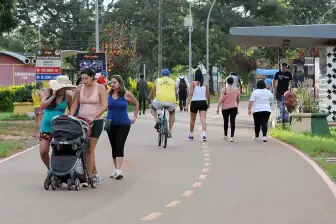
Sunday, 6am to 6pm, the Eixão belongs to those on foot
It's the only time you can walk there safely, because the rest of the week traffic moves at expressway speed and nobody expects pedestrians. On other days, cross only on the footbridges.
Time the two churches by the light
Go into the Cathedral between 12pm and 2pm, when the light pours down through Marianne Peretti's stained glass. Save the Santuário Dom Bosco for 5pm or 6pm, when the low sun lights up the twelve shades of blue in its Murano glass. Both are free, and switching the order means reaching each church with the wrong light.
Take the metro to Ceilândia, for R$5.50
About 90% of the Federal District's residents live outside the Plano Piloto, in the administrative regions around it. A fare costs R$5.50 from Central station, under the Rodoviária, to Taguatinga or Ceilândia, the most populous administrative region. The metro runs from 6am to 11:30pm Monday to Friday, with reduced hours on weekends, and doesn't go to the Esplanade. Go in the morning and finish at Ceilândia's permanent market, with pastel and sugarcane juice.
Explore the map

© OpenStreetMap · OpenFreeMap · © OpenMapTiles
Explore the map, read about the other places and plan your travel days in the app.
Open the appWhat to see
Brasília: The watershed and the artificial lake
Each superblock measures about 280 × 280 m, with a 20 m belt of trees, buildings of no more than six floors on pilotis, and only a sixth of the plot built on, and the address is a coordinate (SQS 308, Block C, Entrance 32) instead of a street name. Asa Sul, with superblocks 100 to 400, is the oldest and leafiest part of the city.

National Congress
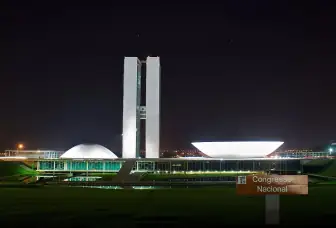
Niemeyer's landmark building (1960): two 28-story towers (about 100 m) between the convex dome of the Chamber of Deputies and the concave bowl of the Senate. The guided tour is free and lasts about 50 minutes, in Portuguese, English and Brazilian Sign Language; in 2026 there are no visits on Tuesdays and Wednesdays, and on Mondays, Thursdays and Fridays you must book online: on weekends and holidays entry is walk-in (confirm beforehand).
Check access

Three Powers Plaza
The vertex of the Monumental Axis, with the Planalto Palace, the Supreme Federal Court and Congress around a deliberate void. There stand “Os Candangos,” by Bruno Giorgi (1959), “A Justiça,” by Alfredo Ceschiatti (1961), the Tancredo Neves Pantheon of the Fatherland (1986) and the 100 m flagpole with the national flag.
It's the vertex of the Monumental Axis, where the Planalto Palace, the Supreme Court, and Congress surround a deliberate void. Go on the first Sunday of the month to see the military formation that changes the 286 m² flag on the 100 m flagpole.
Check access
Metropolitan Cathedral of Our Lady Aparecida
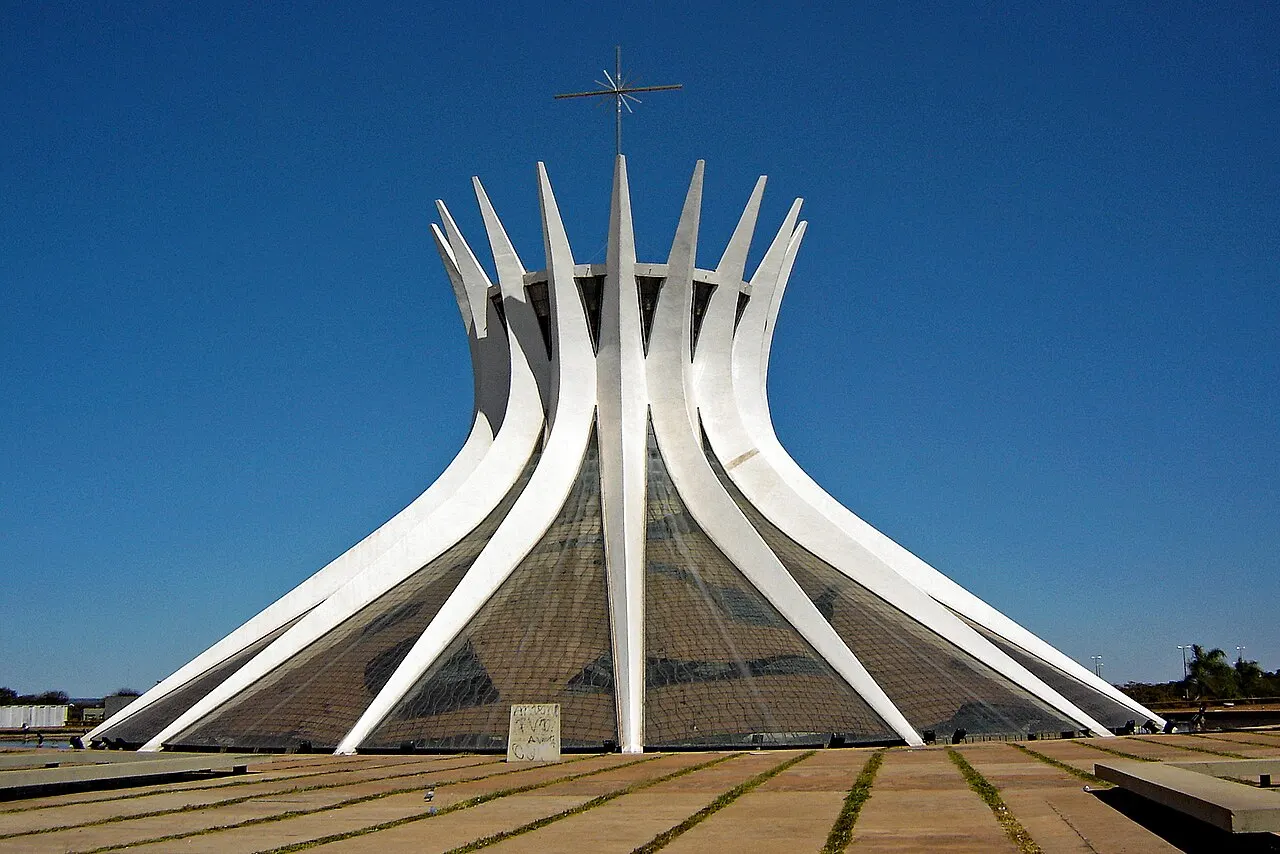
Sixteen concrete columns weighing about 90 tons each, designed in 1958 and consecrated on May 31, 1970. You enter through a dark tunnel that opens into the bright nave, beneath Ceschiatti's suspended angels and Marianne Peretti's stained glass (1990); the four Evangelists outside date from 1968. Free entry.
The passage from the dark tunnel into the bright nave is the moment that justifies the visit, and admission is free. It's on the Monumental Axis, about 1.2 km from Congress, a distance that's best covered by car under the cerrado sun.
Check access
TV Tower and Feira da Torre
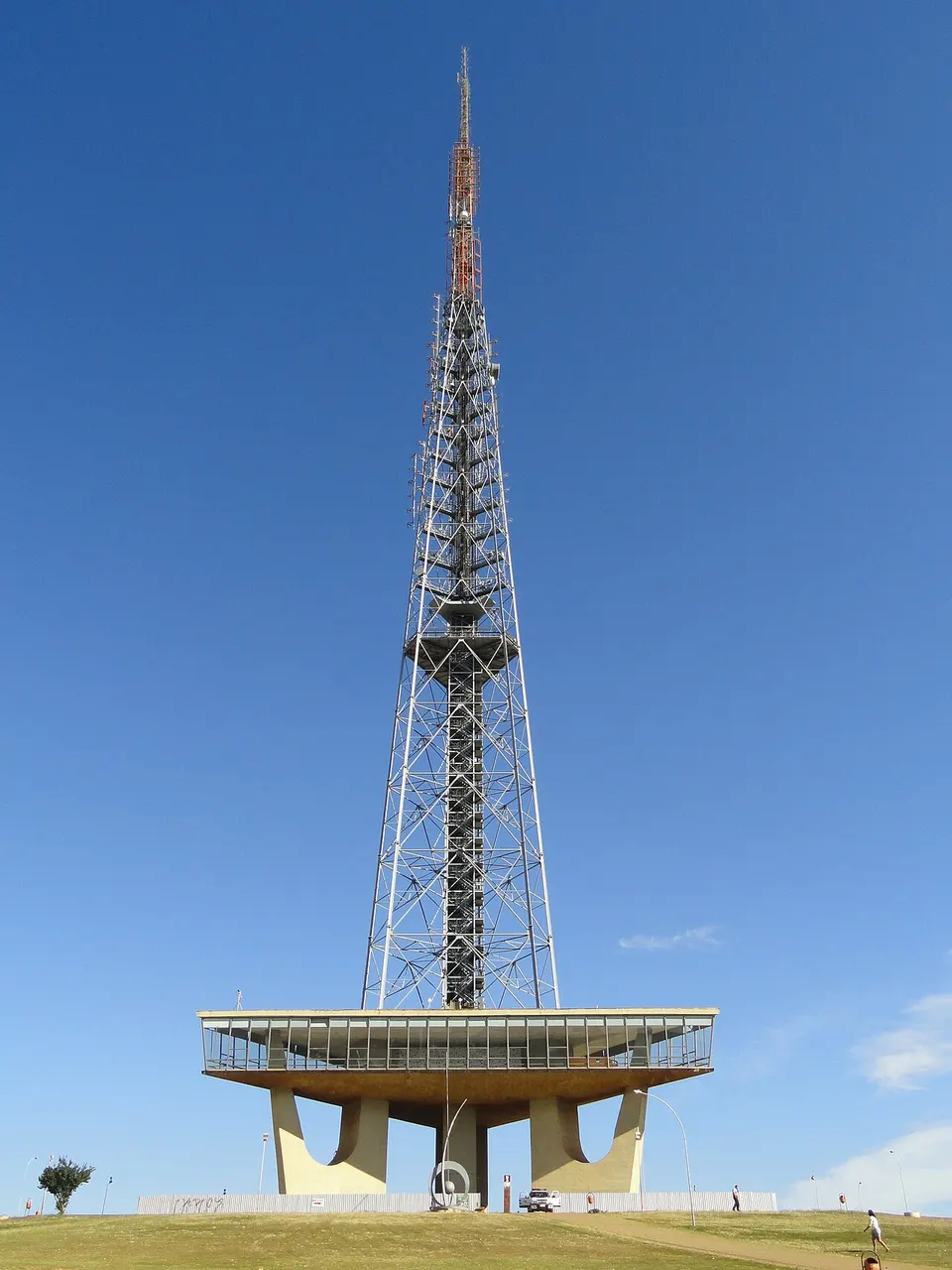
A tower by Lúcio Costa opened in 1967, about 220 m tall with a free viewing deck at 75 m: the best place to grasp the city's design all at once. At its foot runs the Feira da Torre, Thursday through Sunday, with crafts, pastel and Center-West food.
Go up to the free observation deck in the late afternoon, half an hour before sunset, because from there the city's design makes sense all at once. From Thursday to Sunday, pair the climb with the Feira da Torre, with pastel and Center-West food.
Check access
Itamaraty Palace
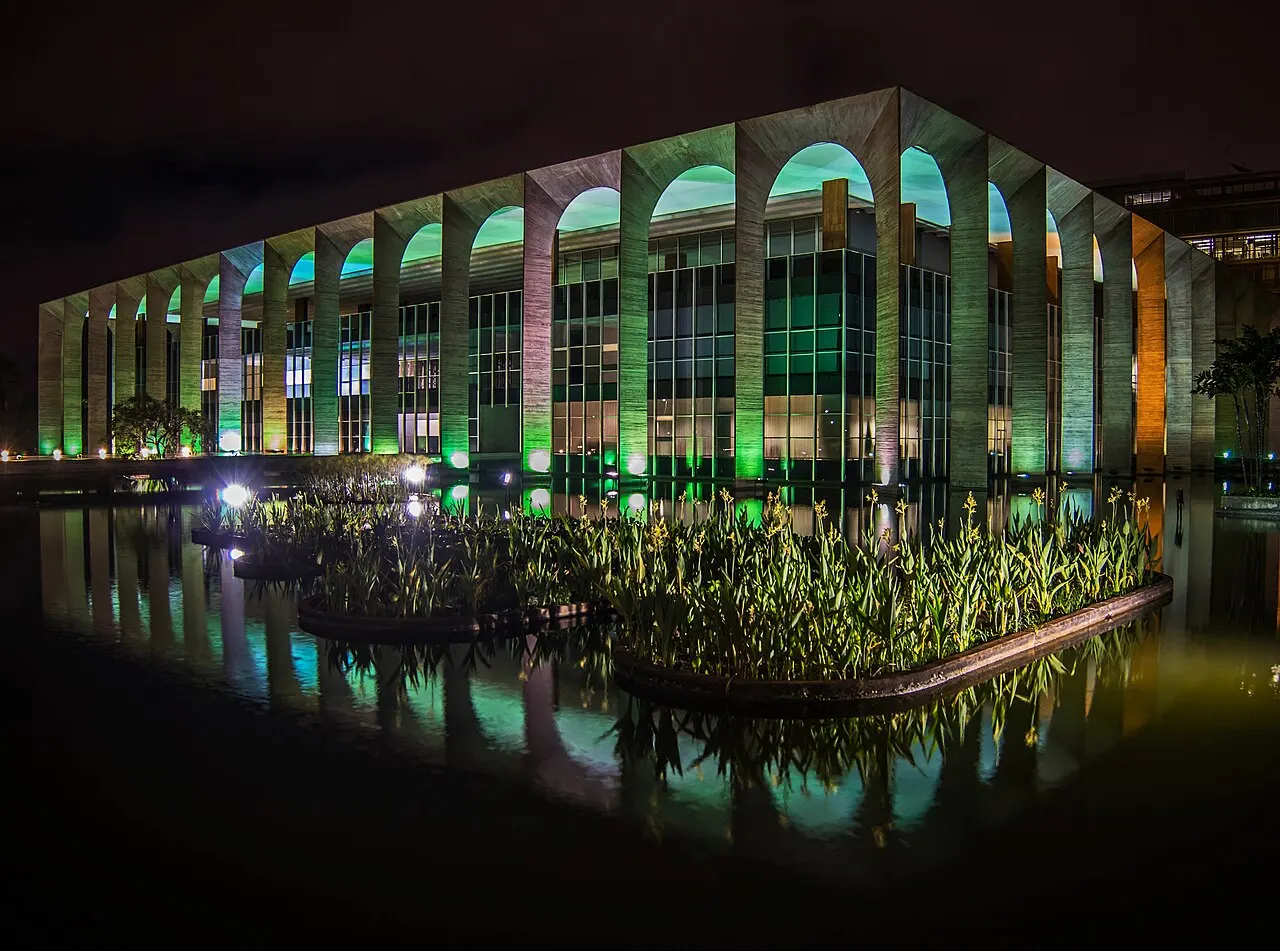
The Palace of Arches (1970), seat of the Ministry of Foreign Affairs, with concrete arches reflected in a pool of water, a garden by Burle Marx and Bruno Giorgi's “Meteoro,” in Carrara marble (1967). Guided visits are free and require booking and a photo ID.
The Palácio dos Arcos, from 1970, reflects concrete arches in a reflecting pool, has a garden by Burle Marx and the Meteoro sculpture in Carrara marble, and the free guided tour requires booking and photo ID.
Check access
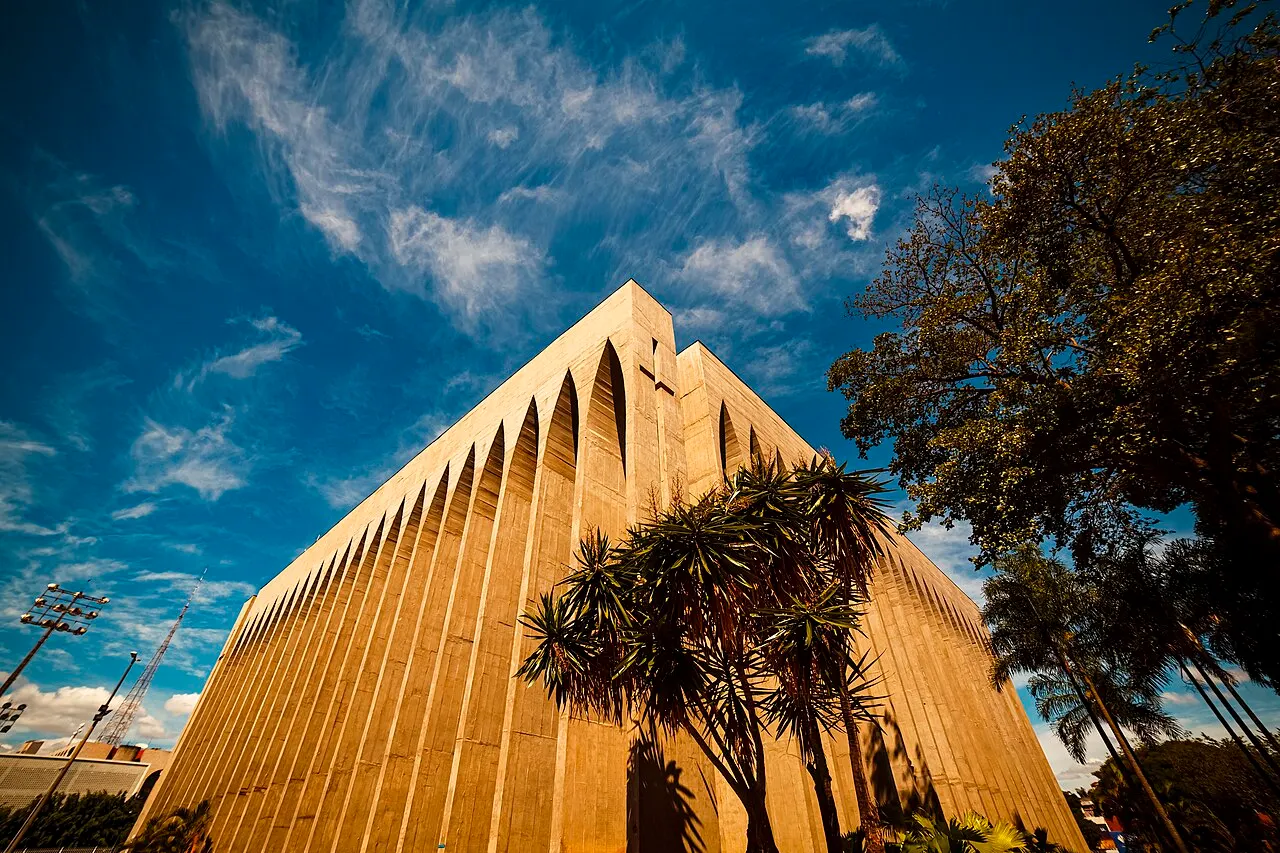
Dom Bosco Sanctuary
A 1970 church formed by 80 concrete columns 16 m tall and Murano glass windows in twelve shades of blue, with a chandelier of about 2.5 tons at its center. Go in the late afternoon: the low light changes the color of the whole nave. Free entry.
In the late afternoon, the weak light shifts the tone of the whole interior, under Murano glass windows in twelve shades of blue.
Check access
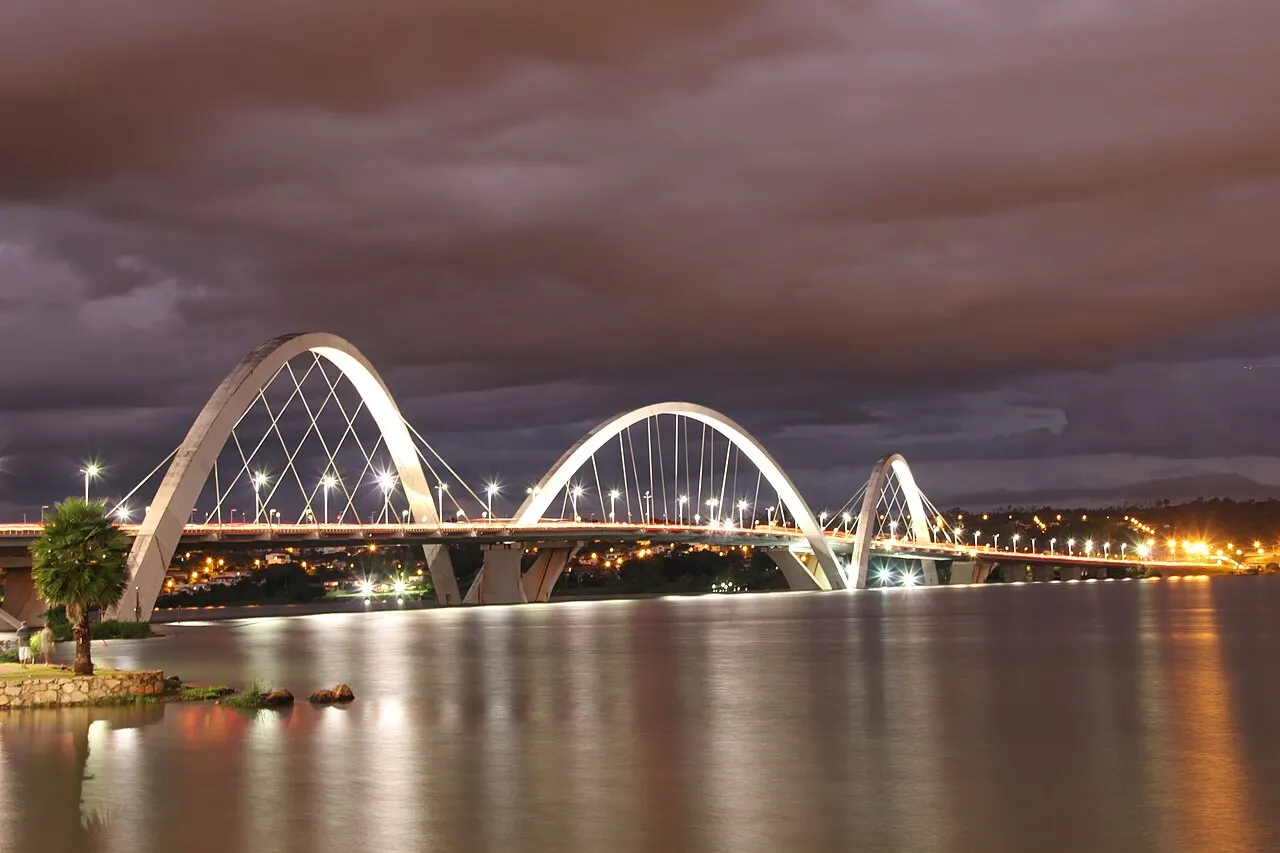
Juscelino Kubitschek Bridge and Pontão do Lago Sul
A 1,200 m bridge opened in December 2002, with three asymmetric arches that cross the roadway alternately; it won the Gustav Lindenthal Medal in 2003. From Pontão, on the Lago Sul shore, you can see it in full at sunset, among bars and restaurants.
The 1,200 m bridge, opened in December 2002 and awarded the Gustav Lindenthal Medal in 2003, appears in full at sunset from the Pontão.
Check access
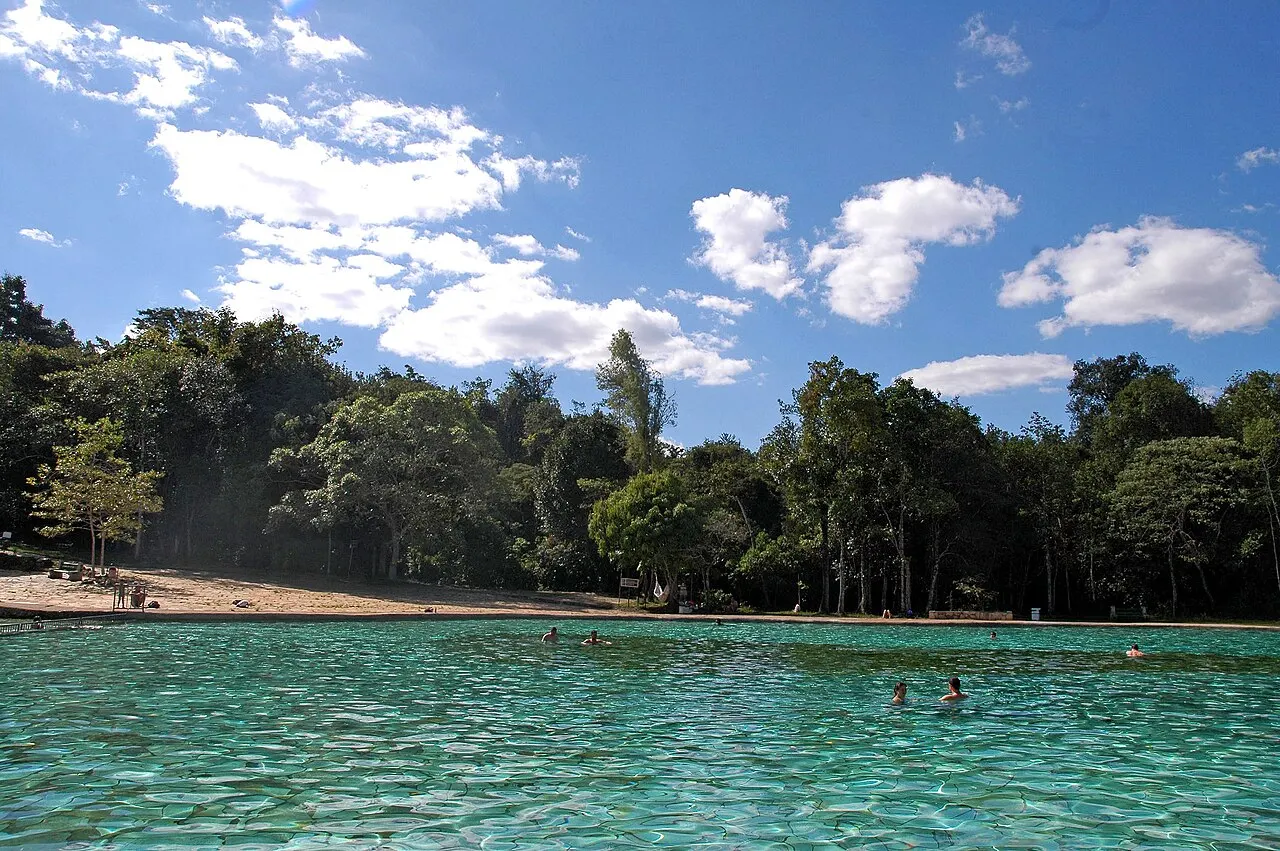
Brasília National Park (Água Mineral)
Created on November 29, 1961, and today with about 42,000 hectares of preserved cerrado, 10 km from the center. It has two spring-fed pools, short trails and a good chance of seeing a maned wolf at dawn; paid entry (about R$ 20), open in the morning until mid-afternoon.
There's a good chance of seeing a maned wolf at dawn in this park of about 42,000 hectares, which opens in the morning and charges about R$20.
Check access
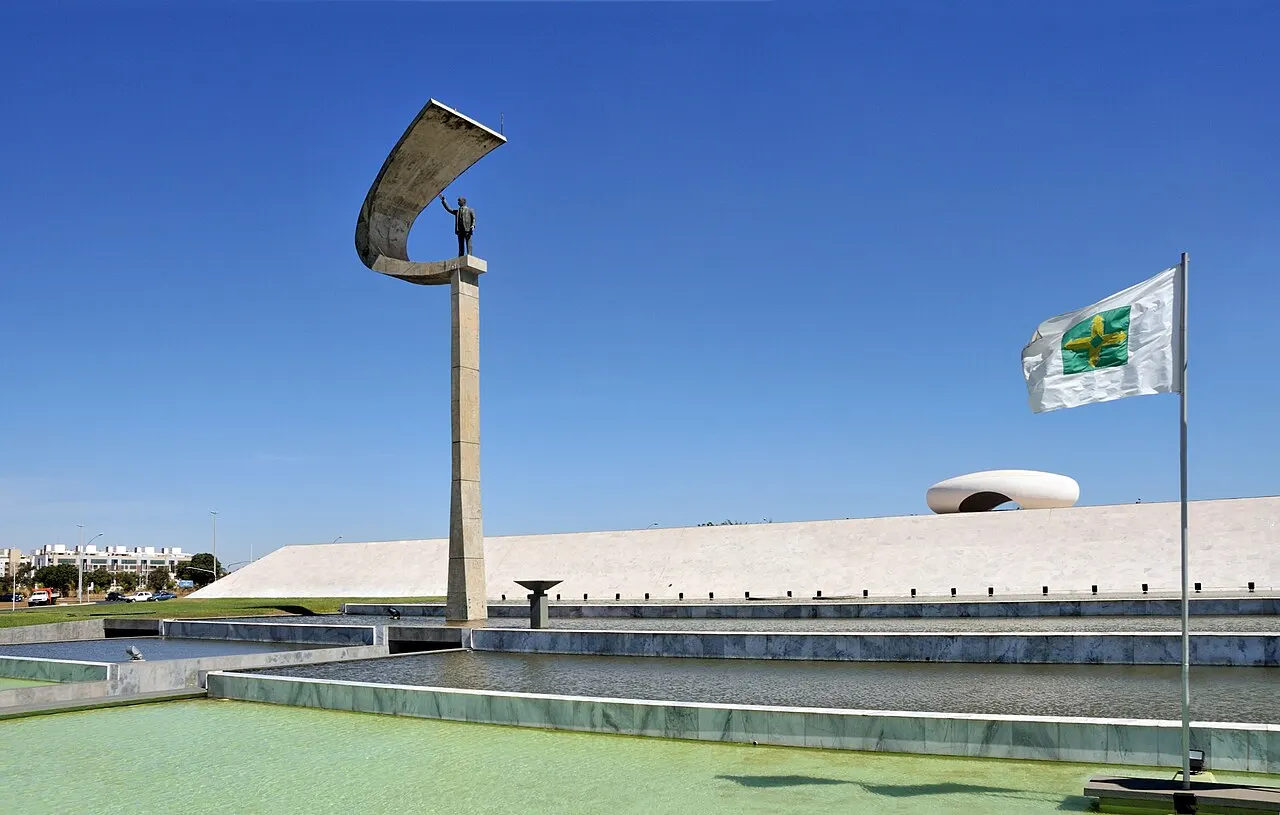
JK Memorial
Museum-tomb of Juscelino Kubitschek, by Niemeyer (1981), with the president's statue beneath a 28 m concrete sickle. It holds JK's car, office and library, plus documents from the construction; a symbolic admission fee (about R$ 10–20).
Check access
Nilo’s itinerary
Start with the basic programme and choose extensions for the time you have.
Plan my days in the app ↗Day 1 · The Monumental Axis, east to west
Start at 8:30am at the Three Powers Plaza, with “Os Candangos” and the Pantheon of the Fatherland; if it's the first Sunday of the month, watch the changing of the 286 m² flag.
Take the free guided tour of the National Congress (about 50 minutes); don't go on a Tuesday or Wednesday. There are no tours those days.
Walk the Esplanade to the Palácio do Itamaraty (booking and photo ID required) and enter the Cathedral through the dark tunnel, between 12pm and 2pm, when the stained-glass light is at its highest.
Have a pay-by-weight lunch at 202 or 205 Sul and go on to the Cultural Complex of the Republic, with the National Museum and Library (2006).
Go up the TV Tower, to 75 m, free of charge, shortly before sunset, to see the whole city at once.



If you stay longer
Day 2 · How you live in a superblock
Have breakfast at an entrequadra in Asa Sul and walk through Superquadra 308, the complete model of Lúcio Costa's plan.
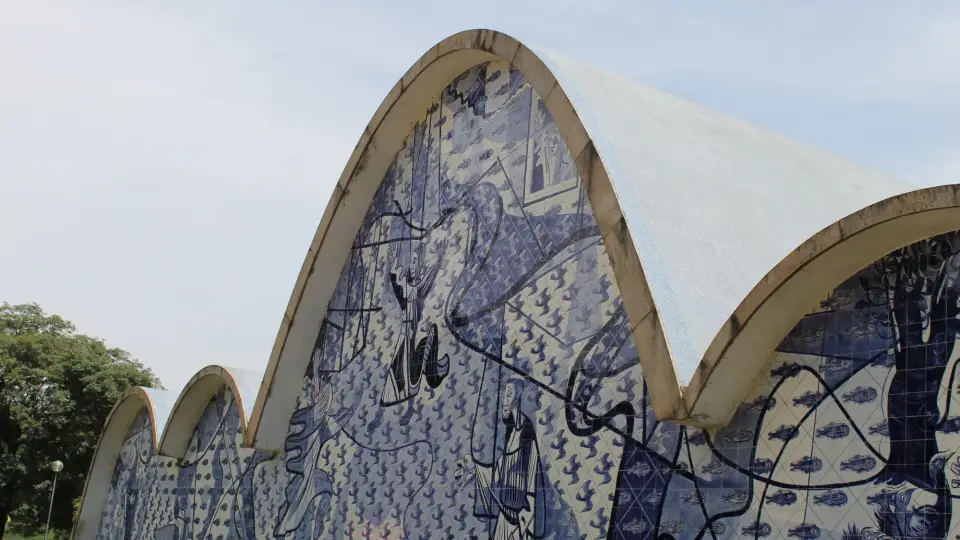
Visit the Nossa Senhora de Fátima chapel (1958), the city's first church, covered in Athos Bulcão tiles.
Go to Sarah Kubitschek City Park to walk or bike part of its 4.2 km² of landscaping by Burle Marx.
Enter the Dom Bosco Sanctuary in the late afternoon.
Close the day at happy hour on a commercial block in Asa Norte (405, 408 or 409) with skewers or draft beer.

Food
 AI illustration
Empadão goiano
A deep-dish buttery pie filled with shredded chicken, sausage, guariroba, egg and olive. Sold at bakeries, markets and boteco bars, the slice for R$ 15–30; it's the closest thing to street food native to the region.
 AI illustration
Rice with pequi and galinhada
Pequi is the cerrado's most characteristic yellow fruit, with a strong aroma and a season between September and January. It's eaten by scraping the pulp with your teeth: never bite the pit, which has internal spines.
 AI illustration
Chicken with guariroba
Guariroba is the bitter heart of palm from the cerrado palm tree, cooked with free-range chicken and served with rice and pequi. The bitterness is intentional and it's the flavor that surprises outsiders the most.
 AI illustration
Pamonha and curau
A green corn dough cooked in its own husk, sweet or savory with cheese and sausage, sold at pamonha stands on the way out to Goiás and at markets. Curau is the creamed version, served in a cup, dusted with cinnamon.
 AI illustration
Espetinho
Beef, chicken, heart or coalho cheese grilled on skewers, with cassava and vinaigrette, sold at street stalls all night long, for around R$ 8–15 a skewer. It's the Federal District's standard informal dinner, especially in Taguatinga and Cruzeiro.
 AI illustration
Market pastel with sugarcane juice
Pastel fried on the spot, filled with beef, cheese or pizza toppings, served with sugarcane juice and lime. A Saturday and Sunday morning ritual at Feira da Torre, Feira do Guará and the Ceilândia permanent market.
 AI illustration
Pay-by-weight buffet
Brasília eats lunch at self-service restaurants charged by weight, a legacy of the civil service's rigid schedule. The kilo costs R$80–130 in the Plano Piloto (2026); the rush is between 12pm and 2pm.
 AI illustration
Cerrado fruits
Baru, buriti, cagaita, mangaba and cajuzinho-do-cerrado turn up in ice cream, sweets, liqueur and flour, especially at markets and cafés in Asa Norte. Baru, a roasted nut tasting somewhere between peanut and cashew, is the easiest to pack in a suitcase.
Day trips

Chapada dos Veadeiros and Alto Paraíso (Goiás)
About 230 km north, 3 hours to 3 hours 30 minutes by car on the BR-010/GO-118. A national park created in 1961 on a quartzite plateau, with canyons, waterfalls and the Vale da Lua; it requires at least one night in São Jorge or Alto Paraíso.

Pirenópolis (Goiás)
About 150 km west, about 2 hours by car. A mining town founded in 1727, with stone streets, the Igreja Matriz de Nossa Senhora do Rosário (1728) and waterfalls nearby; during the Festa do Divino, in May or June, the Cavalhadas take place.

Planaltina and Vale do Amanhecer
About 40 to 50 km northeast, 45 min to 1 hour. A town older than the capital, with the 1922 Foundation Stone and Morro da Capelinha; next door is the Vale do Amanhecer, a syncretic religious community founded in 1969 by Tia Neiva and open to visitors.
Where to begin
The Monumental Axis, east to west
Start at 8:30am at the Three Powers Plaza, with “Os Candangos” and the Pantheon of the Fatherland; if it's the first Sunday of the month, watch the changing of the 286 m² flag.
How you live in a superblock
Have breakfast at an entrequadra in Asa Sul and walk through Superquadra 308, the complete model of Lúcio Costa's plan.
Lake, cerrado and the city beyond the Plan
Start the morning in Ceilândia: take the metro at Central station, under the Rodoviária, and walk through the permanent market: pastel, sugarcane juice, and the other half of the city.
Money
The currency is the real (R$). Pix dominates, almost every business accepts a QR code, from restaurants to skewer vendors, and contactless cards work practically everywhere, so cash is almost unnecessary. 2026 ranges: espresso R$ 4–8, pão de queijo R$ 7–12, prato feito R$ 30–45, pay-by-weight lunch R$ 35–60 a plate, dinner at a neighborhood restaurant R$ 90–180 per person with a drink, 300 ml draft beer R$ 12–18, a ride-hail trip within the Pilot Plan R$ 20–40. Hotels work the opposite way from the rest of the country: a three-star in the Setor Hoteleiro Sul or Norte costs R$ 300–550 Monday to Thursday and drops on weekends; Brasília empties out because it's a business destination. A hostel in Asa Norte runs R$ 90–150. Restaurants add a 10% service charge to the bill: it's optional by law, but almost everyone pays it. Don't tip taxi drivers or guides on official tours, which are free. To withdraw cash, use Banco24Horas and BRB ATMs; exchange offices are concentrated in the Setor Comercial Sul and in the malls.
Getting there and around
JK, eleven kilometers from the Pilot Plan
Presidente Juscelino Kubitschek International Airport (BSB) is in Lago Sul, about 11 km from the Plano Piloto, and is one of Brazil's three busiest. An express bus line links the terminal to the Plano Piloto's Rodoviária for R$5.50, in 30–40 minutes. By ride-hailing app or taxi it's 15–25 minutes and R$ 50–90 (2026). The metro doesn't reach the airport or the Esplanade: there are two lines that start at Central station, under the Rodoviária, run down through Asa Sul and split toward Águas Claras, Taguatinga, Ceilândia and Samambaia, covering about 42 km and 24 stations. It runs from 6am to 11:30pm Monday through Friday, with shorter hours on Saturdays and Sundays. The metro fare is R$5.50, and bus fares vary by distance: R$ 2.70 (internal circular route), R$ 3.80 (short connections) and R$5.50 (long routes); values frozen by the Federal District government through the end of 2026. You pay with the BRB Mobilidade card or by tapping a credit card or phone at the bus and metro turnstiles.
Designed for the car, with blocks 800 m to 2 km apart
Brasília was designed for the car, and that hasn't changed, which makes the city hard to get around on foot. In the Pilot Plan, distances between hubs run from 800 m to 2 km, with almost no shade and no shops along the way, and the Esplanade has about 200 m between one ministry and the next. Walking inside a superblock is pleasant and safe; crossing the Eixão on foot is not: use the footbridges. On Sundays and holidays, from 6am to 6pm, the Eixão's central lanes close to cars and become the Eixão do Lazer, taken over by runners, cyclists and skaters. The city has about 600 km of bike paths and gentle terrain, but a strong sun: ride early or late in the afternoon. Uber and 99 work well and are the most practical way to get between the monuments; if you rent a car, learn how the tesourinhas work first. You can almost never turn left: you go past your destination and come back via the next loop. For the administrative regions, the metro covers the western axis and the BRT Sul links Gama and Santa Maria to the Pilot Plan. For the surrounding towns in Goiás, interstate buses leave from the Rodoferroviária, at the end of the Monumental Axis, not from the central Rodoviária.
Safety
Brasília is comparatively safe among Brazilian capitals (the Federal District records about 11 homicides per 100,000 inhabitants, below the national average), but its layout creates a less obvious risk: sectors that empty out completely after office hours. Avoid walking alone at night in the Setor Comercial Sul and around the Conic, on the W3 after 9pm and on the Esplanade of Ministries, which is deserted and poorly lit outside working hours. Phone theft is the most common crime and concentrates at the Pilot Plan's Rodoviária, at W3 bus stops and at crowded markets: keep your phone put away and sort out your route before you leave. At night, take a ride-hail rather than waiting for a bus at an empty stop. In the parks, stick to times when there are people around. Parque da Cidade and Parque Olhos d'Água are calm by day and empty out at dusk. Large protests are frequent on the Esplanade; if one is scheduled, change your plans for the day, because access to Three Powers Plaza can be blocked without warning. On Lake Paranoá, watch out for depth and boats outside marked areas. In a car, keep bags and phones off the passenger seat at traffic lights on outlying roads.
Etiquette tips
Learn the grammar of the address
Nobody gives a street name because there's almost no such thing: give and expect addresses in this order: quadra, block, entrance, apartment, “SQS 308, Block C, Entrance 32.” Knowing whether the destination is in Asa Norte or Asa Sul is the first question in any plan.
Cross at the crosswalk and thank the driver with your hand
Since a 1997 campaign, drivers stop for pedestrians at crosswalks without traffic lights, and it's become one of the city's traits. Raise your hand, cross without running, and give a thank-you wave; hesitating in the middle of the road causes more trouble than it prevents.
Happy hour: 6pm to 10pm on weekdays
It starts at 6pm, right after the civil-service workday ends, and usually wraps up around 10pm on weeknights. An invitation to “o happy” means a table at a block-level bar, beer in a small glass and a split bill.
Cross the pilotis quietly at night
The open ground floor of residential blocks is meant for free circulation by design: walking under the building is normal and expected. At night, cross quietly. These are residential areas right next to people's bedrooms.
“Candango” is a compliment
The word names the worker who built the city and, by extension, anyone from the Federal District; it's used with pride. “Brasiliense,” meanwhile, is the official demonym, and many people are particular about saying which administrative region they're from.
Visiting the palaces: ID and dress code
Congress, Itamaraty, Planalto and Alvorada require a photo ID, involve a bag and metal-detector check, and have dress rules. Avoid short shorts, flip-flops and tank tops. Tours are free and guided; book ahead and arrive 20 minutes early.
Mistakes to avoid
Walking from one monument to another
Thinking you can walk from one monument to another. The Monumental Axis is built to a car's scale: from the Cathedral to Congress it's about 1.2 km with no shade, and from the TV Tower to Three Powers Plaza, about 3.5 km.
Congress on a Tuesday or Wednesday
Scheduling the Congress visit for a Tuesday or Wednesday, precisely the days with no guided tours in 2026, and not booking online when the date falls on a Monday, Thursday or Friday.
Judging the city by the Pilot Plan
Judging the city only by the Pilot Plan. About 90% of Federal District residents live outside it, and skipping the Ceilândia market, Taguatinga's shops or lunch in Vila Planalto means seeing only half the story.
Two days on the Esplanade and your nose bleeds
Underestimating the dry air of August and September. Without a water bottle, lip balm and saline drops, two days of walking on the Esplanade end in a bloody nose.
Renting a car without understanding the tesourinha
Renting a car without understanding the tesourinhas. You can almost never turn left: you go past your destination and come back via the next loop, which confuses any poorly calibrated GPS.
Useful phrases
Em que quadra é? (In which superblock is it?)
What's the address: the standard question, since almost nothing has a street name.
É na 308 Sul, bloco C, entrada 32 (It's at 308 Sul, block C, entrance 32)
The full format of a residential address in Brasília.
Faz o retorno na tesourinha (Loop back at the tesourinha)
Turn onto the scissor-shaped ramp, since you don't turn left on the Eixão.
Te encontro no pilotis (I'll meet you under the pilotis)
Let's meet on the building's open ground floor, an area of free passage.
Bora pro happy? (Up for the happy hour?)
An invitation to the bar after work, usually at 6pm.
É na Asa Norte ou na Asa Sul? (Is it in Asa Norte or Asa Sul?)
Which of the two residential halves of the Pilot Plan it's in: the first coordinate everyone confirms.
Districts
Asa Sul
Superblocks 100 to 400 south of the Eixão, the oldest and leafiest part of the city, with the W3 Sul commercial avenue and interblock strips of bakeries, stationery shops and schools. It's where Lúcio Costa's model appears most complete, with Superblock 308 serving as its showcase.
Asa Norte
The mirror to the north, newer and younger because of UnB, with bars on blocks 405, 408 and 409 and more informal local commerce. It concentrates weekday nightlife and the best restaurant prices in the Pilot Plan.
Setor Comercial Sul and Conic
The office district that works 8am to 6pm and empties at night, with Conic, a 1970s gallery, as the exception: cheap bars, used bookstores, nightclubs and the memory of Brasília's punk scene. By day it's bureaucracy; late at night it's the area that demands the most attention.
Lago Sul and Lago Norte
Neighborhoods of single-story houses on large lots along the Paranoá shore, with embassies, the Alvorada Palace, the Dom Bosco Hermitage and Pontão do Lago Sul. You don't walk here: the distances between one address and another are measured in kilometers.
Vila Planalto and Núcleo Bandeirante
The two construction camps that were supposed to be demolished in 1960 and weren't. Vila Planalto, listed as heritage in 1988, became a street of home-style and barbecue restaurants a few minutes from the Esplanade; Núcleo Bandeirante inherited the commerce of the old Cidade Livre.
Taguatinga, Ceilândia and Samambaia
The western axis where most of the Federal District lives, served by the metro and with its own commercial centers that don't depend on the Pilot Plan. Ceilândia is the most populous administrative region (about 400,000 inhabitants) and the birthplace of Federal District rap.
Águas Claras
A vertical city planned in the 1990s along the metro line, with 20-story towers and a density the Pilot Plan forbids. It serves as a direct counterpoint to the heritage-listed model, 20 minutes by train from the center.
Sudoeste, Octogonal and Noroeste
Residential extensions outside the heritage-listed polygon, with blocks that imitate the superblocks in a pricier, more closed-off version. Noroeste, occupied from the 2010s on, is the last major real-estate frontier within the expanded Pilot Plan.
History
1823 · The name before the city
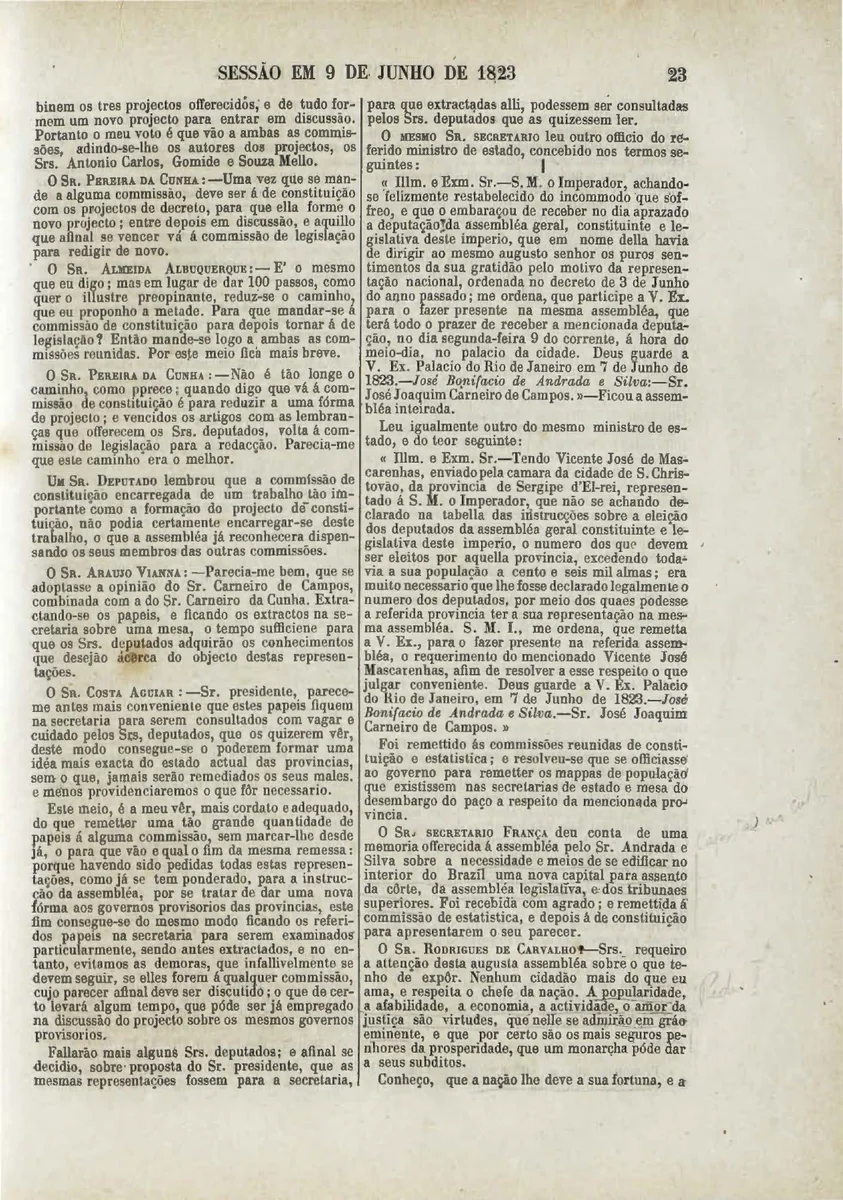
José Bonifácio proposes to the Constituent Assembly moving the capital inland and suggests the name Brasília. The idea had already circulated since the Minas Conspiracy, in 1789.
1883 · Don Bosco's dream
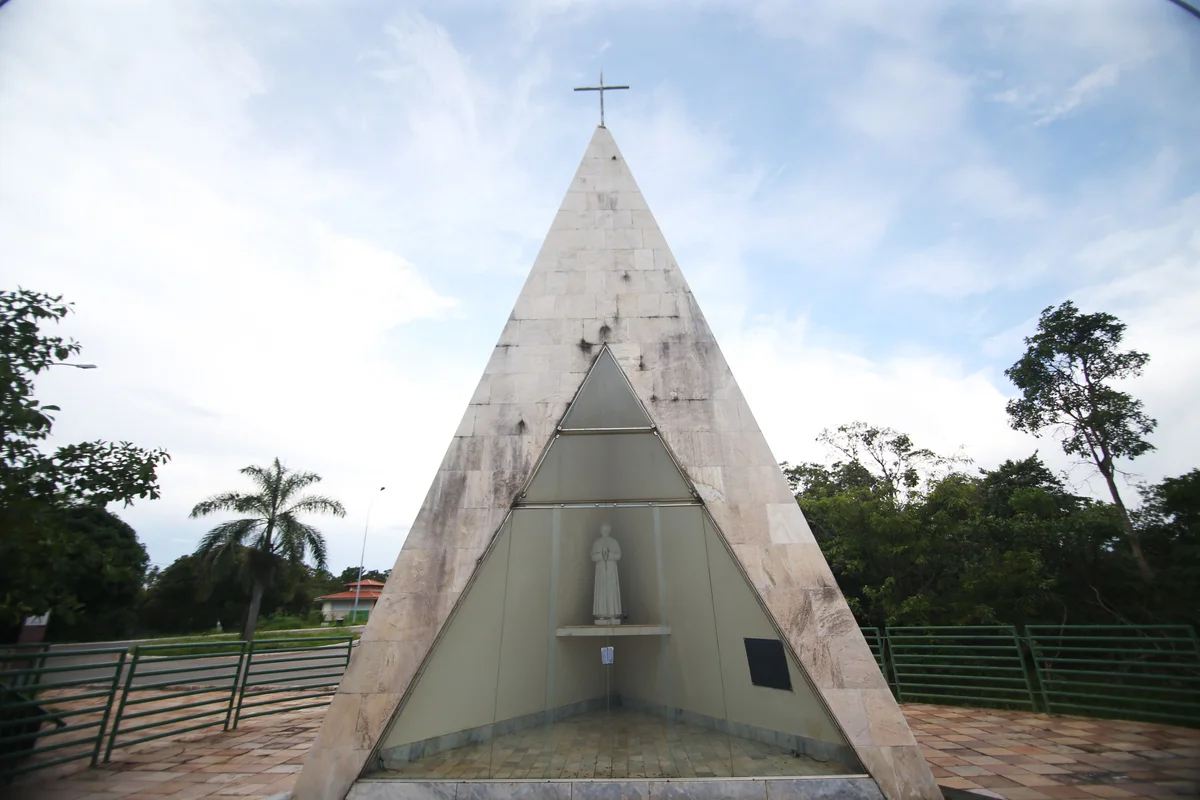
On August 30, the Italian priest John Bosco recounts a dream of a land of milk and honey between parallels 15 and 20. The city adopted the episode as its origin myth and built two churches in his honor.
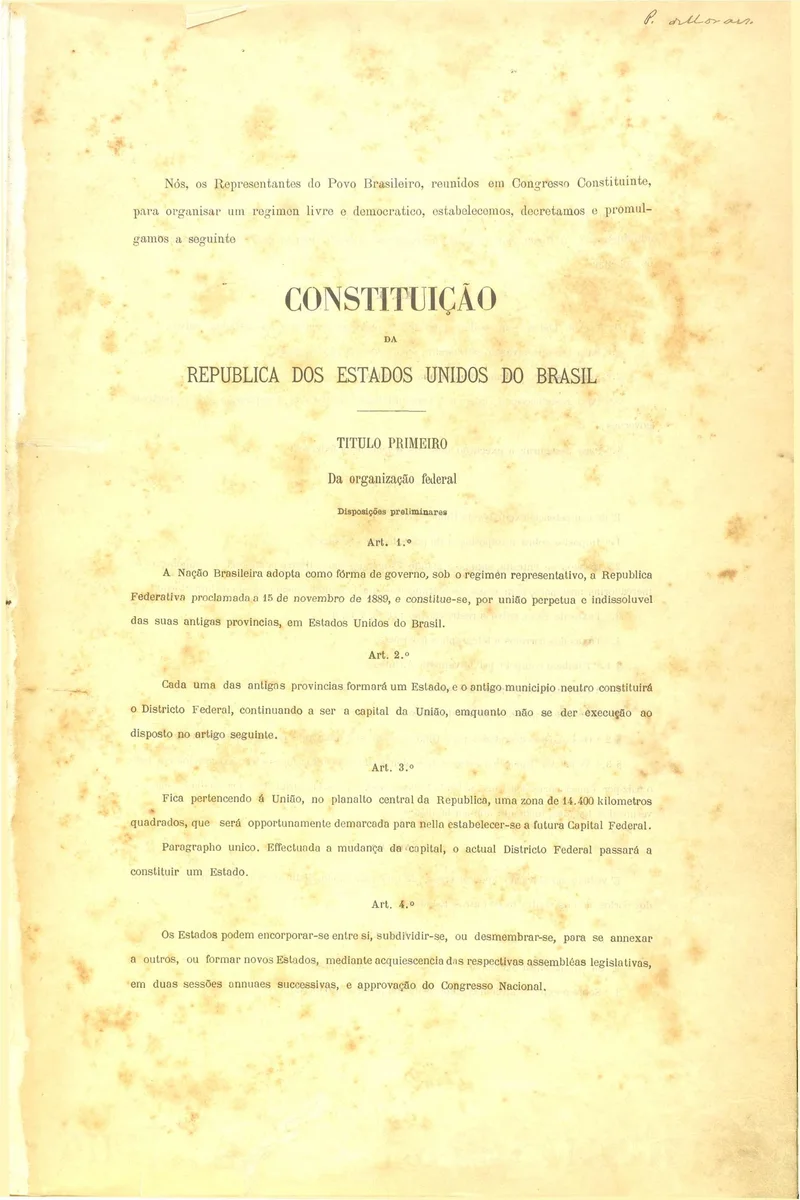
1891 · The land reserved by law
Article 3 of the first republican Constitution reserves 14,400 km² in the Central Plateau for the future capital. The transfer becomes a constitutional obligation, with no deadline.
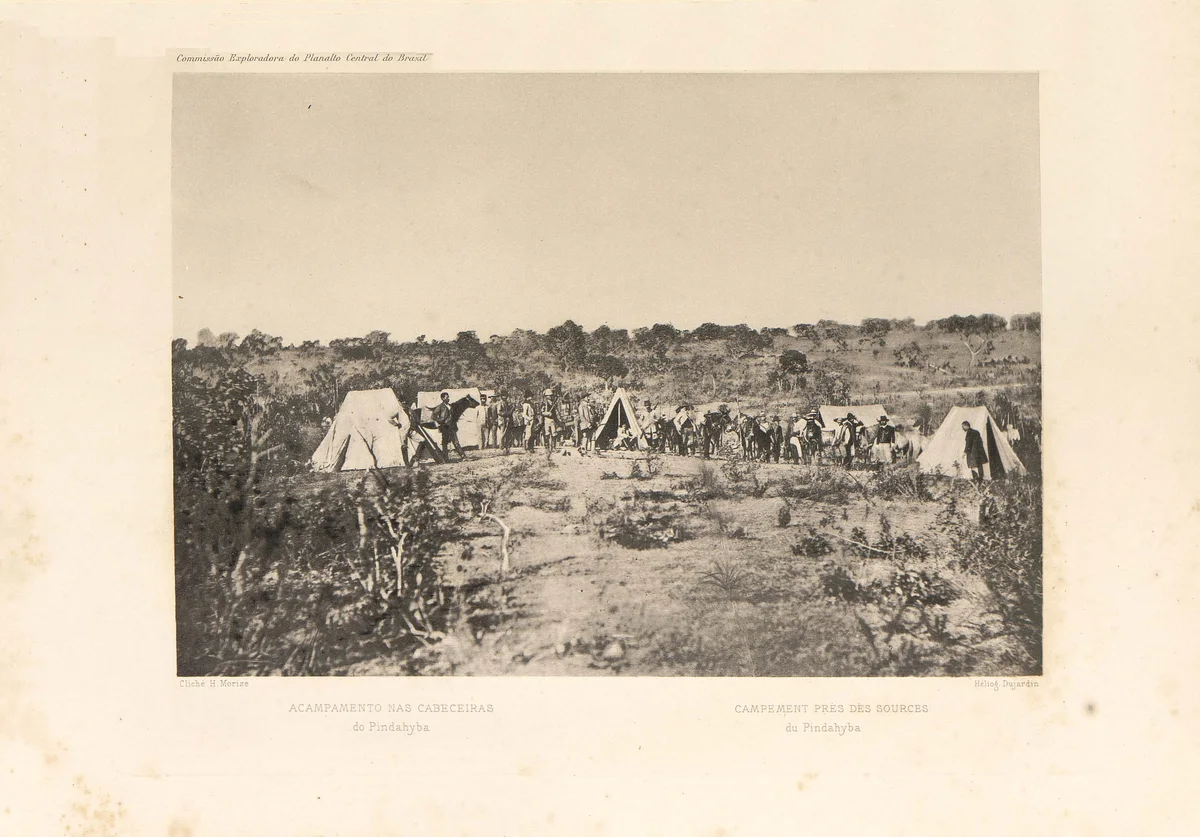
1892–1894 · Cruls Mission
Belgian astronomer Luiz Cruls leads the Central Plateau Exploring Commission and marks out the so-called Cruls Quadrilateral. The report fixes on the map the area that sixty years later would become the Federal District.
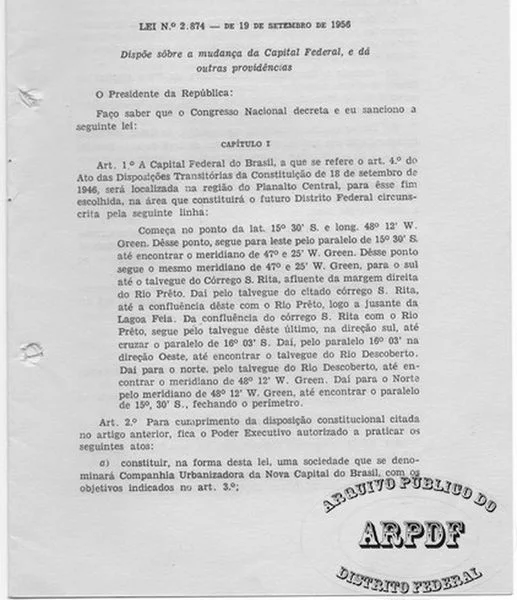
1956 · Law 2,874 creates NOVACAP, under Israel Pinheiro
Juscelino Kubitschek, elected on the promise of “50 years in 5,” signs Law 2,874 on September 19 and creates NOVACAP, chaired by Israel Pinheiro. Oscar Niemeyer is appointed head of the architecture department, without a competition.
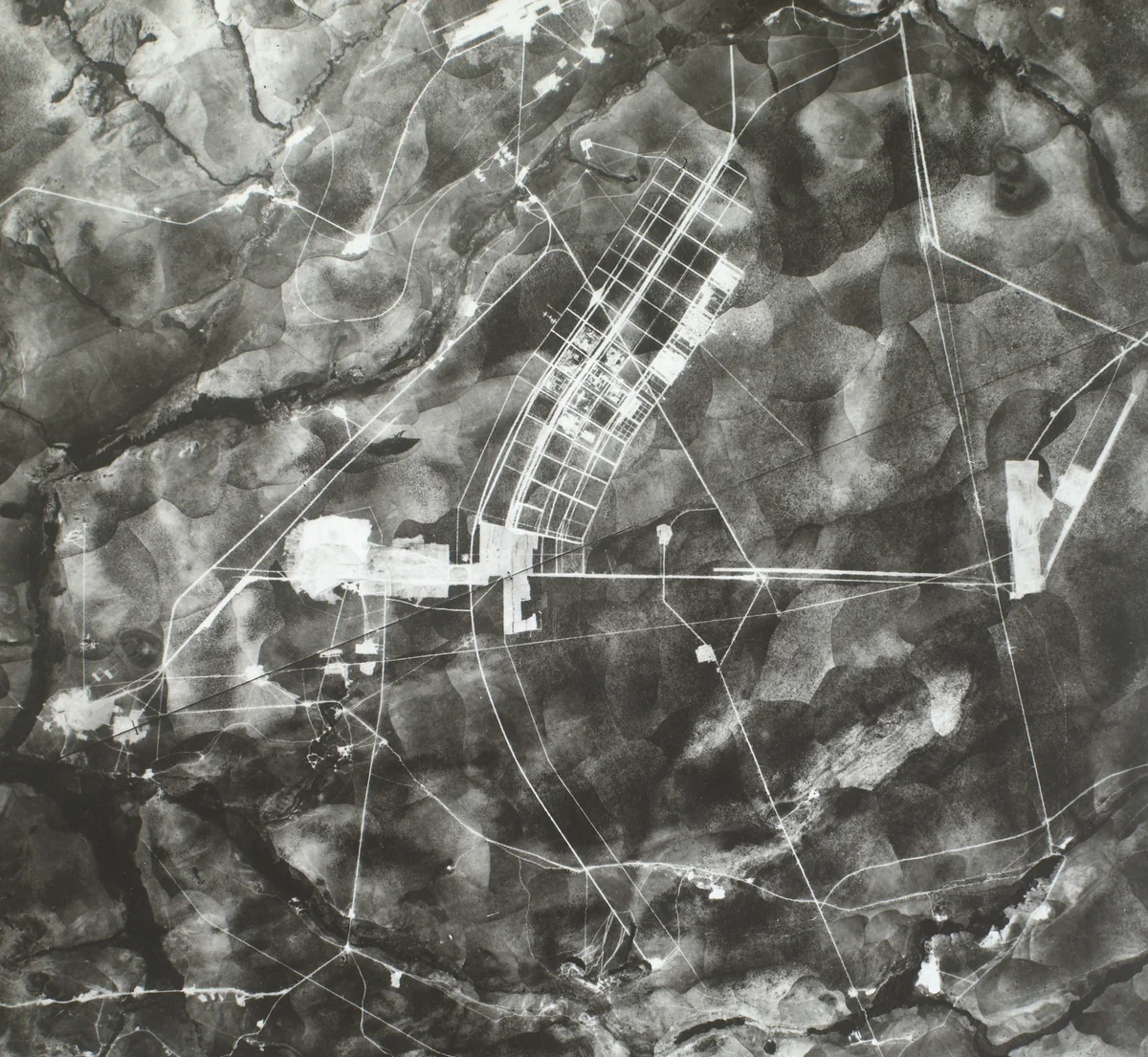
1957 · Lúcio Costa's Pilot Plan
In March, the jury picks Lúcio Costa's plan from 26 entries: two crossing axes, residential superblocks and the Esplanade of Ministries. The descriptive memorandum fit on a few sheets of paper and some sketches.
1957–1960 · The candangos and the Free City
About 60,000 workers, most from Minas Gerais, Goiás and the Northeast, build the city in 41 months of continuous construction work. They live in the temporary camp of Cidade Livre (Free City), today Núcleo Bandeirante.
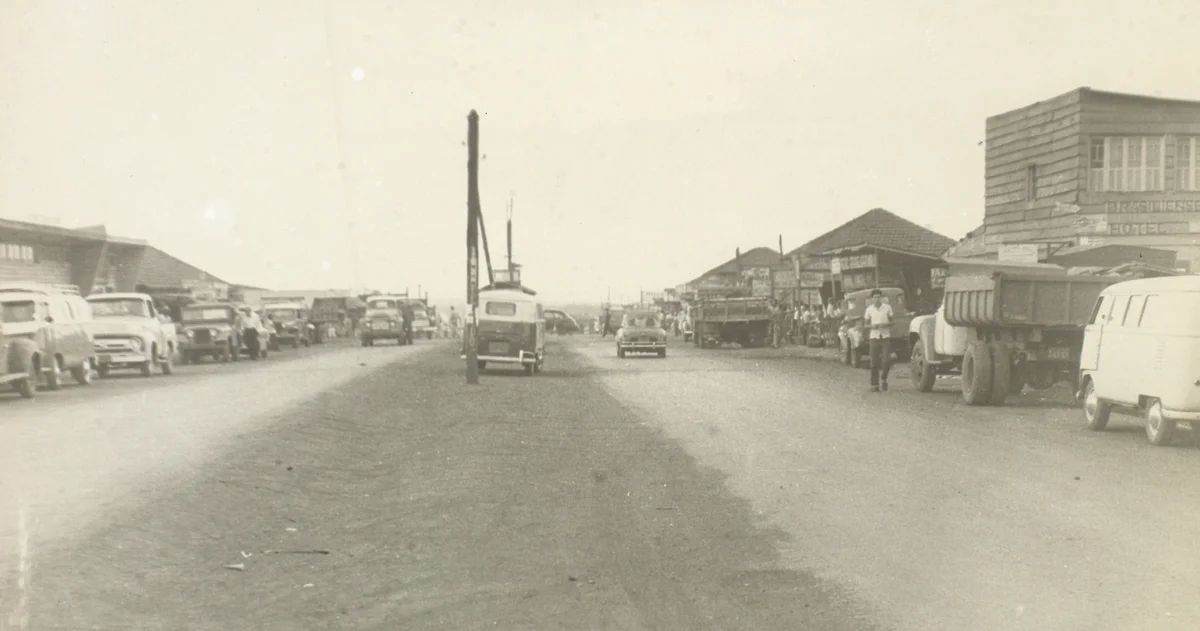
1960 · Inauguration
On April 21 the capital is transferred from Rio de Janeiro. The new Federal District had about 140,000 inhabitants, exposed red earth and almost no mature trees.
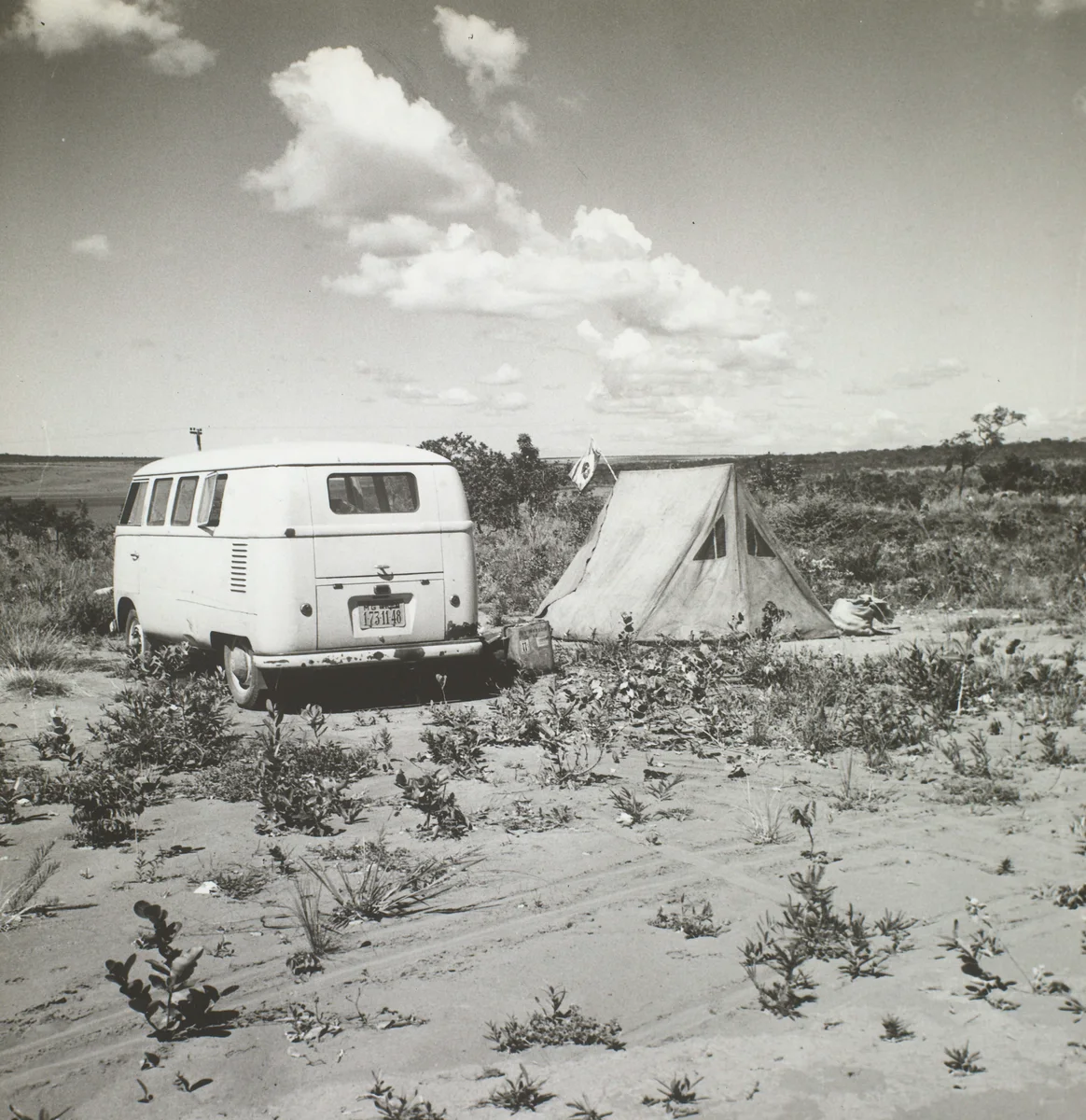
1971 · Ceilândia and the satellite cities
On March 27, the Campaign for the Eradication of Invasions moves about 80,000 people from Vila do IAPI to a plot 25 km from the center. Ceilândia is today the most populous administrative region of the Federal District.
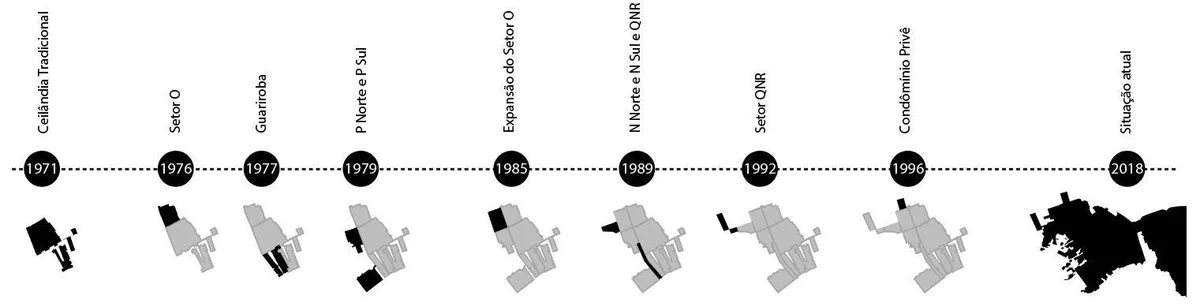
1987 · World Heritage
In December, UNESCO inscribes the Pilot Plan on the World Heritage List. Brazilian preservation rules protect the plan’s four scales — monumental, residential, communal and bucolic — and set rules for the superblocks.
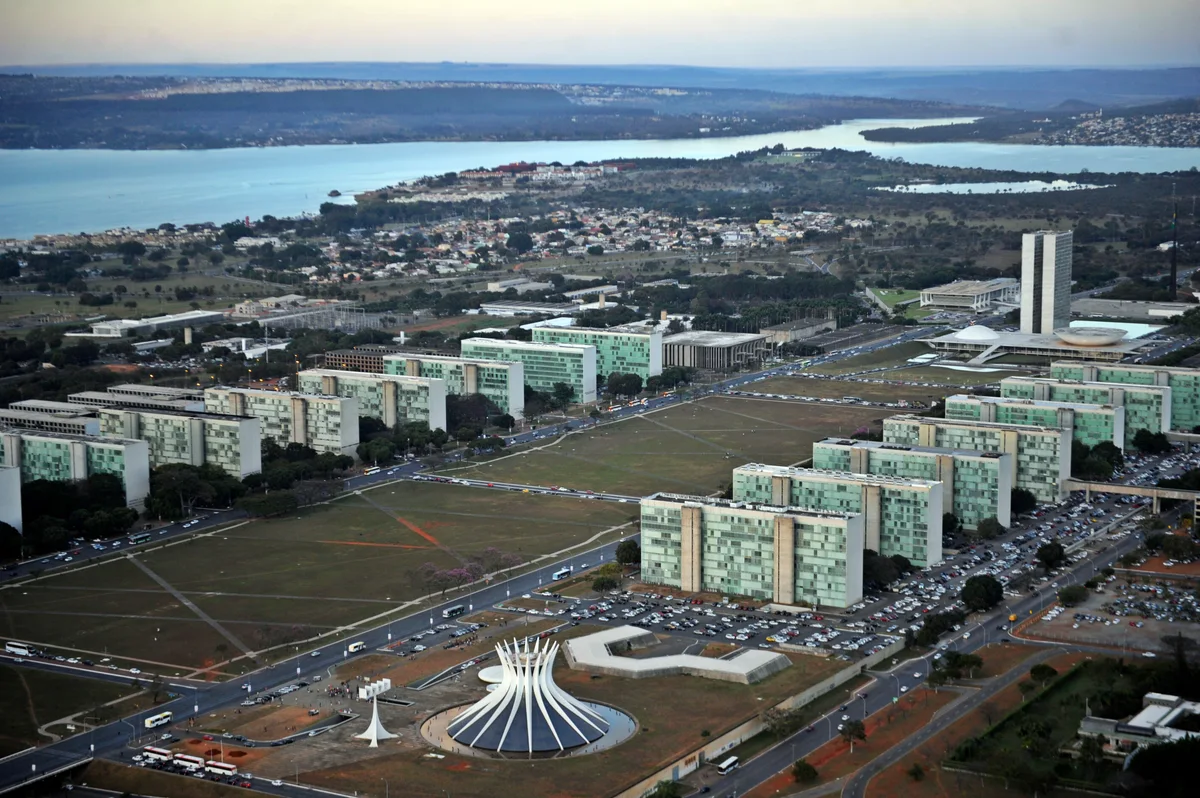
2023 · January 8
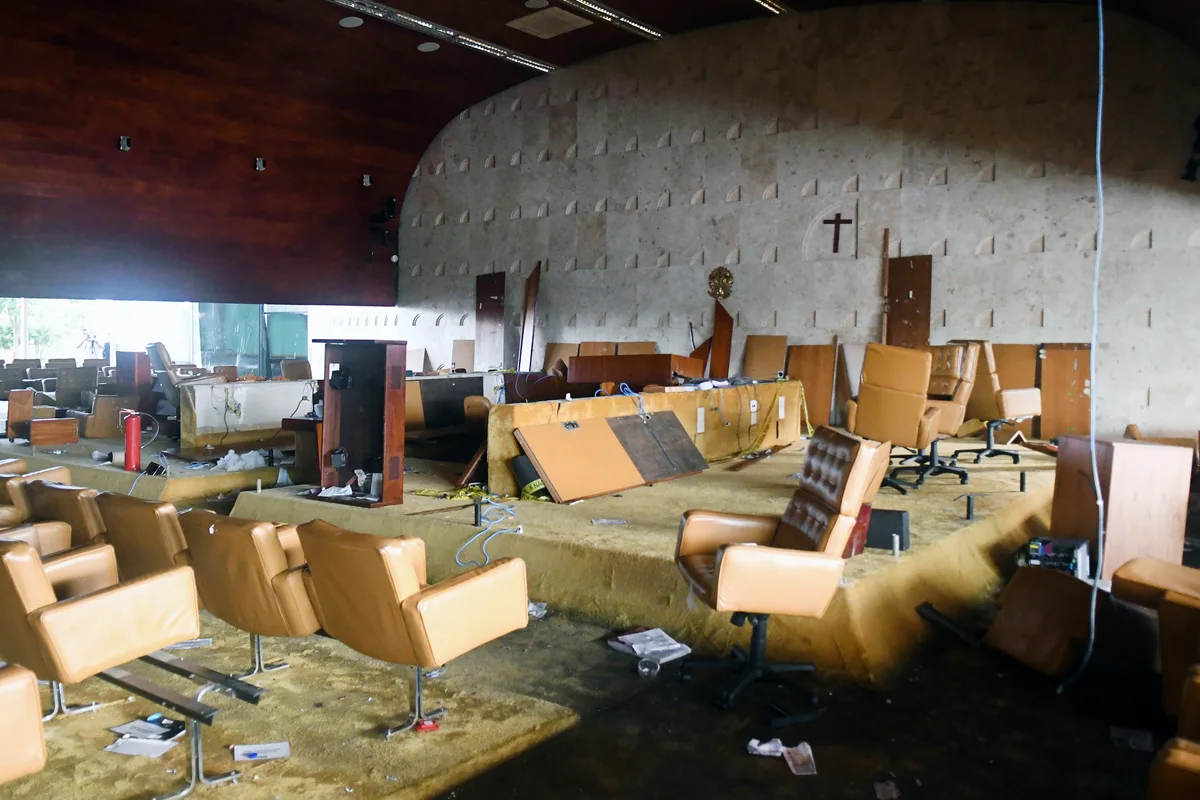
Protesters invade and vandalize Congress, the Planalto Palace and the Supreme Federal Court. Works such as “As Mulatas,” by Di Cavalcanti (1962), and a 17th-century French clock were damaged and later restored.
Complete history
Two centuries on paper before it broke ground
The city existed on paper for nearly two centuries before it existed on the ground. In 1789 the conspirators were already talking about moving the capital inland; in 1823 José Bonifácio gave the idea the name that stuck. The 1891 Constitution reserved 14,400 km² in the Central Plateau, and between 1892 and 1894 the Cruls Mission crossed the cerrado on horseback and drew the quadrilateral. On September 7, 1922, a cornerstone was laid in Planaltina, 40 km from the site where the city would be born, and it stayed there, alone, for 34 years.
JK promises to move the capital, in Jataí, 1955
What turned the project into a real undertaking was a political calculation. In April 1955, in Jataí (GO), Juscelino Kubitschek told a voter he would honor the Constitution and move the capital; once elected, he signed Law 2,874 on September 19, 1956, creating NOVACAP under the command of Israel Pinheiro. Niemeyer was already the architect; the urban plan went to a competition, and in March 1957 a jury chaired by Israel Pinheiro, which included the English urbanist William Holford, chose Lúcio Costa's plan out of 26 proposals. Costa drew two crossing axes: the straight Monumental Axis, for government; and the curved, longer Highway Axis, for the superblocks where people live. Construction ran for 41 months, powered by about 60,000 candangos who came from Minas Gerais, Goiás, Ceará, Piauí, and Bahia, housed in the Cidade Livre, a tax-free trading post meant to be demolished in 1960 that ended up becoming the Núcleo Bandeirante.
The plan called for half a million people inside the Pilot Plan
The inauguration, on April 21, 1960, settled the capital and created the contradiction the city still carries today. The plan foresaw about 500,000 inhabitants within the Pilot Plan; the people who built the city didn't fit inside it. Taguatinga opened as early as 1958 to receive relocated camps, Sobradinho and Gama came in 1960, and in 1971 the Campaign for the Eradication of Invasions dumped about 80,000 people into Ceilândia, 25 km from the center. The University of Brasília, founded in 1962 by Darcy Ribeiro and Anísio Teixeira, was invaded by troops in 1964 and again in 1968, and the military regime (1964–1985) governed the new capital like a government department: the Federal District only elected representatives in 1986 and only chose a governor by direct vote in 1990.
The heritage listing protected the design
UNESCO's heritage listing, on December 7, 1987, protected the Pilot Plan's design and pushed growth outward. While the superblocks stay at six stories on pilotis with only a sixth of the land built up, the metropolis spread across the 35 administrative regions and the Goiás Entorno, formalized as an integrated development region (RIDE) in 1998; today the Pilot Plan houses about 200,000 people out of a Federal District of about 3.0 million. Recent additions are vertical and outside the heritage boundary: Águas Claras, planned in the 1990s around the metro line that opened to the public in 2001, and Setor Noroeste, occupied from the 2010s on.
Collor, Dilma's impeachment, and the January 8 invasion
Politically, the city is where the country settles things in public: Collor's resignation in 1992, Dilma Rousseff's impeachment in 2016 and, on January 8, 2023, the storming of Three Powers Plaza, which destroyed windows, furniture and artworks from the federal collection, later restored. The city's economy depends on the civil service. The Federal District has the highest GDP per capita in the country and the largest share of public employees, and the city's calendar follows Congress: it fills up Tuesday to Thursday and empties out during the July and year-end recesses. Away from the axis of power, the fastest-growing Brasília is that of the administrative regions, with their own markets, rap, churches and shops, where the vast majority of brasilienses live.
On an empty Monday, it's easy to think you've got the address of the whole capital wrong.
Geography and shape of the city
The watershed and the artificial lake
Brasília sits on the watershed of three major Brazilian river basins (Paraná, Tocantins and São Francisco), at about 1,100 m of altitude, on cerrado plateaus of red, acidic soil. There was no navigable river or sea: Lake Paranoá is artificial, formed by damming the Paranoá River in 1959, with about 48 km² of water surface and about 80 km of shoreline, created to soften the dry air and close off the landscape to the east.
The two axes and the superblock
The Plano Piloto is organized around two crossing axes: the Monumental Axis, east-west, which runs from Three Powers Plaza, past the Esplanade, the Rodoviária, and the TV Tower, about 3.5 km from the plaza, and continues to Buriti Plaza and the old Rodoferroviária; and the Highway Axis, the curved, north-south Eixão, along which the superblocks of Asa Sul and Asa Norte line up. Each superblock measures about 280 × 280 m, has a 20 m belt of trees, buildings of no more than six floors raised on pilotis, and only a sixth of the plot built on; the address is a coordinate (SQS 308, Block C, Entrance 32) instead of a street name, and the city has very few at-grade intersections. Turns are handled by the “tesourinhas,” cloverleaf-style loops. At the crossing of the axes sits the Plano Piloto's Rodoviária, through which about 700,000 people pass every day.
The ring outside the Pilot Plan
Outside the Pilot Plan, the 35 administrative regions spread out in a ring 12–35 km from the center, and the urban sprawl continues into Goiás, where more than a million people who work in the Federal District live.
The address here is made of superblock, block and entrance numbers, with no street name.
The busiest spot in the city is the Ceilândia market, 25 km from the Pilot Plan.
Culture
The rock that defined the country
Brasília produced a rock scene that defined Brazil in the 1980s: Aborto Elétrico split into Legião Urbana and Capital Inicial, and alongside Plebe Rude and Cássia Eller formed a generation raised in the superblocks and in schools full of the children of civil servants and diplomats. From the 1990s the center of gravity shifted west, and Ceilândia and Taguatinga became one of the strongest hubs of Brazilian rap, from Câmbio Negro and GOG to Tribo da Periferia and Hungria, with lyrics about the city on the other side of the Eixão, the one that doesn't appear on postcards.
Athos Bulcão's tiles and Burle Marx's gardens
Public art is part of the city's structure: Athos Bulcão's tiles and panels appear in churches, the airport, hospitals and block walls; the gardens are by Burle Marx; sculptures by Bruno Giorgi and Alfredo Ceschiatti mark the squares; the stained glass is by Marianne Peretti. In literature, the city was read by Clarice Lispector in 1960s chronicles, became a novel in “Cidade Livre,” by João Almino, and became minimal, ironic poetry in the verses of Nicolas Behr, who coined the nickname “Braxília.” On film, Vladimir Carvalho's documentary recovered the history of the candangos, and Adirley Queirós, in “Branco Sai, Preto Fica” (2014), filmed Ceilândia as science fiction.
Office-hours nightlife
Social life follows a clock inherited from the government office: happy hour starts at 6pm, right after work, and ends early, and bars cluster in commercial blocks 405, 408 and 409 North, in Vila Planalto and in the Setor de Clubes. Beyond the bars, anyone interested in religion will find a very diverse city: on the Catholic side are the Cathedral and the Santuário Dom Bosco, the Templo da Boa Vontade (1989) has a seven-sided pyramid, and the Vale do Amanhecer, in Planaltina, welcomes visitors every day. The Estádio Nacional Mané Garrincha, rebuilt for the 2014 World Cup with about 72,000 seats, now hosts more concerts and events than soccer.
Don't arrive late on the first night: happy hour starts at six.
Festivals and events

Brasília's anniversary: April 21
A holiday in the Federal District, with a civic parade, mass and free concerts on the Monumental Axis. It's the only day the Esplanade fills with crowds out for fun.
 AI illustration
Street Carnival: February or March
Revived in the 2000s, it now draws hundreds of thousands of people to blocos like Pacotão, which has paraded on Ash Wednesday since 1978 with political satire, plus Baratona, Aparelhinho and Galinho de Brasília, spread across Asa Norte, Asa Sul and Setor Comercial.
 AI illustration
Way of the Cross of Morro da Capelinha: Good Friday
An open-air Passion play in Planaltina, with hundreds of local actors and an audience that often tops 100,000 people. It has run since 1973 and is the Federal District's biggest religious event.

Brasília Festival of Brazilian Cinema: September
One of the country's oldest competitive film showcases, held since 1965, with screenings at Cine Brasília, in Asa Sul, and the Candango trophy. It's historically where Brazilian auteur cinema premieres and debates politics.
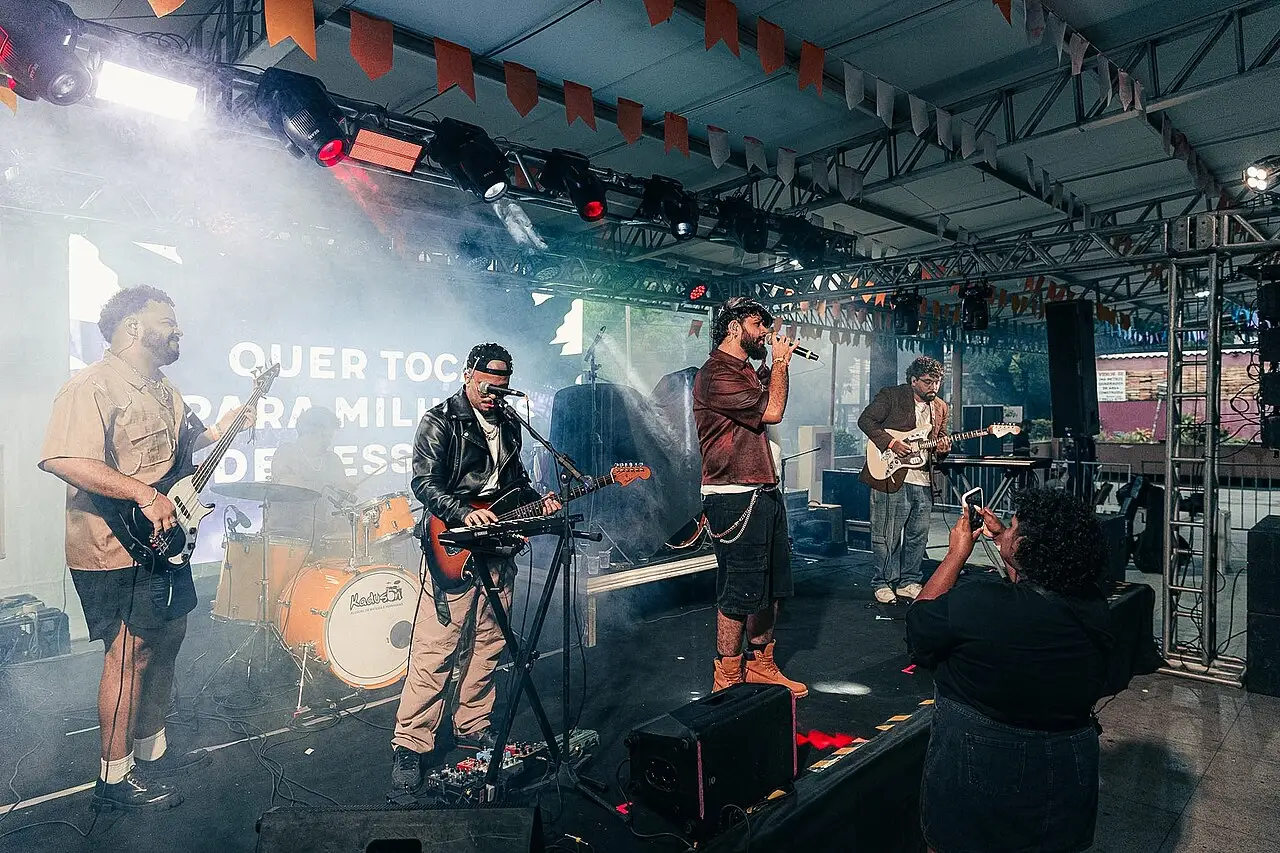
Porão do Rock: second half of the year
A rock festival created in 1998 that brings together national bands and the local scene, a direct heir to the 1980s tradition. Dates and venue change year to year; confirm before planning the trip.
Books and films
“Cidade Livre,” João Almino (2010)
A novel narrated by a boy in the camp that preceded the inauguration, between 1956 and 1960. It tells the construction from the side of those who built it, not from the side of the project.
“Conterrâneos Velhos de Guerra,” Vladimir Carvalho (1990)
A documentary that gathers testimony from candangos and the repression on the construction sites, including the episode at Vila Amaury and the Pacheco Fernandes camp. It tells the story of the construction from the workers' side, which the official version left out.
“Dois,” Legião Urbana (1986)
The record that fixed the Brasília of superblocks and teenage boredom in Brazilian song, with “Eduardo e Mônica” mapping the city's classes and distances. It explains the soundtrack still playing in Asa Norte's bars.
Frequently asked questions
Brasília: Can you get to know the city just through the Plano Piloto?
No: about 90% of DF residents live outside the Plano Piloto, and skipping Ceilândia's market, Taguatinga's commerce, or lunch in Vila Planalto means seeing only half the picture.
Brasília: How do you get from the airport to the Plano Piloto?
An express bus line links the terminal to the Plano Piloto's Rodoviária for R$5.50, in 30 to 40 minutes.
Brasília: How do you pay in the city?
Pix dominates, almost every business accepts a QR code, from restaurants to skewer vendors, and contactless cards work practically everywhere, so cash is almost unnecessary.
Brasília: What are the seasons like, and when should you go?
Brasília has two seasons and no transition: the dry season, from May to September, and the rainy season, from October to April, with about 1,500 mm concentrated mostly between November and January, almost always in hour-long late-afternoon storms. Go in the dry season, with clear skies every day, and preferably in May and June, the sweet spot: dry, mild, and still with the cerrado green. In August and September, relative humidity drops to 10 to 20% in the afternoon, and anyone with a respiratory condition should avoid August.
Brasília: How do the city's addresses work?
Nobody gives a street name because there's almost no such thing: say and listen for the order block, building, entrance, apartment, “SQS 308, Block C, Entrance 32.”
Other cities in the country
Brazil ↗- Days
- 4
- When
- Apr–Jun
- Per person/day
- Average 615 BRLMid-range · per person/day
Cost scope
Per person per day: accommodation, meals, urban transport, visits and a small allowance for extras. Flights excluded; larger purchases vary. Editorial estimate, not a quote.
- Days
- 2–3
- When
- Apr–May · Sep
- Per person/day
- Average 400–700 BRLMid-range · per person/day
Cost scope
Per person per day: accommodation, meals, urban transport, visits and a small allowance for extras. Flights excluded; larger purchases vary. Editorial estimate, not a quote.
- Days
- 2–3
- When
- Jan–Mar · Sep–Dec
- Per person/day
- Average 350–550 BRLMid-range · per person/day
Cost scope
Per person per day: accommodation, meals, urban transport, visits and a small allowance for extras. Flights excluded; larger purchases vary. Editorial estimate, not a quote.
- Days
- 3–4
- When
- Jun–Sep
- Per person/day
- Average 400–700 BRLMid-range · per person/day
Cost scope
Per person per day: accommodation, meals, urban transport, visits and a small allowance for extras. Flights excluded; larger purchases vary. Editorial estimate, not a quote.
- Days
- 2–3
- When
- Apr–Jun
- Per person/day
- Average 350–550 BRLMid-range · per person/day
Cost scope
Per person per day: accommodation, meals, urban transport, visits and a small allowance for extras. Flights excluded; larger purchases vary. Editorial estimate, not a quote.
- Days
- 3–5
- When
- Mar–Apr · Nov
- Per person/day
- Average 397 BRLMid-range · per person/day
Cost scope
Per person per day: accommodation, meals, urban transport, visits and a small allowance for extras. Flights excluded; larger purchases vary. Editorial estimate, not a quote.
- Days
- 2–4
- When
- Mar–May · Sep
- Per person/day
- Explore costsGuide estimate
Cost scope
Per person per day: accommodation, meals, urban transport, visits and a small allowance for extras. Flights excluded; larger purchases vary. Editorial estimate, not a quote.
- Days
- 4–5
- When
- Aug–Nov
- Per person/day
- Explore costsGuide estimate
Cost scope
Per person per day: accommodation, meals, urban transport, visits and a small allowance for extras. Flights excluded; larger purchases vary. Editorial estimate, not a quote.
- Days
- 3–4
- When
- Jul–Sep
- Per person/day
- Explore costsGuide estimate
Cost scope
Per person per day: accommodation, meals, urban transport, visits and a small allowance for extras. Flights excluded; larger purchases vary. Editorial estimate, not a quote.
- Days
- 3–4
- When
- Sep–Nov
- Per person/day
- Explore costsGuide estimate
Cost scope
Per person per day: accommodation, meals, urban transport, visits and a small allowance for extras. Flights excluded; larger purchases vary. Editorial estimate, not a quote.
- Days
- 2–4
- When
- May–Sep
- Per person/day
- Explore costsGuide estimate
Cost scope
Per person per day: accommodation, meals, urban transport, visits and a small allowance for extras. Flights excluded; larger purchases vary. Editorial estimate, not a quote.
- Days
- 3–5
- When
- Jun–Sep
- Per person/day
- Explore costsGuide estimate
Cost scope
Per person per day: accommodation, meals, urban transport, visits and a small allowance for extras. Flights excluded; larger purchases vary. Editorial estimate, not a quote.
- Days
- 3–4
- When
- Jun–Aug
- Per person/day
- Explore costsGuide estimate
Cost scope
Per person per day: accommodation, meals, urban transport, visits and a small allowance for extras. Flights excluded; larger purchases vary. Editorial estimate, not a quote.
- Days
- 4–5
- When
- Jan–Mar · Sep–Dec
- Per person/day
- Explore costsGuide estimate
Cost scope
Per person per day: accommodation, meals, urban transport, visits and a small allowance for extras. Flights excluded; larger purchases vary. Editorial estimate, not a quote.
- Days
- 3–4
- When
- Oct–Dec
- Per person/day
- Average 1,110 BRLMid-range · per person/day
Cost scope
Per person per day: accommodation, meals, urban transport, visits and a small allowance for extras. Flights excluded; larger purchases vary. Editorial estimate, not a quote.
- Days
- 3–4
- When
- Aug–Sep
- Per person/day
- Explore costsGuide estimate
Cost scope
Per person per day: accommodation, meals, urban transport, visits and a small allowance for extras. Flights excluded; larger purchases vary. Editorial estimate, not a quote.
- Days
- 4–7
- When
- Apr–Sep
- Per person/day
- Explore costsGuide estimate
Cost scope
Per person per day: accommodation, meals, urban transport, visits and a small allowance for extras. Flights excluded; larger purchases vary. Editorial estimate, not a quote.
- Days
- 3–4
- When
- Jan · Sep–Dec
- Per person/day
- Explore costsGuide estimate
Cost scope
Per person per day: accommodation, meals, urban transport, visits and a small allowance for extras. Flights excluded; larger purchases vary. Editorial estimate, not a quote.
- Days
- 2
- When
- Aug–Dec
- Per person/day
- Average 442 BRLMid-range · per person/day
Cost scope
Per person per day: accommodation, meals, urban transport, visits and a small allowance for extras. Flights excluded; larger purchases vary. Editorial estimate, not a quote.
- Days
- 3–5
- When
- Jan–Feb · Sep–Dec
- Per person/day
- Explore costsGuide estimate
Cost scope
Per person per day: accommodation, meals, urban transport, visits and a small allowance for extras. Flights excluded; larger purchases vary. Editorial estimate, not a quote.
- Days
- 3–5
- When
- May–Sep
- Per person/day
- Explore costsGuide estimate
Cost scope
Per person per day: accommodation, meals, urban transport, visits and a small allowance for extras. Flights excluded; larger purchases vary. Editorial estimate, not a quote.
- Days
- 2–3
- When
- Apr–Sep
- Per person/day
- Average 484 BRLMid-range · per person/day
Cost scope
Per person per day: accommodation, meals, urban transport, visits and a small allowance for extras. Flights excluded; larger purchases vary. Editorial estimate, not a quote.
- Days
- 3
- When
- Apr–May · Aug
- Per person/day
- Average 478 BRLMid-range · per person/day
Cost scope
Per person per day: accommodation, meals, urban transport, visits and a small allowance for extras. Flights excluded; larger purchases vary. Editorial estimate, not a quote.
- Days
- 3–4
- When
- Aug–Dec
- Per person/day
- Explore costsGuide estimate
Cost scope
Per person per day: accommodation, meals, urban transport, visits and a small allowance for extras. Flights excluded; larger purchases vary. Editorial estimate, not a quote.
- Days
- 2
- When
- Apr–May · Sep
- Per person/day
- Explore costsGuide estimate
Cost scope
Per person per day: accommodation, meals, urban transport, visits and a small allowance for extras. Flights excluded; larger purchases vary. Editorial estimate, not a quote.
- Days
- 3
- When
- Sep–Dec
- Per person/day
- Explore costsGuide estimate
Cost scope
Per person per day: accommodation, meals, urban transport, visits and a small allowance for extras. Flights excluded; larger purchases vary. Editorial estimate, not a quote.
- Days
- 3–5
- When
- Apr–Nov
- Per person/day
- Average 427 BRLMid-range · per person/day
Cost scope
Per person per day: accommodation, meals, urban transport, visits and a small allowance for extras. Flights excluded; larger purchases vary. Editorial estimate, not a quote.
- Days
- 4
- When
- Jul–Sep
- Per person/day
- Explore costsGuide estimate
Cost scope
Per person per day: accommodation, meals, urban transport, visits and a small allowance for extras. Flights excluded; larger purchases vary. Editorial estimate, not a quote.
- Days
- 4–5
- When
- May–Sep
- Per person/day
- Explore costsGuide estimate
Cost scope
Per person per day: accommodation, meals, urban transport, visits and a small allowance for extras. Flights excluded; larger purchases vary. Editorial estimate, not a quote.
- Days
- 3
- When
- May–Sep
- Per person/day
- Explore costsGuide estimate
Cost scope
Per person per day: accommodation, meals, urban transport, visits and a small allowance for extras. Flights excluded; larger purchases vary. Editorial estimate, not a quote.