Brazil
Chapada Diamantina
Waterfalls, caves and multi-day treks in the diamond highlands, with Lençóis as the base and the Pati Valley as the crossing
Days Start with the basic programme and choose extensions for the time you have.
How the guide reaches this number
The first three in Lençóis: one on foot, at Serrano and Ribeirão do Meio, one at the Iraquara caves with sunset at Pai Inácio, and one at the blue pools of Itaetê and Nova Redenção. The fourth in the Capão Valley, to climb to Fumaça in the morning and sleep there. The last three in the Pati Valley, with a guide and a stop at residents' homes, which is the crossing that gives the trip its meaning for anyone who likes to walk. With four days I would do Lençóis and Capão and leave the Pati for another trip; with fewer than four, I would choose between the caves and Fumaça, because each of those tours uses up hours of road.
4–7
When April to September; rain eases from April and stays below 45 mm a month from July to September, the sunbeam enters Poço Encantado from April to September, and the waterfalls carry more water from April to June.
How the guide reaches this number
From November to March it rains more, the waterfalls run full and rivers can rise suddenly
April to September; rain eases from April and stays below 45 mm a month from July to September, the sunbeam enters Poço Encantado from April to September, and the waterfalls carry more water from April to June. From November to March it rains more, the waterfalls run full and rivers can rise suddenly
Per person/day Add up lodging per night, meals per person, the guide for each trail and the entry fees for the pools and caves you choose; the Pati crossing, with overnight stays and a guide, changes the total considerably.
How the guide reaches this number
Per person per day: accommodation, meals, urban transport, visits and a small allowance for extras. Flights excluded; larger purchases vary. Editorial estimate, not a quote.
 What Nilo thinks
I would stay seven days in Chapada Diamantina. The first three in Lençóis: one on foot, at Serrano and Ribeirão do Meio, one at the Iraquara caves with sunset at Pai Inácio, and one at the blue pools of Itaetê and Nova Redenção. The fourth in the Capão Valley, to climb to Fumaça in the morning and sleep there. The last three in the Pati Valley, with a guide and a stop at residents' homes, which is the crossing that gives the trip its meaning for anyone who likes to walk. With four days I would do Lençóis and Capão and leave the Pati for another trip; with fewer than four, I would choose between the caves and Fumaça, because each of those tours uses up hours of road.Chapada Diamantina is a highland of rock tables in the middle of Bahia, torn by dark-water river canyons, with waterfalls that drop hundreds of meters and caves where the water is blue. Lençóis, with its prospecting-era houses on the riverbank, is the town from which most of the trip is organized: from here you climb Morro do Pai Inácio to see the highlands from above, go down to the Iraquara caves and head to the pools where, in certain months, a beam of sun crosses the water. The Capão Valley, about 72 km away, is the gateway to Cachoeira da Fumaça, which the wind turns to mist before it reaches the ground. And the Pati Valley, with no road, is crossed on foot over several days, sleeping in the homes of the families who still live inside it.
Quick facts
- Population
- 11,216 inhabitants in the municipality of Lençóis (IBGE, 2026 estimate); 10,774 in the 2022 Census. The Capão Valley belongs to Palmeiras, with 10,962 inhabitants (IBGE, 2026 estimate)
- Founded
- Settled from 1845, with the discovery of diamonds; became a village in 1856, split off from Santa Isabel do Paraguaçu (today Mucugê); became a city in 1864
- Country and region
- Brazil, Northeast; central Bahia, in Chapada Diamantina, about 410 km from Salvador
- Language
- Portuguese
- Currency
- Real (BRL, R$)
- Time zone
- UTC−3 year-round (Brasília time, no daylight saving time)
- Best time to visit
- April to September; rain eases from April and stays below 45 mm a month from July to September, the sunbeam enters Poço Encantado from April to September, and the waterfalls carry more water from April to June. From November to March it rains more, the waterfalls run full and rivers can rise suddenly
- Average cost per day
- Add up lodging per night, meals per person, the guide for each trail and the entry fees for the pools and caves you choose; the Pati crossing, with overnight stays and a guide, changes the total considerably.
When to go
April to September; rain eases from April and stays below 45 mm a month from July to September, the sunbeam enters Poço Encantado from April to September, and the waterfalls carry more water from April to June. From November to March it rains more, the waterfalls run full and rivers can rise suddenly
How the year changes
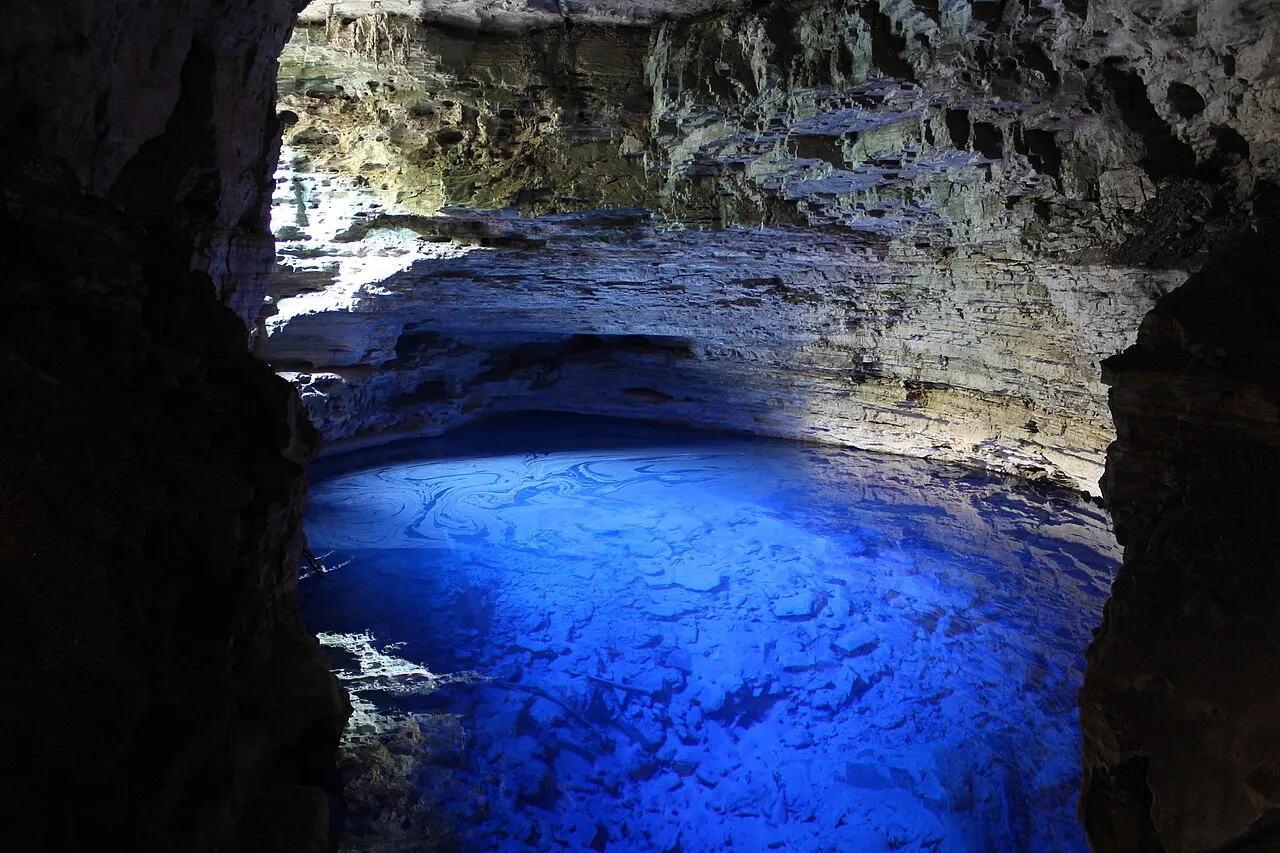
From April to September the rain eases, until it stays below 45 mm a month from July to September. It is the best time for long treks such as the Pati, and it is when the sunbeam enters Poço Encantado (April to September) and Poço Azul (February to October). At the start of that season, from April to June, the waterfalls still carry the water of the rains; in August and September, the driest month, Fumaça can fall with little volume. The WMO normals for Lençóis give 26 mm of rain in September and 164 mm in March. From November to March it rains more, with showers alternating with sun: the waterfalls run full and the water is warmer, but canyon trails become harder and rivers can rise suddenly. July, late December, January (with the Festa de Senhor dos Passos), Carnival, Holy Week and São João fill the town.
Nilo's tips
The season decides the itinerary
Poço Encantado only has its beam of light from April to September, and Fumaça has more water from April to June. To get both at their best, I would go between April and June.
Ask how many clients the guide takes
Some agencies send two guides with large groups on multi-day crossings. I would choose a small group, with one guide for few clients, especially in the Pati.
Two bases go further than one
Lençóis suits the car tours; Capão suits Fumaça and the entrance to the Pati. I would sleep one night in Capão instead of going back and forth in a day, because it is about 72 km each way.
Flashlight and timing
At Pai Inácio the climb closes at 5 p.m., according to travel guides, and the descent after sunset is in the dark; Fumaça calls for a morning start. I would reach the hill before 5 p.m. and keep the flashlight in my backpack from the first day to the last.
Explore the map
Explore the map, read about the other places and plan your travel days in the app.
Open the appWhat to see
Chapada Diamantina: The highlands and the park
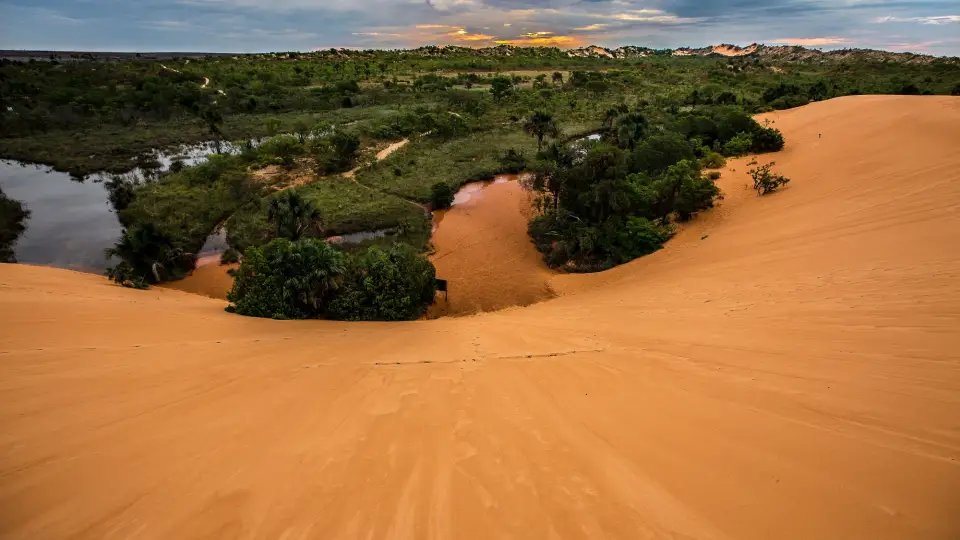
Chapada Diamantina is the northern part of the Serra do Espinhaço, a set of plateaus of sandstone and conglomerate (the rock that held the diamonds) cut by canyons and dark-water rivers. A valley inside the national park, between Palmeiras, Andaraí and Mucugê, with no road. It once had about 400 families in the days of prospecting and coffee; few remain today, and some take in trekkers at home, with overnight stays and meals.
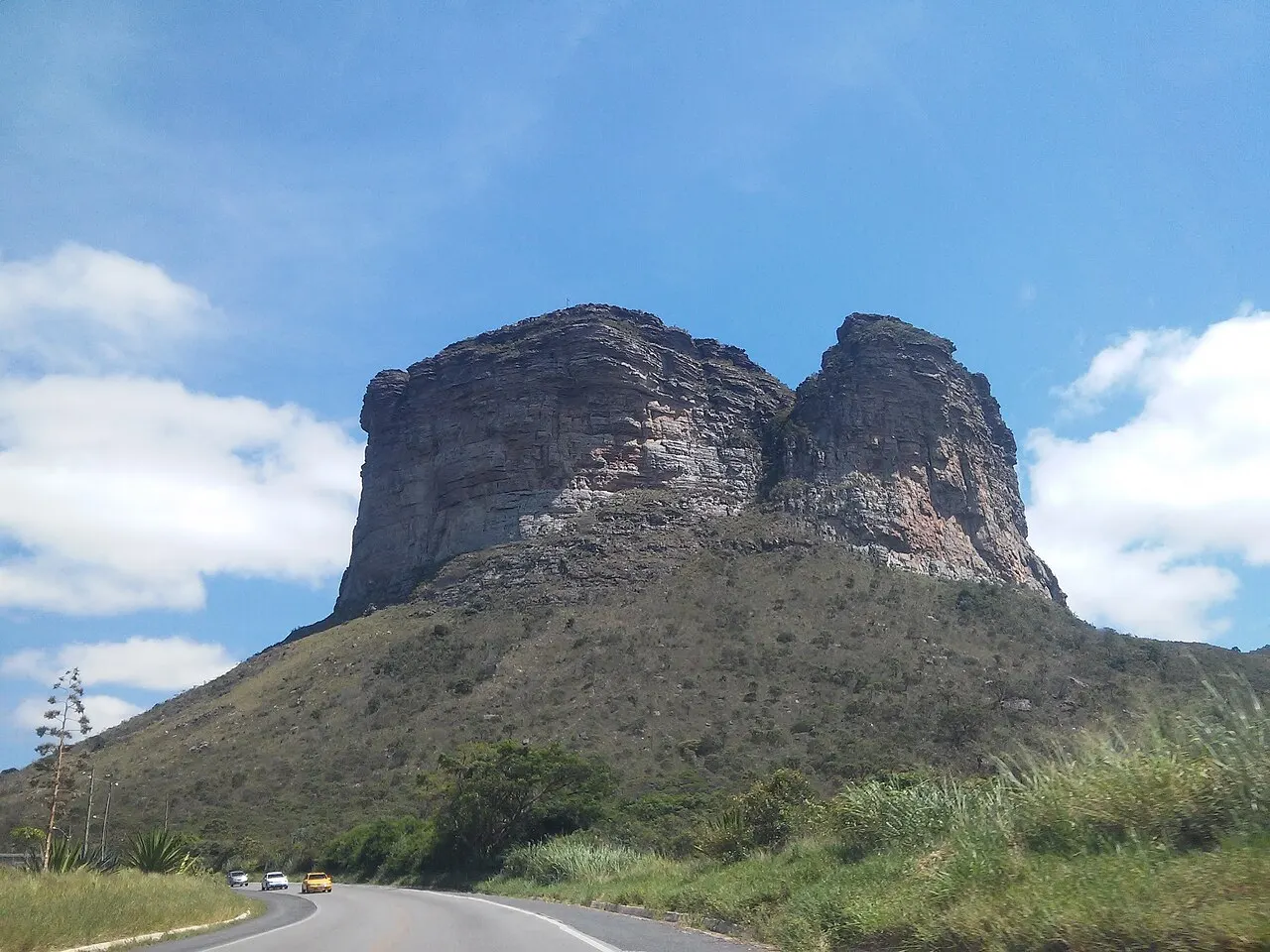
Morro do Pai Inácio
A flat-topped hill on the BR-242, about 26 km from Lençóis, in the municipality of Palmeiras. The climb from the gate to the top is short and steep, with no guide needed, and from up there you see the highlands in rock tables and the valley between them. Late afternoon is the most sought-after time, for the sunset, but travel guides report that the climb is only allowed until 5 p.m.: arrive before then and wait for the sun at the top, with a jacket for the wind. Since April 6, 2026, the Palmeiras municipality charges R$ 20 for a full ticket and R$ 10 for a half-price ticket; confirm the hours at the gate.
Travel guides report that the climb is only allowed until 5 p.m.
Check access
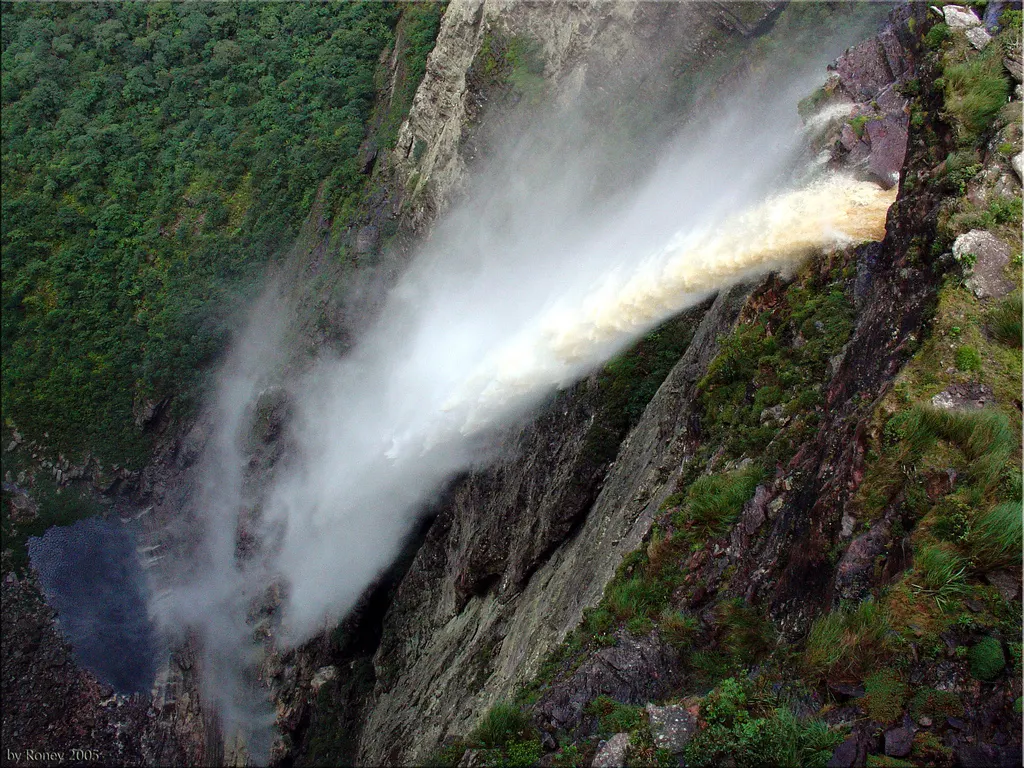
Cachoeira da Fumaça
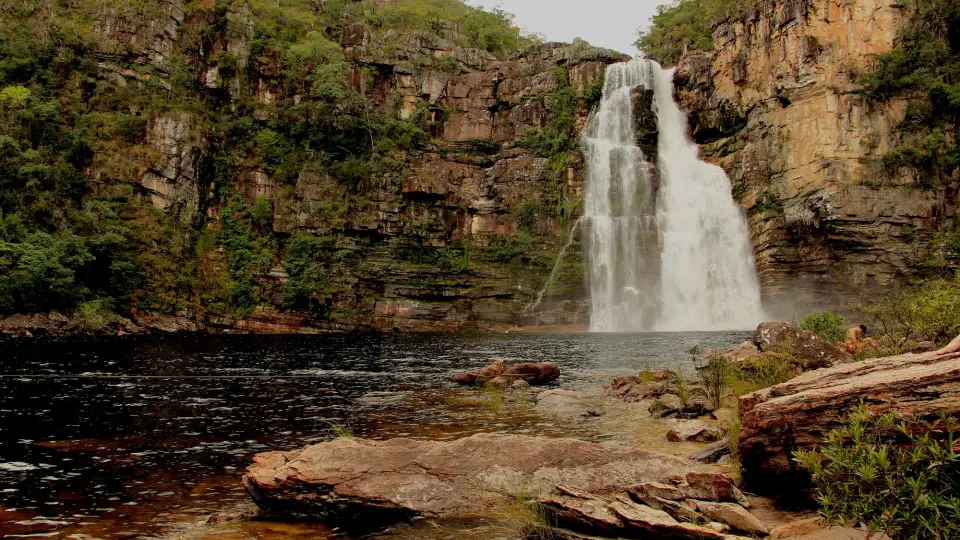
A 340-meter drop, by the measurement of the Projeto Cachoeiras Gigantes, which most of the year does not reach the ground: the wind sends the water back up in droplets and forms the mist that gives the falls their name. The trail from above starts in the Capão Valley and is 6 km one way, with a steep climb in the first 2 km and about 2.5 hours of walking to the edge; entry is registered with the Capão guides' association. Fumaça from below is a different trip: a crossing of about 36 km and about 3 days, leaving from Lençóis to the base of the falls, inside the canyon, with wild camping and an experienced guide indispensable.
That is why a trip is organized by bases and tour days, not by neighborhoods.
Check access
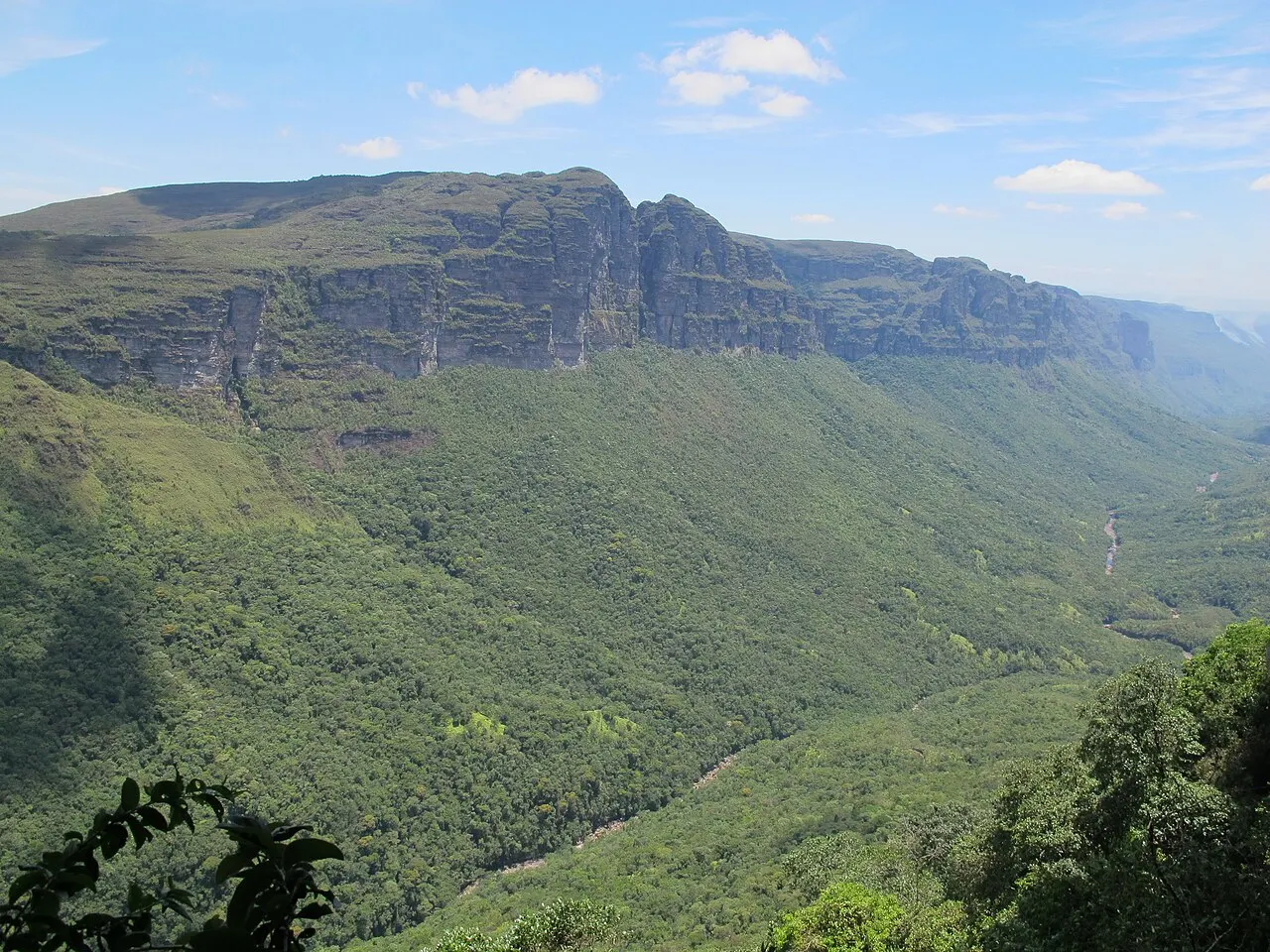
Pati Valley
A valley in the middle of the national park that is crossed on foot, with viewpoints such as Morro do Castelo and waterfalls such as Cachoeirão. The shortest crossings take three days, and the longest reach about 70 km and up to six days. Entrances are through the Capão Valley, Guiné, Andaraí and Mucugê, and overnight stays are in residents' homes, booked in advance.
The village of Caetê-Açu, in the municipality of Palmeiras, at the foot of the ridge where Cachoeira da Fumaça is. It has guesthouses, restaurants and a guides' association, and serves those who want to do Fumaça from above in the morning or start the Pati trek.
Check access
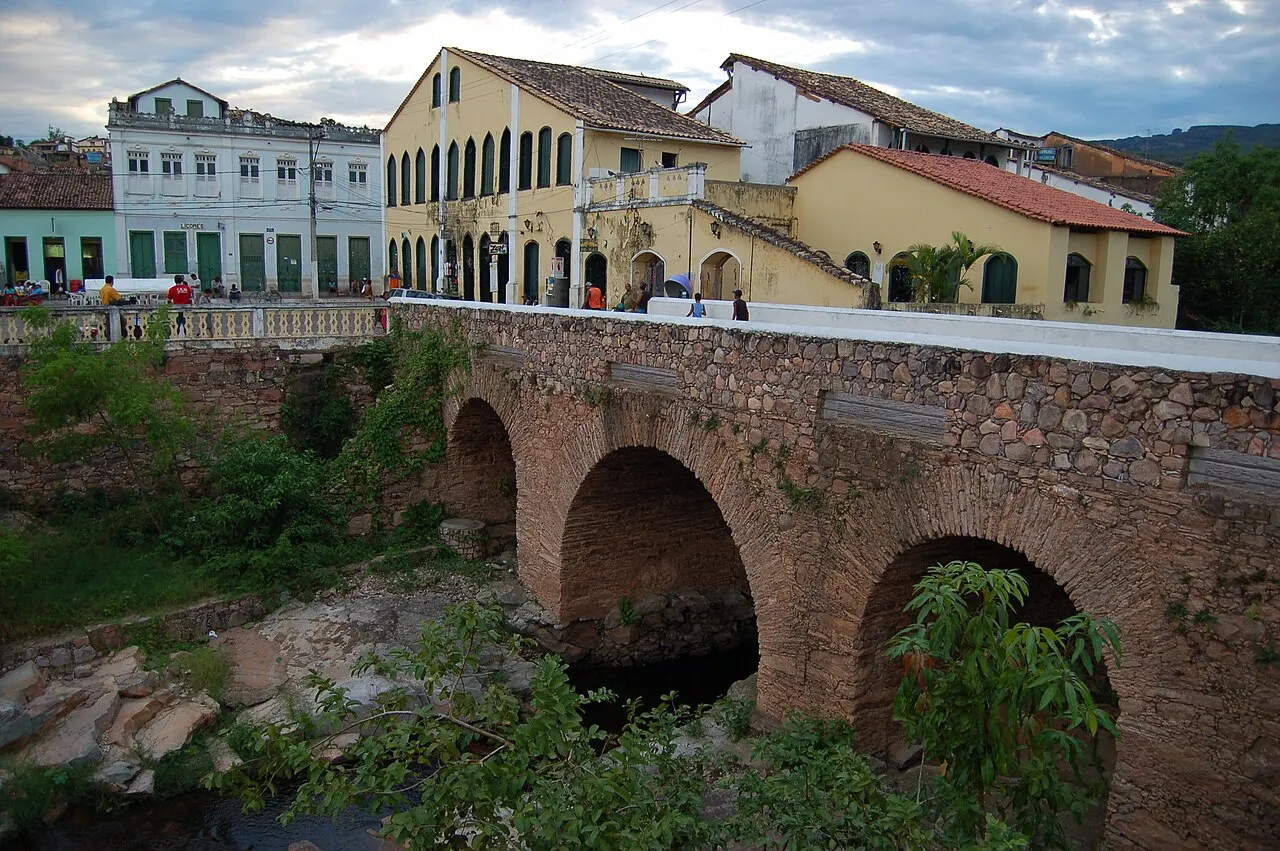
Lençóis historic center
The 19th-century old town, listed by Iphan in 1973, keeps its townhouses, cobbled streets, Praça Horácio de Matos and the 1860 bridge over the Lençóis River. The town can be walked in a short time, and the best moment is late afternoon, when the restaurant tables spill onto the sidewalks.
The most visited places are scattered across several municipalities: Lençóis sits on the BR-242; the Capão Valley, in Palmeiras, is about 72 km away by road, at the foot of the ridge where Fumaça falls; the Pati Valley is in the middle of the park, with no road; the caves are in Iraquara; and the blue pools are in Itaetê and Nova Redenção.
Check access

Serrano
A rock ledge in the river just above town, about ten minutes on foot from the center, with natural pools of dark water. From there you continue to the Salão de Areias Coloridas, with sands of several colors, and, with more time, to Cachoeira da Primavera; the way is over rock, with no marked trail.
The listed old houses around Praça Horácio de Matos and the Lençóis River, with cobbled streets, guesthouses, restaurants and the agencies that sell the tours.
Check access

Ribeirão do Meio
A pool with a natural rock slide, about 40 minutes on foot from Lençóis, which you can do without a guide. The slide only works with enough water, and the rock is slippery on the way up.
This is where you sleep for most of the trip, and where the car tours and short walking trails, such as Serrano and Ribeirão do Meio, start.
Check access
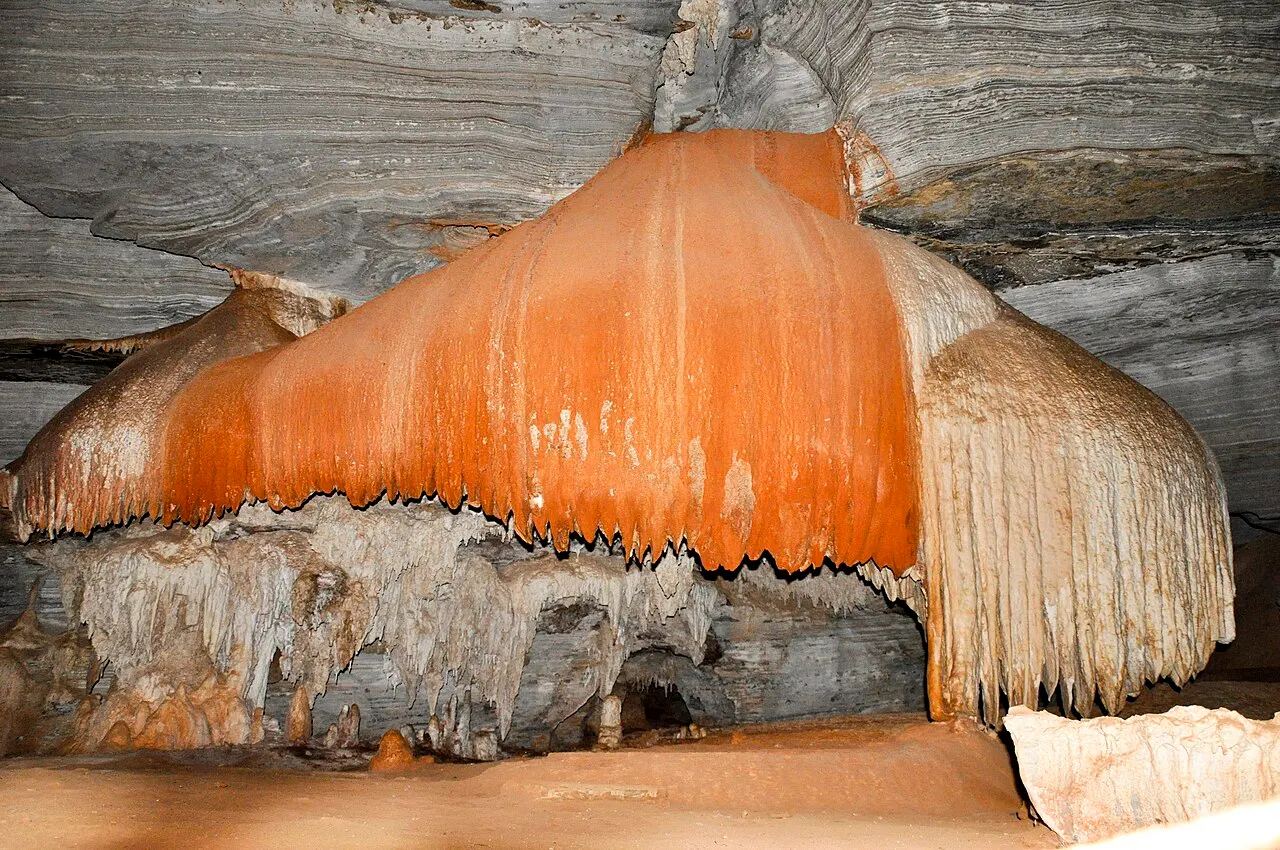
Gruta da Lapa Doce
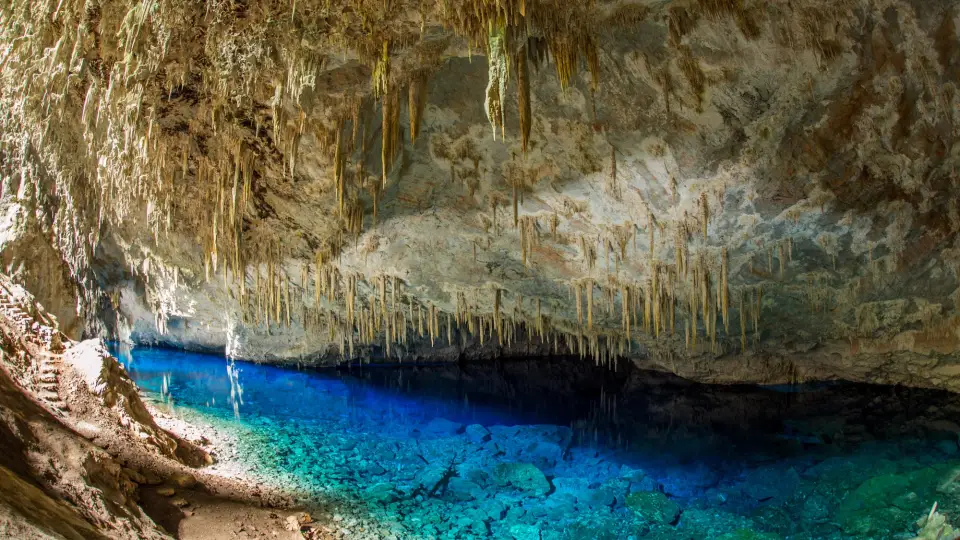
A cave in Iraquara, about 68 km from Lençóis, with stalactites and stalagmites along a visitor stretch of about 850 meters. The entrance is a steep descent by trail and stairs, and the exit, through another opening, is a tiring climb. The visit, of about 1.5 hours, is led by the attraction's own guides.
A municipality next to Lençóis with the region's largest concentration of caves, among them Lapa Doce, Pratinha and Gruta Azul.
Check access
Poço Encantado
A blue-water lake at the bottom of a cave in Itaetê, about 140 km from Lençóis, more than 60 meters deep. From April to September, between 10 a.m. and 1:30 p.m. and only with sun, a beam of light enters through the mouth of the cave and crosses the water. You cannot swim or reach the shore, and the visit is made with the local guide.
Poço Encantado is about 140 km away and the Capão Valley about 72 km. A day with two blue pools is a full day on the road; nothing else fits in it.
Check access

Poço Azul
A pool inside a cave in Nova Redenção, about 94 km from Lençóis, where floating is allowed, with a life vest and a shower first to remove sunscreen. The sunbeam appears from February to October, between 12:30 and 2 p.m., and the visit is led by the attraction's own guides.
Coronel Horácio de Mattos Airport (LEC) is about 20 km from the center of Lençóis.
Check access
Nilo’s itinerary
Start with the basic programme and choose extensions for the time you have.
Plan my days in the app ↗Day 1 · Lençóis on foot: Serrano and Ribeirão do Meio
In the morning, walk through the historic center, from Praça Horácio de Matos to the bridge over the Lençóis River.
Walk up to Serrano, about ten minutes from the center, and follow the rocks to the Salão de Areias Coloridas; allow two to three hours.
Have lunch downtown, at a regional restaurant, and book the next days' tours at an agency.
In the afternoon, walk about 40 minutes to Ribeirão do Meio to swim in the pool and, if there is water, go down the rock slide.
Head back before dark and have dinner on the square. Sleep in Lençóis.
Day 2 · The Iraquara caves and sunset at Pai Inácio
Leave Lençóis early, by car or with an agency, for Gruta da Lapa Doce, about 68 km away; the guided visit takes about 1.5 hours.
Continue to Gruta da Pratinha and Gruta Azul, also in Iraquara, for the floating at Pratinha and lunch.
Reach Morro do Pai Inácio, on the BR-242, before 5 p.m., the climbing cutoff reported by travel guides, and wait for the sunset at the top; bring a jacket and a flashlight for the descent.
Return to Lençóis, about 26 km away. Sleep in Lençóis.
Day 3 · Poço Encantado and Poço Azul
Leave Lençóis early in the morning: Poço Encantado is about 140 km away, and the sunbeam appears from April to September, between 10 a.m. and 1:30 p.m.
After Poço Encantado, continue to Poço Azul, in Nova Redenção, to float in the cave; the beam there appears between 12:30 and 2 p.m., from February to October.
Outside April to September, swap this day for the Marimbus, by canoe from Quilombo do Remanso, about 20 km from Lençóis.
Return to Lençóis in the late afternoon. Sleep in Lençóis.
Day 4 · The Capão Valley and Fumaça from above
Arrange with your Lençóis guesthouse to store your larger luggage until day 7 and take only a backpack to Capão and the Pati.
Leave Lençóis early for the Capão Valley, about 72 km away: tonight you sleep there.
From the village, go to the start of the Cachoeira da Fumaça trail, about 3 km away, register your entry with the guides' association and start the climb still in the morning, with a guide if you are not used to mountain trails.
Walk the 6 km to the edge (about 2.5 hours, with the heavy climb in the first 2 km) and return the same way.
In the evening, have dinner in Capão and check with the guide on the departure time and what to bring to the Pati. Sleep in the Capão Valley.






If you stay longer
Day 5 · Pati Valley: the entrance through Guiné
Leave Capão with the guide in the arranged transport to Guiné, where the classic three-day crossing starts.
Descend the ridge to the valley, with stages of 15 to 25 km a day, depending on the route the guide sets.
Sleep and have dinner at the home of a family of Pati residents, booked in advance.
Day 6 · Pati Valley: viewpoints and waterfalls
Do the day's walk with the guide, which may include Morro do Castelo or Cachoeirão, depending on the weather and the group's fitness.
Bring water and a snack for the whole day; the hot meal is the one at the stop.
Sleep at another residents' home or the same one, depending on the route.
Day 7 · Leaving the Pati and returning to Lençóis
Climb back up to Guiné with the guide.
Take the arranged transport straight to Lençóis, pick up your luggage at the guesthouse and have dinner downtown.

Food
Godó de banana verde
A stew of green banana with dried or sun-cured beef, onion and tomato, tied by tradition to the prospectors and muleteers of the Chapada. It appears in regional restaurants in Lençóis, and Ibicoara presents itself as the land of godó: a bill in the Bahia Legislative Assembly proposes calling it the Bahian capital of the dish.
Carne de sol with feijão-de-corda
Salted, dried beef, served with black-eyed peas, rice and farofa, appears at regional lunches and in the pay-by-weight restaurants of downtown Lençóis.
Moqueca and acarajé
The cooking of the Bahian coast has also reached the highlands: fish or shrimp moqueca with palm oil and coconut milk at dinner, and acarajé and abará at snack bars downtown.
Home cooking in the Pati
In the Pati Valley, the families that take in trekkers serve dinner and breakfast. During the crossing you eat dinner at the overnight stops, which is why the stop is booked with meals.
Fish at Remanso
At Quilombo do Remanso, the community serves fish-based meals to those who come for the canoe trip on the Marimbus.
Wine and coffee from Mucugê
In Mucugê, the UVVA winery, a project of Fazenda Progresso, the same farm behind Latitude 13 coffee, opened its doors in March 2022, with vineyards at about 1,150 m of elevation. Guided visits led by winemakers, with tasting, are booked in advance.
Where to eat
- Lençóis historic center
Regional or pay-by-weight lunch before or after a short tour, with carne de sol, feijão-de-corda and, in some places, godó de banana verde.
- Lençóis historic center
Dinner at the tables of Praça Horácio de Matos and the nearby streets, where the choices run from Bahian moqueca to pizza; it is the evening activity in town.
- Quilombo do Remanso
A fish meal made by the community, for those going by canoe to the Marimbus.
- Pati Valley
Dinner and breakfast at the homes that take in trekkers, included in the overnight stay.
$: salgado, acarajé or pay-by-weight plate downtown in Lençóis · $$: regional à la carte lunch or dinner downtown · $$$: dinner at a hotel restaurant or an author-cuisine restaurant · 2026-10-16
Day trips
Mucugê and Igatu
Mucugê is about 147 km from Lençóis, with houses from the prospecting era, the Cemitério Bizantino and the Parque Municipal de Mucugê, with the Museu Vivo do Garimpo. Igatu, a stone village in the municipality of Andaraí, is about 112 km from Lençóis, with a bad road at the end. Given the distance, it is worth sleeping a night in Mucugê and combining it with the UVVA winery.
Cachoeira do Buracão, in Ibicoara
About 250 km from Lençóis and 30 km from Ibicoara, the waterfall drops into a narrow canyon that you cross by swimming, with a mandatory life vest and an accredited guide. The trail is about 6 km round trip. It does not fit in a day trip from Lençóis: sleep in Ibicoara. In February 2026, the paving of 27.4 km of the access road was 40% done, according to Seinfra, and the stretch under construction turned to mud with rain; check the road situation before going.
Where to begin
Lençóis on foot: Serrano and Ribeirão do Meio
In the morning, walk through the historic center, from Praça Horácio de Matos to the bridge over the Lençóis River.
The Iraquara caves and sunset at Pai Inácio
Leave Lençóis early, by car or with an agency, for Gruta da Lapa Doce, about 68 km away; the guided visit takes about 1.5 hours.
Poço Encantado and Poço Azul
Leave Lençóis early in the morning: Poço Encantado is about 140 km away, and the sunbeam appears from April to September, between 10 a.m. and 1:30 p.m.
The Capão Valley and Fumaça from above
Arrange with your Lençóis guesthouse to store your larger luggage until day 7 and take only a backpack to Capão and the Pati.
Pati Valley: the entrance through Guiné
Leave Capão with the guide in the arranged transport to Guiné, where the classic three-day crossing starts.
Money
The currency is the real (R$). Chapada Diamantina National Park charges no admission, but a good share of the attractions outside it do: Morro do Pai Inácio began costing R$ 20 for a full ticket and R$ 10 for a half-price ticket on April 6, 2026, by decree of the Palmeiras municipality, and at Quilombo do Remanso the boat on the Marimbus cost R$ 300 for four people in August 2026. At Gruta da Pratinha, floating is paid separately from admission; at Poço Azul, floating is part of the visit. On the Fumaça trail from above, entry is registered with the Vale do Capão guides' association; the amount of any fee or contribution must be confirmed in the village, and the guide or agency is paid separately. Check the prices with the agency or the attraction itself before setting out, and add the transport and the guide for each day. In the Pati Valley, agree in advance with the guide and the families on how the overnight stays are paid, because cell signal is often missing.
Getting there and around
Getting there
Coronel Horácio de Mattos Airport (LEC) is about 20 km from the center of Lençóis. Azul is the airline operating there, with few flights a week, and routes change from one season to the next: in April 2026 it announced a direct route from Belo Horizonte (Confins), on Thursdays and Sundays, starting in June. Check on Azul's website where flights depart for your dates before planning the trip. The fixed link is the bus: Rápido Federal connects Salvador's bus station to Lençóis a few times a day, in about 7 hours.
Between bases
There is no public transport between the attractions. Day tours leave Lençóis in agency cars, with a driver (ask whether the guide is included); if you rent a car, count on dirt roads at the end of several routes. For the Capão Valley, about 72 km away, go by car, by transfer or by bus to Palmeiras and from there by local transport to the village.
On foot
The center of Lençóis is small, with cobbled streets that call for closed shoes. Serrano, Ribeirão do Meio and the Sossego trail start on foot from town. In the Pati Valley there is no road: everything is done on foot.
Safety
The biggest risk in the Chapada is the trail itself. Agência Pública counted at least five tourists rescued after serious accidents in the national park between September 2024 and May 2025, at least two of them by helicopter; in the Pati Valley, a tourist with a fractured foot waited 72 hours because the weather prevented the helicopter, and was carried by residents, on a mule, for 16 km to Andaraí. Hire an accredited guide and ask how many clients each one takes. The Bahia Fire Department recommends planning the trail, leaving the route and return time with someone and, whenever possible, going with a certified guide, especially where there is a river, because the water volume changes suddenly; that was the guidance the corps repeated in March 2026, after rescuing three foreign tourists who spent more than 24 hours stranded, cold and without food, on the bank of the Ribeirão de Baixo, in Lençóis. In the rainy season, from November to March, rivers can rise within minutes with rain at the headwaters (the cabeça d'água): do not camp or rest in the riverbed, and get out of the water at the first sign that the level is rising.
Etiquette tips
In the Pati, you are a family's guest
The overnight stops in the Pati Valley are residents' homes. Book ahead, tell them your arrival time, respect mealtimes and carry out all the trash you produce.
Silence at Poço Encantado
The visit to Poço Encantado is for contemplation only, and the guide usually asks for a moment of silence, with cameras and phones turned off.
Jarê and religious festivals
Jarê ceremonies and processions are religious acts. Ask permission before photographing people or entering a terreiro, and follow the guidance of whoever is leading.
Community-based tourism
At Quilombo do Remanso, guides, boats, meals and lodging belong to the community itself. Hire the service through the local association instead of arriving with an outside team.
Mistakes to avoid
Thinking everything is close to Lençóis
Poço Encantado is about 140 km away and the Capão Valley about 72 km. A day with two blue pools is a full day on the road; nothing else fits in it.
Going to Poço Encantado outside the beam season
The light only crosses the water from April to September, near midday and with sun. Outside that, the pool is still beautiful, but without the ray that motivates the trip there.
Starting Fumaça late
The trail from above is 6 km one way, with the heavy climb right at the start. Whoever leaves Capão late climbs the steep part in the heat of the day and reaches the edge with little time to get back comfortably.
Improvising the Pati
The park's trails are rustic and almost unmarked, few families take in trekkers in the Pati, and a rescue can take days. Lock in a guide and overnight stays before you arrive.
Arriving late at Pai Inácio
Travel guides report that the climb is only allowed until 5 p.m. Whoever arrives after misses the sunset; whoever climbs in time goes down the short, steep trail in the dark, so bring a flashlight.
Useful phrases
Cabeça d'água
A sudden flood of a river after heavy rain at its headwaters, which arrives without warning
Condutor
A local trail guide; in the region there are guides' associations, such as the one in the Vale do Capão
Patizeiro
A resident of the Pati Valley
Garimpeiro
Someone who searched for diamonds in the rivers and highlands; prospecting shaped the town and the festivals of Lençóis
Pouso
A resident's home in the Pati Valley that takes in trekkers to sleep and eat
Where to stay
- Lençóis historic center · First trip, anyone not driving, and anyone who wants to walk to dinner: This is where the agency cars to the caves, pools and Pai Inácio leave from, and the Serrano and Ribeirão do Meio trails start on foot. The drawback is the distance to Capão and Fumaça, about 72 km, and to the blue pools, more than 90 km.
- Capão Valley · Those doing Fumaça from above or starting the Pati, and those who prefer a quieter village: The Fumaça trail starts about 3 km from the village, and there are local guides. It is far from the Lençóis tours, so it works better as a second base, for one or two nights.
- Pati Valley · Trekkers on a crossing of three days or more: The overnight stay is at the home of resident families, with dinner and breakfast, booked in advance through the guide. There is no road, and camping is only allowed at those homes; the comfort is simple.
$: simple guesthouse or hostel downtown in Lençóis or in Capão · $$: guesthouse with breakfast in the historic center · $$$: hotel with a restaurant in downtown Lençóis · 2026-10-16
Districts
Lençóis historic center
The listed old houses around Praça Horácio de Matos and the Lençóis River, with cobbled streets, guesthouses, restaurants and the agencies that sell the tours. This is where you sleep for most of the trip, and where the car tours and short walking trails, such as Serrano and Ribeirão do Meio, start.
Capão Valley
The village of Caetê-Açu, in the municipality of Palmeiras, at the foot of the ridge where Cachoeira da Fumaça is. It has guesthouses, restaurants and a guides' association, and serves those who want to do Fumaça from above in the morning or start the Pati trek.
Pati Valley
A valley inside the national park, between Palmeiras, Andaraí and Mucugê, with no road. It once had about 400 families in the days of prospecting and coffee; few remain today, and some take in trekkers at home, with overnight stays and meals.
Iraquara
A municipality next to Lençóis with the region's largest concentration of caves, among them Lapa Doce, Pratinha and Gruta Azul.
History
1845 · Diamonds in the highlands
The discovery of diamonds draws prospectors and merchants to the highlands, after the first finds in Mucugê. According to IBGE, the makeshift houses had white cloth walls that from afar looked like sheets spread out to dry; the municipality admits the origin of the name is uncertain.
1856 · Village of Lençóis
The settlement splits from Santa Isabel do Paraguaçu, today's Mucugê, and becomes a village. In 1864 it is raised to the status of city.
19th c. · The diamond boom
In the second half of the 19th century, Lençóis is described as the world's largest diamond producer and becomes the third most important city in Bahia. France opens a vice-consulate in the town.
1870s · The crisis
With diamonds discovered in South Africa in 1865 and part of the diggings exhausted, the town enters a crisis from 1871. Carbonado, a dark diamond used in industry, and coffee sustain part of the economy afterward.
1920s · Horácio de Matos
The region lives through the height of coronelismo and the violence of the jagunços. Horácio de Matos, the most powerful boss of the Lavras Diamantinas, signs a pacification agreement with the federal government.
1973 · Listing of the historic ensemble
Iphan lists the architectural and landscape ensemble of Lençóis as heritage, after the efforts of the Movimento de Criatividade Comunitária, with town residents.
1985 · National park
Decree 91.655, of September 17, 1985, creates Chapada Diamantina National Park, with about 152,000 hectares in Lençóis, Palmeiras, Mucugê, Andaraí and Ibicoara. Until 1994, tourism in Lençóis remains small and driven mostly by backpackers.
2026 · Senhor dos Passos as Brazilian heritage
On March 11, 2026, Iphan's Advisory Council unanimously approves the registration of the Festa de Senhor dos Passos of Lençóis as Brazilian cultural heritage, a request made in 2015 by the Sociedade União dos Mineiros.
Complete history
The city that diamonds built
Lençóis arose from a rush. From 1845, the discovery of diamonds in the rivers of the highlands brought prospectors and merchants to the place, and the settlement became a village in 1856 and a city in 1864. Diamond money showed in the import of luxury goods and in soirées, and France opened a vice-consulate to look after the trade in stones; the bridge over the river, from 1860, was built with workers hit by the drought of 1859 to 1862. In the second half of the 19th century, Lençóis is described as the world's largest diamond producer.
Crisis, carbonado and colonels
The discovery of the South African mines in 1865, and the exhaustion of part of the diggings, emptied out prospecting from 1871. Some prospectors left; those who stayed lived from stone cutting, coffee and carbonado, a dark diamond that gained value as an industrial abrasive. In the 1920s, the Lavras Diamantinas region was dominated by colonels with armies of jagunços, and the greatest of them, Horácio de Matos, went on to sign peace with the federal government. His name is now on Lençóis's main square.
From prospecting to tourism
Iphan listed the old houses in 1973 and the national park was created in 1985, covering the highlands where people once prospected. From 1980 to 1994, tourism was small and driven mostly by backpackers; today it fills the town on holidays, and over New Year's 2024 to 2025 hotel occupancy in Lençóis reached 90%. The memory of prospecting lives on in the festivals: the devotion to Senhor dos Passos, which closes the festival with the blessing of the prospectors, began with an image ordered from Portugal by merchants and miners in 1852 and was recognized as Brazilian cultural heritage in 2026.
Geography and shape of the city
The highlands and the park
Chapada Diamantina is the northern part of the Serra do Espinhaço, a set of plateaus of sandstone and conglomerate (the rock that held the diamonds) cut by canyons and dark-water rivers. The Serra do Sincorá, about 160 km from north to south, holds much of the national park, where the trails climb from about 400 m to 1,600 m in elevation. The vegetation mixes caatinga, cerrado and rock fields.
One region, several bases
The most visited places are scattered across several municipalities: Lençóis sits on the BR-242; the Capão Valley, in Palmeiras, is about 72 km away by road, at the foot of the ridge where Fumaça falls; the Pati Valley is in the middle of the park, with no road; the caves are in Iraquara; and the blue pools are in Itaetê and Nova Redenção. That is why a trip is organized by bases and tour days, not by neighborhoods.
Climate
Lençóis sits at about 400 m of elevation and is warm all year: the WMO 1991 to 2020 normals for the town's station give average highs of 31.7 °C in January and 26.5 °C in July, and lows of 16.6 °C in July. Rain comes mostly from November to April, peaking at 164 mm in March, eases from April and drops to 26 mm in September, the driest month.
There is no single entrance or national park ticket. What you plan is each day's transport, the guide, registration with the guides' association where one exists, as at Fumaça, and the attractions that charge.
In the Pati Valley, signal is rare. Arrange everything with the guide and the stops before going in.
Culture
Jarê
Jarê is an Afro-Brazilian religion specific to Chapada Diamantina, present in communities in Lençóis, Palmeiras, Andaraí and Itaetê. Jarê practices are part of the Festa de Senhor dos Passos, and communities such as Quilombo do Remanso keep the tradition alive alongside reisado, capoeira and samba de roda.
Prospecting, brass bands and festivals
Prospecting left more than houses: the Sociedade União dos Mineiros requested the registration of the Festa de Senhor dos Passos as heritage, the brass bands (filarmônicas) play marches and dobrados in the processions, and the Canção do Garimpeiro is still sung. Marujadas, reisados and capoeira are also part of the festival.
Torto Arado
Itamar Vieira Junior's novel is set on a farm in the sertão of Chapada Diamantina and has jarê and the region's quilombola life at the center of the story, which inspired the plot of Unidos de Vila Isabel's 2027 Carnival parade in Rio.
Festivals and events
Festa de Senhor dos Passos
From January 23 to February 3, in Lençóis. It begins with the washing of the church steps by the baianas, with scented water and flowers, goes on with novena prayers, dawn celebrations and processions with the brass bands, peaks on February 2, the anniversary of the image's arrival, and closes on February 3 with the blessing of the prospectors. It has been Brazilian cultural heritage since 2026.
São João
In June, Lençóis and the towns of the region celebrate São João with music, dance and typical food, in one of the busiest periods of the year.
Festa de São Francisco
Between September and October, at Quilombo do Remanso, with the Samba da Noite dos Pescadores. In May, the community holds the Samba do Mato.
Books and films
Torto Arado, by Itamar Vieira Junior (2019)
The novel is set on a farm in the sertão of Chapada Diamantina and shows work on the land, jarê and the life of the region's quilombola families.
Frequently asked questions
Chapada Diamantina: how do I get to Lençóis?
The fixed link is the Rápido Federal bus, which leaves Salvador's bus station a few times a day and takes about 7 hours. The Lençóis airport, about 20 km from the center, has few Azul flights a week, with routes that change every season.
Chapada Diamantina: how many days should I stay?
Seven days: three in Lençóis, one in the Capão Valley for Fumaça and three on the Pati Valley crossing. With four days, you can do Lençóis and Capão and leave the Pati for another trip; with fewer, you have to choose between the caves and Fumaça.
Chapada Diamantina: does the park charge admission?
The National Park charges no admission, but a good share of the attractions outside it do: Morro do Pai Inácio costs R$ 20 full and R$ 10 half price since April 6, 2026. At Fumaça, entry is registered with the Capão guides' association; confirm in the village whether there is a fee or contribution, and the guide is paid separately.
Chapada Diamantina: how do I do the Pati Valley?
On foot, with a guide and overnight stays in residents' homes booked in advance: the shortest crossings take three days, and the longest up to six. Entrances are through the Capão Valley, Guiné, Andaraí and Mucugê; cell signal is often missing.
Chapada Diamantina: what is the Cachoeira da Fumaça trail like?
From above, the trail starts in the Capão Valley and is 6 km one way, with a steep climb in the first 2 km and about 2.5 hours to the edge; leave in the morning and register your entry with the guides' association. Fumaça from below is a crossing of about 3 days, with an experienced guide.
Chapada Diamantina: when does the sun enter Poço Encantado?
From April to September, between 10 a.m. and 1:30 p.m. and only with sun, a beam of light enters through the mouth of the cave and crosses the water. The pool is about 140 km from Lençóis, you cannot swim, and the visit is made with the local guide.
Chapada Diamantina: until what time can I climb Morro do Pai Inácio?
Travel guides report that the climb is only allowed until 5 p.m.: arrive before then, wait for the sunset at the top and confirm the hours at the gate. The descent after sunset is in the dark, so bring a flashlight and a jacket for the wind.
Chapada Diamantina: when is the best time to go?
April to September: rain stays below 45 mm a month from July to September, the sunbeam enters Poço Encantado from April to September, and the waterfalls carry more water from April to June; in August and September Fumaça can fall with little volume. From November to March it rains more, and rivers can rise suddenly.
Chapada Diamantina: where should I stay?
In the historic center of Lençóis, where the agency cars and the short walking trails leave from; the drawback is the distance to Capão and the blue pools. The Capão Valley works as a second base, for one or two nights, for Fumaça and the Pati.
Other cities in the country
Brazil ↗- Days
- 4
- When
- Apr–Jun
- Per person/day
- Average 615 BRLMid-range · per person/day
Cost scope
Per person per day: accommodation, meals, urban transport, visits and a small allowance for extras. Flights excluded; larger purchases vary. Editorial estimate, not a quote.
- Days
- 2–3
- When
- Apr–May · Sep
- Per person/day
- Average 400–700 BRLMid-range · per person/day
Cost scope
Per person per day: accommodation, meals, urban transport, visits and a small allowance for extras. Flights excluded; larger purchases vary. Editorial estimate, not a quote.
- Days
- 2–3
- When
- Jan–Mar · Sep–Dec
- Per person/day
- Average 350–550 BRLMid-range · per person/day
Cost scope
Per person per day: accommodation, meals, urban transport, visits and a small allowance for extras. Flights excluded; larger purchases vary. Editorial estimate, not a quote.
- Days
- 1–2
- When
- May–Sep
- Per person/day
- Average 260–520 BRLMid-range · per person/day
Cost scope
Per person per day: accommodation, meals, urban transport, visits and a small allowance for extras. Flights excluded; larger purchases vary. Editorial estimate, not a quote.
- Days
- 3–4
- When
- Jun–Sep
- Per person/day
- Average 400–700 BRLMid-range · per person/day
Cost scope
Per person per day: accommodation, meals, urban transport, visits and a small allowance for extras. Flights excluded; larger purchases vary. Editorial estimate, not a quote.
- Days
- 2–3
- When
- Apr–Jun
- Per person/day
- Average 350–550 BRLMid-range · per person/day
Cost scope
Per person per day: accommodation, meals, urban transport, visits and a small allowance for extras. Flights excluded; larger purchases vary. Editorial estimate, not a quote.
- Days
- 3–5
- When
- Mar–Apr · Nov
- Per person/day
- Average 397 BRLMid-range · per person/day
Cost scope
Per person per day: accommodation, meals, urban transport, visits and a small allowance for extras. Flights excluded; larger purchases vary. Editorial estimate, not a quote.
- Days
- 2–4
- When
- Mar–May · Sep
- Per person/day
- Explore costsGuide estimate
Cost scope
Per person per day: accommodation, meals, urban transport, visits and a small allowance for extras. Flights excluded; larger purchases vary. Editorial estimate, not a quote.
- Days
- 4–5
- When
- Aug–Nov
- Per person/day
- Explore costsGuide estimate
Cost scope
Per person per day: accommodation, meals, urban transport, visits and a small allowance for extras. Flights excluded; larger purchases vary. Editorial estimate, not a quote.
- Days
- 3–4
- When
- Jul–Sep
- Per person/day
- Explore costsGuide estimate
Cost scope
Per person per day: accommodation, meals, urban transport, visits and a small allowance for extras. Flights excluded; larger purchases vary. Editorial estimate, not a quote.
- Days
- 3–4
- When
- Sep–Nov
- Per person/day
- Explore costsGuide estimate
Cost scope
Per person per day: accommodation, meals, urban transport, visits and a small allowance for extras. Flights excluded; larger purchases vary. Editorial estimate, not a quote.
- Days
- 2–4
- When
- May–Sep
- Per person/day
- Explore costsGuide estimate
Cost scope
Per person per day: accommodation, meals, urban transport, visits and a small allowance for extras. Flights excluded; larger purchases vary. Editorial estimate, not a quote.
- Days
- 3–5
- When
- Jun–Sep
- Per person/day
- Explore costsGuide estimate
Cost scope
Per person per day: accommodation, meals, urban transport, visits and a small allowance for extras. Flights excluded; larger purchases vary. Editorial estimate, not a quote.
- Days
- 3–4
- When
- Jun–Aug
- Per person/day
- Explore costsGuide estimate
Cost scope
Per person per day: accommodation, meals, urban transport, visits and a small allowance for extras. Flights excluded; larger purchases vary. Editorial estimate, not a quote.
- Days
- 4–5
- When
- Jan–Mar · Sep–Dec
- Per person/day
- Explore costsGuide estimate
Cost scope
Per person per day: accommodation, meals, urban transport, visits and a small allowance for extras. Flights excluded; larger purchases vary. Editorial estimate, not a quote.
- Days
- 3–4
- When
- Oct–Dec
- Per person/day
- Average 1,110 BRLMid-range · per person/day
Cost scope
Per person per day: accommodation, meals, urban transport, visits and a small allowance for extras. Flights excluded; larger purchases vary. Editorial estimate, not a quote.
- Days
- 3–4
- When
- Aug–Sep
- Per person/day
- Explore costsGuide estimate
Cost scope
Per person per day: accommodation, meals, urban transport, visits and a small allowance for extras. Flights excluded; larger purchases vary. Editorial estimate, not a quote.
- Days
- 3–4
- When
- Jan · Sep–Dec
- Per person/day
- Explore costsGuide estimate
Cost scope
Per person per day: accommodation, meals, urban transport, visits and a small allowance for extras. Flights excluded; larger purchases vary. Editorial estimate, not a quote.
- Days
- 2
- When
- Aug–Dec
- Per person/day
- Average 442 BRLMid-range · per person/day
Cost scope
Per person per day: accommodation, meals, urban transport, visits and a small allowance for extras. Flights excluded; larger purchases vary. Editorial estimate, not a quote.
- Days
- 3–5
- When
- Jan–Feb · Sep–Dec
- Per person/day
- Explore costsGuide estimate
Cost scope
Per person per day: accommodation, meals, urban transport, visits and a small allowance for extras. Flights excluded; larger purchases vary. Editorial estimate, not a quote.
- Days
- 3–5
- When
- May–Sep
- Per person/day
- Explore costsGuide estimate
Cost scope
Per person per day: accommodation, meals, urban transport, visits and a small allowance for extras. Flights excluded; larger purchases vary. Editorial estimate, not a quote.
- Days
- 2–3
- When
- Apr–Sep
- Per person/day
- Average 484 BRLMid-range · per person/day
Cost scope
Per person per day: accommodation, meals, urban transport, visits and a small allowance for extras. Flights excluded; larger purchases vary. Editorial estimate, not a quote.
- Days
- 3
- When
- Apr–May · Aug
- Per person/day
- Average 478 BRLMid-range · per person/day
Cost scope
Per person per day: accommodation, meals, urban transport, visits and a small allowance for extras. Flights excluded; larger purchases vary. Editorial estimate, not a quote.
- Days
- 3–4
- When
- Aug–Dec
- Per person/day
- Explore costsGuide estimate
Cost scope
Per person per day: accommodation, meals, urban transport, visits and a small allowance for extras. Flights excluded; larger purchases vary. Editorial estimate, not a quote.
- Days
- 2
- When
- Apr–May · Sep
- Per person/day
- Explore costsGuide estimate
Cost scope
Per person per day: accommodation, meals, urban transport, visits and a small allowance for extras. Flights excluded; larger purchases vary. Editorial estimate, not a quote.
- Days
- 3
- When
- Sep–Dec
- Per person/day
- Explore costsGuide estimate
Cost scope
Per person per day: accommodation, meals, urban transport, visits and a small allowance for extras. Flights excluded; larger purchases vary. Editorial estimate, not a quote.
- Days
- 3–5
- When
- Apr–Nov
- Per person/day
- Average 427 BRLMid-range · per person/day
Cost scope
Per person per day: accommodation, meals, urban transport, visits and a small allowance for extras. Flights excluded; larger purchases vary. Editorial estimate, not a quote.
- Days
- 4
- When
- Jul–Sep
- Per person/day
- Explore costsGuide estimate
Cost scope
Per person per day: accommodation, meals, urban transport, visits and a small allowance for extras. Flights excluded; larger purchases vary. Editorial estimate, not a quote.
- Days
- 4–5
- When
- May–Sep
- Per person/day
- Explore costsGuide estimate
Cost scope
Per person per day: accommodation, meals, urban transport, visits and a small allowance for extras. Flights excluded; larger purchases vary. Editorial estimate, not a quote.
- Days
- 3
- When
- May–Sep
- Per person/day
- Explore costsGuide estimate
Cost scope
Per person per day: accommodation, meals, urban transport, visits and a small allowance for extras. Flights excluded; larger purchases vary. Editorial estimate, not a quote.