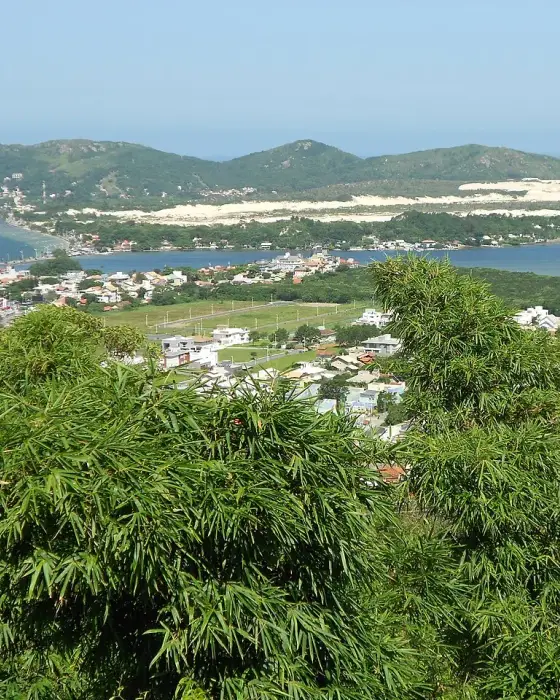
Brazil
Curitiba
Botanical Garden, Largo da Ordem, Ópera de Arame and the Serra do Mar train to Morretes
Days Start with the basic programme and choose extensions for the time you have.
How the guide reaches this number
Two are for the city: one on foot through the Historic Sector, Rua XV and the Oscar Niemeyer Museum, with dinner in Santa Felicidade; the other through the parks, from the Botanical Garden to the Bosque Alemão, the Ópera de Arame and Parque Tanguá at the end of the afternoon, by Linha Turismo or app. The third is for the train: descend the Serra do Mar to Morretes in the morning, have barreado for lunch and come back by bus. Since outside high season the train only runs Friday to Sunday and on holidays, and the MON and Parque das Pedreiras are closed on Mondays, I'd build the trip from Wednesday to Friday, with the museum free on Wednesday and the train on Friday, or from Friday to Sunday, with the train on Sunday.
3
When April, May and August; these are the months with the least rain in the 1991–2020 normal, with August still cold.
How the guide reaches this number
June and July also have little rain, but they are the months with the coldest nights, and frost is common. January is the rainiest month.
April, May and August; these are the months with the least rain in the 1991–2020 normal, with August still cold. June and July also have little rain, but they are the months with the coldest nights, and frost is common. January is the rainiest month.
Per person/day Budget about 195 BRL; mid-range about 478 BRL; comfortable about 1,120 BRL per person, based on what travelers report spending to Budget Your Trip (checked in October 2026).
How the guide reaches this number
Per person per day: accommodation, meals, urban transport, visits and a small allowance for extras. Flights excluded; larger purchases vary. Editorial estimate, not a quote.
 What Nilo thinks
I'd stay three days. Two are for the city: one on foot through the Historic Sector, Rua XV and the Oscar Niemeyer Museum, with dinner in Santa Felicidade; the other through the parks, from the Botanical Garden to the Bosque Alemão, the Ópera de Arame and Parque Tanguá at the end of the afternoon, by Linha Turismo or app. The third is for the train: descend the Serra do Mar to Morretes in the morning, have barreado for lunch and come back by bus. Since outside high season the train only runs Friday to Sunday and on holidays, and the MON and Parque das Pedreiras are closed on Mondays, I'd build the trip from Wednesday to Friday, with the museum free on Wednesday and the train on Friday, or from Friday to Sunday, with the train on Sunday.Curitiba is a city where sightseeing happens among parks. The glass greenhouse of the Botanical Garden faces a French garden; the Ópera de Arame is a theater of steel tubes set over the lake of a disused quarry; Parque Tanguá occupies two more quarries and ends at a viewpoint over the water. Downtown, fifteen blocks of old houses around Largo da Ordem preserve the old city, and the central stretch of Rua XV de Novembro shows the city that, in 1972, took the cars off a shopping street. The immigrants are on the plate, with carne de onça on rye bread and the pasta and polenta rodízio of Santa Felicidade, and also at the Ukrainian Memorial, which keeps pysanky, hand-painted eggs. And 70 km away is the train that descends the Serra do Mar through tunnels and Atlantic Forest to Morretes, where lunch is barreado.
Quick facts
- Population
- 1,773,718 inhabitants in the municipality (IBGE Census 2022); 1,830,795 in the IBGE estimate for 2025
- Founding
- Settlement of Nossa Senhora da Luz dos Pinhais in mid-1661; town on March 29, 1693; city in 1842; capital of the Province of Paraná since 1853
- Country and region
- Brazil, capital of the state of Paraná, on the Primeiro Planalto, at an average altitude of about 934 m
- Language
- Portuguese
- Currency
- Real (R$, BRL)
- Time zone
- UTC−3 (Brasília time)
- Best time to go
- April, May and August; these are the months with the least rain in the 1991–2020 normal, with August still cold. June and July also have little rain, but they are the months with the coldest nights, and frost is common. January is the rainiest month.
- Average cost per day
- Budget about 195 BRL; mid-range about 478 BRL; comfortable about 1,120 BRL per person, based on what travelers report spending to Budget Your Trip (checked in October 2026).
When to go
April, May and August; these are the months with the least rain in the 1991–2020 normal, with August still cold. June and July also have little rain, but they are the months with the coldest nights, and frost is common. January is the rainiest month.
How the year changes
In the 1991 to 2020 climate normal for the Curitiba station, the months with the least rain are August (82 mm), April (88 mm) and May (96 mm). January is the rainiest, with 226 mm; January and February are the warmest, with average highs around 27 °C. Winter is cold: July has a high of 20.1 °C and a low of 9.3 °C, and frost is common. For those going for the parks and the train, April and May combine little rain and mild temperatures; August is dry but calls for a jacket. The train calendar also matters: in January, February, the second half of July and December there is a departure every day, and the operator recommends buying at least seven days ahead in those months and in November; in the other months, only on Fridays, Saturdays, Sundays and holidays. Pinhão reaches the markets from April 15.
Nilo's tips
Fit the train in first
Outside high season, the train to Morretes runs only on Fridays, Saturdays, Sundays and holidays. I'd set the train date before anything else and spread the two city days around it, away from Monday.
Free MON on Wednesdays
The Oscar Niemeyer Museum is free on Wednesdays and on the last Sunday of the month. If one of your city days falls on a Wednesday, I'd put the museum on it and arrive early, because on those days the box office may close before 5:30 p.m.
Linha Turismo on the parks day
The R$ 50 ticket is valid for 24 hours of re-boarding. I'd use it on the day of the Botanical Garden, the Bosque Alemão, the Ópera de Arame and Tanguá, getting off in that order, which is the order of the circuit, and I'd do the center on foot.
Sunday at the Largo
The Largo da Ordem Fair runs from 9 a.m. to 2 p.m. and the bus costs R$ 3. If Sunday is not the train day, I'd put the center day on it, knowing the Municipal Market closes at 1 p.m.
Return from Morretes
I'd buy the return bus at the Morretes bus station right after getting off the train, because the last departures often sell out on Sundays.
Explore the map
Explore the map, read about the other places and plan your travel days in the app.
Open the appWhat to see
Curitiba: The plateau
The climate is temperate oceanic (Cfb). The fifteen blocks of the Historic Sector, around Largo da Ordem and Praça Garibaldi, with 19th-century houses, churches, bars and the Sunday crafts fair.
Curitiba Botanical Garden
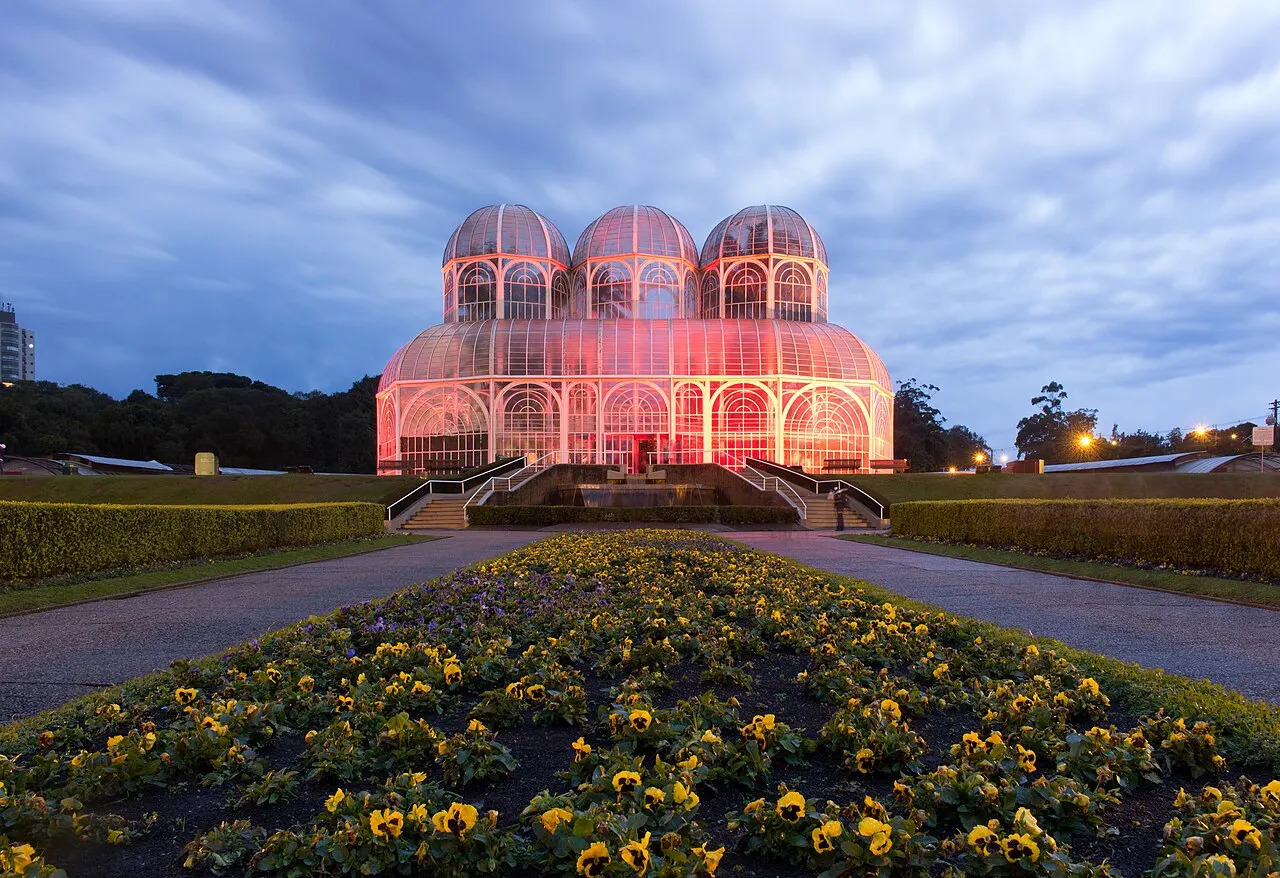
Opened in 1991, the Francisca Maria Garfunkel Rischbieter Botanical Garden covers 278,000 m², with a French-style garden in front of the three-vaulted iron-and-glass greenhouse, inspired by London's Crystal Palace. Inside, the greenhouse keeps Atlantic Forest species. The complex includes the Frans Krajcberg Cultural Space, with sculptures made from the remains of burned trees, and the Garden of Sensations, a half-hour route. The park is open every day from 6 a.m. to 7:30 p.m., with free admission; the Garden of Sensations operates Tuesday through Sunday, from 9 a.m. to 5 p.m. The greenhouse may close for maintenance, as it did in April 2026; the visit may be interrupted by heavy rain.
Curitiba sits on the Primeiro Planalto Paranaense, at an average altitude of about 934 m, between 865 m on the banks of the Iguaçu River, in the south of the municipality, and 1,021 m at Lamenha Pequena, in the north.
Check access

Oscar Niemeyer Museum
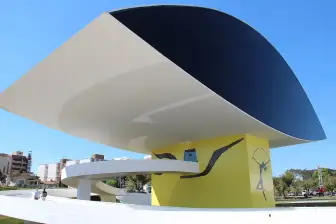
The MON occupies a building designed by Oscar Niemeyer in 1967 and an eye-shaped annex, on a 30 m tower, which gave the museum its nickname, the Eye Museum. The collection, of visual arts, architecture and design, includes the Poty Lazzarotto collection donated in 2022. It is open Tuesday through Sunday, from 10 a.m. to 6 p.m., with entry until 5:30 p.m.; admission costs R$ 36 (half price R$ 18), and entry is free on Wednesdays and on the last Sunday of the month, when the box office may close before 5:30 p.m. (museum website, checked in October 2026).
North of the Centro, it gathers the state government offices and the Oscar Niemeyer Museum.
Check access
Largo da Ordem
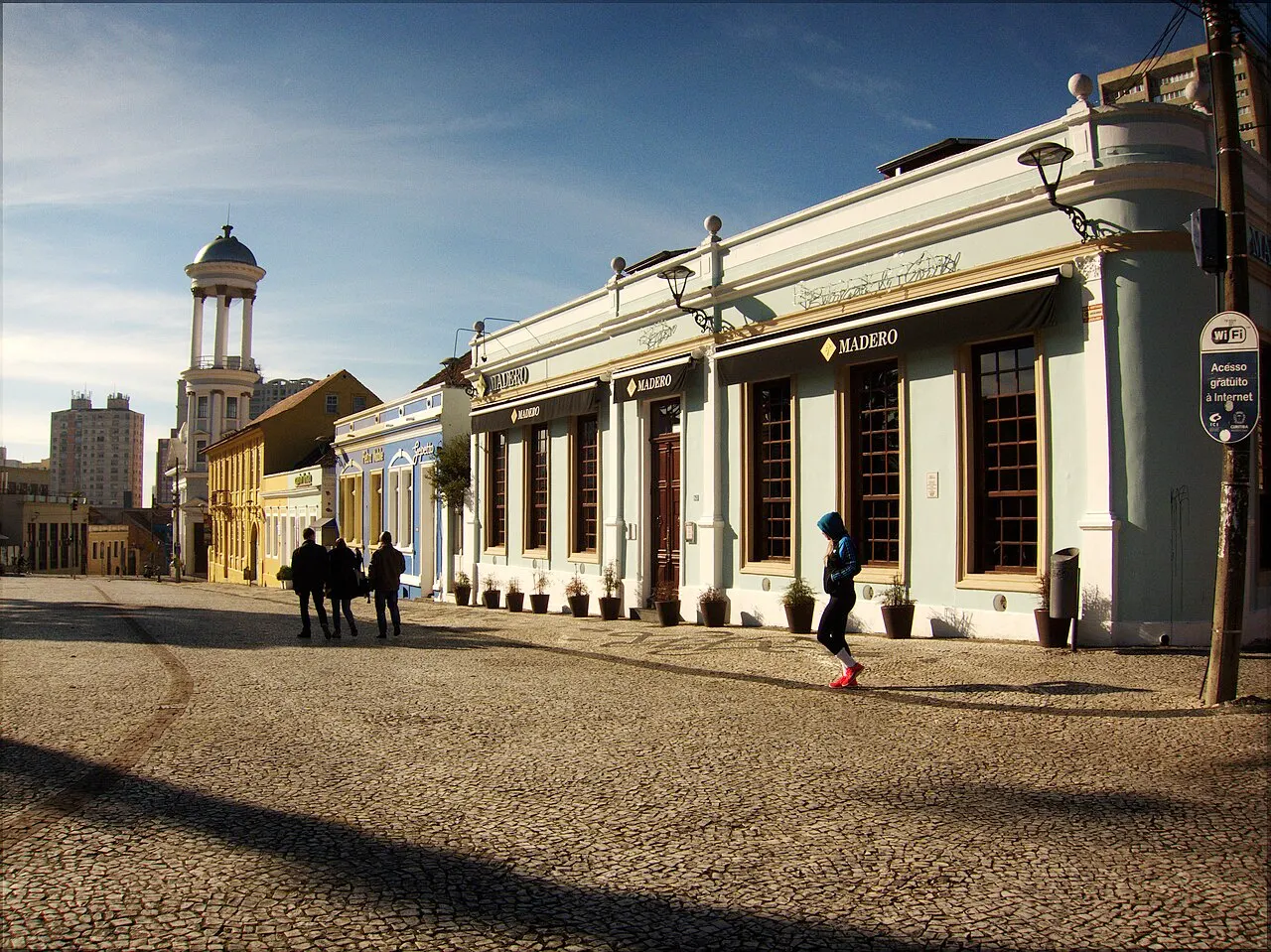
Largo Coronel Enéas, known as Largo da Ordem, is the center of the Historic Sector, fifteen blocks of old houses, churches and the São Francisco Ruins. On Sundays, from 9 a.m. to 2 p.m., the Largo da Ordem Fair fills Praça Garibaldi with crafts and food, from Rua São Francisco to Rua Martin Afonso. On other days the square is quieter, with bars that serve carne de onça.
Rua XV de Novembro, with the pedestrian stretch called Rua das Flores, Praça Tiradentes, the Cathedral, the Passeio Público and the street shops.
Check access

Ópera de Arame
A theater of steel tubes with a transparent roof, built in 75 days and inaugurated in 1992 over the lake of a former quarry. The design is by the architect Domingos Bongestabs, and access is by a walkway over the water. It stands inside Parque das Pedreiras Jaime Lerner, which is open Tuesday through Sunday, from 10 a.m. to 6 p.m., and which also includes the Pedreira Paulo Leminski and the Rua da Música, a hub of bars and restaurants opened in July 2025. When the Rua da Música opened, the ticket for the Music & Nature Experience, which gives access to the Ópera, the Rua da Música and the instrumental music program, cost R$ 25 (half price R$ 12.50), with free admission for residents of Curitiba and the metropolitan region from Tuesday to Friday, upon registration. Check the current price at the park's box office before you go.
The north of the parks: Parque das Pedreiras Jaime Lerner, with the Ópera de Arame, Parque Tanguá and the Bosque Alemão.
Check access
Rua XV de Novembro
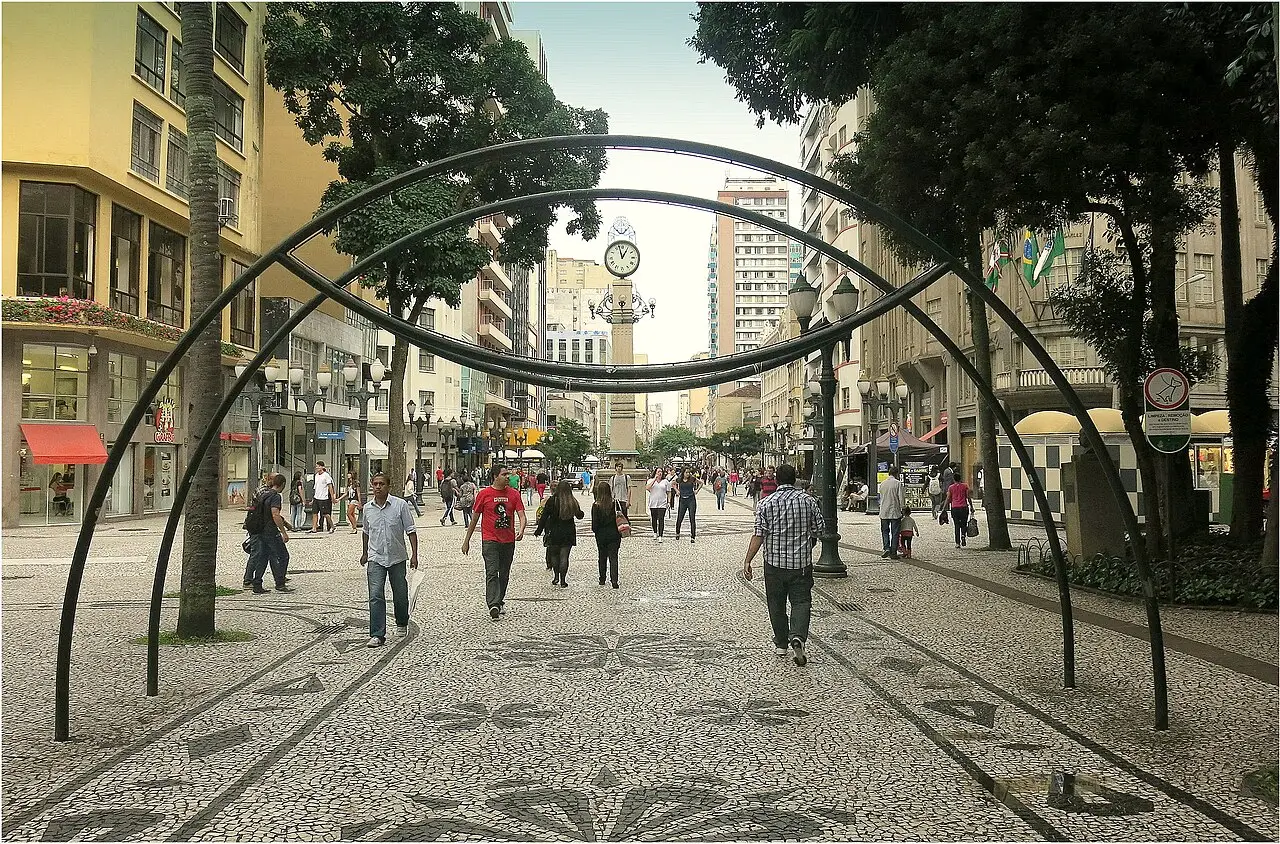
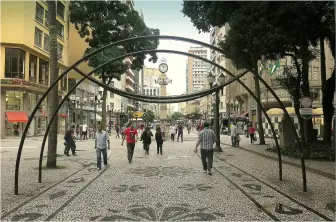
The pedestrian stretch, called Rua das Flores, was closed to cars on May 20, 1972 and has petit-pavé paving, flower beds and century-old townhouses. The best-known building is the Palácio Avenida, whose windows host the Christmas choir in December. It is the axis of the walk through the center, between Avenida Luiz Xavier and Rua Presidente Faria.
It is the starting point on foot for Largo da Ordem and the Centro Cívico.
Check access
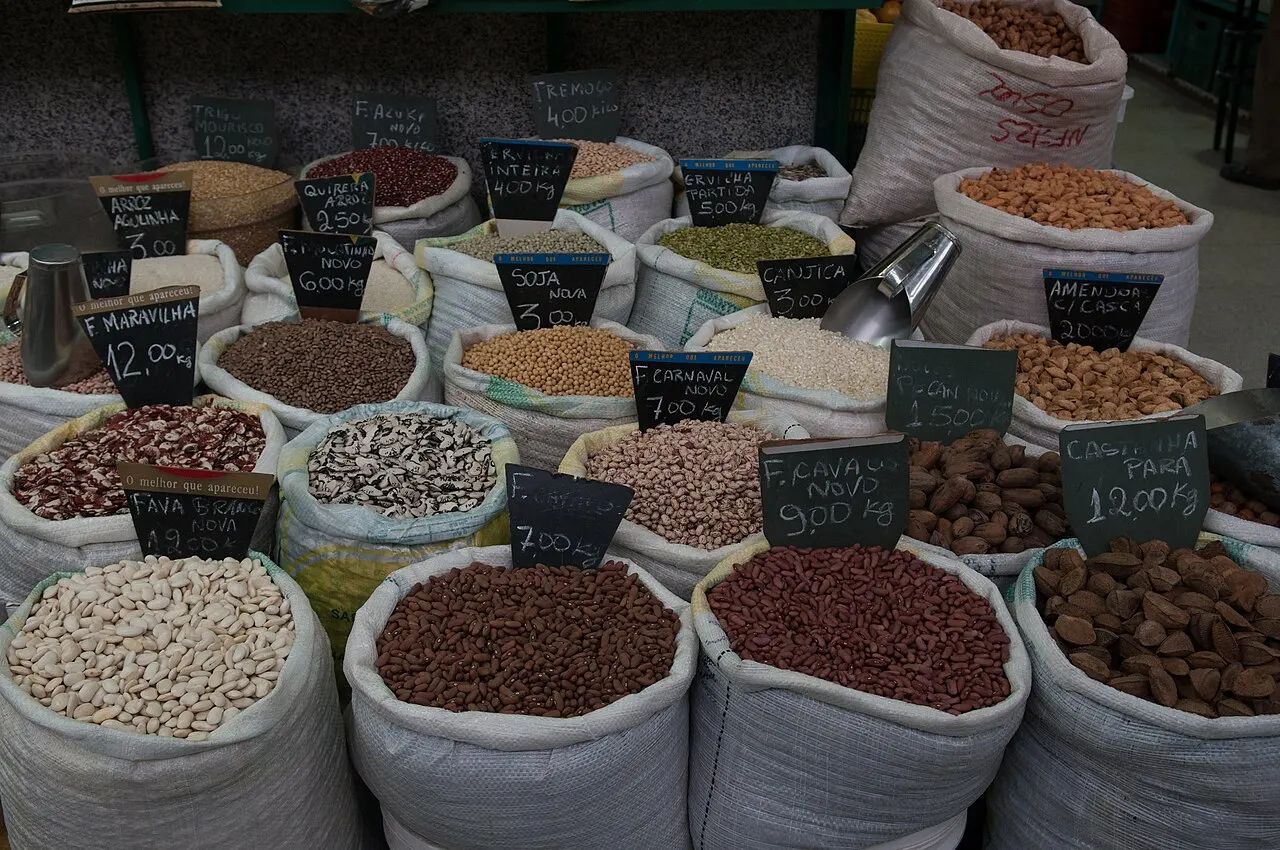
Curitiba Municipal Market
Stalls of fruit, cheese, cured meats and regional products, plus restaurants, at Avenida Sete de Setembro, 1865. It is open Tuesday through Saturday from 8 a.m. to 6 p.m. and on Sundays from 8 a.m. to 1 p.m., with the restaurants until 3 p.m.; on Mondays opening is optional, from 8 a.m. to 2 p.m. Holidays change the hours.
To the east, the Serra do Mar separates the city from the coast; Morretes, at the foot of the mountains, is 70 km away.
Check access

Parque Tanguá
Opened in 1996 in two disused quarries, in the north, in Pilarzinho and Taboão. It has lakes, a tunnel and, at the top, the Jardim Poty Lazzarotto with a viewpoint 65 m above the lake. It is open from 6 a.m. to 8 p.m.; the viewpoint over the lake is the reason to visit.
It is a taxi or app ride from the center, or on the Linha Turismo route.
Check access
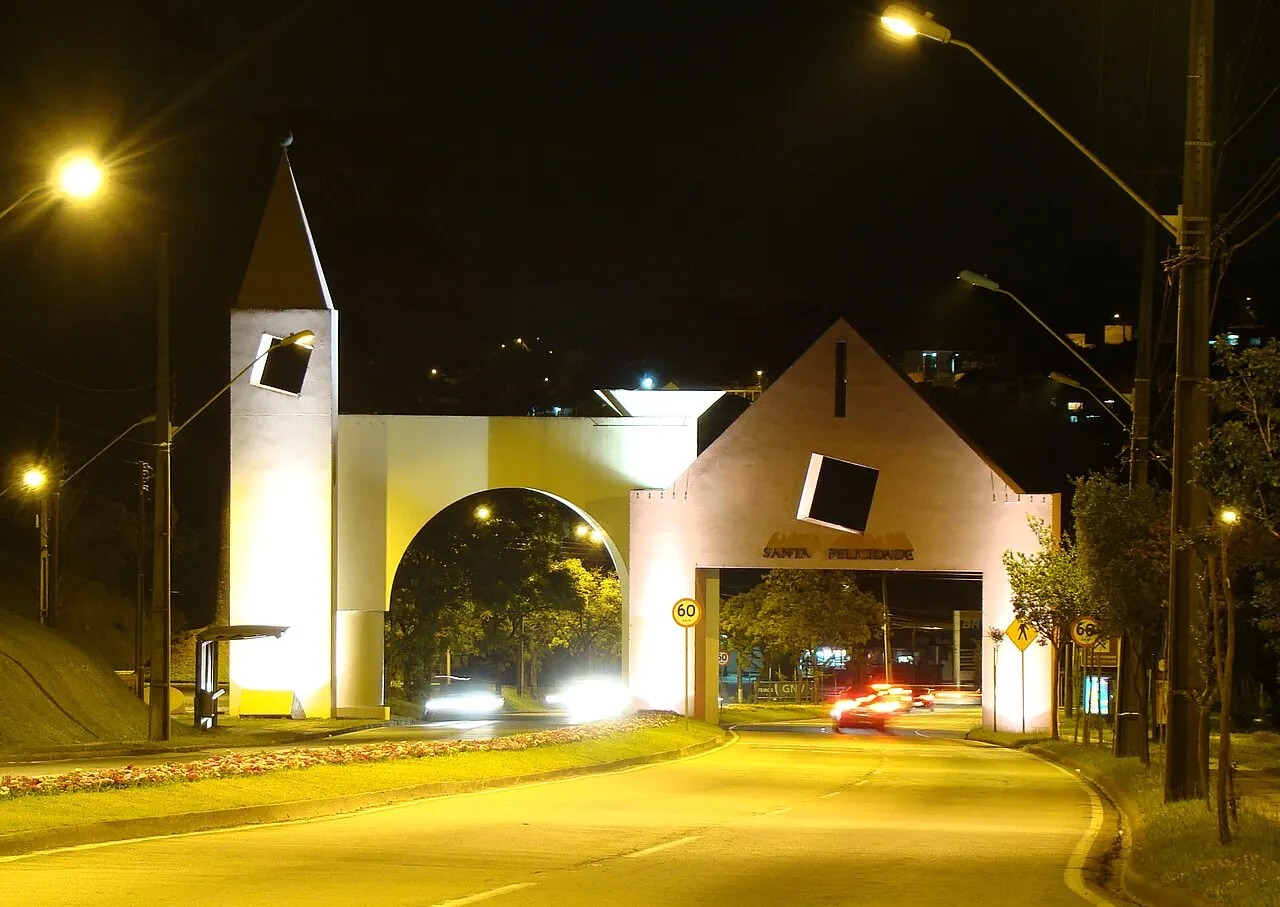
Santa Felicidade
The neighborhood of the Italian settlers, in the northwest, known for its rodízio restaurants serving pasta, chicken and polenta, and for late 19th-century houses such as the Casa Culpi, from 1887, and the Casa dos Gerânios, from 1891. Worth it for a dinner, by taxi or app.
A neighborhood of Italian settlement in the northwest, along Avenida Manoel Ribas, with rodízio restaurants, wineries and late 19th-century immigrant houses.
Check access

Passeio Público
The city's oldest park, inaugurated in 1886 on a marsh of the Belém River, which became a lake. It is in the Centro, between Rua XV and the way to the Centro Cívico, and makes a short pause on the walk.
The Centro, the Historic Sector and the Passeio Público can be covered on foot. The northern parks, Santa Felicidade and the Rodoferroviária call for a bus, taxi or app. The Rodoferroviária Station, where the train to Morretes and the intercity buses depart, is on Avenida Presidente Affonso Camargo, in the Jardim Botânico neighborhood.
Check access
Nilo’s itinerary
Start with the basic programme and choose extensions for the time you have.
Plan my days in the app ↗Day 1 · The Historic Sector, Rua XV and the Oscar Niemeyer Museum
Avoid having this day fall on a Monday, when the MON is closed; if it falls on a Wednesday, museum admission is free.
Start at 9 a.m. at Largo da Ordem and the blocks of the Historic Sector; if it is a Sunday, walk through the Largo da Ordem Fair at Praça Garibaldi, which runs until 2 p.m.
Go down to Praça Tiradentes and the Cathedral and enter Rua XV de Novembro heading west, along the Rua das Flores promenade, to the Palácio Avenida, at the end by Avenida Luiz Xavier.
Return along the same promenade heading east and have lunch in the Centro, or go back up to Largo da Ordem for the carne de onça.
At the end of the promenade, on Rua Presidente Faria, continue north to the Passeio Público and, from there, on foot or by taxi or app, to the Centro Cívico.
Enter the Oscar Niemeyer Museum by 5:30 p.m. (open Tuesday through Sunday, from 10 a.m. to 6 p.m.); on Wednesdays and on the last Sunday of the month admission is free and the box office may close earlier.
In the evening, take a taxi or app to Santa Felicidade for a rodízio dinner on Avenida Manoel Ribas.
Day 2 · Market, Botanical Garden and the northern parks
Choose a day from Tuesday to Sunday, when Parque das Pedreiras is open.
At 8:30 a.m., have breakfast at the Municipal Market, at Avenida Sete de Setembro, 1865.
Continue to the Botanical Garden, open from 6 a.m. to 7:30 p.m., for the greenhouse, the French garden and the Frans Krajcberg Cultural Space.
Take the Linha Turismo at the Botanical Garden stop (R$ 50, re-boarding for 24 hours). The circuit is one-way and, on the URBS list of stops, passes the Bosque Alemão before the Ópera de Arame and Parque Tanguá; get off in that order. By taxi or app, the order can be the same.
At the Bosque Alemão, open from 6 a.m. to 8 p.m., climb the Tower of the Philosophers.
Get back on the line and get off at Parque das Pedreiras Jaime Lerner for the Ópera de Arame. The Music & Nature Experience ticket gives access to the Ópera and the Rua da Música; have lunch at the all-day-menu restaurant next to the Mirante da Ópera.
Finish at Parque Tanguá, at the viewpoint of the Jardim Poty Lazzarotto. The Linha Turismo runs until the end of the afternoon and the park stays open until 8 p.m.; to stay until sunset, go back to the center by taxi or app.
Day 3 · Morretes by the Serra do Mar train
Day trip
Morretes is 70 km from Curitiba, at the foot of the mountains. The Serra Verde Express train leaves at 8:30 a.m. from the Rodoferroviária Station (Avenida Presidente Affonso Camargo, 330, behind the bus station, block 3, Jardim Botânico), with a recommended arrival at 7:30 a.m., and takes about 4.5 hours, according to the operator, along the 1885 railway, with 13 tunnels, Atlantic Forest, valleys and waterfalls. The only stop where you can get off along the way is Pico do Marumbi, for those going to the park; the train does not continue to Paranaguá or Antonina. In 2026 there are daily departures in January, February, the second half of July and December, and in the other months on Fridays, Saturdays, Sundays and holidays. The train-only ticket, one way, starts at R$ 206, and the package with a van back, at R$ 488 (checked on October 16, 2026). In Morretes, the historic center can be covered on foot along the Nhundiaquara River, and lunch is barreado. To return, Viação Graciosa buses leave from the local bus station and reach Curitiba in a little over an hour; buy the ticket on arrival. Those who prefer the mountains at the end of the day can do the reverse: go by bus and return on the train that leaves Morretes at 3 p.m.; in the summer of 2026, from January 1 to March 1, the departure was at 4 p.m., and the schedule for each season is on the operator's calendar. Antonina is about 15 km from Morretes, by intercity bus.




Food
Carne de onça
A typical Curitiba dish since the 1940s: rye bread topped with fresh ground beef, served raw, with chopped white onion and scallion. It was declared intangible heritage of the city in 2016 and received the Indication of Provenance from INPI on May 20, 2025. More than 200 bars and restaurants serve it, according to the association that requested the registration.
Barreado
The dish of the Paraná coast that is eaten in Morretes: beef and bacon, seasoned and cooked for almost a day in a sealed clay pot. It comes mixed with cassava flour and accompanied by sliced banana.
Pinhão
The araucaria seed, boiled or roasted, sold in small bags and used in winter dishes. In 2026 harvesting, transport and sale are only allowed in Paraná from April 15, and green pinhão cannot be sold.
Santa Felicidade rodízio
The classic rodízio at the restaurants of the Italian neighborhood brings handmade pasta, fried chicken pieces, fried polenta and side dishes, served at the table in sequence.
Rye bread
The dark rye bread of the immigrants, the base of carne de onça, also recognized with a Geographical Indication.
Where to eat
- Bar do Alemão · Largo da Ordem (São Francisco)
Carne de onça: rye bread with raw ground beef, onion and scallion. The bar has served the dish since it opened and turned 46 in 2025; it is in the Historic Sector, on the walking route through the Largo.
Source · 2026-10-16
- Madalosso · Santa Felicidade
Italian rodízio with handmade pasta, fried chicken pieces and fried polenta, at the place the Madalosso family, of Italian origin, opened in 1963 as a 24-seat restaurant and which today receives about 4,500 people, on Avenida Manoel Ribas. It is the choice for a long group dinner; go by taxi or app.
Source · 2026-10-16
- Curitiba Municipal Market · Municipal Market (Avenida Sete de Setembro)
Breakfast or lunch among stalls of cheese, cured meats and regional products, with restaurants inside the market. It is open Tuesday through Saturday from 8 a.m. to 6 p.m. and on Sundays from 8 a.m. to 1 p.m., with the restaurants until 3 p.m.
Source · 2026-10-16
- Morretes (day trip)
Barreado served with flour and banana, at the restaurants on the main street along the Nhundiaquara River. Arriving by train around lunchtime, it is the meal of the day.
$: carne de onça or a bar snack in the Historic Sector · $$: lunch at a restaurant in the Centro or the Municipal Market · $$$: rodízio in Santa Felicidade · 2026-10-16
Day trips
Morretes by the Serra do Mar train
Morretes is 70 km from Curitiba, at the foot of the mountains. The Serra Verde Express train leaves at 8:30 a.m. from the Rodoferroviária Station (Avenida Presidente Affonso Camargo, 330, behind the bus station, block 3, Jardim Botânico), with a recommended arrival at 7:30 a.m., and takes about 4.5 hours, according to the operator, along the 1885 railway, with 13 tunnels, Atlantic Forest, valleys and waterfalls. The only stop where you can get off along the way is Pico do Marumbi, for those going to the park; the train does not continue to Paranaguá or Antonina. In 2026 there are daily departures in January, February, the second half of July and December, and in the other months on Fridays, Saturdays, Sundays and holidays. The train-only ticket, one way, starts at R$ 206, and the package with a van back, at R$ 488 (checked on October 16, 2026). In Morretes, the historic center can be covered on foot along the Nhundiaquara River, and lunch is barreado. To return, Viação Graciosa buses leave from the local bus station and reach Curitiba in a little over an hour; buy the ticket on arrival. Those who prefer the mountains at the end of the day can do the reverse: go by bus and return on the train that leaves Morretes at 3 p.m.; in the summer of 2026, from January 1 to March 1, the departure was at 4 p.m., and the schedule for each season is on the operator's calendar. Antonina is about 15 km from Morretes, by intercity bus.
Where to begin
The Historic Sector, Rua XV and the Oscar Niemeyer Museum
Avoid having this day fall on a Monday, when the MON is closed; if it falls on a Wednesday, museum admission is free.
Market, Botanical Garden and the northern parks
Choose a day from Tuesday to Sunday, when Parque das Pedreiras is open.
Money
The currency is the real (R$). In 2026 the city bus costs R$ 6, or R$ 3 on Sundays and holidays, and the Linha Turismo R$ 50 for 24 hours of re-boarding. The Botanical Garden, Parque Tanguá and the Bosque Alemão have free admission. The Oscar Niemeyer Museum charges R$ 36 (half price R$ 18) and is free on Wednesdays and on the last Sunday of the month. At Parque das Pedreiras, the ticket that includes the Ópera de Arame cost R$ 25 (half price R$ 12.50) when the Rua da Música opened, in July 2025; the current price is confirmed at the box office. On the train to Morretes, the train-only ticket, one way, starts at R$ 206, and the package with the train out and a van back starts at R$ 488 (Serra Verde Express website, checked on October 16, 2026, with no validity date published); upper cars cost more. The operator states that, as a rail service regulated by ANTT, it is not required to grant the discounts provided for cultural activities.
Getting there and around

From the airport
Afonso Pena International Airport (CWB) is in São José dos Pinhais, 18 km from the center, and has no train. The metropolitan line E32, Airport/Boqueirão Terminal, runs every 20 minutes, from 5:40 a.m. to 11:20 p.m., every day (schedule in effect since March 2, 2026), and runs in large part on an exclusive lane; at the Boqueirão Terminal, change to the 503 Boqueirão express, which continues along the axis to the center. Taxis and apps make the trip directly.
Buses, ligeirinhos and tube stations
The Integrated Transport Network uses exclusive corridors with bi-articulated buses, direct lines called ligeirinhos and level boarding at tube stations. The fare is R$ 6 in 2026, frozen by the City Hall, and drops to R$ 3 on Sundays and holidays.
Linha Turismo
A double-decker bus that makes a one-way circuit through 26 stops, starting from Rua 24 Horas, with departures every 30 minutes and about three hours for the full loop. On the URBS list of stops, the order is Jardim Botânico, Rodoferroviária and Municipal Market, then Oscar Niemeyer Museum, Bosque Alemão, Ópera de Arame, Parque Tanguá and Santa Felicidade. The ticket costs R$ 50 and allows re-boarding for 24 hours from the first boarding; it accepts cash and card. Since August 2023 the line runs every day, from 8:30 a.m. to 5:30 p.m.; check with URBS whether the schedule has changed.
On foot and by car
The Centro, the Historic Sector and the Passeio Público can be covered on foot. The northern parks, Santa Felicidade and the Rodoferroviária call for a bus, taxi or app. The Rodoferroviária Station, where the train to Morretes and the intercity buses depart, is on Avenida Presidente Affonso Camargo, in the Jardim Botânico neighborhood.
Safety
Thefts are concentrated in the Centro: from January to March 2026 it was the neighborhood with the most incidents in the city, about 1,600 simple thefts and 332 aggravated ones, according to the Paraná Public Security Department, an effect of the heavy foot traffic and commerce. Keep your phone put away when walking along Rua XV and Praça Tiradentes, and at night prefer a taxi or app to cross empty streets. In October 2026 the City Hall created a Municipal Guard patrol to assist tourists, with officers who speak English and Spanish, which will operate from a post at Rua Barão do Cerro Azul, 81, near Praça Tiradentes. Emergencies: 190 for the Military Police, 192 for SAMU, 193 for the Fire Department and 153 for the Municipal Guard.
Etiquette tips
On the train, the group pays together
Seats are assigned automatically in the order of payment, and you cannot choose the window side. If you want to sit next to someone, you need to buy in the same transaction.
Drinks and glass go in the baggage car
The operator does not allow alcoholic beverages, glass bottles or coolers in the passenger cars; these items are checked into the baggage car.
Sunday fair
The Largo da Ordem Fair runs from 9 a.m. to 2 p.m., and the stalls are taken down soon after. If you want to move around calmly, arrive early in the morning.
Mistakes to avoid
Leaving the museum and the Ópera for Monday
The Oscar Niemeyer Museum and Parque das Pedreiras Jaime Lerner are open Tuesday through Sunday. A free Monday suits the Botanical Garden better, which is open every day.
Planning the train on a weekday outside high season
From March to November, except the second half of July, the train only leaves on Fridays, Saturdays, Sundays and holidays. Check the departure calendar before fixing your dates.
Getting to the station at the last minute
The train leaves at 8:30 a.m. and the operator asks for an hour's notice. Those who buy on the day must be at the station by 7:30 a.m., subject to availability.
Forgetting the children's documents
Minors under 16 board with an original photo ID; up to age 12, the original birth certificate is valid. Without a document, boarding may be denied.
Leaving the return ticket from Morretes for later
The return buses to Curitiba often sell out of the last departures, especially on Sundays. Buy at the Morretes bus station as soon as you arrive.
Counting on the Municipal Market on Sunday afternoon
On Sundays the Market closes at 1 p.m. and the restaurants at 3 p.m.
Useful phrases
Vina
Sausage, as in a hot dog with vina
Piá
Boy, kid
Penal
Pencil case
Ligeirinho
Direct express bus line, with few stops and boarding at the tube stations
Tubo
The glass tube station where you board the express and direct buses
Where to stay
- Centro · First trip, without a car, to cover the Historic Sector, Rua XV and the Passeio Público on foot: Largo da Ordem, Rua das Flores and Praça Tiradentes are a few blocks away, and the Centro Cívico and the MON a short walk or ride. The Linha Turismo passes through the area. The drawback: it is the neighborhood with the most thefts in the city, because of the foot traffic, and at night a taxi or app is advisable for empty stretches. For the northern parks and the Rodoferroviária, you need a bus or a car.
- Jardim Botânico and Rodoferroviária · Those taking the 8:30 a.m. train who want to wake up near the station: The Rodoferroviária Station, where the train and the intercity buses depart, and the Botanical Garden are in the same neighborhood, and the Municipal Market is in the same direction. The drawback: the area is outside the walking circuit of the Historic Sector, and for dinner and for the center count on a taxi, app or bus.
$: hostel or simple hotel · $$: mid-range hotel in the Centro · $$$: upscale hotel · 2026-10-16
Districts
Centro
Rua XV de Novembro, with the pedestrian stretch called Rua das Flores, Praça Tiradentes, the Cathedral, the Passeio Público and the street shops. It is the starting point on foot for Largo da Ordem and the Centro Cívico.
São Francisco (Historic Sector)
The fifteen blocks of the Historic Sector, around Largo da Ordem and Praça Garibaldi, with 19th-century houses, churches, bars and the Sunday crafts fair.
Centro Cívico
North of the Centro, it gathers the state government offices and the Oscar Niemeyer Museum. It is an area of public buildings and wide avenues, laid out by the Agache Plan.
Jardim Botânico
The neighborhood of the Botanical Garden and the Rodoferroviária station, where the train to Morretes departs. The Municipal Market is in the same direction, on Avenida Sete de Setembro.
Abranches, Pilarzinho and Vista Alegre
The north of the parks: Parque das Pedreiras Jaime Lerner, with the Ópera de Arame, Parque Tanguá and the Bosque Alemão. It is a taxi or app ride from the center, or on the Linha Turismo route.
Santa Felicidade
A neighborhood of Italian settlement in the northwest, along Avenida Manoel Ribas, with rodízio restaurants, wineries and late 19th-century immigrant houses.
History
17th c. · Gold on the plateau
Bandeirantes coming from the Paranaguá coast climbed the mountain range in search of gold; the expedition of Eleodoro Ébano Pereira dates from 1649. The territory was occupied by the Kaingang, Xokleng and Guarani peoples.
1661 · Nossa Senhora da Luz dos Pinhais
In mid-1661 the settlement that would give rise to the city takes shape; in 1668 Gabriel de Lara raises a pillory.
1693 · Town
On March 29, 1693 the settlement becomes a town, founded by Mateus Martins Leme.
1720–1721 · The name Curitiba
The magistrate Rafael Pires Pardinho adopts the name Curitiba, of Tupi origin and associated with the pine, the araucaria.
1730 · The drovers' trail
The town becomes part of the cattle route between Rio Grande do Sul and Minas Gerais, and lives off the drovers' stopovers.
1853 · Capital of Paraná
Under Imperial Law no. 704 of August 29, Paraná separates from São Paulo and Curitiba becomes the capital of the new province. Curitiba had already been a city since 1842.
1833–1895 · The immigrants
Germans arrive from 1833, Poles in 1871, Italians in 1872 and Ukrainians in 1895. By 1876 there were twenty agricultural colonies around the city.
1885 · The railway descends the mountain
On February 2, 1885 the Paranaguá–Curitiba Railway is inaugurated, built between 1880 and 1885, the one that today carries the tourist train to Morretes.
1912 · University of Paraná
On December 19, 1912 the university that is today the Federal University of Paraná is created.
1971–1974 · The urbanism of Jaime Lerner
Jaime Lerner takes over as mayor in 1971; on May 20, 1972 part of Rua XV de Novembro becomes a pedestrian promenade, and in 1974 the first line of the exclusive-corridor bus system begins operating.
1991–2002 · The postcards
The Botanical Garden (October 5, 1991), the Ópera de Arame (March 18, 1992) and the Oscar Niemeyer Museum (November 22, 2002, with its current name since 2003) open.
Complete history
From gold to the drovers' stopover
The city began as a place of passage. In the 17th century, miners climbed from Paranaguá Bay to the plateau in search of gold, in a territory occupied by the Kaingang, Xokleng and Guarani. In mid-1661 the settlement of Nossa Senhora da Luz dos Pinhais took shape, and in 1693 it became a town. The gold yielded little and declined at the end of that century, but from 1730 the town took on another role, when it joined the route of the cattle droves that went from Rio Grande do Sul to Minas Gerais. The name Curitiba, adopted around 1720, comes from Tupi and is linked to the pine: the araucaria, which still appears in groves and parks and whose seed, the pinhão, is sold boiled from mid-April.
Capital of a new province
In the 19th century, yerba mate and timber brought growth back. In 1853 Paraná separated from the Province of São Paulo, and Curitiba, a city since 1842, became its capital. The link to the coast, until then made by the Estrada da Graciosa, gained a railway to Paranaguá in 1885, a five-year undertaking that crosses the Serra do Mar through tunnels and viaducts. A year later, in 1886, the city inaugurated the Passeio Público, opened on a marsh of the Belém River with money from yerba mate barons such as the Barão do Serro Azul.
A city of immigrants
Between 1833 and the end of the 19th century, Germans, Poles, Italians and Ukrainians arrived and formed agricultural colonies around the urban core. That layout can still be read in the city: Santa Felicidade, which received many settlers from the Veneto and Trento, is today the neighborhood of Italian restaurants; the Bosque Alemão honors German immigration; and the Ukrainian Memorial, in Parque Tingui, holds the replica of a church from the interior of the state. In the 20th century Japanese, Syrians and Lebanese came as well.
Planning as a trademark
The Agache Plan, from the 1940s, opened wide avenues and provided for the Centro Cívico and the Municipal Market. The turning point came with Jaime Lerner, mayor from 1971: the Rua XV de Novembro promenade in 1972, the exclusive bus corridors in 1974 and, in the 1990s, the tube stations and bi-articulated buses. The parks were born at the same time, some to contain floods, like Barigui, from 1972, and others in disused quarries, like the Ópera de Arame and Parque Tanguá. That is why a visit to Curitiba combines a small old center with outings to parks spread across the neighborhoods.
The central stretch of Rua XV de Novembro, between Avenida Luiz Xavier and Rua Presidente Faria, was closed to cars on May 20, 1972, in one of Jaime Lerner's first projects as mayor.
The Ópera de Arame was assembled in 75 days and inaugurated on March 18, 1992.
Geography and shape of the city
The plateau
Curitiba sits on the Primeiro Planalto Paranaense, at an average altitude of about 934 m, between 865 m on the banks of the Iguaçu River, in the south of the municipality, and 1,021 m at Lamenha Pequena, in the north. To the east, the Serra do Mar separates the city from the coast; Morretes, at the foot of the mountains, is 70 km away.
Climate
The climate is temperate oceanic (Cfb). In the 1991–2020 normal for the Curitiba station, January has an average high of 27.1 °C and 226 mm of rain, and July has a high of 20.1 °C and a low of 9.3 °C. August is the driest month, with 82 mm. In winter frost is common; snow is rare.
Rivers, parks and axes
The Belém, Barigui and Iguaçu rivers cut through the city, and several parks were designed along them to hold back floods. The original vegetation is araucaria forest, now protected by law where it survives. The city grew along the bus axes, and for that reason the most popular parks lie outside the center, to the north and west.
Culture
Theater and festivals
The Curitiba Theater Festival fills the city's stages, squares and streets every year between March and April; the 34th edition ran from March 30 to April 12, 2026. The Teatro Guaíra Cultural Center, on Praça Santos Andrade, is home to the Paraná Symphony Orchestra and the Teatro Guaíra Ballet.
Writers and artists
Dalton Trevisan (1925–2024), short-story writer and author of The Vampire of Curitiba, and the poet Paulo Leminski (1944–1989), who gave his name to the Pedreira, are the names of the city's literature. Poty Lazzarotto (1924–1998), engraver and muralist, left panels in public spaces and has work at the MON.
Immigrant communities
Descendants of Ukrainians and Poles keep up religious and harvest festivals, and the Ukrainian Memorial, in Parque Tingui, is the place for the Ukrainian community's celebrations supported by the City Hall. Santa Felicidade keeps the Italian tradition alive in food and folk groups.
Festivals and events
Curitiba Festival
March and April. Theater, dance, circus and music in theaters and on the streets; in 2026 it ran from March 30 to April 12, with tickets from free to R$ 85, plus fees, depending on the show.
Christmas in Curitiba
Late November to December. In 2026 the opening is scheduled for November 24 at Praça Santos Andrade, with a program running until December 30. The choir of children and teenagers in the windows of the Palácio Avenida performs on December 11, 12, 13, 18, 19 and 20, at 8:15 p.m.
Ukrainian festivals
Blessing of the foods on Holy Saturday, the National Festival of Ukraine in August, the Harvest Festival in October and St. Nicholas in November, at the Ukrainian Memorial. The exact dates are announced each year.
Books and films
The Vampire of Curitiba, by Dalton Trevisan (1965)
Short stories about the small-scale life of the city, by the best-known author from Curitiba, who lived in Curitiba until his death in 2024.
Frequently asked questions
Curitiba: how do I get from the airport to the center?
The airport, 18 km from the center, has no train. The metropolitan line E32 runs every 20 minutes, from 5:40 a.m. to 11:20 p.m., to the Boqueirão Terminal, where you change to the 503 Boqueirão express to the center; taxis and apps make the trip directly.
Curitiba: how many days should I stay?
Three days: one on foot through the Historic Sector and the MON, another through the parks and the third on the train to Morretes. Outside high season the train only runs Friday to Sunday and on holidays, and the MON and Parque das Pedreiras close on Mondays: plan the trip Wednesday to Friday or Friday to Sunday.
Curitiba: how does the train to Morretes work?
It leaves at 8:30 a.m. from the Rodoferroviária Station, with a recommended arrival at 7:30 a.m., and takes about 4.5 hours. In 2026 it runs daily in January, February, the second half of July and December, and in other months on Fridays, Saturdays, Sundays and holidays; in the daily months and in November, buy seven days ahead.
Curitiba: how do I get back from Morretes?
The train-only ticket is one way and started at R$ 206 in October 2026. The quickest return is the Viação Graciosa bus, in a little over an hour; buy the ticket at the Morretes bus station on arrival, because the last departures often sell out on Sundays. The package with a van back started at R$ 488.
Curitiba: when is the best time to go?
April and May combine little rain and mild temperatures; August is also dry but calls for a jacket. Winter is cold, with frost common in July, and January is the rainiest month.
Curitiba: where should I stay?
In the Centro, to cover the Historic Sector and Rua XV on foot; it is the neighborhood with the most thefts, and at night a taxi or app is advisable on empty stretches. Those taking the 8:30 a.m. train can sleep in Jardim Botânico, near the Rodoferroviária, outside the walking circuit.
Other cities in the country
Brazil ↗- Days
- 4
- When
- Apr–Jun
- Per person/day
- Average 615 BRLMid-range · per person/day
Cost scope
Per person per day: accommodation, meals, urban transport, visits and a small allowance for extras. Flights excluded; larger purchases vary. Editorial estimate, not a quote.
- Days
- 2–3
- When
- Apr–May · Sep
- Per person/day
- Average 400–700 BRLMid-range · per person/day
Cost scope
Per person per day: accommodation, meals, urban transport, visits and a small allowance for extras. Flights excluded; larger purchases vary. Editorial estimate, not a quote.
- Days
- 2–3
- When
- Jan–Mar · Sep–Dec
- Per person/day
- Average 350–550 BRLMid-range · per person/day
Cost scope
Per person per day: accommodation, meals, urban transport, visits and a small allowance for extras. Flights excluded; larger purchases vary. Editorial estimate, not a quote.
- Days
- 1–2
- When
- May–Sep
- Per person/day
- Average 260–520 BRLMid-range · per person/day
Cost scope
Per person per day: accommodation, meals, urban transport, visits and a small allowance for extras. Flights excluded; larger purchases vary. Editorial estimate, not a quote.
- Days
- 3–4
- When
- Jun–Sep
- Per person/day
- Average 400–700 BRLMid-range · per person/day
Cost scope
Per person per day: accommodation, meals, urban transport, visits and a small allowance for extras. Flights excluded; larger purchases vary. Editorial estimate, not a quote.
- Days
- 2–3
- When
- Apr–Jun
- Per person/day
- Average 350–550 BRLMid-range · per person/day
Cost scope
Per person per day: accommodation, meals, urban transport, visits and a small allowance for extras. Flights excluded; larger purchases vary. Editorial estimate, not a quote.
- Days
- 3–5
- When
- Mar–Apr · Nov
- Per person/day
- Average 397 BRLMid-range · per person/day
Cost scope
Per person per day: accommodation, meals, urban transport, visits and a small allowance for extras. Flights excluded; larger purchases vary. Editorial estimate, not a quote.
- Days
- 2–4
- When
- Mar–May · Sep
- Per person/day
- Explore costsGuide estimate
Cost scope
Per person per day: accommodation, meals, urban transport, visits and a small allowance for extras. Flights excluded; larger purchases vary. Editorial estimate, not a quote.
- Days
- 4–5
- When
- Aug–Nov
- Per person/day
- Explore costsGuide estimate
Cost scope
Per person per day: accommodation, meals, urban transport, visits and a small allowance for extras. Flights excluded; larger purchases vary. Editorial estimate, not a quote.
- Days
- 3–4
- When
- Jul–Sep
- Per person/day
- Explore costsGuide estimate
Cost scope
Per person per day: accommodation, meals, urban transport, visits and a small allowance for extras. Flights excluded; larger purchases vary. Editorial estimate, not a quote.
- Days
- 3–4
- When
- Sep–Nov
- Per person/day
- Explore costsGuide estimate
Cost scope
Per person per day: accommodation, meals, urban transport, visits and a small allowance for extras. Flights excluded; larger purchases vary. Editorial estimate, not a quote.
- Days
- 2–4
- When
- May–Sep
- Per person/day
- Explore costsGuide estimate
Cost scope
Per person per day: accommodation, meals, urban transport, visits and a small allowance for extras. Flights excluded; larger purchases vary. Editorial estimate, not a quote.
- Days
- 3–5
- When
- Jun–Sep
- Per person/day
- Explore costsGuide estimate
Cost scope
Per person per day: accommodation, meals, urban transport, visits and a small allowance for extras. Flights excluded; larger purchases vary. Editorial estimate, not a quote.
- Days
- 3–4
- When
- Jun–Aug
- Per person/day
- Explore costsGuide estimate
Cost scope
Per person per day: accommodation, meals, urban transport, visits and a small allowance for extras. Flights excluded; larger purchases vary. Editorial estimate, not a quote.
- Days
- 4–5
- When
- Jan–Mar · Sep–Dec
- Per person/day
- Explore costsGuide estimate
Cost scope
Per person per day: accommodation, meals, urban transport, visits and a small allowance for extras. Flights excluded; larger purchases vary. Editorial estimate, not a quote.
- Days
- 3–4
- When
- Oct–Dec
- Per person/day
- Average 1,110 BRLMid-range · per person/day
Cost scope
Per person per day: accommodation, meals, urban transport, visits and a small allowance for extras. Flights excluded; larger purchases vary. Editorial estimate, not a quote.
- Days
- 3–4
- When
- Aug–Sep
- Per person/day
- Explore costsGuide estimate
Cost scope
Per person per day: accommodation, meals, urban transport, visits and a small allowance for extras. Flights excluded; larger purchases vary. Editorial estimate, not a quote.
- Days
- 4–7
- When
- Apr–Sep
- Per person/day
- Explore costsGuide estimate
Cost scope
Per person per day: accommodation, meals, urban transport, visits and a small allowance for extras. Flights excluded; larger purchases vary. Editorial estimate, not a quote.
- Days
- 3–4
- When
- Jan · Sep–Dec
- Per person/day
- Explore costsGuide estimate
Cost scope
Per person per day: accommodation, meals, urban transport, visits and a small allowance for extras. Flights excluded; larger purchases vary. Editorial estimate, not a quote.
- Days
- 2
- When
- Aug–Dec
- Per person/day
- Average 442 BRLMid-range · per person/day
Cost scope
Per person per day: accommodation, meals, urban transport, visits and a small allowance for extras. Flights excluded; larger purchases vary. Editorial estimate, not a quote.
- Days
- 3–5
- When
- Jan–Feb · Sep–Dec
- Per person/day
- Explore costsGuide estimate
Cost scope
Per person per day: accommodation, meals, urban transport, visits and a small allowance for extras. Flights excluded; larger purchases vary. Editorial estimate, not a quote.
- Days
- 3–5
- When
- May–Sep
- Per person/day
- Explore costsGuide estimate
Cost scope
Per person per day: accommodation, meals, urban transport, visits and a small allowance for extras. Flights excluded; larger purchases vary. Editorial estimate, not a quote.
- Days
- 2–3
- When
- Apr–Sep
- Per person/day
- Average 484 BRLMid-range · per person/day
Cost scope
Per person per day: accommodation, meals, urban transport, visits and a small allowance for extras. Flights excluded; larger purchases vary. Editorial estimate, not a quote.
- Days
- 3–4
- When
- Aug–Dec
- Per person/day
- Explore costsGuide estimate
Cost scope
Per person per day: accommodation, meals, urban transport, visits and a small allowance for extras. Flights excluded; larger purchases vary. Editorial estimate, not a quote.
- Days
- 2
- When
- Apr–May · Sep
- Per person/day
- Explore costsGuide estimate
Cost scope
Per person per day: accommodation, meals, urban transport, visits and a small allowance for extras. Flights excluded; larger purchases vary. Editorial estimate, not a quote.
- Days
- 3
- When
- Sep–Dec
- Per person/day
- Explore costsGuide estimate
Cost scope
Per person per day: accommodation, meals, urban transport, visits and a small allowance for extras. Flights excluded; larger purchases vary. Editorial estimate, not a quote.
- Days
- 3–5
- When
- Apr–Nov
- Per person/day
- Average 427 BRLMid-range · per person/day
Cost scope
Per person per day: accommodation, meals, urban transport, visits and a small allowance for extras. Flights excluded; larger purchases vary. Editorial estimate, not a quote.
- Days
- 4
- When
- Jul–Sep
- Per person/day
- Explore costsGuide estimate
Cost scope
Per person per day: accommodation, meals, urban transport, visits and a small allowance for extras. Flights excluded; larger purchases vary. Editorial estimate, not a quote.
- Days
- 4–5
- When
- May–Sep
- Per person/day
- Explore costsGuide estimate
Cost scope
Per person per day: accommodation, meals, urban transport, visits and a small allowance for extras. Flights excluded; larger purchases vary. Editorial estimate, not a quote.
- Days
- 3
- When
- May–Sep
- Per person/day
- Explore costsGuide estimate
Cost scope
Per person per day: accommodation, meals, urban transport, visits and a small allowance for extras. Flights excluded; larger purchases vary. Editorial estimate, not a quote.