Brazil
Recife and Olinda
Old Recife, the hills of Olinda, frevo, and the Brennand collections in Várzea
Days Start with the basic programme and choose extensions for the time you have.
How the guide reaches this number
The first, on foot in the Bairro do Recife and in Santo Antônio and São José: Marco Zero, Rua do Bom Jesus with the Kahal Zur Israel, Paço do Frevo, Capela Dourada, Mercado de São José, and Casa da Cultura. The second, in Olinda, from Alto da Sé to the Mosteiro de São Bento, with tapioca at the top. The third, in Várzea, with the Oficina Francisco Brennand in the morning and the Instituto Ricardo Brennand in the afternoon, ending with a walk and dinner on the Boa Viagem boardwalk, after dark. With a fourth day, I'd go to Porto de Galinhas, choosing the date by low tide to see the natural pools. With only one day, I'd stay between the Bairro do Recife and Olinda, leaving Várzea for another trip, because the two Brennand museums take almost the whole day. In any version, I'd take Monday out of the museum days.
3–4
When October to December: these are the driest months of the year; from April to July it rains more, peaking in June, and Carnival in February or March fills the city and raises hotel prices
How the guide reaches this number
Recife is warm all year, averaging about 26 °C, and the rain matters more than the temperature. From April to July it rains more, peaking in June, when the normal exceeds 390 mm for the month. October, November, and December are the driest months, good for combining the slopes of Olinda, the museums of Várzea, and the beach, and Kayak pointed to October and November as the cheapest hotel months in 2026.
Per person/day Budget about 490 BRL; mid-range about 1,110 BRL; comfortable about 2,250 BRL per person, based on spending reported by travelers to Budget Your Trip (consulted in October 2026).
How the guide reaches this number
Per person per day: accommodation, meals, urban transport, visits and a small allowance for extras. Flights excluded; larger purchases vary. Editorial estimate, not a quote.
 What Nilo thinks
I'd stay three days. The first, on foot in the Bairro do Recife and in Santo Antônio and São José: Marco Zero, Rua do Bom Jesus with the Kahal Zur Israel, Paço do Frevo, Capela Dourada, Mercado de São José, and Casa da Cultura. The second, in Olinda, from Alto da Sé to the Mosteiro de São Bento, with tapioca at the top. The third, in Várzea, with the Oficina Francisco Brennand in the morning and the Instituto Ricardo Brennand in the afternoon, ending with a walk and dinner on the Boa Viagem boardwalk, after dark.
With a fourth day, I'd go to Porto de Galinhas, choosing the date by low tide to see the natural pools. With only one day, I'd stay between the Bairro do Recife and Olinda, leaving Várzea for another trip, because the two Brennand museums take almost the whole day. In any version, I'd take Monday out of the museum days.I'd start in the Bairro do Recife on a Tuesday, when the Paço do Frevo does not charge admission: it is the way to get to know the music and dance of Carnival in any month of the year. Santo Antônio and São José are one bridge away, with the gilded carving of the Capela Dourada and the iron market of 1875, and caldinhos of sururu or shrimp serve as a pause along the way.
Read more
Olinda calls for another rhythm, of cobbled slopes and churches with their own hours, and the tapioca made on the griddle at Alto da Sé is the city's heritage. To take home, I'd choose the bolo de rolo, with thin layers rolled up with guava paste. Várzea completes the visit: at the Oficina Brennand, ceramics fill the courtyards and temples of an old pottery; at the Instituto Ricardo Brennand, a castle holds armor and the world's largest collection of paintings by Frans Post.
Quick facts
- Population
- Recife: 1,588,983 inhabitants in the municipality; Olinda: 364,087 (IBGE estimates for 2026)
- Founded
- Olinda: founded by Duarte Coelho in 1535 and raised to town status on March 12, 1537, in a charter that already mentions the “reef of the ships”; Recife: town in 1709 and capital of the province of Pernambuco in 1827
- Country and region
- Brazil: Recife is the capital of the state of Pernambuco, in the Northeast; Olinda is the neighboring municipality to the north, about 8 km by road
- Language
- Portuguese
- Currency
- Real (R$, BRL). Pix requires an account at a participating institution; bring a card and some cash if you don't have that access
- Time zone
- UTC−3 year-round, with no daylight saving time
- Best time to go
- October to December: these are the driest months of the year; from April to July it rains more, peaking in June, and Carnival in February or March fills the city and raises hotel prices
- Average cost per day
- Budget about 490 BRL; mid-range about 1,110 BRL; comfortable about 2,250 BRL per person, based on spending reported by travelers to Budget Your Trip (consulted in October 2026).
When to go
October to December: these are the driest months of the year; from April to July it rains more, peaking in June, and Carnival in February or March fills the city and raises hotel prices
How the year changes
Recife is warm all year, averaging about 26 °C, and the rain matters more than the temperature. From April to July it rains more, peaking in June, when the normal exceeds 390 mm for the month. October, November, and December are the driest months, good for combining the slopes of Olinda, the museums of Várzea, and the beach, and Kayak pointed to October and November as the cheapest hotel months in 2026.
Carnival, in February or March depending on the year, is the busiest and most expensive time: Kayak recorded average nightly rates in February 49% above the rest of the year. If Carnival is the reason for the trip, book early and choose your lodging with the street closures in mind. In June, the June festivals pull the program to the interior, such as Caruaru, in a month of rain on the coast.
Nilo's tips
Leave Várzea for a day between Tuesday and Sunday
The Oficina Francisco Brennand opens at 9 a.m. and the Instituto Ricardo Brennand has its last entry at 4:30 p.m., and both close on Mondays. I'd do the Oficina in the morning and the Instituto in the afternoon, with a car between them: the Capibaribe forces a detour, and the trip is about 8 km.
Use Tuesday at the Paço do Frevo
Admission to the Paço do Frevo is free on Tuesdays. On the last Tuesday of the month, except in January, July, and December, the Instituto Ricardo Brennand also hands out free tickets from 1 p.m., first come, first served, until they run out.
Go up Olinda and walk down
I'd arrive by car at Alto da Sé and do the rest of the historic center downhill, down to the Mosteiro de São Bento. Climbing the slopes at midday is more tiring than the distance suggests.
Check conditions before entering the sea
I’d go to Boa Viagem for the promenade in the late afternoon. Before entering the sea, I’d follow the signs, areas closed to swimming and local advice; calm water and low tide do not guarantee safety.
Porto de Galinhas depends on the tide
The natural pools of Porto de Galinhas appear only on days of very low tide, for about two hours. I'd choose the day of the trip by the tide table, not by the calendar.
Explore the map
Explore the map, read about the other places and plan your travel days in the app.
Open the appWhat to see
Recife and Olinda: Rivers, islands, and reefs
The city occupies islands and riverbanks, such as the island of the Bairro do Recife, and so it is crossed from bridge to bridge. The neighborhood north of Santo Antônio, across the Capibaribe, with Rua da Aurora along the river.

Paço do Frevo
A reference center dedicated to frevo, opened in 2014 on Praça do Arsenal da Marinha, in the Bairro do Recife. It is devoted to research, promotion, and teaching of frevo dance and music, and the main exhibition is called “Frevo Vivo.” Open Tuesday to Friday, 10 a.m. to 6 p.m., and Saturdays and Sundays, 11 a.m. to 7 p.m., with last entry half an hour before closing; closed Mondays. A full-price ticket cost R$ 10 and a half-price ticket R$ 5 in October 2026, and admission is free on Tuesdays.
The place to understand frevo, an Intangible Cultural Heritage of Humanity since 2012, outside Carnival. Full-price admission cost R$10, and entry is free on Tuesdays.
Check access

Capela Dourada
The Novices' Chapel of the Third Order of Saint Francis, in Santo Antônio, had its cornerstone laid in 1696 and its works finished in 1724. Carved wood covered in gold lines the walls, altars, and ceiling, and it is considered the first temple in Brazil entirely covered in Baroque decoration. It is part of the Convento de Santo Antônio complex, with the Museu Franciscano de Arte Sacra; check the visiting hours.
Begun in 1696 and completed in 1724, it has walls, altars and ceiling covered in gilded carving and is considered Brazil’s first religious building entirely covered in Baroque decoration.
Check access

Oficina Francisco Brennand
A studio-museum installed since 1971 in the ruins of the Cerâmica São João da Várzea, the pottery founded in 1917 by the artist's father. It holds more than 2,000 works by Francisco Brennand, including sculptures, murals, panels, and paintings, spread across courtyards, temples, and galleries on the banks of the Capibaribe. Open Tuesday to Sunday, 9 a.m. to 5 p.m., with the ticket office open until 4 p.m., and closed during Carnival (in 2026, from Saturday the 14th to Wednesday, February 18); a full-price ticket cost R$ 50 (R$ 40 for residents of Pernambuco) in October 2026. By bus, the last stop is 2 km down a dirt road, so many people go by car.
More than 2,000 works by Francisco Brennand in the ruins of his father’s 1917 pottery on the Capibaribe. It opens at 9 a.m. Tuesday to Sunday, closes during Carnival and can fill a whole morning.
Check access
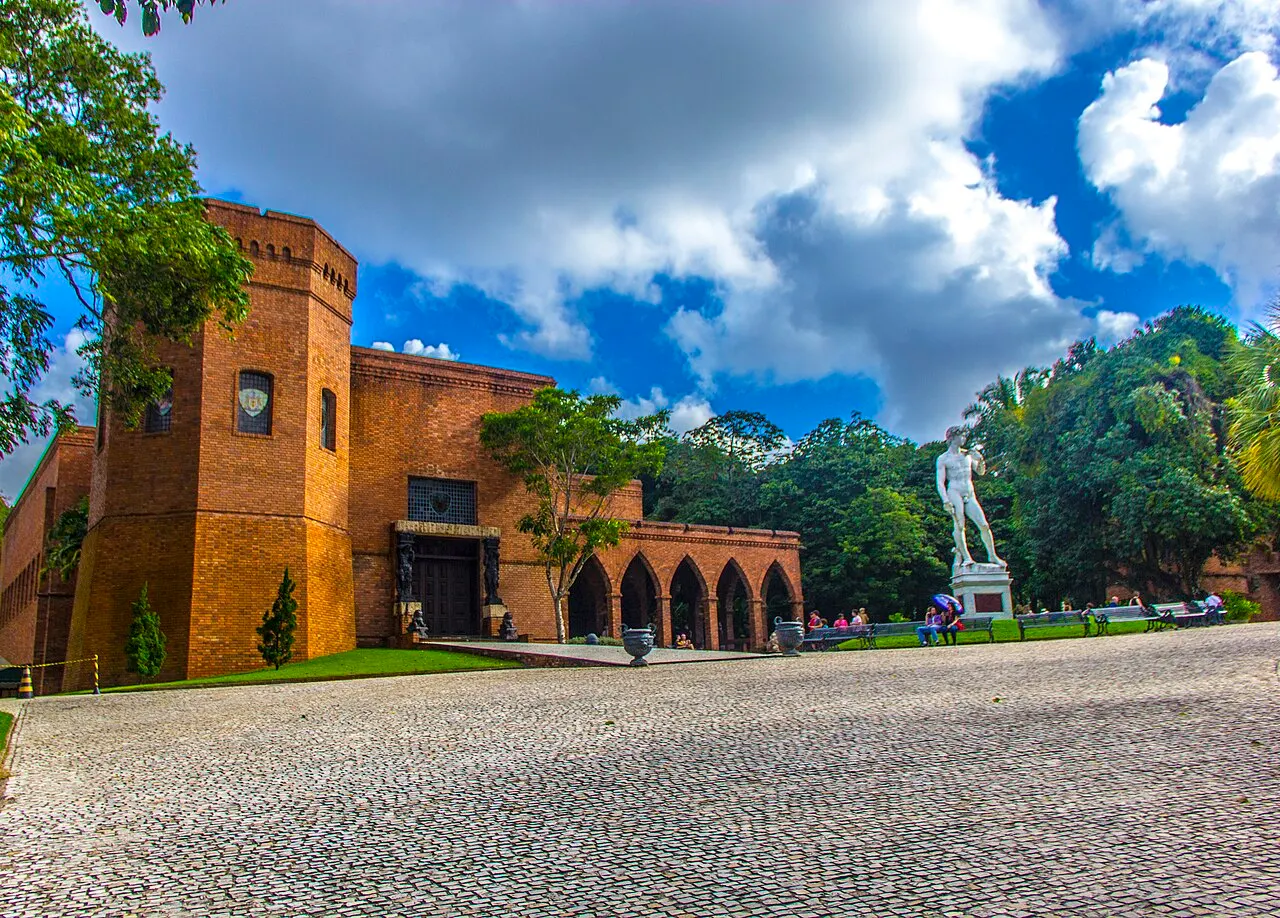
Instituto Ricardo Brennand
A complex opened to the public in 2002 in Várzea, with the Castelo São João, which holds a collection of arms and armor of about 3,000 pieces, a picture gallery, and a library. The gallery has the world's largest collection of paintings by Frans Post, with 15 oils, alongside a set of works and iconographic records linked to Pernambuco. The official page lists visits Tuesday to Sunday, with opening at 1 p.m. on part of the week and last entry at 4:30 p.m., and the museum cost R$ 60 for a full-price ticket in October 2026; confirm the opening time, because the same page gives two different times. On the last Tuesday of the month admission is free, except in January, July, and December.
It has the world’s largest collection of Frans Post paintings, with 15 oils, and about 3,000 pieces of arms and armor in Castelo São João. It opens in the afternoon on some days, with last entry at 4:30 p.m., so it comes after the Oficina.
Check access
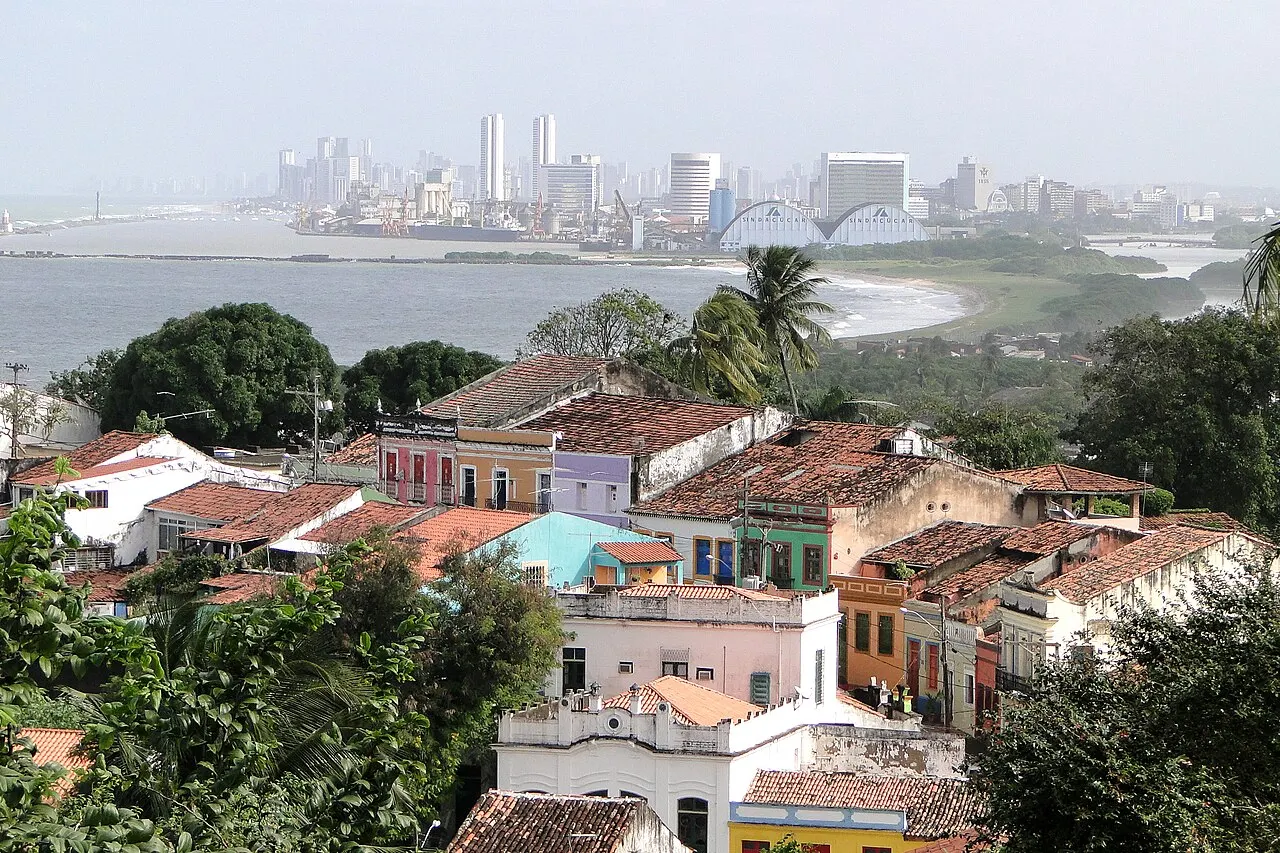
Alto da Sé
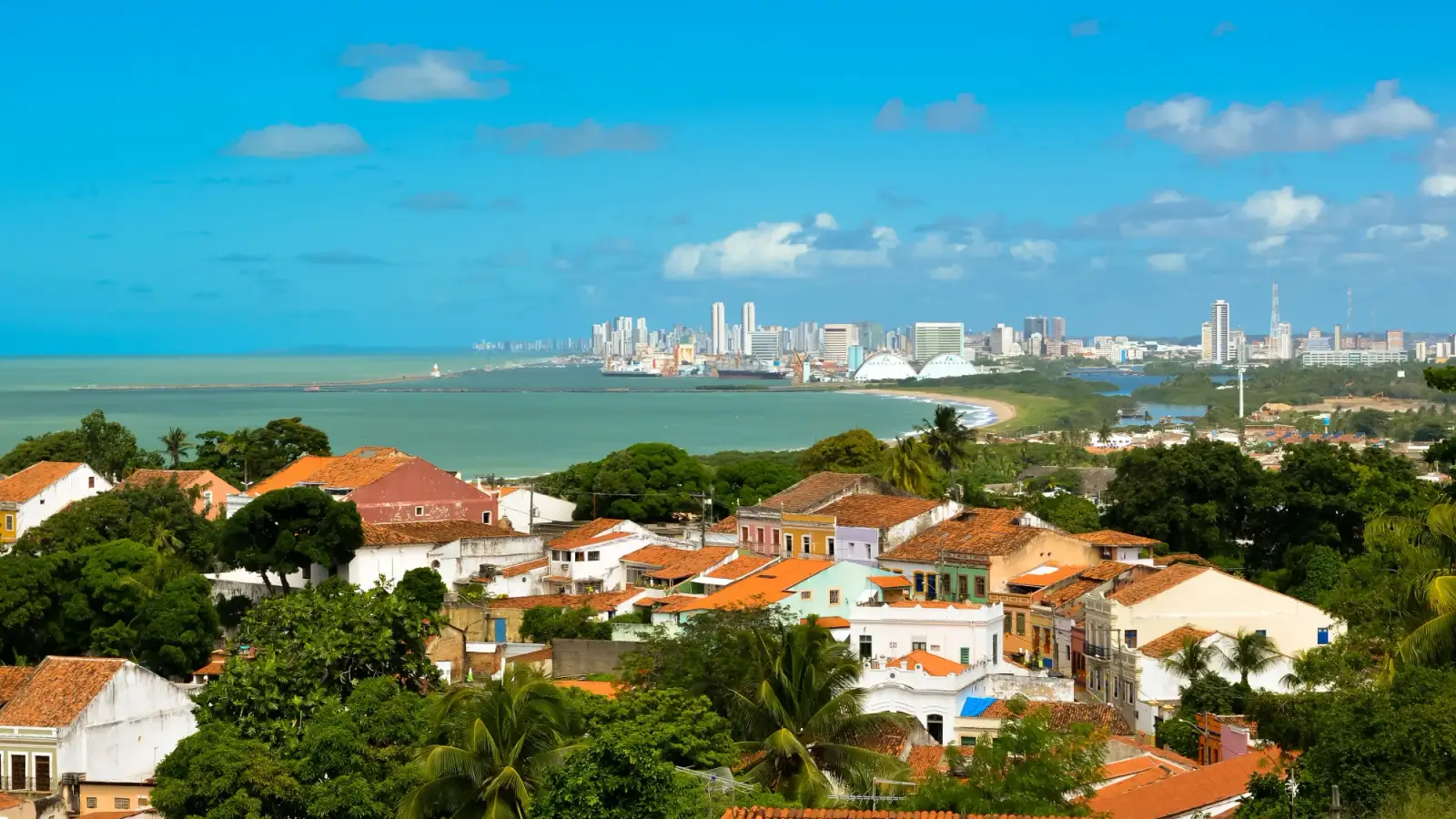
The highest point of Olinda's historic center, with the Sé Cathedral, founded in 1540 and considered the largest 16th-century church in Brazil, and a view that runs from the houses of Olinda to the buildings of Recife. This is where the tapioca makers set up, and in the former Caixa d'Água, from 1934, an elevator rises to a lookout with a 360-degree view; check whether it is working.
It brings together the Sé Cathedral, founded in 1540, tapioca stalls and a view from Olinda’s houses to Recife’s high-rises. The right starting point for walking downhill through the historic center.
Check access

Marco Zero
Praça Rio Branco, known as the Marco Zero, is at the tip of the Bairro do Recife, facing the port estuary. The marker, installed in 1938, is the point from which the city's road distances are measured. From the square you can see, across the water, the natural breakwater where the Parque das Esculturas stands, and it is from here that the boats to cross leave.
The square marks the area where the city began, facing the estuary and the Sculpture Park’s breakwater, and is the natural starting point for the Bairro do Recife.
Check access
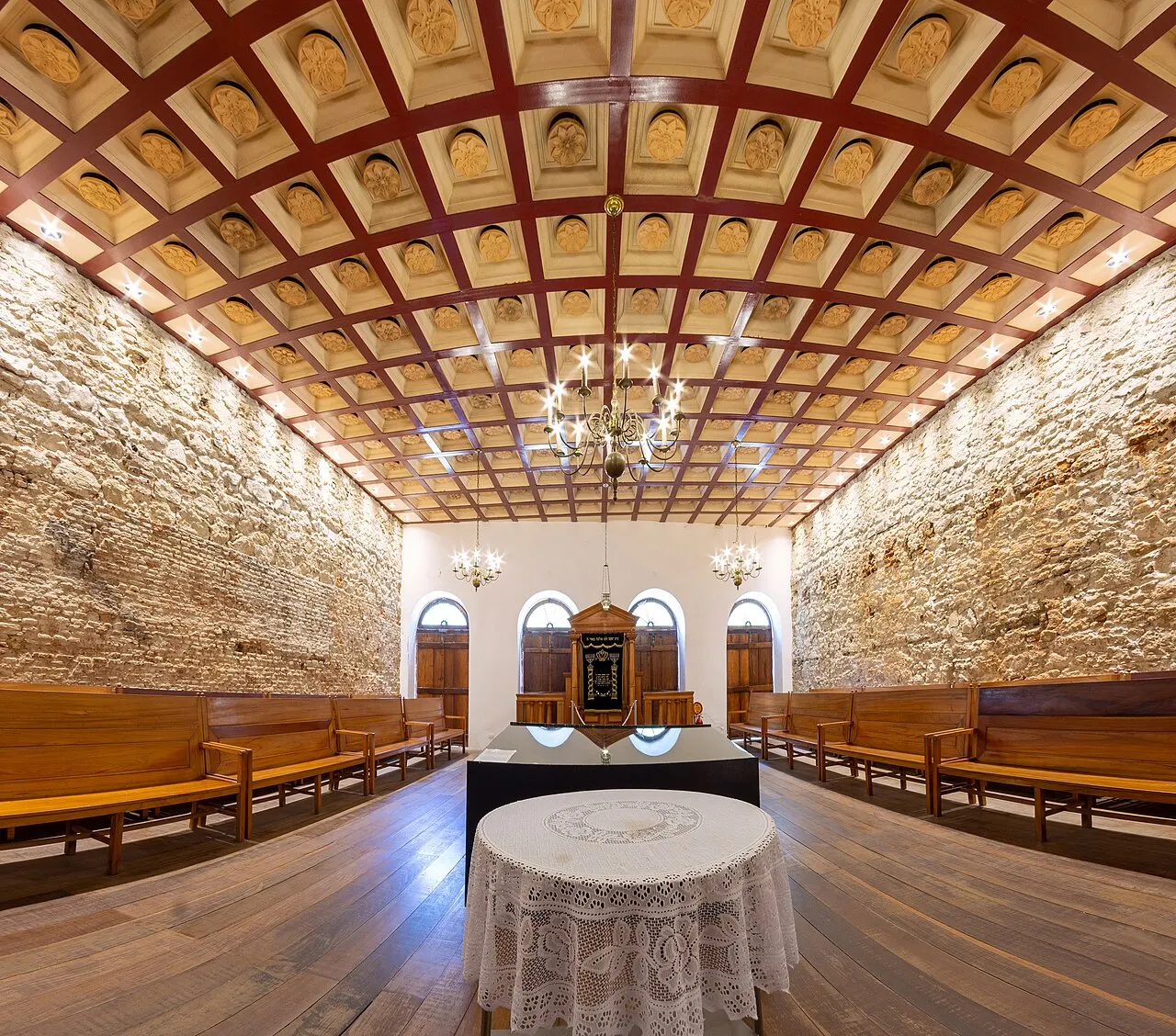
Kahal Zur Israel Synagogue
On Rua do Bom Jesus, formerly Rua dos Judeus, the Kahal Zur Israel congregation operated during the Dutch rule, considered the first synagogue in the Americas. The current facade dates from the 19th century; excavations by Iphan and UFPE identified 17th-century remains, including a mikveh, the pool for ritual bathing. The building houses the Arquivo Histórico Judaico de Pernambuco. With the Dutch surrender in 1654, the Jewish families left Recife, and some of them reached New Amsterdam, today's New York. Confirm visiting hours by phone or on the institution's social media before including it in your day's plans.
Considered the first synagogue in the Americas, it operated during the Dutch period and has 17th-century remains, including a mikveh. It is steps from Paço do Frevo; confirm visiting hours in advance.
Check access
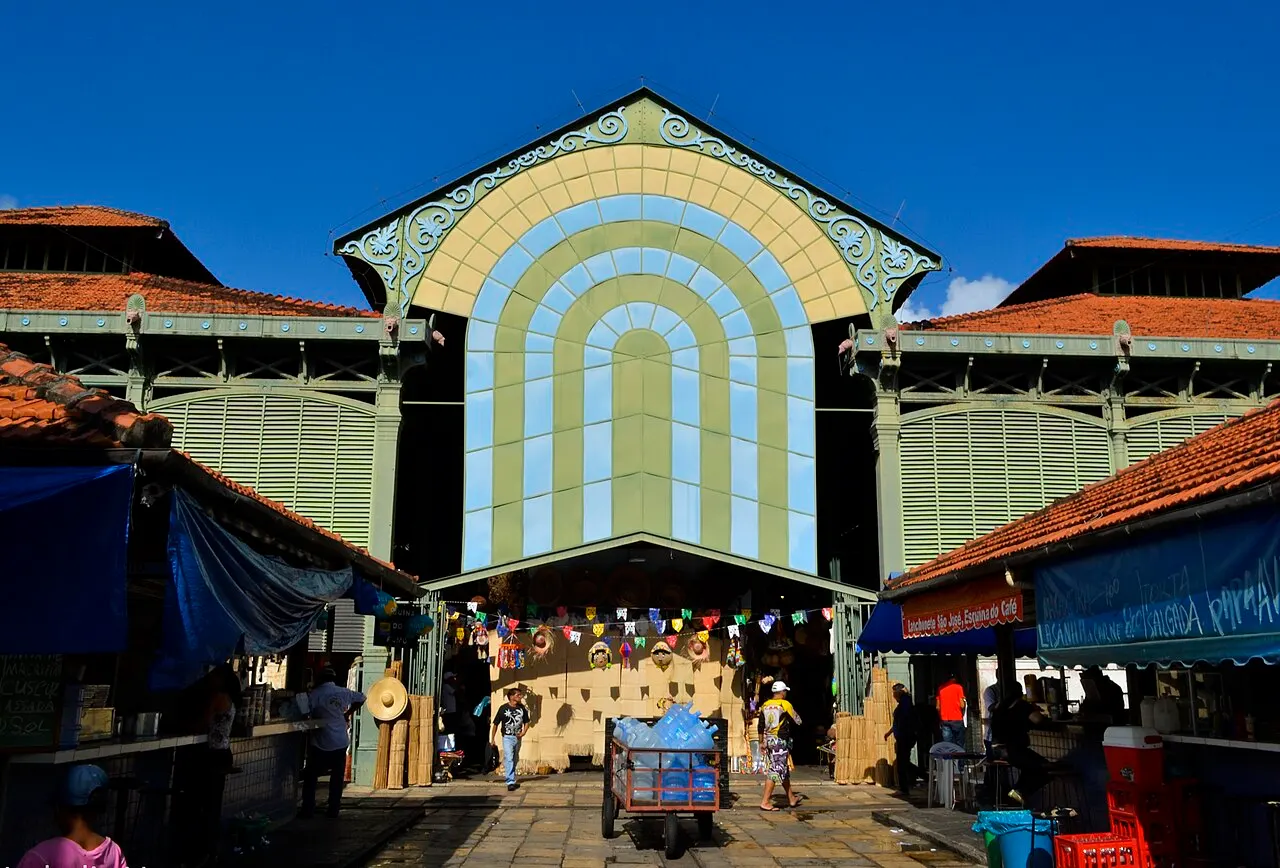
Mercado de São José
Inaugurated on September 7, 1875, it was the first prefabricated iron building in Brazil, designed by Louis Léger Vauthier after the Grenelle market in Paris. The building, protected by Iphan, has 547 stalls; it was renovated after a fire in 1989 and reopened in 1994. The announced restoration work may affect operations; confirm which sections are accessible before visiting.
Opened in 1875, it was Brazil’s first prefabricated iron building, with 547 stalls. It is a few minutes from Casa da Cultura. The announced restoration work may affect operations; confirm which sections are accessible before visiting.
Check access
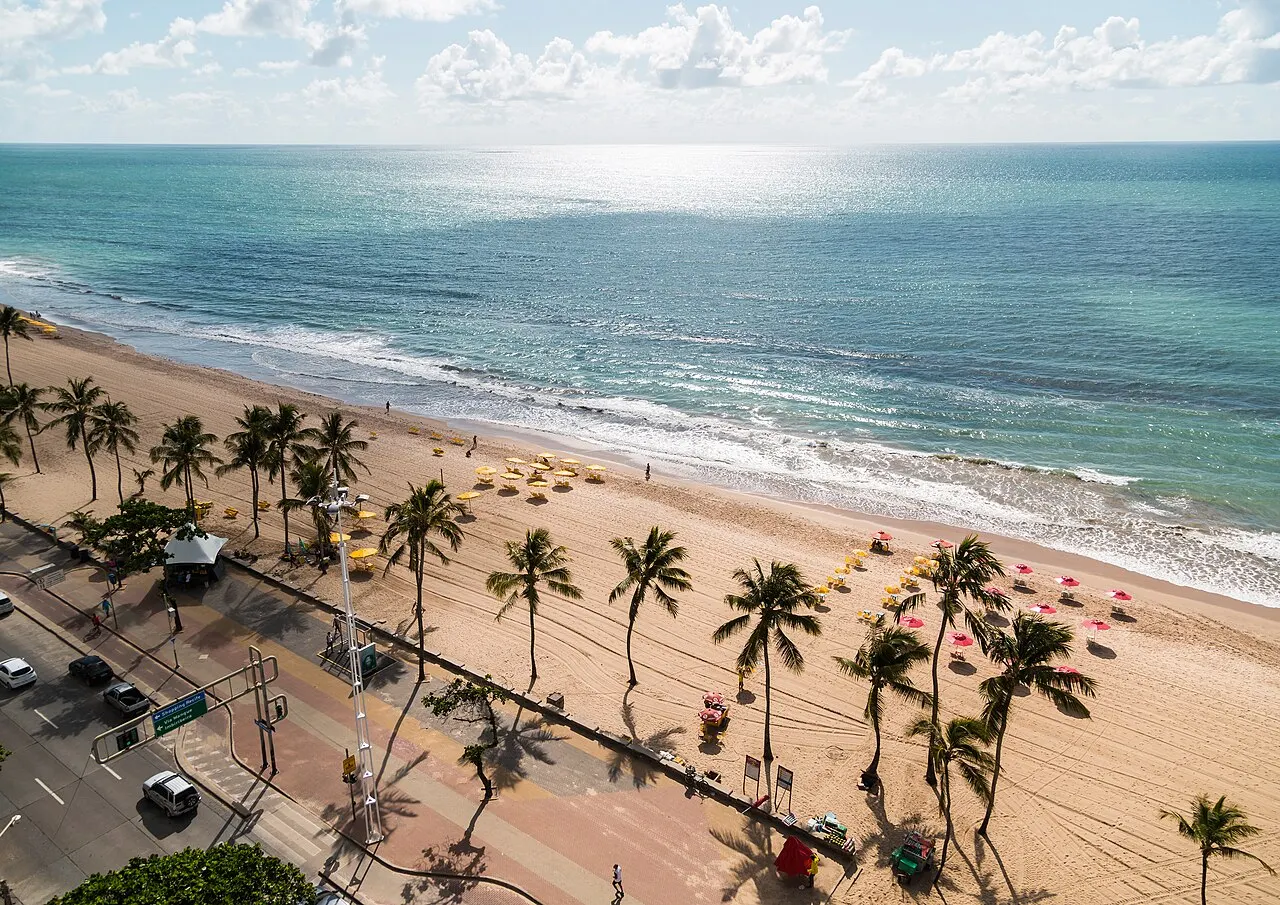
Boa Viagem Beach
Recife’s urban beach, with about 8 km of sand, promenade and tall buildings. The reefs parallel to the coast form natural pools at low tide, but that does not guarantee safe swimming. Heed the signs, areas closed to swimming and local advice on the risks of entering the sea.
About 8 km of urban beach and promenade, good for the late afternoon. Before entering the sea, heed the warning signs and local advice about the risks.
Check access
Nilo’s itinerary
Start with the basic programme and choose extensions for the time you have.
Plan my days in the app ↗Day 1 · The Bairro do Recife, Santo Antônio, and São José
Start at the Marco Zero in the morning and look at the natural breakwater across the estuary, where the Parque das Esculturas Francisco Brennand stands. If you want to cross, ask at the square's pier about the boats, the price, and the return time.
Walk along Rua do Bom Jesus to the Kahal Zur Israel Synagogue, considered the first in the Americas. If you have confirmed that it is open that day, go in; if not, keep going, because the facade and the street already tell the story of the neighborhood.
Continue to Praça do Arsenal and go into the Paço do Frevo, open Tuesday to Sunday; on Tuesdays admission is free.
Cross the Ponte Maurício de Nassau to Santo Antônio and visit the Capela Dourada, in the Convento de Santo Antônio complex, checking the hours first.
Have lunch nearby and walk on to the Mercado de São José and, a few minutes away, the Casa da Cultura, the former Casa de Detenção of 1855. The announced restoration work may affect operations; confirm which sections are accessible before visiting.
Return to the Bairro do Recife in the late afternoon to see the estuary from the Marco Zero, and choose the evening's program before going out.
Day 2 · Olinda, from Alto da Sé to the Mosteiro de São Bento
Go early by car or ride-hailing app to Alto da Sé, about 8 km from the Marco Zero, and enter the Sé Cathedral, founded in 1540.
Order a tapioca at one of the stands at Alto da Sé and, if the Caixa d'Água elevator is working, go up to the lookout.
Walk down to the Convento de São Francisco, the oldest Franciscan convent in Brazil, with Portuguese azulejos in the cloister.
Go down the slopes of the historic center to the Mosteiro de São Bento and see the main altar of 1783–1786, confirming the visiting hours.
Finish at Praça do Carmo, in front of the Igreja do Carmo, and return to Recife in the late afternoon.
Day 3 · Várzea of the Brennands and the evening in Boa Viagem
Go by car or ride-hailing app to the Oficina Francisco Brennand and arrive at 9 a.m., when it opens (Tuesday to Sunday); set aside the morning for the courtyards, temples, and galleries.
Have lunch at the studio's café, which keeps the museum's hours, and leave around 1 p.m.
Continue by car to the Instituto Ricardo Brennand, about 8 km by road and about 20 minutes without traffic, because the Capibaribe lies between the two. Last entry is at 4:30 p.m. and the museum closes at 5 p.m.
From the Instituto, go to Boa Viagem, about 14 km away. With late-afternoon traffic, you arrive near or after sunset, which in Recife falls between about 5:05 p.m. and 5:45 p.m. depending on the month: walk the boardwalk with the waterfront already lit and do not go into the sea.
Have dinner in Pina or Boa Viagem. If you want to enter the sea another day, first check the signs, areas closed to swimming and local advice; do not treat low tide as a guarantee of safety.






If you stay longer
Day 4 · Porto de Galinhas
Day trip
The beach in the district of Porto de Galinhas, in Ipojuca, is about 62 km from the Marco Zero by road, about 1 hour by car without traffic, and about 53 km from the airport. The reefs form natural pools of clear water that appear only on days of very low tide, for about two hours, and rafts (jangadas) take you to them; the corals cut, so wear footwear in the water and ask at the information center or at an agency which day and time work; check the tide table before choosing the day. The name comes from the illegal trafficking of enslaved people, hidden under crates of guinea fowl, and access to the reefs has been controlled since 2014. There are intercity buses from downtown Recife; check the line and the time with the operator.
Food
Tapioca
A disk made with starch extracted from cassava, heated on the griddle until it sets and folded over the filling. The one at Alto da Sé, in Olinda, is recognized as intangible heritage of the city; ask about the fillings at the stand.
Bolo de rolo
Wheat flour, eggs, butter, and sugar baked in very thin layers and rolled up with melted guava paste. It descends from the Portuguese “colchão de noiva,” in which almond was swapped for guava from the Zona da Mata. It has been intangible heritage of Pernambuco since 2008.
Cartola
A dessert of banana fried in butter or oil, topped with melted cheese (coalho or manteiga) and sprinkled with sugar and cinnamon. Intangible heritage of Pernambuco since 2009.
Bolo Souza Leão
A creamy cake, with the consistency of a very firm pudding, made with massa puba (fermented cassava), coconut milk, sugar, butter, and eggs. The recipe is attributed to a woman of the Souza Leão family, linked to sugar mills in Jaboatão dos Guararapes, in the first half of the 19th century, and the cake has been intangible heritage of Pernambuco since 2007.
Caldinhos
Broths served in small cups at bars and kiosks, made of sururu (a mangrove mollusk), shrimp, fish, and other ingredients. They are ordered as a snack, before the meal or with a drink.
Galinha à cabidela
Chicken cooked in a sauce thickened with the bird's own blood, served at regional Pernambuco restaurants.
Nego bom
A popular banana sweet, also called bala de banana.
Corn dishes at São João
In June, pamonha, canjica, corn cake, and sweet mungunzá are the foods of the June festivals.
Where to eat
- Alto da Sé (Olinda) · $
Tapioca made on the griddle by the tapioca makers, beside the Sé Cathedral.
- Espinheiro (Rua da Hora) · $$
One of the city's restaurant hubs, in the North Zone.
- Pina (Rua Capitão Rebelinho) · $$
A street of restaurants near the north end of Boa Viagem.
$: meal at an inexpensive restaurant, R$ 28 on average (Numbeo, October 2026) · $$: mid-range restaurant, R$ 190 for a three-course dinner for two, without drinks (Numbeo, October 2026) · $$$: restaurants above the mid-range; no verified price published · 2026-10-15
Day trips
Porto de Galinhas
The beach in the district of Porto de Galinhas, in Ipojuca, is about 62 km from the Marco Zero by road, about 1 hour by car without traffic, and about 53 km from the airport. The reefs form natural pools of clear water that appear only on days of very low tide, for about two hours, and rafts (jangadas) take you to them; the corals cut, so wear footwear in the water and ask at the information center or at an agency which day and time work; check the tide table before choosing the day. The name comes from the illegal trafficking of enslaved people, hidden under crates of guinea fowl, and access to the reefs has been controlled since 2014. There are intercity buses from downtown Recife; check the line and the time with the operator.
Caruaru
About 135 km from the Marco Zero by road, about 1 hour 45 minutes by car without traffic, in the Agreste. The Feira de Caruaru is registered by Iphan as intangible heritage, and in Alto do Moura lived Mestre Vitalino, a ceramicist of clay figures, and his works can be seen there. In June, the city's São João lasts about 30 days.
Where to begin
The Bairro do Recife, Santo Antônio, and São José
Start at the Marco Zero in the morning and look at the natural breakwater across the estuary, where the Parque das Esculturas Francisco Brennand stands. If you want to cross, ask at the square's pier about the boats, the price, and the return time.
Olinda, from Alto da Sé to the Mosteiro de São Bento
Go early by car or ride-hailing app to Alto da Sé, about 8 km from the Marco Zero, and enter the Sé Cathedral, founded in 1540.
Várzea of the Brennands and the evening in Boa Viagem
Go by car or ride-hailing app to the Oficina Francisco Brennand and arrive at 9 a.m., when it opens (Tuesday to Sunday); set aside the morning for the courtyards, temples, and galleries.
Money
Prices are in reais (R$). For reference, as of October 2026: a meal at an inexpensive restaurant cost R$ 28 on average and a three-course dinner for two at a mid-range restaurant, without drinks, R$ 190, according to Numbeo. For hotels, Kayak recorded an average nightly rate of R$ 610 per double room, R$ 532 at a four-star hotel, and R$ 744 at a five-star hotel, with October as the cheapest month and February, the month of Carnival, as the most expensive. Museum tickets cost R$ 10 at the Paço do Frevo, R$ 50 at the Oficina Francisco Brennand, and R$ 60 at the Instituto Ricardo Brennand, full price.
Pix is a payment by transfer that requires an account at a participating institution; a QR code at the counter does not guarantee that a foreign card or account can pay. Cards are accepted at most museums and restaurants, and the Oficina Brennand takes cash, Pix, and cards at the ticket office. Keep some cash in reais for tapioca, drinks on the beach, and small purchases, and check the amount on the machine before tapping your card. To compare with your own currency, check the day's exchange rate and your bank's fees.
Getting there and around
From the airport, about 10 km from the Marco Zero
Recife/Guararapes–Gilberto Freyre International Airport (REC) is in the south of the city, about 4 km from Boa Viagem beach and about 10 km from the Marco Zero by road. A covered walkway with a moving walkway links the terminal to the Aeroporto metro station, on the Linha Sul, which runs to the Estação Recife, downtown. By car or ride-hailing app, the trip to the Marco Zero takes about 15 minutes without traffic, and longer at rush hour.
Metro, buses, and ride-hailing apps
The metro has the Linha Centro and the Linha Sul, which run Monday to Saturday, 5 a.m. to 11 p.m.; for Sundays and holidays, check the service with CBTU before counting on it; the trains are old and breakdowns are frequent, so do not count on it for a tight schedule. For Olinda, Várzea, and the neighborhoods off the metro line, buses and ride-hailing cars are the most practical options. From the Marco Zero to Alto da Sé, in Olinda, is about 8 km by road; to the Instituto Ricardo Brennand, in Várzea, about 14 km.
The Bairro do Recife, Santo Antônio, and São José can be covered on foot, crossing the bridges over the Capibaribe. In Olinda, the historic center is also on foot, but with cobbled slopes and heat: bring water and sturdy shoes.
Safety
Pickpocketing and robbery call for attention in Recife and Olinda, including in the areas tourists visit. Carry few valuables, keep your phone put away on the street and, to check the map or call a car, step into an establishment. If you are held up with a threat, do not resist.
In the center, the movement on the streets changes a lot between business hours and night. At night, check the event and arrange your way back before going out, instead of walking empty streets between bridges. In Olinda, ask at your lodging which stretches to use after dark.
In the sea at Boa Viagem and the neighboring beaches, there is a risk of shark incidents. Heed the signs, areas closed to swimming and local advice; calm water and low tide do not guarantee safe swimming. At Carnival, agree on a meeting point with whoever is with you and carry only what you need. For a police emergency, call 190; for Samu, 192.
Etiquette tips
In churches and the monastery, dress to visit
The churches of Olinda and the Capela Dourada remain places of worship. Cover your shoulders and legs if you come straight from the beach, keep your voice low during Mass, and ask before photographing with a flash.
At the frevo circle and the maracatu procession, leave room for those who dance
Frevo dancers and maracatu drummers need space for their steps and their drums. Watch from the edge of the circle or the procession and join only when invited.
Ask before photographing the puppet and the person carrying it
The giant puppets of Olinda are carried by people who exert themselves inside them. Ask permission before photographing up close and do not pull on the puppet's clothing.
When shopping at the Mercado de São José, look and ask
At the crafts and herb stalls, ask the price and compare between stalls before deciding.
Mistakes to avoid
Assuming calm water means safe swimming
Calm water and low tide do not guarantee safe swimming at Boa Viagem. Heed the signs, areas closed to swimming and local advice before entering the sea.
Scheduling museums for a Monday
The Paço do Frevo, the Oficina Francisco Brennand, and the Instituto Ricardo Brennand close on Mondays. Leave that day for Olinda, the beach, or the Mercado de São José. For the market, confirm which sections are open before going, as the works may affect access.
Arriving at the Instituto Ricardo Brennand in the morning
The official page gives an afternoon opening on part of the week, and last entry is at 4:30 p.m. Do the Oficina Brennand in the morning, when it has been open since 9 a.m., and the Instituto afterward.
Treating the two workshops as neighbors
On the map, the Oficina and the Instituto Brennand are about 2 km apart in a straight line, but the Capibaribe runs between them and the route by car is about 8 km. Count on about 20 minutes by car between the two, without traffic.
Climbing Olinda at midday
The cobbled slopes of Olinda's historic center are tiring in the midday sun. Start early at Alto da Sé and go downhill, rather than uphill, whenever you can.
Useful phrases
Oxe / oxente
An expression of surprise or doubt, used at the start of a sentence: “oxe, já fechou?” (what, it's already closed?)
Visse?
“Right?” or “See?”, at the end of a sentence, asking for agreement: “amanhã a gente vai a Olinda, visse?” (tomorrow we're going to Olinda, right?)
Arretado
Something very good, admirable; it can also describe someone angry, depending on the tone
Massa
“Cool,” “good”: “o Paço do Frevo é massa” (the Paço do Frevo is cool)
Painho / mainha
Dad and mom, used affectionately
Brincar o Carnaval
To take part in the festival in the street, dancing with the blocos
Where to stay
- Boa Viagem · For those who want a beach and the largest choice of hotels · $$: Most of the hotels Kayak lists for Recife are on this waterfront, beside about 8 km of beach and about 4 km from the airport. In exchange, it is about 12 km from the Marco Zero and about 17 km from Olinda, distances covered by car.
- Historic Center of Olinda · For those who want to sleep among the old houses and walk to the churches · $$: The pousadas are on the streets of the historic center, near Alto da Sé. Expect cobbled slopes, narrow streets and, at Carnival, streets taken over by the party.
$: simple pousada, from about R$ 80 a night (Kayak, October 2026) · $$: four-star hotel, average nightly rate R$ 532 (Kayak, October 2026) · $$$: five-star hotel, average nightly rate R$ 744 (Kayak, October 2026) · 2026-10-15
Districts
Bairro do Recife (Recife Antigo)
The island where the city began, linked to the mainland by four bridges. It holds the Marco Zero, Rua do Bom Jesus, the Kahal Zur Israel synagogue, the Paço do Frevo, and the buildings occupied by Porto Digital. During the week the bustle follows the offices; for the evening, check the program and arrange your way back.
Santo Antônio and São José
The commercial and religious center across the Capibaribe, linked to the Bairro do Recife by the Ponte Maurício de Nassau. Here are the Capela Dourada, the Mercado de São José, the Casa da Cultura, and the Forte das Cinco Pontas, where the Galo da Madrugada departs.
Boa Vista
The neighborhood north of Santo Antônio, across the Capibaribe, with Rua da Aurora along the river.
Boa Viagem and Pina
The southern waterfront, with Boa Viagem beach, about 8 km of boardwalk and tall buildings, and many of the city's hotels. It is about 4 km from the airport. Pina, at the north end, has on Rua Capitão Rebelinho one of the city's restaurant streets.
Espinheiro and Casa Forte
Residential neighborhoods in the North Zone. Rua da Hora, in Espinheiro, is one of Recife's restaurant hubs.
Várzea
A neighborhood in the west of the city, home to the Instituto Ricardo Brennand and the Oficina Francisco Brennand, near the Capibaribe. It is about 14 km from the Marco Zero.
Historic Center of Olinda
The 16th-century core, on Olinda's hill: Alto da Sé, the Cathedral, the Convento de São Francisco, the Mosteiro de São Bento, the Igreja do Carmo, and slopes lined with colorful houses. It is also the stage of the Carnival of the giant puppets.
History
1535–1537 · Olinda is founded
Duarte Coelho, grantee of the captaincy of Pernambuco, founds Olinda in 1535. The charter of March 12, 1537 raises the settlement to town status and mentions the “reef of the ships,” the anchorage that would give rise to Recife.
1630–1631 · The Dutch invasion
The Dutch West India Company invades Pernambuco in 1630, then the richest captaincy in Brazil. Olinda is sacked and burned in 1631, and the Dutch choose Recife as their capital.
1637–1644 · Nassau's governorship
Maurice of Nassau governs the colony and has Mauritsstad built, with bridges, dikes, and canals. During the Dutch period, Sephardic Jews from the Netherlands organize the Kahal Zur Israel congregation.
1645–1654 · The expulsion of the Dutch
The Pernambucan Insurrection begins in 1645, passes through the Battles of Guararapes, and ends with the Dutch surrender in 1654. The Jewish families leave Recife; some of them reach New Amsterdam, today's New York.
1710–1711 · War of the Peddlers
Recife's elevation to town status, separate from Olinda, sets the sugar mill owners of Olinda against the Portuguese merchants of Recife, called mascates (peddlers). The Crown backs the merchants, and Recife keeps its autonomy.
1817 · Pernambucan Revolution
On March 6, 1817, the Pernambucan Revolution begins in Recife and proclaims a republic in the captaincy.
1824–1825 · Confederation of the Equator
Pernambuco leads another revolt against the central government in 1824. Frei Caneca, one of the leaders, is shot on January 13, 1825, beside the Forte das Cinco Pontas, after the executioners refuse to hang him.
1827 · Recife becomes the capital
Recife becomes the capital of the province of Pernambuco, in place of Olinda. The same year the Olinda Law School is created.
1907 · Frevo in the newspaper
On February 9, 1907, the Jornal Pequeno publishes the list of a club that includes a march called “O Frevo,” the oldest known printed mention of the word.
1910–1913 · The port renovation
The port renovation and the opening of wide avenues demolish much of the Bairro do Recife; the Largo and Church of Corpo Santo are torn down in 1913.
1982 · Olinda, World Heritage Site
UNESCO inscribes the Historic Center of Olinda on the World Heritage List, the second historic center in Brazil to receive the title, after Ouro Preto.
1994–2012 · Manguebeat, Porto Digital, and frevo
Chico Science & Nação Zumbi release “Da Lama ao Caos” in 1994. In 2000 Porto Digital is born, a technology park housed in the buildings of the Bairro do Recife, and in 2012 UNESCO declares frevo an Intangible Cultural Heritage of Humanity.
Complete history
A port at the service of Olinda
Recife began as the anchorage of Olinda. Duarte Coelho founded the town on top of a hill in 1535, and the 1537 charter already mentions the “reef of the ships,” the line of reefs that sheltered vessels at the mouth of the Capibaribe and Beberibe rivers. Sugar from the mills of the Zona da Mata left from there, and Pernambuco reached the early 17th century as the richest captaincy in Brazil. Olinda kept the government, the religious orders, and the mill owners; Recife kept the quay, the warehouses, and the merchants.
Twenty-four years of Dutch Brazil
That wealth attracted the Dutch West India Company, which invaded Pernambuco in 1630. Olinda was sacked and burned in 1631, and the Dutch preferred to govern from the port. Maurice of Nassau, governor from 1637 to 1644, had Mauritsstad built, with bridges, dikes, and canals. The colony's freedom of worship brought Sephardic Jews of Portuguese origin who were living in the Netherlands, and they organized the Kahal Zur Israel congregation, on what is now Rua do Bom Jesus. The Pernambucan Insurrection, begun in 1645, led to the Dutch surrender in 1654; the Jewish families left, and some of them helped found the first Jewish congregation of New Amsterdam, today's New York.
From the conflict with Olinda to the capital
After the war, the port kept growing and Olinda lost weight. When Recife was raised to town status and got its own council, in 1709 and 1710, the mill owners of Olinda, in debt to the port's merchants, took up arms in the War of the Peddlers, between 1710 and 1711; the Crown sided with Recife. The 19th century began with revolts that made Pernambuco a center of opposition to the central government: the Pernambucan Revolution of 1817 and the Confederation of the Equator of 1824, whose leader Frei Caneca was shot in 1825 beside the Forte das Cinco Pontas. In 1827 Recife became the capital of the province.
The modern city and what it demolished
In the 20th century, the port renovation and the opening of wide avenues, in the 1910s, demolished much of the Bairro do Recife, including the Igreja do Corpo Santo, in 1913. The city expanded south, along the Boa Viagem waterfront, and west, along the Capibaribe. Olinda took another path: the houses and churches rebuilt after 1631 were preserved and, in 1982, inscribed by UNESCO as a World Heritage Site.
Frevo, manguebeat, and technology at the port
The street culture of the two cities has won recognition recently. Frevo, the Carnival music and dance that emerged in the late 19th century, was declared an Intangible Cultural Heritage of Humanity in 2012, and the Paço do Frevo opened in 2014 in the Bairro do Recife. In the 1990s, manguebeat mixed maracatu with rock, hip hop, and electronic music and gave Recife a music scene of its own. The same port warehouses and townhouses have housed Porto Digital, a park of technology companies, since 2000.
Recife began as the port of Olinda; the Dutch burned Olinda in 1631 and made the port the capital.
Geography and shape of the city
Rivers, islands, and reefs
Recife sits on a low plain, about 4 m above sea level, cut by the Capibaribe, Beberibe, and Tejipió rivers and by tidal channels. The city occupies islands and riverbanks, such as the island of the Bairro do Recife, and so it is crossed from bridge to bridge. The sandstone reefs parallel to the coast gave the city its name and still protect much of Boa Viagem beach, which is about 8 km long. The municipality covers about 218 km² and preserves urban mangroves, such as the Parque dos Manguezais, at 215 ha.
Olinda on the hill
Olinda occupies the hills to the north, where the land rises from the plain. The historic center lies on the summit and slopes: the streets climb to Alto da Sé, from where Recife can be seen to the south, and descend in cobbled slopes to Varadouro and the sea. The municipality covers about 41 km².
Humid tropical climate
The climate is warm all year, with an annual average of about 26 °C and milder months in July and August, around 24 °C. About 2,155 mm of rain falls per year (INMET normal for 1991 to 2020), concentrated from April to July, with a peak in June. October, November, and December are the driest months.
Culture
Frevo and maracatu
Frevo emerged in Recife in the late 19th century, mixing march, maxixe, dobrado, and polka, and the dance draws on capoeira and has more than 120 catalogued steps. Since the 1930s it has been divided into frevo de rua, frevo-canção, and frevo de bloco, and UNESCO declared it an Intangible Cultural Heritage of Humanity in 2012. Maracatu de baque virado, or maracatu nação, is played with alfaias, the large drums, caixas, ganzás, and gonguê, and the oldest reference to it dates from 1711; the Maracatu Elefante, founded in 1800, parades with three calungas, the dolls that represent orixás. Rural maracatu, de baque solto, comes from Nazaré da Mata, in the Zona da Mata Norte.
Manguebeat and the music of Recife
In the 1990s, Chico Science & Nação Zumbi and Mundo Livre S/A combined maracatu, rock, hip hop, funk, and electronic music in manguebeat. The manifesto “Crabs with Brains,” by Fred Zero Quatro and Renato L, proposed the image of a satellite dish stuck in the mangrove mud. “Da Lama ao Caos,” the first album by Chico Science & Nação Zumbi, came out in 1994; Chico Science died in a car accident near Recife in 1997. The Cais do Sertão, at the port, is dedicated to Luiz Gonzaga and the culture of the sertão.
Literature, film, and the arts
Gilberto Freyre, author of “The Masters and the Slaves,” Joaquim Nabuco, Manuel Bandeira, and João Cabral de Melo Neto are among the writers linked to Recife, and Clarice Lispector declared herself a Pernambucan. In film, Kleber Mendonça Filho shot Recife in “Neighboring Sounds,” from 2012. In the visual arts, Francisco Brennand turned his family's pottery into a body of ceramic work that fills Várzea and the Parque das Esculturas.
Soccer and Carnival
Three clubs divide the city: Sport, which plays at the Ilha do Retiro; Santa Cruz, at the Arruda, with a capacity of 60,044 people; and Náutico, at the Aflitos. The cultural year revolves around the street Carnival, which in Recife and Olinda is made with frevo orchestras, maracatus, and blocos, and around the June festivals, stronger in the interior of the state.
Frevo has been an Intangible Cultural Heritage of Humanity since 2012, and the Paço do Frevo opened in 2014 in the Bairro do Recife.
Festivals and events
Galo da Madrugada: Carnival Saturday
The bloco opens Recife's Carnival on Saturday morning, setting out near the Forte das Cinco Pontas, in São José, and ending at Rua do Sol, near the Ponte Duarte Coelho. It first paraded in 1978 with 75 people and was entered in the record books as the largest bloco in the world in 1994. The date changes every year with Carnival, between February and March.
Carnival in Olinda: February or March
Carnival climbs up and down the slopes of the historic center with about 500 groups, frevo, maracatu, and giant puppets of more than two meters. The Homem da Meia-Noite, founded in 1931, is the best-known puppet; the Pitombeira dos Quatro Cantos, from 1947, and the Elefante de Olinda, from 1952, are among the traditional blocos. Museums such as the Oficina Francisco Brennand close during Carnival. Check the official program for the year: parade times and street closures change with each edition.
São João: June
The June festivals, with forró, quadrilhas, and corn dishes, are stronger in the interior. In Caruaru, about 135 km from Recife by road, the festival lasts about 30 days, between June and early July, and the Pátio do Forró draws up to 100,000 people on full nights.
Books and films
Neighboring Sounds (2012), by Kleber Mendonça Filho
On a middle-class street in Recife's South Zone, the arrival of a private security militia changes the residents' lives. The film shows the city of buildings, walls, and gates, far from the postcards.
Death and Life of a Severino (1955), by João Cabral de Melo Neto
A poem about the migrant Severino, who leaves the sertão and crosses the Agreste and the Zona da Mata until he reaches Recife. It helps explain the relationship between the interior of Pernambuco and the capital.
Da Lama ao Caos (1994), Chico Science & Nação Zumbi
The album that took manguebeat beyond Recife, with maracatu mixed into rock and hip hop and the movement's manifesto in the liner notes.
Frequently asked questions
Recife: How do you get from the airport to downtown?
The airport (REC) is about 10 km from the Marco Zero. A covered walkway links the terminal to the Aeroporto metro station, on the Linha Sul, which runs to the Estação Recife, and by car or ride-hailing app it is about 15 minutes without traffic. The metro runs Monday to Saturday, 5 a.m. to 11 p.m.; on Sundays and holidays, confirm service with CBTU before relying on it.
Recife: How many days should you stay?
I'd stay three days: one on foot in the Bairro do Recife, Santo Antônio and São José, one in Olinda and one in Várzea, with the two Brennand sites. With a fourth day, I'd go to Porto de Galinhas, choosing the date by low tide.
Recife: How do you visit Olinda?
From the Marco Zero to Alto da Sé is about 8 km by road, by bus or ride-hailing app. The cobbled slopes are tiring in the midday sun: start early at Alto da Sé and go downhill, rather than uphill, whenever you can.
Recife: How do you see the natural pools at Porto de Galinhas?
Porto de Galinhas is about 62 km from the Marco Zero, about 1 hour by car without traffic. The natural pools appear only on days of very low tide, for about two hours: check the tide table before choosing the day.
Recife: What safety precautions should you take?
Carry few valuables, keep your phone put away on the street and, to check the map or call a car, step into an establishment. At night, arrange your way back before going out, instead of walking empty streets between bridges.
Other cities in the country
Brazil ↗- Days
- 4
- When
- Apr–Jun
- Per person/day
- Average 615 BRLMid-range · per person/day
Cost scope
Per person per day: accommodation, meals, urban transport, visits and a small allowance for extras. Flights excluded; larger purchases vary. Editorial estimate, not a quote.
- Days
- 2–3
- When
- Apr–May · Sep
- Per person/day
- Average 400–700 BRLMid-range · per person/day
Cost scope
Per person per day: accommodation, meals, urban transport, visits and a small allowance for extras. Flights excluded; larger purchases vary. Editorial estimate, not a quote.
- Days
- 2–3
- When
- Jan–Mar · Sep–Dec
- Per person/day
- Average 350–550 BRLMid-range · per person/day
Cost scope
Per person per day: accommodation, meals, urban transport, visits and a small allowance for extras. Flights excluded; larger purchases vary. Editorial estimate, not a quote.
- Days
- 1–2
- When
- May–Sep
- Per person/day
- Average 260–520 BRLMid-range · per person/day
Cost scope
Per person per day: accommodation, meals, urban transport, visits and a small allowance for extras. Flights excluded; larger purchases vary. Editorial estimate, not a quote.
- Days
- 3–4
- When
- Jun–Sep
- Per person/day
- Average 400–700 BRLMid-range · per person/day
Cost scope
Per person per day: accommodation, meals, urban transport, visits and a small allowance for extras. Flights excluded; larger purchases vary. Editorial estimate, not a quote.
- Days
- 2–3
- When
- Apr–Jun
- Per person/day
- Average 350–550 BRLMid-range · per person/day
Cost scope
Per person per day: accommodation, meals, urban transport, visits and a small allowance for extras. Flights excluded; larger purchases vary. Editorial estimate, not a quote.
- Days
- 3–5
- When
- Mar–Apr · Nov
- Per person/day
- Average 397 BRLMid-range · per person/day
Cost scope
Per person per day: accommodation, meals, urban transport, visits and a small allowance for extras. Flights excluded; larger purchases vary. Editorial estimate, not a quote.
- Days
- 2–4
- When
- Mar–May · Sep
- Per person/day
- Explore costsGuide estimate
Cost scope
Per person per day: accommodation, meals, urban transport, visits and a small allowance for extras. Flights excluded; larger purchases vary. Editorial estimate, not a quote.
- Days
- 4–5
- When
- Aug–Nov
- Per person/day
- Explore costsGuide estimate
Cost scope
Per person per day: accommodation, meals, urban transport, visits and a small allowance for extras. Flights excluded; larger purchases vary. Editorial estimate, not a quote.
- Days
- 3–4
- When
- Jul–Sep
- Per person/day
- Explore costsGuide estimate
Cost scope
Per person per day: accommodation, meals, urban transport, visits and a small allowance for extras. Flights excluded; larger purchases vary. Editorial estimate, not a quote.
- Days
- 3–4
- When
- Sep–Nov
- Per person/day
- Explore costsGuide estimate
Cost scope
Per person per day: accommodation, meals, urban transport, visits and a small allowance for extras. Flights excluded; larger purchases vary. Editorial estimate, not a quote.
- Days
- 2–4
- When
- May–Sep
- Per person/day
- Explore costsGuide estimate
Cost scope
Per person per day: accommodation, meals, urban transport, visits and a small allowance for extras. Flights excluded; larger purchases vary. Editorial estimate, not a quote.
- Days
- 3–5
- When
- Jun–Sep
- Per person/day
- Explore costsGuide estimate
Cost scope
Per person per day: accommodation, meals, urban transport, visits and a small allowance for extras. Flights excluded; larger purchases vary. Editorial estimate, not a quote.
- Days
- 3–4
- When
- Jun–Aug
- Per person/day
- Explore costsGuide estimate
Cost scope
Per person per day: accommodation, meals, urban transport, visits and a small allowance for extras. Flights excluded; larger purchases vary. Editorial estimate, not a quote.
- Days
- 4–5
- When
- Jan–Mar · Sep–Dec
- Per person/day
- Explore costsGuide estimate
Cost scope
Per person per day: accommodation, meals, urban transport, visits and a small allowance for extras. Flights excluded; larger purchases vary. Editorial estimate, not a quote.
- Days
- 3–4
- When
- Aug–Sep
- Per person/day
- Explore costsGuide estimate
Cost scope
Per person per day: accommodation, meals, urban transport, visits and a small allowance for extras. Flights excluded; larger purchases vary. Editorial estimate, not a quote.
- Days
- 4–7
- When
- Apr–Sep
- Per person/day
- Explore costsGuide estimate
Cost scope
Per person per day: accommodation, meals, urban transport, visits and a small allowance for extras. Flights excluded; larger purchases vary. Editorial estimate, not a quote.
- Days
- 3–4
- When
- Jan · Sep–Dec
- Per person/day
- Explore costsGuide estimate
Cost scope
Per person per day: accommodation, meals, urban transport, visits and a small allowance for extras. Flights excluded; larger purchases vary. Editorial estimate, not a quote.
- Days
- 2
- When
- Aug–Dec
- Per person/day
- Average 442 BRLMid-range · per person/day
Cost scope
Per person per day: accommodation, meals, urban transport, visits and a small allowance for extras. Flights excluded; larger purchases vary. Editorial estimate, not a quote.
- Days
- 3–5
- When
- Jan–Feb · Sep–Dec
- Per person/day
- Explore costsGuide estimate
Cost scope
Per person per day: accommodation, meals, urban transport, visits and a small allowance for extras. Flights excluded; larger purchases vary. Editorial estimate, not a quote.
- Days
- 3–5
- When
- May–Sep
- Per person/day
- Explore costsGuide estimate
Cost scope
Per person per day: accommodation, meals, urban transport, visits and a small allowance for extras. Flights excluded; larger purchases vary. Editorial estimate, not a quote.
- Days
- 2–3
- When
- Apr–Sep
- Per person/day
- Average 484 BRLMid-range · per person/day
Cost scope
Per person per day: accommodation, meals, urban transport, visits and a small allowance for extras. Flights excluded; larger purchases vary. Editorial estimate, not a quote.
- Days
- 3
- When
- Apr–May · Aug
- Per person/day
- Average 478 BRLMid-range · per person/day
Cost scope
Per person per day: accommodation, meals, urban transport, visits and a small allowance for extras. Flights excluded; larger purchases vary. Editorial estimate, not a quote.
- Days
- 3–4
- When
- Aug–Dec
- Per person/day
- Explore costsGuide estimate
Cost scope
Per person per day: accommodation, meals, urban transport, visits and a small allowance for extras. Flights excluded; larger purchases vary. Editorial estimate, not a quote.
- Days
- 2
- When
- Apr–May · Sep
- Per person/day
- Explore costsGuide estimate
Cost scope
Per person per day: accommodation, meals, urban transport, visits and a small allowance for extras. Flights excluded; larger purchases vary. Editorial estimate, not a quote.
- Days
- 3
- When
- Sep–Dec
- Per person/day
- Explore costsGuide estimate
Cost scope
Per person per day: accommodation, meals, urban transport, visits and a small allowance for extras. Flights excluded; larger purchases vary. Editorial estimate, not a quote.
- Days
- 3–5
- When
- Apr–Nov
- Per person/day
- Average 427 BRLMid-range · per person/day
Cost scope
Per person per day: accommodation, meals, urban transport, visits and a small allowance for extras. Flights excluded; larger purchases vary. Editorial estimate, not a quote.
- Days
- 4
- When
- Jul–Sep
- Per person/day
- Explore costsGuide estimate
Cost scope
Per person per day: accommodation, meals, urban transport, visits and a small allowance for extras. Flights excluded; larger purchases vary. Editorial estimate, not a quote.
- Days
- 4–5
- When
- May–Sep
- Per person/day
- Explore costsGuide estimate
Cost scope
Per person per day: accommodation, meals, urban transport, visits and a small allowance for extras. Flights excluded; larger purchases vary. Editorial estimate, not a quote.
- Days
- 3
- When
- May–Sep
- Per person/day
- Explore costsGuide estimate
Cost scope
Per person per day: accommodation, meals, urban transport, visits and a small allowance for extras. Flights excluded; larger purchases vary. Editorial estimate, not a quote.