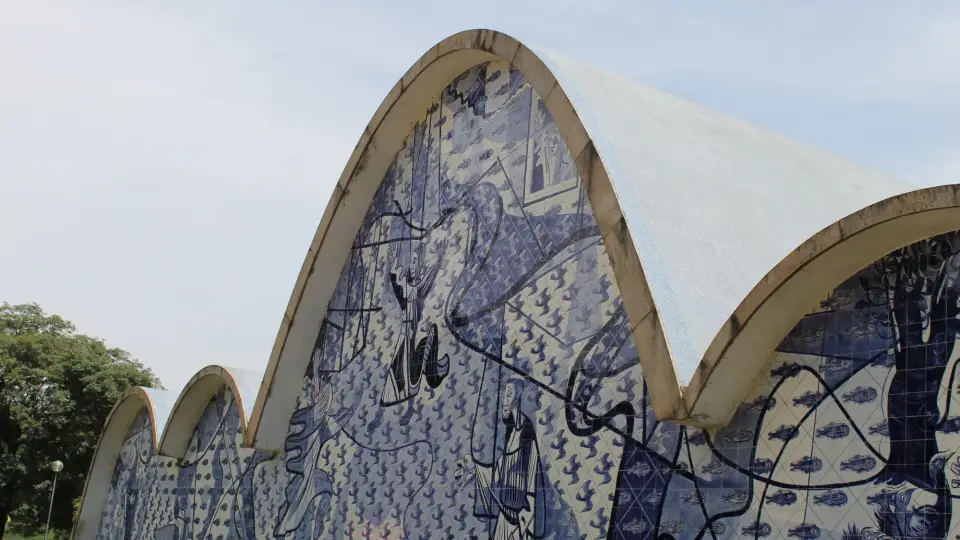
Brazil
Campos do Jordão
Araucarias at the Horto Florestal, the Palácio Boa Vista and fondue in Capivari
Days Start with the basic programme and choose extensions for the time you have.
How the guide reaches this number
The first, in the south and west of town: the Amantikir gardens in the morning, the free visit to the Palácio Boa Vista in the afternoon and the sculpture circuit at the Museu Felícia Leirner until closing, with a fondue dinner in Capivari. The second, among the araucarias of the State Park in the morning, by bus from Praça Capivari, and the afternoon on the pedestrian street and at Morro do Elefante, with the evening at a beer hall on Rua Djalma Forjaz. If you have a car, you can swap the morning at the Horto for Pico do Itapeva, or the whole second day for Pedra do Baú. Two days are enough because the attractions split into two sides of town, and each side fills a day without rushing. I'd go in April, May or September, with the dry winter weather and fewer people; July is only worth the competition for those who want the Winter Festival. I wouldn't count on the train: the railway has been stopped since 2024.
2
When April, May and September: dry, cold weather, outside the July school holidays; those going for the Winter Festival choose July (July 4 to August 2 in 2026), and October to March is the rainy season, heaviest from December to February
How the guide reaches this number
The year in Campos do Jordão is split between dry winter and rainy summer. In the Inmet normals for 1981 to 2010, measured at Vila Capivari, July has an average high of 17.9 °C, a low of 4.6 °C and 46 mm of rain, while January has a high of 22.5 °C, a low of 13.9 °C and 253 mm. From April to September it rains little, and during cold snaps the temperature drops below zero in the early morning, with frost. June, July and August make up the high season: July brings the school holidays, the Winter Festival and the biggest crowds, and on the July 9, 2026 holiday hotel occupancy passed 85%. April, May and September have the same dry, cold weather, with less competition for hotels and restaurants than in July; in autumn, between late April and May, the Festa do Pinhão takes place. From October to March is the rainy season, heaviest from December to February, when each month passes 200 mm; the town is quieter, except at Christmas and New Year's Eve.
Per person/day Add up lodging per night, meals per person and the tickets for the parks and museums you choose; July, with the Winter Festival, changes the total a lot.
How the guide reaches this number
Per person per day: accommodation, meals, urban transport, visits and a small allowance for extras. Flights excluded; larger purchases vary. Editorial estimate, not a quote.
 What Nilo thinks
I'd stay two days. The first, in the south and west of town: the Amantikir gardens in the morning, the free visit to the Palácio Boa Vista in the afternoon and the sculpture circuit at the Museu Felícia Leirner until closing, with a fondue dinner in Capivari. The second, among the araucarias of the State Park in the morning, by bus from Praça Capivari, and the afternoon on the pedestrian street and at Morro do Elefante, with the evening at a beer hall on Rua Djalma Forjaz. If you have a car, you can swap the morning at the Horto for Pico do Itapeva, or the whole second day for Pedra do Baú. Two days are enough because the attractions split into two sides of town, and each side fills a day without rushing. I'd go in April, May or September, with the dry winter weather and fewer people; July is only worth the competition for those who want the Winter Festival. I wouldn't count on the train: the railway has been stopped since 2024.Campos do Jordão is a mountain town made for the cold. At 1,628 m in the Serra da Mantiqueira, it began as a settlement of farms, grew in the early 20th century as a place of cure for tuberculosis patients and today receives people who come up from São Paulo for freezing nights, fireplaces and generous tables. The villages line up along the valley, and each has its function: Abernéssia is the residents' commerce, Capivari is the district of chalets, chocolate shops and fondue pots, and Alto da Boa Vista holds the Palácio Boa Vista, the winter residence of the São Paulo government, open for visits, and the Museu Felícia Leirner, with sculptures scattered through the forest. All around, the landscape is of araucarias, which the State Park protects across almost a third of the municipality, and of viewpoints that look out over the Paraíba Valley. In July, the town becomes a stage for classical music, with the Winter Festival taking over auditorium, park and square.
Quick facts
- Population
- 46,974 inhabitants in the municipality (IBGE Census 2022); 47,956 in the IBGE estimate for 2025
- Founded
- April 29, 1874, when Mateus da Costa Pinto bought land along the Rio Imbiri and formed the settlement of São Mateus do Imbiri; a municipality since June 19, 1934, split off from São Bento do Sapucaí
- Country and region
- Brazil: Serra da Mantiqueira, east of the state of São Paulo, Southeast region; town center at 1,628 m above sea level, about 170 km from São Paulo by road
- Language
- Portuguese
- Currency
- Real (R$, BRL)
- Time zone
- UTC−3 year-round; Brazil has not observed daylight saving time since 2019
- Best time to visit
- April, May and September: dry, cold weather, outside the July school holidays; those going for the Winter Festival choose July (July 4 to August 2 in 2026), and October to March is the rainy season, heaviest from December to February
- Average daily cost
- Add up lodging per night, meals per person and the tickets for the parks and museums you choose; July, with the Winter Festival, changes the total a lot.
When to go
April, May and September: dry, cold weather, outside the July school holidays; those going for the Winter Festival choose July (July 4 to August 2 in 2026), and October to March is the rainy season, heaviest from December to February
How the year changes

The year in Campos do Jordão is split between dry winter and rainy summer. In the Inmet normals for 1981 to 2010, measured at Vila Capivari, July has an average high of 17.9 °C, a low of 4.6 °C and 46 mm of rain, while January has a high of 22.5 °C, a low of 13.9 °C and 253 mm. From April to September it rains little, and during cold snaps the temperature drops below zero in the early morning, with frost. June, July and August make up the high season: July brings the school holidays, the Winter Festival and the biggest crowds, and on the July 9, 2026 holiday hotel occupancy passed 85%. April, May and September have the same dry, cold weather, with less competition for hotels and restaurants than in July; in autumn, between late April and May, the Festa do Pinhão takes place. From October to March is the rainy season, heaviest from December to February, when each month passes 200 mm; the town is quieter, except at Christmas and New Year's Eve.
Nilo's tips
The Palace has a day and an hour
Walk-in visits only on Wednesdays, Fridays, Saturdays and Sundays, with gates opening at 10 a.m. and 2 p.m. and numbered tickets in order of arrival. I'd plan the first day around that and arrive when the gate opens.
Sunday at the museum is free
The Museu Felícia Leirner charges no entry on Sundays and closes on Mondays. I'd keep Sunday for it.
Bring Pix or cash
Amantikir took cash, bank transfer or Pix in October 2026. I'd bring Pix or some cash for the parks.
The bus takes care of the Horto
The Horto Florestal line leaves from Praça Capivari and spares you the park's R$ 30 parking fee. I'd take it in the morning, because ticket sales end at 5 p.m. and the Cachoeira Trail is 4.5 km.
Itapeva only with a clear sky
Fog often closes Pico do Itapeva. I'd check the sky before going up and go early.
Explore the map
Explore the map, read about the other places and plan your travel days in the app.
Open the appWhat to see
Campos do Jordão: A high plateau in the Mantiqueira
The town center is at 1,628 m above sea level, and the municipality covers about 290 km². The tourist district, with the pedestrian street of Avenida Macedo Soares, Praça Capivari, Rua Djalma Forjaz and most of the restaurants, chocolate shops and bars. The bus lines to the Horto and Alto da Boa Vista leave from here, and it is where the Emílio Ribas Station and Parque Capivari are, with the cable car to Morro do Elefante.
Campos do Jordão State Park
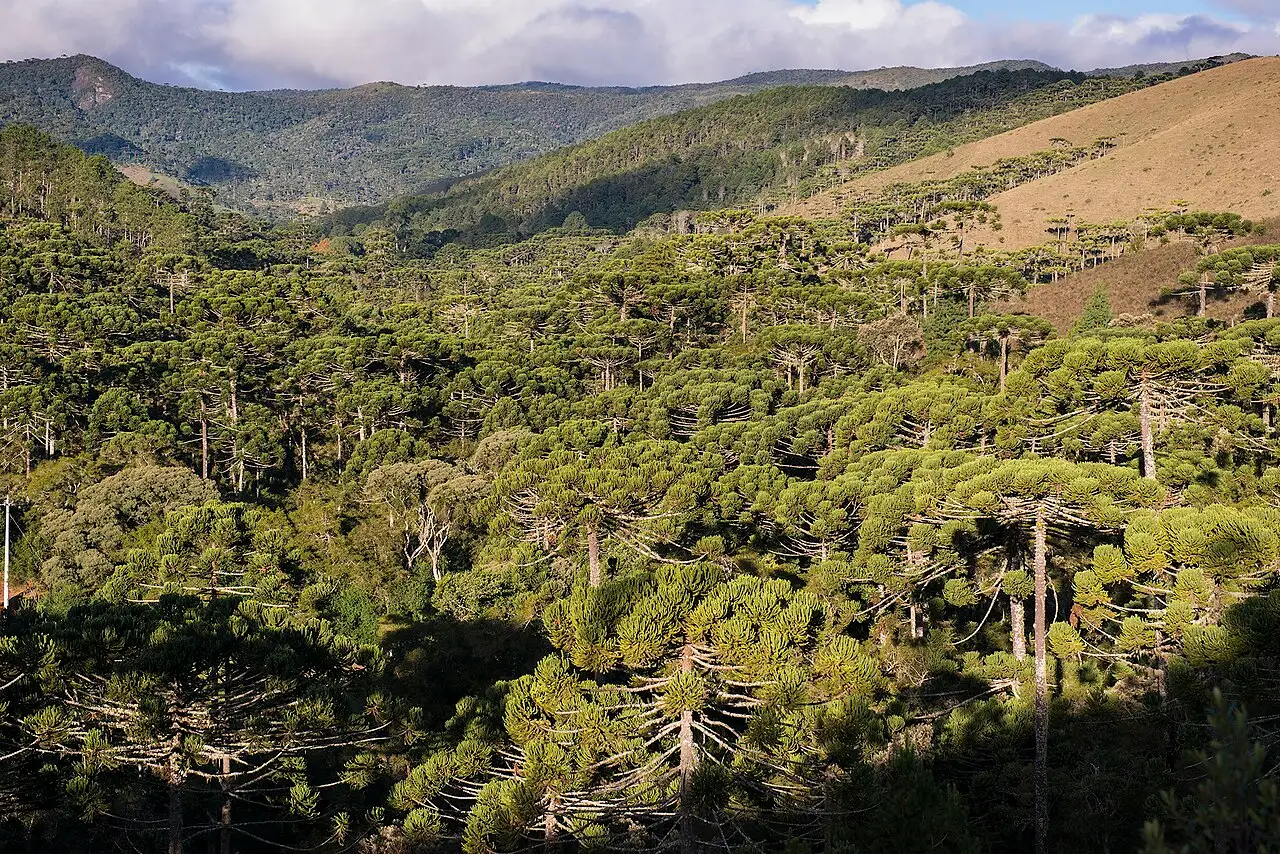
The Horto Florestal, created in 1941, covers about 30% of the municipality and protects the araucaria forest that is the symbol of the mountains. It is about 14 km northeast of Capivari, with a municipal bus line leaving from Praça Capivari. The easiest trail is the Cachoeira trail, flat, at 4.5 km; there are also the Pontes, Rio Sapucaí and Campos trails, the last of intermediate difficulty. In June 2026 the park was open from 9 a.m. to 6 p.m., with ticket sales until 5 p.m., and charged R$ 27 for a full-price ticket, R$ 13.50 for a half-price ticket and R$ 30 for car parking. Treetop courses, zip lines and other activities are paid separately.
Campos do Jordão sits on a plateau of the Serra da Mantiqueira, in eastern São Paulo, on the border with Minas Gerais.
Check access
Vila Capivari
Capivari is the district most visitors associate with Campos do Jordão: chalets, the pedestrian street of Avenida Macedo Soares, Praça Capivari and Rua Djalma Forjaz, with fondue restaurants, chocolate shops and beer halls. Beside the square stand the Emílio Ribas Station, the terminus of the old railway, now without trains, and Parque Capivari, free to enter, with paid attractions such as the cable car. By day it is an hour's stroll; the real bustle starts in the late afternoon, when the restaurants open for dinner.
The town has no single center.
Check access
Palácio Boa Vista
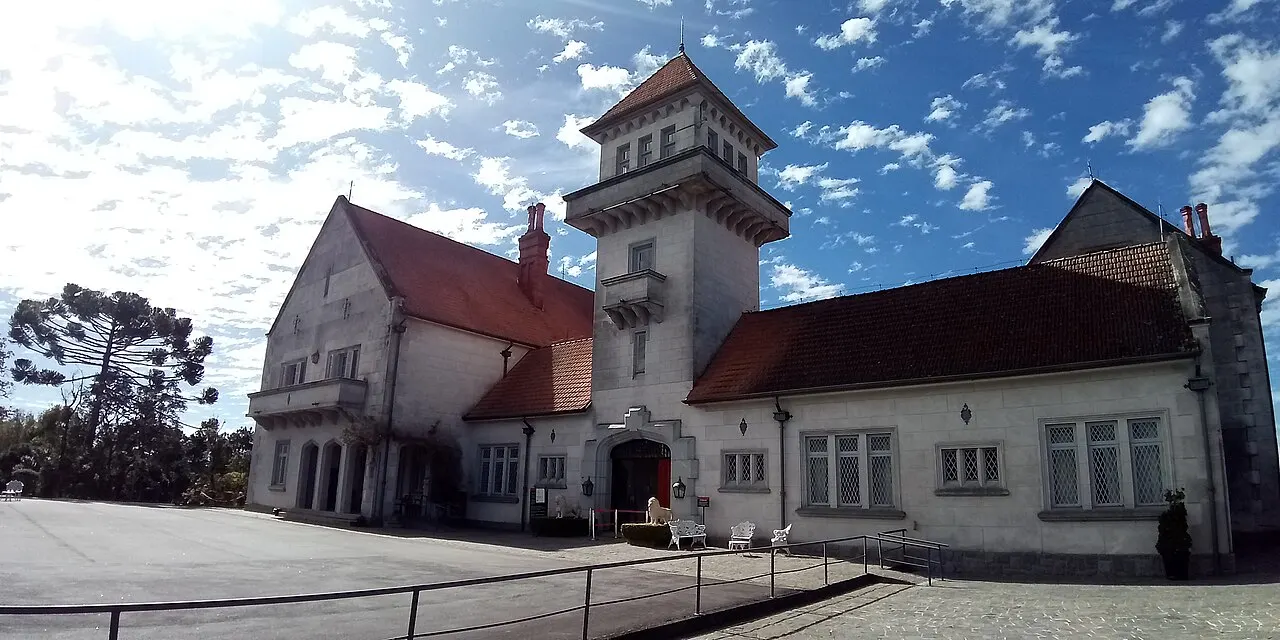
The winter residence of the São Paulo state government, in Tudor style designed by Georg Przyrembel, was begun in 1938 and inaugurated in 1964; it has been open to the public since 1970 and holds a collection of art and furniture assembled to turn it into a cultural center. Next to it are the Capela de São Pedro Apóstolo, by Paulo Mendes da Rocha, from 1989, and a Japanese bell tower. The visit is free and guided, lasts about 30 minutes, in groups formed in order of arrival, with numbered tickets handed out; walk-in visits are on Wednesdays, Fridays, Saturdays and Sundays, from 10 a.m. to 12 p.m. and from 2 to 5 p.m., and Thursday is kept for groups with reservations. The gates open at 10 a.m. and 2 p.m., and in high season it is best to arrive at those times. Phones, bags and cameras go in the lockers, and the visit may be suspended in bad weather or when officials are present.
The villages line up along the valley and the old railway, in a sequence that anyone arriving on the SP-123 passes through in order: the town's Portal, Abernéssia, Vila Jaguaribe and, last, Vila Capivari, where the Emílio Ribas Station stands.
Check access
Museu Felícia Leirner
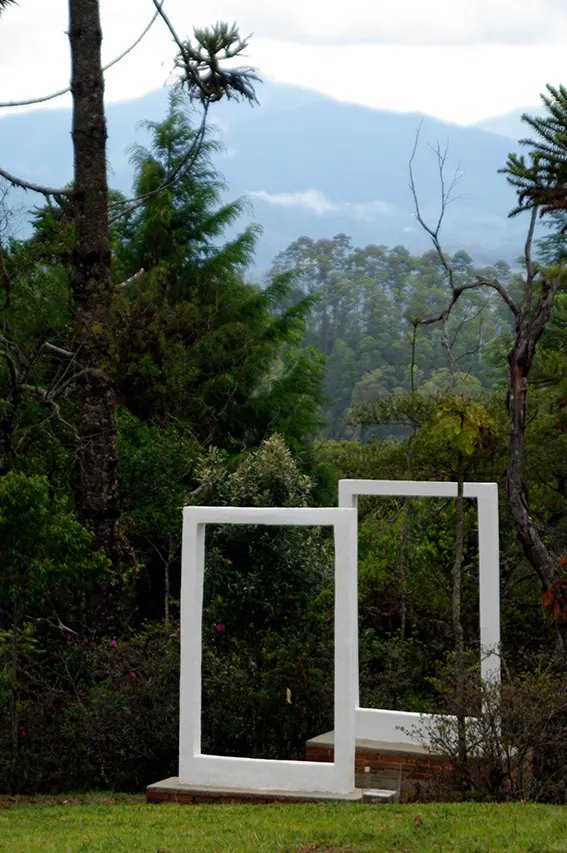
An open-air sculpture museum, opened in 1978 in an area of Atlantic Forest, with more than eighty works by the sculptor Felícia Leirner in bronze, white cement and granite, laid out along paths through the forest. It shares the grounds with the Auditório Claudio Santoro, from 1979, the stage of the Winter Festival. It is open Tuesday to Sunday, from 9 a.m. to 6 p.m., and closed on Mondays. In October 2026 a full-price ticket cost R$ 20 and a half-price ticket R$ 10; admission is free on Sundays and for residents.
Between the Abernéssia station and the Emílio Ribas station, the railway runs about 4 km. Alto da Boa Vista, with the Palace and the Museu Felícia Leirner, lies west of Abernéssia, on higher ground.
Check access
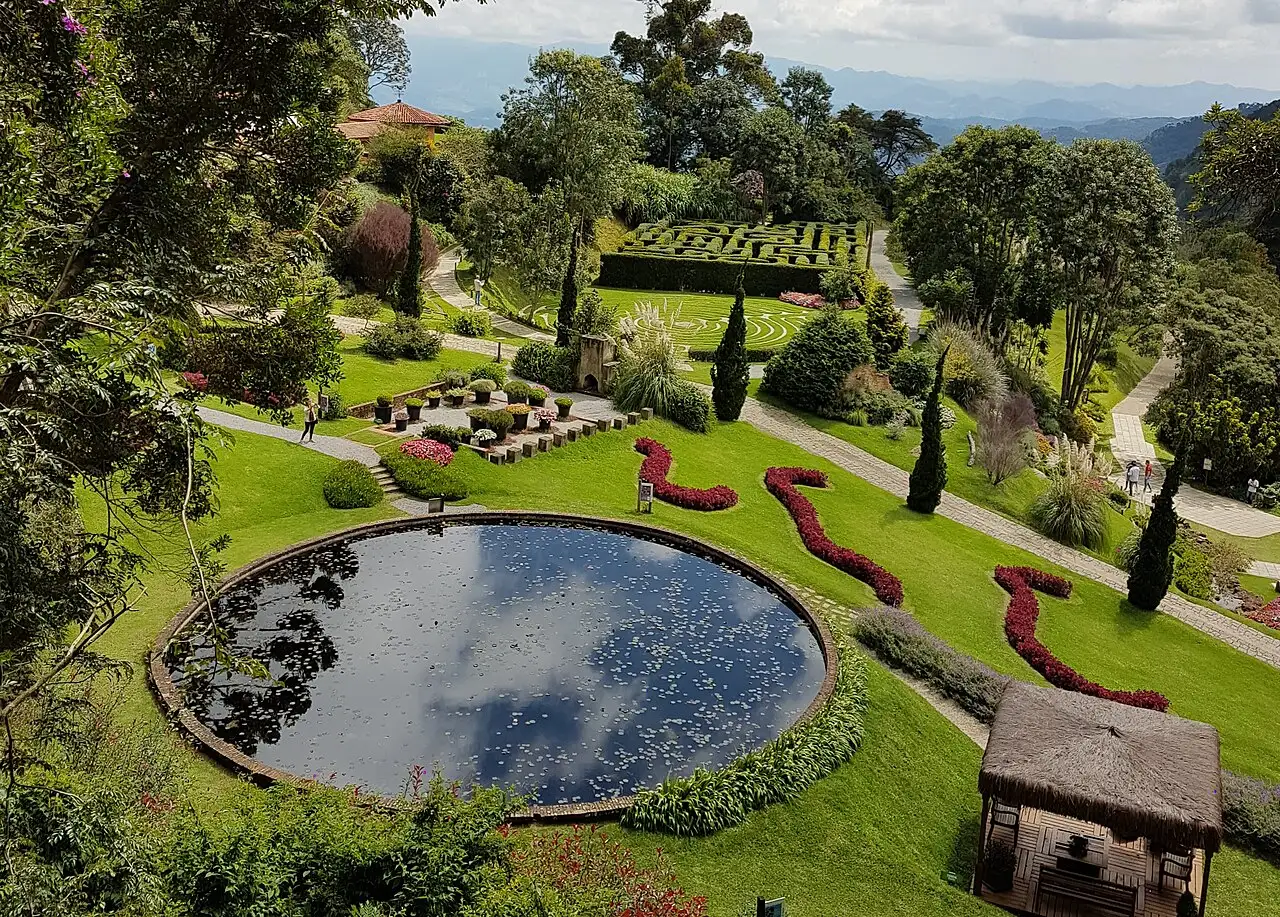
Parque Amantikir
A garden park opened in 2007 by the landscape designer Walter Vasconcellos, with 26 gardens inspired by styles from various countries, mazes and a viewpoint, covering about 60,000 m² in the Gavião Gonzaga neighborhood. It is open every day from 9 a.m., with entry allowed until 4 p.m., no reservation needed. The average visit takes up to two hours. In October 2026 a full-price ticket cost R$ 100 and a half-price ticket R$ 50, and the park accepted cash, bank transfer and Pix. Parking is charged, and 90% of the gardens are wheelchair accessible.
In October 2026 the park accepted cash, bank transfer and Pix. Bring one of those ways to pay.
Check access
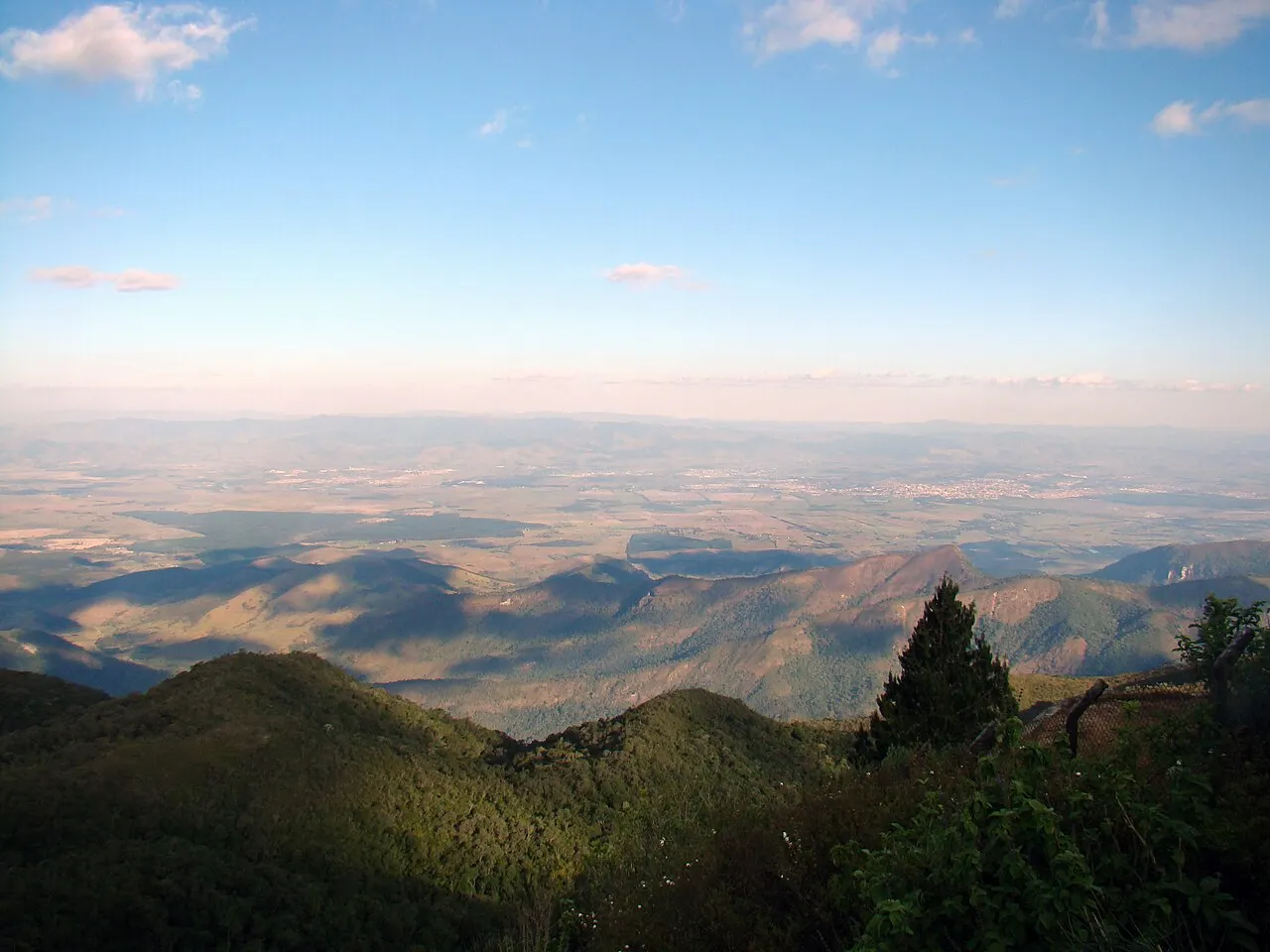
Pico do Itapeva
The viewpoint at 2,030 m, about 10 km from Capivari along a winding paved road, looks out over the Paraíba Valley and several towns in the region. It is technically in Pindamonhangaba, inside a private park that charges for entry and parking, with the last stretch on a dirt road. Fog is frequent, even when the weather is fine in Capivari.
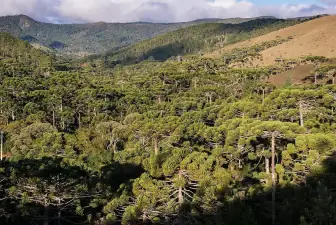
The landscape that gives the town its identity is the araucaria forest, largely protected by Campos do Jordão State Park, about 14 km northeast of Capivari, along the Rio Sapucaí.
Check access

Morro do Elefante
The viewpoint just above Capivari, at about 1,800 m, with views of the district and the mountains. You go up on the Parque Capivari cable car, by chair or cabin, in a few minutes, with the round trip on the same ticket, paid separately; the hill itself charges no entry.
The viewpoints sit on the edges of the plateau: Morro do Elefante, just above Capivari, and Pico do Itapeva, at 2,030 m, which is already in the municipality of Pindamonhangaba and looks out over the Paraíba Valley.
Check access
Nilo’s itinerary
Start with the basic programme and choose extensions for the time you have.
Plan my days in the app ↗Day 1 · The south and west: Amantikir, Palácio Boa Vista and Museu Felícia Leirner
Pick a Wednesday, Friday, Saturday or Sunday, the walk-in visiting days at the Palácio Boa Vista.
At 9 a.m., get to Parque Amantikir, in the Gavião Gonzaga neighborhood, by taxi or app, with cash or Pix for the ticket; allow up to two hours for the gardens and mazes.
Continue to Abernéssia and have lunch in the residents' commercial center, where there is self-service and executive plates.
At 2 p.m., when the Palácio Boa Vista gate reopens, be in Alto da Boa Vista to join the afternoon line for numbered tickets; leave your phone and bag in the lockers, take the guided visit of about 30 minutes and afterwards see the chapel by Paulo Mendes da Rocha.
From the Palace, take a taxi or app to the Museu Felícia Leirner, a few kilometers west, on Avenida Doutor Luís Arrobas Martins, and walk the sculpture circuit through the forest until closing at 6 p.m.; on Sundays admission is free, and on Mondays the museum is closed.
If it rains and the Palace suspends the visit, do the museum if the rain lets you walk through the forest, or swap the afternoon for a coffee at a chocolate shop in Capivari.
In the evening, go back to Capivari by taxi or app and have fondue for dinner on Rua Djalma Forjaz or on the pedestrian street of Avenida Macedo Soares.
Day 2 · The araucarias of the Horto and Capivari seen from above
Early, at Praça Capivari, catch the Horto Florestal bus line to Campos do Jordão State Park, about 14 km away, to arrive close to the 9 a.m. opening.
Walk the Cachoeira Trail, flat and 4.5 km, through the araucaria forest and along the Rio Sapucaí; if you want more effort, add the Campos Trail. Treetop courses and zip lines are paid separately.
Return to Capivari in early afternoon and have lunch in the little center, where there is trout, pasta and self-service.
After lunch, stroll the pedestrian street and the chocolate shops of Avenida Macedo Soares and enter Parque Capivari, next to the square, which is free to enter.
Late in the afternoon, ride the Parque Capivari cable car up to Morro do Elefante to see the district from above before dark.
If you have a car, you can swap the morning at the Horto for Pico do Itapeva, about 10 km from Capivari, going early, before fog closes the view, or swap the whole day for Pedra do Baú, described in the day trips.
End the night at a beer hall on Rua Djalma Forjaz, with Baden Baden beer and German cooking.




Food
Fondue
The winter dish in Capivari. Many restaurants serve fondue à la carte, of cheese, meat or chocolate, and more and more places offer the sequence, in three rounds: cheese, then meat, then chocolate. When the sequence includes refills, it is called rodízio de fondue. In winter, on the streets of the little center, a mini version is also sold in a Styrofoam tray, to eat standing up.
Trout
A cold-water fish served grilled or with sauces in the town's restaurants, alongside meat and pasta dishes. It is one of the flavors local guides point to as typical of the mountains, along with chocolate and beer.
Pinhão
The araucaria seed, harvested from autumn to early winter, appears boiled and in pinhão dishes at the restaurants of Capivari, such as rösti potatoes with pinhão, bacon, mozzarella and onion. The Festa do Pinhão celebrates the harvest with dishes based on the seed.
Chocolate
Capivari has several chocolate shops on Avenida Macedo Soares, and the Chocolate Araucária factory, in the Vila Jaguaribe area, has a café with fondues and hot drinks. Hot chocolate is the drink of cold nights.
Craft beer
Baden Baden was born in Campos do Jordão in 1999 as one of the pioneers of craft beer production, and the brewery takes visitors. The brand's beer hall, on Rua Djalma Forjaz, serves German dishes such as sausages, eisbein and sauerkraut.
Where to eat
- Só Queijo · Vila Capivari (Avenida Macedo Soares)
Fondue à la carte, with eight fondue options and two of raclette, for those who prefer to pick one pot instead of facing the whole sequence.
Source · 2026-10-16
- Ludwig · Vila Capivari
A fondue sequence, with rounds of cheese, meat and chocolate, at one of the most upscale addresses for the format. Good for the trip's special dinner.
Source · 2026-10-16
- Baden Baden · Vila Capivari (Rua Djalma Forjaz)
Beer hall of the brewery born in the town, with its own beer and German cooking, such as sausages, eisbein and sauerkraut. It is the most sought-after on the street: in season, arrive early.
Source · 2026-10-16
- Vila Chã · Vila Capivari (entrance to the pedestrian street)
Portuguese cooking made with organic ingredients and local suppliers, for those who want to get away from fondue without leaving the little center.
Source · 2026-10-16
- Vila Capivari (Avenida Engenheiro Diogo José de Carvalho)
Before the pedestrian street there are home-cooking and self-service restaurants, cheaper. It is the option for a quick lunch between outings.
- Vila Jaguaribe (Avenida Doutor Januário Miraglia)
Home cooking, set plates, buffets and cantinas, at lower prices than in Capivari, on the way to Pedra do Baú. The avenue also has cafés that serve strudel.
$: chicken executive plate, average of R$ 41.36 per person (Procon-SP, collected June 11, 2026) · $$: fixed-price self-service, average of R$ 51.92 per person (same survey) · 2026-06-10
Day trips
Pedra do Baú (São Bento do Sapucaí)
The Pedra do Baú State Natural Monument has three rock blocks, Bauzinho, Pedra do Baú and Ana Chata, with Pedra do Baú at about 1,950 m above sea level. From the center of Campos do Jordão to the monument's gate it is about 40 minutes by car, with a dirt-road stretch that becomes difficult in the rain; without a car, the solution is a taxi at an agreed price or an agency tour. The Bauzinho trail is easy and suits almost everyone; the climb up Pedra do Baú is done by ladders on the rock, is difficult and requires preparation. The public gate charges a preservation fee.
Santo Antônio do Pinhal and Pico Agudo
The neighboring town, southwest of Campos do Jordão, is about 20 km away, by car, taxi or app. Pico Agudo, at 1,634 m, has a viewpoint with a panoramic view of the region and a hang-gliding ramp, with takeoff from a wooden and a natural ramp. The town is smaller than Campos do Jordão, and the visit fits in a morning or an afternoon; for the viewpoint, confirm access in town before going up.
Where to begin
The south and west: Amantikir, Palácio Boa Vista and Museu Felícia Leirner
Pick a Wednesday, Friday, Saturday or Sunday, the walk-in visiting days at the Palácio Boa Vista.
The araucarias of the Horto and Capivari seen from above
Early, at Praça Capivari, catch the Horto Florestal bus line to Campos do Jordão State Park, about 14 km away, to arrive close to the 9 a.m. opening.
Money
The currency is the real (R$). Cards and Pix are common, but not every place accepts cards: Parque Amantikir, for example, took cash, bank transfer or Pix in October 2026. The Procon-SP winter survey, carried out in June 2026 for the weekend of July 4 and 5, found in Campos do Jordão an average daily rate of R$ 1,139.80 at hotels, the highest of the three towns surveyed, and R$ 772.80 at inns, always for a couple, with breakfast and parking. At restaurants, the same survey found an average of R$ 41.36 for the chicken executive plate, R$ 51.92 for the fixed-price self-service and R$ 90.90 per kilo at pay-by-weight self-service. Tickets add up fast: in 2026, R$ 100 full price at Amantikir, R$ 27 at the State Park plus R$ 30 for parking, and R$ 20 at the Museu Felícia Leirner, free on Sundays. The Palácio Boa Vista and Parque Capivari charge no entry; the cable car and the adventure activities are paid separately.
Getting there and around
Getting there by car: about 170 km from São Paulo
From São Paulo it is about 170 km, a little over two hours without traffic, with tolls. You take the Rodovia Ayrton Senna and the Carvalho Pinto to the junction with the Via Dutra, and from there the Rodovia Floriano Rodrigues Pinheiro (SP-123), a single-carriageway road that climbs the mountains from Taubaté, from about 630 m to 1,600 m above sea level. A car makes the trips away from Capivari easier, such as Pico do Itapeva and Pedra do Baú.
Getting there by bus and by plane
Pássaro Marron connects the Rodoviária do Tietê, in São Paulo, to the Campos do Jordão bus station, in Vila Jaguaribe, in about 3 hours, with a stop in São José dos Campos. The town has no airport; the nearest with scheduled flights is Guarulhos (GRU), about 150 km away. The direct airport line was discontinued: Pássaro Marron runs from Guarulhos to São José dos Campos in about 1 hour 30 minutes, and another bus from the same company continues to Campos do Jordão in about 1 hour 30 minutes. Check schedules and connections when you buy.
In town: bus, taxi and on foot
Capivari is covered on foot. For the rest, Viação na Montanha operates the municipal buses, which cost R$ 4.10 in November 2025; from Praça Capivari leave the Horto Florestal, Alto da Boa Vista (for the Palace) and Pica-Pau (for the Museu Casa da Xilogravura and the Baden Baden factory) lines, and you usually have to walk a bit after the stop. There is a taxi stand at Praça Capivari, and a ride to the bus station comes to about R$ 30, according to a guide updated in January 2026. Uber and 99 work for short trips, but getting back from outings outside town is uncertain, and it is worth agreeing a fixed price with a taxi driver.
The railway is stopped
The Estrada de Ferro Campos do Jordão, from 1914, linked Pindamonhangaba to the town over 47 km. The mountain section has not operated since 2017, and the service that remained, including the tourist trams within the town, has been suspended since 2024. In October 2026 the Legislative Assembly approved the provisional transfer of the railway to CPTM, without setting schedules, fares or a reopening; earlier concession plans foresaw the gradual return of short sections only some years after the contract was signed. For this trip, do not count on a train or tram.
Safety
For visitors to Campos do Jordão, the main precautions concern the road and the weather. The SP-123 climbs the mountains as a single-carriageway road with curves, and fog is frequent in the high parts, such as Pico do Itapeva; drive carefully and avoid driving down the mountain tired at night. Winter early mornings are near zero or below, and anyone going on the State Park trails should bring a coat and water, follow the marked trails and respect the closing time. If you drink in Capivari, go back by taxi or app: there are Lei Seca sobriety checkpoints at the exit of the center. On the crowded pedestrian street on July nights, watch your bag and phone as in any crowd.
Etiquette tips
At the Palace, phones go in the lockers
You cannot enter the Palácio Boa Vista with a bag, shopping bag, phone, umbrella, camera, toy or food; the locker at the entrance is free. The visit follows the guide, in a group, and without phones or cameras, the interior is not photographed.
Photo shoots at Amantikir are by appointment
Personal photos are allowed at Amantikir, but photo shoots must be scheduled with the park. Dogs of all sizes are allowed in, according to the park's rules.
Fondue à la carte and the sequence are different orders
À la carte, you choose one pot of cheese, meat or chocolate. In the sequence, the three rounds come in order, and the rodízio includes refills. Ask which format it is before sitting down, because the price varies with it and with the ingredients.
Mistakes to avoid
Counting on the train or tram
The Estrada de Ferro Campos do Jordão has not operated since 2024, and that includes the tourist trams within the town; the mountain section stopped in 2017. To get up the mountain and around, the options are car, bus, taxi and ride-hailing app.
Going to the Palácio Boa Vista on the wrong day
Walk-in visits are on Wednesdays, Fridays, Saturdays and Sundays; there are no visits on Monday and Tuesday, and Thursday is for groups with reservations. In bad weather the visit may be suspended, and the numbered tickets are limited.
Showing up at Amantikir with only a card
In October 2026 the park accepted cash, bank transfer and Pix. Bring one of those ways to pay.
Sleeping far from Capivari without a car
Hotels outside the little center are on winding roads, and the night is in Capivari. Without a car, every dinner becomes a taxi or app ride, and there are Lei Seca sobriety checkpoints at the exit of the center.
Leaving July bookings to the last minute
July, with the school holidays and the Winter Festival, is the busiest month, and hotels and fondue restaurants fill up; on the July 9, 2026 holiday hotel occupancy passed 85%. Book ahead or choose April, May or September.
Useful phrases
Tem mesa para o fondue hoje?
A useful question for booking in Capivari in July and on holidays
Aceita Pix?
Pix is Brazil's instant payment system; some places do not accept cards
Qual ônibus vai para o Horto?
To find the Horto Florestal line, which leaves from Praça Capivari
Já estão distribuindo as senhas?
For the guided visit to the Palácio Boa Vista, with numbered tickets in order of arrival
Jordanense
Someone born in or living in Campos do Jordão
Where to stay
- Vila Capivari · First trip, anyone not renting a car and anyone who wants to eat out every night: Restaurants, chocolate shops, Praça Capivari, the Emílio Ribas Station and the cable car are all within walking distance, and the bus lines to the Horto and Alto da Boa Vista leave from here. Without a car, there is no parking problem and no checkpoint on the way back from dinner. It is the most expensive and busiest area, with noise on July nights.
- Around Capivari (Morro do Elefante and Ducha de Prata) · Anyone with a car who wants quiet near the little center: The inns and hotels are one or a few kilometers from Capivari, many with fireplaces and forest views, and on the way to Pico do Itapeva. The drawback is depending on a car, taxi or app for evenings out.
- Vila Jaguaribe and Vila Abernéssia · Anyone looking for lower prices who arrives by bus: The bus station is in Vila Jaguaribe, and Abernéssia has the residents' commerce, with lodging and meals that tend to cost less than in Capivari. They are on the way to Alto da Boa Vista and Pedra do Baú. The tourist nightlife is in Capivari, a few kilometers away, and calls for a bus, taxi or car.
- Alto da Boa Vista · Anyone traveling by car who wants nature and is going for the Winter Festival: Inns and chalets set in the forest, near the Palace, the Museu Felícia Leirner and the Auditório Claudio Santoro, where the festival's concerts take place. It is far from the restaurants of Capivari, and the winding little roads call for care at night.
$$: inn, average of R$ 772.80 per night for a couple with breakfast on the weekend of July 4 and 5, 2026 (Procon-SP) · $$$: hotel, average of R$ 1,139.80 per night for a couple with breakfast on the same weekend (Procon-SP) · 2026-06-10
Districts
Vila Capivari
The tourist district, with the pedestrian street of Avenida Macedo Soares, Praça Capivari, Rua Djalma Forjaz and most of the restaurants, chocolate shops and bars. The bus lines to the Horto and Alto da Boa Vista leave from here, and it is where the Emílio Ribas Station and Parque Capivari are, with the cable car to Morro do Elefante. It is crowded at night and on winter weekends.
Vila Jaguaribe
Between Abernéssia and Capivari, it keeps the name of the lands' former owner and has the bus station. Avenida Doutor Januário Miraglia has plainer restaurants and cafés, and is the road to Pedra do Baú.
Vila Abernéssia
The residents' commercial center, with banks, shops and everyday commerce. It grew around the tuberculosis sanatoriums and is the first village for anyone arriving by road. Lodging and meals tend to cost less than in Capivari.
Alto da Boa Vista
The upper area west of Abernéssia, with the Palácio Boa Vista, the Museu Felícia Leirner, the Auditório Claudio Santoro and the Mercado Municipal along the way. It is more residential and green, with inns set in the forest, and is covered by car or on the Alto da Boa Vista bus line.
Horto Florestal
The area northeast of Capivari, along the road to the State Park and the Rio Sapucaí, with trail and adventure attractions on the way. Staying here puts you near the forest and far from the restaurants.
History
Before 1790 · Indigenous territory
The first inhabitants of the region were Indigenous peoples, among them the Puri, Caeté, Guarulhos and Cataguá.
1790 · Fazenda Bonsucesso
Inácio Caetano Vieira de Carvalho arrives at Fazenda Bonsucesso on September 20. The lands later pass to Brigadier Jordão, who gives his name to the mountain fields.
1874 · São Mateus do Imbiri
On April 29, Mateus da Costa Pinto buys land along the Rio Imbiri and forms the settlement of São Mateus do Imbiri. The date is the town's official founding.
1891 · Vila Jaguaribe
Domingos José Nogueira Jaguaribe Filho buys Mateus Pinto's lands, and the village is renamed Vila Jaguaribe, a name the neighborhood still carries.
1914 · The sanitarians' train
On November 15, the Estrada de Ferro Campos do Jordão is inaugurated, conceived by the physicians Emílio Ribas and Victor Godinho to carry tuberculosis patients from Pindamonhangaba up to the mountains.
1915–1931 · The town of sanatoriums
The settlement becomes a district of São Bento do Sapucaí in 1915, under the name Campos do Jordão. Vila Abernéssia grows around the sanatoriums, and between 1926 and 1931 a sanitary municipal government operates.
1934 · Municipality
On June 19, Campos do Jordão separates from São Bento do Sapucaí and gains political and administrative autonomy.
1941 · The State Park
Campos do Jordão State Park, the Horto Florestal, is created, protecting the araucaria forest across about 30% of the municipality's territory.
1964 · The Palácio Boa Vista
On July 21, the Palácio Boa Vista, the winter residence of the São Paulo state government, is inaugurated, after construction begun in 1938 and halted for decades.
1970 · Winter Concerts
The palace opens to the public and hosts the first Winter Concerts in July, which the following year become the Campos do Jordão Winter Festival.
2017–2024 · The railway stops
The mountain section stops operating in 2017 for lack of safety, and cable thefts in 2021 hit the rest of the line. The service that remained is interrupted in 2020, returns in part in 2022 and has been suspended since 2024, tourist trams included.
2026 · The railway passes to CPTM
On October 6, the state Legislative Assembly approves the provisional transfer of the Estrada de Ferro Campos do Jordão to CPTM, while the concession to private operators remains suspended. The law sets no reopening date.
Complete history
From farm fields to a settlement
Before the farms, the mountains were the territory of Indigenous peoples such as the Puri. In 1790, Inácio Caetano Vieira de Carvalho settled at Fazenda Bonsucesso, and the lands later passed to Brigadier Jordão, from whom the fields of the high Mantiqueira took their name. The settlement proper began on April 29, 1874, when Mateus da Costa Pinto bought plots along the Rio Imbiri and formed São Mateus do Imbiri. In 1891 the lands passed to Domingos Jaguaribe, and the village took his name, which is now that of one of the town's neighborhoods.
Mountain air against tuberculosis
In the early 20th century, the cold, dry mountain climate was recommended for lung patients, and that idea is what made the town. The sanitarians Emílio Ribas and Victor Godinho conceived a railway to carry patients from Pindamonhangaba up to the mountains, and the Estrada de Ferro Campos do Jordão was inaugurated in 1914. Around it grew villages with different roles: Abernéssia gathered the sanatoriums, and construction of Vila Emílio Ribas began in 1920. Public health weighed so heavily that, from 1926 to 1931, the town had a sanitary municipal government. The novel Floradas na Serra, by Dinah Silveira de Queiroz, portrays this period of boarding houses and sanatoriums.
From health resort to tourist resort
Campos do Jordão split from São Bento do Sapucaí in 1934. In 1941 the government created the State Park, which still occupies about 30% of the municipality. From the 1950s, with advances in tuberculosis treatment, the sanatoriums lost their purpose and the town turned to tourism. The Palácio Boa Vista, begun in 1938 as the governor's winter residence, was inaugurated in 1964, and in 1970 the secretary Luís Arrobas Martins turned it into a cultural center and organized the Winter Concerts, the origin of the festival held every July.
The town today
Today's Campos do Jordão is a climate resort with a tourism economy, with Capivari as the district of restaurants and hotels and Abernéssia as the residents' commercial center. The railway that gave rise to the town stopped climbing the mountain in 2017 and has been entirely out of service since 2024; in October 2026 the Legislative Assembly approved its provisional transfer to CPTM, with no date for trains to return. The cold climate that attracted patients in the early 20th century is now the main reason for winter trips.
Geography and shape of the city
A high plateau in the Mantiqueira
Campos do Jordão sits on a plateau of the Serra da Mantiqueira, in eastern São Paulo, on the border with Minas Gerais. The town center is at 1,628 m above sea level, and the municipality covers about 290 km². The climate is temperate oceanic (Cfb), with an annual average of 14.5 °C: mild, rainy summers and dry winters, with cold early mornings and frost during cold snaps. Snow is rare and was recorded in 1928, 1942, 1947 and 1966.
Villages in a row along the valley
The town has no single center. The villages line up along the valley and the old railway, in a sequence that anyone arriving on the SP-123 passes through in order: the town's Portal, Abernéssia, Vila Jaguaribe and, last, Vila Capivari, where the Emílio Ribas Station stands. Between the Abernéssia station and the Emílio Ribas station, the railway runs about 4 km. Alto da Boa Vista, with the Palace and the Museu Felícia Leirner, lies west of Abernéssia, on higher ground.
Araucaria forest and viewpoints
The landscape that gives the town its identity is the araucaria forest, largely protected by Campos do Jordão State Park, about 14 km northeast of Capivari, along the Rio Sapucaí. The viewpoints sit on the edges of the plateau: Morro do Elefante, just above Capivari, and Pico do Itapeva, at 2,030 m, which is already in the municipality of Pindamonhangaba and looks out over the Paraíba Valley.
Amantikir, the Palace and the Museu Felícia Leirner are in the south and west; the Horto is northeast of Capivari. I'd group each side into one day so as not to cross town twice.
With the municipal bus, taxis and walking in Capivari, the two days work without a car. I'd only rent one for Pedra do Baú or Pico do Itapeva.
Culture
The Winter Festival
The Campos do Jordão Winter Festival began with the Winter Concerts of July 1970 at the Palácio Boa Vista, conceived by Luís Arrobas Martins and inspired by the American festival at Tanglewood. It is a classical music festival, with concerts and opera. The 56th edition ran from July 4 to August 2, 2026, with more than 80 free performances, an open-air opening by Osesp in Parque Capivari and Mozart's The Magic Flute at the Auditório Claudio Santoro, which has 814 seats.
Sculpture and landscape
Felícia Leirner, a sculptor born in Warsaw in 1904, left São Paulo for Campos do Jordão after 1962 and spent her last working years expanding the collection that now forms the museum bearing her name, inaugurated in 1978. The works, from the figurative to the organic phases, are scattered through the forest, and the circuit is done on foot.
The memory of the sanatoriums
The town preserves the mark of the period when it received tuberculosis patients. The sociologist Oracy Nogueira studied these patients' social experience in Vozes de Campos do Jordão, which grew out of a 1945 dissertation, and the playwright Nelson Rodrigues, who was treated in the town, wrote about the public sanatorium he called the sanatorinho.
The Cherry Blossom Festival
At Parque da Cerejeira, in Vila Albertina, the Festa da Cerejeira em Flor follows the cherry trees' bloom with odori dance, koto, taiko, tea ceremony, workshops, a cosplay contest and a Japanese food court. It is organized by Sakura Home, a unit of the Associação Nipo-Brasileira de Assistência Social Enkyo, and the 55th edition ran on weekends from July 25 to August 16, 2026.
Festivals and events
Winter Festival
In July, with classical music concerts, opera and free performances on several stages around town. In 2026 it ran from July 4 to August 2.
Cherry Blossom Festival (Festa da Cerejeira em Flor)
On weekends in late July and August, at Parque da Cerejeira, with the bloom and Japanese culture and food. In 2026, from July 25 to August 16, 9 a.m. to 4 p.m.
Festa do Pinhão
In autumn, with dishes based on the araucaria seed. The 60th edition was scheduled by the city government for May 6 to 10, 2026; dates change from year to year.
City anniversary
On April 29, the date of the 1874 founding.
Books and films
Floradas na Serra (1939), by Dinah Silveira de Queiroz, and the film by Luciano Salce (1954)
The novel follows Elza, a young woman with tuberculosis who goes to Campos do Jordão for treatment, and the other patients of the mountain's boarding houses and sanatoriums. It was filmed by the Companhia Cinematográfica Vera Cruz in 1954, with Cacilda Becker, and shows the town from the time when people went there seeking a cure.
Vozes de Campos do Jordão, by Oracy Nogueira
A sociological study that grew out of a 1945 dissertation on the social experience of lung patients in the state of São Paulo, reissued by Fiocruz in 2009. It helps in understanding the period when Abernéssia and the other villages grew around the sanatoriums.
Frequently asked questions
Campos do Jordão: how do I get there from São Paulo?
By car it is about 170 km, a little over two hours without traffic, with tolls and the climb up the mountains on the SP-123, a single-carriageway road. By bus, Pássaro Marron connects the Rodoviária do Tietê to the town's bus station, in Vila Jaguaribe, in about 3 hours.
Campos do Jordão: how do I get there from Guarulhos airport?
The direct airport line was discontinued. Pássaro Marron runs from Guarulhos to São José dos Campos in about 1 hour 30 minutes, and another bus from the same company continues to Campos do Jordão in about 1 hour 30 minutes more; check schedules and connections when you buy.
Campos do Jordão: how many days should I stay?
Two days: one in the south and west, with Amantikir, the Palácio Boa Vista and the Museu Felícia Leirner, and another among the araucarias of the State Park and in Capivari. With a car, you can swap the morning at the Horto for Pico do Itapeva, or the second day for Pedra do Baú.
Campos do Jordão: can I visit without a car?
Yes. Capivari is covered on foot, and the municipal buses to the Horto Florestal and Alto da Boa Vista leave from Praça Capivari. Ride-hailing apps work for short trips, but getting back from outings outside town is uncertain; for those, agree a fixed price with a taxi driver, who has a stand on the square.
Campos do Jordão: when is the best time to go?
April, May and September have the dry, cold winter weather, with less competition for hotels and restaurants than July. July brings the school holidays, the Winter Festival and the biggest crowds, and October to March is the rainy season, heaviest from December to February.
Campos do Jordão: how much do the attractions cost?
In 2026, full price was R$ 100 at Amantikir, R$ 27 at the State Park, with R$ 30 for parking if you drive, and R$ 20 at the Museu Felícia Leirner, free on Sundays. The Palácio Boa Vista and Parque Capivari charge no entry; the cable car and adventure activities are paid separately.
Campos do Jordão: how do I get to Pedra do Baú?
From the center to the gate it is about 40 minutes by car, with a dirt stretch that becomes difficult in the rain; without a car, take a taxi at an agreed price or an agency tour. The Bauzinho trail is easy; the climb up Pedra do Baú, by ladders on the rock, is difficult.
Other cities in the country
Brazil ↗- Days
- 4
- When
- Apr–Jun
- Per person/day
- Average 615 BRLMid-range · per person/day
Cost scope
Per person per day: accommodation, meals, urban transport, visits and a small allowance for extras. Flights excluded; larger purchases vary. Editorial estimate, not a quote.
- Days
- 2–3
- When
- Apr–May · Sep
- Per person/day
- Average 400–700 BRLMid-range · per person/day
Cost scope
Per person per day: accommodation, meals, urban transport, visits and a small allowance for extras. Flights excluded; larger purchases vary. Editorial estimate, not a quote.
- Days
- 2–3
- When
- Jan–Mar · Sep–Dec
- Per person/day
- Average 350–550 BRLMid-range · per person/day
Cost scope
Per person per day: accommodation, meals, urban transport, visits and a small allowance for extras. Flights excluded; larger purchases vary. Editorial estimate, not a quote.
- Days
- 1–2
- When
- May–Sep
- Per person/day
- Average 260–520 BRLMid-range · per person/day
Cost scope
Per person per day: accommodation, meals, urban transport, visits and a small allowance for extras. Flights excluded; larger purchases vary. Editorial estimate, not a quote.
- Days
- 3–4
- When
- Jun–Sep
- Per person/day
- Average 400–700 BRLMid-range · per person/day
Cost scope
Per person per day: accommodation, meals, urban transport, visits and a small allowance for extras. Flights excluded; larger purchases vary. Editorial estimate, not a quote.
- Days
- 2–3
- When
- Apr–Jun
- Per person/day
- Average 350–550 BRLMid-range · per person/day
Cost scope
Per person per day: accommodation, meals, urban transport, visits and a small allowance for extras. Flights excluded; larger purchases vary. Editorial estimate, not a quote.
- Days
- 3–5
- When
- Mar–Apr · Nov
- Per person/day
- Average 397 BRLMid-range · per person/day
Cost scope
Per person per day: accommodation, meals, urban transport, visits and a small allowance for extras. Flights excluded; larger purchases vary. Editorial estimate, not a quote.
- Days
- 2–4
- When
- Mar–May · Sep
- Per person/day
- Explore costsGuide estimate
Cost scope
Per person per day: accommodation, meals, urban transport, visits and a small allowance for extras. Flights excluded; larger purchases vary. Editorial estimate, not a quote.
- Days
- 4–5
- When
- Aug–Nov
- Per person/day
- Explore costsGuide estimate
Cost scope
Per person per day: accommodation, meals, urban transport, visits and a small allowance for extras. Flights excluded; larger purchases vary. Editorial estimate, not a quote.
- Days
- 3–4
- When
- Jul–Sep
- Per person/day
- Explore costsGuide estimate
Cost scope
Per person per day: accommodation, meals, urban transport, visits and a small allowance for extras. Flights excluded; larger purchases vary. Editorial estimate, not a quote.
- Days
- 3–4
- When
- Sep–Nov
- Per person/day
- Explore costsGuide estimate
Cost scope
Per person per day: accommodation, meals, urban transport, visits and a small allowance for extras. Flights excluded; larger purchases vary. Editorial estimate, not a quote.
- Days
- 2–4
- When
- May–Sep
- Per person/day
- Explore costsGuide estimate
Cost scope
Per person per day: accommodation, meals, urban transport, visits and a small allowance for extras. Flights excluded; larger purchases vary. Editorial estimate, not a quote.
- Days
- 3–5
- When
- Jun–Sep
- Per person/day
- Explore costsGuide estimate
Cost scope
Per person per day: accommodation, meals, urban transport, visits and a small allowance for extras. Flights excluded; larger purchases vary. Editorial estimate, not a quote.
- Days
- 3–4
- When
- Jun–Aug
- Per person/day
- Explore costsGuide estimate
Cost scope
Per person per day: accommodation, meals, urban transport, visits and a small allowance for extras. Flights excluded; larger purchases vary. Editorial estimate, not a quote.
- Days
- 4–5
- When
- Jan–Mar · Sep–Dec
- Per person/day
- Explore costsGuide estimate
Cost scope
Per person per day: accommodation, meals, urban transport, visits and a small allowance for extras. Flights excluded; larger purchases vary. Editorial estimate, not a quote.
- Days
- 3–4
- When
- Oct–Dec
- Per person/day
- Average 1,110 BRLMid-range · per person/day
Cost scope
Per person per day: accommodation, meals, urban transport, visits and a small allowance for extras. Flights excluded; larger purchases vary. Editorial estimate, not a quote.
- Days
- 3–4
- When
- Aug–Sep
- Per person/day
- Explore costsGuide estimate
Cost scope
Per person per day: accommodation, meals, urban transport, visits and a small allowance for extras. Flights excluded; larger purchases vary. Editorial estimate, not a quote.
- Days
- 4–7
- When
- Apr–Sep
- Per person/day
- Explore costsGuide estimate
Cost scope
Per person per day: accommodation, meals, urban transport, visits and a small allowance for extras. Flights excluded; larger purchases vary. Editorial estimate, not a quote.
- Days
- 3–4
- When
- Jan · Sep–Dec
- Per person/day
- Explore costsGuide estimate
Cost scope
Per person per day: accommodation, meals, urban transport, visits and a small allowance for extras. Flights excluded; larger purchases vary. Editorial estimate, not a quote.
- Days
- 2
- When
- Aug–Dec
- Per person/day
- Average 442 BRLMid-range · per person/day
Cost scope
Per person per day: accommodation, meals, urban transport, visits and a small allowance for extras. Flights excluded; larger purchases vary. Editorial estimate, not a quote.
- Days
- 3–5
- When
- Jan–Feb · Sep–Dec
- Per person/day
- Explore costsGuide estimate
Cost scope
Per person per day: accommodation, meals, urban transport, visits and a small allowance for extras. Flights excluded; larger purchases vary. Editorial estimate, not a quote.
- Days
- 3–5
- When
- May–Sep
- Per person/day
- Explore costsGuide estimate
Cost scope
Per person per day: accommodation, meals, urban transport, visits and a small allowance for extras. Flights excluded; larger purchases vary. Editorial estimate, not a quote.
- Days
- 2–3
- When
- Apr–Sep
- Per person/day
- Average 484 BRLMid-range · per person/day
Cost scope
Per person per day: accommodation, meals, urban transport, visits and a small allowance for extras. Flights excluded; larger purchases vary. Editorial estimate, not a quote.
- Days
- 3
- When
- Apr–May · Aug
- Per person/day
- Average 478 BRLMid-range · per person/day
Cost scope
Per person per day: accommodation, meals, urban transport, visits and a small allowance for extras. Flights excluded; larger purchases vary. Editorial estimate, not a quote.
- Days
- 3–4
- When
- Aug–Dec
- Per person/day
- Explore costsGuide estimate
Cost scope
Per person per day: accommodation, meals, urban transport, visits and a small allowance for extras. Flights excluded; larger purchases vary. Editorial estimate, not a quote.
- Days
- 3
- When
- Sep–Dec
- Per person/day
- Explore costsGuide estimate
Cost scope
Per person per day: accommodation, meals, urban transport, visits and a small allowance for extras. Flights excluded; larger purchases vary. Editorial estimate, not a quote.
- Days
- 3–5
- When
- Apr–Nov
- Per person/day
- Average 427 BRLMid-range · per person/day
Cost scope
Per person per day: accommodation, meals, urban transport, visits and a small allowance for extras. Flights excluded; larger purchases vary. Editorial estimate, not a quote.
- Days
- 4
- When
- Jul–Sep
- Per person/day
- Explore costsGuide estimate
Cost scope
Per person per day: accommodation, meals, urban transport, visits and a small allowance for extras. Flights excluded; larger purchases vary. Editorial estimate, not a quote.
- Days
- 4–5
- When
- May–Sep
- Per person/day
- Explore costsGuide estimate
Cost scope
Per person per day: accommodation, meals, urban transport, visits and a small allowance for extras. Flights excluded; larger purchases vary. Editorial estimate, not a quote.
- Days
- 3
- When
- May–Sep
- Per person/day
- Explore costsGuide estimate
Cost scope
Per person per day: accommodation, meals, urban transport, visits and a small allowance for extras. Flights excluded; larger purchases vary. Editorial estimate, not a quote.