Brazil
Ouro Preto
Aleijadinho and Mestre Ataíde's churches, the Museu da Inconfidência and the stone slopes between Pilar and Antônio Dias
Days Start with the basic programme and choose extensions for the time you have.
How the guide reaches this number
On the first, I'd start with São Francisco de Assis at 8:30 a.m., go down to the Matriz de Antônio Dias and the Mina do Chico Rei and spend the afternoon at the Museu da Inconfidência and the Igreja do Carmo. On the second, I'd go to the Parque Estadual do Itacolomi at opening, at 8 a.m., and return to the center for the Basílica do Pilar, which reopens at noon, the Igreja do Rosário, which only opens at 1 p.m., and the Casa dos Contos. With a third day, I'd go to Mariana, about 12 km away, for Praça Minas Gerais and the Sé. With a fourth, to Congonhas, by car, for Aleijadinho's prophets and Passos; anyone with a car and only three days can swap Mariana for Congonhas, which holds the most important part of his sculptural work. I'd skip the Mina da Passagem: it's R$ 290 per person, cash only, for about 40 minutes, and the Mina do Chico Rei, inside the city, already shows a colonial mining gallery. Tiradentes, 156 km away, I'd leave for a night on the way back, never for a day trip.
2–4
When May to September: it is the dry season, with steady days for walking the stone slopes and cold nights in June and July; those who travel for the festivals choose Holy Week, between March and April, or the Winter Festival, in July
How the guide reaches this number
The year divides by rain. From October to April it rains a lot, peaking between November and March, and the stone slopes get slippery; this is also when landslide risks on the hillsides increase. From May to September the weather is dry, with clear days and cold nights, and June and July can have frost. For reference, the 1991–2020 normal for Belo Horizonte, about 70 km away and lower, records 339 mm of rain in December and 5 mm in July; Ouro Preto, at 1,179 m, is colder. The dates with the biggest programs are Holy Week, between March and April, the Mostra de Cinema in June, the Festival de Inverno in July and the Mês do Rosário in October. For walking the churches and trails without rain, May to September is the best window; bring a jacket for the evening.
Per person/day Add up lodging per night, meals per person and the admission to churches and museums; several museums are free, and a car for day trips changes the total.
How the guide reaches this number
Per person per day: accommodation, meals, urban transport, visits and a small allowance for extras. Flights excluded; larger purchases vary. Editorial estimate, not a quote.
 What Nilo thinks
I'd stay two full days in Ouro Preto, preferably between Wednesday and Saturday, because on Mondays almost all the churches and museums close. On the first, I'd start with São Francisco de Assis at 8:30 a.m., go down to the Matriz de Antônio Dias and the Mina do Chico Rei and spend the afternoon at the Museu da Inconfidência and the Igreja do Carmo. On the second, I'd go to the Parque Estadual do Itacolomi at opening, at 8 a.m., and return to the center for the Basílica do Pilar, which reopens at noon, the Igreja do Rosário, which only opens at 1 p.m., and the Casa dos Contos. With a third day, I'd go to Mariana, about 12 km away, for Praça Minas Gerais and the Sé. With a fourth, to Congonhas, by car, for Aleijadinho's prophets and Passos; anyone with a car and only three days can swap Mariana for Congonhas, which holds the most important part of his sculptural work. I'd skip the Mina da Passagem: it's R$ 290 per person, cash only, for about 40 minutes, and the Mina do Chico Rei, inside the city, already shows a colonial mining gallery. Tiradentes, 156 km away, I'd leave for a night on the way back, never for a day trip.In Ouro Preto, the churches of the gold cycle still give the city its shape: the Basílica do Pilar, with its gilded interior, at one end, the Matriz de Antônio Dias, where Aleijadinho is buried, at the other, and Praça Tiradentes on top of the hill that separated the two settlements. Between them, stone slopes lead to the Igreja de São Francisco de Assis, where Aleijadinho's design and the ceiling painted by Mestre Ataíde are in the same building, and to the Museu da Inconfidência, free of charge, which tells of the conspiracy of 1789 and the use the Republic made of it. Tiradentes was executed in Rio de Janeiro, but his head was displayed in this square. The city lost the capital to Belo Horizonte in 1897 and, without growing, kept the colonial houses that made it Brazil's first World Heritage Site. Today it is also a university town, and many of the students live in repúblicas, houses run by the students themselves. Around it are the Pico do Itacolomi, 1,772 m, Mariana, about 12 km away, and Aleijadinho's soapstone prophets in Congonhas, about 57 km away.
Quick facts
- Population
- 78,210 inhabitants in the municipality, which includes the seat and rural districts such as Lavras Novas and São Bartolomeu (IBGE estimate for 2026); 74,821 in the 2022 Census
- Founding
- June 24, 1698, the date the municipality adopts for the arrival of the bandeira of Antônio Dias and Father João de Faria Fialho; raised to a vila, with the name Vila Rica, on July 8, 1711
- Country and region
- Brazil: Minas Gerais, Southeast region, in the Quadrilátero Ferrífero; 1,179 m above sea level, 96 km from Belo Horizonte and 142 km from Confins International Airport by road
- Language
- Portuguese, in the mineiro speech of central Minas Gerais
- Currency
- Brazilian real (R$, BRL)
- Time zone
- UTC−3 year-round, with no daylight saving time
- Best time to visit
- May to September: it is the dry season, with steady days for walking the stone slopes and cold nights in June and July; those who travel for the festivals choose Holy Week, between March and April, or the Winter Festival, in July
- Average daily cost
- Add up lodging per night, meals per person and the admission to churches and museums; several museums are free, and a car for day trips changes the total.
When to go
May to September: it is the dry season, with steady days for walking the stone slopes and cold nights in June and July; those who travel for the festivals choose Holy Week, between March and April, or the Winter Festival, in July
How the year changes
The year divides by rain. From October to April it rains a lot, peaking between November and March, and the stone slopes get slippery; this is also when landslide risks on the hillsides increase. From May to September the weather is dry, with clear days and cold nights, and June and July can have frost. For reference, the 1991–2020 normal for Belo Horizonte, about 70 km away and lower, records 339 mm of rain in December and 5 mm in July; Ouro Preto, at 1,179 m, is colder. The dates with the biggest programs are Holy Week, between March and April, the Mostra de Cinema in June, the Festival de Inverno in July and the Mês do Rosário in October. For walking the churches and trails without rain, May to September is the best window; bring a jacket for the evening.
Nilo's tips
Plan the days around the churches' hours
Each church has its own hours: São Francisco de Assis opens at 8:30 a.m., the Pilar closes between 10:45 a.m. and noon, the Rosário only opens at 1 p.m., and the Carmo closes at 4:50 p.m. I'd do São Francisco and Antônio Dias in the morning, the Pilar and the Rosário after lunch, and leave the Museu da Inconfidência, which stays open later, for the end of the day.
Prefer Wednesday to Saturday
On Mondays almost everything is closed; on Tuesdays, the Carmo and the Museu do Oratório; on Sundays, the city government gives conflicting hours for the Matriz de Antônio Dias. With two days between Wednesday and Saturday, I'd see everything that matters without changing the order of the itinerary.
Bring cash for the fees
The churches charge a visiting fee at the door, and the Mina da Passagem accepts cash only. I'd head out in the morning with small bills and leave the card for hotels and restaurants.
Use the Horto dos Contos as a shortcut
The Horto trail links the bus station, the Pilar and the Casa dos Contos along the valley floor, from 8 a.m. to 6 p.m. I'd use it on the way back from the Casa dos Contos to the Pilar, instead of climbing the street.
For the Pico do Itacolomi, start the trail by 11 a.m.
The Trilha do Pico is about 6 km round trip, moderate to difficult, and the park recommends setting out by 11 a.m. to get back in daylight. The park closes at 5 p.m., and there is no rescue service. I'd arrive at opening, at 8 a.m., on a day without rain, and leave only the Pilar and the Rosário, open until 4:45 p.m., and the Casa dos Contos for the afternoon.
Explore the map
Explore the map, read about the other places and plan your travel days in the app.
Open the appWhat to see
Between the Serra de Ouro Preto and the Itacolomi
The Velhas and Piracicaba rivers rise in the municipality, and the terrain ranges from about 700 m in Amarantina to over 1,600 m in Antônio Pereira. The old settlement of Pilar, west of the square, around the basilica with the gilded interior.
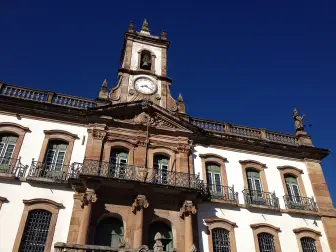
Museu da Inconfidência
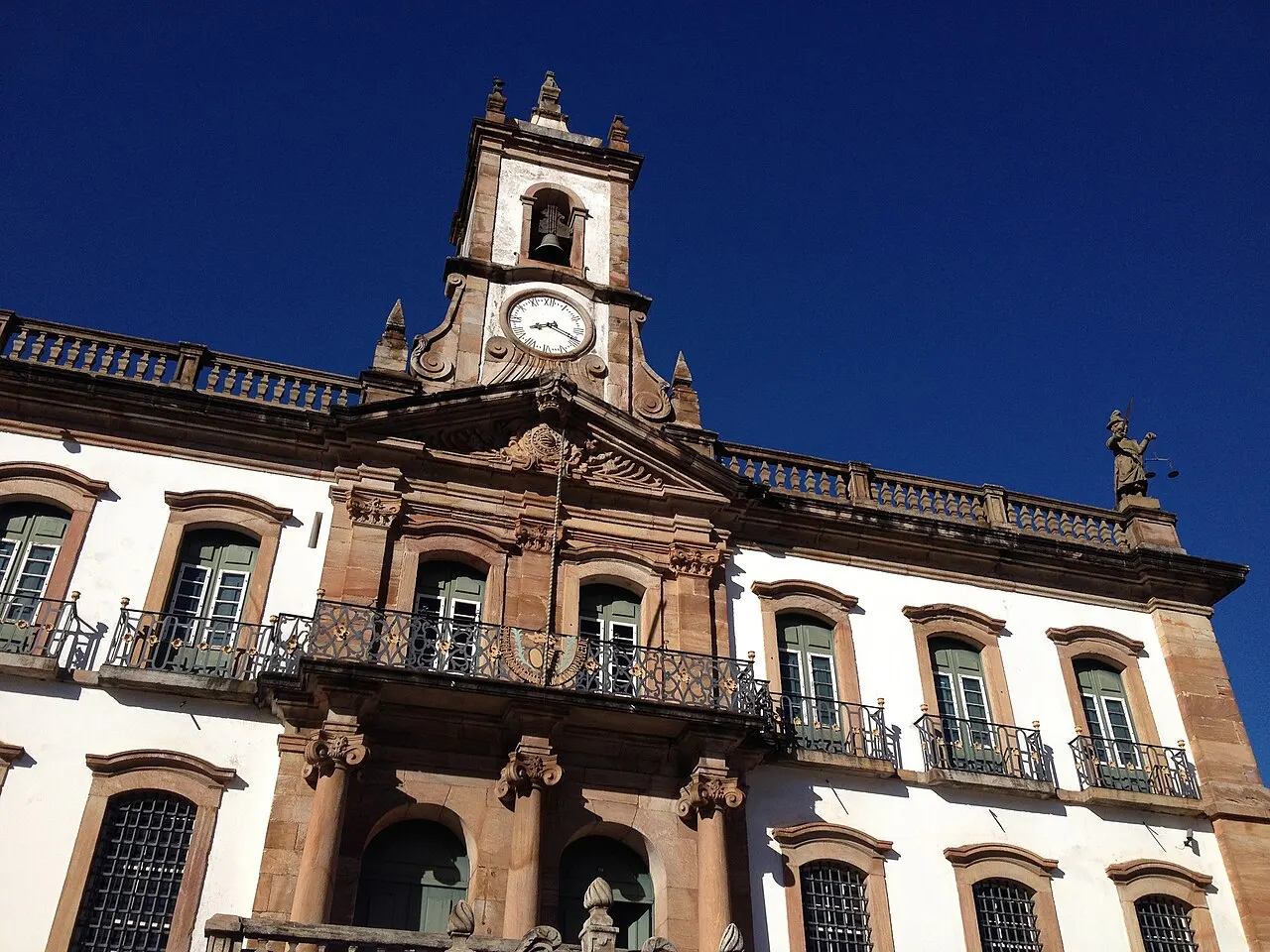
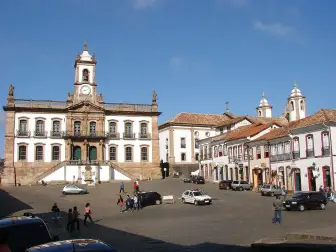
It occupies the former Casa de Câmara e Cadeia, built between 1785 and 1855, which worked as a prison until 1937. Since 1942 the Pantheon has held the remains of the inconfidentes brought back from exile in Africa, and the rooms cover mining, transport, construction, sacred art and life in Vila Rica in the 18th and 19th centuries, with works by Aleijadinho and Mestre Ataíde. Admission is free. It is open Tuesday to Thursday from 10 a.m. to 6 p.m., on Fridays and Saturdays from 10 a.m. to 8 p.m. and, according to the city government, on Sundays from 10 a.m. to 6 p.m.; last entry is one hour before closing, and the museum is closed on Mondays.
It tells the story of the Inconfidência, mining and life in Vila Rica in the former prison, with the Pantheon of the inconfidentes and works by Aleijadinho and Ataíde. Admission is free; open until 8 p.m. on Fridays and Saturdays.
Check access
Igreja de São Francisco de Assis
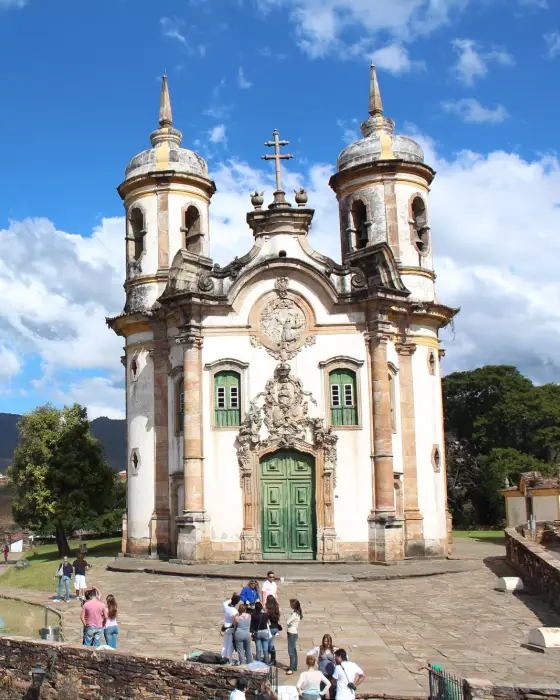
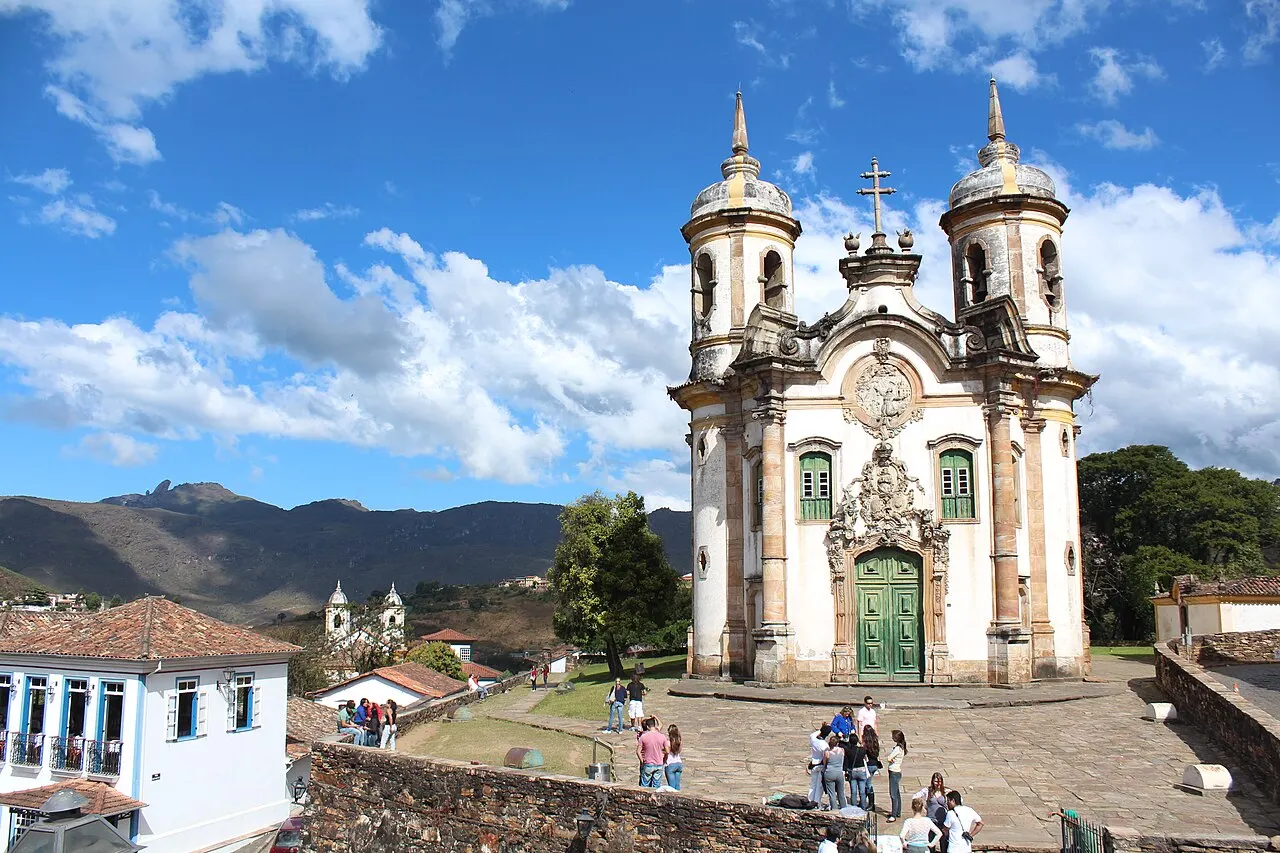
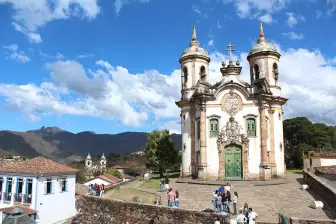
The church of the Third Order of Saint Francis, begun in 1766, follows a design by Aleijadinho, who also made the portal, the reliefs and the soapstone pulpits. Mestre Ataíde painted the nave ceiling, his best-known composition, and the panels between 1801 and 1812. The recessed cylindrical towers and the medallion in place of the facade's round window are the marks of the design. It is open Tuesday to Sunday, from 8:30 a.m. to 5 p.m., with a visiting fee; confirm the amount by phone at (31) 3551-4661.
This is the church where Aleijadinho’s design and reliefs and Mestre Ataíde’s painted ceiling share one building, the work that defines Minas Gerais baroque. It opens at 8:30 a.m.; arriving at opening avoids groups.
Check access
Basílica de Nossa Senhora do Pilar
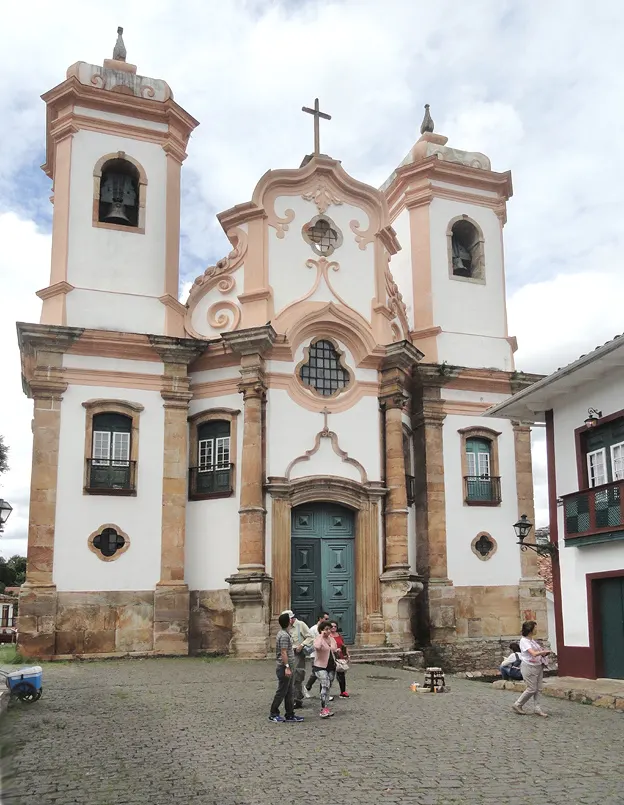
The mother church of the Pilar settlement was rebuilt from the end of the 1720s and for more than twenty years received the carving and painting that cover the interior in gold; according to the city government, the gold is leaf, not solid. The title of basilica came in 2012. The ticket, R$ 20 full price and R$ 10 half price in October 2026, includes the Museu de Arte Sacra, in the crypt, with about 400 pieces from the 17th to the 19th century. The basilica is open Tuesday to Sunday, from 9 a.m. to 10:45 a.m. and from noon to 4:45 p.m.; for the Museu de Arte Sacra, the city government publishes different hours, from 9 a.m. to 11:30 a.m. and from 1 p.m. to 5 p.m.
The interior covered in gilded carving shows the wealth of Vila Rica’s richest parish, and the ticket includes the Sacred Art Museum in the crypt; closed between 10:45 a.m. and noon.
Check access

Praça Tiradentes
The square occupies the top of the former Morro de Santa Quitéria, which separated the settlements of Pilar and Antônio Dias, and it is where Tiradentes's head was displayed in 1792. His statue, from 1894, faces the building of the Museu da Inconfidência, and across from it stands the former Palácio dos Governadores, the building of the Escola de Minas. Almost every walk through the city passes through here.
It links Pilar and Antônio Dias and is where Tiradentes’s head was displayed in 1792; you can see it in minutes on the way between the museum and the churches.
Check access
Matriz de Nossa Senhora da Conceição de Antônio Dias
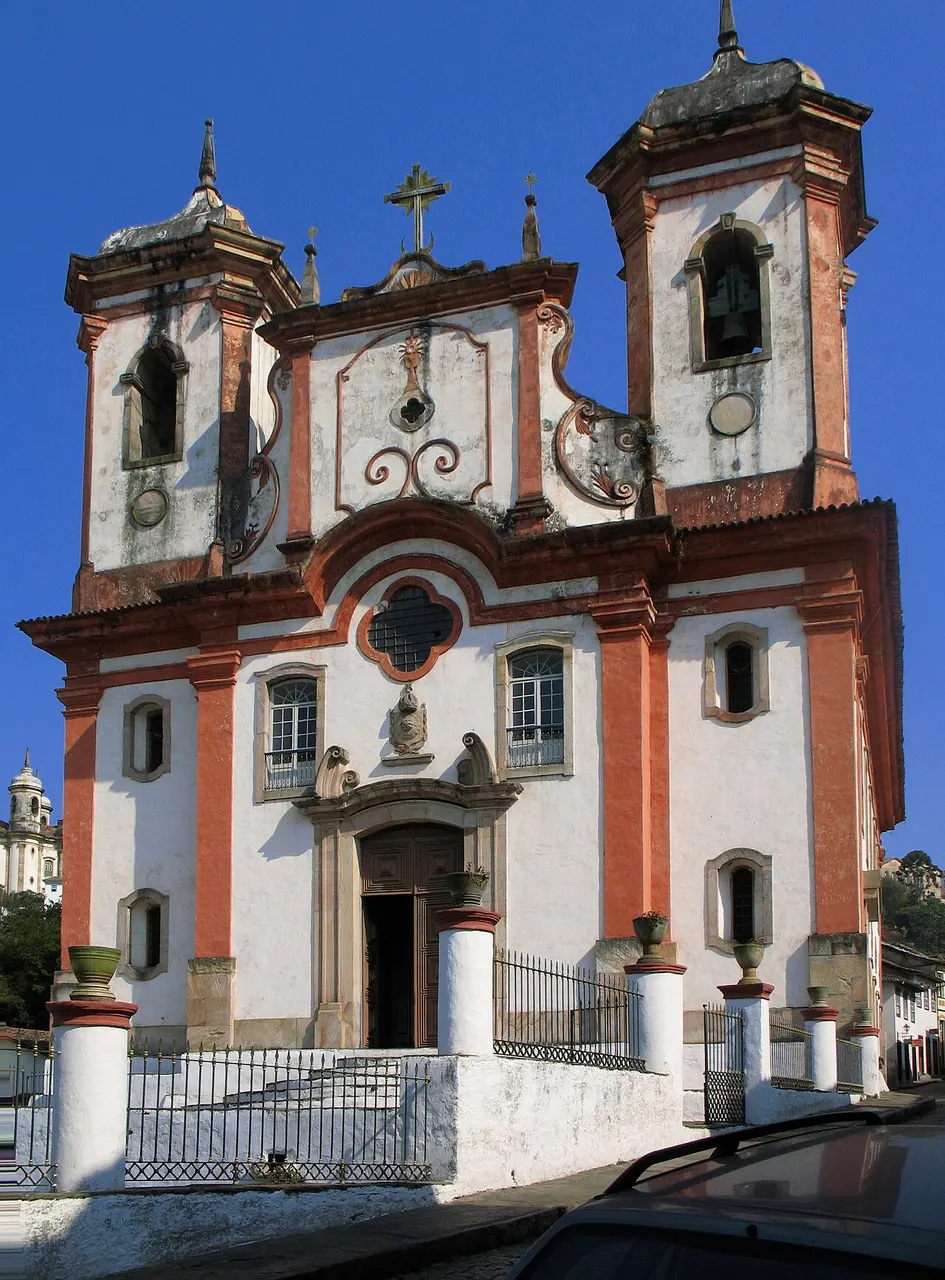
The mother church of the Antônio Dias settlement was built from 1727 by master builder Manuel Francisco Lisboa, Aleijadinho's father, and both are buried in it. The church houses the Museu Aleijadinho, created in 1968, with pieces attributed to the artist, such as wooden lions from a catafalque and a soapstone image of São Francisco de Paula. According to the city government's text, visiting runs Tuesday to Sunday, from 8:30 a.m. to 11:45 a.m. and from 1:30 p.m. to 4:45 p.m., with a fee; the schedule table on the same page lists Sunday as closed, so confirm at (31) 3551-3282 before going on a Sunday. The museum's collection is divided among the sacristy and crypt of the mother church, the Igreja de São Francisco de Assis and the Igreja das Mercês e Perdões.
It holds the tombs of Aleijadinho and his father, who built the church, and the Aleijadinho Museum. It is 300 m from São Francisco, on the same morning route, and morning visiting ends at 11:45 a.m.
Check access
Igreja de Nossa Senhora do Carmo
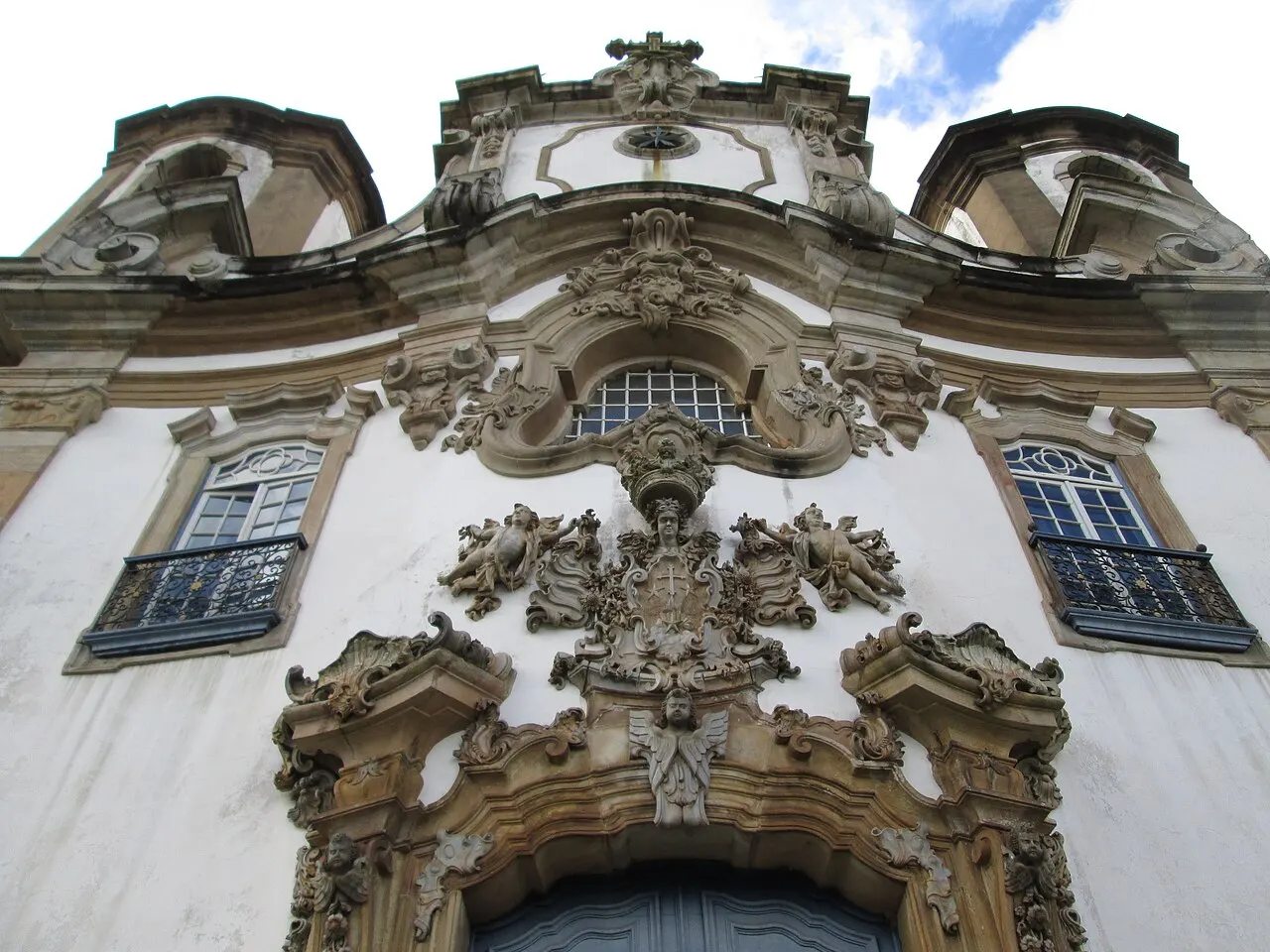
Next to the Museu da Inconfidência, it was designed in 1756 by Manuel Francisco Lisboa, and the stone portal is attributed to Aleijadinho, who also made two side altars between 1807 and 1809. The main chapel has Portuguese tiles with Carmelite themes, rare in Minas churches, and Mestre Ataíde gilded the carving in 1813. It is open on Mondays and from Wednesday to Saturday, from 9 a.m. to 4:50 p.m., and closed on Tuesdays; for Sunday, the city government publishes no hours, so confirm at (31) 3551-2601. The Museu do Oratório is in the house on the churchyard.
Next to the Inconfidência Museum, it has a portal attributed to Aleijadinho, altars by him and Portuguese tiles in the main chapel. Combine it with the museum in the late afternoon, but it is closed on Tuesdays.
Check access
Igreja de Nossa Senhora do Rosário dos Pretos
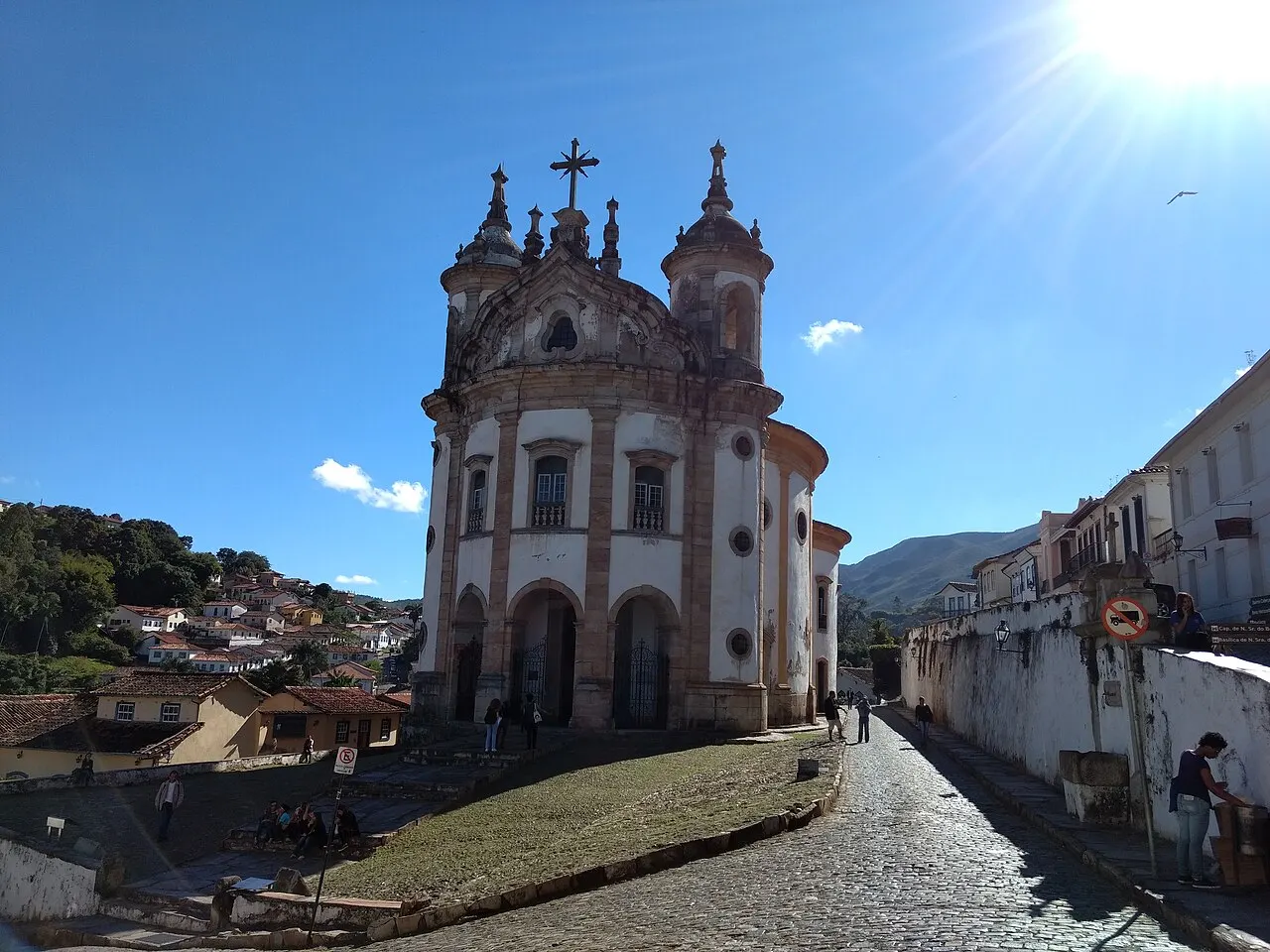
Built by the Irmandade do Rosário dos Pretos from the 1760s and completed in 1823, it has a nave and main chapel shaped as two ellipses, a curved pediment and cylindrical towers, a design without parallel in the city's other churches. The authorship of the design is debated. It is open only in the afternoon, Tuesday to Sunday, from 1 p.m. to 4:45 p.m., with a visiting fee.
Its plan of two ellipses is the most unusual design among the city’s churches and tells the story of the Black brotherhood; open only in the afternoon, from 1 p.m. to 4:45 p.m.
Check access
Casa dos Contos
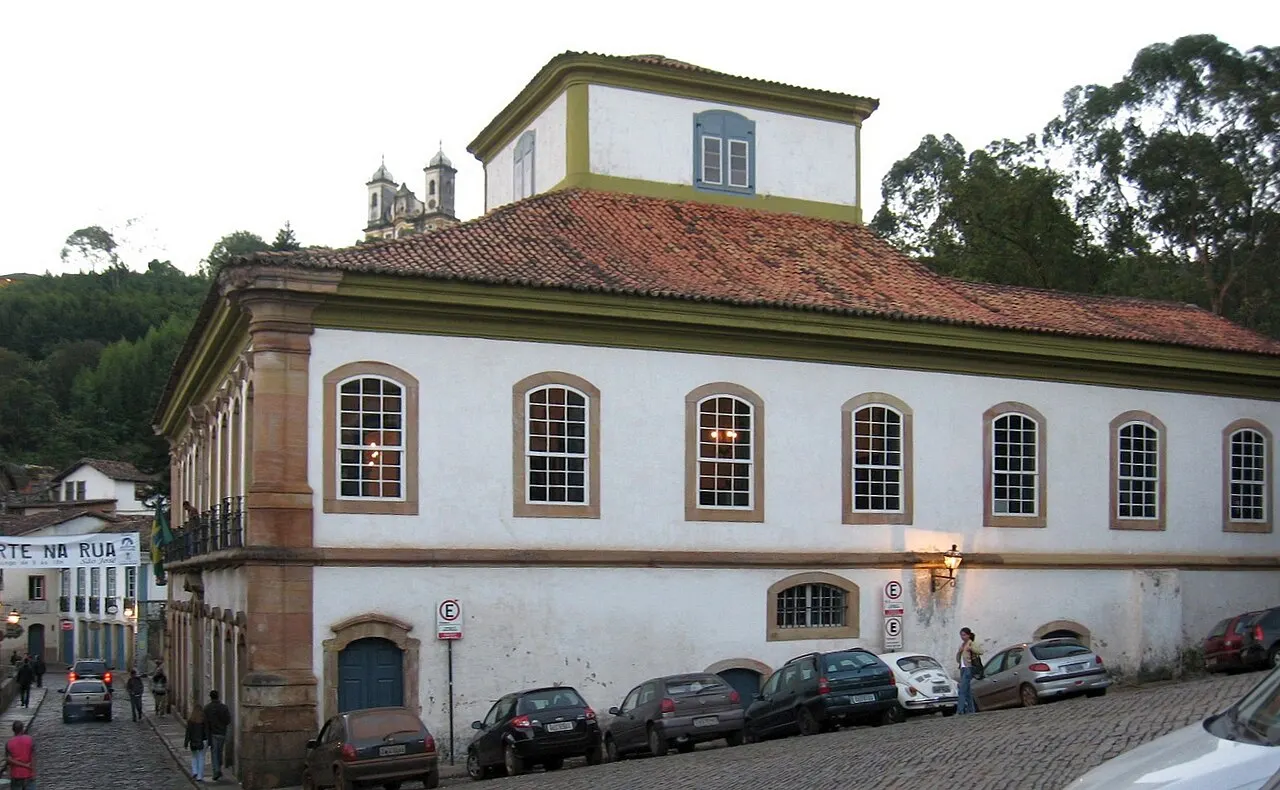
The cut-stone mansion was built between 1782 and 1784 by the tax contractor João Rodrigues de Macedo, a friend of several inconfidentes. In 1789 it became a barracks and prison, and the poet Cláudio Manuel da Costa died in custody under the staircase. It was later the seat of the captaincy's accounting office, hence the name. Today it displays coins and documents from the gold cycle, with free admission, Tuesday to Saturday from 10 a.m. to 6 p.m. and on Sundays with reduced hours. The Horto dos Contos is entered from the back.
The mansion where Cláudio Manuel da Costa died in custody in 1789 has free admission and gives access to the Horto dos Contos, on the way between the square and Pilar.
Check access

Museu do Oratório
Set up in 1998 in the 1753 house of the Third Order of Carmel, it gathers 162 oratories and 300 images from the 17th to the 20th century, from the collection of Angela Gutierrez. The travel, wall and altar oratories show how domestic devotion was organized in the homes of Minas. It is open from 9:30 a.m. to 5:30 p.m., with tickets sold until 5 p.m., and closed on Tuesdays. The ticket cost R$ 8 full price and R$ 4 half price in October 2026, and students and teachers do not pay.
The 162 oratories show devotion within the home, the side of religion that churches do not reveal. The museum is in Carmo’s churchyard, steps from the Inconfidência Museum; closed on Tuesdays.
Check access
Nilo’s itinerary
Start with the basic programme and choose extensions for the time you have.
Plan my days in the app ↗Day 1 · São Francisco, Antônio Dias and Praça Tiradentes
At 8:30 a.m., go into the Igreja de São Francisco de Assis, 200 m from Praça Tiradentes, and set aside an hour for Mestre Ataíde's ceiling and the soapstone pulpits.
Walk down about 300 m to the Matriz de Antônio Dias, see Aleijadinho's tomb and the Museu Aleijadinho before 11:45 a.m., when visiting stops until 1:30 p.m. (on Sundays, confirm by phone).
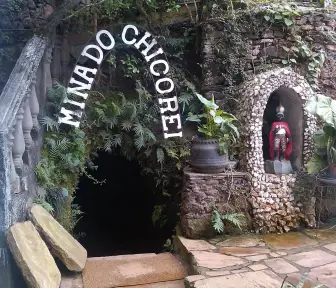
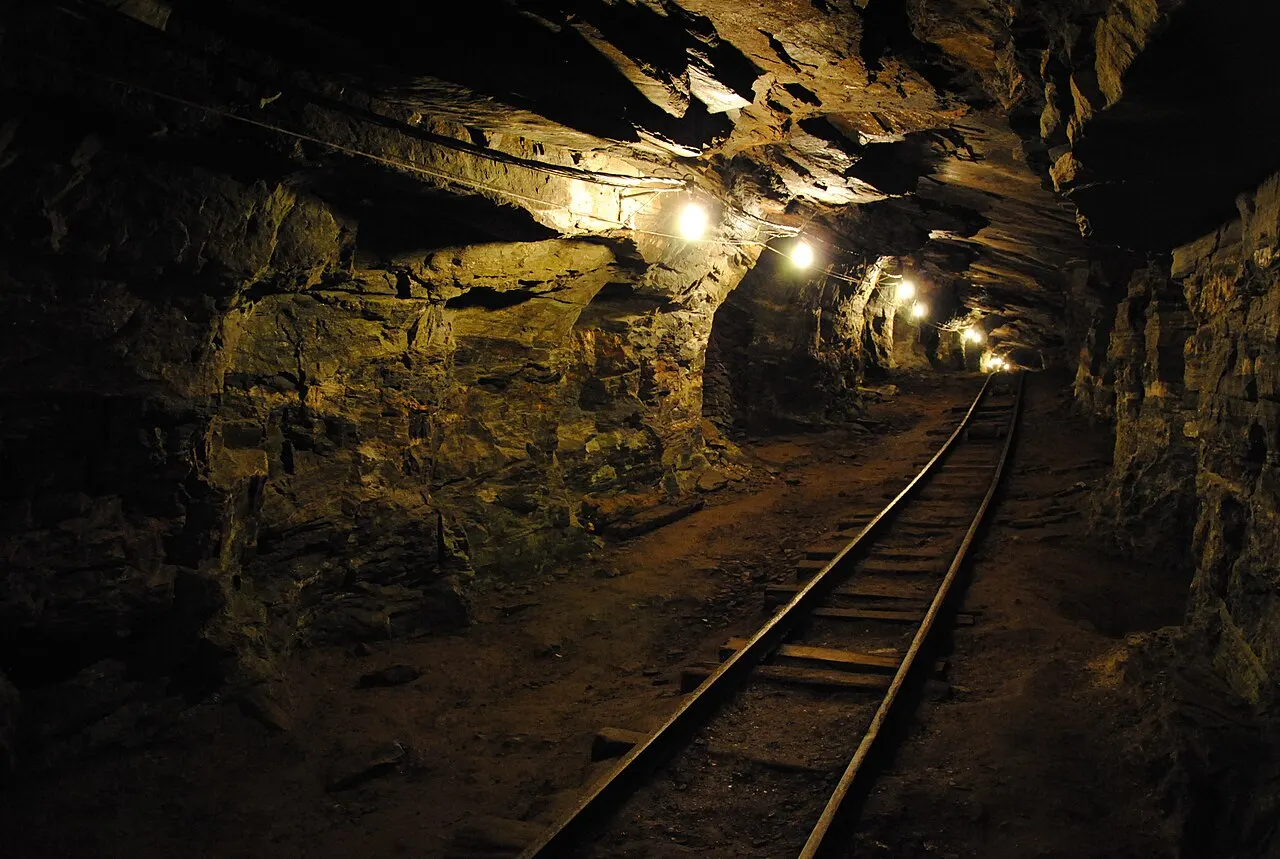
Continue about 270 m to the Mina do Chico Rei, on Rua Dom Silvério, for the visit to the lit galleries; confirm the price beforehand by phone.
Have lunch at a mineira restaurant in Antônio Dias, with feijão-tropeiro or tutu.
Climb about 700 m to Praça Tiradentes and spend the afternoon at the Museu da Inconfidência, free, from 2 p.m.
Before 4:50 p.m., go into the Igreja do Carmo, next to the museum, and the Museu do Oratório, on the churchyard, with last entry at 5 p.m. (both close on Tuesdays).
On Fridays and Saturdays, the Museu da Inconfidência stays open until 8 p.m., with last entry at 7 p.m., if you want to go back to the Pantheon without hurrying; have dinner in the center.
Day 2 · Itacolomi in the morning, Pilar and Rosário in the afternoon
At 8 a.m., go to the entrance of the Parque Estadual do Itacolomi, on BR-356, km 98, in the Bauxita neighborhood, by taxi, by car, by shared taxi or on the Cooperouro, Hospital and Pocinho bus lines; the park is closed on Mondays.
Do the Trilha do Pico, about 6 km round trip and moderate to difficult, leaving well before 11 a.m., the limit the park recommends; on the way back, stop by the Fazenda São José do Manso, where the visitor center is, and return to the center in the early afternoon.
Around 1:30 p.m., go into the Basílica do Pilar and descend to the Museu de Arte Sacra, in the crypt (R$ 20 full price, with both included).
Walk about 600 m to the Igreja do Rosário, open from 1 p.m. to 4:45 p.m., to see the elliptical nave.
Return about 900 m to the Casa dos Contos, free, open until 6 p.m., and leave through the back for a stroll in the Horto dos Contos, with entry until 5:45 p.m. (on Sundays, the Casa dos Contos closes earlier and the Horto gate beside it works only until 2 p.m.).
Finish at Praça Tiradentes in the late afternoon and have dinner in the center.


If you stay longer
Day 3 · Mariana
Day trip
Mariana is about 12 km away, 20 minutes by car or by Transcotta bus. It was the first vila in Minas, created in April 1711, and became the seat of the first bishopric of Minas in 1745. On Praça Minas Gerais, the churches of São Francisco de Assis and of Carmo and the former Casa de Câmara e Cadeia stand side by side; the Catedral da Sé, reopened in 2022, has a pipe organ from the early 18th century, installed in the Sé in 1753 as a gift from the Portuguese Crown, which played again on December 8, 2025. Mestre Ataíde was born and died in the city. Half a day is enough for the center of Mariana. The Mina da Passagem is on the way, 8 km from Ouro Preto, as an optional stop: the ticket cost R$ 290 per person in October 2026, cash only, for a visit of about 40 minutes.
Day 4 · Congonhas
Day trip
It is about 57 km away, 1 hour 10 minutes by car; Ouro Preto's city government does not list a direct bus. The Santuário do Bom Jesus de Matosinhos, built between 1757 and 1875 and a World Heritage Site since 1985, has on its terrace Aleijadinho's twelve soapstone prophets and, in the six chapels along the slope, the 66 wooden figures of the Passos da Paixão, made by him and his workshop from 1796. This holds the most important part of Aleijadinho's sculptural work, and one morning covers the whole complex.

Food
Pão de queijo
A bun of cassava starch, cheese, egg and fat, baked until it is chewy inside. It appeared in Minas Gerais around 1750, when leftover hardened cheese was mixed into the starch. It is eaten at breakfast and as an afternoon snack, in bakeries and cafés in the center.
Feijão-tropeiro
Beans cooked and mixed with cassava flour, sausage, bacon, egg and chopped herbs, a dish of the tropeiros who carried goods on muleback and needed food that would not spoil on the road. It appears at lunch, alongside sautéed collard greens and torresmo.
Tutu de feijão
Mashed beans thickened into a cream, served with sausage. It is one of the dishes that 19th-century travelers already described on the tables of Minas.
Frango com quiabo e angu
Free-range chicken cooked with okra, a vegetable of African origin that reached Brazil in the 16th century, served with angu, an unsalted cornmeal cream. It is a lunch at mineira restaurants and in homes.
Goiabada and fruit in syrup
Sweets of fruit cooked in a pot, such as guava, citron and banana, come from the Portuguese tradition of preserving seasonal fruit. The district of São Bartolomeu holds the Festa da Goiaba every year, and goiabada is eaten with mineiro cheese, a combination called romeu e julieta.
Torresmo
Pork skin and fat fried until it puffs, a legacy of the household pig-raising that supplied Minas homes with meat and lard. It comes as a bar snack and as a side to beans.
Where to eat
- Centro and Praça Tiradentes · $
Pão de queijo and coffee at the counter in the morning, before the first church.
- Centro and Praça Tiradentes · $$
Mineira lunch with feijão-tropeiro, tutu, collard greens and torresmo.
- Antônio Dias · $$
Frango com quiabo e angu at lunch, between the mother church and the Mina do Chico Rei.
- Pilar · $
Goiabada with mineiro cheese and fruit in syrup for dessert.
- Centro and Praça Tiradentes · $$$
Dinner at a contemporary mineira restaurant.
$: coffee, pão de queijo and a snack at the counter · $$: mineira lunch at a restaurant · $$$: dinner at a contemporary restaurant · 2026-10-15
Day trips
Mariana
Mariana is about 12 km away, 20 minutes by car or by Transcotta bus. It was the first vila in Minas, created in April 1711, and became the seat of the first bishopric of Minas in 1745. On Praça Minas Gerais, the churches of São Francisco de Assis and of Carmo and the former Casa de Câmara e Cadeia stand side by side; the Catedral da Sé, reopened in 2022, has a pipe organ from the early 18th century, installed in the Sé in 1753 as a gift from the Portuguese Crown, which played again on December 8, 2025. Mestre Ataíde was born and died in the city. Half a day is enough for the center of Mariana. The Mina da Passagem is on the way, 8 km from Ouro Preto, as an optional stop: the ticket cost R$ 290 per person in October 2026, cash only, for a visit of about 40 minutes.
Congonhas
It is about 57 km away, 1 hour 10 minutes by car; Ouro Preto's city government does not list a direct bus. The Santuário do Bom Jesus de Matosinhos, built between 1757 and 1875 and a World Heritage Site since 1985, has on its terrace Aleijadinho's twelve soapstone prophets and, in the six chapels along the slope, the 66 wooden figures of the Passos da Paixão, made by him and his workshop from 1796. This holds the most important part of Aleijadinho's sculptural work, and one morning covers the whole complex.
Tiradentes
It is 156 km away, about 3 hours by car each way, too far for a round trip in the same day. The former Vila de São José del-Rei, from 1718, has the Matriz de Santo Antônio, an 1749 fountain that still works and the 12 km steam railway to São João del-Rei, opened in 1881; check the train's days and hours before going. It works as an overnight stop on the way to southern Minas or to Rio de Janeiro.
Where to begin
São Francisco, Antônio Dias and Praça Tiradentes
At 8:30 a.m., go into the Igreja de São Francisco de Assis, 200 m from Praça Tiradentes, and set aside an hour for Mestre Ataíde's ceiling and the soapstone pulpits.
Itacolomi in the morning, Pilar and Rosário in the afternoon
At 8 a.m., go to the entrance of the Parque Estadual do Itacolomi, on BR-356, km 98, in the Bauxita neighborhood, by taxi, by car, by shared taxi or on the Cooperouro, Hospital and Pocinho bus lines; the park is closed on Mondays.
Money
The currency is the real (R$, BRL). Much of what matters in the city is cheap or free: the Museu da Inconfidência and the Casa dos Contos are free, and Praça Tiradentes, the facades and the viewpoints cost nothing. The churches charge a visiting fee, and the city government does not publish the amounts, only each parish's phone number; the Basílica do Pilar charged R$ 20 full price and R$ 10 half price, with the Museu de Arte Sacra included, and the Museu do Oratório R$ 8 full price and R$ 4 half price, in October 2026. The collection of the Museu Aleijadinho is divided among the Matriz de Antônio Dias, the Igreja de São Francisco de Assis and the Igreja das Mercês e Perdões, and the city government does not publish a usable amount; ask at the ticket office whether the fee covers more than one church. The Parque Estadual do Itacolomi charged R$ 28.75, plus R$ 20 for parking, and residents of Ouro Preto and Mariana do not pay on weekdays. The Mina da Passagem charged R$ 290 per person, cash only, and notes that bank branches exist only in the centers of Mariana and Ouro Preto. Carry some cash for church fees and for the mine; for hotels and restaurants, confirm the form of payment when you book.
Getting there and around
Getting there via Belo Horizonte
The busiest airport is Confins International (CNF), 142 km from Ouro Preto by road, about 2 hours 20 minutes by car; Pampulha is 110 km away. The city government's list has no direct line from the airport to Ouro Preto: those going by bus take the executive bus or an urban line from the airport to Belo Horizonte, whose bus station is about 40 km away, and from there continue with Pássaro Verde for the 96 km to Ouro Preto. Check the operator and schedule of the airport bus before traveling. There are also Útil buses to Rio de Janeiro and São Paulo and Gontijo buses to Vitória. Ouro Preto's bus station, the Terminal Rodoviário 8 de Julho, is about 900 m from Praça Tiradentes on foot, uphill; by car it is 1.2 km.
On foot, on the slopes
The historic center is covered on foot: from the Basílica do Pilar to the Matriz de Antônio Dias it is about 850 m, passing through Praça Tiradentes. The streets are slopes of uneven stone, and distance on the map is deceptive, because every stretch goes up or down. The streets are narrow and fill with cars, which compete with pedestrians for space; if you arrive by car, you are better off leaving it at the pousada. The Horto dos Contos links Pilar, the bus station and the Casa dos Contos by trail, from 8 a.m. to 6 p.m.
Buses to Mariana and the districts
Transcotta runs the line to Mariana, about 12 km away, via Passagem de Mariana, and to Antônio Pereira. The Consórcio Rota Real serves Lavras Novas, São Bartolomeu, Cachoeira do Campo and other districts. For Congonhas and Tiradentes there is no direct line in the city government's list. The tourist train between Ouro Preto and Mariana is closed, with no date for its return.
Safety
The most concrete risks in Ouro Preto come from the terrain. The stone slopes are slippery in the rain, and the city has unstable hillsides: in 2016 the Geological Survey of Brazil counted 313 areas of geological risk, and in January 2022 a landslide brought down the Solar Baeta Neves, in the historic center. On days of heavy rain, follow the Defesa Civil warnings and stay away from the foot of embankments. In the Parque Estadual do Itacolomi, the administration warns that there is no rescue service and that exit is by 5 p.m.; carry water, stay on marked trails and don't go alone to remote areas. During festivals, such as Holy Week and Carnival, the crowds on the slopes call for care with phone and wallet. Emergencies: SAMU 192 and Corpo de Bombeiros 193.
Etiquette tips
Visit the churches outside Mass
The churches are still in use: the Basílica do Pilar has Mass every day at 7 a.m. and 7 p.m., and São Francisco de Assis on Saturdays at 7:30 p.m. A tourist visit is during visiting hours, with a fee; during Mass, come in to take part or stay outside.
Don't step on the Holy Week carpets
On Easter Sunday, residents draw with sawdust the carpet along which the Resurrection procession passes. Walk on the sidewalk and wait for the procession to pass before crossing.
Repúblicas are residents' homes
The student repúblicas have a name on the facade and sometimes receive visitors at parties, but they are homes with their own rules of entry. Don't go in without an invitation.
Mistakes to avoid
Planning the churches for a Monday
Most churches and museums close on Mondays, and the Carmo closes on Tuesdays. With two days, prefer Wednesday to Saturday, when everything is open, and confirm Sunday by phone: the city government publishes conflicting hours for the Matriz de Antônio Dias and does not publish those of the Carmo.
Arriving at a church at lunchtime
The Basílica do Pilar closes between 10:45 a.m. and noon, and the Igreja do Rosário only opens at 1 p.m. Build the day around each church's hours, not around the order on the map.
Counting on the train to Mariana
The tourist train between Ouro Preto and Mariana is closed, with no date for its return. The Transcotta bus and the car make the trip of about 12 km.
Going to the Mina da Passagem without cash
The ticket office charges R$ 290 per person and accepts cash only, with no guarantee of Pix or card. Withdraw money beforehand, in central Ouro Preto or Mariana.
Doing Tiradentes as a day trip
Tiradentes is 156 km away, about 3 hours by car each way. In a single day, little time is left in the town; sleep there or leave it for another trip.
Walking in smooth-soled shoes
The slopes are uneven stone, and in the rain they get slippery. Wear shoes with rubber soles, which grip better on smooth, wet stone.
Useful phrases
Bom dia
Greeting used until noon; after that, «boa tarde» and, at night, «boa noite»
Quanto é a visitação?
How much is the fee to visit the church?
A igreja está aberta?
A useful question before going in, outside Mass hours
Uai
An interjection widely used in Minas Gerais for surprise, doubt or confirmation («É isso, uai»)
Trem
In Minas Gerais, besides a railway train, it means «thing», any object or fact
Pode tirar foto?
May I take a photo? Ask first inside churches and museums
Where to stay
- Centro and Praça Tiradentes · First trip, without a car · $$: The Museu da Inconfidência, the Carmo and São Francisco are a few minutes' walk away, and the area has the most pousadas and restaurants. In exchange, it is the busiest part during festivals.
- Pilar · Those arriving by bus or wanting quiet near the center · $$: It is near the Basílica do Pilar and one of the entrances to the Horto dos Contos, whose trail leads to the bus station, on more residential streets. Praça Tiradentes is about 500 m away, uphill.
- Antônio Dias · Those who want a smaller pousada and don't mind slopes · $: It sits between São Francisco de Assis and the Mina do Chico Rei, away from the bustle of the square. The way back to the center is always uphill.
- Lavras Novas · Couples with a car who prefer the mountains · $$: A district about 19 km away, with mountain scenery and ecotourism, that fills up on holidays. Every trip to the historic center takes a road, so it works as a second base, not the only one.
$: simple pousada · $$: pousada or hotel in the historic center · $$$: hotel in a restored mansion · 2026-10-15
Districts
Centro and Praça Tiradentes
The top of the city, between the two old settlements. It holds the Museu da Inconfidência, the Igreja do Carmo, the Museu do Oratório, the former Palácio dos Governadores and the Casa da Ópera, and almost every walking itinerary passes through it. It has the highest concentration of pousadas, restaurants and soapstone shops.
Pilar
The old settlement of Pilar, west of the square, around the basilica with the gilded interior. It is the part of the city closest to the bus station and the Horto dos Contos, with residential streets and smaller pousadas.
Antônio Dias
The settlement on the east side, downhill from the Igreja de São Francisco de Assis. It has the mother church where Aleijadinho is buried, the Museu Aleijadinho and the Mina do Chico Rei.
Rosário
The old Caquende, beyond Pilar, where the elliptical Igreja do Rosário stands. It is the arrival point of the Resurrection procession in Holy Week.
Alto da Cruz and Padre Faria
The neighborhoods at the far east, uphill from Antônio Dias, with the Igreja de Santa Efigênia, linked by tradition to Chico Rei, and the small Capela do Padre Faria, one of the oldest temples in Minas. Near the church is the Mirante da Santa Efigênia, one of the viewpoints listed by the city government.
Bauxita
The neighborhood of the UFOP campus, on the way out to Mariana, where the entrance to the Parque Estadual do Itacolomi is. It serves those going to the park more than those who want the historic center.
Lavras Novas
A district about 19 km from the seat, settled around 1716, with a mostly Black community and colonial houses, sought out by tourists since the 1990s for its mountain scenery and ecotourism. On holidays, the population can grow sixfold. It suits those who want to sleep outside the city and have a car; the bus connection is run by the Consórcio Rota Real.
History
17th c. · Indigenous territory and the arrival of the bandeirantes
The region was inhabited by peoples speaking languages of the Macro-Jê family; today the municipality's original Indigenous population is identified as Borum-Kren. Since the 16th century, bandeiras from São Paulo had roamed the territory in search of gold and of Indigenous people to enslave.
1698 · The settlements of the dark gold
The bandeira of Antônio Dias and Father João de Faria Fialho settles in the streams where gold coated in iron oxide was found, the «ouro preto». The municipality adopts June 24, 1698 as its founding date.
1711 · Vila Rica
On July 8, the merging of several settlements forms the vila of Vila Rica, three months after Ribeirão do Carmo, today's Mariana.
1720 · Capital and the fire on Morro da Queimada
Vila Rica becomes the capital of the new Captaincy of Minas Gerais. In the same year, after the Sedition of 1720, known as the Revolt of Felipe dos Santos, which wanted to depose the governor, the Count of Assumar orders the houses of Pascoal da Silva Guimarães and other rebels demolished and burned on the hill that came to be called Queimada.
1733 · Triunfo Eucarístico
The Blessed Sacrament returns to the rebuilt Matriz do Pilar in a procession that remained the best remembered of the colonial period. The Irmandade do Rosário dos Pretos opened the street along the route, today's Rua Getúlio Vargas.
1766–1812 · The Igreja de São Francisco de Assis
The Third Order of Saint Francis builds the church designed by Aleijadinho; Mestre Ataíde paints the nave ceiling and the panels between 1801 and 1812.
1789 · The Inconfidência Mineira
The conspiracy against Portuguese rule, organized by members of the local elite, is denounced before it begins. The poet Cláudio Manuel da Costa dies in custody in the Casa dos Contos on July 4.
1792 · The execution of Tiradentes
Joaquim José da Silva Xavier, known as Tiradentes, is hanged in Rio de Janeiro on April 21. His head is displayed in Vila Rica, on the site of today's Praça Tiradentes; the other convicts are sent into exile in Africa.
1823 · Imperial Cidade de Ouro Preto
After Independence, Pedro I gives Vila Rica the title of Imperial City, and it becomes known as Ouro Preto. In 1876, Claude Henri Gorceix founds the Escola de Minas, which today occupies the former Palácio dos Governadores.
1897 · The capital moves to Belo Horizonte
The state capital moves to Belo Horizonte, a planned city. Ouro Preto loses about 45% of its population, and the center stops being rebuilt.
1938–1944 · National monument and the museum
The city is listed as a national monument in 1938. In 1942, the remains of the inconfidentes brought back from Africa are placed in the Pantheon of the former Casa de Câmara e Cadeia, which opens as the Museu da Inconfidência in 1944.
1980 · World Heritage
UNESCO inscribes the Historic Town of Ouro Preto on the World Heritage List, the first Brazilian site to receive the designation.
2022 · Landslide on Morro da Forca
On January 13, a landslide destroys the Solar Baeta Neves, in the historic center. A study by the Geological Survey of Brazil had counted 313 areas of geological risk in the city in 2016.
Complete history
The dark gold and the settlements
Ouro Preto was not founded all at once: it is the sum of miners' settlements that formed around the gold-bearing streams in the late 17th century. Bandeirantes from Taubaté, guided by the Pico do Itacolomi, found gold there coated in a film of iron oxide, and the metal's nickname became the name of the place. The settlements of Pilar, Antônio Dias, Ouro Podre and Taquaral grew separately, each with its own chapel, and on July 8, 1711 they were united in the vila of Vila Rica. That is why today's city has two mother churches, Pilar and Antônio Dias, and a square on top of the hill that separated the two centers.
The quinto, the revolt of 1720 and the capital
Under the law of the time, the subsoil belonged to the king, who collected a fifth of the gold extracted. The levy led to riots, and the one in 1720, which aimed to depose the governor and form a new government, ended with the Count of Assumar ordering the houses of the leader Pascoal da Silva Guimarães and other rebels demolished and burned on top of the Serra de Ouro Preto. The place became known as Morro da Queimada, and the ruins of houses, mines and stone corrals now form an open-air ecomuseum. In the same year, Vila Rica was chosen as capital of the new Captaincy of Minas Gerais, and the Crown's presence was consolidated by the middle of the century with the Palácio dos Governadores and the streets that linked the settlements.
The brotherhoods and the churches of gold
Ouro Preto's churches were built by lay brotherhoods, which gathered the faithful by social group and competed for prestige through the size and decoration of their temples. In the Matriz do Pilar, the richest in the vila, each brotherhood had its place inside. The Irmandade do Rosário dos Pretos, founded in 1715, built the Igreja do Rosário, with its elliptical plan, and the Igreja de Santa Efigênia, in Alto da Cruz, is linked by oral tradition to Chico Rei, an enslaved African who is said to have bought his own freedom and that of others with gold from a mine. The third orders of Saint Francis and of Carmel, whose members came from the elite, commissioned Aleijadinho and Mestre Ataíde in the second half of the 18th century, when gold was already yielding less and the churches were still under construction.
The Inconfidência and the making of a hero
With gold production falling, the threat of the derrama, the extraordinary collection of overdue taxes, brought landowners, soldiers, priests and poets together in 1788 and 1789 in a conspiracy to separate Minas from Portugal. The movement did not foresee the end of slavery and was denounced before it began. Cláudio Manuel da Costa died in custody in the Casa dos Contos, and Tiradentes, the only one executed, was hanged in Rio de Janeiro in 1792. After 1889, the Republic made him a national hero: the statue in the square dates from 1894, and the Vargas government brought back from Africa the remains of the exiles and created the Museu da Inconfidência, opened in 1944. The museum tells this story, and also shows how it was used to build an idea of a nation.
The capital that left and the city that stayed
At the end of the 19th century, the elite of Minas saw Ouro Preto as a symbol of backwardness, and the capital was moved to Belo Horizonte in 1897. The city lost about 45% of its residents and built almost nothing in the following decades, which preserved the center. In the 1920s, the modernists came to see in the churches of Aleijadinho and Ataíde the first expressions of a Brazilian art, and the listing of 1938 made Ouro Preto the first national monument. The university, formed in 1969 from the schools of Pharmacy, founded in 1839, and of Mines, founded in 1876, brought students and the repúblicas. Today's challenge is physical: narrow streets full of cars, mining all around and unstable hillsides, which in January 2022 brought down a mansion on Morro da Forca. In 2005, the city changed the motto on its flag, «Precious, even if black», considered racist by Black movements, to «Precious black gold».
Geography and shape of the city
Between the Serra de Ouro Preto and the Itacolomi
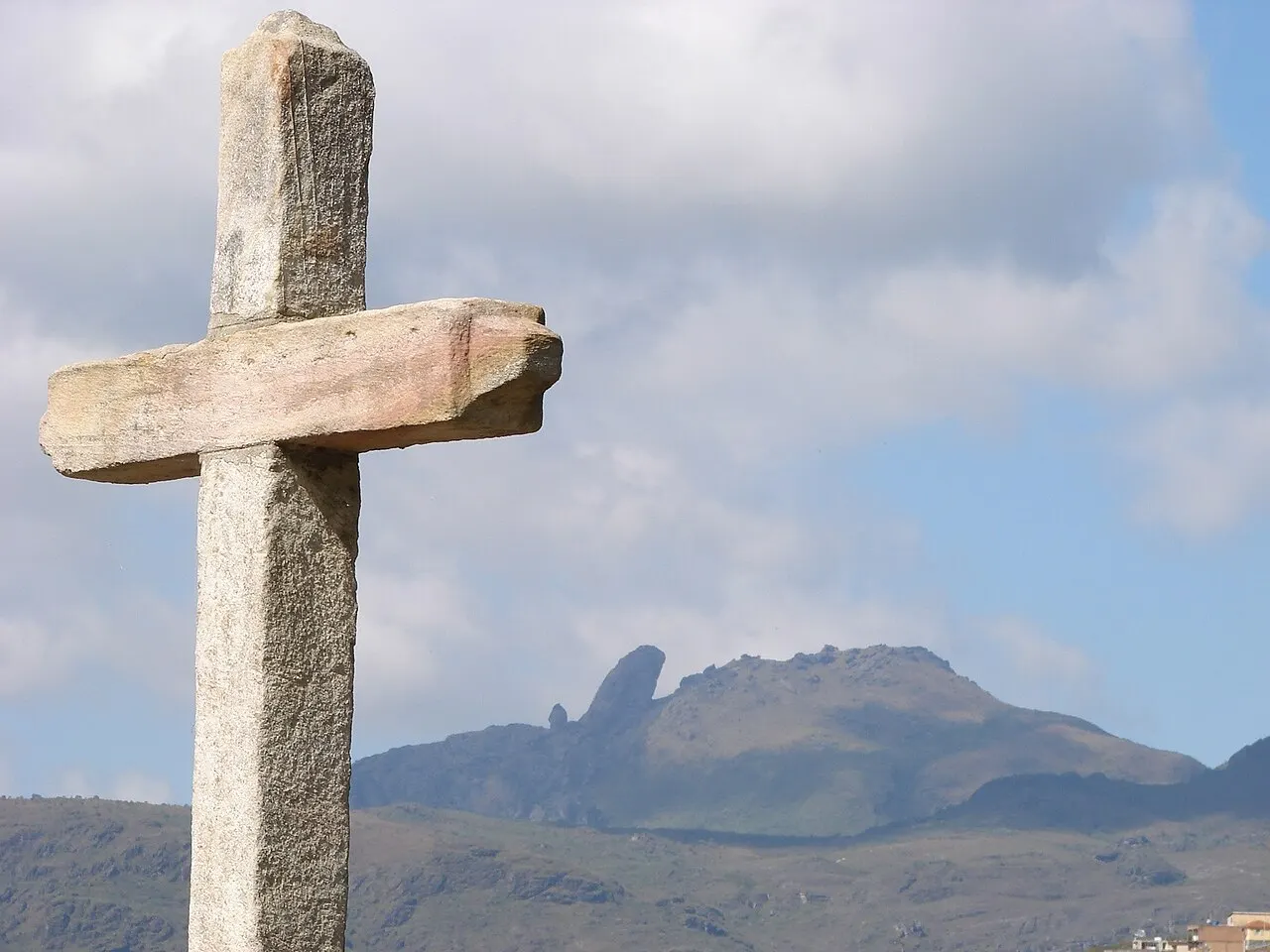
Ouro Preto occupies a narrow valley between the Serra de Ouro Preto, to the north, and the Itacolomi massif, to the south, whose 1,772 m peak served as a landmark for the bandeirantes and can be seen from several points in the center. The region is part of the Quadrilátero Ferrífero, and the subsoil is still mined for iron, bauxite and manganese. The Velhas and Piracicaba rivers rise in the municipality, and the terrain ranges from about 700 m in Amarantina to over 1,600 m in Antônio Pereira.
Two settlements and a square on the heights
The city stretches along a slope, with two old centers at the ends: Pilar, to the west, and Antônio Dias, to the east. Between them lies Praça Tiradentes, on the former Morro de Santa Quitéria, which separated the two settlements. Two main streets run down from the square on either side, and the rest of the grid is stone-paved slopes, alleys and stairways. The Ouro Preto stream, formerly the Tripuí, passes under the Ponte dos Contos, from 1744, next to the Casa dos Contos, and the Horto dos Contos fills the valley floor with a 2.5 km trail.
Highland climate
The climate is tropical highland: the rains run from October to April, winter is dry, and June and July have cold nights and occasional frost. The nearest station with a World Meteorological Organization climate normal is in Belo Horizonte, about 70 km away and 916 m above sea level, and it records 339 mm of rain in December and 5 mm in July (1991–2020 normal); Ouro Preto, higher up, is colder than the capital. Inmet recorded 0 °C on June 15, 1925 in the city.
Praça Tiradentes occupies the top of the former Morro de Santa Quitéria, which separated the settlements of Pilar and Antônio Dias.
Culture
Baroque of Minas: what to look at in the churches
Ouro Preto's churches were decorated in the transition from Baroque to Rococo, and two names dominate the visit. Antônio Francisco Lisboa, Aleijadinho (Ouro Preto, c. 1738–1814), was a sculptor, carver and designer; of the more than 400 works linked to his name, most are attributed by similarity of style, without documents, and the biography mixes fact and legend. Manuel da Costa Ataíde (Mariana, 1762–1830) painted ceilings in perspective with vivid colors and with angels and saints of mestizo features, and added the flesh tones to several of Aleijadinho's sculptures. On the visit, notice the soapstone of the portals and pulpits, easier to carve than ordinary stone, and the contrast between the older gilded carving of Pilar and the lighter white and gold of São Francisco.
University town
The Universidade Federal de Ouro Preto was born in 1969 from the Escola de Farmácia, from 1839, and the Escola de Minas, from 1876, and brought students from all over the Southeast to the city. Many of them live in repúblicas: the Repúblicas Federais de Ouro Preto are 67 houses run by the residents themselves, and alumni return for the parties of October 12, the anniversary of the Escola de Minas, and of April 21. The cultural calendar includes the Festival de Inverno, organized with Mariana, the Mostra de Cinema de Ouro Preto (CineOP), in June, the Fórum das Letras, in November, and Tudo é Jazz, a festival that began in the city in 2002.
Music, procession and congado
The Museu da Inconfidência keeps the archive of scores gathered by the musicologist Francisco Curt Lange, with masses and motets by composers from Minas of the 18th and 19th centuries. The Casa da Ópera, now the Teatro Municipal, opened on June 6, 1770. The religious calendar remains full: Holy Week with processions, the Mês do Rosário in October and the reinados and festivities of the Rosário and of Santa Efigênia, with congo guards. The painter Alberto da Veiga Guignard (1896–1962), who spent his last 18 years in Minas and painted Ouro Preto often, has a museum of his own in the center.
Of the more than 400 works linked to Aleijadinho's name, most are attributed by similarity of style, with no document proving authorship.
Festivals and events
Holy Week
March or April, depending on Easter (in 2026, Good Friday fell on April 3). On Thursday there is the Lava-pés; on Friday, the Descendimento da Cruz in the churchyard of São Francisco de Assis and the Procissão do Enterro; on Sunday, the Resurrection procession goes to the Igreja do Rosário over a sawdust carpet designed by the residents.
Tiradentes Day
April 21. A national holiday in memory of the execution of 1792, with a civic ceremony in the city and the party of the student repúblicas.
Mostra de Cinema de Ouro Preto (CineOP)
June, on a date set each year. A film festival with screenings and debates in the historic center.
Festival de Inverno de Ouro Preto e Mariana
July, on a date set each year. A program of music, theater, arts and workshops in both cities.
Mês do Rosário
All of October, with the festival of Nossa Senhora do Rosário in the seat, besides the festival of São Francisco de Assis on October 4. In the same period there are Rosário festivities with congado guards in the neighborhoods and districts.
Books and films
Romanceiro da Inconfidência (1953), Cecília Meireles
In 85 romances, plus settings and opening and closing poems, Cecília Meireles tells the history of Minas from the gold rush to the Inconfidência, with slavery in the mines, Tiradentes, Tomás Antônio Gonzaga and Marília.
Marília de Dirceu (1792), Tomás Antônio Gonzaga
The love poems of the inconfidente Gonzaga to Maria Doroteia de Seixas, Marília, whose tomb is in the Museu da Inconfidência. The museum keeps a copy of the first edition.
Os Inconfidentes (1972), Joaquim Pedro de Andrade
A film about the conspiracy, from its beginning to the exile and the execution of Tiradentes, with José Wilker in the lead role. Shot in Ouro Preto during the military dictatorship, it draws on the Autos da Devassa and on Cecília Meireles's Romanceiro and uses the conspiracy to speak of the repression of the period.
Frequently asked questions
Ouro Preto: How do you get there from Confins airport?
Confins (CNF) is 142 km away by road, about 2 hours 20 minutes by car; by bus, go from the airport to the Belo Horizonte bus station and continue with Pássaro Verde for the 96 km to Ouro Preto.
Ouro Preto: How many days should you stay?
I'd stay two full days, preferably between Wednesday and Saturday, because on Mondays almost all the churches and museums close; with a third day, I'd go to Mariana, about 12 km away.
Ouro Preto: How do you get to Mariana?
Mariana is about 12 km away, 20 minutes by car or by Transcotta bus, and half a day is enough for the center; the tourist train between the two towns is closed, with no date to return.
Ouro Preto: Do I need to carry cash?
Yes: the churches charge a visiting fee at the door, and the Mina da Passagem charges R$ 290 per person and accepts cash only, with no guarantee of Pix or card; withdraw money beforehand, in central Ouro Preto or Mariana.
Ouro Preto: When is the best time to go?
May to September, the dry season, with steady days for walking the stone slopes and cold nights in June and July; those who travel for the festivals choose Holy Week, between March and April, or the Winter Festival, in July.
Other cities in the country
Brazil ↗- Days
- 4
- When
- Apr–Jun
- Per person/day
- Average 615 BRLMid-range · per person/day
Cost scope
Per person per day: accommodation, meals, urban transport, visits and a small allowance for extras. Flights excluded; larger purchases vary. Editorial estimate, not a quote.
- Days
- 2–3
- When
- Apr–May · Sep
- Per person/day
- Average 400–700 BRLMid-range · per person/day
Cost scope
Per person per day: accommodation, meals, urban transport, visits and a small allowance for extras. Flights excluded; larger purchases vary. Editorial estimate, not a quote.
- Days
- 2–3
- When
- Jan–Mar · Sep–Dec
- Per person/day
- Average 350–550 BRLMid-range · per person/day
Cost scope
Per person per day: accommodation, meals, urban transport, visits and a small allowance for extras. Flights excluded; larger purchases vary. Editorial estimate, not a quote.
- Days
- 1–2
- When
- May–Sep
- Per person/day
- Average 260–520 BRLMid-range · per person/day
Cost scope
Per person per day: accommodation, meals, urban transport, visits and a small allowance for extras. Flights excluded; larger purchases vary. Editorial estimate, not a quote.
- Days
- 3–4
- When
- Jun–Sep
- Per person/day
- Average 400–700 BRLMid-range · per person/day
Cost scope
Per person per day: accommodation, meals, urban transport, visits and a small allowance for extras. Flights excluded; larger purchases vary. Editorial estimate, not a quote.
- Days
- 2–3
- When
- Apr–Jun
- Per person/day
- Average 350–550 BRLMid-range · per person/day
Cost scope
Per person per day: accommodation, meals, urban transport, visits and a small allowance for extras. Flights excluded; larger purchases vary. Editorial estimate, not a quote.
- Days
- 3–5
- When
- Mar–Apr · Nov
- Per person/day
- Average 397 BRLMid-range · per person/day
Cost scope
Per person per day: accommodation, meals, urban transport, visits and a small allowance for extras. Flights excluded; larger purchases vary. Editorial estimate, not a quote.
- Days
- 2–4
- When
- Mar–May · Sep
- Per person/day
- Explore costsGuide estimate
Cost scope
Per person per day: accommodation, meals, urban transport, visits and a small allowance for extras. Flights excluded; larger purchases vary. Editorial estimate, not a quote.
- Days
- 4–5
- When
- Aug–Nov
- Per person/day
- Explore costsGuide estimate
Cost scope
Per person per day: accommodation, meals, urban transport, visits and a small allowance for extras. Flights excluded; larger purchases vary. Editorial estimate, not a quote.
- Days
- 3–4
- When
- Jul–Sep
- Per person/day
- Explore costsGuide estimate
Cost scope
Per person per day: accommodation, meals, urban transport, visits and a small allowance for extras. Flights excluded; larger purchases vary. Editorial estimate, not a quote.
- Days
- 3–4
- When
- Sep–Nov
- Per person/day
- Explore costsGuide estimate
Cost scope
Per person per day: accommodation, meals, urban transport, visits and a small allowance for extras. Flights excluded; larger purchases vary. Editorial estimate, not a quote.
- Days
- 3–5
- When
- Jun–Sep
- Per person/day
- Explore costsGuide estimate
Cost scope
Per person per day: accommodation, meals, urban transport, visits and a small allowance for extras. Flights excluded; larger purchases vary. Editorial estimate, not a quote.
- Days
- 3–4
- When
- Jun–Aug
- Per person/day
- Explore costsGuide estimate
Cost scope
Per person per day: accommodation, meals, urban transport, visits and a small allowance for extras. Flights excluded; larger purchases vary. Editorial estimate, not a quote.
- Days
- 4–5
- When
- Jan–Mar · Sep–Dec
- Per person/day
- Explore costsGuide estimate
Cost scope
Per person per day: accommodation, meals, urban transport, visits and a small allowance for extras. Flights excluded; larger purchases vary. Editorial estimate, not a quote.
- Days
- 3–4
- When
- Oct–Dec
- Per person/day
- Average 1,110 BRLMid-range · per person/day
Cost scope
Per person per day: accommodation, meals, urban transport, visits and a small allowance for extras. Flights excluded; larger purchases vary. Editorial estimate, not a quote.
- Days
- 3–4
- When
- Aug–Sep
- Per person/day
- Explore costsGuide estimate
Cost scope
Per person per day: accommodation, meals, urban transport, visits and a small allowance for extras. Flights excluded; larger purchases vary. Editorial estimate, not a quote.
- Days
- 4–7
- When
- Apr–Sep
- Per person/day
- Explore costsGuide estimate
Cost scope
Per person per day: accommodation, meals, urban transport, visits and a small allowance for extras. Flights excluded; larger purchases vary. Editorial estimate, not a quote.
- Days
- 3–4
- When
- Jan · Sep–Dec
- Per person/day
- Explore costsGuide estimate
Cost scope
Per person per day: accommodation, meals, urban transport, visits and a small allowance for extras. Flights excluded; larger purchases vary. Editorial estimate, not a quote.
- Days
- 2
- When
- Aug–Dec
- Per person/day
- Average 442 BRLMid-range · per person/day
Cost scope
Per person per day: accommodation, meals, urban transport, visits and a small allowance for extras. Flights excluded; larger purchases vary. Editorial estimate, not a quote.
- Days
- 3–5
- When
- Jan–Feb · Sep–Dec
- Per person/day
- Explore costsGuide estimate
Cost scope
Per person per day: accommodation, meals, urban transport, visits and a small allowance for extras. Flights excluded; larger purchases vary. Editorial estimate, not a quote.
- Days
- 3–5
- When
- May–Sep
- Per person/day
- Explore costsGuide estimate
Cost scope
Per person per day: accommodation, meals, urban transport, visits and a small allowance for extras. Flights excluded; larger purchases vary. Editorial estimate, not a quote.
- Days
- 2–3
- When
- Apr–Sep
- Per person/day
- Average 484 BRLMid-range · per person/day
Cost scope
Per person per day: accommodation, meals, urban transport, visits and a small allowance for extras. Flights excluded; larger purchases vary. Editorial estimate, not a quote.
- Days
- 3
- When
- Apr–May · Aug
- Per person/day
- Average 478 BRLMid-range · per person/day
Cost scope
Per person per day: accommodation, meals, urban transport, visits and a small allowance for extras. Flights excluded; larger purchases vary. Editorial estimate, not a quote.
- Days
- 3–4
- When
- Aug–Dec
- Per person/day
- Explore costsGuide estimate
Cost scope
Per person per day: accommodation, meals, urban transport, visits and a small allowance for extras. Flights excluded; larger purchases vary. Editorial estimate, not a quote.
- Days
- 2
- When
- Apr–May · Sep
- Per person/day
- Explore costsGuide estimate
Cost scope
Per person per day: accommodation, meals, urban transport, visits and a small allowance for extras. Flights excluded; larger purchases vary. Editorial estimate, not a quote.
- Days
- 3
- When
- Sep–Dec
- Per person/day
- Explore costsGuide estimate
Cost scope
Per person per day: accommodation, meals, urban transport, visits and a small allowance for extras. Flights excluded; larger purchases vary. Editorial estimate, not a quote.
- Days
- 3–5
- When
- Apr–Nov
- Per person/day
- Average 427 BRLMid-range · per person/day
Cost scope
Per person per day: accommodation, meals, urban transport, visits and a small allowance for extras. Flights excluded; larger purchases vary. Editorial estimate, not a quote.
- Days
- 4
- When
- Jul–Sep
- Per person/day
- Explore costsGuide estimate
Cost scope
Per person per day: accommodation, meals, urban transport, visits and a small allowance for extras. Flights excluded; larger purchases vary. Editorial estimate, not a quote.
- Days
- 4–5
- When
- May–Sep
- Per person/day
- Explore costsGuide estimate
Cost scope
Per person per day: accommodation, meals, urban transport, visits and a small allowance for extras. Flights excluded; larger purchases vary. Editorial estimate, not a quote.
- Days
- 3
- When
- May–Sep
- Per person/day
- Explore costsGuide estimate
Cost scope
Per person per day: accommodation, meals, urban transport, visits and a small allowance for extras. Flights excluded; larger purchases vary. Editorial estimate, not a quote.