Brazil
Florianópolis
Open-ocean beaches, Lagoa da Conceição and the Azorean oyster villages
Days Start with the basic programme and choose extensions for the time you have.
How the guide reaches this number
The first in the Centro, with Praça XV, the Mercado Público and the Ponte Hercílio Luz, ending at sunset in Santo Antônio de Lisboa. The second at Lagoa da Conceição, with the Joaquina dunes in the morning and the boat to Costa da Lagoa in the afternoon. The third in the south, with the Lagoinha do Leste trail early and the oysters of Ribeirão da Ilha at the end of the day. With a fourth day, I'd go to Ilha do Campeche, for the clear water and the rock engravings, as long as it is outside the tainha run, when there is no transport; during the May 1 to July 10, 2026 closure, I'd swap the island for the north and the Fortaleza de São José da Ponta Grossa. With a fifth, I'd head down to Guarda do Embaú, 53 km from the Centro. I'd choose lodging by the region where I'd spend the most days, preferably in the Lagoa, which is midway, and I'd avoid crossing the island several times in the same day in summer.
3–5
When March, April and November; March and April are still warm, with average highs of 27 °C to 29 °C, and November comes before the December to February high season
How the guide reaches this number
Florianópolis has hot summers and mild winters, with no dry season. By the INMET normals for 1991 to 2020, average highs run from 29.4 °C in January to 21.1 °C in July, and lows from 21.6 °C to 12.9 °C. It rains most in summer, with 241 mm in January, and least in June, with 86 mm, but rain can show up in any month.
Per person/day Budget about 156 BRL; mid-range about 397 BRL; comfortable about 1,020 BRL per person, based on spending reported by travelers on Budget Your Trip (checked in October 2026).
How the guide reaches this number
Per person per day: accommodation, meals, urban transport, visits and a small allowance for extras. Flights excluded; larger purchases vary. Editorial estimate, not a quote.
 What Nilo thinks
I'd stay three days, one for each part of the island. The first in the Centro, with Praça XV, the Mercado Público and the Ponte Hercílio Luz, ending at sunset in Santo Antônio de Lisboa. The second at Lagoa da Conceição, with the Joaquina dunes in the morning and the boat to Costa da Lagoa in the afternoon. The third in the south, with the Lagoinha do Leste trail early and the oysters of Ribeirão da Ilha at the end of the day.
With a fourth day, I'd go to Ilha do Campeche, for the clear water and the rock engravings, as long as it is outside the tainha run, when there is no transport; during the May 1 to July 10, 2026 closure, I'd swap the island for the north and the Fortaleza de São José da Ponta Grossa. With a fifth, I'd head down to Guarda do Embaú, 53 km from the Centro.
I'd choose lodging by the region where I'd spend the most days, preferably in the Lagoa, which is midway, and I'd avoid crossing the island several times in the same day in summer.Florianópolis is a capital that spreads across an island about 55 km long, and each of its coasts has a different sea. On the east side, the Atlantic breaks on open beaches and dunes; on the west side, the Baía Norte and Baía Sul are calm enough for the rows of buoys marking the oyster farms. In the middle, Lagoa da Conceição brings together hills, saltwater and one of the liveliest nights on the island.
Read more
What makes the island more than a beach is the parishes the Azoreans founded in the eighteenth century. In Santo Antônio de Lisboa and Ribeirão da Ilha, the church faces the bay, the houses are low and the oysters reach the table a few meters from where they are farmed. In winter, when the sea cools, the tainha run arrives, with nets hauled from the sand, along with the Festas do Divino, which move through the communities.
Quick facts
- Population
- 537,211 residents in the municipality (IBGE Census 2022); 598,370 in the IBGE estimate for July 1, 2026
- Founded
- 1673, by Francisco Dias Velho, as the settlement of Nossa Senhora do Desterro; town status in 1726; renamed Florianópolis in 1894
- Country and region
- Brazil: capital of the state of Santa Catarina, South region; municipality of 675 km², 97% of it on Ilha de Santa Catarina
- Language
- Portuguese; people born on the island, called manezinhos, have a vocabulary of their own, known as manezês
- Currency
- Real (R$, BRL). Since January 2026, municipal buses no longer accept cash on board
- Time zone
- UTC−3 all year; Brazil has not observed daylight saving time since 2019
- Best time to go
- March, April and November; March and April are still warm, with average highs of 27 °C to 29 °C, and November comes before the December to February high season
- Average cost per day
- Budget about 156 BRL; mid-range about 397 BRL; comfortable about 1,020 BRL per person, based on spending reported by travelers on Budget Your Trip (checked in October 2026).
When to go
March, April and November; March and April are still warm, with average highs of 27 °C to 29 °C, and November comes before the December to February high season
How the year changes

Florianópolis has hot summers and mild winters, with no dry season. By the INMET normals for 1991 to 2020, average highs run from 29.4 °C in January to 21.1 °C in July, and lows from 21.6 °C to 12.9 °C. It rains most in summer, with 241 mm in January, and least in June, with 86 mm, but rain can show up in any month.
December, January and February are the high season: warmer sea, school vacations, Carnival and New Year's Eve. That is when lodging costs the most, the island's highways get congested and the beaches and Ilha do Campeche fill up. March and April keep the warmth, with average highs of 28.7 °C and 26.9 °C, and the city empties out after Carnival; November, with an average high of 26.1 °C, comes before the season.
From May to September it is too cold for swimming on most days, and winter is the season of the tainha run, with beach seining, of the Festas do Divino and of lower prices. In that period, transport to Ilha do Campeche is suspended during the run.
Nilo's tips
Group your days by region of the island
I'd build each day around one part of the island: the Centro and the north of the Baía Norte together, the Lagoa and the east together, the whole south in a single day. Crossing the island twice in the same day, especially in summer, spends on the road the time that would have been beach time.
Secure your Campeche access the day before
I'd book the crossing the day before with an accredited operator, confirming that the island access voucher is included, and I'd go early: on a sunny summer day, the daily limit runs out. With your own boat, the permit is issued on the city hall website.
Watch the sunset on the bay side
The east side is the one with open-ocean beaches, but the sun sets on the west side, over the bays and the mainland. Santo Antônio de Lisboa and Ribeirão da Ilha are the places I'd pick for late afternoon, with oysters on the table.
Have a plan for the cashless bus
Since January 2026 you no longer pay in cash on the bus. Without a Brazilian account for Pix, I'd top up a card at a terminal ticket office on the very first day, or use a ride-hailing app for the longer stretches.
Swim where there are lifeguards
The beaches of the east and south have rip currents. I'd check the flag in the CBMSC Cidadão app and stay near the lifeguard station, even on a beach that looks calm.
Consider winter if the Azorean island is what interests you
Between May and July the sea cools, but the tainha run and the Festas do Divino show the fishing communities and the parishes away from the summer crowds. I'd travel in that season if the beach is not the priority.
Explore the map
Explore the map, read about the other places and plan your travel days in the app.
Open the appWhat to see
Florianópolis: A long island between the ocean and two bays
Between the island and the mainland lie the Baía Norte and the Baía Sul, calm waters where oysters and shellfish are farmed. On weekdays it has office bustle; at night and on Sundays, part of the streets are empty.
Santo Antônio de Lisboa
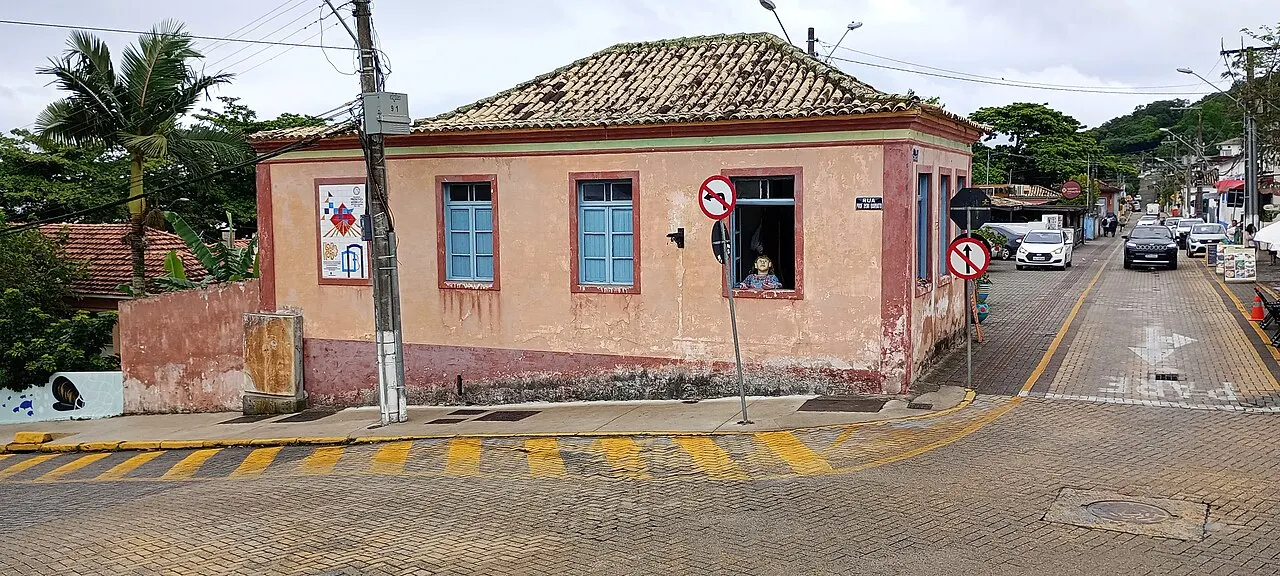
The best-preserved Azorean village in the north of the island, on the Baía Norte shore, 17 km by road from the Centro. The Igreja de Nossa Senhora das Necessidades was built between 1750 and 1756 and received a visit from Dom Pedro II in 1845; around it are white houses with colorful windows and seafood restaurants. The sunset over the bay and the mainland draws a crowd in the late afternoon, and on summer weekends it pays to arrive early to park and get a table.
The Azorean village, with its 1750–1756 church facing Baía Norte, combines historic houses, oysters farmed nearby and sunset over the mainland, which the island's east coast does not offer.
Check access

Lagoa da Conceição
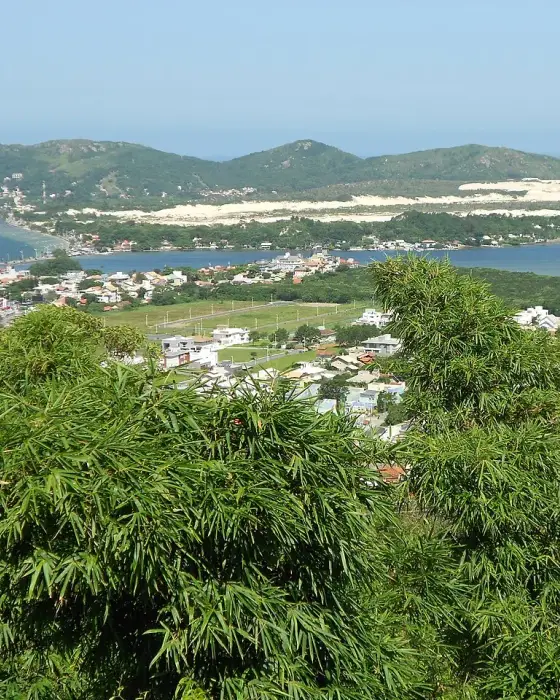
A saltwater lagoon of about 13.5 km from north to south, in the center-east of the island, connected to the sea by the Barra da Lagoa channel. Forested hills on one side and dunes on the other frame the water, which is used for sailing, stand-up paddling and boat trips. The Lagoa's center has bars, restaurants and the pier for boats to Costa da Lagoa. Water quality for swimming varies: check the IMA bathing-water bulletin before you get in.
The saltwater lagoon in the middle of the island links the dunes, Costa da Lagoa, Barra and the small center's nightlife, making it the best base for a short stay.
Check access

Ribeirão da Ilha
An Azorean parish in the south of the island, 20 km by road from the Centro, on the Baía Sul. The Igreja de Nossa Senhora da Lapa, consecrated in 1806, presides over a group of houses protected by municipal law since 1975. The neighborhood holds most of Florianópolis's oyster farms, and Florianópolis is the main center of farmed oysters in Santa Catarina; the restaurants serve oysters raw, gratinéed or steamed (ao bafo), facing the water.
The Azorean parish, whose church was consecrated in 1806, holds most of the city's oyster farms; eating oysters facing Baía Sul is the meal that best sums up the island.
Check access
Praia da Lagoinha do Leste
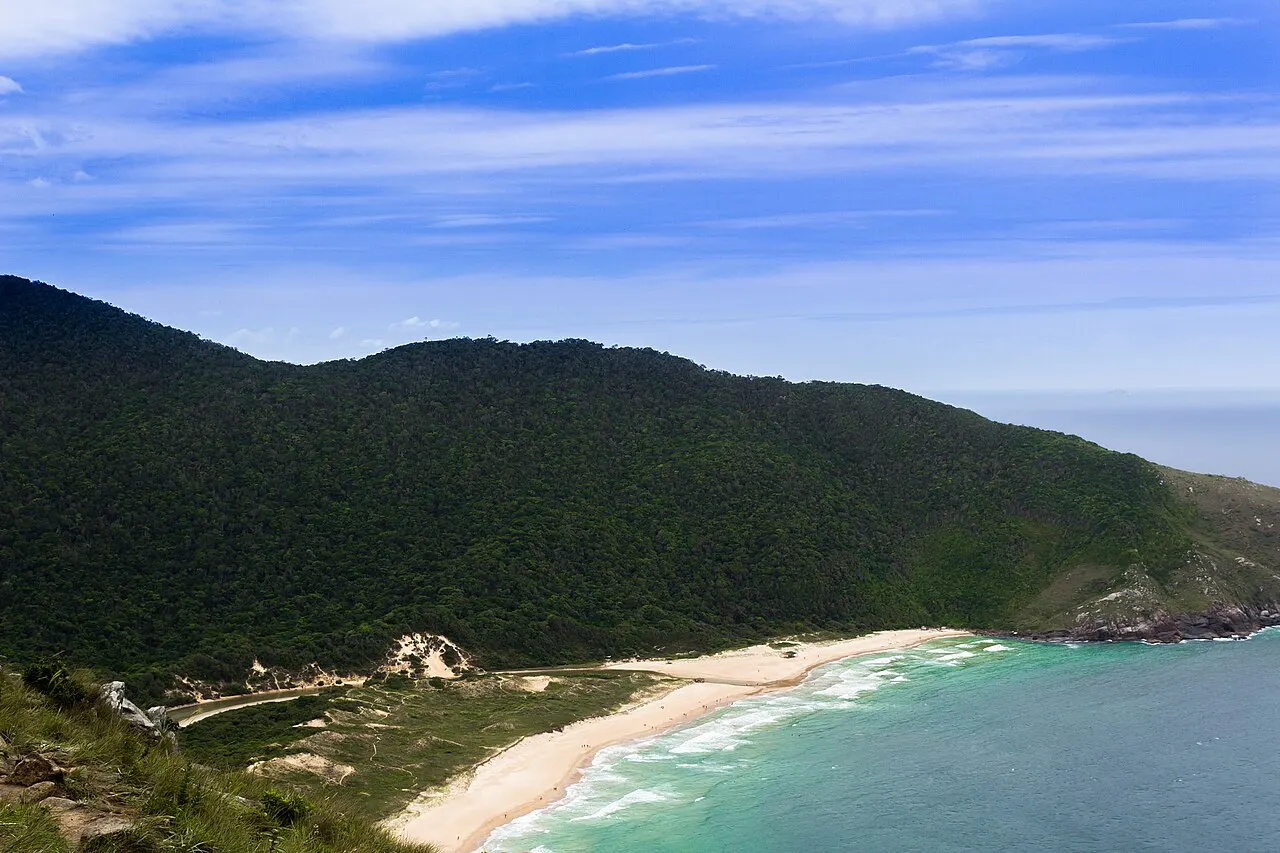
A beach with no road in the southeast of the island, between forested hills, with a small lagoon behind the sand. The shortest trail starts from Pântano do Sul: 2.2 km and about an hour's walk each way, with a long climb, rocks and uneven ground. The alternative via Matadeiro, from Armação, is almost 6 km and at least two hours. It is the trail with the most accidents recorded by the firefighters in Greater Florianópolis since 2016: wear closed shoes, bring water and avoid the stretch when it rains.
The roadless beach between forested hills, with a lagoon behind the sand, is reached by a 2.2 km trail from Pântano do Sul and is the most unspoiled landscape to visit in a day; the trail calls for closed shoes and an early start.
Check access

Ponte Hercílio Luz
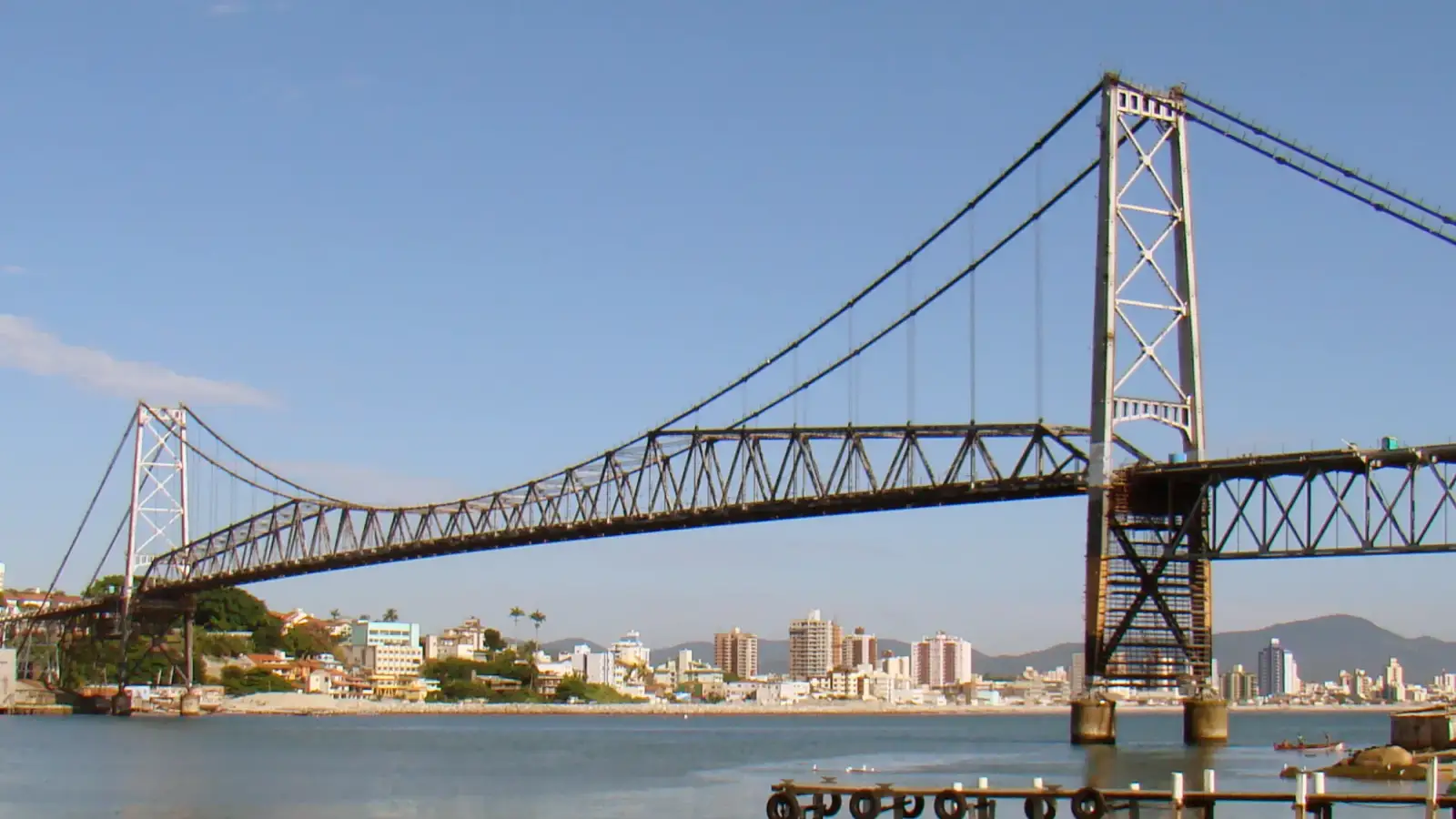
The suspension bridge of about 819 m, opened in 1926, was the first land link between the island and the mainland and is the symbol of the city. Closed in 1991 for structural problems, it reopened on December 30, 2019 after a long restoration. Pedestrians and cyclists cross on the side walkways; the rules for cars have changed since the reopening, so check the current situation if you plan to cross by vehicle. The island-side end sits next to the Centro, a walk from Praça XV.
The 1926 suspension bridge, closed from 1991 to 2019, is the city's symbol; walking part of its walkway offers views of both bays. Half an hour is enough, combined with Praça XV and the market.
Check access

Praça XV de Novembro
The center of the old city, with a centuries-old fig tree propped up in the middle of the square, the Metropolitan Cathedral on one side and the Palácio Cruz e Sousa on the other. The palace, the former seat of government, houses the Museu Histórico de Santa Catarina; its name honors the poet Cruz e Sousa, born in Desterro in 1861. The museum's hours and admission price vary between sources: check the museum's website before you go.
The square with the propped-up fig tree brings together the cathedral and Palácio Cruz e Sousa, home of the Santa Catarina History Museum, and is the natural starting point for a day in the Centro.
Check access

Mercado Público de Florianópolis
A building from 1899 in the Centro, with fish stalls, shops and bars that fill the central hall and the wings. It is the easiest place to try shrimp pastel and see the day's fish. On Sundays, usually only the fish stalls open, from 7 a.m. to noon, and the bars and restaurants, from 11 a.m. to 5 p.m., according to the hours published in 2024; check the hours for the day.
The 1899 building is the easiest place to try shrimp pastel and see the day's fish, and takes care of lunch on your Centro day.
Check access

Parque Municipal das Dunas da Lagoa da Conceição
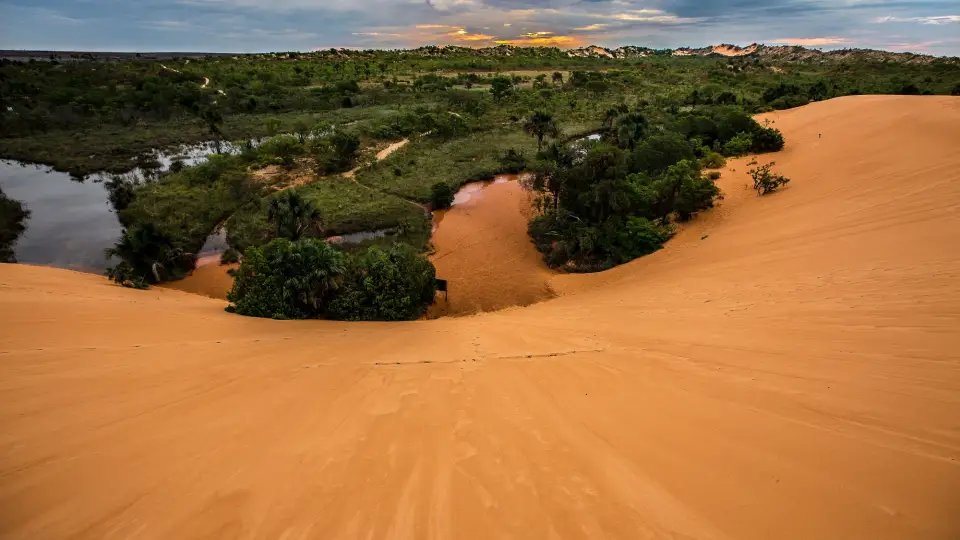
A protected area of 63 hectares between the Lagoa and Praia da Joaquina, with tall dunes of packed sand where people go sandboarding; boards can be rented next to the dunes. Joaquina is 18 km by road from the Centro. The dunes are more pleasant in the morning or late afternoon, when the sand is less hot.
The 63 hectares of dunes between Lagoa and Joaquina offer sandboarding with boards rented on site; in the morning the sand has not heated up yet.
Check access
Costa da Lagoa
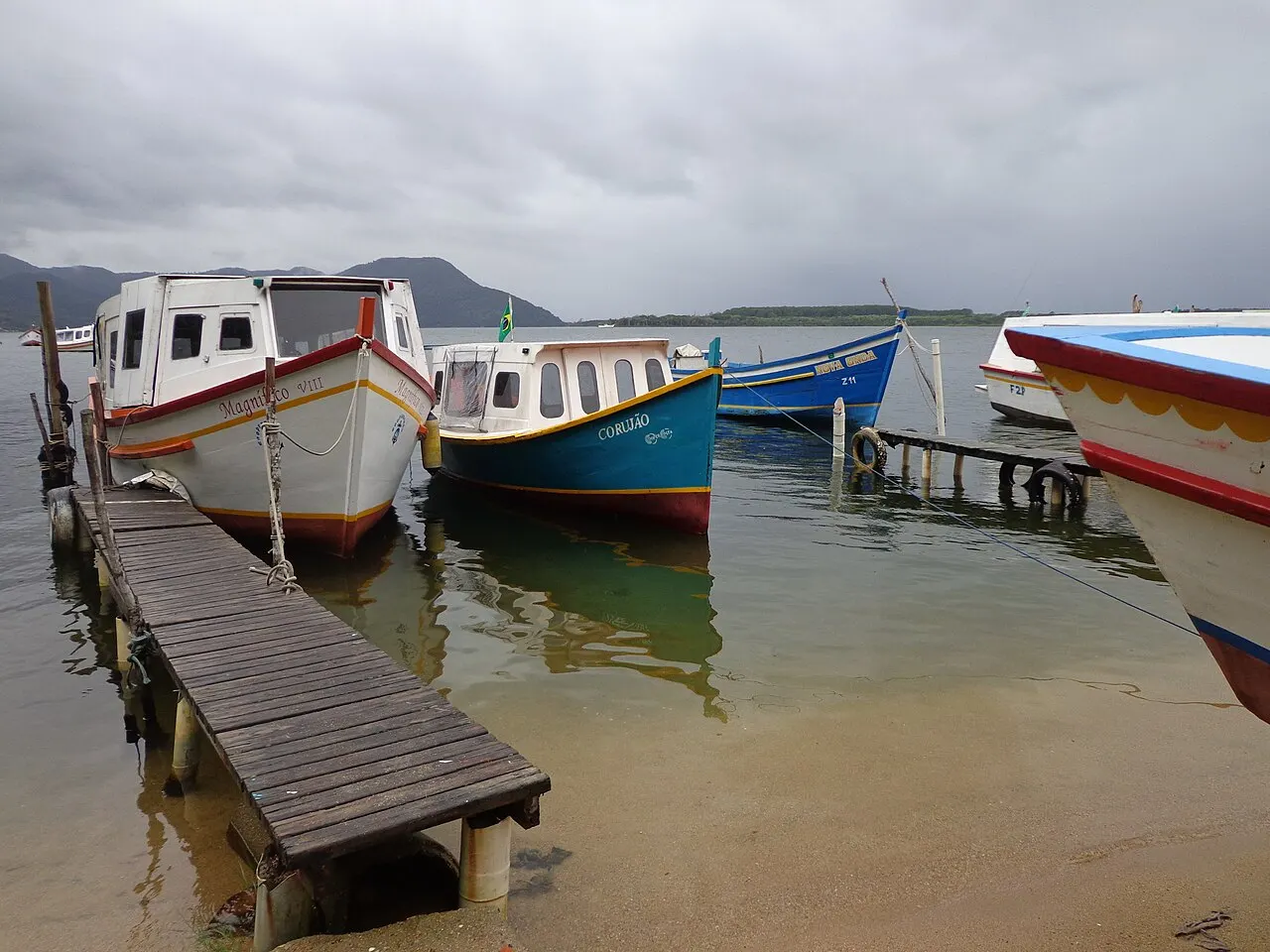
A fishing community on the west shore of Lagoa da Conceição, with no road access: you get there by boat, from the Lagoa's center and other piers, or by a trail of about 7 km along the slope. Fish and cockle restaurants sit next to the piers. Boat schedules change with the season; confirm the last boat back at the pier before you take the trail.
The fishing community without road access, reached by boat or a roughly 7 km trail, shows the lagoon from the inside and serves fish and cockles beside the piers.
Check access
Nilo’s itinerary
Start with the basic programme and choose extensions for the time you have.
Plan my days in the app ↗Day 1 · The Centro, the bridge and sunset in Santo Antônio de Lisboa
Start at Praça XV de Novembro, under the fig tree, and go into the Palácio Cruz e Sousa, home of the Museu Histórico de Santa Catarina, if it is open that day; the Metropolitan Cathedral stands at the top of the square.
Head down to the Mercado Público for lunch: shrimp pastel at the counter or the day's fish at one of the restaurants in the central hall.
Walk along the Baía Sul waterfront to the end of the Ponte Hercílio Luz and cross a stretch on the side walkway to see the Centro and the bays from above.
In the middle of the afternoon, go by car or ride-hailing to Santo Antônio de Lisboa, 17 km north, about 20 minutes without traffic, and stroll around the square of the Igreja de Nossa Senhora das Necessidades and the old houses.
Pick a table by the Baía Norte for the sunset and have dinner of oysters from the neighborhood's farms; on summer weekends, arrive before 5 p.m.
Day 2 · Lagoa da Conceição, dunes and Costa da Lagoa
Go early to the Joaquina dunes, in the Parque Municipal das Dunas da Lagoa da Conceição, and rent a sandboard before the sand heats up; then head down to Praia da Joaquina, going into the sea only near the lifeguard.
Continue to the Lagoa's center and check at the pier the boat times to Costa da Lagoa, including the last one back.
Cross by boat to Costa da Lagoa and have lunch of fish or berbigão pastel at a restaurant next to the piers.
Return by boat to the center in the middle of the afternoon and walk along Avenida das Rendeiras, on the lagoon front.
Have dinner of a shrimp sequência at one of the restaurants on Avenida das Rendeiras, or stay for the night at the bars in the center.
Day 3 · The south: Lagoinha do Leste and Ribeirão da Ilha
Leave early for Pântano do Sul, 25 km south of the Centro, and start the Lagoinha do Leste trail: 2.2 km and about an hour's walk each way, with closed shoes and water.
Spend the morning at Praia da Lagoinha do Leste and head back along the same trail before the sun is at its strongest.
Have lunch of fried fish with pirão in Pântano do Sul.
Continue 12.5 km by road to Ribeirão da Ilha, visit the Igreja de Nossa Senhora da Lapa and walk around the old houses of the parish.
End the day with oysters at a restaurant on the Baía Sul.




If you stay longer
Day 4 · Ilha do Campeche, or the north during the tainha run
Outside the tainha run, book the crossing the day before with an accredited operator, from Campeche, Armação or Barra da Lagoa, and confirm that the payment includes the island access voucher; those going by their own boat issue the permit on the city hall website.
Land early, after 9 a.m., and do the trail to the rock engravings with an accredited guide before settling in at the beach.
Return to Campeche in the afternoon, before the 5 p.m. limit, and finish at Praia do Campeche, going into the sea near the lifeguard.
From May 1 to July 10, 2026, when there is no transport to the island, swap the day for the north: the Fortaleza de São José da Ponta Grossa in the morning and the afternoon on a calm-water beach on the Baía Norte.
Day 5 · Guarda do Embaú
Day trip
A surfers' village in the municipality of Palhoça, about 53 km from the Centro, around 50 minutes by car on the BR-101 without traffic. The beach is on the other side of the Madre river, in a preserved area with no buildings: you cross by paid canoe or on foot when the river is low. Intercity buses reach the area, but a car gives more freedom with schedules. In summer, leave early to avoid the queue on the BR-101.


Food
Oysters
The Pacific oyster farmed in the Baía Norte and Baía Sul, above all in Ribeirão da Ilha, Santo Antônio de Lisboa and Sambaqui. It is served raw with lemon, gratinéed with cheese, ao bafo (steamed) or in a sequence of several preparations. The restaurants on the bays sell them by the dozen or half dozen.
Sequência de camarão
A fixed-price meal in which several shrimp dishes arrive one after the other: garlic and oil, breaded, boiled, ao bafo and in sauce, served with rice, pirão and fish. The restaurants on Avenida das Rendeiras, in the Lagoa, are best known for it. Ask whether the price is per person and whether drinks are included.
Tainha
The mullet is the fish of the winter season, caught between May and July, including in beach seining. It appears roasted, stuffed with farofa or with its own roe, in restaurants and at the festivals of fishing communities during the season.
Berbigão
A small shellfish harvested in the region, associated with Costa da Lagoa. It goes into pastel, fritters, broth, risotto and stew; the berbigão pastel is one of the island's most typical snacks.
Pirão de peixe
A fish broth, almost always made with the head, thickened with manioc flour. It goes with fried fish, sequências and moquecas, and also appears at residents' everyday lunches.
Pastel de camarão
A fried pastry filled with shrimp, the most-ordered snack at the bars of the Mercado Público. You eat it standing at the counter or at the tables in the central hall, with beer or sugarcane juice.
Camarão na moranga
Shrimp in a creamy sauce served inside a roasted moranga pumpkin, which comes to the table whole. A dish to share, common in the island's seafood restaurants.
Where to eat
- Box 32 · Centro, Mercado Público · $$
Shrimp pastel at the counter of the bar opened in 1984 in the Mercado Público, a meeting point for the city.
Source · 2026-10-15
- Ostradamus · Ribeirão da Ilha · $$$
Oysters in several preparations at a restaurant on the Baía Sul, ranked 78th on Exame Casual's 2025 list of Brazilian restaurants. Book in summer.
Source · 2026-10-15
- Bar do Arante · Pântano do Sul · $$
Fried fish with pirão by the beach, at a bar opened in 1958 whose walls are covered with notes left by customers.
Source · 2026-10-15
- Santo Antônio de Lisboa · $$
Oysters from the neighborhood's farms and seafood at the waterfront restaurants, with the sunset over the Baía Norte.
- Lagoa da Conceição, Avenida das Rendeiras · $$
Fixed-price shrimp sequência at the restaurants on the lagoon shore.
- Costa da Lagoa · $$
Fish and berbigão pastel at the restaurants next to the piers, reached only by boat or by the trail.
$: inexpensive restaurant meal, R$ 47.50 on average (Numbeo, October 2026) · $$: mid-range restaurant, R$ 225 for a three-course dinner for two, without drinks (Numbeo, October 2026) · $$$: oyster and chef-driven restaurants, above the mid-range restaurant · 2026-10-15
Day trips
Guarda do Embaú
A surfers' village in the municipality of Palhoça, about 53 km from the Centro, around 50 minutes by car on the BR-101 without traffic. The beach is on the other side of the Madre river, in a preserved area with no buildings: you cross by paid canoe or on foot when the river is low. Intercity buses reach the area, but a car gives more freedom with schedules. In summer, leave early to avoid the queue on the BR-101.
Fortaleza de Santa Cruz de Anhatomirim
The most important fortress of José da Silva Paes's system, begun in 1739 on an islet at the entrance to the Baía Norte, in the municipality of Governador Celso Ramos, and the site of the 1894 executions. You can only get there by boat: schooners leave from the Canasvieiras pier, 27 km from the Centro, on trips of about five hours that pass through the Baía dos Golfinhos, and there are boats from Governador Celso Ramos. UFSC runs the fortress and sells tickets on the fortresses' website, where the opening days are listed; admission is free on the last Sunday of each month, from March to November. Transport is by private companies, with prices and times to confirm with them.
Garopaba and right whale watching
Garopaba is about 70 km from the Centro on the BR-101, a little over an hour by car without traffic. Between July and November, peaking in August and September, right whales come close to the southern coast of Santa Catarina to give birth, within the APA da Baleia Franca. Watching is done from land, from the headlands and viewpoints of Garopaba, such as Praia da Gamboa, and from neighboring Praia do Rosa, in Imbituba: boat tourism inside the APA is banned by court order.
Where to begin
The Centro, the bridge and sunset in Santo Antônio de Lisboa
Start at Praça XV de Novembro, under the fig tree, and go into the Palácio Cruz e Sousa, home of the Museu Histórico de Santa Catarina, if it is open that day; the Metropolitan Cathedral stands at the top of the square.
Lagoa da Conceição, dunes and Costa da Lagoa
Go early to the Joaquina dunes, in the Parque Municipal das Dunas da Lagoa da Conceição, and rent a sandboard before the sand heats up; then head down to Praia da Joaquina, going into the sea only near the lifeguard.
The south: Lagoinha do Leste and Ribeirão da Ilha
Leave early for Pântano do Sul, 25 km south of the Centro, and start the Lagoinha do Leste trail: 2.2 km and about an hour's walk each way, with closed shoes and water.
Ilha do Campeche, or the north during the tainha run
Outside the tainha run, book the crossing the day before with an accredited operator, from Campeche, Armação or Barra da Lagoa, and confirm that the payment includes the island access voucher; those going by their own boat issue the permit on the city hall website.
Money
The currency is the real (R$, BRL). As a reference for costs, in October 2026 Numbeo listed R$ 47.50 for a meal at an inexpensive restaurant, R$ 225 for a three-course dinner for two at a mid-range restaurant, without drinks, and R$ 15 for half a liter of draft beer. Lodging is what varies most: in an October 2026 search, there was a hostel bed for about R$ 80, an average hotel rate of R$ 362 on Fridays and Saturdays, R$ 560 from Sunday to Thursday, and a resort from R$ 1,939 for the most searched one. From December to February and at Carnival, prices go up and minimum stays appear.
Credit and debit cards are accepted at most restaurants and shops. Pix, widely used, is a transfer between accounts at Brazilian institutions: a QR code on the counter does not mean a foreign card can pay. Municipal buses have not accepted cash on board since January 2026. Carry some cash for beach stalls, boats and small purchases, and check the amount on the machine before tapping your card.
At restaurants, the bill usually includes a 10% service charge; check before leaving an extra tip.
Getting there and around
Aeroporto Hercílio Luz (FLN), 17 km by road from the Centro
The airport is in the south of the island, and the current terminal, opened in 2019, is about 17 km by road from Praça XV, about 20 minutes by car without traffic. Taxi and ride-hailing are the most direct way to reach the Centro or the beaches. There are also city bus lines linking the airport to the city's terminals; check the line number and route in the city hall's app, because they change. The Rita Maria bus station, for intercity buses, is in the Centro, next to the end of the Ponte Pedro Ivo Campos.
Buses: no cash on board
The municipal system has integration terminals, and the main one is TICEN, in the Centro. Since January 5, 2026 you no longer pay in cash on the bus; since April 2026, the single fare (R$ 7.70) can be paid by Pix at the turnstile validator, which requires an account at a Brazilian institution. At the terminals, the ticket offices accept cash to top up cards, and the visitor card is issued in person at the Passe Rápido desk, next to TICEN. Check current fares and rules with the city hall before depending on the bus.
Car, ride-hailing and boat
The beaches are scattered across the island, and the bus calls for transfers and time. To cover the north, east and south in a few days, a rental car or ride-hailing saves hours, but in summer the island's highways get congested, especially the SC-401 and the approaches to the Lagoa and the bridges. On Lagoa da Conceição, boats link the center to Costa da Lagoa, which has no road. For Ilha do Campeche and Anhatomirim, the only transport is by boat from authorized companies and associations.
Safety
Florianópolis has the lowest estimated homicide rate among Brazilian capitals: 9.7 per 100,000 residents in the 2026 Atlas of Violence, with 2024 data. That does not rule out pickpocketing and robbery, especially on crowded beaches, at parked cars with items in view and when leaving bars at night. Leave little on the sand when you go into the sea, do not leave a bag visible in the car and ask your lodging for advice on getting back at night.
The risk that weighs most for visitors is the sea. Rip currents cause most drownings on the Santa Catarina coast, and Praia do Campeche led the state's cases in January 2026. Get in the water near the lifeguard, respect red flags and check the CBMSC Cidadão app. On the rocky points at Joaquina, Brava, Mole and Santinho, falls are recorded every year: do not climb on wet rock or stand with your back to the sea.
On trails, tell someone your route, carry water and do not start late. The island had a dengue epidemic in 2024: use repellent in summer. For a police emergency, call 190; for drowning and rescue, 193.
Etiquette tips
Respect the rules of Ilha do Campeche
The island is a listed archaeological heritage site. The trails to the engravings can only be done with a guide accredited by IPHAN; do not touch or scratch the rock, do not land outside the designated points and take your trash back. Breaching the access and conservation rules of the agreement signed with the Federal Public Prosecutor's Office carries a fine of R$ 10,000.
Give the tainha seining room
Between May and July, beach seining is the work of fishing communities, done with nets hauled from the sand. Watch from a distance, do not enter the water along the stretch where the net is being cast and follow the fishermen's directions.
At the Festas do Divino, the procession has priority
The procession with the Divino court and the flags is a religious act of the communities. Make way, ask permission before photographing up close the people who carry the crown and the flags, and check the schedule to know when the procession passes.
Mistakes to avoid
Trying the whole island from a single corner
From the Centro to Pântano do Sul it is 25 km by road, and from Canasvieiras to Ribeirão da Ilha it is a lot more. In summer, traffic multiplies those times. Pick your lodging by what you want to do most days and group the outings by region: north, east and Lagoa, south.
Counting on cash on the bus
Since January 2026, municipal buses no longer accept cash on board. Without a Brazilian account for Pix, top up a card at a terminal ticket office or use a ride-hailing app.
Going to Ilha do Campeche without access secured
Access has a daily limit, which runs out on sunny summer days, and no one lands without the voucher from an accredited operator or, with your own boat, the city's permit. From May 1 to July 10, 2026, during the tainha run, there is no passenger transport.
Swimming far from the lifeguard
The beaches of the east and south have rip currents, the main cause of drowning on the Santa Catarina coast according to the firefighters. Get in the water near the lifeguard stations and away from red flags; if you are pulled out, wave, float or swim parallel to the beach, never against the current.
Underestimating the Lagoinha do Leste trail
It is only 2.2 km from Pântano do Sul, but with a long climb and loose rock, and it is the trail with the most accidents recorded in Greater Florianópolis since 2016. Go in closed shoes, with water, and avoid coming down when the ground is wet.
Useful phrases
Manezinho
Someone born on Ilha de Santa Catarina; the local way of speaking is called manezês
Mofas com a pomba na balaia
A manezinho expression meaning that someone is not going to get what they want
Mazanza
A lazy or slow person
Abobado
Silly, someone who talks nonsense
Ilha da Magia
Nickname of the island, tied to the witch stories recorded by Franklin Cascaes
Uma sequência, por favor
The order for the shrimp sequência; ask whether the price is per person
Where to stay
- Lagoa da Conceição · First trip, no car, and anyone who wants nightlife · $$: In the middle of the island, with boats to Costa da Lagoa and the dunes and the east-side beaches close by, and bars and restaurants within walking distance. The center is noisy at night and access gets congested in summer.
- Centro · Short stay, travel by bus and those arriving at the bus station · $$: It has the TICEN terminal, the bus station, the Mercado Público and the bridge on foot, with chain hotels. It has no swimming beach, and some streets are empty at night and on Sundays.
- Santo Antônio de Lisboa · Couples and anyone who wants quiet and sunsets · $$$: Small guesthouses in an Azorean village on the Baía Norte, with oyster restaurants within walking distance. The bay has no waves and is not a swimming beach, and the east and south beaches are far away.
- Campeche · Those who want an open-ocean beach and the south of the island · $$: A residential neighborhood with guesthouses and apartments near the long Campeche beach, the departures for Ilha do Campeche and the road to Pântano do Sul and Ribeirão. The sea has strong waves.
- Canasvieiras and Ingleses · Families and long beach stays · $$: The largest supply of hotels and vacation apartments, with calmer water in Canasvieiras. It is 27 km from the Centro, and SC-401 traffic weighs heavily in summer.
- Barra da Lagoa · Small budgets and surfers · $: A fishing village with simpler guesthouses and hostels, an open-ocean beach and the Lagoa channel. It is a few kilometers from the Lagoa's center.
$: hostel bed, from about R$ 80 (Kayak, October 2026) · $$: mid-range hotel, average rate of R$ 362 to R$ 560 depending on the day of the week (Kayak, October 2026) · $$$: resort; the most searched on Kayak cost R$ 1,939 a night in October 2026 · 2026-10-15
Districts
Centro
The old core, facing the Baía Sul: Praça XV de Novembro with its fig tree, the Metropolitan Cathedral, the Palácio Cruz e Sousa and the Mercado Público. It is the city's commercial and services center, with the TICEN bus terminal and the Rita Maria bus station. On weekdays it has office bustle; at night and on Sundays, part of the streets are empty.
Santo Antônio de Lisboa and Sambaqui
A village of Azorean origin on the west coast, facing the Baía Norte, with the Igreja de Nossa Senhora das Necessidades, low houses and seafood restaurants along the waterfront. It is the most popular spot for watching the sunset over the bay and eating oysters farmed nearby. Sambaqui is the continuation to the north, more residential.
Lagoa da Conceição
The center on the lagoon shore has bars, restaurants and the busiest nightlife on the island, with many students and young residents. It is also the starting point for boats to Costa da Lagoa, for the dunes and Praia da Joaquina, and for Praia Mole. Avenida das Rendeiras, on the lagoon front, is where the shrimp sequência restaurants are concentrated.
Barra da Lagoa
A fishing village where the Lagoa channel meets the sea, on the east side. It has an open-ocean beach, boats moored in the channel and guesthouses simpler than those in the Lagoa.
Campeche
A residential beach neighborhood in the southeast of the island, with a long stretch of open-ocean sand and the boat departures for Ilha do Campeche. The beach has strong waves: in January 2026 it had the most drowning cases in Santa Catarina, according to the Fire Department.
Ribeirão da Ilha
An Azorean parish in the south, on the Baía Sul, with the Igreja de Nossa Senhora da Lapa (consecrated in 1806), houses protected by municipal law and most of the city's oyster farms. The oyster restaurants line the road that follows the bay.
Pântano do Sul and Armação
The far south: fishing villages, open-ocean beaches and the trailheads for Lagoinha do Leste and Matadeiro. It is far from the Centro (25 km by road to Pântano) and has little lodging.
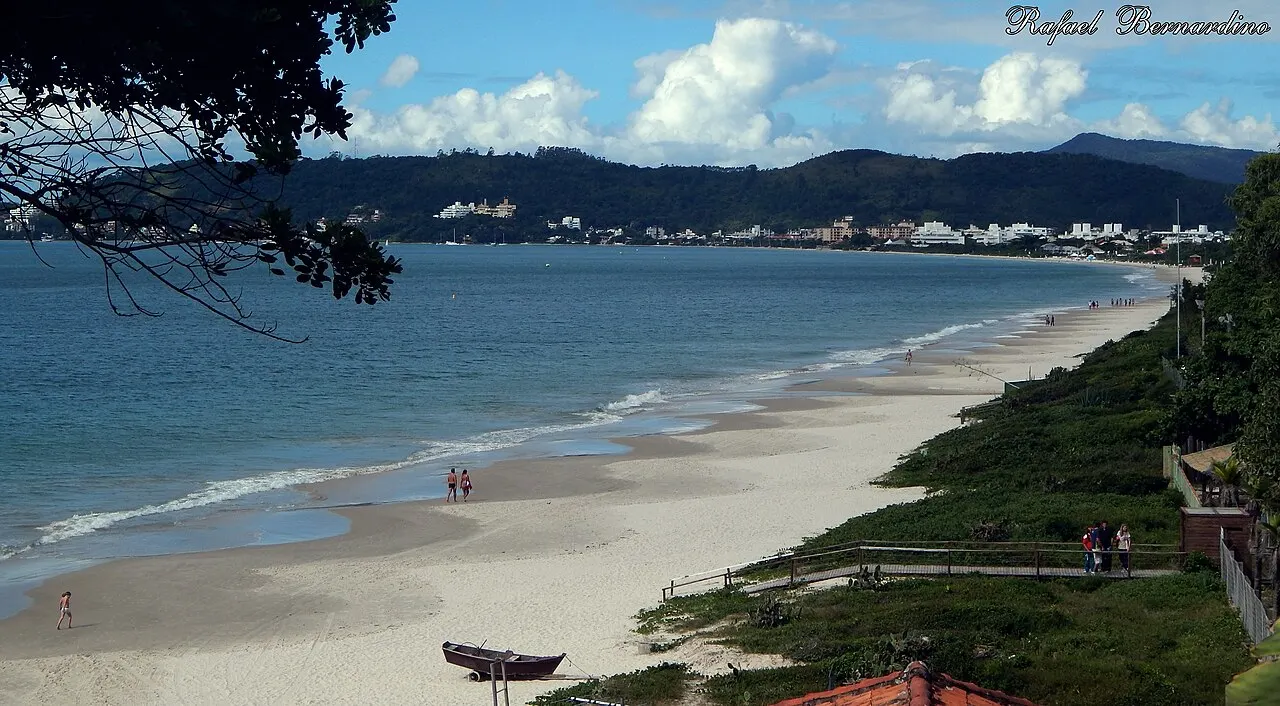
North of the island: Jurerê, Canasvieiras and Ingleses
Beaches facing the Baía Norte and the ocean, with calmer water in Jurerê and Canasvieiras and a large supply of hotels and vacation apartments. Jurerê Internacional is a planned neighborhood of upscale houses and beach clubs; Ingleses is one of the most sought-after summer destinations for Argentine tourists. In summer, access along the SC-401 gets congested.
History
before 1500 · Sambaqui builders, potters and Carijós
The island was occupied by peoples who left sambaquis (shell mounds), by pottery-making groups of the Taquara-Itararé tradition and by the Carijós, who lived on the coast when the Europeans arrived. Ilha do Campeche holds the largest concentration of rock engravings and stone-working sites on the Brazilian coast, according to IPHAN.
1673 · Founding of Nossa Senhora do Desterro
The bandeirante Francisco Dias Velho founds the settlement of Nossa Senhora do Desterro on February 17, 1673, facing the sheltered bay between the island and the mainland.
1726 · Desterro becomes a town
A royal charter of March 23, 1726 raises Desterro to town status, separate from Laguna, with its installation in 1728.
1738–1744 · Captaincy and fortresses
Portugal creates the captaincy of Santa Catarina, with Brigadier José da Silva Paes as its first governor. From 1739 he designs the system of fortresses on the Baía Norte, which includes Santa Cruz de Anhatomirim and São José da Ponta Grossa.
1748 · The Azoreans arrive
The first colonists from the Azores land on January 6, 1748. About 6,000 immigrants from the Azores and Madeira arrive between 1747 and 1756 and spread out through parishes such as Santo Antônio de Lisboa and Ribeirão da Ilha.
1777 · Spanish occupation
In February 1777, Pedro de Cevallos lands with about 9,000 men and takes the island without resistance. The occupation lasts about one year and four months, until the return provided for in the Treaty of Santo Ildefonso.
1894 · Executions and the new name
In the crackdown on the Federalist Revolution, about 185 people are shot on Ilha de Anhatomirim in April 1894. On October 1, State Law No. 111 changes the name from Desterro to Florianópolis, in honor of President Floriano Peixoto.
1926 · The Ponte Hercílio Luz
The suspension bridge, opened on May 13, 1926 and about 819 m long, makes the first land connection between the island and the mainland.
1975–1991 · Two new bridges and one closed
The Ponte Colombo Salles opens in 1975 and the Pedro Ivo Campos in 1991, the same year the Hercílio Luz is closed to all use because of structural problems.
2019 · Bridge reopened and a new airport
The airport's new terminal, run by the concessionaire from the Zurich Airport group, begins operating on October 1, 2019. On December 30, the Ponte Hercílio Luz reopens after 28 years closed.
Complete history
Before Desterro
Long before colonization, Ilha de Santa Catarina was inhabited by peoples who left sambaquis, mounds of shells and food remains piled up over generations, and later by pottery-making groups and by the Guarani-speaking Carijós, who occupied the coast when the Europeans arrived. The most visible mark of that past is on Ilha do Campeche, listed by IPHAN in 2000: dozens of rock engravings and stone-working sites, the surfaces where stone tools were sharpened. That is why visits to the island have a daily limit and rules of their own.
A frontier port between two empires
Francisco Dias Velho founded the settlement of Nossa Senhora do Desterro in 1673, on an island that mattered to Portugal because of its position: halfway between Rio de Janeiro and the Río de la Plata, which was contested with Spain. Desterro became a town in 1726, and in 1738 the Crown created the captaincy of Santa Catarina and sent Brigadier José da Silva Paes to fortify the entrance to the Baía Norte. The fortresses of Anhatomirim and Ponta Grossa, still standing and open to visitors, came out of that project. They did not prevent the Spanish occupation of 1777, when Pedro de Cevallos took the island without resistance and held it for more than a year, until its return was negotiated in the Treaty of Santo Ildefonso.
The Azoreans and the parishes
To settle the island, the Crown brought families from the Azores and Madeira: the first landed on January 6, 1748, and about 6,000 people had arrived by 1756. They formed parishes scattered across the island and linked by water, such as Santo Antônio de Lisboa and Ribeirão da Ilha, with a church facing the bay, single-story houses and a life of fishing and farming. From that base come bobbin lace, which gives its name to Avenida das Rendeiras in Lagoa, the Festas do Divino Espírito Santo, the boi de mamão and the witch stories that the artist Franklin Cascaes recorded in the twentieth century and that gave the city the nickname Ilha da Magia.
From Desterro to Florianópolis
The current name carries a violent episode. In the Federalist Revolution, the island sided with the rebels against the government of Marshal Floriano Peixoto; in the crackdown, in April 1894, about 185 people were shot on Ilha de Anhatomirim. In October of that year, a state law replaced Desterro with Florianópolis, Floriano's city. The Anhatomirim fortress, where they took place, has been run by the federal university since 1979 and has been open to visitors since 1984.
Bridges, university and beaches
Until 1926 the island could only be reached by boat. The Ponte Hercílio Luz changed that and became the city's postcard; when traffic grew, the Colombo Salles bridge came in 1975 and the Pedro Ivo Campos in 1991, and the old suspension bridge stayed closed until its reopening on December 30, 2019. In the second half of the twentieth century, the federal university settled in Trindade, highways opened the beaches of the north, east and south to development, and summer tourism began to fill the island between December and February. The city also drew software and technology companies, which now carry weight in the local economy, and the population kept growing: 537,211 residents in the 2022 Census and 598,370 in the 2026 estimate.
Desterro became Florianópolis in 1894, months after the Anhatomirim executions, in honor of Floriano Peixoto.
Geography and shape of the city
A long island between the ocean and two bays
Ilha de Santa Catarina has an average length of 55 km and an average width of 18 km, and holds 97% of the municipality's 675 km²; the rest is a strip on the mainland. Between the island and the mainland lie the Baía Norte and the Baía Sul, calm waters where oysters and shellfish are farmed. The east side faces the Atlantic, with surf beaches and rocky headlands. A recent survey mapped more than 100 beaches in the municipality, well over the 42 of the old tourism slogan.
Hills, lagoons and dunes
A ridge of forested hills runs the length of the island from north to south and separates the bays from the ocean. In the middle lies Lagoa da Conceição, a saltwater lagoon about 13.5 km from north to south, connected to the sea by the Barra da Lagoa channel; beside it, the Joaquina dunes form a municipal park. Farther south, Lagoa do Peri is freshwater. The trails that link remote beaches, such as Lagoinha do Leste, cross these hills.
Subtropical climate, with hot summers and mild winters
In the INMET normals for 1991 to 2020, January has an average high of 29.4 °C and a low of 21.6 °C; July, a high of 21.1 °C and a low of 12.9 °C. It rains about 1,766 mm a year, with summer the wettest season (241 mm in January) and June the driest month (86 mm). There is no dry season: rain turns up in any month.
A city spread along the coast
The Centro and the oldest neighborhoods are on the part of the island closest to the mainland, next to the bridges. The rest of the settlement followed the highways: the SC-401 leads north, to Santo Antônio de Lisboa, Jurerê, Canasvieiras and Ingleses; other roads cross the hill to the Lagoa and run down south, to Campeche, Ribeirão da Ilha and Pântano do Sul. Driving distances from Praça XV, measured on OpenStreetMap without traffic, give the scale: 14 km to the Lagoa, 17 km to Santo Antônio de Lisboa, 20 km to Ribeirão da Ilha, 25 km to Pântano do Sul and 27 km to Canasvieiras. In summer, traffic can multiply those times.
Ilha de Santa Catarina is about 55 km long and holds 97% of the municipality; the open-ocean beaches are on the east and the calm bays on the west.
Culture
The Azorean heritage
The parishes founded by the Azoreans still organize much of the island's traditional life. Bobbin lace, made with wooden bobbins on a pillow, gives its name to Avenida das Rendeiras in the Lagoa. The Festas do Divino Espírito Santo, recognized as intangible heritage of Santa Catarina, move through the communities between May and September with an emperor and empress court, red flags and processions. The boi de mamão, a folk play that stages the death and resurrection of an ox with cowhands and animals, was recognized as intangible heritage of Florianópolis in 2019 and has a municipal day on August 20.
Witches, poetry and the Ilha da Magia
Franklin Cascaes, born in Itaguaçu, collected fishermen's stories about witches and witchcraft between 1946 and 1975 and turned them into drawings, sculptures and texts; the book O Fantástico na Ilha de Santa Catarina gathers 24 of them, and the nickname Ilha da Magia comes from that tradition. Desterro is also the birthplace of Cruz e Sousa, born in 1861 to formerly enslaved parents and author of Broquéis (1893), considered the starting point of Symbolism in Brazil. The palace on Praça XV bears his name.
University, technology and sea
The Universidade Federal de Santa Catarina, in Trindade, gives the city a large student population, which drives the nightlife of Lagoa da Conceição and the Centro. Florianópolis is also home to hundreds of software and technology services companies, a sector with weight in the municipal economy. At sea, the island lives on surfing on the east-side beaches, sailing and stand-up paddling on the bays and the Lagoa, and artisanal fishing, whose most visible moment is the tainha season.
Festivals and events
Carnival: February or March
Samba school parades in the Centro and street blocos spread across the island, at the height of the summer season. The date changes every year, and lodging and traffic weigh more that week.
Divino cycle: May to September
The Festas do Divino Espírito Santo begin around Pentecost, 50 days after Easter, and each community, such as Ribeirão da Ilha, Lagoa da Conceição and Santo Antônio de Lisboa, holds its own on its own dates, with Mass, a procession of the Divino court, flags and a church fair. Check each parish's schedule in the year of your trip.
Tainha season: May to July
In 2026 the season opened on May 1. On beaches with beach seining, fishermen watch the sea and encircle the school with nets hauled from the sand, and the catch becomes a neighborhood event. During the season, passenger transport to Ilha do Campeche is suspended.
Fenaostra: variable date
The Festa Nacional da Ostra e da Cultura Açoriana brings together oyster dishes, crafts and performances by groups of Azorean tradition. The date changes from year to year: in 2024 it was in early December, and in 2026 it ended on October 12. Check the city calendar.
Books and films
O Fantástico na Ilha de Santa Catarina, Franklin Cascaes
It gathers 24 stories of witches and witchcraft that Cascaes heard from fishermen and residents of the island between 1946 and 1975. It helps in understanding the Azorean imagination of the parishes and the origin of the nickname Ilha da Magia.
Broquéis, Cruz e Sousa (1893)
The book of poems by the author born in Desterro in 1861, considered the starting point of Symbolism in Brazil. Reading it gives context to the palace and the square that now bear his name in the Centro.
Frequently asked questions
Florianópolis: How do you get from the airport to the Centro?
The Hercílio Luz Airport terminal, opened in 2019, is about 17 km by road from Praça XV, about 20 minutes by car without traffic. Taxi and ride-hailing are the most direct way to reach the Centro or the beaches.
Florianópolis: How many days should you stay, and where?
I'd stay three days, one for each part of the island. I'd choose lodging by the region where I'd spend the most days, preferably in the Lagoa, which is midway.
Florianópolis: How do you secure a trip to Ilha do Campeche?
Access has a daily limit, which runs out on sunny summer days, and no one lands without the voucher from an accredited operator or, with your own boat, the city's permit. From May 1 to July 10, 2026, during the tainha run, there is no passenger transport.
Florianópolis: Can you pay with a foreign card?
Credit and debit cards are accepted at most restaurants and shops. Pix is a transfer between accounts at Brazilian institutions: a QR code on the counter does not mean a foreign card can pay.
Florianópolis: Where and when can you see right whales?
Between July and November, peaking in August and September, right whales come close to the southern coast of Santa Catarina. Watching is done from land, from the headlands and viewpoints of Garopaba, about 70 km from the Centro, because boat tourism inside the APA is banned by court order.
Other cities in the country
Brazil ↗- Days
- 4
- When
- Apr–Jun
- Per person/day
- Average 615 BRLMid-range · per person/day
Cost scope
Per person per day: accommodation, meals, urban transport, visits and a small allowance for extras. Flights excluded; larger purchases vary. Editorial estimate, not a quote.
- Days
- 2–3
- When
- Apr–May · Sep
- Per person/day
- Average 400–700 BRLMid-range · per person/day
Cost scope
Per person per day: accommodation, meals, urban transport, visits and a small allowance for extras. Flights excluded; larger purchases vary. Editorial estimate, not a quote.
- Days
- 2–3
- When
- Jan–Mar · Sep–Dec
- Per person/day
- Average 350–550 BRLMid-range · per person/day
Cost scope
Per person per day: accommodation, meals, urban transport, visits and a small allowance for extras. Flights excluded; larger purchases vary. Editorial estimate, not a quote.
- Days
- 1–2
- When
- May–Sep
- Per person/day
- Average 260–520 BRLMid-range · per person/day
Cost scope
Per person per day: accommodation, meals, urban transport, visits and a small allowance for extras. Flights excluded; larger purchases vary. Editorial estimate, not a quote.
- Days
- 3–4
- When
- Jun–Sep
- Per person/day
- Average 400–700 BRLMid-range · per person/day
Cost scope
Per person per day: accommodation, meals, urban transport, visits and a small allowance for extras. Flights excluded; larger purchases vary. Editorial estimate, not a quote.
- Days
- 2–3
- When
- Apr–Jun
- Per person/day
- Average 350–550 BRLMid-range · per person/day
Cost scope
Per person per day: accommodation, meals, urban transport, visits and a small allowance for extras. Flights excluded; larger purchases vary. Editorial estimate, not a quote.
- Days
- 2–4
- When
- Mar–May · Sep
- Per person/day
- Explore costsGuide estimate
Cost scope
Per person per day: accommodation, meals, urban transport, visits and a small allowance for extras. Flights excluded; larger purchases vary. Editorial estimate, not a quote.
- Days
- 4–5
- When
- Aug–Nov
- Per person/day
- Explore costsGuide estimate
Cost scope
Per person per day: accommodation, meals, urban transport, visits and a small allowance for extras. Flights excluded; larger purchases vary. Editorial estimate, not a quote.
- Days
- 3–4
- When
- Jul–Sep
- Per person/day
- Explore costsGuide estimate
Cost scope
Per person per day: accommodation, meals, urban transport, visits and a small allowance for extras. Flights excluded; larger purchases vary. Editorial estimate, not a quote.
- Days
- 3–4
- When
- Sep–Nov
- Per person/day
- Explore costsGuide estimate
Cost scope
Per person per day: accommodation, meals, urban transport, visits and a small allowance for extras. Flights excluded; larger purchases vary. Editorial estimate, not a quote.
- Days
- 2–4
- When
- May–Sep
- Per person/day
- Explore costsGuide estimate
Cost scope
Per person per day: accommodation, meals, urban transport, visits and a small allowance for extras. Flights excluded; larger purchases vary. Editorial estimate, not a quote.
- Days
- 3–5
- When
- Jun–Sep
- Per person/day
- Explore costsGuide estimate
Cost scope
Per person per day: accommodation, meals, urban transport, visits and a small allowance for extras. Flights excluded; larger purchases vary. Editorial estimate, not a quote.
- Days
- 3–4
- When
- Jun–Aug
- Per person/day
- Explore costsGuide estimate
Cost scope
Per person per day: accommodation, meals, urban transport, visits and a small allowance for extras. Flights excluded; larger purchases vary. Editorial estimate, not a quote.
- Days
- 4–5
- When
- Jan–Mar · Sep–Dec
- Per person/day
- Explore costsGuide estimate
Cost scope
Per person per day: accommodation, meals, urban transport, visits and a small allowance for extras. Flights excluded; larger purchases vary. Editorial estimate, not a quote.
- Days
- 3–4
- When
- Oct–Dec
- Per person/day
- Average 1,110 BRLMid-range · per person/day
Cost scope
Per person per day: accommodation, meals, urban transport, visits and a small allowance for extras. Flights excluded; larger purchases vary. Editorial estimate, not a quote.
- Days
- 3–4
- When
- Aug–Sep
- Per person/day
- Explore costsGuide estimate
Cost scope
Per person per day: accommodation, meals, urban transport, visits and a small allowance for extras. Flights excluded; larger purchases vary. Editorial estimate, not a quote.
- Days
- 4–7
- When
- Apr–Sep
- Per person/day
- Explore costsGuide estimate
Cost scope
Per person per day: accommodation, meals, urban transport, visits and a small allowance for extras. Flights excluded; larger purchases vary. Editorial estimate, not a quote.
- Days
- 3–4
- When
- Jan · Sep–Dec
- Per person/day
- Explore costsGuide estimate
Cost scope
Per person per day: accommodation, meals, urban transport, visits and a small allowance for extras. Flights excluded; larger purchases vary. Editorial estimate, not a quote.
- Days
- 2
- When
- Aug–Dec
- Per person/day
- Average 442 BRLMid-range · per person/day
Cost scope
Per person per day: accommodation, meals, urban transport, visits and a small allowance for extras. Flights excluded; larger purchases vary. Editorial estimate, not a quote.
- Days
- 3–5
- When
- Jan–Feb · Sep–Dec
- Per person/day
- Explore costsGuide estimate
Cost scope
Per person per day: accommodation, meals, urban transport, visits and a small allowance for extras. Flights excluded; larger purchases vary. Editorial estimate, not a quote.
- Days
- 3–5
- When
- May–Sep
- Per person/day
- Explore costsGuide estimate
Cost scope
Per person per day: accommodation, meals, urban transport, visits and a small allowance for extras. Flights excluded; larger purchases vary. Editorial estimate, not a quote.
- Days
- 2–3
- When
- Apr–Sep
- Per person/day
- Average 484 BRLMid-range · per person/day
Cost scope
Per person per day: accommodation, meals, urban transport, visits and a small allowance for extras. Flights excluded; larger purchases vary. Editorial estimate, not a quote.
- Days
- 3
- When
- Apr–May · Aug
- Per person/day
- Average 478 BRLMid-range · per person/day
Cost scope
Per person per day: accommodation, meals, urban transport, visits and a small allowance for extras. Flights excluded; larger purchases vary. Editorial estimate, not a quote.
- Days
- 3–4
- When
- Aug–Dec
- Per person/day
- Explore costsGuide estimate
Cost scope
Per person per day: accommodation, meals, urban transport, visits and a small allowance for extras. Flights excluded; larger purchases vary. Editorial estimate, not a quote.
- Days
- 2
- When
- Apr–May · Sep
- Per person/day
- Explore costsGuide estimate
Cost scope
Per person per day: accommodation, meals, urban transport, visits and a small allowance for extras. Flights excluded; larger purchases vary. Editorial estimate, not a quote.
- Days
- 3
- When
- Sep–Dec
- Per person/day
- Explore costsGuide estimate
Cost scope
Per person per day: accommodation, meals, urban transport, visits and a small allowance for extras. Flights excluded; larger purchases vary. Editorial estimate, not a quote.
- Days
- 3–5
- When
- Apr–Nov
- Per person/day
- Average 427 BRLMid-range · per person/day
Cost scope
Per person per day: accommodation, meals, urban transport, visits and a small allowance for extras. Flights excluded; larger purchases vary. Editorial estimate, not a quote.
- Days
- 4
- When
- Jul–Sep
- Per person/day
- Explore costsGuide estimate
Cost scope
Per person per day: accommodation, meals, urban transport, visits and a small allowance for extras. Flights excluded; larger purchases vary. Editorial estimate, not a quote.
- Days
- 4–5
- When
- May–Sep
- Per person/day
- Explore costsGuide estimate
Cost scope
Per person per day: accommodation, meals, urban transport, visits and a small allowance for extras. Flights excluded; larger purchases vary. Editorial estimate, not a quote.
- Days
- 3
- When
- May–Sep
- Per person/day
- Explore costsGuide estimate
Cost scope
Per person per day: accommodation, meals, urban transport, visits and a small allowance for extras. Flights excluded; larger purchases vary. Editorial estimate, not a quote.